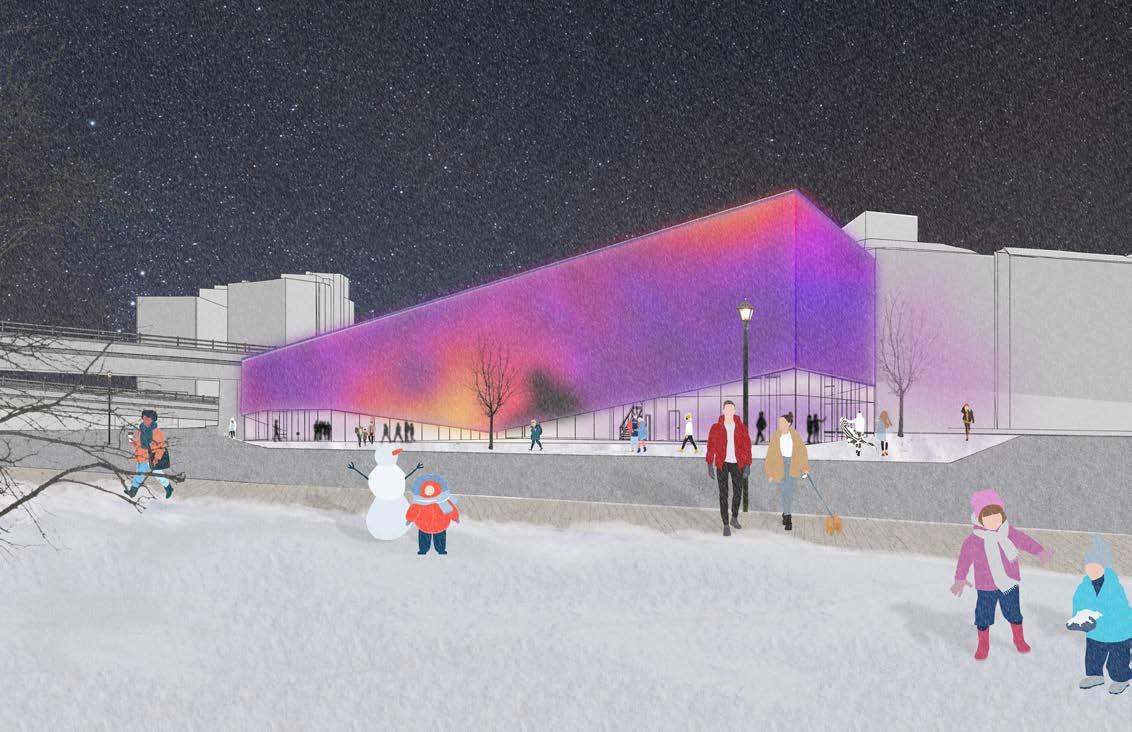
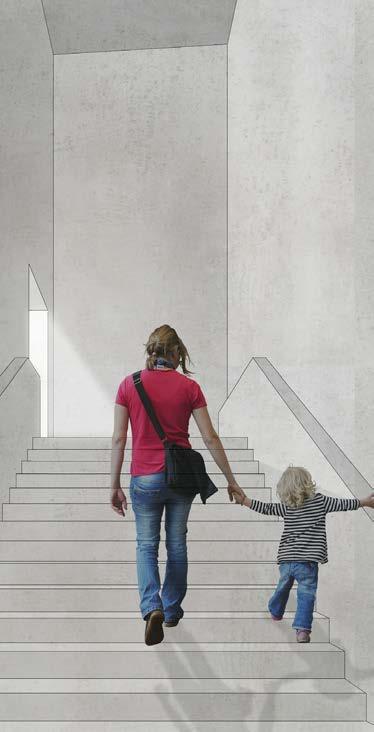
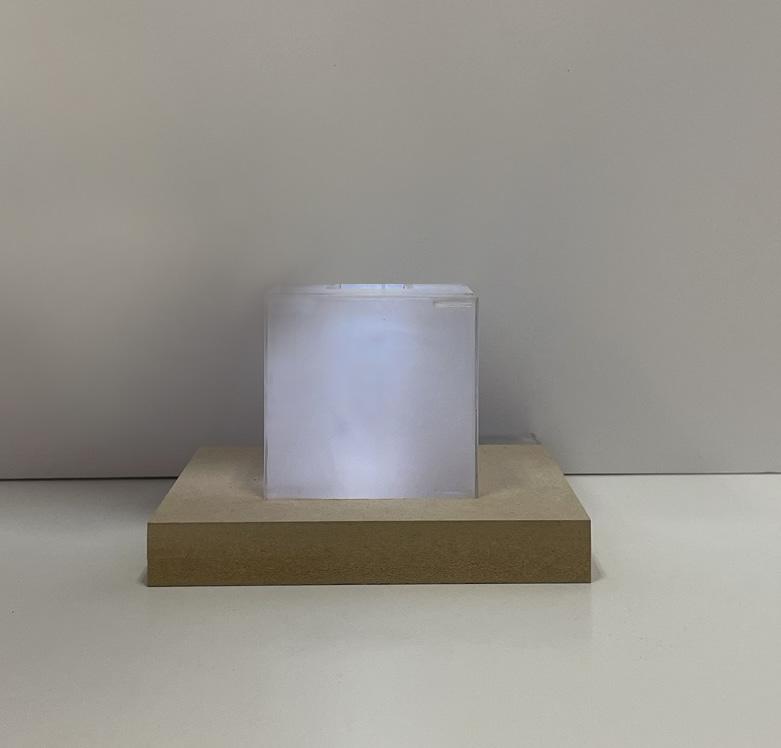
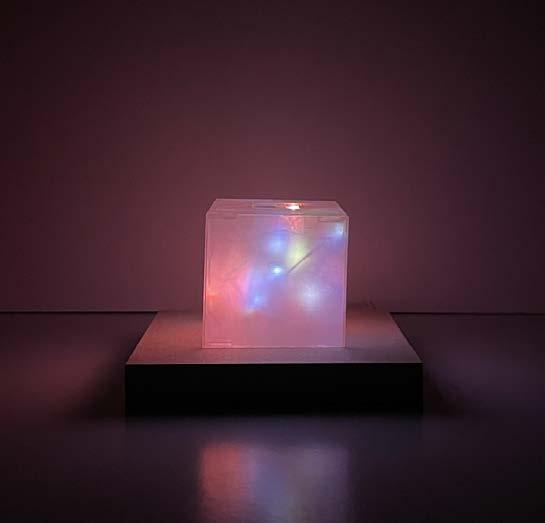
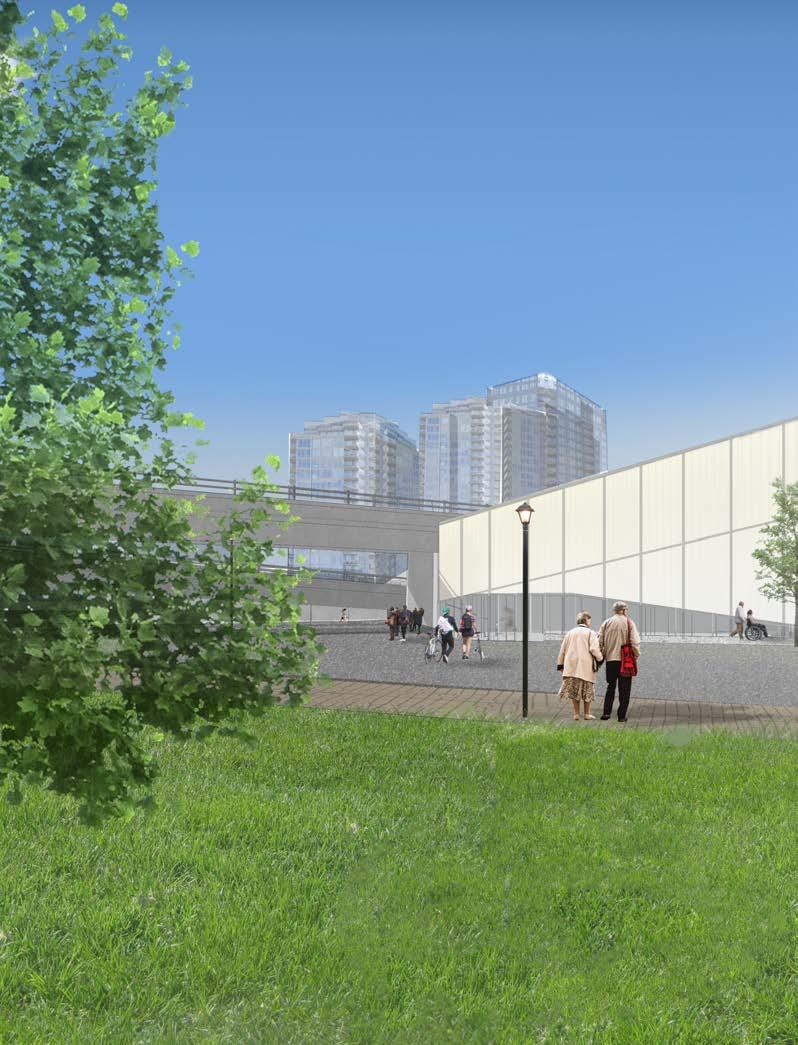
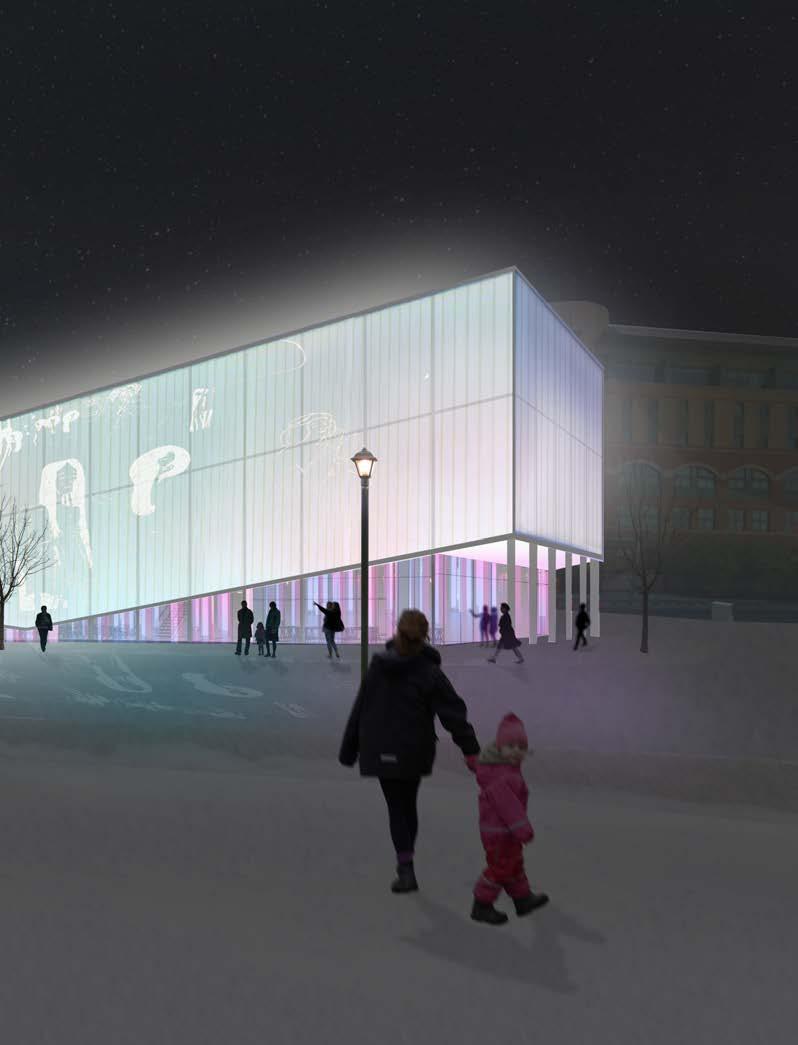
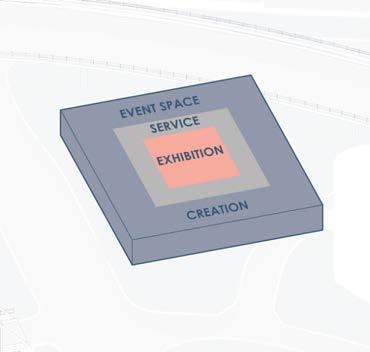
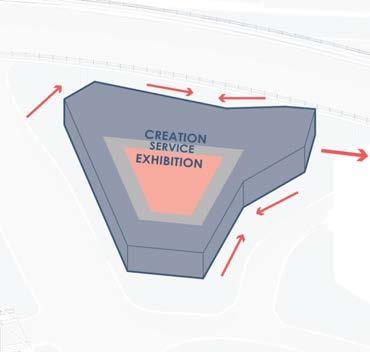
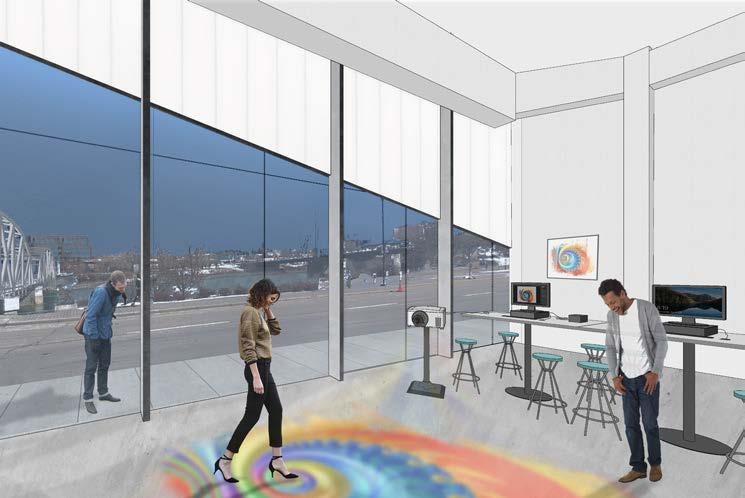
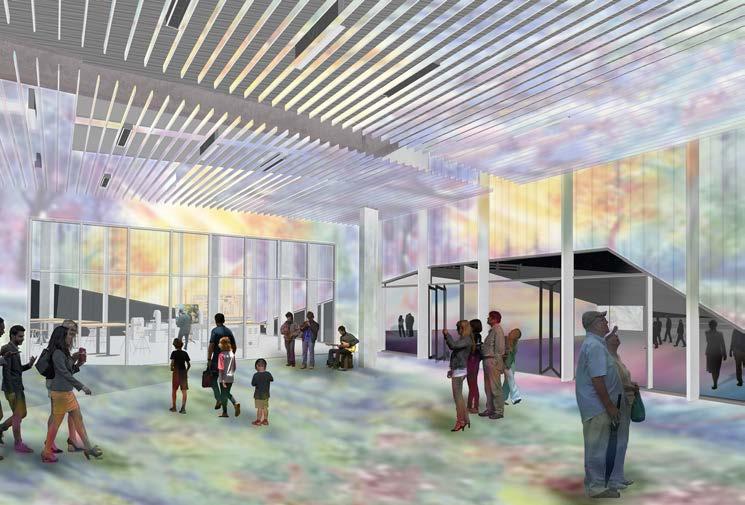
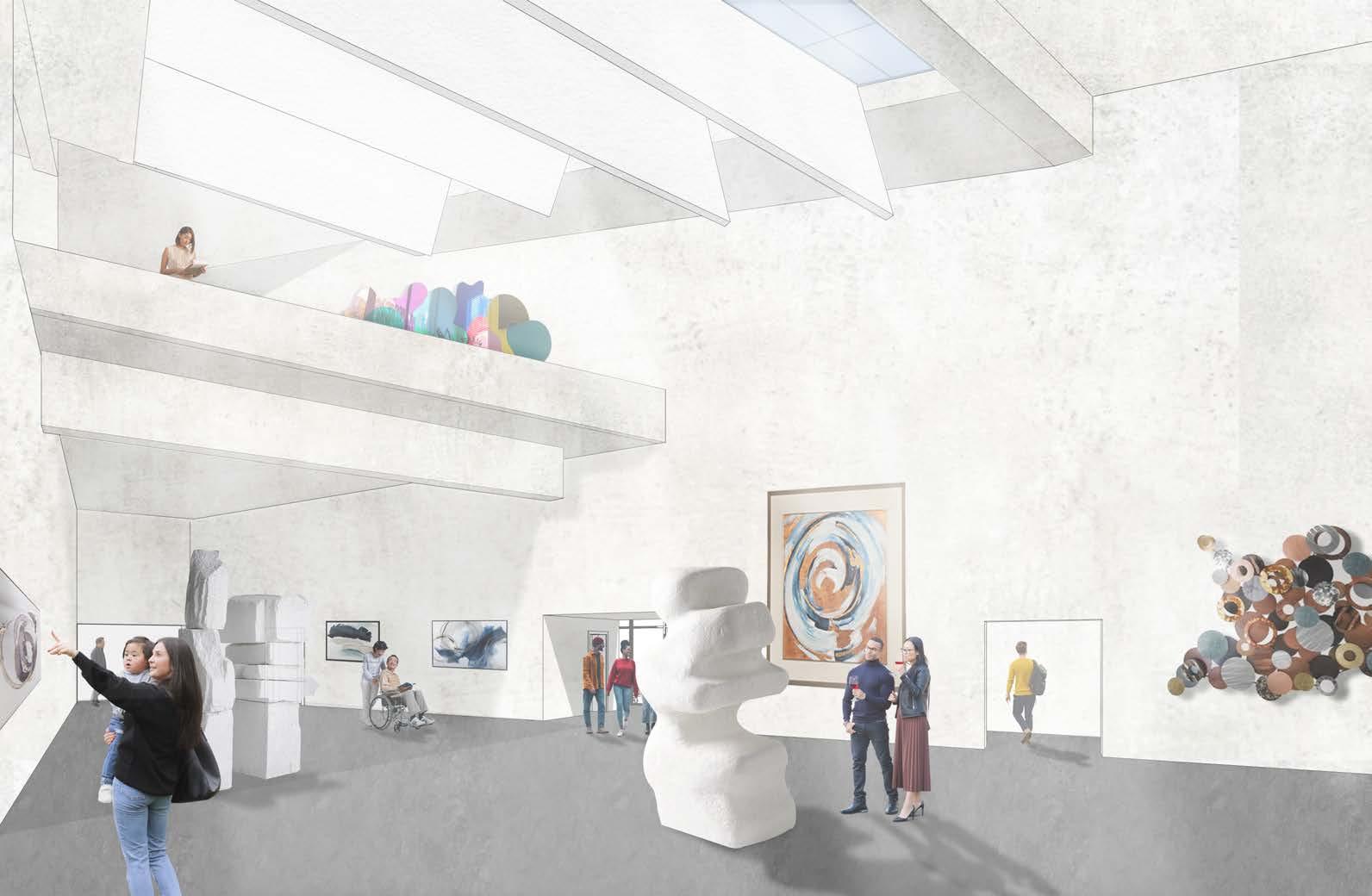
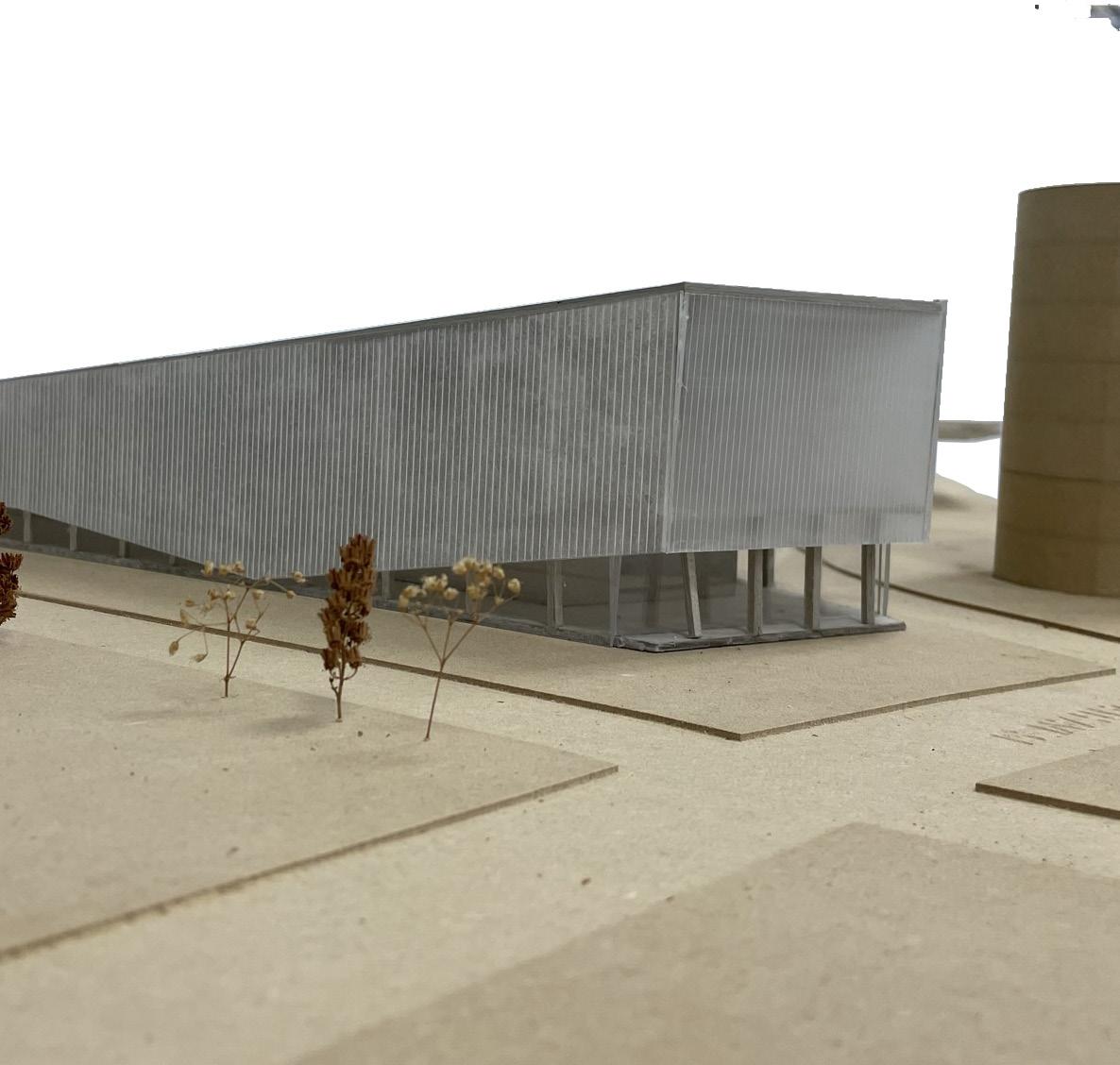
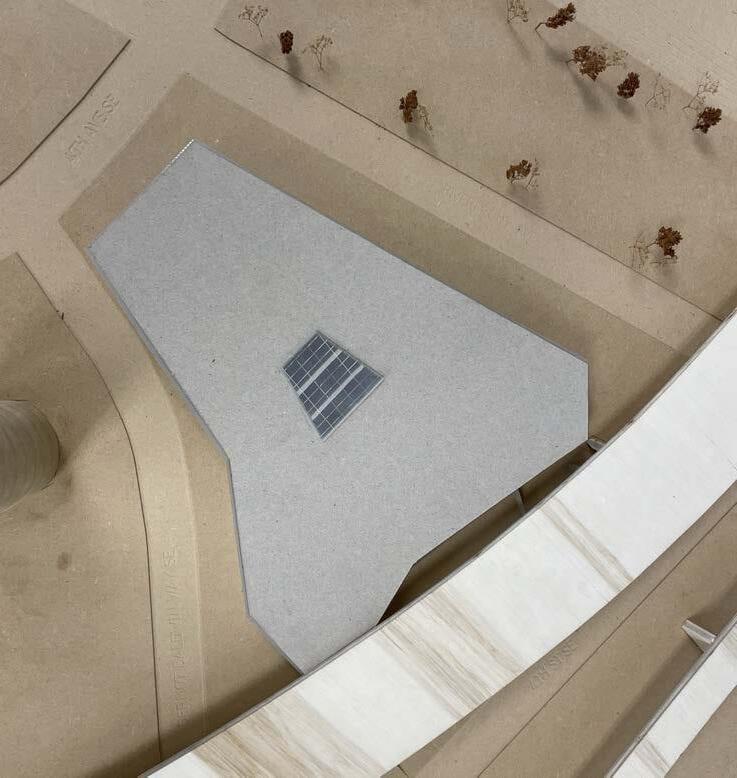
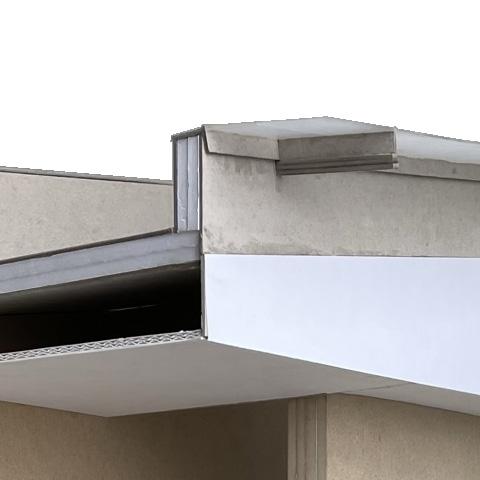
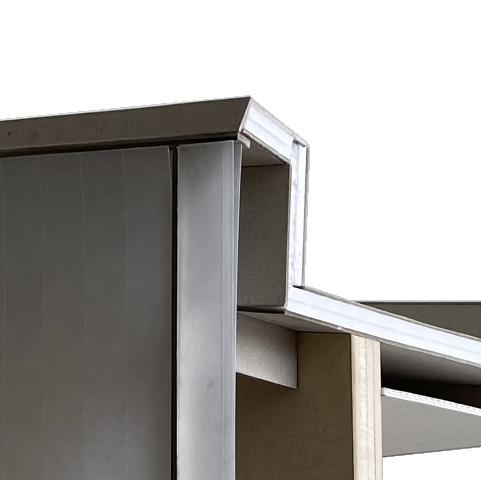
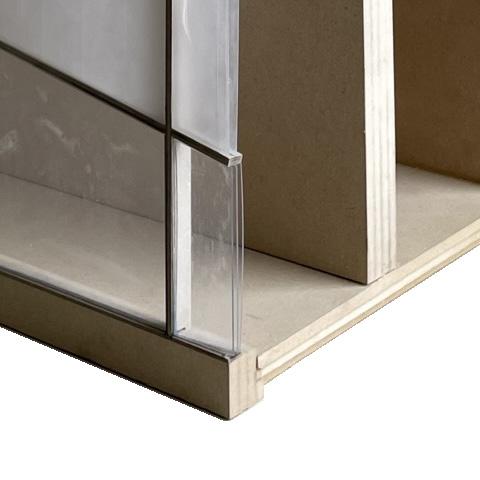
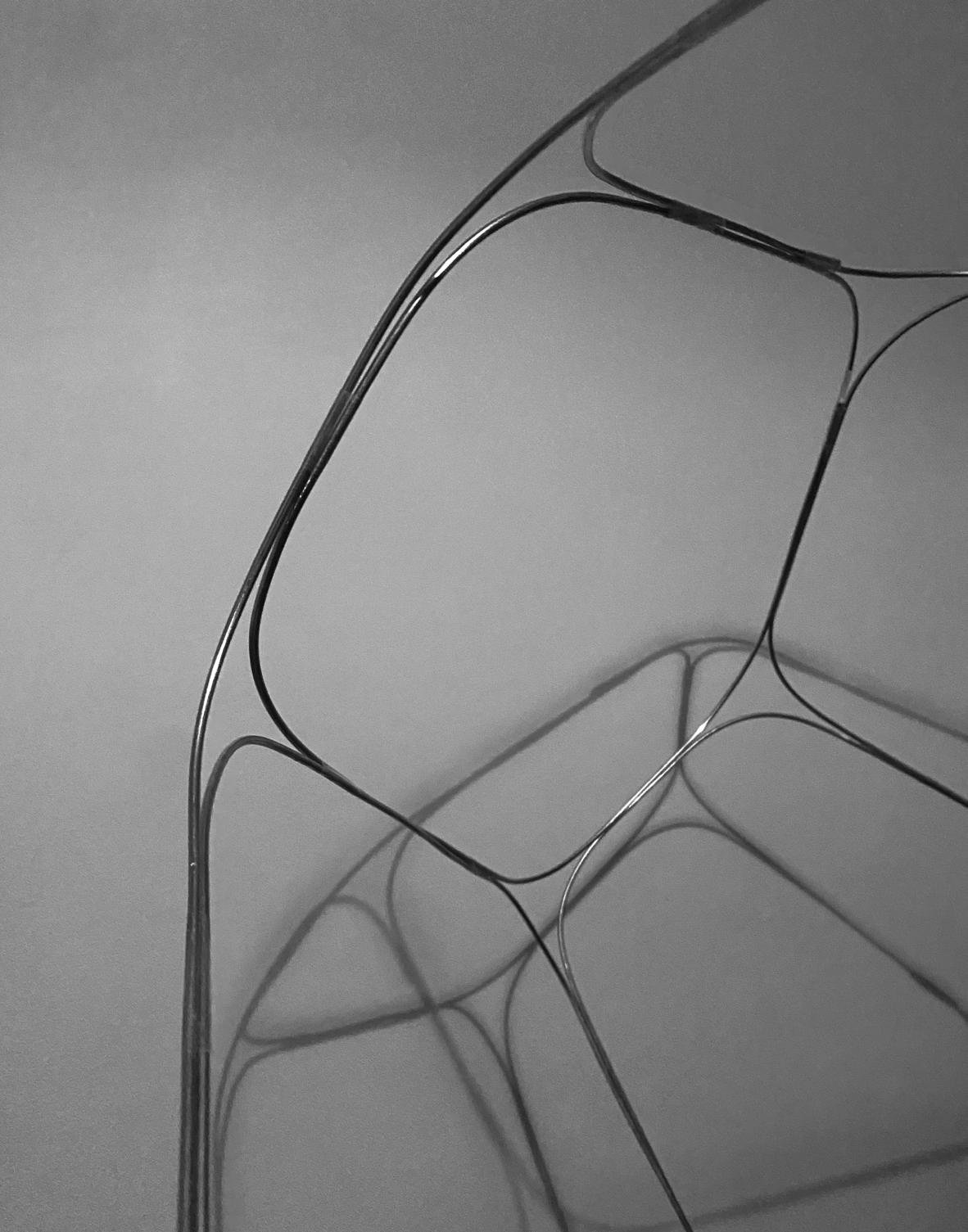
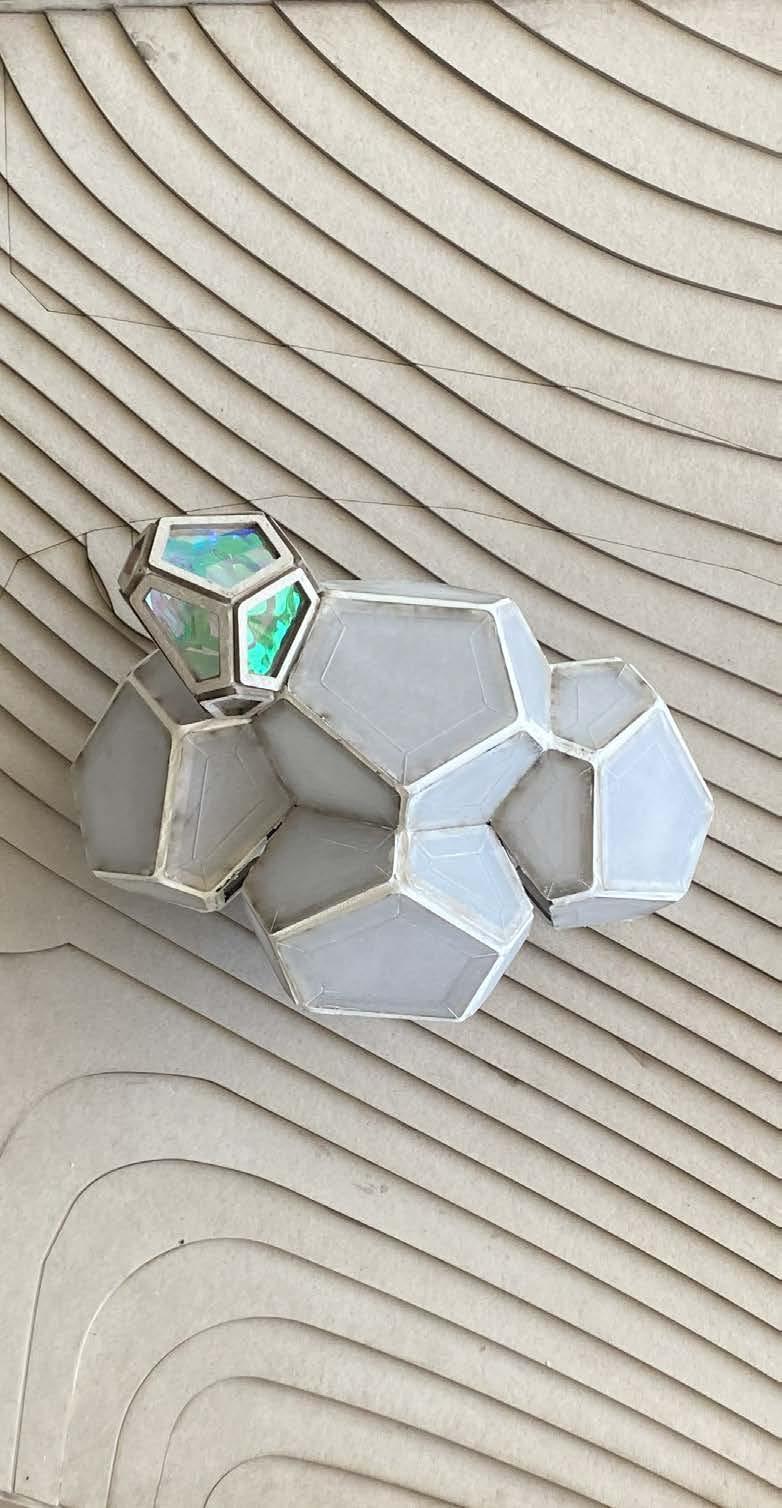
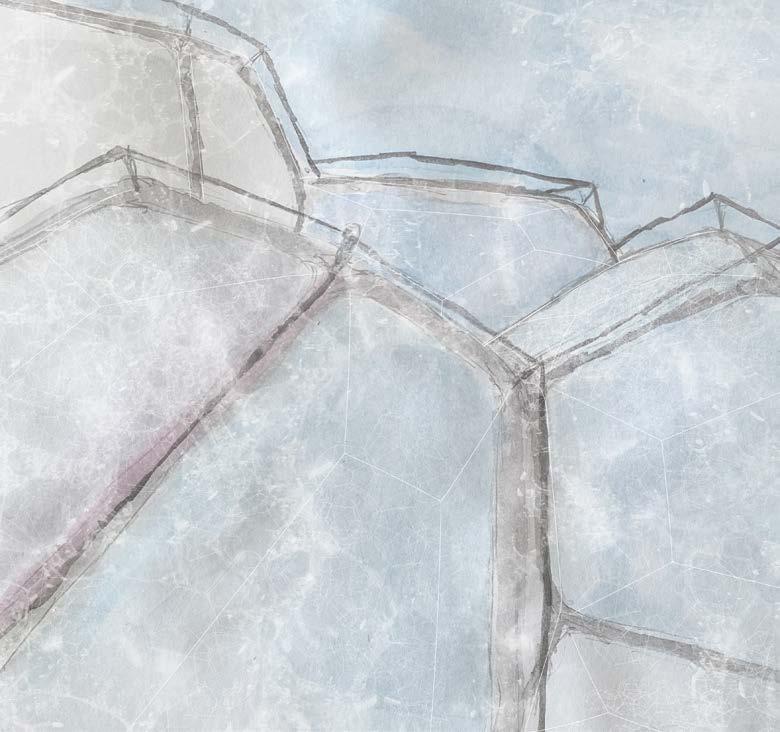
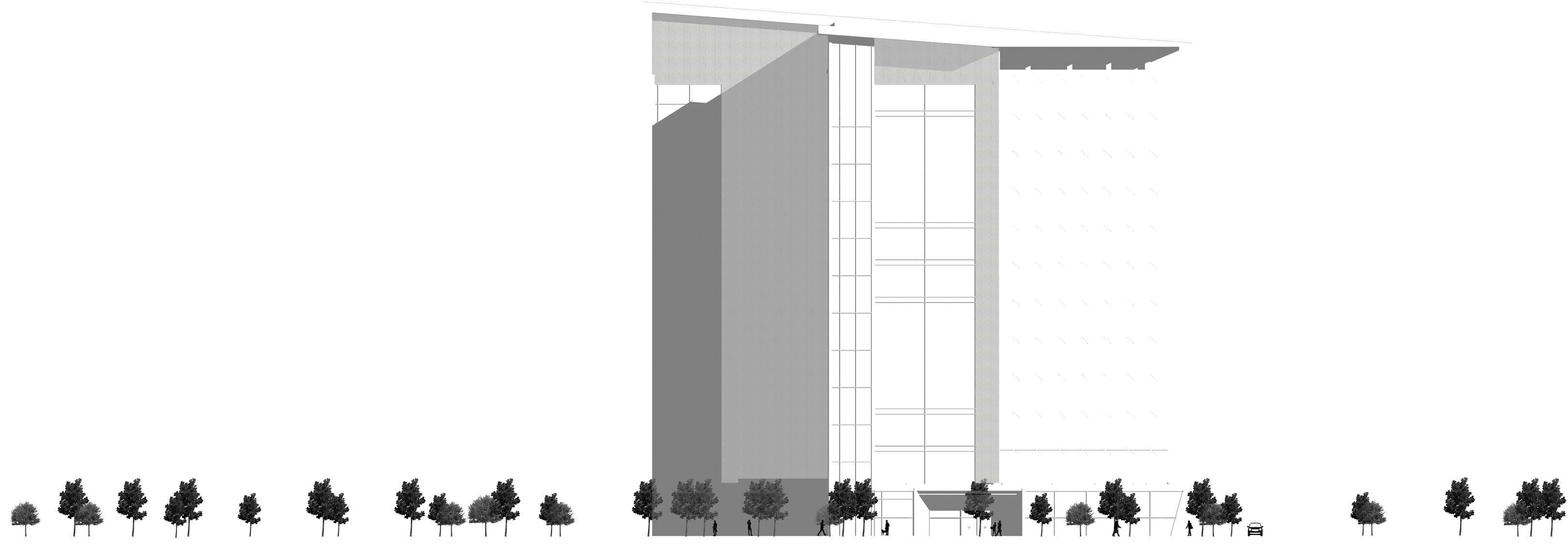
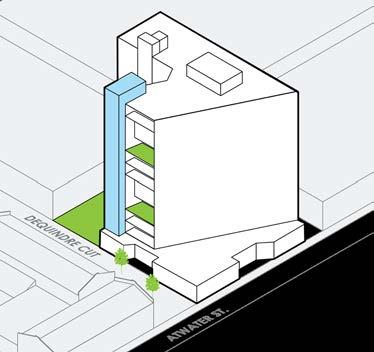
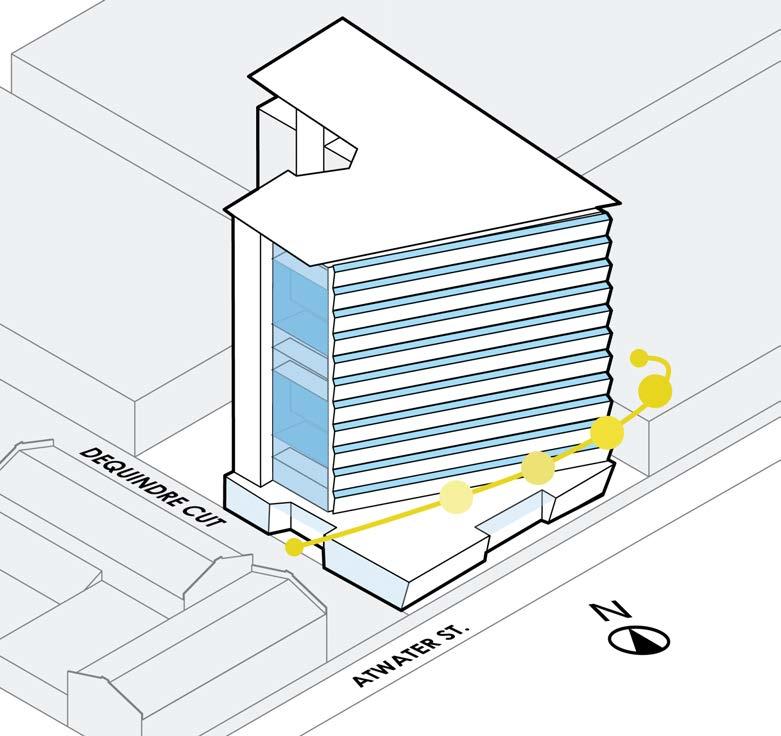
Light Shift focuses on the idea of day vs. night and how the architecture can shift use while remaining a social space during all hours. These dualities are represented in the parti model, showing how natural light can be absorbed during the day and artificial light can be emitted at night through its translucent facade.
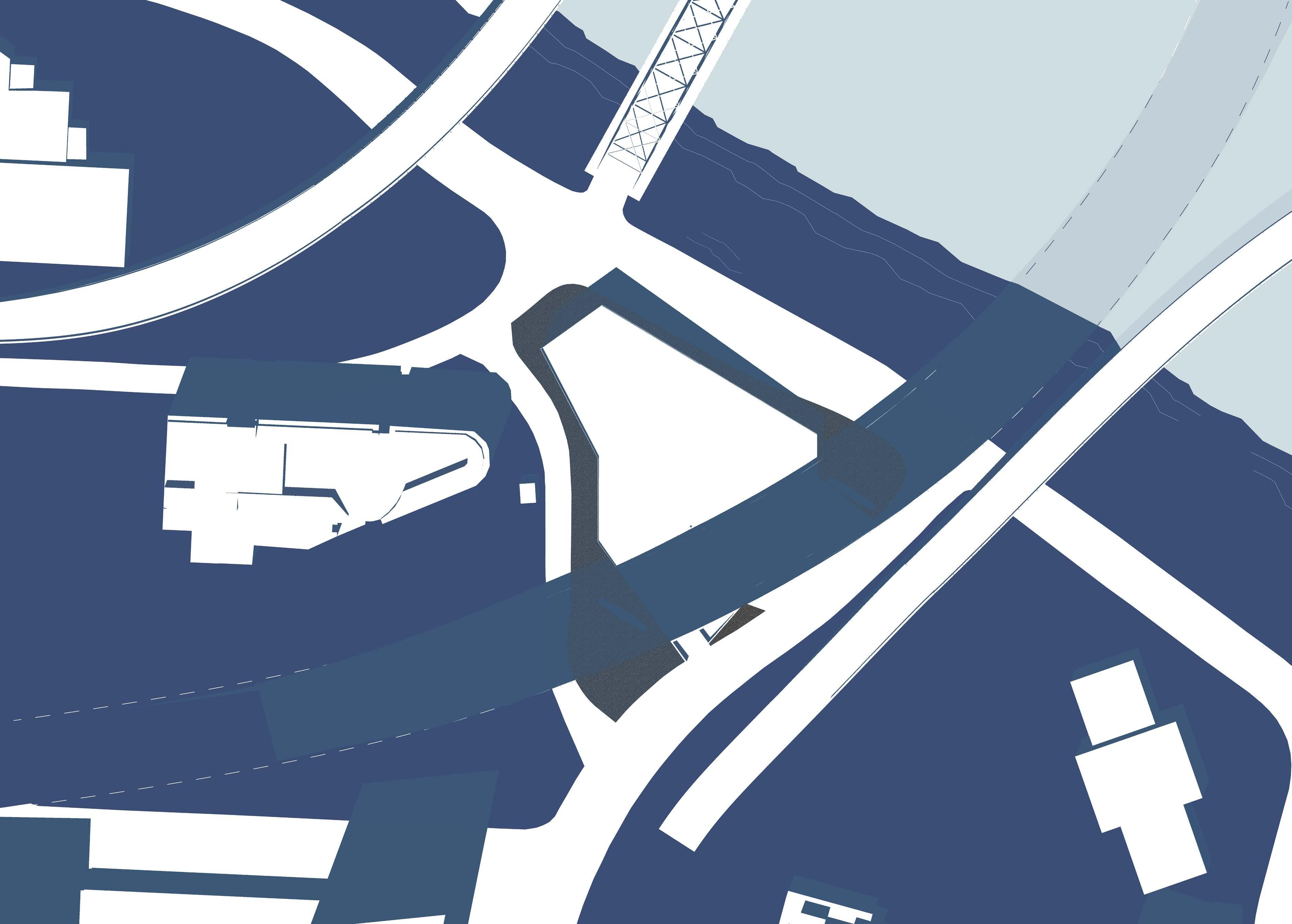
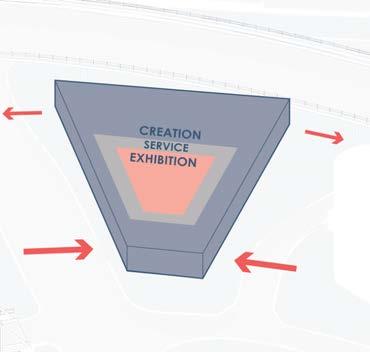
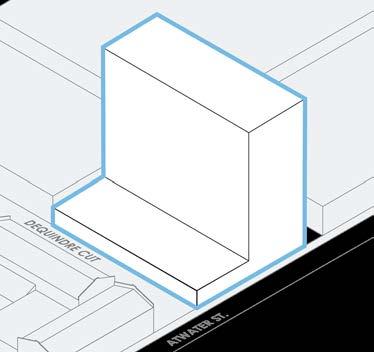
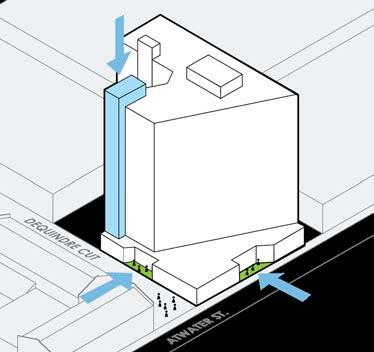
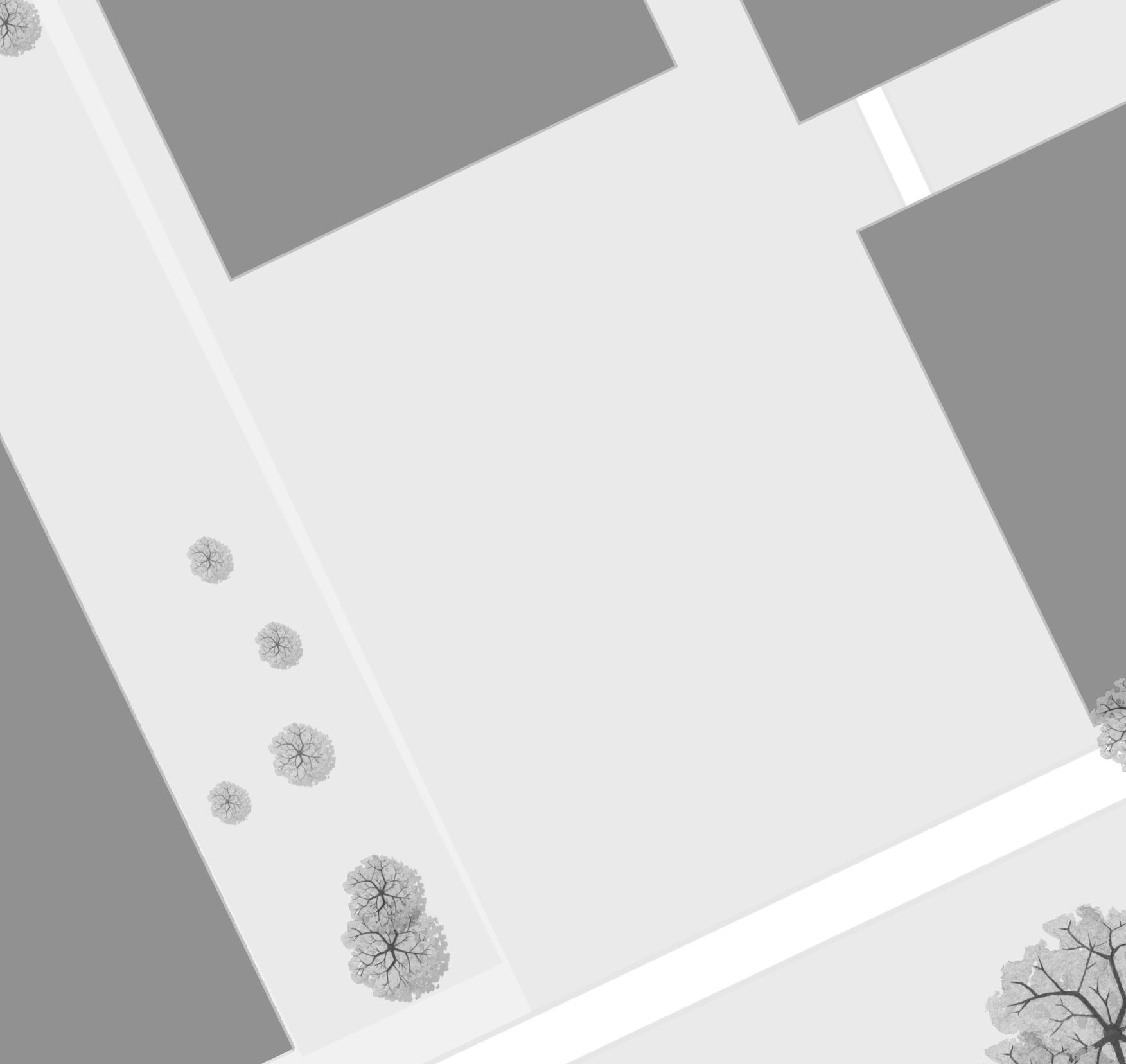
Carve the mass from site, and set back to create a pedestrian zone
3
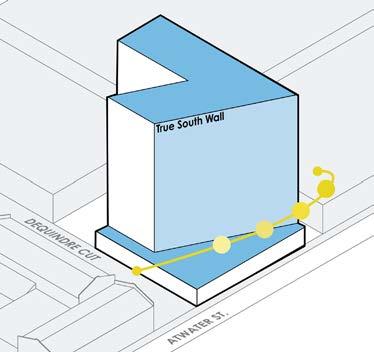
Face true north and south to focus on solar gain and indirect light.
Manipulate mass by site nuances so program requirements are met
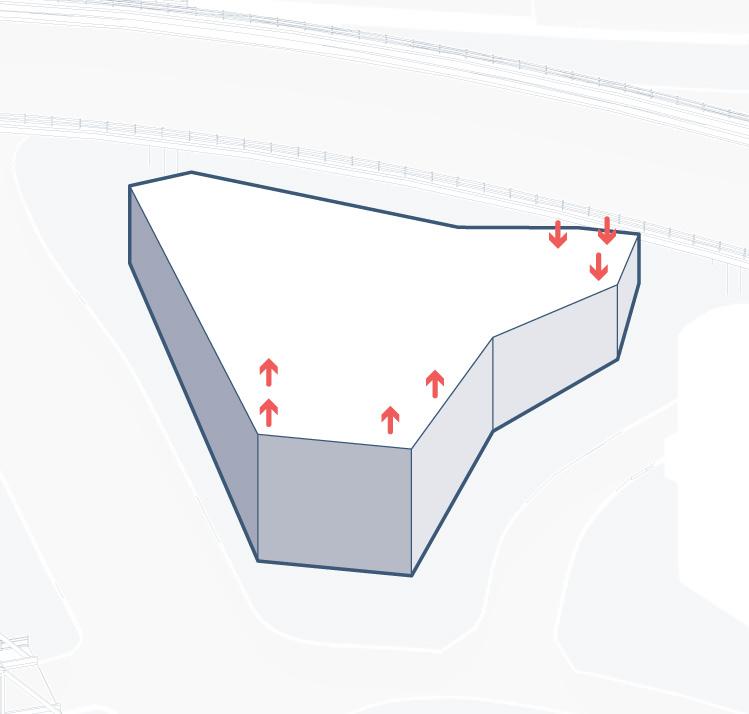
The roof is sloped create a second level for program, also addressing a seemless transition towards the overpass.
Main night time program is the maker spaces COLLECTION CREATION
Main daytime program is the gallery
Programming and Massing.
The program can start to define the formal language and spatial organization throughout the Kunsthalle. The gallery becomes the internal experience by highlighting the absorption of natural light in the center of the building during the day. In contrast, with the placement of public programs along the exterior perimeter of the building, light can also be reflected back into the city during the night.
FILIGREE ARMATURE: STEEL
Perimeter Arches (Supporting Facade + Roof)
Designing the Systems.
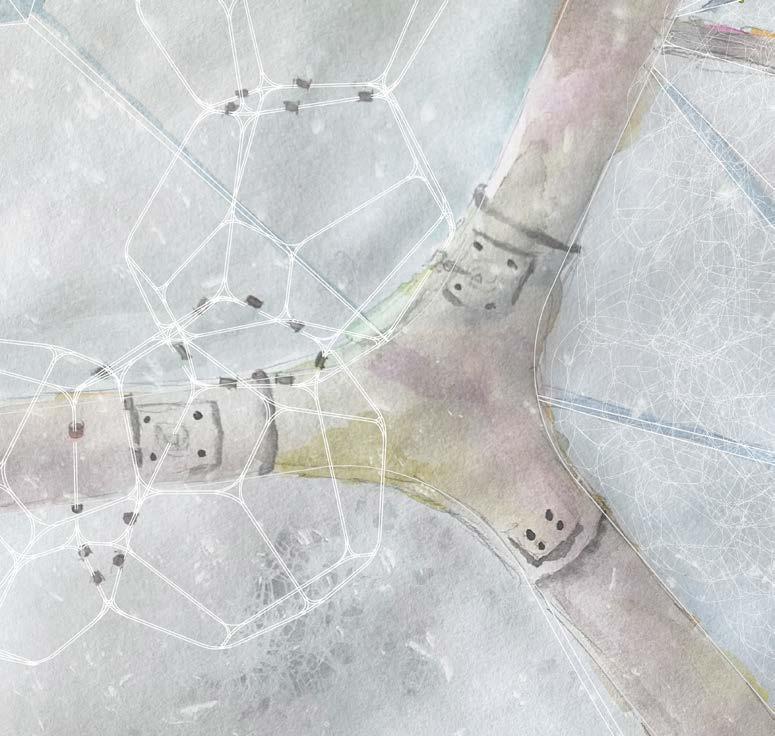
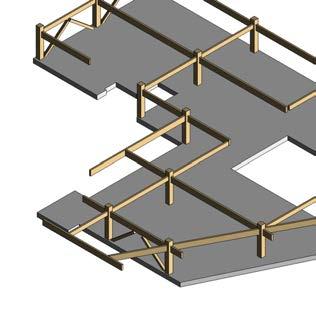
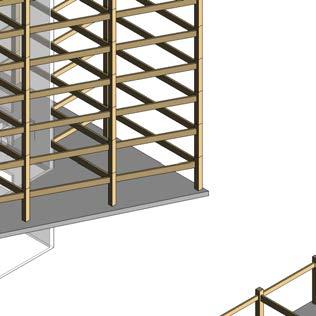
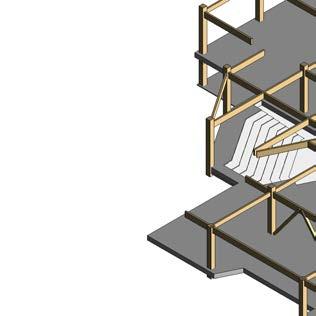
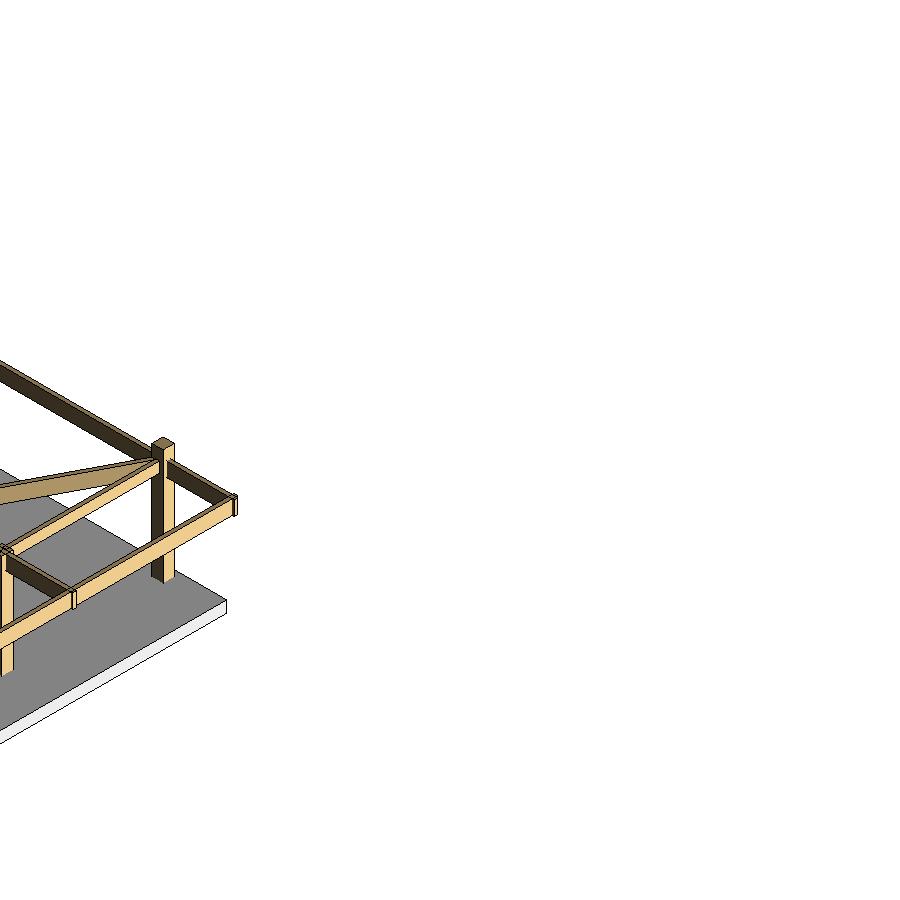
To emphasize these different layers of programs, the structural system changes throughout the Kunsthalle. Because the gallery is a completely internal and controlled space, it is surrounded by a threshold of service spaces. These spaces are comprised of solid, load-bearing concrete walls, as a way of containing the gallery space. As you continue to the outer perimeter of the project, the structural languages shifts from solid armature to an open steel column and beam system. This reflects both the shift in program, and the transition of light, from absorbed to reflected, by keeping a free facade. The facade system is comprised of a curtain wall framing system, with custom filigree steel arches that tie the curtain wall back to the main structural system. This allows the structure of the project to be expressed in its artistic quality throughout the Kunsthalle.
SOLID ARMATURE: CONCRETE
Inner Gallery Core
OPEN ARMATURE: STEEL
Outer Columns + beams
Tectonic Model
Probes and Prototype Designing the Laboratory 12 WEEKS
TWO PHASE THREE
LOGIC
Unitized Space Frame System
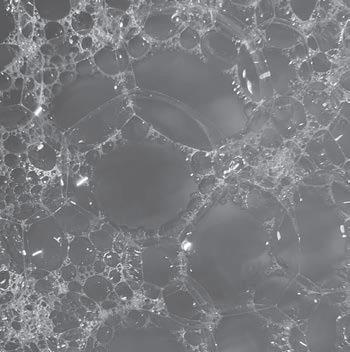
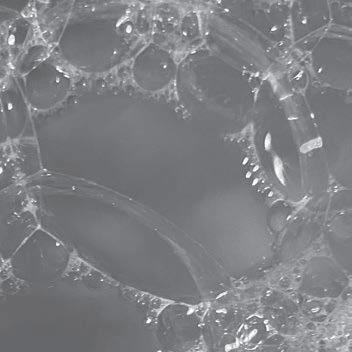
Bubble Logic is an architectural research project that explores the logic and nature of bubbles and how that can start to influence the built environment. Inter Situ Studio is a twelve week studio course included at the University of Calgary’s Master of Architecture program. The course was broken up into three major phases. Phase one studied the properties and nature of bubble, which led to a final printed dossier. Phase Two began a series of probing experiments leading to the development of an architectural prototype that informs a new type of space frame system. Phase three began the design of an architectural laboratory that is meant to facilitate the research for further explorations of Bubble Logic and other lightweight architectural systems.
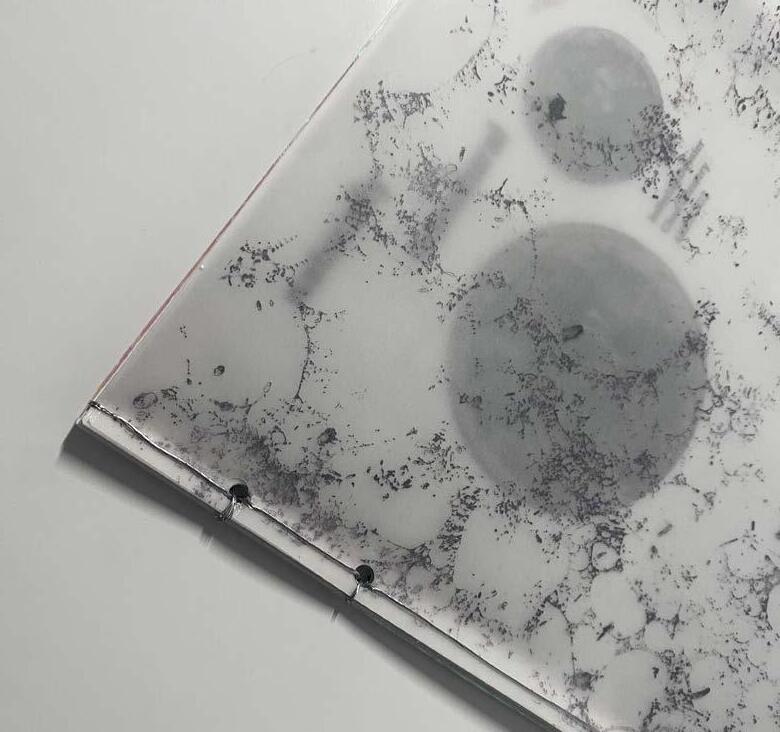
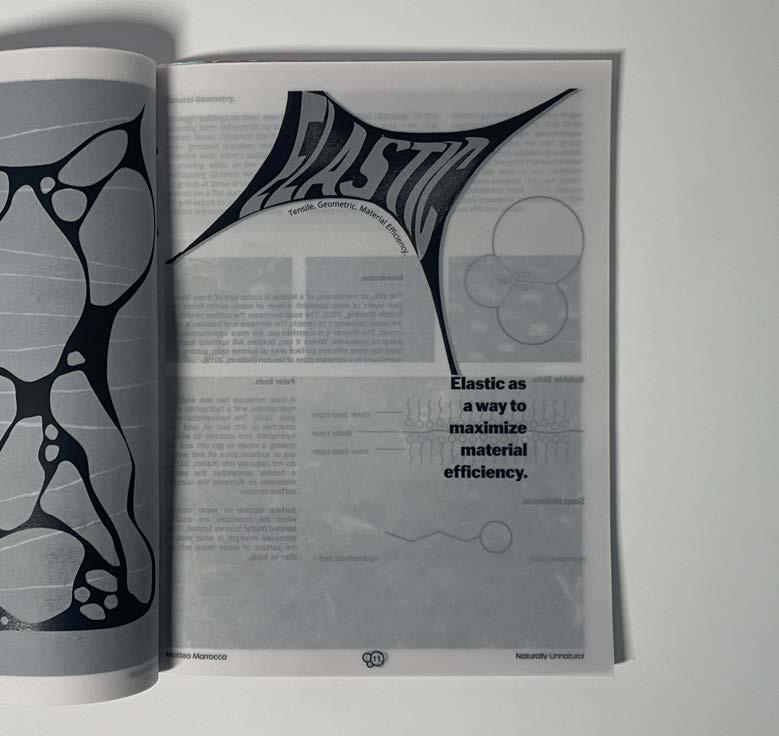
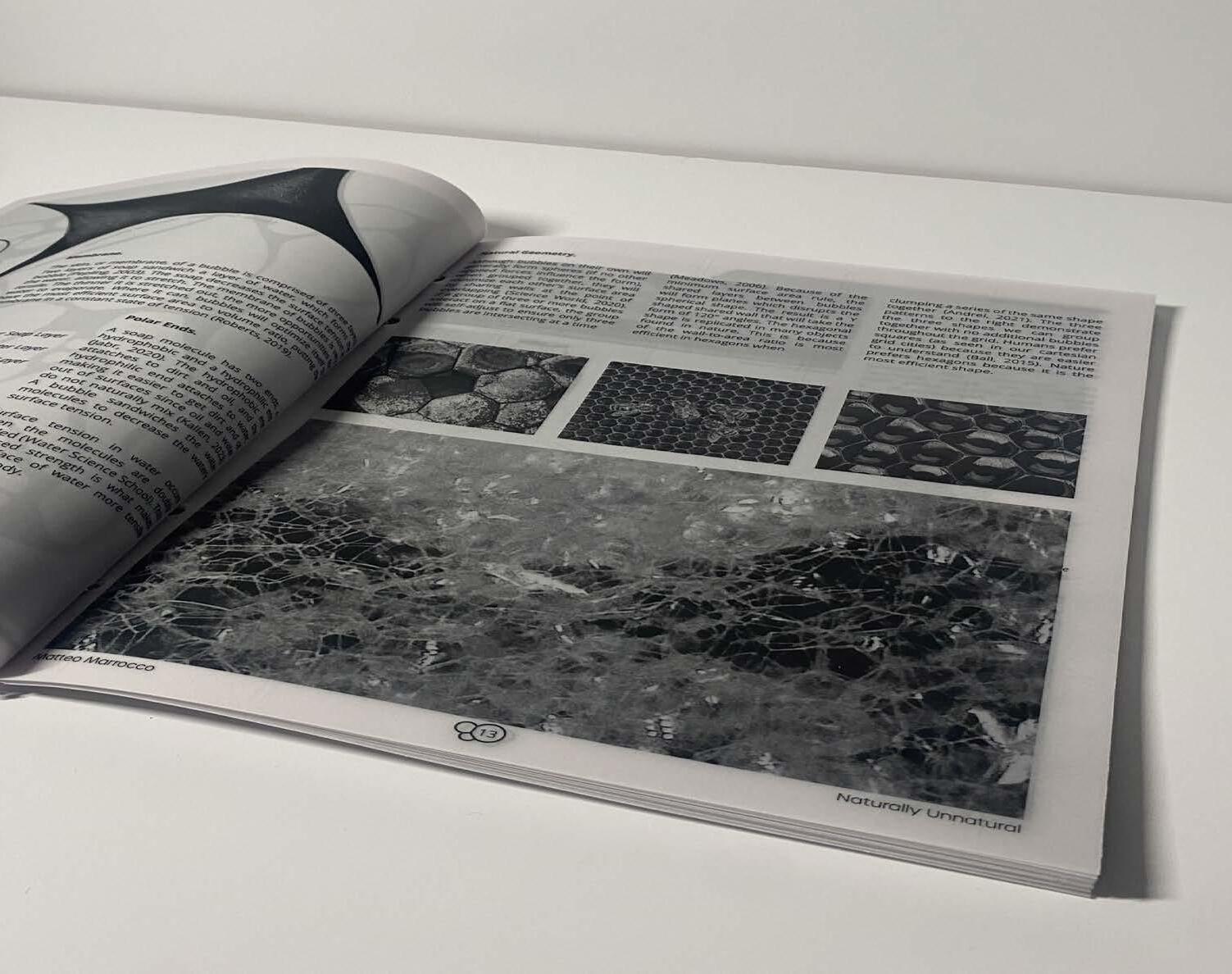
The research dossier explains how we can use the properties of bubbles to inform design in our built environment. This dossier was printed on vellum and bound with aluminum wire.
Bubbles are a naturally unnatural phenomenon.
Their behaviour follows many patterns we see in nature; however, the actual material itself is unnatural: soap and water.
Matteo Marrocco
Bubbles as ...
Compiling the Dossier
Bubbles were chosen as the main subject of research due to their previously unknown complexity. Such a simple object of everyday life usually flies under the radar, but looking deeper at bubbles reveals so many characteristics that can be translated into the built environment. The research was broken up into four major categories, each highlighting a different aspect to bubbles.
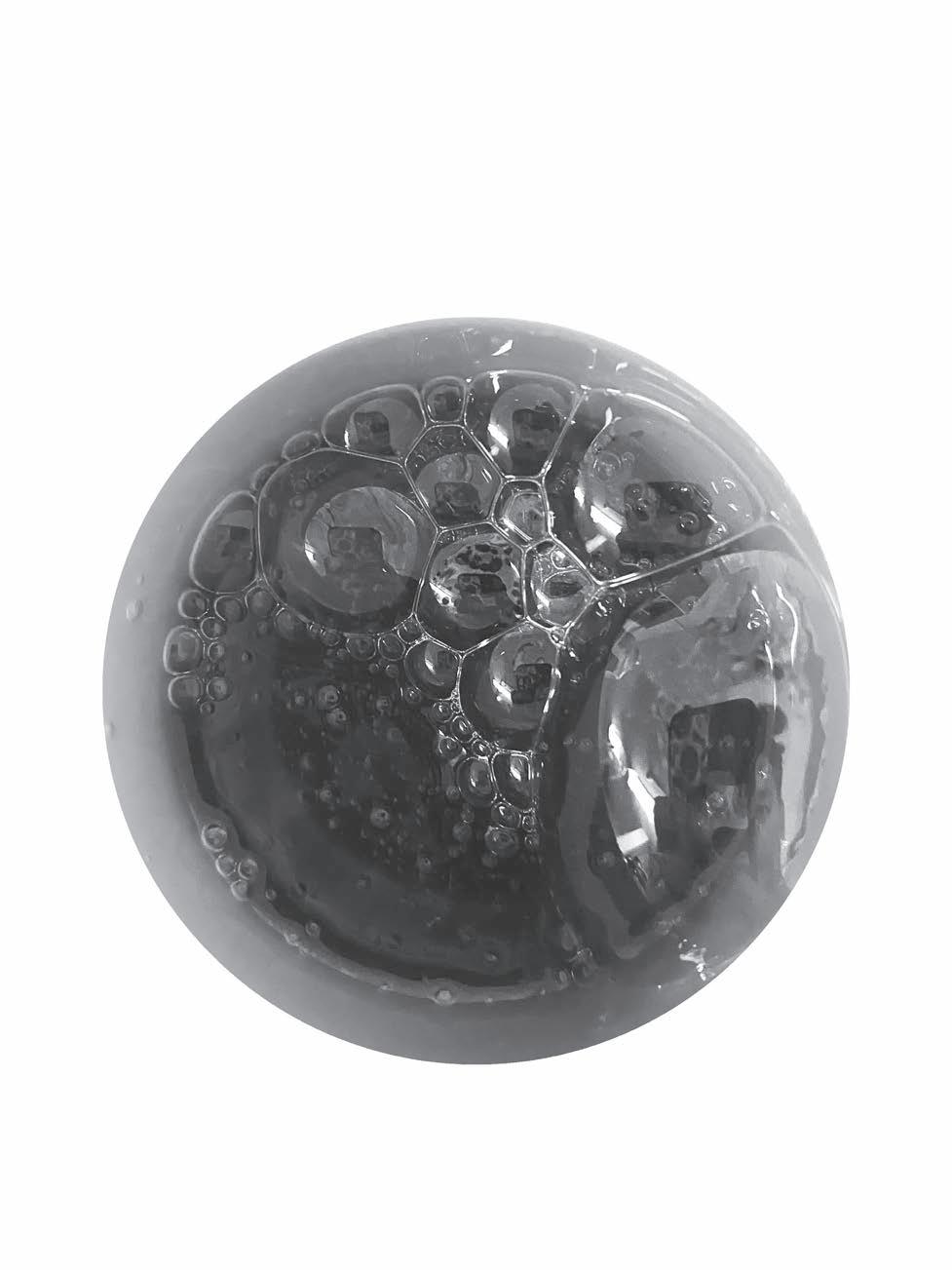
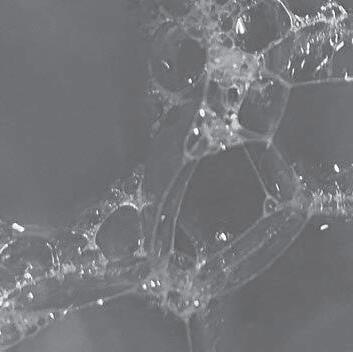
Although bubbles on their own will generally form spheres (if no other applied forces influence the form), when grouped together, they will minimize each other’s surface area by sharing walls at the point of overlapping. If a group of three or more bubbles interact on a flat surface, the group will self-adjust to ensure only three bubbles are intersecting at a time.
Bubbles will always join at fixed angles;
their walls varying shapes and sizes depending on the density of adjacent bubbles.
When a cluster of bubbles form in 3D space, their geometry becomes a little more complex. The natural efficiency rule will cause the bubbles to intersect in groups of four, at an equal angle of 109 degrees, creating a tetrahedron shape.
Fractal Object
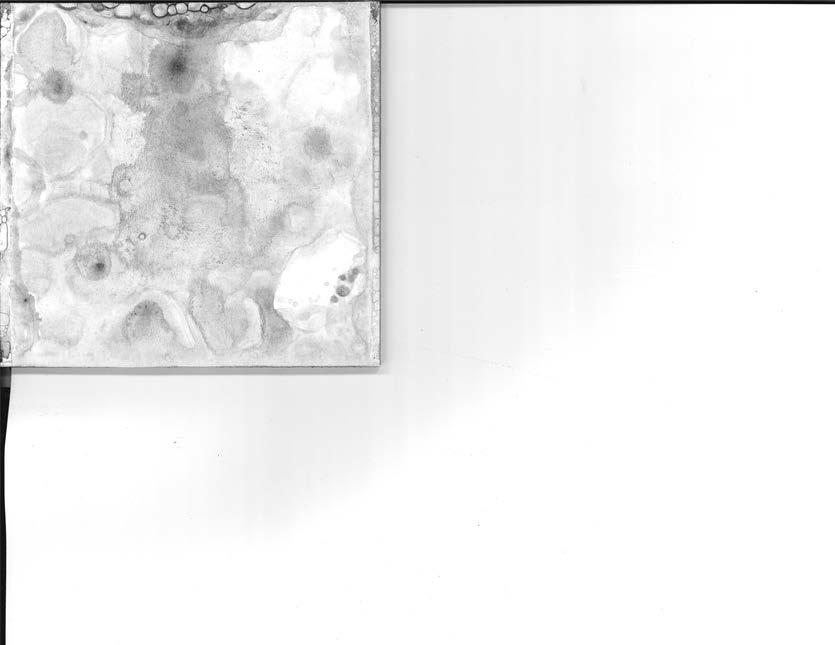
Drawing with Bubbles.
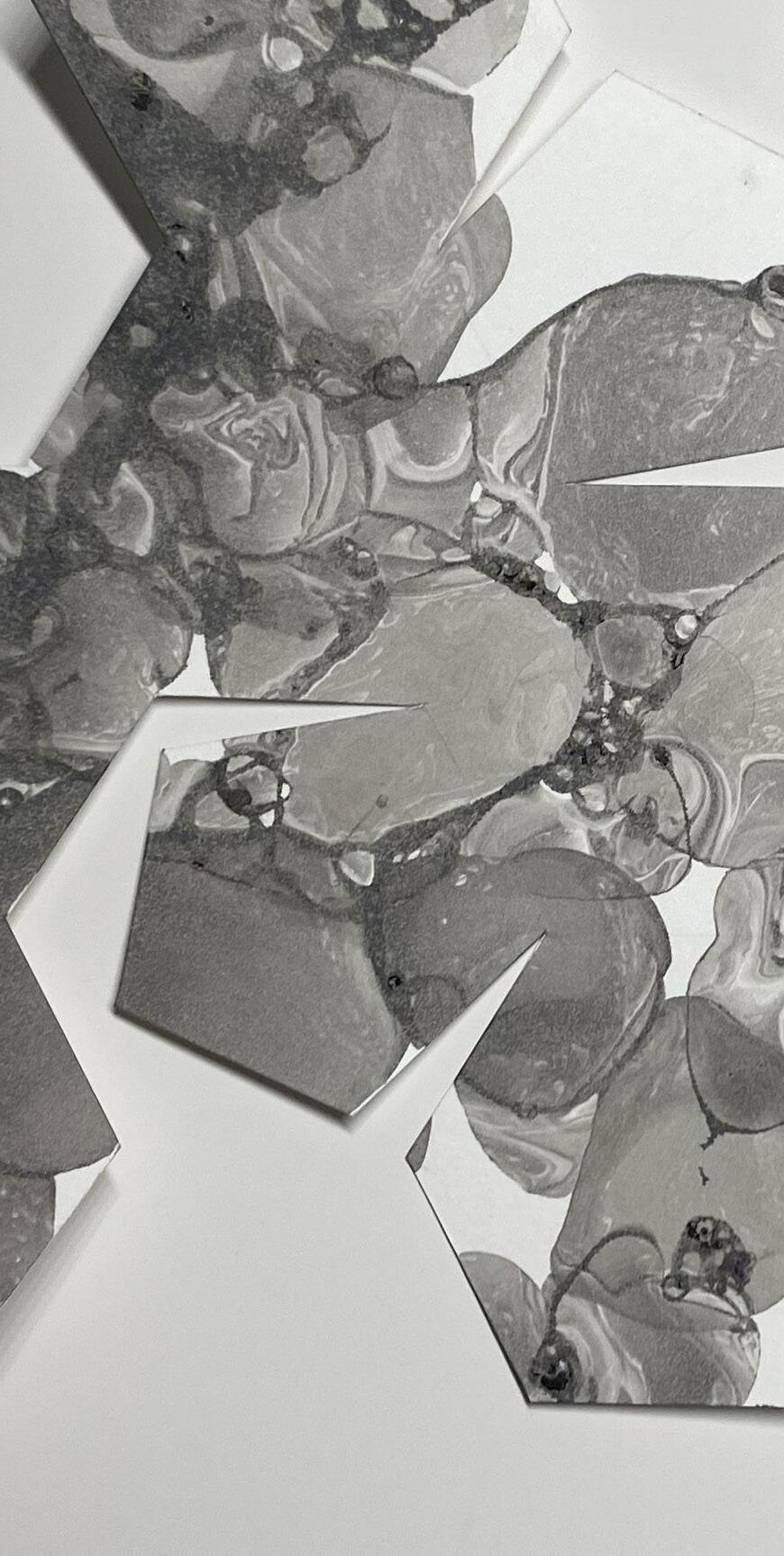
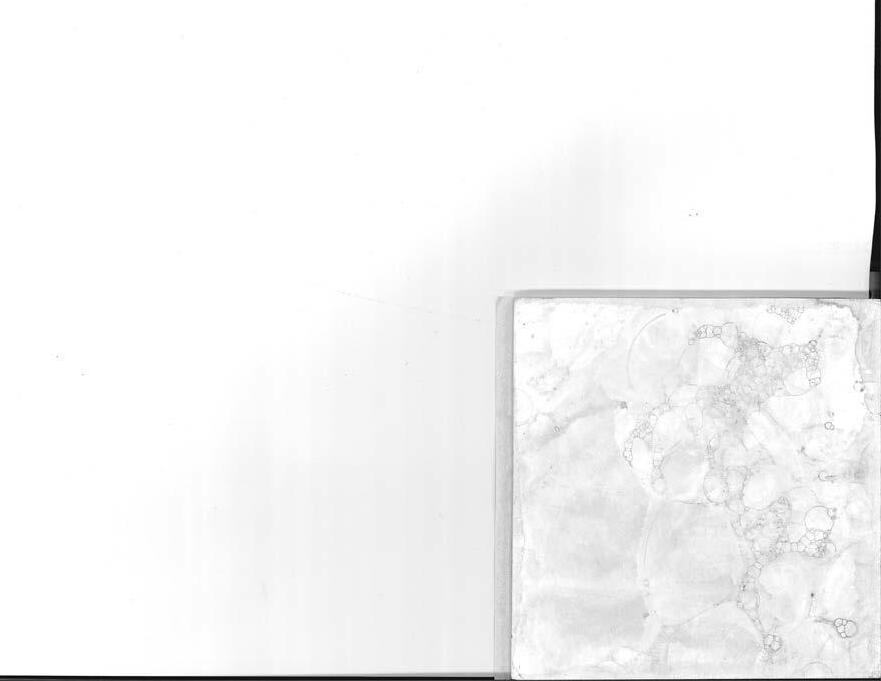
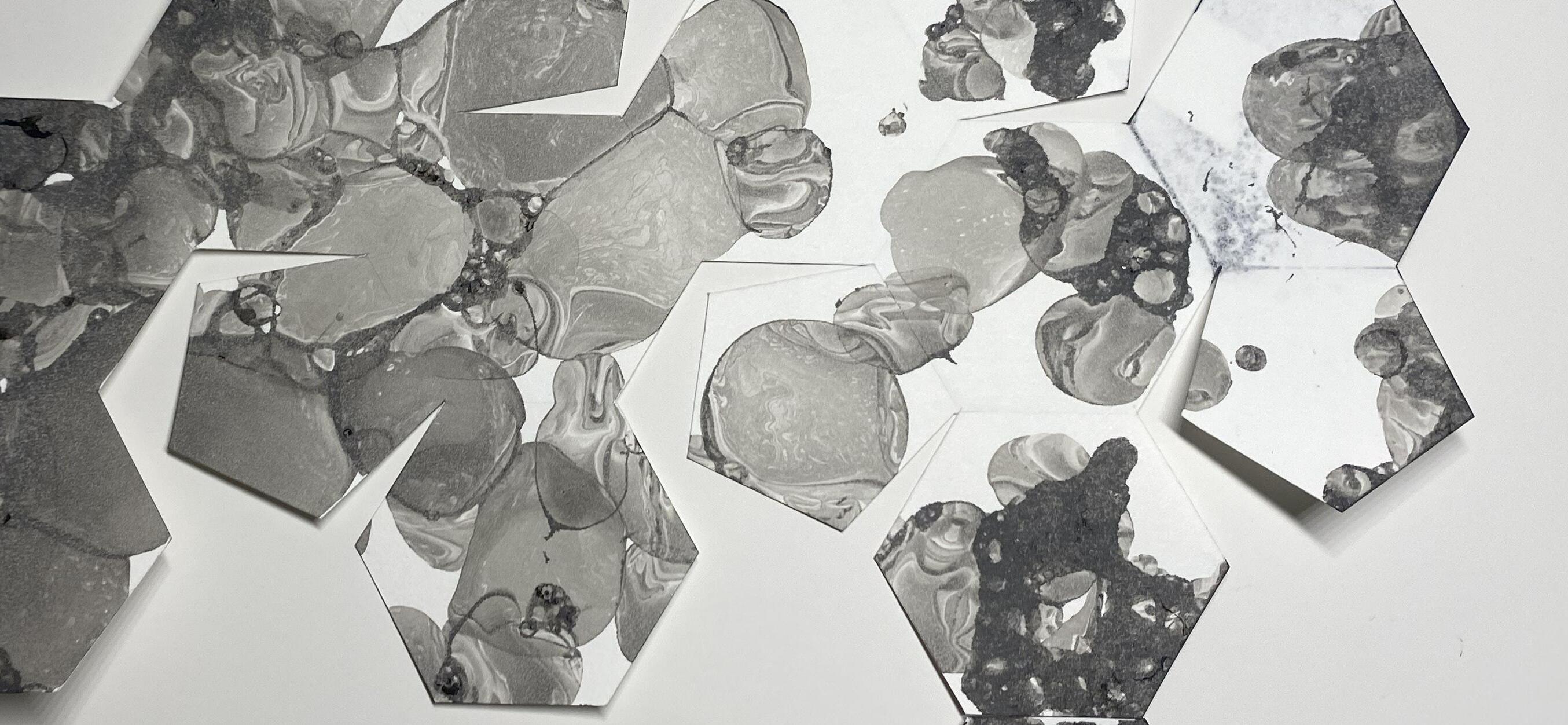
After the research phase, a series of exercises experimented with bubbles as a tool for drawing through dyed soap solutions.
The saturation of printed bubbles mark the time they spent on the page before popping.
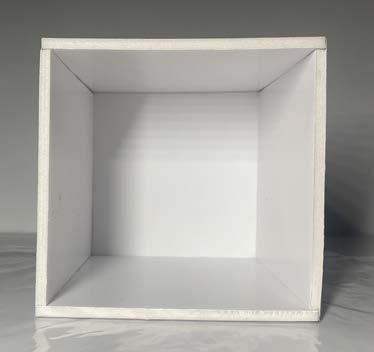
A new topic of interest arose after completing the prints within the basic cube:
How can the printed form reflect both the geometric and organic nature of bubble clump formations?
To create a more bubble-like form, domes were constructed. These allowed more dynamic prints, but their form felt too geometric, given the nature of bubbles.
The System.
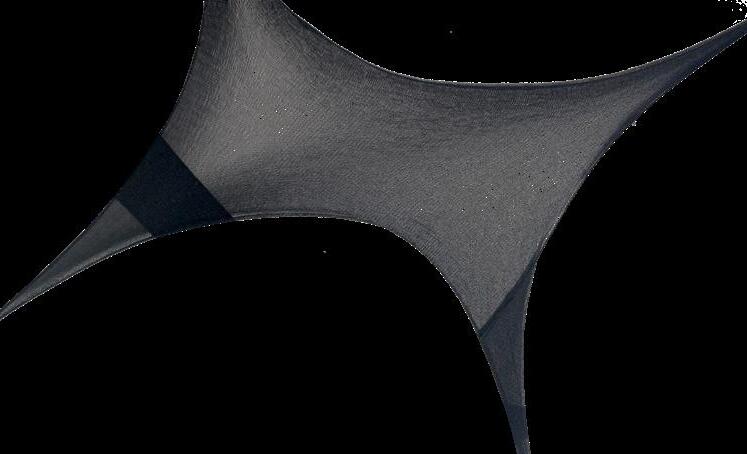
Feedback received from the physical prototype questioned the scale of each unit. On a larger scale, this prototype could start to occupy space and provide some form of shelter with only one unit. However, the system for building the prototype would have to be reconsidered. On a one-to-one scale, this prototype could be thought of as a single unit that supports a space frame system comprised of units, rather than the traditional node and member connections. After completing the physical iteration of the prototype, this geometry was brought back into the digital world as a way of exploring how this one unit could become part of a larger space frame system.
Prototype Development.
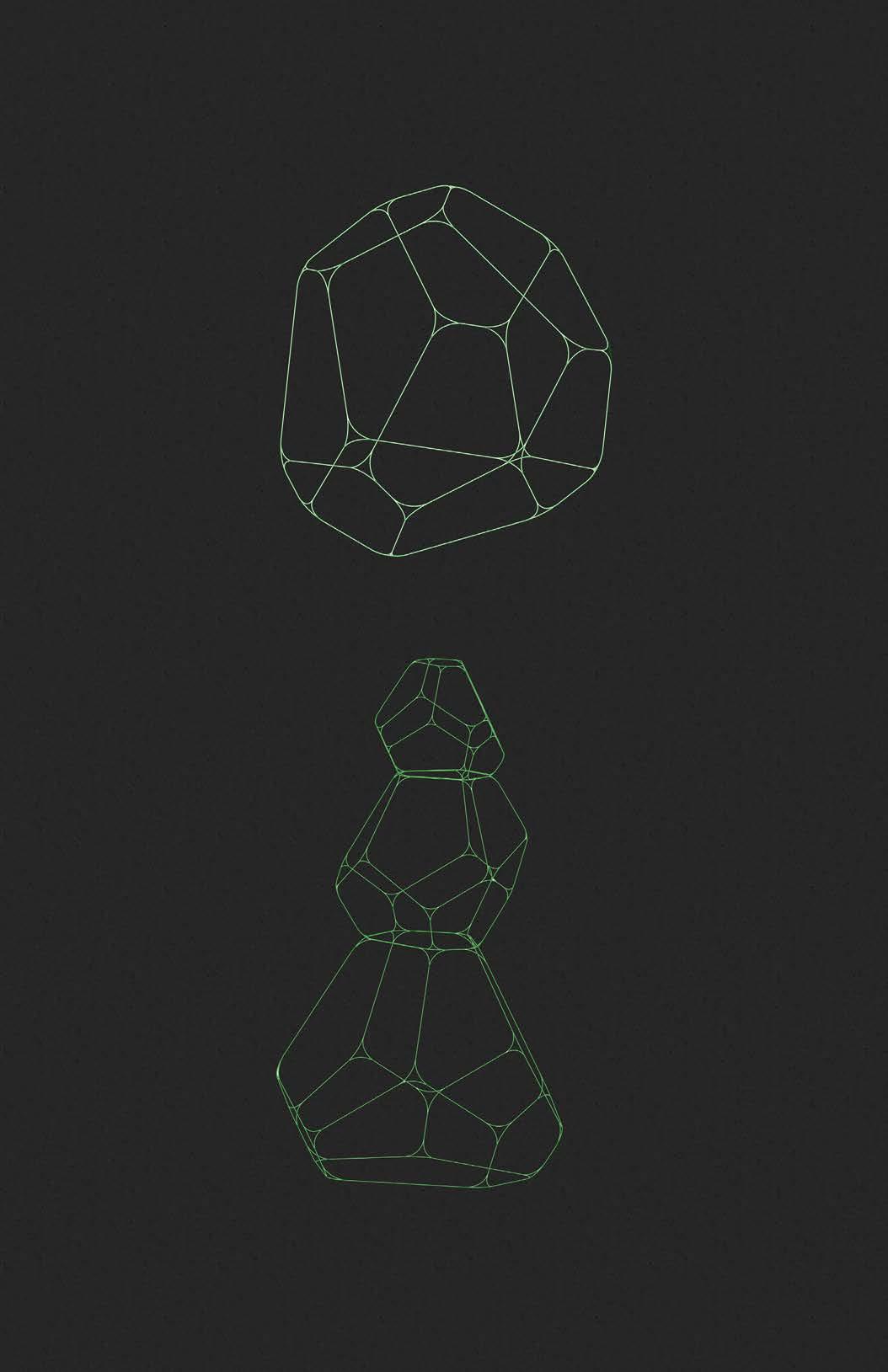
The same formation rules were applied to this new geometry. The process begins by deconstructing the dodecahedron into its twelve individual faces. The diagram to the right shows the process of how each face was treated to generate irregular pentagon faces while still ensuring the angles the edges meet at are fixed. These faces were modified slightly in one- unit increments, and then self-corrected to remain a closed shape.
This process was repeated eleven more times, ensuring the adjacent sides to each pentagon align with its neighbouring face. The image below represents the two-dimensional layout of the final prototype iteration. The next step is to take this digital process and manifest it into a physically built prototype.
2D Layout of Prototype
THE LAB
Self-Similar System.
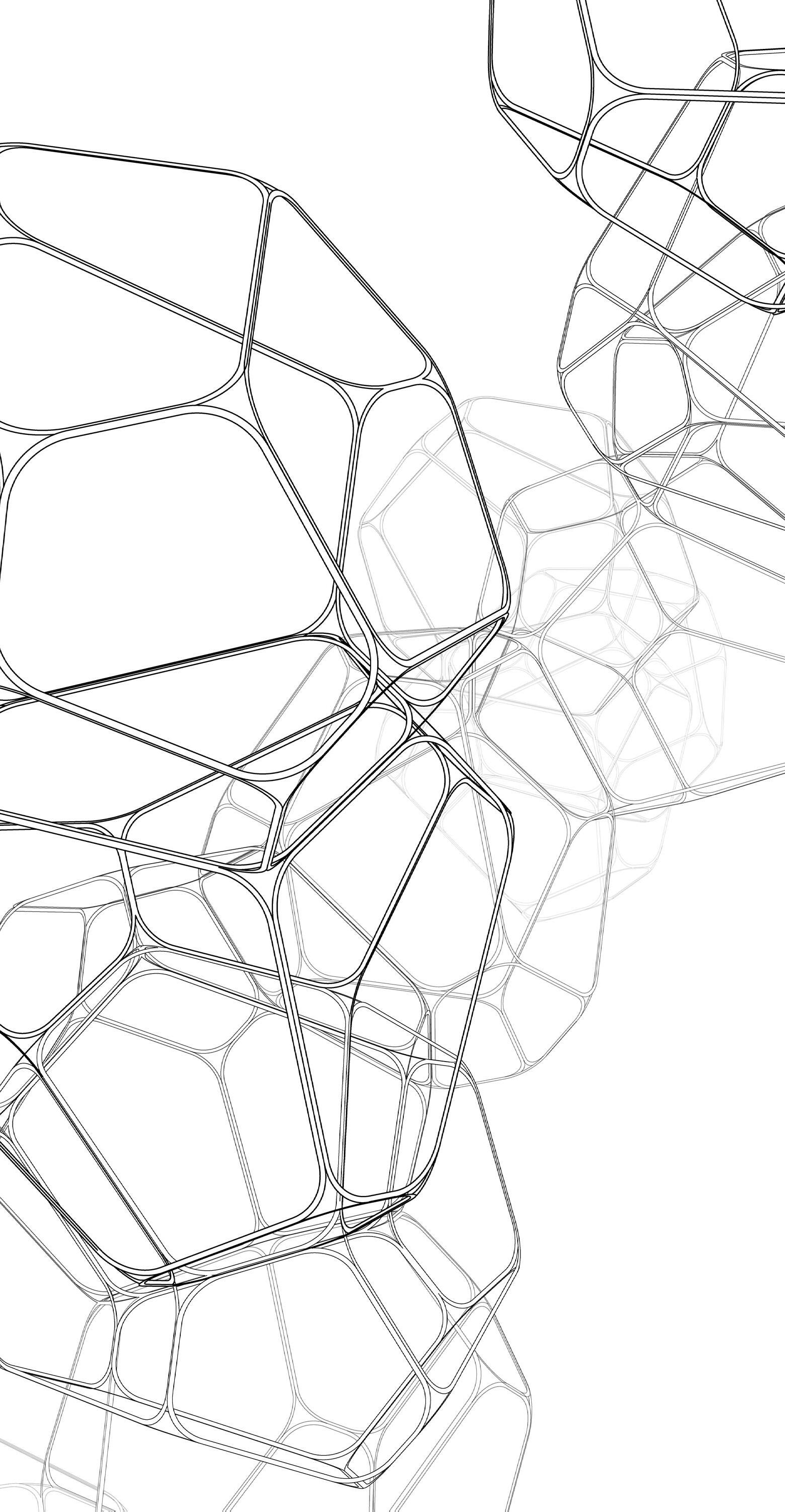
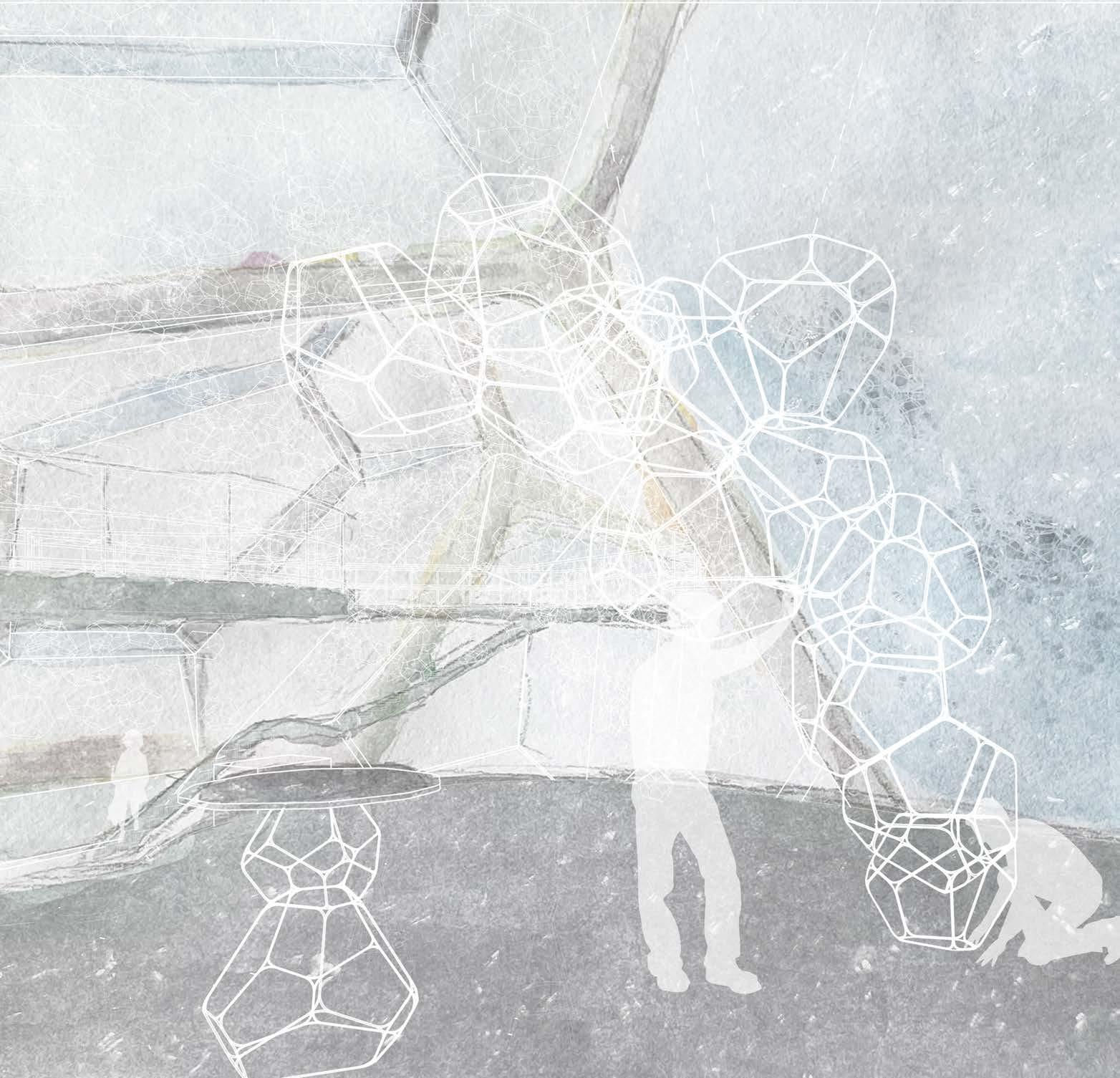
The form of the lab follows the same logic of being a self-similar system, which takes the prototype and scales it up to create enclosed volumes. Through scaling this prototype to an occupiable scale, the traditional fabrication of bent wire would not be possible, as the members would need to be much larger and more structurally sound, which would act as the laboratory’s primary structure.
The lab is meant to facilitate the research into a system like Bubble Logic, as well as other light-weight and innovative architectural systems. The lab supports programs for research, digital fabrication, and physical prototyping. The lab mimics the logic of bubbles while incorporating the space frame system established in phase two.
03 Urban Layers
Tactile Urbanism
PHASE ONE
Research + Observations
6 WEEKS
PHASE TWO
Designing the System
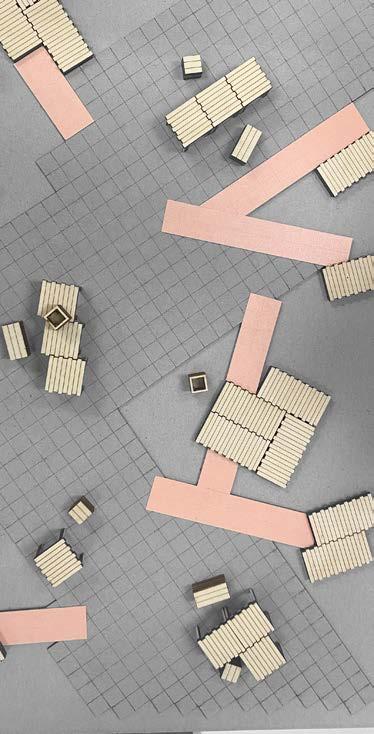
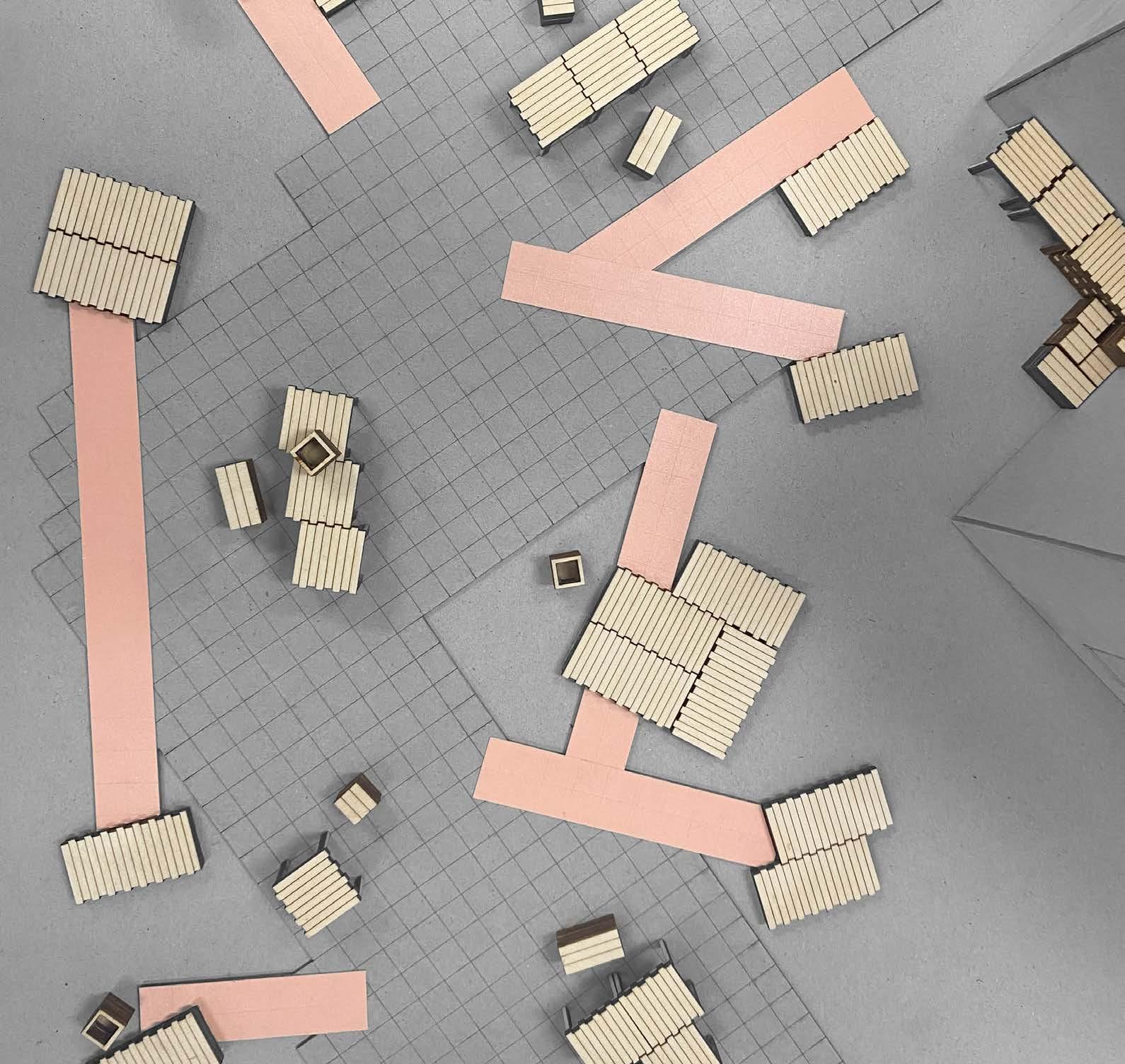
Urban Layers explores a modular and adaptable series of infrastructure that improves existing vacant spaces through inclusive and assessable design principles. This proposal offers a low-relief system that can move across the city as the programming of existing vacant lots change. The approach was to create easy, quick, and deployable infrastructure that is adapted to various vacant sites across the city of Calgary, to better serve the unhoused population. The modularity of this design allows for easy assembly, transportation, disassembly, and rebuilding. The modular furniture consists of stools or storage units in two sizes, tables, and elevated platforms for sleeping. There is a need for tactile urbanism in Calgary, and this initiative is a potential first step toward creating more inclusive and humane urban environments.
Garden Towers
Sustainable Fabrication
PART ONE
PART TWO
Digital Geometry Development
12 WEEKS
PART THREE
Prototyping the Artifacts
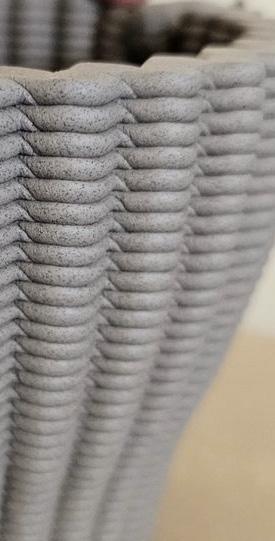
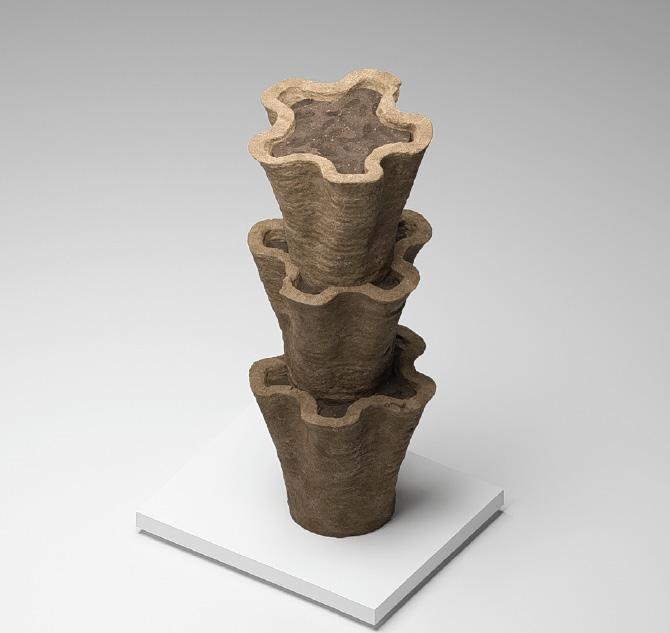
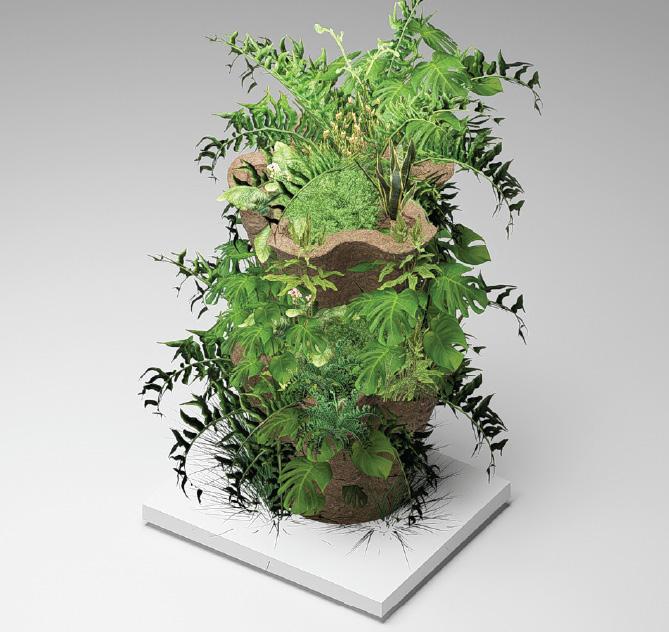
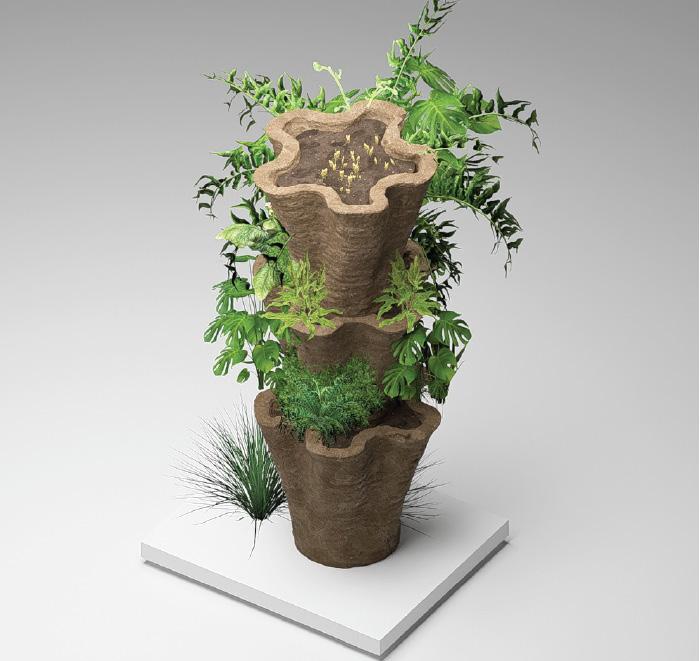
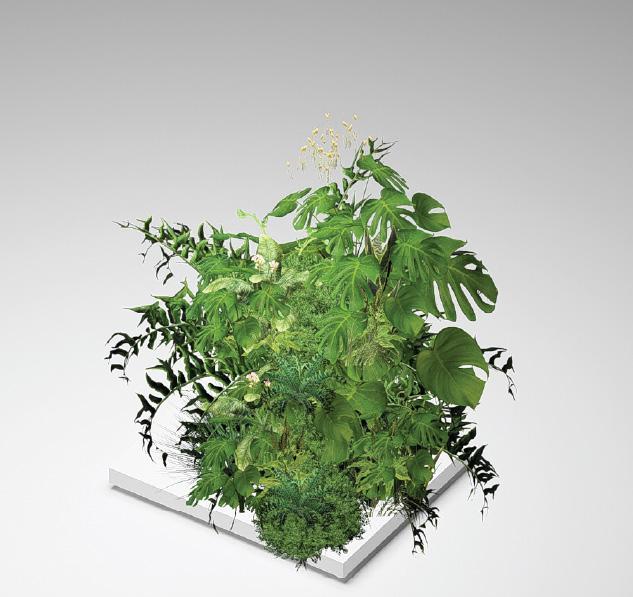
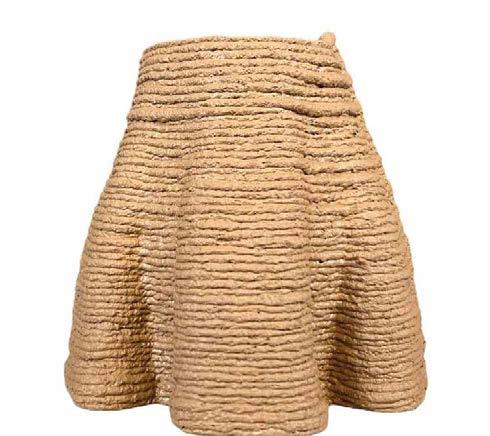
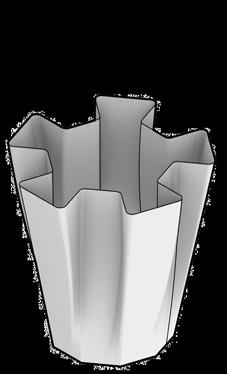
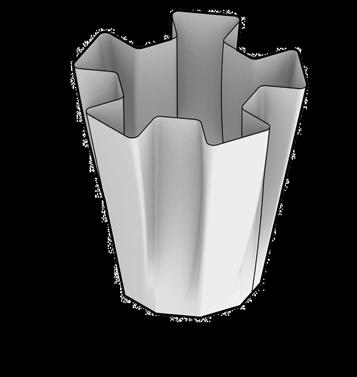
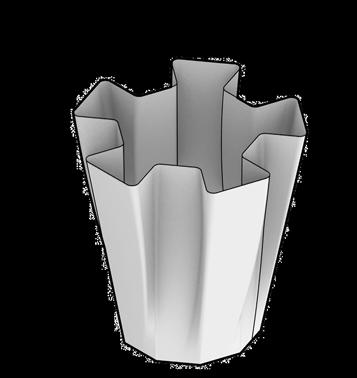
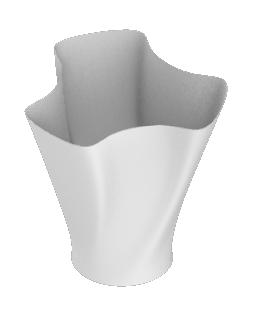
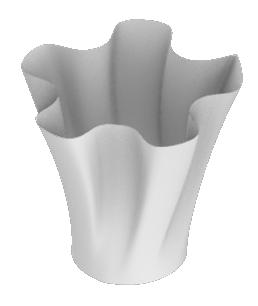
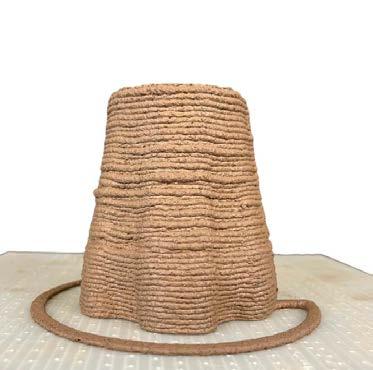
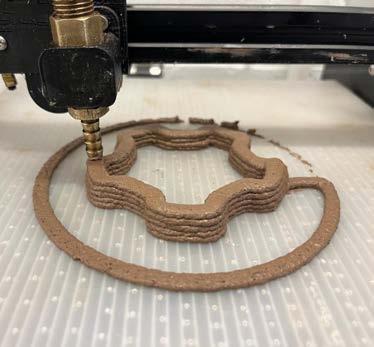
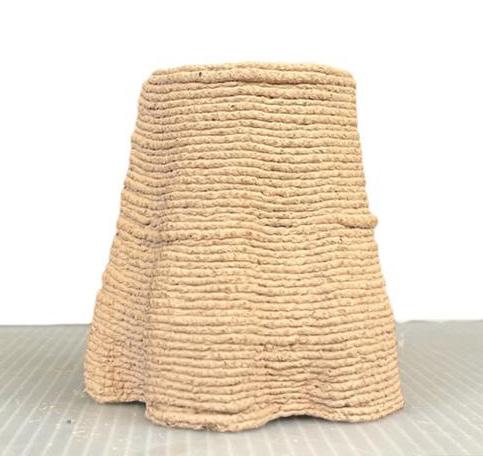
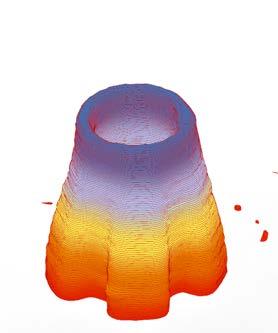
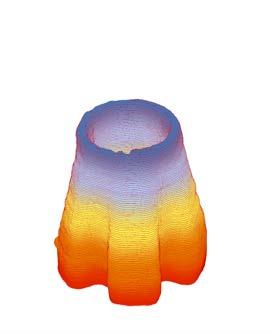
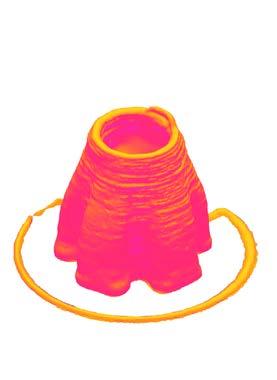
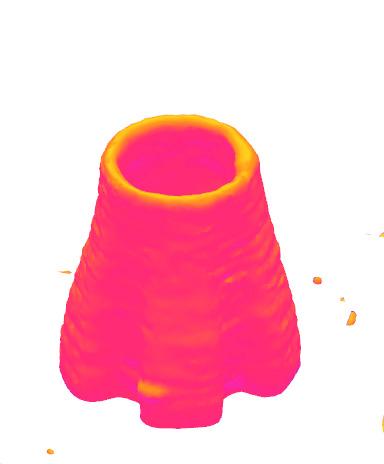
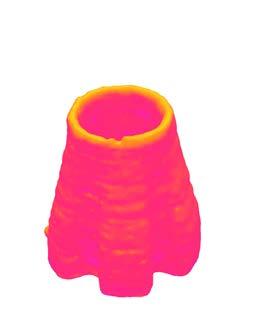
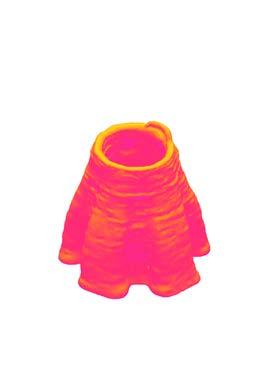
The Garden Towers are a ecofriendly revolution in gardening using waste feed stalk biodegradable ingredients and parametric design. Working through material testing, computational iterations, and physical prototyping, this group developed an architectural artifact meant to sustainably create scuptural forms through vertical towers. The sculptural vertical gardens produced serve to create visually captivating spatial arrangements that undergo gradual decomposition. As the sculptural elements degrade, ecological plant life takes their place, transforming the artifact from sculpture to garden - a concept we refer to as “Garden Towers”. This artifact functions as a pop-up ecological environment utilizing wasted materials to stimulate environments with natural ecologies.
Recipe Development.
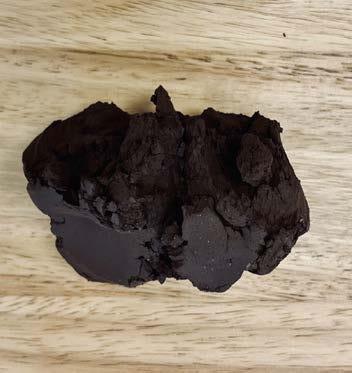
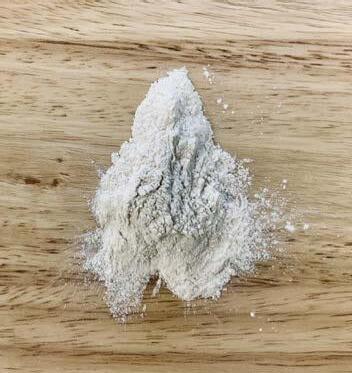
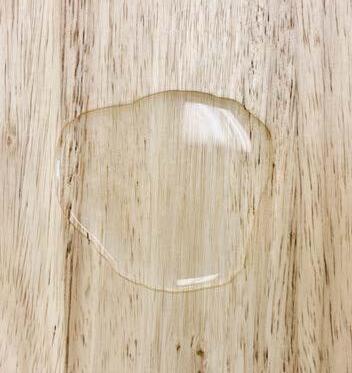
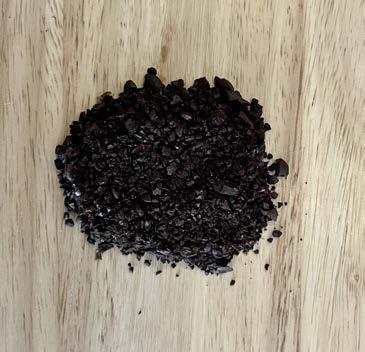
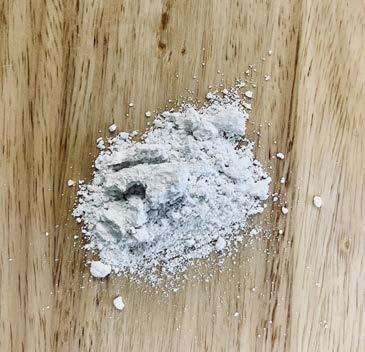
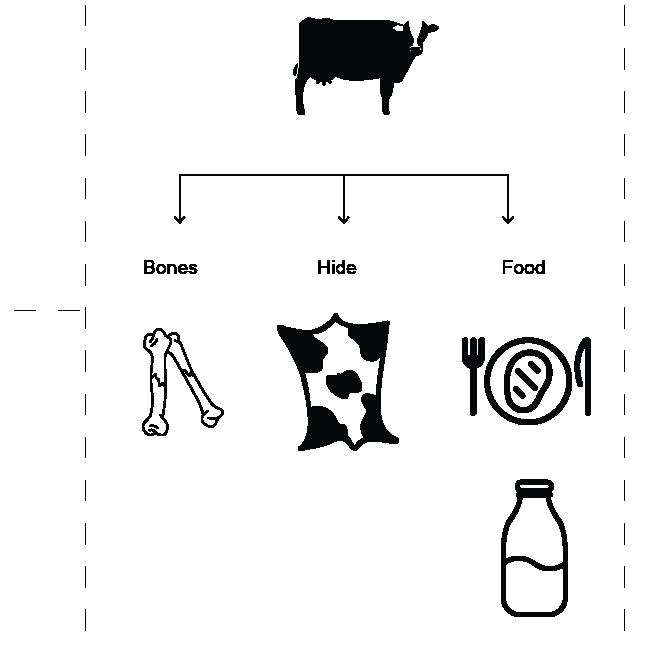
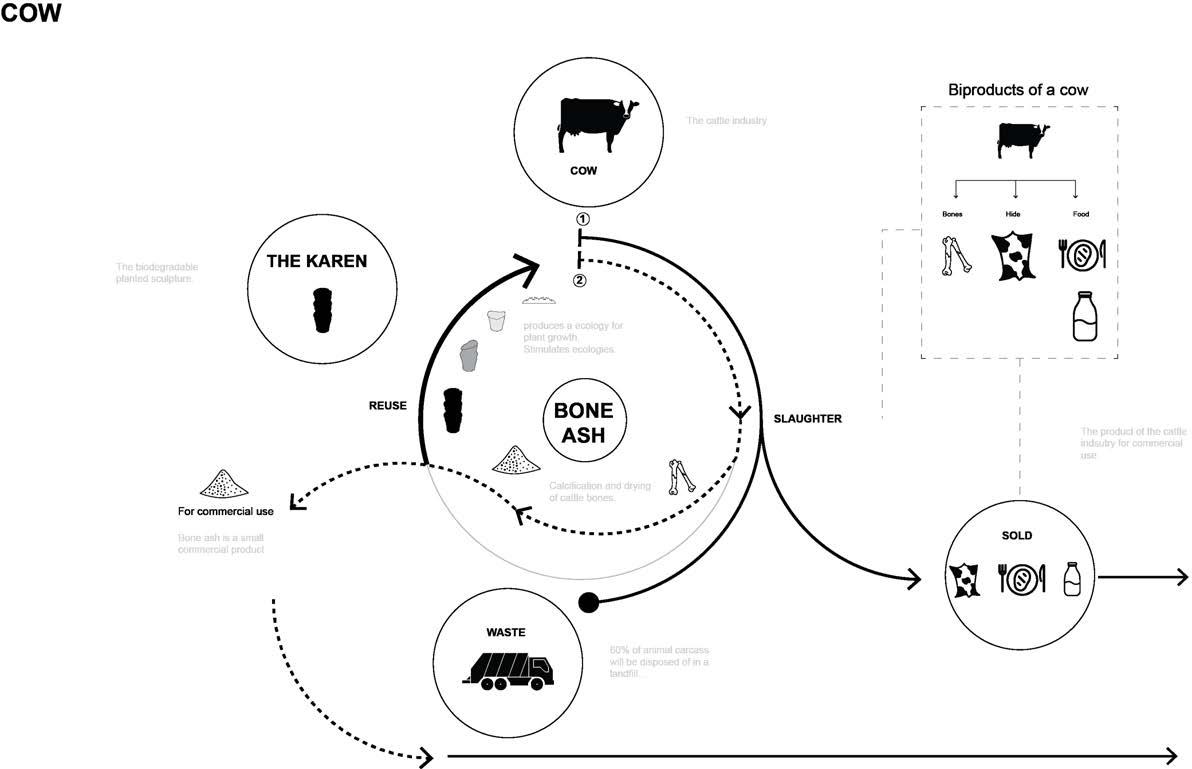
The first phase of this project explored how the recipe can start to incorporate sustainable materials. This phase took an iterative approach to ensuring the slurry is compatible with the 3D printers, while also balancing the ratios of slurry base to waste materials. The considerations of both bone ash and used coffee grounds were tapping into both global and local (Alberta) waste streams, as coffee grounds are often brought in from other continents and bone ash is directly sourcable from local cow farmers. The final recipe is a balance between providing enough stability to support itself while breaking down, and enough natural waste products to provide nutrients to the soil.
The Cattle Industry
Geometry Development.
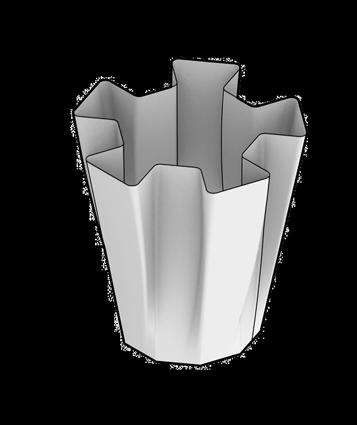
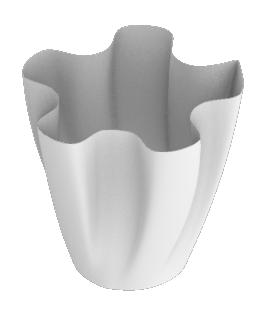
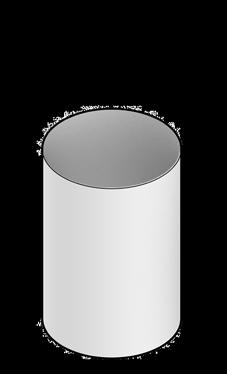
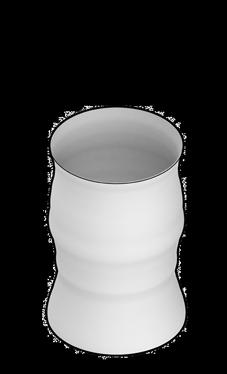
The overall geometry approach is derived from the formation of basic cylinders into a design that can explore both shelving and openings baked into the script. The original form shifted to allow more non-uniformed scaling in the original cylinder. From there, the group attempts to incorporate openings within the actual script before taking the operational approach to openings. This was achieved by taking basic infill curves and lofting them up to form these modular planters which can stack on top of each other to generate the overall form.
12 WEEKS
PHASE TWO
Spatial Planning + Facade Development
G.L.E.T.A.
Integrated Design Studio
PHASE THREE
Systems Analysis + Detailing
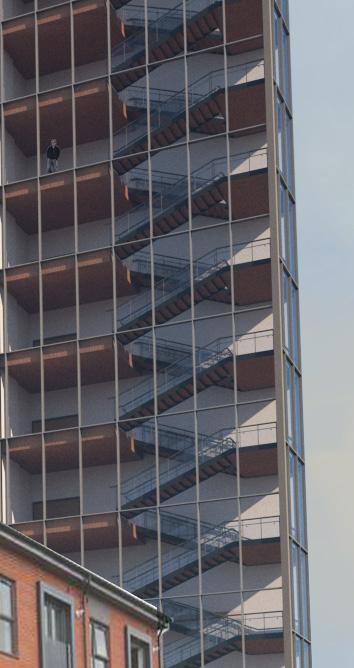
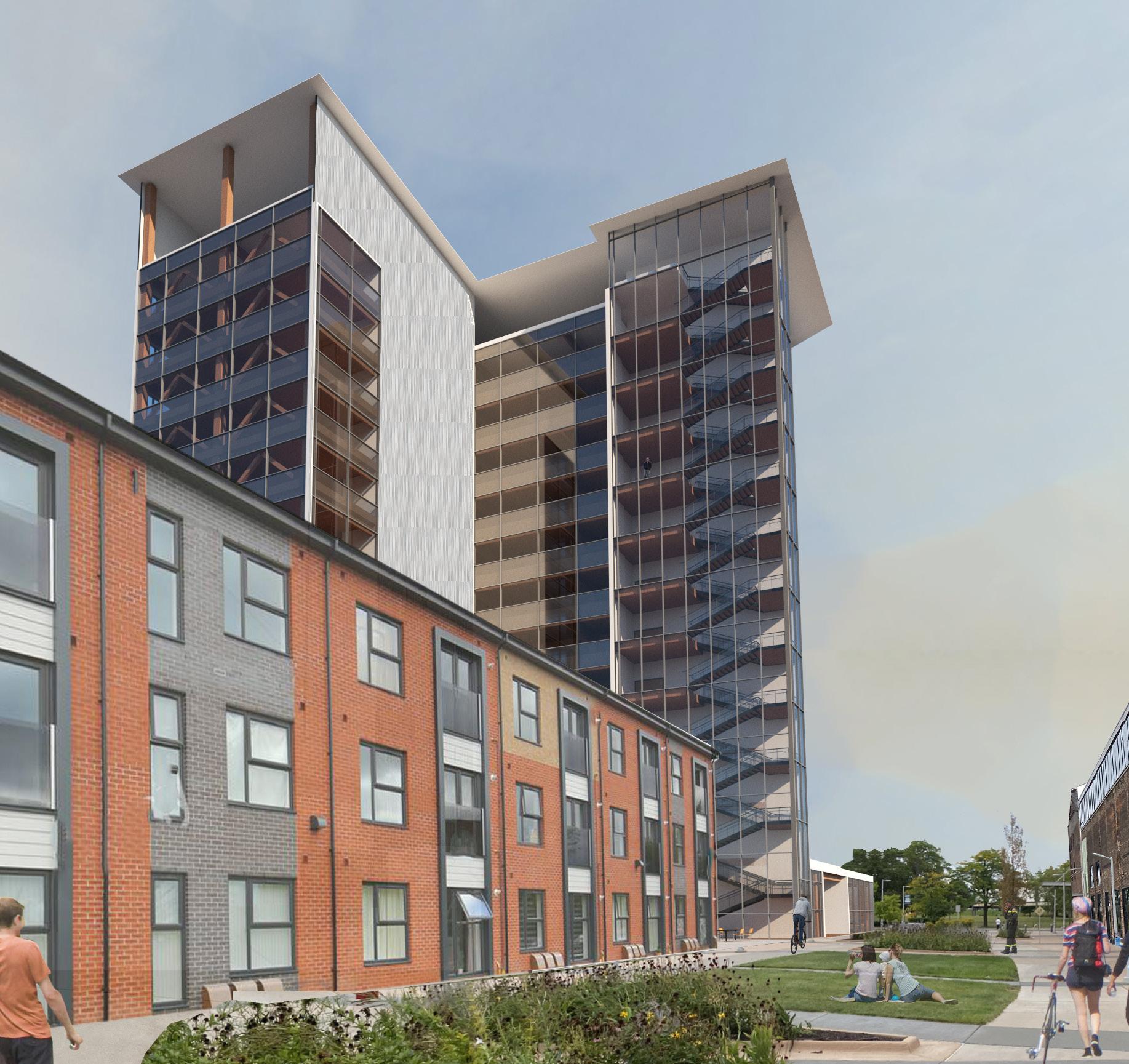
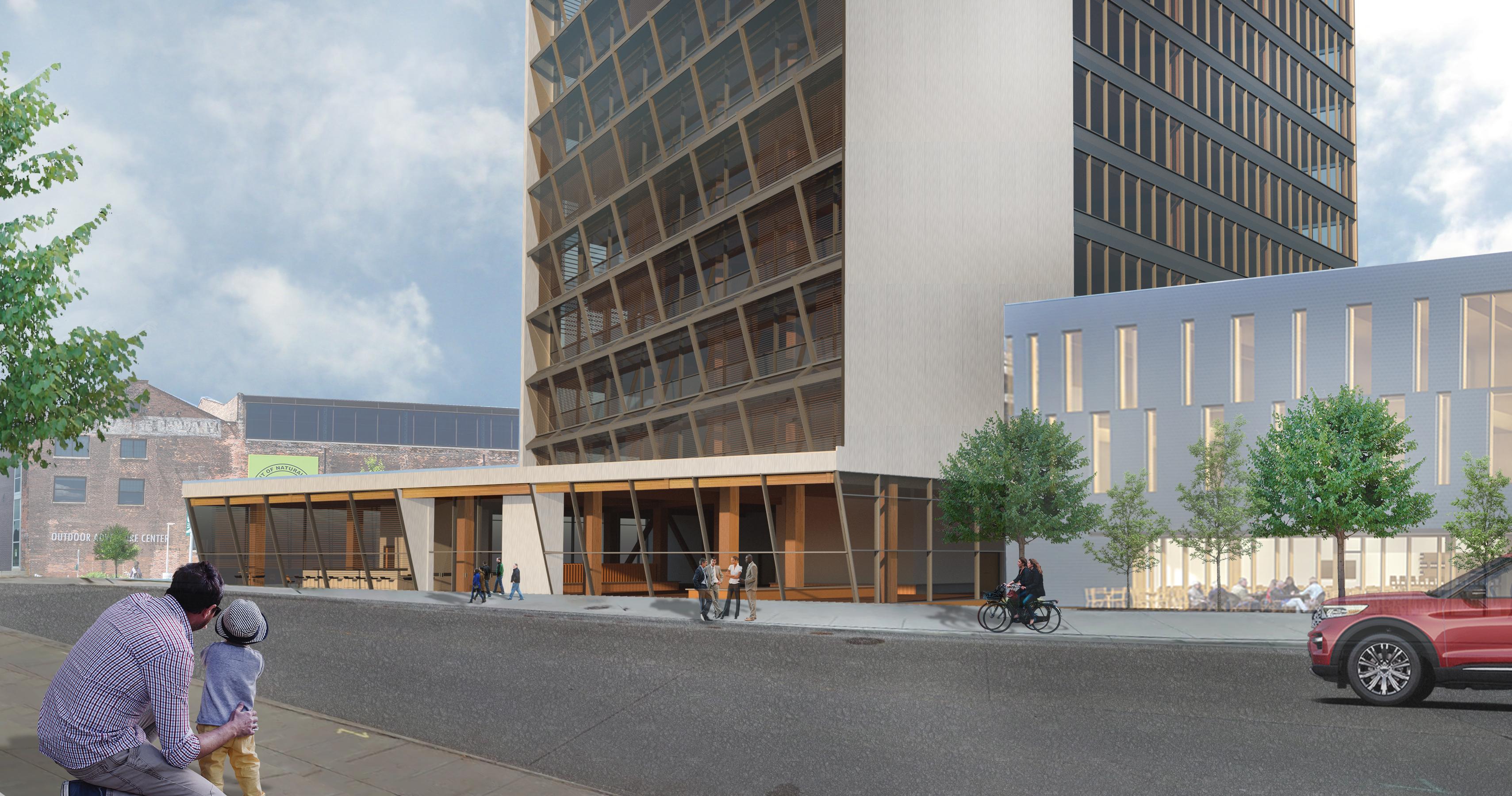
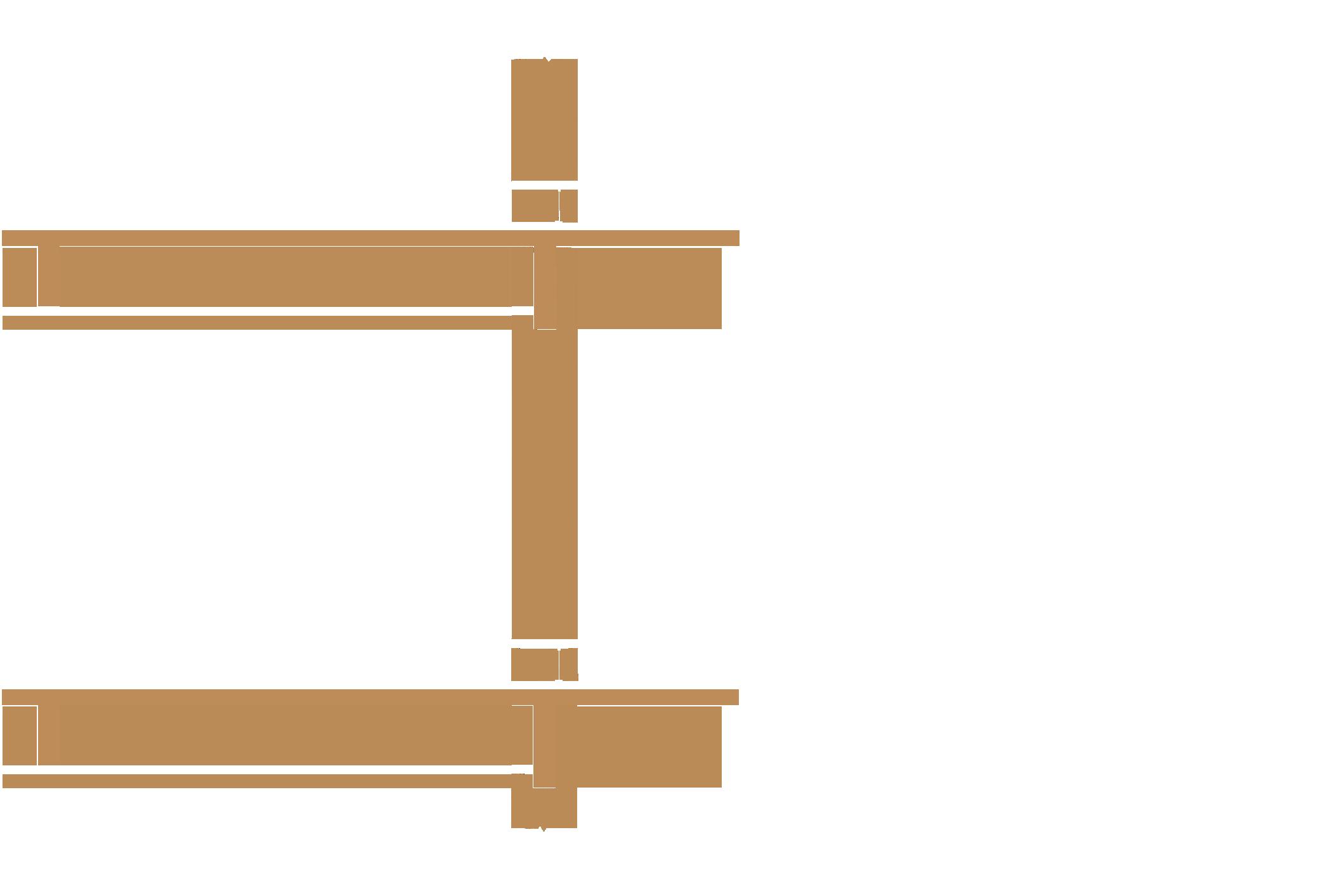
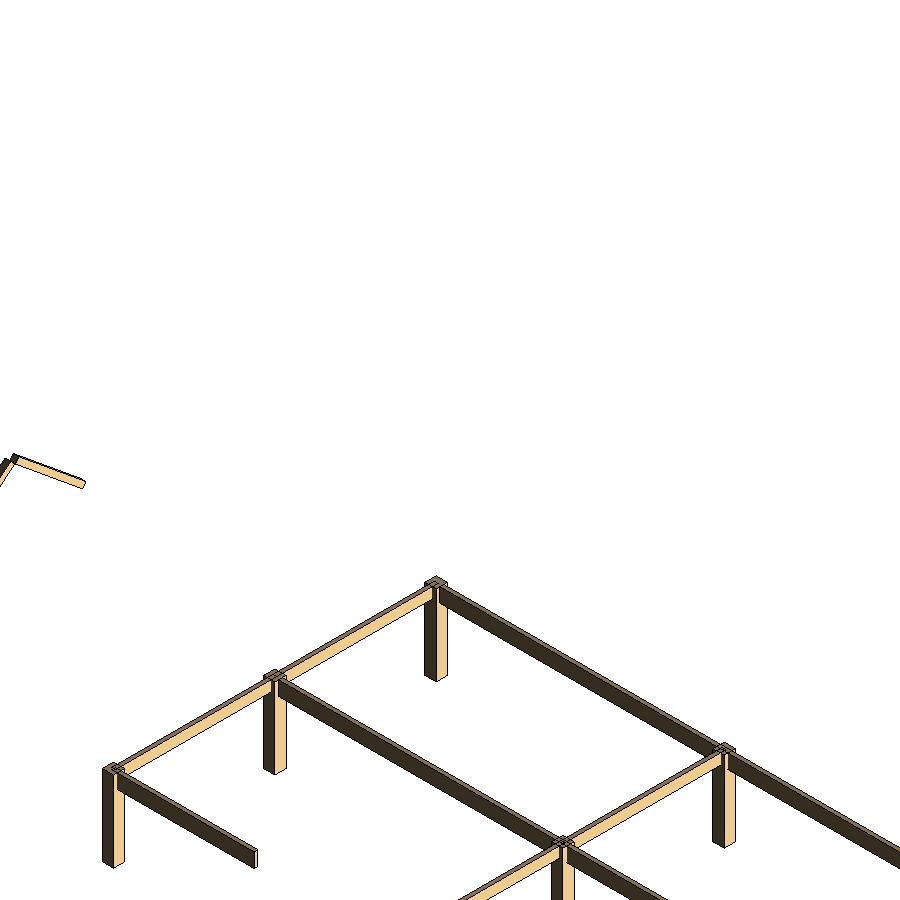
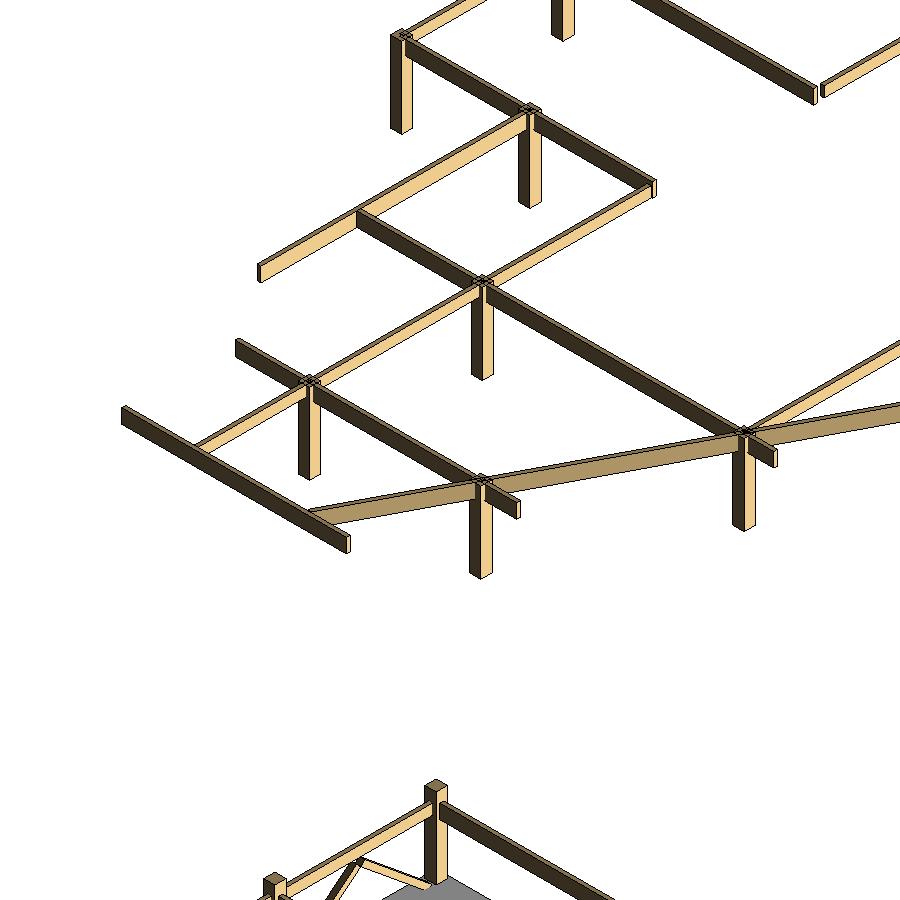
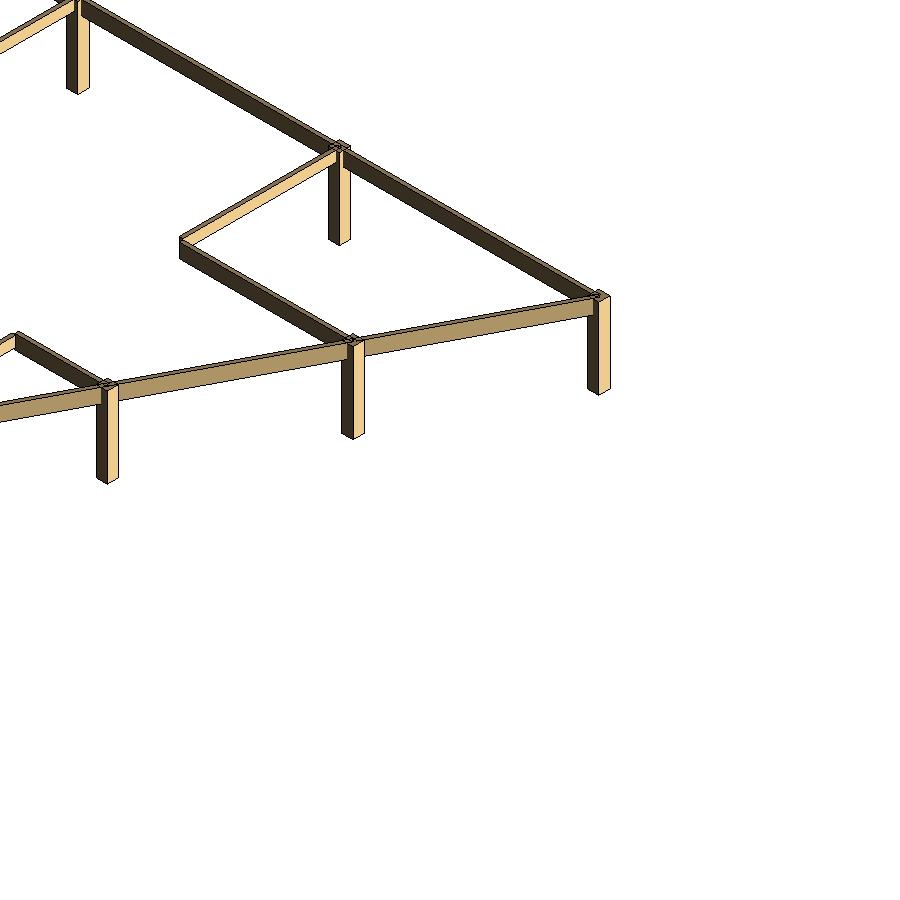
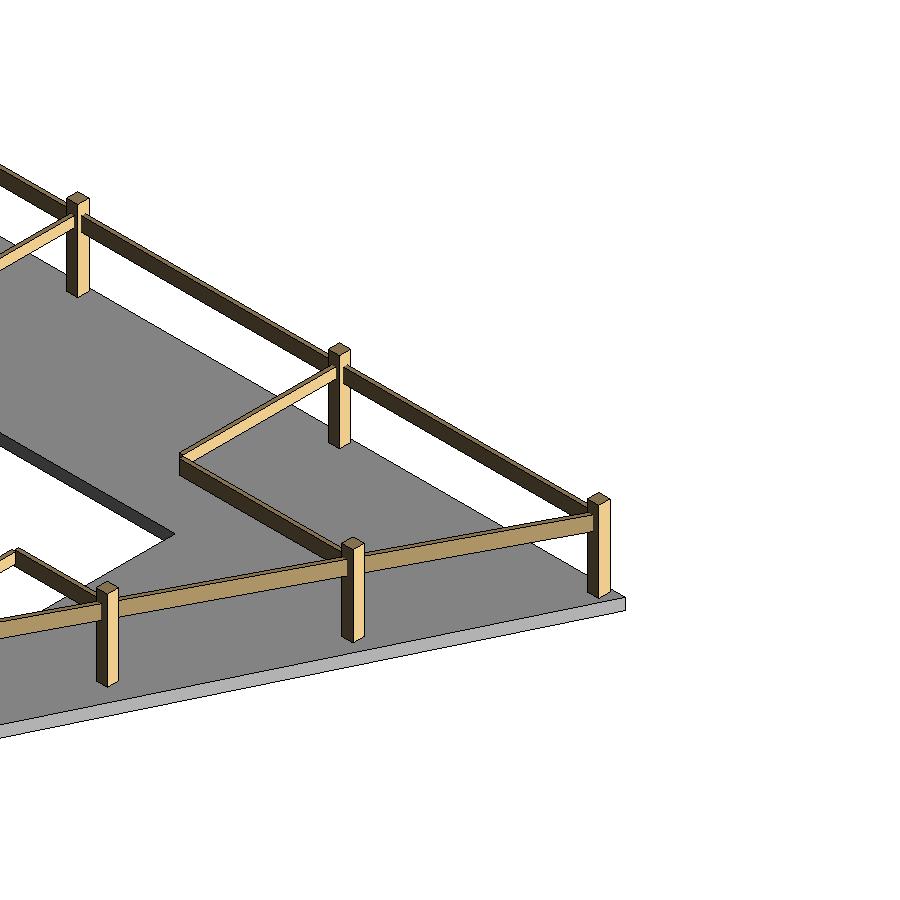
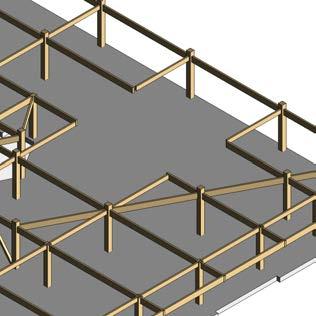
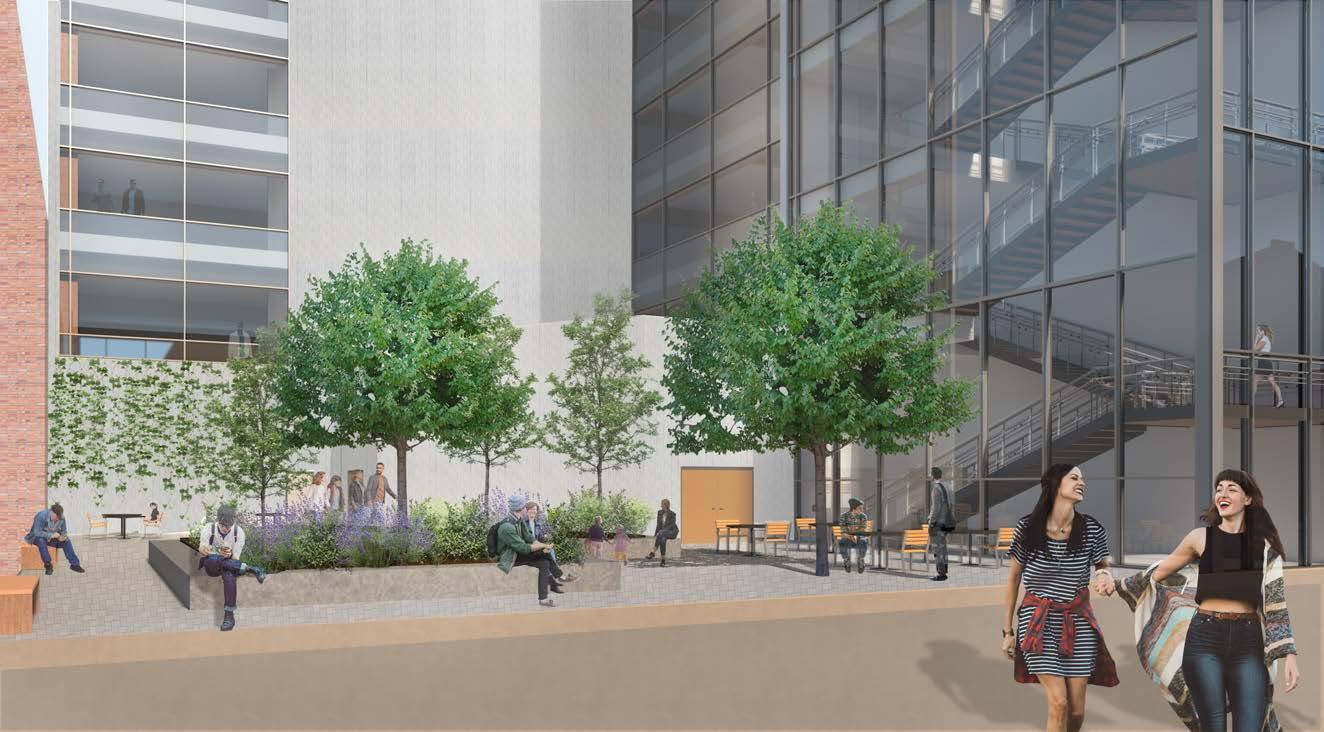
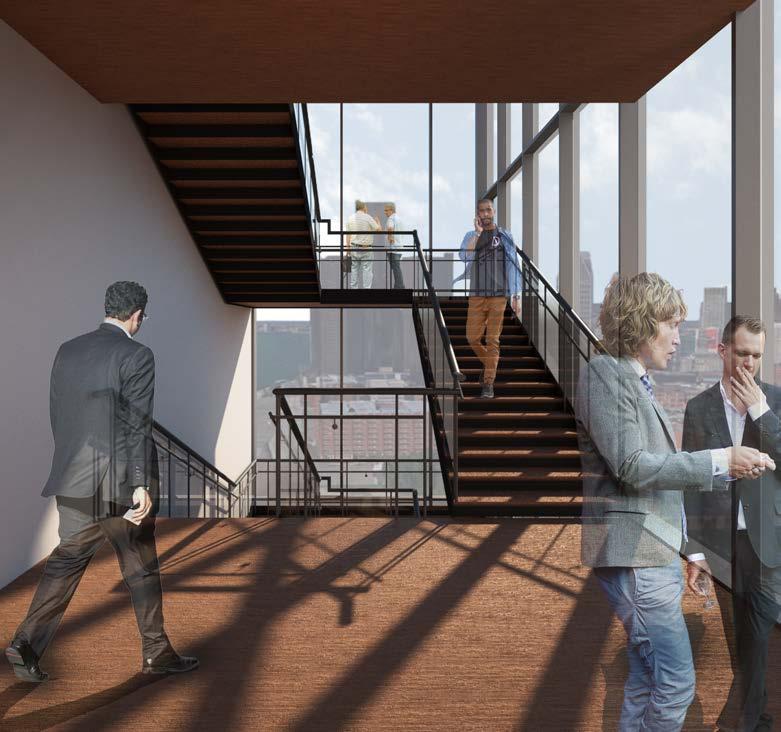
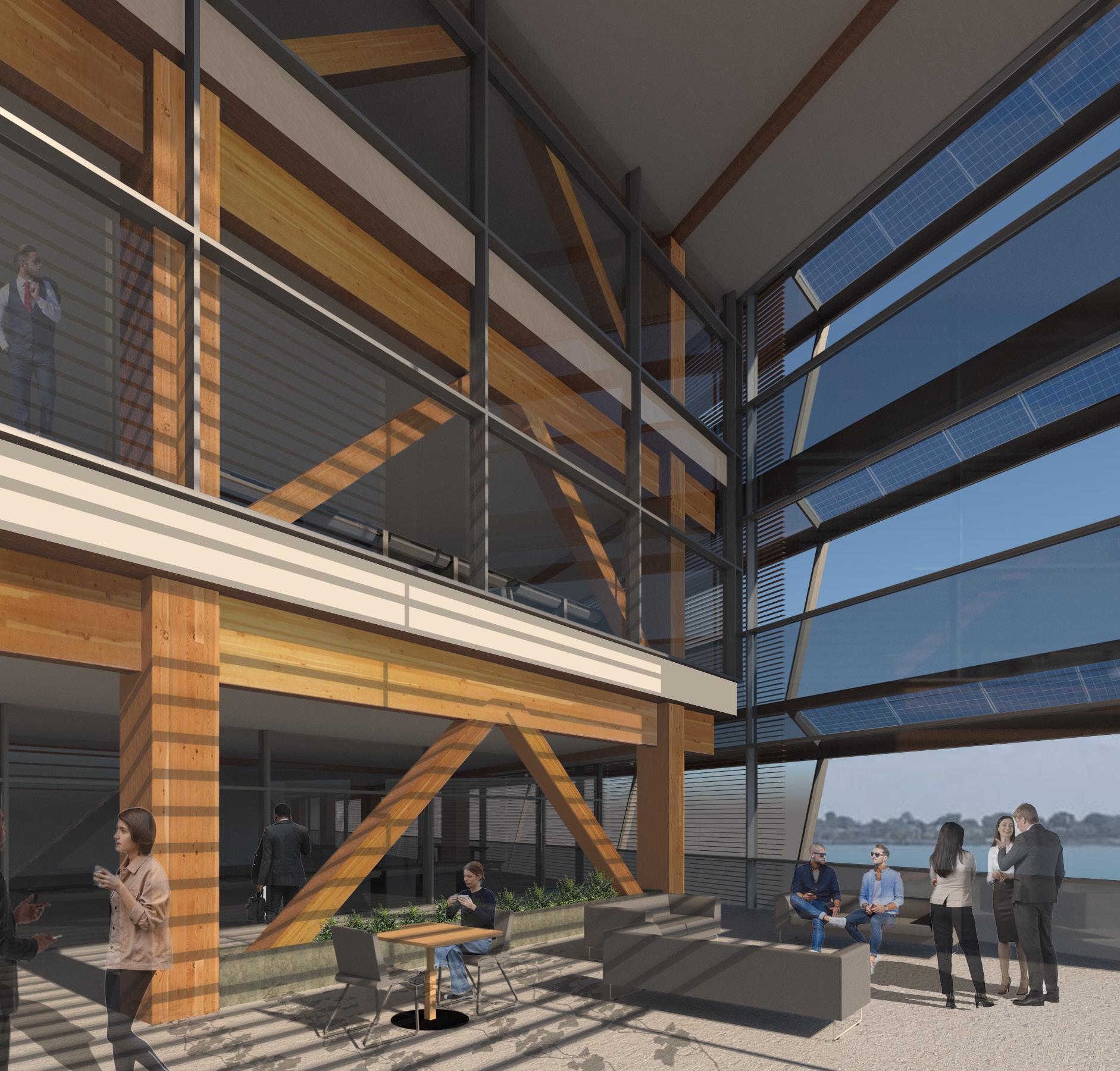
The Great Lakes Engineered Timber Association (GLETA) Headquarters is meant to showcase the innovations of heavy timber with mid and highrise building design. Located east of downtown Detroit, this project promotes safety, sustainability, and resiliency by achieving low operational and embodied carbon levels. Creating a better future for Detroit, GLETA attempts to shift what we know with office culture, shared spaces, and walkability, enhancing the everyday life of 9-to-5 employees. The project’s main objectives include creating a culturally significant, walkable, and collaborative office environment by adapting ecofriendly building design systems and optimizing the existing context to the project’s advantage. Spatial hierarchy is used throughout the project to denote public and private spaces.