12 Upfront Projects, products and people through a future-centric lens.
22 Things I’ve Learnt Kara Carter, director and owner of spacelab_, shares her greatest lessons from a career so far.
Height of Design Gensler Design Principal Collin Burry shares the object he sees as the pinnacle of good design.
26 View from the Outside Madeleine Kessler examines how screen time is becoming a spatial problem.
28 In conversation with: m2atelier Marijana Radovic and Marco Bonelli on trees, triangles and how the only red thread running through their work is that there isn’t one.
37 In conversation with: Studio O+A Primo Orpilla discusses radical workspace, breaking boundaries and operating at the frontier of innovation.
44 Case study: 5 New Street Square Basha-Franklin softens the edges of a Central London office with an art-infused lobby, lounge and events space.
52 Case study: Canvas, Arthur House TiggColl creates a vision for student living that’s more boutique hotel than dingy university halls.
58 Case study: The Eades Nicemakers integrates neighbourhood vernacular into Walthamstow’s latest BTR development.
64 Case study: Multistory Hawkins\Brown reflects the Birmingham’s changing personality with a new city-centre workspace.
70 Case study: Aethos Shoreditch
Marking Aethos’ first UK opening, Astet Studio devises a Shoreditch hotel that speaks to today.
76 Positive Impact
ecoLogicStudio proposes a bold vision for spaces, as sites of positive environmental and social impact.
81 Designing for Difference
POoR Collective’s Shawn Adams on the detriment of unpaid internships to industry accessibility.
82 Fast Forward
Rural Office on the role design plays in fostering community and how our future depends on looking beyond cities.
87 Paradoxically Speaking Sage’s Neil Usher explores the paradoxes of the great workplace carve-up.
90 Events: Workspace Design Show 2026
We round up the installations, products and talks you won’t want to miss at this year’s Workspace Design Show.
93 The Ask Tina Norden asks: does every space need a purpose, or can we design for doing nothing?
94 Mix Talking Point If the office is dead, why are we still designing it?
98 The Making Of... Gresham Garden sheds, Britishness and keeping it in the family: we explore the recipe for Gresham’s 50-year success.
102 Material Matters
Project Studio founder Martin Dourish shares the materials in rotation at his Manchester practice.
103 Material Innovation
Studio Christine Jetten crafts unique architectural surfaces with dust and pollutants captured from the atmosphere.
Colophon
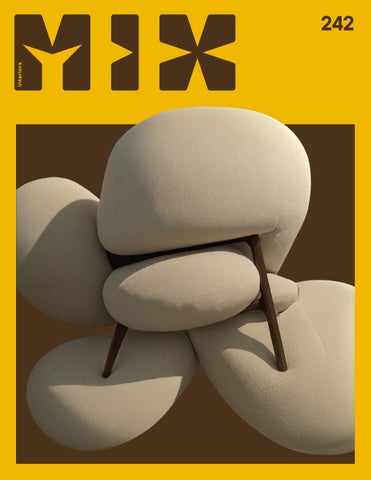
The cover Designer Manufacturer
Get in touch
Managing Editor Harry McKinley harry@mixinteriors.com
Marketing Manager Paul Appleby paul@mixinteriors.com
Head of Operations Lisa Jackson lisa@mixinteriors.com
Advertising and Events Operations Manager Maria Da Silva maria@mixinteriors.com
Art Director Marçal Prats marcal@mixinteriors.com
Founding publisher Henry Pugh
Gensler Paris operates as a boutique architecture and design firm under the wider Gensler umbrella, specialising in forward-leaning workplace, hospitality and mixed-use projects in Europe and beyond. The studio brings the spirit, character and nuanced local understanding of a Parisian architecture atelier to the firm, offering European clients unique access to a global network of solutiondriven design expertise.
gensler.com
Proudly Bolton-based, Gresham has been shaping the workplace furniture design space for over 50 years, following the success of its first desking range, Design 2000, which revolutionised the market in 1980. Today, Gresham has grown to a 200,000 sq ft cutting edge manufacturing facility, employing over 200 skilled professionals dedicated to designing, producing and installing exceptional office furniture.
gof.co.uk
Subscription
To ensure that a regular copy of Mix Interiors reaches you or to request back issues, call +44 (0) 1161 519 4850 or email lisa@mixinteriors.com
Annual Subscription Charges UK single £45 50 Europe £135 (airmail) Outside Europe £165 (airmail)
The way we work. When approached superficially, it’s a topic increasingly worn thin. ‘Hybrid is the norm, mixing fixed collaborative settings with remote’; this we know. ‘The office is changing and needs to cater to evolving needs’; wasn’t it always thus? ‘The lines are blurring between hospitality, workplace and home’; well, pull up a seat in a mid- 90 s Soho House or a mid-noughties Ace Hotel or Hoxton, and those lines were already diffuse. None of this is to say conversations about the way we work, or the spaces in which we work, are redundant – it's more to suggest that the most meaningful discussions are those that drill deeper, that explore the office not as a productivity container, but as a reflection of society. Doing so exposes just how much ‘the way we work’ resonates across every aspect of commercial interior design and architecture – beyond pure office design and into the way hotels are conceived, products are developed and public spaces considered.
This issue, we try to plumb some of the depths. In our interview with Primo Orpilla, founder of Studio O+A, we discover what tearing up the rulebook decades ago meant for workplace design today and why the lessons learnt remain relevant; while our discussion with the founders of Milan’s m2atelier, Marijana Radovic and Marco Bonelli, highlights the need to create 24-hour spaces for work, play and everything in-between.
Our case studies also explore big ideas: from a hotel and coworking concept that wants to be your office, your meeting spot, your gym and your spa combined; to a Birmingham workplace that aims to challenge how we think about connectivity.
Ahead of a live Workspace Design Show panel discussion with the same title, in our Mix Talking Point we also ask, ‘if the office is dead, why are we still designing it?’, questioning if we’re just decorating nostalgia or whether the workplace is still genuinely where innovation flourishes.
Then there’s the extension of how we work – what happens when we, well, don’t? On this, our columnists weigh in: Tina Norden mulls on designing for doing nothing – creating spaces and opportunities for respite and release – while Madeleine Kessler suggests that reducing screen time is an architectural issue.
This issue isn’t an attempt necessarily to define the present and future of work but, perhaps, to look sideways at it – through spaces, practices and ideas that reveal how deeply it permeates the way we design, gather and live.
Enjoy,
Harry McKinley Managing Editor
Oko
Design by LucidiPevere
A brand by Flokk
SUSTAINABLE SEAMLESS SURFACES
Sphere8 delivers stunning, sustainable and innovative resin floor and wall systems.
Plant based resins offer a sustainable alternative to petrochemical epoxies and energy-intensive finishes such as polished concrete, but allowing for the same look and feel.
Our EPD certified systems use recycled fillers, such as crushed glass and recycled plastics, whilst offering exceptional durability.
Introducing Lana, the transformational laptop stand bringing uncompromising ergonomic support to workspaces everywhere.
With intuitive height adjustment and an integrated USB hub, it delivers ergonomic support and seamless connectivity across a wide spectrum of users and workstyles. As leaders in workplace ergonomics, we’ve set a new benchmark for inclusive laptop use with Lana.
That’s cool
Slated to be the only Paris Proof structure in Rotterdam, the former Bank for Trade and Shipping on Coolsingel is being transformed into a sustainability-first workplace for multiple tenants, with ground floor meeting places being made available to residents and passersby. Now dubbed C93, developers BNP Paribas Asset Management and Provast have entrusted Paul de Ruiter Architects with the task of adding a third layer to the 26,000 sq ft structure, having been built in 1957 and expanded with an 80-metrehigh tower in 1993.
Owing to its reconstruction era base and postmodernist appendage, C93 was declared an official monument by the Municipality of Rotterdam in October 2024, gleaning the building a newfound respect. With recent accolades in mind, the design team selected sensitive modern interventions to preserve original architectural features, while making the decision to add an upwards extension to accommodate myriad businesses.
A key objective for the redesign was to meet the strict sustainability standards of a Paris Proof, not only to drastically reduce CO₂ emissions but prolong C93’s lifespan as a recently recognised building of cultural importance. The plan to remove
the 400 mm Brazilian granite slabs from the façades is set to relieve the structure of unnecessary mass and allows for special insulating glass, solar panels and energy-efficient technology to be installed, saving 70 kWh per sq m of energy as a result. No building material will be wasted. Instead, the distinctive pink granite will be crushed to produce new, lighter slabs to reclad energy-optimised walls, with remaining aggregate being incorporated into the interior scheme. Furthermore, the structure’s four oval ‘eyes’ will be glazed and repositioned at a new 100 m height. The reused portholes invite tenants to appreciate the city’s resilient architecture and resourceful spirit whilst working in a fine example of both.
A true gem
MVRDV reimagines the atypical urban tower for Inaura – the project proposal that won an international competition with its fresh design approach to Downtown Dubai. With Dewan Architects + Engineers as lead consultant, MVRDV’s concept comprises a 101-key hotel, 105 one- to three-bedroom apartments and nine luxurious four- to six-bedroom Sky Villas, complete with a one-of-a-kind Sky Lounge and shared amenities. For both long- and short-stay homes, the team builds upon client Arada’s vision of a development that prioritises fitness, wellness and lifestyle, as well as clean eyelines to and from Burj Khalifa’s Dubai fountain.
At 210 m tall, Inaura will be seated amongst taller, flashier neighbours, all competing for attention in an already saturated hospitality and living landscape. Rather than participating in a game of ‘one-upmanship’, MVRDV’s Inaura takes a different road to claiming its place in the city, with a luminous,
jewel-like ovoid structure taking centre stage in its Sky Lounge. Positioned at around three-quarters of the tower’s total height, the ethereal orb – omitting a concentrated beacon of light from between its own storeys and adjacent buildings – also serves a functional purpose, hosting a VIP club space.
From looped and soaring geometries to intricately detailed elevations, many projects aspire to make their unique mark in a skyline boasting the world’s tallest building, to varying effects. Strategically located on the threshold of Downtown Dubai and Business Bay, Inaura adopts a shorter, rectilinear massing that is somewhat unassuming given its cultural context. Rather than asserting dominance, MVRDV have chosen to employ a strategy of intrigue with a singular, contained point of visual interest – perhaps signalling a turning point within the city’s luxury residential market.
Our Disrupt colour palette creates spaces that encourage engagement and collaboration. Grey tones in the palette balance the bolder hues, allowing the brighter colours to stand out and create focal points.
Mission accepted?
Founder of San Francisco’s GRU Space (Galactic Resource Utilisation Space), Skyler Chan, believes we are at an inflection point in history; a point where we must become interplanetary before our inevitable Earthly demise. While billionaire corporations have reduced the cost of orbital launch, Chan identifies a gap in architecting our expansion as a civilisation, proposing the hotel, Mission 4, to be the first ever off-Earth structure in history.
Trained as an Air Force pilot at 16, the 22-year-old ex-NASA employee openly rejects existing aerospace paradigms, regarding developments greenlit by external powers-that-be as risk-averse incrementalism which only aim to solve the temporary needs of a dying planet. Though GRU Space’s long-term goal is to create the infrastructure for self-sufficiency on the moon and Mars, for now, it posits for a high-end lunar tourism, starting with an inflatable structure – or Lunar Cave Base –embedded into a crater on the moon’s surface. Slated for 2032, the stay will cater to “adventurers, repeat private spaceflight participants and those taking a ‘honeymoon’ to the next level,” until a permanent structure can be established. Plans for the final hotel will come after, with renders for Mission 4 imagining lunar regolith bricks forming a classical rotunda, three porticos and a series of enclosed rooms beyond.
With Blue Origin and SpaceX offering commercial flights, it’s fair to say that lunar hospitality is only attainable to this world’s 1%, but the initial incentive for GRU Space was propelled by NASA administrator Jared Isaacman’s Marsvia moon vision, involving the long-term habitation of humans on the moon in the coming decade. It begs the question: Will lunar architecture actually ensure our longevity as a species or simply serve as a far-flung holiday for a few? Only space and time will tell.
Stark
Graceful presence
Beorma-ingas-ham
Named after its original Anglo-Saxon settler, Beorma Quarter will form a vibrant new focal point within Birmingham’s Digbeth district, the plans set to bring 11 storeys of Grade A offices, luxury residences and comprehensive urban planning to the area in September 2026. Akin to the early years of its 7th-century namesake, Birmingham has been on a clear upward trajectory, with the past decade alone marking a period of rapid growth and modernisation. Architecture practice Broadway Malyan was appointed by commercial real estate giants, Cushman & Wakefield, to visualise the scheme amid other major changes to the city’s skyline, with the aim of attracting businesses to what is now one of Birmingham’s most happening postcodes.
Famed for its street art, vibrant nightlife and rich industrial heritage, Digbeth has seen its fair share of national and international attention as wider regeneration plans continue to unfold. As a result, the area piqued the interest of a number of high-profile British institutions, such as the BBC (positioning its West Midlands HQ in the former tea factory, Typhoo Wharf, in 2022) alongside more than 400 business flocking to The Custard Factory – the Victorian factory which once homed Bird’s – as announced in summer 2025
Juxtaposing its exposed brick predecessors, Beorma Quarter will stand out with its sleek, modern architecture and state-of-the-art commercial
spaces, providing alternative amenities in a neighbourhood prized for its independent spirit. Alongside 1 Beorma Place (featuring 152,000 sq ft of premium workspace) as well as the adjacent 125room residential block, Beorma Tower, ground floor commercial units will offer opportunities for restauranteurs, café owners and independent traders to take advantage of excellent footfall in a proven location. Together, these elements position Beorma Quarter as a beacon of fresh opportunity, long-term growth and a renewed sense of ambition in Digbeth and its surrounding areas.
Making waves
Almost a year since its topping out ceremony at Milan Design Week 2025, CityWave has officially entered its year of completion, slated to open later in 2026. Designed by BIG in partnership with Atelier Verticale, the workplace has been dubbed one of Europe’s most ambitious projects in recent years, the groundbreaking development occupying the last two plots of the CityLife masterplan by Daniel Libeskind, Zaha Hadid and Arata Isozaki. Acquiring permissions in 2004, CityLife occupies the 61-acre plot once home to Fiera Milano’s historic fairground and – with CityWave signifying the final piece in an impressive architectural puzzle – establishing itself as a lively business and leisure district.
Originally dubbed The Portico, CityWave features a public throughway that runs beneath the two office towers, linked by a gargantuan 140 m swoop of timber, steel cables and photovoltaic tiles. An impressive feat of engineering in its own right, the canopy also represents one of the largest urban solar installations in the world, emphasising the designers’ commitment to a sustainable future for Milan. With features such as groundwater cooling, thermal energy tanks and a comprehensive solar strategy, it reduces energy demand between 30-40% compared to buildings of a similar size. Natural ventilation in the form of interspersed courtyards and open-air loggias adds passive strategies to the mix
of modern-day advancements, where its shared rooftop bar ensures airflow and offers views across Milan, the Alps and Monte Rosa.
Though striking enough, CityWave isn’t just about aesthetics or breaking records; its completion will act as a torch for eco-conscious innovation in urban centres across the globe. A seamless blend of technology, green design and communal spaces which respond to the local climate, the project stands as a shining example of people- and planetprioritising that doesn’t compromise on structural innovation.
Tessel
Design that fits: people, places, purpose.
Things I've learnt
Kara Carter is the director and owner of spacelab_, where she leads multidisciplinary teams to transform workplaces and commercial spaces into environments that do more than look good – they perform. Bridging design and strategy, Kara shapes complex briefs into spatial experiences that strengthen brand identity, inspire connection and support how people work and thrive.
spacelab.co.uk
Value it all
No project is too big or too small; each one matters and every opportunity brings potential. Some of our longest standing clients and most exciting schemes have led from doing something simple or functional for them at the beginning.
Question it, test it, bend it
Many clients know they need a designer. Not many know where to begin. Define the brief. Know the problem. Then you can design the solution and create more value. Real consultancy is getting to know our clients' businesses inside out so they turn to us, as the designers, for the answers.
Make it have meaning
Design creates short-term impact; strategy builds lasting culture. Strategy is what gives design longevity, it looks beyond trends by grounding design decisions in data, research and behavioural insight – ensuring environments are purposeful, culturally aligned and meaningful over time.
Don’t copy – create
The energy you bring to your work shapes the outcome. Forget how good design is supposed to look. Start where curiosity lives – not online where everyone else begins – and let ideas lead. Trend-chasing only produces sameness and design that quickly dates.
Value design
This isn’t just about ideas, it’s about valuing design. Free pitching can kill creativity, even while pretending to explore it. Real creativity takes time, energy and expertise to grow. Rejected ideas? Never shy away from recycling those, as they are likely to be brilliant in the right context.
The height of design
Collin Burry is a Design Principal in the London office of Gensler; a 2013 inductee into the Interior Design Hall of Fame. A ‘humanistic modernist,’ Burry describes himself as both a left and right brain designer who is committed to the responsible shepherding of society, people and the planet. His distinct point of view reflects a visual narrative influenced by his passion for contemporary art, music, photography, travel and ballet. gensler.com
The item Original Apple iPod.
The why
When the iPod was released on October 23, 2001, it proved that consumer technology could be both functional and beautiful. Unlike the dark, bulky gadgets of the time that mainly appealed to men, the iPod’s sleek white design was universally attractive. It was simple, intuitive and stripped down to only what was necessary – no 40-page manual required. Its slogan, ‘1,000 songs in your pocket,’ captured the magic of carrying a personal music library, downloaded from the rapidly growing internet. Owning an iPod became a cultural statement; nothing was cooler than walking down the street, lounging at the beach, or working out with those iconic white earbuds. Inspired by Dieter Rams’ minimalist philosophy, Jony Ive infused Apple’s unique sensibility, setting the design tone for decades of products to come. More than a music player, the iPod symbolised the beginning of the digital age and foreshadowed future technological revolutions.
The inspiration
We create spaces for people of all types. It reminds us to design beautiful places that are both intuitive and functional. The iPod reminds me of this. I often think of the mantra KISS: Keep it simple, stupid. It’s a great example of how simplicity requires discipline and can lead to true originality. Simplicity isn’t about doing less; it's about doing what matters. This is increasingly important in a world where AI can design for us, but our human ability to distil meaning and emotion is what keeps our work authentic and creative.
The Impact
For me, the iPod symbolised the transformative impact and boundless opportunities unlocked by the internet at the time. It helped democratise access to information and knowledge — delivering on the web’s original promise. That widespread access ignited cultural shifts across the globe, from progress in racial equality to the legalisation of same-sex marriage. Fast forward to today and the pace of innovation continues to accelerate exponentially. Yet, it’s up to us to harness these tools with intention, to ensure they drive continued progress and unlock new opportunities.
The personal connection
I owned the first iPod while working in Gensler's San Francisco office. Living in the area then felt electric, I was fortunate to have a front-row seat for the creativity, innovation and boundless optimism that Apple unleashed. The era informed how I think about design: bold ideas executed with precision. I’m forever grateful for having witnessed it up close.
surface trace® aspect & echo
NEW surface trace® carbon neutral carpet tiles
Made using Universal Fibers® Thrive® matter yarn, the world’s first carbon negative recycled yarn, which is C2C Certified Material Health Certificate™ Silver and our unique BioBase® recycled backing, NEW surface trace® is carbon neutral.
NEW surface trace® delves into our traditional roots and reflects the tactile craft of weaving, available in 12 colours.
Made in the UK with high stock levels and rapid delivery.
2 To learn about our sustainability principles , find inspiration and order samples visit www.burmatex.co.uk/product/surface-trace-carpet-tiles/
Screen time is a spatial problem
Recently, peers in the House of Lords backed an amendment calling for restrictions on social media use for under-16s. The proposal sits alongside the rollout of the Online Safety Act, reflecting growing concern about young people’s mental health and online harm, and echoes similar moves internationally, including Australia’s decision to legislate a ban. Yet the physical conditions that have made screens so dominant remain largely absent from the debate. As spaces for young people have disappeared from towns and cities, online platforms have become one of the few places where they are consistently welcome.
Young people are rarely prioritised in the design of our cities. Where provision does exist, it often focuses on programmed activity rather than simple presence, leaving little room to gather, linger, or simply be. The phone has replaced physical space. Restricting access to that space without rebuilding its physical equivalent addresses the symptom, not the cause.
reveals how precarious youthfocused spaces remain, even when their value is proven.
madeleinekessler.com
Since 2010, local authority spending on youth services in England has fallen by more than 70%, leading to the closure of over a thousand youth centres and the loss of thousands of youth worker roles. Libraries have reduced opening hours, community buildings have been sold off and informal indoor spaces where teenagers could gather have largely disappeared. At the same time, public space has become increasingly privatised, governed by ownership, surveillance and rules that quietly determine who can stay and for how long. It’s hardly surprising that young people turn to screens to socialise.
Much of my work over the past decade has involved working with young people in public and civic space. In co-design workshops across the UK, teenagers consistently demonstrate a sophisticated understanding of how space shapes behaviour, belonging and exclusion. When invited into the design process, they propose imaginative and practical ideas for making public space more inclusive.
When young people are welcomed into the city, the city works better for everyone. Global Generation has transformed disused urban sites into free places for growing, making and learning, developed over time with children and teenagers. Before its closure last year, I spent time in the Story Garden both professionally and informally, and was struck by the rare pocket of calm it created, shared across generations, in the middle of a dense city. Yet its reliance on meanwhile use
The same principles appear across a range of contexts. The National Saturday Club opens university and higher-education buildings at weekends, creating free learning and social spaces for 13–16-year-olds. Beyond the Box’s annual People’s Pavilion brings young people together to design and build a public space they can occupy on their own terms. At a larger scale, the OPENS Youth Center, shortlisted for the New European Bauhaus Prize for Regaining a Sense of Belonging, repurposes a former industrial building into permanent youth infrastructure, combining workshops, social space and support services under one roof. When young people are given visible, accessible space, they use it. Screens no longer carry the full weight of social life.
If we are serious about addressing the harms associated with excessive screen use, regulation alone will not be enough. Championing, funding and protecting spaces where young people are allowed to stay must be embedded as part of a preventative public health strategy. Until young people are again given rooms, streets and spaces where they are welcome, online worlds will continue to flood the gap we have created.
Madeleine Kessler is an architect, curator and urbanist dedicated to designing joyful people-centred places that contribute positively to our planet.
The new podcast in which we explore how the inner worlds of designers, architects and creatives shape the world around us.
Listen and subscribe on Spotify and Apple Podcasts
Thewewaywork
Studio O+A’s Primo Orpilla on redefining the office, changing the rules and why the workplace is a force for good.
Words: Harry McKinley
Photography: Garrett Rowland
It’s a frosty, dark evening in the UK as I sit to speak with Primo Orpilla, the principal and co-founder of convention-shattering workplace design firm Studio O+A. For Orpilla though, the day is still young – amber sunlight spilling through the windows of his home in California’s Bay Area. Considering his decades of work in Silicon Valley, collaborating with brands and companies at the very frontiers of innovation, it’s fitting that technology is making our conversation possible. And not just possible, easy. When Studio O+A was born, in 1991, such a conversation would have been a very different story; at best a chat on a grainy landline or perhaps a protracted back and forth using still-not-quite-mainstream email. Certainly, there would have been no view of American morning rays for someone perched in England.
I make the point not as nostalgia, but as a measure of speed. In the space of Orpilla’s career, the conditions of culture, the nature of work and the tools for connection have radically evolved. Few have witnessed that change from closer range and even fewer have helped facilitate it. After all, many of the conventions of modern office design we now take for granted were pioneered by Studio O+A, in its work for tech businesses such as Facebook, Yelp, Slack, Uber, Microsoft… Stretch the list even further into lifestyle and Studio O+A’s fingerprints are on workspaces developed for everyone from Nike and Adidas to McDonalds. The studio hasn’t been an observer to change, it’s created it.
“We were inventing new places to meet and do your work, because the wireless age was still coming.”
“Nowadays we understand how important workplaces are,” Orpilla tells me – bright, alert and clearly a morning person. “But back when I started, it was basically, ‘give them a couple of cubes and a conference room and call it a day’. I felt at the time that this wasn’t how people should be working and so little thought was seemingly given to how people should be living their daily lives in the workplace. Because that’s what the workplace is, an extension of our lives; somewhere humanity meets for most of the day.”
In the first years of Studio O+A there were few examples, few projects to reference, of the lifestyle-led office we’ve come
to know today – Orpilla noting Pixar, under Steve Jobs, as an early innovator that inspired; its late-80s home free from corner offices and mixing creative departments. It was intentionally informal and shattered the usual hierarchies typically enforced by design. Google was also making waves with its culture-first workspaces, albeit before the business became the global titan it is today. These were, of course, radical outliers.
“It was a different time, at the very beginning of .com. There was a buzz around digital start-ups, which needed people to be out in the open, sharing ideas and cross pollinating,” he explains. “So we
were very much a part of that shift also, one of the first asking how we can make the workplace more interactive and more experimental. At that time, Silicon Valley was still very hardware driven, so people would need an extra table for all the stuff they were looking at; it was the beginning of open plan for a new era. So we were also looking at different postures, asking: Can people work at a couch, or at a bean bag? Can they work at standing height or a stool on a large counter in the kitchen, as opposed to staying at their desk? Do they always need to meet in a 10-person conference room? Can we have a smaller phone booths, more like shelters? We were inventing new places to meet and do your work, because the wireless age was still coming and we were still tethered to the workstation; big laptops just didn't exist.”
For Orpilla, born and raised in the suburbs of the Bay Area, timing would prove a gift. He originally started on an engineering programme at university before pivoting into design – drawn to the art department not only for the love of a woman (his girlfriend at the time was studying there), but because the confluence of creative disciplines excited him. He saw the ways in which product design, interior design and graphic design could sit tooth by jowl and work together to tell a story and deliver an experience. So, when he ultimately launched his own practice, it was with the intention of cultivating something multi-disciplinary, rooted in respect for different perspectives and an understanding of purpose; not, as he explains, “design for design’s sake”. It would come at a period when the internet and digital businesses were burgeoning, the San Fran-based Studio O+A primed to ride the wave as Silicon Valley burst into prominence.
“I knew the trajectory was changing and it was like: if you want to hire new people with a different point of view, or you want to reinvigorate your brand, or you're a brand that has never existed before and needs to have a story and a viewpoint, that’s what we do and who we are. And we can express who you are in design.”
Not all of the original bloom of .com companies would stay the course, of course, but much of Studio O+A’s experimentation on their workspaces would become the foundation of modern office design. Orpilla talks of incorporating ‘brainstorming rooms’ replete with white boards in the earlynoughties, including for a PR company that worked with a still-young Apple; then, a novel idea.
Left: Circulation at Slack HQ, San Francisco
Above: Staircase at adidas East Village Expansion, New York
Above
Below
“We designed a lot of these spaces that got a lot of funding and got a lot of people put together, who were clamouring over each other to make something present on the internet – even though the Web wasn’t quite there yet. People didn’t trust it and, prePayPal, there was no way to transact,” he recalls. “So it all kind of took a dive and Wall Street turned its back, but on the workplace front, we knew we were onto something.”
The world of online would stabilise and, by the mid- to late-2000s, the studio had developed a reputation as the go-to for bold workplace design, attuned to the mood of moment and unafraid to challenge old orthodoxies. In 2009 it designed Facebook’s first Palo Alto HQ, helping to cement, at scale, the design philosophy that would define Silicon Valley over the following decade and beyond. Here, exposed ceilings and visible building services rejected corporate polish; loosely
defined team ‘neighbourhoods’ replaced rigid departmental layouts, allowing the space to flex and reorganise as the company grew; and writable walls and pin-up surfaces encouraged employees to visibly modify the environment, making iteration – idea expression – part of the architecture itself.
“This was around the same period in culture when you started seeing ping pong tables and foosball tables being shipped in,” laughs Orpilla. “We were defining spaces more in terms of those you had, maybe, in your house, or even your dormitory. But there was a purpose to it; it was helping develop rituals, because rituals are important to people. How people behave in an environment speaks to the vibe of a company, and people sometimes don’t realise that the best way to speak about your culture as a business is through physical space.”
Left: Breakout spaces at Slack HQ
right: Display cases of archived Happy Meal toys at McDonalds HQ, Chicago
right: A showroom and meeting space at adidas RED, Portland
“Design can get stale very fast, but an interesting story lasts and anchors a project.”
One thing brands often get wrong, though, is thinking culture is superficial, suggests Orpilla. If finishes, furnishings and materials aren’t grounded in some kind of strategy, or underpinning some deeper thinking, then they’re just nice to look at – and Studio O+A isn’t interested in ‘just nice to look at’. “Design can get stale very fast,” stresses Orpilla, “but an interesting story lasts and anchors a project. And if you go beyond aesthetics to map out how someone will spend their day, where they’ll be, how people might move through a space and collide, then that’s taking design and applying it.”
One neat example is the McDonald’s global headquarters in Chicago, which the studio completed in 2018. In describing the process, Orpilla launches into a masterclass on translating narrative into the tangible; into space.
“We all know McDonald’s, right? So someone might say Ronald McDonald should be the anchor, or the colour yellow,” he says. “I mean, yeah, sure, those are fine, but they don't actually describe the brand, the company or its values. The brand is about excellence; about producing product time over time that's healthy and clean. That's about sustainable farming. It's about that feel good feeling you get when you're driving down the freeway and you see a McDonald's sign, and you want to get that Big Mac or French fries. That’s what we want to conjure, so it’s about pulling those things out and making them either parts of the journey or parts of the storytelling; they’re far more compelling than Ronald McDonald.”
In practice that manifests as hospitalityinspired environments within the workplace – cafés, lounges and communal
tables that reflect the ways in which McDonald’s brings people together; material choices are approachable, familiar and informal, representing a brand that’s egalitarian and classless; while open floorplates and transparent meeting rooms, versus closed executive suites, signify a loosening of hierarchy and an emphasis on transparency and collaboration. “In the end, I’m a ghost writer, there to interpret someone’s story,” Orpilla says.
In turning to the future, Orpilla remains an advocate for the office. Have times changed? Yes, but not as much as we might think, he posits. The lessons Studio O+A was learning decades ago are just as relevant, if not more so, today. “Every generation brings their own little bit of new philosophy to the workplace, but in the end it still comes back to that early notion: that the workplace is part of our
Left: Biophilia at Supernal’s Washington DC headquarters
Right: Light fractals in Slack HQ’s lounge spaces
“The workplace can actually function as part of a humane routine.”
lives and we need to bring the world into it, not leave it outside,” he explains. If people like working from a coffee shop, bring the coffee shop into the office, or at least the principles of it; if workers enjoy the ease of working in their own living room, make the lounge more like a living room; if nipping to the gym or joining a yoga class or even catching up for drinks at a bar feels more integrated into a day or week when working from home, give teams those amenities. For some, it might sound faintly dystopian, but it isn’t a philosophy rooted in containing people, it’s arguably the opposite: “In the pursuit of talent, it’s ensuring no one has to put their private life on hold. So some of the things that I had at home during COVID; the balance? How are you showing me that you're creating those moments? It's all about saving time, getting some time back and showing that the workplace can actually function as part of a humane routine.”
Across a 35-year career leading Studio O+A, Orpilla has seen the office change, and how it hasn’t. But at no point has his passion for designing them dulled. Partly, perhaps, because he sees the workplace as a wider force for good, not just as somewhere to collect a paycheque.
“Workplaces are where you can make your friends or start a family. They’re where amazing companies are doing good things; innovation happening multiple times a day. They’re important; places to be successful in and learn what success is,” he enthuses. “So whatever governments do, or however society changes, we're trying to create these little ecosystems in which people can thrive. And, through that, we’ve got to witness some really cool shit.”
Image: Giovanni Malgarini
A rainbow thread
Marijana Radovic and Marco Bonelli on trees, triangles and
the fact the only red thread running through their work is that there isn’t one.
Words: Katie Treggiden
Photography: Courtesy of m2atelier
Partners in both life and work, Marijana Radovic and Marco Bonelli met through colleagues and started dating, their personal lives entwining first. “My father always warned me, ‘Marco, never mix love and business!’,” Bonelli laughs, speaking with Radovic from their studio in Milan. However, with architectural practices just a 10-minute walk from each other, as well as aligned values and approaches, it wasn’t long before they started collaborating and their professional lives began overlapping too.
“The work partnership emerged slowly and spontaneously, and eventually just made sense,” he says. Knowing they had a similar work ethic helped. “Marco invited me for dinner and I was running late,” says Radovic. “Someone who is not an architect or designer might not understand how you can lose 20 hours to something that ultimately comes to nothing, but we quickly saw that we had the same commitment to our work.” In 2011, their joint architecture and design studio, m2atelier, was born.
Serbian-born Radovic started designing at just 13 when her father commissioned furniture she had designed for the bedroom she shared with her sister and encouraged her, not only to choose the paint colours, but to paint the walls herself.
“We all need the trust of the people around us,” she says. She went on to design spaces for friends and family and, somewhat inevitably, study architecture at University of Belgrade – a course that included interior and furniture design. An interest in the ingenuity of highly functional small spaces led to a master's degree in yacht design at the Milan Polytechnic. “The organisation of space and how it allows you to organise your life is the foundation of everything,” she says. She lived and worked in Rome, Athens and London before eventually settling in Milan.
Italian-born Bonelli didn’t start quite so young, studying classical Greek, Latin and philosophy at school. “My father was a lawyer and not quite so trusting,” he laughs. But the spark of inspiration to which he credits his career did happen when he was just six-years-old. Despite neither parent having a creative career (his mother was a biological scientist), they immersed Bonelli and his brother in culture, art and museums. “Being raised in Genoa, we were surrounded by history, but my parents were keen to show us modern art and architecture.” The pivotal moment came when his father showed the young Bonelli how Piet Mondrian’s work had evolved from early landscapes that included figurative trees to abstract work that saw trees rendered as triangles. “That was a game changer for me,” he says.
“I don’t know what it is, and we can never second guess each other, but we always say the opposite!”
“I always remember being fascinated by how you can translate and symbolise. Even my classical studies were about interpretation – humanistic, interpreted reality. And I’m still interested in transformations of shapes in architecture and volumes, so perhaps that’s where it all started.” Bonelli studied at the Architecture University of Genoa, worked for Philippe Starck in Paris and Ricardo Bofill in Barcelona before moving to New York for a master’s at Columbia University, where he stayed for 10 years before coming to Milan.
“We don't believe that opposites attract,” he says, removing his reading glasses to make the point. “The more similar you are, the better.” But, of course, there are differences that make their pairing work. Bonelli credits Radovic with being a better multitasker and faster decision maker, whereas he enjoys casting doubt. “When you question a decision, it gains quality,” she admits, her hands drawing flowing shapes in the air as she speaks. “You might change or you might not, but either way, the idea becomes stronger.” They also butt heads over the orientation of any given design element. “You can bet whenever I have chosen horizontal, she’ll say vertical or vice versa,” adds Bonelli, “I don’t know what it is, and we can never second guess each other, but we always say the opposite!”
Despite these minor disputes, they have pulled together over 15 years to produce an impressive array of projects from the Maria Man fashion boutique in Croatia to a private residence in Norway, from a €54 million yacht to sculptural, couture-inspired furniture pieces in collaboration with Italian legacy brand Giorgetti. Next up is Ora by Casa Tua — a ‘Greek Island’ inside a Miami skyscraper complete with bars, restaurants and residential apartments, and perhaps less predictably, a full scale woodland with mature trees, that replaces three floors halfway up the tower and is completely open to the elements.
Below left: Utsund residence is positioned on a rocky outcrop in Norway
Above right: The kitchen area at Utsund residence
“When you start working on an architectural project, once you're happy with everything, you have to disturb it a little bit,”
Left: Entry to upper storey at the Core Club, New York
Above right: Suite at the Tollboden Hotel, Norway
Slightly less fantastical but no less impressive, their latest project is CORE, a private members' club on New York’s Fifth Avenue that is set within the 1927 former headquarters of iconic American companies such as Coca-Cola, NBC and Columbia Pictures. “It’s very Breakfast at Tiffany’s,” says Bonelli, referencing Audrey Hepburn’s 1961 film. “You can close your eyes and imagine yourself back in that era, but we wanted to do something different.” The major architectural moves were connecting the third and fourth floors with an interior staircase, “like a Palazzo”, and going up into the attic to create a restaurant surrounded by a 4,000 sq ft terrace, making use of space that would have otherwise been redundant. While the exterior remains true to the building’s heritage, the interior reflects one of m2atelier’s key principles: ‘less is enough.’
“Such an envelope makes what’s inside even more precious,” says Bonelli. “It's like a treasure box that holds a surprise.” The surprise is a quiet elegance that belies how functional it is. “You can spend 24 hours there, in different spaces, in different ways,” says Radovic. “So it is very important that the whole path, from an early morning sports session to a productive work meeting to an enjoyable evening meal, is catered for.” She often talks about their projects feeling both ‘calm and alive,’ and explains that the calm part is about everything working. It’s their ‘less is enough’ approach that sees them take more away from schemes than they add in; discerning what is
absolutely essential. From acoustics to traffic flow, a lot of their thinking results in ‘silent design’ that you’ll never notice in photographs, only in how you experience their spaces firsthand. Or it might be a sense of proportion and balance in the visual design that means a scheme just ‘works’ in a way that a lay person could never quite put their finger on. “When you start working on an architectural project, you want everything to be aligned and perfect, but once you're happy with everything, you have to disturb it a little bit,” says Radovic. “You have to give it life.” The ‘alive’ part comes from the imperfection of craft, the texture of natural materials or the way natural light moves around a space throughout the day. “It's a very tiny layer, but the alive part is always important for us.”
m2atelier’s final guiding principle is ‘sustainable minimalism’ and, again, this is often unseen. “It's not just about using recycled materials; it’s the process of thinking through the future lives of every project,” explains Radovic. “We want to simplify everything, from using fewer materials to thinking about heating and cooling, considering the generations to come. How can we future-proof for the next refit or rebuild? And we are lucky to have visionary clients already moving in this direction.” Bonelli thinks the definition of luxury is changing; moving away from opulence and rare materials towards a quieter definition. “We like to whisper things and we often talk about the silence of design – you can be silent without being mute.”
“It's not just about using recycled materials; it’s the process of thinking through the future lives of every project.”
“We refer to m2atelier as a ‘bespoke atelier’ even though, at 45 people, we are a little bigger than that might imply.”
We explore the idea of a ‘red thread’ running through their work. “The only ‘fil rouge’ is that we do something different every time!”, laughs Bonelli, and this applies to their individual career paths, which take in multiple countries, languages and design disciplines, as well as to their studio, which is built around an extensive material library. “We refer to m2atelier as a ‘bespoke atelier’ even though, at 45 people, we are a little bigger than that might imply,” says Radovic. That’s because, as well as being very handson and materials-driven, with a structure that encourages cross-disciplinary collaboration, every space they design is bespoke to the culture, the climate and the client behind its brief. “We might show four ideas to one client and they’ll choose one,” explains Bonelli. “But we would never show the ideas not selected by one client to another. It might not be the most efficient business model, but there’s no copy and paste – everything is bespoke.” As they talk, I envisage a thread that is not just red, but made up of all the colours of the rainbow,
tying together their diverse practice. When I ask them about the future, although Bonelli jokes about designing the next Guggenheim, he says what really lights them both up is people.
“What makes our world interesting is the beautiful people we are exposed to,” he explains. “If I could make any wish for the future, it would be that it brings more interesting people to our table.”
And although the term ‘red thread’ has come to mean a central, unifying theme or idea that runs through a body of work, it actually comes from a Chinese proverb that suggests an invisible red thread connecting those who are destined to meet regardless of time, place or circumstance.
So perhaps that’s their ‘fil rouge’: the fact they met each other despite every chance neither of them would end up in Milan, and the people they are destined to meet and work with in the future; regardless of time, place or circumstance.
Left: An attic bedroom at Stephan Jolk’s Milan apartment, Velasca
Centre: Soft lounge furniture at Velesca
Right: Dining and meeting space at Velasca
A lasting
impression
Words: Charlotte Slinger
At 5 New Street Square, Basha-Franklin softens the corporate edges of a Central London office building with an art-infused lobby, lounge and events space.
Photography: Taran Wilkhu
Image on previous page:
At home amongst the fervent pace of Central London and its well-dressed crowds of professionals, the office buildings of New Street Square occupy a coveted company postcode. This profitable pocket of the city is owned and operated by Landsec, the UK’s largest commercial property developer and one of design studio Basha-Franklin’s longtime collaborators. The two have joined forces once again following a major lease event at one of its core listings, 5 New Street Square, which prompted not only the decarbonisation of the building, but a complete aesthetic overhaul of its once austere ground floor.
Inviting those stepping into the 8.9-metrehigh lobby to pause and take a breath, Landsec tapped Basha-Franklin to create a softer, more welcoming arrival space that calms the nervous system after a busy commute or important meeting. Contributing to this atmosphere of psychological comfort is a striking art installation at the heart of the reception,
suspended from the ceiling as if paused in motion. Called ‘CONFLUENCE’, the studio created this piece in collaboration with Sussex-based design duo Fung+Bedford, after seeing their work at Somerset House’s Collect craft exhibition. Comprised of 14,000 hand-folded pieces of paper, the bespoke origami structure doesn’t fight with the architecture, despite its scale – instead, its mesmerising quality brings the space a quiet sense of character. “Working with artists is a really interesting process in itself, as you have to have quite a lot of trust and faith,” says studio co-founder, Rachel Basha. “It was an enormous volume that we wanted to fill, but the folded pieces could create this beautiful big volume without a huge expense – so it works perfectly as a 360-degree piece with a lot of impact.” Reflecting its surroundings, CONFLUENCE explores the point where movement meets stillness; in the words of artist Angela Fung, creating a bridge between “the public and the personal, the architectural and the human.”
With Landsec rolling out ambitious new targets for the building, so far it has achieved a BREEAM Refurbishment & Fit Out rating of Excellent, an EPC B certificate, and is on track to secure 4.5-stars from NABERS – something Basha-Franklin fell in step with from the beginning. “We’re always very sustainability-led in our process, our research and everything we do,” says Basha. “So, we knew we could easily align with Landsec’s sustainability targets, because that's how we specify anyway. We always start a project by asking: what can we keep?” This drive to retain existing materials prompted the team to keep integral elements, including the stone floor and walls, from the original base build by architect Bennetts Associates. Basha’s team then introduced tactility, depth and softness by layering the original walls with a fine metal mesh and warm integrated
lighting. Home to a roster of white-collar businesses, security and functionality were still key, but the entrance experience now has a decidedly smoother, more human feel. “Receptions are quite complex spaces,” Basha explains. “On first impressions, it’s easy: it’s a set of sofas and a desk. But there’s also fire requirements, functionality and lots of subtle nuances needed to create comfort – all these layers that make a space truly successful, not just a ‘wow’ first impression.”
The team therefore curated a selection of furniture with timeless, high-end designs that could withstand everyday public use: opposite the clay rendered reception desk with its soft bronze countertop, plush sofas are joined by Kvadrat fabrics, integrated Piero Lissoni coffee tables (proffering an ergonomic spot for mugs or laptops), and Knoll’s Saarinen collection,
“We always start a project by asking: what can we keep?”
A sculptural installation draws the attention upon entry
Left: Red velvet accents energise with biophilic elements
Above:
The elevator room is a central core which connects to other floors
Right:
which Basha describes as a ‘future classic’. “We don't follow trends,” she adds. “We follow what we know is going to be really robust, with the aesthetic appeal we know is enduring without being dull.” Mitigating the fishbowl effect possible in a lobby lined with doubleheight windows, Scandi-inspired screens strung with paper cord offer privacy from prying eyes at street level and delineate different zones without blocking out natural sunlight (which, despite visiting on a rain-soaked afternoon in January, will flood the atrium during spring and summer). Stepping through to the lounge-turned-events space, biophilic layering is meaningfully integrated into the architecture and joinery, acting as another soft acoustic and visual barrier that – like the climbing vines on the building’s façade – will only grow more impactful with time.
Once outdated office accommodation, this room now hosts events for up to 80 people, with integrated AV technology, a retractable screen and adjoining commercial kitchen. Velvet-clad seating booths and a complementary coffee bar (lit by sculptural Flos pendants) act as fixed anchor points, while sofas, armchairs and asymmetrical coffee tables can be reconfigured as needed. Continuing the presence of art, a rotating gallery of prints selected by the tenants hangs against the dramatic, floor-to-ceiling burgundy curtains encircling the lounge. “It’s so important to put the right amenity in the right building, and we spoke with Landsec about how we didn’t want it to be a white elephant – we wanted it to be really well loved and used,” Basha explains. “We could see what was lacking in the area for tenants to have their own space that’s public, but not in the public domain – so it’s already working well as a kind of third space for the offices.”
5 New Street Case Study
Below left:
Window seating takes advantage of natural light
Below right:
A shared space characterised by seating clusters and pendant lighting
Despite building off the success of her hospitality-inspired workspaces such as Myo St. Paul’s, Basha also strives to keep new projects like 5 New Street Square context-specific, working closely with clients and tenants to ensure each space works for them, both culturally and functionally. “I think that's when you’re the most successful; when you don't just give them a design, but create a partnership,” she concludes. “We elevate it together, so they feel like they have ownership of a space that really speaks to their people.”
Flooring
Kvadrat
Floor Story
Havwoods
Crucial Trading
Inopera
Furniture
Knoll
Collector Group
Vitra
B&B Italia
Delcourt Collection
Hem
Moroso & Tradition
Swedese
Icons of Denmark
Audo Copenhagen
Fredericia
Mitab
Andreu World
Serax
Surfaces
Clayworks
ARPA
Fenix
Travertine
Lighting
Stilnovo
Ingo Maurer
Flos
Vitra
Anour
Intra Lighting
Other
Florist Display: McQueen’s
Curtains:
Creation Bauman
Art Installation: Fung & Bedford
Joinery:
TMJ (Tailor Made Joinery)
Internal planting by Q+S
Starting over
Aethos Shoreditch marks the first opening for the hotel group in the UK, with Astet Studio devising a design that speaks to today.
Words: Harry McKinley
Photography: Courtesy of Aethos
In 2017 I visited the newly minted Nobu Hotel Shoreditch; among the first through the doors. With its tiered concrete balconies and cantilevered beams, I wrote at the time that one could be forgiven for thinking a superyacht had run aground on Willow Street. In reality of course, the project didn’t quite tear up the pavement, but it did the rulebook. For Shoreditch, it was emblematic of a new era – any grit long polished over, the neighbourhood now one in which branded luxury and international tourists were comfortably at home.
Today, the building has been reimagined as Aethos Shoreditch, the first UK opening for the Swiss-headquartered hotel group. With seven properties in the portfolio, it’s a burgeoning boutique brand rapidly scaling up, but more commonly
associated with sun-soaked climes or ‘destination’ hotspots – including Ericeira on Portugal’s west coast, Mallorca, Sardinia and Champoluc, a ski town in the heart of the Italian Alps. Aethos Lisbon is coming soon, or at least the hotel component – with doors already open on an Aethos-branded members’ club in the Portuguese capital, one of Europe’s most popular hubs for digital nomads.
Shoreditch, then, is something of a new proposition for Aethos – cosseted by dense streets of offices and dwarfed by the nearby high rises of The City. There are no loungers or sweeping verandas, not that either would be a draw in a city known for its temperamental weather. But, in concept, and like Nobu before it, it says something about the character of the area today – not only a hotel, but a
Aethos, Shoreditch
“The whole design narrative is rooted in transformation and dialogue.”
Image on previous page: A custom fireplace in the lobby
Above left: Generous balconies from guestrooms
Above right: A lounge space in a guest suite
Below right: Earth tones define the front desk
members-only coworking spot and a place to congregate, with a stylish ground floor café and a Japanese restaurant (Mitsu) on the way, opening in the spring. Where Nobu was swanky and, perhaps, even a little stiff, Aethos Shoreditch shoots for relaxed and convivial; a reflection of a post-pandemic world in which the office is anywhere and luxury is less starched.
From the outside, little has changed, though the Ron Arad and Ben Adams Architects-designed building is no less dramatic or vital as it was in 2017; still assertively holding its own. For the interiors overhaul, Aethos tapped the Barcelona-based Astet Studio, a practice known for its bold hospitality design – shortlisted in 2025 for a Mix Award for its work on Dani Garcia’s BiBo Budapest. Astet has worked with the group previously, on the design of Aethos Ericeira – a former farmhouse turned 50-key coastal retreat – but here, the brief was understandably different.
“In essence it was to completely reimagine the interiors,” explains Ala Zreigat, the studio’s co-founder and managing partner, “introducing new energy while respecting the character of the building and, of course, aligning with the Aethos brand ethos. So the whole design narrative is rooted in transformation and dialogue but, like other Aethos hotels, the project prioritises experience, wellbeing and social connection.”
At concept level, the studio recognised that the building – one with such a strong architectural presence – was not a bit part, but a key player; something that would have to shape the approach to what would greet visitors and guests inside. “In that sense, it explores the balance between old and new; raw and refined,” details Oscar Engroba, fellow managing partner and creative director. “It brings together Shoreditch’s industrial and rebellious spirit with what you might call a more human and emotionally resonant interior.”
While the studio addressed the 164 rooms and suites with a softer touch, it’s in the public spaces that the transformation is most pronounced. In the sweeping arrival space (a lobby-cum-lounge-cumcafé), what was a shadowy scheme heavy on partitions has been reimagined as a light, open environment – purposefully less formal that what came before and markedly more approachable. Gone are the rattan-style screens and stretches of serious grey banquettes; the booth-like
“Public spaces were treated as the heart of the project.”
seating arrangements and heavy dark stone, and in their stead, creamy fabrics, latte-coloured marble and terracotta tones in rugs, artwork and other soft furnishings. Where the previous design prioritised pockets of privacy, now the emphasis is on a space shared; less about an individual or small-group experience, and more about a communal one.
“Public spaces were treated as the heart of the project,” continues Zreigat, “conceived as extensions of daily life and encouraging gathering, movement and interaction; lifestyle-driven, rather than a traditional, formal hotel model. We wanted to create an experience that evolves throughout the day and into the night, with a contemporary atmosphere that supports flexibility. So spatial sequencing and careful lighting choices support that fluid movement, blurring the boundaries between working, socialising and nightlife.”
Left: The coffee shop is zoned with rugs
Above: Timber shelving in The Willow Room.
Credit: Milo Hutchings
Right: Soft neutrals are used for the restaurant’s banquette seating.
Credit: Milo Hutchings
Adjacent to the main public area is The Willow Room, a members’ space that brings together coworking, culture and wellbeing. Billed as something of a ‘next gen’ lifestyle concept, here a library, bar, restaurant and terrace cater to the various chapters of a day or week; an entire wellbeing floor soon to join the fold, with a studio for classes and a recovery area complete with sauna, cold plunge and hot baths.
In design, these members’ spaces are an extension of the same language seen throughout the rest of the hotel, similarly nodding to Shoreditch’s industrial past, textile heritage and creative street culture.
“The references are subtle rather than literal,” notes Engroba, “and [rooted in] contrasts. So deep greens and warm browns form a grounded, nature-inspired base that softens the building’s industrial
character. Richer walnut finishes add warmth and character, but these are set against bronze metals, textured glass, glossy ceramics and exposed concrete, so again reinforcing the dialogue between raw and refined.”
Ultimately, perhaps what distinguishes Aethos Shoreditch is not only the design, but the timing of the design. The building has already lived one life as a global luxury outpost, at a moment when Shoreditch was still being framed through the lens of international cool. Now Aethos arrives at a different stage in Shoreditch’s evolution, shaped by more fluid ways of working, socialising and occupying space, where the borders between hotel, workplace and social club have, arguably, largely dissolved. So, just as what came before was emblematic of a previous era, so too Aethos Shoreditch is of ours.
A new chapter
Words:
Photography:
Designed by
workspace Multistory reflects the changing personality of the city.
Hawkins\Brown, Birmingham
Helen Parton
Tom Bird
Morag Morrison, partner and interior design lead with architects Hawkins\ Brown, describes the "feeling of sharing; the sense of community that tenants would be looking for in a space." We’re stepping inside the Old Square reception of Multistory, an amenity-rich workspace consisting of the ground and lower ground floors of what was a brace of 1960s office buildings just a few minutes’ walk from Birmingham New Street station.
Look up and you’ll see remnants of where the building has been stripped back to its original concrete, which Morrison evocatively likens to ‘pockmarking’: celebrating the existing fabric and telling the story of the character of the building.
Materially this combines with newer elements to make the entrance both practical and memorable. In the window there are some luxuriant-looking Puffy Lounge chairs by Hem. Turn around and the horizontal reception surface is formed in Foresso, a tactile timber terrazzo surface material made from waste wood shavings. Small terrazzo blocks on the wall to the right indicate which companies occupy the upper floors and the material makes a reappearance in signage around the building.
On the reception desk and on the walls vertical CLT slats form a key architectural gesture, The Ribbon, which guides the visitor through the space, a feat repeated with the other entrance on Colmore Square. This addresses a key part of the design brief in this project commissioned by asset managers V7 and pension firm Railpen of “creating consistency between the two buildings; creating a strong narrative and giving the building an identity,” Morrison explains. Beyond the security barriers she goes on to describe the site’s former life as a textile factory and how the interplay of bold colours behind the timber give a feeling of “detailing like weft and weaving” in a nice nod to the past.
Image on previous page: Flexible workspace defined by pink curtain partitions
Below left: Seating clusters for collaborative work
Below right: Natural materials are offset with bright colour
“The interplay of bold colours behind the timber give a feeling of detailing like weft and weaving.”
Deft deployment of bright hues without the space feeling infantilising is one of Multistory’s real strengths. The yellow of the reception continues into what’s called The Central Assembly: a communal hub for events and gatherings. A CLTclad servery and bar sits in one corner with pink discs featuring white lettering spelling out the Multistory branding, while in the middle, sofa upholstery in rich red and moss green chairs mix in with baby blue bar stools, all from HAY.
Morrison likens the chequered pattern underfoot giving something of ‘an Alice In Wonderland’ look to proceedings, playfully referencing the chess scene when the titular character goes through
the looking glass. This flooring continues outside, reinforcing the connection between indoors and outdoors with galvanised steel furniture on the terrace completing this part of the project.
“Before, the floorplate was very dark and deep but now the design very much uses natural daylight,” Morrison continues.
The adjacent auditorium with timber steps, dark blue seating and baby pink rail, plus the original concrete walls left exposed, provides an unfussy place for larger gatherings. Its practicality is amplified by the squoval acoustic panels in the ceiling and is simply sectioned off from the Central Assembly courtesy of some dark green Kvadrat curtain material.
Multistory, Birmingham Case
Round another corner and up two wide steps, users can relax on two squiggly loveseats from Verpan in peach and maroon shades respectively, while admiring the metal wall feature in yellow, orange and pink, which, with their stitching-like pattern, give another acknowledgement of the location’s industrial heritage.
For more privacy there are a series of enclosed meeting rooms in the Colmore Square reception, with sections of pink and orange on the walls of each. Indeed, the citrus shade is continued on the pendant lighting and Deadgood Working Lounge chairs beyond.
And to pack a punch for presentations, brainstorms and the like, there is the bookable space partitioned by pretty pink curtains featuring a Floor Story patterned rug, high back sofas and pink Baux acoustic panels, the latter made from wood wool. A bright yellow kitchen complete with, you guessed it, terrazzo worktop completes the truly contemporary look.
Structurally, one of the bolder gestures is the newly created void that connects the lower levels via a sculptural metal stair in a sharp, chartreuse shade, which pairs nicely not only with more of the exposed concrete but also the original parquet flooring found on the lower ground floor.
Currently housing a contractor’s office, the potential for this expansive space is clear, with future uses in discussion including a gym.
Further down into the bowels of the building, there are new end-of-trip facilities featuring showers, timber lockers with a series of Normann Copenhagen’s Bit Stools, with their eye-catching pixellated surface, placed in front of turquoise shelves. These concessions to an active, wellbeingfocused lifestyle have no doubt contributed to Multistory being designed to achieve 2 Fitwel accreditation.
This project has a strong sustainability thread running through its design narrative. The, by its own admission, ‘light touch’ scheme has resulted in some impressive stats: 60% embodied carbon savings, 97% recycled steel and 100% renewable energy use.
Overall, this is not a scheme that screams big budget but rather has a focus on providing thoughtful and comfortable places for people to collaborate in a city centre that is slowly unpicking its car-centric town planning from the mid-20th century for a more human-centred future.
Below left: Colour-coded rooms are bookable for meetings
Above centre: Fun furniture forms coexist with a homely styling
Below right: Wayfinding is both tactile and changeable
Flooring
Floor Story
Ege
Furniture
The Furniture Practice
Surfaces
Bauwork
Baux
Domus Tiles
Low Carbon Industrial Impact Acoustic
Lighting
Muuto
Flos
Lyra Hydra
Other
Kin Store
Minima Store and Unearthed Objects, Birmingham (supplying &Tradition, Hay, Ferm Living, Normann Copenhagen, Fritz Hansen)
Swish digs
With Arthur House, TiggColl create a vision for student living that is more boutique hotel than dingy halls.
TiggColl
Words: Natasha Levy
Photography: James Retief
Canvas, Arthur House Case Study
Private student housing is rarely revered for the quality of its design; what with the high turnover of tenants – plus shoddy landlords’ general mistrust that young people will keep living spaces in good condition – little consideration goes into residences for university goers. For many of us, thinking back to the digs we had during our degrees more often than not conjures images of dingy kitchens, bland bedrooms and tired furnishings. Changing up this narrative is Arthur House, an upscale 770-room accommodation block for students that’s on the doorstep of the iconic Wembley Stadium.
The 20-storey building is the latest property to become part of Canvas, an international portfolio of student residences overseen by behemoth real estate company Greystar. HJ Architects executed the construction of the building, while design studio TiggColl was asked to devise the interiors around Greystar’s people-centric brief: “It was structured
around the people who would be living here and what they want,” says TiggColl’s co-director, David Tigg. “[Greystar] sees students as grown up and very discerning people who can pick and choose.”
Arthur House has therefore been given a discernibly mature appearance, noticeable from the entrance lobby alone which feels more akin to that of a swish city hotel. The space accommodates a chunky terrazzo concierge desk, vibrant abstract artworks and a succession of matcha-green seats – a colour specifically chosen by the practice for its association with wellness. Given that Wembley isn’t known for being the most verdant pocket of London, the practice has also created a visual connection to nature by inserting an expansive picture window at the very end of the lobby. At the moment it frames a singular London plane tree, but just behind a new park is under construction that will make future views from Arthur House significantly greener.
Rather than relying on traditional wayfinding, the practice has repeatedly used cherry wood and glossy ceramic tiles across surfaces to form a material thread through the building’s communal spaces. We see them first on the lobby walls and then again in the adjacent lounge. Here TiggColl has carefully carved up the room’s lengthy footprint to create a variety of settings for students, from cushioned alcoves where they can sequester away to work at their laptops to clusters of plump sofas where they can kick back and chat. “People don't always want to be together, they want to be associated with people being together,” explains Tigg. “We always try and think early on in projects where we can not only create chance encounters for people to meet, but also where people can just observe.” The lounge wall that abuts a major corridor has also been punctuated with glazed openings so that passersby can easily glimpse in and perhaps opt to join activities or friends – a helpful feature for nervous first year students, says Tigg. “It can be quite daunting for someone who’s like, ‘I want to be in this room, but I don't know who's in there’,” he adds. “This allows a soft appraisal of [the space] before going into it.”
Left: Custom timber panelling is punctuated with glazing Centre: Banquette seating with semi-transparent mesh dividers
Right:
High stools at an orange terrazzo bar
“We can not only create chance encounters for people to meet, but also where people can just observe.”
Canvas,
“Students come here and love the fact that [the space] is sincere and that they’re treated with real respect.”
At the rear of the lounge is a quieter study zone called The Library where more focused work can be carried out, complete with luxe bookable meeting rooms which could rival those seen in corporate offices. There’s also a dramatic Corten steel staircase that TiggColl had fabricated at a factory in Northern Ireland and later craned into position on site. Designed to emulate the form of a tree trunk, the spiral steps lead up to a voluminous roof pavilion that the practice has taken to referring to as ‘the canopy’. The space used to be of diminutive proportions and was solely used as a thoroughfare to reach the outdoor terrace, but has now been expanded to include a kitchen-bar, private dining room and a sitting area with wide-screen TV. “When we inherited the project, it was essentially a little shed, and we thought it was a massive wasted opportunity,” confirms TiggColl’s senior associate, Paul Colfer. “Downstairs the ceiling height is okay but not fantastic, so we needed to create a counterpoint to that and do something that's very bold – that architectural move of compression and release.” The colour scheme takes a turn here, too. While the lounge boasts fruity hues like plum and pomegranate red, the pavilion has been finished in neutral shades, highlighting delightful textural features like the plaster-coated ceiling and pigmented concrete floor tiles.
Hallways dotted with posters of historical music and sporting events held at Wembley guide students to facilities like the gym, yoga studio, bike store and laundry room. Lift banks then provide access to the bedrooms, which are available in either studio or one-bedroom format. Designed to be ‘a blank canvas for individual curation’, each room includes an abundance of timber veneer shelving where personal trinkets can be displayed and magnetic whiteboards that can pin up everything from scrap memorabilia to assignments. TiggColl has even taken the time to neatly align all the service ducts on the exposed ceilings – as throughout the rest of the building, no detail has gone forgotten. “These are modest points, but we’ve put a lot of thought into them,” concludes Tigg. “Students come here and love the fact that [the space] is sincere and that they’re treated with real respect.”
A lounge space is brightened from above with a skylight
Left: The front desk is adjacent to a space for collaborative study Centre: Private bedrooms are pared-back
Right:
More than a backdrop
Walthamstow’s latest commercial residential project, The Eades, sees Dutch design firm Nicemakers integrate the vernacular of the neighbourhood.
Words: Dominic Lutyens
Photography: Courtesy of Nicemakers
The copious, 25,000 sq ft communal areas of The Eades, a new development in Walthamstow, East London, have been designed by Amsterdam-based interior design studio Nicemakers for Way of Life, a British developer of serviced rental homes. This new-build, designed by Assael Architecture, comprises two towers of 34 and 27 storeys that bookend a low-rise, two-storey block. The latter houses the main entrance and is fronted by a paved garden set back from the street, recalling a fancy hotel entrance.
“Our brief was to design amenities that feel elevated, welcoming and robust, with the durability expected in high-traffic hospitality settings,” says Lotti Lorenzetti, head of design at Nicemakers. “The lobby establishes a clear sense of arrival and warmth, reinforcing the feeling that residents are entering a place designed around their lifestyle rather than simply
accessing a functional apartment block.” Residents enter The Eades via a spacious, homely lobby where an extravagantly curvaceous, theatrical staircase sweeps up to the first floor, reinforcing their sense of arrival. This level is occupied by a coworking area, gym and yoga studio. The project’s 495 apartments, 99 of which are available to key workers as affordable rental housing, all reached by lifts, are found in the towers. On the the 33rd floor is a dining area, kitchen (both can be booked for private gatherings and events) and a semi-covered roof terrace.
The monumental staircase seems to beckon residents when they step into the lobby. Yet spectacle is counterbalanced with informality here, with invitingly comfortable, chubby armchairs by British brand Love Your Home simultaneously enticing residents to linger and lounge, too.
page:
Context was a key consideration for Nicemakers. The studio scrutinised the colours and materials of Walthamstow’s architecture and landscapes, notably its wetlands, which have informed the project’s colours and textures, while helping link The Eades to its locale. “We’ve drawn from the area’s visual character and materiality and reinterpreted these elements in a contemporary, residential way,” says Lorenzetti. “Our palette took cues from tones found across Walthamstow – brick reds and terracotta hues drawn from Victorian and Edwardian residential buildings, soft greys and offwhites referencing more modern stone, concrete and rendered facades and forest green and muted blues inspired by Epping Forest and Lloyd Park.”
Murals in the lobby celebrate the neighbourhood. Artist Hugo Dalton has co-created one with the nearby William Morris Gallery and Future Formed (a programme giving Waltham Forest residents aged 16 to 30 an insight into the creative industries). This alludes to William Morris’s iconic 1874 Willow pattern. And artist Angry Dan has contributed two – one picturing a map of Walthamstow, the other its wetlands.
Nicemakers’ design also makes broader references to London and Britain, which, coming from a Dutch perspective, are possibly ironic. Such allusions recall the trend kickstarted by Dutch design studio Droog in the 1990s for wittily reimagining familiar domestic objects, including fabrics, such as lace,
Image on previous
The lobby's spiral staircase
Left:
Pink and mint in the coworking space
Above right: Rich, layered textiles in a lounge area
Below right: A breakfast bar with high seating
“The Eades doesnʼt treat Walthamstow as a backdrop but as a reference point.”
in a contemporary way. The lobby’s armchairs are covered in chintz – that signifier of trad British interiors –although this has made an unexpected comeback, of course. Meanwhile, benches in the lobby are covered by Kirkby Design’s Underground fabrics, co-created with Transport for London, in homage to the oh-so-emblematic moquettes in the capital’s Tube.
“The Eades doesn’t treat Walthamstow as a backdrop but as a reference point,” Lorenzetti points out by way of saying that its nods to the area are thoughtfully integrated into its scheme, not tacked on.
The Eades Case
References to The Eades’ environs might permeate its shared spaces, but, in an unexpected twist, the central block’s two floors feel inward-looking, almost hermetically sealed from the outside world. They are predominantly cocooning – especially on the ground floor, which has the atmosphere of a cosy club, furnished as it is with opulently velvety sofas, moody, layered lighting (a mix of spotlights, pendant lights and sconces) and a rich, tawny palette of rusts, terracotta and burgundy combined with warm, sherry-toned wood. The intricately patterned flooring here resembles parquet (and marquetry) but is made of cork that’s pleasingly soft underfoot. Nature is present, albeit as plants and small trees tidily, elegantly corralled inside pots. In the yoga studio, bands of fabric suspended from the ceiling in wave formations have an enveloping, appropriately calming effect.
Above
Below left: 33rd floor kitchen and dining facilities
Above right: First floor wellness and yoga studio
Below right: A reading nook on the 33rd floor
What’s more, natural light is largely filtered out by diaphanous floor-to-ceiling curtains. In the first-floor co-working space, these helpfully suffuse harsh sunlight but, again, render the space inward-looking. By contrast, glass-brick privacy screens integrated into powdercoated desk lights in a retro pistachio green allow daylight to penetrate the space. Only on reaching the 33rd floor can residents enjoy impressive views of Walthamstow through its floor-to-ceiling windows or on its roof terrace.
Nicemakers’ design serves a dual purpose – to connect residents with local culture and provide a sanctuary. “The amenity areas also offer visual, sensory relief from the urban environment,” confirms Lorenzetti.
left: A dining table on the 33rd floor leading to the roof terrace
DeepGreen Domesticity
Artificial intelligence, biodesign and the home as living system; the case of the Design Apothecary in Turin.
Photography: Pepe Fotografia
Above:
Kitchen and dining space at Design Apothecary
Centre: Biophilia is an intrinsic part of the design
Right:
The house is part-living, part-archive, part-exhibit
Next page:
A timber and polycarbonate framework defines the floorplate
To enter a forest is to relinquish certainty. Boundaries blur, hierarchies dissolve and intelligence reveals itself not as a single mind but as a dense web of interdependent processes. In DeepGreen, Prof. Claudia Pasquero and Dr. Marco Poletto – co-founders of ecoLogicStudio – invite us to read this condition not as metaphor, but as method. Forests, like cities, are cyberorganic networks: biological and digital, material and informational. From the slime mould Physarum Polycephalum, at once woodland organism and biological computer, they draw a provocative lesson: intelligence is embodied, spatial and collective.
As artificial intelligence increasingly permeates architecture, DeepGreen positions design education and practice at a decisive threshold. Architects, Pasquero and Poletto argue, must evolve from form-makers into system designers: spatial mediators between digital code and biological metabolism, operating within a hybrid territory they call the Urbansphere. In this vision, the design studio of the future is no longer a room of drawings and models,
but a living laboratory where machine and metabolism, body and landscape, culture and computation coalesce.
The Design Apothecary Turin is precisely such a laboratory, except that it is also a home.
Located within the former Mulini Feyles, a 19th-century industrial complex in central Turin once associated with the Arte Povera movement, the Design Apothecary is the new domestic space of Pasquero and Poletto. At 250 sq m, it tests a radical yet intimate idea: ecologic domesticity, a way of living where interior design actively participates in environmental repair, circular production and everyday wellbeing.
Turin offers a charged context for this experiment. A city renowned for its artistic, scientific and technological heritage; and at the forefront of aerospace, automotive innovation, AI and robotics; it is also marked by some of Italy’s highest levels of air pollution. The Design Apothecary responds not by retreating from the city, but by metabolising it.
At the heart of the open-plan interior sits the project’s operating system: a fully functional air-purifying algae garden composed of 17 lab-grade photobioreactors housed within a modular fir-wood lattice. Containing 200 litres of living cultures, Spirulina, Chlorella and Cyanidium, the system captures CO₂ and airborne pollutants, transforming them into oxygen, biomass and protein through engineered photosynthesis.
The numbers are striking, but the spatial impact is even more so. Absorbing up to 250 grams of CO₂ per day, equivalent to four mature trees, the algae garden produces fresh oxygen from its first day of operation. Its presence animates the space, turning the living room into a breathing environment rather than a sealed interior. This is infrastructure made visible, aestheticised and lived with.
Crucially, the algae garden is not symbolic. Biomass is regularly harvested by the inhabitants and reintegrated into daily life: processed in the kitchen to support a vegan diet, used as fertiliser for medicinal plants, transformed into protein
ingredients for gourmet recipes, fed into biodegradable mycelium capsules, or employed as raw material for 3D-printed products and interior components. Design here is not a static outcome, but a continuous metabolic loop.
Material choices reinforce this circular logic. The lattice structure is fully reversible and expandable, assembled with stainless steel fixings and 3D-printed joints. All biodegradable components are produced using biopolymers, aligning fabrication with the ecological cycles the project makes visible.
Around this living core, the apartment unfolds as a sequence of spaces that oscillate between domesticity, experimentation and cultural exchange. A custom 2 x 2 m modular table anchors the living area, shifting between formal, squared configurations for research activities and more organic arrangements for informal gatherings. It encapsulates the dual identity of the Design Apothecary: at once home and laboratory.
A long storage and shelving system integrates kitchen functions with mycelium cultivation, screened by bespoke polycarbonate panels framed in birch plywood. Along the south-west balcony, ten planters host medicinal and climbing plants, forming a second vegetated layer that provides seasonal shading, reduces energy demand and eliminates the need for air conditioning, reframing comfort as an ecological relationship rather than a mechanical one.
The north-east side of the apartment opens into a drawing room, conceived as a space of hospitality, memory and bioart. A branching lighting system, its form inspired by Physarum Polycephalum, suspends polyLights with 3D-printed skeletons, while artworks and biophilic design objects from ecoLogicStudio’s archive populate the space. Works such
as H.O.R.T.U.S. XL Astaxanthin.g, GANPhysarum: La dérivée numérique, Bio. Serie and AIReactor sit comfortably within a domestic setting, dissolving distinctions between exhibition, archive and everyday life.
Beyond, a more intimate zone unfolds as a compact timber ‘forest’: a gridded lattice integrating tatami beds, storage, cork work surfaces and reading alcoves screened by sliding panels. It is playful, dense and quietly didactic, a final reminder that spatial intelligence can be layered, adaptive and alive.
The Design Apothecary does not propose a universal model, nor a polished lifestyle solution. Instead, it offers something more valuable: a working prototype, and one that has relevance for the broader world of commercial interior design
and architecture, beyond the purely residential. It demonstrates how interiors can operate as ecological devices, how AI can be embodied rather than abstracted and how spaces – domestic or otherwise – can become a site of positive environmental and social impact.
In the spirit of DeepGreen, it asks us to stop designing for systems and start designing as systems.
ecoLogicStudio is an architecture and design innovation firm specialised in biotechnology for the built environment. Co-founded in London in 2005 by Claudia Pasquero and Marco Poletto, the studio has built a unique portfolio of biophilic sculptures, living architectures and bluegreen masterplans.
ecologicstudio.com
Designing for Difference Shawn Adams
Why unpaid internships need to end
“We can’t offer a salary, but the experience will be invaluable.” Few phrases have done more damage to the design industry than this one. For decades, access to the architecture profession has depended on whether someone can afford to work for free. This quietly decides who gets through the door and who never even knocks.
Most architects and designers have heard the phrase ‘It will be good for your CV’. Or ‘Everyone must start somewhere. I did it too’. But a good unpaid internship opportunity does not pay the rent. Enthusiasm does not cover travel costs.
contributing to live projects, they are no longer ‘just learning’. They are working and work deserves pay.
poorcollective.com
Over the years, unpaid internships have become so normalised that they’re often treated as a rite of passage. A necessary step. A test of commitment. In reality, they function as a gatekeeping mechanism, one that has little to do with learning and everything to do with personal finances.
From the outside, many design professionals like to present themselves as progressive, speaking confidently about diversity, innovation and social responsibility. Yet so many continue to depend on unpaid labour, a practice that systematically excludes those without financial security. When entry into a profession relies on savings, family support, or the ability to live rent-free, the industry will always choose privilege over ability.
Furthermore, unpaid internships create a class divide that architecture rarely acknowledges. The wealthy can afford to stay longer, gain more contacts and build stronger portfolios. Those without money are pushed out early, often despite having equal or greater ability. The result is an increasingly elitist profession that resembles society less and more like a closed loop of those who can afford to endure the early years.
Unpaid internships should not be confused with work experience placements. Short, genuinely educational placements can be valuable for students who have not yet studied or are simply exploring the profession. Shadowing, observing and asking questions are part of learning. But once someone holds a degree and is drafting drawings, building models, producing visuals, or
What’s worse is the cultural damage this causes. If entrylevel contributors are told from the start that their labour has no monetary value, how are they meant to feel valued later? Exploitation at the beginning of a career sets a tone that lingers. The cycle continues, passed down from one generation to the next under the guise of tradition. Unpaid internships are not a minor blemish on the profession. They are a structural failure. They narrow the pipeline, weaken diversity and drain the architecture and design industry of voices it desperately needs.
Ending unpaid internships is not a question of generosity but of professional standards. An industry that presents itself as socially responsible cannot justify relying on unpaid labour at its point of entry. If architecture is serious about fairness and long-term sustainability, it must address the conditions under which new practitioners enter the field. Paying for work is not a moral add-on; it is a basic requirement of a credible profession.
Image: Tobi
Sobowale
Shawn Adams is an architect, writer and lecturer. He is also cofounder of the sociallyminded design practice POoR Collective.
Countryculture
Words: Niall Maxwell, principal, Rural Office
Photography: Courtesy of Rural Office
Why the future depends on looking beyond our cities to consider the role design plays in fostering rural community.
It’s 20 years since I first set foot in Wales, relocating from London to work on the redevelopment of the historic port in the coastal town of Cardigan. Since then, the practice has grown to support many communities across Wales, working particularly in the cultural sector. We’re very much aligned with Raymond Williams' dictum that ‘culture is ordinary’, a philosophy that echoes the resilience and strength of rural Welsh communities.
Historically, many regional cultural and community spaces in Wales were funded and built by communities themselves –often a reflection of the close-knit nature of the mining towns that are traditionally found across the country. Against a backdrop of religious non-conformism and a movement towards self-improvement, it was the workers in nearby collieries who donated a penny from every pound of their wages, in order to supply the funding needed for these ambitious works.
In the town of Treorchy, we recently worked on the refurbishment of the Parc & Dare Theatre – a grand building which began life as a Miner’s Institute, before being extended into a larger, thriving entertainment hub. This evolved from a place of study and self-improvement to an entertainment venue intended to bring the wider community together, where everyone could enjoy and participate in the arts.
In Carmarthenshire, we’re currently working on the regeneration of Brynaman Lido. Built and funded by the local miners during the 1930s depression, the Lido provided a safe place for the working people of the community to meet, swim and relax, away from the heavy industry which had polluted the surrounding rivers and lakes. It served to uplift community spirits for over 76 years, until it was subject to inevitable local authority cuts in 2010.
There is a nostalgia for both types of venue, along with many others across Wales, and we are often contacted by the Welsh diaspora keen to know about the planned improvements. Their importance and local value remain, but a systemic draining of cultural funding has left these buildings looking tired, outdated and often at risk of permanent closure.
While these challenges are faced by arts, cultural and community venues across the UK, their impact in rural communities, is heightened. Here their role extends far beyond their programme, often evolving into regional hubs, providing locally accessible, in-person facilities for whole networks of smaller towns, villages and communities. As such, they support social cohesion and help to retain a local culture, heritage and identity.
“Working in rural settings is often under-represented and misunderstood due to misconceptions over scale, scope or ambition.”
Working in rural settings is often underrepresented and misunderstood due to misconceptions over scale, scope or ambition. However, it is the ultimate creative challenge of opportunity and potential. As a practice, approaching tight-knit regional communities with an agenda for change has been an exercise in sensitivity, understanding, building trust and prioritising listening. We continually invest in community engagement work, forging local relationships to ensure our projects understand and reflect the communities they serve. The strength of these connections, and our recurring client base, is testament to the mutual value that can be gained from a meaningful cultural and creative exchange, between communities, authorities and practices.
Left: A visualisation of WMC Makers spaces
Below: CGI render of Brynaman Lido, Wales
Right: The exterior elevation of Park & Dare Theatre. Credit: Tom Sharpe
When it comes to tangible design outcomes, community and cultural work is commonly defined by efficiency and functionality, delivered on tight budgets. As architects, it is our role to demonstrate how simple and restrained can also mean profoundly impactful. This often means working within the confines of the original buildings and stripping back years of poorly maintained services and faded finishes, to find the refurbishment potential in the original structure.
This is evidenced at Parc & Dare Theatre, where we worked with the local council to deliver a phased redevelopment, initially adapting a former bar and billiard room into a flexible black-box performance space that would allow the arts programme to reach wider audiences, to increase
footfall and to meet the broader needs of the community day-to-day. Following its success, the second phase examined the redevelopment of the entrance, foyer and box office to improve the visitor experience and operational demands during peak programming. Working with a small budget, a tight timeframe and the constraints of a listed building, our work is intentionally modest, focusing on a simple set of joinery-based interventions that reconfigure the spaces, without intervening with the listed building fabric. Materials are highly durable, easy to adapt and functional in design, creating a familiar design language which complements this historic venue.
Below right: Studio 1 at Park & Dare Theatre. Credit: Heather Birnie
The great workplace carve-up
‘Work’ is a big thing. It means many things to everyone. So how would we carve it up into meaningful, time-based chunks, to better understand and improve it? At the risk of this being a food-based offering, what would a pie chart of work look like?
There’s the commute, if we have such a thing (and I’m sure most do, some of the week at least). Then, when we’ve arrived, we have working alone, informally working with colleagues or ‘catching up’ as often we blanket it; formal meetings, time managing and being managed, social and ‘down’ time (not necessarily the opposite of ‘up’); training and learning, and finally idle ‘where on earth did that last half an hour go’ time. Our pie charts would probably look different every day, but a reasonably consistent outcome could be derived.
The reason for asking is that the present trend for the dystopian in literally everything, even pies, tends to position ‘work’ for many as riddled with anxiety, an unwinnable personal
struggle with post-Marxist alienation. Or at least the coffee ordering app. As an industry, of course, those of us creating workplaces like to hope we can help. The global pandemic and its aftermath rightly raised the expectation of quality of environment and service. Thankfully, ‘okay’ is no longer okay.
It's been vogue for some time to look at the workplace in regard to a series of sweeping generic activities –focus, problem-solving, social and the like – to plan settings and amenities to support them. It was considered cooler than the previous approach, describing the type of environment. But it’s all a bit woolly. And we can be doing things like ‘problem solving’ across a whole range of activities, professional and social.
What if we broke work down in the more intentional, specific way described and then addressed the challenges of each segment of the pie, with a view not just of the environment needed for each, but to also tease out the causes
of anxiety and alienation and to point to how they might be addressed? Workplace as both solution and healer?
Yet this probably imposes far too great an expectation on the workplace. It’s been the case for a long time that the promise of what a new or reinvigorated workplace can solve and enable has often been overstated. There are far too many interwoven factors at play in every organisation to untangle the contribution the workplace makes, despite numerous ultimately futile attempts to quantify it. It’s not just work that’s a big thing.
Taking a cautious line, our paradox therefore becomes: with the right strategy and design, our new workplace can fix our culture and make everyone happy in their work, but only if something else does. Yet we don’t always need to be recognised or take the credit for our contribution. As long as it happens, it’s worthwhile. And the pie chart? As Sun Tzu said, “reconnaissance is seldom wasted”. We can celebrate the outcome and smile, knowingly.
Neil Usher is the VP of Places at software company Sage.
Mix Awards 2026
25 June 2025
Evolution London
Workspace ShowDesign
Back at London’s Business Design Centre 25-26 February, Workspace Design Show (WDS) reaffirms its position as the UK’s leading workplace interiors trade fair.
Installations
The Circular Hub by MCM and Future Works
Insights Lounge by Peldon Rose
Representing the futuristic and timely, this year’s theme, Connected Realities, invites visitors to explore what happens at the intersection of physical and digital environments. As hybrid working models become the norm and smart technologies accelerate, WDS 2026 examines how workplaces are intensifying in complexity – not only in performance, but in how they influence they ways we act, react and interact in office settings.
With more than 5,000 design decisionmakers anticipated, this year’s event will feature 500 specifiers, 120+ industry speakers and immersive installations, as well as a comprehensive talks programme curated to challenge preconceptions of a new era of workplace design.
Conceived by MCM in partnership with Future Works, The Circular Hub is a practical exploration of circularity across an array of workcentric typologies. With the support of The Furniture Practice, the pavilion is designed as a live prototype which champions material minimalism rooted in learning, experimentation and repair.
Active participation is welcome at The Circular Hub. A series of hands-on challenges will ask visitors to consider how disassembly, reconfiguration and repair are central pillars to sustainable furniture design, putting adaptability and longevity at the centre of the conversation. Displayed side by side, product samples – from the likes of Nested Living, Vitra and Planteria –will allow materials to be witnessed in both their raw and refined compositions.
Counterpointing the buzz of the show floor, Peldon Rose presents Insights Lounge – a spatial invitation for deep listening, reflection and introspection. Inside, attention softens, breathing slows and ideas are given the opportunity to simmer.
Between presentations, a 20-minute ‘exhale’ sequence sees the lounge transformed through the medium of scent and light, promoting recalibration of the mind and demonstrating how digitally controlled intangible elements can positively impact human physicality.
Events WDS: 25–26 February, London
The Merge Lounge by M Moser explores the evolving relationship between technology and craft through two distinct pathways: one which celebrates parameters and boundaries, the other which is left open to discovery and change.
Using intuitive digital interfaces, visitors can customise elements such as lighting and colour, actively forming the interior environment around them. Blurring the lines between user and workplace, the installation illustrates how tomorrow’s office can be designed both for people, and by them, in real time.
‘If the office is dead, why are we still designing it?’
Moderated by Mix Managing Editor
Harry McKinley, our panel will explore the changing role of the office, with Workplace Architect Steve Gale, Casper Schwarz (CEO of the eponymous studio), Julian de Metz of dMFk and Gensler’s Elyse Ayoung. Set to be a provocative debate, the panel will deliberate whether contemporary workplace design is simply an attempt to decorate nostalgia or if, in fact, the office remains a vital space for culture, identity and a sense of belonging.
Beyond the main stage, the talks programme is enriched by three other dedicated content streams – Sustainability Talks, Occupiers Forum and FIS Conference – all set to deliver a robust and expansive agenda across both days.
Register to attend at workspaceshow.co.uk
Inspirations Conversations
More than just a conceptual backdrop, WDS has challenged exhibitors to embed the Connected Realities theme into the design and construction of their stands. Spanning furniture, lighting, digital tools and more, the industry’s most pioneering brands will showcase solutions fit for next-gen office settings, with new product collections from Kvadrat, Pedrali, Forbo and Interface expected. From AR-enabled product demonstrations to wellbeing-led sensorial displays, the main exhibition hall is set to become a living lab for future technologies and their real-world applications.
Designed by Gensler in collaboration with Area, Workspace Design Talks Lounge acts as the primary platform for thought leadership and discussion at this year’s event. Transitioning between cosmic colours and gentle gradients, audience members will become immersed in a cocoon that moves between physical and digital states, challenging perceptions of solid and augmented reality. At the centre, a circular stage reinforces the idea that human connection remains paramount in an increasingly digitised design landscape.
Over two days, 120+ unique voices will consider prevailing shifts in technology, culture and societal attitudes as part of a curated roster of lectures, interviews and panel discussions.
Merge Lounge by M Moser
Does every space need a purpose, or can we design for doing…nothing?
conranandpartners.com
‘Programming’ has become a bit of a buzzword that keeps returning in project briefings and design meetings across the globe. On one side, very positive and helpful and, of course, important with regards to ROI and utilisation. There is also the holy grail of ‘cross-programming’, multiple functions during the day or night to make spaces work as hard as possible. Good for designers in fact, as it provides a clear brief, a definition of what a space is used for, its purpose operationally and functionally, and giving us a clear direction re: how to design the space to fulfil this brief. Space has to work hard to earn its keep and we have to make sure it has a clear functionality, in particular for space-starved, expensive urban sites.
That works, and is necessary, for many spaces – restaurants for example, bars, guestrooms and any space that is on the tight side. They all have a clear purpose or even several if coworking comes into the lobby or spaces are also available flexibly for functions and events.
And yet. Some of the most memorable spaces have no discernible purpose. They are calm, perfectly proportioned, beautifully designed; maybe a view, art, one perfect seating group – just there for pleasure. Sometimes intentionally, sometimes coincidentally – say, due to the quirks of a building. Nothing to force a particular action or use, no ‘programme’ or function other than enjoyment. There is something liberating about a pleasing environment that we decide how we wish to engage with – whether purposefully or just to do…nothing.
Finding myself in a hotel recently, there was a little seating area tucked away, just some chairs by a window with a pretty view, a beautiful table and some intriguing objects on it – a moment of stillness and enjoyment that left a smile. It looked so enticing, just where I would have loved to sit, maybe with a book, maybe without, just looking out to the landscape in a secluded spot. It made me think that there are not enough spaces like this in hotels, and generally.
Just moments of respite, pleasure; there for beauty and enjoyment and literally nothing else.
We have come so far away from the idea of stillness, of just doing nothing. It feels like a guilty pleasure now to sit and take in the view without checking your messages or doing…something; anything. I think we should bring these moments back into our lives. And to facilitate them, bring them back into our designs, in particular in hotels.
We are so used to being overstimulated that the very idea of not doing on purpose is unthinkable. We are looking for something to happen, something to move us, something to do – and if it doesn’t, we reach for our phone as a companion and a screen to hide our ‘idleness’ behind. Would it not be lovely to design for intentional moments of pause that allow us to breathe, take in and allow ourselves to be in the moment – is that really doing nothing?
Tina Norden is a principal and co-owner at Conran and Partners.
If the office is dead, why are we still designing it?
Words: Charlotte Slinger
Photography: Courtesy of Casper Schwarz Architects, dMFK and Gensler
Ever since the world ground to a halt in 2020, provocative claims have been made that the office is dead. And broadly, this may seem to be the case, with long-term building leases falling out of favour and hybrid or remote employees gravitating towards fully managed coworking services. But if this is true, then why are we still designing offices? Why aren’t we all working remotely? Of course, many professions simply aren’t possible to do from home –but for nine-to-five jobs that rely on little more than a stable Wi-Fi connection, does it all boil down to the value we place on in-person collaboration, or are we holding onto the office as an institution – Ray Oldenberg’s ‘second place’ – for a deeper reason? Ahead of our panel at Workspace Design Show (25–26 February), we asked our speakers to weigh in.
“The office was dead. It’s been a dead place for many years, but we all kept on going there like zombies,” states Dutch architect Casper Schwarz. “Now, finally, the office is alive; we just have to reinterpret what it actually is or should be.” For Schwarz, the office is no more, and in its place we have endless opportunities – but to achieve these, we must stop thinking in metrics and systems, instead creating dynamic environments that are truly alive. “Don’t stack, don’t define too much. Create space for interpretation and provide choice, freedom of use and quality in every sense.” He calls this elusive environment a ‘Habitoor’, a hybrid concept that blends ‘habitat’ and ‘workspace’, seamlessly unifying the spaces in which we live, work and socialise.
However, Schwarz also warns of the common trap when designing the industry’s latest buzzword, the ‘flexible office’.
“We know that this typically leads to the old thinking of office design: flexible furniture, easy to change, practical and simple... Wrong. Think of the spaces in life you value most – places you would show to a family member who lives far away and visits your town. You would bring them to places where time is not in a rush; places have been in use for many years; places that have been reinterpreted, but its soul is still there. People feel at home in places where life and togetherness embed in architecture.” In fact, he rails against the very definition: “I don't think the office is flexible. The people are flexible and the office should offer choices. A focus room is not a small room with a door and a table: it is a space where neurology has defined the best way to focus. A brainstorm room is not a space with beanbags and a writable wall: it is a space where people feel energised and invited to participate.”
Conversely, for workplace architect Steve Gale, rumours of office death are widely exaggerated. “Commercial space is still being built and developers are not known for throwing good money after bad,” he counters. “However, the location and configuration are changing, and the old stereotype is being redefined. I know of stalwart ‘remote first’ companies currently looking for much more commercial space than they expected a year ago.”
dMFK co-founder Julian de Metz also interprets this as proof of life, while acknowledging the seismic shift still occurring in our professional lives. “When Amazon, who we can probably agree are fiercely commercial, mandated a return to the office, it was very telling – they wouldn’t have done that if it didn’t make commercial sense. I think it’s about designing the right kind of workspace to deal with huge changes in the way we work, [but] also accepting that working faceto-face is often more productive from an employer perspective. There’s nothing more depressing than a half empty office, but a well-designed one that can accommodate sparse and busy days is important.”
Image on previous page: Infinity II Amsterdam by Casper Schwarz Architects. Credit: Peter Baas
Above left: HIPBN Sanofi M Station by Gensler. Credit: Connie Zhou
Above right: Talon, London by Gensler. Credit: Ryan Gobuty
Left: 170 Piccadilly by dMFK. Credit: Ed Reeve
Right: Vercom by Casper Schwarz Architects. Credit: Peter Baas
Like Schwartz, Gale nods to the familiar image of moveable partitions and reconfigurable layouts associated with the ‘flexible office’ – after all, isn’t this just another set of standards or design trends, and not the radical overhaul we think it is? Instead, both emphasise how true adaptability occurs at a human level rather than an architectural one. “Humans adapt a lot more easily and cheaply than real estate, and they have a capacity to ‘make-do’ with compromised space if it has a good personality,” says Gale. “Of course, we should design for loose fit to accommodate an unpredictable future, but a psychological fit is as important as operational effectiveness.” This ‘psychological fit’, while more elusive, is something de Metz also pursues in his workspace schemes, striving to break loose from quantitative rules and cookie-cutter approaches.
Admittedly, then, office developments are still being built – but do employees actually want to go there? And if people
are reluctant to return, doesn’t that mean something was – or is – fundamentally wrong with them? “Some people never wanted to work in an office, but there was no other option,” answers Gale. “This is not a failure of the office, but the lack of an alternative which many have now discovered elsewhere.” This reluctance, therefore, can be attributed to shifting employee expectations, as well as the workplace becoming an increasingly virtual entity. “I believe that the indispensable element of the working environment is invisible, provided by software and universal connectivity,” he continues. “The virtual office is more important than the physical version. The technology is a must; the space is a ‘niceto-have’ – actually, almost optional.”
Elyse Ayoung, Design Director at Gensler, agrees that the office isn’t dead, but still extolls the virtues of a physical location. “Workplaces are adapting to the pace of change, not disappearing because of it. People still need places
where ideas collide, where culture is felt and where teams build trust in ways that simply don’t happen through a screen. It’s the unplanned moments; a conversation at the tea point, a niche documentary recommendation, a quick brainstorm. Those small workplace ‘meet-cutes’ are what make the office come alive.” What Ayoung identifies, though, is a commercial office market that is not only increasingly fluid, but dense and competitive – and one that will, by necessity, be shaped more than ever by the user. “To design for a workspace that’s constantly in flux, we have to stop thinking of the office as a fixed layout and start seeing it as a living ecosystem. With expectations higher than ever and organisations competing harder for talent, the workplace has to earn its commute.”
To hear more from our expert panellists, register to attend this year’s Workspace Design Show at workspaceshow.co.uk
Words: Ellie Foster
Photography: Courtesy of Gresham
Brand Britain
Garden sheds, Britishness and keeping it in the family: the recipe for workplace furnisher Gresham’s 50-year success.
The year was 1976 and Bolton-born Ted Smith – a then-plucky typewriter engineer – was sick of callouts to the types of office where the desks rocked and surfaces gave out under the slightest pressure. Time and time again, when he’d make his rounds, cheaply fitted-out workplaces were gridded with the same flimsy setups – their only successes being in their impractical frailty and ability to distract. As someone carrying out provisional tasks, Smith spared more of his thoughts to office workers everywhere, made to endure dysfunctional furniture systems, eight hours a day, five days a week.
Backed by second-hand frustration, Smith used the moniker Gresham as a starting point, taking to his garden shed with a set of simple tools and an even simpler idea: to create a well-made, practical desk that would make working lives easier and stand the test of time.
After some tinkering, in 1980 Gresham burst onto the commercial design scene with its first innovation, Design 2000 – a modular desk with a sturdy steel underframe which persisted in hightraffic environs and was configurable to all manner of business needs.
It transpired that this was exactly what UK workplace designers needed and a sudden surge in demand saw Gresham making its mark as a ‘proper British’ furniture maker; one that exemplified robustness and functionality in true Northwestern spirit.
“Starting small meant every detail mattered, from how easy a desk went together to how quickly we answered the phone,” says Smith, who from the beginning put business owners who cared about productivity and wellbeing front and centre. “As the company started to gain traction,
the non-negotiables were quality, integrity and service. We wanted customers to feel that if it came from Gresham, it would be built properly, delivered when we said it would be and that if anything ever went wrong, we would put it right.”
“We are now as much a design and workplace partner as a manufacturer of products.”
From Design 2000, Gresham grew exponentially, building a trusted team of makers from Bolton and its surrounding areas. Naturally, Smith wanted to manufacture a human-centric work setting for the individuals under his employment, which went beyond providing
adequate furnishings to fostering a workplace culture of meaningful work and camaraderie. He explains, “Equally important [to customers] was looking after our own people – creating a workplace where craftsmanship, loyalty and pride in the job were recognised and rewarded.”
Fast forward to today, the average length of service at Gresham is an impressive 22 years; testament to the company’s enduring commitment to staff satisfaction and development.
This espirit de corps was only emboldened by a shared appreciation for dyed-in-thewool British design and manufacture. A dedicated crew firmly on board, Gresham relocated from a split site on Waterloo Road to a much larger facility in Horwich in 2006 – a move that not only increased job prospects in Bolton but also allowed for a UK-made furniture design to be brought to an international market. “British manufacturing is at its best when it combines engineering rigour with a practical, problem-solving mindset and that has always resonated with us. British creativity brings a certain understatement and longevity to design – products that
work hard, age well and don’t shout for attention, but quietly do their job day after day,” Smith muses, his attitude towards local production parallel with his views on an honest Northern work ethic.
In 2004, Smith’s son-in-law Julian Roebuck was onboarded to professionalise Gresham’s internal processes and, by 2008, a successful management buyout catapulted him to the helm of the company. “It is incredible how powerful a genuinely family-run business can be. Keeping Gresham close to home means decisions are guided by long-term stewardship rather than short-term gains,” enthuses Roebuck. “It also allows us to protect the culture Ted established, where customers are known by name, suppliers are treated as partners and colleagues feel part of a shared story rather than just an organisation chart.”
Like Smith before, Roebuck kept a close eye on consumer preferences over the years, observing a palpable shift from the rows of fixed, functional layouts of the early noughties to the flexible, open plan schemes of now. “What has stayed
Left: Gresham at Clerkenwell Design Week Right: Upholstered meeting pods
the same, however, is the expectation that furniture should be dependable; people still want products that feel solid, look good for years and reflect the character of their organisation.”
To adapt to changing client expectations, Gresham Bespoke was introduced in 2015, positing the brand not only as a reliable source of office FF&E, but also as a legitimate collaborator in workplace strategy and retrofitting. A partial upgrade of London’s Queen Mary University is just one example of the incentive in motion. The project comprised a diverse mix of Gresham’s most recognisable product lines, such as bench access-top desks, Masca/Klyro chairs, Meeting Pods, Kulture Quoll, Mirage Hutches and, of course, Oscar task chairs – the ergonomic seating solution which first made waves in 2016
“The brand has grown not only in size but in sophistication: we are now as much a design and workplace partner as a manufacturer of products. What has been particularly rewarding is seeing how our teams have embraced this evolution,
Below: Design and manufacture both take place in Gresham's Horwich
building new skills while staying grounded in the hands-on expertise that has defined Gresham from the start.” Other projects under the Gresham Bespoke umbrella have included offices for Bentley, Heathrow airport, Warner Brothers and the NHS.
“At the core of Gresham’s ethos is our company values: approachability, customer focus, craftmanship and integrity. These are absolutely a continuation of the founding values Ted put in place. What has changed is the context: today we express those same principles through investments in design, digital tools and sustainability, but the underlying mantra is the same.”
In essence, Roebuck acknowledges that nothing good comes from a wobbly base – be it high-quality Made in Britian furniture or design business success.
With energy-saving machinery and digitisation in mind, 2025 saw the brand invest significantly in its Horwich HQ, ensuring that each aspect of the manufacturing process stayed in-house. Robotic sawing devices, HOMAG’s eco-
technology and automated data streams now work in tandem with a 200-strong team of skilled professionals and apprentices; human craft harmonising with the latest innovations. “Seeing the brand move from a small shed operation to a 200,000 sq ft state-of-the-art manufacturing facility – and remaining a name trusted on major projects in the UK and overseas – has been both humbling and energising.” Not long retired, Smith admires how far the company has come since its backyard beginnings.
Half-a-century since Gresham’s garden days, Roebuck looks ahead, summing up his aspirations for Gresham at 100.
“As Gresham celebrates its fiftieth year, the vision for the next fifty is to remain an independent, design-led British manufacturer with a global outlook,” he continues. “In 50 years’ time, Gresham will still be recognised for quietly dependable quality, thoughtful design and genuine customer care. Technology and trends may come and go – but the next chapter will honour the first.”
Project Studio
Material Matters
Martin Dourish is the founder of Project Studio, winners of Design Practice of the Year at Mix Awards North 2025. Since Dourish founded the studio in 2022, it has gained a reputation for telling stories through sensitivity to context and place, a careful consideration of form and materiality, and an understanding of the quality and simplicity of spaces and objects that are well-considered and well-made.
project-studio.co.uk
Søuld is made from eelgrass and has demonstrated that this natural, non-toxic and CO₂-binding material has numerous inherent qualities as a modern building material: it provides excellent acoustic and thermal comfort, effective humidity regulation, long-term durability, high fireresistance and low susceptibility to mould and bacteria due to its naturally high content of mineral salts. We’re currently working with the product for its low carbon and excellent acoustic performance on a number of BTR coworking spaces.
Granby Rock
Granby Rock is a striking, marbled recycled terrazzo made with crushed recycled brick, slate and other waste materials. Made by combining sand, recycled aggregates, cement, pigment and GGBS – a by-product of steel and iron production.
Cromie is a colourful, eco-friendly interior tile range comprised of natural, 60% recycled materials. The by-products from Italy’s quarries are ‘cold-pressed’ into tiles, producing a uniquely textured, lowembodied energy material, available in 20 colours and 11 formats. We’re currently working with the product on a large BTR scheme in Birmingham using the tile in multiple colour combinations for floor, wall and fitted joinery items.
Pierreplume create design-led acoustic surfaces from recycled textiles. Translating from French for the word 'featherstone' the lightweight material transforms textiles to create refined acoustics, with up to 80% recycled content from discarded fabrics, clothing, uniforms and the fashion industry. The studio is currently developing a design concept based on the site’s proximity to UAL and the connection the site has to the textile industry; designing wall panels, ceiling grids, baffles and furniture that looks to integrate the product into the interiors.
Søuld
Cromie by Domus
Pierreplume
Image: David Butler
Image: @zenzel
Image: Emanuelis Stasaitis
Image: Christian Møller Andersen
Clean Air City Ceramics
With her Clean Air City Ceramics series, leading Dutch ceramicist and designer Christine Jetten crafts unique architectural surfaces with dust and pollutants captured from the atmosphere.
Clear the air
Beginning her career by studying Ceramic Design at the Gerrit Rietveld Academy in Amsterdam, and later Ceramic Technology in Eindhoven, for the last 25 years Dutch designer Christine Jetten has been researching and creating boundarybreaking ceramic surfaces from her Den Bosch studio in the southern Netherlands. Now recognised as a leader in her field, Jetten has collaborated with a host of architects and designers across Europe to champion the use of truly innovative, sustainable ceramics and glazes on a larger scale, from walls to entire building façades – extolling the benefits of architectural ceramics not just aesthetically, but also for their circular potential and their power to improve a building’s natural climate control and energy efficiency.
Despite being one of the world’s oldest, most enduring materials, over the last two decades Jetten’s studio has drawn from her background in art to present ceramics in entirely new ways, repositioning irregularities or ‘flaws’ as points of beauty. One such innovation is the Clean Air City Ceramics series, created in collaboration with fellow Dutch company ENS Clean Air. Following years
of research since 2012, ENS has installed air purification systems in schools, subway stations and industrial areas across the Netherlands, ensuring that both industrial workers and the general public aren’t exposed to high levels of harmful (and often carcinogenic) fine particulates and aerosols.
As ceramic glazes are based on metals, Jetten realised she could incorporate the waste dust captured by ENS – which contains cobalt, iron, manganese and nickel – into her work to create uniquely circular designs. After experimenting with these different metals and the way they formed singular patterns and shades, Jetten created the Clean Air series, with every square metre contributing to 0.4 million cubic metres of purified air. As well as the promising role these circular architectural ceramics can play in terms of sustainability and public health, Jetten also sees designs like Clean Air City Ceramics – with their unique textures and organic colour palettes – as a much-needed aesthetic counterpoint to our increasingly homogeneous skylines dominated by glass-fronted skyscrapers.
studiochristinejetten.nl
Gensler Paris x Gresham
For the past 25 years at Mix Interiors, no two covers have been alike. Each issue, we hand over the reins to a different designer and manufacturer to collaborate on a unique piece of artwork – bringing their distinct style and expertise to life.
The designer
Gensler Paris operates as a boutique architecture and design firm under the wider Gensler umbrella, specialising in forward-leaning workplace, hospitality and mixed-use projects in Europe and beyond. The studio brings the spirit, character and nuanced local understanding of a Parisian architecture atelier to the firm, offering European clients unique access to a global network of solution-driven design expertise. Gensler’s Paris outpost allows the team to deepen longstanding partnerships with European clients, providing place-specific design solutions which are rooted in historical reference and innovation.
gensler.com
The concept
For this issue’s cover, Gensler Paris used Gresham’s extensive portfolio of seating solutions as a starting point, exploring the relationship between the gentle fabric of the upholstery and the robust structural framework to represent the values the manufacturer was founded on. With textiles defining both texture and tone, the design studio manipulated a simple image which transforms an everyday object into a subtle exploration; one where the product fades into abstraction and invites the viewer to focus on global materiality. Playing an essential role, the colour palette sets a warm visual atmosphere, bringing additional depth to the composition.
The manufacturer
Proudly Bolton-based, Gresham has been shaping the workplace furniture design space for over 50 years, following the success of its first desking range, Design 2000, which revolutionised the market in 1980. Today, Gresham has grown to a 200,000 sq ft cutting edge manufacturing facility, employing over 200 skilled professionals dedicated to designing, producing and installing exceptional office furniture. Gresham’s founding principles are manifest in sturdy, high-quality British goods that blend innovation with craftsmanship, from workstations and storage solutions to ergonomic seating and privacy screens. gof.co.uk
BeSmart by Bisley is an allencompassing service created to meet the growing demand for smart storage solutions.
Our consultative approach ensures that each solution is tailored to your workflow.
Whether it’s personal storage, parcel management, or asset control, BeSmart is the intelligent choice for your requirements.