EXECUTIVE DIRECTOR’S Corner

By the time you’re reading this edition of the Wallooner, I’ll have been on the job for about five months. Joining the team at Walloon Lake Association and Conservancy (WLAC) at the start of summer has been an even mix of euphoria and chaos – which is exactly the job I signed up for. Every day is different, and every challenge is unique.
Already, I’ve met many incredible people and explored countless corners of the land and water of Walloon’s wonderful watershed. It did not take long for this place to feel like home.
As a native northern Michigander, I’ve always known about the magic of Walloon Lake and the scenic rolling hills of the land around it. I must confess that I was a bit surprised to learn about the enthusiasm both year-round and part-time residents share for protecting Walloon Lake and its watershed.

People here care deeply about their lake, their land, and most importantly, about each other.
Our mission at WLAC is to deliver Walloon Lake, a place where people and nature thrive, to the next generations through the power of conservation. As a career-long conservationist, we often talk about the importance of leaving the world better than you found it. We sacrifice high pay and flashy perks in exchange for fresher air and deeper meaning.
For me, it took adding another generation to our family to fully drive home the importance of our conservation mission.
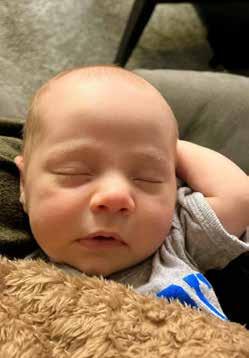
On September 12th, 2025, my wife Kennedy and I welcomed our first child, Jack, to the world.
What kind of world will we leave him?
Walloon Forever,
Jon Breithaupt EXECUTIVE DIRECTOR
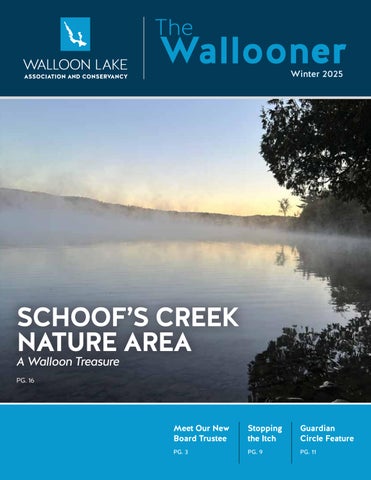
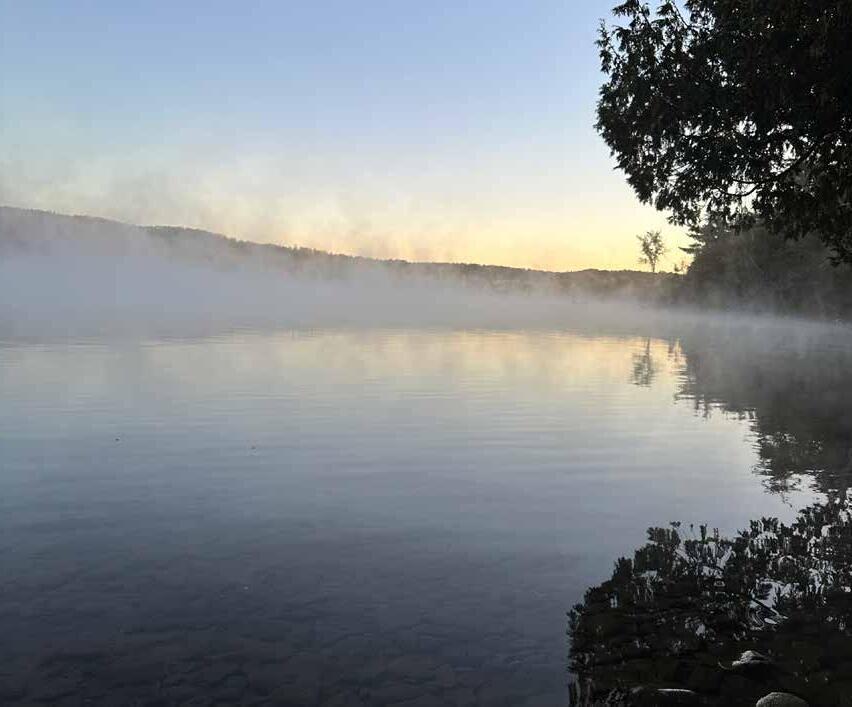
Cover Photo by Kenzie Boesen
Walloon
Lake Association and Conservancy
WINTER 2025-2026 EVENTS SCHEDULE
SUNDAY, DECEMBER 21ST, 10 AM TO 12 PM
Wander Walloon: Winter Solstice Snowshoe Hike at Wildwood Harbor Nature Area
FRIDAY, JANUARY 9TH, 10 AM TO 12 PM
Hemlock Wooly Adelgid Identification Training at Wildwood Harbor Nature Area
SATURDAY, JANUARY 24TH, 1 PM TO 3 PM
Wander Walloon: Guided Snowshoe Hike at Fields Preserve, with cider at Resort Pike Cidery and Winery to follow
SATURDAY, FEBRUARY 7TH, 10 AM TO 12 PM
Wander Walloon: Guided XC Ski Outing at Postle Farm Preserve
SATURDAY, FEBRUARY 21ST, 1 PM TO 3 PM
Wander Walloon: Winter Wine Walk at Postle Farm Preserve, with wine at Boyne Valley Vineyards
SATURDAY, MARCH 7TH, 10 AM TO 12 PM
Wander Walloon: Tree Identification Snowshoe Hike at Fields Preserve
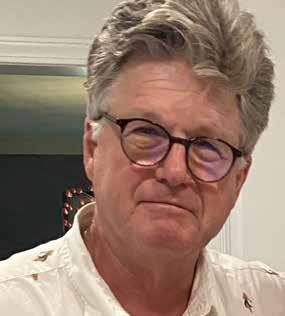
NEW BOARD MEMBER Bio
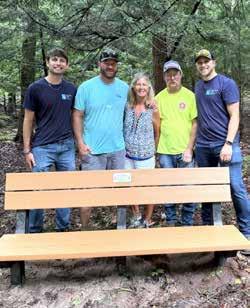
Robert Sloan joined the WLAC Board of Trustees in August 2025. His love of the lake made it an easy decision to get involved. He and his wife Ellen Byerlein have lived on Walloon Lake since 1991. Ellen pre-dated his arrival as a counselor at Camp Daggett in the 1970s. Their daughters Sarah and Lily were raised in Petoskey and return to recharge whenever time permits.
Born and raised in Ann Arbor, Robert retains a lifelong rooting interest in the University of Michigan. This has been complicated by earning a B.A. and M.B.A. from Michigan State University.
Robert spent 35 years working in healthcare planning, research and analytics, spending 10 of those years at McLaren Northern Michigan and the last 12 years at Trinity Health as a Senior Data Scientist.
He currently serves on the Resort Township Zoning Board of Appeals.
His recreational interests include golf, bridge, and handicapping racehorses.

THE UNLIKELY COMPARISON BETWEEN Hunters and Wallooners
By Kenzie Boesen, Membership and Communications Coordinator
Walloon Lake is a place loved by families over generations, dating back to the late 1800s, that many know as a summer tradition, a staple on their sunny days. Beginning in 1859, hunting is also a time-honored tradition that many families have enjoyed together throughout generations. While both the origins of hunting and Walloon Lake date back to the 1800s, that’s just the beginning of comparisons that can be found between the two.
Hunting is a sport, unlike many others, that can be shared between young and old, abled and not. It tends to be taught by older family members and is learned through consistent years of practice. In a somewhat similar fashion, the tradition of Walloon is shared between individuals of all ages and all abilities. Whether your family teaches you to water ski as soon as you can walk or is more the type to keep to peaceful, easy boat rides around the lake, anyone can appreciate the beauty and uniqueness of the lake.
Each year, hunters begin preparing and anxiously wait for their desired season to come around, and once it does, they suit up with a determination to bring home their prize. In fact, there is such a passion and determination that several school districts in the local area take off November 15, the opening day of the Regular Firearm season for deer hunting, as a de facto holiday due to how many of their students and families participate. For Wallooners, this anxious waiting comes in the form of waiting for the prime time for their favorite activities – the first boat ride, the first paddleboard, or maybe even the first morning of ice fishing.
As mentioned, the reasons for loving Walloon are a kaleidoscope – family traditions, favorite hobbies, the pristine nature, and everything in between. The reasons that
motivate hunters to rise early and engage in their sport have also now developed into a vast range, including casual motives to a true love and appreciation for the sport. The driving factors between those who love Walloon and those who love hunting may vary, but one thing is for sure – both groups are composed mainly of passionate individuals. The passion many have for hunting is impressive; they respect the sport and truly take the time to learn the ins and outs of hunting etiquette and rules.
Wallooners also have a similar passion for the lake; many respect its history, lake etiquette, and rules. Despite the fact that there are always a few individuals in each group who don’t share the same respect, the positive always outweighs the negative.
The Walloon Lake Association and Conservancy (WLAC) feels lucky for the opportunity to engage with individuals who love both. WLAC allows hunting on a total of 14 of our preserves, 5 of which are bow only, and the remaining allow bow and firearm hunting.
Each season, WLAC issues up to 25 hunting permits, available on a first-come, first-served basis – and they have been going fast. These permits are not limited to a specific preserve, allowing WLAC hunters to check out all of the huntable preserves they desire. If you are interested in joining our valued group of hunters, check in with the WLAC Office after Memorial Day to learn more and sign up.
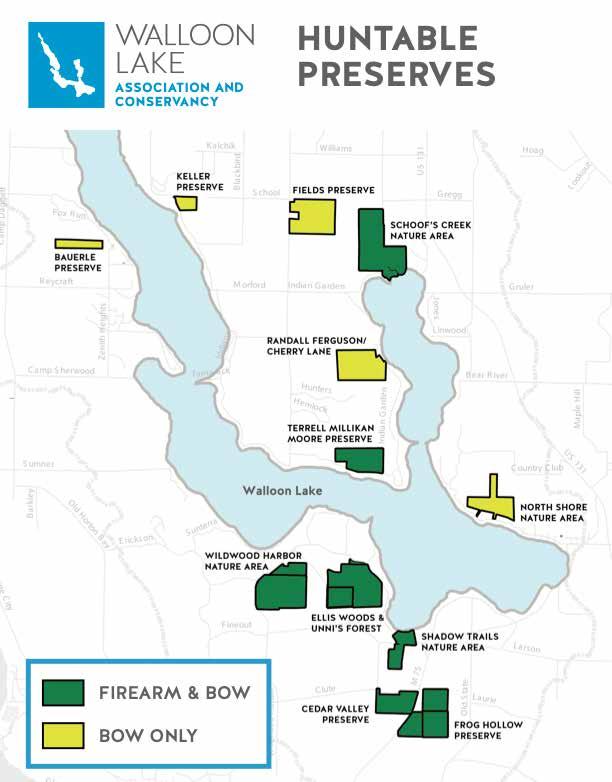
Hunting Seasons WITHIN WLAC HUNTING DATES
September 15 – May 5
ANIMAL
SEASON DATES DEER
Early Antlerless Firearm: September 20 – 21
Independence Hunt: October 16 – 19
Archery: October 1 – November 14 and December 1 – January 1
Regular Firearm: November 15 – 30
Muzzleloading: December 5 – 14
Extended Late Antlerless Firearm: January 2 - 11
ELK
Period 1: September 26 – 29 Period 2: December 13 - 21
PHEASANT Zone 2: October 2 – November 2
RABBIT & HARE
September 15 – March 31
RUFFED GROUSE
September 15 – November 14 December 1 – January 1 SQUIRREL (FOX & GRAY)
September 15 – March 31
TURKEY
September 15 – November 14 April 19 – May 2
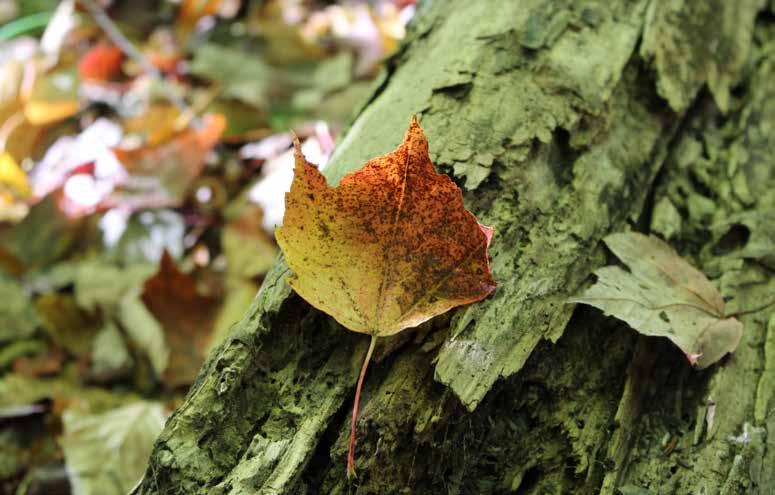
LEAF AN IMPACT
By Kenzie Boesen, Membership and Communications Coordinator
If you ask most people, a telltale sign the fall season has come upon us is getting out your rakes and leaf blowers to clean up the painted leaves that have fallen free and found their place in your yard. This can seem like a tiring chore but can actually play an important role in keeping our lake and watershed healthy. Yard waste that ends up in our streams or lake can add excess phosphorus and ultimately lead to higher algae growth and depleted oxygen levels.
There are many avenues to take care of this annual task. The most common practice is the classic rake, packing them into bags, and setting them on the curb for local scheduled pick-up days. Bags can be purchased at many outlets, and the scheduled days for your local city or township can be found by
contacting your local office or visiting their website.
Along with scheduled pickup dates, composting facilities are located in Boyne City, Charlevoix, and Harbor Springs (Emmet County Transfer Station) and accept compostable yard waste. Contact your local center for any specific questions regarding costs, restrictions, and hours. If you are interested in the composting route, you can also do so right from your own yard! Leaves and yard waste make great additions or beginnings to your own compost piles. There are many helpful resources available to help you get started or maintain your compost bins, both in person and digitally.
Two extremely beneficial ways to take care of your leaves is to mulch them or leave them as they are. You can mulch your leaves with your lawn mower and either use them to fertilize your grass or even your gardens. When you mulch your leaves, nutrients are provided to your grass or gardens, resulting in quicker growth once spring rolls around. The other, less popular, method of leaving your leaves as is can be so helpful to the ecosystems that live and thrive off of the habitat
created by the fallen foliage. Small woodland animals, insects, and even critical pollinators use these leaves to help them get through the season. A perk of both leaving your leaves and mulching them for your grass is how much they can prevent weeds from germinating. Mulching leaves year after year can lead to an almost complete eradication of classic yard weeds.
Any of these options are effective in both handling the annual task and keeping our lake and watershed healthy. Yard waste that ends up in the lake can take over habitats and also impair recreational activities. In fact, not only is proper care of yard waste being a good steward of the lake, but improper disposal of yard waste is actually illegal. As of 1995, Michigan Law prohibits improper disposal of yard waste, imposing tickets and fines for doing so. In addition to facing tickets and fines from local enforcements, Michigan EGLE can impose much higher fines for violations. Whether you choose to go with a classic street pickup or go the mulching route, how you take care of your leaves this season can “leaf” a lasting impact.



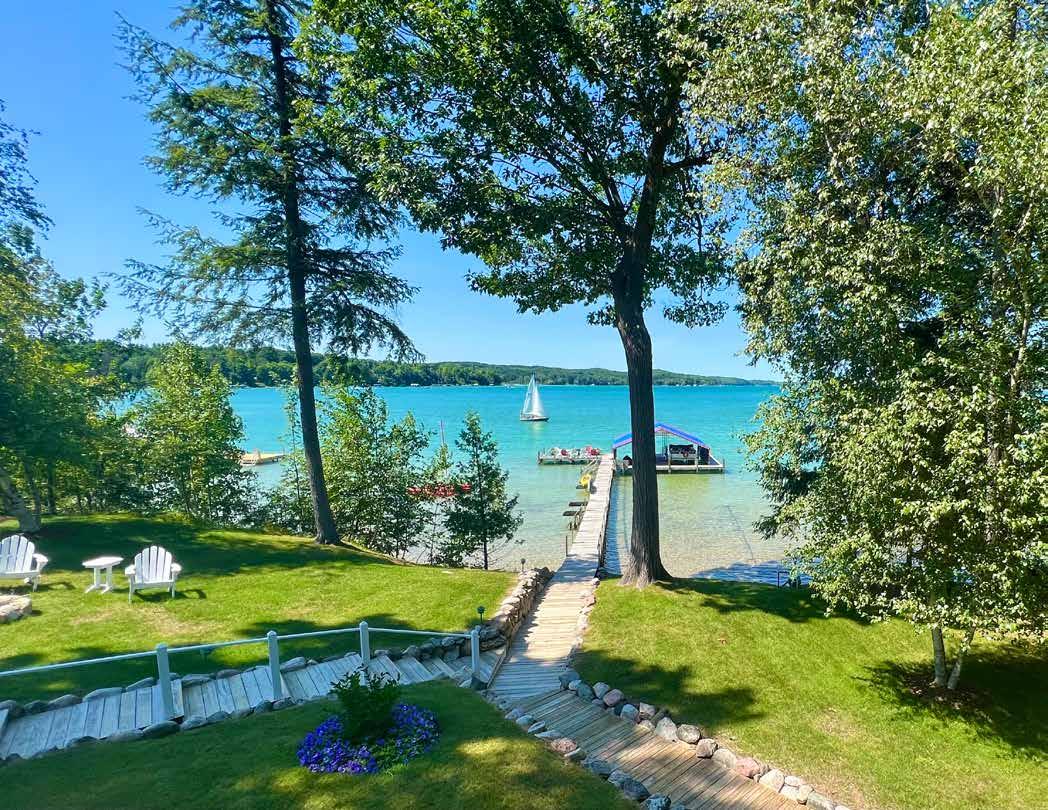






STOPPING THE ITCH at Camp Daggett
By Tanner Yurk, Conservation Programs Manager
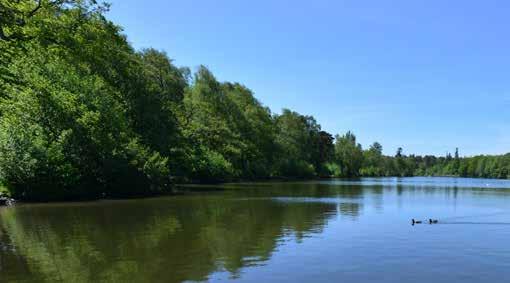
For generations, campers have jumped off the docks at Camp Daggett to make some of their best summer memories in the waters of Walloon Lake. Along with all that fun has come a familiar but unwelcome visitor as many swimmers have experienced the sting and irritation of swimmer’s itch.
In 2026, a new project hopes to change that story. Camp Daggett, the Walloon Lake Association and Conservancy, and Freshwater Solutions LLC are partnering on a carefully designed research study to test whether a temporary, professionally installed system can reduce exposure to the parasites that cause swimmer’s itch.
WHAT WE ARE TRYING TO LEARN
Swimmer’s itch is caused by a parasite that relies on both waterfowl and snails to progress through its life cycle. In the past, people tried solving the problem by removing snails or treating waterfowl populations, but those methods did not produce lasting results and harmed lake ecosystems.
Current research suggests that targeted protection of specific, high-use swim areas may offer promise. As part of this controlled study, Freshwater Solutions will install a set of swim baffles around the Camp Daggett swim area to create a partial test boundary. A surface skimming device, similar to a pool skimmer, will also be used to remove parasite larvae from the top layer of water before swimmers enter.
Importantly, these tools are not yet being promoted for residential use, and the project is designed to evaluate how well they work and determine what limitations they may have.
HOW THE STUDY WORKS
The swimming area will be enclosed on three sides in a 50’ by 150’ space. Volunteers will collect water samples inside and outside the swimming area, both before and after skimming sessions. Those samples will be tested to measure how many parasite larvae are present and whether the combined approach reduces risk for swimmers.
Camp staff will also keep simple health records to see if fewer campers report swimmer’s itch throughout the summer. The project has two main goals: reduce the number of swimmers at Camp Daggett who end up with swimmer’s itch and measure how effective a combined skimmer-and-barrier approach might be when used under research conditions.
Much of this work would not be possible without the local generosity of the Charlevoix County Community Foundation.
WHY IT MATTERS
If this study shows promise, it could inform future decisions about how to protect designated swim areas at places like Camp Daggett. It may also offer new insights for lake managers and scientists working on swimmer’s itch. More work would be needed before any approach is recommended or considered appropriate for general use around Walloon Lake.
Summers on Walloon Lake are special, and with the help of science, community support, and thoughtful study, we may be able to make them much more comfortable and just as memorable for everyone who loves this place.
STRATEGIES to Minimize Exposure
AVOID SWIMMING IN THE MORNING & INFECTED AREAS
Snails will release larvae each morning, that will die off or be eaten throughout the day. Larvae move with the wind and can congregate near windward shores.
AVOID LOUNGING IN SURFACE WATERS & SWIM IN DEEPER AREAS, IF ABLE
Larvae are released from snails found in shallow water and migrate to the surface.
TOWEL OFF AFTER SWIMMING
Some larvae are sticky and can cling to skin when exiting the water.
SKIM THE SWIM AREA SURFACE
Use a net to skim the top of the lake in your swimming area.
CREAMS & LOTIONS
Various products claim to repel larvae and some individuals have reported finding them to be a successful repellant.
AVOID ATTRACTING WATER
FOWL TO YOUR DOCKS AND SWIMMING AREAS. Feeding water fowl increases the risk of the parasite affecting the swimming area.
CONTACT YOUR LAKE ASSOCIATION
Your lake association may have reporting tools, like WLAC, available in order to avoid areas with recently reported cases.
EMPLOY A SWIM BAFFLE
Baffles show promise in diverting drifting larvae away from the swimming areas.
BUOY PLACEMENT
Colin Robbins, Seasonal Stewardship Intern
The leaves are falling, and the water temperature is dropping fast. The autumn colors mean the end of the joys like swimming in and boating on Walloon Lake. As we look forward to next summer on Walloon, it is a great time to remember the rules regarding buoys on the lake.
Walloon Lake Association & Conservancy (WLAC) places buoys, permitted by the Department of Natural Resources (DNR), on Walloon Lake, in partnership with the Walloon Central Marina to help keep lake goers safe. These larger buoys mark shallow and narrow channels of the lake where boaters should be more cautious.
In addition to these buoys place by WLAC, many homeowners choose to install their own personal buoys. These buoys may be installed for a variety of reasons such as establishing swimming areas, mooring a sailboat or raft, marking their dock, etc. The Michigan DNR is responsible for permitting all buoys on the lake under the Natural Resources and Environmental Protection Act Sec. 324.80159. Under this statute, all buoys that are placed on the lake, not being utilized as a mooring buoy, must go through the permitting process.
If you plan on installing private buoys to designate your swimming area or help keep boaters further from your dock, this is a great time to go through the proper process of applying for a buoy permit from the DNR. The WLAC is happy to guide you in the right direction and can even provide you the proper forms for the applica-
tion. Please reach out to our Conservation Programs Manager, Tanner Yurk at tanner@walloon.org, for more information on buoy permits.
Buoys are a great tool for helping keep people safe on Walloon Lake. However, too many buoys throughout the lake, especially unpermitted, can cause confusion and make the lake look increasingly developed. It is understandable to feel concerned about boats coming too close to your dock or swimming area, but remember, Michigan law requires boats to operate at a slow, no-wake speed when less than 100ft from any dock, shorelines, moored vessels, or swimming areas/ individuals. If you see dangerous or irresponsible behavior on the water, be sure to call the Charlevoix County or Emmet County Sherriff’s Office. Let's work together to keep everyone safe on Walloon Lake next summer!
GUARDIAN CIRCLE FEATURE Mary Ellen Geist
Kenzie Boesen, Membership & Communications Coordinator
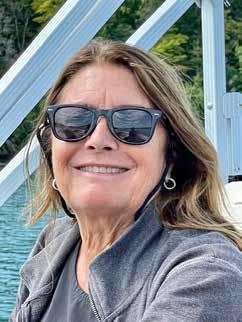
Mary Ellen Geist, Fund Development & Outreach Chair
As the year comes to a close, we take time to reflect on the meaningful work protecting Walloon Lake and its surrounding watershed. The work that ensures this treasured place remains as vibrant for future generations as it is today. Every trail we walk, every clear reflection on the water, and every bird call in the trees is here because of people who choose to give back. The generosity of our members and donors fuels this ongoing story of preservation and connection.
This season, we sat down with longtime Wallooner, devoted supporter, WLAC Trustee and now Chair of the Fund Development and Outreach Committee, Mary Ellen Geist to hear how her family’s deep history with the lake has inspired a lifelong commitment to protecting it and why she believes giving to WLAC is one of the most meaningful ways to keep Walloon thriving for years to come.
What brought you and your family to Walloon Lake?
More than seven decades ago, a good friend of my grandparents offered them the opportunity to spend a few weeks at her cottage built in 1895 in Wildwood Harbor. No plumbing – just a water pump out back - and a green outhouse with a half-moon above the door. It had electricity, but no phone and no heat except for a Ben Franklin stove. They fell in love with the tiny cabin and with the pure clean water – no algae, no reeds, and a sandy shore perfect for swimming; a view of the sunsets from the porch; and the woods filled with ancient cedars and hemlock. My grandfather spent many hours in his Old Town canoe paddling and fishing. My grandmother hiked in the woods identifying trees, ferns and mushrooms. They came back again the next summer, and - I only learned this recently - my Grandfather’s best friend Dr. Bob Bartlett, who had a place a few doors down the beach, actually bought the cottage for my Grandfather for $3,000! Since then, our family has spent every summer on the lake. I am forever grateful to the Bartlett family for giving us the gift of Walloon.
How did you hear about Walloon Lake Association & Conservancy?
My Grandmother, Lydia King Frehse, was a botanist who wrote a nature column for the Birmingham Eccentric Newspaper. My Grandfather, Robert M. Frehse, was a minister and nature lover (and a great birdwatcher!) who created Camp Westminster on Higgins Lake. He believed that immersion in the natural world – knowing the names of the trees, plants, birds and mushrooms – teaches humans that there is so much that is greater than we are and makes clear the place we belong in the universe. When he brought kids to Camp Westminster in Northern Michigan from Detroit, he said he could see the change in each child created by communing with nature, and said it was a gift they took with them for the rest of their lives. Walloon is a similar gift for my whole family – a healing place, a touchstone that centers us and makes us feel so alive. My Grandparents supported WLAC when they arrived at Walloon. Appreciating and contributing to the survival of Walloon Lake is in our DNA. My father, Woody Geist, my mother Rosemary Frehse Geist, an artist
(continued on next page)
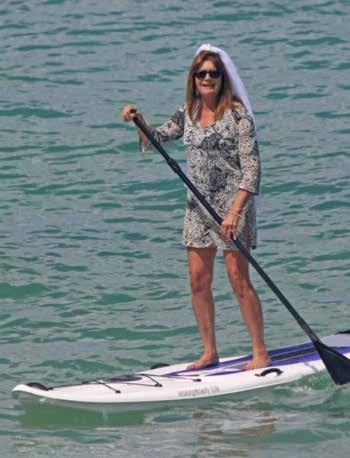
Mary Ellen in her waterproof veil, made custom by a friend, so she could paddleboard during her wedding!
(continued from previous page)
and art teacher, who illustrated my grandmother’s nature columns and books, always gave to WLAC, and after our Grandparents were gone, carried on traditions from Camp Westminster at our Walloon cottage. We still have my Grandparents’ nature table in the foyer where we keep treasures we find in the woods. Our family believes donating to WLAC will help preserve Walloon Lake, and I believe our family will do this all our lives and carry on this tradition to our children and grandchildren.
What made you decide to give your first gift to the organization?
In high school, college and in my early 20’s, my sisters and I left it up to our parents and grandparents to be members and do the yeoman’s work of donating, membership, volunteering and helping WLAC in many ways. But I don’t think I realized the power of the organization until 1998 when my mother became involved in helping to buy 133 acres that became available along Wildwood Harbor Road to create WLAC’s Wildwood Preserve. We had hiked there often and visited a tiny lake we called Mud Lake (now named Evangeline Lake). My family and I participated in fundraising, and my parents joined the 80 friends and neighbors who made the purchase of this land through WLAC possible. I began paying more attention to what WLAC was doing, and I began to understand its mission. Years later, a vacant stretch of land our cottage looks out on across the lake – we called it Mead Springs –was threatened by a proposed development. Major portions of it were slated to be logged and paved over by the state. This forest meant the world to us: hemlocks hundreds of years old; two pairs of bald eagles as well as pileated woodpeckers nested there. We kayaked, paddle boarded and canoed along its shores on a daily basis. WLAC alerted residents. Our neighbors in Wildwood Harbor as well as many people on the lake and within the Walloon Watershed got involved in trying to keep it from being developed. Our family wrote letters and made phone calls. And eventually WLAC and the efforts of many neighbors and friends stopped this development and urged the state to create the Mackinac State Forest. Involvement in these campaigns made me realize the need for all Wallooners to step up to be part of
WLAC. Being a member of WLAC means so much to me. We need to carry the torch and continue the work to preserve the lake for future generations.
In your opinion, what is the most important work the organization does?
Of course, preserving this beautiful lake and the land and streams that surround it is paramount. Purchasing whatever land is available to protect our lake by keeping rivers and streams that flow into it clean and pure is possibly one of the most important things we do. Water testing and keeping invasive species at bay is just as crucial. But there is something incalculable WLAC does that is just as significant: bringing people together who love the lake so they can bond over its unique qualities, which helps create a pact to care for the lake forever.
What do you hope the organization will achieve in the near future?
This lake is so precious to so many of us. I can’t understand why everyone who has a cottage on Walloon Lake, or has a business nearby with ties to Walloon, or if you simply come to Walloon to hang out on a Saturday afternoon, or hike or bike along some of WLAC’s trails – in other words, anyone who has a stake in Walloon and its watershed - doesn’t become a member of WLAC. I enjoy belonging to this organization and I am proud to now be a Trustee of WLAC. I wish we could somehow help Walloon Lake families make membership become a rite of passage for kids when they turn 18! Or maybe when you graduate from college? A wedding present? I think a WLAC membership would be a great gift for parents and grandparents to give to their kids. It’s an investment in the future of this beautiful lake. So, ultimately, that’s what I would hope WLAC would achieve: more members. More people who own cottages on the lake becoming involved in our work, and people who don’t live on the lake but who love it, and all the people who live in the Walloon watershed becoming WLAC members.
If you were talking to someone else about giving to the Walloon Lake Association & Conservancy, what would you tell them?
First: that your gift – no matter how much you give - goes to a great cause. We steward
more than 2,300 acres, including 54 preserves and 20 conservation easements. We do water testing, we educate people about ways to protect the water and the watershed, and we offer water safety lessons, too. And we buy important land in the watershed that will keep Walloon safe for decades to come. You never have to worry that the funds will be used for anything but ways to protect this incredible place. A membership is a great way to begin participating with WLAC, as well as giving to the Guardian Fund, our annual fundraising appeal which pays for our essential expenses. You can also give gifts of cash or stocks, matching gifts, charitable distributions, gifts of land, and something we’re working on getting the word out about to more people: the Legacy Society, which involves estate planning and gifts upon your death.
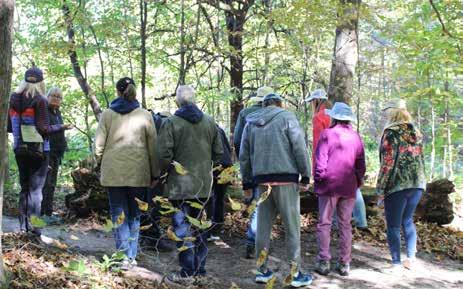
This fall, I participated in WLAC’s annual hike with the brilliant mushroom expert, Walloon resident Teresa Crouse. I was very moved, walking in the lush forests of the Wildwood Harbor Preserve, a woods that WLAC had helped save, and I felt as though she and her husband David, their family, and my family, and all the people supporting WLAC were like one big family, joined in a mutual cause. Events like this, as well as birdwatching hikes, our annual fundraiser Love Walloon, Volunteer Stream Monitoring, cross country skiing and snowshoeing, and many other WLAC activities create a special bond we can share with each other and our families for the rest of our lives.
We’re deeply grateful to Mary Ellen for sharing her heartfelt connection to Walloon Lake and for reminding us what it truly means to protect a place we love. Her story reflects what so many of us feel: Walloon is not just a lake, but a legacy worth protecting.
Every gift, membership, and act of stewardship keeps this legacy alive. Whether you’ve just discovered Walloon’s magic or your family has cherished it for generations, your support helps ensure that the lake and its lands remain vibrant, clean, and full of life for all who follow. Together, we can continue the work that Mary Ellen and so many others have embraced – preserving and protecting Walloon for generations to come.
The Masters Family OF WALLOON VILLAGE
Legendary builders of classic boats and more
By Lauren Macintyre
The Masters family built classic, memorable boats, still cherished today. They were leading citizens of the tiny but growing Walloon Village in its earliest days. Over the years they operated its popular marina, built incubators, owned land all around the lake, developed a nearby resort and operated a bed and breakfast.
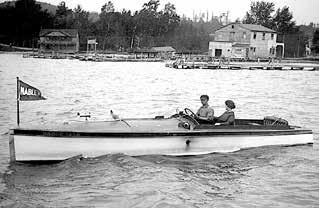
The fascinating story of the Masters family began around 1900, when Walter Masters Sr., originally of Alpena, relocated to the Petoskey area. He married Mabelle Scroggie of an old and widely connected Bay Shore family. Walt and Mabelle eventually made their way to Walloon, and had a son, Walt Jr, and a daughter Mildred.
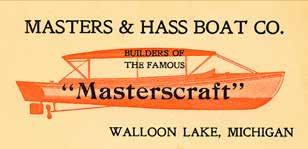
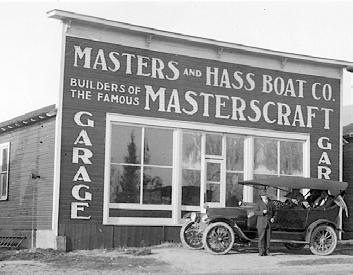
In 1910 Walt teamed with leading citizen Alfred J. Hass to build boats during the winter months. Walt had the actual knowledge and ability to build excellent boats, while Mr. Hass was the salesman. In its heyday the company produced as many as 75 boats per year. To keep funds flowing in the off-season, the company produced incubators for raising chicks. Eventually Mr. Hass sold his share and the business became simply Masters Boat Works.
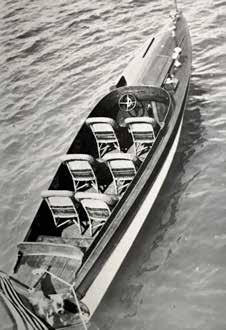
In the early twentieth century on Walloon, it was all about having the fastest boat on the lake, and Masters was a key factor in that competition. All the leading families of that era owned beautiful boats with powerful multi-cylinder four-cycle engines that they would race, often in contests sponsored by the Walloon Yacht Club. Walt’s “Masterscraft” boats were particularly prized for racing.
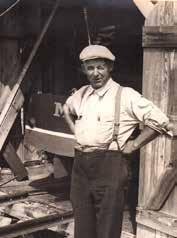
Walt Masters Sr. passed away in 1936 at the age of 62. He left the business in the very capable hands of his wife Mabelle, a beloved, vivacious woman devoted to family and the boat works, and 17-year old son Walt Mas-
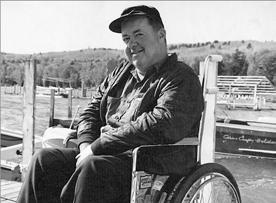
ters Jr. Due to a birth injury Walt Jr. was confined to a wheel chair for much of his life, but he never let that limit him, successfully operating the boat works for 35 years. A cheerful, active, community member known for his prowess in chess, Walt passed away in 1972, leaving an impressive legacy of service. The business was eventually operated by Roger Srigley, then later became part of Si’s Marine Service.
Today Masters Boat Works no longer exists, but its legacy remains. Of the many marinas that served Walloon over the years, it was undoubtedly the longest-lived and bestknown. For decades Masters was a preferred place to go for service and to buy the fabled Chris Craft cruisers and other boats.
Walt Jr.’s sister Mildred, a teacher in Grand Rapids, had married Joseph Breidenstein. The family lived in Mount Pleasant, but spent summers at Walloon. Her son Joe worked for his Uncle Walt in the marina in the summers. Mildred, who was nicknamed “Dude,” was a vivacious, well-liked woman who helped care for her brother Walt Jr. in his later years.
Mildred’s son Joe Breidenstein, was a colorful figure who enthusiastically championed tourism in the Boyne area. In the 1960s he developed the Springbrook Hills area, and later created events such as the “Morels & More” outings and the “Chef’s Challenge for Challenge Mountain.” He was involved in a multitude of community and charitable or-
ganizations that greatly missed him when he passed away in 2009.
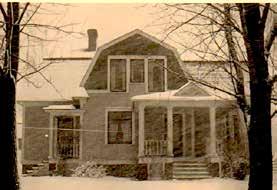
Over the years the Masters family occupied a picturesque house in the Village that still stands today. Originally built around 1909 by the Bardwell family, premier builders of cottages in that era, the house is situated on a prominent lot at the intersection of North Shore Drive and M-75. A small room in the
BELOW: Walt and Mabelle Masters in their boat
A Masterscraft Boat
(continued from previous page)
front of the original house housed the first switchboard for the local telephone company.
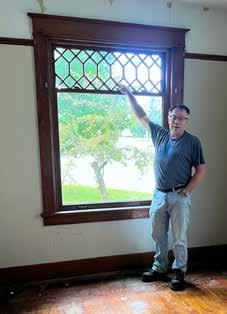
Walt and Mabelle Masters purchased the lovely house in the 1920s; great-grandson Walt Breidenstein still owns it today. It was a beloved family house as well as a center of social activities for many years. Around 2000 it was operated as the Masters House Bed & Breakfast. Unfortunately the house, which is divided into 13 rooms, has been vacant in recent years and has experienced significant deterioration. Happily, however, it is currently under renovation by Walt Breidenstein, who hopes to restore it to its former glory.
In addition to the boat works, the Masters/ Breidenstein family owned various plots of land around the lake, including the wetlands at the tip of the North Arm around Schoof’s Creek. Marshy, thick with vegetation and home to many species of wildlife, this mysterious and eerily beautiful land was connected to some amusing legends around Walloon. Dubbed “Gator Den,” a picture of it appeared on the front page of the Walloon Lake News on August 5, 1965.
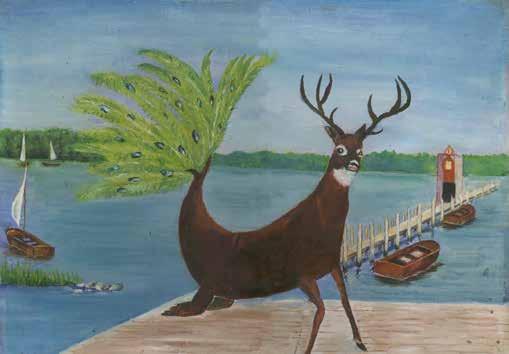
The accompanying caption to the picture of Gator Den described how adventurous guests of the old Indian Garden Hotel would explore its swampy depths. There were rumors that bears, alligators, passenger pigeons and even miniature dinosaurs roamed the land. Walt Masters Jr., who owned the land, also told vivid tales of a mythical monster named Buckelrus who made his home in Gator Den. Various theories about the origin of Buckelrus abound, including one that claims this whimsical creature was a combination of a buck, walrus and peacock, supposedly created when the three animals were struck by a lightening bolt.
“Uncle Walt would tell stories about how he and his friends would visit Gator Den on weekends to look for Buckelrus,” laughs Walt Breidenstein. “He told us that Buckelrus’s job was to keep children and teenagers out of mischief around the lake.” Noted local artist Dean Whittaker did several paintings of Buckelrus (also spelled Buckalrus), one of which hung in Walt’s office of the marina.
Today Walt Masters’ Gator Den, which was purchased by the WLAC, is part of the Schoof’s Creek Nature Area, one of Walloon’s most critical tributaries. (For more information about the importance of Schoof’s Creek, please see next page.)
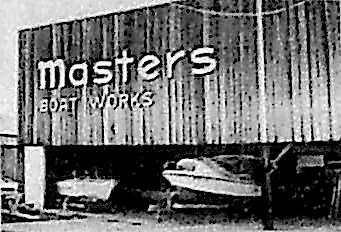
ABOVE: Masters occupied many different buildings in its long history in the Village. (All vintage pictures from the Cynthia Beadell
The Masters family did more than just build classic boats — they helped build the Village, and became an important part of Walloon Lake history. Today the family tradition is honored by Joe Breidenstein’s children Walter, Joseph, Beth and Mary Jane, the great-grandchildren of Walt and Mabelle Masters Sr. They inherited quite a legacy indeed.
Hermann collection)
RIGHT: Walt Breidenstein, great grandson of Walt Masters Sr., points out the replacement mullioned window he recently had installed as part of the restoration process.
BELOW: The original Masters House
LEFT & BELOW: Walt Masters Sr., at left, his son Walt Masters Jr. below
Schoof’s Creek Nature Area A WALLOON TREASURE
By Lauren Macintyre
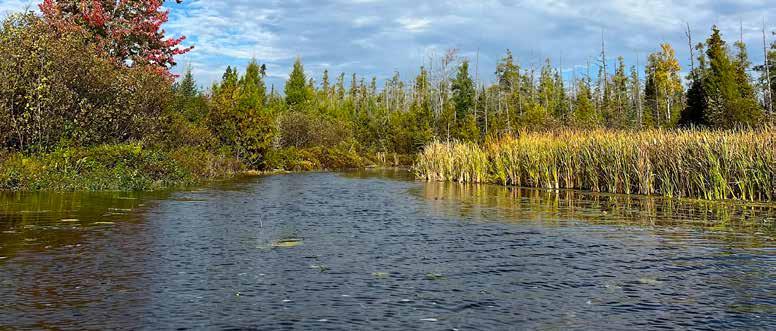
Although happily no sightings of the mythical Buckelrus have been reported for many years, other wildlife still abounds in the stunning Schoof’s Creek Nature Area. Today, thanks to the purchase of the Breidenstein and other parcels, and gifts from the Doyle and King families, the WLAC preserve consists of over 155 acres. Schoof's Creek encompasses many environmentally sensitive wetlands and 1,250 feet of shoreline. Pristine and tranquil, it is a perfect home for the ducks, kingfishers, turtles, beaver, otter and Great Blue Heron who make their home in its shimmering waters.
Schoof's Creek is one of Walloon’s three most important tributaries. One branch of Schoof's Creek actually originates in the Little Traverse Conservancy Bubbling Springs Preserve on Intertown Road. From there it flows for approximately two miles, converges with the main branch south of Williams Road, then flows over four miles from north to south. The creek flows southeast through the wetlands into Walloon, the ultimate water buffer for the hilly agricultural areas that lie north of the lake.
“The Schoof’s Creek Nature Area serves as a keystone to preserving the shoreline, wetlands and natural character of Walloon Lake for generations to come,” notes Tanner Yurk, WLAC Conservation Programs Manager. “Expanded by the Doyle and King family’s gift in 1994 and the Trust’s land purchase in 1996, today Schoof's Creek stands as a lasting symbol of generosity, vision and protection,” he adds.
The beauty and tranquility of Schoof's Creek attract kayakers, who glide through its peaceful waters with a sense of awe. “It's a place of quiet and natural beauty,” comments avid kayaker Ellen Byerlein. “A place where you will spot young turtles sunning themselves on logs and beavers having a heyday, all surrounded by the beauty of the blooming water lilies.”
Schoof’s Creek Nature Area is best accessed by water, although a hike through the Fields Preserve, located off Resort Pike, brings you close to this magical place.
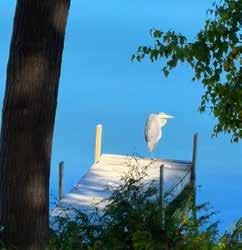
This Great Blue Heron from the Schoof’s Creek Nature Area occasionally visits docks in the North Arm.
PHOTO BY GLENN REIMER
PHOTO BY COLIN ROBBINS, WLAC INTERN
One of several painting of Buckelrus by local artist Dean Whittaker
Meet Our New Staff
LIZ MEEKS
DIRECTOR OF BUSINESS OPERATIONS

Liz grew up in Northern Michigan, where she developed a deep connection to the natural world among the hardwood forests and lakeshores. This passion led her to pursue a degree in environmental science at the University of Michigan where her most cherished memories are from her field botany and ecology classes at the biological station on Douglas Lake. Following graduation, Liz applied her analytical skills in the business sector, gaining valuable fiscal management experience. She is excited to bring this financial expertise together with her environmental passion in her role at WLAC.
Outside of work, Liz enjoys hiking with her husband and their two senior dogs, trail running, paddleboarding, and tending to her garden. She particularly treasures time spent backpacking, which allows her to immerse herself in nature and return to a slower pace.
JOEY PIETROGALLO
STEWARDSHIP COORDINATOR

Joey has lived throughout the midwest, but primarily in Michigan. As a kid, he discovered his passion for conservation by hiking and camping at Devil’s Lake State Park in Wisconsin. He graduated from Grand Valley State University with a degree in Natural Resources and Environmental Management. Joey is especially fond of soils and aquatic plants. In his free time, Joey enjoys camping, running, and playing with his parent’s cockapoo puppy, Henry. He’s also an avid rock climber, and has traveled across the country to climb some of the world’s most iconic crags.
SUMMER INTERN INTERVIEW
By Colin Robbins
What brought you to the WLAC?
I grew up in the Petoskey Area, and it made sense for me to spend the summer back home and working to protect an area that I grew up in.
What was your favorite project?
My favorite project was creating data sets for the outlines of WLAC preserves and trails that were then integrated into Google Maps.
What was your favorite tool?
My favorite tool was learning how to use a chainsaw during the cleanup from the Ice Storm.
What was your favorite preserve?
Shadow Trails Nature Area
If you were an invasive species, what would you be?
Round Goby
What was your biggest takeaway?
My biggest takeaway was seeing up close and personal how a small land conservancy functions and thrives.
Can you tell us a bit more about your Capstone Project
My capstone project was updating the Priority Parcel Analysis to help the WLAC assess the most important parcels to acquire in the watershed. This analysis looked at things such as land cover types, streams, elevation, development and more.
Any other parting words?
It has been an absolute pleasure working on protecting the Walloon Lake watershed over the last 6 months. I have truly got to see the passion and commitment from board and committee members, partner organizations, staff, and the membership.
We extend our sincere gratitude to Colin for his outstanding work and dedication throughout his summer and fall internship with WLAC. His passion, professionalism, and commitment greatly supported our ongoing efforts to protect Walloon Lake and its surrounding watershed. From assisting with fieldwork to contributing to key conservation projects, Colin played an important role in advancing our mission.
As he embarks on his next chapter, we wish him continued success and fulfillment. Colin’s time with WLAC has made a lasting impact, and we are grateful to shared this season of meaningful work with him in service of Walloon’s future.
COMMITTEE UPDATES
If you are interested in joining one of our valued committees, please reach out to our Executive Director, Jon Briethaupt, at (231) 535-6112 or jon@walloon.org.
The Walloon Lake Association and Conservancy (WLAC) would not be where we are today without the dedicated efforts of our committees. These groups represent the heart of our organization, connecting passionate members who lend their time, expertise, and ideas to advance our mission of protecting and preserving Walloon Lake and its watershed.
In an effort to strengthen focus and efficiency, WLAC recently restructured what was previously nine committees into five thoughtfully aligned committees:
EXECUTIVE
FINANCE
FUND DEVELOPMENT & OUTREACH
LANDS
WATER
This new structure allows each committee to make a deeper, more measurable impact while encouraging collaboration across key areas of our work.
Committee members serve one-year terms beginning in August, following the Annual Meeting of Members, with the opportunity to continue serving year after year. This flexible structure ensures both continuity and the steady infusion of new perspectives that keep our mission vibrant and forward-looking.
If you’re passionate about Walloon and would like to play a more active role in protecting its future, we welcome you to consider joining one of our committees.
To learn more, please contact Executive Director, Jon Briethaupt, at (231) 535-6112 or jon@walloon.org.









The Wallooner is published three times per year in March/April, June/July and November/December, by the Walloon Lake Association and Conservancy, 4060 M-75 N Suite 102, P.O. Box 579, Walloon Lake, MI 49796
Phone (231) 535-6112
E-mail wlac@walloon.org | Web www.walloon.org
©Copyright 2025 Walloon Lake Association & Conservancy
Lake, MI 49796
ADDRESS SERVICE REQUESTED Post Office Box 579
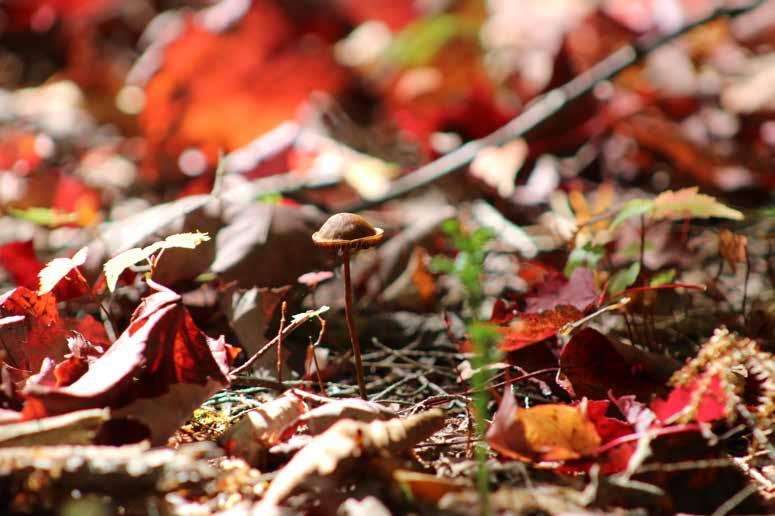
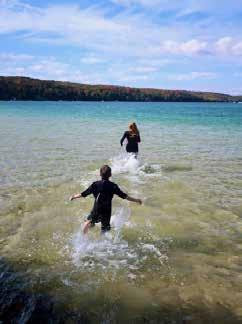
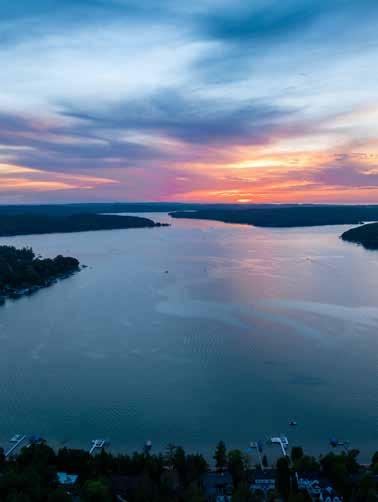
PHOTO BY KENZIE BOESEN