Nonprofit World
Be a Brilliant Brainwriter

“Every right idea eventually becomes the wrong one.”

“Every right idea eventually becomes the wrong one.”

Editor Jill Muehrcke
SOCIETY FOR NONPROFITS
Board Members
William Carnegie
Chief Operating Officer, Feeding Northeast Florida Jacksonville, Florida
Faeda Elliott Communications Manager, Heroes on the Water Los Angeles, CA
Stuart Haniff
Chief Development Officer, Harry Chapin Food Bank Fort Myers, FL
Vineet Kumar
Strategy & Management Consultant Seattle, WA
Tangie Newborn
President, Immense Business Solutions Washington, D.C.
Amira Turner Chicago, IL
Director Emeritus
Katie Burnham Laverty Temecula, California
Editorial Advisory Board Members
Amy Good Dane County Humane Society Madison, Wisconsin
Tangie Newborn
President, Immense Business Solutions Washington, D.C.
Publisher
Society for Nonprofits
Purpose: Society for Nonprofits is a 501 (c) (3) nonprofit organization. Through Nonprofit World and other communications with its members, the Society is dedicated to bringing together those who serve the nonprofit world in order to build a strong network of professionals throughout the country.
NONPROFIT WORLD is published quarterly and digitally at no charge to members of the Society for Nonprofits. To become a member of the Society, write: Society for Nonprofits, P.O. Box 510354, Livonia, Michigan 48151. Telephone: 734-451-3582.
Membership: $129.
No part of this publication may be reproduced without written permission. All rights reserved.
Copyright © Society for Nonprofits ISSN 8755-7614.
E-mail: info@NonprofitWorld.org
Web page: nonprofitworld.org
volume 44 • number 1 • 2026
2 editor’s page | Be a Brilliant Brainwriter
By Jill Muehrcke
Every right idea eventually becomes the wrong one.
2 Five Things to Do Next Monday
3 ask the experts | Is It a Confict of Interest for a Board Member to Receive Client Benefits?
By Don Kramer
4 ask the experts Are You Using Your Executive Committee Correctly?
By Dennis Miller
5 fundraising forum
The Number-One Fundraising Skill You Need
By Gail Perry
6 people & technology | All Video Is Video-Content Marketing: Five Rules For Greater Reach
By Patrick McGowan
Put strategic thought into using video to build relationships.
8 the board room
Best Practices to Cure Board-Meeting Burnout
By Karen Eber Davis
Be at your best for your next meeting. These tools will help.
10 legal counsel | Background Checks: What You Need to Know
By Rachel Sams
Assess your risks and reduce your liability with this vital information.
13 relevant reviews | Look Here for Inspiration
By Terrence Fernsler
Turn to this book when you need a lift, a motivator, or a bit of comfort. 30 nonprofit briefs
The myth of rationality. For best results, coach. Plus other tips, research, and publications in the nonprofit sector.



.Brainstorming has long been the premier tool for gaining creative ideas. But even more effective is brainwriting, which gives people a chance to jot down their ideas before sharing them and building on them as a group. This issue of Nonprofit World abounds with ways to become more ingenious, to help others do the same, and to shape an innovative, forwardthinking organization. Begin on page 2 with an introduction to brainwriting and a quick overview of related content.
14 Harness the Why: Three Ways to Cultivate a Culture of Purpose By Zach Mercurio
Use these research-based ideas to harness a shared, compelling purpose.
16 The Most Neglected Act of Innovation By David Dye
Don’t forget to ask this all-important question.
18 Avoid These Communication Blunders By Greg Alcorn
Make sure your conversations bring benefits rather than embarrassment.
20 How to Build a Powerful Workforce By Jeremy Eskenazi
Your team’s make-up will have a big impact on your success.
22 Don’t Let These Threats Derail Your Project By Gleb Tsipursky
Here’s how to failure-proof your next endeavor.
26 Turn Numbers into Narratives: How to Use Financial Statements to Tell Your Story By Joseph Weinberger
For top-level results, tailor your financial messaging to each of your stakeholders.
28 How SMS & Other Smart Tech Tools Can Boost Your Success By Matthew Montoya
Reinvigorate your marketing with the latest technology. NONPROFIT WORLD is published by the Society for Nonprofits.



Unsolicited manuscripts and letters to the editor are welcomed. They should be addressed to:

“Every right idea eventually becomes the wrong one.”
Once hailed as the secret to innovation, brainstorming has come under fire in recent years. People complain that it’s a meaningless time-sucker.
It’s true that many brainstorming sessions aren’t worth the effort. But that’s not because brainstorming as a process doesn’t work, as Chris Griffiths makes plain in The Creative Thinking Handbook. The problem is that most such efforts are haphazardly run, and we’re prone to brain quirks that curtail success. (Take a look at “Guard Against These Common Thinking Errors” on page 33.)
Here are a few concrete things you can do right now to begin transforming your organization.
1. Ask the all-important question described in “The Most Neglected Act of Innovation” (page 16).
2. Plan to hold unconsciousbias training using the steps laid out in “Root Out Unconscious Bias” on page 30.
3. Become familiar with your own unconscious biases (see “Our Biases in Action” on page 25).
4. Check to be sure you’re not making any of the errors in “Avoid These Communication Blunders” (page 18).
5. Make a note to put the most important fundraising skill to use next time you talk to a potential donor (“The NumberOne Fundraising Skill You Need,” page 5).
But if you want breakthrough ways to solve your problems, you have to make peace with brainstorming – or brainwriting as it’s often called to stress the fact that participants need to write down their ideas. “Every right idea eventually becomes the wrong one,” Griffiths reminds us. So sparking new ideas must be a regular process. You need to put brainwriting on your calendar. It’s vital to understand what brainwriting is before you put it to use. It’s not fun and games, although that’s the way many people practice it. It’s a structured, mindful process that delivers a wealth of insights if it’s well done. To learn how to brainwrite the “right” way, turn to “The Secret to Brainwriting” on page 36.
When you’re done brainwriting and activating your best ideas, there’s one more step that’s too often forgotten. “The Most Neglected Act of Innovation” (page 16) explains how to ask one more allimportant question.
Another mistake prevalent in nonprofits is the planning fallacy. Because of the way our brains are wired, we tend to plan for the best-case scenario and fail to consider all the roadblocks that are sure to arise. “Don’t Let These Threats Derail Your Project” (page 22) sets out steps to dodge the dangers inherent in this mind glitch. “Our Biases in Action” (page 25) enumerates other cognitive errors that can interfere with our plans.
All innovation is plagued by people’s hard-wired assumptions, unconscious motivations, and illogical emotions. “The Myth of Rationality” (page 33) and “When SARAH Meets SALY” (page 34) explain how vital it is to pay attention to feelings during the process of change. Leaders too often consider people’s reactions to change as unwanted side effects rather than an integral part of the process. These irrational but inevitable factors must be addressed to ease people’s anxieties and to make change sustainable.
People usually aren’t aware of their implicit biases. Those prejudices shape their behavior nonetheless. Understanding our irrational assumptions is a first step in overcoming them. Changing our minds depends on rigorous truth-telling, as described in “Root Out Unconscious Bias” on page 30.
The best way to help people learn to do things differently isn’t by telling them to change but by coaching and supporting them. That means listening carefully, asking questions, and paying attention to the emotional undertow of change. Doing so will ease the difficulty of the change process and also make the change more sustainable. To learn more, see “For Best Results, Coach” on page 31. To sharpen the way you interact with people – and to learn the seven words that will defuse difficult drama – turn to “Avoid These Communication Blunders” on page 18.
At the heart of innovation and change is diversity. “How to Build a Powerful Workforce” (page 20) will assure that your organization has enough perspectives in its prism to cast a radiant light.
Jill Muehrcke, editor muehrcke@charter.net
Can having your clients on your board be an illegal conflict?
QOur 501(c)(3) nonprofit would like to know if it is a conflict of interest for someone who is receiving a benefit from the organization (a rent-free house, for example or a below-market rate lease) to serve on the board of directors?
AThere’s always a conflict when a member or director of an organization directly receives services or benefits from the organization. But that doesn’t mean that the conflict is illegal or improper.
It can be very helpful for an organization to add some users of its services to its board. Indeed, some federal programs require a certain proportion of clients, sometimes even a majority, to serve on the board.
This is true even in calculating “excessbenefit” transactions. In these cases, a director is by definition a “disqualified person” who would be getting more from the organization than is being provided in return. Yet even then, a program benefit
won’t be treated as a taxable “excess benefit” if provided solely because the director is a member of a charitable class for which the organization provides benefits in its effort to accomplish its mission. For example, a hospital can provide charity care to a director just as to any other patient with similar income limits.
Obviously, board members shouldn’t be representing the organization in negotiating the scope or quality of service they personally receive from the organization. The organization could get into trouble for private benefit if its services are being provided primarily to directors or a small group of members. But there’s no reason that clients should be totally excluded from your board. They can provide a much needed reality check when measuring the effectiveness of your services.

– Don Kramer, Nonprofit Issues, nonprofitissues.com
“Clients can provide a much needed reality check.”

Because of you, our readers, we at Nonprofit World are set to celebrate the 43rd anniversary of publication. Many of you have been with us for all or much of that time, and have been part of the way we’ve adapted, grown, and changed over the years.
With input from you, we’ve made some changes in the look and utility of Nonprofit World . Let us know what you think! Be sure to tell us what you like, what inspires you, and what you want more of.
Please send your feedback to Jill Muehrcke at muehrcke@charter.net
We look forward to hearing what you have to say.
As always, we owe our growth to you. Keep spreading the word! Thank you!
”Don’t call on executive-committee members too often.”
What’s the true purpose of the executive committee?
QWe’ve recently created an executive committee of our board. There was some discussion about whether we even needed such a committee. And now that we have one, there’s debate on what its role should be. Can you give us some guidance on making good use of our new executive committee?
AThe executive committee is probably the most controversial of all board committees. Not all organizations have one. Many people believe it’s not necessary. But, if used correctly, an executive committee can be worthwhile.
The executive committee has two specific roles:
• approving board actions during an emergency when it would be difficult to convene the entire board

We would love to hear your response to anything in Nonprofit World , your comments about any aspect of the nonprofit sector, and your concerns about your daily work. Please get in touch in any of the following ways:
Drop us a note at: Letters to the Editor, Nonprofit World, P.O. Box 44173, Madison, Wisconsin 53744-4173.
E-mail to: muehrcke@charter.net
Please include your name, organization, address, phone number, and e-mail address. If you’d like your comments to appear anonymously, please let us know. We look forward to hearing from you!
• acting as a sounding board to discuss key issues before presenting them to the full board.
The problem is that far too many nonprofit organizations schedule executive committee meetings too frequently. This creates an “inner” and “outer” board, relegating those who don’t sit on the executive committee to an outer circle of involvement.
If you want to create an engaged and motivated board, get everyone involved in your board discussions. Don’t call on executive-committee members too often. Limit your use of the executive committee to those times when it’s truly needed.
–
Dennis Miller, dennis@dennismiller.com

Would you like to discuss some of the issues addressed in Nonprofit World with other nonprofit professionals? Do you have questions to ask or expertise of your own to share?
Society for Nonprofits is actively engaged on LinkedIn, Facebook and Twitter. Find us on your favorite social media platform by visiting social.snpo.org
Too
many fundraisers think they need a
presentation that
will wow their donors.
Nothing could be further from the truth. Here’s what you need instead.
By Gail Perry
It can be tough to ask for donations. Whether you’re talking to people on the phone or face to face, you may struggle with what to say.
And that’s the problem. The number-one skill you need has nothing to do with the words you use. It’s all about listening. Just remember this: It’s more important to listen than it is to speak. When you meet with a donor, your job isn’t to make a presentation. It’s to bring the donor out. This is a sea change in strategy. In the past, too many people worried about what to say. They worried that the donor would ask a question they couldn’t answer. They fretted that they’d run out of conversation topics.
Our advice is: Stop talking! You need to listen far, far more than speaking.
Consider this: What’s your real goal in donor conversations? It’s not to convince them of something. You’re not trying impress them with your knowledge. And you certainly don’t want to blather on and on, do you?
Your real goal is to find out as much as you can about your donors. There’s so much you want to find out:
• Why do they give?
• What turns them on about your organization’s work?
• Why are they so generous?
• What they are trying to accomplish with their philanthropy?
• What do they think your organization should be focusing on?
If you’re doing the talking, you’re not discovering anything.


Your job is to hold yourself back. To ask questions. To pull out the donor’s story. How can you possibly ask for gifts if you don’t understand your donors’ timing, motivations, values, what they believe in? No matter what, your ask will be very weak if you don’t know these important factors that drive people’s giving decisions. Few people listen anymore. It’s a gift to someone to listen to them. You honor your donors by listening.
Listening skills are fundamental for major gift fundraising. Become an expert in listening. You’ll learn so much about your generous benefactors. And you’ll raise much more money.
Gail Perry Group inspires nonprofits around the world with cutting-edge fundraising strategies and new tools to make fundraising more successful and more fun. Find smart strategies to help you raise tons of money at gailperrygroup.com .
Build rapport with potential donors, using the strategies in these articles (NonprofitWorld.org):
More Money Together: Shared Fundraising Strategies (Vol. 43, No. 2)
Are You Using These Drivers of Fundraising Success? (Vol. 40, No. 3)
Spur Donors to Give Every Month (Vol. 43, Vol. 3)
What’s the Right Role for Board Members in Major-Gift Fundraising? (Vol. 42, No. 2)
Anchors, Signposts, Echoes, & Loops: Four Essential Tools to Make Messages Stickier (Vol. 43, No. 2)
Train Board Members to Tell Your Organization’s Story (Vol. 43, No. 1)
Five Terrific Ways to Engage Your Board in Fundraising (Vol. 43, No. 1)
“Video is crucial to your marketing strategy.”
By Patrick McGowan
Being on video and watching videos is today’s norm. Since YouTube first launched, video has increasingly grown in prevalence, production value, and consumption. Today, YouTube is the most used social platform for research purposes among decisionmakers. And every day more than 300 million people participate in a Zoom meeting.
The reluctant say about video meetings, “They’re not going away.” Strategic leaders, though, say, “Video is how we do things now.”
In today’s organizations, all video is videocontent marketing. Zoom isn’t a phone call with video. Whether it’s a livestream or a self-produced YouTube short, your videos need to follow a handful of rules.

The job of marketing your organization goes beyond branding. Your job is to position your organization so that your efforts are focused on the people you most want to reach – a single, narrowly focused target. Your videos – live and recorded –will improve once you know exactly who you’re producing them for and what their motivations are.
What makes you different is what gets people’s attention. That doesn’t mean being different for the sake of being different but, rather, creating a viable, propositional difference that appeals to your ideal audience.
It’s a noisy, messy, and chaotic market. You want to stand out. Your differentiation needs to be relevant and clearly expressed on all your video channels, especially video meetings.
The first step is to shift responsibility for video meetings from operations to marketing. The next step, especially with a hybrid workforce, is to make sure that everyone who shows up on video is well trained and that their presence represents the value of the brand.
Strategically
Where to post your videos is determined by positioning and differentiation, not trend or fashion. A fishing guide once said, “You’re not fishing unless you have fish under your boat.” Or as Maverick said to Goose in the first Top Gun, “Target rich environment.”

Distribution can include everything from the social-media platform (LinkedIn, TikTok) to the video distributor (YouTube, Vimeo) to the livestream platform. It answers the what and how of your videocontent strategy.
Regardless of platform, you want all your videos to do one thing: direct interested parties to your website. There they learn more about you and begin to fall in love with you.
Distribution isn’t a benign decision. It says a lot about who you are and the people you’re trying to reach.
Stories draw prospects in and supporters closer. A well-told story engages the right people into a deeper, more meaningful conversation.
The right story elevates your supporters as heroes. It captures your positioning and differentiation. How you tell your story – written, audible, or visual – will be determined by the platform you choose and the audience you want to reach. TikTok is both a genre of video and a distribution platform. The audience consumes video through a spontaneous scroll. How you tell your story on TikTok may not work on LinkedIn.
Additionally, your video meetings, podcasts, and livestream productions express the story of your brand. The way
you show up on video tells a story. But is it the right story? Your video meetings and podcast presence need to set the tone and timbre of future engagements.
Better video is an act of kindness. Do everything you can to be more present across the lens.
We all spend enough time in front of a camera. When you show up on camera with a better-than-expected presence, you surprise people. Surprise is one ingredient in being unforgettable.
When you’re not present, people check out. When you are present, people respond. Presence is what you say before you say a word. When your presence communicates confidence, power, and credibility, you’ll be more persuasive.
Patrick McGowan, MBA, consults, trains, and coaches executives and teams to have more power, presence, and credibility on-camera in a video-first market. He pulls together over three decades in marketing, innovation, and leadership. McGowan started Punchn (punchn.io) to address the challenges and insecurities we all face when on camera. He is the author of Across the Lens: How Your Zoom Presence Will Make or Break Your Success.
“It’s noisy, messy, and chaotic. You want to stand out.”
Use all the tools available today, online and off, to bring your story to life and connect with the right people, using the guidance in articles such as these at NonprofitWorld.org:
Put a Spotlight on Your Digital Footprint (Vol. 43, No. 1)
How to Get the Community to Support Your Nonprofit (Vol. 40, No. 4)
Best Practices to Budget (& Spend) for Marketing (Vol. 41, No. 3)
Listen In to Boost Action (Vol. 43, No. 3)
Seven VoIP Trends Empowering Nonprofit Professionals (Vol. 43, No. 1)
Expand Your Reach with Short-Form Videos (Vol. 41, No. 4)
Are You Wasting Money Because of Multiple Databases? (Vol. 43, No. 2)

Be at your best for your next meeting. These tools will help.
By Karen Eber Davis
For over 30 years, my cousin James, the executive director of a nonprofit organization, suffered from monthly migraines. They occurred the day of his board meetings.
“Putting a structure in place will reduce stress.”
As the top executive, you, too, may suffer from board-meeting stress. While you might not get boomerang migraines, you may experience lost sleep, stomach upset, or free-floating anxiety. Your staff may even avoid you on board-meeting days because you’re on edge.
Whatever your response, you’re not alone. Executive directors and board chairs are universally relieved when board meetings are over.
Nonprofit leaders aren’t helpless victims. There are ways to minimize board-

meeting stress and burnout. Here are some tools to get ahead of the game, starting a month out and ending with the actual meeting.
To reduce the pressure on everyone, create a series of steps with deadlines. I’m not talking about more work here. Instead, you’re looking at the same tasks earlier. Here’s a model:
Week 1: Ask people to send in their committee reports and agenda-item requests by the end of the week.
Week 2: Meet with the board chair to create an agenda. Set up any pre-meeting phone calls.
Week 3: Send out board agenda and packets. Make your pre-arranged phone calls.
meeting.
Whatever schedule you adopt, design it. Doing so will greatly reduce last-minute pressure. Will this go perfectly? Hardly ever! But by putting a structure in place, you’ll reduce stress over time and boost your board meetings’ productivity.
Set one priority for board-meeting days: creating a successful meeting. Embrace the fact that anything else you accomplish that day will be a bonus.
Therefore, your first task of the day is to prepare for the meeting. Shut your door, turn off your cell phone, and get ready. During this time, decide:

How will you contribute to each agenda item?
What members need to make important decisions?
How will you handle your emotions? Do any members or agenda items make you angry, worried, or frustrated? Identify and manage your feelings, and be proactive about your intentions. What do your board members need from you before the meeting? Perhaps it’s a quick call, text, or e-mail to encourage them to attend? Something you promised to provide? Move these items to your todo list and get as many done as possible.
Optional but valuable: Where is each member in terms of donor development? Can you move any board members along in their development journey before, during, or after the meeting?
What’s the most important thing you want to make clear during the meeting? What one thing do you hope people take away from the gathering? What actions do you want people to take afterwards? Don’t skip this step. You need to be clear about the message you want to convey. Mixed messages get crucial agenda items tabled. Then, just one more thing: Squeeze in some downtime before the meeting to exercise or chill so you’re mentally sharp and relaxed.
Having done these preparation steps, your meeting will be more productive, engaging, and valuable. You’re about to see your groundwork pay off.
To maximize your meeting results, seek to be “in the moment” so that you can: Name the feelings expressed. Active listening helps you identify subtle emotions.
Notice who is not sharing and invite them to contribute.
Focus on your breathing to resist the temptation to fill voids with your voice.
Share what you feel about the complicated agenda items and your preferences.
My cousin James solved his migraine problem: He retired. If your board’s stressing you out, don’t wait that long! Use these guidelines. Let us know how it goes.
Karen Eber Davis (karen@kedconsult. com) is an expert in maximizing philanthropic impact. She is the author of 7 Nonprofit Income Streams: Open the Floodgates to Sustainability! and Let’s Raise Nonprofit Millions Together.
You can find additional help in designing stress-free, productive meetings and energized boards at NonprofitWorld.org: Making Board Meetings Work (Vol. 43, No. 3)
Build the Board of Your Dreams (Vol. 42, No. 1)
Do All Board Members Speak Up in Meetings? (Vol. 40, No. 3)
Keeping Board Members Who Serve, Not Sit (Vol. 43, No. 2)
Follow These Steps for Better Meetings (Vol. 42, No. 4)
The Link Between Board Diversity & Better Fundraising (Vol. 41, No. 4)
Can You Prove Your Board Supports Your Organization? (Vol. 43, No. 4)
“Shut your door, turn off your cell phone, and get ready.”

Assess your risks and reduce your liability with this vital information.
By Rachel Sams
When making job offers in a previous role, I often said some version of this sentence: “I want to let you know that this offer is contingent on the completion of a background check.” As soon as I said that, some job candidates shared very personal information about themselves, such as past debts, arrests, or convictions. They wanted to proactively disclose those things in case that information showed up on a background check.
that type of background check – for governance versus operational roles –remains rare).
For nonprofits that do background screening, criminal-history checks are common. But there are other ways you can screen candidates. For example:
• Verify degrees, certifications, and licenses.
• Perform credit checks.
• Check the sex-offender registry.
“Background checks can raise ethical and legal challenges.”
Background checks can serve as a tool to help you determine whether prospective employees or volunteers have a history that would make them ineligible for a role. But background checks can also raise challenging issues and prompt you to reexamine your nonprofit’s values. For example, research shows that people from populations of color have more interactions with the criminal legal system due to systemic racism. Knowing that, should a criminal conviction automatically bar a person from working or volunteering with an organization? Let’s look at that question and other legal and ethical concerns to help you decide whether – and, if so, how – to conduct background checks:
When nonprofit leaders think of background checks, they tend to imagine the scenario I described above: running a criminal-history background check on a potential employee before finalizing the hire. But some nonprofits also background-check active volunteers, especially those who work with youth or other vulnerable clients. And some nonprofits screen board members before confirming their service (although
• Call references.
• Look at the motor-vehicle registry.
Before you consider using criminalhistory background checks, look at the job you want to fill and establish disqualifying criteria for the role. What prior convictions are relevant to the role and would thus preclude a person’s hiring? Don’t simply decide that anyone with any criminal history is ineligible for every role at your nonprofit; that approach is neither defensible nor appropriate.
Next, consider the laws that may apply to your organization and that might be triggered by the purpose of the background check. For instance, more than half of U.S. states have some form of a “ban the box” law. These laws require employers to remove questions about convictions and arrest records from job applications. (Criminal-history checks are allowed later in the hiring process.) Federal agencies and contractors can’t request criminal-background information from job applicants before the offer stage, with some exceptions.
It’s important to research not only federal but also state and local laws. For example,
“Many states have ‘ban the box’ laws.”
California requires background checks for all regular volunteers of any youthservice organization to exclude people with a history of child abuse.
If you use a third-party background-check provider to screen potential hires, the Fair Credit Reporting Act (FCRA) applies with important requirements you need to understand:
You must let candidates know that you plan to use the results of the screening in making your hiring decision.
You need to obtain applicants’ consent before you use a third-party backgroundcheck company.
You need to provide applicants with copies of their reports and inform them of their FCRA rights before you make an adverse employment action (such as deciding not to hire someone).
You must let people know they can dispute any inaccurate information on their background checks with the screening company if you take an adverse action based on information in a consumer report.
Checking a person’s references is the most valuable and useful thing you can do to screen an applicant. A reference check is the first, and sometimes only, opportunity to learn about a candidate’s talents and skills from someone other than the candidate. Done well, it can increase the likelihood of a good match between your nonprofit and an applicant for an employee or volunteer role. To make the most of reference screening, follow this guidance:
Include a statement affirming permission to verify information and check references on all applications for employment and volunteer service. Your statement should include language waiving the

applicant’s right to bring claims against your organization for checking references.
Decide what information you need in order to determine whether a person could likely perform the duties well.
Create a standard script asking the same questions for all references.
Identify yourself to the person giving the reference and briefly describe the position you’re filling.
Ask only position-related questions, including questions about past job performance.
Don’t ask any questions of the references that you couldn’t legally ask the applicant directly.
Limit the number of leading questions (those that can be answered with a simple “yes” or “no”) when checking references. “Is this individual eligible for rehire at your agency?” is a strong referencecheck question. “Did this person enjoy teamwork?” is not.
Record in writing the information that references share with you.
You may be tempted to pull up an applicant’s social-media profiles to search for anything that might create reputational risk. That’s not a good idea. The information you uncover may be distracting and irrelevant. For example,
Continued on page 12
Finding the right people for your organization is a crucial task, and hiring is a complex process. Careful screening and unbiased recruiting are essential to protect your organization from lawsuits and other risks. Peruse resources at NonprofitWorld.org to safeguard your organization, find the right people for your jobs, and assure a safe, healthy workplace:
Reduce Legal Risks with These Pointers (Vol. 43, No. 2)
Workplace Environments & How They Influence Productivity (Vol. 42, No. 2)
The Five Essentials for Workplace Wellness (Vol. 43, No. 4)
Bring Yourself Fully to Your Nonprofit Role (Vol. 41, No. 1)
(Bilingual) Help Wanted (Vol. 43, No. 1)
Why Your Best People Are Leaving & Four Ways to Win Them Back (Vol. 43, No. 3)
“What prior convictions are relevant to the role?”
- Continued from page 12
“Don’t simply decide that anyone with a criminal history is ineligible.”
does a gap between professional roles speak to someone’s potential as your next project manager or CFO? Does the fact that an applicant attended a college you’re not familiar with speak to that person’s learning mindset? Definitely not. Approach this area with caution, and if you decide to do social-media screenings, acknowledge the potential for bias and use these guidelines from the Society for Human Resource Management:
Be careful not to let your biases cause you to discriminate based on social-media posts. Avoid making decisions in regard to a prospect’s legally protected class (gender, religion, sexual orientation, etc.), which could cause you to run afoul of anti-discrimination laws.
Never use personal information that’s irrelevant to the job to make a hiring decision.

Apply criteria for assessing posts consistently across all candidates. Create a process that identifies what you’ll screen for and what you’ll use as disqualifying criteria.
Studies that show how systemic racism impacts the criminal legal system have led more nonprofits to question whether they should use criminal-history background checks for employees and volunteers. Some nonprofits have implemented “fair chance hiring” programs to consider employing people who have criminal records. For example, a nonprofit that provides services to people returning from prison may seek to hire employees and recruit board members with lived experience in the prison system. The resource “Hiring Employees with Criminal Records: An Inclusive Approach” (risk-resources.org) has more information for nonprofits that want to implement fair chance hiring.
BoardSource has some great questions for nonprofits to consider as they weigh
whether to conduct background checks on board members. You could adapt these questions when deciding whether to screen volunteers and employees, too. BoardSource’s questions include:
What are our goals in implementing such a policy?
Will this policy reinforce the social inequities our programs exist to alleviate?
Will this policy keep our clients and our organization safer?
Document your policy on background checks in writing. Include information about how your organization will proceed if a background check flags a disqualifying offense (per your list of disqualifying criteria) and how frequently you’ll conduct background checks (will you do them every two-three years after hire?). Choose a background-check provider that offers the services you need and fits your budget. Find out if any of your insurance providers offer discounted background-check services through a vendor arrangement.
Should you conduct criminal-history background checks? There’s no simple answer to that question. But answering it to the best of your ability can help you put your values into practice. Consider your organization’s mission, all applicable laws and regulations, and how you want to be in community with your team, volunteers, board members, and constituents. Thoughtfully weighing those considerations should lead to a good decision for your organization.
Rachel Sams is lead consultant and editor at the Nonprofit Risk Management Center (NRMC). Reach her with thoughts and questions about background checking for nonprofits at rachel@nonprofitrisk.org. You’ll find more resources on background checks and applicant screening at nrmc.org.
Keep this book nearby to turn to when you need a lift, a motivator, or a bit of comfort.
Reviewed by Terrence Fernsler
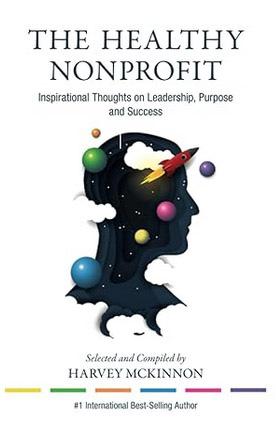
The Healthy Nonprofit: Inspirational Thoughts on Leadership, Purpose and Success. Complied by Harvey McKinnon. Softcover. 162 pages. Civil Sector Press, hilborn-civilsectorpress.com.
The work of nonprofit organizations can often be laborious, with increments of success that may be small, short-lived, or episodic. Successes are rewarding, of course, but rely to some extent on policies and actions of other organizations over which nonprofits have limited influence. Maintaining the drive to work toward far-away goals is sometimes a struggle. We often need encouraging words to keep us going during the slow times in between successes.
Harvey McKinnon has filled that gap with inspirational thoughts on leadership, purpose, and success. In his book, he has gathered these thoughts together and arranged them into 136 topics, arranged alphabetically from “Ability” to “Writing.”
Feeling inspired means being encouraged to do the best we can. The right words can have powerful effects by influencing thoughts, feelings, and behavior. They can bring us comfort, motivation, and joy. They shape our perception of ourselves and the environments in which we operate and can have long-lasting effects on us and those around us. Our own inspiration can encourage others, helping us lead – even if we’re not in positions of authority.
The Healthy Nonprofit offers plenty of opportunities to inspire in many different ways. The writings can help us set good examples, remember to care about others, persevere, lighten the mood, tell stories, and share knowledge.
Some of the sayings in the collection are familiar quotes, some are less well-known. Some are from famous individuals, others
are anonymous, arising out of folklore. The quotes cover everything from trust to creativity, patience, peer-pressure, and more. You may not be inspired by all of them. You may not even agree with them all. But there will be plenty of these quotes that you’ll read again and again.
The messages – from spiritual and political thinkers, activists, and from common wisdom – don’t always directly address nonprofits but apply to them in many ways that can help keep our groups functioning effectively. This is a great book to keep handy when you and others need a lift.
Terrence Fernsler, MNPL, PhD ( fernslts@jmu.edu), has been a nonprofit professional for over 40 years. He is currently volunteering with the International Leadership Association to help create dialogues for leadership.
“We often need encouraging words to keep us going.”
All of us need to be inspired, and you can use the words of great thinkers to inspire others. “We already know that words can heal, wound, or motivate,” Harvey McKinnon says. “And much of the laughter in the world comes from the clever use of words. And, of course, cats and dogs.” McKinnon has done us the great favor of collecting some of the best. Here are just a few:
Wonder is the beginning of wisdom.
– Socrates
The worst sin toward our fellow creatures is not to hate them, but to be indifferent to them. That’s the essence of inhumanity.
– George Bernard Shaw
Don’t hesitate to refer, better still accompany, a donor to that other charity that is doing what they want to support. The donor will recognize and thank you for your selflessness.
– Christopher JK Richardson
Winning is great, sure . . . but if you are really going to do something in life, the secret is learning how to lose.
– Wilma Rudolph
Never believe that a few caring people can’t change the world. For, indeed, that’s all who ever have.
– Margaret Mead
Fundraising is inspiration business. However much we may want to elevate or complicate it, it’s little more than telling stories.
– Ken Burnett
Use these research-based ideas to harness a shared, compelling purpose.
By Zach Mercurio
“Can everyone answer the question, ‘Why am I here?’ ”
When people feel the bigger purpose of their work, they’re happier, and they perform better. Here are three researchbacked ways you can craft a culture of purpose in your organization: Make sure the organization’s purpose is clear to both paid and volunteer employees. Researchers have found that just having a stated purpose isn’t any more effective than not having a purpose at all. It’s the clarity of the purpose that determines its effectiveness. According to one study, employees who felt the purpose was well understood performed far better
than those who felt the purpose was murky. Answer these questions:
Do employees talk about the organization’s purpose in shared language?
Do leaders talk about the purpose regularly and clearly?
Can every employee (including volunteers) answer the question “Why am I here?” with common language?
Before telling people what to do, show them why it matters. In a controlled experiment, Wharton School management professor Adam Grant


and his colleagues found that callers at a university fundraising center who spent just five minutes listening to a scholarship recipient’s story spent more than double the amount of time on the phone and generated triple the donations of callers who didn’t listen to anyone’s story. People are empowered when they have opportunities to see and feel why their work exists. One way to give people such opportunities is through onboarding and training. Don’t just feed people information. Bring in clients to explain how your organization has benefitted their lives. Restructure meetings so people hear from a beneficiary of their work. By bringing the people served by the work into everyday narrative, people can “see” purpose.
Reward purposeful behaviors. Culture is what is rewarded. If you want a purposeful organization, reward
“Purpose is othercentered by default.”
purposeful behavior. When you attach rewards to things like helpfulness, selflessness, and dedication to the organization, people do more of those things.
Purpose is other-centered by default. And that is its power.
Zach Mercurio is the author of The Invisible Leader and PurposeSpeaks. com , a blog focused on purposeful leadership.
Take a look at these articles (NonprofitWorld.org) for further insights on forging a culture of authentic purpose:
The Big How (Vol. 43, No. 2)
Workplace Environments & How They Influence Productivity (Vol. 42, No. 2)
Thriving Through Turbulence (Vol. 43, No. 4)
Mission Accomplished – Really? (Vol. 43, No. 3)
Shape a Culture of Trust: The Foundation of a Successful Workplace (Vol. 40, No. 2)
Smart Daily Habits Will Make You a Better Leader (Vol. 43, No. 4)
Icebreakers to Help You Connect More Deeply (Vol. 43, No. 3)
Why Your Best People Are Leaving & Four Ways to Win Them Back (Vol. 43, No. 3)
It’s one of the biggest challenges leaders face.
By David Dye
“Do you ever ask this courageous question?”
When you and your team look for new solutions for old problems, it’s important to remember the most neglected act of innovation. There’s one question that’s too often forgotten.
In the push to achieve more and be better, you’re continually adding new procedures, processes, and tasks – all of which are valuable or you wouldn’t add them. But do you ever have deep conversations about going in the opposite direction? Do you ever ask the courageous question: “What’s got to go?
This is the most neglected act of innovation. Your team can burn out under the weight of too many tasks, tools, and
undertakings. Quality suffers as everyone tries to do everything they’ve always done plus the innovations. You can curtail success if you hold on to proceedings that no longer serve you. You’ve got to take that all-important act of innovation – letting go.
This is hard work. Most people grow attached to doing what they’ve always done – and for good reason. “What you’ve always done” worked. It got you here. Setting it aside feels foolish, risky, or even negligent. It’s hard to let go of success. But if you don’t, there are painful consequences.
Ideally, some new ideas will improve efficiency and save time. But not all of


them. To build something new, clear some ground. For example:
Eliminate meetings. If you hold a meeting because you always have, shake it up. Skip a week. Do you even need it? Or was inertia soaking up time everyone could use more effectively?
Shorten your meetings. Make your meeting the most productive use of everyone’s time.
Reduce constant interruption. Can you shift your culture to create blocks of time for deep work where you won’t interrupt one another apart from critical issues?
Let go of past experience. Your team reacted badly when you brought up a process improvement. That was five years ago. Are you holding on to that image and holding yourself back? Stop using that filter.
Look closely at all your processes. Take an inventory, and pinpoint operations that are redundant or outmoded. Rapid growth often causes leaders to add many project-tracking and communication tools. It can take longer to track a project than to do the
work. Consider eliminating some of these tools. You’ll be able to get back to work with more time and bandwidth for what matters.
Getting rid of what doesn’t serve you and your team needn’t be painful. Create a habit by taking time once or twice a year, or when you first implement a new process or project, to ask, “What’s got to go?” Abolish what you can. Then enjoy the freedom, speed, and productivity that result from this neglected act of innovation.
David Dye is a keynote speaker and trainer who helps leaders achieve breakthrough results. He and Karin Hurt are the authors of Winning Well: A Manager’s Guide to Getting Results Without Losing Your Soul, Courageous Cultures, and Powerful Phrases for Dealing with Workplace Conflict. They are partners in the leadership training and consulting firm Let’s Grow Leaders ( letsgrowleaders.com).
Winnowing things down to what really matters will reveal unexpected opportunities, as these articles (at NonprofitWorld.org) discuss: A Tool to Prioritize Opportunities (Vol. 43, No. 4)
Find Ways to Innovate – But First Move Past Inertia (Vol. 40, No. 1)
Old Thinking Won’t Lead to New Ideas (Vol. 43, No. 3)
The Surprising Science of Meetings (Vol. 41, No. 1)
Strategies to Reboot & Refresh (Vol. 41, No. 3)
Bring Yourself Fully to Your Nonprofit Role (Vol. 41, No. 1)
Moments Matter: A Three-Part Strategy to Leverage Your Time (Vol. 40, No. 1)
Secrets to Becoming More Productive (Vol. 43, No. 4)
“Enjoy the freedom that results from this neglected act of innovation.”
Make sure your conversations bring benefits rather than embarrassment.
By Greg Alcorn
Have you ever said something at work you wish you hadn’t? Sometimes the wrong words just blurt out. The first step in fixing common communication mistakes on the job is to know what those slip-ups are. Then you can say something the smartest way possible.
Be careful not to commit these common blunders:
Conversation bookends are the small phrases, comments, or questions just before or after a statement or request for action. Make those bookends count. Bookends can be engaging, demeaning, or distracting. Use them as a tool, with careful thought.
Names are great bookends. For instance: Starting a sentence with someone’s name warms that person up. “Mary, may I put you on hold?”
for the workshop?” Saying his name first will catch his attention.
The words you choose paint a picture for the listener. Your words express your attitude and your personality. Keep it positive. Don’t start a sentence with the word “no.”
You can never go wrong with saying the person’s name first. A person’s name followed by the words “I need your help” is a winner: “Rachel, I need your help.” These words are especially powerful when you’re in a position others may perceive as superior.
“Bookends can be engaging or distracting.”
Saying your own name last in your introduction makes it easy for people to remember your name. “This is the help line; my name is Jack.”
Conversations have first impressions, and they begin with your first few words. Hint: One of the words should be the other person’s name.
It’s especially crucial to use people’s names during conference calls. Conference Call Principle #1: When you call on somebody, start with the name. If you ask “How many people signed up for the workshop, Frank?” you might catch Frank by surprise. Instead, ask it like this: “Frank, how many people signed up
Meaningful questions always stay on subject, keep a conversation moving forward, and ensure the other person feels heard and understood. Becoming a better listener is easier than you might think. It starts by making an active choice to listen. Then, ask good questions and really pay attention to the answers. This is the “You have two ears and one mouth” principle.
Making it all about you is a turn-off. Putting the focus on others isn’t a technique; it’s an attitude. It’s the ability to tap into empathy.
“I came by as soon as I heard you lost the grant. That’s discouraging, I know.” Your co-worker will recognize the extra effort and appreciate the sentiment. A special visit, a sense of urgency, and sincere empathy: This combination is incredibly powerful.
“There are seven magic words that can defuse difficult drama.”
People feel more comfortable with pleasant, variable tone quality. Voice tone is made up of rate, pitch, and volume. Think tone and don’t drone.
The tone of your voice helps others hear your empathy. The rate, pitch, and volume of your statements of empathy help express your feelings.
We usually hear implied empathy when somebody slows down speech and lowers the pitch and volume. Say, “I’m sorry to hear that you lost the funding,” and I’ll bet you’ll automatically say it slow and low.
The same is true with excitement at the opposite end of the spectrum. Say “Team,
we got the grant!” You can’t help but say it fast, high, and loud. Tone expresses empathy.
Stressful conversations can be soothed by listening carefully and selecting the right words when you respond. Drama can be inevitable, however. You can defuse it when you apply the three Rs:
• Recognize.
• Restate.
• Reassure.
Ask others: “What would you like to see happen?” Those are seven magic words that can defuse difficult drama.
Verbal communication expert Greg Alcorn, CEO of Global Contact Services (gcsagents.com), is the author of Seven Dumb Things We All Say and speaks to thousands of people each year on improving verbal communication at work.
Have confident conversations using the wisdom in these articles (NonprofitWorld.org):
Powerful Phrases for Difficult Discussions (Vol. 42, No. 4)
Don’t Let Jargon Destroy Your Message (Vol. 41, No. 3)
The Best Leaders Are Servant Communicators (Vol. 43, No. 1) Are Your Messages Repeatable & Retweetable? (Vol. 42, No. 1)
E-Mail Editing Explained: Ensure Your Message Isn’t Missed (Vol. 42, No. 1)
Four Tips to Build Trust through Writing (Vol. 41, No. 1)
How to Have a Constructive Conflict (Vol. 43, No. 1)
The Weight of Words in the Workplace (Vol. 42, No. 2)
Thinking Differently about Your Elevator Speech (Vol. 41, No. 3)
Anchors, Signposts, Echoes, & Loops: Four Essential Tools to Make Messages Stickier (Vol. 43, No. 2)

Your team’s make-up will have a big impact on your success.
By Jeremy Eskenazi
T“It’s unwise to force diversity training on managers.”
o assure success, you need to make your organization attractive for a variety of workers. Unless you include a range of perspectives and talents, it’s likely that everyone will think the same way, and new ideas may be stunted. When you have employees who only follow the boss, the only ideas you have are from that one boss.
While there’s no one-size-fits-all playbook for attracting the best talent, here are four practices that have proved effective:
If you have talented employees who are highly engaged and doing a great job, they likely have similar friends. Offer them incentives to reach out to those friends. Have them act as ambassadors in their circles, including their clubs, associations,
and alumni groups. Doing so is a good way to attract people who are a good fit. Be sure, however, that you also target a broad range of possible candidates. Publish the job posting widely so that a large candidate pool sees it. Referrals from other employees have been found to be discriminatory by some courts if other candidates aren’t also considered. Use referral programs as only one of a variety of recruiting methods to assure you’re not showing bias.
Attracting talent right out of school is a strategy for shaping the careers of young people, and it’s also a great way to create a talented workforce. You can easily find prospects on a university campus through student clubs and organizations. Set up early career development programs, and consider people with majors that aren’t what you’d traditionally seek.
Anyone involved with hiring people needs to be culturally aware. Don’t rely on diversity training, however. It’s unwise and unproductive to force such training on managers, and doing so often backfires. But there are other effective forms of training, such as helping people identify unconscious bias (as described in “Root Out Unconscious Bias” on page 30).
It’s one thing to say you want a variety of viewpoints. It’s another ballgame altogether to set up your physical space and your benefits program to accommodate people with different backgrounds, experiences, and views.

Do you offer extended maternity and paternity leave? How is your pay equity based on gender? These are things that can help attract talented people and show that you’ll welcome them as equal employees and give them a sense of belonging in your organization. Imagine if the people who came in for interviews didn’t see anyone who looked like them. It’s likely they wouldn’t be very interested in continuing the discussion. Your employer brand is only as good as what employees and candidates will say about you when you’re not in the room. Taking the opportunity to show you’re a progressive organization that’s investing visibly in inclusion will be obvious from their first encounter with you.
“What do people say about you when you’re not in the room?”
There are regulatory requirements to consider as well. For instance, if you seek funding or partnerships with the government, you may need to submit some sort of affirmative action plan. There’s also an audit process that ensures that organizations are keeping to their plans. By bringing in a variety of people to your organization, you’ll have access to broader networks which will spur further opportunities and all the benefits they bring. Give your organization the best advantage you can by welcoming as many different perspectives as possible. Every person brings something new to the table, and who doesn’t need fresh ideas?
To gain access to new ideas and promote innovation, you need to design a culture that supports and celebrates all kinds of people. These articles at NonprofitWorld.org will help you do so: Why Microinequities Matter & How to Deal with Them (Vol. 41, No. 4)
Tools for Undoing Racism (Vol. 43, No. 2)
Mental Health Challenges in Nonprofits: The Hidden Dangers (Vol. 41, No. 2)
Jeremy Eskenazi is an internationally recognized speaker, author of RecruitCONSULT!Leadership (recruitconsult.net), and a specialized training and consulting professional, helping global HR leaders transform how they attract top talent.
How to Have a Constructive Conflict (Vol. 43, No. 1)
The Five Essentials for Workplace Wellness (Vol. 43, No. 4)
The Key to Your Organization’s Success: Employee Fulfillment (Vol. 43, No. 2)
Failure-proof your next endeavor with these steps.
By Gleb Tsipursky
The failure of just one project can bring down an otherwisesuccessful nonprofit. And projects fail surprisingly often.
“Major projects fail surprisingly often.”
For instance, a study of IT initiatives found that only 16.2% stayed within the planned budget. The others (83.8% of the projects) suffered from a cost overrun of 189% on average. Due to chronic underresourcing, nonprofits are less able than for-profits to address cost overruns, in IT and elsewhere, leading to more frequent and damaging project flops. While nonprofit projects fail for some of the same reasons that for-profits do, a number of causes are unique to nonprofits.
of Failure
There are five main reasons your project may fail. The first is one that nonprofits share with all organizations. The last four are unique to nonprofits.
1. The Planning Fallacy. This blindspot occurs because of how our brains are wired. We have an intuitive belief that everything will go according to plan. Reality seldom, if ever, lines up nicely with our planned version of it. Yet we behave as if it will.
2. Board Misunderstandings. Many board members lack an understanding of how nonprofits differ from for-profits and feel too much enthusiasm from their desire to advance the nonprofit’s mission. They make unreasonably high demands for project success and focus on external impact over building up internal systems. Then, they blame nonprofit staff for the resulting fiascos.
3. Wishful Thinking. Nonprofit staff often believe that, because they’re working toward such a noble mission, they will succeed. As a result, they launch projects that are too ambitious, not

thinking through the potential problems of implementation.
4. Volunteers. Many nonprofits rely extensively on volunteers, especially highly capable professionals, to run major projects. Unfortunately, the volunteers and staff members rarely treat the project with the same seriousness as they do paid engagements. Their initiatives tend to lack a scope-of-work statement and an end-date, resulting in projects dragging on and on. Another problem is that the volunteer leader often drops out due to other priorities. Then the project stalls because of the lack of other qualified volunteers or funding to replace the volunteer.
5. Funders. Individual donors and foundations alike often avoid investing in nonprofit projects aimed at scaling up internal operations. As a result, nonprofits run such projects on shoestring budgets. Resources are insufficient to prevent unanticipated problems. When such problems occur, the project crashes and burns.
Making plans is important, but our gut reaction – driven by our cognitive biases – is to plan for the best-case outcomes, ignoring the high likelihood that things will go wrong. To address the likelihood
that problems will crop up, you need to plan for contingencies – ones specific to the project as well as those that address common causes of failure. Here’s an eightstep method called “failure-proofing” that any nonprofit – regardless of size – can use to defend against failures and maximize success in major initiatives.
1. Gather. Bring together the people relevant to the project. A group of six people is ideal, and there should be no more than 10. It’s helpful to recruit an independent facilitator who’s not part of the team to help guide the exercise (choose someone from your board of directors, advisory board, another part of the organization, your mentor, a coach, or a consultant). Assign another person to be the note-taker.
2. Explain. Describe all the steps to everyone. Be sure participants are on the same page about the exercise.
3. Choose Two Alternatives. Develop two Next Best Alternatives (NBAs) to the project. Have each participant on the team write down one NBA anonymously. Anonymity is critical to ensure that unpopular or politically problematic opinions can be voiced. A major part of the facilitator’s role is to ensure anonymity is preserved, and it’s the facilitator who gathers what people wrote and voices the alternatives.
Continued on page 24
To prevent a project disaster, imagine that it completely failed. Then, brainstorm all plausible reasons for failure, and generate solutions to these potential problems. Integrate these solutions into your project or process. To maximize project success, envision that it succeeded spectacularly. Brainstorm likely reasons for this success, and generate strategies that would lead to such success. Integrate these strategies into your project or process.
“Imagine a future where the project failed.”
Bring a sharp mindset to your planning. Resources such as these at NonprofitWorld.org are the place to begin:
The Risk of Regret (Vol. 42, No. 4)
A Tool to Prioritize Opportunities (Vol. 43, No. 4)
How to Make the Best Decisions (Vol. 42, No. 1)
Why You Need Deeper Knowledge – & How to Get It (Vol. 42, No. 1)
The Perils of Problem-Solving – & How to Dodge Them (Vol. 40, No. 1)
The Risky Six: Keys to Shed Fear & Take Smart Risks (Vol. 40, No. 2)
Use Design Thinking to Solve Worrisome Problems (Vol. 43, No. 4)
Do You Have Strategic Pain Or a Strategic Plan? Answer These Questions to Find Out (Vol. 40, No. 1)
Next, pick the two most viable NBAs, and discuss them. Vote on whether the NBA seems preferable to the project or not. If not – which is what happens in the large majority of cases – see if the project can be strengthened by integrating components of one or both of the two NBAs into your plan.
4. Pinpoint the Reason for Failure.
Ask the stakeholders to imagine they’re in a future where the project failed. Doing so gives permission to everyone, even the biggest supporters of the project, to use their creativity to consider how the project could fall apart. It’s crucial for them to have this opportunity. Otherwise, their emotions – which determine 80-90% of everyone’s thoughts, behaviors, and decisions – will inhibit their ability to accept possible failure.
Have each participant anonymously write out plausible reasons for this disaster. Encourage participants to focus on two types of reasons:
• reasons they wouldn’t typically bring up for fear of being seen as rude or impolitic, such as criticizing someone’s competency

• reasons that might be dangerous to their career, such as criticizing the organization’s strategy.
The facilitator should look over the statements to see what reasons have emerged and then describe those failure points to the group.
5. Home in on the Most Likely Problems. Discuss the reasons brought up, paying special attention to cognitive biases that might be influencing the assessments (these are defined in “Our Biases in Action” on page 25). Then, assess how probable each possible failure is. Have people make these assessments anonymously. Ask them to use percentage probabilities (or, if that’s difficult, use terms like “highly likely,” “somewhat likely,” “unlikely,” and “very unlikely”).
Also consider how harmful each reason for failure might be. Pay more attention to the ones that are most harmful. Here, the expertise of front-line members of the team will be especially useful. The person assigned as note-taker should write down all the problems brought up, as well as assessments of the probabilities.
6. Fix the Problems. Decide on several failures to focus on, and brainstorm ways of solving them, including how to address potential mental blindspots. Also, discuss what would serve as a red flag that the failure is about to occur. For this step, it’s especially important to have people with authority in the room. Ask the note-taker to write down the possible solutions.
7. Maximize Success. After addressing failure, it’s important to go a step further and maximize success. Have everyone in the group imagine a future where the project succeeded far beyond what they expected. Have each participant anonymously write out plausible reasons for this success.
Next, have the facilitator highlight the key themes. Discuss all the reasons, and check for the cognitive blindspots defined in “Our Biases in Action” on page 25.
Evaluate anonymously the probability of each reason for success. Decide which deserve the most attention. Then, brainstorm ways of maximizing each of these reasons for success. The note-taker should write down the ideas.

8. Revise the Project. In this final step, ask for and listen to feedback about the project. Based on the feedback you receive, make revisions to the project. If needed, repeat the exercise.
The method described here is far from the only strategy you can use to address threats to project success. Here are several other techniques:
Red teaming. With this approach, a team of people distinct from the ones who created the project challenge every aspect of the plan, trying to find any flaws. Devil’s advocate. Someone on the project team is assigned to spot any and all problems as the plan is being made. Both methods have their advantages and disadvantages, and you can explore all to see what works best for your
“Emotions determine 80-90% of everyone’s behaviors.”
nonprofit. By comparison to the failureproofing technique, these methods seek to eliminate dangers but don’t focus on maximizing success. The specific approach you use isn’t as important as that you commit to a consistent method for testing your plan. It’s too easy to allow large projects to go forward with serious flaws, both because of our cognitive biases and because of problems particular to nonprofits. Avoid the resulting project disasters and optimize the likelihood of success by using an effective methodology to address threats and seize opportunities.
Known as the disaster-avoidance expert, Dr. Gleb Tsipursky (gleb@ disasteravoidanceexperts.com , glebtsipursky.com) empowers nonprofit leaders to avoid disasters by addressing threats, maximizing opportunities, and resolving personnel problems. A bestselling author of numerous books, he is best known for Never Go With Your Gut (careerpress.com), The Blindspots Between Us (newharbinger.com), and The Truth Seeker’s Handbook (intentionalinsights.org).
In creating any sort of plan, it’s vital to be aware of cognitive biases that can skew our decision-making. Acquaint yourself with these biases and be aware of how they can cause us to make irrational decisions:
Attentional bias: We tend to focus on certain things at the expense of others. As a result, we may fail to examine all possible alternatives when making judgments.
Confirmation bias: We tend to favor new information that confirms our existing beliefs.
Halo-and-horns effect: We allow one trait, either positive (halo) or negative (horn) to overshadow all other traits, behaviors, or beliefs.
Loss aversion: We place a greater emphasis on the potential for loss than the potential for gain when contemplating a change. Thus, we’ll hold on to something even if letting it go would bring us something better.
Optimism bias: We believe we’re more likely to experience positive than negative results. We may therefore gloss over potential problems.
Overconfidence effect: Our confidence in our judgments is greater than the objective accuracy of those judgments.
Pessimism bias: Not as common as optimism bias but just as pernicious, this cognitive shortcut causes people to overestimate the likelihood that bad things will happen. It can be the result of depression or anxiety disorders.
Planning fallacy: When we plan a project, we invariably underestimate how long it will take and how much it will cost.
Status quo bias: We prefer things to stay the same and consider a change from the present situation to be a loss.
For top-level results, tailor your financial messaging to each of your stakeholders.
By Joseph Weinberger
“Charts and graphs enhance storytelling.”

In the world of nonprofit organizations, effective communication is key to engaging donors, stakeholders, and the general public. Although financial statements might not seem like the most obvious tool for storytelling, they can play a surprisingly powerful role in conveying your organization’s mission, values, and overall impact. When thoughtfully presented, financial disclosures can become a compelling narrative that supports your goals and builds trust. Here’s what financial statements can do for you and how to make it happen.
Financial statements do more than report numbers. They also do the following: They form a bridge between a nonprofit’s day-to-day operations and the people invested in its success. They provide transparency and accountability and offer insight into the organization’s financial health. They can reveal how closely an organization’s spending aligns with its mission, how impactful its programs have been, and how sustainable its operations are over time.
For example, a nonprofit’s allocation of funds can be a window into its priorities. When a significant portion of a budget is dedicated to program expenses, it demonstrates a commitment to delivering on the organization’s mission. This emphasis can be further supported by clearly categorizing program services and illustrating functional expenses in a way that highlights key areas of impact.
Presenting financial data visually is another effective way to enhance storytelling:
Charts and graphs can help stakeholders quickly grasp where revenue comes from, how it is spent, and how those patterns have changed over time.
A pie chart showing the breakdown of donations, grants, and earned income can signal the diversity and stability of funding sources.
Bar graphs that reflect year-overyear growth or shifts in program investment can communicate momentum and evolution.
The way you choose to report your revenue can also tell an important story:
A detailed breakdown of income sources adds dimension to financial statements, showing your organization’s capacity to weather economic changes and shifts in donor behavior.
Whether or not investment income is considered part of operating revenue, and how much of the organization’s routine
“Use your financial statements creatively.”
activities are supported by endowment funds, can say a great deal about financial planning and resilience.
Incorporating comparative financial data from multiple years offers a longitudinal view of progress. Stakeholders often want to understand not just where the organization is today, but how it has developed over time. This broader perspective can strengthen confidence in your organization’s direction and leadership.
To round out the financial picture, pairing financial data with non-financial metrics adds depth:
Information such as the number of individuals served, volunteer hours contributed, or programs delivered brings the numbers to life.
Tying program expenses to specific outcomes, such as meals provided, students taught, or habitats preserved, helps demonstrate how efficiently you’re using your resources.
The value of in-kind services or volunteer labor can be acknowledged to further highlight your organization’s reach and impact.
It’s important to remember that not all audiences will interpret financial data in the same way. Tailoring your presentation to different groups will enhance engagement and understanding.
Consider these four crucial target audiences:
Donors often respond best to clear indicators of transparency and mission alignment.
Grantmakers may be more interested in operational efficiency and long-term sustainability.
“Board members need a comprehensive overview.”
Board members typically need a comprehensive overview that supports strategic decision-making.
The general public benefits from userfriendly formats and visual storytelling that inspires trust.
Despite the flexibility in presentation, accuracy remains non-negotiable. Financial storytelling must be rooted in truth. Be sure to do the following: Adhere to Generally Accepted Accounting Principles (GAAP). Undergo regular audits and reviews. Provide explanatory notes to ensure clarity and context.
Misrepresentation, even if unintentional, can quickly erode trust and damage your credibility.
Don’t look at your financial statements as a dry compliance requirement. When used creatively and responsibly, these statements become dynamic tools for storytelling. They can illustrate where your organization has been, where you’re going, and why it matters. By carefully crafting and contextualizing these documents, you can deepen relationships with your stakeholders and more effectively advance your mission.
Joseph Weinberger, Partner at the Bonadio Group ( bonadio.com), has over 30 years of experience providing audit and consulting services to nonprofits. His expertise extends to presenting financial statements and audit results to stakeholders, preparing and reviewing cost reports, evaluating internal control procedures, and performing audits of employee benefit plans.

To dig into the many aspects of finances for your organization, read the resources available at NonprofitWorld.org: Is Your Budget Bulletproof? (Vol. 40, No. 3)
Mastering Data Collection for Impactful Growth (Vol. 43, No. 3)
Reduce Legal Risks with These Pointers (Vol. 43, No. 2)
Thriving Through Turbulence: Your Guide to Mastering Financial, Funding, & Other Top Challenges (Vol. 43, No. 4)
The Best Way to Raise Endowment Funds (Vol. 41, No. 3)
Is a Performance Audit in Your Future? (Vol. 41, No. 2)
Why “Diversifying Revenue” Isn’t Enough: What Else Must You Do? (Vol. 43, No. 4)
Best Practices to Budget (& Spend) for Marketing (Vol. 41, No. 1)
Are You Offering People the Data They Want & Need? (Vol. 42, No. 4)
Reinvigorate your marketing with the latest technology.
By Matthew Montoya
“SMS has higher open and clickthrough rates.”

In today’s fast-moving, crowded digital world, you face a fundamental challenge: how to reach your audiences in ways that are timely, relevant, and effective – without stretching alreadylimited resources. Whether it’s driving attendance, raising funds, recruiting volunteers, or heightening awareness, connection is critical to impact.
To insure your success, you need to adopt a thoughtful mix of marketing tactics and channels. More than ever, it’s imperative to use the latest technology to streamline workflows, boost creativity, personalize messaging, and deepen relationships with your communities.
It’s not just about choosing the right tools; it’s about using them to achieve a greater outcome. A well-rounded digital marketing strategy combines multiple channels – such as e-mail, social media, and, increasingly, SMS – to engage audiences at different points in their journey.
SMS – which stands for Short Message Service – is useful in sending text messages to mobile phones. SMS has been shown to have higher open and click-through rates than other marketing channels such as e-mail. It’s a form of mobile marketing that lets you communicate directly with people via their mobile devices.
SMS has gained traction as a powerful tool for reaching audiences in a world where mobile phones are always within arm’s reach. Open rates can be as high as 98%, and people read most messages within minutes.
Still, SMS is only one piece of the marketing puzzle. SMS works best when you leverage it in conjunction with other proven marketing channels.
The best marketing strategy is a multichannel one, combining several key digital tools and tactics to build a stronger and more compelling story. SMS, e-mail, and social media all serve specific purposes. SMS provides immediacy and is ideal for use in cases like event reminders and deadlines, while e-mail offers a more curated experience where content and detailed program information can shine. Meanwhile, social media is for maintaining awareness and growing engagement by communicating your organization’s mission.
The Parsippany Public Library ( parsippanylibrary.org ) in New Jersey used these tools to re-engage its community after noticing members lacked awareness about its many programs and classes. SMS marketing in particular drove notable results. By combining SMS with its e-mail marketing campaigns, the library saw higher attendance at its community events and educational programs. Clearly recognizing the value, nearly 60% of its contact list opted into SMS updates, and the library saw more e-mail open rate as well.
A critical component of any nonprofit marketing strategy is personalization. Today’s donors and supporters expect relevant, targeted communications that speak to their specific interests and needs.

Data-driven marketing tools allow you to segment your audiences and send tailored messages that are more likely to resonate. You might, for example, send information on family-oriented programs to parents while providing details about career workshops or training sessions to job-seekers. This type of segmentation fosters a deeper connection with your supporters.
Technology can help you gather and analyze data, refining outreach based on recipient behavior. You can target your communications more effectively by taking the time to understand when someone joined as a donor or attended an event, ensuring that you provide supporters the most relevant updates.
Use Technology as a Growth Lever
You need to do more than just share your mission – you have to engage your audiences efficiently and in a purposeful way. Technology empowers you to do so by helping you to stay nimble and to expand your reach without stretching limited resources.
Intuitive, AI-powered marketing tools, like Constant Contact (constantcontact.com),
make it simple for small, mission-driven teams to get more out of their marketing. From AI-powered content creation to real-time reporting dashboards, these tools help you collect opt-ins, schedule and automate messages, and track performance in real time, reducing friction while maximizing impact.
In a world where attention is fleeting and needs are constantly evolving, working smarter isn’t just about efficiency. It’s about expanding reach, deepening relationships, and driving meaningful change.
Matthew Montoya is Senior Manager of
Indirect Customer Ops and Success at Constant Contact (constantcontact. com), a platform aimed at simplifying marketing for nonprofits. It offers tools for creating and managing e-mail campaigns, building contact lists, and tracking performance. Constant Contact also integrates with other marketing channels like social media and offers such features as website signup forms, lead generation landing pages, and marketing automation.
You don’t need extensive technical skills to use the latest fundraising and marketing tools. Connect with your target audiences by perusing resources available at NonprofitWorld.org:
Put a Spotlight on Your Digital Footprint (Vol. 43, No. 1)
Reap More Online Donations: Five Steps to a Better Website (Vol. 40, No. 1)
How to Introduce Employees to New Tech (Vol. 40, No. 3)
Software Asset Management in the Age of Blockchain (Vol. 43, No. 4)
Seven VoIP Trends Empowering Nonprofit Professionals (Vol. 43, No. 1)
Are You Wasting Money Because of Multiple Databases? (Vol. 43, No. 2)
Gain More Funds by Leveraging Technology (Vol. 41, No. 4)
Tech Tips to Punch Up Your Communications (Vol. 41, No. 3)
Listen In to Boost Action (Vol. 43, No. 3)
Get More Eyes On Your Digital Content (Vol. 42, No. 3)
Optimize Google Ads to Bring More Traffic to Your Website (Vol. 41, No. 1)
How to Get the Community to Support Your Nonprofit (Vol. 40, No. 4)
Expand Your Reach with Short-Form Videos (Vol. 41, No. 4)
“Working smarter is about expanding reach and deepening relationships.”
How will AI impact the nonprofit sector in 2026 and beyond? Here are predictions by Nick Blasi, co-founder & COO of Personos (personos.ai), an AI platform that merges personality science with artificial intelligence: AI-supported coaching will transform recovery, reentry, and social services. In 2026, AI will increasingly assist frontline workers not by replacing them but by giving their clients supporting tools to think through options, stay focused, and navigate ongoing challenges. For underserved communities, this shift will mean faster progress, more consistent support, better decisions, and improved outcomes.
AI will become the strongest support tool for people who’ve had the weakest safety nets. AI won’t replace social workers or counselors but give them leverage: helping individuals organize their thoughts, weigh decisions, and navigate crises. While today’s AI gains are most often measured with productivity and efficiency, the biggest value in 2026 will appear in the form of stability, progress, and second chances, especially in underserved communities.
AI will finally close the gap between appointments, giving social workers relief and clients ongoing support. Social workers spend their days doing emotionally intensive work, with some of the highest rates of burnout across any professional category. The hardest part isn’t always the session; it’s everything that happens in between. AI will minimize stress by structuring the cognitive load, including planning, organizing, triaging, while simultaneously giving clients professional-grade guidance when they’re alone, overwhelmed, or facing decisions in the moment. These cost-effective, professional-grade tools will help create fewer crises, calmer sessions, and progress that continues even when the social worker isn’t physically present.
“AI will give second chances to people in underserved communities.”
Have we really reached the end of education? Yes, according to Ida Rose Florez – at least in the way we’ve understood education in the past. In The End of Education as We Know It: Regenerative Learning for Complex Times (newsociety.com), she describes how and why education is falling short for many people today.
Conventional education is based on preparing workers to join the labor force. It may be efficient in doing so, but it’s focused on outdated needs. For today’s knowledge workers, education needs to focus on critical thinking, creativity, and change. It must include diverse approaches that encourage a sense of belonging and collaboration.
When systems become inequitable, we can use creative disruption to challenge them. If we want a more just society, we must become more accepting of what we still do not know. Florez explains how we can chart a new future that will benefit us all. She is also a believer in the power of questions, such as the following:
Can we really change the world? Maybe not, Florez says, but she thinks we must do something even harder – reconsider how we understand the world. In the midst of today’s global complexity, we must view learning in a whole new way. By opening our minds, we can discover fresh directions that may not change the entire world but that may make the life around us better in some way.
What’s the most practical, versatile way to move forward in the face of great complexity? Florez highlights what she calls adaptive action, which involves taking one tiny step at a time. This approach helps us see the patterns underlying what appears to be chaotic. It focuses us on adapting rather than solving or fixing. It allows us to note changing circumstances, move through the problem at hand, and take action.
Does storytelling have a place in our new systems of learning? Absolutely. Storytelling is “a potent, distinctly human pattern. We live our lives in story. Every day, every year, is a story. Every lifetime is too.” Storytelling helps us organize the world around us, helping us understand what we could not otherwise grasp. Learning to tell the right story, in the right way, is the leader’s key to engaging and motivating people.
Can brainstorming help us come up with creative new ideas? Yes, but only if done properly. Otherwise, it can do more harm than good. If you commit to doing it correctly, start with such sentence stems as “What if we . . .?” or “Maybe we could . . .” to get things rolling.
What is regenerative education? It’s a call to learning that’s in harmony with the way the natural world works. It teaches us how to nurture health, wellbeing, and happiness, and it encourages mutual thriving, grounded in the humble commitment to respect and support one another.
–reviewed by Terrence Fernsler
Biases won’t disappear from your organization until everyone come to terms with deeply hidden prejudices. This will happen only through self-reflection and brutally honest conversations. That’s “the hard, awkward, and necessary work” that will teach people to be agents of change, says La’wana Harris in her powerful book, Diversity Beyond Lip Service: A Coaching Guide for Challenging Bias (bkconnection.com). She provides concrete steps for unconscious-bias training, including these:
Find a time and place for people to break into small groups to talk about biases they’ve experienced. Clearly, women and minorities will have much to discuss – a variety of assumptions, slights, and offhand remarks that have worked against them. But white men need to talk, too. They need to “own their truth,” as Harris says. They must acknowledge their privilege – the advantages they’ve automatically received throughout their lives – and admit that they instinctively resist diversity for fear they’ll lose that edge. The idea is to get all these covert messages into the open where they can be addressed.
Go deep. Once the problems that discrimination causes are clear, you can move beyond lip service. Set up employee resource groups or inclusion circles – safe spaces where people can learn and grow together. Invite both minority and majority
groups to talk about their positive experiences, painful moments, wishes, feelings, and insights. Encourage people to repeat back to the speaker what they heard that person say, to be sure they’re truly listening and engaging in a transformative dialogue. Avoid interruptions, cross-talk, and judgment. Coach and support people to do things differently. To rely solely on unconsciousbias training is a recipe for failure. We must also coach people to help them understand what to do with their newly discovered biases. Inclusion coaching, which Harris details in her book, shifts the focus from telling and persuading toward asking the right questions and listening. Inclusion coaches help people explore their core values, beliefs, and motivators to find what they need in order to embrace inclusion versus being pushed to comply.
Make room with a PAUSE. As you work to embrace diversity and take it to a productive place, use these simple steps as guideposts whenever there’s a need to regroup:
• Pay attention to what’s happening without judgment.
• Acknowledge your own reactions and interpretations.
• Understand how others’ perceptions differ from yours.
• Search for common ground to build solutions.
• Execute a mindful and intentional plan.
One of your biggest cybersecurity risks comes from within. Workers with access to critical systems and data can cause unimagined damage. And the greatest threat comes when an employee leaves the organization, notes Larry O’Connor, CEO of Other World Computing (owc. com). Even weeks or months after departure, it’s all too common for exiting employees to have lingering access to an organization’s systems and data, he says. They can then steal sensitive data or sabotage critical systems by exploiting these oversights. And, as organizations have become more reliant on cloud services and remote work, this risk has only grown.
“Luckily, today we have robust identity and access controls to mitigate these
insider risks,” O’Connor says. He recommends automating the process of disabling accounts across all apps and services when an employee leaves the organization. “Leveraging technologies like two-factor authentication and certificate-based authentication can also help prevent unauthorized access – even if login credentials are compromised.” Additionally, maintaining comprehensive, air-gapped backups of critical data is essential; such maintenance provides a secure fallback in case malicious insiders do manage to delete or encrypt production data.
Carl D’Halluin, CTO of Datadobi (datadobi.com) puts it like this: “Never underestimate the significance of risks from within – regardless of whether they are malicious or a result of negligence. Be sure to train your people with the information they need to gain control of your unstructured data scattered across every environment – local, remote, and in the cloud. Next, foster a culture of accountability and vigilance, because some insider threats are simply a result of human error.”
“It’s a safe bet that highly sensitive information is contained within your PDF docs, so make certain to choose PDF software that doesn’t skimp when it comes to robust protection features – like encryption, digital signatures, and redaction tools,” urges DeeDee Kato of foxit.com. “This provides the peace of mind that only authorized users can access sensitive content and that confidential information is permanently removed, if necessary. Next on the checklist should be advanced permission settings to control actions such as printing and editing. And let’s not forget that it should integrate with Microsoft OneDrive, SharePoint, etc. to protect your documents, data, and personal information, as well as include watermarking to deter unauthorized distribution. Audit trails and tracking capabilities are two more features that will take your data protection and security to the next level – enabling you to monitor access and modifications, and comply with those all-important data protection regulations.”
The key advice is to take a hard look at your security practices around employee offboarding and data protection. It’s not a matter of if, but when, an insider threat incident will occur. You can reduce the risk and impact of these threats by proactively implementing the right people, processes, and technologies.
“Nothing elevates performance more than coaching,” write experts Bill Eckstrom and Sarah Wirth in The Coaching Effect (Greenleaf, gbgpress.com). Their research finds that leaders who “coach” instead of “manage” inspire people to do their best work.
“Manager” is an archaic term describing a role that limits performance. “Coaches” develop trusting relationships that motivate people and help them grow. To be a coaching leader, you need to generate people’s growth through four essential activities:
1. One-on-one meetings: Such meetings have a huge ability to energize people, so be sure to hold them frequently. Put them on a calendar as a recurring event. Set an agenda to address people’s work on a holistic level: their bigpicture concerns, developmental needs, and personal goals. Ask them how you can help.
“ ‘Manager’ is an archaic term.”
2. Team meetings: Define an agenda that encourages interaction and information sharing. Start the meeting by discussing progress toward goals. Have people share success stories, and give them time to ask questions and brainstorm solutions. End the meeting by recognizing and celebrating success.
3. Performance feedback: “Regular feedback should be the norm, not the exception,” the authors tell us. Their research shows that people prefer frequent, small doses of feedback. Make your feedback specific so that people understand exactly what to do to improve. Focus on the behavior, not the person. Ask lots of questions, and engage people in the conversation to promote their own selfdiscovery and self-evaluation.
4. Career development: Helping people develop their careers engages them, keeps them growing, and yields better performance. Career development meetings should be frequent and highly individualized. Begin by having a discussion about people’s goals, how they hope to grow, and how you can support them. Ask open-ended questions to help people create a career-development plan. Help them identify opportunities that will further their goals; for example, you might suggest that they mentor new team members, find a mentor of their own, go to conferences, or attend webinars. Follow up to check on their progress toward their goals.
Road trips, which are rapidly becoming nostalgic experiences, can reveal nuggets rich in the demographics, geography, and history of our communities. Sarah Kendzior, through a memoir of her own family trips, highlights the ways in which our country is changing. In The Last American Road Trip (flatironbooks.com) she describes trips that occur through an inflection period of our history – the present. Kendzior’s stories of her family’s road trips, taken primarily in the middle of the country, explore an interconnected web of decisions that have impacts on today’s moments.
As is all too common in our culture, her book often portrays leadership (in such areas as environmental protection, conservation efforts, and political decisions that require broad public support) in terms of a few individuals rather than the result of collective action. As long as this narcissistic view of our culture persists, the prediction for the future, based on stories of our past, remains pessimistic. Thankfully, however, Kendzior also offers a more optimistic view – an understanding that acting for the love of all humankind – the very definition of philanthropy – may set the stage for redemption of our mistakes with democracy.
The reader is left with the feeling that, without working together, we can expect little to change from our current trajectory of personal isolation and selfdestructiveness. This path will continue to lead to an austere future – austerity of lessons learned, of moral courage, and of opportunity – rather than investment in one another through the strength of sharing that dialogue offers. Kendzior warns that without a sense of our interconnectedness, cooperative efforts may very well become as much a relic as road trips in America.
– reviewed by Terrence Fernsler
Donor-advised funds (DAFs) are “transforming the way dollars reach communities, sustain nonprofits, and empower donors with strategic influence and flexibility,” Ted Hart (tedhart.com) says in The DAF Revolution. His definition of a donor-advised fund is “a charitable giving account managed by a DAF sponsor, allowing donors to contribute assets, receive an immediate tax deduction, and recommend grants and investments to nonprofits over time.” He offers tactics you can use to cultivate DAF donors, including: Earn a Guidestar Seal of Transparency (guidestar.org), which signals your commitment to accountability and transparency. Once you have a Guidestar profile, provide information about your mission, programs, strategies, and leadership. Doing so makes your organization more attractive to DAF donors and builds trust with them.
Develop relationships with financial advisors and community foundations, which can help position your organization as a recommended recipient of DAF funds. Encourage repeat giving by using clear, compelling communications with DAF donors. “A crucial first step involves showcasing the tangible impact of DAF contributions,” Hart says, Share real-world stories, key data, and detailed reports that show how DAF gifts support your mission, he advises. “Concrete examples of progress and measurable success inspire continued and increased giving.”
Promote complex asset donations. You can expand your fundraising potential by encouraging people to contribute illiquid and complex assets through DAFs. Complex assets are non-cash gifts such as real estate, privately held business interests, cryptocurrency, or high-value collectibles.
Send a formal acknowledgment and thank-you to the DAF sponsor and donor as soon as you receive a DAF grant. Express appreciation, describe how you intend to use the grant, and explain to donors that no additional tax deduction is required. Monitor changing policies. “DAF regulations continue to evolve, with ongoing discussions around mandatory payout requirements, donor disclosure rules, and increased transparency measures,” Hart says. Stay informed about possible changes, legislative updates, and IRS regulations. “This kind of preparedness
calls for more than passive observation,” he counsels. “It requires a proactive framework that blends policy awareness, expert guidance, donor education, and sector advocacy into an ongoing cycle of institutional readiness.”
Hart clarifies terms throughout this readable, useful book and includes a detailed glossary. His lists of best practices, checklists, case studies, and key takeaways for each chapter combine to make this a thoroughly helpful guide.
According to Melanie Lockwood Herman of the Nonprofit Risk Management Center (nonprofitrisk.org), risks aren’t problems but, rather, possibilities. She defines risk management as a discipline for dealing with – and making the most of – uncertainty. In Possibilities: A Risk Management Guide for Nonprofit Teams, she invites you and others in your organization to open up discussions based on queries like these:
How is risk viewed in your organization? Is it seen only as a negative? Who in your organization might support a more positive perspective on risk?
How does your organization’s approach to risk management align with or stand out from practices in adjacent organizations?
Does your organization’s culture encourage taking calculated risks, trying new things, normalizing failure, and seeing mistakes as learning opportunities?
Do you and others in your organization solicit dissenting opinions? Do you consider all credible ideas and explore them thoroughly?
What are the most critical downside risks and the most promising upside possibilities facing your organization today?
Why is fundraising difficult? Too much competition? Not enough attention?
The increasing costs of paper and postage? Shifts in demographics and psychographics?
Sure, all of those things. And more. But there’s one big reason that overshadows all those things: the culture and leadership of your organization.
Alan Clayton’s Great Fundraising Organizations: Why and How the World’s Best Charities Excel at Raising Money (wiley. com) explains the problem: You can be a
good fundraiser with all the techniques and strategies down pat, but if your organization doesn’t have a fundraising culture, you’ll never fully succeed.
Fundraising that works isn’t about the excellence of your organization. Or the uniqueness and elegance of your solutions. Or the professionalism of your staff. Those things are critical to your accomplishing your mission. But they’re not the focus of effective fundraising.
Here’s the hard part: You need outside revenue from donors to enact your solutions. That means you need to raise funds. And effective fundraising isn’t about your organization’s mission. It’s about the problem you solve – and how the donor can help solve it. As Clayton says, “Fundraising sells the problem; the rest of the organization sells the solution.”
The book is based on decades of real-life experience – incredible success where change allowed fundraising revenue to skyrocket as well as painful failures where culture caused great organizations to limp along, or even fail.
That’s why you should read this amazing book. It includes a roadmap for organizational change. Any organization can unlock a lot of revenue from donors who are suddenly excited and connected because they see they’re part of making the world a better place.
–reviewed by Jeff Brooks
Are you spending your time on what matters most? What small changes could you make to assure that you’re living and leading in accord with your highest values and most important goals? In MIT Sloan Management Review (sloanreview.mit.edu), Leslie Perlow and Salvatore Affinito answer these questions by proposing a LifeMatrix tool (yourlifematrix.com) you can use to assure that what you do aligns with your utmost values and goals.
“Even small shifts can make a profound difference in how we live and lead,” Perlow says. Taking little steps each day can deliver great value and help you align your daily activities with long-term strategies. This new way of measuring the subjective
value of your time goes beyond traditional time management tools and makes it possible to see whether you’re crafting the best use of the 168 hours you have each week.
Based on a personal “JAM Type” – an assessment of how you prioritize joy, achievement, and meaningfulness – the tool helps you calculate the subjective value of your time. It also allows teams to see patterns in how people spend their time, how that time corresponds to the organization’s mission, and where value can be elevated.
“This isn’t just a personal tool – it’s a cultural one,” says Perlow. “It opens the door to deeper conversations around intention, well-being, and what it truly means to perform at a high level.” Teams can use it to promote reflection, clarity, and meaningful change. Even reallocating just one to two hours per week toward more valuable activities can enhance productivity, well-being, and a thriving organizational culture.
“Failure occurs when you ignore emotion.”
Many failures in organizations occur for a simple reason: Leaders ignore the realities of human behavior. They focus on formal aspects of the organization rather than the human element, which is just as important. Often, they pay little attention to the psychological underpinnings that are integral to any effective change.
The authors of The Unconscious at Work (taylorandfrancis.com) analyze the irrational features that leaders too often neglect. They propose that the “myth of rationality” keeps leaders from addressing the submerged feelings that lie beneath all change efforts. They explore two dimensions of this emotional undertow:
• emotional disturbance caused by loss
• anxiety caused by the dismantling of social systems that occurs during change. Leaders often disregard people’s feelings of loss and anxiety for fear that doing so will slow down the change process, putting the organization at risk. However, while there may be a temporary slowing down, the authors say, “in the longer term making space to hear and work with difficult feelings gives change efforts a much greater chance of succeeding.”
Thinking errors play havoc with the decisions we make, everything from whom we hire to how we innovate. Chris Griffiths does a superb job of bringing our thinking faults to light in The Creative Thinking Handbook (koganpage.com). These errors include:
• selective thinking: the impulse to accept certain ideas and discount others (favoring our pet ideas)
• reactive thinking: the tendency to react too quickly to events or ideas
• assumptive thinking: the inclination to accept a belief, convention, or idea as true, often with no proof (usually based on past experience or “common knowledge”).
These brain glitches kill creativity. The worst is selective thinking, according to Griffiths. “There’s no faster way to squelch new ideas than with the common error of selective thinking,” he says. This type of thinking cause us to make mistakes like these:
You allow one single trait to influence your opinion of a person. This thinking error can lead to poor hiring decisions.
For example, you may urge the hiring of a person because of a wonderful sense of humor, ignoring other attributes that may be more relevant to the job.
You give more weight to information that supports what you believe or want to be true. Thus, you avoid asking tough questions and discount new information that might put your favorite ideas to the test.
You stop at the first “right” answer, missing out on other answers you could find if you kept looking.
You interpret the future based on what you expect to happen and are caught off guard by what actually happens.
While fully aware that we’re living in a time of catastrophe, Wen Stephenson finds rays of hope within the gloom, writing in Learning to Live in the Dark (haymarketbooks.org). The essays in his book confront the greatest perils of our time. Some of the points in his thoughtful, bold, and unsettling book:
Global solidarity – any genuine coming together across borders – is meaningless without effective action. The United States owes the largest “climate debt” and in fairness must move faster and more radically than any other nation. Of course, such action is sure to conflict with political priorities, but the alternative to the US paying its global debt is “a world without any hope of justice, anywhere.”
At the heart of the case for the Green New Deal is the argument that the choice between justice and human survival is a false one. “Lest we forget,” Stephenson says, for any chance at a livable future, global greenhouse emissions must fall by half in the next 10 years and be all but eliminated by 2050. Such speed and scale are almost unimaginable, but only such an effort will offer the hope of meeting the global emissions target for midcentury.
We’re now in the midst of a mass extinction of species – the sixth such extinction since life on earth began, caused this time not by natural processes but by humanity itself. Scientists estimate that half of the several million species on earth will face extinction before this century is out. As Henry Thoreau wrote, “What signifies the beauty of nature when men are base?”
Direct action is a form of truth-telling. It shows “not in the abstract but physically, bodily, on the ground and at the root, what needs to be done – and demonstrates the will to do it.” Those who take such action, Stephenson believes, “are the real optimists. Some might call them optimists of the will. At this late hour, there’s no other kind.”
“There are rays of hope within the doom.”
Instead of telling people you’re making a change in your organization, you need to truly engage them and communicate with them about the change. Jeremy Eskenazi underscores this point in RecruitCONSULT!Leadership (recruitconsult. net). It’s vital to understand how people deal with change, he says, and most people meet change with the reaction he calls SARAH.
SARAH stands for the emotions people go through during a change: Shock, Anger, Resistance, Acceptance, and Help. It’s the leader’s job to guide employees from their initial shock to acceptance and then to the final stage (help) where they become partners in the change process and help you communicate the change to other stakeholders.
To begin this process, you need to realize that whenever change is involved, “SALY is in the room,” Eskenazi tells us. SALY stands for “Same As Last Year.” It’s the urge in all of us to cling to the familiar – to say, “Let’s just stick with what we did last year.”
Understanding the importance of SARAH and SALY will help you lead people through change. Follow these guidelines for success:
Prepare for change before it occurs. Create a plan that engages employees in implementing the change.
Give people a clear description of the change and why it’s necessary. Provide them with a clear picture of success. Allow adequate time for people to accept the change.
Communicate about the change on a regular, frequent basis. (Remember the rule that when planning a trip, you lay out what you plan to take and then pack only half of that? Communication about change is the opposite: No matter how much you plan to communicate, double it.) In change management, there’s nothing more important than constant communication. And remember: It’s not about making sure your ideas are heard. It’s about making sure everyone is with you. When communicating about the change, mix it up so people remain interested. For example:
• In your written communications, hide a question related to the change and give a prize to the first few who answer it.
“Whenever change is involved, SALY is in the room.”
• Share a “Myth of the Week” in which you debunk myths about change in general and about rumors that have surfaced about this specific change.
• Make a video about the change with a touch of humor to keep it fresh and interesting.
• Find people who support the change, and have them help you communicate its benefits to those who are more resistant. Allow the change to be shaped by ongoing feedback. Use surveys and focus groups to keep an eye on how people feel about the change.
View leading others through change as an ongoing process. Have constant dialogue on the issues that will continue to come up.
“In the nonprofit sector, there’s a clear spectrum of operational approaches, and today’s economic pressures are sharpening how organizations position themselves along it,” says Sam Fankuchen, founder & CEO of Golden (goldenvolunteer.com). On one end you have grassroots organizations that rely on low-cost or no-cost tools, he says. “They often repurpose general-use platforms like Airtable or Google Docs to support their work. These tools might not be purpose-built, but they’re accessible and allow teams to stay operational without additional funding.
“At the other end are more institutionalized organizations, often with multiple chapters, programs, and stakeholders, where decisions depend on having reliable integrated data systems,” Fankuchen says. “For them it’s not about being bigger or more formal; it’s about clarity. They need their systems, programs, technology stack, and partners to be synchronized in real time because if they can’t track what’s happening, they can’t coordinate informed, compliant, and productive actions.
“In all cases, large and small, automating data collection is no longer an option; it’s the difference between getting 1-3 days of time back per person per week, handling personal information responsibly versus losing trust forever, and advancing a
mission in practice rather than aspiring to be helpful in spirit. There’s an urgency to reduce inefficiencies, especially when solutions already exist, often for free.
“As technology evolves, particularly advancements in AI, the bar is rising for what it means to operate effectively. There’s no turning back time to before AI appeared,” Fankuchen warns. “AI has the potential to dramatically increase productivity, but it only works when built on clean and reliable data. Nonprofits that have already embraced this shift are positioning themselves to operate with greater clarity and impact. Those that haven’t are prioritizing defending their existence over pursuing their mission.
“This is no longer a conversation about incremental improvements. It’s about setting up the conditions to keep doing the work and doing it well. The organizations that adopt these tools now won’t just be more efficient. They’ll be better equipped to deliver on their missions and make a compelling case for continued support. As an organizer, there has never been a better time to reaffirm what it means to deliver a higher quality of life to your beneficiaries.”
“There’s no turning back time to before AI appeared.”
The greatest legal risk to a nonprofit organization is a lawsuit by an employee, former employee, or employment candidate who wasn’t hired. Increasingly, people are suing on the basis of biased hiring practices, notes Shannon Boon (sboon@rollins.edu).
In small nonprofits, recruiting and interviewing tasks are often performed by the CEO or by managers who have limited training in recruitment best practices. As a result, unchosen candidates may bring lawsuits alleging bias and unfair hiring practices, Boon says. She suggests using these proven strategies to ensure your hiring decisions are fair and in accordance with the law:
Recruit from a wide variety of sources. Walk-ins and referrals from other employees may be viewed as discrimination unless you also open the interview process to other candidates. Make sure that female and minority
groups are represented in your candidate pool.
Use structured interviews so that you ask the same questions, in the same order, for each candidate.
Hold bias training and coaching to help interviewers identify and mitigate their unconscious biases.
Follow the 4/5th’s rule so you won’t run afoul of the Equal Employment Opportunity Commission (EEOC). This rule states that an organization should employ 80% of whatever the local labor force is. For example, if the local workforce is 25% Hispanic and your employee make-up is 20% Hispanic, you’re within the 4/5th’s rule because 80% of 25% is 20%. If your workforce were only 10% Hispanic, you would fall well under the 4/5th’s rule and should think about ways to diversify your workforce.
There are many reasons for nonprofit organizations to collaborate. Collaborating can build their capacity to reach new audiences, increase resources, and advocate for their populations. Nonprofit Collaborations in Diverse Communities (Edward Elgar Publishing, e-elgar.com) considers collaborations through the lens of community-based participatory research.
The book includes a case study of an organization that was created to strengthen collaboration among minorityled groups. One might assume that such groups would automatically trust each other, but that’s not always true. Thus, the authors emphasize the importance of building trust as a first step. The societal illusion of competing for resources can create conflict, they explain. Conflict isn’t always negative, of course, and can offer opportunities for creative approaches. That’s where a facilitator, such as a thirdparty intervener, is handy.
In describing this three-year collaboration, the book tells how the groups, with the facilitator’s help, learned to advocate for one another. It’s a thoughtful, useful guide to preparing nonprofit organizations –especially those faced with some of the most challenging social inequities – to work together and create meaningful change.
–reviewed by Terrence Fernsler
Visit any nonprofit, and the odds are good that the technology is outdated, the software more than 10 years old, and the tech programs from an earlier era. So laments Jim Fruchterman in Technology for Good (mitpress.mit.edu). But, he says, the good news is that there’s tremendous opportunity to apply technology to social problems. And being behind the times can actually benefit us because it gives the tech industry time to experiment, work out the bugs, and bring down prices.
As you chart the future of your tech-for-good efforts, you’ll do well to keep Fruchterman’s helpful suggestions in mind. Here are a few: Embrace large-scale ethical data collection. A key enabler of such data gathering is the cloud. You provide an amazing service when you operate your software as a cloud service, since few of your users have the ability to do so.
Link your data collection to benefits for the people and communities you serve. Analyze and measure your data’s impact in as close as possible to real time. Listen to those who use your data and follow through on their suggestions. Gain people’s feedback by tacking a quick survey onto the interactions you have with them.
Use AI with care. Artificial intelligence offers huge benefits, as Fruchterman details. AI tools are “indispensable in the social sector” and “critical to the future of social change,” he says. But we’ll reap its advantages only if we apply it in the right ways. He believes that “AIfor-good efforts currently fail 90-95% of the time” for several reasons:
• Computers are still dumb, even if they appear to be smart.
• AI makes mistakes. It’s never perfect.
• The data on which AI is based are biased.
So, he advises, keep AI’s limitations in mind, design around them, and “make sure your algorithms are optimized for what your community defines as success, not for what the existing power structure prioritizes.”
Never put the robot in charge, as it doesn’t understand the answers it hands out, recognize when it’s wrong, or know the impact of being wrong. We still need humans to make the decisions and catch the errors.
“Computers are still dumb, even if they appear to be smart.”

The role of ethics in the workplace is given a lot of lip service but seldom receives true support. Travis Schachtner has given this matter a great deal of thought and reports his findings in Employment Ethics: Redefining the Employer-Employee Relationship (ftsleaders.com). He asks you to take a moment to assess whether your workplace upholds ethical treatment – conditions that nurture respect, recognition, and reciprocity – by reflecting on questions such as these:
Do you consistently reward people’s contributions when they show exceptional effort or performance?
Are expectations around teamwork and communication clear, and are they applied fairly to everyone?
Do you respect people’s boundaries without labeling them as “lazy” or “uncommitted”?
When workers take initiative or independently solve problems, do you encourage them or take that effort for granted?
Do you rely heavily on workers’ willingness to go the extra mile, or do you make sure workloads are manageable?
Do you offer training and growth opportunities that help build autonomy and collaborative skills?
In team settings, do you give everyone’s input equal consideration?
Do you match people’s time, productivity, and reliability with commensurate support?
Do you lead by example when it comes to ethical behavior?
Much research has been done on which generates more useful ideas – groups collaborating together or individuals working alone. The results are mixed. But why choose? The true secret is to capture both solitary and group insights – and to do so in a systematic way.
The answer is brainwriting. Here’s how to make it work, as described by Chris Griffiths in The Creative Thinking Handbook (koganpage.com):
Pick the right team. Choose a healthy assortment of people with varying personalities and backgrounds. It’s diversity of thought that stimulates new ideas. Also, choose a facilitator for the session.
E-mail people about what to expect. Make sure they understand what the session is aiming to achieve. Send them a statement of the problem that needs to be solved. Find a comfortable, quiet location. Book it for at least an hour (“preferably two hours for broader, unrestricted thinking,” Griffiths says). It’s best to get away from your usual environment. It’s also better to have a series of shorter meetings than one long session. Gather the materials you’ll need, such as a flipchart or whiteboard, markers, timer, sticky notes, and blank paper. Using tech tools or apps to collate ideas makes them easier to share later, so it may be worthwhile to record ideas electronically. It’s a good idea to write down the problem statement in a nice big font and post it somewhere prominent in the meeting room.
Ask people to brainwrite solo in preparation for the group stage. This toooften-forgotten step creates space for
quiet thinking. Have people write down as many ideas as they can. Tell them to keep each idea brief and to write down whatever comes to mind, even if it seems wild, unusual, or silly. As the aphorism goes, “If at first the idea is not absurd, then there is no hope for it.”
Divide everyone into small groups of around three to five people. Ask them to share the ideas they wrote down during the solitary stage. Then have each group create a single document that pools the ideas from each person.
Bring together the entire brainwriting group. Have the facilitator take one idea from each of the small groups and put all these ideas together on a whiteboard, flipchart, or screen. An option is to record ideas in the form of a diagram or mind map instead of a list. (For details on this option, see “Mind Mapping Is Essential for Leaders,” NonprofitWorld.org, Vol. 38, No. 4.)
Discuss the ideas, giving equal time to each one. Encourage people to improve, modify, and springboard off other people’s ideas to create new ones. The purpose of this step is to consolidate and suggest improvements without criticizing or judging ideas. You can evaluate later, preferably at a separate meeting.
Post the final ideas on the wall to use as inspiration during the next phase of problem-solving. That second phase (preferably held the next day, giving people time to “sleep on it”) can include evaluation of each idea as you zero in on the best one or two that you will implement.
“If at first the idea is not absurd, then there is no hope for it.”


The right photo can propel you to fundraising success. as Jeff Brooks (futurefundraisingnow.com) makes clear.
“A photo can say more, more powerfully than the best-written copy ever could,” he says. “But that same power can sink your fundraising. All that power – pushing in the wrong direction – can make sure your fundraising doesn’t work as it should.
“The best way to improve your choice of photos is to remember this: A photo isn’t a decoration. It is a story.” Brooks offers these no-no’s that will turn your photos into rectangles of color rather than stories:
1. Too small. The best photo in the world loses some or all of its power if the viewer can’t quite see it.
2. Too many. A row of five similar photos, even very good photos, waters down the story. Use one photo at a time to make sure it gets the attention and focus it deserves.
3. Too abstract. Always ask yourself: “Will a non-expert who’s thinking about other things be able to tell what’s happening in this photo? If the answer isn’t a big YES, look for a different photo.
4. No caption. Always caption photos. That not only increases the story-ness of it, but it’s a key entry point to the larger message you want people to read.
Once you’ve made sure that your photos aren’t mere decorations, the next step is
to check that they’re telling the right story in the right way. Here’s what a good photo looks like:
1. The main subject is people. Faces (human and otherwise) are automatically interesting. They always attract viewers and some level of engagement.
2. There is eye contact. The way to make a face even more compelling is eye contact with the viewer.
3. The facial expressions don’t detract from the story. It’s common to see a photo that’s meant to be of someone we want donors to help – and yet the person’s expression seems to say “Everything is great for me.” Viewers are going to believe what they see in the photo more than what you say with your words.
4. The background adds to the story. Sometimes what’s behind and around the people in a photo is key to the story. Other times, it’s just noise. Pay close attention to the difference.
5. The story the photo tells is the same story the words tell. As with the facial expressions, the overall sense of what seems to be happening in the photo must be the same as what you’re telling donors. This can be a challenge when you have “the curse of knowledge” about the photo – when you “know” what’s happening, even though most people would get a very different idea.
“If the answer isn’t YES, look for a different photo.”
To explore issues raised in these briefs in more detail, take a look at these articles (NonprofitWorld.org):
Increase Support with the Six-Step Storytelling Formula (Vol. 42, No. 3)
How to Encourage People through Disappointment (Vol. 42, No. 1)
An Integrity Self-Test for Leaders (Vol. 42, No. 2)
Ditch Brainstorming – Try Brainwriting Instead (Vol. 42, No. 2)
Are You Wasting Money Because of Multiple Databases? (Vol. 43, No. 2)
Get More Eyes On Your Digital Content (Vol. 42, No. 3)
Mastering Data Collection for Impactful Growth (Vol. 43, No. 3)
How to Lead When Your Team Resists Change (Vol. 42, No. 4)
Gain More Funds by Leveraging Technology (Vol. 41, No. 4)
More Money Together: Shared Fundraising Strategies (Vol. 43, No. 2) Bring Yourself Fully to Your Nonprofit Role (Vol. 41, No. 1)
Are You Using These Drivers of Fundraising Success? (Vol. 40, No. 3)
Ransomware Readiness & Recovery: Do’s and Don’ts to Safeguard Your Data (Vol. 42, No. 4)
Mental Health Challenges in Nonprofits: The Hidden Dangers (Vol. 41, No. 2)
Why Microinequities Matter & How to Deal with Them (Vol. 41, No. 4)
Manage Change: These Are the Keys (Vol. 41, No. 1)
Reduce Legal Risks with These Pointers (Vol. 43, No. 2)
One-on-One Coaching: The Most Effective Way to Develop Your People (Vol. 41, No. 3)
How to Manage Your Emotions When Making Decisions (Vol. 43, No. 2)
Want to know how to speak up instead of shut down, face challenges head-on instead of run the other way, and keep your cool even when others don’t? Talking on Eggshells shows you how. This inspiring book shares everyday characterbuilding situations and offers examples of what to say and not to say so you’ll never be tongue-tied or tongue-twisted again.
Sam Horn’s relatable, real-life stories and energizing, instantly usable insights will help you think on your feet, reduce stress, and deal more proactively and diplomatically with bosses, coworkers, customers, friends, family members, partners, children, even that date who just ghosted you. You’ll love this go-to guide for clearly communicating what you want and need to get the results you desire and deserve.

Sam Horn, CEO of the Intrigue Agency, is the author of 10 books – including Tongue Fu!, Got Your Attention?, Talking on Eggshells – that have been featured in NY Times and endorsed by Seth Godin, Marie Forleo, Tony Robbins, and Jack Canfield.
Sam is a top-ranked keynote speaker and LinkedIn Instructor + Voice on Communication and is hired by organizations such as Accenture, Oracle, Capital One, Nationwide, and NASA to help their executives speak, write and lead to increase their influence and impact. She also served as Pitch Coach for Springboard Enterprises which has helped entrepreneurs generate $91 billion in funding/valuation.
• How Negative Feedback Can Enhance Your Reputation
• Five Ways to Protect Yourself & Your Organization in the Age of AI
• Build Trust with After-Action Reviews
• Cohort Models Can Strengthen Your Impact
• Grievance Procedures for the Board
• Are You Leaving Money on the Table?
• The Seven Crucial Tenets of Board Engagement
• Is It Time to Apologize?
• Guide to Unrestricted Grants
Plus much more!
If you’ve written a book and would like to be featured in Nonprofit World’s “Author’s Spotlight” – our new feature –please e-mail the following to muehrcke@charter.net:
• your headshot*
• copy of the cover of your book*
• book title and a 125-word description of your book**
• brief bio**
* png or jpeg format
** Word format