FIABCI: A global, cross-disciplinary business organization providing:
Business networking and best-practice sharing at local, national, and international levels.
Special consultative status with the UN ECOSOC, with strong advocacy for sustainable urban development worldwide.
FIABCI World Prix d’Excellence Awards (since 1991) — the world’s finest property awards, recognizing real estate projects that embody excellence across all disciplines.
FIABCI Certified Global Real Estate Professional (FCP) designation, developed in cooperation with Oxford Saïd Business School, Eye of Riyadh and Harley&Dikkinson.
Annual world-class events (World Real Estate Congress, Global Leadership Summit, International Trade Mission), as well as 100+ local, regional, and international events around the world.
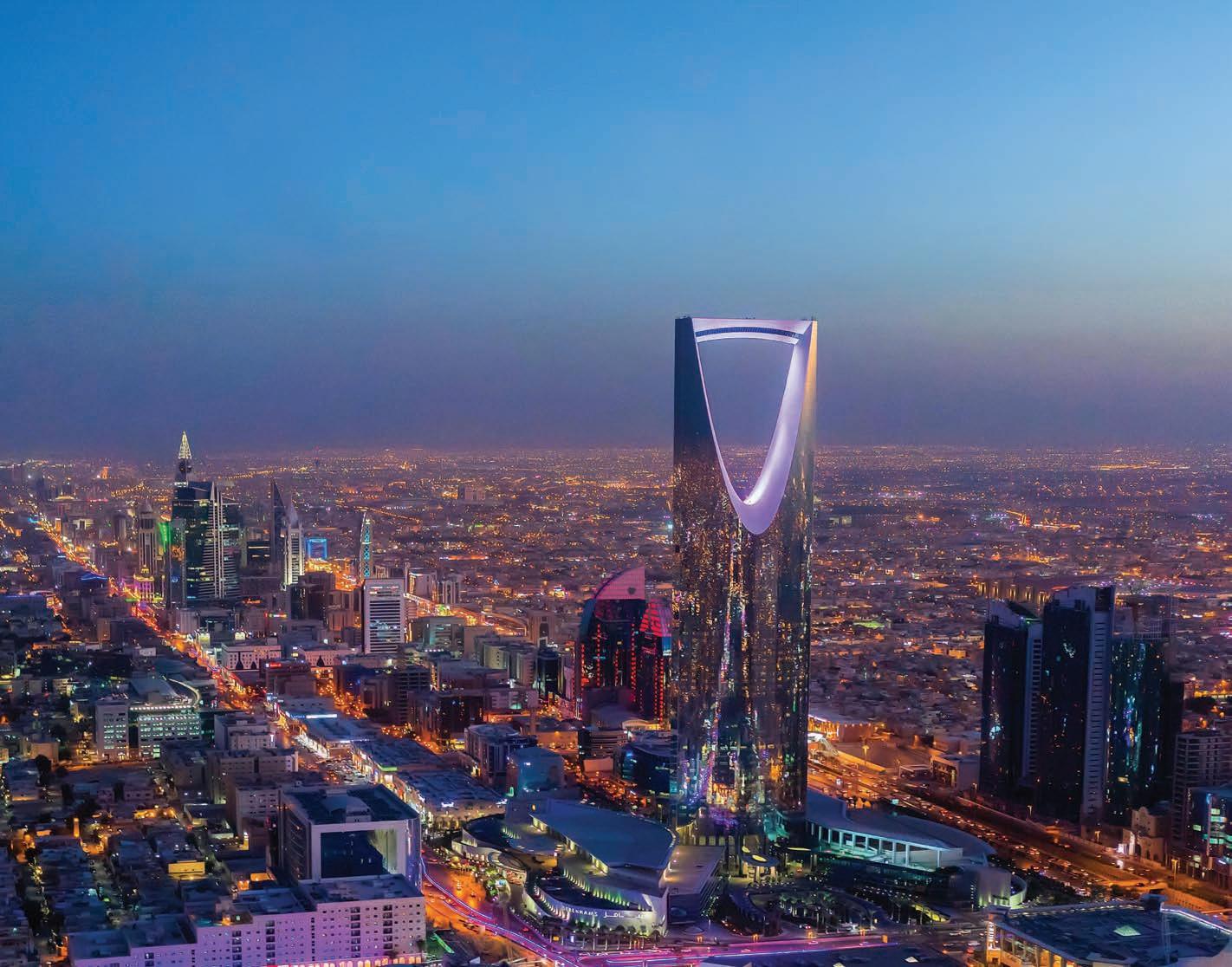
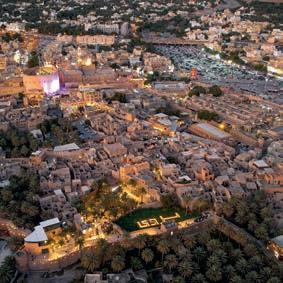
Riyadh | 18–20 January 2027
Riyadh | 6–7 April 2026
Riyadh | 26–27 October 2026
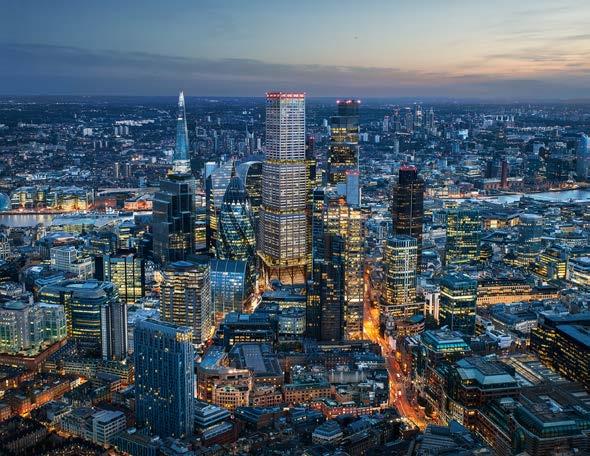
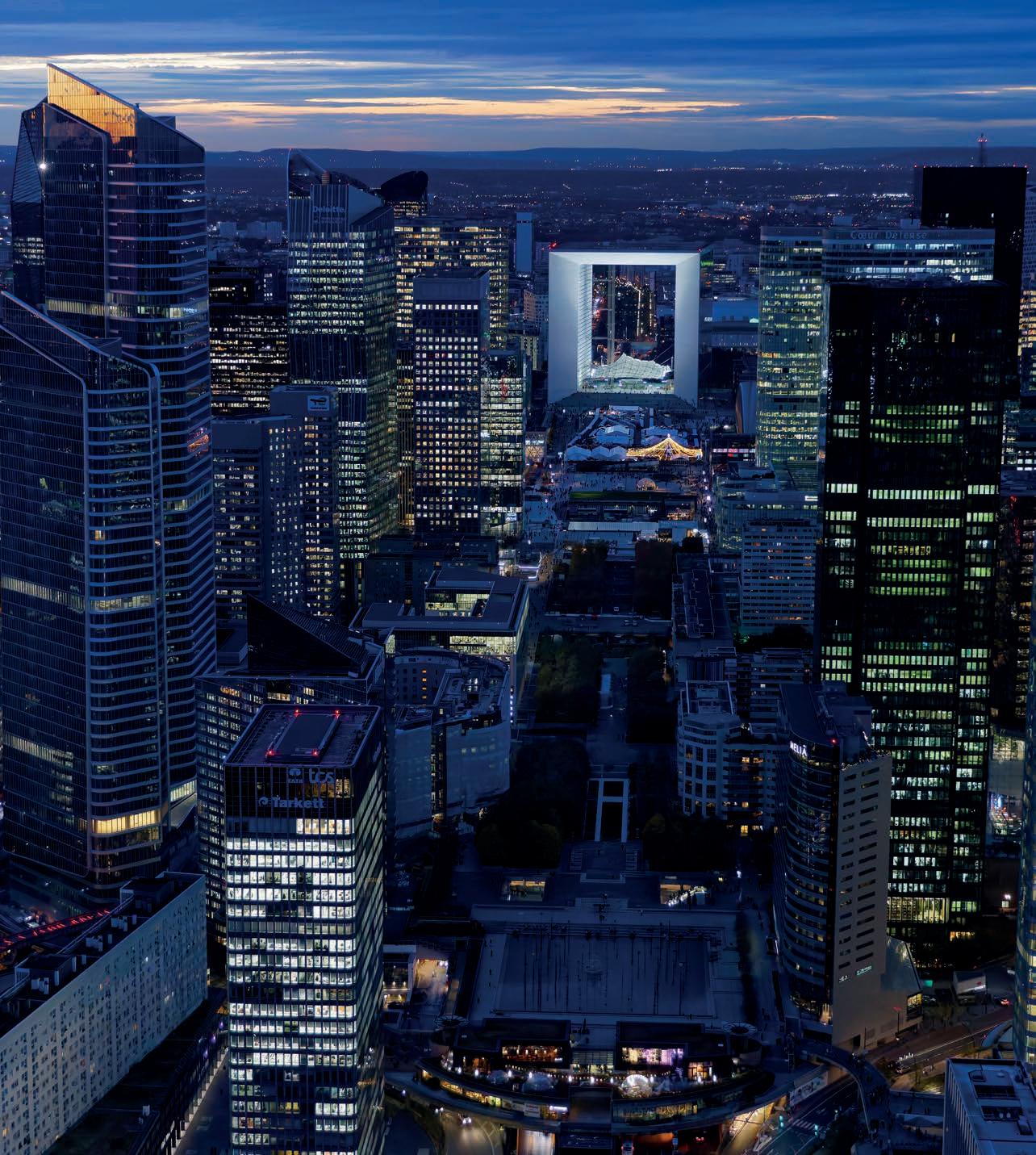
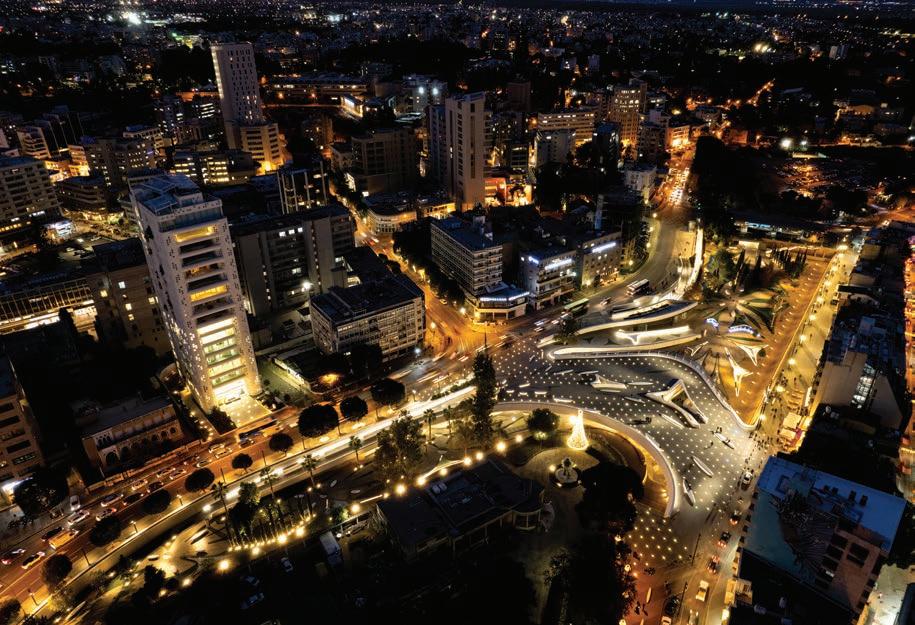
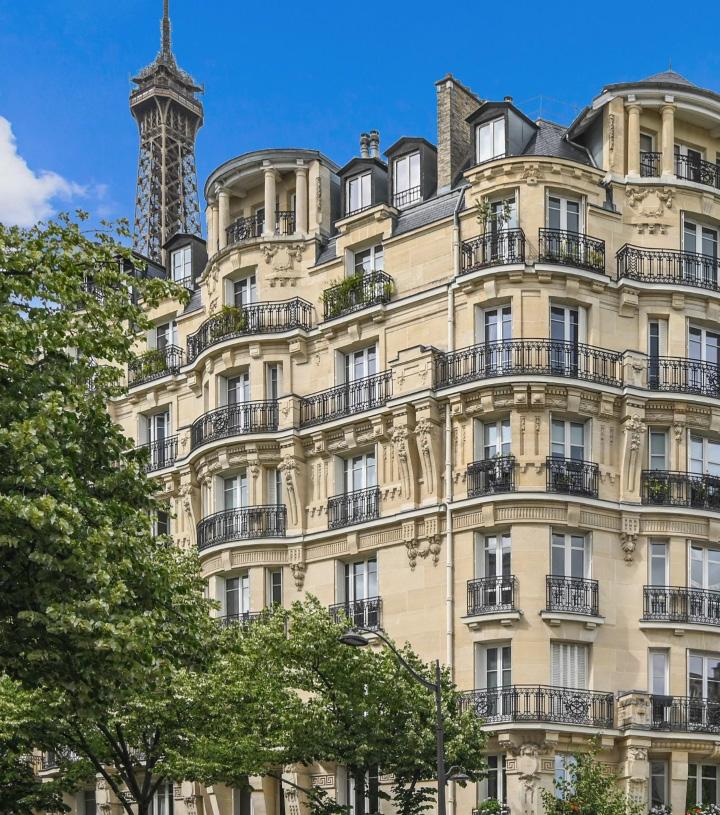
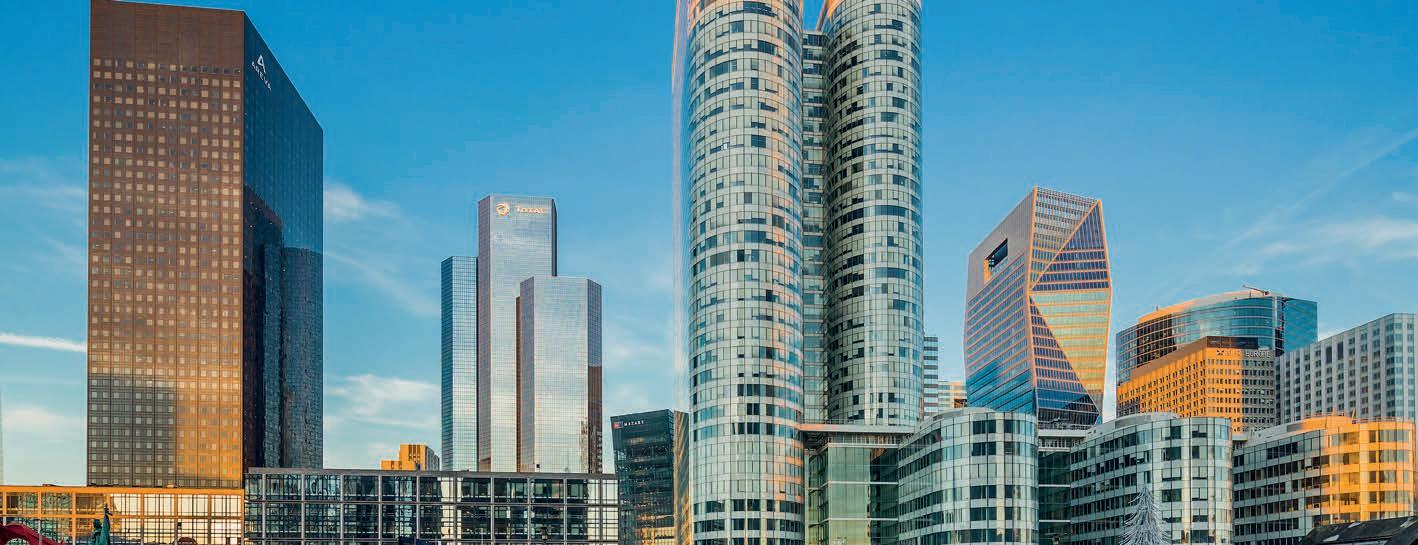
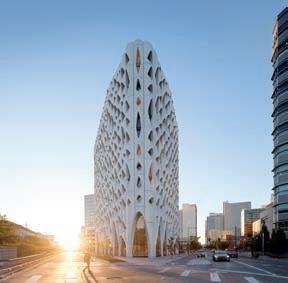
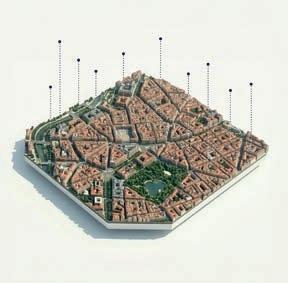
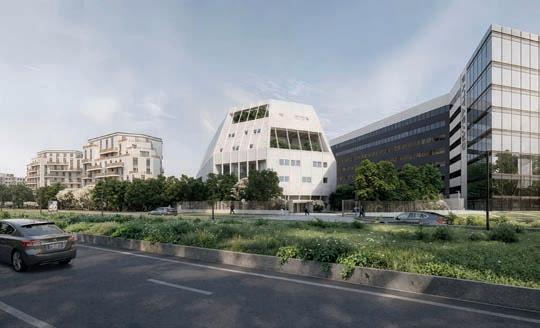
Paris La Défense, 4th most attractive business district in the world.*
*2025 EY–Urban Land Institute (ULI) Global Business Districts Attractiveness Report
MIPIM’s call to action
TAKING action in the midst of uncertainty has become one of the greatest challenges of our time. MIPIM 2026 arrives in a moment of heightened geopolitical threat and reactive macroeconomic markers. Spiking stock markets and sovereign debts are one part of the equation; so too are global housing shortages, migration trends and spiralling costs. For professionals in real estate and urban industries action is vital. As you seek solutions for your business, MIPIM aims to bring clarity in this uncertain world. Face-to-face dialogue has never been more important for solving the industry’s pain points. Buildings aren’t virtual; and neither should our debates be. As market cycles accelerate, real-time discussion adds value. MIPIM 2026 will assemble a greater pool of experts than ever before, as we aim to host 160 conferences and panels, reinforcing our status as the world’s most important urban festival. And as instability — and unpredictability — become the only constant in this environment, we know that quality matters as much as quantity. We are introducing more interaction with experts, including networking opportunities after key sessions, plus new, specialist forums. For example, our flagship REInvest Summit will be flanked by a parallel session for family-office investors,
reflecting how capital markets are evolving. While MIPIM has always been the place to discuss industry trends, we are also delighted to host trend-setters. It has the critical mass to be a place that moves the industry and this year’s keynote speaker, Nobel Laureate Philippe Aghion, knows something about this as the co-creator of the theory of sustained growth through creative destruction. Other industry disruptors come from all walks of life, underlining the genuine importance of listening to diverse voices. The expansion this year of our MIPIM Challengers programme, creating space for the next generation of real estate professionals, reflects how seriously we take this matter. Meanwhile, the associations supporting women and diversity in real estate — from The Crew Network to Preach Inclusion — will also have a seat at the table.
MIPIM has always been about taking lessons from other countries and sharing successful models, and this will again be a blueprint for our Housing Matters! summit at the start of MIPIM week. This forum gives a crucial platform to the governments and experts tackling the greatest urban challenge in the world, and we hope you will be genuinely excited by the concrete solutions that are being implemented. Hot on
the heels of key trends, we will also be launching the data-centres summit and expanding the hospitality pavilion, as well as addressing the explosion of artificial intelligence and what it means for our industry. Finally, we will be expanding the MIPIM universe across the city of Cannes, with conferences and closed-door events in leading hotels and spaces all over town. We understand that the world’s new normal doesn’t look very normal at all. Which is why MIPIM must be an industry constant — a place to meet in the shared belief that finding constructive solutions together is better than toiling alone.
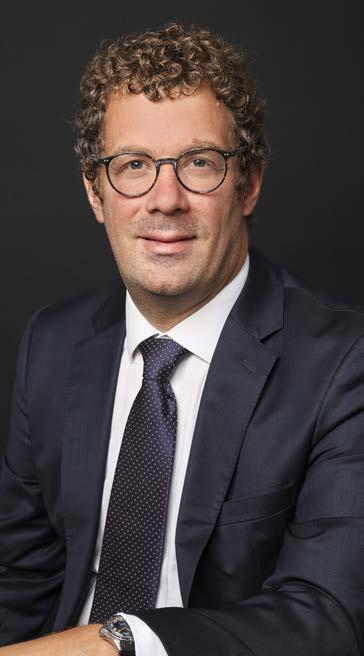
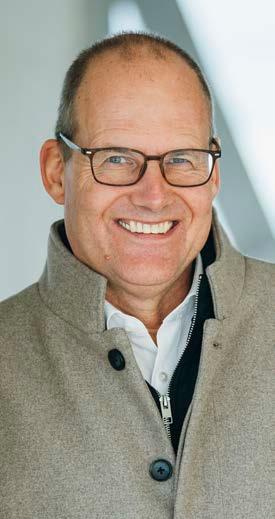
Nicolas Boffi Head of MIPIM Markets
Nobel Prize winner Philippe Aghion to open MIPIM 2026
Join Philippe Aghion, one of today’s most influential economists, Professor at the Collège de France and INSEAD, and Visiting Professor at the London School of Economics, as he explores how innovation and technology are shaping sustainable, resilient cities.
Discover how public and private capital accelerate green and digital transitions, how policy boosts productivity and competitiveness, and how real estate leaders can turn technological change into strategic advantage.
Join us on Tuesday 10 March at 15.00 in the Grand Auditorium
STR expands data services for global hospitality sector
HOSPITALITY data specialist STR is gearing up for MIPIM, where the firm plans to showcase its services to a raft of potential new clients, according to Samantha Mardkhah, regional director, southern & western Europe.
“STR is recognised as a leading expert in hospitality-industry data,” she said. “With more than 40 years of experience, we now serve a global client base of over 92,000 hotels — a number that continues to grow year after year.”
She added: “Hospitality stakeholders rely on STR to inform critical business decisions across the entire asset lifecycle, from investment and acquisition to day-to-day operations and eventual divestment. Our new benchmarking product, fully integrated within the CoStar platform, enables users to access real-time data and generate feasibility reports with -
in minutes. Users can analyse global hotel performance by class and submarket, create multiple competitive sets at the property level to benchmark against various criteria, and — starting February 2026 — leverage P&L benchmarking to enhance
both top line and bottom-line performance.”
STR’s active presence at the coalface of hospitality also ensures that the firm is in touch with the latest hospitality trends. “Over the past few years, STR has observed a clear upward
Tonino Lamborghini champions branded design and lifestyle
WITH over 40 years of history, the Tonino Lamborghini brand has established itself as a benchmark in the international luxury lifestyle arena. Combining design, quality and innovation, it encapsulates the unmistakable essence of Italian style — also across real estate, according to Tanya Byls, head of real estate & hospitality.
“At Tonino Lamborghini, branded real estate and hospitality are more than projects or business; I can say that they are the expressions of our brand’s lifestyle and heritage. My role is to transform this vision into tangible experiences: residences, hotels and mixed-use destinations that combine
Italian elegance, craftsmanship, modern luxury and of course our heritage,” she said. “Each project is designed to tell our story, merging perfectly the places, culture and habits, where architecture, interiors and services work together to create an emotional connection. It’s about spaces where people don’t just live or stay — they feel the essence of Tonino Lamborghini. Collaboration is my core focus: we work closely with our partners to ensure that every initiative is not only beautiful and functional but also strategically sound and globally relevant.” MIPIM delegates will be able to connect with the brand, said Angela
trend in the luxury segment,” she said. “Both the pandemic and subsequent global inflation have contributed to this shift — driven partly by travellers seeking more premium, experience-led holidays, and partly by the hospitality industry’s need to prioritise higher yield products in response to rising operational costs.”
Over the last few years, STR’s coverage has expanded considerably and this looks set to continue in key markets, she said. “STR’s sample growth in France continues to accelerate. Over the past year, we expanded our coverage by an additional 30,000 rooms, driven largely by strong uptake within the eco-midscale segment. We remain committed to further strengthening our presence and data depth across the country. In January 2025, CoStar opened its Paris office, marking an important step in our investment in the French market,” she said, adding: “This year, we will fully launch CoStar data in France, providing customers with comprehensive insights across all commercial real estate asset classes.”
Krieger, Tonino Lamborghini Total Living creative direction. “MIPIM is a unique opportunity to share Tonino Lamborghini’s vision: luxury today is about emotion, experience and meaningful connections. We are seeking partners who understand that real estate and hospitality can inspire, excite and create lasting value not only for those who buy or stay but mostly for the communities.” She added: “Our focus is to explore collaborations for projects that are both commercially strong and remarkable in design and concept — residences, hotels and lifestyle destinations that stand out in the global landscape.
“More than anything, MIPIM allows us to engage with like-minded professionals, understand emerging regions and experiences, and forge relationships that can bring the Tonino Lamborghini lifestyle to new destinations. It’s about creating places where people can live, feel and dream, all in the spirit of our brand.”
Tonino Lamborghini’s Angela Krieger
STR’s Samantha Mardkhah
Toronto showcases city-wide initiatives
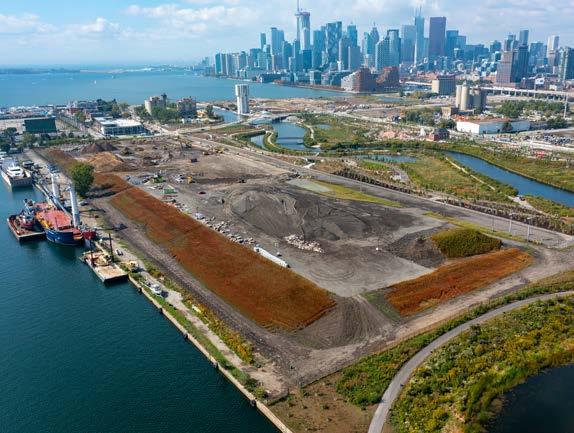
FOR THE first time, a Toronto collective will attend MIPIM, including the City of Toronto, CreateTO (the city’s strategic real estate agency), Waterfront Toronto, PortsToronto, Toronto Global and Destination Toronto. Positioning Toronto as a cultural and economic powerhouse where global perspectives meet and international investors can help shape developments, partners from the attending collective will present several significant projects. The City of Toronto, together with CreateTO and Waterfront Toronto, has been working on a significant revitalisation project for the Port Lands, which represents one of the most significant urban renewal opportunities in the city today. Hundreds of hectares of development-ready land have been unlocked through a massive flood protection project. At the heart of this transformation is Ookwemin Minising, a newly created island at the mouth of
the Don River that includes the award winning, generation-defining Biidaasige Park. The future mixed-use community will support more than 15,000 residents and anchor a new generation of waterfront development. With this new destination opening up on Toronto’s waterfront, CreateTO, the largest landowner in the area, is poised to further transform this industrial landscape. This includes the opportunity to introduce world-class cultural, interactive and creative uses and activations on sites throughout the Port Lands, including a strategic investment partnership opportunity to advance the innovative and sustainable redevelopment of Toronto’s last central industrial area within the South River district.
Complementing this, PortsToronto is advancing the concept of a Yonge Street Marine Terminal, a new centrally located gateway designed to support year-round Great Lakes cruise activity,
cultural programming and destination uses. The project will become a place of interest that draws residents and visitors to the waterfront year-round, generating new revenue and tax streams. CreateTO is also developing a series of major transit-oriented communities on City-owned land. A flagship example is the Bloor-Kipling redevelopment in Etobicoke — an 18-acre, mixed-use district adjacent to the Kipling Transit
Hub. The project will deliver over 2,700 homes (including significant affordable housing), a new civic centre, schools, parks, retail and a near-net-zero district energy system — demonstrating how public land can be leveraged to deliver inclusive, investable urban growth. Furthermore, supporting tourism growth through targeted investment is a key focus for strengthening Toronto’s visitor economy over the long term.
Brownfield schemes to transform Hannover
THE REDEVELOPMENT of brownfield sites has become “a key instrument for meeting the demand for commercial and industrial land in the Hannover region”, according to Ulf-Birger Franz, the Hannover Region’s director of economic affairs and transport and regional councillor. “It enables economic growth without the continuous designation of new greenfield sites and delivers significant economic, ecological and urban-development benefits,” he told MIPIM News.
“Economically, brownfields and conversion areas account for a significant portion of Hannover’s potentially available building land reserves. They therefore represent a major potential for new commercial development without the need for costly infrastructure expansion at the urban fringe,” he
added. “Land recycling through the remediation, servicing and marketing of inner-city brownfields allows existing infrastructure to be used more efficiently and can relieve municipal budgets in the long term, even though initial investment costs are often higher than on undeveloped sites. To address these challenges, Hannover is discussing instruments to furthermore increase and accelerate the transformation of contaminated inner-urban sites into viable business locations.”
Techfactory is another major initiative, which has been planned to strengthen the area’s reputation as a leading technology location with supra-regional appeal. “The initiative aims to raise the region’s visibility far beyond its borders while fostering the long-term and sustainable growth of the regional innova-
tion ecosystem,” he added. A central objective of Techfactory is to attract both innovative startups and established companies and to build strong strategic partnerships between industry, science and research. “Particular emphasis is placed on unlocking the potential of deeptech startups, as well as on identifying, supporting and retaining highly skilled talent. By connecting talented students with forward-looking companies, the Techfactory will also help develop the region’s future workforce. The Techfactory will consist of two complementary locations within the Hannover Region,” he said. Construction is scheduled to begin in summer 2026, with completion of the first phase, including startup spaces, planned for spring 2028.
Development-ready plots have been unlocked at Port Lands
Hannover Region’s UlfBirger Franz
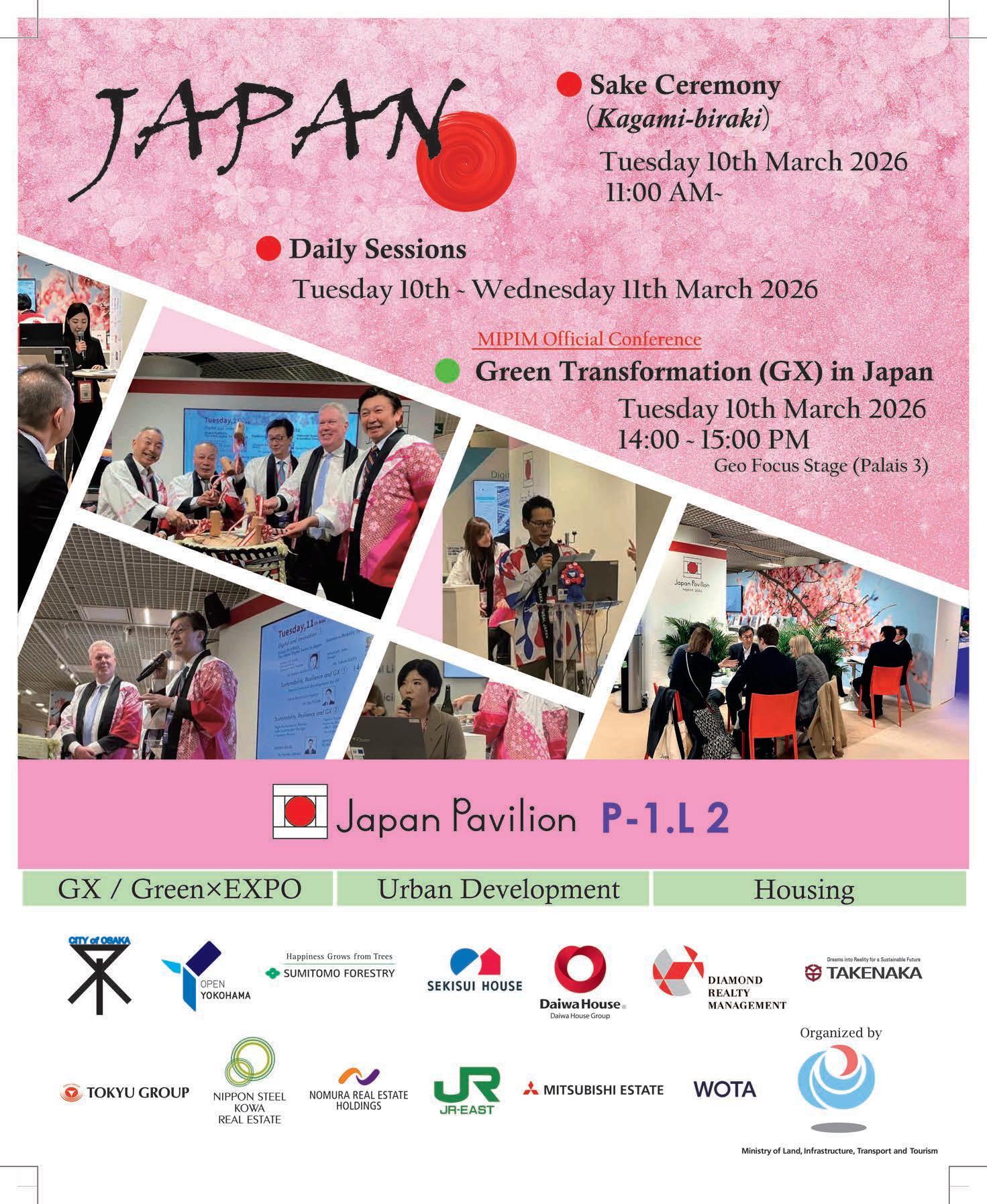
Smart, sustainable housing on show at Japan pavilion
JAPAN is preparing for MIPIM with a dynamic programme of topics and projects, according to Itsuhiro Miura, deputy director general of Japan’s Ministry of Land, Infrastructure, Transport and Tourism (MLIT).
“MIPIM is one of the world’s foremost global platforms for urban development, attracting leading investors, developers and public sector decision-makers from all across Europe and beyond,” Miura said. He added that Japan hoped to use this valuable opportunity to deepen dialogue on key policy priorities, such as sustainability, social inclusion and digital transformation. “In particular, we look forward to sharing our insights into Japan’s experience in delivering affordable housing at scale, ensuring sustainability and disaster resilience in real estate development, and exchanging perspectives with colleagues from
around the world,” he added.
The theme of the Japan pavilion, ‘Sustainable Urban Development in Japan,’ will highlight Japan’s initiatives together with those of participating companies across four interlinked areas of concern. These include sustainability & resilience, affordable housing, digital transformation & inclusion, and fascination & urban attractiveness.
“With regard to housing provision, we will showcase Japan’s advanced industrialised and manufactured housing technologies, which enable high-quality mass supply and rapid deployment,” he said. “Furthermore, Japan’s cutting-edge digital twin platform, PLATEAU, is now being applied both domestically and internationally, offering a powerful foundation for data-driven urban planning and smart-city development.”
Miura said that the event had come at a critical moment for urban experts around the world. “At a time when global interest in digital urban solutions continues to grow, we believe the discussions at MIPIM will provide important momentum for further advancing the practical use of these technologies,” he said. “We wholeheartedly welcome all participants who are interested in partnering with Japanese businesses, investing in Japan, and jointly shaping the future of sustainable and resilient urban development.”
He added: “We also hope that Japan’s participation will help strengthen networks among international private companies, governments and local authorities, while simultaneously promoting GREEN×EXPO 2027, which will be held next year in the Japanese city of Yokohama.
“Unlike previous expos that primarily showcased flowers and greenery, Green Expo takes a broader approach, addressing global environmental challenges, including the realisation of a nature-positive society.”
Yokohama gears up for green exhibition
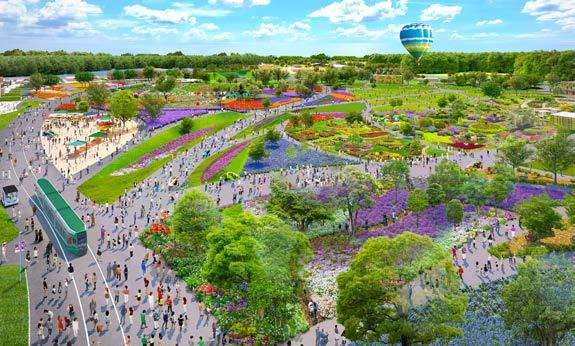
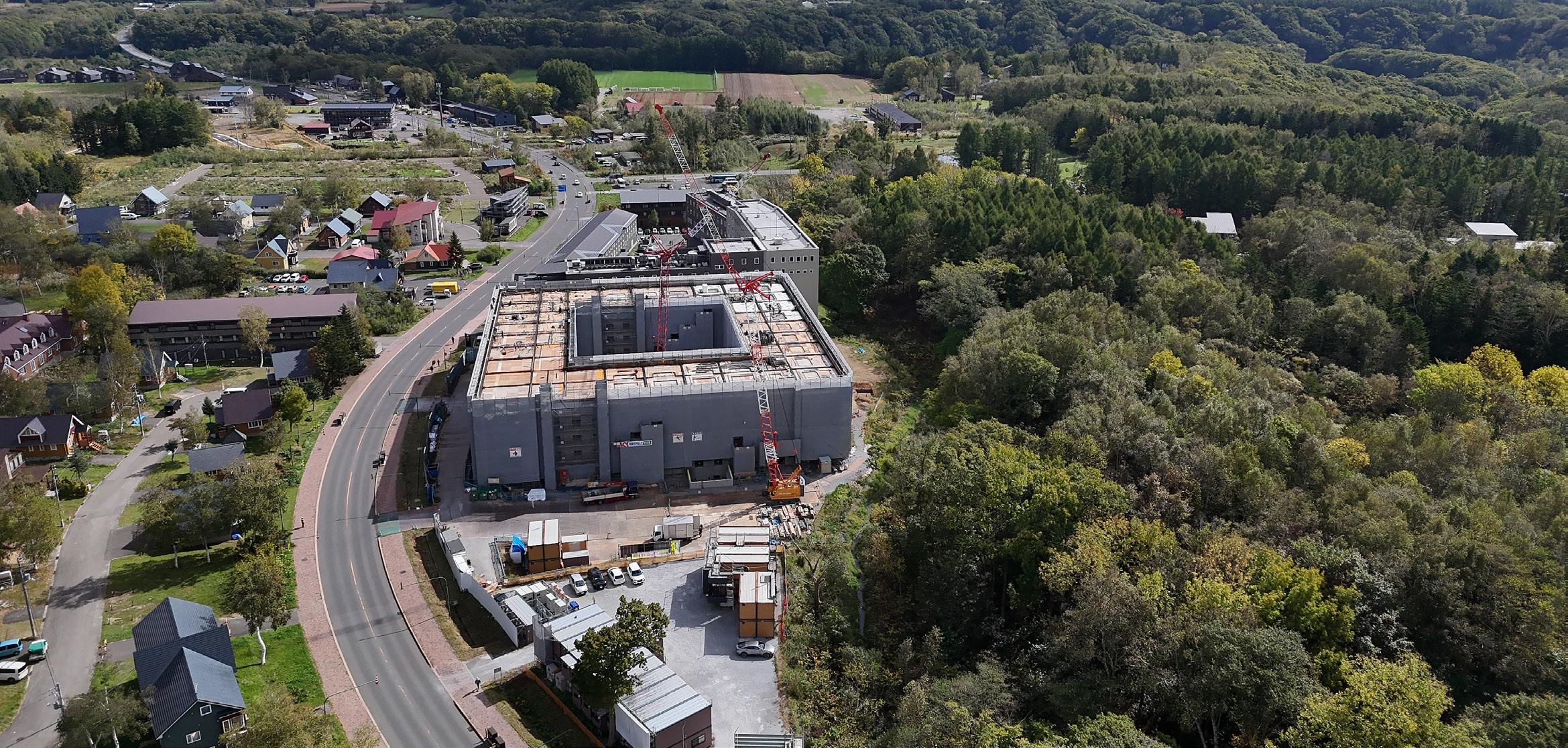
IN 2027, GREEN×EXPO 2027, an international horticultural exposition under the theme ‘Scenery of the Future for Happiness,’ will be held in Kamiseya, Yokohama, Kanagawa Prefecture. It will be the largest and most prestigious international horticultural exposition in Japan since the International Garden and Greenery Exposition took place in Osaka in 1991. The purpose of the exposition is to promote a sustainable society, finding solutions to global issues known as ‘Planetary Boundaries’, and more abundant lifestyles through the use of flowers and green plants. The organisers are focused on creating a sustainable society in harmony with nature through greater exposure to flowers, greenery and nature as a whole.
Co-existing with nature is central to economic sustainability and the foun-
dation of human survival, according to the expo’s message; humanity cannot pursue happiness without an abundance of nature and plant life. As climate-change and biodiversity issues become more serious, the need to re-examine society’s relationship with nature becomes more urgent.
GREEN×EXPO 2027 will provide examples of concrete action to address these issues.
The Kamiseya area of Yokohama is known for its rich natural environment. The central government, local governments, business interests and regular citizens will work together to develop the exposition’s pavilions, competitions and exhibits at sites that harness the richness of nature. Some 10 million plants and flowers, including 40 varieties of cherry trees, will be exhibited throughout the expo site.
The GREEN×EXPO 2027 is not a mere flower expo, but rather an event whose purpose is to address social needs for all humans, wherever they live, through the use of flowers and green plants, the organisers said. After the expo is finished, the site will
be turned into a park that is specially designed to promote responsible environmental management and disaster prevention. It will be open to the public as a place where human life is valued and protected through coexistence with nature.
MLIT’s
Itsuhiro Miura
Kamiseya is set to host horticultural show
à
à
Revitalisation
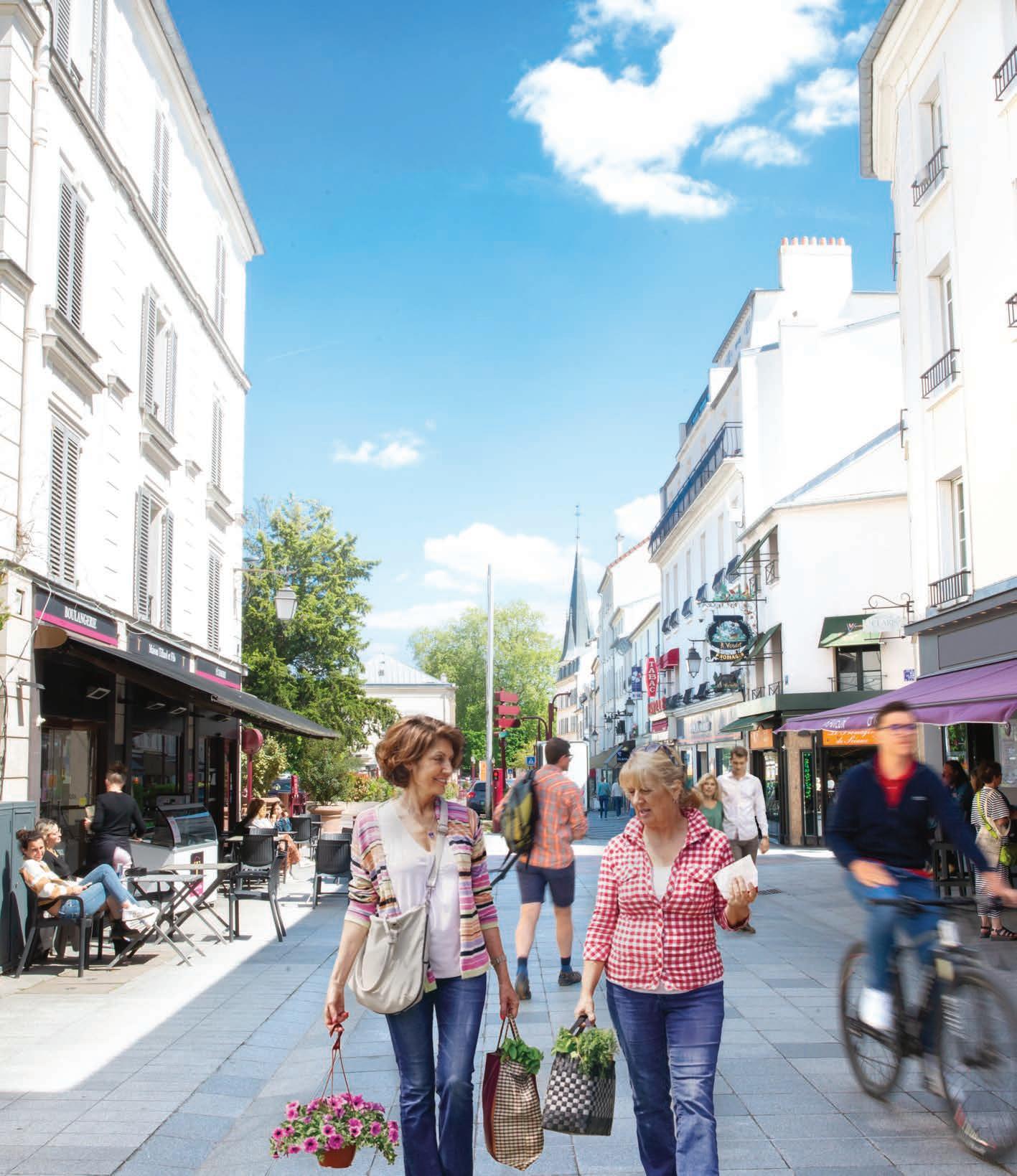
La Métropole du Grand Paris en soutien aux commerces et
La Métropole du Grand Paris en soutien aux commerces et
l’artisanat de ses 130 communes
l’artisanat de ses 130 communes
des centres-villes
Un programme Centres-Villes Vivants pour soutenir des projets de revitalisation des cœurs de villes.
Un accompagnement personnalisé et continu des communes.
Une foncière Centres-Villes-Vivants au service des communes.
ÜLEMISTE City is the largest business campus in the Baltic States, whose development began 20 years ago with the ambition to create an environment that would influence the global economy. “To achieve this, innovation became our cornerstone in developing the campus,” said Sten Pärnits, CEO of Mainor Ülemiste.
“Our goal is to create a place where innovation quietly improves how we move, learn, work and live.”
Today, Ülemiste City is home to Estonia’s third-largest economic area and it has become one of the most vibrant innovation hubs in the region, where strong collaboration has emerged between companies and the education and research community.
“As a smart city, we support the ambitions of its community members
through a training-credit system and a talent portal, two digital solutions that provide free training from universities to companies, facilitate the exchange of interns, enable companies to involve researchers in solving practical challenges and offer much more,” Pärnits added.
Ülemiste City has created a ‘test city’ concept, where new scalable business models are created in a real-world playground where new ideas are tried out in a functioning urban setting.
“We are not just testing technology, but how that technology fits into everyday life,” he said.
“At the heart of the entire campus concept is the talent — the person who works, studies and lives in the Ülemiste area and creates value through their activities.” This is
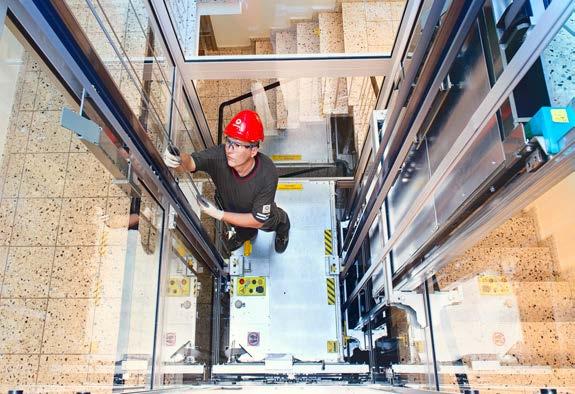
Schindler aims sky-high with latest innovations
SWISS multinational Schindler has been in the business of moving people for over one and a half centuries. And the firm, which has always combined entrepreneurial ability with an instinct for innovation and technological advancement, finds itself perfectly at home at MIPIM.
“MIPIM is the most important event of the year, as both an exhibition and conference,” said Michael Dobler, Schindler’s senior vice-president, global account management. “With close to 25,000 participants, many of whom are C-level, it is a place where we can meet important clients from all levels of business.”
In 2024, Schindler began to roll out its new, standardised modular elevator platform, which was quickly adopted
in European markets. “As of 2025, the modular elevator platform in Europe accounts for around 80% of all orders,”
he said. This in turn has led to the rollout of the modular modernisation platform, to tackle the challenge of updating lifts in older buildings.
“Another major launch has been the Schindler X8 elevator concept. Introduced in April 2025 to the Swiss and north-Italian market, showcasing ad-
best illustrated by the Ülemiste 3×3 health model, which was developed in co-operation with the University of Tartu. At the very centre of the model is the individual, and the empowerment of social, mental and physical health is the shared responsibility of the company, the environment developer — Ülemiste City — and the individual themselves.
“Based on this model, we design environmental interventions, events and the holistic development of the entire area,” he said. Pärnits added:
“We understand that technology and innovation, if overemphasised, can begin to undermine a talent-centric approach. Therefore, we do not adopt technologies that reduce social interaction, physical movement, or otherwise conflict with the 3×3 health model. Instead, technology is applied consciously to empower talent and companies at Ülemiste — ensuring that innovation always strengthens people, their connections, and their ability to grow.”
vanced technological features with a strong emphasis on eco-friendly design principles,” he added.
At this year’s MIPIM, Schindler will focus on meeting new and long-term clients and presenting its latest innovations in vertical mobility. “There are over 18 million elevators globally and around seven million are outdated and need an upgrade,” he adds.
“In Europe alone, over half of all elevators are over 20 years old. Modernising this system leads to tangible energy efficiency gains and helps reduce a building’s overall carbon footprint.” He said that Schindler’s skillset includes “restoring, renewing or replacing elevators with minimum disruption”, allowing businesses to get on with doing what they do best.
Finally, the Schindler X8 elevator concept gives architects unprecedented flexibility in building design, which will help unlock the bold, new buildings of the future.
Sten Pärnits, Mainor Ülemiste
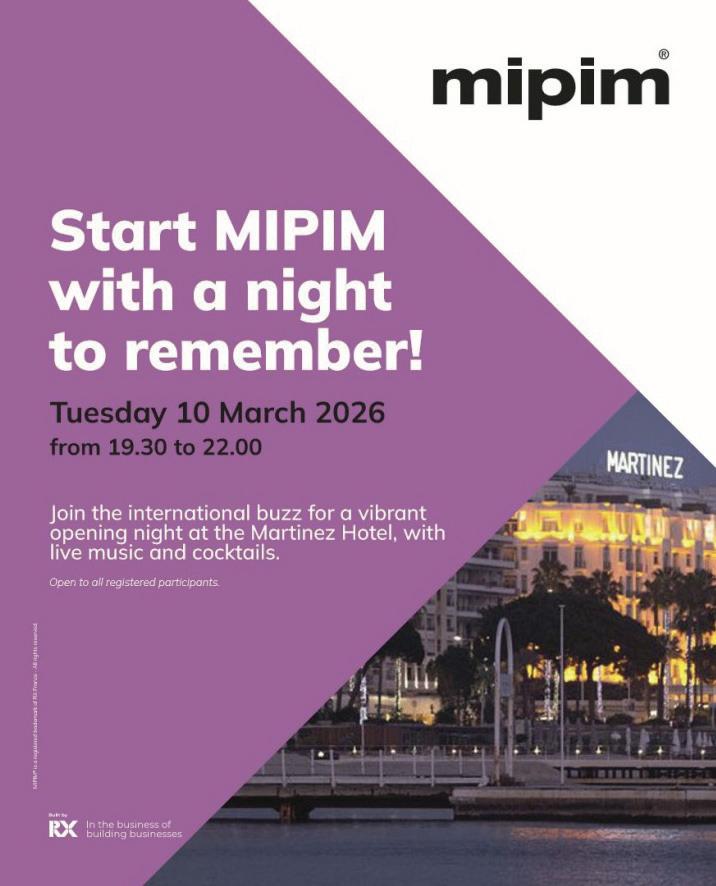
Start MIPIM with a night to remember!
Tuesday 10 March 2026 from 19.30 to 22.00
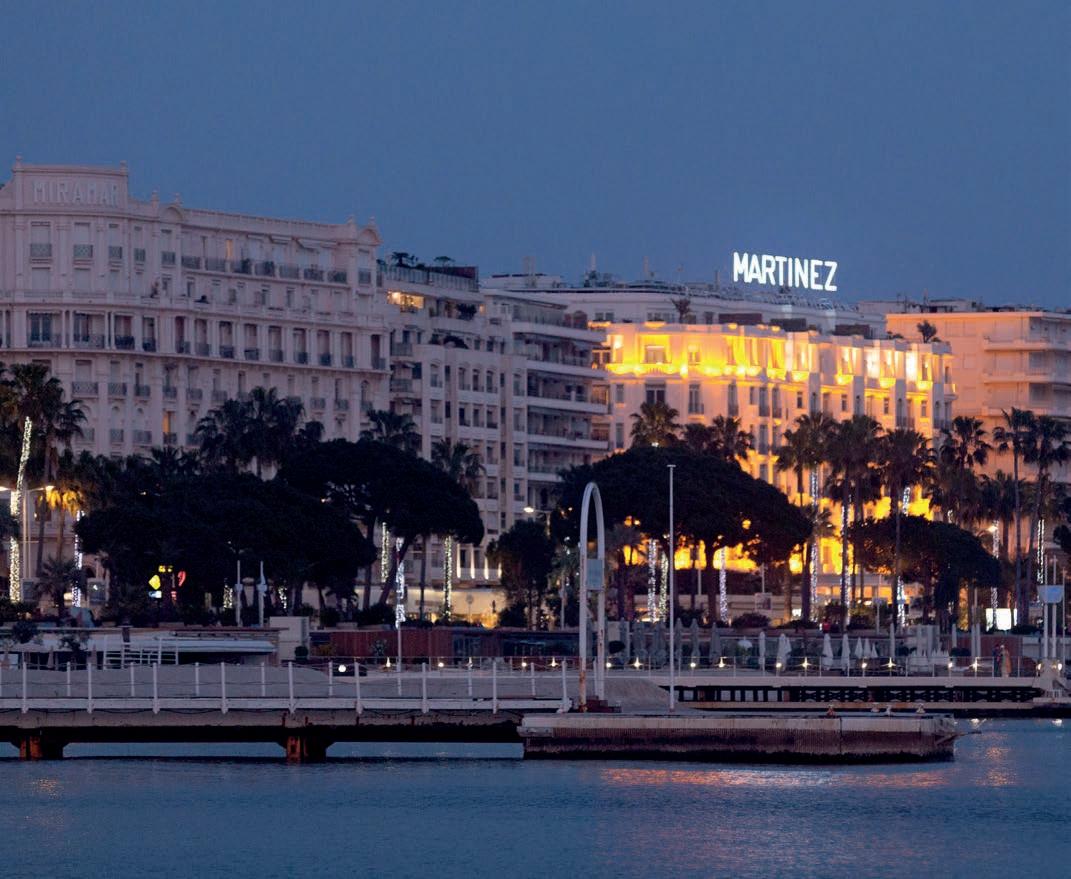
Join the international buzz for a vibrant opening night at the Martinez Hotel, with live music and cocktails.
Open to all registered participants.
City scheme restores Oslo’s public heart
THE NORDIC Office of Architecture, as lead for Team Urbis, won the architectural competition for the New Government Quarter in 2017. Launching this year in Oslo, the scheme is a “dignified, lasting and welcoming landmark, open to the city and rooted in Norwegian values of transparency, accessibility and nature”,
said Eskild Andersen, partner and CEO of Nordic Office of Architecture.
He added: “The project brings together five new buildings and two repurposed ones, all connected by a shared interaction zone and vibrant outdoor spaces. With flexible offices, generous communal areas and a
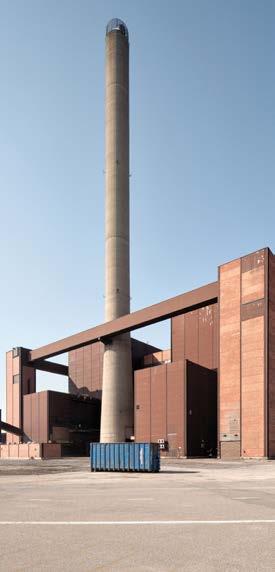
Helsinki competition to transform power plant
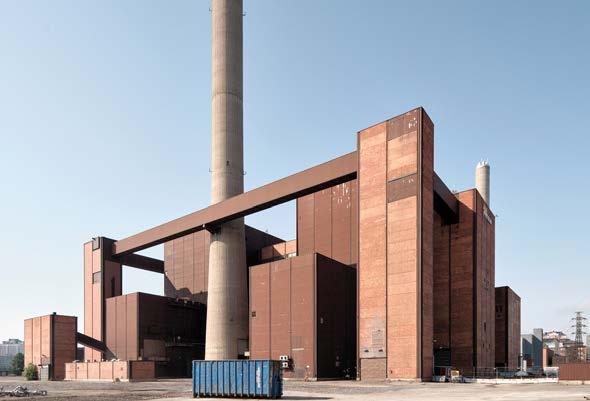
HANASAARI, a former industrial area in Kalasatama, Finland, is considered the last major redevelopment area close to Helsinki city centre. Located at the junction of new and old urban structures, it is surrounded by water from three sides. What is most notable about the area is its power plant, which was decommissioned in 2023. With the total plot covering 16 hectares, which translates into a potential buildable area of approximately 250 000 sq m, the zone had been dubbed “a truly unique chance to bring an original 1970s factory structure and its surroundings to the present day” by local authorities.
The City of Helsinki has decided to organise a competition to find a part-
strong focus on sustainability, the New Government Quarter is set to become a modern hub for governance and collaboration.”
The scheme is expected to contribute to a symbolic restoration for the city of Oslo. “Prompted by the tragic terrorist attack of July, 2011, which destroyed parts of the historic government quarter, the new quarter is both a practical consolidation and repair of government and an architectural expression of Norway’s commitment to openness and democracy,” he said, adding: “The new campus is now a place where government, citizens and visitors share the same ground plane. To that end, historic walking routes are reintroduced, and a new park and squares will open the site on all sides, while a ring of bridges and shared collaboration spaces connects all buildings and supports new ways of working between ministries.”
The quarter will also house a significant public art collection, including a 100-tonne mural of Pablo Picasso’s The Fishermen, and the national July 22 memorial — Upholding — by Matias Faldbakken. Team Urbis also includes COWI, Rambøll, Aas-Jakobsen, Asplan Viak, Bjørbekk & Lindheim and SLA.
HOUSING
ISSUES ACROSS EUROPE REQUIRE A BIG RETHINK
ner for the development and implementation of the Hanasaari area. The aim of the competition is to find an architecturally and functionally ambitious and unique master plan for the area and a new concept for the power plant. “We are looking for high quality architecture, something distinctive and recognisable and we see the potential of the power plant as an international attraction,” the City representative told MIPIM News. “The desired partnership between the City and a private developer will open up possibilities for novel solutions and a new kind of urban development, taking into account Helsinki’s ambitious goals regarding sustainability and circular economy.”
THE PUBLIC and private sector in Europe will need to collaborate to solve the housing challenge, according to economist and urban planner Marie Defay. “While the situation varies by country, several common factors emerge,” she said, noting that demand-side pressures include urbanisation, short-term rentals for tourism, speculation and cheap credit. “On the supply side, land scarcity, planning constraints, low construction productivity and slow renovation create significant rigidities.” To address these challenges Defay said several policies could be implemented or strengthened at the European, national or local level — including legislative reform, financial mechanisms, market regulation and adjustments to land and construction policy. “It is also important to address root causes,” she said, “as a fundamental issue is the growing gap between wages and housing costs, requiring stronger labour-market and complementary social policies.”
Hanasaari is the last major redevelopment zone near Helsinki city centre
Oslo’s latest landmark, the New Government Quarter
Economist Marie Defay
[photo credit] Statsbygg / Team Urbis / Nordic Office of Architecture
RZK Group invests in urban renewal for Brazilian cities
RZK GROUP is successfully tackling major challenges in Brazil, including the country’s housing shortages and the need for urban renewal initiatives, according to CEO José Ricardo Lemos Rezek. Reserva Raposo is a first-of-its-kind mixeduse social housing district destined for the city of São Paulo, which currently faces “a structural housing and services gap”, he said, adding:
“Reserva Raposo responds with a public–private model delivering affordable houses with jobs, schools, health and daily services, sports, parks and entertainment on site.”
The project is conceived as a smart, walkable district where design, safety and opportunity advance together. Once complete, it will comprise some 22,000 apartments across 150 towers, housing 100,000 residents.
Maricá ambitions fuel ‘forward-looking’ vision
BRAZIL’s Maricá is heading to this year’s MIPIM “with the confidence of a city that has a clear plan, a strong identity, and a forward-looking vision,” according to the mayor of Maricá, Washington Quaquá. He added: “I have always believed that Maricá needed to engage with the world without losing its roots, and that is exactly what we have done.”
Located 60 kilometres from Rio de Janeiro, the city combines land availability, investment capacity and political will to transform oil royalties into sustainable development.
“Our objective is clear: to prepare Maricá for the future by diversifying its economy through tourism, ser-
Half of the towers are expected to be delivered this year, allowing 50,000 residents to start living and working in the district.
Rodoviária Plano Piloto, meanwhile, is a major bus terminal in Brasília which has benefitted from a major renewal drive at the hands of RZK. “Before we took over, the terminal was disorganised, dilapidated and a crime hotspot,” he added. “The transformation was organised across 10 pillars that turn a complex terminal into a safe, inclusive and efficient urban gateway.”
RZK also has considerable credentials in high-end living, as exemplified by Peninsula – Cidade Jardim, on São Paulo’s Pinheiros riverfront.
“The 400,000+ sq m masterplan is positioned to become a new destination that complements and elevates the existing neighbourhood,” he said. The scheme is anchored by a landmark residential tower from Zaha Hadid Architects, distinguished by a flowing silhouette. Completing the scheme, residential towers, hotels and workspaces sit above active ground floors comprising shops, cafés, wellness and neighbourhood services.
LATIN AMERICA GEARS UP FOR CIMI360
vices, innovation, culture and social inclusion,” he said.
“The Samba, Futebol e Caipirinha” resort complex represents our commitment to experiential tourism — one that celebrates Brazilian culture while projecting Maricá onto the international stage through global-standard hospitality, leisure, gastronomy and events. We are also moving forward with the Maricá Multidisciplinary Complex, which brings together a hotel, a business centre and a shopping mall in the area surrounding the municipal airport, creating a new business hub and strengthening strategic sectors such as tourism, services, logistics, and oil and gas.” He added: “Another milestone is Maraey, a large-scale, sustainable tourism-residential development that combines urban growth, environmental preservation and thousands of jobs.”
REAL estate investors with an interest in the Brazilian property market should mark their diaries for August 27 and 28 2026, when CIMI360 returns to Rio de Janeiro, according to Heitor Kuser, CEO of the event. “CIMI360 is the only event in the region that addresses topics from a 360-degree perspective, with over 90 workshops conducted by experts from Brazil and more than 20 other countries,” Kuser told MIPIM News. “It has a diverse range of participants, from investors and developers to service providers and IT professionals, with the majority being real estate brokers.”
In addition to its educational and training content, CIMI promotes forums such as the 1st International Forum on Real Estate Tokenization, CIMI Public Properties and CIMI Discharged Assets. Added Kuser: “The diversity of people and professionals ensures that the demands and interests of investors are met at CIMI360.”
Maricá’s mayor, Washington Quaquá
Designs for Peninsula –Cidade Jardim, on São Paulo’s Pinheiros riverfront
CIMI360 is no. 1 in Brazil
Invest in France, meet the entire ecosystem
Monday 9 March : Housing Matters! 9-13 March 2026 Palais des Festivals, Cannes
Destination France unites public and private French leaders at MIPIM. From a dedicated pavilion on the Croisette to conferences and high-level networking events, and a strong presence across the Palais, discover a coordinated ecosystem of regions, projects and companies shaping France’s investment opportunities.
Key Figures
Among our exhibitors
AEW acquires prime Belgian retail units
REAL estate investment and asset manager AEW has acquired three prime high-street retail units let to leading international and French brands located on the prominent Rue Neuve in the heart of Brussels, Belgium. This transaction was complet-
ed on behalf of a French institutional client and marks the first retail acquisition by AEW under this mandate in Belgium.
The three units encompass a total of approximately 6,800 sq m of retail space and are fully leased to quality tenants:
Local insight can bring advantages across US
FOR REAL estate markets in 2026, “progress will depend on pricing clarity, access to capital and effective public-private collaboration,” according to Saadia Sheikh, the newly elected global president of the Society of Industrial and Office Realtors (SIOR). She added: “In this environment, the advantage will belong to those with strong local insight, established relationships, and the ability to operate across markets with flexibility as conditions continue to evolve.”
While based in New York, Sheikh’s role spans multiple US markets. Yet she noted that New York “remains a defining one both for its complexi -
Zara, one of the largest international fashion brands; Celio, the French men’s clothing company; and Lush, the popular cosmetics retailer. The asset is located in the pedestrianised Rue Neuve, known as one of the busiest shopping streets in Brussels and a favoured destination for locals and tourists, attracting c. 44,000 pedestrians daily.
Zara occupies a unit of around 5,050 sq m at Rue Neuve 30-32, situated in a striking Art Deco-style building designed by architect Adrien Bloome in 1931. The asset is part of a larger complex neighbouring the Hotel Metropole and has been continually occupied by Zara since 2000. Celio and Lush occupy around 1,050 sq m and 700 sq m, respectively, at Rue Neuve 20 and 22, designed by Belgian architect Victor Horta in the Art Nouveau style.
Patrick Meutermans, country head Belgium at AEW, said: “Located on Rue Neuve, where footfall is high and vacancy is virtually non-existent, this asset is 100% let to long-standing tenants, generating a stable core income. This investment underscores AEW’s expertise in the retail market across Belgium and Europe, where we manage a growing portfolio.”
SKANSKA SELLS DANISH RESI AND HOTEL PROJECT
ty and for the role it plays in shaping global real estate thinking”. She said: “The city is navigating shifts in office demand, capital availability and policy, while also presenting opportunity through reinvention, adaptive reuse and long-term investment.
SIOR’s Saadia Sheikh
“Many of these dynamics are emerging across other major markets as well, though at different stages. Markets like Dallas-Fort Worth are experiencing activity driven by corporate expansion, infrastructure investment and long-term operational planning. Understanding how gateway markets like New York relate to growth-oriented regions is increasingly important when developing resilient real estate strategies.” Regarding her role at SIOR, she said: “I want SIOR to remain an organisation where members feel challenged, supported and encouraged to step forward.”
CONSTRUCTION and project development firm Skanska has divested a residential and hotel project on Ørestads Boulevard 31 in Copenhagen, Denmark, for DKK 608m (€81m), to Urban Partners. The project is scheduled for completion in the summer of 2028. Comprising some 8,400 sq m of residential and 4,700 sq m of hospitality, the five-storey project will include 210 residential and 143 hotel keys. Developed by Skanska, it has been designed to address the short supply of flexible city housing in Ørestad, with shared facilities and an attractive courtyard creating optimum conditions for encounters and planned activities. The project will be certified DGNB Gold and be assessed by the Green Building Council Denmark. The residents will benefit from the nearby metro, regional trains and motorway connections to the airport, Øresund Bridge and the rest of the country.
One of the high-street stores in Brussels
The asset tackles supply-side shortages
Nobel Prize winner Aghion delivers Opening Keynote
MIPIM has announced Philippe Aghion — winner of the 2025 Nobel Prize in Economics — as keynote speaker for the Cannes event.
Aghion, one of today’s most influential economists, continues to guide the next generation of leaders as a professor at the Collège de France and INSEAD, and as a visiting professor at the London School of Economics. Together with Peter Howitt, he developed a groundbreaking theory showing that economies grow when new innovations replace outdated ones, a process known as creative destruction. Their research explains how technological progress and competition prevent stagnation, and why governments play a vital role in fostering innovation.
In October 2025, Aghion and Howitt were awarded the Nobel Prize in Economics for this transformative work, which demonstrates that prosperity
depends on supporting innovation while allowing old practices to exit.
Aghion said: “I am excited to open the next MIPIM with a keynote. Having dedicated my life to exploring how to make our economies more creative and competitive, I look forward to sharing my thoughts on how cities and industries can best nurture innovation and phase out obsolete practices to drive long-term prosperity.”
Previously, Aghion was deputy chief economist and research co-ordinator at the European Bank for Reconstruction and Development (EBRD), helping to shape its transition from centrally planned to market economies. Aghion also served as co-chair of the French Artificial Intelligence Commission, recommending that AI become a national priority for investment, research and training.
Aghion’s keynote will explore critical implications for the sector: how
MIPIM launches Middle East event
A BRAND-new edition of MIPIM in Saudi Arabia will turn the spotlight on the Middle East’s tremendous growth opportunities.
Scheduled for October 20-21, 2026, MIPIM Middle East will bring together the international real estate and investment community with key policy makers and project owners from across the Middle East, attracting the global capital needed to realise the region’s ambitious development visions. The event will take place at the Ritz-Carlton in Riyadh, the Saudi capital.
“By bringing MIPIM to the Middle East, we’re connecting global capital and expertise to one of the fastest growing development regions in the world,” said MIPIM director, Nico-
las Boffi. “We have been incredibly impressed by the opportunities presented by our GCC partners at recent MIPIMs, including Saudi Arabia’s Vision 2030, which views real estate as a national growth engine. Our ambition is for MIPIM Middle East to be a strategic platform that will deliver lasting benefits to Saudi Arabia and the wider region by directly supporting these transformative plans.”
In recent years, the Middle East delegation at MIPIM has grown rapidly, with countries including Saudi Arabia, Egypt, Oman, Qatar and United Arab Emirates, presenting some of the world’s most ambitious real estate and infrastructure projects to the international investment community.
innovation and technology can drive sustainable and resilient urban development, the role of public and private capital in accelerating green and digital transitions, and how public policy can boost productivity, strengthen competitiveness and support balanced regional growth.
Previous keynote speakers at MIPIM include François Hollande, former president of France; Sanna Marin, former prime minister of Finland; Ban KiMoon, former UN secretary-general. Nicolas Boffi, MIPIM director, said: “Aghion’s presence as keynote speaker at the 36th edition of MIPIM speaks to our commitment: helping industry leaders understand the profound economic and technological shifts shaping cities and markets. His pioneering work on growth and innovation offers crucial insights for investors, policymakers and real estate professionals. At a time when technology and innovation are reshaping cities and markets, when AI is changing everything we do, his perspective will help leaders navigate these transformations with confidence.”
While the region is rolling out many large-scale projects, many of them have so far been largely financed by
local capital. MIPIM Middle East will provide the necessary support for these projects as the Middle East market opens to more foreign direct investment, accelerating sustainable urban development in the process.
[Photo credit]
Patrick
Imbert
Gigaprojects will be on show at MIPIM in Saudi Arabia
MIPIM keynote speaker, Philippe Aghion
Challenges drive solutions at AI frontier
AI-driven demand for data centres, their need for energy and rising sustainability pressures have placed the data-centre industry in the cross-hairs of society and government. However, while the sector’s expansion comes with increasingly complex requirements, criticisms often overlook the progress that has been made in terms of green power adoption, efficiency and transparency.
“The continued expansion of the cloud, along with the advent of AI, is currently driving significant growth in the sector,” says Christopher Jones, Knight Frank’s head of power procurement & MEP (mechanical, electrical and plumbing) consultancy.
“This growth also coincides with a push towards net-zero targets in many countries, which requires significant investment in transmission and distribution networks to replace aging infrastructure and also connect new
generation assets, and has resulted in significant grid connection queues, delaying data-centre projects.”
However, Jones also describes an industry which is accelerating to meet its net-zero obligations through increasingly ingenious applications of renewable energy sources. “This is now driving significant change within the data-centre sector,” he says. “The scale of data-centre campuses, along with increasing power densities within data halls, has pushed beyond the design topologies commonly used over the past 10-15 years.”
He notes that integrating renewable generation into a data-centre campus directly can have significant benefits, such as taking control over fluctuating pricing and no longer relying on fossil fuel standby generation. He foresees a “generational change and opportunity for data centres”, which in turn, is being grasped by a number of forward-looking owners and operators in the sector.
Power moves
French entrepreneur, Max-Hervé George, is one such figure backing the sector’s growth. He is chairman and co-CEO of SWI Group, sponsor of the Stoneweg Icona data-centre fund (IDC), which has recently unveiled an ambitious hyperscale strategy.
Says George: “Our IDC platform drives the development of data centres in Europe’s most strategic locations - powering the future of AI and
cloud computing with flexible capital and deep local expertise.”
To date, IDC has announced plans for five data centres across sites in Ireland, Denmark, Spain, Italy and the UK. The sites, totalling 225 hectares, have 1,116MW of secured/ reserved power, with visibility for an additional 563MW.
Another industry mover, Greykite, is exploring the sustainable development of data centres, under its digital
One of the largest data centres in Poland, Digital Ursus, was converted from a
SWI Group’s Max-Hervé George Columbia University’s Josh Panknin
CONFERENCES & EVENTS AT MIPIM 2026
ASSET CLASS STAGE
• FROM BITS TO BRICKS PART 1 – SECURING POWER, SITES & CAPITAL IN THE AIDRIVEN INVESTMENT BOOM
TUESDAY, MARCH 10
16.10 – 18.10
LEADERS’ PERSPECTIVE STAGE
• DIGITAL REAL ESTATE INNOVATIONS: LECTURE I: UNDERSTANDING AI (FOR REAL!)
WEDNESDAY, MARCH 11 10.00 – 11.00
• LECTURE II: AI IN REAL ESTATE INVESTMENT
WEDNESDAY, MARCH 11 11.30 – 12.30
• LECTURE III: DATA-DRIVEN SITE SELECTION
WEDNESDAY, MARCH 11 14.00 – 15.00
• LECTURE IV: THE ROLE OF DATA INFRASTRUCTURE AND AI IN ATTRACTING INVESTMENT
WEDNESDAY, MARCH 11 15.30 – 16.30
GARE MARITIME
• FROM BITS TO BRICKS PART 2 – SECURING POWER, SITES & CAPITAL IN THE AIDRIVEN INVESTMENT BOOM
THURSDAY, MARCH 12 10.00 – 12.30
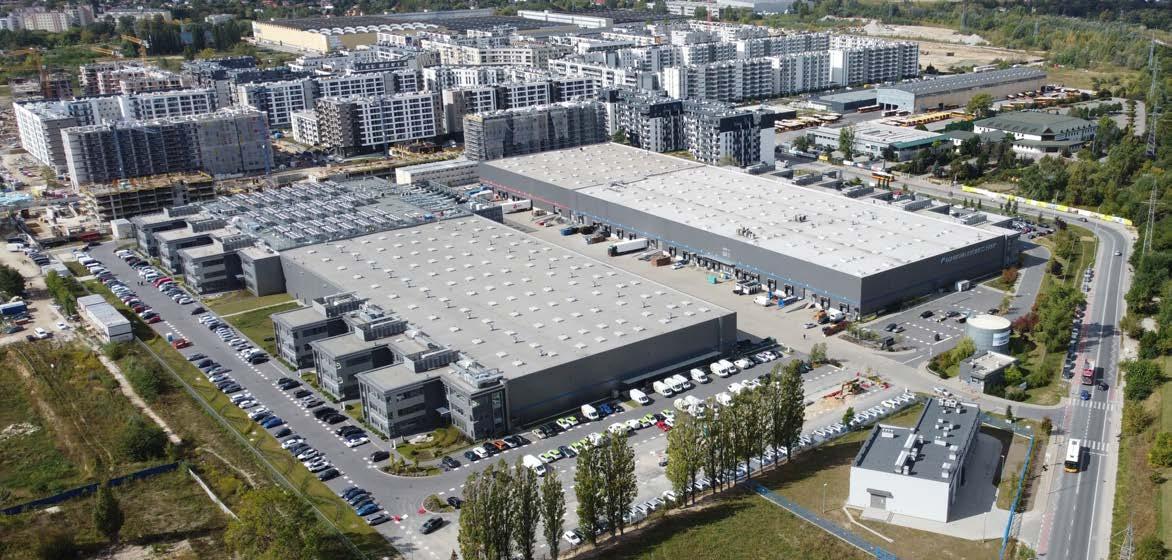
sector vertical. Last summer, alongside partner White Star Real Estate, the firm successfully converted a former logistics facility in Warsaw into one of the largest data centres in Poland, now known as Digital Ursus. The 20,000 sq m facility, strategically located just 8 km from downtown Warsaw and 6 km from Chopin Airport, has secured a long-term lease with a leading global data-centre operator.
Dan Valenzano, senior partner, Greykite explains that the firm is not focused on developing data centres from the ground-up due to the “huge
capital requirements and back-ended return profiles”. Rather it is industrial-to-data centre conversion projects that look attractive from an investment perspective. “In Warsaw, the tenant is leasing a powered shell from us — they take care of the internal fit-out and equipment,” he says.
“We are also exploring phased powered land plays, that is, buying land via structured purchases conditional on power entitlements.”
This well-articulated strategy has drawn further municipalities to working with Greykite, as the firm has become known for progressing development, rather than just flipping sites.
Poland remains an interesting data-centre market currently experiencing a growth spurt, with projections indicating a tripling of power resources by 2030. Warsaw, in particular, is anticipated to witness largescale data-centre construction activity, with IT load capacity expected to increase from 142.6 MW in 2023 to 348.3 MW by 2029.
AI wake-up call
The sector’s rapid developments represent an important wake-up call for the real estate industry, which needs to become more tech-savvy, says Josh Panknin, director, real estate AI research & innovation at Columbia University. Panknin is leading several sessions at MIPIM designed to help
delegates to understand how AI really works and why it matters.
“I think real estate companies are still struggling with technology,” he says. “Other industries are developing and integrating advanced forms of analytics, automation and autonomous systems that provide completely new capabilities and a tremendous amount of efficiency.”
He adds: “But these other industries have heavily committed themselves to technology as a primary driver of their ability to compete. They see technology and top-tier engineers as their biggest asset rather than a cost that needs to be mitigated as much as possible. In contrast, most real estate companies seem to be slowly dipping their toes into technology, trying to avoid mistakes and failures. But these mistakes and failures are a big part of the learning process,” he says.
Climate reporting and financing
In turn, for data centres to become a truly tradeable asset class, they must embrace challenges including reporting on carbon emissions and finance.
Dr. Jens Hirsch, chief scientific officer, BuildingMinds, confirms that while a number of data companies are tracking the increasing use of green energy, the risk of “green washing” is high. Goldman Sachs meanwhile projects AI will increase global data-centre demand by 160% by 2030, but says some
of the solutions to data-centre design may well involve AI itself. For example, AI-driven optimisation can help reduce cooling costs by up to 50%.
The use of green financing for data centres is likely to become a key part of the accountability equation. In the US, asset manager Nuveen has been underwriting data-centre developments via its sustainable real estate finance division, Nuveen Green Capital. For example, iM Critical last year secured $32.6m in financing to recapitalise an in-development data centre in Miami. As data centres attract more institutional buyers, sustainable financing will become non-negotiable, says Robert White, managing director, head of green & sustainable hub –Americas, Natixis CIB. “Sustainability-linked loans work well for a devco/holdco piece, because assets are moving in and out,” White says. “You can put metrics in place to ensure that the sustainability of data centres improves over time.”
He argues that the long-term value of assets will become inextricable from their performance and resilience when judged by the capital markets. “Then it will be about identifying those assets that are best in class, that can articulate a strong power usage effectiveness, that water is managed appropriately, that there is a renewable energy strategy or clean energy strategy in place,” he says.
In Iberia, Azora platform Quetta Data Centres is development new assets
Exploring the UK Hub: your gateway to opportunity
10-13 March 2026
Palais des Festivals, Verrière Grand Audi, Cannes
Join international investors as well as public and private sector partners to discover groundbreaking projects that will shape the UK’s new chapter for growth and investment. This is your gateway to discovering the UK’s most attractive property investment opportunities - a premium space where high-value connections and major public-private partnerships are made.
UK Pavilions
UK Pavilion partners and Exhibitors
Partnering spurs operational gains
While real estate investors are honing their operational skills, they must also create better partnerships with public authorities to drive projects forward
Operational real estate has become a key target for investors across Europe as they continue to rotate capital away from traditional commercial sectors. While for many investors the opportunity to have full control over verticals in itself pays dividends, others are seeking to squeeze greater margins from their real estate exposure, amid macroeconomic and geopolitical headwinds.
Savills’ latest European OpRE Investor Survey reveals that some 56% of investors expect to have a majority of their total assets under management
allocated to the OpRE sectors over the next three years. The investors surveyed said they were looking to deploy around €51bn into European operational real estate over the next three years, underlining the scale of conviction for the sector.
But there are also signs that investor approaches are in flux. Savills data shows that as interest rates have fallen, core-plus strategies have risen to the fore, while the proportion targeting opportunistic returns has fallen. The re-emergence of these buyers is likely to help support the continued recovery of investment activity throughout 2026. Similarly, investors are increas-
ingly looking beyond the traditional multifamily sector for exposure to operational real estate. While it remains a key target, purpose-built student accommodation (PBSA) has risen up the ranks to become the most sought-after operational sector this year. Senior living, care homes and budget hotels have also moved up the priority list for investors. Riccardo Abello, partner and co-head of real estate at French private equity group Eurazeo, calls operational real estate “the buzzword of real estate for the next cycle”. He adds: “We’re excited to invest in these operational sectors that we think are thriving and
Creating urban ecosystems requires a citizen-first approach, the industry is learning
Nrep’s Jens Petter Hagen
benefitting from significant tailwinds looking ahead.” Abello says that operational skills come into play at the point where there is “a penetration of services within traditional real estate”, such as addressing residential needs for different cohorts within the living sector, or offering office space in a more flexible way. “In the case of leisure and hospitality, it’s about capitalising on the fact that people now spend more of their disposable income on experiences rather than goods, which stimulates global aggregate demand,” he adds.
Living niches
Living-sector niches are certainly driving a significant share of investor appetite across the board, spanning senior and student housing, coliving and micro-living. “Continued housing shortages relative to the long-term growth in demand should see living remain the world’s largest real estate investment sector over the cycle,” states the most recent JLL Global Real Estate Perspective. It adds: “Many established markets will see continued emphasis on asset repositioning towards higher density operational living types such as PBSA and coliving.”
For European investor Urban Partners, living is one of the secular trends that it is pursuing alongside logistics for its series of Nordic Strategies Funds (NSF), now in its fifth vin-
tage. “The entire NSF series, which was established in 2014, has in aggregate a 70-80% exposure to living and logistics,” says Jens Petter Hagen, fund manager of Nrep’s NSF IV and V. “In the Nordics, we have relatively high ongoing urbanisation and hence high population growth in the capital regions, which is a great tailwind to have,” he says, adding that as part of its approach to solving housing shortages, the business aims to “develop vibrant neighbourhoods, creating new hubs in and around cities”.
He says: “We see a supply-demand gap as a problem that needs to be solved with capital. We try to explore what we can do to bridge that gap and give the communities what they need.”
Public and private co-operation
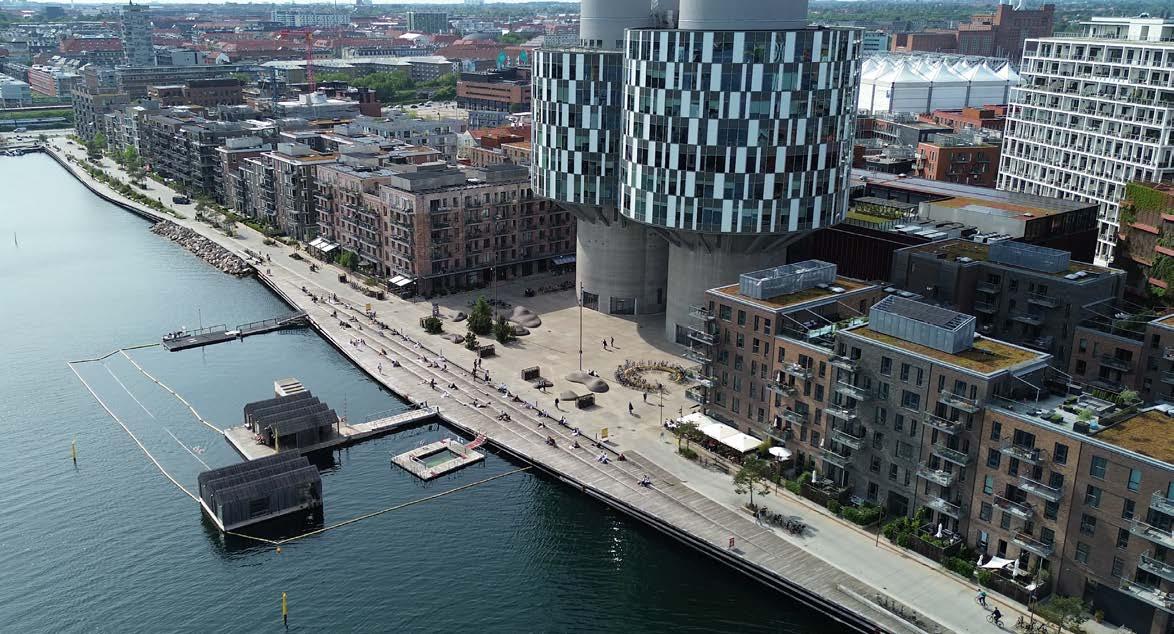
In Copenhagen, Urban Partners was the among the first investors and developers to take a risk on developing the new district of Nordhavn, back in 2015. Yet through an innovative partnership with local public authority City & Port, Urban Partners has helped breathe new life into what has become one of Copenhagen’s liveliest neighbourhoods today, while still under development. “It’s a dynamic mixed-use area, with very well curated retail on the ground floor, offices and homes,” Hagen says. “The partnership between private capital and City & Port was, and continues to be, in-
strumental in making Nordhavn the neighbourhood it is today.”
Indeed, successful real estate development today often requires a dynamic approach to working with public authorities. In the City of London, the planning department has registered a record-breaking year for applications, perhaps in response to the City Plan 2040, a blueprint for the future growth of the Square Mile.
“With 20 major office schemes, including eight new towers, now under construction and thousands of jobs being created, the City is once again showing the rest of the country how to plan for growth,” says chairman of the City of London Corporation planning & transportation committee, Tom Sleigh. “These are not just buildings but commitments to Britain’s economic future. Our planning pipeline is powering the City’s evolution into a more sustainable, better connected and more vibrant destination for businesses, workers and visitors alike.”
Developer Stanhope says it has benefitted from the City’s appetite for new projects. “We do the majority of our work in the City and it is a pro-development borough,” says head of investment Joe Binns. “They do seem to understand the challenges that developers have, but you still have to run the right processes and take them on that journey of design and planning to secure approval for schemes.”
For Stanhope, another factor in shortening permit timelines means exploring opportunities where planning has already been secured. The developer recently acquired Row One, a fully-consented Bankside development, from Landsec. The prime, riverside scheme will include flexible office space, retail and F&B. “The scheme is best in class, with procurement at an advanced stage,” Binns says. With construction work slated to start this year, the scheme should have an approximate two-year build period. “We would now like to find other projects that we can turn around quickly and get back into the market — particularly in the light of the upcoming supply crunch,” he says.
CONFERENCES & EVENTS AT MIPIM 2026
GARE MARITIME
• THE POLITICAL LEADERS’ SUMMIT
TUESDAY, MARCH 10 16.30 - 18.30
ASSET CLASS STAGE
• LIVING WORKSHOPDELIVERING SCALE AND SUSTAINABILITY IN A SUPPLY-STARVED MARKET
WEDNESDAY, MARCH 11 10.00 - 12.00
• LIVING WORKSHOP –NETWORKING: MEET THE SPEAKERS AND EXPERTS WEDNESDAY, MARCH 11 12.00 - 12.30
Urban Partners is helping develop Nordhavn, Copenhagen
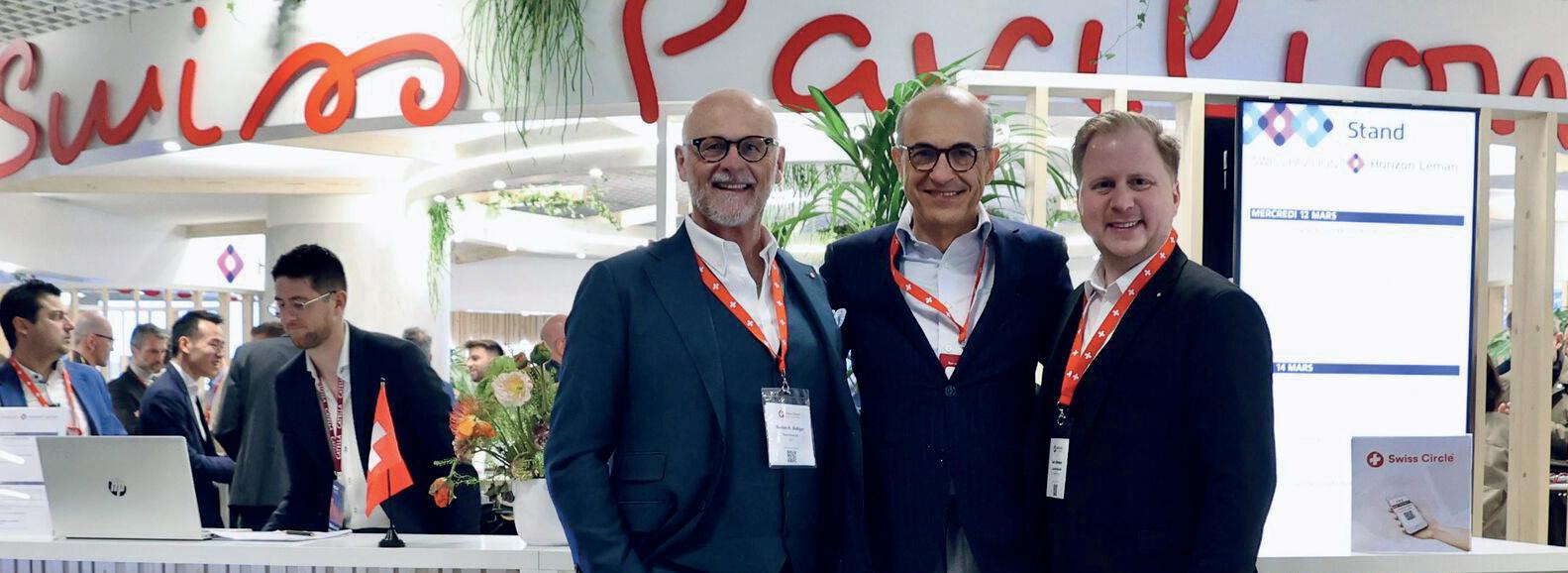
We are looking for your visit at the Swiss Pavilion stand no. R7.G1 - ESPACE RIVIERA Swiss Circle & Horizon Léman
your association for SWISS REAL ESTATE industry more than 400 leading REAL ESTATE companies become a member and enjoy benefits
From left to right: Roman H. Bolliger, Swiss Circle | Yves de Coulon, Horizon Léman | Lars Sommerer, SwissPropTech
Smart tech vital for green goals
Technology is playing an ever-greater role in the sustainability equation, as the industry starts to take a more holistic view of its obligations
As businesses seek to accelerate real estate’s environmental transition, data and technology are playing an increasingly important role in sustainable solutions.
French BCorp Deepki has become one of the companies at the forefront of driving the industry’s transformation. “We help owners take action to minimise risk and maximise value, as we help the industry migrate towards sustainability,” CEO Vincent Bryant says.
While environmental improvements for the sake of the planet are a worthy goal, Bryant is keen to stress the link between sustainability and business. “Financial performance is impact-
ed by sustainability,” he says. In turn, having access to the right data and knowing how is key to both. “You can’t manage what you can’t measure,” he says. “Data is a lever for impact, and to make the right decisions you must have trusted and audit-ready data.”
In today’s world, an asset’s environmental performance has become relevant for metrics such as tenant renewals, energy consumption and property valuations. But he also notes that there are bigger, existential issues in play. “Physical climate risks have raised the stakes for real estate,” he says. “Every week, somewhere in the world, records are being broken in terms of extreme events. Through
science-based learnings, companies must protect the buildings that they have and plan the right capex to make them future-proof.”
Recent Deepki innovations include the introduction of expert-supervised AI Agents, designed to help provide decision-ready insights for real estate professionals. “By training our AI algorithms with high-quality, audit-ready data, we can equip clients with accurate, and actionable insights for generating confident retrofit scenarios and assessing their financial impact,” Bryant says.
The firm notes that certain clients are currently trialling virtual sustainability agents, dedicated to asset classes like retail, offices and light industrials. These
early adopters in Europe and in the US work in close collaboration with Deepki’s AI Lab, to train the Agents to provide the most relevant and accurate real estate and sustainability insights and deliver operational value.
“AI won’t decarbonise real estate,” he adds. “However, it’s an amazing tool to extract and enrich data, offer smarter, actionable insights, and enhance decision makers’ autonomy and acumen.”
Society and circularity
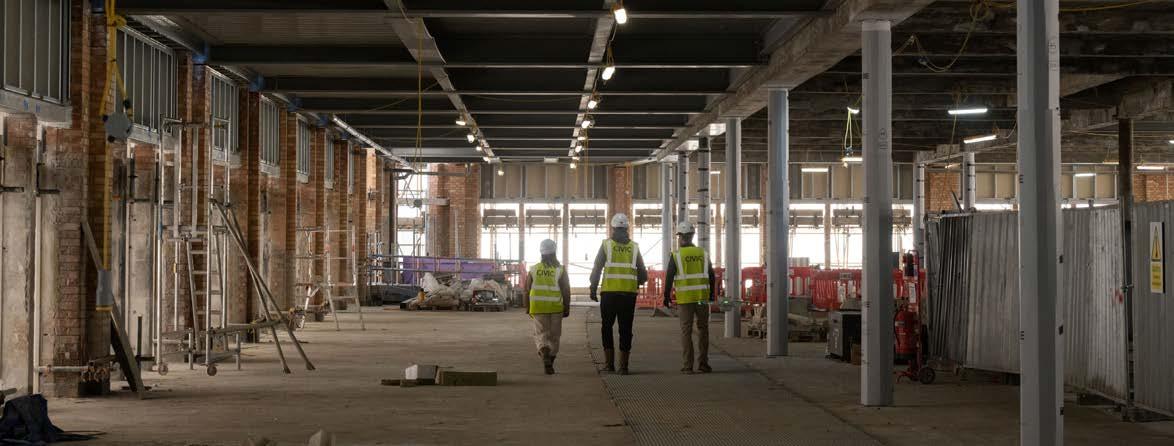
Built environment specialist Civic, which brings services together under one roof — ranging from civil and structural engineering, to geoconsultancy and archaeology — also explores
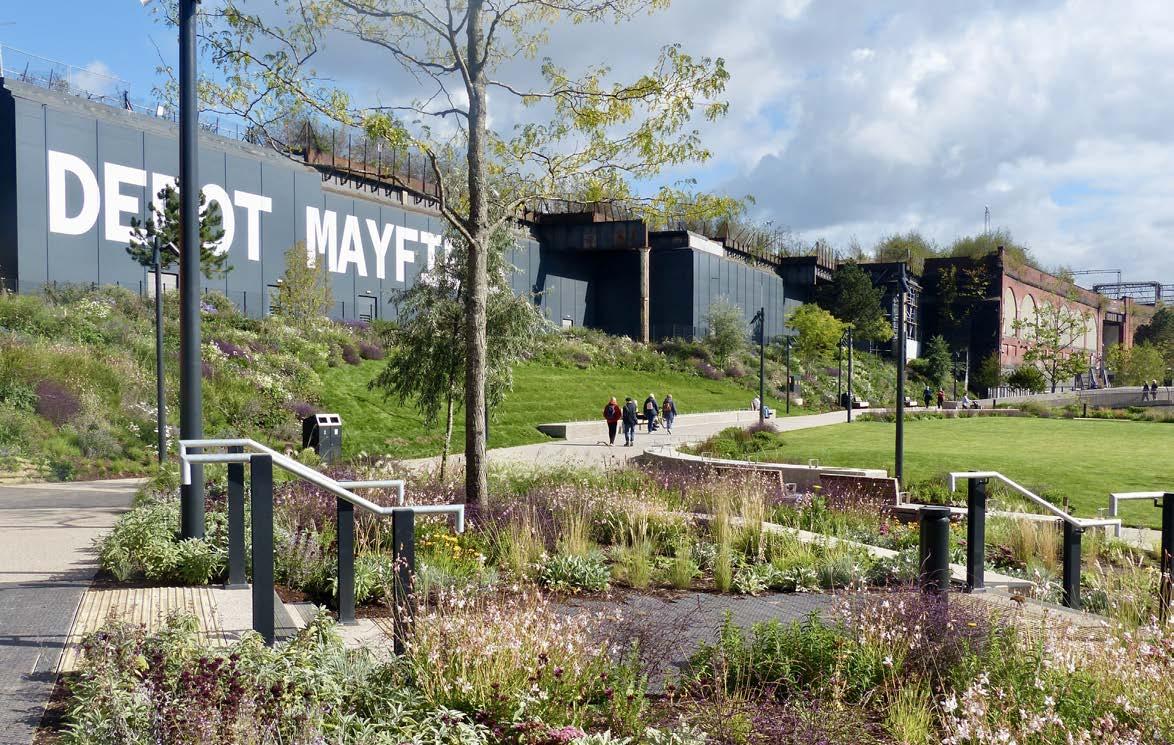
Civic is collaborating on Mayfield, the pioneering new Manchester district by Landsec
From VPs to
sustainability from several angles. “We have expanded our environmental, social and governance (ESG) response to not just consider environmental impact but to consider the social aspect of our projects,” says CEO and founder Stephen O’Malley. “The choices made across our projects can have an impact on communities for generations.”
Civic has become synonymous with large-scale regeneration projects across the UK, with current schemes including Mayfield in Manchester, a £1.5bn mixed-use masterplan to transform the city’s eastern gateway. The scheme includes up to 1,500 new homes, 320,000 sq ft (30,000 sq m) of commercial workspace, retail and leisure spaces, and Manchester’s first new city-centre park in over 100 years. “Across the site, we’ve applied low-carbon and circular economy principles: deculverting the River Medlock, re-using cast-iron beams and rethinking rainwater management,” O’Malley says, adding: “Circularity in its most honest interpretation offers so much value.”
Civic recently helped redevelop the former House of Fraser department store on Oxford Street in London, which has been transformed into a mixed-use scheme known as The Elephant. “We realised the building’s 40 tonnes of structural steel were limiting the structure, and by removing them, were able to build two further storeys,” he says. But the steel didn’t go to waste: “We offered the steel to a development near Tower Bridge which was able to re-use it.” The experience inspired Civic, alongside other collaborators, to set up the Engineers Reuse Collective, to encourage cross-industry dialogue about available resources and put circularity into action.
At this year’s MIPIM, O’Malley also
expects to discuss the importance of green infrastructure, another current topic. “We are partners on Manchester’s CyanLines project to make the city greener and better connected — it’s a compelling narrative that the city has set out to connect and improve one hundred miles of the city’s parks, squares, rivers, canals and viaducts,” he says. “Furthermore, I believe resilience will be a watchword for 2026, as we try to understand how towns and cities can adapt to the challenges of the future.”
Green infrastructure
Another company exploring the possibilities of green infrastructure is investment manager Patrizia. The business recently secured €351m in refinancing to support the long-term development of the Etzel storage facility, a major underground energy storage asset in northern Germany, which holds essential energy reserves for Germany and north-west Europe. The financing, which extends loan maturities by five years and reduces pricing, is part of a wider €540m debt package arranged by Commerzbank. The facility currently consists of 75
operational caverns that store vital liquid and gas reserves and has the potential to expand to up to 99 caverns in the future. “This refinancing allows us to progress the next phase of development for one of Europe’s most important energy-storage assets. The backing of our lenders reinforces the long-term future of the facility as a hydrogen-ready platform central to Europe’s industrial decarbonisation efforts,” says Heiko Süß, managing director at Patrizia.
As part of Patrizia’s decarbonisation infrastructure strategy, the Etzel facility is evolving from conventional energy reserves to hydrogen-ready storage that will support Europe’s long-term industrial and energy transition. Germany has committed to a historic €500bn climate and infrastructure investment programme to modernise its economy, reinforce energy security and accelerate the transition toward a CO₂-neutral future. Public funds alone will not be sufficient to deliver this transformation, which places private capital, such as the investments managed by Patrizia, at the centre of upgrading and repurposing essential in-
CONFERENCES & EVENTS AT MIPIM 2026
ROAD TO ZERO STAGE
• MAKING IT WORK: SCALABLE SOLUTIONS FOR AFFORDABLE, SUSTAINABLE HOUSING
TUESDAY, MARCH 10 10.00 – 11.30
• INTELLIGENT TRANSITIONS: AI AND TECHNOLOGY
POWERING THE NET-ZERO SHIFT
TUESDAY, MARCH 10 16.10 – 17.10
• SHOW ME THE MONEY: IS DECARBONISATION STILL WORTH IT?
• THE PRICE OF RESILIENCE: TOO RISKY TO STAY, TOO VALUABLE TO LEAVE?
WEDNESDAY, MARCH 11 14.00 – 15.00
frastructure to meet new system needs. In Italy, meanwhilte, Patrizia has secured more than €70m in new senior debt financing from UniCredit to accelerate the next phase of growth in Italy’s biomethane and bio-LNG sector. This facility will support the conversion of existing biogas plants to biomethane production and select acquisitions to expand the integrated renewable fuels network of its portfolio firm Renergia.
In London Civic worked on mixed-use scheme The Elephant
Deepki’s Vincent Bryant
Civic‘s Stephen O’Malley
9 March 2026
Palais des Festivals, Cannes, France
Housing Matters! returns to MIPIM
Building on last year’s successful edition, MIPIM will host «Housing Matters!», a half-day conference on innovative housing solutions.
The conference format features three networking sessions with speeches from key players in the housing sector, an interactive workshop running parallel to the plenary session that invites participants to engage with the main themes of the new housing deal, networking opportunities, and concludes with a cocktail.
Homes at heart of industry dilemma
Urgent demand for homes around the world will require collaboration between the real estate industry and public sector
As global housing shortages continue to steal the headlines, the real estate community is working to find concrete solutions to a crucial urban issue.
For pan-European property investment specialist Catella, the topic has remained at the heart of many of its initiatives. Although Catella invests in a range of asset classes across many territories, with over €14bn assets under management, the firm has become synonymous
with housing solutions, including the provision of affordable homes.
“The undersupply of housing is affecting the whole of Europe,” says Petra Blazkova, Catella’s head of research & strategy. “But the affordability issue is focused on certain cities or part of cities, and affects certain population groups,” she adds.
“Through extensive on-the-ground expertise, we are trying to find these pockets and create solutions.”
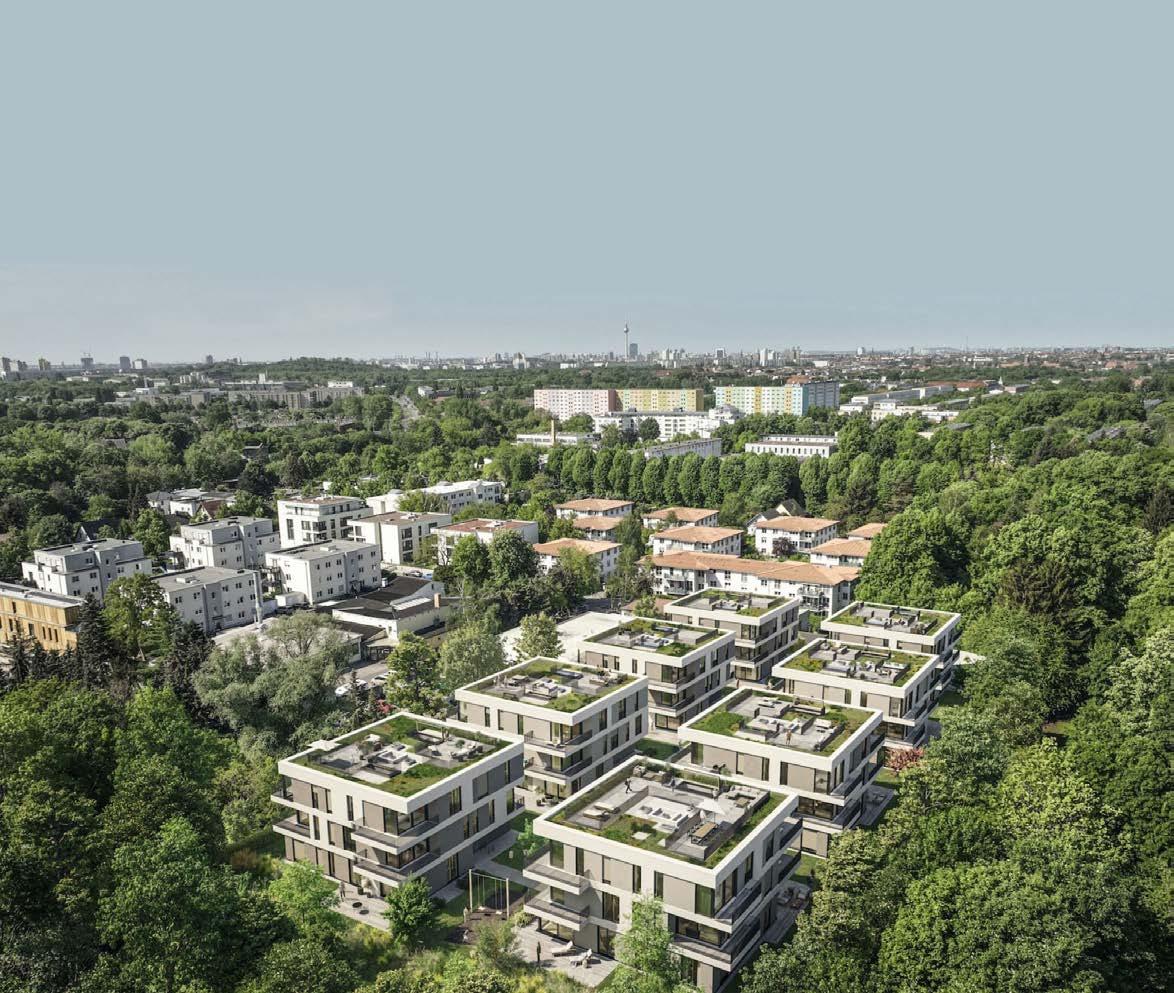
One such Catella project, in Pankow, Berlin’s most populous district, is also tackling the sustainabil-
ity issue. Comprising 67 affordable apartments in eight energy-efficient wood-hybrid buildings, the development benefits from low operating cost requirements thanks to solar panels, heat pumps and district heating. In Munich, meanwhile, Catella recently purchased a 1960s apartment complex with a development plan to retrofit and create a more cost-friendly, liveable environment.
“We also partnered with Barings on an affordable living project in Denmark with top ESG credentials,” Blazkova adds. “Comprising 269 affordable
apartments, the project delivers social sustainability to a fast-growing suburb of Copenhagen.”
UK strategies
She notes that the UK is another territory affected by residential undersupply and affordability, and adds that Catella is also honing solutions for that market.
One aspect which is crucial to targeting the right communities is being able to work hand-in-hand with local authorities, she says, although something of a comprehension gap
Catella’s energy-efficient wood-hybrid scheme in Pankow, Berlin
immobilienmanager:
Alles rund um Trends, News und Events der Branche
Geballtes Immobilienwissen in digital und print
Finanzierung und Investment, Nachhaltigkeit und Digitalisierung, Standorte und Märkte –Halten Sie Ihr Wissen mit dem imPlus-Abo auf dem neuesten Stand und erhalten Sie Zugang zu exklusiven Inhalten und Themen!
Die Auszeichnung für die Immobilienbranche
Jährlich wird den Besten der Branche der renommierte imAward verliehen. Seien Sie dabei – als Bewerber, Partner oder Gast auf dem exklusiven Gala-Abend!
Branchenthemen und Meinungen für die Ohren
Im immobilienmanager Podcast unterhalten sich Fachleute aus Wissenschaft und Praxis zu aktuellen Themen und Lösungen in der Immobilienbranche. Hören Sie doch mal rein!
Alle Infos unter www.immobilienmanager.de
still exists between the public and private sector. “Housing is a strong priority for many governments, but there needs to be an understanding of the framework required by private investors, for example, sufficiently long lease terms on land,” she says. “Catella remains committed to the problem and all of our funds include an affordability clause, with a target of including 60-70% of affordable housing.”
Aboria Capital, a UK-focused living manager with aspirations to operate across Europe, is also targeting the creation of living solutions to tackle supply-side shortages. “I do a lot of policy work in the UK and the government is really trying to address the speed of planning consent, which can play well for institutional operators seeking to enter the residential market,” says Jessica Hardman, CEO. “There are still some headwinds, such as delays created by the Building Safety Act, where regulators face a significant demand in applications. However, working with policy makers remains key.”
Throughout 2025, Aboria focused on integrating operations further with its development partner, the Downing Group, while developing 10 sites across the UK comprising student housing and flexible-living solutions. Hardman says that fundraising for the business has been going well, with investors wanting to participate in Aboria’s vision. The company’s flagship PBSA and co-living scheme in Manchester, Square Gardens by Downing Living, reached full completion with the opening of its final phase, demonstrating the depth of appetite for flexible living solutions in the city. As part of the development, 20% of apartments are designated affordable in line with agreements with Manchester City Council, ensuring the supply of homes to a broad range of residents.
Japanese solutions
The Japan Federation of Housing Organisations (JUDANREN), established in 1992, is the umbrella association of Japan’s housing in -
dustry. Its purpose is to significantly improve the quality of Japanese housing through research, studies, policy proposals, international exchange, and information provision.
In 2006, the Japanese government enacted the Basic Act for Housing to realise a society where every citizen can enjoy the fundamental right to a good home. This mission to “comprehensively improve the quality of Japanese housing” is incorporated into national housing policy.
Haruhiko Toyoda, senior managing executive officer of Sekisui House and an executive of the JUDANREN, suggests that JUDANREN’s mission is even more important today than 30 years ago when it was founded.
“After the COVID-19 pandemic, for example, lumber prices in Japan skyrocketed,” Toyoda says. “Procurement challenges in the supply chain have become greater. Due to the rising prices, we are now expanding our supply chain to various regions.”
Regarding the labour shortage in Japan’s construction industry, efforts are being made to support the sector by attracting more workers through regulatory reforms and wage increases.
One advantage Japan has over other countries’ housing markets is the consumer preference for new homes, which supports relatively stable demand for new supply. “On the other hand, it’s true that Japan’s declining population threatens the industry’s sustainability,” he says. “In such circumstances, many Japanese housing manufacturers are beginning to look overseas as one way to maintain industry growth. This is one reason why the Housing Federation is participating in MIPIM for the first time.”
Toyoda pointed out the Housing Federation’s mission at the conference is “the necessity of gathering information and building networks regarding overseas markets,” adding: “We aim to research housing prices, sustainability, construction standards and the overall market overseas.”
He also aims to promote and disseminate Japan’s unique construction techniques, know-how and
housing styles, such as smart houses and earthquake-resistant structures. “Finally, we want to explore new overseas business opportunities by communicating with foreign companies. We hope to meet companies that align with our vision,” he says.
Worldwide efforts
Local and national authorities across the globe are continuing to work hand-in-hand with the real estate industry to tackle the housing topic. In New York, policies to greenlight office to residential conversions are creating a compelling blueprint for creating new supply. Many of these are focused on Manhattan, the largest office market in the country. In December, InterVest Capital Partners and MetroLoft picked up some $867m (€745m) in financing to convert 111 Wall Street, a vacant office tower in the Manhattan’s Financial District, into a 30-storey residential block. The loan, arranged by Walker & Dunlop, represents the largest ever financial package in US history for a single-building office-to-residential conversion.
In Spain, modular housing is becoming more and more popular for its development speed and economics. As part of initiatives to build affordable social housing for low-income families, firms including Karmod Prefabrik and inHAUS are driving new development techniques. “Here in Spain, homeowners are increasingly demanding homes as a product. They want a fixed price for their home and they want turnkey service. This is a growing trend in the market for new housing construction,” says inHAUS co-founder Rubén Navarro.
CONFERENCES & EVENTS AT MIPIM 2026
GRAND AUDITORIUM
• HOUSING MATTERS! MONDAY, MARCH 9 14.00 – 20.00
Sekisui House’s Haruhiko Toyoda
Rising to a new challenge
MIPIM 2026 will once again assemble a cohort of young real estate professionals to challenge the status quo
Integrating diverse team members has never been more important for getting ahead in business — and the real estate industry is finally making tracks
The real estate industry hasn’t always reflected the world we live in, with hiring metrics often displaying a lack of diversity and female representation. But something is changing. The latest Global Real Estate Workforce Survey, conducted by Ferguson
Partners and backed by 19 global industry associations, shows that female representation has now reached 45.6% globally, while 96% of firms have workforce culture or inclusivity-related policies and 56.4% have formal strategies around the topic.
“There are more women entering the sector than ever before, but there is al-
CONFERENCES & EVENTS AT MIPIM 2026
GARE MARITIME
• EQUALITY OF OPPORTUNITIES IN REAL
ESTATE
WEDNESDAY, MARCH 11
16.00 - 17.30
ways room for improvement,” says Jessica Hardman, CEO of Aboria Capital. “I am a female entrepreneur, and I would love to see a bigger group of women taking forward their own real estate businesses.” Hardman is also an advocate for creating pathways of growth for everyone in the industry, at all levels. She calls it “intrapreneurship” — encouraging all individuals in a team to have a sense of ownership over a firm’s direction. “Being given a sense of responsibility is motivating for an employee and brings added value to business,” she says. “That’s often how great ideas are created.”
Inclusive pathways
Inclusivity is a matter which MIPIM has been taking seriously for some time, both through its own initiative — MIPIM Challengers — and its support for important programmes that are designed to tackle the question of how the industry accesses talent.
One such enterprise is Regeneration Brainery, which chief executive Michele Steel describes as “a programme for young people from diverse, underrepresented backgrounds to explore and access careers in property and regeneration”. She adds: “It’s a completely free-to-access programme for young people.”
Since 2017, the Manchester-based non-profit has worked with over 6,000 young people across England, introducing them to careers in real estate and regeneration initially through five-day bootcamps. “By the end of the week they spend with us, students are hopefully inspired and want to explore careers in property and regeneration further. Then, afterwards, it’s really about a long-term investment in their journey to become employment ready,” she adds.
In 2025, the programme ramped up to launch nine bootcamps across seven English cities, including Birmingham, Leeds, Liverpool, London, Manchester, Sheffield and Stoke. “As of 2026, we are going UK-wide, with programmes in Scotland and Wales, as well as new English cities including Bristol and Newcastle,” she says, adding: “We have no shortage of demand in terms of student numbers — we see an enormous need to educate and inspire young people as to what the industry looks like from an industry perspective.”
Real estate firms and city leaders can and do participate with mentorship and programme support. Previous mentors include heavyweights including the mayor of Greater Manchester, Andy Burnham, as well as Lynda Shillaw, CEO of regeneration specialist Harworth Group.
MIPIM ambassadors
For the last few editions of MIPIM,
Regeneration Brainery has been bringing two or three young ambassadors to the event, to network with industry leaders and even speak on panels. “This year’s cohort will once again have the chance to stand up in the UK Hub and on the London stand to add a young person’s perspective to real world debates,” she says. Indeed, as the industry becomes more technologically advanced and explores tools such as AI, Gen Z’s know-how and skillsets are starting to look more relevant than ever.
MIPIM has also introduced its own initiative to address the issue with the MIPIM Challengers programme, now in its third year. This initiative is designed to foster inclusivity and elevate emerging talent within the built environment sector. The latest group of Challengers will include 43 real estate professionals under the age of 31, who will take part in the full MIPIM programme in Cannes, benefiting from complimentary tickets and invitations to dedicated sessions and events. This will be the festival’s largest cohort to date, reflecting MIPIM’s ongoing commitment to cultivating a more diverse and globally representative industry.
Successful entries were received from Austria, Belgium, France, Germany, the Netherlands, Norway, Panama, Poland, Portugal, Switzerland and the United Kingdom. They represent a range of companies including: investors (28%), architects & planners (14%), brokers (14%), real estate business services (9%), construction (9%), service providers (9%), developers (7%), public sector (7%) and technology & solution providers (2%).
Nicolas Boffi, MIPIM director, says: “Congratulations to the 43 MIPIM Challengers who will join us in Cannes in March. This is our biggest and most diverse cohort yet, with passion for topics such as neurodiversity, accessibility and social mobility, and it matters.
“These young professionals will bring ideas and questions that push us to
think differently about how cities evolve. We have deep technical expertise in this industry, but we need voices that understand how their generation wants to live, work and move.”
This year’s Challengers
MIPIM Challengers bring experiences across key asset classes including data centres, serviced apartments, logistics and commercial real estate, with many of them developing informed solutions and strategies using AI, geospatial, ESG data and others. Some are leading global professional communities, such as the Young Leaders network for Ukraine’s long-term reconstruction and Young Professionals in Social Value. Others are actively engaging with external organisations, including Regeneration Brainery, the INREV Young Professionals Mentoring Programme, Article 25, and the Urban Land Institute (ULI) Portugal Young Leaders Executive Committee.
At MIPIM, Challengers will take part in conference roundtables and contribute to a thought leadership paper alongside senior executives from the world’s most influential property companies. They will also attend a dedicated networking cocktail event, an opportunity to build meaningful industry connections and friendships. They will furthermore participate in a bespoke leadership development course designed to prepare them for future opportunities. This includes three personalised coaching webinars and an on-site training session on AI implementation.
Boffi adds: “Last year’s Challengers showed the value of this exchange with practical proposals like treating embodied carbon as an asset and using blockchain for material passports. These were not abstract concepts; they already work and shape asset values and resilience. The programme is about creating space for real dialogue, where experience meets fresh thinking. I can’t wait to see what this group brings to the table.”
Arboria Capital’s Jessica Hardman
Regeneration
Brainery’s Michele Steel
Dino Moutsopoulos Managing partner and head of commercial, Place Media Group
UK returns to MIPIM: Stronger, louder, and ready to do business
The United Kingdom is setting its sights firmly on Cannes for MIPIM 2026, and this year, the energy is unmistakable. With Scotland and the North of England both returning – the largest UK presence at MIPIM - under the experienced leadership of Place Media Group and Place North, the message is clear: the UK’s nations and regions are back, united in ambition, and ready to engage with global investors.
Scotland steps forward
After a hiatus since before the pandemic, Scotland’s return to MIPIM 2026 represents a renewed commitment to showcasing the full breadth of its economic, cultural, and geographic power. Spearheaded by a coalition of private sector partners, the Scotland at MIPIM initiative is designed to amplify the country’s presence on the world stage.
Home to 5.5 million people and a £240bn economy, Scotland offers compelling opportunities far beyond the global brands of Edinburgh and Glasgow. Aberdeen continues to power industry, Dundee delivers cultural dynamism as the home of the UK’s first V&A museum outside London, and the west coast inspires with world-class natural assets.
Through collaboration with Place Media Group, Scotland at MI-
N RTH
ENGLAND OF
POWERED BY
ernment, while Place North continues to curate and lead premium events throughout the week.
A united UK showcase by Place Media Group
POWERED BY Place
What your campaign could include
PIM will provide a structured and professional platform for development leaders, councils, and investors to connect. Expect opportunities for speaking engagements, exhibitions, and targeted networking – all designed to spotlight regeneration projects and investment-ready places across the nation.
The North turns up the volume
Meanwhile, the North of England continues its remarkable momentum. Following the triumph of 2025’s debut stand, which hosted around 60 partner organisations, Place North and RX have agreed on an enhanced presence for 2026.
For 2026, Place North has upgraded its presence to one of the Palais’ premier spaces. The new space includes a private terrace overlooking the Croisette and an inner soundproof lounge for exclusive functions, panels, roundtables, and cocktail hours – a setup that blends professionalism with exceptional flexibility.
The North boasts impressive credentials: 15 million people, more than one million businesses, and a £340bn regional economy. This year, that scale will be reflected at MIPIM through louder events, bigger stands, and sharper visibility.
Delegates will enjoy access to the UK Hub as a base for meetings and the UK Stage will return with high-level debates featuring leading voices in finance and gov-
Together, these offerings ensure the UK’s regions stand shoulder to shoulder on the world’s biggest real estate stage. MIPIM 2026 will celebrate innovation, regeneration, and collaboration across the British landscape – from the industrial heart of Scotland to the cultural energy of Manchester.
Both initiatives promise curated engagement, high-quality connections, and opportunities to shape future investment. Whether you represent a council, developer, or investor, this is your chance to be part of the next chapter in the UK’s global property story.
Benefits for our partners
Getting involved with Scotland at MIPIM and the North of England at MIPIM gives partners a powerful, ready-made platform to raise profile, create relationships, and convert ambition into deal flow.
Joining the campaign plugs your organisation into a curated programme that puts you in front of global investors, major developers, and senior public sector leaders over an intense, high-value week. You benefit from shared branding, association with respected regional stories, and the effect of being part of a coordinated UK-wide presence rather than a lone figure on the fringe.
The partnership approach also massively reduces friction: logistics, programming, and audience-building are handled by a team with vast experience in property events, freeing you to focus on strategic conversations, relationship-building, and showcasing your pipeline. With Place shaping the narrative, partners can confidently position schemes, towns, and businesses as investible, future-facing and ready right now.
A typical campaign of activity can blend on-the-ground presence in Cannes with preand post-MIPIM amplification. Elements could include:
• Speaking slots on the UK Stage or themed sessions such as Investible North or Great Minds to spotlight specific projects, boroughs, or sectors
• Hosted panel debates, roundtables, or private briefings in the North of England Suite, using the terrace and inner lounge for launches, debates, or investor receptions
• Thought leadership content, in-focus interviews, and video features distributed through Place’s channels to extend reach well beyond the four days in Cannes
• Structured networking: curated introductions to councils, funders, and development partners, plus invitations to breakfasts, dinners, and informal socials where real deals begin.
A look to 2027
Bespoke stand delivery at MIPIM 2027 offers cities a fast, lowrisk way to secure a world-class presence in Cannes without tying up precious in-house capacity or learning the event the hard way.
By partnering with an experienced UK-based organiser that already curates busy, content-led spaces at MIPIM, cities can plug into proven formats, audiences, and operations under their own brand.
Why bespoke stands work
For many cities, the challenge is not the lack of ambition, but the sheer complexity of delivering an effective presence at MIPIM. Negotiation, design, build, logistics, AV, catering, content programming, stakeholder management, and investor targeting all need to come together in a four-day window. A Place Media Group solution removes that burden, giving economic development and investment teams a turnkey opportunity that looks and feels uniquely theirs while being delivered end to end by a specialist.
Place Media Group’s approach lets cities concentrate on what really matters: sharpening their story, aligning partners, and maximising face time with investors, rather than worrying about power sockets, build times, or bar rotas. It also de-risks internal politics; the technical ‘how’ is outsourced, leaving local partners to focus on ‘who’ is on stage, ‘what’ is being promoted, and ‘which’ deals they want to progress.
What the 2027 offer includes
For the 2027 edition of MIPIM, the bespoke offer can encompass everything from concept to close-out. That typically includes:
• Stand strategy and narrative: positioning your city’s proposition within global themes such as net zero, innovation districts, life sciences, logistics, or housing
• Design and build: a bespoke stand look, seamlessly aligned with the city’s brand guidelines, delivered using tried-and-tested contractors who understand the Palais and know Cannes
• Programming and content: curated panels, fireside chats, investor briefings, announcements and signings that keep the stand busy and relevant throughout the week
• Partner integration: clear routes for local developers, universities, investors, and anchor employers to buy into the stand and feel genuine ownership of the city’s presence
• Operations and hospitality: full management of diaries, catering, technical support, and on-stand teams so every meeting runs smoothly.
A scalable platform for cities
Whether a city is attending MIPIM for the first time or looking to step up from a shared space to a dedicated destination, our
delivery offers a scalable path. A smaller footprint can be configured as a focused lounge for targeted meetings, while a larger stand can become a content-rich hub with its own mini-programme and hospitality offer. By 2027, competition for attention at MIPIM will only intensify. Cities that move early to secure expert, white-label support will arrive in Cannes with a stand that looks confident, feels busy, and performs commercially from day one.
2026 PARTNERS
Investors spy recovery in Europe
European real estate returns are on the path to recovery in 2026, according to the latest research from global asset manager PGIM Investments. The firm notes that recent rental growth is supporting asset resilience against a backdrop of elevated uncertainty, backed by low supply. Meanwhile, debt is proving accretive as interest rates stabilise at lower levels, and while liquidity remains low, a pick up is expected in 2026 on the back of improving investor sentiment.
Kevin Thorpe, chief economist at Cushman & Wakefield, agrees that “the tone has shifted meaningfully” as
Funds are rising to the occasion as investment opportunities proliferate in European real estate
of 2026. He adds: “There is still risk on both sides of the outlook, but we’ve moved past the peak levels of uncertainty, and confidence in the commercial real estate sector is building. Capital is flowing again, interest rates are stable or moving lower, and leasing fundamentals are generally stabilising or improving. If 2025 was a test of resilience, 2026 has real potential to reward it.”
However, Mark Lee, senior portfolio manager, head of real estate, Australian Retirement Trust, thinks it may be early to talk about “winners and losers” just yet. “Global real estate markets have only recently gone
through levels of stabilisation,” he says. “Success should therefore be attributed to investors who successfully overcame the challenges experienced since COVID to emerge with strong balance sheets to take advantage of the cycle ahead.
“This cycle has served to remind LPs that diversification across regions and sectors can still reward investors over the long term. Having said that, 2025 has shown some defensive strategies working, such as credit and triple-net leased strategic assets. On the flipside, certain office markets have likely continued to weigh on investors’ portfolios.”
Looking at 2026, Lee says a sense of
Confidence is building once again in commercial real estate markets
Australian Retirement Trust’s Mark Lee
caution remains, “as the macroeconomic outlook is still globally uncertain”. He adds: “Furthermore, we are currently well allocated based on our geographic and sector targets. So instead of chasing targets, we are focused on where the best risk-adjusted returns are. Therefore, our strategy is to continue to build our key strategic relationships to position ourselves to take advantage of transaction flow when they arise.”
Investment trends
BNP Paribas Real Estate Investment Management (BNP Paribas REIM) says that Europe will represent a “selective market with value creation driven by active management” throughout 2026.
“The key to performance in 2026 will be the ability of assets to combine sustained income with quality of use and location. In this selective market, we prefer sectors driven by structural trends, while taking an agile approach to more traditional sectors following the repricing,” says Laurent Ternisien, deputy global head of BNP Paribas REIM.
The firm identifies five key investment trends in 2026, the first of which is predicated on European economic growth, which should pick up as uncertainties surrounding trade policy fade and the financial environment fully stabilises. According to BNP Paribas, this acceleration is expected to be widespread, but especially dynamic in Germany, where structural changes in fiscal policy could lift the economy out of stagnation and give fresh momentum to the European market.
However, the firm also warns that Europe is likely to see an uneven recovery, as national markets take different trajectories. “Local dynamics play an important role, with sector drivers and growing expectations in terms of asset quality becoming decisive factors for investors and occupiers,” BNP Paribas research declares. Investment should rise in 2026, propelled by strong momentum in Southern Europe and the gradual improvement in Germany and the UK. France is likely to continue
CONFERENCES & EVENTS AT MIPIM 2026
• THE RE-INVEST SUMMIT
TUESDAY, MARCH 10
08.00 – 14.00
LEADERS’ PERSPECTIVE STAGE
• THE GLOBAL INVESTORS’ VISION
TUESDAY, MARCH 10
16.10 – 17.10
• INVESTMENT STRATEGY
FOCUS – REAL ESTATE IN TURBULENT TIMES
THURSDAY, MARCH 12
11.30 – 12.30
• INVESTMENT STRATEGY
FOCUS – NAVIGATING THE NEW NORMAL THURSDAY, MARCH 12
14.00 – 15.00
grappling with political uncertainty. BNP Paribas also forecasts that private equity real estate will drive income and diversification, as investors remain open to alternative assets. The recent repricing offers more appealing entry yields, even though valuations are still sensitive to any rise in interest rates. Finally, the firm warns that the life cycle of asset categories continues to require meticulous planning, as the “next generation” of emerging sectors is set to experience cyclical growth phases before reaching maturity. The firm concludes by declaring that fundamentals should take precedence over trends for 2026, with investors needing to be ready to analyse individual assets, rather than betting on entire sectors. This could prompt renewed interest in offices and retail assets, as well as an ongoing interest in healthcare and hotels. A common denominator is assets that combine solid fundamentals with high returns. Adds Guilherme Neves, senior research analyst for EMEA forecasting
at Cushman & Wakefield: “Recovery in Europe’s real estate market is being supported by gradually improving economic fundamentals. Prime office hubs such as London, Paris and Frankfurt are seeing strong occupier demand, while logistics remains a key focus for investors. At the same time, trends like digitalisation and sustainability are reshaping investment strategies and opening new opportunities for those ready to move early.”
Investing in infrastructure
Emily Foshag, portfolio manager at Principal Asset Management, also shines the spotlight on opportunities in listed infrastructure in 2026.
“Looking ahead to 2026, we see several conditions supporting listed infrastructure as a compelling allocation: low macro sensitivity, attractive valuations relative to equities, and robust fundamentals that provide a foundation for future performance,” she says. “The macro backdrop is supportive, with rate cuts easing financing costs and policy tailwinds fuelling new investment across energy and digital infrastructure.”
She adds: “Valuations haven’t been this attractive in two decades, and most subsectors are positioned for positive earnings growth. As investors look for stability and upside in an uncertain market, listed infrastructure stands out, benefiting from durable income streams, inflation-linked cash flows, and long-term themes such as AI-driven power demand, the clean energy transition, and urbanisation.”
Looking specifically at Europe, she says: “In Europe, listed infrastructure remains well-positioned heading into 2026 as expansionary policy continues to support investment across energy transition and modernisation projects. Germany’s €50 bn multi-year commitment underscores the scale of the opportunity, while improvements in regulatory frameworks and a renewed focus on supply chain autonomy are driving momentum across utilities, clean energy and transport infrastructure. We expect these policy and investment tailwinds to sustain strong fundamentals across the region in the year ahead.”
Frankfurt remains a compelling office hub in Europe
10-13 March 2026
La Croisette, Cannes, France
Explore top hospitality projects, gain expert insights, and network with the most influential players in the industry. Learn and participate in discussions on branded residences, Hotel developments within the Luxury & Resort segments and more.
Checking into tourism trends
As hospitality powers forward, trends including branded residential and tech adoption are likely to shape the industry in 2026
The European hospitality industry experienced a powerful rebound post-pandemic, activating real estate investors interested in the operational gains of hotel real estate. As the industry consolidates its recent wins, there are signs the hospitality industry is evolving further. Marriott International, the largest hotel company in the world by available rooms, still has further expansion in its sights. “The EMEA region remains an integral part of Marriott’s global expansion strategy. Today we have more than 1,300 properties in operation across 81 countries in the
EMEA region, with more than 500 projects in our development pipeline,” says Timothy Walton, senior vice president, development – Western Europe, Marriott International.
“In terms of geographies, some of the biggest growth in the near to midterm is expected to arise from Saudi Arabia, the UAE, the UK and the southern European, Mediterranean markets,” he adds.
One interesting area of growth is the midscale space. “Here in EMEA, we entered the midscale space with the launch of Four Points Flex by Sheraton in late 2023,” Walton says. “The brand has since grown to 35 operating
hotels across six markets in the region, with more than 20 projects in the pipeline.” Further midscale brands, namely Series by Marriott and StudioRes, are also being deployed for further growth in EMEA.
Walton notes that luxury is also an interesting growth conduit, with more than 100 luxury projects in Marriott’s development pipeline for EMEA.
“We have some landmark luxury openings on the horizon, including the first ever St. Regis hotel in Mayfair in central London which is due to open this year and a Ritz Carlton at Bellagio on the shores of Lake Como which will be opening in 2026 as well.”
The first ever St. Regis hotel in Mayfair, London, is due to launch this year
Limehome’s Josef Vollmayr
Combien vaut une villa avec piscine et héliport ?
Nous vous mettons en relation avec des experts de l’immobilier de prestige pour réaliser la plus juste estimation de vos biens.
Branded residential
Further opportunities lie in branded residential, where Walton sees “increased development activity in both urban and resort markets and on both a standalone and co-located basis”. Today, the company’s EMEA branded residential portfolio spans 18 countries and territories, with 33 open locations and over 50 in the pipeline. Since year-end 2023, the company has grown its branded residential total portfolio by 23% in Europe, and 59% in the Middle East & Africa, demonstrating the growing demand for elevated living in the region.
The branded residential trend has caught the eye of several market watchers, including broker Savills, which has been monitoring the segment for some time. “In 2025 alone, we saw 25 countries offering their first ever branded residential project, 39 new hotel brands and 19 new non-hotel brands,” says Louis Keighley, Savills’ head of global residential development consultancy.
In December, Radisson Hotel Group unveiled its latest branded residential project in Abu Dhabi, Radisson Residences Al Reem Island. The AED 1.2bn (€280m) project will be the first stand-alone Radisson Residences in the world, and has been designed as a premium waterfront destination comprising three towers.
According to Keighley, branded residential units are increasingly popular with high-net-worth individuals who prioritise mobility, which often includes cross-border tax planning, such as acquiring residences in low or no tax jurisdictions. “For individuals buying five or six homes around the world, one of the key attractions of branded residential is the turnkey solution it represents,” he says.
Technology in play
CONFERENCES & EVENTS AT MIPIM 2026
HTL CONNECTION
• OVERVIEW OF BUSINESS TRAVEL IN 2025 AND BEYOND
TUESDAY, MARCH 10
11.00 - 12.00
• BRANDED RESIDENCES
WEDNESDAY, MARCH 11
10.00 - 11.00
• HOTEL DEVELOPMENTS IN THE LUXURY & RESORT SEGMENTS
WEDNESDAY, MARCH 11
14.00 - 15.00
• UNLOCKING INVESTMENT OPPORTUNITIES: CONVERSIONS/ BRANDED RESIDENCES II
THURSDAY, MARCH 12
10.00 - 11.00
• DESTINATION TRENDS
THURSDAY, MARCH 12
14.00 - 15.00
Another key hospitality trend for 2026 is likely to be the further deployment of technology in hotel real estate. German hospitality firm, Limehome, has been something of a pioneer in this area. “Unlike traditional hotels, Limehome operates a fully digital, centralised model for design-led serviced apartments,” says Dr Josef Vollmayr, co-CEO and co-founder of Limehome. He explains that this provides a boost in profits — estimated at around 25% — and “enables rapid, scalable openings and consistent quality”. He adds:
“With an average occupancy that exceeds 90% across more than 12,500 units under contract, Limehome delivers resilient returns for owners and a seamless guest experience.” The year 2025 was “pivotal” for Limehome, with more than 3,000 units signed, a €75m strategic investment from Cheyne Strategic Value Credit, strong momentum in Spain, DACH and Benelux, plus entries into London and Paris. “In 2026 we’ll accelerate openings in existing clusters and deepen our presence in premium leisure destinations via new developments, hotel repositionings and commercial conversions with disciplined, profitable growth,” he says. Limehome sees the long-term value of tech in real estate, he says. “Digital hospitality means faster, frictionless and more reliable stays: instant booking, fast access, dynamic pricing and 24/7 support. When issues arise that require human interaction — such as urgent on-site maintenance — trained agents and local teams address these needs promptly. We consider our approach to be tech-first, with human support always available.”
Hostels trending
Another firm which is integrating digital technology more and more into its operations is a&o Hostels, the pan-European hostels business. “We have been implementing self-check-
in booths at a number of properties, which has been very successful so far,” says a&o chief investment officer, Julien Mattei. “It helps avoid a backlog of people waiting at reception”. The firm has also created a guest app which is being increasingly adopted. He adds: “About 40% of our business comes from group travel, particularly school groups and sports teams. This is why our digitalisation focus increasingly includes group travellers, with a dedicated group online check-in solution planned for the near future. Alongside this, our digital marketing initiatives have delivered strong results, and we are currently in the early stages of exploring a loyalty programme.”
This year, hostels are likely to feature increasingly on the acquisition lists of hotel investors as the segment becomes more institutionalised. While Spain’s Room00 acquired TOC Hostels for €20m in late 2024, Invel Real Estate formed a €200m partnership with YellowSquare last year to expand its hybrid hospitality offering across Southern Europe. More recent major deals have included Brookfield acquiring Generator’s European portfolio for €776m. “A lot of capital is looking to build a strong footprint in the sector, which will lead to some consolidation down the road,” Mattei says. He concludes: “Our value proposition is quite unique. We are the lowest price point in the market, while still offering a high level of quality and service.”
Radisson continues to attract plaudits with hotels like this one in Florence
Dynamic UK unveils big ambitions
From dynamic Scotland to ambitious London, through the cities of Newcastle, Manchester, Birmingham and Southampton, exciting opportunities abound for UKfocused investors
UK real estate is tipped for further improvements in 2026, as the UK government maintains a focus on housing delivery, infrastructure investment, and regional growth, following the launch of its 10year Industrial Strategy in June. Major forecasters predict a shift from the volatility of recent years toward more sustainable growth. Ed Hughes-Power, partner, real estate, Mishcon de Reya, expects greater clarity — albeit within a more polarised market. “Investors are increasingly focused on sectors with genuine structural resilience, alongside income and operational certainty, driving a continued flight to quality in both assets and locations,” he said. “2026 looks cautiously positive, but success will be concentrated in the sectors and regions that can combine demand, quality and regulatory certainty.”
London remains the anchor of the UK’s property market. Following Mayor of London Sadiq Khan’s debut at MIPIM last year, the capital will again have an enhanced presence in Cannes, including an upgraded London Model with an augmented-reality application that allows sites and developments to be visualised digitally as part of the stand experience. The London Stand, in collaboration with NLA, Opportunity London, London & Partners, London Councils and the Mayor of London, will showcase five key strategies driving London’s growth: innovation and knowledge clusters, major infrastructure investment, regeneration and housing programmes, adaptive reuse and sustainability, and the capital’s highly skilled talent pool. Jace Tyrrell, CEO at Opportunity London, says that the fundamentals for real estate investment in London are set
to strengthen in 2026. He notes that commercial property sectors are continuing to see strong occupier performance, particularly in central London offices. “Of the 25 live opportunities in our Investment Prospectus, we have commercial, living, logistics, innovation, education and experience economy developments, alongside a pipeline of infrastructure and growth programmes that are redefining how London develops and competes,” he says. From the energy transition to the digital systems underpinning long-term growth, these investments will “secure future London”. He adds: “Continual evolution is what London does best.”
Beyond the capital, UK regions are increasingly defining a new wave of opportunity — combining stronger yields, powerful regeneration pipelines, and improving connectivity with increasingly mature local economies and talent pools. Regional cities including Manchester, Leeds, Birmingham, Newcastle, Bristol and Glasgow typically offer high net yields in the 6-8% range for residential and mixed-use assets.
Tom Bloxham MBE CBE, chairman and founder, Urban Splash, says: “There are challenges that we can’t
CONFERENCES & EVENTS AT MIPIM 2026
LONDON STAND STAGE
• THE POLITICS OF PLACE
TUESDAY, MARCH 10 10.00 – 10.45
• TRANSPORT AS AN ENGINE FOR GROWTH
TUESDAY, MARCH 10 11.00 – 11.45
UK HUB
• STADIUMS, CITIES AND THE STATE TUESDAY, MARCH 10 14.00 – 15.00
• URBAN REINVENTION & RESILIENCE
WEDNESDAY, MARCH 11 14.00 – 14.45
ignore — be that the global economy, political landscape, or, closer to home, changes to building and planning regulations. But all that considered, there’s real opportunity on the horizon.” The UK urgently needs more homes, he added, and the company is pushing ahead with its pipeline, “giving people more places to live, work and play.”
Schemes including Port Loop in Birmingham underline the vivacity of the UK regions
Bloxham will join architect and TV presenter George Clarke at MIPIM to discuss “the amazing journeys of Sunderland and Manchester.”
Greater Manchester’s presence at MIPIM 2026 will focus on its 10-year, £1bn (€1.15bn) GM Good Growth Fund, which will pump-prime a pipeline of more than 30 projects across the city region. Unveiling the plan recently, Mayor of Greater Manchester Andy Burnham said: “Powered by devolution, our journey of growth has transformed our city region and is opening up opportunities that people could not have imagined 30 years ago.” The first £400m investment will deliver nearly 3,000 new homes, more than 22,000 new jobs, and 2 million square feet of employment space. Among the key projects is Sister – Manchester’s new
innovation district and global hub — a partnership between the University of Manchester and Bruntwood SciTech that will revitalise an underused area of the city centre over the next 15 years. Crescent will continue the renaissance of Salford by building on its successes and bringing forward a new £2.5bn, 240-acre city district. The 400-acre Old Trafford project is one of the country’s highest-profile regeneration initiatives, creating a new leisure and business destination and 15,000 new homes around a
This year, Scotland is back at MIPIM for the first time since the pandemic, returning with a dedicated Scotland at MIPIM delegation, driven by a consortium of private-sector partners in collaboration with Place Media Group to promote investment opportunities in Scotland’s towns and cities. The delegation includes representatives from private firms as well as public bodies, with Glasgow City Council joining for the first time since 2019. The initiative aims to showcase Scotland’s property and real estate potential, attract international capital and partnerships, and ensure the country is “open for business” on the world stage. “Scotland at MIPIM is about national priorities and opportunities, as well as individual city and town priorities. Stalled sites and infrastructure investment are top priorities for the whole country,” says
Dino Moutsopoulos, managing partner, Place Media Group. The Scottish Government has a new housing target of 110,000 affordable homes by 2032, and Moutsopoulos says a key message will centre on housing, emphasising that Scotland has a mandate and a green light to build homes in places like Glasgow, Edinburgh and Dundee.
As one of the UK’s core cities, Newcastle is the regional capital of North East England and part of a £4.2bn regional devolution deal. In 2025, Newcastle hosted the MOBO Awards and Mercury Prize — two of the UK’s most prestigious music events — and was announced as a host city for the Euros 2028. “It is safe to say that all eyes are on the city as a global destination for culture, innovation and investment,” said Jen Hartley, assistant director of capital investment & growth, Newcastle City Council. “As a result, our skyline is changing. Ambitious projects across the city are spearheading us into a brand-new era.” Key schemes include the £155m Pilgrim’s Quarter regeneration project and riverside brownfield redevelopment site, Forth Yards, boasting a recent £120m government boost.
Heading south, the Central South region — lying on the south coast of England less than an hour from London — boasts major ports, including Southampton and Portsmouth, and airports, making it a “global gateway,” according to Leigh-Sara Timberlake, group CEO at Business South. She said the region “offers a compelling mix of strategic locations, connected infrastructure, sectoral strength, investment opportunities and quality of life.” Across the region, major regeneration schemes are reshaping town and city centres. Southampton’s Heart of the City blends urban living with new retail, dining, and transport links, revitalising the Old Town. Portsmouth’s City Centre North project aims to position the city as a global hub for innovation and creativity. Basingstoke’s town centre regeneration is unlocking retail, residential, office and leisure spaces, supported by strong transport links. In Bournemouth, Christchurch, and Poole, the Holes Bay site — one of the South West’s largest brownfield areas — is being transformed through a clear delivery framework and community collaboration, while Gosport’s Fort Blockhouse offers a rare chance to reimagine a historic waterfront site.
100,000-seat football stadium.
Clockwise from top left: Forth Yards, Newcastle; Royal William Yard in Plymouth; Gateshead Millennium Bridge; Opportunity London’s Jace Tyrell; Sister - Manchester’s new innovation district
From bits to bricks
Housing Matters! 9 March 9-13 March 2026
Palais des Festivals, Cannes, France
New at MIPIM!
AI, cloud, 5G, and digitalisation are fueling interest for Data Centers, recognized for both their profit potential and the inherent complexity they bring. A must-attend forum for investors, developers, operators, and public authorities navigating power, planning, and AI-driven demand, with interactive sessions connecting capital, real estate, and technology
Sponsored
Innovation drives France’s future
French industry and real estate are being transformed by digital ambitions inspiring a new investment wave
While France is famed for being one of Europe’s greatest custodians of tradition, the country is also making great strides in the digital and artificial intelligence (AI) race. France, in fact, is now ranked third globally among the world’s AI hubs, according to Dealroom.co. In practice, Paris is home to over 500 AI startups, representing 63% of France’s
total, as well as hosting more than 150 research centres and 110,000 trained AI professionals, making it a European leader. It has also made significant progress in terms of open-source AI, with Mistral AI a prominent player in the capital building open-weight LLMs with over $2.9bn (€2.5bn) raised. Hugging Face, meanwhile, founded by French entrepreneurs Clément Delangue, Julien Chaumond, and Thomas Wolf in New York City in 2016, has become a cru-
cial community for open-source AI collaboration. There are also plenty of up-and-coming names, including open-source data scientists :probabl. and speech processing experts pyannoteAI.
And Paris has no intention of stopping there, says Alexandra Dublanche, chairwoman of Choose Paris Region. “The Île-de-France region is a land of innovation,” she says. “We’ve once again been named the leading European region of the future. We’re a land of AI; we’re the leading European hub for artificial intelligence.” She adds: “There is quite fierce competition, so we must constantly be pioneers and try to strengthen this ecosystem. Therefore, the role of the
Île-de-France region, with the help of the Choose Paris Region agency, is to be very attentive to this ecosystem in connection with businesses, territories and foreign investment.”
Renovation and renewal
The city’s transformation involves targeted real estate renewal as well as the development of new urban districts. Business hub Paris La Défense is making strides to stay relevant and set the bar for modern office space, according to the district’s CEO, Pierre-Yves Guice. Since launching in the 1960s, the office-led neighbourhood has already gone through “four or five waves of renovation and transformation”, says Guice. While
The land of Haussmannian architecture (left) is also driving digital change and demand for striking assets like the Pullman Montparnasse
Where GCC visions turn into real estate investment
20-21 October 2026
The Ritz-Carlton, Riyadh, Saudi Arabia
More than a showcase, it’s the Middle East’s premier B2B platform for turning vision into investment, in one of the world’s most ambitious and fast-moving development landscapes.
Building on decades of MIPIM’s global influence, this inaugural edition brings together international investors, policy makers, and trailblazing developers in a uniquely curated environment designed for high-impact networking, strategic insights, and concrete deal-making.
A key distribution scheme in Saint-Michel-sur-Orge that recently changed hands
currently tackling issues including aging stock and obsolescence, the district remains a magnet for large office occupiers as they also consider their evolving footprints. For example, biopharmaceutical giant Sanofi has recently announced plans to move its French headquarters into the district’s CB3 building, following a low-carbon transformation. The district’s take-up has in fact remained at elevated levels, despite recent Europe-wide economic headwinds. Yet there is still plenty of work that needs to be done, Guice admits. “We have around one million square metres of offices which are becoming obsolescent,” he adds. “We are trying to convince investors, architects and tenants to take part in district-wide efforts to tackle this issue.” The politics of sustainability mean that renovation is preferred over rebuilding, with the recent and forthcoming redevelopments of Altiplano, Ariane, Lightwell and Hopen all representing blueprints for this approach. La Défense is also welcoming a range of use cases beyond offices, including residential, retail, healthcare and sports facilities. He adds: “We are determined to turn La Défense into a truly balanced neighbourhood, which serves Paris and Europe as the world’s first post-carbon global business district.”
Digital districts
The developing Paris Saclay neighbourhood, which lies 15 kilometres south of the capital, is meanwhile becoming world-renowned as an innovation district, housing 21% of France’s R&D labs and renowned deeptech companies. Its ecosystem brings together the main R&D centres from both the public and private sectors, fostering a unique collaboration between research and industry. Several pipeline projects are still in the works, such as The Mix, a hybrid which combines offices and laboratories intended for technological research and development, due for delivery later this year. Being developed by Kadans Science Partner, The Mix will serve as a meeting place for researchers, entrepreneurs, and industry, with the 15,000 sq m building capable of accommodating up to 800 innovation players in flexible workspaces and state-of-the-art laboratories. It is the second building developed and managed by Kadans Science Partner in France after The Hive, which is located on the Campus Grand Parc in Villejuif and is dedicated to innovation in oncology. The digital and innovation race continues beyond Paris, in France’s dynamic regions. Here, state-of-theart logistics, living and new energy assets are connecting the country
more than ever before. The Lyon metropolitan area is considered France’s second largest digital ecosystem in terms of number of jobs, startups, training programmes and laboratories. Home to nearly 9,000 businesses, there are 1,000 startups alone in the Lyon and Saint-Étienne metropolitan areas.
Dijon, meanwhile, is known as a capital of taste, food transition and hospitality, with 9,000 jobs sector-wide, as well as a national health hub featuring multiple listed companies and 15 research laboratories. Dijon leads in digital transition with a 100% fibre-optic network and is a notable Smart City, thanks to its OnDijon hypervisor. As an innovation-driven
metropolis, it supports numerous startups and provides a robust ecosystem for entrepreneurs.
Investment strategies
International real estate investors continue to scour the French landscape. Valor Real Estate Partners, a specialist in last-mile logistics, recently secured a €130m loan from funds and accounts managed by KKR, a global investment firm, to refinance a portfolio of 12 assets located across prime submarkets in Paris and Lyon. The portfolio spans 76,000 sq m in total and includes standalone urban warehouses and small urban estates. M7 Real Estate, meanwhile, recently acquired a portfolio of 31 urban infill and mid-box logistics assets across key metropolitan markets in France and the UK, including a major distribution centre in SaintMichel-sur-Orge.
Other investors are focusing on tailwind-backed sectors such as hospitality and living. In one notable hotel deal last year, Bain Capital, in partnership with Columbia Threadneedle and QuinSpark Investment Partners, acquired Pullman Montparnasse in Paris from Unibail-Rodamco-Westfield. Real estate investment manager Barings, meanwhile, has been betting on prime residential, recently picking up 35 Avenue de Suffren, a fully-let Haussmannian residential block in Paris’ 7e arrondissement, on behalf of a European core real estate strategy. Guillaume Bieganski, managing director and country head France at Barings, says: “Prime real estate in the heart of the French capital remains an area of keen interest to us, whether that is for residential or commercial properties.”
Region’s Alexandra Dublanche
CONFERENCES & EVENTS AT MIPIM 2026
GEO FOCUS STAGE • PLAYBOOK FOR GERMAN CAPITAL – UNLOCKING OPPORTUNITIES
TUESDAY, MARCH 10 10.00-11.00
Upbeat outlook attracts investors
The German economy is set to turn a corner this year, while city initiatives are also likely to attract attention
Germany’s stagnant economy has been something of a pain point for real estate investors in recent years. With the country representing around a quarter of the Euro area economy, when Germany underperforms, it tends to have a negative impact on its neighbours.
However, forecasts for 2026 paint a rosier picture, according to Felix von Saucken, Colliers’ CEO in Germany.
“The German real estate industry is undergoing a phase of reorganisation — shaped by geopolitical tensions, higher financing costs, and demanding regulatory frameworks. At the same time, the early-cycle market phase offers diverse opportunities for investors who act flexibly and focus on quality,” he says. According to Colliers research, the economy is slowly recovering, and the property market shows initial signs of stabilisation. Notably, new construction activity is still in decline across
almost all sectors, and office vacancy rates in the Big Seven cities remain high. Also, growth segments such as residential, industrial & logistics, hotels and specialised sectors including life sciences and data centres are attracting attention, Colliers says.
Francesca Boucard, head of market intelligence & foresight in Germany, adds: “2026 will be a year in which investors not only react to market movements but actively shape the transformation of the real estate market.” She notes that private investors and family offices tend to use early-cycle phases to acquire high-quality assets at attractive conditions. “Institutional investors remain selective, increasing the supply of value-add prod-
ucts and creating new opportunities for professional asset management strategies,” she adds.
Investor sentiment is cautiously optimistic, with private investors and family offices both active, leveraging price discounts in core and core-plus segments. Institutional investors are acting more cautiously, while international capital flows — especially from Anglo-Saxon countries, France, Asia and the Middle East — are improving again.
Regional strengths
While Germany’s ‘Big Seven’ — namely Berlin, Munich, Hamburg, Stuttgart, Düsseldorf, Cologne and Frankfurt — continue to attract international attention, cities like
Hannover’s digital-first approach is creating a smart city for residents and investors
Heilbronn, Leipzig, Dresden and Mannheim are emerging as dynamic centres for AI, advanced manufacturing, hospitality and sciences. Hannover’s commitment to becoming a smart city underlines its forward-thinking approach and dedication to creating a sustainable, inclusive and innovative urban environment.
Mayor Belit Onay says: “In Hannover, we have been actively involved in our smart city initiative ‘Restart: #HANnovativ’ and in the digitisation of public administration for several years. The overarching goal is to use data and technology in a targeted manner to solve problems, save resources and improve participation.”
He adds: “This has not always been a linear or successful process. However, it was clear to us from the outset that this should not be an end in itself — but rather about the lives of the people and the development of the location.”
Onay admits that city authorities realised the plan wouldn’t work overnight. “But we were convinced from the outset that interdisciplinary cooperation and the networking of data and technology would contribute to better solutions to specific challenges such as inner-city heating or traffic control.” He adds: “That’s why we’re all the more delighted that our work is now being recognised beyond Hannover and that we’ve jumped from 41st place last year to 7th place this year in the leading smart-city ranking
of major German cities — a record in the history of the ranking.”
He says: “Our aim is to remain a pioneer in digital urban development. After all, digitalisation and smart cities are not optional future projects, but necessary components of municipal normality in order to increase both the quality of life in our city and its competitiveness and attractiveness for skilled workers in international comparison.”
Sustainable and social
Smart City Hannover follows a clear strategy and is guided by the goals of sustainable, social and liveable urban development. “The people of Hannover and the common good are at the heart of our commitment. Digital solutions are designed to make life in our city better and easier. Intelligent traffic control reduces congestion and improves mobility, while smart lighting and sensor technology for tree irrigation contribute to greater sustainability and safety,” he adds.
At the same time, Onay says, digital participation platforms promote transparency and co-creation, which means that local people are more involved in decision-making. He concludes: “Hannover’s smart city successes strengthen the city’s image as a sustainable location for business and living. For real estate investors, this means a positive market environment: a modern digital infrastructure, efficient administrative processes, and innovative mobility
concepts are making Hannover increasingly attractive for skilled workers, families and companies. This will increase demand for residential, office, and commercial real estate in the long term, while entry prices remain comparatively moderate compared to other German cities.”
Capital reinvention
Germany’s capital, Berlin, is also still in the throes of reinventing itself. Berlin TXL, the former Tegel airport site, is being completely transformed, with initiatives including the Schumacher Quartier on 500 hectares. This will combine residential accommodation with daycare centres, schools, sports facilities and shopping facilities. Additional living space will be created in the neighbouring Cité Pasteur and TXL Nord quarters.
Another key component of the new quarter is the Urban Tech Republic, which is set to host some 1,000 companies in research and development industries covering topics such as climate neutrality, modern mobility, energy and sustainable construction. Meanwhile, the former terminal building of Tegel Airport has also already found a new tenant in the shape of The Beuth University. The university will relocate the Urban Technologies Competence Cluster to the former airport, where students can conduct research on renewable energies, e-mobility and urban plant research.
The international real estate community is responding too. Hines has agreed to forward fund the Marienhöfe residential quarter in Tempelhof, Berlin, a transformative mixed-use neighbourhood of 85,000 sq m across 12 buildings, comprising 880 rental apartments. This transaction represents Hines’ largest residential investment in Germany to date — 25 years after establishing a presence in the market — and underlines the country’s appeal. “Housing is one of the most attractive sectors for long-term capital today,” says Alfonso Munk, co-head of investment management at Hines. He adds that “the residential-for-rent sector currently offers the best risk-adjusted returns for core investors”, noting that “the acute undersupply of new dwellings which characterises Berlin… has convinced us to bet at scale on the city”.
Colliers’ Frances Boucard
Hines recently inked its largest ever German residential deal
Hannover city’s Belit Onay
Core and international investors drive growth
Increased US activity in the logistics sector, landmark deals for trophy hotels and a busy office real estate market paints a colourful picture of the CEE property sector
The CEE remains well placed for growth and while office deals represented the largest volumes last year, big headline transactions were absent, while a quieter year for industrial and logistics and hospitality was punctuated by major acquisitions. That meant quarterly investment volumes for Q3 2025, the latest full figures available, continued to decline for the second quarter in a row, according to CBRE, but were still significantly up on the previous year.
CBRE believes the underlying reason for this contradiction is the lack of large deals closing in Q3 as deals dragged into the final quarter and beyond, with
CEE markets registering circa €2bn in Q3, down by 15% on the previous quarter but up by 15% on a year prior. Poland remains the largest investment market by some margin, followed by the Czech Republic and Slovakia. Offices overtook industrial and logistics as the most attractive asset class, with a share of 39% in total, while retail volumes also bounced back.
Blackstone’s headline-grabbing acquisition of the Contera/TPG industrial portfolio very late in 2024 stood out as the region’s most consequential deal, with the US giant paying around €470m for 10 logistics parks across the Czech Republic and Slovakia. The deal included acquiring a majority stake in Czech developer Contera’s industrial
Panattoni’s Business Park Ostrov North is a highly sustainable asset in the Czech Republic
2-3 December 2026
Rosewood, Hong Kong
portfolio, with Contera retaining a minority position and continuing as property manager and developer.
Underlining increasing activity in the industrial and logistics sector by US investors, in April Realty Income Corporation also executed the largest sale-and-leaseback in CEE history by buying two logistics facilities from Eko-Okna, totalling about 264,000 sq m. In July it spent a further €40m on a distribution centre for retailer Netto.
Major milestones
Despite a quiet year for the hotel market, the completion of the 791-room Hilton Prague sale to Czech heavyweight PPF Real Estate Holding for close to €280m also marked a milestone in CEE hotel investment, eclipsing prior records for a single-asset hospitality transaction. PPF Group has also agreed to acquire the 157room Four Seasons Hotel Prague from Northwood and most recently acquired business hotel Diplomat Prague from Rabbit Holdings, a Thailand-based financial services and real estate firm.
One of the few high-profile office transactions was the €52m sale of the GTC X building in Belgrade’s central business district, completed in early 2025 when Polish developer Globe Trade Centre divested the modern office asset to Forstone Realty in a deal significant for Serbia’s emerging office market.
In Warsaw, AFI Europe bought out Echo Investment’s 30% stake in Office House, a modern, centrally located building valued at €160.5m, while a fund managed by Generali Investments CEE acquired the historic Dom Dochodowy building on Plac Trzech Krzyży for an undisclosed sum. Indeed, Warsaw is once again reinventing itself through the ‘New Centre of Warsaw’, one of central Europe’s most ambitious urban regeneration projects, reshaping key downtown districts on both sides of the Vistula River. The initiative is redefining the capital’s core as a greener, more walkable and culturally vibrant centre, while signalling longterm opportunities for real estate and infrastructure investors.
“In the long run, Warsaw is positioning itself as a dynamic, sustainable and
inclusive metropolis,” says Warsaw deputy mayor Renata Kaznowska.
“The changes we’re making now will shape the city for the next 20 years.”
The city centre is shifting towards public transport and pedestrian-first design, with Warsaw’s cycling network now spanning 825km, with 150km added in the past five years alone.
In Budapest, DRFG Investment Group’s acquired the Bartók Ház building from CA Immobilien Anlagen in the group’s first major commercial property purchase. Meanwhile, in the retail sector Budapest’s most prestigious shopping street Andrássy Avenue has become an increasing magnet for global luxury brands.
“We have several luxury names actively looking for opportunities, but they do tend to be focused on finding the prime locations and they can take a long time to secure,” Cushman & Wakefield partner and head of retail in Budapest Viktória Szabó says of the ongoing evolution of the shopping district.
Industrial powerhouse
And while offices may be the largest transactional asset class, the region’s powerhouse industrial and logistics role remains robust.
“The CEE is increasingly asserting itself as a structurally important region for European logistics and industrial development. After a period of stabilisation, it is regaining momentum, supported by improving liquidity, easing financial conditions and growing confidence among occupiers and investors,” says Robert Dobrzycki, CEO & co-owner Panattoni Europe, UK, Middle East and India. He believes that Poland remains the “undisputed growth engine” of the region, combining strong economic fundamentals, a large and skilled workforce, and a strategic location at the crossroads of European trade routes. Demand for modern logistics and industrial space at circa 6 million sq m in 2025 is close to record levels, driven by e-commerce, contract logistics and advanced manufacturing.
“Hungary is a good example of a market that has clearly evolved into a strong build-to-suit (BTS) destination. Over the past year, we have de-
CONFERENCES & EVENTS AT MIPIM 2026
livered and secured several major projects there, including two production facilities for ZF, a 32,000 sq m BTS logistics centre for Rossmann, and most recently a 51,000 sq m distribution hub for Fiege at Panattoni Park Moson, located at the junction of Hungary, Austria and Slovakia. These projects reflect the growing role of Hungary in regional distribution networks and demand for facilities tailored to specific operational needs,” Dobrzycki says.
The Czech Republic also continues to stand out for its scale and development intensity. In 2025 alone, Panattoni has developed close to 400,000 sq m of new industrial space, including large logistics and automotive schemes such as Panattoni Business Park Most Joseph, Ostrov North for ZF and Cheb South.
Spotlight on Ostrava
For its part, at MIPIM the city of Ostrava will highlight its excellent transport connections via road, rail, and air, strong innovation ecosystem, supported by universities, research centres, and technology parks that foster collaboration and attract talent, says Lucie Baránková Vilamová, deputy mayor for strategic development and culture of the City of Ostrava. Ostrava is investing heavily in new developments for both residential, commercial and cultural use, including the new Concert Hall designed by architect Steven Holl and scheduled for completion in 2028. Ostrava is showcasing a diverse portfolio of opportunities across the hospitality sector, residential and commercial and industrial zones, including Land near Mošnov Airport for logistics and office projects, plus sites in T-Park for technology-driven investments.
“Ostrava is becoming a major centre for digitalisation and AI. It is home to the national supercomputing centre IT4Innovations, the only facility in Czechia operating a quantum computer,” Baránková says. “Growing investment in research and development, along with a strong university base, continues to attract professionals from across the Czechia and abroad.”
Ciry of Ostrava’s Lucie Baránková Vilamová
Panattoni’s Robert Dobrzycki
The most comprehensive platform for commercial real estate information, data and analytics.
YOUR INFORMATION, DATA, AND ANALYTICS PLATFORM
Stay ahead with the latest news in commercial real estate
Gain a 360° view of the entire CRE property landscape
Access the full range of properties available for lease or sale
Track every lease and sale transaction in real time
Unlock exclusive insights on property ownership and occupancy
Get tailor-made market reports to power your decisions
THE MOST COMPREHENSIVE DATABASE IN COMMERCIAL REAL ESTATE
WORLDWIDE COVERAGE OF EVERY ASSET CLASS
Learn how CoStar can support you in reaching your business goals in the U.S., Canada, the U.K., and soon in France.
Innovation and talent attract investors
International investor interest in the Nordic countries has risen steadily in recent years, driven by strong fundamentals and a healthy market transparency, according to experts in the region.
“2025 marked a year of continued recovery and renewed confidence for the Nordic real estate market,” says Erik Nyman, head of Sweden, research, JLL. “In Sweden, which accounts for nearly half of the region’s commercial real estate market, transaction volumes after the first nine months were 45% higher than in 2024.”
He adds: “While we don’t expect that pace to hold for the full year due to very strong comparison figures from late 2024, a full-year growth of 25-30% is likely, especially as the year tends to conclude with high activity in the final quarter.”
Nyman says that an important catalyst has been the stabilisation of inter-
est rates which, coupled with strong liquidity in the bond market and a competitive banking landscape, has led to very favourable financing conditions. “This has acted as a lubricant for the market, improving liquidity. We are now seeing a more diverse pool of buyers executing larger deals across a wider range of geographic markets,” he says.
He suggests that three sectors largely stand out, accounting for roughly equal shares of 22-23% of total transaction volumes. These are living, industrial & logistics and offices. “Industrial & logistics particularly stands out, taking a gradually larger market share compared to historical averages. In contrast, the retail sector has not yet seen a comparable recovery,” he says.
“Cross-border capital remains an important element of the market, attracted by the Nordics’ stability,
transparency and strong governance. In Sweden, foreign buyers have historically represented around 20% of total investment volumes, although the share varies year by year.” He suggests that “sustainability is a defining driver, as investors with ESG mandates view the Nordics as a reliable environment to acquire assets that are already green or can be transitioned”.
Innovation leaders
The Nordic countries have maintained a reputation for innovation and sustainability. Stockholm Wood City, a planned timber-based urban development in the Sickla district of Stockholm, exemplifies this approach. “Covering approximately 250,000 sq m and incorporating offices, housing and retail, it illustrates how mass timber can be applied at the scale of an entire city district,” Nyman notes.
“Using sustainably sourced wood reduces embodied carbon compared to conventional construction and contributes to long-term carbon storage in buildings. The project reflects the region’s commitment to low-carbon development and demonstrates how environmental goals and commercial growth can be achieved in tandem.”
“What we see in Stockholm is a powerful shift: innovation density and highly skilled talent are creating next generation solutions and driving long term business value. These are no longer soft metrics, but strategic drivers. As a result, we have a great region to invest in,” says Staffan Ingvarsson, CEO at Stockholm Business Region. A key driver of the region’s strong growth is its collaborative business ecosystem, which accelerates new ideas and high-impact partnerships. Across Stockholm and the Nor-
Conference venue Aula Medica in Stockholm combines design with sustainability
goals for the green transition, by fostering innovation and partnerships, the aim is to accelerate the shift towards a more sustainable future and welcome even more actors to be part of the mission.
dics, momentum is strong and the forward-looking energy is tangible, according to local business leaders — real progress is happening.
From an investor perspective, the Stockholm region stands out as one of Europe’s most resilient innovation hubs and a reliable destination for long-term capital — stable, transparent and built for the future. When the European Commission recently presented its annual report on innovation in the EU, the Regional Innovation Scoreboard, Stockholm ranked #1 the most innovative region in Europe. The Stockholm region has ambitious
“For long-term investors, Stockholm offers something increasingly rare in Europe: a resilient innovation region that combines stability, transparency and growth,” Ingvarsson adds.
Spotlight on key cities
The Oslo Investor Summit returned to MIPIM last year for the first time since COVID, and was a “great success”, according to Stig L Bech, chairman of the board of the Norwegian real estate organisation, Norsk Eiendom. “Law firm Haavind hosted the event together with experts form Malling & Co, Norsk Eiendom and Geater Oslo,” he adds. “The main intention was simple, to explain the current status of the Oslo market
in 45 minutes, including a survey of Norwegian politics and framework. Especially the political situation was important, as some critics for some time had defined Norway as a “banana republic”. I think we stated that Norway is still a safe haven when it comes to politics, market and legal issues.”
The summit returns to MIPIM in 2026 offering further insights to this key Nordic market, boosted by a line-up of experts. “As in 2025 we will present the most adequate issues of Norwegian politics and framework conditions for the real estate industry,
by Norsk Eiendom; give a survey of the Norwegian economy in a macro perspective, by Malling & Co; a presentation of the real estate and leasing market, also by at Malling & Co; and finally share some important facts on the Norwegian legal framework. The latter will involve transactions, leasing, and tax — presented by Law Firm Haavind,” Bech says.
Finland is also garnering plenty of investor attention for its positive fundamentals. The city of Turku, the regional capital of Southwest Finland, particularly stands out, says Vesa Palander, the city’s director of business development and innovation. “Turku dismantles the traditional choice between safe capital cities and higher-yield secondary markets, offering both scale and growth in one location,” he says, adding that Turku’s life sciences cluster and large-scale urban projects such as Science Park and Waterfront District Linnanniemi provide the resilience, tenant demand and investible volume that institutional investors require. Turku is also targeting carbon neutrality by 2029. “We believe there is scope for more ambition in the area,” he adds, “which will involve studying the way that Turku links up with other major Nordic cities.”
A proposed Nordic rail link would help with this, he explains, by connecting Helsinki, Stockholm and Copenhagen, with a potential extension to Oslo and a stop in Turku. “This project has the potential to significantly strengthen economic ties across the region, enhance connectivity and drive growth for the cities involved, with Turku positioned to benefit substantially,” he says. The Finnish Parliament has recently granted funding that will enable studies to be produced on the Helsinki-Turku-Stockholm fixed link and its further potential.
CONFERENCES & EVENTS AT MIPIM 2026
GEO FOCUS STAGE • NORDICS
WEDNESDAY, MARCH 11 14.00 – 15.00
Clockwise from top left: Forskaren is a Swedish hub for collaboration with world-leaders in healthcare, academia, research and business: Staffan Ingvarsson, Stockholm Business Region; The Oslo Investor Summit will be back at MIPIM again this year
OFFRESPÉCIALE
DÉCOUVREZ L’OFFRE NUMÉRIQUE
Lisez l’Opinion sur tous vos écrans et retrouvez nos contenus
FLASHEZ POUR VOUS ABONNER !
1
Explorez toute la richesse de l’Opinion
Par le biais de notre site web ou de notre application mobile, profitez d’un accès illimité à tous les articles réservés aux abonnés.
Accédez aux meilleurs articles de The Wall Street Journal sélectionnés et traduits en français par notre rédaction. 2
Accédez à votre journal numérique dès 20h, la veille de sa parution. 3
Feuilletez l’Opinion en avant-première
Southern Europe comes under the spotlight
The cities of Southern Europe are enjoying a period of economic revival and opportunity as the fundamentals align for key hotspots including Rome, Milan, Athens, Madrid, Barcelona and Lisbon.
With the world’s gaze firmly on Milan and Cortina, joint hosts of the Olympic Winter Games, Italy is hoping that this major event can produce a revival akin to the boom that took place after Milan hosted
the International Expo in 2015. The Milan Expo a decade ago brought in millions of tourist dollars plus a 40% spike in hotel overnights. But it also transformed how real estate investors viewed the viability of northern Italy, ushering in a decade of positive growth for Milan and the surrounding counties.
The 2026 Winter Olympics are the most geographically “spread out” Games to date, with the competition taking place in venues across a 22,000 sq km area. This sustainable
Dynamic economic fundamentals and a raft of development schemes are attracting investors to the cities of southern Europe and the Mediterranean
approach has meant that the competition is taking place mostly in existing or temporary structures, all of which are powered by 100% renewable energy. Legacy plans, meanwhile, have meant that Olympic funds have been used to accelerate the planned development of neighbourhoods, while promoting greater mobility and connectivity across the territory.
However, Milan isn’t the only city basking in international attention, as the city of Rome counts the receipts
of its extraordinary Jubilee year in 2025. More than three million pilgrims alone participated in Vatican events, while tourist numbers surged some 20% during the summer months, with over 38 million visitors recorded.
Looking ahead, the city is gearing up to further consolidate Rome’s position as an economic powerhouse in 2026 and beyond. “Rome is undergoing an extraordinary urban transformation, with unprecedented investment in the redevelopment of
The Milano San Siro Olympic Stadium is a key venue for the Milano Cortina 2026 Winter Olympics
long-neglected urban areas and the construction of new infrastructure, particularly for its transport network,” says Rome Urban Planning Councilor, Maurizio Veloccia.
“We recently opened the Colosseo metro C station and started work on the Piazza Venezia station. By extending the metro and tram network, we aim to make the city more connected, accessible and attractive,” he says, adding: “Major urban regeneration projects are also under way. We are redeveloping derelict sites, often located in central areas, to give them new functions and purpose. The former Guido Reni military complex will see 45,000 sqm redeveloped with residential, social housing, retail and hospitality uses, through a public-private partnership.
“At the former Mercati Generali, another public-private partnership will create a multifunctional hub with a 2,000-bed student residence, a library, cultural spaces, co-working areas and local services. Meanwhile, the former Fiera di Roma will be transformed into a new residential neighbourhood, with large green spaces and public services designed to encourage socialising and outdoor activities. These projects span different parts of the city, from the centre to the suburbs, charting
a clear path for development that is expected to consolidate in the coming years.”
Further projects should align with the city’s goals to “respond to citizens’ needs in a clear, concrete and sustainable way”, he adds.
For example, the Green City project at Tor Vergata, now at the public tender stage, aims to transform Calatraava’s City of Sport into a hub of innovation, public green spaces and services across more than 40 hectares. “Moreover, the redevelopment of the former Olympic Velodrome in the EUR district offers further opportunities,” he says.
Focus on Greece
Greece is another country defying expectations with an innovation-first approach to attracting international capital. While famed for its tourism, clean and green shipping, renewable energy and Greece’s reputation in the global construction industry are all key drivers of growth.
Its hospitality industry enjoyed another strong 2025, with industry takings exceeding €20bn between January and September. The Bank of Greece suggests that tourism receipts rose 9% year on year to €20.1bn, supported by nearly 32
Rome’s Maurizio Veloccia
The Ellinikon urban regeneration project in Greece
million international arrivals.
The Ellinikon urban regeneration project is attracting strong international interest, with residential buyers for the Greek coastal megaproject hailing from more than 110 countries, according to the latest briefing note released by Lamda Development. The project has recorded some €1.5bn in property sales to date, with 84% of its 672 residential units already reserved. The project’s Riviera Tower, designed by Foster + Partners, which is set to be Greece’s first “green” residential skyscraper and tallest tower, is due for completion in the coming months.
Spanish opportunities
Spain is another country enjoying its moment in the sun. While the territory offers opportunities in the living, logistics and office sectors, tourism continues to represent a bright spot. According to professional services firm Savills, investor appetite for hospitality real estate continues to surge. The Savills Investor Sentiment Survey 2025 ranked Spain as the top destination for investors, with hotels emerging as a preferred asset class, up 21 percentage points compared to the previous year.
Savills attributes this momentum to Spain and Portugal’s consistent outperformance of the wider Eurozone, underpinned by strong tourism, resilient hotel operations and a robust economic outlook. Both countries are forecast to remain among Europe’s fastest growing economies through 2026, reinforcing their appeal to institutional and cross border investors seeking long term stability and income growth.
Javier Oroz, director, hotel capital markets, Savills Spain, says: “The Iberian hotel market is experiencing fantastic growth, driven by a unique convergence of macroeconomic strength, solid tourism performance, and evolving investor appetite.”
Logistics remains another asset class going from strength to strength in Spain, with development drives
abounding. A joint venture between global investment firm Bain Capital and Conren Tramway (CT), a Spanish company specialising in real estate investment and development, recently unveiled plans to develop a new Grade A 58,340 sq m logistics park in Sils, Girona. The 80,742 sqm land plot is in close proximity to the AP-7 motorway, one of the main logistics corridors in the Mediterranean. The project will comprise two independent, 29,170 sqm warehouses, with construction expected to begin in the coming months.
“Catalonia, and particularly the area around Sils, offers strong market fundamentals, combining robust demand, limited supply and a strategic location in the north-east of the peninsula that will attract clients and logistics operators with regional and cross-border needs,” says Juan Manuel Esteban, director of investments at CT.
“The Spanish logistics market — and in particular the Mediterranean corridor — continues to be one of our strongest investment convictions in Europe,” adds Rafael Coste Campos, real estate partner at Bain Capital.
CONFERENCES & EVENTS AT MIPIM 2026
AUDI A
• MADRID
TUESDAY, MARCH 10 11.00 – 12.00
VERRIÈRE CALIFORNIE
• MADRID
WEDNESDAY, MARCH 11 9.30 – 10.30
• BARCELONA CATALONIA
WEDNESDAY, MARCH 11
16.00 – 17.00
DEBUSSY ROOM
• PORTUGUESE INVESTMENT
WEDNESDAY, MARCH 11
18.00 – 19.30
19 RED MEETING The Annual GATHERING of Greece’s Real Estate Leaders”
BOOK YOUR SEAT NOW
Gateway to the west
Real estate investors and developers in the Belgium, Netherlands and Luxembourg (Benelux) region have entered 2026 with a sense of cautious optimism. While some headwinds remain, including geopolitical concerns, elevated construction costs and limitations around finance, interesting investment opportunities abound. Dynamic logistics locations, housing shortages and the revival of interest in prime offices and retail are all key themes. In the Dutch industrial space, locations with multimodal accessibility, automation potential and easier access to labour remain attractive, according to research from ING Bank. In addition, the availability of sufficient grid capacity to enable onsite electric charging will increasingly determine the value of logistics real estate, given the expected continued growth of electric transport.
Belgium, meanwhile, has begun a transformative year, with 2026 ushering in stricter obligations around the energy performance of buildings, as well as new tax rules. Energy performance certificates (EPCs) for homes in Flanders and Brussels are set to increasingly impact valuations, while property registration duties are now higher across the board.
Investment dynamics
“Due to its friendly investment climate and its strategic, geographical location as a gateway to Europe, the Benelux real estate market has for decades been an attractive place to invest in real estate and real estate funds,” says Bram Linnartz, partner real estate at legal and tax advisers Loyens & Loeff. He explains that in addition to supporting real estate investors and developers with transaction execution, Loyens & Loeff offers a range of integrated fund, legal and tax services across the region.
CONFERENCES & EVENTS AT MIPIM 2026
“As Luxembourg continues to be the most important European jurisdiction for real estate funds and funds finance, the Benelux real estate market is in 2026 entering into a new phase, marked by stabilisation and renewed investor confidence,” adds Loyens & Loeff partner real estate Lonne Rooseboom.
“In 2025 real estate investors focussed on especially logistics, residential and alternative living formats, including purpose-built student accommodation. The beginning of 2026 shows clear signs of an emerging recovery cycle, also in the office- and retail investment markets, driven by expected further economic growth, increased consumer spending, demographic resilience and macro-financial stabilisation,” Rooseboom adds. “Investors are also concentrating on independent asset classes such as the defence industry, data centres and infrastructure, as well as campuses. Momentum returns to the Benelux!”
the Benelux region a magnet for investors
A responsible event
MIPIM 2026 remains committed to sustainability
Our
Other developments in the economic and regulatory landscape, have further contributed to this trend, including the alignment of interest deduction limitations with European standards, creating a more unified market environment, resulting in increased liquidity and institutional activity. “Combined with rising yields, this has attracted the attention of both investors, financiers and analysts,” says Linnartz.
“Together, these developments signal a period of transition and opportunity, as policymakers and market participants adapt to evolving challenges and prospects,” he adds.
Logistics leaders
The region’s strategic location as a gateway to Western Europe has made it a key logistics hub for the entire continent. However, the industry’s main operators are aware that industrial assets play a key role both in the rapidly changing story of how goods are moved across the region and remain central to the EU’s energy transition targets. “Warehouses and distribution centres are evolving into hubs of innovation,” says John Hoekstra, global head of sustainability solutions at Prologis. “With the right infrastructure and partnerships, logistics properties can deliver the reliable, affordable and efficient power businesses need to scale responsibly. The electrifica-
tion of energy needs, development of EV charging infrastructure and enhanced access and availability of resilient power at logistics facilities will usher in a new era of logistics and commerce,” he adds.
Key warehouse trades in the region underline the importance of the logistics and industrial sector. In December, M&G acquired €100m of industrial assets in Aalsmeer, Almere and Utrecht. The recently built properties meet high-quality specifications and are certified BREEAM Very Good, with the Almere office component rated BREEAM Outstanding. Together, they represent over 74,000 sq m of modern logistics space.
Laurien van Wieringen, director of investment and asset management for the Netherlands at M&G Real Estate, says: “The Dutch logistics market is Europe’s densest logistics hub, thanks to its central location and strong infrastructure.
“With a solid outlook for prime rental growth of around 3% annually, this remains one of the most attractive markets. This acquisition taps into that momentum and gives us high-quality, sustainable assets in strategic hubs ready for the future.”
Also in December, pan-European specialist Verdion sold its value-add asset in Roosendaal, the Netherlands, to Mapletree Investments for €32.3m as part of the continuing execution of
its Verdion European Logistics Fund 1 (VELF 1) strategy.
The 34,852 sq m asset is located in the Noord Brabant region, close to the Belgian border and equidistant from the port cities of Rotterdam and Antwerp. Verdion acquired the original asset from private seller NKR Vastgoed in May 2020 and has since undertaken a number of development and asset management activities to improve the property.
Residential premiums
In the historically dense Benelux region, residential real estate has always been at a premium. Today, housing shortages and pricing pressures have placed this asset class even more in the spotlight.
Investment manager Bouwinvest, which oversees some €16.8bn in assets, has been working on making the housing market more sustainable while keeping it affordable. The manager recently secured a €200m green revolving credit facility (RCF) with Rabobank on behalf of the Bouwinvest Dutch Institutional Residential Fund. The secured green RCF will support the fund’s long-term strategy of both rejuvenating and making its portfolio more sustainable in urban areas with structural demand for rental housing.
“This facility increases our ability to seize opportunities immediately, while continuing to improve the quality and sustainability of our portfolio,” says Paul van Stiphout, fund manager Dutch residential investments at Bouwinvest. “For us, sustainability is not about idealism, but an essential part of risk management and value development. Armed with this RCF, we can continue to invest in future-proof homes.”
Rabobank qualifies the credit facility as a green loan because three of the fund’s sustainable real estate properties (Het Dok, Sluishuis and Pontsteiger) serve as collateral for the loan. These properties all meet strict sustainability criteria, based on the EU Taxonomy, and are clear evidence of the portfolio’s focus on energy efficiency, low CO₂ emissions and future-proofing.
Loyens & Loeff’s Lonne Rooseboom
Loyens & Loeff’s Bram Linnartz
Dynamic schemes draw investors east
From logistics to tourism, a raft of sectors are enticing funds to expand their Asian allocations
Global investors are increasing their allocations to Asian real estate, drawn by diverse and dynamic opportunities against a backdrop of global headwinds. Across Asia Pacific (APAC), the increasing availability of debt and value-add plays are unlocking fresh liquidity in capital markets.
One of the territories attracting the most interest is Japan, where a historically divergent monetary policy continues to be supported by strong sectorial fundamentals, particularly in living, logistics and hospitality. Nippon Steel Kowa Real Estate, the property arm of a major Japanese steelmaker, is seeing its successful logistics strategy pay off. According to the executive officer of the firm’s logistics division, Yoshizumi
Kato, the firm is working with local authorities across the Japanese regions to bring forward development projects that help local businesses.
Yet Nippon Steel Kowa’s most ambitious project to date will also be the largest logistics property in Toyko.
Dubbed Itabashi MFLP Logifront, the scheme represents a collaboration with Mitsui Fudosan.
Major logistics scheme
Due to Tokyo’s population density, building a major logistics centre within the capital’s 23 wards has always been a challenge, but Nippon Steel Kowa is working with the government of Itabashi Ward to not only create a modern, technically sophisticated logistics hub, but develop the surrounding area in such a way as to ben-
efit local residents.
“Our mission was to satisfy three demands of the local government,” Kato says. “One is to defend the area from natural disasters. The site lies between two rivers, which could overflow in the event of a storm or earthquake, so the logistics centre also acts as an evacuation centre.”
The second request was creating an “enriching” environment for local people, so the area surrounding the centre benefits from 9,000 sq m of green spaces and walking paths. “And the third demand is helping to develop new industries for the area,” he adds, not only in logistics. For example, the centre will also feature a facility where drone manufacturers can carry out research to find new uses for their burgeoning technology.
The huge site once contained a Nippon Steel pipe factory that was built in 1935 and closed in 2020. Nippon Steel Kowa was able to purchase the land through a bidding process and completed construction of the centre in 2024. Land in Tokyo demands high premiums, which added to the challenge. “The location is important,” Kato says. “Being in Tokyo makes it more convenient and useful, and helps alleviate some of the problems caused by the anticipated driver shortage. Trucks can make more deliveries in Tokyo in less time from this location, while being in the city also makes it easier to manage.” Another environmental benefit of the centre is the solar panels on the roof capable of producing 4MW, thus making it energy self-sufficient. Any excess energy produced is used for local func-
The Mandai Rainforest Resort by Banyan Tree exemplifies the appeal of Singapore tourism
tions, like schools. “This is what makes the MFLP Logifront different from similar projects,” Kato says. “It helps solve local issues.”
For that reason, he believes that the project can be replicated overseas, especially in locations where land is abundant but human resources are not. “It’s perfect for places that want to integrate logistics into the local living situation,” he adds.
Tourism potential
Elsewhere across the region, the potential of tourism is exciting investors. Hotel101 Global, the global hotel expansion arm of the Philippine-based DoubleDragon Corporation, has been pursuing rapid growth via an innovative investment approach.
CEO Hannah Yulo-Luccini says: “Our ‘bite-sized’ investment model is all about democratising real estate investment in hospitality, making it accessible to everyday investors rather than just high-net-worth individuals.” She adds: “Essentially, it allows people to purchase individual condo-hotel units — often starting at a relatively low entry point — while we handle the operations.”
As of October 2025, the group has six fully operational hotels in the Philippines, totalling 1,482 rooms. “We’re also currently constructing five more Hotel101 properties globally which will add another 2,931 to the operational pipeline,” she adds. “For expansion, we’re aggressively pursuing our vision to be present in 25 countries within the next three years.” Key upcoming project
openings include projects in Madrid, Spain, where a new property is under construction; a new build in Japan, the Hotel101 Niseko; another project in the Philippines; and a major joint venture in Saudi Arabia, to develop 10,000 rooms across several hotels.
Singapore strategy
In Singapore, Tourism 2040, the country’s roadmap for tourism, will unlock further investment opportunities for tourism development, according to Rachel Loh, executive director, hospitality & tourism talent at Singapore Tourism Board. This will “include opportunities for hospitality investors to shape Singapore’s hotel landscape,” she says. “We are planning for quality tourism growth, where tourism receipts grow faster than visitor arrivals.”
To achieve this, Singapore has identified high-growth segments like MICE visitors who spend twice as much as leisure visitors, she says, while “strengthening our destination attractiveness with compelling and differentiated hotel products and services to meet the evolving needs of our key visitor segments, such as with premium hotel products and support for investors looking to pilot new and innovative hotel concepts”.
For the luxury hotel segment, the market is already responding to traveller needs — with recent openings like Singapore’s first villa-only hotel, Raffles Sentosa, and Mandai Rainforest Resort by Banyan Tree that attract wellness seekers and nature-lovers.
CONFERENCES & EVENTS AT MIPIM 2026
GEO FOCUS STAGE
• INVEST IN ASIA
WEDNESDAY, MARCH 11 11.30 – 12.30
“These hotels offer unique experiences that touch on emerging travel trends such as wellness and sustainability. Our commitment to anchoring such compelling concepts is underscored through the recent launch of a hotel site in Telok Ayer, a heritage neighbourhood nestled within the business district, now available for application through the Urban Redevelopment Authority,” she says.
Singapore also continues to serve as a gateway for hotel brands looking to expand their presence in APAC, demonstrated by the opening of first-in-Asia properties such as The Singapore Edition, Mama Shelter and NoMad. The Singapore Tourism Board supports hospitality investors in connecting with local partners, including some of Southeast Asia’s biggest real estate developers. Singapore has developed a reputation as a magnet for high-profile events, from the F1 night race to key business and leisure exhibitions. In 2025 (Jan-Oct), Singapore saw an average occupancy rate of 82% and RevPAR of $175, performing among the ranks of leading destinations globally.
Loh adds: “Entering Singapore’s hospitality market is remarkably straightforward with transparent regulatory frameworks and investor-friendly policies. Singapore’s location in the heart of Southeast Asia allows access to four billion people within a seven-hour flight radius. The International Air Transport Association projects APAC to see the most rapid growth in air travel demand by 2040.”
Hotel101 Global’s Hannah Yulo-Luccini
Nippon Steel Kowa Real Estate’s Yoshizumi Kato
The Hotel101 Niseko rises in Japan
Maturing markets reshape booming Gulf Region
Dynamic Saudi Arabia will have a major presence at MIPIM again, alongside the region’s mature and emerging markets
The Middle East real estate sector emerged throughout 2025 as one of the most dynamic and closely watched property markets globally, anchored by the Gulf Cooperation Council (GCC) nations’ strategic long-term visions to diversify their economies beyond hydrocarbons, underpinned by sovereign capital, fiscal reform and the acceleration of
national megaprojects.
Transaction activity across the six-member bloc remains robust. In Abu Dhabi, Mubadala Investment Company and Aldar Properties unveiled a circa $16bn (€13.7bn) expansion of Al Maryah Island, transforming nearly 500,000 sq m of undeveloped land into a mixed-use district that will add approximately 1.5 million sq m of new office, residential, retail and hospitality space.
CONFERENCES & EVENTS AT MIPIM 2026
GEO FOCUS STAGE
• MIDDLE EAST FOCUS
– CAPITAL, CITIES, AND MEGAPROJECTS
THURSDAY, MARCH 12
14.00 – 15.00
Ras Al Khaimah is also emerging as a new luxury enclave. BNW Developments recently launched Tonino Lamborghini Residences on Al Marjan Island, signalling the appeal of branded waterfront living beyond Dubai and Abu Dhabi, plus the under-construction Wynn Al Marjan Island integrated resort in the emirate. Institutionally, Dubai’s Residential REIT, managed by Dubai Holding, with an asset base valued at €5.6bn, represents the region’s first major listed vehicle dedicated to housing assets, while in Saudi Arabia real estate activity has been fundamentally reshaped by the country’s Vision 2030 priorities.
The Nest student housing complex at the Aljada megaproject in the UAE
Huge schemes have been promised, although there have been questions over the viability of some and a pulling back of some of the more outlandish promises. Yet the pace of change remains unrelenting.
“For Saudi, we’ve had so many legislative changes that have been announced since MIPIM last year. What’s becoming clear is that the government is intervening to try and rein in affordability, both on the residential and commercial side,” says Knight Frank MENA head of research Faisal Durrani.
“Cities like Riyadh have seen a surge in residential prices. Apartment prices in Riyadh have increased by almost 100% in six years. Clearly people’s incomes have not kept pace, so we have started to see a slowdown in transaction values and volumes. The pool of first-time buyers is shrinking, while moving up the property ladder after that transition from renting to owning is probably not front of mind.” He adds: “As the market matures, this will change, and we believe that the long-term prospects are still very positive.”
According to Knight Frank calculations, the KSA needs around 830,000 homes by 2040 to accommodate the growing population and the government has introduced three pieces of legislation designed to bridge the affordability gap. Firstly, the white land tax on vacant land, up to a maximum of 10% on its value, incentivises owners to develop plots. Secondly, the government has frozen rents for commercial and residential real estate for a period of five years and thirdly has announced plans to open the market to international buyers, starting January. “It does remain affordable. In Saudi, we’re sitting at about $1,200-$1,500 per sq m. In Doha, it’s about $2,740; in Abu Dhabi, $3,665; and in Dubai $5,350,” he says.
Office opportunities
The 2030 masterplan has also provoked a spike in demand for office space, predominantly driven by a government initiative called the regional headquarters programme, designed to encourage international businesses
to set up their regional headquarters in Riyadh should they wish to avail of government contracts.
“In Riyadh, we’re at about 97% office occupancy levels, in Jeddah we’re in the early 90s, and these cities have run out of prime Grade A office, so we’ve seen businesses in cities like Riyadh also considering Grade B office space,” Durrani says.
Meanwhile, the residential market in Dubai has been in its current growth cycle now for over five years and a lack of speculative investment activity suggests that buyers are genuine end users, he says. “We are seeing a slowdown in the rate of house price growth, which is healthy because it makes the market more predictable and in line with mature markets,” he says.
Similarly, Oman’s plans for capital Muscat have developed as the country aligns its ambitions with the needs of international investors and Oman Vision 2040, the Greater Muscat Structure Plan, integrating a $40bn investment pipeline across six flagship projects, four economic zones, plus key coastal and cultural assets. Sultan Haitham City and A’Thuraya City are under construction, Al Khuwair Downtown breaks ground in March, and other projects are advancing.
“The transformation of Greater Muscat is under way. Sultan Haitham City is under construction; A’Thuraya City’s Phase 1 enabling works are 60% complete; and marine works for Al Khuwair Downtown begin in March.
Al Jabal Al Aali is progressing with investors, while Salalah Future City and Sohar Future City are advancing through design and procurement,” says His Excellency Dr Khalfan Saeed Mubarak Al Shueili, Oman Minister of Housing and Urban Planning.
“The $40bn Greater Muscat Spatial Plan offers a transparent, policy-led framework, underpinned by a national commitment to climate resilience, inclusion and long-term growth,” he adds. Oman’s real estate market is evolving, driven by master planning, enforceable sustainability standards, and institutional capital demanding more than land acquisition.”
He stresses that investors are seeking governance rights, financial transparency and delivery assurance and says that Oman is meeting these requirements with policy-led urbanism under its framework.
“Twelve to 18-month due diligence cycles with global advisers are now standard. We welcome this scrutiny as our projects are built to perform under examination, delivering stable, climate-resilient, and future-ready urban investments,” he stresses.
Maturing markets
The region’s most mature market also continues to develop. During 2025, Arada tripled its UAE sales, launched three new projects and awarded constructions contracts valued at nearly €3bn as work on its existing locations gathered pace and Ahmed Alkhoshaibi, Group CEO of Arada, says the company aims to keep up this momentum, with at least another three projects scheduled to launch across the country.
“Arada is currently delivering a diverse portfolio of projects across the UAE, including large-scale master-planned communities such as Aljada and Masaar in Sharjah, and luxury developments like W Residences at Dubai Harbour, new hospitality and branded residences concept Akala and Armani Beach Residences at Palm Jumeirah in Dubai,” says Alkhoshaibi. “Together, these projects reflect the company’s focus on integrated, high-quality urban environments that combine residential, leisure, retail, wellness and hospitality.”
But inevitably it also has eyes on Saudi Arabia, which he described as the Gulf’s “most compelling growth market” for Arada and which has always been a core part of the company’s long-term strategy.
“We expect to launch our first project there in the first half of this year, aligning with the Kingdom’s rapid urban development goals. Within the UAE itself, we are also targeting other emirates, including Abu Dhabi and Ras Al Khaimah, as the country’s property market continues to mature and diversify,” Alkhoshaibi adds.
Oman‘s His Excellency Dr Khalfan Saeed Mubarak Al Shueili
Arada’s Ahmed Alkhoshaibi
US & Canada attract global flows
With the US economy driving around 20% of the world’s gross domestic product, it remains the most carefully scrutinised market in the world. While 2025 was defined by significant macroeconomic uncertainty, the US commercial real estate (CRE) sector has entered 2026 with renewed momentum, according to new, expert research. Despite uncertain tariffs, a volatile policy backdrop, tightening immigration flows and episodes of financial market stress in 2025, the US economy proved far more resilient than expected, data from Cushman & Wakefield shows.
Real GDP growth is projected at 1.9% in 2025 and 1.7% in 2026, buoyed heavily by the acceleration of AI-driven investment, which accounted for more than half of all GDP growth in 2025.
Kevin Thorpe, chief economist at Cushman & Wakefield, says that “the tone has shifted meaningfully,” at the start of 2026. “There is still risk on both sides of the outlook, but we’ve moved past the peak levels of uncertainty, and confidence in the CRE sector is building.
Capital is flowing again, interest rates are moving lower, and leasing fundamentals are generally stabilising or improving. If 2025 was a test of resilience, 2026 has real potential to reward it.”
US dynamics
Positive signs abound in the market, with prices having largely reset, and institutional transactions showing double digit improvements year-on-year. Investors are also encountering more motivated sellers, both due to portfolio recalibration and selective distress, creating attractive entry points.
“The commercial real estate capital markets environment saw notable growth during 2025, even amid various junctures of broader market uncertainty. Real estate transactions volumes have now marked two consecutive years of growth following the trough levels of 2023, and credit markets are exceptionally strong,” says JLL’s Lauro Ferroni, head of capital markets research, Americas.
“Bidder pools on transactions deepened in 2025, and investors have broadened their aperture, increasing their focus on asset classes that previously were out of favour, such as offices. Office investment in core markets is ticking up materially, with New York and San Francisco representing the two most active markets for office transactions in 2025. The hotel sector also posted notable growth in transactions activity during 2025,” he adds. According to JLL data, asset pricing generally held firm during the second half of 2025, with yields on some transactions compressing despite ongoing
geopolitical uncertainties. Furthermore, the Fed’s interest rate cuts in September, October and December further have shored up investor confidence.
Ferroni says: “The outlook for 2026 is positive with improving market fundamentals including positive economic growth, easing trade concerns and lower interest rates. Real estate market momentum is expected to build further in 2026 with transactions pipelines and loan origination volumes continuing to grow in the US. Debt markets are exceptionally strong, with each lender type active, and activity across lenders balanced.”
He adds: “M&A activity and larger transactions are showing clear signs of rebound after years of subdued activity. Private equity firms are deploying capital more aggressively, while strategic buyers are returning to pursue bigger-ticket transactions.
“And notably, new capital is flowing from multiple sources simultaneously. Institutional investors continue to focus on the sector, pension funds are
The
expanding alternative investment strategies, and family offices are pursuing new investment opportunities. Regulatory changes and increased private wealth are expanding access to commercial real estate, enabling broader participation through retirement and pension plans. Overall, 2026 is poised for increased capital market activity across sectors.”
Canada outlook
As global capital flows back into real estate, Canada is also emerging as a top destination for investors seeking stability and yield in 2026. According to Colliers’ 2026 Global Investor Outlook, institutional players who stepped back during recent market turbulence are returning, drawn by Canada’s resilient fundamentals and persistent supply constraints.
“Following a lull in transaction activity in 2025, a lot of dry powder has been sidelined but pressure to deploy remains, which bodes well for investment activity to improve next year,” says Reid Taylor, senior vice-president, capital markets, Colliers Canada.
Canada’s capital Ottawa is attracting plenty of attention for good reason.
“Ottawa is at an inflection point. The city of just over one million people, known for its stately architecture especially around the Parliament buildings, the bustling downtown ByWard Market district, and vast national collections of art and culture within its federally-owned museums, is having its moment,” says Catherine Callary, vice-president, destination development, Ottawa Tourism.
“The city’s vibrant creative community, active residents who make use of its vast urban trail systems, especially along its underdeveloped waterfront, and snowballing tech community are defining a new era in the city where lifestyle, cultural experiences and recreation are taking a prime position in the attractiveness and livability of this national capital,” she adds. “Ottawa is Canada’s front door to international relations, trade, and diplomacy, and it is the place big decisions are made for this G7 nation, but it is also a city defined by its high concentration of post-secondary-educated residents, bold technology and defence innovation, and its creative class.”
Investment dynamics
Investors are taking note. In the last year alone, over CA$3bn dollars in investment have come to Ottawa for a variety of new city-building, hospitality, and entertainment projects. Further investment opportunities are now shaping up “in tech startups and scale ups, defence product, tourism appeal and experiential developments, mixeduse housing/retail, hotel and landmark building development”, Callary adds.
She highlights a few standout schemes, such as the LeBreton Flats neighbourhood and entertainment district, as well as a new downtown arena which will be home to Ottawa’s National Hockey League team, the Senators.
“The massive development is seeking capital and is a great opportunity for investors interested in stable economies and a capital that is gaining traction on the international stage,” she says.
The ByWard Market, meanwhile, is a tourism-amenity rich neighbourhood that has become highly sought after by visitors and businesses. “It is the site of new investment in hotels on a large scale, and is benefiting from both development renewal and heritage features,” she adds.
Other investment and development opportunities in Ottawa include built-infrastructure projects such as sporting facilities to fill key gaps, including an aquatics centre. “Tourism-generating investment opportunities include a destination spa of the Scandinavian thermal type, and experience developments including climate resilience investments in attractions of national importance to Canada,” Callary says.
Office markets in New York (top) and San Francisco (bottom) are showing notable signs of recovery
We look forward to welcoming you in Cannes, but first here are some tips to prepare your journey to MIPIM
MIPIM
9-13 MARCH 2026 - Palais des Festivals, Cannes, France
on Monday 9 March 2026
PREPARE FOR MIPIM IN ADVANCE
VISIT THE MIPIM WEBSITE TO ORGANISE YOUR TRAVEL
• Book your transportation & accommodation with our partners to get the best deals.
PREPARE YOUR AGENDA AND MEETINGS AHEAD OF TIME
• Check out the programme of conferences and networking events.
• Log in to the MIPIM Delegate Directory and: - Fill out your profile and personalise your agenda.
- Browse participants and attending companies.
- Send one-to-one messages to other delegates and organise business meetings.
- Upload your photo to link with your badge and access the event.
YOUR PRINT-AT-HOME BADGE
• Your badge will be sent to you by email 2 weeks prior to the show.
• All you have to do is print it and bring it with you, in order to avoid queues.
• You have to upload your photo in your profile in order to download your badge.
NEW! THE MIPIM APP
• To help you organise your time efficiently, a new MIPIM mobile app brings together everything you need in one place.
ACCESSIBILITY AT MIPIM
• The Palais des Festivals and the Croisette are accessible to all.
ONSITE: MEET DECISION MAKERS AND GET AN OVERVIEW OF THE MARKET TRENDS
OPENING NIGHT
Tuesday, 10 March from 19.30 Hotel Martinez
Open to all.
NETWORKING EVENTS
• Thematic networking events.
• Diversity and inclusion events.
CONFERENCE PROGRAMME
Choose among 300+ conferences to stay on top of urban development and investment trends.
MIPIM AWARDS CEREMONY
Thursday, 12 March from 18.30
Grand Auditorium, Palais des Festivals
ONSITE SERVICES
PREMIUM LOUNGE (Palais 0)
• Exclusively for visitors with a Premium Pass, who can bring up to 3 guests.
• Includes catering & drinks, boosted wifi and a dedicated staff.
QUIET ROOM
A safe space to retreat whenever you feel overwhelmed by the event environment.
VIP LOUNGE (Palais 3)
Sponsored by :
• Exclusive club, by invitation only.
• Includes refreshments and a dedicated staff.
PRESS LOUNGE (Palais 5)
• Dedicated to journalists.
• Includes computers, Internet connection, printers and the assistance of a permanent staff member.
FREE SHUTTLES
To and from hotels in Cannes and outside.
MOTHERS ROOM
Safe and private space for nursing, with lockable door, comfortable seating, access to electric outlet, and proper storage for breast milk.
PRAYER ROOMS
A quiet space for attendees of all faiths to pray and reflect during the event.
DONATION ROOM
Donate the materials you won’t take home at the end of the show to support local charities.
9 March: 13.00 – 18.00
10 to 12
March: 9.00 - 19.00
March: 9.00 - 13.00
Croisette zone
C10 HOME OF HOLLAND
C11 CITY OF ROME
C11A MADRID
C12A1 ION
C12A2 EMLAK KONUT
C12B DESTINATION FRANCE / GREATER PARIS
C14 LONDON STAND
C14B INVEST SAUDI
C15A BERLIN, CITY OF BERLIN
C15B MANCHESTER
C16A MINISTRY OF HOUSING AND URBAN PLANNING, OMAN
C16D IRELAND AT MIPIM
C16E OTIS ELEVATOR COMPANY
C16F TONINO LAMBORGHINI
C16G RZK EMPREENDIMENTOS
C16H TK ELEVATOR
C17 CBRE LIMITED
C17B PATRIZIA SE
C19.A LIVERPOOL CITY REGION COMBINED AUTHORITY (A PUBLIC BODY CREATED BY STATUTE)
C19.B AG REAL ESTATE SA
C19.C INVEST NEWCASTLE
C19.D BELFAST CITY COUNCIL
C19.E CARDIFF CAPITAL REGION
C19.F QATARI DIAR REAL ESTATE INVESTMENT COMPANY
C19.G SWISS LIFE ASSET MANAGERS
C19.H SIEMENS
C19.J PGIM REAL ESTATE FRANCE SAS
C19.K NEWMARK
C19.M KNIGHT FRANK LLP
C20 INVEST SAUDI
C21A HTL CONNECTION
•
•
•
• Satisfaction guarantee
Conferences & Events Programme 2026
9 - 13 March 2026
Housing matters! On Monday 9
Palais des Festivals, Cannes
Global Conference Programme Sponsors
Conferences & Events Programme 2026
GLOBAL CONFERENCE PROGRAMME SPONSORS
RE-INVEST SPONSORS
PLATINUM SPONSOR
SPONSORS DATA PARTNER
RE-FAMILY SPONSOR
VIP LOUNGE SPONSOR
ASSET CLASS CONTENT PARTNERS
LOGISTICS DATA CENTERS
HTL CONNECTION SPONSORS & PARTNERS
HTL CONNECTION GLOBAL SPONSOR CONTENT PARTNER
MIPIM AWARDS GLOBAL SPONSOR
SPONSORS STR STR STR
ROAD TO ZERO SPONSORS & PARTNERS HOUSING MATTERS ! SPONSOR
SPONSORS
CONTENT PARTNERS ALLIANCE
SPONSOR
Conference Programme Sponsors & Partners
CONFERENCES SPONSORS & PARTNERS
DIVERSITY & INCLUSION PARTNERS
ilQI il Quotidiano Immobiliare®
Speakers
Opening Keynote – Tuesday 10 March – 15.00 -16.00 – Grand Auditorium Stage
Philippe Aghion
2025 Nobel Prize in Economics, Professor
Philippe Aghion is Professor at the Collège de France and INSEAD, Visiting Professor at the London School of Economics and Fellow of the Econometric Society and the American Academy of Arts and Sciences. His research focuses on the economics of growth. With Peter Howitt, he is the originator of the Schumpeterian growth paradigm, which has subsequently been used to analyze the design of growth policies and the role of the state in the growth process. In 2001, Philippe Aghion was awarded the Yrjo Jahnsson Prize for the best European economist under 45, in 2009 he received the John Von Neumann Prize, and in March 2020 he shared the BBVA “Frontier of Knowledge Award” with Peter Howitt for having “developed a theory of economic growth based on the innovation that emerges from the process of creative destruction”. More recently, Philippe Aghion has published a new book entitled “The Power of Creative Destruction” (Odile Jacob, Harvard University Press) in collaboration with C. Antonin and S. Bunel. On October 13, 2025, the Royal Swedish Academy of Sciences awarded him the Nobel Prize in Economics (the Bank of Sweden Prize in Economic Sciences in memory of Alfred Nobel), along with researchers Joel Mokyr and Peter Howitt, for their work on the impact of new technologies on economic growth
SUSAN
NICOLAS
MEG CARTER Regional Director ATKINSREALIS
GREG CLARK Executive Chair, Warwick Innovation District THE UNIVERSITY OF WARWICK
JULIE EMMRICH Sustainable Finance Lead WORLD GREEN BUILDING COUNCIL
ROBERT-JAN FOORTSE Head of European Property Investments APG
VICKY GILL Head of Events REAL ESTATE BALANCE
KARL GUDMUNDSSON Head of Strategic Investments PRIME MINISTER’S OFFICE
DAN HUGHES Director
ALPHA PROPERTY INSIGHT
CHLUMP CHATKUPT Founder and CEO PLACEMAKE.IO
GEORGE CLARKE Architect GEORGE CLARKE
ROBBIE EPSOM Director & Executive ESG Advisor ROBBIE EPSOM LTD
FRANCESCA GALEAZZI Partner, Real Estate, ESG & Sustainability KPMG
ANNA GISSLER Head of External Relations and Collaborations AMF FASTIGHETER
KIRSTY HARROWER Partner NORTON ROSE FULBRIGHT LLP
ROLAND HUNZIKER Director Built Environment WORLD BUSINESS COUNCIL FOR SUSTAINABLE DEVELOPMENT (WBCSD)
SOPHIE CHICK Vice Preseident, ESG Programmes URBAN LAND INSTITUTE
CHANTAL CLAVIER Partner - Head of Global Real Estate HEIDRICK & STRUGGLES
SEBASTIANO FERRANTE Head of Europe PGIM REAL ESTATE GERMANY AG
HUGH GARNETT Senior Specialist Real Assets INSTITUTIONAL INVESTORS GROUP ON CLIMATE CHANGE
CHRISTIAN GOLDSMITH Data Center Global Solution Lead ARCADIS
TOM HARTLEY Managing Director CARTERWOOD LIMITED
NATASHA HUQ Conservation Architect GRAS
Speakers
BEVERLEY KILBRIDE COO, Europe
LASALLE INVESTMENT MANAGEMENT
MARK LEE Head of Real Estate AUSTRALIAN RETIREMENT TRUST
ELIN MACK LØVDAL Partner HAAVIND LAW FIRM
JOHN O’DRISCOLL Global Co-Head Real Estate BNP PARIBAS ASSET MANAGEMENT ALTS
Managing Director Germany & Head of Institutional Clients COLUMBIA THREADNEEDLE INVESTMENTS
EOIN SLAVIN Head of InternationalReal Assets
KINEA INVESTIMENTOS - ITAU
KATIE STEWART Executive Director of Environment CITY OF LONDON CORPORATION
ANNE TISCHER Chair FRAUEN !N FÜHRUNG (F!F) E.V.
RICHARD VARKEY Managing Director, Head of Real Estate INVESTMENT MANAGEMENT CORPORATION OF ONTARIO
MARK WHYTE Global Head, Built Environment and Infrastructure CONTROL RISKS
SUSANNE SEKKESÆTER Founder and CEO MASE HOME
DAVID SLEATH CEO SEGRO
TRACY STROH Region Head, RE Europe GIC PRIVATE MARKETS PRIVATE LIMITED
LOTTIE TOLLMAN Head of Data Centres Advisory, EMEA COLLIERS
DANIEL VON BARLOEWEN Senior Vice President, Head of Global Residential Development ACCOR
JULIE WILLEM Archilab & Development Director ATENOR
SHEIKH President & CEO SIOR GLOBAL AND POWERSENSE
THORSTEN SLYTÅ Head of European Strategic Partnerships BLACKROCK
TANG Partner RAVA PARTNERS
JULIE TOWNSEND Global Co-Head of Sustainability PGIM REAL ESTATE
CIO Real Estate Europe DWS
WILLIAMSON President RIBA
SAADIA
CLAIRE
ULRICH VON CREYTZ
CHRIS
MIPIM 2026 conference programme will be organised around 4 Main Stages, 5 Pavilions Deep Dives and Outstanding Summits
4 MAIN STAGES
Leaders’ perspective stage
Get ahead of the curve with big picture topics including investment trends.
5 PAVILIONS DEEP DIVES
Explore the latest trends, opportunities and challenges in this dedicated stage for the UK.
Geo Focus stage Asset Class stage
Network & learn with your peers at six comprehensive workshops on living, logistics, healthcare, offices, data centers & life sciences.
Road to Zero stage
Find out about the many innovative initiatives on the road to net zero. Walk away feeling inspired to do more.
Explore the latest trends, opportunities and challenges in those dedicated conference sessions for France. In Gare Maritime.
The London Stand brings together the city’s key stake-holders (developers, investors, architects, and policymakers) to foster partnerships & attract international investment.
Focus on some key Real Estate markets: Germany, the Nordics, Middle East, Africa, Asia, Latin America, Japan, US and Central and Eastern Europe.
Discover the latest trends and developments of the Francilian real estate market.
Deep dive into one of the most dynamic asset classes of the industry in this conference stage dedicated to hospitality, on the HTL connection Pavilion.
13.00 - 20.00 Grand Auditorium
Creating a new deal
The Housing Matters! conference will kick off on Monday afternoon, exploring the mismatch between housing supply and demand. Housing Matters! brings together investors, developers, local authorities, associations and urban experts to explore the latest trends in supply and demand, collaborative solutions for affordable housing, new housing models that match the products to the current needs and share visions of innovative housing of tomorrow.
14.00 - 13.00 Welcome Coffee
14.00 - 14.05 Welcome Address
14.05 - 14.15 Opening Keynote
14.15 - 15.00 Creating the Conditions for afforable housing
15.00 - 16.00 Collaborative solutions for affordable housing
16.00 - 16.30 Coffee Break
16.15 - 17.45 Housing Reboot Workshop Salon Croisette
The RE-Invest Opening and evening dinner By invitation only
RE-Invest has been providing for over a decade now at MIPIM an exclusive opportunity for sovereign wealth, pension and insurance funds and other capital owners to debate investment strategies for real estate in developed and emerging markets. Before the dinner, guests will answer the intriguing questions “What is keeping you awake at night?” and “What are you most excited about?”
16.00 - 19.00 Gare Maritime
North of England Welcome Drinks
By invitation only
PLATINUM SPONSOR
SILVER SPONSOR
GOLD SPONSORS
Tuesday 10 March
Palais 4
Palais 3
Palais
Palais
Wednesday 11 March
Palais
Thursday 12 March
Palais
Meets
C21 - Plage J. Macé
Palais 1
French & UK Focuses
Wednesday 11 March
Thursday 12 March
Data Centers Summit: From Bits to Bricks - Part 1: Securing Power, Sites, and Capital in the AI-Driven Investment Boom Table francophone pendant le networking dirigé (workshop)
Investment
Logement : Paris peut-elle redevenir un marché investissable ?
- 11.00
Data Centers, infrastructures, scalabilité - quelles stratégies ?
- 12.30
Paris 2026 : Reprendre l’avantage dans la compétition mondiale
- 15.30
Immobilier opéré : où se crée la valeur dans le Grand Paris ?
- 17.30
Bureaux : transformer pour performer - les modèles qui s’imposent en 2026
Marchés locatifs en 2026 : signaux d’inflexion et perspectives pour le Grand Paris 10.00 - 11.00
11.30 - 12.30
Net Zero et tertiaire parisien : premiers résultats, nouvelles obligations, nouvelles valeurs
14.30 - 15.30
Capital Paris 2026 : institutionnels, privés, family offices - qui finance quoi ?
9.00 - 10.30
Data
14.00 - 15.00 Harbour Room / Gare Maritime
L’IA change-t-elle le pouvoir dans la ville ? Élus, promoteurs, architectes face à la souveraineté numérique
The entries are in, the jury deliberation is complete, and now it is over to the MIPIM delegates to choose the top projects of 2026 from the real estate world.
From a record-breaking number of entries this year, the MIPIM Awards jury, chaired by Nexity CEO Véronique Bedague, has drawn up a shortlist of three to four projects in each of the 10 categories:
• Best Conversion Project
• Best Cultural, Sports and Education Project
• Best Hospitality, Tourism and Leisure Project
• Best Industrial & Logistics Project
• Best Mixed-use Project
• Best Residential Project
• Best Urban Regeneration Project
• Best Workplace Experience
• Best New Development
• Best New Mega Development
The winners will be chosen on a 60:40 basis: 60% based on the jury vote, and 40% from the votes cast on-site by MIPIM delegates. In addition, the jury of real estate experts from around the world have the right to award one extra prize – the ‘Special Jury Award’, which goes to their favourite project amongst all the finalists considered.
Be sure to visit the Awards Gallery, in the Palais des Festivals, between 9.00 on Tuesday 10 March and 12:00 (Noon) on Thursday 12 March to view the shortlisted entries in more detail and to cast your vote.
Don’t forget to mark in your agenda the awards ceremony at 18.30 on Thursday 12 March in the Grand Auditorium.
Best Conversion Project AGENDA
MIPIM AWARDS ONSITE VOTE
At the Awards Gallery
From Tuesday 10 March (9.00) to Thursday 12 March (Noon)
AWARDS GALLERY, PALAIS CENTRAL (P-1)
MIPIM AWARDS CEREMONY
Thursday 12 March (from 18.30) GRAND AUDITORIUM
Followed by a cocktail, open to all participants
Thanks to our global sponsor
BPM
Paris, France
Architect: Franklin AZZI
Developer: Redevco
Other: Construction: EDIFIRA
CIC - Coppenrath Innovation Centre
Osnabrueck, Germany
Architect: KRESINGS
Developer: Ringlokschuppen Osnabrueck GmbH
Groot Handelsgebouw
Rotterdam, The Netherlands
Architect: Jamestown
Developer: Jamestown
Other: TAK ArchitectsHistorical Consultant
Lumi
Uppsala, Sweden
Architect: White Arkitekter
Developer: Vasakronan
Others: Construction: Byggstyrning i Mälardalen AB led a Construction Management approach with several subcontracts
Best
Cultural, Sport & Education Project
Čoarvemátta
Kautokeino/Guovdageaidnu, Norway
Architects: Snøhetta Oslo AS ; 70°N arkitektur
Developers: Statsbygg, The Norwegian Governmental Building Agency
Other: Joar Nango
Best Hospitality, Tourism & Leisure Project
Populus
Denver, United States
Architect: Studio Gang
Others: Urban Villages - Client; Aparium Hotel Group - hotel operator; Wildman Chalmers Design - interior design; Fowler Architecture & Interior Design - interior architect; Superbloom - landscape architect; Studio NYL - structural engineer and façade consultant; WSP - MEP concept engineer and sustainability consultant; CMTA - MEP engineer; Kimley-Horn - civil engineer; LS Group lighting consultant; Lerch Bates vertical transportation consultant; Arupacoustics engineer; Pique Technologies - AV/ IT design consultant; Next Step Design - food service consultant; Advanced Consulting Engineers code consultant; The Beck Group - general contractor
Developers: RioCan and Allied REIT plus Diamond Corp
Others: Adamson Associates Architects (Executive Architect and Architect of Record), Hariri Pontarini Architects (Masterplan Architect, Office Architect and Interior Design of Office Lobby), Claude Cormier + Associes (Landscape Architect), GPA –Giannone Petricone Associates (Wellington Market Architect and Foodhall), RJC (Civil & Structural Engineering), TMP (Building Services Engineering), Urban Strategies (Urban Planners), Ellis Don Corporation (Contractor), Deltara (Contractor), Mulvey and Banani (Lighting and Electrical), BDP (Lighting), Kramer Design Associates (Wayfinding), Enwave (Deep lake thermal battery)
Vertikal Nydalen
Oslo, Norway
Architect: Snøhetta
Developer: Entra
Others: FutureBuilt, Skanska
Best Residential Project
College Road
London, United Kingdom
Architect: HTA Design
Developer: Tide
Other: Outpost Management
Best Urban Regeneration Project
Home.Earth Nærheden
Copenhagen S, Danmark
Architects: Effekt Architects, Vandkunsten
Developer: Home.Earth
Majestic Garden
Shanghai, China
Architect: gad Architects
Developer: Shanghai Nanfang Group
Other: Andre Fu
SAWA
Rotterdam, The Netherlands
Architect: Mei architects and planners
Developers: NICE Developers & ERA Contour
Others: DERIX, Pieters, Pirmin Jung, DGMR, Bureau Stadsnatuur, Copijn and fire consultant Hamerlinck
ALMOND Core Centre
Madrid, Spain
Architect: AX GESTCO
Developer: AX GESTCO
Harat Al Aqr Nizwa, Oman
Architect: Light Design Company
Developer: Awqaf Aqir Nizwa
Other: The Society
Heart of the City Public Realm Project
Rochester, Minnesota, United States
Architect: Coen+Parters
Developers: Destination Medical Center (DMC) & City of Rochester
Others: Initial Masterplan Partners: El Dorado, HR&A Advisors, RSP, Latent Design Fountain Design: Fluidity Design Consultants Civil, Electrical and Structural Engineering: Kimley-Horn Bench and Movable Furniture Detailing: Latent Design Project Management: Kraus-Anderson Contractors: Earthwork and Utilities: Carl Bolander & Sons Landscape: Windsor Companies Electrical: Hunt Electric Corporation
Paving: Precision Hardscape Scrim Pool: Global Specialty Contractors Custom Site Furnishings: Landscape Forms Waterproofing: Merit Contracting Mechanical: New Line Mechanical Art Curator: Eldorado (Hesse McGraw) Artists: Ann Hamilton, Iñigo Manglano-Ovalle, Eric Anderson, Gwen Westerman, Ayub HajiOmar, Sophia Chai Nordhavn
Developer: Master developer (Ministry of Housing & Urban Planning)
Others: FMME, 4B Projects, Cavendish Maxwell, Buro Happold, TRM Engineering Consultants, HMR Consultants, VIA International, and various government stalkholders and service providers
Developers: Main Investors: Grupo Cetya & Grupo Abacus
Reserva Raposo
São Paulo, Brazil
Architect: Primi & Appoloni Arquitetura
Developers: Grupo RZK Construtora e Incorporadora Ltda
Others: Government of the State of São Paulo - State Housing & Urban Development Agency (CDHU – Companhia de Desenvolvimento Habitacional e Urbano do Estado de São Paulo) / City of São Paulo Municipal Housing Company (COHAB-SP –Companhia Metropolitana de Habitação de São Paulo) / General Contractors: Ferraz Bueno; Denso; BRZ / Landscape Architecture: Ian Berezuck / Security Services: DEC
Zudo Masterplan
Zuidas, Amsterdam, The Netherlands
Architects: 3XN GXN ; Landscape Architect: B+B
Developer: Victory Group
Other: LMTD — Local Developer
MIPIM Awards Ceremony
Followed by a cocktail reception open to all participants
Thursday 12 March 2026, from 18.30
Grand Auditorium, Palais des Festivals
Global Sponsor
AU MIPIM, DÉCOUVREZ NOS PROJETS LES PLUS EMBLÉMATIQUES POUR TRANSFORMER LA VILLE.
At Mipim, discover our most emblematic projects to transform the city.