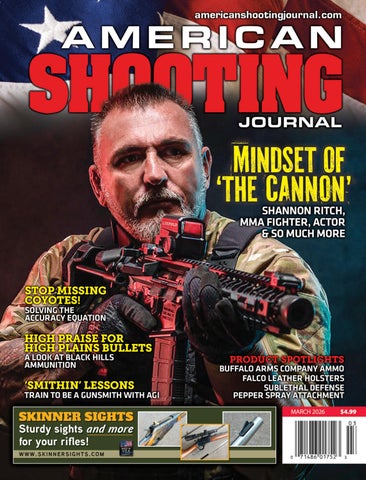
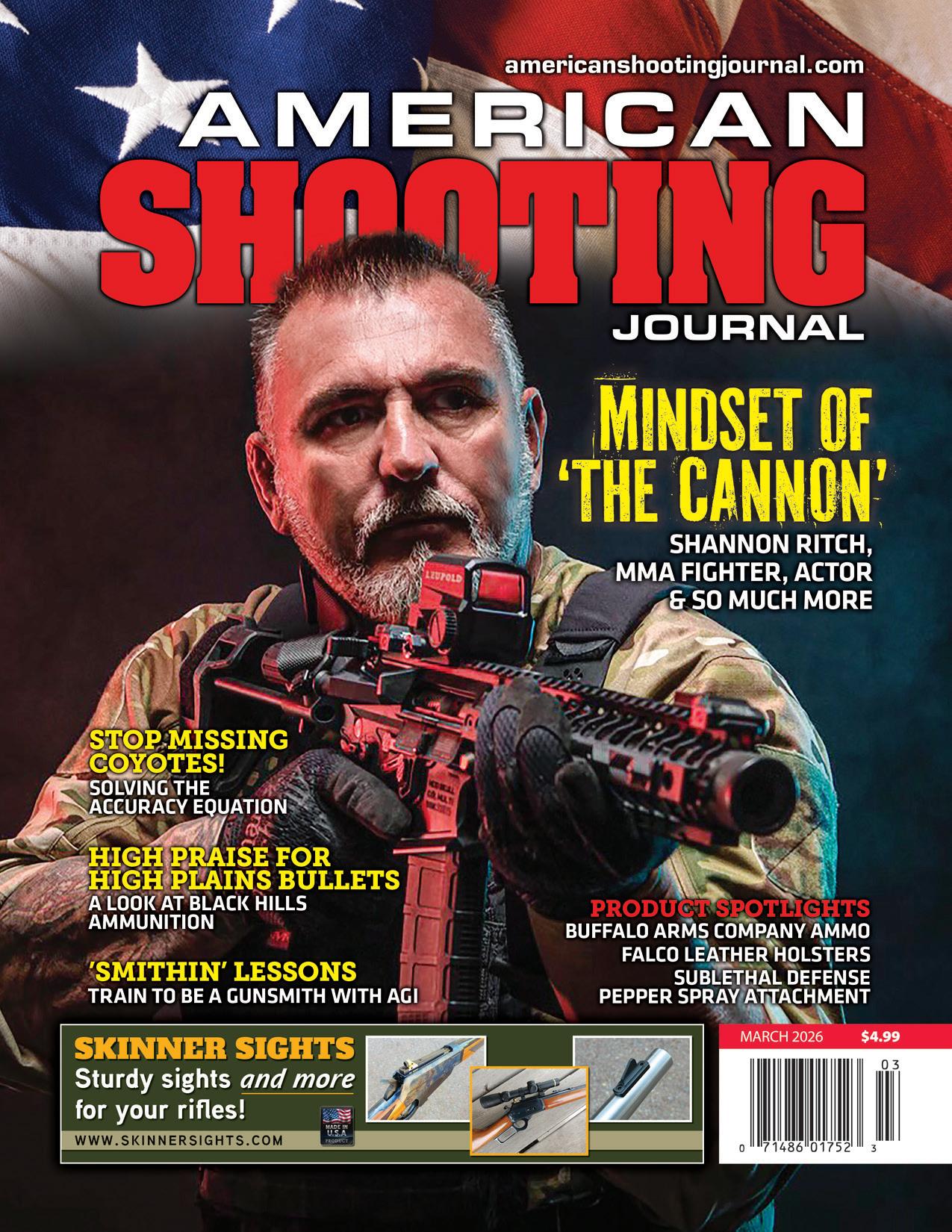
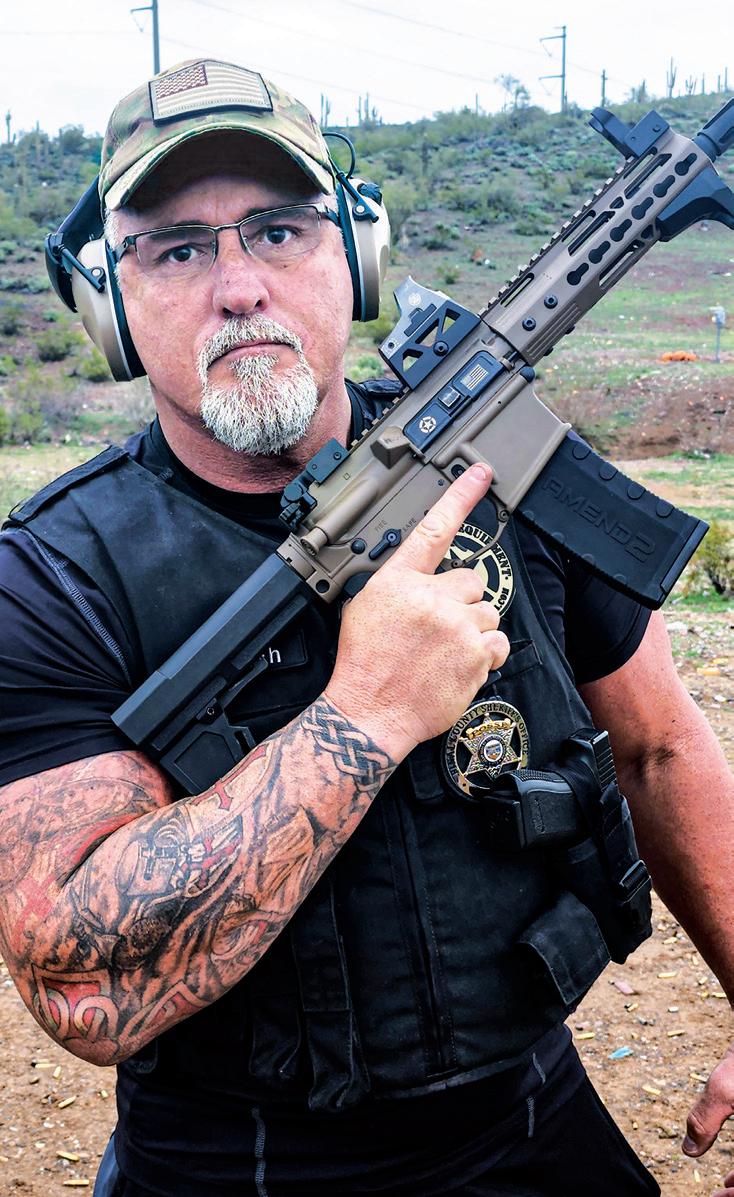
As everything from a mixed martial arts champion to country singer, actor to private contractor, Shannon “The Cannon” Ritch meets danger –and opportunity – head-on, the secret that is his successful mindset. (RHONDA COSTA)
FEATURES
23 L AW ENFORCEMENT
SPOTLIGHT: THE RISE AND FALL OF A SOUTHERN SHERIFF
For much of his life and well afterwards, Buford Pusser walked tall as a law-and-order Tennessee cop who cheated assassination attempts and whose life inspired movies and songs. That tune has changed as he’s posthumously fallen under suspicion of murder. Nick Perna chronicles Pusser’s life and times.
42 BULLE T BULLETIN: THERE’S GOLD AND MORE IN THEM THAR HILLS
Phil Massaro wasn’t too far away from the Black Hills Ammunition factory when he first used one of their loads to down a South Dakota mule deer. He details the “incredibly diverse lineup of projectile choices” on offer and which he wouldn’t blink taking with him on a North American big game hunt.
59 BL ACK POWDER: SOME SHOOTING TO CROW ABOUT
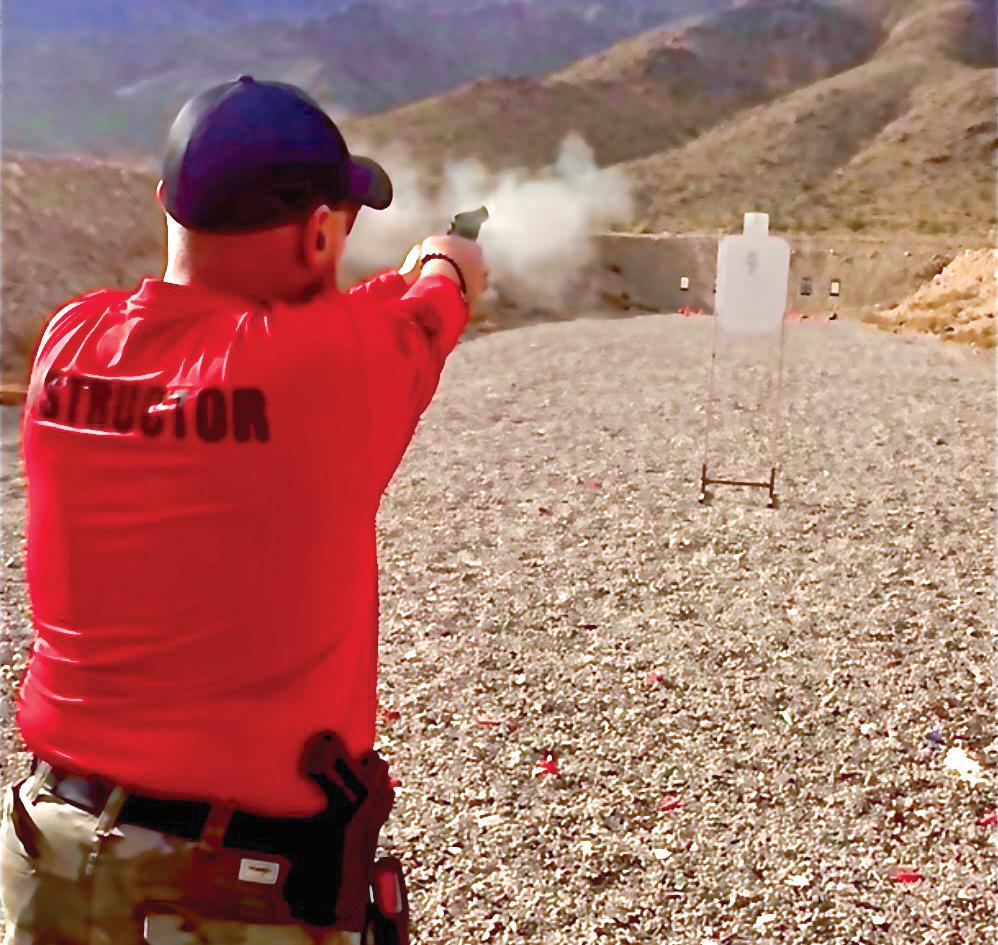
Mike Nesbitt is a humble shooter, but a double hit on a target at a club rifle match gave him something to, er, crow about – and that wasn’t even the best shooting that day! He shares results from a contest he shot using a .40-caliber Leman-style percussion rifle he built, and someone else used a pistol.
64 R OAD HUNTER: STOP MISSING SHOTS AT COYOTES
They’re super wary, fast, mostly fur and have a small kill zone, so how do you consistently bag coyotes?
Scott Haugen’s been at it for decades, and he shares how solving your rifle, scope and ammunition’s accuracy equation will go a long way toward shooting confidently in songdog country.
(DIANNA MULLER)
Shannon “The Cannon” Ritch’s life “reads like a globe-spanning action saga,” writes Linda Pawela as she profiles this mixed martial arts fighter, private security contractor, stuntman and man who has survived a brush with death or two. Find out what makes Ritch tick.
(RHONDA COSTA)
79 MAKING THE CUT: FIREWOOD – AND ALL ELSE – BEWARE
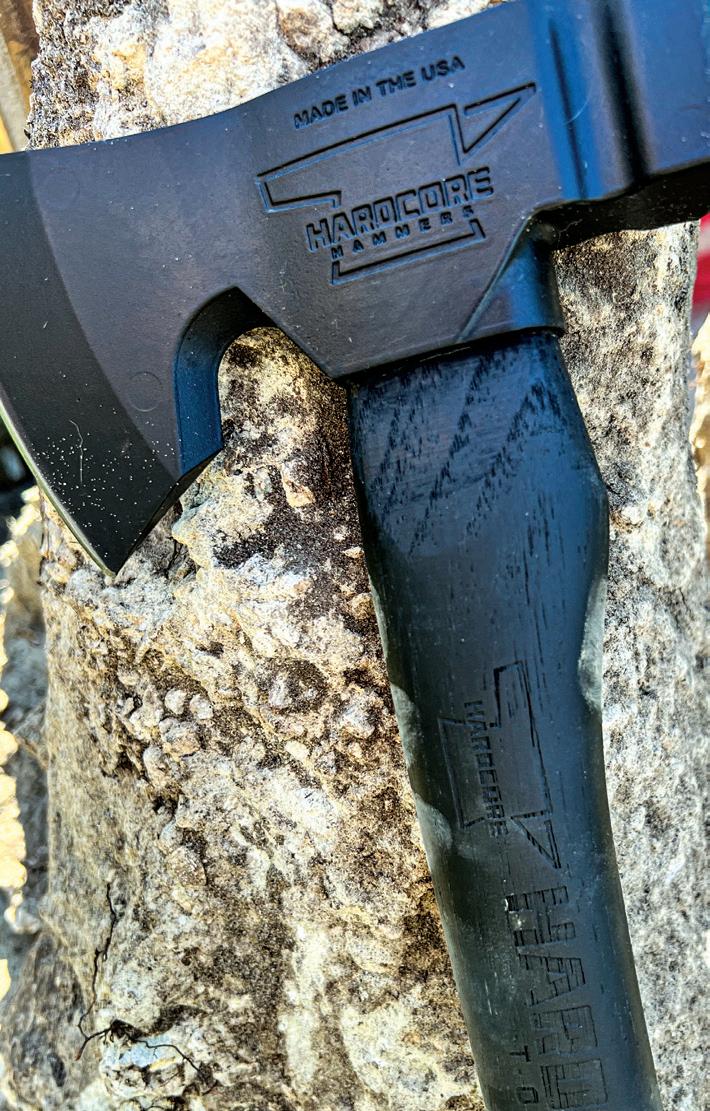
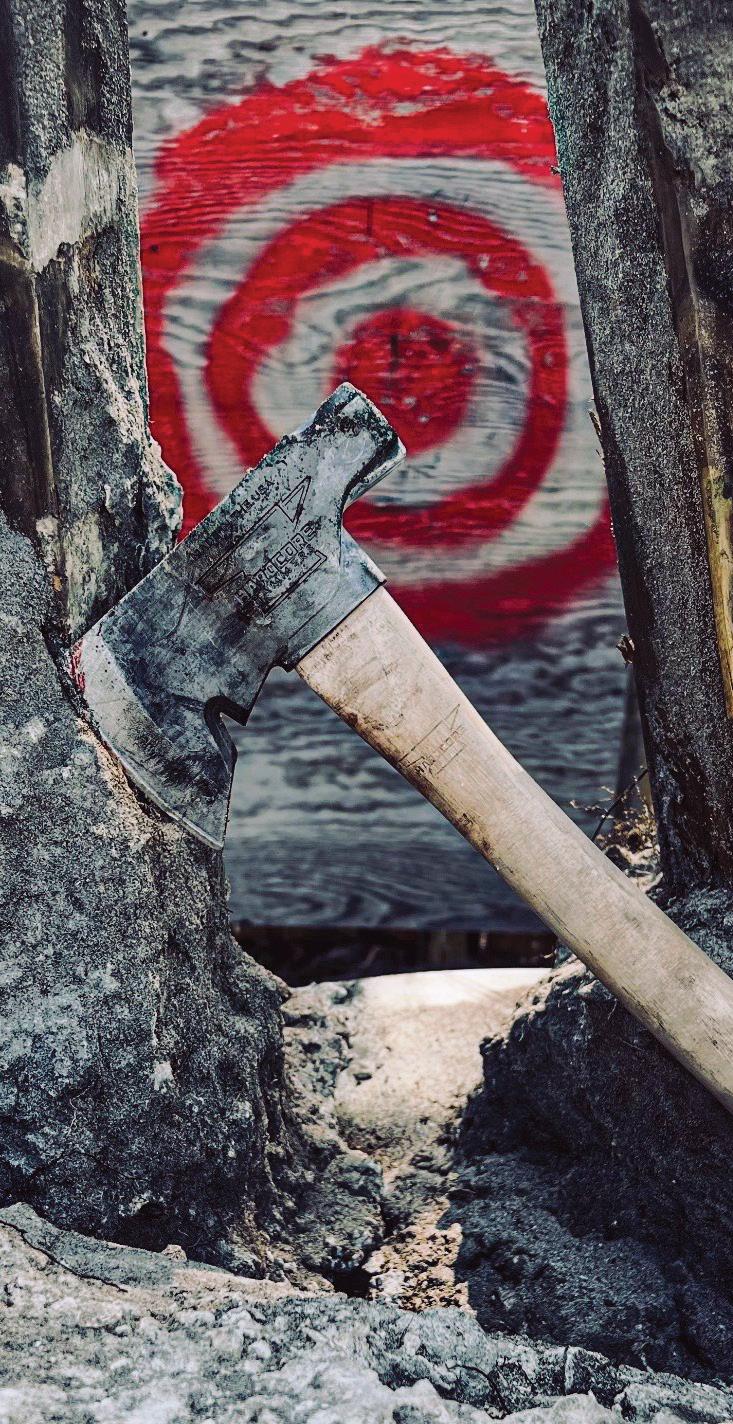
Paul Pawela’s got a thing for sharpened steel – and not just knives! Our edged-weapons reviewer got ahold of Hardcore Hammers’ Camp Companion axe and put it to the test on a backyard renovation project. Pawela details the company and their American-made hatchets, axes and more.
28 FIT AND FINISH
When Trampas Swanson switched from Sig Sauer to Staccato pistols for daily carry and the classes he teaches, he needed new holsters for his handguns. He shares why he turned to Slovakia’s Falco Holsters and how two of their leather models make the grade – and look good doing so.
37 FIREARM ADD-ON OFFERS NONLETHAL ALTERNATIVE
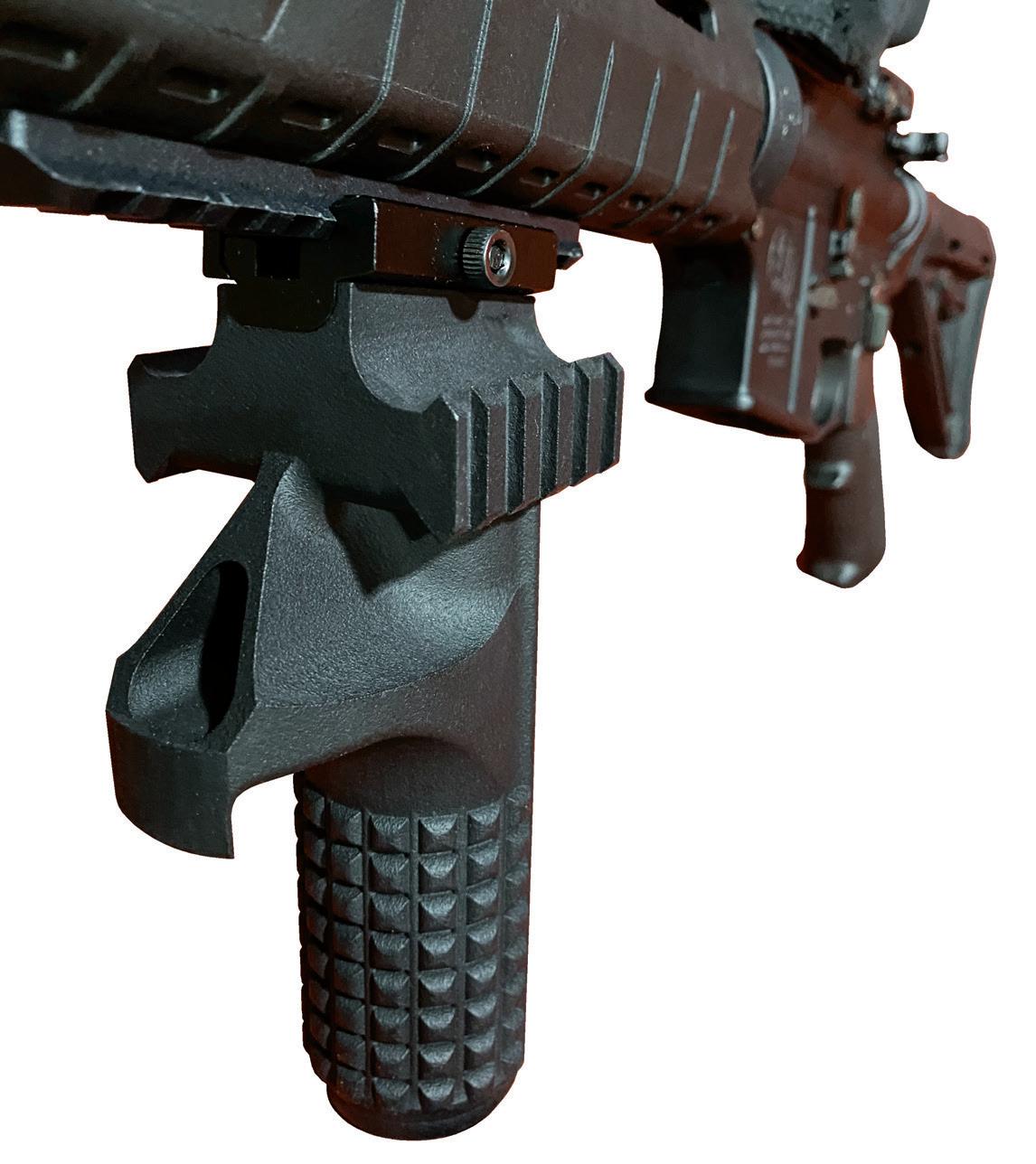
Jason Brooks tests Sublethal Defense’s pepper spray attachment, a foregrip-like accessory that attaches quickly and easily to an AR, rifle or shotgun equipped with a Picatinny rail and offers a valuable option for tense situations where a less forceful response is more appropriate.
55 M AKING GUNSMOKE AND NEW SHOOTERS
Being a gun writer and instructor has its advantages, and for Jason Brooks that includes meeting Dave Gullo of Buffalo Arms Company at SHOT Show. Gullo set him up with a few boxes of .357 Magnum cowboy and .44 Magnum loads, and Brooks reports back on the Old West-style fun he and pals had at the range.
75 OLD-SCHOOL SKILLS IN NEW FORMAT
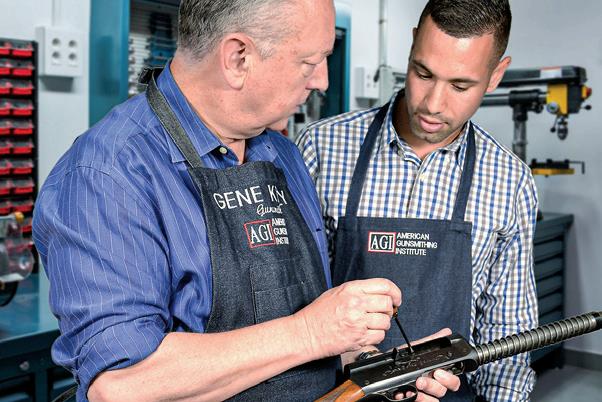
Way before YouTube University was a thing, Gene Kelly and American Gunsmithing Institute were teaching professional-level firearms repair and more via video – and they’re still doing so today. Kelly shares AGI’s origin story and the myriad courses on offer for budding gunsmiths and hobbyists alike.
GUN SHOW CALENDAR
March 7-8
March 7-8
March 14-15
March 14-15
March
March 7-8
March 7-8
March 14-15
March 21-22
March 28-29
March 21-22
March 28-29
March 6-8
March 14-15
March 20-22
March 20-22
March 7-8
March 14-15
March 14-15
March 21-22
March 21-22
March 6-8
March 28-29
April 5-6
COMPETITION CALENDAR
USA Shooting usashooting.org
March 12-16
2026 Pistol Spring Selection Colorado Springs, Colo.
March 20-24
2026 Rifle Spring Selection Colorado Springs, Colo.
United States Practical Shooting Association uspsa.org
Glock Sport Shooting Foundation gssfonline.com
March 6-7
North Texas Race Gun Sectional Waxahachie, Texas
March 14-15
International Practical Shooting Confederation Rifle Worlds Qualifier Match Maxton, N.C.
March 14-15
Northern California Glock Challenge Davis, Calif.
March 21-22
NW Indiana Regional Glock Shoot Chesterton, Ind.
Cowboy Mounted Shooting Association cmsaevents.com
March 6-7
Southeast Regional Championship Perry, Ga.
March 6-8
Nevada State Championship Las Vegas, Nev.
March 12-15
Rollin’ On The River IDPA Championship Valdosta, Ga.
March 28
Rocky Mountain Regional PTO Colorado Springs, Colo.
April 8-13
2026 Pistol National Junior Olympic Championships Colorado Springs, Colo.
March 19-22
South Carolina Section Championship Belton, S.C.
March 20-22
Aim For The Coast USPSA Match Holt, Fla.
March 28-29
Veritas-Manatee Glock Challenge Myakka City, Fla.
March 28-29
Pima Glock Challenge Catalina, Ariz.
April 8-13
2026 Rifle National Junior Olympic Championships Anniston, Ala.
March 28-29
AZ State Championship Phoenix, Ariz.
April 3-5
Missouri State Championship Festus, Mo.
April 17-18
North Texas Sectional Ladonia, Texas
April 22-26
California State Championship Richmond, Calif.
April 11-12
Delaware State GSSF Challenge Bridgeville, Del.
April 18-19
Old Dominion Glock Challenge Hurt, Va.
March 21
Caliber IDPA Monthly Match Waukegan, Ill.
April 17-19
Red Bluff Round-Up Rodeo Shootout
Red Bluff, Calif.
March 26-28
Texas State IDPA Championship Whitewright, Texas International Defensive Pistol Association idpa.com
To have your event highlighted here, send an email to kaumann@media-inc.com.
Mindset Of ‘The Cannon’
MMA fighter, defender, actor and country singer Shannon Ritch meets danger – and opportunity –head-on.
STORY BY LINDA PAWELA
Shannon Ritch, better known to fight fans as “The Cannon,” is one of the most prolific and polarizing figures in modern mixed martial arts. Born on September 27, 1970, in Coolidge, Arizona, a small town with just three stoplights, Ritch grew up in a close-knit community where everyone knew each other. As a member of a minority group in his hometown, he faced relentless bullying, an experience that would shape the fierce competitiveness he exhibits both inside and outside the cage. Early on, he found a release in physical competition, beginning with high school wrestling and karate tournaments. His athletic curiosity soon expanded into Muay Thai kickboxing and Brazilian jiu-jitsu. During one early match, a promoter famously dubbed Ritch “The Cannon” after a fight ended so quickly it looked as if Ritch had been fired from a cannon –an apt nickname for a life lived at full throttle.
Ritch’s path is far from the typical story of a professional athlete. Rather than following a predictable trajectory, his life reads like a globe-spanning action saga: world-traveling fighter, military veteran, stuntman, and a man whose experience with violence extends far beyond regulated sports arenas. While many fighters focus solely on the cage, Ritch’s career has been defined by a willingness to take risks wherever they appear, whether in sanctioned fights, underground competitions or real-life confrontations.
His professional combat career officially began in 1991, though
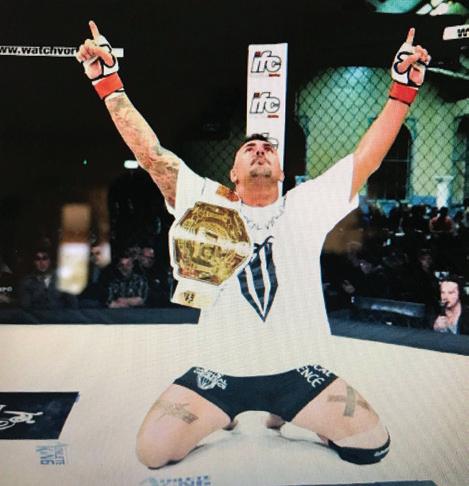
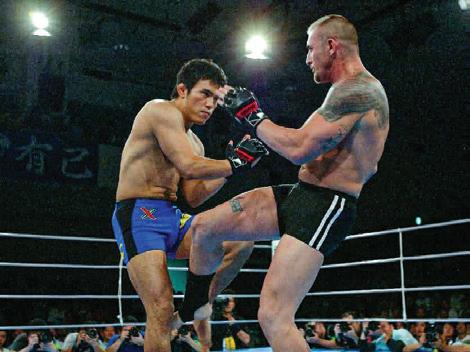
Ritch celebrating the IFC World Title in London, England (top), and fighting Yuki Kondo at Pancrase in Japan. (LARA RITCH; WORLD PANCRASE CREATE INC.)
“Fast, forceful and impossible to ignore, leaving a mark wherever he goes, in whatever arena he chooses to enter.”
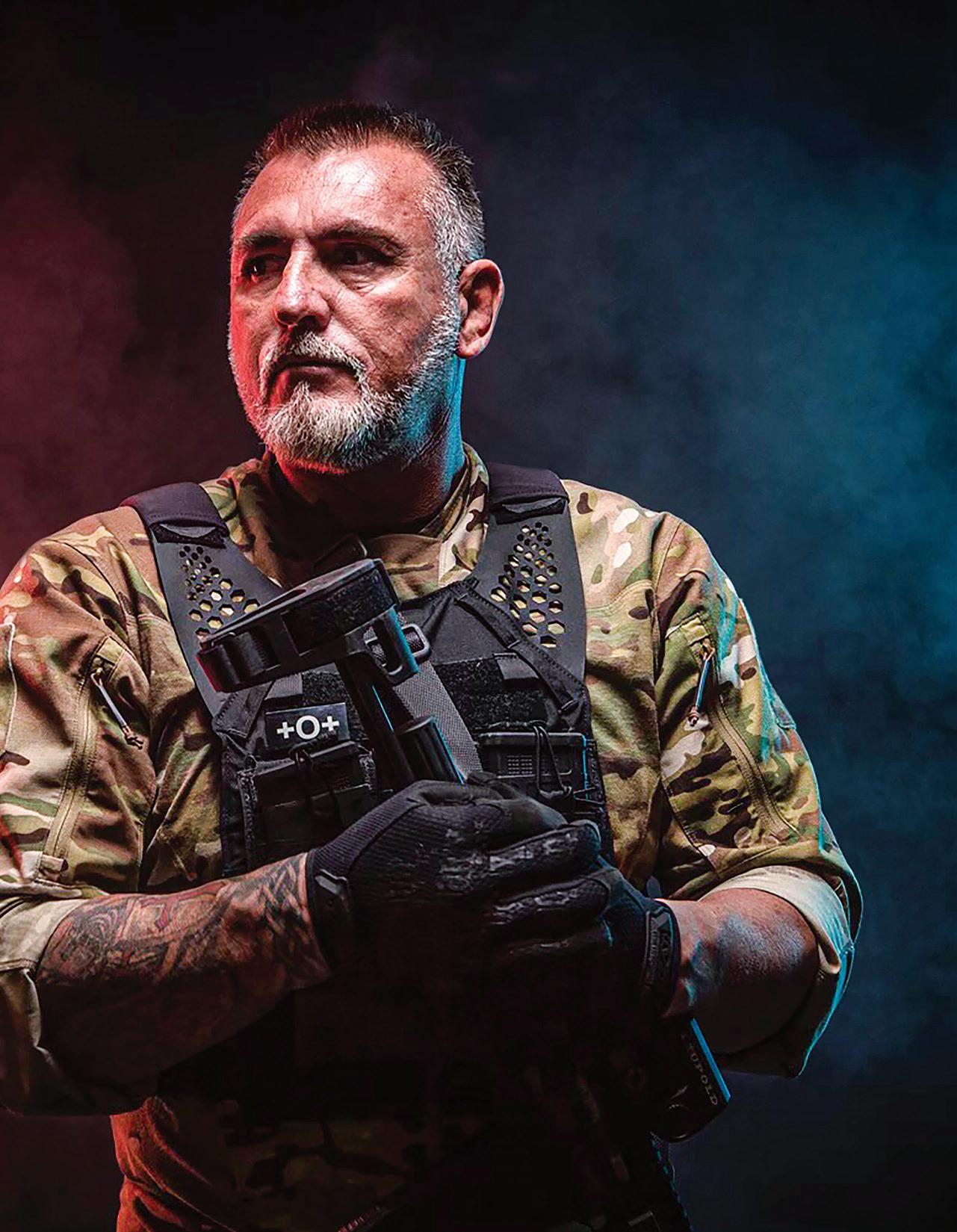
That is Shannon “The Cannon” Ritch in a nutshell, writes author Linda Pawela. Here Ritch poses for a Skillset magazine shoot. (RHONDA COSTA)
even before his debut, Ritch sought out unconventional fights. In the beginning, he traveled to Mexico to compete in matches with no rules and no weight classes. Over the next two decades, he amassed over 237 MMA fights, and earned a Bare Knuckle Fighting Championship World Title and eight MMA World Titles across multiple disciplines and continents. What truly sets Ritch apart is not just his longevity but his unparalleled willingness to face virtually anyone, anywhere. From prestigious promotions such as Pride Fighting Championship in Japan and King of the Cage in the US to underground events in small arenas around the world, Ritch accepted fights on short notice and rarely walked away without leaving an indelible mark on the competition.
A black belt in Brazilian jiu-jitsu and traditional karate, Ritch’s fighting style is as diverse as his résumé. He has competed in kickboxing, bareknuckle boxing, professional wrestling and submission grappling, embodying a breed of fighter increasingly rare in modern combat sports: versatile, fearless and adaptive. His ability to transition seamlessly between striking, grappling and improvisation in the cage is a testament to decades of disciplined training combined with a natural affinity for combat.
BEFORE FULLY IMMERSING himself in professional fighting, Ritch’s life was shaped by military service and private security work. A veteran of the US Army’s 4th Infantry Division, he later worked as a private contractor with Blackwater USA, protecting
US ambassadors in conflict zones in Iraq. These experiences not only exposed him to real-world danger but also honed a tactical acumen that informed both his fighting style and his teaching. Ritch has trained and coached military personnel in mixed martial arts, blending combatives with practical self-defense principles that emphasize situational awareness and decisiveness under pressure. Ritch’s combat expertise naturally translated into a career in film and television. Introduced to acting by his coach Carlos Machado, who was working with Chuck Norris on Walker, Texas Ranger, Ritch quickly found opportunities in Hollywood. His television credits include appearances on Walker, Texas Ranger, CSI: Crime Scene Investigation, iCarly,
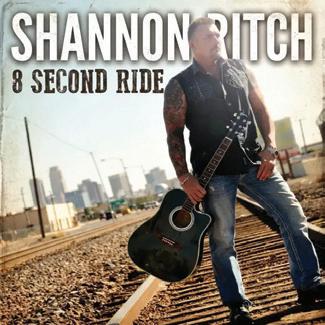
In 2025, Ritch’s talents extended into the music world with the release of the songs “8 Second Ride” and “Country Ain’t Country.”
Numbers and the History Channel’s Ultimate Soldier Challenge. In film, he has performed stunts and acted alongside major stars, with credits including Boneyard with Mel Gibson, The Commando with Mickey Rourke and Michael Jai White, Razor’s Edge, The Amityville Moon, Phoenix, Mr. 9, A Day to Die, Night Carnage and No Way Out, and he is currently filming with John Travolta. Beyond acting, he has worked as a fight choreographer and stunt performer, translating years of real-world combat training into cinematic spectacle, bringing authenticity and intensity to fight scenes that few performers can match.
Ritch’s creative streak extends to music as well. Last year he released the single “Country Ain’t Country,” which blends Americana storytelling with rugged personal reflection. Music provides another outlet for a man accustomed to channeling
Winning the Road to One: RUF 44 Heavyweight Championship World Title against Samson Guerrero. (RHONDA COSTA)
personal struggle into performance, complementing his work in combat and film while offering a glimpse into the quieter, more introspective side of his personality.
OUTSIDE THE
RING, Ritch’s life intersected with public attention in a dramatic way back in 2024. A parking dispute in Phoenix escalated into a life-or-death situation when a man chased Ritch with a knife. Ritch, drawing on years of combat experience, retrieved a handgun and fatally shot the attacker. Police confirmed that his account matched witness statements and surveillance footage. The shooting was considered justified self-defense and no charges were filed. The incident starkly highlighted the real-world stakes of his martial ethos, demonstrating how combat skills, tactical thinking and
rapid decisionmaking can be a matter of life and death beyond sports or cinematic portrayals.
Today, Ritch stands as a modern Renaissance man of rugged disciplines. Whether stepping into the cage in Osaka, instructing military personnel, choreographing stunts or recording music, he embodies a rare combination of physical courage, personal reinvention and creative expression. For combat enthusiasts, gun culture audiences and cinema fans alike, Ritch represents an unconventional figure: a man whose life spans sanctioned competition, battlefield unpredictability, cinematic spectacle and the stark realities of self-defense.
Outside of his professional pursuits, Ritch enjoys activities that reflect both his rugged nature and a desire for personal challenge. He is an avid golfer, a marksman and continues
to train rigorously in martial arts. He is also embarking on a unique project in Sedona, Arizona: Quantum Space Resorts, a luxury accommodation designed with future travelers in mind, catering to the burgeoning interest in space tourism. Even here, his vision reflects the same forwardthinking, risk-embracing mentality that defines every aspect of his life.
On a personal note, I met Ritch several years ago when he was teaching a self-defense class with my husband. I asked if he would speak to a group of high school students where I was working. With no hesitation, he agreed, immediately winning over the students. He even brought one of his championship belts for the students to hold and pose with for pictures. The experience left a lasting impression on many, including one student who went on to pursue a career in MMA,
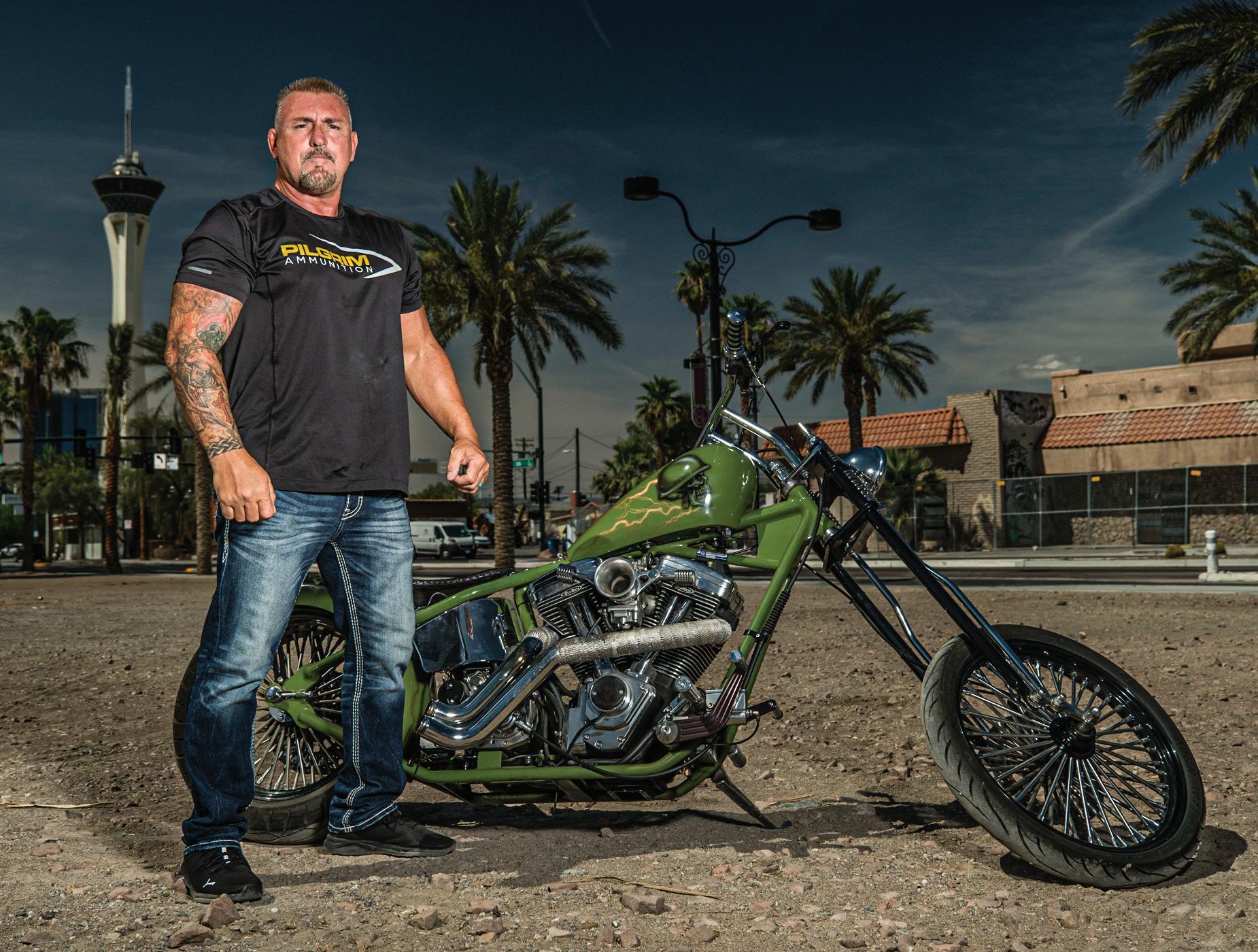
One of several images taken of Ritch for the cover of and feature article inside the September 2022 issue of Outlaw Biker magazine. (KEITH SELLE)
inspired in part by Ritch’s presence and philosophy.
“THE CANNON” IS more than a nickname; it is a mindset. Readiness, resilience and confronting danger head-on define not only Ritch’s approach to combat but his approach to life. Ritch’s story reminds us that true grit is forged not just in the ring but in the uncharted arenas of the world itself, from military operations to cinematic sets and from personal confrontations to musical expression. He represents a rare combination of courage, versatility and relentless determination, an embodiment of a life lived fully and without compromise.
Shannon Ritch, through fight, film, music and enterprise, exemplifies the unyielding spirit of a man who refuses to be defined by a single path. In every sense, “The Cannon” lives up to his name: fast, forceful and impossible to ignore, leaving a mark wherever he goes, in whatever arena he chooses to enter. ★
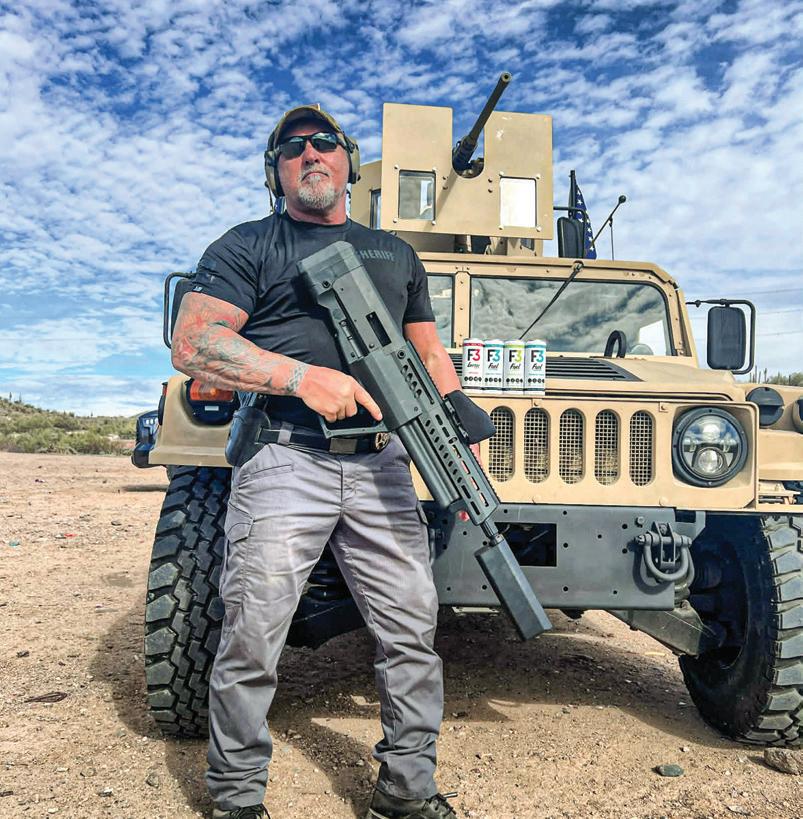
Photo shoot for Battle Tested Equipment. (RHONDA COSTA)
THE RISE AND FALL OF A SOUTHERN SHERIFF
Buford Pusser, a law-andorder cop who cheated assassination attempts and whose life inspired movies and song, posthumously falls under suspicion of murder.
STORY BY NICK PERNA
PHOTOS COURTESY OF THE SHERIFF BUFORD PUSSER MUSEUM
SL.E. SPOTLIGHT
heriff Buford T. Pusser is a controversial character. The story of his life was made into two separate movies, both entitled Walking Tall. The first movie, starring Joe Don Baker, premiered in 1973. It was followed years later by a remake in 2004 starring professional wrestler Dwayne “The Rock” Johnson. As with many Hollywood creations, it is difficult to discern what is fact and what is fiction. This also rings true for the man himself. But one thing that can’t be denied is the life of Buford T. Pusser is one hell of a story.
Pusser was born in 1937 in McNairy County, Tennessee, in the Deep South. The son of the local police chief, as a young man, Pusser was known for his strength and size – he grew to over 6 feet, 6 inches tall and was known for
being an excellent athlete. He entered the Marine Corps but was discharged for medical reasons. In 1957, he moved to Chicago to pursue a career in professional wrestling. He used the moniker “Buford the Bull.” It was also in Chicago that he met his wife Pauline, whom he married in 1959.
Shortly thereafter the couple moved to Pusser’s hometown of Adamsville, Tennessee, where he took a job as police constable and, following in his father’s footsteps, became the chief of police. In what would be one of many interesting turns of events in Pusser’s
life, he was soon made sheriff of McNairy County, the youngest sheriff in Tennessee history at 27 years old. He was appointed after the previous sheriff, James Dickey, died in a suspicious car crash caused by a tire blowout.
AT THE TIME, McNairy County was infested with organized crime. Often overshadowed by the activities of the Italian-American Mafia in the Northeast, Chicago, Las Vegas and elsewhere, the criminal underworld in Tennessee was no less violent or wicked. The Dixie Mafia, as it was referred to, was
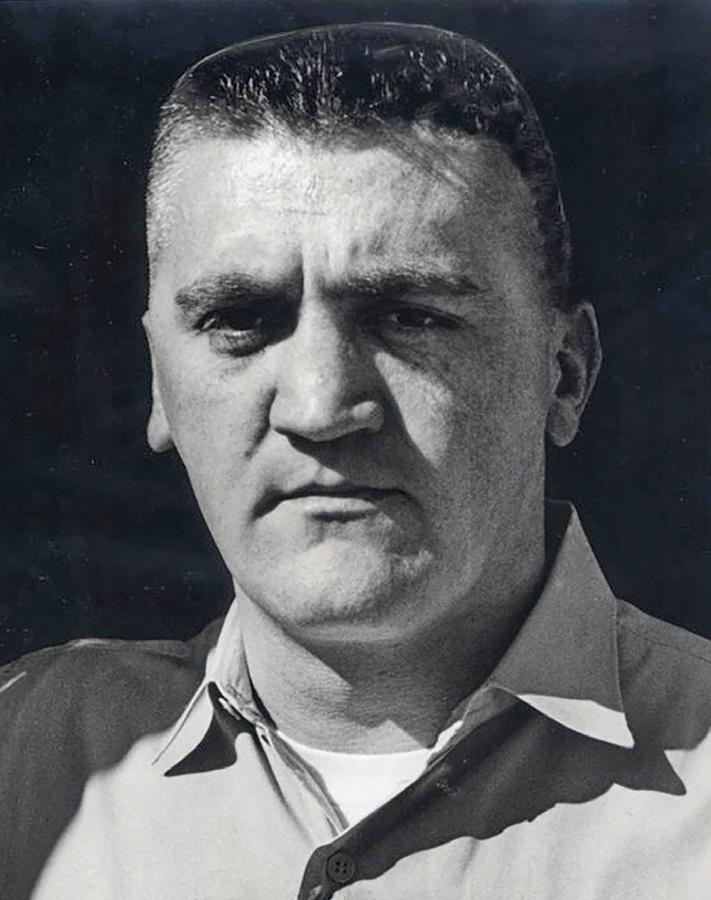
Buford Pusser was made sheriff of McNairy County, Tennessee, at 27 years old, the youngest in state history. He would die at 36 in a wreck.
L.E. SPOTLIGHT
a spin-off of the old moonshining era during Prohibition. The descendants of the crooks who manufactured and distributed “rot gut” throughout the South transitioned into other types of crimes after Prohibition. They still made their moonshine, but were also involved in traditional organized crime endeavors such as prostitution, drug dealing, illegal gambling and crimes of violence. The Dixie Mafia was active not only in Tennessee but in Mississippi as well.
Sheriff Pusser took on the Dixie Mafia in McNairy County. He went after their illegal gambling dens, destroying gambling machines with a pickaxe. He shut down over 80 illegal whiskey mills, putting a damper on the local illegal booze trade. Pusser was like a oneman army, fighting a crusade against organized crime.
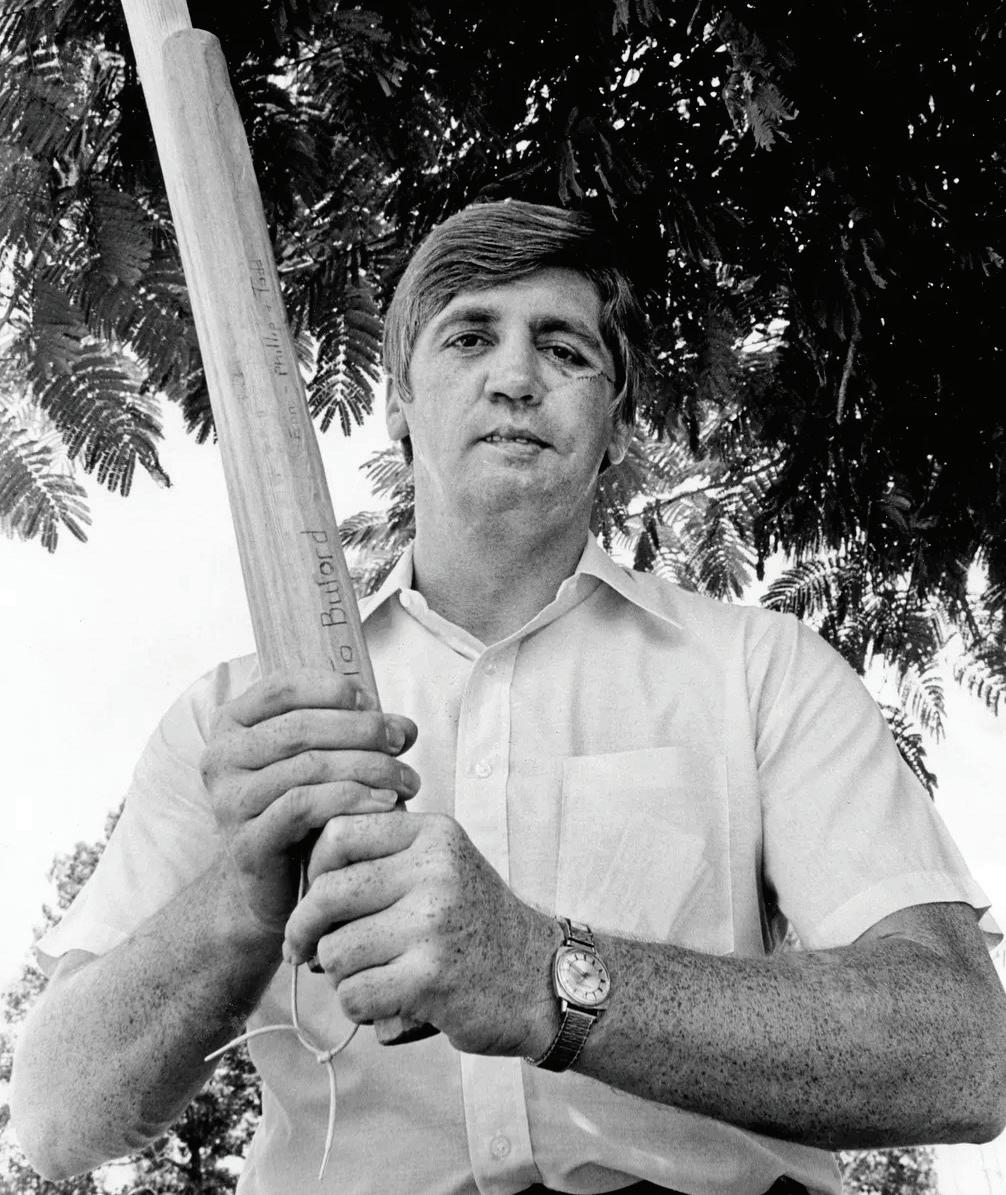
Pusser was famous for carrying a 36-inch-long hickory ax handle that he was known to use from time to time to crack skulls. His face was rebuilt after being struck by gunfire in an incident that’s drawn fresh scrutiny.
landlord with a gun.
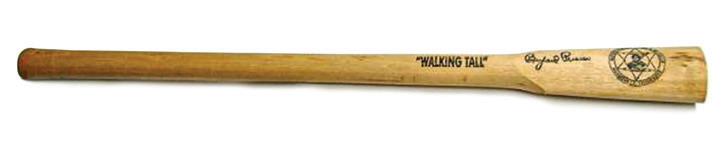
Pusser was also famous for carrying a 36-inch-long hickory ax handle that he was known to use from time to time to crack skulls, dismantle moonshine stills and bust up one-armed bandits. If you’re ever in Tennessee, you can go to the Sheriff Buford Pusser Museum where it is on display. While there you can also buy a copy of it for $30.
IN
THE EARLY morning hours of August 12, 1967, Pusser learned of a disturbance near the state line. He said his wife Pauline chose to go with him as a ride-along. While enroute, a car pulled up next to his and shot at them, striking Pauline in the face. Pusser took off down a side road to try to escape but the assailants caught up with him, shooting him as well, striking Pauline once again in the head and hitting Sheriff Pusser in the jaw.
This came at a cost, though. In 1964, he was attacked by a group of gangsters and was stabbed seven times. On another occasion, he was attacked by six men. True to form, Pusser put three of them in jail and the other three in the hospital. He was also run over by a car in another assassination attempt. In 1966, while investigating a robbery at a local hotel, the suspect in the case shot at Sheriff Pusser. Pusser returned fire, killing him. In 1967, he was shot three times by an unidentified gunman. All told, Pusser was shot a total of eight times, and in 1968, the sheriff shot and killed an intoxicated man who had allegedly threatened his
Pauline was pronounced dead at the scene, and Pusser was taken to the hospital where he was forced to spend 18 days recovering and getting multiple surgeries to reconstruct his face. The damage he received gave him his distinctive look. Pusser said the shooter was a Dixie Mafia member, Kirksey McCord Nix Jr., whom he named as one of four assassins who killed his wife and severely injured him.
Sheriff Pusser went to war with the four and their underworld organization. One of the alleged hitmen was found shot to death in Mississippi in 1969, while two of the other suspects were found shot to death in Texas in 1970. Although it has never been proven, it is believed that Pusser himself either killed the men or had others do it for him. Nix was never charged for the crime but was convicted of a separate murder in 1972 and was given a sentence of life in prison. Nix was also found guilty of ordering two more murders while behind bars.
Pusser ultimately met the same fate
A replica of the hickory ax handle Pusser carried with him. You can purchase one at the Sheriff Buford Pusser Museum for $30.
L.E. SPOTLIGHT
as the man he had replaced as sheriff. He was killed in 1974 when his car lost control, hit an embankment and burst into flames. It has never been determined if it was an actual accident or if someone had tampered with his car, causing the crash.
CONTROVERSIES SURROUNDING SHERIFF
Pusser followed him into the afterlife. An investigation was launched in 2024 into the alleged assassination attempt on he and his wife. Pauline’s body was exhumed and her injuries were found to be not consistent with her being shot inside the car. Blood spatter evidence didn’t match and Pauline had additional injuries that weren’t received from the gunshots she suffered. Pusser’s own injuries appeared to possibly have been self-inflicted. The Tennessee Bureau of Investigation determined that if the same crime were to occur today, most likely they would have charged Pusser with Pauline’s murder.
As with many accounts of law
enforcement activity before the advent of technologies such as body-worn cameras, cell phone video and other devices that capture the reality of an event, the sources are the actual participants themselves and witness testimony. This makes it difficult, if not impossible, to determine what actually happened.
This, coupled with the murky
reality of life in the Deep South in the ’50s and ’60s where the line between lawman and crook may not have always been very clear, makes it impossible to really determine which events in Pusser’s life are true and which ones are concocted. What is clear, though, is that Sheriff Buford T. Pusser was an exceptionally interesting and colorful individual whose exploits made for great entertainment then and now. ★
Editor’s note: Author Nick Perna served for more than 24 years with the Redwood City Police Department in Northern California before his retirement in early 2025. He previously served as a paratrooper in the US Army and is a veteran of Operation Iraqi Freedom. He also has a master’s degree from the University of San Francisco. He is a frequent contributor to multiple print and online forums on topics related to law enforcement, firearms, tactics and veterans issues.
The Pussers’ wedding day, December 5, 1959. Tennessee officials now say there is probable cause to have charged Buford in Pauline’s August 1967 death.
PRODUCT SPOTLIGHT FIT AND FINISH
A pair of handcrafted leather holsters from Slovakian maker Falco make the grade, and look good doing so.
STORY AND PHOTOS BY TRAMPAS SWANSON
n the firearms world, it seems everything has trended toward becoming commercially “tactical” without real insight into what carrying a firearm daily really looks and feels like. As a former law enforcement officer and concealed carry instructor, I have spent going on three decades carrying a firearm every single day of the year. From full-size Glocks chambered in .45 ACP to micro compacts in .380, I have carried my fair share of the latest and greatest as a firearms professional and responsibly armed citizen.
While I can fully appreciate the values of a quality-made Kydex holster and the details in which you can construct a holster to fit your firearm, I come from a different time and era. I ventured into carrying firearms professionally during a time when the old war horses from the Vietnam era were winding down their careers. These men were a wealth of experience and knowledge who still carried revolvers as backup weapons.
In those days, leather was your main option to sheath your gun. These men not only took great pride in their firearms and the leather that carried them, but also knew how to use them very well. I remember many hours of conversation about guns, quality holsters and the details they looked
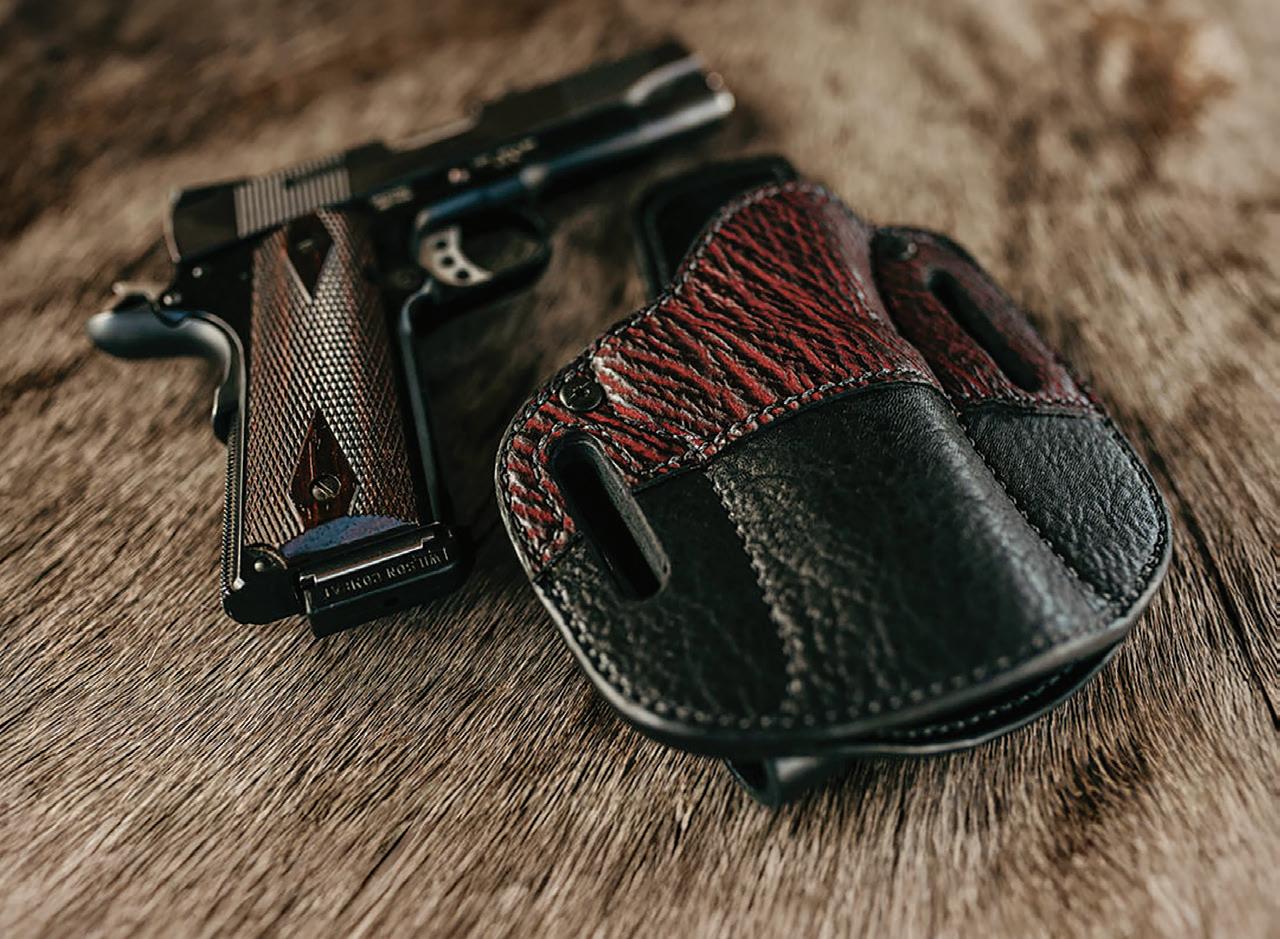
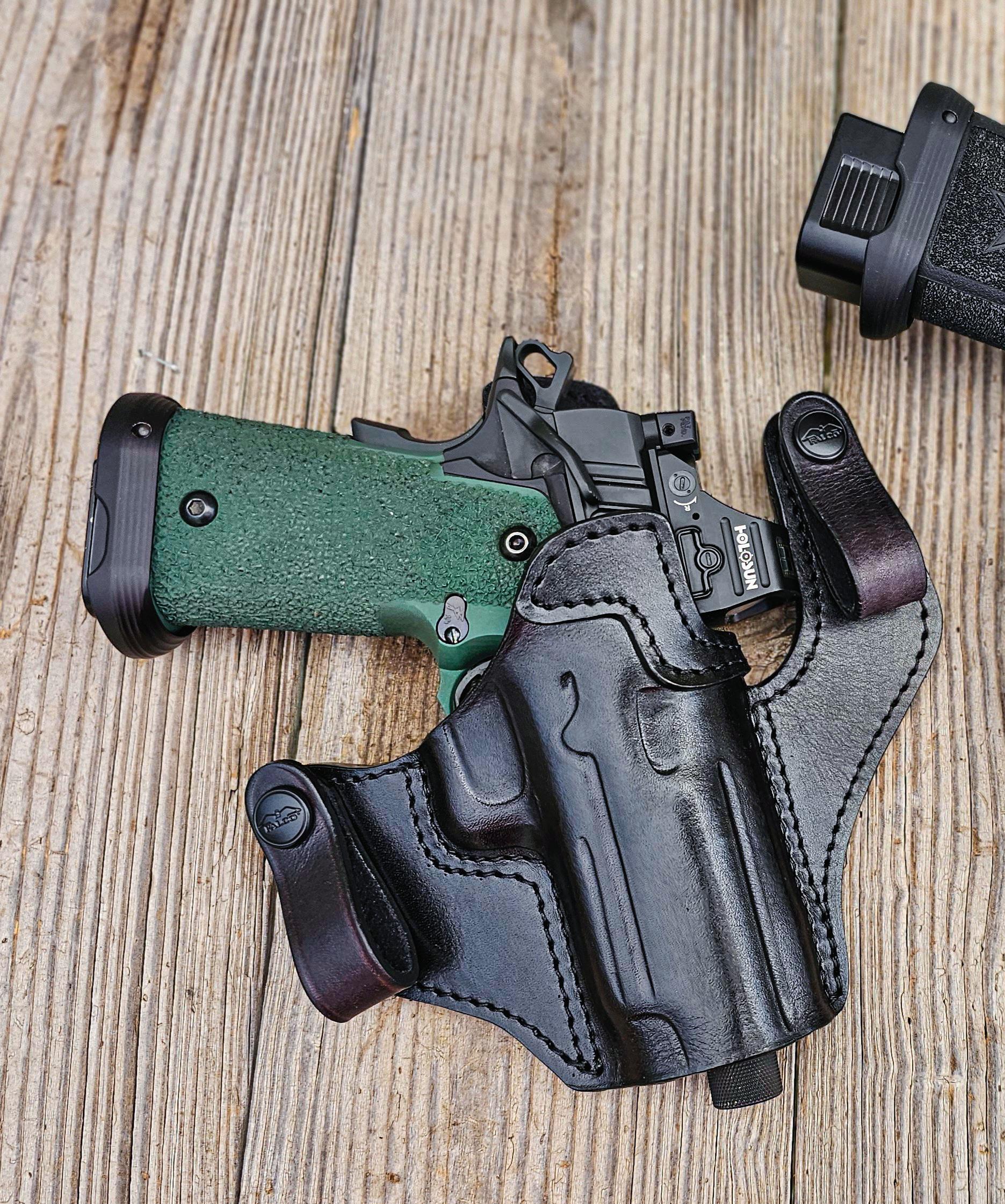
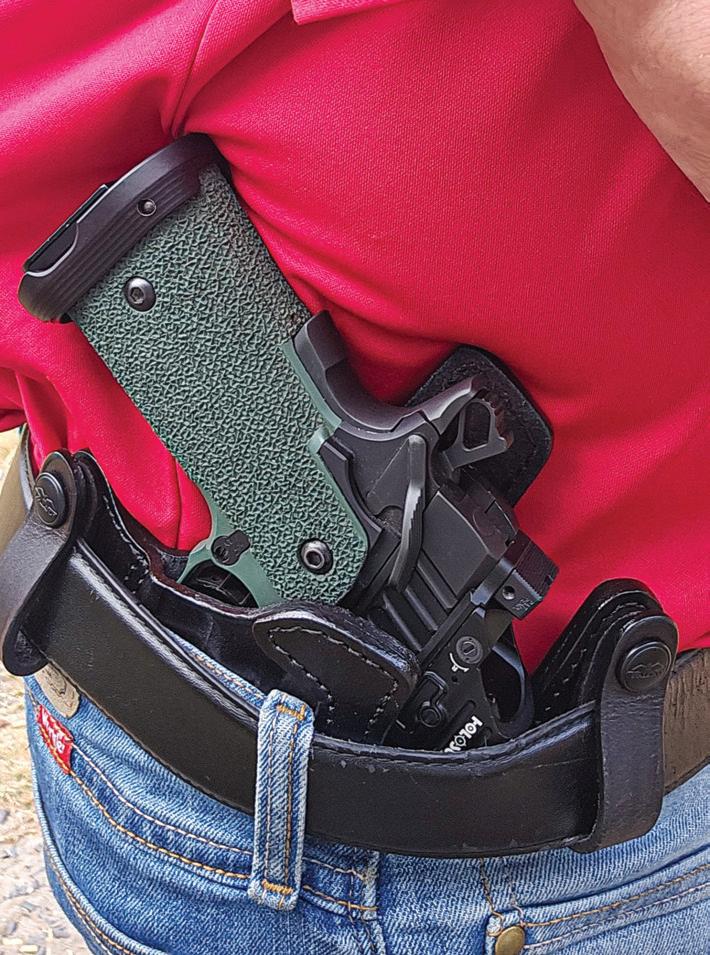
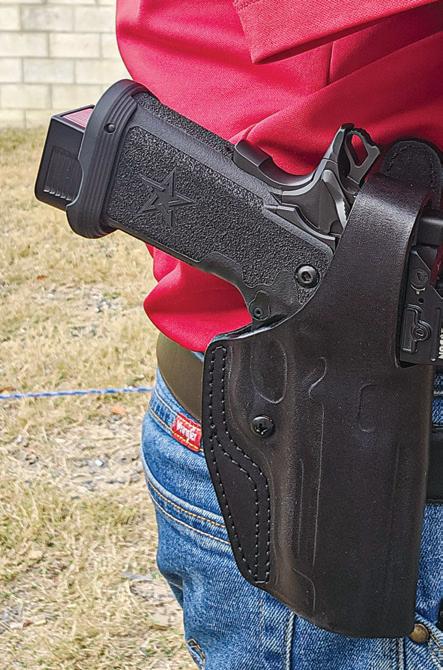
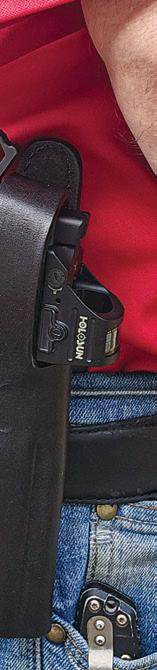
Switching from Sig Sauer to Staccato pistols for daily carry and instruction led author Trampas Swanson to Falco Holsters and their A113 Caracara IWB leather holster (left) and C138 Seal paddle OWB open barrel leather belt holster.
PRODUCT SPOTLIGHT
for in both. I recall the horror stories of poorly made guns and cheap holsters failing at the wrong times. I learned a lot from the years spent building my career under leaders who represented the remains of America’s last true warrior culture.
Thankfully there are still holster companies on the market that haven’t given up on quality leather craftsmanship. This article spotlights one of those companies, Falco Holsters.
WHY I CHOOSE FALCO HOLSTERS
When I recently switched over from Sig Sauer to Staccato pistols for daily carry
and teaching on the range, I obviously needed new holsters. While many of my intensive pistol courses require battle belts, three magazine carriers, tourniquets, lights and a fixed-blade knife to accompany whatever the latest tactical Kydex holster has been sent for review, my personal carry and one-onone range courses are more down to earth and less Apocalypse Now flavor. For these needs, I much prefer quality leather that looks professional and will hold up to regular use.
Over the past four years, I have turned to Falco Holsters for my holster needs. After meeting their sales
representative, Martin Lukacko, during SHOT Show a few years ago, I was given a personal tour of their booth and many of their wide range of products. Not only do they offer top-quality leather holsters, slings and gear, but good-looking Kydex products as well. I was so impressed by my first encounter with this company, I immediately wanted to learn more once I arrived back home. This led to using several of their holsters for special projects, hunting and daily carry with past firearms ever since.
For those of you who have not previously heard of Falco Holsters, here is a little background for you. The brand itself has been around since 1989 and has grown well from its humble origins – a small garage in Slovakia –into its current state-of-the-art shop in the heart of the Stiavnica Mountains in the Eastern European country’s central region. The company ensures they only
Once the inside-the-waistband holster was well broken in, Swanson began wearing the Caracara daily with his new Staccato C2.
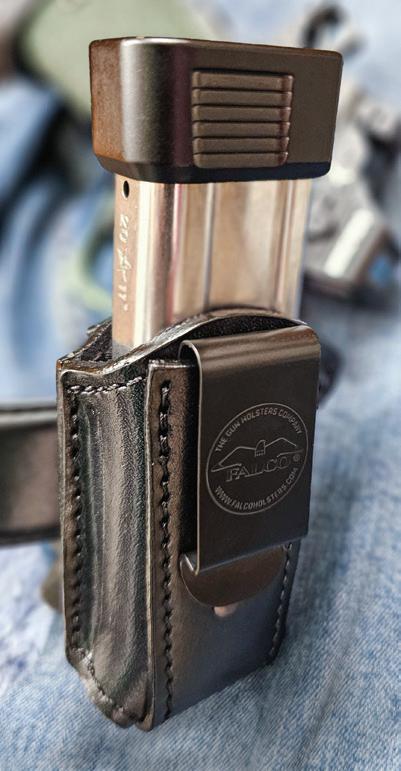
The Falco Speight F631 black leather magazine carrier pairs well with the Caracara holster.
PRODUCT SPOTLIGHT
use the highest quality European and American materials available to produce some of the most innovative and robust products on the market, and they pride themselves on providing a personal touch to all the designs and products their skilled artisans manufacture.
Based on my past experiences, Falco leather holsters bring back old-world craftsmanship in every product I have used from them. No, this isn’t a paid advertisement, but a brief explanation as to why I choose to do business with them. Growing up around horses and horse tack, I have seen the importance
of good leather made to last for years under stress, sunlight and sweat – lots of horse sweat. Leather quality like that makes excellent holsters for someone like me who lives and works under the Florida heat and humidity 75 percent of the year. Falco Holsters are simply that level of good quality, which I have come to trust daily.
GEARING UP
As previously mentioned, I recently switched over to working with Staccato pistols – more specifically, at this time, with the model P and model C2, both
chambered in 9mm. (Stay tuned for a full report on the model C3.6 once it arrives in a few weeks.) Due to the full-size grip module added to the C2 and its factory extended threaded barrel, the specs are the same as the model P, only with a 1-inch shorter slide on the C2. For this reason, the three holsters in this review were all specifically requested for the model P. The first two are the same holster, just in different colors to match my daily and professional needs. The last holster is primarily for private lessons and teaching in classroom settings for demonstration purposes.
Here is a list of the gear I used for testing purposes:
Falco A113 Premium Caracara inside-the-waistband leather holsters. First impression notes: One is finished in black, the other in brown. Both very well built; initially tight as a bank vault; the brown holster matched the K102 brown belt perfectly.
Falco K102 brown leather belt. Notes: I have owned this belt for over
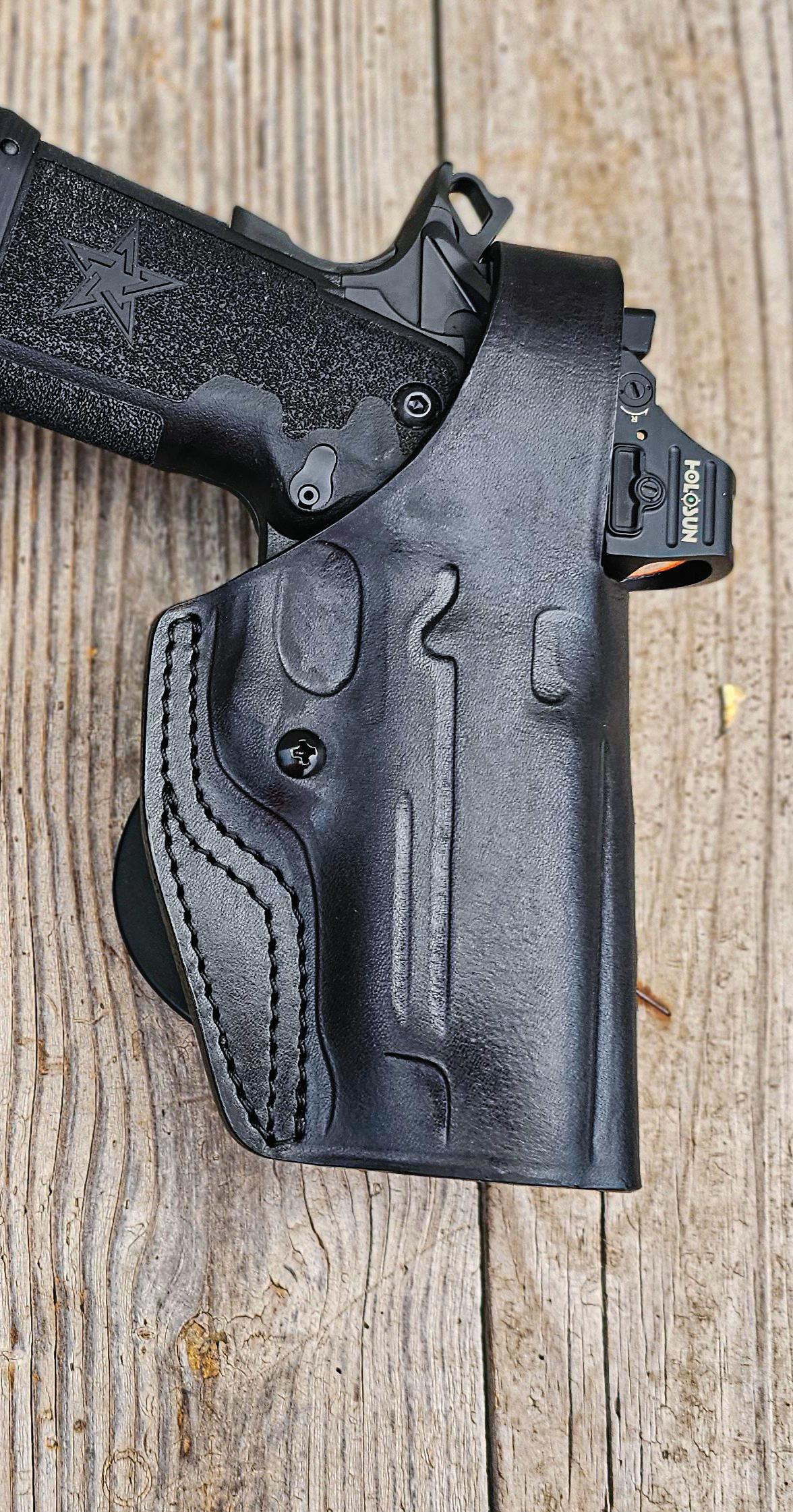
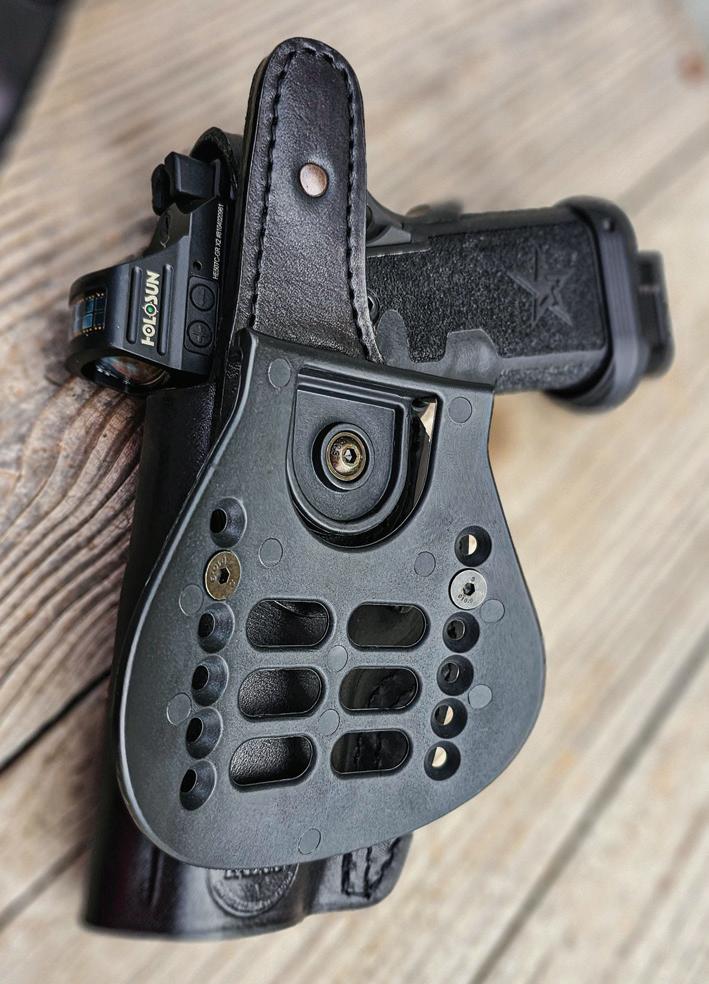
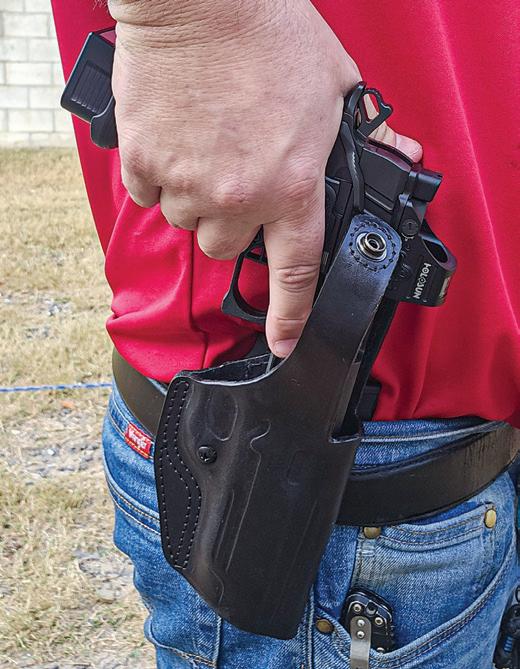
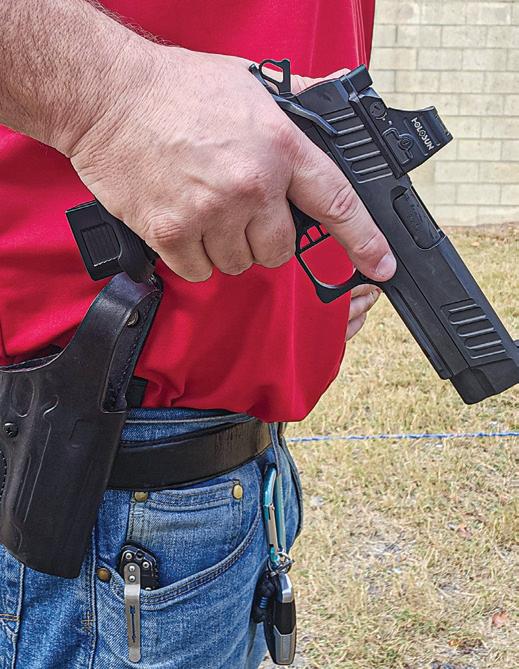
The outside-the-waistband Seal Holster with rotating paddle system.
When the author is in the classroom or on the range with clients, he wears the Seal with his Staccato P. It allows him to demonstrate grip, stance and fundamentals for drawing from a holster.
a year and wear it often in my daily life with jeans and boots. Comfortable, rigid and performs great keeping holstered firearms secure to the body.
Falco C138 Seal premium black leather paddle back over-the-belt holster. Notes: Very professional looking; tight initial fit; sets well on belt.
Kore Essentials black leather ratcheting-style belt. Notes: I have owned this belt for over three years and wear it for approximately 150 to 200 days a year. The leather has held up well, but it’s starting to show wear from the weight of various firearms being carried on it daily.
Falco Speight F631 black leather magazine carrier. Notes: Works with most double-stack magazines such as the Staccato brand 17- and 20-round magazines and Mec-Gar magazines for Staccato HD models. Offers both a belt loop on one side for on-the-belt carry and a spring clip on the other side for inside-the-waistband carry.
PREPARING FOR DAILY DUTY
Like most leather holsters, they are wet
molded at the factory to be formed and fitted for the gun it’s intended to sheath. In the process of drying and packaging, the holsters will be snug when you first get them. With the use of a small prep kit from Falco Holsters, you can have your holsters broken in quickly and painlessly. Prior to wearing any leather holster outside the house, I usually go through at least a two-week break-in process at home.
This involves spraying the inside of the holster with the supplied alcoholbased solution, then wrapping my gun in a plastic sandwich bag and inserting it as deep as I can into the holster. Over the next few days, I pull the gun out once a day and repeat the process until the gun can fully seat in the holster. Once this is accomplished, I like to add a second bag over the first and repeat the process. During this time, I begin to wear the gun for a few hours a day around the house to shape it to my body. After a couple of weeks, if the gun freely draws and reholsters smoothly, it is ready to begin duty.
DAILY CARRY ON AND OFF THE RANGE
Once the holsters were well broken in, I began wearing the Caracara inside-thewaistband leather holsters daily with my Staccato C2. Depending on the occasion or style for the day, the attire called for either a black or brown belt. While my clothing and accessories may switch colors, my concealed carry gun remains the same, hence having the same holster made in two different colors. True, no one will usually see this well-crafted IWB holster, but my own OCD will not allow me to feel comfortable with mismatching colors.
Speaking of comfort, I want to immediately debunk the media and marketing concept that any firearm/ holster combo can ever be considered “comfortable.” Our bodies are soft tissue, muscle and fat perfectly balanced to bend, walk, run, climb and everything else an able-bodied human being should be able to do. The idea that stuffing a 2- to 3-pound firearm against our body in any configuration or position for hours a day (in which it
PRODUCT SPOTLIGHT
should be carried) could ever honestly be considered “comfortable” is not only absurd, but it’s insulting to you, the reader, for anyone to state. Firearms training legend Clint Smith of Thunder Ranch training facility hit the nail on the head when he said, “Firearms are not supposed to be comfortable, they are supposed to be comforting.”
Carry comfort must realistically be graded on a different scale than traditional concepts of comfort. Basically, let’s take the traditional comfort scale and start at level 2 of discomfort after a minimum of six hours and go from there on a scale to 10. No slight to any manufacturer; it’s simply human anatomy and biomechanics. How holsters are designed and crafted can reduce the discomfort of a lesser quality product significantly. Everything else is just marketing.
I often carry my Staccato C2 between 12 to 14 hours a day during the week between home, work, kids’ karate classes, running errands and everything else you would expect a husband, father and owner of three businesses would do. At the end of the day, the lack of the weight of a holstered firearm on me feels odd. If I am forced to go a day without carrying it, such as being inside Disney World parks, I feel naked. This is not to be mistaken for any feeling of helplessness or unpreparedness. This simply means that I have become so accustomed to the gun not causing pain, bruising or any noticeable heightened discomfort during the hours of carry that it’s odd not to always have it on me along with my wallet, Swiss Army knife and folding knife clipped to my front pocket. The benefit leather holsters have over Kydex is the ability to conform more to the wearer’s body over time. The leather slightly forms to the subtle contours of the body and nest inside the belt. The belt loops on the Caracara model keep the gun in a position such that it rests close to the body without causing rub over time. My favorite aspect of the Caracara’s design is the holster’s belt loops. They feature easy-to-use snaps so you do not have
to fish your belt through the loops to put it on or take it off. Simply slip into your waistband at the 3 to 5 o’clock position, tuck the loops under and over your belt and snap to secure. This is a wonderful feature during times I may have to quickly take my holstered firearm off to go inside a firearmsprohibited environment while running errands. The belt loops fit my standard casual gun belts such as the Kore Essentials belts and the Falco K102 brown leather belt perfectly without any slop or accidental unbuttoning during movements such as bending over to pick up spent brass or while climbing in and out of my four-wheeldrive truck.
For extra ammunition, I often carry the Falco Speight F631 black leather magazine carrier clipped inside my waistband on the opposite side from my gun to secure a Staccato 20-round magazine. Having the extra magazine on my opposite side just seems to mentally and physically balance me out. Humans are creatures of habit and if that is the cost of the feeling I have without these tools, then I’ll gladly take that habit.
On the weekends and select days in the middle of the week, I am often found in the classroom or on the range with clients. The Falco C138 Seal premium black leather paddle back over-the-belt holster offers an excellent option for being able to carry my pistol openly or concealed under a long shirt or light jacket. The paddle is easy to take off and on without having to undo my belt and wrestle it through a holster. The thumb strap secures the gun while keeping it visible during demonstrations. Many times, my instructor duties call for me to demonstrate grip, stance and fundamentals for drawing from a holster. No secrets of concealment here, just constitutional carry freedom at its finest and observable actions during instructional periods. This is even more valuable during live fire instruction on the range.
Students will always emulate the instructor in his/her actions and even gear. I try to keep teaching to as direct of
a one-to-one ratio related to the student as possible while still trying to be clearly visible in my safety and motions. Again, the F631 comes in very handy. Instead of tucking it inside of my waistband, I use the spacious belt loop to carry the extra 20-round magazine on the belt for students to better observe the magazine change process.
FINAL THOUGHTS
Overall, I have been very impressed with the fit and finish of the Falco holsters for my Staccato pistols. The fact that one company can offer such a wide selection of quality leather and Kydex holsters is very impressive. Considering how many options Falco allows customers to choose from with their leather holsters, this puts them head and shoulders above most mass production manufacturers in my opinion. Let’s face it, when you carry a $3 work and personal protection, you want your holster to look equally impressive and handcrafted.
As for my personal recommendation for Falco Holsters, I believe the fact that I depend on one for the safety of my family every day should speak volumes. From my experience, the company and their representatives are easy to work with and very knowledgeable about the needs of many shooters. All products come with a limited lifetime warranty and ship quickly via FedEx internationally.
This article is dedicated to those old war horses who took the time to share their knowledge and insight. God bless those who have passed and the few that remain with us. Thank you, gentlemen.
Editor’s note: For more information, visit falcoholsters.com. Retiring early from law enforcement, where he worked as a deputy sheriff, primarily serving as a SWAT sniper, Trampas Swanson now travels the US as an NRA and USCCA training counselor and instructor in his 23rd year as a professional firearms trainer. He has also worked for 24-plus US and international publications, ranging from recreational shooting to private military contracting.
FIREARM ADD-ON OFFERS NONLETHAL ALTERNATIVE
A look at Sublethal Defense’s pepper spray attachment.
STORY AND PHOTOS BY JASON BROOKS
When it comes to home defense, many people have different thoughts on the type of firearm they prefer. Some like pistols, some like shotguns, and some like AR-style weapons. This article is geared toward ARs but applicable to others.
The AR-style firearm used for home defense is a highly contested issue, but I am not here to argue which type of weapon is best for that purpose (save that for a future article on close-quarter battles). No, this is to talk about a system that can be added to ARs and other weapons with Picatinny rails to give the user additional options other than just throwing lead. This can also apply to firearms carried for security purposes as well
The Sublethal Defense pepper spray attachment provides a valuable nonlethal option in tense situations, giving you more choices when a less forceful response might be appropriate. (SUBLETHAL DEFENSE)
PRODUCT SPOTLIGHT
as police work. What if I told you there is a device out there that is a foregrip-like attachment that contains a nonlethal option? Enter Sublethal Defense.
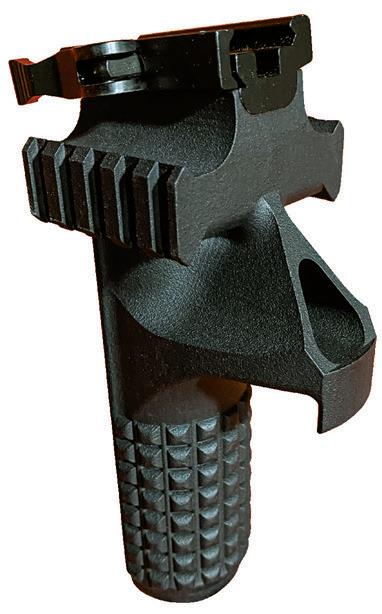
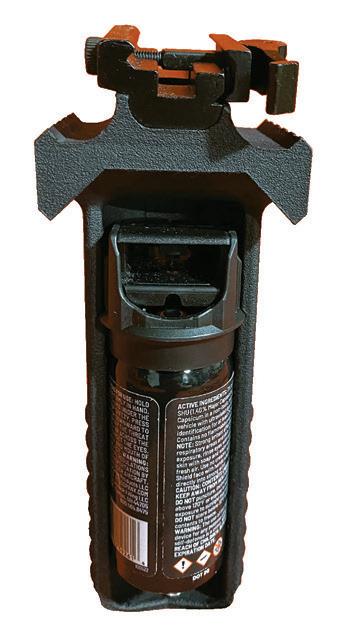
Sublethal Defense (Last Chance) is a Picatinny-rail-mounted device that provides fast, reliable, nonlethal defense with a compact, durable design and easy deployment. The unit affixes quickly and easily to your Picatinny rail – an M-Lok variant is in the works – and is very durable. It feels natural and the position of your thumb on the pepper spray can is automatic. Anyone who has played “thumb war” as a kid will quickly adapt to the grip.
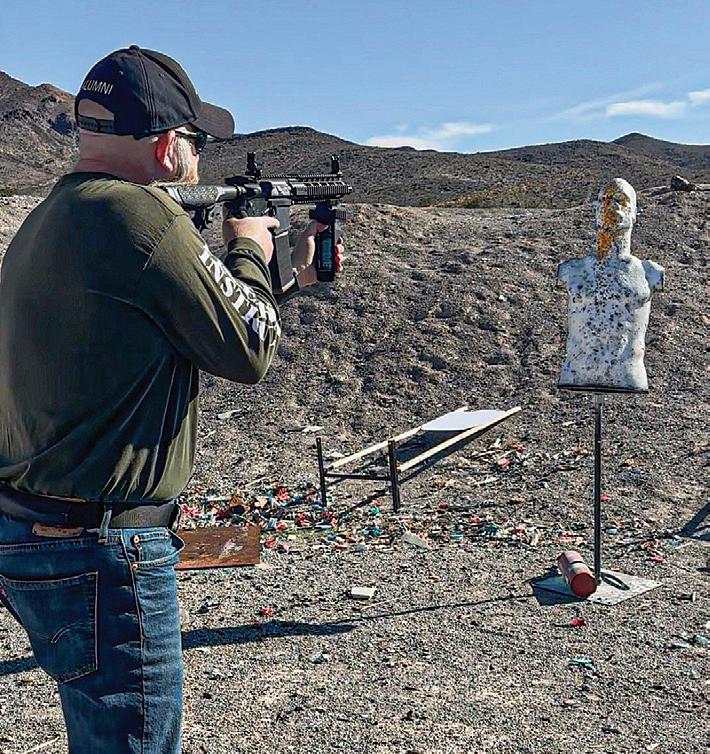
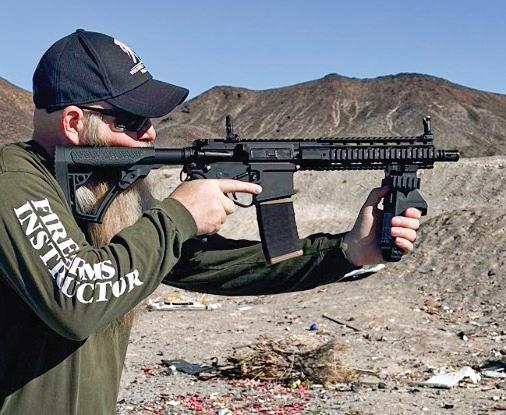
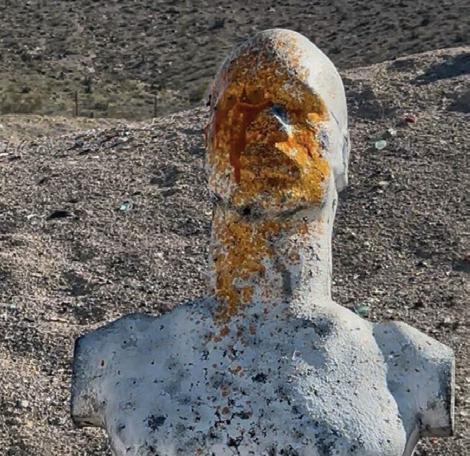
Having the ability to use a lessthan-lethal option without moving your hands off your rifle is essential when making split-second decisions. I was able to deploy pepper spray on my shooting dummy with ease, even having to use a little Kentucky windage since the wind was blowing that day.
The foregrip-like attachment affixes quickly and easily to a Picatinny rail – an M-Lok variant is in the works – and is very durable. The can of pepper spray fits perfectly within the foregrip cavity. The unit is available in bright orange. (SUBLETHAL DEFENSE)
Author Jason Brooks puts the pepper spray attachment to the test. You can see how he adapts the positioning of his front hand to be able to apply a thumb to the spray can trigger.
PRODUCT SPOTLIGHT
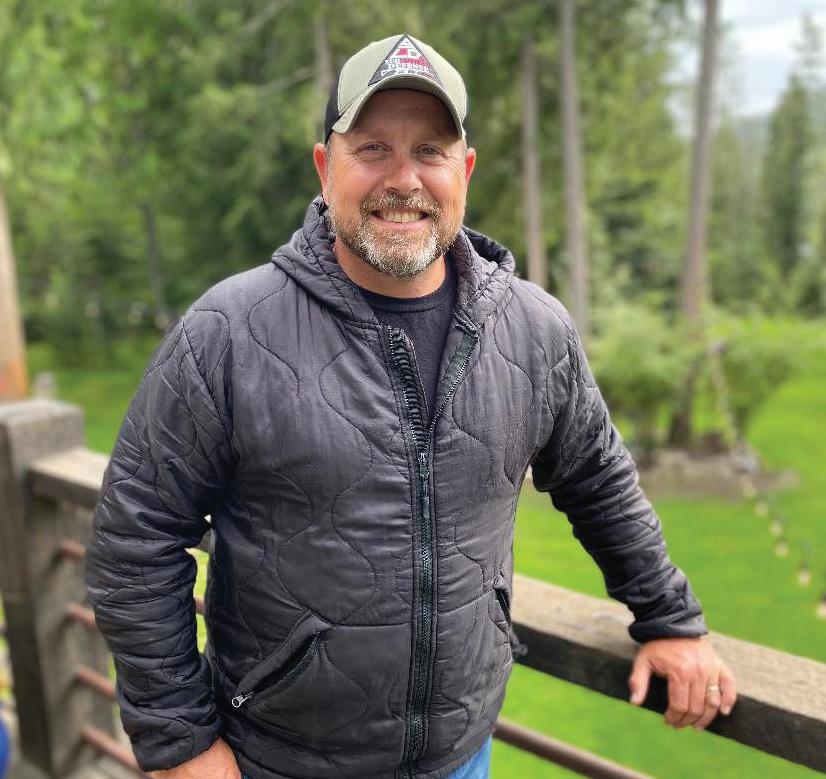
Sublethal Defense is the brainchild of JD McElroy. With 20 years of experience in corrections and a dedicated career in law enforcement, McElroy is a seasoned professional passionate about ensuring safety and providing responsible options in critical situations. As a former SWAT team member for eight years, he has honed his skills in high-pressure environments, developing a profound understanding of the importance of making informed decisions in the face of danger.
Currently serving as an armed security officer, McElroy continues to apply his extensive knowledge and skills to protect and serve his community. He believes that everyone deserves the opportunity to make choices that can prevent life-altering consequences. ★
Editor’s note: For more info about the Sublethal Defense (Last Chance) product, or to learn more about JD McElroy, visit sublethaldefense.com.
JD McElroy. (SUBLETHAL DEFENSE)
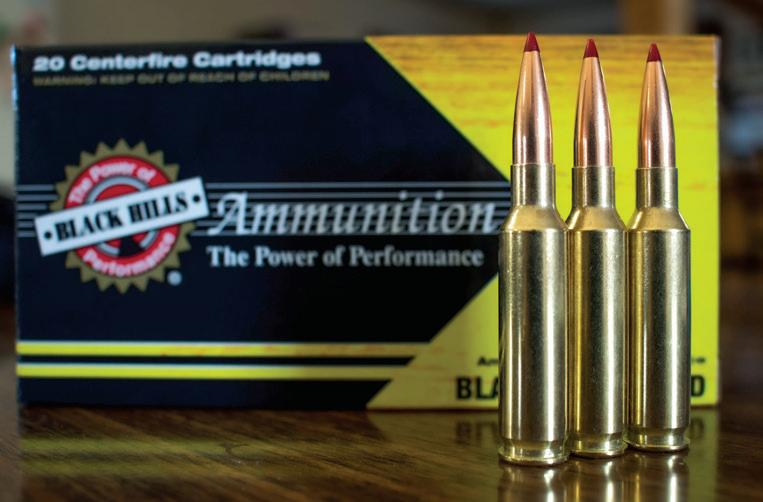
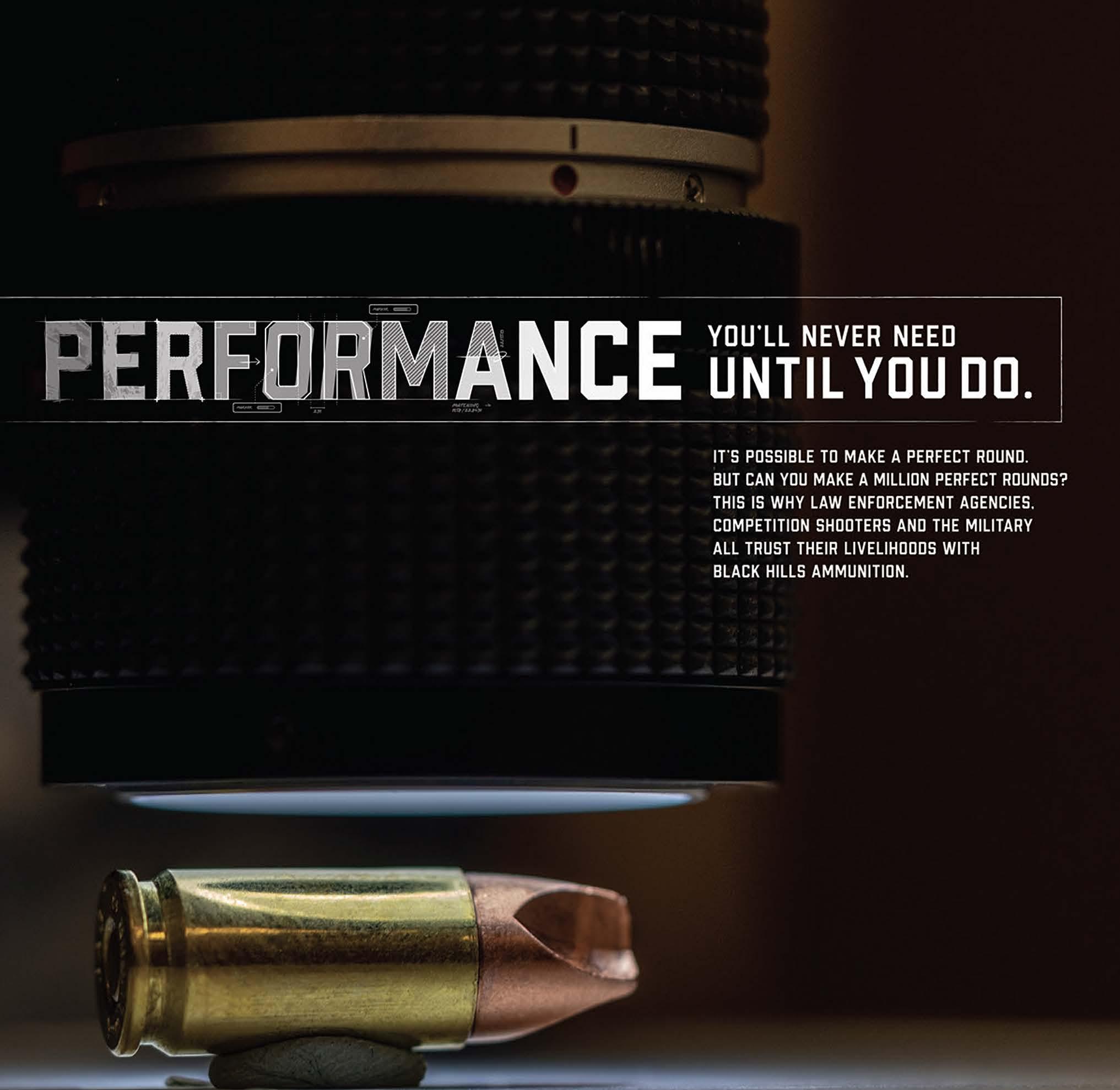
Black Hills Ammunition offers a very consistent product lineup, held to tight tolerances.
THERE'S GOLD AND MORE IN THEM THAR HILLS
A look at the lines and loads of Black Hills Ammunition.
STORY
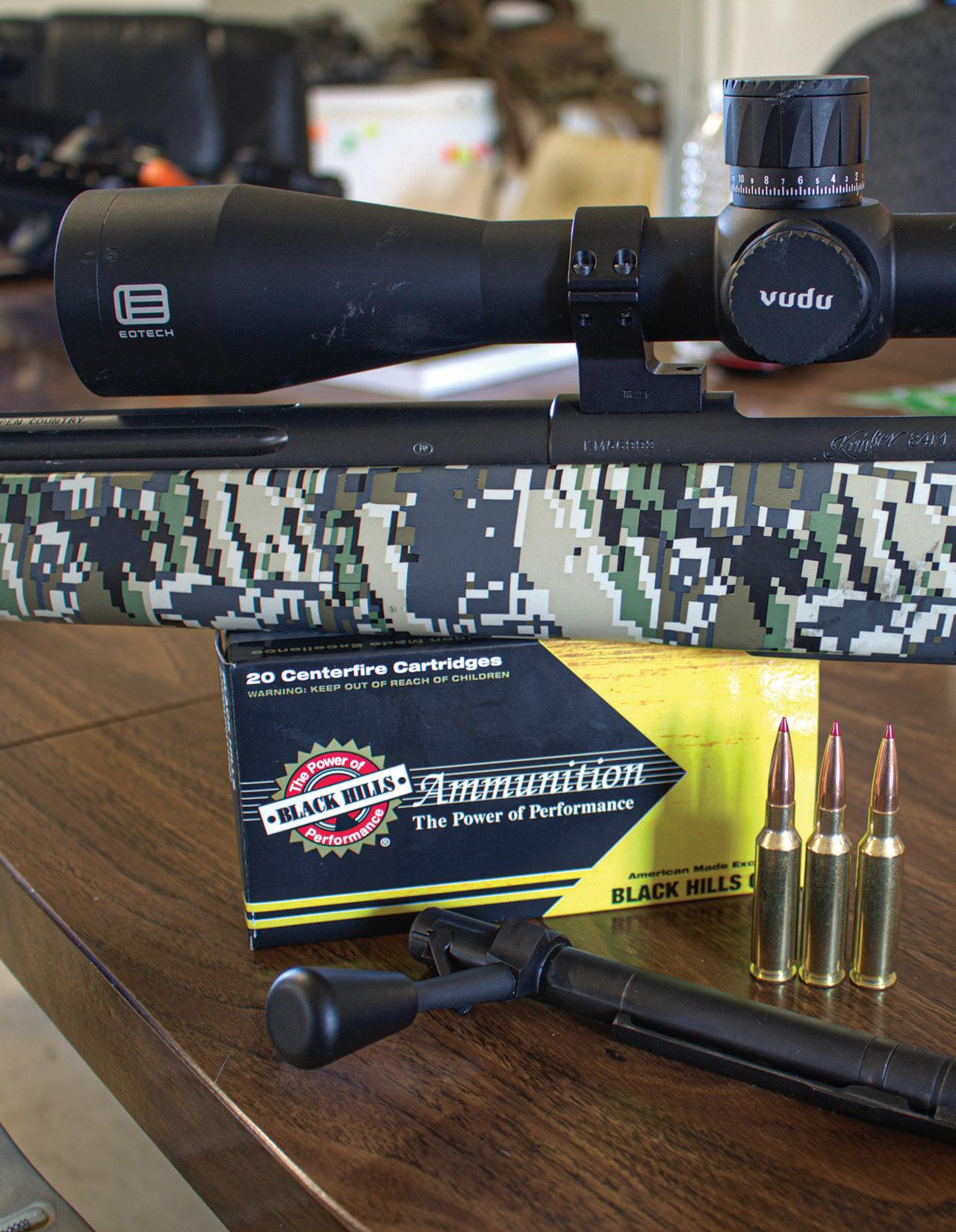
The weather had definitely taken a turn for the worse, with the steady rain flooding the creeks and making foot travel all but impossible. After a couple unsuccessful attempts at crossing the stream to get to a series of coulees we wanted to hunt, the decision was made to try the driest area and accept that which the gods of the hunt offered. The phrase “I’d rather be lucky than good” immediately came to mind, as we hadn’t gotten 100 paces from the truck when a decent mule deer buck got up from his bed and began that trademark bounce across the South Dakota prairie. The Kimber rifle came quickly to shoulder, as my guide Autumn Ifland sternly instructed me to take the buck. The 143-grain ELD-X had to travel nearly 200 yards to meet that buck, and it certainly did its job. That was my first mule deer, as well as my introduction to Black Hills Ammunition.
career path. With the majority of my own misspent youth devoted to handloading my own ammunition, I would be in my late 40s before I had the opportunity to shoot and hunt with Black Hills’ stuff, and I immediately realized I’d been missing out.
If I were to describe Black Hills Ammunition in a word, it would be “diverse.” Again referring to the countless hours spent handloading, one of the biggest benefits was being able to use any bullet that was in component form, offering a wide selection of projectiles. For those who do not pursue handloading, Black Hills offers the next best thing, as they have an incredibly diverse lineup of projectile choices.
Black Hills Ammunition is located in Rapid City, South Dakota, and is the brainchild of Jeff Hoffman, a retired law enforcement officer, who had an obsession with his ammunition. Tracing its roots back to the 1970s, Black Hills Ammunition officially came to light in 1982, headed by Jeff and his wife Kristi. A big contract with the US Navy cemented the company’s existence, but that would only be the beginning of a blossoming
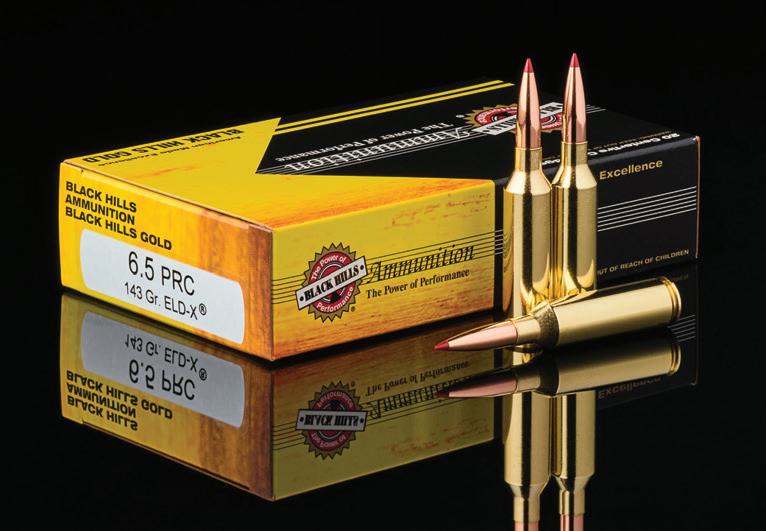
I USED THE Black Hills Gold ammo line on that first hunt, loaded with a 143-grain Hornady ELD-X bullet in the 6 5 Creedmoor, and while Hornady’s own ammunition is excellent stuff, this was at least on par, as the Kimber rifle printed ½-MOA groups with it in the hands of several shooters. That Black Hills Gold line is wonderful stuff, held to tight tolerances and capable of delivering accuracy any hunter would feel confident in. Now, you may say that many of these combinations are available in other ammunition lines on the market, and you would be correct, but I feel it is safe to say that Black Hills has one of the most stringent testing and inspection protocols out there, and that is the difference.
The Gold line includes the classics
BY PHIL MASSARO • PHOTOS BY MASSARO MEDIA GROUP
BULLET BULLETIN
like the .308 Winchester (with 12 loads available), the .30-06 Springfield (with seven different loads available) and the 7mm Remington Magnum (with four choices of projectile), as well as some of the newer cartridges that are quickly gaining universal popularity like the 6mm ARC, 6mm Creedmoor and .300 PRC. There are many bullets from the Hornady line available – such as ELD-X, ELD Match, SST (Super Shock Tip) and CX (Hornady’s excellent monometal copper bullet) – as well as choices from Barnes (the TSX), Sierra (three of the wonderful Tipped MatchKing in the .308 Winchester) and Black Hills’ own Dual Performance projectile. That bullet is a copper hollowpoint, designed specifically
Author Phil Massaro used the Black Hills Gold 6.5 Creedmoor ammo to take this South Dakota mule deer buck at 200 yards.
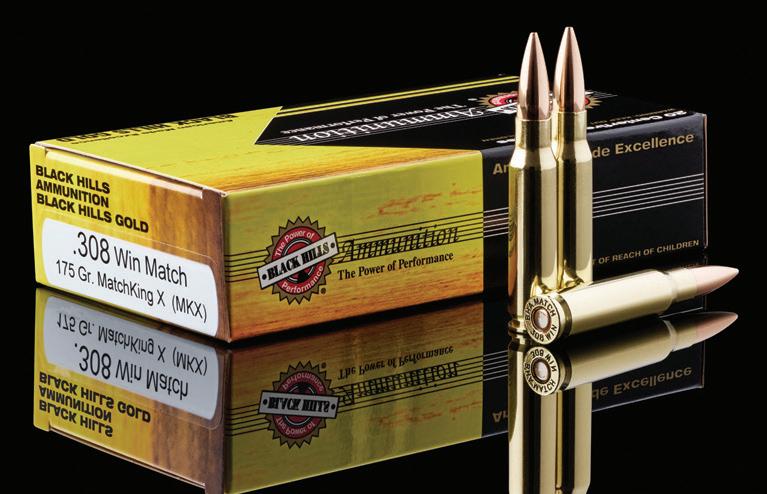
The Black Hills Gold line is comprised of both hunting loads and target loads alike; the 175-grain Sierra MatchKing complements the .308 Winchester nicely.
BULLET BULLETIN
for frangibility up front, and a solid base which drives deep into the vitals, working across a wide range of impact velocities. The front portion of the bullet breaks into “shrapnel,” causing huge amounts of trauma at the impact site, while the base of the bullet (at caliber dimension) continues on a straight line. It’s a unique concept, embraced by few projectile companies, but has proven to be very effective in the field.
The standard line of ammunition includes some gems as well, including the highly popular .223 Remington and 5.56 NATO, loads for which range from the highly frangible 36-grain Barnes Varmint Grenade all the way up to the 77-grain match bullets. In that mix, you’ll find some of my favorites, like the 52-grain match hollowpoint (I’ve used that bullet for years in my .22-250 Remington and coyotes hate it); the 55-grain Barnes TSX, which makes a surprisingly good deer bullet; and the
69-grain Sierra MatchKing, which is a great choice for these little cartridges as a long-range target projectile. Black Hills also has some interesting loads for the .300 Blackout, ranging from
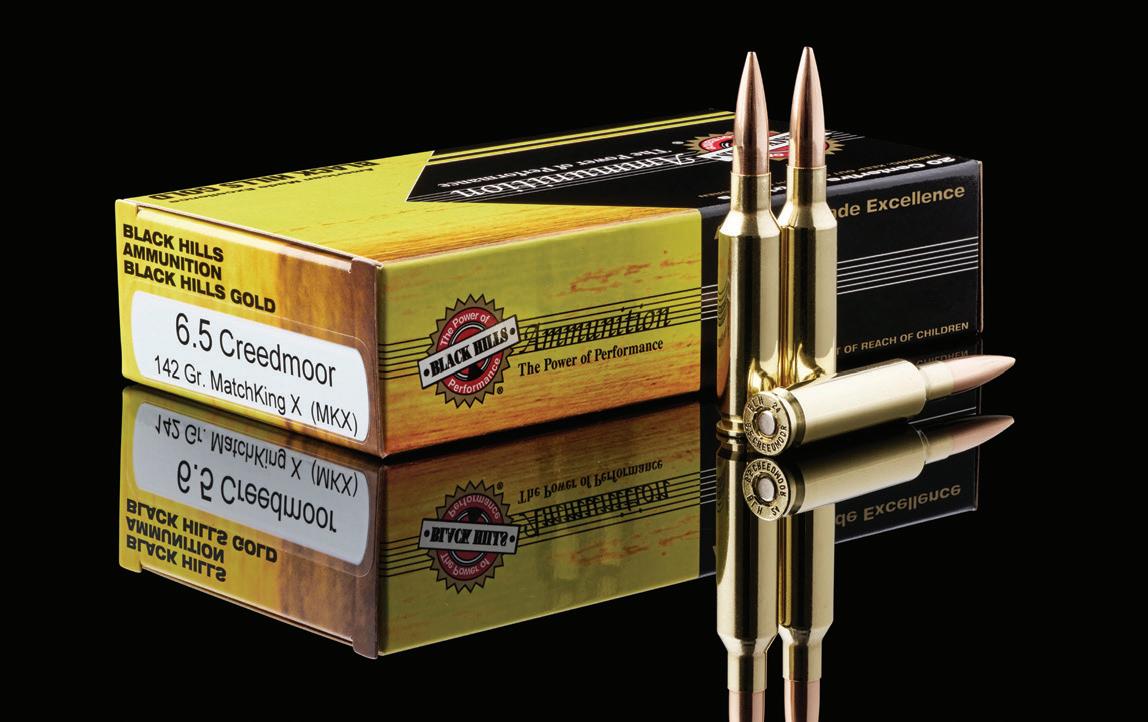
For the hunter/shooter who wants his or her 6.5 Creedmoor to do double duty on targets and game alike, the Gold line’s 142-grain ELD Match bullet complements the 143-grain ELD-X.
the 110-grain Barnes Tac-TX at 2,250 feet per second and the 115-grain Dual Performance at 2,240 fps to the subsonic loads like the 198-grain Dual Performance at 1,080 fps. For
There is no doubting the popularity of the 6.5 Creedmoor as a hunting cartridge, and the author found the Black Hills Gold 143-grain ELD-X load to be very accurate.
BULLET BULLETIN
the target crowd, Black Hills offers the renowned 300-grain Sierra MatchKing hollowpoint in both the .338 Lapua Magnum and .338 Norma Magnum.
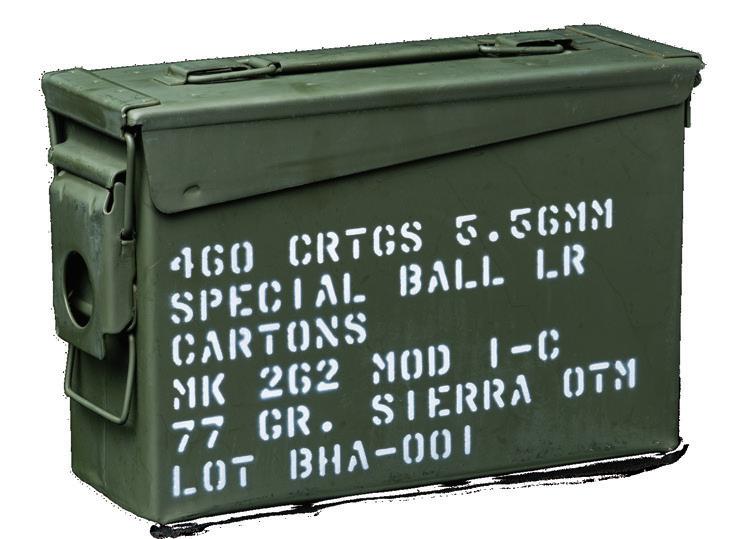
And the most famous of the Black Hills rifle ammo products just might be their MK 262 Mod 1-C, the 5.56mm NATO load with the 77-grain Sierra Match bullet. Delivering 2,750 fps from a 20-inch test barrel, this load is rigorously tested and a particular lot needs to deliver a 2-inch group at 300 yards or it will not be released for sale. This is simply the commercial variant of the military round Black Hills originally developed for the US Navy, still in use to this day. If you have a
proper 5 56 NATO rifle, you should be feeding it this ammunition.
RIFLE AMMUNITION IS not all that Black Hills has to offer – they have several great lines of handgun ammunition as well. Their standard line features a healthy mix of jacketed hollowpoints, full metal jackets and a few Barnes Tac-XP bullets. The 9mm Luger, .380 Auto, 10mm Auto and .45 ACP are all represented for the autoloaders, while the wheelgun crowd gets ammo in .32 H&R Magnum, .38 Special, .357 Magnum and .44 Magnum. Most loads are of standard velocity, with the 9mm Luger and .38 Special getting a +P load.
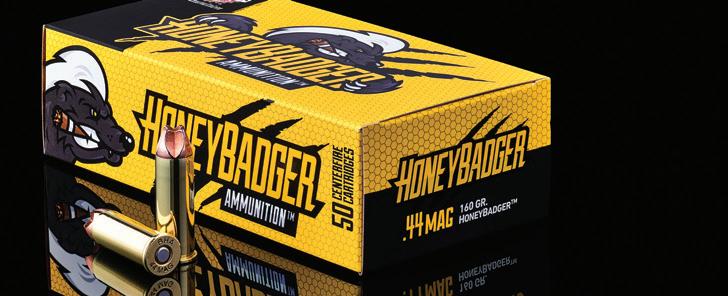
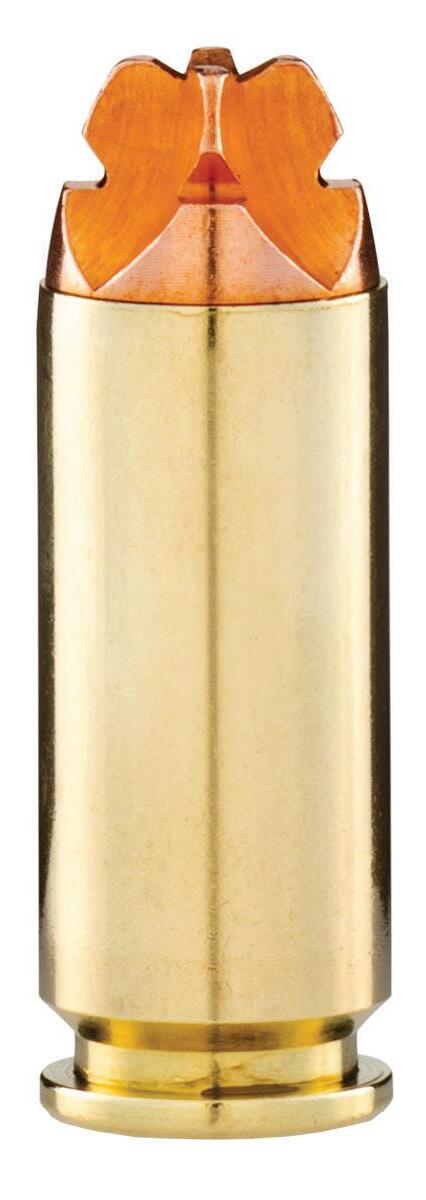
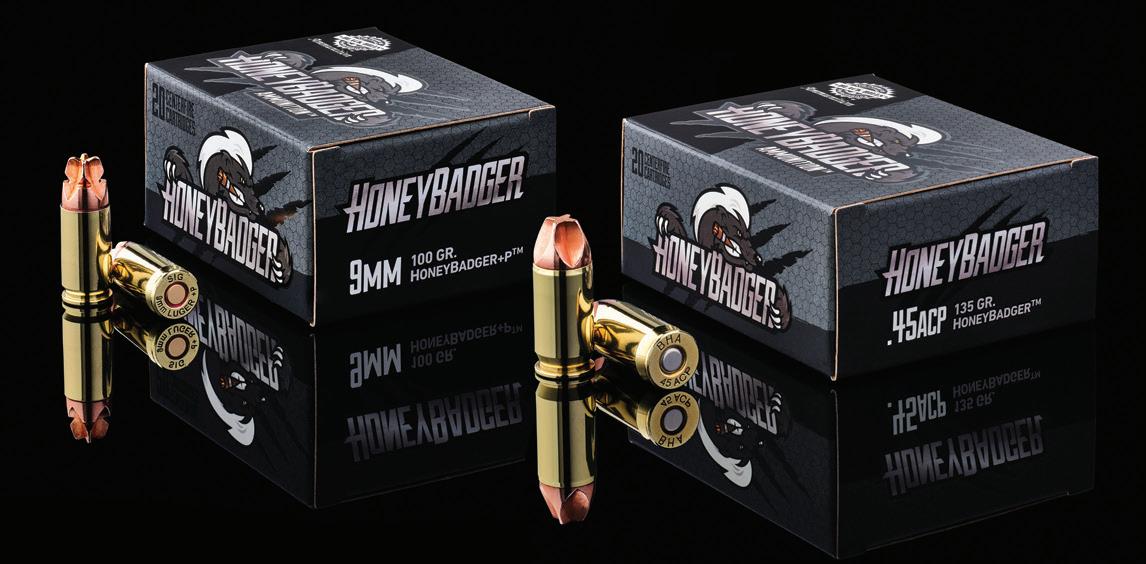
The Honey Badger ammo line is centered on the copper, non-expanding projectile developed in conjunction with Lehigh Defense. Looking much like a Phillips-head screwdriver point, this bullet is a wicked design that relies upon the X-shaped meplat and the rotation of the bullet to destroy tissue. The flat base design has a couple of cannelures or crimping grooves, and its bullet weight tends to run lighter than the traditional lead-core designs. As there is no hollow cavity up front used for expansion, the Honey Badger line will
Black Hills has included many of the modern releases – such as the 6.5 PRC and others in that family – in their Black Hills Gold ammo line.
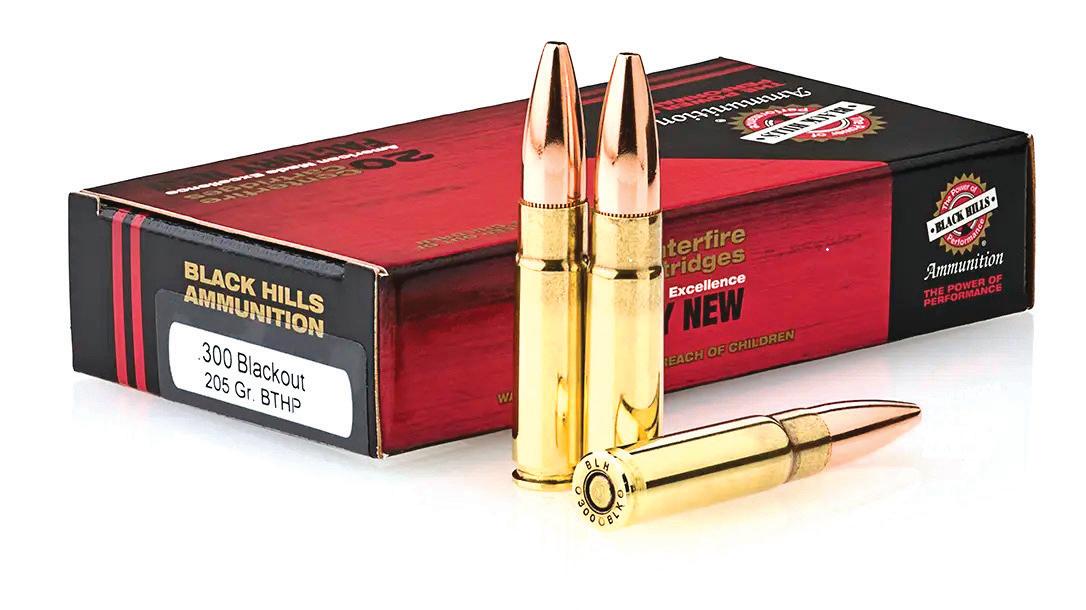
Black Hills offers the .300 Blackout crowd a 205-grain hollowpoint at subsonic velocities.
The highly popular 5.56mm NATO
MK 262 Mod 1-C 77-grain Sierra load from Black Hills is now available in military cans, with 460 cartridges per can.
relying on the bullet’s rotation for trauma. Shown here in .44 Remington Magnum.
handle the various barriers with ease; drywall, heavy clothing, even glass is easily handled.
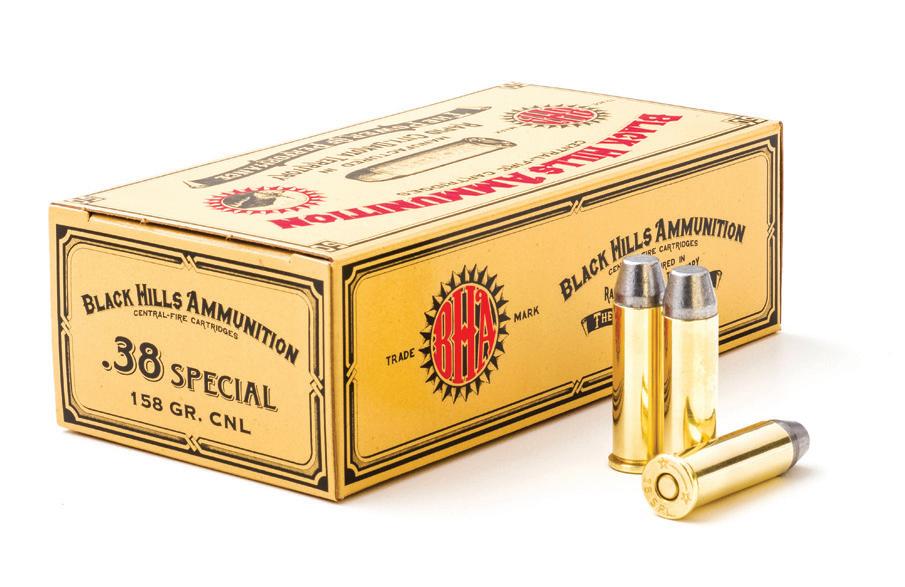
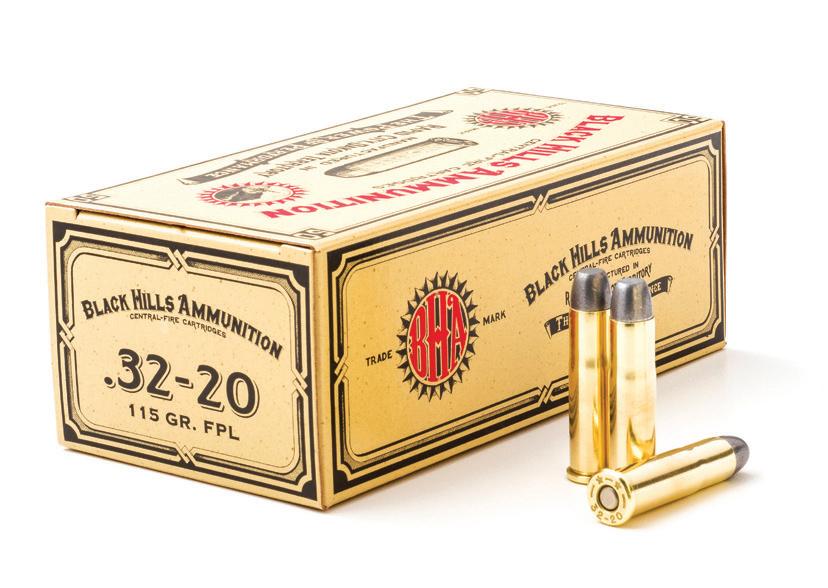
The Authentic Cowboy Action ammo line was developed specifically for those who enjoy that style of competitive shooting, and within that line are some classic revolver and lever-gun cartridges. The common .38 Special, .357 Magnum, .45 Colt and .45-70 Government are represented, alongside the more rare, yet classic, cartridges like the .32-20 WCF, .38 Long Colt, .38-40, .44-40, .44 Russian, 45 Schofield and .38-55 Winchester. All have a flat- or roundnosed lead projectile – safe for use in tubular magazines – and the most common bullet weights and classic velocities for the particular cartridge are adhered to.
And while the Authentic Cowboy Action line was both conceived and designed for those replicating the ballistics of the late 19th century, they are still as potent in the hunting field as they were then. A 255-grain lead projectile delivered from a .3855 Winchester at 1,250 fps will still kill a deer at woods ranges or a bear over bait as well as it did in the 1890s; the father of the .30-30 WCF is, was,
The Black Hills Honey Badger ammo line offers shooters a leadfree bullet that doesn’t expand or deform, instead
The Honey Badger line features a unique, nonexpanding copper bullet developed in conjunction with Lehigh Defense.
and ever shall be an effective hunting tool at iron-sighted lever-gun ranges. The same can be said for the .45-70 Government, with the 405-grain lead roundnose bullet.
For me, I could fill 90 percent of my shooting and hunting needs at Black Hills Ammunition, with the exception of the big-bore safari cartridges I use as often as possible. Whether pursuing moose in Newfoundland, elk in Montana, deer in Texas or kudu in Zimbabwe, there is a sound ammunition choice available from Black Hills. From the ammo required for everyday carry of a defensive handgun to the needs of a precision shooter who’s chosen to employ the Hornady ELD Match or Sierra Tipped MatchKing, Black Hills has something to fill your needs.
Thank you, Mr. Hoffman; your diligent efforts in producing consistent ammunition are most appreciated, and I hope the popularity of your products continues to grow. ★
Want a fun, easy-on-thehands load for your .38 Special? Look at the Black Hills Authentic Cowboy Action load with the 115-grain conical lead flat-point.
Black Hills Ammunition answered the call for cowboy action shooters with (now) rare cartridges like the .32-20 loaded with a 115-grain flat-point lead bullet.
The Honey Badger line offers the 9mm Luger shooter a +P variant (left), loaded with the lead-free 100-grain bullet, while Massaro says he can get behind a 135-grain .45 ACP bullet (right) when the Honey Badger is the chosen projectile.
MAKING GUNSMOKE AND NEW SHOOTERS
Range day with a few boxes of Buffalo Arms’ .357 and .44 ammo is, er, a blast.
STORY AND PHOTOS BY JASON BROOKS
Being a firearms instructor and writer has its advantages. I have the privilege and honor to meet amazing people who bring quality products to our community, and get to learn the why and who behind each product I test.
One such company is Buffalo Arms Company out of Ponderay, Idaho, which I learned about while at SHOT Show. Buffalo Arms Company was created in
1990 by Dave Gullo through his love of shooting black powder cartridge rifle silhouette, long range, cowboy and buffalo type matches. When he attempted to purchase ammunition for his old and obsolete black powder cartridge firearms, it took six months to get the brass, dies, molds and sights together just to shoot the first shot, so he took matters into his own hands and created a thriving business. Hearing the love and passion
that went into creating this company and ammunition, I felt a deep desire to try out some of his ammo and see firsthand how his passion translated into his product.
THE DAY I decided to test his ammunition coincided with a 40-hour Peace Officer Standards and Training certification class my partners and I were teaching. Buffalo Arms Company sent a few boxes of their .357 Magnum 158-grain RN
Buffalo Arms Company says it has the largest on-hand inventory of black powder ammo, as well as old, obsolete and hard-tofind ammunition for cowboy action shooting, black powder rifle target, silhouette shooting and plinking. (BUFFALO ARMS COMPANY)
PRODUCT SPOTLIGHT
FP Lead Cowboy Ammunition, as well as their .44 Magnum 240-grain XTP Hornady Custom Ammo, for me to run through some of my guns. I used my Henry rifle chambered in .38/.357, Super Blackhawk .44 Mag and .357 revolver.
The first thing I noticed when shooting the cowboy loads was the smooth, flat, low recoil in the revolver. The smoke that appeared when I was pressing the trigger made me feel like I was in a standoff at high noon in the middle of an old Western town. There’s something about those cowboy loads that brings out the kid in me. I got the same feeling when I ran them through my Henry. There’s no better feeling than racking and tapping the target in succession without a hint of a twitch or convulsive movement from the ammunition.
I even grabbed some other .357 target loads from a different company and loaded both in the revolver just to see if there was a difference in the feel of the ammunition, and there was a notable recoil difference. The Buffalo Arms Company ammunition loads performed at a higher quality, running smooth and flat compared to the other company’s loads.
The .44 Magnum was just as much fun to shoot, but as most of you know, a .44 Magnum has a higher recoil than the .357 revolver. Having
Buffalo Arms Company’s .44 Magnum 240-grain XTP Hornady Custom Ammo ... (BUFFALO ARMS COMPANY)
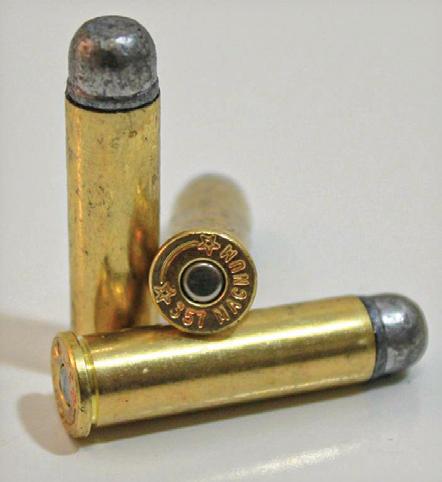
... and their .357 Magnum 158-grain RN FP Lead Cowboy Ammunition. (BUFFALO ARMS COMPANY)
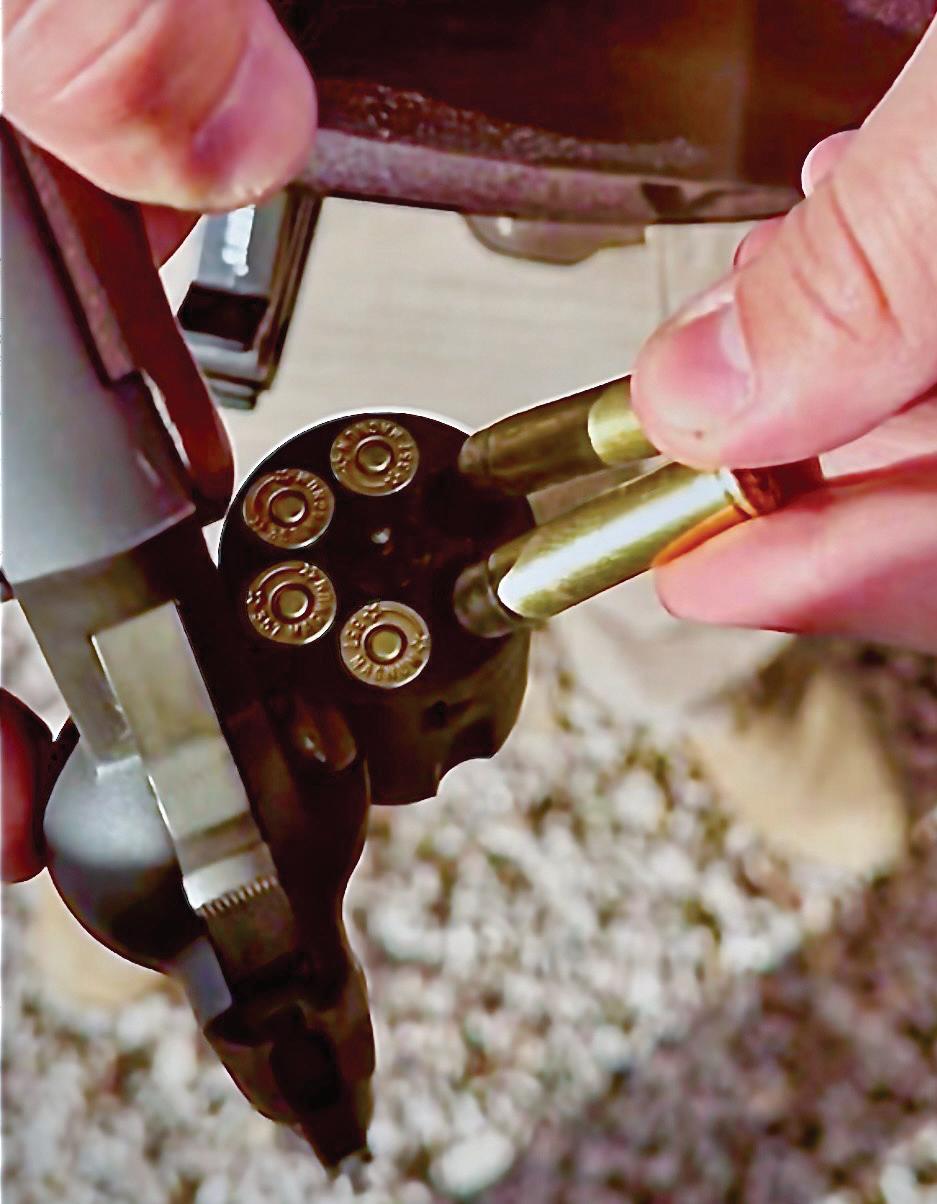
Author Jason Brooks loads his .357 revolver.
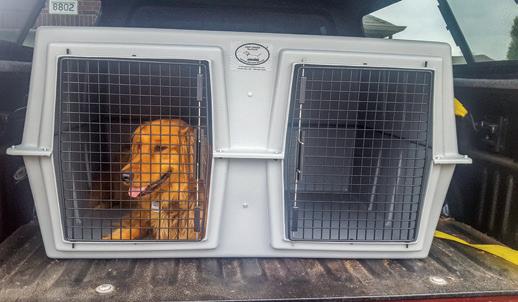
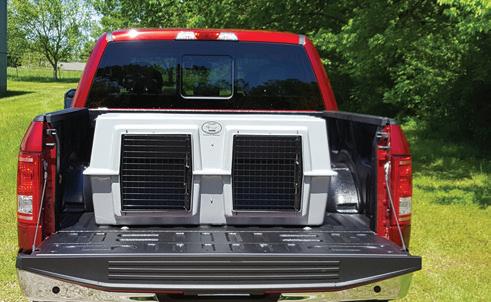
• EZ-XL accommodates 2 dogs over 65 lbs each
• Made from High Density Polyethylene with UV protection
• Easy Loader fits most full size pickups, SUVs & large UTVs
• Deuce fits smaller pickups, SUVs & UTVs
• EZ-XL is for larger breed dogs & full size vehicles
• Vents, cold weather door covers, insulated covers & custom kennel pads available
PRODUCT SPOTLIGHT
As a firearms instructor, Brooks is privy to working with and testing different types of ammunition. He found that the Buffalo Arms loads had a smooth, flat, low recoil, and the smoke that appeared after each shot evoked the Old West.
said that, the 240-grain XTP loads performed flawlessly and gave some of my students a newfound craving for shooting revolvers.
Overall, I was very impressed with how Dave Gullo turned his passion into a quality product that I will be using in the future. Buffalo Arms Company has the largest on-hand inventory of black powder ammo, as well as old, obsolete and hard-to-find ammunition for cowboy action shooting, black powder rifle target, silhouette shooting and plinking. Their ammunition is reloadable boxer-primed cases unless they state otherwise. If there is a caliber you cannot find on their website, they will consider adding some to their list if they get enough requests, or they will point you in the right direction on where to get some. ★
Editor’s note: For more information about Buffalo Arms Company, visit buffaloarms.com.
BLACK POWDER
SOME SHOOTING TO CROW ABOUT
Between a double hit on a target and an unexpected second-place finisher, a club's rifle match served up interesting results.
STORY AND PHOTOS BY MIKE NESBITT
he shooting match I’ll discuss this issue was held a couple of years ago when I still did my shooting right-handed. It was one of the monthly shoots held at the Capitol City Rifle & Pistol Club near Olympia, Washington. That’s the same spot for the annual “Rain-de-voo” every February. (We usually shoot in the rain at that event, which gives it the name.)
TThis time the match wasn’t a big one, but we did have an even dozen
shooters. And we each fired a total of just 16 shots (two targets with five shots each, five shots at gongs, and one shot for a tiebreaker), so the match was over and done in just a couple of hours. Sometimes we shoot rifles or pistols and at other times trade guns. At this particular match we just shot our rifles, except for one shooter who I’ll tell you about as we go on.
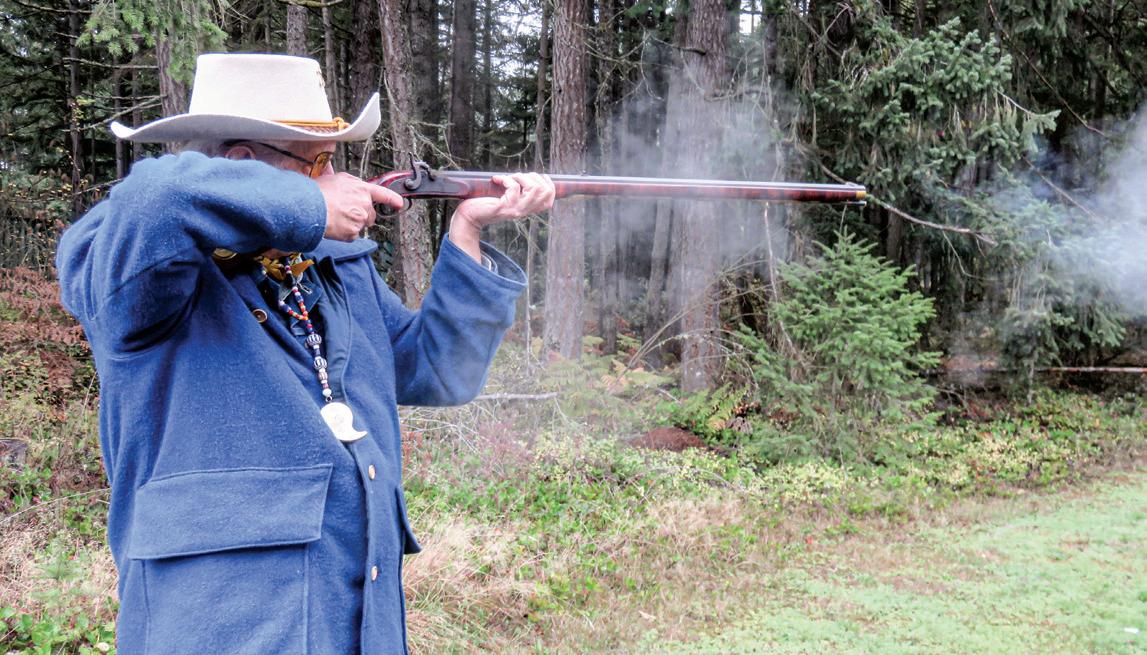
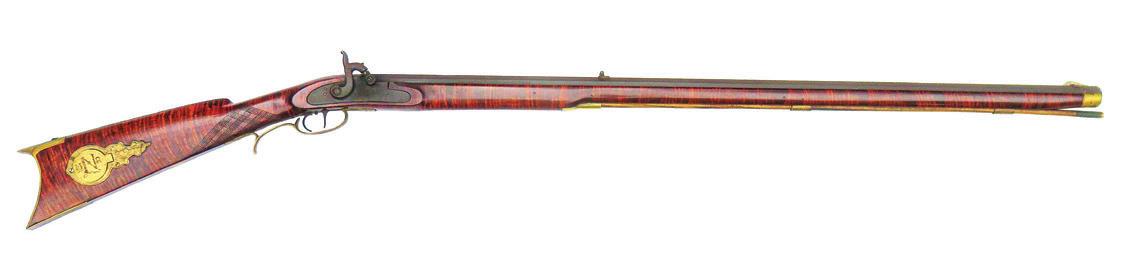
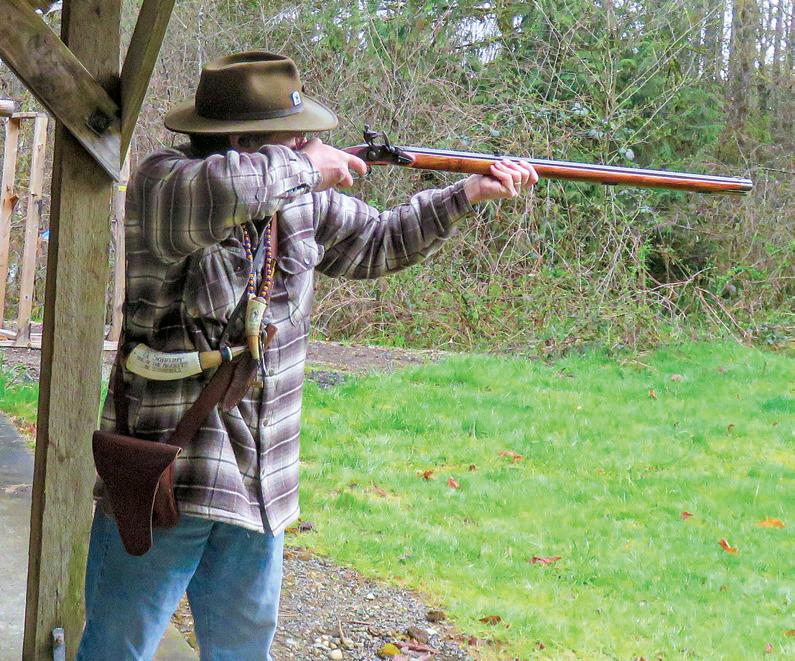
The rifle I used was my Leman-style percussion in .40 caliber. That was the rifle I made, mainly from scratch, to copy an original Leman that I had some years ago in what I called a .33 caliber. I never did even try to shoot that old
original, although the thought of doing so certainly did cross my mind. Dave Dolliver talked me out of trying to shoot it and to make a new copy of it instead. Dave’s advice was certainly good and while I have sold that old Leman, this .40 is still a keeper.
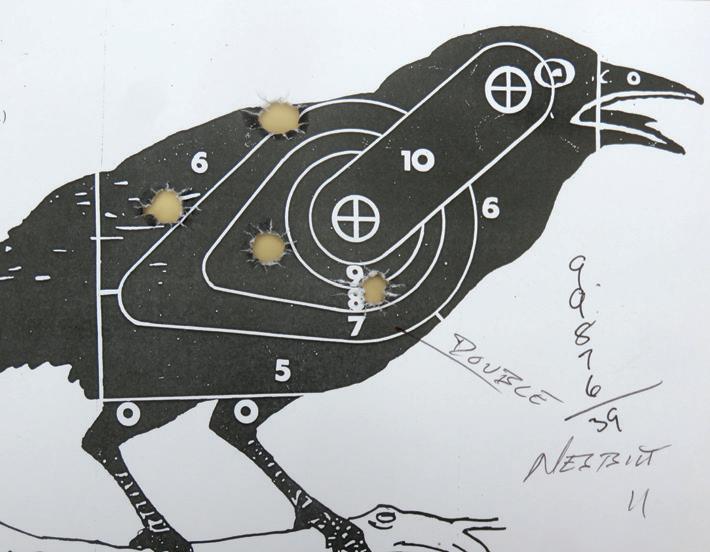
AS I SHOT this match, I could see my rifle’s sights rather well. This was evident when I put all five shots into the black on our “crow” target, which was posted at 25 yards, doing our shooting offhand. We had a ceasefire right after I had fired four shots at the crow, so we could go forward of the firing line
Author Mike Nesbitt fires a shot with the .40-caliber Leman-style percussion rifle he built.
BLACK POWDER
and remove the stand which held our tiebreaker cards, posted at just about 12 yards. While the close-range target stand was being removed, I snuck out and took a peek at my crow target. It held four good shots. Then I helped the others by carrying one of the uprights to the close-range stand back behind the firing line.
Those four shots needed one more good hit to complete the target and that was my next order of business, right after the rangemaster called the range “hot” again. That shot was made using the .390-inch ball in a .015-inch patch from Bridgers Best over 45 grains of GOEX 3Fg powder. The shot went off just fine and I concentrated on other targets until the next ceasefire. We also had a “buffalo” target to shoot posted out at 50 yards and there were five additional shots taken at gongs, which were set out at 25, 50, two at 75, and one more at 100 yards. While shooting at
those gongs, I missed one shot and that was at the larger of the two gongs at 75 yards, giving me four good hits.
At the next ceasefire, the first place I went was out to retrieve my 25-yard crow. I’ll bet the other shooters who might have been near me heard me suck in a deep breath when I saw that the target still had only four bullet holes in it … But on closer inspection, it appeared the shot cutting the 9-ring was a double. The shoot manager came out and agreed with me. Getting his confirmation on the “double” was important before that crow was taken down, because he was also scoring our targets. None of my shots were in the center, but the target did hold a score of 39 with those five shots, and that easily pleased me.
My single bull’s-eye buffalo target at 50 yards didn’t have quite as good of a score and I had one shot even wander out of the scoring rings. I’m not complaining. The details of my rifle
shooting in this match are only pointed out to show that the .40-caliber Lemanstyle rifle is doing its job as long as my eyes can still see.
WHILE I WAS a bit concerned about my rifle scores, Will Ulry wasn’t worried at all about his. Will was our single shooter who forgot to bring his rifle. This was probably because he didn’t see, didn’t read or misread the last posting about shooting rifles in this match. But he did bring his pistol, a .36-caliber target pistol with double set triggers.
Will has a reputation around the club for being a good shot with a pistol, I’ll certainly give him credit for that. So, because he didn’t have time to go home and get his rifle, he simply shot the rifle targets with his pistol. I saw his 25-yard crow target. He had three 10s, maybe 10-Xs, almost all touching, along with two shots that missed the scoring areas. That gave him 30 points, if not 30-3X, for a score on the crow; not too bad at all.
Then he went for the buffalo at 50 yards and he got scoring hits there too. I didn’t see that target so I can’t comment specifically on it, but he got points that added to his score. Following that, he shot at the “rifle” gongs, getting even more points. He did comment to me that he missed the 100-yard gong with his pistol and, I admit, I was glad that he missed something!
AFTER ALL SHOTS were fired, the scores were tallied up and the top shooter got to pick from the varied “blanket prizes,” which were gathered on the bench. These prizes, as the old-timers know, are items the shooters bring to place on the prize blanket, so it’s almost a trade. There were actually more prizes than shooters because
The author’s rifle features a 38-inch barrel –and some handsome striping.
Nesbitt’s crow target from the match – note the double hit at the 8-9 line.
BLACK POWDER
the Capitol City Rifle & Pistol Club had added a few more things to the blanket for good measure. The item I had brought was an unfinished powder horn that would be a good start for someone else to finish and use.
The top shooter was Bob DeLisle, whom I have shot with for a good number of years. Bob stepped forward and selected a few bars of beeswax, which he’ll use later in making a good black powder bullet lube.
Second place went to the shooter with the next highest score. That’s no surprise. But it was a surprise when that shooter’s name was announced. It was Will, the guy who had shot the entire match with his small-bore pistol. I happened to be watching when Will picked his prize from the array of items and he took my unfinished powder horn. Maybe we’ll be seeing that horn again … I took third place, and I certainly owe that to my rifle’s good shooting. I selected a steel tin with a wellfitting lid or cover. The use that will be assigned to that tin hasn’t been decided as yet. While I didn’t keep track of the other winners or the order in which they placed, I will say that every shooter received a prize.
In my opinion, we need more black powder muzzleloading matches like this, simply to increase interest in the muzzleloading sports and because they are so much fun. Be sure to invite others, let them shoot our rifles as an introduction to “front-loaders.” Doing these things won’t be a real big step but it won’t hurt and it is a great way to make new friends.
This small rifle match also gave me some good practice and that experience was certainly put to the test just two weeks later at our club’s Rain-de-voo match. Shooting my .40-caliber rifle in the paper match really helped prepare me for the gong shooting on the trail walk for Rain-de-voo and I can proudly say (very proudly, in fact) that I was the top rifle shooter. Another reason why I point out my win is because it probably won’t happen again. ★
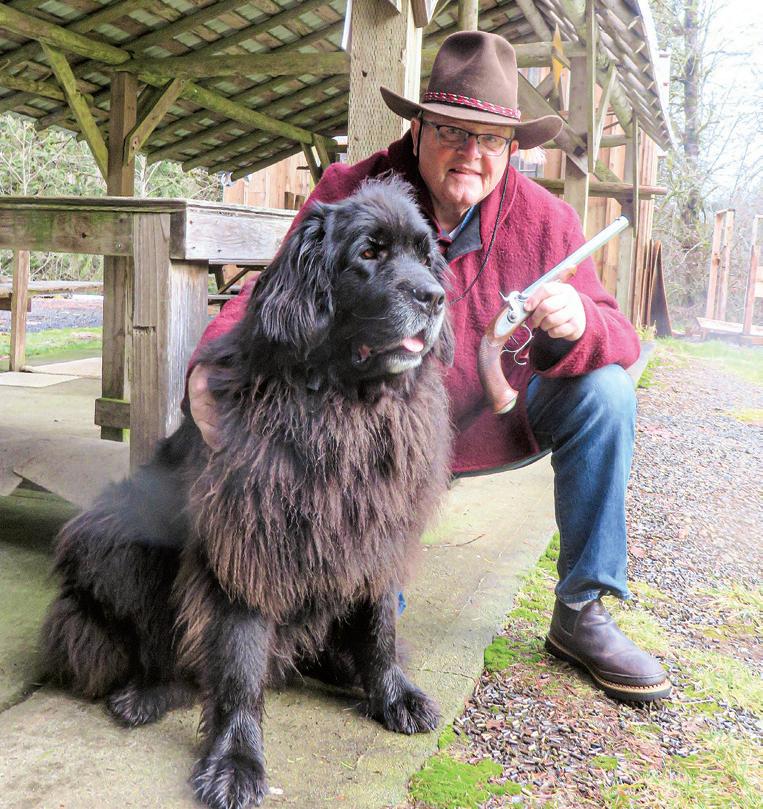
Bob DeLisle, aiming his flintlock, also a .40. Longtime readers of Nesbitt’s column won’t be surprised to learn DeLisle placed first at the shoot.
Will Ulry and the pistol he used to place surprisingly well at the rifle match.
ROAD HUNTER
STOP MISSING SHOTS AT COYOTES
Solving your rifle, scope and ammo's accuracy equation will go a long way toward shooting confidently in songdog country.
Iwas halfway through a ride around a rancher’s property when he slammed on the brakes. He was having coyote problems and wanted me to help. I sat in the passenger seat. Between us was an old 17 HMR with a 3x9 scope, its objective lens covered in a film of dust.
“Those pesky ground squirrels are
a problem too; shoot all of them ya see,” he muttered, resting the little wooden-stocked rifle atop a small shooting bag balanced on his window frame.
He made the 75-yard shot look simple.
“Quite a squirrel gun ya have there,” I
commented. “Mainly for coyotes,” he came back. “I shoot ’em in the head,” he followed, anticipating my next question.
“I know there are bigger guns, but this thing shoots flat and is dead on; always has been,” he said as we continued our ride around the property. The kill zone of a ground squirrel is about the size of a 50-cent
STORY AND PHOTOS BY SCOTT HAUGEN
placed decoys can alleviate the guesswork of shot distances, as long as a coyote closes in all the way.
ROAD HUNTER
piece, smaller than a coyote’s head. The farmer had two valid arguments in the little gun: its level of accuracy and his confidence in shooting it.
IF YOU STRUGGLE to kill coyotes, you’re not alone. Ask any predator hunter what the hardest part of coyote hunting is, and an overwhelming majority will concur that it’s connecting on the shot. It’s not finding a place to hunt, or deciding which calls to use, or even how to arrange decoys or monitor weather patterns. It’s accurate shooting, period.
I started hunting coyotes when I was a kid, in the early 1970s. Back then, bolt guns and fixed-power scopes were the rule. Today, ARs with fancy tooling and large-capacity clips dominate predator hunting. Great tools if you
know how to use them.
“I’d rather know I’m going to get one accurate shot with a bolt gun than hope I hit a coyote by spraying ammo from a semiauto as fast as it’ll cycle,” a predator hunting guide recently told me. “I see a lot of clients start shooting as fast as they can when a coyote comes in. Don’t be in such a rush. Take your time, make that first shot count, and follow up accordingly. It’s all about maintaining your composure and focusing on the task at hand.”
In other words, pick a spot and don’t be in a hurry. You, the caller, have the advantage. Anticipate an approaching coyote’s movement, track it in the scope and when it stops, settle the crosshairs on a specific spot, not a general area.
I used to make my living hosting
game hunting TV shows. I quickly learned that every missed shot cost me, the film crew, and even editors and networks money. Not to mention the stress it put on my wife and kids – every missed shot equated to more time afield and less time at home.
GETTING A SOLID
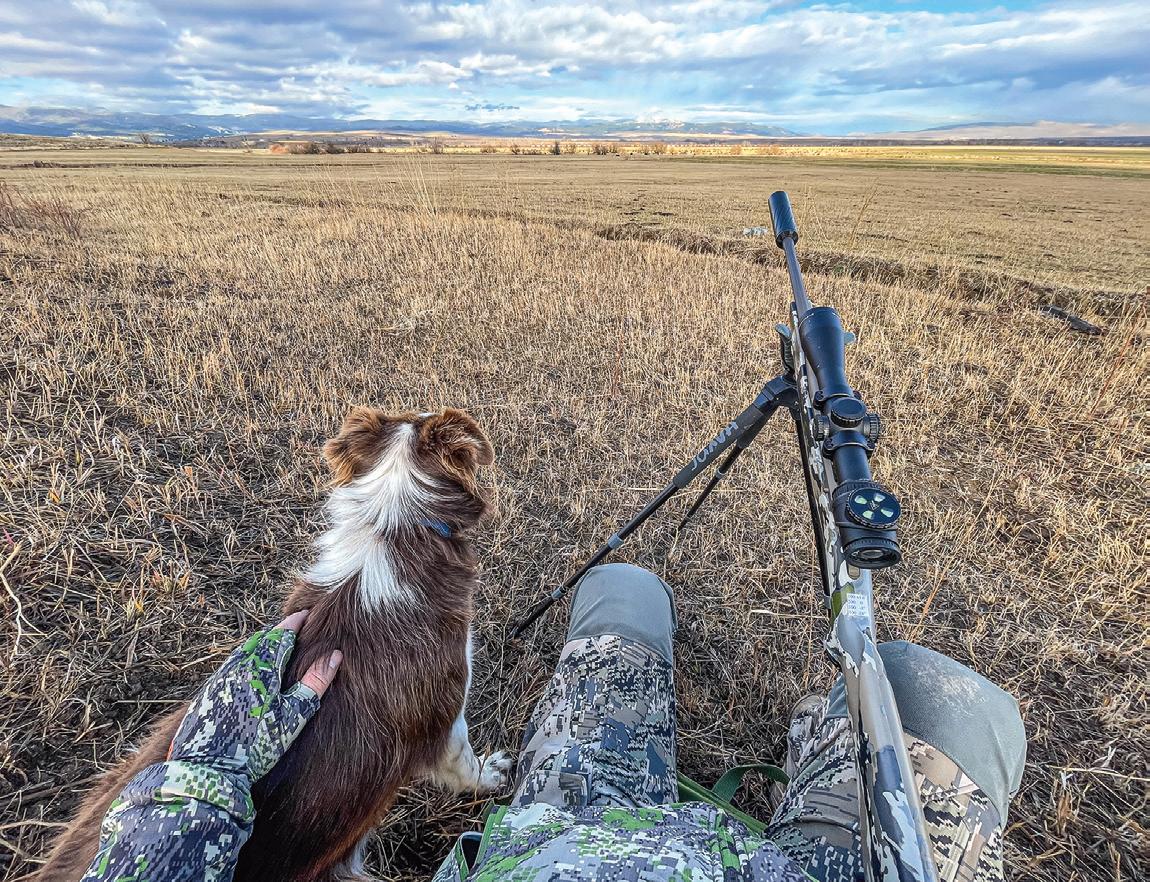
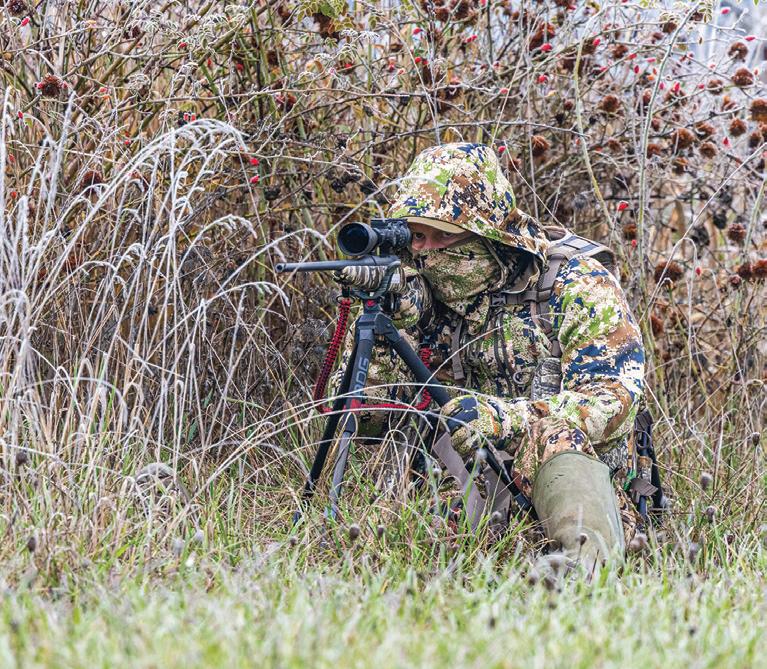
rest is critical to consistently killing animals, especially coyotes. A bipod is nice, but where I hunt, rarely is the habitat conducive for getting a clear shot while lying prone and erecting a gun-mounted bipod. And I’ve not found a tall bipod that I’m stoked with the overall stability of.
Bipod shooting sticks work, but not as well as a tripod, especially when it comes to potentially long-range shots in open country. The more anchor points you have when shooting, the more solid
big
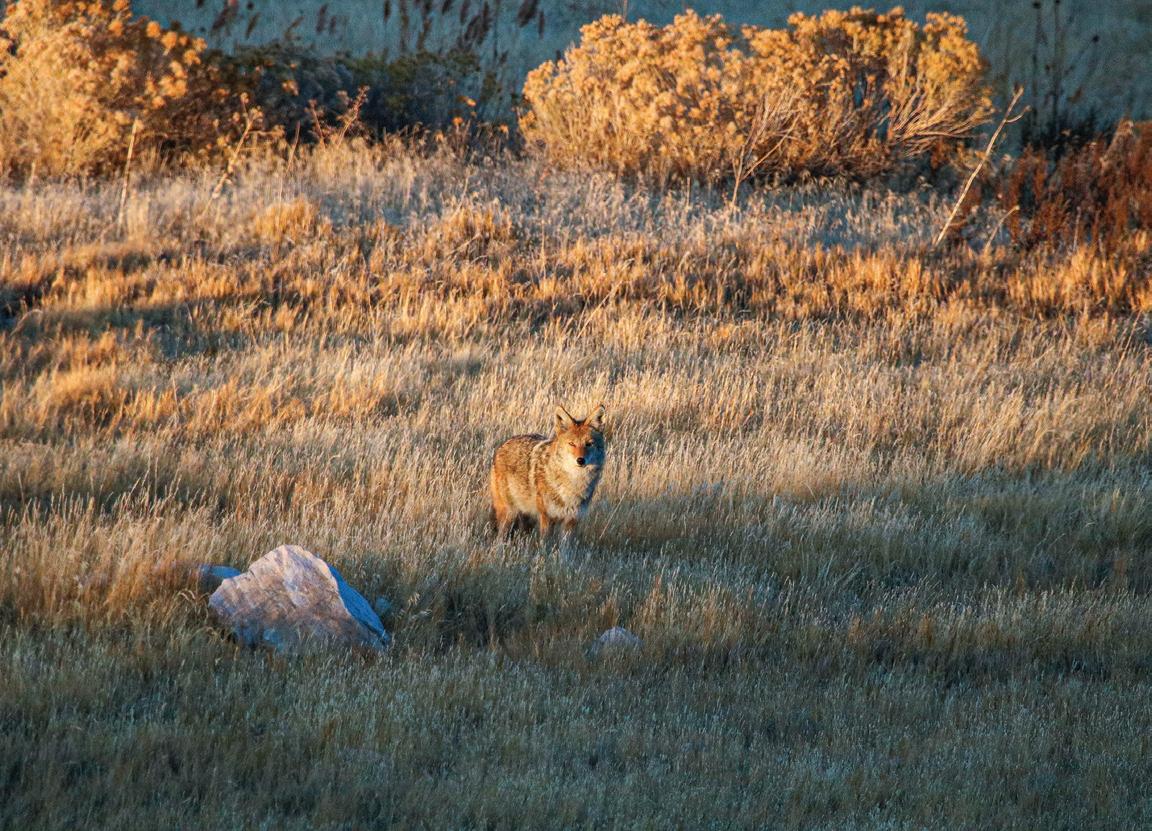
Coyotes have a small kill zone and will not always stand still for a shot. Optimizing the performance of your gun, scope and loads will lead to more consistent hits.
TROPHY MOOSE & BEAR HUNTING
River
MORE THAN A HUNT
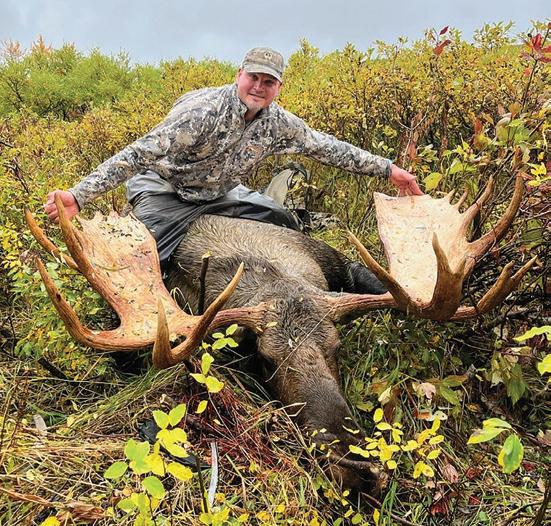
This is an unforgettable Alaskan adventure that blends raw wilderness, world-class game, and the thrill of pursuing some of North America’s most iconic animals in their natural environment. Long days on the river. Close encounters. The kind of moments you’ll talk about for the rest of your life.
WHY HUNT WITH US
• Trophy moose & bear hunts in prime river systems
• Regular 60”+ bull moose opportunities
• Near-100% opportunity rate on legal bulls
• High success on large Alaskan bears
• Fully guided & all-inclusive hunts
• Expert guides with deep local knowledge
• Carefully selected locations for consistent results
• 11–15 day hunts with 15-day combo moose & bear hunt available
Every hunt is carefully planned and professionally guided from start to finish. From scouting and calling to field care and logistics, your guide handles every detail so you can stay focused on the hunt.
Contact us today to secure your hunt and discuss available dates.
the rest, and the sturdier the legs and saddle of a tripod, the more accurate your shot will be. This is especially true on windy days. I like a ball system head that moves with fluidity, one I can track fast-moving coyotes with, should multiple dogs come in or I miss the first shot. Some of the big carbon fiber tripods are great. I like my Bog Gear carbon fiber Death Grip, and also have an aluminum model.
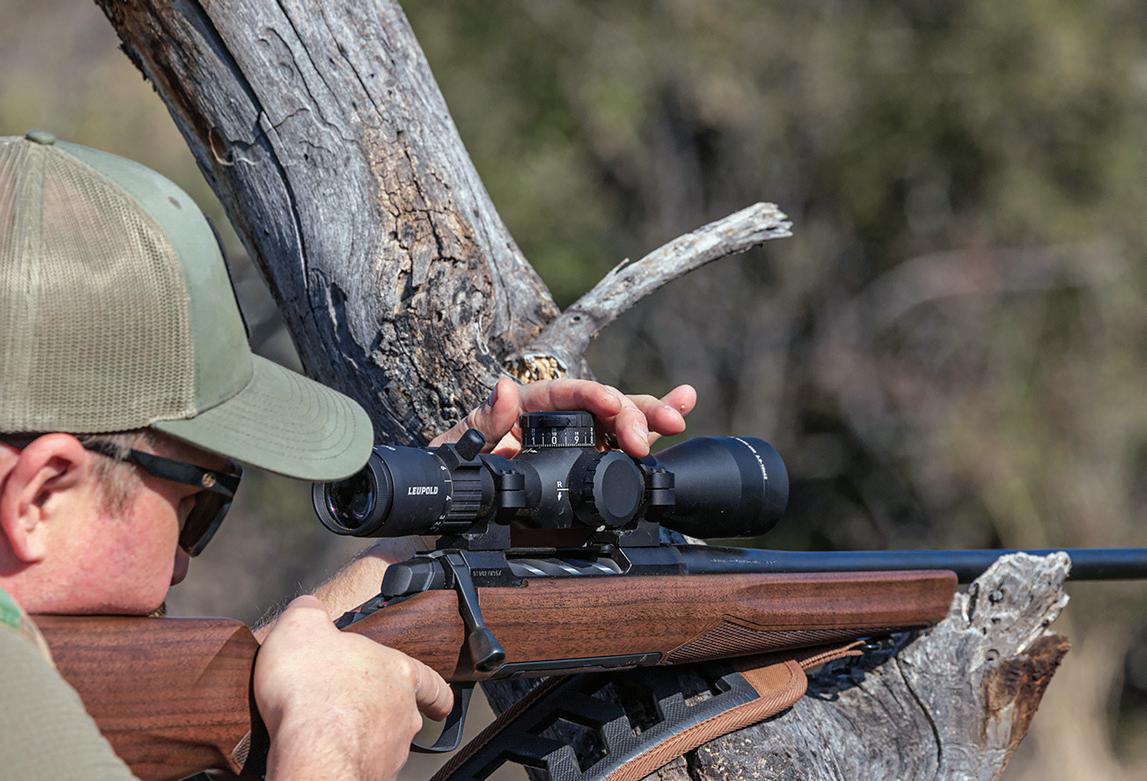
For me, a game changer for quickly acquiring animals was switching to an illuminated reticle within the rifle scope. I shot Trijicon scopes for many years when hunting big game around the world. I’ve also taken a liking to Leupold’s FireDot rifle scopes. I like being able to push a button and
quickly manage the size and intensity of the FireDot. I recently shot their VX5HD Gen 2 in a 3-15x44 mounted atop a Christensen Arms Ridgeline FFT chambered in .243. This setup is light, easy to maneuver and drills dimes all day long at 200 yards. For where I hunt in brushy, often low-light conditions, it’s a great setup.
Put together the perfect combination caliber and scope that you know will hit what you’re shooting at, and your confidence quickly rises. When you take a shot, never should you think, “I hope I hit it,” before you actually pull the trigger. You should know you’re going to hit the target. If unsure, don’t shoot. Obviously, that rule applies to the first shot, as long as
the coyote’s standing still. After that, it’s about fast, reactionary shooting while still trying to achieve utmost accuracy. These shots are tough, and there’s no substitute for trigger time when it comes to learning how to connect on them. Every shot taken is a learning experience.
LAST WINTER I went on a coyote hunt and mounted a new scope on my .223. It grouped OK, but not great. I tried multiple loads and none satisfied me 100 percent. I remounted the scope, tried different rings, but it still wasn’t hitting popcorn kernels at 100 yards. I figured it was good enough. It wasn’t. I called in a coyote that hung up at 250 yards. I missed a simple shot.
Choosing a setup that fits the habitat in which you’re hunting is the first step to attaining a tack-driving coyote killer.
ROAD HUNTER
When I went to remount the scope, I tried backing out the base screws with a torque wrench. They wouldn’t budge. I got my standard wrench and applied more pressure. Two of the screws abruptly broke free. That’s when I learned that the threadlocking compound that came on the base screws was thick and actually gummed up the threads to the point that they wouldn’t tighten down all the way under the suggested torque wrench pressure guidelines. I manned up and tightened down the screws with more pressure. They seated perfectly and every load I ran through it shot to perfection. Fifty years of mounting my own rifle scopes and that was the first time I’d encountered an issue like that.
I shot five different loads through that gun, thinking I might find one that grouped well. I found Hornady
Superformance Varmint in a 53-grain V-Max to shoot with the most accuracy. That became my go-to ammo for that 223, which is a tack driver.
I once went coyote hunting with a local kid. In his truck was a mix of 223 ammo, both in brand and bullet weights. He randomly grabbed a box. “Does that one shoot best for ya?” I asked. “They all shoot good in this gun,” he came back. We were hunting in the Coast Range of the Pacific Northwest, very dense in cover. “We won’t be shooting over 100 yards, and most shots will be inside 50,” he continued. “When I hunt the desert, this is the load I shoot,” he said, holding up a box of Nosler Trophy Grade 70-grain AccuBonds. “Those shoot great at longer ranges and I wouldn’t hesitate to shoot a cougar with it,” he concluded.
Though we shoot lightweight, fast-
If long-range shots are normal in your predator hunting habitat, Leupold’s Custom Dial System is worth checking out.
moving bullets in our coyote rifles, some ammunition will have different points of impact. That’s why it’s important to test every load before hunting with it. Zero each load at 100 yards, but also shoot it at 50 and 200 yards so you know precisely where it hits.
If you’re not comfortable shooting holdovers at long range, especially on coyotes hung up at greater distances in the desert, consider a Leupold Custom Dial System. The CDS gives you the ability to customize your turret adjustment dial to your exact ballistics and environmental conditions being hunted. This allows you to simply range the target, turn the dial to that number, and aim dead-on. If shooting bigger calibers or heavy bullets where drop is an issue on long-distance shots, the CDS eliminates the guesswork. Increased accuracy is the result and it’s amazing how simple and quick the
ROAD HUNTER
process truly is.
While there are many remedies when it comes to increasing your shooting accuracy on North America’s most popular predator to hunt, there’s no substitute for applicable shooting practice. Once my rifles are sighted in, I no longer shoot from a stationary bench. Instead, I practice with the shooting aids I like most and shoot from every conceivable angle I might encounter on a coyote hunt. It can vary from hunter to hunter, even place to place, so practice, know your gear, and your gun’s precise point of impact. When the time comes to pull the trigger on a coyote – or any other predator – the shot should be a confident reaction, not a taxing thought process. ★
Editor’s note: Scott Haugen is a fulltime author. Follow his adventures on Instagram and learn more at scotthaugen.com.
Many factors impact accuracy when it comes to shooting coyotes, and getting a stable rest is one of the most important.
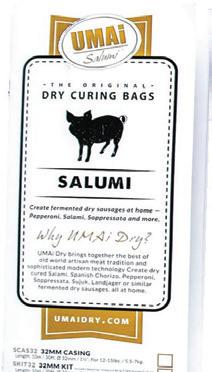
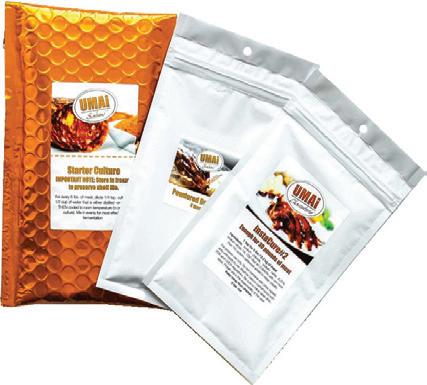
Create dry aged steak and cured meats from home!
Whether you’re preserving whole muscle for charcuterie or grinding coarse for fermented salumi, our time-honored spice blends, easy starter kits, and UMAi Dry® technology make it safe and simple to cure like a pro!
OLD-SCHOOL SKILLS IN NEW FORMAT
Through video courses and in-person training, American Gunsmithing Institute teaches professionallevel firearms repair and more.
PHOTOS BY AMERICAN GUNSMITHING INSTITUTE
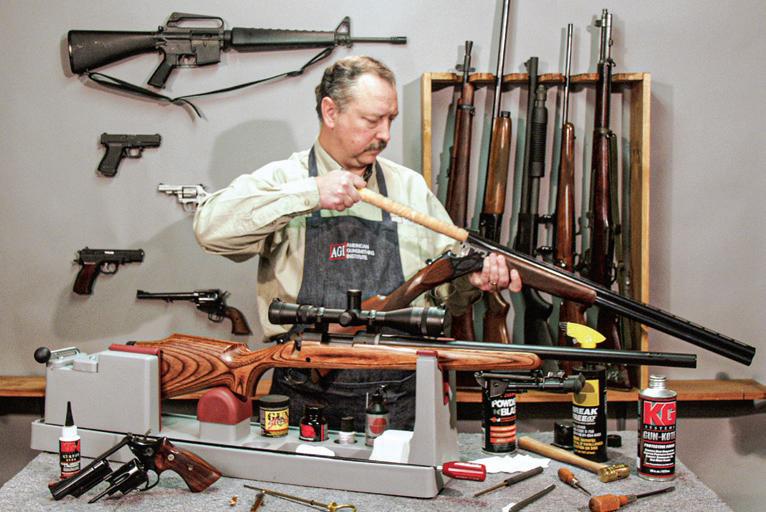
American Gunsmithing Institute teaches individuals how to become certified professional gunsmiths so that they can safely repair, maintain and customize firearms of all types – pistols and revolvers, shotguns, centerfire rifles and rimfires – from the comfort of their home by using AGI’s self-paced courses. They also have courses for hobbyists who want to work on their own firearms.
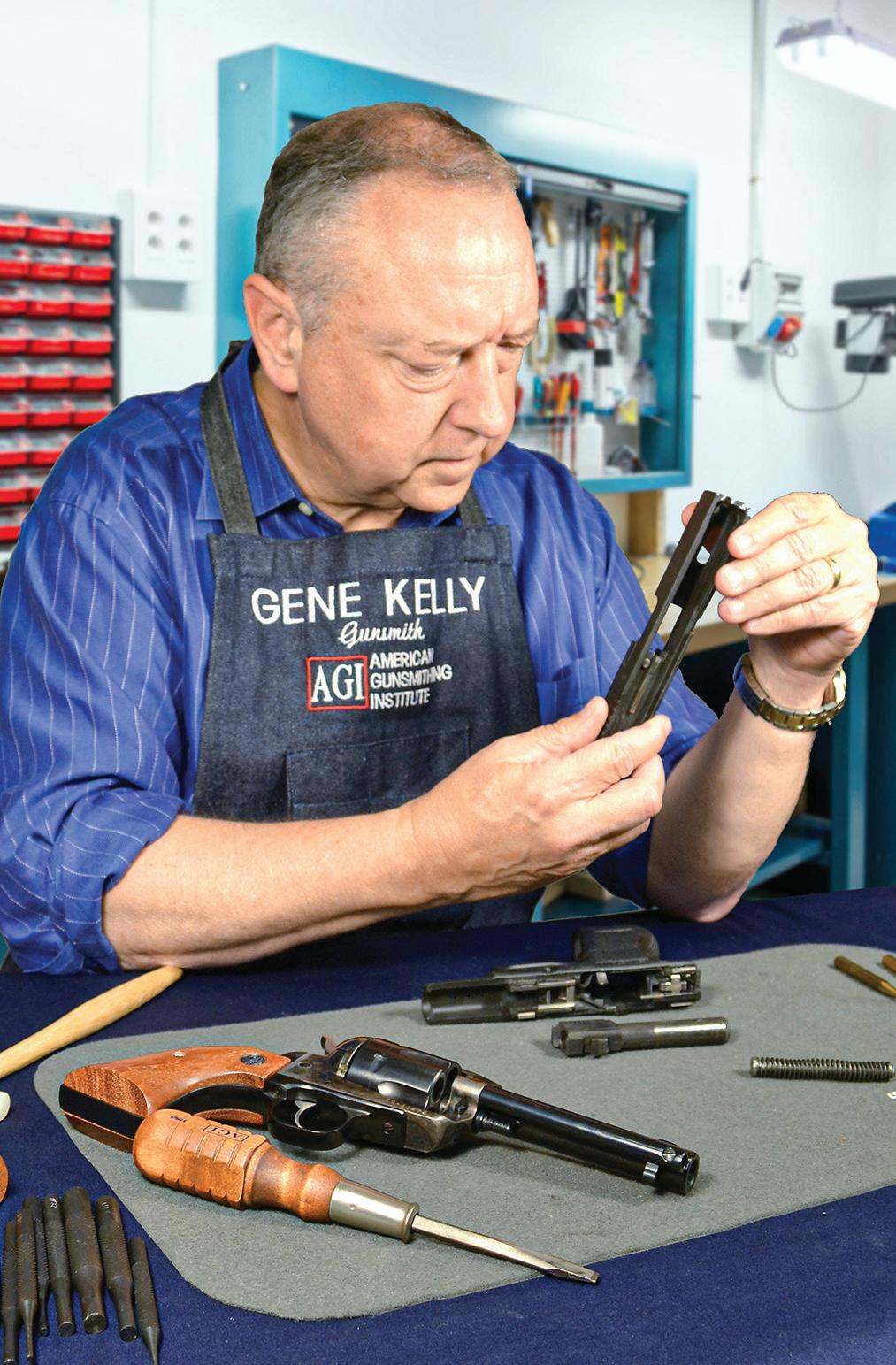
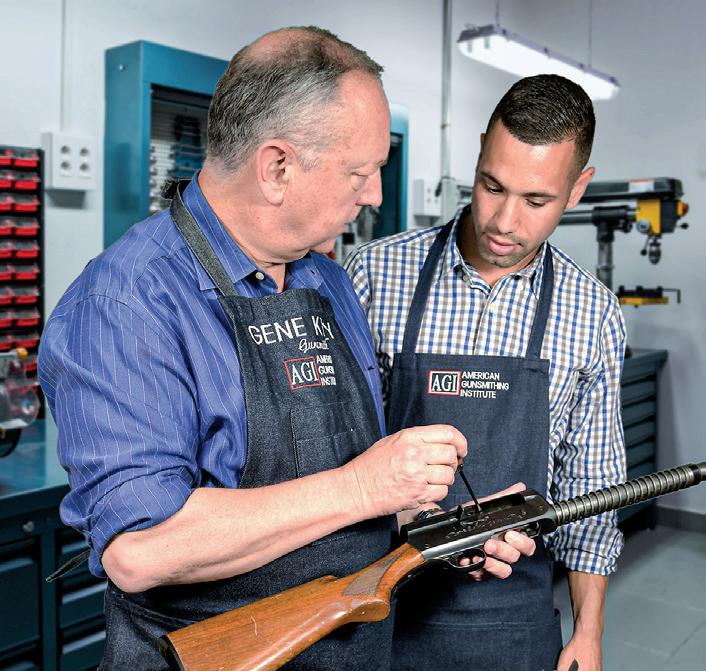
But AGI’s story – and that of its president and founder Gene Kelly –starts more than three decades ago. After attending gunsmithing school and studying under Grand Master Gunsmith Bob Dunlap and learning his exclusive Firearms Design, Function, Repair and Customizing, or DF&R, methodology, Kelly worked as a gunsmith and then started his own firearms and accessories manufacturing company.
Over the years, many people asked Kelly if there was a gunsmithing school where they could study the same level of professional gunsmithing, but from home. No other gunsmithing school was teaching at this level, so to come up with a solution, Kelly worked with Dunlap to create a professional gunsmithing home study course using video instruction to teach the DF&R method in a self-paced format. The American Gunsmithing Institute was born in September 1993.
THE DF&R METHOD focuses on teaching the various systems under which most firearms operate. This method allows students to develop critical thinking skills so that they can analyze any
Gene Kelly, president and founder of American Gunsmithing Institute.
COMPANY SPOTLIGHT
firearm, even one they have never previously seen before, understand the systems that it uses, determine where the failure or breakdown occurred, and then be able to make the appropriate repair.
This method has become AGI’s core philosophy because “you can’t fix it unless you truly understand how all of the systems and subsystems that the gun uses work together,” explains Kelly.
“Each individual repair may be different depending on the systems used and the presentation of the problem,” he continues. “This approach is real gunsmithing, not ‘part-swapping’ like most schools teach. Our students are capable of repairing, and even making parts, not just replacing them. Using video instruction, AGI students learn faster, see closeups that they would miss in a classroom, and which enables the student to review the material whenever needed.”
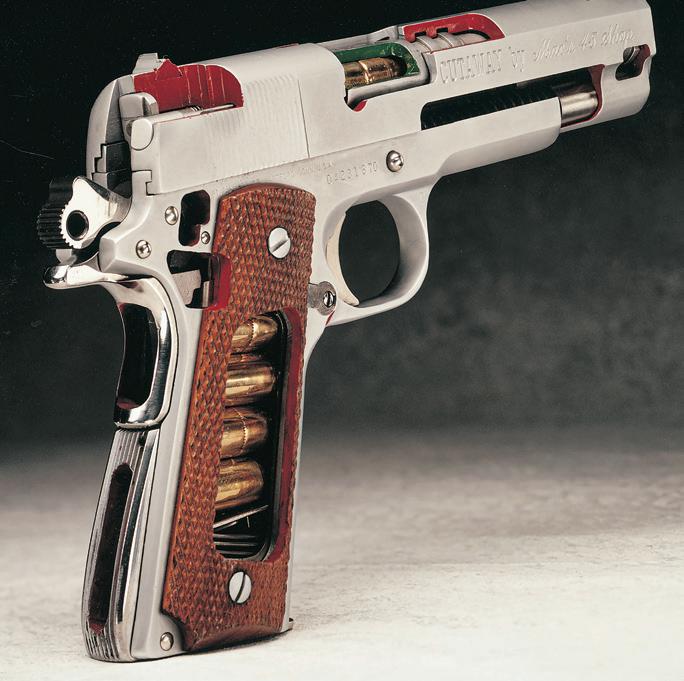
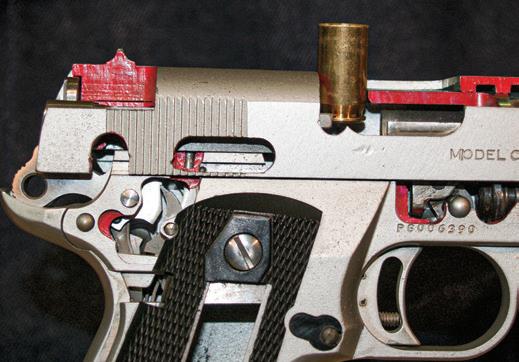
Students appreciate the detailed explanations of how firearms actually work as they are shown step-by-step, with
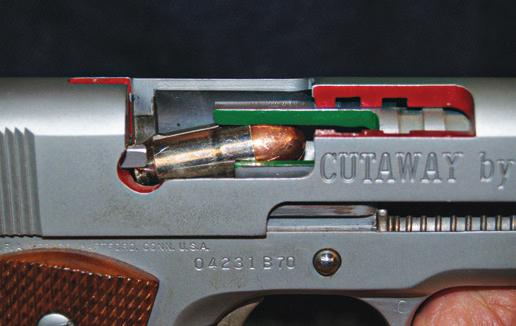
demonstrations using cutaway firearms so that everything is clear, along with benefiting from the personal observations and in-depth experiences of AGI’s master gunsmith instructors. Students also have access to the Gunsmithing Club of America (GCA), which contains hundreds
of hours of additional video training, bench tips, discussion forums, industry partners discounts and more.
According to Kelly, after completing AGI’s Certified Professional Gunsmithing course, students will be able to “pick up any firearm, analyze
Kelly at his work bench, demonstrating cleaning a firearm.
A cutaway of a 1911 illustrates AGI’s core philosophy: “You can’t fix it unless you truly understand how all of the systems and subsystems that the gun uses work together,” says Kelly.
Two common failures students learn how to repair include a stovepiped casing (above) and threepoint bind (below).
COMPANY SPOTLIGHT
the systems that it uses, determine the breakdown and make the appropriate repair. That is real gunsmithing and leads to a successful career as a gunsmith.”
Over the last 33 years, AGI has continued to add new courses and update courses, and as a result it is now the highest rated gunsmithing school in the United States, according to students posting on Google Reviews. In addition to certified professional gunsmithing courses, AGI offers advanced customizing courses and individual firearm-specific armorer course training on 68 different firearm families applicable to millions of guns. They also teach needed support skills with courses in machining and welding along with training individuals to get their Federal Firearms License (FFL), and Firearm Dealer Business Success Training. Small-group, hands-on gunsmithing courses are also available. ★
Editor’s note: For more information, visit americangunsmithinginstitute.net.
Working with a student during one of AGI’s weeklong hands-on classes.
MAKING THE CUT
FIREWOOD – AND ALL ELSE – BEWARE
Hardcore Hammers forges American craftsmanship into every axe, hatchet and more.
In an era of disposable gear, overseas manufacturing and tools that lack character and connection, Hardcore Hammers stands apart. The company leans hard into traditional craftsmanship, rugged performance and unapologetic American pride.
Founded in 2010 by brothers Rick and Steve Spencer, builders with decades of hands-on carpentry and framing experience, they set out to create the perfect hammer, believing that a tool isn’t truly proven until it has been pushed to its limits.
This family-run company has earned a reputation for making hand tools that don’t just look tough – they are tough. Hardcore Hammers started with professional-grade hammers and hatchets, then expanded into a lineup of axes designed for serious outdoor and woodcraft use. From camp-ready hatchets to full-sized workhorses, every tool reflects a commitment to durability, balance and practical performance in the field.
At the core of Hardcore Hammers’ philosophy is American-made craftsmanship. Axe heads are forged from 4140 alloy steel, a medium-carbon steel known for its strength and fatigue resistance. This combination ensures durability while maintaining versatility, making the axes suitable for chopping, splitting and general camp chores. Handles are crafted from grade-A American hickory, prized for its strength, shock
STORY AND PHOTOS BY PAUL PAWELA
Hardcore Hammers’ Camp Companion axe features a 26-ounce 4140 alloy steel head and 16-inch grade-A hickory handle.
MAKING THE CUT
absorption and classic feel. Rather than mass-producing overseas, Hardcore Hammers builds in small batches, prioritizing quality control and consistency over volume.
HARDCORE HAMMERS OFFERS several axes in its lineup, including the Camp Companion, Ranger, Raptor, TR Series Original Boy’s Axe and Para Bellum Tactical Axe. Many versions of the Camp Companion feature a hammercapable poll at the back of the axe head that allows you to drive tent stakes or wedges without carrying a separate hammer. Each comes with a sturdy American hickory handle that offers a comfortable grip and classic aesthetic on the trail.
Enthusiasts and reviewers praise the Camp Companion for its compact size and impressive performance. It excels at tasks ranging from processing kindling to driving gear into the ground. The axe head often receives protective treatments, like FNC coating, to enhance corrosion resistance and reduce friction, ensuring reliability even under wet or demanding conditions. For weekend campers or dedicated outdoorspeople, this tool aims to replace multiple single-purpose implements with one well-balanced, heavy-duty companion.
While the Camp Companion embodies versatility, the Ranger series has become a centerpiece for many Hardcore Hammers users. Designed to bridge the gap between lightweight camp axes and heavy splitting mauls, the Ranger is the largest and most versatile axe in the lineup. It’s built to handle felling, splitting and general wood processing with equal confidence, combining durability and adaptability in a way that’s increasingly rare in modern tools.
The Ranger features a massive 4-pound head that delivers serious cutting power without feeling unwieldy. Buyers can choose between 28-inch or 36-inch hickory handles, tailoring the axe to their size, strength and preferred balance. The longer
Author Paul Pawela recently put a Camp Companion to the test by taking apart old fencing and a fence post and cutting through tree roots and a large limb during a backyard renovation project.
MAKING THE CUT
handle maximizes leverage and swing momentum, while the shorter option offers precision for detailed work. Each Ranger comes with a top-grain leather sheath for safe transport and storage, and the axe head is backed by a lifetime warranty, an uncommon promise that speaks volumes about the company’s confidence in its craftsmanship.
On paper, the Ranger checks all the right boxes. In practice, it earns its reputation as a true workhorse. Its weight and geometry allow it to efficiently process small to medium trees, split stubborn rounds for firewood, and manage a wide range of outdoor tasks without constant tool changes. Where most axes fall into either “camp toy” or “brute-force splitter” territory, the Ranger occupies the middle ground – heavy enough for serious work but versatile enough for daily use around a homestead, campsite or woodlot.
THE LEGACY OF the axe runs deep. During the frontier days, axes were indispensable to settlers, serving far beyond chopping wood. They cleared forests for farms, felled trees for cabins and fences, split firewood for warmth and cooking, and shaped logs into beams and shingles. A wellmade axe could mean the difference between surviving a harsh winter or going without shelter or fuel. On the frontier, the steady rhythm of an axe striking wood symbolized progress, a physical manifestation of determination and self-reliance.
Today, whether you’re splitting firewood for winter, clearing trails, setting up camp deep in the woods, or working timber on your own land, Hardcore Hammers aims to make tools that turn effort into satisfaction. For those who value high-quality materials, domestic manufacturing and tools that feel like long-term partners rather than short-term
purchases, the appeal is clear. I recently had the opportunity to put the Hardcore Hammers Camp Companion Axe to use. Alongside my two brothers-in-law, we replaced an old fence, using the axe to cut through roots, dismantle a large hanging tree limb and break apart a fence post. The Camp Companion managed every task with ease, making quick work of the job.
I can confidently recommend the Camp Companion Axe and all Hardcore Hammers products for anyone seeking durable, Americanmade tools built to last. ★
Editor’s note: For more information about Hardcore Hammers and their full product lineup, visit hardcorehammers.com. Author Paul Pawela is a nationally recognized firearms and self-defense expert. For his realistic self-defense training, see assaultcountertactics.com.