TMC hailed ‘Overall Top Taxpayer’ in Claver for 2023
See page 11


TMC hailed ‘Overall Top Taxpayer’ in Claver for 2023
See page 11
MANILA— Listed natural resources development company Nickel Asia Corp. (NAC) has announced its collaboration with board portal provider Azeus Convene ESG as part of its digitalization strategy.
The move comes as NAC continues to ramp up initiatives toward achieving its sustainability goals. This also makes the Company the first in the mining industry to embrace such an innovative approach in handling data, especially geared towards ESG.
“We’ come a long way from the tradition of manual spreadsheets, transitioning to technological-driven processes to ensure efficiency in the realization of our sustainability ambitions,” said Jose Bayani Baylon, NAC Chief
| page 14


By Gigie Arcilla Editor-in-chief
MANILA – Over a span of two decades, from 2002 to 2027, mining companies have channeled a staggering P31.81 billion into community projects, impacting over 1,160 barangays across the country.
“Mining companies have made substantial contribu -
tions to local communities through its Social Development and Management Program or SDMP. Additionally, the industry’s environmental commitments have been significant,” said
Atty. Mike Toledo, chairperson of the Chamber of Mines of the Philippines.


MANILA – The Department of Environment and Natural Resources (DENR) is preparing to fully launch a digital application platform for mining permits across all regions next year.
DENR Undersecretary Carlos Primo C. David announced the planned rollout at a forum hosted by the Chamber of Mines of the Philippines recently.
According to David, the platform—currently being piloted in three regions—aims to streamline and accelerate the mining permit application process, reducing the timeline by at least two to three years.
He noted that the new system will include digital applications for Environmental Compliance Certificates and other essential permits.
“Our first commitment is to bring the application period to under two years. While still lengthy, it’s a significant improvement from the six to 11 years some applicants currently face,” David said.
Additionally, the DENR intends to shift to a parallel
processing model by next year, allowing for simultaneous approval of requirements that do not depend on prior authorizations.
This approach marks a departure from the existing sequential process, which often slows down permit issuance.
In a recent Senate bud -
MANILA – Environ -
ment Secretary Maria Antonia Yulo Loyzaga has called on local government units (LGUs) to use the geohazard map of the Department of Environment and Natural Resources - Mines and Geosciences Bureau (DENR-MGB) to minimize casualties during severe weather conditions.
During a briefing at the Office of Civil Defense (OCD) in Camp Crame earlier this month, Loyzaga cited the importance of using the list of areas prone to flooding and landslides during the pre-emptive and forced evacuation.
“Sana ay gamitin ito ng
mga local officials natin dito sa pag-desisyon ng pre-emptive evacuation at kung saan dapat siguro maging mas ligtas ang mga kabarangay natin dito sa local government (I hope our local officials will use the map in making decisions on preemptive evacuation and where our people would be safer in the local government),” she said.
Loyzaga said the list of flood- and landslide-prone areas in the MGB’s geohazard map is regularly updated, based on recent data from the Philippine Atmospheric, Geophysical and Astronomical Services Administration (PAGASA).
She said the list includes
get hearing, the DENR revealed plans to issue up to 715 mining contracts, assuming full compliance with application requirements. (MJ)

villages likely to experience landslides and deep floods. Loyzaga said typical landslide-prone areas are those near mountainous slopes, while those localities near coastal areas, rivers, and low-lying areas have a high possibility for flooding. (PNA)
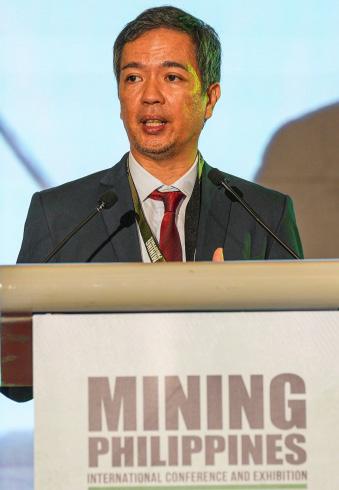
DENR Undersecretary
Carlos Primo C. David
MANILA – The Department of Environment and Natural Resources (DENR) and the Department of Finance are drafting an executive order (EO) to establish a clear mining royalty policy, aiming to resolve legal ambiguities and streamline interactions between mining firms, local government units (LGUs), and indigenous communities.
DENR Undersecretary Carlos Primo C. David said the EO, set to be presented to the Office of the President this month, will include a “ceiling” on royalties to avoid arbitrary rates.
“Without a ceiling, royalties could range from 1% to 100%. This is something we must address,” David explained during a recent event hosted by the Chamber of Mines of the Philippines (COMP).
The proposed EO aligns with President Ferdinand R. Marcos Jr.’s call for swift legislative action on the Rationalization of the Mining Fiscal Regime bill, designed to create a fair and sustainable environment for mining investments.
COMP Chairman Mike Toledo voiced optimism that the bill could pass this year.
He emphasized the need for long-term policy consistency, suggesting the new framework should clarify the roles of national and local governments and improve indigenous community management.
Toledo added that expediting permit approvals and reducing application steps, through online tracking of pending applications, would support efficiency.
To minimize regulatory conflicts, Toledo recommended standardizing LGU powers to prevent local ordinances from disrupting mining
DENR | page 14

of us who live far from mining operations.
WHETHER you’re living in a mining community or you’re wary of the environmental impact of mining, the reality is this: minerals play a significant role in nearly every aspect of modern life. From the smartphones we rely on to the solar panels driving sustainable energy, the minerals extracted from Philippine soil impact us in more ways than we realize.
The debate on mining is as heated as ever in the Philippines. On one side, mining communities argue that mining operations fuel local economies, provide jobs, and support livelihoods. On the other, skeptics cite environmental degradation, loss of biodiversity, and safety concerns. However, what’s often missing from these debates is a balanced look at the benefits that mining provides—not just to miners, but to everyone, including those

JACOB L. ARROYO
President & Chairman of the Board
EDITOR-IN-CHIEF
Gigie Arcilla
EDITOR-AT-LARGE
Danilo Adorador III
CIRCULATION
Daniel Job Tecson
SALES & MARKETING
Maria Mycca Sitoy
CORRESPONDENTS
Chris Panganiban
Alexander D. Lopez
Che Palicte
Nef Luczon
Stephen Capillas
Vanessa Almeda-Azura
Contact:
Editorial: editors@miningjournal.org Sales: sales@miningjournal.org
Mining Journal Philippines is published by the 3AD Publishing Corporation with SEC Registration No. 2024060155339-01
Most of us don’t realize just how intertwined our daily lives are with minerals. Your phone, laptop, electric vehicles, and even the bridges and buildings around you are constructed using metals like copper, nickel, and iron. These minerals don’t magically appear—they’re extracted from the ground through mining. Without mining, much of our modern infrastructure would be impossible. Even renewable energy technology—solar panels, wind turbines, and electric batteries—relies on the continuous supply of mined resources.
For mining communities, the industry offers more than just raw materials—it’s a lifeline. Mining operations provide thousands of jobs, directly and indirectly supporting families across the country. In regions like Caraga and Zambales, mining activities have brought not only jobs but also infrastructure developments, from schools to roads, that benefit the wider community. These economic benefits trickle down to non-mining regions as well, boosting national growth and development.
The key question we need to ask is not whether to mine or not, but how we can mine responsibly. Recent strides in sustainable mining practices show that it’s possible to minimize the

WE
environmental impact while maximizing economic gains. Companies are now investing in technologies that reduce waste, rehabilitate mined land, and protect biodiversity. This approach offers a middle ground where both sides of the debate—proand anti-mining—can find common ground.
As the demand for greener technologies grows, so too will the demand for the minerals required to build them. The push for electric vehicles and renewable energy is fueling a need for metals like cobalt, lithium, and nickel. These minerals are abundant in the Philippines, positioning the country as a potential leader in sustainable mining, contributing not just to local development, but to global environmental solutions.
Mining may not be without its challenges, but it’s an industry that underpins much of what we depend on daily. Instead of rejecting it outright, we should advocate for responsible practices that ensure both economic and environmental sustainability. As we move forward, let’s take a hard look at how mining can continue to play a vital role in shaping our lives— for the better.
By bridging the gap between mining’s undeniable benefits and its environmental concerns, we can foster a more informed and balanced conversation that serves both mining communities and skeptics.
FROM YOU. Got insights, experience, or a fresh perspective on mining? Mining Journal wants to hear from you! Whether it’s an incisive commentary, a deep-dive feature, or a thoughtprovoking essay, this is your chance to shape industry conversations and showcase your expertise. Why share? Because the mining industry deserves to hear from those who live and breathe it. Reach decision-makers, inspire your peers, and influence the future of our industry – all with your own words.
Let’s dig deep and make your voice count! Email your contributions to editors@miningjournal.org.

(Excerpts from the speech given by Dinagat Islands Gov. Nilo P. Demerey Jr. during the 7th Caraga Mining Symposium and Safety Competition in October 2024)
Our theme this year, “Minerals Industry: Driving Innovations, Sustainability, and Resilience Towards a Better Tomorrow,” is not only timely but essential. It captures the essence of what we strive for,
not just as miners or corporate entities, but as stewards of the environment and champions of our communities.
As someone who has had the privilege of serving as Vice President of the Caraga Chamber of Mines and President of CREDO-Caraga, I can attest to the significant strides we’ve made in ensuring that our industry prioritizes both environmental integrity and socio-economic development. These roles gave me a unique perspective on the impact that responsible mining can have on local communities, the economy, and the very land we extract our resources from.
Looking back, it is impossible to overstate the importance of the work we’ve done. We have consistently set benchmarks in environmental protection, adhering to both national policies and international standards. Through partnerships with government regulators, our host and neighboring communities, and people’s organizations, we have proven that mining can be an engine for sustainable growth. This is something we should
all be proud of.
But let us be clear — none of this would have been possible without the dedication of so many people. From the workers who face the day-to-day challenges on the ground to the leaders of this industry who consistently push for higher standards, your commitment is what has made this sector a force for good.
To the people who have worked to turn our Social Development and Management Programs into a lifeline for countless communities, I applaud you. You have brought educational opportunities, health services, and livelihood projects to the forefront, changing the lives of many. You are the pillars upon which these communities build their future.
Today, we stand at a crossroads — and we have a choice. Do we continue to be merely extractors of wealth, or do we become catalysts for innovation and champions of resilience? The answer is clear: we must continue to drive innovation in our industry. We must embrace
DEMEREY | page12
Dear Readers,
Welcome to the inaugural issue of Mining Journal Philippines, your new, dedicated source for the latest news, insights, and developments in the mining industry. It is with great excitement and pride that we launch this bimonthly publication, designed to serve as an information vehicle for the public to better understand the multifaceted world of mining and its significant contributions to our nation.

tional development, generating employment, fostering local economies, and contributing to the country’s GDP. However, beyond the economic contributions, mining has the potential to drive sustainable development and uplift communities through responsible practices.
The state of the Philippine mining industry today is one of both challenge and opportunity. As we navigate regulatory landscapes, environmental concerns, and global market dynamics, it is imperative that we maintain a commitment to responsible mining. This means not only adhering to legal and environmental standards but also engaging in practices that ensure the long-term welfare of our host and neighboring communities.
The mining industry is a vital part of the Philippine economy, providing essential minerals that fuel various sectors, from manufacturing to technology. As an industry, it plays a crucial role in na-
Our goal with the Mining Journal is to raise awareness about the positive impacts of mining, highlighting the industry's advancements, best practices, and contributions to societal progress. Through in-depth articles, interviews with industry leaders, and reports on community development projects, we aim to provide a comprehensive perspective on how mining is shaping our country's
Responsible mining is about more than just extracting resources; it is about stewardship, transparency, and a commitment to the greater good. Similarly, responsible journalism is about more than just reporting news; it is about providing balanced, accurate, and insightful information that empowers the public to make informed decisions.
At the Mining Journal, we are dedicated to upholding the principles of
| page 12
TUBAY, Agusan del Norte — Agata Mining Ventures, Inc. (AMVI) has launched a pioneering agrotourism and eco-hub on a former mining site, marking a first in the Philippine mining industry.
Named the Agata Nature Farm, the eco-hub is developed under the Final Mine Rehabilitation and Decommissioning Program, transforming the land into a sustainable center for agroforestry and eco-tourism.
Agata’s new hub aims to attract tourists and promote local agriculture, encouraging biodiversity conservation and economic opportunity for surrounding communities.
In collaboration with the local government units of Jabonga, Santiago, and Tubay, as well as the Indigenous Peoples (IP) community leaders, Agata designed the eco-hub with a focus on sustainable land rehabilitation that reflects community needs.
The unveiling event, cel -
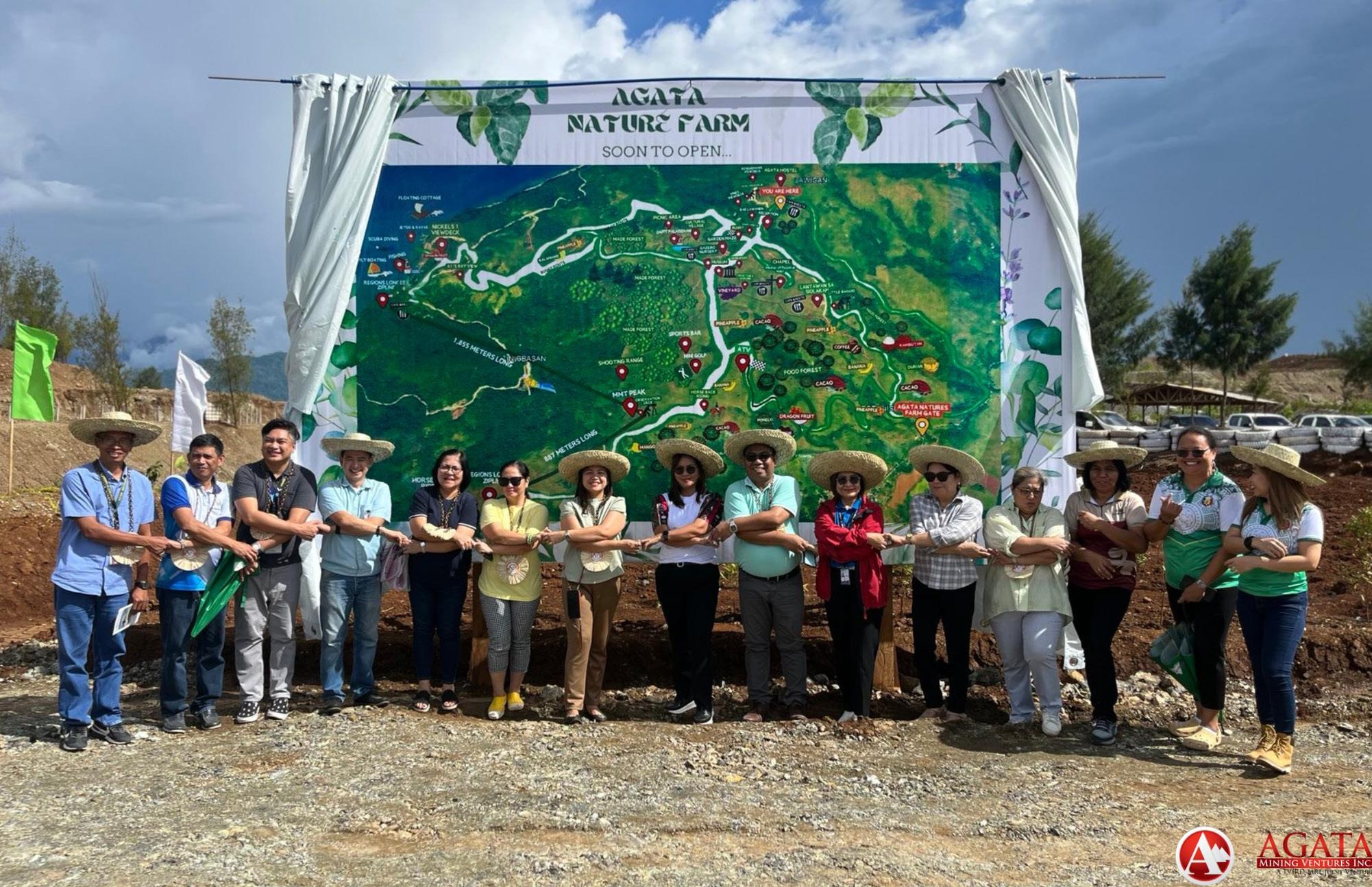
ebrated with community and government support, underscored Agata’s commitment to responsible land rehabilitation

Misconception: Mining always results in irreversible environmental destruction.
Fact-Check: While mining does have significant environmental impacts, it doesn’t always lead to irreversible damage. Sustainable mining practices, including responsible waste management, reforestation, and rehabilitation plans, can help mitigate environmental harm. In the Philippines, the Mining Act of 1995 and recent DENR regulations require mining companies to conduct environmental impact assessments and set aside funds for land rehabilitation. Some mining companies in the country have successfully restored ecosystems in former mining areas, demonstrating that it is possible to mitigate and rehabilitate environmental impacts when regulations are enforced and followed.
and set a new standard for environmental stewardship.
Attendees included representatives from the Department of Tourism (DOT), Mines and Geosciences Bureau (MGB XIII), Department of
Environment and Natural Resources (DENR), and the National Commission on Indigenous Peoples (NCIP).
A memorandum of understanding was signed with the
AGATA | page13
MANILA — Apex Mining Co. Inc., led by tycoon Enrique Razon, reported a significant 33% increase in its net income for the first nine months of the year, boosted by strong gold prices and higher ore processing volumes.
The company recorded a net income of ₱ 3.07 billion from January to September, up from ₱2.31 billion in the same period last year. Revenues during the period jumped nearly 25% to ₱10.84 billion, compared to ₱8.73 billion in 2023.
Apex Mining president and CEO Luis Sarmiento attributed
the company’s performance to its team’s focus on operational efficiency and productivity despite challenges. He noted that elevated gold prices and increased ore milling were key contributors to the growth.
The company’s revenue boost was largely driven by higher realized gold prices. Apex Mining sold 78,105
APEX | page13

CAGDIANAO, Dinagat Isands — Community-focused initiatives by Cagdianao Mining Corporation (CMC) have resulted in 92 scholars successfully earning college degrees, part of a broader drive to support long-term social and economic resilience within local communities. These graduates, now employed in various professional sectors, represent CMC’s commitment to empowering individuals through education as a pathway to selfreliance and community development.
CMC’s educational assistance program, conducted under the Social Development and Management Program (SDMP), supports students from daycare to college.
To date, the program has aided 1,827 students, reinforcing the company’s goal
of improving literacy and employment opportunities for residents. By prioritizing education as a key community investment, CMC aims to strengthen the local workforce and contribute to economic stability in the region.
“Our educational initiatives are designed not just to support individual students, but to uplift entire families and communities,” said Rudilyn Horca-Velasco, CMC Community Relations manager.
“By helping scholars earn degrees, we hope to drive lasting improvements in employability and income security well beyond the life of the mine.”
CMC | page13



By Raven Darylle Mae Suarez
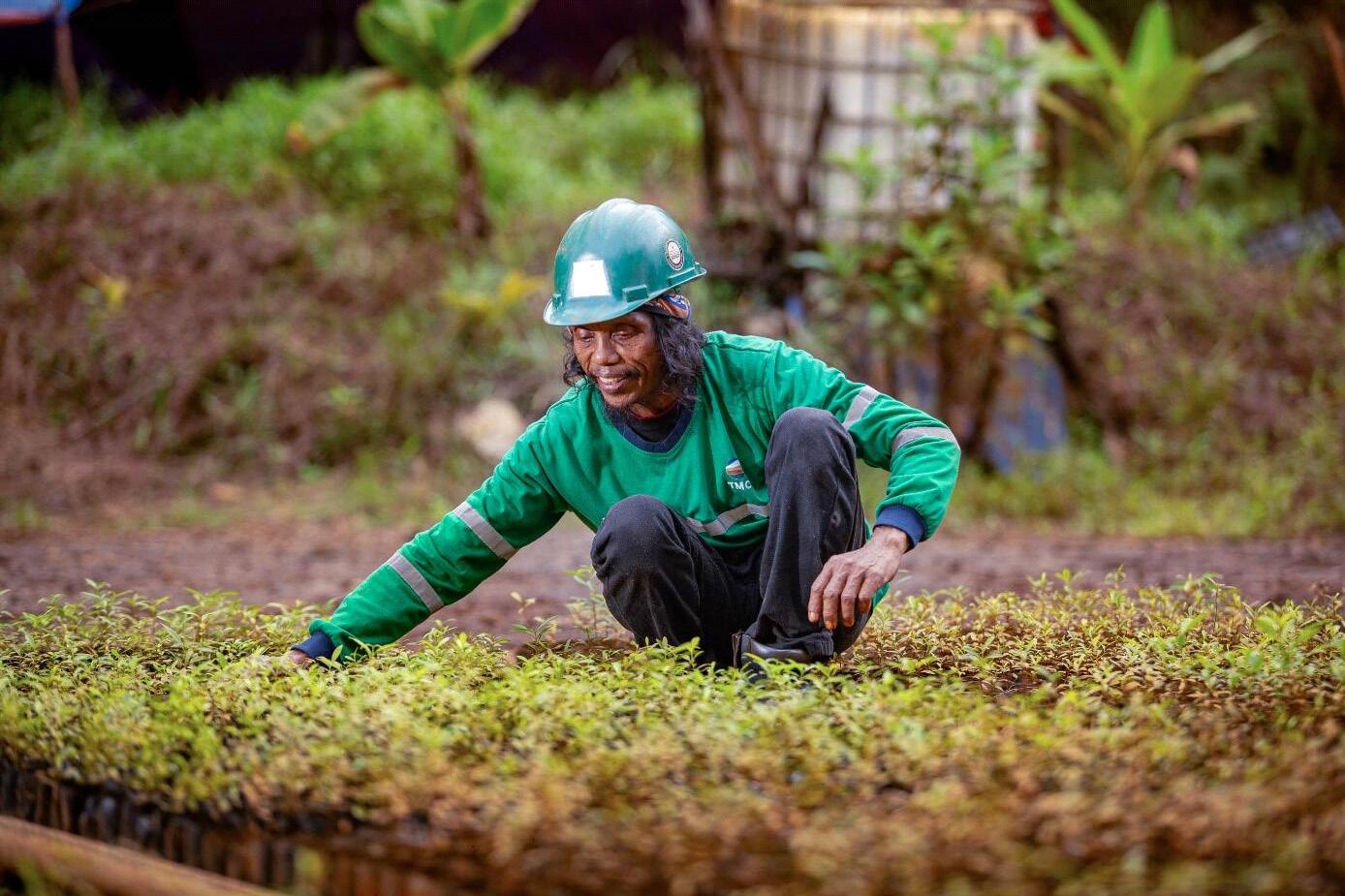
Taganito Mining Corporation’s (TMC) progressive rehabilitation and reforestation programs showcase the company’s commitment to environmental restoration, as seen through the experiences of its dedicated workers, which involve various teams and specialists.
Joy Cago, a nursery aide responsible for collecting, nurturing, and preparing seedlings at the Central Nursery,
ensures that the seedlings are in good shape before their scheduled planting. Joy, who has worked as a nursery aide since 2014, collects seedlings of native tree species such as Mangkono, Lauan, Bitaog, and other tree species. The seedlings are carefully cultivated until they are ready to be planted in the mined-out areas, a process that can take months of care and attention. Annually, nearly one million seedlings are produced in TMC’s four nurseries.
TMC’s approach to reha -
bilitation goes beyond simple tree planting; it integrates this effort into a broader environmental control and mitigation strategy, ensuring that for every hectare of mined-out land, an equivalent or greater area is rehabilitated.
Once the seedlings mature, reforestation aides take over, planting them in rehabilitated areas and ensuring they survive harsh conditions and thrive for years to come. This collective effort has led to the planting of over 7 million seedlings as of June 2024,
with continuous monitoring to ensure the growth of healthy forests.
TMC’s workers take pride in their roles, knowing they contribute to a healthier ecosystem. Their stories reflect a deep passion for their work, demonstrating that mining and environmental protection can coexist. Through their efforts, TMC has made significant strides in creating a sustainable and responsible mining operation, ensuring a lasting positive impact on the environment.

By: Agapito S. Cuadra Jr.
Taganito Mining Corporation (TMC) exemplifies how mining and eco-tourism can harmoniously coexist. Since the inception of its ecotourism initiatives in 2013, TMC has witnessed a significant increase in visitor numbers, showcasing the potential of integrating responsible mining practices with tourism development.
This year, TMC announces
the upcoming completion of additional ecotourism destinations that will enhance its offerings. Among these new attractions are the Pineapple Museum in Cagdianao, the Marine Education Center in Urbiztondo, and the Hobbit House in Urbiztondo Ridge. These innovative spaces are designed to educate visitors about local biodiversity and promote environmental awareness, thereby enriching the overall visitor experience.
These new attractions complement TMC's existing array of ecotourism destinations, which includes the Mt. Mayon Replica, Chocolate Hills Replica, Mines View Deck, Rock Garden, Lantaw Bay Garden, Botanical Garden, and Umahan Sa Minahan. Each of these sites has been carefully designed to provide visitors with a unique glimpse into the natural beauty of the region while highlighting TMC's commitment to sustainable
practices.
Through these efforts, TMC is not only fostering ecotourism but also demonstrating that mining can coexist with ecological preservation, contributing positively to the local economy and environment. By promoting ecotourism, TMC reinforces its dedication to environmental stewardship while providing communities with valuable recreational and educational resources.
By CHRIS V. PANGANIBAN
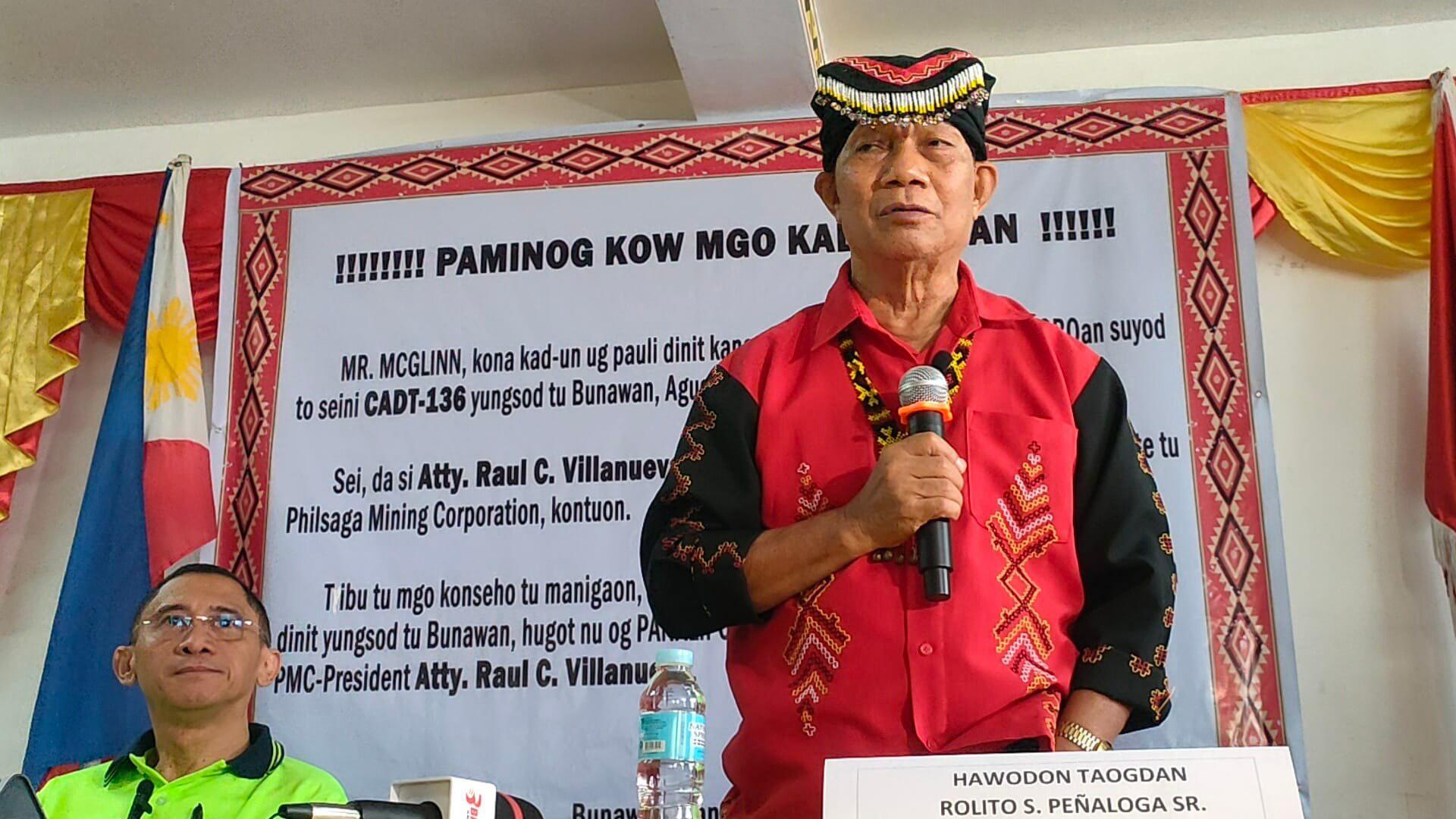
SAN FRANCISCO, Agusan del Sur -– A Manobo leader has refuted the claims made by a rival Manobo clan that a mining company has violated their rights to receive a fair share of royalty fee from ancestral lands currently being mined.
In a mobile phone interview on Tuesday night, Hawodon Taugdan Rolito Peñaloga, chieftain of the Bunawan Manobo Ancestral Domain Council, Inc. (BMADCI), said the Hallasgo and Rodrigo clan led by Mary Jean Rodrigo Hallasgo, who is residing in Barangay Consuelo and San Andres in Bunawan, has no legitimate claim to the one percent royalty from the gross annual income of Philsaga Mining Corp.
Peñaloga explained that a thorough validation by the National Commission on Indigenous Peoples (NCIP) deemed the Hallasgo clan as migrants, despite their assertions of long-standing ties to the area as sacred hunting grounds prior to the arrival of Philsaga.
“The NCIP conducted a detailed genealogy of the Rodrigo and Hallasgo Manobo clan, which revealed no valid generational roots,” Peñaloga noted.
“In our case, we waited 10 years for the NCIP to process our claims before we were granted our CADT (Certificate of Ancestral Domain Title) 136,” he added.
CADT refers to a title formally recognizing the rights of possession and ownership of indigenous peoples over their ancestral lands.
The Philippine Nickel Industry Association (PNIA) has announced a PHP 4.3 billion investment from its members for 2023, aimed at advancing key Sustainable Development Goals (SDGs) that foster community development and resilience through their Environmental Enhancement and Protection, Social Development and Management, and Corporate Social Responsibility Programs.
This announcement was made in commemoration of the 9th anniversary of the
United Nations’ adoption of the SDGs on September 25, underscoring the sector’s commitment to sustainable practices as the 2030 deadline approaches.
The investments were implemented across multiple host and neighboring cities and municipalities in 7 provinces, including Zambales, Palawan, Surigao del Sur, Surigao del Norte, Dinagat Islands, and Tawi-Tawi, directly benefiting communities surrounding the mining sites of PNIA members.
This funding, channeled through Social Development and Management Programs (SDMP), Environmental Protection and Enhancement Programs (EPEP), and Corporate Social Responsibility (CSR) initiatives, underscores the nickel mining sector’s dedication to sustainable development in the Philippines. PNIA’s programs and projects support 15 out of 17 Sustainable Development Goals (SDGs), with a particular focus on Life on Land (SDG 15), No Poverty (SDG 1), and Good Health and Well-being (SDG 3).
If it’s not for nickel, you would still be holding a ridiculously bulky phone right now. Around 59 percent of the world’s nickel supply goes into battery production. Nickel in these batteries helps improve energy density, allowing for longer battery life and better overall performance. This means that without nickel, your smartphon’s battery would drain much faster, and the phone itself would likely be bulkier to compensate for lower energy density. Additionally, nickel’s resistance to corrosion makes it ideal for various internal parts in smartphones, where durability and reliability are key.
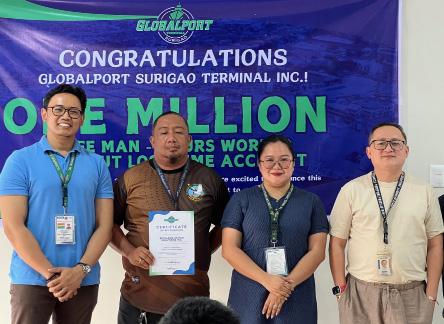
SURIGAO CITY, Philippines – Globalport Surigao Terminal Inc. announced it has achieved 1 million safe
GLOBALPORT | page 15
Globalport Terminals Inc. officials celebrate the 1 million safe man-hours milestone, reflecting the terminal’s effective safety protocols, including regular safety training, adherence to regulatory standards, use of personal protective equipment, and routine safety audits. (Supplied photo)
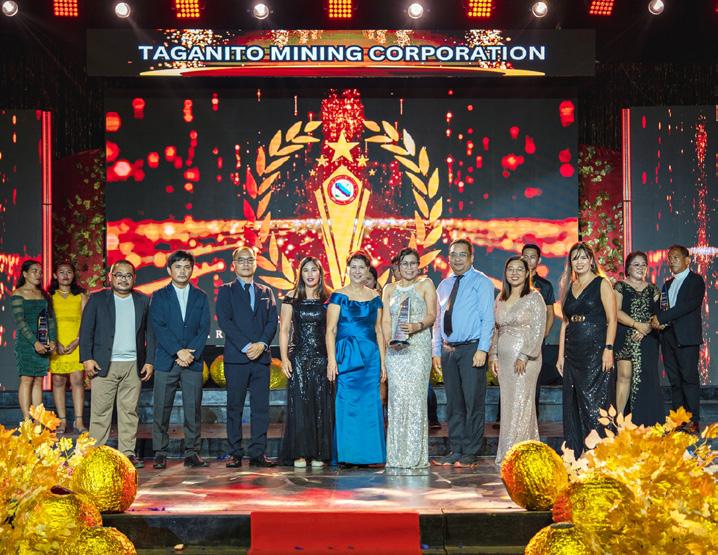
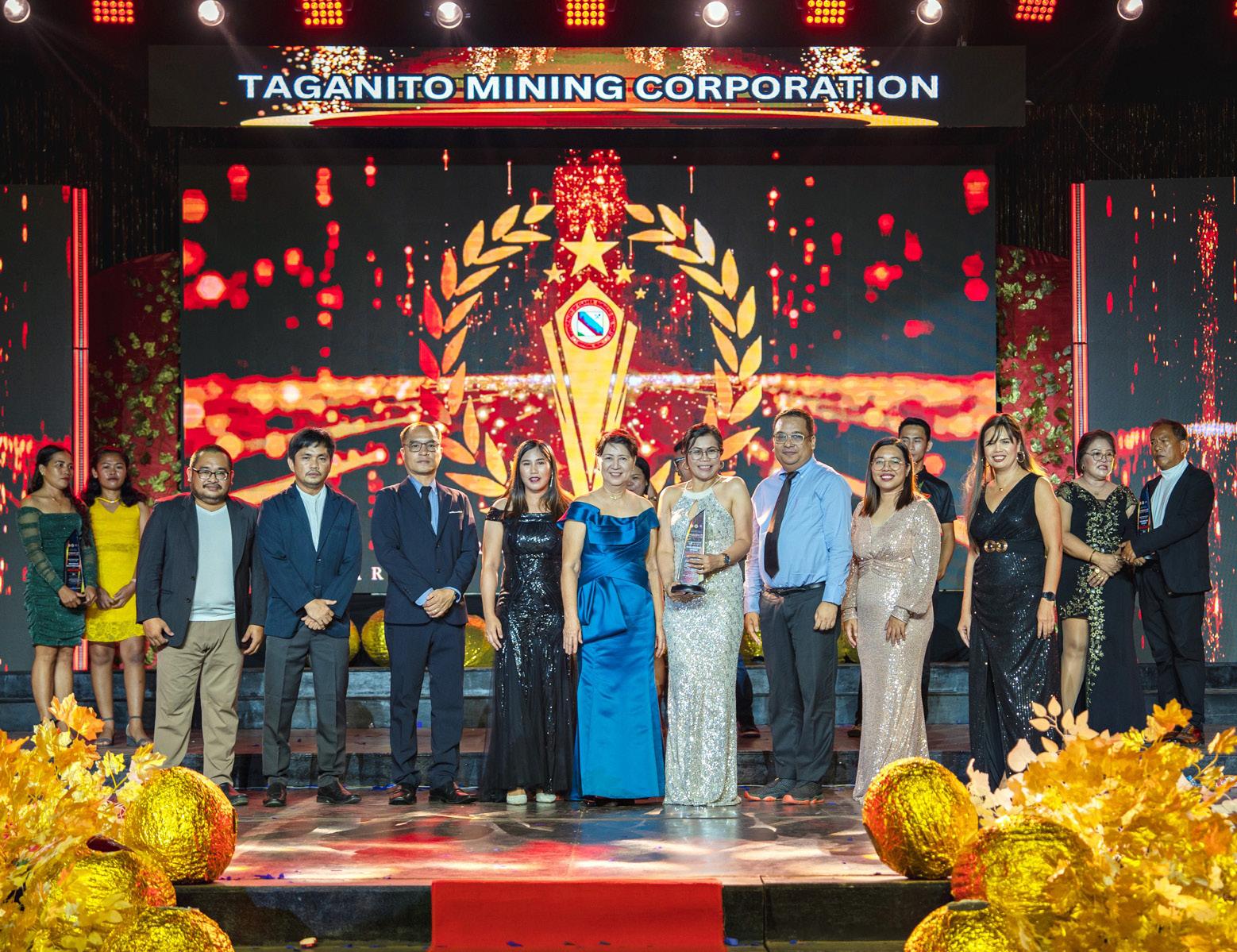
SURIGAO CITY – Recognizing the contribution of taxpayers to local economic growth, the Local Government Unit of Claver named Taganito Mining Corporation (TMC) as the Overall Top Taxpayer for 2023 during its Garbo nan Claver Awards and Stakeholders’ Night on September 7, 2024.
TMC also received the Top Taxpayer Award for the Mining Category, ranked 7th for the Mining Contractors Category, and was awarded the 2024 Sponsorship Award.
Organized by the Office of the Municipal TreasurerBusiness Permit and Licensing Division, the event recognized businesses that have consistently fulfilled their tax obligations, playing a vital role in the municipality’s growth and development.
Mayor Georgia Gokiangkee of the Municipality of Claver expressed her gratitude to the outstanding taxpayers and barangay treasurers in the municipality for their diligence in paying taxes, which benefits the municipality through projects and programs for the people of Claver.
“Tax is the lifeblood of the government. Kon wayay bu-
wis, waya sab kitay mahimo. Ugsa husto ra gajud na ato pasidunggan an ato mga taxpayers (If there is no tax, there is nothing we can do. So it is just right that we recognize our taxpayers),” remarked
Gokiangkee. This year, Claver emerged as the Overall Most Competitive Municipality in Caraga based on the Department of Trade and Industry assessments and the Regional
Competitiveness Committee for Cities and Municipalities Competitive Index in 2023. Claver also ranked 3rd for Overall Most Competitive LGU nationwide in the 1st to 2nd class municipality category. (PR)
MANILA — The Philippine Mine Safety and Environment Association (PMSEA) has joined forces with Business Sweden to advance sustainable mining practices in the country. The partnership, formalized through a memorandum of understanding (MOU), aims to enhance environmental protection and safety standards in the mining industry.
PMSEA president Luis R. Sarmiento, ASEAN Eng., reaffirmed the organization’s commitment to responsible mining, emphasizing collab -
CONTINUATION | from page5
sustainability as not just a word but a guiding principle. And we must ensure resilience, not only in our operations but in the people and communities that depend on us.
As we move forward, I see a future where the mining industry in the Caraga region sets the gold standard for sustainable practices in the Philippines and beyond. We have already laid the groundwork through our collective efforts, but we must now accelerate. We need to invest in cleaner technologies, strengthen our partnerships with local communities, and continuously enhance our safety protocols. We must work towards a future where every mine closure plan is also a blueprint for community development and environmental restoration.
To my fellow public servants, I say this: the policies we shape today will determine the legacy we leave
oration as a key factor in achieving industry-wide improvements. “PMSEA has consistently worked with international partners to strengthen our mining sector,” Sarmiento said. He also highlighted the annual Mine Safety and Environment Conference (ANMSEC) in Baguio, which serves as a platform for engaging stakeholders, including the diplomatic corps.
This year marks the 70th anniversary of ANMSEC, scheduled for Nov. 19-22 in Baguio City. Sarmiento noted the significance of having
behind. We owe it to our constituents to ensure that mining operations benefit the many, not the few. Let us ensure that our communities are left with legacies of development, education, and empowerment.
To the people of the Caraga region — the miners, the community leaders, the educators, and the youth — know that your future is bright. The resources we extract today must translate to a better tomorrow for each of you. We will continue to work hand in hand with you to ensure that you share in the prosperity, not only for the present but for generations to come.
In closing, let us not rest on our laurels, but instead take inspiration from what we have achieved and redouble our efforts toward an industry that drives not just progress but also sustainability and resilience.
Let’s build this future together. Thank you, and I look forward to what we will accomplish in the coming years.
Sweden as the event’s partner country during this milestone year.
Swedish representatives also underscored the importance of the partnership. Harald Fries, Chargé d’affaires of the Embassy of Sweden, called the collaboration a step toward a more sustainable future for both nations. State Secretary Håkan Jevrell highlighted Sweden’s commitment to addressing climate change while fostering economic growth.
Emil Akander, Vice President for South and Southeast
CONTINUATION | from page5
responsible journalism. Our mission is to offer you a reliable source of information that not only reports on the industry’s activities but also critically examines its practices, challenges, and successes. By doing so, we hope to foster a more inclusive and beneficial dialogue around mining and its role in our national development.
The link between responsible mining and responsible journalism is clear: both are essential to building trust, accountability, and progress. Responsible mining practices ensure that the industry contributes positively to society, while responsible journalism ensures that the public is wellinformed and engaged in the discourse around these contributions. Together, they create a foundation for sustainable development and social responsibility.
As we embark on this journey, we invite you, our readers, to join us in exploring
Asia at Business Sweden, outlined the joint project’s objectives, focusing on transitioning the Philippine mining industry to greener and safer operations.
PMSEA and Business Sweden aim to promote initiatives that enhance safety and environmental standards, reflecting their shared goal of driving sustainability in mining. This partnership represents a significant stride toward achieving more responsible and productive mining practices in the Philippines. (MJP)
the dynamic world of mining. Through the pages of the Mining Journal, we will delve into stories of innovation, community partnerships, and the ongoing efforts to balance economic growth with environmental and social stewardship.
We are excited to bring you this publication and look forward to your support and engagement. Let us work together to shine a light on the mining industry’s contributions and potential, and to build a future where responsible mining and informed journalism go hand in hand in driving national development.
Thank you for joining us on this journey. Welcome to Mining Journal Philippines.
CONTINUATION | from page 6
DOT, reinforcing Agata’s goal of fostering ecotourism and agriculture on reclaimed land.
The event featured “Tabo-an o Tiangge sa Agata,” a local market showcasing produce and marine goods from neighboring communities, while a groundbreaking ceremony for the historic Gazebo paid homage to the site’s legacy. Young entrepreneurs, the Agata Nit Bags, children of Agata employees, offered souvenirs, promoting community involvement.
Agata Mining’s transformation of the former nickel site into an agricultural and biodiversity hub signifies a shift toward sustainable post-mining practices, aiming to inspire further responsible initiatives across the industry. (MJP)
CONTINUATION | from page 6
ounces of gold at an average price of $2,359 per ounce, compared to last year’s 77,652 ounces at $1,939 per ounce. Gold revenues totaled ₱10.44 billion, a 19% increase from ₱8.38 billion in the same period last year.
Silver revenues also contributed to the growth, rising 17% to ₱404.3 million from ₱345.5 million in 2023.
Apex Mining’s Maco Mine processed 10% more ore this year, milling 657,975 metric tons from January to September, up from 597,443 metric tons in the same period last year. This increase in volume helped offset minor declines in the gold recovery rate, which stood at 85.2%, and gold grades, which averaged 3.58 grams per metric ton.
Despite higher production, the company saw an 18% rise in production costs, reaching ₱5.89 billion compared to ₱4.98 billion last year.
With gold prices remaining strong, Apex Mining continues to prioritize operational efficiency and resource optimization to sustain its growth momentum. The company remains optimistic about its ability to navigate challenges and capitalize on market opportunities. (MJP)
CONTINUATION | from page 10
The dispute over royalty claims involving Philsaga Mining arose after the Hallasgo clan sought assistance from ACT-CIS partylist Rep. Erwin Tulfo, alleging that they had been denied their rightful shares amid the ongoing mining operations in Bunawan.
In response, Tulfo stated that the inquiry aims to bolster Republic Act 8371 (Indigenous Peoples Rights Act) and Republic Act 7942 (Philippine Mining Act) to better protect the indigenous peoples. He emphasized that the mining activities of Philsaga Mining deplete the resources of ancestral lands, adversely affecting the indigenous cultural
CONTINUATION | from page 10
PNIA President Atty. Dante R. Bravo stated, “The contributions made in 2023 build on our findings from the 2020 SDG Report, reinforcing our commitment to SDG 15, SDG 1, and SDG 3 which are areas where mining is vital for sustainable development. Each year, we strive to align with sustainability, stewardship, and resilience principles to mitigate environmental impacts, alleviate poverty, and improve health outcomes for communities near mining operations. These goals are essential for the sustainability of both the environment and the communities we serve.”
Bravo further called for collaboration with local government units (LGUs) to streamline and maximize the implementation of mining company SDG programs to better complement LGU initiatives. “Mining is inherently
CONTINUATION | from page 7
Peijay Y. Guirnaldo, one of CMC’s scholargraduates who now works as a leadman at CMC-MEPEO, said he intends to give back by engaging in community is engaging community service, such as community cleanup and tree-planting activities.
“The CMC scholarship has helped me throughout the four years of academic studies. Financial barriers are never a hindrance after I became a CMC-SDMP scholar,” said Guirnald, a Bachelor of Science in Environmental Science graduate.
The success of CMC’s educational program is part of a larger framework focused on community resilience and sustainability. Livelihood projects, health programs, and environmental initiatives complement the educational support, each geared towards creating self-sustaining communities.
Health services, for example, include the distribution of essential medicines and the training of barangay health workers,
communities entitled to a royalty share.
Tulfo criticized the mining firm for allegedly disregarding the rights of the indigenous communities and delivering royalties to other sectors.
“It is essential to explore stronger measures that enable private entities to serve as public agents of the state in protecting the rights of indigenous peoples,” he added.
Peñaloga also pointed to former NCIP chairperson Allen Capuyan, who allegedly exacerbated the conflict by favoring the Hallasgo clan’s claims without allowing the BMADCI to present their side.
“We attended meetings with Capuyan where he only listened to the Hallasgos and didn’t give us the opportunity to share our side,” Peñaloga said.
a temporary use of land, which means that collaboration between LGUs, MGB, and mining companies is crucial for planning for the future. There is opportunity for further collaboration through maximizing the Corporate Social Responsibility (CSR) activities of mining companies to complement the programs of the LGUs in line with their local development goals,” Bravo said.
Under SDG 15, PNIA members’ progressive rehabilitation and other initiatives aim to minimize and mitigate its impact to the environment. In 2023, members planted over 4.3 million trees nearly 9500 hectares, comprising 76 different species, bringing the total to nearly 18 million trees to date of reporting. Partnerships with academic institutions like the University of the Philippines Los Baños have fostered innovation in forest restoration and bioremediation. Additionally, PNIA members have engaged in other initiatives, such as coastal clean-ups and river system adoption.
while livelihood programs focus on developing skills that ensure income security for families.
The community-centered approach has yielded strong social impacts, as evidenced by CMC’s Social Impact Assessment (SIA) results. Covering the years 2016-2020, the assessment rated the SDMP’s effectiveness at 89.47%, a marked improvement over the previous 81.29% from 2011-2015.
This achievement was made possible through close collaboration with the local government and national agencies, helping reinforce policies and ensure sustainable benefits for community members.
To maintain transparency and effectiveness, CMC involves local residents and representatives from various sectors in the planning, implementation, and monitoring of projects. Regular focus group discussions ensure that community voices shape the projects and that outcomes align with community needs.
Through its initiatives, CMC continues to demonstrate that responsible mining can foster socio-economic progress.
CONTINUATION | from page1

Abra Rep. Menchie “Ching” Bernos has called for a congressional investigation into the Mines and Geosciences Bureau’s (MGB) issuance of a mining exploration permit to Yamang Mineral Corporation (YMC) without securing approval from Indigenous Peoples (IPs) in Sallapadan, Abra. Bernos emphasized the serious potential impact on the local Tingguian community and the region’s environmental balance, questioning the lack of required consultation under the Indigenous Peoples Rights Act.

Philex Mining Corp. reported a 29 percent decline in core net income to P610 million for the first nine months of 2024, down from P864 million a year ago, primarily due to lower ore grades. EBITDA also dropped 7 percent to P1.42 billion. Despite these declines, Philex’s third-quarter income rose to P200 million from P163 million, with EBITDA reaching P506 million, up from P337 million in the same quarter of 2023. Higher average gold and copper prices partly offset lower grades, with gold averaging $2,115 per ounce and copper $4.52 per pound year-to-date. Total tonnage milled for the first nine months reached 5.04 million tons.
OceanaGold (Philippines) Inc. reported a third-quarter net income of $3.6 million on revenues of $102 million and announced a $0.0138 per share dividend, yielding about 20.6 percent annually, payable on Nov. 20. President Joan Adaci-Cattiling highlighted the company’s production growth, aiming for a 2 million-ton annual output by year-end, with gold and copper production each up 21 percent. OceanaGold also secured a five-year extension for its FTAA
exploration permit and revised its 2024 gold production guidance to 104,000108,000 ounces at an AISC of $1,000$1,100 per ounce.
Nickel Asia Corp. reported a 24.2% drop in third-quarter net income to P1.44 billion, impacted by lower sales, with revenues down 8% to P7.69 billion from reduced nickel ore and limestone sales. While services revenue fell 48.6%, power generation rose by 53.6%. CEO Martin Antonio G. Zamora expressed optimism for growth from new mines in Palawan and Eastern Samar, as well as infrastructure upgrades in Isabela. Additionally, Nickel Asia’s energy unit, Emerging Power Inc., aims for one gigawatt of renewable capacity by 2028, starting with a 120-megawatt solar project in Leyte set to complete next year.
Global CO2 emissions are projected to hit a record 41.6 billion metric tons in 2024, up from 40.6 billion tons in 2023, according to the Global Carbon Budget report presented at COP29 in Azerbaijan. Led by the University of Exeter, the report attributes most emissions to fossil fuel burning, with land-use factors like deforestation also contributing. Scientists warn that without immediate cuts, the world is on track to surpass the 1.5°C warming limit set in the 2015 Paris Agreement. While the U.S. and EU are reducing emissions, rising emissions in emerging economies highlight uneven progress and ongoing tensions over responsibility for climate action.
Authorities arrested 15 people and seized more than P2 million worth of mining paraphernalia and minerals in anti-illegal mining operations on Nov. 8, 2024, in Misamis Oriental. Separate operations by police and the Regional Task Force on Mining Operations in Opol and Manticao led to the arrests of 13 people and confiscation of 181 sacks of minerals, along with tools and a plastic bottle containing suspected mercury. The crackdown targeted multiple sites, with nearly P1 million worth of mining equipment also seized.
Sustainability Officer.
“NAC is laser-focused in its sustainability strategies. From day one when we first crafted our Sustainability Roadmap in 2021 to forming Technical Working Groups within our business units and operating companies to identify materiality issues and concerns, down to spotting the gaps and designing plan of actions to address these gaps,” he added.
Through Convene, NAC will be able to digitalize data related to greenhouse gases, water consumption, and safety hours, among others, and create a baseline as it aims to achieve Net Zero Carbon by 2050.
This would not only allow the Company to track its progress but also make more informed decisions, craft business strategies, and continuously improve the integration of sustainable initiatives into its operations.
“Convene guides our people to perform with much more confidence, more efficiently, and perhaps, even more fun because of all the data that will be collected real-time will give us a clearer picture of where we are right now and where we want to go moving forward to be better as a company,” Assistant Vice President for Sustainability Edwin Nerva said. (PR)
CONTINUATION | from page2
operations. He also proposed that the Anti-Red Tape Authority (ARTA) address overlaps between national and local regulations, empowering it to suspend inconsistent ordinances.
Toledo further suggested a “financial stability clause” in mineral agreements to secure contract continuity, regardless of policy changes. He advocated for appointing a senior official to advance mining investment, address industry obstacles, and promote the sector’s growth. (MJ)
CONTINUATION | from page 9
man-hours, underscoring the company’s commitment to workplace safety and industry-leading standards in Surigao City’s maritime sector.
Since assuming operations from the Philippine Ports Authority on April 30, 2022, Globalport Surigao Terminal Inc. has become a critical component of Surigao’s transportation infrastructure.
Operating under Globalport Terminals Inc. since December 2021, the terminal plays a key role in regional transshipment, offering services such as Roll-on/Roll-off (RORO), Lift-on/ Lift-off (LOLO), Stowable RORO (STO-RO), and managing the Eva Macapagal Passenger Terminal.
These services support the movement of passengers and goods across islands, driving economic activity and connectivity in the region.
The 1 million safe man-hours milestone reflects the terminal’s effective safety protocols, including regular safety training, adherence to regulatory standards, use of personal protective equipment, and routine safety audits.
Recent safety initiatives, including a safety management system and employee-centered safety campaigns, have fostered a culture that prioritizes health and safety at all levels.
Looking ahead, Globalport Surigao Terminal Inc. plans to pursue ISO certification with an Integrated Management System (IMS) that includes ISO 45001:2018 for Occupational Health and Safety. Future projects will focus on advanced safety monitoring, enhanced safety campaigns, and new programs supporting employee mental health and well-being.
The accomplishment has bolstered operations by reducing downtime, improving efficiency, and lifting employee morale.
Community stakeholders and local officials have commended the company’s achievement, recognizing Globalport Surigao Terminal Inc. as a leader in setting industry standards for workplace safety and operational excellence.(PR/Kenn Edgar A. Parojinog)
CONTINUATION | from page1
SDMP is a unifying platform, bringing together mining firms, local authorities, and communities to address infrastructure gaps and social issues in operational areas. By engaging in ongoing dialogues with residents, mining projects tailor solutions to meet community needs, fostering positive outcomes.
In the recent launch of “Living with a Brighter Future,” a documentary developed as part of the industry’s Better Mining, Brighter Future communication and advocacy campaign, mining industry experts emphasized key initiatives like job creation, educational and healthcare investments, infrastructure upgrades, and cultural preservation efforts such as the IP (indigenous peoples) Culture Revitalization Program during the panel discussion.
The campaign, which seeks to promote awareness of ethical mining practices, is a collaborative project involving the Chamber of Mines of the Philippines, the Philippine Nickel Industry Association, the Chamber of Mines - Caraga, the Alliance of Responsible Miners and Operators - Visayas, the Eastern Rizal Miners Association, the Mindanao Association of Responsible Quarry Operators Foundation, Inc., and the Philippine Mining & Exploration Association.
The documentary “Embracing a Promising Tomorrow” presents a detailed account of responsible mining methods, illustrating the collective endeavors of mining companies, local communities, and local government bodies.
Through the perspectives of company representatives and community members, the film highlights the beneficial socioeconomic effects and environmentally sustainable initiatives undertaken by the mining sector in Luzon, Visayas, and Mindanao.
Underline the need to balance economic and social development with environmental stewardship to tap the full potential of the Philippine mining industry, the documentary also highlighted the industry’s contribution of P170.1 billion (in current prices) to the Philippines’ GDP in 2022 alone and the employment of more than 212,000 individuals as of 2023.
P387.8-B for environmental conservation
As of December 2023, the Philippine mining sector has allocated P387.81 billion towards environmental conservation efforts, along with a commitment of P6.72 billion for the restoration of inactive mines.
Noteworthy among these initiatives is the extensive tree-planting campaign, with over 50 million seedlings covering nearly 45 hectares of land planted by the industry. Impressively, about 90% of these newly planted trees have thrived and survived.
“Through innovation and modern technologies, the mining sector is reducing its environmental footprint and paving the way for a future where economic development and environmental stewardship go hand in hand. Progressive rehabilitation efforts, coupled with investments in reforestation and environmental protection, demonstrate the industry’s commitment to responsible stewardship of natural resources,” Atty. Toledo said.
Economic contributions
PricewaterhouseCoopers International Limited partner Pocholo Domondon, in his keynote presentation, reiterated the industry’s economic contributions citing the National Economic Development Authority’s (NEDA) 2023 Philippine Development Report, which stated that while there was an 18.5 percent decline in the total net Foreign Direct Investment (FDI), significant contributions were still noted for manufacturing, transportation and storage, and mining and quarrying in terms of increased net equity FDI.
In the same NEDA report, the government also listed the fiscal regime for mining as one of the tax measures that the government is discussing, as part of efforts to achieve its fiscal targets until 2028.
The government highlighted the mining sector, alongside manufacturing, as crucial industries set to bolster the Pambansang Pabahay Para sa Pilipino (4PH) program, which targets to build 1 million housing units annually until 2028.
With a visionary outlook, mining companies come together with an unwavering commitment to shape a sustainable future. By prioritizing responsible mining practices, the industry drives economic growth, advances society, and preserves the environment for the well-being of generations to come.
They called upon industry stakeholders to strengthen support and lead the way in environmental stewardship at both national and local levels. (MJ)