
Zeinab El-Sayed Director, Government & Institutional Partnerships, Mining Indaba
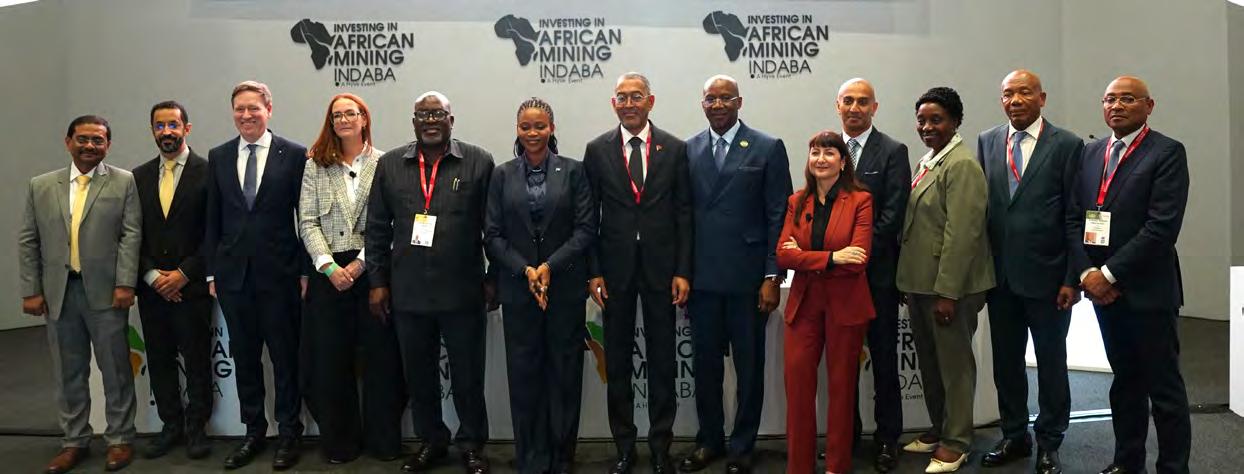
The Mining Indaba Ministerial Symposium 2026 convened African ministers, financiers, and industry leaders at a moment of profound geopolitical and economic transition. Against the backdrop of accelerating global competition for critical minerals and the urgent imperative of a just energy transition, the discussions converged on a clear and increasingly unavoidable conclusion: Africa’s development future depends on a decisive shift from extraction-led growth toward manufacturing-led industrialisation.
Across the symposium, speakers emphasised that Africa’s mineral wealth, while vast, will not translate into prosperity through exports of raw materials alone. Instead, mining must be treated as a strategic input into broader industrial systems: powering clean energy supply chains, anchoring regional manufacturing hubs, creating jobs at scale, and generating fiscal revenues that can finance long-term development. The challenge is not whether Africa has the resources, but whether it can organise policy, capital, infrastructure, and partnerships to convert geological advantage into industrial power.
Africa at the Centre If It Chooses to Be
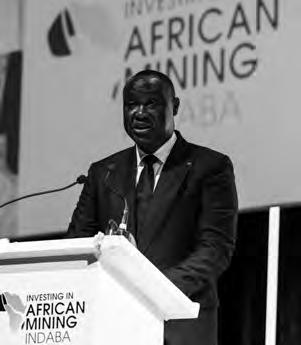
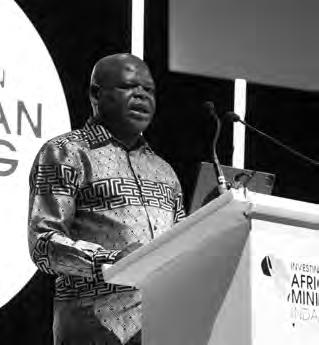
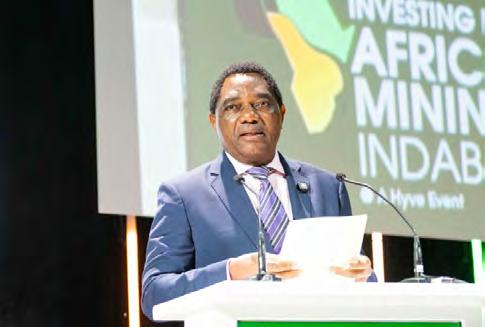
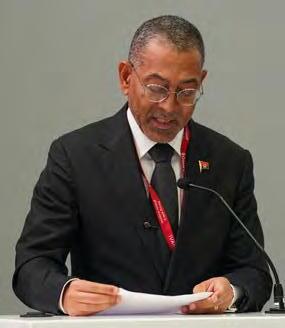
Opening the symposium, South Africa’s Minister of Mineral and Petroleum Resources, Hon. Gwede Mantashe, framed the discussion in starkly political terms. Africa, he argued, is no longer peripheral to the global economy. Demand for critical minerals has placed the continent squarely at the centre of global growth, industrialisation, and energy transition debates. Whether Africa benefits from this moment, however, depends on African choices.

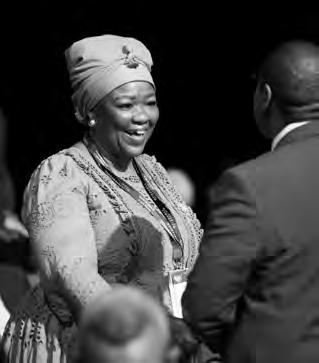
Mandisa Nduli
Senior Business Development Manager, Energy, Infrastructure & Transport, Webber Wentzel
Minister Mantashe stressed continental solidarity as a prerequisite for success. Africa’s challenges whether in infrastructure, energy, or industrialisation cannot be solved country by country. Fragmentation, competition among neighbours, and a “race to the bottom” on fiscal or regulatory terms only entrench dependency. By contrast, cooperation and shared purpose can reposition Africa as a collective decision-maker rather than a price taker.
Crucially, he underscored governance and leadership as the binding constraints. The continent’s underperformance, he argued, is not primarily a resource problem, but a leadership one. Without strong institutions, clear rules, and capable states, even large inflows of capital will fail to deliver inclusive growth. For Minister Mantashe, respecting labour, strengthening state capacity, and managing geopolitical pressures are not peripheral concerns, they are foundational to industrial success.
Minerals as Instruments of Economic Power
Building on this framing, Samaila Zubairu, President and CEO of the Africa Finance Corporation (AFC), sharpened the economic diagnosis. Minerals, he argued, are no longer simply commodities; they are instruments of geopolitical and industrial power. Global supply chains are being redrawn, industrial pricing structures are shifting, and Africa holds a decisive share of the inputs required for the energy transition.
Yet despite hosting an estimated USD 29.5 trillion in mineral wealth including USD 8.6 trillion in undeveloped assets Africa continues to export raw materials while importing finished products. This structural imbalance leaves African economies exposed to commodity cycles, external demand shocks, and declining terms of trade. The result is a paradox: mineral-rich countries with limited industrial capability and insufficient job creation.
Zubairu illustrated this challenge with a stark example. Exporting bauxite generates a fraction of the fiscal revenue and employment that could be achieved by refining it into aluminium or smelting it into finished products. The economic logic is clear: value addition dramatically expands the tax base, creates industrial jobs, and strengthens domestic demand. The choice, he argued, is not ideological but arithmetic.
A recurring theme throughout the symposium was the need to move decisively along the value chain from extraction to processing, manufacturing, and integrated industrial systems. Several countries are already taking steps in this direction. Guinea has introduced policies requiring local processing of bauxite, alongside investments in power infrastructure to support transformation. Nigeria has linked mining licences to processing commitments, attracting over USD 1.2 billion in downstream investment. These initiatives signal a growing recognition that extraction alone will not deliver development.
However, speakers repeatedly warned that isolated national policies are insufficient. Mineral transformation requires scale, scale of power, transport, logistics, markets, and capital that few countries can achieve alone. This makes regional coordination not optional, but essential.
Much of the discussion therefore focused on development corridors as platforms for industrialisation. Corridors such as the Lobito Corridor linking the Copperbelt to Atlantic ports, emerging battery value chains between the Democratic Republic of Congo and Zambia, and new iron, copper, and energy corridors across Southern and Central Africa were presented not merely as transport projects, but as industrial ecosystems.
These corridors can connect mines to industrial parks, power generation to processing facilities, and producers to regional markets. When designed strategically, they reduce costs, de-risk investment, and anchor long-term demand. But speakers cautioned that corridors must be coordinated rather than competitive. Fragmented planning risks duplicating infrastructure, underutilising assets, and undermining regional competitiveness.
South Africa’s potential role as an industrial anchor featured prominently. With relatively advanced financial markets, industrial capacity, and geological data systems, South Africa could support regional processing hubs that serve continental demand, rather than narrowly national markets. This requires deliberate cooperation with neighbours such as Mozambique, Zambia, Botswana, and the DRC particularly in aligning infrastructure, standards, and industrial policy.
Across interventions, from Botswana to Mozambique to the DRC, one message was consistent: governance matters. Investors require clear rules, security of tenure, transparent fiscal regimes, and capable administrations. Botswana’s experience was cited as best practice, particularly its stability, contract certainty, and openness in mineral governance. Importantly, Botswana positioned itself not only as a national success story, but as a regional partner willing to share expertise in exploration, contract negotiation, and responsible mining.
For countries at earlier stages of mineral development, such as Mozambique, the constraints are especially acute. Stranded resources, limited infrastructure, and high capital costs make regional collaboration indispensable. Shared risk mechanisms, harmonised policies, and coordinated infrastructure investment could lower the cost of capital and unlock value that no single country could access alone.
A central question remained: how to pay for Africa’s industrial transformation. While global capital will play a role, speakers emphasised that Africa is not capital-poor. The continent holds an estimated USD 4 trillion in domestic capital, including over USD 1 trillion in non-bank savings. Mobilising this capital through pension funds, development banks, and regional financial institutions is critical to reducing dependency and retaining value on the continent.
Equally important is risk allocation. Governments must provide policy clarity, infrastructure, and regulatory stability, while the private sector brings capital, technology, and execution capability. Transformation will not occur through mandates alone; it requires deliberate partnerships and the cultivation of African industrial champions willing to invest for the long term.
Perhaps the symposium’s most important conceptual shift was the reframing of mining itself. Mining, speakers argued, should not be treated as an end in itself, but as feedstock, both in material and fiscal terms, for industrial development. Minerals and mining revenues should power manufacturing, clean energy systems, regional infrastructure, and inclusive growth.
Achieving this vision requires open and integrated energy markets, cross-border infrastructure, and cooperative regional planning. It also requires political courage: to resist being drawn into geopolitical rivalries, to insist on fair value for resources, and to prioritise long-term development over short-term gains.

As the symposium concluded, participants returned to a shared challenge: moving from diagnosis to execution. The questions are no longer abstract. What policies will be aligned? Which corridors will be prioritised? How will capital be mobilised? And, when participants reconvene, what concrete outcomes, jobs created, projects financed, industries established, will demonstrate progress?
The Mining Indaba Ministerial Symposium 2026 made one thing clear. Africa’s mineral wealth can underpin a just energy transition and a new phase of industrialisation but only if the continent acts collectively, strategically, and decisively. The opportunity is real. So is the cost of inaction.






TUESDAY FEBRUARY 10th 2026
2.15PM (DOORS 2PM) RED SEA STAGE (CTICC 1)









Who decides what’s critical — and who benefits?
Tuesday | 09:00 – 10:15
Ngorongoro Crater Stage | CTICC1
The term critical minerals were shaped by global energy transition demands. But does that definition serve Africa’s development priorities? Or is it time for Africa to define “critical” on its own terms.







Moderator Isabelle Ramdoo Director, IGF, IISD
Speakers
Fabiana Di Lorenzo – Senior Director, Responsible Business Alliance
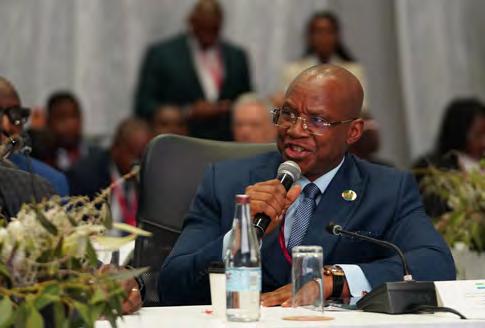
Isaac Tandoh – CEO, Minerals Commission Ghana
Dr. Marit Kitaw – Economic Affairs Officer, UNECA
Martin Poggiolini – Executive: Corporate Development, Valterra Platinum
Dr Molefi Motuku – CEO, Mintek
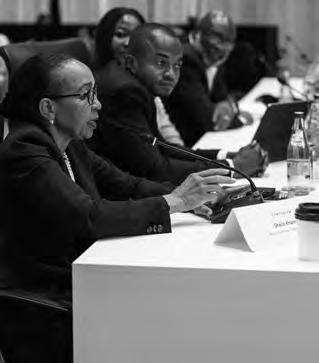
Shirley Webber – Coverage Head: Resources & Energy, Absa CIB
08:55 – 09:00
Disruptive Discussions Opening
09:00 – 09:40 (Part 1) and 09:40 – 10:20 (Part 2) - Opening panel discussion: Reimagining mining partnerships through empathy
10:20 – 11:05 NEW FOR 2026: Debate
Africa is a winner from current geopolitical disruptionSession sponsored by: ICMM
11:05 – 11:45
Panel discussion- Reframing Africa’s mineral wealth as its strongest currency
11:45 – 12:05 Voices of progress – B2Gold Corp. (Fireside Chat)
12:05 – 12:25
12:25 – 12:45
13:20 – 14:20
14:20 – 15:05
15:05 – 16:00
16:00 – 16:50
Voices of progress – Thungela (Fireside Chat) Coal fundamentals in an uncertain energy system
Voices of progress – Vedanta Group (Keynote) The “Ubuntu” of natural resources: Bridging India and Africa for a Just Transition
Panel discussion - Is mining’s ESG agenda losing momentum?
Panel discussion - A new chapter in South Africa, and Africa’s, legal landscape
Panel discussion - Can regional alliances amplify positive community impact? Session sponsored by: Syrah Resources
AI in mining – separating the hype from reality. Session sponsored by: Siemens
09:00 – 11:00
11:00 – 12:30
12:30 – 14:00
14:00 – 15:30
15:30 – 17:00
SHOWCASE: Angola Mining Business Forum, Uncovering Angola’s Mineral Potential Through Strong Partnership
SHOWCASE: Republic of Côte d’Ivoire
SHOWCASE: Republic of Guinea (Simandou 2040)
SHOWCASE: Republic of Zambia
Stronger foundations: Mapping growth, building partnerships
SHOWCASE: Islamic Republic of Mauritania, Theme: Mauritanie, Terre d’Opportunités
9:00 – 10:15 Is the term “Critical Minerals” right for Africa?
10:15 – 11:00 Why is coal not considered a critical mineral?
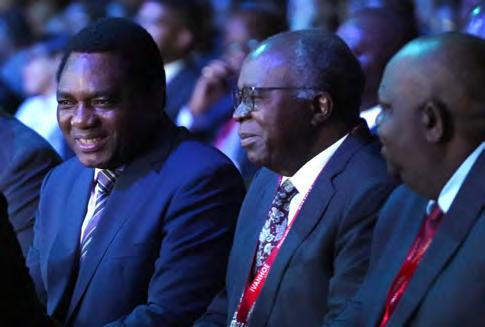
11:00 – 11:45 Who will benefit from the geopolitical scramble for critical minerals in Africa? Sponsored by: Ivanhoe Atlantic
11:45 – 12:30 C an the Manganese industry keep up with the just energy transition?
12:30 – 13:00 Stronger Together in Practice: Building Meaningful Partnerships in Critical Mineral Communities
13:20 – 13:30 C apital discipline, market access, resource nationalism: what’s next for critical minerals in Africa?
13:30 – 14:15 Is resource nationalism paving the way for equitable global partnerships in critical minerals supply chains?
14:15 – 15:00 Is gold a critical mineral for Africa’s development? Session sponsored by: AGC
15:00 – 15:45 The Critical Minerals value chain: How did China do it?
15:45 – 16:30 What lessons can we learn from Guinea’s use of partnerships in realising its iron ore potential?
16:30 – 17:15 C an tax policy catalyse chrome beneficiation?
Sponsored by: African Development Bank & Open Society Foundations
09:00 – 09:15 Opening Ministerial Address
09:15 – 10:00 How close is Africa to real regional and continental integration?
10:00 – 10:45 C an global coordination finally turn ASGM reform into real progress?
10:45 – 11:30 C an Africa’s mining industry thrive in an age of conflict and global uncertainty?
11:30 – 11:45 Ministerial Address
12:00 – 12:30 The Sahel: spark of a revolution in African mining partnerships?
12:30 – 13:15 C an Africa balance resource nationalism with investment certainty?
13:15 – 13:45 PARTNERSHIP SPOTLIGHT
13:45 – 14:30 C an public-private infrastructure models be scaled across Africa?
14:30 – 15:15 How can Africa future-proof its strategic corridors amid shifting geopolitics?
15:15 – 15:45 PARTNERSHIP SPOTLIGHT
15:45 – 16:30 What is holding Africa back from delivering large-scale infrastructure at speed and scale?
16:30 – 17:30 How can Africa close its transmission infrastructure gap to power mining and industrial growth?
09:00 – 11:00 Africa Finance Corporation: From ore to opportunity - building Africa’s steel value chain (By invitation only)
11:00 – 13:00 South African Development Community (SADC): Ministerial Forum (By invitation only)
10:00 – 10:05 Host welcome remarks - Thokozile Mcopele - Founder & Change ConvenerBase Afrika
10:05 – 10:50 Outlook on Mining Investment in 2026
11:00 – 11:45 Mining Investment for Shared Prosperity
12:00 – 12:30 Commodity focus – Gold & Silver
09:00 – 10:30 DTIC
11:15 – 12:45 Italian Trade Commission (ICE): Italy–Africa: Partnership opportunities in critical minerals
13:00 – 14:30 A MDC Panel Discussion: Shared vision, shared goals: Revamp towards an inclusive AMV Private Sector Compact
16:15 – 17:45 A MDC Panel Discussion: Shared vision, shared goals: Dovetailing the body of work on Minerals, Just Transition and the African Green Minerals Strategy
16:15 – 17:45 ALSF Panel: Advancing the Africa Mining Vision through Partnerships and Tools for Legal Support, Equitable Contract Negotiations and Sustainable Capacity Building
09:00 – 10:30
11:00 – 12:15
12:30 – 14:00
14:00 – 15:30
Climate Risk? SO WHAT
Beyond reporting: Reducing risk where it matters. (Presented by dss+)
Panel discussion Progress through private sector partnerships: driving economic recovery (Presented by the Minerals Council South Africa)
Crystal: Unlocking Enugu’s Mining & Energy Potential
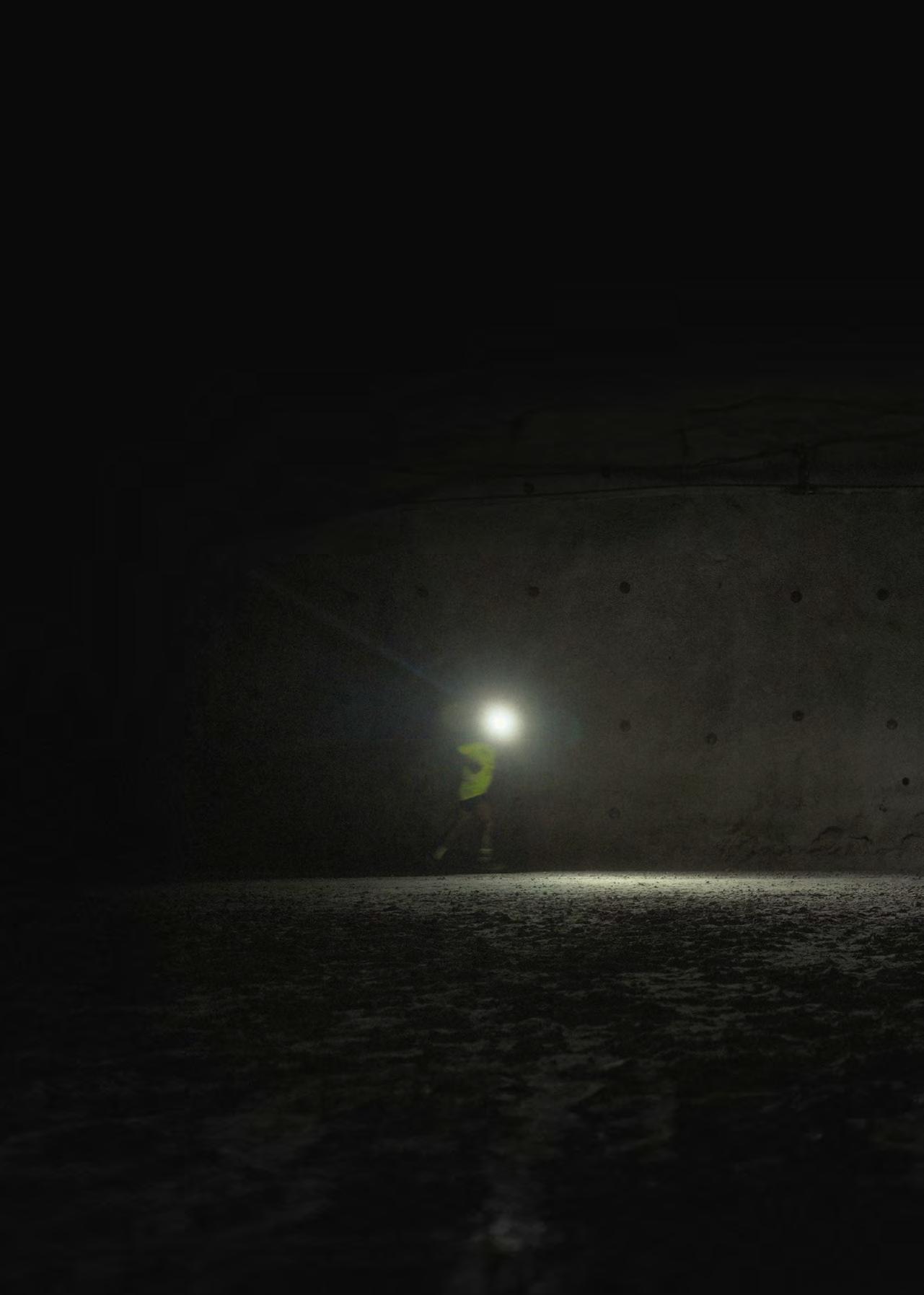
World’s Deepest Marathon: The world premiere of mining’s most extraordinary underground, record-breaking challenge
09:00 – 11:00
11:30 – 13:30
14:00 – 16:00
Critical Mineral Ecosystems: A New Model for Raw Material Supply Security –Presented by BCG
Deep-time Digital Earth (DDE)
Dual-use dilemma: Balancing reliable mineral access and ensuring responsible supply chains for green transition and strategic technologies
Sponsored by: JOGMEC
09:00 – 09:05 MC Welcome
09:05 – 10:00 The digital evolution of blasting in mining
10:00 – 10:30
10:30 – 11:00
11:00 – 12:00
12:00 – 12:20
12:20 – 12:30
13:30 – 14:30
14:30 – 15:30
15:30 – 15:50
15:50 – 16:50
Partnering with China to accelerate mining tech in Africa – Part 1. Session Sponsor: Liugong
Partnering with China to accelerate mining tech in Africa – Part 2.
Session Sponsor: Beijing Soly Technology
Keynote session – Resilience through collaboration: toward the future of mineral development – presented by JOGMEC
Tech-In-Action – HSEC Online® - HSEC Online® - Digitising safety files to ensure smarter, stronger compliance
Keynote Presentation: XCMG - Intelligent green mining equipment solutions
Tech-enabled permitting for faster futures
Collaborative innovation in haulage truck technology
Tech-In-Action – Caterpillar Mining - Predict. Prevent. Perform: The Uptime Advantage of Cat® Condition Monitoring
Harnessing collaborative partnerships to modernise the mining innovation ecosystem







February


Unlock the full Mining Indaba 2026 experience with the o cial app. Your go-to tool for planning, networking, and getting around.
Access key session insights in the app at the end of each day and a er the event, ensuring you never miss any important takeaways.

Download the app now and start discovering sessions, connections, and updates.



BE INFORMED EXCLUSIVELY
Trusted sources, in-depth articles, exclusive interviews, market analysis
STAY ONE STEP AHEAD
Daily overview of the latest news from strategic sectors by our experts
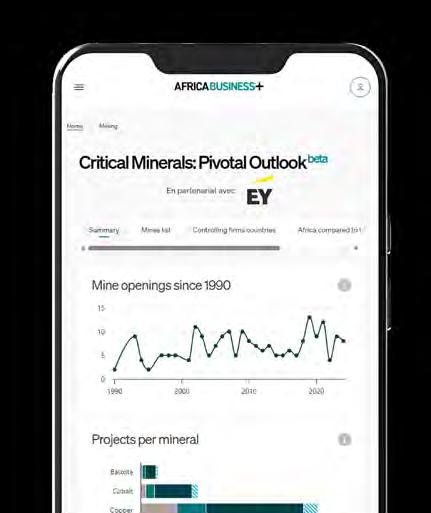
CRITICAL MINERALS: PIVOTAL OUTLOOK
The interactive platform, updated every six months, provides a strategic overview of investments and major infrastructure projects in the mining sector
AFRICA BUSINESS+ YOUR TRUSTED SOURCE ON AFRICA’S DEALS AND DEALMAKERS
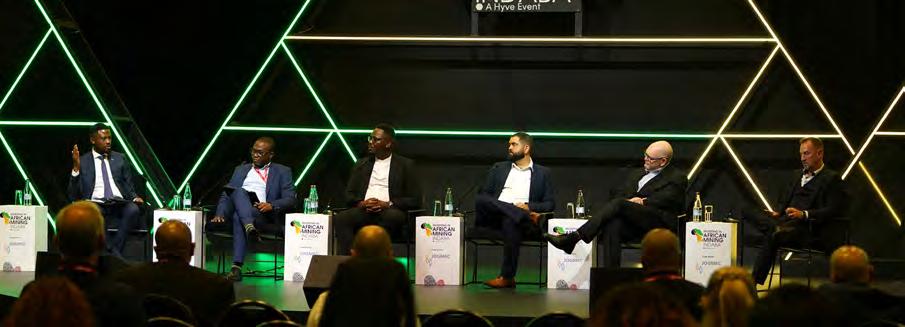
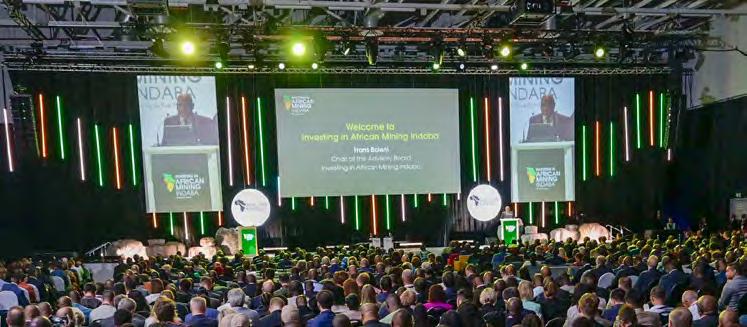
Mining technology is advancing faster than the life cycles of the mines it supports. During the panel on the challenge of aligning technology with the life of mine, speakers explored how this gap plays out in real operations, where long-term mine plans must accommodate short technology investment cycles, workforce readiness, and changing stakeholder expectations.
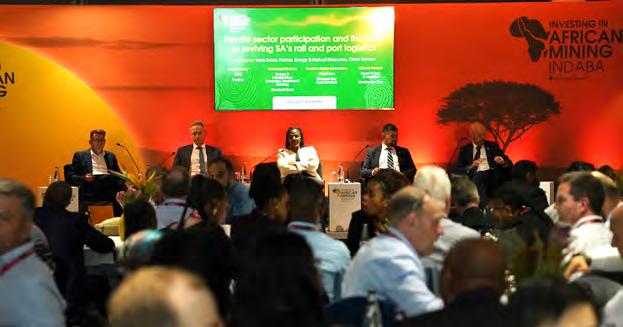
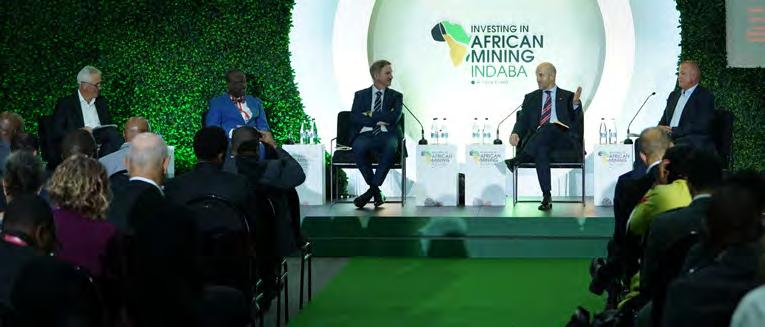
During a panel discussion at the Investing in African Mining Indaba 2026, currently underway at the Cape Town International Convention Centre, industry leaders including Andrew Lane, Strategic Advisor and Coach at Andrew Lane Advisory; Ravi Naidoo, CEO of Virtualscape; Sibongile Ntsoelengoe, Executive Cluster Manager for Mining at the Council for Scientific and Industrial Research; and Vijay Nundlall, a board member of the Mine Health and Safety Council, shared insights on the topic. The discussion was moderated by Wessel Oosthuizen, Senior Associate Director at Deloitte.
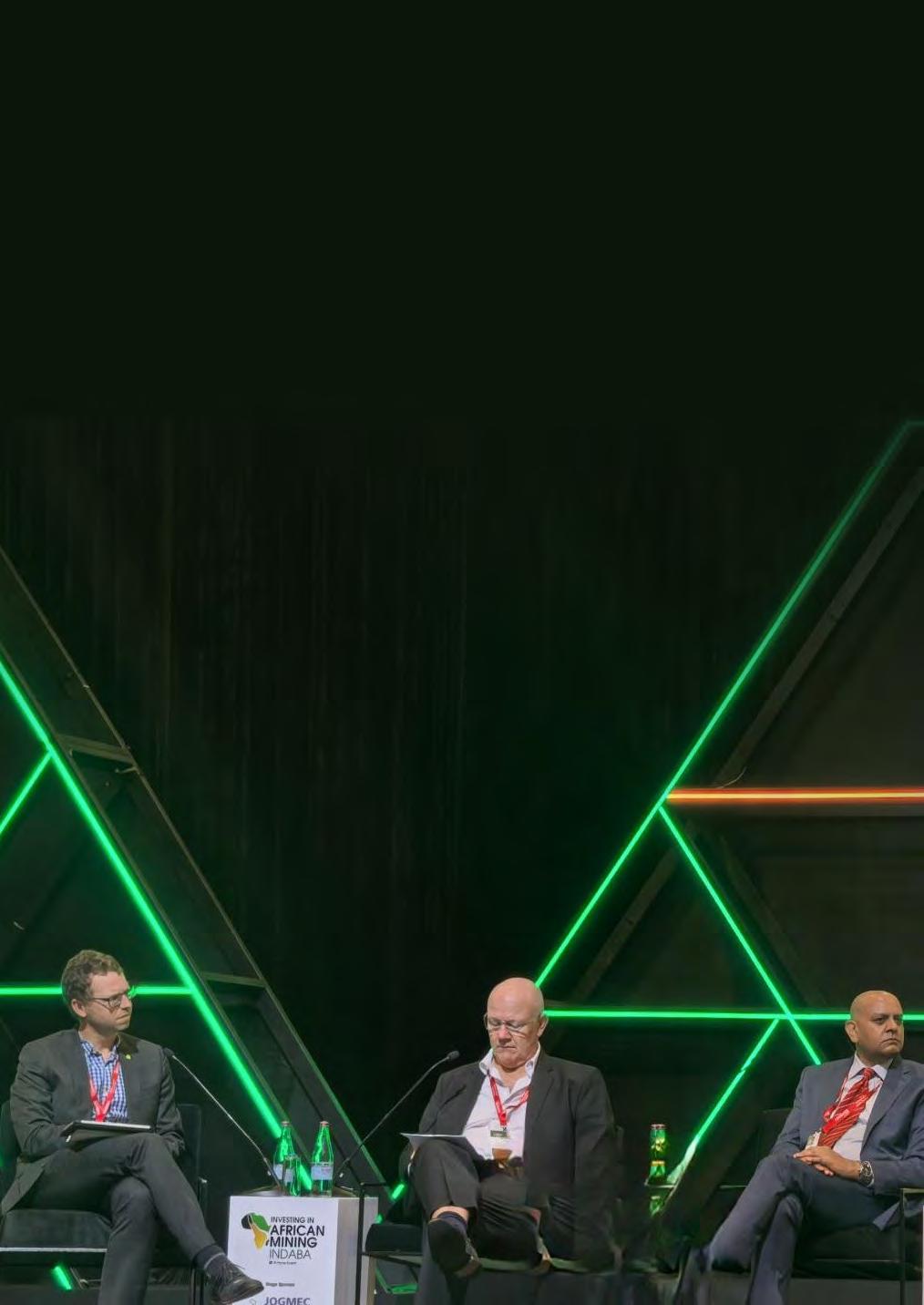

A key message from the discussion was that technology failures often stem from poor implementation rather than flawed design. Lane illustrated this with an example where a payload management system worked correctly, but its display was positioned awkwardly for operators. By simply adjusting the interface to suit the working environment, the issue was resolved, reinforcing the principle that technology must align with real-world operational needs.
The importance of adoption and trust was emphasised by Nundlall, who reflected on how new technologies can be misunderstood if introduced without proper engagement. He referenced the early introduction of dust-sampling equipment, where lack of communication led to resistance and equipment damage. Through education and transparency, workers came to understand that the technology was intended to protect their health, demonstrating that effective change management is essential to technology success.
Speakers also stressed that mine planning should extend beyond production targets and mine boundaries. Ntsoelengoe highlighted the need for a systems approach that includes surrounding communities, infrastructure, and skills development. Mines are often located in remote areas with limited connectivity, and deliberate investment in technology, skills, and local capacity during the life of the mine can create lasting value beyond closure.
Collaboration emerged as another critical theme. The panel agreed that aligning technology with life-of-mine planning cannot be achieved by mines acting alone. It requires coordination between mining companies, government, technology providers, and regulators. While this introduces complexity, mines are well positioned to execute once roles and responsibilities are clearly defined.
Mine closure was framed as an ongoing operational responsibility rather than an end-of-life activity. Nundlall emphasised that rehabilitation and closure planning must be integrated throughout the life of the mine to avoid long-term environmental and safety risks. Progressive closure not only reduces liability but also supports safer outcomes for surrounding communities.
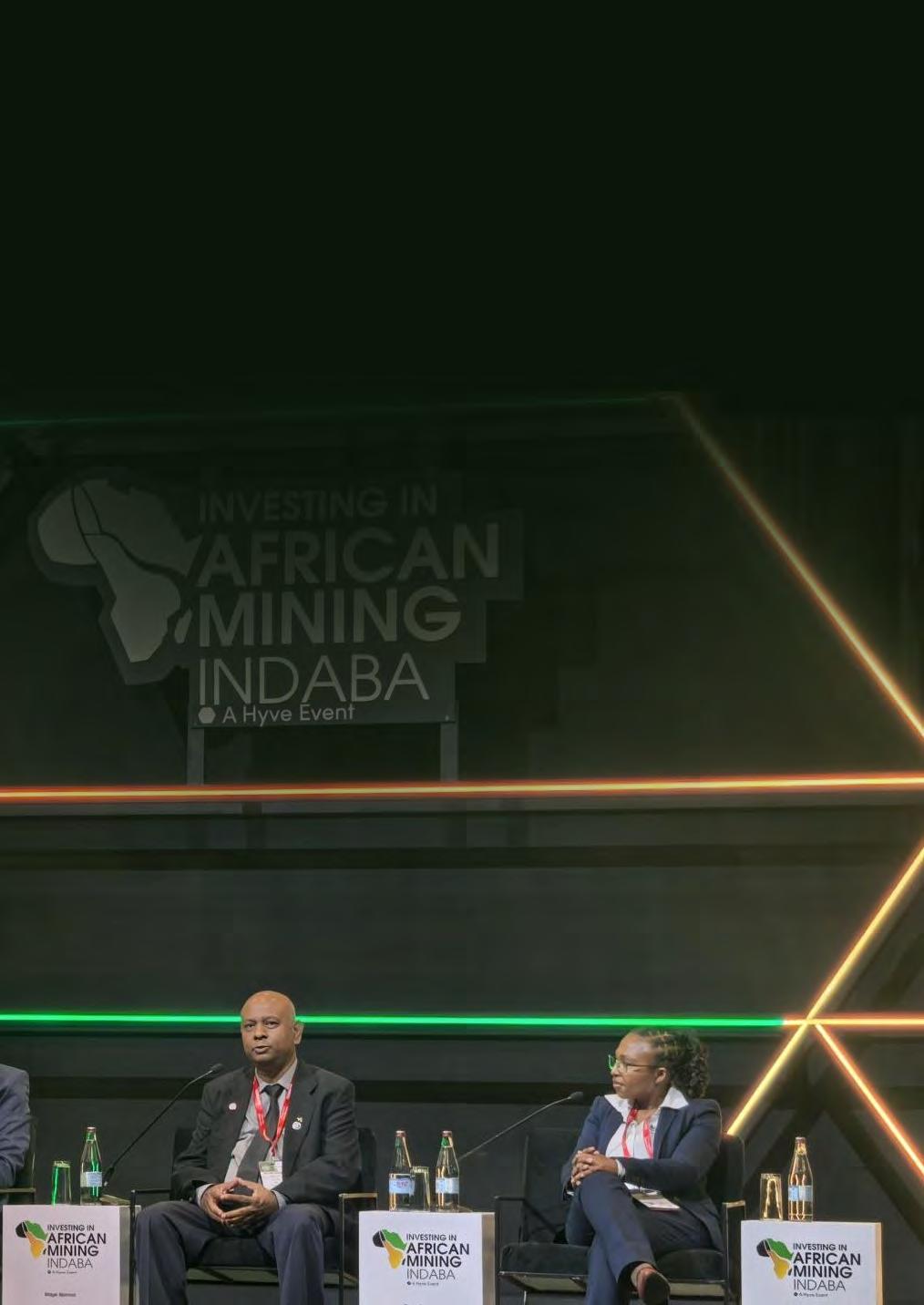
The discussion also addressed how technology decisions are made. Naidoo argued for a shift from a “push” approach to a “pull” model, where technology solutions are driven by the needs of operators rather than imposed from above. This approach improves relevance, adoption, and long-term value.
Artificial Intelligence was presented as an enabler rather than a disruption. Ntsoelengoe described AI as a data-driven tool that enhances efficiency, supports digital twins, and enables better decision-making by integrating operational, economic, and social data. Rather than replacing human judgement, AI can strengthen it.
In closing, the panel reinforced that successfully aligning technology with the life of mine requires more than innovation. It demands thoughtful planning, human-centred adoption, strong partnerships, and a long-term commitment to safety, sustainability, and community well-being.
Rio Tinto, 1873. BHP, 1885. Gold Fields, 1887. Antofagasta, 1888. Ashanti Goldfields, 1897.
Empowering global mining finance decisions for 190 years. Mining Journal, 1835.

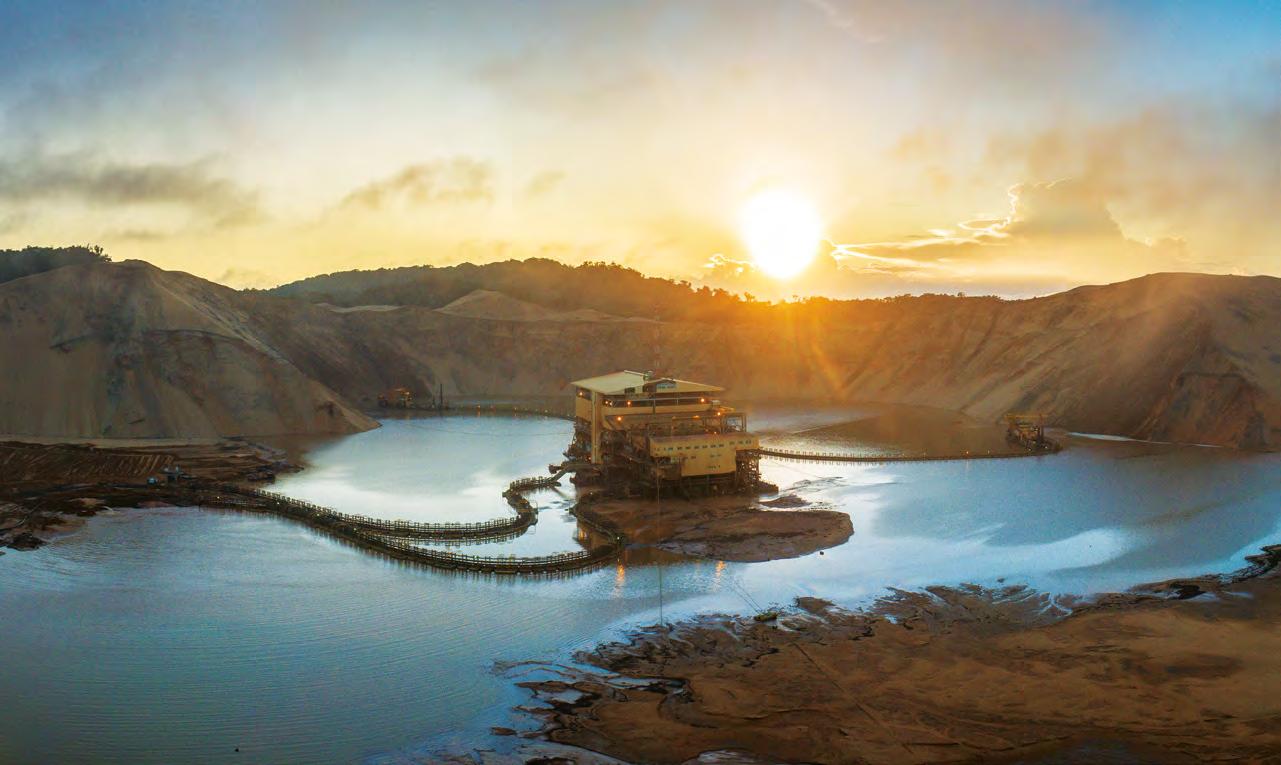
For five decades, Richards Bay Minerals (RBM) has been a cornerstone of the Richards Bay region - supporting jobs, local businesses and broader economic development while contributing to the social and environmental fabric of northern KwaZulu-Natal.
Established in 1976 as a pioneering mineral sands operation, RBM has grown into one of the world’s leading producers of ilmenite, rutile and zircon. Over time, the business has evolved in response to changing markets, rising expectations and the need for responsible, long-term value creation.
1976-1977
RBM is established and begins mining operations, alongside early dune rehabilitation and land stewardship practices.
1986
Production capacity expands to 750,000 tonnes per year. Earlier in the decade, RBM becomes the world’s largest mineral sands producer, with 19.3 million tonnes of sand mined by 1983.
1996
On its 20th anniversary, RBM’s smelter taps one million tonnes — a major operational and technical milestone.
2006
RBM continues to scale and optimise operations while embedding localisation and transformation initiatives that deepen partnerships with employees and host communities.
As mature ore bodies near depletion, RBM advances feasibility work for Zulti South, signalling the next phase of the operation’s long-term future.
Following a period of stabilisation and renewal, RBM strengthens safety performance, restores operational stability and advances Zulti South, alongside investments that support a more resilient, future-fit operation.
“Fifty years on, we remain focused on doing the right things, the right way - for our people, our partners and the future of RBM.”
Werner Duvenhage, Managing Director
In 2024, RBM contributed R7 billion to South Africa’s economy, including:
R218 million in mining royalties
• R1.1 billion in corporate income tax
R72 million in community investment
More than 3,700 hectares of mined land rehabilitated through ecosystem restoration.
Richards Bay Minerals produces high-quality mineral sands products that are essential to global industrial supply chains. These products support a wide range of everyday and advanced applications, from construction and manufacturing to specialised industrial uses.
RBM’s product portfolio includes:
Titania slag, produced through the smelting of ilmenite and used as a titanium dioxide feedstock for pigment production in paints, plastics and coatings
Rutile, a high-grade titanium mineral used in titanium dioxide pigments and specialist industrial applications
Zircon, supplied to global markets for use in ceramics, sanitaryware, foundry applications and advanced industrial products
High-purity iron, produced as a co-product during smelting and used in steelmaking and other metallurgical processes
Together, these products enable industries worldwide while supporting RBM’s focus on responsible production, operational excellence and long-term value creation.
50 years of partnership, progress and possibility. We are so much more than mining.
The 50th anniversary identity is a commemorative refinement marking this milestone year.

Martin Creamer Mining Weekly
South Africa’s mining sector remains constrained by regulatory and operational bottlenecks that need urgent attention to unlock full potential through the attraction of long-term and sustainable investment in exploration and mines.
Mining and its direct suppliers support nearly 900 000 jobs and the livelihoods of 3.6-million South Africans.
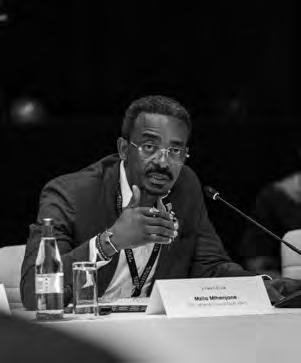
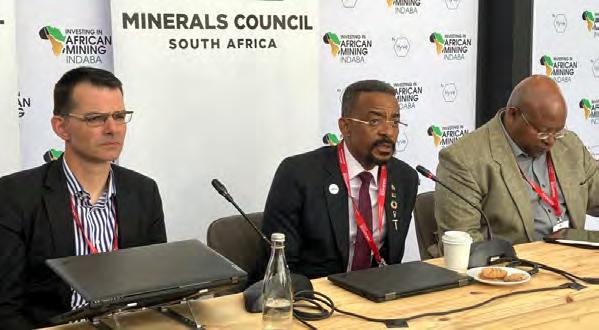
But the way to grow the sector is through investment, which needs a globally competitive regulatory and operating environment, Minerals Council South Africa CEO Mzila Mthenjane made clear
during a crucial 2026 State of the Mining Nation media briefing on day-one of the well-attended Investing in African Mining Indaba in Cape Town.
The members of Minerals Council South Africa account for 90% of South Africa’s annual mining turnover.
The mining sector cannot improve investor confidence alone. It is only through partnerships, particularly with the government and, more specifically, the Department of Minerals and Petroleum Resources (DMPR), that a collaborative approach to creating a conducive regulator and operating environment can be created and sustained, Mthenjane emphasised.
Described as “disappointing” was the first iteration of South Africa’s Mineral Resources Development Bill, which was gazetted in May 2025.
The Bill, Minerals Council pointed out, did not encourage or sustain the growth and investment that the mining industry needed to enable it to realise its full potential to create employment, stimulate the economy and fulfil its social mandate.

The lifeblood of mining is exploration. Without exploration, the mining sector has no future. In South Africa, exploration expenditure was R781million in 2024, down from a peak of R6.2-billion in 2006, according to Stats South Africa data.
“This is deeply troubling for our sector and it needs urgent attention,” Minerals Council South Africa pointed out.
“Since May last year, the council has held talks with the DMPR on its submission regarding areas of concern for its members with the Bill. These engagements were generally constructive. We anticipate the revised Bill, which we expect to be published in coming weeks, will reflect our inputs to ensure mining attracts investment in exploration, mine development and existing operations.
“We are cautiously optimistic but if the revisions mirror the first iteration of the Bill, we will continue robust engagements with the DMPR,” Mthenjane outlined.
Encouraging progress has been made in the business and government partnership in Operation Vulindlela under the Presidency to address three key crises that South Africa faced in 2020.
Railway performance has stabilised and is showing improvement, which is important for coal, chrome, iron-ore and manganese exports. Electricity generation has improved, with the
last loadshedding experienced in May 2025.
Operation Vulindlela initiatives to address crime and corruption helped secure South Africa’s removal from the Financial Action Task Force grey list and contributed to an S&P credit rating upgrade in the last quarter of 2025.
The underlying structural reforms, particularly in electricity around the creation of a separate transmission company to own and manage the grid, to ensure the introduction of the private sector in energy generation, and participation on railways and at harbours must not be delayed or changed because it will damage the green shoots of positive sentiment emerging towards South Africa.
“South Africa’s mineral endowment is extraordinary. With the right reforms, strong partnerships and policy certainty, we can attract investment, create jobs and build a globally competitive mining sector that benefits all South Africans,” Mthenjane emphasised.

By Sven Lünsche
A report released by RMB Morgan Stanley last week shows that income taxes and royalties from the South African mining sector are set to rise from R30bn in 2024 to about R40bn in 2025.
For 2026 the tax intake from mining is set to double to about R80bn and then an estimated R90bn in 2027. This will come as a major boost to the South African government which is struggling with a shrinking taxpayer base and stagnant tax income as a result of low growth rates in most other economic sectors.
National Treasury reported in November last year that its revenues from the PGM and gold sector have already exceeded initial estimates. As PGM and gold prices have continued to surge since then, the impact will be substantial.
Ordinarily, mining constitutes approximately 10% of corporate income tax, though this picked up temporarily in 2022 when it amounted to 40%. That windfall tax intake then was driven primarily by PGMs and it will do so again, together with gold, for the next two tax years, says RMB Morgan Stanley.
“If spot prices hold, we’re heading back into windfall territory for 2026 and 2027, driven by PGMs and gold,” says the report. It also noted that Sibanye-Stillwater with combined income tax and royalties amounting to R16.4bn is set to become the largest taxpayer in the sector, though this may be impacted by assessed losses.
In its 2025 Facts & Figures Pocketbook, the Minerals Council SA confirms the buoyant picture for South Africa’s precious metals industry.
The MCSA projects South African gold sales to around R167bn, 17.4% higher than in 2024. PGM rand-based price increases last year amounted to about 30% for both platinum and rhodium and 13% for palladium, providing a significant profit boost to South Africa’s PGM producers.
The picture looks different for the coal sector. Collectively, Exxaro, Thungela and Glencore paid tax of R25bn in 2022. That’s set to fall to R3bn at current spot prices, estimates RMB Morgan Stanley.

One week, one place, the entire mining ecosystem under one roof.
The right people are in the room
10,500+ leaders — from ministers and mining companies to investors and innovators.
Deals get done
Billions in projects and partnerships start with
Where Africa meets global capital No other platform connects with the world’s investors like this.
Get clarity, fast Hear directly from decision-makers
Register now at


Elvis Chou Consultant, Metals Focus
In recent years, global silver industrial demand has achieved a series of successive record highs. To put this into perspective, At the start of the previous decade in 2010, the use of silver in industrial applications stood at 15,046 tonnes (t). Fast forward to 2024, and the global total had surged to a record high of 21,165t.
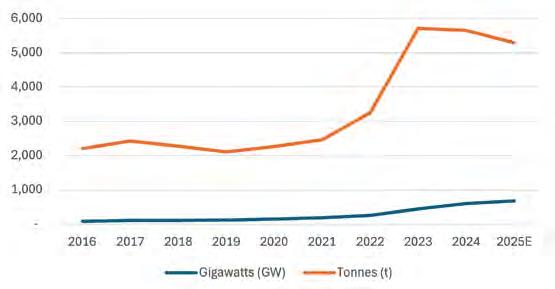
There are several areas of industrial offtake that have enjoyed strong performances over this timeframe. However, the strength of photovoltaic (PV) demand stands out, both in terms of the absolute level of silver this one application has consumed, and also its growing share of industrial demand. In terms of the former, this has risen from 1,791t in 2010 to achieve a record high of 6,143t of silver in 2024 that was used in the PV market. During this 15-year window, it’s contribution has risen from just 12% of industrial silver demand in 2010 to a noteworthy 29% in 2024.
These impressive headlines reflect the growing interest in renewable technologies, led by PV. This has seen global PV installations surge. To illustrate, three “time stamps” are worth highlighting. Back in 2010, just 17 gigawatts (GW) of new PV capacity was installed, with just two countries (Germany and Italy) installing more than 1GW; at that time the market was dominated by Europe. By contrast, in 2019 as interest in PV was gathering pace 118GW was installed globally, with 16 countries installing at least 1GW. China was already making its mark, accounting for 34% of the market. Fast forward to 2024, and global installs had leapt to 593GW, with 38 GW-scale countries; that year China accounted for 47% of the total market.
Despite these impressive numbers the PV sector has had to contend with ongoing thrifting regarding the use of silver in each PV module. For example, manufacturers increased the width between “fingers” on the panel and reduced the size of each finger, all while ensuring there was no loss of efficiency. Interestingly, the rate of thrifting has varied considerably over the past 15 years or so. It accelerated during 2011-13 in response’s to silver’s then record prices. Importantly, when the silver price weakened thrifting continued as the trade was concerned about renewed price upside. To put this into perspective, average silver loadings in PV modules in 2025 were over 90% lower than in 2010.
As the PV industry advances into the Terawatt era, it faces the significant challenge of silver prices soaring above $90 (at the time of writing). At this price, silver accounts for over 25% of the total module cost, in stark increase from the 8–10% observed when silver stood at $30. To address this, manufacturers are implementing strategies through innovations like silver-coated copper paste and pure copper solutions. These developments highlight the resilience of the supply chain as it looks to re-invent itself, reducing its reliance on silver while securing the long-term cost competitiveness of solar power. Although this implies an ongoing reduction in silver loadings in PV modules, these advancements ensure that the industry remains economically sustainable and is better positioned to lead the next wave of the global energy transition.


Khwelamet is an industrial champion for South Africa’s economy. We leverage capital, insight and access to raw material to produce high quality ferromanganese from our facility in Meyerton, Gauteng, capturing the full value of the country’s vast natural resource endowment.