This year’s theme –
This year’s theme –
– could not come at a more critical moment for our industry.

Across Africa and globally, mining is being asked to deliver more than ever before: to secure critical mineral supply, enable the energy transition, create shared economic value, and do so amid geopolitical uncertainty, climate pressure, and rising expectations from governments and communities alike. Meeting these demands in isolation is simply not realistic. And that is exactly why this theme matters now.
Mining Indaba is positioning partnership not as a nice to have, but as the operating model required for success. The mining value chain can no longer be viewed as linear. It must be circular – shaped by a shared understanding of what governments, investors, operators, communities and downstream partners each need for long term value to be created.
Our event provides a rare opportunity: a single moment in the year when the full ecosystem is in the room together. But presence alone is not enough. Progress depends on how we use this time – and how willing we are to work differently.
Turning this idea into reality requires a shift in mindset. Being stronger together means listening more closely, building trust, and recognising that long term success is driven by transparency and shared outcomes, not short term wins.
So, over the course of this week, the goal should not simply be to make connections, but to build meaningful partnerships –partnerships that move ideas into action and drive real progress forward. Our conference programme is deliberately designed to support this, creating space for honest conversations and practical collaboration.
Ultimately, the success of Mining Indaba 2026 will not be measured by scale alone, but by the quality of the partnerships formed, strengthened, and advanced. Each of us has a role to play in looking beyond individual objectives and contributing to what this industry – and the continent – truly needs. When we do that, the outcome is not just collective progress, but a genuine win win for all.
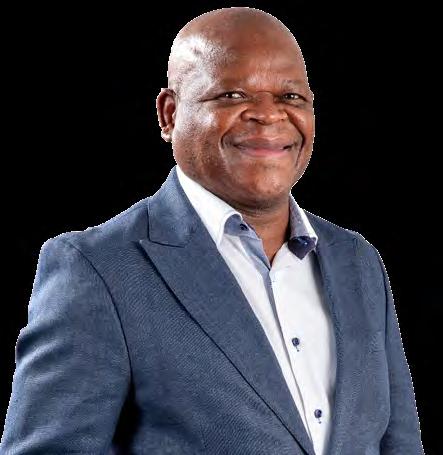
By Frans Baleni, Chairman of the Mining Indaba Executive Advisory Board
In a volatile global minerals market, Africa’s greatest advantage is not just its resources. It is its ability to act together.
As global competition for critical minerals intensifies, Africa finds itself at the centre of a major recalibration of global supply chains. Demand driven by the energy transition, industrial growth, and digital transformation is accelerating, and Africa holds many of the minerals the world urgently needs.
Yet in an increasingly volatile global environment, resources alone are no longer enough. Investors and governments are seeking certainty. They are looking for clear policy direction, consistent regulation, and confidence that commitments will translate into outcomes. In this new reality, execution has become the defining measure of competitiveness.
Africa has made real progress. National mining frameworks are stronger. Regional and continental strategies are clearer. The ambition is aligned. The challenge now is delivery.
Other regions have moved faster by aligning policy and acting collectively. Africa’s opportunity lies in doing the same. Fragmentation increases risk and slows capital deployment. Policy coherence and regional integration, by contrast, make investment more predictable and outcomes more durable.
This is why Mining Indaba 2026 is anchored in the theme “Stronger Together: Progress Through Partnership.” It reflects a strategic reality. No single country, institution, or company can deliver Africa’s mining transformation alone. Collective execution across borders, value chains, and sectors is now essential.
Partnership is the mechanism through which ambition becomes delivery. When governments align regulatory approaches, when industry collaborates on infrastructure and skills, and when investors engage with long-term clarity, mineral development becomes a catalyst for industrialisation, community upliftment, and economic resilience. Regional integration makes good policy easier to implement, more consistent to enforce, and more attractive to long-term capital.
Mining Indaba 2026 will be the platform where this agenda is advanced. It is where Africa’s mining transformation blueprint will be debated, tested, and strengthened through bold dialogue,

cross-border collaboration, and deal-making. It is where leaders will move beyond declarations to commitments — and from commitments to action. This moment demands leadership and urgency. Africa has the frameworks, the resources, and the ambition. The task now is delivery, together. The future of African mining will not be shaped by vision alone, but by partnership in execution.

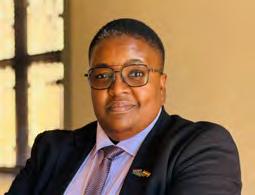


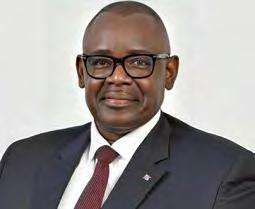

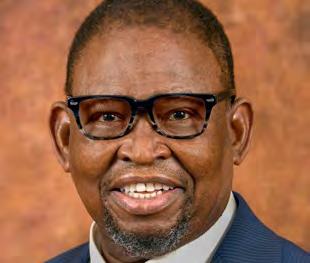
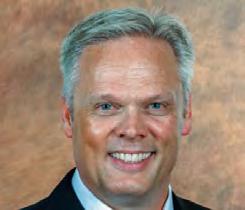
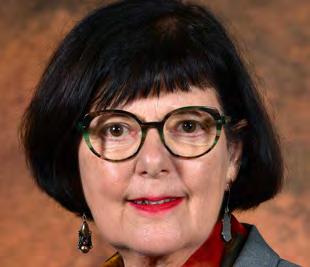
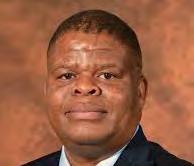

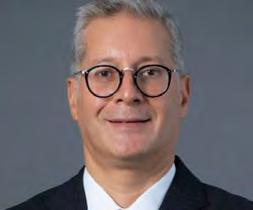
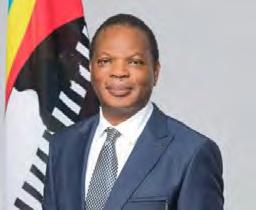
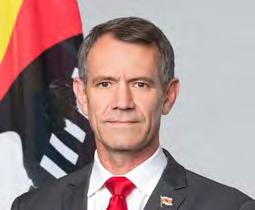

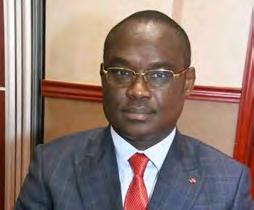

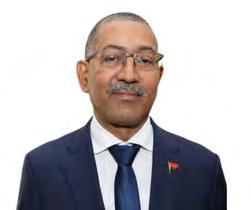

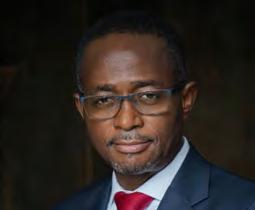
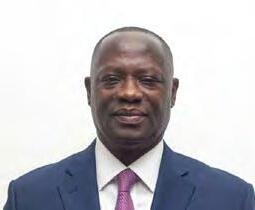


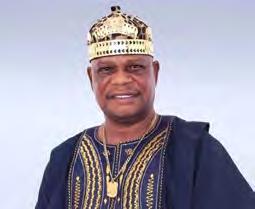
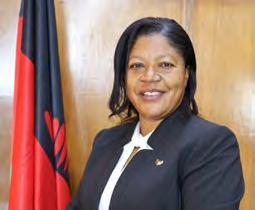
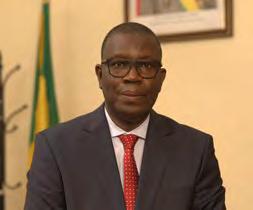

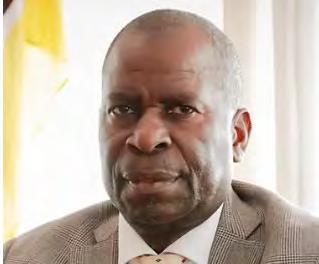
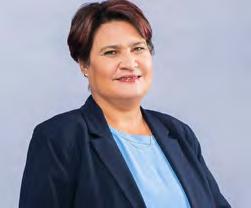
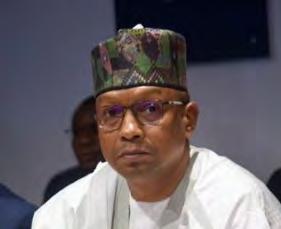
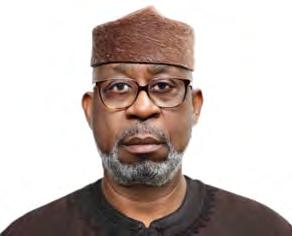
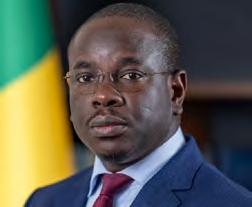
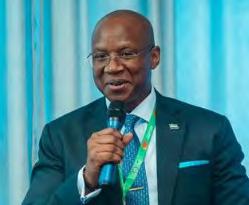
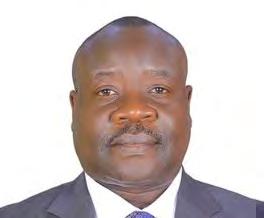
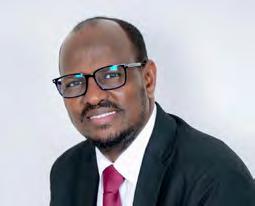
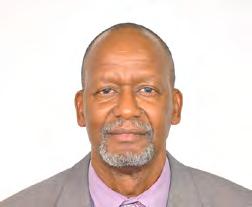


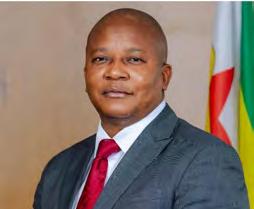


















Hon. Dr. Jean Mathanga, Minister of Natural Resources, Energy & Mining, Republic of Malawi
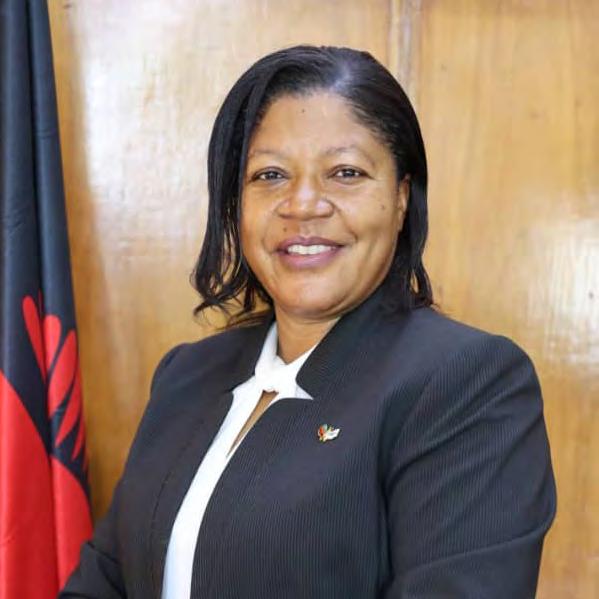
Malawi stands at a pivotal moment in its development journey.
As Minister of Energy and Mining, my conversations with investors, communities and industry leaders converge on one point: we possess significant, underexplored mineral potential and must unlock it - inclusively, responsibly and for the long term.
Mining can be a catalyst and has become a strategic pillar for diversification and sustainable growth. We are endowed with minerals including rare earth elements, graphite, rutile, uranium, niobium, limestone and other industrial minerals growing in global demand.
At the heart of Southern Africa, we neighbour established mining economies and benefit from proximity to regional infrastructure corridors, while remaining significantly underexplored. This presents a rare opportunity for investors seeking growth potential in a stable and welcoming environment.
We know that our minerals alone are not enough. Creating a conducive and enabling environment, particularly for our junior miners who already play
an important role in exploration and early-stage project development, and for new entrants to the sector, is a priority. We are focussing on improving access to geological information, strengthening our mining cadastre system and streamlining permitting and approval processes to further build on the commitment we’ve made to transparency and efficiency. These reforms will support investors throughout their project lifecycles and ultimately demonstrate that Malawi is ready for business.
Policy certainty is raised consistently by our investors as a key priority - and we listen carefully. We are committed to clear and consistent policies that align with international best practice and just as importantly, we are committed to their effective implementation. We also understand that it will be through collaboration and partnership – between investors, development partners, technical suppliers and local businesses – that we can mobilise capital and build the infrastructure and skills we need to support productive, value-creating mining operations.
Perhaps most importantly however, is our relationship with communities. Mining must deliver real benefits on the ground and communities must be genuine participants in that journey. Our experience tells us that engaging early, coupled with respectful and honest communication throughout, will help to build trusted relationships and, in the end, strong and resilient projects.
Malawi is poised to become a trusted mining destination.
We invite responsible investors who share our vision to join us in building a sector centered on people, that delivers shared value and prosperity for generations to come.

Zeinab El-Sayed, Head of Government Partnerships, Mining Indaba
Africa’s role in the global supply of strategic minerals is often discussed in fragments: by commodity, by country, or by individual projects. The African Compendium of Strategic Minerals 2026 brings these elements together for the first time in a single, system-level view.

By mapping mineral endowment alongside infrastructure, logistics corridors and processing potential, the Compendium shifts the conversation from isolated deposits to integrated value chains. It offers investors, governments and industry leaders a clearer understanding
Rita Babihuga-Nsanze Chief Economist, Africa Finance Corporation
of where scale, resilience and long-term competitiveness can be built, and why Africa’s strategic importance in the energy transition is not about potential alone, but about connectivity, coordination and execution.
As the global minerals landscape evolves, we invite the Indaba community to engage with this work, challenge it, and help shape the next chapter of Africa’s strategic minerals story.
Africa stands at the centre of a profound global shift. From energy transition and digitalisation to food security and industrial resilience, the minerals that will shape the world’s future are increasingly African. Yet for too long, Africa’s mineral endowment has been misunderstood, undervalued, or viewed through a narrow upstream lens. That narrative is about to change.
In association with Mining Indaba, the Africa Finance Corporation (AFC) is proud to release the African Compendium of Strategic Minerals—a landmark, datadriven publication designed to reposition Africa’s mineral wealth as a cornerstone of long-term economic transformation.
The Compendium responds to a critical challenge facing policymakers, investors, and industry leaders alike: fragmented, incomplete, and often externally produced data on Africa’s mineral supply chains.
While Africa is widely recognised for its geological abundance, existing statistics frequently fail to capture the full picture— overlooking processing capacity, infrastructure constraints, and downstream value-addition opportunities that ultimately determine development impact.
The African Compendium of Strategic Minerals offers a fundamentally different approach. Rather than viewing mining as an isolated extractive activity, it frames minerals within integrated economic systems—connecting geology to infrastructure, processing, manufacturing, trade, and regional value chains. The result is a practical roadmap for turning mineral endowments into industrial capability, jobs, and resilient growth.
Organised around five strategic themes—economic security, industrialisation, the digital economy, domestic and regional consumption, and decarbonisation—the Compendium provides comprehensive, country-level insights on mineral reserves, production, beneficiation, imports, and exports. Crucially, it goes further by analysing ore-
processing capacity, identifying under-utilised refineries and smelters, and mapping the transport, power, and logistics infrastructure required to unlock mining-led industrial corridors.
Developed in close cooperation with African governments, regulators, chambers of mines, and industry operators, the Compendium is designed to evolve annually—closing data gaps, strengthening regional dialogue, and establishing an authoritative African reference for global markets.
At a time when global supply chains are being re-engineered and competition for strategic minerals is intensifying, Africa’s opportunity lies not only in what it extracts, but in what it builds. By highlighting forward linkages into processing and manufacturing, backward linkages into inputs and services, and lateral linkages into infrastructure and finance, the Compendium makes a compelling case for a new African minerals proposition: one anchored in value creation, resilience, and shared prosperity.
The launch of the African Compendium of Strategic Minerals marks an important milestone in both AFC and Mining Indaba’s mission to mobilise long-term capital for Africa’s development. For investors seeking clarity, governments pursuing industrialisation, and partners committed to sustainable supply chains, this publication promises to become an essential tool—and a catalyst for a more ambitious, integrated, and confident African minerals agenda.

Ntokozo Nzimande, Critical Minerals Committee Member, Mining Indaba DDG: Policy, Global Relations and Investment Promotion DMPR
As we gather in Cape Town for the 32nd edition of Investing in African Mining Indaba, the conversation has undergone a fundamental shift. The era of potential is being replaced by the era of physical projects. Under this year’s theme, “Stronger Together: Progress through Partnerships.” The spotlight is no longer just on Africa’s vast geological endowment, but on the tangible mechanisms
for turning policy into profit and development, the shift is about acknowledging that geology does not make money, execution does.
Governments, now more than ever, have a greater appreciation that a fundamental shift from policy pronouncements to action is non-negotiable. The following aspects are high on the agenda of this continental transition.
1. Moving beyond the extract and ship or pit to port model
For decades, Africa’s mining sector has been characterised by simple extraction. In 2026, the narrative is about beneficiation and industrialisation at source. Policies such as the A frican Green Minerals Strategy are no longer just documents, they are being encoded into national law to mandate local value addition across the continent. In the Nigeria the Nigerian case study, the Content Development and Monitoring Board (NCDMB) now requires all new mining licenses to include a Local Processing Plan, effectively making midstream investment a prerequisite for upstream access.
2. The Rise of strategic development corridors through regional integration
For the longest time, infrastructure has historically been the execution gap for African mining. Today, governments are closing this gap through shared infrastructure Partnerships. The Lobito Corridor, connecting the DRC, Zambia, and Angola, stands as the premier example of this transition. By aligning rail and port upgrades with mining concessions, the three governments have created a predictable logistics environment that has seen over $2.4 billion in committed investment.
3. De-Risking of acreage through regulatory harmonisation
One of the most significant hurdles to executable outcomes has been regulatory fragmentation. In response, the continent at both domestic and regional blocs level, is harmonising playbooks. In the SADC region, the SADC Forum of Ministers is working on a unified regional strategy for critical minerals. South Africa’s Junior Mining Exploration Fund is classical example of intentional action aimed at bridging the early-stage financing gap. The South African government has operationalised a dedicated fund to support junior explorers, recognising that tomorrow’s investable projects start with today’s geodata.
4. Recognition of the mineral-energy nexus as a competitive advantage
In 2026, a mine is only as investable as its power source. African governments are increasingly integrating mining policy with energy targets where mining is no longer just an extractive industry but the anchor tenant for energy and Africa’s energy transition in particular.
With this shift, African governments are no longer inviting investors to the table, they are setting the table. By focusing on Special Economic Zones (SEZs), regional value chains, and transparent minerals for development frameworks, the continent is proving that it is ready to move from being a supplier of raw materials to a hub of global industrial activity.

Kwasi Ampof Executive Board Member, Mining Indaba and Head of Metals and Mining at BloombergNEF
Africa has a wealth of natural resources that are fundamental to emerging technologies and the global energy system. But the continent’s presence downstream remains minimal. A combination of focused policymaking, partnerships and effective sector governance is needed to successfully leverage the continent’s raw materials strength to build a secure, reliable and sustainable value chain.
Unpacking best practice: China’s 30-year roadmap
The race to build secure, reliable and sustainable critical mineral supply chains has intensified, as countries seek to safeguard energy goals, strengthen industrial competitiveness and enhance national security. These factors have made critical mineral strategies a deliberate priority for governments worldwide.
Refined supply of metals in 2025, by top producing regions
For the past 30 years, China has strategically focused on building the global supply chain for copper, steel, aluminum, cobalt, manganese, rare earths and lithium. This dominance was achieved with sustained government support and partnerships.
China recognized at the onset of its industrialization journey that it did not possess the necessary domestic mine reserves for its critical minerals needs. Therefore, its strategy was to partner with other countries to secure access to crucial mines located in Australia, Chile, Indonesia and the Democratic Republic of Congo, and then channel those raw materials to Chinese facilities for refining and processing.
After partnering with others to secure the upstream segment of the value chain, China systematically built its massive processing capabilities, and through economies of scale became the lowest-cost producer globally.
Africa’s bid to move beyond mining and secure a position in the global value chain for processed critical minerals needs to be backed up by financing, policy certainty, good governance and partnerships. The African Continental Free Trade Agreement (AfCFTA) has the potential to unlock significant value for Africa’s mineral sector but first, countries need to partner and work together. These partnerships must come in three forms.
Countries in Africa must create a diversified capital market that supports early-stage research and development, whiles scaling established ideas and solutions. Development finance institutions such as the AfDB can support research and earlystage projects through grants. Also, institutions such as the Afreximbank and the AFC can complement commercial banks by providing loans to mature companies to support expansion, whilst the Africa Legal Support Facility (ALSF) provide legal support for business transactions.
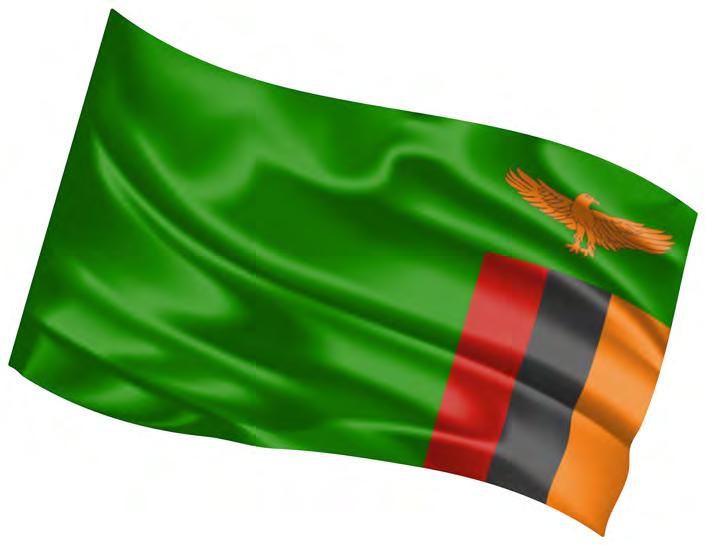
The Lobito corridor offers a sneak peek into how countries can collectively pool resources to develop infrastructure that serves regional needs. Such an approach will enable the countries to share both the upside and the downside. By coming together to build Lobito, Angola, Democratic Republic of Congo and Zambia are able to develop their shared resources and significantly improve the social and economic impact of the project.
Africa’s current population sits at 1.6 billion people according to the United Nations estimates. This is a significant market that the resource industry can leverage. China was able to advance its low-cost manufacturing ambition by leveraging its population to create an economy of scale. Africa can achieve this by working within the framework of AfCFTA to build a one market for its downstream products.





9-12 February 2026 Your Event, Your Network, One App




Unlock the full Mining Indaba 2026 experience with the o cial app. Your go-to tool for planning, networking, and getting around.
Access key session insights in the app at the end of each day and a er the event, ensuring you never miss any important takeaways.
Download the app now and start discovering sessions, connections, and updates.

DISRUPTIVE DISCUSSIONS | TABLE MOUNTAIN STAGE | CTICC1
13:30 – 13:40 Disruptive Discussions Opening
13:40 – 14:00 Voices of progress – Anglo American (Keynote): Mining is a champion for human progress
14:00 – 14:20 Voices of progress – Rio Tinto
14:20 – 14:40 Voices of progress – Newmont (Keynote)
14:40 – 15:00 Voices of progress – Barrick Mining
15:00 – 15:20 Voices of progress – Valterra Platinum (Keynote & Fireside Chat)
15:20 – 15:40 Voices of progress – Harmony Gold (Fireside Chat)
15:40 – 16:00 Voices of progress – Kinross Gold Corporation (Keynote)
16:00 – 16:20 Voices of progress – Exxaro (Keynote): Positioning Exxaro to be a diversified natural resources champion in Africa and beyond 16:20 – 16:40 Voices of progress – Gécamines (Keynote)
DOWNSTREAM BUYERS | NGORONGORO CRATER STAGE| CTICC 1
12:30 – 13:15 The role of development and commercial finance in deepening Africa’s manufacturing value chains
13:30 – 14:15 From extraction to innovation: Leveraging Africa’s resource wealth for diversification and development
14:30 – 15:15 Unlocking industrialisation through advanced manufacturing and critical minerals for Africa’s future
15:30 – 16:15 Deepening and widening automotive value chains in Africa
INVESTMENT FORUMS | KILIMANJARO STAGE |
Sponsored by: Open Society Foundations (OSF) & United Nations Economic Commission for Africa (UNECA)
15:30 – 17:00
Green Minerals, Green Industries: Mobilising Regional Partnerships and Finance to Advance Rights-based Development
11:00 – 11:05 Host welcome remarks
11:05 – 11:35 Commodity outlook 2026 keynote presented by CRU Session Sponsored by CRU
11:50 – 12:35 Strategic partnerships the new model for mine financing Session sponsored by BGFI
12:45 – 13:15 Commodity focus – Copper
14:00 – 14:45 Is the (re)surgency of coal investment real and going to last?
15:00 – 15:30 Commodity focus – Uranium Session sponsored by Uranium Royalty Corp.
15:45 – 16:30 Refining the opportunity – investing in African critical minerals value chains
Sponsored by: JOGMEC
09:00 – 09:05 MC Welcome
09:05 – 10:00 The challenge of aligning technology with life of mine
10:00 – 11:00 The power of driver simulation Session sponsored by Fortinet
11:00 – 12:00 Mining without compromise Session sponsored by Michelin Tyres
12:00 – 12:20 Tech-In-Action – ABB
Technologies miners need for real progress
13:30 – 14:30 Digitising safety and compliance for smarter mining Session sponsored by HSEC Online®
14:30 – 14:50 Tech-In-Action – Safety at the core of production
15:00 – 16:00 Cross pollinating innovation – what can mining learn from oil and gas technology?
12:00 – 13:30 Private sector participation and the path to reviving SA’s rail and port logistics. Presented by Oliver Wyman
13:45 – 15:15 Powering the future – The World Bank Group’s support to Africa’s minerals and metals
15:30 – 17:00 Ecobank - Finance for a diversifying economy: How Ecobank is delivering on Simandou 2040’s Promise
15:30 – 17:30 ‘Cobalt’: an immersive, community-centred social experiment. Organised by the European Partnership for Responsible Minerals (EPRM) in close collaboration with the Collectif Cobalt
16:00 – 17:00 Tech is ready – is your workforce?
13:45 - 15:15 Putting Policy into Practice in Africa-Europe Raw Material Cooperation. Presented by Deutsche Gesellschaft für Internationale Zusammenarbeit (GIZ) GmbH and the German Federal Ministry for Economic Cooperation and Development (BMZ)
15:30 - 17:00 Leadership that saves lives: How to shape safer mining operations. Presented by dss+
COUNTRY SHOWCASES | VICTORIA FALLS STAGE | CTICC2
14:00 – 16:00 SHOWCASE
Building Critical Minerals Value Chains in South Africa: An Investor Dialogue
16:00 – 17:00 PANEL
How can African countries leverage the rise of new investors in critical minerals?
COUNTRY SHOWCASES | SAHARA STAGE| CTICC2
14:00 – 15:30 SHOWCASE Republic of Mozambique
15:30 – 17:00 SHOWCASE Arab Republic of Egypt
TUESDAY FEBRUARY 10th 2026












A pioneering lineup of global leaders, change-makers and disruptors from across the mining value chain.

Monday 9 February
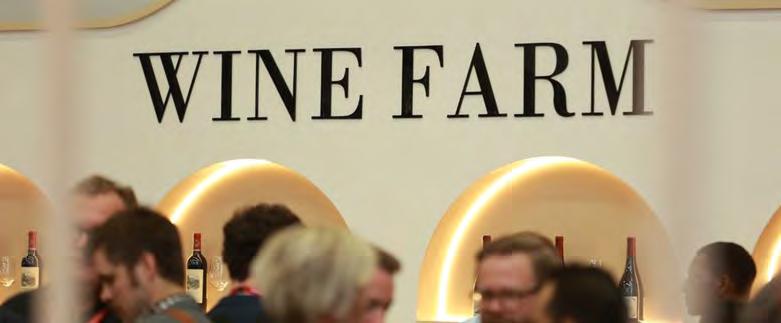
Happy Hour at the Mining Indaba Wine Farm
17:00 –18:30
Exhibition Hall CTICC1
Sponsored by HMS Bergbau Africa
World Gold Council Reception
17:00 –19:00
Ngorongoro Crater Stage – Roof Terrace Sponsored by World Gold Council

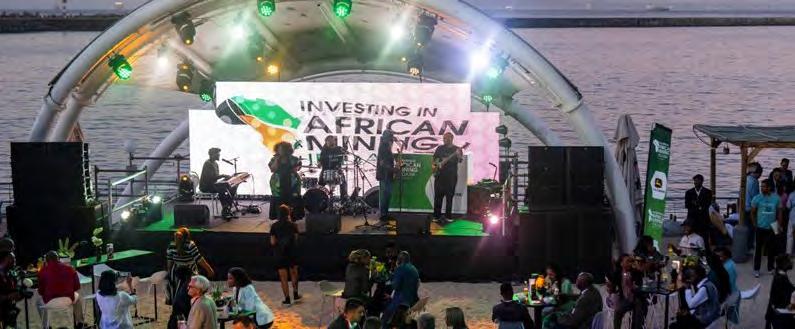
ESNAD Dinner
18:30 –22:00
InterContinental Table Bay Hotel Sponsored by Saudi Mining Services Company – ESNAD
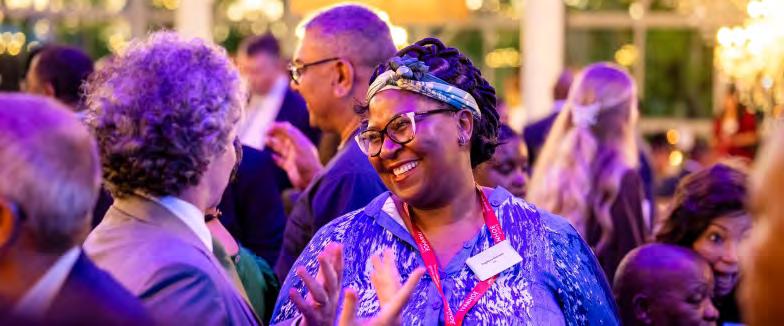
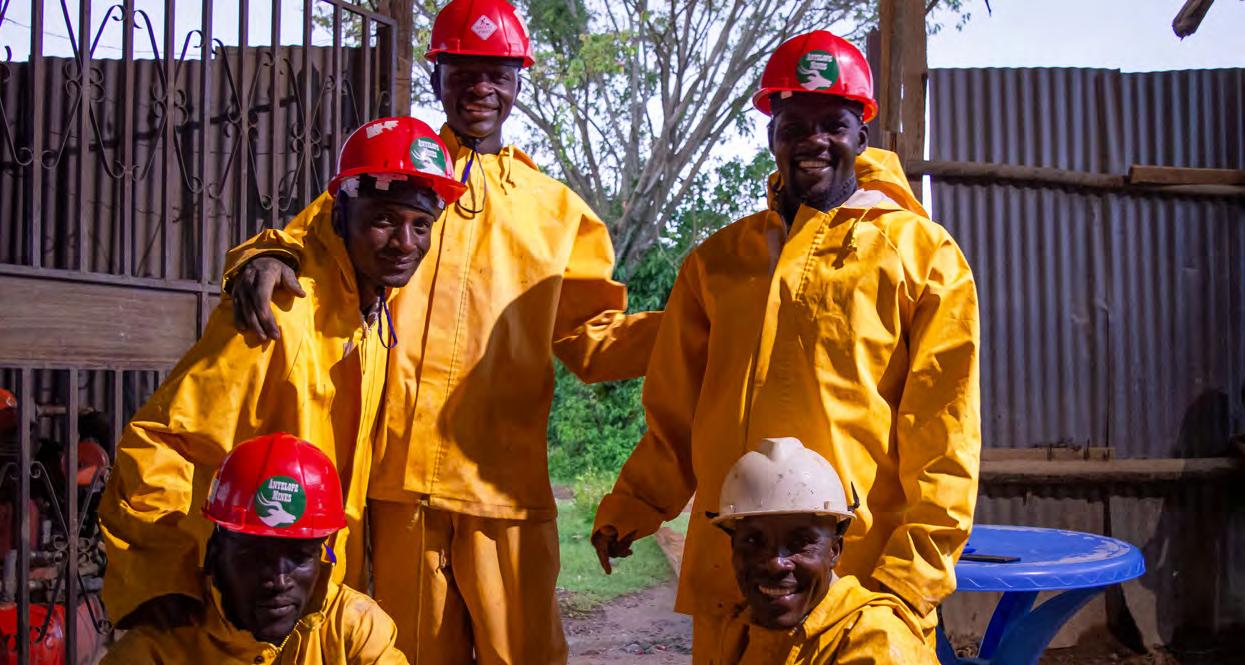

Meaningful partnerships are the lifeblood of sustainable mining. Communities and traditional leaders must be active developmental agents — not passive recipients.
Kgosi Thabo Seatlholo
Chairperson, National House of Traditional and Khoi-San Leaders

Mining is vital to Southern Africa’s rural economies, yet social challenges threaten its future. Sustainable progress requires a united approach–bringing traditional leaders, government, industry and communities together.
HRH Chief Choongo, Chairperson, House of Chiefs, Zambia

“We are strongest when prosperity is shared and decisions are made at the same table.”
Nkosi Sibanda Human Rights Measurement Initiative

“Progress only lasts when communities are trusted partners shaping their own futures.”
Maureen Mwuese Mato Ziva Community Initiative
“We are turning gemstones into stories of growth and opportunity.”
Yamikani Jimusole Yami Gemstone Lab & Exports

“Africa’s role in global minerals comes with shared accountability.”
Sapiens Ndatabaye Xeltis Ltd.
“Mining growth must translate into lasting value — not just GDP figures.”
Alpha Ntayomba Population and Development Initiative

Community engagement is no longer a compliance exercise. It is an investment strategy that unlocks trust, resilience and long-term value.
David Sturmes Verbreek, CoFounder, The Impact Facility

“Responsible mining is about how communities and land are organised — not just extraction.”
Ayoo Liza
Kenya Chamber of Mines

“Mining is only sustainable when communities are partners in value creation.”
Estrella Matondo Rio Tinto
“Great things happen alone, but breakthroughs happen when we partner. That’s where mining’s future begins.”
Nyasha Magwaro Mining Engineering Student, Zimbabwe School of Mine

“Progress is measured in services delivered, not tonnes extracted.”
Prisca Bahati Women Entrepreneurs Initiative for Sustainable Development

“Empowering young voices strengthens partnerships and the future of mining.”
Tendai Ruth Kadye Metarllurgical Engineering student at Zimbabwe School of Mines
In 2024, RBM contributed R7

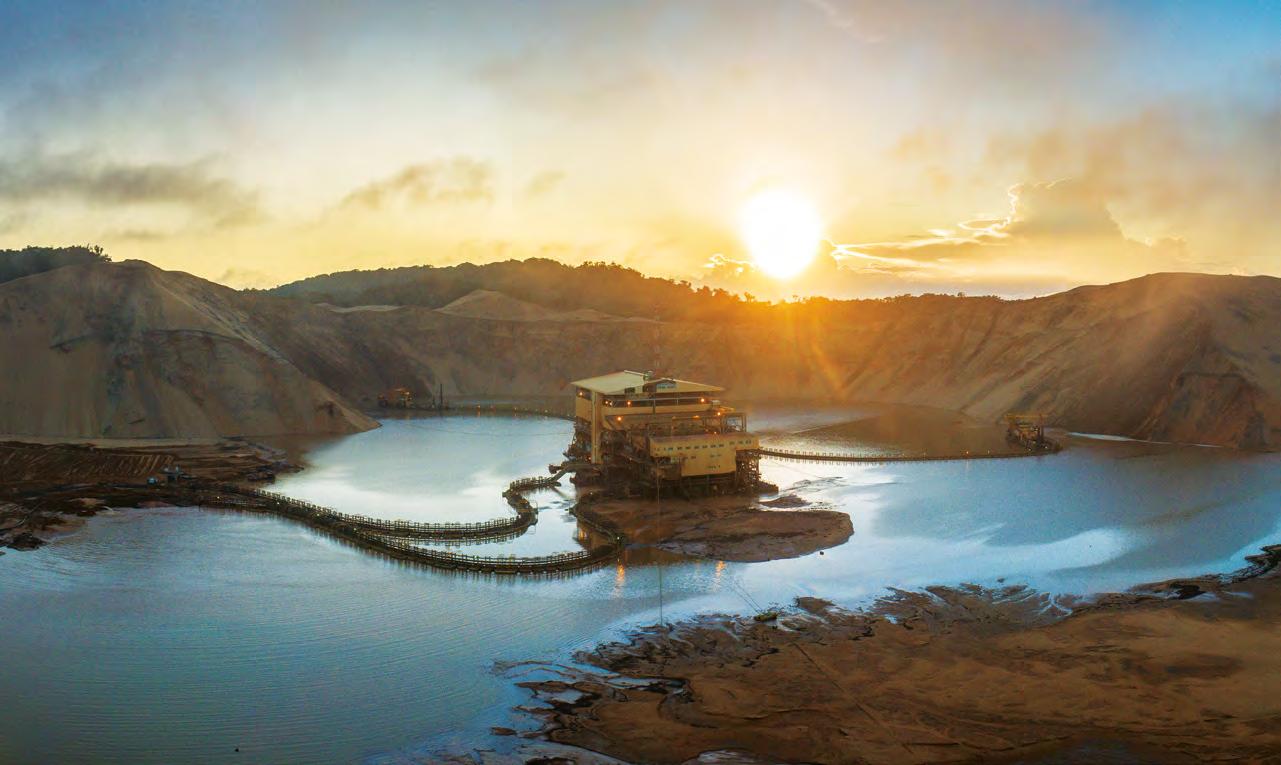
For five decades, Richards Bay Minerals (RBM) has been a cornerstone of the Richards Bay region - supporting jobs, local businesses and broader economic development while contributing to the social and environmental fabric of northern KwaZulu-Natal.
Established in 1976 as a pioneering mineral sands operation, RBM has grown into one of the world’s leading producers of ilmenite, rutile and zircon. Over time, the business has evolved in response to changing markets, rising expectations and the need for responsible, long-term value creation.
1976-1977
RBM is established and begins mining operations, alongside early dune rehabilitation and land stewardship practices.
1986
Production capacity expands to 750,000 tonnes per year. Earlier in the decade, RBM becomes the world’s largest mineral sands producer, with 19.3 million tonnes of sand mined by 1983.
1996
On its 20th anniversary, RBM’s smelter taps one million tonnes — a major operational and technical milestone.
2006
RBM continues to scale and optimise operations while embedding localisation and transformation initiatives that deepen partnerships with employees and host communities.
2016
As mature ore bodies near depletion, RBM advances feasibility work for Zulti South, signalling the next phase of the operation’s long-term future.
2025
Following a period of stabilisation and renewal, RBM strengthens safety performance, restores operational stability and advances Zulti South, alongside investments that support a more resilient, future-fit operation.
“Fifty years on, we remain focused on doing the right things, the right way - for our people, our partners and the future of RBM.”
Werner Duvenhage, Managing Director
Bay Minerals produces high-quality mineral sands products that are essential to global industrial supply chains. These products support a wide range of everyday and advanced applications, from construction and manufacturing to specialised industrial uses.
RBM’s product portfolio includes:
Titania slag, produced through the smelting of ilmenite and used as a titanium dioxide feedstock for pigment production in paints, plastics and coatings
Rutile, a high-grade titanium mineral used in titanium dioxide pigments and specialist industrial applications
Zircon, supplied to global markets for use in ceramics, sanitaryware, foundry applications and advanced industrial products
High-purity iron, produced as a co-product during smelting and used in steelmaking and other metallurgical processes
Together, these products enable industries worldwide while supporting RBM’s focus on responsible production, operational excellence and long-term value creation.
50 years of partnership, progress and possibility. We are so much more than mining.
The 50th anniversary identity is a commemorative refinement marking this milestone year.
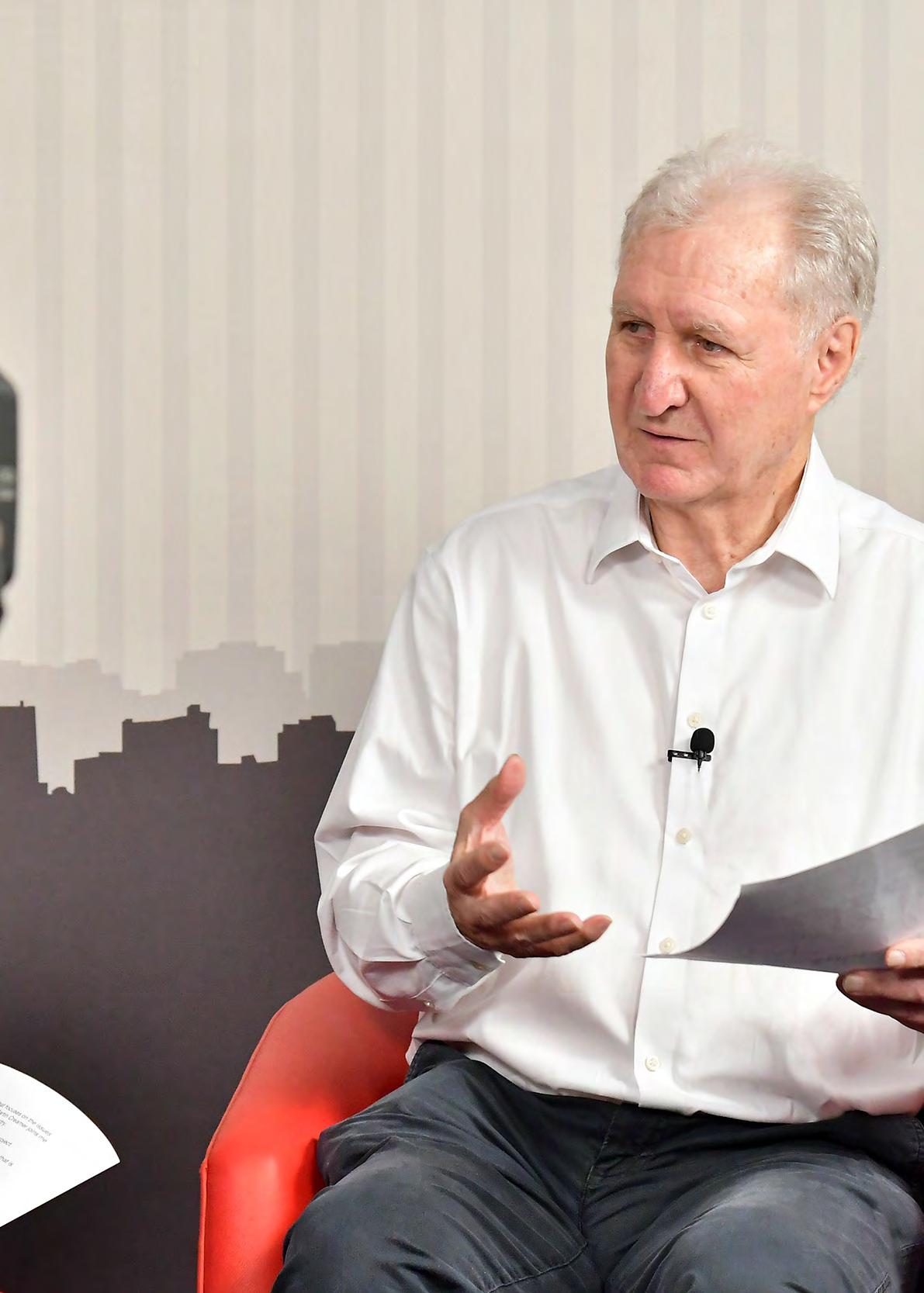
• On-Camera Exclusive: Martin Creamer, veteran journalist and Creamer Media founder, interviews a representative of your company.
• Credible Platform: Engage in a credible conversation to highlight your business strategy, products and service offering.
• Wide Reach: Published on Engineering News and Mining Weekly websites and shareable on your website and social media platforms.
To book your video interview with Martin Creamer contact: advertising@creamermedia.co.za or 011 622 3744

Liz Rowsell
Chief Technology Officer at Johnson Matthey
PGMs sit at the heart of some of the most important technologies of our time – from clean hydrogen production and pharmaceutical catalysts to automotive catalytic converters that reduce the harmful emissions produced by internal combustion engines. PGMs’ unique chemical and physical properties give them an outsized ability to tackle global challenges, but we’ve not yet unlocked their full potential. The transition in the automotive market to electrification – freeing up metal supply –presents the perfect opportunity to harness this untapped potential. Moreover, we can develop technologies that benefit from secure and circular PGM supply chains right from the start.
There are numerous technologies and applications where PGMs can be used. But partnership is crucial to achieving sustained progress across a portfolio of new opportunities.


This is an exciting time in the Platinum Group Metal (PGM) industry as we have a real opportunity to use PGMs to tackle the challenges facing our modern world. Partnership across the supply chain is crucial to face this challenge.
Innovation in advanced technologies thrives when industry, researchers, investors, and policymakers work together. No single organisation can build the infrastructure, supply chains, and scientific breakthroughs required to move these technologies from the lab to real world impact.
Collaboration is the multiplier that turns isolated advances into scalable solutions.
Partnerships that unite industry resources can accelerate the development of new electronic materials, expand the role of PGMs in the clean energy transition, and open new pathways for economic growth. They create shared momentum – de risking early stage innovation, attracting investment, and ensuring that breakthroughs don’t stall before reaching the market.
That’s what Johnson Matthey, alongside our industry partners, are looking to achieve, pooling our knowledge, resources, and vision with the aim of developing technologies that are the catalyst for our future progress. If we want to build a cleaner, more resilient, and more competitive global economy, collaboration isn’t optional. It will turn the extraordinary capabilities of PGMs into more technologies that change the world. Johnson Matthey has a history of innovation – we helped develop the first fuel cell catalyst that NASA used in the Apollo missions. I have seen the positive impact these wonderful metals can make having worked in the team that developed platinum anticancer therapies. I’m excited to see where collaboration takes us next.
Who decides what’s critical — and who benefits?
Tuesday | 09:00 – 10:15
Ngorongoro Crater Stage | CTICC1
The term critical minerals were shaped by global energy transition demands. But does that definition serve Africa’s development priorities? Or is it time for Africa to define “critical” on its own terms.
Moderator Isabelle Ramdoo Director, IGF, IISD
Speakers
• Fabiana Di Lorenzo – Senior Director, Responsible Business Alliance
• Isaac Tandoh – CEO, Minerals Commission Ghana
• Dr. Marit Kitaw – Economic Affairs Officer, UNECA
• Martin Poggiolini – Executive: Corporate Development, Valterra Platinum
• Dr Molefi Motuku – CEO, Mintek
• Shirley Webber – Coverage Head: Resources & Energy, Absa CIB
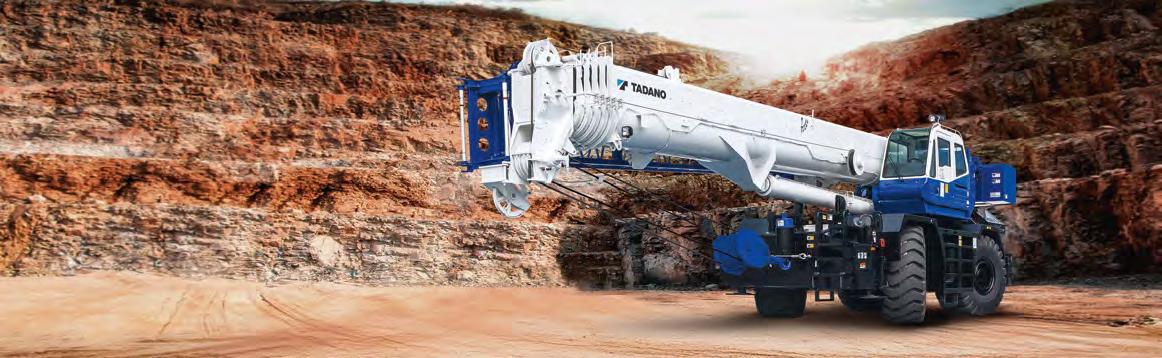
When it’s hard. When it’s painful. When it’s loud.
Tadano’s range of rough terrain cranes from 30 t – 145 t are compact powerhouses designed for outstanding performance in challenging environments.
Demonstrating an impressive time-tested robustness, the GR series feature state-of-the-art technology to handle even the most demanding requirements, with unrivaled reliability and durability.
Built on the principle of simplicity without compromising safety, and equipped with efficient motors, compact design, and smart assistant systems, everything is on board to deliver maximum success, even under the toughest conditions.
africa@tadano.com · www.tadano.com



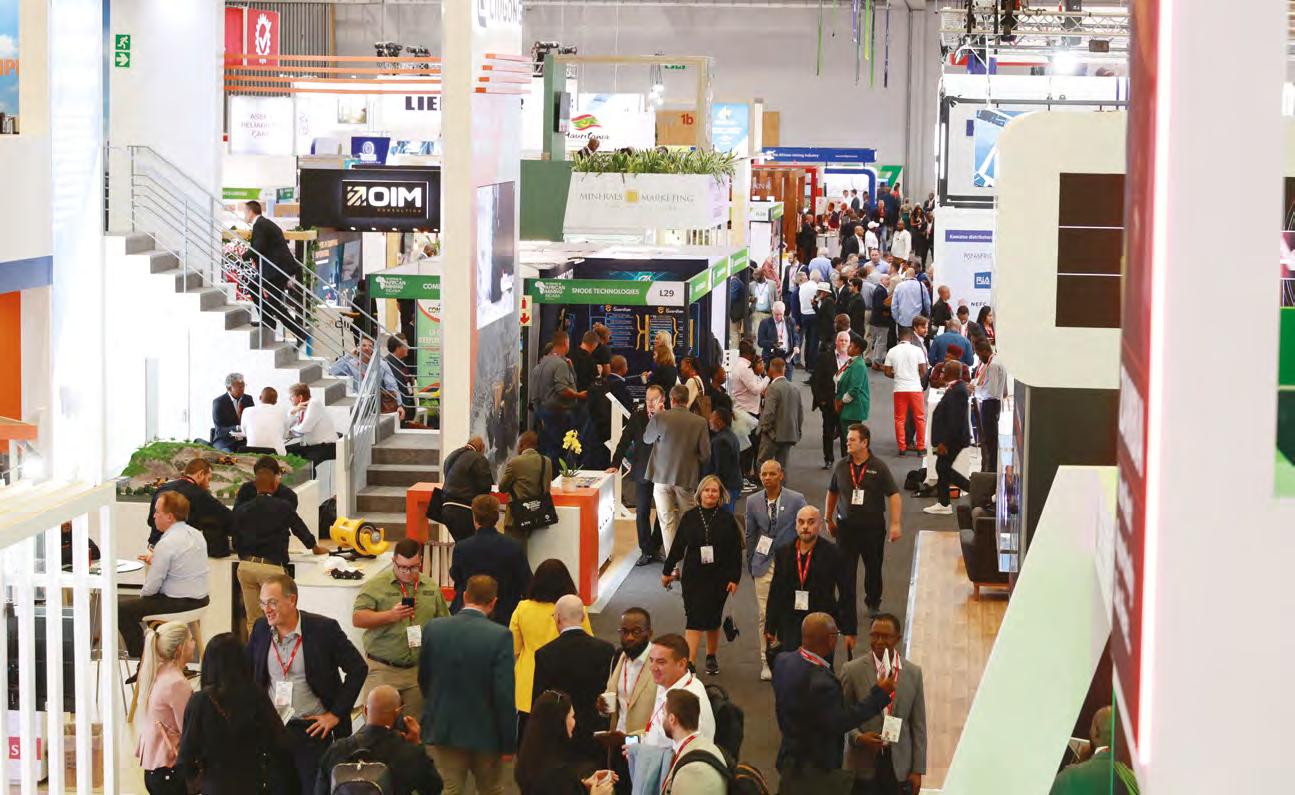
One week, one place, the entire mining ecosystem under one roof.
The right people are
11000+ leaders — from ministers and mining companies to investors and innovators.
Deals get done
Billions in projects and partnerships start with
Where Africa meets global capital No other platform connects with the world’s investors like this. 8-11
Get clarity, fast Hear directly from decision-makers


Khwelamet is an industrial champion for South Africa’s economy. We leverage capital, insight and access to raw material to produce high quality ferromanganese from our facility in Meyerton, Gauteng, capturing the full value of the country’s vast natural resource endowment.