EXPLORATION | NUBIAN STAGE STAGE | CTICC2
09:00 – 09:05 MC Welcome

09:00 – 09:05 MC Welcome
09:05 – 09:45 Africa’s exploration hotspots – critical minerals on a critical timeline
09:45 – 10:30 Understanding the future when boots-on-the-ground meets next-generation tech
10:30 – 11:15 Copper frontiers – driving Africa’s next wave of discovery
11:15 – 12:00 The hidden costs of underinvesting in mineral exploration
Sponsored by: University of Witwatersrand Strategic Partner: Minerals Council South Africa
09:00 – 09:05 Welcome
09:05 – 09:20 Session host
09:05 – 9:10 DMPR keynote
09:10 – 9:15 Opening remarks: Wits University
09:15 – 09:20 Opening remarks: Minerals Council South Africa
09:20 – 10:05 Session host
09:20 – 10:05 What do Young Professionals see as Mining’s biggest challenges?
10:05 – 10:35 Mining leadership showcase
11:05 – 11:50 Session host
11:05 – 11:50 What does the future of African mining employment look like?
11:50 – 12:35 Session host
11:50 – 12:35 C an you make mining more sustainable? Audience participation session
12:35 – 12:40 Closing remarks

If you attended the world premiere on Tuesday, we’d love your feedback.Your thoughts will help us understand what resonated - and shape what comes next. Please scan the QR code to complete a short survey.

It takes less than 5 minutes, and your responses are confidential. Thank you for being part of the journey.


By Glen Nwaila and Grant Bybee

Professor Glen Nwaila, director of the Wits Mining Institute and the African Research Centre for Ore Systems Science and associate professor of Geometallurgy and Machine Learning at the Wits School of Geosciences

Many countries around the world, including South Africa, have recently published critical metal guidelines, frameworks or legislation that highlight the vital need for locating and sustainably mining and processing critical minerals that are needed for the transition to a green economy. Without geoscientists we will get nowhere towards realising this goal.
There is no doubt that mining and processing critical minerals and elements would boost the economy and create jobs — Africa after all is home to large reserves of these minerals and elements. Governments, particularly in southern Africa, increasingly seek to encourage mapping and exploration for critical minerals and elements.
But, in many African economies, raw and semi-processed minerals still account for a large share of export earnings, while manufactured goods and technology imports dwarf local production.
The International Energy Agency’s 2025 energy market outlook, based on the direction of existing and planned government energy and climate policies, projects that demand for lithium will increase fivefold from 2025 to 2040. Graphite and nickel demand will double, that for cobalt and rare earth elements will increase by between 50% and 60% by 2040, and for copper by 30% over the same period.
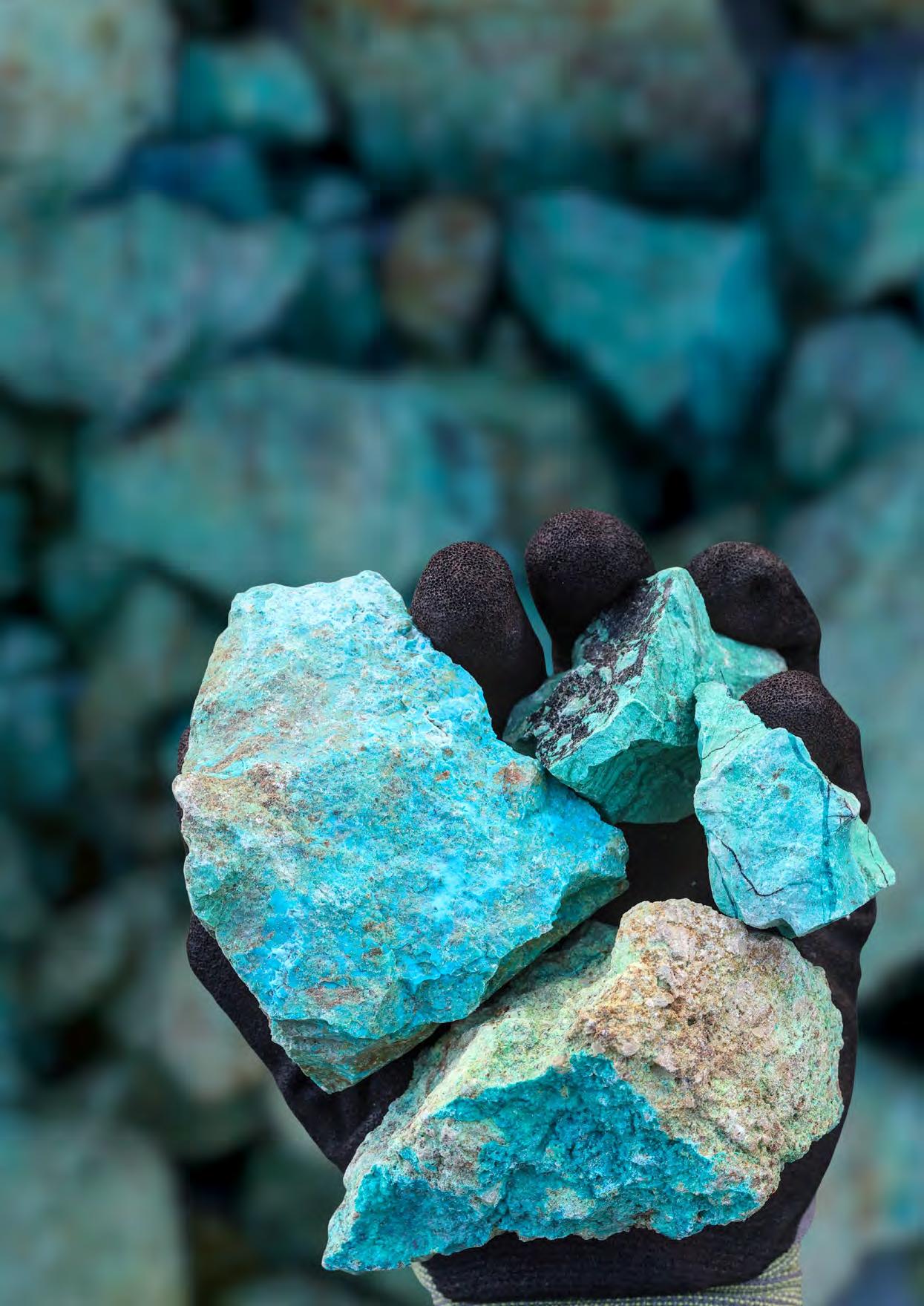
Consider lithium, best known for its roles in rechargeable batteries and mood stabilisers. Since it is highly reactive, it does not occur as a free element in nature, making
the process of searching for and developing lithium deposits an intricate, multiphase undertaking.
While, initially, we were only able to recover about 30% of the lithium present in a deposit, new and modern technologies, such as direct lithium extraction, can consistently target and achieve much higher efficiencies, often above 80%.
This can double the economic value of a given deposit, because, by extracting more lithium per unit of raw material there is more lithium product to sell without needing to increase the size of the deposit or mining operation. This
efficiency lowers costs, shortens production cycles and reduces waste and environmental impact.
A wide variety of geoscientific skills play an indispensable, foundational role in achieving the high lithium recovery rates seen in modern technologies.
Beyond helping us ride the wave of increased global demand for critical minerals, geosciences are vital to our everyday life.
We need hydrogeologists to secure reliable, low-impact water supplies for cities, farms and mines; geophysicists, who image the subsurface to locate resources, site infrastructure and monitor natural hazards
and geometallurgists, who design mineral beneficiation systems that reduce energy, water use and waste.
We also need geodata scientists, who turn satellite, sensor and field measurements into decision-ready maps for planning and climate adaptation; resource geologists, who estimate what commodities can be recovered and at what risk; engineering geologists, who help keep foundations, tunnels, dams and tailings facilities stable; and environmental geologists, who track and manage soil, water and air quality so economic growth remains compatible with human and ecosystem health.
Rocks, and the Earth itself, provide the natural laboratory for geoscientists, but advanced computation, mathematics, physics, chemistry and engineering have become crucial tools for making ground-breaking discoveries for the prosperity and health of our planet.
By integrating deep Earth knowledge with cutting-edge data science and socio-economic research, the geosciences will ultimately ensure humanity’s ability to curb and reverse climate change effects, secure essential resources, and build a truly sustainable and just future for all.


Stand a chance to be one of TWO lucky winners of a fully funded short course
As a proud sponsor of MI26 Young Professionals Day, Wits University is investing in the future of mining leadership by offering two fully sponsored short courses to two standout participants. Each winner will have the opportunity to select ONE of the following high-impact courses:
• Introduction to Artificial Intelligence
• Applied AI in the Workplace
• AI Strategy and Implementation
These future-focused programmes are designed to accelerate your digital readiness, strengthen your professional edge, and position you for the next wave of industry transformation.

Simple. Visible. Impactful.
1. Share your MI26 Young Professionals Day experience on LinkedIn
2. Tag @InvestinginAfricanMiningIndaba and @UniversityoftheWitswatersrand
3. Use the hashtags: #MI26MakeYourMark #MI26StrongerTogether #Witsforgood That’s it – you’re in the running.
KEY DETAILS
• Prize: 2 winners | 1 short course each (fully funded)
• Eligibility: MI26 Young Professionals Day participants only
• Entry Deadline: Thursday, 12 February 2026
• Course Attendance: Subject to Wits University schedule and availability
Terms and conditions apply.
Africa’s mining sector is being asked to do more than ever before. As Dr Lesego Molapisi, Executive Director of The Transition Think Tank, observed, mining houses are now expected “not just to extract, but to also beneficiate, to industrialise, to decarbonise, and to drive development all at once.” Yet one fundamental reality remains unchanged: “Mining still runs on power.” This was highlighted during a panel discussion on How can Africa close its transmission infrastructure gap to power mining and industrial growth?
According to Dr Molapisi, Africa’s development “will be shaped by the strength and resilience of its grid infrastructure.” While generation capacity is expanding and renewable energy projects are being commissioned across the continent, power often fails to reach where value is created. “Energy abundance delivers very limited impact if it cannot reach the mines and the factories and the industrial parks and the communities,” she said.

As a result, the energy transition is increasingly seen as “the backbone of industrial growth linking power to productivity, policy to investment.” The issue, she stressed, is no longer about installing capacity. “Today’s discussion is no longer about megawatts being installed but about megawatts being delivered in a way that is reliable, affordable and at scale,” making energy delivery a strategic constraint for mining.
Addressing this challenge, Hon. Samantha Graham-Maré, Deputy Minister of Electricity & Energy of the Republic of South Africa, reflected on how grid constraints emerged during efforts to resolve load shedding. “I don’t think the grid has been something that people have thought terribly much about until we started addressing the load-shedding crisis,” she said. As generation increased, “suddenly we encountered grid issues.”
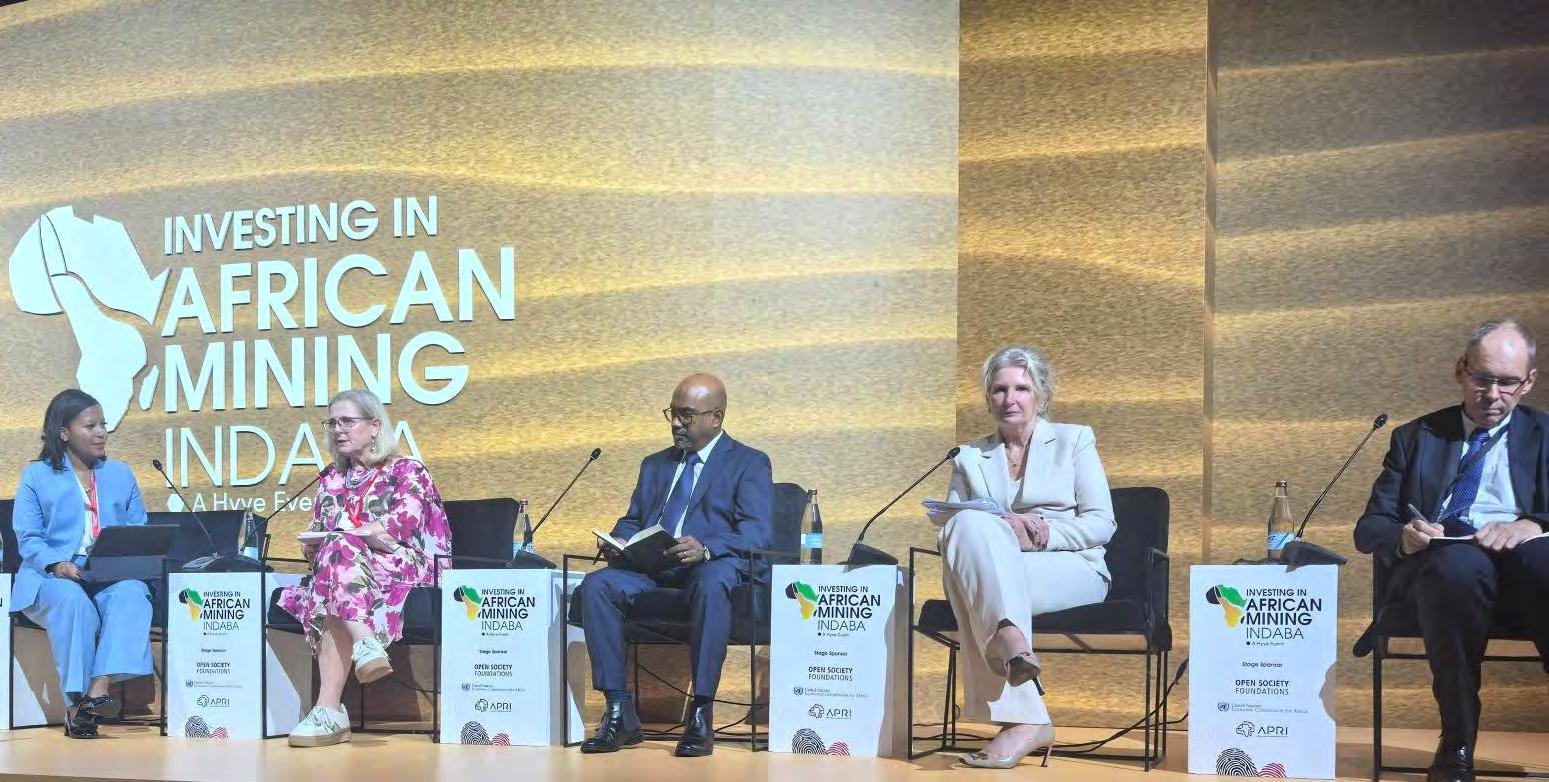
She explained that South Africa’s grid was built around the coal belt in Mpumalanga, while renewable resources are concentrated in the Western, Eastern and Northern Cape. “The new electrons we were bringing online couldn’t be evacuated to the rest of the country,” she said, forcing a shift in thinking. Grids could no longer be “technical afterthoughts” but had to be central to energy planning.
The scale of the response is significant. South Africa needs to build “14,000 kilometres of grid,” costing around R450 billion. To achieve this, the government, through the Department of Electricity and Energy and National Treasury, launched the Independent Transmission Projects (ITP) Programme to attract private capital for expanding the nation’s electricity transmission network. “The private sector brings a host of new ideas, new money, and new creativity,” the minister said.
From the industry side, Andrew Etzinger, General Manager for Energy Market Services and International Trader at the National Transmission Company South Africa, highlighted how partnership models have already transformed generation. Through collaboration between mining companies, Eskom, government and independent power producers, “we were able to develop various projects and actually bring on 500 to 600 megawatts in terms of solar wind power.” These partnerships were essential “to supplying that security, the security of supply,” and supporting decarbonisation.
Etzinger argued that grid development can follow the same path. “I see no reason why the grid development can’t partner in the same way,” particularly as grids globally have been underinvested. He also pointed to the growing role of microgrids and their impact on “local communities and societies,” especially in hard-to-reach areas.
Market reform and unbundling are also reshaping the sector. Etzinger explained that the formation of the National Transmission Company South Africa has unlocked momentum. “A lot of energies are unlocked by that, by being in a separate company,” while remaining part of the Eskom group.
Speaking to broader investment implications, Alison Atkinson, Chief Projects & Development Officer at Anglo American, emphasised that coordination and liberalisation are critical. “You’re always going to need the national infrastructure. You’re always going to need that thought leadership,” she said, warning that “the cost of energy, if it’s not liberalised,
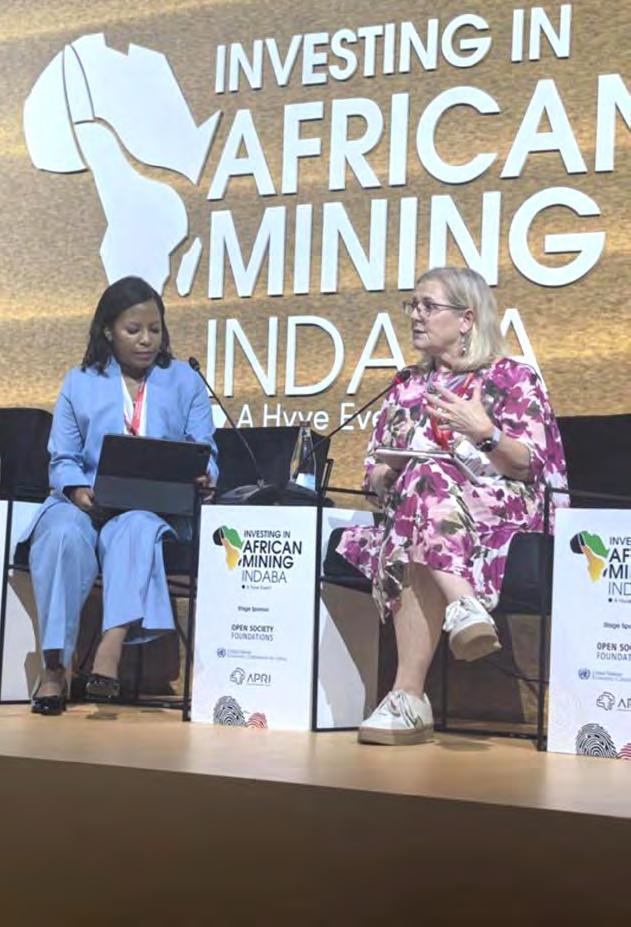
will only go up.” Managing energy costs, she explained, ensures that “those investment decisions at a global scale come back to Southern Africa.”
She pointed to the platinum sector as an example. “I mean, 90% of the platinum is mined here and refined here in Southern Africa,” yet “we’re shutting down some mountains because of energy reliability.” Restoring power would allow operations to resume and value to be reinvested locally,” she said.
Finally, Bradley Reddy, General Manager for Growth Strategy at Rio Tinto’s Richards Bay Minerals, emphasised the importance of large energy off-t akers. “I strongly believe that as mining companies and the private sector as such, we do play and can continue to play a pivotal role in helping to accelerate the strengthening and the growth within the transmission infrastructure, not only in South Africa but across Africa,” he said. Responding to a call from President Cyril Ramaphosa, mining companies were urged “to really rally around the energy sector” to accelerate generation, strengthen security of supply, and support economic growth.
Author: Ikaneng Ramaipato, Analyst – Mining
The energy transition has accelerated demand for minerals, placing mining in a unique position as both an enabler of and contributor to the global climate response. The sector supplies critical metals for renewable energy, electric vehicles, battery storage, and grid infrastructure, with demand further accelerated by the rapid expansion of artificial intelligence.1
This structural shift in demand underscores mining’s central role in achieving global decarbonisation goals. However, if growth follows a business-as-usual path, it risks increasing emissions, exacerbating environmental degradation, and reinforcing unequal benefit sharing, ultimately limiting long-term developmental gains. By contrast, if the sector transitions toward lowcarbon, climate-resilient, and socially responsible models, mining can become a catalyst for inclusive growth, supporting job creation, local value addition, and alignment with global net-zero ambitions.
Scaling primary production and circular solutions
The growing mineral demand opportunity is matched by the scale of the supply challenge. Renewable energy systems and EVs require significantly more minerals than fossil fuel-based technologies. In 2024 alone, lithium demand rose by nearly 30%, three times the 2010–2020 average. A net zero scenario could see copper and nickel demand increase by 230% and 300% respectively by 2050, with lithium rising up to forty times by 2040. Supply is already struggling to keep pace: new mines typically take 10–20 years to develop, production growth remains modest, and projects require substantial upfront capital, often between $100 million and over $1 billion, years before revenue is realised.
As a result, primary supply alone will be insufficient, with secondary sources expected to provide roughly. Addressing this gap requires not only modern, efficient facilities capable of scaling sustainable primary production, but also a complementary expansion of circular economy models, including recycling, reuse, and metal recovery, to reduce reliance on new extraction, strengthen resilience, and build more sustainable value chains.
Emissions intensity as a business risk. Mining and metals processing are among the most energy- and carbon-intensive industrial activities. High emissions intensity increases exposure to carbon pricing mechanisms, such as the South African carbon tax as well as trade measures like the EU’s Carbon Border Adjustment Mechanism (CBAM), these mechanisms can directly raise operating costs and erode margins in key export markets. Over time, this translates into a higher cost of capital, reduced competitiveness, and a heightened risk of asset stranding, making emissions intensity not only an environmental concern but a material determinant of long-term business performance and market access.
Beyond these transition-related risks, mining companies are also faced with climate risks, such as water scarcity, rising temperatures, and increasingly severe weather events, which pose direct threats to mining operations and to Africa’s broader metal supply chains. Integrating decarbonisation with climate resilience strategies can materially reduce these exposures while improving operational efficiency, infrastructure durability, and long-term asset value.
Embedding just transition principles, which promote fairness, protect workers and communities, and promote equitable sharing of economic benefits, ensures that rising mineral demand translates into inclusive economic development, job protection, and stronger mining communities. Therefore, aligning emissions reduction, climate adaptation, and social outcomes can enable mining companies to futureproof their businesses, maintain their social licence to operate, and position themselves as stable contributors to Africa’s low-carbon and inclusive growth pathway.
1Clean energy demand for critical minerals set to soar as the world pursues net zero goals. https://www.iea.org/news/ clean-energy-demand-for-critical-minerals-set-to-soar-as-the-world-pursues-net-zero-goals
2Lithium and Latin America are key to the energy transition. https://www.weforum.org/stories/2023/01/lithium-latin-america-energy-transition/ 3Global energy consumption of the mineral mining industry: Exploring the historical perspective and future pathways to 2060. https://www.sciencedirect.com/science/article/pii/S0959378023001115

Author: William Clarke
10 February 2026
African mining ministers saw opportunities, as well as threats, from the rising great power competition for critical minerals as they met at the Mining Indaba in Cape Town, South Africa.
Rising geopolitical tensions between the US, Russia, Europe and China formed the backdrop of the mining conference. For African countries, this means their resources are more desirable than ever before, for better or worse.
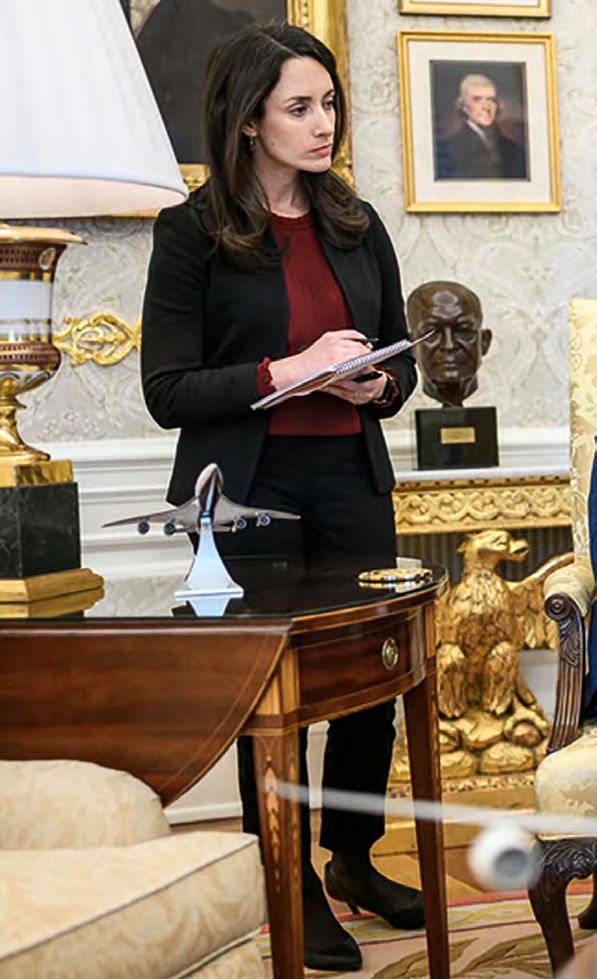
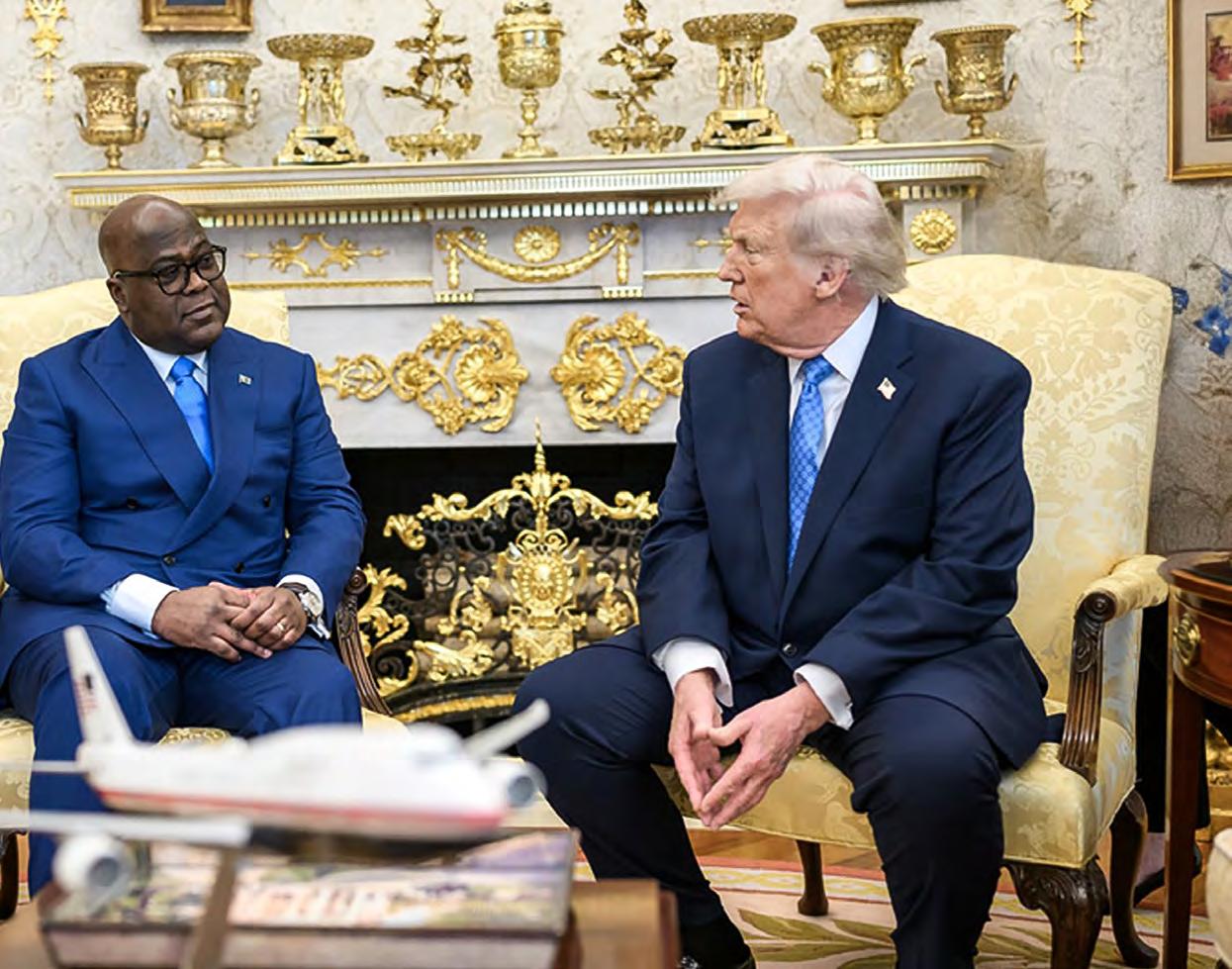
The biggest play for Africa’s critical minerals so far was a sweeping deal between the US and the DRC, signed as part of a peace deal brokered with Rwanda last year. The agreement could allow the US preferential access to critical minerals mined in the DRC.
Speaking on a panel with other African mining ministers, the DRC’s Louis Watum Kabamba strongly defended the deal.
• ‘In good shape’: Indaba begins on a high note
• Wanblad at Indaba: the champ is here
• Africa must unite in unstable world, Mantashe tells Indaba
“The deal with the Americans is not a oneway traffic in which we give away our minerals and in return get nothing.”
Rather, Kabamba said, it would serve as a framework for future investments.
Kabamba said the DRC was focusing on “rule of law, security of tenure, certainty of loan” to attract investment back into the country.
He also cited the creation of a special economic zone, designed to support the development of an in-country battery value train, as he spoke of a “move away from the extractive pit to port model where we’re still exporting jobs and profit”
Speaking on the subject of critical minerals, which is underpinning the scramble for mining assets in Africa, Paul Kabuswe, the Zambian Minister of Mines, said, “All minerals are critical”.
He said his country’s history of stability and peaceful transfers of political power will make it a key destination for investments.
“Our biggest value as Zamiba is our peace.”
South African mining minister Gwede Mantashe returned to his favourite theme, pan-African cooperation.
“It’s about the continent’s interests.”
Investment in downstream processing and manufacturing in Africa will bring security and profit, Mantashe said. African markets for African minerals will mean the continent is less vulnerable to geopolitical shifts.
“If you diversify your markets… you cushion yourself from unpredictable tariff regimes.”
Speaking on the same panel, mining leaders in Africa also saw opportunities.
“Geopolitical tension just gives us the platform,” Ivanhoe Mines chief executive Marna Cloete said.
“We are meeting at an interesting time,” Kumba Iron Ore chief executive Mpumi Zikalala added.
“All of a sudden, the conversation about critical minerals is at the very centre.”
By Sven Lünsche

Is coal a critical mineral? The question has risen to prominence since South Africa designated coal as a “highly critical” mineral in its Critical Minerals Strategy released last year.
South Africa is the only country that has declared thermal coal as critical though India, the EU and the US have recently added coking (metallurgical) coal to their list of critical minerals. But most countries classify critical minerals as those that contribute to the energy transition, such as copper, lithium and rare earth metals. Copper and lithium are listed in the SA strategy as “minerals with moderate criticality”.
SA’s stance on coal found broad support at this week’s Mining Indaba with a number of commentators stressing that the metal’s importance to the country’s overall economy as well as security of supply should be the overriding criteria.
Mike Teke, CEO of coal mining group Seriti Resources, stressed that “we need to make decisions that are of interest to South Africa and the continent and not determined by geopolitics alone”. Michelle Manook, CEO of the Future Coal Alliance for Sustainable Coal added: “Coal is not a stranded asset. It is critical in the energy transition and in industrial processes that sustain many economies.””
The CEO of the Council for Geosciences, Siphelele Buthelezi, made the case for coal pointing out that recent surveys have shown that South Africa has in excess of 60bn tonnes of coal remaining, which was of sufficient quality for power generation and export grade blending. Short-term sentiment towards coal also appears
to be more optimistic with the Trump government introducing policy changes that enable financial institutions to reinvest in fossil fuels. There is also growing recognition that coal will remain essential in the short to medium-term to meet baseload power needs, not only in South Africa. Despite these developments and the efforts by the South African government, it is unlikely to fundamentally change the course for the industry and lead to the investments needed for future production growth. Most financial institutions outside of the US refuse to fund coal projects. It also comes at a time when the coal sector in South Africa is experiencing declining economic fortunes. The Minerals Council South Africa, in its 2025 Facts & Figures report released this week, estimates 2025 coal production to come in at 236 million tons (Mt), unchanged from 2024 levels but down by 9% compared to pre-Covid levels.
Total coal sales for 2025 are expected to decline by approximately 3% compared to 2024, primarily driven by a sharp 15% reduction in coal prices during the year. In response coal sector employment declined for the first time in four years to about 97,600 workers at the end of last year.
What is of greater concern is the Minerals Council’s outlook for the metal: “The Department of Mineral Resources’ Integrated Resource Plan, released in November 2025, projects a sharp decline in domestic coal consumption. Coal-based electricity generation as a share of Eskom’s installed capacity will fall from the current 59% to just 11% by 2042. “Cumulatively, this could reduce annual demand by Eskom to approximately 40Mt from the current 108Mt. By all indications, this signals a challenging outlook for the coal sector and production over the next two decades,” the Council writes.


Michelle Phillips, Group Chief Executive, Transnet SOC

Dushendra Naidoo Head: Safety & Sustainable Development Department, Minerals Council South Africa
Kgosi TM Seatlholo Chairperson, National House of Traditional KhoiSan Leaders
Japie Fullard CEO, Glencore Ferroalloys
Jono Gay CEO, ChromTech Holdings
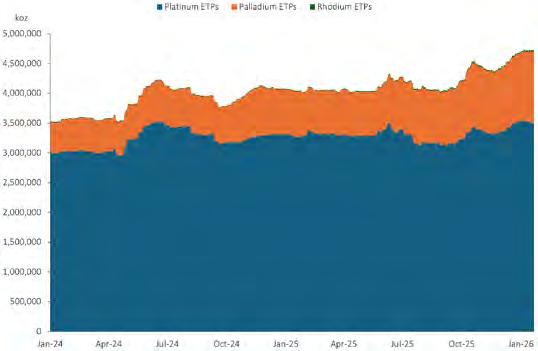
Platinum group metals (PGMs) have long held strategic importance due to their catalytic properties, supporting emissions control, industrial efficiency and advanced technologies. Even so, their prices are shaped by a combination of changing supply/demand developments and geopolitical developments, including trade policy and supply security.

Wilma Swarts Metals Focus
Investor interest across metals has strengthened amid trade tensions and geopolitical uncertainty, with gold, silver and platinum reaching record highs. Commodities are viewed as strategic resources linked to scarcity, and national security. PGMs sit at the intersection of these themes, behaving like precious metals while also being critical industrial inputs
PGM markets are structurally small and highly concentrated. Primary supply accounts for just over 70% of total supply (across all five PGMs), with around 60% originating from South Africa, meaning that disruption can trigger outsized price moves. Dislocations between futures and physical markets have also created arbitrage opportunities, with elevated premiums reflecting a lack of liquidity.
The metals are also produced as a basket, meaning output is driven by integrated mine economics rather than the fundamentals of any single metal. Demand trends are increasingly uneven. Platinum is more diversified, while palladium faces structural decline due vehicle electrification. Rhodium remains essential in chemical and glass production but volatility increases as mainstay automotive demand is set to decline, while iridium and ruthenium are sensitive to emerging technologies such as new semiconductor requirements, medical devices and data centre expansion.
Combining these dynamics with a volatile geopolitical backdrop, we expect all five metals to trade higher in 2026. Looking first at platinum, we forecast a narrower deficit of around 117koz, marking a fourth consecutive year of deficit. While record prices may trigger some demand destruction, tailwinds are emerging as the electrification transition slows and platinum benefits from positive spillovers as gold posts new record highs. We therefore expect platinum to trade in a $1,900-2,900 range.
Palladium is also expected to remain in deficit, at around 180koz, contrary to earlier expectations that weakening automotive demand would have pushed the market into surplus. While demand is declining as battery-electric vehicle production rises, this transition has slowed. In addition, both secondary and primary supply are lower than previously anticipated. Over the longer term, palladium faces headwinds due to its heavy
dependence on a single end-use. As a result, we expect palladium to trade between $1,090-2,000 in 2026. Rhodium follows a similar pattern and, given a deficit of 100koz in a 1Moz supply market, is forecast to trade between $6,400-11,500.
Another deficit is expected for ruthenium, an eighth consecutive year. Investor interest in these more exotic metals supports further upside, and we expect prices to rise by close to 80% , within a $1,050-1,540 range. For iridium, early price strength expected in Q1 reflects broader commodity exuberance before easing, with prices ranging from $4,000-6,500.
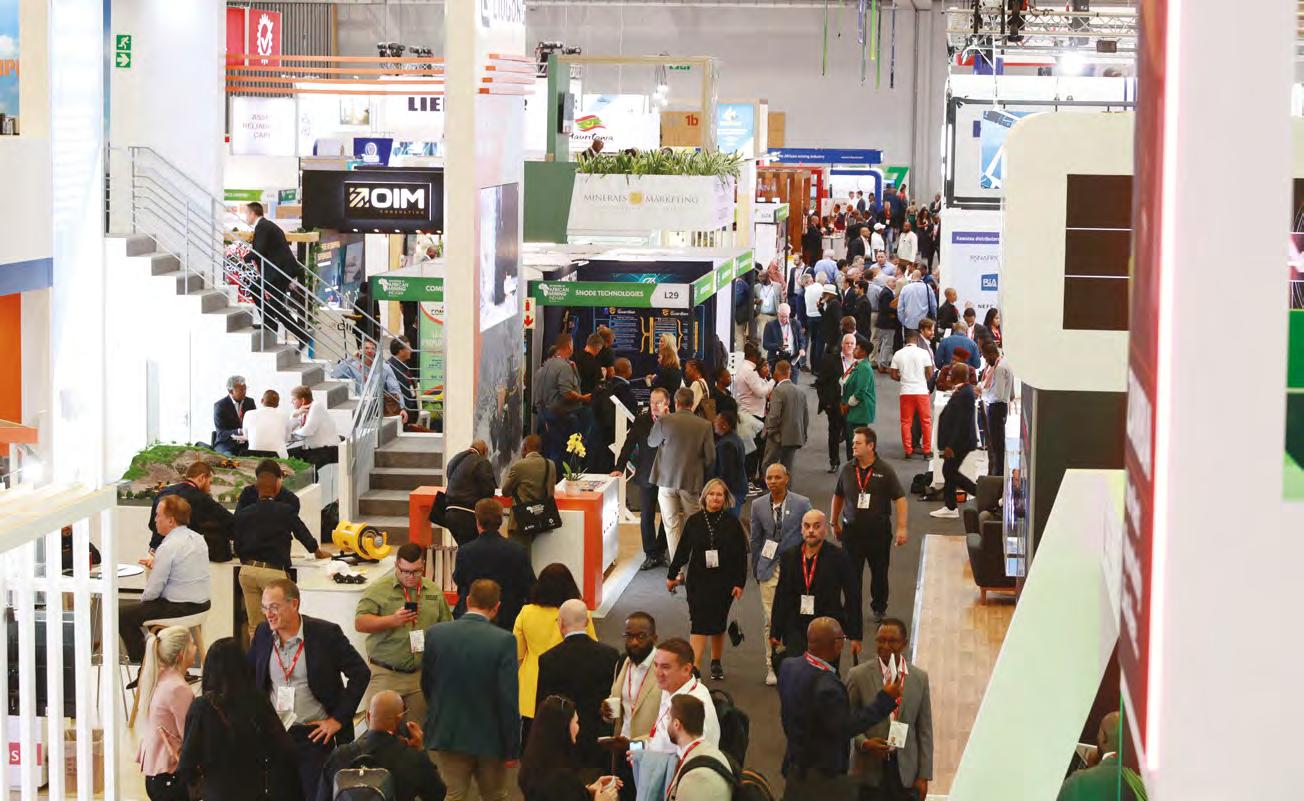
One week, one place, the entire mining ecosystem under one roof.
The right people are in the room
10,500+ leaders — from ministers and mining companies to investors and innovators.
Deals get done
Billions in projects and partnerships start with
Where Africa meets global capital No other platform connects with the world’s investors like this.
Get clarity, fast Hear directly from decision-makers
Register now at