 Written by: Amy Kim
Photos from: Google
Designed by: Mimi Yang
Written by: Amy Kim
Photos from: Google
Designed by: Mimi Yang
Dear Korean brothers and sisters,
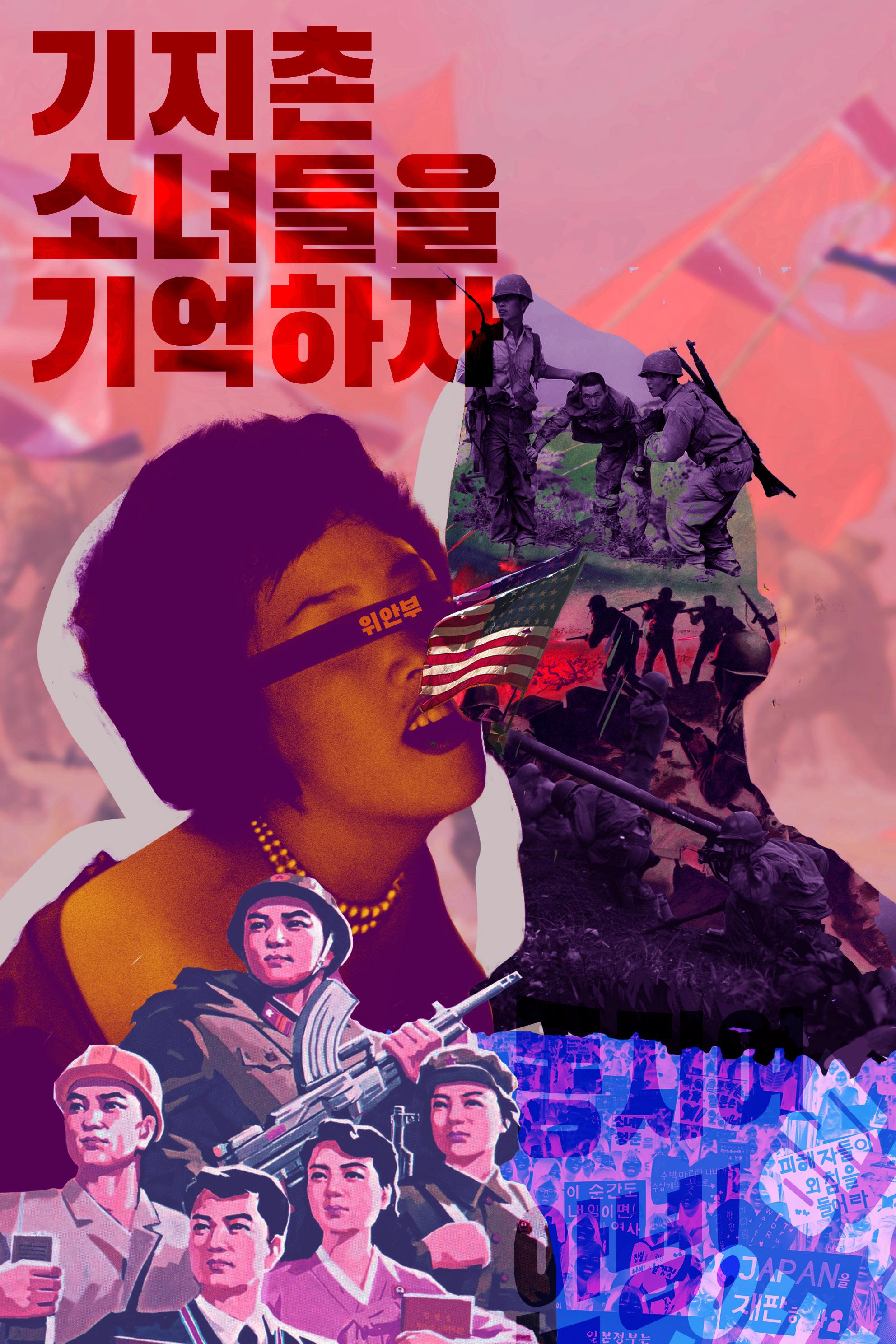
We all know about comfort women. These halmonies, who were once young girls kidnapped and raped under the Japanese imperial government, are a living reminder of the four decades of oppression we endured under Japanese colonialism. Ever since you first learned about them at school, you tremble with indignation, and you demand a belated justice. Since the 1990’s, the topic of comfort women naturally became a matter of national importance, with activists and ordinary people alike calling for recognition and reparations. To the south Korean state, this nationwide protest holds more than its immediate demands—it is a tool that manufactures false sovereignty. While marching on the streets, we reaffirm our emancipation from the colonizer’s chains, completely changed by the lessons from our humiliating past. We feel prideful of the seemingly democratic society we achieved less than a century after brutal colonial oppression and bloody civil war. With brimming patriotic fervor, you march on the streets for comfort women, completely unaware that nothing fundamentally changed. In place of Japan, we have the United States. In place of comfort women, we have yanggongju—“western princesses”, the victims of
state-sponsored sex trade—whose stories were effectively ignored to maintain US hegemony in south Korea.
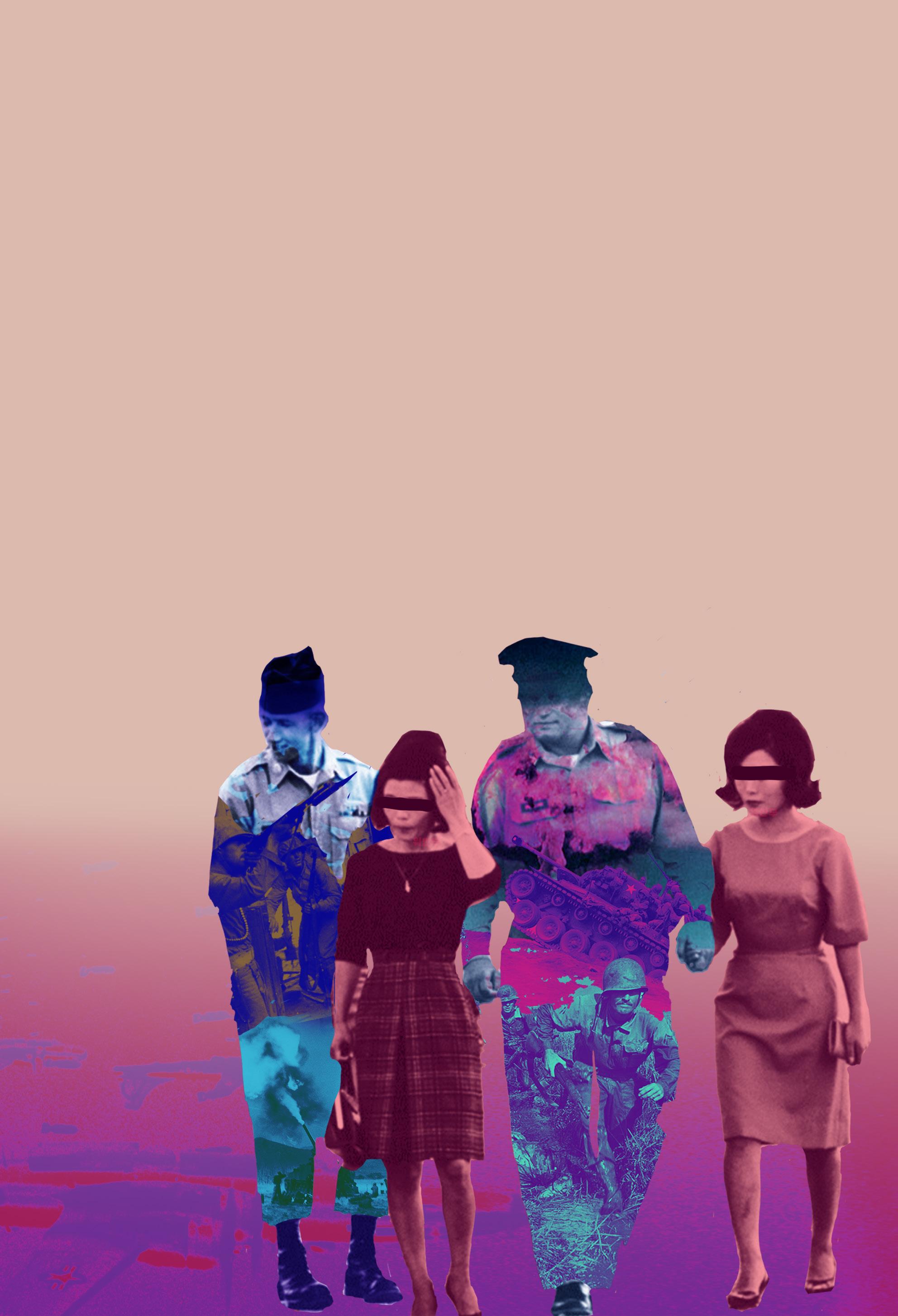
The sex trade in Korea is inseparable from kijichon, or camp towns, that exist to provide exclusive services for US military bases in south Korea. The streets of kijichon welcomed GIs at night with neon signs, blasting music, and alluring women. As the GIs watched strippers dance, they kissed and groped the women sitting by their side and took them to nearby motels with a few extra dollar bills. More than one million women were reduced to mere merchandise for GIs between the years following the Korean War until the 1990s, with blessings from the US government and its fascist puppet regimes. The US military acted as the de facto government in licensed special zones surrounding their military bases. Because US military performed state functions such as policing, the sex trade and its related crimes went unreported and unpunished. Kijichon were places where imperialism shamelessly revealed its gruesome claws, predating on our women and children.
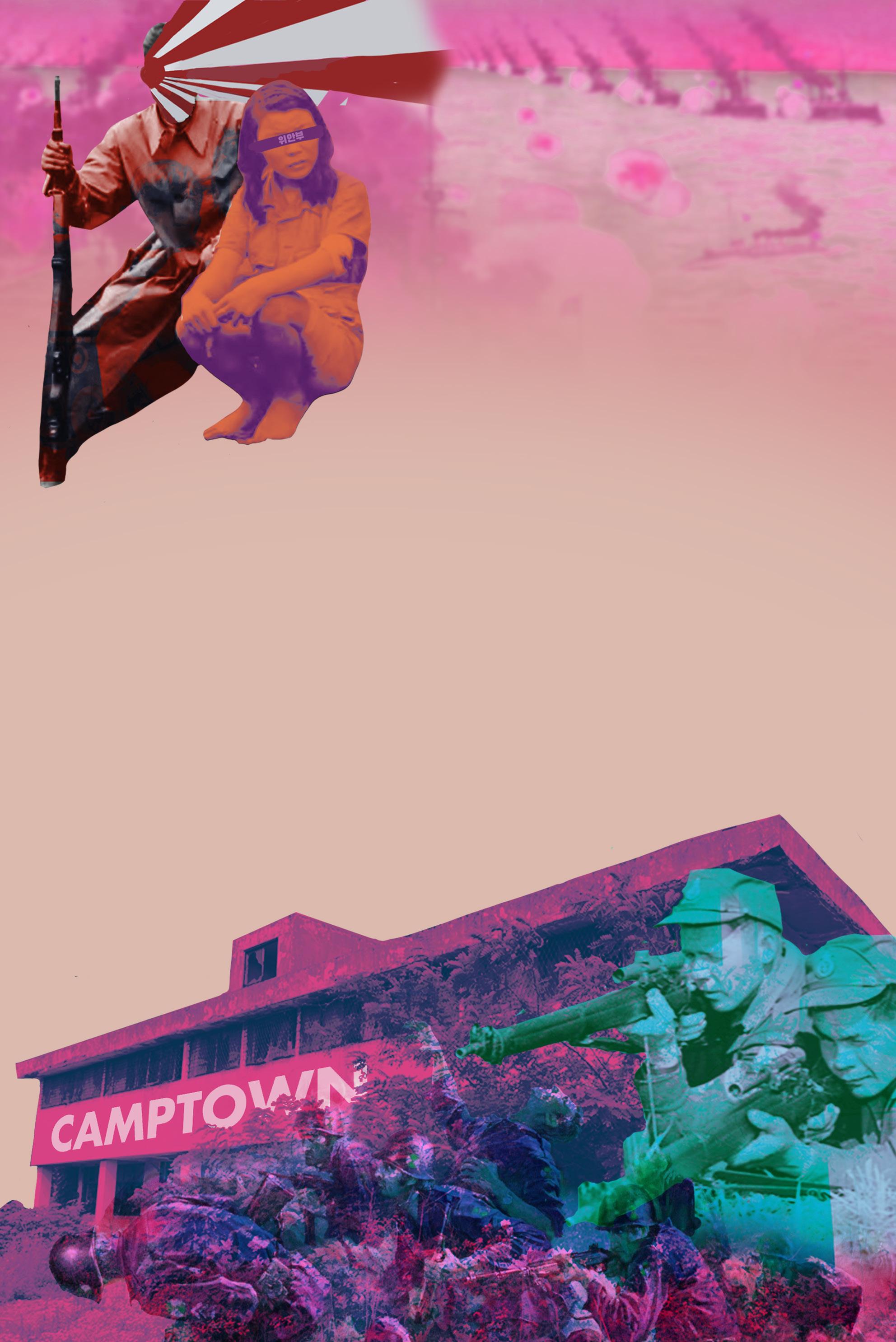
In the 1960s and 70s, a new fascist government started “clean up” projects to appease the US by addressing the rampant spread of venereal diseases among the GIs. Korean and US military police hunted down women suspected of carrying STDs and arrested those without health inspection cards. Once in custody, the women were injected with dangerous amounts of penicillin and confined until the disease was “cured”. The locals called the detention center “monkey house” because the sight of women holding on to the window bars with arms hanging low resembled monkeys in a cage. Many died from penicillin shock and were buried namelessly in the nearby hills.
To keep the sex trade going, the fascist regime praised the women as “dollar-earning patriots” or “civilian diplomats” who were performing a critical role for their motherland, and further trained them in basic English and etiquette to market them more effectively. In reality, the ROK government was chasing economic gains under a patriotic facade. Selling our women’s bodies to the GIs accounted for 5 percent
of the country’s GDP in its peak in the 1980s. It also kept the Americans appeased enough to stay and spend on Korean soil instead of leaving for Japan during their free time. Often times, those trapped in the sex trade were young girls or orphans trafficked with promises of fake job opportunities or coerced through devastating economic pressures. You are familiar with these techniques because you learned in school that they were used by the Japan to recruit comfort women.
In many ways, kijichon should remind you of comfort women, and you are historically accurate to draw that parallel. The US military inherited “comfort stations” from Japan when it passed down Korea after its defeat in WWII. Instead of abolishing the institution of licensed sexual slavery, the US military simply introduced a few changes and regulations to protect US troops from contracting venereal diseases. These regulations included mandatory medical examinations for women in sex trade and relocation of brothels into special zones near US bases for close monitoring. Despite prostitution being illegal under south Korean law, the restructuring of colonial institution for American taste nonetheless took placed unhindered. Japanese collaborationists who remained in positions of power were also familiar with the sex trade and its function in the imperialist chain so they enhanced it through granting numerous extralegal privileges and directly supporting the daily operations. It was after all Park Chunghee, a former lieutenant in the Imperial Army of Manchukuo, that initiated the kijichon clean-ups. Under US imperialism, overt exploitation of women through forceful enslavement were rebranded as shameful “business” between two equal participants to place the blame on individual women. However, the only real change is the name of our oppressor.
How did I not know any of this?—you ask. You grew up learning that the US and UN troops
came to save South Korea from a belligerent attack, that the US is our biggest ally and brother. You knew nothing about the crimes they committed on our soil to our people. It is not a mistake on your part. The capitalist state will do anything to maintain power, even if it means exploiting our women’s bodies and whitewashing history. With education, media, and seemingly benevolent acts of justice such as demanding reparations from Japan, the ruling class feeds you the right information to keep you content with your chains, while hiding anything that would make you rise against them.
The stories of comfort women pose no threat to the capitalist south Korean state because they fit the preferred founding narrative that legitimizes ROK’s existence. Through telling us what the Japanese did to us, the state evokes patriotism that comes with rightful indignation. It creates loyalty to the ROK by making us remember the time we lost our country to the hands of foreign oppressors. Knowing that there were worse times, we grow to treasure the Republic of Korea, a democratic Korean people’s state, or so you were told. However, we must remember that it takes nothing for the capitalist state to demand justice now, almost a hundred years after the colonial period. The Republic of Korea does not represent our interests in issues that have real tangible impacts on our lives, such as minimum wage, housing, and education curriculum. I am not suggesting we gloss over the issue of comfort women because it is of no practical material importance now. Instead, I am calling for proper recognition and condemnation of the capitalist agenda to co-opt our history into meaningless patriotic propaganda. The true history of comfort women clearly points to what our enemy is—Japanese imperialism, not the Japanese people, that enslaved our women. It should push you to be staunchly anti-imperialist and anti-co-
lonialist, not patriotic towards a capitalist state that functions like colonial Japan at its core. With the true lessons obscured, we repeated the same crimes it committed to us.
The ruling class hides kijichon because it kills the patriotism they wish to instill in us. They want to rob us of anything that will make us doubt their lies because a conscious public is the fuel needed to turn a revolutionary spark to a wildfire. When every one of us knows about what our self-righteous government did to its people, when we open our eyes to the realities of US presence in south Korea, they fear that we’ll demand justice just like what we did to our previous oppressors. We’ll want the yankees to leave, boycott US businesses, and realize that our government betrayed us from the very start. With ceaseless agitation and an ambitious vanguard, we will overthrow the capitalist state along with its criminal bourgeois. Revealing this history comes at the risk of profit, undesirable concessions, and a major taint to the narrative that upholds their hegemony today. The ruling class will do anything to prevent this from happening, even if it means erasing our people’s history—an abomination we vowed to never allow in 1945.

Revolutionary cries will resurface as long as the material conditions exist. In 1992, the murder of Yun Geomi at the hands of US Army private ignited anti-American protests that gained popular support. The death of two girls in 2002, crushed under an armored US military vehicle brought the movement to a national stage. By 2003, 57 percent of Koreans wanted all US troops gone from Korea. However, without organizing efforts to garner revolutionary potential, our resistance brought nothing but the smallest concessions. The scattered movements in the 90s and 00s were decentralized and only reacted to the immediate horrors of imperialism instead of connecting its more pervasive symptoms to the disease, capitalism. Today, the sex trade continues in more clandestine ways with Filipina and other women from the Global South replacing Korean women. Women from impoverished imperial peripheries are trafficked and deceived with false promises of well-paying jobs, and struggle to pay off unpayable debts in a country that deems them illegal if they stop working. The south Korean government issues the “entertainer” visa, which 90 percent of its recipients are in the sex trade, on the prerequisite of being an “entertainer”. This deprives the women the right to exit by tying housing, means of liveli-
hood, and the permission to stay in south Korea with their continued work in the sex trade. Behind individual pimps and policies, we must recognize that capitalism continues to reproduce conditions for the exploitation of the most vulnerable members of society, including women. Capitalism, a system that allows a few to horde wealth, requires the uncompensated labor power of propertyless wretched of the earth across the world who work for meager wages under inhumane conditions. It recreates the imbalance of power between imperial Japan and Korea that existed a hundred years ago, giving the ROK power to subjugate the masses in the imperial periphery and recruit women for the sex trade.
We should reclaim our land, people, and history, which is to say, we must resist our current colonizer, the United States and its puppet state the Republic of Korea. All struggles we wage should embody anti-imperialism and anti-capitalism. Treating historical and current issues as unrelated fragments is what the ruling class manipulates us to do. We must stay alert of their hypocrisy that encourages fighting for comfort women, but not the victims of American imperialism in kijichon, the hypocrisy that makes us hate the Japanese who exploited our labor, but look away from the suffering of workers in the Global South who assembles Samsung and Hyundai parts. The capitalist ruling class and its government never stood for us, but the people will as long as we organize. We must arm ourselves with the people’s history, theory, and tactics to seize the revolutionary moment that will finally birth a truly liberated Korea.
Korean liberation, imperialism, capitalism, and revolution. Most likely, the topics this letter addresses are foreign to you. If you read a Korean version of the same writing, you’ll laugh at how similar it sounds to a north Korean state propaganda and dismiss it without giving much thought. Sometimes, I am also surprised at the knee-jerk reaction I have to certain words such as 동무 and 혁명. This immediate disapproval and acceptance, whether it is caused by my writing or broader issues such as comfort women and the sex trade in kijichon, is not inherent but programmed into you by the ruling class that controls everything from your education to your family. And this is precisely why I write this letter to you. If you think I am lying or exaggerating in my telling or analysis of events, you should look into these stories yourself. Search on the internet, read books, or even ask your parents. I wanted to provide an alternative perspective to help you confront the lies that have been told too many times and made into truths. If you already agree with what I’ve written, I would like to say—
동지여 안녕!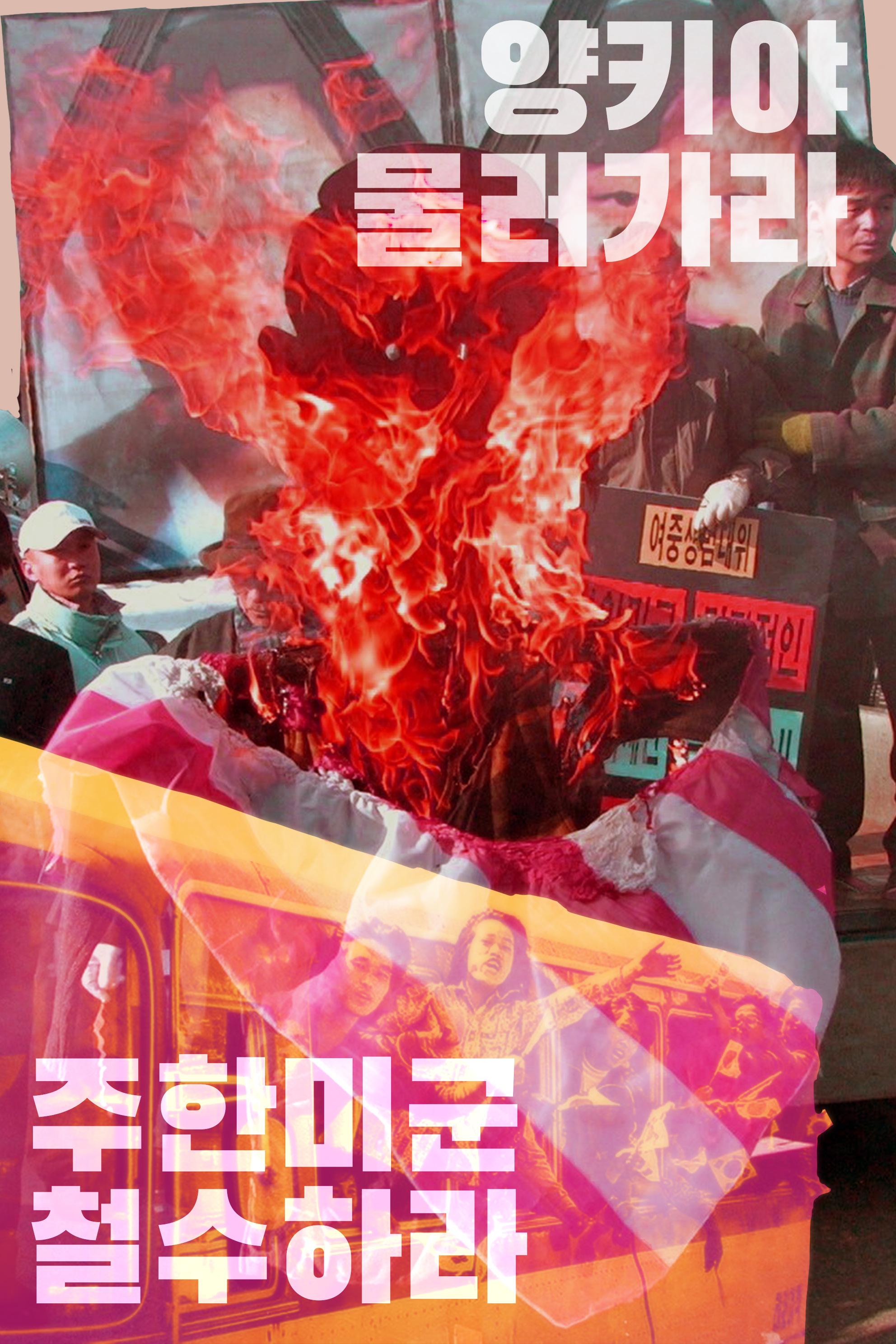
in Korea. I chose to address comfort women and kijichon specifically because they are overt crimes under imperialism that are very similar in nature. While the only difference is the name of our overlord, I found it surprising—and at the same time unsurprising—that the level of awareness and significance in Korea are drastically different. I wanted to reveal the hypocrisy in this logic of capitalism and how it permeates our minds. Overall, the direct message of this letter is an anti-capitalist and revolutionary nationalist one that calls for Korean people to unite, organize, and overthrow imperialists and compradors, including the south Korean state.
Although this letter presents facts from a nationalist angle, the general symptoms of imperialism and capitalism I condemned apply to the entire world. The sex trade and exploitation of women’s bodies have always been inexorably linked to militarism and imperialist aggressions. Military interventions, particularly by the US in the 20th century, built infrastructures for the sex trade all over the world. Even after the US military leaves, the system remains and adapts to cater to the new demand of commercial sex tourists from the imperial core. In a way, this letter is about a feminist agenda of combatting the exploitation of women, especially those who are made vulnerable by existing socioeconomic inequalities. I think the implications are clear that capitalism inherently disenfranchises women, and that an effective feminist cause must be anti-imperialist and anti-capitalist.
In this letter, I also criticized the south Korean state and its effort to whitewash history. This happens everywhere across the world because the last thing the ruling class wants is a conscious public. The brutalities of colonialism, devastating famines, or the long history of slavery are all effectively neglected or minimized in our education and state attention. When whitewashing is not an option, the ruling class defangs revolutionary figures by distorting them and their message to acceptable pacifist liberalism. Assata Shakur told us—“No one is going to give you the education you need to overthrow them. Nobody is going to teach you your true history, teach you your true heroes, if they know that that knowledge will help set you free.” I wanted to echo this exact sentiment by looking into how it applies to the south Korean state.
TLDR: you don’t have to be a Korean to understand or empathize with this letter because we collectively live under the barbaric hegemony of global capitalism!! :)
Bemma, Adam. “South Korea: World’s Longest Protest over Comfort Women.” Www.aljazeera.com, 8 Sept. 2017, www.aljazeera.com/news/2017/9/8/south-koreaworlds-longest-protest-over-comfort-women.
Shorrock, Tim. “Welcome to the Monkey House.” New Republic, 4 Dec. 2019, newrepublic.com/ article/155707/united-states-military-prostitution-south-korea-monkey-house.
Vine, David. “‘My Body Was Not Mine, but the US Military’s.’” POLITICO, POLITICO, 3 Nov. 2015, www.politico.eu/article/my-body-wasnot-mine-but-the-u-s-militarys/.