The 2025.26 Classics Series is presented by the UNITED PERFORMING ARTS FUND and ROCKWELL AUTOMATION. Additional support for Hadelich & Brahms provided by the SCHOENLEBER FOUNDATION.
The length of this concert is approximately 1 hour and 40 minutes.
The Milwaukee Symphony Orchestra can be heard on the Naxos, Telarc, Koss Classics, ProArte, AVIE, and Vox/ Turnabout labels. MSO Classics recordings are available for digital streaming and download on Spotify, Apple Music, and more.
Guest Artist Biographies
AUGUSTIN HADELICH
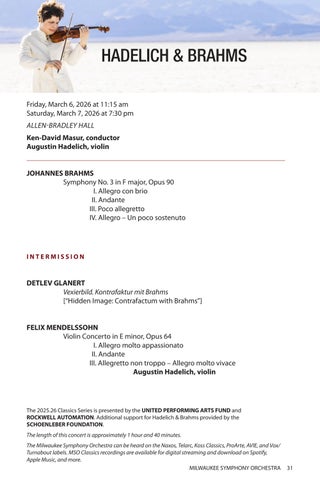
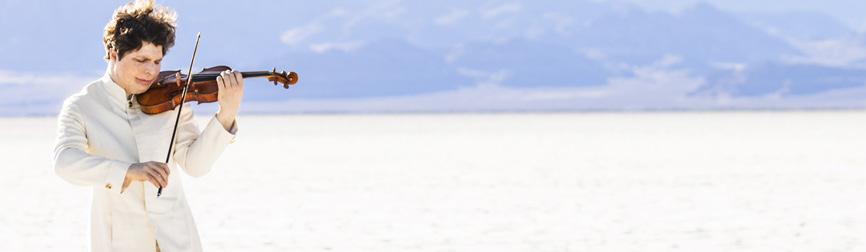
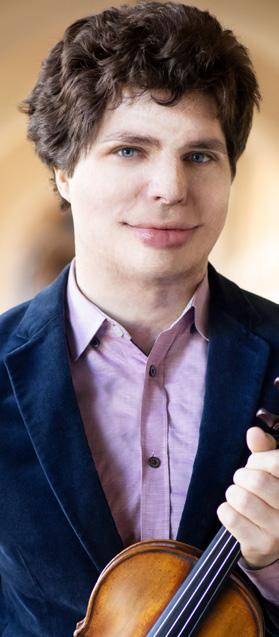
Augustin Hadelich is one of the great violinists of our time. Known for his phenomenal technique, insightful and persuasive interpretations, and ravishing tone, he appears extensively on the world’s foremost concert stages. Hadelich has performed with all of the major American orchestras, as well as the Berlin Philharmonic, Vienna Philharmonic, Royal Concertgebouw Orchestra, Bavarian Radio Symphony Orchestra, London Philharmonic Orchestra, and many other eminent ensembles.
In the 2025-26 season, Hadelich will be the artist in residence with the Boston Symphony Orchestra, where he will be featured in concerto, chamber music, and solo violin recital appearances. He will also appear with The Cleveland Orchestra, the Chicago Symphony Orchestra, New York Philharmonic, Philadelphia Orchestra, Pittsburgh Symphony Orchestra, Houston Symphony, St. Louis Symphony Orchestra, San Diego Symphony, New World Symphony, and the National Arts Centre Orchestra in Ottawa. In April 2026, he will be in residence at the Tongyeong International Music Festival in South Korea. Recitals take him to New York, Boston, San Francisco, Seattle, Warsaw, Copenhagen, Graz, Heidelberg, Cremona, and Taipei.
Hadelich’s discography reflects his stylistic versatility and encompasses much of the violin repertoire. In 2016, he received a Grammy Award for his recording of Dutilleux’s violin concerto L’arbre des songes with the Seattle Symphony and Ludovic Morlot. A Warner Classics artist, his most recent album, American Road Trip, a journey through the landscape of American music with pianist Orion Weiss, was released in August 2024 and was awarded an Opus Klassik in 2025 for Chamber Music Recording of the Year. Other albums for Warner Classics include Paganini’s 24 caprices (2018), the Brahms and Ligeti violin concerti (2019), the Grammy-nominated Bohemian Tales, which includes the Dvořák violin concerto with the Bavarian Radio Symphony Orchestra and Jakub Hrůša (2020), the Grammy-nominated recording of Bach’s complete sonatas and partitas (2021), and Recuerdos, a Spain-themed album featuring works by Sarasate, Tarrega, Prokofiev, and Britten (2022).
Hadelich, a dual American-German citizen born in Italy to German parents, rose to fame when he won the Gold Medal at the 2006 International Violin Competition of Indianapolis. Further distinctions followed, including an Avery Fisher Career Grant (2009), the U.K.’s Borletti-Buitoni Trust Fellowship (2011), and an honorary doctorate from the University of Exeter in the U.K. (2017). In 2018, he was named “Instrumentalist of the Year” by Musical America. Hadelich holds an artist diploma from The Juilliard School, where he studied with Joel Smirnoff, and in 2021, he was appointed to the violin faculty at the Yale School of Music. He plays the “Leduc, ex-Szeryng” violin built by Giuseppe Guarneri del Gesù in 1744 on loan from the Tarisio Trust.
More information on Augustin Hadelich can be found at augustinhadelich.com.
Management for Augustin Hadelich: KD SCHMID, New York, NY | kdschmid.com
Trust Your Health to One of Milwaukee’s Most Respected Medical Practices.
It’s important to choose a physician who will listen closely to your needs and respond genuinely to your concerns. Fortunately for you and your family, our physicians have been providing exceptional care in Milwaukee and Ozaukee for over 120 years.
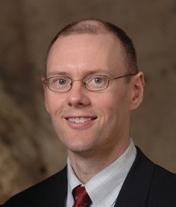
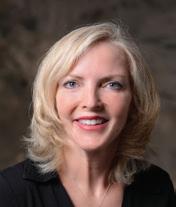
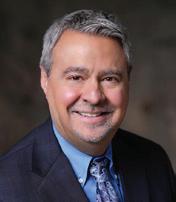
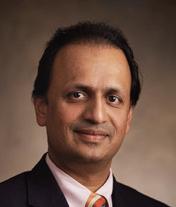
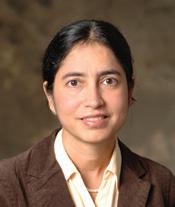
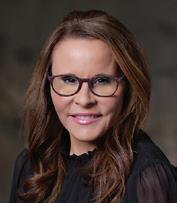
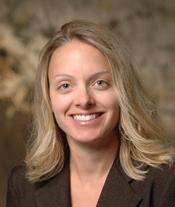
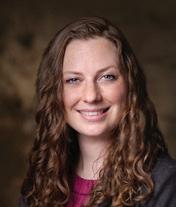
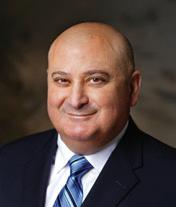
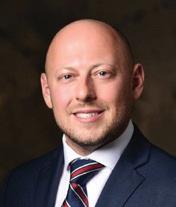
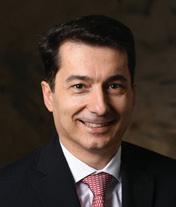
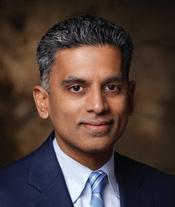
Unchu Ko, MD David Lucke, MD Rachel Oosterbaan, MD John Sanidas, MD Abraham Varghese, MD James Volberding, MD
Kathleen Baugrud, MD Avi Bernstein, MD John Betz, MD
Matthew Connolly, MD Kevin DiNapoli, MD
Deidre Faust, MD David Goldberg, MD Scott Jorgensen, MD
Carmen Balding, MD Camile Hexsel, MD MOHS SURGERY
Keely Browning, MD Abdullah Fayyad, MD Gene Kligman, MD Venelin Kounev, MD Srihari Ramanujam, MD Chad Stepke, MD
Amy DeGueme, MD Elaine Drobny, MD Antoni Gofron, MD
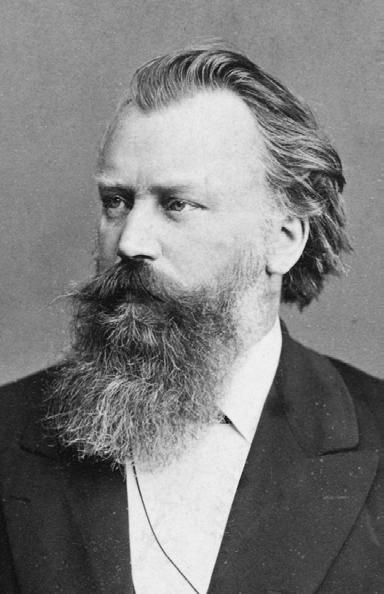
After agonizing over his first symphony for decades — how was any German to carry on with the tradition in Beethoven’s wake, after all? — Johannes Brahms’s second, third, and fourth flowed from his pen with a swiftness and self-assurance previously unknown to the composer. Throughout the 1870s, he had been hailed as the scion of serious music in the West, amassing honorary degrees, accolades, and critical admiration and simultaneously derided as an antediluvian conservative by the famously intractable Richard Wagner, with whom he would suffer an especially disagreeable and complicated relationship. What is undeniable, regardless of one’s philosophical or aesthetic leanings, is that the large-scale compositions Brahms authored at the peak of his career constitute some of the most sumptuous and rigorously crafted masterworks in the canon.
As the story goes, the third symphony came to Brahms in a flash. It was during a trip to the Rhine in 1883 that the various ideas which he had been working out internally rushed to the surface of his mind: he rented an apartment near the spa town of Wiesbaden, where the entirety of it emerged in one uninterrupted blaze of inspiration over the course of that summer, which puts into perspective the extent of Brahms’s intellectual gifts. By October, Brahms had returned to Vienna, where he played the first and final movements for his friend, the Czech composer Antonín Dvořák, who was effusive in his praise when writing to their publisher, Fritz Simrock: “I say without exaggerating that this work surpasses his first two symphonies; if not, perhaps, in grandeur and powerful conception, then certainly in beauty.”
It is an opinion which has been echoed by virtually everyone since. The German composer Heinz Becker described Brahms, who was inclined to operate within the fixed patterns perfected by his predecessors, “more as a renovator of tradition than as a reactionary symphonist,” emphasizing his stylistic conservatism and formal stringency, but the third’s electrifying rhythmic flexibility and metric sophistication, coupled with its alluring thematic material, renders its majesty immediately apparent. Rejecting the exotic instrumental effects that had begun to permeate the orchestral writing of his peers, he found new means of eliciting specific colors from the orchestra while favoring the inner voices of his harmonies. In each of his first three symphonies, two colossal outer movements surround two shorter, understated sections in the center — here, for example, a darkly hued waltz takes the place of the typical third-movement scherzo.
While other historians have identified musical allusions to the “Siren’s chorus” from Wagner’s Tannhäuser and Robert Schumann’s “Rhenish” symphony (both of which were almost certainly at the fore of Brahms’s imagination, given his proximity to the river during its creation), it is the inclusion of a particular three-note motto which imbues the third with much of its distinct
character. The sequence F-A♭-F heard in the introductory brass fanfare, with its flattened third scale degree, allows the music to move fluently between F major and minor, but on the level of autobiography, the acronym represents Brahms’s personal creed as a lifelong bachelor in pursuit of artistic excellence, frei aber froh: “free but happy.”
Han Richter, who conducted the premiere, hailed it as Brahms’s own “Eroica,” while the Austrian music critic Eduard Hanslick, who had made his career waxing poetic about the musical developments taking place across Europe in that wonderfully melodramatic age, chose the third as his favorite of Brahms’s four: “Many music lovers will prefer the titanic force of the first symphony; others, the untroubled charm of the second, but the third strikes me as being artistically the most nearly perfect.”
DETLEV GLANERT
Born 6 September 1960; Hamburg, Germany
Vexierbild. Kontrafaktur mit Brahms
[“Hidden Image: Contrafactum with Brahms”]
Composed: 2023
First performance: 28 June 2024; Donald Runnicles, conductor; Grand Teton Music Festival Orchestra
The work is a companion piece to Brahms’s Symphony No. 3. Brahms has long been a major source of inspiration for Glanert. Vexierbild is the latest in a series of companion pieces to Brahms’s four symphonies, following the Brahms-Fantasie (2011-12), Weites Land [“Open Land”] (2013), and Idyllium (2018-19), which were written as companion pieces to the first, fourth, and second symphonies respectively. Vexierbild, or “Hidden Image,” depicts the mystery surrounding Brahms’s Symphony No. 3. Glanert states, “It came out of nowhere; nobody has any information about when he started it or was even thinking about it.” The subtitle “Contrafactum with Brahms” references the creation of new music from old. While heavily influenced by Brahms, Glanert avoids direct quotations in his work, instead focusing on Brahmsian gestures, figures, motifs, and structural qualities. Glanert’s inspiration is drawn from Brahms’s “ideas and his inner material, but it’s my own Brahms,” he states.
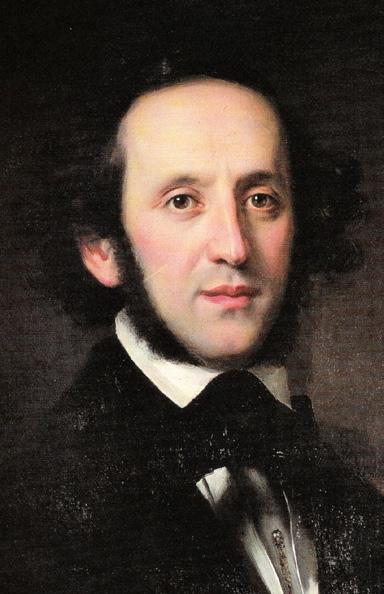
FELIX MENDELSSOHN
Born 3 February 1809; Hamburg, Germany
Died 4 November 1847; Leipzig, Germany
Violin Concerto in E minor, Opus 64
Composed: Summer 1838 – 16 September 1844
First performance: 13 March 1845; Niels Gade, conductor; Ferdinand David, violin; Gewandhaus Orchestra
Last MSO performance: 25 February 2024; Christian Reif, conductor; Randall Goosby, violin
“The Germans have four violin concertos,” remarked the violin virtuoso Joseph Joachim, who had participated in practically every important musical event of the 19th century, at his 75th birthday party. “The greatest, most uncompromising is Beethoven’s. The one by Brahms vies with it in seriousness. The richest, the most seductive, was written by Max Bruch. But the most inward, the heart’s jewel, is Mendelssohn’s.”
Joachim had every reason to think highly of Mendelssohn. The Hungarian fiddler had done a great deal to establish the concerto’s popularity, having played it some 200 times in his long career, including his first performance of the work as a child prodigy under Mendelssohn’s own baton. In the spring of 1843, at just 11 years old, Joachim had relocated to Leipzig to attend the composer’s newly founded conservatory, and it was Mendelssohn who took the boy on as his protégé and helped to launch him to international stardom by recommending him to his concertpromoting contacts in London. The careful cultivation of Joachim’s gifts was entrusted to the violinist Ferdinand David, one of Mendelssohn’s closest childhood friends and the central figure of the concerto’s genesis.
It was in the summer of 1838, only three years after assuming his position at the head of Leipzig’s Gewandhaus Orchestra (where he had promptly appointed David concertmaster) that Mendelssohn wrote to him with a business proposition: “I should also like to write a violin concerto for you next winter. One in E minor runs in my head, the beginning of which gives me no peace.” The two had played chamber music together as teenagers and were even born in the same house a year apart, and while it took Mendelssohn another six years to complete the score, it was his ongoing correspondence with David, often regarding the slightest details of the music’s realization, which marked the beginning of a tradition that saw composers collaborating with their soloists to a degree previously unknown.
The word “exquisite” appears frequently in descriptions of Mendelssohn’s music, and nowhere in his literature is this aspect of his genius more evident. As an artist, his principal preoccupation — and the problem to which he so brilliantly provided his own distinct solution — was how to adapt the musical ideals of restraint, symmetry, and simplicity his generation had inherited to the richly constructed, fantastically emotive inclinations of his own Romantic age. His ability to flawlessly articulate his ideas by meticulously shaping their melodic contours, infusing them with rhythmic vitality, and framing them against luxuriously contrapuntal harmonizations set him apart from his contemporaries as one of the true masters of the musical arts.
Several features distinguish the concerto as both the pinnacle of Mendelssohn’s stylistic development and an especially innovative example of the concertante tradition: unlike the Mozartian model that had dominated the genre for decades, which required an extensive orchestral exposition, the soloist enters at the very outset with an impassioned immediacy, introducing the fervent first theme and launching into a rapid-fire series of triplets, arpeggios, and
octaves. The drama gives way to a hushed, delicately fashioned second theme, which becomes intertwined with the first as the music develops. Rather than allowing his violinist to improvise at the very end of the movement, as was the custom of his day, Mendelssohn inserted his own written-out cadenza in the center, subverting his audience’s expectations without disturbing the music’s natural flow.
As extraordinary for its time is the unbroken transition into the lyrical heart of the concerto by means of a pedal point in the bassoon, its sustained B♮ serving as a leading tone which resolves upward into a tranquil wash of sound. A turbulent episode, during which the soloist provides their own accompaniment on one string while playing the melody on another, provides contrast in the middle, and without pause, Mendelssohn launches into the finale with connective material that recalls the opening of the concerto. He wastes no time in putting his fiddler to task, and as the music whirls and sparkles with every manner of firework and fanfare, one thinks at last of Mendelssohn’s own offhanded reflection in that first letter to David: “I feel that in every fresh piece I succeed better in learning to write exactly what is in my heart, and after all, that is the only right rule I know.”
2025.26 SEASON
KEN-DAVID MASUR
Music Director
Polly and Bill Van Dyke Music Director Chair
EDO DE WAART
Music Director Laureate
BYRON STRIPLING
Principal Pops Conductor
Stein Family Foundation Principal Pops Conductor Chair
RYAN TANI
Associate Conductor
CHERYL FRAZES HILL
Chorus Director
Margaret Hawkins Chorus Director Chair
TIMOTHY J. BENSON
Assistant Chorus Director
FIRST VIOLINS
Jinwoo Lee, Concertmaster, Charles and Marie Caestecker Concertmaster Chair
Ilana Setapen, First Associate Concertmaster, Thora M. Vervoren First Associate Concertmaster Chair
Jeanyi Kim, Associate Concertmaster
Alexander Ayers
Autumn Chodorowski
Yuka Kadota
Elliot Lee
Dylana Leung
Kyung Ah Oh
Lijia Phang
Vinícius Sant’Ana**
Yuanhui Fiona Zheng
SECOND VIOLINS
Jennifer Startt, Principal, Andrea and Woodrow Leung Principal Second Violin Chair
Ji-Yeon Lee, Assistant Principal (2nd chair)
Hyewon Kim, Acting Assistant Principal (3rd chair)
Heejeon Ahn
Lisa Johnson Fuller
Clay Hancock
Paul Hauer
Sheena Lan**
Janis Sakai**
Yiran Yao
VIOLAS
Victor de Almeida, Principal, Richard O. and Judith A. Wagner Family Principal Viola Chair
Samantha Rodriguez, Acting Assistant Principal (2nd chair), Friends of Janet F. Ruggeri Assistant Principal Viola Chair
Alejandro Duque, Acting Assistant Principal (3rd chair)
Elizabeth Breslin
Georgi Dimitrov
Nathan Hackett
Michael Lieberman**
Erin H. Pipal
CELLOS
Susan Babini, Principal, Dorothea C. Mayer Principal Cello Chair
Shinae Ra, Assistant Principal (2nd chair)
Scott Tisdel, Associate Principal Emeritus
Madeleine Kabat
Peter Szczepanek
Peter J. Thomas
Adrien Zitoun
BASSES
Principal, Donald B. Abert Principal Bass Chair
Andrew Raciti, Acting Principal
Nash Tomey, Acting Assistant Principal (2nd chair)
Brittany Conrad
Broner McCoy
Paris Myers
HARP
Julia Coronelli, Principal, Walter Schroeder Principal Harp Chair
FLUTES
Sonora Slocum, Principal, Margaret and Roy Butter Principal Flute Chair
Heather Zinninger, Assistant Principal
Jennifer Bouton Schaub
PICCOLO
Jennifer Bouton Schaub
OBOES
Katherine Young Steele, Principal, Milwaukee Symphony Orchestra League Principal Oboe Chair
Kevin Pearl, Assistant Principal
Margaret Butler
ENGLISH HORN
Margaret Butler, Philip and Beatrice Blank English Horn Chair in memoriam to John Martin
CLARINETS
Todd Levy, Principal, Franklyn Esenberg Principal Clarinet Chair
Jay Shankar, Assistant Principal, Donald and Ruth P. Taylor Assistant Principal Clarinet Chair
Besnik Abrashi
E-FLAT CLARINET
Jay Shankar
BASS CLARINET
Besnik Abrashi
BASSOONS
Catherine Van Handel, Principal, Muriel C. and John D. Silbar Family Principal Bassoon Chair*
Rudi Heinrich, Acting Principal
Matthew Melillo
CONTRABASSOON
Matthew Melillo
HORNS
Matthew Annin, Principal, Krause Family Principal French Horn Chair
Krystof Pipal, Associate Principal
Dietrich Hemann, Andy Nunemaker French Horn Chair
Darcy Hamlin
Dawson Hartman
TRUMPETS
Matthew Ernst, Principal, Walter L. Robb Family Principal Trumpet Chair
David Cohen, Associate Principal, Martin J. Krebs Associate Principal Trumpet Chair
Tim McCarthy, Fred Fuller Trumpet Chair
TROMBONES
Megumi Kanda, Principal, Marjorie Tiefenthaler Principal Trombone Chair
Kirk Ferguson, Assistant Principal
BASS TROMBONE
John Thevenet, Richard M. Kimball Bass Trombone Chair
TUBA
Robyn Black, Principal, John and Judith Simonitsch Principal Tuba Chair
TIMPANI
Dean Borghesani, Principal
Chris Riggs, Assistant Principal
PERCUSSION
Robert Klieger, Principal Chris Riggs
PIANO
Melitta S. Pick Endowed Piano Chair
PERSONNEL
Antonio Padilla Denis, Director of Orchestra Personnel
Paris Myers, Assistant Manager of Orchestra Personnel
LIBRARIANS
Paul Beck, Principal Librarian, James E. Van Ess Principal Librarian Chair
Matthew Geise, Assistant Librarian & Media Archivist
PRODUCTION
Tristan Wallace, Production Manager/Live Audio
Lisa Sottile, Production Stage Manager
* Leave of absence during the 2025.26 season
** Acting member of the MSO for the 2025.26 season