These local organizations are doing great work in our city – and they need your support.
SINCE 2020, Milwaukee Magazine’s Give Back campaign has helped spread the word about local nonprofits and charities helping our community. In this sixth edition of the section, you’ll learn about how these organizations are feeding the hungry, sheltering the unhoused, helping the underserved access education, and much more. We hope you’ll be inspired to donate, volunteer or both. Visit Milwaukee Magazine’s Instagram (@milwaukeemag) and Facebook (facebook.com/MilwaukeeMagazine) to watch video interviews with these organizations. Find out more about how you can help by visiting milwaukeemag.com/giveback.
EDUCATION: THE BRIDGE TO ECONOMIC PROSPERITY
MILWAUKEE AREA Technical College is building the talent pipeline that keeps Southeastern Wisconsin running. Wisconsin’s largest technical college, MATC serves over 30,000 students annually, with over 180 programs. And MATC Foundation, the college’s philanthropic partner, is a key part of making that possible.
The majority of students who attend MATC cannot do so without financial assistance. While many students qualify for Pell Grants, these do not cover the true cost of higher education. The foundation raises the money needed to provide scholarships and direct student support grants, allowing students to focus on their studies and attain the skills needed for family-sustaining jobs.
“With 91% of students staying in Wisconsin after graduation, MATC plays a critical role in
sustaining and growing our economy,” says Ginny Finn, the foundation’s acting executive director and chief development officer. “The college prepares students for careers in fields such as health care, accounting and hospitality, as well as tech and high-skilled manufacturing.”
Without MATC graduates regional economic growth would stall. The foundation works with donors to transform lives and communities through education. College president Dr. Anthony Cruz notes, “Our vision is to be the best choice in education, where everyone can succeed.”
“We appreciate how generosity – direct gifts, stock donations, awards from donor-advised funds – can transform lives,” says Finn.
“For many students, $1,000 can be the deciding factor of whether to enroll and begin the journey to economic opportunity.”
What We Do
› As the college’s philanthropic partner, the MATC Foundation builds donor relationships to facilitate private investments that remove barriers to education, accelerate careers and deliver skilled talent to the Milwaukee area.
› The foundation’s vision is a prosperous region built on expansive access to education and economic opportunities.
Where Your Money Goes
› Donations to the MATC Foundation help provide scholarships and other student financial support, as well as special college initiatives. Students come from Milwaukee and Ozaukee counties and are the backbone of the region’s workforce; the vast majority of them cannot pursue post-high school education without financial assistance. Scholarships remove barriers to education – technical diplomas, certificates and associate degrees – and the family-supporting jobs in Southeastern Wisconsin that education makes possible.
MATC FOUNDATION
700 W. State St., M244 414-297-7687 | matc.edu/foundation
A DYING WISH BECOMES A POWERFUL LEGACY
THE STORY OF Kathy’s House starts with the vision of a young woman who was dying. In 2000, Kathy Vogel Kuettner, 39, a wife with three daughters, died of Burkitt’s lymphoma. While in the hospital, she worried about someone else: a young cancer patient down the hall. Unlike Kathy, he was suffering alone because his family lived out of town and couldn’t afford to stay nearby. She asked her parents, Dick and Judy Vogel, to create a place to keep families together during hospital stays.
One year later, the Vogels opened an 18-room Kathy’s House. In 2021, it moved to a new, larger facility on the Milwaukee Regional Medical Center campus with 38 fully accessible guest rooms. Each guest room features two beds and a private bath, with access to shared kitchen, fitness, outdoor and meditation spaces.
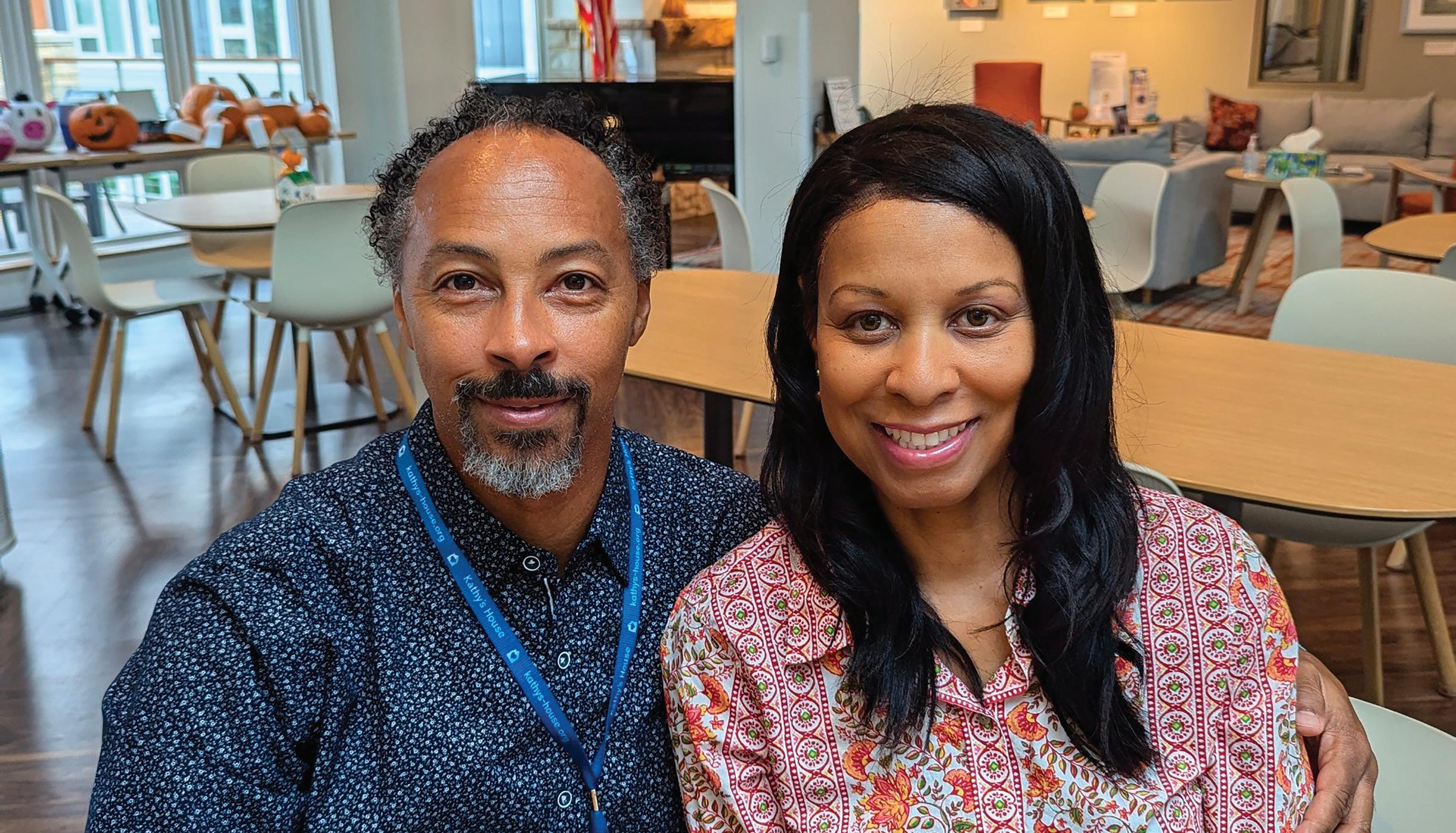
For guests like Gerald and Sheila Ellis, the mix of private and shared spaces creates a sense of community that shaped Sheila’s battle with breast cancer. The California couple stayed for six months while Sheila was a patient at nearby Froedtert Hospital.
“For me, Kathy’s House is like a sanctuary,” Sheila says. “I feel like it’s a place where I can physically, emotionally and spiritually heal.”
The high cost of medical care combined with lost wages means many guests rely on donors to subsidize their stay. No one is ever turned away for lack of funds.
“Our next challenge is keeping pace with growing demand,” says Kathy’s House President and CEO Kim Lamansky. “With the continued support of our community, we are ready to meet that challenge – and ensure no patient or caregiver faces the journey alone.”
What We Do
› Kathy’s House provides affordable lodging to patients residing more than 50 miles from Milwaukee who are receiving care at an area hospital, and their caregivers. In 2024, Kathy’s House provided 11,316 nights of lodging to 1,356 guests.
› Rural hospital closures, the rise in outpatient care and specialized treatments available only in Milwaukee mean that more people than ever need lodging near the hospital. Kathy’s House gives patients and caregivers a safe, supportive “home away from home.”
Where Your Money Goes
› The average cost of a stay at Kathy’s House is $113. While most guests contribute what they can, 75% cannot afford the full cost, and 13% cannot pay anything at all.
› No one is turned away due to an inability to pay. Kathy’s House receives no government funding and does not bill insurance. Every donation directly supports families facing medical crisis and ensures they can stay close to lifesaving care.
KATHY’S HOUSE
9100 W. Wisconsin Ave. 414-453-8290 | kathys-house.org
HORWITZ-D e REMER PLANETARIUM
What We Do
› For over forty-five years, the Horwitz-DeRemer Planetarium has illuminated minds and fueled imaginations across Waukesha County. Operated by the School District of Waukesha and tucked within the scenic Retzer Nature Center, it brings the universe to life through engaging, curriculum-based programs that inspire students and visitors alike to look up, ask questions and explore the mysteries of the cosmos.
› The planetarium features a stunning 40-foot domed theater, where breathtaking, fulldome visuals bring the wonders of the universe to life for visitors of all ages. Each year, more than 31,000 curious minds – from students and families to lifelong learners – gather for over 650 immersive presentations that spark imagination and inspire discovery.
Where Your Money Goes
› Your support brings the wonders of the universe even closer. Every donation goes to installing Digistar 2025, a cutting-edge projection system that will fill the dome with brighter stars, sharper visuals and new ways to explore. With your help, Horwitz-DeRemer can create experiences that spark curiosity, build science skills, and inspire the next generation for years to come.
HORWITZ-D e REMER PLANETARIUM
S14 W28167 Madison St., Waukesha 262-970-4139 | bit.ly/hdrplanet
THE INTERNATIONAL INSTITUTE OF WISCONSIN
What We Do
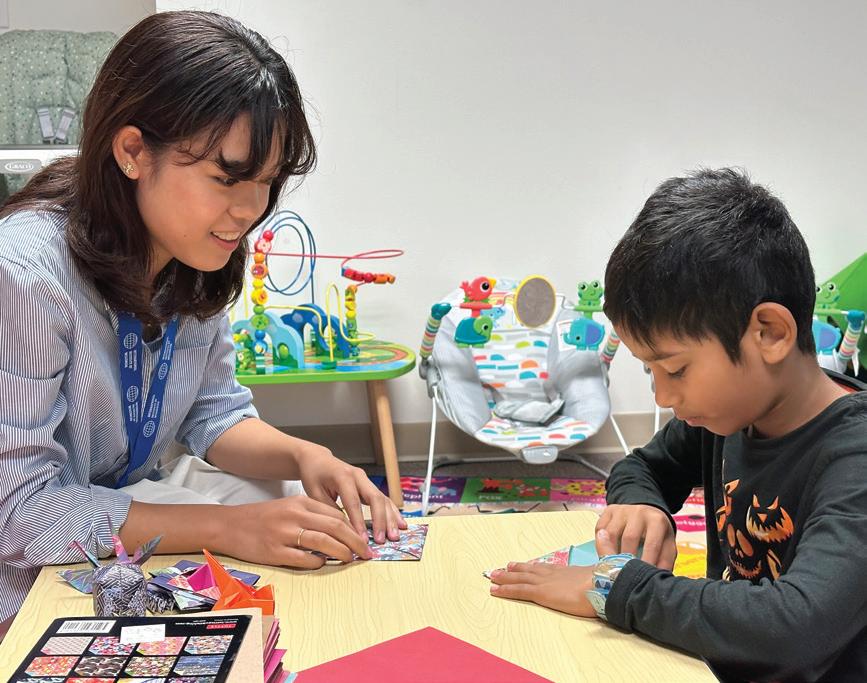
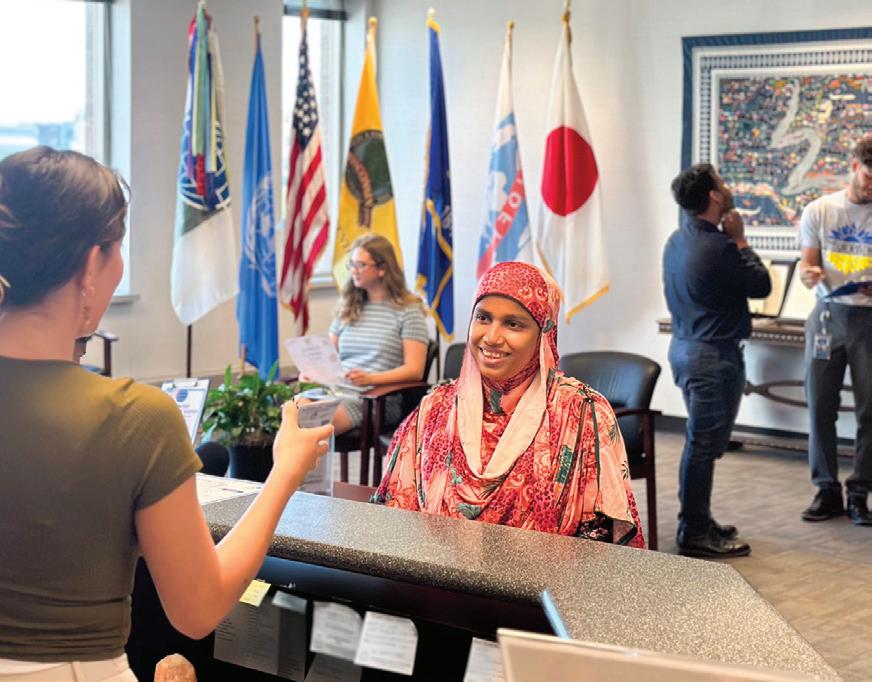
› The International Institute of Wisconsin (IIW) is a nonprofit dedicated to providing vital social services and promoting mutual understanding across cultures. The IIW provides services for safe and legal pathways for immigration and United States naturalization. It passionately champions the preservation of cultural identity, creating mutual understanding, celebrating the rich tapestry of our varied cultural and multiethnic heritage.
› The IIW initiates, coordinates and sponsors a broad range of community, language, citizenship and legal services, and international programs. It provides interpretation and translation services, as well as education and training.
Where Your Money Goes
› Donations are used to help with resettlement services, such as providing clothing and household goods for those who can’t afford them, plus assisting with finding employment and cultural orientation.
› Funds are also used to provide educational programs for IIW clients, including interpretation and translation services.
THE INTERNATIONAL INSTITUTE OF WISCONSIN 1110 N. Martin Luther King Jr. Dr., Suite 420 414-225-6220 | iiwisconsin.org
BUILDING FOUNDATIONS FOR THE FUTURE
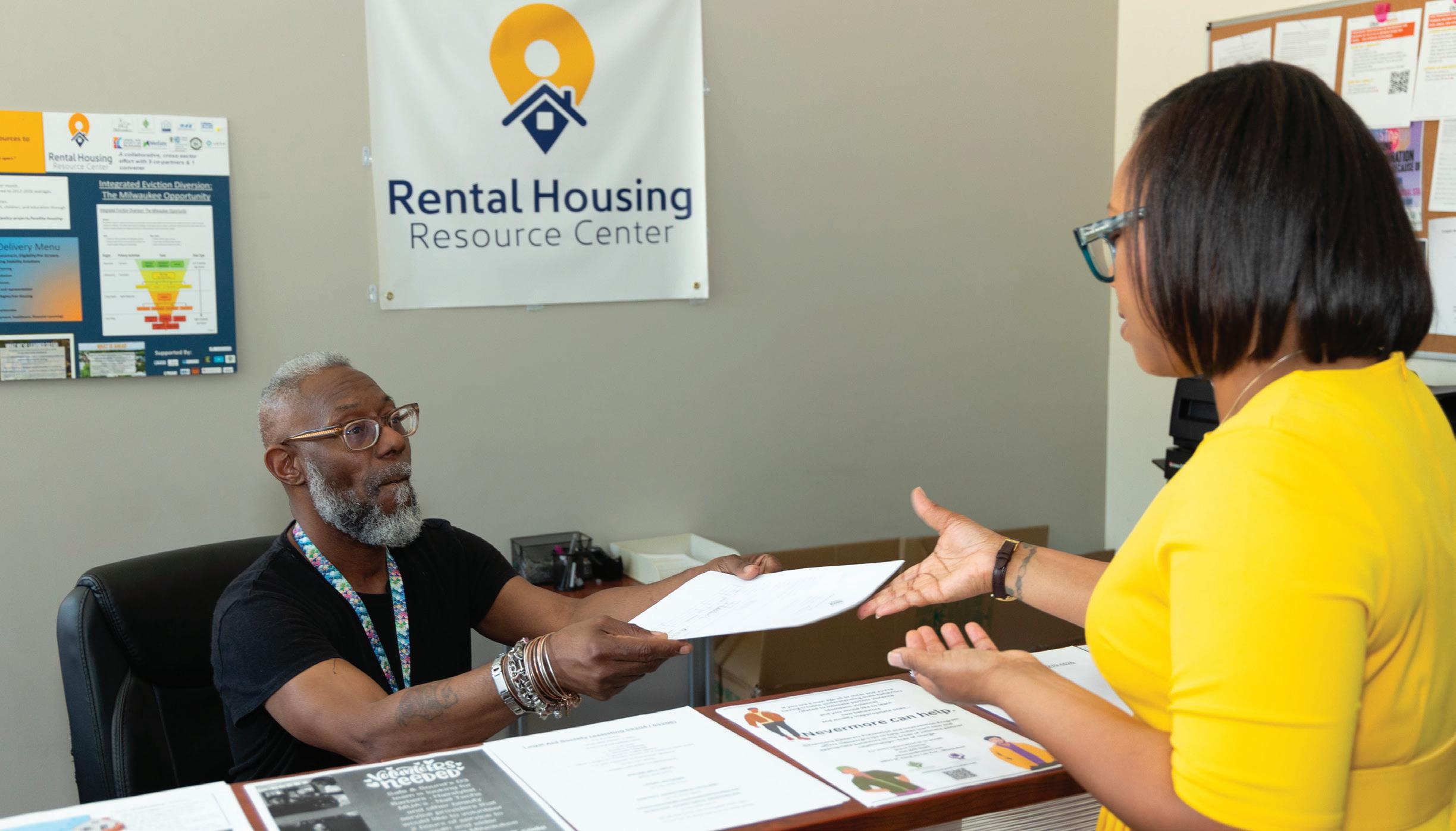
FOR 50 YEARS, Community Advocates Inc. has been a cornerstone organization in Milwaukee, providing services and connections for those in need, with a focus on housing stability.
Each year, Community Advocates’ 40-plus programs serve 60,000 community members who often have nowhere else to turn. “Every day we see the impact that having a safe, stable and healthy housing situation can have on someone’s dignity and well-being,” says Community Advocates CEO Andi Elliott. “It’s difficult to build a good life without the sense of security you get when you have a place to call home. Once you achieve that, it transforms your entire life.”
Community Advocates’ services range from utility and rental assistance to long-term supportive housing. The Milwaukee Women’s Center, a division of Community
Advocates, is one of only two 24/7 emergency shelters for survivors of domestic violence in Milwaukee County. It serves over 2,000 adults and children annually.
Community Advocates’ Autumn West Safe Haven is a housing refuge that serves Milwaukeeans experiencing homelessness and severe mental health challenges. The program offers short-term housing. Participants access health care and get help with finding a permanent place to live.
These are just two of Community Advocates’ programs, which also include substance use disorder treatment, employment training, mental wellness workshops and disability advocacy.
“When someone’s housing becomes destabilized, it can affect all aspects of their life,” says COO Maudwella Kirkendoll.
“We are always ready to help people in a time of need.”
What We Do
› Founded in 1976, Community Advocates Inc. serves over 60,000 individuals and families annually with advocacy and services to meet their basic needs.
› With over 40 programs, Community Advocates helps low-income individuals and families with utility assistance, housing stability services, emergency shelter, homeless outreach, domestic violence services, behavioral health treatment, advocacy, family case management and substance misuse prevention.
Where Your Money Goes
› Your gift will help protect critical services, meet growing needs, maintain facilities, and ensure no one is turned away in a moment of crisis, such as eviction, homelessness or abuse.
› Monetary and in-kind donations can support essentials such as bedding, towels, baby items, personal hygiene products, winter coats and socks.
› For details, please go to the How to Help section of Community Advocates’ website.
COMMUNITY ADVOCATES
728 N. James Lovell St. 414-449-4777 | communityadvocates.net
GUIDING RECOVERY
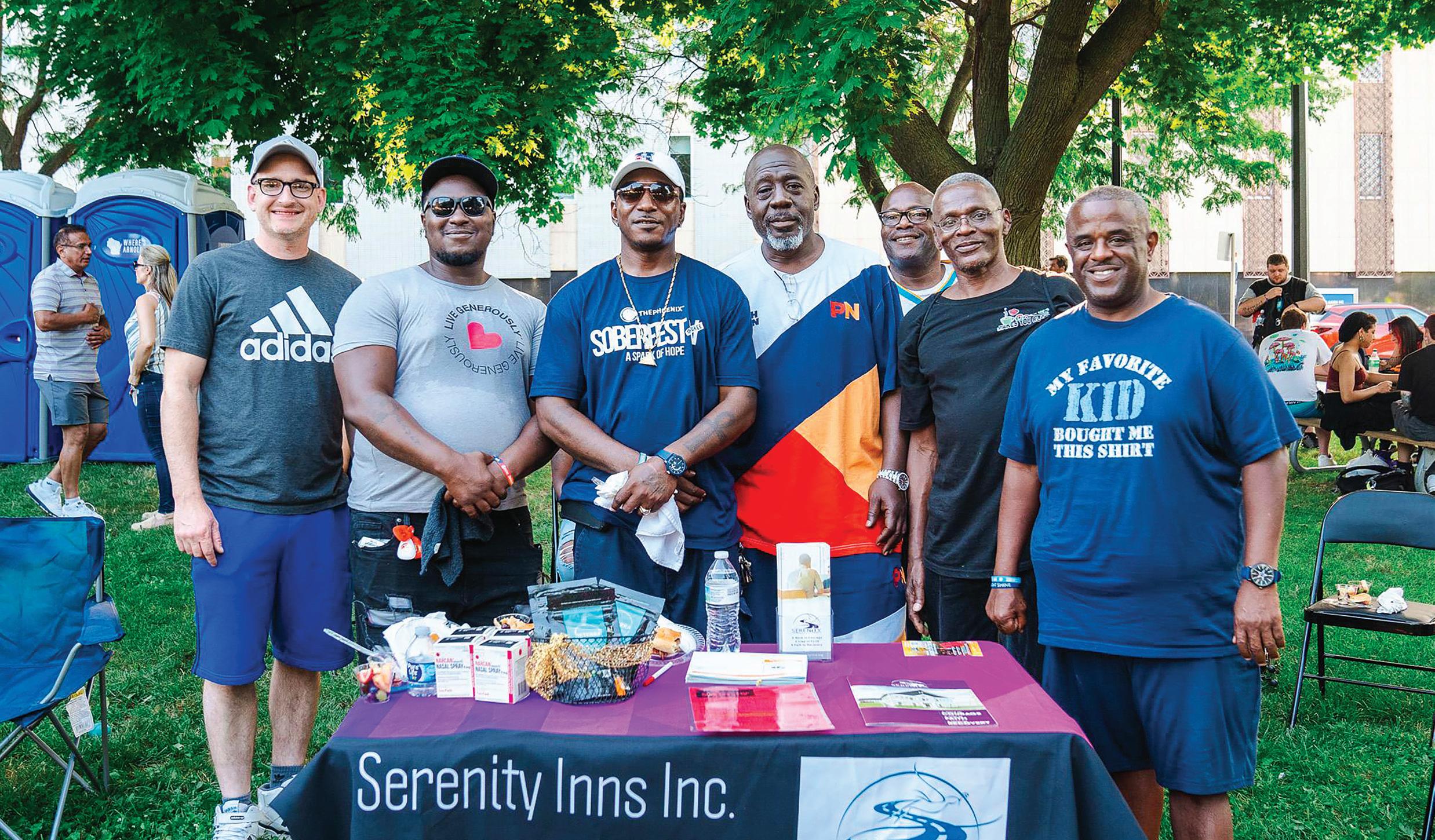
TWENTY-ONE YEARS AGO, local leaders saw a growing crisis in Milwaukee: addiction and homelessness. They formed Serenity Inns to address the issue and to build a place where men can recover and rebuild their lives.
“Our mission is to empower men struggling with substance use disorder by offering a holistic treatment program focused on compassion, healing and personal growth while fostering a compassionate community of accountability,” says Kenneth Ginlack, Serenity Inns’ CEO.
Serenity Inns operates a dropin clinic where men dealing with addiction can find immediate help. For those ready to seek recovery, Serenity Inns offers a residential treatment program. Residents participate in both group therapy and individual counseling, covering topics like addiction education, coping strategies and relapse prevention. The center has a medical
director and clinical director, implementing evidence-based therapeutic approaches, along with counselors who provide support and address personal issues one-on-one.
The holistic program also encourages residents to improve their overall health through fitness, nutrition, mindfulness, spiritual growth and more.
For those between treatment and independence, Serenity Inns operates a transitional living home to help smooth the process. And it runs an alumni house, where men who’ve been through the program can still find support in a sober living environment.
Last year, Serenity Inns expanded, opening a new treatment center with more space. It’s currently undergoing a $2.4 million capital campaign to pay for the center and free up funds to continue supporting the drop-in clinic and more programs to help men recover and start again.
What We Do
› Serenity Inns helps men overcome addiction, reclaim dignity and rebuild their lives through compassionate treatment and supportive housing. It serves those often overlooked with trauma-informed care, job readiness and a path to healing. Every man who walks through the doors is met with hope, respect and the chance to begin again.
Where Your Money Goes
› Donor support helps Serenity Inns pay off its newly built residential treatment center, freeing future resources to sustain and grow program services. It lays a solid foundation for Milwaukee’s only free addiction drop-in clinic, covering annual expenses to ensure people in crisis have immediate access to care. Donations offer ongoing support for men across all programs, helping them rebuild their lives and achieve lasting recovery.
SERENITY INNS
2825 W. Brown St. 414-873-5474 | serenityinns.org
PRESERVING AND PROTECTING NATURE
CONCRETE AND ASPHALT in Milwaukee absorb UV radiation from the sun, emitting heat and leading to higher temperatures. If you’ve heard “urban heat island,” now you know the science behind it. As global temperatures rise, vulnerable populations in urban heat islands bear the highest costs. The Nature Conservancy (TNC) is working to address this issue – among other environmental challenges facing Milwaukee.
“TNC prioritizes naturebased solutions,” says Lamont Smith, TNC’s Milwaukee program manager. “Our mission is to protect the land, water and all the life that depends on it. In Milwaukee, our goal is to make the city the most thriving, environmentally sustainable urban ecosystem in the world.”
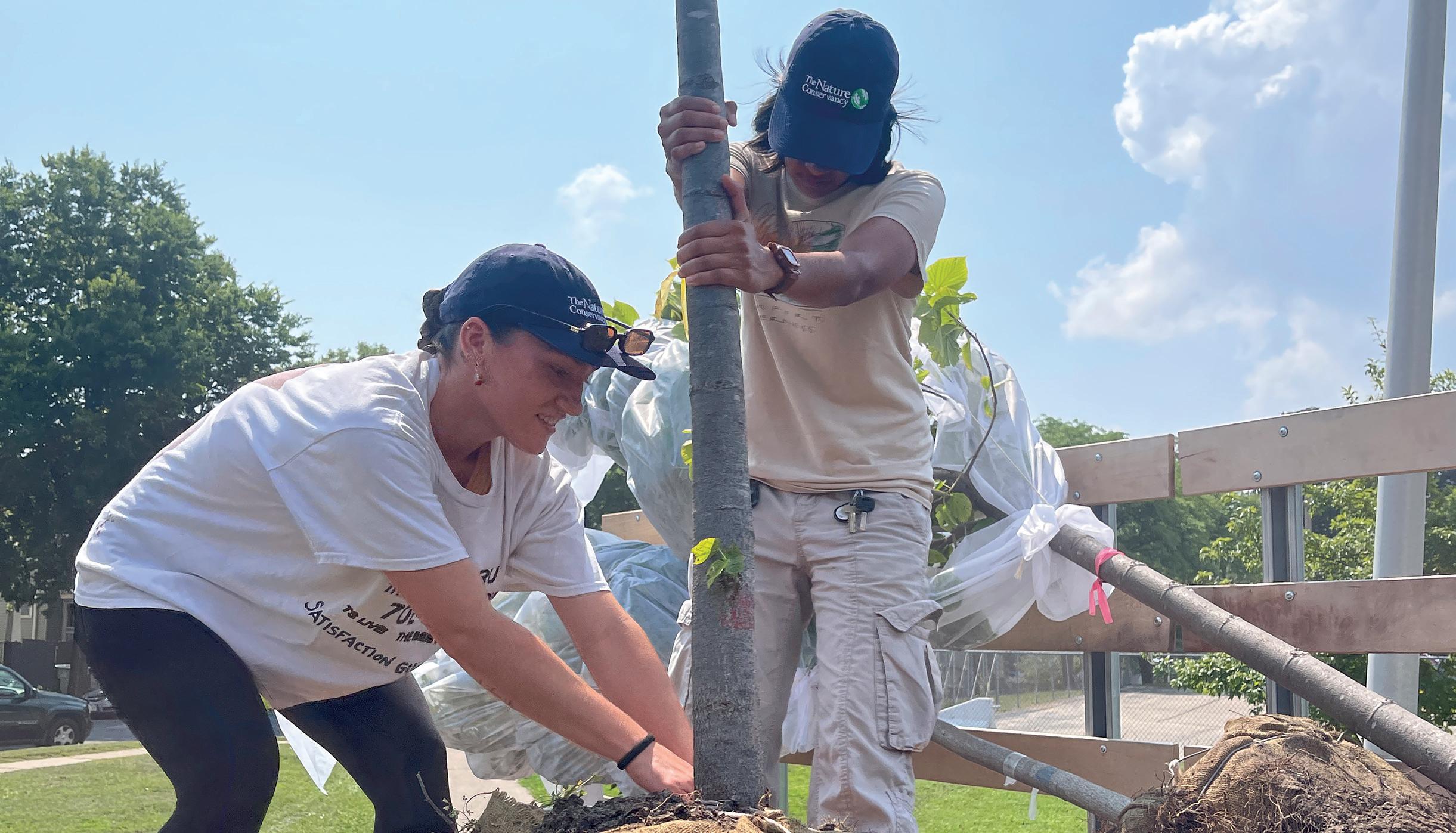
To address the urban heat island effect, TNC is working with local partner organizations, including the city and county, to identify locations to plant
trees. Recently, the organization engaged Muskego Way Forward and MKE Plays to plant trees in Reiske Park, improving heat conditions, mitigating flood risk and providing recreation and wildlife benefits.
Beyond tree planting, TNC supports several other environmental initiatives, including Green and Healthy Schools Milwaukee, Branch Out and the Environmental Youth Collaborative. These nature-based initiatives impact Milwaukee by replacing asphalt on schoolyards with native plants and outdoor classrooms, planting thousands of trees in areas vulnerable to urban heat islands and creating education and career opportunities for young adults.
“The environment is one of the most pressing issues of our time,”
Smith says. “Our hope is that with restored, sustained, protected natural spaces, our city will thrive for generations to come.”
What We Do
› The Nature Conservancy envisions a future with a livable climate, healthy communities and thriving nature. We collaborate with local partners in Milwaukee and across the globe to identify community needs and implement innovative solutions to challenges like climate change, protecting land and water resources, and providing food and water sustainably.
Where Your Money Goes
› Donations to TNC support conservation efforts in communities like Milwaukee and help protect nature, tackle climate change, and provide food and water sustainability in the Midwest, North America and in more than 80 countries worldwide.
› To learn more about our ambitious goals for communities and the planet, visit nature.org.
THE NATURE CONSERVANCY
25 W. Main St., Madison 608-251-8140 | nature.org/wisconsin
UNITED IS THE WAY
UNITED WAY OF Greater Milwaukee & Waukesha County is tackling some of Southeastern Wisconsin’s most pressing challenges. The nonprofit organization focuses on four key initiatives to improve lives in our region: ending family homelessness, reducing barriers to employment, bridging the digital divide, and supporting the mental wellness of high school students.
United Way funds dozens of charitable agencies across the region that provide vital programs to tens of thousands of people. United Way set a 2025 fundraising goal of $56 million, and every dollar counts toward those efforts. In its work to end family homelessness, United Way has already met the criteria for success it set in two of the four counties it serves – the first local United Way in the country to do so – and it plans to expand its efforts with the help of donations.
The United Way is also breaking down barriers to employment, with a goal of helping 15,000 people jump-start stable careers by 2029. Its technology-equity initiative will help to close the tech divide by giving 50,000 computers to those in need by 2027, providing essential equipment that can help pave paths to employment and connect community members with vital resources.
And United Way’s Teen Mental Wellness: Empowering Minds initiative will provide mental wellness programming for 21,000 high school students by 2030, supporting young people, improving learning and reducing disparities in mental health resources.
Donations fuel all that United Way does, with contributions making Milwaukee, Ozaukee, Washington and Waukesha counties stronger, safer and more equitable for all.
What We Do
› United Way unites people to create positive, lasting change in our community. We envision a community where people come together to invest in significant and measurable solutions that foster wellness and opportunity for all.
Where Your Money Goes
› United Way funding supports a network of organizations that provide vital services to tens of thousands of people in our region. Donations to United Way support organizations in Milwaukee, Ozaukee, Washington and Waukesha counties.
FEEDING THE HUNGRY
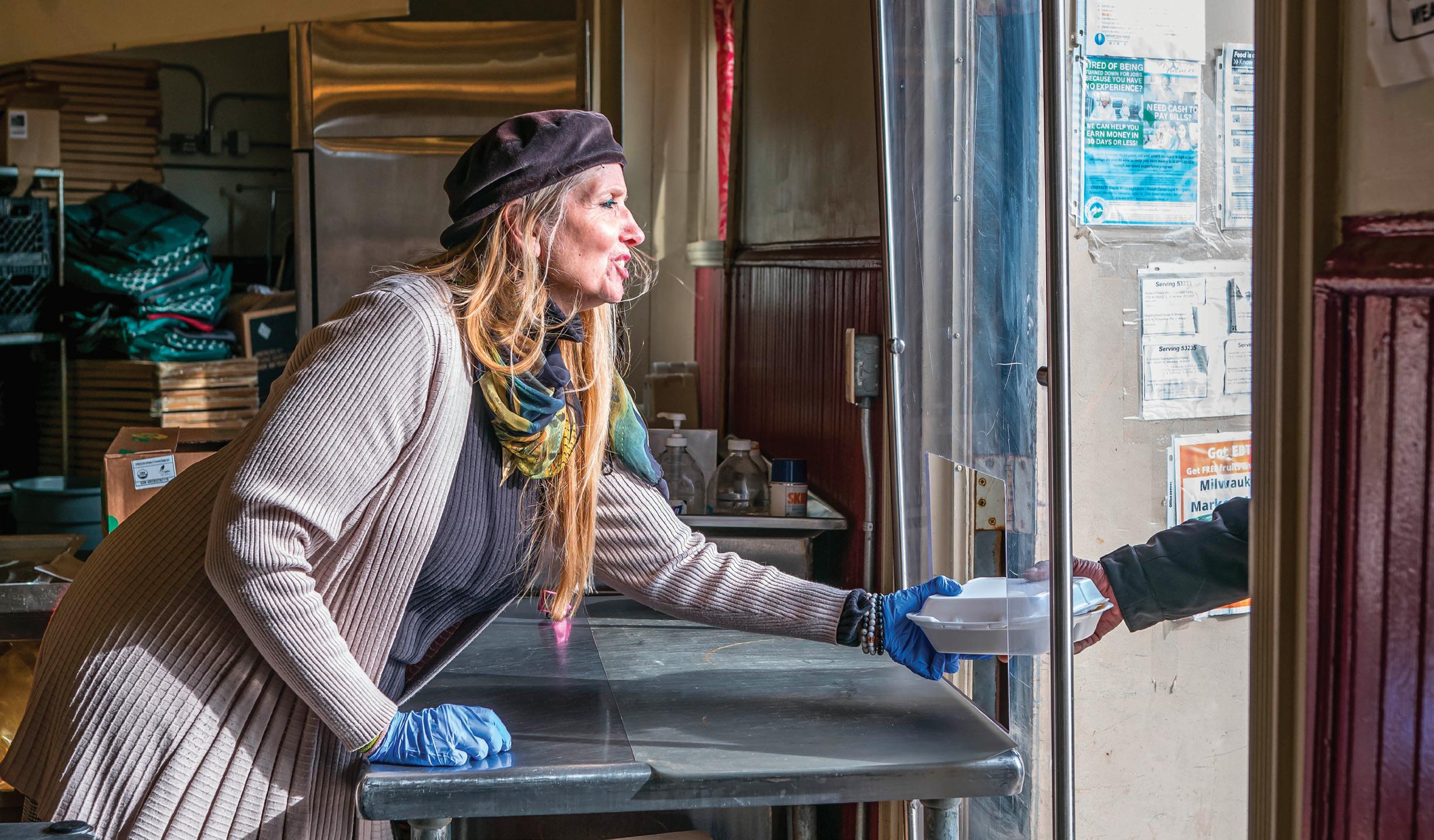
FOUNDED IN 1981, The Gathering of Southeast Wisconsin is a volunteerpowered nonprofit dedicated to alleviating hunger and supporting vulnerable populations in Milwaukee. Operating from four neighborhood-based locations, The Gathering serves approximately 90,000 meals annually to individuals facing food insecurity and homelessness. In addition to providing meals, The Gathering collaborates with local partners to offer wraparound services, including housing support, health care and legal assistance, ensuring a holistic approach to addressing the needs of the community.
The mission is to provide meals and associated services to those who would otherwise go hungry or without, respecting the dignity and values of every individual served. This commitment is reflected in its inclusive approach, welcoming all individuals regardless of race,
color, national origin, sex, age, gender or disability.
Hundreds of volunteers participate weekly in meal preparation, serving and donation sorting. The Gathering also welcomes groups of five to 15 volunteers for team-building or service days, giving them a hands-on role in supporting vulnerable neighbors.
Collaborations with churches, schools, community centers and nonprofits amplify The Gathering’s reach. Partners assist with food donations, program support and wraparound services, creating a network that strengthens the impact of the meal programs.
The community also contributes through events, donor campaigns and fundraising. These efforts allow The Gathering to not only provide meals but also foster a culture of shared responsibility, compassion and engagement, making feeding the hungry a collective community effort.
What We Do
› The Gathering is dedicated to ending hunger and supporting vulnerable populations throughout Milwaukee. The organization operates four meal sites in neighborhoods with high rates of food insecurity and homelessness, serving over 93,000 meals annually.
› Our guests include seniors, children, adults experiencing housing insecurity, and individuals navigating mental health or addiction challenges. The Gathering welcomes all without judgment.
Where Your Money Goes
› Your support will ensure that every guest is served with dignity and care. It provides meals, strengthens community connections and creates lasting impact in neighborhoods where food insecurity and poverty are most acute.
THE GATHERING OF WISCONSIN
816 E. Juneau Ave. 414-272-4122 | thegatheringwis.org