Why Your Oil Dipstick Is a Key to Engine Longevity
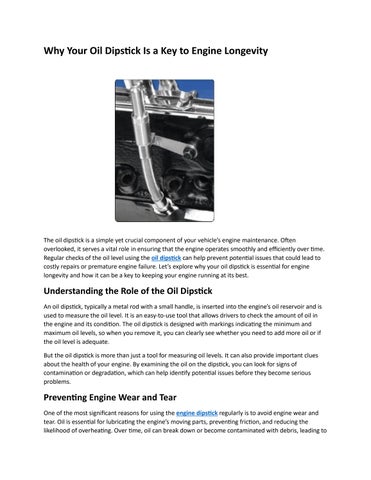
The oil dipstick is a simple yet crucial component of your vehicle’s engine maintenance. Often overlooked, it serves a vital role in ensuring that the engine operates smoothly and efficiently over time. Regular checks of the oil level using the oil dipstick can help prevent potential issues that could lead to costly repairs or premature engine failure. Let’s explore why your oil dipstick is essential for engine longevity and how it can be a key to keeping your engine running at its best.
Understanding the Role of the Oil Dipstick
An oil dipstick, typically a metal rod with a small handle, is inserted into the engine’s oil reservoir and is used to measure the oil level. It is an easy-to-use tool that allows drivers to check the amount of oil in the engine and its condition. The oil dipstick is designed with markings indicating the minimum and maximum oil levels, so when you remove it, you can clearly see whether you need to add more oil or if the oil level is adequate.
But the oil dipstick is more than just a tool for measuring oil levels. It can also provide important clues about the health of your engine. By examining the oil on the dipstick, you can look for signs of contamination or degradation, which can help identify potential issues before they become serious problems.
Preventing Engine Wear and Tear
One of the most significant reasons for using the engine dipstick regularly is to avoid engine wear and tear. Oil is essential for lubricating the engine’s moving parts, preventing friction, and reducing the likelihood of overheating. Over time, oil can break down or become contaminated with debris, leading to
a loss of its lubricating properties. Without sufficient oil or with degraded oil, the metal components inside the engine can rub against each other, causing excessive wear and, ultimately, engine damage.
By checking the oil level and its condition through the oil dipstick, you can ensure that the engine always has enough fresh oil to keep the parts lubricated. If the oil is low, topping it up will prevent the risk of overheating and friction damage, ensuring that your engine continues to operate smoothly.
Detecting Oil Contamination
The condition of the oil is just as important as its quantity. A quick glance at the oil dipstick can help you spot changes in the oil’s color, consistency, and texture. Fresh engine oil typically appears amber or light brown, while used oil may turn dark or black. If you notice that the oil on the dipstick is thick, gritty, or contains particles, it could be a sign of contamination. Contaminated oil can result from the combustion process, engine wear, or even an external issue such as a faulty filter or gasket.
By regularly inspecting the engine dipstick, you can detect these signs early and take action, such as changing the oil or replacing the filter, before the contamination causes damage to the engine’s vital parts. Ignoring these warning signs may lead to costly repairs, reduced engine performance, and decreased longevity.
Avoiding Oil Leaks
In some cases, checking the oil dipstick can help you spot oil leaks that could otherwise go unnoticed. If you notice a sudden drop in oil levels despite regular oil changes, it might indicate a leak somewhere in the engine. This could be caused by a worn gasket, a cracked oil pan, or even a damaged seal. Identifying the issue early can prevent a situation where the engine runs out of oil completely, potentially causing catastrophic damage.
A simple dipstick check allows you to stay on top of any leaks and address them promptly before they escalate into more serious and expensive problems.
Maintaining Optimal Engine Temperature
The engine dipstick can also help maintain an optimal engine temperature. Oil acts as a coolant in addition to a lubricant, helping regulate engine heat. If there isn’t enough oil in the engine, it can cause the engine to overheat, leading to severe internal damage. By regularly checking the oil level with the dipstick, you can ensure that the oil is performing both functions lubricating and cooling effectively.
Engine overheating is a major cause of engine failure, and it is often related to low or degraded oil. Keeping the oil at the right level and changing it at the recommended intervals will ensure your engine stays within the proper operating temperature range.
Prolonging Engine Life
Ultimately, the regular use of the oil dipstick can significantly contribute to the longevity of your engine. Regular oil checks help keep the engine properly lubricated, free of contaminants, and at a safe temperature. This reduces the strain on engine parts, preventing premature wear and helping avoid costly repairs that could shorten the engine’s life span.
By making oil checks part of your routine maintenance, you can prolong the life of your engine, improve fuel efficiency, and ensure that your vehicle continues to perform reliably for years to come. The oil dipstick is a simple tool, but its importance in engine care cannot be overstated. It provides valuable insight into the health of your engine and helps ensure that the engine oil is always at optimal levels for smooth operation.
Conclusion
The oil dipstick is a key tool for engine maintenance, serving as an early warning system for potential issues that could threaten the longevity of your engine. By using the engine dipstick regularly to monitor oil levels and condition, you can prevent excessive engine wear, detect contamination or leaks, and avoid overheating. This simple step can save you from costly repairs, enhance engine performance, and ultimately contribute to the long life of your vehicle’s engine. So, next time you’re under the hood, make sure the oil dipstick is part of your regular checks it’s a small investment in keeping your engine running smoothly for years to come.
Article Source: https://medium.com/@milodoninc/why-your-oil-dipstick-is-a-key-to-engine-longevitycb7a589597db