Свідоцтво про реєстрацію: ДП № 2181-919Р від 10 серпня 2017 р.
Адреса редакцїї: 49000, м. Дніпро, вул. Театральна, 3 www.milleniumra.com.ua, e-mail: millenium-maket@i.ua
З питань розміщення реклами звертатися за т.: +38 050 320–15–83
Відповідальність
24 РОКИ
Dear friends, partners, clients,
my unbreakable Millenium team!
This year has been another challenge for us — we have been working in conditions that are difficult to believe for those who live in a stable world. We prepared materials and edited texts without electricity, communicated without heat and the usual comforts.
But we did not stop for a single day.
On the contrary — this year, we felt once again that our mission is alive, growing, and reaching far beyond Ukraine.
We have new partners abroad, clients find us themselves, call us, order publications, and recommend us to each other.
Ukrainian content, Ukrainian leaders, Ukrainian stories — today, they are of interest to the whole world. And we are proud to represent our country at the international level.
A special event of the year is the completion of the large-scale project “Book of Honour — 2025”.
This publication is about dignity, professionalism and people who are shaping the future of Ukraine today. We are preparing the book for printing and will welcome the New Year with a finished product that will remain in national history.
And in January, we are launching a new major project — Chronicle. Millennium Leaders.
It will be a profound, powerful, and very contemporary story about those who shape the values of our time: business, culture, science, medicine, creativity, and social projects.
And I am confident that this project will be an important step for our entire community.
I would like to thank all our clients and partners.
Thank you for your trust, for choosing Millenium Club even in such difficult times.
Your stories are the strength of Ukraine.
I am immensely grateful to my team.
You are incredible, ladies. We worked in the dark, under fire, in cold offices, on the road, in shelters — but we remained a team that supports, inspires and never gives up.
I am proud of each and every one of you.
And my warmest words go to the Ukrainian people.
We live in a country that proves every day that darkness has no power over light.
We will stand strong. We will cope. We will prevail.
Because our hearts are stronger than any storm.
May the New Year bring us more warmth and light — both in our homes and in our souls.
I wish everyone peace, hope, faith and new opportunities.
May 2026 is the year in which the dreams we have carried in our hearts for so long come true.
With love and gratitude — Liudmyla Akimenko, Founder of MILLENIUM CLUB International Magazine
Ваші історії — це сила України.
і загальному підвищенні якості роботи всієї команди. Ми бачимо чіткі напрями, які потребують покращення, і фундамент для цього
закладено ще у 2025 році, а саме:
створення Академії
- оновлення сайту; - створення спільноти Центру правової допомоги. Усе це — елементи нашої довгострокової
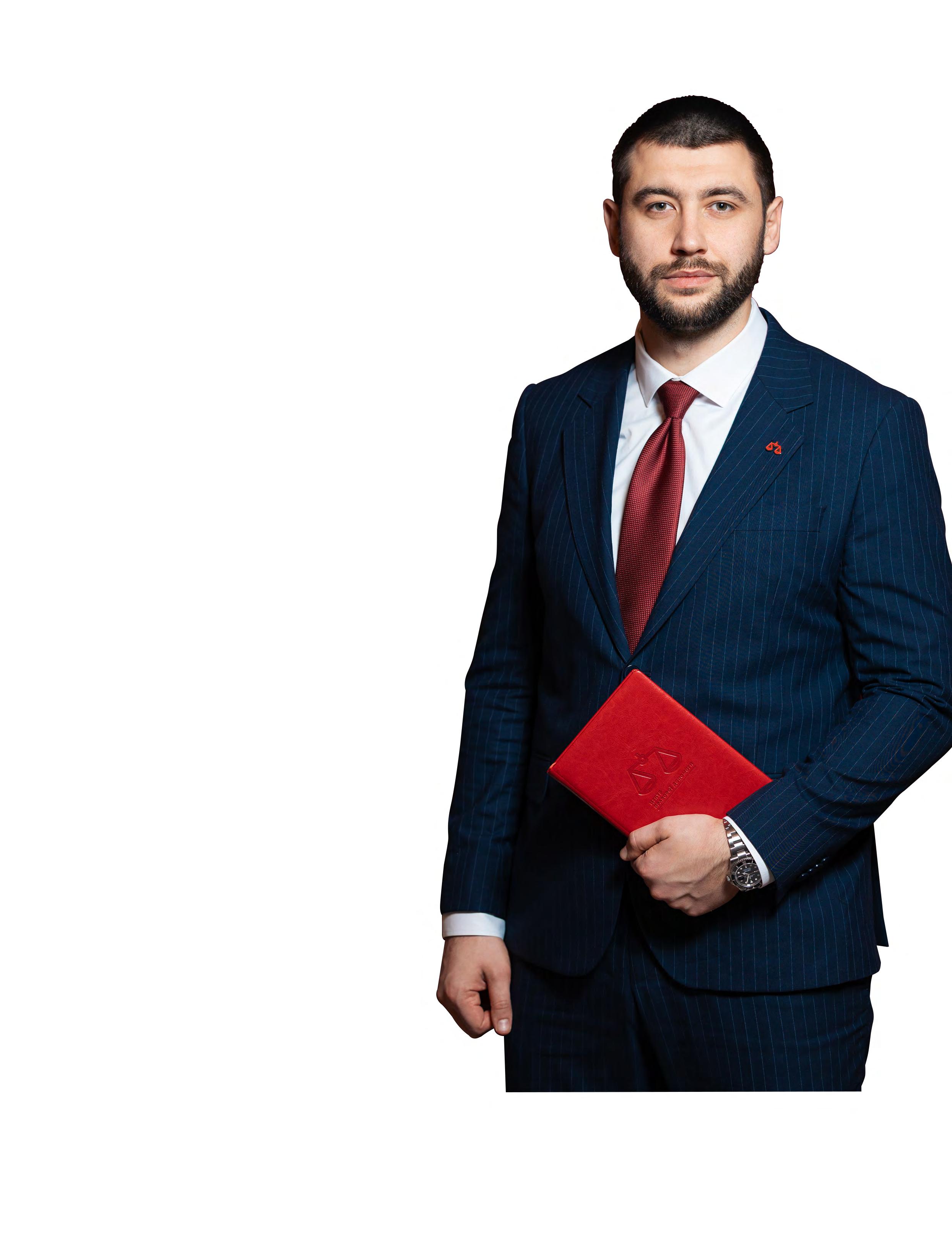
— Mrs. Valentyna, how do you think the role of a lawyer has changed during the war?
— The war has radically changed not only the state, but also the very nature of the legal profession. We are no longer simply representatives in court — today, lawyers combine the roles of legal advisor, crisis manager, mediator and psychologist. Daily challenges include supporting military personnel and their families, protecting the rights of civilians, and handling complex civil and inheritance disputes related to Ukrainians living abroad. People need not only professionalism, but also a sense of security — and it is the lawyer who must provide this support.
VALENTYNA HRISHYNA: THE BAR ASSOCIATION THAT HOLDS THE LEGAL FRONT OF THE COUNTRY
At a time when Ukraine is fighting for freedom at all levels — from political to personal — the legal profession has become not just a legal institution, but also a source of support for millions of people.
Lawyer Valentyna HRISHYNA shares how the profession has changed during the war, what challenges lawyers face, and why European standards have already become a reality in Ukrainian legal life.
— What are the most common questions asked by Ukrainians who are temporarily abroad?
— The number of such requests has increased significantly. These include consular actions, family and inheritance disputes, protection of children’s rights, and obtaining social benefits for military personnel and their families. I accompany clients at all stages: from analysing the situation and gathering evidence to communicating with Ukrainian and foreign institutions. My task is to make complex processes understandable and human rights protected, regardless of where the person is located.
— How do you manage to maintain psychological stability and adhere to ethical standards in such difficult times?
— Resilience has become a critically important trait for a lawyer. Discipline, planning, and continuous professional development help me. But most importantly, I realise that behind every case there is a specific human story. In times of emotional tension, a lawyer must remain the voice of law and balance. Honesty, prudence, and respect for the client are the foundation of the profession, which even war cannot shake.
— How are European standards manifested in the Ukrainian legal profession today?
— Ukraine is confidently moving towards the European model of advocacy. The role of self-government, disciplinary bodies and professional independence is growing. The principles of the rule of law, confidentiality, transparency and quality legal assistance have already become the norm. Today, a lawyer is not only a specialist, but also a guarantor of legal culture and democratic values.
— What innovations do you think are most needed in the legal field?
— Digital tools play a key role: electronic courts, automated document management, online procedures. At the same time, we need even faster services, unified registries, and secure channels of communication with the courts. Technology is not a substitute for lawyers, but an opportunity to focus on what is most important: strategy and the protection of human rights.
— Will practice in EU countries become an important component of Ukrainian lawyers’ development?
— Absolutely. International integration is already a reality. The number of cross-border cases, cooperation with European colleagues, and requests from Ukrainians in the EU is growing. Knowledge of European law and international procedures makes a lawyer much more competitive. This is not just professional development — it is the formation of a new Ukrainian legal culture, integrated into the European legal space.
час, коли Україна виборює свободу на всіх рівнях — від політичного до особистого, адвокатура стала не просто правовою інституцією, а й опорою для мільйонів людей. Адвокатка Валентина ГРІШИНА ділиться тим, як змінилася професія під час війни, з якими викликами стикаються юристи та чому європейські стандарти вже стали реальністю українського правничого життя.
— Пані Валентино, як, на Вашу думку, трансформувалася роль адвоката під час війни? — Війна докорінно змінила
захист прав цивільних, а також складні цивільні та спадкові спори, пов’язані з перебуванням українців за кордоном. Люди потребують не лише фаховості, а й відчуття захищеності — і саме адвокат має забезпечувати цю опору.
— З якими питаннями найчастіше звертаються українці, що тимчасово перебувають за кордоном?
— Кількість таких запитів зросла в рази. Це консульські дії, сімейні та спадкові спори, захист прав дітей, от
європейські стандарти в українській адвокатурі? — Україна впевнено рухається до європейської моделі адвокатури. Зростає роль самоврядування, дисциплінарних органів,
In a time when every document, every medical conclusion, and even a single signed certificate can determine a person’s fate on the front line or in the rear, the work of those who stand on the legal shield of the nation becomes critically important.
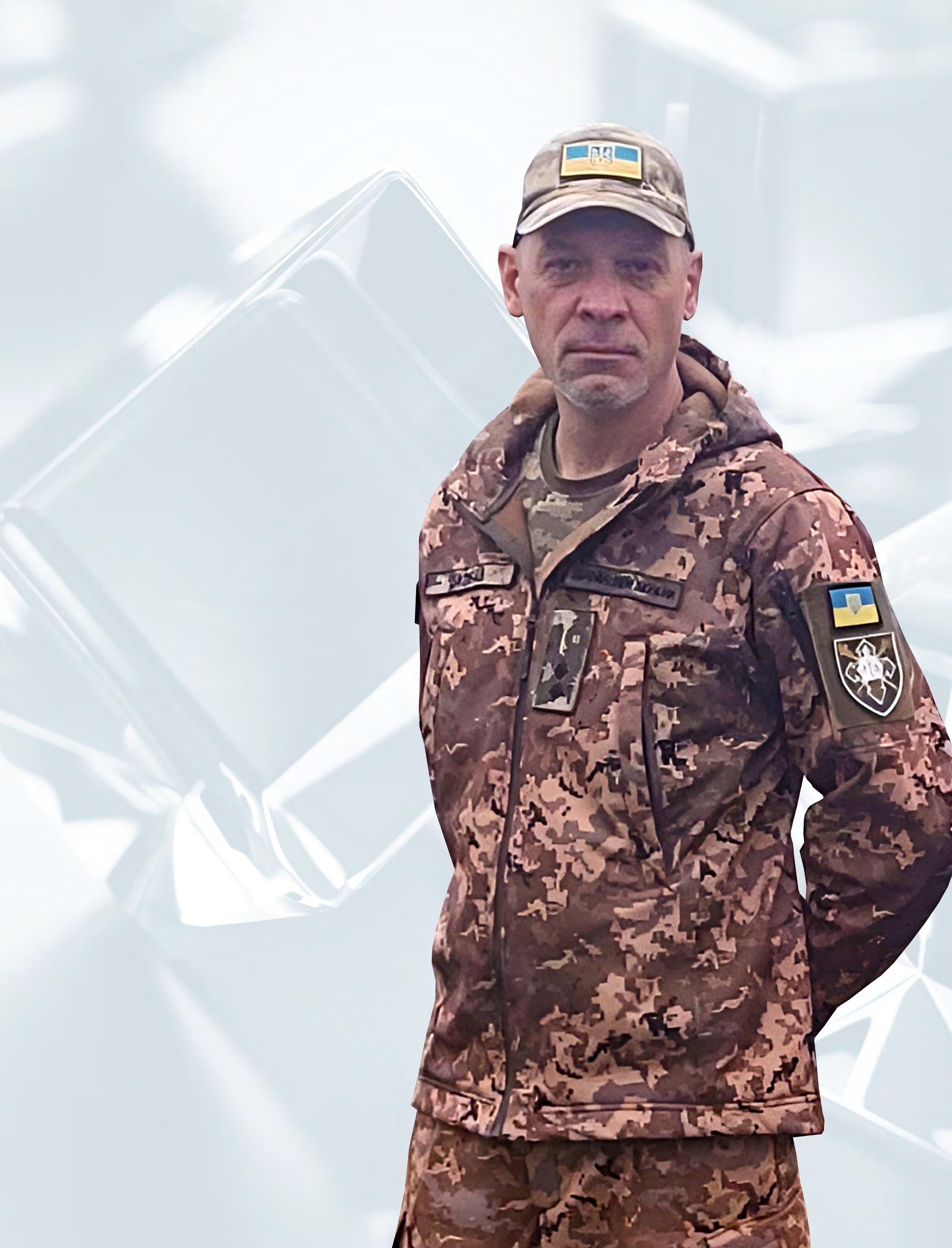
Edgar Rozovenko is a military lawyer who fights with the law, with words, and with unwavering justice. He helps service members and their families defend their dignity, fair decisions, lawful procedures, and everything that rightfully belongs to them.
His daily work is far more than legal practice. It is a struggle against systemic indifference, a responsibility to those who hold the line, and a force that restores people’s faith in the law — and in themselves. In a country enduring the trials of war, the voice of such experts is vital. That is why today we speak with a man whose mission has strategic importance for Ukraine.
Edgar, how was your mission — to “fight with words and the law” — born?
My mission was born not in an office, but at war — in conversations with those who risk their lives every day. When I first saw a soldier, exhausted after rotation, standing for hours in line just to prove the obvious — that he was injured, worn out, and in need of help — I understood: the state must not only demand, it must protect.
I was shaped by the stories of people who fulfilled their duty but then faced the cold indifference of the system. That’s when I realized: my front is the legal one. My weapons are the law, words, and facts. My task is to ensure that a soldier is never left alone with injustice, and that the system stops working “by inertia” and starts working by the law. What professional principles help you endure the most difficult legal battles?
In every case, I rely on several unchangeable principles.
First — the law above all.
It does not matter who stands on the other side — a commander, a state institution, or an administrative body. If a decision is illegal, it will be challenged.
Second — honesty and directness.
I always tell the client the truth, even when it is unpleasant. The law cannot stand on illusions.
Third — persistence.
Many procedures are a marathon, not a sprint. The system does not break after the first letter or the first call. But it does break where there is persistence and the right strategy.
LAW UNDER FIRE EDGAR ROZOVENKO — THE LAWYER WHO RESTORES DIGNITY TO UKRAINIAN SOLDIERS
Being a lawyer in the military sphere is not only about knowing legal articles. It is about making the mechanism work fairly, responsibly, and transparently. It is a difficult but essential fight. What legal problems do service members face most often today?
Today military personnel frequently encounter several critical issues:
— wrongful conclusions of the Military Medical Commission (VLC);
— denial of leave or medical treatment;
— delays or non-payment of salaries and combat bonuses;
— inaction or mistakes by commanders;
— unjustified listing as “wanted” in the Reserve+ system;
— unlawful orders regarding transfer or suspension. Each of these cases is not just “a piece of paper.” It is someone’s life, health, and future.
My work allows soldiers to feel that they are not alone — that there is a professional standing behind them who is not afraid to go all the way. For many, this restores a basic sense of dignity: being treated as human beings, not just “personnel.”
Is there a story that has touched you the most?
There are many stories that stay with you forever. But one stands apart.
I supported the family of a soldier who went missing. Each day was a battle not only with documents but with raw human pain. We worked to
establish his status, secure benefits, and uncover the truth.
In such moments, you realize that your profession is not about lawsuits. It is about responsibility to those who can no longer protect themselves. To work with such cases, knowledge of the law is not enough. You need resilience, compassion, and the ability to hold emotional ground, because people come to you in the hardest moments of their lives. A lawyer must be a point of support — not just a performer.
How do you see the future of military law in Ukraine?
Military law in Ukraine is undergoing a deep transformation. We are moving toward clearer procedures, greater accountability of command, and full digitalization.
But several critical gaps require immediate reform: — reform of the Military Medical Commission and transparency of medical decisions;
— proper recording of injuries and PTSD; — unified rules for leave, treatment, and rotations; — real oversight of financial payments;
— a quick and transparent process for handling missing persons cases.
I see my role in shaping new standards — through court decisions, legal precedents, and advocacy. The Ukrainian soldier must hear not only the command “Forward!”, but also the words “You are protected.”
And I do everything in my power to make those words a reality.
– Ms. Alina, we are delighted to welcome you again to the pages of our magazine! Could you tell us how your journey in dentistry began?
There is hardly a clear recipe for making this choice, but I am certain: we are destined to walk our own path of self-discovery and learn to sense what resonates with our inner world. There are no advisors here. There is only us and our understanding of our own purpose.
– What does being a dentist mean to you today?
It is a part of life — perhaps even the greater part of it. It is happiness to be needed every single day.
It is the absence of irritation when thinking about work and patients
ALINA OSADCHA:
“A PROFESSION IS THE PATH THAT CHOOSES US”
«Choose a job you love, and you will never have to work a day in your life.»
— Confucius
Dentist Alina Osadcha is a professional who transforms her work into a mission, and every smile into a story of trust. Her journey is marked by humanity, calmness, dedication, and warmth — qualities she shares with her patients every single day.
beyond the clinic walls.
It is the fascination with the multifaceted nature of the profession and the opportunity to explore different directions.
– Which professional achievement do you consider the most significant?
To never remain indifferent to people and to my profession.
– In these challenging times, who is your main support and source of inspiration?
My patients. When a child with autism hugs me upon meeting and runs to the chair, saying they love me.
When a Ukrainian actress, after a premiere, amidst shouts of “Bravo!”,
thanks me for restoring her perfect smile.
When I have the opportunity to help people living close to the front lines. Yes, it is precisely my patients — they are my inspiration and my strength.
– What are your passions outside of work?
Since childhood, I have loved tennis and fishing.
Two completely opposite pursuits: the explosive dynamics and fighting spirit of tennis, and the gentle, almost philosophical thrill of fishing.
– Your wishes for our magazine readers?
Peace. True peace. May the machinery of this terrible war finally stop. Forever.
— Mrs. Liliya, what was the starting point of your professional career?
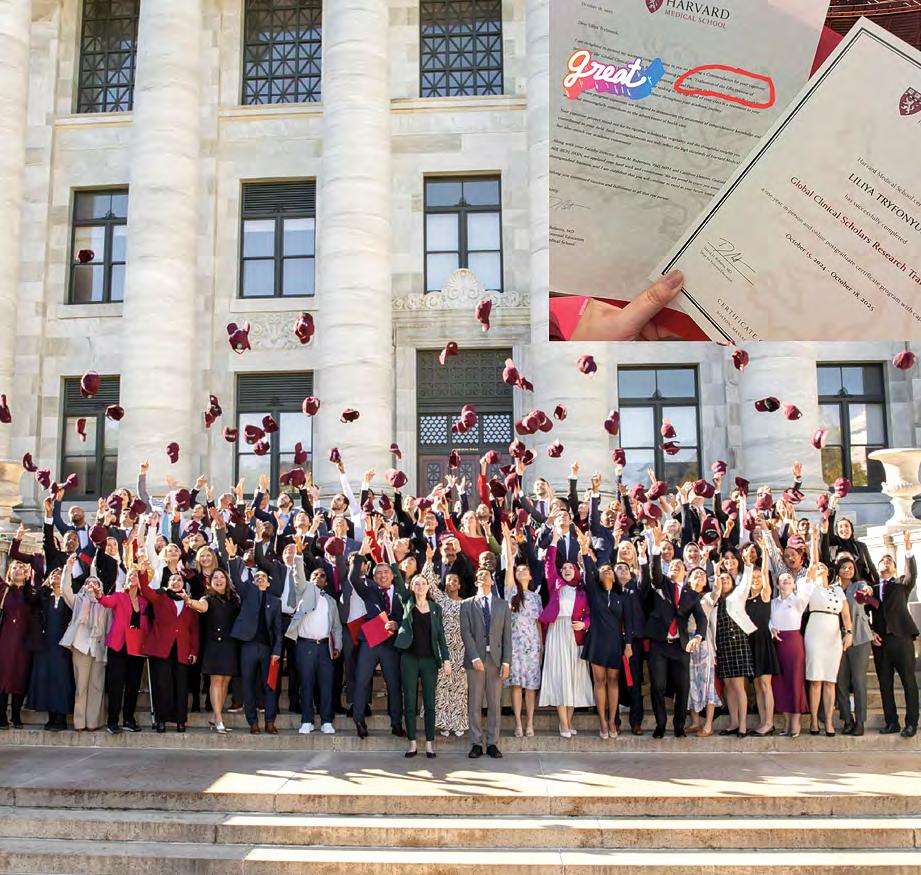
— I come from a small town in western Ukraine. It was there that I came to understand that medicine is not about status, but rather systematic, daily work. This path eventually led me to operating rooms in various countries and academic platforms at Harvard.
— The Harvard GCSRT programme is considered one of the strongest in the world. What did it give you?
— First and foremost, a different way of thinking. The programme develops the ability to analyse clinical data, work with research models and make evidence-based decisions. My final project received a commendation, which was important not as an award, but as confirmation that Ukrainian doctors can be competitive on a global level.
— You have completed unique internships with world-renowned surgeons. Which ones were the most influential?
— Each had its own value. In South Africa, I worked alongside a surgeon who performed the first successful penis transplant. In India, I studied under the founder of the
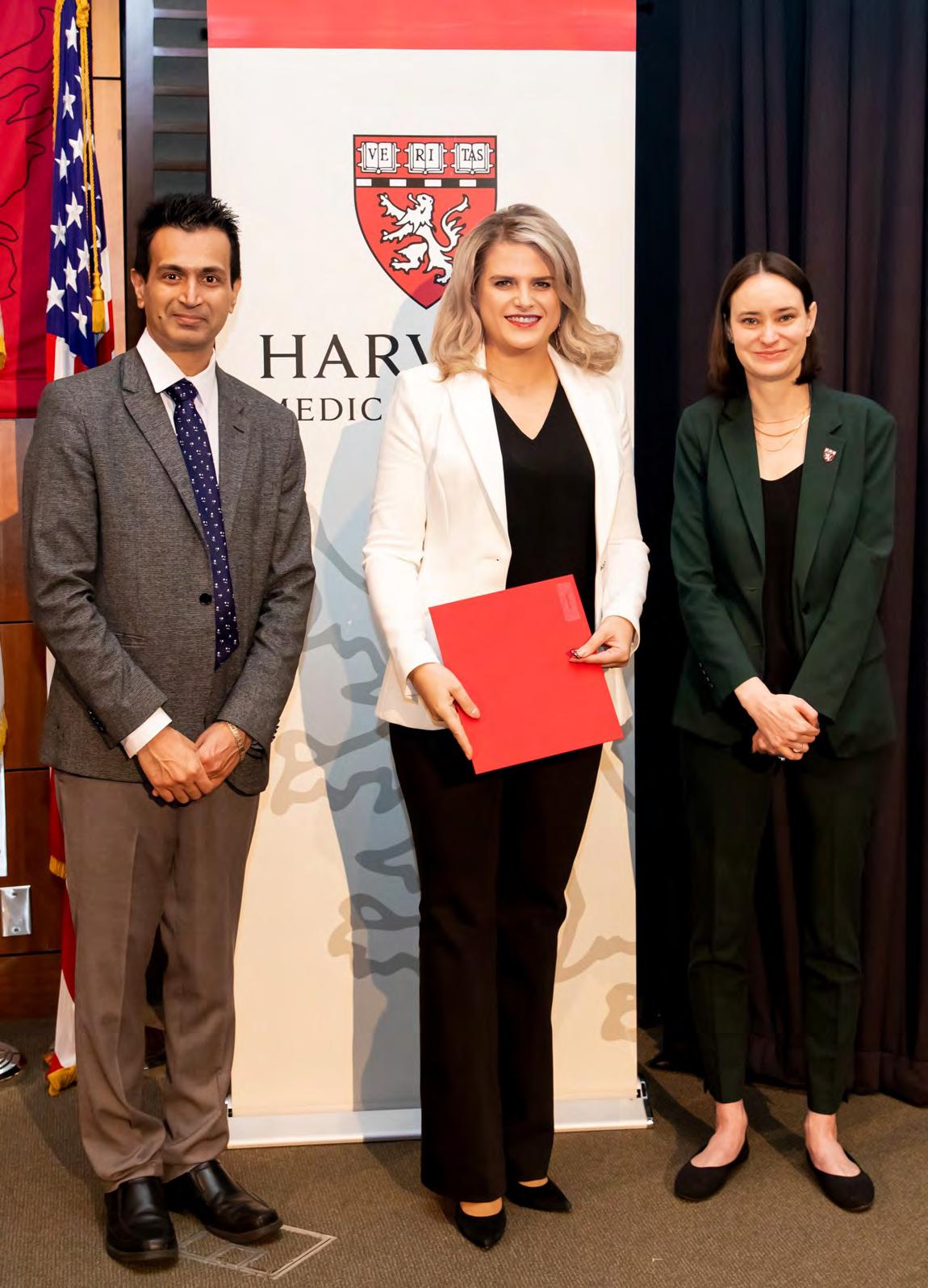
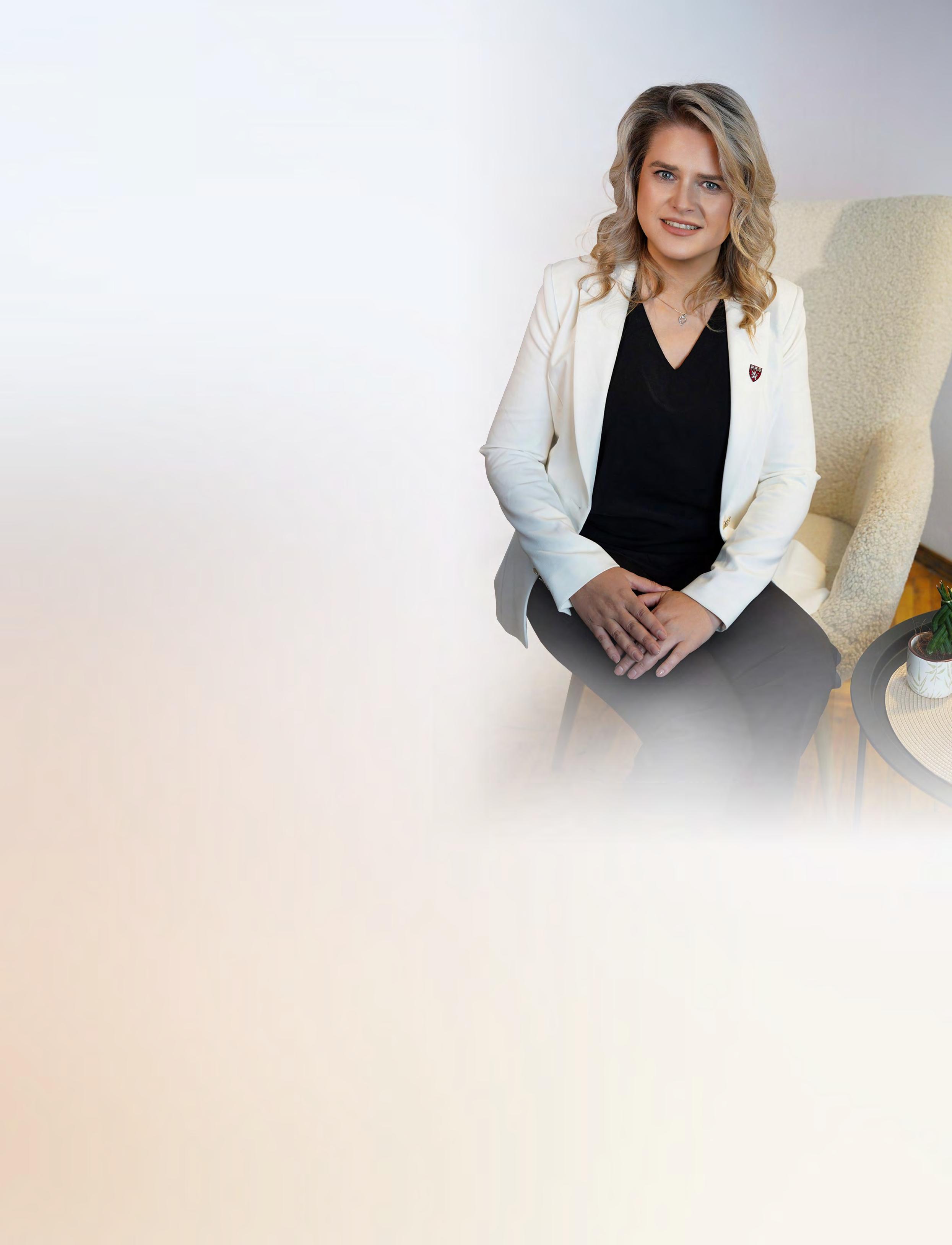
LILIYA TRYFONYUK: “WORLD STANDARDS IN UKRAINIAN MEDICINE”
Urologist and surgeon Liliya TRYFONYUK is one of those Ukrainian doctors who combine clinical practice with a research approach. She has over 18 years of practical experience, is a graduate of Harvard Medical School
— Global Clinical Scholars Research Training (GCSRT), has trained with leading surgeons around the world, and is actively developing reconstructive and neurourology in Ukraine. In this interview, Lilia talks about how global medical standards can benefit Ukrainian patients today.
modern school of urethral reconstruction. In Serbia, I studied transgender surgery, and in Switzerland, I studied neurourology with one of the world’s most influential specialists. These were not just observations — they were practical work in operating theatres.
— You are actively developing reconstructive and neurourology in Ukraine. Why these particular fields?
— Because they have been underestimated for decades. Patients with spinal injuries have a high risk of complications from the urinary system, and this is not only a matter of function but also quality of life. My task is to create a modern school of neurourology, train young surgeons, and integrate global standards into Ukraine.
— You continue your scientific and international activities. What motivates you to move forward?
— A sense of responsibility. I select abstracts for international congresses, review scientific papers, and speak at conferences. It’s not about status — it’s about Ukrainian patients deserving the level of treatment that is the norm in the world. And this is only possible through continuous development.
— Do you feel that your journey is just beginning?
— Yes. My journey from a small town has taken me to operating theatres in Zurich, Pune, Cape Town and lecture halls at Harvard. But there is more ahead: work, study and the creation of a strong, modern Ukrainian medical system.
України. Саме там сформувалося розуміння, що медицина — це не статус, а системна, щоденна робота. Згодом цей шлях привів мене до операційних залів різних країн і академічних платформ Гарварду.
— Гарвардська програма GCSRT вважається однією з найсильніших
IIn modern Ukrainian business, where every day is spent working in conditions of uncertainty, constant change and high risk, experts who are capable of not only putting numbers in order but also giving entrepreneurs inner confidence play a special role.
Olha KULIK is just such a specialist: a navigator in finance, taxes and audits, a woman who talks to the State Tax Service on your behalf and builds systems for sole proprietors, limited liability companies and DiiaCity residents without fear or confusion.
In this interview, we will talk about financial stability in 2025, the most significant transformations of entrepreneurs, professional lessons, moments of crisis, and the future of Ukraine’s financial culture. This is a conversation about the power of thinking, about maturity in business, and about how numbers can restore freedom.
— Mrs. Olha, today financial literacy has become not just a skill, but a condition for business survival. How do you define financial stability in 2025? What basic tools or solutions should entrepreneurs master now in order to feel confident in changing conditions?
— Financial stability is the strength to stay in the game when others give up. 2025 shows that it is not those who save who win, but those who calculate and plan. Entrepreneurs must think in terms of numbers, have reserves, automated accounting and a clear strategy. Stability is not a gift, but the result of daily financial awareness.
— You work with entrepreneurs who come to you with various problems: from chaos in accounting to fear of scaling. What transformations most often occur with your clients after the start of cooperation? Perhaps there are several illustrative cases that demonstrate the effectiveness of your methods?
— They arrive in chaos — and leave with a system. At first, they are afraid of numbers, avoid reports, and shift responsibility. But when they see the real picture, a completely different business opens up: clear profits, clear points of development, and new opportunities. The biggest change is in their thinking.
OLHA KULIK:
“FINANCIAL MATURITY IS FREEDOM. AND FREEDOM ALWAYS BEGINS WITH RESPONSIBILITY.”
INTERVIEW
WITH OLHA KULIK, NAVIGATOR IN FINANCE, TAXES AND AUDITS
An individual entrepreneur with debts became stable and profitable in six months, and a client who was afraid of scaling up created an online course and became an expert – because financial literacy is about the power to live without fear.
— You have considerable professional experience behind you: education, certifications, practical experience, and business experience. What knowledge and skills form the foundation of your expertise? What exactly allows you to be a mentor to entrepreneurs today and help them build healthy financial systems?
— Not only knowledge, but also years of practical experience in real business. I went from being an accountant to owning a company. This taught me that finance is about decisions. I can translate “accounting language” into human language and build systems where every hryvnia has a purpose. This allows me to be a mentor: to show not theory, but effective practical steps towards peace of mind and control.
— The financial sector is always associated with risks, stress and difficult decisions. Has there been a case in your practice that became a turning point for you? A situation where you had to make a difficult decision or teach a client to take responsibility for their finances like an
adult? What lessons did you learn from this?
— Yes. One employee left behind a mess of accounts for three major clients, and I was left to deal with the consequences. It was a painful blow, but also a powerful lesson. I restored trust, resolved all issues, and created a new control system. I realised that financial maturity lies in the ability to act, not in looking for someone to blame. Now I teach this to entrepreneurs.
— Your approach is not just about numbers, but about financial thinking, responsibility and internal discipline. What, in your opinion, is the main feature of a modern Ukrainian entrepreneur? How do you see Ukraine’s financial culture in the next 5 years — and what would you wish for those who want to grow from a small business into a stable company?
— A modern entrepreneur is someone who stands firm even when everything else is falling apart. We create businesses not only for profit, but also for influence. In five years, I see us as a nation of owners — strategic, responsible, and disciplined. And to those who want to grow, I say: don’t be afraid to mature financially, because it is financial maturity that transforms a business into a system and a person into a leader.
At a time when the world craves quality, honesty and true expertise, it is precisely these masters, these people, who set standards, inspire and create a new generation of specialists. Such people are needed whose work is not just about beautiful nails or technical perfection, but about care, health and confidence that is restored to people. So today we are talking to a woman who has been the voice of professionalism in the field of manicure and podiatry for many years — a woman who combines skill, femininity and a deep sense of responsibility to everyone who entrusts her with their hands and health — Anna STOROZHUK.
ANNA STOROZHUK – A CALLING TO HELP
— Mrs. Anna, what was your path into the profession?
— I can say that my journey into my current profession began on a balcony in Odessa. I actually trained as a chemist and biologist, and taught at a school for some time, but at the same time I started learning aesthetic manicure. My middle child was three months old at the time, and manicure was just a hobby for me. But I really enjoyed working that way, and I started to expand my business. I set up my “office” on the balcony, looked for clients through word of mouth, and distributed advertising leaflets with invitations for manicures in the stairwells. And that’s how I went from a balcony in Odessa to salons in Europe. Although, once abroad, I had to start from scratch, I was still able to do it.
— You started out doing aesthetic manicures, and then delved deeply into podiatry. What sparked your interest in this field?
— When my son was little, he had very serious problems with ingrown toenails, and surgeons completely removed them, only for the whole thing to start again. Imagine the horror: a small child had his toenails completely removed five times!
At some point, I decided to take matters into my own hands. I began to study podiatry, immersing myself in this knowledge, and, incidentally, it was then that I realised that my calling was to help people, that aesthetics are wonderful, but no beauty is complete without health. In eight years of working in podiatry, I have treated over 4,000 clients. And that is very inspiring!
— What is the key idea behind your teaching methods, and how do they differ from the traditional approach?
— My classes are individual. I work and teach in such a way that after my courses, people can immediately start working effectively. I share my own methods of podiatry, techniques, unique recipes for antiinflammatory remedies, etc. I do not make generalisations. In my courses, I teach my students to approach each case individually. I also encourage my students to constantly learn and improve. I myself have over 70 certificates of professional development. So I train my students to always work on themselves.
— How would you like to see your student after completing the course — first and foremost as a master, and secondly as a person?
— As a master — experienced, always developing, never resting on their laurels, and always learning new things; someone who makes the right diagnosis and prescribes effective treatment; someone who is referred to as a “cool specialist.”
And as a person — someone who is in love with what they do, filled with empathy and a sincere desire to help people.
I now have 550 students, whose professionalism and humanity I can be proud of.
— What helps you avoid burnout in such a stressful pace of life and work?
— It helps that I am confident in my purpose — to help people. And I also just really love my work, what I do. A hobby has grown into my favourite business, which constantly inspires me.
Yчас, коли світ прагне якості, чесності та справжньої експертності, саме такі майстри, такі люди формують стандарти, надихають і створюють нове покоління фахівців.
Тих, чия робота — це не просто про красу нігтів чи технічну досконалість. Це про турботу, здоров’я та впевненість, яка повертається людям.
Тож сьогодні ми спілкуємось з людиною, яка багато років є голосом
професійності у сфері манікюру та подології — жінкою, яка поєднує майстерність, жіночність та
Пані Анно, яким був Ваш шлях у
сказати, що мій шлях у тепе
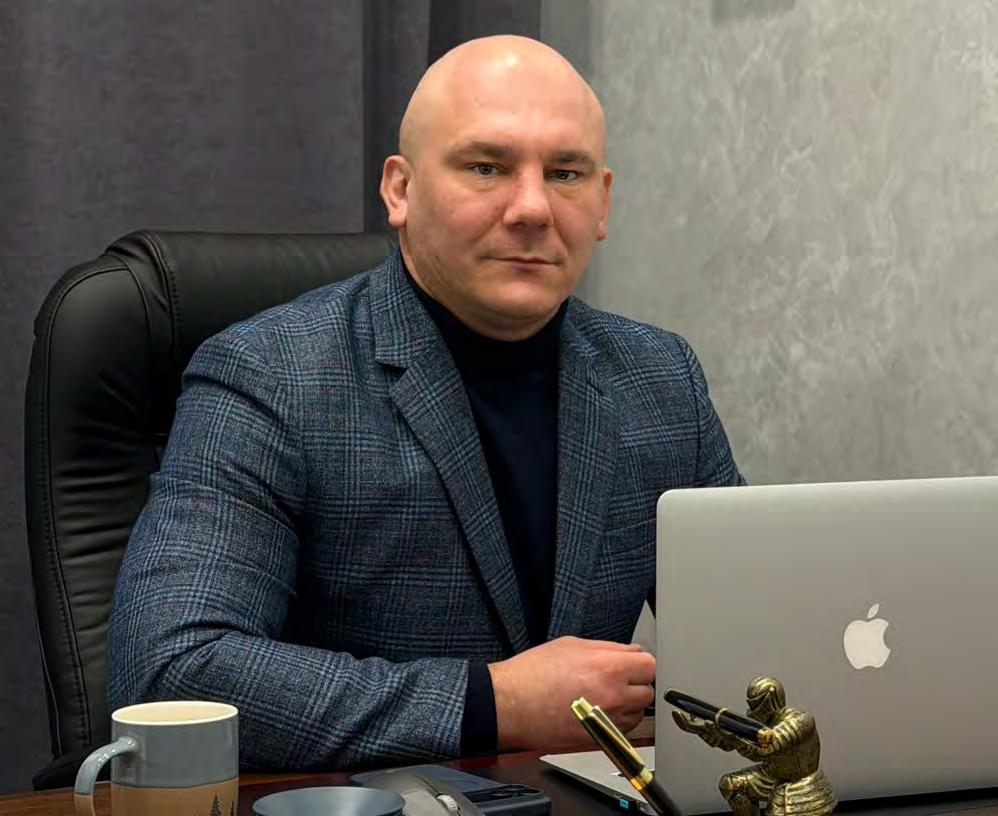
VITALII MATSELIUKH: LEADERSHIP,
LAW AND SECURITY OF THE COUNTRY IN 2026
On the eve of the new year, we talk to those who are shaping Ukraine’s future today. This is a time for summaries, strategic decisions and rethinking values — a period when it is especially important to hear from leaders on whom the security, development and stability of the state and business depend.
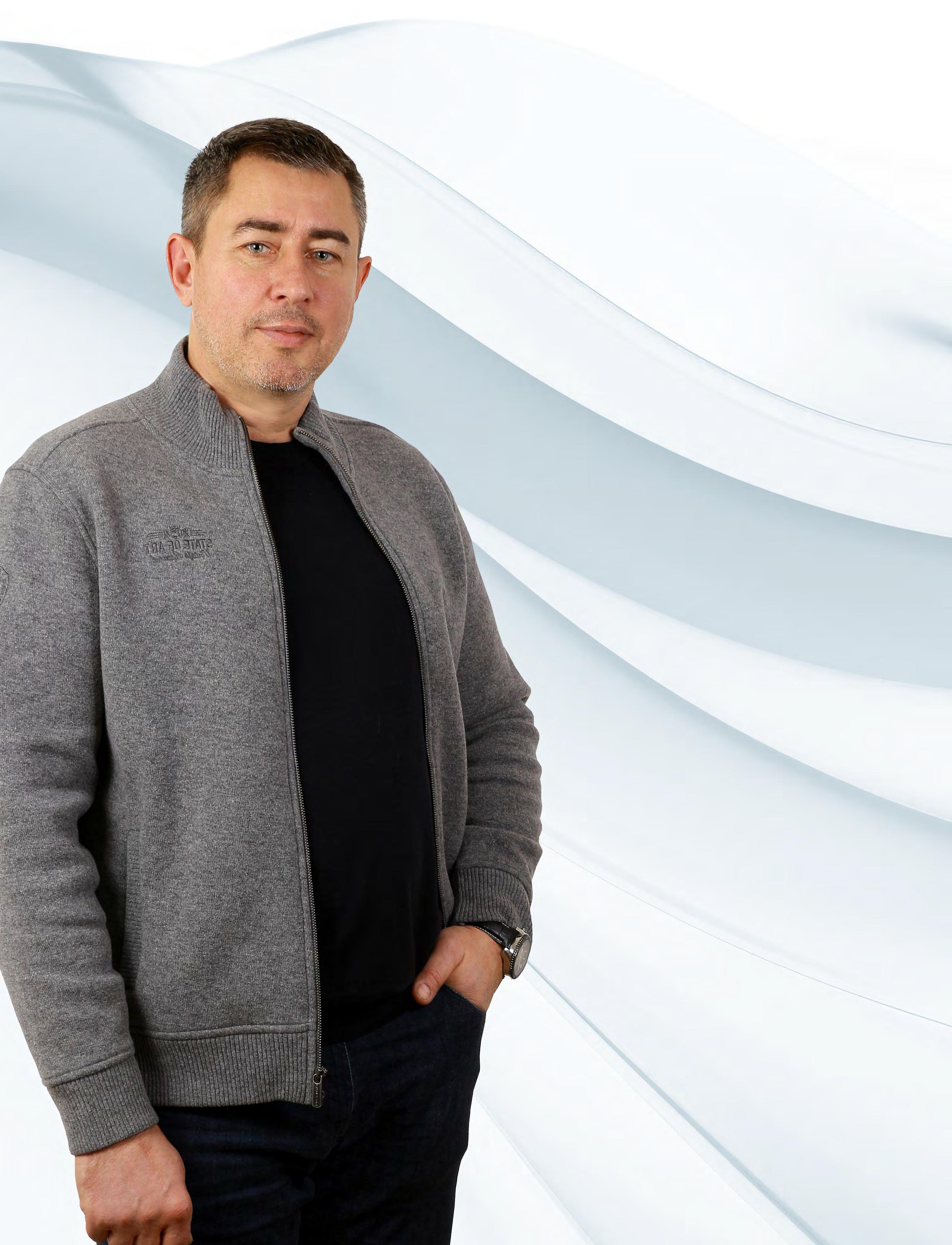
Our hero today is Vitalii MATSELIUKH, lawyer, CEO of ARTIUS, security expert, member of the board of the Ukrainian Bar Association, advisor to the mayor of Lviv on security issues, and representative of a number of state institutions. His professional career is an example of a combination of legal expertise, strategic vision and responsibility that goes far beyond the confines of a single office or field.
On the eve of 2026, as the country continues to fight for freedom and its future, it is precisely these specialists who become the bearers of stability, analysts and decisionmakers who shape the direction of development for the state, cities and business structures. That is why we are talking to Mr. Vitalii about law, security, leadership, Ukrainian business and the horizons that the new year opens up.
This interview is about those who work not for the sake of publicity, but for results. And about what 2026 will be like through the eyes of a top-level professional.
— Mr. Vitalii, you work at the intersection of law, security, and public administration. How would you define your key mission today?
— My mission is to build systems that protect businesses and people. In law, this means fair rules of the game; in security, it means minimising risks; in public administration, it means creating institutions that operate independently of political fluctuations. I look beyond a single case or project: I am interested in the impact of each decision on the final outcome.
— ARTIUS is a strong brand in the legal field. What challenges do you see for the legal business and what development strategy do you choose?
— The biggest challenge is the speed of change. Businesses operate in an environment of military risks, regulatory turbulence and digital transformation. Our strategy is based on three principles:
prevention, in-depth expertise, and protection of the business as a system. We are building a service that anticipates rather than reacts. That is why ARTIUS consistently ranks among the top 100 law firms in the country.
— Security is a hot topic these days. What are the most critical threats to businesses?
— Threats are managerial and digital. These include not only cyber risks and raiding, but also internal errors, weak processes, and a lack of security culture. Modern security must be a system of constant monitoring and analytics: threat modelling, scenario planning, legal support, and crisis protocols. Today, chaos is not tolerated.
— What will the future of Ukraine’s legal system look like after victory?
— The future lies in strengthening institutions and accountability. After victory, we will be required to ensure
even greater transparency, digitalisation, and independence of the judicial and law enforcement systems. We are capable of building a model where the law works systematically and business trusts the state.
— What does leadership mean to you in today’s reality?
— Leadership is not a title, but a responsibility. It is the ability to make unpopular decisions and keep the team focused in the most difficult moments. My three principles are honesty in intentions, respect for people, and strategic thinking. I don’t think “for now,” but “for years to come.” Sport, especially triathlon, has taught me discipline, endurance, and bringing things to the end — and I carry these qualities into my work and service to the team.
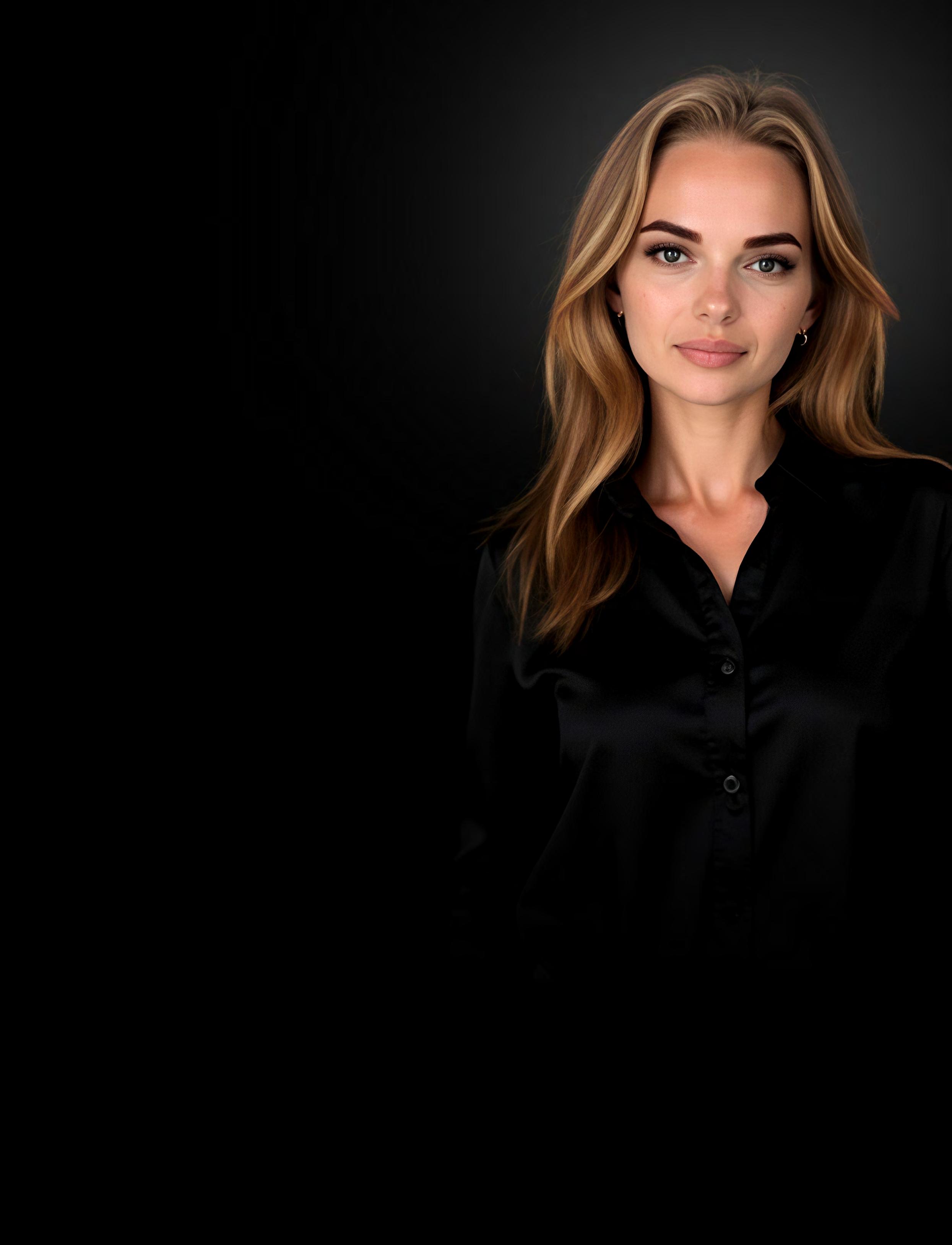
Alina Demydova does not like noise, but she values order. Born in Kharkiv and now based in San Diego, she keeps her IDEA Digital Marketing Agency in shape and gathers around her clients who need not a “quick fix,” but a steady, controlled flow of enquiries. She is one of those who start with reality: what a person actually sees when they get acquainted with a product, where interest disappears, and what moment becomes critical for the decision to “give it a try.” Her system consists of five areas of work — and each of them has been tested on projects of various scales
PLAN B IS ALWAYS THERE: ALINA DEMYDOVA'S APPROACH TO SALES
lina DEMYDOVA is one of those professionals who quietly achieve great results where others make a lot of noise. The founder of IDEA Digital Marketing Agency, she has developed her own style of work: structured, calm and impressively effective. Alina works with brands in various countries, including the United States, transforming chaotic attempts to ‘post something’ into systematic communications that generate a steady stream of customers. Her methods are not about random “shots,” but about trust, rhythm, and predictable growth. That is why her approach is now considered one of the smartest and cleanest in the digital industry.
and growth rates.
The first approach is how to attract customers from social media without disrupting their natural rhythm of life. People want to see that you are alive and useful. Therefore, the basic scheme is simple: a short post about the problem, a short video showing the process, an honest “before and after” shot, and then an invitation to ask questions.
The second approach is understanding audience behaviour on platforms where we all spend too much time. Demydova explains it simply but very accurately: it is not “who to show” that is important, but “when and in what sequence”. If organic content is already gaining traction, don’t drown it out with paid advertising — let people come to the button themselves. The “warm hand” rule works here: a smooth lead-up to action, rather than a sharp “click now”.
The third component of her methodology is intelligent automation. Without buzzwords, fears, or extremes: these are just assistants that appear at the right time – a letter with an answer to a typical question the next day, not a week later; a form without unnecessary fields that does not punish for mistakes but provides hints. Such tools do not take away the humanity of sales — they take away the noise and fatigue.
The fourth direction is retention and loyalty. Alina Demydova uses the logic of progress: showing the customer small steps of progress.
And when a person sees these steps, they come back on their own — without persuasion.
The fifth component is what is commonly referred to as a “content strategy,” but Demydova puts it more pragmatically: a plan of evidence. There is no room for chaotic noise here: once every three weeks — fresh client testimonials, in the next cycle — a clear “before and after” snapshot with verifiable figures; then — an open Q&A session where complex topics are not hidden. This rhythm relieves audience fatigue and removes the temptation to “shout down everyone” with advertising budgets.
At the heart of all five areas is the same approach. Demydova does not push clients into action; she removes obstacles from their path. Her notes often contain a simple question: what can be removed to make things easier for the person? When these little things are put together, the tape turns from chaotic background noise into a clear path to an application.
We often hear stories about ‘magic posts’ or ‘secret tools.’ There are no such fairy tales in Demydova’s work. There is craftsmanship. There is a publication calendar, a logical sequence of steps, delicate digital assistants who do not rush ahead of their master, regular confirmation of trust, and a careful approach to the budget, which should reinforce rather than replace content. So, this is not about tricks, but about respect. Respect for the client, for the team, for your brand. And respect is a strategy that never goes out of style.
вона тримає свою IDEA Digital Marketing Agency в тонусі та збирає навколо себе клієнтів, яким потрібен не «вистріл тут і зараз», а рівний, керований потік звернень. Вона з тих, хто починає з реальності: що насправді бачить людина, коли знайомиться з продуктом, де зникає інтерес, який момент стає критичним для рішення «спробуймо». Її система складається з п’яти напрямів роботи — і кожен із них перевірений на проєктах різного масштабу та темпу зростання. Перший напрям — як залучати клієнтів із соцмереж,
Без модних слів, страхів і крайнощів:
відповіддю на типове питання наступного дня, а не через
DATA DISCIPLINE IN LOGISTICS: VALENTYN MARCHENKO'S APPROACH
In a world where logistics moves at the speed of the market and mistakes are measured in thousands of dollars, there are specialists who don’t just keep up with the pace — they set it. Valentyn MARCHENKO is one such specialist. His approach to transport operations blurs the line between technology, risk management and financial engineering, transforming chaotic events into manageable decisions. This is the story of a man who does not sell “digitalisation” but implements data discipline, bringing stability to the changing world of logistics. And that is why his practices are in demand today in the United States, Europe and Ukraine.
Logistics today lives at the pace of the market: tariffs fluctuate, insurers review risks, and customers do not forgive volatility. It is in these conditions that Valentyn Marchenko, a Ukrainian specialist who has translated the concept of “transport automation” from the realm of presentations into the sphere of concrete, manageable actions, is building his career. In theory, it all looks simple: there is an event, there is data, and there is a decision that affects the route, service slot or tariff. But in practice, it is a complex interaction of telematics, compliance, finance, insurance restrictions and dispatching logic. This is not just another module, but a “command layer” of data that disciplines events and forms a numerical risk that actually affects P&L.
In his five scientific articles, Marchenko develops one consistent idea: how to transform “raw” telematics, customs events, and billing into solutions that instantly adjust the route, time, cost, and risk. His book summarises this work — a practical monograph on the “command bridge” of freight operations. The system architecture (event bus, risk mechanism, rules, executive interfaces) is combined with case studies and financial verification of results. This is not about technology for technology’s sake — it is about the discipline of events and the discipline of decisions.
The theoretical basis of Marchenko’s approach is a “single data line” and the “sensation-decision-action” cycle. Everything that can create an event — from ELD and telematics to customs APIs and payment channels — is combined into a single line. It
runs a risk management mechanism and a decision-making service. The system’s task is not to collect as many signals as possible, but to curb variability at points where it is penalised by shippers and insurance programmes. Any deviation is instantly transformed into a change in route, HOS schedule, service slot or even tariff step. This allows the organisation to stop living “from fire to fire”.
The financial parameters in this model are not put off until later. The system immediately sees the shipper’s credit risk, predicts payment delays, determines insurance thresholds, and adjusts transport priorities in real time.
Where is the success? It lies in the ability to turn volatility into manageable risks. In the culture of implementation: simulators, a clear interface rhythm, defined roles, the ability to ‘pause’. In honesty about the initial difficulties: yes, there will be a coordination tax, yes, integrations will not be perfect on the first try. But the result is preserved thanks to predictable retreat scenarios.
Valentyn Marchenko has achieved something that is rarely accomplished in the industry. He has transformed the “digitalisation of logistics” into process engineering, driven by clear data, visible solutions and measurable financial impact. This is a story about tools that reduce variability and about people who feel more confident working with such tools. Less noise — more repeatability. And repeatability, however dry it may seem, is the most accurate marker of success in logistics.
МАРЧЕНКА
вони задають його. Валентин МАРЧЕНКО — саме з таких. Його підхід до транспортних операцій стирає межу між технологіями, ризик-менеджментом і фінансовою інженерією,
Логістика сьогодні живе у темпі ринку: тарифи пульсують,
Валентин Марченко — український спеціаліст, який перевів розуміння про «автоматизацію перевезень» із
є рішення, яке впливає на маршрут, слот обслуговування чи тариф. Та на практиці це складна взаємодія телематики, комплаєнсу, фінансів, страхових обмежень і логіки диспетчеризації. Ідеться не про черговий модуль, а про «командний шар» даних, який дисциплінує події та формує числовий ризик, що реально впливає на P&L.
У своїх п’яти наукових статтях Марченко розвиває одну послідовну ідею: як перетворити «сиру» телематику, митні події та білінг у рішення, які миттєво коригують маршрут, час, вартість і ризик. Його книга підсумовує цей доробок — практична монографія про «командний міст» вантажних операцій. Архітектура системи (шина подій,
ливість на
ризики.
культурі впровадження: си
мулятори, чіткий ритм інтерфейсу, визначені ролі, можливість «поставити на паузу». У чесності щодо стартових труднощів: так, буде податок на координацію, так, інтеграції не будуть ідеальними з першої
Mariia works to ensure that data remains secure and systems deliver stable results. She does not chase after “magic buttons,” but establishes clear rules: what is the acceptable limit of data disturbance in order to preserve user privacy without losing model accuracy. In numbers, this looks like this: accuracy drops by no more than 3%, energy consumption increases by a maximum of two times — and this is enough to keep the business running. If quality begins to fluctuate, the system gives clear signals: when to involve a human, what to change in the settings, and how to safely return to a simpler mode so that the user does not experience any slowdown. Such “traffic lights” give the team confidence and reduce response time.
Mariia uses practical examples to prove that stricter, consistent protection does not reduce quality — it often enhances it. In tasks involving sound and speech, models are retrained less and work more consistently. Yes, sometimes this requires more energy, but the risks of leaks drop sharply — especially when it comes to medical data or systems that make socially significant decisions.
MARIIA POZDNIAKOVA: OPTIMISING PROCESSES IN DATA ENGINEERING — HOW IT IMPROVED THE EFFICIENCY OF TEAM WORK
In a world where data engineering is becoming the heart of technological products, specialists are emerging who are capable of transforming complexity into order and chaos into a manageable system. Mariia POZDNIAKOVA is one such specialist. Her approach combines strict structure, respect for user privacy, and clear engineering logic, which guarantees stability where others see only risks. She works at the intersection of security, efficiency, and transparency — and proves time and again that mature digital solutions are not about magic, but about discipline and responsibility. That is why her methods are shaping a new standard for working with data in international teams today.
Mariia always maintains a balance between automation and rules. She is not afraid to provide users with explanations of “why the system decided this way,” offers small “what if” options, and displays confidence indicators. This helps people understand the logic of the system more quickly and not waste time guessing.
In her career, Mariia focuses not on slogans, but on tangible results. At Keywords Studios, she quickly rose to the role of artificial intelligence researcher. One of her projects provided about a 30% increase in speed and convenience of working with data — less manual routine, more transparent steps. In another project, database queries began to be processed about 40% faster. This is not a “nice presentation” but daily discipline: agreements are fulfilled, metrics are growing, and the team clearly understands their roles.
Her experience is a bridge between engineering and product. Mariia loves the cycle of “data – system – interface – risks.” At the right points, she creates a so-called “system passport” — a card
with versions, security restrictions, risks, and responsible persons. Next to it is the “change screen”: how the data has been updated over a week or a month and how this has affected the quality and fairness of decisions.
She does not shy away from complex topics, but explains them simply: “Not everything has to be transparent internally, but everything has to be manageable externally,” “Clear thresholds are better than endless digging inside the model,” “A short explanation now is better than a long formal reply later.”
The conclusion is obvious: Mariia is all about order, speed, and respect for people. Mrs. Pozdniakova shows that a “black box” can be turned into a “black box with instructions and sensors”: the user does not need to know everything inside — it is enough to understand the boundaries, signals, and action plan. This way, systems work more stably, teams are calmer, and business grows without unnecessary drama. This is a mature approach: less hype, more benefit, daily results — in numbers, processes, and user experience.
і дані
шалися
і системи показували стабільний результат. Вона не женеться за «чарівними кнопками», а вибудовує чіткі правила: яка межа допустимого збурення даних, щоб зберегти приватність користувачів і водночас не втратити точність моделей. У числах це виглядає так: точність падає не більше ніж на 3%, енергоспоживання зростає максимум удвічі — і цього достатньо, щоб бізнес не зупинявся. Якщо якість починає коливатися, система дає зрозумілі сигнали: коли залучити людину, що змінити в налаштуваннях і як безпечно повернутися до простішого режиму, щоб користувач не відчув просі-
Вона не соромиться додавати користувачам пояснення: «чому так вирішила система», пропонує невеликі варіанти «що було б, якби» та демонструє індикатори впевненості. Так
“SHORT CYCLES, LONG EFFECT: THE SYROTENKO METHOD”
In modern HR, where loud slogans often replace real change, the name Viktoriia SYROTENKO is synonymous with discipline, precision, and respect for professionals. She works at the intersection of strategy and human development, transforming employee skills into a measurable resource that directly impacts business results. Her method is not about magical transformations, but about short cycles in which each step brings a tangible effect. That is why companies trust Viktoriia with their most valuable assets — their teams, their pace, and their future. Her approach proves that modern HR is not about pomp, but about honest tools that work.
Viktoriia Syrotenko is one of those HR managers who do not turn the concept of “human capital” into an abstraction. She views people as a system of specific skills that give businesses speed, stability, and predictability. Her style is to make processes honest and measurable, and then, step by step, remove unnecessary barriers between people and results. This explains her reputation: companies come not “to be written about,” but to see real changes in recruitment, grades, and internal transitions within three months. This is a rare case where HR is discussed at strategy meetings as seriously as revenue and margins.
The theory is simple: if you evaluate people based on their positions, the business loses what the market is willing to pay for — competencies. If evaluation is based on skills, everything changes: payment rules, job requirements, training format, and even the style of task setting by managers. Victoria implements this logic consistently — starting with a “skills map,” not a onetime questionnaire, but a living matrix integrated into the operational cycle.
In practice, the method looks not like a “Big Bang” but like a chain of small but confident victories. The first month is spent taking stock of skills in critical teams. Next — a pilot on one vertical: matrix review, linking to OKRs, short “training sprints” for specific gaps, reassessment. Managers receive clear analytics: where we are understaffed in terms of competence, and where we are simply not formulating tasks correctly.
Viktoriia does not pursue comprehensive models. She builds a disciplined system: several sources — resumes, work artefacts, feedback, technical challenges; a unified vocabulary of skills; data quality control; an explainable mechanism for assessing gaps. Her special “trick” is personalised learning paths that take into account time and format: some people need micro-
courses, some need peer mentoring, and some need mini-projects in production, because otherwise the knowledge is not consolidated.
The topic of learning is inevitable, but Viktoriia breaks the “cult of courses”. She counts conversion to skill — how many people after the module actually demonstrate the desired behaviour in work artefacts. Simulators, peer practices, and micro-projects are used. Internal mentors receive methodological support, and newcomers receive small but stable victories.
And yes, there are results — without magic or hype. The speed of filling vacancies decreases where the skills matrix works and is fed by product data; the share of internal transfers increases; the outflow of employees due to “no room for growth” decreases. Everything is logical: transparent criteria eliminate noise.
Her formula is skills instead of titles, evidence instead of assumptions, respect instead of slogans. Is it simple? In words — yes. In reality, it is complex, mature work. But where the method works, the company begins to breathe in a new way: less chaos, more meaning, clear paths, and understandable value for everyone. This is what modern HR looks like when it is taken seriously — and that is why the name of Viktoriia Syrotenko comes up in conversations not by accident, but quite naturally.
OLEKSANDRA KULIKOVA: “BRITISH MARKETING WITH UKRAINIAN ROOTS”
Oleksandra KULIKOVA is advertising and production specialist with Ukrainian roots who has been working with brands in Ukraine and the UK for over 15 years. She helps businesses combine Ukrainian creativity and flexibility with the systematic approach of the British market, forming positioning and trust strategies that work internationally.
During my 15 years in advertising and production, I have worked with Lenovo, Nova Poshta, EVA, MD Fashion, and experienced the launch of a new agency in the UK. This experience has shown that the Ukrainian and British approaches to marketing speak the same language, but with different accents.
As our clients include both British and Ukrainian businesses, I can see the difference very clearly: Ukrainian businesses often operate in “survival marketing” mode, while British businesses operate in system mode. I call it refugeemode marketing.
Ukrainian businesses starting out here in Britain often use the “we’ll take any project” approach, often start conversations with the “we’re Ukrainian, so it’s cheaper” argument, try to “do everything for everyone” to get paid, and posts and reels come out when they
finally have the strength and some free time. The main thing is to stay afloat.
The British side looks at it and does not understand what is happening there, because they look at it completely differently. It is important to clearly explain what people are paying for and what result they get. Particular attention is paid to the process and deadlines. No one needs it sooner, they need it on time. It is also fundamentally important to see evidence - real cases, specific results, reviews, adequate online presence.
The key difference is that Britons are much more risk-averse than they are discount-loving. Here, trust is not a nice bonus, but an entry ticket to cooperation. They are looking for a partner who appears as safe, predictable and understandable as possible. Ukrainians bring a different set of advantages to the table: speed, creativity, flexibility,
willingness to experiment, and the ability to find solutions in difficult conditions. This is our identity, our strength! But it only works in the UK when it is integrated into their framework.
This is where positioning begins: what will people say about your business when you are not in the room? Therefore, the main task for Ukrainian businesses in the UK is not to sell themselves as a “cheap option,” but to translate their value into the local language of trust. And we have been successfully helping our clients do this for two years.
Even with a minimal budget, you can significantly strengthen the perception of your brand’s stability and importance within a month. And you can start saying “work with us” with confidence, because you become a strong and understandable partner in the British market.
Oleksandra Kulykova
From the Editorial Board of MILLENIUM CLUB:
The editorial team sincerely thanks Oleksandra Kulikova for her candid view of the differences between Ukrainian and British marketing and her practical advice for businesses seeking to operate successfully in the international market.
підхід «беремо будь-які проєкти», часто починають розмову з аргументу «ми українці, тому дешевше», намагаються «робити все для всіх», аби платили, а пости й рилзи виходять тоді, коли нарешті з’являються сили та трохи
— Mrs. Nataliia, why do we trust other people’s opinions so easily, but find it so difficult to trust our own bodies?
— Every day we play different roles — specialist, woman, person, client. And in this kaleidoscope, we often forget the most important thing: the body is not eternal. We naively think that it will never break down, that it will always be young and resilient. This is a myth.
The body is a system with clear rules. We fill it with poor-quality information and poor-quality food, guided by advertising, neighbours, and “armchair critics.” But we need to rely on our own individuality.
— You say that pain is a message. What “dark letters” does the body write most often?
— Pain, illness, symptoms — these are all signals. When the body cannot reach us, it begins to resolve the conflict instead of us. These processes do not appear instantly. At first, they are mild signals, then stronger ones, and then what you aptly called “dark letters”: fever, loss of strength, internal misunderstanding, conditions that last a long time and become chronic.
The root cause may lie in emotions, psychosomatics, or even subtle energy levels — long before the disease manifests itself in the body.
— What body signals do people most often ignore, and why are they dangerous?
THE BODY'S "DARK LETTERS": WHAT DO THEY MEAN? A CONVERSATION WITH NATALIIA POLIANSKA
Nataliia POLIANSKA is a professional rehabilitation specialist, vertebrologist, osteopath, psychologist, medium, emotional coach, and guide. Nataliia Polianska is able to read a person holistically, verbally, energetically, and anatomically. Her deep insight allows her to identify the roots of pain long before symptoms appear. In our conversation, Nataliia shares why we ignore the most important markers and how the victories of the year became a new source of strength and gratitude for her.
— I really know how to read markers — visual, energetic, emotional. It could be skin colour, smell, gait, posture, tremors, words. But people usually don’t pay attention to subtle symptoms: a slight fever, a slight runny nose, a slight headache, ‘something wrong with the stomach.’
In the frantic pace of life, we don’t have time to notice the little things until they become critical. And we need to start with responsibility: basic tests, check-ups, understanding our own norms.
— Why is it easier for people to invest in brands and travel than in their own bodies?
— Because there are no clear values and priorities. People are afraid of being judged, afraid of not meeting standards, so they choose the easy option — something that gives them a quick emotional fix.
Shopping is an instant result. But the body is a long-term process, a marathon, not a sprint. You need to be able to wait, grow, nurture. But patience and long-term vision are rare. That is why investing in health often ends up at the bottom of the list.
— When does the moment come when the universe no longer asks, but demands that we stop?
— The universe can reflect very categorically: failed projects, unfulfilled dreams, health problems, conflicts, accidents. Everything that happens on the outside is what has been happening on the inside for a long time.
From the Editorial Board of MILLENIUM CLUB:
We must remember: what we invest in is what grows. And at any moment, a zero point may come. But it is precisely this point that becomes the beginning of something new.
— What are your greatest victories and revelations this year?
— The year was powerful and vibrant: filled with challenges, learning, overcoming fears, and profound transformations. There were many significant professional cases — from preventing serious consequences to successful rehabilitation after strokes and heart attacks. We launched self-support groups, massage training, and implemented important projects. One of my dreams came true — a trip to Norway, which became a personal symbol of moving forward.
I am grateful to the Almighty for the opportunity to be a guide, mentor, source of support and professionalism, which people need so much today.
The most important value and price of 2025 for me is this: I am alive. Healthy. Happy. Strong, “stylish” and rich in living energy. I am life in life. I have dreams, intentions, ideas, visions and the free will to act for the good — for the sake of good. This came as a P.S. — after living, suffering and surviving. And to Ukrainians, I want to say: live. Don’t just exist — live. Fill every minute of your life with meaning.
The editorial team sincerely thanks Mrs. Nataliia POLIANSKA for her openness, depth of thought, and the bright energy she brings to people. We wish her new inspiration, powerful achievements, grateful clients, and a daily feeling of life in its fullness.
з чіткими правилами. Ми наповнюємо його неякісною інформацією, неякісною їжею, орієнтуємося на рекламу,
найчастіше?
Болячка, хвороба, симптом — це все сигнали. Коли організм не може достукатися до нас, він починає вирішувати конфлікт за нас. Ці процеси не з’являються миттєво. Спочатку
— Mrs. Nataliia, you are a philologist by education, but you provide your services through entrepreneurship. How did your path take shape?
— In fact, my work is at the intersection of teaching, management, and marketing. After all, I created everything from scratch: generating ideas, shaping the product, methodologies, structures, and communications. Each of my projects involves both self-realisation and influence on society — these two components are equally important to me. My mission is to spread Ukrainian culture around the world. I like creating unique projects, something new.
— How did your language project “SlovoTvorimo” come about?
— In an unusual way. For 10 years, I have been conducting educational projects in schools. I have collaborated with companies such as Colgate-Palmolive Ukraine and BIC. I have conducted career guidance events for universities. And in 2018, I had the opportunity to organise Ukraine’s first championship of the worldfamous game Scrabble. Eight hundred schoolchildren and 500 students took part. In this game, participants form words and earn points. In other words, there is an element of competition. This encourages them to think more actively, creating the longest words possible. The idea arose to study Ukrainian by incorporating the game into the methodology. As a result, children do not perceive such classes as boring lectures; they come to play, while enriching their vocabulary and developing their Ukrainian language skills. My goal is to lay the foundation for literacy in children aged 8-14. This will allow them to feel not only educated in society, but
THE POWER OF WORDS: HOW ENTREPRENEUR NATALIIA NIZELSKA IS BUILDING EDUCATIONAL SOLUTIONS FOR UKRAINIANS AROUND THE WORLD
Nataliia NIZELSKA is an entrepreneur, philologist, author of educational projects, founder of the SlovoTvorimo language studios and the Akcent programme. She creates a space where children learn Ukrainian through modern methods and games, and adults improve their business communication skills for confident professional communication. Thanks to her experience in the field of communications, Nataliia helps experts from various fields not only to improve their business communication skills, but also to build effective negotiations. After being forced to temporarily move abroad, Nataliia continued to work, supporting Ukrainians in preserving their linguistic identity.
also help them easily pass the National Multidisciplinary Test. I have copyrights to my teaching technology “Learn Ukrainian by Playing.” At first, during the fullscale invasion, I conducted free clubs in Kyiv libraries. The children composed Ukrainian words in a playful way. We created words and then moved from practice to theory: we looked at spelling rules, word structure, and did exercises.
In the eighth month of the war, I was forced to leave the country with my children, but I continue to manage the project remotely.
In Poland, children also have the opportunity to study using the 5-step learning technology “Learn Ukrainian through play”. Children easily grasp theory through play.
After all, we all know that it is much easier to remember anything through emotions. Isn’t that right?
— In what format is SlovoTvorimo developing today?
— The studios operate not only abroad, but also in various cities in Ukraine, including Kyiv.
An important part of the project is the creation of jobs for teachers who work according to a single methodology. Classes are conducted using innovative technology.
I am currently structuring the programme so that partners can join and open educational centres. This forms a comprehensive system that can be scaled up to provide quality services to children.
— In addition to children, you work with adults. What is the key idea behind the Accent project?
— Since my second year at university, I have been working in the field of negotiations and sales. My favourite subject at university was business Ukrainian. That is why I enjoy working with adults who
want to speak Ukrainian effectively and write business letters competently. I also help prepare for presentations. For example, I prepared a PR manager of a leading bank for a speech before the Board of Directors. I work on clear speech skills in adults. The lessons are practical. They are rich in terminology from the field in which the client works. I have been approached by people who need Ukrainian for negotiations: how to speak competently, effectively, confidently, and how to achieve results? After all, the impression we make depends on our speech. You can dress impeccably in business attire and know the rules of etiquette, but once you start speaking, you can ruin the first impression or how you were perceived and initially considered to be an educated, competent, responsible person. “Accent” is a speech development programme for adults, with an emphasis on professional speech.
Adults want to speak confidently, professionally and competently — and that is exactly what I help them with.
— One of your most recognisable educational formats is monthly dictations. Tell us about them.
— The National Unity Dictation takes place once a year, which is not enough to really improve literacy. That is why I started conducting free Language Growth Dictations every month. Participants join via Zoom, we write the text, and I immediately explain the spelling and punctuation. Everyone can check their work immediately. This is the highlight of the project. This has created a community of people who participate regularly. A survey showed that some people join to be among like-minded people, while others join to test
their literacy level. In 2023, I introduced this event, and some participants reported that they had written a dictation for the first time in 30 years. They received a lot of positive emotions. I invite anyone who is interested to join. Announcements are posted on the Facebook page.
— Why is it so important for you to continue Ukrainianlanguage projects, even while living abroad?
— It is important that Ukrainian children — in Poland, Germany or anywhere else abroad — remember their native language. During the adaptation process, families switch to the language of their environment, and it quickly comes to the fore. But as Taras Shevchenko wrote: ‘Learn from others, but do not forsake your own.’
This applies to both children and adults.
For example, in Poland, I run a networking club for adults: Ukrainian women meet to chat in Ukrainian, play the intellectual game Scrabble, and share their experiences.
The Ukrainian language in the corporate environment has become a manifestation of ethics, culture, and responsibility. Companies are joining business Ukrainian courses because it is part of their identity. That is why I create and develop projects for children, adults, and corporate teams. I do some of the work on a voluntary basis because I cannot stand aside. Language is our strength and connection to the memory of previous generations, as well as a guarantee of a bright future. I do everything I can to ensure that Ukrainians do not lose their Ukrainian language skills, regardless of where they live.
I invite you to collaborate!
психологиня, гештальттерапевтка та співзасновниця Courcetoleanness