All Our Days NIGEL

All Our Days NIGEL

6 June — 1 July, 2009
Artwork by Nigel Brown
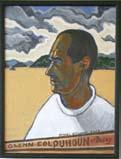
Essay by Glenn Colquhoun
Photography by Miles Hewton
Exhibition Design by Stephen Higginson
CD Catalogue Design by Johanna Burgess
First created in 2009 by Milford Galleries Dunedin
PO Box 1477, Dunedin 9054, NewZealand
Images © copyright Nigel Brown
Essay & Poetry © copyright Glenn Colquhoun
CD © copyright Milford Galleries Dunedin
The document and images contained on this CD are copyright. Apart from fair dealing for the purpose of private study, research, criticism, or review, as permitted under the Copyright Act, no part of the document and images contained on this CD may be reproduced by any process without the prior permission of the artist, author and Milford Galleries Dunedin.
Copyright © 2009
PREVIOUS NEXT
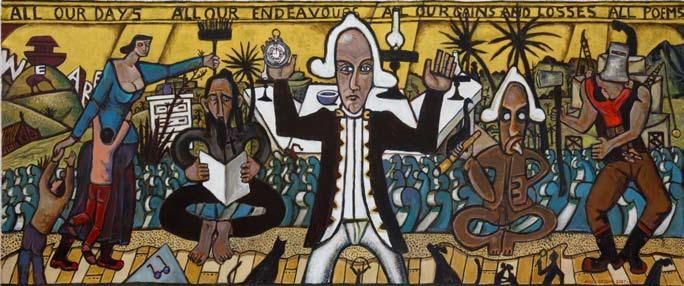
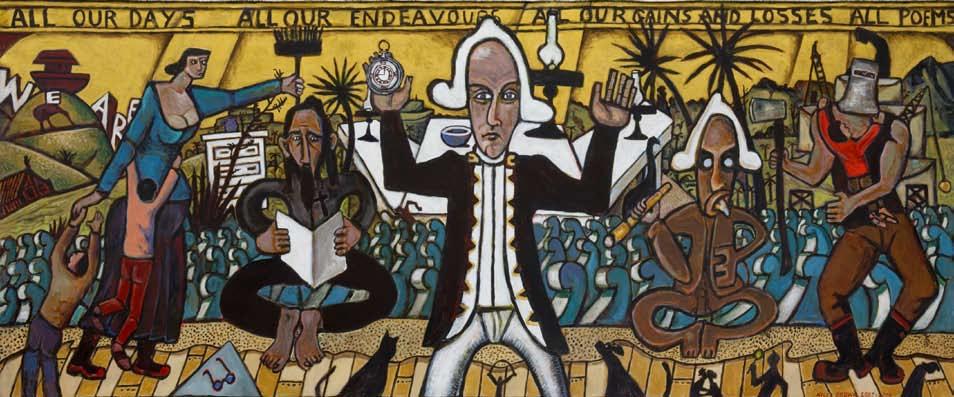
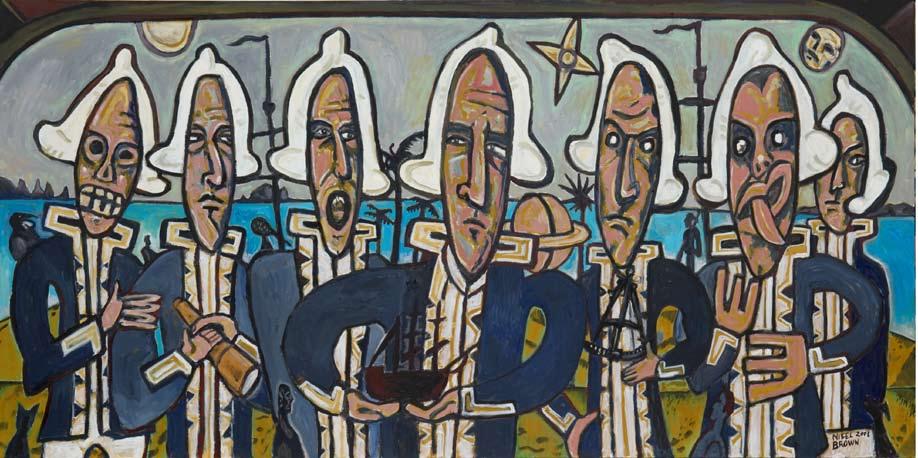
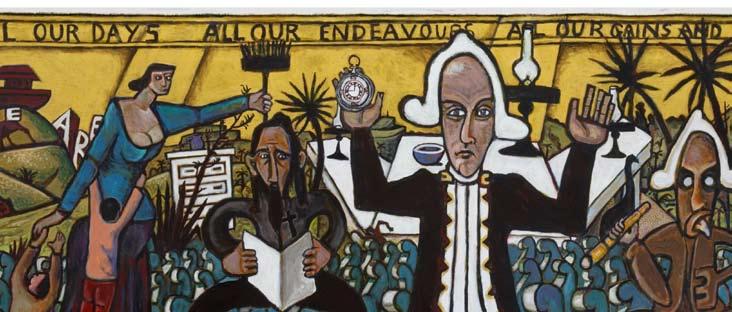
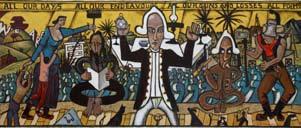
COVER IMAGE: ALL OUR DAYS (2007-2008), acrylic on unstretched linen, 1700 x 4000 mm
1. Cover
3. Title
4. Acknowledgements
5. Contents
6. Nigel Brown ‘All Our Days’ Essay by Glenn Colquhoun
13. List of Works
• All Our Days
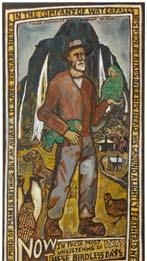
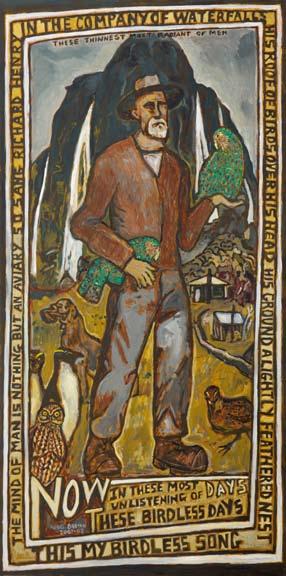
• Birdless Days (Richard Henry)
Larger Version
• Cook Aotearoa
• Cook At The Sharp End
• Cook Hei-Aha-Ha
• Cook In Aotearoa
• Cook NZ
• Cook On New Land
• Cook Paua Eyes
• Cook Seven Times
148. Artist Statement
• Cook Tiki
• Cook Tiki As Anchor
• Cook Tiki With Ponga
• Cook Triptych A
• Cook Triptych B
• Delight In Difference
• Division Of Meaning
• Dusky Sound
• Hadley Octant
• Having Met You James
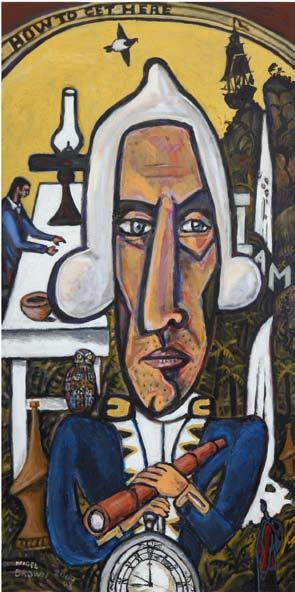
• How To Get Here
• Nigel Brown CV & Selected Exhibition History
• Poetry by Glenn Colquhoun
• Painting by Glenn Colquhoun
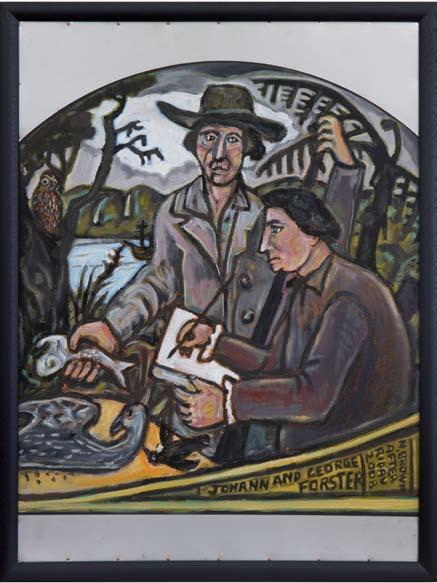
• Johann And George Forster (After Rigan)
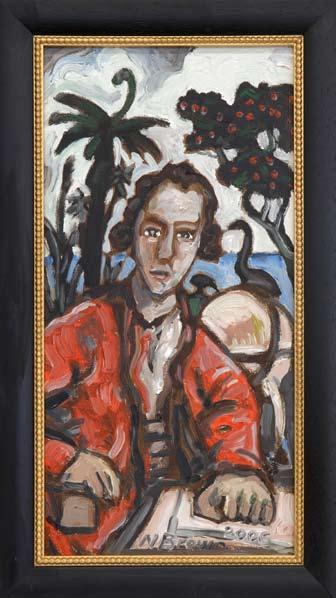
• Joseph Banks (After Joshua Reynolds)
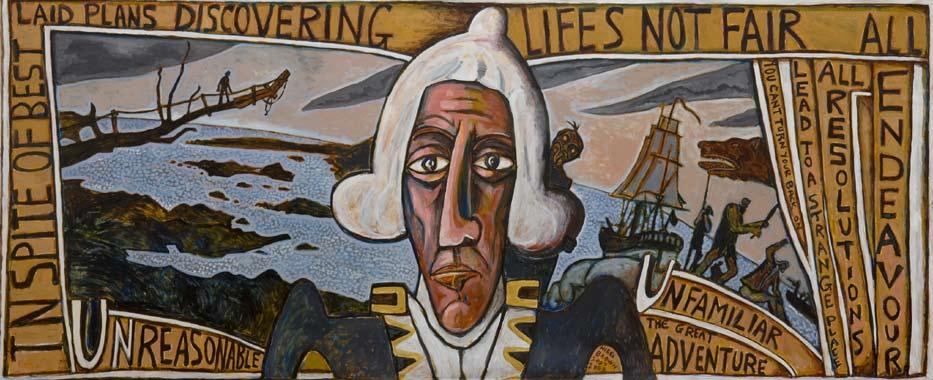
• Life’s Not Fair
• Madonna Mountain
• Marriage Of Convenience
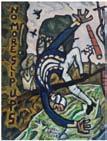
• No More Slip Ups! (Cook At Dusky)
• Once If Your Curiosity Continued Insatiable
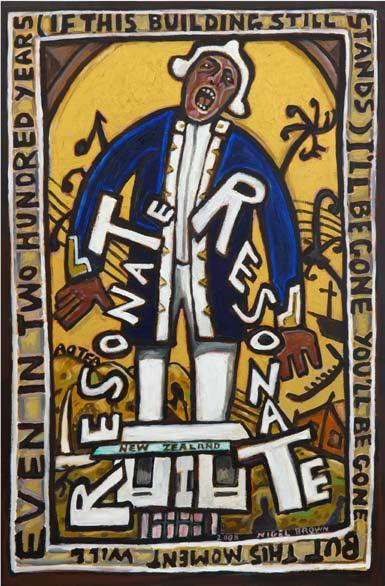
• Resonate
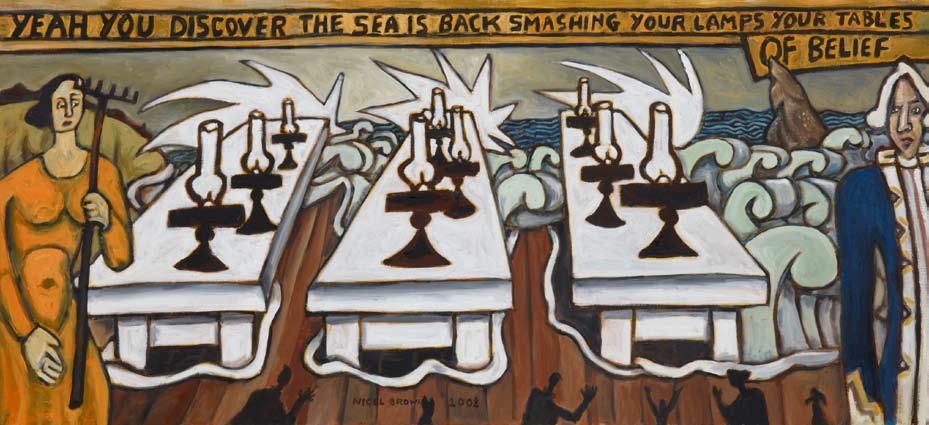
• The Sea Is Back
• Who’s Who
160. Back Cover You can click on the hyperlinked text and arrow buttons to navigate throughout this document.
Nigel Brown makes me want to paint - the way Bob Dylan makes me want to sing or Jessie Ryder makes me want to hit a cricket ball. Every canvas spills. Whenever I look at a painting I want to pick up a brush and get messy straightaway. It feels as though the kids next door have asked me to play. You don’t have to be able to hold a straight line or mix a subtle colour.You just have to feel and feel and feel and feel. Anyone can have a crack. It is not important to reproduce faithfully. It is enough to suggest, lay down colour and image rough enough to get the gist. The best paintings invite conversation, drawling laconically around the fire at night talking hyperbole - but it’s good hyperbole - and everyone is welcome and no one talks too flash.
Their stories are found in the way their images sit together. In lots of ways though they are not really images - they are a language. Really they are words. Nigel Brown places them in relation to each other as if he was writing a poem. I think of him most accurately as a great white Tuwhare. He has been collecting motifs for a lifetime, dragging them behind him like tin cans tied to a wedding car: dogs, cats, arks, ponga, men, women, birds, Jim Baxter, James Cook and Ned Kelly. By now he hasn’t got a hope of shutting them up. What matters is that they always mean more than simply what they look like. When he paints he really writes – just prettier.
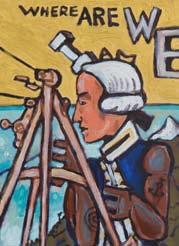
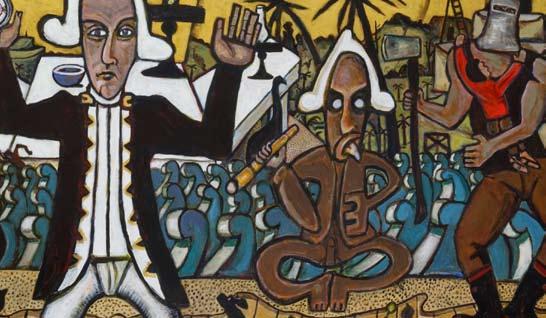
And they are all part of a game. Paintings are flat – usually. They have tricks to make them look deeper than they are, shading, perspective, other stuff I don’t know about. Having an image with a history, a reference to another painting, landscape, person, or situation is another way of doing it I suppose. There are whole books’ worth of thinking in some of Nigel Brown’s images and they can’t help but fatten any painting. But that’s not why he does it.
New Zealand is a young country - it is our landscape that is old; immense and varied, lush, harsh, fecund and grotesque. There is a gap between our collective grip and the old fish and I suppose we are always trying to love her enough, feel the same sense of enduring. Myths are a way of bringing her down to size, or more
importantly, inflating ourselves till we are on the same scale as the sky and sea and land. Icons do this. They pack heaps of meaning into an image – make it more than it is, give us a sense of something before us and beyond us to worship. Myths are cultural mountains and our offerings to the real thing. But I don’t think this is why Nigel Brown makes them either.
Writing doesn’t so much make other people think. It makes you think yourself. And Nigel Brown’s paintings think aloud. They are a working out and because Nigel Brown is one of us and concerned with the same things we are concerned with they are part of our own working out as well. If we are in free space – and most of the time it feels as though we are – then points of reference are essential and if there aren’t many around because, for Pakeha at least, we are a young culture, or the old ones have lost their power, then imbuing what is right in front of us with permanence is as good a choice as any. More than this it says that the act of creation is the permanence and solid ground we seek. If we deem it so, it is. Beyond this it is compassionate and democratic and humble to see significance in the ordinary.
When I was a child I used to follow my father to work in the holidays. He was a builder and every day I arrived on the building site I would be introduced to a heady jungle of half-finished framing, four by twos and freshly poured concrete - but that was only half the attraction. Peopling that mad forest would be a strange menagerie of slightly skewed characters; my father, his brothers, my cousin Les, Vic the bricklayer, Jeff the plumber, Uncle Tom and Gav his younger brother who blew things up on occasion. From every imaginary tree in their bush - a doorframe or windowsill or top plate perhaps - would flow a constant stream of twitter - all of it a magnificent teasing, a pungent hybrid of boast, set-up and coup de grace. The whole site seemed at times like a barnyard of cocks crowing. ‘Belly idiots,’ my grandfather would opine when he came to help pour the floors, shouting over the rhythmic grind of the concrete mixer for me to ‘lay-off with the wet stuff,’ reminding me that ‘water is the enemy of cement’. The way they talked was funny and what they said was clever. They would use irony and understatement and metaphor to make a point, prick bubbles, entertain and pass the time of day. They would say something by not saying it or by overstating it or by turning it upside down. They would compare a character to what they are most obviously not, pretend the dead were alive, deliberately mix up associations and generally tutu with the whole world order. Lines would fly back and forth between them at speed generating new retorts, scaffolds, bends in the language and laughter at whoever was being pilloried.
It was a piss-take but it was also a way of saying that sometimes there are no particular rules in a given situation apart from the ones you come up with - everything has a connection if you can find the link and make it with charm.The disparate are especially related. It was deeply subversive. It meant nothing and everything at the same time but they’d look at me blankly if I told them any of this now. ‘He’s deep,’ one’d say, nailing up the fascia. ‘Hope he drowns,’ would come the reply from whoever was digging the drain.
People think that nothing happens when fathers speak like this. It’s rubbish talk - he korero noa iho. But you can get away with a lot of what you really think if you pretend you’re joking. It is almost an art in itself and a response to the great silence, and democratic at its core. Everyone is worthy of the same derision with whatever you can get your hands on. Those men held a tone and tone it seems many years later listening to Nigel Brown’s paintings is as important as what is being said. Teasing is not just teasing. It is a very New Zealand dialectic. Nigel Brown’s paintings tease – almost as much as the man himself. They are part of a game. They are part of a very serious game. This is how it works for me. We have the same fathers.
The first time I saw a picture of Captain Cook was on a card in a Weet-Bix packet. It was the first place I saw Maori for that matter. I was a child. In the New Zealand of that time perhaps both were considered exotic. Over the next thirty years Maori broke out of the cardboard box but somehow Captain Cook seemed to remain a lantern-jawed relic, interesting for all that but long since dead, that was, until the resurrection.
I will never forget staring at ‘Second paradise: Opoutama, Tolaga Bay,’ many years later. I’m not even sure where I was at the time. It was one of the first Nigel Brown paintings I had seen and I felt like pounding the air with a fist when I did. Captain Cook had risen from the dead. In that painting the explorer is lying back on the grass taking it easy. Tolaga Bay spreads behind him. It didn’t feel like an old representation of the sextant-eyed sailor staring into the distance but was much more immediate, as though he was wandering around the place in the present tense and had just decided to stretch out at the beach. He was on holiday, the past made present and dwelling among us. As quick as that, the association was made. Cook was one of us, an ancestor, a reference point, the quintessential Pakeha caught exquisitely between debunking mythologies and creating enlightenment only to see his spirituality thin out and disappear behind him. He was our presence, our ghost. Nigel Brown was teasing, pulling Cook’s leg and ours, saying something profound with a well aimed nudge in the ribs.
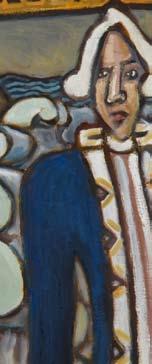
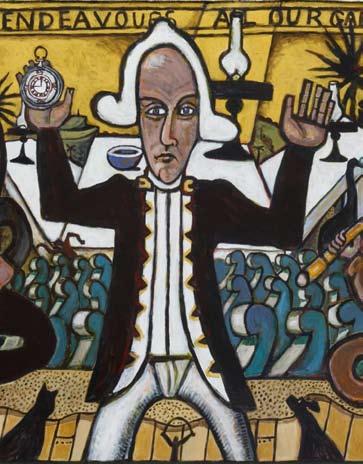
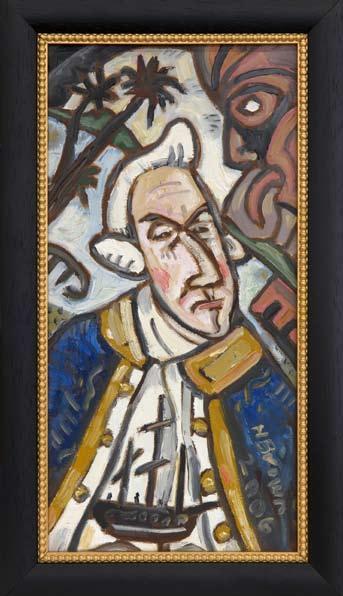
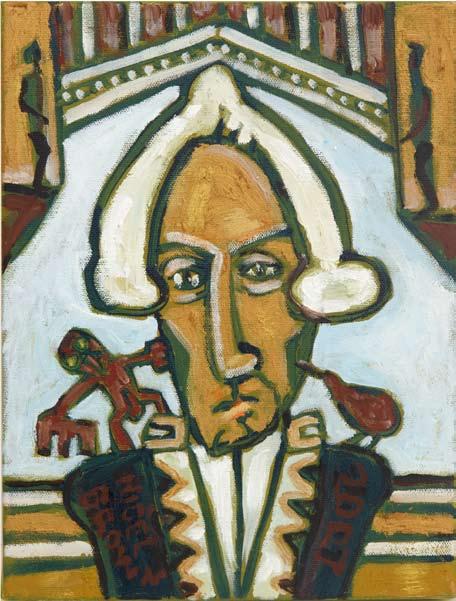
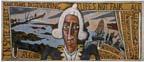
Nigel Brown’s first exhibition exploring Cook as an image in his painting took place seventeen years ago. In that time Cook himself has been colonized by Brown: Cook as ancestor, Cook as explorer, Cook the technocrat, Cook as Pakeha have all been points along the way. In this current working-over, however, a more doubtful Cook emerges. In the painting ‘Life’s Not Fair’ he is troubled and beset. A tiki looks over his shoulder; the hound on his bowsprit snarls a threat. The writing around the frame reads his mind, or warns him perhaps: ‘In spite of best laid plans / Discovering life’s not fair / All endeavours all resolutions lead to a strange place you can’t turn your back on.’
This is a comment on Cook’s life and death, his fall a consequence of his rise. Not only was the Polynesia he explored the means of his death but the seeds of that death were sown in his brave but
ultimately flawed attempts at reconciling exactly who discovered whom in the end. But because Cook is also an icon for Pakeha it is also a comment on Pakeha colonization of Maori and the New Zealand landscape. Pakeha may have made deep inroads into what has seemed a ‘new’ land but it was never ‘new’ and now that our spear has penetrated to the heart of it, the deep power of both Maori and the land have absorbed the insult and are now impacting on us. Much of our spirituality was left at the entry wound and now that which we do draw on is often in the hands of those we have come to enlighten. The path back is obliterated; the way forward is, in part, the assimilation we sought to impose.
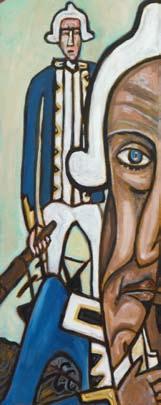
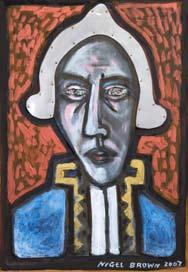
In lots of ways, though, doubt is not a bad thing. Doubt and guilt are Pakeha taonga. Doubt can save us. It contains possibility and is uncomfortable and drives us to more solid ground. Perhaps we are ready to be sadder but wiser at last. Our spirituality demands humility, and humility demands an awareness of our shortcomings and wrong turns. Doubt falls on us like fresh rain after years of arrogant, bleaching sun. It is not a tragedy that Cook doubts; perhaps there is some hubris in it but mostly it’s a relief.
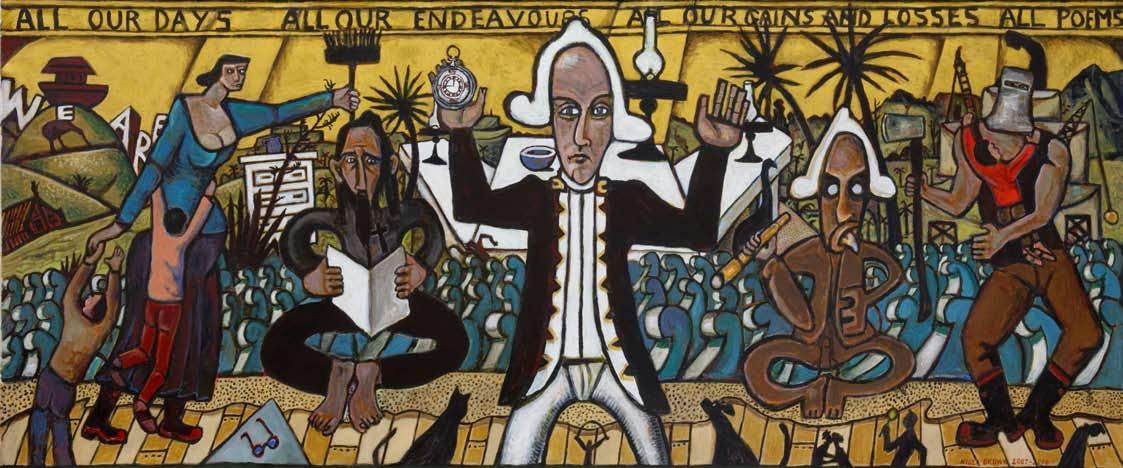
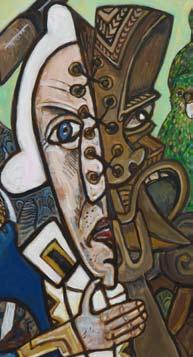
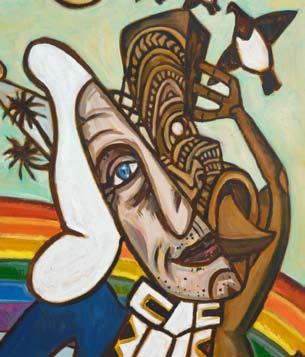
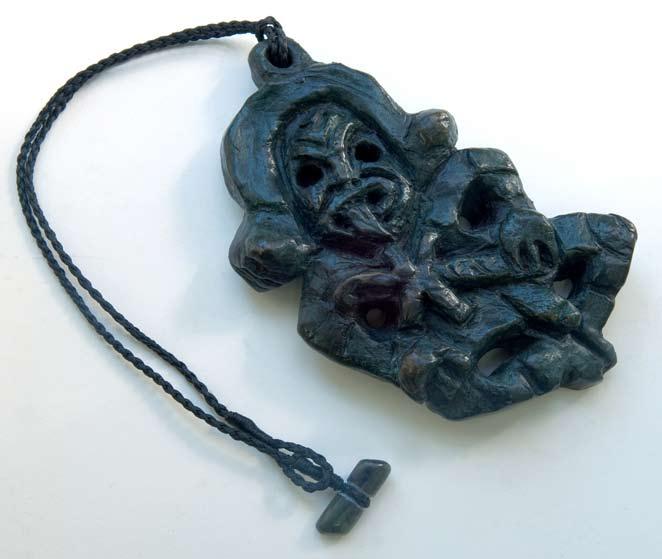
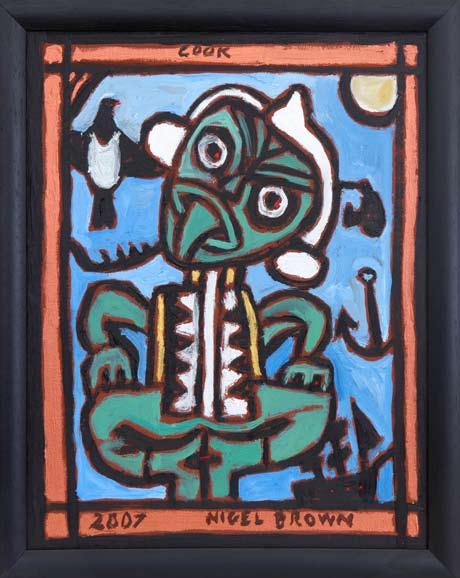
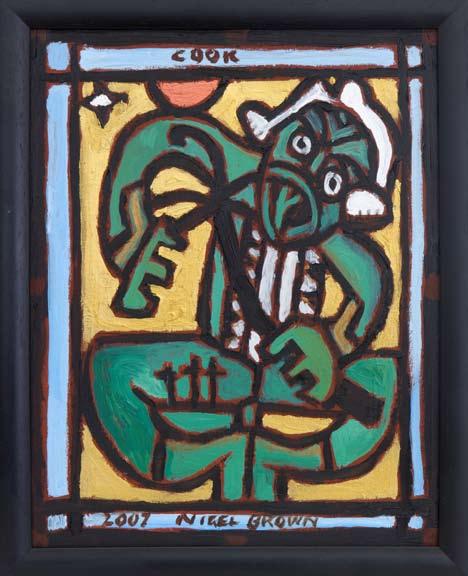
The transformation that Cook makes at the end of Nigel Brown’s brush can be further seen as the explorer himself becomes part of a wider New Zealand society in ‘All Our Days,’ holding court in our consciousness along with all that has shaped our landscape, our arts and our culture. It is even more dramatically evident though in the transformation of Cook into a Maori figure.
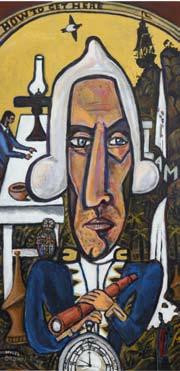
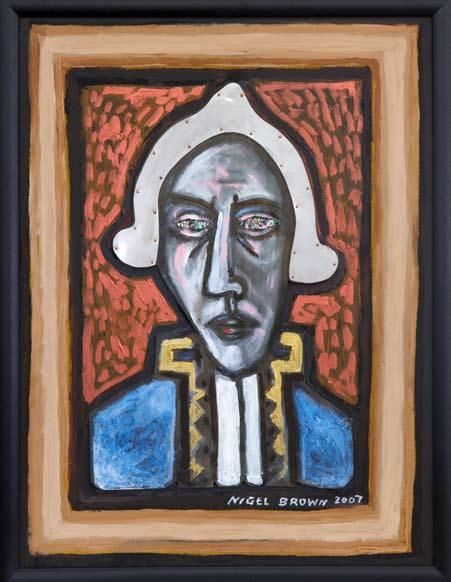
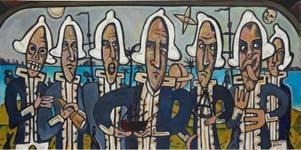
He is being colonized at the same time Pakeha are being colonized by resurgent and creative Maori. Perhaps Brown is also hinting that along with being a Pakeha ancestor Cook may be a Maori one as well. This is in part because Pakeha have well and truly mixed their bloodlines with Maori, making it literally accurate but also I suspect it resonates because as Pakeha and Maori have bashed up against each other on the cultural coastline they have been shaped by each other and their reaction to each other. Their struggle is incorporated into the way they see themselves and Cook and what he represents is at the core of that process for Maori, like it or not.
In ‘All Our Days’ it seems to me that Nigel Brown is reflecting on a great turning of the tables. Captain Cook the discoverer is being discovered. The process of exploration has led him in turn to be appraised and seen through the eyes of the other. For the best part of the last twenty years the old master has been on a fourth great voyage at the hands of another old master and this time he is the landscape encountered. It seems to me that Cook’s journey is also a Pakeha journey. It is an exquisite tease, the message sold with a nod and a wink by hunters in the Urewera and by builders in South Auckland, their tongues held firmly in cheek – or poked out of it as the case may be.

All Our Days (2007-2008), acrylic on unstretched linen, 1700 x 4000 mm
Birdless Days (Richard Henry) Larger Version (2007-2008), oil on board, frame 2445 x 1245 mm
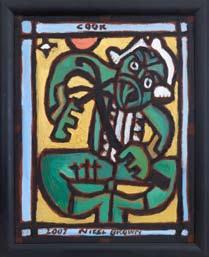
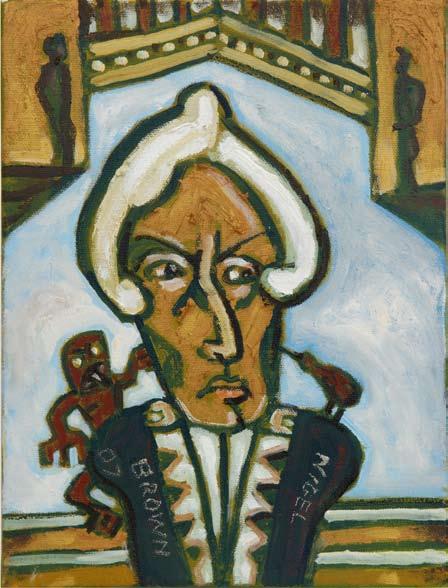
Cook Aotearoa (2007), oil on canvas, frame 347 x 277 mm
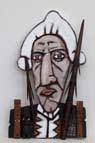
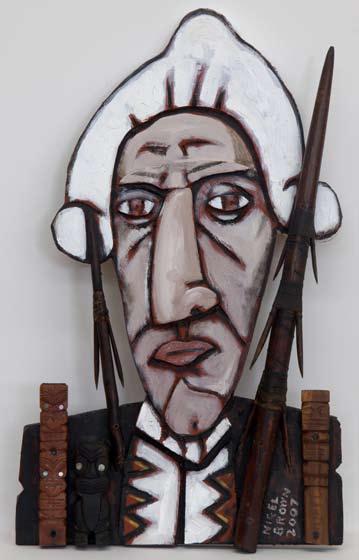
Cook At The Sharp End (2007), found objects & oil on plywood cutout, 725 x 430 x 87 mm

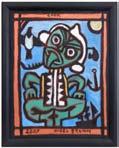
Cook Tiki (2007), cast bronze, edition of six, 180 x 120 x 30 mm
Cook Tiki As Anchor (2007), oil & acrylic on canvas, frame 500 x 401 mm
Cook Tiki With Ponga (2007), oil & acrylic on canvas, frame 500 x 400 mm
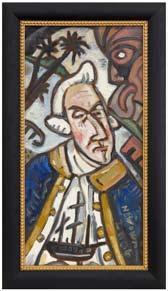
Cook Hei-Aha-Ha (2008), acrylic, woodblock & stainless steel on plywood, frame 1265 x 844 mm
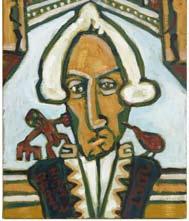
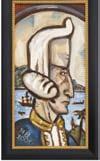
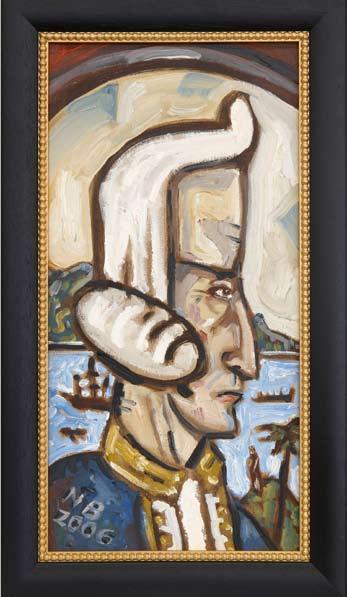
Cook In Aotearoa (2006), oil on canvas, frame 463 x 264 mm
Cook NZ (2007), oil on canvas, frame 348 x 277 mm
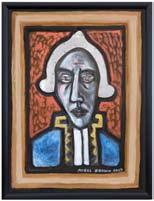
Cook On New Land (2006), oil on canvas, frame 462 x 263 mm
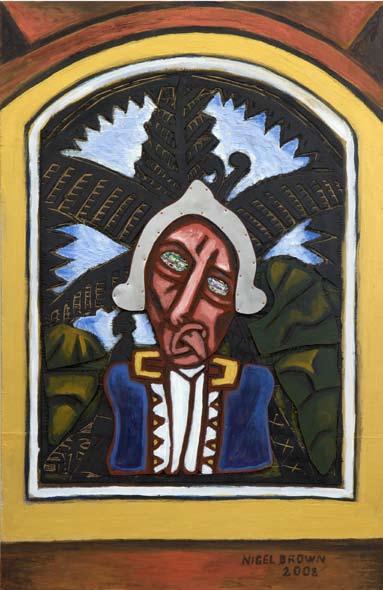
Cook Paua Eyes (2008), acrylic, stainless steel, Paua & Kauri plywood on board, frame 837 x 643 mm
Cook Seven Times (2008), oil on board, frame 1243 x 2450 mm
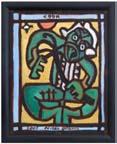


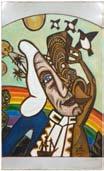
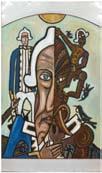
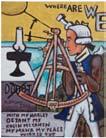
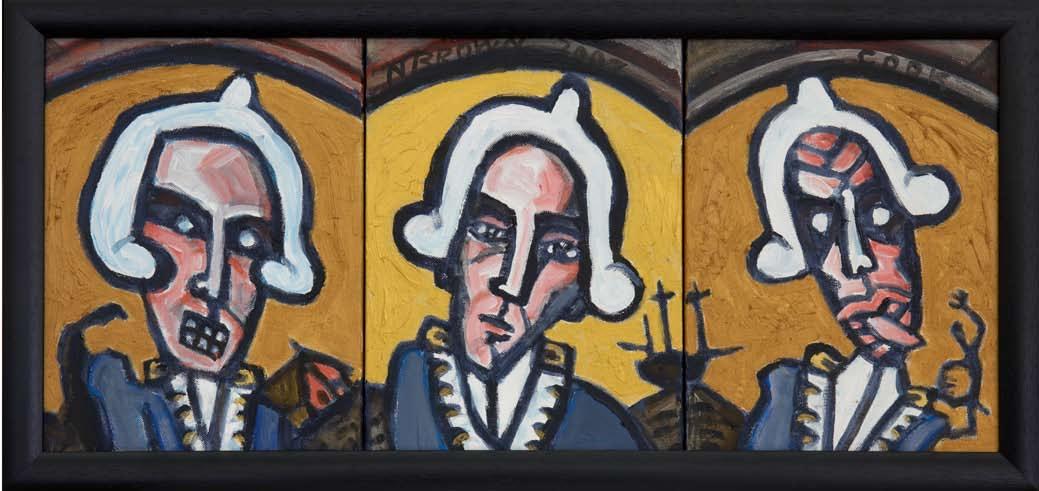
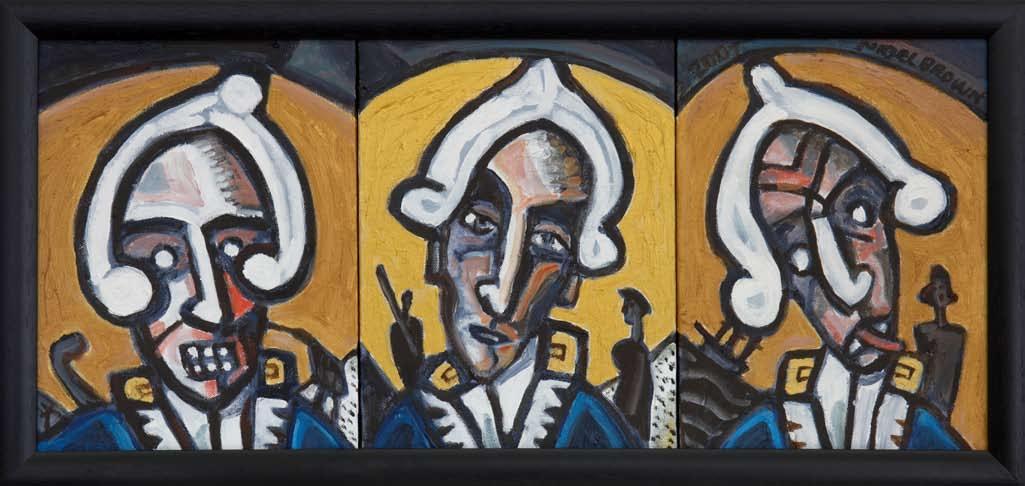
Cook Triptych A (2007), oil & acrylic on canvas, frame 346 x 729 mm
Cook Triptych B (2007), oil & acrylic on canvas, frame 346 x 728 mm
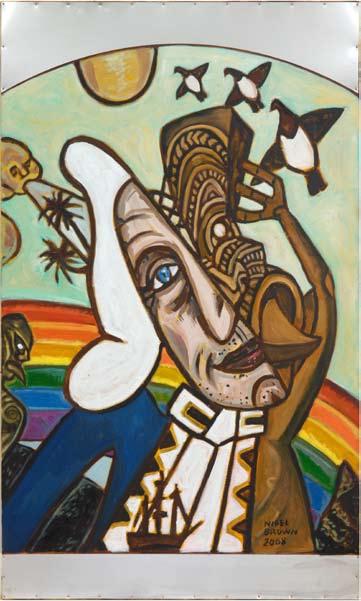
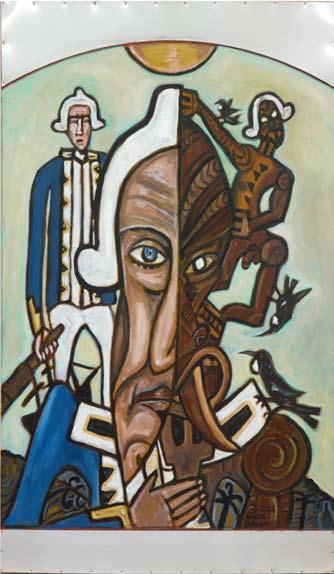
Delight In Difference (2008), oil & stainless steel on linen, frame 1400 x 850 mm
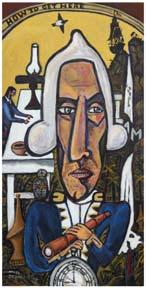
Division Of Meaning (2008), oil & stainless steel on linen, frame 1397 x 850 mm
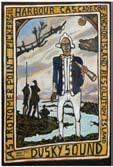
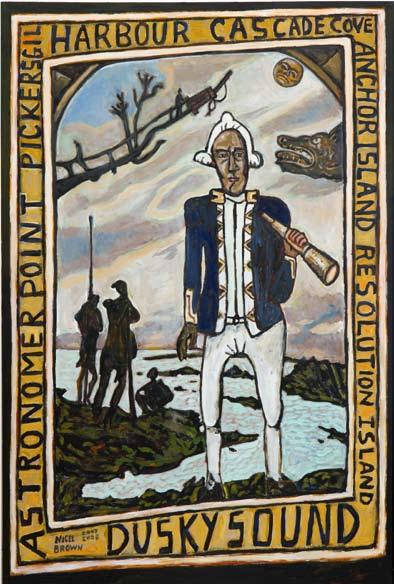
Dusky Sound (2007-2008), oil on board, frame 1846 x 1245 mm
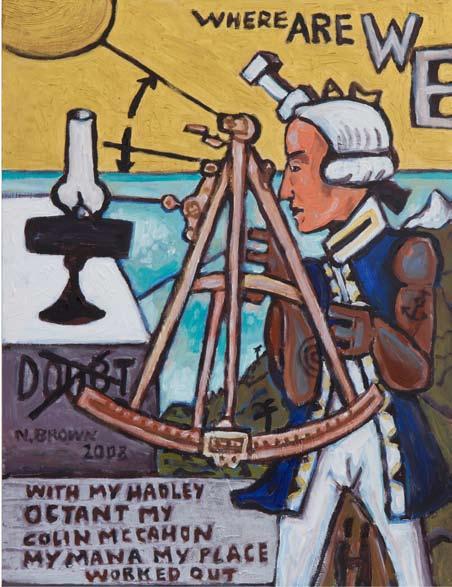
Hadley Octant (2008), acrylic on board, frame 838 x 643 mm
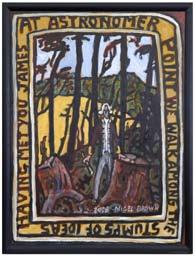
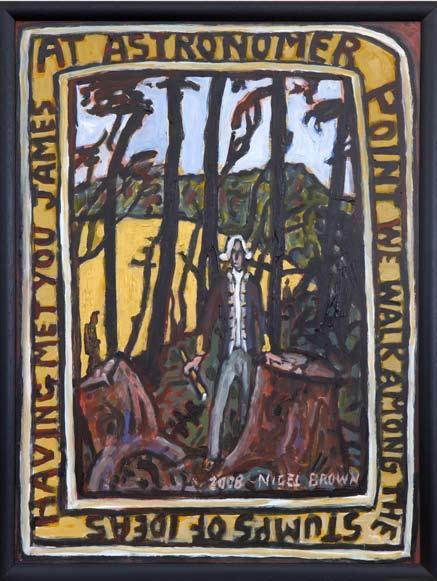
Having Met You James (2008), acrylic on board, frame 841 x 643 mm
How To Get Here (2007-2008), acrylic on canvas, frame 1567 x 805 mm
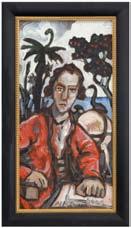
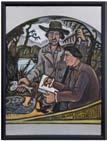

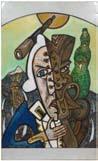
Johann and George Forster (After Rigan) (2008), oil & stainless steel on linen, frame 850 x 644 mm
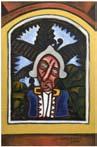
Joseph Banks (After Joshua Reynolds) (2006), oil on canvas, frame 462 x 263 mm
Life’s Not Fair (2007-2008), acrylic on unstretched linen, 1700 x 4000 mm
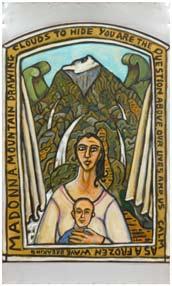
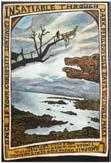

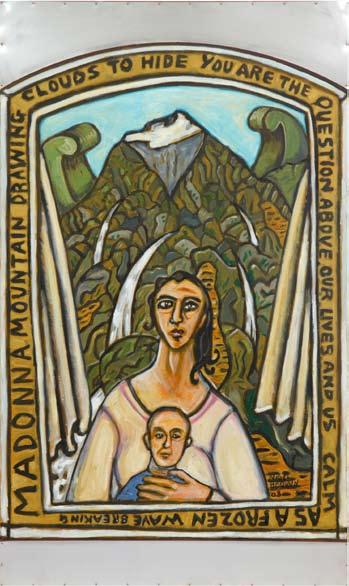
Madonna Mountain (2007-2008), oil & stainless steel on linen, frame 1399 x 850 mm
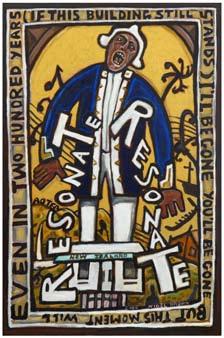
Marriage Of Convenience (2008), oil & stainless steel on linen, (Cook At Dusky) (2008), acrylic on board, frame 839 x 642 mm
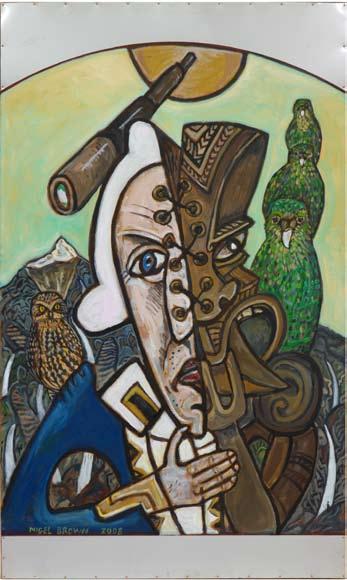
Once If Your Curiosity Continued Insatiable (2007-2008), oil on board, frame 1845 x 1243 mm oil & acrylic on plywood,
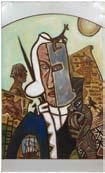
The Sea is Back (2008), oil & stainless steel on linen,

PREVIOUS
PREVIOUS


PREVIOUS

PREVIOUS

PREVIOUS


PREVIOUS

PREVIOUS

PREVIOUS

PREVIOUS




PREVIOUS

PREVIOUS

PREVIOUS





PREVIOUS






PREVIOUS


PREVIOUS


PREVIOUS


PREVIOUS


PREVIOUS


PREVIOUS


Click
PREVIOUS
PREVIOUS


PREVIOUS


PREVIOUS


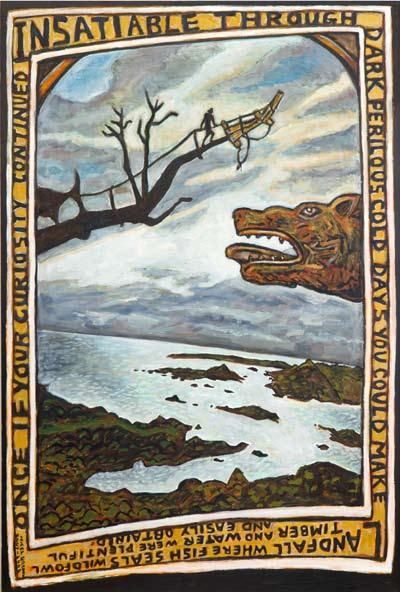


ONCE IF YOUR CURIOSITY CONTINUED INSATIABLE (2007-2008) oil on board, frame 1845 x 1243 mm
PREVIOUS NEXT WORK




PREVIOUS
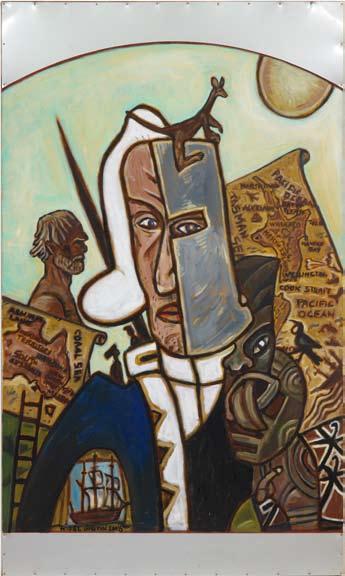


Artist Statement
This exhibition, whilst largely centred round Captain James Cook is in many ways not about the original historical figure at all. Cook becomes many things which he wasn’t! He is the motif, the personage on which to hang a debate, a poem, a raft of possibilities. Time is not confined.
The exhibition predates, in works like “All Our Days”, Life’s Not Fair” and “How to Get Here”, the Dusky Trip the artist did with other Artists and Poets on the Break Sea Girl in 2007, although the background in “Life’s Not Fair” was finalised after the trip, and the trip determines works like “Once If Your Curiosity Continued Insatiable” and “Birdless Days (Richard Henry)”. Other works like “Who’s Who” and “Marriage of Convenience” depend less on that journey.
My work on Cook dates back to the 1990’s beginning at Tologa Bay. This new body of work sees Cook becoming more Maori. That breaking down of the European aspects connects with a changing identity for New Zealand as part of the Pacific - an Aotearoa moving beyond its colonial beginnings well and truly. The land absorbs us and we become naturalised. All this implies a creative evolution. Conservation and gains and losses also feature. All our days are a question mark.
Nigel Brown Pahia, Southland, 2008
For details on any of the works or for further information please contact
Stephen Higginson
Director
Milford Galleries Dunedin
18 Dowling Street
Dunedin 9016
PO Box 1477
Dunedin 9054
New Zealand
ph: +64 3 477 8275
fax: +64 3 477 7727
mob: +64 27 432 8264
email: info@milfordhouse.co.nz web: www.milfordgalleries.co.nz
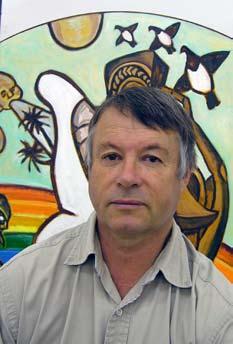
Nigel Brown has been a fulltime professional artist since 1978 and in that year was awarded his first QEII Arts Council Grant. He has produced a diverse body of work involving woodblocks, lithographs, medallions, stained glass and paintings.
He is openly acknowledged as New Zealand’s most significant narrative artist with numerous bodies of work having achieved legendary status and embodying defining aspects of the national character. He has worked across various art disciplines such as dance, music and literature. The use of words in his work is fundamental to the very nature of it.
Nigel Brown tells visual stories using history, character, cultural emblems and motifs. His works are political and purposeful with his painterly objectives varying from the didactic to social investigation and celebration. At the very heart of his work sits the individual and the relationships between male and female, between place and use, between gesture and meaning.
In 1998 he completed the magnificent stained glass window commission at Auckland Cathedral, Parnell. Two Survey exhibitions have toured the country with “Points Along the Way” (2000-2003) notable. A number of significant catalogues and books have been published on his work. In 2004 he was awarded the Order of New Zealand Merit for services to painting and printmaking. His work is represented in all public collections in New Zealand and widely distributed internationally.
Stephen Higginson
1. CV and list of exhibitions by Nigel Brown
2. Poetry by Glenn Colquhoun written in support of the ‘All Our Days’ exhibition
3. Image by Glenn Colquhoun in support of the ‘All Our Days’ exhibition
EDUCATION
1963-67 Tauranga Boys’ College
1968-71 Elam School of Fine Arts, University of Auckland (BFA) Tutors include McCahon and Ellis
EMPLOYMENT
1978 Full time artist career commences
SELECTED SOLO EXHIBITIONS
2009 All Our Days – Milford Galleries Dunedin The Haydn Lithos – Touring Papergraphica Exhibition – Launching at Futuna Chapel, Karori, Wellington
2008 Conversations – Milford Galleries Queenstown Lamp - Warwick Henderson Gallery, Auckland Antarctic Visions – Williams Gallery, Petone
2007 Gold Miner - Milford Galleries Dunedin Will To Meaning – Warwick Henderson Gallery, Auckland
2006 Worded Image - Warwick Henderson Gallery, Auckland Southern Odyssey Project Commission: Painting for Railway, Mossburn Hotel Iconic Way - Milford Galleries Queenstown Personage - Eastern Southland Gallery, Gore
2005 Yeah, Human - Warwick Henderson Gallery, Auckland Allegories - Tinakori Gallery, Wellington Russian Works - NZ Embassy, Moscow, Russia
2004 I Am IV - CoCA, Christchurch
Human Condition - Tinakori Gallery, Wellington Dance of the Origin - Milford Galleries Dunedin
2003 Points Along The Way - Aigantighe Art Gallery, Timaru I Am III - Warwick Henderson Gallery, Auckland Deco Echo - Statements Gallery, Napier
2002 Points Along the Way - Ashburton Art Gallery, Forester Gallery, Oamaru
I Am II - Tinakori Gallery, Wellington
This Human Place - Warwick Henderson Gallery, Auckland
2001 Points Along the Way - Pataka Porirua Museum of Arts and Culture
- Fisher Gallery, Auckland
- Sarjeant Gallery, Wanganui
I Am - Warwick Henderson Gallery, Auckland
2000 Points Along The Way - touring show by Milford Galleries Dunedin
Road Works - Statements Gallery, Napier
1999 Encounter and Discovery: Pacifica - Rotorua Museum of Art and History
1998 Inaugural member Artists to Antarctica
Antarctica - touring show Government House, Wellington & Auckland, Southland Museum and Art Gallery, Canterbury Museum
1996 Pacifica V Southland - Museum and Art Gallery, Invercargill
1993 Living Here Aotearoa - Aigantighe Art Gallery, Timaru
- Robert McDougall Art Gallery, Christchurch
Living Here Aotearoa - A Survey, Manawatu Art Gallery, Palmerston North
1988 1984 and After - Manawatu Art Gallery, Palmerston North
MAJOR GROUP EXHIBITIONS
2009 Southern Landscape - Milford Galleries Queenstown
Medallion Show - Remuera Gallery, Auckland
2008 Nine Artists in Fiordland - St Paul’s Cathedral (Caselburg Trust) Dunedin
Eden Arts Sketchbook Project: For Artists in Eden Day
Select - Old School, Puke Ariki, New Plymouth
56th Peace Art Exhibition - Tokyo Metropolitan Museum, Veno Japan
Sinfonia Antarctica - The New Dowse, Lower Hutt
Te Kauri Zealandia - Warkworth (2008-2009)
Guest Artist (With B. Brickell) NZ Academy of Fine Arts, Wellington
Artists to Save our Water - NG Gallery, Christchurch
Showcasing Southland Artists - Southland Museum and Art Gallery
Adornment - Medallion Group, Waiheke
2007 55th Peace Art Exhibition - Tokyo Metropolitan Museum, Veno Japan
Art for Conversation - Michael Fowler Centre / Government House, Wellington
2006 Driving Creek collaborative ceramic sculpture with Barry Brickell
2005 Everyday Moments - (with Cathy Helps), CoCA, Christchurch Russian Works - NZ Embassy, Moscow, Russia
A Russian Journey - Lithographs, Muka, Auckland
2003 Deco Echo - Statements Gallery, Napier
2002 Road Works - Statements Gallery, Napier
1998 Inaugural member Artists to Antarctica
1996 Murals for Auckland Town Hall Restoration Project and Green Peace
1994 Visiting Artist, Hawkes Bay Polytechnic
1987 1987 Print Series - City Gallery, Wellington
1985 Living in the Bomb Age - Dunedin Public Art Gallery
PRIZES & AWARDS
2005 Awarded a three week residency in Russia hosted by Stuart Prior, New Zealand’s ambassador in Moscow, and partially funded by private contributors in New Zealand
2004 ONZM for services to Painting and Print Making
1995 Finalist Visa Gold
1993 Artist in Residence, Wanganui Regional Polytechnic
1986 Awarded QEII Arts Council Grant
1981 Awarded QEII Arts Council Grant for travel to USA, UK & Europe
1978 Awarded QEII Arts Council Grant
MAJOR COMMISSIONS
2009 “The Haydn Lithos”, printed by Papergraphica, Christchurch. Commissioned by Chamber Music NZ in association with NZ String Quartet (performance) and Sara Brodie (video included in the performance). Performance touring New Zealand, 2009
1991 Stained glass window commission, St Mary’s Catholic Church, Auckland
1998 Stained glass window commission, Auckland Anglican Trinity Cathedral, Parnell, Auckland
Southern Odyssey Project Commission, Painting for Railway, Mossburn Hotel
COLLECTIONS
Public Hocken Library Dunedin
Alexander Turnbull Library
Auckland Art Gallery
Sarjeant Gallery
Robert McDougall Art gallery
Te Papa Tongarewa
Manawatu Art gallery
Dowse Art Museum
Waikato Museum of Art & History
Lincoln College
University of Auckland
University of Otago
Chartwell Trust Collection
Aigantighe Art gallery
Creative NZ
University of Canterbury
Porirua Court
Massey University
University of Waikato
Gisborne Museum & Arts Centre
The Rutherford Collection
Anderson Park Art Gallery
Christchurch City Council
Ministry Of External Relations and Trade
The Suter
Hawkes Bay Polytechnic
Private ANZ Bank
BNZ
Fletcher Challenge
Bank of NZ
Bromhead Design
Centra Hotel
Russell McVeagh
Simpson Grierson
Fletcher Challenge Petroleum
Natural Gas Corporation
PricewaterhouseCoopers Westpac Trust
Buddle Findlay
NZ Insurance
Tower Corporation
AMP
Millennium Hotels
SELECTED BIBLIOGRAPHY
2009 The Christian Symbolism of Nigel Brown, Alastair Lane, Stimulus, Vol 17, Issue 1, February 2009
The Brown Years, exhibition catalogue, Tauranga Art Gallery. Catalogue essay by Penny Jackson
2008 Shadows of McCahon and More, Adam Gifford, Herald, October 11, 2008
Nine Artists in Fiordland, Mark Orton - A DVD of Break Sea Girl Trip
Kim Hill Interview, Radio NZ, 19 April 2008
The Real Art Show (Promotional pack for touring show)
Talk Talk, Finlay McDonald, Free Air, Recorded June 2008
The Painted Garden in NZ Art, Christopher Johnstone, published by Random House NZ, 2008
NZ Portraits, Richard Wolfe, Penguin 2008
The Expressive Forest, Dennis Trussell, Brick Row Publishing, Auckland, 2008
Cover of Bravado, Issue 14, 2008, K.M. (Included Katherine Mansfield Conference Paper by P. Jackson, London)
Te Ara, the Encyclopaedia of NZ, Online, Ministry of Culture and Heritage
2007 Vulnerable Stuff, Michael Fallow, Southland Times, 2007
No Nukes is Good Nukes, CD by C.P. Eyley, 2007
Clairmont, Sunday Programme, 4/11/2007, TV1 Footage and interview
Will To Meaning, Catalogue 2007, W.H. Gallery, Auckland. Note by B. Brickell
2004 Dance of the Origin, DVD material (unedited) of Milford Galleries Dunedin exhibition, 2004, (TV1 coverage, rehearsal, paintings)
1991 Nigel Brown, G O’Brien, published by Random Century
Written in support of the ‘All Our Days’ exhibition
ON FIRST MAKING LANDFALL IN AOTEAROA CAPTAIN COOK COMPOSES A MOTEATEA
The albatross at sea weeps salt. HERE RISES! THERE FALLS! Now pitches! Now soars!
HEI RUNGA! HEI RARO! HI-HAA! HI-HAA!
Is there nowhere still?
When I was a child my father bent me to the plough. The sea begged numbers – counted me a steady hand. Where the ice assumed the land I heard the earth crack all around.
At That-place-the-sea-breeds-mountains, my ship, a threadbare pair of shoes, climbed all.
Even here, the land lifts, breaks.
LIFTS! BREAKS! I am discovered. Not the compass, not the King; neither canvas nor the green drives me. IT IS THE HEART! LIFTING! BREAKING! It is the heart! LIFTING! BREAKING! LIFTING! BREAKING!
A SAVAGE RESPONSE TO THE EXPLORER, JAMES COOK, OR SHANTY OF THE UNKNOWN WARRIOR
YO! HO! HO!
YO! HO! HO!
Fish or devil, I don’t know. Cargo, rum and Holy Ghost!
You look like you’ve seen a coast!
HEI-AHA!
HEI-AHA!
Captain, you have come too far. Now’s the hour. Please push off!
TINI NGA KUKI
KINO TE broth!
Sixteen months upon the foam, HIKOI lightly when in Rome.
I KITEA KOE?
I KITEA AU?
What about the quid pro quo?
YO! HO! HO!
YO! HO! HO!
KEI TAKA KOE if you don’t go.
QUARDLE-OODLE-ARDLE, dear, Only birds walk upright here!
Painting by Glenn Colquhoun
Created in support of the ‘All Our Days’ exhibition
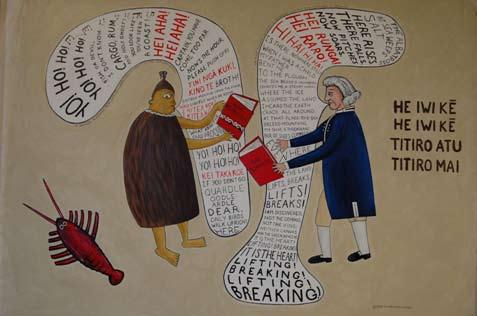
BACK COVER IMAGE: ALL OUR DAYS (2007-2008), acrylic on unstretched linen, 1700 x 4000 mm
PREVIOUS NEXT CONTENTS