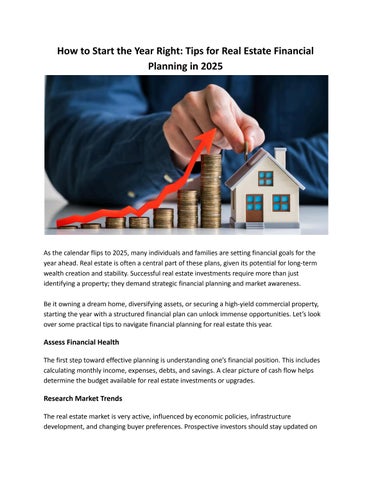
How to Start the Year Right: Tips for Real Estate Financial Planning in 2025

As the calendar flips to 2025, many individuals and families are setting financial goals for the year ahead. Real estate is often a central part of these plans, given its potential for long-term wealth creation and stability. Successful real estate investments require more than just identifying a property; they demand strategic financial planning and market awareness.
Be it owning a dream home, diversifying assets, or securing a high-yield commercial property, starting the year with a structured financial plan can unlock immense opportunities. Let’s look over some practical tips to navigate financial planning for real estate this year.
Assess Financial Health
The first step toward effective planning is understanding one’s financial position. This includes calculating monthly income, expenses, debts, and savings. A clear picture of cash flow helps determine the budget available for real estate investments or upgrades.
Research Market Trends
The real estate market is very active, influenced by economic policies, infrastructure development, and changing buyer preferences. Prospective investors should stay updated on
market trends, such as investing in rapidly growing areas like Rohini. As the area is gaining traction as an emerging hub, particularly with upcoming highstreet commercial projects in Rohini like Migsun Rohini Central, it promises many advantages.
Set Clear Goals
Real estate goals should align with personal and professional aspirations. No matter if you’re buying a home, investing in a commercial property, or creating rental income, clarity is very crucial. So, if you’re looking for business opportunities, then you should explore properties that offer high footfall potential and are designed to attract diverse audiences.
Create a Realistic Budget
Once the goals are clear, drafting a budget becomes the next priority. Consider factors like property cost, stamp duty, registration fees, and potential renovation expenses. For those interested in Migsun Rohini Central, it is good to review the Migsun Rohini Central price list to understand the investment scope and plan finances accordingly.
Explore Financing Options
Most real estate purchases require external financing. Understanding the various loan options available, such as home loans or commercial property loans, is critical. Comparing interest rates, repayment terms, and prepayment options can help you select the most suitable loan product.
Factor in Long-Term Costs
Real estate investments often come with recurring expenses like maintenance fees, property taxes, and utility costs. These costs should be accounted for in the financial plan to avoid surprises later. For commercial properties, analysing the rental yield and occupancy potential is equally important.
Diversify Investments
While real estate is a stable investment option, diversification is key to mitigating risks. Investors can balance their portfolios by including other asset classes like mutual funds, stocks, or fixed deposits alongside property investments.
Plan for Uncertainties
The unpredictable nature of markets and personal circumstances necessitates an emergency fund. A reserve covering at least six months’ worth of expenses can provide a safety net during unforeseen situations like job loss or medical emergencies.
Monitor and Review Progress
Financial planning is not a one-time task but an ongoing process. Regularly reviewing the progress of real estate investments and financial goals helps identify gaps and make adjustments as needed. Keeping an eye on property appreciation trends can guide future investment decisions.
2025 offers fresh opportunities for everyone looking to secure their financial future through real estate. By implementing strategic financial planning, potential buyers can tap into such opportunities while ensuring financial stability.