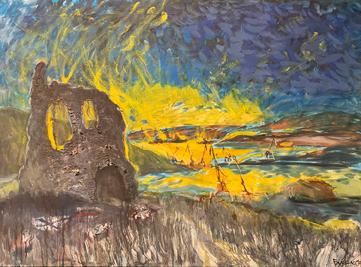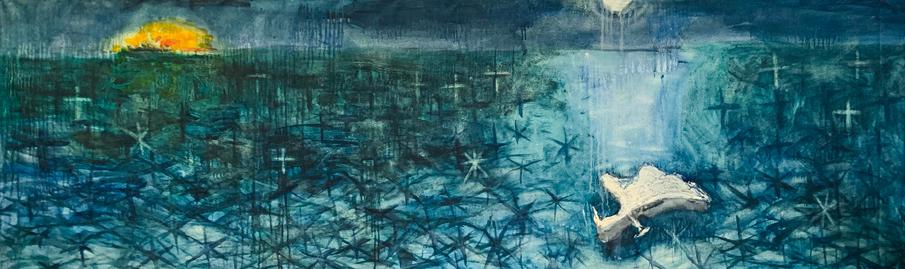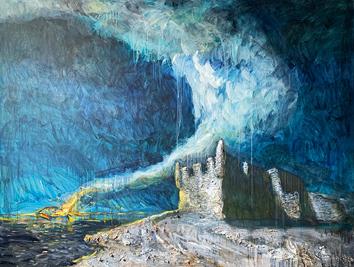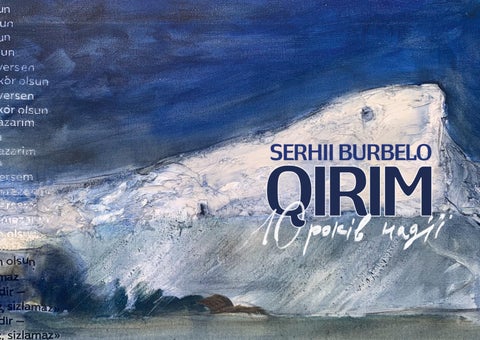
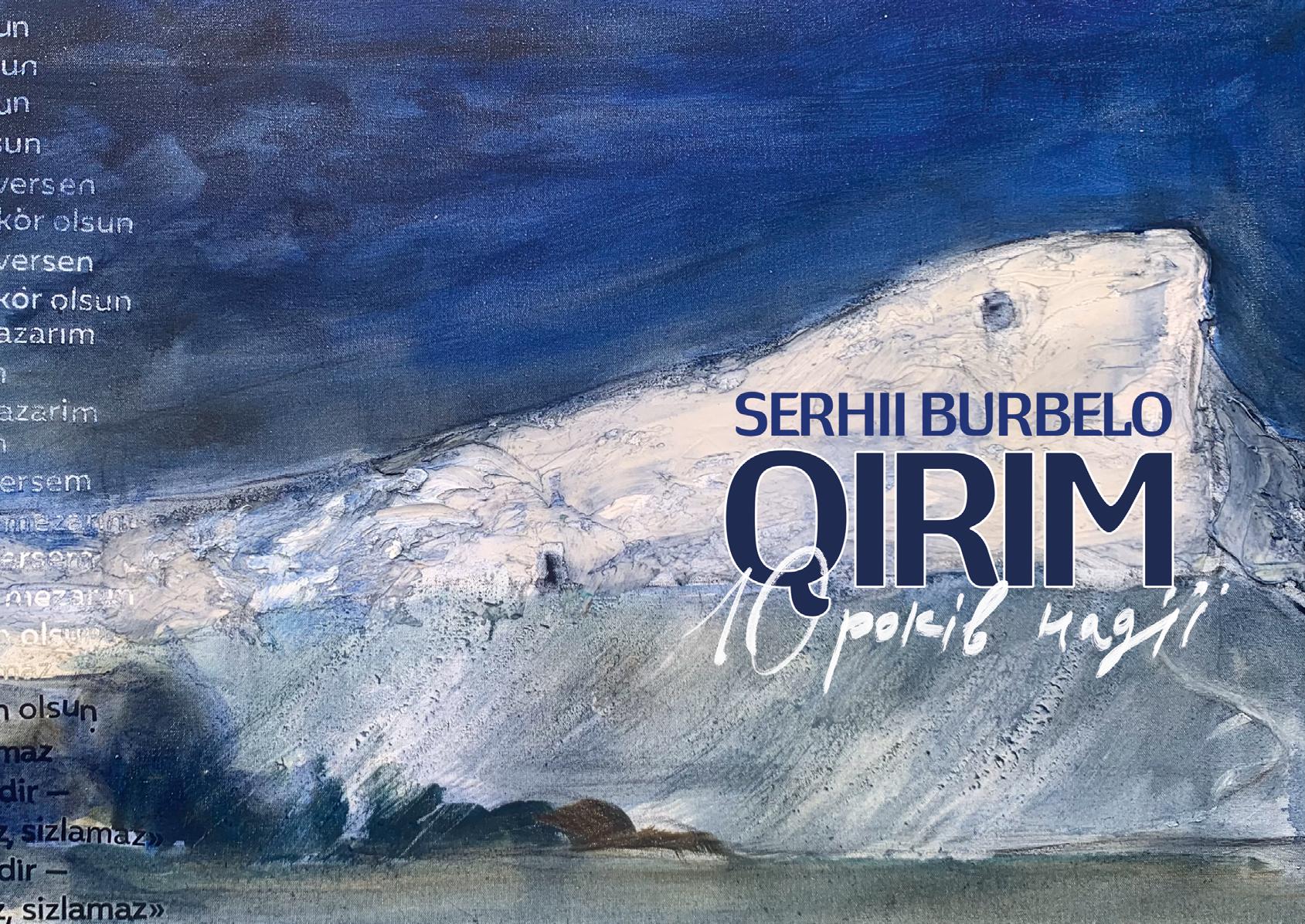

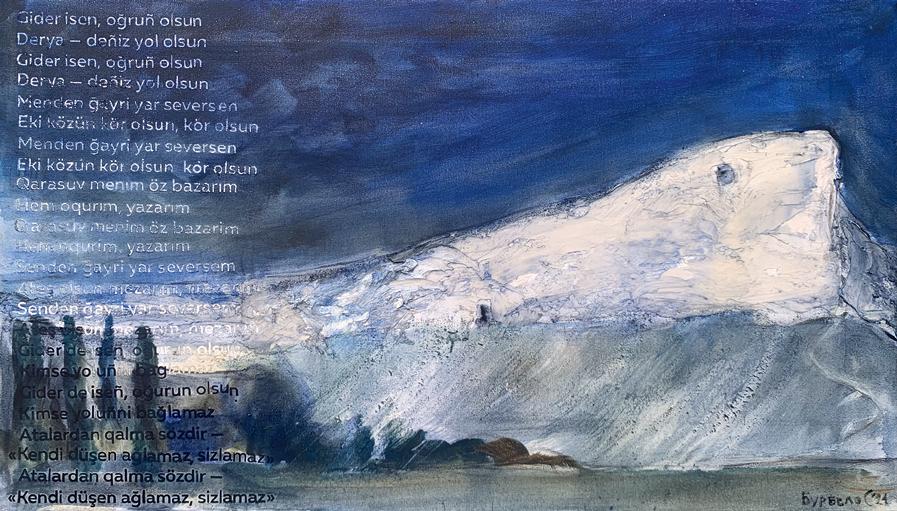
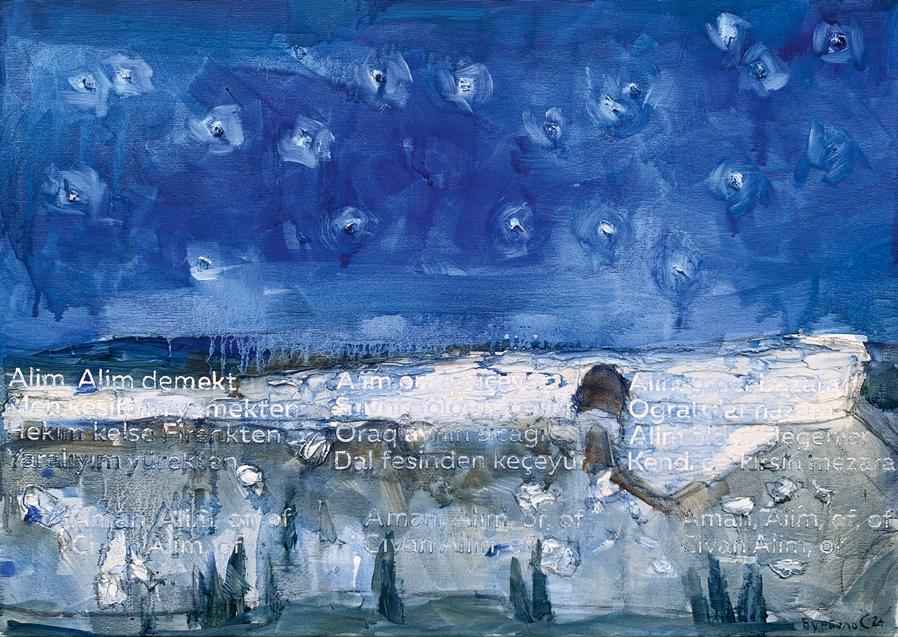
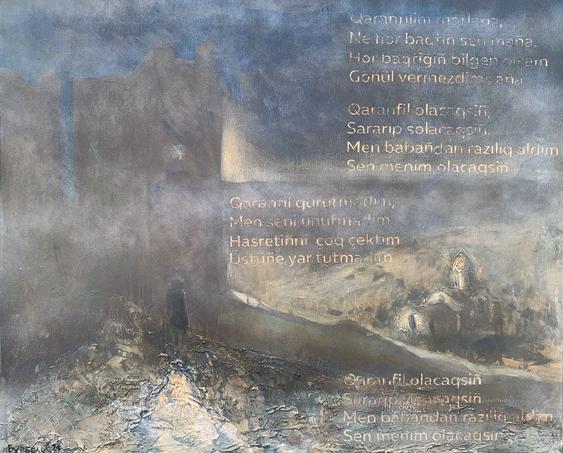
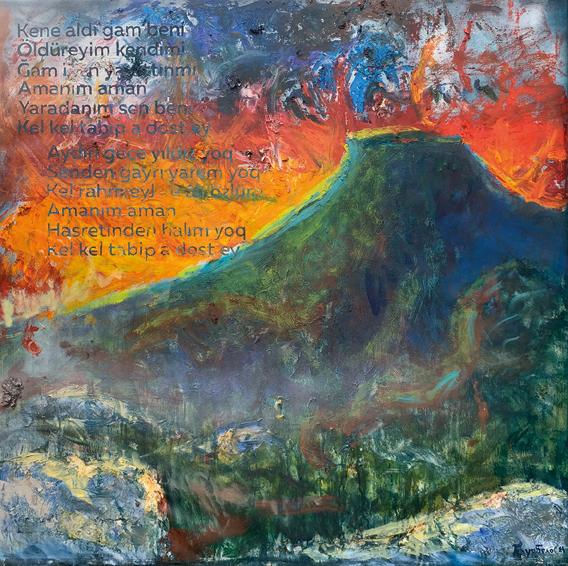
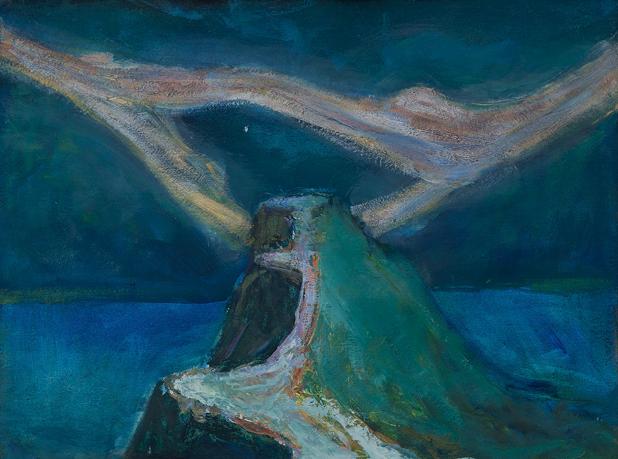
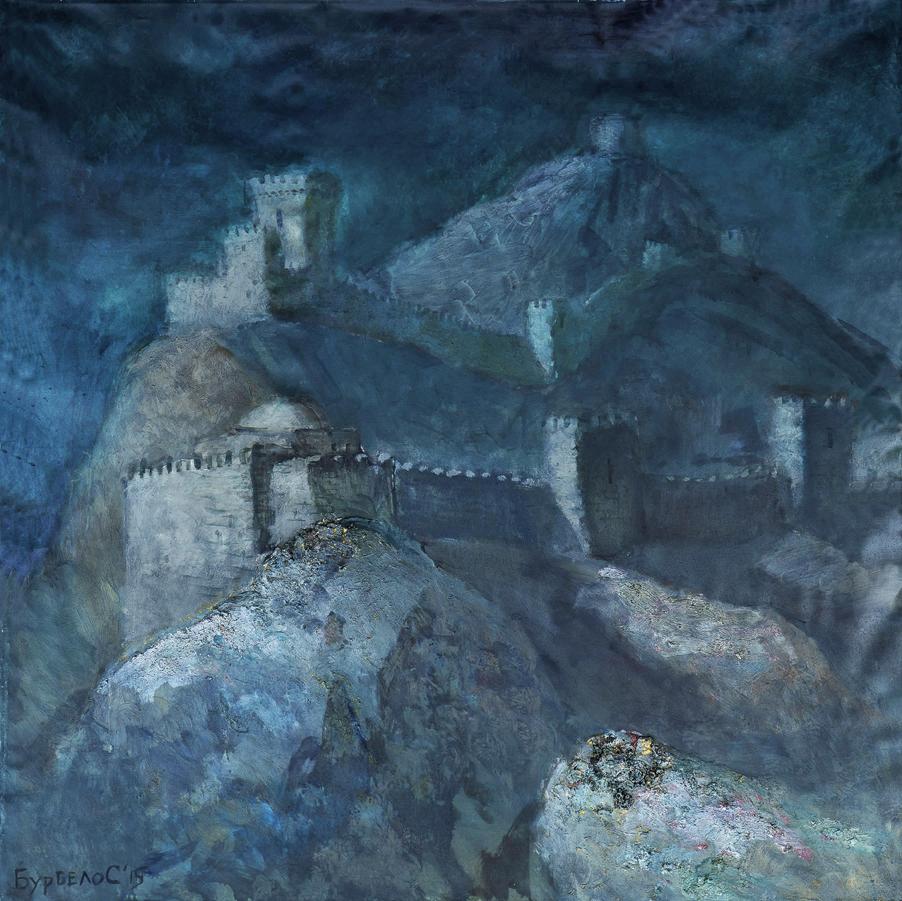
‘Qırım. 10 Years of Hope’ is the next link in a long-term project that began in 2013 as a series of non-trivial Crimean landscapes dedicated to the ancient places of the peninsula. The project involves not only the artist’s purely visual research but also an emotional experience of reality, historical and cultural studies, and ultimately a significant part of the author’s life and personal progress during a difficult time for the entire country. Over a little more than a decade, artist’s ‘Qırım’ has evolved from a somewhat romantic admiration of Crimean landmarks bathed in moonlight to tension-filled paintings that have been called prophetic in the media. The current series of landscapes seems to reach a certain cyclical return but on a new level in terms of content and form expression. The central issue for the author remains the question of historical justice, the significance of cultural intersections, and the rights of the indigenous peoples of Crimea, no matter how difficult it may seem to embody in the landscape genre.
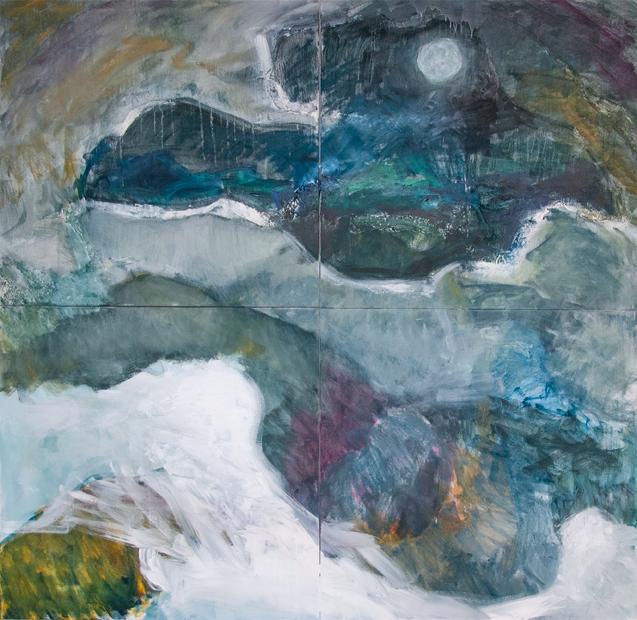
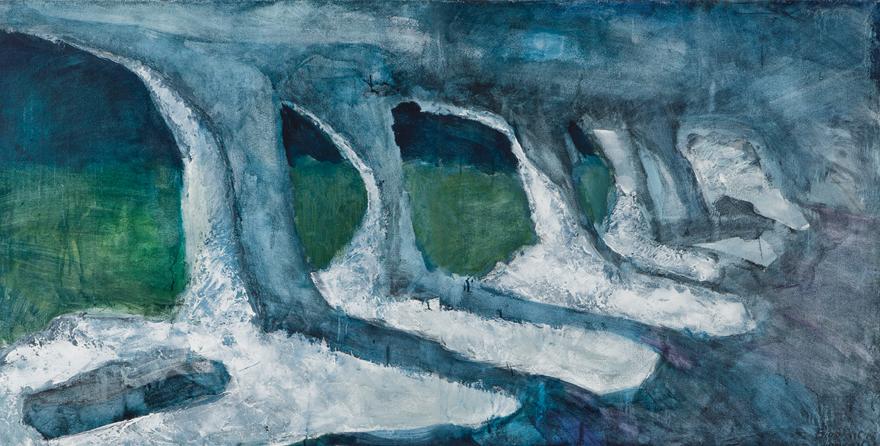
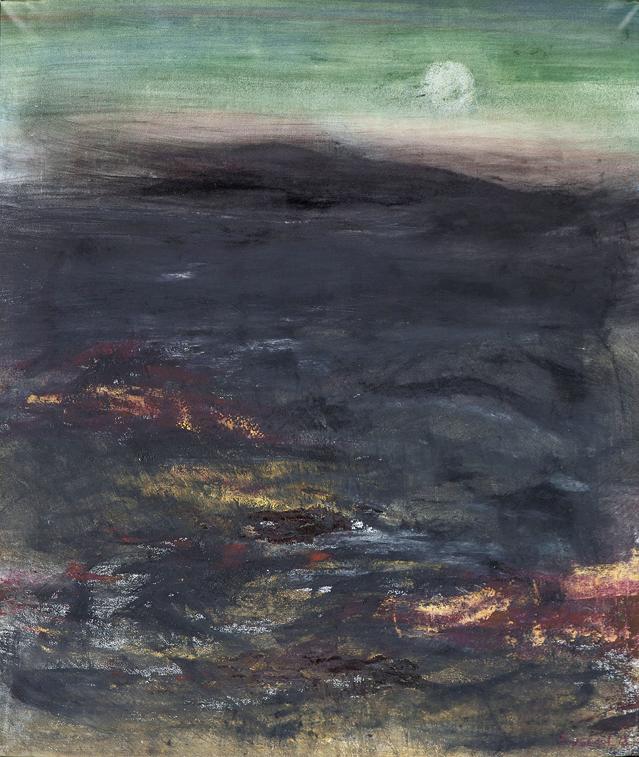
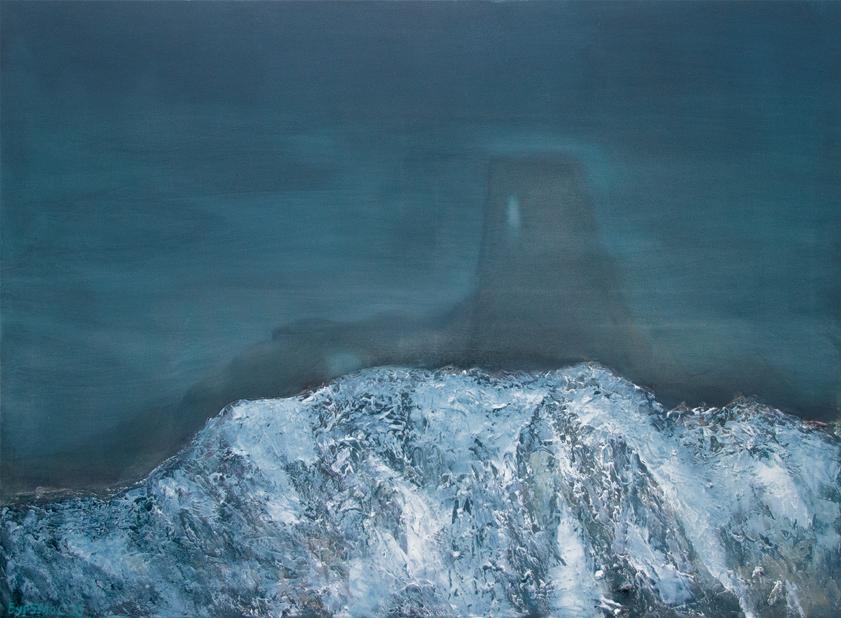
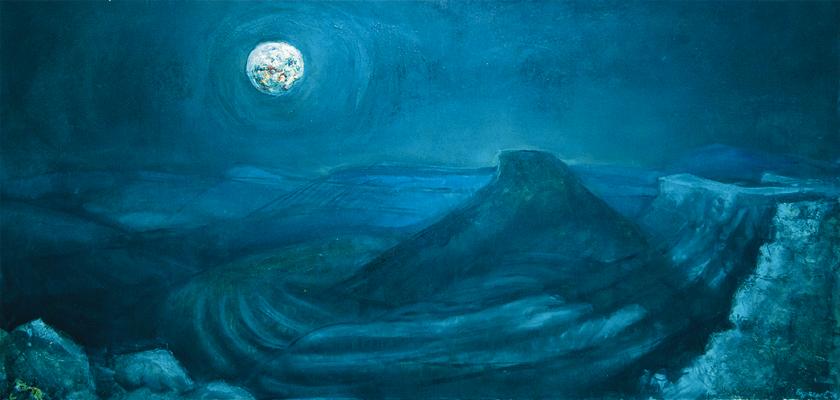
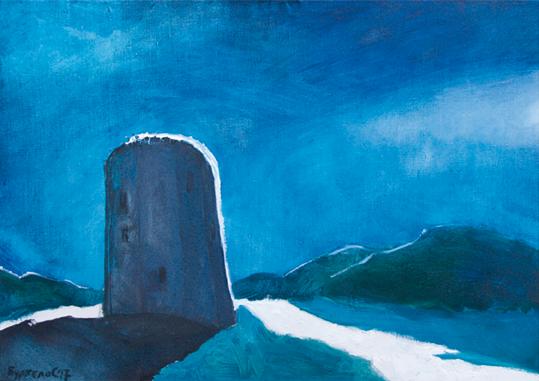
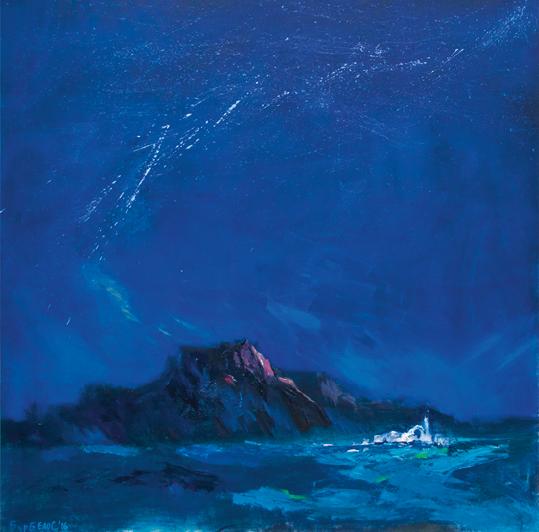
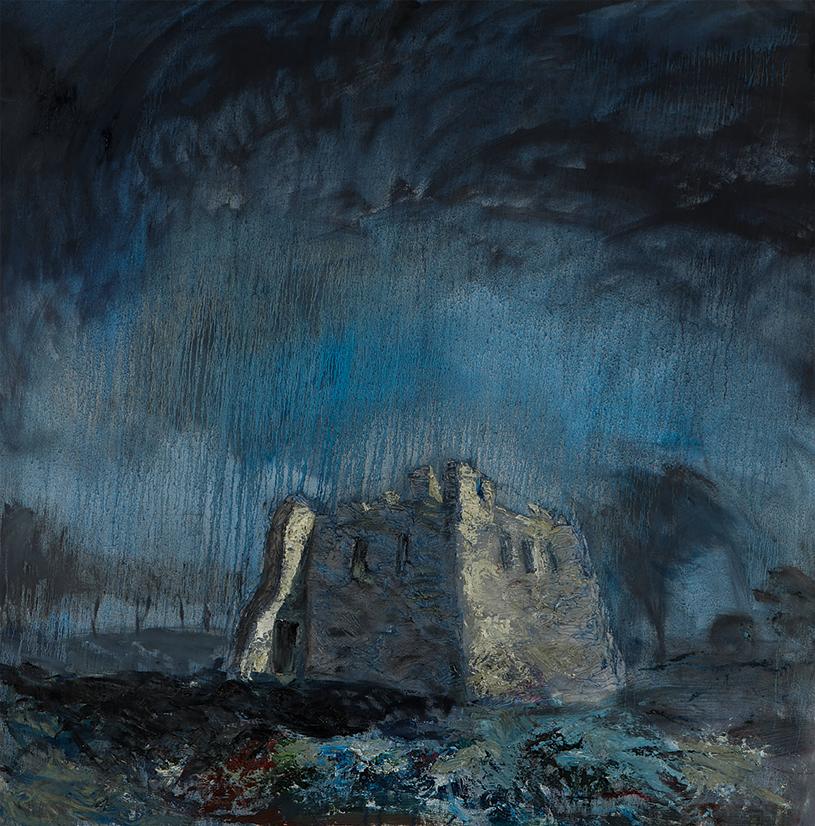
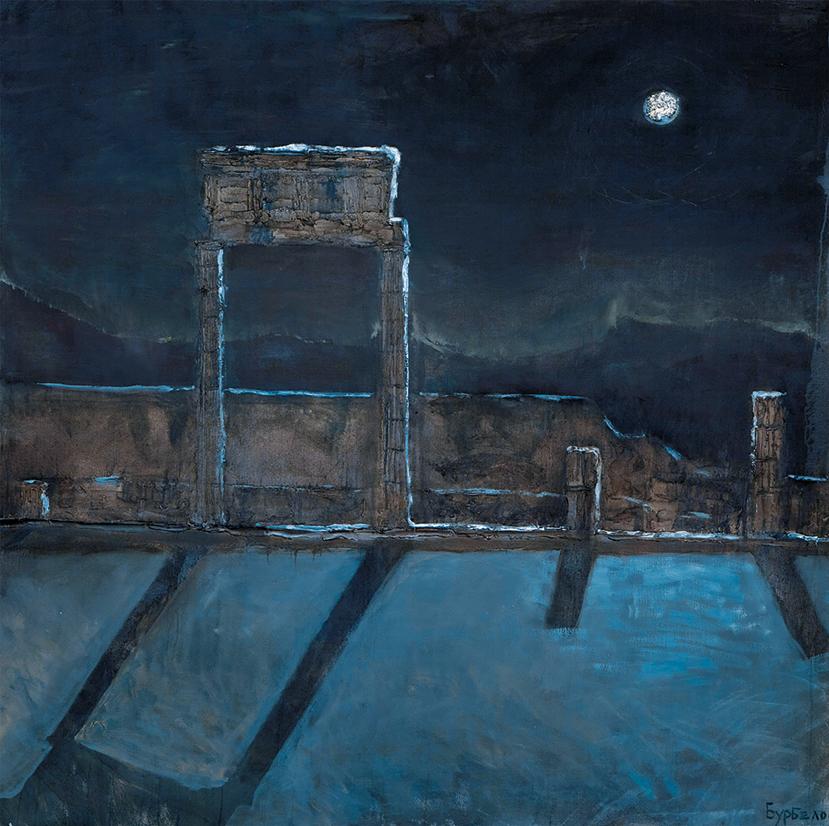
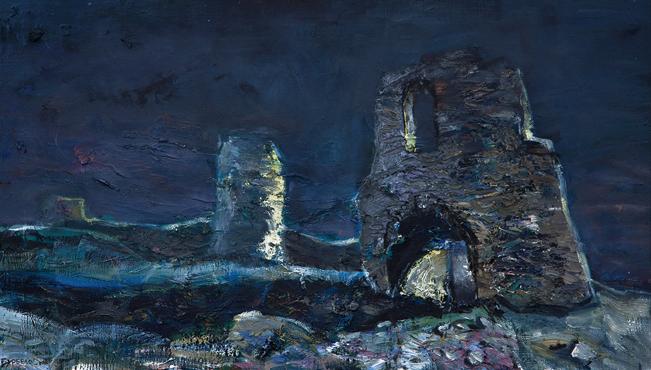
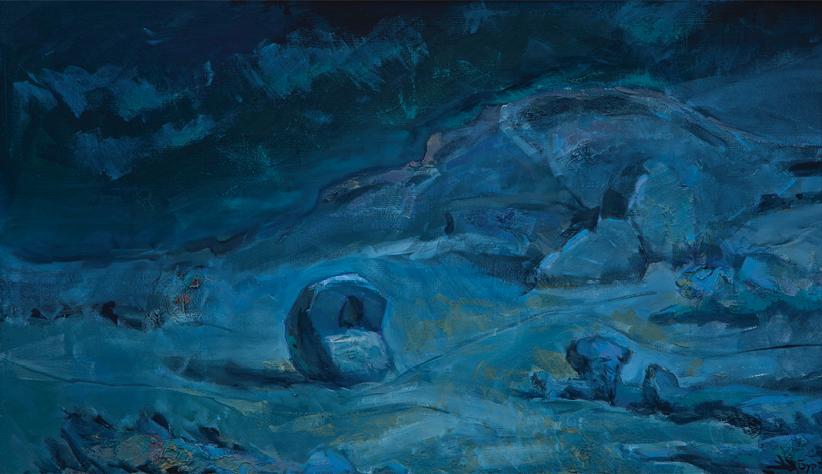
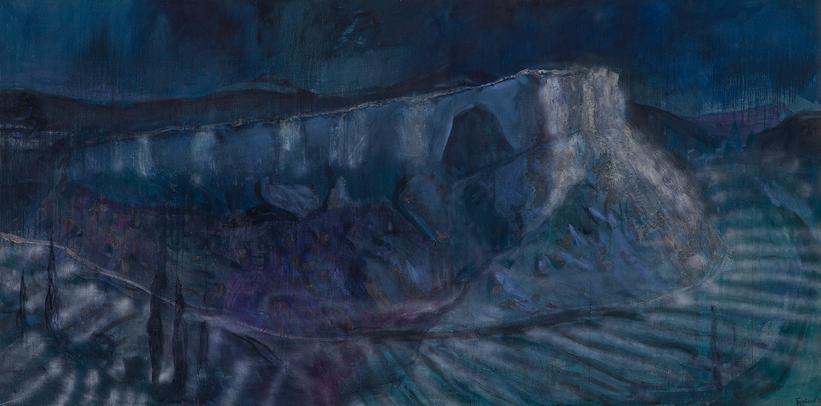
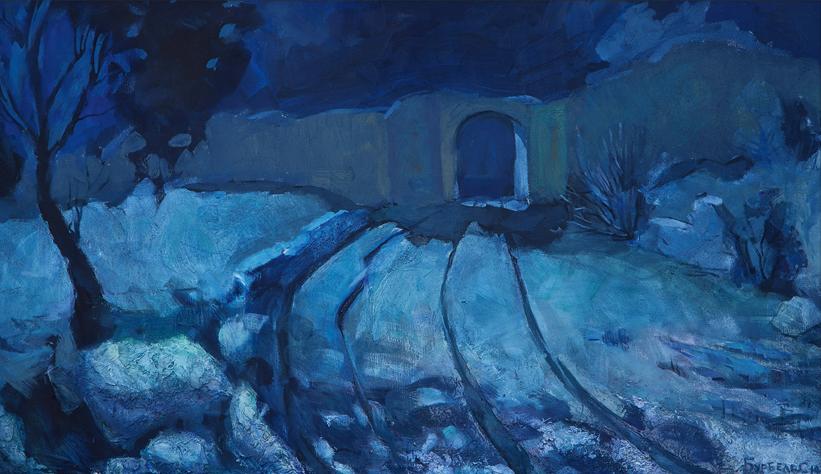
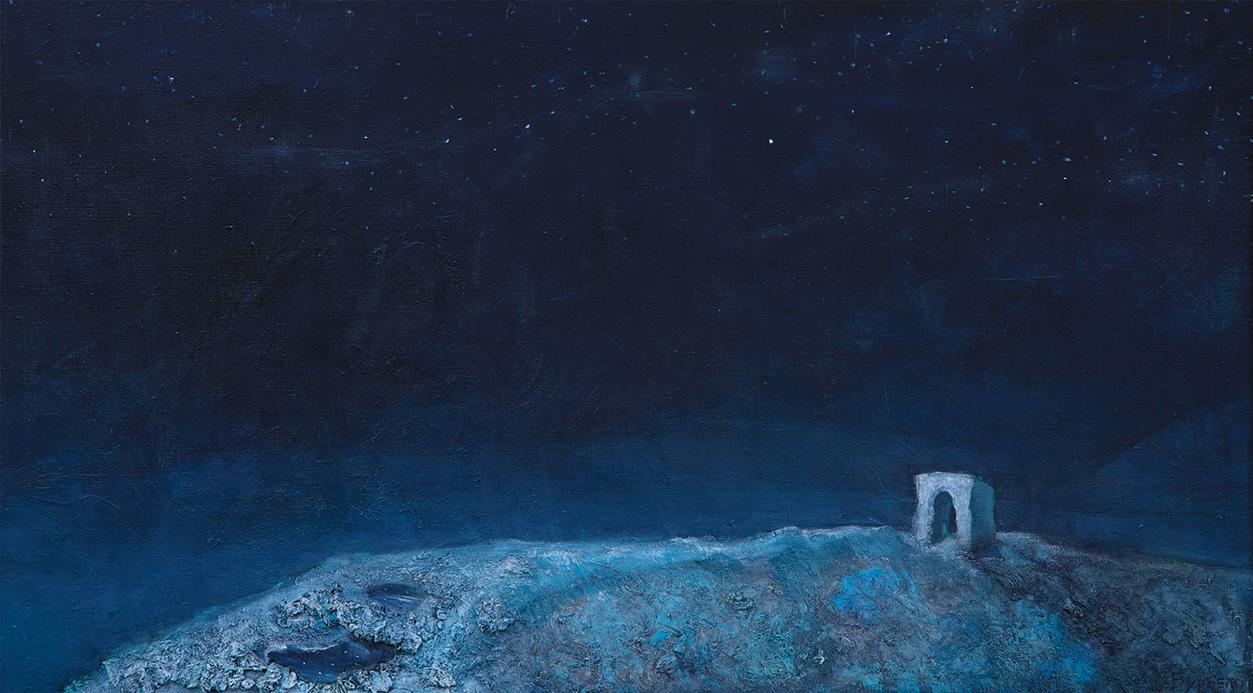
In the first series of the project, the artist focuses on the concept of land, not as territories but as home, emphasizing the significance of native soil and the memory of the land. The focus is on monuments left by various peoples of previous eras, recreated as the author saw them in his numerous hikes— deserted, immersed in the darkness of the night. The titles of the paintings in the series are native toponyms or historical names of structures, serving as a kind of cultural reference (Chembalo, Eski-Kermen, Mangup-Kale, Tepe-Kermen, Panticapaeum, Funa, and others). The artist continues to use this approach to fundamentally emphasize the multicultural heritage of ancient Crimea and the absence of Russian or Soviet constructive contributions. The exhibition of the series is aimed at recreating the special atmosphere of Crimea: dim lighting, artificial fog, the aroma of coffee brewed on sand, the sounds of cicadas… Since February 2014, all this has acquired special significance, and it seems that the project’s narrative has changed.

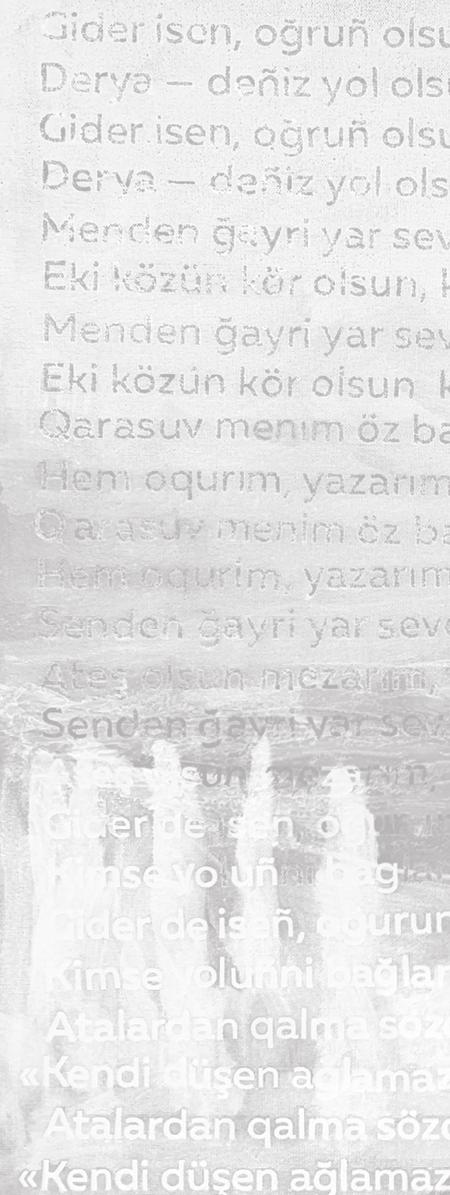
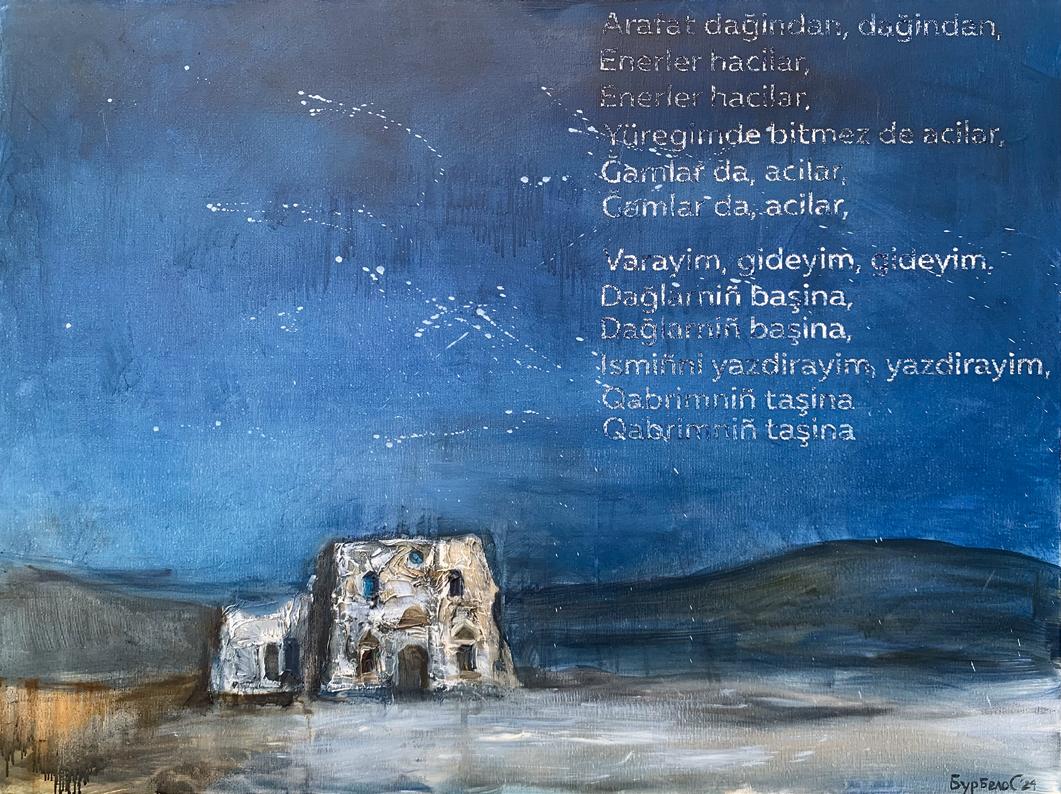
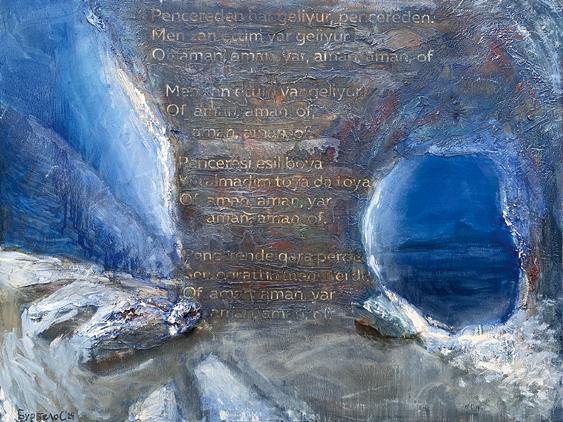
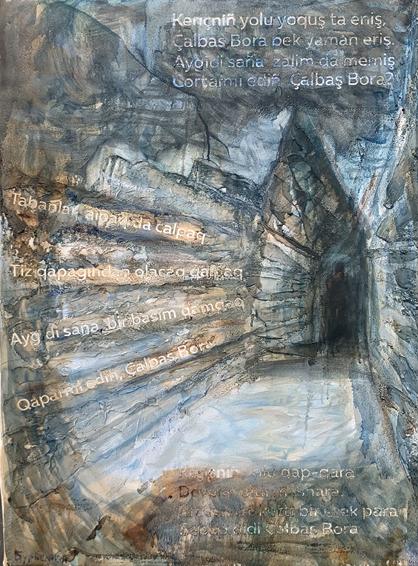
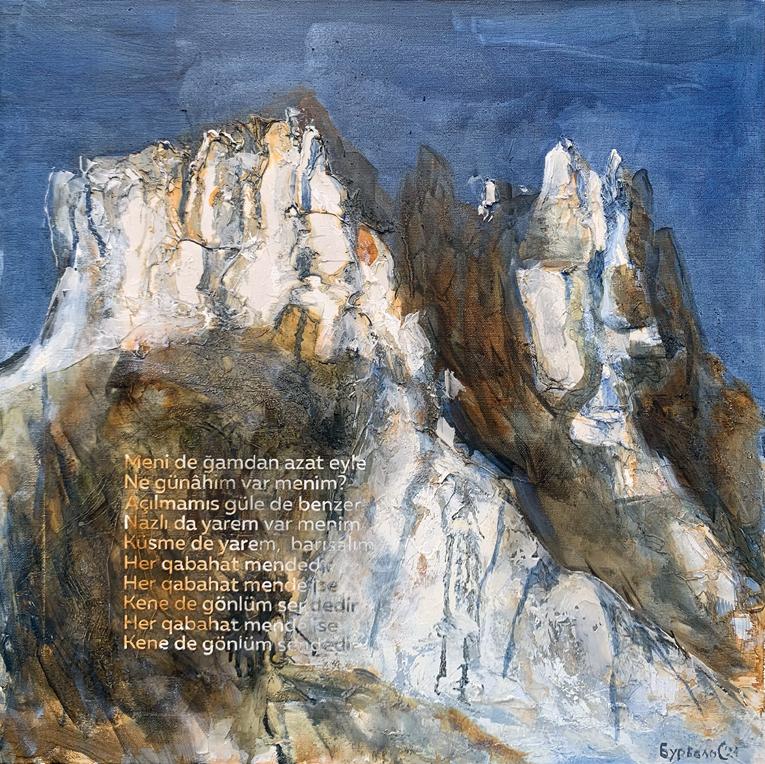
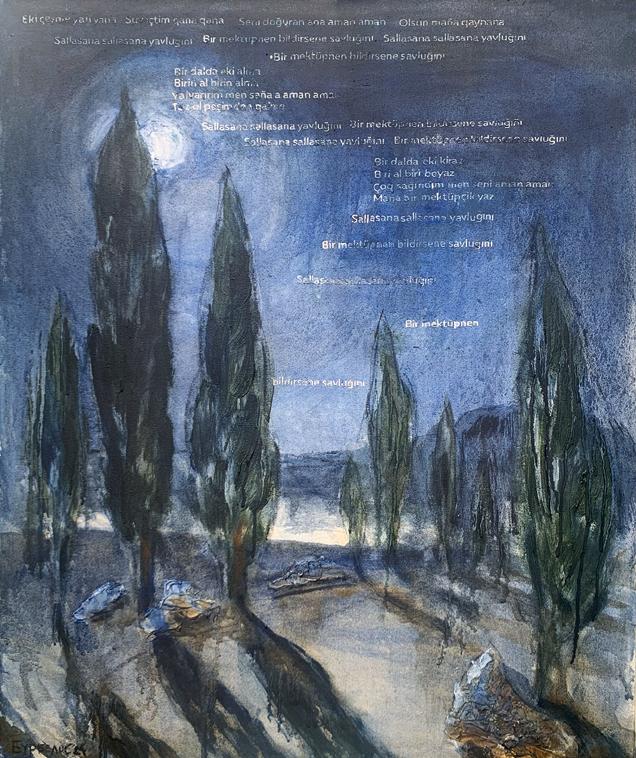
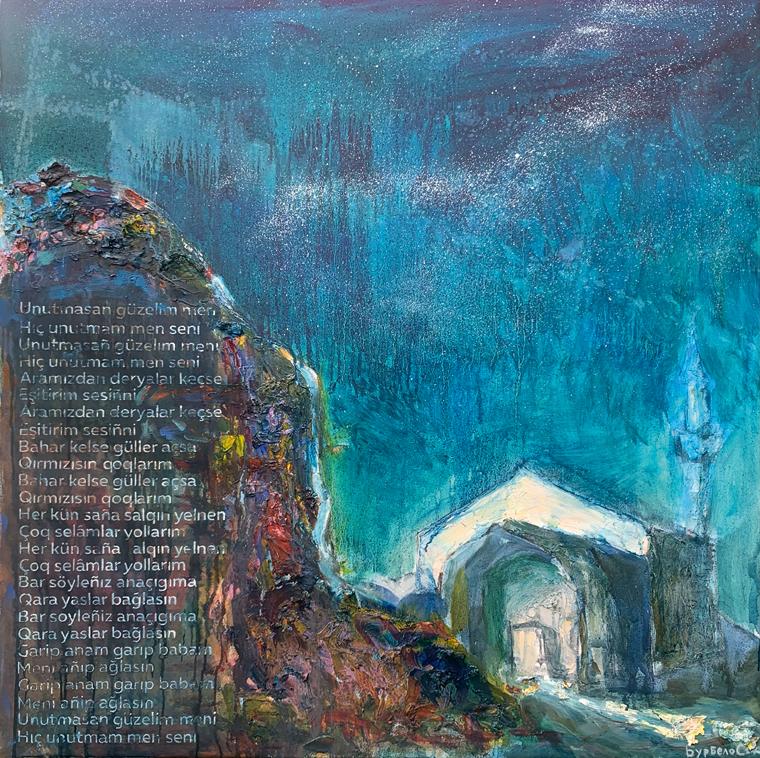
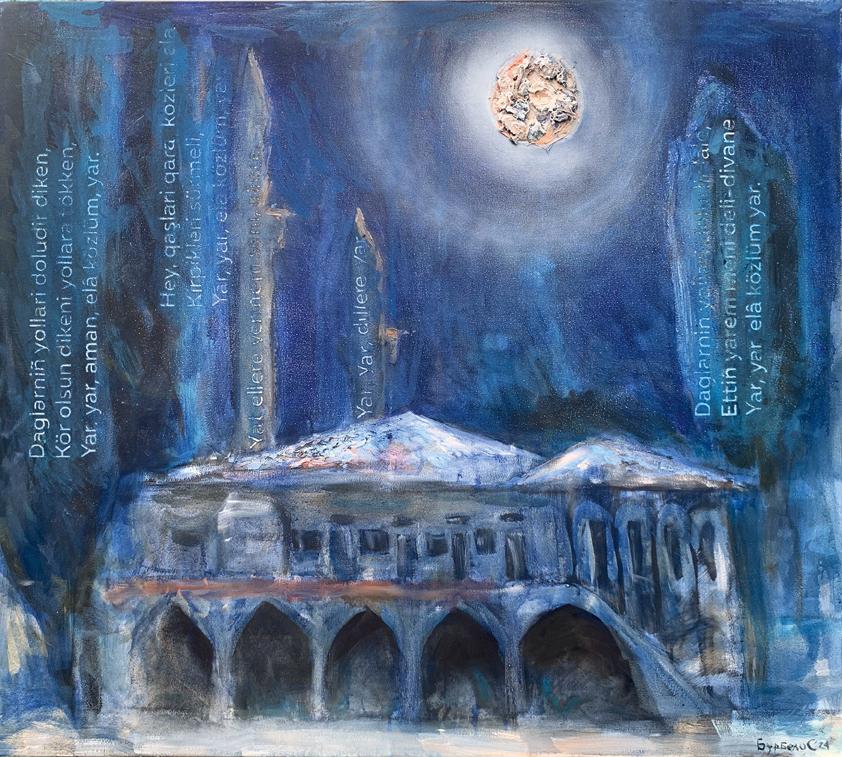
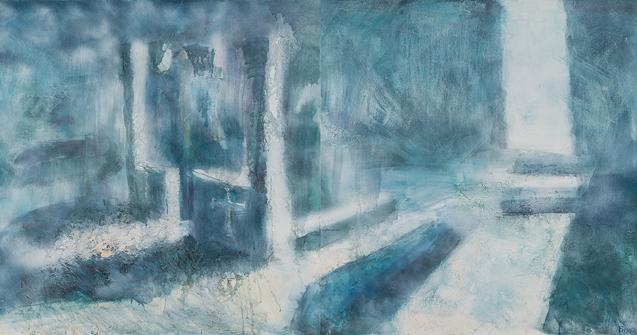
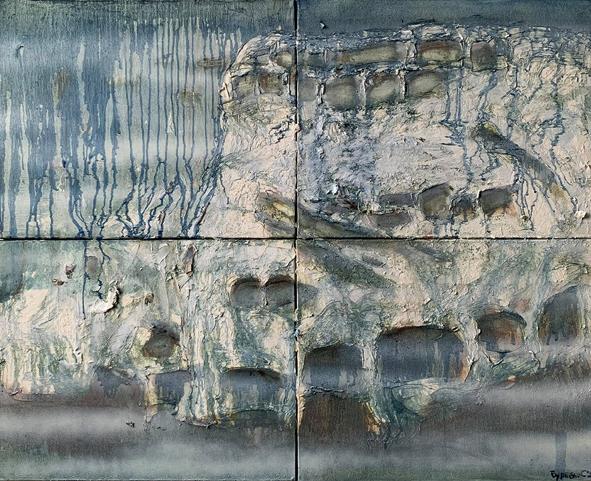
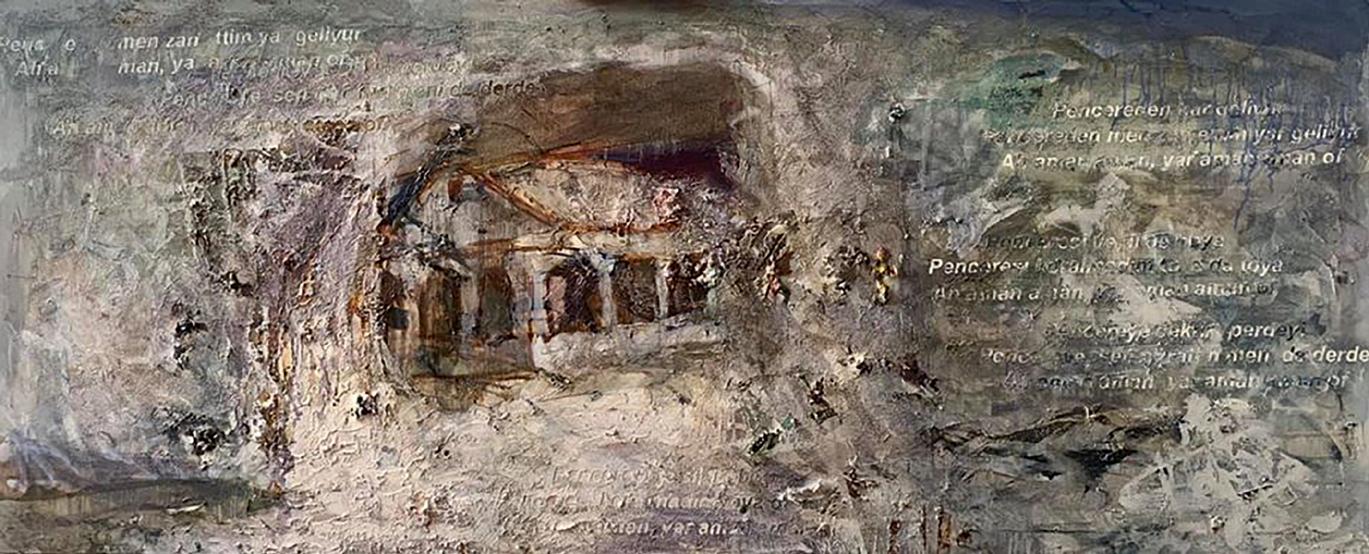
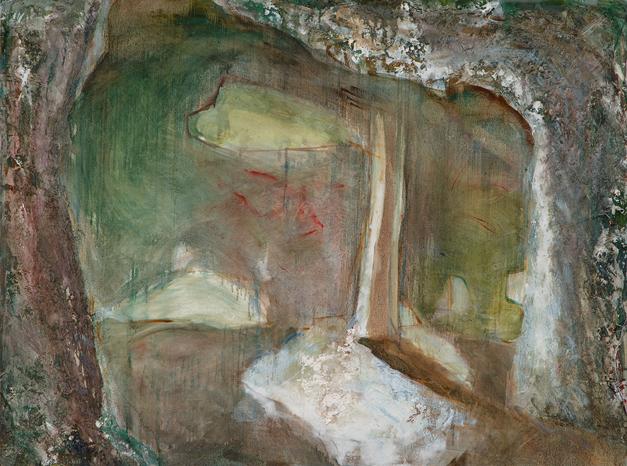
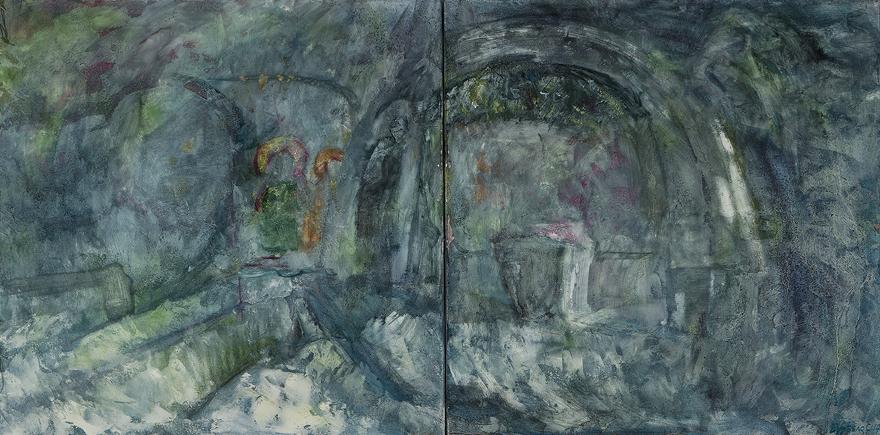
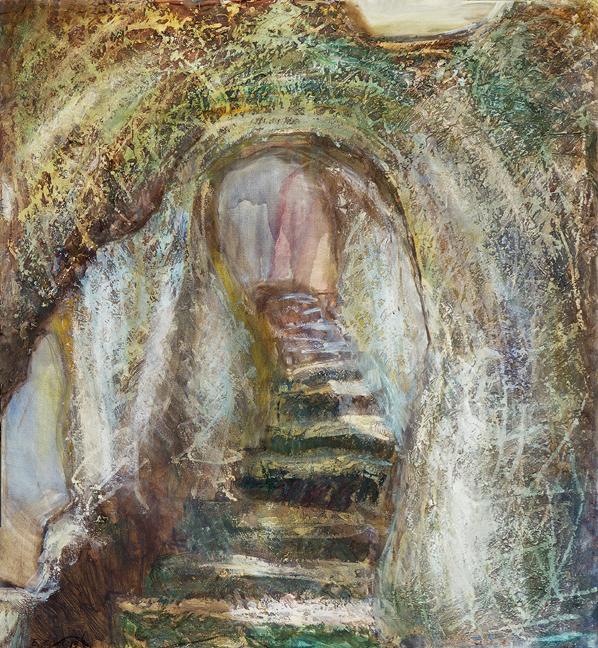
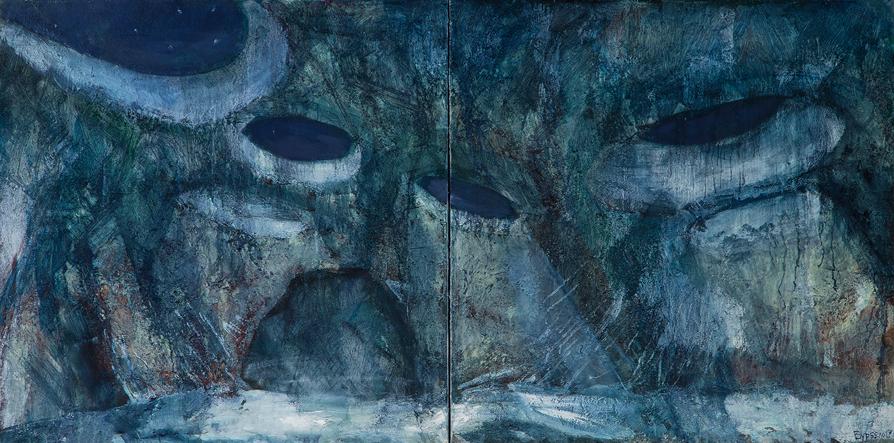
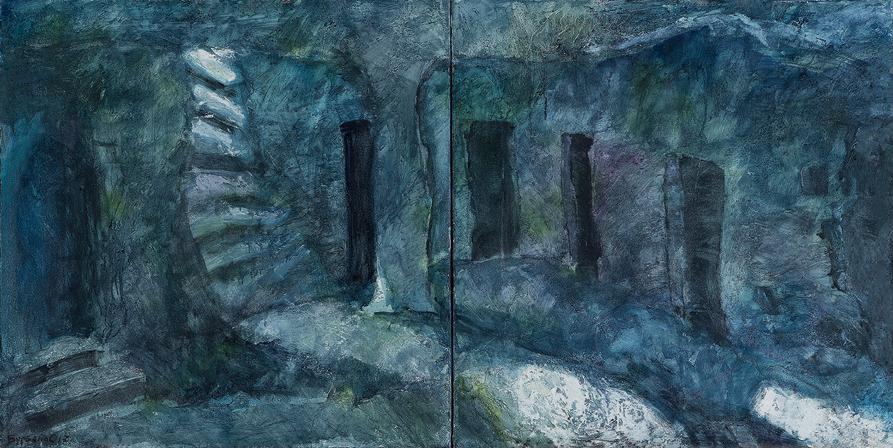
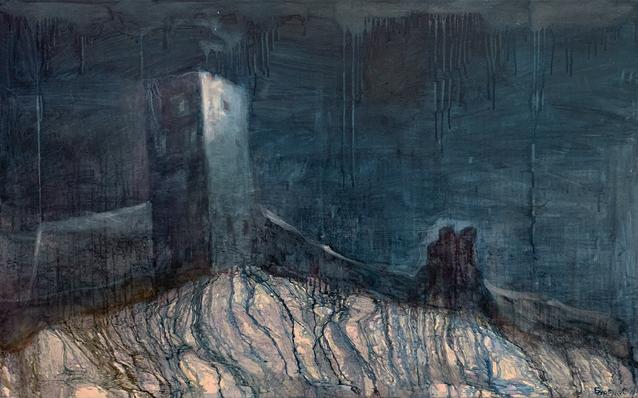
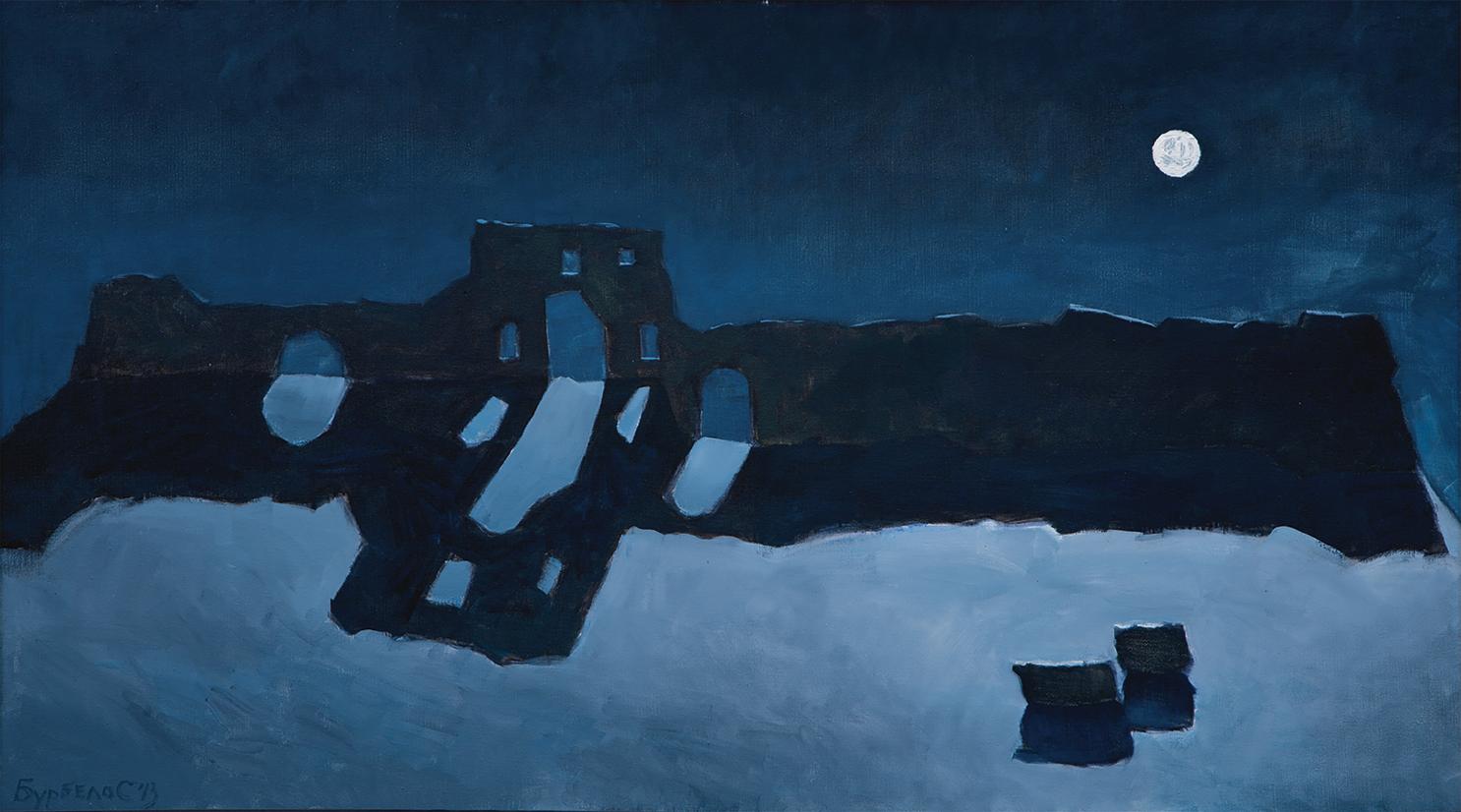
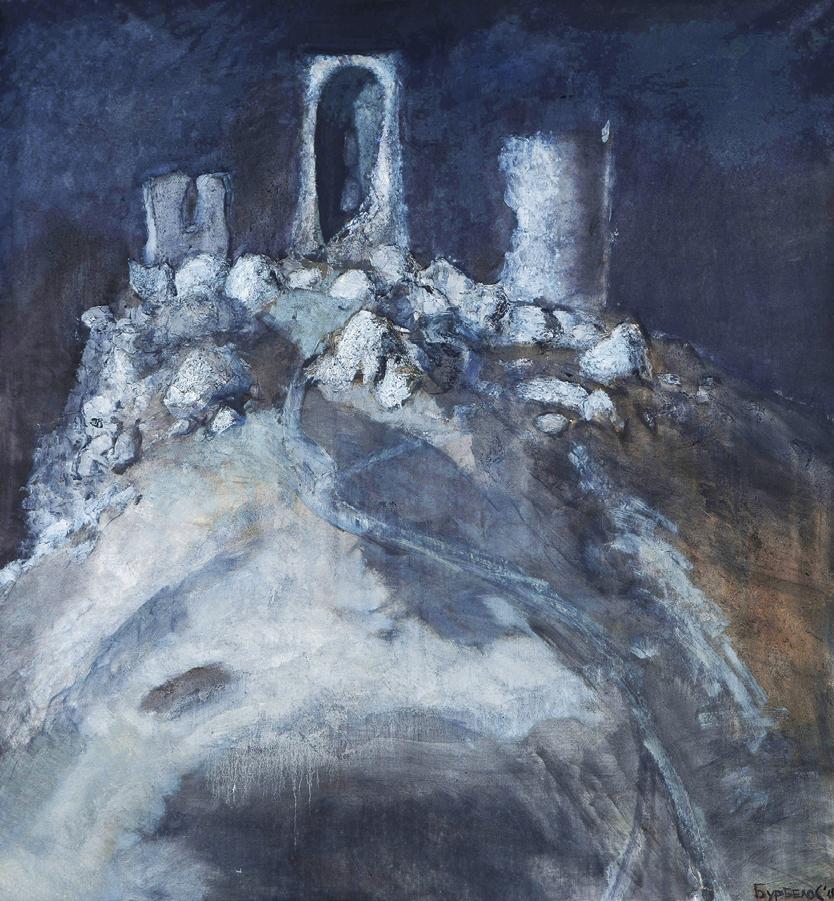
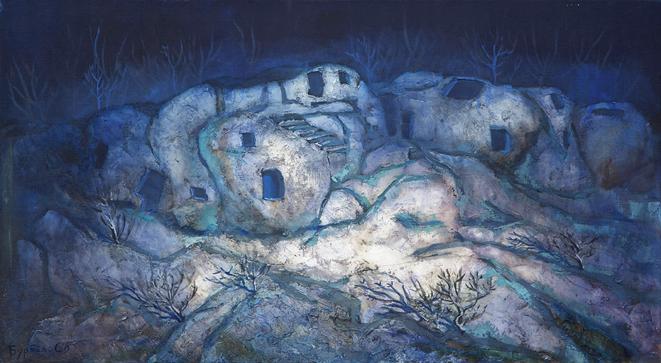
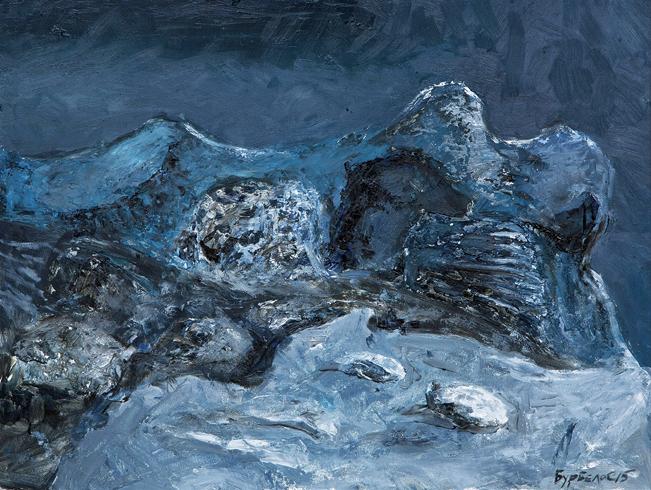
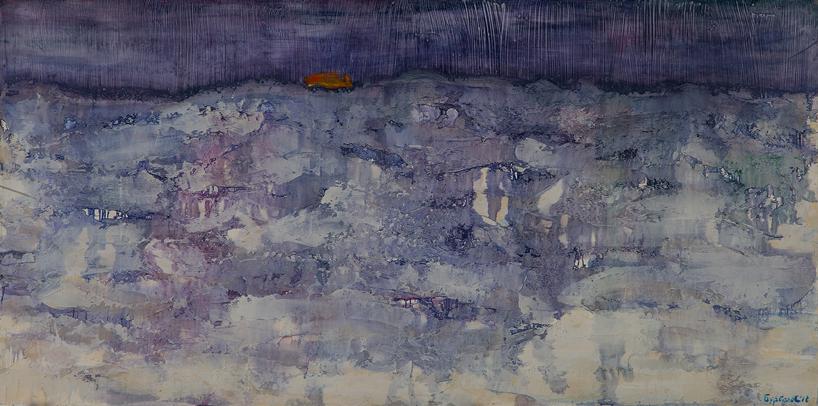
The next stage of development is a series of paintings focused on historical sites and monuments but from a different perspective. In a series of interiors, the author focuses on the visual development of the concept of home, reaching on an imaginative level the plastic embodiment in the volumes of walls and ancient structures of memories of home. The textured painting conveys emotional duality: a sense of warmth and protection in the stone, and at the same time, an intuitive fear of confinement. The canvases of the series acquire somewhat abstract forms as if expressing a sense of loss, remoteness, a certain blurring in the memory of the familiar image of Crimea, that impression close to many, as if the peninsula has become an island, and the familiar walls a prison… The exhibition solutions of the project at this stage are also aimed at enhancing the overall emotional background: instead of frames, the paintings are bound with barbed wire, the exhibition space is divided by obstacles ‘inconvenient’ stones, point lighting, the space is pierced by the monotonous sound of dripping, increasingly reminiscent of a heartbeat or the ticking of a clock. The works of this series have become a kind of dedication to the indigenous peoples of Crimea, for whom the peninsula remains the only home, and the occupation becomes a new reality. Some works of this period acquire a voice over time. Sometimes texts are integrated into the painted body of the paintings, including words from a Crimean Tatar folk song. As a constant reminder of who these ‘walls’ belong to.
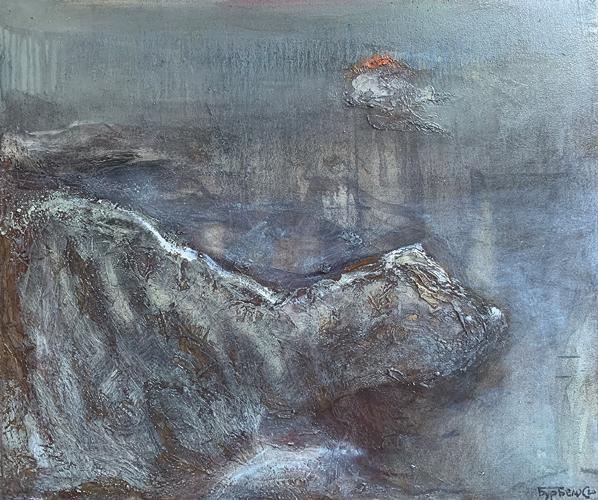
The full-scale invasion of Russian troops into our territory in February 2022 became the next impetus for changing the plot of the paintings and creating a new series of Crimean landscapes for the author. After a period of numbness and creative silence, Serhii began to create canvases with ‘imaginary’ plots, which nevertheless visually embody the aspirations of millions of Ukrainians. Against the backdrop of recognizable Crimean landscapes from ancient places, the artist depicts events that will later actually take place and enter the modern history of the peninsula and all of Ukraine. Initially, shortly before the
real events, the author ‘blows up’ the enemy cruiser ‘Moscow’ symbolically near Snake Island, then ‘strikes’ the Crimean bridge, ‘destroys’ Russian ships in Sevastopol Bay, and even, leaving the borders of Crimea, ‘begins’ a counteroffensive in the Kherson region. In the paintings of the series, the landscapes that previously embodied the memory of the past and the eternity and timelessness of culture have become somewhat deeper in meaning and information — there has been a layering of past events, present realities, and future visions. The years of war, the years of hope have turned into years of action…
The new series of Crimean landscapes, created within the project, marks the next stage of the author’s exploration of the chosen theme.
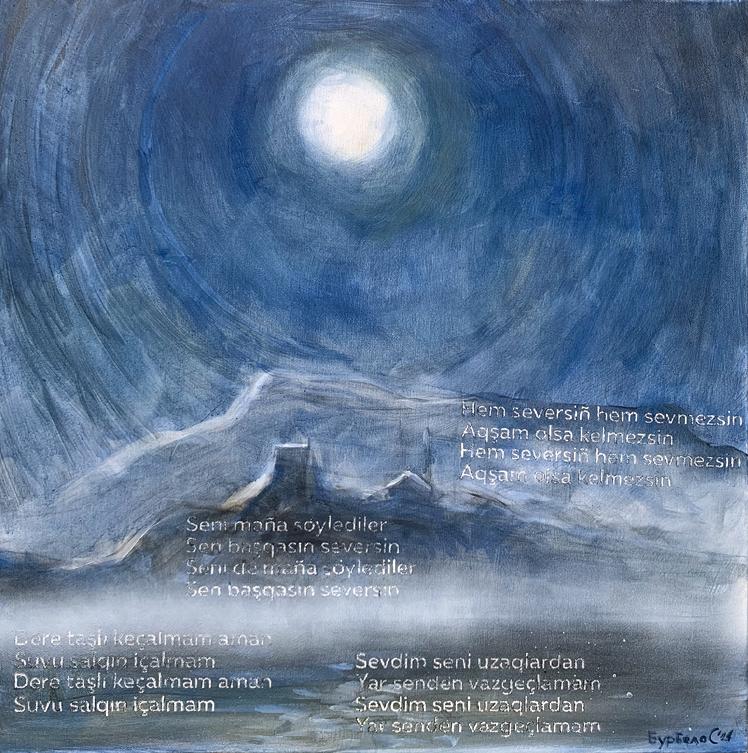
Throughout the ten years of working on the project, the key idea for the artist, inseparable from the need to recreate his unique Crimean microcosm, remains the idea of expressing support for the indigenous peoples of Crimea in the artistic space. In this series, the use of the technique of overlaying visual images with the meanings and rhythms of Crimean Tatar folk songs was inspired by the release of the album ‘Qırım’ by the Crimean Tatar singer and musician Jamala. This thorough work by a team of specialists has become a complete revelation for many Ukrainians and music lovers around the world. The album is more than just a music record, as it reveals the character of the Crimean culture, introduces the real Crimea, not the one reshaped by Soviet domination policies. It is a significant contribution to the preservation, research, revival, and popularization of the culture of the Crimean Tatars in the modern world.
The synthesis of meanings and arts always enhances the emotional volume of expression and the effect of immersion. However, according to the artist’s idea, in the project ‘Qırım.
10 Years of Hope,’ painting and music do not interfere with each other but rather overlap. The visual works are devoid of
‘literariness,’ meaning they do not conform to the content of the songs, do not illustrate anything, but rather coexist in the same local-temporal field. Thus, the project conveys a part of the soul of an entire people. A people who always return to their native land.
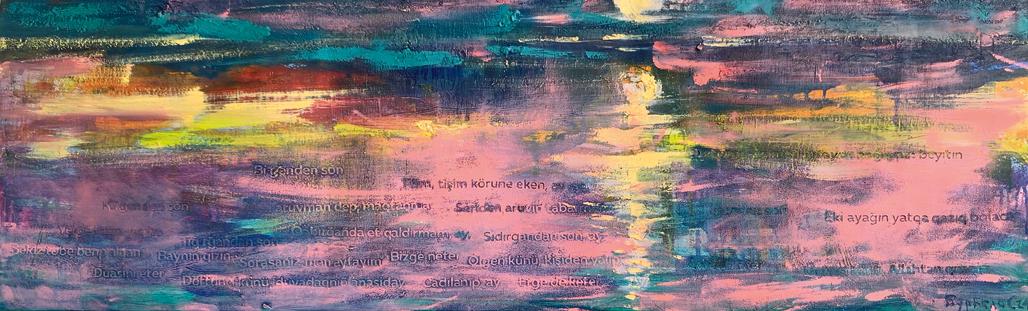
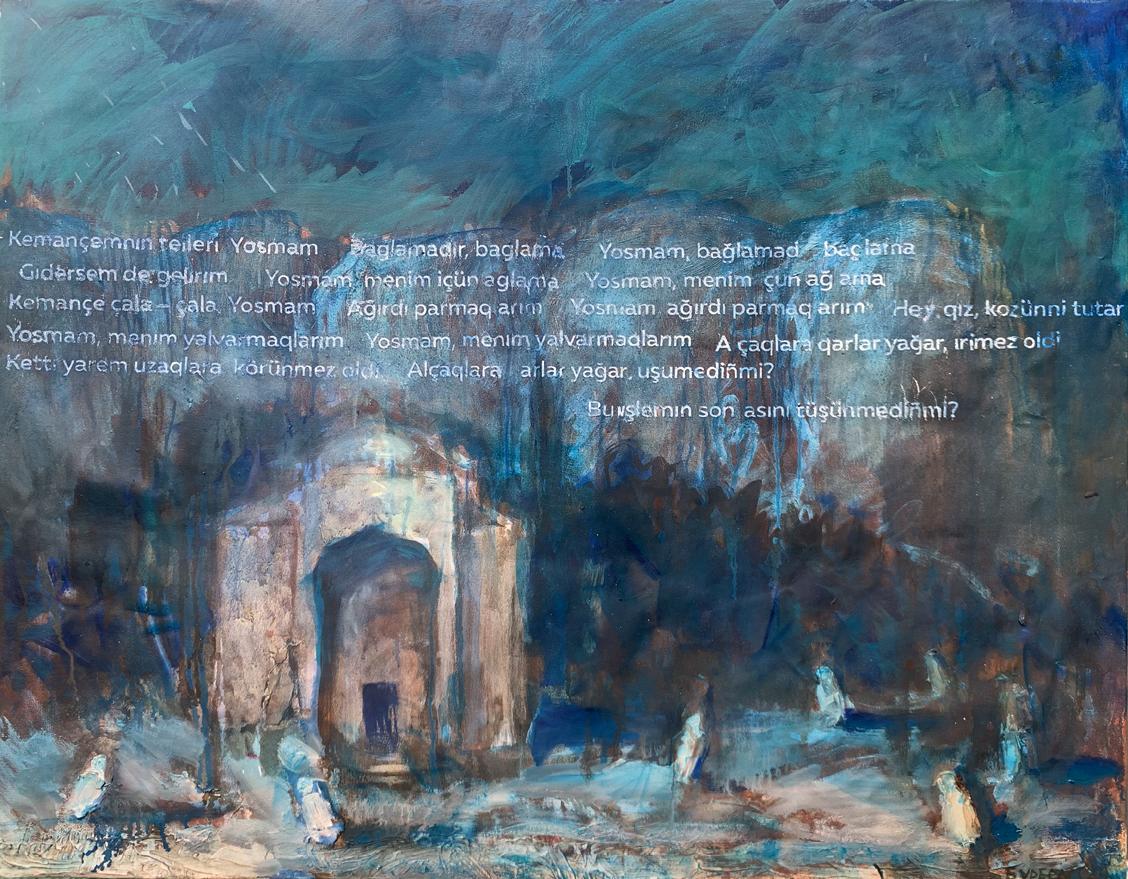
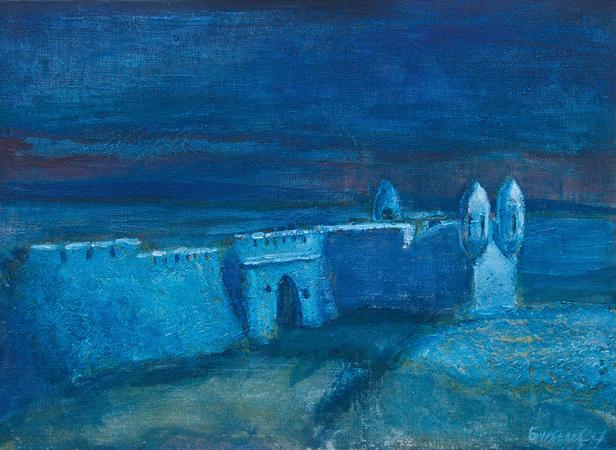
The echo of hope for returning home is felt in the night picturesque landscapes of Old Crimea, Bakhchysarai, Kaffa, Alushta, Kerch, and others. There is a kind of rollback to the aesthetics of the first series, but on a different level. Abstraction and pictorial conventionality somewhat give way to the pictorial component, a wider palette of colors, ease of reproduction, which brings the landscapes closer to plein air studies, enhancing the effect of presence. The compositions of this series resonate not only with color and tone. The technique of painting becomes the use of a purely, seemingly, graphic element text. Sometimes clearly and distinctly, sometimes lines emerge among the waves, sometimes they ring through the fog, sometimes they twinkle with constellations in the night sky, sometimes they are engraved on stone. The texts of Crimean Tatar folk songs give the paintings the voice of a unique culture characterized by the continuity of traditions. And part of the monuments chosen by the author for reproduction also belong to the history of the Crimean Tatars: the Great Khan Mosque, Büyük Han Cami, Eski Saray Mosque, Hacı Geray Mausoleum, the Madrasah and Mosque of Khan Uzbek.
As of now, it is difficult to predict the future direction of Serhiі Burbelo long-term project, as this creative process primarily depends on the real circumstances and current experiences of the author. However, after ten years of hope, the expectation grows stronger that the next series within the ‘Qırım’ project will be plein air, and the historical names of ancient cities and places will be remembered not only by the titles of the paintings.
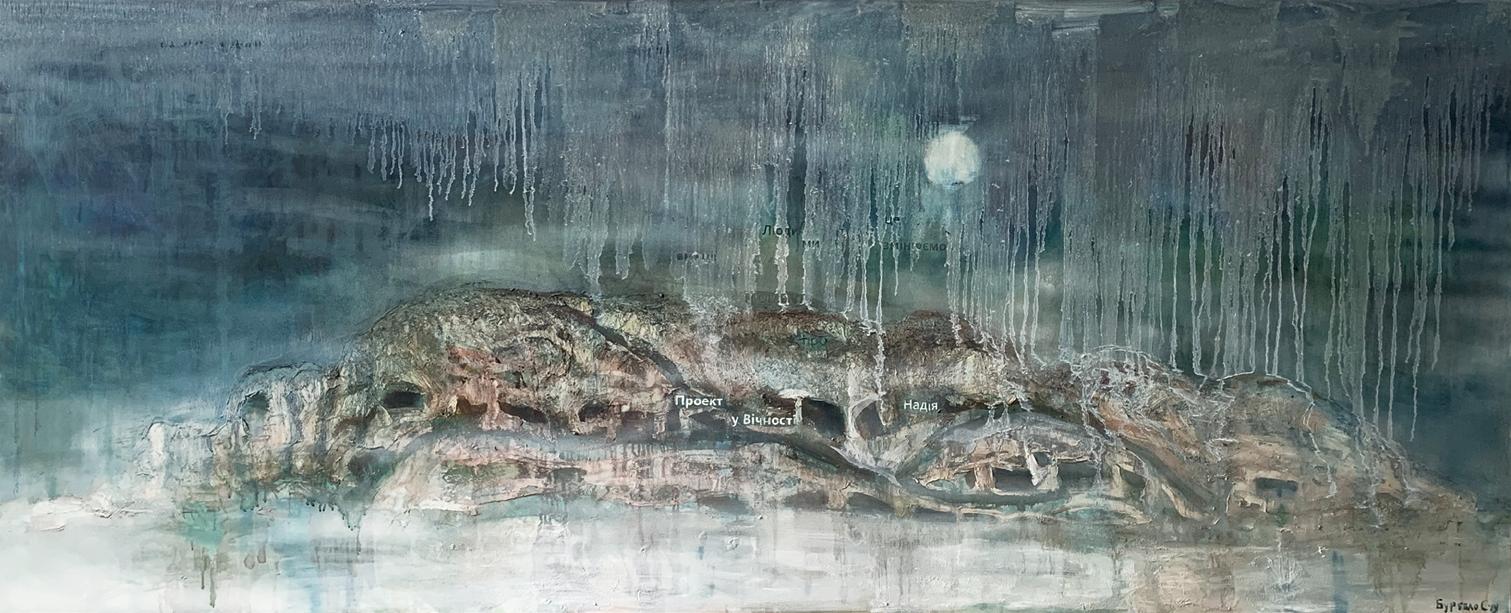
1. Чилтер-Мармара
(кримськотатар. Çilter Marmara)
полотно, олія, 90×220 см, 2019
2. Interior #1
полотно,
3. Чилтер-Мармара (кримськотатар. Çilter Marmara) полотно, олія, акрил, 80×100 см, 2021
4. Interior #6
полотно, олія, 90×180 см, 2017
5.
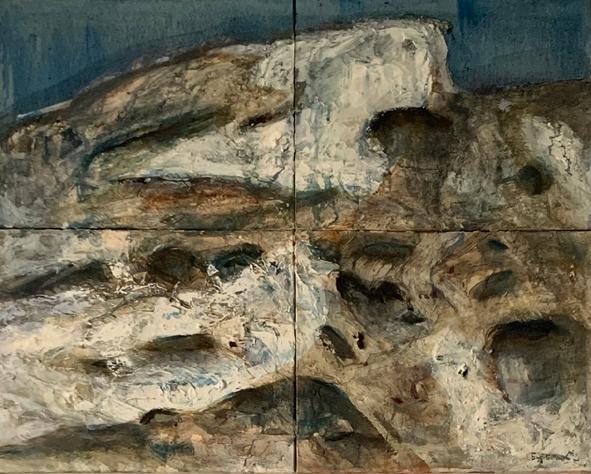
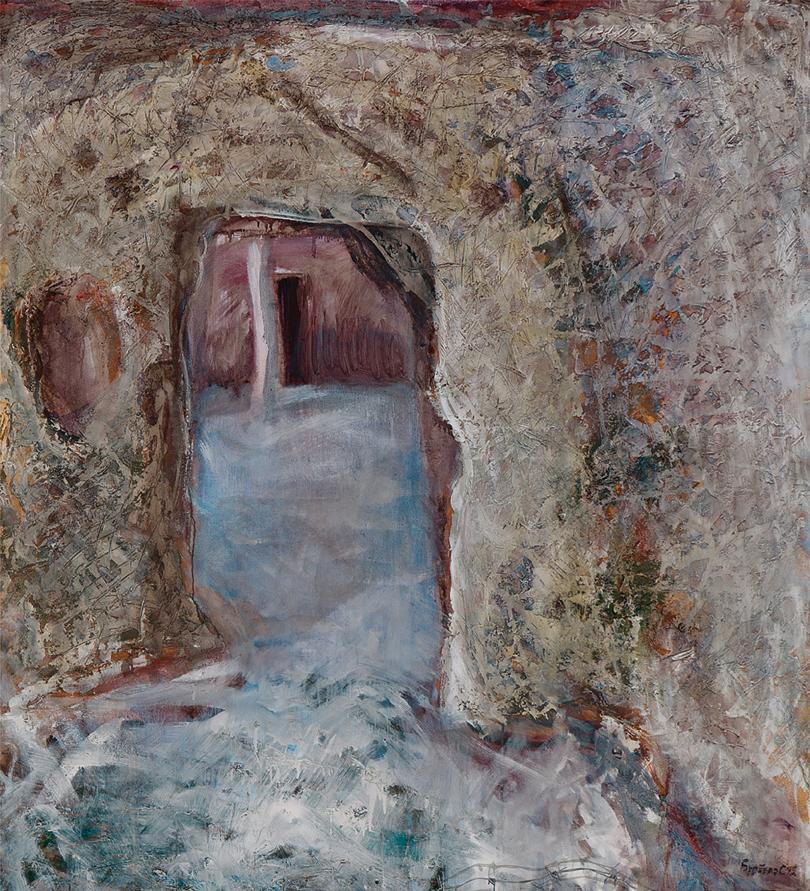

‘Qırım’ is a series of paintings started in 2013. At the same time, it’s the exhibition name. But it would be wrong to identify these concepts. After all, the exhibition is a project limited in time and content.
For Serhii Burbelo, ‘Qırım’ is a kind of field research, a theme ‘in development’.
While travelling across Crimea, the artist visits well known places but even there he finds the locations that remain out of reach for lazy tourists. He spends some time there, sleeps in the open air, ‘feels’ the ground. The comprehension and creative ‘study’ of the eternal theme have started since the direct contact with the research subject.
Considering the series name, the titles of works expressed by toponyms, and the subject itself, we can see that the artist is interested in the locality itself. And not in terms of nature, but in terms of history and culture. Depicting the ruins of ancient buildings and entire cities, Serhii deliberately ignores details of the surrounding, thus, emphasizing the importance of architectural monuments.
Speaking of ‘locality’, we mean ‘land’, speaking of architecture, we refer to the history of one or another nation of architects. So, there is the question of objective dialectics, the dialectics of a person and ‘land’, at the center of the artist’s and recipient’s attention. It is commonly believed that since ancient times people have developed and farmed land turning it into the territory of new sovereign entities states. But there is also inverse relationship. What if we take another look at it? What if we try to refer directly to the concept of ‘land’, which has been used by the cultural linguistics specialists for a long time?
‘Land’ may accept or reject people, it feeds and keeps them... Eventually, ‘land’ will always outlive people. Also, it has a memory. And once a person realizes it, ‘land’ stops being a territory and becomes ‘ground’, and a person takes root. In some cultures, such realization creates the serious attitude to the land. One example would be enough. According to one of Crimean peoples’ religious teachings, God doesn’t answer the prayers of those who live on the ‘stolen’ land. Moreover, a mosque may not be built on this land...
Anyway, the ‘Qırım’ series encourages to think about it, to move from abstract concepts to the examples fixed in time and space, especially now, when it has become a significant issue for us again.

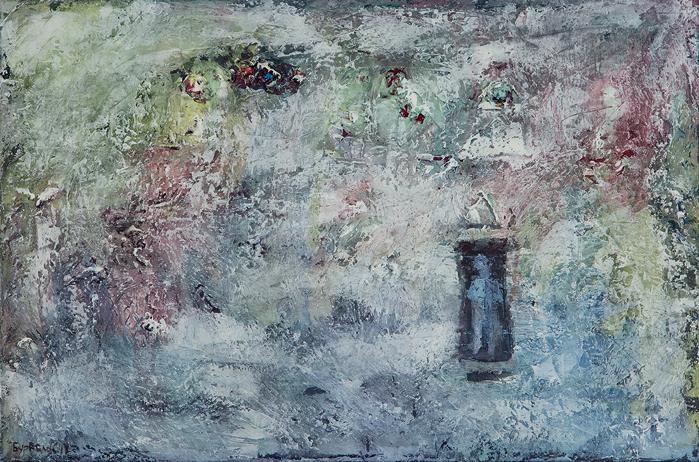

1. Іосафатова долина. Йехошафат (івр. עמק
полотно, олія,
150×150 см, 2016
2. Сюйренська башта (Scivarin)
полотно, олія, левкас 100×140 см, 2016
3. Кефе (тур. Kefe). Генуезька фортеця
4. Замок на вершині.
(кримськотатар. Töpe Kermen)
полотно, олія, левкас 150×300 см, 2016
5. Єні-Кале (кримськотатар. Yeñi Qale)
полотно, олія 40×50 см, 2017
6. Чоргунська вежа (кримськотатар. Çorğuna Qule)
полотно, олія 67,5×98 см, 2017
7. Меганом. Перша зірка (кримськотатар. Meganom)
картон, акрил 75×100 см, 2019
8. Сторожове укріплення Фуна (грец.
полотно, олія,
150×150 см, 2016



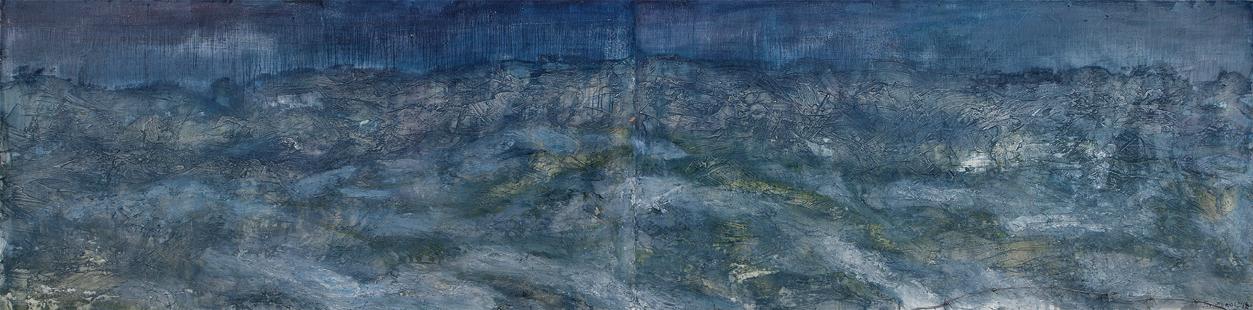
Ukrainian dream
The full-scale and unprecedentedly brutal war launched by Russia against the Ukrainian people in 2022 activated an irreversible process of uniting us as a political nation. The dream nurtured by several generations of the Ukrainian intellectual elite has strengthened and fully transformed into a goal, uniting and absolutizing the concepts of will and freedom. The idea of national will has become one of the main driving components of political struggle, an expression of national spirit. Ukrainian abstract dreams of ‘the disappearance of our enemies’ like ‘dew in the sun’ have acquired quite concrete and consistent outlines in the imagination of almost every conscious citizen and, naturally, found formal expression in the creativity of artists – people who usually feel the world more acutely and work with meanings. Perhaps that is why the series of works from 2022, ‘Ukrainian Dream’ has already been called prophetic. The author’s ‘premature’ vision of a series of significant image defeats of the occupier found formal symbolic embodiment in paintings with plots of the burning cruiser ‘Moscow’ somewhere on the horizon near Snake Island, the explosion of the Crimean bridge, explosions of enemy ships in Sevastopol Bay months and weeks before news with such headlines appeared on the front pages. In the metaphysical plane, the synchronous collective desire for the realization of these events as part of the Ukrainian liberation progress probably occurred with such density that the artist only had to embody it all in expressive visual images, which have already become modest witnesses of the era, separate pages of the diary of the emergence of a modern political nation, and, we hope, heralds of victory.