Brandy, Monica
Light Up LCA

By Ebony JJ Curry SENIOR REPORTER
By Hodari Brown
On November 25, 2025, the National Park Service (NPS), under the direction of the U.S. Department of the Interior overseen by Donald Trump, announced its 2026 “fee-free” days. Gone from the list: Martin Luther King Jr. Day and Juneteenth. Added instead: June 14 — the birthday of Donald Trump, which is also observed as Flag Day.
By Ebony JJ Curry SENIOR REPORTER
Late Thursday night, Sept. 14, a historic moment unfolded in American labor relations as the United Auto Workers (UAW) union initiated a strike against Ford, General Motors (GM), and Stellantis. For the first time, the union took simultaneous action against all three major Detroit-based automakers. The action involves approximately 13,000 UAW members in assembly plants across Michigan, Ohio, and Missouri, who walked off their jobs after existing labor contracts expired at 11:59 p.m.
IShortly before midnight on Sept. 14, GM released a statement expressing disappointment with the strike action, despite offering what it termed an “unprecedented economic package” that included historic wage increases. Stellantis
ingenuity of our community.
n a breathtaking celebration of talent, determination, and the unyielding spirit of Black excellence, the Michigan Chronicle marked its 10th Annual 40 Under 40 event Thursday evening. This year’s soirée, drenched in the theme “All Black Everything with Gold Accents,” transcended expectations and essentially illuminated the golden gems within the true essence of Black excellence. Hosted by the charismatic duo of Andre Ash and Lynzee Mychael from Michigan Chronicle’s Finally Friday, the night was a triumph for the city of Detroit and its vibrant community of young Black pro-

also expressed disappointment in a statement, saying the company immediately went into contingency mode to protect its operations.
Those free-entry days were never just about convenience. They acknowledged the nation’s ongoing reckoning with racism, the legacy of slavery, and the struggle for civil rights. MLK Day honored a man whose vision centered on equality and justice. Juneteenth commemorated the delayed enforcement of emancipation and the long road to freedom. Removing them from the calendar is not simply administrative tinkering — it is a deliberate reshaping of national acknowledgment, a rewriting of priorities, and a loud signal about whose history matters.
As the night unfolded, we had the privilege of honoring other outstanding individuals, each carving their own path to success. Clement “Fame” Brown, the creative mind behind Three Thirteen Detroit’s Brand Name, received the prestigious Entrepreneur of the Year Award. Brown’s commitment to empowering the city through fashion and entrepreneurship has left an indelible mark.
By Ebony JJ Curry SENIOR REPORTER
The evening sparkled with a golden promise as we celebrated remarkable individuals from various walks of life. Among the honorees were the brilliant and visionary co-founders of Detroit Hives, Nicole Lindsey and Timothy Paul Jackson. Their work has not only changed the landscape of beekeeping and urban farming in Detroit but also exemplified the transformative impact Black professionals can have on their communities.
And in their place? A birthday. Trump’s birthday.
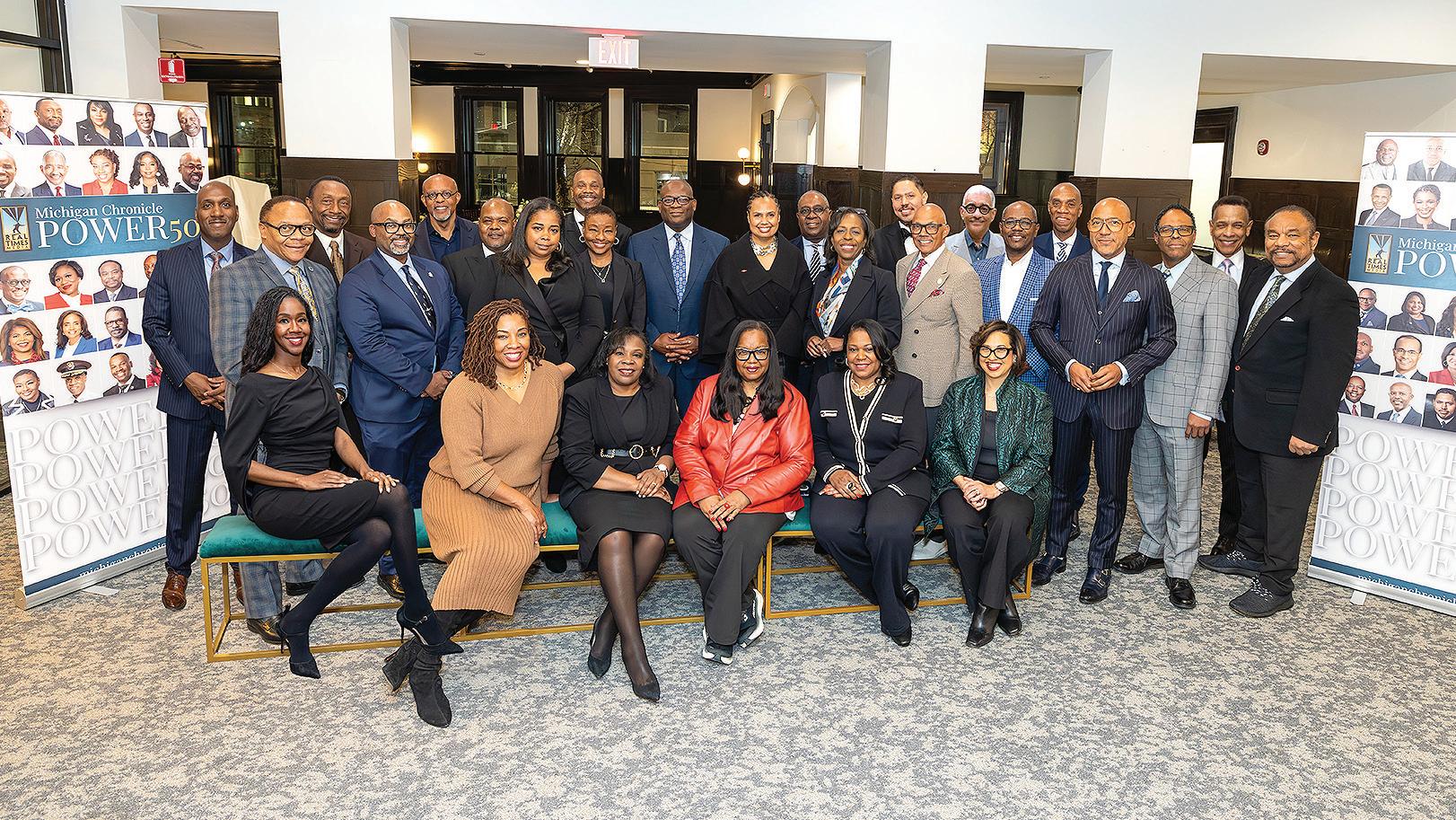
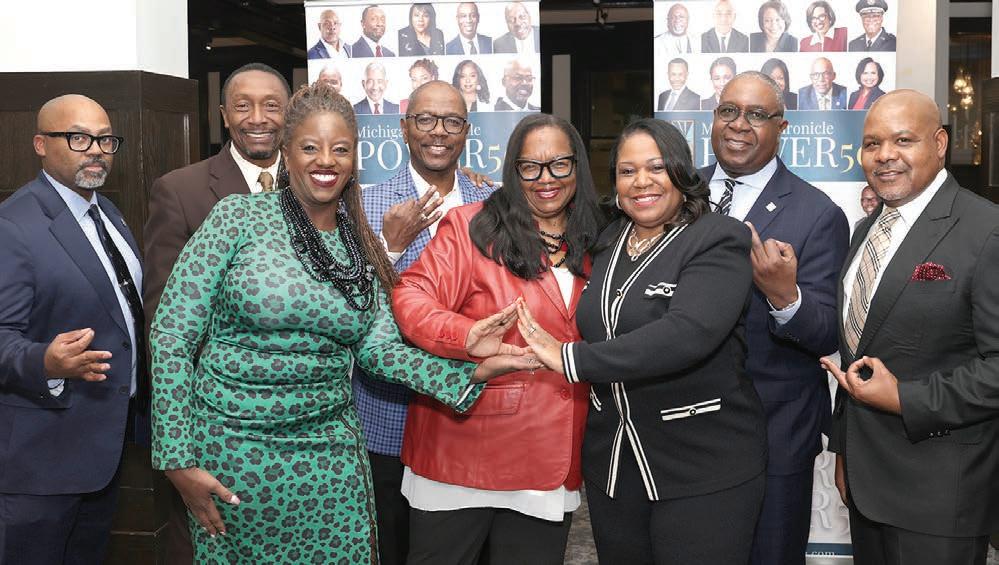
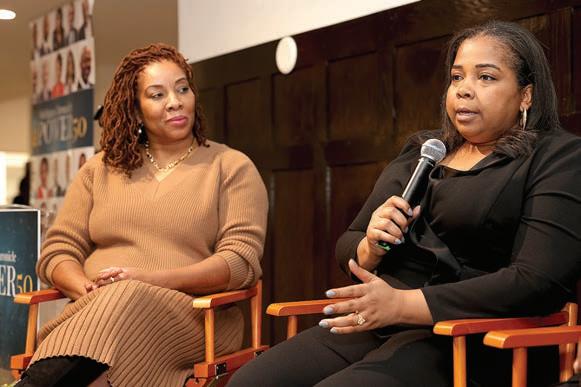
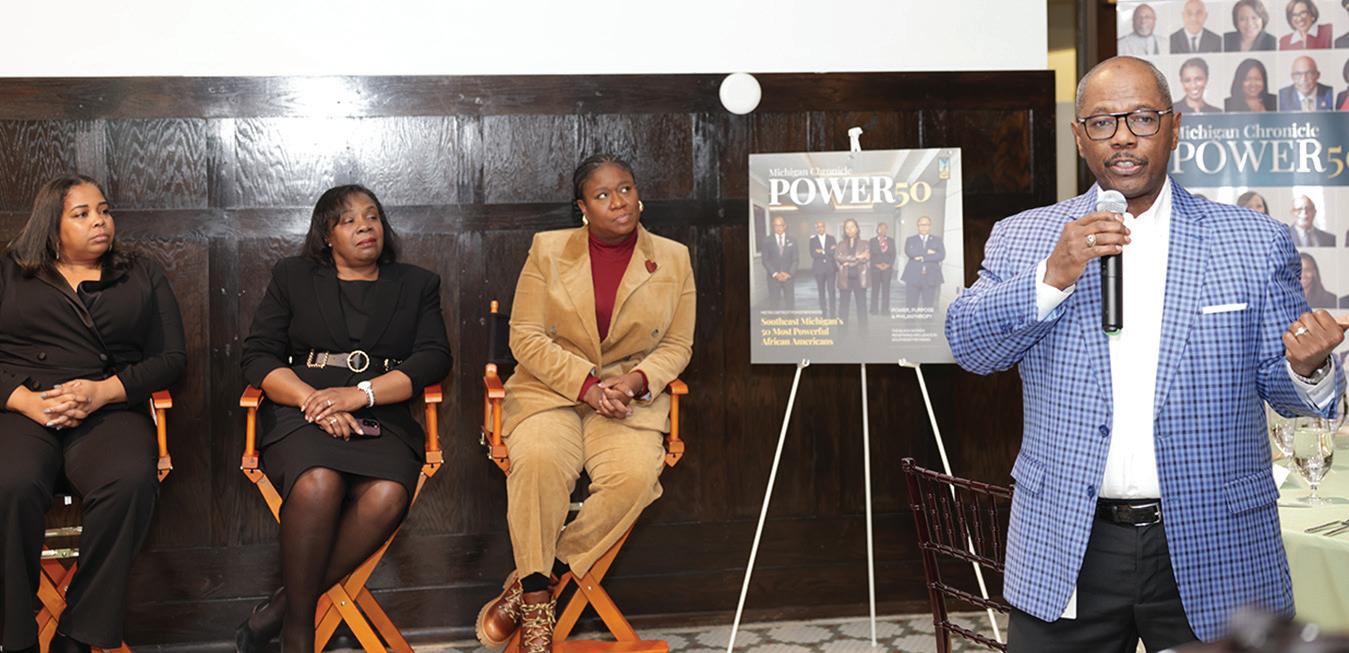
A powerful mix of Detroit’s most respected voices gathered at the historic Harmonie Club on Wednesday night, Dec. 3, for the Michigan Chronicle’s Power 50 dinner, creating a rare moment where influence, strategy, and community responsibility met at one table.
By Ebony JJ Curry SENIOR REPORTER
“Together we have created a social, environmental, and financial impact through bees,” said Jackson. Lindsey followed that sentiment with, “It is through our local partnerships and collaborative efforts that we exist in over 28 plus locations managing the health of 4.5 million honeybees – humbly speaking our movement has inspired others locally, nationally, and even internationally to take on similar missions.”
“Entrepreneur of the year – that’s a big deal,” said Brown. “It’s always an honor to be honored and it’s always a blessing to be in a room full of so many talent ed, accomplished, and popular people that look like me. I’m geeked. I started making and selling clothes as a kid and I always knew that I would have a business, but I never knew it would be Detroit’s brand name business, so I take a lot of pride in the fact that our business rep resents our city’s pride.”
Taking home the Corporate Excellence Award was Dannis Mitchell, Director of Community Engagement at Barton Malow.
The substitution is not only tonedeaf; it is deeply cynical. It suggests that public lands and national heritage are being used to elevate the ego of one individual at the expense of holidays that carry profound meaning for millions of Americans. Calling it anything less than discriminatory is to ignore the power politics at work.
For many Detroiters, Interstate 375, or I-375, has long been just another stretch of urban highway, a concrete artery connecting different parts of the city. To some, it’s a mere convenience; to others, it’s an unremarkable part of their daily commute. However, there’s a deeper, far more troubling story beneath the surface of this seemingly ordinary freeway—a story of pain, displacement, and the lasting impact on Black Detroiters.
It brought together a constellation of Black leadership rarely seen in a single space, convened by Michigan Chronicle Publisher and Real Times Media CEO Hiram E. Jackson with a specific charge: to reckon with the forces shaping Detroit’s future and to commit to the work that real change demands.
Detroit Hives, a pioneering organization founded by Lindsey and Jackson, harnesses the power of urban beekeeping to revitalize neighborhoods in the Motor City. Their initiative not only addresses critical issues like environmental conservation but also provides valuable education and employment opportunities to Black De-
What Was Lost and Who’s Excluded
The UAW has branded the industrial action as the “Stand-Up Strike,” focusing on specific plants within each automaker. UAW President Shawn Fain stated, “This strategy will keep the companies guessing. It will give our national negotiators maximum leverage and flexibility in bargaining. And if we need to go all out, we will. Everything is on the table.” Union leaders have also indicated that additional plants could be targeted in future waves if negotiations remain stalled.
“It is so important to recognize that there are young leaders across the country, many that are born here in Detroit. I represent our city nationally and I tell people, ‘Yea I’m a D-girl I’m from the west-side of Detroit,’” Mitchell expressed. “But more importantly, I’ve been able to have experiences within an industry that not many of us, specifically women of color, have the opportunity to engage in and I’ve been the youngest person in the room, the only Black person in the room, and the only Sistah in the room, and I really had to articulate the importance of showing up, giving chances when others won’t, and being persistent.” As a trailblazing Black woman thriving in a predominantly male-dominated industry, her unwavering commitment to fortifying the connections between businesses and Detroit’s communities is unde-
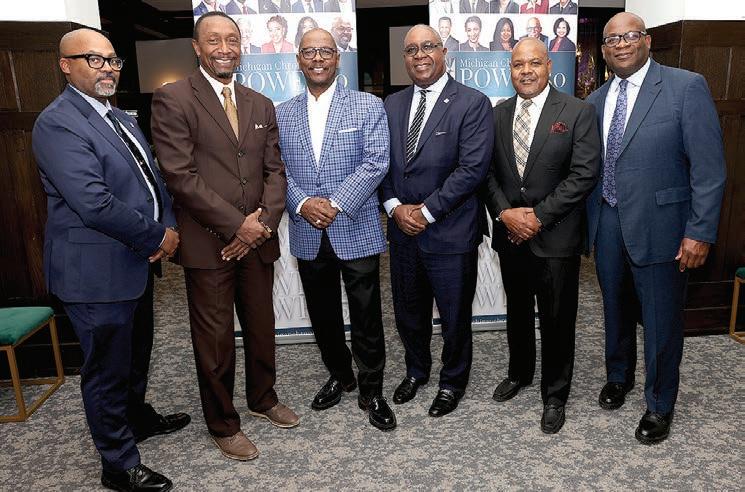
“This is a really special opportunity for us, bringing together 50 of Southeastern Michigan’s most powerful Black leaders,” said Jackson. “It’s not often that this many influential leaders are in the same room, but Michigan Chronicle and Real Times Media are all about highlighting African American excellence. Our celebration of the Power 50 group is one of the many ways we continue building on that legacy.”
ness district that had been the lifeblood of the community. tice, and economic devastation. More than 130,000 residents, primarily Black, were forcibly displaced. Families were uprooted, generational wealth was obliterated, and a thriving community was torn asunder. The wounds inflicted by I-375 run deep, transcending the physical barrier of a freeway to penetrate the very soul of Black Detroiters.
The male suspect allegedly shot the guard before fleeing the scene, while his female companion is accused of concealing the weapon in her bra.
By Andre Ash
• Access for Black Americans and marginalized communities. Free admission on MLK Day and Juneteenth created symbolic and practical inclusion. For many families, these were rare opportunities to visit national parks without financial barriers. Removing those days weakens that access.
DIGITAL ANCHOR
• Recognition of Black history as central to America’s story. Keeping MLK Day and Juneteenth on a national calendar affirmed that civil rights and emancipation are not side notes. Replacing them with Trump’s birthday sends a clear message about the administration’s priorities.
The tale begins in what is now Lafayette Park, once known as Black Bottom—a neighborhood rooted in African-American culture and history. Named after its dark, fertile soil, Black Bottom flourished during the mid1900s, nurturing the dreams and aspirations of prominent Detroiters like Coleman Young, Joe Louis, and numerous other Detroit legends. But in the name of urban renewal in the 1950s, this vibrant neighborhood was systematically dismantled, erased from the map, and replaced by a lifeless stretch of asphalt.
This painful legacy can be traced back to the nation’s interstate highway program of 1956—a program that aimed to connect the country but often did so at the expense of marginalized communities. In the case of I-375, it meant carving a path through the heart of Black Detroit, reinforcing segregation, and perpetuating inequality.
A Holistic Approach to Providing Shelter and Support for Detroit’s Unhoused People
Fain clarified the union’s strategy: “I want to give a major shoutout to the thousands of members who are on the picket lines right now fighting for all of us. The Stand-Up Strike is a new approach to striking. Instead of striking all plants at once, select locals will be called on to stand up and walk out on strike. This is our generation’s answer to the movement that built our union – the sit-down strikes of 1937. We told the Big 3 that Sept. 14 was the deadline and we meant it. We gave the companies our economic demands eight weeks ago and it took more than a month to get to the table.”
The dinner drew leaders whose work shapes the political, economic, and social landscape of Southeast Michigan. Dennis Archer Jr. represented the city’s business leadership and civic engagement. Latrice McLendon of the Knight Foundation brought a philanthropic lens focused on informed communities and equitable investment. Chief Todd Bettison joined the conversation from Detroit’s public safety leadership. Michigan Supreme Court Justices Kyra Bolden and Noah Hood added judicial perspectives shaped by Detroit’s legal and civil rights legacy.
philanthropic institutions. Political strategy also had a seat at the table through Melvin “Butch” Hollowell, Chief of the Mayor-Elect Mary Sheffield “Rise Higher” transition team. The room held far more names than the list suggests, representing every sector that touches the daily lived experiences of Detroiters.
These incidents unfolded during an unseasonably warm spring, leading to increased pedestrian traffic and heightened tensions in the densely populated downtown area.
For one to aptly recognize the harm caused by such projects, it is vital to note that some of the planners and politicians behind those projects built them directly through the heart of vibrant, populated communities—oftentimes to reinforce segregation and sometimes as part of a direct effort to replace or eliminate Black neighborhoods.
stands as a testament to the indomitable spirit of Black Detroiters and the enduring legacy of Black excellence. This historic district, once a vibrant hub for Black businesses and culture, is experiencing a renaissance that harkens back to its glory days. The destruction of Black Bottom may have torn apart a thriving community, but the resolute determination of a new generation of entrepreneurs and visionaries is reclaiming that lost legacy.
The surge in crime and the influx of visitors to Detroit’s downtown core garnered the attention of the Detroit Police Department (DPD), catching them somewhat off guard.
condition of Detroit’s education systems and the sustained work required to support young people. They discussed youth success not as a slogan but as a continuum shaped by schools, safety, mentorship, and opportunity. Intergenerational poverty, one of the city’s most enduring structural barriers, prompted discussion of policy, investment, and community-led solutions.
• Faith in fairness and respect for national memory. This move is not a neutral “adjustment.” It is a political
The union is pushing for a comprehensive list of demands. This
Homelessness continues to plague urban communities, with families and individuals grappling with the challenges of making ends meet in today’s economic climate. Whether it’s struggling to meet monthly mortgage payments or coping with soaring rental costs in a housing market marked by shockingly high prices, a variety of factors contribute to the growing issue of people becoming unhoused.
While the residential areas bore the brunt of this demolition, the heart of Black Bottom, its thriving business center, remained largely untouched. Restaurants, theaters, clubs, and bars—the very places that brought Detroit’s Black community together—were concentrated around Hastings Street, the epicenter of African-American culture in the city.
Meagan DunnJulie Schneider
Then, in a cruel twist of fate, Hastings Street, too, was obliterated a few years later, making way for the construction of I-375. This marked the final blow, sealing the fate of Black Bottom and signaling the beginning of the end for Paradise Valley, the Black busi-
Housing Resource Helpline in response to the challenges that residents face in navigating the complex system of housing services. The helpline provides a single point of contact for people seeking housing assistance and connects them with the resources they need.
State-level leadership was also present through Michigan State Police Director James Grady, offering insight on statewide public safety systems. Wendy Jackson of the Kresge Foundation, long known for neighborhood and arts investments, contributed a view from one of Detroit’s most active
Historically, shelters have provided a temporary respite for those in need, often serving as the first or second option after exhausting alternatives like staying with friends or family. Shelters offer a place to rest one’s head and a warm meal, albeit sometimes for extended periods. For others, being unhoused means living in cars or makeshift outdoor
But now, after decades of enduring the scars of I-375, there is a glimmer of hope on the horizon. Plans have been unveiled to transform this once-divisive freeway into a vision that seeks to right the wrongs of the past while heralding a new era of inclusivity and community revitalization.
“The city is in a pivotal transition period with a new mayor being elected, and this is the perfect time for the Power 50 to come together and figure out how this amazing group of lawyers, doctors, philanthropic leaders, supreme court justices, and other leaders can have a collective impact,” Jackson said.
James White, Chief of Police for the Detroit Police Department, said: “We were caught somewhat flat-footed right out the gate. By design we went into the spring deployment, which is less than the mid-summer deployment, and saw we say an uptick in violence that first warm weekend.”
The evening functioned less as a dinner and more as a diagnostic.
Support for the helpline comes from the Gilbert Family Foundation, which has pledged $10 million over three years to fund the program. Wayne Metro Community Action Agency manages the helpline, making it accessible to all Detroit residents. This initiative simplifies access to the City’s various housing services, ensuring that residents in need can easily find assistance.
Fueled by more than $100 million from the Infrastructure Investment and Jobs Act and other partners, this ambitious project aims to create jobs, remove barriers to economic growth, and reconnect the neighborhood with the rest of Detroit. It is a step
Conversations turned to the tension between real estate development and economic development, a debate that has defined Detroit for decades as projects rise while questions of ownership and opportunity remain unresolved. Leaders examined the
In the heart of Paradise Valley, Blackowned businesses are not just flourishing but thriving, offering diverse services, products, and experiences that pay homage to the past while paving the way for a prosperous future. From jazz clubs to soul food restaurants, the Black Press, and art galleries to fashion boutiques, this revival is breathing life into the very essence of what once made this neighborhood a vibrant cultural epicenter. It’s a resurgence that extends beyond brick and mortar; it represents the resurgence of a spirit that refuses to be subdued.
These issues have shadowed Detroit across administrations, funding cycles, and decades of reinvention. The difference on Wednesday night was the composition of the room: Black leaders with the authority to act, the expertise to shape policy, and the lived understanding of why these challenges persist.
Chief White attributes the violence in Greektown to a combination of weather conditions and a surge in population.
Jackson has made it clear that convenings like this are not ceremonial. They function as checkpoints in an ongoing process of accountability. The Michigan Chronicle has long held space for Detroit’s Black leadership to confront the forces that shape the
He explained, “ We saw numbers downtown that we have not seen, ever. People are emerging from COVID and there’s a feeling that we’re in a post-COVID era… and with the venues downtown and the reasons to come down with all the activities that are going on, we saw hundreds of more people and, in particularly, young folks, teenagers that we hadn’t seen.”
Detroit City Councilman Fred Durhal III, representing District 7, where Eastern Market resides, told the Michigan Chronicle, “It’s still very early in the process, MDOT is
By Sam Robinson SENIOR REPORTER
By Lynzee Mychael MULTIMEDIA JOURNALIST
The causes of homelessness are as diverse and complex as the individuals experiencing it. In response, the City of Detroit has adopted a holistic approach to combat this issue.
What a Federal Government Shutdown Could Mean for Detroiters?
“The city and its partners offer a lot of great services to help Detroiters with their housing needs, but they don’t mean much if people don’t know how to access them,” said Mayor Mike Duggan. “Thanks to the efforts of our partners and the generous support of the Gilbert Family Foundation, we now have a simple process to guide residents to the right housing resource and a growing number of programs to help them.”
Responding swiftly to the surge in violence, DPD adjusted its deployment plans. Rather than waiting for mid-summer, they deployed officers in the spring itself to address the situation.
“Providing services and high-quality housing to persons at risk of or who are experiencing homelessness is a key priority of the City of Detroit, said Julie Schneider, Director of Detroit’s Housing and Revitalization Department.
“This means focusing on building the pipeline of supportive housing and coordinating with the Continuum of Care on the delivery of critical resources such as emergency shelter, rapid rehousing, and diversion and prevention programs. It also means preserving and expanding affordable housing options for Detroiters of all incomes and improving housing stability though comprehensive service offerings available through the Detroit Housing Resource HelpLine and Detroit Housing Services Division within HRD.”
In May 2023, the City of Detroit launched the Detroit

From the days of the Great Migration when thousands of Black families flocked to Detroit in search of jobs and a better life, to the pivotal role they played in the city’s cultural and musical heritage, Black Detroiters have left an indelible mark on the city. However, in recent years, Detroit has experienced significant gentrification, which has raised concerns about the displacement of long-standing Black residents. Similar to a setting sun, there’s a rising spirit, and Black Detroiters are reclaiming their place in the city, despite the challenges posed by gentrification.
The Gilbert Family Foundation’s broader commitment involves pledging $500 million to support projects across Detroit over the next ten years, with housing initiatives being a significant part of their contribution.
Notably, Detroit has witnessed a consistent decrease in recent years, with the number of unhoused residents steadi ly declining. In 2019, approximately 7,847 people were unhoused and entered the City’s community response system. In 2021, about 5,687 people experienced homelessness.
According to the City of Detroit, since the start of the fiscal year 2019 to 2021, Detroit saw a 28% decrease in the
During the Great Migration, thousands of Black families from the South came to Detroit in search of jobs in the booming automobile industry. Despite facing discrimination and segregation, they built vibrant communities on the city’s east
and west sides. Over time, these neighborhoods became centers of Black culture and entrepreneurship.
According to Historian Jamon Jordon Black resilience in the city has roots that extend far before the Great Migration and will persist
The rise in visitors to the Greektown area is evident in data from Placer.ai, a location analytics company specializing in visit trends and demographic insights through geolocation-enabled mobile devices. From May 1-Aug. 27, 2022, there were 1.3 million visits and 655,000 visitors to Greektown, according to Placer.ai. In the same period this year, these numbers increased to 1.4 million visits and 670,000 visitors.
we also have a responsibility to all customers to ensure payment for service is received, so that costs are not unfairly shifted to others.”
“As
As Detroit’s downtown area continues to attract both residents and visitors, the police department has implemented various enforcement measures to manage the increased population. Notably, metal detectors have been strategically placed throughout Greektown to deter the illegal carrying of firearms.
because of discrimination, but they were also coming because Black people was doing some stuff. When did Black people start doing things in the city? They started doing things in this area in the 1800’s. In the 1800’s the major thing that they were doing in Detroit is they were the leaders in
DTE said service interruptions are “an absolute last resort” and are only implemented after every effort has been made to reach an agreement or create a payment plan.
“We have strategically placed them at key points, “ Chief White explains. It has been a deterrent for some, and some have tested it. If you are legally carrying a weapon and carrying a CPL, have a great day. If you’re
long after our current phase of gentrification.
“Black people were coming to Detroit because Black churches were here, black schools were here, and its was Black businesses here,” said Jordon. “They were coming of course
in his 50s who asked not to be named told Michigan Chronicle inside the building Thursday, Dec. 4, that he planned to move out despite a court allowing tenants to stay.
“What’s the point of staying? The writing is on the wall, once
inspiring generations. Motown Records, founded by Berry Gordy Jr., was not just a record label but a symbol of Black excellence and empowerment. However, as Detroit faced economic decline and population loss in the late 20th century, many
cine and healthcare, may be adversely impacted by
what the Supreme Court will rule in the upcoming
women been premoment of the final. a law1931 law effect, asked the affirm that constitucontain abortion. Our Planned Advocates of founding coalition
ReproducAll, a affirm abortion and freedom in constitution,” Giroux. is that everything in aborMichigan, makes we will we can patients care they


From page A-1
program.
The City of Detroit has partnered with 18 community groups and activist organizations on a new program unlike any other in the U.S. that will help long-term unemployed residents get reengaged in the job market. The Jump Start program, which will open to enrollment starting next week, is being funded through American Rescue Plan Act dollars made possible by the Biden Administration.
eral systems across the spectrum. With the potential to drive both foster and adoption numbers upward, a ban on abortions could leave many women to choose a less safe route restoring ‘back alley’ and illegal abortion practices, including self-abortions. Moreover, African American women and women of color, who already have a long-storied history with access and inclusion in medi-
Selected In Detroit Organization (IDO) Districts serviced
trol if, when and how to become a parent is cen tral to building and living a healthy, happy life,” said Vasquez Giroux.
city’s trajectory. It has also served as a witness to the consequences when decisions ignore the realities of Black communities.
International Institute of Metro Detroit D1, D2, D3, D4, D5, D6, D7
Vincent & Sarah Fisher Center D1, D2, D3, D4, D5, D6, D7
Fit4Life Health and Fitness D1, D2
“It’s important for people to understand that Power 50 isn’t just a list,” said Jackson. “Being a part of Power 50 comes with a responsibility that all the honorees are familiar with. Throughout the year, we’re going to engage them in conversations and ask for their help in curating tangible solutions for some of Detroit’s most pressing issues. I’m excited to celebrate their accomplishments and to provide a platform for these leaders to bring about positive results.”
Mayor Mike Duggan joined with other city officials and President Biden’s point person on the $1.9 trillion ARPA initiative to introduce leaders of the 18 In Detroit Organizations (IDOs) that were selected through a city procurement process.
The Open Door COGIC D3
TMI Detroit Inc. D3




Focus Hope D1, D2, D3, D4, D5, D6, D7
Family Assistance for Renaissance Men D3, D4, D5
Alkebu Lan Village D3, D4, D5
Emerging Industries Training Institute D3, D4, D6
The Black Bottom Group D4
Urge Imprint - Detroit Friends and Family D4, D5
Church of the Messiah Housing D5
Teach Empower Achieve (T.E.A.) D5
Center for Employment Opportunities D5
Spectrum Human Services Inc. D5
Beyond the scope of pro-choice versus prolife, the fight for repro ductive choice is one of freedom. As Michigan officials work to ensure each woman who finds herself in the position to choose has access to care without the threat of legal action, many wonder
The Power 50 Dinner illustrated what it looks like when influence meets responsibility. Leaders gathered not for recognition but for alignment. The goal is to continue these conversations with clarity and purpose, returning to the table with progress to report and work still to be done.
Detroit Hispanic Development Corp D6
Southwest Detroit Business Association D6
The People’s Action D6, D7
Increase school funding: Statutory changes to increase the School Aid Fund revenue by at least $3.6 billion and establish a permanent weighted funding formula based on student and community needs and universal preschool (0-3).
tive, pro-work strategies funded by the American Rescue Plan to build a larger, more skilled, and more inclusive workforce.”
Detroit’s future is shaped by people who understand the stakes and stand ready to act. The Power 50 Dinner offered a glimpse of that leadership in motion. It showed a network of Black leaders uniquely positioned to drive solutions and commit to the work required. It also affirmed the Chronicle’s long-standing role in holding space for Black excellence, civic engagement, and community-driven progress — a role it continues to meet with purpose.
The IDOs will be the city’s boots on the ground for enrolling long-term unemployed Detroiters in the mayor’s ARPA-funded Jump Start program. Each will be tasked with identifying residents from the neighborhoods they’re already doing work in and enrolling them in education or training programs. They will also coach and mentor each participant, monitor their progress and identify potential barriers to success throughout the program.
sonal needs; we will work with IDOs to make sure enrollees are on the best path to achieve success, whether they’re enrolled in a part-time or full-time
Jump Start is just one of nearly 100 ARPA-funded initiatives the City is undertaking after developing the plan through nearly 70 community input meetings. Through the Renew Detroit program, the City is also replacing old roofs on the homes of hundreds of low income seniors, doubling the number of grants it provides to Detroit entrepreneurs through Motor City Match, as well as investing tens of millions of ARPA dollars in public safety, parks and recreation, neighborhood beautification and more. A complete listing with the status of each project can be found at www.detroitmi.gov/arpa
From page A-1
statement: If your history challenges the dominant narrative, it can be dismissed. Meanwhile, personal glorification is elevated.
Khalil-Lullah Whit-
Why It Matters Beyond
taker Ballentine, 17, told the Michigan Chronicle that from his perspective, young people like himself are in the fight still, it is just not as easy to mobilize – but the passion and interest is still there.
Ebony can be reached at ecurry@michronicle. com.
Trusted Voices A key ingredient in the Jump Start approach is partnering with organizations that already have community trust and already are doing similar work. IDOs will coach and mentor each participant, monitor their progress and identify potential barriers to success throughout the program.
The health committee recommends reviewing state licensure policies to address the barriers that Black psychologists face in obtaining licensure in Michigan. Ensure equitable dis tribution of state health funds: gan communities with a significant Black popu lation receive adequate funds to address mental
Participating IDOs also will be eligible for performance-based incentives of up to $2,200 per participant for each track of the program. As each IDO client reaches their milestones in the program, the IDO will receive a financial incentive.
“In the Jump Start Program, participants have a financial incentive to work hard and succeed, and so do the IDOs that are helping them along the way,” said Mayor Duggan. “We really believe that this approach will result in a lot of Detroiters who had stopped trying to find work getting onto a path to gainful employment that can sustain them. We are deeply appreciative to President Biden for create the ARPA program and making Jump Start possible.”
Reject censorship in history instruction: Encouraging Gov. Whitmer of increasing
“Knowing where to start when you’re ready to get into the job market can be hard, especially for people who have been out of the workforce for a while,” said Nicole Sherard-Freeman, who serves as the Mayor’s Group Executive for Jobs, Economy and Detroit at Work.
Wayne RESA’s Superintendent Dr. Daveda Colbert issued the following statement in response to Governor Whitmer’s State of the State Address today, praising the Get MI Kids Back on Track plan and the desire to transition to a universal pre-K program over the coming four years.
about their own bodies in response to the historic SCOTUS decision last year to overturn Roe v. Wade. Taking it a step further, the governor called for repealing the 1931 law banning abortion and other policy measures that restrict access to reproductive health.
“To be better at coming alongside our residents, we’re taking community-centered partnerships to the next level. A stronger, financially supported network of community-based grassroots organizations that have long-standing relationships deep in our neighborhoods is the next frontier in getting thousands of Detroiters on the road to a better job or a new career.”
How the financial incentives will work
“Tonight’s State of the State Address was welcome news for educators, students and parents across the state as Governor Whitmer laid out her plans to continue to strengthen Michigan’s education system. The Get MI Kids Back on Track plan would add a critical tool in the toolbox for educators as districts are focused on improving outcomes for students in Wayne County. By allocating additional funding to districts for tutoring and after-school programming, we can ensure schools and families have the resources they need to help students excel.”
To learn more about embraces. transforleadership as a approach that change the syscircumstancoperating Ivory “Transformationdoesn’t just do certhem view of and exdrive that because what create everyentire because innovation and preparing
Make It In Michigan
In addition, she called for expanding the Elliott-Larsen Civil Rights Act of 1976, which “prohibit(s) discriminatory practices policies, and customs in the exercise of those rights based upon religion, race, color, national origin, age, sex, height, weight, familial status, or marital status.”
“Protecting these freedoms is the right thing to do and it’s just good economics,” said Whitmer. “States with extreme laws are losing talent and investment because bigotry is bad for business.
The innovative, results-driven nature of the Jump Start program and other ARPA-funded city programs brought President Biden’s top ARPA advisor, Gene Sperling, to Detroit to be a part of the announcement.

“Mayor Duggan’s Jump Start Initiative to put those who have faced long-term unemployment on a path to a strong, dignified job is a national model of how to deploy President Biden’s American Rescue Plan to address not only the immediate challenges created by the Pandemic but to ensure a more equitable recovery that leaves no one behind,” said Gene Sperling, American Rescue Plan Coordinator and Senior Advisor to the President. “The entire Detroit-At Work Adult Scholarship program is indeed one that President Biden has highlighted as one of the nation’s most innova-
Many of these grassroots organizations have been doing this work for years but will now have the opportunity to be paid based on the successes of their clients. The IDOs will be paid monthly by a third-party administrator as program participants reach milestones, up to $2200 per program each participant completes, for a total of up to $8800 per participant.
An example of this would be a person who is enrolled in a literacy program after failing an 8th grade reading test. The IDO would be paid $300 upon participant’s enrollment, another $300 when they complete the first six weeks of training, another $800 when the participant improves two grade levels in reading and another $800 once they have reached an 8th grade reading level. The participant can then move on to another program track. Jump Start just one of many ARPA funded initiatives
Whitmer also announced her Make it in Michigan plan to reinvigorate the state’s manufacturing and supply chain sectors by returning outsourced cutting-edge projects and jobs back home.
“Make it in Michigan proposes a sustainable funding source for our economic development efforts while growing talent, making our communities better places to live, and helping our state become a place where anyone can thrive,” said Whitmer.
She reminded the legislature that bipartisan collaboration has brought home $13.5 billion worth of projects, with nearly 13,000 jobs secured, and has continued to court national and international business leaders to continue investing in Michigan. Repealing Abortion Ban And Safeguarding Civil Rights Protections

Each JumpStart participant has unique education, training, and per-

Whitmer applauded the works of voters and advocates across the state in reinforcing people’s right to make decisions
Taken together, this decision becomes more than tonedeaf. It is a brazen act of erasure disguised as administrative policy.
Prioritizing a former president’s birthday over holidays rooted in civil rights and liberation is part of a larger trend: minimizing the experiences and contributions of Black Americans while amplifying nationalism centered on a single political figure.
He adds that it’s important for young people who might feel disillusioned and disheartened by the continued news of post-Floyd murders of Black people to remember where they came from and connect with their roots to know where they are going.
“My mother intentionally raised me in African-centered environments, whether that was attending a ceremony held by the African Diaspora Ancestor Commemoration Institute, visiting the Charles Wright Museum for the African World Festival, or through being around Nsoroma Institute and D-Town Farm,” he said. “It’s through these experiences that I have become the person I am and look to become.” Megan Kirk contributed to this report.
National parks belong to the public — all of it. They are part of a shared American heritage. Free-admission days are not mere perks; they are opportunities for equal access to the nation’s most treasured spaces.
Removing MLK Day and Juneteenth reduces that access. Adding Trump’s birthday turns public land into a form of personal tribute. That isn’t patriotism. That’s exclusion. A Pointed Critique: Racism by Policy
We should build on our reputation as a welcoming beacon of opportunity where anyone can succeed.”
most,” said Whitmer. Public Safety and Gun Control
Let’s be honest: this is racism by policy — subtle enough to deny, clear enough to recognize.
Removing commemorations tied to Black liberation and civil rights while inserting a self-referential holiday communicates exactly who is valued and who is not. It embeds bias into the national park calendar and transforms a public institution into a stage for personal celebration.
EDUCATION
This is not simply careless. It is discriminatory. It implies that Black lives, Black history, and Black remembrance are optional — while ego-driven symbolism is mandatory.
In a nation still grappling with the trauma of slavery, segregation, and systemic injustice, this isn’t a minor change. It is a direct attack on inclusion.
The Stakes Beyond Symbolism
Whitmer said since she’s been elected to office, the state has invested $1 billion in public safety and is committed to continue funding law enforcement “with better training, oversight and access to mental health resources.”
Whitmer called for funding MI Kids Back on Track before spring break, to offer every child personalized learning support to get them back on track for long-term success. This would include expansive tutoring programs to help students master critical skills sets and information.
Access to national parks shapes childhood memories, family histories, and a sense of belonging in America’s story. When free days connected to Black culture and history are removed, so is the bridge for many families to experience public lands.
A Call to Resistance
This is not about partisanship. It is about justice.
She announced the launch of Operation Safe Neighborhoods with the focus on removing the flood of illegal firearms off the streets before a violent crime is committed. In addition, she called for enacting preventative measures such as universal background checks, extreme risk protection orders and safe storage laws.
Replacing holidays tied to liberation with a birthday — barely acknowledged as Flag Day by most Americans — is an insult to history and an act of cultural erasure.
When public institutions elevate vanity over history, exclusion over inclusion, ego over equality, the public must respond. We must demand that national heritage remain open, equitable, and reflective of our full history — not a narrow, glorified version of it.
“When a child gets a great start, learns to read and graduates high school, they are on track to land a good-paying job or pursue higher education. Unfortunately, the last few years have disrupted regular learning patterns. In-class instruction alone is not enough— our children need more support to master the skills we know they need
To view the recording of Governor Whitmer’s entire 2023 State of the State Address, visit michigan.gov/whitmer/news/ state-of-the-state/2023
National parks do not belong to one man. They belong to the people. And no birthday should ever replace a legacy.
Hodari Brown is a licensed minister, military veteran, mental health advocate, and organizational leader.

Monday, Dec. 8 at noon.
From page A-1
they sell the building they’ll have all of us out anyway,” he said.
Development Block Grant, Housing Opportunities for Persons with AIDs, the Emergency Solutions Grant, and the Housing Trust Fund). The Michigan State Housing Development Authority (MSHDA) is responsible for preparing the Michigan CAPER and soliciting comments from the public regarding the outcomes tied to the plan on an annual basis.
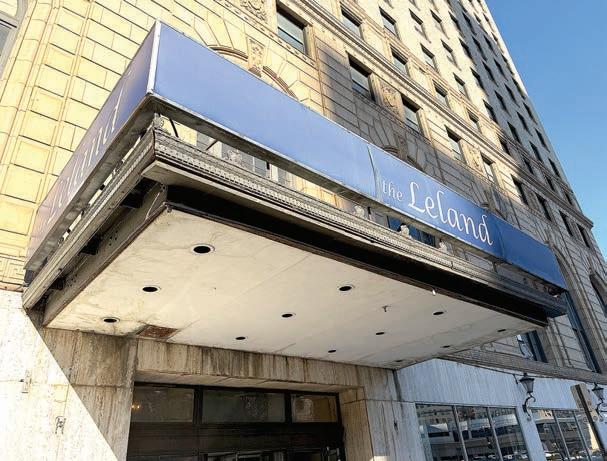
The building originally opened as a hotel in the 1920s. It’s dining room, pictured above, would be a meeting place
The comment period will commence on February 2, 2023 and end on February 16, 2023. The primary focus will be to receive comments regarding the draft CAPER report.
Copies of the CAPER report may be downloaded free of charge from the MSHDA website at www.michigan.gov/mshda.
All interested parties are invited to submit written comments to the attention of Tonya Young, 735 East Michigan Avenue, P.O. Box 30044, Lansing, MI 48909.
Tenants cited their uneasy feeling over what happens next in their requests to talk to Michigan Chronicle off the record or without their name. One woman said she was concerned about potential retribution for speaking out against the owner.
Written comments must be received no later than February 16, 2023. Comments can also be submitted to the hidmailbox@michigan.gov attention MSHDA Consolidated Plan Coordinator.
Special Assistance: Feedback is encouraged from mobility-challenged individuals. Persons with disabilities needing accommodations for effective participation should contact Housing Initiatives at 517.335.2524 to request mobility, visual, hearing or other assistance.
The late owner of the building is being represented in court by Luis Ramirez, who did not reply for comment before the publication of this article. The building is also home to Leland City Club, known for its 18+ underground electronic music parties that typically draw an alternative, goth crowd. A GoFundMe to save the club raised nearly $42,000 as of
A3 | December 10-16, 2025
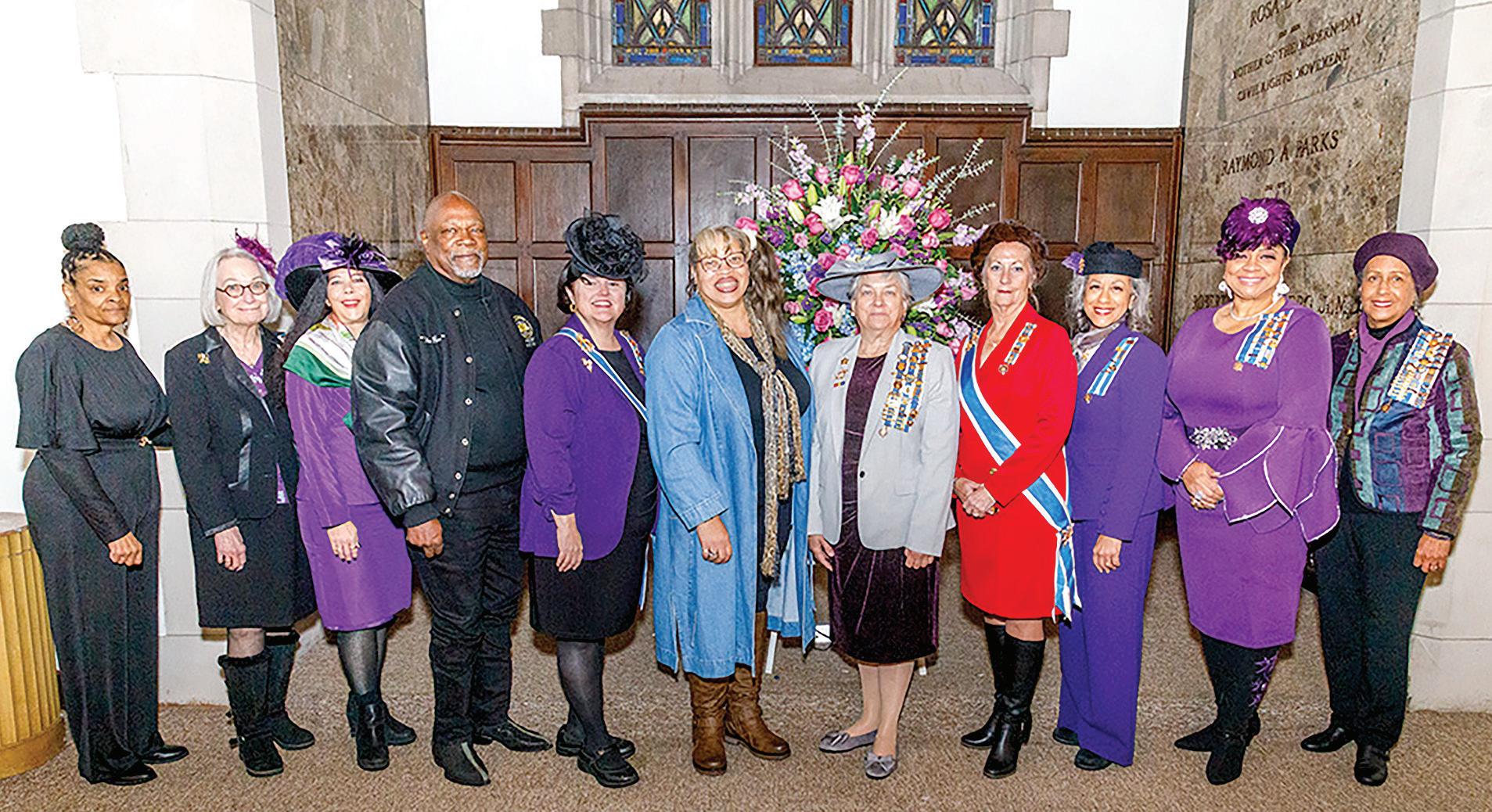
The Daughters of the American Revolution of Michigan hosted two days of events celebrating the legacy started by Rosa Parks 70 years ago when she took a front seat on a Montgomery, Ala., bus reserved for whites.
“As we commemorate the 70th anniversary of Rosa Park’s historic and world-changing act of courage, today has been a powerful reminder that history is not just something we remember, it’s something we carry,” said DAR of Michigan State Regent Dawn Brady during a celebration luncheon at the Henry Ford Museum.
“Her action reminds us that the fight for liberty and justice began with our founders, but each generation has been called to continue it in their own way,” Brady said. “For the DAR, this reflects our mission—to preserve history, promote education, and encourage patriotism, and to do so with inclusivity and respect for all who have shaped this nation.”
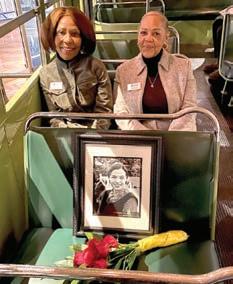
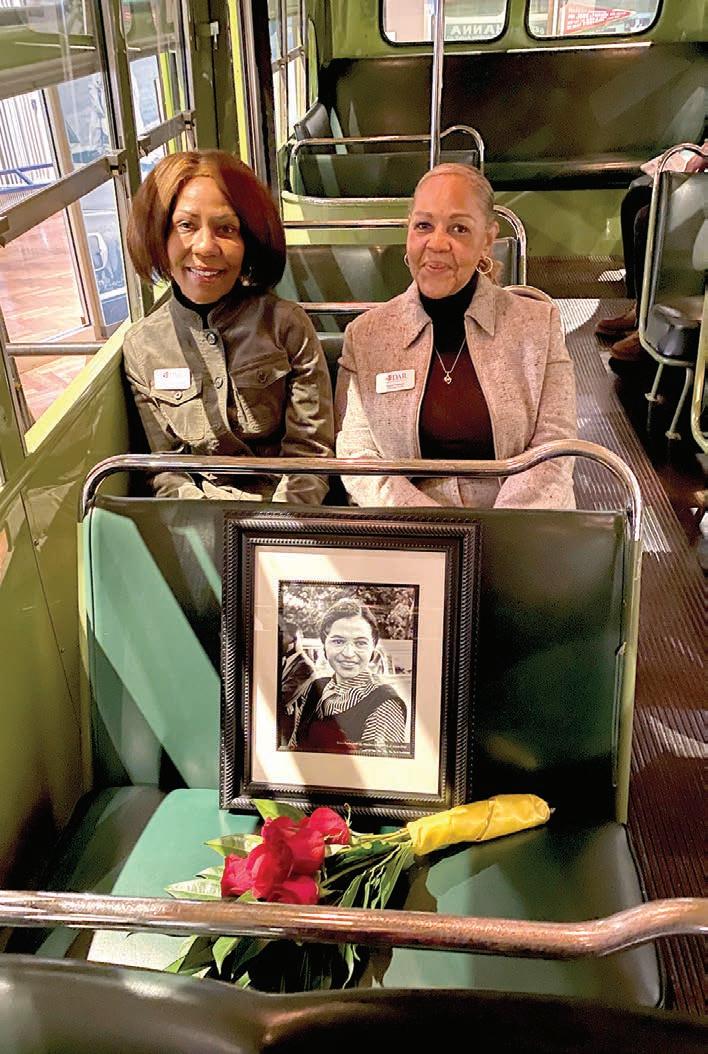
Before and after the luncheon, Michigan Daughters joined other museum visitors who toured bus #2857. A bunch of red roses and a portrait of Rosa Parks greeted visitors to the seat she took in 1955.
The Henry Ford Museum waived admission fees for the day to honor Mrs. Parks.
The museum purchased and restored the iconic bus and exhibited it to the public in 2003. William Pretzer, senior curator of history emeritus at the Smithsonian’s National Museum of African American History and
Culture, shared the story of how the museum acquired and refurbished the bus.
Before joining the Smithsonian, Pretzer led the research, acquisition and restoration of the bus as curator of the Henry Ford Museum and Greenfield Village. Pretzer’s work helped transform the bus into a powerful centerpiece of the museum’s “With Liberty and Justice For All” exhibit.
The bus, painted bright yellow and green, was renovated to look as close to the bus that Rosa Parks approached in 1955 and in top condition so that “every member of the public should be able to get on this bus and, if they wish, sit in her seat,” he said.
He noted that the bus exhibit represents one of the four freedom movements represented in the museum’s collection that includes George Washington’s tent, Abraham Lincoln’s chair and memorabilia related to the women’s suffrage movement.
Other speakers at the luncheon included John E. Johnson, Jr., J.D., executive director of the Michigan Department of Civil Rights and Patricia Mooradian, president of The Henry Ford Museum of American Innovation.
Brady thanked the speakers at both events for “bringing Mrs Park’s legacy to life in such meaningful ways. Your insights deepen our understanding of her story and challenge
By Dr. Carolyn Haliburton Carter GUEST COLUMNIST
Exploring the collision of race, identity, and machine logic—how data-driven technologies are reimagining old racial hierarchies in digital form. Artificial intelligence (AI) was supposed to free us from human bias. Instead, it’s learning our worst habits with frightening accuracy.
Algorithms now decide who someone hires, who the police flag, who receives a loan, and even how someone defines ancestry. Controversies around race and machine learning have sparked debate among computer scientists over how to design machine learning systems that guarantee fairness (Benthall & Haynes, 2019).
Yet beneath the surface of data and design lies something older than the microchip: America’s centuries-old obsession with race and purity.
We’ve entered a digital age where machines are teaching themselves to recognize faces, voices, and genetic code—but they’re also learning who belongs and who doesn’t. In subtle and not-so-subtle ways, AI is reviving one of America’s most enduring racial codes: the One-Drop Rule. The prevailing criterion for deciding who is Black is, of course, the principle of hypodescent. This ‘one drop rule’ has meant that anyone with a visually discernible trace of African, or what used to be called ‘Negro,’ ancestry is simply Black (Hollinger, 2005).
To understand the technology, we have to return to history. The One-Drop Rule was never just a social convention— it was a legal and ideological weapon. Rooted in the southern enslavement, it declared that anyone with “one drop” of African blood was Black, no matter how light their skin or distant their ancestry. The rule appeared in statutes such as Virginia’s 1924 Racial Integrity Act, which forbade interracial marriage and institutionalized the notion of racial purity (Sherman, 1988).
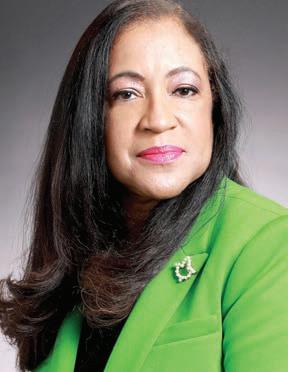
Dr. Carolyn Haliburton Carter
Throughout history, racial classification systems sought to define and control people of African descent through pseudoscientific and socially constructed measurements of “Black blood.”
These classifications rooted in colonial enslaved societies, particularly in the Caribbean, Latin America, and the antebellum United States, reflected the obsession with racial purity and hierarchy. Individuals of mixed African and European ancestry were assigned names to denote the specific proportion of African lineage they were believed to possess.
For instance, “Mulatto” described a person with 50% African ancestry—half “Negro” and half White. Other classifications further subdivided these categories: Griffe (75% Black, from Negro and Mulatto), Marabon (62.5% Black, from Mulatto and Griffe), and Sacatra (87.5% Black, from Negro and Griffe). There were also names for those with Indigenous and African heritage, such as O.S. Rouge (50% Black, from Negro and Indian).
In societies like colonial Saint-Domingue (Haiti) and Louisiana, terms like “Quadroon” (25% Black, from White and Mulatto), “Tierceron” (37.5% Black, from Mulatto and Quadroon), and “Octoroon” (12.5% Black, from White and Quadroon) appeared in censuses, legal documents, and literature. These labels served not merely as descriptors but as instruments of racial hierarchy—defining one’s rights, social status, and even freedom or enslavement. The ideology behind these classifications culminated in the American “one-drop rule,” which held that any trace of African ancestry, however minute, made a person legally and socially “Black” (Williamson, 1980; Davis, 1991; Sweet, 2003).
The reason was always control by the enslaver. By labeling mixed-race people as Black, white elites maintained a racial hierarchy that secured power, property, and privilege. The law did more than segregate—it defined identity itself as something measurable, traceable, and enforceable. It made race a kind of algorithm: input ancestry through genealogy equals DNA and output identity.
Generations of Black families felt the consequences of these labels. Entire lineages were legally reclassified, erasing Indigenous, European, and multiracial roots. The One-Drop Rule didn’t just say who could marry or own land; it also said who was fully human in a world where white people were in charge (Post, 2009). Today, that same logic—categorization by data, hierarchy by blood—has been reborn in code. Machine learning (ML), frequently used in constructing AI, relies on observing trends in data and forming relationships through pattern recognition (Fuchs, 2018). A team of researchers at Microsoft faced a similar issue in facial-emotion-recognition technology, stating, “Poor representation of people of different ages and skin colors in training data can lead to performance problems and biases” (Howard, Zhang, and Horvitz 2017). When we feed AI our data, we’re not
From page A-3
giving it neutral information. We’re giving it history. Our history is complex enough with the challenges of even tracing our ancestry, let alone giving the future a false sense of who we are. Every photograph, census record, medical file, and police report carries traces of racial bias embedded in the systems that created them (Moy, 2021). AI learns patterns from this data, repeating the prejudices it finds.
Facial recognition software, for instance, has repeatedly shown error rates up to 35% higher for darker-skinned women compared to white men (Williams, 2025). Predictive policing tools often send officers back to the same Black neighborhoods where over-policing has historically occurred. Hiring algorithms “learn” to prefer candidates with traditionally white-sounding names. (Ray, 2023).
Even in genealogy and ancestry testing, machine learning reduces identity to percentages — 33% West African, 17% Indigenous, 12% Scandinavian — as if culture and history can be divided like a spreadsheet. These systems mirror the One-Drop Rule’s obsession with quantifying Blackness, treating race as data rather than lived experience.
Much of the literature regarding DNA ancestry testing is written as personal essays and typically centers on African American experiences participating in and digesting ancestry results. This could be due to the way some tests have been marketed towards African Americans as a means to fill in gaps in historical records due to slavery, as well as the use of ancestry DNA tests in documentaries or television programming involving genealogical studies of African Americans. (Cotton, 2022).
When AI interprets identity, it doesn’t see context—it sees code. And in that code, centuries of racial hierarchy are quietly re-encoded. The tensions between race and chatbots create new opportunities for people and machines. (Schlesinger, O’Hara, Taylor, 2018).
The old architects of racial classification used bloodlines and paper records. Today’s architects use algorithms and databases. Governments and corporations alike are using biometric and genetic information to sort, predict, and control. In the medical field, AI-driven health algorithms often underestimate pain levels or disease risk among Black patients because the data sets are drawn primarily from white populations (Haider, Boal, et al., 2024).
And in the financial sector, algorithms evaluating creditworthiness can deny loans to people from historically redlined neighborhoods.
The blackness of people has long been a contention for people of color. I can recall my great-grandmother talking about how she could not pass the brown paper bag test because she was dark and complicated; therefore, she could not get a job. The “brown paper bag test” was a historical practice that denied access and entry of darker-skinned African Americans into social spaces, networks, and the familial lineages of more affluent, lighter-skinned African Americans. (Dunn-Salahuddin).
These aren’t coincidences—they’re the digital descendants of structural racism. The machine doesn’t “see” race as humans do, but its logic reproduces the same exclusions. It measures difference, assigns value, and ranks humanity in ways eerily reminiscent of the racial taxonomies that shaped slavery, segregation, and colonial science.
The most disturbing echo of the OneDrop Rule is found in ancestry and biometric classification. Companies promising to trace your heritage through DNA often rely on databases built on racialized categories—“Sub-Saharan African,” “Native American,” “European.” These categories flatten centuries of migration and interconnection into oversimplified racial types. What was once a legal fiction has become a digital metric (Liz, 2018).
For many communities of color, this is more than a technological issue—it’s an existential one. When an algorithm misidentifies a face or assigns a racial probability, it revives the same logic that once erased families from census rolls and denied them personhood.
AI reduces identity to what can be measured. But identity is relational—it’s shaped by memory, community, and story. When systems decide what “percentage” of ancestry defines you, they echo the old slave codes that turned human lineage into property ledgers.
According to the author Abel of Permanent Markers, distinctions bind our bodies through the overlaying of historical, scientific, political, and cultural discourses about difference and otherness (Abel, 2021).
The psychological toll is profound. In my own genealogical work, I’ve seen how deeply people yearn to reconnect with their ancestral past—to know who they are beyond the distortions of slavery and segregation. Yet
From page A-3
us to live with the same quiet strength and unwavering conviction.”
She also gave special recognition to Rosa Parks’ niece Sheila Keys, who attended both events.
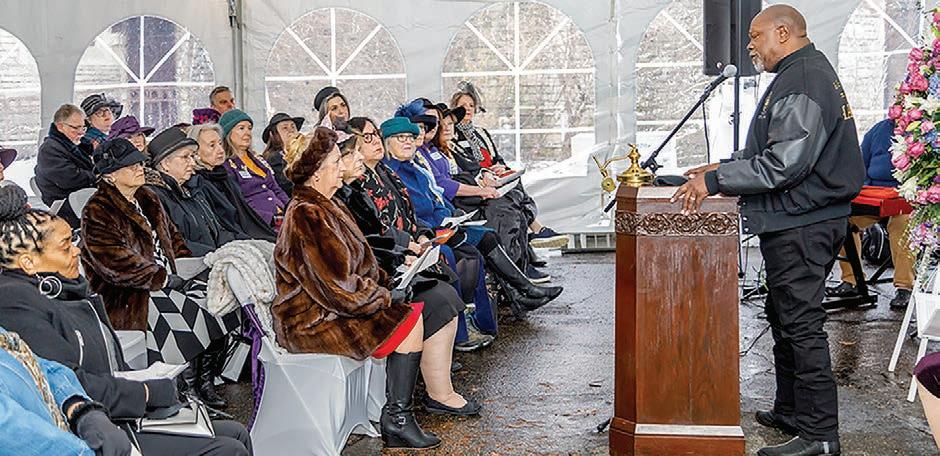
On Sunday, the DAR of Michigan hosted a special memorial in honor of Rosa Parks at Woodlawn Cemetery. The Rev. Wendell Anthony, president of the NAACP Detroit Branch and pastor of Fellowship Chapel, provided the homily at the Cer-
AI, for all its promise, risks turning that search into a digital sorting mechanism. The same tools that could illuminate forgotten histories can also perpetuate exclusion. Our ancestors were categorized by blood and color to serve an economic system. Now, we risk being categorized to serve a data economy that does not see color.
A new generation of scholars and technologists is challenging these algorithmic hierarchies. Figures like Joy Buolamwini of the Algorithmic Justice League, Dr. Timnit Gebru, and Dr. Ruha Benjamin, author of Race After Technology, are exposing how machine learning replicates systems of oppression—and urging that we redesign technology around ethics, equity, and empathy (Benjamin, 2023).
Their work reminds us that bias is not inevitable—it’s engineered. And if bias can be engineered, it can also be challenged, dismantled, and even changed. Across the country, genealogists like me are using digital tools to restore erased narratives, reconstructing the past through research and storytelling. Community-led data projects— like the Freedmen’s Bureau indexing initiative and Black-owned genealogical databases—use technology to uncover lost stories.
These efforts represent a different kind of algorithmic logic: one grounded in restoration, not ranking. Through storytelling in genealogy, we are learning that our ancestors didn’t only pass down the pain; we inherited so much more, and we have been handed a legacy of greatness in our culture and our color. Rather than allowing machines to define us, we can use technology to reclaim the data of our lives—our names, our histories, and our blood.
We must rewrite this wrong by rewriting the code so that if AI has inherited the One-Drop Rule’s logic, we will be in step with the technology. That means holding developers accountable for cultural bias. It also means expanding public literacy— teaching communities of color how AI works and how it can work for us rather than against us.
Technology should never decide who we are. AI is no longer in the lab but in our homes and our buildings (Frank, Roehrig, & Pring, 2017). The future of AI must honor the complexity of human identity, not compress it. This requires more than audits and ethics boards—it requires storytelling, remembrance, and radical imagination.
As a genealogist and historian, I often remind my students: history doesn’t disappear; it learns, adapts, and can even change. The One-Drop Rule may no longer be written into law, but it lingers in our databases, our algorithms, and our assumptions about
emony of Remembrance. Vocalist Chandra Knight performed “Lift Every Voice and Sing.”
The National Society Daughters of the American Revolution, founded in 1890 and headquartered in Washington, D.C., is a non-profit, nonpolitical volunteer women’s service organization dedicated to promoting patriotism, preserving American history and securing America’s future through better education for children.
For information about NSDAR go to www.dar.org or www.michdar.org.
who belongs. If we don’t confront that legacy, AI will keep rewriting it in binary code, and we will be eliminated altogether.
The true danger of AI isn’t that it’s racist—it’s that it’s unreflective of America yesterday and today. Machines don’t question the data they’re given; they reproduce it. But we can, and we must!
The One-Drop Rule once served as cruel shorthand for belonging and exclusion. Today, as we stand at the intersection of technology and humanity, we must ask: will our digital systems liberate us from that logic or embed it forever?
The answer depends on whether we see AI as a mirror or a roadmap. If it’s a mirror, it reflects our prejudices back to us. But if it’s a roadmap, we have the power to redraw the boundaries—to chart a world where identity is not determined by drops of blood or lines of code, but by the fullness of our shared humanity in all of its recognition.
The intricate terminology used to define “degrees” of Blackness reveals not only the absurdity of racial science but also the enduring legacy of systemic efforts to categorize and control identity. These historical classifications—Mulatto, Griffe, Marabon, Quadroon, and Octoroon—reflect societies’ attempts to quantify humanity itself, reducing ancestry to fractions and bloodlines rather than acknowledging shared dignity.
Yet, despite these imposed labels, people of African descent have continually redefined themselves through resilience, culture, and self-determination. Understanding these classifications today helps us uncover the deep roots of racial constructs and confront how remnants of such ideologies persist in modern concepts of race and identity.
As we continue to step into the uncertainty of AI, the wild-wild west of no regulations, and the environmental impact on communities, not to mention our likeness being challenged, changed, and used, there are many challenges we face. What makes a good likeness depends on who the representation of a person is, and these representations change depending on the viewer’s own experience.
Dr. Carolyn Haliburton Carter is a historian, professional genealogist, Underground Railroad researcher and storyteller specializing in African American lineage, identity, and digital heritage. She is the founder of Storykeepers Heritage Network, where she bridges genealogy, history, and technology to preserve untold stories. Chair, City of Detroit Historic Designation Advisory Board and a member of the Governor of Michigan’s Michigan Freedom Trail Commission.


A5 | December 10-16, 2025
By Anthony O. Kellum CONTRIBUTING WRITER
The Thanksgiving season is more than a holiday. For our community, it is a moment of reflection a sacred pause to honor here we’ve been, acknowledge where we stand, and envision where we are determined to go. As Black Americans, our story in this country has always been intertwined with land, opportunity, and the ongoing pursuit of freedom. In this season of gratitude, there’s no greater truth worth lifting up. Property is still power. Ownership is still the gateway. And right now, is one of the most important times in our lifetime to claim our place in the land of opportunity.
America markets itself as the land of opportunity, but historically, those opportunities were systematically denied to Black people. From Reconstruction to Jim Crow, from redlining to predatory lending, the playing field was never level. Yet despite every barrier, our resilience has allowed us to rise, to learn the system, to build wealth in new ways, and to claim ownership with strategy and purpose.
Today, even with economic uncertainty and shifting political winds, the opportunity to own property remains one of the most powerful tools we have to protect our families, secure our future, and strengthen our legacy. Land remains the foundation of wealth in America. Homeownership remains the leading driver of generational stability. And property remains the one asset that can’t be outsourced, downloaded, or replaced.
Some will tell you to wait for the election, wait for the rates to fall, wait for the market to “settle.” But history shows us something very different opportunity rarely waits. It always favors the prepared.
Home values continue to rise, Black homeownership is still nearly 30 points behind white homeownership, and closing that gap requires action, not hesitation. Political and economic uncertainty makes ownership even more important as a stabilizing force for families. Resources, grant programs, down payment assistance, and specialized lending products are more available than they have been in years yet too few in our community take advantage of them. And while rents rise every single year, fixed mortgage payments protect you from the increasing cost of living.
If we sit still, the gap widens. If we move, we shift generational outcomes. Ownership is not about timing the market, it’s about timing your future.
This season, as we gather around tables with our families educated, informed, accomplished, and rising, we must also gather our courage to step into the next chapter of our economic empowerment. We have more access than our grandparents ever imagined. More knowledge than our parents ever had. More opportunities than our ancestors were ever allowed. But access without action means nothing.
This Thanksgiving season we gave thanks for the sacrifices that made our degrees, careers, and mobility possible but let us honor those sacrifices by doing what they could not always do: Own. Build. Expand. Protect. Transform. This is legacy work.
When Black families own homes, everything changes. Children gain stability. Parents gain security. Communities gain power. Wealth stops leaking out and starts flowing forward. This past Thanksgiving and into the holiday season, we remember you are not just buying a home, you are planting a flag. You are claiming territory. You are rewriting history. You are walking in the footsteps of ancestors who dreamed of this moment. This is the land of opportunity. It may be imperfect, complicated, and still evolving but it is ours to shape, if we choose to own it.
Let this season of thanksgiving be more than gratitude. Let it be strategy. Let it be action. Let it be the moment we say: The future belongs to those who own it. And we will not be renters of our own destiny. We will be owners of our land, our legacy, and our story. Property is Power. And the time is now.
Property is Power! is a movement to promote home and community ownership. Studies indicate homeownership leads to higher graduation rates, family wealth, and community involvement.

By Sam Robinson SENIOR REPORTER
Developers have new plans for the long-abandoned auto factory – viewed as a symbol of the city’s decline – that intends to honor the underground community that kept the Packard Plant alive while it was uninhabited.
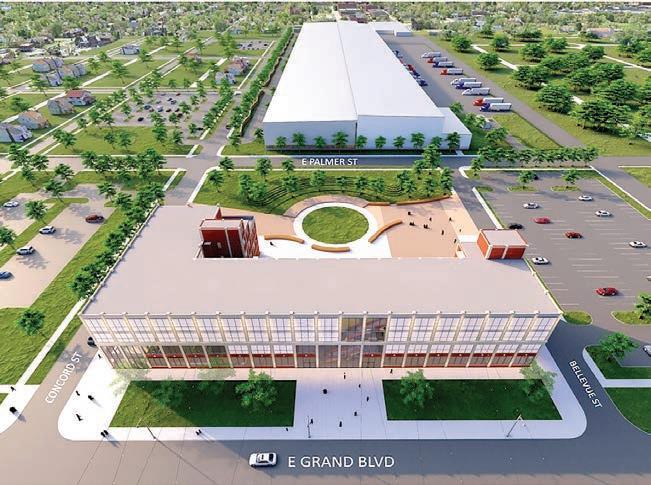
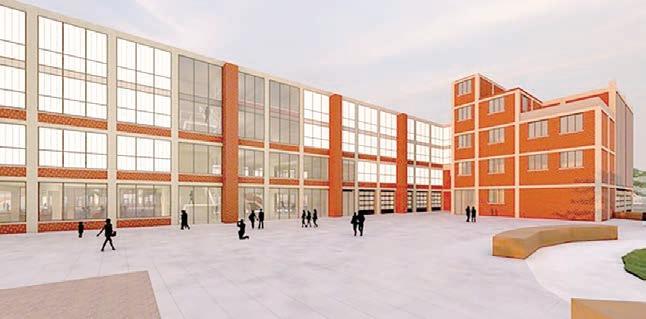
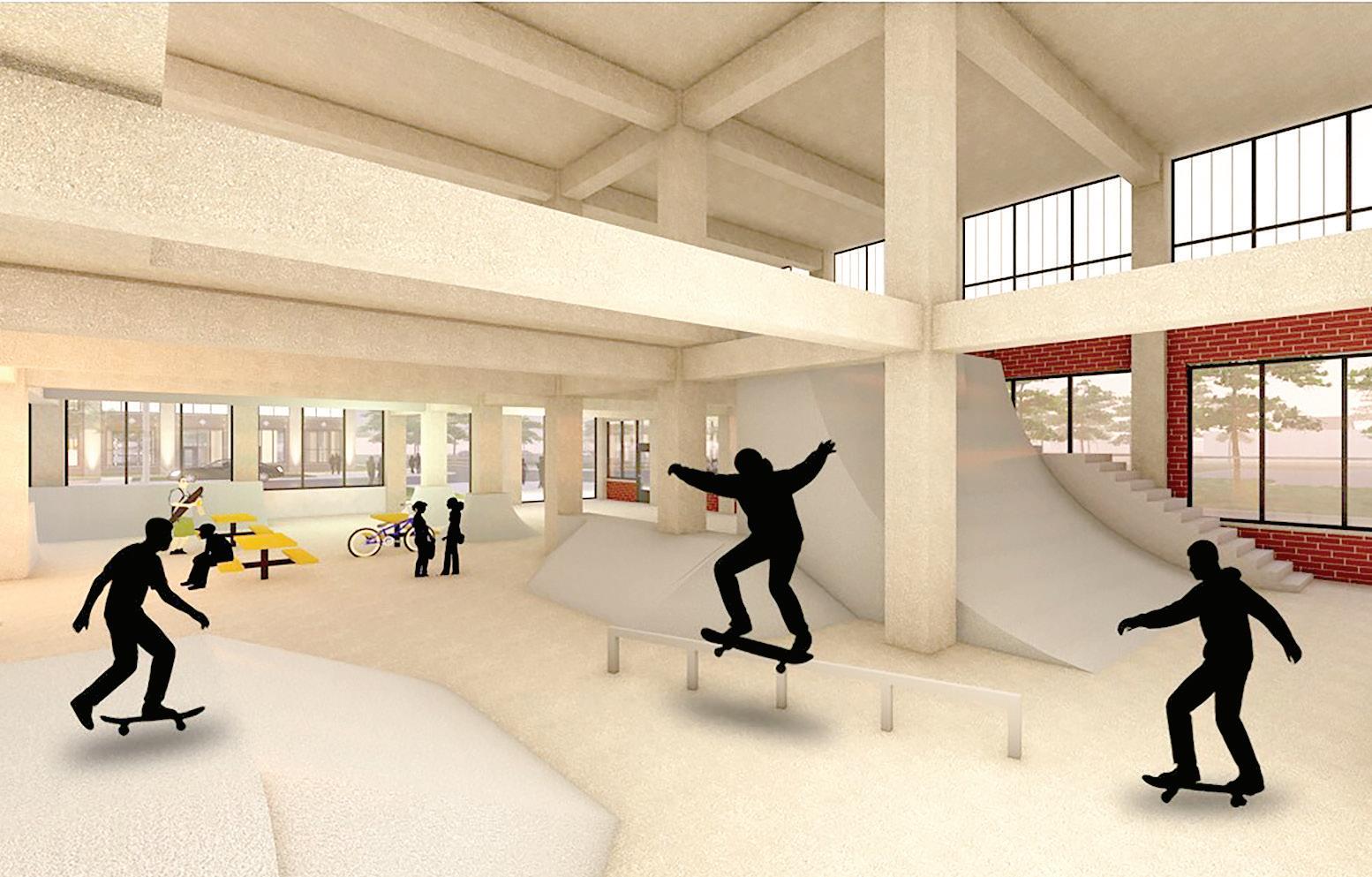
Developers want to make more than two acres of indoor/outdoor public space and recreation areas, build 42 “make/live” affordable housing units, construct Detroit’s first indoor skate park and the Museum of Detroit Electronic Music.
Electronic music parties became a staple at the plant in the 1990s, four decades after the plant had shut down during a time when the complex was still in use by commercial tenants for storage space.
Decades ago, several companies occupied portions of the building south of Grand Boulevard, while inside the complex there was a paint ball range and secured storage areas.
Detroit Mayor Mike Duggan announced Monday at a press conference at the abandoned plant that the city signed a letter of intent with developers Mark Bennett and Oren Goldenberg to reactivate 28 acres of the former Packard Plant, including a Albert Kahn building along W. Grand Blvd.
“Five years ago, the Packard Plant was still standing as Detroit’s most iconic ruin, continuing to drag down the surrounding neighborhood. It took an incredible amount of work to gain title to the property and tear down everything that could not be saved in hopes for a day like this,” Duggan said in a statement. “A challenging development like this takes people who think outside of the box to create something really special and that is what Mark and Oren have done here.”
Bennett has developed six multi-family and mixed-use developments in Detroit, while Goldberg is the developer and co-owner of the $30 million Dreamtroit project on Holden St., which also hosts a lively after-hours spot, Lincoln Art Park. It used to be the site of a Lincoln Motor Factory plant.
The redevelopment opened in 2024 and includes residential apartments, office units, and 38,000 square feet of retail and entertainment space.
Developers say the Packard Park

redevelopment will create jobs, preserve history, establish new housing options and build culture and community.
The goal is to construct a new $50 million 393,000 square foot industrial building designed to create 300 permanent good-paying manufacturing jobs, plus construction jobs.
The skate park and electronic music museum would go inside the renovated, 117,000 square foot Albert Kahn Building.
“As stewards to the city, we will work together with neighbors, creators and our P4 partners, to complete this purpose-driven development that will bring culture, housing and jobs to the city for this generation and beyond,” Goldenberg said in a release.
“Packard Park” will be a 28-acre mixed adaptive-reuse Public-Private-Philanthropic Partnership, led by
By Ebony JJ Curry SENIOR REPORTER
Packard Development Partners, LLC, alongside the City of Detroit, DEGC, the Albert Kahn Legacy Foundation and the Detroit Regional Partnership.
The regional partnership provided significant acceleration through its VIP Site Readiness Grant Program, the city said in a news release.
“For more than 60 years this site sat idle. Today, we declare that those days are over. The Packard Park will be a symbol of what is possible when Detroiters, public partners, and committed developers work together with imagination and purpose,” said Mayor-elect Mary Sheffield. “This is how we honor our past while building our future — by preserving history, creating jobs, expanding housing, and investing in culture and community all at once.”
Demolition crews have made the rusted and crumbling Packard Plant a
The Bank recorded one of its largest rounds to date. Last year’s record funding totaled $34.6 million. This year’s $34.1 million awards support 43 projects and are expected to create or rehabilitate 1,578 affordable units across the region. Only three of the awarded projects support homeownership, underscoring the continued financial pressure on for-sale development as interest rates and insurance costs have climbed. Detroit’s allocation arrives as the city continues to confront persistent gaps in affordable housing. According to the city’s 2024 housing needs assessment, Detroit requires thousands more deeply affordable units for Detroit Receives More Than $4.6M as Federal Home Loan Bank of Indianapolis Awards $34.1M in Affordable Housing Grants Skate Park, Electronic Music Museum Planned
The Federal Home Loan Bank of Indianapolis has released its 2025 Affordable Housing Program awards, directing $34.1 million to housing developments across Indiana and Michigan. Detroit projects will receive more than $4.6 million, positioning the city among the largest beneficiaries in this year’s round as local developers continue to navigate rising construction costs, aging housing stock, and limited affordable units. The program has operated for more than three decades and remains one of the few federal tools that consistently fills financing gaps for nonprofit developers and community-based housing organizations. Since 1990, FHLBank Indianapolis has issued annual Affordable Housing Program grants to help cover acquisition, construction, or rehabilitation costs for projects serving households at very low-, low-, and moderate-income levels. The funding is awarded through a single competitive application cycle each year, with grants capped at $1 million per project.
From page A-5
residents earning below 50 percent of the area median income. Much of the city’s existing rental stock was built before 1960, and the cost of rehabilitation often outpaces what low-income renters can afford without subsidy. Developers have increasingly leaned on layered financing — including Low-Income Housing Tax Credits, local gap funding, and federal competitive grants — to move projects to completion.
FHLBank Indianapolis describes its role as providing a stable source of funding for community development partners. In its announcement, President and CEO Brendan McGrath said the Bank’s commitment remains tied to navigating the challenges shaping regional housing markets.
“In order to help navigate challenges facing the housing industry, in 2025 our Affordable Housing Program will help fund the creation or rehabilitation of an additional 1,578 units of affordable housing,” McGrath said.
For Detroit, the more than $4.6 million allocation supports ongoing efforts to stabilize neighborhoods through new construction and the preservation of existing rental housing. Developers working in the city’s affordable housing space, including nonprofit community development corporations, frequently rely on
AHP grants to close financing gaps that otherwise delay or stall projects.
Housing advocates note that Detroit’s supply challenges remain acute. Limited federal funding, long construction timelines, and competition for tax credits have slowed the pace of new development. Programs like the AHP serve as a critical bridge — particularly for rehabilitation projects in long-disinvested neighborhoods where rents cannot support the full cost of construction.
This year’s awards continue the trend of steady investment. Over the past decade, FHLBank Indianapolis has increased both its annual allocation and the number of projects funded, reflecting growing demand across the region.
The 2025 round keeps the Bank near its highest level of annual support, trailing the 2024 record by less than half a million dollars.
Detroit’s share will help advance multiple projects already in the development pipeline. As construction costs remain high and financing environments tight, the ability for local developers to tap into competitive federal dollars is expected to influence which projects break ground over the next year.
For now, Detroit’s allocation signals continued federal support for the city’s efforts to expand and preserve affordable housing at a time when stability remains out of reach for many residents.
Ebony can be reached at ecurry@ michronicle.com.
shell of what used to stand in the east side neighborhood.
The plan announced Monday is the latest of a handful of redevelopment announcements that never materialized.
The city has spent nearly 17$ million razing the site since 2022, according to officials.
The city had successfully received clearance from a court to demolish the site after a judge sided against the plant’s final private owner, Fernando Palazuelo, of Peru.
Palazuelo won control of the plant in 2013 during a tax foreclosure auction for $405,000 after late businessman Dominic Cristini lost ownership of the plant he says he went to prison to save.
Cristini’s Detroit News obituary claims he sold drugs after losing so much money to save the plant.
“I lost nearly everything, but I’m pretty proud that I gave the city way more than they ever bargained for,” Cristini told the News the year before he died.
You can reach Sam at srobinson@michronicle. com.



By Jeremy Allen EXECUTIVE EDITOR
When voters overwhelmingly approved a reparations ballot initiative in 2021, they tasked the city with confronting deep-seated, long-standing injustices. In 2023, the Detroit Reparations Task Force — a 13member body composed of Detroit residents and community leaders — began intensive work, gathering public input, reviewing decades of municipal decisions, and wrestling with the legacy of discriminatory policies.
Their final report, a 558-page report submitted at the end of October 2025, aims to do more than acknowledge past wrongs: it charts a comprehensive, city-wide plan for repairing harms inflicted on generations of Black Detroiters by systemic racism, neglect, and economic displacement.
At its core, the report makes a stark claim: the wealth and economic stability many enjoy today are directly tied to the exploitation of Black labor — from slavery to forced labor and discriminatory municipal practices. The report argues that municipal policies over decades not only favored downtown and corporate interests, but systematically eroded the foundations of Black communities.
According to the report, Detroit effectively split into “two cities”: one — largely downtown — thriving and investment-heavy; the other — neighborhoods home to Black Detroiters — neglected, under-resourced, and plundered.
With that diagnosis in hand, the Task Force delivers sweeping recommendations across housing, economic development, policing, water and utilities, education, environment, and culture — attempting to rewrite Detroit’s future with justice and equity at its center.
Who qualifies — and who might receive reparations
One of the first questions the report tries to answer is: who is eligible? The Task Force proposes three straightforward criteria for reparations eligibility:
• Being a descendant of an African enslaved in the U.S. or the African diaspora.
• At least 21 years old.
• A current Detroit resident who has lived continuously in the city for at least 20 years.
These criteria are intended to focus reparations on those whose families experienced — or directly descended from — the generations of systemic disenfranchisement, redlining, displacement, environmental injustice, and economic neglect tied to municipal policy.
But the Task Force stresses that the recommended reparations aren’t limited to cash payments: many are structural — policies, programs, and investments designed to repair neighborhood wealth, infrastructure, community health, and quality of life. What reparations could look like — The Recommendations
Below is a broad overview of the main recommendations, grouped by sector. Housing & Land
• The report calls for a dedicated “Reparations Administrative Office” to manage reparations programs. Among its tasks: distributing housing grants, overseeing housing policy reforms, and ensuring longterm accountability.
• Under housing grants: up to US$40,000 per eligible recipient for down-payment assistance to buy a home in Detroit, or up to US$30,000 for home repairs.
• Construction of at least 1,000 new affordable housing units for African American residents — priced for households earning ~50% of area median income (~US$35,350).
• Implementation of rent control policies and conversion of vacant city-owned properties into shelters for unhoused residents.
• Ending the practice of transferring cityowned land to the Detroit Land Bank Authority (DLBA), instead steering redevelopment programs to prioritize community residents.
• Cancelling liens associated with delinquent water bills, and entirely eliminating sewage fees for eligible residents.
• Refunding African American property owners who lost homes through tax foreclosure, using proceeds from auction sales.
• For those previously over-assessed by the city, the report recommends freezing future property taxes.
These proposals seek to reverse generations of displacement, tax-foreclosure, overassessment, and the loss of generational wealth tied to homeownership — often a core path to intergenerational stability.
Economic Development & Business
The Task Force’s approach connects housing to broader economic renewal — offering support to families and local businesses alike:
• Grants of up to US$100,000 to businesses displaced by prior urban-renewal and development projects.
• Creation of grants and low- or no-cost loans aimed at Black-owned co-ops, startups, small businesses, grocery stores, and community-based enterprises — to rebuild community wealth and ownership.
• Plans to build ten new commercial strip malls that provide five years of rent-free space for eligible Black-owned businesses — with the hope that these spaces become hubs of neighborhood commerce and jobs.
• Using tax increment financing (TIF) zones for these commercial areas, meaning tax revenues generated would get reinvested locally — supporting long-term economic sustainability.
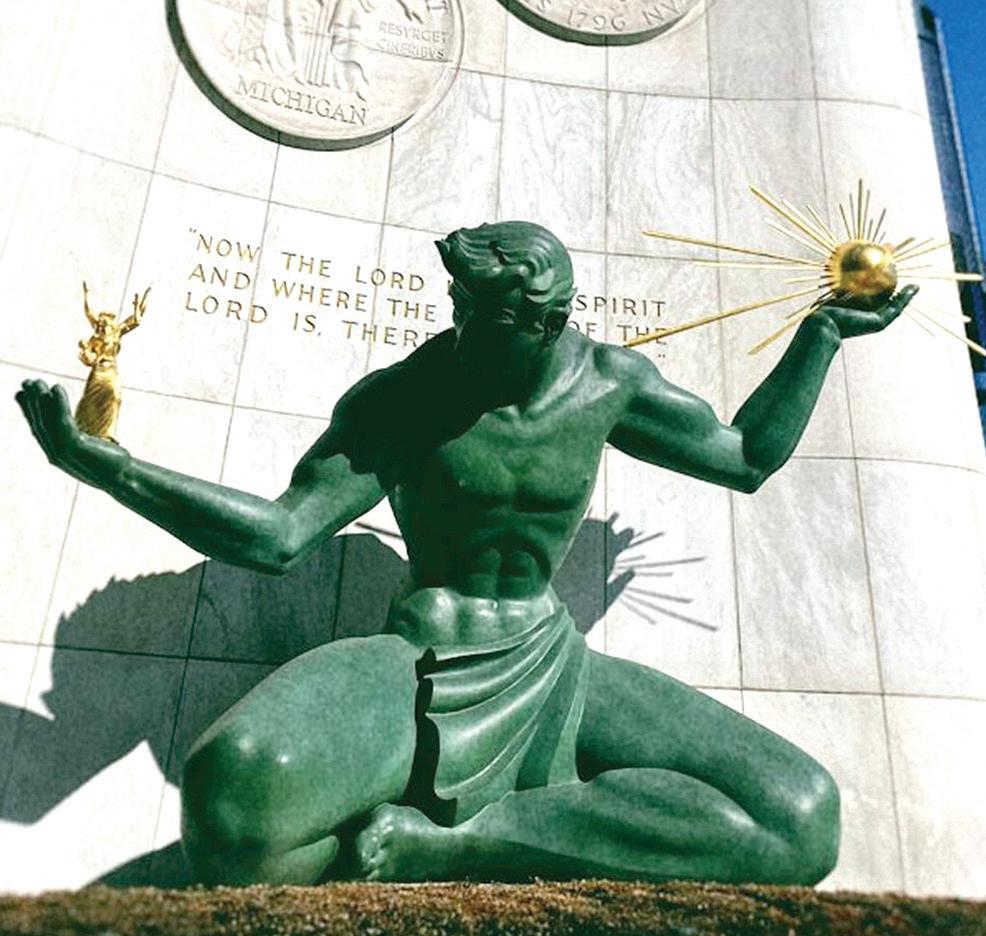
• Prioritizing Black-owned businesses in city contracts — a move toward equitable public contracting.
• Providing free or subsidized post-secondary training for skilled trades, along with accessible online financial literacy courses — addressing both immediate economic mobility and long-term financial stability. Through these measures, the Task Force envisions rebuilding a robust, community-rooted entrepreneurial base — one that provides jobs, builds generational wealth, and restores local control over commerce. Policing, Justice & Public Safety
Acknowledging the long history of policing inequities, over-policing, dispossession, and distrust in Black communities, the Task Force makes bold calls for transformation:
• Paying restitution to individuals (or their heirs) who were injured or killed by police — a move toward accountability and redress for past harms.
• Ending “qualified immunity” for officers — opening the way for civil accountability for misconduct.
• Terminating so-called “high-risk” officers (especially those who have a record of shootings, misconduct or who have shot unarmed citizens).
• Hiring more Black officers and legal staff to reflect community demographics; institutionalizing more robust civilian oversight — including adding staffing to process community complaints, preserving body-camera footage in a permanent archive, and ensuring transparency.
• Dissolving controversial policing initiatives like the command center monitoring schools, and ending the “One Detroit” anti-crime initiative (a partnership involving federal agencies) — which the Task Force argues function as layers of overlapping surveillance and militarized policing that disproportionately target Black communities.
• Instead, investing in community-based violence intervention, mental-health co-response teams, and restorative justice programs — shifting focus toward prevention, support, and healing rather than punitive enforcement.
Through these policing reforms, the report seeks not just to curb abuse and violence — but to rebuild trust between the city, its institutions, and its Black residents. Water, Sewerage & Utility Access
Utilities — often taken for granted — have been a flashpoint in Detroit’s history of inequality. The report spotlights how water shutoffs and unaffordable billing contributed to housing instability, unsanitary conditions, and displacement.
Key recommendations:
• A moratorium on residential water shutoffs; ending the practice of turning unpaid water bills into liens on property.
• Establishing an affordability program that limits water and sewer charges to no more than 3% of a household’s income.
• Renegotiating the city’s existing lease with Great Lakes Water Authority (GLWA), currently a $50 million annual lease, and restructuring the service agreement to reflect equitable cost distribution. The report cites that Detroit currently bears 83% of sewerage system costs, while suburban communities pay only 17%.
These reforms aim to remove systemic barriers to basic survival — ensuring access to utilities doesn’t become a tool for displacement or poverty.
Education & Youth Opportunities
The Task Force frames education as a critical pillar of reparations — one that can break cycles of disinvestment and restore opportunity to younger generations:
• Establishing reparations-funded school grants to support: STEM fellowships, free high-speed internet access for students, athletic and mental-health programs, and other academic enrichment initiatives.
• Repurposing shuttered or vacant school buildings for community use — to serve as centers for education, programming, or community services rather than letting them rot.
• Lobbying the state legislature for additional funding to reduce class sizes, upgrade school infrastructure, hire more African American teachers, and integrate African-centered curricula.
By investing in education, the Task Force hopes to reverse the legacy of neglect and underfunding that has long plagued schools serving Detroit’s majority-Black student population.
Quality of Life, Health, Environment & Food Justice Reparations, according to the report, must go beyond housing and money — to restore dignity, health, environment, food access, and long-term sustainability to neighborhoods that have borne the brunt of neglect and environmental racism.
Some of the flagship proposals:
• Creating 100 acres of community-controlled agricultural land by 2035 — aiming to foster urban farming, local food production, and food sovereignty.
• Establishing a “Food Sovereignty and Nutrition Equity Fund” — supporting Blackowned grocers, cooperatives, community kitchens, and food markets. Vacant city land could be repurposed into food distribution centers.
• Designating “Environment Reparations Zones” in census tracts with high pollution, toxic air, or environmental hazards — enabling targeted environmental cleanup, monitoring, and remediation efforts.
• For communities with high asthma rates or poor air quality, deploying in-home air filters, ongoing air quality monitoring, and establishing buffer zones between neighborhoods and industrial facilities. The Task Force aims to halve asthma-related emergency room visits within a decade.
These measures reflect an understanding that reparations are not just economic — they must restore health, environmental justice, access to food, stability, and community control over neighborhood destiny.
Arts, Culture & Legacy — Restoring Identity and Memory
To rebuild not only physical infrastructure but also cultural identity and heritage, the Task Force recommends the creation of a dedicated Office of African American Cultural Programs. This office would:
• Fund historic preservation projects, galleries, studios, and community arts.
• Lead efforts to rename public sites in honor of notable African American leaders — reclaiming public spaces and rewriting the city’s symbolic landscape.
Through cultural investments, the city can affirm the contributions, resilience, and identity of Black Detroiters — not as an afterthought, but as a central piece of reparative justice.
How the plan could be funded — and what’s next
The Task Force acknowledges that implementing such sweeping reforms will be expensive, and calls for creative — and city-anchored — funding mechanisms. Among the suggestions:
• A downtown entertainment tax on events and venues.
• An additional fee on casino revenues — redirecting profits from entertainment and tourism toward community reparations.
• A new fee on city contracts, ensuring that city development and procurement contribute directly to reparative efforts.
• Clawing back tax breaks or abatements from developers who fail to meet agreed-upon benchmarks — using those funds as reparations resources.
The core mechanism to oversee all this would be a proposed “Reparations Administrative Office,” run by an independent board of residents. Its responsibilities: distribute grants and benefits, coordinate programs, track outcomes, ensure accountability, and manage ongoing community input.
Importantly, the DRTF wrote the report
— they do not have the power to implement it. That responsibility rests with the City Council, which must vote to adopt any portion of the plan. As of now, the report has been submitted. Some members may be asked to stay on, but the Task Force’s official term ended October 31, 2025.
Whether the City Council — or the next administration — acts remains open. As of November 2025, the incoming mayor’s team was reviewing the report. Why it matters — beyond numbers and grants What sets this report apart is its scope and ambition. Rather than offering narrow,
piecemeal fixes, the Task Force is proposing a holistic blueprint — one that aims to reshape Detroit’s economic, social, and civic structure for decades to come.
For many Black Detroiters, these recommendations are not just about reparations — they are about reclaiming dignity, equity, and the possibility of generational stability. The housing grants and new affordable units address long-standing barriers to homeownership. Economic support for Black-owned businesses and co-ops could rebuild the local entrepreneurial class. Policing reforms could begin to restore trust in justice and safety. Water and utility reforms could eliminate a chronic cause of displacement and instability. Education and cultural investments could foster community pride, opportunity, and identity.
If implemented in full — or even partially — the plan could mark one of the most far-reaching municipal reparations efforts in U.S. history. And for a city like Detroit — one that has endured decades of disinvestment, deindustrialization, racialized policies, and population loss — the stakes are existential.
Yet, the report makes clear: this is not charity. It’s reckoning. It is not a favor — but a repayment. A restoration.
As the report states: for decades, the city surrendered its authority to corporate interests and external stakeholders — draining value from neighborhoods while letting downtown flourish. Now, the Task Force argues, it’s time to reverse course. To invest not just in buildings, but in Black Detroiters themselves. What’s uncertain — what remains unsaid
While the recommendations are sweeping, there are some sharp questions — and important unknowns:
• Cost: The report does not provide a firm estimate of how much all the proposals would cost. Funding ideas are outlined, but the real fiscal burden — and where that money would come from — remains uncertain.
• Political viability: Implementation depends entirely on the will of the City Council, the mayor, and likely state-level cooperation — especially for reforms touching policing, school funding, and taxation.
• Eligibility verification: While the eligibility criteria are defined, determining who qualifies — particularly tracing lineage to enslaved ancestors — could present legal, administrative, and evidentiary challenges.
• Timing and scope: Even if adopted, realizing the full vision — building 1,000 homes, launching commercial centers, agricultural zones, environmental remediation zones — will take years, sustained investment, and vigilant oversight.
• Community buy-in: Some residents (especially those without the specified ancestral lineage, or newer Detroiters) may object to or feel excluded by a reparations plan limited to descendants of enslaved Africans. The report does not deeply address how to navigate or reconcile such tensions.
The moral and symbolic weight — how Detroit frames reparations
At a deeper level, the 2025 DRTF report is as much about identity and memory as it is about infrastructure or grants. By explicitly tying Detroit’s contemporary inequalities — housing loss, environmental injustice, underfunded schools, policing abuse, economic displacement — to a legacy of slavery, segregation, redlining, and corporate-era neglect, the Task Force demands more than policy fixes.
This is a reckoning: a public admission that the city’s path forward cannot ignore the traumas and structural harms inflicted on Black residents. It is a demand that Detroit — as a municipal entity — accept responsibility. That it uses its power, resources, and governance to restore what was lost. By combining financial reparations, community investment, structural reforms, and cultural recognition, the plan asserts that justice must be generational, systemic, and anchored in dignity.
In their final words, the Task Force argues that reparations are not a gift — they are a debt owed. It is not charity — it is restoration.
What happens now — and what’s at stake
With the report submitted to City Council at the end of October 2025, the next chapter begins — but its outcome remains uncertain. According to reports:
• The incoming mayor’s team (at the time, reviewing the document) had not committed to adopting the recommendations.
• The Task Force’s formal authority ended October 31, 2025 — meaning new leaders must decide whether to implement, modify, or discard the plan.
• Community pressure, public input, and the political climate — including debates around funding, taxation, lineage, and equity — will shape what parts (if any) move forward.
What’s at stake is nothing less than the future of Detroit’s Black neighborhoods: whether they remain marginalized in favor of downtown development, or whether the city embraces a future where justice, equity, and community control are central.
If even a portion of the recommendations are acted upon — affordable housing, water access, small business support, school funding — it could mark a turning point for a city long defined by loss, disinvestment, and systemic neglect.
If ignored, it risks reaffirming that decades of harm — to neighborhoods, families, and generations — remain unacknowledged and unaddressed.
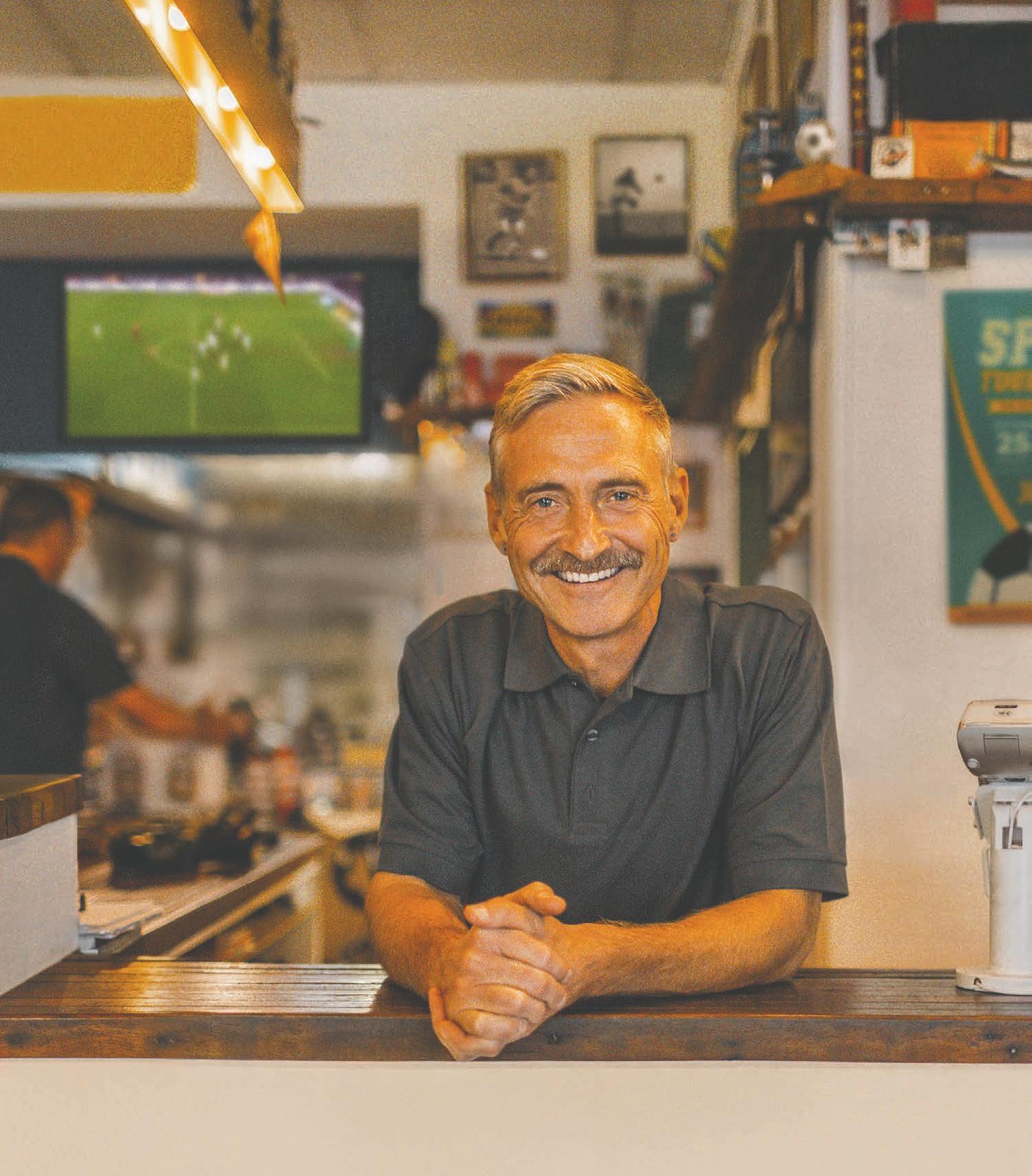

Ed Siaje President,


By Sam Robinson SENIOR REPORTER
Detroit lawmakers helped usher in the next generation of local pro sports, approving a new stadium for the city’s pro soccer team, plus a WNBA facility and youth sports academy on the east riverfront.
The projects, both being approved within hours of the other, did not face significant opposition from community members — unlike stadium deals of the past.
Critics of the tax abatement developers received for Little Caesars Arena in 2013 who said the plan didn’t adequately connect Midtown to downtown have not been proven wrong. The promised mixed-use business district surrounding the arena has not materialized, even after council members approved another round of abatements ten years later in 2023.
Despite the project not happening as planned, LCA has received at least $403 million in public subsidy commitments from the Downtown Development Authority since 2013.
Criticism of the tax abatement for the arena largely focused on the fact that public dollars should not be going to private developers as the city was in municipal bankruptcy.
Detroit City Council on Wednesday, Nov. 26, signed off on tax breaks and a community benefits agreement for AlumniFi Stadium, DCFC’s planned $198 million stadium at the site of an abandoned hospital.
The surrounding Corktown area nearby the abandoned Southwest Detroit hospital will see $1.2 million as part of the agreement. The club has promised to give away 3,000 free tickets each season to residents and has committed $50,000 toward public art. Developers say the abatement is necessary for the demolition of the hospital.
The club also promised a $17 minimum wage, union neutrality for workers and more than $1 million earmarked for community organizations over the next 12 years.
Union advocate and Detroit resident Jasmine Kaltenbech came to council Wednesday to call for universal labor standards for all taxpayers subsidized developments.
“DCFC agreed to labor standards – those standards should apply to all taxpayer-subsidized developments in the city. But, because of preemption laws, Detroit can’t require that,’ said Kaltenbach, director of the Home Rule Project. “Preemption laws fly in the face of Detroit’s home rule powers and prevent Detroit from holding developers accountable – as a result, Detroiters are living under Corporate Rule rather than Home Rule.”
The stadium, located at 20th street and Michigan Avenue, will include 15,000 seats and 76 apartment units.
While some local business owners called into public comment during council session to criticize developers for a perceived lack of parking, the club says there are 421 parking lots planned.
By Ebony JJ Curry SENIOR REPORTER
Detroit’s mental-health landscape tells a familiar American story: when systems fail to see Black women, those women are forced to carry their pain in silence. Anxiety, grief, chronic stress, trauma — they have lived through it while caring for families, sustaining communities, and holding the city together across generations. Yet the systems meant to support them remain distant.
Recent data from Centers for Disease Control and Prevention (CDC), the nation’s leading public-health agency, shows that just 15.3 percent of Black adults in the United States received any mental-health treatment in 2023, compared with 25.6 percent of white adults. That disparity stretches across counseling, medication, and every level of care. Even when Black adults report the same
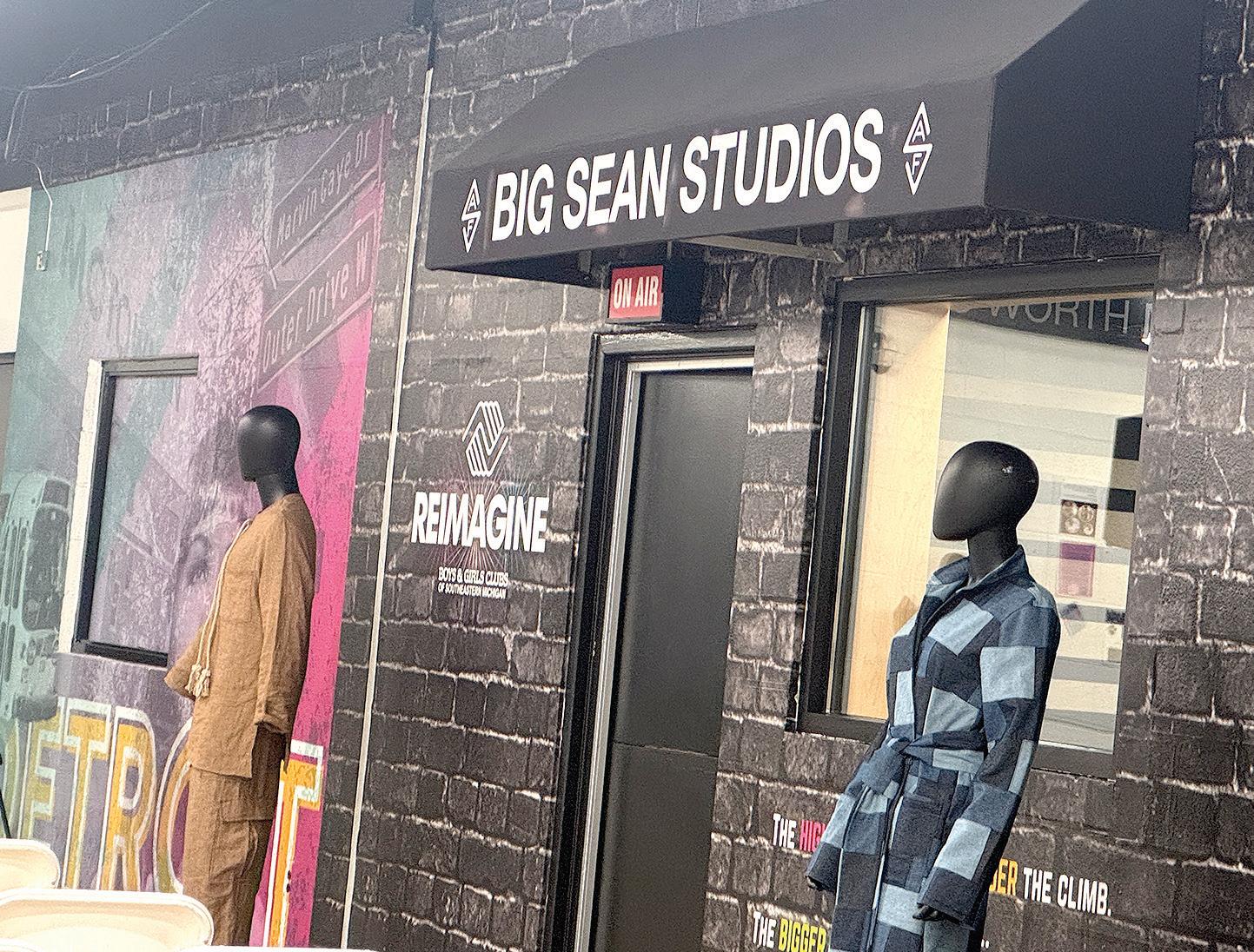
By Sam Robinson SENIOR REPORTER
Usher and “Big” Sean Anderson are teaming up to invest to create a million-dollar production studio and entertainment incubator facility.
The RnB singer and Detroit rapper announced their $1 million investment Thursday in a news release, which highlighted the fact that both artists are alumni of the Boys & Girls Club.
The organization in May announced plans to create a new Michigan Central hub for the Boys & Girls Club of Southeastern Michigan. It will be the new home for the Detroit Entertainment Innovation Incuba-
tor, which will offer a virtual production studio, special effects lab, creators lounge and more.
The 13,000 square foot space also will feature an autonomous training center and an innovation lab designed to directly connect youth to broader emerging industries like mobility, advanced manufacturing.
“Detroit is where my creativity was born. From freestyling in my mom’s basement to performing on the biggest stages in the world. My mission has always been to make sure the next generation of dreamers and innovators from my city have the access, tools, and mentorship to do the same,” Anderson said in a release. “The Innovation Incubator is about showing young
people that they don’t have to leave Detroit to chase opportunity, they can build it right here.” Anderson helped reopen the former train station during its reopening celebration in 2024. The new Michigan Central BGCSM Club location is slated to open in February, 2026.
The project is being led by the philantrophic arms of both artists, Usher’s New Look and Sean Anderson Foundation. Partners on the project include Ilitch Sports + Entertainment and Atlanta’s Emory University’s Goizueta Business School.
Shawn Wilson, president and CEO of

symptoms or levels of distress, treatment engagement remains significantly lower.
A deeper barrier sits behind those numbers. Across the entire country, only four percent of psychologists are Black, a mismatch that leaves many Black women searching for culturally competent providers they may never find. Representation in therapy is not decoration; it is trust, comprehension, and safety. It is the difference between vulnerability and withdrawal.
CALM, a Detroit-based nonprofit founded by Takyra Fulton, has stepped into this breach with intention. Their new “Therapy Within Reach” program offers free mental-health counseling specifically for Black women who cannot afford traditional care. The initiative was initially funded entirely by Black women business owners — a testament to how often Black communities must build their own safety nets when

systems fall short. The program was born from CALM’s work inside shelters, youth programs, and organizations serving women navigating instability. Everywhere they went, they heard the same ques-
tion: “How don’t we know about you?” It was not simply curiosity. It was exhaustion — from fighting trauma alone, from trying to be strong without support, from believing that therapy was “for other people” who had both access and representation.
“We’re not just offering therapy; we’re bringing healing directly to women who need it most,” Fulton said. She expects the program to support at least 50 women through its initial rollout. But the number only hints at the deeper goal: changing the expectation that Black women must survive without care.
The program arrives during a moment of cultural shift. Across the country, Black Americans — especially young Black women — have become increasingly vocal about therapy, grief, burnout, and the emotional cost of being “the strong one” in their families. National reports show a rising openness to mental-health support,
and therapists across the country describe notable increases in Black clients seeking care. One 2024 provider survey reported a 25 percent increase in Black men entering therapy compared with pre-pandemic years, a trend that mirrors what advocates say they are seeing among Black women as well. But desire is not the same as access. Therapy remains financially out of reach for many Detroiters, even those with insurance. And for Black women, the search for a therapist who understands their cultural reality — the unpaid labor they carry, the systemic barriers they navigate, the generational trauma embedded in Black life — is often the biggest obstacle. CALM designed its program to remove the roadblocks one by one. The organization partners with local shelters, including programs that house teen mothers, ensuring therapy reaches women where they already are. Their model ac-
Boys & Girls Clubs of Southeastern Michigan said the collaboration can be a pathway to ownership and equity for Detroit’s young talent.
“Together, with our amazing partners, we’re transforming talent into capital and creativity into generational wealth,” Wilson said.
The Incubator will be housed within the new Michigan Central BGCSM Club on the dedicated youth floor inside The Station—part of Michigan Central’s 30-acre innovation district where startups, industry, and community partners convene and collaborate to turn bold ideas into real solutions.
The vision is for the space to serve as a launchpad for local youth interested in careers in emerging industries and creative technology.
The Innovation Incubator will deliver a full suite of advanced programming that equips young people ages 14–24 for careers from film and music production to AI, 3D, immersive technologies, and special effects.
Participants will gain access to industry-recognized credentials through Emory’s Goizue-
ta Business School and Ilitch Sports + Entertainment, mentorship from leading executives and creators. Officials said youth will also receive seed funding to launch their own content ventures and creative startups.
“I’ve always been a true believer in igniting a spark in the next generation to be better and have access to things we didn’t. This new spark lab in Detroit with my friend and fellow Boys & Girls Club alum Big Sean will not only minimize the access gap for the youth but also prepare them for greatness. It takes just one person to believe in your success, and I’m honored to be one of many in this partnership to help make that happen,” said USHER.
It’s the fifth major investment by the Sean Anderson Foundation in support of BGCSM since 2018.
The rapper’s foundation has gifted four fully operational Big Sean Studios inside BGCSM Clubs, providing more than 10,000 youth with hands-on music exploration opportunities, like recording, production and DJing.
Sam can be reached at srobinson@michronicle.com.


The council also unanimously approved the plans to bring a $50 million practice facility for Detroit’s yet-to-be-named WNBA team, plus a nearby youth sports academy that developers say is separate.
The development is planned for the contaminated Uniroyal site off East Jefferson near the riverfront.
“The youth development academy is a separate project,” the COO and chief legal officer for Pistons Sports & Entertainment. group told reporters at city council last month.
“It’s going to be developed by separate funding, it’s going to be developed by a nonprofit entity, and it’s on a later phase of this project. So we’re expecting that there’s going to be more information on that sometime in 2026.”
Pistons Sports & Entertainment assets currently include the Detroit Pistons NBA franchise, the Henry Ford Detroit Pistons Performance Center, the G-League franchise Motor City Cruise, and the live entertainment company 313 Presents.
The group came under fire from tax justice advocates during the council approval process due to the nature of the development happening in separate phases. Developers say the practice facility and sports academy are two different projects despite presenting them together.
Detroiters for Tax Justice argues the financing proposal splits the project into separate ownership and cost components in order for the developer to avoid triggering Detroit’s community benefits ordinance.
The ordinance forces developers to provide benefits to the area nearby developments exceeding
$75 million receiving at least $1 million in public subsidies.
“This structuring raises concerns that the developer is sidestepping community input and accountability, despite relying heavily on public resources for private gain,” the group wrote.
Public commenters who called into council about the WNBA facility and sports academy mostly supported it, including former Piston Rick Mahorn, who called into council on back-to-back weeks to urge members to green light the 75,000-square-foot headquarters and practice facility.
The practice facility will trigger a city requirement for developers to partner with Detroit workforce agencies to provide job opportunities to residents.
From page B-1
knowledges that trauma is not abstract — it is shaped by housing insecurity, food instability, caregiving burdens, and the ongoing economic pressures facing Detroit families.
Their work also arrives at a critical time of year. Holiday months often heighten emotional strain for women who are carrying grief, financial stress, or the weight of keeping families afloat. Detroit’s harsh winters have always made survival harder; emotional survival is no different. CALM’s approach offers therapy paired with support groups and wellness experiences, providing women with the grounding many have long gone without.
“Every woman deserves the opportunity to embrace calm, to heal, and to thrive,” Fulton said. It is a
It’s not clear how much the youth sports academy will cost. The plans appear to be similar to boarding school academies that host regional tournaments like Ohio’s Spire Academy or Florida’s Montverde Academy.
Supporters said the deal will create opportunities for local youth.
The plan for the WNBA expansion team set to launch in 2029 is to play games at Little Caesars Arena and the Wayne State fieldhouse currently occupied by the G-League’s Motor City Cruise. It has been since 2009 that Detroit had a WNBA team. The Detroit
simple sentence, but within it is a push against decades of normalized depletion and cultural expectations of strength.
The barriers that keep Black women from therapy are neither new nor mysterious — cost, distrust, racial bias in medical systems, and the scarcity of providers who understand their lived experiences. Those forces shape outcomes long before a woman ever walks into a counseling room. CALM can’t rebuild the entire system, but it is addressing the gap in front of it: women who have asked for help without knowing where to turn, women who have carried trauma while caring for everyone else.
As CALM raises funds to expand “Therapy Within Reach,” the work becomes less about a single program and more about whether mental-health access for Black women is treated as essential rather than optional.





Story by Aaron J. Thornton, Contributing Writer
Photos: Courtesy of “The Boy is Mine” tour
etroit’s ’90s R&B faithful showed up in full force Saturday night, Nov. 29, undeterred by the frigid cold and steady snowfall, as a lineup of talented female vocalists took over Little Caesars Arena. Headliners Brandy and Monica reunited on a tour named after their iconic duet “The Boy Is Mine” and delivered a dynamic performance supported by openers that included Jamal Roberts, Mya and Kelly Rowland.
Despite the weather, Detroit concert goers (mostly made up of ladies and couples) arrived dressed to impress, showcasing style and plenty of statement boots built for both fashion and trudging through the three inches of snow that fell.
Right on schedule just after 8 p.m., American Idol winner Jamal Roberts opened the night followed by Mya, stepping in for Muni Long, who departed the tour due to illness. Mya, born in Washington D.C, broke through in the late ’90s. She wasted no time igniting the audience. While she may not possess the extensive hit catalog of the headliners, her reputation as a seasoned vocalist and performer was evident.
Her set highlighted a career spanning more than two decades, performing fan favorites and memorable collaborations including “Ghetto Superstar,” “Take Me There,” and “Lady Marmalade,” the latter of which earned a Grammy for Best Pop Collaboration. Dressed in a navy-blue satin two-piece with a matching top hat and sparkling silver knee-high boots, she moved effortlessly across the stage. Before exiting, she made a few fans’ night by handing out a vinyl album, a poster, and a CD.
Kelly Rowland followed, bringing a sultry confidence and a polished stage presence. She rose to fame for her vocals as part of the hit girl group Destiny’s Child. The crowd lit up as she moved through her solo hits “Dilemma”, which she collaborated on with Nelly, as well as “Motivation” and a selection of Destiny’s Child classics like “Soldier” and “Cater 2 U.”
Her look for the evening was bold. Wearing a black twopiece bra and shorts set paired with dramatic thigh high pants legs that were open exposing the top of her legs. Rowland’s authenticity resonated as she greeted the crowd with a spirited “What up doe, Detroit?!” Supported by four male dancers and two background vocalists, she kept the arena buzzing through each seamless transition.
Following a brief intermission of less than 15 minutes, the arena lights dimmed and anticipation thickened. On the big screen, Brandy and Monica appeared entering an elevator, its doors closing, and the car rising in the video. Simultaneously, a mock elevator ascended from beneath the center stage, and when its doors opened, the duo emerged in coordinated black and white ensembles and sunglasses, holding still as the crowd erupted.
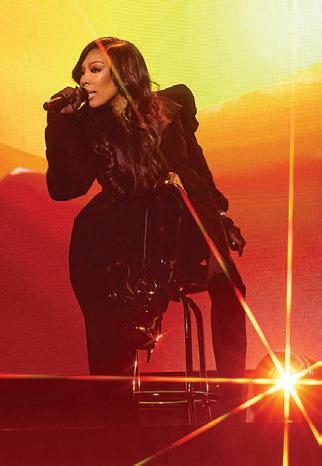
Act I: “Brandy vs. Monica” kicked off with Brandy’s “What About Us,” followed by Monica’s “Knock Knock.” The two rotated songs in a playful, versus-style format that set the tone for an inventive multi-act performance.
Act II & III: Solo Spotlights started with Brandy claiming the stage first, delivering several staples including “Full Moon” and “Right Here (Departed).” After her exit, Monica took command for Act III, opening with “Street Symphony” in a fresh wardrobe change.
She soon shifted the energy, transforming the arena into a full-on party. Highlighting her Atlanta roots front and center, Monica powered through club hits “Everytime Tha Beat Drop,” “Lean Wit It, Rock Wit It,” and “Take Me Thru Dere.” Detroit got a special treat when Monica welcomed a few hometown artists to the stage. Kash Doll performed “Kash Kommandments,” followed by appearances from Skilla Baby and Icewear Vezzo, each adding local pride and hype to the night.
Act IV: A Ballad Showcase offered a softer tone. Brandy returned first, seated beside a pianist as she delivered emotional cuts including “Brokenhearted.” Monica soon emerged in another new outfit, continuing the soulful theme with fan favorites such as “Why I Love You So Much.”
Act V: Brandy vs Monica Part II featured a friendly musical face-off once again, with both artists now in all black attire. Brandy lifted the energy with “Sittin’ Up in My Room” and “Top of the World,” while Monica countered with classics including “Before You Walk Out of My Life” and “So Gone.”
Act VI: Angels brought both singers back onstage in striking all white outfits. Brandy opened with “Angel in Disguise,” followed by Monica’s popular song “Angel of Mine.” The duo united for a heartfelt tribute to Whitney Houston with “I Wanna Dance With Some-
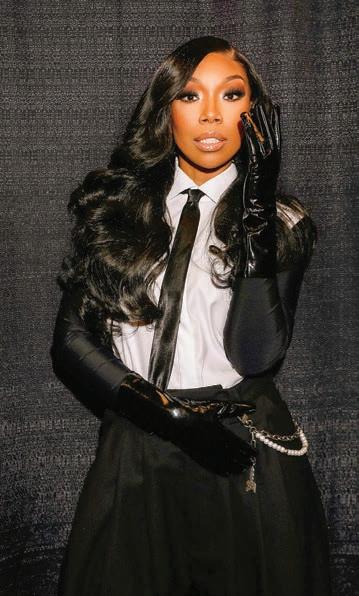
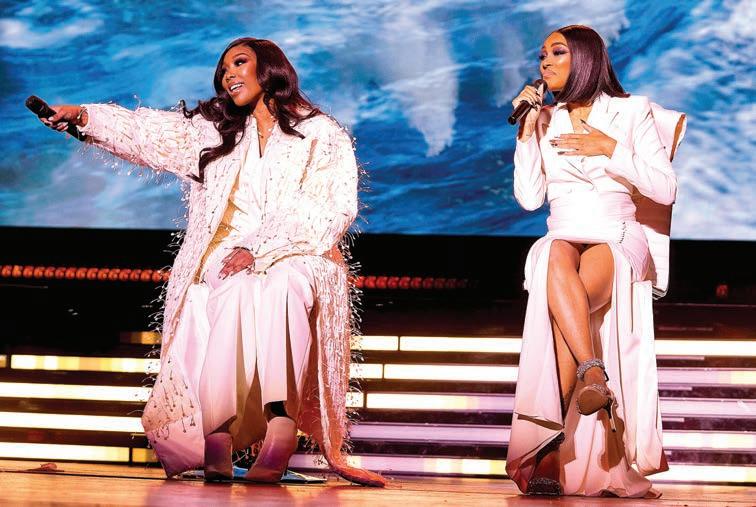
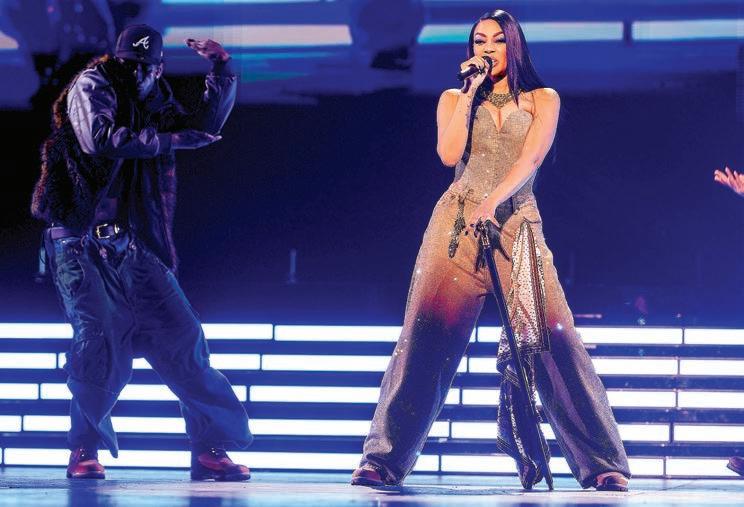
body,” honoring a shared mentor and friend who sparked inspiration to both in the early parts of their careers.
This act also spotlighted the tour’s roughly ten male dancers, each introduced and given a moment to perform a freestyle routine, an energetic showcase that drew cheers throughout the arena.
As the stage cleared, Brandy and Monica rose once more from beneath the stage, now in new black outfits. From opposite sides, they joined together for the grand finale, the long-awaited performance of “The Boy Is Mine.” The arena roared as the two delivered the defining duet of their careers. As they ended the night, they expressed gratitude to Detroit fans for continuous support of them.
The 32-city tour, which was produced by the Black Promoters Collective, was announced in June 2025 and marks the first co-headlining run for Brandy and Monica, 25 years after their chart-topping duet made history. The tour is scheduled to conclude December 14 in Jacksonville, Florida.
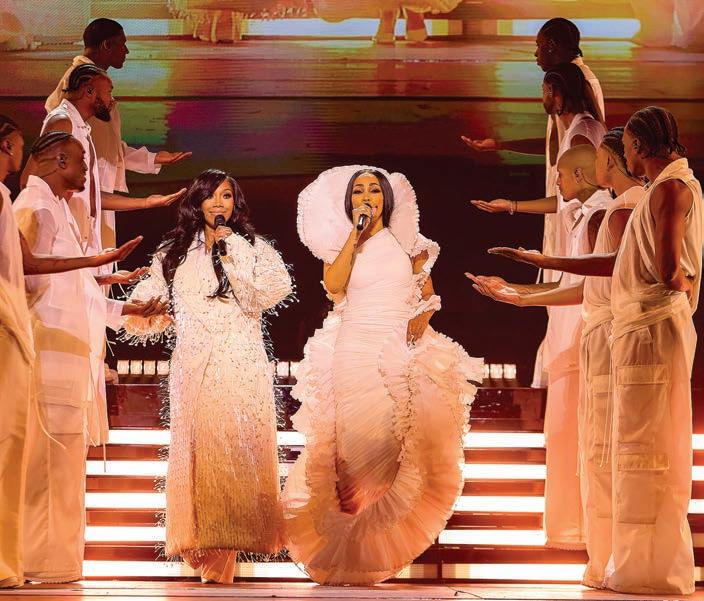

By Jeremy Allen
EDITOR
EXECUTIVE
When Claressa “The GWOAT” Shields walks into Little Caesars Arena on Feb. 22, 2026, she won’t just be defending her undisputed heavyweight crown. She’ll be stepping back into a story that began nearly a decade ago — one that shaped two champions, launched two careers, and left one question lingering: What would happen if they ever did it again?
Detroit’s own undefeated superstar (17-0, 3 KOs) is coming home for a rematch with Franchon Crews-Dezurn (10-2, 2 KOs), the opponent who met her in both of their professional debuts on Nov. 19, 2016.
Their first clash, tucked beneath Andre Ward vs. Sergey Kovalev, was a symbolic passing of the torch from one Olympian generation to the next. Shields entered that night fresh off two Olympic golds — the first American boxer, male or female, ever to achieve the feat. She won that bout, launching a pro career that would redefine women’s boxing.
Crews-Dezurn, though, didn’t fade. She rebuilt, rose, and eventually became an undisputed champion at Super Middleweight. Their paths diverged, but the rivalry never dissolved.
Now, Shields returns to the city that has embraced her as its own, fresh off signing an unprecedented $8 million deal with Salita Promotions and Wynn Records, which is the largest contract in women’s boxing history. Her second title defense since becoming undisputed brings her back to the same arena she sold out in her last Detroit appearance.
“In 2016 I had just come off winning two Olympic gold medals, fresh out of the amateurs, and finding an opponent was tough, Franchon stepped in,” Shields said. “I’ve grown a lot since that first victory, going on to win nineteen world titles, the ESPY award, and countless other achievements, but me and Franchon have unfinished business that needs to be settled. She’s been poppin’ it like she can whoop me in a world championship fight. We went four rounds in our pro debut, and this fight will pick up from round five.”
For Shields, returning to Detroit is personal.
“I’m honored to return to Detroit to defend my undisputed heavyweight world championship,” she continued. “Selling out Little Caesars Arena was a dream, and my fans made that come true. Fighting in Michigan motivates me, and it also puts pressure on me because I never want to fail them.”
This time, she says she’s arriving fully healthy and fully ready.
“In my first fight with Franchon I won a unanimous decision, but come February 22, I don’t have those same plans. I plan on putting Franchon Crews on her back and leaving with the KO. My last few fights, I was dealing with injuries, but now I’m 100 percent. Franchon is elite, but I am super elite, and I plan on proving that

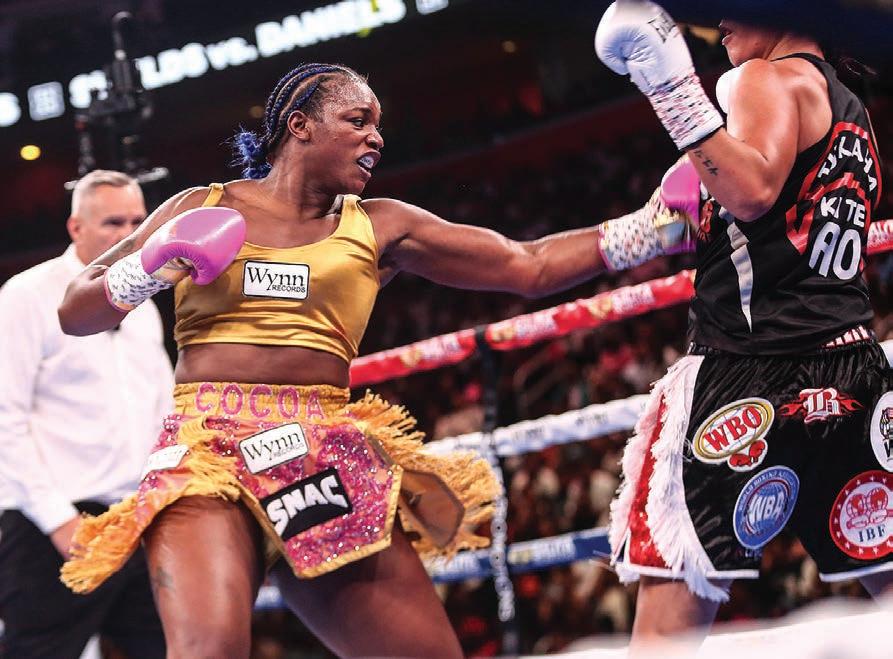
come fight night,” she said. Crews-Dezurn says she’s ready too, and she’s eager to step into Shields’ hometown spotlight.
“I’ve been waiting and working a long time for this moment, and we finally meet again,” she said. “This time as established champions with great legacies. I’m daring to be even greater by going up in weight, strutting into hell so I can create my heaven. I’m a worldwide woman that’s good in any hood and can’t wait to give Detroit, along with the world, a great fight. This is my sixth fight in a row on DAZN and I am grateful to be back once again with everything on the line and grateful to Salita Promotions and my manag-
By Ebony JJ Curry SENIOR REPORTER
Air travelers who show up to U.S. airports without a REAL ID will soon be met with a new cost.
Beginning Feb. 1, the Transportation Security Administration will charge a $45 fee to verify the identities of passengers 18 and older who attempt to fly domestically without a REAL ID or another accepted form of government identification.
The agency rolled out the REAL ID requirement in May, though travelers without the updated identification have still been allowed through security after additional screening and a written notice. The Department of Homeland Security reports that 94% of passengers already use a REAL ID-compliant license or state ID. The new fee aims to push the remaining travelers to secure the updated document.
Michigan’s previous license and ID design, scheduled to be phased out by January 2029, uses a star inside a gold circle to show REAL ID compliance.
The state’s updated design replaces that symbol with a star inside the outline of Michigan. TSA accepts both versions. Enhanced licenses and IDs also meet REAL ID standards, even when the
is not shown.
er Peter Kahn for getting this fight made.”
For promoter Dmitriy Salita, who worked Shields’ debut back in 2016, the rematch feels like a full-circle moment for both women and for the sport.
“This fight represents everything Claressa Shields has stood for since day one, heart, courage, and a relentless commitment to greatness and equality for women all around the world, something she has championed since her very first day in the gym,” he said.
“Nearly a decade ago, Claressa and Franchon stepped into the ring as two Olympians making their professional debuts. Since then, both have risen to become world
champions and global forces in women’s boxing. Now, these two giants meet again under the largest contract in the history of the sport, in a matchup that carries international significance.”
Salita says the partnership with Wynn Records has opened unprecedented doors for Shields.
“Our partnership with Wynn Records allows us to amplify Claressa’s reach and bring this historic moment to fans around the world,” he continued. “February 22 is more than a rematch – it is a landmark for our sport and a reflection of how far women’s boxing has come.”
Wynn Records executives echoed that sentiment.
“Claressa Shields represents everything Wynn Records stands for excellence, innovation, and breaking barriers,” said Ruben Branson.
“Her $8 million deal isn’t just a milestone for women’s boxing. It’s a statement about what’s possible when talent meets vision.
We’re proud to stand behind The GWOAT as she returns home to defend her title and continue rewriting history.”
Papoose, Shields’ manager and fiancé, added: “This fight is more than just a rematch, it’s a moment for the culture. Claressa is the embodiment of greatness, discipline, and determination. She’s proven time and again that she’s not just the best in women’s boxing, she’s one of the best, period. February 22 is going to be exciting to watch, and Wynn Records is honored to be part of this historic chapter.”
Detroit is ready, too.
“Claressa Shields is…the heartbeat of Detroit boxing,” said Howard Handler, president of 313 Presents. “Her last fight at Little Caesars Arena proved that she can electrify an entire city, and on Sunday, February 22, she’ll bring that energy back for a historic rematch with Franchon Crews-Dezurn. This is a full-circle moment, ten years in the making, and we’re proud to showcase it right here in Detroit.”
Tickets go on sale Friday, Dec. 12 at 10 a.m., with a pre-sale beginning Dec. 11 for fans using the code GWOAT. The event streams live on DAZN, with doors opening at 4 p.m.
For Shields, it’s a homecoming. For Crews-Dezurn, it’s a chance at redemption. For Detroit, it’s a night to witness women’s boxing history rewritten from where it all began for these two fighters.
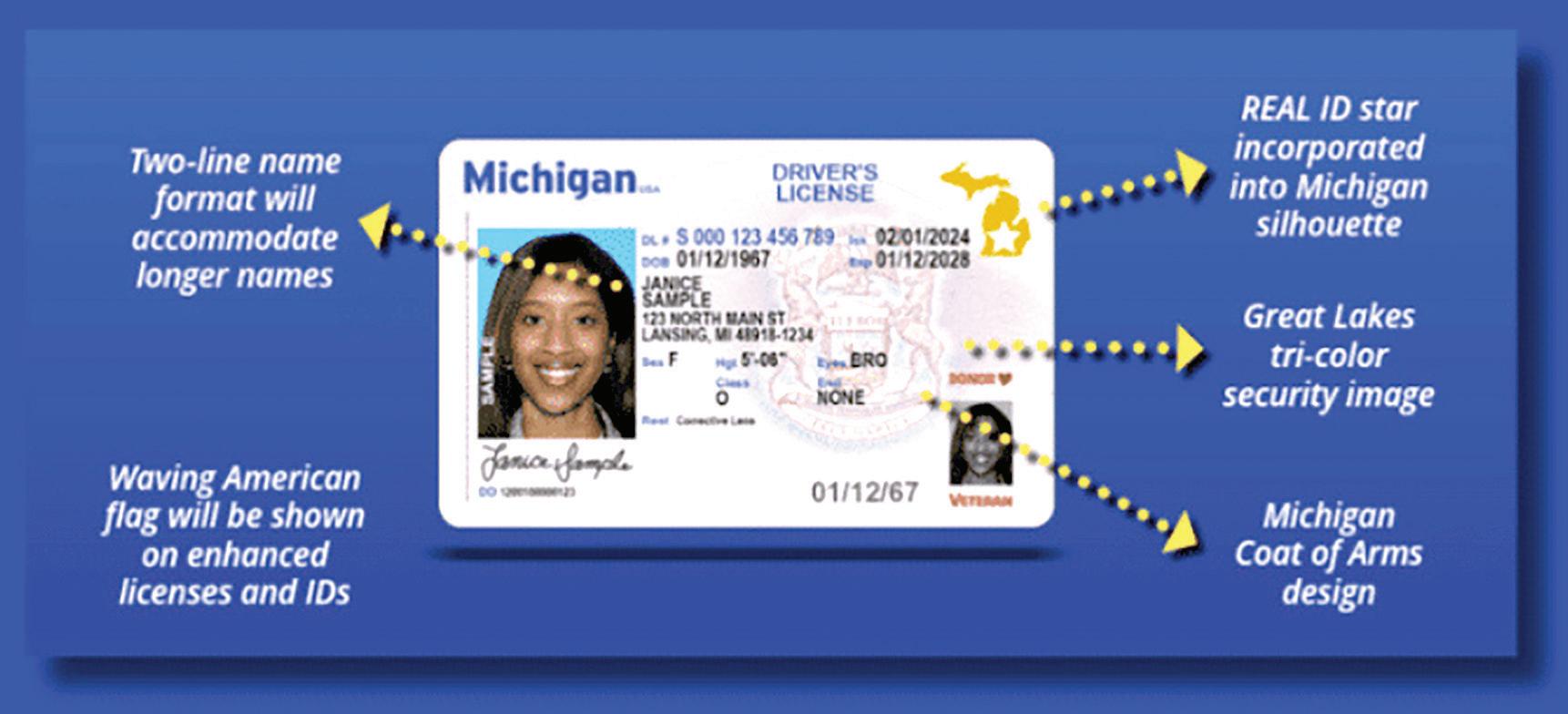
M-F & April 18th
7000 W Outer Dr, Detroit, MI 48235
If a lottery is necessary it will occur at 11am May 2nd, 2026 by a 3rd party at the above address.
NOTICE OF OPEN ENROLLMENT FOR DETROIT PREP 2027-2028 school year
Open enrollment online at www.detroitprep.org/enroll from December 10th, 2025 until May 1st, 2026
8a-5p M-F & April 18th
8411 Sylvester, Detroit, MI 48214
If a lottery is necessary it will occur at 11am May 2nd, 2026 by a 3rd party at the above address.
PHINIA Delphi USA LLC: We seek an Operations Manager based out of our office at 1624 Meijer Drive, Troy, MI 48084. Manage all activities related to Plant Operations and maintain effective working relationships with other departments to establish a unified approach to Production Operations; among other duties. Apply to job reference number R2025-0413 at https://phinia.wd5.myworkdayjobs.com/ PHINIA_Careers




FAMILY FEATURES
GGadgets and gizmos may be all the rage, but stuffing stockings with holiday gifts can be as simple as delicious goodies that highlight the flavors of the season. When seeking that special surprise for a special someone, look no further than a customizable combination of festive snacks.

Whether selecting a unique ready-to-go hostess gift, crafting the perfect combo for every person on your list or picking up hard-to-find ingredients for holiday treats, Nuts.com can delive something for everyone and every need. Its convenience makes it an ideal destination for hosting and gifting, no matter your budget. Give a gift box filled with favorites, curate your ultimate party tray or build the trail mix of your dreams with thousands of showstopping snacks, treats and ingredients to choose from, all without the hassle of heading to the store. Consider these unique gift ideas and find more by visiting Nuts.com.
adgets and gizmos may be all the rage, but stuffing stockings with holiday gifts can be as simple as delicious goodies that highlight the flavors of the season. When seeking that special surprise for a special someone, look no further than a customizable combination of festive snacks. Whether selecting a unique ready-to-go hostess gift, crafting the perfect combo for every person on your list or picking up hard-to-find ingredients for holiday treats, Nuts.com can delive something for everyone and every need. Its convenience makes it an ideal destination for hosting and gifting, no matter your budget. Give a gift box filled with favorites, curate your ultimate party tray or build the trail mix of your dreams with thousands of showstopping snacks, treats and ingredients to choose from, all without the hassle of heading to the store. Consider these unique gift ideas and find more by visiting Nuts.com.

for

Wonderland Cheer Delicious snacks can taste just as good as they