

By Ebony JJ Curry SENIOR REPORTER
By Michigan Gov. Gretchen Whitmer GUEST COLUMNIST
I
and what
By Ebony JJ Curry SENIOR REPORTER
Late Thursday night, Sept. 14, a historic moment unfolded in American labor relations as the United Auto Workers (UAW) union initiated a strike against Ford, General Motors (GM), and Stellantis. For the first time, the union took simultaneous action against all three major Detroit-based automakers. The action involves approximately 13,000 UAW members in assembly plants across Michigan, Ohio, and Missouri, who walked off their jobs after existing labor contracts expired at 11:59 p.m.
Since I spoke at the auto show last year, both the American and global economy have been rocked by change. Costs are up. Uncertainty is everywhere. Perhaps no industry has been more impacted than the auto industry.
IShortly before midnight on Sept. 14, GM released a statement expressing disappointment with the strike action, despite offering
n a breathtaking celebration of talent, determination, and the unyielding spirit of Black excellence, the Michigan Chronicle marked its 10th Annual 40 Under 40 event Thursday evening. This year’s soirée, drenched in the theme “All Black Everything with Gold Accents,” transcended expectations and essentially illuminated the golden gems within the true essence of Black excellence. Hosted by the charismatic duo of Andre Ash and Lynzee Mychael from Michigan Chronicle’s Finally Friday, the night was a triumph for the city of Detroit and its vibrant community of young Black pro-

received the prestigious Entrepreneur of the Year Award. Brown’s commitment to empowering the city through fashion and entrepreneurship has left an indelible mark.
The evening sparkled with a golden promise as we celebrated remarkable individuals from various walks of life. Among the honorees were the brilliant and visionary co-founders of Detroit Hives, Nicole Lindsey and Timothy Paul Jackson. Their work has not only changed the landscape of beekeeping and urban farming in Detroit but also exemplified the transformative impact Black professionals can have on their communities.
also expressed disappointment in a statement, saying the company immediately went into contingency mode to protect its operations.
By Ebony JJ Curry 19TH NEWS / MICHIGAN CHRONICLE
“Entrepreneur of the year – that’s a big deal,” said Brown. “It’s always an honor to be honored and it’s always a blessing to be in a room full of so many talented, accomplished, and popular people that look like me. I’m geeked. I started making and selling clothes as a kid and I always knew that I would have a business, but I never knew it would be Detroit’s brand name business, so I take a lot of pride in the fact that our business represents our city’s pride.”
1.4 Million
American manufacturing has contracted for 9 straight months, leading to job losses and production cuts. Every industry that relies on a skilled, hands-on workforce is facing shortages. We need a change. Without a clear end goal, tariffs hurt us more than our adversaries. We deserve a strategic national trade policy that encourages competition, fosters innovation, creates jobs, and lower costs.
By Ebony JJ Curry SENIOR REPORTER
“Together we have created a social, environmental, and financial impact through bees,” said Jackson. Lindsey followed that sentiment with, “It is through our local partnerships and collaborative efforts that we exist in over 28 plus locations managing the health of 4.5 million honeybees – humbly speaking our movement has inspired others locally, nationally, and even internationally to take on similar missions.”
This story was originally published on 19th News.
Taking home the Corporate Excellence Award was Dannis Mitchell, Director of Community Engagement at Barton Malow.
Detroit entered a new year with the same winter math: fixed incomes that don’t stretch, heat that costs more than many seniors can safely afford, and food in their homes that runs out before the month does.
For many Detroiters, Interstate 375, or I-375, has long been just another stretch of urban highway, a concrete artery connecting different parts of the city. To some, it’s a mere convenience; to others, it’s an unremarkable part of their daily commute. However, there’s a deeper, far more troubling story beneath the surface of this seemingly ordinary freeway—a story of pain, displacement, and the lasting impact on Black Detroiters.
at the Detroit Area Agency on Aging, described who shows up when older women reach out for food help. “Most older women who come to the Detroit Area Agency on Aging for food assistance are often widowed, divorced or never married and living on Social Security or [Supplemental Security Income] SSI,” Davis said.
DPD Chief James White Says Increased Police Presence Culled Violence By Andre
ness district that had been the lifeblood of the community.
gent and practical action to overcome racism, poverty, and injustice.”
The UAW has branded the industrial action as the “Stand-Up Strike,” focusing on specific plants within each automaker. UAW President Shawn Fain stated, “This strategy will keep the companies guessing. It will give our national negotiators maximum leverage and flexibility in bargaining. And if we need to go all out, we will. Everything is on the table.” Union leaders have also indicated that additional plants could be targeted in future waves if negotiations remain stalled.
In spite of all these challenges, Michigan has had some big wins too. Last year, Michiganders built two million vehicles. Stellantis and Ford announced major investments and GM increased production of SUVs and light-duty trucks. This year, Ford plans to launch 12 Ford Future Builders Labs in Detroit and Battle Creek schools, connecting thousands of students with careers in engineering, technology, and the trades.
Detroit Hives, a pioneering organization founded by Lindsey and Jackson, harnesses the power of urban beekeeping to revitalize neighborhoods in the Motor City. Their initiative not only addresses critical issues like environmental conservation but also provides valuable education and employment opportunities to Black De-
For older adults, particularly older women, who are living alone, one delayed benefit, one utility notice, or one missed ride can turn a hard week into a crisis – quietly, behind a closed door, without the public naming it as an emergency.
“It is so important to recognize that there are young leaders across the country, many that are born here in Detroit. I represent our city nationally and I tell people, ‘Yea I’m a D-girl I’m from the west-side of Detroit,’” Mitchell expressed. “But more importantly, I’ve been able to have experiences within an industry that not many of us, specifically women of color, have the opportunity to engage in and I’ve been the youngest person in the room, the only Black person in the room, and the only Sistah in the room, and I really had to articulate the importance of showing up, giving chances when others won’t, and being persistent.” As a trailblazing Black woman thriving in a predominantly male-dominated industry, her unwavering commitment to fortifying the connections between businesses and Detroit’s communities is unde-
It’s a history marred by pain, injustice, and economic devastation. More than 130,000 residents, primarily Black, were forcibly displaced. Families were uprooted, generational wealth was obliterated, and a thriving community was torn asunder. The wounds inflicted by I-375 run deep, transcending the physical barrier of a freeway to penetrate the very soul of Black Detroiters.
A string of shootings in Greektown in mid-April left both visitors and residents of this bustling downtown destination in awe. One of these shootings tragically claimed the life of a popular and beloved security guard following a dispute with a patron.
towards mending the wounds inflicted on Black Detroiters and restoring a sense of belonging that was so callously torn away in the past.
Davis said many are “unable to proactively plan for their basic needs while dealing with loneliness, poor social support and limited financial resources. They are more likely unable to navigate obtaining benefits and services on their own.”
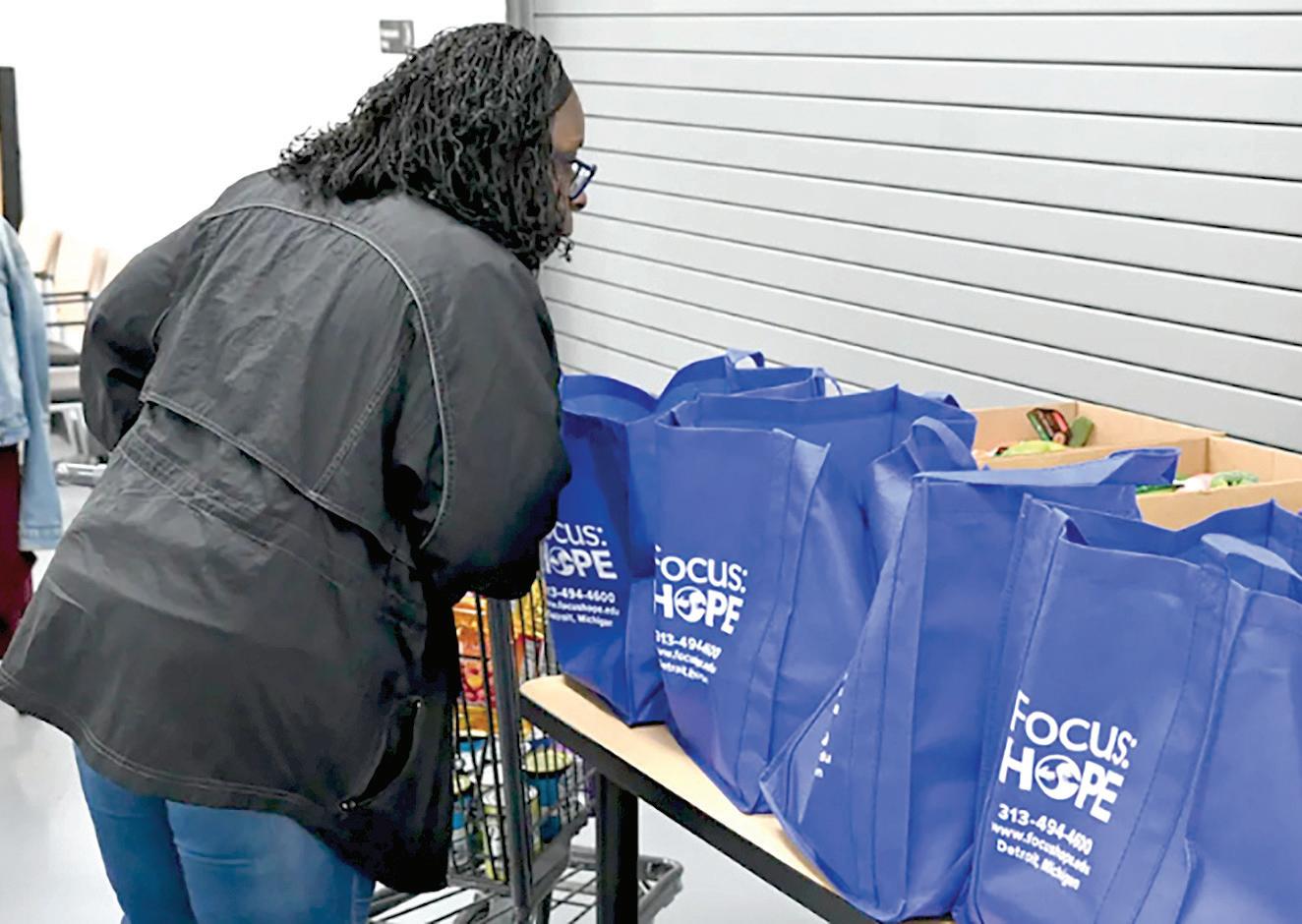
Her route has run through Focus: HOPE’s Food for Seniors program, which provides monthly food boxes to participants 60 and older across Wayne, Oakland, Macomb, Washtenaw, Lapeer, Tuscola, Huron, Sanilac, and St. Clair Counties.
The I-375 Boulevard Project is about more than just correcting historical injustices; it’s about redefining the future. It will connect downtown Detroit to surrounding neighborhoods, bridging the gap that was placed upon the city decades ago.
The income gap that these women struggle with makes that isolation harder to survive.
This painful legacy can be traced back to the nation’s interstate highway program of 1956—a program that aimed to connect the country but often did so at the expense of marginalized communities. In the case of I-375, it meant carving a path through the heart of Black Detroit, reinforcing segregation, and perpetuating inequality.
The male suspect allegedly shot the guard before fleeing the scene, while his female companion is accused of concealing the weapon in her bra.
Detroit often talks about homelessness as something you can see –a person outside in winter, a person sleeping in a car, a person carrying everything they own. Crawley keeps running into a different reality: older adults who still have a roof and still live through the same crisis conditions – hunger, unsafe cold, isolation – without the public ever calling it homelessness.
We passed a balanced bipartisan budget and delivered a long-term fix for state and local roads. Even in a challenging year, Michigan remains number one for auto manufacturing, R&D, and workforce development. In 2026, I’ll stay focused on setting our auto industry up for success.
By Andre Ash DIGITAL ANCHOR
To do that, we have to be clear-eyed about who we’re up against: China. China’s ultimate goal is dominating every part of the auto manufacturing process.
The tale begins in what is now Lafayette Park, once known as Black Bottom—a neighborhood rooted in African-American culture and history. Named after its dark, fertile soil, Black Bottom flourished during the mid1900s, nurturing the dreams and aspirations of prominent Detroiters like Coleman Young, Joe Louis, and numerous other Detroit legends. But in the name of urban renewal in the 1950s, this vibrant neighborhood was systematically dismantled, erased from the map, and replaced by a lifeless stretch of asphalt.
“You feel sad because you don’t want your parents to go through that lonely moment, a cold moment, a hunger moment,” said Joanne Crawley, a retiree who sees these crises unfolding every week through her volunteer work. “And it’s like, what can I do moving forward to help them?”
A Holistic Approach to Providing Shelter and Support for Detroit’s Unhoused People
For one to aptly recognize the harm caused by such projects, it is vital to note that some of the planners and politicians behind those projects built them directly through the heart of vibrant, populated communities—oftentimes to reinforce segregation and sometimes as part of a direct effort to replace or eliminate Black neighborhoods.
Today, the resurgence of Paradise Valley stands as a testament to the indomitable spirit of Black Detroiters and the enduring legacy of Black excellence. This historic district, once a vibrant hub for Black businesses and culture, is experiencing a renaissance that harkens back to its glory days. The destruction of Black Bottom may have torn apart a thriving community, but the resolute determination of a new generation of entrepreneurs and visionaries is reclaiming that lost legacy.
Homelessness continues to plague urban communities, with families and individuals grappling with the challenges of making ends meet in today’s economic climate. Whether it’s struggling to meet monthly mortgage payments or coping with soaring rental costs in a housing market marked by shockingly high prices, a variety of factors contribute to the growing issue of people becoming unhoused.
They already mine or process most of the critical minerals needed to build vehicles, produce three times as many cars as the U.S., and have invested more than $230 billion into electric vehicles and batteries since 2009. They’ve captured the market share almost everywhere except the United States and Canada. It’s tempting to see the future as zero-sum. But to win, we have to double down on our strengths: innovation and collaboration.
Fain clarified the union’s strategy: “I want to give a major shoutout to the thousands of members who are on the picket lines right now fighting for all of us. The Stand-Up Strike is a new approach to striking. Instead of striking all plants at once, select locals will be called on to stand up and walk out on strike. This is our generation’s answer to the movement that built our union – the sit-down strikes of 1937. We told the Big 3 that Sept. 14 was the deadline and we meant it. We gave the companies our economic demands eight weeks ago and it took more than a month to get to the table.” The union is pushing for a comprehensive list of demands. This
While the residential areas bore the brunt of this demolition, the heart of Black Bottom, its thriving business center, remained largely untouched. Restaurants, theaters, clubs, and bars—the very places that brought Detroit’s Black community together—were concentrated around Hastings Street, the epicenter of African-American culture in the city.
Older women are more likely to be on their own in late life, and that changes what winter looks like when money, mobility, or family support runs thin. The Administration for Community Living, a federal agency that funds and coordinates services so older adults and people with disabilities can live independently in their communities, estimates that in 2023, 33 percent of older women living outside institutional settings lived alone, compared with 22 percent of older men. ACL also reported that 29 percent of older women are widows.
Meagan DunnJulie Schneider
Historically, shelters have provided a temporary respite for those in need, often serving as the first or second option after exhausting alternatives like staying with friends or family. Shelters offer a place to rest one’s head and a warm meal, albeit sometimes for extended periods. For others, being unhoused means living in cars or makeshift outdoor
Then, in a cruel twist of fate, Hastings Street, too, was obliterated a few years later, making way for the construction of I-375. This marked the final blow, sealing the fate of Black Bottom and signaling the beginning of the end for Paradise Valley, the Black busi-
Housing Resource Helpline in response to the challenges that residents face in navigating the complex system of housing services. The helpline provides a single point of contact for people seeking housing assistance and connects them with the resources they need.
A federal indicator’s report on older Americans puts the poverty rate for women 65 and older at 11.2 percent, compared with 9 percent for men. Black women are even more vulnerable – the poverty rate for non-Hispanic Black adults 65 and older sits at 17.6 percent. The Treasury Department has long documented how women’s earnings and savings often take hits from career disadvantages tied to the overrepresentation of women of color in lower-wage occupations and the underrepresentation of Black women in higher-paying jobs.
These incidents unfolded during an unseasonably warm spring, leading to increased pedestrian traffic and heightened tensions in the densely populated downtown area.
It can look like staying inside because transportation is unreliable. It can look like stretching medication and meals at the same time. It can look like living alone with a landlord who doesn’t fix what winter exposes.
The surge in crime and the influx of visitors to Detroit’s downtown core garnered the attention of the Detroit Police Department (DPD), catching them somewhat off guard.
Seniors don’t always say it plainly on day one. Crawley says they talk when they trust you.
But now, after decades of enduring the scars of I-375, there is a glimmer of hope on the horizon. Plans have been unveiled to transform this once-divisive freeway into a vision that seeks to right the wrongs of the past while heralding a new era of inclusivity and community revitalization.
Crawley is 69 and a senior herself.
Anne Holmes Davis, vice president of planning and program development
Support for the helpline comes from the Gilbert Family Foundation, which has pledged $10 million over three years to fund the program. Wayne Metro Community Action Agency manages the helpline, making it accessible to all Detroit residents. This initiative simplifies access to the City’s various housing services, ensuring that residents in need can easily find assistance.
She has spent years volunteering with Focus: HOPE, the Detroit nonprofit founded in 1968 after the 1967 Detroit civil unrest, with a mission that names what it is up against:
“When the pandemic hit my daughter was telling me about this program,” she said. “I was just open and interested to be a help because a lot of seniors are home and they don’t have anyone to talk to. So, we were the people that they talked to.”
James White, Chief of Police for the Detroit Police Department, said: “We were caught somewhat flat-footed right out the gate. By design we went into the spring deployment, which is less than the mid-summer deployment, and saw we say an uptick in violence that first warm weekend.”
Chief White attributes the violence in Greektown to a combination of weather conditions and a surge in population.
Fueled by more than $100 million from the Infrastructure Investment and Jobs Act and other partners, this ambitious project aims to create jobs, remove barriers to economic growth, and reconnect the neighborhood with the rest of Detroit. It is a step
In the heart of Paradise Valley, Blackowned businesses are not just flourishing but thriving, offering diverse services, products, and experiences that pay homage to the past while paving the way for a prosperous future. From jazz clubs to soul food restaurants, the Black Press, and art galleries to fashion boutiques, this revival is breathing life into the very essence of what once made this neighborhood a vibrant cultural epicenter. It’s a resurgence that extends beyond brick and mortar; it represents the resurgence of a spirit that refuses to be subdued.
“Recognizing the dignity and beauty of every person, we pledge intelli-
USDA’s Economic Research Service reported that in 2023, 9.3 percent of U.S. households with an adult age 65 or older were food insecure at some point during the year. For households
Detroit City Councilman Fred Durhal III, representing District 7, where Eastern Market resides, told the Michigan Chronicle, “It’s still very early in the process, MDOT is
He explained, “ We saw numbers downtown that we have not seen, ever. People are emerging from COVID and there’s a feeling that we’re in a post-COVID era… and with the venues downtown and the reasons to come down with all the activities that are going on, we saw hundreds of more people and, in particularly, young folks, teenagers that we hadn’t seen.”
Responding swiftly to the surge in violence, DPD adjusted its deployment plans. Rather than waiting for mid-summer, they deployed officers in the spring itself to address the situation.
By Regine Beauboeuf & Tonya Adair
By Lynzee Mychael MULTIMEDIA JOURNALIST
The causes of homelessness are as diverse and complex as the individuals experiencing it. In response, the City of Detroit has adopted a holistic approach to combat this issue.

What a Federal Government Shutdown Could Mean for Detroiters?
Human trafficking is often misunderstood. It is frequently portrayed as a crime that happens “somewhere else,” to “someone else,” under dramatic circumstances. In reality, human trafficking is far more subtle and much closer to home than many people realize.
“Providing services and high-quality housing to persons at risk of or who are experiencing homelessness is a key priority of the City of Detroit, said Julie Schneider, Director of Detroit’s Housing and Revitalization Department.
“This means focusing on building the pipeline of supportive housing and coordinating with the Continuum of Care on the delivery of critical resources such as emergency shelter, rapid rehousing, and diversion and prevention programs. It also means preserving and expanding affordable housing options for Detroiters of all incomes and improving housing stability though comprehensive service offerings available through the Detroit Housing Resource HelpLine and Detroit Housing Services Division within HRD.”

“The city and its partners offer a lot of great services to help Detroiters with their housing needs, but they don’t mean much if people don’t know how to access them,” said Mayor Mike Duggan. “Thanks to the efforts of our partners and the generous support of the Gilbert Family Foundation, we now have a simple process to guide residents to the right housing resource and a growing number of programs to help them.”
The Gilbert Family Foundation’s broader commitment involves pledging $500 million to support projects across Detroit over the next ten years, with housing initiatives being a significant part of their contribution.
Trafficking impacts women, men, girls, and boys across all communities. It does not always involve physical restraint or dramatic escapes. More often, it involves manipulation, coercion, false promises, and the exploitation of vulnerability. Understanding these realities is one of the most effective ways communities can reduce vulnerability and increase awareness.
In May 2023, the City of Detroit launched the Detroit
From the days of the Great Migration when thousands of Black families flocked to Detroit in search of jobs and a better life, to the pivotal role they played in the city’s cultural and musical heritage, Black Detroiters have left an indelible mark on the city. However, in recent years, Detroit has experienced significant gentrification, which has raised concerns about the displacement of long-standing Black residents. Similar to a setting sun, there’s a rising spirit, and Black Detroiters are reclaiming their place in the city, despite the challenges posed by gentrification.

Notably, Detroit has witnessed a consistent decrease in recent years, with the number of unhoused residents steadily declining. In 2019, approximately 7,847 people were unhoused and entered the City’s community response system. In 2021, about 5,687 people experienced homelessness.
According to the City of Detroit, since the start of the fiscal year 2019 to 2021, Detroit saw a 28% decrease in the
As a vital international crossing between the United States and Canada, the Detroit Windsor Tunnel plays an important role in facilitating the daily movement of people, commerce, and culture. With that role comes an opportunity to support awareness and education not through fear, but through facts.
During the Great Migration, thousands of Black families from the South came to Detroit in search of jobs in the booming automobile industry. Despite facing discrimination and segregation, they built vibrant communities on the city’s east
and west sides. Over time, these neighborhoods became centers of Black culture and entrepreneurship.
Human trafficking can take many forms, including labor trafficking and sex trafficking. Individuals impacted may include students, runaways, people experiencing economic hardship,
According to Historian Jamon Jordon Black resilience in the city has roots that extend far before the Great Migration and will persist
The rise in visitors to the Greektown area is evident in data from Placer.ai, a location analytics company specializing in visit trends and demographic insights through geolocation-enabled mobile devices. From May 1-Aug. 27, 2022, there were 1.3 million visits and 655,000 visitors to Greektown, according to Placer.ai. In the same period this year, these numbers increased to 1.4 million visits and 670,000 visitors.
individuals facing housing insecurity, or those seeking opportunity or stability. Traffickers often exploit trust rather than resorting to force, using manipulation to create dependence or control. It is also important to challenge common misconceptions. Human trafficking does not affect only women and girls. Men and boys are trafficked as well, particularly for forced labor, and their experiences are often overlooked in public conversations.
tions on another’s behalf. Other indicators can include unexplained injuries, exhaustion, lack of access to personal identification, sudden behavioral changes, or promises of work or travel that seem vague or unrealistic. While these signs do not confirm trafficking on their own, they can signal that someone may need support.
As Detroit’s downtown area continues to attract both residents and visitors, the police department has implemented various enforcement measures to manage the increased population. Notably, metal detectors have been strategically placed throughout Greektown to deter the illegal carrying of firearms.
Personal safety is strengthened when individuals and families stay informed. Open conversations about online safety, healthy relationships, and recognizing manipulation can be especially important for young people. Community members can trust their instincts and seek guidance from appropriate local resources when concerns arise.
“We have strategically placed them at key points, “ Chief White explains. It has been a deterrent for some, and some have tested it. If you are legally carrying a weapon and carrying a CPL, have a great day. If you’re
long after our current phase of gentrification.
Awareness begins with understanding common indicators that advocates and experts often reference. These may include individuals who appear fearful or anxious, those who are unable to speak for themselves, or situations where someone else insists on answering ques-
“Black people were coming to Detroit because Black churches were here, black schools were here, and its was Black businesses here,” said Jordon. “They were coming of course
because of discrimination, but they were also coming because Black people was doing some stuff. When did Black people start doing things in the city? They started doing things in this area in the 1800’s. In the 1800’s the major thing that they were doing in Detroit is they were the leaders in the fight against slavery. The Underground Railroad is the root in the city of Detroit to all of this Black innovation that you see coming later.” Musical legends like Aretha Franklin, Marvin Gaye, and the Motown sound emerged from Detroit, providing a soundtrack for the civil rights movement and inspiring generations. Motown Records,
by
was
a record label but a symbol of Black excellence and empowerment. However, as Detroit faced economic decline and population loss in the late 20th century, many
Addressing human trafficking also requires compassion. Individuals who experience exploitation are not to blame. Many do not identify themselves as victims, particularly when traffickers present themselves as friends, romantic partners, or employers. An informed and supportive community creates pathways to assistance and recovery. Although the Tunnel’s role in this effort is focused on awareness and education rather than enforcement, we train our staff to identify suspicious behaviors and work with community organizations like Alternatives
cine and healthcare, may
what the Supreme Court will rule in the upcoming sion, advocates on both sides of the argument are willing to continue their
“Overturning Roe v. Wade would be a terrible break with nearly 50 years of judicial precedent and – more importantly – a blow against individual freedom. It is my hope
ings of this draft. If that is not the case, we






do everything we can to ensure our patients can access the care they need.”
and women of color, who already have a long-storied history with access and inclusion in medi-
herself in the position to choose has access to care without the threat of legal action, many wonder
thing like that?… It’s just not right. It’s got to be a better way.”
islature adopts it.
where an adult 65 or older lived alone, the food insecurity rate was 11 percent. In Michigan, Forgotten Harvest reports that 291,000 seniors 60 and older are affected by food insecurity.
corporate boards to have more diverse representation and pass the legislation.
Nearly half of them are in the Metro Detroit area.
sits alongside other barriers: Her agency’s community needs assessment survey found that 20 percent of respondents did not have access to a vehicle and that more than 90 percent of caregivers – most of them older women – had not been to the doctor in the last year.
The health committee recommends reviewing state licensure policies to address the barriers that Black psychologists face in obtaining licensure in Michigan.
Better collection and analysis of criminal justice data: BLAC recommends data collection and professional analysis be initiated with the assistance of our Attorney General, Michigan Commission on Law Enforcement Standards (MCOLES), Association of Michigan Prosecutors and other stakeholders to collaborate, collect and analyze data strategically.
Increase school funding: Statutory changes to increase the School Aid Fund revenue by at least $3.6 billion and establish a permanent weighted funding formula based on student and community needs and universal preschool (0-3).
“Living alone is not just a personal detail – it changes access. Solo agers are more at risk of food insecurity, and they are more likely to be women over the age of 50,” Davis said. “Since they are more likely to live alone, they don’t hear about community resources and services available through faith-based organizations, non-profits, and other organizations.
Struggles with utility costs show up in the same households. A Center for American Progress analysis found that in 2023, nearly 1 in 3 older adults — 14.8 million people — were “energy insecure,” meaning they cut back on basics like medicine or food to pay energy bills, kept homes at unsafe temperatures, or couldn’t pay an energy bill in the prior 12 months.
Frank Kubik, director of Focus: HOPE’s food program, says many seniors won’t voluntarily share how bad things are for them. He described what staff and volunteers do to understand the need without forcing someone to say it out loud.
The Social Security Administration estimated the average monthly retirement benefit for January 2025 was $1,976. For seniors on SSIe, the agency reported that in December 2024, the average monthly federally administered SSI payment for recipients age 65 or older was $576. All of which is supposed to cover rent, utilities, transportation, co-pays, prescriptions, food, and the small costs that pile up quietly, including toiletries.
A visitation time is set for Thursday, January 29, 2026 from 3 p.m. to 8 p.m. at O.H. Pye III Funeral Home, 17600 Plymouth Rd., Detroit. A celebration of life service will be held Friday, January 30, 2026 –Family hour – 10 a.m. to 11 a.m. and service at 11 a.m.,Tabernacle Missionary Baptist Church, 2080 W. Grand Blvd. in Detroit.

He was a longstanding member of Carter Metropolitan CME Church in Detroit, Michigan.
Ban no-knock warrants: Urging the House Government Operations Committee to hold hearings on HB 5013 and other legislation that would ban or limit the use of noknock or quick knock warrants, and urging the state legislature to pass meaningful reform and advise Gov. Whitmer to sign the bill after the leg-
Reject censorship in history instruction: Encouraging Gov. Whitmer to ensure the goal for Michigan schools should be history instruction that is presented by professionals with the subject matter expertise, pedagogical skills, and judgment necessary to present complex information to students that are grounded in provable facts and add to the understanding of modern-day America.
“The winter months in Michigan and Metro Detroit can be a particularly difficult time as utility bills rise,” Davis said. “The increased cost can make it difficult for food to last for the entire month, leading to skipped meals or even utility shut-offs.”
Ensure equitable distribution of state health funds: Ensure all Michigan communities with a significant Black population receive adequate funds to address mental health issues.
“What we ask people to do sometimes when you’re delivering food is to ask if you can put it away for the senior,” Kubik said. “You don’t want to intrude, people sometimes don’t want to tell you their situations, and I get that.”
Protecting Black voting rights: Urge state officials to remain vigilant in the fight against schemes to disenfranchise Michiganders of color.
He explained the questions that could follow.
“Can I put it in your cupboard? Can I put it away in your refrigerator?” he said. “And then it gives you a chance to open up a cupboard or open a refrigerator and see what’s actually in there.”
Increase mental health supports for the Black community: Recommending Michigan set a goal of increasing the number of Black mental health service providers by 20% each year over five years.
Kubik described one home that has not left him, “A person had very little. And when I say very little, I’m talking about like a can of applesauce or something, and that was it.”
“It kind of just reminds you of how fragile things are and any disruption to whatever is already happening, whether it’s SNAP, whether it’s our program, whether it’s your Social Security check, it all has a huge impact,” he said.
Focus: HOPE’s Food for Seniors program exists because that stack of problems is real, and because someone has to meet people where they are, not where the system assumes they should be, Kubik said. Crawley has learned the same lesson from doorsteps.
“BLAC members have worked hard to identify the needs of the Black community and we feel these recommendations will provide a solid first step towards breaking down barriers in education, community safety, health and business,” said BLAC Co-Chair Dr. Donna L. Bell.
The help that matters is the help people can actually reach, keep, and use without losing their dignity in the process. Sometimes it looks like a warm meal. Sometimes it looks like groceries put away in a clean cupboard. Sometimes it looks like a conversation long enough for the truth to come out.
Charley C. Moore, Jr. spent most of his life in a serving capacity. His service included serving in the U.S. Air Force, U.S. Postal Service, Detroit Public Schools, Boy Scouts Cub Master for many years, founder of the Yankee Baseball Organization and charter member of the Detroit Police Athletic League.
He mentored many youth in our community. Mr.
He is the
For Girls (AFG) that address the needs of impacted individuals.
“How are seniors in this country living off a can of applesauce or some-
Davis also pointed to how hunger
the chancellor embraces.
“I think of transformational leadership as a thoughtful approach that causes people to change but also causes the systems and circumstances they are operating in to change too,” Ivory said. “Transformational change doesn’t just ask people to do certain things; it asks them to change their view of what’s possible and excites them to drive that change together because they believe that what they’re doing will create positive change for everyone. That’s how entire systems change because
people believe that they need to for themselves and others to live better lives.”
BLAC will hold a virtual town hall meeting to discuss its policy recommendations on Thursday, May 12 at 4 p.m. Join BLAC and a virtual audience in discussing the recommendations to support the Black community.
Ebony JJ Curry can be reached at ecurry@michronicle.com
“Chancellor Ivery is a true transformational leader and an outstanding CEO, who is more than worthy of the CEO of the Year Award he just received, “ said Prof. James C. Mays, who teaches entrepreneurship and supply chain management at WCCCD’s Corporate College. “In his 27 years at WCCCD, Dr. Ivery has elevated WCCCD to become nationally recognized for excellence and innovation and preparing our students professionally and personally to do great things in the world.”
The auto industry also depends on collaboration. Every Michigan-made car you see on the road or even the one you drove in today is a miracle of teamwork.
But this system only works if and when we are a good partner to our
Innovation has always been Michigan’s calling card. Michigan is still home to some of the most exciting automotive research happening anywhere in the world, the highest density of engineering talent, and the highest concentration of auto suppliers. We also continue to invest in research and development, even as federal R&D funding faces deep cuts. At the auto show, we built on that legacy with a brand-new executive directive to explore geologic hydrogen. With it, we can lead the production of a new source of clean, reliable energy that could create jobs, lower costs, and reduce our reliance on foreign oil.
BLAC is housed in the Michigan Department of Labor and Economic Opportunity. Members represent many professional backgrounds, including economics, law, public safety, health and wellness, arts and culture and media. They leverage their experiences and expertise to make recommenda-
allies. When we fight our neighbors, we serve China the North American auto ecosystem on a silver platter. The choice before us is simple: do we want to win together or lose alone? Compromise is hard. Collaboration takes work. But that’s how Michigan and the United States have always moved forward.
This year, I’ll keep working to win with our allies and compete for good-paying jobs. Together we can grow Michigan’s economy, create jobs, invest in our auto industry and build a bright future for our state’s most iconic industry.
Alternatives For Girls is a vital Detroit-area nonprofit supporting girls and young women who are at risk of, or have experienced, human trafficking, homelessness, violence, and exploitation. Michigan consistently ranks among the states with the highest number of confirmed human trafficking cases in the country, making this issue especially urgent in our region.
Through trauma-informed outreach and specialized human trafficking services, AFG works in the community and in partnership with the Michigan Human Trafficking Task Force, as a founding member of the Detroit Human Traf-
ficking Task Force, and with other local organizations to provide crisis intervention, survivor advocacy, counseling, and pathways to safe housing, education, and employment. By meeting survivors where they are and addressing both immediate safety and long-term stability, AFG helps young people exit exploitation and begin rebuilding their lives with dignity and hope. Human trafficking thrives in silence. Thoughtful, factual awareness helps ensure that our communities remain informed, connected, and attentive to the well-being of those around us.
Regine Beauboeuf is President and CEO of the Detroit Windsor Tunnel, and Tonya Adair is President and CEO of Alternatives For Girls



By Sam Robinson SENIOR REPORTER
Deputy Secretary of State Aghogho Edevbie announced last week that he would suspend his campaign for Michigan Secretary of State, saying he expects Lt. Gov. Garlin Gilchrist to be the party’s nominee for the state’s elections chief.
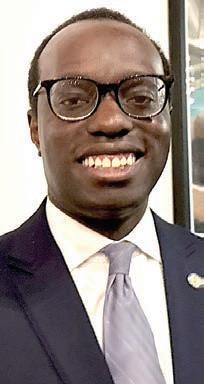
“I gave this campaign everything I had and because of you I was confident we would emerge from April’s convention as the nominee,” Edevbie said in a video. “However, the Lieutenant Governor’s entry into the race has changed that calculus… I fully expect Garlin Gilchrist to be our nominee.” Edevbie said he spent the past week evaluating his prospects and searching his heart. He thanked supporters and his campaign team for raising more than $350,000 and over 70 endorsements during his campaign.
Gilchrist dropped out after his campaign couldn’t compete with Democratic frontrunner Jocelyn Benson. Her money advantage was significant, as was the number of Democratic lawmakers and officials getting behind her.
While Genesee County Sheriff Chris Swanson remains as Benson’s only remaining Democratic challenger, her campaign will have to contend with former Detroit Mayor Mike Duggan’s independent campaign for governor.
Duggan is expected to take some votes away from Benson from Southeast Michigan voters who have watched the city of Detroit improve since municipal bankruptcy.
There are now three remaining candidates running to earn the support of delegates at the April 19 nominating convention to replace outgoing Secretary Benson.
Former Michigan Lottery Commissioner and Whitmer Administration cabinet member Suzanna Shkreli, who told Michigan Chronicle she would bring quicker election results, a digital driver’s license, and walk-in branch hours for seniors.
Ingham County Clerk Barb Byrum, a former state representative, told Michigan Chronicle she believes Democratic Party voters want someone who can take on Republicans and fight back against attempts to enact stricter voting rights.
Former state Senator Adam Hollier says he would also protect the rights of voters and continue expanding Michigan’s elections as Secretary of State. Party insiders say Hollier has been approached privately to drop his bid to run for the 3rd state Senate district.
The primary winner is chosen in a closed nominating process. Nominees for secretary of state and attorney general are selected by delegates, not voters, at the state party’s nominating convention ahead of the election. You can reach Sam at srobinson@ michronicle.com.
‘You
By Sam Robinson SENIOR REPORTER
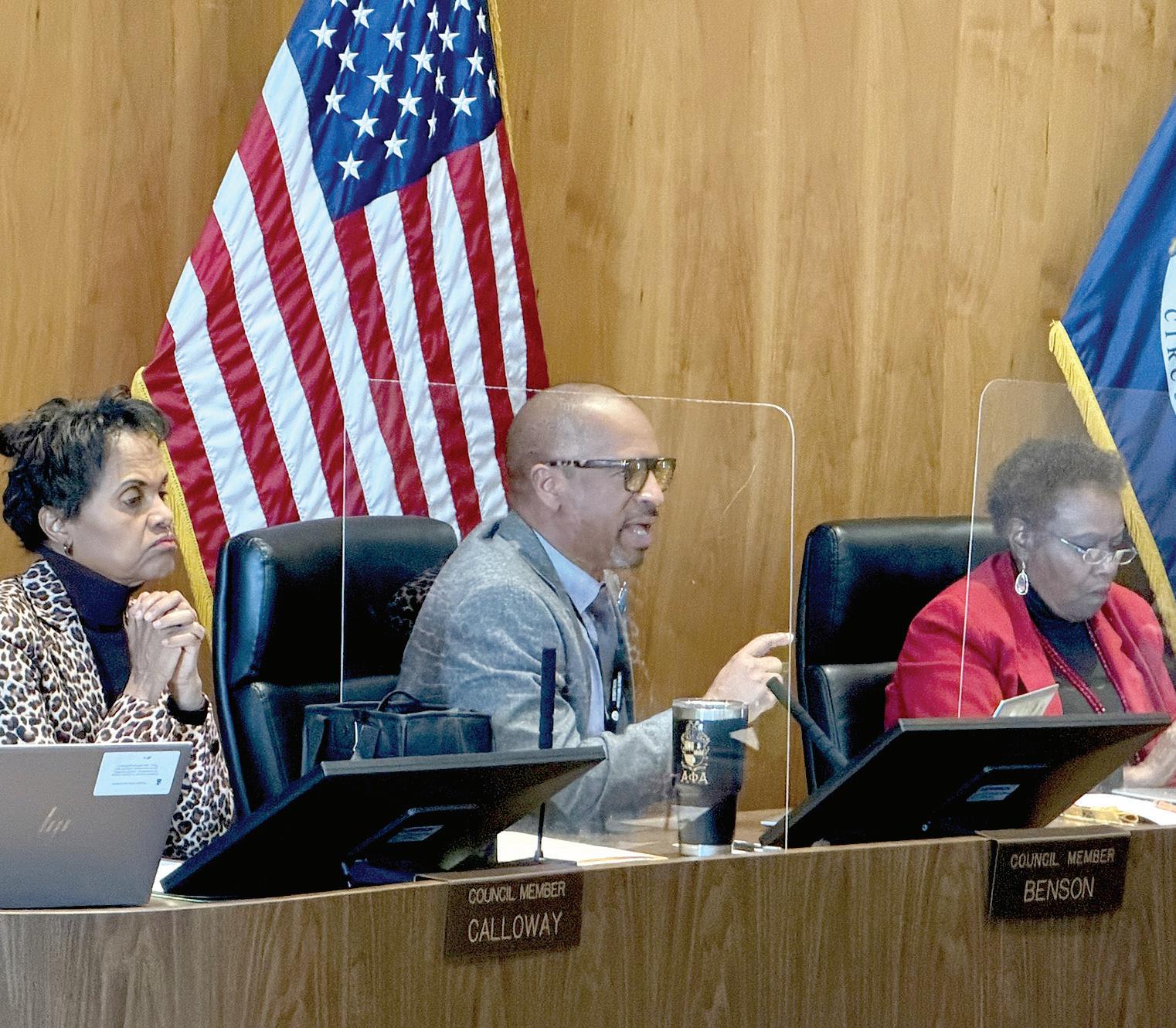
District 3 Detroit City Council member Scott Benson on Tuesday pushed back on some public commenters who have targeted Southwest Detroit member Gabriela Santiago-Romero over her ethnic background.
His comments, the day after Martin Luther King Jr. Day, invoked the civil rights icon and others, including Nelson Mandela.
Martin Luther King Jr. was one of the greatest Americans who ever walked this planet. He loved Black people, yet he did not need to exclude or denigrate any others,” Benson said. “He said, ‘Call me a drum major for peace, call me a drum major for righteousness.’ You don’t have to hate others. This is not a zero-sum game.”
Benson’s comments came after serial commenter Betty Lyons doubled down on offensive comments about Arab American immigrants, using a pronunciation of “Arab” that is considered offensive.
Lyons, who sits in the same front row seat to address council members in person each week, has repeated rhetoric familiar to President Donald Trump’s administration, suggesting Santiago-Romero, a Mexican immigrant, should be deported.
She routinely makes offensive comments about other ethnic groups, such as Palestinians, Jews, and Hispanics.
Some Detroit residents have been on edge in the days after an Immigration and Customs Enforcement (ICE) agent in Minnesota shot and killed an unarmed protester driving away from an apparent immigration raid.
Trump has increased immigration enforcement in Dem-
ocratic states and cities in what his opponents say is motivated by political retribution rather than public safety.
In Detroit, where more than 75% of residents are Black, there is a sentiment held by some older, more conservative community members that Black people shouldn’t interfere with the Republican-led effort to deport undocumented non-citizens.
Benson challenged public commenters to spread love for 14 days, or two council sessions, as he put it.
“Pro-Blackness is rooted in self-affirmation rather than the exclusion of others,” Benson said. You can love us and not hate others.”
Santiago-Romero addressed Lyons during the first council session of the year earlier this month.
“I often ignore you, because you’re allowed to say whatever you want — I’m just telling you that your words do make an impact,” Santiago-Romero said. “They do hurt but I pray for you. I hope everything goes well for you but I’m going to continue to make sure I’m serving everybody.”
Last week, hundreds of people protesting ICE and Trump marched down Trumbull Avenue as the president took the stage at the Motor City Soundboard as part of a Detroit Economic Forum event.
Many of the protestors were in attendance for a packed council session where commenters urged council members to enact Sanctuary City policies that would prevent Detroit police officers from working with ICE.
Santiago-Romero has said such a proclamation could lead to the loss of federal funding, ultimately doing more harm than good.
You can reach Sam at srobinson@michronicle.com.
By Ebony JJ Curry SENIOR REPORTER
Mayor Mary Sheffield says the next chapter of her administration will depend on whether residents can clearly see what the city is doing, how to access it, and how to hold leaders accountable for results.
Sheffield has named Jamie K. Walters, the former WDIV Local 4 program director and co-founder of VVK PR + Creative, as Senior Director of Mayor’s Office Communications. Walters will lead the mayor’s communications strategy with a focus on resident-centered messaging tied to the administration’s programs and priorities, while also supporting efforts to attract partnerships and growth to the city.
“My administration is going to be about providing all Detroiters with pathways to a better quality of life,” Sheffield said. “We will drastically improve services and make resources available in neighborhoods so that Detroiters stay and raise families here. For
our efforts to be broadcasted and utilized, we need to develop creative and innovative ways to communicate to our residents.”
Sheffield said her team also plans to focus on bringing Detroiters back to the city while drawing visitors and major partnerships that strengthen Detroit’s workforce and small business ecosystem.
“We also want to bring the Detroiters that moved out of our city with incentives and opportunities, while attracting visitors and major partnerships that support our workforce and small business ecosystem,” Sheffield said. Elevating our strategies and also our institutions, amenities and unique attractions are top priorities. Jamie’s presence will allow us to think strategically about marketing the Detroit we all know and love to the world.”

Walters brings more than two decades of experience in strategic communications, crisis management, and executive leadership. She spent 20 years at WDIV Local 4, Detroit’s NBC affiliate, serving as Creative Services and Programming Director. Sheffield’s office said Walters managed a 34-person team during her time at the station and executive produced major Detroit cultural events, including America’s Thanksgiving Parade and the Ford Fireworks. Her work also included political program-
ming, including the Sunday morning show “Flashpoint.”
A 25-year Detroit resident, Walters is described by the administration as deeply civically engaged, with long-standing relationships across media, nonprofit, and municipal sectors throughout the region. Sheffield called Walters “one of the most effective and respected communications professionals anywhere,” adding, “I am proud to have her on our team.”
Walters’ role is positioned as separate from the city’s departmental communications function, which is led by Vickie Thomas, Senior Director. The mayor’s office described Walters’ work as focused on executive positioning, broad policy messaging, stakeholder relations, and strategic communications tied to the mayor’s priorities and vision. Thomas’ team will focus on operational and service delivery messaging connected to specific city departments, with increased capacity
under the new structure.
The reorganization is described as a standard practice used in major cities such as Chicago, New York, and Los Angeles. The administration framed the shift as part of Sheffield’s stated goal of deeper community engagement and the growth of Detroit as a destination for families, small business development, large-scale economic development, and tourism.
Walters said her decision was immediate once Sheffield offered the job.
“When Mayor Sheffield offered me the role, my decision instantly became clear,” Walters said. “The chance to work for the people of Detroit and alongside a leader committed to equity, transparency, and real progress was an opportunity I couldn’t turn down.”
Walters began her new position on Monday, Jan. 26. Ebony JJ Curry can be reached at ecurry@michronicle.com




This payment plan reduces the interest rate from 18% to 6% per year for eligible taxpayers. To sign up, you must own and live in your home, and have a Principal Residence Exemption (PRE) and ID that proves residency.
Available to everybody, this plan allows a taxpayer to pay taxes pursuant to a payment schedule. The plan will avoid foreclosure provided that payments are submitted per the agreed upon schedule.
This program is not available to everyone. If you own and live in the property, and are su ering financial hardship, you may qualify for this program. Proof of ownership, occupancy, and hardship are required.
Only for taxpayers who live in a community that opted into the PAYS program, have applied for the Poverty Tax Exemption (PTE) at their local assessor’s o ice and were approved. Once notified by your local Assessor’s o ice and deemed eligible, our o ice will mail you a notification letter with your Reduced Amount Due. You will have the option of paying a lump sum (additional 10% o ) or enrolling into a PAYSPA.
A5 | Jan. 28 - Feb. 3, 2026
By Dr. Anthony O. Kellum
CONTRIBUTING COLUMNIST
The Black homeownership gap is not a mystery. It is not the result of poor decision-making, cultural deficiency, or a lack of ambition. It is the predictable outcome of a nation that systematically restricted Black access to property while simultaneously using property ownership as the primary mechanism for wealth creation, political stability, and intergenerational security. Any discussion of Black homeownership that ignores balance and fairness within the housing system fails to engage the issue at its core. This is why the 3 by 30 Initiative matters. And this is why it squarely belongs within the Property is Power framework.
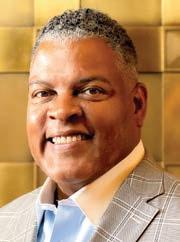
Anthony O. Kellum
At its core, 3 by 30 is not about houses. It is about correcting a structural imbalance that has left Black America asset-poor in an asset-driven economy. The initiative, led by the Black Homeownership Collaborative, seeks to create 3 million net new Black homeowners by 2030. That number is not arbitrary. It reflects the scale required to materially disrupt the racial homeownership gap that has persisted since the passage of the Fair Housing Act despite decades of so-called progress.
Homeownership is the largest source of wealth for most American families. When Black households are locked out of ownership, they are locked out of the most reliable pathway to wealth accumulation this country offers. That is not incidental. That is design.
The 3 by 30 Initiative begins with the acknowledgment that the gap exists because barriers were constructed deliberately and therefore must be dismantled deliberately. Consider what the data already tells us. Even when income is controlled for, Black households are less likely to own homes than their White counterparts. Even when credit profiles are similar, Black borrowers face higher denial rates. Even when qualified, Black buyers are more likely to be shown fewer homes, steered into less desirable neighborhoods, or discouraged altogether. This is not a knowledge gap. This is a systems gap.
The 3 by 30 Initiative addresses this reality headon by focusing on the actual choke points in Black homeownership, not the convenient talking points.
• Down payment assistance is not charity. It is a correction. Black families were systematically denied access to wealth-building programs Homestead Acts, FHA subsidies, GI Bill benefits that enabled White families to accumulate down payments across generations. Expecting Black Buyers to compete in the same market without compensatory capital is intellectually dishonest.
• Homeownership counseling, when done properly, is not about compliance or box-checking. It is about demystifying a process that has historically been used to exclude. Black buyers do not need more lectures; they need strategic preparation paired with real access to financing and inventory.
• Mortgage lending reform is essential because underwriting has never been neutral. Credit scoring models, appraisal practices, and risk assessments reflect historical biases embedded in the data they rely on. Expanding Black homeownership requires lenders to re-examine how risk is defined and who gets the benefit of the doubt.
• Housing supply and production matter because access means nothing without availability. Black buyers are disproportionately concentrated in markets with limited entry-level housing, rising investor activity, and declining affordability. Ownership cannot expand if the only options available are priced beyond reach or stripped from the market by speculation.
• Policy and accountability are non-negotiable. Without measurable outcomes, initiatives become symbolism. The strength of 3 by 30 is that it ties intention to execution, and execution to data. This is where 3 by 30 aligns perfectly with the Property is Power mission.
See 3 BY 30 INITIATIVE Page A-6
By Mark S. Lee
CONTRIBUTING COLUMNIST
Every election year, including midterms, seems to come with the same question: Are we headed for a recession?
While President Donald Trump was recently in Detroit touting an economic boom, many business owners are asking a more grounded question: if the economy is booming, why does it still feel so uncertain?
The honest answer lies somewhere in between the headlines. Most economists today do not predict a full-blown recession as the most likely outcome this year. Instead, many forecasts point to moderate growth, slower momentum, and what’s often

By Jeremy Allen EXECUTIVE EDITOR

Michigan’s legal cannabis industry is entering 2026 at a moment of real vulnerability, as a newly enacted 24% wholesale tax takes effect in a market that has already slowed after years of rapid expansion.
What began as one of the country’s strongest adultuse cannabis markets is now contending with falling prices, store closures, job losses, and intensifying competition, which makes the new tax especially disruptive for businesses and consumers alike.
Since recreational marijuana sales launched in late 2019, cannabis has become a significant contributor to Michigan’s economy and public revenues. At the same time, more than 550 dispensaries and cultivation facilities have closed, and thousands of workers have lost jobs.
But after years of steady growth, the industry showed its first signs of contraction in 2025. This contraction has been signifying that the market has entered a new phase defined less by expansion and more by survival.
According to data from the Michigan Cannabis Regulatory Agency, adult-use dispensaries generated $3.17 billion in sales in 2025, down from $3.27 billion in 2024. While a 3.1% decline may appear modest, it marks a significant shift for a market that had previously grown every year and helped position Michigan as one of the largest legal cannabis markets in the country.
making Michigan one of the most affordable legal cannabis markets in the country. While consumers have benefited from cheaper products and frequent discounts, many operators have been left selling at or near cost just to maintain foot traffic. For smaller, locally owned businesses in particular, profitability has become increasingly elusive.
Over six years, legal cannabis sales in Michigan have totaled more than $13 billion, generating approximately $2.2 billion in excise and sales tax revenue that supports schools, roads, and local governments. However, those figures are expected to decline further in 2026.
State lawmakers approved a new 24% tax on wholesale cannabis transfers, which went into effect Jan. 1, 2026. The tax applies to the first transfer of cannabis from a grower or processor to a retailer, and is layered on top of the existing 10% excise tax paid by consumers at the register.

“Michigan is a mature cannabis market, which is great for consumers but not always great for businesses,” a Michigan attorney who has spent nearly half of his 14-year legal career advising cannabis companies told Michigan Chronicle in an interview. “It’s highly saturated. There’s significant price compression, and margins are already razor thin.”
That saturation has driven prices to historic lows,
“This new tax is fundamentally different,” the attorney said. “It doesn’t happen at the retail level. It happens higher up the supply chain.”
While the tax is technically assessed on wholesalers, its effects are expected to cascade throughout the industry. Growers and processors must now decide whether to absorb the cost, negotiate tighter terms with retailers, or raise wholesale prices.
Retailers, in turn, face difficult choices of their own: pass higher costs along to consumers, cut back on promotions, or further compress margins that are already dangerously thin.
“Taxes don’t disappear,” the attorney said. “They get pushed up or down the supply chain.”
For consumers, that could mean subtle but meaningful changes. Instead of the steep discounts and low prices that have defined Michigan’s cannabis market in recent years, shoppers may encounter higher prices, fewer sales, and a narrower selection of products. In
called a “soft landing.”
That said, the chances of a recession are far from zero. Depending on the forecast, recession risk is commonly estimated in the 30 to 40 percent range — meaningful, but not dominant. For Detroit-area businesses, that nuance matters.
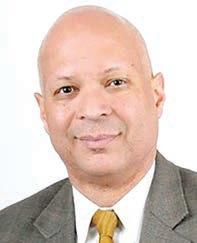
A recession typically means shrinking economic output, rising unemployment, and declining consumer spending across the board. What many busi-

a market where price sensitivity is high and competition is fierce, even small increases can influence purchasing behavior.
The average retail price for an ounce of recreational cannabis dropped to just over $58 in December 2025. That figure was more than $69 a year earlier and exceeded $95 in late 2023. Michigan has become one of the cheapest legal cannabis markets in the nation, a benefit for consumers but a serious obstacle for businesses trying to cover operating costs.
“In a mature market, nobody has the luxury of simply raising prices,” the attorney said. “You raise prices, you lose customers.”
That risk is especially pronounced given the alternatives available to Michigan consumers. The state has a long-standing caregiver market that predates legalization and offers cannabis without the regulatory costs borne by licensed businesses. In addition, Ohio’s recent approval of medical marijuana sales gives consumers near the border new legal options, increasing competitive pressure on Michigan retailers.
“If prices rise too much, consumers will go back to the gray or illicit market,” the attorney said.
“That’s just economic reality.”
Industry leaders warn that this shift would undermine the goals of legalization by reducing compliance, weakening consumer protections, and shrinking the regulated market that generates tax revenue. Unlike licensed businesses, the illicit market does not contribute to public coffers or follow safety and testing requirements.
By the end of 2025, Michigan had 2,171 active cannabis licenses, a net decline from the previous year and the first such drop since adult-use legalization began. Nearly 1,000 licenses are now inactive. Growers have been hit especially hard, with nearly one-third of cultivation operations closing since the market opened.
Detroit has also seen notable contraction, with at least 14 cannabis businesses closing since the city began issuing licenses in late 2022. Despite these closures, the market remains crowded, as new entrants continue to replace those that exit, keeping supply high and prices low.
But the way the wholesale tax was enacted has only deepened frustration within the industry. Rather than moving through the Legislature as a standalone marijuana policy, the tax was folded into a broader budget and infrastructure funding package during late-stage negotiations.
“This wasn’t a marijuana bill,” the attorney said. “Cannabis became the funding mechanism at the last minute.” He said that the state projects an additional $420 million from the new tax, with the irony of that figure being that “420” is a universal code for cannabis consumers around the world.
Earlier efforts to raise cannabis taxes had failed, he noted, largely because the original adult-use statute — approved by voters — carefully outlined the tax structure. That statute imposed a 10% excise tax at the point of sale and required a supermajority vote in the Legislature to make changes.
“Voters knew exactly what they were voting on,” he said. “That structure was part of the deal.”
From the industry’s perspective, using cannabis to help close budget gaps reflects a broader political reality: the sector is seen as
accessible revenue, with fewer defenders in Lansing than more established industries.
“Cannabis was an easy target,” the attorney said. “It doesn’t have the lobbying power of big alcohol or big tobacco.”
That dynamic has placed pressure on an industry that is still evolving. While cannabis is now legal and regulated, many operators entered the market without the institutional knowledge or financial backing of legacy industries. As a result, sudden policy shifts can have outsized consequences.
“This tax is forcing the industry into maturity whether it’s ready or not. And not the kind of maturity that I mentioned earlier. I mean the kind of maturity that demands a certain kind of operations savvy that a lot of current retailers are still learning.” he said.
The rollout of the wholesale tax has also been marked by uncertainty. The measure took effect at the start of the year with limited guidance, leaving businesses to interpret compliance requirements while absorbing immediate financial impacts.
“The tax went into effect with essentially no runway,” the attorney said. “There are still dozens of unanswered questions about how the tax applies.”
A legal challenge seeking to block the tax failed to secure a preliminary injunction, allowing it to take effect while litigation continues. Even if the industry ultimately prevails, the process is expected to be lengthy and costly.
“Even if the industry wins, that’s a long and expensive battle,” he said. “And the tax is real in the meantime.”
For workers, the uncertainty is deeply personal. Cannabis jobs span retail, cultivation, processing, transportation, compliance, and security, and layoffs have already accompanied the broader market slowdown. As costs rise and margins tighten further, operators say staffing decisions will become increasingly difficult.
Municipalities could also feel the impact if more businesses close or scale back operations. Communities that allow cannabis businesses have come to rely on marijuana tax revenue as a steady funding source, and any contraction in the regulated market could reduce those distributions.
Ultimately, critics of the wholesale tax argue that it risks undermining a system that, while imperfect, has largely achieved the goals voters set out: displacing the illicit market, protecting consumers, and generating public revenue. Pushing too hard on taxation, they say, could reverse that progress.
“You risk creating the opposite outcome,” the attorney said. “Less compliance, less revenue, and more underground activity.”
Michigan’s cannabis industry faces a defining period. Operators are making short-term decisions in an environment that is shifting month by month, with little certainty about what comes next.
“This is going to be a survival exercise,” the attorney said. “People were already hustling just to stay afloat. Now the rug’s been pulled out while they were still trying to find their footing.”
Whether Michigan lawmakers reconsider their approach or double down on cannabis as a revenue source remains to be seen. What is clear is that the consequences of the new wholesale tax will extend beyond balance sheets, shaping the future of the state’s legal cannabis market and the experience of the consumers who sustain it.

businesses find clients stretching out purchasing decisions.
None of that screams “economic boom,” even if national employment numbers look strong.
This disconnect between national data and local experience is especially visible in metro Detroit and beyond. Manufacturing and construction have pockets of strength, while small service-based businesses feel squeezed. Large employers can often absorb higher costs; small businesses cannot.
So, what should business owners watch instead of recession headlines?
First, cash flow. Businesses that manage cash carefully and maintain reserves are better positioned, whether the economy slows or stabilizes.
Second, customer demand in your specific industry — not overall GDP.
Third, labor trends. Hiring challenges remain, but wage pressures may finally be easing, offering some relief.
It’s also worth remembering that economic cycles don’t impact everyone at the same time or in the same way. Recessions are officially declared after the fact. By the time the label arrives, businesses have already adapted — or struggled.
Property is Power has never been about motivational slogans. It is about understanding ownership as leverage. Leverage over housing stability. Leverage over education outcomes. Leverage over political influence. Leverage over legacy.
Ownership anchors families to communities. It creates stakeholders. It forces systems to recognize permanence rather than transience. Renters consume housing. Owners control it. For Black America, this distinction has always been existential.
To the intellectually engaged, the relevance of 3 by 30 should be obvious. Degrees alone do not protect against economic vulnerability. Income without assets is fragile. Mobility without ownership is temporary. To our younger generation, especially those navigating a culture that celebrates consumption over control, the message must be
That’s why the most practical approach right now isn’t panic or complacency.
It’s preparation.
Businesses that stay flexible, control costs, invest strategically, and keep listening to their customers tend to weather uncertainty better than those chasing headlines. Whether the economy slows or surprises on the upside, resilience matters more than predictions.
The bottom line?
The odds of a recession this year are real — but they’re not inevitable. For Detroit businesses, this moment is less about bracing for collapse and more about navigating complexity. Growth may be uneven, margins may be tight, but opportunity still exists for those prepared to adapt.
And in uncertain times, smart planning is the best approach to addressing uncertainty.
We invite readers, business owners, and future entrepreneurs to follow along, ask questions, and engage.If you have story ideas or questions you can emailLeeatmark@leegroupinnovation.com or visitleegroupinnovation. com.
clear: freedom in America has always been tied to land, property, and capital. Without ownership, progress can be reversed. With ownership, progress compounds.
I support the 3 by 30 Initiative because it understands what too many housing conversations refuse to say out loud: Black homeownership is not a personal achievement issue it is a national equity issue. Anything that increases Black ownership, narrows the housing gap, and expands access to appreciating assets deserves serious support. Not because it feels good, but because it shifts power.
The goal is not simply to help more Black people buy homes. The goal is to alter the economic architecture that has kept Black communities perpetually vulnerable to displacement, extraction, and instability.
Property is Power! is a movement to promote home and community ownership. Studies indicate, homeownership leads to higher graduation rates, family wealth, and community involvement.




The Michigan Education Association praised state lawmakers this week for advancing bipartisan legislation that would require public school districts across Michigan to adopt policies restricting student smartphone use during
The move, supporters say, will help improve student
have internet access. Those devices would not be subject to the same restrictions outlined in the bills.
While the legislation sets a statewide floor, it also gives local school districts flexibility to adopt policies that go further than the minimum requirements. Districts would be allowed to restrict smartphone use for longer portions of the school day if they choose, including banning phones entirely during school hours or limiting their use to specific times, such as lunch periods, or to students in certain grade levels. Supporters say this approach respects local decision-making while ensuring a baseline level of consistency across the state.

dents,” said MEA President and CEO Chandra Madafferi, a
“Frontline teachers and school support staff know that students must be fully engaged in school to achieve academic success and develop critical social skills. Our kids can’t get the education they need if they’re glued to their screens rather than paying attention in class.”
The legislation is made up of a tie-barred package that includes Senate Bill 495 and House Bill 4141. The measures were sponsored by state Sen. Dayna Polehanki, a Democrat from Livonia, and state Rep. Mark Tisdel, a Republican from Rochester. Together, the bills require every school district in Michigan to adopt a cell phone policy that, at a minimum, prohibits students from using wireless communication devices on school grounds during instructional time, defined in the
Under the bills, wireless communication devices are broadly defined to include any device capable of text messaging, voice communication, internet access, entertainment, navigation, or sending and receiving photos, videos,
The legislation makes a distinction between smartphones and basic phones, such as flip phones that do not
The bills also emphasize transparency and accountability by requiring districts to publicly post their cell phone policies, including clear information on how those policies will be enforced. In addition, the legislation outlines several exemptions, including allowances for district-owned devices used for educational purposes, medically necessary devices, special education accommodations, and instructional uses approved by classroom teachers.
Emergency situations are also addressed in the legislation. District policies must include exemptions that allow students to use devices during emergencies in ways that align with each district’s emergency operations plans and established protocols. Lawmakers and education advocates say this provision is intended to balance safety concerns with the goal of limiting everyday distractions in the classroom.
House Bill 4141 has already passed both the House and the Senate. Once the House concurs with the Senate’s version of Senate Bill 495, the tie-barred legislation will be sent to Gov. Gretchen Whitmer, who is expected to sign it into law. If approved, districts would then move forward with adopting or updating their local policies to comply with the new requirements.
“This has been a top issue for Michigan Education Association members working in rural, urban and suburban schools alike, and we are thrilled to see the House and Senate pass this important legislation,” Madafferi said.
“We look forward to continuing our work with Gov. Whitmer and lawmakers from both parties to address the challenges facing our neighborhood schools, so we can create a brighter future for students in every corner of Michigan.”
By Ebony JJ Curry SENIOR REPORTER
Thirty-year mortgage rates do not wait for politics to calm down. They move on expectations, on fear, on the credibility of the institutions that set the cost of money. That reality sat just under the surface Wednesday as the U.S. Supreme Court weighed President Donald Trump’s effort to fire Federal Reserve Governor Lisa Cook over mortgage-fraud allegations Cook denies, with justices openly warning that the move could shake the Fed’s independence and spook markets.
As justices signaled discomfort with Trump’s attempt to fire Cook over unproven mortgage-fraud allegations, the legal fight widened into something bigger than one set of loan documents: whether a president can intimidate the nation’s central bank into obedience. Cook denies wrongdoing, and she holds a history-making seat appointed as a Federal Reserve governor. That context sits quietly behind the legal briefs and the market anxiety, and it presses a question that does not require a courtroom transcript to be understood: Is this “for cause” removal really about paperwork, or is Cook being targeted because she’s Black?
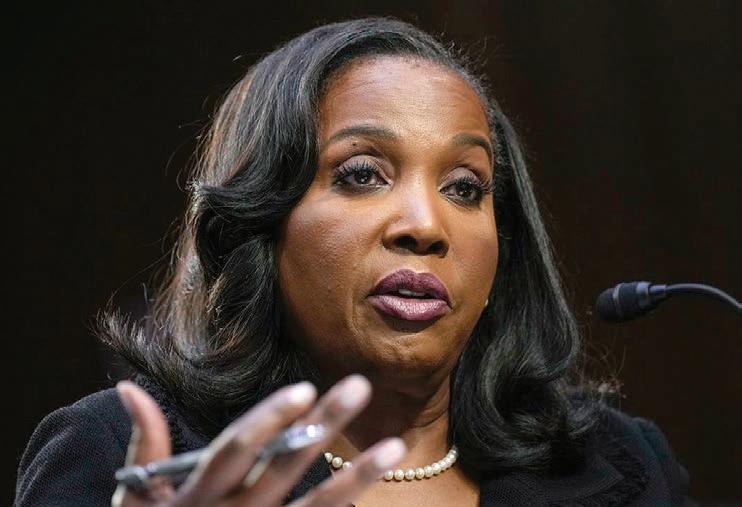
The case, Trump v. Cook, is a legal fight with an economic pulse. Cook, appointed in 2022 by President Joe Biden, became the first Black woman to serve as a Fed governor. Trump’s attempt to remove her tests a century-old design meant to keep monetary policy insulated from political punishment and political reward. Congress built the Federal Reserve system in 1913, after repeated financial panics, and gave Fed governors fixed terms with removal permitted only “for cause,” a deliberate constraint meant to protect the central bank from direct presidential control.
On Wednesday, the justices’ questions suggested a shared unease with the administration’s theory of power and process. Multiple reports described skeptical reactions from conservative and liberal justices alike, including pointed questions about due process and what evidence supported the allegations used to justify removal. Justice Brett Kavanaugh, a Trump appointee, warned in open court about the implications of letting a president effectively rewrite the Fed’s insulation by declaring “cause” and daring courts to look away.
At the center of the dispute is the administration’s claim that Cook falsified mortgage documents tied to two properties by listing them as primary residences. Cook denies wrongdoing. Her legal team argues the administration “cherry-picked” paperwork to cast lawful applications as something sinister. The allegations were initially pushed publicly by Bill Pulte, the Trump-appointed head of the Federal Housing Finance Agency.
Cook’s lawyers have also argued that similar multi-mortgage applications appear in the financial histories of prominent Trump administration figures and even Pulte relatives without any suggestion of criminality,
a point raised to underline how selective enforcement can look when the target sits on the board that votes on interest rates.
Cook’s lawyers say the paperwork was framed to look criminal when it was not, and they point to reporting showing other high-ranking Trump administration figures have had multiple mortgages without similar allegations. That context raises a question the courts will never write into an opinion, but communities living with unequal scrutiny recognize at once.
Cook is not just any governor. When she joined the Federal Reserve Board in 2022, she became the first Black woman to serve as a Federal Reserve governor in the institution’s history. No public filing in the case proves racial intent, and the administration insists the dispute is about “cause.” Still, the effect of a removal attempt aimed at the Fed’s first Black woman governor would be felt far beyond one seat on a seven-member board, especially if “cause” becomes whatever a president says it is.
The Trump administration’s stance goes further than that of one governor. Government lawyers argue that once a president decides “cause” exists, courts have no role in second-guessing that determination. Critics see that as a pathway to a purge: fire a governor or two, install loyalists, and tilt rate-setting toward presidential preference.
That argument lands inside a broader campaign of pressure on the Fed and its chair, Jerome Powell, whom Trump appointed in 2018. Trump has publicly attacked Powell, including saying on CNBC, “Either he’s incompetent or he’s crooked.”
The attacks escalated this month when the Department of Justice served the Federal Reserve with grand jury subpoenas tied to Powell’s testimony to the Senate Banking Committee about cost overruns in renovations to Federal Reserve buildings.
Powell responded with unusually direct language in a statement posted on the Federal Reserve’s website, saying the threat of criminal charges was not truly about his testimony or the renovations. “Those are
pretexts,” Powell said. He framed the subpoenas as retaliation for the Fed setting interest rates based on what officials believe will serve the public rather than aligning with the president’s preferences.
When presidents apply overt pressure for lower rates, investors can respond by demanding higher long-term rates to compensate for inflation risk and political interference. Daniel Tarullo, a Harvard law professor and former Fed governor, put it plainly in reporting that circulated ahead of arguments: when long-term rates rise on inflation fears, “Mortgages and business investment” take the hit.
Homeownership is already a fragile ladder in many Black neighborhoods, shaped by appraisal gaps, credit barriers, and the aftershocks of foreclosure crises that stripped wealth block by block. A credible, independent central bank cannot fix those structural problems. It can keep them from getting worse through political games that drive up borrowing costs for working families, small businesses, and first-time buyers.
That economic reality is part of why the Cook case has drawn a rare coalition of warnings.
Business leaders have publicly cautioned against meddling with the central bank, including JPMorgan Chase CEO Jamie Dimon, who said interference with the Fed “will have reverse consequences,” including the risk of higher inflation and higher borrowing costs over time.
The legal question in front of the Court is narrower than the political stakes: whether Cook can remain in her position while the case proceeds and whether Trump can remove her immediately based on his asserted “cause.” Lower courts have blocked the removal so far.
A federal judge, Jia Cobb, ruled that the administration’s attempt to fire Cook likely violated her Fifth Amendment due process rights and did not meet the legal standard for “cause,” according to Reuters reporting.
At the Supreme Court, the clash is also symbolic. Cook is represented by Paul Clement, the former U.S. solicitor general under President George W. Bush. Clement urged the justices not to unravel a century of central-bank structure on an emergency posture, warning there is no sound reason to abandon long-standing independence on a thin, early record.
The Court’s own recent words complicate Trump’s push.
In a prior emergency-docket opinion, the justices described the Federal Reserve as a “uniquely structured, quasi-private entity” tied to the historical tradition of the First and Second Banks of the United States. That language has been read as a signal that the Court may treat the Fed differently than other independent agencies whose leaders Trump has sought to remove.
Trump’s allies argue the opposite.
Jacob Huebert, senior litigation counsel at the conservative New Civil Liberties Alliance, has said Article II of the Constitution vests executive power in the president and that a president must be able to remove officials he does not want to work with, rather than being forced to “share executive power.” That legal worldview treats the Fed’s independence as a choice, not a constitutional necessity.
Still, the justices’ questioning suggested they understand the Fed’s “choice” has become a pillar of economic stability. If presidents can fire governors based on contested claims from political appointees, the independence promise starts to look optional, and markets tend to price in instability quickly.
A final ruling is expected later this year, with reporting suggesting a decision by early summer. Between now and then, the Cook case will keep carrying two messages at the same time: one about legal authority, and one about whether the country’s financial guardrails can hold when a president decides those guardrails are the problem.
The justices can decide what “cause” means and how much deference a president gets in claiming it, but they cannot control what the country hears when a president tries to oust the Fed’s first Black woman governor while publicly escalating attacks on the institution’s leadership. The Federal Reserve was built to survive political temperaments because the cost of money touches everything from mortgage payments to business investment to whether families can keep their footing when prices rise.
If “cause” becomes a presidential shortcut, independence becomes theater, and working people pay the premium.
So, when this case ends and the headlines move on, the unanswered piece will still sit on the table for Black communities that have watched selective scrutiny play out for generations: Was this enforcement, or was it a message – delivered through Lisa Cook’s seat – that Black authority at the highest levels remains conditional? Ebony JJ Curry can be reached at ecurry@ michronicle.com

By Miss AJ Williams
Something is stirring in the spirit. And no, it’s not just another retrograde. All over the diaspora, Black folks are tuning in, waking up, and reclaiming the power we’ve always had. A spiritual renaissance is unfolding, and it’s deeply ours. Astrology. Ancestor veneration. Tarot. Hoodoo. Meditation. We’re leaning in. We’re listening. And we’re doing it our way.
Gone are the days when spirituality came in a box. For many Black millennials and Gen Z, traditional religion didn’t always leave room for full expression. Some of us felt stifled by doctrine. Others were silenced by shame. And so we started searching. What we found wasn’t new. It was ancient.
The rise of astrology is just one part of that story. We’ve gone beyond sun signs and into the deep water—exploring natal charts, planetary alignments, transits that mirror our self-evolutions. But the real star of the show? The rising sign. It’s the first impression. The energy we carry into a room before we even speak. It tells the world who we are on the surface, and frequently mirrors who we’re becoming.

Understanding your rising sign isn’t about vanity. It’s about self-awareness. It’s a portal to purpose. And in this renaissance, self-awareness is sacred. We are seeking tools that help us come home to ourselves. Not to predict our futures, but to understand our present.
But this movement is about more than the stars. It’s about our roots. Root work, often misunderstood and mislabeled, is an African American spiritual system born rooted in strength and deep ancestral wisdom. It’s about working with nature, with energy, with intention. It’s prayer and potion. It’s spirit and science. It’s how our ancestors survived a world that sought to eliminate them.
For too long, our practices were hidden or demonized. Now, they’re being reclaimed. Young Black spiritualists are building altars, speaking with their ancestors, learning herbal medicine, and protecting their peace with rituals passed down in whispers. This isn’t superstition. It’s sovereignty.
We are no longer satisfied with borrowed paths. We are creating our own. We’re not looking for saviors—we’re looking for alignment. We’re crafting spiritual identities that feel authentic, rooted, and liberating. We’re saying yes to the parts of ourselves that used to feel silenced.
This renaissance isn’t about performance. It’s about remembering. Remembering who we were before the world told us what we had to be. Remembering that spirituality was always in our blood, in our bones, in our breath.
Black spirituality has always been expansive. It shapeshifts. It evolves. It reflects the needs of the people. Right now, we need freedom. We need healing. We need truth. And we’re finding it in the stars, in the soil, in ourselves.
The ancestors are listening. The cosmos is alive. And somewhere in the calm of your own becoming, your rising sign is waiting to be understood.
By Jeremy Allen
EXECUTIVE EDITOR
Detroit audiences will have the opportunity to experience the enduring musical legacy of one of the most celebrated voices in popular music when “The Voice of Whitney: A Symphonic Celebration” comes to the Detroit Opera House for one night only on Saturday, Oct. 10, 2026.
The concert pays tribute to the incomparable career of Whitney Houston through a powerful blend of music, film, and orchestral performance that honors her lasting impact on global culture and the music industry.
Tickets for “The Voice of Whitney: A Symphonic Celebration” started at $39 and were made available through a pre-sale that took place beginning Jan. 21. Public ticket sales began Friday, Jan. 23. The performance will take place at the Detroit Opera House, located at 1526 Broadway St. in downtown Detroit, with an 8:00 p.m. curtain time.
The concert tribute features original master and remastered recordings of Houston’s actual vocals, newly arranged for full orchestra.
Backed


‘Good
A History of Black Detroiters’ Decades-Long Love Affair with Fur
By Aaron Foley
The pending closure of Dittrich Furs isn’t just the end of a family business that’s been in operation for more than a century. It’s one of the last gasps of a regional trade almost as old as Detroit itself.
Dittrich, Dittrich, since 1893; if you’re of a certain age, you probably sang that part.
“Since 1893,” however, means that the renowned furrier has been in business ten years before Henry Ford established his namesake car manufacturer and 15 years before the owner of Buick acquired Olds Motor Works under the newly established holding company known as General Motors. Detroit, incorporated in 1806, was fur city before the Motor City.
But say what you will about Detroiters and their love for fur, the industry that supports that infatuation is waning. Once a city bustling with multi-story furriers (and that’s before you add in multi-story department stores that also sold furs), the greater metropolitan area now only claims a handful of fur retailers.
An amateur historian could point to a number of factors as to why you can finally buy a MacBook downtown and not a Russian sable. One, in 1893, much of Detroit – and much of Michigan, period – was

program blends Houston’s unmistakable voice with sweeping symphonic arrangements of her most beloved songs. Selections include “I Wanna Dance with Somebody (Who Loves Me),” “Higher Love,” and “I Will Always Love You.” The evening also incorporates home movies, film performances, historic appearances, and never-before-seen video footage and interviews, creating a multimedia experience that places audiences inside the arc of Houston’s extraordinary life and career. Presented in collaboration with Pat Houston and The Estate of Whitney Houston, Park Avenue Artists, and Primary Wave Music, the production is part of a North American tour celebrating the iconic superstar’s contributions to music and entertainment. Whitney Houston’s self-titled debut album was released in February 1985, launching a career that would rede-
fine vocal excellence and popular music for decades.
Fans of Whitney Houston have traveled across the country and around the world to attend “The Voice of Whitney” concert, which has earned sold-out performances at renowned venues including the Ravinia Festival in Illinois, the Kennedy Center in Washington, D.C., Town Hall in New York City, and Nashville’s Schermerhorn Symphony Center.
The 2025 North American fall concert tour kicked off in September with the Cincinnati Pops Orchestra and continued with performances at major performing arts centers nationwide.
Widely regarded as one of the greatest voices of the modern pop era, Houston was known simply as “The Voice.” Entertainment Weekly wrote, “She had ‘the perfect vibrato’ and an ‘incomparable timbre’; her voice was at times operatic, incredibly emotive; it was strong and full and powerful; she had nearly superhuman vocal stamina, she had the musicianship …. She was and is the yardstick by which every other singer will ever be judged.”
The New York Times wrote of Whitney Houston: “Hers was a voice of triumph and achievement, and it made for any number of stunning, time-stopping vocal performances: her version of Dolly Parton’s ‘I Will Always Love You,’ from the soundtrack to The Bodyguard, which topped the Billboard singles chart for 14 weeks; her dazzling ‘Star-Spangled Banner,’ sung before the 1991 Super Bowl; and huge, authoritative songs like ‘Greatest Love of All’ and ‘One Moment in Time,’ which sounded as if they could have been national anthems too.”
“We are excited to bring ‘The Voice of Whitney: A Symphonic Celebration’ tour to Detroit,” says Pat Houston, executor of The Estate of Whitney E. Houston and President of The Whitney E. Houston Legacy Foundation. “‘The Voice of Whitney’ is a unique concert experience, and she narrates the entire concert.”
Tickets are available through Ticketmaster (ticketmaster.com) and the Detroit Opera (detroitopera.org) websites, or in person at the Detroit Opera House box office.
still mostly unsettled, so fur trappers could still go to, say, where Great Lakes Crossing sits today, and capture a few minks, skin them, and fashion them into floor-length coats, stoles, and gloves; Dittrich itself notes land development on its website.
Two, we know everything costs more, but not everybody has more wages to cover it, hence why perhaps for the first time in Dittrich’s history, lines were wrapped around the block because of deep discounts. And there could be more that the fur industry may not want to admit, like changing attitudes toward animal hunting and slaughter in the last few decades, layered with the fact that more religious and cultural practices that would prohibit the wearing of fur exist in the Detroit area more than they did a century ago.
Still, for the most fashionable among us, there’s nothing more prized than a real fur. Dittrich’s closing doesn’t undo a certain mindset among Detroiters: If you want to signal that you’ve “made it,” whatever your definition of, then you get yourself a fur coat.
For Black Detroiters specifically, the local fur industry plays a role in the growth of the Black middle class in this city. A tour through 90 years of archive reporting from this publication is evidence of such. (And it’s here that we note for transparency that for several of these years, Dittrich was a major advertiser in the Chronicle’s pages, and sometimes sponsor of Chronicle events.)
Going back to 1936, the fur business has been a supporting character in the retail, social, and sometimes even religious habits of Black Detroiters, and one could argue that the competition among the numerous furriers for Black dollars peaked just as the city’s Black population did.
We’ve only got limited space here in this piece, so this won’t be a full account of the relationship between Black people and fur in the city. But we’ll go through some notable examples and highlights worth mentioning, both in and out of the Chronicle’s pages.
“The Fur Man,” and Detroit’s other Black furriers In the wake of Dittrich’s closure, several Black people on social media sought to call attention to Elmars Furs, a Black-owned furrier in Oak Park that claims some of the Clark Sisters and other big-name customers among its clientele.
Long before Elmars, furriers owned by Black entrepreneurs dotted the city, building their names by advertising in the Chronicle’s pages, donating fashions to women’s clubs and church events, and making sure the who’s-who of the time were seen in their finery. George and Alma Byrd, the husbandand-wife team of Byrd’s Furs, were among the city’s leading Black furriers.
The pair opened up shop in Detroit in 1929 after arriving from Baltimore. Alma Byrd, described by the Chronicle in 1949 as “one of Detroit’s foremost feminine furriers,” was an expert at matching buyers with fur types, recommending mouton –sheepskin dyed to resemble beaver fur – for young customers starting off the trade. At the time, however, she said chinchilla, the most expensive fur, wasn’t popular in Detroit.
George Byrd, dubbed “The Fur Man” in a Chronicle obituary in 1968, was also a reverend, which could explain why so many churchwomen were some of the biggest patrons of fur retailers across the city. Ads for Byrd’s Furs, first located off East Warren Avenue before opening a second Dexter Avenue location, regularly touted that “good furs make warm friends.”
Cartledge Furriers was another notable Black furrier in Detroit that followed a traditional Great Migration journey. Its founder, Ambrose Cartledge, came to Detroit from South Carolina and worked in a Chrysler plant before opening up shop. While Cartledge and his wife Irene became regulars on the social circuit, so did their shop’s fashions throughout the 1950s and 1960s.
Cartledge’s offerings were likely the more fashion-forward as Detroit’s clientele grew by the mid-century and were more present in fashion shows throughout these decades. “An array of ooh’s and ahh’s when a cocoon shaped Norwegian blue fox stole was modeled by Avis Cornelius,” notes one Chronicle piece in 1961.
Fashion shows were a frequent form of fundraising at the time, with revenue from admission and couture purchases going toward charities and other goodwill efforts. Cartledge furs were part of a larger ecosystem of Detroit’s fashion scene, as the Chronicle reporting notes that models in fur coats were trained by Maxine Powell – yes, the same Maxine Powell who went on to school Motown’s then-new talent in the art of etiquette and presentation. Custom designs by local Black designers were often highlighted as prized possessions; designer Mary Lou Robinson, described as creating “enviable artistry” in 1959, was one example of an independent designer who at times collaborated with Cartledge for one-of-a-kind designs. Behind the counter, in front of the camera
As much as the Chronicle highlighted the Black owners of fur retailers, just as noteworthy were those who didn’t claim CEO status. Throughout all of the publication’s 90 years, furriers owned by white retailers consistently placed advertising in the Chronicle, but some went further to ensure placement on the editorial side. From time to time, news of a white furrier employing “negro employees” would garner some spilled ink.
It was so serious that in 1961, for example, the Detroit branch of the NAACP presented Furs By Robert, a downtown retailer

at 110 Madison, with a plaque for “setting a record for democratic hiring policies and practices that may be beyond comparison in the city and the country.
“Of the 33 craftmen employed by Furs by Robert, 11, exactly one-third, are Negroes. This highly commendable percentage is made remarkable by the fact that Negroes constitute one percent of Roberts’ top society, international clientele,” reported the Chronicle at the time.
One could question in 2026 why the Black paper in Detroit would call attention to a white retailer only having one percent of its customers be Black, but you’d have to keep in mind that in 1961, the fur industry was still cutthroat, with stores setting themselves apart with different skins, cuts, and offerings.
Furs By Robert, a multi-floor store, was among the premium stores with top pricing; the clerks and other support staff were also paid more as a result, including Black employees. And, of course, the undeniable word-of-mouth factor, if everyone in Black Detroit reads the Black paper and sees which fur stores are the ones that treat us right, one could infer.
Throughout the years, the Chronicle often noted Black employees at fur salons that were links between their employers and Black clientele, and who went on to either found their own boutiques or become notable names in their own right. Take Lenore Ports, for example, who was a regular in Chronicle society columns for 40 years, notching her own headline in a 1947 feature:
“Mrs. Ports, head of the important mailing department of Annis Furs, has charge of all the printing and, in addition, is assistant advertising director. About 10 to 12 persons work under her immediate supervision during normal times and seven during the show season,” the Chronicle wrote at the time.
But Ports – grandmother to Melvin “Butch” Hollowell, later noted by the Chronicle years after her death, and is currently leading Mayor Mary Sheffield’s transition team – had an important side gig as a director of publicity for Joe Louis’ many social events, particularly at the Brown Bomber’s horse farm located in what we now call Shelby Township. Louis himself was an admirer of furs; he was noted as not only wearing them frequently, but giving them away as gifts, among other pricey items, to his social circles.
Louis wouldn’t be the only fur influencer in Detroit history, though. The aforementioned Furs by Robert called on radio personality Martha Jean “The Queen” Steinberg as one of its celebrity models. For years, Steinberg modeled in Chronicle photo shoots in minks, tourmalines, and $40,000 – in 1965, mind you – Russian sables.
“There are no women more fashionable than Negro women, and above all things, not only Negro women, but the Negro market wants only the best,” Steinberg told the Chronicle.
Furs from the newspaper
Long before Pancakes and Politics and other signature events, this publication regularly featured a number of contests and awards ceremonies for Detroiters. And if you needed an incentive to enter, look no further than the grand prizes, which for years always included at least one fur piece.
The earliest iteration of this was the Chronicle’s “Beautician Contest,” in which the paper would invite readers to choose the best beautician in Detroit from a list of nominees. The Chronicle’s first beautician contest was held in 1938 (which is also proof that hair and makeup in this town have not been something to play with), then returned after a hiatus in 1947. The top prize in ’47 was a diamond ring; by 1948, the top prize was “a five-hundred-dollar mink-dyed, muskrat fur coat,” donated by Nadell Furs, a store across from the old Hudson’s building – oh wait, now the new Hudson’s building, sure.
It would begin a long tradition of the Chronicle giving away fur as a prize in its surveys and contests. For years, the Chronicle also put on the Annual Churchwomen’s Survey, in which an honor was given to an outstanding, well, woman of the church.
Churchwomen’s fashion shows, like the charity fashion shows mentioned earlier, also doubled as fundraisers, and furs were just as ever-present there, as Chronicle reporting showed at the time. That ecosystem birthed the Churchwomen’s Survey, which ran throughout the 1950s and into the 1990s.
A favorite prize throughout the 1960s was a mink stole from Mann’s Furs. By the close of the 1980s, the favored prize came from Dittrich’s, which began a long association with the newspaper throughout the 1990s. In 1994, Dittrich hired its first Black sales manager, a then-28-year-old Joe Spady, who noted in a Chronicle feature that “every customer must be as equally as important as the next. I make an effort to treat a customer who may just be coming to put something in storage with as much respect as the customer who purchases an $85,000 Russian sable.” Spady would go on to write an occasional column for the Chronicle called “Fur Your Information.”
Blacks and furs today Turns out, the 1990s may have been the last great decade for Detroiters and fur. With Dittrich’s pending departure, Silver Fox Furs, “a Black furrier founded in 1985, will become the last fur store in New Center.
“The store’s clientele includes residents of‘celebrity’ status: Marvin and Vickie Winans, CeCe Winans, Duke Fakir of the Four Tops, Earvin ‘Magic’ Johnson, and members of the Detroit Pistons (past and present) Isiah Thomas, Joe Dumars, James Edwards, William Bedford, and others,” the Chronicle reported on Silver Fox in 1992, when the store moved from the suburbs to its now-city location.
Dittrich would continue to have splashy moments throughout the 2000s; the Chronicle previewed a collaboration between the furrier and singer Ron Isley in 2003,

which was borne from a 2001 visit to Detroit while Isley was performing at the Fox Theatre. But by then, many of the longtime furriers like Byrd’s, Caltredge, and the rest mentioned had long been out of business.
But there was still new activity, particularly from Black designers – and famous clientele. In 2001, Dittrich collaborated with C. Granston Bullard, a Mumford High School alum then based in Chicago who had gone on to a successful fur design career, for a trunk show at its New Center store.
Bringing Bullard “home” as the Chronicle reported then was foreshadowing. In 2016, Bullard, the first Black designer to serve on the board of the Fur Information Council of America, opened a shop on the Avenue of Fashion, showcasing not only cutting-edge fur designs but also other luxury items designed in-house.
“We’re the first internationally recognized African-American fur designers,” Bullard told the Chronicle in 2017. “We are not the first Black fur designers; that was John Baptiste du Sable in Chicago, but we are the first to be reproduced and distributed globally.”
If you think of the 2010s and Black Detroiters and fur, you’d probably not only recall Bullard’s arrival on Livernois, but the debut of rappers Kash Doll and Dej Loaf, both of whom had their iconic fur moments – Kash performing at seemingly every concert and reminding folks that “I flew my fur in from Russia,” or that viral photo of Dej in a floor-length white mink backstage prior to a BET performance.
And while there’s no shortage of iconic moments with the Queen of Soul, a particular highlight came when Aretha Franklin performed “(You Make Me Feel Like) A Natural Woman” in a floor-length Dittrich brown Russian sable during the Kennedy Center Honors for a Carole King tribute. At the song’s climax, Franklin dropped the coat to the floor of the stage, making for endless gifs on social media at the time. There’s that, and – in one of her final public performances – her 2016 performance of the national anthem on Thanksgiving when the Detroit Lions played the Minnesota Vikings, wearing a floor-length chinchilla that we’d learn later from the City of Detroit’s storytelling platform came straight from Silver Fox Furs.
That brings us back to Elmars Furs. It may be one of the last standing, but it may be the culmination of all the fur tradition that came before it – right down to the strong association with the local faith community, the celebrity influencers, and the attention to customer service.
CEO Dorian Ellis purchased Elmars Furs in 2024 from its previous owner, Margie Shapiro, assuming control of a 60-year operation. “My wife and I had been customers there for over 25 years,” Ellis posted in a video on Elmars’ social media. “Making sure that everything runs smoothly – that’s the top priority.”
EXHIBIT A
NOTICE TO TAXPAYERS AND ELECTORS OF THE CITY OF HIGHLAND PARK OF INTENT TO ISSUE BONDS AND THE RIGHT OF REFERENDUM RELATING THERETO
PLEASE TAKE NOTICE that the City of Highland Park, County of Wayne, State of Michigan, intends to issue and sell its general obligation limited tax bonds pursuant to Act 34, Public Acts of Michigan, 2001, as amended, in an aggregate amount not to exceed Three Million Two Hundred Fifty Thousand Dollars ($3,250,000) and in one or more series (the "Bonds"), for the purpose of paying all or a part of the costs of acquiring, constructing, installing, repairing and improving certain capital improvements in the City, including but not limited to sewage disposal system collection system improvements consisting generally of the (i) rehabilitation of approximately 15,984 linear feet of existing sanitary sewer by lining with cured-in-place sewer lining method and replacing approximately 6,066 linear feet of existing sanitary sewer lines, (ii) replacement, rehabilitation and repair of sanitary sewer manholes in multiple locations in the City, south of Ford Street and east of Hamilton Avenue; and (iii) cleaning and televising for various sewer segments throughout the City, together with all necessary interests in land, rights-of way, appurtenances and attachments thereto.
SOURCE OF PAYMENT OF BONDS
THE PRINCIPAL OF AND INTEREST ON SAID BONDS SHALL BE PAYABLE from the general funds of the City lawfully available for such purposes including property taxes levied within applicable constitutional, statutory and charter tax rate limitations.
BOND DETAILS
SAID BONDS will be payable in annual installments not to exceed forty (40) in number and will bear interest at the rate or rates to be determined at the time of sale to the Michigan Finance Authority but in no event to exceed the maximum rate permitted by law.
ADDITIONAL SECURITY FOR BONDS
SOLD TO MICHIGAN FINANCE AUTHORITY
BECAUSE THE BONDS WILL BE SOLD TO THE MICHIGAN FINANCE AUTHORITY, THE CITY MAY PLEDGE FOR THE PAYMENT OF THE BONDS MONEY RECEIVED OR TO BE RECEIVED BY THE CITY DERIVED FROM IMPOSITION OF TAXES BY THE STATE AND RETURNED OR TO BE RETURNED TO THE CITY AS PROVIDED BY LAW, except for money the use of which is prohibited for such purposes by the State Constitution. The City may enter into an agreement providing for the payment of taxes, which taxes are collected by the State and returned to the City as provided by law, to the Michigan Finance Authority or a trustee, and such funds may be pledged for the payment of the bonds.
RIGHT OF REFERENDUM
THE BONDS WILL BE ISSUED WITHOUT A VOTE OF THE ELECTORS UNLESS A PETITION REQUESTING SUCH A VOTE SIGNED BY NOT LESS THAN 10% OF THE REGISTERED ELECTORS RESIDING WITHIN THE BOUNDARIES OF THE CITY IS FILED WITH THE CITY CLERK WITHIN FORTY-FIVE (45) DAYS AFTER PUBLICATION OF THIS NOTICE. IF SUCH PETITION IS FILED, THE BONDS MAY NOT BE ISSUED WITHOUT AN APPROVING VOTE OF A MAJORITY OF THE QUALIFIED ELECTORS RESIDING WITHIN THE BOUNDARIES OF THE CITY VOTING THEREON. THIS NOTICE is given pursuant to the requirements of Section 517, Act 34, Public Acts of Michigan, 2001, as amended.
Thelma Kay Barnes (Boyd), affectionately known as “Kay,” was born on January 19, 1943, in Talladega, Alabama, to Wilson and Rosa Boyd. She was the beloved and only child of her parents. In 1953, the Boyd family relocated to Detroit, Michigan, where Kay spent her formative years and adulthood, building a life rooted in faith, family, and quiet strength.
Kay graduated in 1960 from Central High School and attended Wayne State University. From an early age, she was deeply grounded in faith and family life— faithfully present at church, consistently engaged in her children’s education, and steadfast in the responsibilities she embraced. She was known for her quiet strength, gentle presence, and unwavering reliability, offering stability and care without fanfare.
Before devoting herself fully to her home and family, Kay worked for the State of Michigan. On December 1, 1975, she married George P. Barnes,Jr,beginning an extraordinary partnership that would span more than fifty years—a remarkable testament to love, endurance, and shared purpose. Together, they built a life and legacy defined by mutual respect and commitment. While George grew a
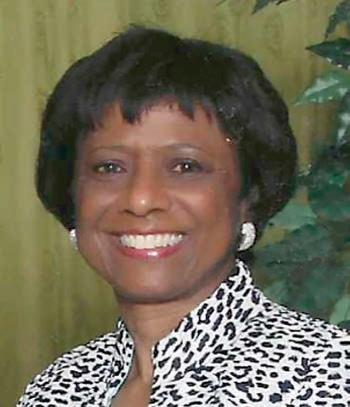
successful business over more than five decades through the Heritage Companies, Kay was the steady and trusted force behind the scenes—overseeing payroll, human resources, bookkeeping, and providing constant support. As is so often the case, behind a great businessman stood a remarkable woman who fully supported him and allowed them both to live their waking dreams.
Kay was first and foremost a devoted homemaker, caregiver, and nurturer. Family was everything to her. She took immense pride in motherhood and was deeply fulfilled by caring for others. She possessed a rare gift for offering quiet, encouraging words—often at just the right moment—to those who needed them most.
Raised and confirmed in the Lutheran faith at Berea Lutheran Church in Detroit, Kay remained steadfast in her faith throughout her life and was a devoted member of Shadow of the Cross Church in Farmington Hills, Michigan. She was a long-time member of the Ladies Guild and lived her faith through service, humility, and devotion rather than recognition. In worship and reflection, she found particular comfort in the hymn“Now Behold the Lamb,”a song that spoke deeply to her spirit.
In her later years, Kay exemplified selflessness and devotion, caring for her aging mother alongside her father and later taking great pride in caring for her father when the need arose. She found her greatest joy surrounded by family. Christmas was her cherished season—hosting family gatherings filled with gumbo, beloved traditions, and the treasuredTwelve Bells of Christmasand accompanying carols. Thanksgiving was marked by dinner at Carrie’s and a brisket by Kay. Summers were spent enjoying time on the water at the Detroit Yacht Club, creating memories that will be cherished for generations. Having her entire family—children, grandchildren, great-grandchildren, nieces and nephews—together under one roof was among her greatest joys.
Unassuming yet always elegant, Kay carried herself with grace, dignity, and quiet wisdom. She was the steady presence—the one who held everything together while asking for nothing in return.
Kay passed away peacefully on January 9, 2026. She leaves to cherish her memory her loving husband, George P. Barnes, Jr., herchildren, Leonard (LaDonna), Tracey (Bernie) and George; grandchildren Krystal, Alise (Brandon), Colin, Hunter and Houston; great-grandchildren Kennedy, Jaxson and Bryson; her nephew Jason (Tiffeny); Sisters-in-Love Janet and Carrie; her lifelong besties Gloria Rice and Hazel Richardson and a host of extended family and dear friends.
Kay was called home to enter eternal rest, where her faith has become sight, and her gentle spirit now dwells in perfect peace.
In lieu of flowers, we kindly ask that you consider a donation toHeritage Vision of Hope. Your support will help continue our family’s mission of providing eye care to underserved communities in Detroit.

By Sam Robinson SENIOR REPORTER
Residents seeking relief from the dangerous cold have a number of options, from homeless shelters to Detroit recreation centers or any Detroit Public Library branch during their regular operating hours.
With temperatures expected to fall into the single digits and wind chills forecast to drop into negative ranges, the City of Detroit is informing residents that an overnight stand-by shelter and daytime respite locations are open to provide relief from the cold.
In partnership with Detroit Rescue Mission Ministries, the city will provide an overnight shelter option available throughout the period of extreme cold.
Chief Public Health Officer Denise Fair Razo declared a cold-weather health emergency earlier this week.
The Detroit Rescue Mission Ministries is activating an overnight stand-by shelter location at 13130 Woodward Ave. to help those in need escape from the cold.
Chiara Clayton, the communications director for the Detroit Rescue Mission Ministries, said the organization is doing everything it can in partnership with the city to keep vulnerable residents warm. She says the shelters see an influx of people when it’s really cold.
“We partnered with the city under regular situations but when it’s really cold the city activates a Code Blue, meaning anyone experiencing homelessness doesn’t have to get referred to sleep here. People who need services can just come in,” Clayton said.
Clayton says the rescue mission has added 100 beds at the stand-by shelter at Woodward.
“It was supposed to end Tuesday, but city extended it,” Clayton said.
The city also offers rides to people who need to stay at shelters.
“We have people who need to just come in for a night because they don’t want to be outside anymore,” Clayton said. “Some people for whatever reason don’t want to be in a shelter situation, but the danger of the cold — you can’t be outside right now. Even if it’s just to come in to warm up. The city has been a huge partner after the young mother in her car lost her children, they took extra precautions with that 24/7 helpline.”
Last year, Detroit leaders and residents wept after a young mother, Tateona Williams, found two of her children dead in her vehicle. An autopsy revealed the cause of death was carbon monoxide
If you or someone you know is sleeping outside, Street Outreach services are available from 6 p.m. – 8 a.m. on weekdays and 24/7 on weekends and on all major holidays, by calling the same number.
Detroit recreation centers open across Detroit:
◆ AB Ford Community Center 100 Lenox St. M-F, 9am-7pm. Saturdays 10am-6pm
◆ Farwell Recreation Center 2711 E. Outer Drive, M-F, 11am-7pm. Closed Saturday
◆ Crowell Recreation Center, 11630 Lahser Road, M-F, 1-9pm. Closed Saturday.
◆ Heilmann Recreation Center, 1906 Crusade St. M-F, 8am-9pm.
◆ Adams Butzel Complex 10500 Lyndon St. M-F, 8am – 9pm, Saturdays 10am- 6pm
◆ Butzel Family Center 7737 Kercheval Ave. M-F, 11am-7pm, closed Saturdays
◆ Clemente Recreation Center 2631 Bagley St. M-F, 1-9pm, closed Saturdays
◆ Coleman A. Young Recreation Center 2751 Robert Bradby Drive, M-F, 8am – 9pm, Saturdays 9am – 5pm.
◆ Northwest Activities Center 18100 Meyers Road. M-F, 8am-9pm. Saturdays, 10am-6pm. Access to Shelter Outside Normal Business Hours (After 6 p.m. on weekdays or 24/7 on weekends): If you are sleeping outside or in your car and need shelter right away, there are 2 options that can help you find a safe place to stay for the night. Call 866-313-2520 to be connected with a Street Outreach team. Go to the nearest police station.
poisoning, but initial reports said the two children, nine and two, froze to death.
“The woman had nowhere to go — the standard number people call used to close at 6pm.”
Former Mayor Mike Duggan ordered the hotline remain online 24/7 in the days after the tragedy.
The police department has been a partner to the rescue mission as well, Clayton says. People in need are encouraged to go into a police station, and they can drive you to a warming center or a stand-by shelter.
Access to Overnight Stand-by Shelter residents can access the temporary overnight stand-by shelter site anytime by walking in, no referral needed, or by calling the Detroit Housing Resource HelpLine at 866-313-2520, operated 24/7.
Alternatively, if you find yourself sleeping outside and need help, go to a police precinct any day after 6 p.m. or on the weekends and be connected with an outreach team for help with overnight

services. Residents also have the option of going to an in-person CAM site located at Cass Community Social Services at 12025 Woodrow Wilson on Monday through Friday from 10 a.m. – 6 p.m.; or NOAH at Central 23 E. Adams on the second floor, Monday through Thursday from 9:30 a.m. – 3:30 p.m. for an in-person assessment and intake procedure. More information about access to shelter can also be found athttps://camdetroit.org/.
Currently, the City of Detroit has more than 1,700 emergency shelter and drop-in center beds through its operations with its local partners.
If you are having a housing crisis or need emergency shelter, please call the Detroit Housing Resource HelpLine at 866-313-2520. This line is available during business hours Monday-Friday from 8 a.m. to 6 p.m. and Saturday 9 a.m. to noon. You can reach Sam at srobinson@ michronicle.com.


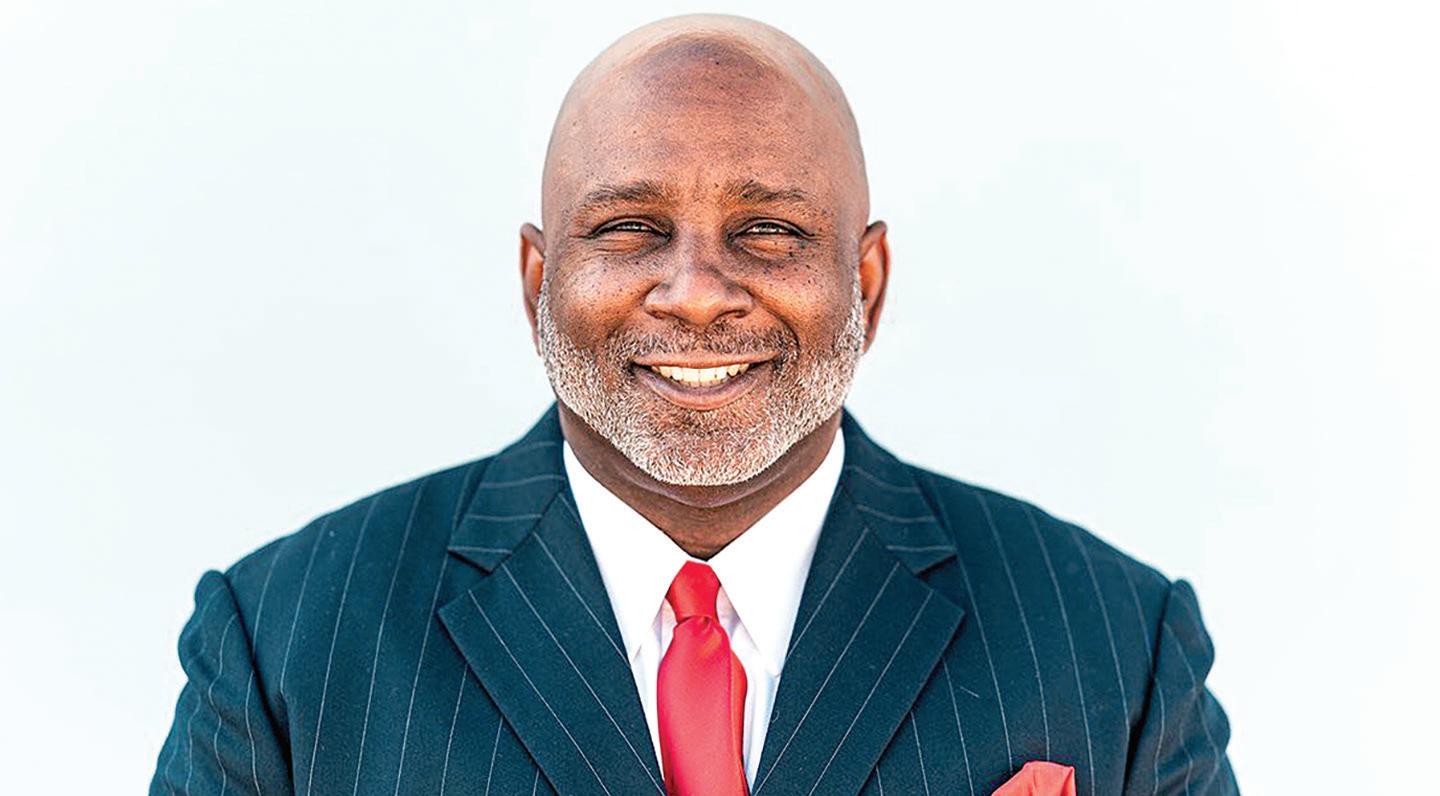
By Inkster Mayor Byron Nolen GUEST COLUMNIST
In President Donald Trump’s first 100 days in office, he enacted a number of economic policies that have created chaos for Michigan families and businesses. He announced one tariff after another, which have since driven up prices for consumers, increased costs for businesses, disrupted supply chains, and created deep uncertainty across our economy.
The result has been slower economic growth, reduced purchasing power, and potential job losses in sectors that can least afford them. Families are already facing an affordability crisis, and these tariffs only add fuel to the fire. Food prices have surged. Grocery bills keep climbing.
Hard-working Michiganders cannot afford the same cart of groceries they once could for their families.
These tariffs are nothing more than a price hike on working people at a time when billionaires continue to benefit from special breaks and loopholes. Against this economic backdrop, the decision to weaken the Minority Business Development Agency (MBDA) landed like a gut punch for small business owners in communities like mine.
The MBDA was created with a simple but critical mission: to support businesses owned by people of color who face the greatest barriers to accessing capital, networks, and opportunity. Through its nationwide network of business centers, the MBDA helped minority-owned businesses secure financing, create jobs, and get through unexpected financial setbacks. During the COVID-19 pandemic, the agency served as a lifeline for entrepreneurs, especially here in Michigan.
Before Trump dismantled it, the MBDA helped small businesses secure $3.2 billion in contracts and $1.6 billion in capital, including hundreds of thousands of dollars for businesses in Michigan. We can’t let this critical resource go away. Attacking the MBDA was not just reckless.
It sent a clear message about whose businesses this administration believes are worth fighting for and whose are expendable. The consequences are already being felt by small business owners throughout Michigan who relied on the agency’s technical assistance and access to capital to stay afloat.
This decision does not exist in isolation. It is part of a broader pattern of economic policies that are making it harder, not
easier, for small businesses to survive.
Trump’s tariffs are another example. When tariffs raise the cost of imported goods and materials, those costs do not disappear. They land squarely on shop owners, workers, and consumers.
Across Michigan, small business owners are paying more for the basics they need just to operate, from inventory and equipment to packaging and supplies. Most small businesses already run on tight margins. They do not have the cushion or bargaining power to absorb sudden cost increases.
So when Trump makes prices jump, the consequences are immediate. Owners pause hiring, let workers go, or raise prices, knowing their customers are already stretched thin.
Tariffs do not just raise costs. They create constant uncertainty. Small business owners plan months ahead. They place orders, sign contracts, and take out loans based on what they expect their costs to be.
When tariff policies change overnight, those plans fall apart. Orders get canceled. Business owners are left making impossible decisions that do not just affect them, but their employees, customers, and local economies.
In moments like this, leadership matters. Small businesses cannot afford to wait for Washington to reverse course while uncertainty continues to ripple through local economies. What they need are leaders who understand how decisions made in Washington affect people running businesses in our communities and who are willing to fight for stability, access to capital, and long-term growth.
Some leaders have taken that responsibility seriously. Congresswoman Haley Stevens is one example. While Trump has rolled back federal support for minority-owned businesses, she has worked to expand opportunity instead.
Her IDEA Act would create a network of small business accelerators designed to help Black-owned and minority-owned businesses access capital, build networks, and compete for contracts. For entrepreneurs who have struggled to access traditional financing, that kind of support can determine whether their business grows or shuts down.
This kind of leadership recognizes a simple truth: Michigan’s small businesses are not asking for special treatment. They are asking for a fair shot and a stable environment in which to grow.
Congresswoman Stevens’ record reflects that understanding. That commitment is especially clear in the way Congresswoman Haley Stevens has consistently shown up for Michigan’s Black communities.
In Congress, she has worked hard to bolster economic empowerment in underserved communities. Which is why I know in the Senate, she will continue to support minority-owned business incubators, workforce development programs, and technical training initiatives to create wealth.
A major part of her work has been showing up and listening to what small business owners in Michigan’s diverse communities need, and taking those stories back to Congress to fight and win for Michigan’s entrepreneurs. She has toured many incredible businesses across the state, and met with store owners, shoppers, and employees to highlight the importance of Michigan’s small business community.
As a mayor, I see firsthand how much our communities depend on small businesses. They create jobs, anchor neighborhoods, and give people a reason to invest in the places they call home.
This moment calls for leadership that listens to small business owners, understands the realities they face, and is willing to push back on harmful policies coming out of the White House that are wreaking havoc in our local communities. And that’s exactly what Haley Stevens brings to the table.




PUBLIC HEARING NOTICE – CITY OF HIGHLAND PARK, MI
Notice Of A Public Hearing For Sign Variance At 13324 Woodward Sign Variance | PBZBA25-0015
The City of Highland Park Zoning Board of Appeals will hold a Public Hearing at the regular meeting on February 12, 2026 at 5:30pm. Zoning Board of Appeals meetings are in person and will be held at, THE HIGHLAND PARK FIRE STATION, TRAINING ROOM, 25 GERALD ST., HIGHLAND PARK, MI 48203. A public hearing is a portion of a meeting which is dedicated to hearing comments from the public on a specific subject.
Purpose:
Request on behalf of Prosign and Awning, to permit additional building mounted signs, and additional sign face square footage for the proposed carry-out restaurant at 13324 Woodward Ave.
At least three (3) days prior to the meeting date, to request disability accommodations, or written comments, may be submitted in advance to:
Donovan Smith, City Planner
Dsmith@mcka.com
Planning Department, City Hall, 12050 Woodward Avenue, Highland Park, MI 48203
CITY OF HIGHLAND PARK
Robert B. Blackwell Municipal Building 12050 Woodward Ave Highland Park, MI 48203 (313) 252-0050 ext. 251
PUBLIC HEARING NOTICE – CITY OF HIGHLAND PARK, MI
Notice Of A Public Hearing For Sign Variance At 14140 Woodward 1Sign Variance | PBZBA25-0013
The City of Highland Park Zoning Board of Appeals will hold a Public Hearing at the regular meeting on February 12, 2026 at 5:30pm. Zoning Board of Appeals meetings are in person and will be held at, THE HIGHLAND PARK FIRE STATION, TRAINING ROOM, 25 GERALD ST., HIGHLAND PARK, MI 48203. A public hearing is a portion of a meeting which is dedicated to hearing comments from the public on a specific subject.
Purpose: Request on behalf of Allied Signs, to permit additional building mounted signs, and additional sign face square footage for the proposed retail store at 14140 Woodward Ave.
At least three (3) days prior to the meeting date, to request disability accommodations, or written comments, may be submitted in advance to:
Donovan Smith, City Planner
Dsmith@mcka.com
Planning Department, City Hall, 12050 Woodward Avenue, Highland Park, MI 48203

The Detroit Public Schools Community District is seeking proposals for subcontractors under RFP 26-0225 Facility Master Plan Series 5 Additions (CMA, Charles Wright, Western).
Architect/Engineer: DLR Group 333 W. Wacker Dr. Chicago, Il 60606
Construction Manager: Gilbane/KEO & Associates, Inc./Brix Corporation 500 Woodward Avenue, Suite 2250 Detroit, MI 48226
There will be a non-mandatory Pre-Bid conference for this RFP that will take place virtually on February 2, 2026, at 11:00 a.m. The meeting can be accessed at the link below. https://tinyurl.com/bdfj66ja Call-In: (313) 462-2305
Conference ID: 482 072 375#
There will be non-mandatory walk-throughs for this solicitation.
• Communication & Media Arts High School, 19501 Berg Rd, Detroit, MI 48219
Monday, February 2, 2026, at 4:00 p.m.
Charles Wright Academy of Arts & Science, 19299 Berg Rd, Detroit, MI 48219
Monday, February 2, 2026, at 4:30 p.m.
• Western International High School, 1500 Scotten Street, Detroit, MI 48209
Tuesday, February 3, 2026, at 4:00 p.m. Bidders are strongly encouraged to attend the pre-bid and walk through. The due date for Proposals is February 23, 2026, at 12:00 p.m. Proposals must be submitted electronically via Building Connected by due date and time. Late bids will not be accepted.
The Public Opening will occur virtually at 12:00 p.m. on February 23, 2026, and can be viewed at the below link:
https://tinyurl.com/55sr7brr Call-In: (313) 462-2305 Conference ID: 723 706 692#
This Project is subject to Michigan State Prevailing Wage Laws (Michigan Public Act 10 of 2023) and the Contractor must pay prevailing wages and fringe benefits to all of Contractor’s, and is subcontractors’, construction mechanics working on the Project in accordance with Michigan Public Act 10 of 2023. All bids must be accompanied by a sworn and notarized statement disclosing any familial relationship that exists between the submitting company and any employee of DPSCD. DPSCD shall not accept a bid that does not include this sworn and notarized disclosure statement. A bid bond in an amount not less than five percent (5%) of the base bid is also required.







(StatePoint) The use of checks may be declining, but check
new, creative criminal schemes. Once a check is stolen, it can
rise due
or signed on your behalf to withdraw money from your account, and there are online marketplaces where criminals will sell stolen checks for other criminals to use for fraud. Luckily, there are steps you can take to protect yourself:
• Pay Digitally. Reduce the number of checks you send and utilize card or digital payment methods instead. Consider using check fraud prevention services like Positive Pay, if available at your financial institution.
• Go to the Post Office. If you must mail a check, use the secure mailbox inside a USPS facility or hand the envelope over to a postal worker who can mail it for you.
• Follow Up. If you mail a check, confirm with the payee that they received it.
• Monitor Accounts. Set up account alerts and review statements regularly. Most banks will provide an option for an image of each check to be viewable on statements. Cross-reference this image to ensure that the check processed is identical to the one you wrote.
• Report Quickly. Approximately 50% of stolen check images are posted online for sale within eight days of theft. Criminals act fast, and you need to act fast, too, to stop them in their tracks. As soon as you identify an account or payment anomaly, notify your bank to put a stop payment on the check and a freeze on your account. File a police report and submit a separate report with the Federal Trade Commission. Keep a record of all conversations, reports and correspondence in case later problems arise.

Methods of fraud continue to evolve, and a simple check can be used in a variety of ways to commit theft. For instance, criminals can create fraudulent checks using your account information and sign your name. Or they could copy down your account information and use it for fraudulent purposes digitally or otherwise. Mail theftrelated check fraud – where a check is stolen while enroute – accounts for hundreds of millions of dollars in attempted theft annually.
Here are some of the most common fraud methods used:
Account Theft. Checks are used to steal account information details to either steal money directly or fraudulently open additional accounts.
Forgery. Criminals have long forged the legitimate signature or altered the payee or amount on a check. However, artificial intelligence (AI) is making it easier than ever to do so with accuracy. Check Washing. Criminals “wash” a check, using chemicals like acetone or bleach to erase the payee and amount, then rewrite the check to themselves for their amount of choice. Counterfeits. Criminals create entirely fake checks that look real using stolen account information. Check Return Schemes. Criminals will send what they claim is a paycheck or other payment by way of a check where they “overpay.” They ask you to deposit it, then return the “extra” money back before it’s discovered that the check is fake.
For more fraud prevention information, visit PNC’s Security and Privacy Center.
Safe handling of checks may not only protect against theft but also defend against more widespread account compromise.

If you’re the one tracking medications, scheduling appointments and making sure the whole household stays healthy, you’re probably wearing the invisible badge of chief household officer – the one who keeps the family healthy and moving forward. Nearly 80% of women serve as their household’s primary health care decisionmaker, managing not just their own care, but also the needs of loved ones.
It’s a big job, and it can come with financial pressure. Research shows women spend almost 30% more out of their own pocket on prescriptions than men, adding up to $8.5 billion more in 2024 alone.
With prices still climbing, it’s important to find ways to stretch your health care dollar further.
That’s why many women are turning to GoodRx – a free, easy-to-use tool that helps you scout out affordable prices on both brand-name and generic medications, compare pharmacy options nearby and make confident choices for your family’s health and wallet. Think of it as your digital saddlebag: stocked and ready with savings, wherever the trail takes you.
As chief household officer, consider these simple, time-saving strategies to help keep everyone on track, spend less on medications, save time and feel more confident managing care:
1. Compare Prices Before Heading to the Pharmacy
Prescription prices can vary dramatically, even between pharmacies just a few blocks apart. These price differences can exceed $100 for the same medication. That’s why you should compare prices
ahead of time at pharmacies near you by entering your prescription information and zip code. Then, simply head to the location offering the most affordable price.
2. Save Big on Generic and BrandName Medications
Whether you’re treating a simple infection or managing a chronic condition, there are discounts available on thousands of medications, including both generic and brand-name options. You can save up to 80% on generics, and in many cases, find prices online that are even lower than insurance co-pays.
For brand-name medications, GoodRx partners with pharmaceutical manufacturers to offer unique programs where manufacturers offer discount prices for their medications, like insulin Lantus for just $35 or a discounted cash price on Humira biosimilar adalimumab.
These savings extend to care for the four-legged family members, too. For example, pet owners can explore savings and have pet medications delivered right to their door, as well as access petspecific medications that aren’t available in retail pharmacies.
3. Round Up Medications for the Whole Crew in One Place
Whether you’re wrangling care for kids, parents or even the family dog, you can easily keep track of everyone’s needs in one place. Save and manage medications, set reminders to take them on time, get alerts when it’s time for a refill and even earn rewards.
4. Be Your Own Health Hero, Without the High Price
From birth control and menopause treatment to hormone support and fertility medications, women often face higher costs for life’s milestones. Look online for savings on many of the most commonly prescribed medications for women. Some medications, like progesterone for fertility treatment, may be available for as little as $20. Resources like the GoodRx Women’s Health Center feature expert-reviewed information to help you navigate every stage of care, whether you’re managing symptoms, exploring treatment options or planning ahead.
5.
The health care landscape can feel like the Wild West at times, but there are tools available to help you ride steady. Beyond prescription savings, expert-written articles can empower you to understand your medications, insurance coverage and care options. Whether you’re gearing up for a doctor’s visit or figuring out the next steps in a new diagnosis, these resources can help you ask the right questions and take the reins on your family’s care.
From everyday refills to high-cost treatments, you can spend less time wrangling medications and more time with the people you love. With savings available at more than 70,000 pharmacies nationwide, GoodRx.com is a must-have tool for every chief household officer riding point on their family’s health.