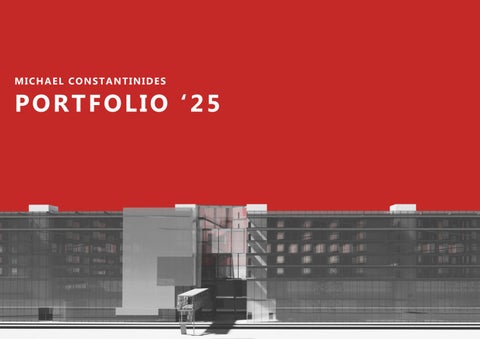
PORTFOLIO ‘25

July 7th 1996 Paphos, Republic of Cyprus
E-mail: Tel.: Constantinidesjuly@gmail.com +357 96889952
Curriculum Vitae
Education
Vienna University of Technology-B.Sc Architecture
German Courses at IIK Düsseldorf
Yannakis Taliotis Lyceum- High School Diploma
Renos Pitros Chartered Surveyors
Word, Excel
Photoshop, Illustrator, InDesign
Archicad, Rhino, Autocad
Blender, Enscape
Greek
English, German
Spanish, Russian
1.
Museum Werkbundsiedlung
2.
3. *Projects have been modified by the author for portfolio purposes
VerfasserInnen:
Enzhe, Bairamova
Dafina, Karameti
Michael,Constantinides
Studio Gebäudelehre 2022 – Museum Werkbundsiedlung
Vision- Bibliothek
Community Hub Matzleindorfer Platz
Hans Hollein Archive Museum Werkbundsiedlung
Community Hub Matzleindorfer Platz
Institute of Architecture and Design
Supervisor; Univ. Ass. Dipl.-Ing. Alexander Daxböck
Teamwork Project
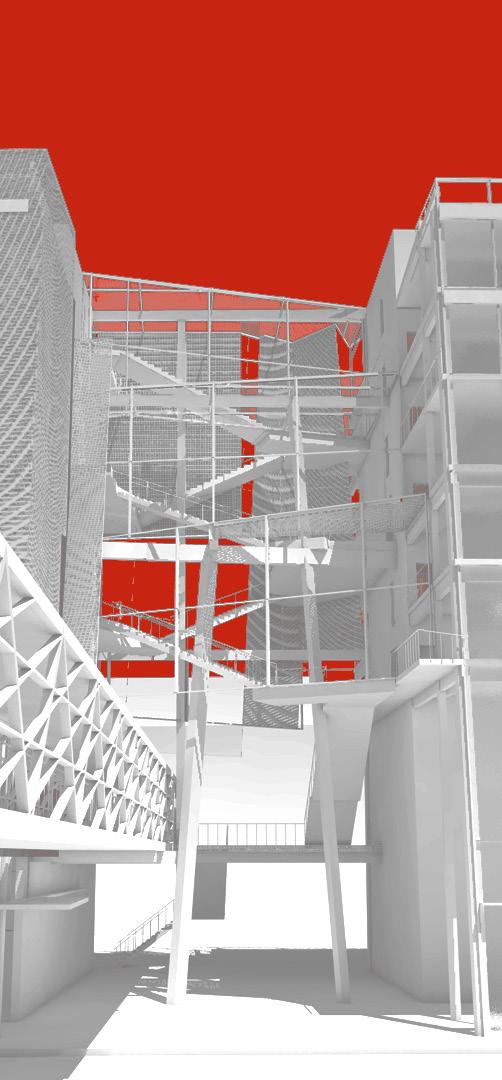
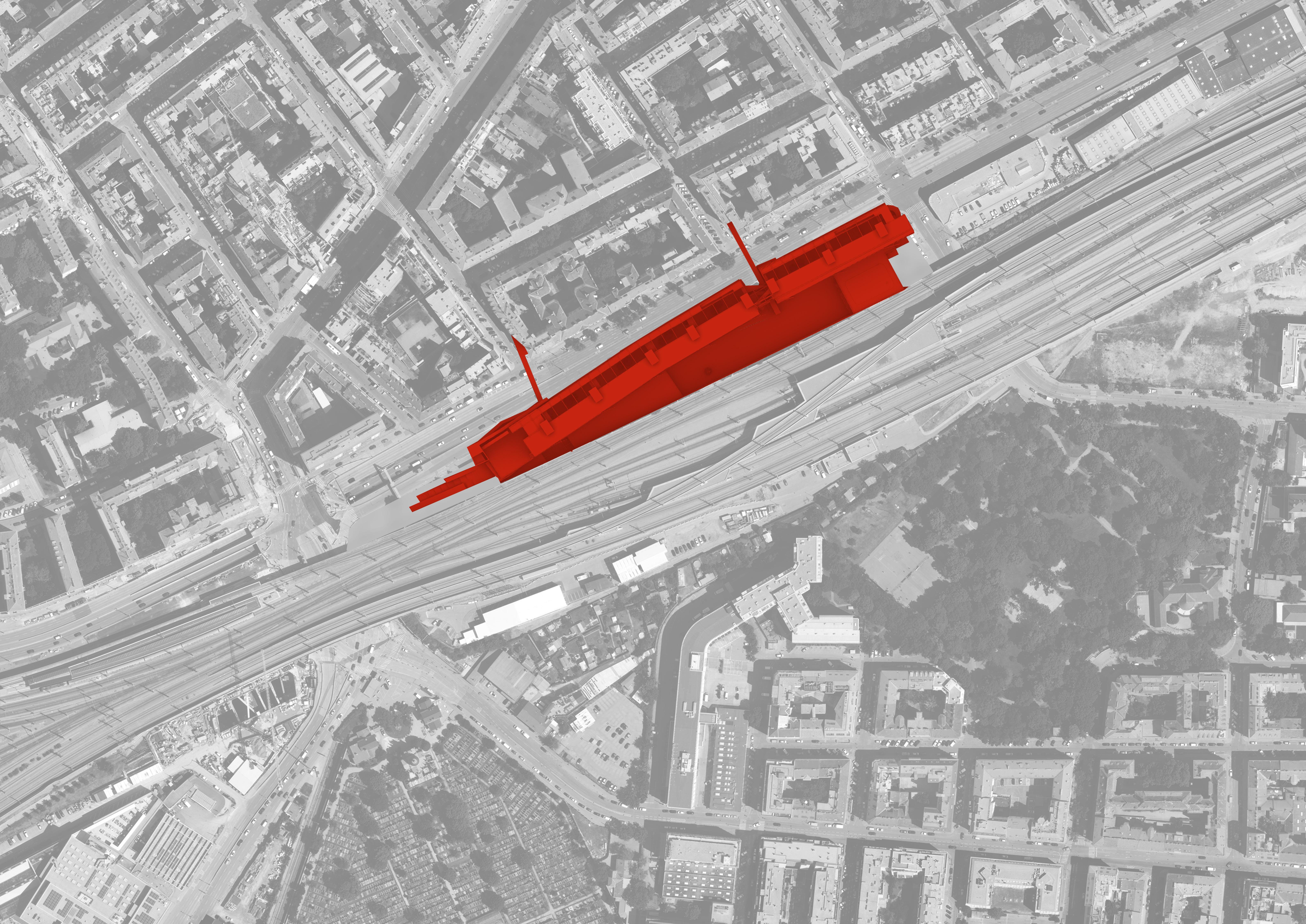
Context The project takes place near the train station of Matzleindorfer Platz, as a part of the rennovation of the underground train lines U2 and the new line U5. The proposal of this building is to socially revitalize the area and to connect different parts of the area through the structure and create a space socially elligible for everyone.
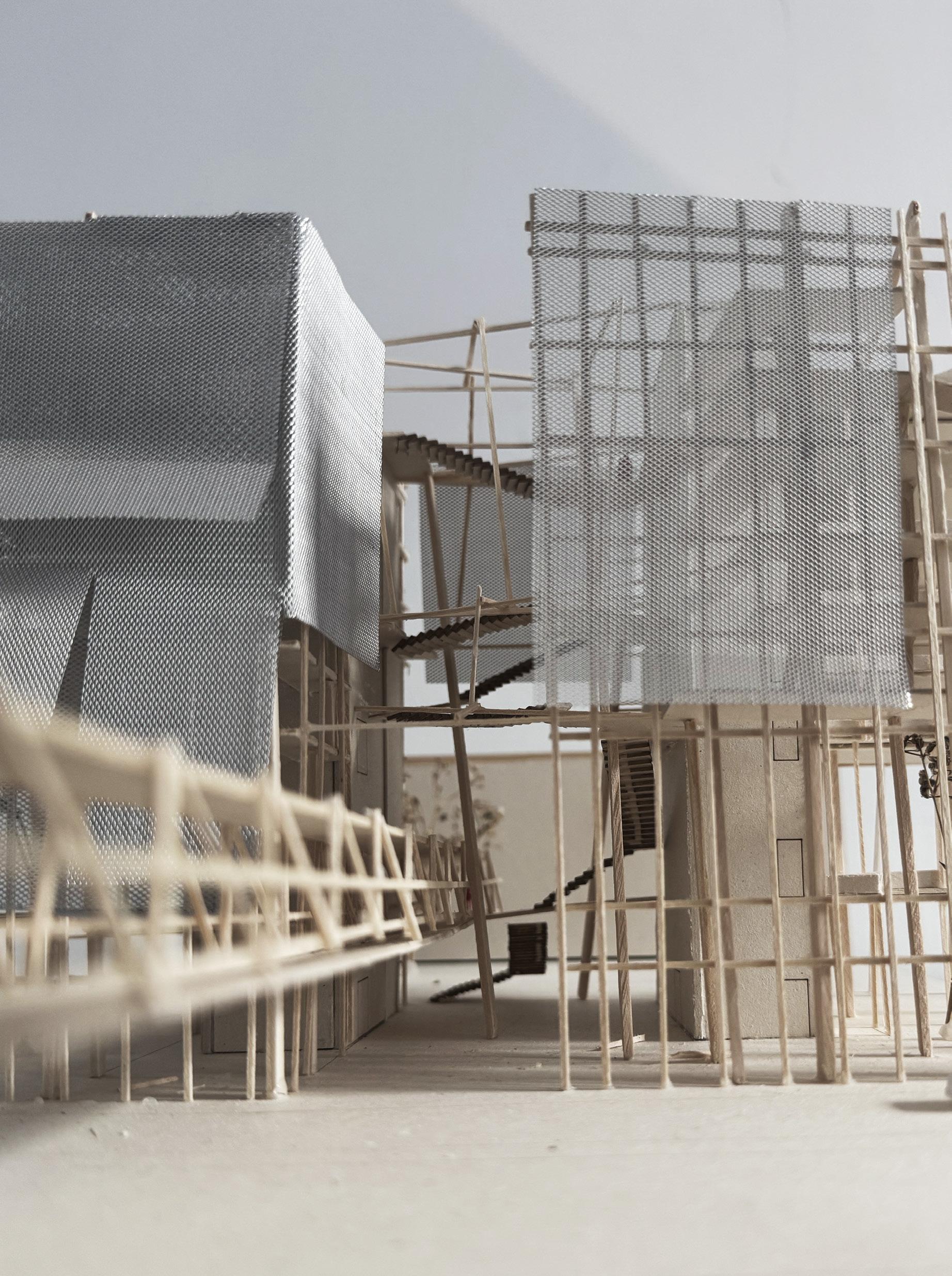
Structure It constists of an enormous standalone superstructure, characterized by its length, multiple staircase houses through the lenght of the construction and the long sound barrier curtain wall facade. A concrete construction lies beneath the superstructure 2 floors high.
Programme The hub offers multiple spaces for recreation and productivity on the first 2 floors of the structure, such as workstations, galleries, co-working spaces and outdoor gardens. Temporary housing takes place on the most part of the superstructure, along with circulation spaces similar to the social condenser, a Soviet constructivist theory. By definition, spaces blend circulation with current architectural space in order to influene social behavior.
Masterplan
Ground Floor Plan
1st Story Floor Plan
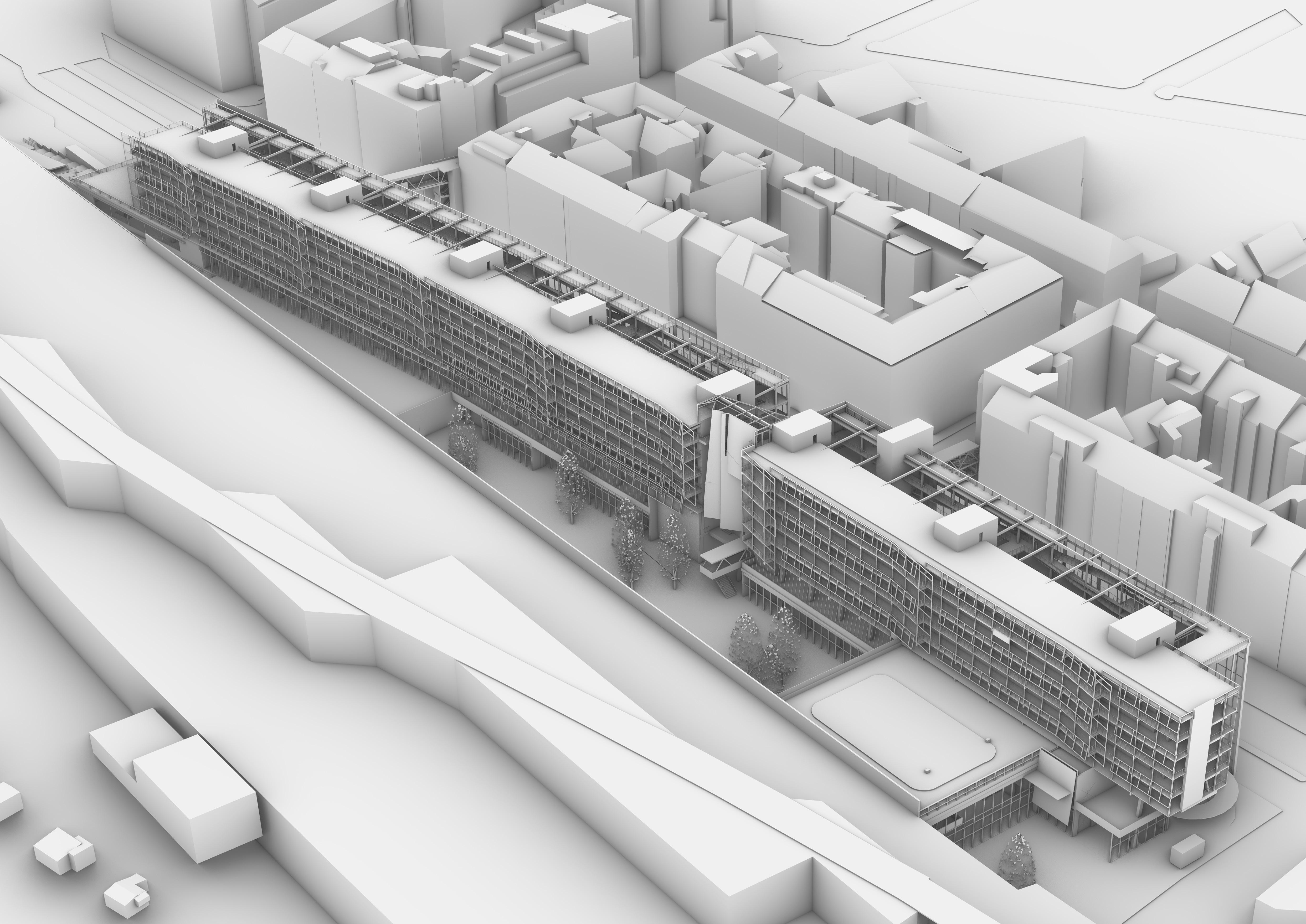
Urban Situation- Rear Façade
Visualization made in Rhino
Structure- Axonometric View
Frontal Façade facing towards the street
Rear Façade facing towards the rails
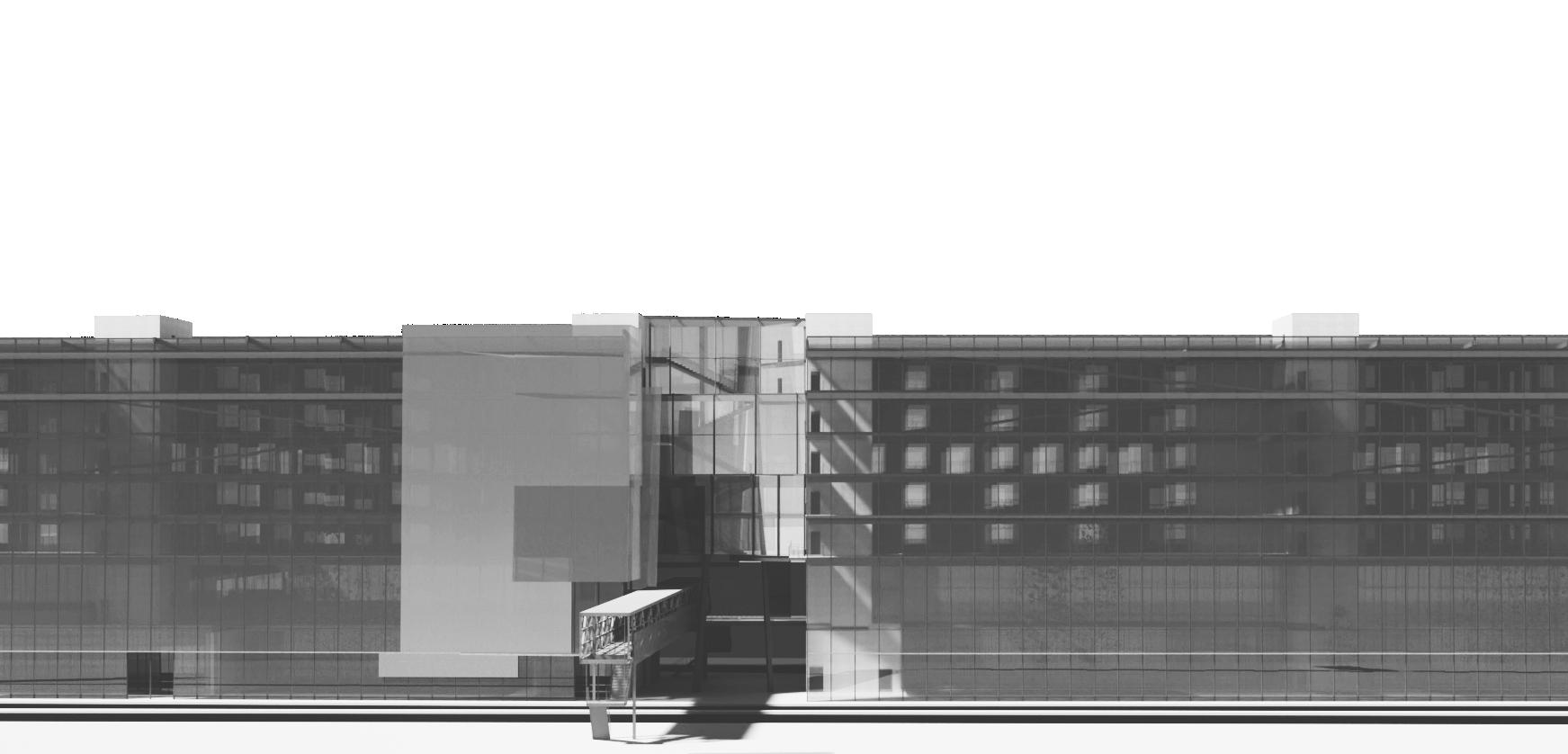
Elevation- Frontal Facade
Section A-A’
Perspective Section B-B’
Section C-C’
Structure- Building Shell
Structural Properties
Load-bearing R/C Wall with openings
Load-bearing Wall without openings
R/C Slabs
R/C Beams
R/C Pillars
Slab Foundation
Sleeve Foundation
Truss
Structural Plan- Section A-A’
Support/ Downstand Beam
Support/ Downstand Beam- Cross Section
Load-bearing Wall/Pillar
Slab Foundation
Trussed Beam
Soil/ Surroundings
Structural Floor Plan
Floor Plan shown as Cutout in Floor Plan (4th Story)
Detail Drawings 1:20- Frontal Façade
Metal Railing with Insulated Glazing
DA-01(Roof)
Paving
Gutter
Two-ply sealing membrane
XPS Insulation (2% Slope)
Vapor barrier
Insulated Glazing on Curtain Wall
BO-01 (Corridor Flooring)
Detail Drawings 1:20- Rear Façade
DA-01(Roof)
Paving 20 mm
Gravel Ballast 100 mm
Gutter
Two-ply sealing membrane
XPS Insulation (2% Slope) 250 mm
Vapor barrier
Reinforced Concrete Slab 250 mm
BO-02 (Interior Space Flooring)
Floor Finish 20 mm
Screed 70 mm
Sealing membrane
Impact insulation 100 mm
Vapor barrier
Thermal Insulation 250 mm
Vapor barrier
Reinforced concrete Slab 100 mm Interior- Living Spaces
Laminted Safety Glass on Curtain Wall- 3mm
Loggia
BO-03 (Balcony/Loggia)
Floor Finish 20 mm
Reinforced Concrete Slab 100 mm
Hans Hollein Archive
Institute of Architecture and Design
Supervisor; Univ. Ass. Agustina Josefa Labarca Gatica
Individual Project
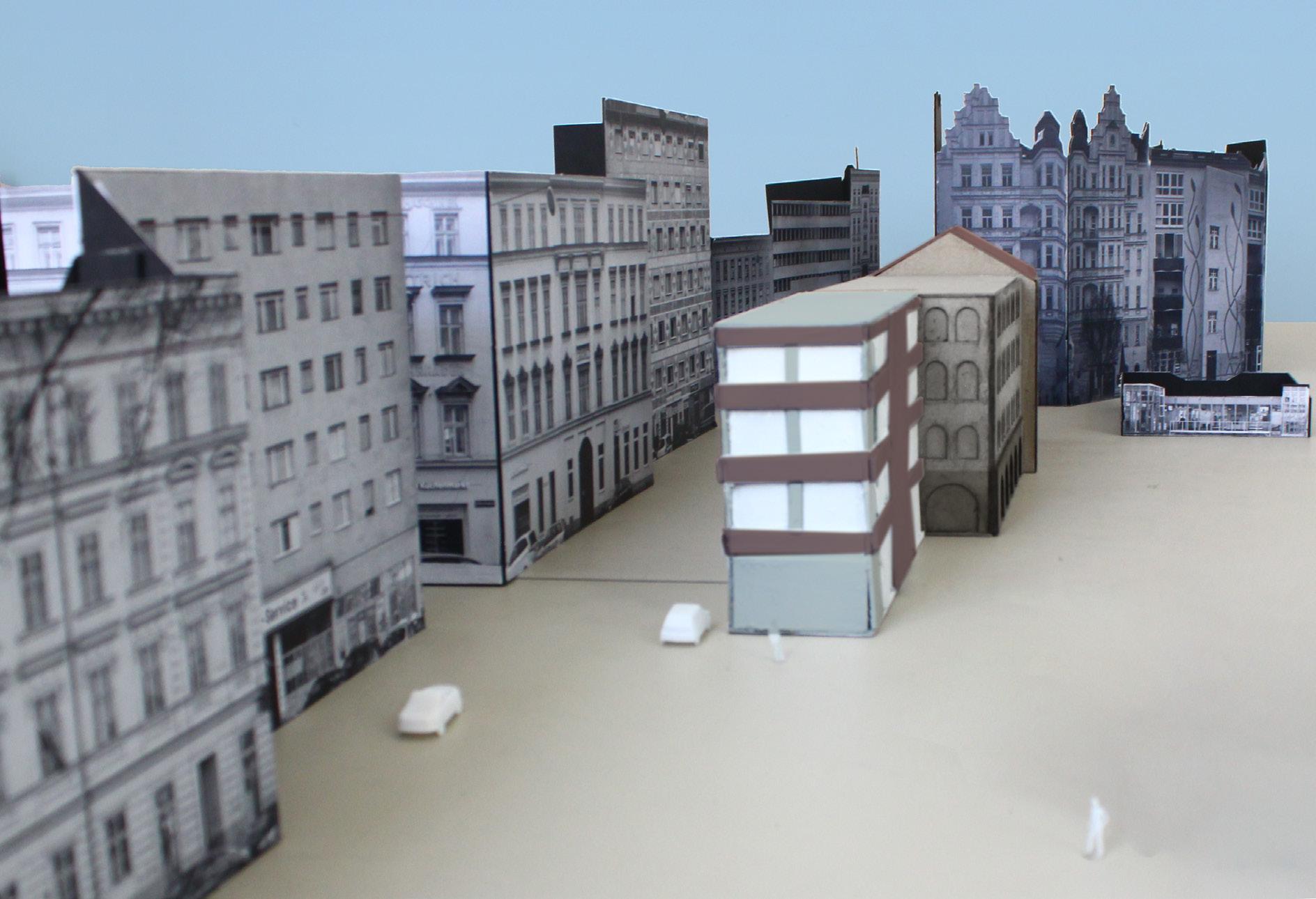
Context This proposal is set in the heart of Vienna’s Naschmarkt, near the U4 Kettenbrückengasse metro station in the 4th district. It serves both as a tribute to Hans Hollein and as an archive of his work.
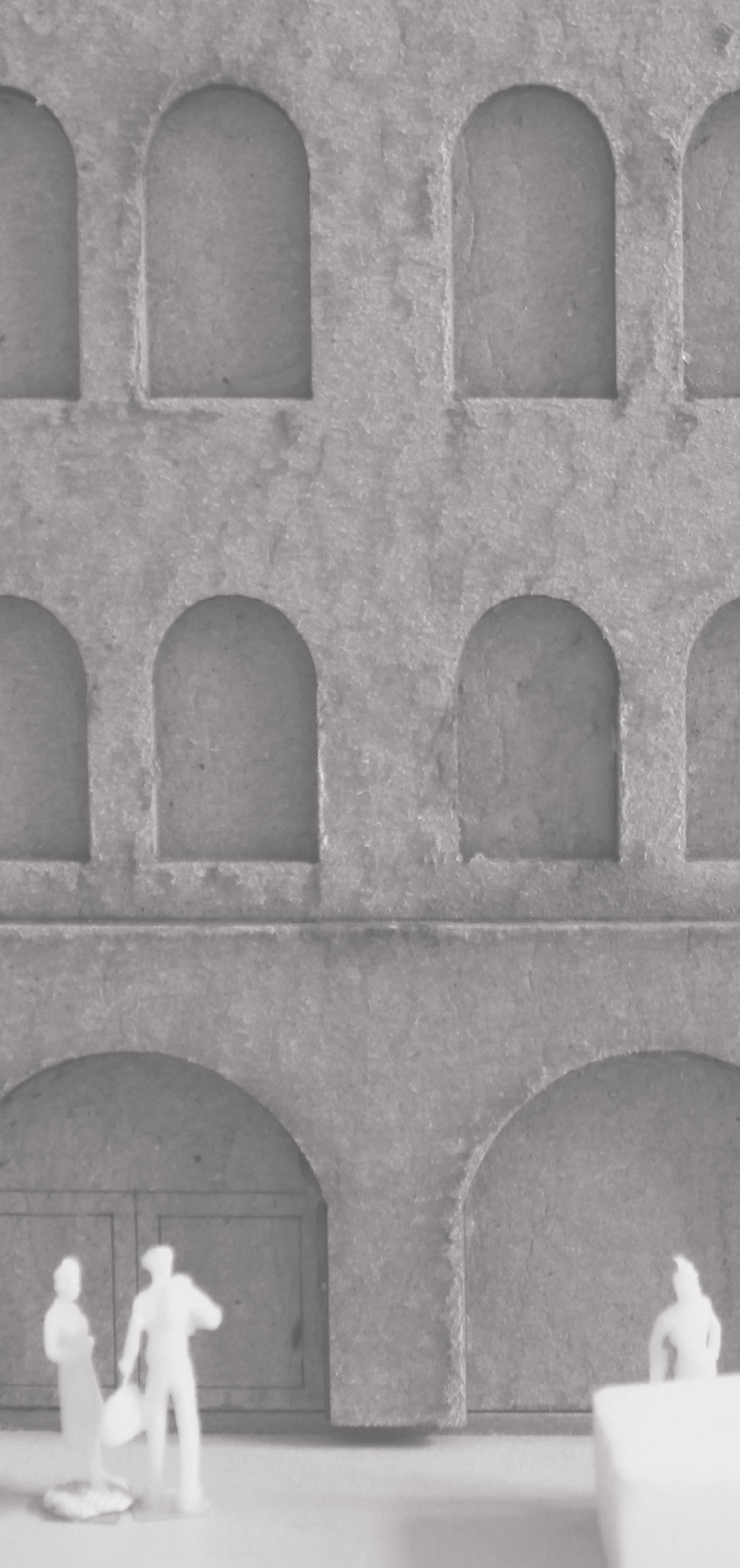
Structure The existing building is expanded with a windowless cast concrete extension building, which is further complemented by an additional structure featuring windows. Although these three components appear as separate buildings from the outside, they function as a building of its own, having a common structural grid and a smooth seamless circulation through the construction.
Concept The original building is repurposed as the administrative center for the museum and exhibition organization. The central building houses the archive, with an entry to transport the artifacts and exhibition materials. At the end, the museum itself exhibits Hollein’s work, with the main exhibition taking place on the last floor. This Programme and the structure in a nutshell aim to represent the past, present, and future of the archive, while simultaneously reflecting Hollein’s distinctive architectural style and vision.
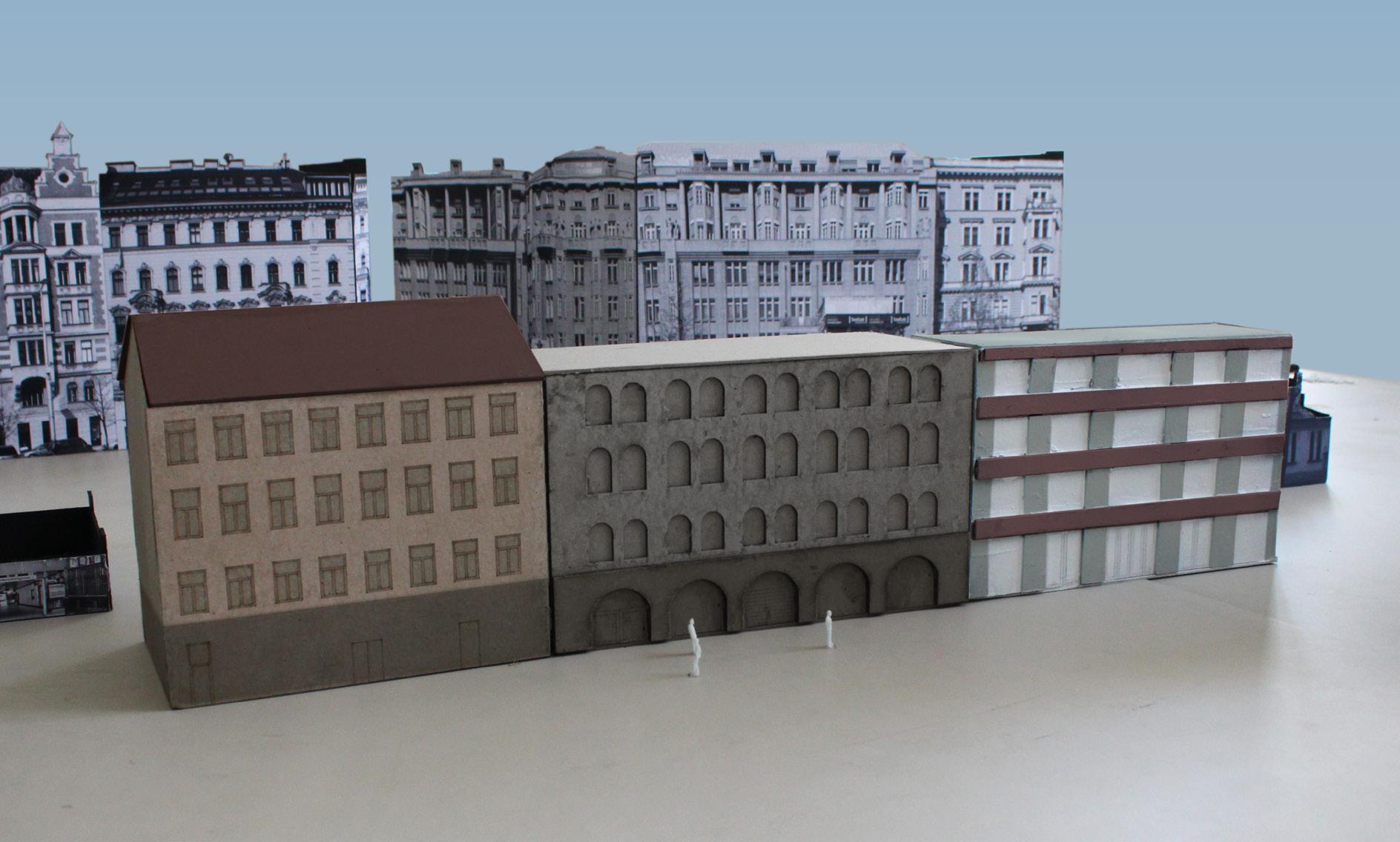
Frontal Elevation
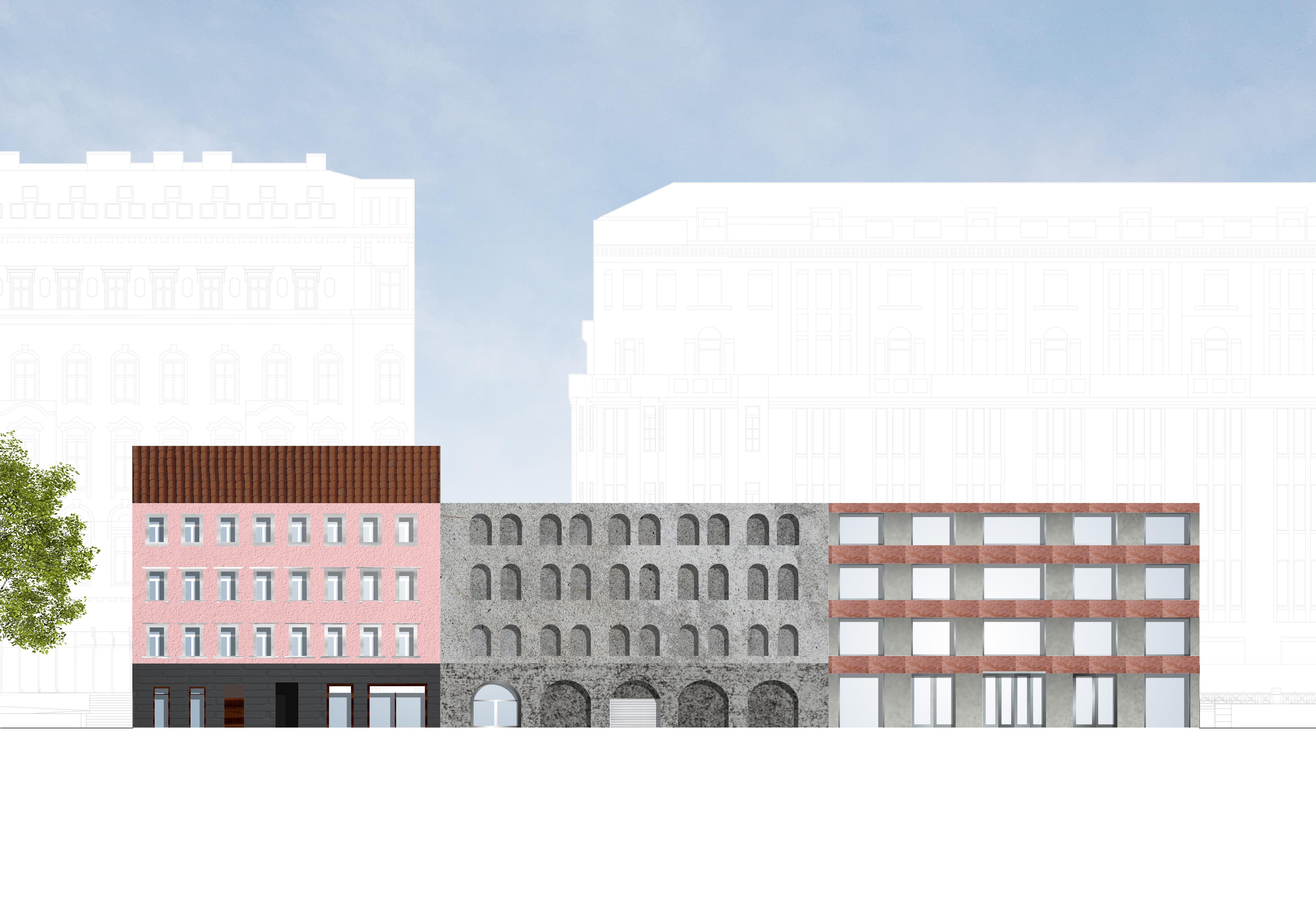
Frontal Facade
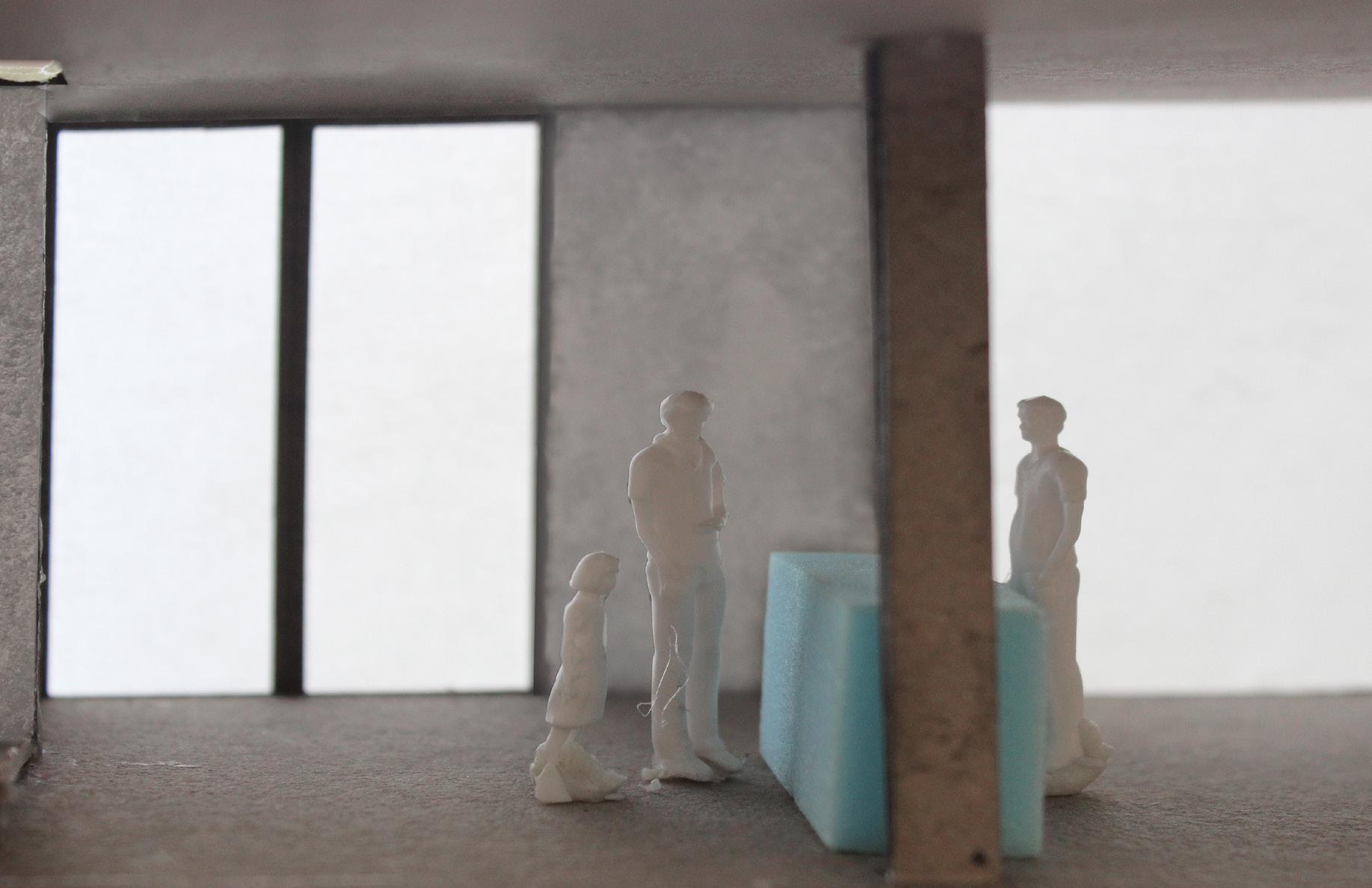
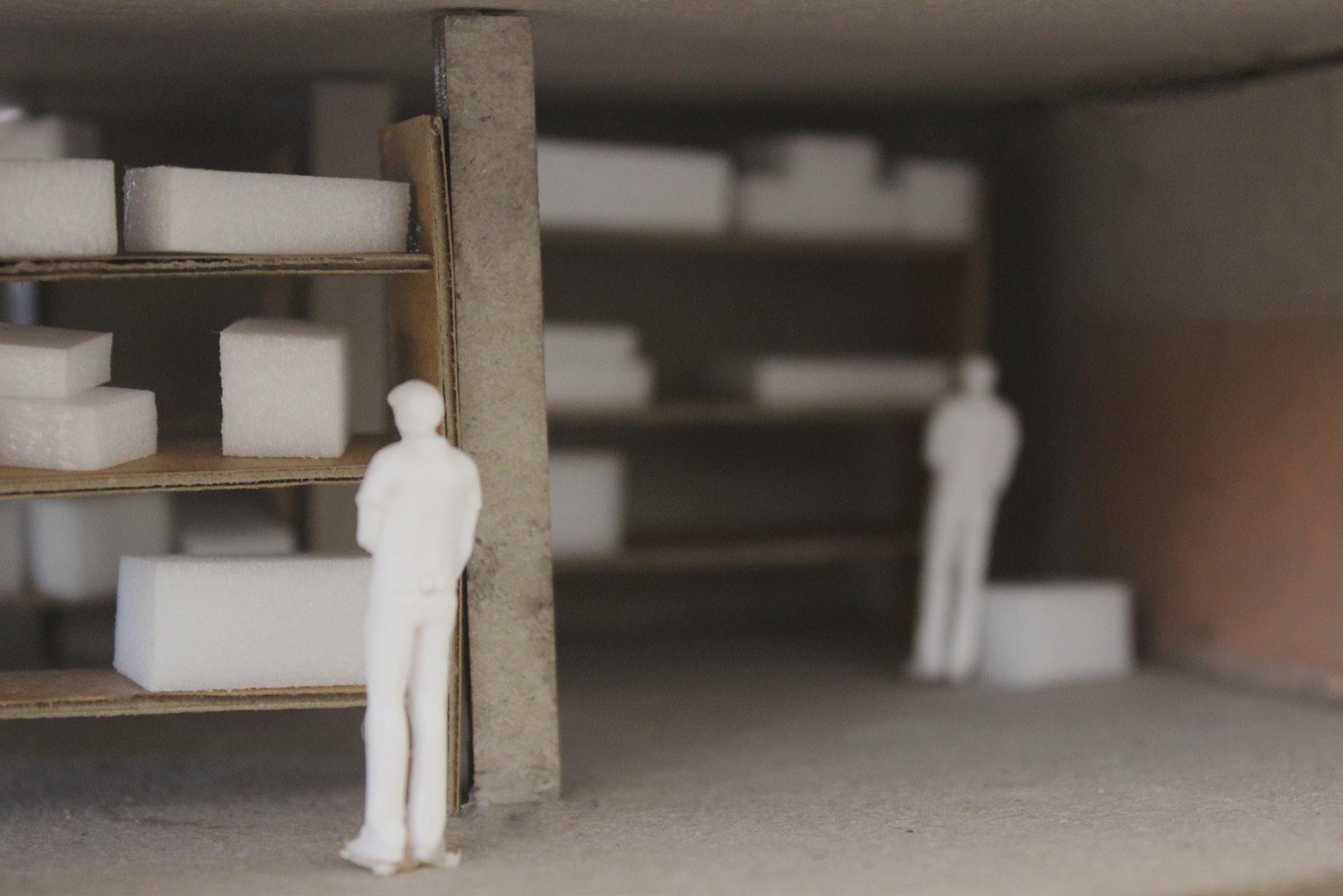
Side Elevation & Interior Maquette
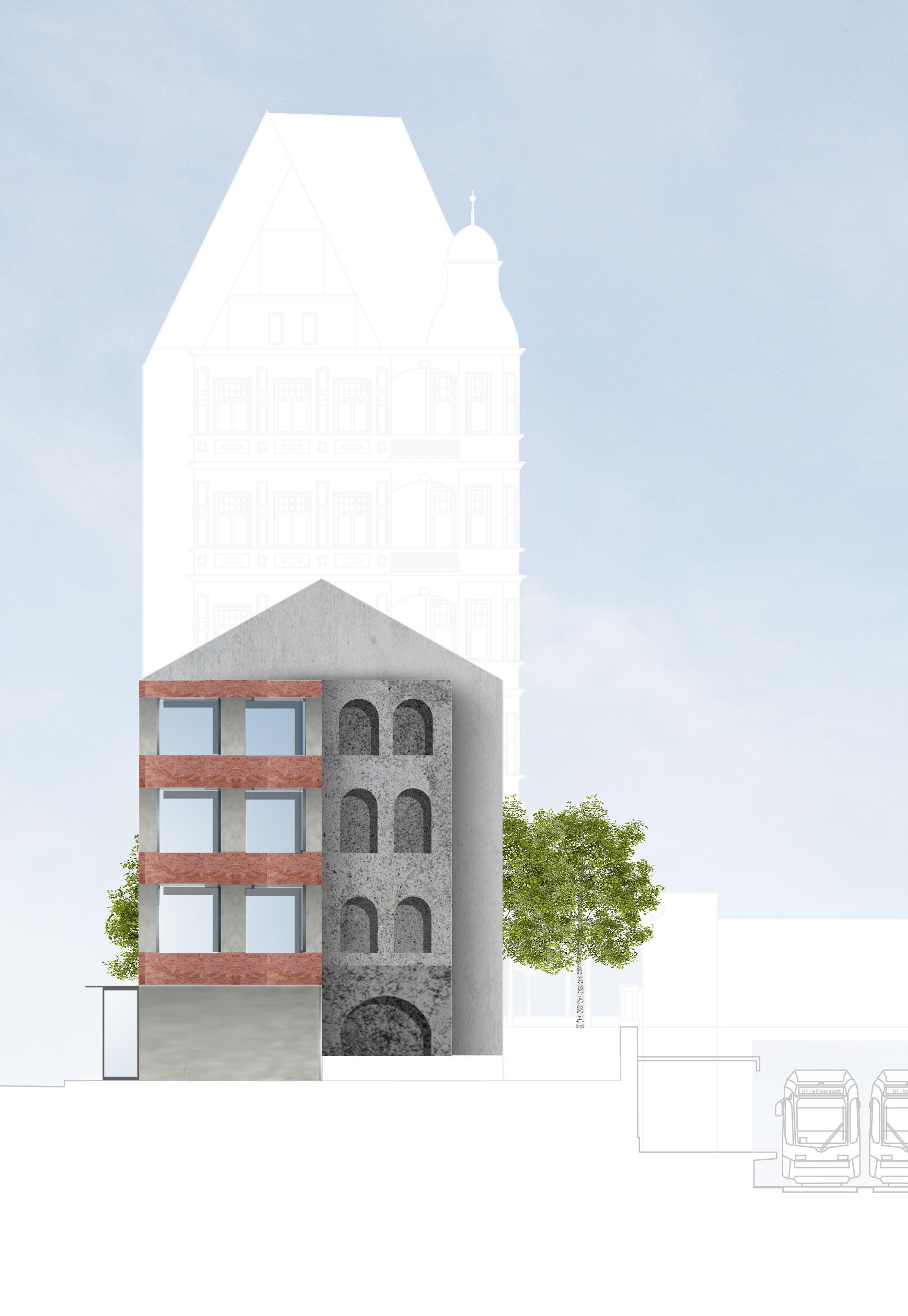
Side Elevation
Interior Maquette- Museum Foyer
Interior Maquette- The Archive
Floor Plans
Floor Plans
Cross Section A-A’
Cross Section C-C’
Façade Detail Section
Sections
Longitudinal Section B-B’
Scale 1:200
Café Hollein
Museum Werkbundsiedlung Vienna
Institute of Architecture and Design Supervisor; Univ. Ass. Dipl.-Ing. Jakob Sellaoui
Teamwork Project
Context This project centers on designing a museum dedicated to the modernist movement of the Viennese Werkbundsiedlung during the 1930s, recognized as the embodiment of the ‘modern way of living’ of that era. This movement involved renowned architects such as Adolf Loos, Josef Frank, Richard Neutra, Rudolph Schindler, among many others.
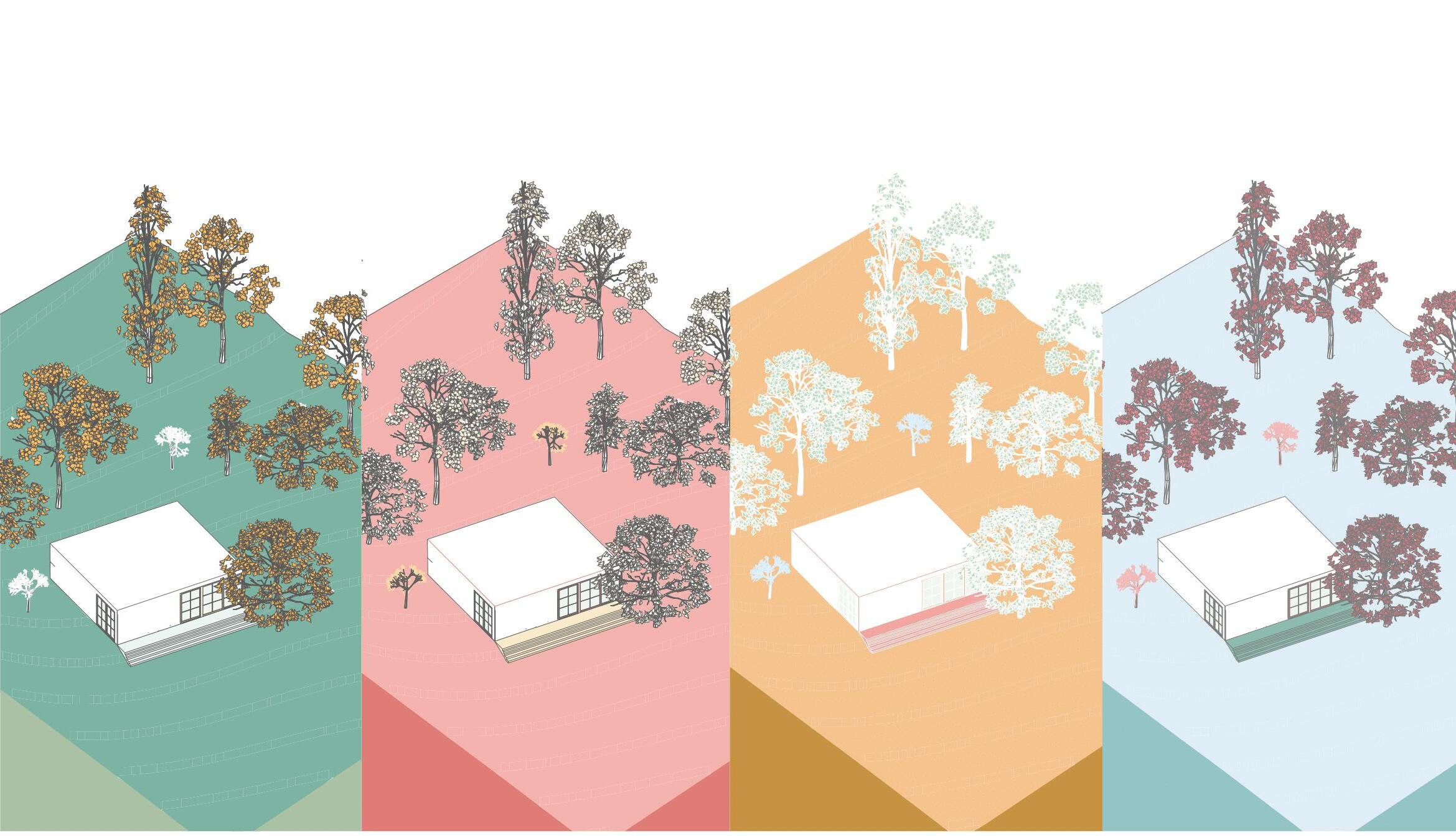
Concept The design was inspired by the architectural typology of a local settlement. Each building unit correlates with one another through their topographical placement and their individual window configurations in relation to the local landscape. The spatial connections between each unit can be likened to that of a family, with each building possessing its own narrative and character.
Topography The site takes place opposite the neighborhood of the Werkbundsiedlung Housing, which is still inhabited nowadays. The topography of the site is elevated inwards, since it lies within the landscape of the Wiener Roter Berg, along with dense vegetation surrounding the area.
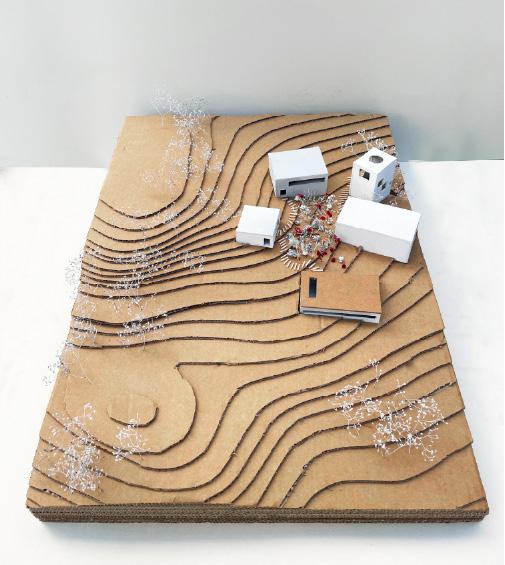
Masterplan- Context
Lower Level Floor Plan
Public Spaces :
1. Main Exhibition
2. Temporary Exhibition
3. Event Room
4. Foyer
5. Library
6. Café
Staff:
1a. Offices
2a. Administration
3a. Staff Kitchenette
4a. Café Kitchen
5a. Archive
6a. Archive Workstation
Utility:
1b. WC
2b. Garbage Room
3b. Cleaning Room
4b. Building Services/ HVAC
Mid Level Floor Plan
2a. Administration
3a. Staff Kitchenette
4a. Café Kitchen
5a. Archive
6a. Archive Workstation
3b.
Higher Level Floor Plan
5a. Archive
6a. Archive Workstation
Section A-A’
Section B-B’
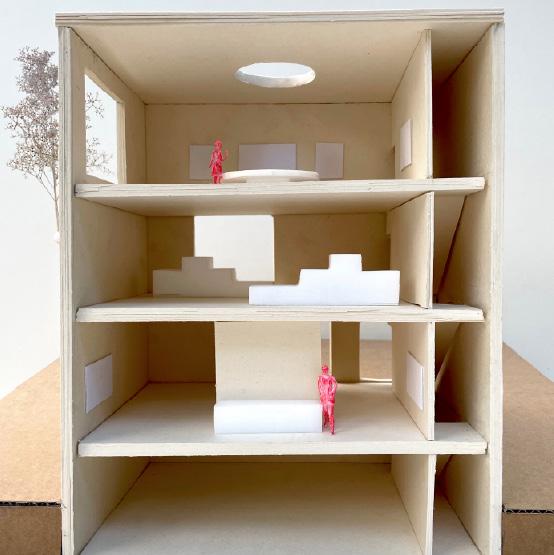
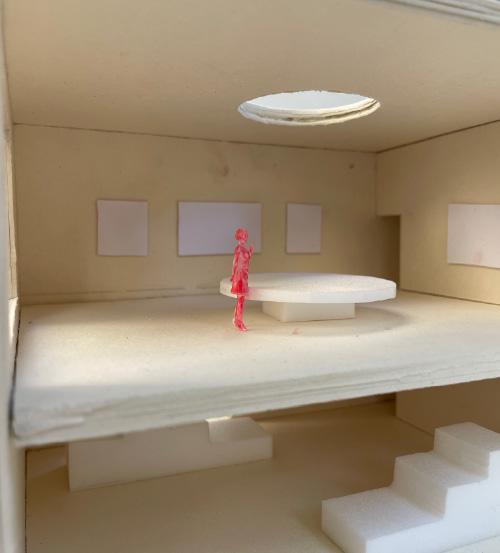
Section Maquette created after Section B-B’