The contents and/or opinions expressed by writers of articles must be in line with our company values and company objectives. The editorial team has the right to adjust or refuse placement of an article when it is inconsistent and/or offensive.
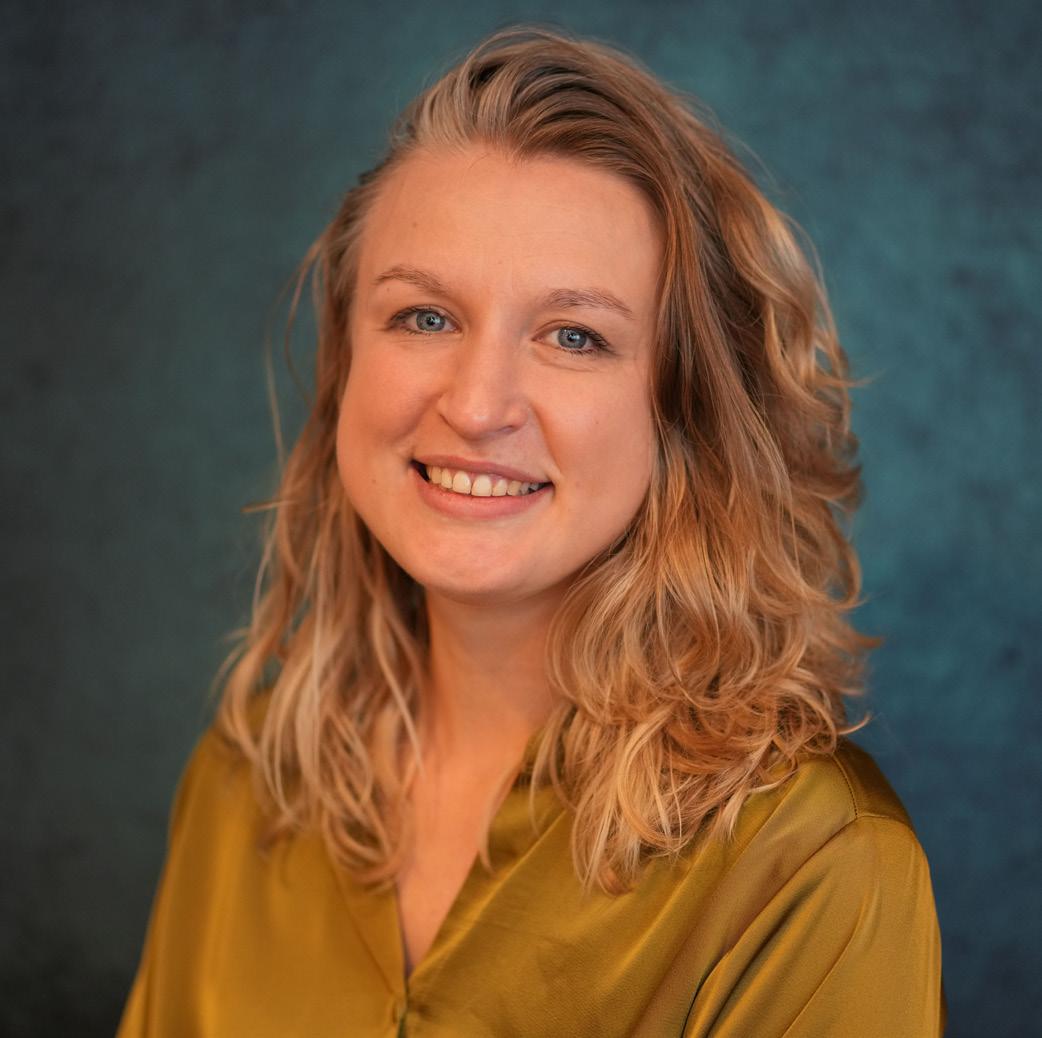
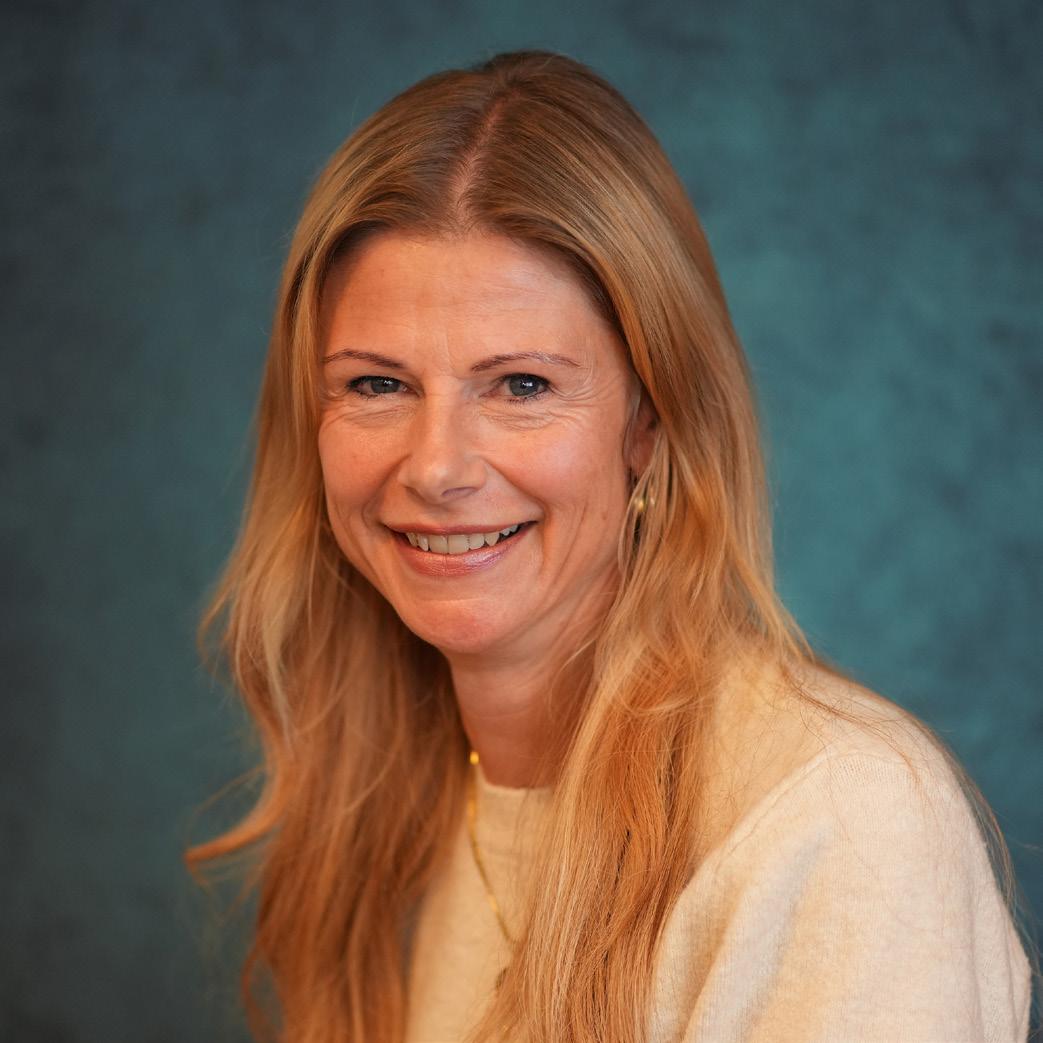
Stephanie Kanon René Boerema
Tany Labuschagne
Dear colleagues,
Digitalisation plays an increasingly vital role in how we operate our vessels, manage our systems, and support our partners. However, as our systems become more connected, the complexity of cyber threats grows. Cyber-attacks are no longer rare incidents; they are a daily reality across all industries, including the maritime sector.
At MF Shipping Group, we have always taken cyber security seriously and have so far managed to keep our systems well protected. However, the landscape around us continues to evolve rapidly. This means we must continue to adapt and improve in order to stay ahead of potential risks. One of the key developments in this area is the introduction of the European NIS2 directive, which will affect many organisations, including those in the maritime sector.
Why NIS2 matters
The Cyber Security Law (CbW) is the Dutch implementation of the European Network and Information Security Directive (NIS2). The updated directive has been in effect at the European level since January 2023, with implementation gradually rolling out across EU member states.
The directive's primary objective is to enhance cybersecurity and bolster the resilience of critical services throughout Europe. For organisations like ours, this means clearer responsibilities, stronger risk management, and a more structured approach to cybersecurity.
In practice, this involves reviewing our current systems, policies, and processes to ensure they align with the expectations outlined in the directive. This is not a one-time exercise, but an ongoing effort requiring collaboration across departments.
Cybersecurity risks in the maritime sector
The integration of IT (Information Technology) and OT (Operational Technology) on board creates unique vulnerabilities. Key risks we are monitoring include:
• Rapid growth of attacks on IT–OT integration As ship systems become more interconnected, vulnerabilities can appear where IT networks interact with operational systems.
• Ransomware & Third-Party Vulnerabilities We are only as secure as our weakest link. Ransomware attacks on our suppliers or internal networks don't just lock files. They can halt essential services and compromise the data we rely on for daily operations at sea and ashore.
• Navigation Manipulation: GPS and AIS signals can be manipulated, potentially misleading a vessel’s perceived position.
• Satellite communication vulnerabilities Vessel connectivity depends on satellite communications, which can be a target for cyber intrusion.
• Regulatory non-compliance risks
With increasing regulations, failing to meet cybersecurity requirements can result in operational and reputational risks.
Understanding these risks enables us to prioritise our efforts and strengthen our resilience.
Cyber security is not only an IT topic. It requires awareness, responsibility and cooperation throughout the entire company, from shore-based teams to the crew on board
Awareness of GNSS vulnerabilities
One area that is receiving increasing attention is the vulnerability of satellite-based navigation systems, such as GNSS (Global Navigation Satellite Systems). Two common types of interference are spoofing and jamming.
In a spoofing attack, false satellite signals are transmitted to mislead a receiver into calculating an incorrect position or time. The aim is to manipulate the navigation system without the user immediately realising there is an issue. Jamming, on the other hand, involves transmitting strong radio noise on GNSS frequencies to block or disrupt satellite signals. This can result in a loss of positioning capability or reduced accuracy.
If not properly mitigated, both techniques can affect navigation reliability.
Technological countermeasures
To reduce these risks, several technologies and operational measures can be applied.
Anti-spoofing techniques include:
• Signal authentication to verify that satellite signals are legitimate
• Multi-frequency and multi-constellation receivers using multiple satellite systems (such as GPS and Galileo)
• Receiver monitoring systems that detect anomalies in signal strength, Doppler shift or positioning consistency
Anti-jamming techniques include:
• Adaptive filtering that suppresses interfering frequencies
• Directional or beamforming antennas that reduce the impact of jammers
• Integration with inertial navigation systems (INS) to provide backup positioning during signal loss
These technologies are continuously evolving, and part of our work is assessing how they can best be integrated into our operational environment.
Moving Forward
Preparing for NIS2 is not simply about compliance. It is about strengthening how we protect our systems, our vessels and the information we rely on every day.
Within the IT department we are actively working on aligning our policies, systems and procedures with the requirements of the directive. This includes reviewing our cybersecurity framework, improving monitoring capabilities and working closely with other departments to ensure awareness and preparedness across the organisation.
Cyber security is not only an IT topic. It requires awareness, responsibility and cooperation throughout the entire company, from shore-based teams to the crew on board. We will continue to keep you informed as our preparations progress.
Wishing you enjoyable reading and much inspiration from this edition of Fleetlog.
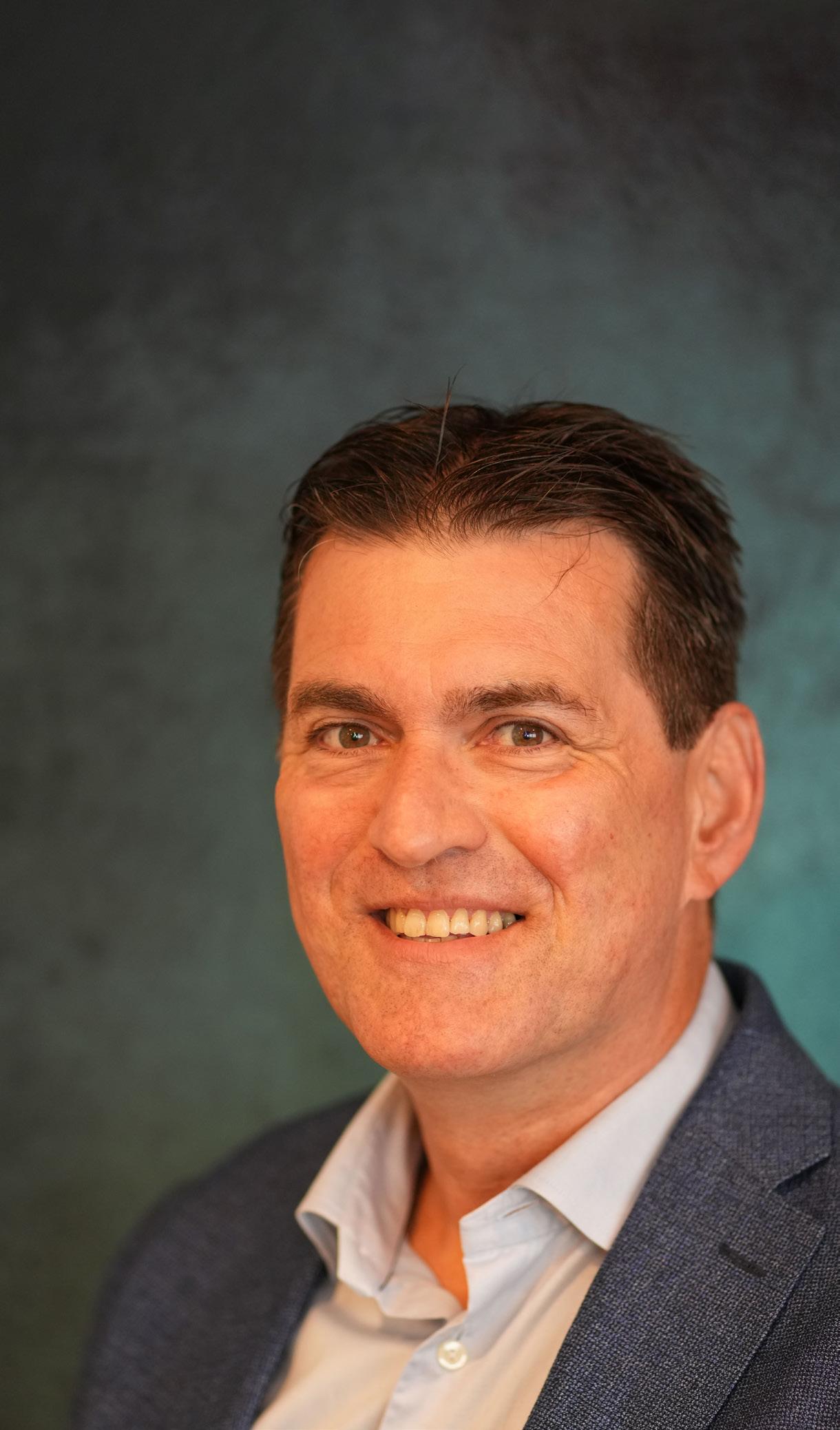
Ivo Ramakers Chief Projects & Information Officer
Port State Control, Vettings & Audits
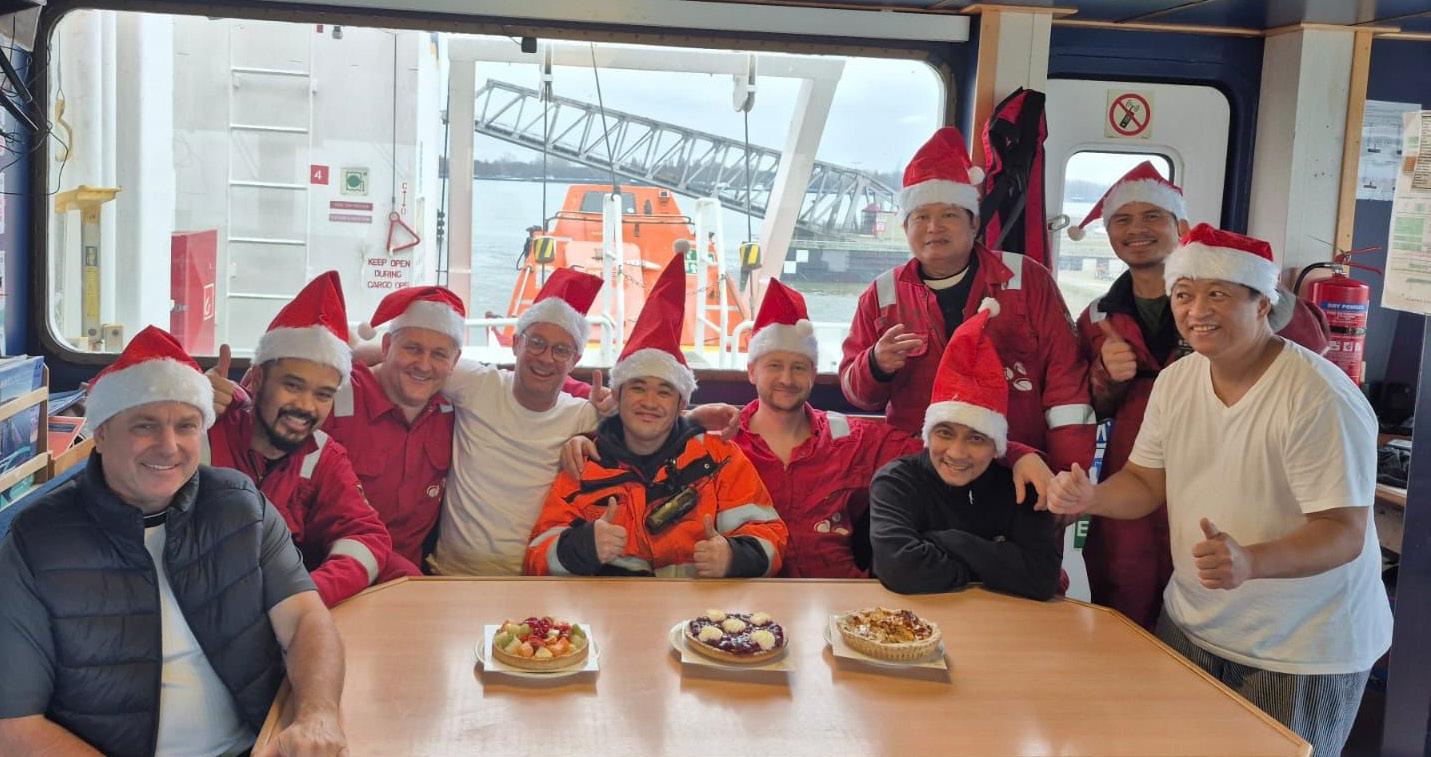
mt Wisby Argan
SIRE 2.0 VETTING - 9 DECEMBER 2025
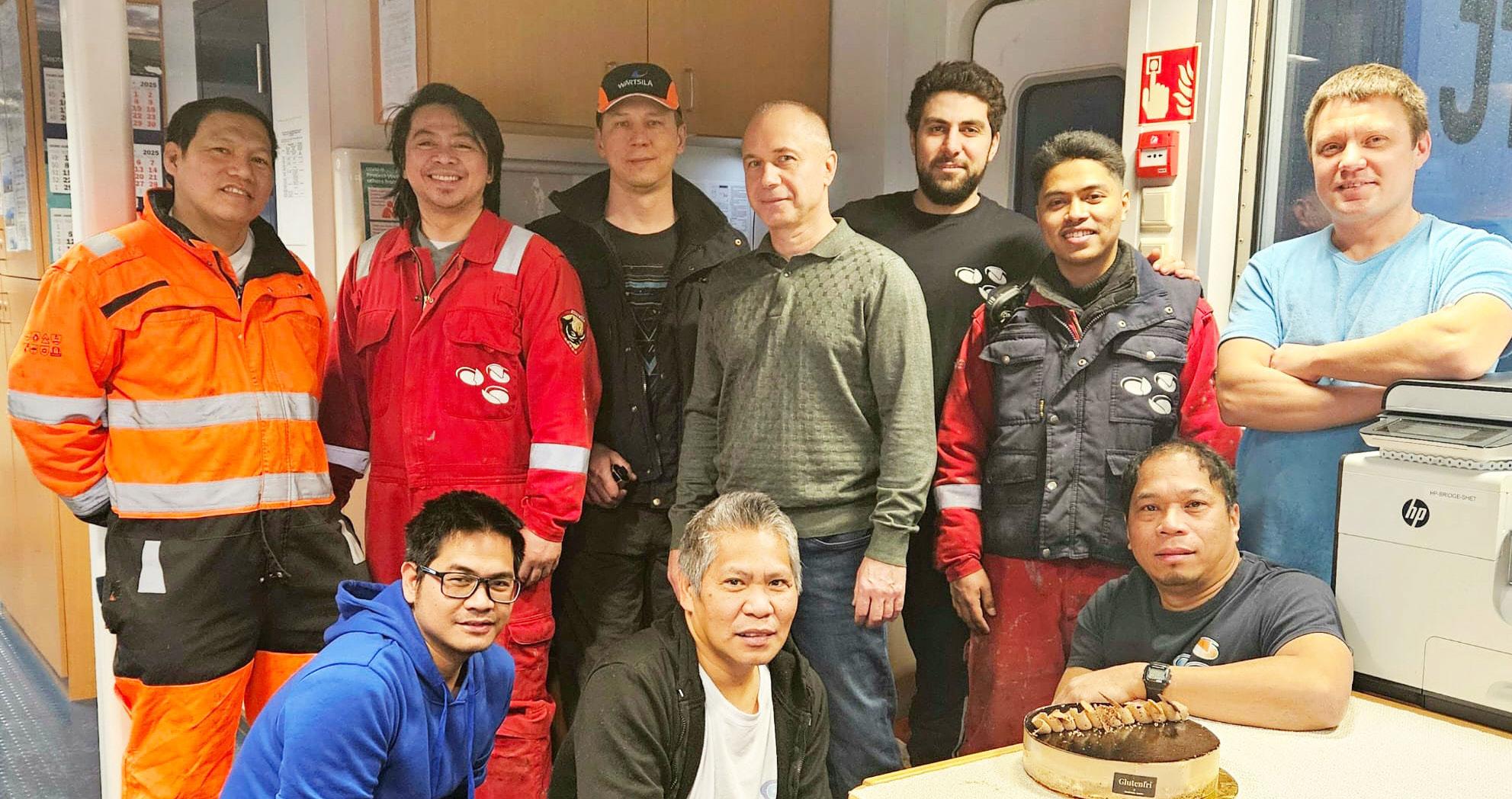
From left to right: (sitting) 2/O J. Sedillo, Captain F. Celerio, (standing) Mtm W. Santiago Jr, (sitting) C/E R. Onsay, (back) 2/E P.J. Pon-An, Elec R. Alerta, AB H. Pabilona, Cook J. Matriz, 2/O R. Amano, AB J. Delfin, C/O J. Alabado, (sitting red- Santa of Wisby Argan) AB R. Daguplo
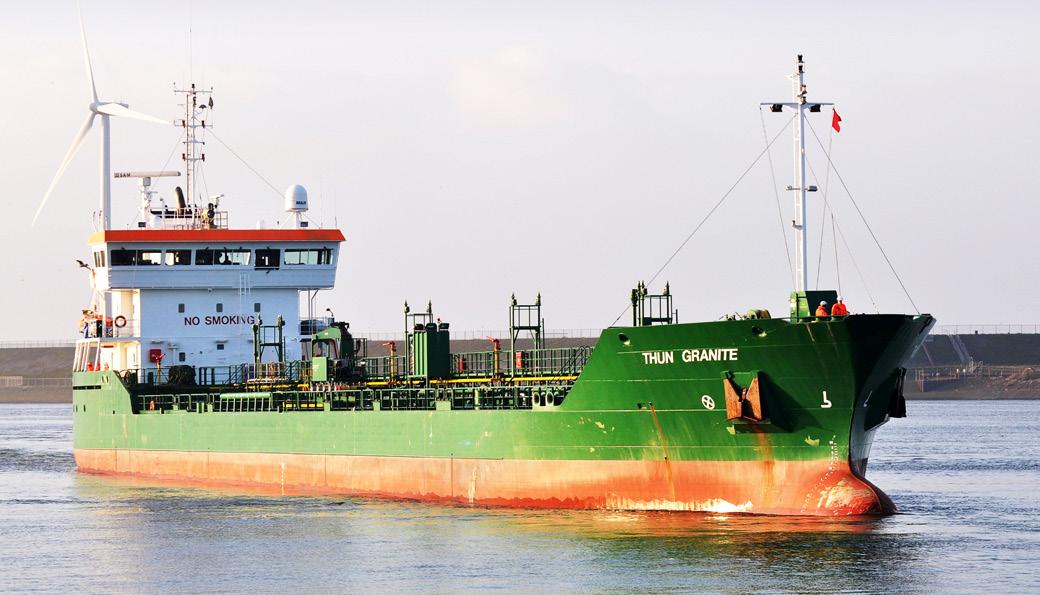
mt Thun Granite
CIRCLE K. VETTING - 5 DECEMBER 2025
Crew on board during vetting: Captain K. Van Weije, C/O A. Podoloak, 2/O D. Ramirez, 3/O D. Garcia, C/E M. Velikorodov, 2/E A. Nechaev, Cook J.M. Desabella, AB J.R. Bigcas, AB R. Carreaon, AB R. Geollegue
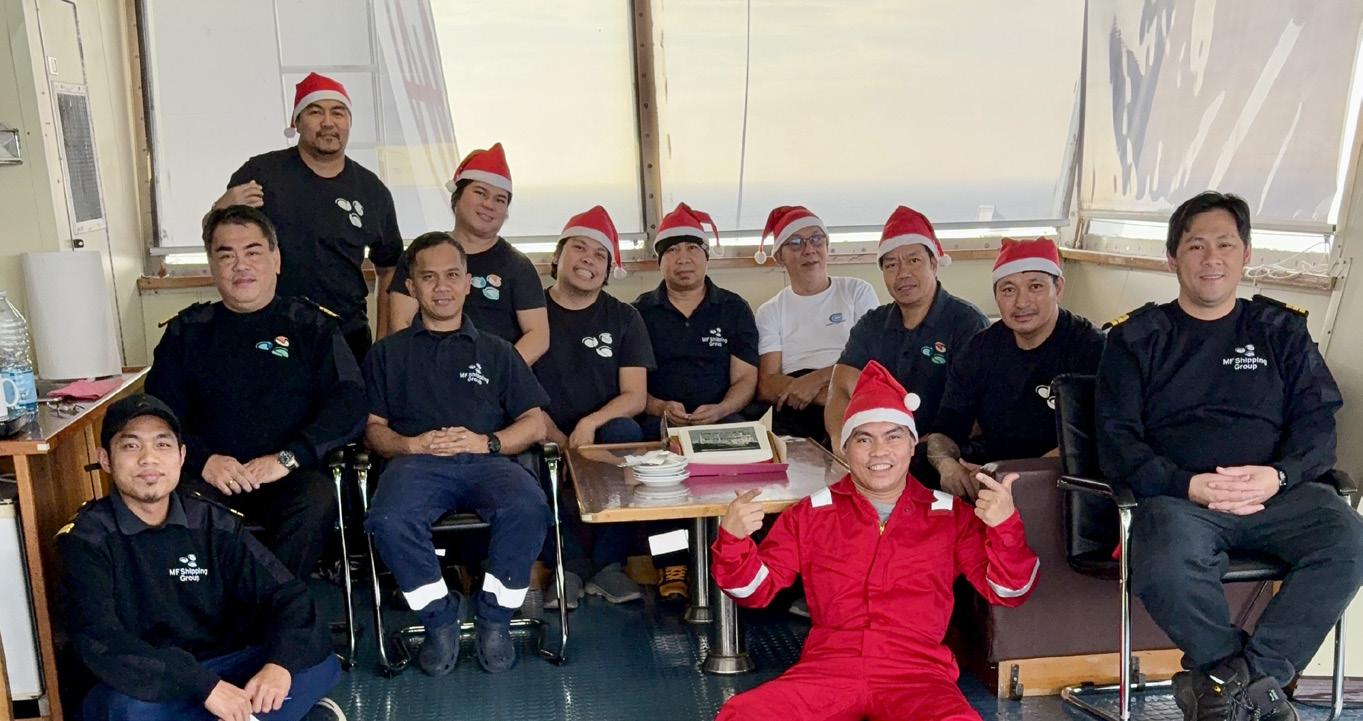
mv Shetland
PSC VETTING - 9 JANUARY 2026
Crew on board during vetting:
Captain A. Shibaev, PEC Captain O. Kondakov, C/O I. Vityazev, 2/O R. Putol Fiel, 2/O R. Caay Solde, C/E D. Poliakov, 3/E A. Evoyan, AB A. Cantilero, AB F. Frejoles, OS D. Borromeo, Cook R. Layawon
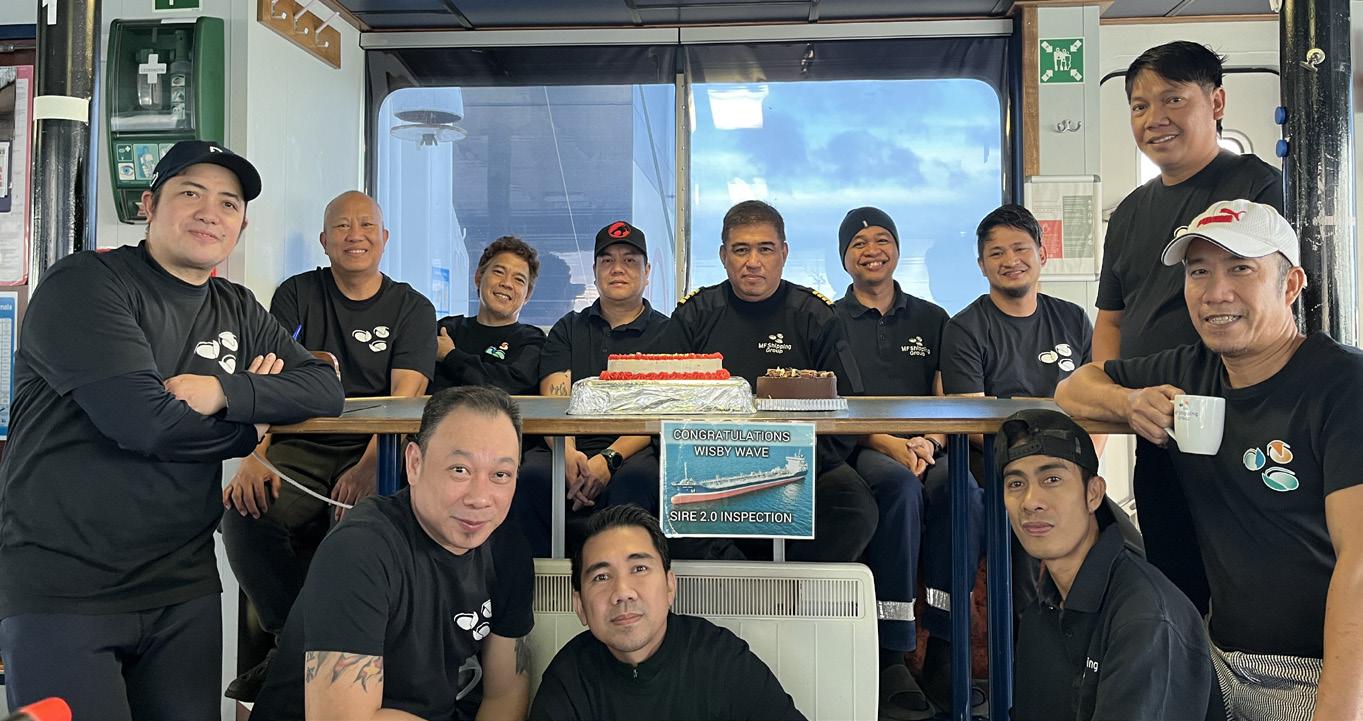
mt Wisby Wave
SIRE 2.0 VETTING - 18 DECEMBER 2025
In back from left to right: 3/O T. Abobo, 2/E E. Pura, C/O E. Encargues, Captain F. Celerio, C/E J.A. Ocmer, AB J. Manansala. In front from left to right: AB A. Soriano, 3/O J.G. Marquez, 2/O J. de los Reyes, Mtm J.R. Noronio, Cook F. Wania, AB H. Gasis
Welcome on Board
Jelte Kok
Technical Superintendent
My name is Jelte Kolk, and I have recently started working as a Technical Superintendent. I have been asked to introduce myself briefly so that I can get to know everyone better. I studied to be a Maritime Officer in Terschelling, completing a dual nautical and technical education.
I began my seagoing career in 2018, sailing with JR Shipping and Visser Shipping on container vessels and with Boomsma Shipping on general cargo vessels. I eventually sailed as Chief Engineer.
After several years at sea, I’m now ready for the next step in my career and to contribute from shore.
Starlink Data Usage - Crew Notice
Since the Starlink retrofit, many crew have noticed their personal data bundles being used faster than before. This is expected: Starlink offers much higher speeds than VSAT, so apps like WhatsApp, FaceTime, Teams, and other video platforms automatically switch to higher-quality video, using more data.
To get the most out of your monthly allowance and enjoy longer calls home, we recommend enabling data-saving modes on your devices and apps.
How to Save Data: ANDROID:
• System-wide: Settings → Network & Internet → Data Saver → On
• WhatsApp: Settings → Storage & Data → Use Less Data for Calls
IPHONE:
• System-wide: Settings → Mobile Data → Mobile Data Options → Low Data Mode → On
• FaceTime: Settings → FaceTime → Low Data Mode → On
• WhatsApp: Settings → Storage & Data → Use Less Data for Calls
How are you doing?
Jomel Prebillo
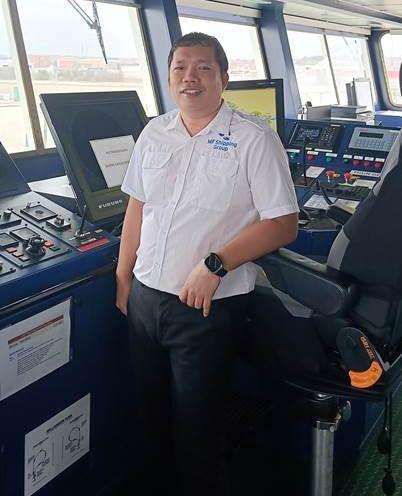
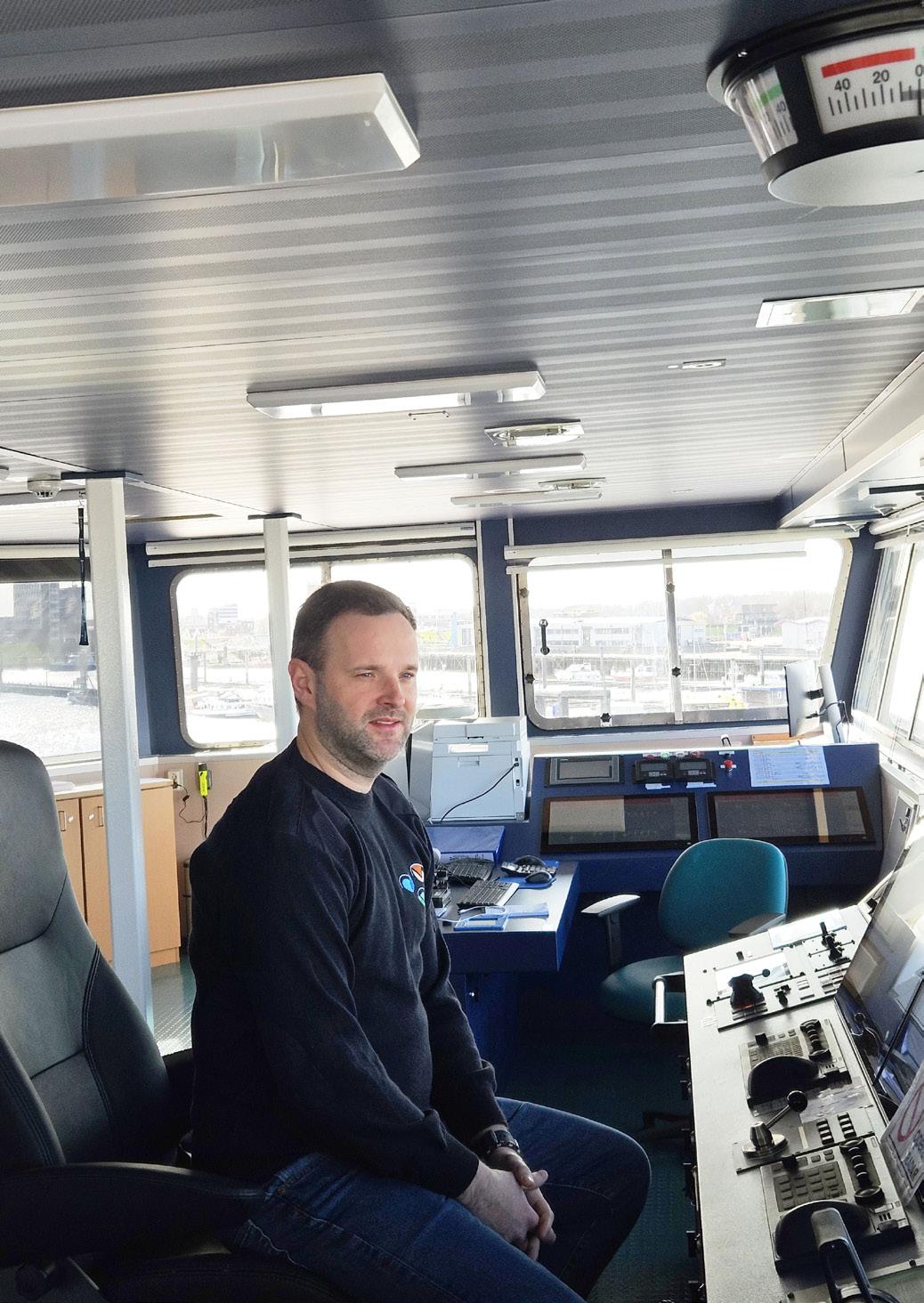
Life at sea requires resilience, leadership and the ability to adapt constantly, especially for those at the helm. Captain Jomel Prebillo, aged 46, steers the Thun Genius with a steady professional approach and a focus on people. We caught up with him to find out how he is doing, what motivates him, and how he balances his many responsibilities.
“So, Captain, how has your day been?”
“I'm doing well,” says Jomel. “It's been busy, but everything is in good order.”
Balancing command and home
“Managing work-life balance as a Captain these days is very challenging,” he admits. “There are overall responsibilities, as well as the need to maintain good health and get enough rest. A good routine on board, effective time management, staying in touch with my family, positive thinking, teamwork and harmony on board all help to reduce stress. When I’m on holiday, I focus entirely on my family.”
Family clearly stands at the centre of his life, and his proudest achievements reflect that. “My greatest achievement is being able to support my family, providing a home and helping loved ones to pursue education and careers; including having a doctor in the family,” he says proudly. “Having stability at home makes the long, hard work worthwhile.”
A career built step by step
Jomel’s maritime career began in 2001 when he joined a Norwegian-flagged OBO vessel as a cadet, trading across the Atlantic, the North Sea and the Mediterranean, as well as the Americas. “My motivations were to build a better future for my family and to explore the world,” he recalls.
He steadily progressed through experience and training, becoming Third Officer in 2004, Second Officer in 2008 and Chief Officer in 2011. He joined MF Shipping Group in 2016
as Chief Officer on the Thun Goliath and was finally promoted to Captain in late 2024. “I continue to learn, train, and gain experience,” he says. “That never stops.” The outlook of a former Master he sailed with also shaped his own. “His leadership, calmness, professionalism, patience and consistency inspired me to pursue command.”
Leadership through morale
Jomel's leadership is guided by a simple yet powerful philosophy: "A happy crew makes a happy captain" and "start from the top".
He elaborates: "I strongly believe that good morale and wellbeing among the crew lead to safe and successful operations. When people work together with respect and communicate easily, it creates a smooth and harmonious environment on board.”
Even on difficult days, it is the people around him who lift his spirits. “Seeing the crew working together respectfully, even in tough times, makes me smile. Hearing from my family also motivates me.”
Inspiration close to home
When asked about his sources of inspiration, he answers immediately: “My family is my biggest inspiration.” This inspiration fuels his calm leadership during challenging situations at sea. Recently, the vessel encountered severe weather off the west coast of Ireland. “With good teamwork and thorough planning, we managed it successfully,” he says.
“Another time, we experienced an engine shutdown, but we managed to bring the vessel to a safe position thanks to a quick response and teamwork.” Such experiences have reinforced his values of preparation, safety and cooperation.
The coming months are set to be busy, with dry docking, inspections and audits on the horizon. “My main goal is to ensure safe operations and continue developing my leadership and management skills,” he explains.
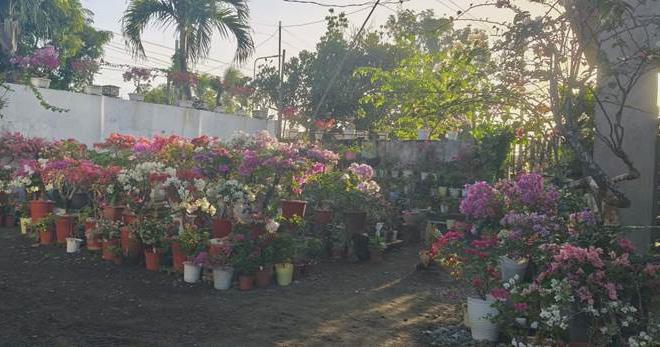
At home, he will also be supporting a very different kind of project: “My wife is developing a Bougainvillea garden, and I’m helping with that whenever I can.”
The challenge, and the beauty, of leading Being a captain means taking responsibility for everything: the ship, the crew, the cargo and the environment. “Every day at sea is different,” explains Jomel. “Important decisions about navigation, weather and emergencies require strong leadership and the ability to stay calm under pressure.
Managing a multicultural crew and maintaining harmony is also essential.”
One destination stands out above the rest: Kitimat in British Columbia. “Careful planning and teamwork are required for the long inland navigation, but the scenery is spectacular; mountains, rivers and sometimes even bears catching salmon. It’s amazing.”
One of his most memorable experiences was sailing in winter in the Bering Sea and the Aleutian Islands. “The weather changed rapidly, with strong winds, heavy snow and very limited visibility. We had to rely completely on radar, equipment and teamwork,” he recalls. “After hours of careful navigation, conditions improved. This demonstrated the importance of preparation and calm decision-making.”
Yet the same waters can be peaceful in summer. “You can see whales and seabirds around the vessel. It reminds you of the beauty and uniqueness of life at sea.”
Lessons learned
Jomel believes that mistakes are opportunities for growth. One early lesson came during his time as an Able Seaman. “Because I was eager to learn, I performed a task without consulting my officer or the company procedures,” he admits. “It taught me patience, teamwork, and the importance of following procedures; lessons that still guide me today.”
When off duty, it is the simple comforts that matter most. His drink of choice is coffee, and his favourite foods include Sinigang, Adobo, the Ilonggo dish Batchoy, and Hopia for snacks. When it comes to films and actors, it's the classics that dominate: Forrest Gump, The Green Mile, The Matrix and John Wick, with Tom Hanks and Keanu Reeves being two of his favourite actors.
Despite his years at sea, he remains modest. “No nickname, just Jomel,” he says with a smile. When asked how his family and friends might describe him, he pauses thoughtfully. “They would probably say that I am very responsible and dedicated, hard-working and supportive. And not quiet.”
Sustainability Navigating green seas
The maritime industry is undergoing a quiet revolution. Regulators are steering ships toward more environmentally friendly operations through a “double push” from the International Maritime Organization (IMO) and the European Union (EU). While both aim for decarbonisation, their combined approach has created a complex web of rules and reporting requirements that crews must manage on top of their daily operational duties.
Conversations with Captains Aleksandr Vladimirov (MV Helge), Marten van Straten (MV Vestanhav) and Peter van Houten (MT Thun Liffey) show that the transition to greener shipping is placing new operational and administrative demands on crews at sea. As one Master notes, “Due to new legislation and the digital ambitions of the shore-based organisation, we’re seeing an increasing number of administrative tasks. It’s a higher and different workload than before.”
The rising tide of administration Regulations such as the Ship Energy Efficiency Management Plan (SEEMP), the EU Monitoring, Reporting and Verification (MRV) system and FuelEU Maritime require continuous monitoring of fuel consumption, emissions and operational efficiency. Electronic logbooks and voyage modules were intended to reduce manual work and errors, but crews report mixed results. Older vessels often lack integrated systems, forcing officers to enter the same data into multiple platforms.
Technical issues further complicate matters. Software glitches, unstable connections, GPS “drift” and system crashes are common complaints. In one case, a hard-drive failure erased ten days of records, potentially exposing the vessel to fines or detention. As a result, many officers still maintain paper logs as a reliable backup. “A reliable paper log is safer than a glitchy digital system that creates data gaps and forces crews to troubleshoot constantly,” one Master explains.
Who is responsible?
Environmental compliance has become a shared responsibility across departments:
• Chief Engineer: fuel monitoring, SEEMP compliance, ballast water treatment and hazardous materials
• Chief Officer: paint stocks, oil record books, garbage and ballast logs
• Second Officer: voyage data and electronic logbooks
Accuracy is critical. Even small errors, such as incorrect ship positions, can affect fuel calculations and emissions reporting, with direct consequences for compliance and operational efficiency.
Despite clear task allocation, knowledge gaps remain. Newly promoted Chief Engineers do not always receive sufficient guidance on their role as Vessel Environmental Managers (VEMs), and environmental communications are sometimes sent only to the Master rather than to the responsible engineer, complicating decision-making on board.
Crews are committed to sustainability, but they need better tools, training and support to meet growing expectations
Working with the regulations
Rather than resisting the changes, many crews have developed practical ways to manage the growing workload.
• Centralised documentation systems bring all environmental certificates and SEEMP-related files together in one digital location, simplifying inspections and reducing duplication.
• Ships increasingly operate in ECO mode or use cruisecontrol functions to optimise fuel efficiency without compromising safety.
• Weather routing services, such as SPOS, help vessels avoid severe conditions. Reducing speed or waiting for better weather can significantly lower fuel consumption and support carbon-intensity targets.
• Hull condition also plays a major role. Modern coatings and regular cleaning reduce resistance and improve efficiency, while collaboration with port agents enables compliant disposal of waste such as metals and cooking oil, sometimes even generating recycling revenue.
• Effective compliance also depends on teamwork. Captains, Chief Engineers and Chief Officers work closely together to optimise ballast water treatment systems, hybrid plants and overall vessel performance.
As one crew member notes; “Onboard documentation and record-keeping are well organised, and we are committed to maintaining accurate and timely records.”
Operational reality versus regulatory expectations
Despite these measures, life at sea does not always align with regulatory assumptions. Fuel consumption is highly sensitive to weather, sea state and vessel speed. Headwinds and heavy
seas can increase consumption by 15–25%, while hybrid systems may be less effective when continuous high power is required. Maintaining full speed in adverse conditions can double fuel use, making compliance far more difficult.
In practice, operational decisions such as reducing speed or waiting for calmer weather may be the most efficient and environmentally sound option. However, these choices can conflict with commercial pressures to maintain schedules, highlighting the ongoing tension between environmental goals and business realities.
The Path Forward
Masters across the fleet agree on one point: crews are committed to sustainability, but they need better tools, training and support to meet growing expectations.
Suggested improvements include dedicated VEM training for newly promoted engineers, direct environmental communications to both Masters and Chief Engineers, fleetwide updates on new regulations, and more reliable software integration with automatic data collection and backups.
These measures, combined with the practical solutions already developed on board, show that environmental compliance and operational efficiency can go hand in hand, provided the systems support the people responsible for implementing them.
As the maritime industry continues its green transition, listening to the crew’s perspective will be just as important as the regulations themselves.
Whats’ Appening on board
FFI
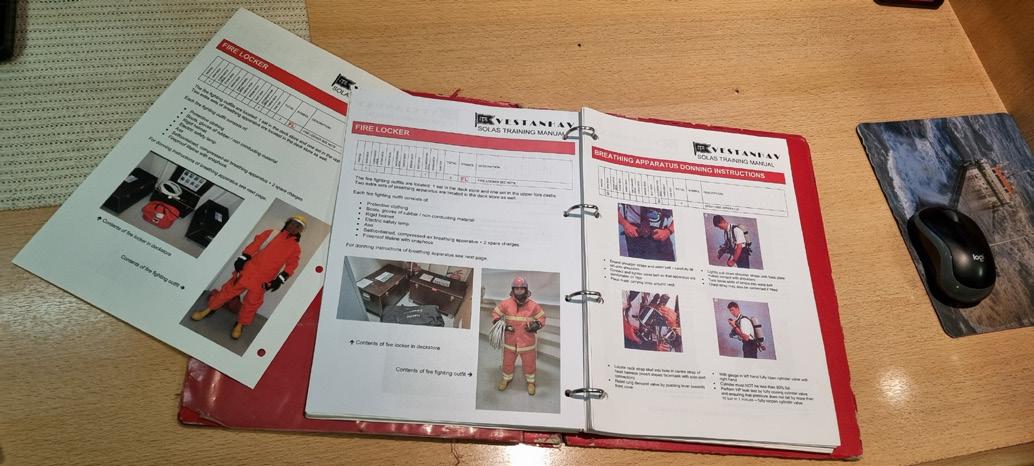
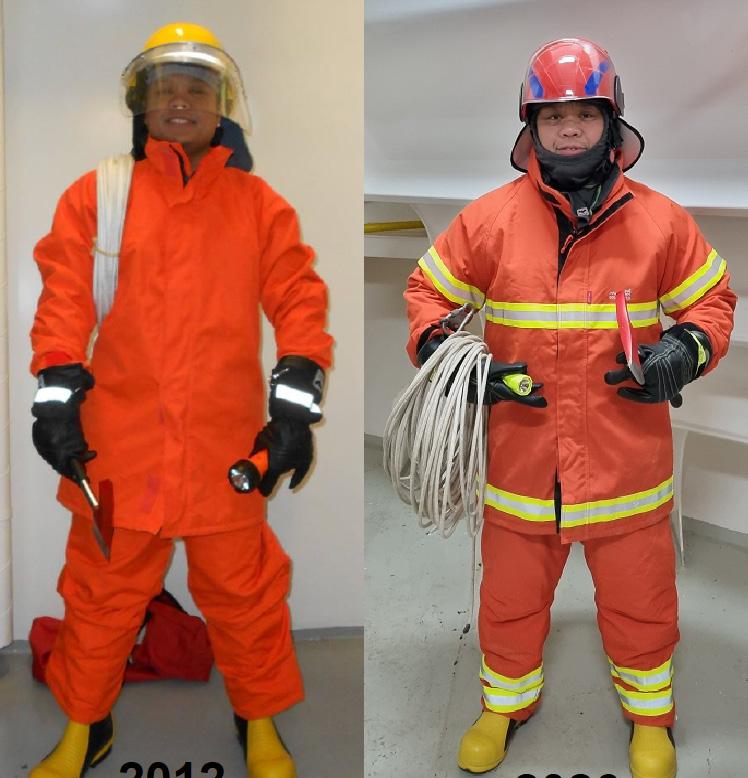
Updating the LSA or FFA equipment on board also requires an update to the ship’s SOLAS training manual. When new firefighting outfits arrived, a new photo was needed for the manual. Back in 2012, AB Phil Baluarte modelled the gear, and he did it again in 2026. Equipment changes, but good people stay!
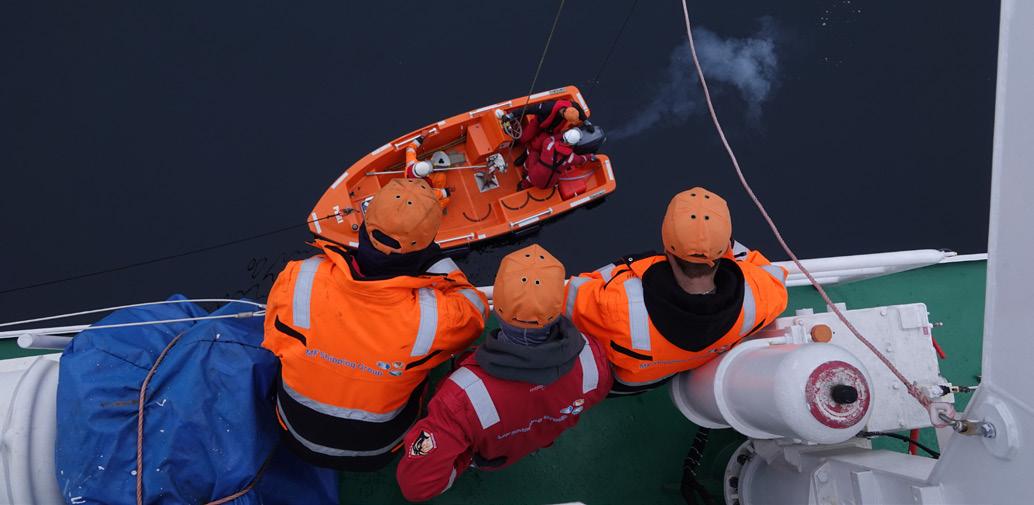
MOB drill
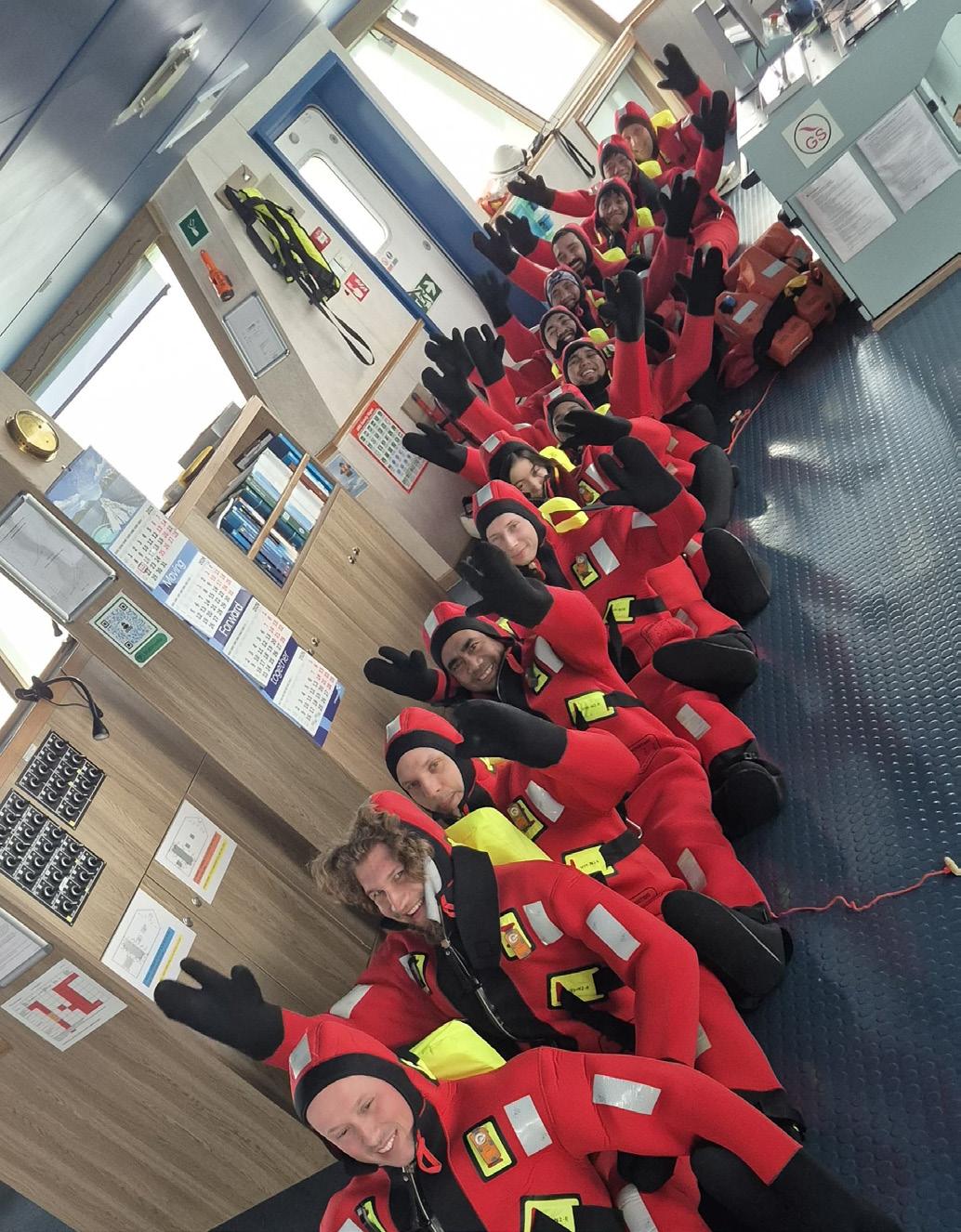
CREW IMMERSION TRAINING = SUCCES!
There's nothing that fosters teamwork like getting suited and booted and diving in together! Hi, Crew Thun Liffey!
All aboard for safety and smiles; teamwork on the railway!
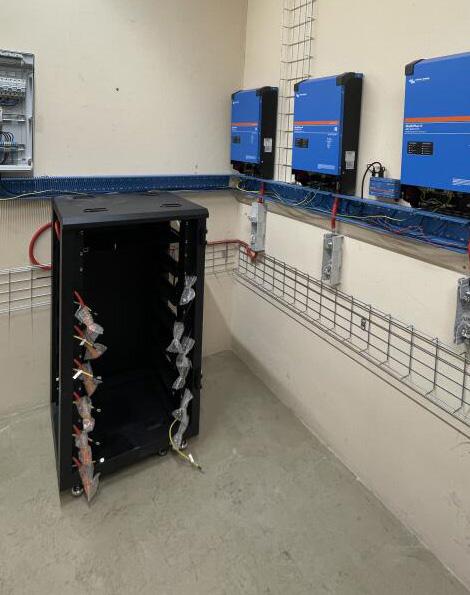
Battery in the office
IT'S NOT JUST ON OUR VESSELS – IT'S AT OUR OFFICE TOO!
We have recently installed a backup battery system in the basement of our office in Farmsum, together with solar panels on the roof. This ensures that communication systems, including servers and telephones, remain operational in the event of a power failure.
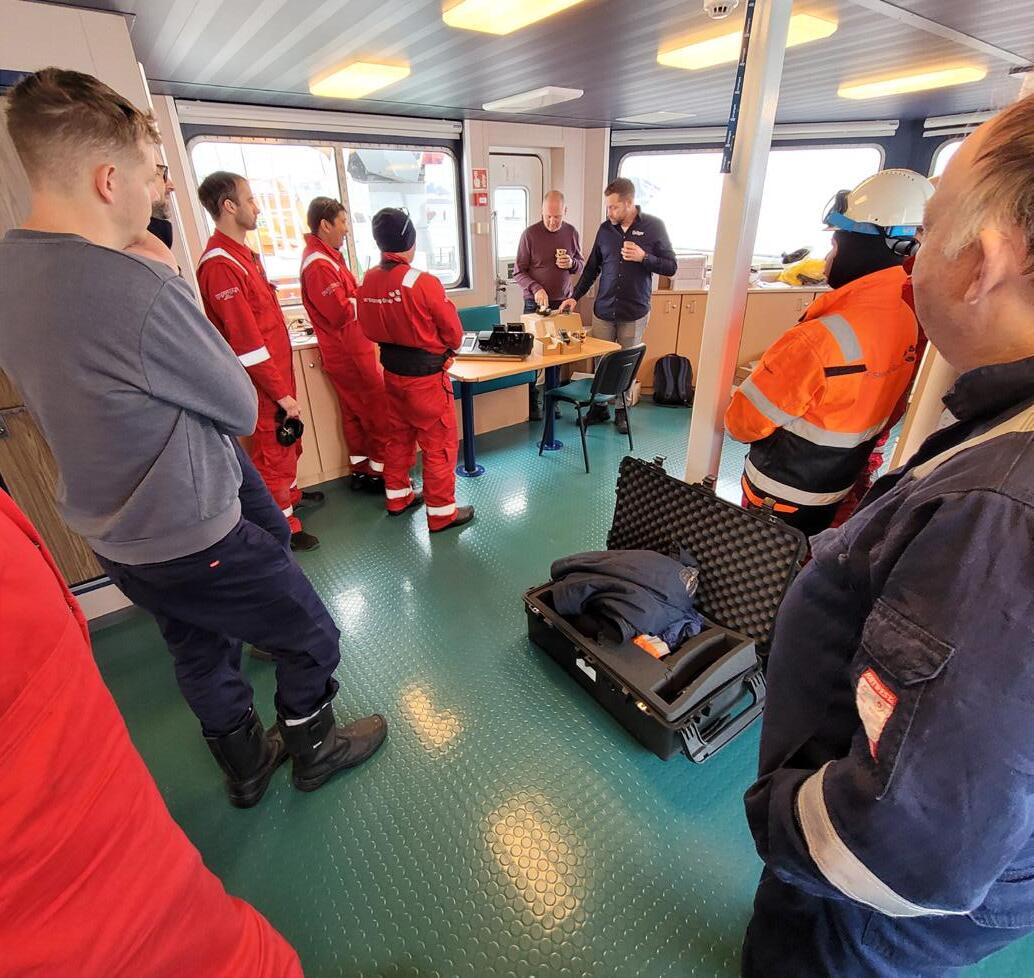
Thun Renew crew
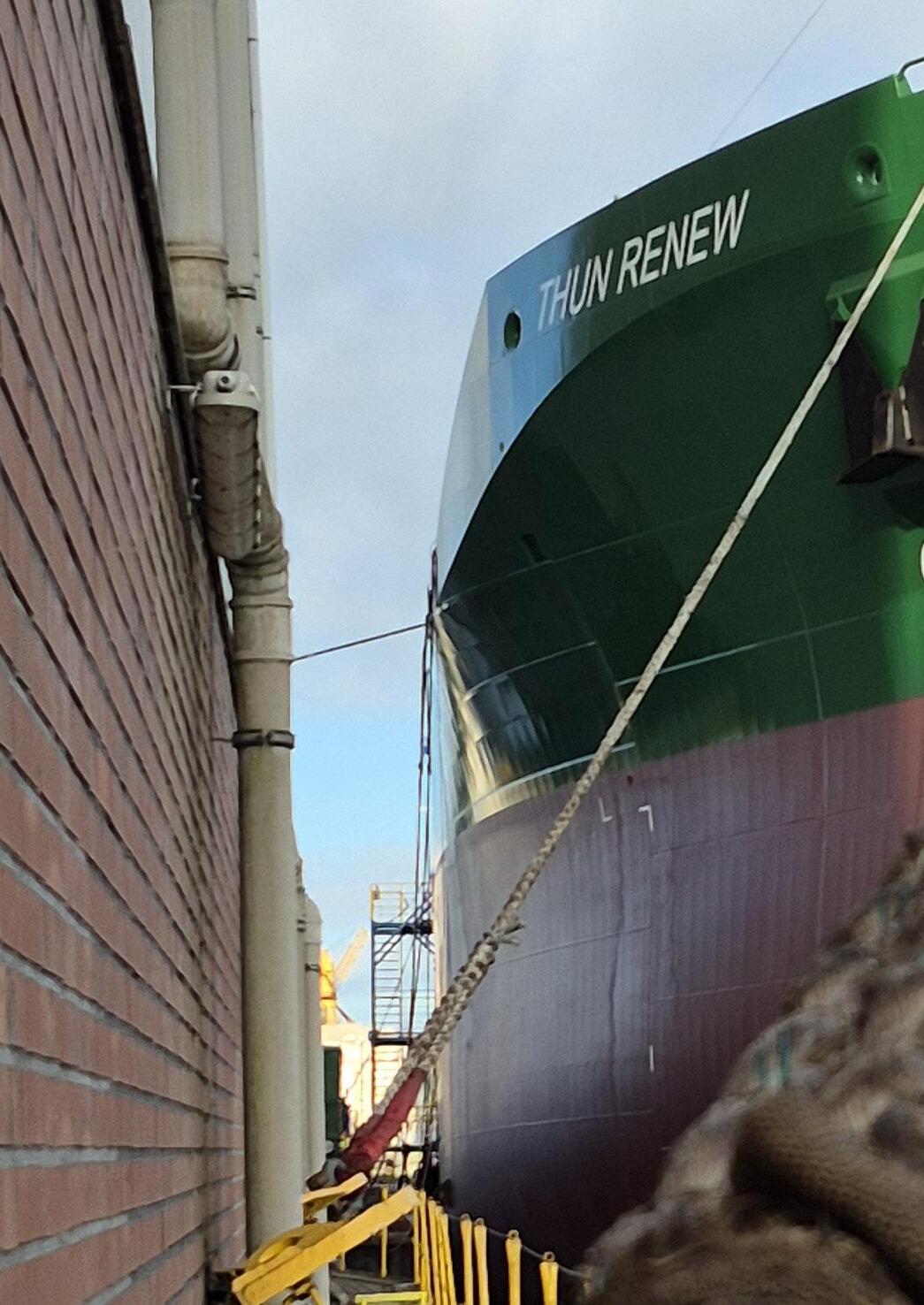
New gadgets, new gear, same crew! The Thun Renew team got hands-on with the Dräger measuring equipment and all the important tips to keep things running smoothly.
Did you know?
From time to time, medical supplies are returned from the vessels. These are sent back to Datema (our supplier), who check which items can be legally forwarded to Ukraine and ensure they reach an aid organisation. While most returned medicines cannot be sent due to expiry, dressings and other supplies can often still support a good cause.
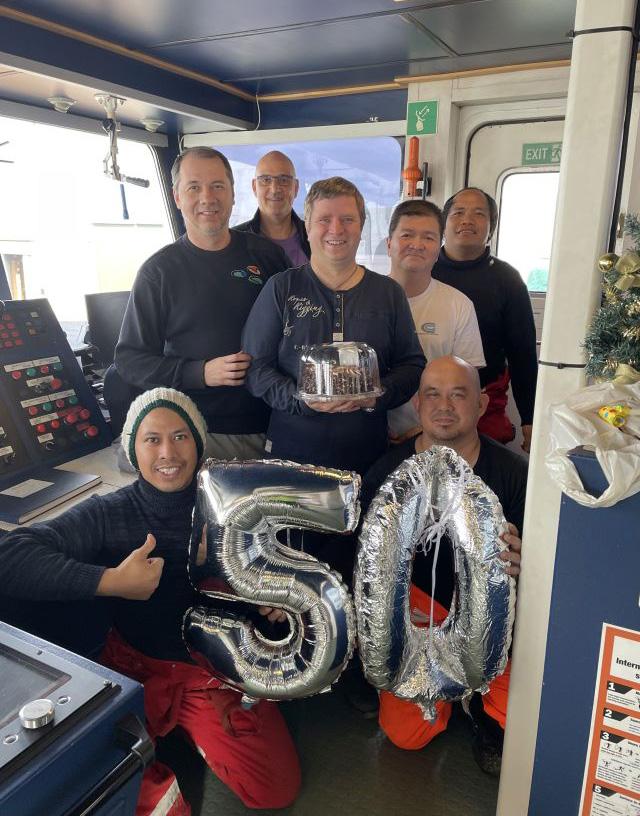
Happy 50th birthday!
Birthdays are always celebrated on board, and this was a particularly significant one. Captain Uzliakov celebrated his birthday at sea, complete with a celebratory cake organised by Anita Jarnhede and the Thun Dry Cargo Department.
IT WAS A MEMORABLE DAY FOR THE CAPTAIN AND THE CREW; MANY HAPPY RETURNS!
Cor Verheul rectification
Rectification alert! In the September 2025 edition of Fleetlog, the names of Cor Verheul and Marten van Straten were mixed up. The correct dates are: Marten: 29 June 2025; Cor: 8 August 2025. Two 35-year anniversaries... definitely worth celebrating twice!
Subic Bay, Philippines · 11 & 12 March · Theme 2026
Dare to Care Across generations
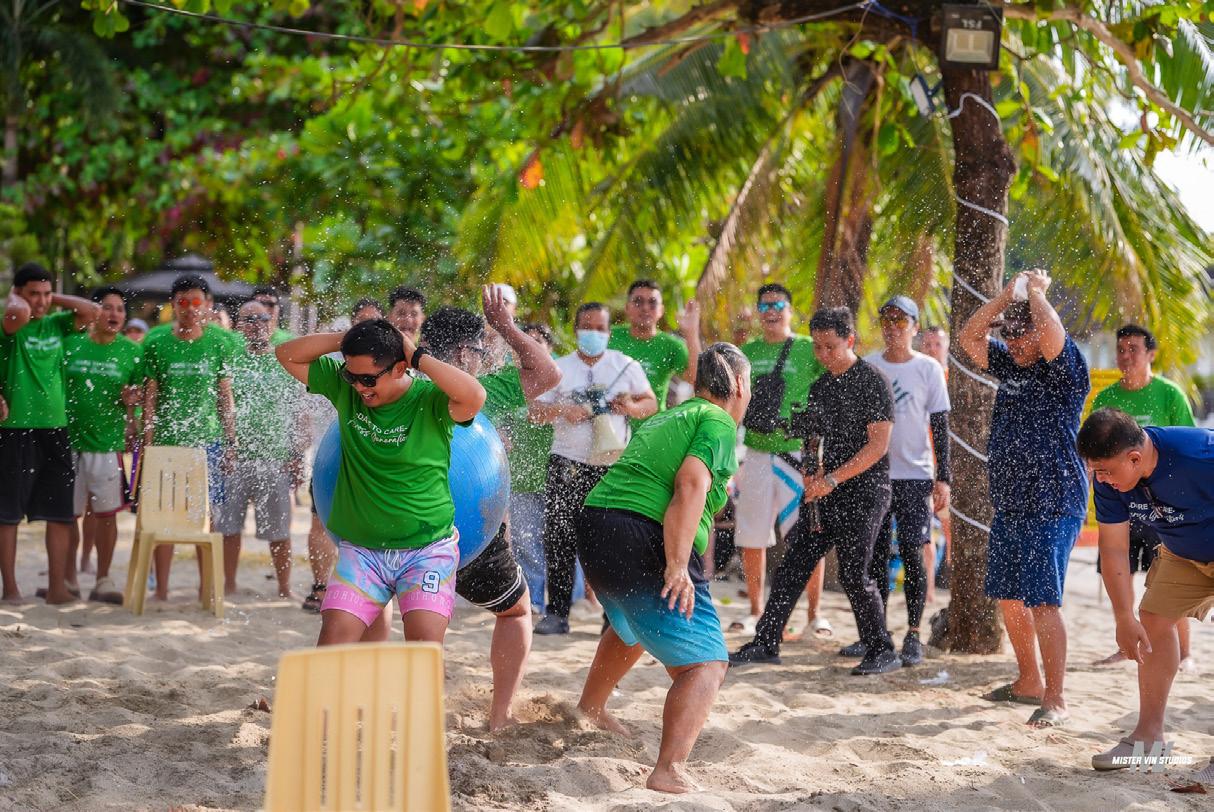
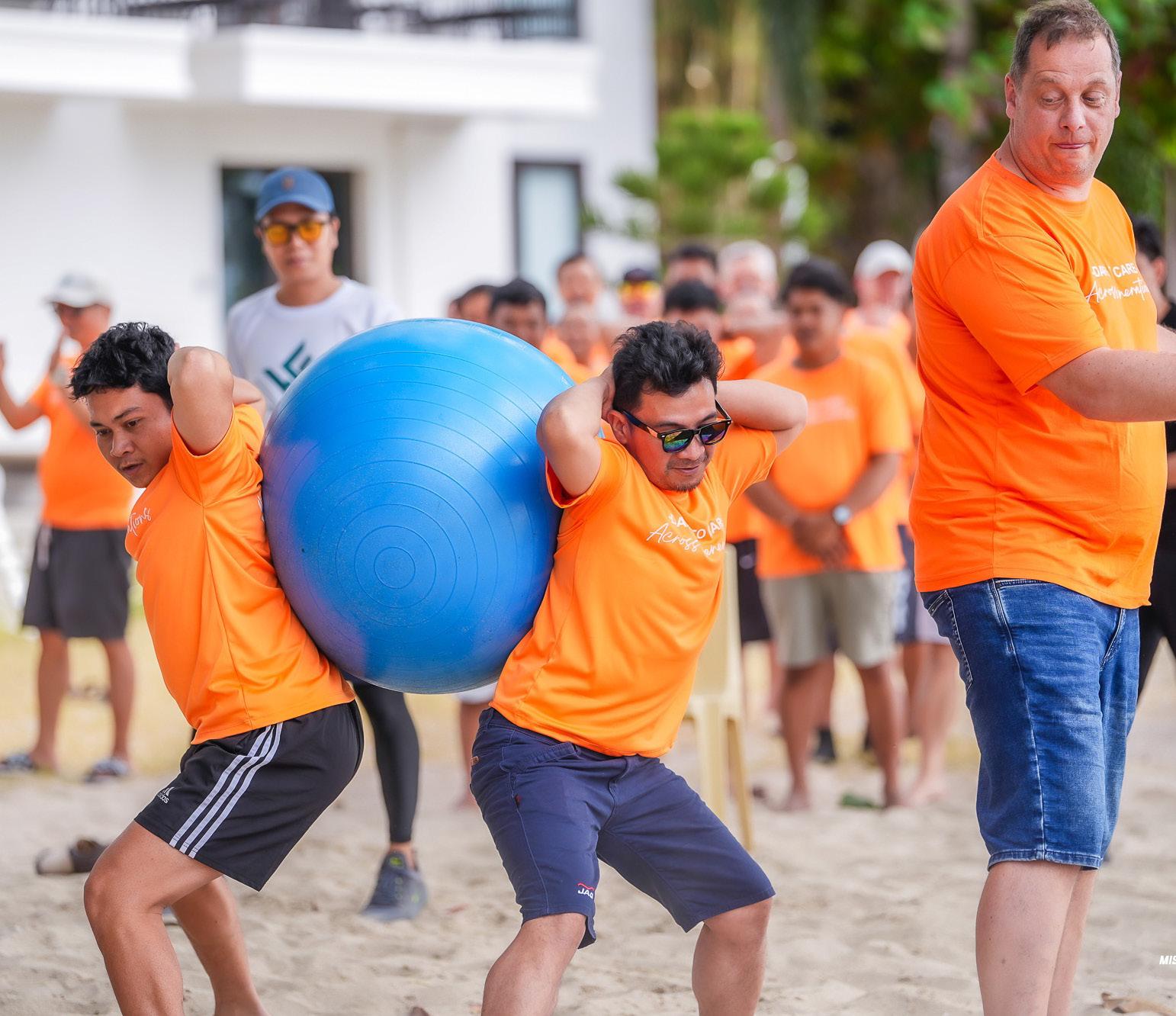
Two days in Subic Bay. About 90 seafarers. One theme that touched everyone. No matter your age, rank or how long you've been at sea.
"The baby boomers are too strict.
The young AB’s spend too much time on their phone. So now what?"
One of the opening lines that got the whole room talking. Dare to Care Across Generations is our theme for 2026. It couldn't be more relevant. On every vessel and in the office, people of different ages work side by side every single day.
A 58-year-old Chief Officer and a 22-year-old cadet. A senior Engineer with 30 years at sea and a young officer who grew up with smartphones. That mix is our strength. But it only works if we actually make the effort to understand each other. Older crew bring calm, deep seamanship and decades of experience. Younger crew bring energy, digital skills and a fresh perspective. Neither is better. Both are needed. The real question is: how do you get the best out of each other across that gap?
Day 1 - 11 March
Company update: where we are and where we're headed Day 1 started with an honest look at the past year, structured around our three strategic pillars: Our People & Culture, Safe & Sustainable and Digital Driven. Inspections, sustainability results, newbuild plans, docking and maintenance all came past. Highs and lows included.
The mooring incident on the Thun Empower was discussed openly as a lesson for everyone. Safety is never something you can take for granted. Not even on a job you've done a hundred times before. As a direct result, the winch setup on new vessels has been adjusted.
We also discussed crew promotions, our drugs & alcohol policy and the new health programme quitting smoking was introduced. We looked at cyber security, GPS spoofing and jamming, and the upcoming integration of MESPAS (Planned maintenance system) , RadiantFleet (crew system) and our internal communication platform MF-Bridge.
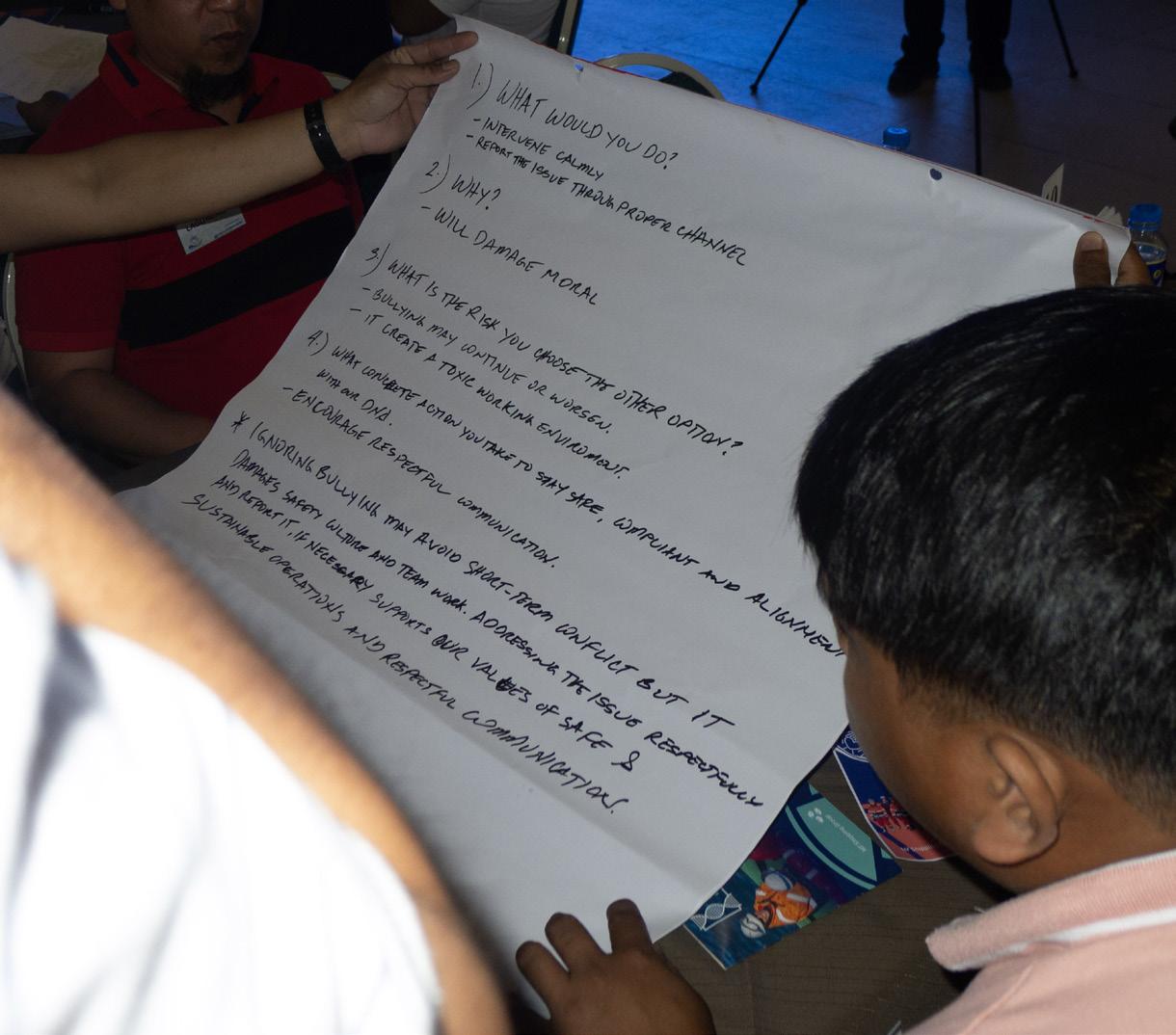
In the dilemma workshop, seafarers took the floor themselves and discusses scenarios.
For example:
Safety vs. schedule
Time is tight and commercial pressure is real. Do you still make time for drills? Or do you keep operations moving?
Hierarchy vs. safety
You think the Master is making the wrong decision. Do you speak up? Or stay quiet out of respect?
These aren't easy questions. But the fact that people discussed them openly, at the tables and in front of the whole room, says a lot about where we're heading.
The DNA Passport. It belongs to all of us.
The DNA Passport ran as a thread through the days. It's not a piece of paper. It's a commitment. From everyone, to everyone. Respect, integrity, safety. Whether you're 25 or 65, AB or Captain, at sea or in the office. What behaviour do we want to see more of? What are we ready to leave behind?
For many crewmembers, speaking up doesn't always come naturally. Bullying, discriminations, not daring to say what you think: these things still happen. Creating space for that to change is part of what Dare to Care is all about.
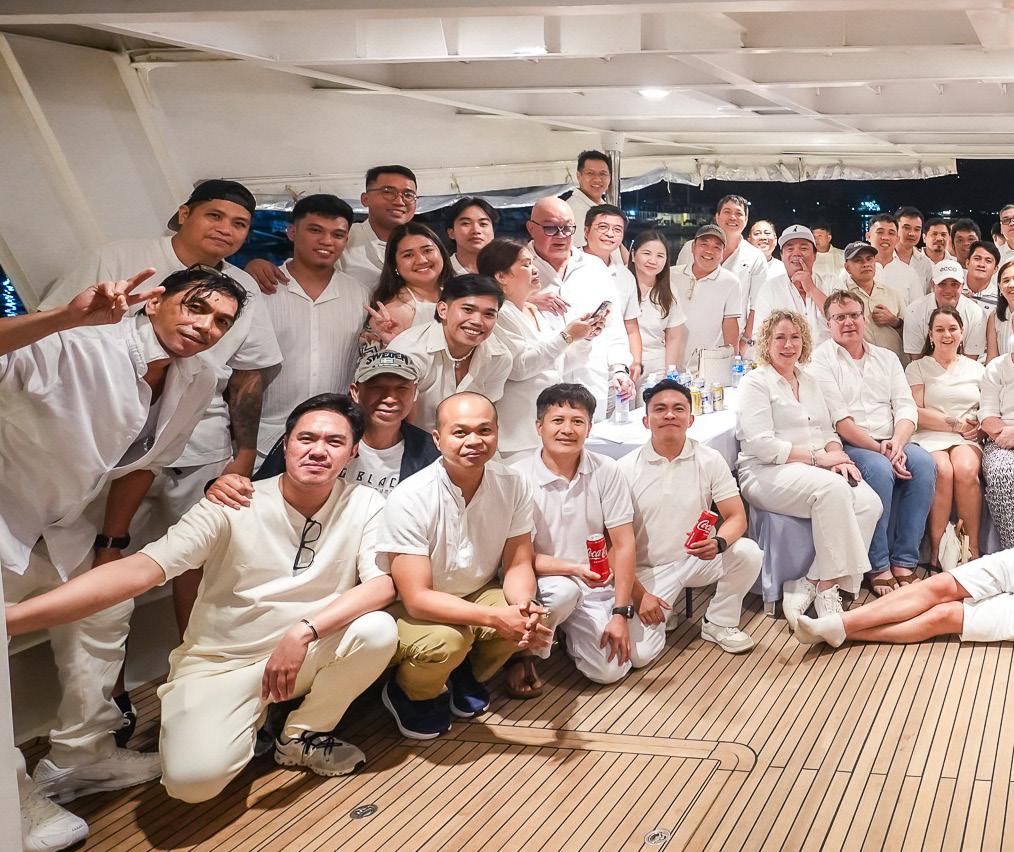
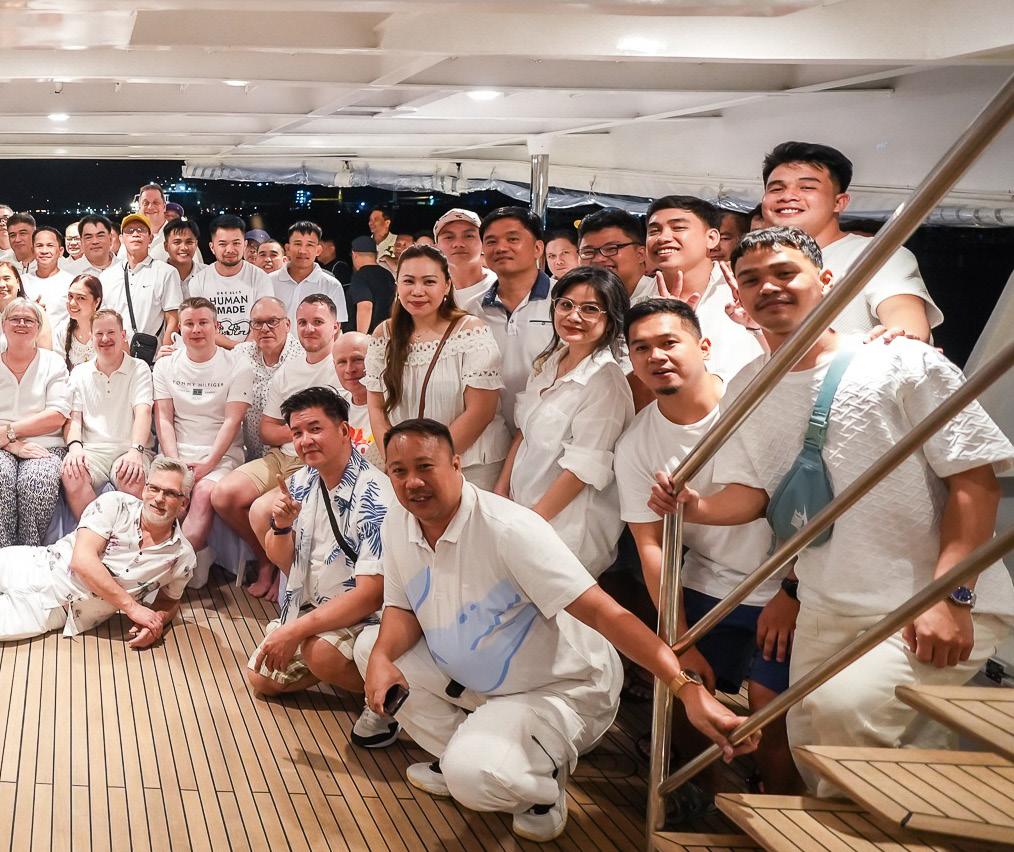
Evening one: all white, all on a yacht, almost all singing karaoke
After a successful first day, everyone dressed in white and headed out on a yacht. Good company, good food and music and of course karaoke. Generations mixed, ranks forgotten, microphone passed around.
The karaoke machine awarded points for every performance. And we have to wonder: was it an expensive evening for Master Jimmy Albay? Because he was handing out 100 Filipino pesos to anyone who scored 100 points. We're not saying how many people claimed it. But let's just say the singers were very motivated.
Day 2 - 12 March
Day 2 focused fully on the generational theme. Three Filipino speakers from ISWAN took the floor: Mike Esplago (Trustee of ISWAN and Business Director at WIMAS Manila), Marville Espago (Regional Manager at ISWAN Manila and former Second Officer) and Elijah Jose Barrios. The sessions zoomed in on something simple but powerful: what do you enjoy about working with other generations? And what frustrates you? Understanding the differences between generations is what makes the real difference.
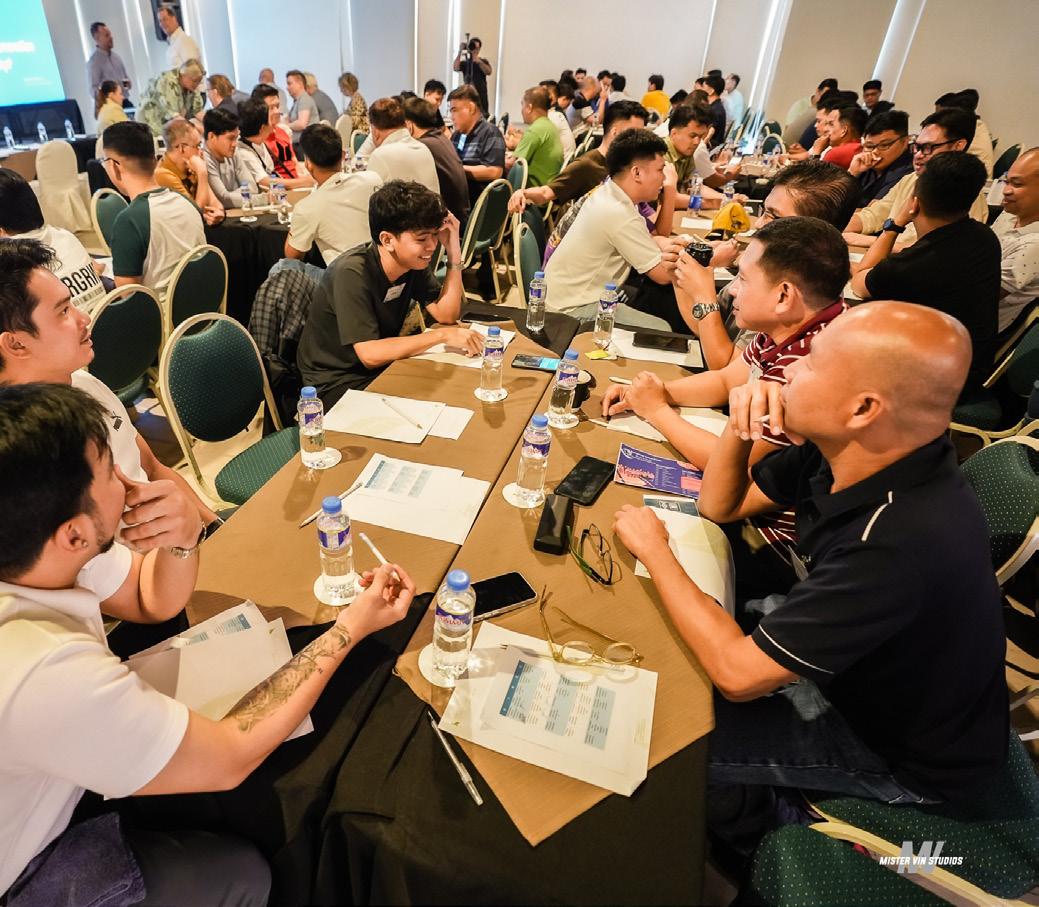
Some of the best conversations didn't happen on stage. They happened at the tables. People who don't usually say much started opening up. During the interactive sessions, seafarers didn't just listen. They stood up and presented their views to the whole group. Table by table, people shared what they'd discussed, what they disagreed on.
The CARES framework. Five things that make it work.
One of the highlights of Day 2 was the CARES framework. A set of practical behaviours that make working together genuinely better. Simple things. Powerful if everyone actually does them.
C — Clarify & Confirm
Say the why before the what. Break instructions into short steps. Ask for feedback and give it.
A — Acknowledge Dignity
Correct the step, not the person. Keep it private when you can. End with support.
R — Respond with Respect
Thank someone for raising a concern, even if you disagree. Ask for facts before opinions. Close the loop.
E — Engage Every Voice
Rotate small leadership roles. Use teach-back for new joiners. Debrief: what went well, what do we change?
S — Safeguard Wellbeing & Fatigue
Treat fatigue as a safety hazard, not a weakness. Check in after long watches. Protect someone's dignity when they're struggling. Ask in private, never joke about it.
If everyone applied these five things consistently, the conversation about nationalities, generations and hierarchy would largely take care of itself.
To close the two days, everyone made a personal statement in front of the group. What does Dare to Care mean to you?
And what do you challenge? Then each person left their fingerprint on the MF Shipping Group tree. A small gesture, but one with a strong meaning. Every fingerprint is unique. Just like the DNA of our organisation.
Evening two: beach dinner, live music and a very Dutch rain shower
After a afternoon of fanatical team competition, the second evening had something special planned: dinner on the beach with live music and dancing. And then the Philippines decided to serve up a very Dutch kind of weather. A proper rain shower. It didn't stop anyone. The party moved inside, the music kept playing, and the karaoke carried on.
A big thank you to Team Conautic for organising these two days so well. It was also great to see Deputy Managing Director Henrik Källsson and Operations Manager Kristoffer Johansson from the Erik Thun Group make the trip to the Philippines and join us in person.
Next up: Company Days in the Netherlands, 8 & 9 April.
Understanding the differences between generations is what makes the real difference
The Crew Department driving policy and processes
At MF Shipping Group, the Crew Department is responsible for more than just managing daily crew rotations and planning. The team is also responsible for shaping broader policy and implementing systems that support the entire fleet. Following a restructure earlier this year within the Crew Department, Martin Plas, Annalies Romp and Marjan van den Hoorn-Bakker form the group that sets policy and standardises processes across the fleet.
A broad range of responsibilities
The restructured Crew team is focusing on developing and implementing policies, streamlining procedures and introducing digital systems, such as RadiantFleet. “Our aim is for all crew processes to be clear, consistent and efficient,” explains Martin. “Standardisation allows us to work more effectively with ships, crew, and external partners.”
Annalies adds: “Implementing RadiantFleet is one of the biggest projects within the department at the moment. The system provides a clear overview of administrative processes and enables us to centrally manage certificates, training and compliance checks.”
Following Wendy van der Laan’s departure, responsibilities for certification and related processes have been taken over by the Crew Specialists. Martin continues to coordinate agreements with training institutes and external partners, ensuring continuity and support for the fleet.
Martin highlights the strategic shift: “We’re no longer just operational. We now consider how procedures should be organised, how knowledge should be preserved, and how we can provide the best possible support to our crew.”
Teamwork and responsibilities
Each team member contributes their own area of expertise while collaborating closely with the wider Crew Department and colleagues throughout the organisation. Marjan focuses on certification and D&A processes, Annalies on system implementation and digitalisation, and Martin, as Crew Supervisor, oversees the bigger picture and coordinates between teams. Together, they ensure that procedures are standardised, that new systems such as RadiantFleet are implemented smoothly, and that policies comply with regulations.
The impact of their work is noticeable. “It’s extremely rewarding to know that our processes help keep the fleet safe and efficient,” says Martin. Marjan adds: “Our work is varied and challenging because it combines policy and certification with direct contact with ships and digital systems.”
Annalies sees digitalisation as an opportunity: “RadiantFleet and other systems provide us with a clear overview of processes and help us to prevent errors. They not only make our work more efficient, they also benefit the fleet as a whole.”
Challenges
The team acknowledges that there is still room for improvement. Standardising procedures and making full use of RadiantFleet remain high priorities. “It’s an ongoing effort to enhance efficiency,” says Marjan. At the same time, maintaining personal engagement with the crew remains essential.
The Crew team emphasises that their work goes beyond filling in forms or issuing certificates. “Our focus is on creating clear processes, policies and systems that support the crew. The better we do this, the more smoothly the fleet will operate,” concludes Martin.
It’s an ongoing effort to enhance efficiency. At the same time, maintaining personal engagement with the crew remains essential
Annalies Romp
Marjan van den Hoorn
Martin Plas
mv Clara K. – shared by Captain M. Tulupov
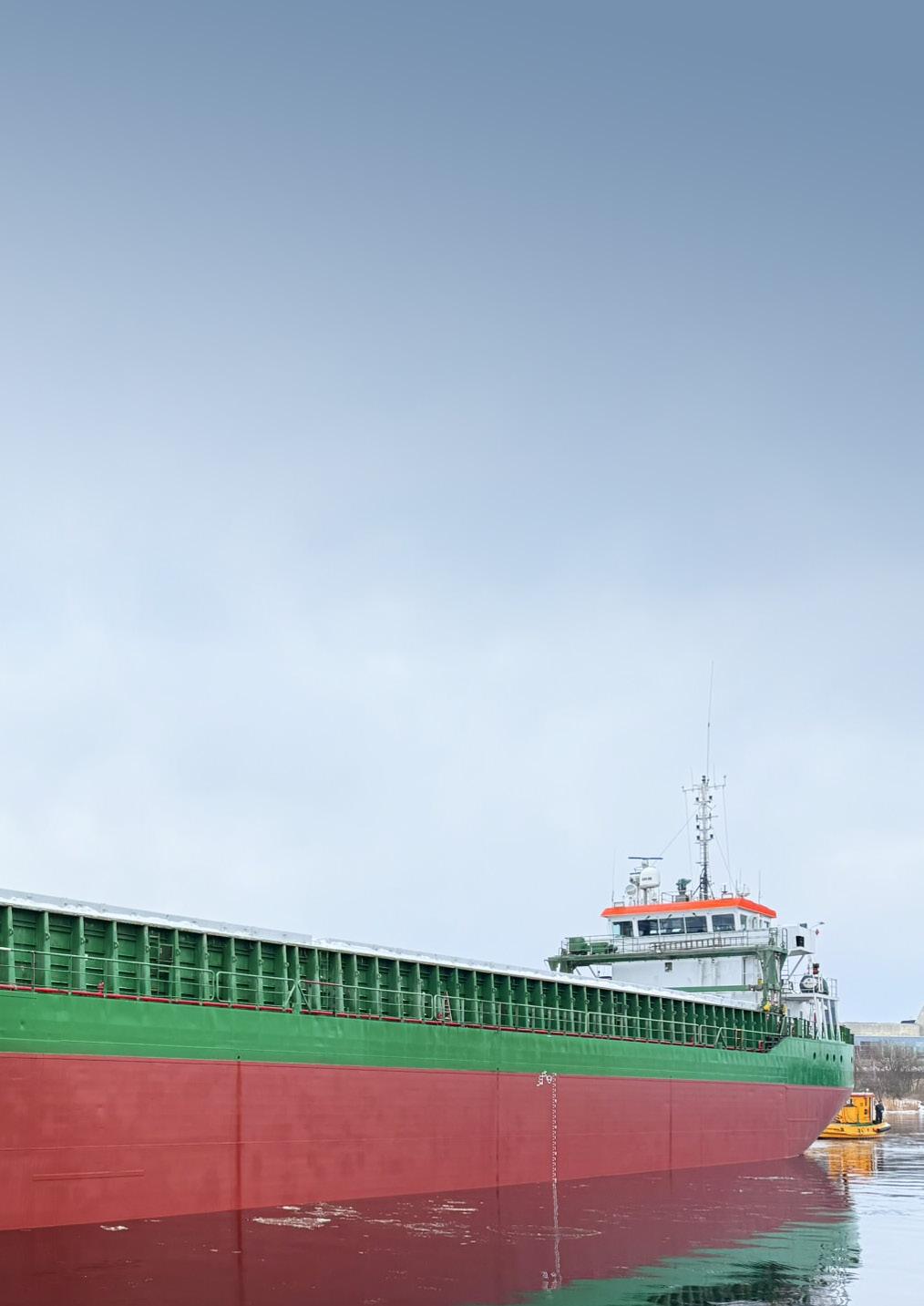
A new R-Class vessel joins the fleet:
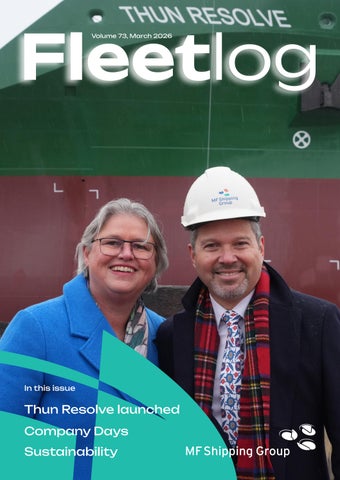
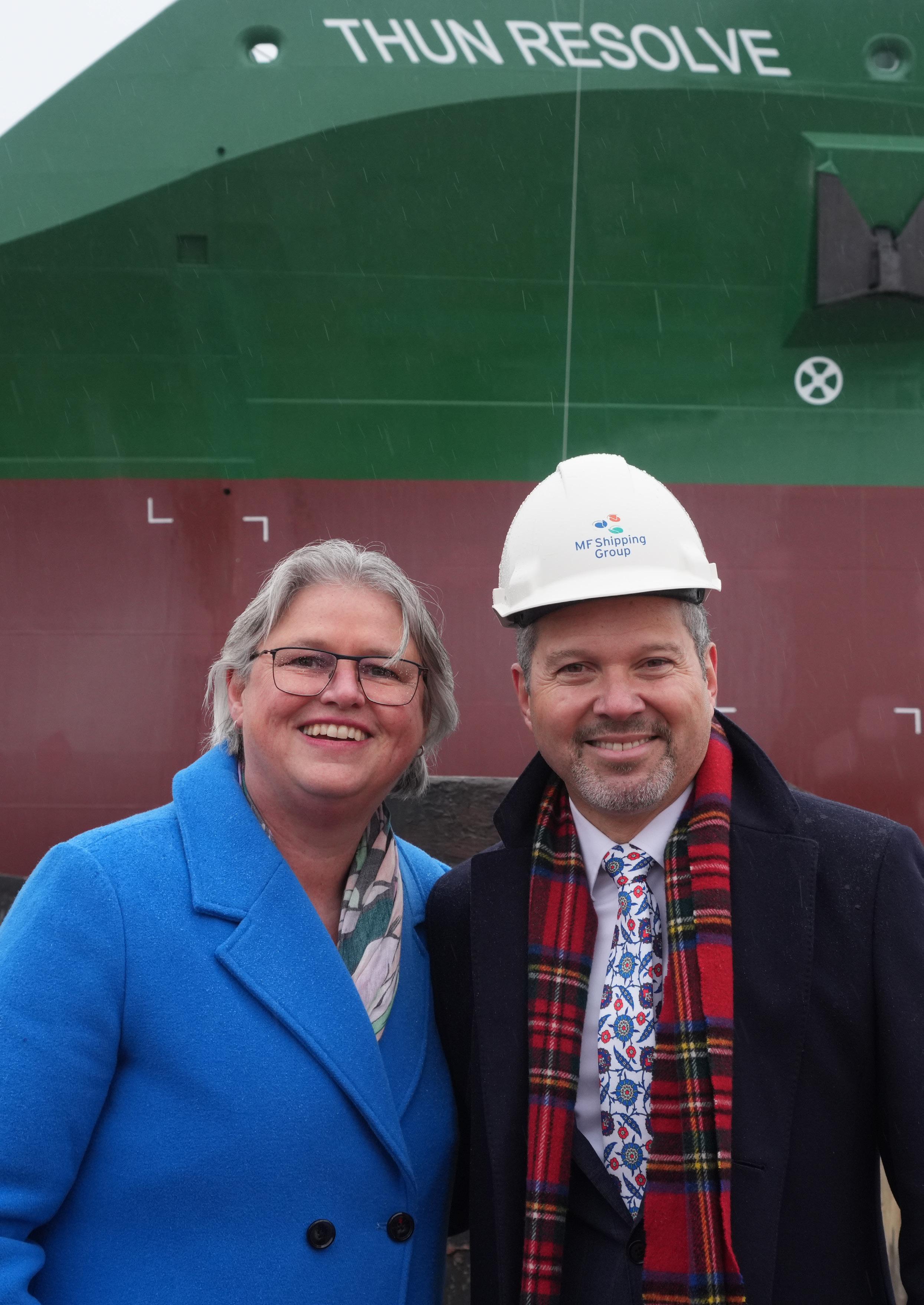
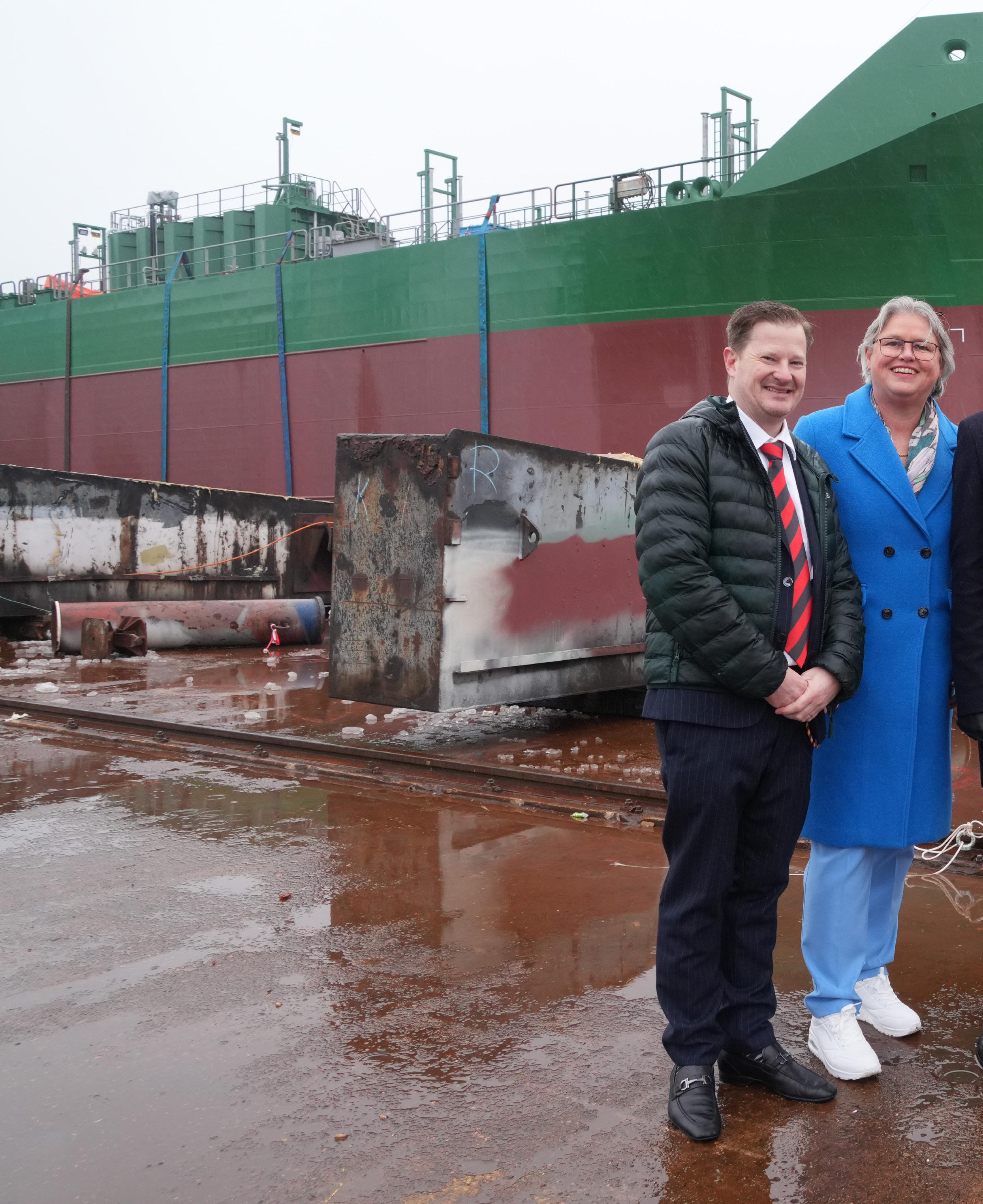
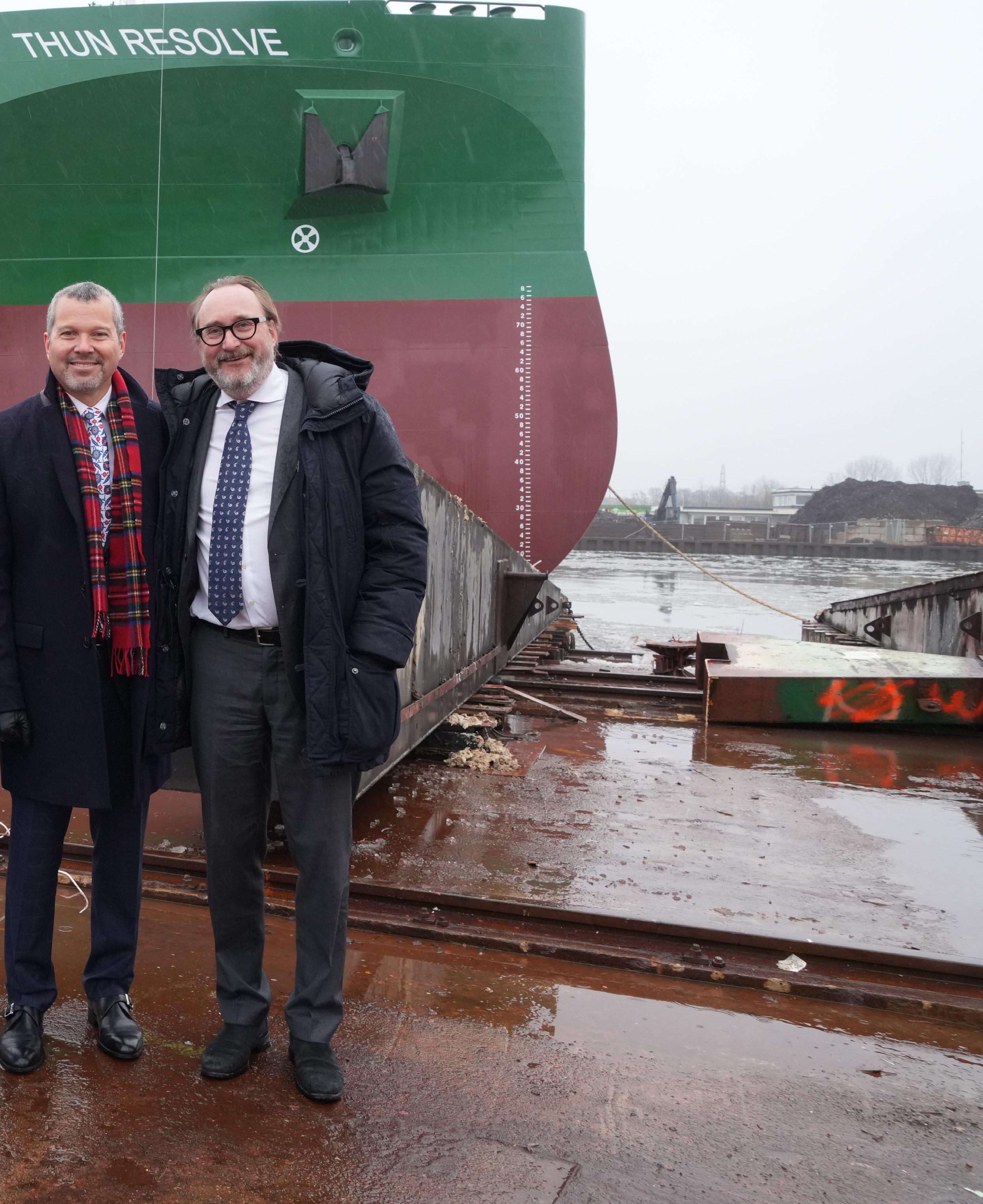
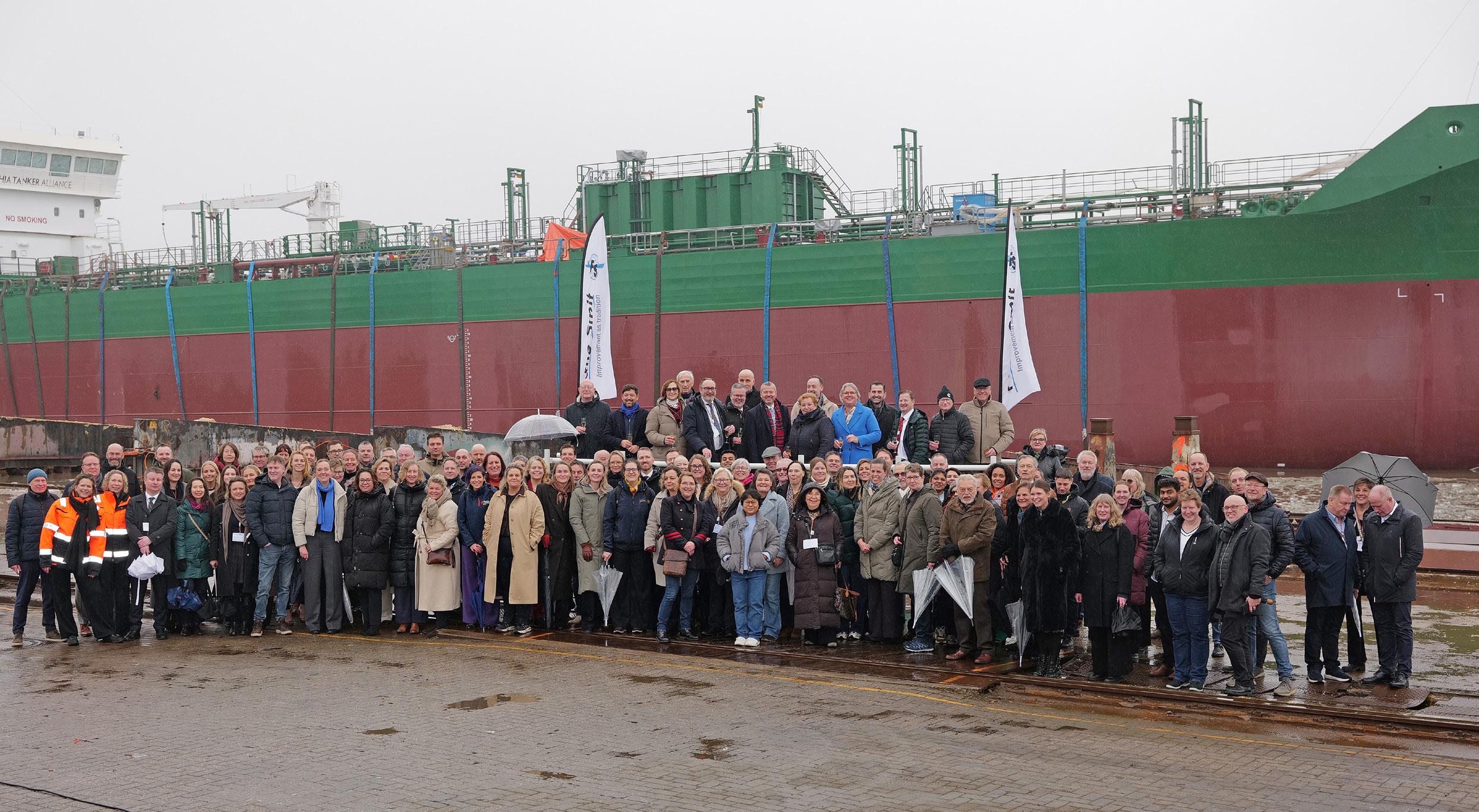
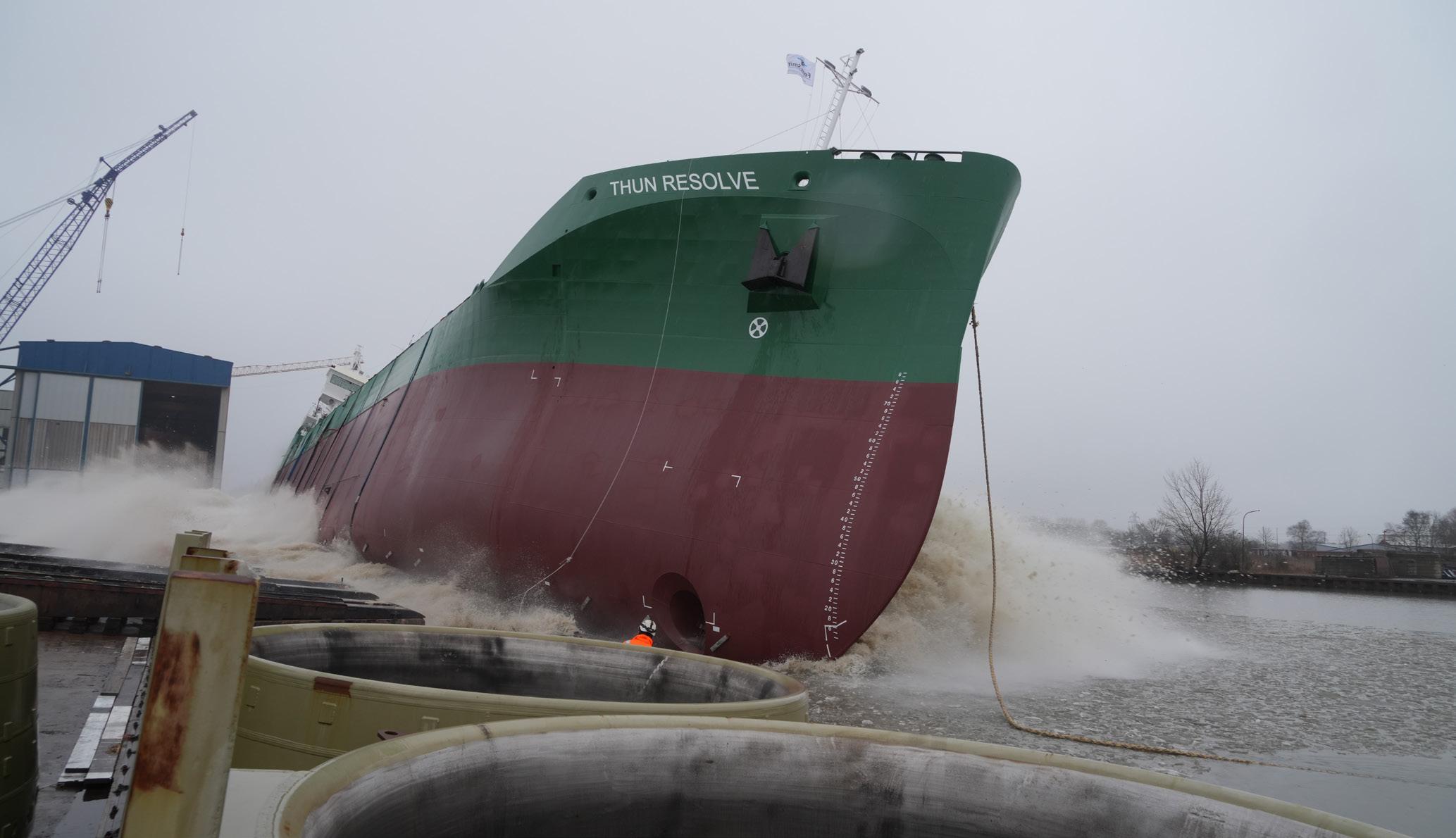
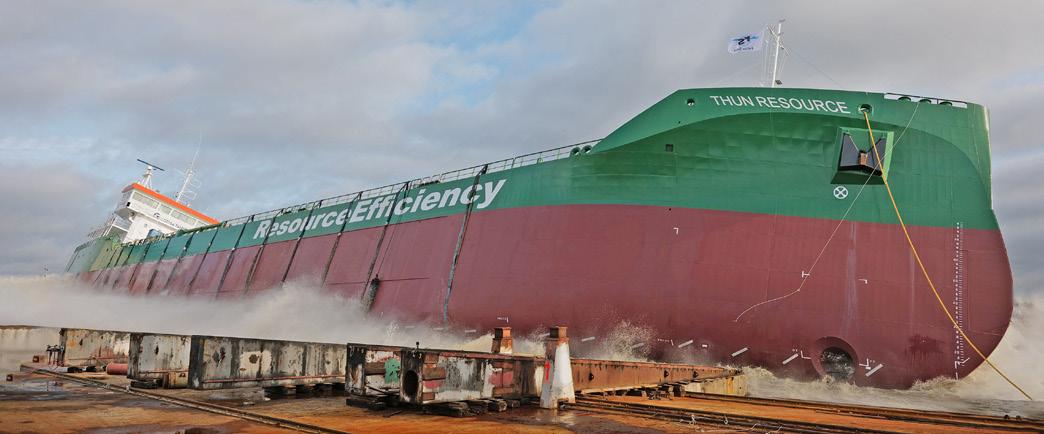
On 12 February, a group of invitees travelled to the Ferus Smit shipyard in Leer, Germany, to witness the launch of our newest R-Class vessel, Thun Resolve.
Thun Resolve launched
The R-Class needs little introduction for many of us. These vessels have become a familiar sight in the fleet and are known for their efficiency, reliability and versatility on Northern European short-sea trades. Thun Resolve is the latest addition to this proven series.
The launch ceremony attracted international attention. Arsenio Dominguez, Secretary-General of the International
Maritime Organization (IMO), attended the event to underline the importance of innovation in shipping as the industry works towards the IMO’s climate neutrality goal for 2050. Brigit Gijsbers, Deputy Director-General for Aviation and Maritime Affairs at the Dutch Ministry of Infrastructure and Water Management, officially christened the vessel.
A familiar concept, ready for the future
While the vessel follows the well-known R-Class design, she also looks to the future. One of its key features is that it is methanol-ready. This means that, once bunkering infrastructure becomes available in major ports such as Rotterdam and Hamburg later in the decade, the ship can be converted to run on methanol.
In practical terms, this approach enables the vessel to change fuel without lengthy yard stays later on.
Like the other vessels in the series, Thun Resolve prioritises efficiency in daily operations. Its optimised hull form and adaptive propulsion system are designed to reduce fuel consumption, particularly during short-sea trades involving frequent port calls. The vessel is also equipped with shore power connections and a UPS battery system to support onboard energy use while in port.
A partnership stretching back decades
The vessel was built by Ferus Smit in Leer, a shipyard with which the Erik Thun Group has enjoyed a long and successful relationship. Since 1991, the company has ordered 51 vessels there.
Once delivered, Thun Resolve will be operated by Thun Tankers and managed by MF Shipping Group. MF Shipping Group has been responsible for the full ship management of the fleet since 1994, including technical management, crewing, quality management and newbuilding supervision.
Operating a series of similar vessels brings clear advantages. Crews are already familiar with the systems and layout, making it easier to move between ships within the fleet and ensuring smooth operations on board.
Watch the launch come to life in this video!
Trading across Northern Europe
With a cargo capacity of 9,500 m³, Thun Resolve is designed to transport chemicals and oil products along short-sea routes across Northern Europe. Thanks to its Ice Class 1A notation, the vessel can operate year-round, including in winter conditions.
It is expected to enter service in April 2026, primarily trading in the ARA region (Amsterdam–Rotterdam–Antwerp) and on routes connecting Scandinavia, the Baltic states, and Western Europe.
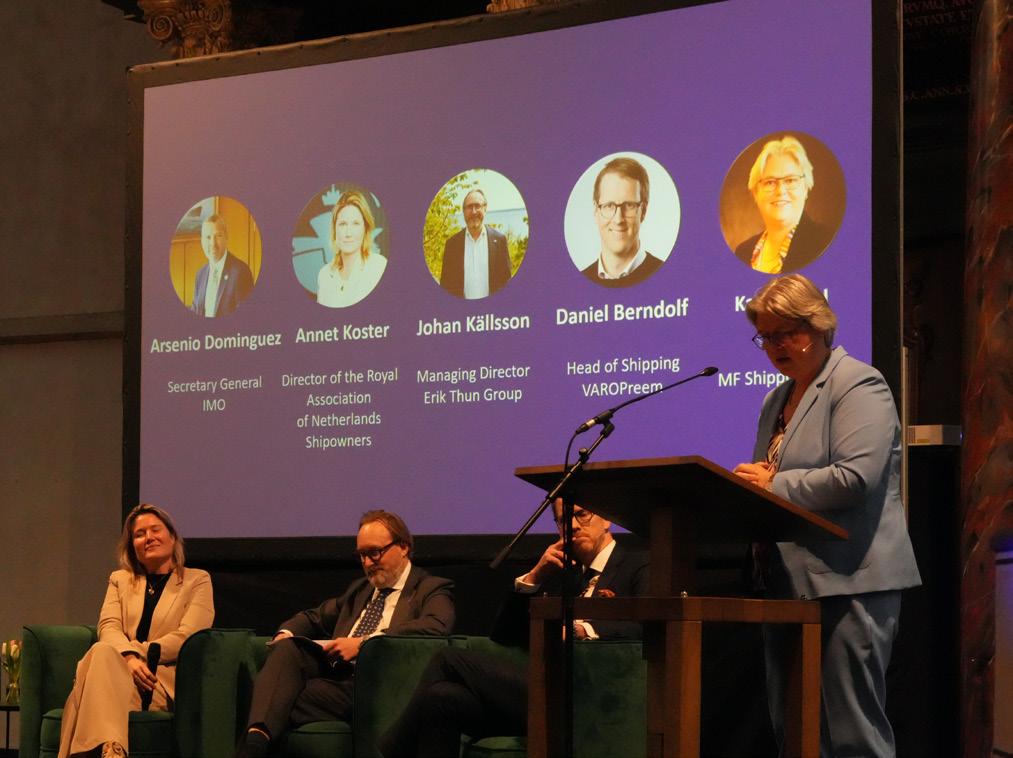
Following its launch, Thun Tankers and the MF Shipping Group held an international panel discussion at the historic Martinikerk in Groningen. Representatives from across the maritime industry, including shipowners, technical experts, seafarers, regulators, and energy companies, discussed the challenges of the energy transition in shipping.
Topics ranged from the development of alternative fuel infrastructure and the availability of future fuels, to supporting seafarers as the industry evolves.
Bringing a new vessel into the fleet is always a team effort. From colleagues involved in the newbuilding project to those preparing to sail her, many people across the organisation have contributed to making it happen.
With the arrival of Thun Resolve, another R-Class vessel is ready to join the fleet, and we wish her crew safe voyages and fair winds in the years ahead.
Corporate Personnel Overview
Due to the transition to the new Radiant Fleet system, the Q1 overview of promotions and jubilees is incomplete. However, we will provide a complete update in the June edition of our Fleetlog!
10-07-2025
Captain A. Kuraev
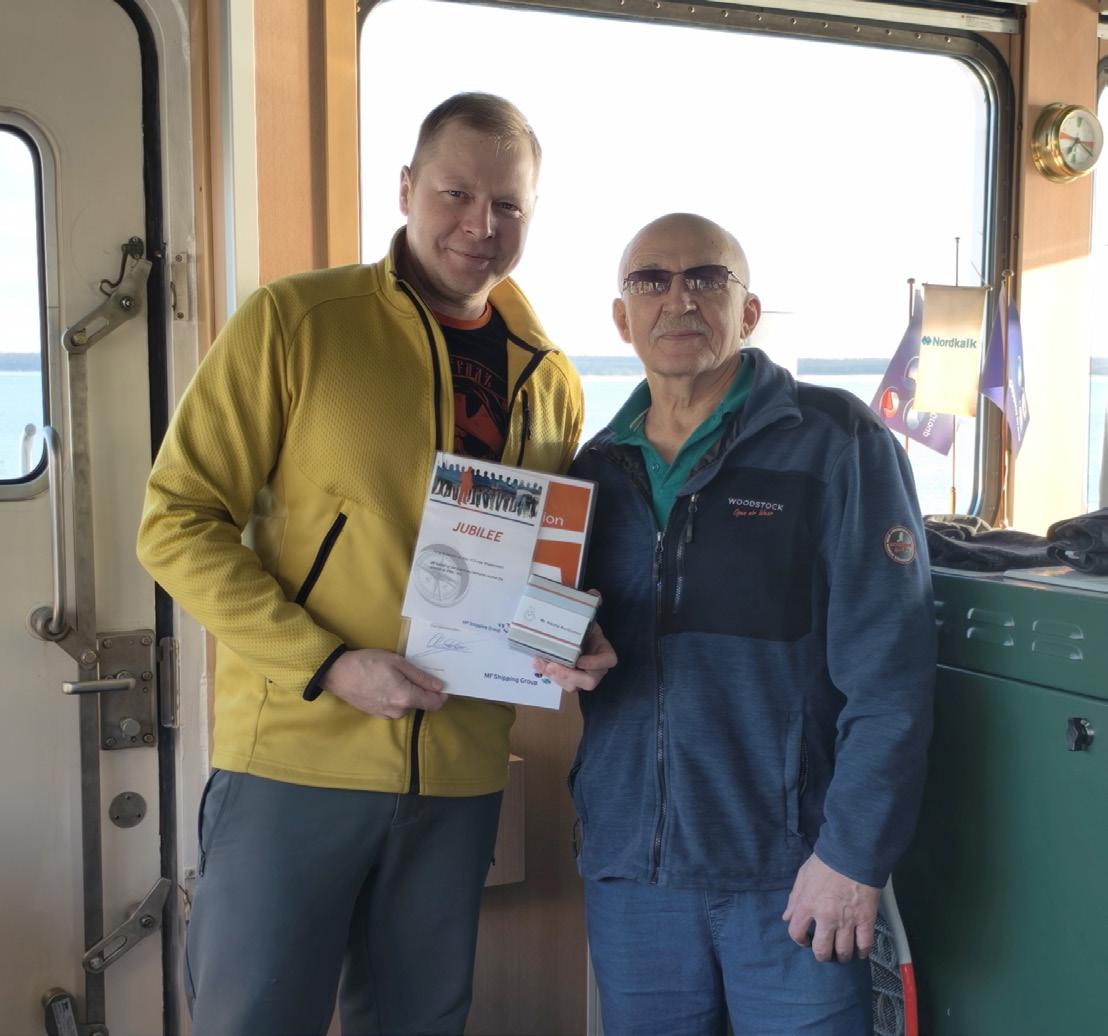
Captain Andrey Kuraev recently celebrated his 12.5-year anniversary on board the Thun Gratitude, surrounded by the crew. To mark the occasion, he sent us a photo with some kind words attached.
Thank you for your kind message, Captain! Here's to many more years to come!
“Looking back to 2013, I could hardly have imagined the exciting and rewarding career path that lay ahead of me. Joining the company as a Third Officer, I embarked on a journey that was as challenging as it was swift—a truly fascinating professional evolution.
The experience I have gained over the years is invaluable and undoubtedly serves as the foundation for all my endeavors and achievements. I have had the opportunity to serve on various vessels within the fleet: starting with the Silver Kenna, progressing through the G-class, taking on new challenges in Africa and on the E-class, and navigating the demanding Norwegian trade. This journey recently culminated in achieving my long-awaited goal— taking command as Captain aboard the G-class vessels, a series that has become particularly dear to me.
This new role has opened up further avenues for self-development, presenting fresh challenges and new definitions of success. There are still many horizons to explore, and I look forward to the future with great enthusiasm and a firm belief in continued success.
I am immensely grateful to the company for the opportunities to prove myself, for the constructive feedback on my performance, and for the trust placed in me. I am confident that with MF Shipping Group, my growth as a maritime professional will continue to flourish.
Finally, I would like to extend a special thanks to my mentors for their selfless guidance and to all the crews I have had the privilege of working with. Without a doubt, they have all become not just excellent colleagues, but true friends.”
12-07-2025
Bosun E. Undaloc
Bosun Euhinio Undaloc is celebrating his 12.5-year anniversary on board the Thun Liffey. Captain Peter van Houten shared the following words with us about his valued colleague:
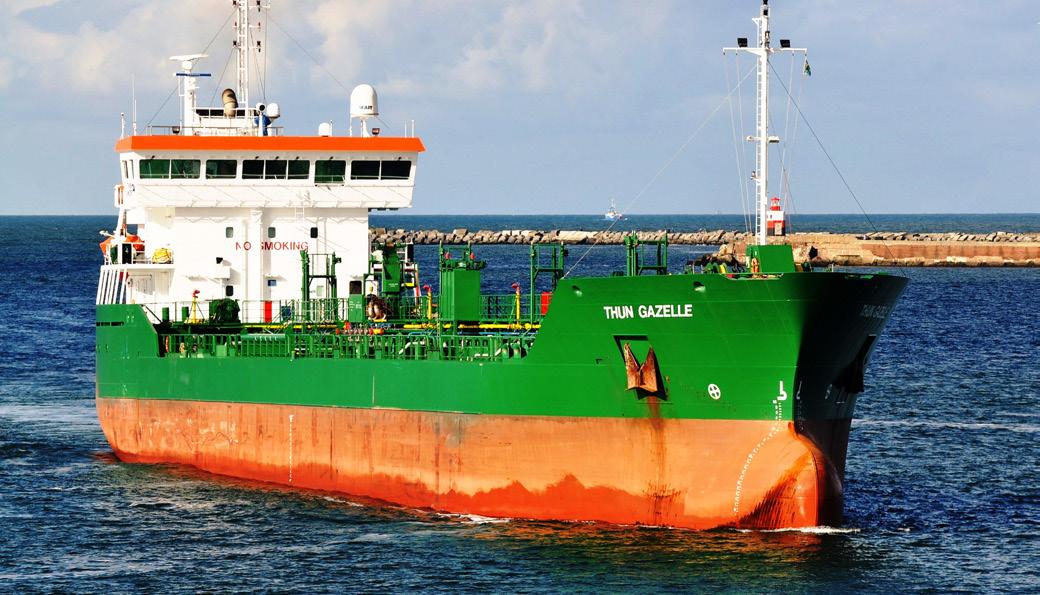
"The ‘Boss’ started his career at MF Shipping Group back in March 2009, during the construction of the Thun Gazelle. He joined her on her maiden voyage too. Since then, he has joined many other ships in our company, always as a trusted and highly skilled AB. I fondly remember my time with the ‘Boss’ on the lookout during our time together on the Thun Gothenburg. I always had a great time with the great deck team on board, of which he was always a part! Currently, Euhinio is sailing as 'Boss' on our yacht, much to everyone's delight. He is a trusted sailor who knows his job well and can pass on all his knowledge to the next generation. Since ‘Boss On the Look' still enjoys his job, he plans to continue working until he retires from our great Club MF Shipping Group. Much to the delight of our crew! We thank him for all his achievements so far!”
22-07-2025
3/O J. Sembrano
We're celebrating Jed Sembrano's 12.5-year anniversary on board the MT Thun Evolve! There were happy faces all over! Thank you for your commitment, and we hope you will be with us for many more years to come!
Jed wrote a thank you note that is definitely worth sharing: “Today, I proudly celebrate 12.5 years of sailing with MF Shipping
Group. I began my journey as a cadet on a cargo vessel, stepping onboard with determination and the willingness to learn. In 2016, I was given the opportunity to transfer to a tanker vessel, where I gained broader experience, stronger skills, and greater responsibility. Every voyage since then has contributed to my growth—not only as a seaman but also as a person.
Life at sea is never easy—it requires sacrifice, discipline, and strength—but through the guidance of the company, captains, officers, and my fellow crew members, I continued to grow both professionally and personally.
I am sincerely grateful to MF Shipping Group for the trust, opportunities, and continuous support throughout my career. Thank you for believing in me and allowing me to be part of a company that values safety, teamwork, and excellence.
As I mark this 12.5-year milestone, my commitment remains strong. I look forward to more safe voyages and continued success together.
With gratitude and pride, Jed Sembrano ”
13-08-2025
25-08-2025
AB A. Bautista
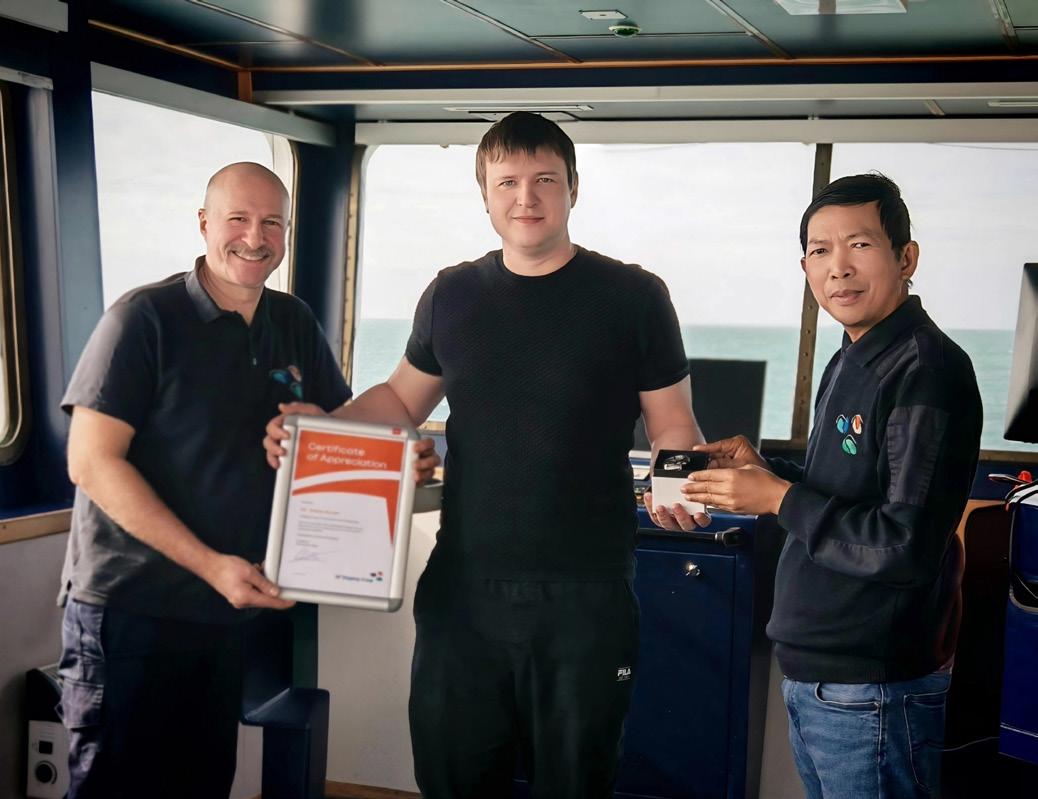
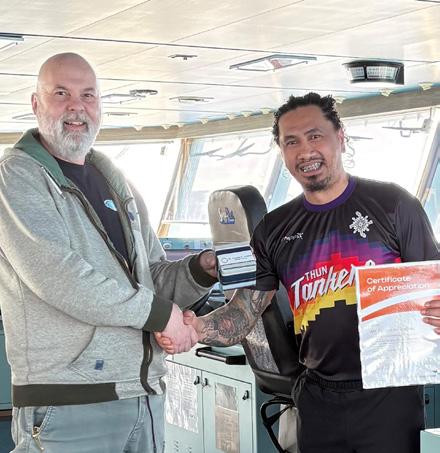
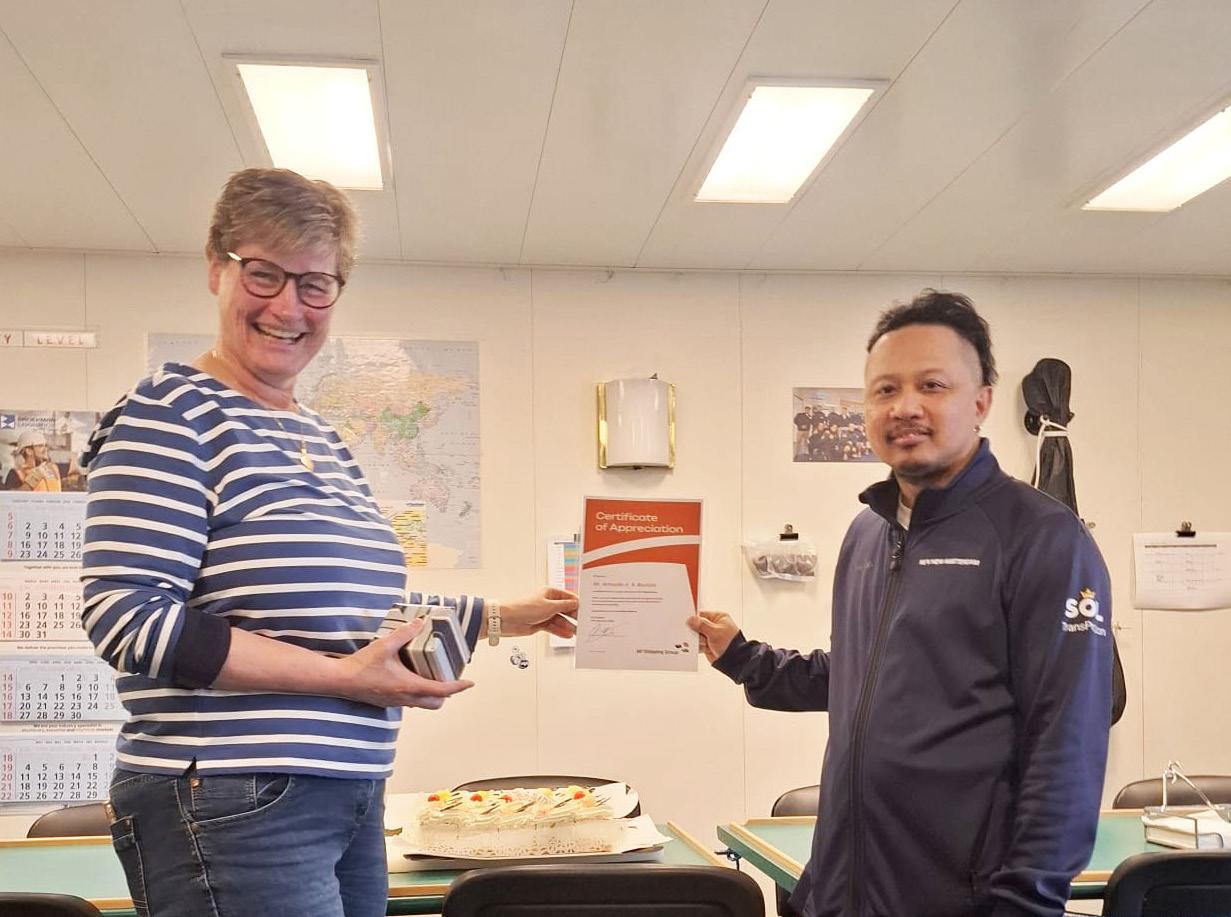
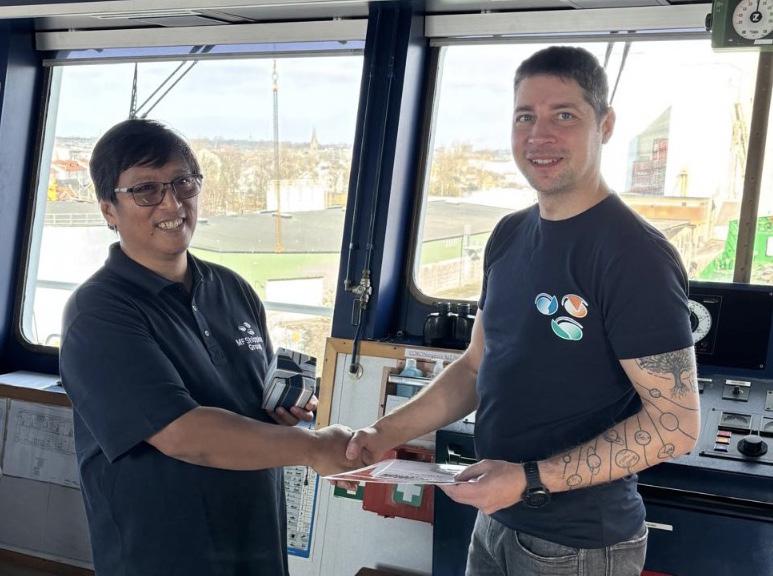
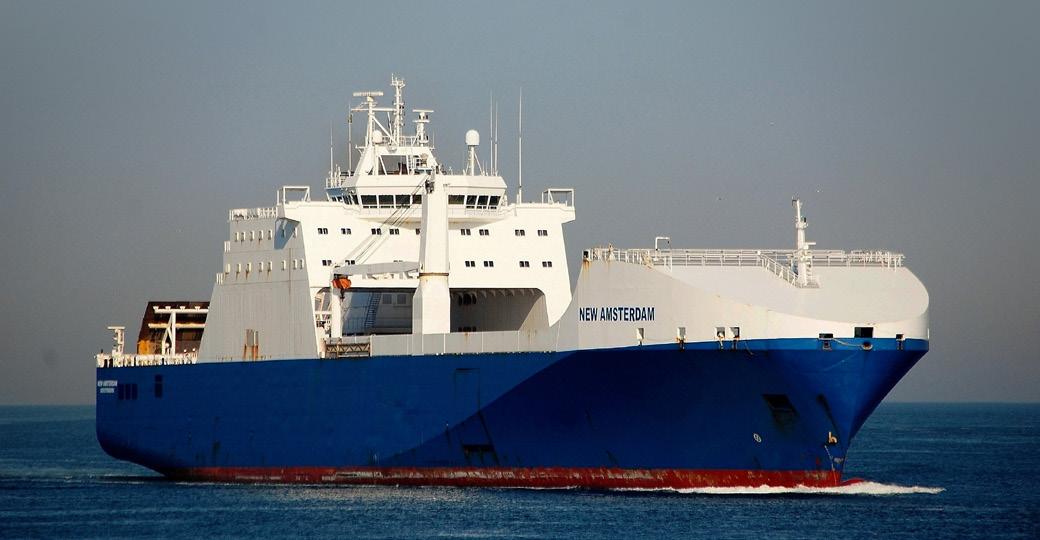
Congratulations to AB Armando Bautista on reaching his 12.5year milestone while working on the New Amsterdam RoRo vessel! To recognise his dedication over the years, he received a gift and a Certificate of Appreciation from Crew Supervisor Anita Gerritsen.
He began his career with us in 2013, working on various Alstership vessels before transferring to the New Amsterdam in 2023. We are proud to have such a dedicated seafarer in our fleet.
Here's to many more years with MF Shipping Group!
25-08-2025
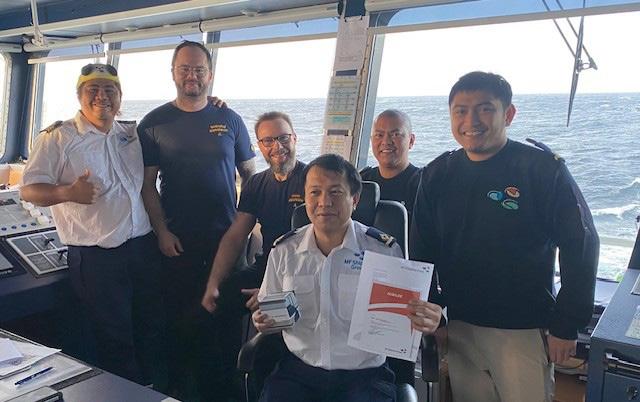
On 13 August 2025, Chief Engineer Nikolai Kurdiumov celebrated his many years of service to the company. What made this milestone especially remarkable was that he had served exclusively on the MV Vesthanhav throughout all these years; a true sign of loyalty and commitment.
He received his certificate from Captain Bodrov, who said: “On behalf of the company and everyone on board, we would like to extend our heartfelt congratulations. We truly appreciate your hard work and positive attitude: you make every day on board better just by being here. Thank you for being such a great colleague and friend. Here’s to your well-deserved success, and to many more great moments together!”
This is a wonderful achievement and an inspiring example of dedication at sea. C/E N. Kurdiumov
C/E J. Desabella
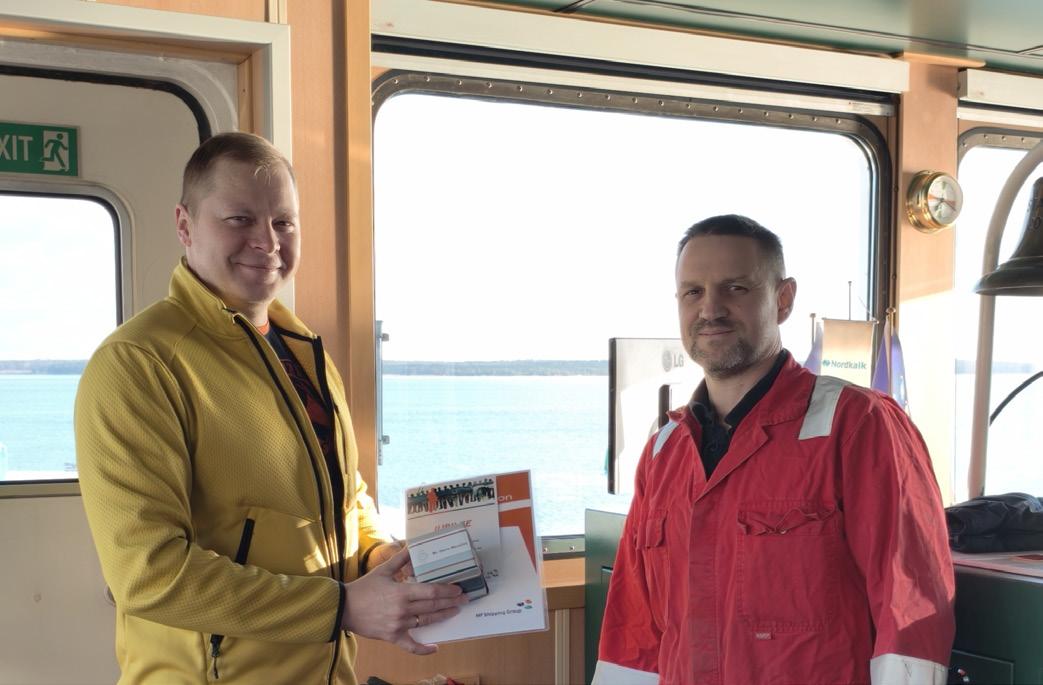
Technical Superintendent Sergii Suliak (right on picture) congratulated Chief Engineer Reynaldo Desabella, who is currently serving on board the Thun Gemini. Reynaldo has been sailing with us since 2013, starting on the Thun Grace before moving to different G-Vessels. Captain Vitaly Andreev had some kind words to say: “Reynaldo is kind, compassionate and always positive. His integrity and humility shine through, making everyone feel valued. He is a true leader whose sincerity and empathy inspire those around him.”
Thank you, Reynaldo, for sailing with us; here's to many more years to come!
01-09-2025
C/E D. Morozov
Another anniversary was celebrated on board the MV Vestanhav: C/E Denis Morozov marked his 12.5-year anniversary with the company. Having originally joined as a Second Engineer, he spent some time on board the Snow Star before sailing on the Vestanhav for a considerable period. He is now a valued and trusted presence on board.
He received his certificate from Captain Bodrov, who said the following:
“On behalf of the company and everyone on board, we would like to extend our heartfelt congratulations. We truly appreciate your hard work and positive attitude; you make every day better just by being here. Thank you for being such a great colleague and friend. Here’s to your well-deserved success and to many more great moments together!”
Thank you so much for your dedication, Denis! Here's to many more years to come!
07-10-2025
C/E T. Rosete
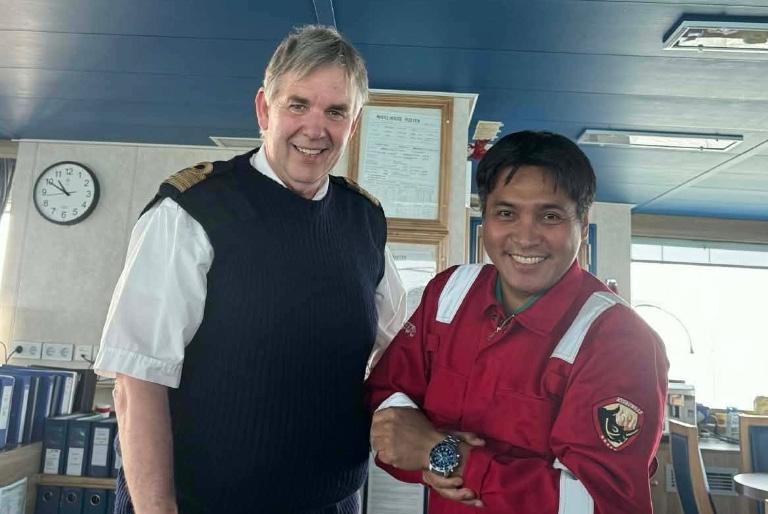
Congratulations to Chief Engineer Teodoro Rosete on reaching his 12.5-year anniversary at our company! He has written a thank you letter himself, which you can read below. Thank you for all your commitment and hard work, Teodoro. We are so glad to have you on board!
“I am CE Teodoro Rosete Jr from the province of Jones in Isabela in the Philippines. I am a seafarer by profession and a proud farmer in my spare time, growing corn, rice, cassava and sugar cane. I am
07-09-2025
AB P.J. Son
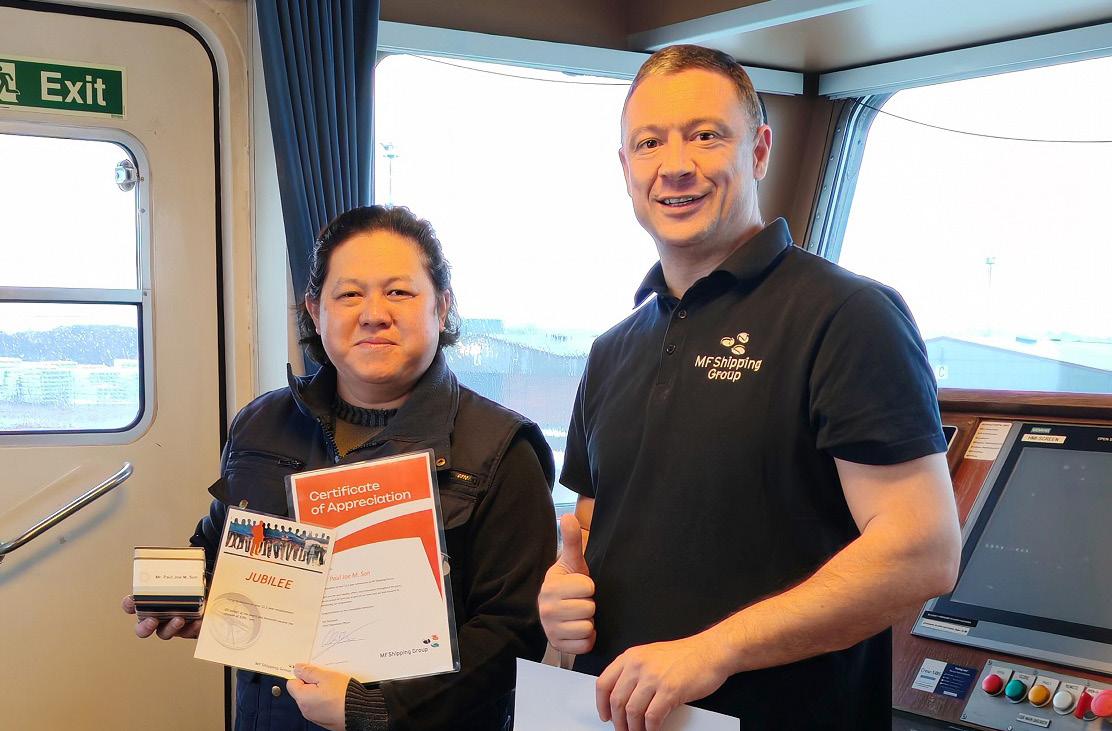
Congratulations to AB Paul Joe Son on reaching his 12.5-year anniversary with our company! In the picture, he receives his Certificate of Appreciation from Captain Alexey Erin. Over the past 12.5 years, Paul has sailed on various dry cargo and cement carriers, proving himself to be a dedicated seafarer and a valued colleague.
To mark this milestone, he shared the following message of appreciation:
“To MF Shipping Group: Thank you for 12.5 wonderful years sailing in your fleet. The opportunities you have provided have shaped my career and created memories that I will cherish forever. I am grateful to have sailed with you; thank you for everything!”
This is a wonderful milestone and a great example of commitment. We wish him many more successful years at sea!
currently on board the Thun London, preparing her for her next dry docking. I have just received this Certificate of Appreciation and a beautiful watch from my MFSG family in recognition of my 12.5 years of service with the company.
Thank you for this recognition. I would like to share this celebration with my fellow officers and crew from the Thun London, together with Captain Herfst, who organised the surprise programme, and our cook, who made the delicious purple yam cake. I started my seafaring career way back in 1993 as an engine cadet and became a chief engineer two decades later. I transferred to the MF Shipping Group in 2013, joining the Thun Goliath as my first vessel with the company. Since then, I have also served on the Thun Gothia, the Thun Greenwich and the Silver Kenna. In 2019, I was honoured to be chosen to work on the delivery of five L-class ships. Joining the new building team at that time was a very challenging experience for me, as these five ships were built and completed simultaneously during the pandemic. In November 2025, I represented the MF Shipping Group at the Seatrade Crew Connect Global Conference, where I participated in a panel discussion on safety culture and energy transition from a seafarer's perspective. I also discussed the challenges that crews face when dealing with the decarbonisation of ships using the alternative fuels currently being developed in the industry.”
A chef’s signature dish!
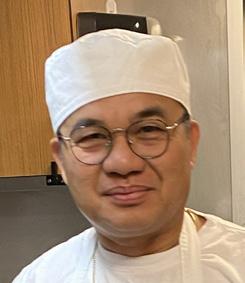
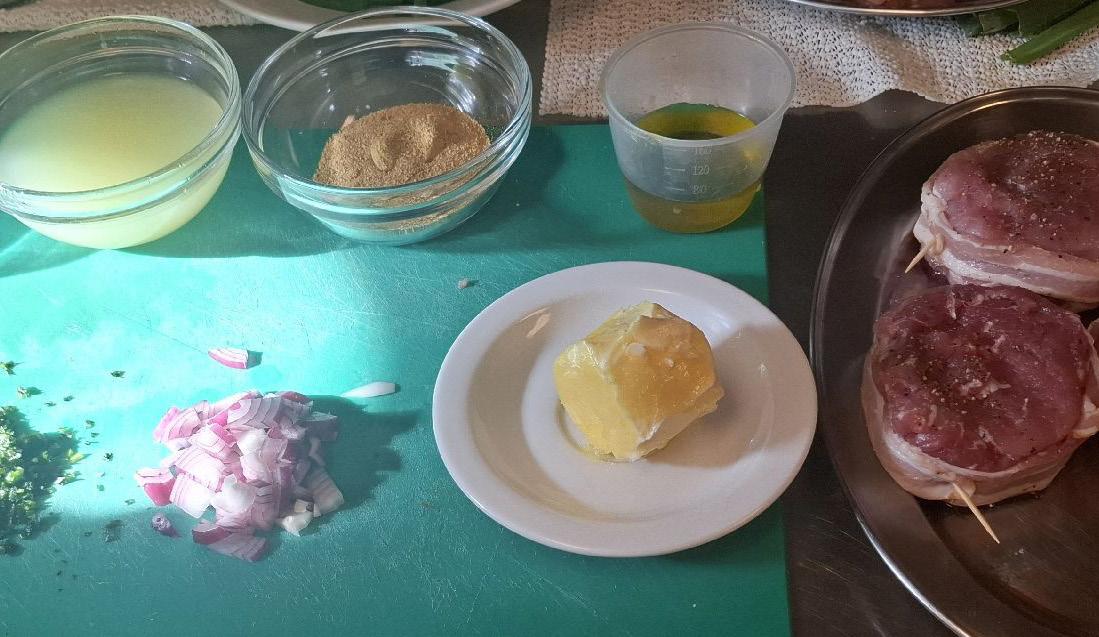
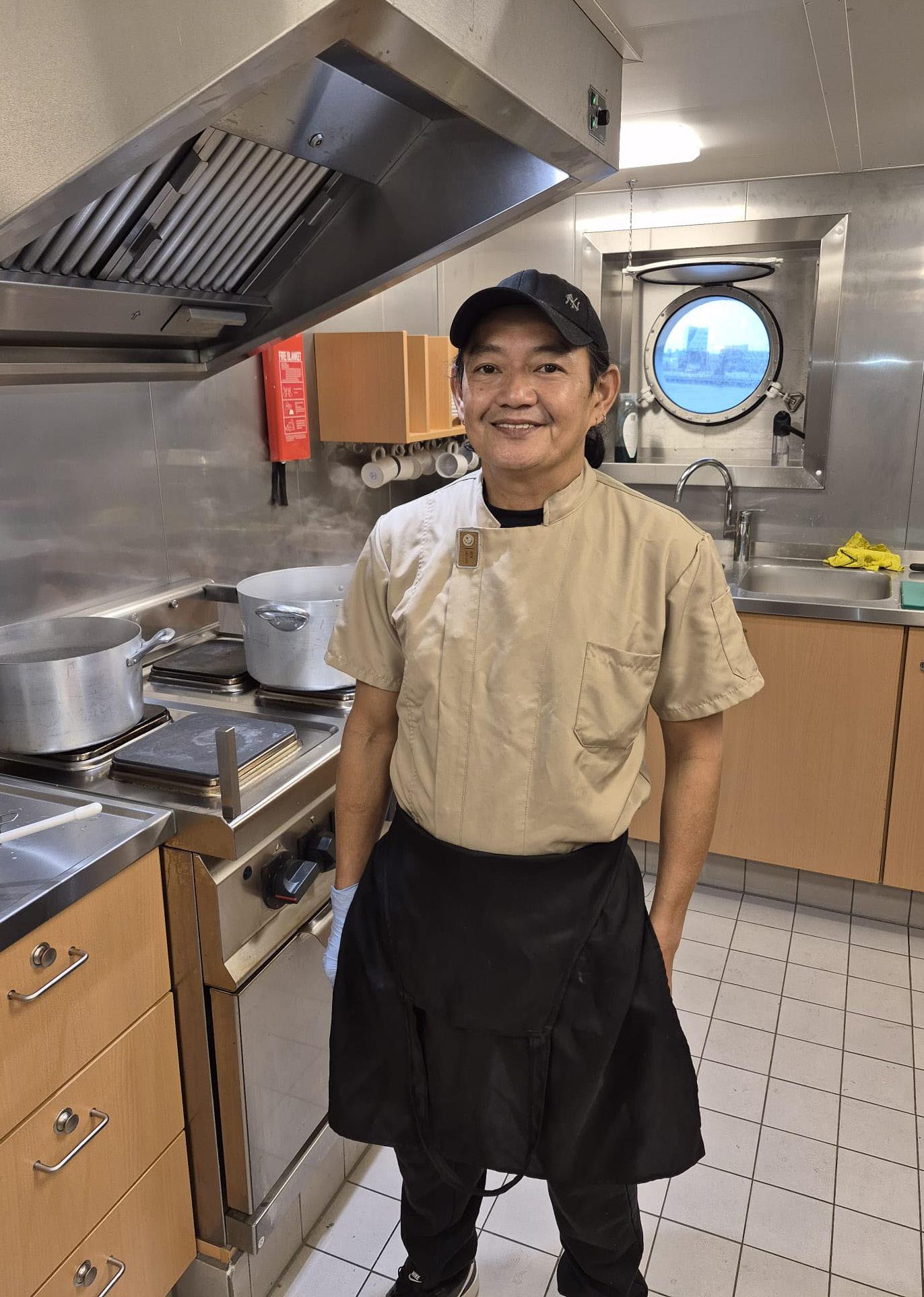
Allow us to introduce Cook Charles Reynon, who is sailing on board the MV Helge. He has shared his favourite recipe for pork medallions in mushroom Marsala sauce. Time to prepare, cook and enjoy your meal!
Pork medallions in mushroom Marsala sauce
INGREDIENTS
• 900 g (2 lb) pork tenderloin
• Kosher salt
• Freshly ground black pepper
• 3 tablespoons extra virgin olive oil
• 3 tablespoons unsalted butter
HOW TO COOK:
• 2 medium shallots (finely sliced)
• 12 cremini (button) mushrooms (thinly sliced)
• 1 tablespoon plain flour
• 120 ml (½ cup)
dry Marsala wine
• 240 ml (1 cup) low-sodium chicken stock
• 3 tablespoons double cream
• ¼ cup fresh parsley (chopped)
1. Trim the pork tenderloin and cut it into medallions that are 5 cm (2 inches) thick. Flatten slightly and season with salt and pepper.
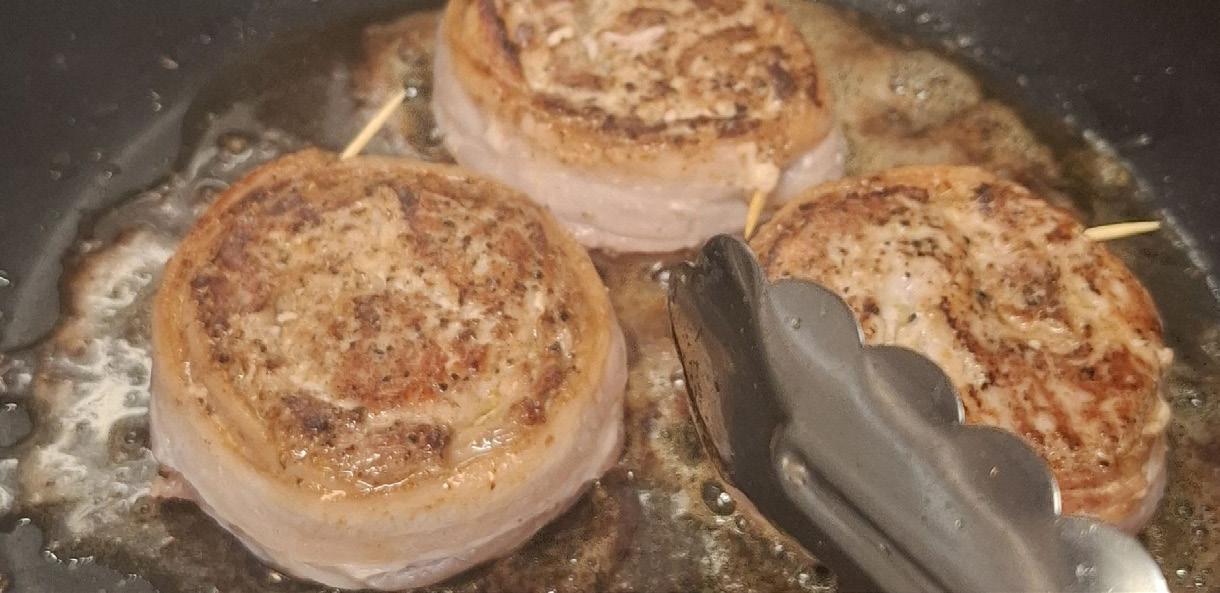
2. Heat 1 tablespoon each of olive oil and butter in a frying pan over a high heat. Sear half of the pork for 2–3 minutes on each side, then set aside. Repeat with the remaining pork.
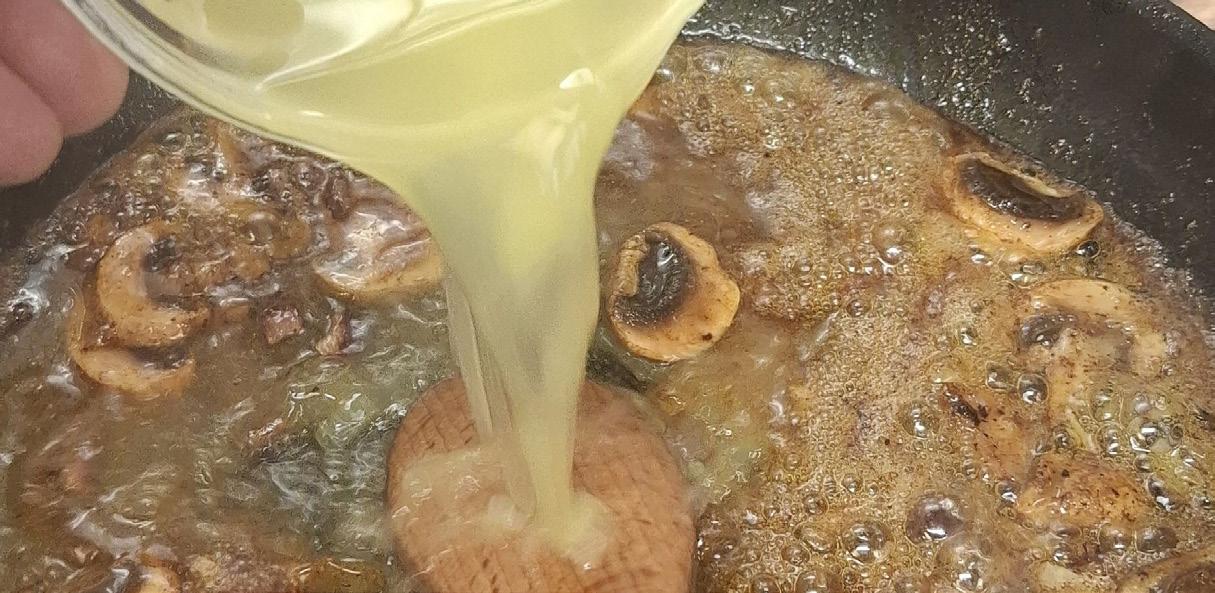
3. Add the remaining butter to the pan. Sauté the shallots for about 30 seconds, then add the mushrooms and cook until golden (about 3 minutes). Season with salt, sprinkle with flour and stir well. Pour in the Marsala wine and cook until it has almost evaporated.
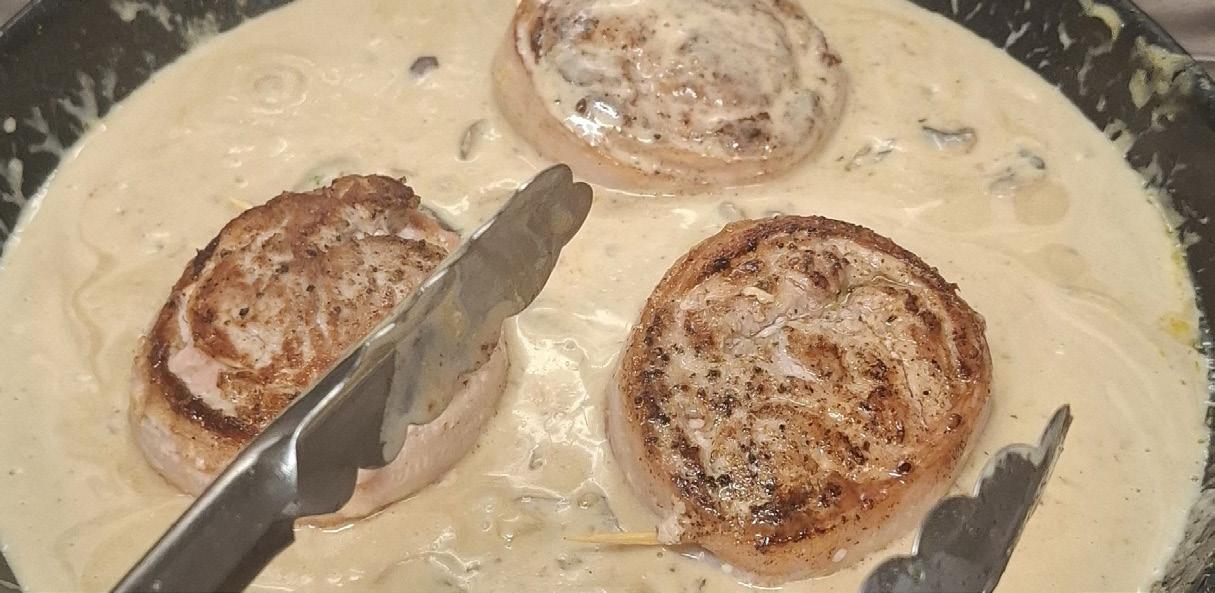
4. Add the chicken stock and simmer until reduced by half (about 3 minutes). Stir in the cream and parsley. Return the pork to the pan and cook for a further 2–4 minutes until it is just firm and slightly pink in the centre.
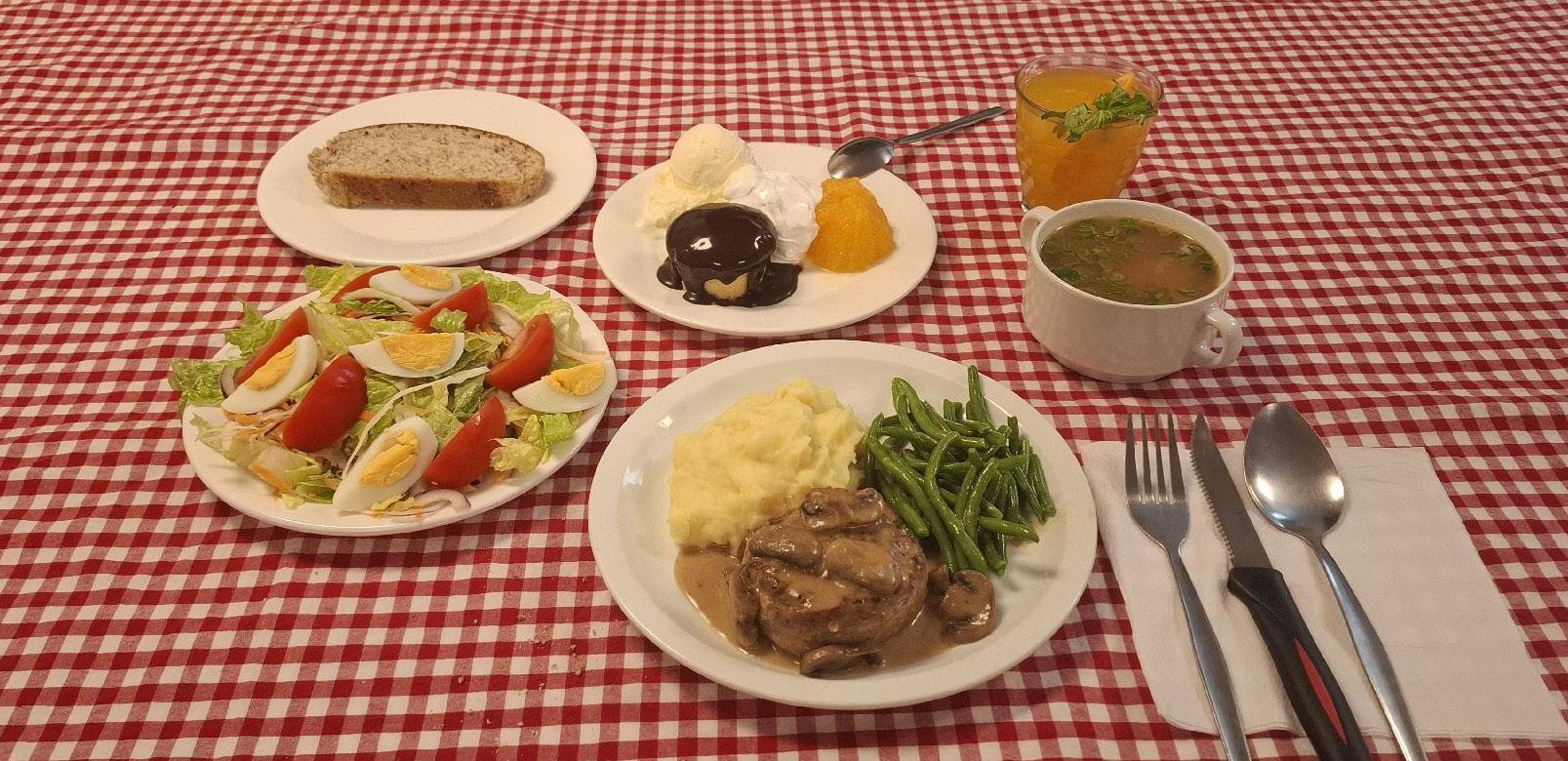
5. Serve with mashed potatoes, French beans and a lettuce salad.
Got a favourite recipe you’d like to share?
Send it in for a chance to be featured in the next issue of Fleetlog! communication@mfgroup.nl 1 5 4 3 2
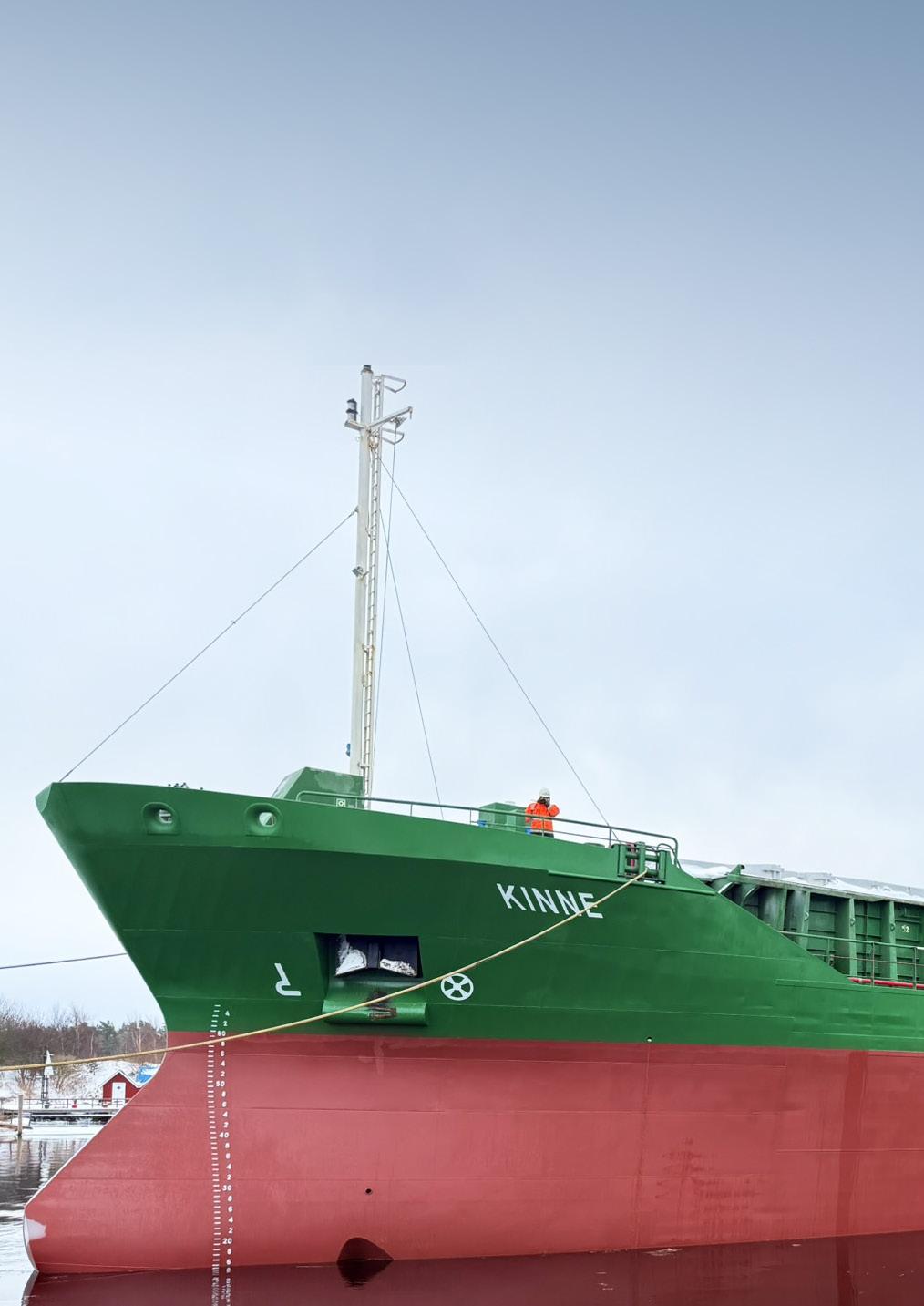
MV Kinne sets a new course
Dry cargo vessel equipped with a battery pack
During her recent dry-docking, the mv Kinne underwent a significant technological upgrade. As the second vessel in the dry cargo fleet we manage to be equipped with a battery pack, following the mv Helge, the mv Kinne marks the next step in the fleet’s transition towards more sustainable operations.This enhancement marks a new phase in improving the fleet's sustainability and operational efficiency.
Innovative battery technology
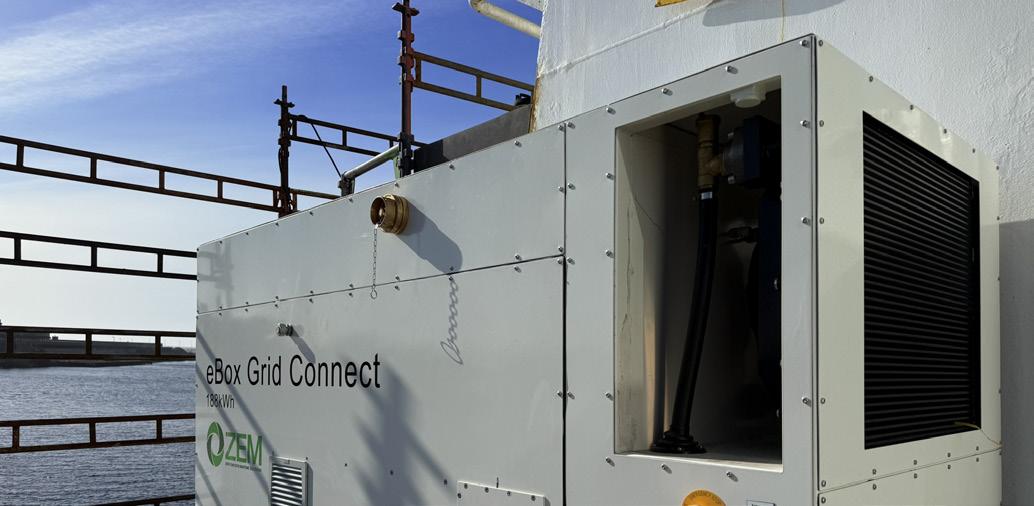
The new battery pack serves as both an energy storage system and a smart interface between shore power and the vessel. One of its key advantages is its ability to act as a frequency converter. While shore power typically supplies 50 Hz, the battery seamlessly converts this to the vessel’s onboard frequency of 60 Hz.
While in port, the battery, powered by shore electricity, enables a completely silent engine room. No engines need to run, which immediately reduces emissions and noise levels. The batteries can be charged in a variety of ways, including via the shaft generator, auxiliary engines, or directly from the quay.
Safety and continuity are paramount: the system also acts as a backup power supply in the event of a blackout, guaranteeing a seamless transition without power interruption when switching between battery power and auxiliary engines.
OptiMuz: Maximising Fuel Efficiency
In addition to the battery system, the MV Kinne is equipped with Floating Frequency technology and the OptiMuz system. Thanks to ECO mode, the engine speed can be reduced, resulting in significant fuel savings.
The system has three core functions:
• Fuel Optimising: an autonomous system that continuously seeks the most efficient balance between propeller pitch and engine speed.
• Speed control: comparable to cruise control in a car, the vessel maintains the set speed regardless of weather conditions.
• Consumption control allows fuel consumption to be fixed at a specific level, with the system automatically adjusting the speed and power accordingly.
This combination of electrical energy storage and intelligent engine management means the MV Kinne is well prepared for a more efficient and environmentally friendly future at sea.
Dare to Care
Looking out for each other
Onboard, care often starts with simply paying attention to each other.
For Chief Officer Alexander Chetyrkin, it is about awareness, but also about having the courage to act when it matters. “For me it means actively looking out for my teammates’ wellbeing, not just their task completion. It’s having the courage to intervene if I see someone about to make a mistake or if they seem fatigued, prioritizing their safety over politeness.”
He recalls a moment during a long watch when that choice had to be made. A colleague, clearly tired, was about to climb a ladder carrying a heavy tool. “I insisted we take a minute to rig a line and haul it up instead. At first, there was frustration. Later, the colleague thanked me, admitting he had not felt steady on his feet.” Moments like these show how care works both ways. It is not only about stepping in, but also about being seen.
“The cook noticed I had missed dinner and kept a plate warm. It was a simple act, but it showed he saw me as a person, not just a crew member, and it boosted my morale,” Chetyrkin says. That same sense of looking out for each other is recognised across the crew. Cook Christopher Sy shares a personal moment where support made a difference. “One time I had a problem at home and a colleague noticed it. He gave me advice and it helped me a lot.”
Life onboard
Care is not only visible in critical moments. It is often built into daily routines.
Captain Eriks Pavasars sees this in the small habits that bring people together. “My favourite ritual onboard is when the team gathers for coffee after a shift. We relax, share stories from the day, and check in with each other. Those informal moments really strengthen the bond between the crew.”
These routines create space for connection. Whether it is sharing meals, exercising together, watching a movie, or simply having a conversation after work, they help maintain a positive atmosphere onboard.
At the same time, everyone finds their own way to recharge. Second Officer Chris Arends explains how he resets after a demanding watch. “After a rough watch, I take a shower and put something on Spotify to relax. If I still feel restless, I do a few push-ups or some stretching. Taking 20 to 30 minutes to wind down helps before I sleep or call home.” Staying balanced often comes down to consistency.
“Keeping simple routines helps. Eating properly, getting some exercise, and staying organised. Staying calm usually keeps things under control.”
And when something does not feel right, it is addressed directly. “If someone’s behaviour bothers me, I prefer to talk to them directly and clear it up.”
Care also shows itself in attention to detail. For Cook Sy, that starts from day one. “As a cook, I always ask new crew if they have dietary restrictions. I do my best to make them feel comfortable.”
3/O A.Kachin + 2/0 off C.Arends
C/O R.Sangual + 2/0 C.Arends
Cook C.Sy
Master E.Pavasars
Clear communication plays a key role in all of this, as Captain Pavasars explains. “Clear communication prevents most problems. Taking a moment to explain a task properly and making sure everyone understands their role makes the work safer and more efficient.”
Speaking up and learning together
A caring environment also means that people feel comfortable to speak up and learn from each other.
Third Officer Andrey Kachin shares a moment where openness made the difference.
“During a safety drill, I gave incorrect instructions on using an EEBD. I stopped, corrected myself, and explained it again. The team understood, and we all learned from it.” These learning moments are not limited to drills. They happen in day-today operations as well. “During cargo operations, I noticed an AB was not following PPE requirements. I reminded him of the procedures and explained the risks. He corrected it immediately, and after that the team was more careful.” Creating that environment starts with leadership. Chetyrkin explains how he approaches this. “I try to lead by example by thanking people when they point out my mistakes. No one should get in trouble for raising a concern.”
Fairness, respect, and understanding
Working onboard means working closely with people from different backgrounds. That requires openness, respect, and the willingness to listen.
Chief Officer Rey Sangual shares an example where this made a real difference. “We had a situation where one crew member felt the workload was not fair. Some had more difficult tasks than others. We discussed it openly and redistributed the tasks. It improved teamwork and morale.” For him, creating space for everyone to speak is essential. “I try to listen to everyone’s opinion and encourage open communication. During discussions, I make sure everyone has the chance to speak.”
When differences arise, the approach remains the same. “The best way is to listen and understand each other first. By discussing calmly, we can reach the safest decision.” Not everything is always said out loud, and that is where awareness becomes important. “You can often see when someone is struggling, even if they don’t say it. I look at body language, facial expressions, and behaviour.”
Sometimes, simply taking the time to listen can change everything. “A crew member once had problems at home and could not focus. By listening and supporting him, he felt more comfortable and could focus better again.” There are also moments where standing up for each other matters. “Once a colleague was blamed for a mistake, but it was not only his responsibility. I explained what actually happened, and it resolved the situation.”
Pride in what we do
Even with long periods away from home, there is a strong sense of pride onboard. Pumpman Marlon Galeno explains what motivates him. “I’m proud that I help keep the ship running safely and smoothly. It feels good knowing my work supports the whole crew.” Teamwork plays a big role in that feeling. “Finishing a challenging cargo operation together shows what teamwork really means. Even with different nationalities, we treat each other like family.”
When asked how they would describe their team, the answer came naturally. “Ocean Guardians.” Because that is what they are. Taking care of the ship, the cargo, the environment, and each other. And often, it starts with something simple. “We can start by greeting each other with a smile. It’s easier to smile than to frown.”
Moving Forward together
All these stories show the same thing. Dare to Care lives in the small choices we make every day. Greeting each other with a smile. Checking in. Listening. Supporting.