IMPACT REPORT
Platinum Sponsor
Networking Cocktail Sponsor

Sponsors



Gold
Silver Sponsors
Mining’s relevance has increased significantly in recent years, as metals have grown more important and are now seen as the pillars of the global transition toward green technologies. To take advantage of these bullish markets, mining companies around the world have prioritized process enhancements, the implementation of cutting-edge technology and the strengthening of ESG areas.
Mining companies in Mexico have faced a less-than-ideal environment, however, facing the approval of government initiatives that seek to reduce new permitting, thus limiting investment opportunities and increasing uncertainty.
Fortunately, according to experts, these challenges do not detract from the high mining potential that the country has yet to unlock. At both 2022 editions of Mexico Mining Forum, industry insiders emphasized that in order to find solutions to overcome the industry’s most pressing challenges, to unlock new opportunities and to accelerate the transition to Mining 4.0, mining leaders need to exchange key information, experience, opportunities and collaborate more closely.
During its latest edition, Mexico Mining Forum 2022 ECHO brought together industry leaders representing the main companies in the industry, welcoming 49 speakers and generating 246 matchmaking interactions resulting in 58 high-level 1:1 meetings.
Next year, Mexico Business will continue to offer unique hybrid conferences for participants, speakers and sponsors to maximize business opportunities. Our conference programs will continue to offer insider perspectives on key topics designed to support better decision-making and to improve results. We look forward to welcoming the leaders of the mining industry from Mexico on Jan. 25-27, 2023 at Mexico Mining Forum 2023!
103 companies
334 conference participants
Breakdown by job title
30% Manager 17% Director 19% CEO/DG 09% Associate/Executive 15% Geologist/Engineer/ Analyst/Consultant 10% VP/President/Board Member/Partner
49 speakers
101 in-person attendance
8 sponsors
6,733 visitors to the conference website
Mexico’s leading B2B conference organizer introduces the world’s leading event networking platform.
direct impressions during MMF
direct pre-conference LinkedIn impressions 1.95% click through rate during MMF 1.96% pre-conference click through rate 3.475% conference engagement

Delivering intent-based matchmaking powered by Artificial Intelligence that connects the right people. Network, no matter where you are.



154 participants
246 matchmaking communications
58 1:1 meetings conducted
Matchmaking intentions
1,761
• ABB México S.A. de C.V.
• Akcomunicacion
• Alamos Gold
• Alien Metals Ltd
• Altaley Mining Corp.
• Altum Capital
• Amtex SA
• Anmark
• Aosenuma
• Arzate Noticias
• ASO r E
• Barchip México
• Benchmark Mineral Intelligence
• B r AVO ENErGy DE MEXICO
• Brella Ltd
• Bylsa drilling
• CAID
• CAMEXA
• Canadian Chamber of Commerce
• CEMENTATION MINING MEXICO SA DE CV
• CITrUS Industrial Decarbonization
• Clúster Minero Sinaloa
• CMIC
• Colegio de Ingenieros de Minas, Metalurgistas y Geólogos de México
• Compañía Minera Cuzcatlán
• C r Legal Partners
• CS SHELL & QUAKEr STATE MEXICO
• Dirección de Operación y Apoyo Técnico
• Draslovka
• Empresas Matco / Caterpillar
• Endeavour Silver Corp
• Er M
• Evonik Industries de Mexico
• Fideicomiso de Fomento Minero
• Gcsc
• GEOSErVIX
• Globexplore Drilling
• Gobierno de Coahuila
• Gobierno de Ontario en Mexico
• Gobierno del Estado de Sonora
• GoldSpot Discoveries
• Gonzalez Calvillo
• G r Silver Mining
• Grupo Maya
• G rUPO MEXICO
• G rUPO MULTISISTEMAS DE SEGU rIDAD
• Grupo Villacero
• Hexagon Mining
• Iberdrola México
• ICE S r M
• Industrial Minera México, S.A. de C.V.
• International Business Solutions
• IPEC Ingeniería SA de CV
• Kiewit
• Kootenay Silver
• LONGi Solar
• M3 Mexicana
• MACLEAN ENGINEEr ING
• MAG Silver
• Metso Outotec
• Mexico Business
• Minas de Oro Nacional S.A. de C.V.
• Minera Frisco
• Minera Gorrión
• Minera MediaLuna
• Minesense technologies
• Multiled
• O’Gorman&Hagerman
• Optecs BV
• Orla Mining
• Osisko Development
• OutletMinero
• Peña Colorada
• Peñoles
• PPG Industries
• Proyectos y Construcciones VI rGO
• PwC
• radar Minero
• r AMA MANTENIMIENTO INDUSTr IAL TOTAL
• ranchero Gold Corp
• rentar Fuel Catalyst, Marreg Corp. master distributor
• r Er ENErGy G rOUP
• resiter México SA de CV
• revista Perfil
• reyna Silver
• SANTAC rUZ SILVEr MINING
• Sapuchi Minera
• Secretaria de Economía
• SEDECO Michoacán
• SEMAr NAT
• Semperit
• Sempertrans
• SErCOM
• Sika Mexicana SA de CV
• SME
• Solum Consulting Group
• Southern Pulse
• TAK r AF Mexico
• The Silver Institute
• Tocvan Ventures Corp.
• TOTALENErGIES
• Victoria Ecosystems
• WorldWise Coaching LLC
09:00 STATE OF THE MEXICAN MINING INDUSTRY
Speaker: Tatiana Clouthier, Ministry of Economy
09:15 OPPORTUNITIES OUTLOOK: THE FUTURE OF MINING
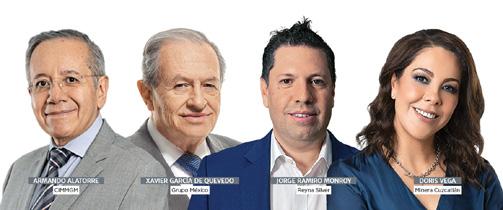
Moderator: Doris Vega, Minera Cuzcatlán
Panelists: Armando Alatorre, CIMMGM
Xavier García de Quevedo, Grupo México
Jorge Ramiro Monroy, reyna Silver
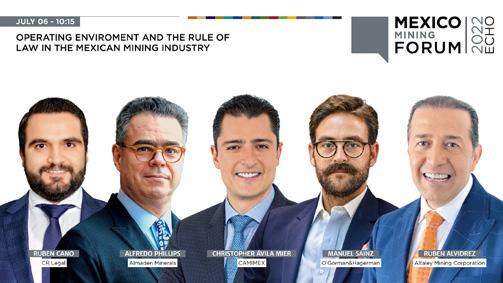
10:15 OPERATING ENVIRONMENT AND RULE OF LAW IN THE MEXICAN MINING INDUSTRY
Moderator: Christopher Ávila Mier, CAMIMEX
Panelists: Ruben Cano, C r Legal
Alfredo Phillips, Almaden Minerals
Manuel Sainz de La Hidalga, O’Gorman&Hagerman
Rubén Alvidrez, Altaley Mining Corp.
11:00 NETWORKING COFFEE BREAK
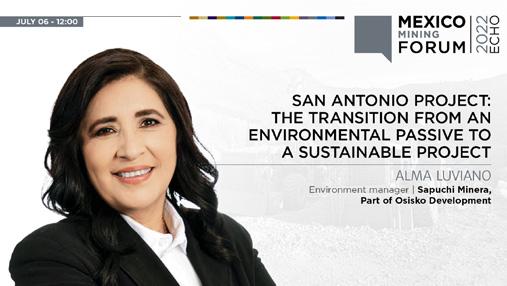
12:00 SAN ANTONIO PROJECT: THE TRANSITION FROM AN ENVIRONMENTAL PASSIVE TO A SUSTAINABLE PROJECT
Speaker: Alma Luviano, Sapuchi Minera, Part of Osisko Development
12:15 TECH’S POTENTIAL AS A CATALYST FOR EFFECTIVE ESG IMPLEMENTATION
Moderator: Joel Carrasco, Solum Consulting
Panelists: Diego Torroella, Takraf
Kimberly Nery, Sapuchi Minera, Part of Osisko Development
Héctor Garcés, Er M
Arturo Vaca, Peñoles
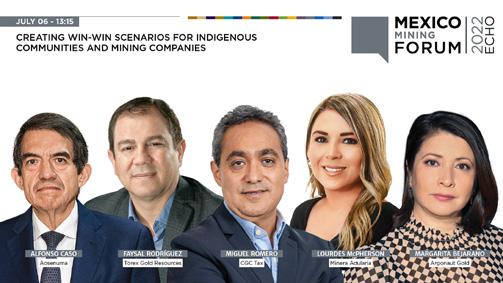
13:15 CREATING WIN-WIN SCENARIOS FOR INDIGENOUS COMMUNITIES AND MINING COMPANIES
Moderator: Miguel Romero, Cgc Tax
Panelists: Alfonso Caso, Aosenuma
Faysal Rodríguez, Torex Gold resources
Lourdes McPherson, Minera Adularia
Margarita Bejarano, Argonaut Gold
14:00 NETWORKING LUNCH
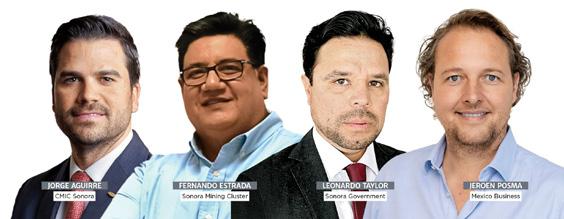
15:00 SONORA: BENCHMARKING COMPETITIVENESS AND INVESTMENT ATTRACTIVENESS
Moderator: Jeroen Posma, Mexico Business
Panelists: Jorge Aguirre , CMIC Sonora
Fernando Estrada, Sonora Mining Cluster
Leonardo Taylor, Sonora Government
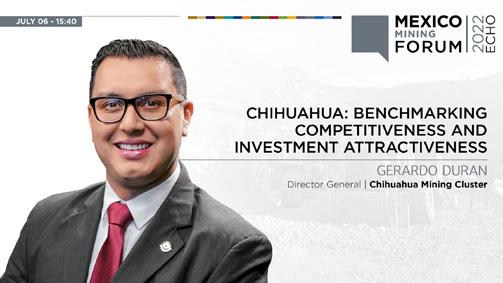
15:40 CHIHUAHUA: BENCHMARKING COMPETITIVENESS AND INVESTMENT ATTRACTIVENESS
Speaker: Gerardo Duran, Chihuahua Mining Cluster
16:00 MEXICO’S ATTRACTIVENESS OUTLOOK AS A MINING INVESTMENT DESTINATION
Speaker: José Jabalera, Ministry of Economy
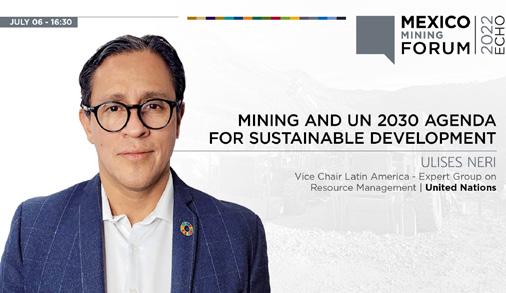
16:30 MINING AND UN 2030 AGENDA FOR SUSTAINABLE DEVELOPMENT
Speaker: Ulises Neri, United Nations
17:00 NETWORKING SESSION - AI-POWERED 1:1 MEETINGS
09:00 CLIMATE CHANGE, RENEWABLE ENERGY, GEOPOLITICS AND THE FUTURE OF MINING
Speaker: Henry Sanderson, Benchmark Mineral Intelligence
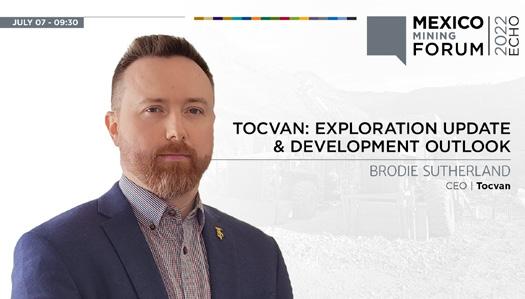
09:30 TOCVAN: EXPLORATION UPDATE & DEVELOPMENT OUTLOOK
Speaker: Brodie Sutherland, Tocvan
10:00 RANCHERO GOLD & GOLDSPOT DISCOVERIES: LEVERAGING MACHINE LEARNING IN THE MINERAL DISCOVERY PROCESS
Speaker: William Pincus, ranchero Gold Corp
Speaker: Britt Bluemel, Goldspot Discoveries Corp.
10:30 ALIGNING EXPLORATION RESULTS, SAFETY AND SOCIAL RESPONSIBILITY
Speaker: Cesar Virto, Bylsa Drilling
Speaker: Sergio Trelles, Benjamin Hill Mining Corp.
11:00 NETWORKING SESSION - AI-POWERED 1:1 MEETINGS
12:00 ADVANCE LITHIUM: INSIDE THE LITHIUM MINING BOOM
Speaker: Allan Barry, Advance Lithium
12:20 SONORO GOLD: DEVELOPMENT & PRODUCTION OUTLOOK
Speaker: Kenneth MacLeod, Sonoro Gold
12:40 KOOTENAY SILVER: EXPLOTION RESULTS & 2022 DRILL PROGRAM HIGHLIGHTS
Speaker: James McDonald, Kootenay Silver
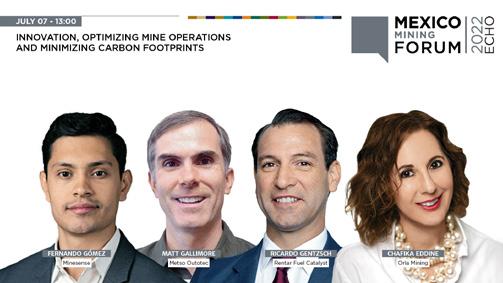
13:00 INNOVATION, OPTIMIZING MINE OPERATIONS AND MINIMIZING CARBON FOOTPRINTS
Moderator: Chafika Eddine, Orla Mining
Panelists: Fernando Gómez, Minesense
René Valle, MacLean Engineering
Ricardo Gentzsch, rentar Fuel Catalyst
14:00 NETWORKING SESSION - AI-POWERED 1:1 MEETINGS
15:00 MEXICO MINING SECURITY UPDATE
Moderator: James Sinclair, Control risks
Panelists: Mario Salomón, Multisistemas de Seguridad Industrial Leonardo Taylor, Sonora Government
Diana Centeno, WIM Grupo Maya
16:00 PRIVATE SECTOR PERSPECTIVES ON MEXICO’S MINING INVESTMENT ATTRACTIVENESS
Moderator: Matthew Gordon, Crux Investors
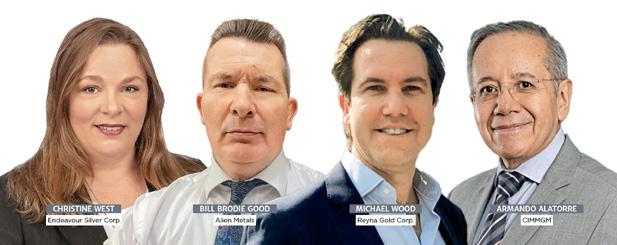
Panelists: Bill Brodie, Alien Metals
Michael Wood, reyna Gold Corp.
Christine West, Endeavour Silver Corp.
17:00 NETWORKING SESSION - AI-POWERED 1:1 MEETINGS
CLOUTHIER EMPHASIZES MINING INDUSTRY’S IMPORTANCE AT MMF2022 ECHO
Mexico’s Minister of Economy, Tatiana Clouthier, participated in the Mexico Mining Forum 2022 ECHO, which takes place from July 6 to July 8. Clouthier said she is pleased to greet all the public and private leaders of the mining industry to discuss the state of the industry and network during the event.
The mining sector is a fundamental pillar of the Mexican economy, contributing 2.3 percent of the national GDP and 8.1 percent of the industrial GDP. Moreover, Clouthier has highlighted the international importance of Mexico as a mining jurisdiction and a leading producer of silver, as well as an important producer of other precious and industri al metals.
r ecently, the Silver Institute released its Silver Survey 2022, where Mexico ranked as the largest silver producer in the world for 2021. In addition, 2022’s global silver production is expected to grow steadily and reach pre-pandemic levels thanks to newly developing projects.

“Foreign Direct Investment (FDI) in the mining sector plummeted year-over-year during 1Q22. The sector received over US$610 million during 1Q22, which is 59 percent lower than the amount registered in 1Q221, which stood at US$1.49 billion.”
Tatiana Clouthier Minister of Economy | Mexican Federal Government
In addition, Clouthier mentioned that the Mexican Geological Survey (SGM) continues to generate geological information infrastructure, carrying out exploration works to the benefit of the sector. According to the minister, Mexico is an attractive country for private, national and foreign investment, this is reflected in Mexico’s positioning as the fifth country in the world with the highest investment in exploration and the preferred destination in Latin America.
Nevertheless, amid political and legal uncertainty and higher metal prices, the Ministry of Economy (SE) reported that Foreign Direct Investment (FDI) in the mining sector plummeted year-over-year during 1Q22. The sector received over US$610 million during 1Q22, which is 59 percent lower than the amount registered in 1Q221, which stood at US$1.49 billion. The drop in investment is partly caused by the high performance of the sector in 2021.
During this year, mining companies restarted the investments that were paused due to the COVID-19 pandemic in 2020, when the total FDI reached only US$294 million in total. In 2021, the sector received $2.8 billion in FDI, an increase of 861 percent when compared to 2020.
Mexico produces nearly 25 percent of the global silver supply and is expected to produce over 212Moz in 2022. In 2021, production totaled 196.7Moz. “The biggest increase is expected to come in Mexico, driven by the ramp-up of new and recently commissioned projects, alongside rising production from several established mines,” the repo rt stated.
Furthermore, Clouthier pointed out that mining is one of the most regulated economic sectors, as the government protects the nation’s ownership of resources via the constant supervision of concessions carried out by the General Directorate of Mines of SE. Similarly, the Minister of Economy is working to ensure adequate regulation facilitates mining companies’ operations, fostering sustainable mining and prioritizing the rights of workers.
SE has been working with the UN to create a pilot plan which promotes sustainable actions in the extractive industries, said Clouthier. Collaboration with the Pacific Alliance would be equally essential for
Mexico. The Minister of Economy finished her message by expressing that by working hand by hand with all sectors, clear objectives can be set and achieved.
CHALLENGES HERALD A TRANSFORMATIONAL PERIOD IN MINING
In the context of a global energy transition, the world’s industries continue to depend on the mining sector to get the necessary minerals and raw materials. While new business opportunities have appeared in the mining environment with the introduction of new technologies, the challenges Mexico’s mining sector faces remain the same as those of the past years, agreed experts. By focusing on communication, the country can support the industry in emphasizing its global importance, transforming its position in the economy.
“Mexico has a great future in mining. We must change the perception and help the government by fostering dialogue. Mining companies must take care that the places where they work have access to basic services. The country has been little explored and there remains much room for new opportunities,” said Xavier García de Quevedo, Vice President, Grupo México.
Mexico’s mining history has a history of almost 500 years. Today, the country is the leading producer of silver. In addition, Mexico is a top global producer of gold, copper and zinc. regarding the attraction of mining investment, Mexico ranks fourth in the world and first in Latin America, according to Deloitte.
In 2020, Mexican mining exports amounted to US$18.4 billion, a 1.8 percent decrease when
compared to 2019, according to the Ministry of Economy. Sonora, Chihuahua, Zacatecas, Durango and Guerrero are the country’s main mining states, with a contribution of 82 percent to the total national mining production.
While analysts point out that Mexico does not offer a largely favorable operational environment for the industry at the moment, it is still a very competitive country due to its “slightly better” public policies when compared with other countries in Latin America, said Jorge ramiro Monroy, CEO, reyna Silver.
As most industries, the mining sector suffered in 2020 because of the pandemic, said García de Quevedo: “However, it recovered in 2021. In 2022, the bad news is that during the first five months, FDI has collapsed 60 percent compared to 2021. This happened due to the absence of viable projects.” Mexico is nevertheless a country where a lot of money is tax collected from mining, he added.
Despite the decrease in both imports and exports during 2020, the miningmetallurgical trade balance registered an increase of 34.3 percent, reporting a value of US$9.2 billion. Tax contributions from mining increased by 1.2 percent in 2020, amounting to MX$30.4 billion (US$1.52 billion), reported the ministry.
The Mexican mining industry faces various challenges, from restrictions on new concessions and delays in permitting to a financial environment weighed down by legal uncertainty. The sector has been “highly demonized, mythologized and barely recognized for the contributions [it brings] to daily life,” said Doris Vega, Institutional relations Manager, Minera Cuzcatlán. In 2021, the mining industry attracted US$4.24 billion in investment, which was higher than in 2020 but 15.6 percent below the US$5.03 billion expected for the year, as reported by MBN.
“What is more, it is increasingly difficult to encounter deposit for precious metals,” said r amiro Monroy, adding that lower commodity prices in recent years had further decrease the exploration budget.
Although there are several local challenges to be overcome in Mexico, the global industry faces similar hurdles, said Armando Alatorre, President, the College of Mining Engineers, Metallurgists and Geologists of Mexico (CIMMGM): “There are increasingly more people on the planet and more mining is needed to supply everything the world needs. There are ups and downs. In addition, we are living times of inflation, which will lead to slower economic growth.”
The global demand for metals has changed due to advancements in technology
and a deep focus on renewable energy development, said García de Quevedo. “Consumption of copper, aluminum, silicon, rare-earth metals, nickel and lithium has grown exponentially over the past years,” he concurred with ramiro Monroy.
Despite the challenging environment, the mining sector will continue to advance as the market demands tons of minerals and metals, said Alatorre: “The key to improve the industry’s situation is to change the discourse regarding the sector at a global level. We are not the great environmental enemy of the planet.” People within the mining sector must start to change perspectives of the industry within their own house, letting their families know the positive impact of mining to society, he added.
Additional global challenges for the mining industry include excessive logistics costs and talent shortages, García de Quevedo pointed out. High logistics costs complicate the refining of metals, most of which takes place in China. As copper demand continues to grow, Mexico most take advantage of its natural resources and become better communicators for the mining industry. “Mexico is a mining country by nature. We have to change our communication strategy and convince the public,” concluded García d e Quevedo.
COMMUNITIES REMAIN AT HEART OF MINING INDUSTRY’S RULE OF LAW
nvironmental and social best practices have become a priority for mining executives around the world. In Mexico, this is no exception. However, the companies looking to meet these high standards must overcome hurdles like a lack of new mining concessions, higher scrutiny on tax payments and the industry reforms of President López Obrador, which aim to develop the deficient regulation on social matters in a way that is still unclear for operating companies. Nevertheless, communities will remain key to this shifting regulation, providing companies with a cornerstone for their operations.
If mining companies aim to be competitive in Mexico, they must be competitive while remaining respectful of the rule of law.
“Mexico has a vast legal framework for mining processes, meaning that permit holders need to work under permits, as well as be respectful of human rights, the environment, Indigenous communities and Mexican culture in general,” explained ruben Cano, Founding Partner, Cr Legal Partners Mexico.
Prior to their operation and to avoid future challenges, every company must first carry out a detailed project feasibility analysis. During this research, rubén Alvidrez, Board Member and Independent Director, Altaley Mining, explained that companies will find that there have been no new concessions granted.
Among other barriers, there are various security concerns, tax payment scrutiny and long analysis processes required to determine whether concessions were granted within the boundaries of the law.
Land rights are some of the most significant challenges companies could encounter. Therefore, “companies need to fully understand the legal, social and geographic challenges of the land and its established communities,” said Manuel Sainz de La Hidalga, Partner, O’Gorman Hagerman. He furthermore stressed it is essential to identify land owners and distinguish between private, social and public property. Each of these schemes features different standards to be complied with if a company is to procure land rights and social licenses. Knowing how to move ahead will provide certainty and foster positive relationships with land owners, ejido communities and the government itself.
In 2021, mining companies encountered yet another subject of concern for their investments. The first Chamber of the Supreme Court of Justice of the Nation (SCJN) delivered its ruling for amparo trial 134/2021, put forward by the Nahua Tecoltemi Indigenous community, located in Ixtacamaxtitlan, Puebla. With the ruling, SCJN revoked two mining concession titles that had been granted in 2003 and 2009 to
the company Minera Gorrión, the Mexican subsidiary of Almaden Minerals. According to the court’s ministers, the Mexican authorities were obliged to facilitate the right to prior, free and informed consultation of Indigenous peoples, but failed to do so. The court furthermore argued the state had violated articles 6 and 15 of the International Labor Organization (ILO) ILO Conve ntion 169.
In the ILO Convention 169, Indigenous consultation is defined as the procedure by which initiatives, proposals for plans and programs, models of public policies and institutional reforms that directly affect Indigenous communities are presented to them with the purpose of obtaining their consent or a greement.

“The mining industry in Mexico is the second-safest industry, according to data from the Mexican Social Security Institute (IMSS). Mining is important and part of the solution for safety issues, not the problem. By working together with the government, we would be able to create better projects, solutions and development for the communities we are in”
Christopher Ávila Mier President of the Government Relations and Legislative Liaison Committee | CAMIMEX
The Supreme Court’s new decision, while it is still not binding, established that mining concessions granted after Convention 169 which entered into force in 2014, could be canceled due to the absence of an Indigenous consultation process. “However, there are no guidelines, legal frameworks or clarity on how could companies in Mexico should comply with these obligations,” said Alfredo Phillips, Independent Director and Board Member, Almaden Minerals. As SCJN recognized, establishing consultation procedures is the responsibility of the government. Nevertheless, companies like Almaden Minerals could suffer the consequences of this process is not carried out correctly, even though no blame falls on them.
Phillips explained that there are now two crucial moments where Indigenous communities must be involved, “when the concession permit is granted and when you present the Environmental Impact Assessment (EIA).” However, he said that these moments should be clearly established in the law before any operations occur. “We already carry out social assessment for our operations, but if new rules are not clear, we cannot proceed with certainty,” Phillips added.
The government’s rule of law and companies’ compliance will create the desired level of transparency that both parties are working toward. Cano explained that there are still misconceptions that permits can only be acquired through corrupt practices. “This is completely false. Doing everything the right way, being prepared and organized and consult experts to have complete compliance during a concession is always the right route for mining companies to follow,” he stated.
“The mining industry in Mexico is the secondsafest industry, according to data from the Mexican Social Security Institute (IMSS). Mining is important and part of the solution for safety issues, not the problem. By working together with the government, we would be able to create better projects, solutions and development for the communities we are in,” said Christopher Avila Mier, President of the Legislative Liaison, CAMIMEX.
Through each company’s social compliance, the authorities can be certain that the mining industry shares their interests. “Both new entrants and existing companies are changing their mindsets to have a sociallycentered vision for their operations. While this might take a while to fully establish for every single mining company, the process is already happening. We could benefit greatly by working alongside the government to achieve this,” Phillips said.
There are a number of government areas toward which companies should focus their compliance. Sainz broke them down to four primary entities: the Ministry of Agrarian, Territorial and Urban Development (SEDATU),
The National Agrarian registry, which controls ejidal and communal land, The Agrarians Attorney’s Office, which protects the rights of agrarian workers and Agrarian Courts. “Through these areas, companies can ensure they are approaching the right entities and guarantee they set the same goals moving forward,” he said.
Alvidrez shared the primary points to consider when developing a strategy to approach the government. “Align the company’s objectives with those of the government, identify the economic benefits that help the community and prove how the project spurs job creation,
meet the tax requirements, interact with communities, help where the Mining Fund would have supported, try to select local contractors so that the money stays in the community and approach the three levels of government to work together.”
Cano emphasizes that communities must be the center of the operation: “mining companies must include them in their longterm visions. Operators have been working for centuries and they will continue to do so. Government rules change every six years, but their focus on these communities remain the same.”
SUSTAINABLY TRANSFORMING SAPUCHI FROM COPPER TO GOLD
Canadian company Osisko Development transformed its San Antonio mining project through its subsidiary Sapuchi Minera in Sonora, developing it from passively environmentally friendly to fully sustainable. Osisko acquired the 11,000-ha project at the end of August 2020 and has worked full force to fast-track its operations, shifting the focus from copper to gold in the process.
Alma Luviano, Environmental Manager, Osisko Development, said the project is located 172km from the capital of Sonora and has been successfully turned into a sustainable operation. Owing to the proximity of the project to Sonora’s capital, Osisko could carry out the transition successfully. The
asset was acquired as a copper mine, but gold has been found too, so the company is utilizing previously-used materials for these procedures. The mining company is conducting major exploration campaigns nearby. “The San Antonio project is located in a region with significant geological resources, with a great potential to grow and increase its resources,” said Luviano.
What is more, Luviano mentioned that all exploration and production activities have been carried out through authorized Preventive reports, as the company worked in areas that had been previously affected by mining operations. Therefore, Osisko set out to minimize its environmental footprint.

The biggest challenge Sapuchi Minera overcame was to complete the transition from a copper to a gold project while causing a minimal social and environmental impact. This challenge consisted of three main obstacles. The first issue was to explore without causing a significant impact. Sapuchi Minera started two drilling campaigns that took five years to complete, doing so with a minimal footprint on the environment.
Another challenge was to take advantage of the acquired equipment and infrastructure, using it optimally to produce gold instead. r oads, buildings, terrains, a monitoring network and flotation plants, among other assets, were adapted to benefit the company’s gold exploitation. Osisko had to dismantle and recondition some of these assets to minimize the financial impact of its transition.
Lastly, for the copper leaching plant, the company constructed water pools to contain
the material kept inside so it would not spread out and cause environmental damage. Osisko assured nearby communities of periodical maintenance works, emphasizing it would never forget or underestimate its responsibilities to them or the environment.
“Our project is being evaluated and enhanced as a differentiator of the company. We attempt to build better water gathering systems. We are looking at several options to do this while minimizing our own water consumption,” Luviano said.
The company confirmed that San Antonio’s Sapuchi site could yield about 1Moz of gold. Currently, the company is working on the design and construction of Sapuchi Gold to begin its operation as soon as possible. The site is expected to yield between 50,000 and 60,000 oz/y of gold. Simultaneously, the company has discovered six promising drill sites covering 15km, which Osisko aims to explore further.
TECHNOLOGY WILL BOOST EFFECTIVE MINING ESG IMPLEMENTATION
The mining industry has gone through significant changes during its history, mainly propelled by new technologies that emerged to shift the operations of thousands of companies. To respond to pressure from governments, investors and NGOs alike, the mining sector is increasingly
addressing environmental, social and governance (ESG) issues as a priority matter. As these objectives to reduce carbon emissions and increase workers’ safety are clear, technology will further cement the adoption of ESG factors in the mining industry, agreed experts.
“The environment has changed much in recent years toward an ESG-oriented economy. The companies with the best ESG ratings are the most favored by investors and public opinion. Technology leads us to have more efficient processes. Much progress has been made, but there is still much more to do to understand the true impact on the environment and how to reduce it,” said Hector Garcés, Partner ESG Digital, ErM.
For the environmental criteria, companies must assess their impact on the ecosystem. This covers the company’s measuring and management of air quality, water and soil. These criteria extend through the entire operation, from exploration to extraction and post-production activities, according to insurance broker Marsh.

“The companies with the best ESG ratings are the most favored by investors and public opinion. Technology leads us to have more efficient processes. Much progress has been made, but there is still much more to do to understand the true impact on the environment and how to reduce it,”
Héctor Garcés Strategy Parner and ESG Digital | ERM
Then, the social factors examine how well mining companies treat and value employees and the broader communities where they operate. Some criteria include labor management policies, as well as workers’ health, safety and wellbeing. Importantly, it includes the impact of the company on the local community, where these companies usually develop basic services, schools and contribute to social growth.
Finally, the governance criteria assess a company’s corporate governance practices, from board structure, diversity and transparency to the mining company’s relationship with regulatory bodies and NGOs.
The mining industry is intrinsically linked to ESG factors, said Arturo Vaca, Director
of Energy and Technology, Peñoles. He divided the most important criteria into three different categories: social licences, safety at work and environmental issues. “The social license is the most challenging. Society and government have a negative perception of our activity. All human activity has an impact on the planet, but balance must be sought. Although the industry has improved significantly, problems regarding communication and trust-building persists,” said Vaca.
While companies’ commitment to ESG criteria remains crucial, the workforce must believe in the same principles for the implementation to have success, said Kimberly Nery, Community r elations Manager, Sapuchi Minera, part of Osisko Development. “During the year and a half we have been operating in Mexico we have faced a major challenge: culture. The country has a great mining potential, but we must learn from more advanced countries and train our staff to get them really engaged [with ESG criteria],” Nery said.
Although most of the industry agrees on the importance of ESG and sustainability, there are several challenges to implement this transition. In a recent survey by Marsh, 90 percent of the global respondents within the mining industry ranked climate change and ESG as either an important, or the most important, issue for their operations. However, 44 percent of them said they have an ineffective process, or no process at all, for identifying, responding to and implementing changes based on climate threats and ESG-related factors. “It is key to define metrics and standardize processes here,” said Garcés.
A responsible operation permeates everything at an ESG level, said Diego Torroella, Director General, Takraf. A growing number of companies are investing more in development to reduce carbon emissions and increase safety. “It is a matter of conviction. For instance, if we manufacture equipment that helps with water purification and recovery for the
operation, it helps the mine reduce costs and provides benefits to the community. Our main focus is safety,” said Torroella.
ESG and business must go hand in hand, they cannot work differently, asserted Nery.
Tech implementation requires talented, trained people and time. “[Mexico] needs a certified regulatory body. The entire industry, NGOs, government, shareholders, communities and companies must join to create this regulatory body,” she concluded.
STRATEGIES TO EFFECTIVELY APPROACH INDIGENOUS COMMUNITIES
The relationship between Indigenous communities and mining companies has proven to be key to maintaining a mining project in Mexico. As the sector’s social landscape becomes increasingly complex, miners must recognize the voice of communities and get involved in what happens on their land to develop win-win relationships, say industry experts.
Today, more companies are prioritizing environmental, social and governance (ESG) issues, which is a reinforcement of the good practices mining companies have been implementing for years, said Miguel romero, Lawyer, CGC Tax. As part of this development, the approach toward Indigenous communities has gained more relevance.
For over a century, Mexico has granted Indigenous peoples legal titles to their ancestral lands, but many have seen mining firms given rights to this land after the government prioritized mining over other land uses in the 1990s, reuters explained. Nevertheless, communities can still appeal
to courts, as evidenced by the Supreme Court’s revoking of two mining concession titles that had been granted in 2003 and 2009 to the company Minera Gorrión in Puebla. In this case, the court determined the Mexican authorities were obliged to facilitate the right to prior, free and informed consultation of Indigenous peoples on regarding company initiatives.
The current goal of many mining companies operating in Mexico is to prevent such issues by building close relationships with nearby Indigenous communities from the get-go.
“The first factor to consider when we talk about Indigenous communities is inclusion,” said Alfonso Caso, Managing Partner, AOSENUMA. He explains biocultural aspects need to be approached with respect, centered on human rights. “Communicating and being accepted by these companies is what becomes challenging. We need to learn so much to approach them that we might have to learn new codes and behaviors to create an effective approach,” Caso said.
In Mexico, 11 million people identify themselves as Indigenous. “Where our projects are located, we live along 224 people from the Otomi culture. Because of this, we have had to create different strategies to have a successful approach and project development,” explained Lourdes McPherson, Development and Community r elations Director, Minera Adularia.
McPherson explains that to build this strategy, the company created a social, health and environmental baseline study to fully understand the community and to be able to offer something that would really be responsive to their needs. “It is a challenge for communities to accept us. They have lived on that land and will continue to do so, which is why we have the responsibility to adapt to them,” she said.
To McPherson, communities are not “different.” They are not isolated, but active. Companies have to give them a voice, therefore. However, companies do not have to act by themselves. “Generating alliances with academia, government agencies and civil society would be fundamental to make sure we integrate these communities in the base of our strategy,” McPherson added.
Margarita Bejarano, Director of Corporate Affairs, Argonaut Gold, explained that conscious businesses go beyond financial earnings. “While it is essential for business to be profitable, it is possible for businesses to have a higher purpose that values social
utility.” Bejarano added that companies will find a higher purpose where they recognize that business is a driver of human development. Therefore, companies should listen assertively, be understanding and communicate in a way that those who are not industry insiders could understand.
“To communicate empathetically, one must listen first to motivations and anxieties. Communication is the missing piece that sometimes hinders the industry. That is why it is so crucial to communicate with communities, consulting them on the development of any kind of project,” said Bejarano.
Building solid foundations around credibility can also contribute to a better community approach. Faysal r odriguez, Senior Vice President Mexico, Torex Gold resources, said that for the company, highlighting that they have the will to combat underdevelopment and poverty in communities has been effective on their work with these communities.
“We have collaborative development agreements, where we explain that while no interest goes above that of our investors, we aim to grant them a similar power in order to create stable conditions for both parties,” said rodriguez. He shared that academics have helped Torex Gold in approaching the communities. The company has also created local projects that generated a positive economic spillover for the communities and strengthens the trust they have in the company.
SONORA, MOST IMPORTANT MINING STATE IN MEXICO
Sonora is the Mexico’s top producer of copper and gold. Although other states are coming closer, Sonora is still very much ahead in copper, producing over 80 percent of the total national production. Copper is a major factor in Sonora maintaining its leading positioning, said Jorge Aguirre, President, Mexican Chamber of the Construction Industry (CMI C) Sonora.
“Sonora is the mining state par excellence, with 36 percent of Mexico’s total mining production. It has Hermosillo as the national mining capital in terms of supply,” said Aguirre. He predicted that prosperous times lie ahead for the state’s mining sector, which benefits from an open, understanding and inclusive g overnment.
Leonardo Taylor, Director of Mining, The Government of Sonora, points out that his government deeply understands the importance, impact and weight that the industry has in the state. Therefore, local authorities are working to maintain investment level and supporting companies to reactivate their co ncessions.
More than 100,000 jobs in Sonora’s mining sector pay over 40 percent of the average salary. In total, 22 municipalities have mining activities as their main economic driver. The state boasts 71 active mining units, which ensures Sonora retains the highest amount of ongoing operations in th e country.
“The geological potential of the state is a differentiator and should be promoted and marketed in order to attract investment,” said Taylor. Furthermore, he mentions that attracting investment is one of the challenges faced by the entity because there is an exploration deficit that need to be reactivated.
Taylor explained that the mining concessions in the state of Sonora encompass 30 percent of Sonora’s land, of which 14 percent have been explored and in 0.12 feature established mining projects. In this environment, it is the responsibility of the state’s government is to communicate this to the federal government in order to rescue and reactivate permits and defend the benefits of mining in Sonora.
Fernando Estrada, Director General, Sonora Mining Cluster, explains that the Cluster promotes integration and the strengthening of managerial capacities for companies. Integrating environmental and social development issues are further key issues. The Cluster has had a vision of integrating four helixes: investors, academia, the state and society, in order to cover the needs that can arise in any mining project. Moreover, it seeks to include the new generations and merge with other industry. “The mining industry today needs capabilities that were previously not considered relevant to the sector,” said Estrada.
Sonora has received international attention for its recently-uncovered lithium deposits and the policy changes of the federal government
to the Mining Law regarding the mineral’s ownership. “Analyzing and studying lithium and the viability of projects to exploit the mineral has to be the focus now. We must work toward that to create a new industry so that more jobs arrive to the country,”
said Taylor. Overall, the experts agree that Sonora has world-class geological potential. The state has also cemented itself as a true mining employer, with many of its leaders having been shaped by the industry.
CHIHUAHUA’S MINING CLUSTER WORKS TO CREATE CLOSER CONNECTIONS
Chihuahua is a state with a 450-year mining history and is traditionally considered to be a true mining entity. Its territory holds important reserves of gold, silver, lead, copper and zinc, according to mining chamber CAMIMEX. Chihuahua’s mining industry amounts for 12.7 percent of the national metals-focused mining industry. Mining activity furthermore represents 4 percent of the state’s GDP. Within this environment, the Chihuahua Mining Cluster works to spread the benefits of the industry.
Silver is the main mineral produced in Chihuahua, with 55,371 tons produced in 2019, followed by zinc with 7,201 tons, lead with 2,332 tons and copper with 690 tons. During 2020, selling these minerals raised US$2.19 billion. Gerardo Durán, Director General, Chihuahua Mining Cluster explained that 94 percent of the mining activity is concentrated in the central and southern region of the state, concentrated in 20 municipalities. From these 20 districts, 15 are affiliated with the Cluster, and five of them represent 9.45 percent of
nation’s metals production. Durán mentioned that 312,000 inhabitants are directly or indirectly benefitted by mining activities, as the sector has created 20,493 direct jobs.
“The Cluster was born in 2013 as the main association helping and connecting the companies of the sector and today features 130 suppliers,” said Durán. Furthermore, the Cluster is present at 13 mining units and four mining projects. It formed alliances with six educational institutions and two investigation centers, bringing a wealth of technological knowledge to the state. The organization furthermore seeks to generate networking prospects to establish new business opportunities.
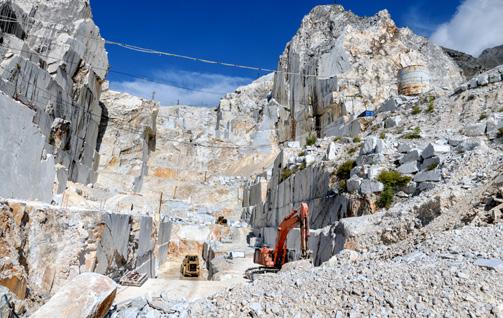
Just like Sonora, much of Chihuahua’s territory remains unexplored. The total surface of the state is 27,745,500ha, of which 2,053,876ha are concessions for the mining sector, or 8.33 percent. Meanwhile, 0.12 percent of this environment has been used for production.
Mining has contributed to the environmental efforts of the state, for example by reforestation of 543ha and 196,000 trees in 2020. Ninety percent of the companies working in Chihuahua hold credentials for contributing to a cleaner industry. Durán stated mining activities have had “a significantly positive impact wherever they have been carried out.”
Gustavo ramonet Ontiveros, Director Mining, the Ministry of Innovation and Economic
Development of Chihuahua said that mining companies are considered to be a key ally of the most marginalized communities in the state. remote, marginalized areas can become nests for illicit economic activity, so these communities risk becoming the focus of criminal activity, mainly from drug cartels. Because the inhabitants of these communities want nothing more than look after their own well-being, this makes them vulnerable. The stable nature of mining jobs can keep such problem at bay.
MEXICO REMAINS AN ATTRACTIVE DESTINATION FOR MINING INVESTMENT
The mining industry continues to play a vital role in Mexico’s economy, contributing 3 percent of the country’s GDP and 9.6 of the industrial GDP. While the sector is facing challenges globally, Mexico remains an attractive destination for the mining industry, said José Jabalera, Director General of Mining Development, Ministry of Economy (SE).
Currently, Mexico’s mining sector creates over 413,000 direct jobs and 2.3 million indirect jobs. With a preliminary investment of US$4.25 billion in 2021, the total production value in 2021 amounted to MX$338.18 billion (US$16.9 billion), according to SE. Mining activity is present in 24 states across Mexico, as operations intersect with 212 municipalities and close to 700 communities. However, 82.5 percent of the total mining value is produced in five states: Sonora, Zacatecas, Chihuahua, Durango and Guerrero..

“The mining industry continues to play a vital role in Mexico’s economy, contributing 3 percent of the country’s GDP and 9.6 of the industrial GDP. While the sector is facing challenges globally, Mexico remains an attractive destination for the mining industry”
José Jabalera General Director of Miner Development | Ministry of Economy
Mexico’s mining industry is among the top 10 global producers of 17 different minerals, said
Jabalera. The production of gold, copper, silver, zinc and iron pellets contribute to 85 percent of the country’s total miningmetallurgical production value. The total investment in Mexico’s mining sector comes for 59 percent from Mexican capital. Twenty-eight percent comes from Canada, 4 percent from the US, 2 percent from China, 2 percent from Australia and 5 percent from other countries, Jabal era added.
Although the issue is pointed out as a challenge by some industry players, talent and human capital are actually one of the main strengths of Mexico’s mining industry. “We have a great human capital, recognized by companies. There are more than 45 universities, institutes and public research centers that offer degrees related to earth sciences in the country,” said Jabalera. The average schooling of mining professionals is 11.7 years, 2 years more than Mexico’s average. In addition, mining professionals earn 36 percent higher salaries than the nationa l average.
“The Mexican Geological Survey (SGM) is a great service for companies,” Jabalera emphasized. SGM offers information for the exploration, development and exploitation of mines, highlighting mineral deposits, geochronological data, archaeological zones, protected natural areas, vegetation and land use, hydrography and geophysics, among other data.
Currently, there are 165 mining projects under development in Mexico, which are divided into four categories: metal projects, non-metal projects, municipal inventories and prospects for further study.
Mining clusters play an increasingly important role within the industry, said Jabalera: “Clusters increase the competitiveness of mining regions and foster the development of local suppliers and value chains. These organizations promote the link between the productive sector, government and academic institutions.”
The competitiveness of Mexico’s mining industry is underpinned by additional
macroeconomic factors, such as the Mexican peso’s stability over the past 4 years and a federal anticorruption policy, said Jabalera. In addition, the government committed not to increase taxes in real terms during the current administration.
“Despite the absence of new concessions, the government has respected all existing contracts,” added Jabalera.
Mining has a robust institutional framework that regulates its actions, he said. “We can affirm that mining is one of the most regulated industries in the country. This provides legal certainty to investors and avoids conflicts with the communities that host this activity,” he added.
MINING LOOKS TOWARD UN’S 2030 SUSTAINABLE DEVELOPMENT AGENDA
As Mexican mining companies are heightening their efforts to mitigate carbon emissions and join the United Nations (UN) Sustainable Development Goals (SDG), the UN is also collaborating with these companies to facilitate this transition and enhance the positive impact mining companies could have.
In the UN’s document “remarks to the Global r oundtable on Transforming Extractive
Industries for Sustainable Development,” UN Secretary General António Guterres referenced the 81 countries whose mining extraction represents a quarter of global the GDP and impacts close to half of their population.
“Extractive industries have a great potential to drive growth, support sustainable development and reduce poverty in developing countries. Oil, gas and
mining industries are being demonized. Nevertheless, the world needs these activities for the energy transition, which requires minerals, and as an activity toward development and poverty reduction,” said Ulises Neri, Vice Chair Latin America, Expert Group on resource Management, UN.
Nevertheless, Neri explained that these industries are experiencing social, financial and political pressure to make sure that companies do not see the UN’s 2030 Agenda as an optional checklist.
“Ideally, all mining companies with a project would have to look for ways in which that plan can respond to the 17 elements that the 2030 agenda proposes. The UN wanted to ensure that this is happening by creating the UN Center of Excellence for Mexico and Latin America,” Neri explained.
The Institution of Civil Engineers (ICE) will assist the institutions of the extractive and energy industries in Latin America, both from the public and the private sector, in meeting their sustainability goals within the framework of the SDGs. Its target areas are mining, hydrocarbons, renewable energy, energy efficiency and efficient resource management.
Neri explained ICE’s efforts are based on a qualitative and quantitative methodology that will integrate the UN’s r esource
Classification (UNFC) and the UN’s resource Management Systems (UN r MS).
The UNFC is in charge of devising strategies to manage budgets and resources to manage industry processes and justify capital allocation. The UN r MS is based on 11 principles that provide a holistic vision toward sustainable development. These can then be used to develop standardized processes, facilitate resource management, support decision-making, measure the actual progress of a project, consider metrics that contribute to sustainable development to ensure efficiency in this process.
For mining companies, integrating these two programs will facilitate the implementation of the 2030 goals into their projects. Neri said that the overall goal of this integration is to provide each company with a sustainably-oriented corporate vision, which will generate a better reputation in society, improve the relationship with your customers and suppliers, reduce operational risk and increase project profitability by fostering higher credibility with investors and stakeholders. It allows access to financing with lower rates and to sources of private capital that consider ESG factors to be important. Complying with the SDGs will also strengthen the integration of responsible investment portfolios with a focus on medium- and long-term financial returns.
ICE is about to start pilot tests in Mexico, a country chosen to lead the project due to its centuries-long tradition in mining, strong oil production, leadership in Latin America and proximity to the north. The three selected projects were operated by Almaden Minerals, Starcore International Mines and Argonaut Gold. “With these companies,
the goal is to align government policies with their corporate practices in ESG terms. We will begin aligning with their shareholders, do a real diagnosis of their situation to create a sustainable transformation plan, which based on efficient information management will generate sustainability-focused corporate reports,” Neri shared.
THE WEST COULD COMPETE WITH CHINA’S BATTERY METALS SUPPLY CHAIN
Boosted by the global energy transition, demand for lithium is pushing the market to bullish levels. Within this environment, China reigns supreme, but other countries such as Mexico could look to compete, said Henry Sanderson, Executive Editor, Benchmark Mineral Intelligence.
Sanderson explained that the battery supply chain is mainly located in China. He pointed out the challenges Western countries face to catch up with the economic powerhouse. Nevertheless, China’s competitors can still take steps to close the gap.
Sanderson asserts that building this supply chain could be difficult and take time, as China dominates the midstream of the industry. Nonetheless, he argues it is possible to build the processing capabilities to compete with China.
“The key challenge facing lithium is on the supply chain, demand is not the constraint,” said Sanderson. Some key challenges the supply chain faces are access to raw materials, access to regional refining and rising operational costs. He states that the more the prices go up, the cost of electric vehicles also increases. But reshoring is a costly process, so companies must be careful that their expenses do not turn out higher than they are in China.
Some of the efforts the Western hemisphere is already pushing include a mineral security partnership, a US$600billion partnership to build a global infrastructure to compete with China’s Belt and road Lithium Mining, a mammoth in the budding industry. Other
initiatives include an EU-Japan Green alliance, as well as a EU-Canada Partnership regarding raw materials. With these prospects, the global west aims to build a new, competitive lithium supply chain.
On the back of these developments, North America and Europe are beginning to gain ground, albeit slowly. Benchmark Mineral Intelligence foresees that for 2031, global installed capacity for lithium batteries, a key proponent of the clean energy transition used to store renewable energy, will be at 6,660.6GWh. Of this figure, China would produce 70 percent of the capacity, North America 12 percent, Europe 15 percent and the remainder of Asia 3 percent. Therefore, China does not completely dominate the market, as some key battery producers come from other countries.
Nevertheless, Henderson holds that battery production is the “easy part.” The actual challenge is to make waves in other areas of the supply chain. The extraction, chemical processing, cathode and anode production, cell manufacturing and application of the mineral will be more difficult to master. This is because of the minimum of five years required to set up businesses and infrastructure to carry out these activities. Increasing natural gas and oil prices are making manufacturing much tougher, too. “It is going to be difficult to build new battery material processing plants and refineries in Europe against this backdrop,” added Henderson. However, he sees many industrial processes move to areas where clean energy development is strong and energy prices are therefore lower, such as in Quebec. Mining companies themselves are
also part of the creation of these sustainable industrial hubs.
Henderson concluded much investment is needed to solve the price volatility in lithium supply chains. In the short term, the west
will not be able to reduce its reliance on the Chinese lithium supply chain. However, it can invest in building mines and focusing on building processing capabilities. On the back of this diversification, the global energy transition gains a much-needed boost.
TOCVAN VENTURES IDENTIFIES GREAT POTENTIAL IN SONORA
Brodie Sutherland, CEO, Tocvan Ventures explained the development and initial success of the company’s projects: El Pilar and El Picacho, both located in Sonora, Mexico.
Tocvan Ventures is an early-stage natural resources company engaged in acquiring, exploring, and developing mineral properties. In Sonora, the company is developing gold and silver projects with the support of local experts and leaders in the mining-focused state. Sutherland mentions that the company had been looking all over the world to start a mining project and chose Sonora because of its established and strong minin g culture.
Sutherland points out that Mexico ranks first in Latin America for exploration investment, first in global silver production and stands proudly among the top 10 gold producers. Moreover, Sonora is the top gold producer in Mexico, producing 37 percent
of the yellow metal. Sonora is the host to two major mining projects: La Herradura and San Francisco.
In 2019, Tocvan acquired El Pilar and began drilling in 2020. Sutherland noted that at Pilar, the company’s exploration program has been remarkably successful. “Tocvan Ventures has all the elements needed to create success. With two quality assets and a terrific team, we see tremendous opportunity in Mexico. My goal for this year is to entice local developers to see the potential I see in our projects and make them shareholders of Tocvan. Secondly, I aim to advance Pilar toward its first resource estimate. We are still in an early stage of growth, so there is a lot of opportunity ahead,” said S utherland.
Pilar and El Picacho are Tocvan’s two Mexican exploration projects. Pilar is a gold-silver project where over 22km of drilling has been completed to date. It is
located in the Sonora Gold District, the country’s most prolific gold production district. El Picacho is a gold-silver project, located 140km norths of Hermosillo and spanning over 2,400ha. Five primary zones of gold-silver mineralization have already been identified at th e project.
Although El Picacho is an early-stage project, the company’s expectations are optimistic. Tocvan sees it a strong exploration project that has seen very little drilling historically. “El Picacho is at a perfect point for Tocvan to take over and move toward drilling soon. The company
would like to start drilling by November 2022, beginning with some strong targets,” said S utherland.
“We have over 6km of a prospective trend that we would like to focus on. El Picacho is a big property, over 24km 2 in size. We see many similarities in terms of host rocks and geology with the highly prolific San Francisco mine,” Sutherland added. The company fully expects to intersect mineralization. Nevertheless, El Picacho holds a type of deposit that would require time to define how big its potential could be.
LEVERAGING MACHINE LEARNING IN THE MINERAL DISCOVERY PROCESS
Mineral exploration is not a new business, so many of the world’s more obvious deposits have been discovered years ago. In the current context with fewer, smaller and more expensive discoveries, the mining industry has turned to new technologies like machine learning (ML) to unlock the optimal economic potential of projects.
In October, GoldSpot Discoveries, a company leveraging ML to transform the mineral discovery process, announced its engagement with ranchero Gold, the owner of the 22,267-ha Santa Daniela concession in Eastern Sonora. “We are thrilled to be working with GoldSpot. The application of ML to diverse exploration data is a new tool we can use to best identify new drill targets, and one of the best ways to move the exploration of new areas at Santa Daniela
forward,” said William Pincus, Director and CEO, ranchero Gold.
Previous operators of the Santa Daniela concession had evaluated and initiated drilling at Maiz Azul, El rincon and Mesas Coloradas. Maiz Azul’s drilling resulted in the first gold discovery at Santa Daniela, explained Pincus. Since taking over the project in 2020, r anchero Gold has conducted extensive exploration at both Maiz Azul and other areas of the concession block. This led to the company’s first drill program at Maiz Azul, which was completed in January 2022.
The Maiz Azul area is the most advanced prospect within the concession area. recent drilling completed by ranchero encountered gold in all 16 drill holes, including intercepts of 4.0g/t gold over 31.5m, 1.2g/t gold over
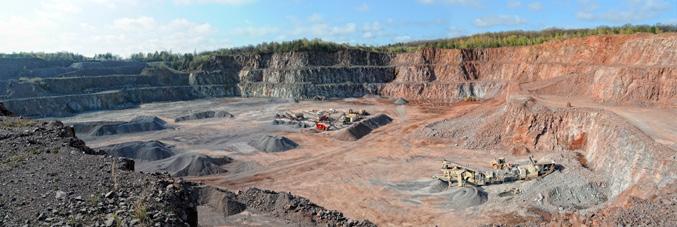
21.2m, 1.2g/t gold over 15.6m and 1.1g/t gold over 21m. The area lies at the northern end of the Santa Daniela concession block, within 3.5 kilometers of Alamos Gold’s Mulatos mine. “The best place to find a mine is still next to another mine,” shared Pincus.
GoldSpot Discoveries’ story began with six students participating in a challenge in Canada, explained Britt Bluemel, Senior Geochemist, GoldSpot Discoveries. While the first place went to a group of over 40 professionals, the students won the second place and were subsequently approached by impressed investors.
Since that moment in 2015, GoldSpot has grown to “a world-class team of over 80 people,” said Bluemel. Its team includes 34 geoscientists who specialize in field mapping, drilling, structural geology, geochemistry, resource estimation, 3D modeling and geophysics. The workforce also includes 25 data scientists, specialized in r&D, Artificial
Intelligence, remote sensors, cloud computing, data analytics, back-end processing and front-end UX. “Our mission is to discover ore bodies more quickly, efficiently and with lower financial and environmental costs using technology,” said Bluemel.
ML is simply mathematics that look to provide answers. The real difference is made by geologists deciding whether the information provided is valuable or not, explained Bluemel. It is crucial to have geologists involved in the ML algorithm’s creation, curating the data layers to be sure that the outputs are related to relevant geological features.
The final objective of this technology’s implementation is to shorten the timeline between discovery and development, said Bluemel: “We want to predict the footprint of mineralization, to provide a score or probability to know where there are better chances to find the mineral and assign probabilities to certain areas.”
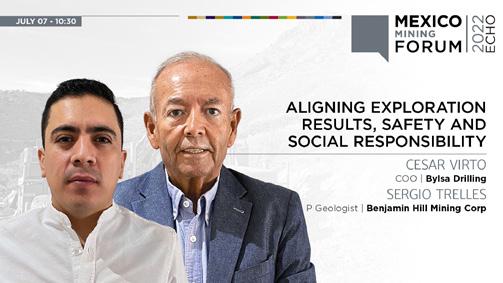
Bylsa Drilling, a leading company in the drilling services environment tackling everything typical exploration sites to extreme topographic conditions, is working alongside Benjamin Hill Mining to further some of its large-scale projects in the north of Mexico.
Benjamin Hill is a junior gold exploration company. Originally from Canada, it is exploring the Benjamin Sonora Gold Project in northern Mexico, approximately 110 km from Hermosillo, Sonora and 140 km from Tucson, Arizona. The area is associated with a famous mega fault, where important mines
BYLSA DRILLING SETS FORTH PROJECT WITH BENJAMIN HILL IN SONORA
such as Herradura, Sierra Prieto and Santa Gertrudis were developed. Benjamin Hill’s gold project has 6,400ha with promising mineral occurrences. To date, it features eight exploration targets for mineralized areas.
According to César Virto, COO, Bylsa Drilling and Sergio Trelles, Special Geological Advisor, Benjamin Hill Mining, the project holds values of 31.4g/t gold copper values of up to 12 percent. “The Sonora Gold Project carried out an extensive sampling campaign in October 2020 to July 2021, which revealed widespread gold occurrences across the western portion of the property,” said Virto.
Benjamin Hill divided the project in four areas: Sonora Copper, El Fierro, Caracahui and La Salada. From these areas, Sonora Copper stands out significantly in terms of its potential value. Nevertheless, recent geochemical surveys indicate gold mineralization may be present in the other areas, too.
The Sonora Copper Zone’s quartz breccia vein system consists of two of parallel vein structures with a mapped surface length approaching 850m. The veins are composed of quartz with barite, sulfides and primary oxides hosted in granites and volcanosedimentary rock. “The Sonora Copper Zone hosts impressive historical artisanal adits that exploited mineralized quartz-rich breccia veins to considerable and yet unknown depths from the surface,” said Trelles.
Trelles also explained that a total of four drill holes tallying 837m were completed in the Sonora Copper exploration zone. All four drill holes intercepted two parallel mineralized quartz veins that exhibit a
hydrothermal brecciation texture with coincident hydrothermal alteration in the surrounding rock. These first four holes have delineated a block of over 450m in length and an up to 103m measured depth of continuous mineralization, with thicknesses up to 40m.
“The consistent intercepts suggest there is open potential to track mineralization both laterally and vertically. Our interpretation of the recent induced polarization and resistivity geophysical surveys suggests the vein system continues at depth and may widen with depth. This implies a mineralized body, which could be interpreted as a possible mineralized magmatic source for Sonora Copper,” Trelles shared.
As for the project development, “we must highlight that our quality and success of our exploration is because of the highest quality and safety standards from Bylsa Drilling,” he added.
Virto explained that the company can solve complex social and legal problems. “We have a total commitment to caring for the environment, ensuring that the impact be minimal or zero,” he said.
“Within the Sonora Gold area there are skarn outcrops with massive iron enrichment and gold and copper anomalies. There is also evidence of hydrothermalism,” said Macario rocha, Geology Manager, Bylsa Drilling to MBN. He had also shared those findings also included orogenic quartz of irregular bodies distributed along the property and a hive of bimodal damns. There are also stockworks of type D Py, Ser and Qtz streaks.
A NEW WAY TO PRODUCE LITHIUM FROM CLAY DEPOSITS
Demand for lithium is increasing worldwide, but producing it is proving to be tricky. Allan Barry, CEO, Advance Lithium explains the different ways to extract the mineral and the agreement with the government his company pursues as it strives to keep its salt lake resources to produce potassium and lithium under its possession. The global lithium boom
is marked by a market environment in which demand is strong, but supply is lacking. Electric vehicle (EV) manufacturers are increasing their production but encounter problems because they struggle to find the raw materials for the batteries they produce, lithium being one of the most important resources in this environment.
“Lithium is often produced from brine deposits in South America, via a process that requires salt evaporation ponds to remove water, leaving only the lithium. This procedure takes approximately two years,” said Barry, adding that it unlikely that new production is going to come from those deposits soon to solve the supply issue.
The silvery-white metal can also be found in hard rock deposits, which tend to be highgrade but do not produce as much lithium as brine deposits. A major hard rock deposit holder would be Australia. Nonetheless, all the country’s production goes to China, which does not really support North American EV manufacturers, explained Barry.
Another emerging source of lithium is clay deposits, which are found around salt lakes. Nevertheless, the known and conventional method to extract the white gold from these deposits requires a lot of water and chemicals. Barry presents an advantage Advance Lithium has in that regard, based on the work the company has developed with a mineralogist working at a major Saltillo-based university, who invented an environmentally-friendly and more effective method.
“What is really quite impressive about the method is that it is somewhat similar to the electrowinning of copper. When that came along, it revolutionized the production of copper,” s aid Barry.
The method Advance Lithium proposes aims to use electrical separation and water recycling. Barry explains that the company put the clay material and water into an electrical devise which separates the lithium and potassium from the water. Following that, the company is left with a concentrate, to which organic compounds are applied to complete the separation of the water from the minerals. This water can be recycled numerous times for the same process. In addition, the electrical process does not need a lot of power, so solar energy can generate the required electricity.
The company has done much sampling and drilling and determined that the deposits have minerals at the surface and continue to depth, at times finding higher grades of lithium and potassium. Advance Lithium began its projects in early 2021, but the government has since nationalized all new lithium production by changing the Mining Law. Although this has been challenging, the company works to reach an agreement with the government and discuss a joint venture.
Advance Lithium could also produce significant amounts of potassium, an increasingly expensive resource essential for Mexican farmers. Moreover, the company would commit to keep the lithium in Mexico, so that the country would reap the economic benefits.
THE CERRO CALICHE GOLD PROJECT MOVES FORWAR D STEADILY
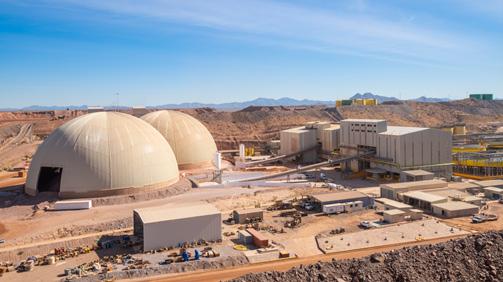
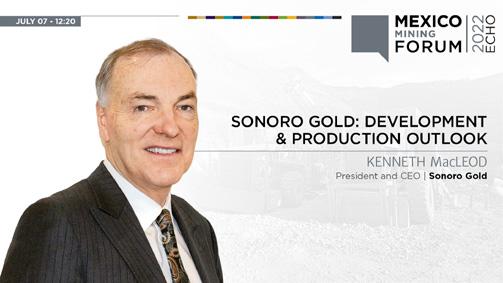
The Cerro Caliche Project in Sonora is developing steadily following three years of operations. Its owner, Sonoro Gold Corp, continues its transition from an exploration player to a full-fledged producing company. The mining player aims to become a gold producer by 2023, said Kenneth MacLeod, CEO, Sonoro Gold Corp.
Sonoro Gold is a publicly-listed gold exploration and development company that has discovered and developed 12 gold and copper mines. Its owns two precious metals properties in Sonora: its flagship Cerro Caliche Gold Project and the San Marcial Project. Cerro Caliche is located 3 hours north of Hermosillo and 3 hours south of Tucson, Arizona. The state’s friendly jurisdiction first-class infrastructure, in addition to the neighboring gold mines, add value to the already alluring project.
“One of the finest places to find new gold mines is where the old-time mining operations were scraping around a hundred years ago. When we acquired the Cerro Caliche Project in 2018, there were around 10 old mining developments and we have been working successfully on them over the past three years of drilling,” said MacLeod.
In May 2022, Sonoro Gold filed the updated preliminary economic assessment
(PEA) of the Cerro Caliche Project, which contemplated an optimized mine plan for an open pit, heap leach mining operation with an initial two-year production rate of 8,000t/d, and an increase to 15,000t/d for the remaining mine life cycle.
Within the highlights of the updated PEA, Cerro Caliche has a US$53.5 million after-tax net present value, a 45.6 percent after-tax internal rate of return with US$26 million initial capital costs, 2.2 years as payback period and a seven-year life of mine.
In September 2018, Sonoro initiated a 10km drilling program at Cerro Caliche. In June 2022, the company reported the results from the last seven drill holes of its Phase IV drilling program, confirming the possible expansion of known mineralized zones. During the exploration program, more than 7,3km were drilled through 63 holes, which intersected higher-grade gold mineralization and confirmed the expansion of several gold zones, as reported by MBN.
Over the past year and a half, several milestones have been completed at the Cerro Caliche Gold Project, said MacLeod, including the environmental impact studies, a preliminary mine plan, many kilometers of drilling, the PEA and an additional 7.3km of drilling to be
added in August 2022. “Sonoro is making a transition from an exploration to a development company and by next year to a production company. We have had a very successful three-year operational period at Cerro Caliche.”
The company has “about 200 years of experience” within its senior management team alone, said MacLeod. The team
is built by John Darch, Chairman and Director, who has 35 years of experience as financier, developer and operator in the international resource sector, a similar profile to MacLeod’s. In addition, the technical team features Melvin Herdrick, VP of Exploration, with over 45 years of experience and Jorge Díaz, VP of Operations, who has almost 50 years of experience as a mining engineer in Mexico.
KOOTENAY SILVER REVEALS COLUMBA EXPLORATION DRILL PROGR AM RESULTS
Kootenay Silver is a silver exploration company actively engaged in the development of major silver projects in Mexico, which include Columba and El Copalito in Chihuahua. Now that more is known about Columba’s potential, the company set about to highlight its potential.

“The follow-up phase two drill program comprised of 43 holes, totaling over 9,114 meters. It targeted infill and stepout drilling within the high-grade F vein and the J-Z Vein area .“It is a very strongly mineralized vein”
James McDonald President, CEO and Director | Kootenay Silver
Columba is a project in northern Chihuahua. It is a classical high-grade low sulfidation epithermal vein system, common for Mexican geology. Kootenay’s 2019 drill campaign was the first to take place in 30 years. Historic data from underground workings at a depth of 100 meters include nine individual channel samples, taken along a 25m length of vein, where several highgrade intervals were reported to return silver values from 350g/t over 1.2m to a high of 1,900g/t over 4m.
Columba hosts a series of high-grade silver veins on the surface as well as extensive underground workings, explained James McDonald, President, CEO and Director, Kootenay Silver. On the surface, four shafts
are reported to extend to depths of up to 200 meters and connect to at least six levels of widespread underground drifts, covering lengths of up to 1km. The majority of this work appears to have been done around 1910, with an estimated 70,000 to 100,000 tons being mined.
By 2020, the company had drilled 6,800m with very consistent results. On the original vein, it had wide-spaced holes along 700m, with big gaps in between. The followup phase two drill program comprised of 43 holes, totaling over 9,114 meters. It targeted infill and step-out drilling within the high-grade F vein and the J-Z Vein area.“It is a very strongly mineralized vein,” said McDonald.
McDonald shared the most relevant highlights from the company’s drilling program in 2021, which includes Hole CDH-21-110. Here, Kootenay found 650g/t silver over 17m within a wider interval of 269g/t silver over 29.9m in the D Vein. Hole CDH-21-103 showed 2,035g/t silver over 6m, within a wider interval of 333g/t silver over 44m, also in the D Vein. Finally, Hole CDH-21-094 intersected 809g/t silver over 2.63m within a wider interval of 354g/t silver over 9m in the F Vein.
Geologically, Columba presented few challenges, according to previous comments from McDonald. “There is enough exposure to be able to map the veins and targets fairly easily. However, the agreement to acquire the rights to the concession took a year. Our team in Mexico
negotiated the mineral rights and access to the surface, advancing the negotiations in a very fast and professional way,” he said. Financially, McDonald explained the company has had 359 million shares issued
and an average daily volume of 763,195 shares. “There is an excellent leverage to silver and as Columba is a high drill discovery we can guarantee a probability of investment,” he said.
OPTIMIZE MINE OPERATIONS AND MINIMIZE CARBON FOOTPRINTS
The mining industry creates close to 3 percent of global CO2 emissions and has a large role to play in the reduction of these emissions, according to McKinsey & Company. To achieve a less than 1.5°C temperature increase climate-change target by 2050, the mining industry will need to reduce direct CO2 emissions to zero.
Technological advances have amplified the sector’s environmental impact as operations grow, but they also have the power to diminish this effect. “First of all, being able to measure the environmental impact of each company is fundamental,” began Matt Gallimore, Senior Manager Sustainability, MetsoOutotec. The company, which develops tech and other products for mining and refining companies company, measure CO2 emissions. With these measurements, Metso Outotec hopes toreduce its own emissions too, through which it can becomeexample for its customers.
Once companies have an outline of their environmental impact, tech can become an ally to work on an effective way to mitigate
this issue. “For decades, this industry has worked without knowing what will happen along the way. Tech allows to change this scenario in every way, from operations to the very impact that mining activities may have,” said Fernando Gómez, Account Manager North America and Mexico, Minesense.
Gómez explained that Minesense grants customers adequate visibility in their real time operations. The company pioneers in digital mining solutions with data analytics for mines that paint a clear picture for clients looking to optimize operations andcontrol pollution. “Our systems also support all routing decisions at the point of extraction, minimizing risks integrally,” Gomez said.
For the mining industry, which often operates in remote locations, the utilization of fossil fuels has strongly influenced emissions. Like other sectors, the mining industry also struggles with fluctuating oil prices and evolving climate regulations. “ realizing the problem, rentar Fuel Catalyst developed a unique, patented product with
a low carbon output, all while increasing productivity for the mining industry. It allows to reduce carbon emissions significantly by increasing the efficiency of fuels,” ricardo Gentzsch, Business Development, r entar Fuel Catalyst.
All providers along the mining value chain share the same level of responsibility to reduce the environmental impact of mining. For companies working directly with mining operators, costumer feedback helps to create the most comprehensive solutions. “As an equipment manufacturer, we do not have mines of our own to test, so validation always requires costumer involvement. We are keen to present innovation to costumers to reduce the water usage and energy consumption of equipment.The company is also encouraging the circularity of products while ensuring the highest level of security,” shared G allimore.
As the industry begins to integrate more tech, digital twins and machine learning are widely requested, Gallimore said. “Innovation in risk management can help mitigate the negative impact of a volatile operational environment and keep our operations running,” said Chafika Eddine, Chief Sustainability Officer, Orla Mining.
yet Innovating mining processes is not only about reducing the ecological footprint, but
also considers making the business more efficient whole minimizing operating costs, according to Gentzsch. For instance, using smart fuel enables operations to reduce costs and accomplish their daily tasks, too. “ rentar Fuel Capacity’s solution uses tech with a complete combustion that burns less fuel while improving operations,” he said.
“With our solution, we measure consumption steadily and make it more sustainable. By knowing what equipment uses the fuel and how to make it as efficient as possible, we are reducing the amount of diesel that mining operations are using,” Gómez said.
Tech has also evolved other operational aspects. Gallimore said these were equipment design, operational processes and interconnection. “Through this, we are able to create simulations to come up with an optimal offer for green and brownfielddevelopment. Clients can base their decisions on these simulations.”
Companies are also facing logistical concerns and supply chain shortages, as well as pressures from inflation and rising interest rates, explained Eddine. For these reasons, creating innovation to decarbonize the mining industry could play a meaning full role in reducing the supply chain emissions while solving these financial challenges, explained Gentzsch, who added that
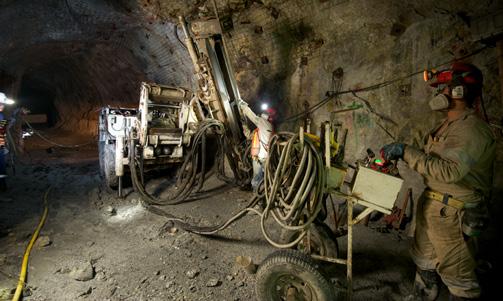
creating a diversified team ensures fresh ideas are brought to the table.
Water usage is yet another key focus area.
“To continue operating at the same rate, water is fundamental. But its reserves are
declining, forcing us to extract more water from the ground and filter it. r educing water consumption is fundamental, so we are already increasing the adoption of dry technology whereverpossible,” said Gallimore.
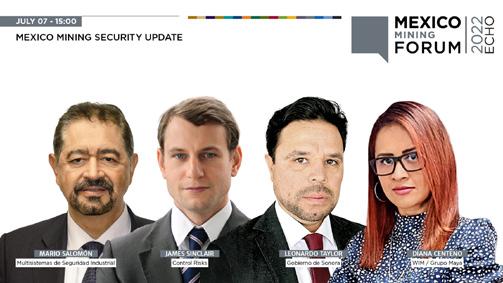
REGULATION, STABILITY CRUCIAL TO ATTRACT INVESTMENT
Despite the global supply chain disruptions, local restrictions on new concessions, delays in permitting and legal uncertainty, Mexico remains a very attractive destination for investment in the exploration, development and production of mining projects, agreed experts in finance and investment.
“Mexico is a very attractive place to mine. The country has a long history in the industry and we have access to a highly experienced labor force, which is crucial. There are tremendously attractive projects. Comparatively, the country has a stable economy and currency, in addition to well-established mining laws. There is some uncertainty and that makes it harder for newcomers, but we have been successful in Mexico for a long time,” said Christine West, CFO, Endeavour Silver.
Endeavour Silver has several exploration and development projects in Mexico, in addition to two operational mines. Acquired by the company in 2004, the Guanacevi mine is Endeavour’s first and highest-grade silver
mine. Located in Durango, the mine’s plant capacity was expanded by 100 percent to 1200t/d. Guanacevi provides steady employment to over 500 people and engages around 400 contractors. Endeavour acquired its second mine, Bolanitos, in 2007. Located in Guanajuato, this mine provides steady employment to over 380 people and hired about 250 contractors.
Despite the boom that NAFTA brought to mining exploration in Mexico in the 90s, “there are still big pieces of land to explore and great discoveries to be made,” said Michael Wood, CEO, reyna Gold.
r eyna Gold, founded in 2017, focuses on gold exploration in Mexico’s northwest. The company has four properties covering 570km2 on the Mojave-Sonora Megashear and the Sierra Madre Gold and Silver Belt. “The properties have been acquired due to their similarities to the gold properties in Nevada and California,” Wood wrote for MBN.
Though the opportunities remain attractive for both local and foreign investors, mining is a capital-intensive activity. r eturns on investments usually take years to materialize. Therefore, contradictory messages from the government have raised concerns among industry leaders. Earlier this year, the initiative to nationalize lithium “unfortunately set a precedent,” said Wood. This measure took Mexico off the radar of many investors, dropping investments during 1H22, he added.
The drop of investment during 2022 also has to do with commodity prices amid the accelerated demand for some minerals brought by global sustainability efforts, said Bill Brodie Good, CEO, Alien Metals. “With the long history, the skillset and geology of Mexico, in addition to a degree of settling down in the global markets, investment will come back soon, stronger than ever,” he added.
Alien Metals is a UK-based exploration and mining project developer. The company has three projects in Mexico: San Celso, Los Campos and Donovan 2, all high-grade silvercopper-gold projects in Zacatecas. After the COVID-19 pandemic, which delayed Alien’s plans during two years, the company has resumed exploration at its three properties.
Despite the spun-out uncertainty, overall mining activities have been fairly stable in the country, said West: “Investors do not like a high level of uncertainty. Mining and exploration already have a high level of
uncertainty as such. However, [regulations and conditions] have been steady overall, with no new mining taxes.”
Financing Mining Projects
Environmental, social and governance (ESG) criteria have become progressively crucial for mining companies over the past years. From the impact to the ecosystem, waste treatment and safety provided to employees and communities involved to companies’ corporate governance practices, ESG became a decisive factor for investors.
“ESG has been practiced for a very long time at many mining companies. Health and safety have always been crucial for us. It has become an essential part of every project. Investors will scrutinize the people on the board, to check if they follow the guidelines and see if they genuinely engage to complete the projects,” said Good.
r egardless, a sound project remains the key to raise funds, said Wood. “The core project remains crucial. It is not easy to find good projects in the world and that is the beauty of Mexico. There are many great projects to attract capital,” he added.
Large-size projects have become difficult to finance, said West. Companies must be able to provide a god I rr and countries with clear jurisdictions, stable economies and currencies, will favor investments, she added.