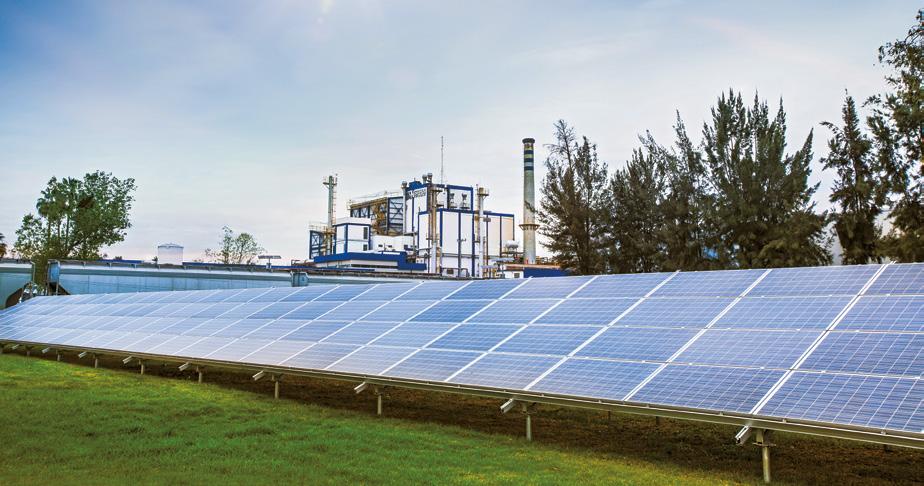
Mexico completed its first decisive steps toward a liberalized and competitive energy market in 2017 and is determined to stay the course. The country’s liberated energy mix now welcomes different technologies, which combined will meet the clean energy requirements Mexico pursues. The three rounds of the long-term electricity auctions showcased the competitiveness of several technologies against fossil fuels, including solar, wind, hydroelectric and geothermal.
To further incentivize the number of market participants, Mexico’s authorities introduced the Clearing House during the third long-term auction, allowing private players to purchase energy on a level playing field with CFE, effectively ending the practice of the first two auctions in which the productive enterprise of the state was the sole purchaser. In addition, the first midterm electricity auction was launched in August 2017, offering terms that enable commercial banks to actively participate and complement development banks’ efforts in securing the country’s energy transition.
As Mexico’s installed capacity powered by clean technologies is set to increase, the country’s infrastructure needs to be ready not only to absorb it but to distribute and transmit it efficiently and securely. Disruptive and trend-setting innovations, such as smart grids and energy storage, are set to put the country’s revamped infrastructure to the test.
The publisher has made all reasonable efforts to provide accurate information, and the information contained in this publication is derived from sources believed to be true and accurate. However, the information in this publication should not be considered to be complete or definitive, and may contain inaccuracies or typographical errors. The publisher accepts no responsibility regarding the accuracy of information and use of such information is at your own risk. The publisher will not be liable to any party for any direct, indirect, special or other consequential damages arising out of any use of information in this publication. The publisher provides no representations or warranties, express or implied, including any implied warranties of fitness for a particular purpose, merchantability or otherwise in relation to any information provided by the publisher in this publication.
ISBN: 978-0-9993108-6-1
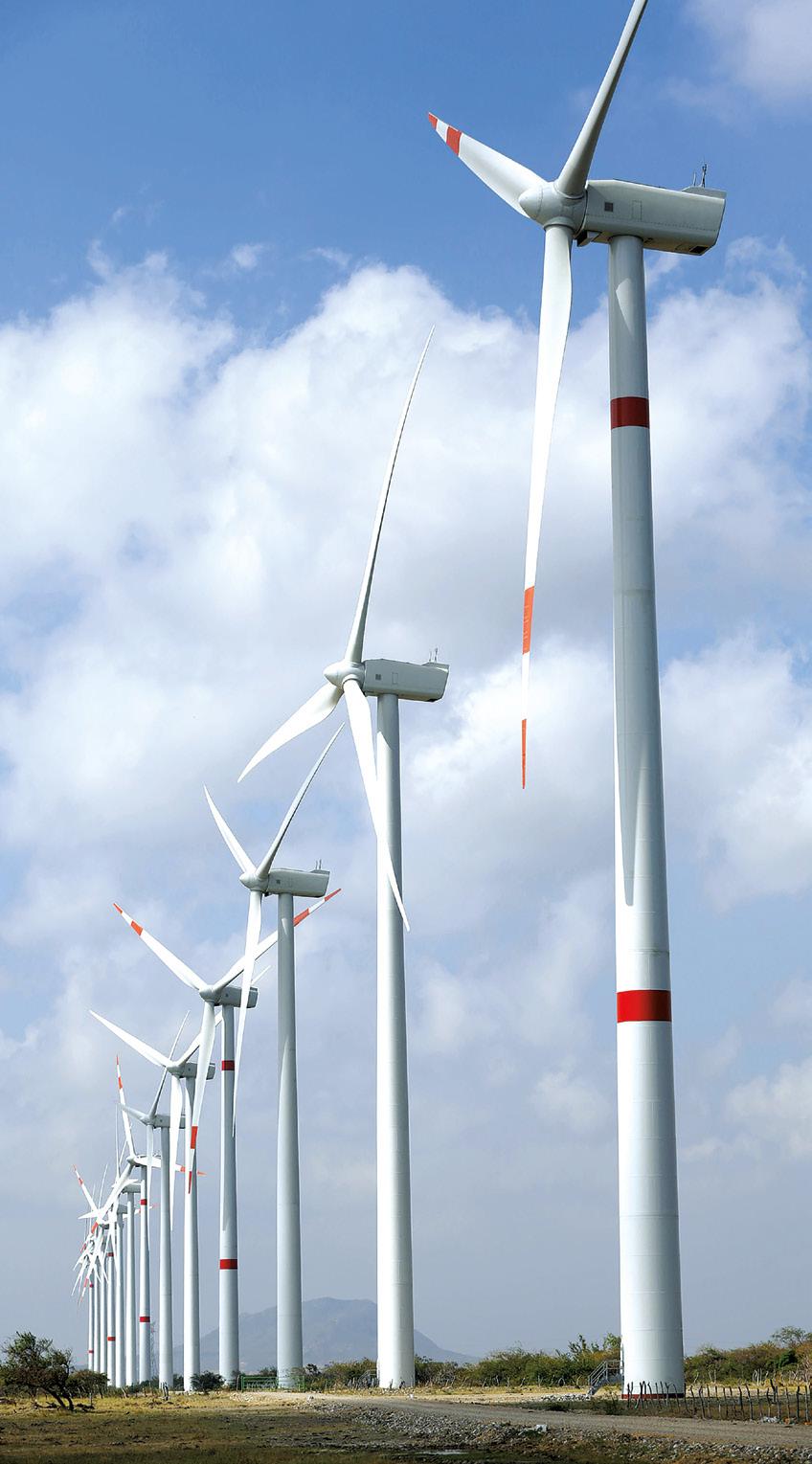
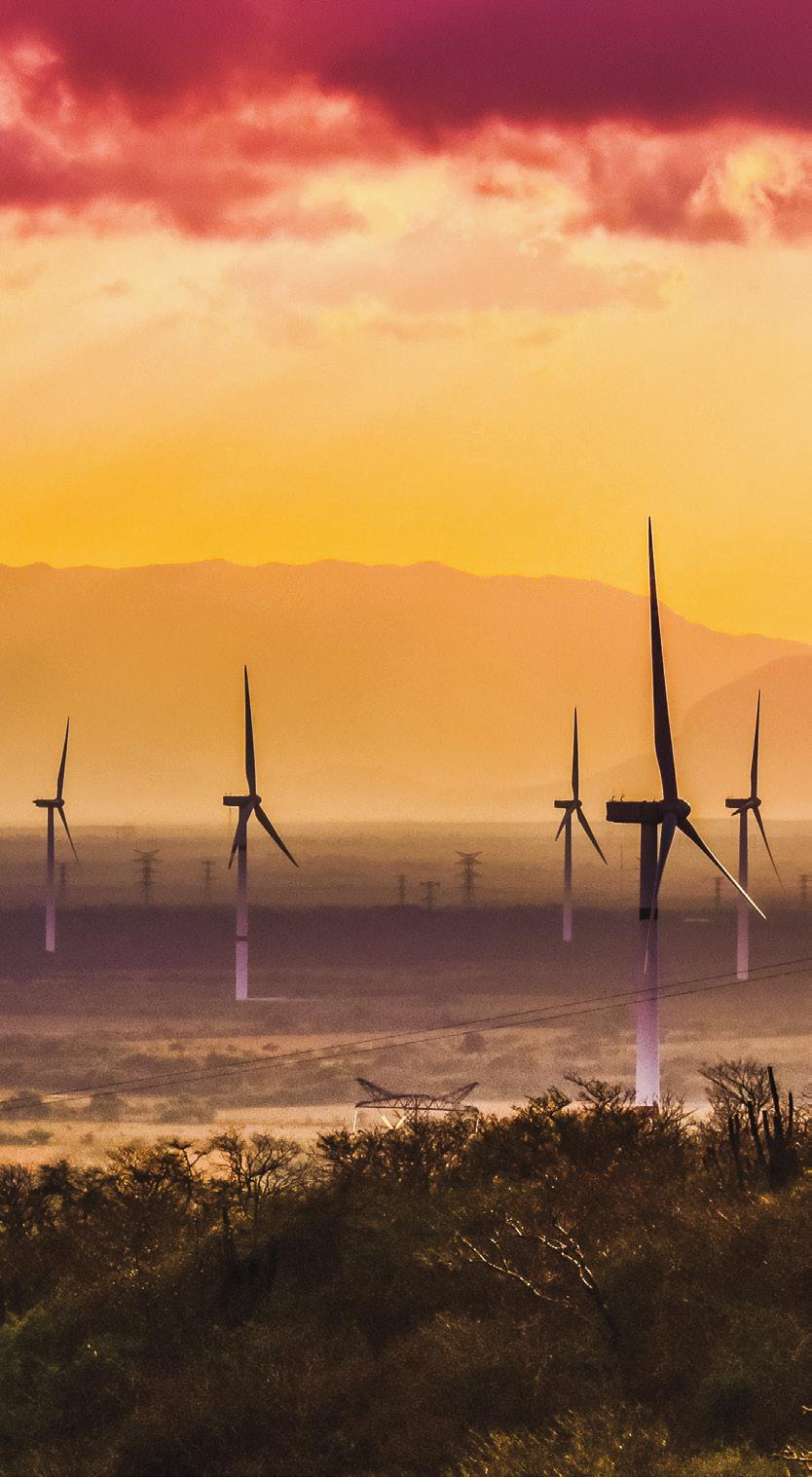
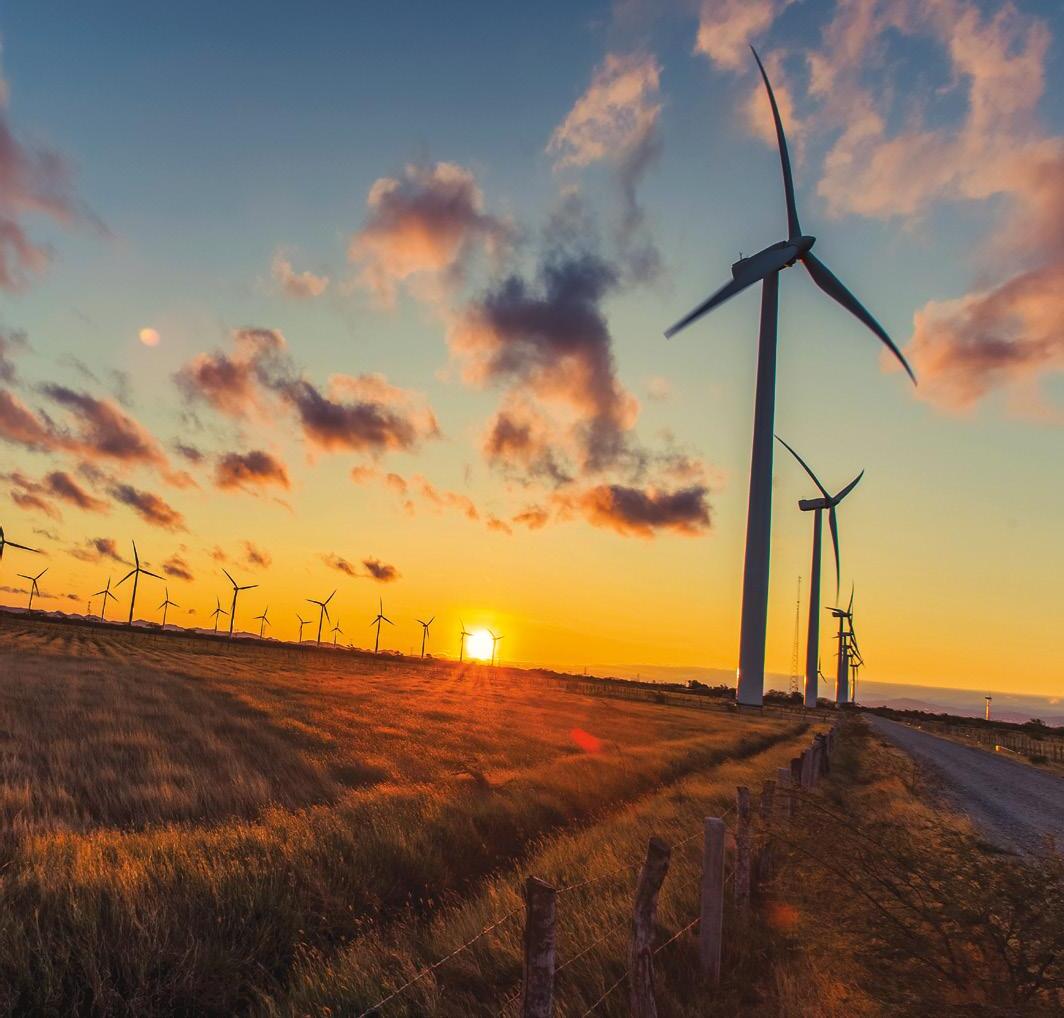
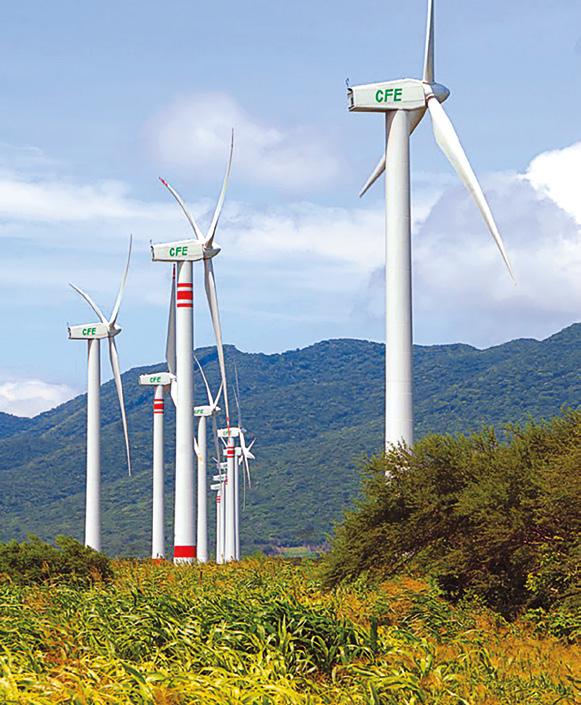
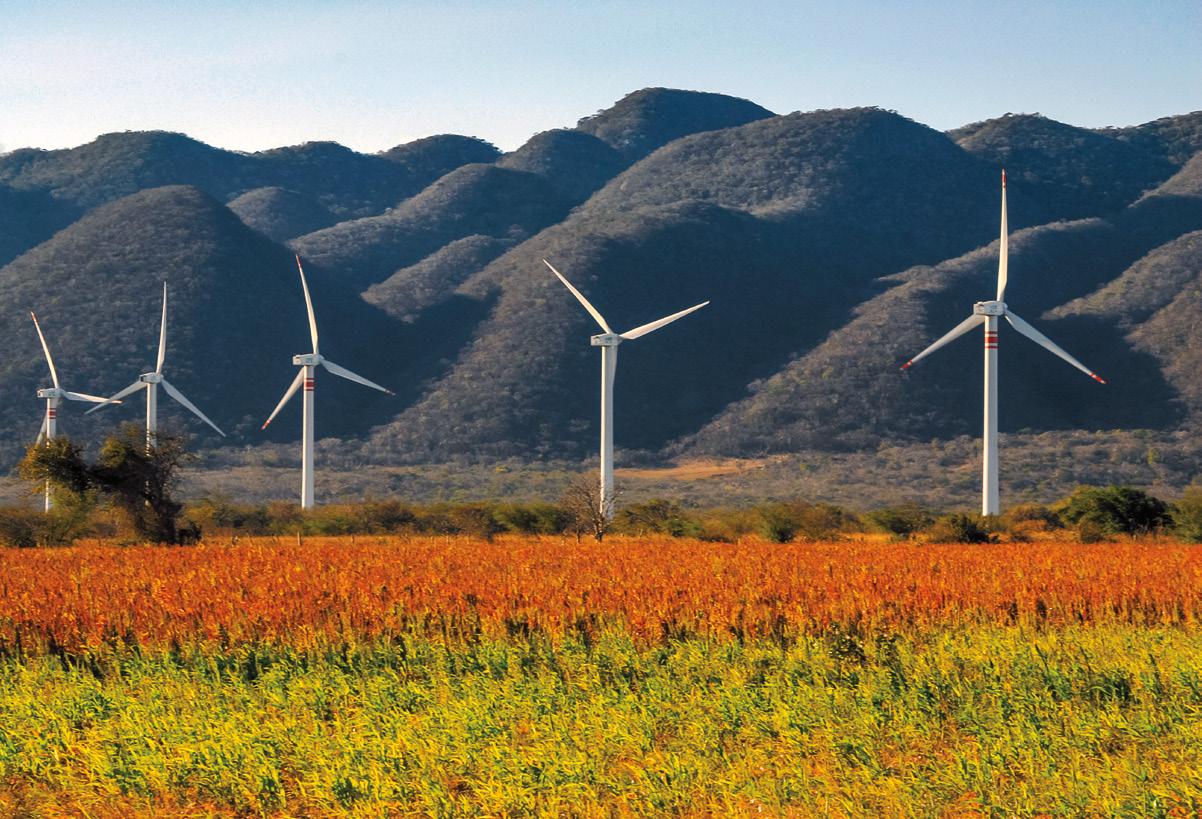
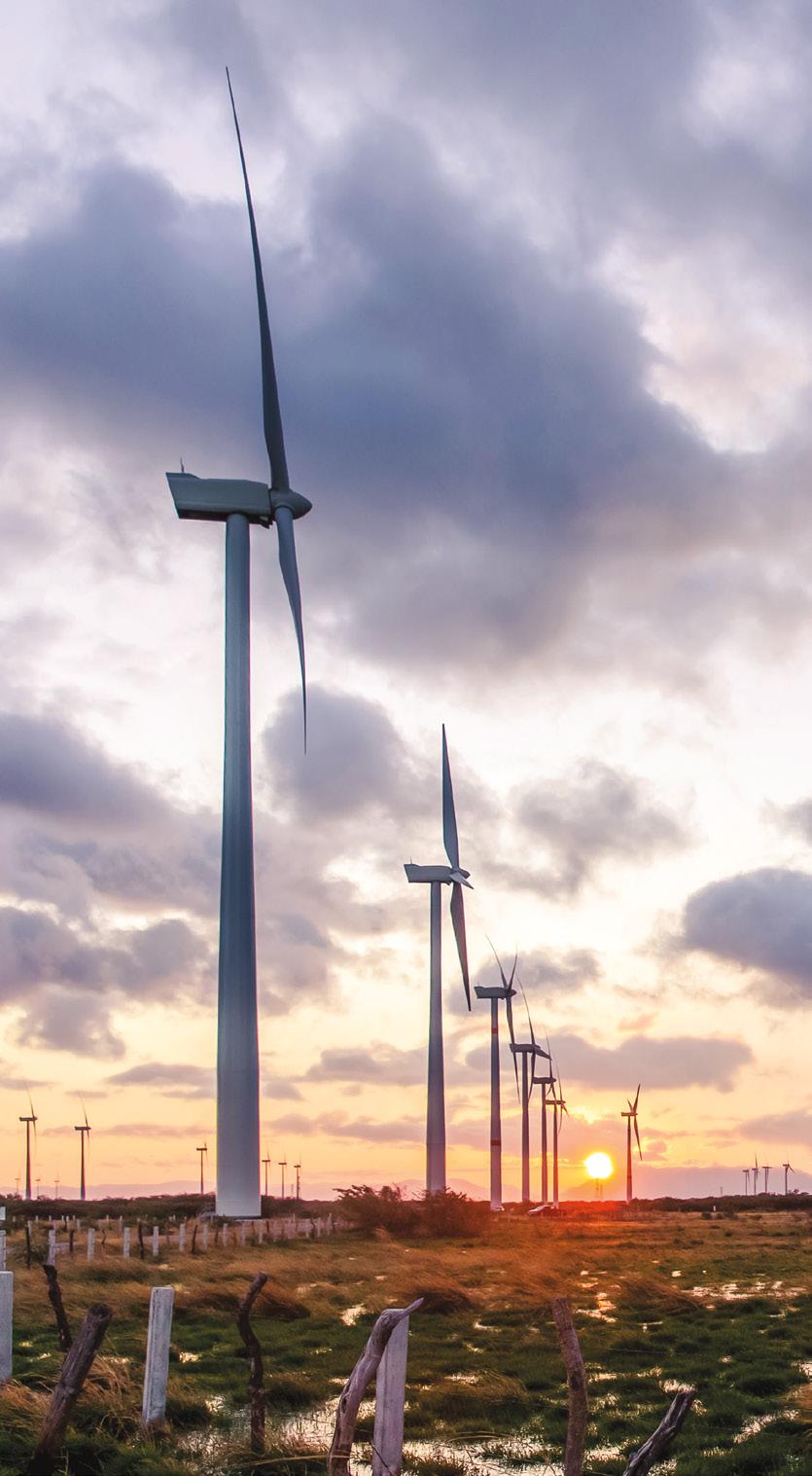
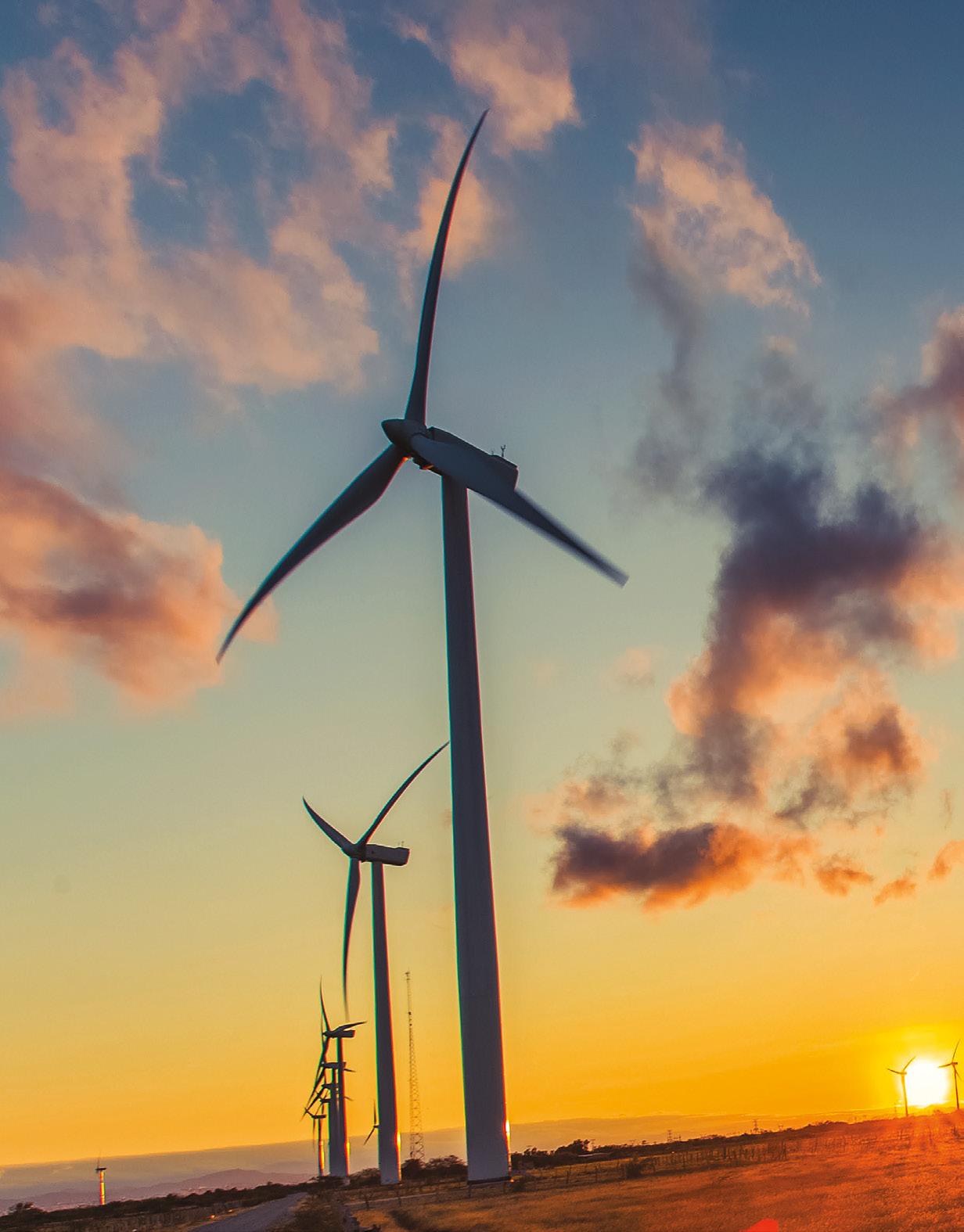
La Venta wind farm, Oaxaca
STATE OF THE INDUSTRY
1As power production and commercialization open for business, local and international players are looking to capitalize on the new opportunities in a liberalized market with a level playing field. CFE has preserved its transmission and distribution responsibilities and is taking head on the challenges of becoming a full-fledged and profitable public enterprise.
Three long-term electricity auctions, one midterm auction, the financial closing of utility-scale projects and the increasing relevance of distributed generation and energy trading are but a few of the major issues discussed in the next pages.
This chapter provides a glance at the major milestones achieved in Mexico’s electricity and renewables sectors, both from the regulator’s perspective and the valuable insights of key players across the value chain on the industry’s opportunities, challenges and major trends.
CHAPTER 1: STATE OF THE INDUSTRY
8 Analysis: The Year in Review
12 View From The Top: Pedro Joaquín Coldwell, Ministry of Energy
14 View From The Top: Fernando Zendejas, Ministry of Energy
15 Insight: Leonardo Beltrán, Ministry of Energy
16 View From The Top: César Hernández, Ministry of Energy
18 View From The Top: Jaime Hernández, CFE
20 View From The Top: Guillermo García, CRE
22 View From The Top: Marcelino Madrigal, CRE
23 View From The Top: Guillermo Zúñiga, CRE
24 View From The Top: Jesús Serrano, CRE
25 View From The Top: Montserrat Ramiro, CRE
26 Insight: Luis Pineda, CRE
27 CRE Organization CHART
29 View From The Top: Eduardo Meraz, CENACE
30 Insight: Juan Acra, COMENER
31 Insight: Alfredo Álvarez, EY
32 View From The Top: Ángel Lárraga, AME
33 Insight: Sergio Arnaud, ANES
34 Roundtable: How Would You Rate Mexico’s Energy Regulatory Framework?
ANALYSIS
THE YEAR IN REVIEW
From regulations to auctions, 2017 saw Mexico put in the necessary legwork to make its market liberalization efforts pay off in terms of new projects and the boosting of clean energy sources that will help the country realize its ambitious goals for sustainable energy and wider electricity availability
Mexican regulators have pulled all the stops to provide the required regulatory framework that will strengthen every link of the industry’s value chain and guarantee competitive schemes so that all players can compete on a level playing field. For the energy industry, 2017 was about maintaining, and even ramping up, the momentum from the year before
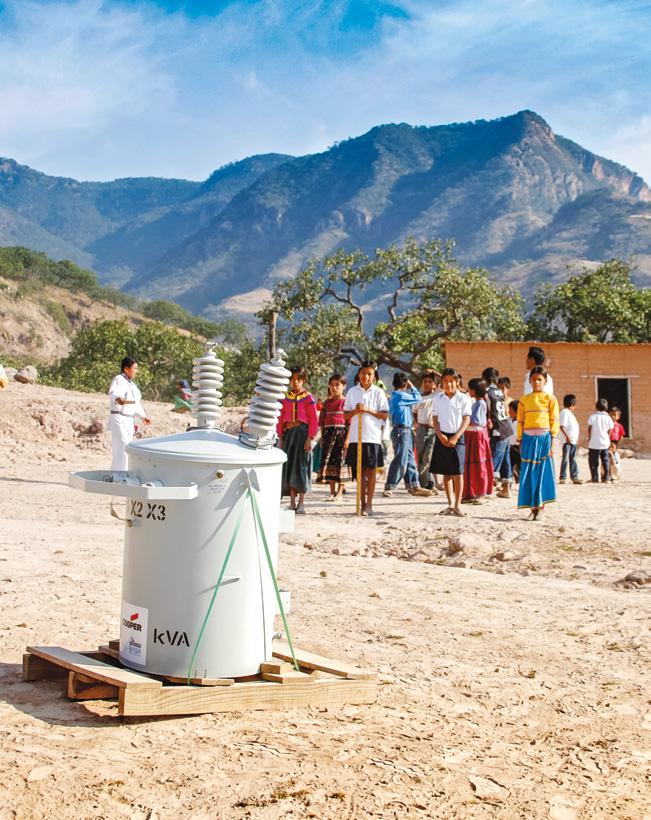
While staying true to its objective of increasing electricity generation through clean energy sources up to 35 percent of the country’s total energy mix by 2024, Mexico has also set an ambitious 100 percent coverage goal through the Universal Electric Service Fund, launched in May 2017. Considered as the social face of the Energy Reform by Minister of Energy Pedro Joaquín Coldwell, the fund is intended to extend CFE’s electricity distribution capacity to the doorstep of remote communities and also to install off-grid systems where extending the grid is not viable.
The Ministry of Energy published the first tender for offgrid contracts to install more than 10,000 off-grid systems that will impact 898 municipalities across 11 Mexican states and benefit approximately 45,000 habitants, amounting to an investment of US$23 million. The second phase of the fund, announced on Nov. 13, 2017, called for the country’s productive companies of the state and their affiliates to participate in the extension of the public service of electricity distribution by presenting grid extension projects aimed at homes located anywhere between 1 and 12km from the nearest grid.
Mexican development banking represents a joint portfolio of more than US$2.5 billion dedicated to renewable projects
Capitalizing on the success and learning from the results of the first two long-term electricity auctions, the terms for the third long-term auction, published in May 2017, took Mexico’s energy transition one step further, and expectations were high. Coldwell declared that this third edition could triple Mexico’s electricity production from clean energy sources and continue the low tariff tendency of the previous two
editions. Confirming Coldwell’s estimations, the results published on Nov. 22, 2017 produced an average package price for MWh and CELs reached US$20.57. Another US$2.4 billion in investments and 2.7GW of additional installed capacity powered by clean energy are expected. One key feature set apart this third edition: the Clearing House.
Through this innovative instrument, CFE will no longer be the sole purchaser of power, energy and CELs, opening the door to private players after proving their credit worthiness. KPMG’s Energy and Natural Resources Lead Partner Rubén Cruz says the Clearing House is a “positive step toward building up an energy market. The reform’s mandate clearly stipulates reaching a wholesale market with diversified purchasers and suppliers. A single offtaker, instead of creating market conditions, impacts power producer’s margins and value through the former’s purchasing power.”
While the industry welcomes the Clearing House, some note that these are still early days; it will take time before the true effect of the entity is realized. “Mexico’s renewable energy scene is seeing an increased number of private energy traders and suppliers, but the aggregate volume they can purchase in the market at the moment is not significant enough for the Clearing House to have a decisive and notable impact,” says Eduardo Reyes, Partner Power and Utilities of Strategy&, a PwC company. “We anticipate that the energy percentage that other suppliers, outside of basic supply, will purchase through the chamber will be relatively low, although it will keep growing over time. In the longterm, as the energy volume increases, the impact will be consequential and will be reflected in the final consumer price through increased volume and the number of private suppliers offering energy.”
The year also saw the country release terms for its first midterm electricity auction, the goal of which is to provide certainty and reduce exposure to price volatility for electricity spot-market players. In August 2017, the Ministry of Energy launched the auction, with the results set to be announced in February 2018. The primary objective of this new instrument is to allow energy suppliers and energy purchasers to participate in contracts with terms no longer than three years. “Private players are hesitant to sign longterm bilateral contracts given that predicting market behavior is complex, while renewable technologies are
experiencing a downward slope in costs. Three-year terms provide acceptable risk levels as well as equating tariffs with market tendencies,” says Cruz. In comparison to the longterm electricity auctions, “shorter terms mean different financial schemes. This is where commercial banking feels more comfortable and more likely to participate through mini-perms,” says Marian Aguirre, Energy Finance Deputy Director of Bancomext.
As a testament to Mexico’s commitment to empowering consumers through a liberalized energy market and transitioning to a cleaner energy mix – enshrined in the Energy Reform – the country was admitted as a new member of the OECD’s International Energy Agency (IEA) by a unanimous vote on June 21, 2017. The agency determined Mexico’s energy policy is aligned with the IEA’s shared objectives of following international best practices and designing policies oriented toward sustainability and market competitiveness.
BANKABLE PROJECTS
Making long-term electricity auction projects bankable is one of the biggest challenges posed by the new market. Compartmentalizing risk within the different stages of the project, relying on best practices, integrating innovative financing schemes and reaching financial closure are but a few of the elements that turn project development into a success story. “So far, two strategies have dominated the auction process: either you equate your offer price to your cost structure and see if it sticks, or you take a deeper look at the market, the competitive context and converge accordingly with the value chain to identify the prices that need to be reached,” says Adrián Katzew, Director General of Zuma Energía. “In contrast, the execution phase is highly specialized, working with banks and contractors to close pending contracts and begin project construction. This stage is particularly fulfilling in the sense that we are defining unprecedented financial structures – meeting the requirements of annual energy volume, CELs, alternate markets that used to honor those obligations – and studying their intrinsic risks in relation to our business.”
Development banking institutions will have a key role to play in ensuring the success of the auction projects, which in turn will send positive signals to the market. “Banobras finances infrastructure projects, NAFIN focuses on production chains and Bancomext fosters foreign trade. Despite specializing in different segments and having different mandates, all three development banking institutions are placing capital in energy projects to respond to the sector’s high financing needs. Put together, we represent a joint portfolio of more than US$2.5 billion dedicated to these projects,” says Aguirre.
MAIN EVENTS IN THE ENERGY INDUSTRY 2017
Month Event
January Power Balancing Market starts operations
February Pre-basis for the Oaxaca-Valley of Mexico HVDC transmission line project bid published by the Ministry of Energy
May
First stage of the Universal Electricity Fund (FSUE) program launched by the Ministry of Energy with isolated-supply tenders
June Mexico’s candidacy for the International Energy Agency’s (IEA) full membership approved by the agency
August Ministry of Energy launches first midterm electricity auction. Results expected to be announced in March 2018
Ministry of Energy publishes 2017’s update on the Smart Electricity Grid Program
September Ministry of Energy announces new financing model for electricity transmission and distribution lines
November Conclusion of the third long-term electricity auction
Second FSUE tender for companies and affiliates to offer grid extensions to existing public distribution services
CRE publishes the Basic Supply Tariff for the reference of Qualified Suppliers
December Pre-basis for the Interconnection Project to connect Baja California’s isolated system to the rest of the National Electricity System announced by the Ministry of Energy
Mexico’s Senate ratifies the country’s membership to the IEA
Ministry of Energy delivers to CRE the First Electricity Market Rules package
Enel Green Power’s 250MW Villanueva 3 PV plant in Coahuila, awarded during the first long-term electricity auction, launched commercial operations
The Capacity Balancing Market starts operations
Scheduled awarding of the Oaxaca-Valley of Mexico HVDC transmission line project
Source: DOF, CENACE, CRE, Ministry of Energy
Social impact is the other element that project developers need to tackle head on. “Energy projects need to be directly related to social development. Energy projects are by nature long-term investments and are sprouting in
different locations, surrounded by different communities. Coherent corporate social responsibility policies are at the core of this necessity. Companies that show resolve in finding ways in which a project can give back and have a positive impact on a community’s quality of life are those that will see their project prosper in the long term,” says Ángel Lárraga, President of AME and Gas Natural Fenosa.
The success of the long-term electricity auctions will become apparent in 2018 as most of the projects awarded during this auction are set to start operations in the first quarter. Enel Green Power showcased the first tangible success case as its 250MW Villanueva PV park, awarded during the first auction, entered commercial operation in the wholesale electricity market on Dec. 18, 2017 and is now injecting renewable energy into the National Electricity System.
STRONGER AND SMARTER INFRASTRUCTURE
Boosting Mexico’s installed capacity to address the expected increase in demand for electricity also requires sturdy and lengthy infrastructure to transmit and distribute it to key consumption points. Controllable demand and automated processes will be at the core of strengthening the grid by avoiding saturation and guaranteeing a seamless supply of electricity. “In 2017, we published the Program for Smart Electricity Grids. We designed a systemic vision to integrate new technologies under specific time frames, mirroring international tendencies. Progressive incorporation of energy storage, controllable electricity demand, electric cars and IoT are contemplated in this program,” says César Hernández, Former Deputy Minister of Electricity at the Ministry of Energy.
PRODESEN is scheduling the construction of 23,772km 2 of transmission lines , representing a total investment of US$11.5 billion
In line with Mexico’s Electricity System Development Program (PRODESEN), the Ministry of Energy developed a new financing model for electric transmission lines where private third parties can participate. The announcement of the first bid for a major transmission line project, parallel to transmission line development on behalf of CFE with private players, was announced in December 2017 to connect Baja California to the rest of the country’s National Electricity System. In its latest 2017-2031 version, PRODESEN is scheduling the construction of 23,772km2 of transmission lines, representing a total investment of US$11.5 billion.
Mexico’s energy authorities are not alone in this effort: “We are backing PRODESEN’s process of developing the country’s electricity network. There is a significant investment forecast in the expansion and digitalization of the network and we are pushing for an automated and smarter network with balanced power loads, as well as providing the equipment for a sturdier grid,” says Alejandro Preinfalk, Vice President of Energy Management for Siemens Mexico.
Another major player in Mexico’s energy scene, Acciona, has stepped up to take on the challenge of building two transmission lines and two power substations, in Sinaloa and Sonora, for the Topolobambo III combined cycle plant, representing a US$24.5 million investment. The project is expected to be finalized by March 2019.
DISTRIBUTED GENERATION 2.0
While on-site power generation is an important element of the country’s Energy Reform, Mexico had already experimented in that area prior to 2013, with bidirectional contracts with CFE and regulated by CRE. The scheme stipulated that whenever energy surpluses were produced, CFE stored them in a virtual energy bank for one year to be used at a later date. This initiative was the precursor to creating an appetite for residential and commercial solar systems in Mexico.
“Distributed Generation 2.0 regulations allow the closing of an interconnection contract with CFE through which you can not only store energy surpluses but also sell them under net billing and net metering schemes,” says Guillermo Zúñiga, Commissioner of CRE. Between 2013 and 2017, according to CRE’s statistics, small and medium-scale interconnection contracts increased from 4,613 to 40,109, respectively. Installed capacity in that period went from 29,131kW to 304,167kW, an impressive tenfold increase.
Although distributed generation in Mexico can now operate within net metering, net billing and wholesale schemes, the final users expected to benefit from these new schemes are still primarily relying on net metering as CRE’s secondary regulations roll out. “Very few contracts have been signed under these schemes. The main issue involves price certainty, as local marginal prices vary on an hourly basis. This fluctuation makes it difficult to design a long-term financial model that aligns with these variations, especially considering that an interconnection contract can span the better part of 25 years,” explains Rodrigo Pantoja, Director General of Greentech Ingeniería Sustentable. “Net billing suffers from similar hurdles. It is difficult to predict at what price the generated electricpower surplus will be sold. Net metering seems to be the
most viable option in terms of certainty, especially because the electricity system’s capacity has been increased for inclusion in the net metering model. Previously, domestic high consumption and commercial tariffs were capped at 30kW of electric capacity. Now, those have increased up to 50kW.”
While the industry feared that CFE’s amparo pertaining to interconnection requests from burgeoning small-scale, renewable powered systems could derail distributed generation’s growth, companies involved in distributed generation and solar power associations were reassured when interacting with CFE regarding this issue. “When CFE acquired legal protection against the interconnection rules published by CRE, ASOLMEX sat down with CFE. Instead of burning bridges, we looked for a way to fix the problem. CFE was not able to handle so many interconnections in such a short time. After those talks, both CFE and the companies involved in distributed generation were ready to keep working together,” says José Zambrano, Director General of Galt Energy.
STRENGTHENED REGULATOR
In the first years of the Energy Reform, the Ministry of Energy had a preponderant role in crafting the policies and priorities for Mexico’s electricity industry while CRE transposed the Ministry of Energy’s vision into the regulatory framework. In the case of the electricity auctions, CENACE undertook the design and unfolding of this innovative mechanism to inject clean energy into the country’s power mix, while CRE acted as technical adviser. With the fourth edition of the longterm electricity auction looming on the horizon, CRE will now coordinate the design of the fourth auction, while CENACE will implement it and the Ministry of Energy will act as technical adviser. “We will not change what is working well. CRE’s message to all interested parties is one of continuity and any eventual change will help make auctions more attractive to potential participants. Financial entities are growing accustomed to the auction’s new schemes and are developing project finance mechanisms. We want to maintain their interest in the auctions,” says Guillermo García, President Commissioner of CRE.
CRE will also be responsible for announcing all tariffs pertaining to the electricity industry, the first of which was the Basic Supply Tariff published on Nov. 29, 2017. “Tariff methodologies have already been approved and published. The relevant point is that these tariffs will be based on the monthly electricity generation cycle, while they previously were calculated based on a 1990s methodology that used a fixed power-producing mix where price was solely impacted by fuel price
ENERGY GENERATION IN MEXICO DURING 2016 PER TECHNOLOGY
Total Generation 319,364GWh
Total conventional energy generation 254,496GWh
79.69% Conventional
20.31% Clean
63.02% Combined Cycle
15.85% Conventional Thermoelectric
13.44% Coal
4.95% Turbogas
1.50% Fluidized Bed
1.23% Internal Combustion
Total clean energy generation 64,868GWh
Source: Ministry of Energy
47.65% Hydroelectric
16.29% Nuclear
16.13% Wind
9.48% Geothermal
7.79% Efficient Cogeneration
2.33% Bioenergy and FIRCO
0.33% Solar
0.01% Regenerative Breaks
variations. This new attribution is historic as tariffs will be determined for the first time by an independent, autonomous regulator, contributing to the market’s development,” García adds. During a ceremonial official act on Dec. 20, 2017, the Ministry of Energy handed to CRE the First Electricity Market Rules package, containing the operative dispositions in accordance with the Electricity Industry Law’s Third Transitory Article. The package includes the Fundamentals for the Wholesale Electricity Market, 27 Market Practice Manuals and one Operative Guide.
This act signaled the official conclusion of the emission of the First Electricity Market Rules, which integrate global best practices adapted to the country’s specificities to ensure Mexico’s electricity market operates efficiently. From this point on, CRE will be the regulatory body that evaluates and determines the further modifications or updates required as the market evolves.
FOSTERING COMPETITION AND INVESTMENTS TO CONSOLIDATE ENERGY MARKET
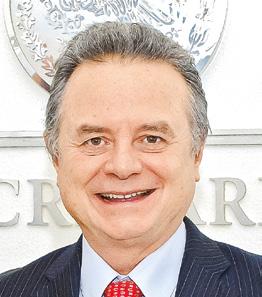
PEDRO JOAQUÍN COLDWELL Minister of Energy
Q: What major achievements have helped the Ministry of Energy strengthen Mexico’s electricity sector?
A: To date, we registered 32 companies participating as power producers, qualified suppliers and traders and an additional 32 have already signed market entry contracts with CENACE. A new milestone was set by the third longterm electricity auction as the lowest MWh plus CELs package price yet was obtained at US$20.57. With the conclusion of the first three electricity auctions, US$9 billion in investments and 7,000MW of additional solar and wind power generation capacity are expected, effectively quadrupling the county's renewable energy infrastructure by 2020 in comparison to the beginning of this administration in 2012. The Ministry of Energy unveiled the new contractual model for the construction of transmission lines, in which private players can participate in financing, development and operation of such infrastructure through competitive and transparent bids. We also published the first tender basis for the development of an interconnection project for Baja California with the rest of Mexico’s National Interconnected System.
In January 2017, we also disclosed the new technical and administrative guidelines enabling small-scale electricity consumers to generate their own power and connect to national distribution grids in a simpler manner. This boost for distributed generation means users can install PV systems on their own residential and commercial roofs to cover part or all of their electric consumption needs and reduce their electricity consumption costs.
May and November 2017 mark the first two Universal Electric Fund (FSUE) sessions, meant to be the social face of the Energy Reform and funded by contributions from the wholesale electricity market participants. Through CFE’s extension of distribution grids and private companies’ contribution to installing off-grid PV systems, electricity will be within the reach of 1.8 million citizens who would otherwise remain deprived of it.
Q: What lessons has the Ministry of Energy learned from the auctions?
A: Mexico can be a launching pad for profitable clean power generation projects. Auction results attest that Mexico has joined the international trend of lowering generation costs. During the first auction in March 2016, the average package price per MWh and CEL reached US$47.78 and attracted US$2.6 billion in investments while the second auction attained a 30 percent lower average price, at US$33.47 and will contribute US$4 billion in investments. The latest auction surpassed expectations further as costs fell as low as US$20.57 for the MWh plus CELs package and reached prospective investments to the order of US$2.4 billion.
Q: What outstanding results has the coordination with other government agencies yielded?
A: The Ministry of Energy maintains a constant and extensive inter-institutional coordination mechanism whereby different federal government agencies, including CENACE, CRE, INAH and SEMARNAT, participate. The purpose of the mechanism is to expeditiously address all matters under the attribution of each office and continuously generate updated information pertinent to social and environmental requirements. The objective is to resolve them promptly and within the regulatory framework, guaranteeing the rights of communities and indigenous populations located in the areas of influence of the new projects to be developed and providing legal certainty to the inherent investments.
The Ministry of Energy’s Interinstitutional Linkages Office created a follow-up methodology to monitor the results of these efforts and streamline resolution times pertaining to project development. For instance, it developed an Administrative Procedure Control Board to identify and mitigate potential risk situations that delay or block the advance of the projects in time and form. To date, we have registered an 80 percent advance in the resolution of such administrative procedures.
Q: What will the Ministry of Energy’s role be now that CRE has greater responsibilities starting in 2018?
A: The Ministry of Energy will keep bolstering the consolidation of the emerging wholesale electricity market. As the sector’s leading institution, we will continue
devising guiding policies for the remaining steps, fostering the entry of new players and new technologies, as well as the construction of new transmission lines that enable competitive electricity tariffs to benefit all Mexicans.
Q: What is the status of Mexico’s energy transition?
A: The expansion of gas pipelines should be of note, especially considering that between 2012 and 2018, this administration estimates the increase will be 65 percent, contributing to the commitment of providing cheaper and cleaner fuel to generate electricity for a greater number of regions in the country. Mexico’s wholesale electricity market is burgeoning with dynamism, as in less than two years, it went from one sole participant to more than 60 registered by CENACE, of which 32 are already active in energy trading operations, fostering competition, innovation and finding efficiencies. As new participants enter the market and our productive enterprise of the state competes on a level playing field, through effective and modern regulation, efficiencies found and new technologies used, costs will be reduced throughout the value chain, positively impacting final users’ electricity tariffs.
Q: What legacy will you leave to Mexico’s electricity market once your administration comes to an end?
A: The sector’s progress is starting to change the architecture of the country’s electricity industry, creating a solid foundation for a competitive and efficient market. With the launch of the short-term wholesale electricity market, electricity generation, supply and trading activities are witnessing new participants that compete with CFE’s subsidiaries and affiliates. For long-term transactions and the fostering of clean energy sources, the conclusion of the three long-term electricity auctions show quite positive results. Mexico is steadily and hastily advancing its transition toward an economy with lower carbon emissions, enabling us as a country to reach the 2024 goal of 35 percent of green generation. A new model was created for the procurement of transmission lines, allowing private players to participate in its financing, development and operation. Through the distributed generation scheme, homes and businesses alike can place PV modules on their roofs to produce a large part of the electrical energy they require, while generating savings in their electricity bill and contributing to decreasing emissions to the atmosphere.
Q: How can continuity be fostered for the wholesale electricity market of the future?
A: The industry’s answer reflects the market’s confidence in the processes we have fostered. The catalyzation of the electricity market is imminent and the market has started to create its own mechanisms, guaranteeing its permanence. The power of competition and technological advances have made their presence known with competitive renewable
energy prices, without overlooking the preponderant role they play in Mexico’s energy transition and clean energy goals. The benefits of competition, the unlocking of electricity tariffs and the preservation of the environment are the major elements that give sense to this new model, making it self-preserving.
The construction of a solid institutional pillar for the electricity sector was our priority. The sector's regulator, CRE, is endowed with the tools and faculties to carry out its tasks objectively, effectively and efficiently. Our market operator, CENACE, acts autonomously to guarantee the electricity system’s reliability, as well as the greatest possible benefits for consumers. Our productive enterprise of the state is no longer a monopoly and takes advantage of the opportunities brought about by the reform to offer better services and compete with other companies. Our regulatory structure generates incentives for all participants to act in the public interest, favoring innovation as well as public and private investments. In 2016, electric generation capacity grew 8.1 percent, the highest rate since 2003, thanks to national and foreign investments that the new market is attracting. Essentially the Energy Reform is promoting job creation and setting the groundwork for accelerated economic growth in the mid and long terms. The Ministry of Energy will continue to implement the changes and improvements required by the industry, convinced that a modern and efficient electricity sector is fundamental for promoting productivity in our country and fostering social inclusion.
Q: What challenges will the ministry face in 2018?
A: In what will be the last year of the current administration, the Ministry of Energy will continue working toward the consolidation of the reform with the same pace and commitment it has shown so far. Based on our action plan, we will keep fostering the arrival of new investments in every link of the sector’s value chain. The conclusion of the first midterm electricity auction, the tender for the first transmission line under the new model of private procurement and FSUE’s third stage are among the major steps that will be taken in 2018. By the end of this presidential term, we will have laid the foundation of a more modern electricity industry, witnessing the arrival of multiple operators, which will promote new investments, economic benefits, job creation, energy democratization and multiple electricity supply options for consumers.
Pedro Joaquín Coldwell has been Mexico’s Minister of Energy since the start of President Enrique Peña Nieto’s government in 2012 and has overseen the liberalization of the country’s oil and gas and electricity sectors
CONCLUDING AN ENERGY REVOLUTION
FERNANDO ZENDEJAS
Deputy Minister of Electricity at the Ministry of Energy
Q: What are your goals as the new Deputy Minister of Electricity at the Ministry of Energy?
A: Although I have recently been appointed Deputy Minister, the team and I have been working since the beginning of this administration on the same goal: the implementation and consolidation of the Energy Reform. As head of the Deputy Ministry I can bring a transversal vision of the whole energy industry and the way the oil and gas and electricity sectors relate and affect each other, due to my experience interacting with CFE, CENACE, PEMEX and CENAGAS.
Q: What is the importance of CFE’s separation into several subsidiaries for the Mexican energy market?
A: The Deputy Ministry of Electricity takes part in the Board of Directors that monitors the strict legal separation of CFE. As a part of that board, I have witnessed how several projects have been submitted for review by CFE’s generation subsidiaries, including associations with private companies. Such associations are highly beneficial for both players. CFE can provide tangible and intangible assets such as the generation plant, previous knowledge of the industry and generation permits, among others, while the private company can offer cutting-edge international technologies and experience, as well as investment capital. We are heading in the right direction regarding CFE’s effective and complete separation, but there is still a great deal of work to do to ensure that the previously monolithic company, which owns over 85 percent of the installed generation capacity in the country, allows for fair competition in the Mexican market, while also remaining a competitive player.
Q: What project do you consider critical for the proper development of the Mexican energy industry?
A: It is hard to talk about how important the projects outlined in PRODESEN 2017-2031 are, as they are all part of a plan to achieve a dynamic sector that fosters investment and
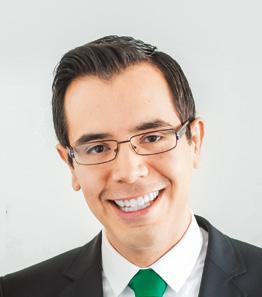
Fernando Zendejas was named Deputy Minister of Electricity at the Ministry of Energy in Nov. 2017. Zendejas has gathered experience in the energy sector by working with PEMEX, CFE, CENACE, CENAGAS, the International Energy Agency, and INEEL
competition by developing an efficient and clean industry. As part of a chain, it is important they are all completed. Nevertheless, a project that will be shaping Mexico’s energy infrastructure in 2018 is the public tender for the construction of the interconnection line between Sonora and Baja California. Its importance resides in the fact that it will interconnect an isolated system with the rest of the country, with the benefit of providing the first system with more reliability, demand peaks coverage and the ability to reduce and even possibly stop energy imports from the US. The pre-basis for the tender was published on Dec. 7, 2017, and we have happily witnessed a strong reception from the whole industry. We hope to be able to receive offers by 2018 with the start of operations expected in 2021. This project represents an estimated investment of around US$1.1 billion.
Q: What is the importance of Mexico’s admittance into the International Energy Agency?
A: As a member, Mexico is now part of an association with the mission to promote both the creation of more clean sources of power generation and energy efficiency. As our country is a strong producer of oil and gas, but also has plenty of renewable resources available, Mexico can profit from the broad knowledge and experience of the IEA member countries, learning from their best practices and avoiding their previous mistakes. We will also obtain a series of international regulatory best practices from the agency as well as five-year evaluations of our energy policies. As the Executive Director of the IEA, Fatih Birol, mentioned, Mexico’s fast implementation of its Energy Reform equates it to an energy revolution.
The agency is also benefiting from our integration, since Mexico is the first Latin American country to become a member. Furthermore, we have been the fastest country to be accepted after application. The letter of intent was presented to the agency on November 2015 and by December 2017 the Mexican Senate was already ratifying the International Energy Program. One of the contributing factors for our rapid integration was the fact that the agency was able to witness the solid participation of the private industry supporting public institutions in the energy sector.
A TRANSITION LEGACY FOR THE LONG TERM
LEONARDO BELTRÁN Deputy Minister of Planning and Energy Transition at the Ministry of Energy
Three long-term electricity auctions, a committed investment of US$9 billion, new rules for the third long-term and first midterm auctions and the regulation, policy and vision for the CELs market that is ready for launch are some of the milestones achieved until now by the Energy Reform. “It was a momentous 2017 for Mexico’s energy industry that not only marked the consolidation of the Mexican wholesale electricity market, but also wrote a fresh chapter in the country’s energy history,” says Leonardo Beltrán, Deputy Minister of Planning and Energy Transition at the Ministry of Energy. And there is more to come.
Beginning with the fourth long-term electricity auction, the Ministry of Energy will hand the reins to CRE, which will manage the process and carry out the auction through its executing arm CENACE. Beltrán expects CRE to become an even stronger regulator due to the opportunity it had to witness the auctions without being responsible for them. “CRE has been able to learn and incorporate that experience into its ethos, ultimately making it a strong, robust and impartial regulator that can ensure an unbiased market,” he says.
Although the auctions have produced good results, Beltrán expects improvements in the next editions. The fact that resource availability is different across the country, with more solar power in the north and more wind in the south, is among the possibilities to explore. “It might be worthwhile to have this reflected in the process, to make resources competitive in every region,” he says. “I think the regulator has to be flexible enough to increase competitivity by allowing different prices across the country for the same source of energy.”
Beltrán adds that flexible regulation will attract more participants to the market, which will therefore encourage competition – the ultimate goal of the electricity auctions. “The focus has to be on having more market participants,” he says. “In addition to ensuring a more competitive market, it would also confirm that the regulation, the legal framework and the models we are using are attractive.”
Critics have pointed to the underwhelming participation of local industry in the electricity auctions compared to its
high participation during the hydrocarbons licensing rounds, which have a minimum local content requirement. Beltrán is not worried about this because the main intention of the current administration is to create a market. “We are not yet at the point when local companies can compete against their international counterparts, mainly due to a lack of investment, technology and expertise,” he says. “In doing things this way, we are ensuring that we will have the most competitive market possible.” He adds that high international participation means that the country is attractive at a global level.
Investing in the long term is not always easy. Governments want to see results, most of which will not materialize during an administration’s term. Beltrán is instead focused on investing in a mixed portfolio that comprises investments for the long, mid and short terms. “Talent is a long-term investment for which we will not see a return in the next few years,” he says. “But that investment will produce results when people who have gone abroad to study, come back years later to the country and join the labor industry's market.” For the medium term, he says Mexico should invest in infrastructure, meaning that when the talent returns, it will be able to replicate the R&D conditions seen abroad. “Finally, in the short run we need a robust legal framework that allows for the strong participation of the market,” he says. “By combining these three elements, Mexico can become a powerhouse for clean energy.”
Looking forward, Beltrán sees a big opportunity with storage technologies, which are the missing link keeping renewable, intermittent technologies from further spreading across the country. Although these technologies are just being adopted, he highlights the importance of incorporating storage technologies into the country’s planning and day-to-day operations.
On the political front, where the winds of change will blow across the country with 2018’s presidential elections, Beltrán believes the strong legal and regulatory frameworks that have been established will allow companies and investors to base decisions solely on economic factors. “Investors can be sure their capital will be safe,” he says.
CONSOLIDATING MEXICO’S ENERGY TRANSITION
CÉSAR HERNÁNDEZ
Former Deputy Minister of Electricity at the Ministry of Energy
Q: What were the Ministry of Energy’s major accomplishments in 2017?
A: 2017 was an important year, marked by several milestones in the wholesale electricity market. We launched the tender documents for the third long-term electricity auction in April. February saw the operation of the first Capacity Market, overseen by CENACE. The first stage of the Universal Electricity Service Fund (FSUE) was initiated on May 30 and more than 20 private players participated in the spot market. A Legacy Contracts Resolution for basic supply was also published on Aug. 25. Planning ahead, we published the third version of PRODESEN and the basis for the ready-to-launch CELs. Restructuring CFE further liberalizing Mexico’s wholesale electricity market, infrastructure planning and the universalization of electricity services helped push the Energy Reform one step forward.
Q: How are subsidies for electricity prices expected to evolve in 2018?
A: The Basic Supply Tariff will be available before the end of 2017. It will be published by CRE, as the regulator now has the Legacy Contracts Resolution it required to finalize the tariff calculations. These contracts are basically between old or new CFE generation plants and CFE Basic Supply, the main ingredient of generation cost. Without the cost of generation, the formula to obtain the Basic Supply Tariff, adding transmission and distribution costs, is incomplete.
This will be the first time in history that CRE publishes a Basic Supply Tariff, as the Ministry of Finance held this responsibility until now. Signaling the cost reference for electricity services to different types of users, established by an independent economic regulator isolated from political processes, is at the core of the Basic Supply Tariff. The number of bilateral long-term energy contracts in the wholesale market will be significantly higher thanks to this new reference.
Q: What new technologies will have the greatest shortterm impact on Mexico’s electricity market?
A: As a requirement embedded in the Energy Transition Law, we published the Program for Smart Electricity Grids in May
2016, and a complementary document in February 2017. We drafted it with a systemic vision that included the integration and time frame for new technologies and renewable electricity generation, mirroring international trends. For instance, we considered the progressive incorporation of energy storage, controllable electricity demand, electric cars, IoT and the expansion of distributed generation. Greater measuring, managing and telecommunications capacities are the major implications for the grid. Specific programs both for independent system operators and distributors, relating to specific projects regarding cost-benefit analysis and other viability-measuring tools for a smart grid, were made available. Schemes for contracts in transmission-line development are also under consultation with the electricity industry to finalize the details of the draft contract model.
Q: What mechanisms are under development to integrate new technologies into the Mexican electricity system?
A: In 2016, we published the Interconnection Manual for Distributed Generation, a landmark that targets administrative procedures and the shortening of time frames for different distributed generation technologies to be connected to the electricity system. It stipulated the design of the electricity market from the architecture outlined in the Electricity Industry Law, integrating specifications according to market rules, and remuneration mechanisms for any product that adds value to the system. Two major elements stand out when it comes to incorporating technological innovations. First, the ability to connect to the grid, as long as it is technically feasible and in some cases under specific regulations. Second, the ability to offer services from energy storage or associated services. Transitioning from a vertically-integrated monopoly to a market system requires the integration of technological innovations into the electric grid. Markets incorporate technological innovations at a much faster pace compared to vertically integrated systems.
Q: What platforms are in place to reinforce interactions between government authorities and private players?
A: Every regulation and instrument published by the Ministry of Energy as early as the constitutional reform of 2013 —
secondary laws, the electricity market’s legal basis and market practice manuals — have been the object of public consultations, some formally in COFEMER, pertaining to market rules. So far, there have been three editions of PRODESEN resulting from consultations with industry players. Clean Energy Requirements were published as a legal and compulsory requisite of clean energy, also in consultation with industry players. The Program for Smart Electricity Grids went through the same process. The different contract models for the long-term and mediumterm electricity auctions were consulted as well. The new scheme for transmission line contracts is under consultation with industry players to define the most suitable version of the contract model. Every process includes industry opinions and feedback, either through formal schemes in COFEMER or schemes outlined by the law, such as with PRODESEN’s electric system planning. The novelty of 2017 was the creation and installation of the evaluation committees for CENACE and the wholesale electricity market, in which the system operator as well as the variety of market participants are represented, including generators and suppliers, offering constant interaction with regulatory authorities.
Q: How is the Ministry of Energy fostering CENACE’s maturity as the administrator of the national electric system?
A: The Ministry of Energy is part of CENACE’s Board of Directors, overseen by the Minister of Energy. The ministry provides support for different processes, obtaining resources and management. Evaluation of CENACE’s performance is vital. We hired international consulting firm Utilicast in the last quarter of 2016, together with Deloitte, to evaluate the degree of advancement in the implementation of different market components stipulated in the Law and in the Market Basis. They designed an evaluation based on the traffic-light system for each process and presented the report to CENACE’s Board of Directors. CENACE’s evaluation committee also reports to the Ministry of Energy, wherein everything pertaining to progress in the process is taken under consideration.
Q: What is the expected impact of the new financing model for transmission lines?
A: This model recaptures something already outlined in the constitutional reform, where private third parties can develop transmission lines to be operated and maintained on behalf of the government. The Electricity Industry Law stipulates that the Ministry of Energy can conclude contracts with private players. Eight months went into developing a scheme hand in hand with international consultants. A series of best practices were integrated into this process from schemes similar to those in Chile and Brazil. PRODESEN transmission lines can be built through this scheme. In December 2017, we published the first pre-basis tender for a major transmission line
project, parallel to the transmission lines tenders to be developed by CFE Transmisión. The CFE tender was originally launched in 4Q16, and received feedback from consortiums interested in developing a transmission line from Tehuantepec to Morelos. This particular tender is expected to be announced by January 2018 by CFE Transmisión. Deferred-Impact Public Spending Project schemes complement transmission line development efforts under the responsibility of CFE.
Q: How will the new electricity market give the country a competitive edge?
A: The basic premise of the Energy Reform is to lower costs for energy services. The only way to achieve that in the electricity sector is to attract investment and install cheaper and modern generation plants to replace outdated and expensive facilities. Reducing costs in a durable manner in the mid to long term can only be achieved under competition schemes. This is at the core of the design of the competitive long-term electricity auctions, the short-term electric market, the building of a competitive power market and the development of schemes for competitive transmission lines. Each and every measure attracts investment. The first two auctions totaled US$6.6 billion and the third auction brought in an additional US$3 billion. The midterm electricity auction was similarly designed. The Tehuantepec-Morelos and Sonora-Baja California transmission lines are estimated to attract between US$1-2 billion each. We consider both to be the most important new infrastructure projects for 2018 by far.
Q: What are the major arguments for industries that are not related to the electricity market to support Mexico’s energy transition?
A: The most convincing argument for any Mexican industry to bet on clean energy is that it is more cost-competitive than fossil fuels. Electricity generation prices achieved in the first two auctions were lower than combined-cycle generation, which is the greatest lesson the transition process showcased. We hope to repeat this with the coming auctions. While different variables such as purchasing power, capacity and intermittency evoke skepticism when compared to fossil fuels, more companies are switching to renewables. Two years ago it would have been much harder to make a case for clean energy. The competitiveness of new clean energy sources has changed the game of power supply, in addition to the positive impact on the environment.
César Hernández was named Deputy Minister of Electricity at the Ministry of Energy in Feb. 2014. His position oversees the development of the new Mexican electricity industry, fostering free market rules and a revamped power infrastructure
FROM CORPORATE STRUCTURE OVERHAUL TO CUMULATING EFFICIENCIES
JAIME HERNÁNDEZ Director General of CFE
Q: What were CFE’s 2017 milestones?
A: The reform of Mexico’s electricity sector meant the overhaul of CFE’s corporate structure. To date, we are operating with 13 new companies. The process involved a considerable operational challenge, which we tackled successfully. Of the 13 new companies created, six are power producers that compete against each other and the rest belong to the private sector. There is also a sole national transmission company for the sake of system security, two new energy trading companies—one for basic supply for small-scale consumers and a qualified user for primarily industrial consumers. We have one distribution company that oversees mid and high voltage with 16 business units spanning different regions, enabling us to better address the challenges pertaining to technical and nontechnical losses. Our business plan pillar is cemented on our financial strength. CFE’s significant financial losses pushed us to renegotiate the company’s collective labor contract in 2016, reframing the utility’s pension system. Through an established incentive, we cut labor liabilities in half, obtaining US$17 billion in savings. In the last three years, we have reduced CFE’s indebtedness compared to the previous year, a trend that will continue in 2018. While CFE’s debt used to be issued entirely in US dollars in 2012, we now have a currency exchange exposure within a 20-30 percent threshold, guaranteeing the company’s financial health during periods of high currency volatility, as we have recently experienced. CFE also managed to significantly reduce operating costs, which decreased close to 13 percent between 2012 and 2016. The combination of all these factors led to us to close 2016 with assets greater than US$26 billion. We will persevere in our financial discipline and cost reduction agenda to attain a sustainable balance toward 2021. The reform confers CFE the possibility of participating directly in the fossil fuels market. We established two additional companies for that purpose, one in Mexico and another in the US. Their primary objective is optimizing fuel supply for CFE’s own consumption and eventually commercializing these fuels to third parties. Close to 80 percent of the cost in electricity generation is associated with the fuels we use, making the gradual replacement of costly and highly contaminating fuels such as fuel oil and
diesel, with more cost-effective, environmentally friendly sources such as natural gas and renewables a priority.
From the 25 gas pipelines we are developing, 12 are already operational, 12 are in construction phase and one branch line in the northern region of the country was recently tendered. Between 2012 and 2016, we decreased our emissions relating to electricity generation by 44 percent. We also launched a pilot program for fuel storage in Sonora and Baja California to strengthen the country’s energy security. While the international standard sets fuel storage capacity at 30 days of average equivalent consumption, Mexico only has three. This pilot project will increase Baja California’s fuel storage capacity by 10 extra days and Sonora’s by 14 extra days. Considering an increased number of storage tanks will be available as we transition toward natural gas, we could practically double the country’s fuel storage capacity.
On the operational side, we outlined the objective of a steady reduction in energy loss. In 2012, these losses amounted to 16 percent on average nationwide, versus OECD’s average of 6 percent. Our latest data from October 2017 suggests our energy losses are below 12 percent. For 2018, we are setting a 10-11 percent objective. We are confident we can reach this milestone and will continue working to bring this indicator closer to international standards. Some regions in the country are even below the 6 percent reference, highlighting the challenge for Mexico’s central region. Each additional percentage point of efficiency is more complex than the last. CFE has also designed an ambitious investment plan. We continue investing in new generation plants, with seven of these under construction. The longterm electricity auctions organized by the Ministry of Energy resulted in 52 new clean and renewable energy projects, meaning one in every two states in Mexico will have a new plant powered by clean energy, helping us contribute to the 35 percent of clean energy by 2024 landmark. Renewable energy has considerable potential in the country, as it could double the 55,000MW of installed capacity we have in the coming years. Our investment portfolio is structured to allocate an estimated US$13 billion for the next five years.
Close to US$9 billion will be directed to generation projects involving different technologies and regions, US$2 billion to transmission projects and US$3 billion to distribution projects. The aim is twofold: mitigating energy losses and modernizing technologies we use to foster a national smart grid.
Q: After CFE’s transformation, what is the next step?
A: CFE’s transformation is complete. The productive enterprise of the state has 13 new companies that have a separate and independent legal, accounting, operative and human resource structures. Adapting this new structure to the new rules of the game is also well underway. Our next stage will primarily consist of capturing and cumulating efficiencies, as well as strengthening the company financially and adapting CFE’s culture to a competitive environment from top to bottom. The Ministry of Energy has scheduled CFE’s first audit for 2018 to evaluate the compliance of our restructuring. Another important change was the separation and creation of CENACE, born from CFE’s former intelligence unit to become a full-fledged, independent market operator and National Electricity System manager.
Q: What are the key elements in the intricate processes of the new CFE’s strategic decisions?
A: We now have a new corporate Board of Directors with four independent members of recognized prestige, while each of CFE’s companies has its own management board. Decision-making processes in a newly-created competitive context, added to our corporate rules, dictate that each of CFE’s companies can determine — notwithstanding the effect these decisions might have on the other companies of the group — which investments are the most profitable and should be pursued. A common denominator can be found among CFE’s generation companies in the importance
of associations with the private sector to promote new generation projects, especially considering our limited capital and our ongoing efforts for cost reductions and financial discipline. Mexico’s electricity consumption keeps increasing 3 percent per year, meaning there is a window of opportunity for CFE to continue building on alliances and partnerships, while private projects can have an increased participation in Mexico’s electricity sector. The needs of the private sector provide an open door for harmonious development of different technologies and partners, and the long-term electricity auction results attest to that.
Q: If CFE’s financial health allowed it, where would you primarily channel additional capital?
A: In the event CFE generates extra capital, we would definitely allocate it to reducing energy loss, technological modernization and two or three generation projects that would revamp the company’s generation portfolio. When CFE started in 1937, it only had one generation plant. Today, it has 186 nationwide, using different technologies. Eighty years ago, CFE had no transmission nor distribution lines. Today, CFE’s transmission and distribution lines amount to more than 100,000km and 800,000km nationwide, respectively. In 1937, we had close to 100,000 clients. Today, we have more than 42 million. Going forward, our challenges will be directly linked to integrating technological innovation, financial strength and identifying the most profitable energy projects, ideally in association with the private sector, to continue reinforcing Mexico’s electric market.
Jaime Hernández is an economist and PhD in Political Economy from Essex University. Before being appointed to the helm of CFE in August 2016, he served as the stateowned company’s CFO
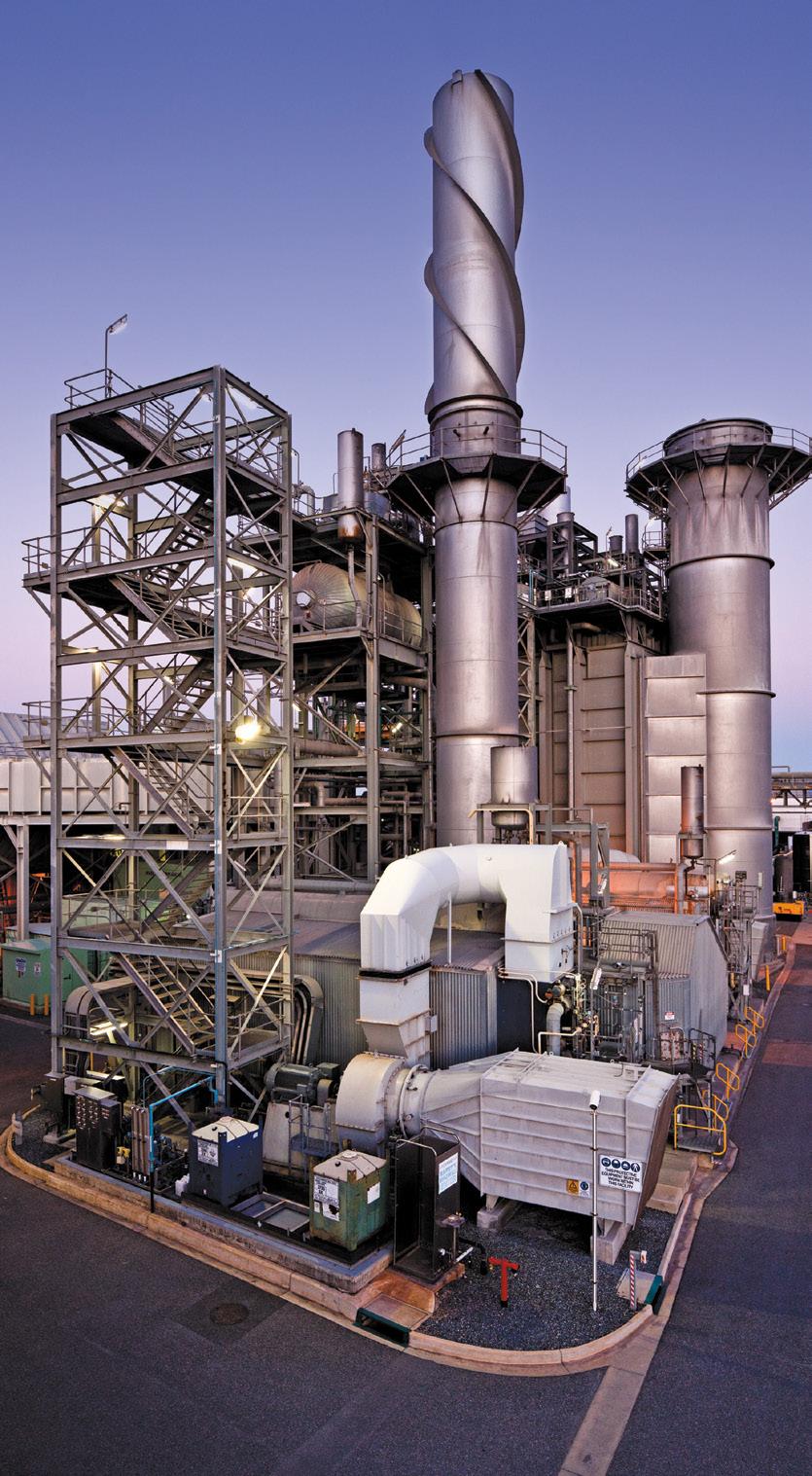
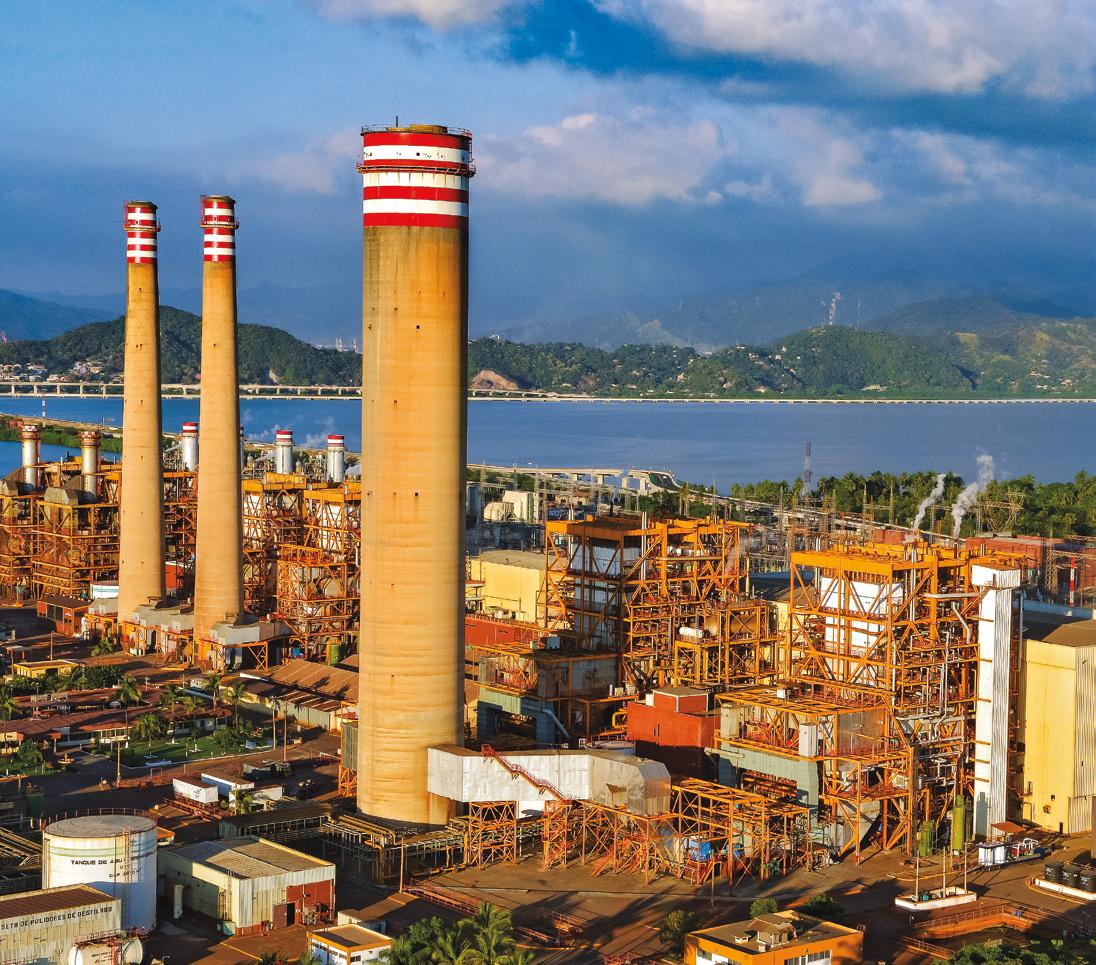
Cogeneration plant, Tula, Hidalgo
BUILDING ON MILESTONES TO ENSURE A ROBUST ENERGY MARKET
GUILLERMO GARCÍA President Commissioner of CRE
Q: What were CRE’s successes in 2017 and what can we expect as its regulatory responsibilities increase in 2018?
A: In 2017, consolidating both the oil and gas markets by increasing the number of private participants, diversifying the offer available and empowering final consumers was our greatest achievement. We also enjoyed success regarding renewables in the wholesale electricity market to provide the country the electricity it needs.
In 2018, the fourth long-term electricity auction will be published and executed by CRE, together with CENACE. The difference will be in how the two entities are switching roles. In the first three auctions CRE acted as a technical adviser but it will now coordinate the design of the fourth auction, while CENACE will implement it and the Ministry of Energy will act as technical adviser. We will not change what is working well. CRE’s message to all interested parties is one of continuity and any eventual change will help make auctions more attractive to potential participants. Financial entities are growing accustomed to the auction’s new schemes and are developing project finance mechanisms. We want to maintain their interest in the auctions.
To date, there are 11 interconnections with the US , six as emergency interconnections and five for continuous supply , with another two in the pipeline
CRE will also be responsible for announcing the electricity tariffs, the first of which was the Basic Supply Tariff we published on Nov. 29, 2017. Tariff methodologies have already been approved and published. The relevant point is that these tariffs will be based on the monthly electricity generation cycle, while they previously were calculated based on a 1990s methodology that used a fixed power-producing mix where price was solely
impacted by fuel price variations. This new attribution is historic as tariffs will be determined for the first time by an independent, autonomous regulator, contributing to the market’s development.
Q: What steps will CRE implement to ensure the continuity of the Energy Reform under the next administration?
A: Continuity is key for fostering certainty and reliability. CRE’s commissioners have seven-year mandates, outside of political cycles, with phased nominations. Another major component is CRE’s organizational structure. We restructured CRE to provide an ever-improving service. While my predecessor’s commission was completely cross-sectional, we set out to reassemble CRE into business units, with new rules of procedure published in May 2017. These outlined our four substantive business units – petroleum products, natural gas, LPG and electricity – with four underlying departments. Each business unit comprises all of CRE’s service branches: tariffs, contract terms and conditions, market monitoring and permits. This structure has helped develop procedures and protocols that work seamlessly regardless of who is at the helm.
Mexico’s Energy Industry Law (LIE) was launched with the Ministry of Energy as the primary regulator but it was meant to be transitional. The Ministry of Energy published a wide array of manuals and concluded this process in the last half of 2017, creating the market’s legal basis that CRE inherited as the new permanent regulator of Mexico’s electricity market.
Q: CRE signed a MoU with Canada’s Energy board. How is CRE shaping an integrated version of North America’s energy market?
A: We also signed a MoU with the North American Electric Reliability Corporation (NERC) and the National Association of Regulatory Utility Commissioners ( NARUC). To date, we have 11 interconnections with the US: six emergency interconnections and five for continuous supply, with another two in the pipeline. The
idea is to have them operating as a connected market but we still have discrepancies in terms of reliability rules, which is preventing us from enabling all interconnections as continuous supply. Baja California already complies with these rules as it incorporated NERC’s best practices and our constant interactions with NERC, NARUC and Canada’s Energy Board will help bring the rest of the country up to speed with these best practices. These efforts are vital for the region’s energy security, especially considering the precedent of California’s 2010 blackout, where Baja California responded swiftly to restore electricity to its American neighbor.
Q: How did CRE make sure CELs were ready for launch in 2018?
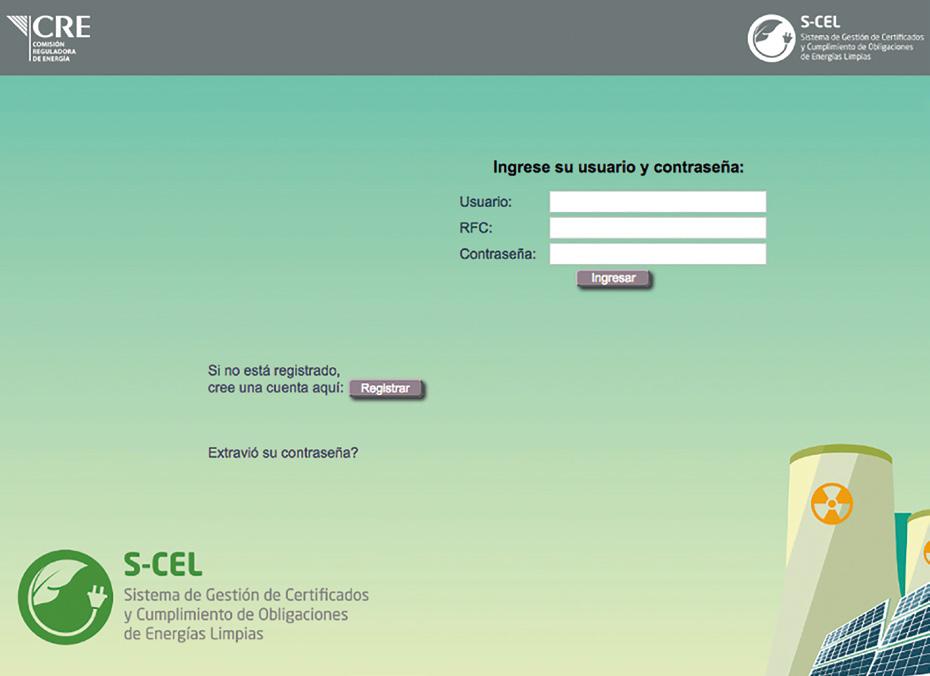
A: The design of CRE’s S-CEL system was developed jointly with USAID over the course of the year. This platform has the potential to enhance the amount of renewable energy in Mexico’s energy mix to help meet its clean energy generation commitments. Visibility and transparency on CELs transactions – purchase, sale and ownership tracking – are key.
Q: What are CRE’s priorities for 2018?
A: From a regulatory standpoint, CRE will focus on developing Mexico’s natural gas market through 2018’s Open Season. This year’s edition, proposed by CENAGAS, was regarded as highly successful and we want to build on that positive momentum. Forty-four percent of the country’s natural gas capacity is now in different hands from those of CFE and PEMEX, and we want to continue to provide certainty for all interested parties.
Developing the country’s natural gas price hub is also a priority. We are already shifting from publishing national monthly prices to regional monthly prices and we will eventually achieve regional daily prices. Working jointly with the Mexican Association of Natural Gas (AMGN), we identified the intrusive nature of natural gas regulation and designed a more flexible framework for permitting and profitability track terms compared with the prevailing accounting terms.
Q: How do you think the business community will react or adapt to the uncertainties of an election year?
A: Looking back, the most uncertain period in the country’s recent history was last year’s US presidential elections. One month later, we witnessed the success of Round 1.4, the deepwater chapter, which included participation from major US companies such as ExxonMobil and Chevron. This experience tells us that the business world is above political discourse or alignments. As long as the rules are clear, transparent and foster open participation, business will continue and investments will pour in.
Mexico requires close to US$100 billion of investment in power generation alone to remain competitive compared to international markets
The reform is unmovable and constitutional, and reverting it requires a two-thirds approval from Congress, meaning an unlikely association of several different political forces. For this sector, such an exercise has only been done once in the last 80 years. Achieving it in itself was a feat, repeating it, considerably harder, especially considering the Mexican Supreme Court has repeatedly pronounced itself in favor of the reform’s constitutionality when any legal issue pertaining to the reform arose. Academia’s intensive involvement in the sector should also be of note. Many universities are integrating curricular programs in energy law, renewable energy, and environment-related disciplines. Local governments have recognized the economic development potential of the reform, beyond political affiliation.
Q: With all these new developments going in the right direction, what is CRE’s primary concern?
A: We went through an orderly and gradual gasoline price-liberalization process, with adjustments from the Ministry of Finance, so that gasoline prices would reflect logistics costs. It was a major shift, without which the wide array of international gasoline brands would not be able to set up shop across the country. Looking forward, a potential risk that must be avoided at all costs is investment levels beginning to stagnate. Mexico requires close to US$100 billion of investment in power generation alone to remain competitive compared to international markets. Being content with our recent milestones is, I think, our greatest risk.
The retail market may be moving at a fast pace but much remains to be done to develop a solid wholesale market. True competition will be achieved when wholesalers, both local and foreign, build a market footprint large enough to inject competition to the point that PEMEX feels this competition is real, strengthening and reinventing its processes. When both productive companies of the state feel pushed from their comfort zones, we can consider our work is bearing real fruit.
Guillermo García has served as President Commissioner of CRE since April 2016. García took part in the technical and drafting group for the 2013-2014 Energy Reform and conducted support studies for the 2008 Energy Reform
TRANSPARENT REGULATION FOR A STRONGER MARKET
MARCELINO MADRIGAL Commissioner at CRE
Q: What actions is CRE taking to improve the Mexican electricity market?
A: The wholesale electricity market has diversified. With more companies taking part, it has become liquid, allowing participants to better understand the market’s pricing while becoming a reference for the real price of electric energy in Mexico. Although most of the country’s energy will be covered via the long-term market to ensure supply, the short-term market is important because it provides price signals. The short-term market, under its spot and realtime versions, is gradually maturing and getting stronger, with over 30 participating companies. Industrial players now understand it, although they also point out the need for more information to allow them to better prepare and act more efficiently. Most of the information is already available for the long-term market, but we still have room to improve information sharing in the short-term market. At CRE we are fighting hard to improve the transparency of the information CENACE offers to all participants, as we have the faculty to define what information must be made available. Of course, greater transparency will also attract more participants.
Q: How is CRE handling the transition of responsibilities from the Ministry of Energy to the Commission?
A: The law is very clear and states that the rules for the first, second and third long-term electricity auctions were to be published by the Ministry of Energy, but starting with the fourth, CRE will take over this responsibility seamlessly. We also took over the monitoring of the market, which we started doing at the beginning of 2017. The transfer went so smoothly that no one noticed the change. We are working without delays, thanks in part to our independent monitoring entity, comprised of national and international experts and academics. They have noticed errors from time to time, which have been rapidly corrected, almost automatically.
Marcelino Madrigal has over 15 years of experience in international development banking, the public sector and academia. He holds a Ph.D. in electrical engineering and was elected Commissioner in 2014 for a period of seven years
Overall, the transition has been successful as we have worked very closely with the Ministry of Energy and have heard the industry’s input through all the stages as the rules were crafted. CRE has the capabilities to continue enforcing and managing all market regulations, not only for the long-term auctions.
Q: What role will distributed generation play in the market?
A: Distributed generation was already possible before the reform, but with many limitations. The new regulation takes advantage of the open energy market, allowing power producers to seize opportunities in the market and innovate new business models. During 2016, Mexico counted 29,560 users of distributed generation, from residential to industrial. The number is directly related to the transparency of the information CRE provides and the declining prices of some technologies, especially solar photovoltaics. We expect this sector to grow. This is good, because it means that energy consumers are empowering themselves, finding more and better options to produce the energy they consume or market it elsewhere, which is the objective of a competitive market.
Q: What is the status of the regulation for transmission and distribution projects in Mexico?
A: We understand the need to revamp and expand the transmission and distribution grids in Mexico, and are therefore part of the development of PRODESEN. We provide our opinion to the Ministry of Energy on the priorities and requirements that need to be covered. We also understand that, due to the high funding needs of the projects, the participation of the private sector is a must. We issued a milestone regulation that will determine how private transmission projects to be auctioned will get paid, providing the certainty that private participants require to invest and ensuring that they will have a stable and secure income for the lifetime of the project. In the transmission sector we expect an investment of approximately US$11 billion. Regarding rates, our approach continues to be making sure network costs are recouped with tariffs that have a transparent and lean structure, which is key for a market under development when new players have so many new rules to digest.
BEYOND CLEAN AUCTIONS, A LONG-TERM COMMITMENT
GUILLERMO ZÚÑIGA Commissioner at CRE
Q: How would you describe CRE’s significance in the new energy market?
A: CRE’s mission is to provide transparent information to ensure good, quality decision-making. We are working on the first transparent Basic Supply Tariff, since the current tariff is sending a misleading signal to the market, discouraging investment. Once this Basic Supply Tariff is published it will provide robust information to investors about the country’s competitiveness. Having a regulated tariff was useful in the past to reach the universal supply principle that governed CFE, but the new energy market has to focus on providing value to participants. One perfect example is the Mexico City subway system. It has always been supplied with electricity from CFE, but as soon as competition was put on the table, CFE had to compete against other energy suppliers to offer the service to the subway system. With competition in place, CFE made an offer that represented savings of over US$100 million per year for the subway system.
Q: What made the long-term electricity auctions such a success in the area of renewables?
A: The electricity auctions are actually designed to be technologically agnostic, providing a level playing field for everyone. The electricity auctions are for the long term, and although renewables usually have high CAPEX costs, they also have very low OPEX costs. Renewables are even more competitive than almost any other conventional energy source, as conventional fuels have the disadvantage of costs associated with extraction, processing and transportation. One of the disadvantages of renewables is the intermittency element. This has allowed CCGT plants to become a particularly useful technology that is secure, flexible and economical. Nevertheless, with the grid becoming more flexible, which includes the introduction of batteries and higher levels of distributed generation, we expect this will change. CELs are a very important topic that will become even stronger in 2018, when they become obligatory by law. We still have to make some changes related to the norms, system management and certifications for clean plants, but once this is sorted out they will become an important second income flow for clean-energy generators.
Q: How can Mexico further develop distributed generation?
A: In Mexico, we have seen significant advancements in the distributed generation segment with the design of bidirectional contracts. Before the energy reform, contracts worked under an energy bank scheme in which the extra energy produced could be withdrawn from the main grid within one year. Now, we have the net metering, net billing and total energy sales schemes, which are making the market much more attractive for both small and large residential and commercial consumers. These could be called the regulation for distributed generation 2.0. With distributed generation 2.0, every household and company in Mexico has become a CFE competitor.
Q: How does CRE work with the recommendations provided by the OECD?
A: The OECD has been enthusiastic in reviewing Mexico’s regulatory framework after the overhaul in 2013, making peer-review recommendations and creating diagnostic analyses for us to take into consideration when designing future modifications. Beyond these modifications, Mexico complies with all the international standards and is categorized as a strong regulator with a well-designed regulatory framework. We still have a couple of challenges to overcome. We need to simplify the regulatory system and offer greater transparency, while creating more flexibility to adapt to the dynamic environment we face in the energy market, which is highly reliant on technologies that change almost daily. A clear example of technological change is in energy storage. In this segment, regulators in Mexico and around the world are simultaneously learning how to adapt and make this technology fit into their respective markets. To allow for a flexible regulation, CRE is in constant contact with both national and international regulatory institutions, such as ASEA, keeping itself on a constant learning curve to ensure we achieve a competitive energy market.
Guillermo Zúñiga has over 14 years of experience in the public sector, occupying positions of leadership in areas of regulation, competitiveness and energy at the Ministry of Energy, PEMEX, CFE and the Federal Commission of Competitiveness
INTERNATIONAL STANDARDS FOR THE ELECTRICITY SEGMENT
JESÚS SERRANO Commissioner at CRE
Q: What regulatory aspects of the electricity market can be improved in the short term?
A: CRE is focused on ensuring the reliability of the National Electricity System. On April 8, 2016, we published the Network Code that embodies the rules relative to the efficiency, quality, reliability, continuity, security and sustainability criteria for the system. We started a working group to check the specifications of this code to make it more functional and to ensure it meets its objective of grid reliability — quality, power outages, surcharges — and reduced interconnection costs, avoiding excessive requirements that impact energy costs for final users, diminishing household budgets and the competitiveness of corporations. Grid planning is essential to achieve this goal, providing an adequate balance between service quality and reliability against costs. Working under the premise that everything can be improved is our main priority.
Also, we consider that on-site generation has inherent advantages, especially considering that investment requirements in transmission lines and supply costs are reduced. In this model, energy losses are also mitigated as you avoid transporting energy through thousands of kilometers of transmission lines. On Oct. 27, 2017, we approved the criteria for a clear regulatory framework to operate on-site generation systems. One of the most important outcomes of the Energy Reform was the establishment of Clean Energy Generation Targets for the electricity industry. CELs will help to meet these goals and will be registered through a compliance system, operated and supervised by CRE.
Q: What does an IEA membership mean for Mexico’s energy market?
A: CRE supported the Ministry of Energy’s initiative of becoming a full member of the IEA. IEA’s link to the OECD shows that CRE is adopting the OECD’s best practices for
Jesús Serrano has served as CRE Commissioner since 2014. He has served as Resident and Project Engineer for Luz y Fuerza del Centro and Economic Policy Director in the Economic Planning Unit of the Ministry of Finance
enforcement and inspection. For instance, according to the OECD's best international practices, we follow rules for the supervision and verification of Mexico’s electricity sector compliance with the regulations we publish. It is important not only to draft regulations but also to implement regulatory observance mechanisms to make sure everyone is playing by the rules. Being a member of the IEA will give us a front row seat among the agency's success stories around the world as well as the tools to adapt it to Mexico’s specificities, capitalizing on the agency’s international teams of electricity market specialists. Mexico will also have a say on which practices should be considered benchmarks for countries looking to launch energy transition processes or to inject efficiency and top-tier demand-response technologies into their electricity generation systems. This membership will also be an important boost to develop the country’s fuel storage capacity and attain OECD levels of supply security. The Ministry of Energy issued provisions for petroleum. Other fuels are following suit and CRE will ensure compliance, through elements such as minimum inventory and verifying that the numbers match the empirical reality. The policies adopted in line with the IEA will echo the process in place where the Ministry of Energy is the overseer that defines energy policies and gives them direction, while CRE is the arbiter in the game that leads policies through regulation, verifies compliance and serves corresponding sanctions when compliance is not met.
Q: How is CRE contributing to a stable baseload through its regulatory capacity?
A: Cogeneration has proven to be good for business and for the system. It exploits residual heat in industrial processes that otherwise would be wasted, is exempt of some regulatory fees and enjoys a preferential rate for transmission while generating electricity without emitting GHG. Efficient cogeneration regulations have been in place since 2012. These outline the methodology for measuring this fuel-free energy to receive the same payout as renewable technologies. The philosophy behind conferring sustainability to electric cogeneration and achieving Mexico’s clean energy goals is enshrined in the CEL, while also serving as a second income source for renewable and clean generation processes.
REGULATING AND ENABLING MEXICO’S ENERGY MARKET
MONTSERRAT
RAMIRO Commissioner at CRE
Q: Which aspects of Mexico’s environmental regulation are still pending?
A: Environmental regulation falls solely on SEMARNAT, and on ASEA for matters related to the hydrocarbons industry. CRE does not regulate environmental aspects of any kind. In fact, in the renewable sector our mandate is to be technology neutral. Our objective is to have efficient markets without a bias for any given technology, with the purpose of drafting the rules that provide certainty to every participant in the market and a level playing field, and with the ultimate goal of benefiting consumers.
Q: What are Mexico’s challenges and opportunities in natural gas?
A: CRE does not decide whether we should incentivize the growth of the natural gas market. The Ministry of Energy is in charge of establishing public policies for this segment; the rules to make that happen are our responsibility. To that effect, we approve CENAGAS’ open seasons, and regulate the incumbent PEMEX asymmetrically. An example of this is the gas release program, published in February 2017, also designed to provide a level playing field. To have a market, new entrants need to have the possibility of competing with the incumbent. This is precisely the objective of the gas release program.
Natural gas infrastructure has grown significantly since 2014. More than 7,000km of new pipelines have been committed and the future growth of the system has already been announced in the Ministry of Energy’s Five-Year Plan. Price signaling will be at the center of natural gas infrastructure’s future growth. Regulation to this effect has already been issued, primarily regarding terms and conditions for firsthand sales and the elimination of price regulation for firsthand sales. These measures try to eliminate distortions in the market, and will eventually result in increased investment in natural gas infrastructure.
Q: How is CRE fostering natural gas as a transition fuel?
A: CRE cannot provide benefits or special treatment to any given technology or any given fuel. The only instrument we have that promotes clean generation is Clean Energy
Certificates (CELs), which are technology blind. CRE can create clear rules that promote well-functioning markets that will eventually provide the right incentives, so that all kinds of projects can be developed; agents themselves will choose the most efficient options, renewables and natural gas being at the helm. In times such as these, technological change happens so fast that regulation should not limit itself to what is currently known.
Q: How prepared is Mexico for the CELs market?
A: CELs are happening. There are several things that will continue to unfold in the coming months. However, there is no reason to doubt their introduction into the market. The remaining factor is now readily available. The new basic supply fee was issued by CRE in November 2017, providing relevant information to the qualified users market and a benchmark of power generation, transmission and distribution costs.
Q: What is your message to the power industry?
A: There are many things that we need to work on in the short term. Some examples include the basic supply fee, distributed generation and isolated supply regulations. We need to ensure that all these instruments are clearly understood by the industry and that we have a fluid conversation with them so we can make things happen, not in years, but in the next few months. I like to think of CRE as a facilitator. Regulation should not be necessarily restrictive; it should foster growth through clear rules, level playing fields and creativity. Ultimately, the energy sector can bring about significant economic growth. We strive on a daily basis to help develop the economic growth potential of the sector. As a regulator, I try to be open to change regarding those things that do not work and my ultimate goal is to, through regulation, bring about certainty and the right conditions that can result in GDP growth.
Montserrat Ramiro has served as CRE Commissioner since 2014. Prior to this, she worked at the Mexican Institute for Competitiveness, PMI International Trade, PEMEX, SEMARNAT and as a consultant both in Mexico and in the US.
STATES SHOULD CONSIDER ROLE IN REFORM, CLEAN ENERGY POTENTIAL
LUIS PINEDA Commissioner at CRE
As Mexico’s authorities press on with efforts to capitalize on the momentum of the country’s implemented Energy Reform, some local states are realizing their potential and the important contribution they could make toward the country’s energy transition, beyond the abundance of their renewable resources, says Luis Pineda, Commissioner at CRE.
“Tamaulipas is quickly becoming the most dynamic state in Mexico in terms of electricity generation through renewable energy, especially wind power, to the point that it is getting close to Oaxaca’s wind-power generation levels,” says Pineda. The northern state recognized the dimension and importance of Mexico’s revamped and unlocked energy sector by creating its own Energy Commission, the equivalent of a local State Ministry. “Usually, a state’s energy sector is imbedded in its economic development ministries (SEDECO), which focus on industrial clusters and corporate projects, placing energy in second place,” Pineda says. Tamaulipas’ Energy Commission’s efforts are starting to pay off, as Danish wind-power heavyweight Vestas announced in July 2017 the installation of a wind turbine production plant in Reynosa.
“Some energy projects are going the extra mile by inviting local communities to be active participants of utility-scale wind-power projects, avoiding the problems generated by lack of interaction, sensitivity and the establishment of communication processes and agreements with local communities. No matter the technology, be it solar, wind or hydroelectric, all are vulnerable to being stalled by excluding local communities,” Pineda adds.
Pineda also recognizes the efforts and opportunities that other states are capitalizing on. “Baja Califronia Sur has the largest operating PV power plant in Latin America to date, Aura Solar I, launched in 2013 and which generates 82GWh of electric power per year. Guanajuato’s Puerto Interior industrial park inaugurated DESMEX’s 3MW solar power plant in 2010 and Enel Green Power launched the construction of the Don José 238MW solar power plant.”
Despite these major milestones, much work remains to be done. For instance, “Michoacan’s ‘green gold’ sector, agroindustry in general, and avocado in particular, has yet to grasp the benefits of solar power for energyintensive processes such as refrigeration,” says Pineda.
CRE’s Institutional Liasion Office is working to ensure Commissioners are present at specialized forums that cover themes such as electricity, hydrocarbons, natural gas and LNG, and organizes workshops pertaining to these technologies. “The idea is to captivate corporate decisionmakers and direct their investment appetite toward cleaner and greener power-producing technologies.”
He says associated markets will also play an extremely important role in the success of the reform. “The reform will be successful only as far as its associated markets work. Our fundamental goal is to provide the required regulation for all these markets to be economically sound,” Pineda says. “The sustainability of the electricity market and the use of clean, reliable and sustainable power generation technologies, with the required interconnection infrastructure and assistance of CENACE through institutional coordination go hand in hand in removing persistent entry barriers.”
To remove these barriers, CRE’s General Administrative Dispositions and other regulatory mechanisms enact the technical conditions to establish the reliability, security and sustainability of Mexico’s renewable-powered generation projects, echoing Mexico’s commitment to the Paris Agreement of 2015. “Through Normalization Committees, we design the Official Mexican Norms (NOMs) integrating the incentives and proposals embedded in the best international practices and tailored to Mexico’s specificities,” Pineda says. This includes solidifying Mexico’s manufacturing know-how and extending it to renewable energy-related products. “CRE can coordinate with privatesector players involved in manufacturing and project developers to regulate effective technical specifications for renewable technology parts and products that are best suited for Mexico’s electricity system, under its technical specifications.”
A NEW ORGANIZATION FOR A NEW INDUSTRY
As its regulatory arm was extended to all subsectors of Mexico’s energy industry, CRE had to ensure an organizational structure that would answer to all players involved. For 2018, the energy regulator will be in charge of publishing electricityrelated tariffs and will manage the fourth and future editions of the long-term electricity auctions with help from its external right hand CENACE. To do so, CRE reshaped the cogs of its regulatory machinery under the coordinated direction of CRE’s six Commissioners and President Commissioner to ensure a competitive and sustainable energy market.
Administrative Office
DG of International Planning and Affairs
DG of Social Communication
DG of Liaison
Petroleum Products
DG of Information Technologies
DG of Material and Human Resources and General Services
*DG: Directorate General
Source: CRE
Legal Affairs Unit Directorate
DG of Operation Permits, Electricity Registries and Permits
DG of Electricity Regulation
DG of Electricity Markets
DG of Economic Analysis of the Electricity Sector
DG of Technical Analysis of the Electricity System
DG of Petroleum and Bioenergy Produts Retail
DG of Storage, Transport, Distribution and Commercialization Permits for Petrochemicals and Petroleum and Bioenergy Products
DG of Petroleum Products Markets
DG of Petroleum Products Verification and Standardization
DG of LPG Permits Operation and Supervision
DG of LPG Markets
DG of Economic Analysis of LPG
DG of Economic Analysis of Natural Gas
DG of Natural Gas Markets
DG of Natural Gas Regulation
DG of Natural Gas Permits Operation and Supervision
DG for Administrative-Contentious Law
DG of Consultation and Regulation
Osborne Power Facility/ Adelaide, Australia / ATCO México
A NEW MARKET IS BORN
EDUARDO MERAZ Director of CENACE
Q: What expectations do you have for the Mexican energy market in 2018?
A: 2018 is the year where the energy market will consolidate. It all started with the first long-term electricity auction in November 2015. followed by the short-term market, launched in January 2016. CENACE has been working from the outset toward a variety of milestones set for 2018, including the execution of the first midterm electricity auction, contract signing for the assigned projects during the third long-term electricity auction, implementing all the aspects surrounding the short-term market and finally, executing the first auction regarding financial transmission rights. The latter should happen during 4Q18 due to the complexity it represents. Achieving all these landmarks will mean all mechanisms contemplated in the reform for the market will be ready to properly work.
Q: What was the biggest challenge for the implementation of the Mexican energy market?
A: The biggest challenge we had to overcome was timing. In less than a year and a half, Mexico had to create a completely new market, which on a global average usually takes four to seven years. The creation of the software that runs the market was a continuous improvement process that needed a deadline and constant communication between regulators and developers. Working with INEEL was an important part of this process. CENACE was also in charge of the creation of the auctions’ core software. Having an in-house development of this kind has been extremely useful and speaks volumes about Mexico's capabilities in the development of technology. Talking about Mexican talent, we are also working with IPN, which acts as a third party that verifies the results of the auction. For that, IPN developed another piece of software to check our results. As is well-known, the results were positive and the projects were correctly awarded.
Q: How was the creation of the Clearing House handled by CENACE?
A: The model of the Clearing House created for the auctions is completely new on a global level. Clearing Houses all over the world are used to mitigate risks in terms no longer
than three years. For Mexico, our Clearing House has to cover risks for 15-20 years. All of the international firms that we hired to advise our activities showed their surprise, but at the same time their interest. Although CENACE has the ability to manage the Clearing House per the law, we chose to hire a specialized third party because it is a purely financial activity that does not fit with our core. Of course, we retain responsibility for its functionality. If at any moment we do not see it working as it should, we have the capacity to intervene and call for a new tender so that a new third party takes charge of the operation while we manage the interim phase. Some international experts who offered their advice also think that applying this model to finance projects for longer terms is interesting, as it would offer more certainty to the projects under development.
Q: What is hindering the development of more transmission projects?
A: The transmission grid requires expensive mega projects that are not easy to manage, or even to auction. The Oaxaca transmission line auction has gone through delays not because CFE or the Ministry of Energy are putting up barriers, but because it involves extremely high costs and a great deal of legal struggles. But Congress has overcome the issues and the auction is about to begin. Future projects to auction will be worked out in other ways, meaning that they will materialize faster. This is important for interconnection. Many people state that interconnections are being managed in a very slow and inefficient way, but the truth is that the problem is more technical than that. The grid is not capable of handling all the capacity to be interconnected. Considering that there are certain regions where projects are stockpiling and more permits are being requested, the grid is becoming saturated. Fortunately, as in every process, we are becoming more agile and knowledgeable, and with stronger transmission and generation projects Mexico will become more competitive.
CENACE is a decentralized public entity that was founded in 2014 to act as Mexico’s independent grid operator. It sprouted from CFE's former intelligence unit and now acts as manager of Mexico's National Electricity System
INNOVATE TO MAXIMIZE BENEFITS
JUAN ACRA President of COMENER
In 2016, energy council COMENER and IPADE Business School organized a meeting for the energy sector under the name 2021 Vision: Mexico’s Energy Sector Structure. During the event, IPADE and Strategy&, a PwC division, unveiled a study they had conducted, and the results were astonishing, says Juan Acra, President of COMENER. “In the electricity sector, there is a need to double the current capacity owned by CFE by 2031, which is around 57GW. This means that during the next 15 years, we have to install the infrastructure that took CFE over 80 years to build.”
To this end, the electricity auctions, will be an integral part of the equation. There is work yet to be done to keep private money flowing in, and Acra believes that a legal framework that offers certainty in energy projects — particularly in terms of social licenses — and makes energy purchasing contracts bankable is crucial. “A legal framework ensuring social licenses are present before a project is offered in an auction or in a contract would guarantee that the project proceeds, mitigating risks as a result.”
COMENER has a team that focuses on social licenses and Acra says that, after a deep analysis of the law, the team has found that amparos have become a dangerous legal tool, both for the oil and gas and the electricity sectors, capable of preventing investment flows into the country. “This is because an amparo can be granted by a federal judge who may or may not be knowledgeable about the project, what it represents in terms of securing electricity supply and the associated positive social impacts,” Acra explains. The council is now working together with the Mexican Lawyers’ Bar Association to make sure that the government knows and understands the problem, and to find ways to solve it. COMENER’s commitment to the development of the industry is backed up by a total US$25 million assurance from its members.
Acra also believes that older companies and their production plants have a role to play in the country’s energy future and should not be forced to die out. “Mexico’s energy transition should instead allow companies to switch from one business model to a newer one,” he says, while acknowledging that
this cannot be done overnight. Nevertheless, he says that such a change would result in huge benefits. “It would be a big mistake to let older companies die just because they are old, as that would mean destroying an important infrastructure that is already in place and works, even if it is inefficient. The legal framework must also allow and facilitate this transition.”
Efficiency is another important point to be considered when talking about costs and environmental impact. In 2014, the International Energy Agency reported that around 8 percent of electric energy worldwide is lost just in transmission and distribution lines, without considering efficiency losses in final consumption. Acra is aware of the problem, but emphasizes Mexico’s capabilities to increase its efficiency across the whole value chain.
Energy efficiency in transmission and distribution is not vital for power producers as it actually decreases the amount of energy they sell, while energy consumers want to implement energy efficiency to reduce their costs. Acra says energy-trading entities could play a critical role as mediators between energy generators and energy consumers. “As mediators, it is in their best interest to sell cheap energy produced through renewables, so their clients can reach their renewable implementation goals, but it is also important that clients maintain low consumption, so these entities can offer energy to more customers, which is why offering energy-efficiency analysis services to their clients is a big incentive,” he says.
Innovation is another important element in developing the country’s infrastructure, be it in the generation, transmission, distribution or efficiency areas, Acra adds. COMENER signed an agreement on Nov. 16, 2017, with the Houston Technology Center (HTC) to support projects in sustainability and hydrocarbons. “With this partnership, we expect to attract investments from institutions such as the Mexican Petroleum Fund and the Energy Sustainability Fund, as well as from initiatives such as that promoted by Bill Gates, called Mission Innovation, to promote Mexican technologies and innovation,” he says.
BALANCING MARKET CONSOLIDATION AND PARADIGM SHIFTS
ALFREDO ÁLVAREZ
Energy Segment Leader at EY
As Mexico’s electricity market becomes an open platform for private players, the country must rise to the challenge of both planning for the long term and developing an electric system flexible enough to integrate new and often unpredictable technological developments that could make both the grid and power-producing facilities more efficient, says Alfredo Álvarez, Energy Segment Leader at EY.
“We are entering a disruptive phase where it is difficult to make nine-figure, 25-year-long investment decisions, while the world is abruptly changing. Major utility companies are uncertain about what the future holds and how the energy market will operate,” says Álvarez. As renewable energy gains increased prevalence in the global energy mix, utility companies must figure out how to make business profitable under a zero marginal price scheme and how distributed generation is going to impact grid use with the rise in installations of autonomous power systems.
“Financial closing for the long-term electricity auctions’ renewable energy projects will be the industry’s measuring stick. Reaching this phase is extremely complex, which is not something exclusive to Mexico,” Álvarez says. “Technology type — solar, wind, cogeneration — is not so much the reason for this caution as is the absence of a track record that is long enough to justify an investment decision,” he adds. Available cash flows under P90 models, which predict generation levels to exceed 90 percent throughout the year, make a project’s repayment capacity uncertain. “The root of the challenge lies in financial entities being able to transition from financing government-backed CFE and PEMEX projects to developing new financing schemes in an incipient market surrounded by long-term uncertainty,” says Álvarez. Paving the way toward lucrative yields will take a coordinated effort between development and commercial banks to absorb financial risks inherent to renewable energy.
When looking at Mexico’s energy mix, solar and wind take the lead but other sources could emerge as leaders, Álvarez says. “Fifteen years ago, no one doubted that investing in nuclear energy was a great idea. Today, the price variations
for natural gas have put it in the front seat as the transition fuel between conventional and renewable energy sources.” The priority is conferring certainty to power producers regarding their mid and long-term incomes. Mexican authorities have to ponder, as the market consolidates among the long and midterm electricity auctions and the upcoming CELs market, if this new structure runs the risk of becoming obsolete. “The backbone of it all is pricing electricity at levels where its marginal value can generate a profitable rate of return, while experiencing and increasing the number of incidences where, thanks to renewable energy and new technologies, its marginal value is zero.”
To inject liquidity to the market, Mexico’s energy regulatory authorities designed and launched the first midterm electricity auction. “The idea behind these auctions involves creating certainty to alleviate immediate merchant risks. The schemes for the new Mexican electricity market are well-designed and standardized around global best practices,” Álvarez says. Mexico is bringing every piece of the local electricity market puzzle together. “The real question is if these pieces will continue to be relevant in five to 10 years, and how the country will adapt to upcoming technological changes.”
Lack of generation and transmission capacity implies an extra cost to the electricity system. Total transmission costs are calculated based on the transmission cost of a particular node over the total amount of MWh transmitted. As distributed generation progresses, the latter will decrease while the former will increase. “Exponential effects can be anticipated from this progression as it can cause a massive abandonment of the electric grid, jointly with the increased use of batteries,” Álvarez says. He believes electric generation in situ remains costly and inefficient compared to a centralized generation scheme. As new technology developments are integrated into this scheme, there could be a paradigm shift and a new set of opportunities and challenges. “A couple of years ago, installing 1MW of solar power under US$1 million was nearly impossible. Today, you can have it for under US$800,000. Inventive regulation and preparing the grid for the coming fleets of electric cars will be key factors in addressing the country’s electricity challenges.”
ASSOCIATION EYES NEW PARADIGM, NEW RELATIONSHIPS
ÁNGEL LÁRRAGA President of AME
Q: What role do major consulting and legal firms play as members of AME?
A: Mexico’s electricity market requires, first and foremost, technology suppliers. Liberalizing this market involves a high component of new and modified rules and regulations. Legal interpretation of an evolving regulatory framework and the different subsequent rulebooks can sometimes lead to discrepancies, which is where legal experts intervene to identify and tackle these discrepancies, sometimes in representation of clients that are AME partners. Even when major power producers have their own legal teams, when common regulatory issues impact us as a whole, using specialized services can be more effective.
For instance, regulation of prices for natural gas as a molecule, under the first-hand sales scheme, was recently annulled. Supply contracts that referenced this scheme became void as a result of this change. It also impacted all power producers using natural gas. This is where specialized legal and consultancy services are valuable. These consulting and legal firms know how dynamic the energy regulation in Mexico is becoming. They want to remain close to investors in power-generation projects, especially when parties involved can interpret it in different ways and cause market disparities.
Q: What are AME’s strategic priorities to ensure the success of Mexico’s new electricity market?
A: Several challenges remain. First, guaranteeing a level playing field between CFE and other players. Client information must be equally transparent for all. Transparency is also a major factor in CENACE’s activities as the system arbitrator and administrator. Second, CFE holds all the cards relating to electricity transmission through its CFE Transmisión subsidiary. We have not seen significant investments in this subsector, while several projects require construction of additional transmission lines to
Mexican Energy Association (AME) groups 27 companies from Mexico’s energy sector, amounting to 34 percent of the country’s electric-energy production and 16,000MW of installed capacity
evacuate their own energy. A new model was presented by the Ministry of Energy to mitigate this and advance transmission projects via open tenders spearheaded by the ministry. AME and other energy-related associations are analyzing this proposal. Third is tariff implementation. The Ministry of Finance is in charge of this particular task, while CRE defines the tariff framework under transparency and efficiency criteria in which all value-chain costs are reflected, including generation, transmission, distribution and commercialization. In the near future, CRE will have sole responsibility for the implementation of electricity tariffs. These subsidies continue to be a major component in this process, as well as technical and nontechnical losses, which independent power producers cannot continue to absorb.
Q: What is your assessment of renewable energy projects reaching financial closing?
A: AME’s partners have not experienced difficulties pertaining to financing their respective projects, since these projects are anchored by a long-term contract with CFE, as the sole purchaser. Renewable energy projects from the first auctions are also anchored in this way. As long as the anchor has a proven track record of bankability and return payments, financial entities have no issue in directing their capital toward these projects. While still scarce, marketpriced private projects will increase as long as established and credit-worthy private players are involved.
Q: What is the most important factor that ensures a project’s longevity?
A: Energy projects need to be directly related to social development. They are by nature long-term investments and are emerging in different locations, surrounded by different communities. Coherent corporate social responsibility policies are a necessity. A clear picture of a communities’ shortcomings, where the project can address them, with solutions such as supporting educational programs and environmental improvements, to name a few, should always be considered. Companies that show resolve in finding ways in which a project can give back and have a positive impact on a community's quality of life are those that will see their project prosper in the long term.
FILLING THE GAPS BETWEEN ACADEMIA AND ELECTRICITY INDUSTRY
SERGIO ARNAUD President of ANES
As Mexico’s new electric market sets up shop, with new business schemes, new players and new technologies, the reality is that the country must absorb a wide array of disruptive changes, encompassing qualified human capital and drafting regulations to address both the current and future needs of final users, the electric industry and Mexico’s electricity infrastructure.
“For Mexico’s new electricity market to work, fostering free competition is vital, overseen by a regulating organ with capabilities of instrumentalizing market rules under level playing field principles,” says Sergio Arnaud, President of The National Solar Energy Association (ANES), a nonprofit organization designed to promote the development of solar energy in Mexico. The publication of the new Electric Transition Law, as well as the Wholesale Electricity Market and the retail electricity market dispositions launched the market’s rapid growth based on the country’s new renewable energy penetration objectives for the energy mix. This quick-paced transition compelled the 41-year old association to refocus. “ANES’ foundation was based on research and academia for Mexico’s electric sector, as attested by the creation of the National Institute of Electricity and Clean Energies (INEEL) and the Institute of Clean Energy (IER),” says Arnaud. “As the market opens, we face a very different scenario, transitioning from dealing exclusively with CFE to incorporating notions like the cloud, Big Data and electricity startups.”
The country’s long-term electricity auctions were designed under a simple model, Arnaud says, in which Mexico’s generation scheme was opened to the private sector, offering volume, power, renewable technology and CELs. “Mexico’s electric market was launched with great speed, backed by strong investments and large companies participating in the auction process. We have yet to see a spillover effect to smaller players,” he says. Arnaud believes CRE’s role will be vital in that regard. “While competition will be initially limited given the logistics, know-how and knowledge of global stature required to do business in Mexico’s newly opened market, Mexican companies of all sizes must gradually develop
effective and efficient market entry strategies to foster competition.”
New notions like the electricity spot market, peak hours and equilibrium price algorithm schemes for the wholesale electricity market are gaining increased prevalence and the industry requires qualified professionals to address them.
“Academia and field research are lagging the vertiginous growth the market is showcasing. University students have yet to absorb the new parameters and knowledge on par with the reform’s effects,” says Arnaud. “The new electricity market integrates schemes from other markets around the world and is developing notions such as energy rights and learning to cohabitate with productive enterprises of the state.” CFE is undertaking an ambitious transition from fuel oil to natural gas for its power plants, gas pipeline extensions are underway nationwide and CFE’s intelligence organ is now the autonomous and independent CENACE, posing a fundamentally different scenario from what ANES was accustomed to.
Cost transparency across electricity’s value chain, as demanded by competitive markets, will imply a tariff update for electric energy. “Electric tariff subsidies will consequently be revealed as focused, exposing the electricity system’s disparities in terms of infrastructure availability and final user’s socioeconomic levels,” Arnaud says. Previously in the hands of CFE, the Ministry of Finance will now be the entity in charge of determining subsidy levels. “Parameters under consideration for future subsidy considerations must integrate a new scheme prioritizing sustainability, a long-term perspective and energy quality.”
Workshops and courses in legal and technical certainty, integrating the latest developments in solar technology, energy-efficiency practices and social licenses are a few of ANES’ measures to prepare the country’s professionals to contribute to a prosperous energy market. “The solar sector must couple a large-scale industry transition to renewable energy with financial schemes to permeate across the value chain and be absorbed by smaller players, academia and research, fostered by innovative public policies.”
HOW WOULD YOU RATE
MEXICO’S ENERGY REGULATORY FRAMEWORK?
ADRIÁN
KATZEW
Director General of Zuma Energía
Mexico’s unlocked energy market and energy transition ambitions can only be as successful as its regulation allows. As the rules of the game are progressively set, ensuring a level playing field and providing a seamless process for all private players to set up shop will gauge the success of the country’s energy sector. More than a regulator, CRE wants to be an enabler, open to the private sector’s feedback on the remaining regulatory roadblocks and transparent in its regulatory priorities. Constant interactions between the private and public sectors will ensure that the upcoming regulatory challenges will be met head on. What follows is an account of these joint efforts
We need to acknowledge the effort put in by the authorities to implement an in-depth transformation like the reform in such a short period of time. Globally, one of the lessons we take away from electricity markets is their constant change and evolution. There is no reference model to turn to and ours is still emerging in some ways. The auctions, for example, resulted in awarded and signed contracts, opening the door to new players such as Zuma Energía. The standardization of the power generation market and the implementation of automated O&M systems are pending issues. The success of the auctions also highlighted a challenge for the future in the imminent saturation of the transmission grid and the urgency to develop a decisive expansion plan for the power evacuation infrastructure.
ANGÉLICA RUIZ
Vice President and Mananging Director Mexico and Latin America of Vestas
JORGE SANDOVAL
Associate at Goodrich, Riquelme y Asociados
Mexico has set some very aggressive targets to meet its goal of having 35 percent clean energy production by 2024. The challenge lies in defining what clean energy is. Having defined these objectives and being part of COP21 makes a significant difference. It is something quite new for Latin America; we do not see many other countries being so direct and straightforward with such goals. Looking at other countries like Denmark, Sweden or Norway, while each has its own energy context, they have significant energy trading because of their continental proximity. Their economies rely heavily on renewable energy while at the same time relying on energy backups to deal with intermittency. In Mexico’s case, we believe in a stepby-step approach, redefining the new targets as we advance.
There were many prospects for the changes in the market provided by the legislative and regulatory amendments. We have strong experience in advising international companies throughout the analysis and review processes of the new rules, allowing them to invest and actively participate in the market. Recently, these processes have evolved into an action plan that actively involves clients in public energy auctions directly investing in developing projects. Goodrich, Riquelme y Asociados is reaching final users to understand their needs and understanding how private companies can participate in the market either through the bids or by contracting directly with final users. Whichever company has inserted itself as an active player in Mexico’s market understands that its chances of a positive return will be quite high.
We have followed the reform’s legislative process closely and, in our opinion, the form in which it began, with the creation of the National Agency for Industrial Safety and the Protection of the Environment for the Hydrocarbons Sector (ASEA) and the separation of energy matters, for environmental-administrative purposes into hydrocarbons on one side and electricity on the other, has generated a series of problems. When two separate authorities undertake the same responsibility, despite following the same law, both prioritize different criteria. The Ministry of the Environment and Natural Resources’ (SEMARNAT) objective is environmental protection, whereas ASEA’s mandate is to make the Energy Reform work. Comparing the legal framework of hydrocarbons and electric energy, regulations on social impact studies benefit hydrocarbon projects much more than electricity projects.
LUIS VERA Founding Partner at
Mexico’s wholesale electricity market is just beginning. As the first qualified supplier actually operating in the market, SUMEX is collaborating extensively with the Ministry of Energy, CRE and CENACE. We continuously provide feedback to these government agencies on what we believe is working well and what should be modified or improved. The first steps have been smooth and will continue to be so in the coming years, while the market consolidates and other players in the process of entering the market start to operate. Like any new process, there will always be things to improve and refine, yet in broad terms the relationship has been good, mutually respectful and collaborative. Above all, it should be noted that regulators want SUMEX and other market participants to do well, since our success will have a positive impact on Mexico.
JAVIER GARZA President of SUMEX
Considering the complexity of the sector, the parties involved and the value of the transactions, the inclusion of arbitration and other alternative dispute resolution provisions in contracts related to energy and infrastructure will be significantly increased. The implementation of these alternative dispute resolution procedures will be subject to various challenges. Additionally, there are great expectations from private companies regarding the implications of having private parties as vendors instead of a public entity providing the services. I believe the use of fair and impartial alternative dispute resolution mechanisms that are agreed upon will help parties to resolve the disputes in a favorable manner. It is an ongoing process that will move a step ahead with each case that comes along, incorporating general commercial and negotiating practices to create agreements that were not feasible before the reform.
Several challenges remain, such as guaranteeing a level playing field between CFE and other players. Client information must be equally transparent for all. Transparency is also a major factor to integrate into CENACE’s activities as the system arbitrator and administrator. CFE holds all the cards relating to electricity transmission through its CFE Transm¡sión subsidiary. A new model was presented by the Ministry of Energy to mitigate this and advance transmission projects via open tenders. AME and other energy-related associations are analyzing this proposal. CRE inherited the implementation of electricity tariffs reflecting all value-chain costs, including generation, transmission, distribution and commercialization. These subsidies continue to be a major feature in this process, as well as technical and non-technical losses, which independent power producers cannot continue to absorb.
ÁNGEL LÁRRAGA President of AME
EDUARDO PIZARRO Partner at SMPS
Vera & Asociados
Natural gas power plant, Invenergy
POWER AUCTIONS
From crowning achievement to energy market benchmark, the long-term electricity auctions will determine the success of Mexico’s transition toward renewable energy and provide the means for the country to meet its 35 percent goal for clean energy in Mexico’s power-producing mix by 2024.
Three long-term electricity auctions later, with one midterm auction in the pipeline, the projects won throughout the process are put to the test as to their capacity to reach financial closing and become operational by the appointed time. The aggregate impact of the first three auctions are set to inject close to 8.8GW of additional installed capacity to Mexico’s National Electricity System, of which 83 percent will be clean. All eyes are set on the first auction projects planned for completion in the first quarter of 2018 as a testament to the true success of both the public sector’s auction design and the private sector’s project development and execution abilities.
This chapter provides the feedback of auction participants and winners to evaluate the conception of the auctions, what it takes to win them and the implications of launching 58 utility-scale energy projects.
CHAPTER 2: POWER AUCTIONS
40 ANALYSIS: Power Auctions: The New Measuring Sticks
42 Map: Power Auctions
46 RoundTable: How Would You Rate the Design and Results of the Long-Term Electricity Auctions?
48 VIEW FROM THE TOP: Adrián Katzew, Zuma Energía
50 VIEW FROM THE TOP: Osvaldo Rance, Cubico Sustainable Investments
51 VIEW FROM THE TOP: Asier Aya, Jinko Solar
52 VIEW FROM THE TOP: Benjamín Torres, Baker McKenzie Abogados
53 INSIGHT: Rubén Cruz, KPMG
54 VIEW FROM THE TOP: Jorge Ochoa, AWS Truepower
55 VIEW FROM THE TOP: Juan Rubiolo, AES Mexico
56 VIEW FROM THE TOP: José Guardo, Clifford Chance Alan Sakar, Clifford Chance
58 VIEW FROM THE TOP: Paolo Romanacci, Enel Green Power México
60 RoundTable: How Will The Clearing House Impact Mexico’s Electricity Market?
POWER AUCTIONS: THE NEW MEASURING STICKS
The auction mechanism has been hailed both locally and internationally, given the overall positive results attained, both in terms of average MWh rates and the injection of renewables into the country’s energy mix. Now, it is time to gauge the readiness of utility-scale projects set to begin operations in 2018
The stage is set for auction winners to answer the challenge of transitioning from positive results to tangible power plants that contribute to the supply of electricity nationwide.“With the conclusion of the first three editions of the long-term electricity auctions, US$9 billion in investments and 7,000MW of additional solar and wind power generation capacity are expected, effectively quadrupling the county’s renewable energy infrastructure by 2020 in comparison to the beginning of this administration in 2012,” says Pedro Joaquín Coldwell, Mexico’s Minister of Energy.
The convening power of the third edition was as strong as ever, as CENACE received 400 proposals from 48 bidders. That set a high bar for expectations, and the resulting average package price broke all records to date.
“A new milestone was set by the third long-term electricity auction as the lowest MWh plus CELs package price was US$20.57. This is 38 percent lower than the average price at the second auction and 57 percent lower than the first auction’s package price.” Coldwell says.
“US$9 billion in investments and 7,000MW of additional solar and wind power generation capacity are expected, effectively quadrupling the country’s renewable energy infrastructure by 2020”
Pedro Joaquín Coldwell, Minister of Energy
A BANKABLE SUN RISES
Solar power was the biggest surprise, capitalizing on the technology’s recent downward trend in terms of development and installation costs for utility-scale PV systems. “Solar power was the decisive winner in Mexico’s energy auctions, with 74 percent of the megawatt hours awarded to solar in the first round and 54 percent awarded
in the second round,” says Albert Sunyer, Field Systems Sales Director of SunPower. The country’s average irradiation levels of 5kWh/m2 as reported by the Ministry of Energy make solar power an attractive source of energy nationwide. The data speak volumes: three auctions in 12 states are developing utility-scale solar PV projects with an installed capacity greater than 20MW. This means Sonora, Coahuila, Aguascalientes, Yucatan, Chihuahua, Guanajuato, San Luis Potosi, Tlaxcala, Jalisco, Zacatecas, Morelos and Baja California are well underway to reaping the benefits of their advantageous solar irradiation levels.
Should all auction projects come online as expected, the three long-term electricity auctions should inject almost 5,000MW of solar installed capacity, which in turn could prove a major selling point for smaller PV projects favored by the industrial, commercial and even residential sectors and consequently boost Mexico’s young distributed generation market.
WHAT ABOUT OTHER CLEAN ENERGY SOURCES?
The long-term electricity auctions are also setting a precedent as the first and only mechanism in which all clean energy technologies compete against themselves for power, energy and CELs. This disruptive design showcases the possibility of different renewable technologies being capable of coexisting under a positive sum game scenario. “It is a matter of finding the right places and the right resources, which does not necessarily mean that you will find yourself competing against other renewable resources. At the end of the day, we are looking to have local, diversified energy matrices that allow economies and governments to diversify power risks, to be able to use both fossil fuels and renewables to obtain an optimized power system,” says Angélica Ruiz, Vice President and Managing Director Mexico and Latin America of Vestas. The auctions are aligned with this vision as, so far, projects developed using solar power, wind power, combined cycle, hydroelectric, geothermal, and turbogas have come out winners.
While solar has claimed the auction crown, Mexico’s wind resource is not far behind, having won an aggregate 2.4GW of installed capacity between all three auctions, which shows a commitment to the country’s goal of having a
Source: Ministry of Energy
Source: Ministry of Energy
diversified energy matrix and providing a balancing source of power to compensate solar’s availability issue. While Oaxaca is the favored location to date to develop wind farms, dominating with over 70 percent of the operational wind farms nationwide, other states are stepping up to take a shot at the wind power crown. “You can find great resources in Mexico, such as the state of Tamaulipas, Oaxaca, and the northern part of Baja California, where you have extremely good wind resources, with capacity factors of 40 percent on average,” says Ruiz.
CLEARING HOUSE
Mexico’s energy regulators and authorities, in parallel to the private sector, engaged in a learning curve throughout each edition of the long-term electricity auctions. Yet, both have proven to be fast learners in a complex process aimed at providing open access to an entire market in a record three years. The successful results include an increased number of auction participants on a level playing field and a high amount of investment pouring in, to the tune of US$9 billion only for the auctions’ power-generation projects, as Coldwell outlined. The auction’s architects have also shown the capacity and ability to implement improvements, with new elements meant to foster the clean energy market’s competitiveness.
Compared to the first two editions, the third long-term electricity auction saw a commendable performance from the Clearing House. For the first time, private players other than CFE were enabled to purchase power, energy and CELs. Iberdrola and CEMEX – through Menkent – made the most of this new instrument and purchased 9 percent of the overall power, energy and CELs made available. As authorities work on the design of the fourth auction, the Clearing House is expected to outperform the third edition, with renewed confidence among private players. “In the long term, as the energy volume increases, the impact will be consequential and will be reflected in the final consumer price through increased volume and the number of private
suppliers offering energy,” says Eduardo Reyes, Power and Utilites Partner of Strategy&, a PwC division.
CRE AS AUCTION EXECUTOR
The year also saw the Ministry of Energy follow through on its intention to raise CRE to the level of a full-fledged energy regulator for the electricity market. Starting in 2018, CRE will inherit the responsibility of the electricity sector’s tariff publication from the Ministry of Finance and be conferred the additional attribution of overseeing the design and development of the fourth long-term electricity auction together with CENACE. The difference will be in how the two entities are switching roles. In the first three auctions, CRE acted as a technical adviser but it will now coordinate the design of the fourth auction, while CENACE will implement it and the Ministry of Energy will act as technical adviser. “CRE’s message to all interested parties is one of continuity and any eventual change will help make auctions more attractive to potential participants. Financial entities are growing accustomed to the auction’s new schemes and are developing project finance mechanisms. We want to maintain their interest in the auctions,” says Guillermo García, President Commissioner of CRE.
There are, of course, concerns regarding the auction results. “Project assignment mechanisms do not factor into the advancement status of a project and how close and probable it is that energy is delivered on the appointed date,” says Rubén Cruz, Energy and Natural Resources Lead Parnter at KPMG. Other voices in the sector are making the case for same-technolgy auctions. “The auction design continues to be perfected, encompassing an increasing number of positive elements and players. The Argentinian auctions, in which we also participated, allowed fixed quotas per technology – solar, wind, cogeneration –fostering competition among same-technology projects,” says Rafael Valdéz, Managing Director Latin America and the Caribbean of Envision.
SMALL STATE, SIZABLE CAPACITY
Despite being Mexico’s fourthsmallest state with a surface area of 5,618km2, Aguascalientes is becoming a renewable energy gold mine. Between the three long-term electricity auctions, the state will become the location of 1,104MW of PV installed capacity.
3rd Auc tion
2.7GW
Home to Mexico’s largest solar park in development to date in terms of installed capacity, Yucatan has the resources to foster a harmonious coexistence between its projected 618MW of solar power and 316MW of wind power.
HOW WOULD YOU RATE THE DESIGN AND RESULTS OF THE LONG-TERM ELECTRICITY AUCTIONS?
Committed to its energy transition goals, Mexico has undertaken three long-term electricity auctions and one midterm electricity auction. In total, the Ministry of Energy estimates investments for the awarded projects will reach about US$9 billion. The auctions stood out both for the absence of government subsidies and for the low average tariffs reached, which decreased in each auction. Auction winners are prioritizing reaching financial closing for all projects to achieve ready-to-build status, while 2018 will witness the operation of the first auction projects, which will be an indication of the viability of Mexico’s energy market.
JUAN RUBIOLO General Manager of AES Mexico
The auctions ended with favorable prices and conditions for the Mexican market and for CFE, which was the only buyer. We have yet to see which of the winning projects will be built. Several factors are putting them at risk, with financing and permitting being the most critical. The banking sector is hungry to finance renewable energy projects but the lack of structure is hindering its participation. Higher interest rates in the past few years have also made it harder for companies to acquire attractive financing. The fact that private projects have a spot price component makes the problem even worse because Mexico has no spot market history. Technologically speaking, projects are also becoming harder to justify because the most accessible places in Mexico with the best natural resources and available infrastructure will become scarce.
ADRIÁN KATZEW Director General of Zuma Energía
The auctions were conceived as national, multi-techonological, multi-product bids. Identifying your desired placement in the offer structure and assessing your acceptable risk according to price levels is imperative. Navigating the auction process means either you equate your offer price to your cost structure and see if it sticks or you take a deeper look at the market and the competitive context and converge accordingly with the value chain to identify the targeted prices. The execution phase entails working with banks and contractors to close pending contracts and to begin project construction. We are defining unprecedented financial structures, meeting the requirements of annual energy volume, CELs, alternate markets that used to honor those obligations, and studying their intrinsic risk in relation to our business.
BENJAMÍN TORRES Partner at Baker McKenzie Abogados
Not every EPC local contractor participating in the industry has enough capacity or experience. Foreigners entering our market might have the resources and a solid track record in other countries, but they still need to understand that this is a new business environment with a new regulatory framework. In project implementation, there will be a lot to learn. Although this short-term scenario may sound pessimistic, it is not going to be a failure; there will be project delays due to flaws or ambiguities in the contracts, but these can all be solved by finding the right consultant with enough experience in EPC contracts. There will be a need for more EPC contractors because, although many have already arrived, the number of companies in the market will not be able to cover the number of projects that will be implemented.
From the moment the tenders were announced and up to the awarding of the projects, we saw a decrease in the number of PPAs. This was expected because developers wanted to see whether it would be a better market to focus on auctions or if PPAs would still be attractive. Now that there is a known floor for the prices in auctions, we have seen PPAs starting to move again as developers can now evaluate the advantages and disadvantages of each market. We have experienced that big companies that won in the auctions also found the PPA market interesting because they can create economies of scale. Medium-sized companies, on the other hand, are finding the PPAs more attractive because within them they can offer more services and innovative business models. Finally, the small ones are seeking associations with both medium and large companies.
So far, we think the auctions have been successful in their objectives. We are satisfied with the transparency shown throughout the whole process, as well as the power volumes allocated. Through this instrument, Mexico has become the most attractive country in Latin America energy-wise. This long-term view allows us to plan ahead and to compete for large volumes of power generation. The participation mechanisms are somewhat complex, involving many different variables, but once understood, the process goes smoothly. Another important aspect of the auctions is that we are starting to witness how banks are willing to finance the projects, guaranteeing attractive liquidity. The Ministry of Energy and CENACE have done a great job in creating a well-received auction process and more private players are looking forward to participating.
We were definitely influenced by the auctions. When we decided to expand from Uruguay, pushed by a saturation of the market due to overinvestment, we started analyzing Latin America’s biggest markets. In South America, we first looked at neighboring countries. Brazil was a complicated market to work in and we concluded that Argentina made more sense for our business plan. Mexico today is a market made up of more than 3,000MW of installed wind power capacity in operation, with the potential of tripling, which will generate more opportunities for companies like Ventus. We know there is fierce competition because it is a market that has been developing for many years with very competitive prices. We are not interested in engaging in a price war, but in providing a competitive proposal as a whole.
The fact that the market started with auctions is positive for the solar sector. The first auction was subject to several technical conditions aimed at concentrating projects in areas that needed to reduce the cost of energy. The projects that were established in these zones came up against some permitting barriers related to social and environmental impact of operations. We are seeing a slowdown of projects from the first auction unfortunately, such that some are projected to start in 2018. Financing is therefore less viable, and the permitting situation is not projecting confidence. We hope that all these projects can overcome these obstacles because it would send a vote of confidence to the industry. Finalizing projects would also lower energy costs and encourage other industries to operate in hubs that need the economic support.
JUAN SALTRE CEO of Ventus
JORGE OCHOA
Mexico Country Manager of AWS Truepower at UL
FRANCISCO GARCÍA
Country Manager Mexico of Gransolar
ASIER AYA
Managing Director Americas, International Power Division of Jinko Solar
ENGINEERING A SUCCESSFUL AUCTION-BASED BUSINESS
ADRIÁN KATZEW
Director General of Zuma Energía
Q: What are the main challenges in obtaining awarded auction projects and how did Zuma Energía overcome these?
A: Auction participation implies different stages in business procurement, mainly development, participation and execution. These different stages present a particular set of challenges, while each company’s configuration in the market heavily influences the peculiarity of these trials.
In Zuma Energía’s case, we are an independent Mexican energy producer. As such, our equity capital is raised and committed but we depend on project financing to launch projects. In comparison, large utility-scale companies can self-finance their projects, creating a different level of complexity. Understanding the typology and segmentation of the different players involved in the auctions and their distinct advantages and disadvantages is an important factor in talks with the authorities or when exploring business opportunities in the sector, even for suppliers spread across the value chain. In turn, this shapes the auctions’ regulatory framework. Even among independent power producers, there are those like Zuma Energía that take a long-term perspective to solidify their market presence and cumulate assets, whereas others take a project-by-project approach. When looking at Zuma Energías’ preparation for the auctions, we can boast a particularly diligent, multidisciplinary effort in mapping the competitive context.
The auctions in Mexico were conceived as national, multi-technological, multi-product bids. To win, there are serious intricacies in discerning who your competition is. Identifying your desired placement in the offer structure and assessing your acceptable risk according to price levels is also imperative. So far, two strategies have dominated the auction process: either you equate your offer price to your cost structure and see if it sticks or you take a deeper look at the market, the competitive context and converge accordingly with the value chain to identify the prices that need to be reached. In contrast, the execution phase is highly specialized, working with banks and contractors to close pending contracts and begin project construction. This stage is particularly fulfilling in the sense
that we are defining unprecedented financial structures — meeting the requirements of annual energy volume, CELs, alternate markets that used to honor those obligations — and studying their intrinsic risk in relation to our business, among other things.
Zuma Energía was designed as a project-oriented platform. Our mission is to present our company as a reliable partner, an ally for developers, offering our full structuring capacity and capital base to turn projects into success stories. Our reliability rests on our vast expertise in structuring project financing, managing procurements and construction, operating assets and winning long-term auctions. We go beyond what is commonly known as project development, which is usually limited to terrain transactions, measurements and obtaining permits and licenses.
Q: Will you continue participating in the auctions or seek alternative ways of participating in the renewable markets?
A: We are primarily focused on the auctions. Zuma Energía invested a considerable amount of time in collaborating with the authorities and participating in the public and private-sector dialogue and designing efficient contracting schemes, providing the lowest generation costs to secure more contracts. We noticed some players strategically believe the new commercialization options available can offer more cost-effective opportunities. These will mature over time and we will see greater certainty and credibility cemented around published prices; some projects are starting to sell CELs to private players, for example. Certain elements still require analysis and implementation for commercialization to truly work, such as financial rights of transmission. Buyers are also experiencing a learning curve. Zuma Energía is not closed to future opportunities but auctions remain the primary source of the agility that ensures our continuous growth.
Q: How would you evaluate the performance of and interaction with the energy regulators and authorities?
A: First, we need to acknowledge the effort put in by the authorities to implement an in-depth transformation like
the reform in such a short period of time. Globally, one of the lessons we take away from electric markets is their constant change and evolution. In that sense, there is not a conceptual reference model to turn to as a completed exercise. Ours is still emerging in some ways. The auctions, for example, resulted in awarded and signed contracts, opening the door to new players such as Zuma Energía. But the Clearing House to allow entry for new players from the supply side with CELs purchases is still in the pipeline. Standardizing the power generation market and implementing automated systems of O&M are pending issues. The success of the auctions also highlighted a challenge for the future in the imminent saturation of the transmission grid and the urgency to develop a decisive expansion plan for the power evacuation infrastructure.
Q: How can recently constituted Mexican energy companies keep up with veteran international conglomerates?
A: Our business model responds to a different logic despite the fact we practically do the same thing. International utility-scale companies are part of a global conglomerate, with good practices across the entire spectrum of their functions, decades-long learning processes and an international and expert workforce. Zuma Energía is implanted here and does not yet consider other geographies. For us, it is necessary to engineer a business model that works in Mexico, for Mexico and which outlines a deep commitment to our local market. These groups are also characterized by heavy bureaucracies compared to our decision-making flexibility. Zuma’s relationship with its shareholders and the outlined strategy has helped us attract distinctive talent, with average experience of 12 to 15 years in the sector, to lead our business. Our specialization in renewable energy, which encompasses clean energy, also gives us a competitive edge.
Q: What added value does Mesoamerica Investments and Actis provide to Zuma Energía?
A: The concept of Zuma Energía was born from these two companies. As our shareholders, Actis successfully leads our Mexican business model in Central America, Brazil, Chile, South Africa, Egypt and India, to name a few. It has a considerable capacity to transpose fruitful business models across geographies. Actis is tremendously active in our business and passes on the lessons learned. It brings a prime relationship with the value chain that reaches the highest levels, including equipment manufacturers and construction companies.
Q: How is your company tackling intermittency and power storage?
A: These challenges will become increasingly relevant as renewables increase their penetration of the power matrix.
In August 2017, Zuma Energía closed US$600 million in project financing for its 424MW Reynosa wind farm
One is a consequence of the other in the sense that power storage is a possible solution for confronting intermittency. Instead of considering them challenges, Zuma Energía prefers to view them as opportunities. There is little doubt that renewable energies have persuasively demonstrated their status as competitive power generation sources; whether in terms of costs, power security and autonomy. Dialogue between private players and public regulators will be essential in drafting possible solutions. Besides energy storage you could also design bonuses for high-response thermal energy versus longer response time energy sources. More efficient dispatch and transmission schemes are also a tentative solution, among other considerations, that can foster new investment opportunities.
Q: What other strategic alliances, partnerships or joint ventures do you have in the pipeline?
A: All our projects are a result of alliances, co-investment or acquisitions with developers. By definition, Zuma Energía’s core business is to become a developer’s most trustworthy associate to win auctions together. We are analyzing other elements of the value chain, such as debt and capital financing, equipment and construction supply. But our most efficient approach at the moment is locating competitive, large-scale projects and winning auctions. The value chain is relatively mature, so in terms of awarded, mature projects with an attractive scale, there is significant appetite to compete for different activities. The most efficient approach is to sit at the table and negotiate with the best-positioned players.
Q: Going forward, where do you see Zuma Energía in the next five years?
A: For our business, five years is rather short term. In that time, we have a very clear vision of where we want to be, capitalizing on future auctions, increasing and operating our generation portfolio with our current business model, keeping our eyes wide open while looking at a tremendously dynamic sector that is seeing notable costeffective changes, taking into account that this term will witness new shifts and with it, new opportunities.
Zuma Energía is a Mexican company born from the possibilities triggered by the Energy Reform. It develops, acquires, finances, builds and operates renewable energy generation projects across the country
LONG-TERM VISION WITH SOPHISTICATED FINANCIAL STRUCTURING
OSVALDO RANCE
Head of Mexico at Cubico Sustainable Investments
Q: How did Cubico develop a profitable business model while focused exclusively on renewable energy projects?
A: It was a major part of the added value proposal for our shareholders, which was attractive enough for them to invest in a specialized, renewable energy focus. This expertise allows us in-depth insight of all the intricacies and dynamics of the sector’s different markets. Our core is onshore wind, as well as solar PV, and most recently concentrated solar power (CSP). Determining the geographical locations in which we operate also entails an exhaustive and selective process. Our parent company is based in London, which is a financial hub that enables us to access relationships to sizable financing funds, complementing our capital. On this side of the world, we have offices in Sao Paolo, where we have more than 600MW in operation and from which we oversee the rest of Latin America. Our Mexico City office manages 600MW under construction and a pipeline of another 600MW. In 2017, we opened our office in Stamford, Connecticut to tap the US market.
Q: What key factors allow financial closing for renewable energy projects?
A: One of our primary strengths is our expertise in financial structuring pertaining to renewable energy projects. Our team has a significant trajectory in investment banking and can anticipate project maturation processes to comply with the requirements from lenders exposing their funds to risk factors for 20-year periods. As pension funds, our investors have a permanent need for long-term cash flow predictability by nature. Mitigating all risk factors related to all of a project’s phases — development, construction and O&M — is a permanent priority for Cubico. We have a clear vision of all these risks and the respective structural mitigating factors that best answer them. During the second long-term electricity auction, Cubico won PPAs for two projects: a 250MW wind farm, El Mezquite, located in Nuevo Leon, and Solem, a
Cubico Sustainable Investments is an investment firm specialized in renewable energy projects. Ontario Teachers’ Pension Plan and PSP Investments are 50-50 shareholders of the company
350MW Solar PV project in Aguascalientes. Both are already under construction and were among the first to reach financial closing out of more than 50 projects awarded between the first two auctions.
Q: What business prospects has Cubico identified in Mexico’s energy market?
A: We are extremely pleased with the reform’s creation of private access to the energy sector and we believe the auctions have played a key role in attracting sizable investments and creating the required critical mass for the electricity sector. While we participated in the first two auctions, if future auctions are similar to the third long-term edition, Cubico will likely take a separate course. The third auction’s prices and respective returns were not attractive for us. Off-takers are increasingly aware of and interested in renewable energy, not only in terms of clean-energy consumption compliance starting in 2018 but also in terms of its high competitiveness compared to fossil fuels and thermal energy. Renewables bypass commodity price volatility in the international market. We can offer fixed, inflation-indexed prices for long-term periods, providing a powerful financial planning tool. We believe all conditions required to reactivate the PPA market are there and want to make the most of it. All commercialization options are under consideration, whether bilateral PPAs for self supply, PPAs under generator arrangements or future auctions. Our flexibility even allows for co-investment schemes with interested off-takers.
Q: What are your expectations for 2018?
A: By the end of 2018, our 350MW Solem Solar PV project must be operational and our El Mezquite wind farm should be one quarter away from being fully functional. We also hope to have closed the PPAs for our additional 600MW of wind power in the pipeline. Cubico’s global installed capacity portfolio totals 2.3GW and our ambition is to surpass 5GW in the next three to four years, to which Mexico will contribute 1.2GW. Mexico will have an important part to play in Cubico’s future growth and geographical diversification. Cubico wants to be the go-to, long-term, strategic partner in renewable projects for all players involved: developers, off-takers and even competitors.
HOW SUCCESSFUL BIDS TURN INTO SUCCESSFUL PROJECTS
ASIER AYA
Managing Director Americas, International Power Division of Jinko Solar
Q: How would you rate the design of the long-term electricity auctions?
A: So far, we think the auctions have been successful in their objectives. We are satisfied with the transparency shown throughout the whole process, as well as the power volumes allocated. Through this instrument, Mexico has become the most attractive country in Latin America energy-wise. This long-term view allows us to plan ahead and to compete for large volumes of power generation. The participation mechanisms are somewhat complex, involving many different variables, but once you get the hang of it, the process goes smoothly.
Another important aspect of the auctions is that we are starting to witness how banks are willing to finance the projects, guaranteeing attractive liquidity. The Ministry of Energy and CENACE have done a great job in creating a well-received auction process and more private players are looking forward to participating.
Q: What elements of its auction-winning strategy did Jinko Solar adapt to Mexico’s specifics?
A: First, you must find the most competitive projects. Second, you should adapt the design and development of the project according to auction rules. For instance, in Mexico’s first long-term auction, we identified important benefits from projects in Yucatan. Then, once you know the rules, you single out and focus on the most competitive variables inherent to the project. Primarily, financing, designing a competitive EPC and O&M plan and the project’s cost. The auction’s rules may change, which is why you just need to adapt and offer a quick and effective response to these modifications. That is what Jinko does.
Q: Did the introduction of the Clearing House change Jinko Solar’s strategy?
A: This new mechanism is attracting several new energy buyers to the bidding process. Along with some relevant financial entities, we are looking into these incoming offtakers. We expect a bundle of off-takers in the future, but for now CFE will take most of the energy.
Q: What technology developments in renewable energy is Jinko Solar watching?
A: All relevant players in the solar sector are looking at the same technology. The changing variable in most technological equations will be pricing and its variation over time. Also, technology-wise, solar manufacturers have a choice between mono-crystalline and polycrystalline modules, or using both. The next step everyone is monitoring closely is batteries. They still have to become cost-efficient, given that in the future the name of the game will definitely be energy storage, both for wind and solar power. This will allow renewables to have a larger stake in the energy matrix of most countries. Storage will boost renewables to the next step and will scale up the sector.
Q: What makes a good corporate social responsibility program?
A: First, you need to be totally integrated with the local communities of the locations where you build a project. Then, you need to make sure that they benefit from it and embrace the project through different means, such as integrating community members into the project’s workforce, particularly in the construction, operation and maintenance segments of the project. This approach is of capital importance to our projects in Yucatan, for instance, where there are important Mayan communities.
Q: What have been the highlights for Jinko Solar in Mexico?
A: Definitely the first auction. Jinko entered the Mexican market in January 2016. One month later, we qualified for five projects and in March of the same year we won three of them, representing an investment of close to US$300 million. In that short period, we became one of the big winners in terms of awarded MWs. We are finishing the development of the projects and will see them come online in 2018.
Jinko Solar is a China-based PV manufacturer and project developer. The company distributes its products and sells its solutions and services to a diversified utility, commercial and residential customer base worldwide
BRIGHT FUTURE AFTER SHORT-TERM STRUGGLE
BENJAMÍN TORRES
Partner at Baker McKenzie Abogados
Q: How is Baker McKenzie working to consolidate itself in the Mexican power sector?
A: We are involved in all types of projects and all are challenging. With our large number of specialists, all with different backgrounds and academic training, we have been able to participate in auctions, power trading, importation and the development of power plants, both renewable and conventional. Many of our clients, whether they are power generators or off-takers, have asked us for help in terms of interconnection. We are proud to help our manufacturing clients become off-takers because those are the clients that need the most help, given that they do not belong to the power sector. We also represent many companies in the natural gas sector, particularly for the development of pipelines and storage facilities.
Q: What are the major challenges for Mexico’s energy market in the short and long terms?
A: During the last three years, we have seen an impressive evolution of the different regulatory bodies and entities. Authorities have enacted a variety of provisions from different levels. It is a big challenge for every party to understand the regulations from all the different perspectives.
For government energy agencies, it has also been a challenge to adapt to the new way of doing business. Even for the regulatory authorities it is sometimes challenging to recognize that there are various interpretations because that means they have to create regulations that provide a proper interpretation of the law to produce certainty for investors.
Companies need to be patient because they need to realize that implementation of new regulations always requires a learning curve and that no one will have all the
Baker McKenzie is an international law firm. Founded in 1949, it offers advisory services to many of the most dynamic and successful organizations worldwide through more than 11,000 professionals located in over 75 offices in more than 45 countries
answers. It will take a few years to settle the regulatory framework and to create a smooth transition from our prior model.
Around 95 percent of the regulatory framework is complete. We need to develop specific regulations to address all the issues that are not yet specified under the law. In general terms, the perspective of the Mexican regulatory framework continues to represent a major challenge for every player involved.
Q: What are the biggest challenges that the projects resulting from Mexico’s power auctions are facing?
A: Not every EPC local contractor participating in the industry has enough capacity or experience. Although this short-term scenario may sound pessimistic, it is not going to be a failure. There will be a need for more EPC contractors because, although many have already arrived, the number of companies in the market does not correspond to the number of projects that will be implemented.
Q: How would you rate the design of Mexico’s energy auctions?
A: Mexico needs to establish certainty regarding the Basic Supply Tariff and the facilitation of electricity trade between the US and Mexico by crafting specific and clear laws for this particular process, which will be vital. We must also remember the need to develop the transmission lines that will facilitate the electricity exchange. Medium-term auctions are also required.
Today, there is a high dependency on renewable energies. Mexico is targeting a 35 percent share for renewables in its energy portfolio but once that goal is achieved, natural gas should provide the remaining power generation. Cogeneration is falling behind, even though it has the greatest production potential in Mexico. We need to see more incentives for cogeneration, or perhaps a more suitable framework to facilitate the investment in such technology. Ensuring this will increase our manufacturing capacity. Reduction or mitigation of energy consumption is likewise as important as power generation.
STRATIFYING PROJECT RISK TO ENSURE CASH FLOW
RUBÉN CRUZ
Energy and Natural Resources Lead Partner of KPMG
The foundations have been laid for Mexico’s energy transition with a new injection of renewables into the country’s energy mix that will be provided by the projects awarded in the long-term electricity auctions. The immediate challenge will be to apply project finance principles to power-producing technologies that lack a sufficiently long track record in the country to put investors’ minds at ease. The ability of the projects to achieve financial closing will be the measuring stick of the success of the energy transition.
But financing requires stability, and according to Rubén Cruz, Energy and Natural Resources Lead Partner at KPMG, the success of the projects could be jeopardized by political uncertainty. “We are living the implementation of a reform that is subject to political terms,” he says.
The maturing market will welcome a larger number of players, both on the supply and demand side. Cruz sees CENACE’s Clearing House, introduced during the third long-term auction, as a positive step forward. “The previous system of having a single off-taker imposing a maximum price and expecting savings from there is equivalent to forcing private suppliers to reduce their profit margins,” he says.
Cruz believes the first midterm electricity auction is a valuable complement to the Clearing House initiative since it addresses the issue of signing long-term bilateral contracts. “At KPMG we think that no one knows how the market will evolve in such an extensive period of time, especially when technology costs like solar are drastically decreasing,” he says. “A project’s viability is greatly assisted by shortening terms to three years.”
Engineering a business model that is efficient and attractive enough to win a long-term electricity auction can be tricky, but Cruz says KPMG supports it clients in various ways throughout the process. “ KPMG structures a sponsor’s investment under a competitive-cost framework, taking into account the local tax structure and capital repatriation provisions,” he says. “To do this adequately and in line with
regulation, companies need a firm with KPMG’s capabilities and people who have the required expertise.”
In any project finance deal, effective risk allocation between parties is key. “One way of dividing risk fairly is to provide those partners that are comfortable handling construction risk, such as EPC companies, the benefits of the project’s sale once the project reaches ramp-up phase,” says Cruz. A strategic combination of flat rates under longterm bilateral contracts and variable rates obtained in the spot market will play a major role in diversifying risk levels. Cruz expects a secondary market of derivatives to develop as the market matures.
Mexico’s energy transition eliminates government subsidies, enhancing renewable energy’s power-generation footprint. Instead, the country’s regulatory authorities have implemented CELs, a compulsory requirement that starts in 2018 with the intention of providing liquidity to renewable energy projects and transferring part of the cost of creating a green generation matrix to the industry. “This is a step in the right direction as it avoids market distortions and incentivizes companies to balance their energy costs with their energy savings to avoid transferring this differential to the final consumer,” says Cruz. “The great question surrounding CELs remains their market exchange value in monetary currency, for which the noncompliance penalty is an initial approximation.”
KPMG has set out to incentivize participation and increase the number of private players in Mexico’s energy market by providing optimal conditions for financial funding within commercial development and transnational banking, either through club deals or syndicate loans. Cruz says the firm’s added value lies in its ability to anticipate the direction in which the market will evolve, with the advantage of its international network of 152 offices worldwide and more than 189,000 partners and staff. “We cannot predict the future, but we can look back at history,” he says. “A comparison with other countries that have undergone the same process can give us an idea of the most likely future developments in the country’s energy market.”
CERTIFYING THE SECURITY OF PROJECTS
JORGE OCHOA
Country Manager Mexico of AWS Truepower at UL
Q: How would AWS Truepower describe the development of the Mexican energy market?
A: The Mexican market is unique; it has been created out of pieces from different countries, mainly from the US because of its similarities. This fact also makes it complex, with many public and private participants, such as the Ministry of Energy, CRE, CENACE, various generators, qualified distributors and CFE. All these players have a big appetite to make the Energy Reform successful and are aware that working together is the only way to do it. It is good that each has shown an openness to work together because with every new initiative, it will take time to make the market work in the best and most positive way. Some mistakes will be made but the most important thing is to learn from those mistakes, recover and keep in mind a long-term vision. The bidding process is a perfect example of the mistakes that may take place. Some of the awarded projects are having problems seeing the light of day. That is not ideal but it is logical for a new market. If the market is intelligent, it will learn from its own experience and result in more value in the long term.
AWS Truepower participated in a low-carbon interconnected electricity system study from Mexico to Argentina in 2016
Q: How does the merger between UL, DEWI and AWS Truepower benefit the Mexican market?
A: AWS Truepower is now merged with both UL and DEWI. The strategy behind the decision to enter into this merger was to expand the number of services we were able to offer. At the beginning, AWS Truepower was
AWS Truepower, a company of UL, is a leader and innovator in renewable energy consulting, providing engineering services and operations as well as software solutions to support clients while developing their projects to turn them into durable assets
mainly focused on the initial stages of the project life cycle, conducting studies on the availability of resources and some on the technical aspects of the technologies. After some years we went into financing by working on due diligence and engineering certification for banks.
On the operations side, DEWI became a perfect partner, allowing us to provide structural and life-cycle analyses for technologies having the DEWI certification. In Mexico, we want to become the strongest and preferred company for certification consultancy for developers and banks.
Q: Where do you see the greater potential for the Mexican market: PPAs or long-term auctions?
A: AWS Truepower is a technical consulting expert for the technologies and resources involved in the development of renewable energies. We offer the same certification service for two types of clients: developers and banks. Our developer clients want to certify the generation capacity of their projects before banking them and banks want to make sure that the generation capacity of the projects in which they are interested in investing is actually the generation capacity the developer states. This service can be offered to any developer or banking institution, no matter the type of commercial relationship they are entering into, be it a result of an auction or a PPA.
From the moment the tenders were announced and up to the awarding of the projects, we saw a decrease in the number of PPAs. This was expected because developers wanted to see whether it would be better to focus on long-term auctions or if PPAs would still be attractive. Now that there is a known floor for the prices on tenders, we have seen PPAs starting to move again as developers can now ponder the advantages and disadvantages of each market. What we have experienced is that big companies that won in the auctions also found the PPA market interesting because they can create economies of scale. Medium-sized companies, on the other hand, are finding the PPAs more attractive because within them they can offer more services and innovative business models. Finally, the small ones are seeking associations with both medium and big companies.
WHEN LONG-TERM VISION PAYS OFF
JUAN RUBIOLO Director General of AES Mexico
Q: What is AES’ long-term plan for Mexico?
A: In Mexico, we are focusing on the private sector with three business lines. The first is in conventional energy, mainly natural gas, cogeneration and combined cycle. The second is in renewable energies with a focus on solar, wind and energy storage on a utility scale. The third is the desalination of seawater and the production and distribution of small-scale LNG to replace diesel and fuel oil in the industrial and commercial sector. In 1997, we became the first IPP to enter Mexico and the first private company that trusted in Mexico’s potential. Our aspiration is to be long-term operators here. Our objective is to develop a diversified portfolio by 2020 that ensures our presence in the market, mainly in the private sector. We have over 1.1GW installed and in the coming five years expect to reach 2-3GW.
Q: How can Mexico facilitate the integration of more renewable energy projects into the grid?
A: Infrastructure almost always becomes a problem in countries where there is a strong penetration of renewables. That is understandable because most of the infrastructure is not designed for intermittent energies. The most important factor is to maximize the use of Mexico’s natural resources to strengthen the grid and enable the integration of these sources. The PRODESEN is a powerful tool that outlines plans for revamping and expanding the infrastructure that requires it the most but it does not include the use of storage systems that could help achieve a proper national integration of renewables into the grid.
Energy storage is a concept that could solve many problems at once: relieving bottlenecks, allowing for more connections, solving issues related to intermittency and even helping the substations handle variations. Furthermore, with congested transmission lines, such as those in Mexico City, storage may allow the inclusion of small distributed generation sources. Overall, these systems enhance the versatility of the grid.
We are working with the Ministry of Energy, CENACE and CRE to find solutions that will bring energy storage
technologies into the market and, most importantly, make them economically viable and attract investor interest.
Q: How should Mexico approach its talent gap problem in the renewables sector?
A: Mexico has an extremely well-prepared workforce on a technical level. Mexican operators are among the world’s top performers because the country has a long history in this sector. Some areas of opportunity can be explored for the commercial side of projects. Before the reform, there were no competitive market incentives to provide human talent with commercial skills. To solve the human talent gap, Mexican universities, government and industry need to work together to improve study programs and facilitate the transfer of knowledge between them. If those three pillars work together, we believe that in the next five years Mexico can start filling the gap with local content.
Q: What are your expectations for the future long-term electricity auctions?
A: The auctions ended up having favorable prices and conditions for the Mexican market and for CFE. We have yet to see which of the winning projects will be built. Several factors are putting them at risk, with financing and permitting being the most critical. The fact that private projects have a component that depends on the spot price makes the problem even worse because Mexico has no spot market history. Technologically speaking, projects are also becoming harder to justify because the most accessible places in Mexico, those with the best natural resources and already available infrastructure, will become scarce.
All these factors should lead to an increase in auction prices which in turn could increase energy prices for the final user. We are anticipating a new market balance with pricing converging to a reasonable level by 2018.
AES is a Fortune 200 global power company. It provides affordable, sustainable energy to 17 countries through a diverse portfolio of distribution businesses as well as thermal and renewable generation facilities
Alan Sakar Associate at Clifford Chance Project Development and Finance
Q: What makes Clifford Chance the key ally for companies looking to participate in Mexico’s renewable energy market?
AS: Clifford Chance’s reputation as a leading international law firm in Latin America spans nearly four decades and involves a track record that few firms can match. Our energy and infrastructure team combines substantive expertise with bilingual capabilities and cultural fluency, and has assisted with the structuring of some of the most innovative financing for renewable energy projects across the entire region. We know how to get deals done for our clients.
In Mexico, we have advised sponsors and financial institutions in the country’s most high-profile projects, such as the Eurus, La Bufa Wind and Aura Solar projects, which were developed under the previous system. We were also involved in the Reynosa Wind, Orejana PV and Santa María PV projects, which were awarded during the second long-term auction, and we are taking part in the financing of three additional projects awarded during the recent auctions. Our lawyers know Mexico very well and are extremely adept at navigating its business, legal and regulatory landscape. We understand the relevant policies, procedures and expectations within the Mexican market and are deeply familiar with the main equity concerns and bankability issues. As a result, we can circumvent these issues and provide commercial solutions to our clients participating in the next auctions or financing the projects to be awarded.
Looking across the region, in Uruguay we advised the lenders on the renegotiation of the PPA with UTE (the government’s state-owned off-taker) for the first wind farm financing to come to the market, becoming the benchmark for the country’s entire renewable energy program. In Argentina, we advised the government, under the institutional umbrella of the IFC, on the design and implementation of the RenovAr renewable energy program and are involved in nine financings of projects awarded under that program. In Chile, we closed the first financing of a renewable energy project with regulated PPAs and recently closed a complex wind portfolio
EFFECTIVE COORDINATION FOR DEVELOPMENT AND MULTINATIONAL BANKING
financing, which will serve as a proxy for other developers in the country and in Latin America.
JG: Mexico has placed a strong bet on renewable energy, and the country is taking its first steps on a path we have had the opportunity to take with our clients over the last 20 years in markets across Europe and in Latin American jurisdictions for over 10 years. We are very familiar with advising on renewable energy projects, not only across jurisdictions but throughout their lifespan. This global vision applies to Mexico in a unique way, mainly thanks to our understanding of the Mexican energy sector, to our wide-ranging experience in renewables and to our relationships in the country.
For instance, we are one of the few international law firms capable of putting together a team comprising partners, senior, midlevel and junior Spanish-speakers from our Washington, DC, New York and Madrid offices, who are very familiar with the issues typically arising in financings structured in civil law jurisdictions.
Q: What is your assessment of Mexico’s project financing capacity for renewable energy projects?
AS: It is important to understand the structures available for the generators to sell electricity, given that there are different kinds of financing structures to develop projects based on whether it will sell only in the spot market or through a medium-term, a long-term or a bilateral PPA.
In the spot market, for instance, most power producers would rely on equity; it is difficult to finance a merchant project on the spot market due to the uncertainty of future electricity prices. However, we are seeing a trend in Latin American jurisdictions, where spot market prices can be projected over the long term thanks to a sufficiently long track record, in which banks are assuming a certain degree of merchant risk.
With respect to auction projects, we expect to see soft and hard mini perms, which are a trend now in the region, with strong reserves and cash sweeps, which could be
José Guardo Partner at Clifford Chance Project Development and Finance
refinanced through the capital markets after achieving commercial operation.
JG: Project financing has always revolved around future cash-flow certainty. As the market evolves and operators gain maturity and experience, the range of possibilities in bankable projects expands. Not so long ago, merchant financing was unthinkable, but we are now starting to see incipient examples of merchant projects in different countries, signaling a breaking point with past practices. Formulas that allow future certainty through swaps, financial derivatives and the like are emerging. It is an ongoing and ever-changing process that ultimately will result in a market where financing formulas will diversify and the energy market will become increasingly competitive.
Q: What market impact are you expecting from the third auction’s Clearing House?
AS: In the first and second auctions, CFE was the sole purchaser and virtually absorbed a measurable off-taker’s risk. Starting with the third auction, the Clearing House will represent a pool of purchasers per auction.
Clifford Chance applauds the authorities’ design efforts when structuring the electricity auctions. We understand that some banks were involved in the structuring of the Clearing House, which is a strong sign that the government took into consideration certain bankability issues, which the banks would raise during the financing of the projects. We have no doubt this model will be replicated in other countries in the coming years. The success of the upcoming auctions will be largely based on the independent performance of CENACE, which will manage the risk of buyers’ nonpayment, the guarantees and the reserve funds.
Q: What added value does Clifford Chance bring to the success of utility-scale projects?
JG: Projects like these require complex coordination across international and local entities involved in the financing process. Clifford Chance excels at this. Among other notable matters, we acted as counsel for international sponsors in the financing of the three projects awarded to Zuma Energía during the second auction, and we were involved in the 425MW Reynosa wind farm, which was the first project to achieve financial closing among those awarded during the long-term auction of 2016. One key to success lies in our proven ability to establish synchronized and efficient communication channels between all participating financial entities. In our capacity as counsel to international sponsors, we helped foreign entities grasp Mexico’s practices, while also making sure that all local financial players were on par with the requirements of the international financing entities.
Q: How can Clifford Chance provide support regarding the challenges for Mexico’s project developers in the long term?
JG: Mexico’s new electricity system is based on competitive offers. Behind every offer, there is a financial structure that allows developers to bid under these conditions. As a top-tier player in the power sector, Clifford Chance brings substantial industry expertise in the structuring of increasingly sophisticated and competitive mechanisms, which helps us lower costs and mitigate risks in favor of bankability. These mechanisms enable our clients to come up with competitive schemes and establish a strong footing to win auctions. Our proven track record is the main argument for our credibility.
AS: Clifford Chance has the advantage of having opened markets hand-in-hand with international, local and commercial financial entities. We understand the cultural and transactional reality of all the different jurisdictions we are involved in, including Mexico. Each jurisdiction has its own challenges, added to the jurisdiction’s cultural and commercial particularities. We understand the commercial objectives of the sponsors and, at the same time, of the lenders.
Q: What are the prevailing challenges for Mexico’s electricity sector?
AS: Mexico has made tremendous efforts in the design and implementation of the wholesale market but the real success of Mexico’s electricity reform will depend on the proper execution of the grid modernization plan designed by the Ministry of Energy and CFE. Without a reliable electric system and a smart grid, Mexico’s energy-mix goals will be difficult to attain. CFE and the Ministry of Energy are making remarkable efforts to this end. For instance, in 2016, CFE published the pre-tender documentation for the development of transmission lines, under build-operate-transfer schemes while the Ministry of Energy recently unveiled a new contracting model for transmission line development with private parties. This is the next step in the implementation of Mexico’s electricity reform. The PRODESEN lists 410 transmission projects to be developed between 2017 and 2029, offering a wide array of opportunities for the private sector and financial entities. We expect to be involved at the cutting edge of some very interesting financing schemes for these projects, as we have done in jurisdictions throughout the region. We are fully committed to Mexico and look forward to these new developments.
Clifford Chance is an international law firm with expertise in capital markets, corporate, finance, risk management and real estate, with particular expertise in energy and infrastructure
2GW OF EXPERIENCE, INNOVATION AND SUSTAINABILITY
PAOLO ROMANACCI Director General of Enel Green Power México
Q: What are Enel’s key success factors in Mexico?
A: From the outset of our venture in Mexico, which began in 2008, Enel’s story has been marked by the innovations we introduced to the market. As showcased by the first two long-term electricity auctions, Enel displayed continuity in its disruptive financial processes and components within its proposals compared to the usual market behavior for the third long-term electricity auction. One of the keys of our success lies in the long and prosperous relationship we maintain with our suppliers. The fact that Enel Green Power is a renewable energy leader in the country, with 728MW of installed capacity and 1,285MW under construction, enables us to move large volumes. Our 10-year history in Mexico ensures we can rely on strategic partners with whom we exchange the best solutions available in the sector.
The four wind power projects we were awarded in the last long-term electricity auction are a testament to our commitment to top-tier technology, including larger and more efficient wind turbines by market benchmarks. Our track record of successful results has won us the confidence of both national and international markets, unlocking optimal financial conditions. Adding up all these factors equals a highly competitive economic offering, on par with the requirements of Mexico's utility-scale projects.
Q: What are your expectations and ambitions for future long-term electricity auctions in Mexico?
A: The auctions published and executed by the Ministry of Energy and CENACE are an excellent instrument for the construction of new renewable energy projects. In the three editions completed so far, Enel Green Power was awarded close to 1.6GW, making it the largest winner across the board. We have all hands on deck to turn the first auction projects into soon-to-be operational additions to the grid. Projects such as Villanueva, advancing at a record pace, will become the continent’s largest PV park and Enel’s largest worldwide.
These landmarks will contribute to demonstrating the successes both the public and private sectors are
achieving in the design and execution of bankable renewable energy projects.
Our expectation for the future is to maintain our leadership position in Mexico pertaining to renewable energy, both in terms of installed capacity and project portfolio. We believe that the transition of Mexico’s energy market from a matrix dominated by fossil fuels to greener energies is proving to be successful and will continue to do so in the future.
Q: What are your plans for Mexico’s spot market?
A: Without a doubt, Mexico’s Energy Reform has opened a wide spectrum of opportunities and a sizable field of potential investments for which Enel has always shown interest in participating. At present, we are focusing on two main areas. First, power generation. Enel Green Power Mexico is determined to become the country’s largest renewable energy producer and a commercial leader in energy trading, with a bilateral contract portfolio nearing 2TWh per year to supply electricity to the largest commercial and industrial groups in Mexico. Second, we will keep strengthening our qualified supply division, Enel Energía México, officially launched in October 2017. Through this new division, we offer electric energy, power, CELs and other energy solutions for companies with an electricity demand larger than 1MW per year and looking to comply with the soon-to-be compulsory requirements for consuming electricity provided by clean energy generating technologies starting in 2018.
Q: What is Enel’s investment portfolio status and how will it evolve in 2018?
A: Since we set up operations in Mexico, we have invested close to US$2.7 billion just on generation plants. The investment required by the four awarded projects we won during the third long-term electricity auction amounts to another US$700 million. Both numbers demonstrate Mexico is a strategic market for Enel Group.
Q: Could you give us an update on Enel’s soon-to-be operational projects for 2018?
A: Enel’s 754MW PV solar plant in Villanueva, Coahuila and its Don José 238MW PV solar plant in Guanajuato, awarded during the first long-term electricity auction, will begin operations in 2018. The same can be said for our Amistad, Coahuila wind farm with 200MW of installed capacity, the fruit of a signed PPA. This means that before the end of 2018, Enel will be contributing to Mexico's energy transition efforts and goals with close to 1.2GW of additional renewable energy capacity connected to the grid.
Q: What project best attests to Enel’s expertise in selfsupply, and how is Enel increasing this business line in Mexico?
A: Enel Green Power supplies electricity to more than 17,000 client-owned load points, a significant contribution to consolidating our leadership in renewable energy. Our ambitions in self-supply will be covered by Amistad, our PPA wind farm. Through our qualified supply division, Enel Energía México, we will develop new ways to answer our clients’ needs with our characteristic elements: experience, innovation and sustainability.
Q: How would you rate the progress of the long-term auctions?
A: The Energy Reform has been positive for the sector and the auction system, in particular, has established a catalyst for the growth of renewable energies. When renewable projects such as Villanueva or Don José become operational, we will be in a position to showcase the first fruits of the auctions, providing a tangible argument in favor of the auctions’ success. While we cannot speak for other projects, we can assure that projects won by Enel Green Power will be operating under the stipulated time-frame.
Q: What is your assessment of congestion risks in permitting processes due to the large number of projects arising in Mexico?
A: We are fully confident in the capacity and faculties of Mexico’s authorities, as they were able to implement an ambitious Energy Reform in record time. Enel’s global experience has shown that such a complex paradigm shift as the one we are living now requires both time to mature and adaptation processes, making this potential congestion a natural process of any major transition. It is vital that the agencies in charge of these processes continue implementing improvement measures to avoid delays that impact the sector’s value chain as a whole, including Mexican society.
Q: How can Mexico manage renewable intermittency given its current electric infrastructure?
A: Intermittency draws attention to the necessity of a diversified energy mix. Enel Green Power’s four wind power projects won in the third long-term auction
complement other projects using solar PV technology that were also awarded. We believe wind power can effectively answer solar power’s inherent intermittency. We are aware of the challenge that renewing and extending Mexico’s electric transmission grid entails. We also know the country’s authorities are aware of the importance of this factor and that they are working tirelessly to improve conditions in the short term.
Enel
Green Power's Mexican portfolio includes 728MW of installed capacity and 1,282MW of projects under construction
Q: What positive impact will Enel have on Mexico’s energy market in 2018?
A: Enel Green Power is always aligned with its three trademark characteristics: experience, innovation and sustainability. Those are the three guiding principles with which we want to impact Mexico’s electricity market in the long run. The cumulative experience from operating in 30 countries enables us to set the course opened by the reform. We can bring expertise and experience from diverse markets to ensure, from the private sector, the best implementation and benefits for Mexico as a whole. Innovation is a major element in the disruptive moment we are experiencing. As a group, we are aware of this and are constantly exploring new ways of doing things, always focusing on our clients. We want to bring new and better practices.
Our commitment to sustainability will enable us to guarantee that the benefits from all our initiatives will spread evenly among all parties involved, including local communities. Enel Green Power integrates into the development of every project with which it is involved the sector’s entire value chain by implementing economic, social and environmental best practices. Our objective for 2018 is to use our identifying characteristics and leadership to guide and develop Mexico’s energy sector toward the best possible outcome.
Enel Green Power is the renewable energy division of the Enel Group, present in 30 countries. Enel Group is a global leader in the green energy sector with a managed capacity of around 40GW including wind, solar, geothermal, biomass and hydropower
HOW WILL THE CLEARING HOUSE
IMPACT MEXICO’S ELECTRICITY MARKET?
ALAN SAKAR Associate in Project Development and Finance at Clifford Chance
SALVADOR ALARCÓN Founding Partner and CEO of Tradeon Energy
EDUARDO REYES Partner Power and Utilities of Strategy&, at PwC
Unlocking a country’s entire electricity sector to private initiative is not something done overnight. Mexico’s authorities and private players alike are riding the steep slopes of the sector’s learning curves. Each step brings all parties involved closer to their objectives, and the longterm electricity auctions are a testament to this process. In the third installment of the auctions, CENACE introduced the Clearing House, a mechanism allowing private players to purchase power, energy and CELs parallel to CFE, effectively ending the single off-taker scheme of the previous two auctions and cementing the base of a competitive market.
In the first and second auctions, CFE was the sole purchaser and virtually absorbed a measurable off-taker’s risk. Starting with the third auction, the Clearing House will represent a pool of purchasers per auction. Clifford Chance applauds the authorities’ design efforts when structuring the electricity auctions. We understand that some banks were involved in the structuring of the Clearing House, which is a strong sign that the government took into consideration certain bankability issues, which the banks would likely raise during the financing of the projects. We have no doubt this model will be replicated in other countries in the coming years. The success of the upcoming auctions will be largely based on the independent performance of CENACE, which will manage the risk of buyers’ nonpayment, the guarantees and the reserve funds.
The Mexican market at the moment is at an early development stage where all the transactions are and will remain on a bilateral level for some time, making it mostly a demonstrative market. Once there is enough liquidity and the processes are standardized, the market will integrate the Clearing House for the business associations to include more participants. There are still plenty of challenges and details to be addressed that will shape the Mexican market. These include the midterm auction, financial transmission rights and other final details that will allow for the regulatory pieces to start working correctly.
In the short term, in all likelihood it will not have a significant impact. Mexico’s renewable energy scene is seeing an increased number of private energy traders and suppliers but the total volume they can purchase in the market at the moment is not significant enough for the Clearing House to have an impact. We are anticipating that the energy percentage that other suppliers besides basic supply will purchase through the house will be relatively low, although it will keep growing over time. In the long term, as the energy volume increases, the impact will be consequential and will be reflected in the final consumer price through increased volume and number of private suppliers offering energy.
Long-Term Contracts (LTCs) are fundamental to the financing of projects, at least during this stage of the reform. As the market evolves and generates a track record for prices, project financing entities will have a reference, making it easier for merchant projects to attract funding. So far, the most relevant LTCs materialized during the long-term electricity auctions or the pipeline tenders organized by CFE. Now, we are already seeing incentives for developing a more diversified market in the third long-term electricity auction, where CFE will no longer be the sole load-serving entity allowed to participate as a potential buyer. Private load-serving entities and qualified user market participants will be allowed to make purchase offers through the Clearing House.
The Clearing House is proof of how auction design continues to be perfected, integrating an increasing number of positive elements and players. The Argentinian auctions, in which we also participated, allowed fixed quotas per technology – solar, wind, cogeneration – fostering competition among same-technology projects. We believe this approach to be coherent both with the objective of reducing energy costs and the necessity of maintaining a balanced energy matrix. Conversely, pricebased auctions would not solve intermittency problems if solar power achieves a predominant footprint in the mix. Storage and redistribution technologies have yet to become cost-effective for solar power to avoid providing excess supply at certain hours, while projects under equal terms can compete for logistics and production efficiencies, load factor and other characteristics that set them apart.
RAFAEL VALDEZ
Managing Director Latin America and the Caribbean of Envision
Due to their complexity, the bidding rounds have involved a steep learning curve but the changes have certainly been for the better. We are quite pleased that the auctions are based on clean technologies. Some of the most important aspects where we have seen improvement is in the fluidity of communication with CENACE, the support desk that was launched and the new, much clearer regulatory framework. Regarding the launching of the Clearing House, we have yet to see how this will affect the development of the contracts but hopefully it will be positive, and make the warranties clearer and more robust for other participants besides CFE.
CENACE’s Clearing House, introduced during the third long-term electricity auction, is a positive step forward. The single off-taker scheme used in the previous auctions, whereby a maximum price was imposed and savings were expected to be generated from there is equivalent to forcing private suppliers to reduce their profit margins. The first midterm electricity auction is a valuable complement to the Clearing House mechanism since it addresses the issue of signing long-term bilateral contracts. At KPMG we doubt anyone knows how the market will evolve in such an extensive period of time, especially when technology costs like solar are drastically decreasing. A project’s viability is greatly assisted by shortening terms to three years.
CARLOS EGIDO
Country Manager Mexico of X-ELIO
FRANCISCO SALAZAR
Founding Partner of Enix
RUBÉN CRUZ
Energy and Natural Resources Lead Partner of KPMG
Geothermal power generation
POWER PRODUCERS
The ability to provide fast and economical power whenever needed is a critical requirement for a country’s energy security. The exclusive installation of renewable generation plants is an ideal that is hindered by intermittency issues that could jeopardize the country’s energy availability. Under such circumstances, it could be said that Mexico’s energy supply is unsustainable. The same could be said for a country with a generation capacity based solely on fossil fuels. Having a balanced energy mix is the healthiest option.
Taking this into consideration, Mexico’s ambitious goal to increase the share of renewable energies in its mix must be properly planned to ensure an appropriate implementation that can also help boost the economic growth of the country. With greater participation of renewables and natural gas, the best fossil fuel option to provide relatively clean and cheap power. Mexico is heading in the right direction. This chapter shares the insights of industry leaders on power production requirements in Mexico, and what the country must do to achieve them.
CHAPTER 3: POWER PRODUCERS
66 ANALYSIS: The Race for Diversified Power
68 MAP: CFE Generation I-VI Assigned Plants
70 VIEW FROM THE TOP: Gerardo Pérez, EDF Énergies Nouvelles México
71 INSIGHT: Alejandro Preinfalk, Siemens Mexico
72 VIEW FROM THE TOP: Jaime Zubillaga, MAN Diesel & Turbo Mexico
73 INSIGHT: Akira Matsuzawa, Toshiba de México Marcial Frigolet, Toshiba de México
75 VIEW FROM THE TOP: Oscar Scolari, Rengen Energy Solutions
76 VIEW FROM THE TOP: Ramón Moreno, Mitsui & Co. Americas
77 VIEW FROM THE TOP: Mario Chávez, GE
78 INSIGHT: Francisco Carrión, MARERSA
81 INSIGHT: Raquel Igualá, Power Electronics
82 INSIGHT: Massimo Ferrarini, Jema Energy Mexico
83 INSIGHT: Vicente García, Isolux Corsán
THE RACE FOR DIVERSIFIED POWER
A stable and reliable means to produce power is vital for the energy security of a country. With solar and wind accounting for 82 percent (7.81GW) of the capacity to be installed, the importance of installing and revamping non-intermittent and readily available power capacity in the country has never been more obvious
Mexico’s first three long-term electricity auctions have attracted international attention due to their recordbreaking results, with the last edition taking away the crown from Saudi Arabia in wind power by reaching the lowest international price at US$17.7/MWh.
Although the success of these auctions is hard to dispute, the fact that they are based mostly on renewable technologies, which are intermittent and hard to predict, could place a
SHARE OF CAPACITY TO BE INSTALLED PER TECHNOLOGY, ACCORDING TO PRODESEN 2017-31
Share of capacity to be installed per technology
55,840 MW
34% Combined cycle
24% Wind
14% Solar
10% Efficient cogeneration
burden on the system in coming years that will require secure and flexible solutions, according to many industry insiders.
In Mexico, energy demand varies widely from one region to another. According to CENACE’s National Electricity System Development Program 2017-2031 (PRODESEN 2017-31), maximum energy demand for 2016 in the Central control region took place on Dec. 6, at 8pm, while in the Occidental region it was on May 25, at 2pm, which illustrates the daily and yearly demand variations that the Mexican electricity system must cover. Four of the 10 control regions had peak demand in 2016 at times when the sun did not shine, and the two regions with the highest energy consumption were in areas where there was low wind availability (see accompanying map), suggesting the need for a secure and flexible energy source. As Jaime Zubillaga, Managing Director of MAN Diesel & Turbo Mexico, explains, “we now have a competitive market that demands all players showcase their advantages with smaller, flexible projects. These projects will provide important backup services for renewables because they will offer the possibility of having power when the wind does not blow or the sun does not shine.”
7% Nuclear
3% Hydro
3% *TC, CI, TG, coal
2% Bioenergy
2% Geothermal
SHARE OF NON-INTERMITTENT TECHNOLOGIES TO BE INSTALLED, ACCORDING TO PRODESEN 2017-31
Share of non-intermittent technologies to be installed
PRODESEN 2017-31 considers that to cover future energy demand the country will require the installation of 55,840MW, of which 61 percent will be via non-intermittent technologies that provide security to the grid, and 38 percent from solar and wind, highlighting the importance of maintaining a secure market where intermittent technologies do not take over. The coupling of energy security with clean energy goals can be found in combined cycle, efficient cogeneration, nuclear, hydroelectric, geothermal and bioenergy technologies, which will make up 95 percent of the non-intermittent technologies to be installed, with the rest landing on the carbon, conventional thermoelectric, internal combustion, turbogas and fluidized bed. Following such a plan, a stable and balanced power generation capacity can be expected. While the construction of new capacity is a challenge both economically and from the point of view of technology, the road seems even bumpier when it comes to updating old power generation plants to current requirements of production and emissions control.
REVAMP AND EXPAND
Despite its strong clean energy goals, Mexico remains a major user of fossil fuels to power the country. Currently,
Source: Ministry of Energy
it produces 74 percent of its energy through fossil fuel technologies that offer a secure power supply, with 31 percent of that coming from turbogas, carbon and conventional thermoelectric technologies, which are highly polluting. The need to shut down that capacity, or at least make it more efficient when possible, to achieve the clean energy production goals settled by the government is clear, according to Marcial Frigolet, Vice President of Toshiba de México. “The Mexican government has placed a strong bet on the implementation of natural gas plants that include combined cycle and efficient cogeneration.”
While new companies entering the market will be constructing infrastructure that includes clean technologies, CFE faces the challenge of making 19GWs of its already installed capacity from conventional thermoelectric, internal combustion and turbogas technologies more efficient, or to change it completely, if it is to compete in the new market, says Frigolet. “CFE has plants that are old and that must compete on an energy-price basis against new and more efficient plants that will be installed by new generators in the market. It is going to be hard for CFE to adapt to this change.” Oscar Scolari, CEO of Rengen Energy Solutions, goes one step further: “CFE has no other choice but to improve these plants or shut them down.”
(See pages 74-75 for a map of plants assigned to each of CFE’s subsidiaries.)
THE FUTURE
While natural gas has been targeted as a leading contender to cover future energy needs, some are looking to innovate in the market to make sure the country does not only reach its clean energy generation goals, but surpasses them with ease. Ramón Moreno, Chief Technical Officer of Mitsui & Co. Americas, emphasizes the need for properly designed regulation that allows for the integration of storage technologies. “Usually, power supply adapts to power demand, but efficient and innovative power generation requires inverting the equation. Mexico’s energy authorities and regulators need to strengthen the regulatory framework to ensure economically viable energy-storage initiatives.”
Others, like Francisco Carrión, CEO of MARERSA, prefer to place their bets on cutting-edge technological innovations that use new types of renewable sources, such as wave power. After almost 10 years of work, Carrión has created a technology that he hopes will revolutionize the production of power in Mexico. “During this whole time, we have improved our patents until achieving a technology that can provide a non-interruptible, 100 percent environmentally friendly energy supply. Even when the system undergoes maintenance, its modular design means it only stops production at 500kW intervals, while the overall system keeps running.”
Mulege
Conventional Technologies Clean Technologies All percentages rounded
52,716MW
WINDPOWER GIANT BETS ON SOLAR
GERARDO PÉREZ
Director General of EDF Énergies Nouvelles México
Q: Which renewable source is the top priority for EDF?
A: Since our arrival in Mexico in 2001, we have bet heavily on wind power. Today, the 68MW we operate comes 100 percent from wind farms. In the second long-term electricity auction, we won two projects, one 252MW wind power project in Oaxaca and a 90MW solar PV farm in Sonora. Considering the evolution of Mexico’s energy market, we are responding to this development by focusing our attention on wind and solar power, while at the same time scouting opportunities in mini-hydraulic projects.
Q: What challenges is Mexico’s electricity infrastructure facing?
A: PRODESEN outlines the construction of the first highvoltage direct current line from Oaxaca to the center of Mexico, with a transmission capacity of 3,000MW and a length of 610km, with two 500kV circuits. The project will be carried out through an open bid process under a PPP scheme and is set to become operational by 2021. In total, there will be four lines of this type in the country. These projects will ensure grid interconnection for the upcoming projects in renewable energy, which is set to increase our total electricpower capacity. For us, this is Mexico’s greatest challenge. The abundant renewable resources are there, as well as the financing to develop them. Social and environmental impact assessment processes for renewable energy projects can also be improved and social unrest addressed, but this is progressing. Infrastructure, in contrast, has to be operational without delay.
Q: How has wind farm development changed since 2013?
A: The changes implemented by the reform are overwhelmingly positive. Everyone involved, including CRE, CENACE and the Ministry of Energy, have clear responsibilities and know the issues very well. Local governments in particular, as shown by our work in Sonora and Oaxaca, have surprised us with
EDF Énergies Nouvelles is a global IPP based in France that generates, develops, builds and manages renewable energy projects. In Mexico, EDF operates 392MW of wind power and is developing 300MW of wind and 365MW of solar PV power.
their involvement, making sure our projects are implemented smoothly. The overall process pertaining to permits has also become more efficient.
Q: How is EDF facing the industry’s human capital availability challenge?
A: Our company’s approach is twofold. First, we bring in highly-qualified professionals with solid expertise, both from the local and international markets, capitalizing on our presence in over 22 countries. Second, we are backed by EDF’s US branch office in San Diego and its vast structure. The San Diego office has more than 1,000 professionals, while our Mexico City office has 100. We are in constant communication when it comes to personnel requirements or outlining effective commercial strategies.
Q: How will EDF allocated its US$800 million investment in Mexico?
A: This investment is intended for the two projects we won at the second long-term electricity auction. The wind farm project will receive between US$500-600 million and the PV solar park will receive the rest. We are estimating both projects will generate around 2,500 temporary jobs and 100 permanent positions once both projects are completed.
Q: What are EDF’s long-term ambitions in Mexico?
A: In 2001, we made our first moves in the industry. In 2008, we planted our foundations with the La Mata La Ventosa wind farm. Between 2010 and 2011 we created two more wind parks. In 2015, this meant 400MW of installed and operating renewable energy. In 2016 alone, we practically won another 400MW, duplicating in a year what took us 16 years to achieve. From here until 2021, our goal is to operate a total of 2,000MW. To achieve this, we are counting on both auction participation and PPAs. Of the 300MW we have in Oaxaca, 252MW were won at auction and 50MW are operating under a PPA. Our potential off-takers can count on EDF’s longstanding expertise, top-tier technology and its firm grip across the entire value chain. EDF’s differentiator is its presence throughout the different phases and entire lifespan of a project.
TECHNOLOGY: THE BACKBONE OF MEXICO’S ENERGY TRANSITION
ALEJANDRO PREINFALK Vice President of Energy Management for Siemens in Mexico
When CFE decided to update and modernize the national electric grid, it turned to an old friend for help. Siemens has been in Mexico for 123 years and is an integral component of the country’s energy sector. A cooperation agreement signed with the Mexican state-owned electric company further cements a foothold for the German multinational that already had a deep imprint.
Alejandro Preinfalk, Vice President of Energy Management for Siemens in Mexico, says the bilateral deal will bring reliability and efficiency to the grid. “We agreed with CFE on the assessment of new technologies to modernize and digitalize Mexico’s electric system. The purpose in using these technologies is to reduce costs by mitigating technical and nontechnical losses and to increase the reliability of the network by conferring it modern and top-tier components.” The accord signed in June 2017 was the culmination of a memorandum of understanding signed in February 2017 between the German company and the Mexican state-owned entity to select projects that would launch the national electric grid into a major modernization phase.
Preinfalk emphasizes that Siemens’ priority lies in “working hand in hand with Mexican authorities and clients to understand the system’s requirements, and to see how we can contribute to this development through the use of our technology and the robust base of plants and R&D centers readily available in this new environment brought about by the reform.”
The company is anticipating the challenges Mexico will face in the mid and long term by adapting its electric infrastructure and technology to the country’s growing electricity demand, as well as to the increased power-generation capacity that renewable energy projects are adding to Mexico’s energy mix. This endeavor is already bearing fruit: CFE has so far installed 600,000 electricity smart meters nationwide. Technical energy losses have decreased from 16 percent in 2012 to 12 percent by late 2017, according to CFE figures.
With the unfolding of the previous and forthcoming long-term electricity auctions, Siemens detected major
opportunities to develop the country’s generation, transmission and distribution of electricity. Preinfalk says that 23 percent of Mexico’s electricity generation is produced through Siemens' technology and 50 percent of the equipment used to bring electricity to Mexican households is provided by the company.
Despite its favorable position in the Mexican market, Siemens continues to look for opportunities to further cement its foothold in the country, positioning itself as a reliable partner for authorities and regulators. “We are backing PRODESEN’s process of developing the country’s electric network. There is a significant investment forecast in the expansion and digitalization of the network and we are pushing for an automated, smarter network with balanced power loads, as well as providing the equipment for a sturdier grid,” Preinfalk says.
This new technology input comes with challenges. Mexico will need skilled professionals to manage, operate and provide maintenance for these new developments and equipment. As Siemens is present in more than 190 countries, the company’s human capital includes experienced personnel in developing these new systems and technologies and applying them in other countries’ electrical companies. Siemens is undertaking technology transfers to Mexico through training programs that will provide the human capital capable of using these technologies efficiently.
The company also focuses on community relations and the training of potential candidates. “Beyond satisfying our clients' needs, we want our technology to contribute to the growth of the local communities where we operate. We have several social-development programs with the Ministry of Education to reach both schools and universities through the implementation of dual-education programs,” Preinfalk says. By dividing their time between academic pursuits and practical work at Siemens, students participating in the program will graduate with both theoretical and practical industry knowledge. This program has a lengthy track record of success in Germany, and Siemens is looking to replicate that success in Mexico, Preinfalk says.
STABLE POWER FOR ENERGY TRANSITION
JAIME ZUBILLAGA Managing Director of MAN Diesel & Turbo Mexico
Q: What opportunity does MAN Diesel & Turbo see in Mexico’s new energy industry?
A: The era of big combined cycle power plants in Mexico, when CFE was the sole presence in the market with some projects ranging from 500-1,000MW, is over. We now have a competitive market that demands all players showcase their advantages with smaller, flexible projects. These projects will provide important backup services for renewables because they will offer the possibility of having power when the wind does not blow or the sun does not shine. Traditional natural gas turbines coupled to generators have the disadvantage of needing several hours to provide full energy, which does not fit well with Mexico’s present market and new renewables scheme. In this regard, MAN Diesel & Turbo is the perfect option because its natural gas engines can supply full energy in less than one minute at any time and when renewable energies are not available.
Q: What makes MAN Diesel & Turbo the perfect option to provide energy security to the Mexican system?
A: MAN Diesel & Turbo offers high capacity natural gas engines with power outputs of 10MW and 20MW per unit. Multiple units are ideal to cope with the total power plant size and reliability guarantee. We are one of the few engine manufacturers that supplies its own turbochargers, meaning that the air compression in those systems is designed to directly maximize the power output and efficiency of our engines. While others purchase their turbochargers from other companies, ours are tailor-made to increase efficiency by several percentage points. This might not seem like much, but in a typical lifetime of 10 to 20 years, which is the minimum we target at MAN Diesel & Turbo, that efficiency can represent millions of dollars in fuel and operating costs.
One perfect example of the capabilities we want to deploy in Mexico is located in Bonaire, in the Dutch Antilles. MAN Diesel
MAN Diesel & Turbo is a leading force in design and manufacturing of low- and medium-speed engines for marine applications and stationary power plants, including compressors and turbines for oil & gas, process industries and the power generation sectors
& Turbo embarked on a project with a wind park developer to eliminate intermittency and offered a backup to the 12 wind turbines installed, adding a total of 25MW. With this project, MAN Diesel & Turbo ensured the island would have access to energy at all times, no matter the weather conditions.
A local example is the Bajio region, which is highly industrialized but is also situated about 1,800m above sea level. Natural gas turbines have the disadvantage of decreased energy output the higher the altitude. MAN Diesel & Turbo gas engines do not suffer power decreases, even at heights of 3,000m above sea level. These gas engines could be installed almost anywhere in Mexico without losing efficiency. As a matter of fact, one of those gas engines is being installed in the Bajio region, where one of our clients required a secure and steady energy output. To meet the high demand and energy security needs at very competitive prices in the region, we have developed and implemented the first distributed generation plants. We are providing our customers with an excellent choice and energy flexibility at consumption centers, with our high-tech and high-efficiency natural gas engines.
Q: Does MAN Diesel & Turbo offer its financing capabilities in Mexico?
A: Yes, and we are very proud of having this financing capability. Beyond that financing arm, we also offer project developers that choose to work with us the benefit of our brand. MAN Diesel & Turbo is helping Mexican customers to take a minority equity stake on selective projects. When a financing institution sees that MAN Diesel & Turbo is also investing in the project, it feels safe in providing the required financing to secure its implementation.
Q: What is MAN Diesel & Turbo’s vision for Mexico?
A: MAN Diesel & Turbo believes in the virtues of the country and is willing and committed to continue developing its capabilities and presence in Mexico. We are proud that 100 percent of our personnel in the country are locals and the level of expertise is identical to anyone else coming from Europe or the US. Many of our service engineers are so well-trained and have such broad experience that they are often needed in other parts of the world.
A GIANT RECOVERS, AND STRENGTHENS
Akira Matsuzawa President and Director General of Toshiba de México
What does not kill you makes you stronger, goes the old saying. Akira Matsuzawa, President and General Director of Toshiba de México, believes that, like that adage, a time of crisis can produce positive results. That is what happened to the Japanese titan and Matsuzawa says the company is better for it as it is now focusing on what it does best. “It is no secret that Toshiba went through a crisis that started in 2015,” he says. “Now, we are developing spin-offs and selling business units to recover the huge loss triggered by the nuclear business and to enhance our financial health.”
Matsuzawa says that although the undertaking has not been easy, by focusing on Toshiba’s highest added-value the company is not only able to offer better solutions to its clients but also a strong brand. “The Toshiba name still represents safety and reliability in the market, and main banks and other financial institutions continue to back us, as do the clients that trust our technology.”
Unlike many companies that employ a discontinuous strategy for technological products, Toshiba prefers to follow a more traditional approach to its technology that ensures the company’s clients can get the most out of the products they receive, particularly in the energy area. “The philosophy of Toshiba’s energy division is based on offering continuous improvements for each one of its turbine generators,” Matsuzawa says. “This has allowed us to reach even higher temperatures, which directly equates to more production capacity and more efficiency.” He says that by following the continuous improvement method, Toshiba achieved 63 percent efficiency at one of the combined cycle systems installed in Nishi Nagoya, Japan.
An approach based on brand trust and tangible results can offer a strong foothold in Mexico’s energy market, says Marcial Frigolet, Vice President of Toshiba de México. Toshiba is looking to capitalize on the opportunities opened by the Energy Reform as renewable energies are intermittent and the country is going to need a secure baseload to support their integration into the energy mix. “The Mexican government has placed a strong bet on the implementation of natural gas plants that include
combined cycles and efficient cogeneration. We are working to make sure that most of the steam turbines to be used at these plants are provided by Toshiba.”
As the reform moves forward, CFE will play a critical role in securing Mexico’s energy transition due to the fact the commission owns the vast majority of generation plants using natural gas in the country. This leaves CFE in a tight position, because the energy company is also struggling with a low budget and debts, explains Frigolet. “CFE has plants that are old and that must compete on an energy-price basis against new and more efficient plants that will be installed by new generators in the market. It is going to be hard for CFE to adapt to this change.” It does not help that the best option for CFE is to install new units with higher efficiencies, Frigolet continues. “The only way the company can solve this issue is through Public Private Associations (PPAs) to help it finish the projects it has in its portfolio.”
To win contracts in Mexico, Toshiba is relying on its capabilities and advantages. “Our turbines are the most optimized in the world. They offer the best performance and a clear competitive advantage on ROI,” Frigolet says. He also points to the long-term vision Toshiba develops with its clients. “Another competitive advantage we have is our long-term maintenance contracts. Our strategy is based on always offering the best post-sale, long-term service we can provide.”
Toshiba is also looking at other business prospects in Mexico. Geothermal represents an important opportunity for the company, which already has experience in the segment. “We are the No. 1 provider of geothermal turbines in Mexico and the world. In Mexico, we have the largest installed capacity, with over 400MW just in Cerro Prieto, the biggest plant CFE has for geothermal production,” Frigolet says.
The company also is keeping an eye on the electricity auctions as an opportunity to solidify its position in the value chain. “We are not among the companies looking directly at the electricity auctions. Instead, we support generators. We are interested in both the long-term and midterm electricity auctions,” says Matsuzawa.
Marcial Frigolet Vice President of Toshiba de México
ONE-STOP SHOP FOR MEXICO’S ENERGY MARKET
OSCAR SCOLARI CEO of Rengen Energy Solutions
Q: What is keeping waste-to-energy from becoming attractive in Mexico and how is Rengen working to make waste-to-energy a reality in the country?
A: Waste-to-energy is based solely on an alternative for solving environmental problems. It is a way to avoid burying trash that generates toxic leaching, poisoned groundwater and methane that is released into the atmosphere and contributes to global warming. As a matter of fact, waste-to-energy, although much cheaper than plasma and pyrolysis, is not an economical way to produce energy. Therefore, waste-to-energy should not be considered as a primary method for producing energy but as a way to solve an ever-increasing environmental problem that also allows us to create energy. Mexico’s politics make it hard for waste-to-energy projects to become a reality. These are expensive developments, and while the financing is available, it may be approved too close to the next round of elections.
To address this issue, we are working to attract loans from international organizations and to offer lost fund schemes to spark these projects, but this is still under development. We are also perfecting waste-to-energy technologies and processes to make them more efficient and environmentally friendly.
Culture has been an obstacle as it is not the state government but the municipalities that are responsible for the trash they generate. A municipality generating a small amount of trash with a small budget much prefers to simply bury it than to make a big investment for an expensive plant.
For this reason, we are also promoting a strategy wherein small municipalities can band together and gather the needed amount of refuse or urban solid waste to make the project economically viable. Now is the moment to invest, and we should not miss the opportunity. The environment demands it.
Q: What is the potential of converted and revamped power plants in Mexico?
A: When the wind does not blow or the sun does not shine, industrial processes cannot stop. Thermoelectric energy is therefore the basis of any industrial process because it provides constant energy generation to keep processes
running. The most efficient way to produce thermoelectric energy is with natural gas. For this reason, natural gas-based energy production will remain the backbone of the world’s generation capacity for a long time.
Q: How has CFE received Rengen’s offers to convert and revamp its power plants?
A: CFE will be a big consumer of these types of services because it has inefficient power plants that must be brought up to proper production and efficiency levels. CFE has no other choice but to improve these plants or shut them down. Although it now has the biggest share of consumers, as more producers enter the market and start to aggressively offer cheaper MWs, those consumers may leave CFE.
Rengen has also been working with smaller plants in a range of 50-200MW. We have provided quotes for several clients in the center and western regions of the country. Although we have mastered the technological and economic processes required to complete the quotation, we are now working on facilitating financing solutions so our clients have access to long-term loans if they need them, thereby increasing the possibility they will accept our services. Some banks are interested in our models, as well as some international funds. This solution has also attracted the attention of CFE.
Q: What market opportunities does Rengen see in the construction of transmission lines?
A: Rengen is constantly providing project quotes for this sector. This is a highly attractive and competitive market that will boom as ever more power-generation projects are being constructed. In this area, we are finishing three projects on the Yucatan peninsula. Our goal is to offer CFE, and other customers that are looking to construct new plants, the possibility of also installing the transmission line, thus becoming a one-stop shop for them.
Rengen Energy Solutions is a Mexican engineering, procurement and construction (EPC) firm specialized in building and operating gas-fueled cogeneration plants and projects for the oil and gas and petrochemical industries
ANTICIPATING REGULATORY CHANGES FOR RENEWED COMPETITIVENESS
RAMÓN MORENO Chief Technical Officer of Mitsui & Co. Americas
Q: What is the unique factor in Mitsui’s proposal for Mexico’s renewable energy sector?
A: Mitsui is not only involved in natural gas power generation. We have a 3GW-strong portfolio of combined-cycle power plants, making us the second-largest private power generator in the country. But we also jointly participate with EDF Énergies Nouvelles México through a 50 percent ownership in the operation of two wind farms in Oaxaca. We are analyzing the possibility of expanding our portfolio in wind power and integrating PV power projects. Mitsui has an undeniable comparative advantage in mastering combined cycle and natural gas technologies.
Q: How is Mitsui’s business contributing to the expansion of Mexico’s natural gas and electric infrastructure?
A: Traditionally, combined-cycle plants entail increasing the intake capacity of the available pipeline. In the past, we participated in pipeline infrastructure expansion projects. We remain open to that. Grid insufficiency is also an issue. Despite Mexico’s relatively low penetration of intermittent generation, the country urgently needs to deploy or facilitate electricity demand-response mechanisms. Combined cycle helps to increase intermittent generation penetration to a degree that few other generation technologies allow. Usually, power supply adapts to power demand but efficient and innovative power generation requires inverting the equation. Mexico’s energy authorities and regulators need to strengthen the regulatory framework to ensure economically viable energy-storage initiatives.
Mexico’s electric power scheme is well assembled, with adequate power and energy-payment mechanisms. If you want to inject a higher portion of renewable energy into the country’s energy mix, with almost zero variable cost, combined cycle is the perfect supplement due to the system stability it provides.
Mitsui & Co. Americas is a 100 percent Mexican subsidiary of Mitsui & Co. Its purpose is managing and developing power assets in the Americas. Mitsui & Co. is a global service and investment company with six business areas and 12 business units
Another problem brought about by an open energy market is the risk inherent to price signals emitted by the electric node market. These short-term signals impact the design of PRODESEN’s long-term infrastructure projects, which need to be evenly distributed nationwide, as uneven infrastructure projects can impact renewable energy penetration across the country.
Q: Within your diversification strategy, what are the key requirements that ensure Mitsui’s involvement in a project?
A: Mitsui is interested in projects that are sustainable over the mid to long term, with a solid ROI. We also take social impact seriously. If we are to be involved in a project, it must generate added value for the people around it. This factor is key because any and every project is vulnerable to regulatory changes and political transitions, but social acceptance ensures the longevity of the project against these factors.
Q: How is Mitsui facing the challenge of limited specialized human capital in Mexico?
A: Electric generation outside of CFE, undertaken by private investors, started back in 1999-2000 but that is a relatively short period of time to develop a highly trained technical workforce, especially considering the technological dynamism of the sector. The professionals involved in power generation since that time are concentrated among the few private players that tackled the combined cycle niche: Mitsui, Iberdrola, Gas Natural Fenosa and Intergen, to name a few. Renewable energy in Mexico is close to a blank slate when it comes to trained professionals.
Mitsui’s human resource scheme consists of hiring young professionals and focusing on their growth through quality training programs. This allows us to maintain our working culture, permeating generations. We keep a close eye on what Mexico’s academia is doing, the new educational programs that are being designed and the technical professionals who are being trained. We would like to contribute to developing a Mexican human capital pool that is highly specialized in the energy sector, eliminating the need to look for them abroad.
CATCHING UP TO MEXICO’S RENEWABLE ENERGY MARKET
MARIO CHÁVEZ Executive Commercial Director of GE
Q: What have been the highlights and lessons learned during GE’s development in wind power?
A: The wind industry suffered an impasse between 2014 and 2015 because of low electricity prices. Back then we were pushing, together with developers, for self-supply schemes directed to industrial companies. Given these circumstances, private customers lost interest in moving forward, preferring to adopt a wait-and-see approach. Then the auctions took off, which was a boost for wind energy projects. We have been particularly interested in the energy auctions and partnering up with some developers, particularly in the second auction and moving forward to the third auction. We are well-positioned with a couple of projects that we are confident will secure us 20 to 25 percent of the wind power market before the end of 2017. Our goal is to achieve 30 percent market share in 2018, if our current trend continues.
Although GE does not have solar plants or solar panels, we do have a versatile balance of plant solutions for solar parks and wind farms, as well as inverters. A new opportunity has emerged for GE. Everything solar-related in Mexico is growing tremendously, and we hope to be a part of it.
Q: How does GE plan to compete with major companies already well-positioned in those segments?
A: GE is in catch-up mode. We are developing technologies, which will be available soon. We are also looking for procurement in several places internationally as our inverter facilities in Germany, Brazil and India demonstrate. I believe that optimization of our procurement systems will provide us with the competitive edge we need. Additionally, GE’s transformers help us envision the larger scope of our participation in the project. It should also be mentioned that GE’s digital efficiency guarantees higher levels of reliability for our inverters.
Q: Would you consider repeating a similar approach to GE’s wind power scheme, joining forces with developers in power auctions, to guarantee a foothold in Mexico?
A: GE has over 30,000 wind turbines installed globally. We have learned a lot while improving and developing this
technology. We are confident about what this technology can bring to Mexican projects. We have highly competitive 2X and 3X platforms suitable for Class II and III winds, to offer the lowest electricity cost that can be produced at Mexican sites. Plus, some projects allow us to put our financing arm into play with GE Capital, using the Energy Financial Services branch. This division joins forces with customers to increase returns, as well as accelerating the project.
Q: How do you choose the developers you take on as partners?
A: We try to let them choose us. Matching our technology with the best sites, which can vary in terms of wind capacity or land constraints, can make our technology more suitable than others. We build cases with our potential developers and investors to ensure the price we offer in auctions is competitive.
GE is preparing 5 lithium-ionbased energy storage projects in Mexico, for an estimated US$25 million in aggregate minimum investment
Q: How do your turbines’ initial investment and the total cost of ownership compare to major manufacturers?
A: Our turbines are highly ranked as we develop them to optimize wind power projects, especially the 2X and 3X platforms. Also, we are digital wind farm entrepreneurs, wherein availability levels and dispatch can be higher, compared to traditional wind farms. Guaranteed capacity percentages can be a profitability game-changer, depending on the size of the wind farm.
General Electric (GE) is a Boston-based multinational conglomerate corporation. As of 2016, the company operates through Aviation, Global Research, Healthcare, Lighting, Oil and Gas, Power, Renewable Energy, Transportation and Capital
WHEN THE WAVES ARE ON YOUR SIDE
FRANCISCO CARRIÓN Director General of MARERSA
Mexico’s Energy Reform brought a wave of opportunities for clean energies, with wind and solar being the champions of the transition. Ranking 13th globally in terms of shoreline length, Mexico has great potential to develop ocean wave power, says Francisco Carrión, CEO of MARERSA, which is focusing on the new segment.
In its 2016 Marine Energy Resources report, the World Energy Council (WEC) states that, up until the creation of the report, there was 0.5GW of commercial marine power generation capacity in operation, with 1.7GW under construction. Meanwhile, in a study conducted on behalf of the International Panel on Climate Change (IPCC), scientists estimated that the total global theoretical wave energy potential was in the range of 2-32PWh per year. These numbers vary mainly due to different technical and economical assumptions. According to the World Energy Council report, the North American region, especially along the Pacific coast, is ranked highly in its energy generation potential through wave power production technologies.
“We improved our patents until we achieved a technology that can provide non-interruptible, 100 percent environmentally friendly energy supply”
The Ministry of Energy’s 2016-2030 Renewable Energies Prospective describes ocean wave power simply as a potential clean energy. Cost has been a top factor for neglecting the source’s promise, a perception that MARERSA believes it can change. “Few countries in the world have companies that are strongly committed to wave-power technologies. This is due mainly to costs, which can make ocean wave power too expensive to develop,” says Carrión. In its Marine Energy Resources report the WEC highlights how wave energy production has the highest cost of electricity, reaching up
to US$500/MWh on average. The report also highlights how such a high cost illustrates the immaturity of the technology and its relative youth, while placing hopes on the creation of economically viable technologies through R&D efforts.
“MARERSA has found a way to solve this, and with our project in Lazaro Cardenas, we are going to become the first company in the world to produce an economically viable project with this technology, on a large scale.”
Generation intermittency, together with oil waste, is a problem that, although diminished with the use of renewable energies, still exists, says Carrión. “Renewable technologies, although environmentally friendly, still have some related sins. For the big champions, wind and solar, the environmental problem rests with the oil used inside the turbines and the batteries manufactured with polluting materials. Neither technology can provide a continuous, stable supply of electricity.”
Ocean wave power used to commit the same sins as these two other technologies, he continues. “Most wave power systems use hydraulic oils, just as wind turbines do, which due to temperature and pressure must be replaced almost every two years. A wave power project in Rosarito that we were working on together with CFE required an estimated 2 million liters of oil to be changed every three years, incurring both environmental and economic costs. Wave power technologies that use these kinds of oils also have the disadvantage of not being able to produce power during harsh environmental conditions when the floating devices must be retracted, stopping the flow of energy, which makes the technology intermittent just like wind and solar.”
To solve the problem of intermittency and pollution, MARERSA has come up with an innovative mechanism, which will be deployed at its Lazaro Cardenas 150MW project. It uses water, air and a set of buoys to transform kinetic energy from the ocean into potential energy ready to be transformed into electricity, even in harsh ocean conditions. Achieving the needed level of technological maturity did not come easily. “Our Lazaro Cardenas project did not develop overnight, we have been working on wave technologies since 2007. During this whole time, we
improved our patents until we achieved a technology that can provide non-interruptible, 100 percent environmentally friendly energy supply. Even when the system undergoes maintenance, its modular design means it only stops production at 500kW intervals, while the overall system keeps running.”
In addition to providing a constant, economic and environmentally friendly source of electricity, the project has provided the port with other benefits. “API Lazaro Cardenas receives the biggest benefit from this project. First, we offer API compensation for using an area of the port that has no value, and actually represents maintenance costs. Because our wave-power units take the brunt of the waves, the port suffers less damage and over time, maintenance costs decrease. Finally, we reduce API’s energy-related costs by as much as 60 percent. As a matter of fact, this port will become the first in the world to be fully supplied by completely clean energy,” says Carrión.
In terms of the project’s financing, Carrión emphasizes the challenge of doing so in a highly innovative area like that of ocean wave technologies. “While widely proven technologies such as wind and solar are still hard to finance, innovative ones like ours are even harder,” he explains. Innovation is at the heart of MARERSA and the company has incorporated it into its business model through its financing scheme.
“MARERSA has raised US$500 million for the development of the project. Half of that amount is on standby for future steps of the project, and the other half is invested in a nontraditional way as cryptocurrencies,” he says. Investors who agreed to work in this way are now happy to see that monthly profits have increased by between 8 to 10 percent. “We decided to take the risk, and are now seeing extremely positive results,” says Carrión. “We expect to be producing 10MW by February 2018, and by May 2018 we want to start supplying 20MW each to API and a municipality,” he adds. “In the long run, we expect to supply API with 70MW and several municipalities with 80MW. Since 2008, our objective has been to provide all of API installations in Mexico with clean energy produced by wave power. This project is the first step to materialize the dream.”
But the company is not stopping in Mexico. It is already looking at opportunities for expansion. “We are making a strong move into the Colombian market, where we will start working soon on a 1GW ocean wave-power project,” Carrión says. “Another business area in which we want to focus is transforming organic and inorganic waste into construction material and energy as well, which is an excellent way to get rid of waste while supporting sustainable and innovative methods for the infrastructure industry. Also in Colombia, we are in negotiations to process 250 tons of waste from Cali to create construction materials.” In the medium term, MARERSA also wants to expand to the Dominican Republic.
Los Azufres geothermal plant, Morelia, Michoacan
POWERING MEXICO’S SOLAR MARKET
RAQUEL IGUALÁ LATAM Director, Solar Division of Power Electronics
The magnitude of Mexico’s utility-scale projects generated by the long-term electricity auctions is opening the door for specialized private players to participate in every stage of the projects. Raquel Igualá, LATAM Director of Power Electronics’ Solar Division, says the strong framework surrounding the auctions is only calling more attention to Mexico, from both local and international companies. “The design of Mexico’s long-term electricity auctions generates certainty about costs and contract maturation, together with Mexico’s stable macroeconomic variables,” she says. “It is well-known that Mexico’s economic and demographic growth will translate into increased demand for electricity, paving the way not only for long-term electricity auctions but also for private PPAs.”
With increased demand comes more competition, and Power Electronics offers two differentiating factors among power manufacturers. “First, our company is focused on customer service across the entire value chain, particularly in the development of projects and technical services. Power Electronics always tracks the entire project process, up to execution and operation,” Igualá says. “Second, our response time for any customer-related requirement has yet to be matched.” The company’s Power On Support service means service is guaranteed 24 hours a day, 365 days a year in countries where Power Electronics has a local presence. “We strive to show a level of commitment to our customers that is not seen anywhere else in the renewable energy industry,” she adds.
The Spanish power manufacturer is supplying 759MW in Latin America and 6GW worldwide. Power Electronics first established in the US and continues to consolidate throughout the Americas. It has spearheaded several flagship projects, such as the Uyuni solar park in Bolivia, located at 3,800m above sea level. “This is testament to our effective and high-level products and services,” Igualá says. Power Electronics is also supplying the first large solar park in Argentina and outlining a strategy to penetrate the Colombian market. As for its current projects in Mexico, besides the two developments it is supplying to Iberdrola, Power Electronics signed an additional 418MW in 2017. “We
are working with virtually all of the first and second auction winners,” says Igualá.
But the awarded projects from the auctions have faced several challenges in terms of social and environmental impact assessments, which have delayed permits and subsequently the launch of projects. “Some of the awarded projects are still in the first phase of development and the issue of permits has extended the planned implementation date,” Igualá explains.
“As for construction, only Enel’s PV park in Villanueva has reached this stage. Iberdrola’s 300MW of solar PV projects, for which we are suppliers, are also at the construction stage, but those two projects are being built through PPAs.”
Power Electronics views PPAs favorably and decided to diversify operations by expanding its business line beyond the electricity auctions. “We have secured several projects ranging from 30-40MW and we believe that the market will grow not only through auctions, but also through the multiplication of private contracts in the coming years,” Igualá says.
With a growing energy sector comes the need for professionals to take on new, more complex roles and this process brings alongside it a strengthening of the talent in the region. “This is a constant throughout Latin America. When the Chilean renewable energy market began to develop, most of the participating private companies were from Europe,” says Igualá. “Panama and Uruguay went through the same process, and in Brazil we have seen the same phenomenon, with the difference that it is a much less-developed market.”
Power Electronics seeks to hire and train local talent that will contribute to the development of the sector throughout the region in general, and Mexico in particular.
Mexico’s energy demand is already transforming the country, and it is expected to grow further while electricity costs will remain high. “The country’s stable macroeconomic variables encourage financing from private banks and other financial institutions,” says Igualá. “Mexico’s energy market continues to take its first steps and Power Electronics will be there every step of the way.”
DIVERSIFY AND CONQUER
MASSIMO FERRARINI Director of Jema Energy Mexico
Alphabet Inc., Google’s parent company, wants to solve renewable energy’s intermittency issue through an energy storage system that employs salt. Tesla is building the world’s largest lithium-ion battery storage system in Southern Australia. Siemens is developing energy storage solutions in Mexico. Dutch startup Physee developed PV PowerWindows, that are capable of generating electricity by installing them as building facades.
These are but a few examples of how technology and research have become indispensable allies in rendering renewable energy sources a viable solution in power generation, on par with conventional energy sources. But technology is as unpredictable as it is useful.
One of renewable energy’s main challenges lies in becoming a stable, cost-effective and predictable source of electric power. Developers of highly technological and innovative solutions know this well. In Jema Energy’s case, the company wants to capitalize on its 60 years of experience and its specialized laboratories to develop value-added PV power-generation solutions, including solar inverters and energy-storage systems for the industrial sector.
“Wind, solar, hydroelectric, energy storage and conventional power generation have to compensate for peak electric demand, integrate an up-to-par supply-and-demand monitoring system and be able to supply electricity during critical demand periods,” says Massimo Ferrarini, Director of Jema Energy Mexico. The company manufactures and supplies power electronics solutions for highly demanding technological heavyweights like Nuclear Fusion Laboratories in California, Geneva’s CERN and NASA. In Mexico, Jema Energy has supplied top-tier equipment for more than 30 power-generation projects, both for combined-cycle installations, such as the Agua Prieta plant, Empalme I and Empalme II plants, as well as for industrial PV projects and pilot energy storage systems.
Mexico is a natural market for Jema Energy as it is the country where the company has the most business outside of Europe. Its experience here started 18 years ago, capitalizing
on the derivable potential opportunities created before the Energy Reform and the sector’s inherent transformations resulting from the long-term electricity auctions, PPAs and the modification of legacy contracts. The company is also confident in its ability to provide technological solutions, assisting with the injection of renewable-energy generation into an electric grid capable of receiving it, while efficiently managing and distributing the additional electric capacity.
“Batteries are the talk of the town in renewable energy. Yet, there are other storage technologies under development. Jema is testing flywheel, supercapacitor and fuel-cell systems,” Ferrarini says. The company tests the impact of different energy sources and storage solutions in iSARE, a pilot smart grid, based in San Sebastian, Spain, that is aiming to develop large-scale versions of technologies that show promising results. “There are at least 25 scenarios for technological developments that we have identified. We want to integrate a cohesive and diversified technological portfolio of renewable energy applications with solutions that can coexist in the electric grid,” he adds. Jema Energy places a particular importance on its 360-degree vision when it comes to technological innovations with largescale potential, high-power capacity and high precision that make them applicable to the electric vehicle sector.
Ferrarini agrees that batteries are a proven technology, with an extensive track record in research and product improvement. The window of opportunity for batteries in energy-storage applications is quite large, not only because of market trends but also because of the increasing demands of final customers to reduce electric consumption. In Mexico, battery-powered energy storage solutions exist but they have yet to become mainstream enough to develop a local battery-component market.
Jema Energy’s objectives in Mexico are threefold: first, implementing large-scale renewable energy projects, with a particular focus on solar energy. Second, providing innovative energy-storage solutions. Third, developing large-scale applications to improve electric infrastructure and electric-grid efficiency.
THINK GLOBALLY, ACT LOCALLY
VICENTE GARCÍA
Business Development Manager Mexico of Isolux Corsán
Mexican energy market players were surprised as energy prices plunged with each long-term auction. Now, with solar energy itself growing more competitive, Vicente García, Business Development Manager Mexico at Isolux Corsán, says that the new challenge developers are facing in the market is to find ways to lower project development costs. “Isolux Corsán, is reinventing itself daily to become flexible and adaptable when it comes to the market’s needs,” he says.
The company, an EPC with experience in developing infrastructure, power plants and transmission lines, has decided to grab the opportunity to lower costs further by breaking the projects down into smaller batches through its balance of systems (BOS) scheme. “We recognize that renewable energy is an important business niche for Mexico and we want to become a strong player in that market,” he says.
Although EPCs traditionally prefer to manage all aspects of a project throughout its lifespan, Isolux Corsán’s BOS approach allows for greater flexibility. “Having our own workforce in Mexico has turned out to be extremely advantageous for BOS developments as we do not have to subcontract workers like most EPCs do,” says García. Additionally, he points out that the company combines the virtues of a global contractor with a global vision and a local presence that means it has developed expertise on the Mexico-specific market value chain.
Some of the most important projects the company manages are a CFE power plant worth US$400 million, three transmission lines, a wind park in Ciudad Victoria valued at US$160 million and the Mexico-Toluca train, for which the company manages over US$180 million.
According to García, the 61MW project Isolux Corsán carried out in Cholulteca, Honduras, best illustrates the specific capabilities the EPC can bring to the table. This was a landmark project for the company because of how challenging it was. “The project had very demanding time frames,” says García. “Isolux Corsán was awarded the
project in December 2014 and it had to be connected to the grid by July 2015 so that it could enter a subsidized feed-in-tariff scheme that the government of Honduras offered.” Had Isolux Corsán not delivered and connected the plant by that date, the whole project would not be profitable. Stepping up to meet the challenge, Isolux Corsán built a 61MW plant from scratch in around six months in an isolated region.
Isolux Corsán ensures the viability of these kinds of innovative projects by ensuring a strong funding model. García says the company’s escrow accounts hold the entirety of funds and pay any expenditure, which ensures projects will have funds to finish on time and on budget.
“Isolux Corsán does not finance projects itself, but we can extend the good relationships we have developed with banks, including Bankia, Caixa and Goldman Sachs,” García says. This scheme is being carried out to finance a 100MW wind project in Ciudad Victoria, Tamaulipas.
García says Isolux Corsán’s main goal for 2018 is the timely and successful completion of the US$1 billion worth of projects that the EPC is executing. But he says Isolux Corsán wants to diversify its project portfolio in the near future and enter as many business lines and energy projects as it can, including the construction of power plants and the development of transmission lines and substations.
According to EY and PwC reports, PRODESEN is set to tender the construction of almost 24,000km of HV transmission lines with a required investment of US$12 billion until 2031 and, with its broad expertise, Isolux Corsán wants to get in on the ground. “Almost 50 percent of CFE’s 100,000km of HV transmission lines are over 20 years old,” says García. “Given an estimated annual generation growth of between 4 and 5 percent and future budget limitations at the federal level, the need for private investment to extend and revamp this aged infrastructure is a critical reality.” García highlights the success of countries such as Brazil, India and the US in opening their markets to private investment and indicates that Mexico should adopt these best practices.
CFE's cogeneration plant, Manzanillo, Colima
NATURAL GAS 4
Natural gas is the cleanest fossil fuel for power generation. It also offers a higher flexibility and reliability that very few renewable energy sources can compete with. This is reflected in the fact that natural gas turbines can be used to back up wind farms and solar parks during peak consumption hours when the wind does not blow or the sun does not shine and there is an energy demand to be satisfied. Mexico, as a country with a processing and manufacturing industry that is essential to its GDP growth, requires high levels of availability in energy generation for its industrial processes. Additionally, clean energy requirements are forecast to increase annually, bringing with it the expectation of an uptake in natural gas extraction. This has resulted in international companies turning their eyes toward the plethora of business opportunities being created in Mexico.
In the following chapter, the main market players in Mexico’s natural gas industry offer an insight into the current state of this sector and offer their expectations for the transportation and use of natural gas in powering the country.
CHAPTER 4: NATURAL GAS
88 ANALYSIS: Natural Gas a Potential Bridge Connecting Production and Demand
90 MAP: Natural Gas Infrastructure and Power Plants
92 VIEW FROM THE TOP: David Madero, CENAGAS
95 VIEW FROM THE TOP: Juan Hernández, Industrias Energéticas
96 VIEW FROM THE TOP: Héctor Magaña, GNU Gas Natural
98 VIEW FROM THE TOP: Narcís De Carreras, Gas Natural Fenosa
100 VIEW FROM THE TOP: Alberto Escofet, Enagás México
101 VIEW FROM THE TOP: Enzo Losito, AB Energy Mexico César Sánchez, AB Energy Mexico
102 INSIGHT: Jorge Gutiérrez, COGENERA
103 ANALYSIS: The Gulf of Mexico–Japan Connection, Faster Than Ever
104 VIEW FROM THE TOP: Francisco Guajardo, Grupo DIDSA
105 INSIGHT: Caio Zapata, Énestas
106 View from the Top: Alfredo Quintana, Tecdigas
107 INSIGHT: Anna Raptis, Raptis Group
108 RoundTable: How Can Natural Gas Assist Mexico’s Energy Transition?
NATURAL GAS A POTENTIAL BRIDGE CONNECTING PRODUCTION AND DEMAND
During COP21, Mexico committed to ambitious clean energy targets. The country pledged to generate 25 percent of its energy through clean sources by 2018, 30 percent by 2021 and 35 percent by 2024. Natural gas has emerged as the transition fuel to make this goal a reality
Mexico is a country hungry for natural gas, especially since it adopted the resource as its transition fuel to clean energies. Although a fossil fuel, natural gas is notably cleaner than its counterparts, emitting 50 percent less CO2 than coal when burned. Of the country's total fossil fuels consumption, natural gas represented 44 percent of its matrix in 2015, making it the leading resource, according to the 2016-2030 Natural Gas Prospective, published by the Ministry of Energy.
It is expected that by 2030 natural gas consumption will increase by 20 percent compared to 2015 levels, driven mostly by an increase in demand from the electric and industrial sectors, whose respective consumption will increase by 52 and 40 percent from 2015 to 2030.
DEMAND DYNAMICS
To cover the country’s natural gas demand, CENAGAS reported that, as of May 2017, there are 13,773km of existing pipelines, as well as 6,694km of pipelines under construction. CENAGAS also reported nine processing units and three regasification terminals, with a total capacity of 2.5bcf.
Natural gas is mostly required for power generation. Of the total natural gas consumption in 2015, 51 percent was used for electricity generation, and 18 percent was used for industrial processes, most commonly for the generation of heat. The three most consumption-intensive regions for natural gas — the northeast, the southeast and the center-west — are also the most industrialized and populated, therefore driving high natural gas consumption.
THE RACE TO MEET DEMAND
While consumption levels in the country are expected to increase, production will continue decreasing. As a matter of fact, July 2015 marked a tipping point for Mexico, as it was the first time in which the country’s imports surpassed the country’s production of natural gas. During 2017 and in the coming years until results are seen from the hydrocarbons bidding rounds, this trend is expected to continue.
Under such a scenario, natural gas infrastructure for import, storage, transmission and distribution will play a major role in the proper development of the Mexican economy. David Madero, Director General of CENAGAS points to the efforts the agency has made to align the country’s expectations through the publishing of the second annual revision of the Five-Year Plan for expanding the natural gas pipeline network. "Through this plan, we aim for a greater balance between geographical locations where demand is increasing. We expect to increase our capacity to supply natural gas to those points, with both national production and imports.”
BEYOND THE TRANSITION
While the renewables market matures, the country will require a secure and continuous way of producing electricity, which is where natural gas comes into play. Madero highlights how, by its very nature, natural gas is a transition fuel that should not be considered an enemy of a clean future but as a necessary complement for renewable energies. “Our support in increasing renewable energy generation, intermittent by nature, lies in developing natural gas-powered electric generation terminals, either as a complement or substitution source during periods of low irradiation or wind speed,” he says.
Enzo Lozito, CEO of AB Energy México, supports Madero’s statement. “Cogeneration is a stabilizer. In each and every grid or electric system, we should have a baseload of distributed power produced efficiently, conferring the base on top of which we can add any sort of energy source, be it solar, wind or other. Cogeneration does just that,” he says.
BUSINESS OPPORTUNITIES
CEL requirements dictate that cogeneration in distributed generation can actually be more profitable than using traditional renewable energies. Its flexibility, reliability and lower necessary investments mean the segment is expected
Source: Ministry of Energy
Source: CNH
to take off in the next few years in Mexico, says César Sánchez, Regional Sales Manager of AB Energy. “With distributed generation, cogeneration yields a greater number of CELs compared to solar or wind power,” he says.
Natural gas storage, processing, transmission and distribution is another business opportunity in which companies are looking to participate, by revamping the existing infrastructure and constructing new facilities. With the Energy Reform, PEMEX’s pipeline system was transferred to CENAGAS, which is now looking to update and expand the aged infrastructure. “CENAGAS received 9,000km of pipelines and nine compression stations from PEMEX, as well as a considerable surface infrastructure that requires optimal operational conditions,” says Madero. “We are launching four investment programs sanctioned by the Ministry of Finance: rehabilitation and maintenance of pipelines and compressors, implementation of our SCADA system, modernization of our monitoring systems and measurement stations, and financing a risk-based best-practices project to manage the
CENAGAS is evaluating the current available infrastructure plus the infrastructure under development nationwide outside SISTRANGAS to determine if it is sufficient to cover the electricity sector’s demand. “If not, we can pinpoint and design the required projects to sustain it,” explains Madero.
Other less conventional business opportunities created by the market are virtual pipelines and conversion of gasolinepowered vehicles to natural gas-powered vehicles. In such a large country, with remote locations and uneven population spreads, there are several advantages in using virtual pipelines, explains Alberto Escofet, Regional Manager of Enagás México. “Virtual pipelines can move gas by wheels, trains or even ships, making them much more flexible regarding the regions they must reach and the volumes they must handle.” He adds that they can also generate their own natural gas demand. “When a region gets natural gas via virtual pipelines, more equipment that uses natural gas is installed, meaning that the demand for natural gas increases,” he says. “After a while, the volume can justify the construction of a physical pipeline.”
Combined cycle gas station under 500MW
Combined cycle gas station above 500MW
Steam gas station under 500MW
Steam gas station above 500MW
Turbogas station under 500MW
International interconnection points
Transmission pipelines under construction
Private transmission pipelines
Transmission pipeline operated by CENAGAS
Source: CENAGAS
MEETING MEXICO’S NATURAL GAS NEEDS
DAVID MADERO Director General of CENAGAS
Q: What short and long-term challenges has CENAGAS identified in the natural gas market?
A: To discern our agency’s challenges we need first to understand CENAGAS’ primary objectives. On the one hand, assist in guaranteeing Mexico’s gas supply nationwide. On the other, contribute to this primary resource’s transport and storage in conditions of optimal efficiency, enhancing productivity for all involved in the market. As such, our challenges lie in the implementation of the Energy Reform and achieving our primary objectives.
As a technical manager, we have published the second annual revision of the Five-Year Plan for expanding the gas pipeline network. Through this plan we aim for a greater balance between geographical locations where demand is increasing. We expect to increase our capacity to supply natural gas to those points, with both national production and imports. CENAGAS still indirectly operates, through PEMEX, 9,000km of gas pipelines in a secure, trustworthy and cost-efficient process with solid operational models based on the best practices available and top-tier international standards.
CENAGAS engineered better coordination between the players in charge of bringing gas molecules to the country and those in charge of operating the required infrastructure to transport gas throughout our territory. We are also ready to bid on strategic and socially beneficial projects such as a pipeline from Jaltipan to Salina Cruz and a project to transport gas from the coast of Michoacan to the State of Guerrero. In both cases, we are working closely with local governments to guarantee demand conditions so we can go forward with tendering these projects.
Our short-term challenge involves the open season we implemented and adjusted to answer the requirements of the market. We consider this successful as we procured, through firm base contracts, 97 percent of available capacity, while pre-existing contracts were maintained, in particular for independent power producers, representing 1.8bcf. The new open season offer includes both CENAGAS and SISTRANGAS pipelines. In this capacity allocation,
2.2bcf were attributed to PEMEX and CFE. For new consumers requiring firm base capacity in the system, we delivered 2.3bcf.
This allocation represents 722 applications in total, 390 private companies with acquired rights, which grant a base firm-contract option, and 332 from the general public. This dynamic contributes to the creation of a national natural gas commercialization market.
We are pausing the process so companies that received capacity allocation notifications can analyze capacity reserve swap opportunities. Between May 22 and June 16, contracts were signed, formally signaling our operation under the capacity reserve regime starting July 1.
As for our gas transportation segment, we are delighted to increase our client base from our initial three to more than 20 clients for SISTRANGAS. We are also looking for three-year O&M contracts that reduce our OPEX. We have designed four initial contracts to this end, covering close to 1,900km of gas pipelines according to the strict compliance of our work programs. Another challenge for this segment involves infrastructure modernization. We received 9,000km of pipelines and nine compression stations from PEMEX, as well as a considerable surface infrastructure that requires optimal operational conditions. We are launching four investment programs, sanctioned by the Ministry of Finance: rehabilitation and maintenance of pipelines and compressors, implementation of our SCADA system, modernization of our monitoring systems and measurement stations and financing a risk-based best-practices project to manage the integrity of our infrastructure.
Q: How is CENAGAS addressing human capital needs to respond to the agency’s upcoming challenges?
A: As a recently created agency, CENAGAS also had to face human capital trials. We integrated professionals with a clear objective of selecting people who create a balance between experience and youth. CENAGAS also made a point of addressing gender issues, as the contingent of
female technical and engineering staff plays a major role in our organization. CENAGAS recognizes that both young and senior professionals need to undergo a continuous training process. We are addressing this challenge by identifying the training specificities that we need, as well as being able to attract talent and provide training that shortens learning curves as much as possible.
We are working hand in hand with the industry supported by CONACYT to form a consortium, together with TransCanada and IEnova, to spearhead a group to launch an excellence center in pipeline operation. Also, we need to train a new generation of SCADA operators.
Q: Do you believe NAFTA renegotiations could have an impact on Mexico’s energy security?
A: I believe it is the other way around. If any NAFTA renegotiation includes an energy chapter, surely it will foster a solidified framework for bilateral cooperation between Mexico and the US. I have reiterated the importance of negotiating this chapter swiftly, clearly and transparently, to dissipate uncertainties. Both sides of the border need to value the importance of our natural gas exchanges. Mexico imports 4bcf of natural gas and we have reason to believe its importation will increase to 7bcf in the next five to six years. Along with the challenges this represents, there are also business opportunities for both parties, backed by a solid regulatory framework.
Q: What role does technology play in helping CENAGAS tackle the country’s natural gas challenges?
A: We purchased a latest generation SCADA system to manage our pipelines. To capitalize on this tool, we need equally top-tier telecommunications and on-site measurement technologies. Hence the importance of modernizing our whole natural gas value chain for telecommunications and measurement instruments and technologies in particular so all this data can be timely analyzed via SCADA systems to optimize decisions in both emergency situations as well as day-to-day to guarantee enhanced infrastructure management for higher gas quantities at the lowest transportation cost available.
Q: What role is CENAGAS playing in CFE’s transition from fuel oil to natural gas-powered plants?
A: CENAGAS has a clear vision in its Five-Year Plan for pipeline expansion as an ongoing and continuous process. We are working diligently to forecast a reliable and accurate projection of natural gas demand, largely based on the electric sector’s consumption for power generation. CFE’s transition process will exponentially increase demand and we are closely monitoring the process and the geographical locations where this augmentation will be most intense to guarantee the
availability of adequate transport infrastructure and natural gas supply. We are collaborating by identifying if our available infrastructure plus the infrastructure under development nationwide outside of SISTRANGAS is able and sufficient to cover the electric sector’s demand. If not, we can pinpoint and design the required projects to sustain it.
Q: What is the strategy behind opening regional offices?
A: In addition to our Mexico City location and the new local office in Villahermosa, we are also going to open offices in the cities of Monterrey, Guadalajara and Chihuahua. This decision targets a more direct supervision of the operational contracts we have with PEMEX and the other companies that participated in the open season. The priorities of these local offices will revolve around overseeing the rights of way and our relationship with landowners and neighbors located close to our infrastructure.
Q: Could you elaborate on your interconnection and measurement contract with Iberdrola?
A: We have several natural gas interconnection contracts; we are focused on being as transparent and open as possible, providing a customer service experience that answers any interconnection requirements as needed. This was the case with Iberdrola, another success story for CENAGAS.
Q: How is CENAGAS assisting Mexico’s transition toward renewable energy?
A: By its very nature, natural gas is a transition fuel. As a more efficient and eco-friendly source, the only real challenge in Mexico is delivering it to the places where it is needed. Our support in increasing renewable energy generation, intermittent by nature, lies in developing natural gas-powered electric generation terminals, either as a complement or substitution source during periods of low irradiation or wind speed. Our priorities, then, lie in increasing natural gas coverage nationwide, as well as the natural gas-pipeline expansion triggered by CFE’s capacity purchase through seven infrastructure projects. Also, in the long term, as renewable energy penetration in Mexico’s energy matrix increases, this will render natural gas demand intermittent as well, raising new challenges in terms of supply management, transportation and increasingly flexible systems with higher reaction capacities and natural gas storage infrastructure.
National Center for Natural Gas Control (CENAGAS) is a decentralized organism that acts as an independent operator of the National Natural Gas Transportation and Storage System (SISTRANGAS)
COST-EFFECTIVE NATURAL GAS FOR SOUTHEASTERN REGION
JUAN HERNÁNDEZ Director General of Industrias Energéticas
Q: What is Industrias Energéticas' (IE) added value as a service provider of the hydrocarbon industry?
A: IE is a 100 percent Mexican company, with more than 15 years of experience in the sector. It can provide effective and reliable solutions with the support of warranties that few companies can provide. We are among only nine companies in Mexico certified as socially-responsible in Campeche for our type of activities.
Q: What new developments is IE undertaking?
A: The Ministry of Energy’s Natural Gas Pipelines Five-Year Plan 2015-2019 completely left out Mexico’s southeastern region: Tabasco, Campeche, Yucatan and Quintana Roo. The region was not deemed strategic within the plan, while it is vital for IE’s growth. The region’s growth and bolstering of the tourism, maquiladora and commercial infrastructures are based primarily on electricity tariffs. These tariffs are at levels that hinder the development of the previously mentioned sectors, particularly for diesel and conventional fuel. The industrial and commercial sectors in the region cannot grow without cost-effective energy and the required infrastructure to supply it.
Q: What challenges is IE tackling in extending pipelines to Mexico’s southeast region?
A: We closed a strategic partnership with ENGIE for the Mayakan natural gas pipeline extension. This pipeline brings natural gas from the Nuevo PEMEX complex in Tabasco to CFE’s electricity terminal in Valladolid, Yucatan. The French natural gas powerhouse has a project to extend this pipeline from Merida to Punta Nizuc, in Cancun to supply all the Riviera Maya’s demand, which has considerably increased in recent years. The importance of this project can be shown in the overwhelming demand for natural gas in the region. Prior to this extension, ENGIE’s contract with PEMEX required 150mmcf per day while PEMEX can only manage to provide at most 80mmcf, which are nitrogencontaminated. In parallel, IE is planning to bring an LNG vessel to Punta Nizuc to cover the short-term demand for natural gas in this location. Loading in Puerto Progreso, we could supply close to 100mmcf per day to cover the prevailing shortage. While infrastructure for these kinds of
services remains deficient, several investors have expressed their interest in placing capital to develop the infrastructure for this service.
Q: How has IE’s footprint in vehicular natural gas evolved since our last interview?
A: One of IE’s divisions specializes in converting dieselfueled buses with a dual-conversion kit to natural gas. We have developed the required infrastructure and equipment to provide natural gas via onsite or virtual compression stations. Companies such as Metrobús, Estrella Roja and Flecha Rocha could benefit greatly from this particular service.
Q: What landmarks is IE targeting for 2018?
A: For IE, 2018 means a sizable challenge to rise above. We are coordinating the company’s spread toward subsectors of the oil and gas market that constitute our specialty, where we are developing a strong foothold and will reap the fruits of our efforts from 2017, including large-scale, sustainable projects directed toward PEMEX. IE complies with all norms and specifications, both national and international, showcasing itself as a top-tier company. We are launching a new division, dedicated to hydrocarbon commercialization and import, including gasoline, diesel, natural gas and liquid oil derivatives to sell in the Mexican market. IE is also the first Mexican company to issue a US$70 million IPO directed at Canada’s TSX Venture Exchange and a second worth US$500 million on the Toronto Stock Exchange. This strategic move answers Mexico’s natural gas commercialization opportunities with the productive companies of the state, as natural gas demand is set to double by 2020. It also addresses the geopolitical changes in the region, primarily from NAFTA’s renegotiation, and our company’s priority to remain one step ahead and cement IE as a world-class company.
Industrias Energéticas is a Mexican company that provides equipment commercialization and specialized services for the oil and gas, industrial and energy sectors, offering integral solutions with high-end technology and professional expertise
PUSHING INNOVATION, INTEGRAL SERVICES
HÉCTOR MAGAÑA Director General of GNU Gas Natural
Q: How does GNU excel in natural gas supply services for the industrial sector?
A: Our integral supply service offers two modalities. The traditional is via natural gas pipelines, which serve 65 percent of our clients. The second is through what we call mobile pipelines. The use of mobile pipelines is mainly for companies that cannot access the pipeline network. A mobile pipeline consists of compressed natural gas (CNG), transported by wheels. To dispatch it we have two compression stations that allow us to cover a wide territorial extension. We can very easily help any client that is getting its energy from coal or diesel to change to natural gas. As an integral service company that delivers turnkey projects, we are competitive because we have in-house research and engineering development. We also manufacture equipment with our own technology.
For clients that require a gas pipeline, our engineering and construction area offers services such as feasibility studies, conceptual design for basic and detailed natural gas engineering, preliminary, definitive and executive design for private entities, budgeting services and specialized consulting. We do not outsource the installation of our transportation and distribution of natural gas supply, which allows us to decrease costs and offer better prices to our clients. We can also provide operational and maintenance services, which are offered through our Gas SCADA and eControl systems developed in-house by our technology brand, Tectuus. These systems offer a higher added value as clients can monitor the infrastructure in real-time, allowing any needed action to be taken more quickly. We provide pipeline services to big clients such as Svenska Cellulosa Aktiebolaget, Aarhuskarlshamn and Sukarne Agroindustrial, which are not only major consumers of natural gas but also icons in the Mexican industry. On the other hand, with our mobile pipelines we can access remote areas and deliver natural gas in a safe and efficient manner to any industry that may not be located close to a gas pipeline.
GNU Gas Natural is a 100 percent Mexican company founded in 2002 in Uruapan, Michoacan. The company offers services and technologies for the supply of natural gas and compressed natural gas, both for the industry and for vehicles
Q: What project highlights the importance of the usage of natural gas and GNU’s capabilities in the market?
A: The natural gas pipeline project we developed with Aarhuskarlshamm for its facility in Morelia offered the company a complete social, environmental and economic solution, which highlights the improvement possibilities natural gas provides. As the facility got connected to the distribution natural gas pipeline, the client stopped using fuel oil, meaning that not only its costs but also its CO2 emissions diminished. Because the facility is in a densely populated area, the public saw this conversion as an important step forward for the company. The fact that the previous fuel was stored at the company’s installations also means that safety at the plant has significantly increased.
The facility’s location in a populated area also made the project especially challenging because the pipeline had to cross heavily-used avenues. GNU’s capabilities in these matters were a major driver of the project’s success.
Q: How important is innovation at GNU?
A: GNU is always innovating, which makes a big difference against our competitors. At GNU, we have an RD&I section that develops technology solutions for both hardware and software. We have developed products and projects such as natural gas decompression equipment, storage skids for CNG, natural gas-dispatching units for vehicles, cathodic protection systems for pipelines, electronic systems for natural gas measurement and automotive computers for vehicles using natural gas, among many others. All these technologies are 100 percent Mexican and developed specifically for the Mexican natural gas market, allowing us to be profitable in our operations and to transfer the benefit to our clients.
Regarding partnerships with educational institutions, we have a collaboration agreement with the Uruapan Superior Technology Institute (ITSU). With this agreement both GNU and ITSU can work on projects together with engineering students, and we both can work in the laboratories of each party according to a project’s needs. CONACYT has also been a strong supporter of our development, taking part in several high-impact technology development projects with us.
In 2010, we received the State Award for Science and Technology under the scheme for technology innovation thanks to our work in opening the Natural Gas Research, Engineering and Technology Manufacturing Center. At this center we design and fabricate technologies to release CNG onto the national market via our Tectuus brand.
One outstanding product we are commercializing is our SCADA Gas Monitor Tectuus. This product offers a special added value for equipment and infrastructure because it allows assets to be monitored in real time. This translates directly to improved security, reliability and cost reductions.
Q: What spurred GNU to work on innovation?
A: GNU detected a strong dependency on technology development coming from abroad. Being a technologybased company, and aware of the talent in the region, we wanted to work on and promote technology innovation. To do so, we decided to work closely with ITSU to attract young and outstanding talent. The talent is not only working with us on our research, development and innovation activities, but they are also trained abroad to become innovation specialists.
Q: What expectations does GNU have for the use of natural gas for vehicles?
A: Although GNU’s market share breakdown is 95 percent based on natural gas supply for industrial clients, and only
5 percent for natural gas supply for vehicles, we see strong potential for the latter. At current gas prices, we offer 50 percent cost savings to our clients who decide to shift from gasoline to natural gas, as well as a more ecological footprint. Although our biggest share of the business portfolio is for industrial clients, we see a bright future for the dispatch of CNG for vehicles due to the required transition to clean energy.
GNU has worked on technology innovations since 2009, having worked with ITSU and CONACYT on a project to engineer and develop a technology platform for the conversion to natural gas of vehicles that use gasoline, making us one of the first companies to work in this area. This led us to a second project in 2010 called Research and Technology Innovation Laboratory for the Usage of Vehicular Natural Gas for the Development of National Engineering. This project was particularly successful as it led to the creation of the first gasoline to natural gas conversion center for vehicles in Michoacan.
As of August 2017, there were 22 natural gas stations for vehicle dispatch in nine states. There are still significant opportunities for the development of projects to generate the generalized use of natural gas in the auto sector. At GNU, we plan to open at least 10 more stations in the Bajio region before 2020. The real challenge to achieve this is to control bureaucratic over-regulation at the federal, state and municipal levels.
SIMPLIFIED PROCESSES FOR GREATER GROWTH
NARCÍS DE CARRERAS
Country Manager Mexico of Gas Natural Fenosa
Q: How does Gas Natural Fenosa make the most of its global footprint in the Mexican natural gas market?
A: 2018 will mark Gas Natural Fenosa’s 175th year in business. Throughout its lifespan, the company has grown based on its natural gas distribution business. As we underwent acquisition, incorporations and global market entries, Gas Natural Fenosa considerably diversified its business lines. To date, our company has consolidated four main business branches: gas distribution networks, electricity distribution networks, natural gas commercialization and electricity generation, with our clients at the center of it all, as our primary, downstream focus. This is our global model, which we can deploy either in its entirety for some countries such as Spain while in others, the number of business branches we develop depends on market conditions.
In Mexico’s case, electricity distribution is still primarily in government hands. Gas Natural Fenosa entered the Mexican downstream gas distribution market in 1997 when it opened to private initiative, winning successive distribution zone tenders and fostering our growth. We incorporated electricity generation in 2001 through PPA projects with CFE. In 2014, we integrated renewables into our portfolio and the Energy Reform unlocked the possibility of launching our natural gas commercialization branch, effectively deploying all four of our business lines.
Q: Why did Gas Natural Fenosa choose green bonds to finance its renewable energy portfolio?
A: Gas Natural Fenosa issued its first green bond in November 2017 on an international scale as part of its strategy to diversify its financing portfolio. In Spain, we were awarded some bids throughout 2017 in renewable energy, enabling us to conclude this issuance with resounding success. These additional funds will be exclusively allocated to the renewable energy projects we won.
Gas Natural Fenosa is a Spanish private utilities company specialized in generation, commercialization and distribution of electricity and natural gas. Its global presence spans over 30 countries with a portfolio of over 25 million clients
Q: How is Gas Natural Fenosa capitalizing on its tenure and expertise applied to renewable energy projects?
A: Through our client-based focus, we dedicate ourselves to supplying our 25 million clients worldwide the best combination of energy costs, energy supply security and an environmentally-friendly portfolio as a final business strategy. Competition in the renewables business, not only in wind power but also solar, is increasingly aggressive, making these sources mandatory to inject added competitiveness into our power generation portfolio these last few years. It is a general trend observable not only with Gas Natural Fenosa but also among other integrated players involved in the same business as ours.
Q: What new business opportunities unlocked by the reform is Gas Natural Fenosa planning to take advantage of?
A: Our priority remains focusing on the growth of our core business in natural gas distribution. CRE’s last public tender prior to the Energy Reform for natural gas distribution zones in Sonora and Sinaloa was awarded to us, in 2014 and 2015. We want to grow in parallel to these zones. The reform’s new rules and sector growth priorities have simplified the process considerably. Competitive and public tenders are no longer required to grow. We have requested permits to expand in Campeche, Yucatan, Quintana Roo and Tabasco. We are already permit-holders for the latter. This simplification process fosters a considerable boost for Mexico’s downstream natural gas distribution sector and is in line with one of the core objectives of the reform, which is magnifying natural gas and renewable use in Mexico.
Q: What is your assessment of the potential of Vehicular Natural Gas (VNG) applications in Mexico?
A: Vehicular natural gas is a complement; a new use for natural gas within our distribution network business. Gas Natural Fenosa has been present in this new subsector since 2004 with two vehicular natural gas service stations in Monterrey. Prior to the reform, developing this particular application was especially complex as all service stations were owned by PEMEX and the business was not liberalized. Now, the potential for vehicular natural gas is on the rise and enjoys renewed interest from private players. In our case, we are
particularly interested in participating not as service station operators, but rather as natural gas network promoters for either private or public entrepreneurs with the intention of installing service stations and connecting them to our network and to provide our natural gas commercialization services. We believe this particular business venture has a bright future based on two main drivers: the positive environmental impact from the use of natural gas and this fuel source’s cost-competitiveness compared to other fuels; and second, VNG represents savings well over 50 percent. We expect it will become a generalized fuel service, particularly for public and merchant transportation.
Q: What main drivers are fostering Gas Natural Fenosa’s interest to expand toward the country’s tourism zones?
A: The southeastern part of the country has varying levels of natural gas transportation infrastructure, both from CENAGAS and private players, which we can use for our transportation service. Some isolated portions of that territory are absent of pipelines and have no connections, which is what we do. We can also provide our expertise in gasifying cities via Compressed Natural Gas (CNG) pipes, which is the opportunity that these zones in Mexico offer. The consumption levels in the commercial sector, particularly tourism-related infrastructure, are attractive for us, potentially providing tremendous benefits not only in economic savings but also in increased energy efficiency. Gas Natural Fenosa’s innovative energy solutions include a significant efficient-consumption component in large-scale electric installations, such as hotels and hospitals.
Q: What new technological developments are you looking to showcase in Mexico?
A: The natural gas distribution and commercialization business has been around for quite some time in various parts of the world. Technological developments and innovations are rather focused on supply service security. Events such as the Sept. 19 earthquake in Mexico justify the importance of this particular component. In the aftermath of this event, 99.7 percent of our 503,438 clients in Mexico City could count on an uninterrupted, leak-free and seamless service whereas other supply services such as electricity experienced several days of interruption. Energy efficiency is the other primary component to which we allocate the development of innovative products and services.
Q: What milestones are you expecting to achieve in 2018?
A: Pertaining to natural gas distribution, we would like to initiate operations in all the states in which we have launched permit-holder processes: Sonora, Sinaloa, Tabasco, Campeche, Yucatan and Quintana Roo. Our innovation and energy solutions business continues to grow, doubling every year since 2014, and we want to maintain this upward trend in the future. We also secured an important wind farm project for our renewables portfolio, which we would like to complement with an additional solar asset for 2018. After 20 years of continued presence, Gas Natural Fenosa is comfortable in Mexico thanks to the quality, consistency and seriousness of the sector’s regulator. In this fundamental moment of overture, which is always complicated, we must say that Mexico’s authorities — the Ministry of Energy, CRE, CENAGAS and CENACE — need to be commended for their excellent work. Opening an entire market and implementing all the inherent regulatory changes in only three years is possibly a world record.
Expanding Mexico's natural gas pipeline network
NATURAL GAS RESPONDS TO ENERGY SECURITY CONCERNS
ALBERTO ESCOFET
Regional Manager of Enagás México
Mexico is becoming more focused on increasing its usage of natural gas which is cheaper, cleaner and will help the country reach its greenhouse emissions reduction goals, according to Alberto Escofet, Regional Manager of Enagás México. Even though natural gas has clear advantages over fossil fuels, its penetration here is still low, which is where Enagás sees opportunity. “We see great potential in the country and want to help it reach its goals,” says Escofet.
Present in Mexico since 2011, Enagás has already shown its commitment to the country by becoming an active participant in three important natural gas infrastructure assets: Altamira, Morelos and Soto la Marina. “With the Altamira LNG terminal, operated and 40 percent owned by Enagás, we have a very strategic role in Mexico since it is the only liquefied natural gas plant on the country's Atlantic coast,” Escofet says. The 171km-long Morelos gas pipeline, which Enagás operates and owns 50 percent, is located in a strategic region capable of gasifying the whole south Pacific coast of Mexico. The Soto la Marina compression station’s interconnection with the San Fernando-Cempoala pipeline increases the country’s transportation capacity.
Escofet says Enagás is still looking for opportunities in the physical assets business division, where the company can offer a higher added value. To achieve a leadership position, Escofet cites innovation and a constant search for the most effective technologies to constantly offer better service. But before spending on new infrastructure, Escofet says it is necessary to make sure that any new technologies will fit with the existing ones. “Our broad knowledge means we know how to complement new technologies with existing and potential assets, always ensuring that profitability comes first.”
One innovative technology of interest to Enagás is that of virtual pipelines, given the country’s vastness and hard-to-
Enagás México has been present in the Mexican energy market since 2011. It has a 40 percent participation in the Altamira regasification plant, 50 percent of the Morelos gas pipeline and 50 percent of the Soto la Marina compression station.
reach areas. “Physical pipelines are not the only way to gasify regions. Virtual pipelines can move gas by wheels, trains or even ships, making them much more flexible in the regions to be reached and the volumes to handle,” says Escofet. He says these virtual pipelines are attractive because they avoid the need for a large investment such as that a physical pipeline would require, and also create their own natural gas demand. “When a region gets natural gas via virtual pipelines, more equipment that uses natural gas is installed, meaning that the demand for natural gas increases. After a while, that volume can justify the construction of a physical pipeline.”
Enagás also wants to broaden its horizons beyond transmission and compression infrastructure, and with increasing demand for natural gas, the company has also identified opportunities in storage. “Electricity cannot be stored yet, making the storage of energy resources, such as natural gas, critical for the country's energy security,” he says. In December 2017, the Ministry of Energy began a public consultation to review the Energy Public Policy Applicable to the Constitution of Natural Gas Storage and with this, Escofet believes Mexico will take one step closer to the required investments to ensure the country’s energy security. The draft also highlights the importance of Enagás’ Altamira asset. “The draft shows the Altamira regasification plant is one of the infrastructures that could ensure energy security. During May and June 2017, the plant increased its operations to cover the reduction in natural gas flow from the US. Additionally, in August 2017 due to Hurricane Harvey, the Altamira regasification plant operated at maximum capacity to cover this shortfall.”
Enagás is not the only player to have identified this opportunity, which is why Escofet realizes it must offer a differentiating factor. In this respect, it wants to contribute its expertise in novel methods, such as underground storage facilities. “New methods for underground storage of natural gas include injecting it into underground caves and depleted oil and gas wells,” he explains. “Enagás has broad experience with these methods in Spain, and is looking for projects in Mexico.” He believes that as the public consultation shows the need for more storage capacity, CENAGAS will be able to launch auctions for the creation of more storage facilities.
INNOVATIVE O&M SERVICES FOR RELIABLE AND RISK-FREE COGENERATION
Q: What makes AB Energy’s proposal unique?
EL: AB Energy’s value proposition is unique because we combine three characteristics that nobody else has in this field, first, top-tier quality products, manufactured in an industrial factory. Second, engineering capabilities to customize any product around customers’ needs. Third, solid service and O&M. Since 1981, AB Energy has worked to improve competitiveness, save energy and reduce emissions into the environment. Companies like Cargil, Coca-Cola, EDF, Ferrero, Kraft, Lactalis, Lilly, Lindt, Magna, Martini, Nestlé, Novartis, Petrom, Pfizer and many others rely on AB Energy every day to protect their investments and manage their CHP systems. AB Energy’s service operations are recognized by more than 1,000 companies as the most effective worldwide.
AB Energy innovated in an industry that is basically composed of system integrators. We deviated from the usual processes to assemble many components at our customers' sites in favor of a more industrial, quality-driven and risk control approach. AB Energy also manages directly the entire process from engineering and manufacturing to installing, commissioning and maintaining and represents a single-point of responsibility in front of our customers, while system integrators rely on multiple suppliers and players working on their customer cogeneration plant. In Mexico, our way of being responsible for the whole process is highly appreciated.
Q: What recent technological developments are you looking forward to showcasing in Mexico?
EL: AB Energy’s product, ECOMAX, has been modified and improved over 1,100 times in more than 20 countries for a wide array of applications. Big Data plays an important role in our innovation efforts. Our cogeneration plants and engines can compile considerable amounts of data, such as energy efficiency, number of working hours and downtimes. The ultimate goal is to offer efficient and effective predictive maintenance services.
Another area in which AB Energy is investing is virtual reality. Servicing a cogeneration plant means having someone readily available, with the pertinent instruments and spare parts at hand. The ability to have the right individuals in
Enzo Losito CEO of AB Energy México
a timely manner able to promptly solve the problem and minimize downtime for the customer depends on a number of factors. We are developing special glasses that our technicians can wear and have all the mechanical and electrical aspects of the problem transmitted and projected to our control room. This will allow people in our control room to see what the technician is seeing. This way, we can address all potential issues simultaneously in different locations all over the world, for all our cogeneration systems.
Q: What new developments is AB Energy working on for its other business lines in Mexico?
CS: We are working with landfills, trying to advance our market development stage. In Feb. 2017, we sold Mexico’s first cogeneration system for greenhouse applications to Bionatur. We are hoping for a spillover effect with this particular project to further increase our greenhouse portfolio once this niche recognizes how seamlessly it operates. These applications can help companies mitigate between 20 to 30 percent of operating costs in energy consumption and use the savings to increase their competitiveness.
Q: What are AB Energy’s plans for the longer term in Mexico?
EL: First, AB Energy is committed to strengthening the competitive edge Mexican industries need by putting a robust distributed-generation strategy and technology on their doorstep. Second, as a multinational, Italy-based company present in 20 countries, we are actually creating a Mexican company. Our local team is primarily composed of young, Mexican engineers. Mexico’s energy-intensive industries, such as pharma, chemicals, automotive, textile, food and beverages, agriculture and plastics, can tremendously benefit from our offer. We are going to build competencies for our local workforce as our contribution to Mexico’s energy future.
AB Energy México is the Mexican subsidiary of AB Group, a global leader in cogeneration and CHP. Its experience covers engineering, manufacturing, installation and maintenance of cogeneration plants
César Sánchez Regional Sales Manager of AB Energy México
STABLE BASELOAD COGENERATION’S GREATEST STRENGTH
JORGE GUTIÉRREZ Director General of COGENERA
With Mexico urgently needing to inject additional capacity from renewable sources into the country’s grid, more and more system operators are looking to cogeneration as a stable, viable and more environmentally-friendly alternative to fuel oil. But Jorge Gutiérrez, Director General of COGENERA, says that even natural gas-powered technologies have their limitations. “The development of a cogeneration project requires a client that needs steam or considerable quantities of air conditioning; it is a very specific demand,” he says. “That is why the intensive development seen in wind power or even solar power is absent from the cogeneration sector.”
By its very nature, cogeneration is best used for largescale commercial developments. A COGENERA member just installed a cogeneration system at a department store in Monterrey to provide an almost-permanent flow of 1,300 refrigeration tons for the store’s air conditioning units. Gutiérrez says his works particularly well in areas like Monterrey due to the region’s year-long high temperatures.
In line with the association’s objective of promoting cogeneration, COGENERA is a member of the Ministry of Energy’s Consultive Council for Renewable Energies (CCER), installed in 2013 by the Law for the Utilization of Renewable Energies and the Financing of the Energy Transition. It is also a member of CRE’s Consultive Council. These strategic memberships ensure cogeneration has the representation it needs in Mexico’s energy market regulations.
Gutiérrez is optimistic when it comes to cogeneration’s future in the energy mix. “Cogeneration will continue expanding and becoming more sophisticated. In terms of cogeneration units, we expect the majority to deliver power ranges between 10-12MW,” he says.
An important stimulus for this technology involves the number of CELs that can be obtained compared to other technologies. “One of our members just finished a project with a highly efficient design: the company expects 41 percent of the total generated energy will be eligible to be awarded as CELs,” Gutiérrez says. COGENERA will use
this to its advantage in fulfilling the legal obligation that will bind private companies to consume 5 percent of their energy from clean and renewable sources.
Gutiérrez concedes that much remains to be done to promote cogeneration, particularly in terms of attracting financing. “While CELs are our available stimulus, there is still uncertainty about their monetary value,” he explains. By introducing Financial Transmission Rights, energy transportation is now a variable cost determined by the difference between the local marginal price of the exit point and the local marginal price of the entry point. Given this variability, the electricity surplus is not taken into consideration by banks or moneylenders, despite the fact it can be commercialized. This reduced financing changes the equity-debt relation, affecting the IRR. “There is a need to push toward market maturity, assuring the moneylenders that this surplus will be easily sold,” says Gutiérrez.
For Gutiérrez, Mexico needs to look toward markets like California or Pennsylvania-Jersey-Maryland (PJM) as they are solid, mature markets that have been operating for a long period of time. “Bankers there know that energy surplus sold on the spot will even be higher priced than with the original client,” says Gutiérrez. “The more aggressive bankers, willing to take additional risks, will be the ones better positioned in Mexico’s market.” While Mexico’s banking sphere is not so eager to finance these projects, it should be noted that development banks have more appetite for these ventures.
While to some extent Gutiérrez believes the new legal framework of the Energy Reform curbs cogeneration’s growth, for the time being COGENERA has managed to greatly increase cogeneration projects through interconnection contracts that still operate under the previous law. He believes this will buy more time for greater market certainty to be developed. “We hope that once we conclude those interconnection contract-based projects, we will be able to overcome the uncertainty pertaining to CELs’ price and presence in the market,” he says.
THE GULF OF MEXICO–JAPAN CONNECTION, FASTER THAN EVER
Japan is hungry for oil and gas. While its oil and gas production totaled 2.9 million toe during 2015, the country imported a total 265.9 million toe of both during the same year, according to the International Energy Agency. The creation of a MexicoJapan oil and gas commercial route means a great opportunity for both countries
The Japanese government expects annual economic growth of 1.7 percent until 2030. Although it only forecasts a 1.5 percent rise in electricity demand in that year compared to 2013 levels, the country nonetheless recognizes that hydrocarbons will remain important in meeting its overall energy demand, accounting for 30 percent of energy production.
With an expected increase of hydrocarbons production coming from the Gulf of Mexico and the east coast of the US, the Isthmus of Tehuantepec is emerging as an ideal connection point between the North American and Japanese markets. According to the National Hydrocarbons Commission (CNH) transporting hydrocarbons from Louisiana, US, to Chiba, Japan, takes 25 days, including an average two days’ wait to cross the Panama Canal. Meanwhile, transporting hydrocarbons from Coatzacoalcos to Salina Cruz through the Isthmus of Tehuantepec and from there shipping it to Chiba represents only 17 days.
Transporting oil through the Panama Canal is not only slower than through the Isthmus of Tehuantepec, but the former route also experiences significant bottlenecks.
CNH estimates that Japan imported around 3.1 million b/d of oil during the Jan-Oct 2017 period, adding up for an approximate total of 940 million barrels. During that same period only 50 oil tankers, each one with a capacity
to transport 500,000 barrels, passed through the Panama Canal. This means that, this route is only able to cover around 2.7 percent of the oil imported by the country.
If only the commercial capacity of the Panama Canal were used to provide oil to Japan, it would cover around 2.7 percent of that country’s import requirements.
Through the Isthmus of Tehuantepec route, this number climbs to 11.3 percent
PEMEX’s Teapa-Salina Cruz 48” pipeline can cover 11.3 percent of Japan’s oil demand, using its full 351,000b/d transportation potential along its 267.5km length. Beyond its current capacity to provide the oriental country with oil, the use of this route has the advantage of being able to increase its transportation capacity relatively easily to cope with an increase in demand coming not only from Japan, but from the entire Asian continent. Salina Cruz may soon become a critical logistics hub for oil and gas, connecting the western and eastern energy markets.
THE BEST ALTERNATIVE TO EXPORT NATURAL GAS TO ASIA
MEXICO:
FINANCING, TECHNOLOGY AND ALLIANCES IN NATURAL GAS
FRANCISCO GUAJARDO Director General of Grupo DIDSA
Q: What makes Grupo DIDSA’s proposal for Mexico’s natural gas sector unique?
A: When the Energy Reform was implemented, some construction companies did not necessarily understand the inherent implications and opportunities. DIDSA was able to capitalize on this new landscape. There are three elements Mexican companies required at the time to reap the benefits of this transition and place themselves in a strategic position.
First, financing. Project financing drastically changed from the prior scheme where PEMEX was a solid financial guarantee. With the reform, you need to look for new financing structures that allow you to deliver turnkey projects without financially draining your client.
Second, technology. We set out to find the best technologies available in the market. In 2016, at the Dutch Embassy in Mexico City, we signed a technology transfer agreement with the Dutch government. We reached this milestone thanks to our association with Magnatech, a Dutch company with the most advanced technology for automatic welding. We acquired this technology and equipment to integrate it into our business line, becoming one of the few companies in Mexico with in-house automatic welding technology.
Third, strategic alliances. Grupo DIDSA wanted to transition from construction to a full-fledged EPC company. To reach this goal, we closed alliances with veteran companies like Stantec. We also developed an open channel with Emerson to generate added value to our final clients by providing Emerson’s technology and services. In addition, we designed a business strategy with American Worldwide Group Machinery. This tripartite comparative advantage gave us the necessary tools to undertake ambitious projects like CFE’s natural gas pipeline bid for Samalayuca-Sásabe pipeline, using 36-inch pipes owned by Carso.
Grupo DIDSA’s companies are focused on infrastructure project development related to construction, engineering and maintenance of natural gas, oil and water pipelines, as well as renewable energy and environmental projects
Q: How did DIDSA’s construction know-how contribute to the incorporation of renewables in its business line?
A: We have more than 35 years of experience in oil and gas but DIDSA’s growth was dependent on finding other business opportunities. In 2010, we successfully devised a business proposal for a biogas power-generation project using Saltillo’s landfill. Considering the energy market’s evolution, we wanted to diversify our business relationship with PEMEX and to broaden our horizon to include the private sector.
Our business diversification with natural gas heavyweights set the course for our current project to have 50 vehicular natural-gas stations distributed nationwide through a cobranding with Gas Natural Fenosa. We hope to close this first phase in the next six years. We will then launch a second phase to have 100 operational stations in 10 years.
Q: What key factors led you to design and launch this project?
A: Mexico is undergoing a major gasification trend nationwide. In addition, Mexico offers the most competitive molecule cost. This will greatly increase the number of distribution points across the country. This project seemed like the natural next step for our company. It primarily targets public transportation: taxis and urban buses. The equivalent liter of natural gas for a vehicular engine can be sold for MX$8 versus MX$16 for magna gasoline. We based our strategy for this differential by tackling natural gas infrastructure and supply to stimulate demand for this cheaper and more environmentally-friendly fuel.
Q: What milestones have you achieved with your High Technological Specialization Center?
A: Human capital is at the core of DIDSA’s interest. The Specialization Center is another byproduct of our MoU with the Dutch Embassy. We are also working on similar initiatives with the UK government. As Mexico’s energy sector liberalizes, we must be able to provide the market with specialized and trained Mexican professionals who are capable of handling the latest processes and technologies.
NATURAL GAS EXPERTISE, ALL THE WAY
CAIO ZAPATA Director General of Énestas
In a rapidly changing energy environment, cogeneration is emerging as a viable alternative to fossil fuels. But Caio Zapata, Director General of Énestas says that, for some clients, natural gas is not a part of their business model so they are more reluctant to adopt the technology. Énestas is taking extra steps to convince them of its benefits by allowing these companies to focus on their activities that produce value. “We want our customers to worry only about the core activities that will make them competitive,” he says.
With lower costs and environmental impact than other fossil fuels, as well as higher generation stability than renewable sources, adoption of natural gas based cogeneration should be a no-brainer for industrial consumers to cover their energy needs. Nevertheless, in the market there are many industrial companies that are not connected to natural gas pipelines, making it an attractive market niche for Énestas to work in.
Zapata says that often companies believe that just because their installations are not close to a natural gas pipeline, cogeneration is a no-go for them. Énestas is working to make the company a leader in providing access to natural gas for all consumers. Zapata points to virtual natural gas pipelines as one of the company’s main strengths. “A virtual pipeline is a non-physical pipeline that consists of transport mediums such as automotive pipelines, train tanks or even boats that can reach the customer at any location,” he says.
These virtual pipelines are not only a benefit for customers located in remote areas but also apply to a consumer that wants to use natural gas but is not able to do so because of other restrictions. “Although an industrial customer may have a pipeline close by, regulatory or economic obstacles sometimes make delivery of the fuel to that client unviable,” he explains. He uses one of the projects the company worked on as example of such a situation, where a client located in the city center of Guadalajara could not reach the nearest natural gas pipeline because of the risks and economic costs associated with developing a connection. Énestas then helped the customer get the natural gas it needed by connecting it to a virtual pipeline.
Virtual pipelines are also suitable for seasonal consumers, such as mines and greenhouses, helping them avoid undesired expenses, Zapata explains. “If these customers are connected to a physical pipeline, they must pay for the system even during non-consumption periods due to pipeline usage rights,” he says. “With our virtual pipeline solution, customers pay only for their consumption and avoid any extra, unnecessary costs.” Being a seasoned player in the market, Zapata says Énestas can provide its customers access to natural gas in just a couple of days, completing the paperwork and permitting processes quickly and efficiently.
To help customers access virtual pipelines, Énestas offers an innovative scheme whereby customers can participate in shared-risk and even risk-free testing schemes. “In these schemes Énestas provides the investment, with the objective of showcasing to the client how the solution will work and how it will provide economic savings,” he explains. “In some cases, we can even provide the necessary infrastructure.”
Énestas does not only enable natural gas to reach operations but also converts diesel generators to allow companies to consume the resource. According to Zapata, for every unit converted, this can save 30-40 percent in fuel consumption. Énestas can distribute the natural gas to the generation units via virtual pipelines, be it to the client’s facilities or even to distribution stations. Zapata says these solutions can be tailored to suit the client’s needs or to its transportation schedules.
Another way Énestas contributes to environmental protection – and to the client’s bottom line – is through commercializing the natural gas that is usually lost during upstream gas flaring. “We can provide our clients with an integral solution that allows them to capture, process and convert natural gas, propane and other derivatives into fully usable and profitable resources,” he explains. In this way, Énestas can further help its customers to care for the environment and comply with stricter national and international regulations.
GAS SAVINGS FOR THE ENTIRE MARKET
ALFREDO QUINTANA
Inventor and Manager of Tecdigas
Q: How is Tecdigas working to boost its presence in Mexico?
A: We launched our company and product in Spain in 2012. It has taken a long time and a full study of gas combustion, both physical and chemical and how impurities and kinetic molecules affect it, to produce the excellent product we are bringing to the market now. It offers 8 percent gas savings for the residential segment.
Tecdigas not only offers savings in gas consumption but also reduces maintenance needs and improves the durability of the combustion equipment, due to the less abrasive combustion that comes with the reduction of impurities. Beyond the economic savings, the equipment, which is a specially engineered tubing and filter system that interconnects to the client’s piping located between the gas source and the combustion unit, is also environmentally friendly. In Spain, the minimum amount of gas savings we have achieved is 12.5 percent, while the maximum is 28.6 percent.
We entered the Mexican market in January 2017 and we have witnessed a huge demand for our product. In Mexico, gas is very low quality, with many impurities, which makes our product even more effective because it can boost the heating power of the fuel. Since we entered the market, we have completed over 200 installations. We are negotiating with a restaurant chain and if everything goes as planned, we will install our equipment in its 190 restaurants. In Mexico, we have achieved an average of 18 percent savings and a maximum of 21.5 percent.
Q: How does Tecdigas offer a tailored solution to every customer?
A: There are five versions of our product so it can be applied to almost every configuration where gas is consumed, from residential to industrial. If the off-the-shelf versions do not meet the customer’s needs, we design and produce tailored
Tecdigas commercializes gas-saving products for all consumers, from residential to industrial, offering consimption savings that range from 8 to 29 percent. Founded in Spain, the company is now tackling the Mexican market
solutions to make sure that every client gets the best out of Tecdigas. The tailored solutions have proven to be extremely important for the industrial segment, in which we have found the biggest success.
We have a team of technicians who visit the customer’s facilities and install the equipment. They assign an identification number to record the location and installation date. Based on this information, we conduct periodic maintenance, which is also provided by our team. The equipment will last a lifetime; only the filter needs to be changed. When changing the filter, we also do a small cleaning that ensures the performance of the product. By changing the filter and cleaning the components every year, the customer can be sure that our product will work at 100 percent efficiency and will achieve our expected average consumption savings.
Q: What steps is Tecdigas taking to ensure its long-term position in Mexico?
A: When we entered Mexico, we launched production at a manufacturing facility located in the State of Mexico that uses national raw materials and a local workforce. The product is now in demand in both the southeast and the northern regions of the country, making our decision to place production in the State of Mexico a good one. Nevertheless, this location is not big enough to meet the demand we are expecting so we will either expand the plant or launch a new facility. Although we want to increase our production capacity, we also have to match this with our capacity to install. One thing we do not want to do is lower the quality of our installation and maintenance services.
We are looking for product distributors as well as financial partners. Along with the decision to maintain high-quality installations, we must also carefully select our distribution partners. Even PV installers have reached out to us, asking to introduce our product into their portfolio. This makes sense, given that PV installers can also tackle the reduction of their clients’ gas consumption. This makes Tecdigas more competitive against other companies that only install PV systems.
ENERGY BUSINESS AMBASSADOR FOR MEXICO
ANNA RAPTIS Founder of Raptis Group
Global energy players are taking notice of Mexico’s efforts to provide a liberalized energy market on par with the country’s energy requirements and its place in the global economy. A newly created market, operating under new rules, can be challenging to tackle for outsiders, despite their successful track record in other locations. “Understanding the magnitude of the inherent nontechnical risks like permitting and community engagement requires constant focus in the big picture of Mexico’s revamped energy sector,” says Anna Raptis, Founder of market-entry consultancy Raptis Group.
As the rules of the game are evolving to foster a level playing field in Mexico’s energy market across the value chain, so are the ways in which Mexico was used to doing business in the sector. “Before, projects were financed with state-owned utility CFE, through long-term PPAs for power projects and 25-year contracts for gas pipelines. It is highly unlikely we will continue to see the same terms going forward,” Raptis says.
Raptis Group has built a successful track record of helping to develop energy infrastructure and natural gas projects, particularly LNG. “We provide consulting services to foreign companies that want to invest in Mexico’s energy sector, from private equity investors to power marketing companies and infrastructure developers.” Raptis’ vision entails being part of the solution and not the problem. “Much of its work lies in addressing the negative discourse present outside Mexico, working to fostering economic development in Mexico by developing its energy sector,” she says.
Raptis says the industry is witnessing greater creativity in financing structures as a direct result of this sizable shift. “There is opportunity for more innovation, particularly on the risk management side when structuring deals,” she says. A young market often calls for disruptive, ambitious and effective financing schemes. “Previously, most of Mexico's power projects and gas pipelines were project financed. Given the reform and auctions, there is a lot of corporate finance as the market is new and developing. Recent financing operations showcased more participation from development banks and less from commercial banks,” Raptis explains.
The consulting company expects this will change over time as risks are better understood. Risk mitigation is part of Raptis Group’s role with newcomers. Raptis believes that understanding these risks, nontechnical in particular, and providing the tools to manage them is critical for success.
Raptis points out some of its clients are interested in developing LNG in Mexico, given its strategic geographic position. Sharing a border with the US provides a golden opportunity to access cost-competitive natural gas from shale. “Given how competitive gas production is in the US we are anticipating Mexico will increase its domestic gas production in the long term, providing interesting business opportunities for this particular market,” Raptis says.
But infrastructure may be a sticking point. Raptis says the country’s spectrum goes from providing inefficient and costly energy to highly efficient, competitive prices and low-cost energy as a result of infrastructure differences across regions.
“The challenge is to find an effective migration process for Mexico’s infrastructure to lean toward more efficient, cleaner, low-cost energy, which is not always self-evident, particularly in the context of new regulations and a young energy market operating under variable costs,” she says. “Some areas in the country have no access to natural gas, and generation is still primarily done through fuel oil or diesel. Both public and private players must figure out how to get natural gas to those parts of the country,” she adds, emphasizing it is not just beneficial in economic impact but also environmental terms.
For Raptis Group, a core component of business development strategies in Mexico’s energy market is related to sustainability. “For us, it is a holistic concept. It does not just mean creating environmentally friendly business but also using the tools for economic and environmental and social sustainability in the long term,” Raptis says. The group is committed to continue supporting Mexico’s Energy Reform as an ambassador for foreign investors interested in participating. “We want to prolong and deepen the success of the reform. NAFTA talks generate a lot of nervousness but we see it as an opportunity for Mexico to look outward and diversify its global business partners.”
HOW CAN NATURAL GAS ASSIST MEXICO’S
ENERGY TRANSITION?
The world is heading toward a cleaner energy future to be driven by renewable technologies. Mexico is also heading that way, and although the implementation of renewables has to be done as soon as possible to achieve the country’s emission goals, natural gas is the transition fuel for excellence. Due to its low emissions and ability to ramp up electricity generation in a short and predictable way, its usage for generation of electricity and in motor vehicles will allow the country to reach not only clean goals but also attain proper energy security and avoid intermittencies in the grid.
JORGE GUTIÉRREZ Director General of COGENERA
In some way cogeneration was driven by the previous legal framework, abrogated in 2014, where efficient cogeneration was considered equivalent to renewable energy, primarily because with the same fuel both electricity and steam could be produced. Since in this country 80 percent of the energy comes from fossil fuels, a more efficient system allows an operator to reduce its natural gas consumption in steam generation. Cogeneration will continue increasing in importance. An important stimulus to this sector will rely on obtaining recognition as an efficient, eligible power source to be granted CELs. One company just finished a project with a highly efficient design: it expects that 41 percent of the total generated energy in MWh will be eligible to be awarded CELs.
HÉCTOR MAGAÑA Director General of GNU Gas Natural
Although GNU’s market share breakdown is 95 percent based on natural gas supply for industrial clients, and only 5 percent for natural gas supply for vehicles, we see very strong potential in the future for the latter. At current gasoline prices, we offer 50 percent cost savings to our clients who decide to shift from the use of gasoline to natural gas, as well as a more ecological footprint. Although our biggest share of the business portfolio is for industrial clients, we see a bright future for the dispatch of CNG for vehicles, due to the required transition to clean energy. As of August 2017, there were 22 natural gas stations for vehicle dispatch in nine states. There are still significant opportunities for the development of projects to generate the generalized use of natural gas in the auto transport sector.
ENZO LOSITO CEO of AB Energy México
Cogeneration is a stable, proven, reliable, seasoned and risk-free technology. It has been used for decades with high ROIs. Renewable energy is not as predictable when it comes to yearly electric power output. In each and every grid or electric system, operators should aim for a baseload of distributed power produced efficiently, on top of which any sort of energy source, be it solar, wind or other, can be added. Cogeneration does just that. Several precedents, such as Germany's and Italy’s electricity sectors, attest to cogeneration’s reliability in compensating renewable energy’s unpredictability in the grid. AB Energy is committed to strengthening the competitive edge Mexican industries need by offering a robust distributed-generation strategy and technology.
Eighty percent of electricity generation cost is associated with the fuels we use. The gradual replacement of costly and highly-contaminating fuels such as fuel oil and diesel for more cost-effective, environmentally friendly sources such as natural gas and renewables is a priority. From our 25 gas pipelines portfolio, 12 are already operational, 12 are under construction and one was recently tendered. Between 2012 and 2016, we decreased our electricity generation by 44 percent. Not only that, we also launched a pilot program for fuel storage in Sonora and Baja California, increasing Baja California’s fuel storage capacity by 10 extra days and Sonora’s by 14. Considering an increased amount of storage tanks will be available as we transition toward natural gas, we could practically double the country’s fuel storage capacity.
JAIME HERNÁNDEZ Director General of CFE
By its very nature, natural gas is a transition fuel, as a more efficient and eco-friendly source. Our support in increasing renewable-energy generation, intermittent by nature, lies in developing natural gas-powered electric generation terminals, either as a complement or substitution source during periods of low irradiation or wind speed. Our priorities then lie in increasing natural gas coverage nationwide, as well as the natural gaspipeline expansion triggered by CFE’s capacity purchase through seven infrastructure projects. Also, in the long-term, as renewable energy penetration in Mexico’s energy matrix increases, this will render natural gas demand intermittent as well, raising new challenges in terms of supply management, transportation and increasingly flexible systems with higher reaction capacities and natural gas storage infrastructure.
DAVID MADERO
Director General of the National Center for Natural Gas Control (CENAGAS)
Mexico is undergoing a major gasification trend nationwide. Our business diversification with natural gas heavyweights set the course for our current project to have 50 vehicular natural gas stations distributed nationwide through a co-branding initiative with Gas Natural Fenosa. We hope to close this first phase in the next six years. We will then launch a second phase so we have 100 operational stations in 10 years. This project primarily targets public transportation: taxis and urban buses. The equivalent liter of natural gas for a vehicular engine can be sold for MX$8 versus MX$16 for Magna gasoline. We based our strategy for this differential by tackling natural gas infrastructure and supply to stimulate demand for this cheaper and more environmentally-friendly fuel.
FRANCISCO GUAJARDO
Director General of Grupo DIDSA
Despite Mexico’s relatively low penetration of intermittent generation, the country urgently needs to deploy or facilitate electricity demand response mechanisms. Combined cycle helps to increase intermittent generation penetration to a degree few other generation technologies allow. Usually, power supply adapts to power demand, but efficient and innovative power generation requires inverting the equation. Mexico’s electric power scheme is well-assembled, with adequate power and energy payment mechanisms. If you want to inject a higher portion of renewable energy into the country’s energy mix, with almost zero variable cost, combined cycle is the perfect supplement due to the system stability it provides.
RAMÓN MORENO Chief Technical Officer of Mitsui & Co. Americas
La Ventosa wind farm, Oaxaca
Wind energy generation has been present in Mexico since 1994 with the construction of La Venta I wind farm. With a long history in the country, the road toward wind's widespread implementation has not always been easy, especially after social problems hindered its development. Nevertheless, because the resource provides highly predictable energy together with continuous worldwide improvements to turbine technology and the availability of strong and stable winds in Mexico, this power generation technology has become the secondbiggest installed renewable power generation technology in the country. While the first two long-term electricity auctions emphasized the potential of photovoltaic technologies, during the third, a global record price was achieved, bringing wind to the forefront of Mexico’s renewables segment.
This chapter analyzes the evolution of the wind energy industry in Mexico, together with expected technological and business model innovations that could revolutionize the sector. Through the eyes of the main market players, this chapter provides insight into the future of the industry and the actors shaping it.
CHAPTER 5: WIND
114 ANALYSIS: Wind's Potential Not Yet Tapped
116 Infographic: Wind in Mexico’s Energy Sails
118 VIEW FROM THE TOP: Angélica Ruiz, Vestas
120 VIEW FROM THE TOP: Alejandro Robles, Nordex Acciona Windpower
121 VIEW FROM THE TOP: Jorge Lobatón, Siemens Gamesa Renewable Energy
122 VIEW FROM THE TOP: David Flores, Ormazabal Mexico
123 VIEW FROM THE TOP: Alejandro Cobos, NOTUS Energía México
125 VIEW FROM THE TOP: Ralph Wagner, Climatik César Sierra, Climatik
127 INSIGHT: Julio Ramírez, Mexión
128 View from the top: Peter Tattersfield, Axis Renewable Group
129 INSIGHT: Virginia Mandujano, Prior Aero
130 VIEW FROM THE TOP: Rafael Valdez, Envision
131 VIEW FROM THE TOP: Juan Saltre, Ventus Alejandro López, Ventus
132 RoundTable: How Are You Cementing Wind Power’s Footprint in The National Energy Mix?
WIND'S POTENTIAL NOT YET TAPPED
The third long-term electricity auction went into the history books not only as the auction that broke the world record for the lowest generation price, but also as the one where wind took over solar, despite the odds. The official results revealed that wind achieved a bidding price of US$17.7/MWh
Solar dominated the first long-term electricity auction by winning 81 percent of the capacity to be developed, but the results of the second and third auctions showed how highly competitive wind can be. This should come as little surprise given Mexico’s wind availability. “You can find great resources in Mexico, such as in the states of Tamaulipas, Oaxaca, and the northern part of Baja California, where you have extremely good wind resources, with capacity factors of 40 percent on average. It is a matter of finding the right places and the right resources,” says Angélica Ruiz, Vice President and Managing Director Mexico and Latin America of Vestas.
Despite vast availability, the country has yet to fully exploit wind’s potential, says Ralph Wagner, Director General of Mexión. He believes Mexico can take advantage of many areas. “We are just starting to address the full potential of the country. Close to 50 percent of the areas with the best wind resources in Mexico have not been explored because of both a lack of analysis and inadequate infrastructure or permits.”
The numbers support the attractiveness of the resource. From January to October 2017, wind plants in the country sold 1,662GWh, compared to the 10.3GWh produced by solar. According to Vestas' Ruiz, this goes hand in hand with the advantages wind technologies provide over solar. “Technically speaking, it takes longer to develop a wind farm than a solar park, but the generation capacity is better from wind farms. In comparison to solar, wind blows 24 hours a day. There is a 7:1 ratio of land usage when you compare wind to solar energy.”
Those numbers are reflected in the 2017-2031 version of PRODESEN, where it is expected that during those years, of the 55,840MW to be installed in Mexico, 24 percent will be deployed via wind projects, placing the technology second to combined cycle (which, as explained in previous chapters, offers security to the grid). Insiders like Alejandro Robles, Country Manager Mexico of Nordex Group, emphasize that the regulatory framework in Mexico has been properly deployed and will allow Mexico not only to reach its clean energy generation goals, but also its intention to become a powerhouse for international investment in the area of renewable energies. “The Mexican market is key for us because of the steady and long-term regulatory framework that many other Latin American countries lack,” he says.
DISTRIBUTED GENERATION IS ALSO POSSIBLE
While the tendency in Mexico is to install bigger turbines, to take advantage of the wind energy resources with which the country is blessed, some players in the industry are working to bring wind into the small distributed generation sector, and in this way further increase wind’s market penetration. With wind turbines that range from the 0.25 to 1MW, EWT is working to create a niche market in the country and is trying to replicate one of the highlight projects it developed in the Netherlands i 2017, explains Ignacio López, Business Development Manager Latin America of Emergya Wind Technologies. “This project lets people within the same postal code invest and become owners of local renewable energy projects. Through this project, they can save up to 40 percent on their electricity bill. To take it one step further, EWT also got the project into a crowdfunding scheme offering a 4.5 percent ROI. Eighty percent of the crowdfunding came from the residents who would receive energy from the project, as well as from EWT employees.” Nevertheless, he recognizes that distributed generation regulation has been a problem delaying business development activities. “These kinds of innovative projects are also possible in Mexico, we just need the right regulation to allow it.”
CONNECTING RESOURCES
A key hurdle that has kept wind projects from being developed at the rate they were expected to is Mexico’s infrastructure. Unfortunately, the most adequate regions for the installation of projects are not so close to the proper infrastructure to transmit the generated energy. Having to build the needed infrastructure may hinder the viability of a project and if this element has not been properly evaluated before construction
MEXICO'S HIGH-QUALITY WIND AREAS AND TRANSMISSION LINES
230kV transmission lines
400kV transmission lines
High-quality wind areas
Source: Ministry of Energy, CENACE
begins, it may put the project in jeopardy midway, according to Alejandro Cobos, Country Manager of NOTUS Energía México. “In our experience it is not enough to have highvelocity wind; the electric and civil infrastructure must be easily accessible to make a project feasible. If these elements are too far away from the development area, the resulting cost may actually put the project in jeopardy.” Cobos also mentions the critical role social and environmental issues play in any project. Situations such as that which took place in La Ventosa, where social issues caused the lengthy postponement of the project, should be avoided, says Gabino Fraga, Managing Parnter at Grupo GAP, as the project “signaled to the world that investments were not secure in Mexico. As Mexicans, we cannot afford to keep sending these kinds of signals.”
A LOCAL VALUE CHAIN
Julio Ramírez, Managing Director of Mexión, highlights the importance of not only adopting but also adapting technologies from abroad. “Wind park elements are built to operate under conditions that do not significantly represent Mexico’s true weather environment. For example, a blade may be able to withstand a certain velocity under laboratory conditions but the higher air density in Mexico as well as the turbulent winds in the country put stronger tensions into play, therefore reducing resistance and making components prone to failure.”
But obstacles often present opportunities and Mexico can take advantage of its privileged position to create a logistics market, Robles says, using the example of nacelles. “Nacelles
are made up of many pieces and it is more economical and easier to transport an entire nacelle, with all its components, than to do so piece by piece. If Mexico could produce an entire nacelle to serve the market, it would be able to compete against countries like China.” He also points to the fact that for Mexico to be able to participate in such a market, a proper value chain in the country specialized in wind elements is needed. “Chinese turbine manufacturers have an entire environment supporting their activities so they are able to ship an entire nacelle anywhere in the world at a very competitive price. The challenge in Mexico is to develop a local supply chain ecosystem that will support the manufacturing industry in order to take advantage of the country’s logistics.”
To create a proper value chain, however, wind projects will be needed. This means that the more projects are generated, the benefits will not only be reflected in cleaner, cheaper energy, but also in the creation of more jobs due to the value chain that will develop as the number of projects increases. “Thanks to the Energy Reform, the projects and investment coming to the country will certainly allow for the development of a strong value chain,” Robles adds.
According to Ruiz, all the benefits brought by a strong wind energy market will come with time. “The Energy Reform is still new, having been implemented in 2014. If we look at where we are now, a lot has been done. We find ourselves in a transitional phase: the starting point of the Energy Reform in terms of power generation has been extremely successful.”
WIND IN MEXICO’S ENERGY SAILS
Wind power is setting a strong foothold in Mexico’s energy mix, as more than 50 wind farms are already up and running, meaning the country now has a total installed capacity of more than 6,000MW. These numbers are only set to increase as future long-term electricity auctions, PPAs and IPPs further develop this resource’s potential throughout
the country. While Oaxaca holds the wind power crown with over 70 percent of the authorized energy production, other states have shown promising developments, such as Zacatecas and Tamaulipas. All 52 wind farms represent a total investment of US$11 billion allocated by more than 20 private companies.
5,792MW is the total installed capacity in wind power in Mexico as of February 2018
91,500km2 of Oaxaca's territory is deemed to have an average 5MW/km2 of wind power
5.22%
5.29% Total Investment
9.62% Projects
Source: CRE
Oaxaca, Coahuila,Nuevo Leon, Tamaulipas, San Luis Potosi, Chiapas, Jalisco, Puebla, Zacatecas
38,117MW is the potential wind power capacity to be installed in Oaxaca
(MW)
US$11.4 billion of total investments went to the 52 operational wind farms as of February 2018
(US$ millions)
(US$ millions/MW)
THE STATE OF MEXICAN WIND POWER
ANGÉLICA RUIZ
Vice President and Managing Director Mexico and Latin America of Vestas
Q: What is needed for wind power in Mexico to reach the level of importance it has in countries like Denmark?
A: It all comes with time. The Energy Reform is still new, having been implemented in 2014. If we look at where we are now, a lot has been done. We find ourselves in a transitional phase: the starting point of the Energy Reform in terms of power generation has been extremely successful. The results can be seen in the power auctions. We should highlight the fact that we come from a monopolistic sector, with CFE and PEMEX at the center for decades. We have just started a learning curve that is reflected in how the auctions have evolved. We have a good conceptual design but we are still lagging behind in the implementation component, such as project financing and warranties for the sector. There is one issue that needs to be addressed, which revolves around nontechnical risks: security and communities, and everything surrounding the topic of corporate responsibility. The authorities need to define the proper legal framework to address these issues and provide the private sphere with the tools to tackle them. Also, the available infrastructure has to respond to the growing energy demand, the grid has to be ready to deal with our goal of a diversified energy matrix. These are the challenges we will be facing in the coming years.
Q: How can private and public players work together to address nontechnical risks?
A: Both are necessary. We have three levels of government: federal, state and municipal. Each level already has some policies in place. We have to ensure that all those policies are coherent and in line with the goals of the reform. The interaction between these three levels of government and the private energy sector has reached an increased level of complexity, considering the previous scheme was a direct and centralized communication between these three levels
Vestas is now a global company and an energy leader for the manufacturing, operation and maintenance of wind turbines. It has over 75GW of wind capacity installed, representing around 20 percent of the global installed base
of government, CFE and PEMEX. The increased number of private players in the game, as well as the diverse institutions overlooking the sector, heighten the intricacies of the private-public interaction. From the public sector, we need guidelines on how to assess communities, for instance. Decision-makers need to be able to coordinate with and advise companies on the viability and social impact studies of their projects. Private companies have business plans they must adhere to, encompassing the companies’ obligations, targets and the government’s guidelines and regulations. It has to be a joint effort.
Q: Do you consider Mexico’s current rules and regulations sufficient to help the energy sector reach its full potential?
A: Mexico has set some very aggressive targets pertaining to its 35 percent clean energy production goal by 2024. Having defined these objectives and being part of COP21 makes an important difference. It is something quite new for Latin America; we do not see many other countries being so direct and straightforward with such goals. We believe in an intricate system in which you can plug in renewable energy and address your risks by ensuring you have a reliable backup plan to address potential issues. In Mexico’s case, we believe in a step-by-step approach, redefining the new targets as we advance.
Q: What are wind power’s strengths in Mexico compared to other renewable energies?
A: Wind power has proven to be competitive enough to win in competition with other technologies. Technically speaking, it takes longer to develop a wind farm than a solar park, but the generation capacity is better in the former. Wind blows 24 hours a day. There is a 7:1 ratio of land usage when you compare wind to solar energy. You can find great resources in Mexico, such as in the states of Tamaulipas, Oaxaca and the northern part of Baja California, with capacity factors of 40 percent on average. It is a matter of finding the right place and the right resources, which does not necessarily mean that you will find yourself competing against other renewable resources. At the end of the day, we are looking to have local, diversified energy matrices that assist local
economies and governments to diversify power risks, enable the use of both fossil fuels and renewables and optimize local power systems.
Q: How is Vestas working to introduce its V134 wind turbine to the Mexican market?
A: Ninety-five percent of the wind resources in Mexico can be addressed by this turbine. We are delighted to be working with the Ministry of Energy regarding the assessment of wind resources in Mexico. This allows us to provide the technology that is most suitable for this resource. Our plan is to make this technology available in Mexico in the shortest term. Our first project using this machine will be installed in 2018.
Q: Is it feasible to introduce wind power into the residential self-supply market in Mexico?
A: Vestas specializes in working with industrial capacity but I absolutely believe it is. Producing renewable energy is only one part the energy triangle. You cannot disassociate energy generation from energy consumption. Consumption is all about energy efficiency. Are you aware of your energy usage at home? Are you optimizing power use while driving? Energy consumption is a mindset of its own. The energy circle starts with energy generation. Without the previously mentioned mindset, the circle remains open. Finally, you have to consider the sustainability part relative to climate change.
Q: What would Vestas bring to the table in a collaboration in either the public or private sectors?
A: Vestas’ added value for its clients, as well as the government, is its comprehensive view of the sector. We understand the business from end to end, starting with the development of a wind farm project all the way to plant generation and power consumption. These projects are not just about energy generation but also about putting money into projects and generating returns for investors. I think that this capacity of adapting to new markets, understanding the new rules of the game and being able to move all the drivers of a project that affect CAPEX and OPEX, allows us to have a competitive edge in providing any new alliance, either governmental or private, with something they are lacking, providing a competitive answer to project optimization. Understanding the Mexican context is fundamental. If you do not have the whole picture of the country’s interconnection or grid management needs, you cannot help your clients.
Q: How do you ensure that land used for wind farms remains viable for other economic activities?
A: In general, we are very careful to conduct the right environmental studies to avoid producing any negative outcomes. Shade factor calculations and permitting for certain wind turbine heights are important factors. Any potential issue that might arise is covered by the proper social responsibility program.
GIANTS STRONGER TOGETHER
ALEJANDRO ROBLES
Country Manager Mexico of Nordex Acciona Windpower
Q: What benefits has the merger with Acciona Windpower provided to Nordex Group?
A: Nordex Group’s strategy is based mainly on sales. We merged to generate economies of scale, meaning buying more material at lower prices and driving sales up. Nordex Group still retains an independent sales relationship with Acciona Windpower’s former parent, Grupo Acciona, but the group only represents 5 to 8 percent of our global sales. In Mexico, we already have significant clients, such as Enel Green Power and Zuma Energía. The Mexican market is key for us because of the steady and long-term regulatory framework that many other Latin American countries lack. For 2018 and 2019 we want to have a fully consolidated Nordex Group team in Mexico. Nordex Group, being a strong, global and established player in the market, has the advantage of a lean and flexible structure that can offer tailored solutions adapted to the customer’s needs, as well as a fast response in after-sale activities. Our management team is also close to the company’s operational activities, sitting on committees with the rest of our employees to build a strong relationship that results in smoother operations. This ensures quicker recognition and a swifter problemsolving capacity.
Q: How will Nordex Group separate itself from the competition in the Mexican market?
A: The market is extremely competitive, with very low prices in the auctions and ever more companies entering the country. To fight in this environment, we are bringing all the cutting-edge technology solutions we have to the table. Our prices are competitive in terms of both CAPEX and OPEX as we help improve factors such as power curves and decrease O&M requirements. We have a strong, global track record to back us up, with turbines that have been successfully deployed all over the world,
Nordex Acciona Windpower is one of the largest producers of wind turbines worldwide. Nordex and Acciona Windpower's merger was finalized in April 2016, combining decades of experience in design, construction and operation of wind turbines
withstanding all kinds of harsh environmental conditions. At the end of the day, our business is not to sell turbines but to help our clients win contracts, in any scheme they may want to participate in.
Q: How is Nordex Group supporting the development of a strong local value chain?
A: One of the components we develop locally is our concrete towers, which we used for the Ventika project in Nuevo Leon. This has added a great deal of value to our operations, while also offering an area of opportunity for local providers. In Mexico, we want to focus on helping small and medium-sized companies that are both cost-competitive and flexible in their operations to develop as our partners. We are also analyzing the possibility of increasing our regional content not only with Mexican companies, but also with US and Canadabased companies.
Mexico should take advantage of one of its main strengths that positions it in the global top-tier: logistics. For example, nacelles are made up of many pieces and it is more cost-efficient and easier to transport an entire nacelle, with all its components, than to do so piece by piece. If Mexico could produce an entire nacelle to serve the market, it would be able to compete against countries such as China. To achieve this, a strong procurement value chain is needed, which has not yet fully developed in Mexico. Meanwhile, Chinese turbine manufacturers have an entire environment supporting their activities so they are able to ship a complete nacelle anywhere in the world at a very competitive price. The challenge in Mexico is to develop a local supply chain ecosystem that supports the manufacturing industry to take advantage of the country’s logistics.
Mexico still has an opportunity to compete against countries like China, but the true challenge is cumulating a sales volume large enough to fill the manufacturing facilities. Thanks to the Energy Reform, the projects and investments coming to the country will certainly allow for the development of a strong value chain.
WHEN GIANTS MERGE, THE WIND BLOWS STRONGER
JORGE LOBATÓN Managing Director Mexico and Latin America of Siemens Gamesa Renewable Energy
Q: What does the creation of Siemens Gamesa Renewable Energy mean for Mexico’s energy industry?
A: The merger between Siemens Wind Power and Gamesa has resulted in an even more robust, solid company. Siemens Wind Power was the market leader in offshore operations, and had a strong onshore presence in Europe and the US. Gamesa was one of the leaders in onshore operations with a comprehensive footprint in Latin America, India and South Europe. The advantages of the merger were crystal clear. Now, Siemens Gamesa Renewable Energy can participate as a global player with an even stronger presence, reflected in the costs, technologies and commercial activities offered to our clients thanks to the integration of two excellent teams. In Mexico, Siemens Gamesa operates a large installed fleet, enabling us to offer better construction, development and O&M services and equipment through economies of scale, together with the administration and operation of those assets.
Q: What different capabilities do Siemens and Gamesa bring to the table?
A: Gamesa was a project developer when the industry was just starting. It was not only working on its own business but helping the industry grow and become more competitive. In time, it recognized that projects were becoming increasingly demanding, meaning that it was working on activities outside its main added value area. The company decided to focus on supplying wind turbines and offering services related to its core business. Although we limited the range of our activities at that time, we can now offer extra support to our clients due to our past as a developer. This is an uncommon asset in the industry. Siemens, meanwhile, is an extremely strong ally in the technology area, offering many products for BoP. With its knowledge, we provide broad expertise in the electricity area that ensures that projects will be done right. The fact that Siemens AG is now the main shareholder in Siemens Gamesa provides access to financing solutions to support our activities and the new product platforms we want to bring to market.
Q: What major challenge is the wind industry facing today?
A: The market is becoming increasingly competitive and although sales are rising everywhere, margins are
narrowing, meaning that it is becoming harder to achieve expected profits. To boost market share, many players in the industry have followed the merger strategy, such as Nordex with Acciona and GE with Alstom. Siemens Gamesa is confident because of its track record and the capabilities the merger brings to the table, including the creation of a new business unit that offers maintenance services for our offshore and onshore operations.
Q: How does Siemens Gamesa promote competition in the Mexican wind industry?
A: We are focused on bringing down prices, always looking for the best options to slash costs. This was the strategy behind our investment in WINDAR, a tower and wind turbines manufacturer. Given the conditions in the country it was best to invest with them rather than install new facilities. It also incentivizes competition, which in the end is beneficial for the industry. This is an industry that is highly driven by logistics costs, and we do not yet see a clear advantage in localizing manufacturing facilities in Mexico.
Q: What is Siemens Gamesa’s objective in Mexico?
A: Objective zero, meaning zero accidents. This is a priority for us globally. In Mexico, we want to be as competitive as possible and introduce as many of our new wind turbines to the market as possible. Mexico is pioneering new technology platforms Siemens Gamesa can offer. Our G132-3.465 MW was sold in Mexico before anywhere else in the world. We also expect the first installation of the recently introduced SG4.2-145 turbine to be in this country. This platform will also have the advantage of being the first turbine developed jointly by the former Gamesa and former Siemens teams under the Siemens Gamesa name. The turbine will be an example of excellence in the market because it was developed by two teams with different visions creating synergies for the benefit of the industry.
Siemens Gamesa is a leading provider of wind power products and solutions to customers around the world. The company has installed products and technology in more than 90 countries, with a total installed base of close to 83GW
CREATING LOCAL VALUE WITH ELECTRIC UTILITIES
DAVID FLORES
Former Country Manager of
Ormazabal Mexico
Q: What is Ormazabal’s competitive advantage that makes it an attractive partner for CFE in power distribution?
A: Ormazabal has been active for 50 years. Since its inception, the company has had a close relationship with electric companies. Virtually all the products, solutions and complementary services that we have developed have been designed to satisfy the needs of these companies. These products, solutions and services could also be extended to other sectors where electric companies have had a lot of influence. Electric companies work first hand with the changing requirements of the electricity grid. Many of the projects that we are undertaking with CFE are based on our European experience: smart grids and control and communication of the distribution network, among others. Our work with electric utilities cemented our vast experience and wide array of products and solutions, allowing us to work with companies like Iberdrola Distribution, EDF, Vattenfall, Enel and Endesa, to meet the requirements of the Mexican market.
We demonstrated to CFE that we have what it takes to answer the new distribution challenges it is facing: technical and nontechnical losses, TIU (Interruption Time Per User) improving and reducing operational costs, to name a few. That is our primary focus in our relationship with CFE: providing the necessary tools to make it an increasingly efficient and competitive public company.
Q: How is Ormazabal capitalizing on its Velatia distinction in Mexico?
A: Initially, our group as a whole was called Grupo Ormazabal. The distinction with Velatia was created to establish a separation between Ormazabal’s core business, the electric sector, and the rest. We looked for a different name and a different image from a marketing point of view. Primarily, Velatia is composed of Ormazabal, followed by
Ormazabal is the Spain-based leading provider of personalized solutions for electric utilities and final users as well as renewable energy systems applications based on its own technology
Ikusi, which has a significant presence in Mexico. Mexico is the one country in the world in which we can find a better synergy between the group’s companies. In the particular case of Ikusi, the business nucleus in Mexico is the communications network. The company has been Cisco’s gold partner for five years in a row.
Q: What strategical alliances is Ormazabal targeting in Mexico?
A: In 2015, we formed a partnership with the National Institute of Electricity and Clean Energies (INEEL). The goal is to work jointly on demonstrative projects related to the generation of new technologies, applicable to the specificities of Mexico’s energy sector. It is a tool we used and that worked very well for us in Europe and it will work just as well in Mexico. We are pushing to have significant amounts of public funds that build alliances to develop projects. Our STAR initiative with Iberdrola, as well as our Star City Málaga project, started this way. Universities, technological institutes, the electricity distribution company and technology manufacturers converged to create a win-win project for all. Well-funded projects, with many participants to share costs, that evolve into standards for the electric industry is the primary objective. We have faced difficulties in establishing a similar design in Mexico and are waiting for CFE’s complex transition to conclude to provide this mechanism the importance it deserves.
Q: What other projects is Ormazabal earmarking?
A: In Mexico, we have three main market niches: renewables, public distribution and what we call end energy users (industry, infrastructure, buildings and hotels, for example). As for other projects, I believe we are facing a turning point in reference to the challenges that we will face in the next three to five years. We have to be able to capitalize on all the experience we have gathered in network intelligence, both in Europe and in Latin America, and make CFE take notice of the added value we bring to the table. We have to encourage CFE to change its distribution model, to be prepared to cover the growing necessities of the Mexican energy market. The STAR project with Iberdrola is a leading example of what CFE can achieve by working with us.
WHEN WAITING FOR TECHNOLOGY PAYS OFF
ALEJANDRO COBOS Head of NOTUS Energía México
Q: How does NOTUS Energía México provide value to the Mexican wind-energy market?
A: NOTUS Energía México, launched in 2014, is a unit of Germany’s NOTUS Energy, which provides a percentage of the company’s capitalization and the quality seal for the projects as a well-known company in Europe. The remaining percentage is from a Mexican investor who provides both capital and expertise in the engineering and construction business. The support of the Mexican investor has imparted added value, as it has worked in the construction of wind parks for different utilities in the states of Oaxaca, Jalisco, San Luis Potosi, Nayarit and Zacatecas.
NOTUS Energía México is a company that knows how to develop projects with excellent quality and in a short time. This is made possible by our simple structure and lack of bureaucracy that provides swift decision-making.
Q: What areas of opportunity is NOTUS Energía México targeting to develop wind projects?
A: We are focusing on the center and northern regions of Mexico. Although these areas may not have the strong winds of places like Oaxaca, they have many different virtues. A perfect example is the Piedras Negras project, on which we have been working for over two years. We are now pushing this project to enter the ready-to-build stage. When developers research potential areas for their projects, they tend to reach for a wind atlas and look for areas where wind velocities exceed 7.5mls per second. In our experience it is not enough to have high-velocity wind. The electric and civil infrastructure must be easily accessible to make a project feasible. If these elements are too far away from the development area, the resulting cost may actually put the project in jeopardy. Social and environmental issues are also extremely important for us and we take them into account from the outset of the project.
From the first moment we put it in our potential projects portfolio, we knew that the Piedras Negras area had low winds but we also knew it had a high wind density and vertical wind shear comparable to Yucatan. Because the project is located 3km away from an interconnection point
and there are no people living anywhere close, we also recognized that the required civil construction, such as access roads, would be minimal and easy to do.
When we started planning that project, we did estimations with turbines for class 3 winds that were not yet available in the market, but we knew they would come. Now those turbines are available and they fit the project perfectly. With these turbines, we are reaching plant factors above 40 percent with low winds, which mirrors to a fault our financial model. NOTUS Energy was extremely supportive of our vision. When we take a project like this to off-takers, usually their first question is about the wind velocity or the EOH, rather than the ROI. This shows a lack of vision regarding the project as a whole but we are paving the way in Mexico, always going one step further.
Q: What interest does NOTUS Energía México have in following the path of its German parent?
A: Even though NOTUS Energy is a developer, EPC and operator, in Mexico we decided to enter the market solely as developers as a first step. This has given us more flexibility and allowed us to be technology agnostics, which are both strong assets in the competitive Mexican market.
We are in the process of capitalizing the company, taking steps to be less dependent on Germany. We are looking to commercialize our ongoing projects in the next two years. After that, we will look at working on projects through a joint-venture scheme for another three to five years. Finally, in 10 years we expect to be able to follow the German business model in which we become the developer, EPC and operator. Our initial goal will be 20-30MW projects, but we hope to reach a large project eventually. I believe it is a realistic and achievable vision for the short, medium and long terms.
NOTUS Energía México was founded as a branch of Germanybased NOTUS Energy. Based in San Luis Potosi, the company develops projects for the wind and solar energy sectors in Mexico
PLURAL FACTORS FAVOR MEXICO AS WIND DESTINATION
IGNACIO LÓPEZ
Business Development Manager Latin America of Emergya Wind Technologies
With a potential energy generation of 25,104GWh per year, an average potential plant factor of 37 percent and the amount of wind resources in industrial states such as Yucatan, Tamaulipas and Veracruz, it is no surprise that Mexican fields are attracting wind turbine manufacturers. “Mexico is among our Top 5 countries for potential clients,” says Ignacio López, Business Development Manager LATAM for Emergya Wind Technologies (EWT). The fact that industrial and big consumers in Mexico face high electricity costs that will continue rising also boosts the country’s appeal. “As electricity consumption costs can reach up to 40 percent of a company’s OPEX, our solution, which is guaranteed for up to 20 years with proper maintenance, allows companies to fix and shield these costs against market variations.”
To attack this market niche and take advantage of its potential, EWT, which works in wind distributed generation, launched operations in Mexico as early as December 2015, just as the Energy Reform was consolidating into an open market in the areas of distributed generation and selfconsumption. “During the development phase, we began building relationships with regulators, the main players already present in the renewable energies market and potential clients and partners,” López says.
A major milestone that solidified EWT’s market opportunity was the announcement of mandatory CELs starting Jan. 1, 2018. That news was announced in January 2017, spurring EWT to fully rev up its operations in the country, making it the first company to enter the Mexican market niche of wind distributed generation. López understands that the company’s approach not only opens business opportunities for EWT, but also for other players that work in wind distributed generation. Although some might see this as a risk, he believes that in gathering all the available expertise, potential partners and customers, he is consolidating the company as the first option for these kinds of projects. “One of our main strategies to enter the market was to find established local providers of infrastructure.” These companies would not only offer services to EWT at a local price but actually help it assemble a strong portfolio of potential clients, without having to lose too much time
and effort, he explains. It is a strategy that is paying off. By September 2017, EWT had eight well-established local partners as well as 50MW of projects in the pipeline that are under negotiation.
Still, before proceeding, López also sees challenges with the implementation of the projects that must be solved, starting with the regulatory landscape. “As a matter of fact,” he says, “regulations are the reason most of our negotiations have been delayed.” The main issue is that renewable energy projects are catalogued as distributed generation only if their capacity is below 500kW. “Our distributed generation projects can reach up to 3MW with medium-sized turbines of 1MW of nominal power that are much smaller and have much lower environmental and social impact than any solar project of a similar size, or even smaller.”
EWT is in close contact with regulating institutions to solve this, together with other problems delaying projects. Although not vital for the economic viability of the project, and the fact that EWT can negotiate a beneficial contract under the current regulations, López explains that improvements would allow for wind distributed generation projects to expand with even more strength. “If the regulations allowed it, Mexico could be a tremendous market for us.”
Also playing to EWT’s strength is its innovation standard. Rather than focus on technological innovation, the company emphasizes business innovation. As a clear example of this vision, López talks about EWT’s most recent project in the Netherlands, which was completed in September 2017. “This project lets people within the same postal code invest and become owners of local renewable energy projects. Through this project, they can save up to 40 percent on their electricity bill. To take it one step further, EWT also got the project into a crowdfunding scheme offering a 4.5 percent ROI rate. Eighty percent of the crowdfunding came from the residents who would receive energy from the project, as well as from EWT employees,” he says. “These kinds of innovative projects are also possible in Mexico, we just need the right regulation to allow it.”
INTEGRATING TECH, SERVICES TO OFFER HIGHER ADDED VALUE
Q: How does Climatik want to impact the Mexican windenergy market?
CS: Climatik wants to position itself as a strong player in the value chain in wind park construction. There are many parks being built in Mexico now and we are working to offer the highest quality in the market to all of them. Climatik is already well-known in the area of supply and installation of sensors and measurement towers, but the company wants to penetrate the consulting and engineering segments to offer a higher added value throughout the entire life of each project. We are integrating technologies and services to that end, which not only adds value to the prospection and analysis of the location, but also to the construction phase.
RW: We are just starting to address the full potential of the country. Close to 50 percent of the areas with the best wind resources in Mexico have not yet been explored. This is due to both the lack of analyses and inadequate infrastructure or permits. Climatik can support companies that are taking advantage of these resources.
Our objectives for the short term are to gain broad acceptance of our consulting services and new products by 2018 and to broaden our position in other Latin American countries beyond Panama, where we are already present, by 2019. In the long term, Climatik wants to be the company against which our competitors in the sector benchmark themselves, with experience and success that is comparable to any leading international firm. Through our activities we want to become a key piece in the Mexican transition to renewable and clean energies.
Q: What hurdles do wind projects face in Mexico and how is Climatik facilitating the entry of more developments?
CS: The crafting of new regulations is hindering the decisionmaking process of many wind farm project developers. For example, CENACE and the Ministry of Energy are looking to implement regulations on forecasting requirements. Although we are in close contact with them and offer our support to achieve a better functioning grid, they have not yet settled elements as basic as forecasting time frames, whether it will be hourly or daily.
RW: Climatik has showed its commitment to the Mexican industry by installing the tallest meteorological mast in Mexico at 130m, using LIDAR for prospection in Mexico for the first time. We also installed the country’s first sonic detection and ranging system in a helicopter and are one of the first Mexican companies to both enter other countries and to implement high-standard security certifications. All our activities are geared toward offering a higher added value and adjusting to the evolution of the industry in Mexico.
The main challenges we see include the lack of regulation and irregularities between different entities. Many companies entering the Latin American market are looking for local partners that are familiar with regional operations and regulations. Thanks to Climatik’s experience, it can be a valuable partner for new companies entering the sector.
Q: How receptive is the Mexican market to cutting-edge technologies?
CS: Although the Mexican market is conservative compared to Europe and the US, Mexican companies are forwardlooking and like to implement new technologies, sometimes even more so than big developers. This is due also to the structure and flexibility of decision-making; big companies have very structured processes that are hard to change.
Companies are used to cutting-edge technologies and processes coming from more advanced countries. It is hard therefore to introduce our services due to this culture because they already have all the planning settled, with fixed mechanisms and dynamics. Although there is still work to be done, Mexico is heading toward a broader acceptance of national high-tech products and we remain convinced there is a wide window of opportunity to showcase our products and projects.
Climatik is a Mexican company specialized in wind and solar resources measurement products, services and consultancy. The company has over 10 years of experience in Latin America’s renewable-energy industry
César Sierra Commercial Manager of Climatik
Ralph Wagner Director General of Climatik
Central Eólica Sureste I, Oaxaca
MAINTAINING THE INFRASTRUCTURE OF THE FUTURE
JULIO RAMÍREZ Managing Director of Mexión
During the lifetime of a wind farm there are several elements that may fail, from huge external components, such as the turbine blades, to small and almost invisible elements like the atmospheric discharge system. If these elements are not repaired quickly, they might cause major economic losses due to production downtimes.
Having a local team able to perform reparations can be a game changer when the clock is ticking. Julio Ramírez, Managing Director of Mexión, which provides assessment and services for the inspection, rehabilitation and maintenance of wind turbine energy blades and other components, says this not only saves clients time but money, too. “Mexión’s main strength resides in the fact that we are local, giving us a cost and time advantage. Being a local company, our working hours cost less than companies that must use expats for their activities. Likewise, being close to the client allows us to come to their facilities any time they need us.”
Although being economically and locally flexible are advantages, it is equally essential to have a team that is knowledgeable and experienced. Mexión believes it is well-positioned because its products and services are not limited to only one brand. “Mexión has worked with several manufacturers and materials on maintenance services for companies such as Acciona, Gamesa and Vestas. This has provided us with experience to solve any kind of problem the client may have, no matter the brand of turbine, blade, nacelle or any other component.”
In comparison, other companies provide maintenance services to only one manufacturing company. This is a safe short-term approach, since these companies get called more often due to their direct involvement with only one business, Ramírez says. “These companies are the first ones to be called during maintenance, even though their costs are higher and their services slower, since they have a strong partnership with the manufacturers.” Mexión, however, is looking at the long term by working with several companies. “We might be called less often but once the warranty expires we become the first option for wind farm owners because they know we have more
experience and can deploy the best practices of several companies.”
Having more itinerant activities has made it extremely important to have a wide client portfolio to keep the company running. With activities abroad, Mexión is not only supporting the business but also gathering more knowledge and experience, Ramírez says. “Although we are a midsized company, our reach extends to South America, in countries such as Brazil, Chile and Uruguay.” This jump outside Mexico was made easier due to the quality and training of the company’s technicians, who also have the GWO certification, he adds. “To work in wind farm locations it used to be enough to have a DC-3 certificate provided by the STPS. Now, every company needs to have a GWO certification. This has not only raised the requirements of the industry but also opened up more doors to us since that certification can also be used in other countries where we operate.”
Mexión’s long-term approach is not only applicable to its business activities but also to the development of the country’s industry. The company expects to help solve local problems that arise from time to time due to the lack of local design. “Wind farm elements are built to operate under conditions that do not significantly represent Mexico’s true weather environment. For example, a blade may be able to withstand certain velocity under laboratory conditions but the higher air density in Mexico as well as the turbulent winds in the country put stronger tensions into play, therefore making components prone to failure.”
To solve these kinds of problems, Mexión is working closely with local universities to support the development of human capital. “Mexión supports the la Universidad del Istmo in Oaxaca,” Ramírez says. “The university is creating a strong department for renewable energies and has started to work on the design of complex parts for wind farms. Although the university’s activities in the field are just starting, we see it as a first step that could bring much more attractive opportunities later on.”
SAFETY MUST BE A 365/24/7 MENTALITY
PETER TATTERSFIELD Independent Consultant at Axis Renewable Group
Q: How is Axis fostering wind power in Mexico’s energy mix?
A: Wind power has been generated for decades and plays an important role in the energy mix in the US, where our core business is located. But in recent years, political changes in the US, Mexico’s Energy Reform and the government’s target for clean energy generation created a very attractive environment for an outsider to invest and participate in that growth. In Mexico, we bring our knowledge and experience to train local technicians and offer a market-competitive service.
Q: How does Axis provide the best safety and security solutions for Mexico’s wind farms?
A: Safety is a value. It does not start when you come to work, but rather when you wake up and make it part of your culture, adopting a 365/24/7 mentality. Safety has to be the first and foremost value of a company working in renewable energy today and Axis’ safety track record speaks for itself. All our technicians are continuously trained and must be certified to work. In addition, they must dress appropriately, wearing the mandatory safety gear and Personal Protective Equipment (PPE). We perform regular audits with our own health and safety quality staff to ensure that all our technicians are compliant with these imperatives. Axis wants to share in that growth with highly experienced technicians, who will appreciate the value of safety and the work environment they are in.
Q: How is Axis developing highly qualified personnel?
A: We have started conversations with the Universidad del Istmo, which has developed programs to train technicians in an academic environment. When they graduate, we put them through an internship. If they exhibit a value for their own and their co-worker’s health and safety, they will be eligible for full-time employment in Axis.
Axis Renewable Group is an independent service provider of utility-scale wind turbines and solar and O&M projects. Its “Safety First” value ensures the highest level of service through safety, quality, production and professionalism
Q: What is your assessment of Mexico’s regulations for health and safety practices applicable to wind power plants?
A: While you might have regulations with particular requirements and federal regulations that must be followed, we believe the toughest regulation has to come from inside. A company’s internal regulations are used to make sure the on-site technical workforce is safe and their tools are properly certified, correctly calibrated and duly inspected. Axis’ first line of defense is its internal regulations for its workers and we welcome and encourage the challenge of tougher processes.
Q: How does Axis deal with potential accidents in remote locations?
A: As part of a safety culture, especially considering the remote locations of wind farms, you can overcome safety challenges by regularly undergoing evacuation drills in a wide array of scenarios to address the situation as quickly and efficiently as possible. You do not wait for it to happen, but plan ahead to confront it. Local authorities and nearby hospitals must be included in those simulations to know who to call and to have the relevant helicopter coordinates for effective air hospital operations.
Q: What is the comparative advantage of Axis’ Quality Management System?
A: Axis believes the greatest quality process you can exert on technicians to ensure they are doing their work in accordance with the company’s standards is through internal audits. Key performance data is regularly captured and constantly monitored to ensure high-quality work and products are a constant for all processes to ensure the customers' satisfaction.
Q: What are Axis’ objectives for 2018?
A: Axis has been successful in penetrating the Mexican market and it has landed several contracts to operate and maintain wind farms in Mexico, South America and Jamaica. To date, 40 Axis employees are working in Mexico and we expect to double that before the end of 2018. Our objective is to become a key player in the O&M market in Mexico. Replicating the same track record of success we have experienced in the US. Mexico’s tremendous number of opportunities are at the center of Axis’ growth potential.
WHEN ENERGY PROJECTS COLLIDE WITH AIRPORTS
VIRGINIA MANDUJANO Director General of Prior Aero
A pilot steering his plane toward the landing strip, or flying it off the tarmac, has enough to worry about without having to look both ways for a wind turbine. Wind farm developers, however, see great business opportunities in the same locations favored by airports. The result, says Virginia Mandujano, Director General of Prior Aero, is a potential airspace conflict that could end up grounding the proposed installation. “Wind farms require constant, fast and nonturbulent winds to operate. So do airports.” With 1,500 airports and aerodromes registered in Mexico as of 2016, the possibility is high that a potential wind farm location will be planned near an already built airfield. “Placing a tall turbine with moving blades close to an airplane’s path to the airport would be extremely dangerous. With our services, companies can design or even redesign the wind farm to take advantage of these locations,” she adds.
Prior Aero is a Mexico City-based consultancy for the renewables and aeronautics industries. In the renewables sector its expertise focuses on technical and legal consultancy for the implementation of wind farms, where the average total height of an industrial wind turbine is 328ft. The blades, at 116ft each, cover an acre of vertical airspace when turning, according to the National Wind Watch webpage.
Mexico’s Airports Law and Airports Regulation Law clearly set out the safety requirements project developers must follow when planning a wind farm installation. Mandujano says proactive companies can avoid further costs by consulting firms like Prior Aero. “It is extremely important that developers approach us so we can work together on the design, in line with the regulations that must be followed. Doing so is much more economical than redesigning the entire project further down the line. It is possible that the project may even become a no-go because of a conflict between the potential wind farm and the airport, highlighting the importance of our work.”
Air traffic follows a vertical slope, much like a slide, during take-off and landing. This means the aircraft’s distance from the airport dictates the height at which the space below
must be free of obstacles. Each airport’s use of space is also different. As a result, the design of any nearby wind farm will be unique to that location.
“Our work is very specialized. The consultancy was initially involved only in the design of aviation and aerial navigation spaces but shifted its focus from designing these spaces to showing how wind farms affect these spaces. From there, we have branched out to other areas in the energy sector that require similar knowledge, such as transmission lines and solar farms. We are a one-of-a-kind company.”
Its uniqueness can also be a double-edged sword in a young market. While it has no competitors, potential clients are sometimes not aware they need the firm’s services. “In countries such as Germany, Spain and the US, companies understand that they have to develop these kinds of studies. In Mexico, very few people know that they are a must. This has nothing to do with regulation. The problem is that the market has not developed yet. These other countries have had the wind farms-airports conflict for a long time, but it has not been an issue in Mexico until recently,” Mandujano says. She also points out the difficulty of disseminating information because companies tend to think of regulatory proficiency as a competitive advantage.
“If another company goes before you in the queue to get a permit and it gets rejected, it is in your best interest for that to happen because then your company gets the permit and you become more competitive.”
It is easy to see the regulatory need for projects that include physical objects reaching into the sky, such as wind farms, transmission lines and power plants, but Mandujano says solar also poses a risk, even if it is unseen. Solar plants use PV modules to capture solar energy. These modules reflect solar beams back to the sky. “If one of those solar beams gets directed toward an airplane, that is a potential risk for the airplane. This possibility must be regulated as well. In the past, it was easier to predict the reflection’s trajectory because solar modules were fixed but newer tracking technologies make this more difficult. We also perform these kinds of studies,” Mandujano says.
WIND TURBINE SUPPLIER BRANCHES OUT TO O&M, DIGITAL SOLUTIONS
RAFAEL VALDEZ
Managing Director Latin America and the Caribbean of Envision
Q: What were the key elements behind the successful development of Envision’s Yucatan project?
A: When Envision launched its strategic association with Vive Energía, all required measurements were already carried out and certified by third parties, along with environmental impact assessments and interconnection permits. Commercial contracts had been closed and PPAs had been signed as legacy contracts under self-supply provisions. As a project developed prior to the Energy Reform, under previous regulations, its characteristics were more within the financial entities’ comfort zone. We took the project one step further by undergoing logistics studies to determine that the project site’s access points were optimal. We underwent all due diligence processes and secured the interest of local off-takers to ensure the bankability of the project. Yucatan, in particular, is subject to anthropological issues. We sent a specialized team of 30 archaeologists to map all 1,500ha of the terrain where we found more than 2,000 archaeological remains and set in motion an action plan to salvage and move them, preserving the historical and cultural heritage of the area. All these measures demonstrated full compliance before banks supported Envision’s first project finance scheme outside of China.
Q: How would you rate the progression of Mexico’s long-term electricity auctions?
A: The Clearing House is a prime example of the improvement process we have see between each auction. The auction design continues to be perfected, encompassing an increasing number of positive elements and players. We believe fixed quotas per technology are coherent both with the objective of reducing energy costs and the necessity of maintaining a balanced energy matrix, versus price-based auctions that would not solve intermittency problems if solar power achieves a predominant footprint in the mix. Projects under equal terms can compete for logistics and production
Envision is a China-based smart energy solutions provider offering smart wind turbines, smart energy management software and technology services, with facilities established worldwide
efficiencies, load factor and other characteristics that set them apart. A project’s advance must be taken into account to mitigate default risks. Lack of rigorous admissibility criteria can foster speculative participation that outsources potential risks to third parties.
Q: How does Envision tackle intermittency?
A: Besides the design and manufacture of wind turbines, Envision also has an important software development department. Our company offers energy asset management tools to operators — not limited wind power — to optimize portfolio performance. Envision manages close to 120GW through an international network of third-party operators, meaning we are managing between 15-20 percent of the world’s solar parks and wind farms through our management software. Renewable energy asset optimization software can simplify decision-making processes, allowing performance optimization under intermittency scenarios. We can visualize real-time power output in a single platform fed by SCADAs, integrating other useful inputs, like meteorological forecasts for further predictability and information to improve analysis and decision-making and generate significant savings in the process.
Q: What are Envision’s expectations for 2018?
A: Globally, Envision has spent the last 11 years positioning itself as a major wind turbine supplier. We have a commitment over the next few years to supply 5GW of turbines with different clients, and this will launch the company into the wind turbine supplier Top 5 worldwide. Our diversification strategy not only implies setting up shop in different locations — Chile, Mexico, France and looking toward India and Australia — it also means service portfolio diversification. Software development is one business line we are actively pursuing, while we also have a Silicon Valley-managed equity fund. We have invested in companies for electric vehicle charging stations and energy storage companies in the US. In 2018, we will launch both Yucatan wind farms, close a PPA legacy contract for our Guanajuato project and branch out from project development to digital solutions in the Mexican market, where we can showcase our 160MW installed and operational capacity, showcasing reliability to our clients.
SAILING IN MEXICO’S WIND POWER INDUSTRY
Q: What is Ventus' forte in green energy projects?
JS: Ventus offers services across the whole spectrum of a project. The company was established seven years ago in Uruguay, providing services in the wind energy projectdevelopment phase. In time, our clients expressed an interest in having us accompany them the rest of the way. We are structured to work with separate and specialized departments in engineering, construction and O&M, providing considerable risk mitigation in all the projects that we undertake.
Q: How does your focus on Latin America make you a better option than other foreign companies?
JS: We learned a lot while growing as a company focused on renewable energy in Uruguay. Seven years ago, our country was devoid of wind power. Following a major renewable energy boom, many external players entered the market, mainly Spanish and Portuguese companies, to provide the missing infrastructure required to complete all the new projects. In 90 percent of these cases, foreign companies lacked in-depth knowledge or experience with all the local aspects, including network operators — CFE in Mexico, UTE in Uruguay — which generated considerable problems, delays and additional costs. We knew how UTE operated, its needs and how to satisfy them. We always make a point to apply our cumulated expertise combined with the use of local resources, with long-term objectives.
Q: Which are Ventus' most successful projects?
JS: A few years ago, we developed a project in Uruguay for which we structured a financial trust where we issued a private offer of US$20 million to finance the construction of a wind farm. Seventy-six investors of all sizes participated in the trust, including companies and private individuals, with amounts ranging from US$20,000 to US$4 million. This strategy has no equal in Uruguay or in Latin America. We are looking to replicate this scheme in other countries, taking into account each one’s legal specificities. More recently in Argentina we attained a position of strength in a short period of time. Since our arrival in January 2016, we are today working in 80 percent of the projects granted in the countries’ latest power auctions.
Juan Saltre CEO of Ventus
Manager Mexico of Ventus
Q: How have the first two electricity auctions in Mexico and the MEM piqued your interest in the country?
JS : When we decided to expand from Uruguay, pushed by a saturation of the market due to over-investment, we started analyzing Latin America’s biggest markets. Mexico is a market made up of more than 3,000MW of installed wind power capacity in operation, with the potential of tripling, which will generate more opportunities for companies like Ventus. We know there is fierce competition because it is a market that has been developing for many years with very competitive prices. We are not interested in engaging in a price war, but in providing a competitive proposal as a whole.
Q: How would Ventus like to be known by its customers?
AL : Juan and I share the idea that we want the largest developers such as Acciona, Enel or Iberdrola to see Ventus as a trustworthy partner for their projects, that our flexibility can be brought to the table, not only to assist in the development phase but also in the construction and O&M stages.
Q: What does Ventus’ near future look like in Mexico?
AL: Ventus’ history tells us that five years from now the company will be a reference for reliability as a leader in renewable energy, providing services to the major players. Seven years ago we undertook small operations in Uruguay, and now companies like SKF look to Ventus to form alliances.
JS : Five years ago, Ventus started with five people and we never anticipated that today we would have an asset of more than 70 professionals. Our constant has been and will be maintaining a problem-solving focus with our experience as an added value for our clients and their projects.
Ventus is an Uruguay-based engineering company with operations across Latin America. Its expertise extends across the whole lifecycle of wind energy projects, from EPC to O&M. Ventus is also venturing into solar energy projects
Alejandro López Former Country
HOW ARE YOU CEMENTING WIND
POWER’S FOOTPRINT IN THE NATIONAL ENERGY MIX?
ANGÉLICA RUIZ Vice President and Managing Director Mexico and Latin America of Vestas
RAFAEL VALDEZ Managing Director Latin America and the Caribbean of Envision
RALPH WAGNER Director General of Climatik
In its latest Renewable Energy Advance Report, the Ministry of Energy stated that wind power’s footprint in installed capacity amounted to 3,735MW. Mexico’s third long-term electricity auction greenlit an additional 858MW of wind power, securing a diversified energy matrix for the country. The potential of this resource has barely been tapped, as Mexico’s wind power association, AMDEE, estimates wind power could develop an installed capacity of 18,500MW by 2024. Challenges remain as the auctions produced increasingly aggressive pricing per MWh, averaging US$47.78/MWh in the first edition down to US$20.57/MWh in the third long-term electricity auction.
Vestas is the leader in the wind industry worldwide. Vestas’ added value for our clients, as well as the government, is our comprehensive view of the sector. We understand the business from end to end, starting with the development of a wind farm project all the way to plant generation and power consumption. These projects are not just about energy generation but also about generating returns for investors. This capacity of adapting to new markets, understanding the new rules of the game and being able to move all the drivers of a project — CAPEX, OPEX, technology and capital costs — creates a competitive edge in project optimization considering all the elements that we provide. Understanding the Mexican context is fundamental. Without the whole picture of the country’s interconnection or grid management needs, we cannot help clients.
As a Chinese company, Envision is contributing to the diplomatic, economic and commercial relationships between China and Mexico. Our initial global portfolio amounted to 600MW of projects in various development stages, which today amounts to almost 1,500MW, including Mexico’s contribution in our global portfolio: a 70MW project already under construction and 90MW from a first auction project that is in ready-to-build stage. These efforts make Envision one of the major Chinese wind power investors in the country. Pertaining to the energy mix, Envision wants to contribute to the government’s commitment of reaching 35 percent of renewable energy produced by 2024 by consolidating wind power’s installed capacity nationwide.
There are many wind farms being constructed in Mexico now, and we are working to offer the highest quality in the market to all of them. Climatik is already well known in the area of supply and installation of sensors and measurement towers, but the company wants to penetrate the consulting and engineering segments to offer greater added value to our customers along the entire lifecycle of each project. To achieve this, we are implementing technologies and services that not only add value to the prospection and analysis of the location, but also to the construction phase. Close to 50 percent of the areas with the best wind resources in Mexico have not yet been explored. This is due to both the lack of analyses and inadequate infrastructure or permits. Climatik can support companies that are taking advantage of these resources.
The market is extremely competitive, with very low prices in the auctions and ever more companies entering the country. To stand out in this environment, we are bringing all the cutting-edge technological solutions we have to the table. Our prices are not only competitive in terms of both CAPEX and OPEX, but we also help improve factors such as the power curve, and operation and maintenance requirements. We have a strong, global track record to back us up, with turbines that have been successfully deployed all over the world, withstanding every condition in harsh environments. At the end of the day, our business is not to sell turbines, but to help our clients win contracts in any scheme they may want to participate in.
ALEJANDRO ROBLES
Country Manager Mexico of Nordex Group
Ventus was established seven years ago in Uruguay, providing services in the wind energy project development phase. In time, our clients expressed an interest in having us accompany them the rest of the way. This is quite unusual for the industry. We are structured to work with separate and specialized departments in engineering, construction and O&M for considerable risk mitigation in all the projects that we undertake. We arrived in Argentina 14 months ago and formed a team of 23 professionals, of whom 90 percent are local experts. Today, we are working in 80 percent of the projects granted in the country’s latest power auctions. We want the largest developers like Acciona, Enel or Iberdrola to see Ventus as a trustworthy and flexible partner for their projects, not only to assist in project development but also in the construction and O&M stages.
JUAN SALTRE CEO of Ventus
Notus Energía México, launched in 2014, is a unit of Germany’s Notus Energy, which provides a percentage of the company’s capitalization and is a well-known company in Europe, particularly in Germany. The remaining percentage is from a Mexican investor that provides not only capital, but also its expertise in the engineering and construction business. The support of the Mexican investor has imparted added value, as it has worked in the construction of wind farms for different companies in the states of Oaxaca, Jalisco, San Luis Potosi, Nayarit and Zacatecas. Notus Energía México is a company that knows how to develop projects with excellent quality in a short time. This is possible thanks to our simple structure and lack of bureaucracy that advance decision-making.
Country Manager of NOTUS Energía México
Siemens Wind Power and Gamesa’s merger produced a more robust, solid company. Siemens Wind Power was the market leader in offshore operations, with a strong presence in Europe and the US. Gamesa was one of the leaders in onshore operations with a deep footprint in Latin America, India and South Europe. Now, Siemens Gamesa can participate in the market as a global player with a stronger presence, reflected in the costs, technologies and commercial activities offered to our clients thanks to the integration of two excellent teams. In Mexico, Siemens Gamesa operates over 2,200MW of installed capacity, which by the end of 2018 should become 3,200MW. Given economies of scale, having such a large volume of equipment allow us to offer better construction, development and O&M services and equipment, together with the administration and operation of those assets.
Director General Mexico and Latin America of Siemens Gamesa Renewable Energy
ALEJANDRO COBOS
JORGE LOBATÓN
35.46MW solar park, Camargo, Chihuahua
SOLAR 6
With average irradiation levels well beyond most of the global solar energy leaders, Mexico’s geographical position is one of the worldwide sweet spots for the harnessing of solar power to produce electricity. Yet, Mexico has yet to fully tap this potential. The country’s current installed solar capacity is almost nine times smaller than its wind capacity. Where there is a market gap there is a business opportunity, and solar's promise has not gone unnoticed by the international market. As a result, over half of the total energy to be installed thanks to the long-term electricity auctions will be produced through photovoltaic technologies.
In this chapter, the main market players in solar energy discuss the evolution and achievements of the available and coming technologies. They evaluate the business developments expected to catalyze Mexico’s ability to take full advantage of its solar potential in the coming years.
CHAPTER 6: SOLAR
138 ANALYSIS: A Sunny Future in Mexico
140 MAP: Operational Generation PV Plants With Industrial Capacity
142 INSIGHT: Alberto Cuter, Jinko Solar
143 VIEW FROM THE TOP: Alejo Lopez, NEXTracker
144 VIEW FROM THE TOP: Álvaro García-Maltrás, Trina Solar
147 VIEW FROM THE TOP: Hongbin Fang, LONGi Green Energy Technology
148 VIEW FROM THE TOP: Albert Sunyer, SunPower
149 VIEW FROM THE TOP: Gonzalo Rodríguez, JA Solar
150 VIEW FROM THE TOP: Ezequiel Balderas, Yingli Green Energy Mexico
151 INSIGHT: Simon Zhao, Solarever Tecnología de América
152 VIEW FROM THE TOP: Carlos Egido, X-ELIO
153 VIEW FROM THE TOP: Ron Corio, Array Technologies
154 VIEW FROM THE TOP: Víctor Pazmiño, Alion Energy
155 INSIGHT: Oscar Bernal, Eosol Energy
156 VIEW FROM THE TOP: Luis Garrido, Braux Energy Group
157 VIEW FROM THE TOP: Daniel Sepúlveda, SEM
158 INSIGHT: María José Icaza, SOLARSOL
159 INSIGHT: Gustavo Bórquez, Enilso
160 VIEW FROM THE TOP: Francisco García, Gransolar Group
161 INSIGHT: Javier Romero, AMFEF
162 RoundTable: What Technological Developments Will Revolutionize Mexico’s Solar Market?
A SUNNY FUTURE IN MEXICO
Solar energy in Mexico is growing at exponential rates. Its participation has become even more important thanks to the long-term electricity auctions. Although much attention has focused on the auctions, the short implementation times and low costs are making solar the preferred technology for distributed generation
There is little doubt that solar is on the way up the power generation ladder in Mexico. In the first half of 2017, the amount of solar capacity installed increased 70 percent compared to the year-earlier period, to 460MW from 270MW. Jochim Goldbeck, President of Solarnet, says the country is attracting solar projects due to its “growing industrialized market, lots of energy consumption, 120 million inhabitants, rising demand and exceptional irradiation levels, among other factors.”
The Mexican territory receives over 2,190 hours of sun per year. In some regions, such as in the northeast and Baja California, energy production levels can reach up to 8.5kWh per square meter per day. The International Energy Agency, in its Mexico Energy Outlook 2017, states that the lowest average solar resources in the country compare favorably to the highest averages in Germany and Japan, the world’s second and third-largest solar markets, as can be seen in the graph on the right. The spike in solar technology installations in Mexico follows a global trend. PRODESEN 2017-31 states that over 66 percent of the world’s solar technology capacity was installed during the last four years.
But there is one glaring drawback that continues to hinder the technology’s development: intermittency. The sun is not available 24 hours a day, every day, and clouds are one of the major enemies of solar panels. To solve this issue, companies are diversifying and changing their business models to include storage services that will be able to offer energy security to clients. Francisco García, Country Manager of Gransolar, highlights the company’s
EVOLUTION OF PHOTOVOLTAIC ENERGY IN MEXICO
Installed capacity MW Energy generation GWh
interest in providing this kind of service by developing its own technology. “In partnership with PV Hardware, we are developing our own battery system that would differentiate us among industrial users. We hope to provide support and stability in locations that lack a reliable network.”
With a short history in the country, it is understandable that another of the challenges solar is facing is cultural. A market that is not used to developing a certain kind of project will naturally have some resistance to its implementation. As technological innovations, such as trackers, are implemented around the world in the solar segment, Mexican companies find themselves playing catchup. Luis Garrido, Sales Country Manager Mexico of Braux Energy Group, explains that “even though Spanish companies have a significant presence in this particular sector (trackers), the Mexican counterpart is often unfamiliar with the key information required by a tracker manufacturer to produce a quote perfectly adapted to the particular conditions of the location where the solar park will be built.”
Just as with wind, solar is getting the unprepared Mexican transmission grid in trouble. For wind, the main problem is that the most attractive locations for projects tend to be located far away from transmission lines, but for solar, the issue is whether the grid can handle the increase in produced energy. This was to be expected, says Oscar Bernal, Director General Mexico of Eosol Energy. “Usually, infrastructure is unable to follow the boom in this industry once triggered, especially considering the growth in demand that electricity will experience in the coming years.”
AVERAGE SOLAR IRRADIANCE RANGE IN SELECTED COUNTRIES (KWH/M2 PER YEAR) AVERAGE SOLAR IRRADIATION LEVELS REACHED IN SELECTED COUNTRIES (MWh/m2 per year)
Source: IEA
But technology is not the only burden hindering the interconnection of more solar projects. Although CRE required CFE to allow for a hurdle-free interconnection process, reality hit as the company faced a lack of administration capacity to handle all the interconnections being requested. While media coverage often portrayed CFE as a company looking to remain as the key player by rejecting interconnection permits, some in the industry saw a different picture. José Zambrano, Director General of Galt Energy and member of ASOLMEX, says, “when CFE acquired legal protection against the interconnection rules published by CRE many newspapers published wrong or even false information. ASOLMEX sat with CFE to understand the reasons behind the agency’s action and how it could be worked out. Instead of burning bridges we looked for a way to fix the problem. CFE was not able to handle so many interconnections in such a short time as no company can deal with a major change in core activities in just a couple of days. After those talks, both CFE and us — the companies involved in distributed generation — were ready to keep working together. We recognized that the legal protection for CFE was necessary and interconnections started to be handled much more quickly.”
A BRIGHT FUTURE
Beyond cultural and technological challenges, both national and international companies see in the Mexican market a great business opportunity. García mentions his company’s high expectations for the local market and sees medium to long-term sustainable growth as feasible for the industry. Similarly, Gonzalo Rodríguez, Sales Manager México, Caribbean Islands and Central America of JA Solar, profiles Mexico as the most promising country in the region “with the Chilean market declining and a complicated scenario both in Brazil and Argentina. The rest of the region, including Central America and the Caribbean, has taken important steps as well but has still not reached the GW capacities Mexico is targeting.”
PRODESEN 2017-31 expects that, for the given time
period, a total of 7.68GW will be installed, requiring an investment of MX$216 billion.
Javier Romero, Executive Director of AMFEF, points to the importance of taking advantage of Mexico’s booming market to create a local value chain able to handle the country’s production requirements. “Mexico must take advantage of this opportunity to reach a position where it can create its own solar industry, capable of competing with the quality and competitive prices of the rest of the world.” If Mexico fails to do so, the country could face complications such as Europe and Canada faced “because they lack local manufacturing production.”
Fortunately, some players in the industry are already working toward the creation of a stronger solar value chain in Mexico. Among them is María José Icaza, Director General of SOLARSOL, which is a Mexican manufacturer of photovoltaic panels, and although the company buys the cells from a provider in Taiwan, the remaining raw materials are Mexican and the panel assembly is carried out in Mexico. She emphasizes how, although for now the cells have to be imported, the company is working to make the production more local. “We want to make a difference in the Mexican market by placing a special emphasis on producing a top-quality product based on local innovation and prove that Mexican products can comply with the highest quality standards.”
Mexico’s potential for the installation of solar projects, as well as for the creation of a value chain able not only to cover national but also international requirements, is clear. The long-term electricity auctions and distributed generation projects are creating a highly attractive market in Mexico for PV solar in the short, medium and long terms. As Hongbin Fang, Director of Product Marketing for LONGi Green Energy Technology, says: “We are convinced that Mexico’s PV market has bright days ahead of it.”
SOLAR POWER COST-PROFIT RELATION Installed capacity (MW)
(US$
SOLAR POWER PROSPECTS
SOLAR QUALITY OVER QUANTITY
ALBERTO CUTER
General Manager Latin America and Italy of Jinko Solar
For any company looking to make it in the solar energy industry, “long term” is the primary variable. Solar companies need to ensure their products, services and solutions will withstand the test of time. This is particularly true for Mexico’s long-term electricity auctions, where projects are designed to provide renewable energy in 15 to 20-year periods for a total power capacity of 3GW between the first and second auctions. Jinko Solar, one of the major winners of the first auction, is ready to meet that challenge. “We are the first PV modules supplier with product quality certificates that comply with the highest international standards,” says Alberto Cuter, General Manager Latin America and Italy of Jinko Solar.
In May, Jinko Solar said it had become the first Chinese PV manufacturer to pass the 160 KWh/m2 UV Test from TÜV Rheinland, based on the International Electrotechnical Commissions’ (IEC) 61345 standard. This test verifies the module’s UV resistance under UVA 320nm~400nm and UVB 280nm~320nm wavelengths and places Jinko’s PV products above the most demanding standards of the solar energy industry. “Through this certification, we can comply with the warranty policies of our solar modules for the long term, vital for the operation of any project,” Cuter says.
Since its inception, Jinko Solar’s approach, both from a technological and manufacturing standpoint, relied on providing quality solar panels. Any variability in the quality of the module’s components is fatal for PV solar park projects, regardless of size. Divergent quality levels in the module’s backsheet or even the Ethylene Vinyl Acetate (EVA) can severely impact the product’s quality and cause performance issues in the long term, endangering the project's viability. Cuter cautioned that in the past, in Europe, certain PV parks operated from six to seven years with questionable quality components and modules that generated lower energy levels than the guaranteed performance.
The fundamental element of any lasting strategy in PV module manufacturing, then, is quality. What about
devising a lasting and successful strategy for the renewable energy market? What is true about PV solar modules is also true for the renewable energy market.
Mexico, according to Cuter’s analysis for renewable energy’s future, “is Latin America’s most interesting market, with long-term electricity auctions programed every year.” This government-designed instrument opens the possibility to develop the Mexican manufacturing industry in the long term. “We are witnessing a shift from projects designed initially by European EPC contractors to projects developed by local EPC contractors and developers.” Jinko’s pioneering efforts in quality control policies will be vital for these local players as best practices permeate the business strategies of Mexican players to ensure their success in the long run, he says.
For Cuter, Mexico’s renewable energy bet on the long term needs an essential element to be successful: continuity. Cuter recalled the current status of Chile’s renewable energy market as a case in point. In June 2016, Bloomberg reported Chile’s solar capacity in its central power grid had more than quadrupled to 770MW since 2013, while the country’s central and northern grids are not connected to each other and some areas lack adequate transmission capacity, causing bottlenecks and generating energy spot prices close to zero.
The economic success of the auctions, resulting in lower than expected renewable energy MWh tariffs, must be sustained by a solid legal and regulatory framework for the projects launched in the first auction to achieve operational status by 2018. Infrastructure and transmission lines must also be on par with the increase in electricity demand Mexico will witness in the coming years. In this sense, the long-term auctions were designed to stipulate as a required condition that projects be able to connect to the grid. As a result of its local strategy in Mexico, through its participation in the auctions and capitalizing on the opportunities inherent to distributed generation and private PPAs, “we will position ourselves as the reliable ally our clients need for the long-term success of PV energy,” Cuter says.
SOLAR TRACKER LEADER MAKING ITS MARK IN MEXICO
ALEJO LOPEZ
Senior Director of Business Development and Sales for Mexico and Latin America for NEXTracker
Q: As an American company, do you see the current US administration support on fossil fuels affecting you?
A: Renewable energies, mostly wind and solar, have been boosted via incentive schemes such as renewable portfolio standards (RPS) and tax credits. Although these incentives still exist and remain important for the development of renewables in the US, clean energy technologies are cheaper than fossil options even without the incentives. Traditionally, solar development occurred mostly in regions with high solar irradiation that also had incentive mechanisms and policies. Other areas where there are no incentives have since adopted the technology because people have been able to see the benefits of that technology. If the incentives were to be eliminated that would certainly impact near-term growth but would not reverse this trend.
Q: How does the Flex acquisition fit into NEXTracker’s strategy?
A: NEXTracker has a global vision that includes all major solar markets worldwide. Flex is an established global leader in the electronics manufacturing space with a robust energy practice. The synergies are sizable. Flex has been manufacturing in Mexico for over 20 years and has over 30,000 employees nationwide. Moreover, prior to the acquisition, Flex manufactured the controller effectively the "brain" of the system — for our tracker. Being a Flex company, NEXTracker is the only player in the tracker market that is investment grade and backed by a profitable parent company with US$24 billion in revenues in 2017. This makes NEXTracker’s warranty the strongest in the market.
Q: What is NEXTracker’s strategy to maintain its marketleading position?
A: Although we have achieved a market-leading position two years in a row with a 30 percent global share, we continue to explore ways to lower our costs and improve our value proposition. We differentiate ourselves from our competitors in three major ways. First, we have developed the most advanced single-axis tracker in the market today, with capabilities that lower overall lifetime
solar plant costs and directly address the solar LCOE. Second, we have a strong focus on our customers and their satisfaction globally. Lastly, we continue to innovate. NEXTracker moved from being the pioneering developer of the independent row self-powered tracker to being the first to develop a tracker and solar energy storage system, NX Fusion Plus, which we recently launched.
Q: What is NEXTracker’s strategy for the distributed generation market?
A: NEXTracker has significant experience in the distributed generation market with its flagship NX Horizon tracker system that addresses “behind the meter” projects under 20MW. Our DG team has deployed over 500MW globally with the US, Chile and Australia being its largest markets.
Our new vanadium flow storage and solar technology, NX Fusion Plus, is an excellent integrated application in those markets with high-demand charges and significant arbitrage between peak and base power costs and therefore there is significant value in “peak shifting”. For this purpose NX Fusion Plus uses flow batteries as opposed to lithium-ion, because they enable longer discharges with no long-term battery degradation.
Q: What are NEXTracker’s plans in Mexico for the near term?
A: Mexico is the largest and fastest-growing market in Latin America with 4GW in the pipeline. NEXTracker’s main focus is to become a leader in the Mexican tracker market and our flagship 750MW project that we recently started in Northern Mexico lays the foundation for this direction. Going forward we will continue to implement projects in that range, keep serving our clients with the highest quality of service and continue growing and improving our leading position in the region.
NEXTracker is an American global leader in PV trackers. Founded in 2013, the company offers design, permitting, logistics, installation and maintenance services for PV utilityscale and distributed generation projects
EXCELLENCE, DEDICATION AND EXCEEDING EXPECTATIONS IN MEXICO’S PV MARKET
ÁLVARO GARCÍA-MALTRÁS President of Trina Solar Latin America and the Caribbean
Q: What is your assessment of the design and evolution of the long-term electricity auctions?
A: The level of participation and price levels resulting from the auctions allow us to consider them as highly successful. Significant competitive levels were attained and the participation of different local and international players was such that the preliminary projects presented close to triple the awarded power levels.
It should be highlighted that PV solar technology has consolidated as the most successful during these auctions thanks in part to its ease of installment, competitiveness, reduced environmental impact and reliability. Auction results confirm it is viable to significantly increase the weight of renewable energy in the country’s national energy mix without sacrificing its competitiveness nor service quality. Adding to this the feasibility of much quicker initial operation time for solar generation plants compared to other conventional technologies enables the country to adapt supply to demand efficiently.
Another element worthy of note is the fact that the results obtained in these auctions have also served to promote different private initiatives by electricity consumers that have decided to bet on this type of technology, especially PV solar, to guarantee its long-term electricity supply in economically-competitive conditions and active contribution to the environment’s protection. The auction system has shown the convenience of investing in these new clean energy-producing technologies. This message has been sent to diverse economic sectors in Mexico, resulting in a significant increase in their use for other applications, such as energy supply contracts with private consumers or residential, commercial and industrial installations, to name a few.
Q: How is Trina Solar's manufacturing plant project going?
A: Trina Solar is a PV solar energy leader worldwide. It is always part of our strategy to actively contribute to solar market development wherever the conditions are present to guarantee investments. Globally, the paradigm of the PV market in 2017 has been quite special compared to the last
five years. Demand is higher than expected and the supply of raw materials compliant with the quality standards Trina Solar requires is limited. This particular context has impacted diverse agents across the global value chain, which is why Trina Solar is waiting for this situation to stabilize and provide the certainty required to carry out its next strategic investments.
Q: How did Trina Solar break its previous solar cell efficiency record?
A: Trina Solar is quite proud of these technological milestones. In fact, since 2011, our company has broken the solar cell efficiency world record 16 times, improving its own track record on several occasions. These breakthroughs are obtained not only with significant investments in R&D that Trina Solar allocates every year, but also, and more importantly, by following a philosophy of excellence, dedication and improvement that is highly ingrained at all levels of our company. Only with continuous and consistent dedicated efforts toward improving every day can we remain in a position of leadership in a technology-intensive industry such as solar PV. Top-tier technology is a major component in the added value Trina Solar offers.
Q: What other key areas are you developing through your R&D department besides solar cell efficiency?
A: Trina Solar has its very own R&D Center, certified by major international conglomerates TÜV Rheinland and UL as well as an elite scientific team, which among other achievements has contributed to Trina Solar patenting 795 products and solutions. Our company works tirelessly in developments facilitating the access of PV solar technology, which in our understanding will benefit humanity in providing a competitive, efficient and clean energy solution. It is in that spirit that Trina Solar is developing new products and improvements over those existing to date. Pertaining to solar modules, we are advancing in new technologies, conferring them added resistance and reliability, such as double-crystal modules, as well as lighter models for specific applications or even equipped with more advanced power electronics to be able to monitor each module individually and optimize its production.
Our new Trina Twin bifatial modules stand out from our recent developments, being able to generate energy from both sides of the module, taking advantage not only of direct solar irradiation but also its reflection on the ground or other surfaces on the back side of the module. It uses the same space but provides higher electricity generation. Additionally, Trina Solar is progressing in the design, manufacture and commercialization of batteries for energy storing purposes.
Q: How do Trina Solar’s products deal with solar power’s intermittency?
A: Based on our experience, the first measure to mitigate this effect is ensuring the module works under perfect conditions, maximizing production when the solar resource is present. To that effect, we apply different strategies such as increasing the number of bus bars (BB) to evacuate generated energy, up to 12BB per cell string. Should one of them prove faulty, another can direct the current and avoid energy loss. We are also implementing “half-cell cut” technology, which not only increases module efficiency, but also its energy production when partial shading is present.
Trina Solar is likewise deeply dedicated to reducing product degradation through time as much as possible. With that in mind, our modules are more robust, made up of a double-crystal sandwich protecting solar cells on both sides. They have a power guarantee of up to 30 years, a rare trait for this kind of product. The especiallyadvanced power electronics provided by our TRINA SMART product portfolio also contribute to maximizing a PV system’s energy production by helping each module work optimally, independently from those to which it is connected in a series. Trina Solar has a division dedicated to the design, manufacture and commercialization of batteries, an important solution that impacts considerably the intermittency of solar resources. This equipment offers an ideal solution to maximize energy-use generated by PV modules, making Trina Solar a leader in offering highquality, integral solutions that answer to our clients’ needs.
Q: What recent success stories can Trina Solar tell in Mexico?
A: There are several success cases we could mention but we would like to highlight our Jalisco I solar park. Located 68km south of Guadalajara, the MIREC 2017 award winner has 8MW of installed capacity, generated by 25,536 DUOMAX solar panels made up of 72 borderless cells. Incorporating Trina Solar’s innovation seal, the panels can supply electricity to an average 16,000 households of social interest and the park is contributing to the environment as one solar panel can reduce up to 300kg of CO 2 per year. By those calculations, Jalisco I will be
reducing over 7,660 tons of CO2 per year. This solar park is owned by Fortius, a 100 percent Mexican capital company. Our client selected Trina Solar’s DUOMAX because it delivers a higher yield, mainly due to the improved insulation levels of its cells, guaranteeing seamless production despite potentially adverse environmental conditions, such as high temperatures, humidity or hail impact.
DUOMAX makes a point to ensure energy production impacts caused by micro-fissures, deformations, UV aging, sand corrosion, acid, saline mist or phosphates are lessened compared to conventional, aluminum-framed panels. This product line eliminates the need to connect aluminum frames to grounding systems, with two layers of 2.5mm-thick heat-strengthened glass replacing polymer coatings in the back of the panel. This technology allows for each panel to register a cell degradation level lower than 0.5 percent per year, meaning 20 percent more energy generation throughout the project’s entire lifecycle.
Jalisco I showcases the combination of several technological advancements besides those already mentioned, such as double-crystal modules and concrete-based automated trackers. Its installment was a success and its energy generation levels have surpassed expectations.
Q: What are Trina Solar’s ambitions in Mexico and what strategy are you implementing to reach them?
A: Trina Solar anticipates Mexico will be the main PV market in Latin America over the next five years. Its growth potential is tremendous, not only for utility-scale projects like those we witnessed during the auctions, but also for the commercial and residential segments. Consequently, our company has already assembled a local team that will increase in the following months, through which it will cater to product and service commercialization as well as direct participation together with strategic partners in PV projects.
Our intention is to actively collaborate in the development of the Mexican PV market, adapting the steps proven to be successful in other, more mature markets to local conditions and developing new business models that bring added value to what is now available. Technology and solar power are evolving at a quickened pace and Trina Solar is evolving in step with both.
Trina Solar is a China-based leader in PV modules, solutions and services with a global footprint, founded 1997. It delivers smart, industry-leading solutions for utility, industrial, residential and commercial sectors
PV solar park developed by LONGi, Longzhou, Jingbina, China
KNOCKING ON MEXICO’S SOLAR DOOR
HONGBIN FANG Director of Product Marketing for LONGi Green Energy Technology
Q: What elements of Mexico’s energy market and the reform spiked LONGi Green Energy Technology’s interest?
A: The first element that interested us was the demand factor. Mexico has exhibited strong economic growth, which will foster energy demand in the coming years. The Mexican government is determined to keep the Energy Reform on the road to success and this will help boost the percentage of renewables in the energy mix. We are convinced that Mexico’s PV market has bright days ahead of it, and we want to take advantage of every opportunity.
Q: How did LONGi Green Energy Technology achieve its low LCOE solutions?
A: From the beginning, we focused on monocrystalline technology because intrinsically it constitutes a better material for efficient energy conversion, demonstrates better energy yield, and delivers better value (lower LCOE) for end users. The main obstacle for widespread mono module adoption was the higher cost in manufacturing a mono wafer in the past. For the last 17 years, we have focused our efforts on technology development in mono wafer manufacturing to improve productivity and performance, thus driving down cost. Our company was founded in 2000, yet by 2013 we were the largest mono wafer manufacturer in the world. At the end of 2014, we acquired Lerri Solar, a small module manufacturer in China, to strategically move downstream to solar cell and module manufacturing, and deliver the value of mono technology closer to our end users. Because we can produce highefficiency mono modules at lower costs, ensuring better value for our customers and the end user, we have delivered more than 3GW of mono modules to the market within two years, increasing our market share of mono modules in China from 5 percent in 2014 to 27 percent in 2016. We expect this share to reach 35 percent by the end of 2017.
Q: How does the company’s focus on research and development set it apart from other PV manufacturers?
A: In 2014, we expanded from our initial business in mono wafers and ingots to mono cells and modules, as well as project development, to become a truly vertically integrated company. Technology has always been a
primary aspect of our company, compared to other PV manufacturers. We consistently invest 5-7 percent of our total revenue into technology research and development. Our company always strives to develop better equipment to improve productivity and better technology to improve performance, which translates into a consistent trend of increasingly competitive products with better performance and lower cost.
Q: What client portfolio are you targeting in Mexico?
A: We believe all segments of the market are important, with particular interest in distributed generation applications. In Mexico, the majority of the volume in renewable energy is still owned by utility-scale projects. With the distributed generation sector (industrial, commercial and residential) expanding at a much faster rate, and the much higher value of our high efficiency mono modules, we think we will have a larger impact in distributed generation applications to help the industry bring down total system cost, as well as lower LCOE with better energy yield.
Q: What are LONGi’s longer term plans for Mexico?
A: Our company goes hand-in-hand with high performance, high quality and competitive prices. We are trying to understand the market, going through a learning phase, learning how to work with local players, letting our customers understand the value of highefficiency mono modules so we can make an even better contribution. Mexico and Latin America are important markets for LONGi Green Energy Technology and we are committed to bringing high quality, better performance mono modules at a competitive price to those markets. We hope to become a significant part of the market so more and more customers can realize the value of highefficiency mono modules.
LONGi Green Energy Technology was founded in 2000. The Chinese company is the largest single crystal manufacturer worldwide. It provides high-quality products and services for PV systems and semiconductors products
ELIMINATING COMPLEXITY AND ENHANCING PV PERFORMANCE
ALBERT SUNYER
Field Systems Sales Director of SunPower
Q: What is your outlook for solar power in Mexico compared to other renewable sources?
A: Solar power was the decisive winner in Mexico’s 2016 energy auctions, with 74 percent of the MWh awarded to solar in the first round and 54 percent awarded in the second round, as reported by Greentech Media and PV Tech. As a result, significantly more solar is being integrated into Mexico’s energy mix, as the country transitions its energy delivery system and builds a robust clean-energy economy.
We expect demand for cost-competitive solar to continue growing due to Mexico’s abundant solar resources as well as solar power’s lower risk profile, geographical flexibility and its shorter construction timelines compared to other energy sources.
Q: How does SunPower deliver added value to Mexico’s solar market?
A: SunPower is a leading provider of cost-competitive, highperformance solar solutions for residential, commercial and power plant customers. Founded in 1985 in California’s Silicon Valley, the company has more than 30 years of experience, is innovation-driven and cumulates proven results in maximizing value for its customers.
SunPower products are differentiated to support its customers’ financial and energy goals and deliver competitive costs energy. It offers high efficiency solar panels as well as an industry-leading 25-year power and product warranty. The company also offers solar solutions designed for fast installation, minimal O&M and long-term high performance.
SunPower has a strong commitment to sustainability. We are the first and only solar company worldwide to receive a Cradle to Cradle Certified™ Silver designation for the
SunPower is a US-based manufacturer and supplier of solar PV technology worldwide for residential, commercial and power plant customers. Its operations in Mexico include a 1GW capacity solar panel manufacturing plant in Mexicali
solar panels we manufacture in Mexico. This designation demonstrates a product’s quality based on material health, material reutilization, renewable energy use, water stewardship and social fairness.
Q: What is the strategy behind your manufacturing plant in Mexicali?
A: SunPower owns and operates a 1GW panel manufacturing facility in Mexicali. The facility employs about 1,500 people and is a model for sustainable manufacturing practices. The panels we manufacture in Mexicali serve the growing demand for solar in Mexico, as well as other Latin American countries and the US.
Q: What O&M solutions do you offer?
A: The SunPower Oasis Power Plant platform is a complete solution that simplifies solar power plant design and construction while maximizing on-site energy production. Oasis uses over 50 percent fewer mechanical parts than competitive technologies, enabling plants to be constructed more quickly and achieve improved long-term reliability. The absence of parts with a history of field failures also attest to Oasis eliminating complexity to enhance performance.
SunPower’s proprietary robotic panel cleaning technology used at power plants today is proven, with more than six gigawatts of panels washed to date. This system uses 75 percent less water than manual cleaning methods. Finally, SunPower’s Remote Operations and Control Center (ROCC) offers 24/7/365 site monitoring and control to optimize energy production rates.
Q: What is SunPower’s growth strategy in Mexico for the long term?
A: Demand for cost-competitive solar power in Mexico is strong, as the country has abundant solar resources, a growing energy demand and aggressive renewable energy goals. SunPower is pleased to be a major supplier in this growing market today and intends to continue to partner with forward-thinking leaders throughout the country to serve the demand for reliable, high performance solar technology.
DURABLE SOLAR POWER FOR A SUCCESSFUL TRANSITION
GONZALO RODRÍGUEZ
Sales Manager Mexico, Central America and the Caribbean of JA Solar
Q: What potential does JA Solar see in Mexico's energy market?
A: In Mexico's case, we have gone as far as establishing local offices and hiring specialized nationals because physical presence is a must when it comes to market position. We have been looking at Mexico for quite some time because of the initial self-consumption and self-supply projects. The reform defined structures that peaked our interest, such as the long-term electricity auctions, the CELs and CFE’s longterm energy needs.
Mexico’s energy future is profiled as the most promising in the region. Many pieces of the puzzle are coming together, beyond the auctions. Electricity prices are becoming increasingly attractive and PPAs are enhancing private participation. Distributed generation is also on course for exponential growth, with a steady installed capacity increase.
Q: What is your financing strategy for Mexico?
A: SINOSURE is a Chinese government tool to help Chinese companies with sales to foreign companies, similar to credit insurance. This bypasses the additional financial cost of bank credit letters and the associated commissions. After receiving a foreign company’s financial information and completing the relevant studies and analyses, SINOSURE unblocks the financing for the project. If the company fails to pay, SINOSURE guarantees 70 percent of the amount. It has worked well in the past with companies such as Enel and we are going to use the same scheme for our Mexican clients.
Q: How is JA Solar contributing to the professionalization of Mexico’s renewable energy workers?
A: To cover this necessity, for distributed generation in particular, JA Solar offers training courses through its distributors in Mexico, such as Exel Solar. More often than not, this concerns technical aspects, such as installation, but end-user clients also want to know who we are so they can be reassured about the smoothness of the process.
Q: What is JA Solar's targeted client portfolio in Mexico?
A: As one of the four major solar energy manufacturers worldwide, with a manufacturing capacity of close to seven
GW per year, our core business revolves around utility scales, IPPs, and project-owning developers. These types of clients value products, quality and technology and we are comfortable in those areas. For instance, we closed a 370MW project with Iberdrola in Mexico. Our company is exclusively dedicated to manufacturing solar panels. This is particularly useful for the auctions because we are not additional competition for our clients. In distributed generation, we sell solar panels for smaller projects through our distribution network.
Q: What is JA Solar’s competitive advantage compared to other global PV solar powerhouses in Mexico?
A: One of the decisive factors for closing a client is price. JA Solar’s manufacturing capacity ensures a considerable advantage in this matter, particularly when it comes to winning an auction. Also, our company started as a solar cell manufacturer and trader, specializing in solar technology. In 2005, JA Solar was constituted as a solar panel manufacturer and listed on NASDAQ in 2007. Technologically speaking, we manage to continuously stay six months ahead of the sector’s newest trends. Our monocrystalline panels have 360W STC power ratings, which is unique in the market. This capacity gives our clients serious advantages and global savings project-wise: higher power for less terrain surface, as well as savings in infrastructure, workforce and logistics costs.
Q: What would be two key indicators for JA Solar's success in Mexico?
A: JA Solar’s key reference would be market share, for both utility scale and distributed generation. We also want to make our Mexico office the centralized launching pad for Latin America, both in terms of technical services and commercial network. The successful loyalty management of our clients and disseminating our brand throughout Mexico’s renewable energy market are also among our top priorities.
JA Solar is a Chinese solar development company. Founded in 2005, it designs, develops, manufactures and sells monocrystalline solar cells and solar module products. And offers training courses for the Mexican DG market
WHEN TIME IS EVERYTHING, STOCK ON HAND MAKES A DIFFERENCE
EZEQUIEL BALDERAS Country Manager of Yingli Green Energy Mexico
Q: What are Yingli Solar’s main strengths in the Mexican market?
A: The most common problem that project manufacturers face is delivery times. They want to ensure that panels are delivered on time for every project to guarantee its smooth operation. One of Yingli’s main strengths is the full availability of its products. As the market expands, many companies are looking to strengthen their market presence by introducing larger production and storage facilities. But Yingli had already made that bet, allocating production and stock to the country before the market started growing. This means we now have the capacity to provide our products to both big projects and smaller distributors. We see this production and stock allocation as an investment and added value that will shine in the medium and long terms. In doing so, we are committing to reducing delivery times for our clients.
Having our own storage facilities in the country ensures our clients have access to our products in a very short time, allowing them to avoid any costs related to shipments or logistics. This strength was evident in a project in the State of Mexico in which we took part. We reduced the delivery time from the initially estimated two months to just three weeks. This was seen by the client as a major added value.
Our manufacturing facilities are located in China, close to Shanghai, and from there we distribute to Mexico as well as many other countries. Our logistics team in Mexico has gained so much experience in the process of importing the shipments, that we can accurately state the number of days needed for the product to reach the country. We know that it is impossible to position a brand in the market alone. That is why part of our strategy has been to look for high-quality distributors and business partners with which we can build a relationship of trust.
Yingli Solar is one of the world’s largest solar panel manufacturers. Based in China, the company has shipped more than 65 million Yingli solar panels, representing over 15GW, to more than 90 countries
Q: What differentiates Yingli Solar's technology from that of its competitors?
A: Yingli’s solar panels have been installed in over 150 countries. Our products function under any condition, from desert to tropical climates. This has been extremely helpful in Mexico where conditions vary, with deserts in the north and humid and salty conditions in the southeast.
We offer our full support to our distributors, partners and clients. In turn, they suggest ways to tackle the market and where to focus our strengths. Our lab, located in Spain, also supports the Latin American market, giving our clients access to our installations so they can conduct their own tests.
It is common to see projects attract international attention when they are above 100MW, and of course we would like to take part in those, but we want to work with the entire PV panel industry first, offering all installers and clients a high-quality product that is delivered on time according to their specific needs.
Q: What products and solutions will Yingli Solar introduce into the Mexican market?
A: Yingli Solar manages traditional market products such as the delivery of both mono and polycrystalline panels. At the same time, Yingli is positioning its prepackaged solutions in the market. These are ready-to-install 50-100kW on and off-grid systems that include batteries, inverters and solar panels — everything the project developer requires for installation. With this solution, distributed generation project developers can stop worrying about finding and coupling several different products. The market has been very receptive to this solution.
Another significant advancement we have made is our PANDA mono crystalline panel, which offers efficiencies of up to 20.1 percent, which is almost 30 percent higher than the market average. We expect this panel to provide a huge advantage in the industrial distributed generation segment, in which the lack of space is often a big problem. By using this panel, project developers can achieve higher production rates in the same area, leading to a faster ROI for their clients.
WORKING FOR STRONGER MEXICO-CHINA RELATIONS
SIMON ZHAO President of Solarever Tecnología de América
The attractiveness of Mexico as an emerging market in the renewable energy sector has drawn the attention of many global companies. Despite slower-than-expected growth, Simon Zhao, President of Solarever Tecnología de América, says the opportunities to capitalize will only increase. “With two auctions already on the books and more in the pipeline, as well as a growing distributed generation market, Mexico shines as a highly attractive market,” he says. “Although the market’s growth has been slower than expected, it has been constant and we expect more opportunities to come.”
To take advantage, the company, a Mexican photovoltaic panels designer, manufacturer and distributor with its products being commercialized in Canada, the US and Latin America, installed its manufacturing facilities and main office in Hidalgo using both Mexican and Chinese capital. It uses domestic raw materials whenever possible and provides jobs to the national workforce.
Locating manufacturing facilities in Mexico is a strategic decision that provides tangible benefits. “Our product gets the Made in Mexico denomination, which offers a tax benefit that is reflected in a lower price for the final customer,” says Zhao. “We have also discovered unexpected advantages of being Made in Mexico, such as our ability to take part in government projects that require products having this denomination. We expect that this will also be an advantage in the future when more projects require this denomination, even outside the public sector.”
Being a company that produces Made in Mexico products also works as a leverage for aftersales, he says. “By manufacturing its panels in the country, Solarever can provide a quick response to customer requests, even with only a couple of days’ notice.”
To further expand its footprint in the Mexican market, Solarever has nurtured strong partnerships that allow it to offer integrated services to its final customers, says Zhao. “Solarever does not only manufacture panels but also provides the best energy distributed solar solution to the final customer thanks to its partnerships, which are helping to lower the final customer’s electricity costs
while also making it environmentally friendly.” Through its partnerships Solarever is reaching a bigger market, but it is also looking to expand its presence in the coming years.
Financing, however, remains a key issue for companies looking to expand. Part of the problem, says Zhao, is that there are only national financing institutions to choose from and these tend to have high interest rates. “Financing in Mexico is very important, but it is also quite hard to get,” he says. To counter this, the company has introduced the “packaged project,” which brings together smaller projects that are eligible for funds from Chinese lenders. “To increase the penetration of this solution we manage packaged projects, where several smaller projects are tied together. The packaged project can receive Chinese financial support at lower rates than in Mexico.”
In an industry that is just developing, it is no surprise that most engineers have academic knowledge but little real working experience in the sector. “It was not easy to find engineers in Mexico who were able to both install and operate the manufacturing facility we have here. This forced us to bring engineers from the US and China to do the work,” Zhao says. “We expect to see more Mexican engineers available for our activities as the market expands.”
Zhao has also found that the Mexico-China relationship is not yet strong enough to allow for the sharing of information and experience, which would give students access to the knowledge and experience from the energy industries of both countries. To this end, Zhao is the cofounder of a fund called Mexico-China Dream Fund, which promotes Chinese culture and language in Mexico, as well as Mexican culture and language in China. “The fund will help students and teachers from both countries to participate in exchange programs and in this way strengthen the MexicoChina relationship. China is one of the Top 3 economies in the world, and Mexico is one of the biggest economies in Latin America. Their economic partnership and cultural integration is very important. As a first step, we are investing MX$1 million into the fund. By 2020, with the help of our partners, we expect it to total MX$10 million.”
EXTRA SAFETY FOR PROJECT CONCLUSION
CARLOS EGIDO
Country Manager Mexico of X-ELIO
Q: What factors prompted X-ELIO to enter the Mexican energy market?
A: The company was founded in 2005 and enjoyed solid growth in Europe during 2008 and 2009. Given our international vocation, the decision to go to Latin America, specifically into the Mexican market, was logical. Mexico, on a global basis, is one of our sweet spots. The company’s main activities are quite focused here and we expect to grow year by year. This goes hand in hand with the opening of the market and the country’s political stability. Also, its regulatory framework has been shaped to achieve the longterm success of the industry.
Q: What added value does X-ELIO offer to its customers?
A: X-ELIO has the intention to own, on a long-term basis, all solar projects in which it gets involved. The company is simultaneously involved throughout the industry value chain as generator, developer, constructor and operator. We have a very experienced team in all the main areas of the energy business, from engineering to structured financing, considering also construction, operation, maintenance, development and due diligence. This gives us independence and the ability to make quick and practical decisions.
Having global operations and broad experience makes us an attractive sponsor for both project development and energy commercialization. Add in the company’s financial strength and we are a perfect option for the market. We were founded with the purpose of being a long-term player. Our business model does not consider a project portfolio that has to be continuously rotated. We do not just hand over the keys of the project but take care of it across the entire value chain.
Q: How would you categorize the success of the long-term electricity auctions?
X-ELIO develops and operates utility-scale PV plants. The company has participated in the development, construction, maintenance and operation of plants with a total capacity of over 700MW in 18 countries
A: X-ELIO has taken part in the process since its outset. In the second auction, we won three projects with a total of 244MW peak. The first project is in Chihuahua, the second in Morelos and the third in San Miguel de Allende. X-ELIO will continue to participate in the next auctions with renewed interest. Our projects are highly attractive because we only bid projects that have reached a certain maturity level of development, lowering their associated risk.
Due to their complexity, the long-term electricity auctions have entailed a hard learning curve but the changes have certainly been for the better. Some of the most important aspects where we have seen improvement is in the fluidity of communication with CENACE, the support desk that was launched, and now a much clearer regulatory framework. Regarding the launching of the Clearing House, we have yet to see how this will affect the development of the contracts. Hopefully it will be positive, making the warranties clearer and more robust for other participants besides CFE.
Q: Has X-ELIO encountered any particular challenges during the development of its projects?
A: We have not found any challenge or situation that was especially unfavorable, which goes hand in hand with our strategy of not closing any contract unless we have thoroughly analyzed the implications of the project, mapping any potential environmental, cultural or social risk. We have the experience and know-how to recognize the risks that could bring down a project.
Q: Into which areas would X-ELIO like to expand in the Mexican market?
A: X-ELIO wants to continue growing. At the moment our core business and expertise is focused on the development, financing, construction and operation aspects of renewable energy power plants. That is where we will stay for a while, getting stronger and bigger. We would like to become one of the most important players in Mexico for these particular subsectors. We also want to take part in future auctions. Looking further ahead, we want to start working on bilateral contracts and enter the energy-supply business.
RELIABILITY AND DURABILITY FOR MEXICO’S SOLAR MARKET
RON CORIO CEO and Founder of Array Technologies
Q: How is Mexico’s energy market positioned to emulate the success of PJM Interconnection in the US?
A: In Mexico, there are more drivers behind the solar market, as outlined by the 5 percent CEL requirement for energy consumers, coupled with higher insolation rates.
Solar-generated electricity costs less than on the eastern seaboard of the US, which has much lower insolation. These elements are going to make Mexico’s energy market much more successful than the PJM market for solar energy in the long term.
Q: What is your company doing to stay ahead of the technology curve in this market?
A: Array Technologies is a 28-year-old company that began by building a solar concentrated module. Back then, we also developed a tracker for that module and we started selling solar trackers to remote homes, water-pumping stations and for telecommunications. Innovation has been a key component throughout our lifespan. Reliability and durability are the backbone of our product, which has evolved through the years, reaching almost 13GW years of operation. No other tracker company can say that.
DuraTrack HZ v3 is the latest innovation we have developed. We have deployed over 3GW of this product; it is unique in the industry, covered by more patents than any other tracker company. Even though it consists of a single drive with a single motor, one motor drives 1MW of solar panels. In other words, this motor can power two football fields of solar panels. There is a sliding, rotating, articulating driveline that connects every row. By linking up multiple rows, we minimize the number of potential failure points in the system, which ultimately increases reliability and uptime.
Another unique element is that the system does not need to stow flat to survive a windstorm. With this system, through a patented passive wind-release torque mechanism, integrated row by row, it relieves the torque and stops the system from going into unstable harmonic interaction. As such, it is a zero-scheduled maintenance, robust product that customers do not have to worry about for its 30-year life.
Another positive about our product is that it is time-proven. You can go to an 11-year-old solar site, or even older, and see how the product has performed over that period. Our versions build on each other, and v3 is a big change from our v2 product. It also provides you the terrain-following flexibility of an independent row tracker. We call it the best of both worlds, as it delivers the reliability of a linked system with the flexibility of an independent row system.
Array's latest numbers show its tracker fleet exceeds
15,500MWy
of operation
Q: Do you have any alliances or associations in the works to deepen the company’s foothold in Mexico?
A: We are able to manufacture around 80 percent of our solar tracker in Mexico. We can source a high percentage of our structure here. Being located right across the border, in New Mexico, we share a kindred spirit with the country because of our demographics. We feel like Mexico should be a great market for us. Our company has a patented gold-standard product, manufactured through a cost-competitive model, with high potential for mass adoption in the Mexican market.
Q: Will your business come from the long-term electricity auctions or other possibilities?
A: We are focused on providing our solar trackers to existing and future auction winners, as well as PPA holders. We are a technology equipment vendor and thus also focused on developing our supply chain in Mexico, which we actually started long before we began commercial operations in the Mexican market. Also, we are looking at pairing up with companies that can install our products, such as EPCs, so we can offer our customers the full installed solution they need.
Array Technologies is a US manufacturer and provider of solar tracking systems projects and solutions since 1989. It boast more than 20,000 solar trackers supplied and more than 6GW provided to commercial and utility-scale solar projects around the globe
PIONEERING AUTOMATION IN MEXICO’S SOLAR MARKET
VÍCTOR PAZMIÑO
Senior Business Developer and Design Engineer of Alion Energy
Q: What is your assessment of the first auction projects and reaching ready-to-build phase?
A: There have been some issues in the Yucatan Peninsula for companies looking to install conventional PV solar parks using poles and getting ground rejection due to the overwhelmingly rocky nature of the soil in this particular location. This is an issue that happens more often than you would think. The Yucatan Peninsula is just one example. Still, we believe solar energy is here to stay, and projects will advance, albeit with a high probability of increased foundation costs.
Q: What is the major challenge in developing business for an O&M company like Alion in Mexico?
A: The fact that we consider a fully automated O&M solution from the beginning and not as an afterthought completely tackles one of the major challenges many asset owners face: implementing module cleaning without risking module degradation or module cracking by manual cleaning. Alion’s robot, SPOT, does not support itself on the panel, but on the existing concrete tracks. Also, if we consider Alion's 8MW project in Jalisco, we are talking about 50km of solar panels, an actual marathon length. SPOT not only cleans the panels but is also equipped with an infrared camera that can detect hot spots and malfunctions and ensures module quality and vegetation control. It can even spray orchard lime to increase albedo, which boosts energy production. This key preventive strategy for Mexico’s solar market reduced our O&M challenges greatly and helped to put us on the map.
Q: Alion Energy is involved in the Jalisco 1 project. What is its status?
A: The project was inaugurated in April and is online and operational. This project has the distinct honor of winning MIREC’s 2017 Project of the Year award. Our association with Fortius was key in this project. Fortius is a local player that perfectly understands the intricacies of Mexico’s solar
Alion Energy is an innovative company that provides solar solutions for the installation and cleaning of solar modules, which can reduce operative costs of solar energy by up to 75 percent
market. The association made sense to Fortius because it was looking for new technologies to disrupt Mexico’s solar energy market. The end result is one of the first operational solar parks in the country financed entirely by Mexican capital.
Q: Is there a possibility that Alion will merge its solar sensor technology with solar trackers?
A: We are actually building a 1MW pilot project next to Jalisco 1, where not only will our SPOT robot be deployed but we are also pioneering the first and only ballasted tracker for PV solar parks with fully automated robotic cleaning technology in Mexico.
Q: How does Alion Energy keep up with the latest technological developments in PV?
A: Since its inception, Alion Energy has positioned its developmental strategy in R&D. We always look for new ideas to disrupt the industry with our innovative approach to building solar systems and we strive to develop, create and offer an optimal PV system that can deliver the most energy over the long run. For instance, concrete can last for 50 years. In contrast to traditional metal poles, subsurface corrosion risk is nonexistent. Our solar tracker’s design is also a testimony to our company’s innovative capacity. It eschews the traditional “T” shape, effectively distributing the weight of the module through our Arc Drive load reduction while adding sturdiness to the overall structure against weather hazards that create micro-fissures on a solar panel, thereby degrading it.
Q: What are Alion’s long-term ambitions for the Mexican market?
A: Along with our partners, we are developing a pipeline of major projects, including a 100MW project for 2018. Also, the mining industry is key for Alion’s long-term strategy. Our technology is a perfect fit in this sector, both because mining operations are extremely energyintensive and their locations imply rocky sites where dust pollution is high. Alion’s business model for the longterm includes O&M contracts in Mexico’s mining industry, among other sectors.
FOSTERING COMPETITION IN THE ENERGY SECTOR
OSCAR BERNAL Director General Mexico of Eosol Energy
Taking the necessary steps to realize Mexico’s commitment to an energy market open for private business and having renewable and clean energy technologies play a preponderant role in the country’s energy mix, the country’s regulatory authorities made a point of integrating international best practices and adapting it to Mexico’s reality, as the long-term electricity auctions show. Can Mexico enhance competition under a level playing field outside of these auctions?
“A significant European contingent has entered the market, spearheaded by Spain, Italy and Germany. As an input for the design of the auctions, these international entrants expressed their concerns about Mexico’s renewables industry in an effort to avoid repeating past mistakes and hasten the country’s energy transition process,” says Oscar Bernal, Director General Mexico of Eosol Energy. “In regulatory terms, there is a significant difference with the initial subsidies implemented by the Spanish government to guarantee price levels. In Mexico, the authorities are doing commendable work.”
While the long-term electricity auctions are effective from an economic standpoint, Bernal believes the only analyzed variable is price. “We believe that energy policy is too big an issue to be constrained by this variable. Prioritizing technical elements and focusing on capacity requirements rather than approving a maximum number of projects is essential,” he says. The private sector is closely watching the development of the projects from the first auction because those will be the measuring stick for the projects still to come. “We will pay close attention to the projects that become operational while looking at how to fill the gap left by those that do not,” says Bernal.
Bernal says Eosol’s competitive advantage lies in its alternative strategy. “All our five projects in Durango so far have been developed under a full equity scheme, with the exception of our most recent, a 23MW PV solar park in Matamoros, Coahuila.” Eosol’s strategy formed almost as a rebound effect from the auctions due to the absence of private projects. With its full equity advantage, clients
started knocking on its door. “In the last 10 months, we have received more renewable energy development projects than in the six years since our company was established.”
By its very nature, renewable energy tends to be concentrated in areas of the country where the targeted resource abounds. In the case of solar power, the bullseye was on Baja California. “We anticipated project concentration in this state so we decided to land a foothold in Durango,” says Bernal. When analyzing the available electricity infrastructure for energy projects — both within and outside the auctions — Bernal says Mexico’s electric infrastructure is, in some cases, insufficient and in others even obsolete. “Usually, infrastructure is unable to follow the boom in this industry once triggered, especially considering the growth in demand that electricity will experience in the coming years.”
When it comes to tackling solar intermittency issues to guarantee its competitiveness against fossil fuels, Bernal points out that oil and coal continue to have a strong presence in Mexico’s energy matrix while all forecasts agree the country will see a dramatic increase in electricity consumption in the coming years. “As a power source, renewable electricity will have an increasing portion of the energy pie as it gradually replaces fossil fuels," he says.
Potential intermittency issues arise when renewable energy reaches a high degree of grid penetration. “In Mexico’s case, this will become a pressing issue in the mid to long term. Intermittency does not become a relevant issue until it reaches 50 percent grid penetration.”
Before the end of 2017, Eosol was to have six operational projects amounting to 93MW, which means it will have the greatest number of operational MW in the country. “Tai Durango I was the first solar project on the national electric system. Eosol pioneered the process of connecting a renewable energy project to the grid in Mexico.” The solar company’s goal is to be Mexico’s largest PV plant operator and asset manager.
TAKING ROOT IN MEXICO’S ENERGY TRADING, PV TRACKER SUBSECTORS
LUIS GARRIDO
Sales Country Manager Mexico of Braux Energy Group
Q: What makes Braux a valuable ally when developing PV projects?
A: Braux specializes in the design, manufacture and installation of solar trackers for PV systems, along with other services. Braux is versatile in that it offers its own tracker brand but can also work with other brands and mechanical installation equipment from other companies. The scope of our company’s know-how extends to both manufacturing and installing PV tracking systems, enriched by a global presence in 16 countries. Braux has its own R&D department that has a clear mission to make its equipment more efficient and competitive against other brands.
Q: How does Braux offer the best solution to its clients’ most common problems?
A: Even though Spanish companies have a significant presence in this particular sector, the Mexican counterpart is often unfamiliar with the key information required by a tracker manufacturer to produce a quote perfectly adapted to the particular conditions of the location where the solar park will be built. For instance, soil conditions can vary greatly from one place to another, making the installation of support piles equally variable, particularly in terms of cost. We reference the largest amount of information available and orient our clients with our know-how concerning the best applicable solution. We always stress the importance of preliminary studies to our clients so PV installers like ourselves can better determine which support-pile insertion method is the most adequate to reduce construction problems to a minimum.
Q: What alliances did Braux secure to successfully enter the Mexican PV market?
A: Braux is aware of the importance of local partnerships to prosper in foreign markets, as its global footprint illustrates.
Braux Energy Group founded in 2006, is a Spanish multinational that designs, produces, installs and operates PV solar trackers, fixed structures, micro-generation equipment and distributed generation systems via solar roofs
In Mexico’s case, we found a valuable local partner whose core business is related to construction, providing us with highly qualified personnel, including but not limited to mechanics, assemblers and operators. We provide direction and expertise, our partner provides a proficient workforce.
Q: What project in Mexico best showcases Braux’s added value?
A: Our company obtained a mechanical works contract for Iberdrola’s Santiago solar park in San Luis Potosi, with 170MW of installed capacity. Braux is delivering its knowhow with state-of-the-art Italian pile-driving machinery and drillers, as well as expatriate staff who oversee installation works. Braux arrived in Mexico in February 2017 and signed this contract five months later. In the midterm, Braux wants to invest in PV projects for Mexican off-takers in the commercial and industrial sectors. We have the capacity to undertake the construction and installation of the entire project and to manage it, selling the energy produced in the forms permitted by Mexican Law.
Q: What is your assessment of Mexico’s energy transition?
A: Braux believes Mexico’s regulatory authorities have done an outstanding job. CRE and CENACE are undertaking an important task with interesting methods. All efforts must converge toward providing Mexico a large and robust electricity grid that enables promising electric-generation locations to distribute the generated power. This is particularly true for Mexico’s wind resource, which does not have the flexibility of solar power when it comes to onsite power production and nationwide resource availability.
Q: What are Braux’s plans for Mexico in the long haul?
A: First, we want to consolidate our Braux brand in the Mexican PV tracker subsegment and in PV system installations. Second, we want to participate in the country’s electric market as a power producer and as energy traders for the commercial and industrial sectors to meet our commitment to contribute to Mexico’s energy transition and sustainable development. Mexico’s solar potential is quite sizable and we are adamant that Braux will firmly take root in this country.
E-FINANCING FOR PV SYSTEMS
DANIEL SEPÚLVEDA Director General of Soluciones Energéticas de México (SEM)
Q: What makes SEM’s proposal unique for Mexico’s PV market?
A: SEM started out as a PV system inspection company for private clients. As demand for our services increased, we noticed a financing gap that we thought we could fill as a common denominator for all PV projects and solar companies. We created an investment fund specialized in financing solar energy projects for distributed generation applications. This new development led us to where we are now, installing PV systems on one hand and financing them on the other. We offer a seamless energy transition with no bureaucratic hindrances and no costly initial investments. For our investors, we offer higher ROIs compared to traditional investment funds.
SEM makes a point of maintaining optimal balance between quality, price and performance, as well as providing competitive long-term warranties. Ideally, we would like to further incentivize our local economy in the long term, particularly local solar panel manufacturing. We are flexible enough to integrate local and foreign components to ensure optimal balance.
Q: How did you come up with your e-financing platform?
A: The rising demand for PV systems under a distributed generation scheme was paired with interest from individuals in investing in this technology, but there was no tool available to those investors. Our need to finance our PV systems coupled with investor interest created the perfect storm. We integrated this investment platform into our website both as an additional service within our portfolio and as a source of capital.
Our biggest challenge to date was obtaining financing. Now that we have that covered we can look at building alliances with investment funds or other financial entities, creating an additional push for our business portfolio. Greater financing also means increasing our business standards, integrating due diligence, due processes and mitigating risk.
Q: How involved must SEM’s clients be when transitioning to renewable energy?
A: SEM’s advantage is that we require minimal involvement from our clients. The only thing we need is for them to provide us with their electric bill and the usual official documents, on which we base our energy consumption analysis. We assess the environmental surroundings of our clients' locations and evaluate solar irradiation levels, as well as our clients' credit record. Once we gather all that data, we can determine if the project is viable, adding it to our project portfolio and creating an investment portfolio once the job gets the green light. SEM conducts all dealings with CFE, obtains all relevant parts and equipment for the installation of the system and ensures all warranties and insurance, as well as maintenance operations and obtaining financing when necessary.
Q: How has Sinaloa’s local government fostered the growth of solar energy?
A: SEM has the local government’s support in incentivizing Sinaloa’s PV market. Sinaloa adheres to the UN-Habitat 2030 Agenda for sustainable urban development, in which solar energy is taking an increasingly major role, raising awareness about the benefits of transitioning to this technology. One of SEM’s midterm objectives is to place Sinaloa among the regional leaders in solar energy nationwide.
Q: How is SEM approaching SMEs in Sinaloa?
A: SEM’s commercial strategy focuses on SMEs, whose electric tariff is among the highest in Mexico compared to low-consumption domestic tariffs. We believe the best way to showcase our technology is to have it operating in commercial establishments. Persuading potential clients that installing PV is no longer a luxury but an investment is part of our work. For the agricultural sector, one of our targeted niches, we have been working with the Ministry of Agriculture, Livestock and Rural Development (SAGARPA) and NAFIN to assist farmers, offering our financial schemes and consulting services to those who are interested in transitioning to solar.
Soluciones Energéticas de México (SEM) is a leading installer of PV solar systems in Sinaloa. The company offers PV systems for SMEs as well as investment opportunities through an investment fund for PV projects
THE BALANCE BETWEEN COST AND QUALITY
MARÍA JOSÉ ICAZA Director General of SOLARSOL
With the growing demand for solar energy, companies must carefully tread the line between cost-effectiveness and quality. But lack of supply often means that panels are imported from China because of their high availability and low costs. With this in mind, María José Icaza, Director General of Mexican solar panel manufacturer SOLARSOL, says it is crucial to improve the local value chain in Mexico. “We want to make a difference in the Mexican market by placing a special emphasis on producing a topquality product based on local innovation and prove that Mexican products can comply with the highest quality standards,” she says.
Ensuring quality in a new market is not easy for local suppliers, even more so when the technology is photovoltaic cells, which require highly specialized equipment and a highly trained workforce. That is why SOLARSOL chose to perform the majority of its operations in Mexico, while leaving the highly specialized work abroad, explains Icaza.
“To get the cells, we went to Asia, looked for the most innovative product and developed a partnership with a Taiwanese company,” she says. “Although we buy cells from our provider in Taiwan, the remaining raw materials are Mexican and the panel assembly is carried out in Mexico.”
To ensure quality, Icaza decided to go to Asia personally and inspect the provider’s facilities firsthand, and this is the same strategy the company adopts with local suppliers.
“In this era, everything can be done via phone or internet, but we visit our local and international suppliers to get a full understanding of the reality of their manufacturing installations,” she explains. “We know how easy it is for a company to state that it is certified, but it is completely different to witness their processes firsthand and ensure the correct procedures take place.”
Prices of Chinese-manufactured panels are the lowest in the market and it is hard to compete against them. In this regard, Icaza relies on the quality factor as she expects it will have an increasing role on the purchasing decisions of final customers. “SOLARSOL’s price is not the lowest, but it allows us to be competitive in the Mexican market. Chinese
panels are entering Mexico in a way that allows them to pay less taxes, making them cheaper than ours,” she says.
SOLARSOL has developed a standard panel that produces 310W through PERC mono crystalline cells, with efficiency of approximately 21 percent.
Installation quality is key for solar systems because inappropriate positioning can severely affect the amount of generated energy. But when an installation does not work as it should, it is much easier for an installer to blame the producer of the components. SOLARSOL places great emphasis on the quality of its installation agents. “We select our installers by checking their credentials and visiting installations they have previously completed to ensure they work to top-quality standards,” Icaza says.
Finding the correct market is another factor to consider for companies like SOLARSOL, and a balance needs to be found between solar potential and market penetration. “There are already many companies working in the north and center of the country so we looked for a promising area that was in a development phase. Merida was the perfect fit,” Icaza says. “It has a residential sector that is increasingly favoring solar panels, as well as a couple of projects that were awarded during the first long-term electricity auction, which indicates there are more opportunities to come.”
Beyond the advantage of having fewer competitors, Merida also provides SOLARSOL with a special logistics advantage. “Being close to the port of Progreso, which has direct connections to Florida and other Central American ports, it opens internationalization possibilities, and fits perfectly with our future ambitions,” says Icaza. “By 2020, we want to reach our full 20MW production capacity per year, which will allow us to further penetrate the national market and to start exporting.” She says the company’s first market as an international brand would be Central America since there are few manufacturers in that region, resulting in huge imports of panels manufactured in China. “We want to change that by becoming the preferred option because of our quality and status as a regional company,” she says.
ORGANIC GROWTH FOR AN EVOLVING MARKET
GUSTAVO BÓRQUEZ Market Development Director of Enilso
It is not just big international companies that face challenges entering Mexico’s new energy sector. Smaller Mexican businesses have their own hurdles to jump as they fight their way to growth. Regulatory changes and financing are among the obstacles. Gustavo Bórquez, Market Development Director of Enilso, a Mexican company dedicated to solar energy and specialized in turnkey projects and EPC schemes, says starting small is the best option for these companies.
In a niche area, smaller companies can foster their technical abilities and, most critical, get to know the requirements and financing options, Borquez says. “Financing, far beyond any technical aspect, is the main challenge hindering renewable energy projects on any kind of scale. Enilso initially started as a project developer for the inclusion of renewables in the Mexican primary sector in Sonora. At first, developing financial power was a hard task because financing institutions were not ready for these kinds of projects, leading us to focus on governmental programs geared toward specific segments,” he says.
Once the niche has been extensively developed and the company has gained enough experience, it is time to grow.
“By developing more projects in the niche sector, capital and experience accumulate, which can then be used in projects that expand the company’s reach. This strategy took us from the primary sector to now larger commercial and utility projects, always on an organic path,” says Bórquez. His company also provides products and services related to PV systems such as terrain and machinery rental and consulting.
The lack of financing in the energy sector is directly related to many factors, chief among them is the lack of information along the whole value chain, from final users to financing institutions, Bórquez says. To foster more financing options it is important to start from the base of the pyramid. “There are plenty of people who want to install renewables in their houses and businesses but they are absolutely disoriented because they have just left a monopolistic paradigm in which they were not able make decisions regarding their energy providers, or even think about ROI. The lack of
information is a great barrier and not having the proper channels of communication is a big problem. We have to ensure communication between all parties interested in the sector, especially with final customers,” he says.
Ensuring that local authorities and associations are transmitting the right message is a crucial activity in which companies must take part. “Final customers should not have to reach out to companies to get informed. When they see companies focused on making money by selling new or unfamiliar products and services, they do not believe that their interests are aligned. That is why creating independent information channels they can trust is so important.”
“Financing, far beyond any technical aspect, is the main challenge hindering renewable energy projects on any kind of scale”
As the base of the pyramid becomes informed about the benefits, it will start demanding beneficial renewable energy developments, therefore pressuring authorities and financing institutions to point their agendas toward the creation of vehicles that allow for that to happen. “An informed final customer will be interested in the project happening, because it is to his benefit, but he is not in the position to provide the required capital. Small companies are also not able to fully finance the development of so many projects. This will create an environment where financing institutions will see a possible market opportunity and will therefore fill the gap,” says Bórquez.
Despite the rough roll out of the new energy model, Bórquez is optimistic about its development. “The transition toward the new energy model was rough and left many problems to be solved along the way. The Energy Reform is undergoing a dynamic improvement process and as challenges are solved opportunities are created.”
PIONEERING PV SOLAR OPERATIONS
FRANCISCO GARCÍA Country Manager of Gransolar Group
Q: What motivated Gransolar to outsource technology components in its integral service?
A: The Gransolar Group comprises several companies. Since we are vertically integrated, we can control the whole supply chain of a PV plant, from the engineering down to the workforce. The only components not integrated in our operations are solar inverters and modules. For instance, Ingenia Solar Energy (ISE), takes on all the engineering, GRS has the development and construction, PV Hardware (PVH) provides the trackers and SCADA solutions and Energy Storage Solutions (ESS), the batteries.
Q: How is Gransolar penetrating the solar market?
A: Our plan in Mexico is to act as technological partners, developers and promoters of the industry. We manage turnkey EPC projects for utility-scale solar power plants, as well as generation capacity and energy storage services. In partnership with ESS, we are developing our own battery system that would differentiate us among industrial users. We hope to provide support and stability in locations that lack a reliable network.
Gransolar is working on PV projects in the US, home to a more mature market that is strategically managed with fiscal incentives. In contrast, the Mexican market grew out of the reform and is based on auctioning projects to reduce the country’s dependence on fossil fuels. We have high expectations for this local market and see medium to long-term sustainable growth as feasible in the industry because it is growing 2 percent annually. We have been present in Mexico since 2016, and energized a 35MW PV plant in Camargo, Chihuahua. Few plants of this type have been constructed in Mexico and being part of this makes us feel like successful pioneers, having achieved tangible results and in line with quality standards stipulated by the client.
Gransolar Group is a worldwide recognized brand with +10 years of experience and +1.5GW of plants and ongoing projects capacity, which integrate the necessary activities to develop sustainable PV projects with integrated energy generation solutions
Q: What issues have you observed following the auctions and with solar project implementation?
A: The fact that the market started with auctions is positive for the solar sector. The first auction was subject to several technical conditions aimed at focusing projects in areas that needed to reduce energy costs. The projects that were established in these zones came up against some permitting barriers, such as social and environmental impacts. We hope that all these projects can overcome these obstacles because it would send a vote of confidence to the industry. Finalizing projects would also lower energy costs and encourage other industries to operate in hubs that need the economic support.
Q: How can Mexico's electric infrastructure avoid congestion?
A: In light of new energy inputs, PRODESEN outlined a plan that will be in force up to 2031. This foresees improvements to the electrical system nationally, and implies we could overcome congestion in the transmission and distribution system. Depending on the success of the program, we may need to adopt measures that would redistribute foreign direct investment to improve this part of the infrastructure. Strengthening the network would mean Mexican states can share energy as needed, covering peaks and troughs more effectively. Alternatively, energy generation operations could be located closer to zones of high consumption. This would reduce the need for excessive energy transportation and make solid network coverage more attainable.
Q: What are Gransolar’s plans for its first decade in Mexico?
A: We are working with important companies toward materializing our ambitious pipeline of over 300MW in the next two years. All the companies that work with us recognize our reputation and know that we can offer a high technological value to them as business partners. As the reform consolidates, we plan to be at the forefront of the auctions and new projects in Mexico. In 10 years, we would like to reaffirm our strong position here and provide continuity to both our clients and partners. We are keen to involve the local population and suppliers in our projects, and also to implement social projects in several locations.
WORKING TOWARD SOLAR ENERGY’S BRIGHT FUTURE
JAVIER ROMERO Executive Director of AMFEF
Mexico offers solar irradiation levels averaging 5.5kWh/ m 2 per year, according to Mexico’s Institute of Electric Research’s ( IIE) Geographic Information System for Renewable Energy in Mexico (SIGER). In its latest Renewable Energy Progress Report, the Ministry of Energy counted 290MW of installed solar power capacity in the first quarter of 2016 and expects to close 2019 with an aggregate 5,400MW of total installed capacity of solar power alone. The country's electricity industry is mobilizing to further boost this renewable source of energy.
“We believe Mexico’s largest growth in 2018 will not only be in the utilities sector but also in distributed generation,” says Javier Romero, Executive Director of the Mexican Association of PV Equipment Manufacturers ( AMFEF). “It is very simple: most of the production that members of AMFEF are selling in the local market is for distributed generation. Our experience demonstrates that it is a great market where we can compete both in price and productquality levels.”
Despite a rich solar resource and exponential growth projections, Mexico’s solar power is not without its hurdles, particularly considering electricity tariff levels across the country’s different types of users. “If you look at domestic high consumption, as well as the commercial T2 tariff and the municipality tariff, we already have grid parity,” says Romero. “It is absent from the rest of the sectors, particularly in the industrial segment. This requires adopting a new scheme that was recently approved by CRE, which enables net metering, total energy sales and net billing.” With this regulatory modification, CRE expects to close an additional 15,000 small and medium-scale interconnection contracts, twice as much as it had in 2016. “With these types of credits, the government will no longer be required to subsidize the T1 tariff in the short term and it will have a positive effect on the user’s electricity consumption.”
Another major element surrounding solar power in Mexico involves financing PV installations to bolster distributed generation. “For the moment, only two banks are lending
money for these type of projects,” Romero says. “We have set out to show them that renewable energy is perfectly capable of cementing itself as a long-lasting industry, that the technology works as it has been working for the last 20 to 30 years in other countries and will continue to perform well in the future.” Several governmental programs in place can change these subsidies into credits and allocate them toward solar panel ownership. To that end, Romero says AMFEF’s primary focus is the financial sector, looking for investors interested in participating in the country’s distributed generation opportunities and to provide capital for the T1 tariff users.
AMFEF wants to capitalize on the country’s proven track record for excellence in the manufacturing sector, as shown by Mexico’s automotive and aeronautics industries. “Mexico must take advantage of this opportunity to reach a position where it can create its own solar industry, capable of competing with the quality levels and competitive prices of the rest of the world.”
The association is working closely with the government to build productive chains and consolidate the PV market. In the coming years, AMFEF hopes to diversify and integrate new PV sector members, including companies specialized in solar trackers, solar inverters and other PV implementation equipment. While AMFEF highlights its three founding members, being the largest PV manufacturers nationwide, Romero estimates Mexico does not have more than eight local manufacturers, half of which manufacture on a small scale. But the future looks bright for Mexico’s solar power. “In the coming years, we expect bigger players to arrive on Mexico’s solar scene, as well as increased production lines at our founding members,” says Romero.
Mexico's capacity to increase the operating interconnected PV systems nationwide will have an important role in the future. “We only have 25,000 interconnected contracts to this day,” says Romero. “Our major challenge is to get more users to trust PV systems and organically grow toward technological solutions like batteries and energy storage that further cement solar power’s reliability.”
WHAT TECHNOLOGICAL DEVELOPMENTS WILL REVOLUTIONIZE MEXICO’S SOLAR MARKET?
RON CORIO CEO of Array Technologies
Mexico has a privileged average solar irradiation level of 5.3kWh per square meter per day that can reach over 8.5kWh in states like Baja California. Additionally, there is an average of 2,190 hours of sun per year. The potential of Mexico for the implementation of solar technologies is unquestionable. PRODESEN considers solar a technology with great potential, taking into consideration the decrease in manufacturing costs, the increase in technological developments and the higher market competition taking place on a global level. MER asked experts what technology developments they think will revolutionize Mexico’s solar market, and what could hinder their implementation.
DuraTrack HZ v3 is the latest innovation we have developed. It is covered by more patents than any other tracker. Even though it consists of a single drive with a single motor, one motor drives 1MW of solar panels. In other words, this motor can power two football fields of solar panels. There is a sliding, rotating, articulating driveline that connects every row. By linking up multiple rows, we minimize the number of potential failure points in the system, which ultimately increases reliability and uptime. Another unique element is that the system does not need to be stored flat to survive a windstorm. Through a patented passive wind-release torque mechanism, integrated row by row, it relieves the torque and stops the system from going into unstable harmonic interaction. It is a zero scheduled maintenance, robust product that owners do not have to worry about for its 30-year life.
GONZALO RODRÍGUEZ Sales Manager Mexico, Central America and the Caribbean of JA Solar
ALEJO LÓPEZ Senior Director of Business Development and Sales for Mexico and Latin America for NEXTracker
For mono crystalline solar PV panels, if you are targeting expedited manufacturing, you only apply one layer to activate PV cells. If you want improved finishing, you apply a double layer. Double printing allows us to offer 12-year warranties compared with the average 10-year offer. The process is more costly from the manufacturing standpoint but in terms of product, the quality is not comparable. Technologically speaking, we manage to continuously remain six months ahead of the sector’s newest trends. Our mono crystalline panels have 360W STC power ratings, which is unique in the market. This capacity gives our clients serious advantages and global savings project-wise: higher power for less surface area, as well as savings in infrastructure, workforce and logistics costs.
NEXTracker has significant experience in the distributed markets with our flagship NX Horizon tracker system which addresses “behind the meter” projects under 20MW. Our distributed generation team has deployed over 500MW globally with the US, Chile and Australia being our largest distributed generation markets. Our new vanadium flow storage and solar technology, NX Fusion Plus, is an excellent integrated application in those markets with high-demand charges and significant arbitrage between peak and base power costs and therefore there is significant value in peak shifting. For this purpose NX Fusion Plus uses flow batteries as opposed to lithium-ion, because they enable longer discharges with no long-term battery degradation.
Soltec’s new SF7 tracker comprises 90 solar modules mounted in a portrait structure, with three strings of 30 solar panels. At 45m long, it adapts nicely to steep slopes, rendering land leveling practically unnecessary. Our product is designed with zero gaps between the modules, enabling a 5 percent greater energy yield, lower costs for BOP material and a reduction in labor expenditures. SF7 also reduces the number of parts required for installation by 15 percent and uses 58 percent fewer screw connections than leading competitors, resulting in a faster and easier installation process. Soltec’s DC Harness system replaces conventional PV wiring with an aluminum system, representing 73 percent less wire length, 65 percent less installation labor and factory-tested insulation resistance while eliminating the traditional combiner box.
FERNANDO SÁNCHEZ Vice President of Sales Latin America at Soltec
The SunPower Oasis Power Plant platform is a complete solution that is designed to simplify solar power plant design and construction while maximizing on-site energy production. Oasis uses over 50 percent fewer mechanical parts than competitive technologies, enabling plants to be constructed more quickly and achieve improved long-term reliability. Soiling can be a leading source of potential revenue loss for solar power plant owners and manual cleaning takes time, disrupting daytime energy production. SunPower’s proprietary robotic panel cleaning technology used at power plants today is proven, with more than 6GWs of panels washed to date. This system uses 75 percent less water than manual cleaning methods. Finally, SunPower’s Remote Operations and Control Center (ROCC) offers 24/7/365 site monitoring and control to optimize energy production.
ALBERT SUNYER
Field Systems Sales Director of SunPower
Yingli Solar manages traditional market products such as the delivery of both mono and polycrystalline panels. At the same time, Yingli is positioning its pre-packaged solutions in the market. These are ready-to-install 50-100kW on and off-grid systems that include batteries, inverters and solar panels – everything the project developer requires for installation. Another significant advancement we have made is our PANDA mono crystalline panel, which offers efficiencies of up to 20.1 percent, which is almost 30 percent higher than the market average. We expect this panel to provide a huge advantage in the industrial distributed generation segment, in which lack of space is often a big problem. By using this panel, project developers can achieve higher production rates in the same area, leading to a faster ROI for their clients.
EZEQUIEL BALDERAS
Country Manager of Yingli Green Energy Mexico
Since its inception, Alion Energy has positioned its developmental strategy in R&D. We always look for new ideas that disrupt the industry with our innovative approach to building solar systems and strive to develop, create and offer an optimal PV system that can deliver the greatest amount of energy over the long run. For instance, concrete can last for 50 years. In contrast to traditional metal poles, subsurface corrosion risk is nonexistent. Our solar tracker’s design is also a testimony to our company’s innovative capacity. It eschews the traditional “T” shape, effectively distributing the weight of the module through our Arc Drive load reduction and adding sturdiness to the overall structure against weather hazards, which create micro-fissures on solar panels, thereby degrading them.
VICTOR PAZMIÑO
Senior Business Developer and Design Engineer of Alion Energy
PV solar system, Queretaro, Mexico
DISTRIBUTED GENERATION
Since Mexico’s Energy Reform was implemented in 2013, annual installed capacity of distributed generation has almost doubled each year, seeing the country increase its total installed capacity almost 160 times compared to 2012 levels. An important factor is Mexico’s excellent geographical position that offers optimal solar irradiance levels and wind speeds, together with a rich natural gas availability coming both from national production and international imports. As electric energy prices and environmental stewardship increase and technology prices decrease, final customers are becoming increasingly attracted to distributed generation, making this market an attractive and profitable business opportunity for both national and international players.
This chapter presents the views of industry experts who discuss the country's ability to implement both renewable and conventional energy sources for the distributed generation of energy, in the form of electricity and heat in Mexico.
CHAPTER 7: DISTRIBUTED GENERATION
168 ANALYSIS: A Market on The Rise
170 VIEW FROM THE TOP: Andre Von Frantzius, Grupo DESMEX
172 Project SPOTLIGHT: Legacy Projects Done Right
174 VIEW FROM THE TOP: George Opocensky, ATCO
175 VIEW FROM THE TOP: José Zambrano, Galt Energy
176 INSIGHT: Jonah Greenberger, Bright
177 INSIGHT: Ernesto Nájera, Everest Solar Systems
178 VIEW FROM THE TOP: Juan Ávila, Top Energy
180 INSIGHT: Pedro Garza, Powerstein
181 VIEW FROM THE TOP: Mario Muñoz, Solar Center
182 INSIGHT: Luis Cano, Grupo Trinova
183 VIEW FROM THE TOP: Miguel Marquina, Marsam Solar José Marquina, Marsam Solar
184 VIEW FROM THE TOP: Aarón Martínez, CIAM Servicios Ambientales Sergio Martínez, CIAM Servicios Ambientales
190 RoundTable: How Can Companies Provide High Quality in the Competitive DG Mexican Market?
A MARKET ON THE RISE
Higher electricity prices and a more transparent market, along with new resolutions from CRE have supported a boom in distributed generation, but overall progress remains a concern for an industry that sees much potential that has yet to be unleashed
Mexico’s distributed generation market boomed without precedent during 2016 and 2017 thanks in part to CRE’s resolution that allowed the interconnection of distributed generation systems with a power capacity lower than 0.5MW. Along with the creation of the net metering and net billing schemes, new business opportunities were opened to companies looking to venture into the distributed generation area. This is reflected in the number of registered contracts for distributed generation during the January-June 2017 period, in which 10,549 contracts were registered, meaning that the first half of 2017 saw 83 percent of the number of contracts assigned during the whole of 2016.
Progress, however, has been slow due both to previous market traits and sluggish communication between regulators. Before 2015, the fact that electric tariffs were lower than they should have been hindered the market, both in the industrial and commercial sector, says Luis Cano, Director General of Grupo Trinova. This “rendered investment in renewable energy alternatives unattractive from a financial standpoint, as the ROI oscillated between
eight to 10 years.” Now, although CRE’s objective is to foster a competitive market in which more participants can play, the fact that CFE remains the only player in the transmission and distribution area has slowed the interconnection of distributed generation projects once the contracts have been assigned. “The main problem in this area is the lack of communication between CRE, CENACE and CFE,” says Andre von Frantzius, Commercial Director at Grupo DESMEX. “It has not been an easy road. The Energy Reform is moving, but it has been slower than we expected.” Von Frantzius also says it is critical for all market members, from the public to private spheres, to work together and create proper communication channels that work for the benefit of the entire industry.
Associations are one way to gather different points of view and address concerns, with the objective of distilling and channeling them to the appropriate decision-makers. Such is the case of ASOLMEX, explains José Zambrano, Director General of Galt Energy. The association allowed Galt and other high-level companies with a strong and positive long-term vision to take part in close conversations with CRE and the Ministry of Energy, with the objective of offering them enriching and constructive input about their activities. This was especially useful when CFE acquired legal protection against the interconnection rules published by CRE, Zambrano says. “ASOLMEX sat with CFE to understand the reasons behind the agency’s action and how it could be worked out. Instead of burning bridges we looked for a way to fix the problem. CFE was not able to handle so many interconnections in such a short time as no company can deal with a major change in core activities in just a couple of days. After those talks, both CFE and us — the companies involved in distributed generation — were ready to keep working together. We recognized that the legal protection for CFE was necessary and interconnections started to be handled much more quickly.” Zambrano also points out that these institutions have been respectful and open to the input of the industry's players.
LOW-SCALE GROWTH
The biggest market growth for distributed generation has been in the low-scale area, meaning the installation of power capacities of less than 10kW. As seen in the graph on the right, 94.5 percent of the assigned contracts during the first half of 2017 were for low consumption.
Number of contracts (thousands)
Installed capacity (MW)
Source: Ministry of Energy
These capacities are a good fit for the residential and commercial sectors. As smaller projects are easier to sell at a faster pace, the growth in this segment is not surprising. Pedro Garza, Director General of Powerstein in Mexico City, explains how an external factor can increase the number of quotations. “The fact that electricity prices keep going up makes people understand that they need a better and long-term solution, which is where we come in.” He also mentions the importance of knowing the reality behind clients looking for a distributed generation project to be able to offer them the best value they can get, even if this means not installing the project right away.
“When Luz y Fuerza del Centro disappeared and CFE took over the entire power grid, old metering systems were replaced by digital systems.” Old meters measured lower consumptions than their digital counterparts because they were wrongly calibrated, and as consumers got charged more, they looked for distributed generation to solve the problem. “This situation produced a boom in the number of quotations we had to make for angry clients who wanted to introduce off-grid power systems and get CFE out of their lives. When we explained that an off-grid system could cost up to MX$80,000 compared with only MX$40,000 for a starting interconnected system, our clients understood that it was better to pay off any debt they may have had with CFE and then come to us to interconnect a solar system.”
This also illustrates how such a situation can be overall beneficial for a company, “Thanks to this social discontent, our sales are increasing every year.”
Although sales have risen for the majority of implementers of residential and commercial distributed generation systems, the lack of financial tools is hindering the widespread installation of projects. “For the moment, only two banks are lending money for these types of projects,” says Javier Romero, Director General of Eco Housing. He adds, however, that this situation is to be expected in a banking market that is just getting accustomed to, and starting to trust in, distributed generation. To help
banks finance more projects, it is crucial that project developers convince the financial sector that projects in the residential and commercial sectors are secure. “We have set out to show them that renewable energy is perfectly capable of cementing itself as a long-lasting industry, that the technology works as it has been working for the last 20 to 30 years in other countries and will continue to perform well in the future.” According to Jonah Greenberger, Co-Founder of Bright, the maturity of the Energy Reform has also helped in this regard. “We are now in a more transparent and certain market given the changes resulting from the Energy Reform. As a result, investors feel safer.”
In the first half of 2017, 5.5 percent of the projects were in the range of 10 to 500 kWs. These capacities are better suited to meet big commercial and industrial requirements. While the residential sector boomed during 2017, there is still much to do before distributed generation can extend its reach in the commercial and industrial sectors. Although the 500kW threshold has been effective, some companies find that it is holding back the development of more projects, and even the inclusion of innovative solutions in the country. “Our distributed generation projects can reach up to 3MW with medium-sized turbines of 1MW,” says Ignacio López, Business Development Manager Latin America of Emergya Wind Technologies. “If the regulations allowed it, Mexico could be a tremendous market for us.”
Although distributed generation has had its ups and downs and there is still much to do to broaden the implementation of these projects in a country where renewable energy sources are widely available in significant amounts almost everywhere, the country is in good shape for the implementation of more projects, explains Mario Muñoz, CEO of Solar Center. “Distributed generation will continue growing as long as Mexico’s housing and urban infrastructure continues to grow.”
GROUP RELISHES ENERGY CHALLENGE, EYES MORE
ANDRE VON FRANTZIUS
Commercial Director of Grupo DESMEX
Q: How is Grupo DESMEX working to strengthen its position in Mexico’s energy market?
A: Four years ago, Grupo DESMEX started working on a circular business structure that was designed to cover all our business units. This concept started when we bought Solarnova, a German manufacturer of solar PV panels with over 25 years of experience in the European market and a capacity to produce 80MW per year. Becoming full shareholders of the brand, we acquired the capacity to directly produce solar panels for the market segments in which we are present, from residential to industrial. This reinforced our already strong presence in those markets with over 428 products and 52 solutions for interconnected and isolated energy systems, illumination integration, desalination and recycling, to mention a few. Grupo DESMEX is also an exclusive supplier of many brands that are leaders in other countries. To provide the Mexican market with these brands we have worked hard to develop strategic partnerships.
After buying Solarnova and introducing more products to our portfolio, we changed our business model into a franchise scheme, recognizing that our nine offices were not enough to manage all our products and the markets in which we were present, nor to provide the full coverage to the Mexican market that we wanted. In 2016, we incorporated EPC services into our portfolio along with our own financial leasing branch, allowing us to offer an extra added value to our clients. These last services are for installations where traditional solutions such as third-party integrators and banking institutions do not fit clients’ needs. Finally, and to close the circle, we are starting to work in the energy generation area.
In April 2017, Grupo DESMEX bought a legacy permit for a 30MW project in Chihuahua that is expected to be
Grupo DESMEX is versed in automation and engineering, with a presence in Mexico of over 20 years. Its energy branch serves the residential, commercial and industrial sectors, including EPC and O&M services
operational by December 2018. This legacy permit will be used for our energy sales division. We have several investors on board who are constantly looking for ways to add more solutions and increase our added value. With this circular structure in place, we expect to become a clean-energy conglomerate in Mexico in 10-15 years.
Q: What is the main added value Grupo DESMEX provides that will allow it to become an energy conglomerate?
A: Our main added value is our broad experience of over 10 years in the energy market and 21 years working in Mexico. We are one of the strongest players in distributed generation, with over 7,200 distributed generation installations performed by our branches in both the residential and commercial sectors for an accumulated installed capacity of 54MW. This success has not come easily; it is the result of hard work and advancing step by step with a clear goal in mind. Our commitment to the market is reflected not only in our first foray into the energy-generation market, with a 3MW project, but also in our follow-up 30MW project.
Grupo DESMEX has a strong engineering team with over 175 people that allows it to enter the engineering and installation segments for energy projects. For projects under 250kW we let our franchises manage everything. Because we train and certify them, the final customer can be assured that the project will be carried out to the highest quality standards.
The group is also analyzing the possibility of building a manufacturing plant in Mexico. In the upcoming months, we will make the decision of whether to build a 40-60MW capacity facility in Guanajuato. This production capacity will be used to nurture all our distribution channels. This project is feasible not only because of the already strong presence we have in Mexico, but also because of the strong expertise we have from Solarnova, whose panels are of the highest quality.
As a matter of fact, an installation done in 1989 in Veracruz with Solarnova panels continues to offer 85 percent of its
initial performance, which is a major achievement. Our strategy is clearly outlined and executed with an eye to offering the greatest benefit to our customers in the future.
Q: Is Grupo DESMEX looking to participate in the longterm electricity auctions?
A: Although the electricity auctions have garnered international attention, we all recognize that there are also flaws in the process, such as very low prices and a dangerous uncertainty. Most of these risks are coming from project developers not knowing where their interconnection point is. Interconnection has become one of the biggest problems in Mexico not only for the auction projects but for the whole industry. Before deciding on the full 30MW project we decided to go for a 3MW pilot on which we work as the full EPC and O&M provider.
The interconnection with CENACE has been a painful process to go through. We are one year behind schedule because of interconnection issues, which translates to a full year in which we have to pay the bank both capital and interest without having any income from energy sales. Interconnection has been and still is one of the biggest problems for project developers.
The main problem in this area is the lack of communication between CRE, CENACE and CFE. It has not been an easy road. The Energy Reform is moving, but it has been
Grupo DESMEX has over 24 franchises nationwide, with over 5,000 renewable energy installations
slower than we expected, and for it to be successful all institutions have to work hard to create a proper communication channel that works for the benefit of the whole industry.
We are not yet looking at the auctions. Grupo DESMEX is aware that it will not become the most important energy provider in Mexico; there are groups coming to the country that have been working in that area for over 100 years and are already strong energy conglomerates capable of winning a project or an auction just to strengthen its market presence. It would be almost impossible to win in a one-on-one fight against them.
Grupo DESMEX wants to keep working in the targeted market niches that have worked very well for it, which are residential, commercial and industrial. In those markets, we want to double our presence annually, meaning that if 2018 is the year we complete the 30MW project, in 2019 we will work on a 60MW project and by 2020 reach 100-120MW.
7,500MWh of clean energy per year generated by the project
LEGACY PROJECTS DONE RIGHT
Mexico’s market for distributed generation and utility scale is in the midst of a boom, and Grupo DESMEX’s solar project in Silao, Guanajuato, is a prime example of the segment’s success.
The construction of the 6ha solar park began in July 2016, with the operation of its solar modules starting in October 2017. For the park, Grupo DESMEX installed premium German quality SOL 278 GT solar panels, from the manufacturer Solarnova, which is also part of Grupo DESMEX. During its first 25-30 years of life, the project will generate enough clean energy to avoid the emission of 99,993 tons of CO2 per year, which is equivalent to planting 1,515,056 trees.
Grupo DESMEX took charge of the entirety of the project, from handling the permits to securing the terrain, attracting investors, managing the financing, drawing the clients that will buy the generated electricity and developing the EPC activities. In other words, Grupo DESMEX took care of the whole engineering, design, procurement and installation activities with its certified workforce, which includes 250 collaborators allocated to 24 sales points across the country.
Now that the project is ready, Grupo DESMEX will also conduct the O&M activities. Although taking full responsibility for a project like this could be difficult for just one company, Grupo DESMEX has the required expertise in Mexico. Its experience includes 10 years in the market in which it has installed over 7,000 photovoltaic systems across all sectors, including residential, commercial, industrial, agrarian and governmental.
The project will generate a total of 7,500MWh of clean energy per year that will be sold to two public entities for public lighting and to a private company under the commercial tariff. The biggest challenge for Grupo DESMEX was the provision in the new Energy Industry Law (LIE) that states that legacy permits must be aligned with the new regulations. Before the implementation of the new law, permits were worked out between CRE, CFE and the permit holder. After the implementation of the LIE, everything must go through CENACE and some of the procedures, characteristics and technical aspects were unclear. Still, Grupo DESMEX finished the project in a record time of 15 months, making the company one of the first to finish a legacy project and interconnect it under the LIE regulation.
Taking what it learned on the Silao project, Grupo DESMEX is now working on a new legacy project totaling 30MW and located in Ciudad Juarez, Chihuahua.
COGENERATION CONGLOMERATE SEES OPPORTUNITY IN DISTRIBUTED GENERATION
GEORGE OPOCENSKY Director General of ATCO
Q: What is missing from Mexico’s wholesale electricity market to make it more attractive for investment?
A: Mexico’s wholesale electricity market is armed with all the key components it requires to generate competition and foster new projects. From a regulatory standpoint, however, the accelerated pace of the Energy Reform seems to often get ahead of the required regulatory policies, causing confusion and inconsistent interpretation and application by the various energy-focused government bodies. In our particular case, given the distributed generation portfolio we set out to develop in Mexico, our understanding of the rules was often met with differing views of the various government bodies, causing extended delays and additional costs in completing projects.
Another hurdle to overcome for new generators is the continued dominance of CFE in the market, whereby many customers continue to compare and link the price of nonCFE delivered energy to the existing and fluctuating CFE tariffs. Rather, we try to focus our client’s attention on its own business needs and competitive energy pricing to help it achieve the optimum business results.
Q: How did ATCO adapt its market expansion strategy for Mexico?
A: ATCO’s footprint in Canada and Australia was developed over a long period of time, while our presence in Mexico is relatively new. For the first two markets, ATCO built customer-centered business strategies. Identifying potential customers, pinpointing their needs and providing tailored solutions laid the groundwork for our success in those locations. This is the approach that we are looking to duplicate in Mexico. While differences in market conditions, regulatory landscape and culture have to be taken into consideration in our strategy, we are confident we will replicate the success we have had in other markets. ATCO
ATCO is a Canadian conglomerate that entered Mexico in 2014, engaged in logistics, electricity production, pipelines and retail of energy. Its services range from natural gas delivery to provide modular housing and water infrastructure solutions
has the advantage of being able to provide a wide variety of products and services from logistics, modular structures, gas pipelines and liquids, power generation, distribution and transmission to provision of water treatment and conveying systems, all under an innovative solution benchmark. Our diversified portfolio gives us the flexibility to provide and adapt to all of our customers’ needs under one umbrella.
Q: Considering your experience in retail energy, what are your plans for this particular business line in Mexico?
A: We are pursuing all forms of gas fired and renewable generation, with a focus on distributed and solar energy. A flexible generation portfolio does not tie us to a single generation source that can be impacted with technological advances or changing market conditions. Flexible generation also provides customers' choices to meet their business needs. The reason we are pursuing gas fired generation in addition to renewables is that stable baseload generation that comes from gas fired units becomes increasingly important for grid stability while bridging old and fuel-oil fired generation with renewables. Energy storage solutions are also of interest and we are pursuing several technologies in other operating jurisdictions.
Q: What was the added value of your Grupo Hermes partnership for the Hidalgo cogeneration project?
A: ATCO considers it vital to work with Mexican partners because of their expertise in dealing with land owners, facilitating permitting processes and understanding how to deal with government agencies, among others. They bring specific knowledge of the Mexican market to the equation.
Q: How is ATCO capitalizing on its cogeneration expertise in Mexico?
A: We are the largest cogeneration provider in Western Canada and also own several cogeneration facilities in Australia, a direct result of our ability to design tailormade cogeneration plants for our customers. Our experience is not only in designing and building tailored cogeneration plants, but also in the operation and maintenance of these plants.
WHEN FINANCING DISRUPTS A TECHNOLOGY MARKET
JOSÉ ZAMBRANO Director General of Galt Energy
Q: How is Galt disrupting the Mexican market?
A: We offer the highest added value in the residential sector. To help further develop this segment, Galt has created its own fund to finance residential projects. Its strength lies in its flexibility compared to financing options offered by banking institutions. Flexibility is achieved in two ways: first, we use different eligibility criteria besides a potential client’s credit history, which is the key factor for traditional financing. Second, and most critical, Galt can reuse the panels for another installation. What would be a capital loss for a bank is a capital transfer from one project to another for Galt. Our goal has always been to find ways to make solar energy more accessible for all customers, both by making it more affordable and easier to finance. We expect that in the future, and thanks to the fund, Galt will be able to offer solar projects to the base of the pyramid: those with the lowest income and consumption but who are also those who would receive the greatest benefit from the installation of solar panels.
Q: How does Galt choose its suppliers?
A: In the beginning, we chose more economical options to gain a competitive advantage, but through trial and error we have recognized that the best route is to offer topquality products that, although they might have a higher upfront cost, create a truly high-quality project over the long term. We now choose suppliers because they do things right and provide high quality. One of our most important requirements when selecting a supplier is its openness. Instead of a supplier that claims to be perfect, we want someone who is committed, with a thirst for improvement and who wants to grow together with us.
Q: How are Galt's partners enabling it to widen its market?
A: For companies that are betting on green initiatives and adopting renewables, it makes sense to provide their employees with options to install renewable energies in their homes. The first company to which we offered a partnership was CEMEX two years ago. We proposed preferential payment and price schemes to their employees and in exchange we were able to participate in fairs, conferences and other events in which CEMEX
either takes part or organizes. This strategy not only increased our sales volume but also decreased clientacquisition costs, allowing us to offer 15 to 20 percent discounts to clients acquired through this partnership. CEMEX employees who participate in the scheme save money by reducing their electricity costs. This became a win-win situation for all parties involved. So much so that we have expanded this strategy to almost 15 companies, including Banamex, Banbajio, Pepsi and Banorte. We are still adding new partners to the list and are happy to have as many as possible.
Q: How has Galt’s ASOLMEX membership impacted its market position?
A: Galt has been a member of ASOLMEX for the past two years. The association has been successful in reaching governmental entities such as CRE and the Ministry of Energy to offer constructive input about their activities. It is worth noting that these institutions have been respectful and open to all of our input. When CFE acquired legal protection against the interconnection rules published by CRE, ASOLMEX sat down with CFE. Instead of burning bridges we looked for a way to fix the problem. CFE was not able to handle so many interconnections in such a short time. After those talks, both CFE and the companies involved in distributed generation were ready to keep working together.
Q: What goals does Galt have for 2018?
A: We want to reach those customers who have the lowest incomes. To achieve this long-term goal, we are focusing on growing and capitalizing the company, building more creative financing schemes and developing software that will not only make O&M easier but also foster client acquisition. We will close 2017 with around 1,200 installations and want to reach a minimum of 3,000 installations by the end of 2018.
Galt Energy , which initiated operations in 2013, is a Monterrey-based company that specializes in the installation of custom-made solar PV panel systems for Mexico’s residential market
UNIVERSAL ACCESS, ONE STEP AT A TIME
JONAH GREENBERGER Co-Founder of Bright
Energy access is a determining factor for quality of life.
In 2011, the United Nations and the World Bank launched Sustainable Energy for All to ensure universal access to modern energy services by 2030. But initiatives like this, although honorable, lack the economic sense to make them sustainable and therefore impactful, says Jonah Greenberger, co-founder of Bright, a Mexican startup that hopes to solve this dilemma.
Greenberger says that his company’s ultimate mission is to reach every corner of the world where people do not have any power source other than fuels like kerosene, and to bring electricity as a fundamental enabler of communication, entertainment and education. Although Greenberger wants to achieve universal access, he knows his company must first be profitable. “With this huge mission on our shoulders, we have to make sure to take it step by step.”
The first step, he says, is to have a strong base of customers in the high and middle-income segments, allowing the company to bring technology costs down. “It may sound counterintuitive to start with the elite to provide universal access, but we believe this is the most effective path. Many startups that want to provide clean, affordable and universal access to electricity from day one fail to apply economies of scale to technologies that are still expensive,” Greenberger says. Today, Bright is working to offer residential PV services in Mexico to DAC and T2 users and to build a software-operating system that will spread residential solar globally.
Venturing into these segments was the logical thing to do but investors were initially uncertain, Greenberger says. “For investors, uncertainty is always troubling. One of the biggest concerns when Bright started was CFE. Anything CFE did or did not do was unsettling.” Greenberger explains that investors were wary of the possibility that CFE would change those rates, which account for Bright’s entire market, affecting its business. The market’s new transparency has helped settle nerves. “We are now in a more transparent and certain market thanks to the reform's changes, making investors feel safer.”
Although Bright could be confused for a solar system installation company, it is in reality a software firm, says Greenberger. “We are building a software platform that will allow everyone in the solar ecosystem to be efficient, costeffective and to scale up operations as fast as possible.” This goes hand in hand with Bright’s commitment to increase its customer base. Software development is at Bright's core, in parallel with closing strong partners for installations. “We partner with local installers, suppliers and entrepreneurs as well as international manufacturers so they can act together with local players and jointly install solar systems. Bright’s software connects all these pieces.” This strategy increases Bright’s footprint, he continues. “Instead of just being a one-service provider, Bright is a full-service provider that integrates all these services to install an efficient and customer-oriented solar system. Although Bright is a small company, it has a huge footprint that includes thousands of people working across Mexico.”
Because Sillicon Valley is the world’s major hub for software development, it makes sense that an innovative company like Bright would have its software development operations in that location. Greenberger would like to bring these operations to Mexico, but the task remains challenging. He is quick to point out that difficulty does not mean a lack of human talent. “Human talent definitely exists in Mexico, but the lack of opportunities to work in companies before graduating and to develop significant real-world experience is missing. Students in Mexico do not have the opportunity to walk down the street and seek part-time jobs at global companies like Facebook, Google or Twitter like students in Silicon Valley do.”
Committed to cultivating such human talent, Bright is interested in developing the industrial ecosystem from its own roots. “We are working to provide students the opportunities to develop finance and sales skills together with programming skills that can used in international environments.” He also calls on other players to join in this effort to benefit the country’s competitiveness. “In a globalized world, these opportunities are strong assets for companies and for the country. High schools and universities should join in this effort.”
A STRATEGIC LINK IN THE QUALITY VALUE CHAIN OF PV SYSTEMS
ERNESTO NÁJERA
Business Development Manager LATAM of Everest Solar Systems
While Mexico’s long-term electricity auctions are boosting the country’s move toward a cleaner energy mix, the residential and commercial sectors of the electricity market have yet to fully embrace this transition and the inherent benefits of distributed generation. Installing a PV system is an already highly technical process and increased complications may arise when the area available is constrained to a roof’s surface. To succeed, simplicity is key.
“Mexico is a singular market considering the wide range of roof surfaces we work with, such as uneven roofs, flat roofs, concrete roofs and laminated roofs, to name a few,” says Ernesto Nájera, Business Development Manager LATAM of Everest Solar Systems. “Simplifying the installation process while ensuring reliable and durable PV system performance for our final client is at the core of our business model.”
As structure suppliers, Everest provides PV installers with flexibility through reliable, easy-to-set-up and normcompliant systems. To tackle the Mexican market, the company has developed a wide variety of products to provide the best solution depending on the roof type to maximize the MW/m2 ratio. “Our traditional north-south oriented Crossrail Tilt Up product can have from 5° to 3032° of inclination. Our US favorite, the east-west oriented D-Dome Railless System, forgoes the need for perforations, decreases the installation cost per watt and increases the quantity of panels that can be installed on a limited area as well as the electric power output.”
The company also makes a point of using technology to its advantage, offering Base On, a software solution designed for its D-Dome product. “Based on Google Maps, it allows the user to map out the roof’s edges, obstacles present and shades produced to obtain a blueprint for the design of the PV system,” says Nájera. Once it has the basic data, such as surface area, local wind speeds, number of panels, panel arrangement and roof weight limits, a list of materials and engineering data is automatically generated.
Weather is another element that can heavily influence the performance of a PV system. “Mexico has lower winds in
major cities compared to the US, coupled with hurricaneprone zones. The country’s versatile climate calls for an equally versatile product portfolio installable in contrasting weather conditions varying between those found in Cancun and those in the Bajío region,” Nájera says. “Standards and norms are also a big part of our business and create a considerable comparative advantage, especially when considering that CFE’s codes are viewed more like guidelines and recommendations.”
To make a name for itself, Mexico’s solar industry needs to standardize its quality PV installation processes. Interacting with CRE in this regard, as well as first approaches with FIDE, UNAM and the National Council of Standardization and Certification of Professional Competence ( CONOCER) are a priority for Everest since these organizations design and implement training programs, not only for solar panels and inverters but also for PV system structures.
Mexico’s market characteristics made it an attractive option for Everest’s expansion. Its 120 million inhabitants, high electric tariffs, net metering clauses that are helping develop solar businesses and the Energy Reform are turning international eyes toward Mexico. Nájera says the company intends to use its Mexico office to address new opportunities in Central and South America. “Our local presence ensures our products are used as they should be and comply with the rules and regulations in place,” he says. In most markets, Everest develops its business through local distributors.
Everest has big plans for Mexico, targeting a position among the Top 3 PV structure installers nationwide. “PV ground mounts and car ports have great potential in Mexico, but we are still weighing our options when it comes to diversifying our business lines,” Nájera says. The company is keeping a close eye on new rules and regulations because it strongly believes UL-certified PV structures must become a market reality as it matures and continues to actively interact with regulatory authorities in the design of Official Mexican Norms (NOMs) to that end.
SOLVING EVERY LITTLE DETAIL
JUAN ÁVILA Director General of Top Energy
Q: What makes Mexico an attractive market for distributed generation?
A: In Mexico we are seeing a yearly increase in power demand. This, combined with the country’s several free trade agreements, is encouraging a boom in the installation of distributed-generation projects. Thanks to free trade we can buy solar panels from China, inverters from Germany and DC cables from several European countries, not to mention that we also have the option to either manufacture the steel and aluminum structure here or somewhere else, which significantly decreases CAPEX. As a result, there are attractive projects in Mexico. The market does not depend on subsidies, which assures investors that this is a longterm industry.
Q: Why did Top Energy select Aguascalientes as its headquarters in Mexico?
A: My partner started Top Energy in Spain but the market was not attractive. Looking into other countries, particularly in Latin America, he saw a huge opportunity in Mexico because it is a much bigger market than any other country in the region, and it has political and economic stability. His broad expertise in utility projects was also beneficial. He had managed projects around 2MW, which perfectly fit the Mexican distributed-generation market. In 2013, we decided to establish the company in Aguascalientes because I have been living there my entire life so I have good knowledge of the possible suppliers, as well as potential customers. Starting our business in Aguascalientes has been tremendously beneficial. The city is just the right size to offer many opportunities and for networking. We know and can have a closer relationship with all our potential and present suppliers and clients, making any decisionmaking process faster. In addition, its legal framework is more flexible compared to bigger cities, such as Mexico City or Guadalajara. We know that to grow we have to expand
Top Energy is a Spanish company created in 2002. It has had a presence in Mexico since 2013, with offices in Aguascalientes. Its business is oriented toward the installation of small, medium and large energy systems for self-consumption
our business outside Aguascalientes but for now, we are taking advantage of working and growing in a small city, which will help us become robust enough to expand with a stronger foothold.
Q: In your opinion, how has CFE evolved since the Energy Reform?
A: CFE is an 80-year-old company and throughout its entire life it has been the only player in the Mexican energy market. In 2013, the Energy Reform brought radical changes for the company and the country. CFE has now been split into 10 business units. In some cases, offices had to be divided by a wall because, according to the new law, these new units must be situated in different assets, which created chaos among most of its workers. CFE’s senior workforce knows how to get things done but many are starting to leave the company. Now, midlevel employees have to fill those positions. Although some have the same ideology as their predecessors, others have been influenced by the new market conditions, which creates a mixture that has been difficult to manage. Looking at the big picture, it is completely understandable why CFE is facing difficulties.
Nevertheless, the company is starting to change its mindset and is creating more efficient processes. This is largely due to the fact that CRE has had a consistent and firm position when settling any regulatory issues arising between CFE and either final users or market participants. When CRE became involved in the issue of CFE taking too long to interconnect systems to the grid, the process went from lasting more than 20 days to taking only about a week. This is one step forward but we have to keep on working on efficiency of processes, as that will lead to a fair market that ensures the correct implementation of the reform. As the net metering and net billing schemes roll out, CRE will have to keep a closer eye on these practices to ensure a fair market. This is also the reason why Mexico must be careful to ensure CRE does its job. If CFE keeps putting up barriers to new players, system developers will be tempted to go off-grid and if the market follows this direction, then CENACE’s efforts to create a proper transmission and distribution infrastructure
for the country will not be supported by regular demand. Instead, it will have isolated systems.
Q: Besides the installation of distributed-generation systems, what other areas is Top Energy developing?
A: In Mexico, there are only 38 companies that work under a PPA scheme where the company sells energy to off-takers through distributed genertation, and our Energía Real branch is among them. Through this branch, we developed the Plaza Arcos project, in which we made an entire shopping center 100 percent renewable. This project will be used as a business case for the future expansion of the company. Another of our branches will participate in the long-term power auctions. We have two projects in a JV with a company from Uruguay that are ready to be offered to an investor for auctions or PPA’s. This company is providing us strong experience in the auctions as it has already partnered up to work on projects in Argentina, Chile, Uruguay, Peru and Colombia under that scheme. Although we are entering into utility-scale projects, we still consider distributed generation our core business, and the niche in which we will grow the most.
Q: What makes Top Energy the best option for distributed generation?
A: My associate established Top Energy in Spain in 2011, and then transferred the activities to Mexico to take advantage of the clear possibilities present here. He did not choose Mexico by mere chance; he analyzed the entire Latin American market. Other possibilities were Argentina, Chile and Brazil, but those proved to be too small compared to Mexico and the market instability in the latter encompassed too many risks. He worked in what was considered utility scale in Spain, but which in Mexico fits perfectly under the distributed generation scheme. His expertise developed over the years in Europe and our technical capabilities make us experts in distributed generation. This expertise led us to win a bid to become the developers of a solar calculator to be used by CRE.
Another example of our in-depth knowledge of the industry and its processes is the fact that, starting in February 2017 we have seen clients getting charged more than they should. In one specific case, customers with installed solar systems were paying more because CFE had not updated its IT system nor performed proper training for its midlevel employees, therefore resulting in the amount of energy generated by the solar PV system that got injected into the grid being added to the customer's bill instead of being subtracted from it. We were the first service company to notice this omission and we reported it to CRE but as of July 2017 they had not been able to work that out. For some clients, the energy they inject into CFE’s grid is actually being charged as if they were consuming it. Even though these issues are bad for the country, they have made us stronger, given that our clients usually recognize our capabilities, not only technical but regulatory as well, and more importantly, because we always support our customers when they have a problem with CFE.
These strengths are noticed by clients, as they recognize that Top Energy is a company with in-depth knowledge of not only the technical but also the legal aspects of the energy market, and they have positioned us as a strong company. It has not come over night, but is the result of our hard work and commitment to the market. Our deep knowledge of the industry and its processes is one of our key advantages as a company. We do customer follow-up, and we are able to identify when customer consumption patterns change so we can advise them to add more solar modules to their array or we help them out with energy efficiency measures. By providing these services, customers not only recommend us, but sometimes they want to buy substations or grow their power capacity, which requires the kind of legal and technical expertise we provide.
INNOVATION-DRIVEN GROWTH
PEDRO GARZA
Director General, Mexico City, of Powerstein
Smart companies see an opportunity and go for it. But even in an era of low competition, the successful business will have an edge. In 2007, Powerstein, a renewable energy installer for the residential, commercial and industrial segments, saw the potential for the installation of solar panels and devised a strategy to climb the ranks. It decided to take advantage of “a niche that almost no other company focused on at the time,” says Pedro Garza, Director General of Powerstein in Mexico City.
Unlike today's thriving industry, 2007 presented a much different scenario. Competition was lower, the market was young and the early stages of technologies were a big challenge. Garza says Powerstein decided to focus on innovation. “To enter the market, we decided our competitive advantage would be based on innovation by introducing micro-inverters to the residential segment, where others were using central inverters employed in bigger systems.” He also highlights the importance of choosing the correct location to increase the chances of success. “The northern region of Mexico was our starting point because AC's high energy-consumption costs made it easier to implement our energy systems.”
Although it is common for households to blame CFE for increases in the cost of electricity, Garza says that CFE has been fighting hard to become a top-level company able to compete against incoming international players. Misconceptions left behind by Luz y Fuerza del Centro are also hard to overcome. “When CFE took over the entire power grid, old metering systems were replaced by digital systems. Luz y Fuerza del Centro did not properly calibrate those old meters, so every year they measured less energy being consumed. The new digital meters did not have this problem and as bills went up, reflecting real energy consumption, people got angry because they thought CFE was stealing from them.”
This situation convinced ever more customers to switch to distributed generation, but it did not necessarily mean more business activity. Garza explains how, as more customers started to approach Powerstein, it was also hard work to
make them understand the best option for their energy consumption. “This situation produced a boom in the number of quotations we had to make for angry clients who wanted to set up off-grid power systems and get CFE out of their lives. When we explained that an off-grid system could cost up to MX$80,000 compared with only MX$40,000 for a starting interconnected system, they then understood that it was better to pay off any debt they may have had with CFE and then come to us to interconnect a solar system,” he says.
Discontent and market resistance driven by bad experiences is not the sole domain of CFE. Garza says private companies have also contributed to the problem by using low-quality products to help drive profits without having a long-term view of their business. “This situation makes customers skeptical of the technology, making the adoption of renewables harder. Our goal as a company is to grow with honesty and to always offer the best option that will exceed our customers’ expectations,” he says. People should also recognize CFE’s effort to become a much better organization, which is slowly bearing fruit, Garza points out. Yet, he recognizes that much work is left to be done to ensure a competitive market. “One month is still a long time for a contract and it could create a level of uncertainty for potential clients.”
Beyond CFE, Powerstein’s market opportunities in the household sector are increasing, in part because of rising electricity prices, Garza says. “The fact that electricity prices keep going up makes people understand that they need a better and long-term solution, which is where we come in. Thanks to this social discontent, our sales are increasing every year.” While Garza does not put much weight on the impact of coming presidential elections on the residential sector, he does believe that they could influence price variations, possibly jeopardizing projects for big energy consumers. “The industrial sector invests much more money installing renewable energies. This sector is also extremely dependent on CFE’s fixed prices. To avoid uncertainty, we need market-driven pricing that depends on factors that investors can properly measure,” he says.
ONE-STOP SHOP FOR PV SYSTEMS
MARIO MUÑOZ CEO of Solar Center
Q: What is Solar Center’s unique proposal for Mexico?
A: One of our main differentiators is being Mexico’s most complete PV distribution center. Our products and solutions portfolio is not only meant for interconnected PV systems but also for off-grid PV systems, solar refrigeration, urban lighting systems and solar-powered water pumping, among other applications. We also cover residential solar thermal power products and pool-heating systems. We are the country’s only one-stop shop for PV installers and integrators. Solar Center is backed by 30 years of experience in PV systems. Our company started with two passionate people with an idea for a solar business and became a successful company employing more than 60 professionals. We strive to see a different Mexico, less dependent on oil and benefiting from a true energy revolution.
Q: How does Solar Center provide the best solutions in PV systems?
A: Our 30 years of experience allows us to offer the most complete product portfolio relating to PV systems, as well as training sessions, workshops and weekly online webinars to make sure our clients are getting the most of our products and guaranteeing optimal installations. We give our clients the tools to become solar experts. Solar Center also offers a user-friendly online quoting system, where our clients can consult professional quotes for parts and products for an interconnected PV system in under three minutes. We are even adapting this quoting system to be used through a smartphone app.
Q: What key factors make a logistics network efficient?
A: Logistics is at the core of our business line. Solar Center has strategic warehouses located in Guadalajara, home of our parent company, in Monterrey to cover the northern region and in Mexico City to cover the central region. We are about to open another two: one in Queretaro and we are analyzing the possibility to cover Mexico’s southern region with a warehouse located either in Merida or Cancun. We have also created strategic alliances with several reputable logistics companies to guarantee stipulated delivery times.
Q: How do you choose which brands you integrate into your portfolio?
A: Solar Center’s policy is centered on integrating products for which it has personally visited the manufacturing plants. We also hire professionals to monitor the quality of the manufacturing process of the products we order. Three critical factors are a constant for us. First, the brand has to be authorized for import into Mexico. Second, the company must have an excellent reputation and the brand should not be distributed by too many suppliers. Third, the company should be listed on the stock market and have solid and verifiable financial statements. We also choose brands that do not compete directly with each other, always emphasizing product quality. For instance, Jinko Solar is the major brand in the Tier 1 segment while Seraphim Solar is specialized in new PV technology development.
Q: How can Mexico’s solar market shield itself from lowquality components?
A: By certifying installers and product quality controllers. Installer certification is a must as the quality of the installation directly impacts the performance of the PV system. Mexico’s solar market is progressively maturing and we will ultimately reach a point where product quality will be guaranteed with minimum certification requirements. Low pricing is not sufficient to guarantee a prosperous business in the long term.
Q: What is Solar Center’s vision for the future?
A: We expect residential, commercial and projects lower than 500kW will continue to grow. Operating PV systems in these three segments only represents 3 percent of the market in Mexico. The country's capacity to absorb utility scale is finite, while Mexico’s distributed generation market is ripe for the taking and Mexico’s electricity grid has yet to feel the impact of such a large and untapped market. DG will continue growing parallel to Mexico’s housing and urban sectors.
Solar Center is a Mexican distributor of PV and thermal systems with an integrated product portfolio in one place. The company maintains a high level of stock availability, and offers logistics services and competitive prices
BROAD DG BOOM FOLLOWS YEARS OF CALM
LUIS CANO
Director General of Grupo Trinova
Distributed generation is enjoying broad gains in Mexico after years of relative quiet, but it still only represents less than 1 percent of the country’s total installed capacity.
“Broadly speaking, distributed generation is finally booming in Mexico after four years of relative calm. This stillness in the sector can be explained by a political component adamant in reducing electricity tariffs, both in the industrial and commercial sectors,” says Luis Cano, Director General of Grupo Trinova. “This decision rendered investment in renewable energy alternatives unattractive from a financial standpoint for these sectors, as the ROI oscillated between eight to 10 years.”
Last year, in contrast, CFE started to gradually increase those tariffs, both to stabilize its financial situation and to push the industrial and commercial sectors to invest in renewable energy as a power source. “These increases represented more than 70 percent of aggregate gains, compared to the initial tariffs,” Cano says. As such, solarpowered solutions for self-supply and distributed generation became more attractive. Grupo Trinova became involved in small-scale projects for domestic high-consumption tariffs. “Gradually, our interactions with the market developed into a capacity to offer products and solutions for the industrial and commercial sectors,” he adds.
Between 2013 and 2017, CRE reported small and mediumscale interconnection contracts increased from 4,613 to 40,109, respectively. Installed capacity in that period went from 29,131kW to 304,167kW. “In addition to representing a tenfold increase, the fact that the systems are lower voltage with a capacity of 500kW instills renewed significance. Still, much remains to be done,” Cano says.
From 2008 until 2011, Grupo Trinova’s activity was centered on market research aimed at developing a product and service solution for the Mexican market. By that time, PV solar-energy costs had dropped significantly, setting the stage for commercial opportunities. “We are personally committed to the quality of the products we supply and install. Our long-term vision guards us from developing a business of complaints, focusing instead on a track record
of satisfied customers through 25-year warranties,” Cano says. Grupo Trinova introduced ET Solar’s panels to the Mexican market. “We were the first company to offer ET Solar's panels in Mexico. This partnership allowed us to stay at the forefront of the latest technological developments in solar energy. Our company also maintains a good working relationship with Solartec,” he adds.
Trinova is also demanding when it comes to choosing inverters, Cano says. “Quality and reliability were our main criteria when we chose to work with top-tier companies such as Fronius, Kaco and SMA, to name a few.” Trinova’s beginnings in residential solar power paved the way to consolidating its brand for the industrial and commercial sectors by installing and maintaining quality-certified solar modules. “In the last four years we have installed 4MW of capacity. In 2017 alone, between installed capacity and pending installations, we added 2.2MW to our portfolio. You get a great sense of fulfillment when you grow from prospecting 600kW per year, on average, to prospecting more than 50MW with a high probability of closing.”
Quality and regulations in relation to solar panel installations and products are vital to boost distributed generation, Cano believes. “There is an impressive number of clients that reach out to us, reporting problems and frustrations with previous installations carried out by other companies or suppliers. We have witnessed everything from low-quality products to faulty installations,” he says. “Our industry’s regulators need to develop a gold standard that ensures products, processes and installation of solar-power modules meet the most demanding international standards.”
Grupo Trinova is present in Chihuahua, Ciudad Juarez, Hermosillo, Culiacan and Mexicali and it is eying more locations. “Our expansion strategy rests on associating with strong and reliable local partners to insert our products and services in strategic solar locations,” Cano says. “For 2017, we want to close Durango and Torreon, realizing our present ambitions in the country's northwestern region. Guadalajara and the Bajio region are also of interest but we must further strategize our insertion method there."
THE IMPORTANCE OF MONITORING ELECTRICITY CONSUMPTION
Q: What makes Marsam Solar’s proposal unique in Mexico’s distributed generation market?
JM: Marsam Solar offers PV systems of the highest quality. We never sacrifice quality standards to reduce prices in any PV project. Our eGauge software for energy consumption and production monitoring is an important differentiator. This monitoring system is integrated in all the PV systems we install. eGauge enables us to provide added value to our clients by detecting potential imbalances between what they consume and what CFE charges. As CFE is on an ongoing campaign to change traditional mechanical electric meters to bidirectional ones, measuring mistakes are not uncommon. Our engineering process is complete and professional. From preliminary analysis to top-tier simulator-designed engineering, to annual consumption estimates and projections that factor in dust, shadow and temperature, among others. Our projections are the closest to an actual annual business plan.
When distributed generation took its first steps in Mexico, CFE asked us to assist with training its electricity inspectors in several Mexico City locations regarding effective PV installations. CFE’s Trusteeship for Electric Energy Savings (FIDE) is keen to maintain our five-year association as it has learned much from our energy assessments.
Q: What is the comparative advantage of your eGauge software?
JM: The eGauge software works through a web server and can store up to 30 years’ worth of electricityconsumption records. We use it to confirm the proper design and installation of the PV system, as well as its satisfactory performance. Over the years, we have found that as our clients adopted solar power, their electricity consumption habits increased, nullifying the energy savings procured by solar modules. Our software helps our clients notice and prevent this behavioral change. eGauge is also decisively helpful in detecting grid-load errors and failures. Our software helps our clients confirm that what CFE charges is coherent with the balance between their energy savings from using our PV system and their energy consumption. The data generated by
VIEW FROM THE TOP
our platform can be extremely detailed, including module temperature, voltage and frequency at any particular point in time.
MM: Electricity consumption is all about habits. There is no general rule. Owners of large homes do not necessarily consume great amounts of electricity, just as smaller house owners can receive high electricity bills resulting from squandered consumption. In addition, eGauge helps us offer efficient and effective maintenance services by anticipating any problems our PV systems might be experiencing with production and provide the proper and expedited assistance required to keep electricity production as seamless as possible.
Q: What were the objectives set out for Marsam Solar when it launched in 2012? How did you achieve them?
MM: 2013 and 2014 were spent analyzing and projecting opportunities and determining if there was a profitable business behind distributed generation. At the time, local distribution networks were virtually nonexistent and what they charged even impacted our profit margins. It was cheaper to import the different components of our PV system. Those costs, together with market conditions have improved over time.
JM: 2015 was a decisive year, characterized by the alliance we closed with Bright, our threefold sales increase and our appointment as the company's main PV system installer. This pushed our business considerably forward, we learned a lot from this experience and improved our business model. We grew organically by reinvesting our gains, since we did not have any major capital injection available. In 2016, our sales level remained similar to 2015 despite the negative impact from exchange rates and the US elections.
Marsam Solar is a Mexican company founded in 2012 and dedicated to the design, integration and installation of turnkey PV systems. These systems range from 1kWp to 350kWp covering the residential, commercial and industrial sectors
José Marquina Director General of Marsam Solar
Miguel Marquina CFO of Marsam Solar
Aarón Martínez
COO of CIAM Servicios Ambientales
Sergio Martínez CFO of CIAM Servicios Ambientales
Q: What is CIAM’s comparative advantage compared to household names like Veolia?
AM: Our size allows better customer service. We have come across cases where biogas installations use European equipment, such as Jenbacher or Guascor, to name a few.
When this equipment fails, the aftersales services tend to take a long time. Our response time is usually no longer than 24 hours, even during holidays. Another advantage is our turnkey project portfolio, covering project design, execution, operation and maintenance. We are sensitive to our clients’ investment plans, usually spread over three to four years, where we design the project’s phases based on their financial capability. Also, our flexibility allows us to meet a client’s particular needs. Whether they just want equipment advice or only require project design, we can adapt to these specific needs.
Q: How has biogas development in Mexico changed since the reform was launched?
AM: Originally, biogas expanded thanks to the Kyoto Protocol’s carbon credits, not from a national clean-energy policy. This allowed the arrival of foreign capital invested directly in biogas projects in Mexico to mitigate greenhouse gas emissions, as those investments became carbon credits that could be used in Europe. Between 2005 and 2007, close to 320 biogas projects nationwide saw the light of day in the farming sector.
This stepping stone created a window of opportunity to capitalize on the generated biogas by directing it toward more energy-efficient mechanisms. Monterrey spearheaded this shift for the rest of the country as it installed the first biogasbased engines to generate energy for self-supply schemes.
From a regulatory standpoint, administrative and permitobtainment procedures are more complex for large biogas projects because CRE is more involved now. For instance,
MEXICO IS BIOGAS-READY
CIAM Servicios Ambientales specializes in the design, construction, supervision and works management for Clean Development Mechanisms and Anaerobic Bio-digestion projects. Their services focus primarily on the agro-industrial sector
the first major biogas-based project was launched in Chihuahua, and it got stalled for two years as the regulatory framework was not solid enough to allow the producer to trade energy surpluses with CFE. This case sent a negative message to the biogas market, putting on hold Mexico’s biogas industry between 2008 and 2010.
Q: How does developing a biogas project differ from developing other renewable energy projects?
AM: For the farming sector in particular, as a would-be biogas producer, you need permits, land ownership and readily available manure. The approximate cost for a biogas-producing system varies between US$300,000 and US$500,000. There are several additional benefits derived from implementing this technology. Primarily, the first step prior to biogas production is to treat residual waters, enriching it as a natural fertilizer. Also, bio-digesters eliminate manure’s negative externalities like odor and flies. Simply put, farming production’s vicious cycle turns virtuous.
Q: What is CIAM’s long-term objective for the biogas industry?
AM: We are looking to provide the best technical solutions for our clients. This means inserting the latest top-tier equipment and technologies to our projects to ensure their success and obtain increased replication. In Central America, our strongest market, we virtually have no competition. Mexico is a more complex market given biogas’ standing in the energy mix. Our goal is to become the national reference in everything related to biogas for Mexico and the regional measuring stick for Central America.
In Mexico, we hope that our work since we started operations in 2005 will spur the government to pay more attention to this technology by creating a specialized government agency. This government body could ideally be backed by a federal program or policy. We want to shift the prevalent mindset surrounding biogas by bringing to life a pilot project on a pipeline to adapt biogas for residential solutions. Also, it is fundamental to raise awareness in general about the benefits and virtuous cycles of this particular technology.
SOLAR POWER WIDENS ITS RESIDENTIAL FOOTPRINT
RODRIGO PANTOJA Director General of Greentech Ingeniería Sustentable
INEGI’s latest statistics taken from its intercensal poll show that in 2015 Mexico had 32 million inhabited houses, of which only 0.5 percent used a PV system. Technological developments and the tariffs reached in the long-term electricity auctions have allowed solar energy to go headto-head with fossil fuel-powered systems but hurdles are keeping the renewable source from increasing its residential footprint.
“We now have three interconnection models from which we can offer distributed generation: net metering, net billing and wholesale. The last two are attractive options, but as they stand, very few contracts have been signed under these schemes,” says Rodrigo Pantoja, Director General of Greentech Ingeniería Sustentable. “The main issue involves price uncertainty, as local marginal prices vary on an hourly basis. This fluctuation complicates the design of a long-term financial model aligned with these variations, especially considering that an interconnection contract can span the better part of 25 years.” Pantoja considers net metering to be the most viable option in terms of certainty, particularly because the electricity system’s capacity has been increased for inclusion in the net metering model.
“Before, domestic high consumption and commercial tariffs were capped at 30kW of electric capacity. Now, those have increased to 50kW,” he explains.
PV power must also overcome skepticism regarding its long-term performance. In addition to the sizable investment required and the long ROI period, the system has not been on the Mexican market long enough to make a case for the durability and reliability of the modules.
To tackle these issues and build a solid business model, Greentech Ingeniería Sustentable is undertaking several PV solar-power projects with architectural applications. “We are placing ourselves at the forefront of Building Integrated Photovoltaics (BIPV) in Mexico City,” says Pantoja. This innovative model was made possible in 2012 by the publication in Mexico’s Official Federal Journal of a law related to the Collective Contract Model for Residential and Commercial Systems. “We are the first company to install an operating and functional PV collective system in
our Mexico City housing project, covering 24 apartments plus shared areas.” One of the complications Greentech Ingeniería Sustentable faced in this undertaking was rooted in the automation of CFE. “Our interactions with CFE and the need to identify the key parties that had to be involved to ensure the development’s success was a big part of our project,” Pantoja says. The solar company’s thorough assimilation of the new regulatory framework provided the tools to pave the way for the project’s favorable outcome.
CFE’s amparo against CRE had the potential to make more than just a dent in the interconnection of PV systems to the electricity system. “While some companies have seen clients pause investments in renewable energy projects, the overall impact is not significant from a business point of view,” Pantoja says. He points out that ANES has supported Greentech and the rest of the associations’ partners by establishing a dialogue with CFE and assessing the possible ramifications of this legal process. “ANES’ feedback was reassuring; the overall conclusion of their discussion with CFE was that the solar business can keep moving forward. In our particular case, we closed contracts after the amparo was initiated without any issue, including grid interconnection.” The remaining challenges have not dampened Greentech Ingeniería Sustentable’s expansion ambitions. “We have installed PV systems for the commercial sector and participated in bids from industrial players wanting to implement solar-powered solutions.”
Applying PV systems to Mexico’s industrial sector is not yet economically viable as electricity tariffs for this particular segment imply a long ROI after the initial investment. “The users under the high-consumption domestic tariff remain the most interested parties because the tariff is considerably higher. We are developing a series of strategies to make the most of the market’s tremendous growth in Mexico,” says Pantoja. The market’s dynamism demands the design of adaptive and effective strategies. “We are confident that there are bright days ahead for distributed generation in Mexico as PV solar systems become increasingly costeffective,” he adds.
BOUTIQUE CONSULTANCY SERVES THE ENERGY INDUSTRY
ROGELIO NOCHEBUENA
COO of SERAM BC
A newly opened energy industry means opportunities in infrastructure development. But Rogelio Nochebuena, COO of environmental consultancy SERAM BC, says care must also be taken to minimize the social and environmental impact from these activities. “It is imperative that the locations chosen for the development of renewable-energy projects do not put endangered species — wildlife and vegetation — at risk,” he says. “While desert landscapes are rugged, their environment can be easily disrupted by human activity, entailing negative ecological consequences.”
Due to its position, high irradiation levels and strong wind generation capabilities, Baja California has become a popular destination for renewable developers. In this jurisdiction, Nochebuena says some problems have arisen pertaining to wind power developments in which the communities were not involved. “Smart developers create conditions in which community members take equity stakes in the projects, however small,” he says. “Not only do they generate a steady extra income but they prevent disruptions and guarantee a smooth development process for projects.”
Another way to mitigate environmental and community issues is to secure the required land and interconnection permits, and to conclude effective environmental impact assessments from the outset, says Nochebuena. “If the steps are followed correctly, financing pours in,” he says.
One of the biggest issues in Mexico for renewable energy projects is obtaining capital. To address this, SERAM BC entered a strategic partnership with EnCap, a well-established developer in the US, with 600MW of installed capacity. “We created a symbiosis between EnCap’s global knowledge and capital and SERAM BC’s local expertise,” says Nochebuena. This alliance, paired with Baja California’s favorable geography, revealed a niche market for SERAM BC in energy trading between Mexico and the US. “The fact that our northern neighbor’s energy projects can take up to four years to reach operational phase makes energy trading an attractive option.”
Although the consulting firm’s background is in solar power, SERAM BC is not limiting its activities and is in
talks about potential projects involving wind power, and small hydroelectric and waste-to-energy technologies. “We want to capitalize on our large network of private landowners and ejidatarios so we can be involved in the early stages of these projects, evaluating location and land potential, conducting social and environmental impact assessments and measuring power-line capacity in these particular locations as well as interconnection rights of way,” Nochebuena says.
Over the years, SERAM BC developed a foothold in the educational and agricultural sectors. “The former is particularly strong in Baja California and we help reduce lighting costs by developing solar farms,” Nochebuena explains. “We focused on the latter industry because farms are located far from power lines. Most of these farms use diesel generators, which are expensive.” The cost of these engines can vary between MX$3.2-3.5/kWh, according to Nochebuena. “Using our solutions to generate electricity in situ widens profit margins and makes businesses more competitive.”
SERAM BC wants to establish itself as a niche player, and a boutique organization in the renewable-energy industry, while simultaneously strengthening Mexico’s supply chain. “We have the expertise and capacity to work across the sector’s different fields. We also want to see more local content in projects,” Nochebuena says. The door to renewable energy is open for business but that also means that big players are coming to collect the fruits of the reform. “The comparative advantage of smaller boutique service players like SERAM BC is our better understanding of Mexico’s market dynamics. We intend to fully capitalize on this asset and generate a positive impact by developing small, medium and even largescale projects through partnerships.”
SERAM BC already had a foothold in Baja California’s energy market prior to the reform, which gives the firm another advantage. “Our network of local partners and associates are deeply embedded with the state's regulatory framework and they maintain amicable relationships with local landowners,” he says. “Every key element for a successful project is already integrated into our business line.”
ADDED VALUE: THE IRONCLAD STRATEGY FOR DISTRIBUTED GENERATION
FRANCISCO SEPÚLVEDA
Director General of Eco Ener
Mexico has a richness of resources it could harness to produce energy that requires no digging or drilling. You do not even have to look hard to find it. “There are news reports that Mexico has a fossil treasure buried deep underground in the Gulf of Mexico. The real treasure is radiating across the country, hazard free and without the exorbitant investment inherent to the oil and gas industry. This solar richness is free, clean and it asks only to be harvested from the sun and connected to the grid,” says Francisco Sepúlveda, Director General of Eco Ener, a Mexican provider of distributed generation systems and products working on PV, thermal and small wind technologies.
Eco Ener’s business line is around 60 percent based on commercial and industrial applications of technologies such as solar panels, wind turbines, energy monitoring systems and lithium-ion batteries. The remaining 40 percent is residential, focused on the high-consumption residential rate. “If we were to compare them, high-consumption residential has a shorter ROI than industrial or commercial, because those function under different rate levels,” says Sepúlveda. “The appeal of distributed generation for the industrial and commercial sectors lies in energy savings and implementing peak-shaving systems. The amount of energy purchased from CFE during peak demand hours is reduced, when electric power pricing is at its highest. Our goal is to consolidate our business portfolio largely toward the industrial and commercial sectors.”
For the residential sector, Eco Ener offers credit card-based financing solutions of six to 12 months or negotiates the lease of equipment. For larger projects, the company is working with a Puerto Rican investment fund. Energy trading is another option the company is exploring but it is still waiting for clearer and definitive rules in this segment. “We believe that costs will continue to come down as Mexico’s renewable energy market maximizes its continued growth,” says Sepúlveda. “Alleviating aftersales concerns is our top priority so our clients will know that they can install our products, use our services and not worry about performance for up to 10 years. When our clients start seeing costs are manageable, financing is available and
the product’s performance is seamless over the long term, these three ingredients will lead to a boom in distributed generation in the country.”
Eco Ener only works with brands such as LG, Sharp, Jinko Solar and Bornay. Not only is the manufacturing guaranteed and certified but the company also has technologies allowing the real-time monitoring of the aggregate performance of a solar system, module by module. This advanced monitoring system also measures total electrical energy used by the customer, and calculates the net electric power purchased from CFE. “Our strategy can be summed up in two words: added value,” adds Sepúlveda. “Our experience in the residential sector shows that it all comes down to price. More often than not, such a mindset overshadows the quality factor, resulting in a bad name for renewable energy in general, and solar power in particular. In general terms, we provide more value with an energy-efficiency analysis platform.”
Distributed generation, a scheme in which independent generators of renewable energies can sell their surplus to CFE, has gotten off to a bumpy start. “The reform has undoubtedly been helpful, even though the pace of growth in distributed generation is slower than in other sectors,” says Sepúlveda. “The industry is open to utility-scale projects backed by a regulatory framework that was still missing until the first long-term electricity auction took place in March 2016. The long-term electricity auctions are the reform’s big surprise because they have resulted in highly competitive prices. We have to use these positive aspects and increase awareness because the kWh tariffs CFE is committed to deploying are cheaper than other nonrenewable resources.”
Despite the market opening, smaller businesses are still finding it hard to scale up to the level necessary to partake in larger projects. “SMEs are set to grow from the highconsumption domestic-users segment to commercial and industrial projects but they are still struggling to get a foothold,” observes Sepúlveda. “Banks and financial entities have their sights set on utility-scale projects, to the detriment of ambitious SMEs, which have yet to find easier access to proper financing instruments.”
CHALLENGE MATCHES REWARD IN DISTRIBUTED GENERATION
JAVIER ROMERO Director General of Eco Housing
The Energy Reform has sparked a boom in the distributedgeneration sector. But CFE’s industrial OM and HM tariffs continue to hinder net metering in the medium-voltage power sector. Solar power’s benefits remain overlooked by the industrial sector as PV systems’ ROI periods for highconsumption domestic tariff users are shorter than those for the industrial segment, halting the progress of distributed generation for that particular electricity-consumption segment.
“The reform has underpinned the distributed generation sector,” says Javier Romero, Director General of Eco Housing, the residential-focused division of distributed generation systems supplier and installer Eco Value. “Despite the fact that the new regulation includes net metering, net billing and energy trading schemes, we are still focusing on basic net metering contracts.” While the previous net metering scheme was still in place, a portion of the private sector was hastily installing distributedgeneration systems and drafting contracts, he says. The company projects that the most adequate scheme for OM and HM tariffs will be net billing.
Romero says that verification units are another important factor as they are in place only for medium voltage and have limited availability. “Extending these units to low-voltage installations would be extremely beneficial because it would ensure residential-level PV-powered installations are done correctly and reflect well on the industry.” He underlines that CFE’s effort to replace old electricity meters for low voltage systems with top-tier smart meters to facilitate a mainstream net metering practice has worked to Eco Housing’s benefit.
The company’s parent, Eco Value, is focused on the industrial and commercial markets. It oversees high volume waterheating systems and has alliances with companies that specialize in water treatment, recycling and green terraces. “Our expertise, at the end of the day, is in PV solar-power systems and the residential market,” he says. “We created the Eco Housing brand to focus solely on this segment.” Eco Housing is Eco Value’s most commercial brand.
The steady growth in the residential segment is reflected in Eco Housing’s performance. It completed five installations per month in 2017 compared with just 12 in its first year of operations. “We started five years ago and business has doubled on a yearly basis,” says Romero. “Thanks to our work in residential PV systems, we have been able to pierce the commercial and industrial sectors.” He underlines that the regulators' new rules, including CELs and trading energy with CFE, have played a key role in that process.
While Eco Housing does not provide leasing services to clients, the company knows that it makes more sense for customers to make direct purchases because of shorter payback periods. “Leasing in distributed generation is attractive for customers because it requires zero investment in PV equipment,” says Romero. “But we have realized that potential clients prefer to directly purchase solar equipment and have a four-year ROI than signing a 15-year leasing contract without final ownership of the equipment.”
Eco Housing offers four guarantees in the residential distributed generation market. First, if the company does not deliver on the stipulated date, it covers the electricity costs for the time it took the company to deliver. Second, Eco Housing offers a yearly PV productioncycle guarantee. If the solar modules fail to produce the guaranteed amount of electricity, Eco Housing covers the difference plus an additional 10 percent. Third, Eco Housing’s installations are guaranteed for three years. And fourth, the company guarantees its clients representation before CFE when needed.
According to Romero, Eco Housing’s business line integrates three solar meter models: Solmetric, Solar Pathfinder and Helioscope. “These hardware and software solutions provide us a clear picture of the solar map of any particular location,” he says. “We can merge factors that could impact PV electricity generation over the course of a year, including obstructions, shadows, temperature variations, module orientation and inclination.” This enables the company to accurately calculate and estimate energy production.
HOW CAN COMPANIES PROVIDE
HIGH QUALITY IN THE COMPETITIVE DG
MEXICAN MARKET?
DANIEL SEPÚLVEDA
Director
The boom in energy distribution services in Mexico is unquestionable. With 186,628kW installed from January 2016 to June 2017, this 18-month period represented the installation of 62 percent of the total during the last 10 and a half years. According to CRE, this trend will lead to an exponential increase in installations that is expected to reach over 6GW of accumulated capacity by 2023. With a boom in place and many new companies arriving, what is the differentiator that will drive success in the market?
General of Soluciones Energéticas México
(SEM)
SEM started out as a PV systems inspection company for private clients. As demand for our services increased, we noticed a financing gap. We created an investment fund specialized in financing solar energy projects for distributed generation applications. This new development led us to where we are now: installing PV systems while simultaneously financing them. We offer a seamless energy transition, with no bureaucratic hindrances and no costly initial investments. The rising demand for PV systems under a distributed generation scheme was paired with interest from individuals in investing in this technology, but there was no tool available to those investors. Our need to finance our PV systems coupled with investor interest created the perfect storm. We integrated this investment platform into our website both as an additional service within our portfolio and as a source of capital.
FRANCISCO SEPÚLVEDA
Director General of Eco Ener
Our experience in the residential sector shows that it all comes down to price. More often than not, such a mindset overshadows the quality factor, resulting in a bad name for renewable energy in general, and solar power in particular. Eco Ener only works with top-tier brands in terms of quality. The industrial and commercial sectors are ideal for showcasing this quality and are very receptive to our experience and expertise. Not only is the manufacturing guaranteed and certified but we can also monitor in real time the aggregate performance of a solar system, module by module. Our advanced monitoring system also measures total electrical energy used by the customer, and calculates the net electric power purchased from CFE. In other words, we provide more value with an energy-efficiency analysis platform.
JAVIER ROMERO
Director General of Eco Housing
We offer four guarantees we believe to be unique in the residential distributedgeneration market. First, we deliver on the stipulated date or we cover the electricity bill generated in the extra time it took us to comply. Second, we offer a yearly PV production-cycle guarantee. If the solar modules produce less electricity than what we guaranteed, we cover the difference plus an additional 10 percent. Here is where our monitoring technology and software comes in handy, because it tells us with absolute precision how the modules are behaving. This in turn helps us design corrective measures when necessary. Third, our installations are guaranteed for three years. Finally, we guarantee our clients representation with CFE when needed.
Trinova is invested in and committed to the quality of the products we supply and install. Our long-term vision is our safeguard against complaints, instead creating a platform of satisfied customers through 25-year warranties. Trinova is also very demanding when choosing inverters. Quality and reliability were our main criteria when we chose to work with top-tier companies such as Fronius, Kaco and SMA, to name a few. Trinova started by penetrating the residential PV market, which paved the way toward consolidating our brand in distributed generation for the industrial and commercial sectors, becoming a reference in installing and maintaining quality, certified solar modules. Since 2013, we have installed 4MW of capacity. This year alone, between installed capacity and pending installations, we added 2.2MW to our portfolio.
We do not expect there will be a single dominant company across the entire Mexican market any time soon. Instead, we see the residential and small commercial markets divided by regional champions and players servicing particular types of clients. Regional division means it will not be profitable for companies to venture into areas where another company already has a strong presence and client recognition. Some companies will differentiate with higher up-front costs but better service and others will offer cheaper prices at the expense of higher future risk. We are already starting to see these divisions and although the market is now growing, we expect to see a crunch in a couple of years, with lots of consolidation. This does not mean the market will shrink; in fact, sales will be much higher than today, but it will become so price competitive that only a few companies will survive, and even those will have marginal profits.
SEBASTIÁN RAMÍREZ Director of Vivesolar
Bright is usually thought of as a solar installation company but in reality, it is a software company. We are building a software platform to allow everyone working in solar to be efficient, cost-effective and to scale up operations as fast as possible. We partner with local installers, suppliers and entrepreneurs as well as with international manufacturers so they can act together with local players and install the solar equipment. Our sales partners are comprised mainly of student ambassadors who promote and sell the technology, so the entrepreneurs and installation partners can provide the solution. Bright’s software connects all these pieces together. Instead of just being a single-service provider, Bright is a full-service provider that integrates all these services to make an efficient and customer-oriented solar system.
It is hard to convince corporate entities of the value of thermal solar technologies because these are still in their infancy in Mexico. When technical and economical justifications go hand in hand, you have the ideal scenario for a corporate behavioral shift and greater acceptance of newer technologies like thermal solar applications. We are convinced that solar thermal has great potential application opportunities in Mexico, given the low number of companies that use it. For instance, the pharmaceutical industry could benefit greatly as it constantly requires high-temperature systems that solar thermal technology can provide. Large companies seem to prefer PV systems, which have a longer track record, despite the fact that it is costlier and that the timeframe for recovering ROI grows threefold compared to solar thermal.
General
JONAH GREENBERGER Co-Founder of Bright
LUIS CANO
Director General of Grupo Trinova
FABIAN GARCÍA Director
of Savesolar
THE ROOTS OF CHANGE
In 1937, CFE took its first steps as a state-owned company charged with delivering electricity as a public service. Yet it had no transmission or distribution lines. Today, CFE’s transmission and distribution grid total more than 100,000km and 800,000km nationwide, respectively. In its infancy, the company had close to 100,000 clients. Today, it has more than 42 million.
During the eight decades of CFE’s existence, the company set out to secure the country’s electricity supply, extending its reach to the most remote locations and guaranteeing a stable baseload for the country’s development. Now, it is tackling a new set of challenges, posed by the competitive nature of the country’s energy market and the imperative of an increased, renewable and modern energy infrastructure.
To know where you are going, you need to understand where you come from.
CFE’s 80th anniversary in 2017 in the context of a drastically changed energy paradigm is an opportunity to reflect on the milestones CFE has achieved since its inception and how the country’s disruptive changes within the electricity industry offer it a new set of opportunities and challenges ahead.
August 1937 CREATION OF THE FEDERAL ELECTRICITY COMMISSION
CFE is created with the objective of organizing and directing a national electric power generation, distribution and transmission system. At its inception, CFE only had a federally assigned budget of MX$50,000 and 15 employees.
CONSTRUCTION OF THE IXTAPANTONGO HYDROELECTRIC PROJECT
Work begins in the municipality of Valle de Bravo, State of Mexico. This project, which did not have assured economic resources, was one of the most ambitious at the time. It also entailed a high degree of difficulty for the Mexican technicians who did not have previous experience in this type of work.
September 1960
NATIONALIZATION OF THE ELECTRIC INDUSTRY
President Adolfo López Mateos announces the acquisition of foreign companies that generate electric power. An initiative is also launched to add a paragraph to the Constitution's Article 27 that states that “to generate, conduct, transform, distribute and supply electric power that has the purpose of providing public service corresponds exclusively to the nation.”
1972
FOUNDATION OF THE SINGLE UNION OF ELECTRICIANS OF MEXICO
The Sindicato Único de Trabajadores Electricistas de la República Mexicana (SUTERM) is today the largest union organization in the country, with more than 74,500 associates.
The only nuclear power plant in the country, located on the coast of the Gulf of Mexico, generates over 5 percent of the electric power consumed by CFE’s customers.
CONSTRUCTION OF LARGE-SCALE HYDROELECTRIC PLANTS
In the 1960’s, CFE began building dams on a large scale to take advantage of the country's vast hydroelectric potential. The first major project was Infiernillo, in the Balsas river, which began operations in 1965 with a 148.5m curtain and a capacity to produce 672MW. This project was followed by Malpaso (720MW, in 1969) and Chicoasén (2,400MW, in 1980).
1993 REFORM OF THE PUBLIC SERVICE OF ELECTRIC ENERGY LAW
Before this reform, the state was the only public electric-power service provider. The reform allowed private participation in different modalities of generation including independent producer, self-supply, cogeneration and small producer. The first independent was the Valladolid Combined Cycle Power Plant, located in Yucatan. This effort represented a 35 percent increase in CFE's generation capacity.
October 2005
EMERGENCY
ASSISTANCE: HURRICANE WILMA
CFE’s Disaster Assistance Plan is one of its great strengths and among the best practices within the global electricity industry. An example was Hurricane Wilma, a category 5 storm that hit Cozumel, Quintana Roo, and caused the greatest damage in Mexico's history: US$1.8 billion in economic losses. Sixty-three people died. CFE technicians restored electricity service in just 12 days, after reinstalling 4,676 electric posts and 2,015 fallen towers.
The first CFE wind farm in Oaxaca is inaugurated with 98 wind turbines and a capacity of 83.3MW. March 2007
INAUGURATION OF THE LA VENTA II WIND POWER PLANT
CONSTRUCTION OF THE GRIJALVA RIVER WATERWAY
In one of the country's most precise and risky engineering projects, CFE built a waterway in just 30 days and with more than 1,000 workers to open a path in the Grijalva River that was obstructed by the fall of a large slope of land. This effort safeguarded the surrounding populations as well as the dams along the Grijalva River, which is the largest river in the country.
October 2009
CONTROL OF THE CENTRAL REGION
Given the need to modernize an electrical system in the central region of the country that was insufficient to supply new companies and industries, Luz y Fuerza del Centro was liquidated by presidential mandate. This represented a great challenge for CFE, as it meant taking over the control of the electric power service for 6 million new customers overnight.
December 2013 ENACTMENT
OF THE ENERGY REFORM
The enactment of the Energy Reform modified Constitutional Articles 25, 27 and 28, which are focused on energy matters. These reforms established that the planning and control of the National Electricity System as well as the distribution and transmission of electricity would be carried out by the Mexican government. PEMEX and CFE became stateowned productive companies that would participate in power generation activities like any other player.
SEPARATION OF CFE ARE PUBLISHED
CFE is separated into 15 different companies: a corporate, six powergeneration companies, a company for distribution purposes, another for transmission lines, one for basic supply, four subsidiary companies and a nuclear generation business unit.
January, 2016 OPERATION OF THE WHOLESALE ELECTRICITY MARKET
For the first time in the national electricity sector, private companies and CFE compete in the market, through auctions, to sell and buy energy. CFE’s participation in the new market is focused on the generation sector.
At the beginning of CFE’s operations in 1937, 38 percent of the population had access to electricity services. At the end of June 2017, CFE supplied electricity services to a total of about 41.51 million customers throughout the country. This translates into nationwide coverage of nearly 98.5 percent of Mexico’s population.
CFE CORPORATE ORGANIZATION STRUCTURE
Jaime Hernández
Director General
Subsidiaries
CFE Generación I:
Production and commercialization of electricity through different technologies, excepting supplying activities.
CFE Generación II:
Production and commercialization of through different technologies, excepting supplying activities.
CFE Generación III:
Production and commercialization of electricity through different technologies excepting supplying activities.
CFE Generación IV:
Production and commercialization of electricity through different technologies, excepting supplying activities.
CFE Generación V: Represents existent and upcoming power plants with legacy IPP contracts.
CFE Generación VI:
Production and commercialization of electricity through different technologies, excepting supplying activities.
CFE Transmisión:
Performs all the activities needed to provide electricity transmission services, included financing, O&M and infrastructure operation.
CFE Distribución:
Performs all the activities needed to provide electricity distribution services, included financing, O&M and infrastructure operation. (Divided in 16 business units)
CFE Suministrador de Servicios Básicos: Supplies electricity services to basic users according to the terms of the Electricity Industry Law.
Manuel Pérez Director General
Ignacio Carrizales Director General
Guillermo Virgen Director General
Juan Antonio Fernández Director General
Humberto Peniche Director General
Víctor Cárdenas Director General
Noé Peña Director General
Roberto Vidal Director General
José Quiñones Director General
Source:
Affiliates Business Unit
Business Unit
Nuclear Generation: Manages Laguna Verde, Mexico's only nuclear power plant, located in Veracruz.
CFE Calificados:
Supplies electricity services to qualified users according to the terms of the Electricity Industry Law. It also represents Exempted Generators in the MEM and commercializes electricity and ancillary services in Mexico and abroad.
CFE Intermediación de Contratos Legados: Administrates legacy interconnection contracts and represents legacy power plants and load centers in the MEM under the Intermediary Generator figure.
CFEnergía (under Mexican law):
Imports, exports, contracts transport and storage, and buys and sells fuels in Mexico and abroad. It also administrates assets and fuels and participates in the electricity market of Mexico and other countries.
CFE International (under US law): Imports, exports, contracts transport and storage, and buys and sells fuels and electricity.
Katya Somohano Director General
Manuel Riwes
Director General
Guillermo Turrent Director General
Construction of a waterway on the Grijalva river, Chiapas
PROJECT DEVELOPMENT
As prices achieved in Mexico’s long-term electricity auctions become lower after every auction, the task of project developers is becoming increasingly challenging due to their obligation of achieving ever-lower prices that come hand in hand with the completion of projects on time and on budget. This task is not only limited to companies working on projects resulting from the long-term electricity auctions, but to the whole industry as the market becomes increasingly competitive with more players looking to get a share of Mexico’s energy generation opportunities, be it in the residential, commercial or industrial sectors.
Although the adoption and implementation of international best practices together with the maturation of the legal framework surrounding the Energy Reform are two factors that have allowed project developers to remain in the game, there is still much to be done to ensure that both national and international players find Mexico to be a safe bet for their investments.
Some of the themes discussed in this chapter include Mexico’s transition from a single to a multi-player market, the untapped opportunities and new requirements and technology developments expected to improve energy generation.
CHAPTER 8: PROJECT DEVELOPMENT
214 ANALYSIS: Projects Done Right
216 VIEW FROM THE TOP: Raúl Solís, NAFIN
217 INSIGHT: Marian Aguirre, Bancomext
218 INSIGHT: José Delgado, SUNCO Capital
219 VIEW FROM THE TOP: Carlos Michel, Fondo de Fondos
220 Project Spotlight: Social Commitment to Keep Projects Going
222 VIEW FROM THE TOP: Paul Abitante, Invenergy Jaime Burguete, Invenergy
224 INSIGHT: Andrea Bernardi, Enerray
225 INSIGHT: José Arosa, IC Power
226 VIEW FROM THE TOP: Luis Sánchez, ErgoSolar
227 VIEW FROM THE TOP: Joachim Goldbeck, Solarnet
228 VIEW FROM THE TOP: Ramón Rico, Prodiel
229 VIEW FROM THE TOP: Victoria Contreras, Conecta Cultura Alberto Moreno, Conecta Cultura
231 VIEW FROM THE TOP: Raúl Romero, RDA
232 INSIGHT: Hugo Galindo, Grenergy Renovables
233 VIEW FROM THE TOP: Julian Rojas, Goldman and Berkeley Sidney Lebaron, Goldman and Berkeley
234 VIEW FROM THE TOP: Fernando Sánchez, Soltec José Mendoza, Soltec
235 INSIGHT: Patricia Tatto, ATA Renewables
236 INSIGHT: Teodoro Krapp, Intertec Mexico
237 INSIGHT: Gustavo Galaz, Ftech
239 INSIGHT: Ernesto Monroy, AI Sustentable Miguel Jiménez, AI Sustentable
PROJECTS DONE RIGHT
Mexico’s energy infrastructure will require an approximate investment of MX$2 trillion by 2031 to bring the country to the level it needs to cope with future energy demand, according to PRODESEN 2017-31. Under this scenario, the opportunities for those willing to take the challenge are clear
Considering that electricity prices will decrease in the coming years, as shown by the prices achieved during the first three long-term electricity auctions in which prices plunged from one to the other, excellence in project development to finish projects on time and on budget is a must.
Until recently, project development was managed centrally by CFE, which was able to focus solely on energy generation at the expense of value creation. This has created a business opportunity for those willing to take the challenge of developing the required projects at a competitive cost in the recently opened market. Companies looking to grab untapped opportunities in the project development area in Mexico will have to overcome three main challenges: social and environmental, financing and a pressing need for skilled talent.
ACHIEVING A READY-TO-BUILD STATE
The first, and most controversial, is the social and environmental challenge. According to PRODESEN 201731, 47 percent of the capacity to be installed will use fossil fuels, which inherently lead to significant social and environmental concerns. Although PEMEX and CFE have developed strong expertise in dealing with these issues, newcomers will require project developers to adhere to stronger corporate responsibility requirements that are up to international standards, explains Victoria Contreras,
EXPECTED INVESTMENT
Founder and Director General of Conecta Cultura, “Prior to the reform, social feasibility was exclusively in the hands of CFE and PEMEX. Now, it falls to private companies as a niche they are not naturally focused on.”
It is not at all different for clean energy developers. These may have the backing of energy consumers, but they still must also handle the communities affected by their installation. One of the clearest examples is La Ventosa, a wind farm project that suffered long delays that almost put it in jeopardy due to a wrongly managed social element, says Gabino Fraga, Managing Partner at Grupo GAP. “Negotiations were carried out with the wrong people, which led to nonconformities and an abrupt halting of the project.” He highlights the importance of handling social aspects in a way that ensures the communities where the project will be carried out see it as a benefit and not as a burden. “Companies believe that because they will create jobs and bring investment they will be received with arms wide open, but the community where the project will take place may actually see them as dangerous.” Ernesto Monroy, Director General of AI Sustentable, agrees. “Marginalized populations tend to be afraid because of the many misconceptions regarding renewable energy projects.”
Wind is the clearest example due to the fact that more projects have been installed since the market became more flexible and private companies were allowed to offer PPAs to big energy consumers, but hydroelectric is another technology that has faced delays when being deployed due to social and environmental reasons. As more projects are developed with solar and geothermal technologies, these will also have to be properly managed. CRE has worked with SEMARNAT to ensure that communities involved in these projects get the best positive outcomes, along with the rest of the population that will consume clean energies, but Monroy explains that there is still much to be done. “Despite best efforts, there is still room for improvement in the legal framework surrounding the Energy Reform in the area of social and environmental responsibility.”
MAKING MONEY
The second hurdle is financing, and the ability of project development companies to make money out of a project. When CFE was in charge of developing projects, the
needed capital came from the Ministry of Finance, meaning that private banking was out of the picture and the projects were completed according to CFE’s mission of delivering continuous energy supply to the greatest number of people in the country, no matter the cost. Now, projects are to be developed by and for private companies, meaning that private capital will play an increasingly significant role.
The Mexican banking and investment sector never had to finance energy generation projects before, and they are not prepared to meet the deep investment needs of the country, which is expected to go as high as MX$2 trillion by 2031, according to PRODESEN. Under this scenario, the presence of development banking is needed to pave the way for private banking to start offering financing options, says Marian Aguirre, Energy Finance Vice President of Bancomext. “We are aware that commercial banks have a more complicated setting in which to absorb risk levels, which is why we provide A/B loans so they can participate via shorter time frames, considering some banks have term limitations.” The commitment of the development banking sector in the energy industry is reflected in the fact that Bancomext, NAFIN and Banobras invested MX$48 billion in this sector during 2016.
But development banking has a limited budget. With the number of projects increasing after every long-term auction, and more coming with the first midterm auction to be held on Feb. 26, 2018 and off-takers looking to get a stable source of energy through distributed generation, companies will have to look for other ways to finance their projects. Some are looking for support from international partners. Others, like Andrea Bernardi, Country Manager Mexico of Enerray, are seeking more innovative solutions. “One of the opportunities we have identified is offering customers, such as qualified users, off-takers, generators and other investors, the possibility to get energy by investing in the development of a certain utility-scale plant together with other customers, and then offering the customer a portion of the energy generated that is proportional to the customer’s investment. Under the old EPC scheme, a utility-scale project of 100-200MW would restrict us to only one client. Now, with that same plant we can tackle many more clients. This project will also offer us a constant supply of capital for several years.”
With more players in the industry and more experience, the outlook for financing energy projects is improving but there is still much to be done to ensure that every project is bankable, says Luis Sánchez, Director General of Ergo Solar. “When we started this business, there was a lack of financial structures for renewable energy. This element remains the Achille’s heel for many companies.” According to José Arosa, Director General Mexico of IC Power, solving this challenge is
a must if Mexico expects to become a project development powerhouse. “Mexico’s institutions will have to provide a transparent and clear framework to make Mexico a desirable investment destination for developers in the long term.”
WHO WILL DEVELOP THE PROJECTS?
Finally, Mexico faces a lack of talent, considering the strong need for readily available human capital to develop all the energy generation projects that will launch in the coming years. This challenge has the same roots as that of financing. Because CFE and PEMEX were the only players in the country, engineers had no need to benchmark themselves against international standards, and every graduate looking to work in the energy sector went to one of those companies. “The sector needs trained professionals throughout the whole value chain, from installation technicians to project developers and engineers,” adds Sánchez.
The real challenge, however, is not finding human capital, but talent that is willing and able to take responsibility, Sánchez argues. “Proper regulations and certifications need to be in place to further enhance the preparation and training of renewable energy experts.” Fortunately, some companies are not only working on the improvement of their own human capital, but also to improve the talent still studying at Mexican universities. Universidad del Istmo, because of its closeness to the majority of wind farm projects being developed in Oaxaca, is among the universities that has received strong support in this regard. “The university is creating a strong department for renewable energies and has started to work on the design of complex parts for wind parks,” says Julio Ramírez, Managing Director of Mexión, which works with the school. “Although the university’s activities in the field are just starting, we see it as a first step that could bring much more attractive opportunities later on.” Peter Tattersfield, Independent Consultant of Axis Renewable Group, is following a more direct approach.
“We have started conversations with the Universidad del Istmo, which has developed programs to train technicians in an academic environment. When they graduate, we hire them and put them through an internship.” If the graduates show they have the required skills and abilities, they are then eligible for full-time employment.
As human talent gets developed, companies will face another challenge: retaining that talent, says Kevin Gutiérrez, former General Manager of Ingeteam. “Companies that hire a worker will offer specialized training and will try to develop that person’s abilities within the company. As the worker advances, that person will become more and more appealing to other companies that are just entering the market and that might be willing to offer bigger economic incentives.”
STRUCTURING PROJECTS FOR SPECIFIC APPEAL
RAÚL SOLÍS Deputy Director of Investment Banking at NAFIN
Q: How has NAFIN benefited from working with multilateral development banks (MDB)?
A: NAFIN is a development bank that does not receive public funds. It goes to the market daily with the objective of raising funds to allocate in short, mid and long-term time frames. MDBs offer funding primarily with a long-term scope. These financial entities are manifesting a strong interest in renewable energy projects for Mexico, to the point of sometimes offering financing under preferential conditions. One of our departments is focused on channeling this awarded capital, outlining the conditions under which it is given, while we take care of structuring projects in a way that the benefits inherent to these financing sources are allocated in the largest proportion possible. We structure the project to appeal to a particular financial entity on a case by case basis.
Q: How has project finance changed since NAFIN's first financed wind farm in 2010?
A: The depth of the change is considerable. In 2010, the innovative aspects of a renewable energy project in Mexico scared away potential investors and NAFIN stepped up to echo the country’s public policy. The idea was to find the best financing option for the project, make it bankable and foster the participation of commercial banking. In 2014, as the Energy Reform was enacted, the trend in which the public sector absorbed the entirety of a project’s risk and financing requirements, especially in the oil and gas sector, was disrupted. Now, the private sector has a preponderant role, both in project development and financing. Unlocking the value chain to private initiative also disrupted the financial system under which it previously operated. The amount of resources required to bring utilityscale projects to their successful conclusion and meet the country’s energy needs are estimated to be near US$250 billion. This cannot be provided by either commercial or
NAFIN is a Mexican development bank that financially supports small and medium companies with the federal government, primarily through guarantee programs with commercial banks to foster their growth, both locally and internationally
developmental banking or the private sphere on their own. NAFIN is acting as a catalyst for outside funding to cover this necessity. Many foreign banks from around the world have answered the call and want to participate directly in this transformation. By far, the most significant disruption for the electricity sector comes from transitioning from a long-term market to a merchant, short-term market, posing an additional financing challenge for Mexico’s electricity system in financing short-term sales with long-term financing conditions.
Q: How does NAFIN integrate its renewable projects portfolio and financing decisions?
A: It is a matter of costs, yields and the project's financial solidity. Electricity generation costs using solar power technologies have decreased fivefold since 2010. Wind power and natural gas are also witnessing downward trends. Since December 2012, NAFIN has multiplied its financing portfolio fivefold and grew consistently 100 percent per year. NAFIN will continue working toward further consolidating the Energy Reform’s positive momentum. So far, NAFIN has financed 13 wind farms, two solar parks, two small-scale hydroelectric plants and one cogeneration plant.
Q: What are NAFIN’s objectives for 2018?
A: NAFIN's electricity portfolio has over 70GW nationwide. Two precise objectives are on the table. First, duplicating this portfolio by 2030, meaning billion-dollar investments to ensure Mexico’s energy availability under the best possible conditions to compete globally. Second, 35 percent of the energy produced must come from clean energy by 2024. We are on track as a country and NAFIN will continue assisting all efforts to support the Energy Reform, particularly in its renewable energy component. The good news is that renewables are here to stay and we are leaving behind a better world as we detach our electricity system from fossil fuels. The challenge will be dealing with PV and wind power’s intermittency. To date, the fundamental solution is relying on natural gas for grid stability and we are expecting the technological disruption of battery-based storage systems.
BANKABILITY TO ENTICE COMMERCIAL INSTITUTIONS
MARIAN AGUIRRE Energy Finance Vice President of Bancomext
Mexico’s long-term electricity auctions are considered the benchmark of the country’s energy transition. To guarantee their success, the Ministry of Energy announced in August 2017 that development banking institutions had approved the first financing packages for the auctioned projects. The participation of the development banks is critical.
“Echoing the vision of the Ministry of Finance we want to incentivize commercial banking to participate in these types of projects,” says Marian Aguirre, Energy Financing Vice President of Bancomext. “Our institution is involved across the sector’s value chain, including generation, distribution, transmission and all the segments in oil and gas.” Showcasing bankable projects is the institution’s bet to dissipate prevalent worries pertaining to market risks as there is not yet a long enough track record to make an informed investment decision. “We are aware that commercial banks have a more complicated setting in which to absorb these risk levels, which is why we provide A/B loans so they can participate via shorter time frames, as some banks have term limitations.”
While long-term projects are predominantly financed by development and multilateral entities, Bancomext can participate with two schemes. Either through mini perms for which refinancing takes place during the last year, or taking shorter financing tranches, where Bancomext covers the rest.
But the core issue remains devising financing schemes that can ensure with a certain degree of certainty an economically viable and profitable project. “We use project finance schemes in which every risk factor is compartmentalized and mitigated separately,” says Aguirre. For instance, Bancomext uses Debt Service Reserve Accounts (DSRA) via Contingency Lines of Credit to protect lenders against cash flow variations once the loan is refundable. Term reduction mechanisms are also used, such as anticipated payment schemes or cash sweeps. “We provide the tools necessary for a tailored solution for each project’s specificities based on a particular financial structure where a commercial bank can work with the risk levels it is comfortable with,” she adds.
The latest instrument to be introduced by Bancomext to the benefit of commercial banking is the Imbalance Account. “This
novelty helps when there is insufficient power generation. In that case, a power purchase must be completed to compensate the shortfall, which, considering power price fluctuations, is an additional risk and cost that the project should not incur. Based on differential calculations, this account can cover potential imbalances. Bank committees are quite satisfied with it,” Aguirre says.
Mexico’s energy projects require sizable financing, which Bancomext provides normally on a co-financing basis. It works closely with other development banks to coordinate energy portfolios, reaching combined assets of more than US$2.5 billion in 2016. “Even when every bank has its own risk areas, particularities and different mandates — Banobras for infrastructure projects, NAFIN for productive chains and Bancomext for foreign trade — the financing needs of the sector are quite high. Our common denominator is that we consider energy as a strategic sector for the country’s economic development,” says Aguirre.
Aguirre also stresses the importance of social and environmental factors in the bankability of projects: “Bancomext’s rules stipulate that every project we take to our committee must comply with our Environmental and Social System (SARAS). Our system’s focus is primarily based on the Equator Principles and IFC standards.” Mexico’s energy market transformation also entails a major shift toward social and environmental components, making Environmental and Social Impact Assessments a mainstream practice deeply embedded within projects from the initial structuring and followed throughout the financing life cycle.
Bancomext’s objectives for 2018 are focused on supporting the reform’s projects. “We are still in the process of assimilating the gears and shifts of the auctions, as well as taking on the challenge of providing the best financing options for the projects assigned through the third auction’s Clearing House,” Aguirre says. The development bank is setting things in motion to face the complication of financing and managing simultaneous utility-scale projects. “Between August andSeptember 2017, we concluded six financial closings of auctioned projects. That was quite a challenge.”
EPC DIVERSIFYING INTO INFRASTRUCTURE FINANCING
JOSÉ DELGADO
Project Development Director for SUNCO Capital
Mexico’s energy sector is opening fast but the infrastructure gap could be a stumbling block that is difficult to overcome. Given the fact Mexico is one of the few countries transferring the investment responsibility to project developers, this makes it harder to make those projects economically viable, according to José Delgado, Project Development Director for SUNCO Capital. “Different countries have different strategies to tackle the infrastructure problem,” he says. “But a common issue is the lack of proper and well-defined investment projections, in addition to economic factors.”
Delgado says that CENACE’s plant requirements mean that, although projects are technologically viable, they are economically unviable due to the infrastructure investment burden placed on the shoulders of the private sector to connect them to the grid. According to Delgado, almost any country that sets new energy-generation goals suffers problems with infrastructure construction. “But this has been especially true for Mexico due to its old and obsolete infrastructure that does not meet the current reality, not to mention future growth prospects,” he says. “The availability of these resources is hard to predict and those grids are not prepared to handle unstable injections of energy.” For this reason, SUNCO has seized on the opportunity to set up an investment platform in Mexico. “SUNCO Capital is our investment vehicle, managing a US$20 million private equity fund,” he explains. The SUNCO Capital Development Fund focuses on greenfield, and therefore the most risky projects, with the aim of making them either bid-ready or ready to build.
Mexico will need 55.84GW of additional installed generation capacity, according to PRODESEN, to cover the energy needs of the country over the 2017-2031 period. Of that capacity, 63 percent will have to consist of clean technologies that will trade their energy on the CELs market, ultimately ensuring that the country reaches its goal of 35 percent of the national energy being consumed from clean sources.
SUNCO’s expertise traditionally lies in third-party EPC services and, as of May 2017, it had 320MW under
development and a portfolio of different projects equal to approximately 800MW that it is launching in different regions of the country. Nevertheless, Delgado says the new CELs market will be extremely interesting and attractive for SUNCO and he believes it will complement the projects already underway. “It will be a stabilizing factor for projects and for financing models,” he says.
The CELs market is without a doubt one of the milestones ensuring the continuity of Mexico’s long-term vision for clean technologies. “The obligation of industrial players to cover their energy demand with a certain number of CELs opens up a new market and therefore new ways to generate business, both for the companies providing the CELs and for those that need them,” he explains.
But despite a steep learning curve, Delgado highlights the deep respect SUNCO has for the shifting Mexican market, the country’s idiosyncrasies and how the culture works. “We believe that to properly work in a country we must adapt to the country and not the other way around,” he says. According to Delgado, SUNCO is looking for strategic alliances with local developers or with companies that have a better understanding of the country. “Through these alliances SUNCO is able to offer its expertise in engineering, financing structure and most importantly the capital muscle to take the project forward. This is capital that many small companies lack.”
SUNCO has a vast global portfolio, and it is betting on the Mexican market. Delgado says the company is seeking to control US$5 billion in assets before 2022 on a global level, but it is in Mexico where SUNCO expects to find the largest volume of projects. “We believe our biggest growth will be found in Mexico.”
To make sure that happens, SUNCO wants to be considered a serious player that creates quality projects, and it seeks to do this through the next electricity auctions. “Part of our project portfolio is ready for the third long-term auction and we are also looking for partners with which we can generate projects to be included in the fourth auction,” he says.
BANKABLE PROJECTS DEMAND
RELIABLE PARTNERS, MITIGATING PROJECT AND MARKET RISKS
CARLOS MICHEL Principal of Fondo de Fondos
Q: Why should an energy project developer rely on Fondo de Fondos as a capital source?
A: The answer is twofold. First, there are only a few institutional investors in the market so project developers have a prevalent necessity to turn to financial entities for capital. Second, the added value we can provide. Fondo de Fondos has 12 years of experience in private equity funds across different sectors, added to our team’s cumulative experience in transaction structuring, analysis and consulting services for project sponsors. It is important to have policies in place to determine project viability, to best harness our interest in placing capital. Fondo de Fondos’ energy investment vehicle was launched in 2014 and we are pleased to see that the funds we are associated with, such as Partners Group, Riverstone, Actis or Thermion, are winning projects in Mexico’s oil and gas licensing rounds and the long-term electricity auctions.
Q: What is your assessment of development banking and energy projects?
A: Fondo de Fondos serves as an administrator of development banking’s public resources and institutional investors’ private funds, primarily for pension funds. We evaluate, analyze and locate projects with the best riskyield ratio to comply with the characteristics of what our clients look for. In the particular case of development banking, which supports these projects not with debt but with capital, it can leverage our experience in structuring a capital transaction. With respect to pension funds, they now have the option for the first time in their history in Mexico to invest in infrastructure and energy projects but lack the in-house teams to evaluate and analyze these opportunities in the best way possible. Fondo de Fondos is outsourced in an advisory capacity for pension funds interested in these kinds of investments. The critical aspect of converging these three sectors — development banking, institutional investors and fund managers — lies in capitalizing on the expertise of each player. Development banking has project access and debt issuance experience, pension funds provide fresh capital to spark economic growth in infrastructure and
energy and we bring to the table our experience with analysis, project implementation and our management and reporting capabilities to ensure the best yields.
Q: What are the required elements for an energy project to reach financial closing?
A: There are three key factors that must undergo a thorough analysis, in which a clear outline of the inherent risks and mitigators is a necessity. First, project risk, which implies the aggregation of factors such as project type, cost and the project’s construction plan. Fondo de Fondos has investment norms and policies that we must follow, so projects under complex or risky construction conditions are not up for consideration. Second, reliable partnerships. All parties involved, including project operators, project sponsors and shareholders, must be sector-specialized, have an impeccable reputation and a successful track record of Mexican projects. Third, addressing market risk, which boils down to securing final product clients to ensure profitable returns.
Q: What unlocked energy business lines is Fondo de Fondos targeting?
A: Considering the profile of the investors we work with, we will definitely focus on the least risky projects, with a portfolio of 10 to 12 projects in power generation, energy storage, energy transport and oil and gas exploration and production. The latter is the riskiest subsector but these risks can be mitigated by strong investments and generate good yields. We are evaluating two sectors with high demand: electricity generation, given the lack of power producers in the market, and energy infrastructure. Mexico is largely underdeveloped in this last area, which justifies our evaluation of hydrocarbon and natural gas storage projects as well as transportation via oil and gas pipelines. For the next public bids, we are also examining electricity transmission towers and substations.
Fondo de Fondos is an investment firm specialized in private equities. In its first 10 years, the firm has propelled productive investments in Mexico and Latin America in favor of the energy and infrastructure sectors in Mexico
SOCIAL COMMITMENT TO KEEP PROJECTS GOING
Mexico’s potential for the installation of ever more energy infrastructure is highlighted by two successful long-term electricity auctions, with a total of 41 projects assigned and the natural gas pipeline project Los Ramones already finished. The need to manage the project properly and efficiently, from a social and environmental point of view, is highlighted as more projects enter the pipeline.
Conecta Cultura, a Mexico City-based company launched in 2010, offers cultural management organization and social innovation for infrastructure developers. Conecta Cultura’s goal is to ensure that citizens can take the lead in creating a positive transformation for their environments through social innovation and cultural development.
An example of Conecta Cultura’s close connection to communities is the Safety and Risks Involved in Gas Pipelines for Community Promoters workshop that took place in Ciudad Cuauhtémoc, Chihuahua, in January 2016, which was funded by TransCanada as part of the company’s communityrelationship activities with the Raramuris communities.
During the event, nine Conecta Cultura promoters from the San Elías, Gasisuchi and Rochivo localities took part in the workshop conducted by TransCanada’s personnel, facilitated by visual presentations and didactic tools, to teach and educate attendees about construction and safety processes that are used on gas pipeline projects, as well as the riskcontrol measures that must be implemented due to the presence of these kinds of projects. By creating, organizing and providing follow-up for the workshop, Conecta Cultura did not only expect to educate the population on safety and risks, but to help promoters better understand the project and allow communities to make better-informed decisions according to their cultural and social traditions.
This workshop was only one of several activities organized by Conecta Cultura and funded by TransCanada that took place between July 2015 and January 2016. With the creation and training of promoters, Conecta Cultura is looking to create a bigger impact on communities as these promoters can then replicate and disseminate their knowledge in other communities that could not be included in the direct workshop. The workshop activities do not only target information directly related to natural gas pipeline projects, but are selected by the promoters according to the needs and interests of their communities, including gender equity, domestic violence and even film and photography.
VIEW FROM THE TOP
Jaime Burguete Commercial Development Director of Invenergy
Q: What are Mexico’s prevailing challenges in project development?
PA: As in most power markets, securing land rights and a competitive electrical interconnection to the electric grid are fundamental challenges. Renewable projects in particular require special attention because they involve very large parcels of land. Working through this process with full awareness of the potential social and legal issues with a local team that has local knowledge and experience is fundamental. The electrical interconnection process also requires special attention and local knowledge. The Energy Reform turned Mexico into a market of high interest for companies from around the world, including Invenergy. CENACE processing thousands of interconnection requests annually attests to that. But in most cases these requests are for projects that are speculative and will never be built. Lastly, securing the commercial off-takers for projects is also a challenge. In Mexico, the long-term electricity auctions are one such avenue to sell capacity, energy and CELs. But the market needs other off-take opportunities and more liquidity. We are hopeful that this will happen over time with the entry of qualified suppliers and private off-takers.
JB: Invenergy has the best of both worlds. We converge our Mexican team’s local experience and our Chicagobased parent company with a 16,000MW portfolio in project development, transferring this expertise to Mexico. We have a training exchange program in place where both our Chicago and Mexico contingents trade places to simultaneously make the most of the US electric market's maturity and to learn best practices.
Q: What are the key elements of Invenergy’s strategy in Mexico?
PA: Our strategy in Mexico is underpinned by our philosophy and values as a company. Innovative spirit in what we do, diversity in our project portfolio and offtake sales, attention to detail when it comes to project development, execution and operation as well as heavy doses of discipline and patience. Of these elements, perhaps the most important are the last points: discipline
FROM DISCIPLINED PROJECT DEVELOPMENT TO FLAWLESS EXECUTION
and patience. I mention these points because in recent years in Mexico we have seen some very aggressive, irrational behavior in the market where the end game is clearly driven by market share rather than project economics and investor returns. Unfortunately, this behavior distorts the market and creates unrealistic and unsustainable pricing levels where in my view many of the short-term winners will eventually become the losers.
In Mexico, we are developing a broad, geographically diversified, well-developed portfolio of projects, such as wind, solar, energy storage and thermal power, including cogeneration, that we can then take to the market either through the long-term auction process with CFE or through bilateral agreements with commercial and industrial customers. Our strategy in Mexico paid off in late 2017 when we closed out the year with the award of two thermal projects. The first project, Compañia de Electricidad Los Ramones, is a 550MW natural-gas fired thermal peaker project that was awarded a capacity contract in the third long-term auction. When it enters into commercial operation in early 2020, it will be the most efficient natural gas-fired peaker plant not only in Mexico but perhaps in all of Latin America. We also secured an 18MW, 110t/h steam cogeneration plant with a leading industrial company. This is also a long-term agreement in which we were engaged to develop, construct and then operate and maintain the cogeneration plant. We are very excited about this opportunity and we see more like this with other industrial customers.
JB: Invenergy is a sole-owner private company, setting us apart from what is typically found in the Mexican market. We have 16,500MW operating globally, setting us on par with utility-scale companies such as Enel, Acciona or ENGIE, to name a few. The added advantage is our short decision-making chain, conferring an additional agility and flexibility that we can take to the commercial segment of the market. We can move parallel to the market and take the most advantage of new opportunities and anticipating market trends as well as adapting to our clients’ needs. Considering our global
Paul Abitante Country Manager, Mexico, of Invenergy
team is comprised of 800 people, we have one of the most efficient employee/installed MW ratios.
Q: Will Invenergy replicate its global portfolio in Mexico?
PA: While it is true that a large percentage of our portfolio is dominated by wind power, this is mostly due to the very specific market and regulatory conditions that have existed in the US since the early 2000s. In particular, we have enjoyed a renewables production tax credit for a number of years and until recently, wind power was much more economical than solar power, so not surprisingly we developed and constructed far more wind power than solar. But this is not something we did deliberately and have no particular preference of one technology over another. In fact, with the price of solar panels and BOP systems coming down drastically in recent years, going forward, I would not rule out that on a growth-rate basis, our solar power portfolio will grow faster than our wind power portfolio. In Mexico, which has areas with excellent wind resources, such as Tamaulipas and Oaxaca, as well as outstanding solar resources that cover a good portion of the country, we see lots of growth opportunities in both technologies.
Q: How would Invenergy define project financing done right?
PA: A primary element would be getting things right up front. A well-developed project includes what lenders are going to look for, promptly identifying risks and efficient as well as effective ways of mitigating them. Identifying all those elements early is a must and something we do particularly well. The core of our project finance team is in Chicago but we have a highly experienced finance professional heading our project finance activities in Mexico. Despite the fact that his responsibility here is project finance, we routinely involve him in development discussions. He sees what we are doing early on — permitting, site control, contractual issues, how we structure commercial off-takes. He can then share with us a lender perspective and capture those elements into our contracts. Doing it any other way could frustrate projects, lengthen schedules and time to reach financial close and jeopardize not only the entire project but also our credibility.
JB: Invenergy is a long-term player. When we sit with our lenders it is because we will be involved in the project for over 20 years. One of the major worries a lender can have is whether the project can yield what the financial model generates. When we put on the table all our expertise applied throughout the project’s development stages and include operations and management services, it reassures lenders regarding the actual cash flow of the project.
Q: How can the Ramones thermal peaker project assist Mexico’s energy transition?
PA: Ramones is what we call a gas turbine peaking plant. It is specifically designed to respond quickly and efficiently, as it can go from zero to full load in less than 10 minutes as opposed to a large combined cycle plant with heat recovery steam generators, which can take several hours to reach full load from a cold start. As the amount of renewable generation in the system is increased, given its intermittent nature, the system has to be off-setting and reacting quickly to maintain voltage and frequency within very tight bands to keep electric supply stable and reliable. Thermal peaking is what historically has served that role. In Mexico, this role has been served in most cases by outdated CFE plants as peakers fired by fuel oil or diesel. The cost of providing that service to the system is enormous.
Our Ramones peaker plant will be the first thermal peaking unit, natural gas powered, with a thermal efficiency well above these older CFE plants, be they gas turbine peakers or conventional steam plants. The physical location of Ramones is also strategic since it is in a region where natural gas from the US is easily available and in an area where renewable wind generation is growing rapidly. Our Ramones project is also unique because it will be the first new thermal project awarded and built from scratch as a result of the long-term auction process. We are very proud of this accomplishment.
Q: What are Invenergy’s plans in Mexico for 2018?
PA: With our awarded projects in 2017, we will quickly pivot and transition our efforts from development to execution. We expect both of our projects to achieve financial close in the first half of 2018 and to start construction immediately thereafter. EPC and equipment supply agreements are already moving quickly. But with over 4,000MW of projects under development, we will continue to pursue new opportunities as well. It is going to be a very busy year for us in Mexico, but we have a great team and can overcome the challenges that will face us.
JB: We are also focused on closing the commercial aspects of our 168MW Fenicias wind farm, located on the border between Tamaulipas and Nuevo Leon and operating under a legacy contract, obtaining financial closing and starting construction before the end of 2018. Pertaining to energy trading, we are bringing the finishing touches to a financial Contract for Difference meant for CELs acquisition, designed on the basis of node price variations compared to the agreed price.
Invenergy develops innovative clean energy solutions. The Chicago-based project developer has more than 110 projects, almost 17,000MW, in development, construction or in operation across the US, Canada, Europe, Japan and Latin America
PLAYING LONG FROM THE VERY BEGINNING
ANDREA BERNARDI
Country Manager Mexico of Enerray
One of the major cornerstones achieved by Mexico is the success of its long-term electricity auctions. With a committed investment resulting from the first and second editions of US$6.6 billion and the successful conclusion of the third auction, which showcased an average tariff of US$20, the lowest yet, Mexico’s potential is slowly developing. Andrea Bernardy, Country Manager Mexico of EPC company Enerray, believes that the auctions have been cautious, but strong. “The cautious implementation of the Energy Reform has been beneficial in a way because it has allowed the market to develop according to a long-term vision.”
“ The cautious implementation of the Energy Reform has been beneficial in a way because it has allowed the market to develop according to a long-term vision”
Companies entering a developing market often need the support of experienced players, such as Enerray, a leader in the design, installation and maintenance of utility-scale and industrial photovoltaic systems. The company itself entered Mexico long before the Energy Reform took place and as a result, it can offer added value and expertise. “Enerray’s strategy was focused on entering countries that had high energy demand and high sun availability,” says Bernardy. “We decided to enter Mexico in 2007, before the Energy Reform provided greater incentives for companies to enter the country. We recognized that Mexico did not need incentives to be economically attractive and therefore made the tactical decision to be a first entrant with a long-term vision compared to companies that are now spending money to enter the market without the proper knowledge and network. All these years have allowed us to focus on business development activities and to be ready for when the market booms, which is what is happening now.”
Bernardy finds in Mexico a wide range of possibilities for developing projects because it has “a utility-scale sector with long-term contracts offered by the auctions while also opening opportunities for bilateral contracts with qualified suppliers and distributed generation for on-site self-supply.” Until now, Enerray has played an EPC role in the Mexican sector that allowed it to be as close to the market as possible, to listen to its needs and be prepared to offer the best service possible, Bernardy says.
As an EPC, its job is to reassure its energy generation customers that production will not stop. “Our offer includes a performance warranty that few players in the market provide. This warranty states that under certain conditions we guarantee the working hours and performance of the plant,” Bernardy says. “With this performance warranty the client knows how much the plant will produce, and if the plant does not comply with this performance then Enerray is committed to pay for any ensuing damage.” A commitment level of such magnitude can only be offered by a company that has a longterm vision with its clients, he continues. “We want our clients to make a profit from their investments.”
In an innovation-driven market such as energy, being a first mover does play a role. “One of the opportunities we have identified is offering customers, such as qualified users, offtakers, generators and other investors, the possibility to get energy by investing in the development of a certain utilityscale plant together with other customers, and then offering the customer a portion of the energy generated that is proportional to its investment,” says Bernardy.
Starting a ground-breaking project like that is no easy task but as of June 2017, 50 percent of the required players had already signed letters of interest to start financing the 100MW project. Bernardy explains the benefits of it: “Under the old EPC scheme, a utility-scale project of 100-200MW would restrict us to only one client. Now, with that same plant we can tackle more clients. This project will also offer us a constant supply of capital for several years. This type of offer is not yet present in the market and developing it will give us an advantage,” he says. “And it will have the Enerray seal of quality.”
WHEN TENDERS ARE MAINSTREAM, GO BILATERAL
JOSÉ AROSA Director General Mexico of IC Power
The low prices achieved in the long-term electricity auctions are considered a major success for Mexico by the architects of the Energy Reform but, while some have praised the results, others have a more reserved opinion. José Arosa, Director General Mexico of IC Power, is among the latter group. For him, opportunity lies in the country’s safer but less-developed market: bilateral contracts.
“During the auctions, developers bid without having vital elements of the project in place. Many projects were ideas without a solid economic base, they were castles in the sky, which caused the prices of each project to drop drastically. This pushed companies that prepared a stronger economic analysis, like us, out of the game,” says Arosa. Prices at the first auction were low, hitting US$47.7 compared to international results that were around US$50 on average during 2016. The average price at the second auction was US$33.47, among the lowest in the world.
Instead, IC Power is putting its faith in bilateral contracts with industrial clients. “Industrial retail and manufacturing companies are easier to approach and educate because of the one-to-one relationship. Our wide portfolio of projects, including natural gas, diesel, fuel oil, hydroelectric and wind, allows us to offer energy solutions to almost any client,” says Arosa. This is an advantage in a large country with a variety of resources. Mexico’s oil and gas industry and trade relationships facilitate the use of hydrocarbons for the production of energy, while its richness in renewable resources is cited as a focal point for the development of the energy industry in PRODESEN and in the Electric Industry and Energy Transition Laws.
Mexico’s goal of producing 35 percent of its energy with renewables by 2024 and the minimum number of CELs that are required for obliged participants create an open opportunity for the implementation of renewables that IC Power wants to take advantage of. Renewables are energy sources in which Arosa sees the brightest future. “Wind has the advantage of higher capacity factors and production profiles. Solar can be deployed faster and cheaper in areas with higher irradiation, but it cannot
produce power at night, which is vital for providing project development certainty to sponsors and customers.”
While the business opportunity in bilateral contracts with industrial consumers is substantial, there are still problems that must be resolved. Although Mexico has considerable potential for renewables, the best resources are also focalized — solar in Sonora and wind in Oaxaca are perfect examples — and if a proper transmission and distribution infrastructure is not deployed, these resources might become isolated from their intended consumers. “Transmission and distribution are key pieces in the puzzle of Mexico’s competitiveness. Although we have achieved cheap generation prices, they only make up 40 percent of the final energy price for consumers, highlighting the importance of improving transmission and distribution,” Arosa says. The Oaxaca-Mexico City HVDC transmission line is a clear example of the efforts to improve Mexico’s grid but there is still much to be done in this area. “The necessity for projects has been outlined but most of these are too conceptual,” Arosa warns. “The Energy Reform has not yet properly turned attention to transmission and distribution.”
No matter the challenges, IC Power sees a market in Mexico, a country that is hungry for projects. “Industrial consumers are the most interested in the Energy Reform because its implementation, and the loss of subsidies, is going to affect them directly. They are eager to know the outcome and this is where we see an opportunity. By 2019-2020 we want to have between 400 and 500MWs installed,” Arosa says.
Without a doubt, both producers and consumers have to work for Mexico’s best interests, Arosa says. “We are committed to the country and so we have to maintain a healthy balance. Prices that are too low may cause developers to leave the country, bringing back the old monopolistic scheme. Mexico’s institutions will have to provide a transparent and clear framework to make Mexico a desirable investment country for developers in the long term.”
CRACKING THE PROJECT DEVELOPMENT SECTOR
LUIS SÁNCHEZ Director General of ErgoSolar
Q: What are Mexico’s major challenges in developing residential use of solar power?
A: Mexico has three major challenges. First, we have the cultural and behavioral components. We have a responsibility to communicate and create awareness about the benefits of solar power and to debunk misconceptions. Companies involved in solar power like ourselves need to be precise and assertive when raising awareness. We rely heavily on social media and all news broadcasting formats to this end.
Second, financial sources. When we started this business, there was a lack of financial structures for renewable energy, yet there was a dire need with almost every project, from the entrepreneurial outset, to finance final clients. Third, the sector needs trained professionals throughout the whole value chain, from installation technicians to project developers and engineers. Proper regulations and certifications need to be in place to further enhance the preparation and training of renewable energy experts.
Q: Which industries are most eager to transition toward renewable energy?
A: First in line are those whose business lines require intensive energy consumption: concrete, plastic, textile, automotive, and agro-industrial, to name a few. They are choosing renewable energy as an electric power source because it is cost-effective and helps them comply with the compulsory 5 percent requirement in CELs. This will have a positive spillover effect, as major conglomerates such as CEMEX or Volkswagen will need to rely on their suppliers to comply with this new requirement.
Q: What is ErgoSolar’s strategy behind its partnership with Solarnet?
A: ErgoSolar has been operating in the Mexican market for seven years now. We launched the company at the same time as the Interconnection Law came into effect in 2008. Today,
ErgoSolar is a Mexican PV power company, specialized in the installation of solar parks. The company provides tailor-made energy-saving solutions through solar power for the residential, commercial and industrial sectors
we have 400 solar power projects successfully installed and operating nationwide — Tijuana, Puebla and Guerrero, among other locations. Our business scope revolves around distributed generation and megaproject engineering. We wanted to start adding value to utility-scale projects, hand in hand with an international EPC company, such as Solarnet, which transitioned organically from construction to renewable energy. This is a major comparative advantage when it comes to addressing utility-scale projects, as well as Solarnet’s financial strength and capability. The objective of our collaboration is to deliver the most competitive EPC option for Mexico’s renewable energy market, combining Mexican and international experience, providing competitive solutions for the market’s off-takers and covering projects ranging from 5MW to close to 200MW.
Q: What is missing to capitalize on the potential of distributed generation in Mexico?
A: Besides the threefold challenges I mentioned earlier, which also apply here, Mexico has to start thinking smart grid. For about 70 years, the private sector was prohibited from participating in any aspect of Mexico’s electric system. As a result of the reform, the great unknown has transformed into the great opportunity, where private players can participate directly in the industry’s entire value chain, from generation to consumption.
Q: How does ErgoSolar stay up to date with the latest technological developments in solar power?
A: We are strongly focused on investing in technological innovations and the company is opening two new business lines: process innovation and engineering innovation. We make sure to stay in the loop regarding the industry’s latest international developments and we keep a close eye on the products and services our suppliers invest in. As a solar power company, we are addressing the major challenge posed by Potential Induced Degradation (PID). This refers to the degradation of solar module crystals as a result of ion exchange between silicon and aluminum. The industry is proposing aluminum-free solar modules and we are exploring other options as well. We always keep in mind that these new developments must meet Mexico’s specific needs.
SOLID OPPORTUNITIES FOR PROJECTS ABOVE 3MW
JOACHIM GOLDBECK President of Solarnet
Q: How does Solarnet harness technological improvements?
A: Our focus is to supply something that the customer wants. Usually, the customer wants a reliable PV power plant at a reasonable cost that will work smoothly over a 20 to 25-year period and beyond. Regarding technology, we are continuously monitoring the supply market for modules, inverters and transformers. We also keep a close eye on developments in efficient planning, execution and automation. From a quality point of view, we are in continuous contact with renowned laboratories on the latest research results.
Q: What added value do you bring to the table?
A: Our company can offer a Solarnet minimum requirements standard and an optimum solutions set, as well as complementary quality extras. This allows our client to procure a solution according to their needs and budget. In our 20-year experience, clients often choose a middle ground between the minimum requirements and the optimized solution to match their individual preferences. This same experience also shows that saving at the expense of quality and using cheap products, while frequently observed in the market, will eventually fall back on you.
Q: What is your key differentiator?
A: Our expertise in the planning and optimization phase, determined during the developmental phase of the project, is where our differentiating factor lies. This translates into a better internal rate of return, net present value and lower electricity costs for the final client. This issue is often overlooked because standard KPIs are already ingrained in the developer’s mind, which frequently leads to suboptimal solutions in respect to the real value to the customer. The focus on value drivers saves costs and generates resources for all partners involved. We consider ourselves an EPC+ company because we also provide a consulting and planning-optimization service in the early development of the project.
Q: What is your company’s targeted portfolio?
A: Our goal is to install PV plants with at least 3MW capacity and above. We think there is a good opportunity in Mexico for smaller and midsize projects, which are simple to
develop, as well as direct PPAs and self-consumption for large companies. These options are easily scalable and you do not have to wait for them to be awarded, so you can work and progress on an individual basis.
Q: What is the comparative advantage of Solarnet's PV products and services?
A: We have done more than 700MW of installations in 10 countries by working with industrial roofs of different sizes and types and sometimes going up to 4MW. Our company already integrates all possible specifics related to rooftops, such as aesthetics and angles, among other variables. We evolved organically from a family-owned industrial construction business and a professional and reliable project execution is ingrained in our genes. We simply transferred this know-how and project focus to solar energy. Case in point: our 50MW project in Sandridge, UK. It took us three months to build and connect to the grid, including a substation of 132kV.
Q: Are you looking into alliances to deepen your Mexican foothold?
A: We recently signed a cooperation agreement with Ergo Solar. We have been in contact for over a year and we trust that they are capable professionals with a vested interest in disseminating PV solar power in Mexico. As the acting President of the German Solar Association BSW Solar, we are in close contact with ANES and ASOLMEX.
Q: What are your long-term ambitions for Mexico?
A: Mexico has the substance to be a long-term sustainable market with capacity to develop subsidy-free solar power. Our goal is to have a permanent base and a growing volume, from EPC and O&M services to increasingly integrating the value chain through financial and project-development partnerships, even on the off-taking side.
Solarnet is an international company, specialized in the construction of turnkey projects for PV solar plants at the commercial, industrial and utility-scale levels, integrating technology, high-quality services and experience
SPANISH EPC PROVIDERS STAND TALL IN MEXICO
RAMÓN RICO
Country Manager Mexico of Prodiel
Q: What opportunities has the Energy Reform opened for Prodiel?
A: The Reform is offering Prodiel the same opportunities that other international newcomers inserting themselves in the different segments of the liberated market are seeing, backed by the new inflows of foreign and domestic investment from the private sphere. In our particular case, renewable energy is our core business and Latin America is betting strongly on this market. Prodiel’s growth is directly linked to this bet. With a market of 120 million people, we believe we can replicate in Mexico the opportunities and success stories that presented themselves in the rest of the region.
Q: What renewable energy source is the most promising for Mexico?
A: Past auctions revealed important information in that regard. This information can be extrapolated to renewable energy’s tendencies worldwide, which tells us that PV energy is increasingly competitive because it enjoys a favorable technological push and decreased manufacturing costs. In some countries, wind power holds the renewable energy crown. Looking to the future, in the next five to 10 years, renewable energies will oust fossil fuels as the most efficient and cost-effective source of energy globally. Solar and wind power’s position in Mexico is reflected by the numbers obtained in the previous auctions: around 75 percent and 25 percent of awarded projects, respectively. Prodiel offers services for both technologies.
Q: How would you evaluate Mexico’s electric energy distribution and transmission infrastructure?
A: Mexico’s electric energy infrastructure is undergoing a transition toward a new market, opening to local and foreign private investment, enhancing the necessity of
Prodiel is a Spanish company specializing in the engineering, development, construction and maintenance of electrical (LVMV-HV) and renewable energy projects, energy efficiency, telecommunications and gas, water treatment infrastructure
an increased network infrastructure. The first jolts of the initial auctions promoted by CENACE are manageable, as they inject the first renewable MW to the grid. A second stage to strengthen infrastructure will be required as projects materialize and future auctions take place. We are confident that the first steps of the renewable energy market will unfold optimally.
Mexico’s energy market is following Latin America’s trend where specific consumption centers are created at different points across the country with all the developing renewable projects. Afterward, the market will reach a stage where distributed generation will have a greater impact, presenting an energy mix between major consumption and distribution centers based on energy demand nationwide.
Q: What major challenges did Prodiel face as a foreign company taking its place in Mexico’s energy market?
A: Our company has very clear objectives. Our 620 strategic plan stipulates reaching €600 million in global turnover by 2020. Each provision is approved by Prodiel’s board of directors and defines primary countries and geographic areas where we want to secure our presence. The first challenge is to launch a meticulous, multidisciplinary and accurate study of the different variables that weigh on our business, such as human resources, the country’s politicaleconomic environment, designing a robust commercial strategy to know which of our clients are already present, obtaining local partners and performing a regulatory analysis, among other fundamental aspects that help us build crucial country knowledge. This work takes over a year to do. All our departments get involved in the targeted country, analyzing all these different aspects to reach a final conclusion and launch the company’s local installation. From there, we make a point of becoming our client’s most competitive partner, highlighting our flexibility and proximity, as a large company with the values that resonate with small companies, offering the solutions they require. This successful approach has translated into 2GW of renewable energy capacity and a solid presence in 10 countries.
FOSTERING CORPORATE SOCIAL RESPONSIBILITY
Contreras Founder and Director General of Conecta Cultura
Q: How does your company define international cooperation?
VC: Applied to the energy sector and its megaprojects, Conecta Cultura works within the spirit of cooperation of the post-1946 world, which saw the emergence of international organizations and international legal frameworks that fostered cooperation, such as the International Labor Organization’s C169-Indigenous and Tribal Peoples Convention. Our genesis resulted from the will to understand social phenomena and cultural analysis to create cooperation mechanisms.
After the Energy Reform was published, the foreign companies that took interest in the market encountered major challenges regarding the social impact of their projects. This revitalized the provisions of the C169 Convention for territories targeted by projects where indigenous communities live. These communities demanded the right of consultation prior to the launch of a project in a free, fully informed and fair manner, elements that were not taken into account while drafting the legal framework of the reform. In 2014, our specialization in social license services was required by TransCanada for its El Encino – Topolobampo gas pipeline project. Our company built a dialogue between the Canadian group and the Raramuri communities, from translating the information from Spanish into their dialect to developing a social investment plan.
Q: How is Mexico performing in terms of social responsibility?
VC: Mexico must transition from assistentialist social responsibility to engineering a 21st-century vision of social responsibility. This means an in-depth diagnosis of local communities’ needs to provide them with a useful and adequate response, reflected in the government’s policies and regulations. Ideally, participation models should be created to involve local communities in the decision-making process. Early community engagement should be considered standard practice for any project, starting from its business planning phase. Today, 57 energy projects are blocked because this basis was not properly established. Prior to the reform, social feasibility was exclusively in the hands of CFE and PEMEX.
Now, it falls to private companies as a niche they are not naturally focused on. Conecta Cultura saw this gap as an opportunity to be a neutral adviser on Mexico’s social issues.
Q: How can social responsibility be strengthened by the rules and regulations of the reform?
VC: Post-reform, the first environmental study took place in 2015. This is a requirement by the Environment and Natural Resources Ministry (SEMARNAT). However, social impact studies were treated more as recommendations than actual obligations until 2016 by the Ministry of Energy. To address this issue in the short term we strongly suggest working closely with the Ministry of Energy’s General Directorate on Social Impact and Surface Occupation in defining and standardizing consultation protocols for local communities. This effort could be greatly assisted by drafting an Indigenous Consultation Law at the federal level. Also, cooperation and coordination between the private sector and the government is essential. Mexico must shift decisively toward corporate governance, building long-term relationships between the country’s companies and communities.
AM: There are a series of on-field issues that need to be addressed. One is definitely the lack of information. Regulation stipulates that companies are forbidden by the Ministry of Energy from informing local communities about a project prior to making investment commitments. These communities, by their inherent characteristics, fall to the mercy of particular political groups with a deeply embedded zerosum logic, that block or distort the information and render the process vulnerable to corruption. Social consultation processes must be strengthened to avoid potential conflicts. Mexico’s social institutions, such as the Culture Ministry and the National Commission for the Development of Indigenous Populations (CDI), should actively participate in the design of these regulatory modifications.
Conecta Cultura is a leader in cultural management organization, social innovation and internationalization, recognized by multilateral agencies, national and international foundations and organizations and the cultural management sector
Alberto Moreno Political Analysis Director of Conecta Cultura
Victoria
Thermal plant, Greys Harbor, Washington
RIGHTS OF WAY AND SOCIAL IMPACT ASSESSMENT DEFINE PROJECT SUCCESS
RAÚL ROMERO
Partner at Rodríguez Dávalos Abogados (RDA)
Q: What is your assessment of PRODESEN’s energy infrastructure projects?
A: Ensuring the reliability of the National Electricity System is a complex duty considering electricity cannot yet be stored under a cost-efficient scheme. An integrated system must include an electricity grid capable of redundancies to ensure the operation of the National Electricity System even when one of its components fails. The issue becomes relevant when a system’s congested connections and natural gas supply cuts might impact electric energy generation through combined cycle plants, which in 2016 amounted to approximately half of Mexico’s national electricity generation. PRODESEN considers an expected investment of US$104 billion to foster the increase in clean energy-powered electric generation and fortified electric energy transmission infrastructure that decreases the congested links, creating a downward trend in electricity prices. Although expected investments in distribution seem to be smaller, it is necessary to start exploring smart grids as part of Mexico’s commitment showcased during 2011’s Clean Energy Ministerial (CEM2). The implementation of smart grids would propel technology development, obtaining greater competitiveness and productivity within Mexico’s energy sector. CENAGAS undertook a potential natural gas capacity demand study and identified the necessity of 4 billion cf/d of firm base capacity. This means SISTRANGAS has greater demand than it can supply. Addressing this situation, CFE is spearheading projects together with the private sector to extend the natural gas network, as well as endowing the country with additional injection points to diversify supply and avoid reductions in the system that could negatively impact electricity generation facilities.
Q: What major challenge is Mexico’s energy infrastructure facing?
A: Land acquisition and rights of way in the communities and towns located in the project’s influence area. In one recent instance, a wind power project in Oaxaca, despite obtaining the corresponding permit from CRE, is facing rejection from the region’s indigenous community. This issue raises concerns as, according to PRODESEN, the increase in clean energy’s installed capacity correlates to, among other factors, the installation of wind power plants. This is not exclusive
of renewable energy projects but, rather, concerns the development of energy infrastructure in general, such as the Yaqui community case that stonewalled a gas pipeline project in Sonora. RDA’s highly qualified team in all legal matters relative to rights of way and social impact works day by day with project developers and communities to secure continuity for projects, which also implies close follow-up across the whole execution and implementation phases to avoid delays because of social issues.
Q: What is your take from the first bid basis for the construction of new transmission lines?
A: The electricity industry regulation is complex and extensive, and involves the study of various instruments released by CRE that regulate interconnection contracts, the balance of power market and the spot market, to name a few. The analysis and understanding of the wholesale electricity market requires an in-depth study, which is why during the release of the first bid basis for the construction of new transmission lines we supported different clients with risk analysis procedures inherent to the development of these kinds of projects.
Q: How does financial closing for utility-scale projects differ from their transmission counterparts?
A: First, rights of way acquisitions. In power generation, a project is developed within a delineated polygon, while a transmission line can cover several kilometers, implying an increased number of rights of way acquisitions. Second, the public service of electricity transmission and distribution must follow the rules and procedures established in Chapter VIII of the Electric Industry Law (LIE) pertaining to land acquisition and rights of way, meaning project development time frames must be aligned with the terms established by the different administrative and judicial authorities involved, such as the Ministry of Energy and the Ministry of Agrarian Territorial and Urban Development (SEDATU).
Rodríguez Dávalos Abogados is one of the fastest-growing law firms in the energy segment, providing integral services for the energy and infrastructure sectors to capitalize on the new business environment of Mexico's energy sector
NEWCOMER INSIGHT ON SUCCESSFUL BIDS
HUGO GALINDO Director General of Grenergy Renovables
The Energy Reform is still a new playing field for many, and with regulatory goalposts constantly being shifted, it can be difficult for developers to keep track of all the moving parts. Hugo Galindo, Director General of Spanish IPP Grenergy Renovables, says this comes with the territory of a new, dynamic energy market. “The Energy Reform is a live, dynamic and constantly moving process. There are certain instances for which procedures are being defined as the challenges that lead to them are being encountered, which can cause delays in the construction permits and financing,” he says.
Grenergy has faced challenges with the 30MW nominal and 35MW peak solar project it was awarded in the second longterm auction. “It was originally a small-producer project that is now being migrated to the new Electric Industry Law (LIE) to comply with the auction requirements,” says Galindo. “The project has faced some challenges but it is still on course and will be connected on May 2019.” Grenergy’s objective is to have the administrative work completed so it can be ready to build by the end of 2017 and start construction by 2Q18. Galindo expects this project to be the first of many.
The long-term electricity auctions are sparking the interest of local and foreign players alike, with the first edition attracting 227 offers. Of those, 11 companies from seven countries were awarded, while the second auction attracted 368 offers and 57 of those, presented by 23 companies from 11 different countries, were retained.
Galindo believes the auctions have been a major tool for fostering competition in Mexico, and subsequently allowing for a major decrease in prices, but this does not necessarily foster competition. “We see this as a doubleedged sword. Many major utilities will arrive and offer their best-solutions portfolio, which will impede smaller companies from entering the market,” he explains. But for these SMEs, he says, there are other options. “For these smaller companies an alternative to the utilities market could be to work in PPAs where medium to large consumers use their services.”
Grenergy itself underwent a reverse-engineering process in which it defined the CAPEX for 2019 and from there calculated a competitive auction price that was also economically viable for it, based on its experience in and knowledge of other markets. Grenergy’s presence in Latin America includes Chile, Mexico, Peru and Colombia, and Argentina is in the pipeline. “We have found that every market is its own world,” says Galindo.
As a PV-specialized company, Grenergy witnessed how peak prices went from US$3.5/W in 2007 in Spain to under US$0.4/W in 2017 for solar modules, a price the company had not expected to be achieved until 2020. In a market like Mexico, where there is extensive land and high solar irradiation levels, PV quickly saw the greatest cost decrease compared to all other renewable technologies. “This decrease in costs has yet to be passed onto the residential sector. It will happen, just as it did in Europe,” Galindo predicts.
Change is not easy and Mexico’s 2025 objective of reaching 35 percent of renewables in its energy mix is sizable. With these commitments, Galindo believes Mexico’s energy infrastructure is a point of focus. “The effort to incorporate renewables must be accompanied by upgrades to transmission lines that are already saturated, as well as building new infrastructure for the Mexican grid to absorb all the renewables production.” He also says that upgrading and expanding the grid must be a joint task between both the private and public sectors.
Galindo adds that various private financial institutions have shown a lot of interest in the financing of renewable energy projects, mostly under the PPA format. “The setback is that this is a new concept for them, which they must study from scratch, resulting in longer administrative processing times,” he explains. But as more projects in Mexico are financed, banks will become accustomed to and more comfortable with them. “Our project is the right size for a commercial bank to provide standalone financing and avoid the need for a banking alliance, which is a clear advantage,” he says. Grenergy is in advanced talks with three banks that are analyzing the project and all are offering highly attractive conditions.
LAW, CAPITAL, ENERGY PROJECTS TO BOOST NUMBER OF PARTICIPANTS
Q: What makes Goldman and Berkeley an indispensable legal ally for Mexico’s energy players?
JR: Goldman and Berkeley is a legal and financial consulting firm with three main business lines. First, market insertion advisory services for foreign companies and their operations. Second, business optimization for companies that already have a footprint in the market. In this area we help generate new business opportunities within Mexico’s wholesale electricity market, as well as in the oil and gas industry. Third, energy trading. Both as our own business line and advising our clients on obtaining better electricity coverage contracts or healthier yields within their energy-trading business.
Q: What major challenges do your clients face and how does Goldman and Berkeley provide the best solution for them?
JR: Mexico’s Energy Reform is a major structural change, which implies a series of transformations and new market models that the country is not yet accustomed to. These new models are generating an uneasiness that is rooted in the market’s unfamiliarity with them and in the new operations and responsibilities of regulatory authorities. We offer clarity relating to these new dynamics and present optimal ways to generate new business models. Some of our clients are developing solar parks in the northern region of Mexico, for which we specified the most valuable locations to develop this technology and provided a comparative chart of electricity node prices per location, outlined CENACE’s directives concerning the amount of new installed capacity it could allow per node and pointed out the transmission lines available for efficient energy evacuation, among other key elements that enabled an optimal PV system. Our advisory service crafts an integral strategy from all legal, financial and commercial viewpoints so our clients can seamlessly and efficiently integrate these new business models into their own portfolios.
SL: Many companies that consume electricity do not realize the extent of the implications and opportunities brought about by the reform. Goldman and Berkeley has accumulated a database of companies that consume more than 1MW of electricity per year, which we are helping to register as qualified users and subsequently helping to find new and
VIEW FROM THE TOP
Julian Rojas Vice President and Partner at Goldman and Berkeley
Sidney Lebaron Director General of Goldman and Berkeley
better electricity-coverage contracts, focusing on optimal solutions that reduce electricity costs that may translate into better electricity tariffs for the final user. To help our clients capitalize on the new market, we are relying on Big Data solutions to compile the price variations of all electricity nodes nationwide since Jan. 29, 2016. Our clients will have access to these price changes either for a particular node in the last 24 hours or as an overall average.
Q: What energy project best showcases Goldman and Berkeley’s added value?
SL: We are developing our own ambitious 1GW solar park project, for which we are collecting seed capital and undergoing the technical feasibility studies and permitting process. We already have the land for it, a 4,000ha lot in Chihuahua. The location is strategic in three ways: excellent irradiation levels, proximity to the US border to allow for energy export and the electricity infrastructure available as it is traversed by three transmission lines of 115kV, 230kV and 400kV, respectively. The project will be compartmentalized into 100MW blocks per year. Goldman and Berkeley has a business alliance with companies that have developed energy projects in US and Mexico. The consortium gives us access to an extended network of companies and contacts that are vital to the successful development of such sizable projects.
Q: What service within your portfolio is most in demand at the moment?
JR: Mexico’s wholesale market is burgeoning with activity. Many companies want to enter as qualified users to obtain all the benefits offered by qualified suppliers and a diversified matrix of private power producers. Goldman and Berkeley has been focused from the outset on assisting these companies in getting familiarized with each other, what they offer and how they can thrive under the new market settings.
Goldman and Berkeley is a legal firm specialized in integral legal advisory services. The company’s objective is to provide consulting services to national and foreign companies looking to establish and develop energy infrastructure projects in Mexico
VIEW FROM THE TOP
Fernando Sánchez Vice President of Sales, Latin America, for Soltec
José Mendoza Country Manager Mexico of Soltec
Q: What makes Soltec’s offer for Mexico’s solar market unique?
FS: Soltec unveiled its new proposal for 2018 during the latest Intersolar fair: the new SF7 tracker. This update is an optimized version of our SF Utility tracker. SF7 comprises 90 solar modules mounted in a portrait structure, with three strings of 30 solar panels. Our tracker’s differentiating factor lies in its versatility. At 45 meters long, it adapts nicely to steep slopes, rendering land leveling practically unnecessary. Our product is designed with zero gaps between the modules, enabling a 5 percent greater energy yield, lower costs for BOP material and a reduction in labor expenditures. SF7 also reduces the number of parts required for installation by 15 percent and uses 58 percent fewer screw connections than leading competitors. Soltec’s DC Harness system replaces conventional PV wiring with an aluminum system, representing 73 percent less wire length, 65 percent less installation labor and factory-tested insulation resistance while eliminating the traditional combiner box.
We are participating in the direct installation of more than 800MW globally under an EPC scheme, from the installation to the commissioning and operation of the solar park. Soltec trains local personnel and develops projects with them. Our company’s proven expertise in the installation process permeates our engineering, resulting in an easy-to-install product. Soltec only takes 220 man-hours per MW installed, meaning that with a team of 40 technicians we can install 1MW daily. We just completed a 293MW facility in Brazil, the largest PV project yet in installed capacity. We have reached production peaks between 6 and 7MW per day. Our track record and integrated EPC services give Soltec the confidence to undertake 500MW projects in six to seven months, hindrance-free.
HOW AN EFFECTIVE LOCAL STRATEGY CAN BECOME A GLOBAL SUCCESS
Soltec is a global company based in Spain, specialized in the manufacture of single axis trackers. It has over 12 years of experience in PV energy, more than 1.5GW in projects worldwide and a 500-strong professional team
Q: How does Soltec reach successful market entry?
FS: Everything pertaining to departments where local management makes more sense, such as administration, human resources, permits, purchases and local logistics, is managed by local experts we hire. We then back our local assets with our global departments from our central office.
JM: Once we created the company’s local structure in Mexico, we were able to take on the project workload our central office usually closes back in Spain. From the outset, we get acquainted with our project’s local governmental authorities and leaders. Positioning our brand in Mexico also involved interacting with the local office of the Spanish Chamber of Commerce to get ourselves known and noticed as a major player in the game. Our Mexican structure is solid, set and ready to take on any number of PV projects that come our way. We want our locally trained professionals to be Mexico’s future solar experts.
Q: How does Soltec address Mexico’s climate hazards?
FS: Our highly qualified engineering team knows how to integrate these risk factors into the project’s blueprint. Each project is its own. We are analyzing seven to eight projects simultaneously. A primary aspect of our analysis is our onsite wind tunnel study. We adapt our products and equipment to a particular location’s wind and pressure conditions to provide the necessary module structure, addressing the zone’s particularities and our clients’ expectations.
Q: What are Soltec's O&M comparative advantages?
FS: Our tracker is designed to require little and simple maintenance. Our experience in Chile, under extreme weather conditions, allows us to provide efficient and effective maintenance services for utility-scale projects with teams of three to four technicians. We have accumulated 700,000 man hours with zero accidents and counting.
Q: What is Soltec’s vision in Mexico for the long term?
FS: In line with our average market share in Latin America, we are projecting an approximate 30 percent share in operational PV solar projects in the next five years. We have already started with our 240MW under construction.
RIDING SOLAR AND WIND POWER OPPORTUNITIES
PATRICIA TATTO Partner and Country Head of Mexico and Central America at ATA Renewables
Given Mexico’s privileged amount of solar irradiation hours and plunging international prices, both for manufacturing costs and the rates obtained during the first three longterm electricity auctions, solar has a great opportunity to move ahead in the country's renewable energy race, says Patricia Tatto, Partner and Country Head of Mexico and Central America at ATA Renewables. “We anticipate solar will take the lead in Mexico’s renewables sector as it is less complex to develop and has lower costs.”
The potential is already there, she adds. “There are various ways of doing business in Mexico in the renewable energy mix. But wind and solar have proved to have great potential.” Wind power in particular has developed at a faster pace given its longer track record and large projects in the Isthmus of Tehuantepec, Tamaulipas and soon Yucatan. In the case of solar power, “developing a solar project is possible virtually anywhere in Mexico because we have good irradiation hours and plenty of solar resource across the country, especially in the northern and central nodes.”
ATA Renewables, a Spanish energy group that offers engineering, advisory, certification and market intelligence services, has a global installed capacity of more than 21GW. “We see many opportunities regarding technology for both wind and solar power,” says Tatto. She says ATA Renewables has also identified potential in energy storage given Mexico’s geography and resources should bolster the use of this technology, especially for non-interconnected systems. “In the meantime, a number of battery-operated storage facilities will be needed,” she says. “When batteries become more accessible due to falling prices, more of these projects will see the light. We expect this to happen soon.”
Most of ATA Renewables’ clients are banks, investment funds, developers and EPCs but the company also advises governments and utilities for special projects. Tatto says commercial banks are still struggling to enter the market because they do not fully understand yet how to assess market risk. “Banks have become even more cautious and
ask for extra guarantees to justify investment.” To counter this, ATA Renewables offers advice to customers regarding their potential investments in project development, providing recommendations from the technical-financial point of view. Tatto underlines that companies must have clear and understandable financial models and developers must comply with all the environmental and social requirements and assure the bank that permits will be obtained on time to secure financial closing as well as the contracts.
Finding and retaining skilled labor is another key to success. “Since our arrival in 2013, our team has grown and we have invested heavily on local human capital from the very beginning, training employees and putting them in close contact with researchers and associations.” Tatto explains that this strategy has provided ATA Renewables with a highly specialized Mexican workforce that understands the country’s requirements.
Mexico has many talented students and professionals, Tatto says, but the pace of industrial growth is overwhelming, creating a talent gap that must be filled. “The country is slowly but surely working on this,” she says. “The associations and the industry have created projects, programs and funds together with many universities to overcome this gap.” For instance, Tatto takes part in the Women in Renewable Energy Mexico (MERM) association, which links academic institutions and industry. “Students can gain hands-on experience and knowledge through industrial visits, lectures, workshops and other initiatives,” she says.
Going forward, ATA Renewables would like to introduce other business units to the country, including its certifications division CERES, but Tatto says the company’s involvement in the Mexican market will be parallel to its growth pace. “Mexico is a second home for ATA and we want to have a prime position here,” she says. “Because of its special role as a bridge between Central and South America and Europe, we consider Mexico a strategic headquarters.”
PROJECT DEVELOPER EXPANDS TO DG
TEODORO KRAPP
Director General of Intertec Mexico
The opportunities unlocked by the development of distributed generation in Mexico is enticing seasoned energy companies to branch out toward this niche, says Teodoro Krapp, Director General of Intertec Solar Mexico. “Our expertise allows us to work comfortably in the distributed generation segment, particularly as it is a less capitalintensive business compared to large-scale projects,” says Krapp. “Baja California offers us a considerable client portfolio given its attractive solar irradiation levels and our work in a 30MW PV project there. We are looking forward to further developing this business line in the near future.”
To ensure profitable businesses for distributed generation, Krapp believes CRE needs to further strengthen its regulatory procedures and reach in the electricity market. “It is no easy task considering CFE remains a giant with significant comparative advantages given its 70 years of experience. We are confident CRE is working diligently to guarantee a level playing field for all other market participants,” he says. Considering CRE will soon overtake the design of the longterm electricity auctions and tariff publications from the Ministry of Finance, Intertec hopes to see clear-cut decisions as well as decisive and enabling regulation, especially in making more dynamic and efficient processes when it comes to interconnection studies and permitting.
Critical success factors at a large-scale PV project can be transposed to distributed generation projects, including the products involved in a PV system. “To guarantee long-term seamless performance, you need Tier 1 solar panels and inverters. A meticulous and demanding selection process is a must when it comes to choosing your products’ supplier or manufacturer,” says Krapp. Location is another key variable. For large-scale projects, “a higher distance between your PV power plant and the electric substation that will distribute the generated energy implies a higher cost, not only from energy loss but also from installing additional transmission lines and substations from scratch so as to have electric infrastructure closer to the location where your project is being developed.”
Distributed generation, by its very nature, has the advantage of bypassing this infrastructure issue. “Most important of
all is financial closing. Even when you have enough capital to finance the project from your own balance sheet, compartmentalizing risk in every stage of the project by obtaining specific financing from specialized third parties comfortable with financing a particular stage of the project is a highly recommended and common practice,” Krapp adds.
Intertec started as a consulting company, cumulating valuable insights into Mexico’s PV market since it opened its doors in 2012. “Our business strategy entailed a joint venture with Germany-based Saferay under a holding scheme. We set out to develop a Baja Californa-located 30MW project in July 2012, as regulation at the time limited a project’s installed capacity to that amount,” Krapp says. Intertec considered this particular location strategically attractive for solar power considering fuel oil used to generate electricity in Baja California needs to be shipped into the state, rendering the use of fuel oil more costly compared to other states in Mexico. “We underwent pre-feasibility studies for the optimal design of the power substation and the construction of a 5km transmission line and went through all the permitting procedures and CFE’s purchase-sale contract.” The project developer also capitalized on the first long-term electricity auction by offering its project development services to large companies looking to participate. “In 2014, we partnered up with Norwegian Scatec Solar to maintain a healthy capital flow into our project development activities.”
Krapp’s company wants to remain one step ahead in distributed generation by tapping into battery-equipped PV solar systems. “We recently closed a business relationship with ABB to integrate its high-end batteries into our portfolio,” he says. Intertec is also teaming up with Enerray to provide greater added value into its developments.
Intertec Solar is taking the distributed generation challenge head on. “We see great business potential in solidifying this particular business line. Also, we want to increase our offgrid PV systems business as it can be developed within a shorter time frame and bypasses the need of additional electric infrastructure costs. Our partnership with ABB will be instrumental in this regard,” Krapp says.
WHERE PREVENTION FAILS, MITIGATION PREVAILS
GUSTAVO GALAZ Director of Fire, Gas and Energy for Ftech
With an average price of a couple of million dollars per energy project, fire risks that could potentially bring down operations or even a whole project are a serious matter. To ensure the continuous operation, generation, transmission or distribution of energy projects, Ftech offers its unique reliability protection service. “Ftech’s protection systems not only increase the reliability of energy management systems, but also decreases recovery costs in case an incident takes place, and can even reduce the amount of capital losses if a fire breaks out,” says Gustavo Galaz, the company’s Director of Fire, Gas and Energy.
In Mexico, a reactive culture tends to prevail over prevention, whether in infrastructure, healthcare or technology adoption. The same applies to project developers in the energy sector when it comes to safety measures, Galaz explains. “Sometimes companies with big, multimilliondollar projects do not see the added value of even the simplest protection systems,” he says. “Unfortunately, people do not see the need for them until they are truly required.” To overcome this obstacle, Galaz emphasizes to his potential customers the importance of having a fire protection system, which can help avoid crises and ensure that a small incident does not escalate.
Regardless of measures taken, accidents happen, and while it is important to minimize the possibility of them happening, it is equally important to mitigate their effects as much as possible. This goes beyond installing sprinklers or having a fire extinguisher close by. To offer the highest added value to clients, Galaz highlights the importance of working with them from the very beginning of the project, where the consultancy stage starts. “The consultancy phase consists of analyzing the risks, based on Ftech’s and the client’s experience and best practices, to determine areas of greater and lesser risk,” he says. “Based on the results, an engineered solution is proposed and, if the client is satisfied, implemented by the EPC.”
After the consultancy phase, Ftech follows an unbiased vision to ensure that its clients get the best products possible. “There are many solutions in the market
that help minimize risks and ensure that incidents do not turn into full-blown crises. Among Ftech’s added values is that we are a technology and brand-neutral company and therefore can offer a tailored solution to our clients,” Galaz says. “This is not very common in a highly specialized field such as fire protection, as most companies tend to specialize their services and the brands they manage.”
“Sometimes companies with big, multimilliondollar projects do not see the added value of even the simplest protection systems. Unfortunately, people do not see the need for them until they are truly required”
Following this vision, Ftech can provide the most innovative and highly engineered solutions in the market that are backed up by 3D simulation software to ensure their functionality before any implementation. Galaz cannot talk about particular clients, but states that many of its installed systems have prevented catastrophes, and this goes directly to the clients’ bottom line. “Risks decrease as a result of the engineered solution, and that in turn lowers related insurance premiums, which is a short-term savings area we emphasize,” he says.
Galaz remains confident that Mexico’s energy industry represents an impressive business development opportunity for Ftech. With broad experience in the market, as well as its ability to adapt to every requirement a company might have, Galaz expects to grow at the same pace investment comes into Mexico while maintaining its market share. “We are just waiting for the projects to become a reality,” he says.
NUANCED SOCIAL SOLUTIONS FOR GREATER SUCCESS
Ernesto Monroy Director General of AI Sustentable
Miguel Jiménez Engineering and Development Manager of AI Sustentable
Mexico’s enormous biodiversity, wealth of archaeological ruins and complex patchwork of cultures and traditions make navigating social and environmental aspects of project development even more complex than normal. Companies such as the recently founded AI Sustentable are trying to fill the gap between energy project development and the communities that might be impacted.
“Having different cultures means that each project should be seen through a different spectrum according to the cultural and historical context,” says Ernesto Monroy, the company’s Director General. “It is easier to deal with populations in the north where there is more acceptance of projects than in the south, where history demonstrated that project developers contacted landowners to take away their land or other resources.”
The 2015 General Guide to Social and Environmental Impact Evaluations introduced by the Ministry of Energy lacks comprehensiveness because it does not consider Mexico as a multicultural country. “There is still room for improvement in the framework surrounding the Energy Reform in the area of social and environmental responsibility,” he says.
AI Sustentable has a multidisciplinary team with different backgrounds, covering archeology, biology, engineering and administration. At first, the company started working on social impact studies for infrastructure projects, before transitioning into energy by developing studies in hydroelectric projects, solar parks and wind farms. But in a country with a population of about 130 million, social and environmental impacts can differ at a regional level and according to the cultural, economic and social context of a community’s population.
“Once we started going into the field and saw the necessities of specific populations, we understood that the projects on the market were focused on solving only one kind of problem: bringing electricity to cities,” says Monroy. “These projects were overlooking a population segment that demanded smaller-scale projects.” To solve this problem AI Sustentable started working on affordable green technologies that suited the environmental needs of these communities.
The long-term nature of the projects makes it important to eliminate these myths and ensure that the population understands every step of the project. The company also has to help the population understand that the economic benefits may take time to materialize, otherwise social problems could arise. “Although the government’s infrastructure goal is to provide all communities with electricity, we are aware that achieving that is complicated,” says Monroy.
“Having different cultures means that each project should be seen through a different spectrum according to the cultural and historical context”
Ernesto Monroy, Director General of AI Sustentable
Nevertheless, AI Sustentable’s experience has positioned it to communicate well with communities, according to the company’s Engineering and Development Manager Miguel Jiménez. “We have taken part in big projects and have learned that once people are convinced that installing renewables is beneficial, the fear disappears and they begin to ask about the possibility of smaller-scale home installations to take advantage of the financial benefits,” he explains. “Soon enough, they also ask us to bring the technologies to their schools and public spaces, where the younger generations can see the benefits.”
The move from consulting for energy companies to creating renewable energy projects in communities has given AI Sustentable a unique perspective on the introduction of renewables for residential use. “Our knowledge has allowed us to venture into rural electrification projects to power isolated, non-interconnected systems that would otherwise be too expensive to connect to the main grid,” says Jiménez.
ENERGY INFRASTRUCTURE
A wide territory with extensive energy sources to be exploited, an expanding population that grows in focalized points and a highly energy-intensive industry place Mexico as a sweet spot for not only the development of energy infrastructure with generation projects, but of energy transmission lines and distribution as well.
To secure a positive outcome from all the infrastructure projects to be developed in the country, it is necessary to have all energy industry players working toward creating well-planned energy infrastructure that considers the prospective relationship between energy generation and demand, together with the means of connecting both elements.
A correctly developed electricity and natural gas grid can become the decisive factor that will lead Mexico toward the fulfillment of its clean energy generation and energy security goals.
The expectations for the revamping and expansion of Mexico’s transmission and distribution infrastructure, as well as technologies that will pave the way toward a smarter energy market are among the topics discussed in this chapter.
CHAPTER 9: ENERGY INFRASTRUCTURE
244 ANALYSIS: A Flexible Grid for a Cleaner Future
248 VIEW FROM THE TOP: Víctor Fuentes, Mitsubishi Electric Automation
250 VIEW FROM THE TOP: Alicia Barnetche, Kepler
251 VIEW FROM THE TOP: Vicente Magaña, ABB Mexico
252 VIEW FROM THE TOP: Gabino Fraga, Grupo GAP
254 VIEW FROM THE TOP: Kevin Gutiérrez, Ingeteam
255 INSIGHT: María Muñiz, GPTech
256 VIEW FROM THE TOP: Savir Ruiz, CODISA CORP Energy
258 INSIGHT: Luis Adame, General Cable
259 INSIGHT: Rafael Almanza, Industronic Miguel Barrientos, Industronic
260 VIEW FROM THE TOP: Santiago Paredes, Grupo IGSA
261 INSIGHT: Luis Barrado, Grupo Ortiz
262 INSIGHT: Lloyd De Villamor, Ruybesa de México
263 INSIGHT: David Torres, TORDEC
264 INSIGHT: Alessandro Orpelli, Fimer
265 VIEW FROM THE TOP: Eduardo Curiel, Grupo Industrial Águila
266 RoundTable: What Challenges is Mexico’s Electricity Infrastructure Facing?
A FLEXIBLE GRID FOR A CLEANER FUTURE
Whether building new lines or revamping old ones, Mexico has little choice but to expand its distribution links if it wants to move away from fossil-fueled plants to cleaner energy technologies. New innovations in storage and other areas are likely to play a key role in helping realize the country’s goals
"Energy for the progress of Mexico." That was CFE’s motto for a long time as the company sought to deliver highquality energy to the greatest number of people. This led to an extensive national grid focused solely on covering energy demand, and not on growing in a sustainable way.
It also resulted in a grid that connects stable energy generation points, mostly based on fossil fuels, to high energy consumption points. This can be seen when comparing the extension of the more than 102,000km of transmission lines with the location of the plants owned by each of CFE’s generation subsidiaries as well as considering the fact that Mexico’s total installed capacity of 73.51GW is 71 percent powered by technologies that use fossil fuels.
“The only missing link between the present and a future where 80 percent of Mexico’s electric power is produced by renewables is the development of reliable and cost-effective energy-storage systems”
David Torres, Director General of TORDEC
The grid was not developed considering the potential renewable energies such as wind and solar would have, both in terms of stability and location. As a result, Mexico’s strong, steady but old grid is facing a new reality, one where flexibility and modernity offer the highest added values. According to José Arosa, Director General Mexico of IC Power, this has not yet been properly managed by the state. “The necessity for projects has been outlined but most of these are too conceptual,” he says. “The Energy Reform has not yet properly turned attention to transmission and distribution.”
To meet the new and cleaner challenges of the world, the Mexican grid needs to be expanded and its old
transmission lines revamped. “The effort to incorporate renewables must be accompanied by upgrades to transmission lines that are already saturated, as well as building new infrastructure for the Mexican grid to absorb all the renewables production,” says Hugo Galindo, Director General of Grenergy Renovables. Fortunately, these needs are viewed by most as a business opportunity, according to Luis Sánchez, Director General of Ergo Solar.
“For about 70 years, the private sector was prohibited from participating in any aspect of Mexico’s electric system. As a result of the reform, the great unknown has transformed into the great opportunity, where private players can participate directly in the industry’s entire value chain, from generation to consumption.”
EXPANSION A MARKET MUST
The most abundant renewable resources that make for the best business opportunities are focalized in specific areas of Mexico, most of which lack a proper connection — or a connection at all — with the National Interconnected System (SIN). This is reflected in the fact that most of the projects from the first three longterm electricity auctions were assigned to the states of Sonora, Coahuila and Nuevo Leon where the transmission grid does not have the same extensive coverage. This situation also applies to Yucatan, a state where almost 1GW of capacity from the first and second long-term auctions is expected to be installed, but that is also in great need of grid expansion. But nowhere is the issue more prevalent than in the state of Oaxaca. Due to its abundant wind resources, the state has attracted 70.65 percent of the investment directed to the creation of wind farms in Mexico, but the lack of a proper transmission grid connecting it with high-consumption centers has created an energy transmission bottleneck. Fixing the problem will not only create efficiency but save money.
“A higher distance between your PV power plant and the electric substation that will distribute the generated energy implies a higher cost, not only from energy loss but also from installing additional transmission lines and substations from scratch,” says Teodoro Krapp, Director General of Intertec Solar Mexico.
To solve Oaxaca’s bottleneck CFE, with the support of the Ministry of Energy, launched a public tender for the
construction and operation of a 3MW, 1,200km HVDC transmission line under a PPP scheme. According to an article in El Economista, by June 2017 CFE had liberated, after almost two years of work, 94 percent of the rights of way for the line. But delays on the project again demonstrated that social issues affect the creation of energy transmission projects just as much as they affect energy generation developments.
According to Gabino Fraga, Managing Partner at Grupo GAP, the importance of considering every social aspect from the very beginning of a transmission or distribution development process cannot be stressed enough. “Sometimes, it might be surprising how simple problems lead to very complicated situations, ultimately stopping a project. Confusion over ownership of a property is a case in point. A company looking to develop a project might have talked with the leader of a community or ejido , but that person is the representative of the group, not the owner. The land is owned by a collective entity, meaning that the leader has no true ownership of it. Such a simple mistake in dealing with a situation like this could jeopardize an entire project.”
REVAMPING TO STEP UP TO THE CHALLENGE
Besides creating new infrastructure, older lines can be revamped to ensure that Mexico’s infrastructure is able to cope with the transmission of electricity from the generation to the demand points. PRODESEN highlights this under the objective of meeting the needs of electric energy supply and demand, and for that it states that increasing the transmission capacity between the Puebla, Temascal, Coatzacoalcos, Grijalva and Tabasco regions is a necessary project to be installed before 2020. This project alone requires an investment of MX$21.9 million for the substitution of all the required electric equipment with newer higher capacity equipment.
PRODESEN also highlights the importance of starting to, first, integrate new measurement equipment in the Mexican grid and, second, upgrade it into a smart system. Both objectives will allow the grid to cope with the requirements of the Mexican wholesale electricity market, after fulfilling the first objective, and to ensure that the infrastructure remains trustworthy and secure to provide an economically viable, efficient and sustainable energy supply, after fulfilling the second directive. The first objective requires an investment of MX$2.76 billion for the period 2017-2019, and the second will entail an investment of MX$4.89 billion for the period 2018-2021.
Although meeting these objectives will be costly, José Delgado, Project Development Director for SUNCO, points out the importance of making this investment to
ensure that electricity prices remain low in the future. “Transmission and distribution are key pieces in the puzzle of Mexico’s competitiveness. Although we have achieved cheap generation prices, they only make up 40 percent of the final energy price for consumers, highlighting the importance of improving transmission and distribution.”
Other players in the industry are looking even further ahead by considering electricity storage systems as a way to help the Mexican grid cope with the intermittency generated by the integration of an ever-increasing number of renewable energy systems.
STORAGE TECH, THE ULTIMATE ENABLER
Alessandro Orpelli, Solar Sales Director of Fimer, says energy storage technologies implemented in the Mexican grid would help decrease the country’s dependency on energy generation plants powered by fossil fuels. “The main advantage fossil fuels have over renewables is that they provide energy 24 hours a day. Once we can store energy, we can deliver it 24 hours a day too.”
Some, such as David Torres, Director General of TORDEC, emphasize upcoming technologies, such as storage, to guarantee a stable renewable energy future. “The only missing link between the present and a future where 80 percent of Mexico’s electric power is produced by renewables, is the development of reliable and costeffective energy-storage systems,” he says. “Losing up to 80 percent of energy production at a 30MW solar plant because of a cloud is extremely risky in a system that can only tolerate 10MW variations. That is the case in Baja California where the system’s eight nodes are isolated from the other 45 that are part of the SIN. If batteries are not installed in a small grid like this, then the grid will not be able to handle variations that are inherent in renewable energy production.”
Source: Ministry of
Mexico’s
(2016)
SUBSTATION
400kV 230kV 138-161kV 69-115kV below 34.5kV
Projects still under analysis
TRANSMISSION LINE VOLTAGE
400kV 230kV 138-161kV 69-115kV below 34.5kV
Projects still under analysis
MEXICO'S TRANSMISSION GRID INFRASTRUCTURE
Transmission lines 2016 (km*)
Transformation capacity 2016 (MVA*)
Resources to be added during 20172029
JAPANESE MANUFACTURER
RELAUNCHES ELECTRICITY INITIATIVE
VÍCTOR FUENTES
Director General of Mitsubishi Electric Automation Mexico and Latin America
Q: What opportunities does Mitsubishi Electric see in the electricity wholesale market?
A: Mitsubishi Electric is a component supplier, so we deliver services in association with business partners such as integrators, EPCs, IPPs or wholesalers. We see many opportunities as a result of the market opening in generation, distribution and commercialization. The Mexican industry is open to hearing about new technologies, suppliers and alternatives and we focus on publicizing the new technologies that Mitsubishi Electric offers. We have been in Mexico for 28 years and increased our participation during the last seven years. The company is diversifying its portfolio and clients. Although Mitsubishi Electric is typically associated with the manufacturing industry, the company is entering the process industry and the electric segment.
Q: How is Mitsubishi Electric making equipment more affordable for companies?
A: The company focuses on making our clients’ ROI tangible and achievable from the moment a proposal is presented. Our value proposition is the lowest total cost of ownership. In simple terms: amortizing expenses at a lower cost during the useful life of a project or the components of the acquired equipment to positively impact asset management. Mitsubishi Electric supports its clients and advises them to make the best possible decision about automation-related investment costs. The keys to success are an assessment of production processes and the positive impact of automation investments, lower ROI times and a lower total cost of ownership.
Q: What is the main advantage that Mitsubishi Electric wants to deliver in terms of energy management?
A: The e-Factory concept delivers several advantages. We can integrate information from the production floor at a manufacturing level in the same communications
Mitsubishi Electric Automation has been in Mexico for over 28 years. It is a subsidiary of Japan-based industrial giant Mitsubishi, which operates across several industrial markets with an automation product line
protocol. It is possible to take signals directly from the switch, both in low and medium voltage. For instance, an encapsulated middle voltage substation is equipped with a communications module that collects data on current, voltage, amperage and output and sends it directly to the SCADA system. This process enables visible and tangible monitoring of electric transformation and can be scaled to a circuit in a low-voltage cabinet. Mitsubishi Electric’s bet is on integrated solutions for electricity distribution.
Q: What are Mitsubishi Electric’s expectations regarding its participation in the electricity market?
A: Participation in this market is a medium-term project. When the electricity market was opened, it was not among our priorities. The projects that are being executed or tendered were specified one or two years ago. Mitsubishi Electric must focus on medium-term projects and start working on technical specifications while formalizing its alliances with the players resulting from the Energy Reform. When building alliances, we must look for domestic companies that have experience in the market. There are Mexican companies that have a lot of experience and Mitsubishi Electric’s priority is building trust among partners by developing quality products and providing assessments to develop solutions. Mitsubishi Electric follows three basic principles: passion for our customers, corporate responsibility and the development of long-term relationships based on trust.
Q: How does Mitsubishi Electric differentiate itself in the Mexican market?
A: Mitsubishi Electric Automation is responsible for the factory automation business unit of Mitsubishi Electric Corporation in Mexico and Latin America. We supply components and equipment to all industries. Mitsubishi Electric has been present in the Mexican market with strong brand recognition due to its state-of-the-art Japanese technologies.
One of our strongest assets is that we do not outsource the manufacture of our equipment. While many other technology providers outsource their production and simply label the product once it is finished, we do not play that game.
Mitsubishi Electric has production facilities all over the world, even in China, but all are Mitsubishi Electric facilities that comply with all our requirements and have all the certifications we demand. We are the only company in the world that has a yearly R&D investment of US$2 billion, and our range of products and solutions is a reflection of that.
Q: What makes Mitsubishi Electric the best partner?
A: Mitsubishi Electric provides a single programming environment that allows for the simple and transparent flow of information. At the same time, we have a robust security system that protects all that information. These three elements facilitate knowledge and information transfer among automation components and between us and our clients.
Mitsubishi Electric has a very clear statement that guides all its activities: we are a global partner and a local friend. This means that all the technology we offer, no matter if it is destined for Mexico, Japan or the US, is the same. Reducing product importation costs plays a big role in allowing us to provide the same technology all over the world at competitive costs in each market.
Q: What percentage of Mitsubishi Electric’s operations are focused on the electricity market?
A: Less than 5 percent. Our participation in this market is an initiative that the company recently relaunched because we did not have a constant presence for a couple of years as we went through organizational changes. Although Mitsubishi Electric is a global company, its operations in Mexico are small. We are selective about our projects and how to address them. This makes strategic partnerships fundamental to us. The company provides products and equipment, and a partner works with us to develop the final solution. I think we will be able to reach a share of between 8 and 10 percent of the market in the coming years. Capitalization is necessary to keep investments in that market. We have a short-term plan with two focuses, one is updating or migrating an obsolete installed equipment base and the other is servicing this base. There is a large amount of equipment in middle, low and even high voltage, including transformers, substations, generators and turbines that are Mitsubishi equipment and constitute an interesting market for us.
Q: What kinds of alliances does Mitsubishi Electric need to complement its activities in energy?
A: Globally, Mitsubishi Electric can deliver anything from a high voltage transformer to a simple domestic switch. However, in Mexico we need partners to develop integrated solutions because bringing a complete and assembled substation from Japan has a low cost-benefit rate. Diversifying the commercialization strategy has enabled us to be more agile than other companies that are more closed. Working locally enables us to tropicalize and adapt to the wishes of our clients.
ARRAY OF SERVICES A KEY DIFFERENTIATOR
ALICIA BARNETCHE President of Kepler
Q: What added value does Kepler offer the Mexican market?
A: We are a basic infrastructure, heavy construction company that responds to the market’s requirements; that is to say, a services construction company. Kepler was established in the steel industry, and the main development area was, at the time, in the northern part of Mexico, specifically in the states of Coahuila and Nuevo Leon. Later, it played an important part in the other big steel industry pole development in Siderurgica Lazaro Cardenas Las Truchas, on the Pacific Coast. As the demands in the energy generation sector began to grow, so did Kepler’s participation.
Kepler has constructed more than 12,000MW, over 30 powergeneration plants, simple or combined cycle, internal combustion and coal fuel
One of our main added values as a Mexican construction company is the wide spectrum of services we offer. From the very start of civil works, mechanical or electrical projects, we provide the best qualified labor as well as supervision, materials and equipment. Another added value is the level of quality and safety we offer to our clients and workers. Since 2002, Kepler has had its entire range of operations certified with ISO 9001-2015. We also have ASME certification with codes “S” and “U” and we work according to international standards in safety and care for the environment. Kepler is a socially responsible company. The fact that national and international clients return for new projects is greatly satisfying, and proof of a job well done.
Kepler is a 100-percent Mexican company that began in the steel industry. it has gained international recognition for those of great complexity, and has constructed over 12GW of powergeneration plants
Q: How does Kepler differentiate itself in an increasingly competitive and international market?
A: Due to our specialized work, for 42 years now we have always had international clients, even though the final client might be a federal institution like PEMEX or CFE. We are internationally known in the steel, power generation, mining and petrochemical industries. Our clients may change but our policies and ethics remain the same. “Kepler constructs ... and constructs the Mexico we all want” is our motto and our goal. We have received a variety of international awards for quality. Every foreign company in Mexico needs a Mexican construction company to carry their projects to a successful and timely conclusion. Kepler presents solutions that address the complexity and multitude of needs an industrial project in another country represents.
Q: What role does the energy sector play in your business strategy?
A: Modifications to the secondary energy laws in the early 1990s opened the market to the private participation of both national and international players. These modifications attracted international participants, and the electrical sector saw significant growth in a relatively short time. The recent changes in the Energy Constitutional Law are interesting opportunities for participants of all kinds. Since the construction of the first privately-owned power generation plant in Mexico, the experience Kepler offers in this field includes production of more than 12,000MW, construction of over 30 power-generation plants, simple or combined cycle, internal combustion and coal fuel technologies. The high productivity levels we guarantee makes us, if not the best, then one of the best options in Mexico.
Q: How do you guarantee that projects are completed on time, on budget and to a high quality?
A: Excellence does not happen by chance or only once; this is part of Kepler’s business strategy and staff training. We want to do things right from the outset, which is the basis for a project completed on time, on budget and of the best quality possible. A third important principle for us is team work. These are values that, repeatedly practiced, save money, satisfy the client and create prestige.
DIGITALIZATION-DRIVEN GROWTH, A NEED BEYOND A DREAM
VICENTE MAGAÑA President and Director General of ABB Mexico
Q: How do you expect digitalization will change Mexico’s energy infrastructure?
A: Digitalization will change not only Mexico but the entire world. By 2020, we expect that 30-50 percent of the jobs around the globe are going to be related in some way to digitalization. With a strong focus on developing that concept, at ABB we are comfortable with the change. That is precisely the added value we want to offer to the country. With a production basis that is shifting from conventional resources to renewables, a transmission and distribution grid that requires an overhaul and the concept of smart grids, digitalization is a critical concept for Mexico. Furthermore, proper grid digitalization will not only allow Mexico to cope with renewable and distributed generation projects, but it will also improve the country’s energy security by increasing the ability for it to integrate storage systems and allow for the creation of new business models in the market.
Q: What business opportunity does ABB find within the concept of digitalization in Mexico?
A: By 2020 we expect that there will be about 26 billion devices connected to the internet. Taking this into consideration, the management of those devices and the proper digitalization of the grid to cope with them will be crucial. ABB is already working with its ABB Ability Platform to bring together all the required digitalization services in one place. With it, predictions can be made, such as when a transformer is going to fail, its behavior and what predictive maintenance will be required, all in favor of a stronger grid.
PRODESEN expects an investment of up to MX$2 trillion in the coming 15 years to revamp Mexico’s energy industry. Of that amount, 19 percent will go to the transmission and distribution sectors, and the rest mostly to renewable generation projects. Although renewables provide social benefits, they also introduce problems to the grid. As ABB has installed most of the cutting-edge stabilization systems in the world, we are looking to also implement them in Mexico.
Q: How can ABB support CFE’s new added-value business model?
A: Taking a look at what CFE has been doing, the company is really putting a stake in the ground and moving toward excellence. In this regard, CFE has strong objectives for the reduction of losses, both in its technical and nontechnical versions. The company is working really hard on bringing those losses down from the current 13-16 percent of losses to the world average of around 6 percent. The implementation of digital meters is one of its first actions in pursuing this goal and ensuring that consumers of energy can also become producers and sellers of energy.
Q: How does ABB bring the best solutions in the world to the Mexican market?
A: Mexico had a vertically integrated company, covering every aspect from power generation to distribution. Now we are going to see a much more open but complex grid. To handle these complexities, at ABB we spend about US$1.5 billion annually on R&D, and we are looking to spend even more. To further strengthen our position, we are developing strategic alliances such as the ones with Microsoft to develop a cloud platform and IBM to work on artificial intelligence. At ABB we understand that investing in our own R&D is not enough. Innovation is driven by creating alliances that provide a strong portfolio of projects that can be implemented later on.
ABB has a large industrial complex in San Luis Potosi, which is a unique location that offers services to the entire Latin America region. We also have a strong R&D center at this location. Among the many innovative solutions that have been developed is a mid-voltage solar panel that can be used directly for distribution purposes. To achieve these kinds of innovations we have a nurturing team composed of specialized seniors working together with young entrepreneurs.
ABB is a pioneering technology firm that works closely with utility, industry, transportation and infrastructure customers to write the future of industrial digitalization. The development of talent is critical for ABB to foster its activities
SOCIAL INTEGRATION FOR PROJECT VIABILITY
GABINO FRAGA
Managing Partner at Grupo GAP
Q: What makes Grupo GAP the best option to work on the social aspect of projects?
A: Grupo GAP is a strong partner in the area of land management for the development of infrastructure projects. The added value we offer is our 27 years of experience providing legal certainty to land access matters, therefore ensuring that the projects can find implementation and conclusion. This is important in a country where several infrastructure projects had to be stopped because social conditions were not properly handled, resulting in a legal disagreement between the landowners and the companies interested in developing the project. We are open to work on any kind of project. As a matter of fact, our goal is to work on projects where we can be the most useful and offer the highest added value. I believe that we can be the most useful tool for projects that have backgrounds of nonconformity or where there is no proper legal certainty on whether the project can be developed. We want to support the development of a safe industry for investments.
Q: Where do you see social problems occurring the most in energy projects in Mexico?
A: Sometimes, it might be surprising how simple problems lead to very complicated situations, ultimately stopping a project. Confusion over ownership of a property is one example. A company looking to develop a project might have talked with the leader of a community or ejido, but that person is the representative of the group, not the owner. The land is owned by a collective entity, meaning that the leader has no true ownership of it. Such a simple mistake in dealing with a situation like this could jeopardize an entire project, because it means that the company did not obtain the land rights when negotiating with the leader. This means also that in any court the legal owner of the land can nullify any agreement made with another party and ask for almost anything, as the whole project viability depends on his decision.
Grupo GAP offers legal and social advice for mining, energy and oil projects in Mexico. It specializes in resolving conflicts related to land access and usage and agrarian issues, in particular communication with ejidos
The party that should be the most interested in communicating to the community what the project is about is the very owner of the project. It is that party who should make sure that the information is properly transmitted, with words that match the reality of the community and that allow the people who live there to fully understand all the implications of the project, both the negative and the positive. They should be informed of the rights they have over the land, and also the way those rights will be compensated in a fair and secure way. Leaving anything to interpretation is extremely dangerous, as it creates different expectations that, when left unfulfilled, lead to complaints and legal problems.
Q: How does Grupo GAP excel at solving social issues for energy projects?
A: On one hand, the company developing the project may have a strong financial profile and knowledge, and it might even have worked in other parts of the world with much more complicated social environments, but it might lack the knowledge of the social reality of the community where it is expecting to work. On the other hand, the community is the one that faces the daily reality of where the project is going to be developed. It is those people that have always lived there, and it is they who will continue living there. The language of the community is not simpler or more complex, it is just different to the one that the company uses, and this simple fact can lead to misunderstandings that are dangerous for the secure development of the project. Grupo GAP excels at being an interlocutor between all the players involved in the project, communicating with them in their own language and making sure that the discussion leads to a proper and clear negotiation that finally offers the project legal certainty.
We have managed to solve several social issues that had a project stopped, be it for airports, maritime ports, mining or energy. In the energy area, we have solved social issues for the development of mature fields in Veracruz, and managed similar issues for wind projects in Tamaulipas. Our expertise does not only include short-term projects but also those that cover wide areas such as the development of transmission lines and pipelines for the transportation of fuel.
Q: Why is it important to have possible social issues considered from the beginning of a project?
A: Sometimes issues cannot be solved because of external factors, such as a landowner that obeys political or private interests, or the presence of organized crime, leading to the impossibility of developing the project the way it was expected. Knowing this before the project starts is extremely important, as it could avoid major expenditures and time lost from changing the project. This highlights the importance of recruiting law firms like Grupo GAP from a project's inception.
Sometimes the project is jeopardized by much simpler aspects. While studying one pipeline project, we discovered that the pipe was going to pass right next to a graveyard’s border. The company did not see the significance of the problem, and was not happy with our recommendation of changing the layout of the project. After thorough discussion, the company understood that anywhere in the world, and especially in Mexico, making modifications to a graveyard would be impossible and the risk of major capital losses was too high. The result of the discussion led to a different layout of the pipeline, which ended up being a successful project.
Q: What is the danger of stopping projects like La Ventosa?
A: The project in La Ventosa left a damaged image of the country. It was poorly managed in both the social and public spheres from the very beginning. This gave the world the signal that investments were not secure in Mexico. As
Mexicans, we cannot afford to keep sending these kinds of signals. The theme of land ownership is often minimized, and companies believe that because they will create jobs and bring investment they will be received with arms wide open, but the community where the project will take place may actually see them as dangerous. Under a scheme like this, where no proper communication channel is constructed, the legal certainty of the project is at risk.
Q: What challenges can private companies find due to PEMEX and CFE’s previous presence?
A: Mexico needs to improve its social environment so companies see it as a safe place to invest. Unfortunately, CFE and PEMEX left a negative footprint in some communities they worked in. Previously, these companies reached toxic agreements where only money was involved for some individual players. Now, we must work to make communities understand that the market has changed and that international companies need to work to create a profit both for themselves and for the country. When a company buys the rights to work in what used to be a PEMEX field it is vital to understand the previous agreement PEMEX had with the landowners, so the new contract, which cannot be done under a simple rights transfer, can be carried out under the best terms for both the landowner and the company looking to use the property. We also need to make sure that PEMEX is leaving no environmental or social impact in the community, and that the newcomer will not have to pay for any damage left.
LONG-TERM VIEW ABOVE ALL
KEVIN GUTIÉRREZ
Former General Manager of Ingeteam
Q: What key advantage does Ingeteam bring to the table in Mexico?
A: Our biggest strength is in R&D, in which we invest up to 5 percent of our annual budget. From the very beginning, we knew that focusing only on short-term sales for installation, operation and maintenance would hurt us, so we started investing in R&D. Given our deep experience in power electronics, and thanks to the renewables market boom in Spain during the 1990s, the company opened a business area focused on power electronics for the wind sector. We opened our Mexico office in 1998, offering services to the steel industry in the country’s northern region.
It did not take long for energy projects to start booming in Mexico. That was the moment we decided to open a branch of our business unit for renewables that already enjoyed a strong position in the international market. Today, we have around 2.6GW of O&M contracts in Mexico, together with 120MW of inverters connected and 20MW that will be connected by August 2017.
Q: In which areas does Ingeteam foresee the most opportunities in Mexico?
A: We have found our biggest market in PPAs, not because we focus on these kinds of projects but because they were the only possibility before the long-term electricity auctions. The projects assigned through the auctions will take time to materialize but we will push to promote our presence. The auctions have also resulted in low prices that forced companies to rein in budgets. We can offer products and services that are optimized to ensure CAPEX and OPEX savings.
Q: Do you see potential for the inclusion of batteries in Mexico’s transmission and distribution grids?
A: In Mexico the batteries market will develop in regions where they are either a regulatory prerequisite or where there is
Ingeteam is a Spanish company that specializes in power and control electronics such as inverters, frequency converters, controllers and protections, including generators, motors and pumps, electric engineering and automation projects
extreme need. Losing up to 80 percent of energy production at a 30MW solar plant because of a cloud is extremely risky in a system that can only tolerate 10MW variations. That is the case in Baja California where the system’s eight nodes are isolated from the other 45 that are part of the SIN. If batteries are not installed in a small grid like this, then the grid will not be able to handle variations that are inherent to renewable energy production. Therefore, the batteries market has potential in such isolated systems but we do not see much short or middle-term potential in other regions of the country.
Q: How can Mexico deal with the human capital gap it is facing?
A: Although the human talent gap exists, the main challenge that companies will face in the energy sector will not be talent acquisition but talent retention. Companies that hire a worker will offer specialized training and will try to develop that person’s abilities within the company. As the worker advances, that person will become more and more appealing to other companies that are just entering the market and that might be willing to offer bigger economic incentives. Ingeteam not only offers its employees attractive job conditions and incentives; the company’s entire philosophy revolves around human development. It is in our DNA to invest in technology development and to focus on long-term commitments, so it is logical that we translate these efforts to the development of our workforce.
Q: What are Ingeteam’s long-term plans for Mexico?
A: Ingeteam is the No. 1 supplier of power electronics for wind turbines in Mexico, with over 1.8GW of wind turbine converters supplied. We will soon have 140MW of inverters connected to PV projects, which makes us the leader in this market in Mexico. In the future we will continue making strong and prudent offers. Some companies may take the lead due to their bidding strategies but it will only be for a short time. Overly aggressive offers made by new companies will be attractive in the beginning but they will either only allow companies to enter the market with the hope of higher prices in the future or end up causing budget problems for those companies. Over the long term, these companies will disappear while we will remain strong.
TECHNICAL VIABILITY AND STABILITY FOR THE GRID
MARÍA MUÑIZ
Deputy Chief Commercial Officer for GPTech
Drafting regulations for a completely new sector can be a learning curve, as Mexican regulators in the energy sector are finding out. María Muñiz, Deputy Chief Commercial Officer for GPTech, says regulations must be better thought out to find the balance between economic and technical viability for project operators. “To further develop the renewables’ sector in Mexico, regulators must change the guidelines that stipulate technical requirements must be presented from the outset of projects to reflect the reality and avoid a negative impact in the economic viability of the projects,” she says.
Muñiz believes project developers should be allowed to deal with those requirements afterward, once renewable penetration starts growing, otherwise the projects will not be profitable. “It is also vital to clearly lay out the regulations that have the potential to streamline public and private investments intended for the grid’s improvement,” she says.
In 2013, GPTech had its first experience with CFE through the analysis of the grid’s stability in the Baja California peninsula. The technology company conducted a bilateral technical workshop in which it received important input about the needs of the electricity grid in Mexico. “From our side, we communicated our expertise and experience in grid stability and power electronics,” she explains. GPTech is now working in a large-scale PV installation over 100MW to be built in Sonora. The company has connected more than 550MW in Latin America, excluding only the Caribbean. GPTech’s presence in Latin America includes Chile, Brazil, Argentina, Honduras, Guatemala, Peru and now Mexico.
Countries initiating their first utility-scale projects using renewable energy or where the grid connection guidelines have not yet been defined are at the core of GPTech’s strategy. “The first utility MWs connected in Chile, Peru and Argentina were implemented using GPTech technology,” says Muñiz.
To maintain its global positioning, the company has been 100 percent focused on technology from the outset. “Twelve percent of our annual income and 40 percent of our personnel are directed toward R&D, especially in the areas of energy management such as grid connection and plant stability. This
attests to our technology-specialized origins,” Muñiz says. GPTech’s hybridization of system engineering expertise and experience, together with its proprietary technology provides its customers optimal and global interconnection solutions for renewable energy sources.
When it comes to PV power, GPTech is mostly focused on providing system engineering to ensure plants comply 100 percent with Mexico’s technical guidelines for grid connection. With wind, it has recognized potential for the reactive compensation systems it offers. “The set of products and services we want to offer focuses on energy management systems for grid connection that encompass our range of products, from PV inverters to reactive compensators for wind parks as well as storage systems for primary regulation and energy displacement,” says Muñiz. “Due to our strong technology profile, we can also coordinate our proprietary solutions with technologies from other manufacturers.”
Developers working on projects above 50MW of installed capacity — from PPA developers to utilities competing in the auctions — are GPTech’s natural clients, as most of its projects revolve around 100-150MW. “We are actively approaching local developers and have alliances on the radar because that is a necessary objective for any technology company,” she says. “The sector is highly competitive and dynamic and these alliances help us involve national companies as part of our aftersales warranty service.”
Muñiz emphasizes the importance of this aftersales service since downtime directly impacts profitability of power plants. GPTech’s aftersales service includes an under-24hour incident correction service. “We work jointly with our local partners during the first six months of plant operations so they can become familiarized with the technology so afterward they can act as our technical aftersales assistance team for the region,” she explains. The team performs the technical on-site support and GPTech also provides the use of its global platform, a statistical system that analyzes incident information and can help find the origin of the error. “This commitment to the local industry also allows our customers to easily achieve their local content requirements,” says Muñiz.
INFRASTRUCTURE KNOW-HOW FOR ENERGY PROJECTS
SAVIR RUIZ CEO of CODISA CORP Energy
Q: Where does the largest growth potential lie in renewable energy projects for construction companies?
A: Generally speaking, renewable energy projects mostly require process automation at the moment, especially for grout installation. Electric installation, material supply and inputs are practically standardized. We recognized that our strength in this sector would be to support developers and contractors in bringing projects to completion.
CODISA’s business opportunities arise when our clients do not have everything they need at their disposal. We work to fill this gap. The provision of concrete for wind farms is a good example. Despite the presence of cement powerhouses like Holcim, Moctezuma and Fortaleza, there are specific services required by the Mexican energy market that the cement industry is overlooking. CEMEX is the exception but it exclusively focuses on utility-scale projects.
To adapt to an increasingly demanding market, we integrated the required permits and certifications into our services and can offer a comprehensive package of concrete solutions to create infrastructure and facilitate access to remote locations. This strategy will underpin our growth because it will allow us to take on civil engineering projects.
Q: How is CODISA facing the industry’s human capital challenge?
A: When we started developing our activities in wind, we focused on grout installation, a fundamental element of construction supply. Developers that require this service use certified products so we underwent a certification process to be eligible to handle these products. We even went to Spain to obtain the relevant certification, while also gaining the representation and distribution rights for these products. CODISA has the integrated equipment and
CODISA CORP Energy has been operating since 1998 as a provider of high-quality construction materials, working both in Mexico and abroad to help wind power projects get off the ground
personnel to undertake the renewable energy projects that are being developed in Mexico.
We also implemented a second developmental phase for our personnel. At some point, all these new wind farms and solar parks will require maintenance. To respond to this particular need, we have an alliance in the pipeline to integrate maintenance solutions developed in Europe and Asia.
Q: How does CODISA stay up to date with the sector’s technological developments?
A: We try to anticipate the emerging needs for solar parks and wind farms, notably in concrete foundation repair and maintenance. We are already providing these services at a wind farm that is only 4 years old. CODISA is also working to systematize these new products and services. For instance, we are renovating our crushing equipment to adopt the latest automated technologies. Additionally, we are integrating the systems used by industry heavyweights like Holcim and CEMEX into our plant equipment.
Q: What are CODISA’s international projects?
A: We are doing grout installment for three wind farm projects in Jamaica: Winton 1, Winton 3 and Monroe 2, as part of our partnership with CJR Wind. We also worked with GES on a solar park electric-substation project, covering all the civil engineering aspects.
We are finalizing talks to form alliances with companies we have previously worked with. The goal is to enter the Central American market, given that the region’s energy transition is still in its initial phase compared to South America, where the market is already developed.
Q: What is the comparative advantage of distributing Fosroc’s products?
A: To develop wind-power projects, companies must meet a list of required certifications and validations. In the case of grout installation, we are talking about a process that lasts no less than three years, covering manufacturing, standardization and product testing. Other companies in
the sector that offer these kinds of products, such as Vestas, Acciona, Gamesa and Siemens, to name a few, have already integrated these certifications. Fosroc went through this validation process prior to entering the North and South American markets.
In Mexico, there is no investment in technologies that improve grout. We also refine our oil abroad because we do not have the capacity to do it locally. By integrating Fosroc’s products into our portfolio, we obtained a fullpackage solution by distributing a cost-effective product new to the industry. We also provide an adaptive reaction service.
Working with foreign companies gives us the advantage of elevating our products and services to international standards. But we are open to any market and any project.
Simply put, we look for projects where our services are required, providing the added value we can offer.
Q: How did your organic evolution toward renewable energy take place?
A: We were going through a rough patch in the construction sector. Grupo México approached us to get involved in renewable energy projects and to bring new life to our business by specializing in new applications for our core business. Over two years, we invested in this new segment and obtained the necessary certifications and
standardizations to offer a competitive solution for the market. Once that was done, we initiated a credibility campaign with potential customers, where we showed them that we could deliver in a timely and effective manner. Three years after we started this transition, we are now involved in projects that have launched us to a level reminiscent of our best years in highway construction.
Q: What is CODISA’s ambition in Mexico’s energy market?
A: We are confident we are taking all the necessary and resolute steps to be seen as a reliable partner in any renewable energy project, particularly for all aspects regarding civil engineering. We are perfectly aware that developers need to adapt to a new and dynamic market, in which we have proven to have the required flexibility to face all its challenges and to provide the essential reliability to ensure a project’s success. As a complement to our products and services portfolio, we are integrating specialized electromechanical professionals to guarantee our capacity to anticipate the entire spectrum of a project’s innate risks.
Mexico’s renewable energy industry, in terms of construction, represents 60-65 percent of the country’s projects. It is vital that we consider all the work that will be required after the construction is completed. We need to transform and develop new technologies locally to anticipate these needs and to offer viable solutions to address them.
TRANSFERRING WIRE KNOWLEDGE TO MEXICO
LUIS ADAME
Commercial Director of General Cable
As Mexico rewires its energy sector, the country’s authorities are setting the stage to revamp its electric infrastructure, with more than 400 electric transmission and distribution projects outlined by PRODESEN. One company poised to take advantage of the groundbreaking Energy Reform: General Cable, one of the world’s main producers of cable with more than 170 years of history in the Americas, going back to the days when it supplied the cable for the first telegraph wires in the US.
“The Energy Reform brought about great opportunities for many companies in terms of new multinational foreign companies coming to invest in Mexico, bringing with them new technologies with different specifications,” says Luis Adame, Commercial Director of General Cable.
“We will provide our technology, developed and operating in Europe, for new CFE projects from our Tlaxcala plant”
Outside companies that developed their business in now mature electricity markets are looking to implement this know-how to the benefit of propelling Mexico’s electric system to the heights of international standards. General Cable has an award-winning plant in Tlaxcala, where it produces among other products high-voltage cables, as well as a distribution center in the State of Mexico. “Our company has the advantage of knowing and being able to provide the high-added value products these new players need to prosper in the Mexican energy market,” says Adame. “One of the main players of the global energy sector setting its sights on Mexico, with whom we are involved, is Iberdrola. We are looking forward to getting the most out of this opportunity.”
According to Adame, the Spanish energy company has an estimated package of US$3 billion in investments planned in cogeneration plants and renewables like solar parks and wind
farms. International players are used to working under certain quality standards and will not expect less from the Mexican market. This added competition is putting pressure on CFE as it finalizes its consolidation as a productive enterprise of the state. Now that this process is coming to a close, CFE has to prioritize strategies that provide added efficiencies to its operation and develop profitable business lines. “CFE is currently developing some high and extra-high voltage direct current projects, primarily in the south of Mexico,” says Adame. “We will provide our technology, developed and operating in Europe, for these projects from our Tlaxcala plant.”
CFE’s new status adds an additional layer of complexity in its relationship with the private sector, given that it can simultaneously be its client, competitor or partner. According to Adame, the Energy Reform has not changed the company’s relationship with CFE. “We keep working with it on the projects it signed with us,” says Adame. “Recently, we went further in our relationship with the development of our exclusively patented E3X product. At the moment, it is the only aerial conductor with heat-dissipating technology that optimizes the energy grid, adding greater capacity and controlling energy loss.”
Ambitious and attractive projects are emerging as a result of CFE’s transmission and distribution bids, as well as the projects outlined by PRODESEN, and both local and international investors are taking note. “You need to identify the projects for which you can provide the right product and generate added value, such as reduced costs, greater safety or disruptive technologies,” Adame says. “We try to approach end users directly to introduce the difference our products and services can make for their business.”
The company’s management considers one of its principal strategic advantages to be its close knowledge of international standards while producing in Mexico. According to Adame, General Cable’s major differentiator is implementing knowhow from different regions of the world in Mexico, while many of its international competitors only import products into the country. “We are supplying and developing for Mexico the same technology that we use in Europe,” says Adame.
STRENGTHENING THE LOCAL MARKET
Rafael Almanza Director General of Industronic
Miguel Barrientos Sales Director of Industronic
In a highly technology-driven market such as that of UPS equipment, few Mexican players are able to comply with customer needs. To ensure that their technology is up to international standards, companies require a strong focus on R&D, says Rafael Almanza, Director General of Industronic. “Eight percent of our budget is directed toward R&D, the same figure as we spend on marketing,” he says. With such a strong investment in R&D, it is no surprise that Industronic’s in-house R&D department publishes a new patent every year.
Industronic is a Mexican company with a focus on manufacturing, installation and service for industrial-scale UPS systems and voltage regulators that convert electricity from low-quality and intermittent to high-quality and uninterrupted. Almanza uses the example of the manufacture and installation of a 500kVA UPS system implemented by Industronic to protect an entire building in Mexico City. The company is also launching a new digital voltage regulator that can be controlled and calibrated from a mobile phone.
Although Industronic also provides solutions to commercial and residential customers, Almanza says that Industronic offers the highest added value to the industrial segment, where the capabilities of the company shine the brightest. “Serving the industrial sector is at the heart of Industronic’s business and where we can offer a real added value,” he says. At the beginning of 2017, Industronic signed a contract to provide a turnkey 1MW solar project for a farm in Puebla. By August 2017, it had already developed almost 50 percent of the required installations. “This is an achievement that demonstrates the high-quality, on-budget and on-time service we can provide,” he says.
As a Mexican company, Industronic takes great pride in its commitment to national content and, according to Miguel Barrientos, the company’s Sales Director, even the Trump Effect did not have an overwhelmingly negative impact on the market. “We have found that the rhetoric used by the US has led to deeper nationalism at home and a strengthening of the Latin American market,” he says. “Our Latin American customers are increasingly requesting our products because
they provide the same quality at a better price than products coming from the US or Europe.”
This sentiment, he says, has had a knock-on effect not only on Mexican companies, but also on those with vested interests in the country. The fall of the peso destabilized the Mexican currency and investment climate, but Barrientos says this has not discouraged large multinationals. “Even doors that used to be closed have opened due to renewed interest in national production,” he says. “Big companies such as Telcel, Movistar, Santander, HSBC and others have understood the importance of strengthening the local market to safeguard their investments in Mexico.”
“We have found that the rhetoric used by the US has led to deeper nationalism at home, and a strengthening of the Latin American market”
Miguel
Barrientos, Sales Director of Industronic
With a strong presence in UPS elements, Industronic is targeting 25 percent growth in annual sales for 2017. The company’s ambitions also extend to sectors the country is just starting to develop, such as solar. “Industronic is already the No. 1 company in Mexico for UPS and voltage regulators, and our goal is to have 10 percent of the company’s 2017 income generated by its solar division,” he says.
International ambitions are also on the horizon for Industronic, as the company is working to deepen its presence in Latin America the same way it did in Mexico. “Our goal is to use that same commitment to local industry to deepen our presence in Latin America,” says Almanza. The company already has operations and offices in Costa Rica, Panama and Guatemala, and in 2018, it wants to open a Colombian branch.
STRONG BASELOAD CONTRIBUTION WITH COGENERATION AND GEOTHERMAL
SANTIAGO PAREDES Director General of Grupo IGSA
Q: How has IGSA’s relationship with CFE changed since the implementation of the Energy Reform?
A: IGSA has been a CFE energy supplier for over 45 years and our relationship has always been excellent. The reform has introduced some complications but that is because it is not easy to transition from dealing with a monolithic entity to dealing with a conglomerate having nine subsidiaries, one business unit and four affiliates.
Q: What progress has the company made in realizing its geothermal energy ambitions?
A: We are convinced that geothermal energy is highly profitable because it does not suffer the intermittency issues that plague other renewable energy resources. We were looking into a geothermal project in conjunction with CFE’s Geothermal Electric Projects Management. Despite the agency’s extensive technical expertise, it is still coming to grips with the new rules and regulations implemented as a result of the reform, one of which being CFE’s separation into several different companies. The studies and research of the country’s geothermal wells are there but CFE is still figuring out its modus operandi for closing partnerships with the private sector. We expect that this process will be fully assimilated by 2018.
Q: IGSA has worked with energy-trading platforms prior to the reform. How do they function?
A: When we launched our energy-trading models, we designed our projects based on an anchor client. This anchor client is required to accept particular volumes of steam, freezing or hot water and a specific amount of MW capacity. Food and paper industry-related companies, among others, require these inputs. These companies usually rely on furnaces to meet their needs. Through cogeneration processes, we harness the steam from these furnaces and mitigate the expense of burning the gas they
IGSA is a Mexican leader in the manufacture of power plants with over 45 years of experience. The company is present in 12 countries with a network of 50 global distributors, top-tier business partners and a team of 900 professionals
use. This process always produces a surplus of electric power. We sell this surplus to private third parties and to CFE through the virtual energy bank mechanism governed by the Efficient Cogeneration framework.
Q: Having this energy trading system, how will you capitalize on CELs trading?
A: We believe this new instrument to be a great business opportunity for IGSA. The rules of the game have yet to be clarified enough for CELs to be integrated into our business lines. The reform created the CELs obligation, beginning in 2018, and in so doing created Mexico’s energy trading market. As it stands, several variables have yet to be clearly outlined. Which private players make up the CELs market? Where do I buy them from? How is the CELs spot market designed? How much do they cost? Once these questions are answered, the CELs market — offer and demand — will reach an equilibrium that will make it attractive enough for us to participate in.
Q: What progress have you made toward biomass and waste management?
A: We are focused on our three ongoing cogeneration projects. Two of those became operational in the first quarter of 2017. They represent an investment of US$150 million and a capacity of 40-45MW. In addition, we have four more cogeneration projects in the pipeline. Once we are finished with those, we will look into biomass and wastemanagement technologies because we see good business opportunities in both niches.
Q: What is IGSA’s long-term vision for Mexico’s renewableenergy sector?
A: According to the Mexican Center of Innovation in Geothermal Energy (CEMIEGEO), Mexico is ranked fourth worldwide in geothermal installed capacity, amounting to 932MW. The country’s proven and probable geothermal reserves amount to an additional 430MW in capacity, according to the center’s estimates. Mexico’s renewableenergy market should not be surprised if IGSA becomes increasingly present in the geothermal niche in the midterm, or around three years from now.
WORKING IN MEXICO, FOR MEXICO
LUIS BARRADO
Head
of
Energy Department Mexico for Grupo Ortiz
Mexico’s utility-scale projects, born from the auctions, require reliable EPC services to ensure their operational success once financial closing is reached. Luis Barrado, Head of the Energy Department Mexico for EPC Grupo Ortiz, says the company offers turnkey services to meet emerging market needs. “We practically cover all the different phases of energy projects in the EPC format. Additionally, we offer an equally integral O&M service that covers the performance of the facility for the entirety of its operating life,” he says.
In 2012, Grupo Ortiz first entered the Mexican market through its construction division, using its international experience to build industrial and residential facilities, shopping malls and hospitals. “In parallel, the energy division developed a country-specific project approach for Mexico, performing business analyses and presenting offers for bids from Spain,” Barrado explains. “Once a project is awarded, we build a local team to lead operations, as we did with CFE." Grupo Ortiz supplies high-voltage lines and substations to the stateowned company using the Pidiregas scheme.
Due to its success in the awarded bids and the potential of the market, the Spanish group decided to formally install an energy division in Mexico, named Ortiz Energía. With its establishment in Mexico, the group is passionate about developing the local supply chain. “We are a multinational group operating as a Mexican company and prefer Mexican companies as goods and services suppliers,” says Barrado. Grupo Ortiz is in the process of confirming which local suppliers and contractors it will use. Such a strong dedication to Mexico came from the regulatory certainty the EPC company has perceived during the auctions, especially related to the design, planning and execution of the reform. Past this, Barrado sees additional potential for the company in the extension of the natural gas pipeline network. “On top of the reform, the gas network expansion plans will be decisive factors in consolidating cogeneration technologies nationwide,” he says. “It is vital for infrastructure construction plans to come to fruition.”
Grupo Ortiz is betting heavily on cogeneration in Mexico. “This technology is here to stay so we must raise awareness
among the industry players that are unfamiliar with all the advantages it offers, not only economically but also in terms of energy efficiency and supply reliability,” says Barrado. The importance of cogeneration is one reason why the EPC wants to accompany its clients in the facilities’ O&M of their projects during the first years of operation.
Besides promoting cogeneration, Grupo Ortiz defines itself as a supplier of integral energy services. “We are a private company searching for profitability, with an emphasis on a social rate of return,” Barrado says. Under this mandate, the EPC looks for projects that can ensure the company's ROI and the biggest social benefit to the country as a whole. Barrado sees PV energy as an ideal way to capitalize on both.
Mexico’s market circumstances allowed Grupo Ortiz to claim a strong foothold in PV solar projects, and it already has a solar park in Aguascalientes. Barrado calls the project a “two-inone” solar park project. “Although we are building two solar parks and licenses were processed property-wise for both, the project has only one electric connection to the grid,” he explains. The project contains 140MW and 150MW in inverters, respectively, which can reach 346MW at the PV panels’ peak.
This project was developed by Alten with Grupo Ortiz as a reference shareholder. “While our investment does not guarantee participation in decision-making, it does position Grupo Ortiz in the institutional investment market. Alten presented a bid for these solar parks, assisted by our expertise in the sector,” he says. Grupo Ortiz was awarded permission for the parks, then went through the standard processes of the purchase agreement with the government and investment funds, before bidding for the project’s construction, which it won through an EPC scheme.
In the short term, Grupo Ortiz expects to increase its energy portfolio with other PV and wind projects, as well as developing and building two cogeneration and biomass projects for industrial companies that have between 5-10MW of capacity each, making them adequate for cogeneration and acting as Grupo Ortiz’ entry point in this business.
COVERING PERIMETRAL SECURITY NEEDS
LLOYD DE VILLAMOR
Country Manager of Ruybesa de México
Among the variety of risk factors that need to be considered in the design of an energy project in Mexico is the need to cover perimeter security to ensure a seamless operation and uninterrupted power output. According to Lloyd de Villamor, Director General of security company Ruybesa, theft can cost an operator dearly. “The copper typically used for wiring in PV solar plants is a highly valued metal,” he says. “Solar modules increasingly have also become a target for theft.” In Europe, he says, theft of solar modules represents €25,000 to €500,000 in losses per year.
Mexico’s burgeoning renewables sector has opened up new opportunities for Ruybesa, a company that can use its experience in the Spanish and Chilean markets, where solar power has been similarly developed. “Thanks to the first and second long-term electricity auctions, there are around 40 PV solar projects under development, which points to the country’s growing market for solar power,” says de Villamor. “Our company can offer service experience from other PV plants we have worked on.”
“Thanks to the first and second longterm electricity auctions, there are around 40 PV solar projects under development”
Ruybesa’s integral solutions include fire alarm and detection systems (FADs), closed-circuit television (CCTV), video surveillance, megaphone systems, electronic access systems (EACs), registration reconnaissance systems and intrusion detection systems (IDS), covering all the facets of facility security and monitoring. “Our portfolio is backed by more than 36 years of experience and international success stories,” de Villamor says.
To offer a flexible solution in terms of Mexico’s varied territories and infrastructure, Ruybesa’s security solutions can be controlled remotely. “After a period of between two
to three weeks of the operational launch of our security solution, plant security can be controlled from a centralized command center, separated from the solar parks and electric substations,” he says. Mexico has similar conditions to Chile, he says, and in that market Ruybesa has implemented and is operating its solutions and services successfully. Its success is reinforced by its network of local private security companies, specialized in physical surveillance services, which collaborate with it to coordinate with local authorities.
De Villamor says the company’s superior technology is another aspect that sets it apart from competitors. “Our systems are built around thermal video cameras, which are highly superior and more technologically developed than a conventional camera,” he says. “This technology is also essential for avoiding false alarms, often caused by infiltration by external objects or animals that do not pose an immediate threat to the facilities.”
The integration of Ruybesa’s alarm technology in a solar plant or electric substation provides its clients sizable savings because security protocols only kick in in the event of an actual threat or trespassing, de Villamor says. “Our premier product, the VT system, has a proven 95 percent reduction rate in false alarms.” This centralized control system monitors security, fire and building-related systems, as well as parking lot operations, all from one place.
For the Mexican market, the perimeter security company is looking to provide its services to EPC companies, solar power developers and solar engineering companies that oversee the construction and operation of solar power plants. “Our main objective is for these types of companies to become familiar with our services,” de Villamor says. “We are making a considerable commercial effort in Mexico to become a major player and reliable partner in perimeter security for the burgeoning solar power-plant projects in the country.” He believes that there is a real opportunity in this niche because it has yet to see a generalized practice of including perimeter security solutions in Mexico’s solar parks nationwide. “We want to be a detonating force for this type of service, guaranteeing seamless operation throughout the facility’s lifespan.”
CORPORATE GROWTH STRATEGY INTEGRATES RENEWABLE ENERGY
DAVID TORRES Director General of TORDEC
With Mexico’s new energy market well underway, many companies are beginning to see the emerging opportunities, even those whose natural strategy does not include energy, such as EPC and infrastructure companies. But according to David Torres, Director General of Mexican EPC TORDEC, companies with experience in Mexico will have the upper hand. “TORDEC has been building energy and infrastructure projects in Mexico since 2005,” he says. “Compared to an international EPC company, this gives us certain advantages in areas such as labor, union relationships, local supply partnerships and knowledge of the Mexican legal framework, to name a few.”
TORDEC is not strictly a newcomer in the energy industry. It participated in the Etileno XXI project for PEMEX and Braskem IDESA, completed a pumping station for Gas Nieto in Tuxpan and built a natural gas compressor in the Burgos area. To take full advantage of all the energy market’s business schemes, while prioritizing private PPA developers in need of an EPC company, TORDEC is also actively participating in utility-scale bids and sending EPC service offers to longterm public-auction winners despite this niche’s intensive competitiveness. And Torres says TORDEC has also been eying solar and geothermal energy for some time.
The issue TORDEC has come across has been accessing financing, but Torres says the company is overcoming this hurdle. “We are about to sign a joint venture with international players to be bankable in our bids,” he says. “The engineering required for solar projects is not rocket science but banks want to see proven experience, so we are partnering with seasoned players to meet the developer’s requirements.”
TORDEC’s immersion into the industry comes at an opportune time since 2016 was the year that solar became the cheapest power source in the auctions, coupled with the country’s rich solar irradiation levels. “The stage is set for what should be an overwhelming adoption of solar energy and international players are showing great interest in the long-term electricity auctions,” says Torres. “The only missing link between the present and a future where 80 percent of Mexico’s electric power is produced by
renewables is the development of reliable and cost-effective energy-storage systems.”
Torres believes the regulators should take a closer look at the track record of other countries that experienced a similar transformation involving the liberalization of their energy sectors and the introduction of wind and solar energies. “As with other countries, Mexico’s electric grid is constantly evolving to respond to natural changes, such as population growth and economic health,” he says.
Other countries, Torres adds, can also take note of Mexico’s best practices with its grid network, like keeping the grid under government control. “Other countries that tried privatizing the grid did so only to nationalize it again a few years later,” he says. “This happened because companies were competing and maximizing profits, while neglecting the grid’s health. Every government should have the political will and the humanitarian obligation to keep the electric power running smoothly, keeping this responsibility out of the hands of the private sector.”
The company is also experimenting with new business models, such as lean construction, to constantly improve processes. Lean construction is the industry’s effort to integrate lean manufacturing, which was developed by Toyota for the automotive industry in the 1970s. This methodology implies higher quality and lower cost, as well as faster delivery times. “We have begun testing some of the tools that lean construction offers and have seen astonishing results,” says Torres. The “Last Planner” tool, for example, is designed to make every single person in the construction site aware of what needs to get done on a day-by-day, week-by-week or month-by-month basis. This helps develop communication within the team, as well as a sense of accountability for every individual in the organization. But Torres says this is a more long-term goal. “We are setting everything in motion to become the first Mexican company certified in lean construction but that is still years away,” he says. “It is better to start by using the tools we have and to develop a measurable impact, rather than pursuing things that take too much time.”
TOP-TIER VOLTAGE
CONVERSION FOR MEXICO'S UTILITY-SCALE PROJECTS
ALESSANDRO ORPELLI
Solar Sales Director of Fimer
Mexico’s largest solar plant in the Americas is being built in San Juan Villanueva, Coahuila. It can generate 1,700GWh of electricity per year, enough to fill the needs of 950,000 houses. An essential ingredient amid all that wiring in the desert are the inverters. The company supplying the inverters for this energy project undertaken by Enel is Fimer, an Italian firm whose ambitions root it solidly in Mexico. “Utility-scale projects allow us to approach technology in a different way. Certain solutions may not work when applied to a smaller plant, but if I can spread my investment in a 754MW plant like we are doing in Mexico, the higher revenues mean it is possible to design to cost.” says Alessandro Orpelli, Solar Sales Director of Fimer.
Fimer’s technological innovation in Mexico is rooted in its current conversion technologies. “Inverters are one of the most developed technologies in the solar field,” says Orpelli. “They allow us to integrate services, improve production capacity and increase the efficiency of plants and voltage levels. The goal is always to produce more energy with the same amount of money. There is also the possibility to integrate solutions and to overcome harsh environments without losing production.” Fimer's welding origins found their application in solar technologies, which now form a greater part of the company’s revenue than welding. “Before the world’s biggest
markets such as Spain and Germany developed, there was no need to apply this technology to solar,” reflects Orpelli. “Even so, these conversion units already existed and they are based on AC-DC, which was used in many applications. It is usually obvious that the European players originated in a different field.” According to Orpelli, Fimer is developing storage and string solutions all targeting the utility market. The firm sells containerized mega stations, in which technology is more protected than in common outdoor solutions. The container has everything that is needed for energy conversion, including the inverter, the fuse box, a low-voltage communication and accessory room, a medium-voltage room and the transformer.
The San Juan Villanueva plant is not unique for Fimer’s Mexican endeavors. The company is also concluding a 190MW plant that will bring it to almost 1GW of installed capacity in the country. “The Mexican market is moving a little bit slower than we originally anticipated but it is one of the few Latin American countries where the market is balanced,” adds Orpelli. “The auctions allow us to access large plants with fixed tariffs and then there are also the PPAs, which allow companies not participating in auctions to access the Mexican energy market. They are worth the investment because they maintain stability for companies before they decide to bid in an auction.”
NEW ENTRANT, BROAD EXPERIENCE
EDUARDO CURIEL
Commercial Director of Grupo Industrial Águila (GIA)
Q: What makes Grupo Industrial Águila (GIA) the perfect partner in the energy sector?
A: GIA is comprised of several companies that offer a higher added value to its customers, with each one specialized in a very specific discipline. For EPC services, Águila Construcción e Ingeniería focuses on the entire industrial construction area, from conceptual, basic and detailed engineering to turnkey projects. In manufacturing, Águila Fabricación, whose production yards are located in Altamira, has a team with broad experience in mechanical transformation and manufacturing of tanks and containers. Águila Mantenimiento Industrial is solely focused on O&M activities, and has great experience offering maintenance services under both programmed and emergency stops. Finally, Águila Maquinaria, Montajes y Servicios Especializados rents and operates cranes of up to 300 tons for the installation of diverse equipment for the industry.
Until recently our services were focused more in the oil, gas and petrochemical sector, but we are now looking to grab the opportunities resulting from the newly dynamic energy market. The fact that we are already a preferred partner for several companies in the oil and gas sector is opening many doors. We are getting ready to become a key player in the Mexican energy sector.
Q: Given its long history in the Mexican oil and gas industry, how has the panorama changed for Grupo Industrial Águila after the Energy Reform?
A: Before the Energy Reform it was hard for national companies like GIA to offer services to CFE, as CFE used to ask for big projects that required strong financial and technological muscle, which could often only be provided by major international companies. Now, with more competitors in the market and projects becoming smaller and scalable, the opportunities have exponentially increased. We want to become the preferred option for EPC services in this new energy industry. Due to our broad experience in the oil, gas and petrochemical sector, our first step toward achieving this is in the thermoelectric and combined cycle segments, where we are already providing services for the construction of plants and manufacturing the required equipment, together with
O&M services. As we have successfully worked on projects in this area, we are now also looking at the renewable energy sector, specifically for wind and solar projects, in which we are already receiving invitations to participate.
Q: How is Grupo Industrial Águila working to enter the Mexican renewable energy sector?
A: We are gathering expertise through joint ventures, be it with national or international companies, so we can offer a wider portfolio of services in the wind and solar sectors. One way we are doing so is by getting close to the winners of the auctions, and to their service companies, so we can become part of their projects. Working with them will provide us with a strong track record and, soon enough, GIA will be able to work on fully integral projects on its own.
We expect that the whole process may take from five to 10 years. It may sound like a long time, but GIA has long-term plans for Mexico, meaning that we are ready to work hard for a long time to become the preferred partner for project developers. Mexico has strong goals for the penetration of renewable energies in its energy mix, meaning that this process may also be shorter.
Q: What goals has GIA established for 2018?
A: Although we have a long-term objective of becoming the preferred partner in the renewable energy sector, we are aware that this will take a lot of work and a long time. For 2018, our goal is to enter into a JV with either a national or international company that will get us closer to this major goal. We also are looking to expand the company’s reach. This includes opening an office in the country's north, which could be located in Coahuila or Nuevo Leon. This is a strategic move because the northern region is where most of the renewable energy projects are going to be developed, therefore allowing us to offer more personalized and faster attention.
Grupo Industrial Águila (GIA) is a consortium of companies that offer a full range of services for the energy industry, from EPC to O&M. The company is working to strengthen its position in the Mexican renewable energy sector
WHAT CHALLENGES IS MEXICO’S ELECTRICITY INFRASTRUCTURE FACING?
VICENTE GARCÍA
Business Development Manager Mexico for Isolux Corsán
GERARDO PÉREZ Director General of EDF Énergies Nouvelles México
RAMÓN MORENO Chief Technical Officer of Mitsui & Co. Americas
Since the creation of the electricity grid, CFE focused on providing electricity to every Mexican. “Electricity for the progress of Mexico” was its motto, and by following it the company successfully managed to provide electricity to over 98 percent of the Mexican population. Nevertheless, in such a continuous and exhausting expansion effort, the Mexican electricity grid has become too old and ineffective to deal with new realities such as renewable integration and even storage services. Mexico Energy Review asked the industry leaders about the challenges Mexico must face to revamp its electricity infrastructure in an open market with multiple players.
Almost 50 percent of CFE’s 100,000km of HV transmission lines are more than 20 years old. Given that estimated generation growth is between 4 and 5 percent annually, and there will be budget limitations at the federal level, the need for private investment to extend and revamp this aged infrastructure is a critical reality. An important issue that worries potential investors in Mexico is rights of way. The preliminary guidelines for the bidding of the Oaxaca-Valley of Mexico DC transmission lines are out but we have yet to see the final guidelines that address all the questions that developers had. This project will play a major role in alleviating the bottleneck for wind projects but is not the only important one.
PRODESEN outlines the construction of the first high-voltage direct current line from Oaxaca to the center of Mexico, with a transmission capacity of 3,000MW and 1,200km in length. The project could be carried out through an open bid process under a PPP scheme. The project is set to become operational by 2021. In total, there will be four lines of this type. These projects will ensure grid interconnection for the upcoming projects in renewable energy, which is set to increase our total electric-power capacity. For us, this is Mexico’s greatest challenge. The abundant renewable resources are there, as well as the financing to develop them. Social and environmental impact assessments for renewable-energy projects can also be improved and social unrest addressed. Infrastructure, in contrast, has to be operational without delay.
Grid insufficiency is an issue. Despite Mexico’s relatively low penetration of intermittent generation, the country urgently needs to deploy or facilitate electricity demandresponse mechanisms. Usually, power supply adapts to power demand, but efficient and innovative power generation requires inverting the equation. Mexico’s energy authorities and regulators need to strengthen the regulatory framework to ensure economically-viable energy storage initiatives. Another problem brought about by an open energy market is the risk inherent to price signals sent by the electric node market. These short-term signals impact the design of PRODESEN’s long-term infrastructure projects, which need to be evenly distributed nationwide, as uneven infrastructure projects can impact renewable-energy penetration across the country.
Infrastructure almost always becomes a problem in countries where there is a strong penetration of renewable energies. That is understandable because most of the infrastructure is not designed for intermittent energies. The most important factor is to maximize the use of Mexico’s natural resources to strengthen the grid and enable the integration of these sources. PRODESEN is a powerful tool that outlines plans for revamping and expanding the infrastructure that Mexico requires the most but it does not include the use of storage systems that could help achieve a proper national integration of renewables into the grid. Energy storage is a concept that could solve many problems at once: relieving bottlenecks, allowing for more connections, solving issues related to intermittency and even helping the substations handle variations.
JUAN RUBIOLO
General Manager of AES Mexico
Mexico’s electricity infrastructure is in some cases insufficient and in others even obsolete. This dampens the growth of renewable energy that by its very nature tends to be concentrated in areas of the country where the targeted resource abounds. When looking at this issue, we must bear in mind the country’s energy matrix on the one hand and electric energy consumption on the other. Oil and coal continue to have a strong presence in Mexico’s energy matrix. Also, all forecasts agree the country will see a dramatic increase in electricity consumption in the coming years. As a power source, electricity will have an increasing portion of the energy pie as it gradually replaces fossil fuels. Potential intermittency issues will arise when renewable energies reach a high degree of grid penetration.
OSCAR BERNAL
Director General Mexico of Eosol Energy
In light of new energy inputs, the PRODESEN program was drafted and will be in force up to 2031. This plan foresees improvements to the electrical system nationally, and implies we could overcome congestion in the transmission and distribution system. Depending on its success, we may need to adopt measures that would redistribute foreign direct investment to improve infrastructure. Strengthening the network would mean Mexican states can share energy as needed, covering peaks more effectively. Alternatively, energy generation operations could be located closer to zones of high consumption. This would reduce the need for excessive energy transportation and make solid network coverage more attainable.
FRANCISCO GARCÍA
Country Manager of Gransolar
Electricity infrastructure is a problem common to many countries that have set new energy-generation goals. This is especially true for emerging economies like Mexico that suffer shortcomings because of old and obsolete infrastructure that does not meet the current reality, not to mention future growth prospects. Boosting the penetration of renewable energies could put older grids in even greater jeopardy because the availability of these resources is hard to predict and those grids are not prepared to handle unstable injections of energy. In Mexico CENACE has set plant requirements that make projects, although technologically viable and attractive due to their local characteristics, economically unviable due to the high costs associated with the creation of the required infrastructure to connect them to the main grid.
JOSÉ DELGADO
Project Development Director for SUNCO Capital
ENERGY TRADING
A fully liberalized market requires not only an increased number of players to foster competition on an equal footing but also a diversified product portfolio from which to choose. Mexico’s energy regulators and authorities are working toward a full-fledged product diversification for the country’s wholesale electricity market.
“Long term” was once the guiding principle under which Mexico’s electricity market operated, both on the supply and demand side. The country’s ambition of becoming a hub for a competitive, modern and sturdy electricity market called for the design of an equally ambitious energy marketplace. Private players across the value chain are calling for electricity products that answer to their consumption requirements under flexible terms, starting at as small a unit as hours up to years in electricity supply. Trading platforms, controllable demand, real-time trading deals and preparing the CELs for launch are but a few of the key subjects addressed in detail for this chapter, providing an in-depth look at Mexico’s young but thriving energy trading landscape.
CHAPTER 10: ENERGY TRADING
272 ANALYSIS: Deploying a Full-Fledged Energy Marketplace
274 VIEW FROM THE TOP: Enrique Giménez, Fisterra Energy
275 VIEW FROM THE TOP: Javier Garza, SUMEX Sebastián Leal, SUMEX
276 INSIGHT: Juan Guichard, Ammper Energía
277 VIEW FROM THE TOP: Salvador Alarcón, Tradeon Energy
278 INSIGHT: Rubén López, Orca Energy
279 TECHNOLOGY Spotlight: CRE’s S-CEL System
280 VIEW FROM THE TOP: Natalia García, eVOLT
281 INSIGHT: Paul Sánchez, Brío Suministro
282 VIEW FROM THE TOP: Hans Kohlsdorf, E2M
283 VIEW FROM THE TOP: Andrea Lozano, BID Energy
284 RoundTable: Is Mexico’s Energy Market Ready for CELs?
DEPLOYING A FULL-FLEDGED ENERGY MARKETPLACE
Mexico’s energy authorities have gone to great lengths to foster an open electricity market that is enticing enough to attract the private sector. This includes providing a business-friendly regulatory framework and fostering a diversified portfolio of products on par with the country’s energy requirements
The palpable results of the country's Energy Reform are shaping a success story that is based on competitiveness, a level playing field and innovation. According to CRE’s latest statistics, Mexico’s electricity sector boasts the active participation of 12 nonsupplying energy traders, 18 qualified suppliers and 68 qualified users. The numbers attest to both the appetite of the private sector to engage in the country’s revamped and unlocked energy industry and the bankability of clean and renewable energy as a power-producing source. Despite basic supply and last-resort supply remaining in the hands of CFE, the involvement of private players is steadily increasing across the wholesale electricity market’s value chain, as CRE’s generation permits database shows.
As of December 2017, CRE had issued 969 self-supply permits, 502 generation permits, 290 permits for smallscale production, 156 cogeneration permits, 68 generation permits for in-house use, 66 import permits, 35 qualified supply permits, 31 independent power producer permits and 13 export permits. Mexico’s long-term electricity auctions have made power, energy and CELs the sector’s most prized commodities so far, yet short-term products are set to become increasingly popular as trading operations multiply and the market gains liquidity. It is likely that 2018 will see a greater number of transactions for spot market products such as day-ahead and real-time energy transactions, as well as hour-ahead transactions, as regulators bring the wholesale electricity market’s second stage to life before the end of the year. Ancillary services are also expected to be on the rise, including static loads, spinning reserves and nonspinning reserves.
BASIC SUPPLY TARIFF
Prior to the launch of Mexico’s wholesale electricity market, electricity tariffs underwent few to no variations for long periods of time, its calculation was opaque and final users’ electricity tariff was heavily subsidized for small-scale consumption. Now, CRE’s unveiling of the Basic Supply Tariff on Nov. 29, 2017 signals, with absolute transparency, the real cost of electric generation, distribution and transmission to the rest of the market. “These tariffs will be based on the monthly electricity generation cycle, while they previously were calculated based on a 1990s methodology that used a fixed power-producing mix
where price was solely impacted by fuel price variations. This new attribution is historic as tariffs will be determined for the first time by an independent, autonomous regulator, contributing to the market’s development,” says Guillermo García, President Commissioner of CRE. Forerunner qualified suppliers had to design a business model absent this government-designed signal. “ CFE does not work under a fixed-price scheme, it uses a formula. Power generation, distribution, transmission and metering costs that impact final consumers are sometimes misrepresented in the calculation of this formula. As you clear all these variables and get to the whole picture, you are in a position to offer a real alternative,” says Paul Sánchez, Director General of Brío Suministro.
CLEAN ENERGY CERTIFICATES
One question that needed answering was how to ensure utility-scale projects were commercially viable to the point that the produced renewable energy was guaranteed demand beyond environmentally-conscious economic players. Mexico’s energy authorities tackled the issue and designed a disruptive instrument in response: Clean Energy Certificates (CELs). Article 123 of the Electric Industry Law (LIE) stipulates that electricity market participants that are obligated to comply with CELs consumption include suppliers, qualified users and final users relying on isolated supply, and legacy interconnection contract-holders whose contract conditions include load centers that do not cover the totality of its clean energy consumption. While 2018 will require these participants to cover at least 5 percent of their energy consumption with CELs, the percentage is set to increase to 31.7 percent by 2022. “We see two key roles played by CELs. The first is already reflected in the longterm auctions for which they were conceived, helping developers gain additional remuneration and certainty to finance and complete their projects, and then a more financial side where these certificates will represent a very liquid and tradable product within the bilateral market,” says Salvador Alarcón, Founding Partner and CEO of Tradeon Energy.
TRADING PLATFORMS
To bolster Mexico’s wholesale electricity market transactions, both public agencies and private companies
are heavily relying on electronic platforms, taking advantage of the benefits that IoT and cloud usage can bring in fostering Mexico’s incipient generalized energy trading practice. CRE, for instance, is applying the finishing details for its CELs trading electronic platform. “The design of CRE’s S-CEL system was developed jointly with USAID throughout the year. This platform has the potential to enhance the amount of renewable energy in Mexico’s energy mix to help meet its clean energy generation commitments. Visibility and transparency on CELs transactions — purchase, sale and ownership tracking — are key,” says García.
The private sector is not far behind, drawing blueprints for what promises to take Mexico’s energy trading practices to new heights. “We are primarily focusing on OTC derivatives — forwards and swaps — and customized off-venue financial derivatives, as those are the risk-management products with the highest demand,” says Natalia García, Director General of eVOLT. “We have identified a window of opportunity to introduce precursor market-order mechanisms to create a marketorder system for transactions in infrastructure and green bonds, ETCs and physically settled derivatives with STP scheduling at CENACE.”
WHAT COMES NEXT
Mexico’s energy trading sector’s proven potential has garnered the attention of industry heavyweights such as Enel Green Power. This Italian renewable powerhouse, which saw projects awarded throughout all three editions of the long-term electricity auctions, launched its own local qualified supply subsidiary, Enel Energía México, in October 2017. Despite its slow start, energy trading’s relevance in the wholesale electricity market led to the creation of Mexico’s qualified suppliers association ( AMSCA) in April 2017, where its members can raise in unison their concerns about the industry and maintain an open communication channel with Mexico’s energy authorities to gradually provide all legal and regulatory instruments that could solve the needs of basic supply and create an efficient and profitable energy marketplace. AMSCA’s associates specialized in qualified supply include BID Energy, Ektria, Energy to Market, Enel Green Power and Elek.
These new developments should come as no surprise, considering the Ministry of Energy’s Energy Transition Program, that 2017’s brute electricity consumption was 305TWh, while consumption for 2018 and 2019 is expected to increase to 316 and 327TWh, respectively. The same projection stipulates 15.3 million and 18.4 million CELs will be available for purchase for 2018 and 2019, respectively.
MEXICO’S WHOLESALE ELECTRICITY MARKET
Jan. 27, 2016 Baja California System
Products
• Day-Ahead Market
• Real-Time Market
• Hour-Ahead Market (2nd Stage)
• Static Load
Operations started Wholesale Electricity Market Structure
Ancilliary Services
• 10 Minute Spinning Reserve
• 10 Minute NonSpinning Reserve
• Additional Spinning Reserve
• Additional NonSpinning Reserve
Capacity
CELs
Financial Transmission Rights
Jan. 29, 2016 National Interconnected System
STEPPING STONES TO A REINVIGORATED MARKET
ENRIQUE GIMÉNEZ Director General of Fisterra Energy
Q: What needs to be done to improve Mexico’s Energy Reform?
A: The reform is a positive step forward for Mexico. Considerable effort was invested in it and there is an undeniable sense of quality in its provisions. There are two basic areas for improvement. Firstly, the reform is being implemented and regulated simultaneously, causing some inefficiencies in market operations, generating unease with potential operators and delays. Secondly, in Mexico the long-term and short-term electricity markets were launched concurrently. In our view, the long-term market has been predominantly prioritized because of the long-term auctions. Meanwhile, the short-term market lacks liquidity due to the scarcity of players operating in it. The picture of undeniable economic success and achievement of competitive prices does not reflect the day-to-day reality of the market.
Q: Could you elaborate on Fisterra’s bilateral transaction with CFE?
A: The new regulatory framework stipulates that power generators must sell all the electricity produced to CENACE and CENACE pays for it all. In turn, qualified suppliers have to buy all the electricity they need from CENACE and sell it to qualified users. Plus, qualified suppliers are obligated by law to purchase an additional 60 percent of its electricity consumption from a power producer through an energy-trading contract. Generators sell an additional 60 percent of electricity directly to qualified suppliers. This design flaw can be compensated through a financial bilateral transaction mechanism that power producers and qualified suppliers have at their disposal to alert CENACE of these additional energy-trading contracts so the government agency can adjust the amounts charged and paid to power generators and qualified suppliers. Fisterra Energy basically capitalized on this tool designed by the Ministry of Energy for Mexico’s electric market.
Fisterra Energy is specialized in energy infrastructure investments worldwide. Fisterra enjoys technical expertise and extensive experience in M&A, project financing, development, construction and operation
Q: With Blackstone, Ektria and Frontera México Generación, what is Fisterra’s strategy to avoid diluting your brand?
A: A brand is important for consumers. In our line of business, this is significant for the spot market. The wholesale electricity market is not so adamant about branding and is more concerned about financial statements and loan guarantees. Ektria oversees the spot market, while the rest of our branches focus on the wholesale market, where there are fewer players.
Q: What is the comparative advantage of Fisterra’s energy supplier branch?
A: Blackstone, our financial arm, provides the financial solidity our clients look for. Blackstone also provides an important input from the US electricity market that Mexico also uses. As a result, we can anticipate the evolution of the Mexican energy market because we have seen other markets mature.
We have pioneered the energy financial trading market in Mexico in accordance with the tendencies we have observed elsewhere. We regularly release our forward price curve from one week to five years. Fisterra also helps represent small power producers, from 1-15MW power capacity, that are unable to take advantage of the opportunities presented by the developing regulations. Our company takes the power they generate to the market.
Q: What is Fisterra Energy’s long-term vision for Mexico?
A: Mexico is a country with tremendous opportunities in the energy sector. Mexico is ranked 15th globally in terms of energy consumption volume, and this consumption is expected to grow exponentially. Despite its few mishaps, the Energy Reform is sound. Our new-arrival status in Mexico gives us an important comparative advantage. Fisterra already provided the stepping stones toward invigorating the market through financial trading and we have high hopes in the development of this segment. Our company is also motivated by the announced midterm auctions. We will continue devising strategies in clientattraction, power generation and diversifying our product portfolios.
FIRST ENTRANT SOARS WITH ENERGY TRADING
Q: How is SUMEX working with the regulatory authorities to make the MEM a more attractive market?
JG: The MEM is just beginning. As the first qualified supplier actually operating in the market, our field experience is proving useful as we continuously provide feedback to the Ministry of Energy, CRE and CENACE on what we believe is working well and what should be modified or improved. The first steps have been smooth and will continue to be so in the coming years, while the market consolidates and other players such as traders, qualified suppliers and qualified users enter the market and start to operate.
Q: More suppliers will be operating in the market in 2018.
How will SUMEX maintain its competitive edge?
SL: Our commercial strategy is very different from other companies. Many of the companies entering the market, such as Iberdrola, CFE Calificados and Fisterra, are primarily generators before being suppliers, which implies a different commercial strategy. These companies mainly focus on obtaining the required energy for their plants and their corporate structures are quite large compared to SUMEX, which gives us the advantage of flexibility. We are also more ambitious. Our goal is to capture the greater part of the market by adopting an aggressive posture. Other suppliers that focus solely on one client have approached us to operate for them. Similar to what happened in the US, we are anticipating a small number of companies, from five to 15, will consolidate in this new market and the remaining players will be absorbed by the main players.
Q: How did you close the San Pedro Garza Garcia municipality as a client?
SL: We worked with the authorities' Load Aggregation Agreement that rates municipal low voltage. Before that agreement was published, many municipalities did not meet the requirements to comply as qualified users, since their main consumption was low-voltage public lighting. When this agreement came into effect on Jan. 26, 2016, we were able to get involved with the qualification process for the municipalities we signed.
VIEW FROM THE TOP
Q: Can you describe your partnership with solar technology companies and the strategy behind it?
SL: It is a distributed generation project that we have yet to formalize. This strategy arose from the realization that many of SUMEX’s current projects will be carried out through distributed generation. What sets us apart is our regional commercial force. Through this strategy we can cover the largest part of the market, state by state.
Q: Could you elaborate on your Trading Desk service?
JG: Our Trading Desk is the area in charge of energy trading. It allows us to access and monitor available information to conduct efficient trading operations. I believe this gives us a considerable competitive advantage. This service provides representation to qualified users and generators, supporting their permitting processes before CRE, presenting offers and bids to CENACE for the dayahead market, forecasting day-ahead and real-time prices and carrying out the relevant billing and settlements with CENACE. The Trading Desk also advises long and midterm auction participants and clients interested in financial transmission rights, as well as evaluating diverse types of coverage contracts and optimized process scheduling for energy-intensive industries to minimize costs, under a rolling horizon scheme.
Q: Where is SUMEX at the moment and what are your goals for the future?
JG: We are close to achieving 1TWh of appointed energy and we are very satisfied with that. We will continue exploring new business lines we can mature into our core business in energy supply, such as energy diagnosis and energy efficiency, the alliances we previously mentioned, solar panels installation and purchase of solar energy as well as integrating the whole value chain that will assist in reducing the electricity bill costs for private companies.
SUMEX is a Mexican company launched in August 2015. It provides qualified services regarding energy supply. SUMEX stands out as the first private company trading energy from a diversified matrix of renewable sources in Mexico
Sebastián Leal Vice President of SUMEX
Javier Garza President of SUMEX
ENERGY TRADING FOR EVERYONE
JUAN GUICHARD CEO of Ammper Energía
As the Mexican market opens, new business opportunities unfold. Energy consumers want fast and to-the-point answers to their energy requirements, and generators prefer to sell all their energy to one entity instead of dealing with a portfolio of customers, creating the need for a middleman that deals with these demands. Enter the qualified suppliers, whose added value could help determine their success.
The need for qualified suppliers is visible in the number of companies that have entered the market under that business scheme. While on Dec. 31, 2016, six companies had signed contracts with CRE to enter into that modality, by Oct. 10, 2017, there were 23 companies, with five already operating in the Mexican wholesale electricity market.
In such a competitive environment, companies need to clearly show their competitive advantage to potential clients. Juan Guichard, CEO of Ammper Energía, which offers qualified supply services to the industrial and commercial sectors, says the company delivers its clients a threefold advantage. “The first is flexibility. Ammper Energía understands and fully satisfies its clients’ needs by offering the best contract according to the client’s needs. The second is transparency. All our offers are detailed, point by point, and we clearly explain them to our clients. We do not worry that the client might compare our full offer with that from another supplier. Finally, Ammper Energía knows energy is a commodity. As such, we know that there are many other offers in the market to which our offer will be compared, and we are not afraid of that.”
A portfolio of energy generators is vital for a qualified supplier, as the electricity produced is the commodity it offers to its customers, Guichard says. As Mexican law will require that every consumer gets a minimum of 5 percent of the energy it consumes through CELs, renewable generators are a great asset for a qualified supplier. By law, 13.9 percent of the energy consumed must come from CELs by 2022, highlighting the competitive advantage that qualified suppliers will have by integrating renewables into their portfolio. Ammper Energía’s strong focus on renewables makes it a solid competitor, Guichard says. “We
have a strong focus on renewable electricity. Ammper has over 800MW of renewable generation developments.”
With INVEX Infraestructura and InfraRed Capital Partners as parent companies, Guichard highlights the expertise both companies offer to Ammper Energía. “The support these companies have provided us as a growing organization is invaluable, offering the kind of institutional and financial expertise that would take most companies years to develop.” Guichard also makes sure that Ammper Energía walks the extra mile with in-depth market and business research and close monitoring of the Mexican market, ensuring that the company always has the best possible supply strategy for each of its clients.
Following the necessity of offering the best service available, Ammper Energía decided in June 2017 to select Power Costs as provider for its energy trading and risks administration platform. The selection of this leading software platform provider is expected to give Ammper Energía the ability to keep offering robust, personalized and affordable solutions to its clients, explains Guichard.
Ammper Energía also noticed the lack of awareness of power producers regarding new market opportunities. Before, generators needed just to worry about producing energy, as all of the energy was sent to CFE. Now, it is better for generators to have a team that efficiently communicates with the market and offers energy to different qualified suppliers. As not all generators are able to do so, Ammper Generación was established to help them venture into these new areas, Guichard says. “Ammper Generación consists of energy operations experts who can represent and take care of the energy sales activities of generators in the market. Ammper Generación sells the energy from the generator without the generator having to gather, train and invest in forming its own energy operations team and systems.” Guichard is confident of the added-value that Ammper Generación can offer its customers. “Ammper Generación offers a cost-competitive alternative, while providing the service through a system platform exclusively developed for the Mexican market.”
PAVING THE WAY IN ENERGY BROKERING
SALVADOR ALARCÓN Founding Partner and CEO of Tradeon Energy
Q: How does Tradeon rate the Mexican electricity market?
A: The market is extremely complex in its design, but the pace at which regulation has been rolled out is admirable. The MEM at the moment continues to be in the early stages of development, where most of the trades take place in the OTC/Bilateral format. Once there is enough liquidity and processes are improved further, we will begin a shift toward more standardized products that can be cleared through a single entity.
There are still challenges and details being addressed that will shape our market. These include the mediumterm auction and the financial transmission rights, which will allow for the proper integration of all the regulatory pieces. But it is now up to the participating entities to continue the joint effort to create liquidity. In that sense, we will continue contributing while acting as the market’s “window,” where all the different interests and positions are brought together.
Our focus remains on the midrange duration of transactions, from one week up to five years, as we are deeply involved in the design of products and universal contracts to facilitate transactions between players in a faster and more efficient way. As an example of our commitment, we held in June 2017 a dynamic trading simulation called the Tradeon Games, where all participants were presented with the opportunity to trade electronically with other parties over two weeks, using real products and settlement processes. We saw more than 1,400 trades take place, 8GW in energy swaps, 6.5GW of TBPots and more than 3.5 million in CELs.
Q: How is Tradeon working toward the implementation of the CELs and financial transmission rights?
A: CELs are proving to be quite a relevant and somewhat complex product. The main issue or bottleneck until now has been tied to Declaracel, and the uncertainties about the exact settlement and transfer of ownership process through which participants will register their transactions,.This is key for a bilateral and liquid market to function. Tradeon has assumed a proactive role by proposing a CELs market on its platform, with live and firm prices shown on a curve of up to five years.
As for financial transmission rights, we have received feedback from many active participants and created a swap market based on the PMLs from the most relevant SIN nodes (11 at the moment), plus the two interconnected nodes for Mexicali and La Paz, where nodal differences can be traded between them, representing the most simple and efficient version of FTRs.
Q: What is Tradeon’s added value regarding the development of the Mexican electricity market?
A: We have two lines of business. One is our brokerage service offered to the wholesale market and the second is our function as an agent to end users. For this branch, we take advantage of the relationships and position developed through our brokerage service to guide our clients through the entire process of understanding the market, its products, their position within it and the available opportunities and alternatives that can translate into cost-effective and efficient ways to manage their energy consumption.
On the technology side, Tradeon offers a state-of-the-art platform already used to clear all OTC bilateral markets in Europe. We have extensively adapted this platform in conjunction with our effort to create products that can help all participants manage their risks and create much needed liquidity, while allowing users to monitor the market’s movements in real time.
This service was already used for the first financial derivatives transaction completed in Mexico, which took place at the end of 2016, representing the starting point in the development of an efficient secondary market. We are committed to continue paving the way in supporting the growth of our wholesale electricity market, innovating and continuing to offer fully transparent and impartial services to all of its participants.
Tradeon Energy supports the creation and development of the Mexican electricity market. Located in Mexico City, the company offers brokerage and consultancy services to every stakeholder along the value chain
CLEAR VISION, EFFECTIVE STRATEGIES FOR QUALIFIED SUPPLIERS
RUBÉN LÓPEZ CEO of Orca Energy
The Energy Reform unlocked the generation, distribution and trading segments of the country’s electricity market and private players are lining up to gain a foothold in each segment. For energy trading, CRE has authorized 19 companies for registry as qualified users in less than two years and the Basic Supply Tariff was published on Nov. 23, 2017. “I believe MEM’s attractiveness will materialize as final users experience the benefits of a dynamic market — better tariffs, better terms and mitigated risk conditions — concentrating on their core business thanks to a market that offers them the best conditions for one of their top inputs,” says Rubén López, CEO of Orca Energy. “In this new market, a key factor in developing a successful business is having a crystal-clear vision of where you want to go, how you want to participate and how you have to structure your strategy to attain your objectives.”
Qualified supply is a business primarily focused on riskanalysis and financing to be in a position where a company can offer adequate rates to clients and be backed by a significant hedge, says López. “For our company, which was conceived as a highly active financial market player, this implies searching for adequate hedges that have a significant risk-management component, guaranteeing our shareholders that all our decisions and commitments are duly analyzed.”
As part of its business strategy, Orca Energy relied on the competitive edge resulting from its partnership with Power Costs (PCI). “It has a platform that prevents the need for us to develop something that is already functioning in other markets: the required software to operate in the market, electric coverage contracts, invoices, liquidations and everything else outlined in the new manuals as market participants,” López says. “PCI anticipated and adapted the Mexican regulation particularities in its systems and software platforms so they could be used in our national market.”
Orca Energy is focused on major consumers. “We want to specialize in a specific customer and be very selective in relation to the types of loads that we are going to
represent in the market,” López says. Thoroughness in assessing its financial and risk analysis components is a priority for this qualified supplier. When choosing power producers, López says his company will actively search for energy generators that have the most competitive and reliable offer for those CELs. “We do not have a particular preference for one renewable source of energy over another; we consider ‘renewable’ as the energy capable of generating CELs, and that we are able to acquire and offer to our qualified users.”
The company, established in the wake of the Energy Reform, saw a nationwide business opportunity from the start. “From the outset, either personally or through professional advisers, our team has been continually up to date and fully informed of every regulatory modification and publication issued by the Ministry of Energy, CRE and CENACE,” says López. The process has entailed a learning curve on both ends. “This whole process demands a lot of effort in regulatory and operational comprehension, as well as the internal implementation of a specialized, qualified team trained both by us and through the courses provided by CENACE. You also need specialized systems that provide a safe and reliable communication channel with the market operator,” he adds. Orca Energy has engaged in an extensive and exhaustive dialogue with the market’s regulators and operators. “The formats, manuals and regulation are new, and some parts are still pending publication. That has generated some uncertainty, but the efforts of the authorities have to be recognized, as they strive to adequately support us to become a market participant,” López says. He also knows that ideal market conditions are not attainable overnight. “It requires a significant effort and a considerable amount of preparation with the inherent endeavor of forming a team with a shared vision, facilitating risk mitigation when we initiate operations and providing our clients the assurance of an adequate and reliable electricity supply.”
López says the company wants to make qualified supply its core business. “If done well, it will give us a suitable provisioning volume with our clients.”
CRE’S S-CEL SYSTEM
Mexico’s secondary market for energy trading, the Clean Energy Certificates (CELs), are not only open for business but also a compulsory requirement starting 2018. To facilitate trading operations for this particular instrument, CRE developed an online one-stop shop for interested parties: S-CEL. This electronic platform will manage all information pertaining to electricity generation and consumption of registered users. This includes the issuance, transactions, payment and voluntary cancellation of CELs. With this tool, Mexico’s energy regulator will verify the user’s compliance with its Clean Energy Requirements. Through this portal, CEL market participants will have a reliable, transparent, dynamic and secure instrument in all activities related to
CEL management and regulatory compliance. The system also keeps a record of all transactions, either resulting from the long-term electricity auctions or from bilateral contracts. Periodical reports pertaining to CEL market activity also will be available.
This instrument is meant to be used by the country’s wholesale electricity market participants — power producers using technologies eligible for CELs, qualified suppliers required to comply with 2018’s 5 percent of electricity consumption produced from clean energy and mandatory participants — and is open to voluntary entities. In the first quarter of each year, the Ministry of Energy will establish the CELs requirement for the successive three years.
* Mexico's clean energy commitment in its energy mix
Source: Official Federal Journal and PRODESEN 2017 - 2031
Spot Market
Bilateral Transactions POWER PRODUCERS
Login screen for S-CEL System
SMART BILATERAL TRADING SOLUTIONS FOR A LIQUID MARKET
NATALIA GARCÍA Director General of eVOLT
Q: How does eVOLT generate added value for its customers?
A: We are a service and financial derivatives provider for risk-management purposes. Our goal is to provide relevant information, a wide product and service portfolio, as well as a process that supports the needs of different energy market participants, including wholesale market participants, financial institutions and infrastructure funds. The basis of our added value lies in our consulting, market intelligence, product-structuring services and marketplace setup capacity pertaining to the most efficient and profitable way of contracting energy and mitigating both short and long-term risks. The access to our platform is designed to follow the trade lifecycle end-to-end, enabling direct participation in energy transactions and any other associated product that will be increasingly available as Mexico’s electricity market matures, without investing in a traditionally large infrastructure or costly intermediaries. By enabling direct participation, reducing the need for inhouse infrastructure, lowering fees, fostering competitive pricing, generating narrower spreads and providing process efficiency and optimization, we can greatly decrease trading costs for our clients from the get-go.
Q: How does eVOLT mitigate risks related to producing and managing energy?
A: We are developing a fully streamlined, automated and robust trade lifecycle process. From data services — information access, price discovery, benchmarks and indicative pricing — to compilations that provide our clients all the tools to make the best decision among the available options, paired with their needs and priorities. While power purchase agreements remain the preferred instruments, we cover a wide spectrum of possibilities and contract types that are not yet on our clients’ radars. Financial contracts, compared to PPAs, help mitigate risks by providing shorter
eVOLT specializes in OTC and off-venue financial derivatives and risk management solutions for bilateral trading operations. The company is developing a fully streamlined, automated and robust trade lifecycle process for Mexico's energy market
contract terms and fixed PPA prices, making these physical transactions less risky.
We are standardizing contracting processes under a Master Agreement through which private players can engage in physical and financial energy transactions, bypassing lengthy contract-term negotiations. We structure and standardize our products so they are ready to be traded within our platform and we tailor solutions for all wholesale energy market players, including generators, utilities, marketers and financial institutions. The company also includes post-trading services, such as settlement, netting and position monitoring, to avoid investing in a highly fragmented market and to maintain control and visibility of all its energy-trading operations in an efficient, direct and seamless way.
Q: What products and services best encapsulate eVOLT’s strengths?
A: We are primarily focusing on OTC derivatives — forwards and swaps — and customized off-venue financial derivatives, as those are the risk-management products with the highest demand. We have identified a window of opportunity to introduce precursor marketorder mechanisms to create a market-order system for transactions in infrastructure and green bonds, ETCs and physically settled derivatives with STP scheduling at CENACE. Two main systems, quotes and proposals, will be used for this particular development. Being able to provide price projections, commercialization options and product pricing for these types of projects confers cost and income certainties within a specific time frame.
Q: What are eVOLT’s expected priorities for 2018?
A: Our main priority is injecting liquidity to the market through our risk-management solutions and providing price certainty to our clients, enhancing bilateral transactions in Mexico’s young energy trading market. Price projections, reference indexes and transaction processes will be our primary tools to attain this objective. Once you can offer a standardized and user-friendly process, transactions will multiply on their own.
CONNECTING COMPANIES TO THE FUTURE OF ENERGY CONSUMPTION
PAUL SÁNCHEZ
Director General of Brío Suministro
Mexico new energy consumption marketplace is open for business. Market players are facing the complexities of setting up a profitable business model with more numerous and complex variables to take into account. These include little to no track record for energy trading operations in the country and an incipient energy efficiency practice that could make it a difficult market to navigate. “Some companies do not have the resources or manpower to undertake in-depth market analyses, such as analyzing natural gas price trends or electric coverage status, or to put their capital at risk to determine their best power supply option,” says Paul Sánchez, Director General of Brío Suministro. “The appeal of participating in the electricity market as qualified suppliers with a service vocation lies in being adaptable to our clients’ needs.”
Mexico’s energy trading business is only a few years old, which is why, Sánchez says, “when it comes to energy trading, a company’s best asset is its own reputation.” Firstentrant qualified suppliers had to develop a business model absent the Basic Supply Tariff, a government-designed price to signal, with absolute transparency, the real cost of electric generation, distribution and transmission to the rest of the market. Brío Suministro set out to offer its clients an option that gives them stability and control over the cost of their electricity consumption, especially when this expenditure is among the Top 5 for most companies. “CFE does not work under a fixed-price scheme, it uses a formula. Power generation, distribution, transmission and metering costs that impact final consumers are sometimes misrepresented in the calculation of this formula. As you clear all these variables and get to the whole picture, you are in a position to offer a real alternative,” he explains.
An iceberg-like business model was key for Brío Suministro to make its presence known. All its resources and efforts go into the unseen inner workings necessary for the tip to be appealing: its trading systems, market analyses, forecasts and aftersales services, to name a few. Timely availability of information and options, as transparent and user-friendly as possible, are at the core of the company’s strategy to build lasting business relationships.
Brío Suministro was born from a strategic association between Grupo GP and Exedra. The former is a construction and property development company that participated in the construction of the BBVA Bancomer Stadium for the Monterrey Rayados football club, and line two of Monterrey’s Metrobús. Exedra is a business development company that started as a consulting firm and now focuses on power generation. “Energy trading is a business of volume with small margins that requires a solid client portfolio, which happens to be Grupo GP’s strength. The newly formed partnership set out to undertake a 250MW combined-cycle plant project and six months in, Brío Suministro was created as this project’s spin-off.
Sánchez’s company wants to showcase its energy efficiency know-how through its integral service in optimized energy consumption. “We look beyond energy efficiency, introducing Industry 4.0 principles involving data mining, IoT and smart production processes to our customers,” he says. Rather than producing commoditized software, Brío Suministro designed from scratch the architecture of its communication system, where a third party connects all its databases and its clients’ consumption data, added to internal analyses, forecasts and market reports, all integrated into a single dashboard available online. “Controllable demand and programmable consumption are the end result we want for our clients.”
Consolidating its brand in the northeastern region of the country and attaining an increased service portfolio by 2021 is the centerpiece of Brío Suministro’s 20192024 business plan. “While Mexico’s electricity market is often seen through the lens of a first-mover advantage, the energy supply business, more than trading electrons, is a financial business,” Sánchez says. Dealing with a financial business without keeping potential risks in mind can lead to bankruptcy. “ Brío Suministro has no interest in turning to speculative approaches or financial bubbles,” he says. Closing industrial clients and targeting overlooked segments, such as retail chains, shopping malls and restaurant chains, is how it intends to grow its client portfolio by 20 to 30 percent before the plan's end.
LOOK AT THE FUTURE BUT DO NOT FORGET THE PRESENT
HANS KOHLSDORF Managing Partner of Energy to Market (E2M)
Q: What areas should regulating authorities improve now that the energy market is up and running?
A: Their efforts have been well directed but it makes no sense to have a commodities daily transfer market that demands coverage on the transferred goods, such as capacity or CELs, for up to 18 years. For a proper market to work it is important to allow for the existence of surplus that can also be traded, not just for the creation of goods that are warranted to be part of the transactions. Another step that has to be taken is to fix the competition laws to open up opportunities in the market and make it a level playing field. In the energy market, a company having 10 or 15 percent generation capacity in a specific region is already in a strong position where its decisions may strongly influence market trading prices.
In a well-developed market the price dictated by offer and demand is the correct price. The private sector asked for an Energy Reform that allowed for the development of market prices, so it makes no sense to now look for fixed tariffs that protect the investments over a long term. Contracting of coverage should be incentivized in the market to provide protection against price variation. The local financial sector has proven to be a burden for Mexican developers or new Mexican generation companies. It seems that financial institutions are asking for contracts that basically return to pre-reform conditions. It is sad that this is hampering local participation in the new electricity market but I am certain that the Mexican development banks are working on a solution to level the playing field for the Mexican private sector.
Q: What added valued does Energy to Market provide through the use of its platform?
A: E2M's experience in the automation and control business and its deep understanding of customer
Energy to Market (E2M) is an energy broker and service provider in the the Mexican electricity market. The company targets energy generators, qualified users and qualified suppliers with generation capacity
operations and energy efficiency provides the perfect platform to structure the best energy portfolios for its customers. The advanced software platform we use not only makes life simple for our customers when facing a complex energy market, it also provides valuable insight that helps our customers implement significant savings. E2M works with the fundamental power model that maps all the nodes in the system, includes all transmission and congestion possibilities and predicts a period of up to five years, providing as a result a very detailed forecast of the market. This makes the software much more solid, but it also requires more power and time to compute all the possibilities.
Being an independent trader, similar to an insurance broker, we can help our customers find the best fit for their requirements. Vertically-integrated companies will always focus on offering their own products at the highest possible prices they can. As an independent we can help our customers save significant amounts.
Q: How does Energy to Market attract its human talent?
A: E2M follows two paths when recruiting talent. The first is the inclusion of interns who want to start developing their career and to learn from the market during their studies. This way, the moment these interns graduate they have gathered an in-depth knowledge that we can start capitalizing through our added-value activities. The second is making an effort to recruit talent with a background in either the financial sector or in the energy sector. Our teams then complement each other with their expertise and we can have a broader view of what the market needs.
Q: What are Energy to Market’s plans for Mexico?
A: We want to become a strong player in Mexico but we also want to foster competition and the presence of competing companies. If we did not want to foster competition, then we would be actually telling our clients that the best option for them is us, simply because we are present in a market where there are no other options. Competition allows us to follow a growth path driven by excellence.
FAIR, TRANSPARENT AND PROFITABLE PRICES FOR QUALIFIED USERS
ANDREA LOZANO Commercial Director of BID Energy
Q: How is BID Energy making a difference in Mexico’s energy trading sector and what challenges have you faced?
A: Mexico’s electricity sector is highly complex and offers several areas of opportunity. Our first challenge lies in dealing with our clients’ knowledge. The hasty launch of the Energy Reform relating to market rules and regulations left a considerable deficit in generating clear and readily available information regarding the obligations of final users and the new rules of the game. Our competitive advantage lies in the tools we have at our disposal to become a strategic ally for each and every qualified user. If clients feel we are an integral part of their team and we effectively prevent onerous investments by relying on a specialized team of highly qualified professionals, we have done our job.
BID Energy strives to look for the best alternatives available in the market, always offering fair, honest and profitable prices for each MW consumed by our clients. We provide an integral advisory service in which we offer our clients an exhaustive radiography composed of the key variables of their energy consumption to define the adequate price they should be paying for it.
Q: What are qualified users’ prevalent concerns with energy trading?
A: There is a generalized lack of awareness on the side of qualified users. There is almost no culture of electric-resource management in Mexico, although it represents between 30-40 percent of the total expenses of energy-intensive companies. Our interactions are generally established with a company’s purchasing department as, more often than not, companies lack an actual energy department. There is a prevalent uncertainty about potential power outages as CFE’s monopoly transitions to a liberalized competition among several suppliers. All regulatory entities involved in Mexico’s electricity sector need to work to provide clear and transparent information for final users. These users also lack technical knowledge when it comes to evaluating different energy-trading proposals, particularly if they are used to the previous self-supply scheme. Qualified users are unaware of their new obligations and are unclear about CFE’s new Transmission and Distribution divisions.
Q: How does BID Energy adapt to new regulations in the electricity sector?
A: BID Energy has a dedicated department that keeps pace with the regulatory environment and follows up on changes. Our company participates in every course or training session offered by the Ministry of Energy, CENACE and CRE. BID Energy is also a member of the Mexican Association of Qualified Suppliers (AMSCA). Given the issues faced by qualified suppliers, we decided to shift our view of being competitors to being allies to mitigate the risks from all the changes and all the elements of the market, in which what is stipulated on paper from a regulatory standpoint might not encourage an operationally open market. All AMSCA members meet at least twice a month to develop and define action programs to make our case to the relevant government agencies regarding required adjustments and to protect the interest of qualified users.
Q: How does BID Group’s added value permeate BID Energy as a qualified supplier?
A: BID Group is a 100 percent Mexican conglomerate, with over 20 years operating in different sectors. BID Group’s core business is financial, providing an essential backup for all our operations. Our conglomerate made a name for itself working in other business lines in both the private and public sectors, creating financial solutions, developing technology and generating evaluations for improvements.
Q: What are BID Energy’s objectives for the long term?
A: BID Energy wants to position itself as a company that goes beyond trading energy by becoming a strategic ally for electric energy supply, a company that takes care of its clients' interests and offers a fair, transparent and profitable price. We want to establish long-term business relationships with companies requiring our services, once they see the added value of what we provide.
BID Energy is the energy trading subsidiary of BID Group, a conglomerate offering commercial development consulting services for institutional, technological and financial operations, assisting private companies and governmental entities
IS MEXICO’S ENERGY MARKET READY FOR CEL s?
To ensure the success and profitability of Mexico’s upcoming utility-scale projects, it is essential to make sure demand for electricity generated by renewable energy sources will be there once the projects are online. The country’s regulatory authorities responded to this necessity with the design of a secondary energy trading market: the Clean Energy Certificates (CELs). Besides opening up energy trading to the private sector, companies are required to purchase 5 percent of their energy consumption from clean and renewable energy sources. By November 2017, CRE was putting the final touches and undertaking trial rounds for the electronic platform meant for CEL trading. Welcome to the CELs market.
ÓSCAR BERNAL
Director General Mexico of Eosol Energy
Due to the regulations for CEL requirements from the beginning of 2018, CFE needs to acquire a large amount of CELs to compensate for the energy it still produces using fossil fuels. The CELs are expected to attract tremendous demand when they become available so everyone believes CEL prices will increase dramatically. Eosol’s strategy formed almost in response to the auctions due to the absence of private projects. With our full-equity advantage, clients started knocking on our door. In the last 10 months, we have received more renewable energy development projects than in the six years since our company was established.
FRANCISCO SALAZAR Founding Partner at Enix
The trading mechanism for CELs is purposely designed to attain market equilibrium once they are launched starting 2018. The mechanism’s inherent flexibility allows the required participants to postpone CEL obligations, softening the demand curve, and to delay the accumulation of CELs without having to sell them immediately, in turn softening the offer curve. This flexibility will keep the CELs market from failing. Additionally, when the Energy Transition Law was approved, a transition provision was included for the first four years of the Clean Energy Requirements to deal with a possible insufficient quantity of CELs and to soften the obligations.
SANTIAGO PAREDES Director General of IGSA
We believe this new instrument to be a great business opportunity for IGSA. The rules of the game have yet to be clarified enough for CELs to be integrated into our business lines. The reform created the CELs obligation, beginning in 2018, and in so doing created Mexico’s energy trading market. As it stands, several variables have yet to be clearly outlined. Which private players make up the CELs market? Where do I buy them from? How is the CEL spot market designed? How much do they cost? Once these questions are answered, the supply and demand of the CELs market will reach an equilibrium that will make it attractive enough for us to participate in.
The obligation of industrial players to cover their energy demand with a certain number of CELs opens up a new, secondary market for Mexico's energy trading sector, unlocking new ways to foster and generate business. This new instrument can be capitalized both by the companies providing the CELs and for those that need them. SUNCO finds this new market extremely interesting and attractive. We believe it will complement the projects already underway as CELs create a guaranteed demand for the energy produced by renewable energy project as the come online. It will be a twofold stabilizing factor, for projects on one side and for the financing models on the other.
JOSÉ DELGADO
Project Development Director of SUNCO Capital
The CELs scheme Mexico implemented is definitely going to incentivize the inclusion of clean energies in the energy mix. This reflects Mexico’s effort to truly use the best practices of other international markets. Another common scheme is the feed-in tariff (FIT), but it has proven to generate an inefficient industry. This was shown by many European companies that opted to use this instrument and were consequently unable to make a competitive enough bid during the Mexican auctions that required CELs. In some instances, it even went as far as market collapse, as these companies were unable to pay for exaggerated FITs.
HANS KOHLSDORF Managing Partner of Energy to Market (E2M)
We are pleased with the government’s ambitious plan to produce 35 percent of the country’s electricity from clean and renewable sources by 2024. Although we are developing our own solar parks, we also advise our clients on how to venture into other renewable technologies, such as wind farms, so they can further promote this new market and all its advantages. We go beyond the CELs’ legal requirements, which will come into effect in 2018, and highlight the importance and the impact these instruments will have on our clients’ business, particularly in terms of corporate social responsibility.
JULIÁN ROJAS
Vice President and Partner at Goldman and Berkeley
CELs are proving to be quite a relevant and complex product, even if by definition they are probably the simplest commodity on the MEM. We see two key roles played by CELs. The first is already reflected in the long-term auctions for which they were conceived, helping developers gain additional remuneration and certainty to finance and complete their projects, and then a more financial side where these certificates will represent a very liquid and tradable product within the bilateral market. The main bottleneck until now has been tied to DECLARACEL and the uncertainties about the exact settlement and transfer of ownership process through which participants will register their transactions, something that is key for a bilateral and liquid market to function.
SALVADOR ALARCÓN Founding Partner and CEO of Tradeon Energy
ABB 1,100kV DC transformer bushing
ENERGY MANAGEMENT
While Mexico has exerted a tremendous amount of effort and showed great capability in delivering a competitive energy market that it hopes will help to secure a reliable, secure and efficient energy supply across the value chain, the country’s transition to a modern, clean-powered electric system cannot be completed without fully-deployed energy efficiency practices. Fossil fuels will still play an important role in the country’s energy mix for the foreseeable future as it deals with technical and nontechnical losses in its transmission and distribution.
New technological developments rooted in automation, IoT and data mining will be valuable additions to Mexico’s energy efficiency ambitions on both the public and private sides. CFE has already set out to modernize its processes and the private sector is following suit. Simultaneously, the country’s authorities are drafting Mexico’s promising policies on energy efficiency across the industrial, commercial and residential sectors. In this chapter, we discuss the latest developments in Mexico’s quest toward an operational smart grid and sizable energy savings.
CHAPTER 11: ENERGY MANAGEMENT
290 ANALYSIS: The Best Transition is a Smart Transition
292 VIEW FROM THE TOP: José Pablo Fernández, Grupo Dragón
294 VIEW FROM THE TOP: Odón De Buen, CONUEE
295 INSIGHT: Fidel Guajardo, Fronius
296 Insight: Marco Calderón, MABREX
Ernesto López, Schneider Electric Mexico
298 VIEW FROM THE TOP: Michel Yehuda, Fluke Dominion Mexico
299 VIEW FROM THE TOP: Bulmaro Rojas, Generac Ottomotores
300 INSIGHT: Luis Fraustro, Greenblue
301 INSIGHT: Pedro Cruz, AMEEIER
302 VIEW FROM THE TOP: Rodrigo Calderón, Energetika Alejandro Chico, Energetika
303 INSIGHT: Oscar Hernández, BIION
304 VIEW FROM THE TOP: Daniel Vázquez, Grupo Vázquez Vela
305 INSIGHT: Gianello Gaggero, Battery Depot
306 VIEW FROM THE TOP: Mikael Kaivola, CITRUS
Elsa Bernal, CITRUS
Katia Bernal, CITRUS
307 VIEW FROM THE TOP: Alfonso Teramoto, Greenfinity
THE BEST TRANSITION IS A SMART TRANSITION
Both Mexico’s regulatory authorities and private sector agree that in the coming years, the country’s electricity consumption is set to increase. The Ministry of Energy estimates Mexico will boost its electricity consumption from 304.7TWh in 2017 to 476TWh by 2030
The country is deploying an integral strategy that includes notions such as energy efficiency, controllable demand and the Internet of Things (IoT). The goal is to revamp the nation’s electricity system and provide a long-awaited electricity supply that reflects the reality of the country’s industrial, commercial and residential needs, anchored in competitive tariffs, technological applications and a sturdy and reliable system. The challenge is sizable: during the presentation of the Smart Electricity Grid Program on Aug. 22, 2017, Pedro Joaquín Coldwell, Minister of Energy, estimated that Mexico will require nearly US$650 million in investments for the next eight years to install a full-fledged, national smart grid.
Some industries have already reaped the benefits of efficiency, automation and IoT to reach heights never attained before. “We could not be talking about an automotive plant manufacturing 250,000 vehicles per year without automation and IoT,” says Ernesto López, Vice President of Partner Projects and Ecobuilding at Schneider Electric Mexico. The country’s electricity industry has yet to attain the level of integration of such innovations that these industries enjoy but it has made the first decisive steps to converge toward this assimilation. Imagine a system where electricity production, distribution, transmission and consumption can become transparent, with usable data for all final users to clearly visualize their electricity consumption, in scales ranging from seconds to years, as easily and seamlessly as they check currency exchange rates on their smartphones. Smart grid applications enable an exchange of electricity and data mining between power producers and consumers. Through an extended network of communications, integrated computers, IoT, automation and top-tier software solutions, providers are able to offer a more efficient, secure and reliable electricity service, where different renewable-powered energy generation can coexist on the grid, opening the door to the industry’s newest and most promising developments, such as battery-based energy storage solutions and electric vehicles.
“The rising awareness of IoT coupled with a new regulatory framework is fostering a turning point in how Mexico measures and provides electricity. CRE’s most recent norm, NOM-EM-007-CRE-2017, published in February 2017, attests to this shift. The norm stipulates that public and private generators, users and companies related to transmission and distribution are obligated to measure the electric power
factor they respectively produce, consume, transmit or distribute,” says Michel Yehuda, Industrial Director of Fluke Dominion Mexico. Pertaining to the country’s Smart Electric Grid Program, César Hernández, former Deputy Minister of Electricity at the Ministry of Energy, says the major implications of the program are conferring the system greater measuring, managing and telecommunications capacities. “Specific programs both for independent system operators and distributors, relating to specific projects regarding costbenefit analysis and other viability-measuring tools for a smart grid, were made available.”
The private sector is also poised to support the government's efforts. “We agreed with CFE on the assessment of new technologies to modernize and digitalize Mexico’s electricity system. The purpose in using these technologies is to reduce costs by mitigating technical and nontechnical losses and to increase the reliability of the network by conferring it modern and top-tier components,” says Alejandro Preinfalk, Vice President of Energy Management for Siemens in Mexico. Between 2019 and 2024, the integration of smart grid applications in the country’s National Electricity System is expected to make the latter ready and able to absorb intermittent sources of energy — the inherent trait of renewables — so that before 2030 the system obtains a perfect balance between flexibility and robustness against intermittent generation and load vulnerability. This could create an effective system that paves the way for smart cities, sustainable construction, electric vehicle fleets and even smart homes.
Under market conditions where both electricity prices and electricity production costs fluctuate as a result of a wide array of variables, such as the local marginal prices of each node at a particular point in time, taking control of consumption can be the key to unlocking sizable electricity savings. Now, the industrial, commercial and residential sectors must watch out for peak hours in electricity costs and navigate the variation slopes skillfully to avoid incurring increased energy consumption. Energy-intensive industries and companies, for the most part, have specialized departments to monitor and further optimize their energy consumption. Smaller companies, however, will require third-party assistance to attain the benefits of controllable demand and programmable consumption. “When a large electricity consumer has access
Non-Technical Energy loss
Energy loss projection
Source: PRODESEN 2017 - 2031
Source: PRODESEN 2017 - 2031
to IoT, it needs specialized partners to provide servicing. An electric meter manufacturer cannot handle the increasing demand for this technology on its own. What some years ago was exclusively for the use of utility companies is now also within residential reach,” says López.
OPTIMAL EFFICIENCY
Energy loss has long been the thorn in CFE’s side. Prior to the reform, Mexico’s average energy loss between production and final consumption was well above OECD levels. “In 2012, these losses amounted to 16 percent on average nationwide, versus OECD’s average of 6 percent. Our latest data from October 2017 suggests our energy losses are below 12 percent. For 2018, we are setting a 10-11 percent objective. We are confident we can reach this milestone and will continue working to bring this indicator closer to international standards,” says Jaime Hernández, Director General of CFE. While Hernández stresses the increased complications in attaining each percentage point, the objective is at CFE’s doorstep as some states are already below OECD’s 6 percent mark, making the country’s central region the biggest challenge. “Pertaining to an average time of electric energy interruption per user, PROFECO’s registry of complaints went down by 25 percent between 2015 and 2016. In 2010, the average time was 130 minutes, while our latest numbers suggest it is below 30 minutes on average per year,” he added. While reducing technical and nontechnical losses addresses energy transmission and distribution, energy efficiency practices on the energy consumption side can contribute considerably to the grid’s stability and reliability as it mitigates grid saturation while also implying less resource use in a still fossil fuel-dominated energy mix.
Mexico’s authorities want to lead by example through the Energy Efficiency Program at the Federal Public Administration. The program’s objective is to establish energy efficiency measures and attract investments for their implementation through a coordinated effort between the Ministry of Energy and CONUEE, according to an
Environmental and Social Analysis Report drafted July 17, 2017 and addressed to the Inter-American Development Bank (IDB). The report stated that a Public Administration building spends between 62 and 92 percent of its electric consumption in lighting and air conditioning. Generalizing LED-lighting technology could save up to 119.34kWh/year and add seven years to the lighting’s operational life before requiring replacement. Generalizing high-efficiency air conditioning could represent savings of up to 1267.43kWh/ year. In CONUEE’s latest report, the coordinated policies implemented in over 1,591 federal properties, representing 51 percent of the total registered, 5.23GWh of energy savings were attained. While these results are encouraging, several hurdles remain. “A project to make a building more efficient could cost MX$1 million, while the management of the transaction and financing could bump that to MX$2 million. We need to allow for the creation of a market and procedures that facilitate the development of energy efficiency, by setting lower transaction costs and to lower the risks involved,” says Odón de Buen, Director General of CONUEE.
On the private sector’s side, energy efficiency is perceived as a particularly effective entry-door for renewables. “If a renewable energy project is installed into an electricity system without installing energy efficiency measures first, then the renewables project is sized for non-efficient energy consumption, meaning that the whole project will be oversized and more expensive than it should be,” says Pedro Cruz, Director General of AMEEIER. Qualified suppliers are among the industry’s new players that are showing increased interest in giving the industry a good name and also forging a competitive edge. “We look beyond energy efficiency, introducing Industry 4.0 principles involving data mining, IoT and smart production processes to our customers,” says Paul Sánchez, Director General of Brío Suministro. As a key complement in addressing the variability of both electricity and conventional fuel prices, energy efficiency talks could dominate energy-related discussions in 2018.
BRINGING GEOTHERMAL INTO THE ENERGY MIX
JOSÉ PABLO FERNÁNDEZ CEO of Grupo Dragón
Q: To what extent have you advanced to become a qualified supplier in the new energy market?
A: We have made great advancements on our energy trading plans, but it has been challenging to launch a definitive project as there are still regulations pending. We have already acquired the necessary permits from CRE to be a qualified supplier but we are still waiting for CENACE to define the final market rules. It is a difficult process but we see a lot of potential in it so we will continue with our plan to enter the wholesale electricity market. Most private companies are in a similar situation, but we expect the market to take off eventually. We have the resources and capabilities for a successful entry, but we need certainty regarding market regulations before proceeding.
As a strategy to reach off-takers, we are offering self-supply plans with permits acquired under the previous regulatory framework. We have two self-supply projects under construction and they can migrate to the new regulations at any time. Self-supply projects act as a bridge to the new market, which is an advantage for both our clients and us.
Q: What are the differentiating factors that will allow qualified suppliers to succeed in the market?
A: Prices will continue to be a major factor for off-takers to select from different qualified suppliers. However, companies must be aware that low prices alone are not always the best option in the long run. Most industries require longterm PPAs, so they need to analyze how energy prices will fluctuate to decide the cost-effectiveness of a particular offer. We see a need for evaluation methodologies and tools that off-takers could use to analyze these variables. Electricity tariffs are still influenced by factors unrelated to technical issues, which will be unsustainable in the long run, and companies must consider this when making long-term decisions about their energy supply.
Customer service will also become increasingly important in the coming years. Customer experience was often overlooked as the industry used to be a monopoly, particularly regarding information transparency and
sharing. Now it will be a differentiating factor as consumers become more aware of their energy usage.
Q: What other areas of opportunity have you identified in the Mexican power sector?
A: We see great potential in energy forecasting and the use of thermography for energy applications. The evaluation of market dynamics and the identification of energy use in different industries will differentiate successful companies from the rest. All electric utilities sell the same product, a flow of moving electrons, so differentiating factors will be related to aspects such as quality customer service. In this new landscape, customer data regarding electricity usage will be crucial for companies wanting to have a competitive advantage. We have the software and hardware needed to perform these tasks. Our group is one of the companies in Mexico investing the most in data storage devices. We also see a barrier in this sector as most Mexican companies do not have real-time metering devices. The Law of the Electricity Industry says that private investment in electricity transmission and distribution infrastructure is only allowed under certain conditions with CFE or its subsidiaries. We would be highly interested in investing more in this sector, but we are discouraged by the existing constraints.
Q: What investments has Grupo Dragón already made in electricity transmission and distribution?
A: We have allocated US$215.5 million to a smart grid project. It focuses on advanced metering devices and is one of the largest initiatives in Mexico in this regard. We are working with CFE on this project as stated by Mexican law, which says that private players must establish joint ventures with the state-owned company for transmission and distribution initiatives. We have identified a number of business opportunities for improving the Mexican electricity network and we consider advanced energy metering as a suitable starting point. Efficient and accurate interpretation of energy data is one of Grupo Dragón’s strengths, as we have over six years more experience in this area than our competitors.
Q: What type of projects would you develop if private investment in transmission and distribution was fully liberalized?
A: Distribution represents the largest business opportunity from our standpoint as there is a need to educate large electricity consumers about best energy practices. Electric utilities could offer service packages, selling electricity supply with a demand management approach. Utilities could advise customers of the most suitable times to perform energy-intensive processes, rewarding them for following their guidelines. We would also like to invest in the modernization of the power distribution network, a sector that could benefit enormously from private investment. Having more efficient grid lines would reduce the number of technical losses, bringing economic savings to the country and avoiding power blackouts. Also, it would avoid the presence of voltage voids in the network, which can seriously damage sensitive equipment.
Q: How are you collaborating with CENACE to tackle challenges with the Mexican power network?
A: CENACE has technical capabilities that exceed our own. More than helping it, we are collaborating with the grid’s operator to enable communication between regulatory entities, the government and private industry. Our most important role is to support CENACE in adapting the best practices it has learned from other markets to the Mexican context, contributing to its successful implementation. There used to be a lack of communication between public entities and the private sector, a situation we want to avoid in the new market.
Q: What allowed Grupo Dragón to win the first private concession for a geothermal project in Mexico?
A: It is impossible to complete a geothermal project in less than five years as it requires large investments and long exploratory and drilling periods. The same situation happens in all countries with geothermal resources. It is not a challenge exclusive to Mexico. Our project has been operating for one year, meaning it was planned at least six years ago. Because of this, when we acquired our permits, the project was under the self-supply scheme from the previous regulatory framework. The old regulation required geothermal projects to have a water concession from CONAGUA, which was later transformed to geothermal. This transition period brought uncertainty to our project because we were not sure that our previously-acquired permit would migrate to the new law. We managed to change our concession, which was fortunate as we already had made major investments. We bet strongly on geothermal because we considered it a promising and clean energy technology in spite of the risks involved. This all happened before the Energy Reform.
We do not consider the new regulations to be particularly advantageous for geothermal development. On the contrary, they complicated the bureaucratic processes for us. We had the advantage of being the only private company participating in the sector at that time, which allowed us to establish a direct dialogue with the government and ease the transition process. The outcome would have been completely different in the wind energy industry, where several private companies were already operating. In the long term, however, we do not exclude the possibility of new geothermal developments benefiting from the new regulations.
Q: Would you be interested in participating in Round One for geothermal energy and why?
A: As the first company developing a fully private geothermal project in the country, we are highly interested in expanding in the sector. Besides private investment, we are willing to collaborate with CFE in the development of new geothermal projects. As a Mexican company, we feel strongly committed to creating new job opportunities while contributing to the protection of the environment, and geothermal projects comply with both requirements. We have a team of valuable professionals that are happy to work in a Mexican company that is carrying out innovative projects. Grupo Dragón is mostly made up of Mexican employees, which also sets us apart from other renewable energy companies.
Q: What are the advantages and challenges of being a fully Mexican company in a sector dominated by international players?
A: An increasing number of Mexican professionals have gained experience working with international companies. Mexicans are exceptionally creative, which is important for engineering-related activities and is something not all nationalities share. Mexico’s young professionals are hungry for success, an aspect that companies with ambitious initiatives, such as Grupo Dragón, appreciate. Being a Mexican company allows us to understand the country’s idiosyncrasies, which is needed to design the best solutions according to the national context. I have mostly found advantages in employing Mexican professionals. Grupo Dragón was founded seven years ago and we are now a reference in the sector. We are pioneers in geothermal and smart grid development in Mexico and this success has been mainly possible thanks to our committed Mexican workforce.
Grupo Dragón is a Mexico City-based electricity solutions company with proven expertise in the generation, operation and maintenance of large-scale renewable energy projects, as well as efficiency consulting services, among others
BUILDING AN EFFICIENT FUTURE
ODÓN DE BUEN Director
General of CONUEE
Q: What is CONUEE’s role in Mexico’s energy industry?
A: CONUEE has two roles that provide the country with added value. The first is as a regulator. We regulate materials, products and systems that use energy. Since CONUEE’s creation in 1989, when it was called CONAE, it has developed 31 standards and has updated most of them. The second role is as promoter of knowledge and best practices for achieving better energy efficiency, which is done through programs for the public federal, state and municipal and for the private sectors. We work closely with numerous private and public organizations and we have developed large networks of stakeholders under what we call “communities” that cover several themes across the energy-efficiency spectrum.
Q: What are some of the biggest challenges CONUEE has faced in its work to improve energy efficiency in Mexico?
A: Buildings are without a doubt a challenge in terms of energy efficiency as the use of air conditioning is growing fast in Mexico. The most relevant issue with energy efficiency in buildings in Mexico is not related to its equipment, such as AC units, but with their shell or envelope. To reduce the amount of energy needed for air conditioning in residential and commercial buildings, CONUEE has developed two standards that apply to the design of its envelopes. Unfortunately, we have not been able to enforce them because we only create the standards and, in practical terms, depend on third-party public institutions for their enforcement and we have to strengthen our collaboration with local authorities to include them in local building codes, promote their implementation and reinforce compliance.
Particularly, CONUEE has engaged in an ongoing discussion with the housing industry for over three years already, negotiating to ensure the application of our standards. One of the main issues developers have
The National Commission for the Efficient Use of Energy (CONUEE) is a public entity that promotes efficiency and the sustainable use of energy resources through the adoption of best practices
is the high cost associated with implementing standards to improve buildings. In the case of social housing, our studies suggest that to implement a relaxed but effective standard would cost MX$10,000. Housing developers want to know who is going to pay for this. We are developing a study showing how much money the government can save on subsidies by making sure that our standard gets implemented. But even for the government it is hard to make sure that an entire industry that develops 500,000 houses per year follows a newly implemented set of rules.
Q: How do CONUEE’s alliances make it a stronger institution?
A: We cooperate with CFE on knowledge transfer and to gather data about the energy consumption of public buildings and industrial installations. We also work on a national program to increase the energy efficiency in public lighting and we have supported 34 municipalities that have changed close to 400,000 street lights with savings of MX$500 million per year. One problem we are recently facing with CFE is that it is dealing with radical institutional changes as a result of the Energy Reform and processes are taking longer than they used to, but this is just a transition and our strong relationship is helping us overcome this.
Q: How would CONUEE like to impact the Mexican energy industry in the future?
A: There is a potential for energy efficiency investment that is not being used, particularly when it involves those systems that are common in buildings and medium and small enterprises. This is not only a problem in Mexico but around the world. One of the issues is that energy-efficiency projects tend to be relatively small and isolated, involving large transaction costs for each individual project, meaning that the process to start the project ends up costing more than the project itself. We need to allow for the creation of a market and procedures that facilitate the development of energy efficiency by setting lower transaction costs for the development of the projects and lower the risks related to the technology involved.
OPPORTUNITIES IN THE SMART NEW MARKET
FIDEL GUAJARDO Director General of Fronius
As international companies start to flood the Mexican market, those already here will benefit from having experience and established services directed toward the local market, says Fidel Guajardo, Director General of Fronius. The Austrian global leader in battery charging, welding and solar systems entered Mexico’s renewable energy market in 2007 and since then, Guajardo says the company's added value has been the support, attention and experience it has to offer, "not only due to our cutting-edge technologies developed in Europe but also to our local service centers that are managed in the local language.”
Offering a full and differentiating service and support that sets apart a company’s business model is crucial for success, Guajardo says. In the PV system industry everyone basically offers the same products: solar panels, inverters and the related installation products. Fronius’ difference begins on its homepage with its Support on startup, says Guajardo. “This service starts from the very first configuration on Fronius’ webpage to determine the equipment needed, from solar panels to inverters, depending on the client’s location and its energy consumption.”
The company has also developed what it calls Fronius service partners, local installers who are certified and supported by Fronius. “These installers receive constant training from Fronius to prepare them to manage all our current technologies and those we are looking to integrate into the Mexican market,” Guajardo says. The Fronius service partners program is not only beneficial for Fronius, but also for the partners themselves, as they can offer any follow-up service required, in any location and for any Fronius customer, increasing their opportunities in a highly competitive market, he adds.
Technology also plays a key role in Fronius’ Mexico strategy. The country’s market is rapidly becoming one of cutting-edge technologies, Guajardo says, and the fact that the energy sector has effectively opened and allows any player to enter the resource-rich country makes it a perfect playground for developers to try out their technologies.
“Hybrid systems, storage and consumption measurement and control via smart meters are some of the most important technologies coming to Mexico. Fronius offers a smart meter that continuously monitors and controls a home’s energy consumption and generation that results from the renewable installation to ensure that the most important equipment always has energy.”
Proper energy storage is key when sizing renewable energy systems. A perfect technology match between the energy production system and the energy storage system can always be achieved, but that does not mean that this match will be economically viable. Guajardo believes that to help solve this dichotomy, an effective management system is crucial. “Although storage is an important factor with energy systems, smart-meter technologies will be needed to open up the door to wider market penetration of storage technologies. Having smart control of the energy being consumed and produced ensures that batteries are better managed,” he says.
Fronius is working on two technological developments in this area. “The first involves lithium alloys. We have seen some technologies that promise to have more energy density than current lithium-ion technologies. The second is storage through hydrogen, and we believe that with enough R&D this could reach the market by 2020.” Fronius sees R&D as one of its strengths, dedicating 15 percent of its workforce to R&D at its headquarters in Austria, as well as 12-15 percent of its yearly investment total.
Guajardo also points to the need for more dynamic regulatory institutions to assimilate the wave of technologies coming into the country. “Unfortunately, regulatory institutions are lagging behind the market. Occasionally, solutions that are already in other markets are not allowed to enter Mexico just because of obsolete regulations,” Guajardo explains. “For example, Fronius has been in constant talks with CRE regarding net billing and net metering for four years, but we still have not seen a proper regulation in this area. Developing normativity at a faster pace would be extremely beneficial for the market.”
Marco Calderón Director General of MABREX
Ernesto López Vice President of Partner Projects and Ecobuilding at Schneider Electric Mexico
Advanced solutions in electricity measuring will allow users to harness efficient consumption, forecast peak hours and empower their purchasing power by ensuring a reduced electricity bill, says Marco Calderón, Director General of MABREX. It is no surprise that most companies involved in the electricity marketplace technology at the center of their business model as a core differentiator for the products and services they use. Sometimes, such a business model requires strategic alliances to capitalize on each partner’s strength to set an even deeper foothold in the targeted niche, he adds.
“We could not be talking about an automotive plant manufacturing 250,000 vehicles per year without automation and IoT”
Ernesto López, Vice President of Partner Projects and Ecobuilding at Schneider Electric Mexico
Such is the case with MABREX and its partner Schneider Electric. MABREX is the sole distributor of Schneider Electric products in Mexico and Schneider develops advanced solutions in electric measuring under a strict Quality Management System. Combined, they have a 70-year presence in Mexico’s electricity market and a specialized group that offers a proven commercial strategy through Schneider’s EcoStruxure Platform, a technicalcommercial strategy that targets better servicing for final users. “Managing our business through different distribution channels is part of our DNA. Such is the case of our EcoStruxure Platform, which is an IoT-enabled, plugand-play and open architecture platform,” says Ernesto López, Vice President of Partner Projects and Ecobuilding at Schneider Electric Mexico. “Our interaction model, which was launched in 2007, prepared us for the industry’s
STRATEGIC ALLIANCES HELP DEEPEN COMBINED FOOTHOLD
transformation, spearheaded by the Energy Reform, as it gave us the tools to face this new scenario with specialized technical and regulatory-savvy personnel,” adds Calderón.
As the stage was set for Mexico’s new electricity market, the Schneider Electric and MABREX alliance was ready to play. “Our interactions with Schneider allowed us to understand the direction in which the reform machinery was headed. Schneider’s EcoXpert program requires each distributor to make the required investments and design an appropriate strategy to be ready for the coming market opportunities. By 2013, we were all set,” says Calderón. “In 2014, we boosted this strategy even further. Emulating Steve Jobs, our hardware was our selling strength, while our apps services were our marketing campaign. You enhance your hardware sales through value-adding software. We set out to develop energy data-mining processes and datamanagement networks.”
Information is power and MABREX knows it. “Without data, it is nearly impossible to supervise the market. We provide the tools that help extract it and exploit it. Our technology today is the market’s go-to model.” This Schneider ElectricMABREX partnership could be integral to Mexico’s effort to deploy an intelligent electricity grid. “We could not be talking about an automotive plant manufacturing 250,000 vehicles per year without automation and IoT. Our world is transforming at an incredible pace. We need to empower our distribution channels for them to continue being our main strength in our commercialization model,” says López. “When a large electricity consumer has access to IoT, it needs specialized partners to provide servicing. An electric meter manufacturer cannot handle the increasing demand for this technology on its own. What some years ago was exclusively for the use of utility companies is now also within residential reach.”
The alliance, at its core, is a strategy to prepare EcoStruxure’s business platform to integrate IoT. “In the energy world, IoT has been used for a long time now, through automation processes for industrial processes and electricity grids, albeit not fully capitalizing on the potential it presents
today,” López says. The electricity chapter of the Energy Reform specifically refers to the electricity grid. “For a grid to be truly smart, it is not enough to confer it intelligence, which it has had for a time now. Intelligence is a two-way street. Both the grid and the buildings, installations and infrastructure it services must be smart as well, through IoT appliances,” López continues.
IoT is expected to witness a considerable demand increase and data storage megasites will require an equally sizable electricity consumption. According to López, these sites consume as much energy as an oil refinery. “Our specialized vendors network intervening in each electricity grid tier enables us to address these forthcoming scenarios so that everything we manufacture and commercialize is connected throughout the power generation process.”
The initial construct of Mexico’s Electricity Market used to be dominated by two primary models: basic supply and the wholesale electricity market, Calderón explains. “Now, the electricity chapter of the reform has enabled private players to participate not only in power production but also in power purchase, either with wholesale suppliers or basic supply, still under the charge of CFE,” Calderón explains.
Together, MABREX and Schneider Electric Mexico are taking on the challenge of providing energy quality on par with the high-tech equipment used in homes and offices alike.
Despite the reform advancing private participation in the market as a defining principle, allowing private individuals to purchase energy from wholesale suppliers and basic supply, the engineering side of the reform points out that operating such a market requires costly technology.
“We are focused on any and every electricity consumer connected to the national distribution and transmission grid whose consumption makes investing in data transfer and monitoring systems an attractive and cost-effective
solution. This investment can be profitable from a business perspective, considering energy savings mean additional resources to allocate to strategic segments of their business,” says Calderón.
Schneider Electric and MABREX believe the electricity industry in Mexico is experiencing a critical turning point and the companies are determined to help shape the future. “Our interactions with CRE give us a voice as energy experts and let us jointly draft the development, implementation, improvement and strengthening of the market. Participating in this process allows us to include international best practices, including energy quality and frequency harmonics that are absent from current regulations,” says Calderón. The recent earthquakes that shook the nation showcase precisely the sizable challenges Mexico must face in its commitment to develop a smart and sturdy grid. “Mexico’s highly interconnected and interdependent grid poses a specific set of challenges involving efficient regulation and technical rigor that will allow us to shift from corrective to preventive strategies for our national electricity system.”
Aligned with Mexico’s international treaties pertaining to sustainability, Schneider Electric emulates this commitment. “Sustainability is present in everything we do, a commitment palpable even in the ethical behavior of all the members of our company across all levels,” López says. The alliance’s vision will remain focused on how the business strategies and decisions made today will have a positive impact in the mid to long term. “Sooner rather than later, there will come a time when Mexico’s largest cities will foster vertical housing, implying larger electricity consumption and a need for energy efficient devices and IoT appliances. We envision an increasingly interconnected world where we facilitate technology use to energy consumers.”
GENERATING VALUABLE INSIGHTS WITH TRENDSETTING TECHNOLOGIES
MICHEL YEHUDA
Industrial Director of Fluke Dominion Mexico
Q: How does Fluke separate itself from the competition in Mexico’s renewable energy industry?
A: Fluke is a global leader in calibration and measuring solutions for the utility and energy sector. Our main differentiator is our ability to offer top-tier, trend-setting technologies at accessible prices and superior quality, providing integral multiproblem-solving solutions. Our scalable products, services and technologies can be adapted to electric plants of any size or age.
Q: What is Fluke’s assessment of IoT opportunities in Mexico?
A: Mexico is experiencing a conjunction of favorable factors for IoT solutions. Some industrial sectors such as automotive have become increasingly mindful of integrating this technology to provide better products and services. The country’s utility and energy sector is also taking notice. The rising awareness of IoT coupled with a new regulatory framework is fostering a turning point in how Mexico measures and provides electricity. CRE’s most recent norm, NOM-EM-007-CRE-2017, published in February 2017, attests to this shift. The norm stipulates that public and private generators, users and companies related to transmission and distribution are obligated to measure the electric power factor they respectively produce, consume, transmit or distribute.
Q: How is your company capitalizing on Mexico’s smartgrid commitment?
A: Smart grid is a huge subsection of the country’s electricity sector. Power generators like CFE or Iberdrola are some of the primary participants in this particular area. Given the complex software and fixed systems that are required, the installation of these systems must be meticulously planned, designed, verified and monitored. You need to make sure everything is working at optimal efficiency, which is where Fluke comes in. Our products and technologies secure the
Fluke Dominion is the world leader in manufacture, distribution and service of electronic test tools and software. Founded in 1948, Fluke provides testing and troubleshooting capabilities in the manufacturing and service industries
quality of the electric power produced and the efficiency of the instruments measuring, transmitting and distributing it. We are the invisible hand that optimizes all monitoring operations. Companies like Schneider, Siemens or ABB, which offer turnkey systems, rely on our products and technologies. Additionally, our IT division, Fluke Networks, is a world leader in measuring wireless network status.
Q: What is Fluke’s latest technological development and will you showcase it in Mexico?
A: Fluke and Dominion are looking forward to launch their newest developments in the Mexican market before the end of 2017, in particular, our newest wireless sensor. This small and simple device can measure the electric input and output of an engine or electric line. It is sophisticated enough to constantly send the information it collects to the cloud. The information passes through a software we developed, which analyzes the information and recommends the maintenance as well as immediate actions needed.
We have also developed a multimeter that includes a thermal imager to make sure users can do more with less: with just one Fluke instrument the user can detect electric, electronic and mechanical problems. Finally, we harnessed our vast R&D capabilities to produce a clamp meter that measures voltage without the need to actually plug it into an electric circuit. This latter product is a significant step forward in wireless measuring from traditional electriccurrent measurement technologies.
Q: How does Fluke ensure the shortest learning curve for its innovations?
A: Our company is convinced that adapting Mexico’s workforce and eradicating knowledge gaps requires efficient and effective educational processes. Some years ago, we started organizing training seminars nationwide. We hold 250 seminars per year on average. We cover a wide array of subjects in major areas: energy saving and power quality, plant efficiency and productivity, IoT and wireless technologies, as well as electric safety and security. We do not limit our availability to clients that have previously purchased our products or services; all interested parties are welcome.
RELIABLE BACKUP ENSURES ENERGY CONTINUITY
BULMARO ROJAS Managing Director of Generac Ottomotores
Q: What power-generation issues do your clients typically face and how does your company solve them?
A: The primary reason our clients look to us is to address their backup-power requirements and guarantee their business continuity, including hospitals, schools, banks and data centers, among others. The sudden loss of power in critical applications can have life-threatening implications in the healthcare industry and impose a heavy cost for the aforementioned businesses, which rely on these solutions. Other clients require energy-quality solutions. Across the country, electricity infrastructure varies greatly and this impacts the quality of energy supply. For instance, in the Bajio region, with all the energy-intensive industries implanted there, including aeronautics and automotive, quality energy is a must and Generac Ottomotores offers a clean and stable energy solution.
Our mobile applications also enjoy great success among our clients. The company’s mobile power generators can be towed any place and our lighting towers are in high demand in the construction industry. This is particularly useful where work is done throughout the night, like highway construction and repair, NAICM, mines and seaports, among others. Generac Ottomotores is the world’s largest manufacturer of lighting towers including LED technology.
Our competitive advantage lies in our vast product portfolio, which anticipates our clients’ needs. The company’s power generators range from capacities of 800W to 3,250kW. They can work with a wide array of fuels, including gasoline, diesel, natural gas and biofuel. Our solutions fit virtually any economic sector where power is required. We supply turnkey solutions. We analyze our clients’ electricity needs and offer solutions based on them.
Q: What benefits has the merger of Generac and Ottomotores in 2012 generated for the company?
A: Between Ottomotores’ strength in the market for over 67 years and the technological and financial capabilities of Generac, the market has the benefit of accessing top-tier engines and alternator technologies with an ample product portfolio. Generac’s continuous investment in R&D brings
the market state-of-the-art products and solutions that range from a “happy camper” to powering an entire city. This has allowed us to diversify our product portfolio and has generated record profits in 2017 as the Generac brand anchored its position in the Mexican market.
Q: How has this technological advantage transformed your latest products?
A: Generac Ottomotores always works ahead of the market’s needs. Mexico’s industrial sector has undergone considerable regulatory changes, many targeting energy efficiency. Our top-tier voltage regulated engines generate more energy with less fuel consumption, adding value and improving Total Cost of Ownership. We are also focusing heavily on our natural gasfueled products as demand has increased and will continue to do so for the foreseeable future. We are at the crossroads where the possibility of using eco-friendly fuel sources like natural gas is made more practical by lower operational costs, making energy efficiency our main differentiator.
Q: What are Generac Ottomotores’ priorities for its global strategy?
A: The company’s global strategy is based on four main pillars. First, increase our share of the residential market. In the US, we hold 75 percent of the market and we are developing tailored solutions for Mexico and Latin America. Second, increase our market share in the industrial sector, with top-tier, efficient, virtually noiseless, environmentally friendly solutions, conditions that are highly valued to obtain a LEED-certification. Third, we will push our natural gas business forward. Our largest capacity for natural gas in a single unit is 500kW. For 2018, we will introduce 600kW natural gas gensets while engineering 1,000kW natural gas solutions. Fourth, Generac will continue its global expansion and enter new locales. Mexico will play a major role, being a key platform for an increased participation in Latin America.
Generac Ottomotores is a part of Generac Power Systems group, operating in the residential, commercial and industrial, segment. It offers gas, diesel, bifuel, gasoline, mobile and portable electric generators from 800W up to 3.2MW
TECHNOLOGY CONTRACTING TO FOCUS ON CORE BUSINESS
LUIS FRAUSTRO
Innovation and Business Director and Partner at Greenblue
In a market that is becoming increasingly demanding, it is important for companies to focus on what they know best and on what their clients need most. In a nutshell, they should focus on their core added value, says Luis Fraustro, Innovation and Business Director and Partner at Greenblue, who adds that as processes become more complex, having this focus is harder to provide.
Addressing this issue, Greenblue, a 100 percent Mexican company that offers energy efficiency solutions based on high-profitability ratios to commercial and industrial segments, is introducing energy and technology contracting to the market here. “Energy and technology contracting provides the customer with a set of multidisciplinary specialties. This means the company does not have to worry about knowledge areas that are outside its core business,” Fraustro says.
Under a technology contracting scheme, the company providing the service must offer specialized knowhow on electromechanics, such as HVAC, hydraulics, firefighting systems and building automation, among many others, in one unique and integrated solution. “This solution includes energy-efficiency systems to prevent overconsumption and energy re-usage systems to allow wasted energy to be used as input for other energyconsumption systems,” he says.
With the energy and technology contracting scheme, Greenblue is looking to recover and transform wasted energy into useful energy for industrial applications, Fraustro says, while highlighting a project developed with CMPC Tissue, located in Altamira, as an example of Greenblue’s strength. “The project involved the installation of a natural gas turbine of around 21MW. Due to the hot/ humid conditions at the location, the turbine was not providing more than 17MW and the company reached out to us to help improve the output. As Greenblue got involved in the project, we proposed a turnkey project using 5 percent of the steam generated by the turbine to cogenerate 1,000 refrigerant tons through the use of stateof-the-art absorption chiller technology. The refrigeration
power was then used to cool the incoming air to the turbine into ISO conditions (15°C/59°F), which enriched the combustion of the turbine and increased the power output by 3.5-4MW.” He says that such technical problems are also common in the industry. “Many turbine systems in the market are operating under non-ISO conditions, meaning that they are providing lower power than they should.”
Although acquiring the necessary knowledge to become an energy and technology contractor is not easy, Fraustro says Greenblue’s team of engineers has the experience and know-how to excel at any task required by each of the solutions the company offers. But it is the company’s vision of innovation that Fraustro emphasizes. “We are not only able to understand innovation but to understand how innovation can be adapted to client needs to provide them with highly profitable solutions. In Mexico, projects require highly aggressive ROI times and our solutions ensure customers will meet them.” With this vision in mind, Greenblue is always looking for opportunities where it can deliver a high-quality and tailored solution that differentiates it from its competitors, even if that solution takes time to realize. “Our portfolio of solutions includes technologies that, although attractive, may not be economically viable at the moment. Those technologies are not discarded, but put on the back burner until they can be used to offer the client a higher value later on.”
CELs requirements, which became obligatory on Jan. 1, 2018, will also open an opportunity for companies that can help customers both reduce their energy consumption and increase the amount of renewable energy they consume. “The introduction of the CELs requirements for energy consumers has provided us with an even bigger market opportunity in the commercial sector, where consumers are not as informed as in the industrial sector. We can offer them a higher added value by helping them meet their requirements.” Greenblue’s two main customer segments are the commercial and industrial sectors, with hotels among its best customers, says Fraustro. “We provide them with energy solutions that involve natural gas turbines for cogeneration and trigeneration systems.”
SUPPORTING THE BOTTOM OF THE PYRAMID
PEDRO CRUZ Director General of AMEEIER
Small-scale energy projects, the kind that small energy consumers could implement, tend to have difficulties securing financing. With scarce options in the market and those existing working only with short ROI periods, these kinds of projects often collide with a brick wall.
The financial hurdle for small energy projects delays the development of a broad and significant market, says Pedro Cruz, Director General of AMEEIER, a supplier of electric materials and equipment, lighting and renewable energy systems. “In Mexico, there are over 4 million users that could benefit from the implementation of small energy projects, but due to the lack of proper financing they cannot pay for them.”
Implementing energy efficiency before renewables is crucial to making the project more economic and therefore affordable, says Cruz. “If a renewable project is installed into an electric system without installing energy efficiency measures first, then the project's non-efficient consumption, will make it more expensive than it should be.”
When using technological products, it is also important to make sure that the system, be it focused on efficiency or renewables, offers the warranties clients require. Failing to do so is not just damaging a customer but the whole industry, says Cruz. “We have the obligation to offer the best technologies to our clients; we want them to know that they are truly supported and to do so we have developed strategic alliances with prestigious brands, like our partnership with Westinghouse, a company that offers world-class equipment with good warranties.”
When implementing technologies, it is worth noting that every client has a different need. There are certain technologies from which one client could benefit more than another. AMEEIER is looking forward to implementing integral solutions that include not only more than one renewable source but also diverse energy-efficiency technologies to offer tailored solutions to its clients. “Our projects offer integral solutions that include energy efficiency and clean energies. We are working on hybrid PV-
wind energy prototypes to provide constant energy beyond sunlight hours and with the best performance.”
Committed to the development of Mexico, AMEEIER is also pushing for the inclusion of a new financing strategy that would allow small energy consumers to get the kind of projects they need. “We are fighting strongly for the creation of a renewable-energy public trust that could be used as a tool for small consumers who are otherwise not able to finance renewable projects, mainly due to the long ROI periods. Our studies demonstrate that with this trust, approximately 5.7GW of renewable generation could be installed in Mexico through small energy projects of around 5kW.”
A 5kW renewable project is costlier per kW installed than a 5GW project, thanks to economies of scale. Also, small consumers rely on subsidized tariffs, making the ROI period longer. Cruz says the relationship between academia, government and private institutions is critical. “Having the trust endorsed by members of technical, engineering and economic colleges would make the final user and the private sector certain about the system. AMEEIER has advised and supported institutions such as the Ministry of Energy, CONUEE and CRE regarding the creation of the public trust. These institutions have already drafted an outline and now are looking for members from the private sector to support it.”
Cruz sees a big opportunity in using the trust to support SMEs and basic educational institutions, both of which are segments that are lagging behind in options to become more competitive and cost-efficient. “Even though SMEs are one of the main sources of jobs in the country, they are also have to work the hardest to survive. Implementing energy solutions for them, through the trust, would help them become more competitive and offer more business opportunities to the country,” he says. AMEEIER estimates close to 100,000 schools could easily get 5kW projects with the trust, totaling 5MW of potential generation. “Installing energy projects in schools has an extra social benefit since children can witness how the energy that they consume is produced on-site with renewable energies. It is a win- win situation for the country,” Cruz says.
VIEW FROM THE TOP
Rodrigo Calderón Director General of Energetika
‘MADE IN MEXICO’ ENERGY EFFICIENCY IS COMPETITIVE
WORLDWIDE
Alejandro Chico Commercial and Technology Director of Energetika
Q: What differentiates Energetika’s energy-efficiency model from its competitors?
A: Our competition offers rather segmented solutions. They either specialize in efficient lighting, efficient use of turbines and motors, automation or air conditioning, to name a few.
In general, they specialize in isolated focal points. Energetika offers integral thermal and electric solutions, including sensors that rely on IoT for optimal energy efficiency. We connect energy efficiency to people, processes and the facility. Our solution is backed by seven years of experience in this particular sector. Our operational technologies, such as LED lights, controllers for air conditioners, enginefrequency alternators and cogeneration systems, among others, are connected through IoT in a scalable platform.
Q: How do you adapt your solutions to energy-consumption projects of different sizes?
A: We focus our system and energy-efficiency solutions on the retail, industrial and urban services sectors. The latter includes working with different municipalities, from small towns to big cities, Mexico City’s subway system, which moves 5 million people per day, and the new international airport for Mexico City, which will be one of the three largest airports in the world. If it is a scalable project, we will definitely target a foothold in it.
Q: Which service or product separates your portfolio from the competition?
A: Our lighting smart sensors, which are also our differentiator. We use them to obtain valuable data to design energy-control and management programs for our clients. Beyond a lighting system with integrated sensors, our clients are actually acquiring a scalable infrastructure that constantly communicates behavioral data in energy consumption. Our sensors use communication protocols to transmit valuable consumption information from assets,
Energetika provides energy savings and control solutions. Its energy intelligence solution uses different technologies to achieve operational connectivity that generates unique and specialized information
people and electric frequency variations, to name a few variables. This technology can be used in retail stores, supermarkets, buildings, factories, distribution centers and even in cities.
Q: What is the status of the lighting project for Mexico City’s subway and what other projects are in the pipeline?
A: The subway project is ongoing as we were awarded a few other stations to work on. Right now, thanks to our solution, this is one of the most modern urban mobility systems in the world. We are illuminating four times more and saving 84 percent in energy consumption than the lighting system that was previously installed in the metro stations.
On the other hand, we are in our third year working alongside FEMSA facilities in several states, as well as making 150 nationwide HSBC bank branches energy efficient. Our portfolio of projects has grown at the municipal level thanks to our efficient-lighting solutions. We are greatly satisfied with the positive social impact of such projects.
Q: What is your assessment of public policies directed at energy efficiency in Mexico?
A: Coordinating an energy-efficiency policy at the federal level is a complex task. Through AMESCO, we meet once a month with CONUEE. This interaction has confirmed that CONUEE is more than aware of the issue. The commission generates relevant data on everything related to energy efficiency. Its database on energy waste in Mexico, for example, is quite thorough. But the government lacks the mechanisms required to propel a boom in energy-efficiency projects. We also need a legal and administrative framework to coordinate and prioritize projects nationwide. In addition, prior to the reform and the Energy Transition Law, government buildings received a budget to cover their energy consumption, so there was no interest in consuming less energy because energy savings meant a reduction in that budget. Now, there is compulsory content regarding energy efficiency. It should be noted that AMESCO has been essential in developing energy-efficiency projects, particularly in terms of financing.
TAILORED FINANCING TO DECREASE RISK
OSCAR HERNÁNDEZ CEO of BIION
Distributed Generation projects are on the rise but developers still need to break through the culture of skepticism among potential clients that continues to be a barrier to wider acceptance, says Oscar Hernández, CEO of BIION. “Many people still do not believe in energy projects,” he adds, pointing out that much of the fear is caused by investing in something new, such as technological innovations. “Both the clients and the financing institutions are not sure whether the project will work. It is the project developer’s duty to show them that the investment in technological innovations has to be made only once. That is the only way the market will expand.”
The best way to fight fear and skepticism, Hernández says, is to make the project crystal clear for clients. A consultancy such as BIION implements innovative technologies to solve energy efficiency problems, ensuring the project starts with the most basic and cost-effective energy saving procedures. “Once the energy savings are covered, we can go one step further and install energy generation systems,” he says.
Sometimes it takes out-of-the-box thinking to convince a client of the benefits of an energy project. “One of our clients had a really strong position on solar panels: he did not believe they worked. After conducting a study on the energy needs of the company’s warehouses and possible cost-saving measures, we concluded the best way to go was installing solar panels. Selling a MX$200,000 solar system to a client that did not believe in the solution would have been impossible if we had followed traditional methods,” Hernández explains.
For the client to get on board, Hernández decided that BIION would absorb all the risk. “We created a contract wherein the client would only pay 50 percent of the project upfront. If the project reflected savings on its energy bill in less than six months, it would then pay the other half of the project. If not, we would return the 50 percent already paid and take the solar system away. This meant that for the client there was no risk in installing the system at all.”
BIION installed the system and after less than six months, the energy bill of the client decreased as expected. The client was so happy, Hernández says, that he now wants to expand the system. “We are now finishing the installation of the third system.”
This zero-risk strategy, although effective, is not for everyone. Hernández points out that client potential and credit history should be determining factors. BIION does not have deep enough pockets for a generalized zero-risk strategy but it can offer financing tailored solutions and advisory services, says Hernández. “For interested clients, we can be flexible and offer solutions that range from splitting the payments to using a mixture of capital from the client and credit. We are very open in that area, and have even developed crowdfunding tools. We can help companies in the process of getting a FIDE or FIRA credit, or a SAGARPA subsidy for farming projects. Being certified by those very same institutions offers investment security to our clients.”
Hernández adds that thanks to the company’s hard work and the trust it has cultivated among clients, BIION’s market has expanded organically via personal recommendations from satisfied customers. As successful as the company has been, Hernández still believes that both the government and financing institutions could do more to promote energy projects. “Financing is without a doubt one of the main constraints clients face. They might know that they want savings and install the equipment, but the lack of capital is a reality that hits straight away,” he says. “More tools for small and micro consumers could be developed. Despite being the largest share of the market, they keep facing the biggest obstacles in obtaining loans.”
With a strong presence in the residential and commercial sectors, Hernández is now looking for possibilities to participate in solar park installations. “We believe that teams enrich companies. We have qualified personnel with strong experience and expertise in the industry, both in the technical and management areas,” he says. “We have the capacity to develop large-scale projects. We are just looking for ways to grab those opportunities.”
CAPITALIZING ON THE UNEXPLORED OPPORTUNITIES OF MEXICO’S SOLAR MARKET
DANIEL VÁZQUEZ
Partner at Grupo Vázquez Vela
Q: What business opportunities did the reform open to Grupo Vázquez Vela?
A: The Energy Reform is an important step forward, especially considering its compulsory nature. We saw an opportunity in the end-user segment, fostered by the Energy Transition Law. Our technology pertains to photovoltaic integration in buildings, through construction materials: glass and floor tiles. These generate on-site electricity in the structure’s thermal enclosure or domes and parking ceilings, depending on what our clients want. Not only does the building use renewable energy as a primary source but it also avoids energy loss in bypassing the need for electric transmission.
Q: What are Mexico’s biggest challenges in terms of distributed generation?
A: The government is greatly focused on the long-term electricity auctions because this particular segment was under its control prior to the liberalization of the sector and the consequent restructuring of CFE. Yet, the rise of new technologies, products and services for final consumers of electricity has been overlooked. With the exception of fiscal incentives related to household electricity consumption using clean energy, there is not much else. We are supplying various government dependencies with our products, yet the decision-making process slows the use of our products. We are in talks with the relevant regulatory authorities to raise our concerns and present our products and services, which are highly popular across the board, but they are still dealing with slow implementation processes that they are working to make more efficient.
We are looking to tap into on-site generation of electricity produced by clean energy sources, primarily through solar power. To that end, we are also reaching out to the private sphere, in particular the construction industry associations
Grupo Vázquez Vela is a sustainable holding company operating in the market through a conglomerate of different companies, covering clean-energy generation, infrastructure maintenance and the food and drinks industry
like the Association of Real-Estate Developers (ADI), to create awareness about our product and technologies.
Q: What is the comparative advantage of Onyx’s PV glass, which Grupo Vázquez Vela distributes?
A: A corporate building that wants to shift toward renewable energy produced on-site cannot consider solar panels because it would not have the space for the number of solar modules required to satisfy the structure’s energy demand. Such an installation would also incur additional construction costs in the case of a new building, further lengthening the project’s ROI.
As a construction material, Onyx’s solar glass can be used for building façades, domes or terrace floor tiles. We distribute this patented product and technology, which comes from Spain, and it could be a game changer in modifying Mexico’s construction culture. It can even be integrated into projects as a replacement for conventional glass. Our material can take on any shape, size, thickness and even color. The cost is practically the same as conventional glass. Any differential cost generated by a particular request from a client can be recovered by an ROI of less than a year, considering all the intrinsic fiscal benefits and energy savings. We turn expenses into investments. Our product’s added value is our capacity to deliver an integral turnkey project, including the fixation system of a building’s primary structure, supplying and affixing the PV glass and interconnection.
Q: What are your most recent projects?
A: Our most notable project to date is FEMSA’s corporate offices in Monterrey. The 50-year-old building underwent a renovation project where we covered the façade with doubleskinned PV glass. We are also developing the largest green plant in the beer industry, located in Chihuahua, for Heineken.
As a Spanish product, Onyx obtains financing for these projects through CESCE for a certain volume of exported products. This financing option has an attractive 2.29 percent interest rate over a five-year period without collateral or biannual payments. We also turn to local financial entities or our own financial resources.
BATTERIES FOR THE MASSES
GIANELLO GAGGERO Owner of Battery Depot
The mass implementation of batteries in the energy sector would allow renewables to gain a much bigger share of the world’s electricity mix, while at the same time ensuring energy is available at any time, not only when the sun shines and the wind blows. But lifetime, cost and environmental impact are still key hurdles, says Gianello Gaggero, owner of Battery Depot, a large-scale battery supplier that is working to solve these issues. “Mexico’s market is accustomed to batteries that last on average two years,” he says. “Thanks to the technology we use in our manufacturing process, our batteries can last seven to eight years. As a result, our clients' investment and depreciation throughout the life cycle of our batteries is highly cost-effective.”
Gaggero adds that Battery Depot offers a threefold added value: top-tier technology, accessible prices for the Mexican market and top-notch quality products. “We assemble our Duravolt-owned brand in China for distribution in Mexico,” he says. With effective and targeted prices, Battery Depot allows Mexican households to access the battery market, and therefore increase the penetration of renewables in Mexico. The problem with market conditions is that battery manufacturers prefer to keep prices at a convenient level, Gaggero says. “The inherent business model of entrenched brands across the value chain makes it difficult for Mexican residential customers to buy batteries given their purchasing power. Duravolt is competing against expensive brands in the market by offering the same quality and materials they use, but at a more affordable price.”
Cost-effective technologies are not only for the residential sector, as Gaggero recognizes the need for an open mass market. “Battery Depot is also targeting the commercial and industrial segments. Our products range from button cells to industrial batteries. We also believe that targeting a smaller number of users that have high electric consumption is a sound business strategy, as it results in attractive economies of scale.” Battery Depot’s business model is inclusive; it looks to help those that are most in need, Gaggero continues. “We are seizing significant
opportunities related to the Ministry of Energy’s Universal Electric Service Fund (FSUE) with the implementation of off-grid PV solutions applied to public-lighting systems.”
To maintain an attractive price point, Battery Depot has had to keep its manufacturing process in China. Nevertheless, Gaggero recognizes the advantages of bringing production lines to Mexico. The company is in talks with its Chinese partners to foster the Mexican industry, he says. “At Battery Depot we are always highlighting the advantages of manufacturing in Mexico, as Chinese labor together with indirect costs are becoming increasingly more expensive.” He also points to the need to foster a welcoming environment for Chinese companies in Mexico, as little is being done in this area compared to the number of companies from North America that are offered opportunities to manufacture in Mexico. “We know there is a lot of manufacturing activity by Canadian and US companies in Mexico, yet when it comes to Chinese manufacturing companies, not much effort is made at the government level to foster opportunities to work with them. Mexico’s NAFTA membership and wide array of commercial agreements with other countries make it a strategic launching pad for Chinese companies to access the rest of Latin America. Chinese battery manufacturers are increasingly attracted to the idea of installing manufacturing facilities in Mexico, and we will continue pushing to make this idea a reality for Battery Depot.”
Besides cost, another factor currently working against batteries as a support for clean technologies is the environmental impact because they are produced with toxic metals that could pose a danger to the surroundings. Gaggero says his company has taken this into consideration. “An added differentiator of our Duravolt batteries is a reduced environmental impact. Most batteries in Mexico’s market contain lead and liquid sulfuric acid, making any leak extremely harmful for the environment. Our batteries contain these harmful elements inside a fully sealed, sponge-like membrane that prevents any hazardous leakage.”
A BETTER INDUSTRY FOR A BETTER WORLD
Bernal Operations Director of CITRUS
Q: What impact can an industrial heating process have on Mexico’s energy transition?
MK: Although the focus of the Energy Reform tends to lean toward the generation of electricity, we must remember that, depending on the industry, up to 80 percent of the energy consumed in the industrial sector is thermal. Taking advantage of this great opportunity, CITRUS offers its clients industrial thermal solutions that will increase their competitiveness by reducing operational costs and improving production. With our solutions, we expect Mexico’s industrial sector to become stronger and more competitive, which will benefit the country not only due to lower prices of products but also because of the inherent economic growth.
Q: What advantages do your industrial clients receive when implementing thermal process solutions?
KB: Our customers can be divided into two segments: big companies and SMEs. We can usually communicate better with the big companies because, although they might have teams dedicated to efficiency and sustainability and have a deep knowledge of their processes, they cannot know everything. This means our expertise in energy efficiency and thermal heating for industrial processes is the missing link in their efforts to achieve their goals for reducing energy consumption. We are not teaching them anything completely new, instead we are using our expertise and holistic vision for the sake of improving their processes.
With SMEs, the approach is different because they do not have sustainability departments and usually live on a day-today basis, meaning they cannot make long-term investments. But SMEs suffer the highest energy losses, which means they also have the greatest potential for energy savings.
CITRUS is a Mexican company implementing heat energy solutions through turnkey projects for the industrial sector. Its main clients include companies in the food, pharma and the agribusiness sectors
EB: At CITRUS, we accompany the client through the full implementation of the project, from the starting analysis that includes the company’s future needs to the follow-up after the installation. We are so committed to this philosophy that we have reached points during the analysis phase when we have found that our solution is not the best option for the client. When this happens, we provide the pertinent information and allow them to make an informed decision. Often, this leads to a project being declined, but this approach has helped us garner the respect of the industry, so much so that now almost 90 percent of our clients are through recommendations.
KB: We offer a deep and holistic understanding of the needs of our clients. CITRUS started as a spin-off of INTERTECNICA, which has been producing heating process equipment for over three generations. With the over 50 years of experience of our parent company, we are able to understand perfectly how to make heating process equipment more efficient through sustainable solutions. This relationship makes us one of the few companies in the world able to offer a holistic vision of the sustainable processes of our clients.
Q: What project best highlights the benefits CITRUS can bring to the Mexican industry?
MK: During one agribusiness project, our solar thermal solution boosted the heating process of 9,000 liters of water per day from 25°C to 118°C. Previously, the heating process was done using natural gas, but it is estimated that, with our technology, the project will generate MX$14 million in savings over the next 15 years, which results in an ROI time of 2.9 years. Now, the company only uses natural gas when environmental conditions do not allow the sun to heat the water. The company has also drastically reduced its CO2 emissions. Because the boiler is no longer inside the facilities, the company now has a cleaner product that can be exported to the US and a safer working environment for its employees. Although these factors cannot be quantified under an ROI scheme, they are important and are helping the company to grow.
Elsa
Mikael Kaivola General Manager of CITRUS
Katia Bernal Commercial Director of CITRUS
STRONG ALLIANCES, STRONGER EXPERTISE
ALFONSO TERAMOTO General Manager at Greenfinity
Q: How does Greenfinity offer a higher added value to Mexico's energy market?
A: Greenfinity is part of Consorcio Empresarial AL (CEAL), a group composed of companies serving the Mexican energy sector with more than 20 years of experience through strategic alliances with state-of-the-art technology companies all over the world. The group’s executives met success as their respective companies shifted to the renewable energy sector and identified the need to incorporate a sustainability consultancy as a means to provide ancillary services. That is how Greenfinity was born. Our mission is to develop, hand-in-hand with our clients — public or private entities — profitable sustainability solutions that create economic, social and environmental value. We offer not only our knowledge and expertise of the energy sector but also our ability to adapt to the particular needs of every client. At Greenfinity, we strive to prove to decision-makers that green projects do accrue economic and social benefits for their organizations and not just environmental benefits for the planet’s sake.
Q: What project highlights the Greenfinity advantage?
A: Greenfinity performs all the steps that lead to the EPC phase of a project. We manage the financing, permits, licenses and contracts and assemble all the pieces of the puzzle that enable a project to become a reality. Through one of our partnerships, such as that with our sister company Energías Renovables Exacta, we set the foundations for the project to begin its EPC phase. We are working with one of the largest pharmaceutical companies in the country, which had an on-site PV system in mind to become more sustainable. During the process, together we concluded that the most profitable option for the company was to install an efficient cogeneration system. Besides generating electric power on-site, this project will also provide environmental benefits and economic advantages through substantial savings on energy bills. The company will also be able to comply with its CELs requirement and participate in the trading market. For this project we are collaborating with one of the partners in our network that has a long-history developing cogeneration installations in the US, and for several years now in Mexico.
Q: How does Greenfinity help its clients to finance their projects?
A: Financing is definitely a challenge in our country. Companies are naturally focused on making a profit and thus need a clear picture of the project's short-term benefits. As the market opens and competition becomes stronger, project costs are decreasing, making them increasingly attractive for potential clients. We have financed some projects for agribusiness companies through a combination of credit and grants from the federal government that are intended to spur the adoption of renewable energy to increase food system sustainability. These have really helped us support our clients via shorter ROI periods. We are also raising funds from private banking institutions. We are working closely with a subsidiary of the Dutch bank Rabobank. Several of our projects are developing by using its financial products, specifically tailored for sustainabilityrelated investments. Foreign capital credit has a tighter grasp of how the terms, rates of return and performance are commonly assessed for green projects.
Q: What is the importance of building strong partnerships for Greenfinity?
A: Solid partnerships with international players enable us to offer an enhanced base of expertise to the Mexican market with an international perspective. Besides our relationship with the Rabobank subsidiary, we also have alliances with companies located in Europe and North America to incorporate a consolidated and diverse range of technologies and fields, such as waste-to-energy, solar PV, enclosed composting and ancillary services like O&M. We found common ground regarding their drive and interest to enter the Mexican market and invest here due to the attractiveness of the new energy sector and our own interest and ambition to provide top-notch sustainability solutions already proven around the world.
Greenfinity is a Jalisco-based sustainability consultancy that develops and implements profitable solutions including clean energy generation and management, waste valorization and environmental legal advice
DOING BUSINESS
The underlying principle of the Energy Reform was revamping the country’s energy sector to foster economic growth. The reform was designed to bring new companies into the market, supplying the same products but differentiating themselves in customer service. This would make the quality and cost of the services and products provided competitive on a global scale. Now that all the links of the value chain are open for business, Mexico’s private sector is focused on increasing its business under the new rules and procedures, navigating unknown waters in search of bankability. Seasoned companies are branching out to new yet familiar business niches, foreign companies are looking to set a foothold in the Mexican market and former monopolies are adjusting to the new market reality. Mergers, strategic alliances, joint ventures and corporate diversifications are unfolding amid the buoyancy of new opportunities.
This chapter covers the private sector’s efforts to develop thriving businesses, long-term prosperity and to bolster renewable energy’s competitiveness through effective strategic and operational business plans.
CHAPTER 12: DOING BUSINESS
312 ANALYSIS: Ready to Cash In?
314 VIEW FROM THE TOP: Roberto Abad, Protiviti Carlos Álvarez, Protiviti
316 VIEW FROM THE TOP: Richard Schneider, Swiss Re
317 VIEW FROM THE TOP: Peter Jakszentis, Munich Re
318 VIEW FROM THE TOP: Vitor Rodríguez, TÜV Rheinland
319 INSIGHT: Diego Molina, Seraphim Solar
320 VIEW FROM THE TOP: Ricardo Cardiel, Latin American Rainmakers
322 VIEW FROM THE TOP: Alejandra Bueno, A2E Miguel Marmolejo, A2E
324 VIEW FROM THE TOP: Andreas Müller, CAMEXA
325 VIEW FROM THE TOP: Emiliano Detta, KfW
326 INSIGHT: Stephanus Lintker, EnergieAgentur.NRW
327 INSIGHT: Gustavo Rodríguez, Vansertec
328 VIEW FROM THE TOP: Paul Wyatt, EDPNC Laura Camberos, EDPNC
329 VIEW FROM THE TOP: Gary MacConnell, Green Global Technologies
330 INSIGHT: Nicolas Melissas, Athena Consulting
331 VIEW FROM THE TOP: Moises Martínez, Desert Sky Holdings
333 VIEW FROM THE TOP: Rodolfo Flores, DNV GL
334 RoundTable: What New Business Opportunities has the Reform Unlocked?
READY TO CASH IN?
As the Energy Reform unfolds and takes a permanent hold across the country, especially as projects awarded at auction get ready to come online, opportunities are opening. Those companies that are ready to take advantage, such as EPCs, will reap the benefits
While the long-term electricity auctions have enjoyed the limelight in Mexico’s energy transition, the liberalization of the sector’s entire value chain has opened opportunities for many companies, local and foreign, to provide a wide array of products and services for each of the industry’s links. Among those already reaping benefits are EPCs, which are at the center of the utility-scale projects awarded during the auctions. Projects of this magnitude need a crystal-clear and effective risk-mitigation strategy during the project’s different phases. EPC companies’ know-how and specialization help them absorb the risks related to project construction, from the drawing board to operational business. These companies stand to be a project sponsor’s most valuable partner, as the former can ensure the bankability of a development. The demand for EPC services has even pushed some construction and infrastructure companies to turn their business toward renewables.
“Generally speaking, renewable-energy projects mostly require process automation at the moment, especially for grout installations. Electric installation, material supply and inputs are practically standardized. We recognized that our strength in this sector would be to support developers and contractors in bringing projects to completion,” says Savir Ruiz, CEO of CODISA CORP Energy.
OPERATION AND MANAGEMENT (O&M)
2018 will be the measuring stick of the long-term electricity auction’s tangible success as the projects awarded during the first edition are scheduled to come online before year’s
INVESTMENT COST PER TECHNOLOGY (US$/MW)
INVESTMENT COST PER TECHNOLOGY (USD/MW)
end. It also means O&M services will witness a surge in demand for utility-scale projects. Companies providing O&M services are looking to implement innovative, effective and heavily technological solutions to solidify their competitive edge and offer the best service available. “The fact that we consider a fully automated O&M solution from the beginning and not as an afterthought completely tackles one of the major challenges many asset owners face: module cleaning increasing the risk of module degradation by either putting weight on the panel or increasing risk of accidental cracking through manual cleaning,” says Victor Pazmiño, Senior Business Developer and Design Engineer of Alion Energy. Along with optimal performance, safety and security at renewable power plants are also set to become standard practice. “Safety is a value. It has to be ingrained. It does not start when you come to work, rather, when you wake up and make it part of your corporate culture, adopting a 365/24/7 mentality. When working in a wind power plant, we have to take every precaution regarding the people that we employ in those environments so they can go in and out seamlessly. If that is not your safety value as a company, then you are going to face tremendous obstacles,” says Peter Tattersfield, Independent Consultant of Axis Renewable Group.
CERTIFICATION AND DUE DILIGENCE
Despite the proven performance of renewable energy in more developed markets, Mexico’s young renewable energy industry boils down to reputation. If a particular product or service performs poorly, it could give Mexico’s energy
Source: PRODESEN
transition a bad name. Private players have expressed concern that if the market remains price-driven, cheaper, low-quality products could derail a booming sector, leaving economic growth short of the potential offered in renewable technologies. “Installer certification is a major component as the quality of the installation directly impacts the performance of the PV system. Mexico’s solar market is progressively maturing and we will ultimately reach a point where product quality will be guaranteed with minimum certification requirements,” says Mario Muñoz, CEO of Solar Center. “Seasoned installers that transition from entrepreneurship to a mature company cannot take the risk of having a solar market with low-quality products, since they know low pricing is not sufficient to guarantee a prosperous business in the long-term,” he adds.
The importance of certification has even led to major corporate mergers, such as that between AWS Truepower, UL and DEWI. “AWS Truepower was mainly focused on the initial stages of the project life cycle, conducting studies on the availability of resources and some on the technical aspects of the technologies. After some years we went into financing by working on due diligence and engineering certification for banks. On the operations side, DEWI became a perfect partner, allowing us to provide structural and life-cycle analysis for technologies having the DEWI certification,” says Jorge Ochoa, Country Manager Mexico of AWS Truepower, a UL company.
While the need is dire, developing a gold standard for Mexico’s young energy sector can prove to be challenging. “There is no scheme that forbids you from importing certain types of modules or that imposes strict quality criteria. Our experience tells us the best way to address this is to allow the market that is developing distributed generation programs to simultaneously develop standards, laws and requirements for importing modules. Large-scale projects do not have this problem because project owners that have made sizable investments are averse to risk, including the use of uncertified products or components,” says Vitor Rodríguez, Regional Field Manager Solar South America of TÜV Rheinland.
Financial structuring and risk mitigation are at the core of the design of a utility-scale project suitable for long-term electricity auction participation. Due diligence processes exist to make sure all the appropriate steps are being followed to ensure not only the immediate success of the project by becoming operational, but also its long-term bankability.
“Due diligence has its own particular characteristics. Mainly, preemptive detection of risks and timely mitigation. Beyond effective methodology, previous experience in similar projects gives you a solid reference to apply the acquired knowledge in renewable energy projects and singling out potential risks,” says Rodolfo Flores, Country Manager Mexico of DNV GL.
2018 will be the measuring stick of the long-term electricity auction’s tangible success as the projects awarded during the first edition are scheduled to come online before year’s end
THIRD-PARTY SERVICES
Several global renewable energy heavyweights have made their presence known in Mexico’s renewable energy landscape, yet, even the largest companies require assistance from specialized third parties in areas that are not always a company’s forte, especially when utility-scale projects are at stake. Being a highly risk-averse market, insurance, reinsurance and other insurance-based companies are looking to capitalize on the renewable energy projects sprouting nationwide, while innovating their traditional insurance services portfolio. “We reinsure our clients' risks, which allows them to write more insurance business without having to increase their capital base. Insurance companies contact us with questions and given that our underwriters know about every segment of an energy project’s value chain, from the construction of a new power plant to its day-to-day operation, they visualize what risks are present and help the insurance company get the best coverage option for its client,” says Richard Schneider, Regional Office Head and Senior Vice President Americas at Swiss Re. The service is particularly significant considering financial entities also stipulate insuring the project as a sine qua non condition. “Banks always prefer projects that are predictable but sometimes they lack the knowledge to properly allocate risks because their expertise is not in the area of project management,” says Peter Jakszentis, Technical Services Director of Munich Re.
As a new market, Mexico’s energy sector can present a variety of business risks and generating certainty among interested and invested parties is vital for success. The sector’s technological dynamism and array of variables can sometimes prove too much for a single company and the slightest mishap can produce an avalanche of insolvency. “Ambit risks are especially relevant to us, such as regulatory changes, socioeconomic and political environments. In short, any and every variable that falls outside a company’s control, we take into consideration and present them transparently, granting our clients a reaction capacity through mitigation mechanisms that go beyond control measures, forming an integral action plan. In some cases, certain organizations do not analyze their market thoroughly, making their products and services unresponsive to its targeted niche, in turn developing a potentially catastrophic risk,” says Carlos Álvarez, Internal Audit and Business Risk Managing Director of Protiviti.
GOVERNANCE RISK, COMPLIANCE SOLUTIONS FOR ENERGY PROJECTS
Roberto Abad Country Managing Director of Protiviti
Carlos Álvarez Internal Audit and Business Risk Managing Director of Protiviti
Q: What is the greatest added value Protiviti provides its clients on energy projects?
RA: Protiviti’s cost structure, a direct result of its flattened hierarchical structure, allows it to offer competitive prices for its services. Service quality is backed by more than 37 years of experience from our specialized personnel. Our business pillars are based on the legacy of Arthur Andersen LLC. Another comparative advantage is the constant and direct involvement of our managing directors in every step of each project. Protiviti’s services are not commoditized; rather, we provide tailor-made solutions for our clients. Our Protiviti Governance Portal (PGP) is a Governance Risk and Compliance (GRC) software that covers corporate governance and business risk management and regulation compliance. It is unique in the market and designed by tenured specialists on our team as an integral solution.
Q: Which of your services do clients most demand?
CA: Our risk-based process documentation service is a client necessity. By conducting a strategic study of all relevant business risk factors with our client company’s executive board, we deliver a strategic risk map. The latter allows the board to prioritize and focus its resources in a more efficient and effective way toward variables that could severely impact our clients' business objectives. Once top priorities are defined, we can focus and delve into further details. Our main differentiator is precisely the degree of detail we can manage, including key corporate components such as transactions, organizational structures, Big Data and information systems, KPIs and process definition. Protiviti’s models of process classification schemes per industry are designed parallel to our business risk models because we consider it valuable for private organizations to know how controls operating within their processes can considerably mitigate potential risks. It is the only way to evaluate if controls in place are effective and efficient.
Protiviti is a US-based global consulting company dedicated to business risks, technology and internal audits. It is composed of experts in finance, accounting, risk, litigation, investigations, fraud and financial restructuring
Our strategic business risk map, combined with our process classification scheme models and our risk models offer the best visibility available for our clients’ transactions in a compact, simplified way, fostering quick and assertive decision-making to either mitigate risk factors as they come or prevent a risk present at the process level from escalating to strategic levels. For instance, ambit risks such as regulatory changes, socioeconomic and political environments are especially relevant to us. In short, any and every variable that falls outside a company’s control, we take into consideration and present them transparently, granting our clients a reaction capacity through mitigation mechanisms that go beyond control measures, forming an integral action plan. In some cases, certain organizations do not analyze their market thoroughly, making their products and services unresponsive to their targeted niche, in turn creating a potentially catastrophic risk.
RA: Protiviti does not dwell on theory and abstract models. We generate grounded, specific solutions on a case-bycase basis and empirically-based recommendations to assist our clients’ business decisions. Our PGP software is rated as a strong performer by Gartner’s magic quadrant and the Forrester WaveTM B2B Commerce Report. Training and specialization being at the core of our business, we also have Protiviti University (PU), where we try to share knowledge and keep the market up to date in everything pertaining to business risks, technology, internal audit, regulation and fraud, cost-free. Raising awareness in new methodologies surrounding these issues is PU’s main goal.
Q: What project in the energy sector best showcases this added value?
CA: We recently worked with an oil and gas company interested in participating in Mexico’s licensing rounds. Protiviti provided an integral business risk-management service, looked at strategic risks and dealt with the company’s main concerns and the detail of specific processes. Our client wanted to achieve absolute transparency for its financial statements to reflect its operational reality and we delivered. Being true to our name, Protiviti’s business model is centered on prevention
rather than detection, preferring preventive to corrective measures. We are looking to do the same with a wind turbine manufacturer looking to enter Mexico’s stock market, thereby requiring the utmost transparency in all of its processes and the highest efficiency in its controls, to the benefit of its potential investors. Protiviti’s Mexico office is looking to close additional businesses pertaining to solar and wind-power projects, starting with advisory services in regulatory compliance regarding the National Anticorruption System (SNA) and the new Administrative Responsibility Law.
Q: How does Protiviti provide certainty in renewable energy projects for its clients?
(CA): Rules and regulations surrounding renewable energy projects are relatively new. Our regulatory compliance service deploys all new and existing rules and regulations through our PGP software and overlaps them with the company’s internal processes to streamline compliance with the company’s particular processes and controls. Our PGP tool unifies distinct languages such as compliance, business risk management and audits within a company’s operational structure to get a better sense of its process model and how it stands against the company’s risk model. PGP’s primary objective is to activate each and every element of corporate governance and aggregate them into a single and transparent system where programmable tasks can be inserted to design particular action plans to comply with regulatory requirements.
RA: Protiviti has an extensive track record worldwide from its offices in Houston and in Venezuela and the UAE, to name a few, solidifying our expertise in prominent energy markets and their inherent regulations, with each country’s specificities.
Q: How does Protiviti’s global presence impact its added value in Mexico?
RA: Protiviti was founded with a standardized knowledgeleader source of expertise. Each and every office has access to it, standardizing our processes and methods across the globe. As a consulting firm, our strategic decision to specialize exclusively in business risks, technology and internal audits made this process more valuable in strengthening our know-how and learning capabilities for our working teams as we replicate our model in every new location we enter. Our knowledge-leader source is also available for consultation for our clients. We are close to US$1 billion in worldwide income after 15 years of activity. In addition, Protiviti is a subsidiary of Robert Half, which is listed on the New York Stock Exchange, a major argument in favor of Protiviti’s seriousness and commitment to regulatory compliance and work ethics.
Regarding Mexico, we are developing proprietary tools for SAP security-control evaluations and task delegation. These cost-effective solutions can test an enormous number of scenarios showing sub-optimal SAP implementations.
RISKS SPUR REINSURANCE MARKET
RICHARD SCHNEIDER
Regional Office Head and Senior Vice President Americas at Swiss Re
Q: How would you rate Mexico’s reinsurance culture?
A: Mexico is a seismic country between two oceans, which increases risks of flooding, hurricanes and earthquakes and everyone in the value chain understands this. Considering that the technology used in the renewable-energy sector is newer compared to more traditional generation technologies, it is in a company’s best interest to insure projects against any potential catastrophe or technical failure. In Mexico, projects are insured mostly because property owners and investors request it; they insist on having insurance in place for a project to be carried out, which makes the market similar to any country where Swiss Re operates and where the insurance culture may be more developed. So far, we have not found any distinction between the reinsurance cultures of national and international companies.
Q: What reinsurance services do you offer in Mexico?
A: As reinsurers our purpose is twofold: Firstly, we reinsure our clients' risks, which allows our clients to write more insurance business without having to increase their capital base. Secondly, we provide them with know-how, expertise and experience. Insurance companies contact us with questions and, given that our underwriters know about every segment of an energy project’s value chain, from the construction of a new power plant to its day-to-day operation, they visualize what risks are present and help the insurance company get the best coverage option for its client.
Swiss Re offers the classical types of coverage as well as newly developed, more innovative insurance policies. Traditional coverage insures the assets of the insured's assets. If, for example, a natural disaster forces an insurer to pay for lost assets, such as windmills or solar panels, we support our client in paying the loss. Another common reinsurance product we offer is for the construction of new power plants. Because
Swiss Re is a leading wholesale provider of reinsurance, insurance and other insurance-based forms of risk transfer. Founded in Switzerland in 1863, Swiss Re serves clients through a network of around 80 offices globally
projects in the energy sector are often complex and they need to begin operation on a scheduled date, this insurance is a must-have for developers who have to start paying for the acquired debt. We analyze the specific construction project, define terms and conditions and together with our clients reinsure it so they can offer an insurance product.
One innovative product we have started to offer, and which we are pushing for implementation in Mexico, is parametric coverage. Parametric coverage takes on the risk of reduced production resulting from a lack of resources. Take a wind park, for example, for which a study that indicates the expected amount of wind. If weather conditions do not meet expectations and less energy is produced as a result, we cover the gap to allow the company to meet its energy production commitments. This insurance product has been adopted by some power companies in the US because they realize the need for it. Parametric coverage can be adapted to the type of plant, so it can cover water, sun and wind; it just needs to be adapted accordingly.
Q: How do you expect the reinsurance market for the energy sector to evolve in Mexico?
A: In general, our investment expectations from the Energy Reform have not been met. This is mainly due to the high expectations that the government set out, as well as to external factors such as oil price, devaluation, security and so on. This does not mean that the results have been bad. On the contrary, the market has been growing and we are expanding our activities in the country. Government institutions, as well as every other player in the market, have a lot to learn and it will take time for the Energy Reform to show its full potential. Swiss Re will be present in Mexico when that happens. We are here for the long term.
The energy market, specifically in renewable, is extremely important for Swiss Re, not only because of the market opportunity it offers but because it is in our values and philosophy to care for the environment and promote sustainability. Our vision is to make the world more resilient, and we are contributing to this vision by offering reinsurance capital for the transformation of the energy industry.
THERE IS NO BAD LUCK, ONLY BAD PLANNING
PETER JAKSZENTIS
Technical Services Director of Munich Re
Q: What added value does Munich Re offer the Mexican market?
A: Munich Re has been involved in many renewable energy projects around the world. But each project, although of the same technology, is susceptible to a different set of risks depending on the location. A PV project consists of modular systems that are susceptible to flooding and strong winds, although not so much to earthquakes since those same modules are flexible. Therefore, a PV project would have very different risks in the jungle where there can be strong precipitation than in the desert, where there can be strong winds. A wind park, on the other hand, consists of a whole unit that is susceptible to heavy rains and earthquakes, although not so much to flooding.
It is vital that investors are aware of these factors before they even allocate contracts because the impact of these elements on capital expenditure at the beginning of the project might be small but awareness can create much more favorable conditions when allocating for risk. For example, if a wind park allocates more money and material to building the project’s foundation then the risk associated with an earthquake decreases, meaning that a small increase in capital becomes hugely beneficial to the overall financing of the project.
In Mexico we have the capacity to insure projects for up to US$150 million but before putting that amount of money into a contract we want to minimize the risk of an incident happening and to find ways to avoid the situation, which goes hand in hand with having an expert workforce. Few companies really understand how a proper and tailored financial insurance of that amount works, or how to implement an appropriate evaluation process.
Our added value can be found at almost any stage of a project’s development, be it at the beginning by defining bankability criteria and project financing, during the project’s development by providing insurance capital, or at the end by avoiding delays. Munich Re’s interests are aligned with the project’s shareholders, such as banks and investors, and we want the project to materialize on time and without any problems.
Q: How does Munich Re assess the risks related to environment and social impact factors?
A: Developing a project in a hostile environment always creates delays. Our financial modeling and deep global experience means we are adept at handling such incidents. One factor we continue to see is the social and environmental tension that arises from cultural interests when a project is planned within a natural reserve or in a protected area. The related risk factors are hard to quantify, even more so when financial institutions such as the World Bank, Citibank or Munich Re are involved because the subsequent actions against the project can reach global levels.
Q: How does Mexico’s attitude toward insurance affect Munich Re?
A: Banks always prefer projects that are predictable but sometimes they lack the knowledge to properly allocate risks because their expertise is not in the area of project management. For example, with wind parks in Mexico an important factor to consider is crane availability because there are not that many here that can handle the heights required for a wind project. In the event of a natural disaster, many projects would need to use these cranes. Banks do not have the expertise to quantify these kind of risks and therefore impose harsher conditions for financing. In such cases financing institutions such as Munich Re can offer a higher added value to the project developer.
Insurance in Mexico is often considered an obligation that project developers have to banks, but without due care a project will not be properly protected and investors could lose large amounts of money. Munich Re has a strong commitment to project developers and therefore ensures that in case of an incident, a payment of 30 percent of the physical damage is provided within 30 days following the incident. This is one of our key differentiators in the Mexican market.
Munich Re is a global reinsurance group that mitigates risks factors. It has over 40 years of experience with climate changerelated risks and opportunities. The company’s expertise is in risk assessment, insurance solutions and asset management
CERTIFYING MEXICO’S RENEWABLE FUTURE
VITOR RODRÍGUEZ
Regional Field Manager Solar South America of TÜV Rheinland
Q: What is your evaluation of energy efficiency policies in Mexico?
A: We are going through a phase where new strategies are being implemented at the continental level. The basis for those strategies is to answer how we will generate energy and electricity from this point forward. We must stop using coal and other fossil fuels. We need to make sure policies and programs are in place to support the penetration of new and renewable energy solutions. The next step would then be to foster efficiency for these new solutions. In renewable energy, the technology, projects and experience components have been increasingly developed in recent years. This means that when you implement a renewable energy project, efficiency criteria usually are already integrated. The concern about efficiency in these matters has more to do with the electric grid and systems that more often than not need to be improved.
Q: How much potential do you see in biomass as an energy source compared to wind and solar?
A: Our main strategy as a company involves PV energy and wind power, so TÜV Rheinland is developing more services in these areas. We have some solutions for biomass regarding product and equipment component certifications. As a third party, normally we intervene to make sure processes are carried out correctly. For us to intervene, structures must already be in place: wind farms, PV parks, thermosolar plants, PV concentrators, among others. In comparison, biomass does not have as many structures for us to work on, with the possible exception of Brazil and bio-ethanol.
Q: What is the main challenge to developing a certification business in Mexico?
A: When it comes to certifications, one aspect widely recognized is product certification: PV modules or
TÜV Rheinland, founded in 1872, is a global leader in independent testing, inspection and certification services, guaranteeing quality and efficiency, as well as personnel, environmental and technological security
inverters, for example. We do six-level International Protection (IP) testing worldwide, accredited to comply with all the international and major standards, like IEC and UL. In Mexico, we have to separate large-scale from distributed generation. Procured products for use in large-scale energy projects have to meet requirements set out by the project’s owner, the lenders or any other partner that requests certifications. Manufacturers need certified modules and components to participate in largescale projects.
On the importation side for large-scale projects, Mexico does not yet have the local content capacity to provide for a 300MW project. Most likely, the components would be imported. There is an issue with distributed generation that is worth pointing out because we have seen this repeatedly in other countries. For small distributed generation facilities, importers will buy solar modules abroad and sell them. In this case, many poor-quality modules will be imported because distributed generation projects do not have the resources to implement strict quality-control mechanisms. There is no scheme that forbids you from importing certain types of modules or that imposes strict quality criteria. Our experience tells us the best way to address this is to allow the market that is developing distributed generation programs to simultaneously develop standards, laws and requirements for importing modules. Large-scale projects do not have this problem because project owners who have made sizable investments are averse to risk, including the use of uncertified products or components.
Q: Have you discussed these regulatory issues with the authorities?
A: We are starting a discussion. We are also trying to use PV solar power associations in Mexico and we are in the process of becoming members of some of them to organize work groups on the subject of standardizing laws for importing parts and components used for solar modules. Drafting laws is not up to us but we can and want to help develop the law’s technical levels by contributing the experience acquired in several countries.
IN DYNAMIC MARKET, COMPANIES MUST EVOLVE
DIEGO MOLINA
General Manager, Latin America and Caribbean of Seraphim Solar
The participation of solar power in national energy mixes around the world is soaring, kindled by decreasing prices and increased installation of solar-power capacity. In this highly dynamic market that increasingly relies on technological developments, companies must evolve to stay competitive, says Diego Molina, General Manager LAC for Seraphim Solar. “There is a trend in solar power where solar-module suppliers follow similar growth patterns. Most started as solar-panel distributors or manufacturers, then grew organically to include EPC services,” Molina says. “The driving force behind a solar PV power business often revolves around price and cost, so companies need to get creative to provide an added value that goes beyond those two variables,” he adds. This added value also needs to withstand the test of time, as utility-scale solar-power projects are launched and guaranteed to operate for up to 25 years.
According to SolarPower Europe’s latest Global Market Outlook for Solar Power 2017-2021 , the world’s lowest solar-supply contract signed in 2016 came in at US$0.024/kWh in Abu Dhabi. The same year, installed solar capacity worldwide rose to 300GW, a 50 percent increase compared with 2015. As it stands, utility-scale solar power is now cheaper than combined-cycle gas turbines, coal and nuclear power, according to American investment bank Lazard Capital’s calculations for Levelized Cost of Electricity (LCOE).
The International Renewable Energy Agency (IRENA) added its voice, stating in its Renewable Energy and Jobs Annual Review 2017 that solar PV is the largest renewable energy-related employer, with 3.1 million jobs in total.
In Mexico, the picture is much the same. Data from the Ministry of Energy shows that solar power installed capacity increased 137.73 percent between 2015 and 2016 (from 113.66MW to 270.20MW and growing), by far the largest jump in Mexico’s available sources of renewable energy. This rise is expected to continue as solar power gains in importance and is awarded projects at the country’s long-term electricity auctions.
Seraphim Solar grew its solar business with a solid manufacturing track record for major solar companies to ultimately develop its own brand. The company has a strong presence in the US, supplying top US brands such as Vivian Solar and Duke Energy.
Seraphim’s strong bankability placed its name on the major US banks’ “OK” list, propelling the brand toward its Latin American targets. Its Premium Eclipse module line generates 20 to 25 percent more power than average solar modules, with well over 19 percent efficiency. Mexico has a key role to play in local manufacturing for the brand’s product distribution for the NAFTA market. Innovation, quality and compliance are at the core of Seraphim’s business strategy.
Continuously relying on pricing strategies does not seem to do the trick anymore; first, because solar energy prices are at an all-time low, and second, because companies cannot afford to increase their risk levels. “Aggressive pricing strategies to participate in auctions have an inherent risk of bordering on speculation,” Molina says. He points out that minimal price adjustments in a PPA for a solar plant, projected to be operational for about 15 to 20 years, can translate into significant additional and unforeseen costs.
To maintain prosperity, renewable energy companies in general, and solar PV power in particular, must develop alternative electronics, inverters that address intermittency issues and energy-storage solutions that cover a high percentage of overall power-plant generation capacity. “According to Bloomberg, by 2040, 40 percent of installed electric capacity worldwide will be solar and wind. Thirty-six percent of electric generation will come from these two sources,” Molina says. “We have to start thinking in terms of electric micro-grids. It is undeniable that solar power is headed toward storage and smartgrid solutions.” By adapting to market trends, Tier 1 solar companies will start developing business lines capable of participating directly in auctions as developers become involved in energy production and trading.
HOW TO MAKE PROSPERITY RAIN DOWN ON RENEWABLE ENERGY PROJECTS
RICARDO CARDIEL CEO and General Manager of Latin American Rainmakers
Q: Why did Latin American Rainmakers decide to integrate a business line in renewable energy?
A: Latin American Rainmakers’ core business is business development. Our 20 years’ experience in the electric sector made renewable energy the logical next step for growing our business. We consolidated our added value by integrating five must-haves in the electric sector and applied them to renewable energy. First, a firm grasp of the industry’s regulatory framework, primarily regarding the environmental and social implications of renewable energy projects, as well as their overall viability. Second, financing. Project financing is the most important aspect in project development because it is the backbone of any project. Bad financial planning can bury a project even in its early stages and Mexico still has a long way to go in developing standardized financial planning, addressed and adapted to renewable energy. Third, technology. By using the discounted cash flow (DCF) method, we can select the technology that is best suited for a project, not necessarily because it is the latest or the most expensive but because it generates the highest ROI. Fourth, integration. Our company realized early in the game that both the electric and renewable energy industries require EPC solutions and consequently incorporated them into our business portfolio. Last, but definitely not least, commercial strategy. All the previous elements are rendered useless if you do not have a landed PPA to sell the project and ensure its different phases.
Q: What key factors determined the company’s interest in bio-digestion and biogas?
A: Biogas is a tremendous opportunity in Mexico. Not only because it is a rather unexplored technology but also the satisfaction provided by the inherent social elements. Biogas deals effectively and decisively both with mitigating CO2 emissions and the country’s waste management. According to the Ministry of Environment and Natural Resources,
Latin American Rainmakers is a socially responsible company offering reliable industrial systems solutions backed by 20 years of experience in supply, engineering, design, installation and maintenance of power systems
Mexico generates 102,895T of urban solid waste every day. Out of 100 percent, 83.93 percent is collected, of which 78.54 percent is allocated to landfills and of that, only 9.63 percent is recycled. In contrast, countries such as Switzerland, Holland, Germany, Belgium, Sweden, Austria and Denmark, to name a few, only allocate 5 percent of their solid waste to landfills. In particular, both the food and livestock sectors could greatly benefit from this technology.
Q: Could you elaborate on your large-scale methane gas project?
A: We developed this project at Mexico’s northern border, using 200T of waste produced daily to generate biogas. We chose this region because the notion and practice of waste management is more developed, compared to the rest of the country. We did some trials with different volumes of waste to determine the optimal dimension for the biogas plant given the waste intake. There is a prevalent misconception that more waste equals more electricity production but the process is more sophisticated than that.
Q: What is the comparative advantage of your company?
A: We optimize businesses through a meticulously analyzed sense of reality whereas our philosophy correlates with our 20 years of experience in helping our clients’ business prosper. Our centerpiece is our profit and loss/DCF model that enables us to offer the best option for our clients throughout the entire value chain of the project. To sum up, we focus on minimizing the time for a project financial closing.
Q: What is your targeted portfolio?
A: We are elated to see that the industry has changed at its core. In the past, only top-tier off-takers with solid financial statements and multimillion-dollar revenues could undertake electric power-related projects for self-supply. Now, thanks to the recent developments in the market and the Energy Reform, SMEs can undertake self-supply and distributed generation projects. Developers, equity partners, distributed generation partners, as well as the residential-commercial segment of the electric market are within our targeted business scope too.
Q: How would you rate the design of Mexico’s Energy Reform?
A: We think that Mexico’s Energy Reform prioritized the oil and gas sector. Then, it slowed the pace in which the reform addressed the electric and renewable energy sectors. This slowdown worsened due to the fact that the macro and micro economic landscape was entering a turbulent period when the reform was launched. For instance, interest rates, warranties and the exchange rate between the US dollar and the Mexican peso played a key role in putting on hold most of the projects that were under development. Also, we have yet to permeate concepts like project financing and particularly financial closing for renewable energy projects. The new legal framework, infrastructure programs, such as PRODESEN, and public instruments like energy auctions have only recently impacted the sector, creating new opportunities for our company. In the long term, Mexico´s Energy Reform will definitely be a great success, bringing prosperity for every stakeholder involved in the energy ecosystem.
Q: Which renewable energy resource has the most promising future in Mexico?
A: Mexico is blessed to have many renewable energy resources across the country. We have been looking at hydro power for a long time because it has interesting applications for electric-power generation. Some extrinsic factors surrounding this technology, particularly social and environmental impact, have pushed us to look at
Mexico generates 102,895 tons of urban solid waste every day. 83.93 percent is collected, with 78.54 percent allocated to landfills of which 9.63 percent is recycled
other renewable-energy sources. The country’s potential in geothermal energy is remarkable but requires high capitalization and its harnessing and power-producing applications are highly specialized and technical. We have been dealing with the electricity market for 20 years so we can attest to the tremendous drop in solar-energy costs, making it increasingly attractive and commercially viable. The economies of scale and efficiency in power production from this particular technology are notable. Wind power also has tremendous potential but the time required to develop a project is a key condition that needs to be considered.
Q: What are your future ambitions in Mexico’s energy sector?
A: We want to keep supporting Mexico’s electric sector and to grow in sync with our clients’ business. Our differentiator since our inception is our capacity to evolve parallel to the market’s tendencies. To summarize: we want to keep evolving and stay at the forefront of new opportunities; we also want to be the country’s reference in energy business development.
GUIDANCE THAT REFLECTS CORE VALUES BOOSTS SUCCESS
Alejandra Bueno Strategic Ally in Texas of Access to Energy
Miguel Marmolejo External Strategic Researcher in Energy Affairs of Access to Energy
Q: What makes Access to Energy unique among the shelter companies in Mexico?
MM: Our biggest added value is not the ability to provide specific, isolated services, but the integration of these services that gives our clients the ability to review their business model considering social, cultural and economic factors in Mexico. We can determine if the business model is suited to the Mexican market or not. If it is not, we can suggest how to change it so that the business becomes successful, all according to the company’s core purpose. Few companies can offer this kind of service, as most focus solely on activities to create companies in Mexico, and not on the validation of the business model. Nevertheless, it is much better to spend time and resources on the initial planning of the business than to jeopardize the company because the business model was not compatible with the reality of the country.
AB: Any new participant in the energy market can establish a company in Mexico. Our group, meanwhile, offers companies entering the market the businessmodel understanding and integral services they will need. We make sure that a Mexican entity created to develop energy projects will fulfill all the corporate and fiscal requirements to participate in a number of energy projects. Besides providing corporate and fiscal services, we can also help our clients to immerse in the new energy markets in Mexico.
One clear example of our abilities is the service we provided to one of our clients that already had operations in the US. This client was not sure which business structure to establish when entering the Mexican market due to the different terminologies used in both markets. After discussing their roles and activities as new electricity market participants we analyzed the best corporate, labor
Access to Energy is a multidisciplinary corporate service shelter that integrates knowledge and experience to provide comprehensive tailored solutions that help its clients enter the Mexican energy market, from opening to operations
and fiscal options and assisted in their specific permitting process before the Energy Regulatory Commission and the Center for the National Control of Energy. We sat with this client, offered all our services and determined that the best option was to become an energy broker, instead of an energy supplier. The Mexican energy market is unique and with our services, companies can comfortably venture into Mexico, even acquiring a network of potential clients and suppliers.
Q: How can Access to Energy provide such a complex integration of services for new companies?
AB: Access to Energy has a great deal of experience offering shelter services to companies that want to enter new markets. We know that no client has just one specific issue. We discuss with our clients the whole spectrum of their needs and expectations and work with them in structuring a road map to accomplish their objectives in Mexico. Our team understands the wholesale electricity market, the upstream bidding process and associated logistics very well. One of the sectors where we have focused the most is oil and gas, which gives us a strong knowledge of the energy markets in Mexico that we can use to further leverage the market entrance services we provide to our clients.
Our intention is to become a one-stop-shop for our clients to solve any legal, fiscal or labor hurdle they may face. We are prepared to work with our clients and to offer other services such as due diligence and risk assessment of their projects. This is especially important for foreign companies entering the Mexican market for the first time. We work hard to do more than just help them with their taxes and legal needs. While any company can establish a corporate entity in Mexico, what we offer is a full integral approach to meet their needs. With lawyers that practice law both in the US and in Mexico, we can provide insights into not only the law and the technical side of the energy sector, but also the cultural, social and environmental aspects of doing business in both countries. Having people who can not only translate fluently but who also know the implications of the legal terminology being translated is
a strong asset for a company that offers market entrance services, but one that is not easy to find.
MM: When dealing with the energy sector, the language used by the law is very technical. It is not enough to have a very good lawyer who is fluent and expert in applying the law, but he must also be fluent and expert in applying technical language, both in Spanish to know exactly what the rule says, and in English to explain to international customers the meaning and interpretation of the law. We have a complete team comprised of accountants, engineers and attorneys, as well as an important network of allies that provide us with the needed knowledge when it is not available in our core business. One example is the organization CALMECAC, which provides our group all the needed knowledge related to both national and international certifications.
Q: What trends do you see in the Mexican energy market and how will Access to Energy support their development?
AB: One area that needs more support is the development of an energy market in the northern region of the country that simplifies imports and creates the necessary supporting infrastructure. At Access to Energy we have participated in different talks that typically agree on the need to harmonize the energy regulations between the two countries, favoring a more interconnected grid and generating additional resiliency and energy security for our region.
MM: Although the renewable energy sector is more focused on reducing greenhouse emissions, we need to understand that sustainability is not only being environmentally friendly but also economically stable. At Access to Energy we understand that, and bring financial sustainability to energy companies for the long run. We have seen a wave of companies from the financial community opening
50 national and international bidders were prequalified for the third long-term electricity auction
Q: What is needed to further incentivize the entrance of more companies into the Mexican energy market?
AB: We have achieved a lot in Mexico. The energy market is expanding but it has to mature. This is reflected in the fact that we had to put some of the projects we were developing on hold due to delays in the publication of certain pieces of the regulations. At the same time, this early stage opens up many opportunities that market participants can take advantage of.
323 up sustainability offices in Mexico to get a share of the renewables market that is flourishing here.
MM: Mexico needs to keep working on the development of its regulatory framework. The rules have to be crystal clear and market-oriented for entrant companies to find it an interesting and level playing field where their investments can grow. Courts also have to be up to date with the new market, with the ability to understand, follow and apply the rules according to both a business and technological vision. This is not only important to increase the number of companies working in Mexico, but also to be able to produce more clean energy, ultimately allowing the country to reduce its GHG emissions and have a clean and sustainable energy matrix.
Fortunately, the fact that more and more companies are entering the market not only to participate in the generation of energy but across the sustainability spectrum, such as in the future green bonds and carbon market, suggests the possibilities the Mexican market has to offer.
CONNECTING THE DOTS
ANDREAS MÜLLER Deputy Director of CAMEXA
Q: How are German technologies integrated into the Mexican market?
A: The German industry for renewables has mainly focused on high-tech but because this takes place behind the scenes, people are less familiar with our participation. In the case of wind, Spanish companies have dominated the Mexican market because it is a natural industry for them to exploit. The housing crisis in Spain made it very attractive for Spanish construction companies to pull their capital from Spain and invest in the Mexican wind market. However, there are two clear examples of German presence in Mexico: Siemen’s turbines and BASF’s chemical additives. With Siemens’ purchase of Gamesa, there is now a strong and visible German company actively participating in the Mexican wind market.
As for solar, the development and commercialization of German technologies have relied heavily on government subsidies. The use of subsidies to spur rapid market growth was good in the beginning but as these companies grew accustomed to a subsidized market, they became less competitive and could not fight in a world with nonsubsidized competitors. Also, the competitive value for German solar technologies is focused on getting the most out of the least, because in Germany we have very little of this resource. Mexico, however, is much richer in this regard, which makes our solutions mainly viable for very specific applications in Mexico.
When Germany decided to phase out nuclear energy the need for renewable energies increased the number of solar and wind projects that had to be developed, which put pressure on the market because it needed time to adapt to this transition. German project developers had to focus their activities inside the country only to meet the new demand. Furthermore, as renewable projects in the north of Germany increased, our transmission lines became unable to cope with
CAMEXA is the Mexican-German Chamber of Commerce and Industry, composed of 750 associates. It is an information exchange platform and articulates the interests of its members before governmental agencies and private associations
transporting all the renewable energy from the generation plants in the north to the consumption units in the south. With this high demand to address at home, there was less need for German companies to find opportunities abroad.
Q: What is CAMEXA’s role in the renewable industry in Mexico?
A: Our goal as a commercial chamber is to facilitate the entrance of small and medium German companies into the Mexican market. One of our programs is called Solar Payback, which fosters investment in thermal-solar technologies to generate strong opportunities in the industry. This program has been developed in cooperation with ANES, the German Solar Industry Association and the Frauenhofer Institute. The project started in February 2017 and by July 2017 we already had candidates in the pre-qualification stage. The qualified companies will receive advisory services from the Frauenhofer Institute to implement solar-thermal technology in their industrial processes.
Another initiative in this context that we are developing together with, the German Agency for International Cooperation (GIZ), is focused on mapping Mexico’s heat demand. This will also support the future implementation of the Solar Payback program but the map has turned out to be a challenge. Companies do not easily share their information so we are looking for alternatives, such as using natural gas consumption, which is related to heat production.
Another joint effort with GIZ and CONUEE is the Energy Efficiency Learning Networks program. In July 2017, we launched this program with Bosch. During the next 12 months CAMEXA, AMEXGEN and Bosch will create a learning network across all its plants to implement energy efficiency systems. The goal is for each of Bosch’s plants to benefit from this program and to implement energy efficiency systems as well as to certify the responsible employees as energy managers. Once the network is up and running at Bosch, our plan is to take it to several companies, preferably six to 10, that can benefit from each other’s best practices. Ideally, we would like to implement the program in cooperation between German and Mexican companies.
INVESTING IN THE FUTURE
EMILIANO DETTA
Sustainable Energy Expert of KfW
Q: How has KfW showed its commitment to the development of the Mexican energy sector?
A: KfW consists of four branches: the German Domestic Bank, the Development Bank, IPEX and DEG, the last three having an international presence. The KfW Development Bank offers loans to national development banks and has been active in Mexico through loans to Bancomext, NAFIN, the Federal Mortgage Society (SHF) and NadBank. Our participation in the financing market is, therefore, as a second or third-level bank, where funds go through more than one institution before reaching the end user.
With sustainable energy we have three operational areas for our financing. The first is for utility-scale renewables, in which developers receive financing through the funds we offer to local development banks that work within the project finance modality. The second is the Ecocasa program, where we finance the inclusion of energy efficiency in homes through SHF via two routes. First, by financing developers or housing complexes through bridge loans or project finance schemes, and second, with credit lines to local financial entities so they finance these developers. The third area incentivizes the inclusion of energy efficiency on SMEs through small loans offered by FIDE, in which FIDE is financed by NAFIN gets the funds from us. In this third operation we work as a third-level bank, since the money goes through two institutions before reaching the final user. We are expecting a significant increase in the financing of sustainable energy projects, as our pipeline for all the projects approved since 2014 and to be approved up until 2019 is around US$1.2 billion.
Q: Which energy projects does KfW find the most attractive for investment in Mexico?
A: Through Bancomext and NAFIN, KfW has financed eight wind utility-scale projects in Mexico. With Bancomext we have multiple credit lines that total US$300 million approved. With these funds we expect to finance four to six more wind and solar projects.
KfW does not discriminate projects based on their development state but most tend to be in the construction
stage, which is the phase at which local development banks can start working with us on due diligence for the loan to be approved. Our due diligence is not only focused on legal and economic factors, which are supported by the sovereign warranty we are offered by the state. Instead, our biggest concern is related to the technical, environmental and social elements of a project because we want to make sure that KfW’s name is associated with viable projects that provide benefits to the countries in which we work. To ensure the technical, environmental and social viability of the projects, we are supported by our team of Frankfurt-based experts. This team not only supports our internal decisions but it can also offer support to local development banks, helping them to better understand the technical, social and environmental impact of our due diligence. This ensures close contact with the developers from the very beginning of the financing element. Our commitment to them continues beyond the project’s completion, with follow-up reports every three to six months.
Q: Why have German companies been absent in the longterm tenders in Mexico?
A: German companies tend to be much more conservative than others. Their business model has always been focused on secured investments and high-quality products and services. The fact that there is no large international German developer, could explain why the country’s presence in the tenders has been null. There are some German companies present in Mexico that provide highly sophisticated products and services, such as reinsurance and sophisticated electricity market or energy management services. However, we will see a stronger German company presence when the market starts demanding high-end sophisticated technologies, such as biomass, storage or energy management.
Kreditanstalt für Wiederaufbau (KfW), established in 1948 in Germany, is one of the world’s leading promotional banks. Its division KfW Development Bank has been present in Mexico since 2001 and opened offices in Mexico City in 2012
AN ENERGY FAIRYTALE TO LEARN FROM
STEPHANUS LINTKER Head of International Relations of EnergieAgentur.NRW
Many believe Germany experienced a fairytale transformation to renewable energies. Although it has become an international reference, it did not achieve its world-class status overnight. The conversion involved a decades-long struggle that required the participation of all energy industry-related stakeholders, and relied on the general public, says Stephanus Lintker, Head of International Relations at EnergieAgentur.NRW. “The involvement of all energy industry-related stakeholders is an important pillar in the liberalization of the energy markets to create the fairest competition possible, and at the same time prevent monopolies and foster social acceptance,” he says. “From the outset, Germany paid close attention to citizen participation.”
The German Energiewende is one of the first examples of a renewable and sustainable energy matrix globally. Germany went from having 25 percent of its total energy consumption supplied by renewable energies in 2013, to 32 percent in 2016. As Mexico aims to cover 35 percent of its total energy consumption by renewables by 2024 — a 15 percent increase on 2015 levels — Germany is a clear example to follow.
“The involvement of all energy industryrelated stakeholders is an important pillar in the liberalization of the energy markets”
Citizen acceptance was catalyzed by the incentives provided, says Lintker. “The renewable energy legislation provided feed-in tariffs from the start, enabling a variety of players to produce energy,” he says. “In particular, the establishment of many energy cooperatives by citizens led to a high level of acceptance of the energy transition in Germany.”
Mexico is not Germany, but Lintker says the social integration aspect remains important. EnergieAgentur.NRW can help with this initiative. “Mexico may have different prerequisites to Germany, but the involvement of the population is an area that should not be neglected,” he says. “If citizens can profit directly from energy projects, then acceptance grows enormously.” With the launch of neutral institutions like the EnergieAgentur.NRW, Lintker says Mexico will be able to not only increase acceptance among the population, but also support the local economy with targeted networking efforts.
For such a complex environment like the Mexican energy industry, a strong network can be just as important as international examples. To foster these connections, the EnergieAgentur.NRW provides conferences, workshops and seminars to give companies from North Rhine-Westphalia the opportunity to present themselves and their products in Mexico. Lintker’s objective is to foster contact between German and Mexican businesses to “provide a platform for industry exchange on market and technological developments.”
Germany is also a clear example of the benefits of competition and market integration, as its average financing costs for PV systems dropped by 30 percent, from April 2015 to December 2016. Lintker believes that a strong driver for cost reductions in Germany was the country’s ability to create solid relationships between competitors. “Clusters can make a huge contribution not only to the industry network but also to technological progress for individual energy sources,” he says.
EnergieAgentur.NRW, with its 27 years of experience, has helped ministries and governments in many countries, including Chile and Japan, to build energy agencies and clusters. “We hope that many companies from North Rhine-Westphalia will engage in the Mexican market in the future and export the successful model of the energy transition to Mexico, so that the local economy and the population can benefit from a sustainable supply of energy,” he says.
SME SEES A BRIGHT FUTURE IN SOLAR
GUSTAVO RODRÍGUEZ CEO and Founder of Vansertec
Project developers, large EPC companies and private utilities are not the only ones looking to leave their footprint in Mexico’s renewable energy industry. SMEs also want to take advantage of the country’s favorable business environment. To succeed, they would be wise to turn to local associations, says Gustavo Rodríguez, CEO and Founder of Vansertec, a Mexican engineering group working with integrated green energy and energy-efficiency solutions.
“About a year ago, I realized that an important step toward a successful business, from an SME standpoint, lies in connecting with Mexico’s business sectors through local representative chambers,” says Rodríguez. “That is how Vansertec started getting involved with Mexico City’s COPARMEX and why we are also very active with ANES.”
Vansertec is betting on solar energy for several reasons.
“In Hidalgo, we are developing a 1MW project. With solar panels, the cost of this project for a client is close to US$1 million. If we were to use wind turbines, the project would cost twice that amount. Solar parks give you the opportunity to provide electricity in situ, while wind farms necessitate specific locations, with terrain that meets a list of different particularities, requiring additional transmission of the generated electricity to your consumption point, causing energy losses,” Rodríguez explains.
Although the company would like to foster residential solar power, the users that consume the highest levels of energy are within the commercial and industrial sectors. “It makes sense then that these sectors were addressed first,” Rodríguez says. Compared to high consumption domestic users, under tariff 1 levels, the tariff 2 and 3 levels have dramatically increased to foster a migration toward greener alternatives. “Tariff 1 levels have remained unchanged. For domestic users, we are missing an adequate return on investment in installing solar panels under tariff 1 conditions, especially if electricity consumption is moderate. We could be talking about a 10-year ROI.” With distributed generation and the regulating modifications coming for 2018, Vansertec is hopeful this niche will be opened for companies to exploit the opportunities there.
Waste-to-energy technologies have also caught the attention of the engineering group. “For that segment of the market, we formed an alliance with American Logic Energy. Vansertec is interested in this practice because it is new in Mexico. But there is still a need to raise awareness and popularize this technology.” Rodríguez says. The only reference, he adds, is what Mexico City Mayor Miguel Ángel Mancera is doing in thermovalorization, in partnership with Veolia, to supply energy to the city’s subway. “While it is an important step forward, the project is rather overpriced by our estimates.” Through this project and the inauguration of Mexico City’s Office for Promoting Investment in Energy Sustainability (OFISECDMX), however, the stage is set for this technology to prosper in Mexico, although it will take time. “As far as we know, Morelos and the State of Mexico are the only local governments interested in having wasteto-energy plants,” Rodríguez says.
Vansertec is also looking to make significant contributions to Mexico’s human capital. “ITESM is dedicating considerable resources to training technical and entrepreneurial talent for this sector,” Rodríguez says. As a service marketer, Vansertec is interested in executive talent being developed at top-tier academic institutions, since it outsources all technical aspects of its business. “Our company always makes a point to outsource to Mexican companies. We are also looking to integrate interns interested in technical careers in renewable energy and who are searching for opportunities to work in SMEs like Vansertec.”
SMEs are also subject to capital availability. In Vansertec’s case, Rodríguez considers its partnership with Iberdrola to have been quite useful in that regard. “We turned to Citibanamex, which has a department exclusively dedicated to green energies. If your project has an estimated value greater than MX$2 million, it grants financing at preferential rates, which depend on amounts lent,” he says. For smaller loans, Vansertec turns to FIDE and CIBanco because their interest rates are highly competitive. “There are even financial leasing companies increasingly interested in providing capital for these projects, such as Central Leasing.”
Paul Wyatt International Trade Manager of EDPNC
Laura Camberos Mexico Office Director of EDPNC
NORTH CAROLINA WANTS IN ON MEXICO’S ENERGY MARKET
Q: What is the EDPNC’s mission in Mexico’s energy sector?
PW: EDPNC is a nonprofit organization funded by the North Carolina Department of Commerce to help promote economic development opportunities in foreign direct investment, state growth and to foster international growth. Through our counsel services, we assist companies to become export-ready and connect them with attractive foreign markets, such as Canada, Mexico, Europe and Asia, via our seven state trade offices. Mexico is North Carolina’s largest trade partner as it is the largest trade destination for North Carolina-made products.
A particular target we are looking to develop, where North Carolina can really add more value than any other area, is bioenergy and biofuels. North Carolina’s sizable timber and agricultural markets produce a considerable amount of timber, hog and poultry waste. We are in the middle of finding creative ways to capitalize on this resource and produce energy from it. We also want to contribute with smart grid integrations and IoT. Our state is home to a major IT cluster, as well as the US’ largest Environmental Protection Agency (EPA) research lab. When North Carolina-based IT companies, such as IBM, Lenovo and Google, partner up with energy companies like ABB, Siemens or Schneider, they find ways to get the most efficiency out of renewable energy sources and integrate that into a useful interface. Dartmouth is home to burgeoning startups like Plotwatt, which found a way to commercialize a system that can be integrated into the existing power systems of large franchises and uses algorithms to build efficient energy-use schemes.
North Carolina’s energy mix is greatly diverse, including three nuclear plants, over 400 solar and wind power plants and over 100 biogas plants. One of our strengths is our integration of these technologies into our day-to-day life through private-sector partnerships and leveraging our
Economic Development Partnership of North Carolina (EDPNC) is focused on recruiting new businesses to the state, supporting the needs of existing businesses, connecting exporters with customers and helping small business owners
state’s R&D. North Carolina is home to some of the most renowned research institutions in the US, which provide a great platform for engineering applications. A lot of top-tier US technology developed over the last decade has come out of our state. For example, North Carolina gave life to and raised Cree, a global manufacturer and marketer of lightingclass LEDs that spun out of one of our universities.
Q: What bilateral mechanisms do you use to foster business relationships?
LC: For certain missions or company requirements, particularly when it comes to in-depth market research, we sometimes contact the US Commercial Service in Mexico because of its greater human resources. Our Mexico City office is a member of the American Chamber of Commerce. EDPNC is also a member of the Association of State Offices in Mexico, which was created to bring together the 23 US states with local state offices. We meet every other month to cooperate in any way we can to foster business for our respective companies.
PW: There is also a Mexican Consulate in North Carolina. Our political relationship with Mexico is very strong but when it comes to trade, we rely heavily on our local Mexico City office. The US Department of Commerce has strong lines of communication with us, sharing information on upcoming inbound or outbound trade missions to Mexico and the rest of Latin America to capitalize on new and ongoing business opportunities.
Q: What long-term objectives is EDPNC targeting in Mexico’s energy sector?
PW: For us, it boils down to perfecting the efficient way in which we gather market intelligence and packaging that information and the opportunities in Mexico to our companies in a user-friendly way. We build our programming around that to increase their chances of success here. It is a dynamic, ever-changing model, where we have to identify the best approach for each industry. There are always lots of pieces to the puzzle and we can add value into our programming and missions without having to reinvent the wheel, but definitely keeping it spinning in an increasingly efficient and successful direction.
US WATER AND WASTEWATER SOLUTIONS FOR MEXICO’S INDUSTRY
GARY MACCONNELL President of Green Global Technologies
Q: How has Green Global Technologies developed its specific areas of expertise?
A: We came out of a unique experience. Green Global Technologies grew out of MacConnell & Associates, our local engineering consulting firm founded 27 years ago. Our firm offers specific expertise in the areas of environmental, civil, structural, mechanical, electrical, and instrumentation engineering. Once we felt confident enough with our cumulated expertise and the integration of state-of-theart technology in our products and services, we started looking abroad for global business opportunities and created Green Global Technologies. We got in touch with the US Commercial Services in North Carolina to assist us with this task, providing context and locating potential business partners we could work with.
Q: What niche are you targeting in Mexico?
A: Green Global Technologies chose Mexico as a strategic expansion point. The country has good engineering universities, capable and qualified engineering professionals and good technical expertise. We have done four business trips overall to solidify business opportunities, and have made a lot of contacts. We are on the lookout for reliable partners. Mexico is different from the US, where the former has people that represent equipment manufacturing on one side and the engineering community on the other to avoid giving the impression of having a conflict of interest. For us, it is only a matter of adapting to this different way of doing business. We are targeting several local engineering firms, people that buy and sell equipment for water-recycling systems.
Q: What is Green Global Technologies’ main strength?
A: Most of the products we make are targeted for communities of a few thousand people, as well as developments, resorts, schools, hospitals and the like. Mexico and South America have a large window of opportunity in this regard. When we target our clients, we have the flexibility of providing equipment that matches the people’s needs, the locally-available technology and the people’s skillset to easily operate and maintain it locally. We are in the business of helping people and are
329 available 24/7 should any doubt or issue arise regarding the equipment.
Outside the US, we represent and distribute top-tier, technologically-sound products from companies like E-Z Treat Corporation, HOH Environmental Management, Mercer International, A3-USA, Advanced Aeration, Enviro Loo and Trash Guard Incorporated, proposing their addedvalue solutions to increase our international business.
Q: What are the key aspects of the Mexican market that caught your attention?
A: Our typical clients are small to midsize communities as well as industry-related companies. Mexico is a large trading partner of North Carolina with the geographical advantage of being our next-door neighbor and with NAFTA advantages. We have worked for big companies in the past but they lack the decision-making flexibility and dynamism we find with smaller businesses to launch a project. Mexico is increasingly aware of the importance of water management and recycling, and we want to capitalize on this pragmatic shift. Key regulatory elements to foster water-related businesses are still missing, but we are betting they will eventually come along as this niche grows in importance.
Q: Are you concerned about the US administration’s revamping of the fossil fuel industry?
A: There is a lot of uneasiness surrounding subjects like the NAFTA renegotiations and the US’ withdrawal from the Paris climate accord. We see these components unfolding only at the political level. In the end, when you look at the size and depth of bilateral trade between the US and Mexico, it will go on because, overall, it has been beneficial to both sides of the business community and it is in both countries’ best interest to maintain it.
Green Global Technologies delivers water and wastewater systems, provides full engineering and technical support, and provides virtually all equipment for comprehensive systems based on customer needs
HARNESSING NUMERICAL OPTIMIZATION FOR PROJECT BIDDERS
NICOLAS MELISSAS Director General of Athena Consulting
With the fourth long-term auction approaching, project bidders not only need to deal with higher interest from several private players but also the increased competitiveness of each power-producing technology involved and undertake a careful and precise analysis of any and every variable that can make a difference between a viable project and a declined offer, says Nicolas Melissas, Director General of Athena Consulting, who adds that financing is a big part of a bankable strategy.
“Some of the projects were taken to the auctions without actually going the extra mile to ensure financial support from financial entities for a winning bid,” says Melissas. “There are also more project implementation problems than previously thought, such as gaining land permits, which is making this an even harsher environment. Some first auction winners may end up having to pay bid forfeiture penalties.”
“The development of the projects from the first round will be critical for the prices that we see in future rounds”
The auctions required power, energy and CELs from either clean or renewable energy sources, and Melissas considers it unusual that renewable energy firms using intermittent energy sources like wind or solar are allowed to submit auction proposals for power. “Power is a service that combined-cycle plants handle better because they can produce a stable intake of electricity on demand,” he says. But the very design of the long-term electricity auctions is extremely competitive as different power-producing technologies compete with each other. To remain in the game, bidding companies resorted to offering power supply. This is dangerous for the company and can potentially destabilize the market because power is needed even when the renewable resource is not producing it, Melissas contends. “As these companies are contractually obligated to offer uninterrupted power, they will resort to trading that power in the spot market, which can
be much more costly given short-term price variations and the conditions under which they are closing the transaction.” Melissas believes this issue should be promptly tackled by regulating authorities as “the development and successful conclusion of the projects from the first round will be critical for the prices that we see in future rounds.”
During the auctions, many firms offered almost an equal number of CELs as cumulated energy but that may not prove to be an optimal solution because, although the Ministry of Energy considers one CEL equivalent to 1MWh of energy produced through renewable energies, from a company’s financial point of view this might not be the case when designing a profitable model. “We noticed this discrepancy and are building a business model that will fill this gap through our software solution,” Melissas says. “We are also working to increase the number of variables and information in our software, such as energy trading data from Tradeon, a database of CELs prices and elaborate projections of these two variable, bidding tariffs and spot market prices.”
Athena Consulting specializes in numerical optimization, economics and auction theory, backed by 20 years of research. The firm is focusing all its efforts on applying its technical expertise and know-how to a user-friendly software solution rooted in Montecarlo computational algorithms and meant precisely for financial entities hesitant to participate in the auctions, to assist them in evaluating a project’s risk levels. “It can integrate the process from both the auctioneer’s viewpoint and that of the firm participating in the auction, an added value that not all companies can offer,” Melissas says.
Athena Consulting is developing a new algorithm to integrate into its solution to help bidders compute their optimal bids for the CENACE auctions. “Participating in an auction means computing power, CELs, cumulated energy amounts, a price for the package and whether your bids should be mutually exclusive or design a joint offer. This makes the process of creating an optimal bid extremely difficult.” The algorithm Athena Consulting is working on is expected to help firms compute their optimal bids and avoid paying noncompliance penalties.
TECHNOLOGY DEVELOPMENTS ALSO FOR SMALLER CITIES
MOISES MARTÍNEZ
Venture Partner at Desert Sky Holdings
Q: What was the idea behind the founding of Desert Sky Holdings?
A: The idea was to help new clean-energy technologies that are available and tested but not yet widespread make the jump to the real market. When it comes to wind turbines and solar cells, we are still installing the same technologies that were developed 20 years ago. Although there have been improvements, these have been small and the potential to continue increasing energy generation and boosting efficiencies is limited. Some might think that we are investing in the development of startups but that would be untrue. Startups tend to have technologies that are not yet proven under real market conditions.
With the integration of the technologies with which we work, we want to not only show the world that they are viable, but also to really improve the quality of life of our society. Our goal is to liberalize resources that would be otherwise invested in the consumption of energy so that those resources can be used for education, health, security, infrastructure and social benefits in general.
Q: What are Desert Sky Holdings’ main projects in Mexico and how will these technologies benefit society?
A: In Mexico, we are working on two key projects. The first is to replace the aged public illumination system of a city in the north. We are going to install light posts connected to a wind turbine and solar cells so they can generate energy. By installing the 35,000 light posts that the city needs we will be able to generate 50MW of electricity. Therefore, we will be able to generate an enormous amount of energy without the need for any land extension beyond that which the old light posts already use. The fact that we are going to connect these light posts via optic fiber cables will allow for the future implementation of sensors and even the creation of an intelligent city.
The second project is within a city on the Pacific coast. The idea is to make the city entirely self-sustainable in terms of energy by installing both the light posts, like in the other project, together with smaller strategically-located wind parks. This city also has a severe problem with shortages
of drinking water. To ensure a holistic project, we are going to install cutting-edge water treatment and desalination plants that will produce the same amount of energy they consume. As these plants will be small, their energy needs can be covered by the energy generated by the light posts.
Q: What potential do you see in Mexico for the implementation of more projects of this type?
A: The potential in Mexico is incredible. We have natural resources in excess, so much so that we do not know how to exploit them to their maximum. Like many other countries, we also have chronic problems, most of which are located in small cities where the business opportunities are not attractive enough for investors to develop energy or water projects. We are betting on these smaller cities that have bigger needs. One by one, this will create a domino effect in which, after many cities have been improved, a greater good for society is created. As we are working with smaller projects and smaller cities, the energy needs are easier to cover, meaning that the investment is easier to handle. The challenge is not to do these projects, but to diminish our culture of thinking that only big projects with big investments are economically viable. A war is won by winning small battles, not with only one big battle.
Q: What milestones do you expect to achieve in Mexico?
A: 2018 will be a watershed year for us because we will finish the first two projects we are developing. Regarding the technologies, we are sure they work because they have been implemented in the US, Australia and even in Russia. As for the business model, the results will come. We will continue working to integrate the public light posts for the benefit of cities, and when it is possible we will also get into the installation of desalination and water treatment plants. During the next four years we want to install 500,000 of our energy-generating light posts in several Mexican cities.
Desert Sky Holdings is working to revolutionize the Mexican energy sector with integrated projects that include energy and water services. The company is already working on two projects with Mexican municipalities
DUE DILIGENCE VITAL FOR PROJECT BANKABILITY
RODOLFO FLORES
Country Manager Mexico, Energy Division of DNV GL
Q: What is DNV GL’s assessment of product certification in Mexico?
A: Product certification is mainly focused on assistance for manufacturers. They come to our laboratories for the relevant tests and analyses. Our primary laboratories are located in Berkeley, California. These tests are vital when it comes to product and project bankability. In Mexico, we have yet to offer these services. We have detected better opportunities in renewable energy advisory services: due diligence, measuring campaign designs and on-site resource evaluation, both for solar and wind power.
Q: What has DNV GL’s extensive background research on Mexico’s solar market revealed?
A: Mexico’s solar market is still in its developmental phase. So far, only two relevant solar park projects, of less than 20MW each, have reached construction phase. In contrast, DNV GL has participated in more than 4GW of wind power projects. These include self-supply legacy contracts, first and second auction projects, and we are in talks for advisory services with potential bidders for the third auction. Additionally, we are overseeing several legacy-contract projects that still operate under the regulatory framework previous to the reform. Our company enjoys practical adaptability regarding any legal framework under which a renewable energy operates, including but not limited to self-supply schemes or smallscale production.
Q: What advantages do your clients gain from DNV GL's software and technology solutions?
A: Design software is prevalent in the renewable energy market — PV-Syst or DNV GL proprietary software SolarFarmer for PV systems or DNV GL registered software WindFarmer for wind power, for instance. Software in itself is not sufficient in terms of creating added value. The application of relevant Big Data analysis to mitigate uncertainty, generated by measuring campaigns, as DNV GL does through software using its proprietary Resource Panorama, are key. DNV GL uses its very own WindFarmer package of wind-farm design tools. These are licensed software solutions available
exclusively to our clients that express development needs and have technical teams at their disposal. We also have measuring and monitoring software for meteorological data and are looking to incorporate thermographic camera-equipped drones into our wind farm and solarpark inspection services. These developments come from the most advanced inspection areas of European and US companies, which we are closely following and benefiting from their applications.
Q: What are the keys to DNV GL’s comparative advantage in renewable energy advisory services?
A: DNV GL’s foundation comes from a longstanding practice of merging with market leaders. This is why today we have a workforce of 15,000 employees worldwide. With 3,000 dedicated to the energy sector, and a presence in more than 100 countries, we are focused on developing innovative solutions and inserting them in the market. Mexico is no exception: our local offices have 12 trained expert professionals available to provide our advisory services on site.
Q: What are DNV GL’s long-term ambitions for Mexico?
A: We see ourselves as the undisputed leader in our segment, further consolidating in Mexico’s market. Through our work abroad, our company has become a reference for renewable energy projects. Several financial entities cite us and require us as participants to ensure a project’s bankability. We want developers to know that our due diligence and advisory services, beyond representing an additional cost, are a support tool that mitigates technical and nontechnical costs throughout the project’s entire life cycle. When it comes to analyzing cost-effective strategies, due diligence should be regarded as an investment because it translates into financing success for the project.
DNV GL is the largest and most integrated technical advisory and classification body worldwide. The company also offers business reassurance software and specialized advisory services in the maritime, oil and gas and energy industries
WHAT NEW BUSINESS OPPORTUNITIES HAS THE REFORM UNLOCKED?
RICARDO CARDIEL CEO of Latin American Rainmakers
International newcomers, recently created companies and veteran corporations looking to branch out toward attractive sectors. All are looking to capitalize on the new business opportunities brought about by the effective end of Mexico’s 70-year monopoly. Increased renewable energy-powered electricity and developing a fast-paced competitive electricity market are the priority. Be it utility-scale projects to submit in the long-term electricity auctions, PPAs, power generation, trading, ancillary services or participation in transmission and distribution tenders, the private sector is certainly taking a closer look for both sustainable and profitable growth.
Our 20-year experience in the electricity sector made renewable energy the logical next step for growing our business. We consolidated our added value by integrating five must-haves in the electricity sector and applied them to renewable energy. First, a firm grasp of the industry’s regulatory framework. Second, project financing, since it is the backbone of any project. Third, technology; by using the discounted cash flow (DCF) method, we can select the technology that is best suited for a project, based on ROI criteria. Fourth, we incorporated EPC solutions in our portfolio. Last, but definitely not least, commercial strategy. All the previous elements are rendered useless without a landed PPA to sell the project.
CARLOS MICHEL Principal at Fondo de Fondos
Taking into account the profile of investors we work with, we will definitely focus on the least risky projects, with a portfolio of 10-12 projects in power generation, energy storage, energy transport and oil and gas exploration and production. The latter is the riskiest subsector among those we are involved in but these risks can be mitigated by strong investments and generating good yields. We are evaluating two sectors with high demand: electricity generation, given the lack of power producers in the market, and energy infrastructure. Mexico is largely underdeveloped in energy infrastructure, which justifies our evaluation of hydrocarbon and natural gas storage projects as well as transportation via oil and gas pipelines. For the next public auctions, we are also examining electricity transmission towers and substations.
EZEQUIEL BALDERAS Country Manager of Yingli Solar
Yingli Solar manages traditional market products such as the delivery of both mono and polycrystalline panels. At the same time, Yingli is positioning its prepackaged solutions in the market. These are ready-to-install 50-100kW on and off-grid systems and include batteries, inverters and solar panels – everything the project developer requires for installation. The market has been very receptive to this solution. Another significant advancement we have made is our PANDA mono crystalline panel, which offers efficiencies of up to 20.1 percent. This is almost 30 percent higher than the market average. We expect this panel to provide a huge advantage in the industrial distributed generation segment, in which a lack of space is often a big problem.
Our priority remains focusing on the growth of our core business in natural gas distribution. CRE’s last public tenders prior to the Energy Reform for natural gas distribution zones in Sinaloa was awarded to us, both in 2014 and 2015. We want to grow in parallel to these zones. The reform’s new rules and sector growth priorities have simplified the process considerably. Competitive and public tenders are no longer required to grow. Now, if we have a particular growth interest in a certain region in the country, we only have to ask for a distribution permit from CRE. Consequently, we have requested permits to expand in Campeche, Yucatan and Quintana Roo and we are already permit-holders in Tabasco. This simplification process gives a considerable boost to Mexico’s downstream natural gas distribution sector and is in line with one of the core objectives of the reform: magnifying natural gas and renewables use in Mexico.
NARCÍS DE CARRERAS
Country Manager Mexico of Gas Natural Fenosa
In Mexico, there are only 38 companies that work under a PPA scheme, our Energía Real branch among them. Through this branch we developed the Plaza Arcos project, where we made an entire shopping center 100 percent renewable. This project will be used as a business case for the future expansion of the company. Another of our branches will participate in the long-term electricity auctions. We have two projects in a JV with a company from Uruguay that are ready to be offered in the third electricity auction. Although we are entering into utility-scale projects, we still consider distributed generation our core business, and the niche where we will grow the most.
JUAN ÁVILA Director General of Top Energy
Generally speaking, renewable-energy projects mostly require process automation at the moment, especially for grout installation. Electric installation, material supply and inputs are practically standardized. We recognized that our strength in this sector would be to support developers and contractors in bringing projects to completion. CODISA’s business opportunities arise when our clients do not have everything they need at their disposal. The provision of concrete for wind farms is a good example. To adapt to an increasingly demanding market, we integrated the required permits and certifications into our services and can offer a comprehensive package of concrete solutions to create infrastructure and facilitate access to remote locations. This strategy will underpin our growth because it will allow us to take on civil engineering projects.
SAVIR RUIZ CEO of CODISA CORP Energy
Modifications to the secondary energy laws under former President Salinas de Gortari in the early 1990s opened the market to private participation, national and international owners. These modifications attracted international participants, and the electricity sector saw significant growth in a relatively short time. The recent changes in the Energy Constitutional Law are interesting opportunities for participants of all kinds in the market boom that is just about to begin. Since the construction of the first privately-owned power generation plant in Mexico, the experience Kepler offers in this field includes production of more than 12,000MW, construction of over 30 power-generation plants, across simple, combined cycle, internal combustion and coal fuel. The high productivity levels we guarantee makes us, if not the best, then one of the best options in Mexico.
ALICIA BARNETCHE President of Kepler Constructora
Lagos de Moreno production plant, Jalisco
OFF-TAKERS
Mexico’s private players are taking advantage of the new options available on the country’s energy menu. New features include power suppliers, such as power producers and qualified suppliers, and power-producing technologies that were made available to meet the energy demand of companies of all industries and sizes alike. Additionally, a new business mechanism allows the possibility of trading energy production surpluses to third parties. Competitiveness is at the core of all these new possibilities and Mexico’s private sector is intent on shifting toward clean, sustainable, cost-effective, commoditized and predictable energy consumption for the country’s companies to reach the heady new heights made possible by the reform.
Renewable energy in Mexico is no longer solely environmentally conscious but business sound. Some industry heavyweights have taken 180-degree turns toward renewables and sustainability, while others with complex energy consumption schemes, such as the steel or mining industries, are taking a more prudent, stepby-step approach to capitalize on present and emerging opportunities. This chapter covers the different strategies that off-takers have outlined to accompany the country’s energy transition.
CHAPTER 13: OFF-TAKERS
340 ANALYSIS: Clean Energy Consumption for Competitive Gains
342 INSIGHT: Patricio Gamboa, Deacero
343 Insight: Alejandra Vázquez, Grupo Bimbo
344 VIEW FROM THE TOP: Jorge Gutiérrez, Energía Eléctrica BAL
345 VIEW FROM THE TOP: Fernando Alanís, Industrias Peñoles
346 VIEW FROM THE TOP: Jorge Salas, Volkswagen de México
348 VIEW FROM THE TOP: Francis Pérez, Nestlé México
350 VIEW FROM THE TOP: Sebastián Ramírez, Vivesolar
351 INSIGHT: Enrique Guillén, CANACINTRA
352 VIEW FROM THE TOP: Salomón Amkie, Citibanamex
353 VIEW FROM THE TOP: Francisco Con, CEMEX Energía
CLEAN ENERGY CONSUMPTION FOR COMPETITIVE GAINS
Mexico’s energy transition reiterates a global tendency. Renewable energy is no longer the domain of environmentally conscious final users or used simply to bolster public relations. Solar and wind power have proven, as the long-term electricity auctions show, that they can be as competitive as fossil fuels
The decision to transition toward clean energy not only reiterates a corporate commitment to a more sustainable production chain, it is also economically sound. Case in point: the close to US$9 billion in investments for utilityscale projects awarded during the first three long-term electricity auctions and the 141MW of power purchased through the third long-term electricity auction's Clearing House by Iberdrola and CEMEX, through Menkent.
Energy-intensive industries, such as mining or automotive, can spend up to 40 percent of their annual expenses in energy consumption. Now, renewable energy can actively participate in reducing the lion’s share of expenses to direct these resources to the benefit of corporate competitiveness. Nissan Mexicana, the Japanese automaker that manufactured five of the 10 most sold vehicles in Mexico in 2017, reported on Oct. 30 of the same year that it had reached a sustainable milestone of 1 million vehicles produced at its Aguascalientes manufacturing plant through clean energy supply, avoiding the emission of more than 300,000 tons of CO2 into the atmosphere.
CHOOSE WISELY
Mexico’s Energy Reform is energy agnostic. All powerproducing technologies by renewable and clean sources were welcomed to participate in the long-term electricity auctions, and Mexico’s inherent characteristics — geography, climate — enable it to look in several directions. The auctions, for instance, awarded solar and wind power projects as well as cogeneration, turbogas, hydroelectric, combined cycle and geothermal plants. While the business sense of these technologies is proven, transposing a particular industry’s consumption requirements to clean energy production is easier said than done. “A steel plant’s energy consumption, particularly when producing through an electric arc furnace, is a highly discontinuous energy-consumption process. Solar power supply resembles a bell-shaped curve starting at 8am, going up until 1pm before decreasing and stopping at 8pm. This bell has to be transposed to our own consumption, which needs to be consequently optimized. Combined cycles present a similar conundrum since on one hand you have a steady and constant supply of energy while your consumption
levels are intermittent,” explains Patricio Gamboa, Energy Director of Deacero.
Progressive, cautious step-by-step approaches seem to be the order of the day, as the market further matures.
“As heat is such an important part of our energy consumption, we are looking for ways to implement efficiency measures, or other heat-production techniques, when viable. First, we look to reduce energy usage, diminish losses, or even change whole processes. Then, we consider implementing other sources of renewable energy, such as solar, thermal or biomass,” says Francis Pérez, Shared Value Creation and Sustainability Director of Nestlé México.
POWER PRODUCERS
As Mexico’s power-producing doors open up to more players, off-takers now have more than one option to choose from for their energy supply. Some among them will prefer dealing directly via PPAs, the new contract figure born from the reform, where power producer and off-taker agree on an energy price for a determined period of time. What does an off-taker look for when it comes to choosing a particular power producer over another?
There seems to be a number of common denominators.
“Experience is the primary condition. There are certain thresholds that can be examined, such as MW developed worldwide. The expertise of the Mexican market, competitive prices and efficient processes are also among the key variables. At this early stage, there are not so many IPPs to buy from. This is still evolving but we expect the number of players will increase as the market matures,” says Salomón Amkie, Vice President, Head of Power and Utilities for Citibanamex.
If a company does not have the expertise or the required energy department within its structure to deal with the required analysis and permitting processes to become a qualified user and deal directly with power producers, private players with an energy consumption large enough to be considered a qualified user can resort to qualified suppliers. Among the new players emerging from the reform, qualified suppliers are the middlemen between producers and final users, integrating a portfolio of different power producers for qualified users to choose
from, as well as providing representation and trading services on their behalf before power producers. To date, CRE has registered 18 qualified suppliers to operate in the country’s wholesale electricity market. The number is set to increase as 2018 will see the enactment of the compulsory 5 percent CELs requirement and a rise in renewables’ share of the energy market.
Injecting renewable-powered technologies into the mix, lowering power consumption, having greater options among power producers and qualified suppliers is the tip of the iceberg. Now that Mexico’s regulatory framework has also integrated net metering, net billing and wholesale into the country’s electricity market, offtakers can also sell their generation surpluses throughout the year and use them as an additional source of income, making cleaner and cost-effective technologies evermore attractive. “By 2023, we expect to satisfy 100 percent of the needs of the group’s companies through self-supply. We hope that when that happens, the market will be sufficiently mature to enable a mix of new plants and developments, either of natural gas, wind or solar resources. If this is the case, we will be able to place our surplus on the market to be monetized. In this way, we would not only enable our energy self-sufficiency but also add an interesting business niche,” says Jorge Gutiérrez, Director General of Energía Eléctrica BAL.
AMBITIOUS SUSTAINABILITY
To complement their energy transition efforts, corporate powerhouses are leading by example by taking their strategy one step further and integrating sustainability as a tangible, immutable part of their day-to-day activities.
“ Grupo Bimbo is implementing zero waste water discharge and zero waste to landfill, promoting recycling initiatives by reducing the usage of raw materials and waste by 12 percent and recycling more than 90 percent of waste,” says Alejandra Vázquez, Environmental
Director of Grupo Bimbo. “We are optimizing the logistics routes connecting our ecological sales centers for our 350 electric vehicles. For 2018, we want to make sure our ecological sales centers are also solar powered. Four are already benefiting from solar panel installations. Our electric vehicle fleet is also set to grow as we increase the number of ecological sales centers nationwide,” she adds.
Having a global footprint and sizable business numbers makes the challenge of transitioning to renewable energy equally significant. Some companies are stepping up their sustainable game. “Citi has outlined a clear objective of reaching 100 percent sourcing from clean energy worldwide by 2020. Globally, Citi owns real estate in 94 countries, entailing a significant coordination effort for each unit to contribute to the overall goal. We have different options at hand to reach these goals: sign PPAs with renewable producers, choose distributed generation systems in certain strategic locations and buy clean certificates in the countries where their local regulatory framework makes this an option to offset whatever additional clean energy needs to be sourced,” says Amkie. Time will tell if these efforts can trickle down to smaller companies in Mexico, equally interested in transitioning to renewable energy.
Off-takers also have the challenge of injecting cleaner and renewable energy into their power consumption while keeping up with technological developments to ensure the integration of the most efficient and adequate technology suited to their needs, as well as riding the wave of emerging innovations, such as battery-based energy storage and electric-vehicle fleets. “For 2018, we will also participate in CFE’s La Paz auction for the soon-to-be-launched battery-based energy storage project. To date, batteries are based on lithium-ion but we are seeing emerging technology with zinc-based batteries. As it is a more abundant resource in the market, zinc can dramatically decrease the cost of storage systems, especially considering Peñoles produces zinc,” Gutiérrez says.
ENERGY-INTENSIVE INDUSTRY LOOKING TOWARD MARKET LIQUIDITY
PATRICIO GAMBOA Energy Director of Deacero
Some companies in Mexican industries have taken early action to reap the benefits of a diversified energy matrix in the country. Grupo Alfa, CEMEX and Ternium, to name a few, have contracted the entirety of their energy consumption via long-term contracts and prices set for the next 10 to 20 years. Domestic steel manufacturer Deacero has taken a different tactic. “Delaying decisions reveals future opportunities. As of today, Deacero has contracted only 10 to 15 percent of its total consumption, meaning we still have between 2,0002,200GWh per year available that we can distribute within a diversified portfolio of power-producing technologies,” says Patricio Gamboa, the company’s Energy Director.
The steel industry heavyweight is letting business sense dictate its transition to cleaner and renewable energy. “Deacero was the first industrial client to sign a renewable energy supply contract with a power producer under the new regulatory framework. Renewable energy prices are sufficiently attractive to justify our decision, both on account of securing CELs and energy supply. Today, we are analyzing our next steps.”
Deacero is among the Top 10 energy consumers across Mexico’s industries and is the third energy consumer in the steel industry nationwide, according to Gamboa. “For 2018, we are estimating a yearly consumption of 2,500GWh. Compared to Mexico’s total energy consumption levels of 2016, amounting to 270,000GWh, Deacero alone represents just under 1 percent of the country’s consumption.”
Despite the attractiveness of reducing energy consumption costs, siding with either purchasing more fossil-fueled or more renewable energy is far from a done deal. “A steel plant’s energy consumption, particularly when producing through an electric arc furnace, is a highly discontinuous energy consumption process,” says Gamboa. “Solar power supply resembles a bell-shaped curve starting at 8am, going up until 1pm before decreasing and stopping at 8pm. This bell has to be transposed to our own consumption, which needs to be consequently optimized. Combined cycles present a similar conundrum since on the one hand you have a steady and constant supply of energy while your consumption levels are intermittent.” Even the best optimization processes
create the need for energy trading in the spot market, carrying inherent risks from long or short positions. “We are undergoing the joint development of a large combined cycle plant in conjunction with Fisterra Energy. Deacero’s intent is to contract a significant portion of its consumption from this plant, while at the same time selling power to third parties. The balance of Deacero’s consumption will more than likely come from renewable sources at fixed prices. Renewables will play the role fit to our ability in consuming it competitively.”
Besides a diversified energy portfolio, a solid track record, with a diverse catalogue of local projects where the construction phase is attained and projects are delivered on time, are among the factors Deacero looks for in a power producer. The company holds two power contracts, one originally with Fisterra Energy (Ventika, which has since been sold to IEnova) and the other with IEnova. “Fisterra's team brought a good track record and has financial support from its parent company, Blackstone, while IEnova offers the solidity of an indexed company that successfully completed a wind farm and a combined-cycle plant in Baja California, in addition to its parent company, Sempra Energy,” Gamboa says.
With over 80 percent of Deacero’s energy consumption still to be allocated, the company targets a long-term strategy.
“As years go by, we will have a better understanding of Mexico’s energy market dynamics and a verifiable track record of price discovery.” Deacero has a clear set of priorities mapped out for the near future. First, secure the most competitive energy purchase available in the market. Second, be an active trading participant, from either its generation capacity or by extending its supply contracts to third parties. And third, further develop its market intelligencegathering methods, strengthening its ability to advise energymanagement strategies. Once its load-management entity under development is formed, this same management can be offered to third parties. “Developing price predictive systems and anticipating critical hours to obtain the best controllable demand-response approach and avoid operating during peak pricing hours is what we want to accomplish internally and offer to third parties,” Gamboa says.
LEADING BY EXAMPLE IN INTEGRAL SUSTAINABILITY STRATEGIES
ALEJANDRA VÁZQUEZ
Environmental Director of Grupo Bimbo
Global Mexican conglomerates are grabbing the opportunities presented in the renewable energy market. While implementation strategies can be complex given their global footprint, these companies can benefit greatly from their energy transition and set an example for smaller companies in energy self-supply. “We will continue focusing on the scalability of our sustainability initiatives launched in 2007 as our primary objective,” says Alejandra Vázquez, Environmental Director of Grupo Bimbo. “One example of that was the 90MW wind farm Piedra Larga, located in Unión Hidalgo, Oaxaca,”
While the company’s electric consumption reached 75 percent from wind power in 280 of its real estate assets, including facilities, sales centers and buildings, the food industry giant is doubling efforts to consolidate its initiatives across the board to make the most not only of renewables but also of energy, water and waste-efficiency practices. “Grupo Bimbo is implementing zero waste water discharge and zero waste to landfill, promoting recycling initiatives by reducing the usage of raw materials and waste by 12 percent and recycling more than 90 percent of waste,” Vázquez says.
Grupo Bimbo’s ecological sales centers are not only powered by Piedra Larga’s wind farm but also supplied by an electric vehicle fleet, as well as many other initiatives to reduce its environmental footprint. “We are optimizing the logistics routes connecting our ecological sales centers for our 350 electric vehicles,” says Vázquez. To further optimize the company’s electricity consumption through renewable energy, Grupo Bimbo is set to add solar power into its mix. “For 2018, we want to make sure our ecological sales centers are also solar powered. Four are already benefiting from solar panel installations,” Vázquez says. “Our electric vehicle fleet is also set to grow as we increase the number of ecological sales centers nationwide.”
Bimbo is betting on an elaborate and strategic initiative mix to make the most of the new opportunities in the renewable energy market. “We are not focused on one aspect in particular, such as wind. Grupo Bimbo is crafting
At all its locations, the group follows its permanent road map. Reducing water consumption, waste management, developing a greener value chain and reducing the company’s carbon footprint are the four main axes, which undergo a cyclical process in which international standards and best practices are implemented and integrated into Grupo Bimbo’s Environmental Management System. This system designs and tests pilot projects and new technologies and, as tests are improved and proven successful, they are integrated into the company’s day-to-day operations.
For the foreseeable future, Grupo Bimbo has a clear set of objectives in relation to its sustainability targets. “We are focusing all our efforts into increasing the number of our ecological sales centers and designing the perfect combination of renewable technologies to continue implementing integral initiatives across our company’s value chain,” says Vázquez.
Management System the best strategy and best mix for resource optimization,” Vázquez explains.
COGENERATION, RENEWABLES CAN ANSWER INDUSTRY’S CALL
JORGE GUTIÉRREZ Director General of Energía Eléctrica BAL
Q: To what extent can renewable energy cover energyintensive consumption?
A: Renewables have the great advantage of being cheaper than conventional energy sources and providing CELs, but they also must deal with the great disadvantage of intermittency. Our Peñoles subsidiary, for instance, has the capacity to be powered 100 percent by renewables, which could additionally represent good business by selling CEL surpluses. However, renewable energy does not provide firm capacity, meaning paying power demand to CFE remains an issue. Our group is looking to establish a balance between renewables and conventional sources to cover the soon-to-be compulsory CELs requirement, set at 5 percent for 2018 and slated to grow to 13.9 percent by 2022.
Q: How is Grupo BAL capitalizing on the renewed competitiveness to reduce energy costs?
A: Grupo BAL is always searching for improvement in terms of inputs for all companies of the group. Our portfolio includes two wind farms — Oaxaca’s Fuerza Eólica del Istmo and Coahuila’s Eólica de Coahuila — added to a small cogeneration plant, with plans to build a larger cogeneration plant in the same location. By 2023, we expect to satisfy 100 percent of the needs of the group’s companies through self-supply. We hope that when that happens, the market will be sufficiently mature to enable a mix of new plants and developments, either of natural gas, wind or solar resources. If this is the case, we will be able to place our surplus on the market to be monetized. In this way, we would not only enable our energy self-sufficiency but also add an interesting business niche. The group is highly dynamic, always looking at new business opportunities, new loads and additional energy requirements. That does not mean we will stop in 2023, taking into account the fact we are contemplating the opening of a new mine before the end of 2018. The group’s energy needs will consequently increase and we will focus on meeting them fully.
Energía Eléctrica BAL is Grupo BAL’s subsidiary for power generation projects. It recently closed an alliance with AES to create EnerAB, to capitalize on Mexico’s renewable projects, efficient CHP schemes, LNG and energy storage facilities
Q: How does Energía Eléctrica BAL reach financial closing for its energy projects?
A: The available model wherein banks only lend on the basis that a PPA has already been closed amounting to 100 percent of the lent capital in addition to a company’s own equity has to change. Mexican banks remain closed to the idea of assuming any sort of financial risk while foreign banks interested in these projects do not show the same hesitation, through different, more aggressive models that could displace local banks. Fortunately, Mexican development banks are reacting at a quicker pace. They have a clear notion of lending based on trading capacity, despite the lack of price discovery, to foster market maturity. Grupo BAL usually obtains financing from foreign banks, although our Coahuila cogeneration project will be financed by NAFIN. Development banking is definitely creating a benchmark model for Mexico’s energy projects.
Q: What are Energía Eléctrica BAL’s expected milestones for 2018?
A: For 2018, we expect to achieve financial closing of the Tamaulipas wind farm and our efficient cogeneration project in Coahuila. We will also participate in CFE’s La Paz auction for the soon-to-be-launched battery-based energy storage project. AES, our EnerAB partner, has signed a joint venture with Siemens for the development of these types of projects. To date, batteries are based on lithium-ion but we are seeing emerging technology with zinc-based batteries. As it is a more abundant resource in the market, zinc can dramatically decrease the cost of storage systems, especially considering Peñoles produces zinc.
Natural gas supply for the Yucatan Peninsula is a headache for PEMEX because Mayacan’s natural gas pipeline, fed by associated gas coming from Cantarell, has high nitrogen levels. PRODESEN is launching interesting energy infrastructure projects to remedy this issue, such as the South Texas-Tuxpan subsea pipeline, as the natural gas transported in this pipeline could be directed toward the Yucatan Peninsula. Grupo BAL’s hydocarbon company, Petrobal, is interested in participating in CNH’s licensing rounds to explore shallow waters close to Campeche’s natural gas resources.
SUSTAINABLE ENERGY FOR SUSTAINABLE MINING
FERNANDO ALANÍS Director General of Industrias Peñoles
Q: How much of a boost was the Energy Reform for Peñoles?
A: In 1999, we became concerned about the availability and cost of energy in Mexico and given that energy represents around 40 percent of our expenses, we started to look at how we could lower costs. We made a strategic decision to integrate and start generating our own electricity. In 2016, a total of 81 percent of the energy we consumed was generated in-house. Most of this comes from the petcoke thermal plant in San Luis Potosi, which generates 230MW, and the two wind farms in Oaxaca that generate over 40MW. We also have natural gas turbines in Laguna del Rey, Coahuila and a steam generator in Torreon.
In April 2017, we initiated a wind farm project with the Portuguese energy company Energías de Portugal Renovables, in Coahuila. The facility has a capacity of 200MW to cover our energy needs for the zinc refinery expansion in Torreon.
There is a new energy law in Mexico that will require companies to procure at least 30 percent of their energy from sustainable sources by 2025. Peñoles has already reached that landmark.
Q: What must Mexico do to become a more attractive jurisdiction to the global investment community?
A: Mexico has enormous potential. It is estimated that at least 70 percent of the territory has not yet been explored. States including Guerrero and Oaxaca have strong geology but very little mining activity, because there is no efficient policy in place to promote and support the sector. A few years ago, the country had a dream of becoming a global automotive hub. The administration worked toward that goal and now Mexico is the seventh-most prolific car manufacturer in the world.
Q: How much potential is there for lithium mining in Mexico?
A: There is no big deposit of lithium in Mexico and it is also a complicated metal to mine. There are around 7 million tons of mineable lithium reserves around the world, of which 3 million are in Bolivia, 2 million are in Chile and the rest is spread among other countries not including Mexico.
Q: What is your position on the Ecological Tax imposed in Zacatecas?
A: The mining law is federal, so the measure is unconstitutional, and the federal government has already sent the issue to the supreme court. The issue saddens me, because it suggests that the Zacatecas state government does not recognize the value that the mining offer adds to the region. The industry represents 30 percent of the state GDP and accounts for 13,000 jobs, and many of the companies operating in Zacatecas, including Peñoles, are certified as clean enterprises by PROFEPA. In fact a few years ago, the BMV created a new Sustainable Index and elected Peñoles as one of the 27 companies to be recognized as an environmentally responsible company. In 2017, we were chosen to be part of the new FTSE4GOOD Index on the London Stock Exchange, alongside our subsidiary Fresnillo. Mining has always played a key role in the history of Zacatecas, and we hope that the new government soon recognizes that.
Q: What strategies does Peñoles have to continue to grow and cement its leadership role in the Mexican mining sector?
A: The future of our company is based on three key strategic areas. The first is sustainable development, which incorporates the economic, social and environmental spheres. The second is human capital. We will continue to invest substantially to recruit, develop and retain the most talented workers in Mexico because a company is only as good as its employees. The third is technology. We have an internal R&D group made up of 35 full-time researchers working at a specialized center in Torreon, and we are always looking for innovative methods that can improve our practices. We also work with a total of 26 universities — 24 in Mexico and two in the US — and a mining research group in Australia, so we are fully aware of what is going on in the industry on a global scale and we will never hesitate to invest funds into new technology that can move the mining sector forward.
Industrias Peñoles is a 100 percent owned subsidiary of Grupo BAL. The group is the largest gold and lead producer in Latin America and through its subsidiary Fresnillo, the largest silver producer in the world
ENERGY-SAVING GOALS A POSITIVE CHALLENGE
JORGE SALAS Energy Management Manager at Volkswagen de México
Q: What is the status of Volkswagen de México’s goal to reduce energy consumption in 2017 and 2018?
A: The percentage performance we have achieved since the establishment of these goals has been positive. At the end of July 2017, our reduction stood at 37 percent. Once the goals for 2018 are fully accomplished, Volkswagen will establish new indicators in line with the company’s Transform 2025+ strategy. Transform 2025+ poses a new positive challenge for us: to achieve a 45 percent reduction in our environmental indicators compared to a 2010 baseline by 2025. All our efforts will be directed toward achieving this new goal.
Transform 2025+ aims to achieve a 45 percent reduction in VW's environmental indicators compared to a 2010 baseline by 2025
Q: How does Volkswagen de México ensure that the best energy-saving solutions are implemented at its plants?
A: Constant communication with other Volkswagen plants allows us to exchange best practices among different regions. Once a success story has been identified in one factory, we analyze the feasibility of replicating it. The same goes for success stories that happen in our factories in Mexico. The energy-saving measures implemented may or may not require the exchange of technology but we analyze every measure to determine its technical and economical feasibility. In this sense, we turn to technologies that are commonly used in the industry, such as frequency shifters for motor applications and efficient lighting, among others.
Volkswagen is the world’s second-largest automobile manufacturer and its Puebla plant is its second-largest outside Germany. The company has adopted a strong energymanagement strategy to decrease its emissions
One specific challenge regarding our goals for energy savings in gas and electricity is related to nonproduction periods, which usually happen over the weekend. We face this challenge mainly by early identification of the processes that must continue operating during nonproductive times as well as making consumption more efficient for those essential operations. Through these measures, we optimize start-up times for the whole installation. Another measure is to reduce gas consumption to a minimum during periods of rest, which allows us to keep operating equipment that requires continuous input. This measure helps us to have the equipment ready during the restart of operations, therefore consuming less time and gas.
Q: What is the status of Volkswagen de México’s PPA with México Power Group?
A: México Power Group has informed us that the construction of La Bufa wind farm, located in Zacatecas, is complete. The next stage is to liberalize the final administrative paperwork so that the energy can begin flowing. The energy provided by the wind farm is directly connected to the National Electricity System, and therefore complies with all the technical specifications required by both CFE and CENACE. Based on the energy requirements of the automotive and engine plants located in Puebla and Silao, we are analyzing and evaluating different renewable energy projects. The options include, but are not limited to, PPAs.
Q: How is Volkswagen de México developing a more energy-efficient value chain?
A: As a corporate citizen, Volkswagen de México takes part in different forums organized by institutions such as the Ministry of Energy, CONUEE and CAMEXA. During these forums relevant themes are discussed, including the energy agenda and changes to the regulatory framework. There is also an exchange of experiences and best practices.
We are analyzing the possibility of taking part in “Learning Networks,” which is supported by CONUEE, with the objective of promoting the efficient use of energy resources along our value chain.
REDUCING CONSUMPTION COSTS CAN HAVE SOCIAL IMPACT
Fabian García Director General of Savesolar
The market of distributed generation is packed with companies offering their services for the installation of photovoltaic panels. In such a competitive market, diversification and an offering of integrated services to not only provide renewable energy but energy savings is an effective differentiating tactic that could propel a business to the top of the ladder.
With this idea in mind, Savesolar was created as a 100 percent Mexican company that offers energy-saving systems to decrease electric and natural gas consumption, says Fabian García, Director General of Savesolar. Among its services, Savesolar offers PV systems, solar heaters and LED lighting to clients from the residential to industrial segments. According to García, thanks to the integration of solar panels with highly-efficient solar heaters into dayto-day consumption, its clients are able to achieve an ROI in less than two years, a big advantage in the market over PV-only solutions.
While solar panels are booming in the market, solar heating is a technology still in its infancy. Because of this, García admits that it can be hard to make clients understand the big benefits the technology can provide, even more when it is corporations that are skeptical. “Large companies seem to prefer PV systems, which have a longer track record, despite the fact that it is costlier and that the time frame for realizing ROI grows threefold compared to solar thermal.”
García puts a great emphasis on the potential Mexico has for the development of solar thermal technologies, as well as to the low number of companies that use it even though they could easily do so and get great energy savings. “For instance, the pharmaceutical industry could benefit greatly as it constantly requires high-temperature systems that solar thermal technologies can provide.”
As an example of Savesolar’s capabilities, García talks about an energy-saving project developed for an international chemical company that manufactures pesticides and aromatic substances. According to García, the project was a challenge due to it being located in Toluca, a particularly cold and cloudy region. Taking these factors into consideration, Savesolar’s
design team was able to generate an optimal and efficient output. “We installed 30 heat-pipe solar heaters to heat 10,000 liters of water per day to be used in the company’s shower system by 300 employees. Our heaters allowed up to 80 percent savings in steam consumption,” he says.
To better focus its efforts on bringing solar thermal solutions further into the market, Savesolar is a member of ANES and is working with the German government in an initiative to promote the use of solar thermal technologies called Solar Payback. “We are raising awareness about this project through our clients and the interactions we have with companies that are curious about solar thermal applications.”
García sees the biggest window of opportunity for the usage of solar thermal solutions in the industrial sector, not only due to their high thermal consumption but also for the opportunity they have to lead by example by becoming socially responsible, an opportunity in which Savesolar wants to be a strategic partner. As for the commercial sector he believes that it will be essential too, “but it is still in a state if limbo,” he says. “From small grocery stores to pharmacies, fitness clubs and shopping malls, the cost of their energy consumption prevents them from further growth.” Looking to set a foothold in this particular segment, Savesolar is developing financing schemes to make its technologies more affordable. As for governmental actions, García believes that fiscal incentives could further improve the potential of solar thermal.
Savesolar is also strongly committed to the development of society. Paulina Segovia, Commercial Manager at Savesolar, emphasizes the company's efforts to improve the lives of those most in need. “We are developing energy-saving projects in several foster homes. Energy consumption usually takes the greatest share of the donations made to these institutions. If you can make a difference in their electric and gas bills, these donations can, in turn, be used for other things that benefit the children.” García adds that Savesolar also has several plans in the pipeline involving participation in educational programs in schools, among other things, where its educational efforts can have the greatest impact.
Paulina Segovia Commercial Manager of Savesolar
SECURE ELECTRICITY SUPPLY FUELS COMPETITIVENESS
FRANCIS PÉREZ
Shared Value Creation and Sustainability Director of Nestlé México
Q: What is the status of Nestlé’s RE100 goals?
A: We have been in constant negotiations with different players in the energy sector because we are fully committed to reaching our RE100 goals (in which a group of companies have pledged to go 100 percent renewable in their electricity consumption), but we also have to achieve them in a competitive way. Mexico stands out because its market is just opening, and although qualified suppliers are fighting hard to gain a share of the market, CFE is fighting back with very attractive proposals to keep its industrial customers. Securing constant electricity supply is one of the most important factors we consider when looking at our possibilities because our industrial processes cannot be under constant threat of unwanted changes in the electric input. Sourcing from renewables is as important as competitiveness or security, because any change in costs will not only affect the business, it will affect final prices as well, therefore making Nestlé more or less competitive against other brands.
Whoever offers the best combination of supply security and competitiveness will most likely work with us. In 2013, Enel was the best option, but as other energy solutions become more competitive, with higher and steadier production availabilities, we are starting to consider a wider spectrum of possibilities. At Nestlé, 80 percent of our electric-energy consumption has come from renewable sources since 2013. We expect to close negotiations before the end of 2017 to reach our RE100 goals, while keeping our business healthy.
Q: How can the government help industrial companies such as Nestlé to increase their clean-energy mix?
A: What we need most is legal certainty from our suppliers. We, as energy buyers, know that the long-term commitments of our energy suppliers mean they have a long-term business to meet our demand in the years to come despite changes in the market. We know that the market will change, but no one
Nestlé México is part of the global nutrition and wellness group. During the last 10 years, it has introduced several efficiency and renewable energy technologies into its processes to reduce its environmental impact and become more competitive
can say how much, and we need to have security of supply no matter what. That is the crucial point in which the country’s legal framework should help industrial energy consumers.
Another important point on which Mexico has to focus is not only in energy generation, but in energy transmission and distribution. Much attention is being focused on distributed generation, but the truth is that most industrial consumers are and will remain for a long time, dependent on centralized generation, which is the safest and most secure energy income we can have. This is not only about electricity, but also heat. Industrial companies with industrial processes need large quantities of heat. To produce it, natural gas is required. Mexico needs a safe and sufficient grid that dispatches the much-needed energy, electricity or natural gas for all industries, and we still do not have that. Having a sufficiently large distribution grid, both for electricity and natural gas, is beneficial for everyone. It is not a matter of making us, the industries, more competitive, it is a matter of making Mexico, as a country, more competitive.
Q: How does Nestlé evaluate natural gas virtual pipelines as a feasible energy supply?
A: We have considered the use of virtual pipelines for natural gas but the truth is that those virtual pipelines are much costlier for us than standard natural gas pipelines or even LP gas. The cost of compressing and decompressing, as well as maintaining such infrastructure, is significant and there comes a point at which compressed natural gas stops being economical or even clean. Compressed natural gas can be a solution for energy consumers that have lower requirements but we must also consider it a transitional alternative. Many companies are still producing heat through oil derivatives because of lack of access to natural gas; that is why delivery of compressed natural gas through virtual pipelines has become a solution in the market. But it is still more expensive than the use of oil derivatives. Talking about competitiveness, the ideal is to have the certainty of the supply offered by a natural gas pipeline and Mexico should fight to offer this certainty.
Q: How is Nestlé working to reduce the environmental impact of its heat consumption?
A: As heat is such an important part of our energy consumption, we are looking for ways to implement efficiency measures, or other heat-production techniques, when viable. First, we look to reduce energy usage, diminish losses, or even change whole processes. Then, we consider implementing other sources of renewable energy like solar thermal or biomass. For instance, at our Lagos de Moreno plant, we have used parabolic solar concentration since 2014 as a way to preheat the water that goes into our boilers. In Toluca, our plant has a biomass boiler, and at many others we are taking advantage of heating processes that would otherwise be wasted to preheat other processes. Although this is not directly related to the energy market, it shows ways in which we are working to make our energy consumption more efficient and varied to make us not only more environmentally friendly but also more competitive.
Nestlé has very clear goals for carbon emissions reduction. To achieve these goals, we are committed to having full consumption of renewable electricity and to implement energy-efficiency projects to decrease our energy consumption. We closed 2016 with reductions of around 47 percent in energy consumption and 66 percent in carbon emissions, both per ton produced, compared to 2017 levels.
Q: What are Nestlé’s goals for the future in terms of sustainability, as it nears compliance with the RE100 commitment?
A: Nestlé is committed to the RE100 main goal, but we have to admit that electricity is only 25 percent of our energy consumption, and the remainder is heat. To further reduce our environmental footprint, Nestlé’s objective is to become a carbon-neutral company by 2030. It is a very ambitious goal, even more so for an industrial company with big heating demands. We do not know how feasible it is but this goal is our aspiration and it motivates us every day.
We have an organizational unit that takes care of making our processes more efficient. We are also about to sign a voluntary agreement with CONUEE to look for innovation and cutting-edge technologies in the processes used at our plant with the highest energy demand, and in this way, create a blueprint that can be used at other plants. In this voluntary agreement, we are going to commit to a 14.5 percent reduction in energy consumption in the coming three years. The agreement also illustrates our commitment to the governmental goals of reducing greenhouse gas emissions for 2025 and 2050. Therefore, it is not only important because of the reduction in energy consumption and environmental implications, but because of competitiveness and our desire to offer the best nutritional products, with the best environmental performance.
This reduction is achievable. We have already done it. Not long ago, I performed a study in which I found that if we had not started to implement energy-efficiency measures 10 years ago, we would be paying MX$330 million extra every year, which would translate into less competitive products. During the last 10 years, we doubled our production levels with only 5 percent more energy consumption, with 1 million fewer cubic meters of water, and with 122,000 fewer tons of CO2. That is efficiency, that is producing more with less and that is also a very tangible example of how much energy efficiency can help a company in the long term.
Nestlé is a global food company, vulnerable to climate change like all food producers. Our purpose is to improve quality of life and contribute to a healthier future. We do that for individuals and families, for communities and for the planet. Therefore, we have to be very active in favor of actions that not only mitigate but reverse climate change. We have been present as a company for over 150 years and we want to continue for 150 years more.
Solar panels at Lagos de Moreno, Jalisco
PREPARE FOR THE FUTURE AND DIVERSIFY
SEBASTIÁN RAMÍREZ Director of Vivesolar
Q: How does Vivesolar differentiate itself in a market that is crowded with distributed generation solar providers?
A: Vivesolar started operations six years ago as an online solar calculator for Mexican clients investigating the profitability of installing rooftop solar panels. Data is therefore imprinted in our DNA. Over time, we changed our business model, becoming a link between customers that wanted to install solar energy and installers. We quickly noticed, however, that it would be hard to charge for that service. This led to the final iteration of Vivesolar as a provider and installer of solar photovoltaic panels for the residential and commercial segments, for customers in DAC-2 and O-M tariffs, respectively.
From the very beginning, Vivesolar has differentiated itself by providing excellent service based on four pillars: choosing the ideal technology for the project, offering tailored financial solutions, closely monitoring every installation we perform and finally, offering flawless post-sale services. While most companies in the market try to offer the lowest prices possible, we have higher up-front costs but offer a follow-up service that ensures that the customer will obtain the expected financial savings from the first month onward, as well as a 15-year service guarantee for maintenance. During those 15 years, clients do not even have to worry about leaks in their roof, a common problem with low-quality installations that we have eliminated thanks to our in-house patent. Post-sales excellence is also how we ensure that our strongest assets for communicating our abilities — meaning our clients — are happy and work for us by recommending us personally to their connections. Few, if any, companies can match our postsale excellence in the markets we serve.
Q: How do you expect the residential and small commercial distributed generation market to evolve in Mexico?
A: Vivesolar is growing faster than the market but we do not expect there will be a single dominant company across the
Vivesolar is a Mexican distributed generation solar provider working in the residential and commercial segments with ambitions to enter industrial. It is based in Guadalajara with offices in Chihuahua and Cancun
entire Mexican market anytime soon. Instead, we see the residential and small commercial market divided by regional champions and players servicing particular types of clients. Regional division means it will not be profitable for companies to venture into areas where another company already has a strong presence and client recognition.
Some will differentiate with higher up-front costs but better service and others will offer cheaper prices at the expense of higher future risk. We are already starting to see these divisions and although the market is now growing, we expect to see a crunch in a couple of years with lots of consolidation. This does not mean the market will shrink; sales will be much higher than today, but it will become so price-competitive that only a few companies will survive, and even those will have marginal profits.
Q: What is Vivesolar’s strategy to remain competitive in a tightening market?
A: In October 2017, we launched Energeist. This new subsidiary answers Vivesolar’s need to provide valueadded solutions to the industrial market, as the needs of these customers are different to those of residential and commercial clients. Energeist does not only provide solar installations but complete engineering solutions that allow us to measure and understand their energy cost, implement efficiency measures and propose a range of economicallysound technologies that include photovoltaics, solar thermal, heat pumps and battery storage.
Energeist will have its own operations but the separation does not mean it will not benefit from the knowledge gathered by Vivesolar. We are actually seeing similar challenges in the incipient industrial sector as those faced by the residential market when it was just starting. Similarly, industrial customers have doubts about the technology. They wonder whether it will be profitable to install money-saving measures that include renewables and energy efficiency. To answer their questions, we are turning back to our original data-driven DNA, measuring energy consumption and determining how to best use the tools available to benefit our industrial clients.
Energeist has been working on two pilot projects since October, one with a hotel in which we are offering energy, power and heating savings, and another on an edge-of-thegrid farm that requires generation and storage. These pilot projects offer us the opportunity to learn and then transfer our knowledge to other industries. Our expectation is that both Vivesolar and Energeist will remain competitive once the market crunch in the residential and small commercial segment sets in. At that point, Vivesolar will remain competitive in the regions we serve with a recognized brand and extremely efficient processes, whereas Energeist will remain competitive by providing higher engineering value for niche users.
Q: What are Vivesolar’s goals for 2018?
A: We have two very different goals for our two brands. On the residential and commercial side, we want Vivesolar to become the undisputed leader in the residential and small commercial sectors in western Mexico. When a potential residential or commercial client thinks about a quality solar installation, we want to be the first company that comes to mind. We expect Energeist to become a national reference in the area of energy engineering for the industrial sector. Energeist’s complex activities, rich in value-added engineering, will be cost competitive even in faraway regions, meaning that we will expand by the end of next year.
LEGAL CERTAINTY FOR A COMPETITIVE ECONOMY
ENRIQUE GUILLÉN
President of the National Chamber for the Industry of Transformation (CANACINTRA)
Despite its tremendous potential, an overall positive performance of the long-term electricity auctions and the increased number of players across the value chain, the Mexican renewable energy market is in its early years and the private sector still has concerns about the new intricacies inherent to power production and the commercialization of energy surpluses.
“ CANACINTRA has taken a stand in favor of simple and clear rules,” says Enrique Guillén, President of the National Chamber for the Industry of Transformation (CANACINTRA). “To raise Mexico’s competitiveness levels, it is necessary that regulations are improved, among other factors.” About 14 percent of CANACINTRA’s members are involved in the development of renewable energies. They face the issues that a relatively new market introduces.
According to Guillén, the second-largest group of companies within the chamber comprises power generating and supply organizations with specific worries. “The main concern of generators is in the definition of new energy cogeneration mechanisms that allow the commercialization of power surpluses,” he says. “On the other hand, suppliers want legal certainty that aids the closing of project construction contracts to kick-start the production chains where they work.” Finally, those companies transitioning, or planning to transition, to
renewable energies by adjusting their production systems are concerned about mechanisms and certifications. These processes must be gradual and entail investment costs that let interested companies phase in their transition according to their capital availability, says Guillén. “As a consultative organism to the Mexican government, CANACINTRA is in charge of taking these concerns before the appropriate institutions.”
The chamber takes several steps to meet its mission and Guillén lays out three lines of action that CANACINTRA follows. It has support programs for member companies to transition into PV or wind energies through an assessment of the best options, depending on the sector in which they work, their size and their consumption needs. A second line is an agreement with the Mexican Association of Energy Efficiency Companies (AMENEER) to both generate clean energies and maximize the efficiency of industrial processes to guarantee a cut in energy consumption. Last is the recognition from the sector’s authorities — the Ministry of Energy, CRE and CENACE — of CANACINTRA as an economic unit able to market energy. “Some of CANACINTRA’s members generate electricity on their own and can sell their surplus to those companies on the demand side,” says Guillén. “Through integration, we want to link supply and demand companies that are part of the chamber."
COMMERCIAL BANKS AS FUTURE AUCTION PLAYERS
SALOMÓN AMKIE
Vice President, Head of Power and Utilities for Citibanamex
Q: What is Citibanamex's added value in energy project financing?
A: Citi is a capital markets global leader, including project bonds, project financing, raising equity, taking projects to market and tax equity in locations where this practice can be used. Seeing Mexico's energy market evolution, based on PPAs and how off-takers have been signing them, longterm financing has been at the core of this new setting. Development and multilateral banks have played a huge part in the country’s first steps in energy project finance. These institutions then attract commercial banks, which in turn will attract institutional investors. Citi views energy project financing as capital market devout and we believe our global expertise can be used to create market maturity. If Mexico is to succeed in achieving a truly dynamic energy sector, capital markets need to be present. Private investors, pension funds and institutional investors putting their money in long-term financing schemes are of the essence.
Q: What is Citibanamex’s assessment of Mexico’s most attractive renewable energy source?
A: From a bank’s perspective, having diversified assets is always better. From a regulator’s perspective, the fact that all technologies compete in the long-term electricity auctions is good for the country and the energy mix. It pushes developers to really look for the most efficient technology. Pertaining to the merchant component of the PPAs closed during these recent auctions, wind power's larger variability in production makes it somewhat less attractive than solar, exclusively from a financing perspective. It is not the case that wind is better or worse — it has more to do with the particular PPA design and wind power's broader gap between production levels.
Q: What progress has Citibanamex made in its sustainability goals?
Citibanamex is the Mexican subsidiary of Citigroup, an American multinational investment banking and financial services corporation. It has about 200 million customer accounts and is present in 160 countries
A: Citi has outlined a clear objective of reaching 100 percent sourcing from clean energy worldwide by 2020. Globally, Citi owns real estate in 94 countries, entailing a significant coordination effort to reach the overall goal. We have different options at hand: sign PPAs with renewable producers, choose distributed generation systems in certain strategic locations and buy clean certificates in the countries where the local regulatory framework makes this option available. In Mexico, 30 percent of our intake is already sourced by clean energy through a PPA with one IPP. We are undertaking strategic analyses of all our real estate to establish the best available option to source the remaining 70 percent.
Q: What are Citibanamex’s plans pertaining to DG?
A: Two primary aspects make up our plans: designing financing schemes for our clients to develop that business, and using it for our own consumption. Mexico is a great country in terms of solar resources and DG should be another aspect of the industry that at some point should go to capital markets. Our experience in the US suggests that after accumulating a satisfactory track record of individual DG PPAs, these can be boxed and marketed to monetize future cash flows. Mexico has yet to get there but is headed in the right direction. The technology, expertise and developer experience with DG is there and we are helping our clients with potential financing schemes and co-marketing strategies to reach the needed scale for the business.
Q: What are Citibanamex's expectations for 2018?
A: Citi will become increasingly active in its energy project finance business in Mexico. We looked closely at many auction-winning projects and are happy to see many of these projects will come to completion. Citi is working with Banobras on the design of financial structures that mitigate long-term risks, and we are also in discussions with IDB pertaining to structures that can help attract commercial banks. Partaking in some kind of partnership structure with development or multilateral banks to gain a foothold in auction projects is also among our shortterm objectives.
MORE THAN AN OFF-TAKER
FRANCISCO CON Business Development Director of CEMEX Energía
Q: What differentiates CEMEX Energía from other project developers in the country?
A: CEMEX Energía’s case is different from almost any other project developer in Mexico. Of course, CEMEX is one of the main energy consumers in the country, and the fact that for the last 20 years we have developed projects to cover our own energy consumption has allowed us to gather a special knowledge about the market and the requirements of end users that few companies in the industry have. That can only be harnessed by being highly proactive in the sector. One of the lessons we have learned when matching possible projects with energy consumers is that there must be a full and deep understanding of the energy consumption profile and risk appetite of the consumer, and that the flexibility of such consumption is vital when deciding which technology can be used to improve this consumption and make it cost-efficient.
Q: How does CEMEX Energía personalize its services for off-takers?
A: Before thinking about implementing any kind of solution for an off-taker, we start by analyzing and understanding the way our customer consumes energy, how it operates its production facilities, what role the company plays in its value chain and its geographical presence, among others aspects. Adding all these internal factors to external elements such as future exchange rates and volatility of energy prices provides us with a bigger picture of the customer’s energy needs, and what kind of project or technology will offer the biggest benefit in the long term. After considering all these factors, we offer the customer a tailored solution.
Q: Where in the Mexican energy sector does CEMEX Energía see the biggest opportunities?
A: We are interested in developing all kinds of generation technologies, and to adapt to the needs of the market and our customers. Although we have established a strong presence in wind and solar, we are also aware of the advantages of thermal projects. CEMEX has received energy from a thermal plant for almost 13 years. We also believe that a balanced energy mix is not only important for individual companies, but for the whole country. This would ensure that Mexico remains competitive regardless of external market conditions.
Although we have followed the long-term electricity auctions with interest, we are not going to participate in the next midterm edition. This midterm auction will be focused on generators that have available capacity, which is not the case of CEMEX Energía, as we have focused on developing projects under a bilateral contract scheme. The bilateral contract scheme will remain a central aspect of our strategy.
Q: How does CEMEX Energía want to impact the Mexican electricity market?
A: We believe in the Energy Reform. We cannot stress enough how important it is to have a healthy and open electricity market for the country to remain competitive on a global scale. That is why we are pleased that the market is attracting more participants. The more participants there are, the higher the reduction of costs will be along the entire value chain. The implementation of the Energy Reform has been extremely fast, but the market remains young and some aspects have to be further developed. The development of intra-day and real-time markets will be a major milestone. For the market to be efficient, users also need access to risk-management instruments, and in this area, it is extremely important that the same market participants are proactive. In the end, it is in their best interest to do so, because with better tools, more flexible contracts and more participants, the market becomes more liquid.
Thanks to CEMEX Energía’s extensive experience operating in competitive markets like the US, Europe and Central and South America, we are in a privileged position that allows us to motivate the sector and help energy users take part in the market in a dynamic way. Ultimately, we want an electricity sector that is cleaner, more efficient and reliable, with lower costs.
CEMEX Energía is a division of CEMEX, one of the world’s largest cement producers, focused on the development of projects in the Mexican power industry. By 2020, it will have invested US$30 million in 10 new power generation projects
MEXICO’S ENERGY TRANSITION
Mexico is committed to seeing through its commitment to pouring clean technologies into its energy mix, continuing to foster the participation of local and international private players to further strengthen its young and increasingly competitive energy market and reach OECD energy efficiency levels. Despite sizable challenges and prevalent uncertainties, Mexico’s energy market can boast important milestones that will not only build up the country’s sustainability as a whole but also further increase its economic competitiveness on a global scale.
2018 will witness the unfolding of yet another long-term electricity auction, this time orchestrated by CRE, the country’s energy regulator, which will now also be in charge of tariff determination and publication for the energy market. As Mexico prepares to test the foundation and the results obtained from the reform in the face of the upcoming presidential elections, the next stage of Mexico’s ambitious energy transition is set to unfold. What follows is an account of Mexico’s energy performance and what the future holds to guarantee the continuity of this sizable project.
CHAPTER 14: MEXICO’S ENERGY TRANSITION
358 ANALYSIS: Renewables Here to Stay
360 INfographic: Prospective Matrix 2022-2030
362 INSIGHT: Luigi Maccotta, Ambassador of Italy to Mexico
363 INSIGHT: Luis Fernández-Cid, Ambassador of Spain to Mexico
364 VIEW FROM THE TOP: Eduardo Reyes, PwC
365 INSIGHT: Jorge Sandoval, Goodrich, Riquelme y Asociados
366 VIEW FROM THE TOP: Luis Vera, Vera & Asociados
367 INSIGHT: Daniel Ehrlich, Enûma
368 RoundTable: What is The Role of Gender Equality in Mexico’s Energy Transition?
370 VIEW FROM THE TOP: Jean-Dominique Ieraci, Government of Canada
372 VIEW FROM THE TOP: Gerardo Hiriart, Grupo Enal
373 INSIGHT: José Domenech, Reoil International
374 VIEW FROM THE TOP: Francisco Salazar,Enix René Narváez, Enix
376 INSIGHT: Christopher Heard, UAM
377 VIEW FROM THE TOP: Lucía López, Control Risks
378 VIEW FROM THE TOP: Eduardo Pizarro, SMPS Legal Severo López, SMPS Legal
379 INSIGHT: Alfonso Caso, ANAF Energy
381 Expert opinion: Rodolfo Rueda, World Energy Council’s Future Energy Leaders (FEL 100)
382 RoundTable: What are the Prevailing Challenges of Mexico’s Energy Transition?
RENEWABLES HERE TO STAY
Rome was not built in a day, and neither will Mexico’s energy market, despite the sense of urgency the private sector has expressed to participate unhindered in promising present and future opportunities brought about by the reform. Several milestones have been reached and should be celebrated
The joint effort of the country’s private and public spheres in unlocking such a complex and sophisticated market in such a short time is commendable. As a new year gets under way, Mexico can already boast 20 percent of its power mix from clean technologies, staying well on course to reach its 35 percent objective for 2024.
With the third edition of the long-term electricity auction, Mexico is looking at 8.8GW of mostly clean installed capacity, set to be up and running by 2020, including solar, wind, cogeneration, combined cycle, hydroelectric and geothermal. The clean promise of the country does not stop there, as other technologies and renewable resources are also proving to be bankable. Wave power, for instance is among the emerging technologies. “Few countries in the world have companies that are strongly committed to wave power technologies,” says Francisco Carrión, CEO of MARERSA. “This is due mainly to costs, which can make ocean wave power too expensive to develop. MARERSA has found a way to solve this, and with our project in Lazaro Cardenas, we are going to become the first company in the world to produce an economically viable project with this technology, on a large scale.”
To gain increased flexibility and liquidity, Mexico’s energy market needs to be able to function in shorter terms than it was used to prior to the Energy Reform and go below the 15 to 20-year contract terms mark of the first three editions of the long-term electricity auctions. Enter the midterm electricity auctions. With this mechanism, similar to its long-term sibling, private players can sign three-year PPAs, which also allow commercial banks to inject capital in the projects as this shorter term is more in line with how they are used to operating. “No one knows how the market will evolve over such an extensive period of time, especially when technology costs like solar are drastically decreasing. A project’s viability is greatly assisted by shortening terms to three years,” says Rubén Cruz, Energy and Natural Resources Lead Partner at KPMG.
POWER INFRASTRUCTURE
Mexico’s power infrastructure has a three-pronged challenge: mitigating energy loss, becoming smart to integrate data-mining practices, crucial for a thriving
energy trading subsector, and being sturdy and extended enough to not only absorb the additional GW of capacity set to come online in the near future to avoid power congestions, but also to transmit and distribute it nationwide. The National Electricity System Development Program (PRODESEN) for 20172031 outlines the possibility of the private sector to participate in the financing of electric transmission and distribution projects. The first with major significance is the bid announced by the Ministry of Energy on Dec. 7, 2017, to participate in the interconnection of the Baja California Peninsula, an isolated system, to the rest of the National Electricity System. The project is set to launch a 1,400km circuit line between Mexicali and Hermosillo. “The PRODESEN lists 410 transmission projects that are expected to be developed between 2017 and 2029, offering a wide array of opportunities for the private sector and financial entities,” says Alan Sakar, Project Development and Finance Associate at Clifford Chance.
SOCIAL AND ENVIRONMENTAL IMPACT
According to the US Department of Energy’s (DOE) National Renewable Energy Laboratory, the state of Oaxaca holds the key to 6,600km2 of terrain with good to excellent wind resource, little more than 7 percent of the state’s total extension (91,500 km 2). Using a conservative average of 5MW/km2, Oaxaca’s wind blows 33,000MW of potential installed capacity. It is also home to several local communities, each with its own characteristics, traditions and power structures. These communities need to be an active part of the projects developed not only in Oaxaca but across the nation, to ensure the long-term prosperity of the projects.
Mexico’s project developers should become increasingly aware of the Equator Principles, a framework for the financial sector to determine, evaluate and manage a project’s social and environmental risks. Under these principles, companies must showcase their social responsibility policies to obtain financing. Performance Standards on Environmental and Social Responsibility of the World Bank Group’s International Finance Corporation (IFC) are also the norm. In July 2017, Bancomext and KfW, a German development bank, signed a complementary agreement where the social and environmental impacts of renewable energy projects up for financing will be
MEXICO'S ENERGY MIX TARGETS
Source: PRODESEN 2017 - 2031
analyzed via Bancomext’s Environmental and Social Management System (SARAS). “Social impact and financial closing are two sides of the same coin that need to be better linked. A project can face an impasse from lacking a good social negotiation and time is the worst enemy of this particular component,” says Alfonso Caso, Director General of ANAF Energy.
While Mexico’s regulatory framework takes social and environmental impact into account, the details of these regulations need to adjust better to Mexico’s reality, both to the benefit of private companies looking to develop utility-scale projects and communities. “Regulations on environmental impact apply to the energy industry as a whole,” says Luis Vera, Founding Member of Vera & Asociados. “Both hydrocarbons and electric energy are under the same legal framework, the LGEEPA, but the evaluation is carried out by two different agencies: ASEA and SEMARNAT. Social impact is regulated by independent rules for each activity but evaluated by one authority: the Ministry of Energy. In the electricity segment, the law states that the social impact studies from private companies must start 90 days prior to their investment decision. But legally, it is difficult to prove at which point an investment decision was made.” Incentivizing corporate social responsibility policies and reaching equilibrium between seamless project development and positive social impact remains a prevailing issue for 2018.
CONTINUITY IS KEY
Mexico is set to hold presidential elections on July 1, 2018. Electoral periods can have an impact in investment and business decisions, particularly when there is no clearcut potential winner and the likelihood of the necessity of a legislative coalition to push forward the executive agenda is rather high. But Mexico’s energy regulators are confident that the process launched in 2013 will keep moving forward, under a constant improvement basis.
“Looking back, the most uncertain period in the country’s recent history was last year’s US presidential elections. One month later, we witnessed the success of Round 1.4, the deepwater chapter, which included participation from major US companies such as ExxonMobil and Chevron. This experience tells us that the business world is above political discourse or alignments. As long as the rules are clear, transparent and foster open participation, business will continue and investments will pour in,” says Guillermo García, President Commissioner of CRE. “Continuity is key for fostering certainty and reliability. CRE’s commissioners have seven-year mandates, outside of political cycles, with phased nominations. Another major component is CRE’s organizational structure. We restructured CRE to provide an ever-improving service. While my predecessor’s commission was completely cross-sectional, we set out to reassemble CRE into business units, with new rules of procedure published in May 2017. This structure has helped develop procedures and protocols that work seamlessly regardless of who is at the helm,” he adds.
Now that Mexico is taking the first steps of its liberalized energy market, the country has set out to gather all the elements of a competitive, modern and renewable electric system, taking head on the challenge of making each link of the industry’s value chain equally strong to keep the industry’s cogs turning.
Mexico must remain alert to the sector’s new technological advancements, as disruptive innovations and new developments emerge to provide more secure, reliable and efficient products and technologies to the benefit of sustainability and electric security. “The backbone of it all is pricing electricity at levels where its marginal value can generate a profitable rate of return, while experiencing and increasing the number of incidences where, thanks to renewable energy and new technologies, its marginal value is zero,” says Alfredo Álvarez, Energy Segment Leader of EY.
PROSPECTIVE MATRIX 2022-2030
Mexico’s ambitious energy transition requires careful and thorough planning as well as skillful execution. The country’s projections of the electricity industry’s main variables are critical in keeping track of the long-term objectives.
Ensuring the success of this transition lies primarily in securing the required investments across the value chain. For the country's electricity grid, identifying long-term expansion and improvement costs is essential.
POWER GENERATION PER TECHNOLOGY PROJECTION 2017-2030 (GWh)
POWER GENERATION PER TECHNOLOGY PROJECTION 2017 - 2030 (GWh)
As Mexico’s third-most important trade partner in the EU and 11th globally, Italy works closely with the Mexican authorities in the energy sector, a collaboration that Italy’s Ambassador to Mexico Luigi Maccotta says is necessary to clear any potential hurdles. “The cooperation relies on joint actions that will facilitate the dialogue between public and private entities to ensure that technology and investment challenges can be overcome,” he says.
Maccotta underlines that both countries have specific bilateral cooperation agreements in the energy sector. For instance, the Memorandum of Understanding signed by Italy's President Sergio Matterella and President Enrique Peña Nieto in 2016 laid the foundation for programs and activities that promote the implementation of low-carbon technologies in areas such as energy production through renewables, energy efficiency, smart grids and energy storage.
“Cooperation relies on joint actions that will facilitate the dialogue between public and private entities to ensure that technology and investment challenges can be overcome”
Although Mexico has always been of great interest as an investment destination for Italian companies, the Energy Reform was a turning point that made the country even more attractive, Maccotta says. “The reform has definitely attracted a strong and dynamic participation from Italian companies in the energy sector, both in the renewables and oil and gas sectors,” he says. To support Italian business in this industry, the Italian Embassy maintains a close relationship with the Ministry of Energy to have a privileged access and communication channel. “Enel Green Power and ENI, among other Italian companies, are investing in Mexico’s infrastructure and providing the basis for industry
development and growth,” says Maccotta. “They commit to social responsibility and act responsibly within the local communities where they work.”
In addition to diplomatic duties, the Italian Embassy aids the presence and operations of Italian companies in Mexico. “We are facilitators, but the real work is done by the companies,” Maccotta says. “They present business development plans and technically and economically sound proposals to Mexican industries and the government.” The role of the Embassy in this process is to guide these companies to the doors they need to knock on to ease their business development processes, according to Maccotta. In the energy sector specifically, the Embassy remains in close contact with the Ministry of Energy to identify areas for joint work.
“The Italian government relies on the so-called Italian system to offer extra support to Italian companies,” says Maccotta. “In Mexico, the Embassy, the Italian Trade Commission (ICE), the Italian Chamber of Commerce and SACE, the Italian Export Credit Agency owned by Cassa Depositi e Prestiti, are integrated into the system.” He underlines the crucial role that SACE plays as an Italian institution that offers a wide range of insurance and financial products to companies with a strong link to Italy. For example, if a Mexican company wants to import Italian products or services, it can get insurance through SACE.
Mexico’s geographical position makes it an attractive country for Italian companies to invest in as it acts as a bridge for logistics operations and products and is a direct channel to North and South America, says Maccotta. Among other factors that make Mexico attractive, he enumerates the country’s highly valuable and competitive human capital and a growing middle class that provides strong market volume.
As the next presidential elections approach in Mexico, Maccotta remains confident about the future. “The country’s economic and political stability is outstanding,” he says.
“Companies trust that everything that was built during the reform will be preserved and Mexico’s vision and plans will continue in that direction.”
HOW SPANISH COMPANIES ARE SHAPING MEXICO’S RENEWABLE ENERGY SECTOR
LUIS FERNÁNDEZ-CID Ambassador of Spain to Mexico
The bilateral relationship between Mexico and Spain goes well beyond its historic scope. In July 2016, ProMéxico data showed Mexico is Spain’s seventh-largest investor globally and the first among Latin American countries, with a cumulated investment of US$8 billion from 1993 to 2016. Spain invested US$19 billion in Mexico from 1999 to 2015. A significant contingent of Spanish companies have prospered in several sectors, including Grupo Santander, BBVA Bancomer and COPASA, to name a few. Energy-related companies, such as Iberdrola, Prodiel and Ormazabal, have also built success stories as they deepened their footprint in the Mexican market.
“The bet made several years ago by Spain on renewable energy, particularly in wind power, has contributed to the development of a competitive industrial scheme composed of wind park developers, wind turbine manufacturers and many other companies participating in the value chain. Today, you can find Spanish developers and technology in renewable energy virtually anywhere in the world,” says Luis Fernández-Cid, Spain’s Ambassador to Mexico. In 2020, 20 percent of the energy consumed in Spain will come from renewable sources.
The Spanish Embassy in Mexico has actively promoted opportunities to enable bilateral exchanges of information between expert government officials. “We have participated in all major forums regarding Mexico’s biggest clusters and industries, disseminating the lessons Spain has learned from its energy projects with the objective of making this experience useful to other countries,” says Fernández-Cid. To take bilateral relations to their full potential, different mechanisms are available to compare experiences. “In this sense, the importance of intensifying bilateral cooperation to apply better regulatory practices and public policies in health and safety, hydrocarbons and renewable energy, among others, has been underlined. Official visits, complemented by forums and institutions like the Spanish Mexican Binational Commission, add to these efforts.” As part of the MoU signed in 2010, both Ministries of Energy agreed the establishment of a work plan that included cooperation activities in various investments, such as
market development and energy infrastructure, as well as the exchange of relevant information and research to improve technological development and human capital training.
The Spanish experience includes the presence of Iberdrola, Gas Natural Fenosa and others in Mexico’s energy sector that spans several years. “As an official agency, we facilitate the dissemination of our experience in terms of legislation and laws, among other elements, to Mexican officials in the sector. This is an important tool that can assist in making the best regulatory decisions pertaining to the Mexican market,” Fernández-Cid says. A prominent group of Spanish companies is strongly engaged with the development of wind power in the Isthmus of Tehuantepec, as well as other regions that have enormous potential. “Spanish companies are also pioneering the development of thermosolar and PV energy in Mexico. Today, 70 percent of the renewable energy generated in Mexico comes from Spanish companies.”
Local Spanish agencies are also contributing to efforts to underpin the objectives of the nation’s private players. “The Spanish Chamber of Commerce is a corporate organization open to both Spanish and Mexican companies. It organizes forums and company seminars to promote their products and services, and presents the latest industry trends and sectorial updates,” says Fernández-Cid. When private Spanish companies decide to tackle a new market in Mexico, Spain’s investment and export promotion agency, ICEX, helps them to place the best investment. “ProMéxico’s work, as Mexico’s representative abroad, is always vital in these decisions,” Fernández-Cid says.
Spain possesses a high level of technological development and lengthy experience in the renewable energy sector. The Mexican government’s bet on this type of energy is opening major opportunities for Spanish companies. “After almost five years, Spain is organizing a mega-auction of more than 2,000MW (expandable to 3,000MW) to install renewable energy. We are confident in the success of this process in light of a market eager for these technologies,” says Fernández-Cid.
WORKING TO SECURE MARKET SUCCESS
EDUARDO REYES
Partner Power and Utilities of Strategy& at PwC
Q: How is PwC adapting its consulting know-how to the renewable energy market?
A: Keeping in close contact with the Ministry of Energy in particular and the public sector in general as new rules and regulations are published is key. We always integrate worldwide best practices from more mature markets in the sector as the MEM's design is a mix of US and European electricity markets. For instance, in Europe, we are involved in blockchain initiatives.
In the last 18 months, we have been almost fully dedicated to the design of auction participation strategies covering price, product, understanding regulations and maximizing opportunities. In the first auction, we advised six of the 10 winners and nine of the 16 winners for the second auction. This ratio has positioned PwC as a differentiating factor in the market. We are also assisting investors in their financing of renewable energy projects through energyprice projections. More recently, we have been developing business plans for some qualified suppliers and equipment suppliers.
Q: What effect will the Clearing House have on future auctions?
A: Mexico’s renewable energy scene is seeing an increased number of private energy traders and suppliers but the aggregate volume they can purchase in the market at the moment is not significant enough for the Clearing House to have an impact. We are anticipating that the energy percentage that other suppliers, outside of basic supply, will purchase through the chamber will be relatively low for the rest of 2017, although it will keep growing over time. In the long term, as the energy volume increases, the impact will be consequential and will be reflected in the final consumer price through increased volume and number of private suppliers offering energy.
Strategy& is a PwC consulting group dedicated to practical strategy advisory services to help its clients deliver on project execution. The group has a proven track record of delivery, with global scale and experience
Q: How can renewable energy projects be made more attractive for financing?
A: The contracts used for renewable energy projects are new so it is a matter of letting financial entities absorb the inherent mechanisms of these contracts. We are working with three banks to finance auction projects. As renewable energy projects multiply, it will become easier for them to consider all the variables involved, particularly the recordlow prices for renewable energy projects, the technologies involved and the design of the contract.
Q: What alternatives can be fostered to increase market participation besides the auctions?
A: The auctions will continue to be the fundamental axis around which the renewable energy wheel in Mexico will keep spinning in the short to midterm. The auctions send a signal to the rest of the market so developers can design a development plan to integrate all technical requirements necessary to compete. We can measure this by the extent of Mexican companies added to the mix, both in the auctions and in market participation throughout the value chain.
Q: How prepared is Mexico to cover the talent requirements of an evolving energy sector?
A: It is probably the major challenge Mexico will face in the coming years. In our case, hiring consultants that are seasoned professionals in the sector is complicated. When we formed our team, we were all Mexican nationals who had spent 10 years abroad. CFE certainly has experienced professionals and technicians but that does not provide for the private sphere. Working closely with academia to mitigate the risk of a slowdown in the development of certain segments, particularly in business development and engineering, can solve this problem.
Q: Looking ahead, what key issues will Mexico’s energy sector face?
A: We are anticipating the new elements and challenges the market will bring as the undergoing projects reach operational phase: improving efficiency and developing operational models for the companies that are emerging from the reform.
NAVIGATING THE COMPLEXITIES OF A NEW MARKET
JORGE SANDOVAL Associate at Goodrich, Riquelme y Asociados
Players in Mexico’s electric industry can now develop new business models as generation, transmission, distribution and trading costs are gradually unveiled and auctions are conducted under a new and intricate regulatory framework. While there is still much to do, the Energy Reform is increasingly looking like a success.
“The reform is starting to prove effective. There were big expectations in the market, particularly in the eyes of foreign investors and companies interested in doing business in Mexico. Whoever has inserted himself as an active player in Mexico’s market understands that the chances of a positive return will be quite high,” says Jorge Sandoval, Associate at Goodrich, Riquelme y Asociados (GRA). The law firm has assisted and advised international companies throughout the analysis and review processes of the new rules, allowing them to invest and actively participate in the market. “We integrated these processes into an action plan, actively involving clients in public energy auctions, assessing their direct investments into developing projects and reaching out to final users to understand their needs.”
Wanting to capitalize on the new business opportunities unlocked by the reform, foreign investors are keen on absorbing the complexity of the Mexican legal structure and the entangled nature of the country’s new and revamped energy-related government agencies. A clear vision of who is in charge, who does what and the interaction between offices, agencies and governmental authorities, is a must. Permitting, among other complex processes due to their interdependent nature, can hold no secrets for potential investors. “If there is something that could foster or expedite foreign investment in Mexico’s renewable sector it would certainly have to do with simplifying administrative procedures,” Sandoval says.
Sandoval points out that whenever GRA had the need to engage regulators, to discuss either a legal requirement, or the structure of a potential business, they have proven to be receptive and open to establishing a dialogue, with as much transparency as they are allowed to have, engaging specific audiences from the different layers of this industry to keep
them informed about the new relevant rules, regulations and the processes that fit their needs. “They are being receptive to criticism and to comments from private players related to strategies and business plans so they can design the relevant policies to support them, under a long-term perspective,” he says.
For Sandoval the long-term electricity auctions have created mixed feelings. “From an investors’ point of view, there is a lot of excitement about investing in Mexico through this scheme but the prices that were obtained from these auctions have stopped some other players in this industry from looking in that direction.” The investor community however is now able to understand the mathematics needed to anticipate the price levels required to participate by focusing on specific projects. “We have had reports of companies losing interest in these auctions due to price levels but this has only led investors to seek alternative ways of participating in this market.”
Besides grasping the full extent of the new regulatory framework and designing optimal bids for the auctions, Sandoval believes the ability to integrate a successful corporate social responsibility policy within an energy project is the norm for long-term success. “In these cases, we advise our clients to offer business opportunities to local communities, such as professional training, employment or local infrastructure projects for them to get involved in the business and eventually participate directly in the project,” he says.
Sandoval adds that GRA actively participates in international forums, advocating and explaining Mexico’s reform, fostering the interest of international players, investors and even international agencies. Many of the country's energy projects will require significant levels of capital and financing. A considerable number of financing institutions are looking at Mexico and offering their services to auction-awarded companies or private developers. “We have even been able to attract the interest of private banks and investors from the US, Europe and Canada by underlining Mexico’s growing market.”
ENVIRONMENTAL FOCUS A KEY DIFFERENTIATOR
LUIS VERA Founding Member of Vera & Asociados
Q: How does Vera & Asociados stand out from other legal firms in Mexico?
A: Vera & Asociados has provided counsel for investments of around US$2.8 billion in energy and participated in the authorization of 3,800km of gas pipelines. Our specialization in environmental and energy law allows us to take on more cases than other law firms. These numbers and our case list are sent to our potential clients. They can see we obtain permits and authorizations, lobby for quicker processes and perform legal follow-ups and compliance work. We were also responsible for some due diligence procedures in Central and South America. We are a team of numerous professionals dedicated to and specialized in environmental matters. Few legal cabinets have pyramidal structures with more than a managing partner, two associates and four paralegals. With all the underlying issues, subjects and legal ramifications within Mexico’s energy sector, this structure falls short. We have more environmental lawyers in our law firm than in other law firms combined.
Q: How has the Energy Reform’s regulatory framework impacted social and environmental initiatives?
A: We have followed the reform’s legislative process closely. In our opinion, the creation of the National Agency for Safety, Energy and Environment (ASEA) and the separation of energy matters into hydrocarbons on one side and electricity on the other has generated a series of problems. When two separate authorities undertake the same issue, despite following the same law, both prioritize different criteria. The Ministry of the Environment and Natural Resources’ ( SEMARNAT) objective is environmental protection, whereas ASEA’s mandate is to make the Energy Reform work. Comparing the legal framework for hydrocarbons and electric energy, regulations on social impact studies benefit hydrocarbon projects much more than electricity projects. If a company in the electricity sector files its environmental
Vera & Asociados is a Mexican socio-environmental law firm critical to socially accepted and economically viable energy projects. It also offers legal advisory services in tourism, governance, industry, mining and dispute settlement services
impact study without its social impact counterpart, it will be subject to sanctions. No sanction is foreseen if the same happens for hydrocarbon projects.
Vera & Asociados has carried out 35 social impact studies. Our firm has the particularity of being primarily composed of more technical and nonlegal professionals than actual lawyers. In addition, our social department covers indigenous matters. As a legal cabinet we have also been retained by the government to draft or revise a wide array of laws and regulations, including the General Law of Ecological Equilibrium and Environmental Protection (LGEEPA).
Q: How does social impact differ from environmental impact?
A: Social impact is regulated by independent rules for each activity but evaluated by one authority: the Ministry of Energy. Companies need to present proof that consultations with indigenous representatives underwent evaluation simultaneously with an environmental impact study. Also, in Mexico, social impact studies are not equivalent to a permit. It is a resolution with recommendations, which are not financeable. While environmental impact reports are usually composed of seven chapters, we usually write nine to obligate authorities to adopt a socioenvironmental scope and provide conditions enabling the banks to finance both the social and environmental elements of the project.
Q: What are Mexico’s major regulatory challenges in energy?
A: Standardization and bureaucracy are the biggest hurdles. Laws should provide certainty for investors, with a clear legal framework for corporate responsibilities. Corporate responsibility is not currently commensurable in hydrocarbon or electric energy. ASEA should make the information and studies for all projects public five days after such a petition is received. Information and studies of very few projects have been made public within the stipulated five days after the petition is received. We conducted a study in which we found that a very high percentage of rulings are opposable by citizens because they do not comply with mandatory terms.
ASSESSMENTS, SOCIAL INVESTMENT ENSURE PROJECT SUCCESS
DANIEL EHRLICH Director General of Enûma
Even if the authorities give energy companies a green light to carry out projects, conflicts commonly arise when there is no alignment between those companies and the communities in which they want to work. Millions of dollars can be lost in delays when no social impact consultation is done.
Daniel Ehrlich, Director General of social development and strategic impact consultancy firm Enûma, says these problems can be prevented by creating a community engagement strategy that focuses on social investment. “We offer our clients the possibility to avoid these problems through our value proposition and social impact assessment,” he says. “Enûma positions itself in the center, working with companies, communities, local NGOs and authorities to combine efforts and make projects a trouble-free reality. Integrating all these factors is Enûma’s added value.” The company adapts strategies based on the client’s ability to both invest in and engage communities, the community’s needs and the doubts they have about the project.
Enûma’s main focus is on the energy sector as the company was created to offer compliance services with the new social requirements that resulted from the Energy Reform. “Our biggest customers are mainly oil, gas and solar energy companies,” he says. “But Enûma can work with any project that requires community engagement.” For instance, the company did an SIA for a transportation system in the state of Queretaro that was funded by Banobras and needed to comply with the Equator Principles.
These principles, based on the IFC Performance Standards on Environmental and Social Sustainability, are used by major institutions such as Banco Santander, Barclays and Citigroup to ensure projects that receive investments are socially and environmentally aligned with international standards. Ehrlich believes it is a key achievement that SIAs are a legal requirement for any energy project, but there are still challenges to advance these standards and practices in Mexico. Ehrlich says the SIAs that the Ministry of Energy requires have adopted some Equator Principles and specific formats were published for projects to be considered plausible by CRE or CNH. “These formats are a
good start but they are not yet complete, nor do they cover all the points outlined in the Equator Principles or the IFC standards,” he adds. “Because SIAs are still a new thing, the Ministry of Energy is usually overwhelmed by work and SIAs are not revised within the stipulated 90-day span.”
Enûma’s SIAs include a stakeholder mapping to understand the existing relationships within and outside the communities. The company’s alliance with Grupo Atalaya, a strategic risk consultancy, helps it understand the impact of political factors on communities. “Mexico faces a negative international perception on security and organized crime issues,” says Ehrlich. “We have to deal with these issues both to assess project risks and to improve the country’s image in the eyes of foreign investors to reduce their risks.” Enûma uses the provided information to design and develop better strategies for its SIAs. This gives the company a strategic advantage as it can go beyond legal requirements to help them through the entire project’s lifespan, he adds.
“Millions of dollars can be lost in delays when no social impact consultation is done”
When explaining how Enûma adds value to its clients’ projects, Ehrlich points to a Round 1.3 winner. The process ended in a plan to build two community centers that promoted social engagement within the communities. According to Ehrlich, Enûma identified a social problem in one of the communities and came up with a project to harvest rainwater and purify it. The other community center focused on becoming a space for social entrepreneurs to offer solutions to the community. Finally, Enûma offered a follow-up on the community engagement scheme to ensure that everything was going according to plan. “Our client was really pleased with Enûma’s services. We took care of everything with an integral and systematic approach,” says Ehrlich.
HOW DOES GENDER EQUALITY IMPACT
MEXICO'S
ENERGY TRANSITION?
Although women are increasingly entering the industrial field, their presence is still low. Although the World Development Report highlights that having more women in the industry enhances productivity, advances development outcomes and makes institutions more representative, on a global level women make up for only 30 percent of the industrial workforce. We asked women that are already present in the industry what is the role does gender equality play in Mexico’s energy transition, what challenges have to be yet faced, and how are they being overcome.
MONTSERRAT RAMIRO Commissioner at CRE
Gender equality creates diversity, which enriches professional environments and decision-making processes, leading to better outcomes. It therefore does not only benefit Mexico’s energy transition but its economy and society in general. Access to education in STEM areas, flexibility in the workplace and with business hours must be addressed to allow more women to enter the energy sector. Most issues improve when communication is fluid and flexibility is favored. Fortunately, there is a growing network of women who are deeply committed to helping each other and who are clearing the path for younger generations of women to work in the energy sector. Gender equality is not only about women, it is also about men. If men are not encouraged to take advantage of flexibility and enjoy the same benefits women have and vice versa, gender equality will remain an aspiration and not a reality.
FRANCIS PÉREZ
Shared Value Creation and Sustainability Director of Nestlé México
ELSA BERNAL Operations Director at CITRUS
It is through the joint talent of men and women that we can bring balance to Mexico’s energy transition and sustainable future. As a woman in the energy sector, I bring a creative and long-term vision where not only the results but also any collateral effect are considered to create win-win situations. Women have the same ability as men to use their talent for the benefit of Mexico’s energy transition, and although our industry is creating opportunities, regardless of gender, there are few places that demystify the role of women in society and allow them to sit in a decision-making chair. We are in an extremely significant transitional period, and it is important to help women rise to those positions. Women in the energy sector need confidence in their competitiveness, because when a person knows where to go, all the doors are open.
Gender equality is key for the development of every aspect of our society. This also is true for the energy transition. Having talented women as leaders in the public and private sectors will ensure that the energy transition has a wider focus and impact. Gender equality is entrenched in the Energy Transition Special Program 2016-2018 published by the Ministry of Energy. Public policies like these can be transferred to public and private institutions to create programs aiming to promote gender equality, such as the Network of Women in Renewable Energies and Energy Efficiency (REDMEREE), which is supported by GIZ, CITRUS and 47 other leading institutions. As part of REDMEREE, CITRUS is a key driver in promoting the development and certification of more women in the industry and attracting newer generations of women to REDMEREE to boost their professional development.
The energy transition cannot succeed without the involvement of women. Although we are witnessing more participation of women in important roles in the industry, we must admit that they are not yet being offered the same opportunities. We need to work on providing equal rights for all. Slowly but surely institutions are giving more attention and protection to women who raise their voices, and this is helping educate and encourage new generations of both women and men to collaborate and work together. Initiatives such as MERM are breaking paradigms and encouraging women to show their capabilities. Associations like this are key to creating synergies and connecting the dots that will bring more empowered women into the energy sector. I consider the creation of MERM one of my biggest personal contributions to Mexico’s gender equality equation.
Partner and Country Head of Mexico and Central America for ATA renewables
The participation of women in the energy sector is becoming more important and is growing every year. The fact that the energy industry is an engine that drives the country’s economy makes the need for gender equality even more important. Today, there are more women in all of the working fields related to energy, from banking and the revision of legal aspects of the projects to implementing them in the technology or operational elements. This is due to the fact that women are now more qualified and competitive. But we still have a long way to go to reach full gender equality. It is nevertheless encouraging to see that women are also starting to fill more decision-making and C-level positions, providing the sector with a wider vision of what the country needs.
Energy Financing Deputy Director of Bancomext
The energy transition requires the best and brightest talent in the country to be engaged in the process. There are many capable and talented women but unfortunately, they are often not given the same visibility as their male counterparts. Gender equality is imperative because it means that the best talent will reach its full potential for the benefit of the industry. An important area that needs work is an improvement in the primary or basic education to make sure that cultural biases are not reinforced in schools. The energy sector is complex and challenging, making it a very interesting industry in which to work. I was attracted to it because it allows me to give people access to clean, efficient, reliable and safe energy. My added value to the industry as a woman is to identify commercial opportunities and to work in a culturally sensitive and effective manner.
ANNA RAPTIS CEO of Raptis Group
If women are able to reach more decision-making positions driven by their dreams and the belief of them being able to reach them, a more enriching vision will be reached in all areas of life. Diversity and gender equality is a key theme for ABB, and we are making concerted efforts to address it. We support women’s forums in the country, and are working on the development of catalysts. For us, a catalyst is an empowered man that can drive a cultural change for the benefit of diversity and gender equality. This opens the discussion beyond having just more women in the workplace, but actually empowering them and allowing them to be complete equals. Diversity and gender equality is much more than numbers; it is about changing the way we think. With catalysts and other similar initiatives, at ABB we have managed to reach gender equality not only in numbers but in culture.
MAGAÑA President and Director General of ABB
PATRICIA TATTO
VICENTE
Mexico
MARIAN AGUIRRE
CANADA PUSHES FOR A SUCCESSFUL MEXICAN ENERGY MARKET
JEAN-DOMINIQUE IERACI
Deputy
Head
of Mission and
Minister-Counsellor
of the Trade Commissioner Service for the Government of Canada
Q: What lessons can Mexico learn from Canada in renewable energy?
A: Generally speaking, Canada does not have the visibility we would like in Mexico. Our office is working toward changing that. We organized a mission for 25 people from different Mexican institutions, organizations and regulatory authorities in the energy sector to go to Canada and look at our technologies, systems, processes and regulations and to hold related conversations. In terms of electricity, 80 to 90 percent of Quebec’s energy source is hydroelectric. Across the rest of Canada, the majority of electric generation is renewable. We have closed down all our carbon generators, although there is still some thermal generation, while Ontario’s majority source is nuclear.
Mexican energy authorities have allocated US$45 million to the University of Alberta and the University of Calgary to develop programming and R&D initiatives
When you contrast production with distribution, we are talking about distances of thousands of kilometers. As such, Canada’s experience as a top leader in electricity transmission and distribution could serve Mexico as it faces similar challenges, particularly in terms of territory extension. We have faced the challenges relating to transmitting electricity across 2,000km of forest and overcoming all the relevant logistical and maintenance hurdles. Also, Canada is quite advanced in training professionals and technicians across energy’s integral value chain. Mexican energy authorities have allocated US$45 million to the University of Alberta and the University of Calgary to develop, alongside Mexican institutions, a range of programming and R&D initiatives in the hydrocarbon sector, which includes academic exchanges.
Canada is also looking into harnessing tides for electricity production, as the country has one of the highest tides worldwide in the eastern part of Canada. There are many pilot projects underway in the Bay of Fundy on the Atlantic coast. To this day, it seems to be quite challenging but we have been quite successful with energy production through rivers and microgenerators.
Q: What are the key results from last year’s North American Leadership Summit on renewable energy?
A: The summit essentially agreed to work together in this regard. The new US administration might put some of it into question — we are still unclear how it is going to react and it has yet to get into it. The initial matters are rather technical: analyzing data, making sure they are reliable and standardizing variables and definitions. That is where we are now, which does not prevent us from having direct discussions with Mexico. Some of our provinces have signed arrangements with Mexican states, like Ontario and Jalisco on carbon trading. When you look at North America, you have three countries with distinctive structures. In Canada’s case, our federal government has responsibility for transboundary issues but does not have jurisdiction over energy and natural resources in general, which is under the purview of the provinces. When we talk about international agreements or arrangements, we always have to keep in mind that, while Canada can provide a framework through international treaties, the actual implementation is done by the provinces. Our current administration has told the provinces that they either have to implement a cap-andtrade system or a carbon-trading system, while letting them decide how to do it. Provinces can then turn to US and Mexican states to draft and implement agreements on these issues.
While the discussion took on a trilateral scope, electricgrid cooperation tends to be rather bilateral as we do not see a time where we will be transmitting electricity from Canada to Mexico directly due to energy loss in transmission lines. But Canada essentially powers all of New England. CFE is also working on grid exchanges
between the southern US and northern Mexico. That helps a lot in regulatory terms, as the more you install renewable energy, the greater the need to balance it out because it is not a stable source. There is a lot of cooperation on these matters and the idea is to continue improving it so our electric systems can be interconnected.
Q: Do you think that NAFTA renegotiations could have an impact on the trilateral efforts on renewable energy?
A: We do not see the efforts diminishing anytime soon. Canada has no intention of leaving NAFTA and neither does Mexico. No matter what happens, we will keep our free trade agreement with Mexico. Our goal is to improve NAFTA’s terms, to modernize it, not deteriorate it. The environmental side of NAFTA will be part of the renegotiation, like everything else, but keep in mind that this component, in general terms, is there to make sure that no country is dumping goods, using lower environmental standards. This is not something that we believe the US, Canada or Mexico want to change.
There are very few industry players saying that they can see a time where the incentives pushing toward renewable energies and cleaner technologies are such that they would want to go back to a source of energy that is no longer worth their while for the market. Coal is the perfect example as even coal producers know that it does not make any sense anymore to go back to this fuel.
Q: What mechanisms could be used to ensure cooperation in renewable energy that survives political transitions?
A: We work with the government on several levels. All matters with a strategic component are the most vulnerable to political transitions. Most of our work is done at a more technical level. That is what makes the relationship work. For instance, we organize seminars on indigenous consultations, as Canada and Mexico’s indigenous populations are a significant demographic component. Both our governments have complex histories with those local communities and unless a really drastic change in policy takes place, these seminars are a constant of our bilateral cooperation. Canada has learned a lot from these interactions and wants to share those lessons with Mexico. The same applies to our agreement with the Ministry of Energy and Manitoba Hydro and the discussions between Alberta’s energy regulator and CNH.
Concerning information exchange and sharing best practices, we believe the agenda is likely impervious to political changes. What can change could be on the legislative and regulatory sides but in Mexico’s case it would be difficult to roll back the reform. Market forces in the wider sense of trend-setters and drivers tend to be difficult
for governments to push back and the drive toward clean energy would be extremely difficult to roll back. That is why political cycles should not affect the market.
In terms of electricity, 80 to 90 percent of Quebec’s energy source is hydroelectric
Q: What is your outlook for Mexico’s Energy Reform?
A: We are quite pleased with the reform. Since its implementation in 2013, we have seen a remarkable spike in interest and level of action from Canadian companies in Mexico. It widened the market for Canadian participation in the whole supply chain of the oil and gas sector. On the electricity side, it sparked a comparable level of interest. But despite all the positive changes that have occurred thanks to the energy reform, some companies have raised concerns about the reform’s implementation.
Two elements need to be addressed urgently. The first is placing the risk of negotiation with communities on the back of private companies. When you are designing a transmission line project that goes through over 1,000 ejidos , it is virtually impossible for a foreign firm to take on the whole risk on its own. We have a case where a gas pipeline project could save CFE US$50 million a month if the 1.5km of pipeline left to finalize the project could be built. This has been going on for 18 months. The reform enables legal recourse that can block projects indefinitely, with few legal alternatives or the eminent domain legal concept that allows the government to step in.
Second, companies are legally forbidden to get in touch with local communities until the government has done its prior social consultation. Yet the government agencies in charge of these consultations do not have the resources to undertake them swiftly and they take anywhere between 12 to 18 months. By the time companies can actually engage communities, the dialogue can be very difficult and challenging. Companies would be delighted to find a way to work jointly with the government in addressing this issue and talking with communities under a framework for rules of engagement. This is something that has been raised at the ministerial level as we want to avoid fault-of-authority legal cases at all costs.
Trade Commissioner Service helps Canadian companies expand and succeed internationally through assistance, negotiation and administration of trade agreements, promoting Canada as a dynamic place in which to invest and do business
NEW TECH MAKES GEOTHERMAL VIABLE
GERARDO HIRIART
Director General of Grupo Enal
Q: How can an engineering company like Grupo Enal disrupt the geothermal sector in Mexico?
A: We want to be innovative and one of our main initiatives is to enter distributed generation. We have a new technology that makes the production of energy via geothermal sources in the range of 20-500kW both economically and technologically viable. We developed this solution while working for a producer that needed to start generating energy to support the development of its projects. Diesel generators and solar roofing were considered. We decided to take advantage of the existing geothermal source there. After some engineering, we created the first geothermal plant for distributed generation with a production capacity of 20kW.
We have now developed the technology further, creating a portable and easy way to install distributed-generation plants able to gather real-time information about the well so it can be analyzed by developers. This small plant has undergone trial-testing and we are looking for opportunities to test it under real conditions. We call this “anticipated generation” and it will be sold to geothermal project developers. Once that market with geothermal developers stabilizes, we plan to extend it to general distributedgeneration, mainly for remote users who need a stable energy supply. We want to become champions of geothermal distributed generation with the application of this technology.
Q: What more needs to be done to boost the inclusion of geothermal in the long-term electricity auctions?
A: Geothermal is very different from other renewable sources; it is hard to compare one with the other. Solar and wind have attracted attention in the long-term electricity auctions but if the final price of energy continues to ignore externalities, such as the backup and storage required for
Grupo Enal is a Mexican engineering company present in the complete value chain of geothermal energy, from exploration to project implementation. Its expertise is also reflected in services related to fluid management and processing
these intermittent renewables, geothermal will not be able to compete against them. Another negative for geothermal is the greater amount of time required for development compared to solar and wind.
As developers, we can never know exactly how much power (MW) will be generated from each developed site until we drill and begin characterizing the well. If in an auction a geothermal developer offers 50MW and only 40MW can be produced because of reservoir conditions, the developer should be able to change that offer.
The best solution is to hold auctions exclusively for geothermal, in which no other renewable technology competes, as is done already in Germany and Argentina. The Ministry of Energy has started working on the development of geothermal and a big step is the publishing of the geothermal law but we need a bigger commitment to promote this technology.
Q: What are Mexico's geothermal advantages?
A: Beyond the technical aspects that allow for a better electrical system, Mexico has over 3,000 professionals with experience in geothermal technologies and over 30 years of experience developing geothermal projects. Few countries in the world possess this kind of capital. Having a rich experience in a technology that few countries in the world have, with high levels of local content and the ability to produce power 24/7 without intermittency, providing stability to the grid, is priceless.
Q: What is geothermal's biggest challenge in Mexico?
A: The cost of project development. A 100MW project can cost up to US$300 million. Enal has specialized in reducing costs and increasing production from wells by using special drilling techniques, such as continuous coring and highspeed water cutting, techniques that few companies use, which deliver a cheaper drilling process that cuts costs to almost a third of the standard amount. Grupo Enal also uses lesser-known providers and alternative contracting and riskmanagement schemes that bring down well and central power-producing unit costs, making us more competitive.
BIO-FUELING THE BIRTH OF A MARKET
“We hope Mexico can reach a market magnitude similar to the European market, but for that we need to see similar incentives implemented”
José Domenech Director of Reoil International
The EU is thriving in the area of biodiesel production because of its mandate to include renewable resources to diversify energy consumption. According to the International Energy Agency’s ( IEA) Tracking Clean Energy Progress 2017 report, the revised Renewable Energy Directive of the EU has received proposals to strengthen advanced biofuel policy support by stipulating an increase in the advanced biofuel share of transport energy demand from 0.5 percent in 2021 to 3.6 percent by 2030. It is an example that illustrates where Mexico could be with the right incentives, says José Domenech, Director of Reoil International, a Mexican company focused on the production of biofuels from used vegetable oil.
“Mexico is now at the market stage Europe was at 25 years ago,” Domenech says. “We hope Mexico can reach a market magnitude similar to the European market, but for that we need to see similar incentives implemented.” He explains that most of Europe’s biodiesel plants did not surpass 30 tons of waste managed per month at the time the continent was creating its biofuels industry.
Local regulations and market competition to acquire and use Used Cooking Oil (UCO) are behind the country’s lagging biofuel market, Domenech adds. “Mexican norms allow for a mixture composed of up to 10 percent biofuels and the rest fossil fuels, but using this mixture is banned in metropolitan areas,” says Domenech. “Biorefineries cannot compete on price against a farming industry that feeds animals with UCO, and where most of this input is integrated into animal food.”
He explains that the amount of biofuels in the mix can reach up to 50 percent in the US and Europe. Mexico City, Guadalajara and Monterrey are among the urban areas where the mixture is prohibited. “This is understandable,” says Domenech, “because these areas have a huge ozone problem and burning biofuels slightly increases ozone,
even when biofuels eliminate nonburned hydrocarbons and particulates.”
On the other hand, European regulation prohibits the integration of UCO into animal food and Domenech says that, as a consequence, a large quantity of UCO finds a natural path toward the biodiesel industry. “The fact that most UCO in Mexico is used for animal food, which is allowed by law, means biorefineries are competing on an unlevel playing field.”
Europe’s efforts to pave the way toward an increased usage of UCO for the creation of biodiesel were not mere campaign promises but were turned into action. As a result of this agenda, the European Commission has a project under development called RecOil to create an Intelligent Energy Europe. The project aims to assess the UCO-tobiodiesel chain best practices through household surveys, industry expertise and the cooperation of local authorities to develop an online decision-making guide so that industry stakeholders have information to reinforce the creation of value chains adjusted to local needs.
As a supplier of UCO for the fabrication of biodiesel, Reoil International does not foresee the necessary conditions to warrant building a refining plant for biodiesel. “To be economically viable, the production size of a biofuel refining plant must be about 40,000 tons/year at a minimum,” says Domenech. “There is no way to reach that number with the UCO we gather at the moment or the amount we will gather in the near term.”
He explains that Reoil International’s business model is based on providing UCO to European biodiesel manufacturers and other oil brokers with waste oil according to certifications such as ISSG EU.
Domenech says that biodiesel made in Europe with UCO emits 83 percent less Greenhouse Gases (GHG) when burned compared to petro-diesel, while biodiesel made with unused vegetable oil reduces emissions only by 2030 percent. “This shows just how important it is to take full advantage of the potential of biofuels.”
Although he is not closed to the idea of installing a biodiesel plant in Mexico eventually, Domenech does not believe the market has the rules, incentives or conditions to allow it yet. “If someone comes along with a business plan that has proper financial projections illustrating the economic viability for a biodiesel plant, we will look for a way to install it,” he says.
Francisco Salazar Founding Partner at Enix
René Narváez Associate at Enix
Q: What added value does Enix’s consulting services provide to the renewable energy sector?
FS: The tenure of our staff at CRE during the key period prior to the reform gives us a unique insight that we can offer our clients. Few people know the depths of Mexico’s regulatory and legal framework as we do. This includes the full spectrum of the industry, from hydrocarbons to the electric grid. We offer a comprehensive view of the sector’s new and highly complex regulatory structure, including the links between gas and power. Without this input, wrong and costly decisions can be made. We offer authority and leadership in each and every one of our projects. We are the best ally to a stakeholder’s business because we know the minds of legislators and regulators and we put together interdisciplinary services to reach our client’s goals. Our consulting services ensure on-schedule and successful projects.
Q: What issues still need to be resolved to ensure the success of Mexico’s energy transition?
FS: Long-Term Contracts (LTCs) are fundamental to the financing of projects, at least during this stage of the reform. As the market evolves and generates a track record for prices, project financing entities will have a reference, making it easier for merchant projects to attract funding. So far, the most relevant LTCs materialized during the long-term electricity auctions or the pipeline tenders organized by CFE. Now, we are already seeing incentives for developing a more diversified market in the third electricity auction, where CFE will no longer be the sole load-serving entity allowed to participate as a potential buyer. Private Load Serving Entities and qualified user market participants will be allowed to make purchase offers through the Clearing House.
RN: Another element of note is electricity transmission and distribution infrastructure. A lot of attention is being directed at increasing clean and renewable generation capacity and at the long-term electricity auctions. There will come a time when infrastructure will have to be sufficient to satisfy this additional capacity. Mexico’s energy regulators need to provide the required flexibility to insert the
TRANSLATING REGULATORY FRAMEWORK FOR EFFECTIVE DECISION-MAKING
necessary technologies that will add these nonconventional resources to the grid.
FS: The prevalent belief that transmission and distribution remain exclusively in the hands of the state through CFE is inaccurate. The government remains in control but the private sector can actually participate. Private participation ranges from private grids to megaprojects that will be tendered as the result of transmission planning.
Q: What does the law say about PPPs in transmission and distribution?
FS: The National Energy System planning and control, as well as the transmission and distribution public services, are considered strategic areas. As such, the government will keep control of these matters. The private sector can also play a major role through PPPs, within the Electric Industry Laws boundaries, to develop transmission and distribution infrastructure. The law confers Mexico’s government a wide array of instruments to foster private participation in transmission and distribution projects. PRODESEN stipulates the priority of these projects and, in general terms, PPPs can be undertaken through private funds, especially considering the scarcity of financial resources that CFE is facing. The details of this possible collaboration are usually outlined in a bidding process launched by CFE, such as the high-voltage line infrastructure project in Oaxaca, among many others. This scheme has great potential for interested private-sector investors, more so if the government decides to complement CFE-led projects with transmission contracts directly signed with the Ministry of Energy or CENACE.
Q: What are the prevalent challenges in creating a soaring renewable energy market?
FS: Mexico’s renewable energy market remains tied to the development of the LTCs where CFE still holds the main volume of clients. As the market evolves, a fundamental element is the new tariff scheme brought about by the reform. This particular component will incentivize a transition from competition for CFE’s LTCs to generalized competition in the market. In other words, greater competition where all players can answer primarily to
potential clients that are migrating from basic to qualified energy supply. This includes potential clients that were not connected to the grid and under the reform’s rules are considered qualified users. This gradual shift will in turn clarify the rules of the game applicable to every player.
As long as the tariff scheme is not clearly stipulated, drafting economically viable long-term contracts outside of the auctions will be extremely complicated. The reform’s new tariffs should follow an efficient-costs logic, where costs are allocated depending on the use of the grid and the behavior of a user’s load profile, among other variables.
RN: In the foreseeable future, another key factor that must be taken into consideration is that, as we are seeing some clean energy technologies reaching or getting close to grid parity. In the medium-term, due to these costs' evolution, the existing incentives scheme would have to be phased out. If this is not the case there would be an involuntary and differentiated benefits scheme – like a banding scheme –that will increasingly benefit the clean energy producers with cheaper technologies; therefore, we must not neglect the differences between the LCOEs of each technology in the National Electricity System.
Q: What is your assessment of the CELs market and when is the market expected to achieve equilibrium?
FS: The trading mechanism for CELs is purposely designed to attain market equilibrium once they are launched starting 2018. The mechanism’s inherent flexibility allows the required participants to postpone CEL obligations, softening the demand curve, and to delay the accumulation of CELs without having to sell them immediately, in turn softening the offer curve. This flexibility will keep the CELs market from failing. Additionally, when the Energy Transition Law was approved, a transition provision was included for the first four years of the Clean Energy Requirements to deal with a possible insufficient quantity of CELs and to soften the obligations.
RN: Even though speculation hovering over the CELs market is a main factor that developers are taking into consideration for their clean-energy project economics, naturally, the biggest concern is the obligated participants,on the demand side. As the CEL mechanism design ensures that the clean energy burden will guarantee an increase in demand, we as a consulting firm will work together with CELs suppliers and buyers to bring about the best outcome for each.
Q: How do you foresee the evolution of the hydrocarbons sector compared to renewable energy?
FS: It is a fact that renewable energies are starting to take on an increasingly important role in the electricity sector. It is equally true that important challenges remain which renewable energies alone cannot solve. The industry
Q: What recent success story showcases Enix’s know-how?
FS: In the hydrocarbons sector, we are actively participating in the rapid growth of hydrocarbons storage projects. In the electric market, many projects face challenges interpreting the regulatory environment and we have played a major role for those with which we have been involved. We clarify any regulatory contradiction that may arise among the legal instruments that apply.
Q: What would we find if we looked into Enix’s client portfolio?
FS: We are spread across the hydrocarbons and renewable energy value chain, both with international and national players in the private sector. Refining, electric energy, conventional and renewable technologies, energy infrastructure and trading are some sectors in which we are focused. We are collaborating with a wide variety of infrastructure projects within the power sector (generation, transmission, and distribution), and the hydrocarbons value chain (oil, natural gas, LPG, gasoline and diesel, jet fuel and biofuels). Additionally, our interdisciplinary team is providing institutional and regulatory support to power generators, suppliers and marketers in the hydrocarbons sectors, transporters, final users, importers and different government institutions and NGOs, among others.
Q: What is Enix’s ambition for renewable energy over the long term?
FS: We want to continue assisting the private sector entering renewable energy projects to adapt swiftly and decisively to every regulatory change, which come quickly in the face of the highly dynamic components of the electricity sector, primarily emerging technologies. The remaining legal gaps must be addressed and Mexico’s regulatory framework must also adapt to the emerging reality of an increasing penetration of distributed generation and the rising popularity of electric vehicles, both elements being among the main drivers that will influence considerably the construction and planning of electric infrastructure as well. All these elements, just to name a few, will require appropriate regulations.
Enix is a specialized consulting company with a focus on project development and regulatory advisory for the energy sector. Its dynamism and complexity has multiplied with the enactment of the Energy Reform still needs firm capacity. Technologies that use natural gas (NGCC cogeneration and gas turbines) still play an important role in the energy mix. As long as energy storage is not competitively and readily available in the market, other conventional energy resources will continue playing a major role.
FINANCIAL OR ENERGY EFFICIENCY?
CHRISTOPHER HEARD Lecturer/Researcher at the Autonomous Metropolitan University of Mexico
It is worth remembering that, although it is important to have a strong clean energy generation mix, it is much faster to implement efficiency measures that decrease energy consumption, making emissions reduction targets easier to reach.
The “efficiency before clean generation” rule is wellknown in the industrial sector. Christopher Heard, Lecturer/Researcher at the Autonomous Metropolitan University of Mexico, points out that industrial companies require a lot of energy for their activities, fostering a strong understanding about how to use their resources efficiently. In industry, he says, “every 1 percent reduction in energy consumption and its related expenses translate into money companies can use to become more competitive on the global stage. Energy efficiency for them is already extremely important and they have implemented technologies in this area.”
“A proper incentive that encourages energy efficiency would also regulate the residential sector further and direct subsidies toward a social benefit”
It is in the residential sector where Heard sees a greater need for more work. Implementing energy efficiency projects is not only in the best interest of the householder’s everyday life, but also of the country, as the less energy a household consumes, the less energy the country must produce, directly helping to meet greenhouse gas emissions goals, he says. Although the way to go is clear, Heard says that it is not the technologies that are missing, but the incentives to promote more household energy efficiency. "A proper incentive that encourages energy efficiency would also regulate the residential sector further and direct subsidies toward a social benefit," he says.
Energy efficiency also has unexpected implications on a personal level. An efficient house is more comfortable because the proper insulation increases the available space that can be used for comfort, as well as allowing for a better night’s sleep.
Quantifying comfort levels into economic factors is possible, according to Heard. “Quality-of-life factors have a socio-economic impact that can be measured through economic studies. When added to studies that compare the implementation of subsidies on individual consumption to those on energy efficiency and residential buildings, the importance of having strong regulations and subsidies directed to more energyefficient construction is clear.”
While from an economic standpoint the benefits are clear, Heard also says there is a political implication that creates challenges. “An economic evaluation of the use of the public treasury makes it clear that a stronger regulation over the residential sector and subsidies directed toward investments in energy efficiency in housing create a much greater social and fiscal benefit than individual subsidies on energy consumption.”
Heard does not say that renewable energies should not be subsidized, as they could be beneficial, especially in the case of PV that is easy to install and maintain. But as renewables and storage technologies become smaller and more powerful just like smartphones, computers and tablets, Heard suggests that subsidies will become decreasingly necessary for their economic viability.
With its efficiency and clean energy goals, Mexico is heading toward a greener culture. But the country should be very careful about the long-term energy structure it wants to have, says Heard. “Distributed generation, smallscale production and energy storage are themes that are emerging, will not be stopped and will change the market. Futuristic ideas like tariff negotiation between households and utilities are closer than we can imagine,” he points out.
KEEPING RISK FACTORS IN CHECK VITAL FOR REFORM’S SUCCESS
LUCÍA LÓPEZ Senior Consultant of Control Risks
Q: What are the prevalent risk factors for auction projects?
A: The main risk factor for renewable energy projects is security. Other types of risk we have identified include transparency or corruption, as well as social, political and regulatory risks. We assess these risks for our clients prior to the design of their project, based on its location. Control Risks is also working with several companies that have been awarded projects, designing their risk-mitigation strategies depending on the number, size and location of these projects.
Q: What is the best social-impact risk mitigation strategy?
A: Our transparency and investigation department conducts what we call stakeholder mapping. We always begin our involvement one step before the actual social impact assessment begins. We have on-site professionals who assess and report this information to us. We then transmit the important details to our clients. We have a wide-ranging network of contacts throughout the country, from journalists and lawyers, to industry professionals and opinion leaders. The idea behind this mapping is to have a clear picture of community power structures and their connections to municipal leaders, the local police force and the potential for corruption, among other variables.
This knowledge gives companies an advantage in knowing beforehand the context of prior incidents faced by other companies or projects, the existing vested interests and the key players companies need to consider for the success of their projects. More often than not, we conduct this analysis jointly with the third parties undertaking the social impact assessment.
Social impact assessments are facing difficulties because there are not enough people at the Ministry of Energy to manage duly processed and expedited evaluations, which causes delays in projects and, in turn, generates financial losses.
Q: How do risks differ between renewable technologies?
A: Risk factors vary greatly depending primarily on the project’s location. Technology is also an important
element as both projects use different materials, with different costs. It is easier to steal a solar park’s copper cables than a wind turbine, for instance. Moreover, project phases also imply different risk levels. Planning, construction and operation have their own risk profiles. We analyze each, taking into account all the different elements, such as material and personnel logistics on and off-site. We then draft strategies to mitigate those elements. We have 36 offices around the world and always use the best practices learned outside Mexico.
Q: What role can Mexican authorities play in mitigating security risks?
A: In the end, we are looking at a social issue. You cannot solve security risks without first addressing your country’s social issues from the bottom up. The spectrum goes as far as involving agencies as diverse and separate in their tasks as the Ministry of Public Security, the Ministry of Education and the Ministry of Rural Development, as well as PEMEX, the Ministry of Energy, CNH and CRE. The National Anticorruption System also has an important part to play and we should be closely monitoring its evolution and making sure it has all the available and necessary tools at its disposal to achieve its mid to long-term goals.
Q: What Control Risks services are most in demand?
A: Prior to a project being developed, we are getting several due diligence requests from companies willing to enter a consortium with another or several other companies. When a project is underway, our Journey Management Plan (JMP) is in high demand. This plan has to do with the logistics of moving personnel from their homes to the project site and vice versa. Another popular service is our risk maps, which complement JMP because they map out the risk factors related to the zones in which project personnel live, as well as the risk factors associated with the project’s location.
Control Risks is an independent, global risk consultancy specialized in helping organizations manage political, integrity and security risks in complex environments, building organisations that are secure, compliant and resilient
VIEW FROM THE TOP
Eduardo Pizarro Partner at SMPS Legal
Severo López Counsel at SMPS Legal
DISRUPTIVE COMBINATION OF LEGAL SERVICES AND PROJECT FUNDING
Q: How does your FlexEnergy fund stand out from other similar initiatives?
EP: After the implementation of the Energy Reform we identified that companies were no longer looking solely for technical legal advisers to deal with red tape. Now, clients are eager to benefit directly from the new opportunities this market offers and, for those purposes, you need first to identify them and figure out how to implement them. With our deep understanding of public policy and regulation in the Mexican energy sector, our networking experience and capabilities, SMPS Legal helps such companies understand the new potential business opportunities that the reform has laid out for all the players in the Mexican energy sector. We are in the market of adding value to our clients and the fund will be able to invest in the whole value chain: generation, transformation, transmission and distribution, naturally leaning toward renewable energy.
EP: The complementary structure of the team behind this strategy, composed of SMPS Legal’s financial and legal know-how and Galo Energy’s technical expertise in renewable energy, understands the needs of sponsors, off-takers, the network, the infrastructure, regulations and policies encompassing all the different aspects of the market.
SL: We invest in the projects through equity, forming a direct alignment incentive-wise with the sponsors of the project, with the actual stake and stockholders, to create a double-value angle. We are also eliminating all traditional management fees, which is a breakthrough in the investment industry. That is a unique way to do business, creating a perfect symbiosis between the different incentives of the project. We have no doubt this new tool will provide a tremendous boost to the industry. Ironically, we adopted a very cautious and conservative line of doing business while
SMPS is a law firm specialized in the energy sector, including oil and gas, mining, electricity, water and renewables in Latin America, with experience in acquisitions, joint ventures, strategic alliances and foreign investment
innovating. This attracted a very specific type of client— the multibillion-dollar international energy company — because they are cautious, strategic, slow-paced and riskaverse, but very aggressive once they come in.
Q: You mentioned a second phase in the Energy Reform?
SL: Based on our cumulative experience gained from our consulting branch, we can see that structurally, the type of projects that are coming online are those that were born within the pre-reform regulation since it is better understood than the new framework. The new power market is highly complex, creating a steep learning curve. How the playing field will evolve and what you need to understand to actually get new projects online is beginning to take a toll. That is what we call the second phase of the reform, a highly technical learning process that has characterized all deregulation processes around the globe. We estimate that this learning phase for all market participants will take three to five years. It is important to note that in the middle of all this we will have a presidential election. We are ready for it, we know it will be hard but we have taken the necessary steps and adjustments to see it through. Once this technical learning stage is over, we will have a solid market with exponential growth capacity.
Q: How do you evaluate the feasibility and success rate of a company’s renewable energy project?
EP: From a legal vendor perspective we do not discriminate among clients based on our expectation of their profitability. We focus on the added value we can provide. Our clients see us more like a partner than a cost, making their learning curve as easy as possible. From the fund’s perspective, we have a committee of experts in project valuation that looks at the numbers and scrutinizes every technical aspect, measuring its attractiveness. This evaluation process is rather straightforward because energy generation in Mexico at the moment has already attained a considerable percentage of success, either developing solar parks or wind farms. You have on one side the appeal of the green energy component, and on the other the need that the industry has for them.
BUILDING A CULTURE OF SHARED BENEFITS
ALFONSO CASO Director General of ANAF Energy
Mexico’s ongoing energy projects introduced by the conclusion of the country’s three long-term electricity auctions have all hands on deck as they reach the critical phase of financial closing and begin construction. While some first auction projects have already reached this phase, some others are at risk, given the rise of social conflicts inherent to a project’s location, says Alfonso Caso, Director General of ANAF Energy, a multidisciplinary company specialized in designing strategic solutions for Mexico’s energy market.
“Social impact and financial closing are two sides of the same coin that need to be better linked,” Caso says. “A project can face an impasse from lacking a good social negotiation and time is the worst enemy of this particular component,” he adds. Mexico’s projects must adjust to the reality of pairing these two notions as multinational and development banks are aligned with the Equator Principles, a framework for the financial sector to determine, evaluate and manage a project’s social and environmental risks.
Authorities and regulators have an important part to play in this regard. “Grey areas on tasks and responsibilities still remain between CENACE, CRE and the Ministry of Energy,” says Caso. In Mexico, companies are not used to communicating what they want or what they do, while communities are not used to asking for what they need but are accustomed to receiving payments to fast-track solutions to the immediate risks of social conflict. “On average, a Director General will dedicate two days per month to the company’s marketing strategy, under the guidance of a consulting team. Social communication strategy is looked at on average once every three months.”
Organizations such as ANAF Energy that guide companies throughout this process have built a successful business model around listening. “We listen to our client’s needs, listen to communities’ needs and problems and work to find common ground to ensure a project’s durability,” Caso says. The preliminary work, he adds, is of the outmost importance. The status of the social diagnostics of the project’s location is at the core
of this work. “If there is a long-lasting and unresolved land tenure problem, an energy project can intensify this conflict instead of solving it,” Caso adds.
Private companies investing in projects also have specific economic profitability margins, especially considering the low tariffs obtained during the auctions. Social benefits need to be managed within this margin, which is where ANAF Energy’s flagship concept, shared benefits, comes in, finding the convergence of mutual interests and effective communication within a relationship based on mutual respect between the project developer and the communities involved. “Creating a social success project is fundamental to signal the success of the Energy Reform, both from its electricity and hydrocarbon sides. To date, there is no benchmark project that can attest to this,” says Caso. One consideration could be the social benefits of legacy projects, when the development of the Isthmus of Tehuantepec began, yet Caso believes mistakes were also made in that process. ANAF Energy is working toward showcasing the first electricity generation project as a social reference before the end of 2018.
Caso also says it is vital to develop a financing scheme under new market rules for electric generation projects outside the auctions. It would become a model for financial entities to provide certainty to the market. ANAF Energy is successfully closing three energy trading contracts with private companies and designing financial mechanisms for small-scale power-generation plants, referenced under market prices. Qualified users deal with sizable associated costs when transitioning to a free market model, considering the modified regulatory framework requires thorough analysis of electric consumption per node, analyzing coverage systems if energy purchases are done in US dollars, electricity demand-pattern estimates, among other in-depth, time-consuming analyses. In short, several variables are starting to gain increased importance. That leaves open an important window of opportunity for companies like ANAF Energy that can provide advisory services to assist the decision-making processes of qualified users.
Grupo México wind farm
THE ELECTRICITY PATH FROM 2018 TO 2030
RODOLFO RUEDA
Member of the World Energy Council’s Future Energy Leaders (FEL 100)
Mexico's energy mix is becoming more diverse, but will remain more oil-dependent in 2040 than the US or Canada are today, as outlined by the International Energy Agency’s 2017 Report on Mexico. A series of documents have been published by the federal government containing information about the changes already achieved in the Mexican Constitution and the plans for the future operation of the industry, which was determined by modifying the Secondary Laws and its procedures.
A quick look at the past reminds us that the electricity industry in Mexico has been state-owned for over 50 years, where CFE has been in charge of the day-to-day running of generation, transmission and distribution businesses as well as the planning of the electricity industry. In 1992, the Independent Power Producer Cogeneration and Self Supply Scheme models were developed to promote the participation of private industry in the electricity sector in Mexico. The first scheme was established for private generators to build, operate and maintain power plants for CFE through long-term PPAs, while the other figures were meant to allow private companies to build their own power plants for self-supply. However, this presented the opportunity for private generators to build power plants to supply private industry as well. The productive enterprise of the state retained control over which projects could be built and could apply restrictions on plant operation, which created uncertainty and risk for private investors. This resulted in lower investments in the electricity industry, which led to high tariffs and inadequate infrastructure. Now, we have a different view of the energy sector in Mexico. The country seeks to modernize the current electricity market, without privatizing the main public energy companies CFE and PEMEX. Reducing power prices by enhancing competition and attracting investment is also the order of the day. Compared to the US, Mexico’s power prices have been recorded to be between 25-75 percent higher. Catching up to international standards in energy efficiency and mitigating power losses — a priority outlined by CFE — is also a key link of the energy sector’s value chain. All these objectives run parallel to sustainable development, taking care of environmental issues and clean energy generation technologies, especially solar and wind.
According to the Ministry of Energy’ latest numbers, in the last quarter of 2016, 98.5 percent of the population had electric power service, electricity sales increased 2.8 percent (equivalent to 5,871GWh), compared to the previous year, with the industrial sector accounting for 57 percent of total sales recorded in the year. To supply the growing demand for electricity, the installed capacity of the electric sector grew at an annual rate of 2.9 percent in the last decade, from 56,317MW in 2006, to 73,510MW in 2016, which meant an increase of 17,194MW. Of what was reported in 2016, 71.2 percent of the total generation capacity corresponds to conventional technology power plants and the remaining 28.8 percent to clean technology power plants.
At the end of 2016, electricity generation was at 319,363.5GWh and had a greater share of clean technologies, making up 20.3 percent of the total generation matrix. Hydroelectric generation stands out as the main clean energy generating 30,909GWh. Inside the participation of conventional technologies, combined cycle represented 50.2 percent of electricity generation, equivalent to 160,378GWh. Between 2018 and 2031, it is expected that 55,840MW of electricity generation capacity will be added, of which 37.4 percent corresponds to conventional technologies (20,876MW) and 62.2 percent to clean technologies (34,964MW). The two technologies with the greatest contribution to the system are combined cycle power plants with 33.9 percent and wind power plants with 24.2 percent. For the end of the prospective period, a total generation capacity withdrawal of 15,814MW is estimated, associated with the withdrawal of 137 units using conventional technologies.
By 2031, generation is expected to increase 43 percent to 456,683GWh, of which 54.1 percent will be generation with conventional technologies and 45.9 percent with clean technologies. In this way, 2018 is expected to be a dynamic year in which several projects will be carried out. It is clear that the path to 2030 will have difficulties and successes and the only way to achieve the 2030 energy challenge — sustainable, clean and affordable energy — will be through the creation of a successful synergy between government, academia, society and industry.
WHAT ARE THE PREVAILING CHALLENGES OF MEXICO’S ENERGY TRANSITION?
ALAN SAKAR
Associate at Clifford Chance Project Development and Finance
RENÉ NARVAEZ Associate at Enix
Mexico is consolidating the ambitions outlined in the Energy Reform and translating them into business opportunities across the value chain, as well as bolstering increased competitiveness for its industries by diversifying their power consumption options, under the premise of competitive energy costs. While several milestones have been reached, much remains to be done. Further increasing renewables’ penetration in the energy mix, fostering an increased number of private players in the energy game, providing sufficient and efficient electric infrastructure to address the increase both in electricity demand and in installed capacity, are but a few of the challenges that lie ahead.
Mexico has made tremendous efforts in the design and implementation of the wholesale market, but the real success of Mexico’s reform will depend on the proper execution of the grid modernization plan designed by the Ministry of Energy and CFE. Without a reliable electricity system and a smart grid, Mexico’s energy-mix goals will be difficult to attain. To that end, CFE published the pre-tender documentation for the development of transmission lines in 2016, under build-operate-transfer schemes, and the Ministry of Energy recently unveiled a new contracting model for the development of transmission lines with private parties, for the design, financing, construction, operation and maintenance of transmission lines for 30 years. This is the next step in the implementation of Mexico’s reform.
A lot of attention is being directed at increasing clean and renewable generation capacity and at the long-term electricity auctions. There will come a time when infrastructure will have to be sufficient to satisfy this additional capacity. Mexico’s energy regulators need to provide the required flexibility to insert the necessary technologies that will add these unconventional resources to the grid. The prevalent belief that transmission and distribution remain exclusively in the hands of the state through CFE is inaccurate. The government remains in control but the private sector can now participate. Private participation ranges from private grids to megaprojects that will be bid as the result of transmission planning.
LUIS VERA Founding Partner of Vera & Asociados
Standardization and bureaucracy are the largest hurdles. Laws should provide certainty for investors, with a clear legal framework in corporate responsibilities. Corporate responsibility is not currently commensurable in hydrocarbon or electric energy. ASEA is required to make the information and studies for all projects public five days after such a petition is received. Information and studies of very few projects have been made public within the stipulated five days after the petition is received. NGOs identified this problem and began searching for ways to oppose rulings from ASEA that did not include a timely consultation process. We conducted a study in which we found that a very high percentage of rulings are opposable by citizens because they do not comply with mandatory terms.
We have seen a remarkable spike in interest and level of action from Canadian companies in Mexico. Despite all the positive changes that have occurred thanks to the reform, some companies have raised concerns about its implementation. Two elements need to be addressed urgently. The first is placing the risk of negotiation with communities on the back of private companies. It is virtually impossible for a foreign firm to take on the whole risk on its own. Second, companies are legally forbidden to get in touch with local communities until the government has done its prior social consultation. Yet the government agencies in charge of these consultations do not have the resources to undertake them swiftly, taking anywhere between 12 to 18 months.
JEAN-DOMINIQUE
IERACI
Deputy Head of Mission and Minister-Counsellor of the Trade Commissioner Service for the Government of Canada
CRE’s new responsibilities include conducting the fourth long-term electricity auction and those going forward, while also being responsible for publishing the electricity tariffs. Our responsibility will be to confer sufficient flexibility to these tariffs to recover costs, with the return on investment set by the permissioner’s efficiency. We will use the precedent of the previous three auctions to provide a space for incremental and continuous improvement, but not fundamental changes. CRE will continue its work as a market watchdog and as a promoter of a more dynamic market. It will make good on its commitment to establish the necessary and sufficient conditions to achieve cost-competitive energy supply schemes with clear rules for all participants, set under the prevalent notions of sustainability and continuity.
JESÚS
SERRANO
Commissioner at CRE
First, guaranteeing a level playing field between CFE and other players. Transparency is also a major factor for CENACE’s activities as the system arbitrator and administrator. Second, CFE holds all the cards relating to electricity transmission through its Transmisión subsidiary. We have not seen significant investments in this subsector, while several projects require construction of additional transmission lines to evacuate their own energy. Third is tariff implementation. The Ministry of Finance is in charge of this particular task, while CRE defines the tariff framework under transparency and efficiency criteria, in which all value-chain costs are reflected, including generation, transmission, distribution and commercialization. Electricity subsidies continue to be a major component in this process, as well as technical and nontechnical losses, which independent power producers cannot continue to absorb.
ÁNGEL LÁRRAGA
President of Mexican Energy Association (AME)
They are not much different from those facing the industry on a global scale. We are entering a disruptive phase where it is difficult to make nine figures and 25-year investment decisions while the world is abruptly changing. Major utility companies are uncertain about what the future holds and how the energy market will operate in the near future. Some even had to write off certain assets in the last 10 years due to technological innovations. As renewable energy takes a progressively major prevalence in the global energy mix, utility companies have to figure out how to develop a profitable business under a zero-margin price scheme and how distributed generation is going to impact the use of the grid with an ever-increasing pevalence of autonomous power systems.
ALFREDO ÁLVAREZ
Energy Segment Leader of EY
Acronym Term
AC Alternating Current
AMEEIER Abastecedora de Material, Equipo Eléctrico, Iluminación y Energía Renovable S.A. de C.V.
AMENEER Mexican Association of Energy Efficiency Companies
AMESCO Mexican Association of Energy Service Companies
Amparo Legal procedure under which authority acts are challenged under the assumption of Constitutional infringement
ANES National Solar Energy Association
ASO Association of State Offices in Mexico - US Commercial Service
BCF Billion Cubic Feet
BIPV Building-Integrated Photovoltaics
BOS Balance of System
CAMEXA German-Mexican Chamber of Commerce and Industry
CANACINTRA National Chamber for the Industry of Transformation
CAPEX Capital Expenditure
CCGT Combined Cycle Gas Turbine
CDP Carbon Disclosure Project
CELs Clean Energy Certificates
CEMIEGEO Mexican Center of Innovation in Geothermal Energy
CENACE National Center of Energy Control
CENAGAS National Center of Natural Gas Control
CERES ATA Renewables’ certification division
CESCE Spanish Credit Insurance for Exports Company
CFE Federal Commission of Electricity
CNG Compressed Natural Gas
CO2 Carbon Dioxide
COFEMER Federal Commission of Regulatory Improvement
COMENER Mexican Council of Energy
CONAGUA National Water Commission
CONAVI National Housing Commission
CONOCER National Council of Standardization and Certification of Professional Competence
CONUEE National Commission for Efficient Energy Use
CRE Energy Regulatory Commission
DAC High Consumption Domestic
DC Direct Current
DCF Discounted Cash Flow
DG Distributed Generation
DSRA Debt Service Reserve Accounts
EBITDA Earnings Before Interest, Taxes, Depreciation and Amortization
ECA Export Credit Agency
EDPNC Economic Development Partnership of North Carolina
EOH Equivalent Operating Hours
EPA Environmental Protection Agency
EPC Engineering, Procurement and Construction
ERP Enterprise Resource Planning
ETC Exchange-Traded Commodity
FIDE Trusteeship for Electric Energy Savings
FIRCO Shared Risk Trust
FIT Feed-In Tariff
FSUE Universal Electricity Service Fund
FTR Financial Transmission Rights
GHG Green-House Gas
GRC Governance Risk and Compliance
H-M Tariff General Tariff for Medium Voltage with Loads over 100kW
HSEQ Health, Safety, Environment and Quality
HV High-Voltage
HVDC High Voltage Direct Current
IDB Inter-American Development Bank
IEA International Energy Agency
IEC International Electrotechnical Commission
IFC World Bank’s International Finance Corporation
INFONAVIT National Workers Housing Fund Institute
IPCC International Panel on Climate Change
IPP Independent Power Producer
IRR Internal Rate of Return
ISO International Organization for Standardization
JV Joint Venture
KPI Key Performance Indicator
LCOE Levelized Cost of Electricity
LED Light-Emitting Diode
LEED Leadership in Energy and Environmental Design
LIDAR Laser Imaging Detection and Ranging
LIE Electricity Industry Law
LNG Liquefied Natural Gas
LPG Liquefied Petroleum Gas
LTC Long-Term Contract
MEM Wholesale Electricity Market
MMI Money Market Instruments
MWy Megawatt Years
NAFTA North-American Free Trade Agreement
NAICM New Mexico City International Airport
NGCC Natural Gas Combined Cycle
NGO Non-Governmental Organization
NOM Official Mexican Norm
NO x Nitrogen Oxides
O&M Operation and Maintenance
OFISECDMX Mexico City’s Office for Promoting Investment in Energy Sustainability
O-M Tariff General Tariff for Medium Voltage with Loads below 100kW