

IMPACT REPORT
Networking Cocktail Sponsor
Platinum Sponsor
Networking Sponsor
Gold Sponsors
Silver Sponsors
While the past two years greatly disrupted Mexico’s economy and business sectors, 2022 has been a year for innovation and competitiveness. The country, however, is undergoing a complex period as its slow economic recovery has been hindered by global challenges and price pressures. Despite the local and global hurdles, Mexico keeps moving forward and becoming a more attractive investment destination thanks to its embrace of blooming trends like fintech, sustainability, technology and logistics.
The world is increasingly looking toward Mexico thanks to its ideal location, highly-qualified talent, stable political environment and numerous free trade agreements. These strengths have made Mexico the ninth largest recipient of foreign direct investment and are continuously generating numerous opportunities for investors. In recent years, Mexican companies and individuals have embraced the new tools brought about by the technological revolution, including 5G, fintech, backend-as-a-service and cryptocurrencies, among many others.
Amid these turbulent times, the Mexican market keeps expanding and investing in sustainability and client centricity.
However, the uncertain climate caused by the rise of interest rates, supply chain blockages, COVID-19 lockdowns and the Russia-Ukraine war calls for guidance during the turbulent times ahead.
On May 11-12, 2022, experts from both the public and private sectors discussed the current state of Mexico’s business sector, evaluating the country’s economic outlook, fintech and e-commerce boom, sustainability trends and the transformation of logistics and manufacturing.
193 companies
485 conference participants
52 speakers 07 sponsors
4,406 visitors to the conference website
Mexico’s leading B2B conference organizer introduces the world’s leading event networking platform.
Breakdown by job title
Conference social media impact Pre-conference social media impact
9,498 direct impressions during MBF 15,691 direct pre-conference LinkedIn impressions
3.12% click through rate during MBF 3.19% pre-conference click through rate
6.34% conference engagement rate 8.64% pre-conference engagement rate

Delivering intent-based matchmaking powered by Artificial Intelligence that connects the right people. Network, no matter where you are.
251 participants
1969 matchmaking communications
89 1:1 meetings conducted



Matchmaking intentions
2,180
• A3Sec
• Acclaim e nergy
• ADJUST (Mobile Measurement Partner)
• Aidicare
• alkemy
• ALLVP
• Altus Global Network
• AMB e e ngineering LCC
• Angel Ventures
• ANNIT
• aosenuma
• Aquaculture Advisory
• Arcus
• ARIDRA
• Arista Technologies
• Arkangeles.com
• Artha Capital
• AT f IL
• Attraverssiamo
• AVANTAR e CONSULTOR e S
• AWS
• Baker Mckenzie
• Banco Azteca
• Bankuish
• Bayonet
• Beetrack
• Brella Ltd
• Briq.mx
• Buenbit
• Business f inland
• Cámara Nórdica de Comercio en México A.C.
• Campa & Mendoza S.C.
• CANDO
• CANI fARMA
• CAPWATT M e XICO
• Carbon Trust
• Cargamos
• casAgua
• Castor
• City Council
• Clara
• Climate Bonds Initiative
• CLINICA R e SPONSABL e OP e RATIVA, S.C.
• Clivi
• CM Comunicación
• Collective Academy
• Corev De Mexico SA De CV
• CR L eGAL PARTN e RS
• Credimotion
• Crema
• cumplo
• DIR eCCION COM e RCIAL
• Doctoralia México
• Dux Capital
• e asyLex
• e AS yS eC
• eCN Automation
• e mbajada de Bélgica/AW e X Mexico
• e mbajada de Israel
• e nergy Industries Council ( e IC)
• e NGI e México
• e NSO f intech
• e nterprise Singapore
• e nvision e nergy
• eolis
• e PICA
• eQUINIX
• e RM
• e xterran
• fermaca
• f intual
• f irm forward, LLC
• GBM
• GC Móvil
• G e Infrastructure Queretaro
• Getin
• Global Health Intelligence
• Great Place to Work
• Gruminex
• Grupo Apollo
• Grupo Coppel
• Grupo Médico Rossano
• Grupo SÍ Comunicación
• GRUPO SURMAN
• Gus Chat
• Hewlett Packard e nterprise
• Hogan Lovells
• HOM e Ly
• Homie
• Hoocax
• IA group
• ICAN
• ICM
• icon Group
• IDCA
• IPAD e
• IQS eC, S.A. D e C.V.
• JOKR
• Kannbal Consulting
• K e B Hana Mexico
• Koomkin
• Krino
• Lealtad Verde
• Lenovo Infrastructure Solutions Group
• LIP Ventures Boutique
• L’ORÉAL
• Maquia Capital
• Marcos y Asociados
• McKinsey & Company
• M e DIC e Arzneimittel
• Medikit
• MeetingDoctors
• Mexico Business
• MexicoView
• Miranda Partners
• Momlancers
• Monific
• Morada Uno
• Morgana
• Mozper
• Multiled
• Mundi
• Mureni
• NATURGy México
• NautechMX
• NAVI e RA INT eGRAL
• Navistar Mexico
• Nepanoa
• NextStage
• NUBIX
• nutriADN
• Nuvocargo
• Palenca
• Perfekto
• Pfizer México
• PharmAdvice
• PR4yOU
• Pragmatec
• Pretmex ( Busines online lending) - Lendera Crowdleasing- ASO fOM-A f ICO
• Prodynamics
• Public Power Utility
• PwC
• QbD
• Quartux Mexico
• RAMA MANT e NIMI e NTO INDUSTRIAL TOTAL
• R e R e nergy Group
• Revolut de México
• Ripio
• Ritmo
• Rivers Systems
• Riverside Resources Inc
• Robit
• Rokk3r
• ROMO D e VIVAR V. IP S e RVIC e S
• S*ARC
• SafeLink
• Salud facil
• Sánchez Devanny
• Santamarina y Steta
• SI e T e e N e RGy
• Signifyd
• SkyAlert
• Solfium
• Someone Somewhere
• Startup Juices
• STP
• Stragia
• Stripe
• SUMe, Sustentabilidad para Mexico
• SUR / INSTITUTO D e L SUR URBANO
• syngenta
• Tala
• Tecnatom
• Tekne
• TRANSPLAC e
• Tribal Credit
• TuoTempo
• UNIÓN D e CRÉDITO D e L SOCONUSCO
• UPS
• Uxbilink
• vector casa de bolsa
• Vera & Asociados
• Vetta | Corporate Startup Generator
• Vexi. Tarjeta de Crédito
• Vinco
• Von Wobeser y Sierra
• VT e X
• WhereIsMyTransport
• Willscot
• Workday
• World Trade & Investment Group LTD
• WorldWise Coaching LLC
• X- e LIO
09:00 WHO DRIVES ECONOMIC GROWTH: THE ROLES OF STARTUPS, CORPORATIONS AND GOVERNMENTS
Moderator: Philipp Haugwitz, McKinsey & Company
Panelists: Carlos Funes, Softtek
Gerry Giacomán, Clara
Kenneth Campbell, L’Oréal México
Brenda Gisela Hernández, CO feCe
Santiago Cardona, Intel México
10:00 GETTING YOUR BUSINESS METAVERSE READY
Speaker: Marco Casarín, Meta
10:15 BEYOND SUSTAINABILITY: BUSINESS OPPORTUNITIES THAT HAVE A NET-POSITIVE IMPACT ON THE PLANET
Moderator: Adrián Sánchez, Lealtad Verde
Panelists: Claudia De la Vega, Walmart
Alicia Silva, SUMe
11:00 NETWORKING SESSION 2 - AI-POWERED 1:1 MEETINGS
12:00 THE MEXICAN RIGHT TO PLAY
Speaker: Martin Toscano, evonik Industries México
12:15 THE FUTURE OF “MADE IN MEXICO” MANUFACTURING
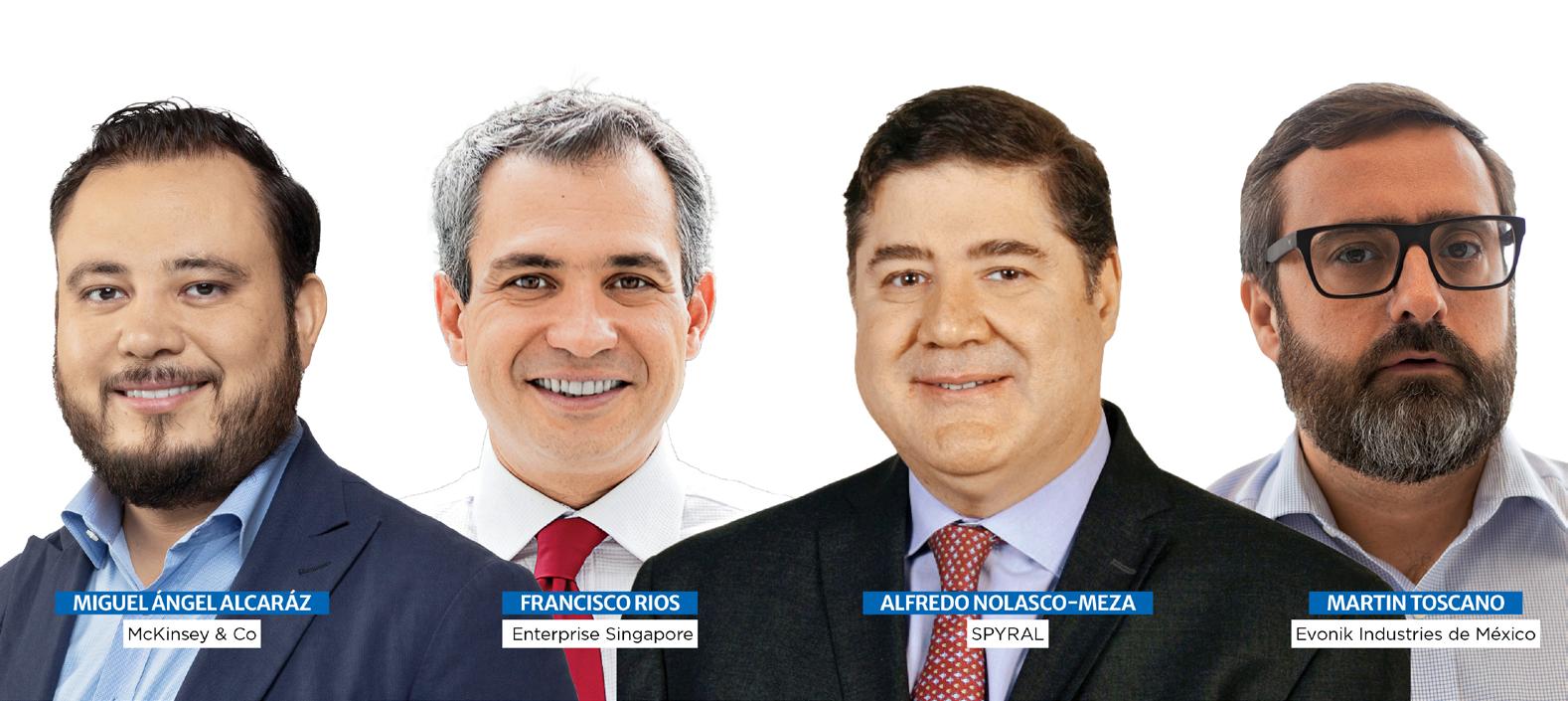
Moderator: Miguel Ángel Alcaráz, McKinsey & Company
Panelists: Francisco Rios, enterprise Singapore
Alfredo Nolasco-Meza, SPyRAL
Martin Toscano, evonik Industries México
13:15 MANUFACTURING IN MEXICO: TURNING LOGISTICS IN A COMPETITIVE EDGE
Moderator: Carlos Ornelas, McKinsey & Company
Panelists: Deepak Chhugani, Nuvocargo
Óscar Del Cueto, Kansas City Southern México
Wilfredo Ramos, UPS
14:00 NETWORKING SESSION 3 - AI-POWERED 1:1 MEETINGS
15:00 PERSPECTIVES ON MEXICO’S ECONOMIC OUTLOOK
Moderator: Carlos Fiorillo, fitch Ratings
Panelists: Alejandro Padilla, Grupo financiero Banorte
Adrián De la Garza, Citibanamex
Jessica Roldán Peña, Casa de Bolsa finamex
Rodrigo Mariscal, Secretaría de Hacienda y Crédito Público
16:00 MEXICO CITY: OPPORTUNITIES FOR ACCELERATION OF MEXICO’S GROWTH ENGINE
Speaker: Fadlala Akabani, Mexico City Ministry of economic Development
17:00 NETWORKING SESSION 4 - AI-POWERED 1:1 MEETINGS
09:00 GEN Z: GETTING TO KNOW THE LARGEST AND MOST DIVERSE GENERATION IN HISTORY
Speaker: Julian Coulter, Google
09:30 THE TECHNOLOGIES DRIVING THE INNOVATION REVOLUTION: CLOUD, DATA & 5G
Moderator: Alfredo Gutiérrez, Workday
Panelists: Rodrigo Martineli, Rackspace Technology
Chafic Nassif, ericsson
Julio Velázquez, Google Cloud México
10:15 DATA CENTERS, INFRASTRUCTURE AND SUSTAINABILITY
Moderator: Alejandro Salas, Mexico Business News
Panelists: Josué Ramírez, IDCA
Juan Carlos Casillas, Stulz México
Amet Novillo, equinix
11:00 NETWORKING SESSION 2 - AI-POWERED 1:1 MEETINGS
12:00 CHALLENGES OF A POST-PANDEMIC BUSINESS
Speaker: Alejandro Colín, VTe X
12:30 WHY UX AND PAYMENT EXPERIENCE REALLY MATTERS FOR E-COMMERCE
Moderator: Armando Velez Médici, OPPO
Panelists: Pablo Estévez, GUS
Erick McKinney, Adyen
Christian León, Signifyd Bernardo Bazua, Coppel
13:15 HOW TO STAND OUT IN A FINTECH BOOM
Moderator: David Lask, Tala
Panelists: Loreto Zumalacarregui, Bnext México
Andrea Picardi, Tribal
Ricardo Godínez, enso fIntech
Mariana Franza, Ualá
14:00 NETWORKING SESSION 3 - AI-POWERED 1:1 MEETINGS
15:00 THE PARADIGM SHIFT IN THE B2B FINANCIAL SERVICES MARKET
Moderator: Iñigo Rumayor Belausteguigoitia, Arcus
Panelists: Armando Herrera Reyna, Konfío
Paulina Aguilar Vela, Mundi
Guillermo Naranjo, Oracle
15:45 DISRUPTION IN THE INVESTMENT & VENTURE CAPITAL MARKET
Moderator: Hernán Fernández, Angel Ventures
Panelists: Javier De la Madrid, GBM+
Luis Barrios, Arkangeles
Anna Raptis, Amplifica Capital
16:30 NETWORKING SESSION 4 - AI-POWERED 1:1 MEETINGS
INFLATION HIGHLIGHTS PRIORITIES FOR ECONOMIC D EVELOPMENT
The pressure put on the Mexican economy by international inflationary conditions must be handled by startups, corporations and regulators through a recentering of Mexico’s most promising variables, such as its available talent, according to some of the country’s top business leaders.
Inflation will likely continue to be the most important aftershock of the pandemic, as shortages and bottlenecks will still hamper the ability of markets to heal themselves from the damage sustained throughout the last two years, said Brenda Gisela Hernández, President Commissioner, CO feC e . The US and the e U disagree on the type and degree of intervention that governments should make on economic competition to bring down prices. The Mexican government is attempting to find a middle road. “The federal government has implemented measures to reduce the impact of inflation. The commission considers it a priority to follow these recommendations, focus on eliminating obstacles and support small business and consumers,” said H ernández.
Companies are caught in the middle of this process, said Hernández, and must wrestle with a difficult choice between passing on price increases to the consumer and risking losing market share, or absorbing the shock of these price increases and lowering their profit margins. “This is an atypical situation that serves as a kind of test or filter; companies that can successfully do more with less will be able

“Inflation will likely continue to be the most important aftershock of the pandemic, as shortages and bottlenecks will still hamper the ability of markets to heal themselves from the damage sustained throughout the last two years”
Brenda Gisela Hernández President Commissioner | COFECE
to successfully manage the economic pressure of inflation,” she said.
Mexico’s private sector is being put under great pressure by inflation, said Santiago Cardona, Mexico Country Manager, Intel. Under these circumstances, businesses either have to sell more or become more efficient, if not both. Companies should focus on becoming more efficient since this process is more likely to be under their control, said Cardona. “To adapt in the business world, technology has to be part of the process and our companies have to implement digital tools to transform and adapt to an inflationary environment,” said Cardona. Both the pandemic and the inflationary processes that it triggered are significant as accelerators of Mexico’s digitalization, he added.
Technological adoption, however, cannot be separated from the matter of talent, according to Carlos f unes, Mexico C e O, Softtek. Businesses’ adoption of new technologies will only be as good as the tech skill training protocols that companies had in place to take advantage of those technologies. for companies it is essential to invest in both the acquisition and development of talent, he said. As these investments increase, talent retention and incentives for employees also become increasingly relevant and competitive for business leaders. These investments need to grow until they have macroeconomic impacts on inflation itself, said funes: “One of the main factors that can impact inflation is investment, which has to be constant in different markets.” Technology and talent are the two pillars that will define the ability of Mexican business leaders to manage this current crisis, said Philipp Haugwitz, Associate Partner, McKinsey & Company.
If talent acquisition is essential, then Mexico’s position as a source of abundant talent makes it an ideal country to
overcome the obstacles of inflation, said Kenneth Campbell, Mexico President and C e O, L’Oréal. This, in addition to other elements, made Mexico an investment wqwwand potential: “Mexico has a unique geopolitical position and the door to the biggest consumer market in the world, while also catering to a local market with high potential,” said Campbell. He also cautioned against alarmism, highlighting the fact that Mexico’s macroeconomic variables continue to be stable and favorable when compared with other countries, especially since the pandemic’s nearshoring boom made the US turn to Mexico when it would have previously turned to its partners in Asian economies. Campbell also noted the adaptability of Mexico’s economy by virtue of its past: as Germany and the US inch closer to double digit inflation rates, their inexperience with
such high inflation levels becomes obvious when compared to Mexico’s.
This inflationary environment puts startups in an interesting position. Mexico’s startup ecosystem was still at an early, if promising, stage, especially when compared to the US, where the top five companies in the stock market are now all former startups, said Gerry Giacomán, Co- f ounder and C eO, Clara. “As a result of low investment in startups in Mexico and the region, development has been slow, which also does not help to boost an innovative environment.” Through venture capital funding, startups can help other companies do more with less by taking a long-term approach to their business strategy and look beyond quarterly results to predict demand and help the market react to the volatility of an inflationary environment, he added.
PREPARING BUSINESSES FOR THE METAVERSE
Innovation is a constant and the world is continuously transforming amid technological upheavals. Companies leading the way forward must undergo testing, learning and failing before finally succeeding. The challenge is making this cycle agile, fast and as inexpensive as possible. Meta has taken this responsibility seriously and aims to give businesses the power to build as it brings the world closer together, said Marco Casarin, Country Manager México, Meta.
“The Metaverse will allow us to connect differently, in a virtual space, increasing the quality of interaction,” said Casarin. The upcoming metaverse is an ecosystem that will generate value chains and create moments that will positively change the world, he added. It will allow users to move fluidly in virtual and augmented reality, taking the experience of social interaction to another level and adding value to people and their communities. Meta is working to support the co-creation of interoperability that allows users to create intellectual property.
The metaverse aims to influence lives in many ways, for example by transforming
teleworking and enriching the virtual experience. It also aims to provide services that will amuse and teach individuals through immersive experiences. The metaverse could also transform the digital selling experience by changing how value chains are generated. This technology could promote interaction and reduce digital literacy gaps to enable everyone to be part of the digital economy.
While the metaverse offers numerous projected benefits, businesses must be prepared to fully capitalize on this upcoming technology. Multinational technology company Meta is offering several tools to increase profitability, explained Casarin. These include a video strategy to support marketing plans, which has benefited SM e s in particular. About 54 percent of consumers want to see branded video content. In Mexico, 40 percent of audiences rely on video over any other media tool and Mexico is one of the seven countries that create more video content. However, Mexico is still lagging in digital media and marketing investment. f or that reason, Casarin urged C f Os, C eOs and other business leaders to start
establishing digital and modern marketing strategies, which would allow companies to be resilient, flexible and adaptable. Video platforms generate community and Meta offers the largest video platform that can help any brand to generate videos, d Casarin.

“The Metaverse will allow us to connect differently, in a virtual space, increasing the quality of interaction”
Marco Casarin Country Manager México | Meta
of brands and allows businesses to easily integrate catalogs.
Conversational business is also a key communication tool in Mexico as nine in every 10 citizens use WhatsApp. Customers expect businesses to communicate with them through instant messaging channels. Using this platform or similar ones to connect with audiences expands the reach
Marketing Mix Models (MMM) can also help industries to boost the cycle of innovation, learning and failure, said Casarin. With the outbreak of COVID-19 businesses had to adapt to industry changes and explore scalable solutions to gain competitive advantages by understanding the true value of their marketing campaigns’ impact on business outcomes. There is a large amount of data available but more than 50 percent of it is not analyzed and, consequently, it is useless. If data is not correctly analyzed, companies can lose up to 64 percent of the cost per conversion im provement.
Businesses cannot wait until the metaverse fully evolves to start experimenting and investing in it, they must adapt and be prepared for the potential opportunities that the metaverse will offer.
SUSTAINABILITY IS A NON-LINE AR PROCESS
The private sector is being increasingly pressured by investors and consumers alike to ramp-up and accelerate sustainability initiatives as a means of creating a green circular economy. This call to action demands that companies reassess their entire business model and practices, a transition process that should not be expected to unfold without complications, according to industr y experts.
“Businesses are starting to realize that the business as usual has an expiration date. Companies today more than ever understand that sustainability is a must have and that they have to be environmentally conscious to be part of the solution,” said Alicia Silva, Presid ent, SUMe.
Climate change has become an omnipresent challenge for governments, private industry and consumers, all of which will play a critical role in forming a sustainable circular economy in Mexico.
Achieving this economic model will be possible by revaluating business practices, a capacity that was demonstrated amid the accelerated digital trans formation.
Similarly, it will require companies to place sustainability at the center of business development if they are to make substantive and sustained contributions to society and the environment, said Claudia de la Vega, Director of Corporate Affairs Mexico and Central America, Walmart. As companies embark on this intersective process, however, they should not expect it to be linear, warned de la Vega. “There will be setbacks, but companies should not be dissuaded from becoming a regenerative company to restore our planet for future generations.”
Ultimately, business as usual is obsolete, said Silva. This is reflected in an upsurge in green investments, which grew by 36 percent in 2020 according to the CC f V in Mexico, as reported by MBN. After two
years overcoming challenges ranging from public health and the accelerated digitalization of daily life, people and companies alike are poised to successfully lay the groundwork towards Net Zero. for companies, that starts with identifying how they contribute to the production of carbon emissions and waste locally and through their entire sup ply chain.
This information is central to the development of a sustainable roadmap that can be achieved through incremental changes, an increasingly common prerequisite for raising capital and attracting investors. This points to an institutional shift that demands accountability and engagement throughout the entire organization. With added-value clearly established, companies stand to benefit from the agency that can be provided by e SG professionals. These experts can help companies be pragmatic about the development of strategic roadmaps and more importantly, avoid potential setbacks.
Complementary to these efforts, consumer education should be considered a parallel
priority by companies, said Adrián Sánchez, C eO, Lealtad Verde. Some businesses fear changes to consumer behavior because they might cause friction but companies have forgotten that consumers are also looking at their role in the road towards sustainability, he added. Surveys outline that climate change is a major concern for consumers but they do not know how or where to begin tackling this problem, presenting a substantial opportunity for leaders in this space.
fear of transition is real; people are really concerned that it will not be possible to undo the environmental damage that has been done. Demand for sustainable products has increased but now there should be a focus in making these products accessible so low-income households can take part in the transition.Short-term, sustainable decisions will not be as remunerative as this is a long game. As a result, every single business decision needs to be evaluated from a lens of sustainability, a process that has been highlighted as doable during the accelerated digital trans formation.

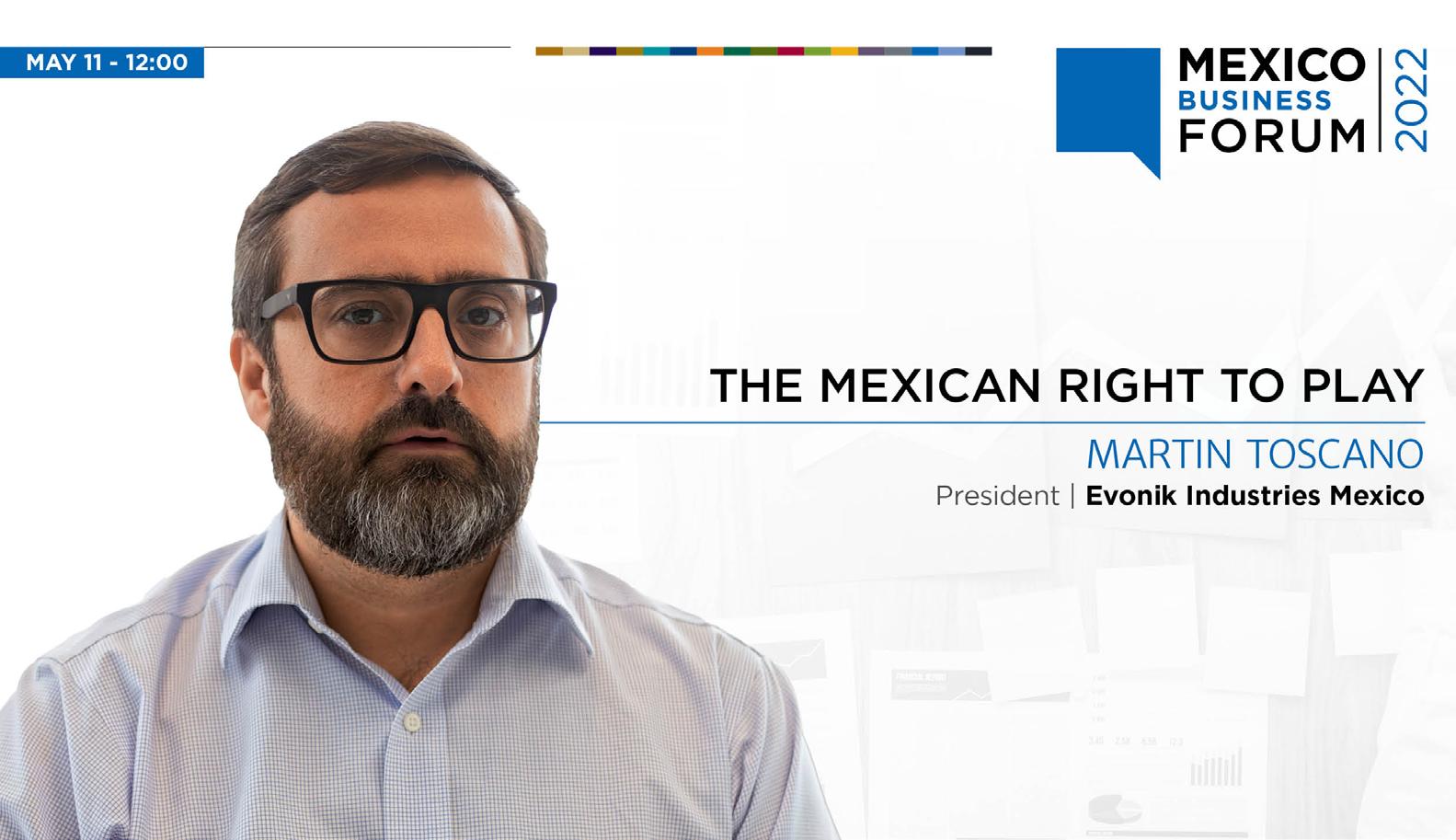
Several key factors paint Mexico’s economy in a positive light despite the crises that are defining a post-pandemic world, according to an in-depth analysis presented by Martin Toscano, Mexico President, evonik Industries.
The first one of these factors is Mexico’s demographic structure, which is “very different to competing population pyramids
in the e U,” said Toscano. Mexico is strengthened by its young population, with a national average age of 29 years old. The population is also expected to be 84 percent urban by 2030. Over 60 percent of Mexico’s workforce is concentrated in the services sector and its minimum wage is highly competitive at a global level, said Toscano. These and other variables reveal the many
BREAKING DOWN MEXICO’S ADVANTAGEOU S POSITION
benefits that companies can expect to enjoy when betting on the reliability of Mexican workers.
A younger population means a higher potential for training, education and talent development, which Toscano claimed applies significantly to Mexico in its post-pandemic phase. “In Mexico, demographic availability of young talent is an important factor to further develop the labor force, especially when considering how the pandemic developed the dual education options available to companies and employees.” Toscano also noted that Mexico’s key performance indicators (KPIs) were very positive, in alignment with other aspects of his analysis. According to Toscano’s breakdown, Mexican growth forecasts have returned to prepandemic levels in large part thanks to the success of its export industries and markets, which enjoyed “solid and noble growth.”
While Toscano did mention the issue of inflation, he also made clear that its effect on the international comparison was minimal considering the fact that it was affecting other “more developed economies” just as much, if not more. Inflation is also being increasingly affected and exacerbated by the war in Ukraine, from which Mexico is shielded, said Toscano.
Mexico also remains competitive thanks to its foreign direct investment ( f DI) levels,
which have remained stable and healthy despite current political discourse, according to Toscano. In fact, Mexico remains the world’s 9th overall largest recipient of fDI. While some risk factors endemic to Mexico remain, they are not new and have failed to trigger a significant f DI decrease. As the commercial relationship between the US and China continues to be redesigned and redefined, Toscano says that Mexico will continue to benefit from the US’s desire to reduce its dependence on Chinese imports. This is an example of the “China Plus One” strategy, through which companies avoid investing only in China, he added. This strategy has benefited other countries such as Vietnam. In this sense, Mexico remains at the center of an active trade environment, and the current nearshoring boom that the Latin American country is enjoying is likely to remain constant, leading to sustainable and reliable growth.
Moreover, COVID-19’s overall impact on Mexican markets was relatively “minimal” when compared to other countries, said Toscano. Mexico remained “almost completely open when compared to the eU” throughout the pandemic. The growth enabled by this measure allowed Mexico to gain a new position in global market rankings. for example, Mexico became the top four manufacturer of auto parts in the world, taking over a position previously held by Germany.
MEXICAN MANUFACTURE NEEDS UPDATES TO REMAIN C OMPETITIVE
The current context of uncertainty is changing manufacturing, which is being affected by customization demands from consumers, geopolitical issues, inflation and technological changes, among other trends. Moreover, global trade perspectives show a clear shift toward regionalization, according to consulting firm McKinsey. Mexico stands to benefit from this transition but to do so the country needs to update its practices and capitalize on its free trade agreements (fTA).
“Mexico is now a global manufacturing player,” said Martín Toscano, President and General Manager, evonki. Currently, Mexico is the fourth auto parts producer in the world, he added. While in 2021 Germany’s auto parts production amounted to US$87.22 billion, Mexico closed the year with production valued at US$94.78 billion, as reported by MBN. Digitalization and e-commerce have been essential to achieving this. e-commerce has seen the same growth during the past two years as it experienced 20 years ago.
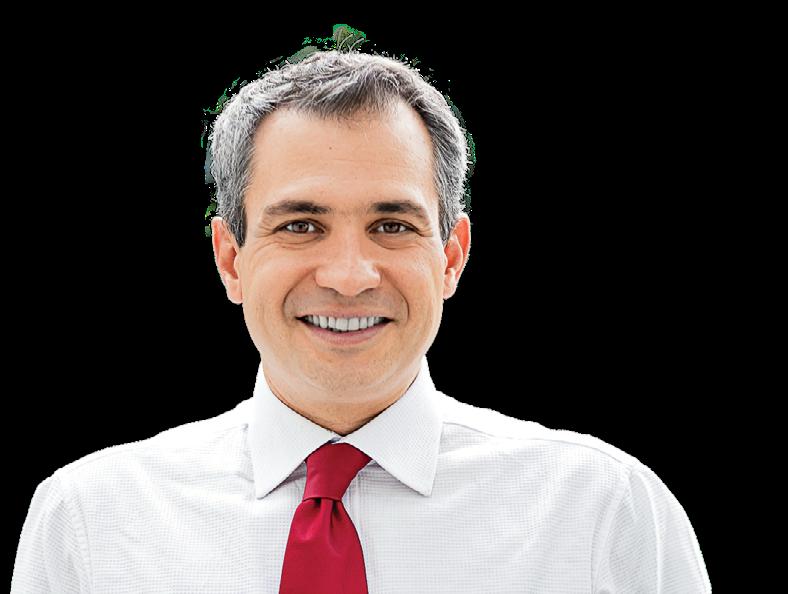
“The manufacturing processes that we are currently witnessing are completely different from those of 20 years ago,” said francisco Rios, Business Director, enterprise Singapore. Two decades ago, the manufacturing sector was one of the most important in the country and during the past six months, manufacturing has regained some of the importance it had in the past, according to Ríos. This renewed importance comes in part thanks to the shift from a “just in time” manufacturing process to a “just in case” view, he added.
Production processes have been transformed as advances in manufacturing technology
“The manufacturing processes that we are currently witnessing are completely different from those of 20 years ago”
Francisco Rios Business Director | Enterprise Singapore
arise. The combined capabilities of the industrial internet of things (IIoT), cloud computing, robotic process automation and artificial intelligence (AI), among other tools, have greatly improved manufacturing over the last few years. Manufacturers who embrace digital capabilities capture growth and protect long-term profitability.
The companies that have put AI at the core of their business have become market disruptors through the discovery of allnew business processes and commercial propositions that are often overlooked by the human eye. AI can help manufacturers achieve the greatest degree of product quality within their processes. This technology can be used in manufacturing neural networks, machines and deep learning, amo ng others.
However, there are still challenges to overcome to fully position Mexico’s manufacturing industries. McKinsey calls manufacturing companies that have successfully adopted technology “lighthouses” but “in Mexico only Henkel is considered to be a lighthouse and, with the use of technology, it has achieved tangible impacts in terms of productivity, flexibility and sustainability,” said Miguel Ángel Alzaráz, Partner, McKinsey.
While the challenges are many, the sector is well on its way to embrace digitalization. “In Mexico, we are actively working towards industry 4.0,” said Toscano. The manufacturing industry in Mexico knows where to head and both the public and private sectors are working together to achieve these goals. The road to industry 4.0 has obstacles such as the need for digitalization, the lack of 5G infrastructure, limited awareness about cybersecurity and the need to identify relevant topics for education programs.
However, numerous companies have made great strides in Industry 4.0 adoption. In Mexico, 54 percent of automotive companies
have active or in-development AI projects and one in every three companies uses IIoT to be more efficient and improve its capabilities, according to PwC. Meanwhile, 66 percent of Mexican companies have big data analytics projects.
To successfully transition to Industry 4.0, Mexico must start looking at similar markets, said Ríos. Developments achieved in Southeast Asia can be applied in Mexico since the region faces similar challenges. “Mexico can benefit from a partnership with companies from Singapore to take advantage of their technological developments,” said Rios.
The road toward Industry 4.0, however, is not straightforward. “We fall into the trap of focusing only on assembly manufacturing and we are not developing patents nor new technologies,” said Nolasco. To truly be successful, Mexico needs to be more than a manufacturing hub; it needs to be an active developer of technology and innovation, but this can only be done through investment.
“The establishment of R&D activities requires resources to export ideas and concepts,” said Toscano. Mexico must invest in training people in the ST e M field as the human factor is the most important element, according to Nolasco.
MEXICO’S MANUFACTURING POTENTIAL STIFLED BY CHALLENGES
Mexico has the potential to become a global manufacturing hub but lacks important capabilities related to infrastructure, digitalization and diversification of productive capacity. Bridging these gaps will be fundamental if Mexico is to seize the nearshoring opportunity emerging from the reconceptualization of global supply chains, according to industr y experts.
“Relations between the US and China have deteriorated as they compete for global hegemony. This has manifested vulnerabilities along their supply chains, which represents an important opportunity for Mexico,” said Deepak Chhugani, founder and C eO, Nuvocargo.
The COVID-19 pandemic upended traditional supply chains across the world and exposed various vulnerabilities and inefficiencies that are largely tied to a lack of digitalization. These challenges echoed through the manufacturing sector, which came to compound inflexible operating practices, e-commerce’s sudden exponential growth and rising commodity prices. Ultimately, this resulted in logistical congestion and bottlenecks that hurt entire industrial sectors and end-consumers alike. Altogether, in the post-pandemic reality, it has become observably clear that geographically disaggregated supply chains are no longer viable. Instead, it is likely that economies will defer to geographic units for the production and transportation of
goods, representing a significant nearshoring opportunity for Mexico, said Óscar del Cueto, President, General Manager and e xecutive Representative, Kansas City Southern México.
Before Mexico can begin to capitalize on this investment, it will first need to prioritize the development of domestic competencies, starting with infrastructure. Mexico needs to prioritize strengthening the connectivity and security of its internal infrastructure across railroads, roads and ports. Addressing this issue highlights the importance of federal and local state support, as these governments approve and oversee the development of infrastructure projects and have the power to improve security along these avenues. As it is, security is the highest cost for the transportation of goods in Mexico and it is of immediate concern given that investor confidence is directly tied to it. This was a concern that resonated with transportation workers who staged protests that crippled the national railroad network in 2021 and congested roads earlier this year.
A parallel development is the digitization of processes to improve traceability and expedite international exports, which are plagued with time-consuming bureaucratic customs. Logistical companies in Mexico are racing against the clock to modernize and digitalize their internal process to gain market supremacy. They must also cope with the surge of e-commerce and prepare for the influx of business expected to come from US manufactures. To support these efforts, the Mexican Transportation Institute (MIT) announced plans to develop a national intelligence center for transport
and logistics innovation to digitize data from Mexico’s logistics hubs, making the country’s supply chains more competitive. Ultimately, an important aspect of this transformation involves streamlining processes at the border, which will require public and private investment, said del Cueto.
Another element of this strategic development involves the diversification of Mexico’s manufacturing capacity and its export portfolio as a means of reducing risk, said Wilfredo Ramos, President Mexico and Latin America District, UPS. Currently, Mexico’s manufacturing capabilities are concentrated mainly in automotive manufacturing, but the country has the capabilities and investment attractiveness to expand into new frontiers. Bridging this gap will be challenging but Mexico should be able to extract value from its standing free-trade agreements with its northern neighbors, which have expressed interest in exporting their manufacturing to Mexico. At the moment consultants lack sufficient information to guide this process step-by-step, but these issues are not different to the ones they first encountered when US businesses decided to export their manufacturing process to China, said Carlos Ornelas, Associate Partner, McKinsey & Company. Ultimately retroactive feedback between these partnerships can give way to a fruition of a North American industrial manufacturing unit.
These three elements highlight a starting point for Mexico to begin building up as needed to attract investment and partners, key steps in the achievement of its ambition of becoming a manufacturing hub.

SIGNIFICANT GLOBAL UNCERTAINTY TO HINDER MEXICO ’S GROWTH
Mexico is going through a complicated time as its slow economic recovery has been hindered by global challenges and price pressures. The sobering realities that surround the country’s economy must be weighed against a landscape of prevailing anxiety and uncertainty in the global markets, according to some of the country’s most renowned economic experts.
Mexico’s ongoing economic recovery is going through a difficult phase, said Adrián de la Garza, Chief e conomist, Citibanamex. Pressure is mounting on a number of key supply markets, which include semiconductors, grains and various other commodities. All of this poses a number of significant risks that could decrease Mexico’s growth forecasts or cast a shadow of doubt over those being too positive in their predictions. International circumstances are complicating an already complex national situation. “The recovery outlook is complicated due to the RussiaUkraine conflict and the recent lockdowns in China. f rom the beginning of the geopolitical conflict, we saw increasing prices of raw materials needed for production,” said de la Garza.
The raising of US interest rates will also heavily influence Mexico’s growth capabilities, according to Alejandro Padilla, Chief economist and Managing Director of Research, Grupo financiero Banorte. Padilla believes that these rates will continue to rise at a comparatively accelerated pace throughout 2022, despite the US economy demonstrating its resilience and flexibility through high rates of job creation in the last few months. Padilla believes that other central banks around the world, including Mexico’s, are likely to follow the US federal Reserve’s cue and even go beyond it, raising interest rates even more aggressively. In this context, Mexico’s healthy export markets must play a role in cushioning some of the rougher effects of these indicators. “ exports will be the main driver for economic recovery. Mexico has to analyze the current environment to see where it can have a competitive advantage. The opportunities to grow are there. Mexico has a lot of potential, not only geographically but also demographically,” said Padilla.
Mexico will likely follow the global trend of weak growth rates that spell out a longer and more drawn out economic recovery process following the pandemic, said

Jessica Roldán Peña, Chief e conomist, Casa de Bolsa finamex. Banxico’s ability to maneuver beyond the aggressive agenda of the US federal Reserve is quite limited, she added. “Central banks in diverse economies, including Mexico, are expected to raise interest rates to maintain inflation at acceptable levels. The challenge for the domestic economy this year is for internal demand to remain steady and afloat and, in that sense, we do have the good news of consumption having returned to pre-pandemic levels.” The weakness of Mexico’s growth rate is not necessarily linked to Mexico’s current government administration, said Roldán, because it has been an issue for the country for the past 30 to 40 years. During that period, Mexico struggled to significantly go beyond an annual growth benchmark of 2.5 percent.
The war in Ukraine is impacting some unexpected commodities such as ammonium sulfate, an essential component of commercial fertilizers, according to the analysis of Rodrigo Mariscal, Head of economic Planning Unit and Chief economist, SHCP. This, in turn, is impacting Mexico’s growth. “Mexico is an important importer of fertilizer commodities; 25 percent of this one comes from Russia, for example, so the recent economic plan

“Exports will be the main driver for economic recovery. Mexico has to analyze the current environment to see where it can have a competitive advantage. The opportunities to grow are there. Mexico has a lot of potential, not only geographically but also demographically”
Alejandro Padilla Chief Economist and Managing Director of Research | Grupo Financiero Banorte
VALLEJO-I TO REAWAKEN MEXICO CITY’S KEY INDUS TRIAL ZONE
Since its inception, the Vallejo industrial zone has been a reference of industrialization in Mexico City. While the industrial zone lost its prominence in the 1980s and 1990s,
of the government seeks to protect that. If the conflict continues or escalates, then the plan contemplates an effort to increase the production of grains in the country.”
Mexico’s economic plan also contemplates an adjustment of the f ederal Roads and Bridges (CAPU fe ) highway tolls and of rail transportation fees. Through these changes, Mexico’s growth capabilities will continue to depend on the degree to which the country can compete as a commercial partner as the US-China relationship continues to transform. “There is a clear intention from the US and Latin-American countries to compete against China in offering the highest national and regional added value,” said Mariscal.
The world “has become more regional than global after the pandemic,” said Carlos f iorillo, Managing Director for Latin America Business & Relationship Management, f itch Ratings. This fact underscored Mexico’s bet on the nearshoring boom and will positively impact export markets, continuously increasing the country’s growth rate and the pace of its economic recovery.
An issue that could hinder Mexico’s growth rate is the political uncertainty surrounding investment in the energy sector. “The recent government policies create uncertainty in the energy sector and the industry in general, which is not favorable in the short term for investment,” said de la Garza. While Mariscal minimized the impact of this uncertainty, Roldán warned that it could have a widespread effect since the energy sector “might seem small in terms of investment percentage but its impact is economically tra nsversal.”
the government of Mexico City wants to restore Vallejo’s industrial might and turn it into a world-class industrial region, said f adlala Akabani, Minister of e conomic
Development, Mexico City Ministry of economic Development.
Located in the municipality of Azcapotzalco in the north of Mexico City, the Vallejo neighborhood has a long history of industrial production. Until the 1960s, Vallejo was an attractive industrial hub that accounted for 7 percent of the country’s manufacturing GDP. However, a process of deindustrialization caused by the closure of the “March 18” oil refinery, the earthquake of 1985 and Mexico’s opening to international free trade in the 1990s, led Vallejo to lose its manufacturing focus. To restore the neighborhood’s industrial capabilities, the local government is pushing forward the Vallejo-i initiative, which aims to breathe new life into the industrial capabilities of Mexico City.

“Currently, the Vallejo industrial zone hosts 1,008 economic units, offering 47,528 jobs in 17 different sectors, including pharmaceutical, processed food, beverages, cleaning products, electronics and machinery”
Fadlala Akabani
Minister of Economic Development | Mexico City Ministry of Economic Development
“Currently, the Vallejo industrial zone hosts 1,008 economic units, offering 47,528 jobs in 17 different sectors, including pharmaceutical, processed food, beverages, cleaning products, electronics and machinery, “sai d Akabani.
In 2019, Mexico’s City government launched the Vallejo-i strategy to attract investments related to Industry 4.0, clean energies, data centers, logistics and industrial corporate services. “We want Vallejo-i to renovate Vallejo’s industrial vocation,” said Akabani. To achieve this goal, the Vallejo-I strategy focuses on four action lines. The first is improving the neighborhood’s infrastructure improvement by reinforcing roads and rehabilitating water and sewage networks. efforts will also focus on expanding the cargo station Pantaco to increase its container
capacity and introduce new technologies for better safety and management procedures.
The second action line focuses on urban planning through the new Urban Development Partial Program, which will renovate about 163 properties that represent 610,534 m2. Its goal is to preserve industrial land use and boost urban development by 2050.
The third action line focuses on research and innovation. In 2021, 16,760 science, technology, engineering and mathematics (STeM) students graduated from universities in the region, greatly strengthening the region’s capabilities in artificial intelligence, automation of manufacturing systems, logistics and supply chain, precision mechanics, manufacturing systems, data science, computing, robotics and electronics systems. “These students graduated from 12 higher-level education institutions, including Universidad Tecmilenio ferrería, Universidad Autónoma Metropolitana and Centro de Investigación e Innovación Tecnológica del Instituto Politécnico Nacional,” said Akabani.
R&D efforts will focus on sustainability, Industry 4.0, entrepreneurship and waste processing. Some projects will take place in the Transfer Station and Selection Plant for Recycling and Utilization of Urban Solid Waste and the Center for Technological Development and Innovation (CDIT). This transfer station is the most modern and complex water recycling plant in Latin America, said Akabani, and can process 1,400 tons of solid waste per day. The CDIT is the first data center in Latin America with an ICR e A Level III Certification. In Dec. 2021, Mexico City Mayor Claudia Sheinbaum announced an MX$12 billion (US$571.7 million) investment in the CDIT, as reported by MBN.
Vallejo-I’s fourth action line is economic development, overseen by the Ministry of e conomic Development. “We encourage once-a-month business networking between companies in Vallejo from the
logistics, metalworking, energy and chemical industries, among others,” sai d Akabani.
The Ministry of e conomic Development signed a special collaboration agreement with the Mexican Association of Industrial Parks (AMPIP) that will support the attraction of foreign direct investment in Mexico. Through this agreement AMPIP will approach companies and provide information in a wide variety of languages to help them identify the best location to establish their operations.
“Vallejo’s industrial area has not evolved into a world-class real estate development. We must help industrial parks evolve into digital parks and welcome new types of companies, such as data centers,” said Claudia e steves, e xecutive Director, AMPI P, to MBN.
In Mar. 2022, the Ministry of e conomic Development (S e D eCO) and the Ministry of e ducation, Science and Technology (S e CT e I) signed an agreement with the Association of Real estate Developers (ADI) to boost the participation of the real estate sector in the Vallejo-i industrial zone.
GOOGLE: GEN Z IS RESHAPING C ONSUMPTION
Generation Z, the first true digital natives, is reconstructing the way that people connect, interact and consume on the internet. Understanding their driving incentives and behavior in this digital landscape will be quintessential to the formation of business strategies, according to Julian Coulter, Country Director México, Google.
“Of the 84.1 million internet users in Mexico, 49.9 percent belong to Gen Z. They are the ones who will determine the future of the internet,” said Coulter.
Born between 1997 and 2012, Gen Z only represents 32 percent of the global population. Nevertheless, they influence 91 percent of household decisions. This generation represents one of the most relevant business opportunities because it is the first to grow hand in hand with the internet and digital platforms, said Coulter. f urthermore, while they represent over 40 percent of the global labor force, they are mainly concentrated in Asia and Latin

“Of the 84.1 million internet users in Mexico, 49.9 percent belong to Gen Z. They are the ones who will determine the future of the internet”
Julian Coulter Country Director México | Google
America, according to the World Bank. from within these markets, they have played an important role in the development and adoption of electronic commerce.
Their connectivity represents over half of Mexico’s internet activity, with 84 million daily users according to a study by the Internet Association Mexico. As such, they will play a significant role in the internet and digital platforms of the future. Pinning down this generation has not been straightforward as it is one of the most diverse in history. Nevertheless, they are predominantly characterized by values related to inclusivity, driven by a sense of accountability to contemporary issues and live to be creative, according to a consumer report by GWI.
Gen Z is preoccupied with sociopolitical issues ranging from inclusivity to climate change, with 46 percent affirming their concern for these ongoing issues, more than any other generation. They consider gender fluidity to be the standard and are constantly challenging stereotypes as means of dismantling institutional disparities. They also value mental health and creativity, with 51 percent engaging in at least one creative daily activity, of which they have chosen video content as their favorite medium. A joint study by Google and youTube found that 80 percent of Gen Z published at least one video online
during the last year, thereby making them authentic content creators.
Gen Z is using casual content creation to push their cultural relevance and values. In the last year, 54 percent of Gen Z respondents tried a new camera filter while filming, 52 percent participated in at least one social media challenge per month and 34 percent created at least one meme in the last year. One of their favorite digital platforms is youTube, which they have deferred to both express their creativity and learn. f rom this library of video content, 80 percent of Gen Z respondents have expanded their knowledge base and 68 percent refined and or developed new skills for the future, according to the s ame study.
In Mexico, youTube plays an important role in the daily life of over 56 million daily users above the age of 18, according to a study by Comscore. According to a Google Topshop study, 76 percent of Mexicans say that youTube makes them happier, 78 percent recognize the added value that the platform provides and 87 percent claim
A MAP TO THE 5G REVOLUTION
The introduction of 5G networks and services will transform the structure and capabilities of a wide spectrum of industries, according to industry experts, especially given the fact that the pandemic made businesses more reliant on cloud-based data transmission.
5G will be one of the backbones of digitalization processes throughout Mexico and Latin America, according to Chafic Nassif, North LATAM and Caribbean President, e ricsson. 5G will be one of the

“5G technology has more capacity and will help us to reduce the digital gap in Latin America, where there are a lot of people who still lack access to the internet”
Chafic Nassif North LATAM and Caribbean President | Ericsson
they have learned something new on the platform. These incentives have allowed youTube to achieve the greatest market penetration among Gen Z in Mexico and Latin America, according to Reuters.
Gen Z has been linked to three main passions: music, gaming and sports. Music is in their DNA, said Coulter, as the generation consumes on average 18.4 hours of music a week, as they consider it to be fundamental to their emotional wellbeing. furthermore, through gaming, one in three Gen Z respondents discovered new music while playing video games.
Video games also play an important role in the daily life of Gen Zs, who consider gaming more than a hobby and have used these spaces to create digital communities. This is a market on the rise in Latin America, as reflected in the more than 800 billion videos of video games, 90 million hours of streaming and 250 million content videos on the topic of gaming. Video streaming of sporting events is helping people connect to live experiences from afar, a market with significant potential as reflected on a growing consumer preference.
chief drivers of job creation and its impact will not be limited to the tech sector, he added. Because of this incentive and many others, 5G could be the secret ingredient that finally closes Latin America’s digital divide. This achievement will put cloudbased services in the hands of populations that will be new to this type and degree of access, allowing them to contribute and innovate the digital space and economy. “5G technology has more capacity and will help us to reduce the digital gap in Latin America, where there are a lot of people who still lack access to the internet,” said Nassif.
f or this promise to be fulfilled, more promotional efforts are needed so the private sector can inform governments of the extensive returns of spending in 5G networks, says Rodrigo Martineli, Latin America Vice President and General Manager
Latin America, Rackspace Technology. The entire Latin American region could greatly benefit from large scale 5G infrastructure development and investment, according to Martineli: “5G will help existing businesses to modernize themselves, while allowing the generation of new ideas that we cannot even imagine yet.”
The growth of 5G is a global technological race that will define the evolution and positioning of competing digital economies, allowing Latin America to compete with the eU, according to Martineli. To achieve this goal, the technology must be backed by public investment. “There needs to be government encouragement. It is also key to create facilities for entrepreneurs to keep developing these technologies,” said Nassif.
5G will enable an explosion of new services in various industries by greatly accelerating the speed at which data can travel, fully transforming data storage infrastructure, said Martineli. This process is already underway because the pandemic made cloud-based services essential to every economic sector.
“The real revolution is the decentralization of data and 5G will boost that,” said Martineli. However, this transformation will put new technical burdens on companies and consumers that will require new talent development programs that train technicians to fix emergencies. “The largest challenge
we have right now is talent sourcing, as it is not only expensive but scarce. It is very difficult to harness our potential without the right talent,” he added.
Companies are already demanding 5G technology, according to Julio Velázquez, Managing Director, Google Cloud México. In a recent study, seven out of ten companies surveyed showed high degrees of enthusiasm and willingness to invest in 5G tech, he added. As companies increase their focus on team building and collaborative approaches to skill development and problem solving, 5G communication will become essential to the fulfillment of companies’ commercial agendas. “Collaboration will drive the commercial application of the 5G network,” said Velazquez. Meanwhile, the expansion of 5G networks is driving the development of new technologies that will seem miraculous to our current understanding of certain sectors, such as healthcare. “These new technologies will transform many industries. for example, in the health sector, telesurgery is expected to become a reality,” he added.
As 5G becomes prevalent, cybersecurity becomes a growing concern. Protecting from ransomware attacks and similar threats has become an important part of companies’ concerns regarding their digital transformation, said Alfredo Gutiérrez, Mexico Director General , Workday.

“An important challenge is definitely security. As an ecosystem, we have to work together to keep security always in mind, especially when handling so much data,” said Nassif. These security concerns have to take into account the history of the companies, their experience and what they bring to the table.
e ven agriculture and strategic food sourcing will be significantly altered by 5G applications, said Nassif. Given the relevance of these industries to the region’ economies, security should be a priority as 5G continues to be deployed across the region.
DATA CENTERS ADOPT TECH TO REDUCE THEIR ENVIRONMEN TAL IMPACT
A challenging environmental scenario is prompting consumers to demand more accountability from the businesses they work with, leading companies to increasingly implement business practices with an environmental and social perspective. Data centers, which contribute to 0.3 percent of global CO2 emissions and are accountable for the consumption of 1 percent of global electricity demand, are also committing to work toward a greener future. By focusing on ecofriendly trends, integrating circular thinking and embracing digitalization, data centers can greatly decrease their environmental impact and promote sustainable practices among different industries.
“Data centers are not static; they must improve and be at the vanguard,” said Amet Novillo, Country Manager, e quinox. The constant search for efficiency in the use of energy must be a priority for data centers, said Novillo. equinix is taking advantage of its global experience to implement best practices in Mexico through its “future first” sustainability strategy, which is based on environment, Social and Governance (eSG) initiatives. The company aims to build a business that brings the world together to create innovations that will enrich businesses and the planet. “As a company in the digital development sector, we care about sustainability on our planet,” said Novillo.

“Virtualization and the use of the cloud should mark an interesting trend to follow in our country”
Josué Ramírez
Regional Director Latin America | IDCA
Data centers are exploring different sustainability alternatives, such as using lithium batteries, gas-powered generators and cooling water systems, said Juan Carlos Casillas, Sales Manager, Stulz México. These centers are also betting on renewable energies and aligning with the latest trends in the market. “Some data centers, which consume around 600 megawatts, are obtaining their energy from nuclear sources,” said Josué Ramírez, Regional Director Latin America, IDCA.
Chip and server manufacturers are also using technologies that process more information in less space, increasing efficiency. Moreover, the cloud is reducing the use of spaces and promoting sustainable operations. “Virtualization and the use of the cloud should mark an interesting trend to follow in our country,” said Ramírez.
Although the implementation of ecofriendly solutions represents an important investment for data centers, these measures reduce the use of physical spaces and speed up the commercialization of services and products. Costs are also reduced while more profit is achieved by allowing companies to enter new markets, said Novillo. Data centers are also attractive because both providers and users value the implementation of sustainable operations. “Large cloud and application suppliers are companies that advocate for sustainability and they are looking for data centers that provide it,” sa id Novillo
Data centers, however, face many challenges in the road to sustainability. The largest hurdle is having an adequate

plan to make eco-friendly data centers. “Having a suitable geographical location is essential for a data center to be ecofriendly,” said Casillas.
Legal regulation is also needed so data centers follow sustainability guidelines. “Companies need regulation from an entity to ensure that they are operating properly. A recycling assessment is essential to help companies to work sustainably,” said Ramírez.
By recycling its electronic waste, the data center industry would transform into a more sustainable one, as it will boost circular economy practices. Circular economy strategies across all industries are a response to the growing scarcity of resources and the importance of sustainable value chains is increasing. Demand is growing, so electronic waste should be managed to lessen the environmental impact of this industry, said Casillas.
“A great part of the components used in data centers can be reused; it is important to promote recycling across the sector,” said Ramírez. The increase in
the demand for data centers is attributed to the pandemic and the acceleration of digitalization. “Trends, such as e-commerce and digital automation are digitizing processes where data centers play an important role. With the support of the government, we must make electronic recycling a reality to benefit the planet,” said Casillas.
Mexico is Latin America’s second-largest economy and its proximity to the US helps Mexico link with countries to the north and south, said Novillo. “There are many opportunities. Mexico’s potential digitization market accelerated during the pandemic. The digital transformation is attractive because you can reach more markets while accelerating income and decreasing investment,” he added.
However, many companies across different sectors are still reluctant to digitalize, as they worry about having the correct infrastructure to transition to eco-friendly operations. Ramírez explained that companies should not worry about infrastructure, which is already being offered by several providers; they should focus on embracing the benefits of digitalization.
Mexico’s geographic location makes it an ideal spot for data centers, while the continued digitalization of everyday life will only lead more companies and users to demand these
services. “We are going to become a reference country in data centers. We are going to be an important hub globally, increasingly leading to private investment,” added Casillas.
VTEX: PLENTIFUL DEVELOPMENT OPPORTUNITIES LAY IN E-COMMERCE
As Mexico and Latin America’s e-commerce markets receive the push they need to take off, their exponential growth has created a demand for scalable solutions. Companies are now running against the clock to take advantage of digital solutions to capture and cement their market presence as the sector gets more crowded, said Alejandro Colín, Vice President of New Busin ess, VTe X.
“Time is becoming increasingly valuable and digitalization has brought out the benefits of e-commerce,” said Colín.
Mexico’s digital awakening has seeded a growth potential that is yet to be fully exploited. This is best exemplified by the sustained growth of its e-commerce market that, for the third year in a row, is among the top five countries with the largest observed growth. Mexico’s e-commerce market grew 27 percent in 2021, inflating its market value from MX$316 billion (US$15.6 billion) to MX$401 billion (US$19.8 billion), according to VT e X. Consumers’ decisive shift towards e-commerce has allowed startup e-commerce companies to soar, a market opportunity that has incited more actors to join the sector and attracted millions in investment.
More recently, adjacent industries have begun to explore this market space, giving way to entire new business avenues to be pursued. This includes supporting industries such as logistics and fintech. As the market

“Time is becoming increasingly valuable and digitalization has brought out the benefits of e-commerce”
Alejandro Colín Vice President of New Business | VTEX
is in its early infancy, Mexico has significantly more space to grow into, a characteristic that has not gone unnoticed.
Domestic e-commerce companies will be increasingly pressured to place technology at the core of their business strategy to remain profitable. Digital solutions will also be essential in addressing concerns related to payment security due to their role in expanding payment options, sharing information and optimizing logical processes. f ortifying payment security and expanding payment options go hand in hand, and will be key to attracting new consumers and maintaining consumer confidence.
Sharing information in real-time across physical locations is necessary to making business decisions related to logistics, which should be complemented with data analysis to identify new business opportunities, said Colín. This is a known pain point that many companies struggled to develop at pace with market demand. Overall, the companies that proactively optimize along these development opportunities will likely continue to enjoy compound growth.
At the moment, Mexico’s digital consumer market can be reduced to three main demographics including: intensive, recurring and occasional shoppers, according to VT e X. The first, intensive shoppers, are mostly millennials who grew up with the internet and have the purchasing power to recurrently buy online. Recurring shoppers are mainly represented by people over 45 years old and of middle class who lack the same purchasing power of their younger counterparts. finally, occasional shoppers are mainly those over 65 years old, retired and with low economic flexibility.

RELIABLE FEEDBACK LOOPS: THE KEY TO A SMOOTH PAYMENT EXPERIENCE
As the e-commerce industry continues its accelerated evolution after the pandemic, it becomes increasingly clear that customer feedback is essential when designing the ideal payment experience, according to sector experts.
An omnichannel strategy is becoming an essential part of the business strategy of major and minor retailers, explains Bernardo Bazua, Director of Omnichannel and Digital Strategy, Coppel. Omnichannel strategies increase and facilitate access. Companies must ensure that their customers have access to the channel of their preference when acquiring any product or service, according to Bazua. Retailers that offer certain products and services through some channels but not others have an incomplete offering.
“An omnichannel strategy means making products and services available through different channels so the client can choose the way they want to be supported,” said Bazua. Customers spend more when they feel they can choose their own way to get in touch with a company, without having to provide information several times.

“An omnichannel strategy means making products and services available through different channels so the client can choose the way they want to be supported”
Bernardo Bazua Director of Omnichannel and Digital Strategy | Coppel
Customers want to know the service is available, even if they do not use it, said Bauza.
To achieve higher rates of customer retention, an omnichannel approach can also facilitate the gathering of feedback from current, past and potential customers, More channels to support customers also means more channels through which businesses can receive, analyze and process clients’ opinions on their purchase experience. Keeping feedback channels open and as broad as possible is essential to capturing as much information as possible, explained Armando Velez Médici, Head of e-commerce, OPPO.
While some believed that the growth of e-commerce over physical retail might make lower prices more important that payment experience, this has not been the case. Clients are favoring a smooth user experience (UX) over price, according to erick McKinney, Mexico Country Manager, Adyen: “Over 39 percent of consumers favor experience over price when making a decision.”
As the rhythm of digital purchases intensified throughout the pandemic, it became clear that the usual payment security protocols had to be redefined since in their pre-pandemic shape, they heavily hindered the payment experience, said McKinney. “ fraud prevention and payment experience impacted consumer experience during the pandemic, sometimes preventing clients from buying online.”
This concern for redesigning security gatekeeping not only applied to fraud prevention but also to the management of customer data, which must not become less secure but should be more agile. Companies need to generate new ways to use customer information to improve UX without making the information more vulnerable, according to Pablo e stevez, CeO, GUS.
“Companies have to be more proactive with the information they have from clients to make the user experience more unique and customized,” said e stevez. This can only be achieved through open and broad feedback loops through which companies can identify the points in the purchase experience at which the customer
feels that they should not have to input additional information or repeat an input. Any friction embedded into the process needs to be identified and extracted, which is impossible without customer feedback.
Much of this friction can be concentrated in the specific point of payment, said Christian León, Latin America Regional Director, Signifyd. When a payment gets declined, a lot of data can be salvaged to determine how those declinations can be avoided in the future, thus increasing customer retention rates. “It is very important to understand the reasons why clients’ payments get declined when buying something. We recommend investing in technology to optimize lead conversion and minimize desertion,” said León.
ALLIANCES BETWEEN FINTECHS, BANKS INCREASE FINANCIA L OFFERING
The rapid digitalization of numerous sectors has led to the emergence of a new kind of financial service provider: fintechs. While some may believe that these newcomers want to challenge banks’ market dominion, by working together these two types of companies can further expand their services and increase their client bases.
After the pandemic, fintechs have become more popular because they are making financial services more accessible to all economic sectors. f intechs are “a space where innovation and social integration are possible,” said Andrea Picardi, Country Manager, Tribal. These companies have changed how financial services are structured, provisioned and consumed.

“A space where innovation and social integration are possible”
Andrea Picardi Country Manager | Tribal
fintechs, however, face obstacles when trying to partner with banks. “We must stop saying that we are fintechs and we must replace it with techfins because we are experts in technology,” said Picardi. f intechs are
introducing technology to the financial sector. There are opportunities for collaboration between traditional banks and fintechs because the first have more experience in finance and the second in technology.
Through these alliances, banks can offer complete and competitive products. “The greatest transformation that banks can have is through their involvement in financial inclusion,” said Loreto Zumalacarregui, Head, Bnext Mexico. If banks use technology within their operations, they can reduce costs by 80 percent and reinvest this profit in talent or their platforms. Banks can also greatly reduce the use of cash, which is “the greatest enemy for the development of an economy,” said Mariana franza, COO, Ualá.
f intechs are a good option for banks to bridge the gap between the formal and informal economy. “Both banks and fintechs must be clear about where each one of them adds value. This is crucial for these alliances to be achieved,” said Ricardo Godínez, C eO, enso fintech.
Although alliances benefit both players, so does competition. “It is not bad to compete
because in that way better products are generated and the user is benefited,” said franza. e xperts agree that the consumer is the center of these alliances and products must be created to offer friendly and transparent products.
In 2017, there were around 700 fintech companies; today there are almost 2,500. from these, 21 percent are in Mexico. fintechs have identified an opportunity in Mexico because the country has extremely an large underbanked population, with millions without a bank account. “There are millions of Mexicans without a credit history. We want to reach more segments and help in the coverage needs such as health, food and housing,” said Godínez.
To transform this scenario, f intechs have focused on increasing inclusion and democratizing finance. To become a user of a f intech company, a person only needs a smartphone and internet access. In Latin America, 85 percent of the population has access to both. Moreover, a fintech’s “most effective value proposition is the transparency and safe ecosystem proposals that it offers,” said f ranza. f intechs are focused on digital and mobile payment solutions for B2B and B2C markets. “We offer digital and mobile payment solutions such as oneclick solutions, which is something that brings significant value as users want to do their financial movements in just one click,” sai d Godínez.
Blockchain technology has boosted fintech growth. “It is impossible to talk about growth without mentioning blockchain,” said Zumalacarregui. However, blockchain technology also brings difficulties to the user and fintechs need to make products easy to use, she added.
The funding boom that took place in 2021 has reshaped the competitive dynamics and differentiation strategies of the Mexican fintech market. “These strong investments happened because investors saw in Latin America the need for segments to have access to banking and loans,” said franza. After the pandemic, the need for digital media increased. In Mexico, 30 percent of adults made their first digital purchase during the pandemic and 75 percent of businesses offered digital payments for the first time, which increased their revenues by over 20 percent.
The talent available in Mexico is posing a problem for fintechts because there is not enough talent available to fill key positions. “There are many fintechs but insufficient developers,” said Godínez. As more money is invested, salaries increase, which in turn increases the competition for talent between companies. Therefore, Godínez argued companies it is crucial to invest in company culture instead of simply offering higher salaries.
However, during 2022, funding has been smaller as it was last year. “ f unds have

decreased amid the international context; numerous companies are losing their value and fintechs are susceptible to this risk.
We must look for business models that promote investment in Latin America,” said Zumalacarregui.
BUSINESSES FINTECH SERVICES: OVERDUE, OPPORTUNE
While the digitization of financial services has made significant strides at granting greater financial inclusivity to end consumers, there is much work to be done to extend these services to businesses. f intechs are currently working to develop services and platforms centered around unmet business needs but fragmentation and an uneven regulatory framework pose significant challenges, according to industr y experts.
“We are seeing a digital and mindset transformation in which clients are at the center of everything. We are listening to client’s challenges and necessities,” said Paulina Aguilar Vela, Co- f ounder and Country Director, Mundi.

“We are seeing a digital and mindset transformation in which clients are at the center of everything. We are listening to client’s challenges and necessities”
Paulina Aguilar Vela Co-Founder and Country Director | Mundi
The COVID-19 pandemic accelerated many of the projects that fintech companies were working on prior to the pandemic. Digitalization is helping address consumer demands in various and more efficient ways. However, the processes that have made these competencies possible remain different from those between banks, and remain very fragmented, said Armando Herrera Reyna, General Manager, Konfio. This represents a significant area of opportunity and growth that is still in the early stages of development. These services should be built on existing infrastructure so fintech companies can focus on evolving solutions instead of reinventing the wheel, he added.
Traditional banking institutions have neglected to invest in the development of B2B finance services, specifically those pertaining to international commerce, leaving small businesses with no recourse other than outdated traditional models, said Aguilar. This often led SM e s to act as banks for their large suppliers, which restricts their financial liquidity and wellness. f inancial factoring has allowed SM es to participate in international exports without having to use their capital to finance their providers and clients, said Aguilar. Solutions such as these have been created from listening to the needs of businesses, while using technology to facilitate and expedite these processes.
fintech companies should aim to address the root causes of financial problems, not the symptoms, said Herrera. for example, companies begin to look for financing options after they missed some payments from their clients, which ultimately reduces their liquidity and forces them to seek credit. The objective is not to treat the symptom, which in this case is credit, but to create services that circumvent these occurrences in the first place and at the direct benefit of the business clients. An added aspect of this challenge concerns identifying what are the primary issues businesses face and who are the respective stakeholders and decision makers.
“Companies with a culture based on constant innovation will gain a predominant position in the market,” said Vela.
Another important challenge is the regulatory framework, which needs to move faster because tech is advancing faster than regulation can keep up with, said Guillermo Naranjo, Director of f inancial Services Applications, Oracle. There is a lot of discussion regarding data, storage and services, which is hurting the continued advancement of
this sector. These challenges concern both backend-as-a-Service (BaaS) and open banking, which need matching international regulations to function and prevent fraud and money laundering. This will ultimately require fintechs, traditional banks and federal governments to work in partnership to fast track legislation. Partnerships will be fundamental to the accelerated fruition of this emerging sector considering that there are numerous and weighted developments occurring in parallel to on e another.
“Regulation is a controversial topic that has delayed progress. Nevertheless, it is important to understand how data is
used. Regulation has to go faster than technology,” sai d Naranjo.
Another aspect of this partnership should concern platform-to-platform communication so that they can work in conjunction, misconfigurations in cloud services caused by APIs that do not match leave spaces for unauthorized entry. fintech companies that circumvent this problem can benefit from greater security.
Overall, there are significant opportunities in this emerging market, which stands to benefit from greater cooperation and partnerships among fintechs and traditional banking institutions.
A DECISIVE MOMENT FOR RI SK CAPITAL
Despite some significant recent changes in market dynamics, wealth creation can still be promoted through the smart deployment of investment management services, according to industr y experts.
The venture capital (VC) and investment management sector experienced a rough landing in 2022 that revealed much about
the state of the industry, according to Luis Barrios, f ounder and C e O, Arkangeles. The first five months of 2022 contrast sharply with an extremely successful 2021 that was characterized by large funding rounds being announced at an accelerating pace, resulting in record numbers of new unicorn and “soonicorn” entities and entrepreneurs, particularly

in Latin America. Now, sobering market indicators and the problems arising in the crypto and N f T spaces have challenged the positive assumptions made at the year’s outset. Barrios says that this is an opportunity for companies to focus more on their commercial divisions and a little less on technology so as to consolidate their resilience and flexibility. “ funds will notice the ‘cockroach’ companies that can survive this nuclear winter. This will lead cockroaches to transform into unicorns,” sai d Barrios.
The Mexican and Latin American VC and startup spaces can “evenly match and overcome their competition in the US and the eU, so that we can remove that attitude as colonized countries that dictates that we cannot hope to compete,” said Barrios. Simultaneously, he cautioned against complacency from Mexicans, making clear that foreign startups or Mexican startups led by foreigners can easily overcome them. “Mexicans should not expect to have an advantage in Mexico simply because they are the ones working in their own national territory,” said Barrios. f und and investment managers must also be honest with themselves about what they are selling to their customers, he added. While many companies offer a path to financial freedom, they do not fulfill that promise, leading to more skepticism and lack of trust.
These conditions outline the obstacles ahead for the sector. “There needs to be more audacity among traditional companies to draw in skeptics and to accelerate the ecosystem. Collaboration between big and small companies also needs to be strengthened. There are still biases among large transnationals against purchasing from newly created companies,” sai d Barrios.
While the years before 2022 were extraordinary, the nervousness that this year has generated is quite palpable, said Javier de la Madrid, Head, GBM+. Numerous investors with a prominent
presence of cryptocurrencies in their portfolios are now scrambling to deal with sudden and sharp contraction of this market. However, fintechs could still benefit new adopters, said de la Madrid. The reason is that many in Latin America are unbanked and those with a bank account are not satisfied with the service, representing an enormous opportunity to offer new ways to build wealth. “Banks have not managed to innovate at the same pace as fintechs and this represents a big opportunity. Latin America is at a very good moment. Large capitals have entered the region and many of the funds still have a considerable share of that capital. Proactive companies with a talented team can still access the available capital.”
An important part of fulfilling this sector’s promise is the matter of diversity, according to Anna Raptis, f ounder and Managing Partner, Amplifica Capital. The risk capital industry is in serious need of more inclusion initiatives that drive the diversification of its participants. This diversity needs to cover gender and race, but also socioeconomic status and cultural ba ckground.
“A large challenge is to drive inclusion and provide access to a larger segment of the population, fostering creativity and enriching the risk capital sector,” said Raptis. Other issues to be addressed include the need to simplify regulations, which are quite complex in Mexico, according to Raptis. The sector also needs to foster grassroots efforts to support smaller national funds and companies. As Raptis explains, “It is key to support local funds. These are the foundation of the industry in Mexico and it is necessary to strengthen their results.”
Supporting local funds also means giving more access to risk capital to local companies that address needs specific to the region. It also means giving more access to investment services to local populations whose needs and capacities might be ignored by larger transnational entities, said Raptis.