IMPACT REPORT
Networking Platform Sponsor







Despite the gradual global recovery following the COVID-19 pandemic, the automotive industry still faces large roadblocks in its road to pre-pandemic conditions. Semiconductor shortages and logistic hurdles continue, further fueled by the growing conflict between Russia and Ukraine. Still, many see light at the end of the tunnel as local and international supply chains push through.
Amid this tumultuous period, local and international automotive industry insiders gathered at Mexico Automotive Summit 2022 to discuss today’s main trends, challenges and opportunities that have arisen over the past two years. Mexico’s automotive industry has continuously played an instrumental role in the national economic development. However, today’s rapidly changing environment makes collaboration and conversation between industry players everywhere, from manufacturers to innovators and regulatory authorities, imperative to maximize the chances of turning present challenges into future opportunities.
Starting on March 23, the event’s panel discussions began with industry experts sharing their thoughts on the future of mobility, from manufacturing to regulation and accessibility. After that, speakers and panelists tackled the rapidly changing automotive environment through a focus on the electrification and the changing CASE mobility, OEM business models and vehicle ownership.
The summit continued on March 24 with a focus on today’s most important innovations for automotive and auto-part manufacturing. From cloud solutions, robotics and lightweighting to additive manufacturing, public and private sector players shared their thoughts on the changing ways vehicles are made in the country despite supply chain shortages and thanks to international treaties driving in foreign manufacturing investment.
164 companies 421 conference participants
67 speakers 7 sponsors
3,804 visitors to the conference website
Mexico’s leading B2B conference organizer introduces the world’s leading event networking platform.

Delivering intent-based matchmaking powered by Artificial Intelligence that connects the right people. Network, no matter where you are.
229 participants
1,451 matchmaking communications
193 1:1 meetings conducted
Breakdown by job title



Matchmaking intentions
1,257
• Accudyn
• Acero Prime
• ADDEATON By NUMALLIANCE
• AMDA, A.C.
• American Express
• AMINSA
• AMPIP
• AMT - The Association For Manufacturing Technology
• ANPACT
• Arbomex
• ASCE Comunicación Estratégica
• ASCENCIO Comunicación Estratégica
• Asociación Mexicana de la Industria Automotriz, A. C.
• Association for Advancing Automation
• Autocluster del Estado de Chihuahua
• Autocosmos
• Autocosmos / grupo zapata
• Automotive Cluster of San Luis Potosí
• AWL
• Axon’ Cable
• Bancomext
• Band of Insiders
• BASF
• BCG
• Borgwarner PDS Irapuato
• Bosch Mexico
• Brella
• Bridgestone Autopartes
• BTS
• DEVELOPMENT
• Camcar Grupo Automotriz
• CANACINTRA PUEBLA
• Car Fast Automotores
• Carl Zeiss
• CIAC
• CIRCUTOR
• CLAUT
• clauteodmex
• ClikAuto Mobility
• Cluster Automotriz de Nuevo León, A.C.
• Cluster Automotriz del Estado de Chihuahua
• Cluster de Herramentales
• CNW Courier Network
• COFOCE
• CONSTRUCTORA INSUR
• Continental Contitech
• Corporación Zapata
• Creative Foam de México, S. de R.L. de C.V.
• Cushman & Wakefield
• CyF LOGISTICS
• Daimler
• Disruptive Matters
• Dobot
• Eagle Industry Mexico
• Eagle Tlaxcala México, S. De R.L. De C.V.
• EDAG Mexico
• E-DRIVE
• Engie
• Ericsson
• ERM
• Evonik
• Forefront Power
• Frio Express
• Frost & Sullivan
• GALNIK, S.A.
• Garantiplus-Invarat
• General Motors
• Giant Motors Latinoamerica
• Gobierno de Ontario, Embajada de Canadá en México
• GRUPO SURMAN
• Haitian CNC Machinery
• Hinduja Tech
• Hogan Lovells
• Horizon Auto Logistics
• IBERDROLA
• INA - Industria Nacional de Autopartes
• Infor
• Instituto de Tecnologías Estratégicas para la Inteligencia de Negocios
• Intermex
• INVERS
• Irizar México
• JLR
• KASO & ASOCIADOS SA DE CV
• KIA MEXICO
• KPMG
• Lavartex
• LeasePlan Mexico
• Link Engineering Company
• LINK EV
• Logicalis México
• MaaS Global
• Mayoreo López Díaz
• MBA
• McKInsey
• McKinsey & Company
• Megaflux
• Mercado libre
• Mercedes-Benz Autobuses
• Metalsa
• MexicoBusiness
• MexicoView
• Mexstamp
• Ministry of the Economy, Puebla
• MIRKA MEXICANA, SA. DE C.V.
• Mitsui & Co. Power Americas
• Moplain
• MSI
• MUBEA
• Nexu
• Noba Consulting Latinoamérica, S.C.
• OECHSLER MX
• Omron
• Pirelli
• POSCO
• PwC
• Qualcomm
• RER Energy Group
• Rohde & Schwarz
• Roomie IT
• Sale-U México
• Scania México
• Schunk
• Sintermetal SA de CV
• Secretaría de Movilidad
• SELECSA
• Serviacero Worthington
• SGS
• Shift 3D
• SIMSA
• Skala Ventures
• Softtek
• Soloautos
• Sonavox Mexico
• Stellantis
• Stratasys
• TASSM
• Tecma
• TecnoAp
• Tecnológico de Monterrey
• TIBA
• TMF GROUP
• Top Management Mexico
• Toyota
• Trans-Matic Precision Metal Forming de Mexico
• Trefilados Inoxidables de Mexico
- Grupo Novametal
• TSM Ramos, S.A. de C.V.
• TTS México
• Uber
• UKG
• Ultatek Automation
• UNAM
• Unicar
• Universal Robots
• Universidad Tecnológica de Coahuila
• VEMO
• VIAS3D
• VINCO Automotive
• Wallenius Wilhelmnsen
• Warren Industries
• Wieland Metal
• Services
• WILLSCOT
• wolf design ltd
• WTC Industrial
• yanfeng Mexico
• Zacua
• ZF
09:00 MOBILITY AS A SERVICE
Speaker: Sampo Hietanen, MaaS
09:15 THE FUTURE OF MOBILITY
Moderator: Claudia Adriazola, WRI
Panelists: Rodrigo Díaz, SEMOVI
Fernando Enciso, Grupo Surman
Gretta González, Uber
Roberto Rocha, VEMO
Sampo Hietanen, MaaS
10:00 A NEW GENERATION OF BUSES: TECHNOLOGY, EMISSIONS AND PASSENGER EXPERIENCE
Moderator: Miguel Elizalde, ANPACT
Panelists: Jorge Navarro, Scania Mexico
Alexandre Nogueira, Mercedes-Benz Autobuses
Juan de Dios Gómez, Irizar
Miguel Ángel Velasco, DINA
Elena Donahue, ZF Group
12:00 CARBON REDUCTION THROUGH SMART FLEET MANAGEMENT
Speaker: J. Arturo Zapata, Corporación Zapata
12:15 THE CAR OF THE FUTURE: CONNECTED, AUTONOMOUS, SHARED AND ELECTRIC
Moderator: Lorena Isla, Frost & Sullivan
Panelists: José Zozaya, AMIA
J. Arturo Zapata, Corporación Zapata
Felipe Gallego, Megaflux Electric Drivetrains
Marco Galindo, KPMG
13:00 THE IMPACT OF CASE MOBILITY ON THE SUPPLY CHAIN
Moderator: Tarsicio Carreón, Chihuahua Automotive Cluster
Panelists: Lourdes Cobos, yanfeng
Jerónimo García De Brahi, Disruptive Matters
José Luis Treviño, Metalsa
Daniel López, E-DRIVE
15:00 FUTURE-PROOF OEM BUSINESS MODELS MEXICO
Moderator: Kevin Laczkowski, McKinsey Automotive & Assembly Practice
Panelists: Nazareth Black, Zacua
Elías Massri, Giant Motors Latinoamerica
Raymundo Cavazos, Volvo Car México
16:00 THE FUTURE OF VEHICLE SALES, OWNERSHIP & AFTERMARKET SERVICES
Moderator: Guillermo Rosales, AMDA
Panelists: Iliana Vetrano, Mercado Libre
Richard Farr, DiDi
Fernando Enciso, Grupo Surman
Karla Flores, LeasePlan
Rubén Hoyo, Autocosmos
09:00 MANUFACTURING DIGITALIZATION AND CLOUD SOLUTIONS
Moderator: Enrique Espino Barros, NOBA
Panelists: Federico Crespo, Valiot
Marcelo Saparrat, Tecnoap
José Rivero, Infor
Miguel Villalpando, Vias
10:00 ROBOTS, COBOTS AND MANUFACTURING AUTOMATION
Moderator: Marco Galindo, KPMG
Panelists: Felipe Rivera, Mitsubishi Electric
Jeff Burnstein, Association for Advancing Automation (A3) Mexico
Abraham Sosa, Universal Robots
Aldo Luevano, Roomie
Mauricio Blanc, Omron Americas and Omron Automation
Mauricio Rosales, Zeiss Industrial Metrology
12:00 BUS, COACH INNOVATION DRIVING SUSTAINABLE MOBILITY
Speaker: Juan de Dios Gómez, Irizar
12:15 LIGHT WEIGHTING FOR EV, ICE EFFICIENCY
Moderator: Vishwas Shankar, Frost & Sullivan
Panelists: Martín Toscano, Evonik Industries de Mexico
Saulo Guzmán, Wieland Group
Juan de Dios Gómez, Irizar
Alex Elías Zúñiga, Tec de Monterrey
13:00 ADDITIVE MANUFACTURING: NEXT MANUFACTURING FRONTIER
Moderator: Sebastian Romo, Tridi Mx
Panelists: Fadi Abro, Stratasys
Leopoldo Ruiz, UNAM
Octavio Pichardo, General Motors
15:00 CASE STUDY: EMPLOYEE & COMMUNITY ENGAGEMENT
Speaker: Mario Rodríguez, Arbomex
15:15 SUPPLY CHAIN RESILIENCE AND TRANSFORMATION
Moderator: Alberto Bustamante, INA
Panelists: Manuel Montoya, Automotive Cluster Network
Miguel Ángel Alcaraz, McKinsey
Alberto Torrijos, Deloitte
Karen Lellouche, BCG
Francisco Bautista, E y
Martín Toscano, Evonik Industries de Mexico
Carlos Zegarra, PwC
16:15 MEXICO MANUFACTURING DONE RIGHT: LOCATION & REAL ESTATE
Moderator: Claudia Esteves, AMPIP
Panelists: Eduardo Infante, Government of Aguascalientes
Víctor Benavidez, TIBA
Salomón Noble, Intermex
Alan Russell, Tecma
MOBILITY AS A SERVICE TO RESHAPE THE AUTOMOTIV E INDUSTRY
While the automotive industry undergoes one of its largest transformations in history, mobility as a service (MaaS) is set to crystallize the evolution of vehicles and mobility solutions from a product to a service, said Sampo Hietanen, Founder and CEO, MaaS Global and Whim.
MaaS is a concept that encompasses all transportation options, public and private, under a single scheme that simplifies movement from one point to another. MaaS relies on a digital platform that integrates end-to-end trip planning, booking, electronic ticketing and payment services across all modes of transportation, according to Deloitte.
Since 2016, MaaS is a reality for Helsinki residents who can use the Whim app to plan and pay for all modes of public and private transportation within the city, whether by train, taxi, bus, carshare or bikeshare. “[If you give up on your car,] I promise to get you anywhere you want, anytime,” said Hietanen. Users in the EU can pre-pay the service as a monthly mobility subscription similar to Netflix’s, choosing the package that best fits their mobility needs, he explained.

“The tricky part is that the whole industry has a logic of doing everything on their own. Nobody has enough capacity alone. We need to form a competitive ecosystem.”
Sampo Hietanen Founder and CEO | MaaS Global
transportation costs, whereas private cars are in use during 4 percent of their life cycle, said Hietanen. Regarding sustainability, in the EU, 40 percent of carbon emissions are generated by traffic, according to strategic consulting firm Frost & Sullivan. Moreover, 38 percent of car owners would give up their vehicle if they could, taking 70 million cars off EU roads, according to the firm.
Whim is currently available in the cities of Vienna, Antwerp, Helsinki, Turku, Tokyo and Birmingham, and nationwide across Switzerland. “We want to make mobility smoother, everyday life easier and our cities greener,” said the company. Although Mexican culture has historically favored traditional car ownership, “younger generations would like to get rid of vehicles,” said Hietanen, who added that 24 percent of Whim users said that the app helped them to get rid of their own cars. In addition, 62 percent of Whim’s total userbase use it for all their travel needs.
While all the necessary components for the implementation of MaaS are already available, there are several challenges to overcome, said Hietanen. The first step to achieve this interconnected world is to combine cars, car rentals, bikes, trains and subways in a simple, one-stop-shop, said Hietanen. “The tricky part is that the whole industry has a logic of doing everything on their own. Nobody has enough capacity alone. We need to form a competitive ecosystem.” Collaboration between industry players, cities and governments is crucial, with a customer-centric approach, no exclusive deals, local transportation on board and open ecosystems, said Hietanen.
The market of MaaS will see exponential growth in the near future, said Hietanen. In the EU, people spend around 20 percent of their household income on mobility and the average monthly cost of owning a car is €616 (US$678), according to Whim. Private car share makes up 76 percent of all
Whim’s business model is based on fixed subscription pricing open to add-ons, said Hietanen. Whim pays for transport consumption in subscriptions and makes money from under-use, while offering the shift to more sustainable and less expensive modes, such as bikes, which are highly
accepted by the public, he added. “Every time I take you on sustainable means of transportation, I lower the production cost and increase the revenue.”
The future of the automotive industry is MaaS, said Hietanen, and called on all actors from the sector to get involved. “This is a change that no one can take alone.”
THE FUTURE OF MOBILITY NEEDS COLLABORATION
As sustainability becomes a key focus across different industries and governments, global mobility is one of the largest areas of opportunity to reduce carbon emissions and maximize equal access to services. Some of the primary strategies for doing so is the expansion of EVs and the replacement of personal vehicles with public transportation or rideshare apps. But for the timely deployment of these and other innovations, collaboration between public and private sectors is key.
Although maximizing EV access and mobility is a key global focus for reducing transportation carbon emissions, EVs in Mexico face a different environment. The lack of charging stations and high market prices have led consumers to consider them luxury vehicles, so EVs continue to play a minor role in total automotive purchasing compared to other countries. As such, the future of sustainable vehicle ownership will instead consist of the larger distribution of hybrid models, said Fernando Enciso, Group Director, Surman.

“Hybrid vehicles are pushing governments to invest without risking losses due to lack of chargers… Hybrid vehicles are pushing the transition,”
Fernando
Enciso
Director
México | Surman
model, he added. To meet that demand, manufacturers and dealers must continue building and distributing eco-friendly vehicles but local governmental authorities must also help promote these technologies following the example of countries in North America, Asia and the EU.
Some cities in Finland, for example, have successfully merged most mobility options into a single service, said Sampo Hietanen, Co-Founder and CEO, MaaS Global and Whim. Hietanen acknowledged the large differences between Finland and Mexico that limit mirroring some of the former’s fiscal incentives for the increased purchasing of EVs or hybrid models. Instead, Mexican efforts should be led by collaborations between different industry players, as the automotive industry has been known for operating through closed environments in which individual goals are prioritized before innovation and equal access.
Additionally, “The biggest innovations happen when smart regulation exists,” Sampo explains. The collaboration between the private and public sector is necessary so the future of mobility arrives efficiently and common industry goals are met. But to achieve these successful collaborations, the private industry must do its part in prioritizing goals beyond generating profit, said Rodrigo Díaz, Deputy Minister of Planning, Policies and Regulation, SEMOVI.
“Hybrid vehicles are pushing governments to invest without risking losses due to lack of chargers… Hybrid vehicles are pushing the transition,” Enciso said. Dealerships are also contributing to this effort by focusing on rolling out models with cleaner technologies, which meet the increasingly popular interest of owning an environmentally-friendly
An example of a successful collaboration can be seen through the one between Mexico City’s government and Vemo, through which electric buses were introduced to the city’s Metrobus system. This is one of the best examples of efficient and eco-friendly public transportation in the city, said Díaz. “We have had good experiences with the private sector in mass transit… The good news is
that in Mexico, two-thirds of motorized trips are made by public transit. The goal is to improve the fleet and services,” he said.
However, Díaz highlighted the importance of including non-urban regions in the country, particularly in the South, in the mobility transformation. With the arrival of digital innovations, accessibility will be the ultimate consideration in determining the efficiency of the country’s mobility transformation.
Vemo achieved several milestones in electrifying transportation services by working not only with local governments but also with private mobility service providers, said Co-Founder and CEO Roberto Rocha. A collaboration between Vemo and Uber led to the introduction of Vemo’s EV services in the highly popular Uber platform. This type of collaboration is key for additional future successes. “At the stage at which the
ecosystem is today, collaboration is key,” said Rocha.
Regarding public and private sector collaboration, Gretta Gonzalez, General Manager, Uber, argued for the inclusion of private companies in regulatory processes because technology tends to arrive before regulation, which is why it is important for all players to be able to contribute to these processes. “It is in the best interests of everyone to sit and discuss the right way to bring mobility to cities,” Gonzalez said. Uber is committed to limiting CO2 emissions globally by 2040, a large effort that will require collaboration to transform mobility.
Already, younger generations prefer using ride share apps over purchasing and owning a vehicle of their own. But for these trends to continue expanding, further collaboration between all industry players is needed.
SUSTAINABILITY, EXPERIENCE, TECH: THE FUTUR E OF BUSES
Mobility demand and behavior changed due to the COVID-19 pandemic, resulting in a reduction of capacity and the integration of new technologies, flexible solutions and sustainable practices in collective mobility. To move forward, there are several solutions and areas of opportunity in the market.
Collective mobility solutions are recovering in the new normal. During Jan. and Feb. 2022, bus utilization recovered by 7.2 percent in comparison to the previous year, explained Miguel Elizalde, Executive President, Buses, Trucks and Engines Manufacturers National Association (ANPACT). “There are no public policies to promote mobility in Mexico. The General Law of Mobility and Road Safety is still being discussed in the Chamber of Deputies and there are no local incentives that spur mobility,” he said.
The General Law of Mobility and Road Safety aims to establish the bases and principles to guarantee the right of every person to mobility in conditions of road safety, accessibility, efficiency, sustainability, quality, inclusion and equality. However, both the law and the
industry must be flexible to adapt to recent changes in mobility.
To adapt to new consumer demands and transportation needs, collective mobility companies could rely on digital telematics and e-commerce, said Elena Donahue, Head of Commercial Vehicle Aftermarket and Fleet Business, ZF Group. “The level of integration that vehicles have in this new economy of movement will lead new generations to recognize them as a service platform, much more than a means of transportation from point A to B,” said Donahue.
As this industry reaches pre-pandemic levels, customer needs begin to tie in with other requirements such as biofuel, new technologies for end users and EV use. Miguel Angel Velasco, General Director, Dina Camiones, breaks down the six fundamental pillars to improve for customer experience:
1. Hyper connectivity through universal Wi-Fi
2. Sharing economy automation
3. AI and machine learning for better analysis
4. Adaptability to sustainability demands
5. Better services that derive from the growth of the middle class
6. Promotion of innovation
Coupled with these needs, mobility companies face several challenges including employee turnover, safety problems and an urgent need to reincorporate the drivers that were laid off during the pandemic, said Jorge Navarro Inostroza, Director of People Transport Solutions, Scania México.
The creation of novel experiences is also pivotal for companies in this journey. “There are already new companies offering virtual mobility solutions to customers that allow them to skip visiting bus terminals; it is like uber for buses,” shared Juan de Dios Gómez, General Director, Irizar Mexico. “This shows that operators are highly adapted to digitization and know their users and trends, [catering to them through] smaller but more practical boarding points.”
For public transportation, trends are similar: “as the backbone of economic and personal development, [public transportation] must be sustainable, clean, safe, accessible and efficient; it should be central to social and economic development,” said Velasco. In the improvement of public transportation, financial incentives can lead to the adoption of clean technologies and service digitization, leading to the creation of
robust infrastructure in the transformation of individuality into the collective.
One way to immediately improve enduser experience is with digitalization and recognition that 60 percent of Mexicans have smartphones. Through them a company can “provide all the possible information about their trip and the accessories of their trip, such as stores, purchases and other benefits and facilities,” said Donahue. Companies have to be multifaceted and identify demand and behavior changes constantly to obtain financial benefits, she added.
For longer term goals and requirements such as sustainability, companies can begin with small changes that escalate into entire operations. For example, Irizar achieved a 10 percent improvement in fuel efficiency by analyzing aerodynamics, using lighter steel and integrating recyclable materials, Gómez said. However, fuel efficiency is still one of the largest challenges for buses and collective mobility.
Data is another long-term commitment that has the potential to spur “better management and indicate ways to create better services. By integrating tech and becoming an intelligent transportation industry, we will be more profitable, reduce operating costs, schedule timely maintenance and consume less energy,” said Velasco.

Infrastructure can also be a detonator for the changes that the industry wants to bring, or it can hinder them. “If cities do not have the road and digital infrastructure to support our innovation, its effects will be precarious,” said Alexandre Nogueira, President and Chief Executive Officer, Mercedes-Benz Autobuses. Infrastructure is also a barrier for electrification as it is necessary to improve systems so they use lanes, GPS controls and bus monitoring efficiently, said Gómez.
To date, only Mexico City and Monterrey seem to have this kind of infrastructure, he added. In Irizar’s experience, when the “electrical infrastructure is unsustainable,
we have power outages that last four hours,” said Gómez.
Mass electrification in Mexico is not just a matter of subsidies. There is no legal framework that guarantees a second life of batteries and “there is no one responsible for their final disposal,” said Inostroza.
To succeed in the new era of collective transportation, mobility has to be put at the center of economic and social public policies as it is a service that facilitates access and interconnectivity, according to Donahue.
REDUCING CARBON FOOTPRINT THROUGH SMART FLEET MANAGEMENT
Fleet management is becoming increasingly essential for the automotive industry, while the smart practice of fleet management has become crucial in the battle against climate change, said Arturo Zapata, CEO, Corporación Zapata.
“Smart fleet management faces many challenges everywhere, yet Mexico presents a particularly challenging environment today with new vehicle scarcity, rising interest rates, crime, Carta Porte requirements and Rule of Law challenges. We need to start addressing climate change. The evidence is overwhelming,” said Zapata.
The impact of human activities on climate is well documented and led organizations such as the UN to join forces with several countries to fight climate change, as reported by MBN. The UN has launched a series of meetings

“Vehicular natural gas is a lot friendlier to the environment than other commonly used fuels today. It is up to 50 percent cheaper than gasoline or diesel and is considered a clean fuel.”
J. Arturo Zapata CEO | Corporación Zapata
with world leaders since 1972, aiming to build a mitigation plan to address challenges ahead. In 1988, the Intergovernmental Panel on Climate Change (IPCC) was created and in 1994, the UN began hosting high-level meetings called Climate Conferences (COP) to address this matter.
Countries’ efforts to fight global warming have been mirrored by the private sector. “The list of companies who have publicly committed to significantly reducing their carbon footprint is already in the tens of thousands,” said Zapata Companies are now required to measure the carbon footprint of their suppliers in addition to the variables that they directly control, he added.
Companies worldwide are integrating Environmental, Social and Governance (ESG) principles into their business strategies. In Mexico and Latin America, this implementation is often carried out in response to corporate requisites. Public companies of local origin have also begun deep diving into critical strategies and reporting based on pressure from financial institutions and their competitors. However, organizations of all sizes are also getting involved in this critical yet complex journey to manage investor, consumer and NGO expectations.
Companies worldwide are integrating ESG principles into their business strategies. The idea must be “to make sustainability profitable and profitability sustainable, without sacrificing one for the other,” said Zapata quoting Christian Klein, CEO and Member of the Executive Board, SAP. Every publicly listed company or “any of us whose customers are large or medium-sized corporate companies will most certainly be asked by the end of this current year to share what we are doing in terms of reducing our carbon footprint,” said Zapata.
The automotive and mobility industries play an essential role in reducing carbon emissions. Smart fleet management tackles several variables that reduce companies’ carbon footprint, such as fuel costs, environmental control, route optimization, driving behavior, future autonomous vehicles, EVs, security, hygiene and vehicle digitalization, said Zapata. The implementation of these technologies is no longer a luxury and has become a key resource for companies to smartly manage their assets with positive cost-benefit
solutions to maximize profits while reducing their carbon footprint, as reported by MBN.
In addition, the current distribution fleet must transform into a hybrid model that uses 50 percent diesel and 50 percent natural gas, said Zapata. “Vehicular natural gas is a lot friendlier to the environment than other commonly used fuels today. It is up to 50 percent cheaper than gasoline or diesel and is considered a clean fuel.”
The D- Gid System
Italian firm Holdim Group teamed up with Corporación Zapata’s subsidiary Nortrack to develop Ecomotive Solutions, which specializes in improving the environmental performance of every engine type through alternative fuels, said Zapata. “Our D-Gid technology delivers the optimum mixture of diesel and natural gas in a dynamic way, maintaining performance and efficiency of the engines. Our dual fuel hybrid technology can be used in any diesel engine and can be applied in any industry.”
THE CAR OF THE FUTURE COULD BE DEVELOPED IN MEXICO
Once considered the “car of the future,” electric vehicles (EV) are now a reality and are becoming increasingly popular among consumers, manufacturers and governments looking to reduce carbon emissions in transportation. While Mexican adoption of EVs has lagged behind for numerous reasons, industry experts believe that with the proper handling by the public and private sector the electromobility transformation can catch up.
Infrastructure challenges stand in the way of the adoption of EVs by Mexicans. “Mexico is lagging behind in electric transportation infrastructure. The country committed at COP to stop producing ICE vehicles by 2040, so time is short. The main issue is coordination… authorities have to lead in this area because the transition involves numerous issues such as the implementation of public policy,” said José Zozaya, Executive President, AMIA.
The country has only 2,100 electric chargers while the US has 42,500, making EVs an inconvenient option for the everyday driver. Furthermore, the lack of governmental regulation and collaboration between the public and private sectors blocks Mexico’s EV future, explained Zozaya.
Fiscal incentives could boost the adoption of EV across Mexico and change the current perception that these are “luxury vehicles.” However, these credits have to be carefully developed and applied. For example, the fiscal incentives proposed by US President Joe Biden for the acquisition of EVs have been harshly criticized by both the Mexican industry and government due to their alleged discriminatory nature. These credits would only benefit US-union made EVs, going against the USMCA.
Automakers have already played an undeniable role in widening access to EVs,

advancing the country closer towards an electromobility transformation despite infrastructure and regulatory challenges. However, misinformation regarding the current status of this transformation could end up being another challenge to its further progression. “There is a general perception that Mexico is lagging behind in electric transportation alternatives. Nothing is further from the truth. Mexico is already on the path toward electric mobility,” said José Arturo Zapata, CEO Corporación Zapata.
Zapata pointed toward JAC’s EV model that is available in Mexico for MX$450,000 (US$22,282) and has allowed the Chinese company to become a leader in EV sales in the country. Other players are jumping in the electromobility train. Tesla’s EV rideshare platform Beat has 230 vehicles providing transportation services in Mexico City while retail giant Liverpool purchased 15 fully electric vans for last mile distribution services and has already ordered another 20. Liverpool uses EV to capitalize on the boom of e-commerce and last mile logistics the country has experienced since the start of the pandemic, but electric bus adaptation presents challenges of its own, explains Felipe Gallego, COO and CTO, Megaflux Electric Drivetrains.
A common challenge companies face when adopting EVs is the lack of the proper infrastructure to charge them. “Now you have to think about installing 10-20-50 chargers on your facilities, consuming megawatts of power that might not be able to be recouped. The infrastructure might
not be ready. It is not just about accessing a vehicle; it’s about being ready to use it,” said Gallego.
Another trend influencing the car of the future is the use of autonomous technologies, which could greatly reduce road accidents. However, Mexican roads are highly different from those in countries where these technologies are already being implemented. Driver behavior also plays a role. Drivers in areas that use autonomous driving often travel different distances on average and do so with different behaviors, meaning that Mexico must develop autonomous technology of its own. “We have to create vehicles that are suited for our market so we can ease the adoption,” said Gallego.
Industry leaders are excited about the opportunities on the horizon, found KPMG’s 22nd survey of the auto industry worldwide. But as with any transformation, there will be losers and winners, said Marco Galindo, Aguascalientes Managing Partner, KPMG. For that reason, rapidly taking immediate executive decisions is even more critical.
“Nowadays, the political pressure on companies to implement ESG and decarbonization strategies is transforming the automotive business,” said Galindo.
Mexico is one of the global leaders of ICE vehicle manufacturing but automakers have to be prepared to switch gears if they wish to continue with this momentum as market demand shifts from ICE models to
EVs. There is a great difference between the manufacturing and components needed for each, meaning some plants must begin preparing for almost entirely different processes. However, now is the
right time to take action as Mexico has an opportunity to become a leader in EV manufacturing and supply the car of the future to international markets.
CASE MOBILITY IS TRANSFORMING THE SU PPLY CHAIN
The pandemic and the growing adoption of connected, autonomous, shared and electric (CASE) vehicles are disrupting global supply chains, affecting the main suppliers of many manufacturing sectors including the automotive industry. This has pushed the industry, especially suppliers, to consider the technological and regulatory landscapes and consumer preferences to develop realistic models to streamline EV adoption in key markets.
The road to mainstream EV adoption may be lengthy, as these vehicles represent only 2 percent of all global vehicles. However, the long vehicle development cycles and lead times mean that important decisions and investments are already being made. According to PwC, auto companies continue to invest heavily in the technologies that will power the vehicles of tomorrow, even though they are unlikely to see returns on those investments anytime soon. So far, Reuters explains, automakers have spent US$90 billion in EV-focused research and development.
Despite the challenges, the shift to CASE vehicles is already underway. “Modern cars have some level of autonomy and that is impacting the value chain,” said

“We are expecting nearshoring in the North American region and [companies] are choosing Mexico in many cases as a destination for their production and supplies,”
José
Luis Treviño
Jeronimo García De Brahi, Co-founder and CEO, Disruptive Matters. Supply chains are becoming complex and must be supported by policies, government regulations and sustainability to operate correctly, said García.
Mexico’s strategic partnership with its northern neighbors through the USMCA gives the country an opportunity to move from a globalized supply chain to a local, regional supply chain. The pandemic highlighted the fragility of global supply chains, especially when they depend on materials and components manufactured on the other side of the world. The chain can always break at the weakest link but it is worse when it breaks far from where a part or vehicle is assembled. When this happens, “it becomes a complicated problem that is expensive to solve,” said García.
This is causing manufacturers to regionalize production to have their suppliers closer to their manufacturing plants. As a result, “we are expecting nearshoring in the North American region and [companies] are choosing Mexico in many cases as a destination for their production and supplies,” said José Luis Treviño, Vice President, Strategic Planning and Corporate Development, Metalsa.
Vice President, Strategic Planning and Corporate Development (M&A)
| Metalsa
This partly explains why the production of auto parts is growing despite the drop in the production of vehicles. The other reason is that an increasing number of parts used to produce vehicles in the US are being manufactured in Mexico. For that reason, Mexican manufacturers could benefit from being more ambitious and incorporating more capabilities, said Daniel López, CoFounder and CCO, E-DRIVE.
For CASE manufacturing, for example, “electrification is hard to find and forget about a provider that integrates AI with energy and other significant components,” said López. To succeed in CASE manufacturing, Mexico needs to take advantage of its strategic location, regionalize its supply chain, strengthen its automotive clusters and reskill its workforce in the supply chain, he added.
The interior design of CASE vehicles also needs to evolve because drivers are looking for more. “They want more comfort, smart mechanisms, luxury, lighting, smart cabins or less heavy cars,” said Lourdes Cobos, General Manager, yanfeng. The Chinese automotive supplier works with local interior designers to develop models that fit every country it works in. “For the company, it is very important to work with Mexican talent, so we made the commitment to always retain our talent,” s aid Cobos.
Retaining talent has been part of the foundation of Mexico’s successful automotive industry, which has also benefited from its location and strategic alliances, said Tarsicio Carreon, President, Chihuahua Automotive Cluster. “To keep
this position, nurturing these factors is fundamental for Mexico and its automotive companies,” he said.
CASE vehicles still pose a challenge for the Mexican industry. “From passenger vehicles to public and commercial transportation, we have to begin investing in our own charging technology and networks,” explained López. Tesla, said López, invested in charging infrastructure and now has super-fast charging facilities. Mexico has over 4,000 free charging stations but it needs more, he added. Moreover, the sector needs to simplify the charging process to make it easier for people to join the electrification wave.
To turn those challenges in opportunities, García suggest s ix points:
1. Be open to de-branding processes as collaborations become more common.
2. Be aware and ready for OEMs to become technology and platform developers.
3. Welcome Tier 5.0 for vehicle integration.
4. Use giga factories to supply regions.
5. Disrupt sales and distribution through e-commerce.
6. Use over-the-air services in the aftersale and reduce the physical maintenance of the car.
OEMS TO SHIFT BUSINESS MODELS, WELCOME TRANSFORMATION
OEMs are changing their business models in Mexico and across the world amid one of the largest industry transformations in history. Electrification, digital services, vehicle ownership changes and data have become the main drivers of this transformation, agreed industr y experts.
“Things are moving very fast. The global economy is shifting, as well as consumer preferences around ownership and sustainability. These two factors are transforming many industries, including the automotive sector, which has been the same for many years. Now, it is time to change and be part of a sustainable growth,” said Raymundo Cavazos, Managing Director, Volvo C ar México.
The current OEM business models are not long-term sustainable, said Nazareth Black, CEO, Zacua. The automotive industry was already experiencing a digital transformation; however, the pandemic accelerated it and now OEMs need to have robust digital strategies and platforms and change the way they work in-house, she added.
Zacua is a Mexican OEM focused on EV development that designs and produces urban, zero-emission small vehicles. The company started production in the country in 2018, the same year it released its first two models: the M2 and M3. Both models are manufactured at Zacua’s facilities in Puebla. While Zacua does not compete at a
global stage yet, its small size is a strength that has allowed it to grow in a cooperative way, said Black. “We created an ecosystem where cooperation with bigger players from all around the world is possible. Instead of competing, [OEMs’ business models] should seek to join and cooperate, either going abroad or inviting others to the country.”
Changes in the automotive industry used to take a lot of time, said Elias Massri, CEO, Giant Motors Latinoamérica. However, the past three years have been “surprising” and the Mexican auto sector has grown in all regards, he added. “Technology is not new; it is just improving very fast. We started several years ago in a project with Bimbo, utilizing lead acid batteries, which gave us a 60-kilometer autonomy at the time.”
Giant Motors Latinoamérica is a Mexican automotive assembly company focused on the production of commercial and passenger vehicles for the Mexican market. The company partnered with China’s JAC Motors in 2017 to assemble and market the latter’s passenger vehicles in Mexico. “Today, we have 42 dealerships across the country. In 2019, we introduced the full line of (JAC’s) EVs to challenge the Mexican market and break some myths, such as Mexico not being suitable for this technology or not having enough infrastructure,” said Massri.
Electrification plays an essential role within Volvo Car, both internationally and in the Mexican market, said Cavazos. “We are
preparing for electrification. By 2030, 100 percent of our global sales will be of EVs. This is not part of the strategy; it is the strategy.”
Mexico is still undergoing a slow transition to electrification, said Black. While HEVs have been successful in the market and will remain stellar during the short-term, in the midterm “people will jump directly to EVs,” she added. Before the pandemic, from the 1.5 million vehicles sold in 2019, only around 300 were EVs, according to Black. During the pandemic, the figure increased to 800 EVs sold and by 2025, EV sales will make up 3 to 4 percent of total light-vehicle sales, amounting around 50,000 units, she added.
Although people usually point to charging infrastructure as the main challenge for the adoption of EVs in Mexico, the real problem is education and financing, said Black. “In Mexico, the incentive [to buy EVs] is more financial than ecological, following gasoline cost increases and even shortages. It is crucial to work on education as a tool to raise awareness and a sustainable mobility culture.”
While electrification usually takes the spotlight of automotive trends, OEMs have also shifted toward becoming mobility providers rather than automakers. This shift from “hardware” sellers to solution providers has led OEMs to ally with technology companies to offer more advanced digital services. In Jan. 2022, Volvo Group signed a
deal with Qualcomm Corp to use the latter’s chips in vehicles and an operating system from Google in vehicles starting 2H2022, as reported by MBN.
Volvo is also leading the way in the transition toward car subscriptions, one of the latest trends regarding vehicle ownership according to Forbes. The vehicle subscription model, similar to subscriptions offered by streaming applications, offers consumers vehicles direct from automakers and third-party leasing companies. This provides flexible terms and vehicle choices not often found in lease agreements, reported MBN. Subscription models were born as a convenient alternative to leasing. Under this scheme, customers pay an “all-in” monthly fee, which includes vehicle access, insurance, maintenance and servicing.
“We are becoming a consumer-oriented company. To do so, we must understand consumers and use every single digital
tool to do it. Data has become crucial. The industry is being changed by serviceoriented business models, electrification and the new ownership models. The new focus will be in retention. We must utilize data and bundle our services,” said Cavazos.
Technology and personalization are already an essential part of vehicles and young people will become the main target, said Massri. “Affordable cars are important. The growth will be very fast and EVs could take 50 percent of the market in less than 15 years.”
While the automotive industry continues its accelerated transformation, data will continue to enable more revenue opportunities for OEMs around services and software amid the inflection point Mexico is living in its path to EV adoption, concluded Kevin Laczkowski, Senior Partner, Global Co-Leader, McKinsey Automotive and Assembly Practice.

TRANSFORMING VEHICLE SALES, OWNERSHIP
The COVID-19 pandemic transformed the automotive industry at every level. Among the first to be affected were dealerships, as lockdowns shut down show rooms and in-person sales for months. Although these have since reopened, the temporary shift of all vehicle sales to the online realm transformed the digitalization of the industry, client expectations and ways to meet them, as well as vehicle uses and returns on investment.
For starters, users are not buying as many vehicles. Rideshare platforms such as Uber, Lyft and DiDi, among others, are transforming public preferences for commuting. A study of mobility in Mexico City found that unless its habitants are traveling over 32 km a day (14 km more than the daily national average), it is a better economic decision to use DiDi’s services, said Richard Farr, General Manager, DiDi Mexico.
Furthermore, those who own cars can find new ways to create revenue through their vehicles, even if they do not want to drive for a ride sharing app. Vehicle owners can rent out their fleets to DiDi drivers for MX$2,500 (US$124) a week, increasing the amount of DiDi vehicles in transit throughout the country and allowing the company to meet the growing demand. However, for this system to permeate the market, financing mentalities and processes have to transform as well.

“One of the main challenges faced in transforming the idea of vehicle purchase into an investment is the lack of financing accessibility that some people face when looking to acquire a car,”
Richard Farr General Manager | DiDi Mexico
have for online purchasing processes. But the source of these demands is no longer a lack of trust, it is an increase of interest.
A study conducted by retail giant Mercado Libre found that 20 percent of vehicle purchasers are now comfortable buying vehicles through a completely digital process. To help distributors provide these services, Mercado Libre has become an ally in providing digital add-on tools so they can sell “more and better,” said Iliana Vetrano, Country Head Marketplace, Vehicles, Real Estate and Services, Merc ado Libre.
“One of the main challenges faced in transforming the idea of vehicle purchase into an investment is the lack of financing accessibility that some people face when looking to acquire a car,” said Farr.
For this, automotive financing services are also looking to improve the customer’s experience. Financers can help users to understand the opportunity a vehicle can bring them not only as a personal investment but also as a medium through which to acquire additional services, said Karla Flores, CCO, LeasePlan. “The process of buying a vehicle has to make use of an expert’s experience. LeasePlan provides different solutions so they can support that process.”
Fleet buyers now look for more information online as purchasing processes continue being led by an omnichannel digital transformation. For this, LeasePlan’s MyFleet platform incorporates different systems through which distribution managers can access fleet information and share it with potential customers, meeting the increasing demands clients
“Today, eight out of 10 Mexicans search for a car on the internet before deciding to buy it. This supports the relevance of omnichannel strategies for vehicle sales,” Vetrano said. Mercado Libre even developed a “Universidad Mercado Libre” program in collaboration with AMDA, Go Virtual, Google and other tech giants to better assist auto distributors through this digital transformation.
Fernando Enciso, Director, Grupo Surman, saw firsthand how the pandemic pushed distributors to adapt to technological innovations in vehicle sales, a move that had previously been strongly resisted by car salespeople who did not believe sales could also be made online. Now, “technology and information tools have become part of the backbone of the automotive business to facilitate the marketing of vehicles,” Enciso said.
The pandemic pushed the sector to transform market and customer data into useful information, according to Enciso. Now, real-time market information and maximized vehicle data are being used by distributors to help customers make the best possible decision when it comes to acquiring a new vehicle. And just as the pandemic showed vehicle owners additional ways to make revenue through auto purchasing, it showed distributors that other opportunities exist within client service. The changing usage of cars for rideshares may reduce ownership
but it maximizes a fleet’s usage and creates a need for maintenance earlier on.
“Buying a car remains a highly emotional transaction due to the heavy investment it requires,” said Rubén Hoyo, Country Manager, Autocosmos. Marketplaces such as Mercado Libre and Autocosmos are identifying different areas in which users need assistance to make an informed decision. Even for customers that continue to prefer buying a
vehicle in-person, processes are changing and adapting to the evolving market. Before, buyers used to visit a car dealership five to six times before a purchase was finalized. Now, it can be made after just two visits.
“Digital tools are here to stay and the challenge today is that we know people use them, so the next step is to continue consolidating and create the best relations to sell a car,” said Hoyo.
AI, MACHINE LEARNING, CLOUD FOR SMART MAN UFACTURING
As digitalization increasingly permeates the automotive supply chain, cloud services are becoming crucial to the democratization of technology, substantially benefiting manufacturing operations.
“The cloud has enabled the democratization of artificial intelligence (AI) and machine learning (ML). Thanks to the power of computing, I can use these technologies even from my smartphone. The real challenge no longer lies in receiving answers but in knowing how to ask the right questions to determine the correct KPIs to feed to the algorithms that make up ML and AI. The more accurate the KPIs, the better answers,” said Miguel Villalpando, Country Manager, Vias.
The strategic importance of smart manufacturing is “undeniable,” according to Deloitte. The correct implementation of technology across manufacturing plants brings improvements in costs, throughput, quality, safety and revenue growth. The combined capabilities of industrial internet of things (IIoT), cloud computing, robotic process automation, AI and ML, among others, have greatly improved manufacturing over the last few years, according to Deloitte.
Despite the proven efficiency of these technologies, before the pandemic most companies “were very hesitant to digitize their processes,” said José Rivero, Country Manager México, Infor. After the pandemic hit, however, digital transformation became
“absolutely necessary” for inventory control, traceability and the optimization of operations, he added.
Traceability plays an essential role in the automotive industry, according to Syspro. Greater traceability in parts lifecycles and supply chains, gives auto manufacturers the opportunity to mitigate the impact of product returns and recalls. It also allows companies to review existing materials, products and processes to reduce the risk of such events to reoccur. While the technology to implement traceability systems, ML and AI has existed for years, cloud computing opened the door for smaller players to take advantage of them, agreed experts.
“The data generated during manufacturing processes is relevant but, until very recently, it was not affordable for many. Storage capacities are now very affordable and enable users to record data in a wellstructured manner and generate backward traceability and forward predictability. This allows degrees of detail never seen before and helps companies to know how to react to circumstances,” said Federico Crespo, CEO, Valiot.
Cloud computing has enabled players to manage massive amounts of data, said Marcelo Saparrat, CIO, Tecnoap. This technology enables the creation of sophisticated model ensembles for the generation of highly sophisticated demand prediction models, he added. In addition, “the sensorization and collection of events
throughout the supply chain give [the model] a multivariable nature and make supply chain management much more flexible.” Companies have the opportunity to act more assertively and make more optimal decisions than in traditional scenarios, said Saparrat.

“It is also about administering scarcity. Under these circumstances, optimizing and managing scarcity has become crucial. Collaboration is also important [and technology] enables companies to connect with suppliers and even end customers to manage the flow in the production chain,”
José Rivero Country Manager | Infor
Demand planning is a cross-functional process that helps businesses meet customer demand for products while minimizing excess inventory and avoiding supply chain disruptions, according to Netsuite. Demand planning combines sales forecasting, supply chain management and inventory management, and uses data from internal and external sources to predict futu re demand.
ML and AI have enabled more assertive demand planning, said Rivero. These tools are more important than ever before, he added, due to the situation that the automotive sector is undergoing worldwide, with disruptions and shortages that have impacted production for the past two years. “It is also about administering scarcity. Under these circumstances, optimizing and managing scarcity has become crucial. Collaboration is also important [and technology] enables companies to connect with suppliers and even end customers to manage the flow in the production chain,” sa id Rivero.
The cloud allows companies to connect interlocutors, said Villalpando, so
information is exchanged automatically between different groups and people. Tier 1s, 2s and 3s can be connected to the same model and collect information effectively, without exchanging emails and waiting for a response, he added.
Big companies are already taking advantage of the opportunity. Volkswagen, one of the most important employers in Mexico with over 15,000 employees in its two plants, has already started a digital revolution in its plants across the world. The German automaker is investing US$1 billion during the coming years in its three plants in North America to successfully implement technology such as cloud software, intelligent robots and AI, which require exhaustive training, as reported by MBN. With the unified software launch, Volkswagen will be able to optimize collaboration between its plants, upgrade the work environment for its employees and suppliers and improve the overall manufacturin g process.
While bigger players continue to take advantage of AI, ML and the diverse tools both technologies offer, smaller actors can now benefit from them, thanks to the democratization of cloud computing, said Rivero. For example, Infor offers CloudSuite Automotive, a system tailored for the industry business processes of auto part manufacturers. This solution is necessary to build smart, end-to-end value chains “with the greatest possible degree of visibility, reliability and agility. A cloud-based ERP solution can help free up capital, while giving you the flexibility to meet your evolving operational needs,” according to Infor. Tools such as CloudSuite Automotive are now available for smaller players thanks to the cloud, sa id Rivero.
The digital revolution will continue transforming all industries, including the automotive sector, and making jobs evolve, said Crespo. “Learning humanmachine language since childhoo d is key.”
ROBOTS, COBOTS BENEFIT MANUFACTURERS, END USERS
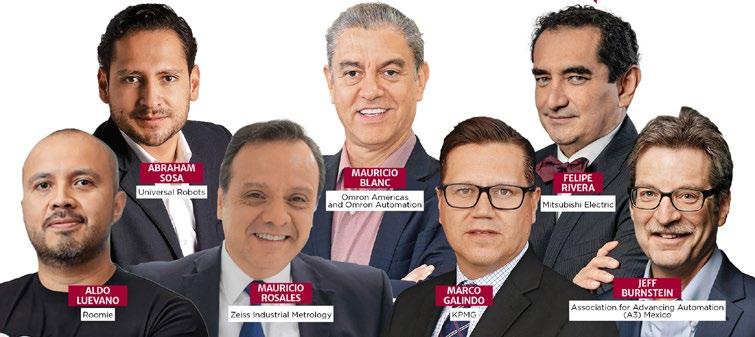
Robots are increasingly taking over manufacturing processes in the automotive industry, which has gladly welcomed these tools to reduce costs and improve performance. While some fear robots could replace human labor, these fears are unfounded, argued industry insiders during the “Robots, Cobots and Manufacturing Automation” panel of Mexico Automotive Summit 2022.
When robots were first introduced to manufacturing plants in the late 1970s, many industry workers worried that the robotic revolution was starting and would lead to the complete replacement of human labor. Instead, robots have allowed human workers to focus on higher-skill tasks by automating repetitive and low-skill labor. The emergence of cobots, collaborative robots intended for direct human interaction, has further changed the relationship between workers and robotic innovations as manufacturing processes continue adopting Industry 4.0 principles.
“The automotive industry has been the longtime leader and largest adapter of robotics,” said Jeff Burnstein, President, Association for Advancing Automation (A3) Mexico. A3 has long battled misconceptions regarding robotics, starting with their safety. The association developed the first American national robot safety standard in the 1980s, which then became the first implemented national robot safety
standard. Safety measures and focuses have shifted as cobots require more direct human involvement, but the pandemic proved to plants how valuable these machines are in adapting to different safety standards. Many plants used cobots for sanitization or to implement social distance.
Robots and cobots are now being used in final assembly processes thanks to AI and machine learning (ML), which are expanding the amount of manufacturing processes these tools are able to improve, said Burnstein. As with most technological innovations in the sector, AI was also once feared despite it simply being machines learning to do their tasks better to improve productivity, he explained.
“Automation is enabling people to liberate themselves from repetitive tasks and monotonous activities in their working area,” explained Abraham Sosa, Key Account Sales Manager, Universal Robots. According to Sosa, Universal Robots is working on designing algorithms for real-time planning so robots can sense if something is obstructing their trajectory and adjust their movement in changing environments to prevent production halts. Solutions such as these will increase in the short term, which is why Mexico and Latin America must invest heavily in automation technologies to remain globally competitive, particularly in Mexico’s critical automotive manufacturing industry, Sosa explained.
There is a wide array of benefits to automating processes within automotive manufacturing. Aldo Luevano, CEO, Roomie, listed three main ones: cost reduction in manual tasks, improvement of current process performances and, most importantly, the ability to gather data. Real time data of robots’ operations can be used to improve the decision-making processes of organizations and manufacturers. According to Luevano, today’s robots avoid cloud dependency because of machine learning. “With machine learning, robots can change and adapt their behavior,” Luevano said.

“Using robots in metrology is enabling systems to detect errors rapidly, allowing for faster solutions and reduced costs,”
Mauricio Rosales
Carbody Sales Manager | Zeiss Industrial Metrology
Several other solutions are being rapidly developed to increase efficiency. Robots and cobots can increase operation efficiency by 20-23 percent, inventory control quality by 48 percent and productivity by 40 percent, according to Mauricio Blanc, Senior Director Customer Services and Senior Director Mexico, Omron Americas and Omron Automation. However, there are still challenges such as the rising threat of cybersecurity and that 50-60 percent of today’s robots are not connected.
According to Blanc, worker unions have reacted positively to the addition of robotic
machines into plants once they understand that they are not being used to substitute humans but to handle mundane and even dangerous tasks, leaving room for workers to receive training for higher-skill tasks instead. “Repetitive and dangerous tasks should be yielded to robots and people should focus on tasks that add value to the automation,” B lanc said.
From a metrology point of view, using robots to detect errors in production before costs escalate is just one of the many solutions this transformation is bringing. ZEISS Carbody Solutions’ Joseph Heizmann and Hubert Waltl found that increasing investment in robots and metrology led to more revenue for manufacturing companies. “Using robots in metrology is enabling systems to detect errors rapidly, allowing for faster solutions and reduced costs,” said Mauricio Rosales, Carbody Sales Manager, Zeiss Industrial Metrology.
But these innovations are not only resulting in benefits for manufacturers, they also bring improvements for the end customer. According to Felipe Rivera, Managing Director Mexico and Latin America Mitsubishi Electric, automation enables the automotive industry to reduce the energy it uses. This leads to more sustainable processes, a growing demand by consumers. Furthermore, by increasing manufacturing efficiency, automation results in safer vehicles being sold to the market and a minimized margin of error in the vehicles hum ans drive.
“Automation is leading societies to more sustainable and happier lifestyles,” Ri vera said.
THE FOUR PILLARS OF SUSTAINABLE MOBILITY
Sustainable mobility is one of the many ways to support decarbonization goals. However, simply focusing on improving the vehicle’s engine limits companies from truly embracing susta inability.
“Sustainability is not a technology with which the car moves; it is a 360° execution that considers product design, production, materials, operation and what happens to the materials afterwards,” said Juan de Dios
Gómez, Director General, Irizar Mexico. Present in over 15 countries, Irizar Group is composed of seven companies focused on mobility and sustainable mobility. In 2017, Irizar inaugurated its e-mobility factory, which was the first plant in the EU to be dedicated exclusively to electromobility. Irizar began operating 23 years ago in Mexico with the group’s second largest production plant, where it has manufactured over 14,700 units.

“Sustainability is not a technology with which the car moves; it is a 360° execution that considers product design, production, materials, operation and what happens to the materials afterwards,”
Juan de Dios Gómez
Director General Mexico | Irizar
the life of batteries and not cause emission problems in the environment,” says Gómez.
In ICE vehicles, the use of biofuels is also another alternative to increase sustainability. These fuels can reduce emission by up to 85 percent because they use biological waste, said Gómez.
In the future, automotive companies also hope to exploit the benefits of hydrogen to contribute to a sustainable mobility. For example, Irizar is working on a project to use hydrogen as a fuel, said Gómez.
Production changes can significantly improve sustainability through the smart use of energy at manufacturing plans. “Manufacturers can also use ecological silicone or adhesive to reduce their carbon footprint,” said Gómez.
There are several ways to improve a vehicle’s sustainability, all of which with benefits and drawbacks. Gómez shares that there are four pillars to transform mobility: design, materials, design, production and operations.
In buses, sustainability often focuses on reducing emissions but it can be improved through an aerodynamic, light design and a closed lifecycle that gives the manufacturing materials an afterlife, said Gómez.
Regarding materials, an EV’s battery has a limited lifetime but what happens to them afterwards is not well documented, leading companies such as Irizar to try to extend the battery’s life cycle. “Irizar is currently working on a project with Repsol to extend
Finally, concerning operations, Irizar has implemented tech to monitor operations and optimize the use of buses. While 99 percent of Mexico’s buses are powered by diesel, technology can predict if drivers are needlessly wasting fuel by accelerating or stopping frequently or abruptly.
On their own, these actions contribute to sustainability but a combination of different measures may allow companies to greatly step up their efforts. Moreover, the World Bank recommends that while all partners have unique expertise and perspective, companies should work together to change transport for the better. “Stakeholders can work together to shape the future of mobility, while also ensuring that all of the SDGs (sustainable development goals) move in the direction of ending poverty and building shared prosperity,” said the World Bank.
MATERIAL TECHNOLOGY IS CRUCIAL FOR INDUSTRY TRANSFORMATION
The automotive industry’s adoption of e-mobility and sustainability will only be possible through constant innovation in lightweight materials, copper alloys, high-performance polymers and
cleaner fuels, agreed industr y experts. “The industry must aim for a holistic approach, paying attention to all the different aspects of car manufacturing, from gasoline savings, advanced engine

lubricants and green tires to coatings and other parts. Reducing weight while improving design is the challenge. We try to understand the market’s needs by listening closely to customers,” said Martín Toscano, President, Evonik Industries de México.
The automotive industry is experiencing transformative changes due to connectivity advances, automation, data analysis and the rise of new mobility services. Materials are the core competence of the automotive manufacturing industry, according to the Center of Automotive Research (CAR): “No matter how high-tech the final product is— production always starts with basic raw m aterials.”
Over the past 100 years, the industry has produced vehicle bodies en masse, most of them made predominantly from steel. Currently, manufacturers are experimenting with alternative materials such as aluminum, magnesium, plastics and polymer composites. According to CAR, the average vehicle body in the US fleet today is 65 percent steel, 13 percent aluminum, 4 percent magnesium, 6 percent plastic and polymer composites and a variable percentage of glass, adhesives, sealers and foam.
Copper is one of the materials that will grow in demand in the near future, said Saulo Guzmán, General Manager, Wieland Group. ICE vehicles usually incorporate about 21.8 kg of copper, HEVs 39.9 kg
and EVs 83 kg, he added. “EVs require a lot of copper. So far, it is used in motors, batteries, inverters, wiring and fuses. In addition, it is also important for EV infrastructure, such as chargers, wires for distribution, electrical panels and chargin g cables.”
EVs require new copper alloys composed of “more specific materials, not the regular copper we used to have in the past,” said Guzmán. Today’s copper requires higher current resistance, while mechanically holding the form. By 2027, the demand for copper will reach 1.74 million tons each year, he added. “It is an entire material revolution. Copper is the new gold.”
Although the industry is shifting toward EVs, the transition still requires time and lightweighting has played an important role to increase vehicle efficiency and performance. These two topics have been discussed for decades but are now paired with the concept of sustainability, highlighted Vishwas Shankar, Director, Frost & Sullivan. In 2018, the average car weighed 1.85 tons, of which 55 percent was cast iron and steel, 11 percent plastic, 9 percent aluminum alloys, 7 percent rubber, 3 percent glass, 1 percent nonferrous alloys and 14 percent represents other materials, rep orted MBN.
Chemical giants such as Evonik have continuously supported OEMs and Tier 1s’ lightweighting goals. “Within our company, we are always looking for more
sustainable and lightweight materials. We work closely and listen to our clients,” sai d Toscano.
Innovation, advanced materials and nanotechnology are vital to move the industry forward, said Alex Elías Zúñiga, Research Group Leader of Nanotech and Device Designing, Tec de Monterrey. Academia is driving research, playing an important role in the industry transformation and must be partnered with industry and government to take the results from lab scale to mass production, he added.
“Tec de Monterrey launched the Institute of Advanced Materials for Sustainable Manufacturing, where advanced materials are discovered, designed, manufactured, certified and scaled up from lab to mass production, aiming to develop lightweighting components for both the automotive and aerospace industries to produce less CO2 emissions,” sa id Zúñiga.
Heavy Vehicle Lightweighting
The heavy vehicle industry has been exploring lightweight materials for years, especially for the bus and coach sectors. Electrification is not penetrating the coach sector at the same rate as the urban segment due to weight, said Juan de Dios Gómez, Director General, Irizar México.
“It is all about weight. How to demand less capacity per hour for batteries. We thought about the all materials. [Using] aluminum to replace steel, reducing thickness of the system with a more robust but less heavy body. We have also replaced the wood used in bus floors with polymers,” said Gómez.
The automotive industry of the present and future will continue to rely on material technology. For that reason, the sector requires a holistic approach to understand the needs of ICE vehicles and EVs, taking into account that copper will play an increasingly relevant role, concluded Shankar.
FUTURE VEHICLES MAY BE 3D PRINTED
Originally used only for prototyping, additive manufacturing is now disrupting the automotive value chain and finding its way into more industrial processes. As the supply chain continues to face disruptions, additive manufacturing is an easy-to-use industrial tool through which productive processes can be maintained.
Additive manufacturing, also known as 3D printing, can now be used in numerous processes of the automotive manufacturing chain, according to Sebastián Romo,

“During the struggle with longer delivery times due to the pandemic, additive manufacturing helped the industry dramatically reduce the delivery time of auto parts,”
Octavio Pichardo
Additive Manufacturing Manager | General Motors
Director General and Co-Founder, Tridi. The automotive and aerospace industries have been the biggest adopters of 3D printing but the way the automotive sector uses this technology is changing.
In the automotive industry, additive manufacturing was initially used solely in prototyping processes, explained Fadi Abro, Director of Automotive Business, Stratasys. “Prototypes are low-volume, high-value components, making 3D printing the optimal tool [to manufacture them],” said Abro. Stratasys invented one of the first major additive manufacturing technologies in the 1980s, which has been used in many different industries since. As printing technologies evolved, they led to the manufacture of better products and opened up additional areas of value.
3D printing can now be used to manufacture auto parts, which is changing automotive value chains. Additive manufacturing
provides two advantages to automotive manufacturing: faster market delivery and higher fidelity.
Another way to generate value through additive manufacturing is tooling. “Tooling is the second largest application field [for 3D printing] in the automotive industry because it is a very simple way to obtain fixtures that raise capabilities in terms of assembly,” said Leopoldo Ruiz, Head of the National Laboratory of Additive Manufacturing, UNAM. Tooling can support manufacture through the production of high-value, low-volume tools, which can also be produced faster and with better materials.
The main challenge for additive manufacturing is using it in the production of end-use parts, a method that is gradually gaining popularity. According to Abro, additive manufacturing can produce anything a manufacturer may want but that does not mean that using this method makes sense financially. Additive manufacturing is better applied in the production of a short run of time sensitive end-use parts, instead of larger volumes. But manufacturing plants are relying on additive manufacturing for the provision of spare parts to become less supplier dependent.
According to Ruiz, additive manufacturing’s benefits will be maximized when auto parts are designed with this production
technique in mind, instead of trying to incorporate this process into already operating production lines.
Automotive companies are recognizing the increasing value of shifting gears towards additive manufacturing. According to Abro, there is currently an open market for whichever automotive brand will be the first to develop a completely 3D-printed vehicle, which will then have the largest customer loyalty.
One competitor making great progress in additive manufacturing implementation is General Motors (GM), which is also one of the largest early adopters of this technology. The automotive company used additive manufacturing to solve problems in manufacturing lines to keep its equipment running.
However, the true value of this technology was only understood during the pandemic, according to Octavio Pichardo, Additive Manufacturing Manager, GM. “During the struggle with longer delivery times due to the pandemic, additive manufacturing helped the industry dramatically reduce the delivery time of auto parts,” said Pichardo.
While overseas OEMs were unable to deliver supplies for up to 30 days, additive manufacturing was able to provide solutions in one to two days. This was a game changer for GM, Pichardo explained. Because of this, the company is expanding its additive
manufacturing reliance and investment. Pichardo sees two main points for the future use of this technology. First, future generations of designers and engineers will enter the industry with an additivemanufacturing mindset, boosting the talent behind innovations in the area. Second, the industry will gradually start embracing these technologies.
Additive manufacturing has a promising short-term future, as more and more 3D printers will begin showing up across automotive manufacturing plants. But its long-term applications could be game changing.
LEADERSHIP, ENGAGEMENT BOOST COMPANY DEVELOPMENT
Employee engagement has become an essential tool for organizations striving to increase productivity, implement innovative business strategies and improve performance. The latter is making companies move away from being solemnly capital focused and begin integrating employees’ development as part of their business strategy.
Employee engagement can be critical to a company’s success, given its clear links to job satisfaction and employee morale. Communication is a critical part of creating and maintaining employee engagement. Engaged employees are more likely to be productive, higher performing and display a greater commitment to a company’s values and goals, explained Investopedia.

“During the struggle with longer delivery times due to the pandemic, additive manufacturing helped the industry dramatically reduce the delivery time of auto parts,”
Mario Rodríguez Former CEO | Arbomexw
Companies’ priorities often center on pleasing clients “without realizing that employees are part of their client base just as much as clients, shareholders and the overall community,” said Rodríguez. As a result, employees need to be provided with a sensorial experience through social, workplace and organizational encounters.
In his experience on employment development, there are four fundamental pillars to have involved employees:
1. Development of the entrepreneur in every employee so they feel empowered in their job.
2. Leadership training because effective leaders are able to influence their followers to achieve the organization’s goals, produce change and motivate employees.
3. Family integration is key to help employees find a satisfactory work-life balance, reducing stress and fomenting happiness.
4. Resilience during challenging times will also help employees to face uncertainty.
Despite the benefits, “85 percent of employees in Mexico are not engaged in the workplace,” explained Mario Rodríguez, Former CEO, Arbomex. Furthermore, 73 percent of workers are looking for a job that challenges them and 69 percent of employees feel unappreciated at work, said Rodríguez.
Training is one of the most fundamental factors in a company’s value proposition, said Rodríguez. “Employees have to be trained on activities that create savings and revenue for the company and for themselves. Furthermore, they could also greatly benefit from encouraging their creativity and inspiration, and by having a business mindset within the family. That way they can create their own capital.”
The secret mix for a company to be successful, according to Rodríguez, is to promote engagement, create happiness, foment trust and teamwork and train
leadership. Emotional salaries are also fundamental, he added, highlighting those activities such as reading, camping, dancing, theater, swimming, and quality time with peers, partners and family add
to the value proposition. “Knowing how to manage talent to increase engagement is a skill that human resource professionals are encouraging among leaders at all levels,” said Rodríguez.
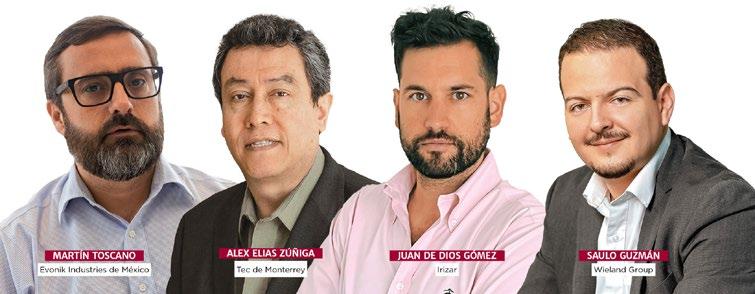
SUPPLY CHAIN STILL RECOVERING AMID TRANSFORMATION
The automotive supply chain has suffered major disruptions, shortages, cost increases and logistics troubles over the past two years. However, while a full recovery is not expected in 2022, the challenging environment that the auto value chain faces has also opened several opportunities, agreed industr y experts.
“We are facing an uncertain future but within the uncertainty there are some opportunities. In 2019, we expected a trend toward nearshoring even before the pandemic hit… About 15-20 percent of the US$1.7-trillion global automotive industry was expected to be regionalized, opening opportunities to capitalize on that trend,” said Miguel Alcaraz, Partner, McKinsey & Company Operations Practice Leader.
The automotive sector is experiencing one of the largest transformations in its history as it faces several challenges triggered by the pandemic, such as the high costs of sea freight and raw materials and the semiconductor shortage, said Alberto Bustamante, General Manager, INA.
The crisis began with semiconductors. Although the pandemic worsened the problem, Boston Consulting Group (BCG)
already expected that the demand for chips would be 10 percent greater than the supply, said Karen Lellouche, Managing Director & Partner, BCG. “Semiconductors were already an important problem. In 2021, almost 8 million vehicles could not be manufactured due to chip shortages.”
Semiconductor shortages still plague the automotive industry, with OEMs constantly stopping production across the world. In Mexico, the situation has not been different; production and sales figures have hit their lowest levels in the last decade, while exports have not recovered entirely from the pandemic crisis, as reported by MBN.
The semiconductor issue goes beyond the pandemic and is a structural problem, said Carlos Zegarra, Partner at Mexico Management Consulting Leader, PwC Advisory. “COVID-19 only intensified the impact of semiconductor shortages. It was already a problem, with 70-80 percent of the total supply concentrated only in two countries.”
Taiwanese semiconductor manufacturers lead the semiconductor market, representing 65 percent of global revenues. Taiwan Semiconductor Manufacturing
Company (TSMC) stands above the rest, with 56 percent of the global revenue and a market cap of around US$550 billion, ranking it as the world’s 11th most valuable company, according to The Wall Street Journal. This position led the publication to refer to the world’s dependency on TSMC as a vulnerability. Semiconductors have also been a focal point of tensions between the US and China, as Taiwan claims the industry “as its own,” according to the newspaper.
During 2021, the US and the EU addressed the shortage by creating several initiatives to attract investment and produce their own chips. The US’s aggressive bill to foster semiconductor development within its borders represents another opportunity for Mexico, said Bustamante. “Our country has volunteered to program the semiconductors that will be manufactured in the US. We have two capable plants, in Jalisco and Mexicali.”
The situation remains complicated for 2022, which will be another challenging year, said Alberto Torrijos, Automotive Sector Leader Partner, Deloitte. The RussiaUkraine conflict is also increasing the price of oil, gas and commodities, and generating uncertainty and loss of confidence, he added. “It is a challenging year but it can also be the launch pad for a better 2023 or 2024,” said Torrijos.
The Russia-Ukraine conflict has impacted all industries across the world and also laid a direct hit to the automotive sector, said Lellouche: “Ukraine is one of the main producers of neon gas, which is crucial for semiconductor manufacturing.” The region
also produces nickel, which is important for EVs, and palladium and platinum, used in ICE vehicles, she added. Russia produces about 30 percent of the world’s palladium, according to Mining.com.
With all the difficulties that the industry has faced, suppliers have still “pulled-out miracles” to meet requirements, said Manuel Montoya, President, Automotive Cluster Network. “In 2021 production was lower than in 2020 and the negative effect works as a chain: when OEMs stop productions, Tier 1s stop productions then Tier 2s. We still hope that components will do better in 2022.”
Day-to-day management and long-term leadership became crucial during these difficult times, said Martín Toscano, President, Evonik Industries de Mexico. Major international players leveraged their global footprint to mitigate the impact of the crisis, taking advantage of their network and most important assets, he added.
The automotive supply chain will continue its transformation as the industry itself does. “We are going toward a supply chain relocation and nearshoring,” said Toscano.
Although some talk about returning to normal and a full recovery, many of the changes that the pandemic brought will stay forever, said Francisco Bautista, Partner, Advance Manufacturing and Mobility Leader LATAM North, E y. “The supply chain has moved to a circular economy. The linear chain is already obsolete. Suppliers must design their products to adapt to this new, sustainable business model.”
THE TIME TO MANUFACTURE IN MEXICO IS NOW
Mexico has long stood as the manufacturing ground for international countries looking to make use of bountiful resources, a convenient location and an ample source of talent. As Latin America’s main exporter of medium and high technology, according to Claudia Estevez, Executive Director, AMPIP, many companies are looking to enter the territory to expand their operations.
However, the endless opportunities in the industry do not make the landing process any less complicated.
Despite Mexico having an offering of around 550 industrial parks, according to Estevez, real estate for manufacturing companies in the country is becoming harder and harder to secure due to the
high demand, said Salomón Noble, General Director, Intermex, a company focused on facilitating successful establishment of operations in Mexico through real estate and administrative services. Companies are looking for buildings they need as early as the next day and cannot afford to wait seven to nine months for an alternative to be built. Partners like Intermex can offer support in this area, as well as in finding the right talent for companies, translating their needs to the Mexican environment.
Shelter services help to define the right candidate profile for the company, preselecting them to fast-track the process. “Job descriptions are key in this process. These need to be tropicalized to the Mexican reality so the right person can be found at the right cost,” said Noble. Once the candidates are pre-selected, preference is given to those closer to the manufacturing site to reduce transportation costs and the company’s overall environmental impact. “This also leads to a reduced turnover,” said Noble.

“The global realignment is creating the greatest opportunity for Mexico in history. Mexico is the darling of the manufacturing industry and we just need to seize the opportunities”
Alan Rusell President and CEO | Tecma
is as challenging as any other country where a company is not yet present. Our key value is that we are not experienced in automotive or textile industries; our experience is in working in Mexico,” said Russell. “Our clients are focused on delivering their products on time. Everything else happening in the background is our responsibility.”
Another hurdle faced by companies is the challenge of forming longstanding relationships with the government due to the limited time administrations may have in office. “Companies have to keep in mind whether a local government is starting or ending its administration, as that impacts the possibility for long-term relations,” said Eduardo Infante, Vice President, Aguascalientes Industrial Cluster, and Deputy Minister of Investment for Economic Development, State Government of Aguascalientes. Having a partner like a shelter service company can be of great use in these situations, according to Infante, as these companies are in charge of building relationships with each administration, taking that burden away from manufacturers.
According to Alan Russell, President and CEO, Tecma Group, the environment in Mexico is ever-changing and has never been more challenging than it is today. There is an exhausting process behind operation certification, making it imperative that companies get help to participate in this environment, particularly as Mexico’s manufacturing opportunities are at one of their best moments after the signing of USMCA. Having the right partner is key for companies to be able to ramp up their operations without worrying about peripherals. “Mexico’s manufacturing scene
This does not mean that different political parties are not willing to work together for the sake of expanding business in the country, however. “The role of the public sector is key in attracting further investment,” said Infante. Aguascalientes, along with nine other state states governed by the opposition, have worked together to replicate the promotion efforts of bodies like ProMéxico, trying to replicate the success of the Bajio area as an investment destination. “We realized that collaboration was missing, which is why we worked on the Invest in Mx initiative to highlight our similarities and boost the country’s competitiveness.”
Logistics solutions are also an imperative aspect of international manufacturing. Unfortunately, while the pandemic brought countless opportunities to the e-commerce world, it has brought significant challenges to international shipping. From COVID-19 variant lockdowns to the congestion of
Asian ports and the impact of the Russian invasion of Ukraine, logistics partners are seeing a wide array of challenges to solve.
According to Victor Benavidez, Country Manager, TIBA, the pandemic transformed the role of logistics partners, from service providers to actors with a strategic role in the establishment of business strategies. While companies may already have relations with global logistics providers, having a local partner that knows the intricacies of the country can be crucial to ensure quality and efficiency in operations. “Efficiency and reliability are key elements in today’s business. Building these relationships with local providers can be another advantage offered by shelter-like services,” said Benavidez. “This local experience and interaction can bring quick wins to the company.”
“Mexico has a great reputation, from a legal framework perspective, regarding the automotive industry. There has never been a better time than now for companies to come and establish here,” Russell said. Through contractual arrangements typically with a shelter company, international clients usually do not even need to have presence in Mexico to have a successful manufacturing operation. “Reputation conquers all and the Mexican government has a reputation of supporting business. Today is Mexico’s day,” said Russell.
There are still challenges to tackle in the form of infrastructure, as well, particularly as demand increases. Vacancy is worrying in some areas like the Bajio and industrial zones at the Mexico-US border like Juarez, according to Noble. Infante highlights the lack of water and energy availability in certain areas as a hurdle that could potentially hinder the industrial sector’s success. “We are at risk of losing investments earmarked for Mexico should we not be able to meet this demand,” he said. Most recently, López Obrador’s energy reform has become a new roadblock to the industry. Uncertainty remains while the bill gets voted and there are lingering issues regarding CFE’s transmission capabilities. “Generation is not the issue as there is currently more supply than demand. The problem is carrying that supply to where it is needed and resources are being allocated to other project instead of addressing these issues,” s aid Noble.
yet, panelists do not see it passing due to the direct opposition to USMCA commitments and for leaders like Russell, the future looks promising. “The global realignment is creating the greatest opportunity for Mexico in history. Mexico is the darling of the manufacturing industry and we just need to seize the opportunities,” sai d Russell.