
This year’s MEUW Annual Conference will bring members together to connect, collaborate, and celebrate in the Madison area. The events will take place May12–14,offering attendees the chance to discuss as emerging trends influencing public power utilities, including national and local politics, the state of the transmission grid, innovations in electric systems, service territory extensions, relocating utilities for highway projects, as well as cyber and physical security awareness, among other important topics.
The conference will feature both large and small group presentations and discussions to give every participant a chance to ask questions and offer insights, whether from a large or small community, and regardless of role.
Lawmakers wrap up 2025-26 Legislative Session
Page 3
“Don’t hesitate to reach out” isn’t a cliché reach out! Page 4
MEUW News Monitor Pages 6
Wisconsin Utility News Digest Page 8
Classifieds Page 10
Based on member feedback and to maximize hosting the events in Madison, a “lobby day” is part of the schedule, enabling small-group meetings with state legislators and their staffs to advocate for public power priorities. The event schedule features a couple of first-time additions, including a roundtable discussion designed specifically for governing board members and a vendor trade show.
The three-day event schedule includes: ◼ A “Day at the Capitol” including meetings with state lawmakers and their staffs to share the interests and impacts of public power in Wisconsin. Pre-scheduled meetings will enable focused information-sharing in a positive and low-pressure setting to advocate for MEUW policy priorities.
◼ A four-person scramble-style golf outing at The Oaks Golf Course in nearby Cottage Grove. Registration includes a boxed lunch, drink tickets, and prize eligibility.
◼ A “Utility Governance Roundtable” designed for elected and appointed officials and utility leaders who want to govern more effectively in a rapidly changing utility environment.
◼ Tours of Sun Prairie Utilities ’ new facilities, including the 83,000-squarefoot office, warehouse, and garage.
◼ A trade show featuring a select group of MEUW Associate Members who will be on-hand to talk one-on-one with utility decision-makers and share what they have to offer.
Continued on page 2
Municipal electric customers and their communities are deeply connected growing, innovating, and succeeding together, powered by affordable and highly reliable power from a community-owned utility.
Focusing on that deep connection is the idea behind a new, periodic feature being launched in this month ’s Live Line s. After completing
individual profiles of all 81 Wisconsin municipalities that own and operate a municipal electric company, MEUW is now turning attention to businesses that help drive local economies and strengthen the communities they call home.
Our first “Made With Public Power” article features Whisker, the innovative company behind the Litter -
Robot, which has made Juneau its production home. Whisker depends on the reliable power delivered by Juneau Utilities to keep its manufacturing running and its successful product line moving forward.
Know a customer that deserves the spotlight? We ’d love to hear from you. Email news@meuw.orgwith your suggestion.
Continued from page 1
◼ A welcome reception at Sun Prairie Utilities, including food and beverages.
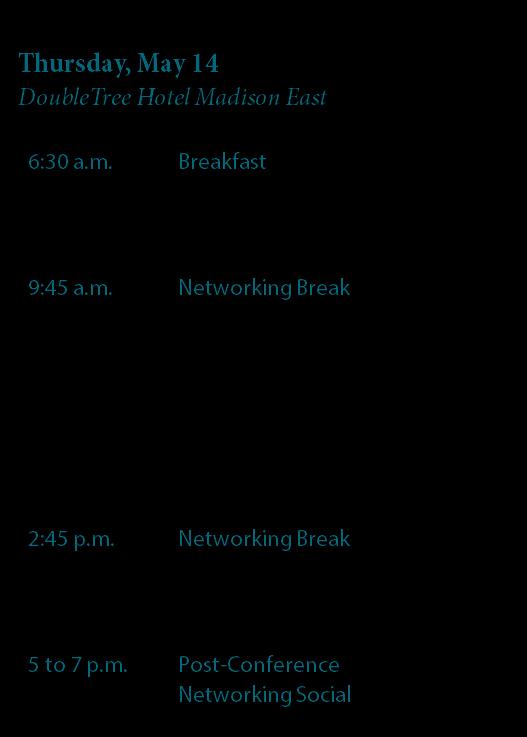
◼ Thursday’s conference will be held at the DoubleTree Hotel Madison East, including breakfast, the MEUW Annual Business Meeting, and an awards luncheon to recognize individual and utility successes.
◼ A late-afternoon Keynote Address featuring legendary broadcaster Wayne Larivee sharing stories and reflecting on his long-time role as the“Voice of the Green Bay Packers. ”
◼ A closing reception at the DoubleTree, providing hors d’oeuvres and refreshments, and networking time to discuss the conference and more.
Starting for as little as $100 for MEUW utility members, registration for the conference is flexible, enabling attendees to participate in as many or as few events that are relevant to their role. Participation in the golf outing is $90 per person for utility members, and $110 for Associate Members. The deadline to register is May 8. The DoubleTree Hotel Madison East is the official hotel for the event; rooms are available for a discounted group rate through April 17 (subject to availability).
Full details are available atmeuw.org/annualconference⚫
Thursday morning’s conference program includes back-tobackBreakout Sessions with each topic being presented twice to make it easier for attendees to choose without missing out:
◼ Service Territory Expansion and Protection
◼ Relocating Utilities for State Highway Projects
◼ Mutual Aid Lessons Learned and Process Review
Cohort Discussions facilitated, participant-led, interactive roundtables allowing attendees to choose the topic that most interests them are part of the conference agenda Thursday afternoon. There are three concurrent discussion groups:
◼ The Affordability of Public Power Statewide data shows that residential public power customers in Wisconsin continue to benefit from electric rates that compare favorably to those of other utilities. As energy costs capture headlines, what strategies can municipal utilitiesuse to effectively explain their cost advantages andhelpcustomers, regulators, and lawmakers understand the true affordabilityof public power?
◼ Cyber and Physical Security Discussions will focus on MEUW ’s new member-led Cyber and Physical Security Working Group, what they’re planning, and how they can best support member needs.
Events for the Annual Conference include a first-ever Utility Governance Roundtabledesigned for elected and appointed officials and utility leaders who want to strengthen their oversight of community-owned electric utilities. As new technologies, evolving markets, and rising customer expectations reshape the electric industry, effective governance is more important than ever. This interactive session will bring Wisconsin municipal leaders together for a practical, peer-driven discussion on the fundamentals of public power governance, including regulatory considerations, ratesetting, and a plain-language overview of municipal utility finances. The program is designed for both new and experienced officials and will highlight real-world insights and leading practices that support reliable, financially sustainable utility operations. The roundtable will be led by AttorneyRichard Heinemann of Boardman and Clark andTim Herlitzka , General Manager of Waunakee Utilities, and will include presentations along with facilitated small-group discussions. Participants will explore topics such as governance responsibilities, open meetings and records requirements, fiduciary duties, and financial tools utilities use to maintain stability in a changing energy landscape. This preconference workshop will take place Wednesday, May 13, from 12:00 to 3:00 p.m. at Sun Prairie Utilities, beginning with a casual lunch and concluding with a tour of the utility’s new facility and a demonstration of its state-of-theart Commission Meeting Room. Mayors, village presidents, council members, administrators, utility commissioners, and others involved in governing their local utility are encouraged to attend. Indicate your participation as part of your 2026 Annual Conferenceregistration.
Elected officials and Utility Commissioners may be eligible for MEUW ’s Policymaker Registration Grant Program . Find out morehere.
◼ Lineworker Safety and Education Sustaining high levels of member satisfaction with the Job Training & Safety (JT&S) Program is a key priority for the MEUW Safety & Education Committee. Join the discussion to provide feedback about the strengths and weaknesses of the program and offer input to keep the training relevant, engaging, and valuable for lineworkersof all experience and skill levels.The new MEUW employees leading the JT&S instruction will participate and introduce themselves.

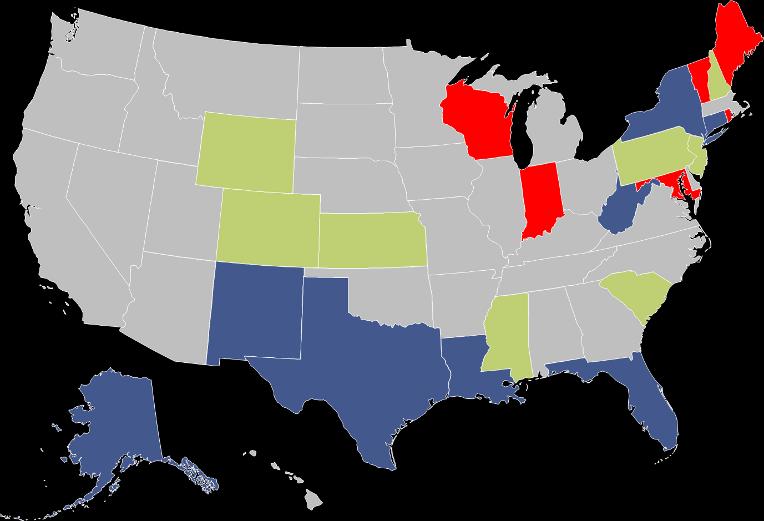
Wisconsin is one of only six states in the country with full state-level rate regulation of municipal electric utilities. Public utility commissions in Indiana, Maine, Maryland, Rhode Island, and Vermont have general authority to regulate rates charged by municipal electric utility rates in the same manner as investor-owned utilities, much like the statute-mandated oversight by the Public Service Commission (PSC) in Wisconsin. Sixteen other states exercise limited or conditional rate jurisdiction most commonly when the municipal utility serves customers outside city limits, or rates differ between in-city and out-of-city customers. For example, Colorado, Kansas, Mississippi, New Hampshire, New Jersey, Pennsylvania, South Carolina, and Wyoming regulate municipal rates only for service outside municipal boundaries. Alaska, Florida, Louisiana, Massachusetts, New Mexico, New York, Texas, and West Virginia regulate rates only under specific conditions.

By Tyler Vorpagel

The legislative session over the past two years proved a busy one for utilities. MEUW registered on 15 bills this session and monitored dozens more. Among the bills we supported were tax exemption for residential electric-vehicle charging, a nuclear power siting study, and creating a nuclear-power summit all of which will be signed into law. Other bills we supported, including Right of First Refusal (ROFR) for transmission projects and a nuclear-generation tax credit, did not advance.
Bills we registered in opposition to included community solar expansion, which would have a negative effect on non -participating subscribers. Another bill sought to prohibit infrastructure from including equipment manufactured by a foreign adversary. While it initially focused on telecommunications infrastructure, the bill was amended to include utilities. MEUW was already engaged on this issue because existing FERC regulations already govern where utilities can source equipment, and this bill added another layer of bureaucracy. Neither of these bills became law.
Other bills that we monitored but did not take formal positions on included a Republican-led bill that would allow local governments the ability to preempt utility scale renewable projects, Democrat-led bills related to carbon-emission limits and renewable-energy goals, as well as budget proposals to fund the nuclear power siting study law.
One bill AB 217 passed and was signed into law by Gov. Tony Evers on April 3, increasing the thresholds local governments use for public notice and competitive bidding. Now Wisconsin Act 188 does the following:
◼ Raises local government public notice threshold from $5,000 to $10,000 and the competitive bidding threshold from $25,000 to $50,000 for counties and municipalities;
◼ Extends existing exemptions for donated improvements to towns and counties, consistent with the exemption that currently applies to cities and villages; and
◼ Retains the existing public notice threshold and competitive bidding threshold for public highway projects. ⚫
Tyler Vorpagel is MEUW ’s Director of Legislative and Regulatory Relations. He can be reached attvorpagel@meuw.org



Municipal electric companies in three Wisconsin communities are among 118 utilities nationwide honored in 2026 with the Reliable Public Power Provider (RP3) designation from the American Public Power Association (APPA) for providing reliable and safe electric service. The 2026 designees are Evansville Water & Light (Gold), Menasha Utilities (Diamond), and Kaukauna Utilities (Diamond).
The RP3 designation, which lasts for three years, recognizes public power utilities that demonstrate proficiency in four key disciplines: reliability, safety, workforce development, and system improvement. Criteria include sound business practices and a utility-wide commitment to safe and reliable delivery of electricity. The process involves a rigorous online application, which is reviewed by a panel of national public power experts, who score based on the extent to which each utility meets program criteria Diamond (98-100%); Platinum (9097%); or Gold (80-89%).
The three utilities honored this year join 13 other Wisconsin utilities that achieved RP3 status in 2024 and 2025. They are: Cedarburg Light & Water (‘25),Manitowoc Public Utilities (’24),Marshfield Utilities (’25),Plymouth Utilities (‘25), City Utilities of Richland Center (’24),Rice Lake Utilities (’24), River Falls Municipal Utilities (’24),Stoughton Utilities (‘25), Sun Prairie Utilities (’24),Two Rivers Utilities (’24),Wisconsin Rapids Water Works and Lighting Commission (’24),Waunakee Utilities (’23),and Waupun Utilities (’25).APPA reports more than 250 of the 2,000 public power utilities nationwide hold the prestigious RP3 designation. ⚫


Municipal utility employees and the staff who regulate utilities at the Public Service Commission (PSC) of Wisconsin share a common goal: delivering safe, affordable, and reliable energy. Achieving that goal requires navigating a myriad of regulations, safety standards, service rules, and technical requirements designed to protect customers and the electric grid. That complexity naturally raises questions. Those questions don’t signal a problem they show that someone is paying attention.

“Don’t hesitate to reach out ” is a phrase people hear often, but it’s more than a polite closing. In public service, and especially in electric utility work, it ’s an intentional invitation to communicate early, openly, and productively.
Questions are a normal part of the process. People often hesitate because they worry their question is too minor, that they should already know the answer, or that raising a concern might slow things down. In reality, the opposite is usually true. Early communication helps prevent misunderstandings, clarify requirements upfront, reduce rework and delays, and build trust on all sides. Most challenges are far easier and far less costly to address before decisions are finalized or work is underway. Municipal employees are encouraged to get in touch with the Consumer Affairs Division at the PSC with questions. There’s no reason to hesitate asking for help. Reaching out allows PSC staff to explain requirements in plain language, share context, and identify workable options before problems develop. Simply put, a brief phone call or simple online inquiry can save significant time and uncertainty, replacing days or weeks of guessing, revising, or waiting.
It may seem cliché, but“don’t hesitate” really means there are no bad questions. It ’s easy to feel like you should have all the answers. In reality, early inquiries make the regulatory process more efficient for everyone.
If you’re unsure, need clarification, or just want to confirm the next step, contact Consumer Affairs at the PSC. To aid PSC tracking and ensure consistent response handling, complete a simple inquiry form online here (preferred). You can also call (608) 266-3766. Don’t hesitate to reach out.
Save the Date: MEUW ’s Annual Accounting and Customer Service Seminar is Sept. 23 in Mauston
Official monthly publication of Municipal Electric Utilities of Wisconsin, Inc. , the statewide trade association representing the interests of Wisconsin’s public power providers since 1928. This e-newsletter is distributed to more than 1,200 utility professionals and leaders throughout Wisconsin and the Midwest on the first Tuesday of every month.
LIVE LINES has been published continuously for many decades and provides useful information, news on emerging utility issues and legislation, updates on events, training programs and member services, as well as engaging feature stories spotlighting utilities, communities and leaders.
Reader comments and suggestions are welcome send by email to news@meuw.org
Tim Heinrich President and CEO
Mike Czuprynko Director of Safety Services and Operations
Tyler Vorpagel Director of Legislative and Regulatory Relations
Sharon Wolf Manager of Communications and Events
MEUW Office
725 Lois Drive Sun Prairie, WI 53590 (608) 837-2263 www.meuw.org

An archive of past issues of Live Lines is available at www.issuu.com/meuw
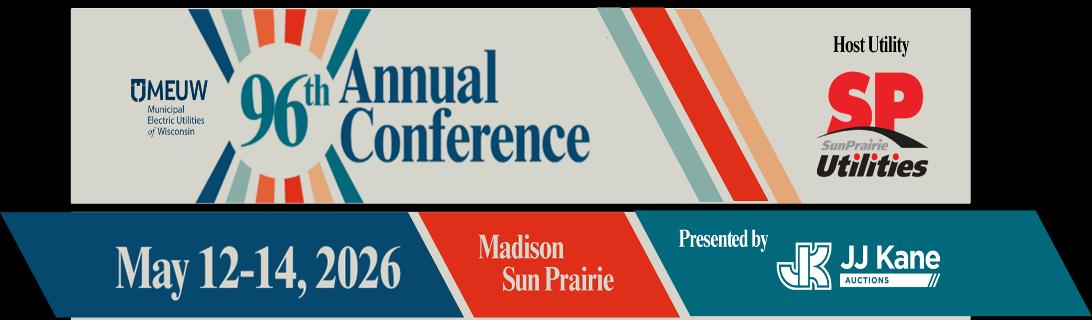

MEUW’s Annual Conference provides a unique forum for networking, education, and information-sharing among municipal utility leaders and industry partners from around the state. The program structure enables attendees to get the most out of their time.

◼ General sessions bring everyone together on broader subjects.
◼ Breakout sessions dive deeper into strategic priorities to help MEUW support its member utilities.
◼ Pre- and post-conference receptions and networking breaks allow attendees the chance to make and renew connections.

This year’s Keynote Address features legendary broadcaster Wayne Larrivee, the “Voice of the Green Bay Packers”
Registration Fee: $325 for Full Access Pass (one– and two-day passes also available) Registration deadline is Friday, May 8
Wednesday ’s Trade Show featuring more than two dozen exhibitors and theConference Welcome Receptionwill take place at Sun Prairie Utilities ’ new 83,000-square-foot office, warehouse, and garage.

Visit the event website at www.meuw.org/annualconference for a complete schedule of events


MEUW has hired two highly experienced municipal utility journeymen linemen Damian Pasch (Wonewoc) and John Salscheider (Oconto Falls) as Electric Utility Safety and Training Coordinators to deliver MEUW’s Job Training & Safety Program, which is primarily targeted at lineworkers. The hirings come as the association prepares forDon Harnisch to begin a five-month leave of absence in April and for the retirement of Randy Larson on May 29. Full details are availablehere.
Every year, MEUW collects information about the pay and perks provided to public power employees across the state. Instructions for completing the datacollection phase of this year ’s Wage & Benefits Survey were shared with key contacts at each utility in March. Full details, including a running list of who has responded, are availablehere. As a reminder, only those utilities that provide information for the survey are able to receive the results. The deadline to respond is noon on Friday, April 17.
MEUW and Chippewa Valley Technical College (CVTC) are once again partnering to present the Overhead Workshop/ Hotline School. This training offers an ideal setting for hands-on training both in the classroom and in the training
building on the campus of CVTC. The workshop will be held April 28 30 in Eau Claire and will include a vendor trade show. Registration is $195 per person. Information on planned topics can be foundhere
Utilities are highly regulated businesses, and there are more than 100 specific regulatory rules utilities must follow to retain the "right-to-serve" electric customers. And those utility-specific rules are on top of the labor laws and safety rules all companies have to comply with. The one-day training is part of MEUW ’s Fundamentals of Utility Management Series, and helps explain why the rules exist and how to navigate the complexities of compliance skills fundamental to success as a utility manager. Led by John Andres, an expert on utility regulation, and Melissa Barnes, a seasoned Human Resources Manager, participants will walk away from this class with a greater understanding of utility regulations and how to comply. You won't want to miss this popular (and highly recommended) training to be held on Wednesday, June 3, in Mauston. Details are availablehere.
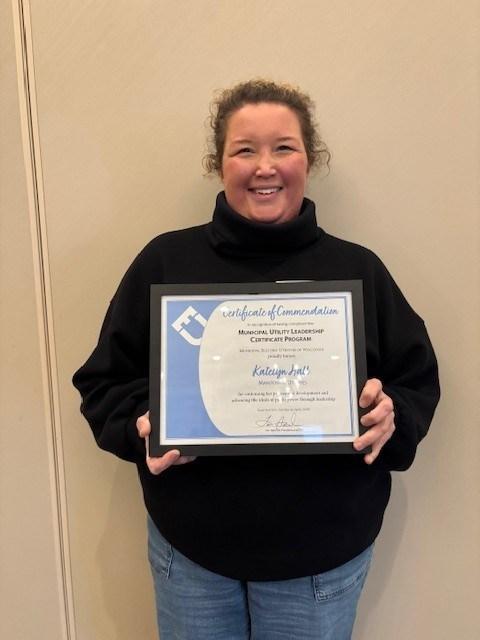
Leadership Certificate Program.
MEUW is currently accepting nominations for individuals interested in serving on the Board of Directors for a twoyear term beginning May 14, 2026. The deadline for nominations is April 10. This year’s election will be for Directors and Alternate Directors ineven-numbered districts . The voting will take place April 20 to May 6. Each member utility is entitled to a single vote for seats in their respective district.Full details availableatmeuw.org/elections .
The American Public Power Association (APPA) just launched a new designation program designed to help public power utilities assess and strengthen the maturity of their cybersecurity programs. Applications are now open for the Cybersecurity Accelerator Program (CAP) , which evaluates both the I.T. (information technology) and O.T. (operational technology) cybersecurity posture of a public power utility, as well as other policies and practices that support electric system and grid security. Applications are due by June 30; there is no fee to apply for the 2026 cycle.
MEUW members interested in applying are encouraged to consult with MEUW's Cyber/Physical Security Working Group, which is available to assist with the application process, or with other physical and cyber security questions or information. Contact thegroup's Chair Don Krause to learn more.

The 81 municipal electric utility companies operating in Wisconsin provide safe, affordable, and highly reliable energy to help local businesses thrive. From mom-and-pop shops on Main Street to large manufacturers in the community ’s industrial park and everything in between, each of these enterprises contributes to the quality of life and economic vitality of our state. This month,LIVE LINES is launching a periodic feature section to highlight products “Made with Public Power ”and raise awareness of the diverse companies that operate in public power communities.
By Karen Whitmer
The City of Juneau is home to around 2,800 residents and is the county seat of Dodge County. One company in this
role in shaping the city ’s economic and energy landscape: Whisker, the maker of the Litter-Robot.
The Litter-Robot is a selfcleaning kitty litter box that automatically separates waste from clean litter and deposits it into a sealed drawer, keeping the box fresh without daily scooping and saving pet owners time and trouble.
While the company is headquartered in Auburn Hills, Mich., where corporate leadership focuses on innovation and strategy, manufacturing and assembly take place in Juneau linking this municipal utility community directly to pet-friendly households around the globe.
1.5 million units, reflecting both strong demand and the scale of its operations.


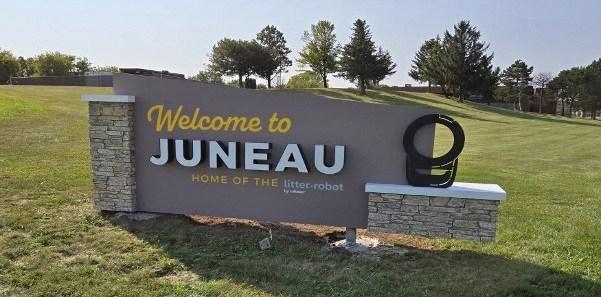
the company is deeply invested in the City of Juneau, giving back and helping ensure the long-term strength of the community. It’s a true partnership built on shared success. Visitors are even greeted with a company-donated sign that says it all:“Welcome to Juneau, home of the Litter-Robot by Whisker.”
Inside a sprawling manufacturing facility on the edge of town, more than 300 employees assemble and ship the innovative shaped devices throughout the United States, Canada and Europe. To date, Whisker has sold more than
Whisker’s Juneau facility is the largest electric customer served by Juneau Utilities, with continuous production from precision molding to electronics integration and quality testing creating a significant and consistent electrical load. Maintaining that level of service requires not only reliability, but close coordination and longterm planning. That partnership has grown alongside the company. Over the past several years, Whisker has invested more than $20 million in its Juneau facilities, including major expansions that added significant warehouse and production space. A multimillion-dollar project in 2022 nearly doubled the size of the site, increasing output and creating more local jobs. In 2024, Whisker acquired additional property adjacent to its existing plant, reinforcing its long-term commitment and signaling continued load growth for the utility. Beyond jobs and economic activity, Whisker has become part of Juneau ’s identity recognized in town signage and community initiatives that celebrate the city as the “Home of the Litter-Robot.”

The company also demonstrates a strong commitment to giving back. Through its partnership with Best Friends Animal Society, Whisker covers adoption fees, donates products to shelters, and supports programs that help thousands of cats find homes. For families, it can mean welcoming a pet they might not otherwise afford; for shelter staff, it means cleaner, safer spaces and more time to focus on care.
Sustainability and innovation are central to Whisker ’s approach. Its Litter-Robot products include sensors that track litter usage and alert owners to potential health issues, while durable, plant-based materials reduce waste and emphasize efficiency.
As demonstrated by Whisker, innovation isn’t limited to big cities or tech hubs it often thrives in smaller communities, driven by strong partnerships and reliable infrastructure. Every Litter-Robot quietly at work in cat-lovers’ homes was built in Juneau made possible by the dependable utility and energy that keeps Whisker’s facility running.
Karen Whitmer is a regular contributor toLIVE LINES;she is a freelance communicator based in the Fox Valley.
After public criticism over extensive redactions, a Public Service Commission (PSC) administrative law judge in late February required Alliant Energy to submit a revised application for approval of a special contract rate to serve a data center in Beaver Dam. Alliant had originally filed the application on April 29, 2025, seeking approval within 90 days.
A PSC attorney acknowledged that staff initially failed to recognize how heavily redacted the filing was. Alliant ’s attorney indicated the redactions were necessary to secure the best deal for the customer while protecting confidential information. The revised application identifies the customer as Degas LLC, an alias used by Meta the parent company of Facebook and Instagram before going public with the project in November 2025. Under the proposal, Alliant would supply up to 220 megawatts to the data center and could renegotiate rates after an initial 10year term or shift the customer to a standard rate, pending regulatory approval.
PSC staff said the revisions were requested to improve public transparency. No decision date has been set.
The three-person PSC on March 19 unanimously approved two new solar energy projects in Columbia County that are expected to help power large hyperscale data centers. The approval clears the way for Milwaukee-based We Energies’ purchase of the Good Oak and Gristmill solar facilities, which together will generate
165 megawatts enough electricity for roughly 50,000 homes at a combined cost of $360 million. We Energies will own 80% of both projects, with the remaining ownership shared by Madison Gas & Electric and Wisconsin Public Service Corp. Good Oak will cover 800 acres in the Town of Lewiston, while the smaller Gristmill project will be located in the Town of Columbus.
Construction of the solar facilities is expected to begin in 2026, with operations starting in 2028. About 70% of the power from the solar facilities is expected to supply power for data centers and serve customers such as Microsoft and Vantage. The approval comes at the same time regulators are considering a separate We Energies’ application to establish a new electric rate for data centers.
Investor-owned utilities ask to raise rates in 2027 and 2028
Two of the state’s largest utility companies filed applications for nearly $500 million in electric rate increases over the next two years.We Energies and Wisconsin Public Service (WPS), both owned by WEC Energy Group, have requested PSC approval to raise rates in 2027 and 2028.
We Energies wants a 4.7% increase to its base electric rates in 2027 and another 4.5% increase in 2028. WPS is seeking a base electric rate increase of 6.3% in 2027 and another 3.5% increase in 2028.
The companies say the rate increase will help cover the cost of bringing new solar, wind, batterystorage,and natural gas projects online, as well as fund investments in tree trimming, burying power lines and replacing aging equipment.
The state’s largest utility says it ’s again delaying closure of two units at a 1960sera coal-fired power plant in Oak Creek. In regulatory filings, We Energies said the utility is considering keeping the units operating into 2027. Originally slated to shut down in 2023, shuttering the aging units has been postponed multiple times to ensure reliability during peak demand, especially amid extreme winter cold and summer heat. We Energies says the extension is needed while it awaits approval of new natural gas plants intended to complement expanding wind and solar generation. Environmental advocates, including Clean Wisconsin, argue the delay prolongs pollution, harms nearby communities, lacks enforceable deadlines, and keeps ratepayers paying more for coal than renewables.
Compiled from news reports inMilwaukee Journal Sentinel,Wisconsin State Journal, and WPR.org
The annual winter moratorium from Nov. 1 to April 15 prohibits all utility providers from disconnecting residential heating services for nonpayment. Customers who are behind on their bills may be at risk of disconnection if payment arrangements are not established by April 15. Wisconsin is one of 39 states with set dates for cold-weather moratoriums. Three states have set dates only for hightemperature disconnections, while 10 have both low and high temperature-based moratoriums.


With the school year moving toward the final stretch, the Focus on Energy“RenewOur Schools” spring cohort is wrapping up another impactful season of student-driven energy savings across Wisconsin. Renew Our Schools is ahands-on energy conservation competition that empowers K–12 students to reduce electricity use in their school buildings while learning how energy management affects school budgets, sustainability goals, and community resources. Since Focus on Energy launched Renew Our Schools in the fall of 2022, 12 schools from public power communities haveparticipated. By combining education with real-world action, the program helps schools lower operating costs while fostering long-lasting energy-saving habits.
Throughout the spring competition, students take on the role of energy leaders within their schools. Using real-time electricity data fromeGaugeenergy monitoring systems, teams analyze when and where energy is being used and identify opportunities for improvement. Schools earn points by reducing electricity consumption, completing structured energy challenges, and engaging staff and peers in simple, no-cost actions such as turning off lights in unoccupied spaces, powering down unused electronics, and adjusting schedules for equipment use.
This spring's cohort includes both novice and alumni schools, bringing together first-time participants and experienced competitors returning to build on past success. Participating schools include:
Novice Cohort
Cornerstone Lutheran High School (Eau Claire)
Gilman School District
La Follette High School (Madison)
Nekoosa High School
Alumni Cohort
Mauston High School
McFarland High School
Northland Lutheran High School (Kronenwetter)
School for Agricultural and Environmental Studies (Waupun)
Story School (Milwaukee)
This mix of new and returning schools continues to strengthen the program. As Heather Feigum, Program Manager for Focus on Energy, shared,“The mix of new and returning schools helps strengthen the competition. Renew Our Schools gives students a chance to understand their school in a whole new way.” By learning from with new perspectives, students gain a deeper understanding of how their buildings use energy and how their actions can make a difference.
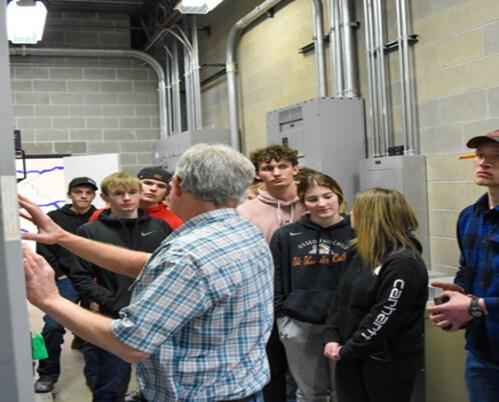
Last spring, McFarland High School secured its third win in the Alumni Category.Their efforts resulted in 7,632 kilowatthours (kWh) of energy savings and a 7.05% reduction in overall electricity use. First-time participant Golda Meir School took first place in 2025, reducing energy use by 7,589 kWh and achieving 5.40% total energy savings. Each winning school earned more than $2,000 to reinvest in future energy efficiency projects. Across all 13 participating schools, the impact wassubstantial. Collectively, schools saved 89,244 kWh of electricity over the five -week competition and prevented an estimated157,351 poundsof carbon dioxide from entering the atmosphere.
As the Spring 2026 cohort concludes, results from this year ’s competition will be scored, and winners will be announced in the coming weeks. Additional cohorts are currently planned for Fall 2026 and Spring 2027 as Renew Our Schools continues to show that empowering students with data, tools, and support not only drives immediate energy savings, but also helps develop the next generation of informed, motivated energy leaders who understand how small actions can create lasting change. Schools interested in participating can learn more at focusonenergy.com/renewourschools


MEUW is pleased to promote job openings with its member utilities across Wisconsin. New positions are regularly added to our website check them out here or use your smartphone to scan the QR code below Here are some current opportunities available:
Oconto Falls Municipal Utilities Lineworker
The Member Resource Center has been part ofMEUW.org since the association ’s redesigned website first launched 10 years ago. Recently we ’ve been working to develop it as a more complete, central repository for documents to help maximize your utility’s membership, stay engaged, and access exclusive tools, documents, and support. Whether you are a newer municipal employee finding your footing or a long-term MEUW member looking for specific, updated information, we now have“Member Resources” available through a link at the bottom of every page on MEUW.org. You’ll find a variety of useful items (some of which require a member login) accessible through an easy-to-use “keyword search.” And we’ll be adding new content all the time.
Live Lines is the principal communications tool MEUW uses to keep members informed about changes affecting municipal utilities. An archive of past issues of the monthly newsletter is available from the Resource Center. Periodically,Live Lines includes updates and refreshers on legal and regulatory items of interest to MEUW members (open meeting rules, for example). You can peruse the topics or use the keyword search to find a particular item of interest.
Over the years, various MEUW committees and working groups have collaborated to develop common templates to help member utilities operate more efficient. One example is work completed in 2020 to develop standardized poleattachment agreements and a model ordinance municipalities could use in negotiations with small cell wireless providers. The materials have been on MEUW ’s website since they were finalized, but they weren ’t easy to find. These documents are an example of the resources we ’re making more accessible.
Waterloo Utilities Apprentice or Journeyman Electric Line Worker
Plymouth Utilities Apprentice/Journeyman Lineworker


Tim Heinrich, MEUW President and CEO


MEUW is currently recruiting for a full-time Regional Safety Manager to support municipalities in south-central parts of Wisconsin. Full details about the role and how to apply are available here

Spring is a great time to open windows, tackle home projects, and get back outdoors. It’s also a good reminder to take a few simple steps to keep your home safe as the seasons change.
◼ Inspect electrical cords and outdoor outlets. Winter weather can cause hidden damage. Replace frayed cords, avoid moisture near outlets, and use GFCIprotected outlets for outdoor equipment.
◼ Stretch, wear PPE, and work smart. Before yard work or cleanup, take a few minutes to stretch and warm up. Wear gloves, sturdy shoes, eye protection, and hearing protection when using tools. Always watch for overhead power lines.
◼ Prepare for spring storms. Test smoke detectors, review your emergency plan, and keep flashlights, batteries, and a first-aid kit handy in case of outages.