Alcohol Awareness April
by Granny Anarchy
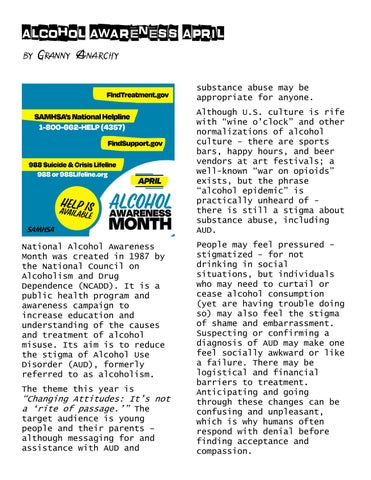
National Alcohol Awareness Month was created in 1987 by the National Council on Alcoholism and Drug Dependence (NCADD). It is a public health program and awareness campaign to increase education and understanding of the causes and treatment of alcohol misuse. Its aim is to reduce the stigma of Alcohol Use Disorder (AUD), formerly referred to as alcoholism.
The theme this year is “ChangingAttitudes:It’snot a‘riteofpassage.’” The target audience is young people and their parents –although messaging for and assistance with AUD and
substance abuse may be appropriate for anyone.
Although U.S. culture is rife with “wine o'clock” and other normalizations of alcohol culture - there are sports bars, happy hours, and beer vendors at art festivals; a well-known “war on opioids” exists, but the phrase “alcohol epidemic” is practically unheard ofthere is still a stigma about substance abuse, including AUD.
People may feel pressuredstigmatized - for not drinking in social situations, but individuals who may need to curtail or cease alcohol consumption (yet are having trouble doing so) may also feel the stigma of shame and embarrassment.
Suspecting or confirming a diagnosis of AUD may make one feel socially awkward or like a failure. There may be logistical and financial barriers to treatment. Anticipating and going through these changes can be confusing and unpleasant, which is why humans often respond with denial before finding acceptance and compassion.
Those in denial may intentionally or unintentionally underestimate how much they drink - and the negative impact it has on their lives and the lives of those around them. Friends and family members may also be in denial due to discomfort over addressing the situation.
Alcohol Awareness Month is an opportunity for organizations
and individuals to, indeed, change their attitudes and embrace outreach and support for AUD.
Nearly 30 million people in the U.S. are estimated to be living with AUD. Although it is the most common substance abuse disorder – 10% of the population versus 2% suffering opioid addiction –it is treatable.
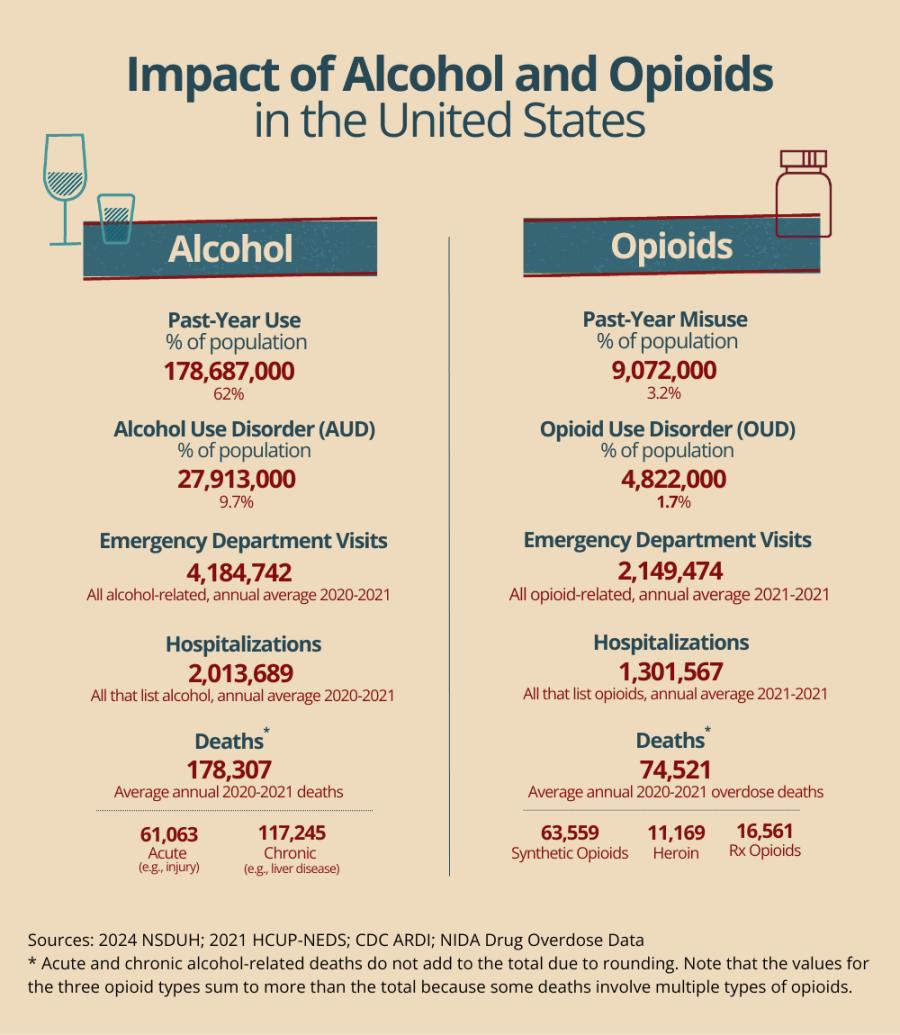
Source: NIH: Alcohol-RelatedEmergenciesandDeathsintheUnited States https://tinyurl.com/2drawukf
Unfortunately, although screening is common, there is lack of follow-through. Even when treatment referrals are
provided, there are access barriers, such as cost, lack of transportation or housing, long wait lists, stigma, and
ignorance or dismissal of cultural, LGBTQ, or other issues. Fewer than 1 in 10 people who met the criteria for AUD in 2023 received care.
However, decreasing can dramatically benefit overall life expectancy and quality of life:
According to the World Health Organization, research has shown that the consumption of alcohol has a direct correlation with over 200 health conditions - including anxiety, depression, cardiac health, high blood pressure, cancer¹, chronic pain, gastrointestinal issues, liver disease, pancreatitis, and stroke.
¹ Drinking alcohol is linked to increased incidences of cancer of the esophagus, mouth, pharynx, larynx, liver, and breast.
Alcohol-related causes kill approximately 178,000 people in the U.S. each year (20202021, up 29% from 2016-2017).
Alcohol consumption is one of the top ten causes of preventable death². Approximately two-thirds of alcohol-related deaths derive from diseases and organ damage related to chronic heavy alcohol consumption. The remaining fatalities are from injuries while intoxicated.
² Deaths By Risk Factor, United States, 2023:
1 - High Blood Pressure 468,000
2 - High Blood Sugar 349,000
3 - Obesity 338,000
4 - Smoking 333,000
5 - High Cholesterol 164,000
6 - Drug Use 136,000
7 - Excessive Alcohol Use 103,000
8 - Air Pollution, Indoor & Outdoor 82,500
9 - Outdoor Particulate Matter
Pollution 69,700
10 - Diet Low in Whole Grains
67,400
Institute for Health Metrics & Evaluation,Universityof Washington https://tinyurl.com/m7h9cu34
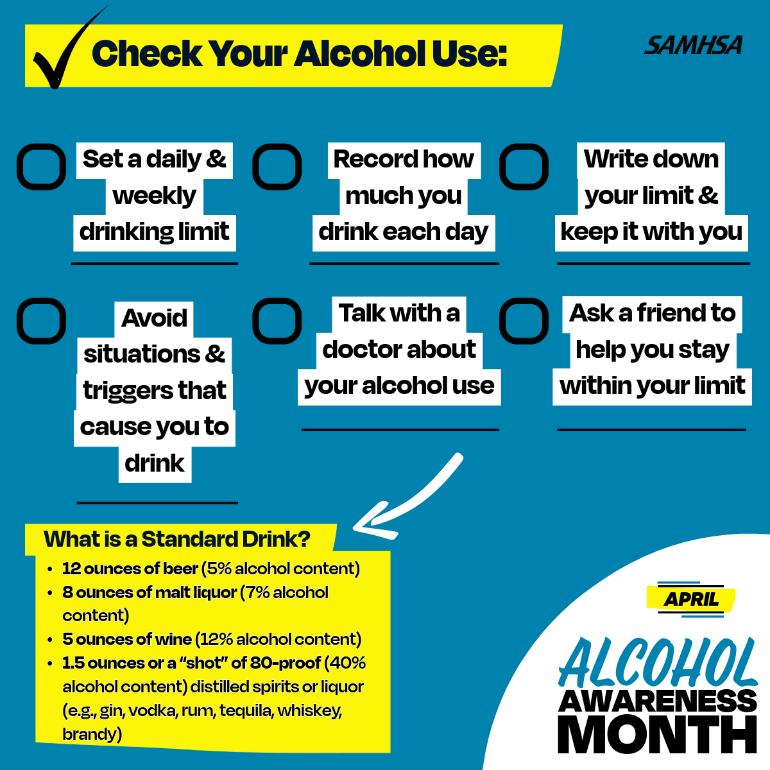
Not-So-Fun Facts:
☞ Binge drinking is the most widespread way people overuse alcohol; about one-third of alcohol-related deaths (61,000) resulted from drinking too much at once. These deaths include (but are not limited to) alcohol poisoning and vehicle crashes.
☞ About two-thirds of alcohol-related deaths (117,000) arose from chronic conditions developed from drinking alcohol over time.
☞ An October 2025 report found that only 37% of U.S. adults knew alcohol increases the risk of cancer; 53%, said they weren’t aware of any risk.
Source: JohnsHopkinsBloomberg School:ForBetterHealth,Drink Less)
https://tinyurl.com/xfb2u9mb
☞ Almost half (43,004 of 96,610, or 44.5%) of liver disease deaths among people aged 12 and older in 2023 involved alcohol.
Source: NIH: Alcohol and the Human Body
https://tinyurl.com/yc28p5ky
☞ In 2023, there were 12,429 alcohol-impaired-driving fatalities - 30% of driving deaths.
Source: NIH: Alcohol-Related EmergenciesandDeathsinthe United States
https://tinyurl.com/2drawukf
☞ According to a 2024 U.S. Coast Guard report, alcohol is the main cause in fatal boating incidents and the primary factor of 20% of all boating deaths. Alcohol is also detected in the blood of 30%– of known accidental drownings and 70% of all people who drown.
☞ 50% of sexual assaults and 40% of domestic violence incidents involve alcohol.
☞ People who use alcohol before the age of 15 are four times more likely to develop an alcohol use disorder later in life compared to those who have their first drink after age 20.
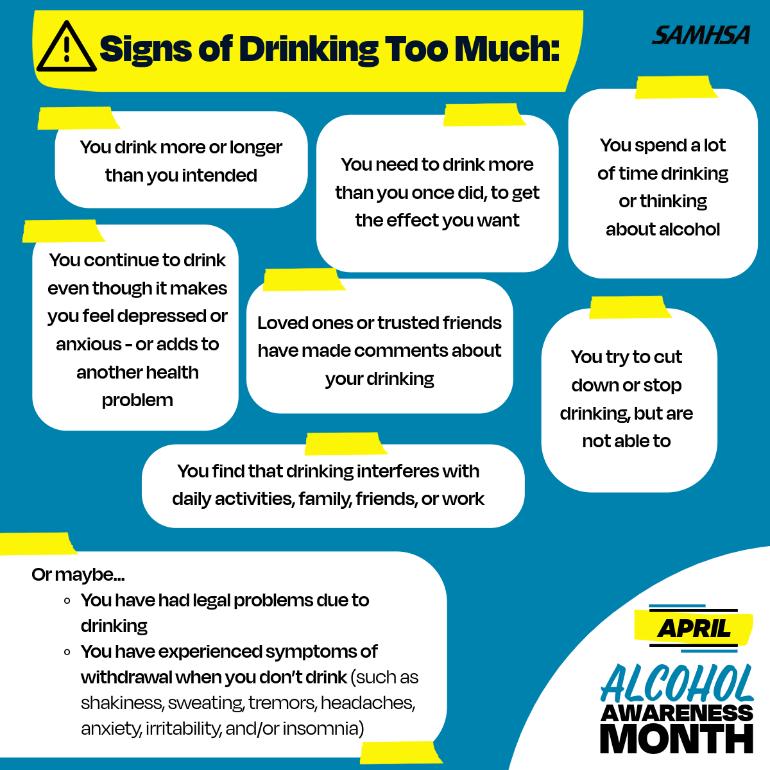
Those who are habitually abusing alcohol may exhibit some of the following:
✵ Continued alcohol consumption despite negative consequences towards work, health, or social life.
✵ Difficulties in personal relationships.
✵ Increased tolerance (requiring more to drink to achieve the same effect).
✵ Neglecting responsibilities.
✵ Trying to hide or disguise drinking / lying about drinking habits.
✵ Withdrawal symptoms such as anxiety, delusions, hallucinations, nausea, and shaking.
Hope and Help: Education and treatmentincluding tools for prevention and recovery - are provided with the assistance of the Substance Abuse and Mental Health Services Administration (SAMHSA) and local health organizations. Perhaps awareness campaigns such as Alcohol Awareness Month can also inspire us to be more encouraging, patient and supportive of ourselves and others.
The 988 Mental Health Lifeline is available anytime anyone who needs support. https://988oklahoma.com/
In addition, there are many resources available to Oklahomans. They can be found on the Alliance Oklahoma webpage below: https://tinyurl.com/bdefhwsv/
On Shelf at MLS:
After Party – Drew Charles Drunk-ish: A Memoir of
Loving and Leaving AlcoholStefanie Wilder-Taylor
Dry Humping: A Guide to Dating, Relating, and Hooking Up Without the Booze – Tawny
Lara
Impossible People: A Completely Average Recovery Story – Julia Wertz
Live Naked AF: A Joyful Approach to Living Alcohol Free – Annie Grace
Maybe This Will Save Me: A Memoir of Art, Addiction and Transformation – Tommy Dorfman
No Lost Causes Club: An Honest Guide to Recovery –Lauren McQuistin
Parents in Recovery: Navigating a Sober Family Lifestyle – Sarah Allen Benton
Simple Ways to Unwind Without Alcohol: 50 Tips to Drink Less and Enjoy More –Rebecca E. Williams
Sober Love: How to Quit Drinking as a Couple (A Johns Hopkins Press Health Book) –Joseph Nowinski
Sober Vibes: A Guide to Thriving in Your First Three Months Without Alcohol –Courtney Andersen
Sobriety for Dummies –Lane Kennedy
Take Control of Your Drinking: A Practical Guide to Alcohol Moderation,
Sobriety and When to Get
Professional Help (A Johns Hopkins Press Health BookMichael S. Levy
The Sober Shift: A ModernDay Guide to Living an Abundant Sober Life – Sozanne Warye
Unbottled Potential: Break Up with Alcohol and Break Through to Your Best Life –Amanda Kuda
Under the Influence: A Life-Saving Guide to the Myths and Realities of Alcoholism - James Robert Milam
Why We Drink Too Much: The Impact of Alcohol on Our Bodies and Culture – Charles Knowles
You’re Doing Great! (And Other Lies Alcohol Told Me)Dustin Dunbar
Más Allá de la Sobriedad: Método Clínico para la Recuperación a Largo Plazo –Michael C. Clemmens
For Kids:
Alcohol: Affecting LivesAmy C. Rea.
Coping with a Parent Who Overdrinks: Insights and Tips for Teenagers - Michelle Shreeve
Recommended URLs:
National Council on Alcoholism and Drug
Dependence
https://www.ncaddms.org/
Alcohol.org: How to Support a Loved One & Get Help for Alcohol Addiction https://tinyurl.com/3arbd4hz
Pew: America’s Most Common Drug Problem? Unhealthy Alcohol Use
https://tinyurl.com/42mjvcpp
PoeCenter: Protecting Their Future: Preventing the Impact of Alcohol on Youth https://tinyurl.com/2wwakfvm
Psychology Today: Alcohol: Challenging Dangerous Cultural Norms https://tinyurl.com/23hdvbud
Blast From the Past:
While we’re reading about one aspect of mental health, why not look at some comprehensive coverage from a previous year? You may find it illuminating or enjoyable:
https://tinyurl.com/c3ctyyf4