004
THE ARTS MAG
OKANOGAN COUNTY
The Literary Arts Issue Quarterly Magazine
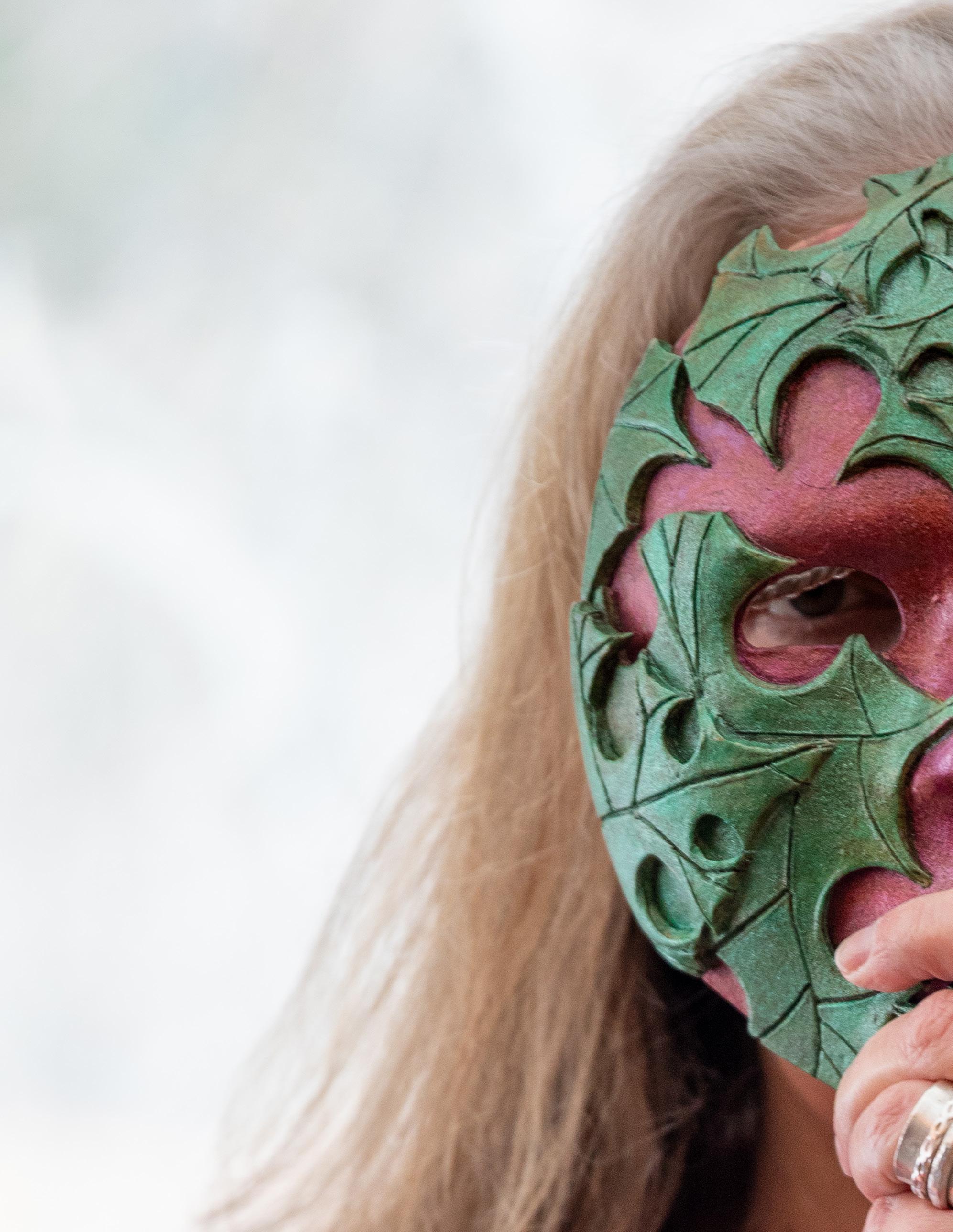
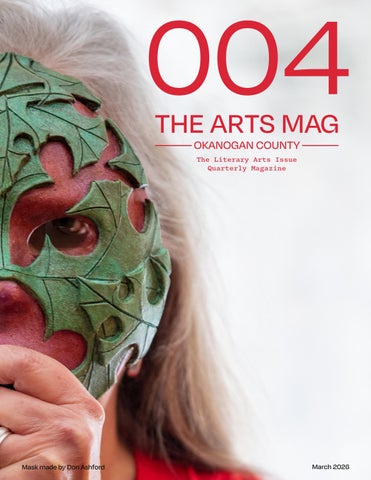
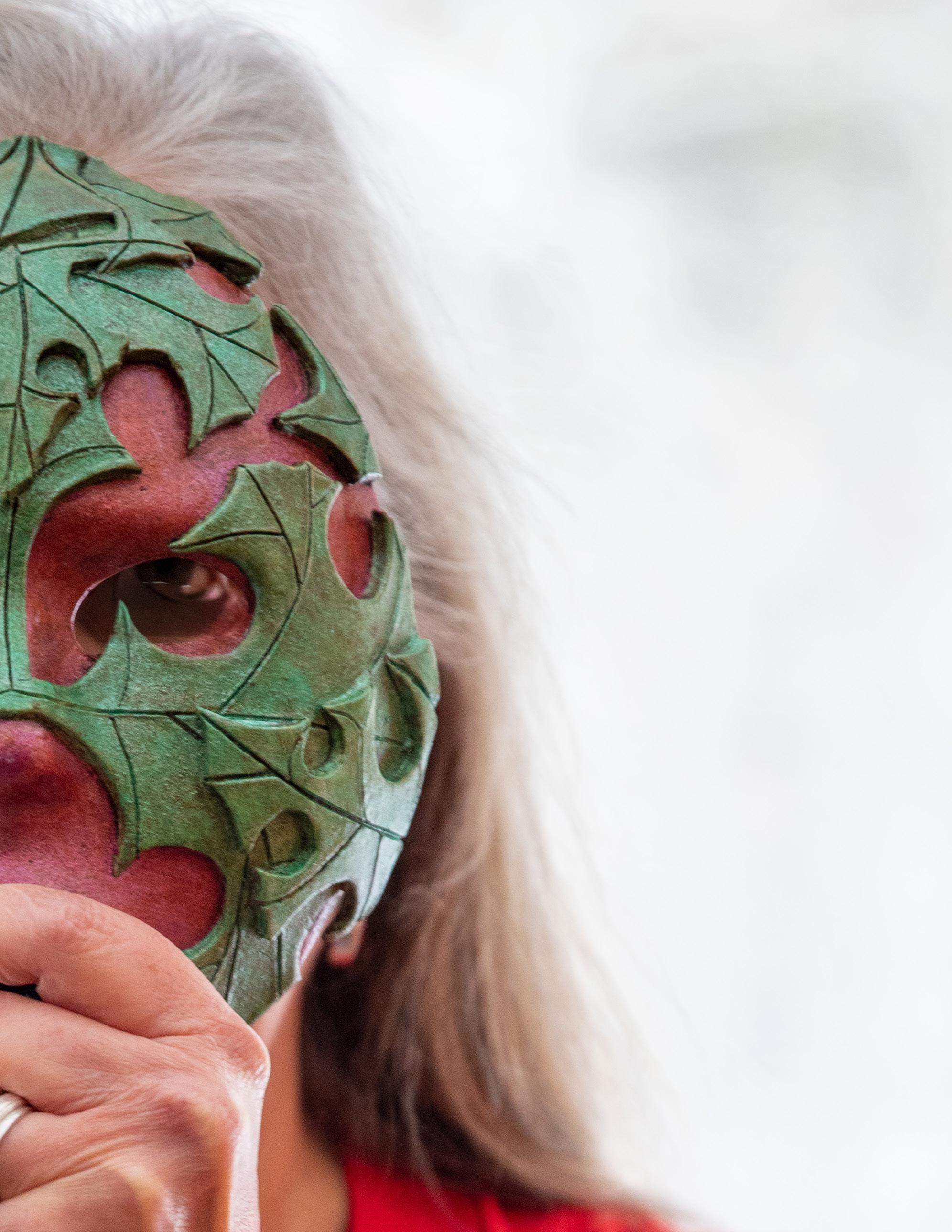
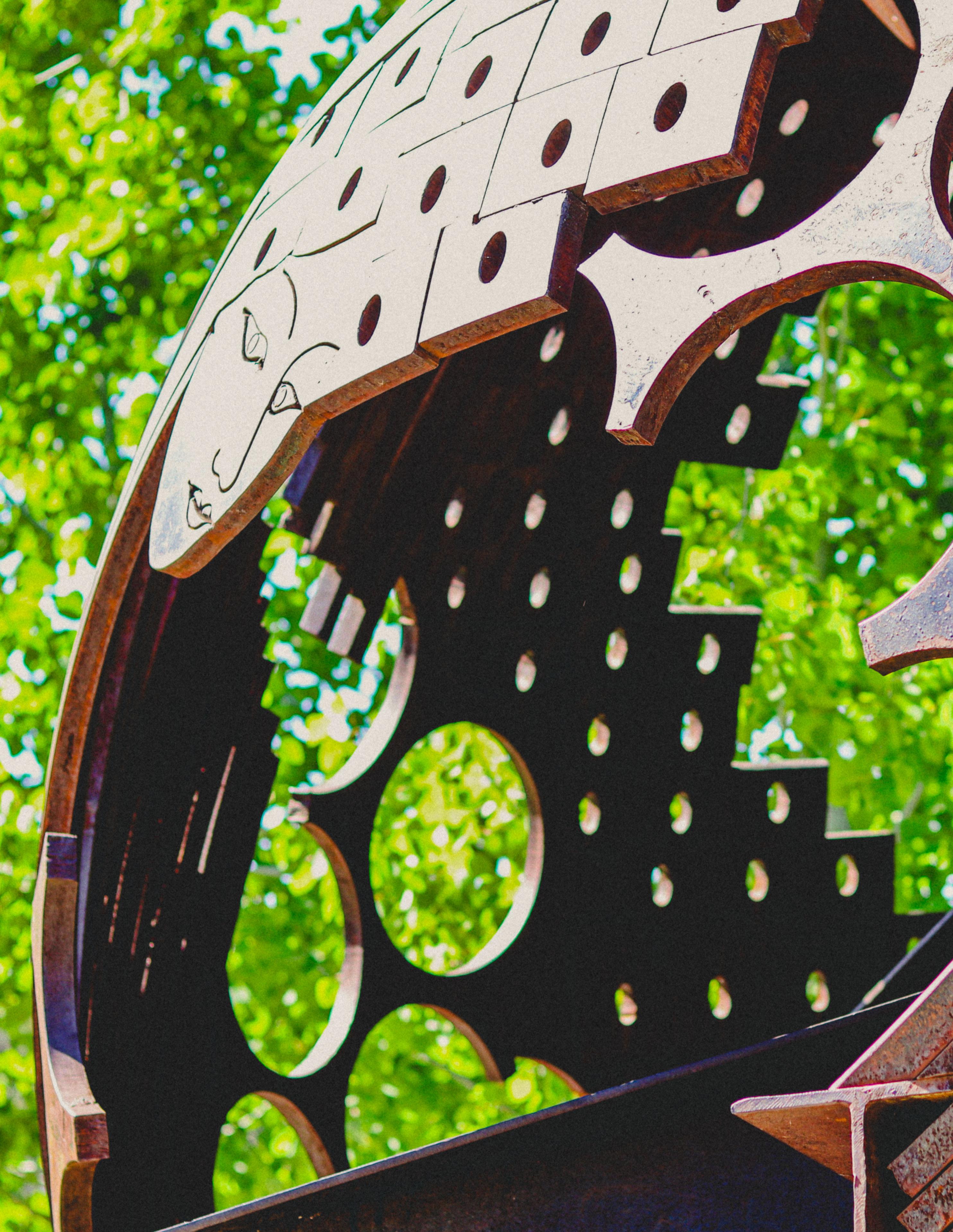
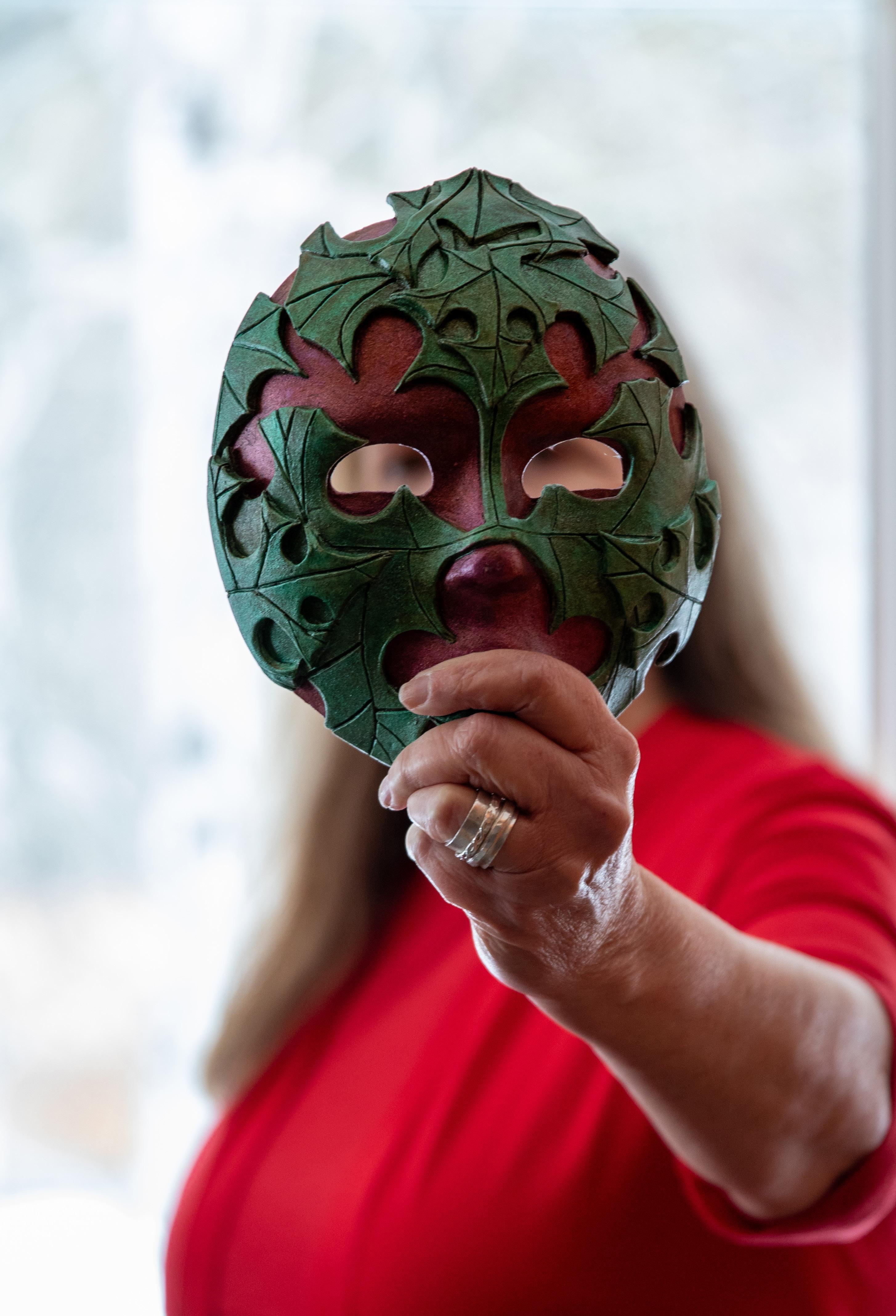
Mask made by Don Ashford
Board of Directors Staff
PRESIDENT
Missi Smith
VICE PRESIDENT
Jill Sheley
SECRETARY
Salyna Gracie
BOARD MEMBER
Nicole Ringgold
TREASURER
Dorothy Mitchel
BOARD MEMBER
Ray Johnston
ADVISORY MEMBER
Don Ashford
EXECUTIVE DIRECTOR
Sarah Jo Lightner
EDUCATION PROGRAM MANAGER
Olga Surmacheva
OPERATIONS AND EVENTS
COORDINATOR
Patti Somerville
VISUAL ARTS SPECIALIST
Maddie Lee James
LITERARY ARTS SPECIALIST
Nick Littman
METHOW VALLEY ARTS SPECIALIST
Judith Robertson
COMMUNICATIONS & MARKETING MANAGER
Cailee Maestro
COMMUNICATIONS & MARKETING ASSISTANT
Mackenzie Mayhem
Methow Arts Magazine
CONTACT
methowarts.org
info@methowarts.org
Instagram: @methowarts
STOCKISTS
We would love to have our magazine in your business, cafe, or venue! If you would like to stock Methow Arts Magazine, please inquire at info@methowarts.org
DESIGNERS AND WRITERS
Cailee Maestro
Mackenzie Mayhem
ILLUSTRATOR
Mackenzie Mayhem
COPY EDITOR
Aspen Kvicala
PRINTERS
Wenatchee World
FEATURED ARTIST PHOTOGRAPHER
Roxanne Best
COVER PHOTOS
Roxanne Best
SUPPORTERS
Public School Funding Alliance
Icicle Fund
Community Foundation
Arts WA
Three Rivers Hospital
Waste Wise
Creative West
Blue Star Coffee Roasters
PARTNERS
TwispWorks
Confluence: Art In Twisp
Methow Pride
The Merc Playhouse
Winthrop Rhythm & Blues Festival
The Winthrop Co-op Gallery
Methow at Home
Cascadia Music
SPONSORS
Blue Star Coffee Roasters
Three Fingered Jacks
Purple Sage / Methow Reservations
Methow Valley News
Johnston Architects
Methow Trails
KTRT The Root
Tackman Survey LLC
Riverside Printing
Goatwall Lanscaping
Valley Hospitality Resources Inc.
Windy Valley Landscaping
SPECIAL THANKS
Paid in part by Okanogan County LTAC.
from the director
Dear Community,
As we welcome Spring, I’m filled with gratitude for the creativity, resilience, and connection that flourish across Okanogan County. Your artistic energy enriches our lives, brings us together, and—perhaps most importantly— sustains a vibrant local economy that matters deeply to our future.
You may have heard the phrase “creative economy,” but what does it really mean? At its core, the creative economy is the system of businesses, workers, and activities that arise at the intersection of arts, culture, innovation, and commerce. It includes much more than studio artists and gallery shows. Creative enterprises span a broad range of sectors—graphic and digital design, architecture, music and performance, film and media production, publishing, craft manufacturing, advertising, culinary arts, restaurants, cultural tourism, event production, and more.
Across Washington State, the creative economy contributes nearly $120 billion annually to the state’s Gross Domestic Product (GDP)—almost 20 percent of Washington’s total economic output. The sector supports hundreds of thousands of jobs statewide, from independent artists and designers to chefs and restaurateurs, software developers, marketing firms, cultural nonprofits, creative manufacturers, and hospitality entrepreneurs. These numbers tell us something important: creativity is not a luxury—it is economic infrastructure.
Here in Okanogan County, the creative economy shows up in deeply local and visible ways. It
lives in working studios and galleries, in music performances and festivals, in public art and design services, in vibrant restaurants and culinary experiences that showcase regional identity, and in the small businesses that depend on a thriving arts scene to attract visitors and new residents.
Creative businesses are essential to revitalizing Main Street in rural communities like ours. When storefronts are filled with galleries, design studios, cafés, restaurants, makerspaces, performance venues, and locally owned retail, they create energy and foot traffic. That activity supports surrounding businesses, increases local spending, and builds a sense of place that cannot be replicated online. A lively Main Street signals vitality—it invites investment, encourages entrepreneurship, and strengthens property values.
For small and geographically isolated communities like ours, the creative economy is especially vital. Rural regions often rely on seasonal industries and limited economic sectors. The arts and
creative industries diversify income streams, create year-round economic activity, and help young people envision futures here at home. They strengthen our cultural identity and make our county a place where people want to live, work, dine, gather, and invest.
At Methow Arts, we believe that supporting artists, culinary creatives, and small creative businesses is directly tied to strengthening community resilience. When we invest in creativity, we invest in economic vitality, in youth engagement, in cultural preservation, and in the shared experiences that bind us together.
This Spring, as you attend events, enjoy a locally crafted meal, support a gallery, shop on Main Street, or participate in a workshop, know that you are contributing to something larger. You are helping sustain a creative ecosystem that fuels both inspiration and economic opportunity across Okanogan County.
Thank you for being part of this vibrant creative community.
Warmly,

Sarah Jo Lightner Executive Director Methow Arts
Table of
contents
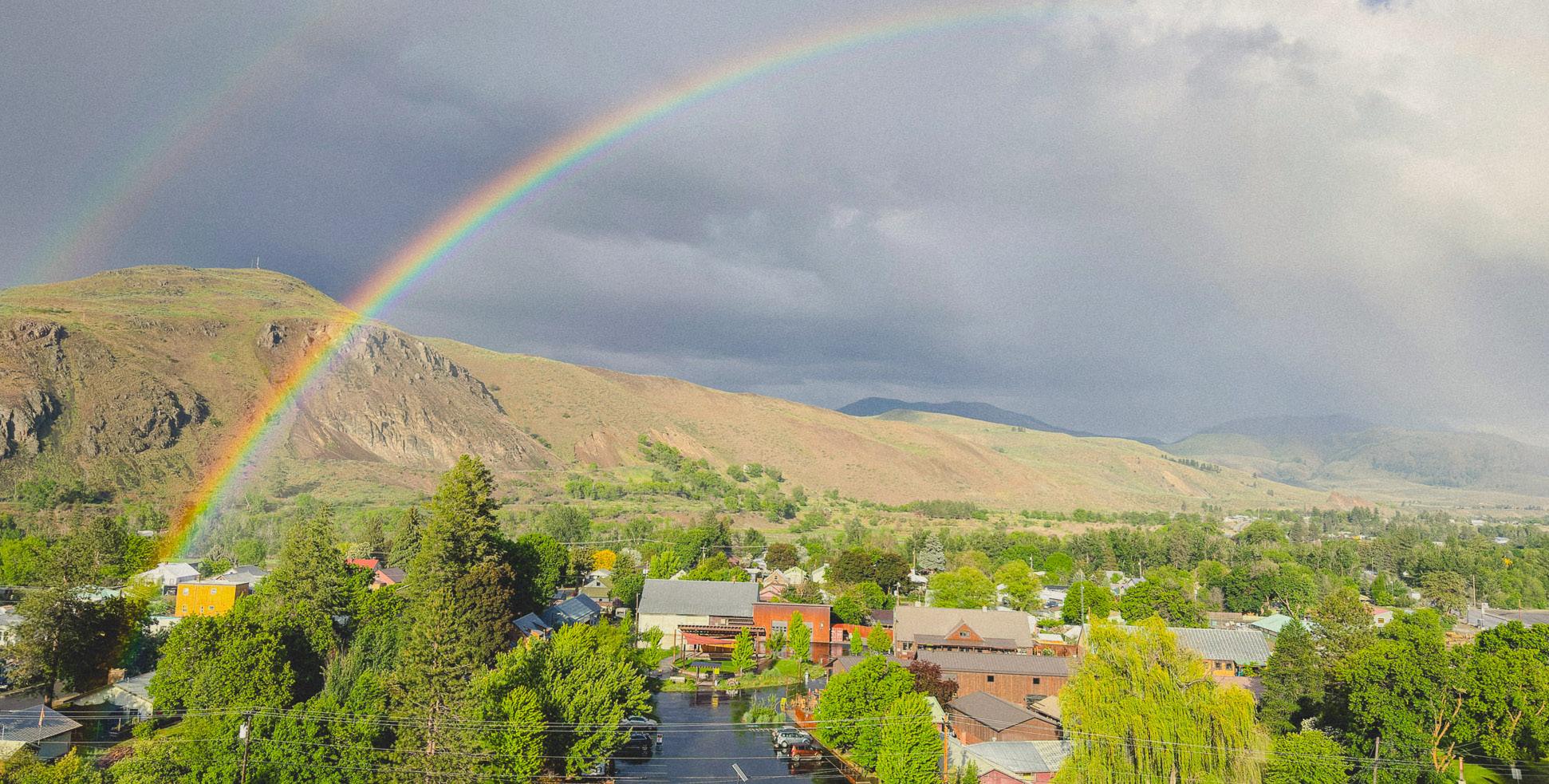
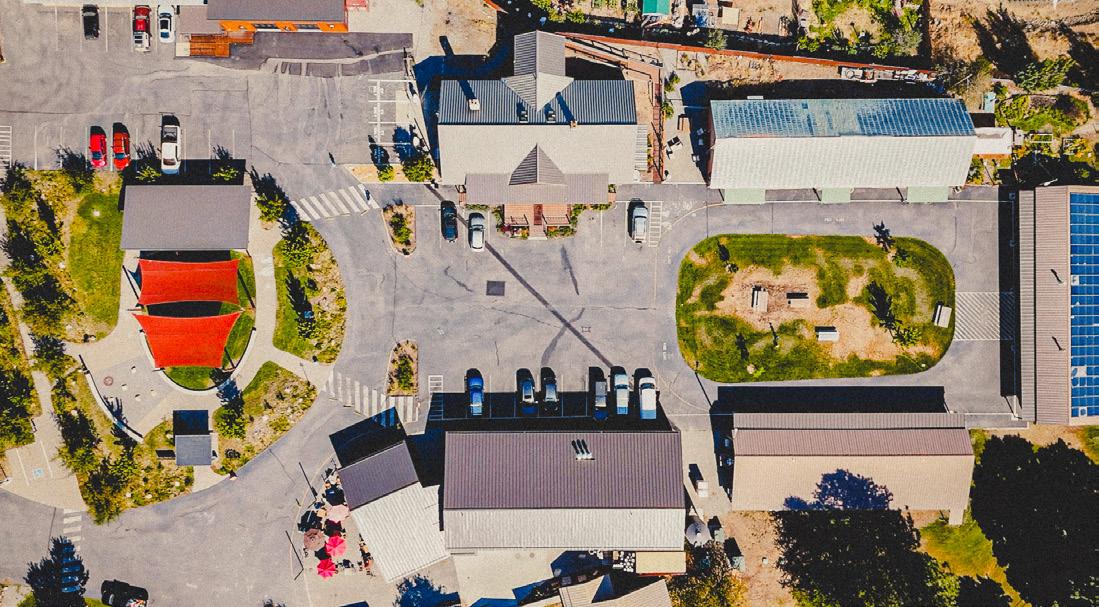
TwispWorks is a nonprofit community campus in the heart of Twisp, WA, on a historic 6.4-acre site. Home to artists, entrepreneurs, and nonprofits, it provides the space, tools, and connections people need to do their best work. From studios and small business support to community events and education, TwispWorks is a hub for creativity, collaboration, and a thriving Methow Valley economy.
IN TRANSITION: THE ONGOING EVOLUTION OF TWISPWORKS
By Patrick Law
Going from “winter” to early spring, it’s a natural time to think about transitions. Like the seasons, the snowpack, the river flow and its meander, the TwispWorks experience is one of ongoing evolution. Transition is the constant, not the exception. Movement is always happening. Spaces change. People change. At TwispWorks, our role is to be stewards of this place, shepherding the transitions that are an inevitable part of life and part of what keeps things fresh and exciting.
Starting with movement, the newest renters at TwispWorks are Spencer Beck of AlpenGlow Supply and Marshall Trautman of Methow Candles. Spencer and Marshall are sharing the space formally occupied by Peter Nawrot Woodworking. Donna Keyser, a long-time partner, has moved from the “Tree Cooler” to the South Shed and is sharing her space with artist Jess Newlin. The Tree Cooler will now be home to eqpd, where owner Jonathan Baker will finally be able
to consolidate his manufacturing operation into one space. We said goodbye to Hannah Vianno, a longtime partner, who gave up her studio, but is fortunately still on the TwispWorks Board of Directors. In her space, Serious Fun Architecture shifted over from a few doors down. Their old space was vacated to make room for an expansion of Orchard House Doughnuts.
All of the spaces at TwispWorks are different, and matching the needs of partners with the particulars of the space is a constant puzzle, but helping artists and businesses grow and evolve is a big reason for why we exist. The people who rent space at TwispWorks are the heart and soul of the organization. We get to watch, and support, and cheerlead and amplify the efforts of an amazing group of people.
TwispWorks strives to be a resource for the town of Twisp, and the entire Methow Valley. We also
recognize that people in this valley have diverse needs, and we won’t be able to meet them all. But I would also argue that this 6.4 acre campus is, and will always be, a place of diverse use.
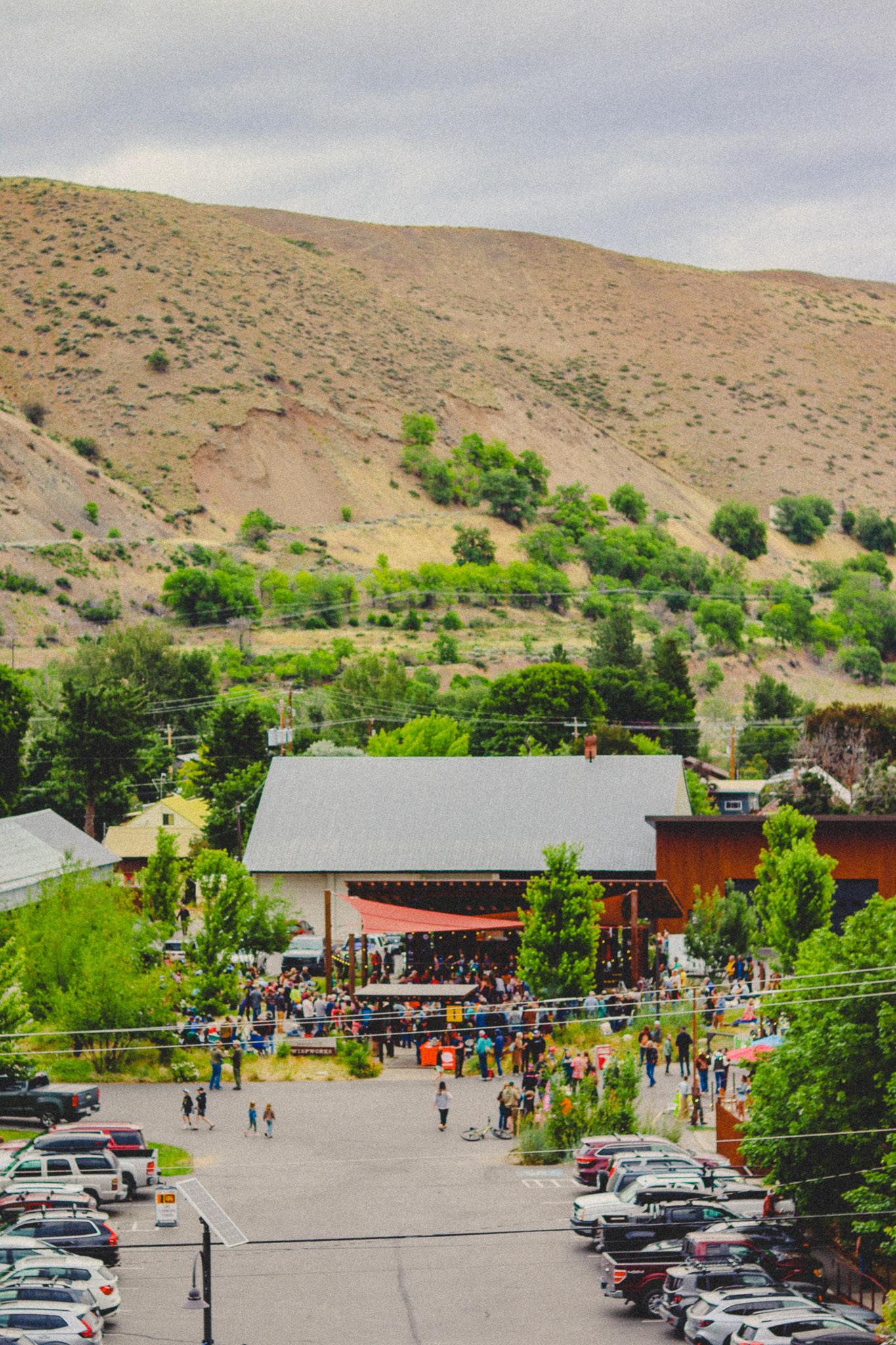
First of all, people work here—roughly 100 jobs at last count, in over 35 small businesses, artist studios, nonprofit organizations, educational programs, and local media entities. Other people come to campus to attend a class or workshop. That includes students at the Independent Learning Center. Some people show up for beer or doughnuts. Others come to shop and support local creative businesses. There are community meetings here. People come out for live performances, pop-up markets, and community festivals. I have seen trail work crews meet in the parking lot before heading into the hills. Bike rides start and end here. When it’s hot, kids play in the splash pad, their parents watching from under the shade of the Pavilion. Some people just cut through campus to avoid walking along the highway. It’s a soft landing into the neighborhood, downtown district and pedestrian pathways used daily by residents and visitors alike.
The campus is also a place of rest. A place where anyone can sit in the grass, under a tree, or walk among the native plantings scattered throughout campus. Many come to meet and gather with others. And this, perhaps, is the crux of what TwispWorks has to offer the entire community. It’s a place for people to come together, outside of home and away from the office or worksite. A third place, living room of the Methow, the other Twisp Park. Whatever you choose to call it, the fact of its existence in this world is increasingly
rare. Far more common is the trend towards social isolation and siloed conversation.
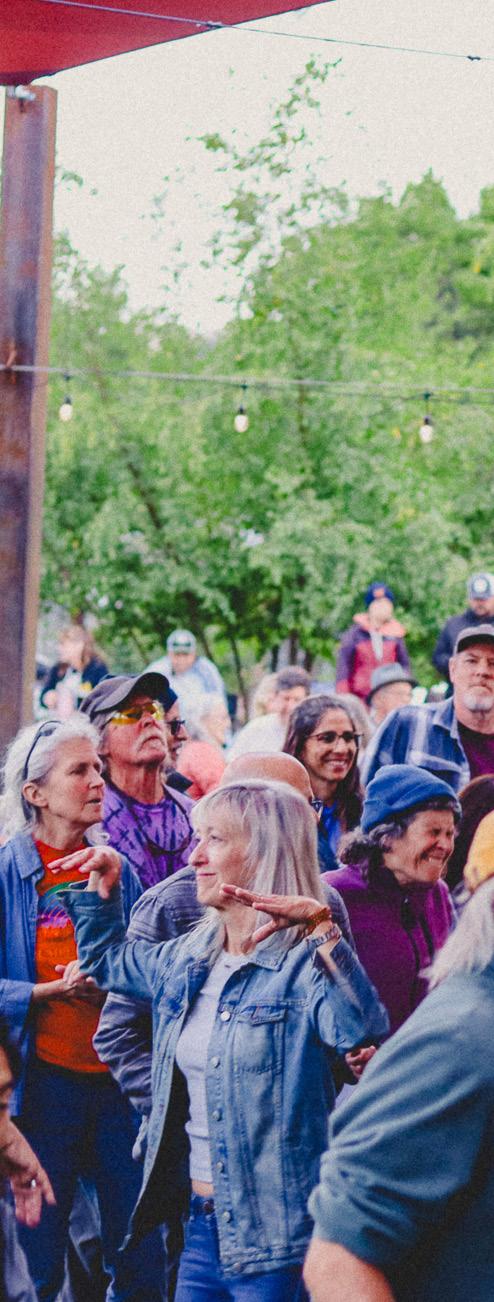
Much of what we do at TwispWorks—as a staff, as a board of directors, and as a community of partners—is create a reason and a vessel for the community to come together. In addition to all the reasons cited above, we also have several upcoming events that may inspire people to gather.
Starting with our Fourth Friday Summer Concert Series. Through the generous support of several business sponsors, we are fortunate to be able to invite the community to join us for free live music performances on the Fourth Fridays of May (5.22), June (6.26), July (7.24), and August (8.28). We also have several Small Business Workshops coming up. On March 12, we have the final
session of our 4-part Grant Writing Series. On March 25, we have a workshop on Pricing for Food Businesses. The next day, on March 26, TwispWorks will host a Methow Trails presentation on the economic impact of recreational trails. On April 16, Perri Lynch Howard will lead a workshop on Grants and Residencies for Artists, Makers, and Creatives.
We look forward to spring and summer, even while lamenting a lost winter. Knowing that now is often the time that people emerge from hibernation, TwispWorks is ready to welcome everyone to experience the next state of our ongoing evolution.
Patrick Law
Economic Program Director


















Methow Arts enriches the lives of people in Okanogan County by making the arts an integral part of public school education, economic vitality & community. We envision a future where artists & art organizations collaborate & thrive, where the arts are part of the consciousness & experience of people of all ages.
METHOW ARTS PRESENTS: 2026 SUMMER PARTNERSHIP SERIES
By Methow Arts
ART IN THE WILD
Intimate walk-in event series in partnership with Methow Conservany and Okanogan Land Trust
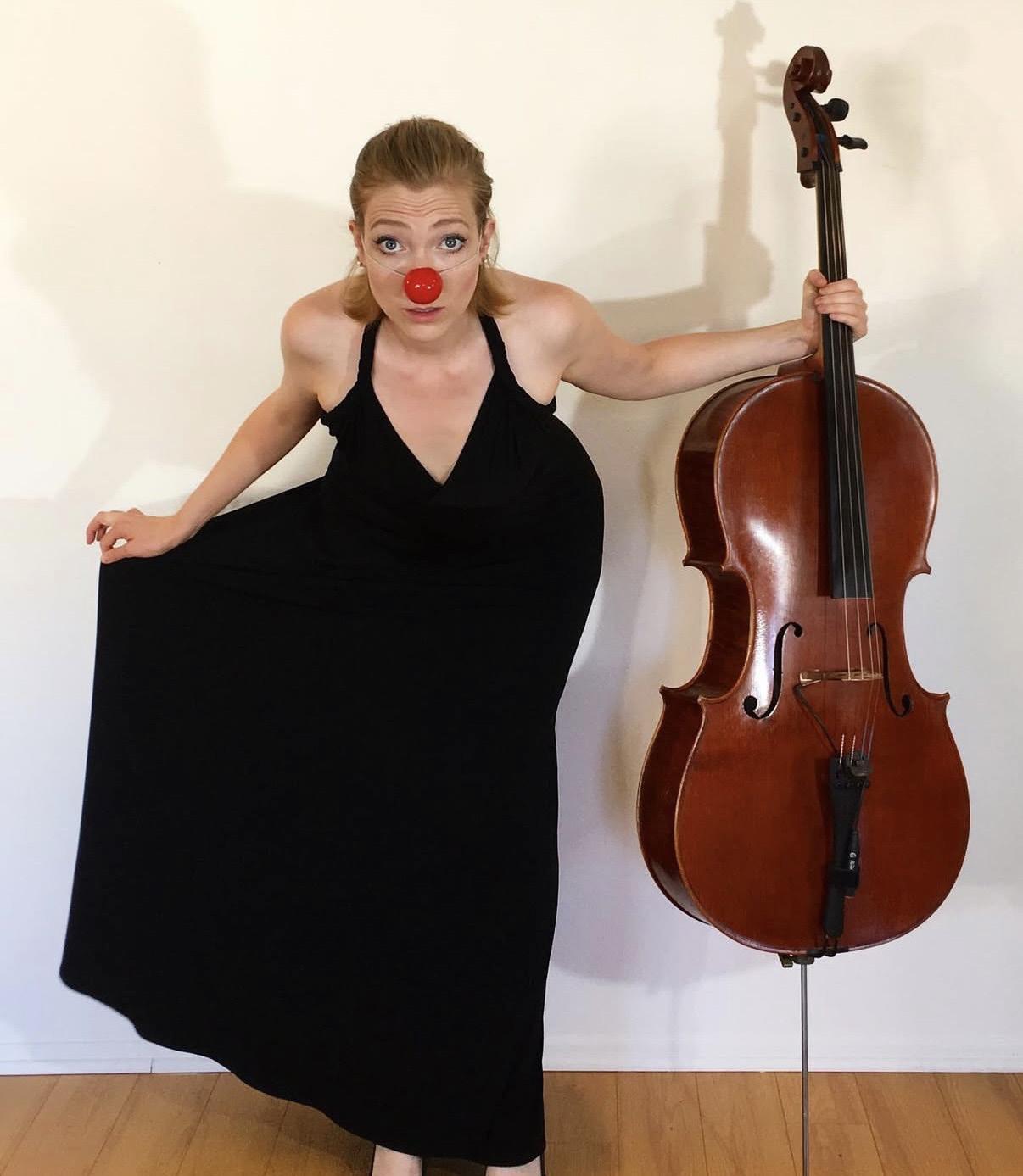
DELUSIONS & GRANDUER WITH KAREN HALL
Sunny M Ranch: June 13, 6:30 PM
In partnership with Methow Conservancy
"As irreverent as it is poignant," this classical cello recital plays out like a piece of performance art run by a masterly jester, blutting artistry, humanity, and insanity.
Adult Tickets: $35
Youth Tickets: $10
AN EVENING OF COMMUNITY & BLUEGRASS
Bonaparte Meadows: June 27, 6:30 PM
In partnership Okanogan Land Trust
Adult Tickets: $25
Youth Tickets: $10
Tickets will be on sale April 1! Tickets will be limited for this intimate event.
ARTS FEST
ARTS FEST
Twisp Park: July 4th, 11:30 Am - 4:30 PM
In partnership with Twip Creative District
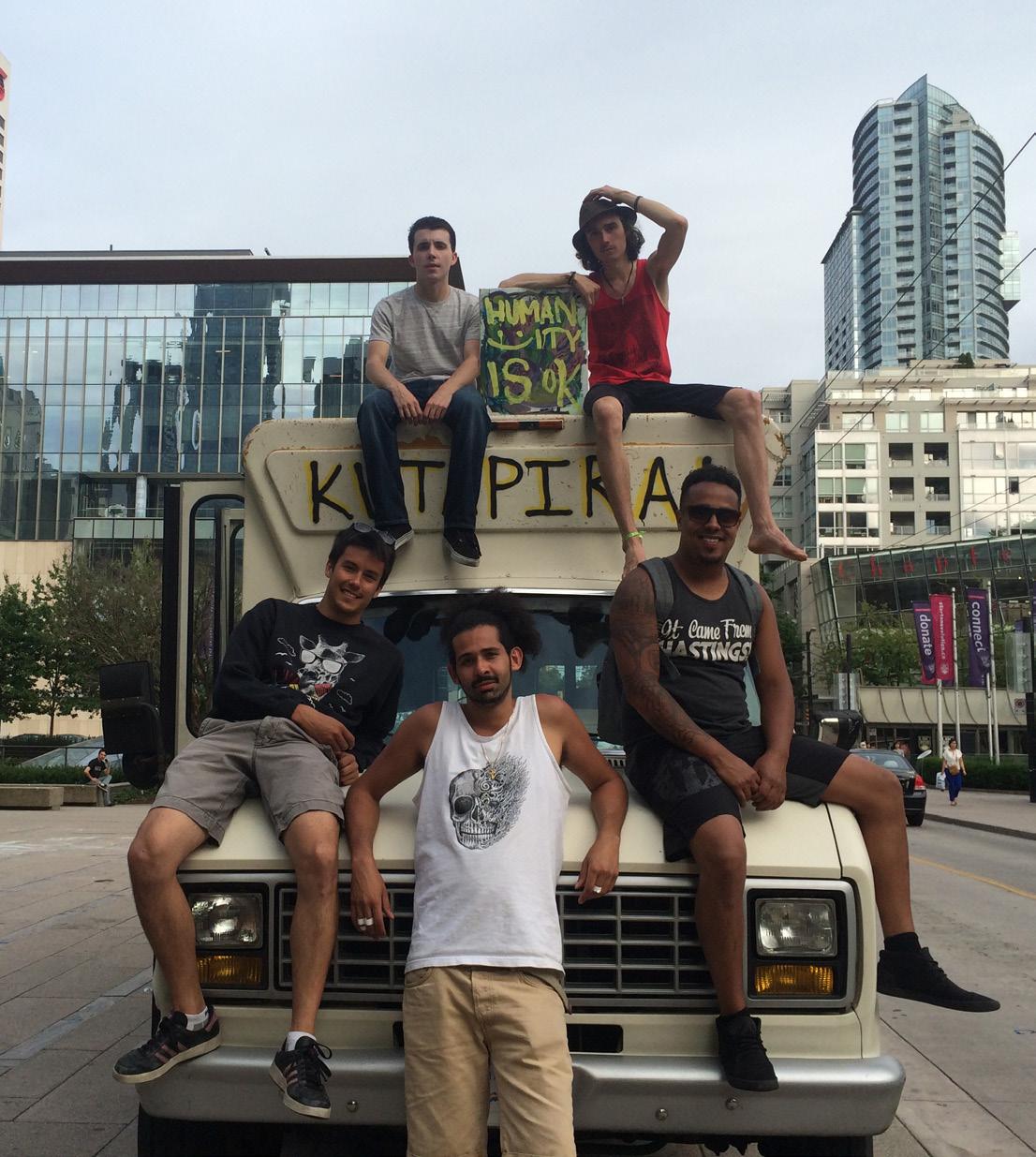
Arts Fest is returning to the Twisp Park! This years theme is Cultural Kalaidescope! With performances from Kutapira Marimba, Leapin Louie Cowboy Clown, Sanzar Dancers, and Big Lake Judy! Come join us for a wild time in the park with kids crafts, food trucks, and a beer garden!
Adult Tickets: $25
17 and Under Tickets: $5
SUMMit BEATS
SUMMIT BEATS - MUSIC/MAKERS/FOOD
Loup Loup Ski Bowl: August 1, Gates open at 12 PM, show starts at 4 PM In partnership with Loup Loup
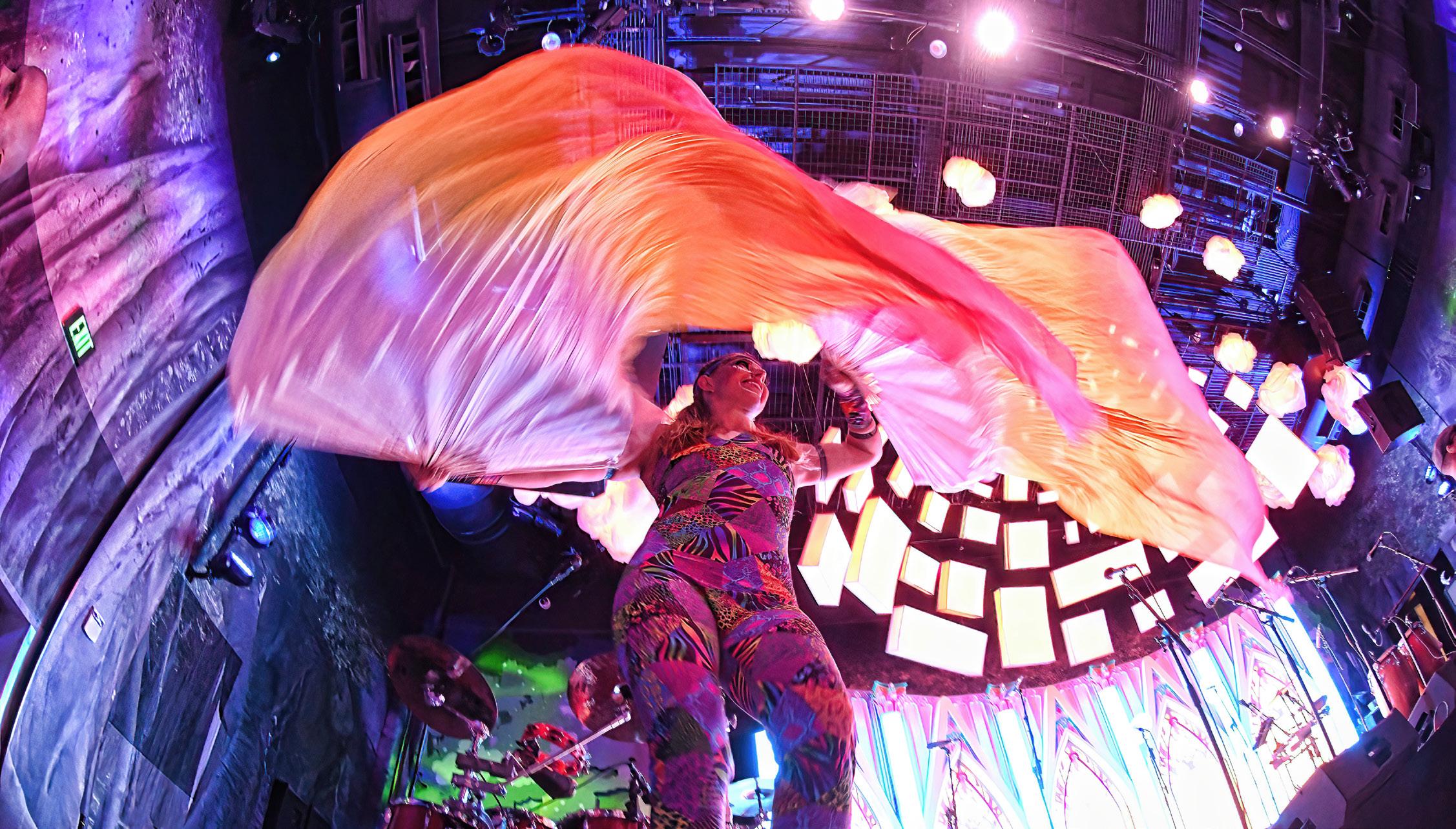
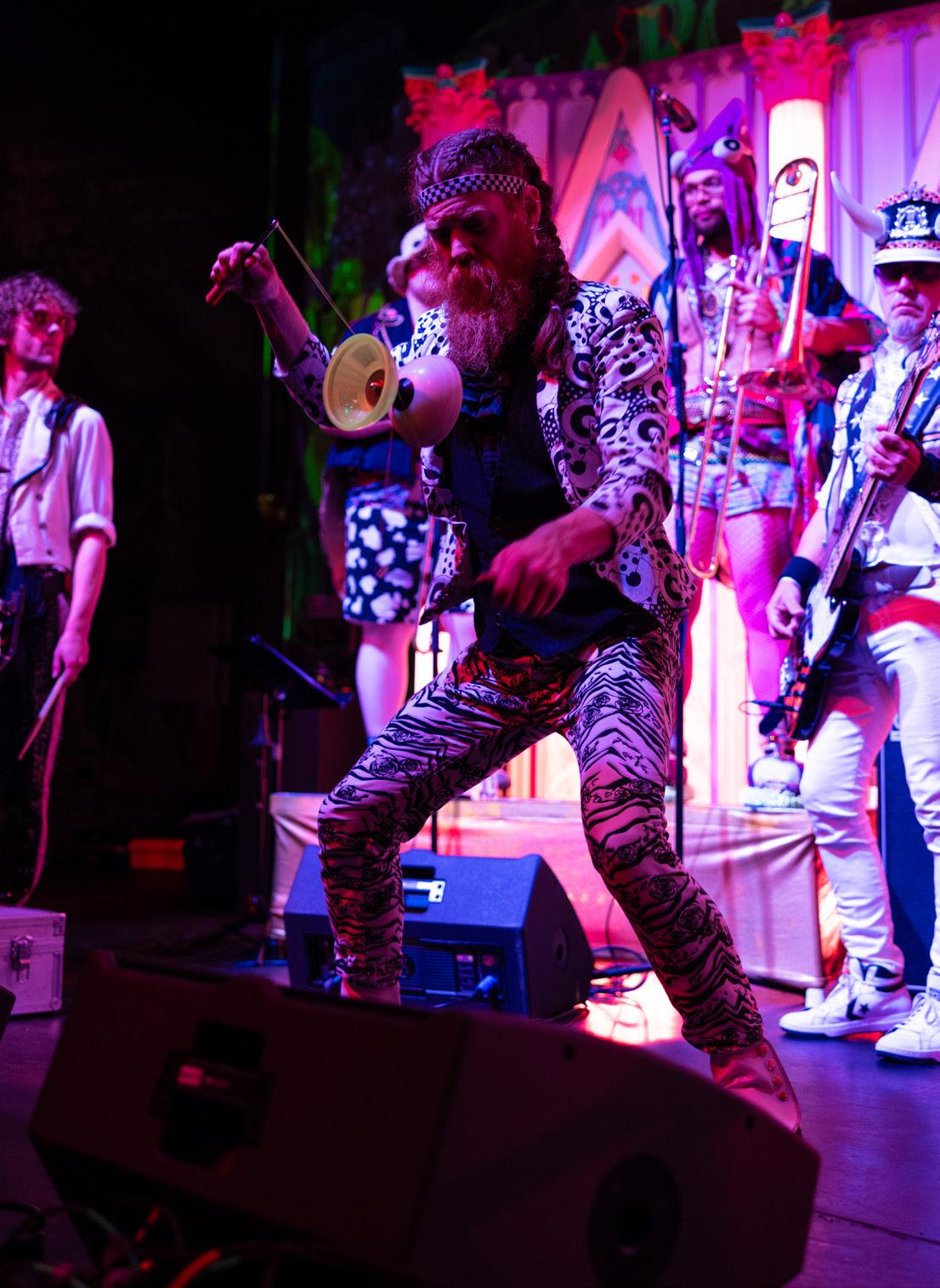
Back by popular demand! Join us for a night of music and festivities with Marchfourth Marching Band and local sounds from Crunk Munks, Friday Feels, and a late night DJ set.

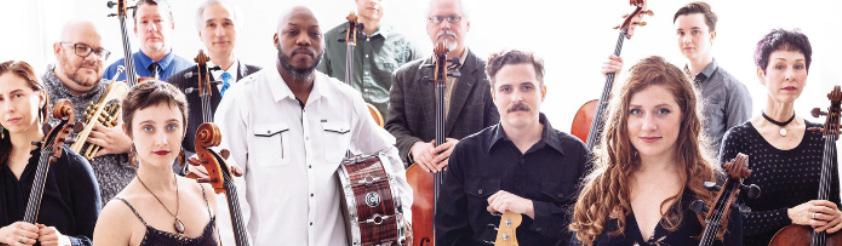
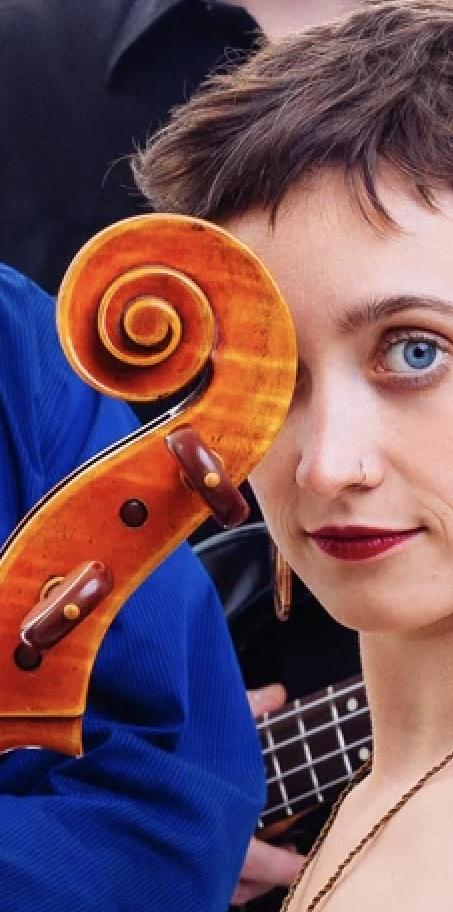
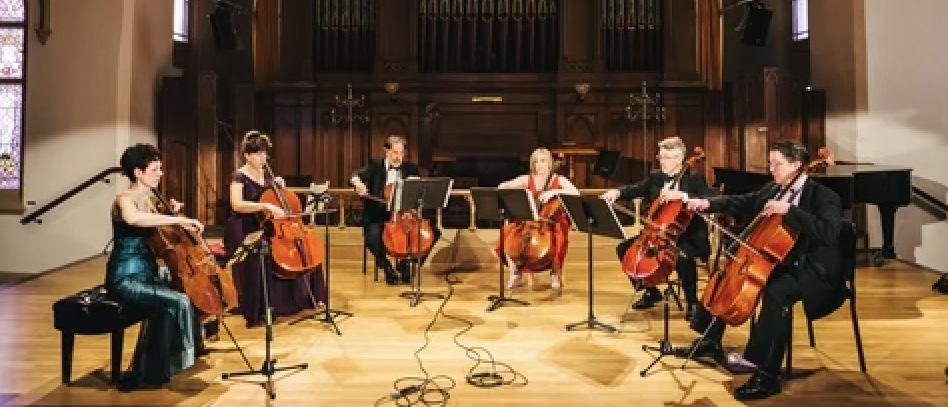
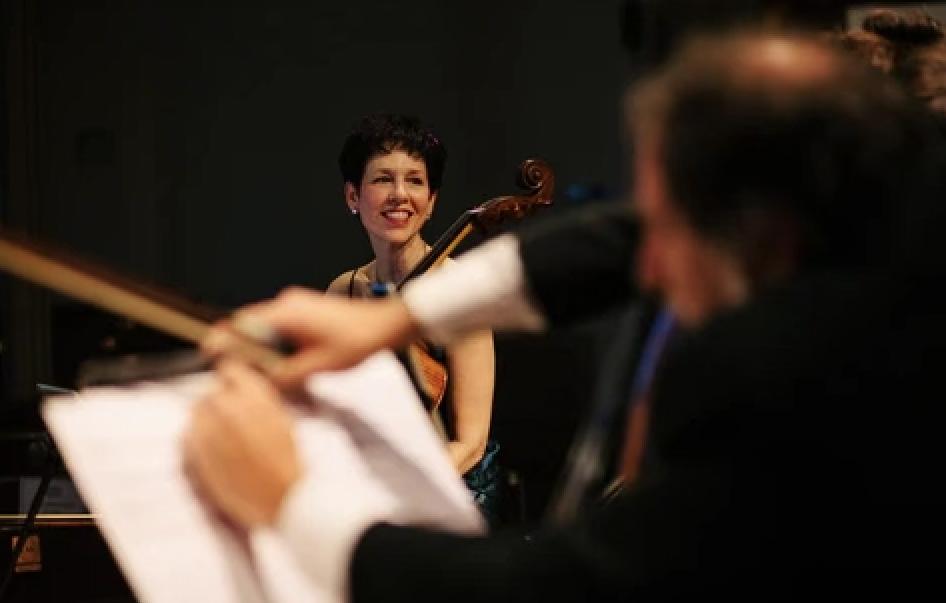
THE PORTLAND CELLO PROJECT
Pipestone Canyon Ranch: September 5, 6:30 PM In partnership with MV Chamber Music Festival
Adult Tickets: $40 17 and Under Tickets: $10
Tickets on sale July 1.
For more information on Methow Arts events and our 2026 Performance Series, visit: www.methowarts.org
The Confluence: Art in Twisp, a 501c3 organization, was founded in 1988 by a small, forward-thinking group of artists who felt the Methow Valley needed a place to gather for the celebration of the visual arts. Since that time, The Confluence: Art in Twisp has become a cultural landmark in downtown Twisp.
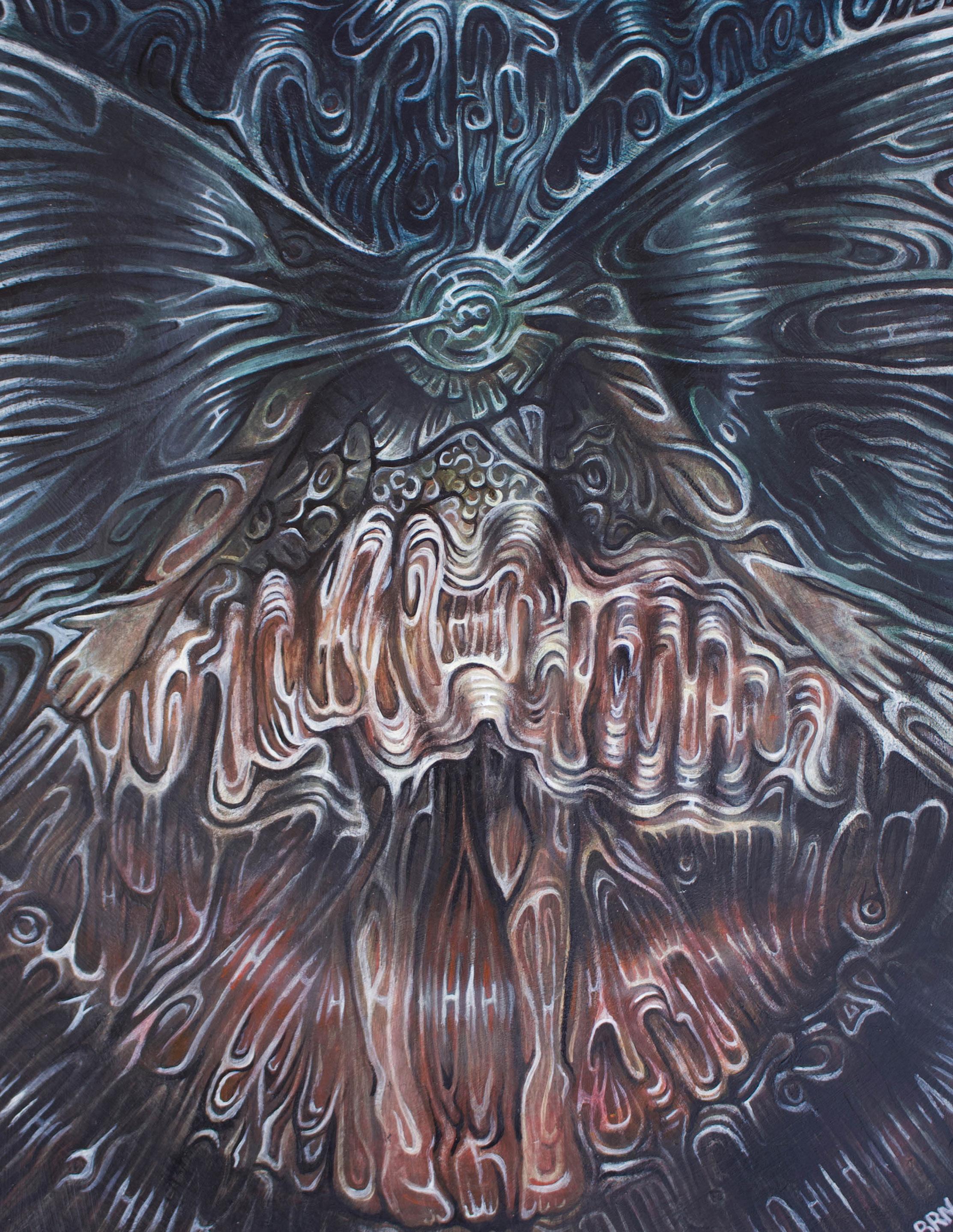
Artwork by Britta Ness
THE CONFLUENCE: ART IN TWISP
By Teresa Mitchell
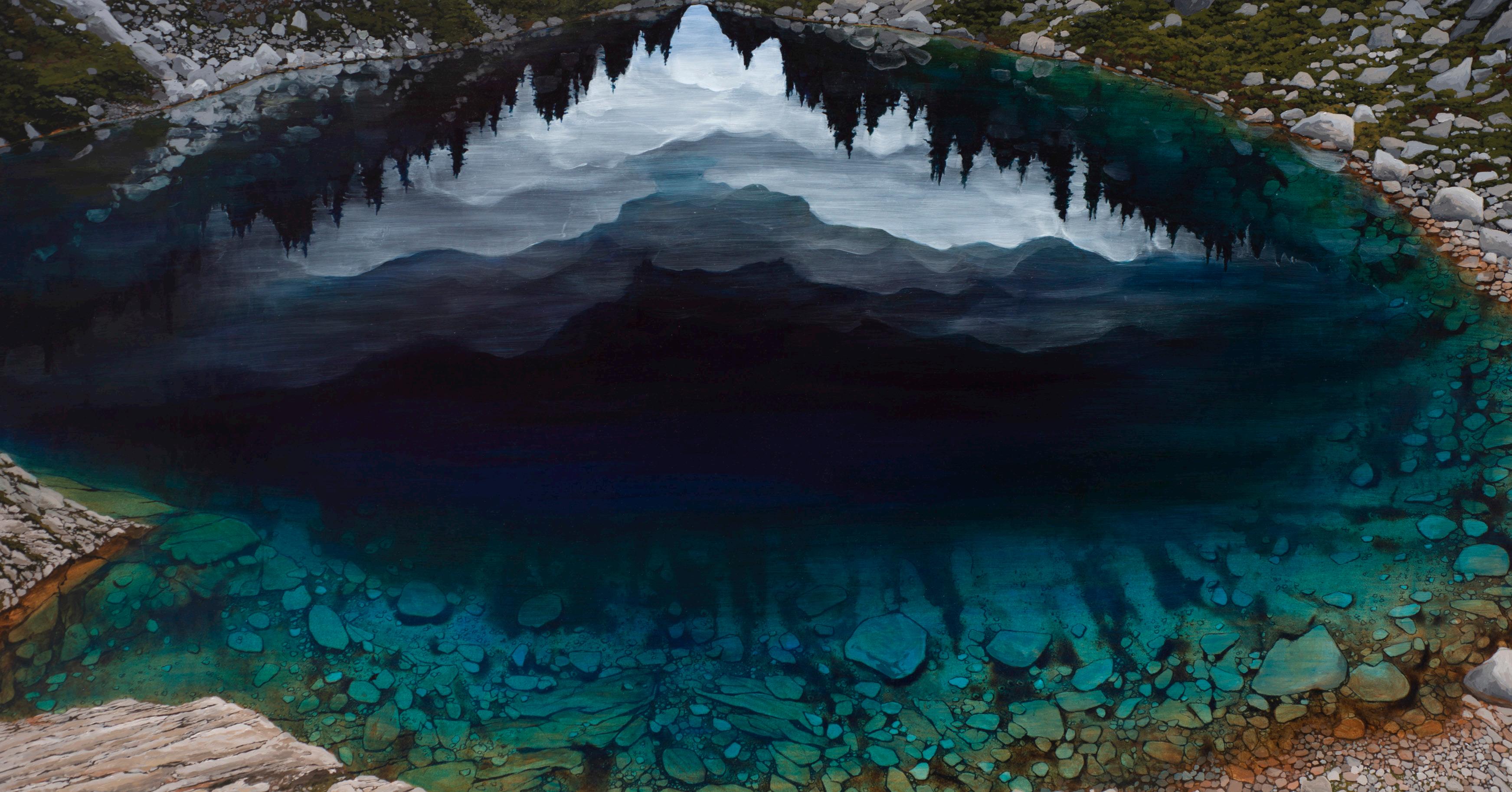
The Confluence believes that art is a pillar of our community. As the only non-profit art gallery in Okanogan County, The Confluence proudly showcases the work of local and regional artists. The gallery hosts sixteen exhibits each year, eight in the main gallery and eight in the Community Gallery, and strives to share work from all segments of our rural community. This spring, we are piloting a program that offers artists opportunities to exhibit large collections of work in a portion of the main gallery. We are delighted to host shows by two extraordinary Methow Valley artists, Perri Lynch Howard and Tori Karpenko, to kick off this exciting program. The Confluence Gallery Shop boasts a wide selection of handmade jewelry, ceramics, textiles, cards, and one of a kind works from artists across the region.
By curating high-quality exhibits and a dynamic gallery shop, The Confluence supports the lo-
cal economy by putting money directly into the pockets of working artists. The Confluence is home to the Confluence Poets and hosts regular meetings, workshops, readings, and events.
Spring at the gallery means incredible exhibits and special events. On April 25, The Confluence presents the Twisp Art Crawl, a celebration of the Twisp arts community with an evening of incredible artwork. Meet artists, enjoy refreshments, and gather with community members in different locations around downtown Twisp.
On April 30, The Confluence is delighted to expand our literary arts offerings by welcoming Washington Poet Laureate, Derek Sheffield, to the gallery for an evening reading of his work. The Confluence hosts the 13th Annual Trashion Show on May 16, a showcase event for designers who create high fashion using recycled materials. This year’s theme, El Circo, features a vintage circus vibe. Edgy designs, great music, and a party
Artwork by Tori Karpenko
atmosphere make the Trashion Show one of the Methow Valley’s most popular events. VIP tickets go on sale in early April.
The Confluence: Art in Twisp is located at 104 Glover Street in downtown Twisp. Gallery and gallery shop hours are 10 AM - 4 PM Tuesday through Saturday in March and 10 AM - 5 PM Tuesday through Saturday starting in April. The gallery will be closed for Spring Break the week of April 5-11.
To contact the gallery, call 509-997-ARTS, email info@confluencegallery.org, or visit www.confluencegallery.org.
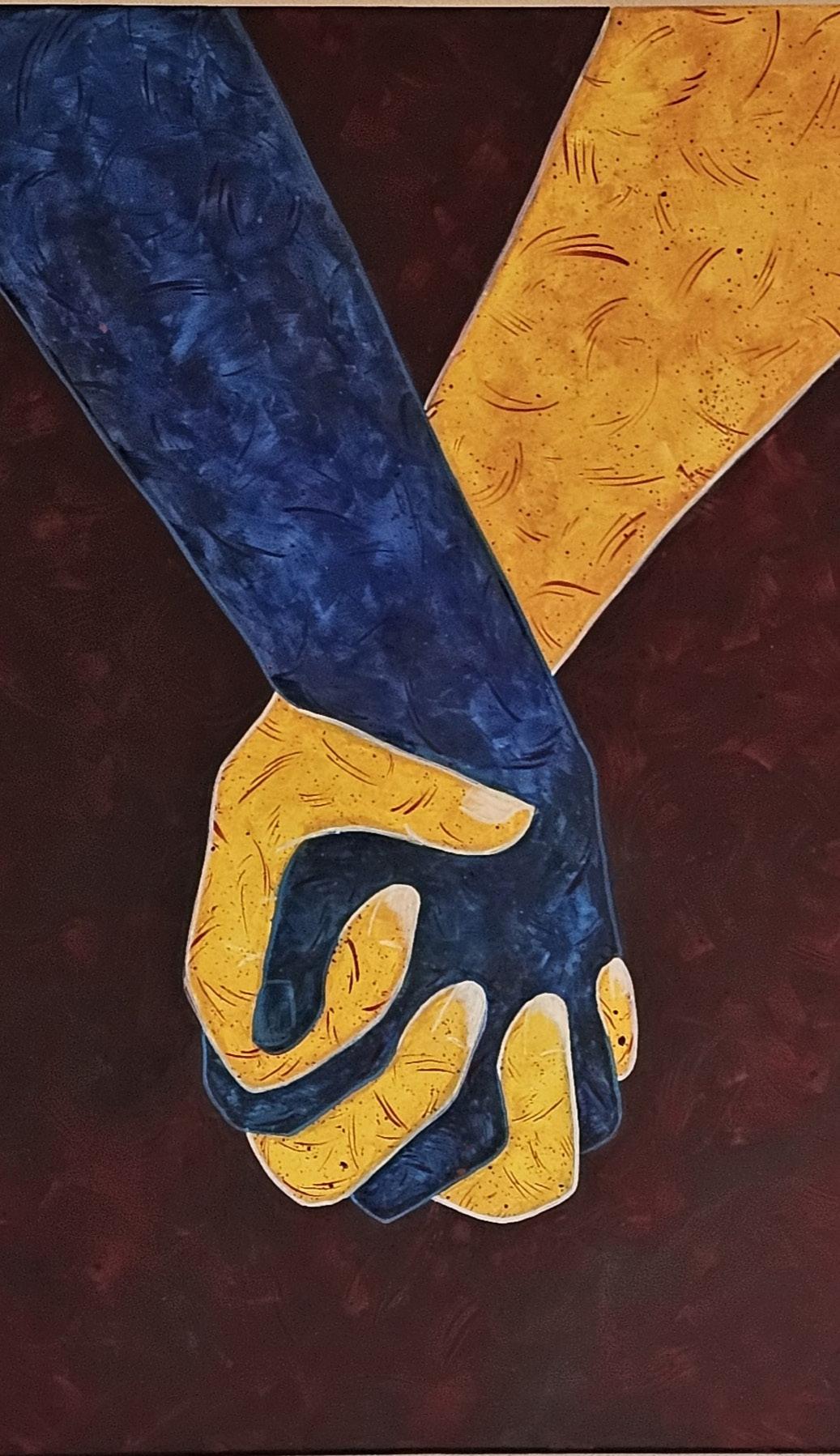
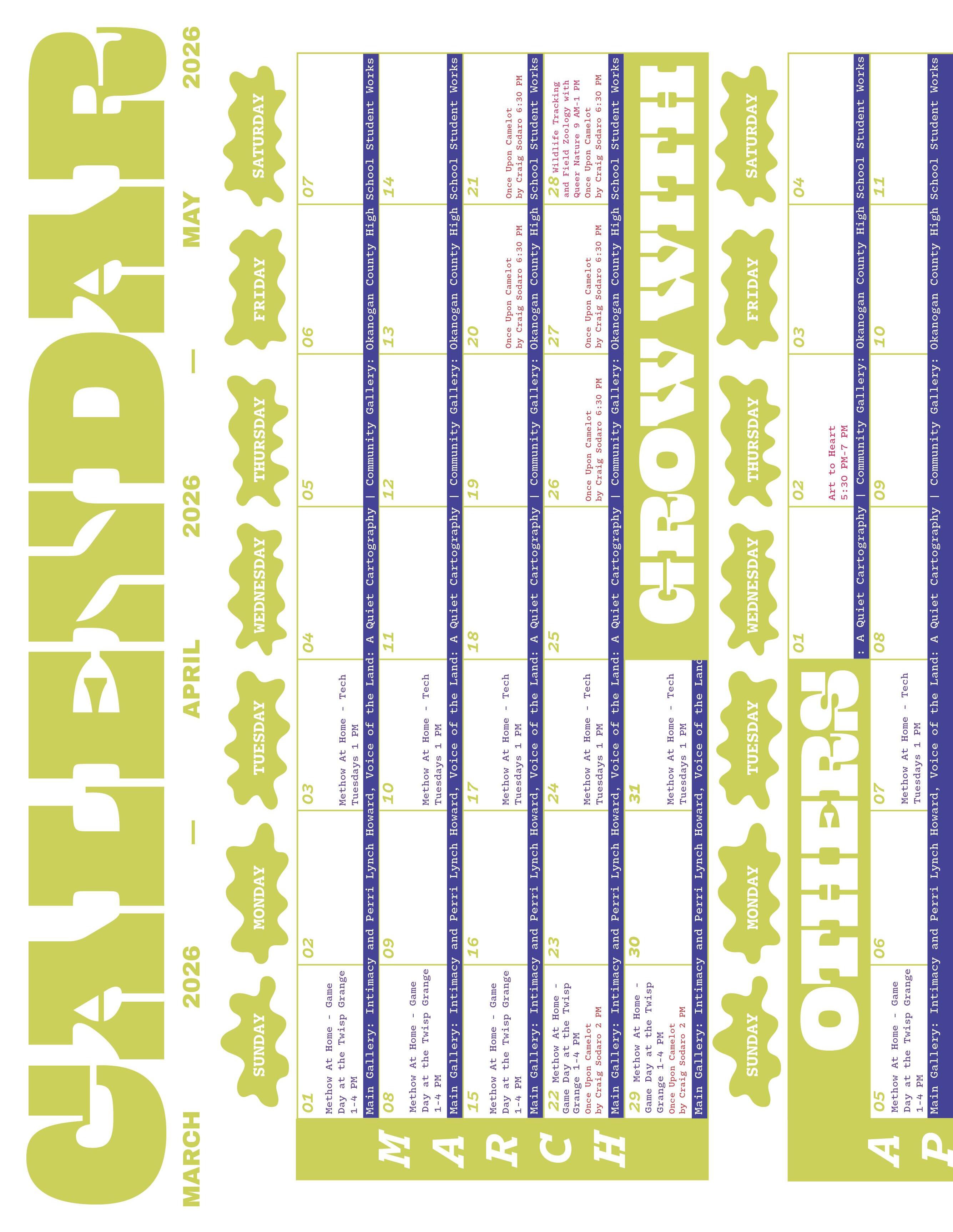
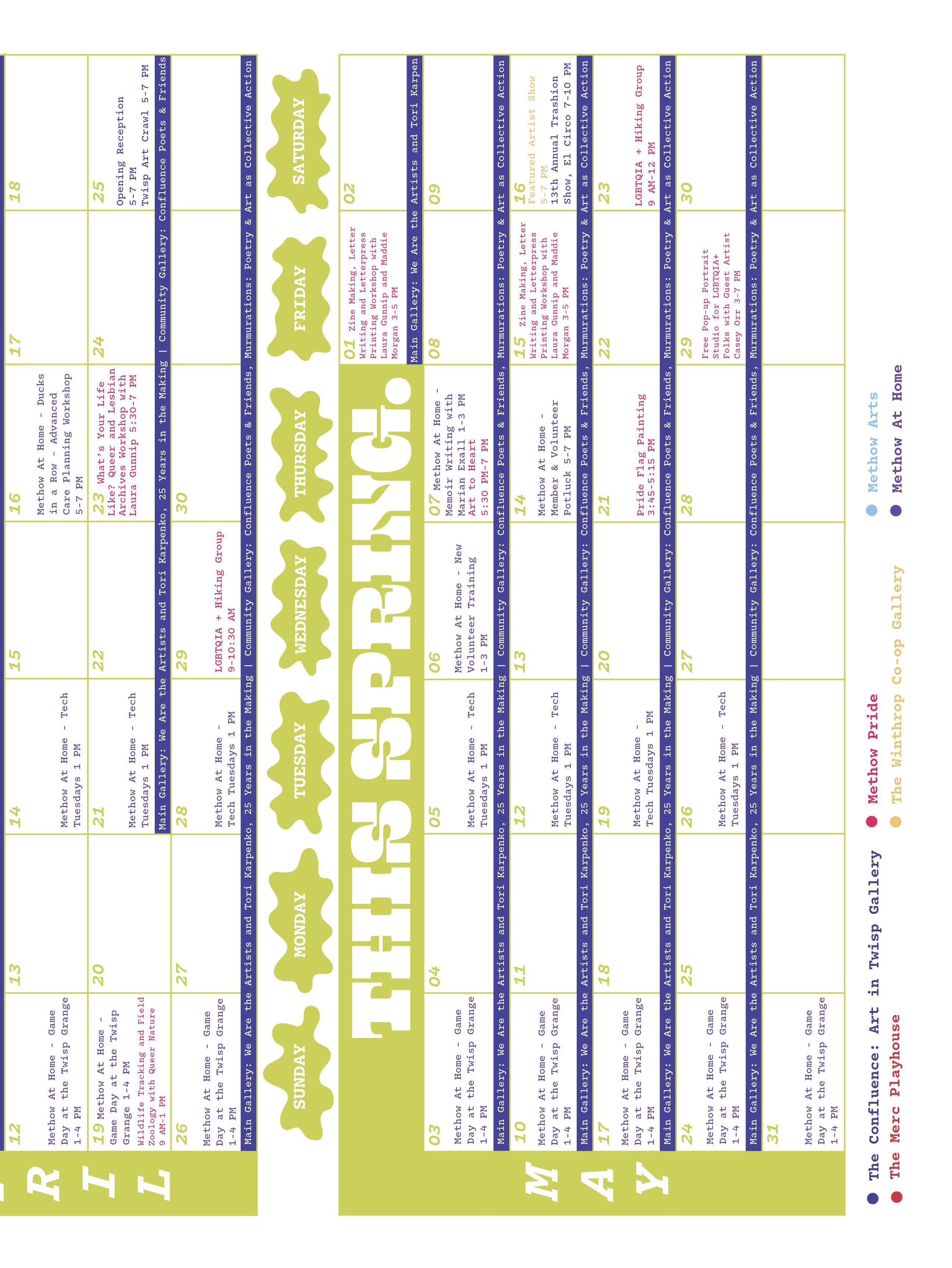
MARCH EVENTS
INTIMACY
Main Gallery: February 24 - April 11
Curators: Marcy Stamper and Robin Doggett
Main Gallery exhibit, Intimacy, invited artists to create work that encapsulates the uniqueness and universality of intimacy—taking something inherently personal and internal and exploring how it can be shared with the greater world.
Intimacy is a term that encompasses a complex range of relationships and emotions. We have intimate relationships with our spouses, lovers, friends, and our children. Many of us feel a keen sense of intimate connection with ourselves, with an animal, or with a place that holds special significance. A sense of intimacy can be inspired by music, by a work of art, or by nature. Although intimacy is universal, it is also a highly individual experience that is—by nature—private and secret. Intimacy can describe a sense of personal space, or of nakedness and unmasking, with layers removed. And although it can feel intense or even tangible, the essence of intimacy—like with many emotions—can be hard to capture.
PERRI LYNCH HOWARD, VOICE OF THE LAND: A QUIET CARTOGRAPHY
Main Gallery: February 24 - April 11
Sound is the quiet architect of Perri Lynch Howard’s creative practice. Through deep listening, field recording, and analysis, Howard translates the invisible vibrations of a landscape into tangible form.
Voice of the Land: A Quiet Cartography captures the soundscapes that define our environment but often elude the senses. By bridging the gap between what we hear and what we see, these artworks invite you to reconnect with fragile ecosystems - near and far - through the simple, profound act of listening.
Artwork by Tabitha Bergevin-Krumme
OKANOGAN COUNTY HIGH SCHOOL STUDENT WORKS
Community Gallery: February 24 - April 11
The Confluence is proud to represent the work of emerging artists with our third annual exhibit of Okanogan County high school students.
APRIL & MAY EVENTS
WE THE ARTISTS
Main Gallery: April 21 - May 30
Opening Reception: April 25, 5-7 PM
Curators: Merry Maxwell
We the Artists features works that raise awareness through visual art that can promote change. The artwork addresses important issues of our time and gives power to the artist’s voice, providing new ways to see our world.
TORI KARPENKO, 25 YEARS IN THE MAKING
Main Gallery: April 21 - May 30
Opening Reception: April 25, 5-7 PM
Curators: Merry Maxwell
It all started with Confluence Gallery 25 years ago with a 25 year-old artist new to the scene. 25 Years in the Making is a celebration of the evolution and influences of a beautiful mountain valley on the artwork of Tori Karpenko. Viewers will experience a visual journey through a selection of paintings and sculptures including hidden gems from the early days, explorations with numerous materials, and the newest directions of his artwork. Most recently, Karpenko has worked with Traver Gallery in Seattle to host five solo shows over the last ten years. 25 years in the Making is an intentional moment of reflection at mid-life and mid-career as well as an expression of gratitude for the hometown gallery and community that has supported him along the way.
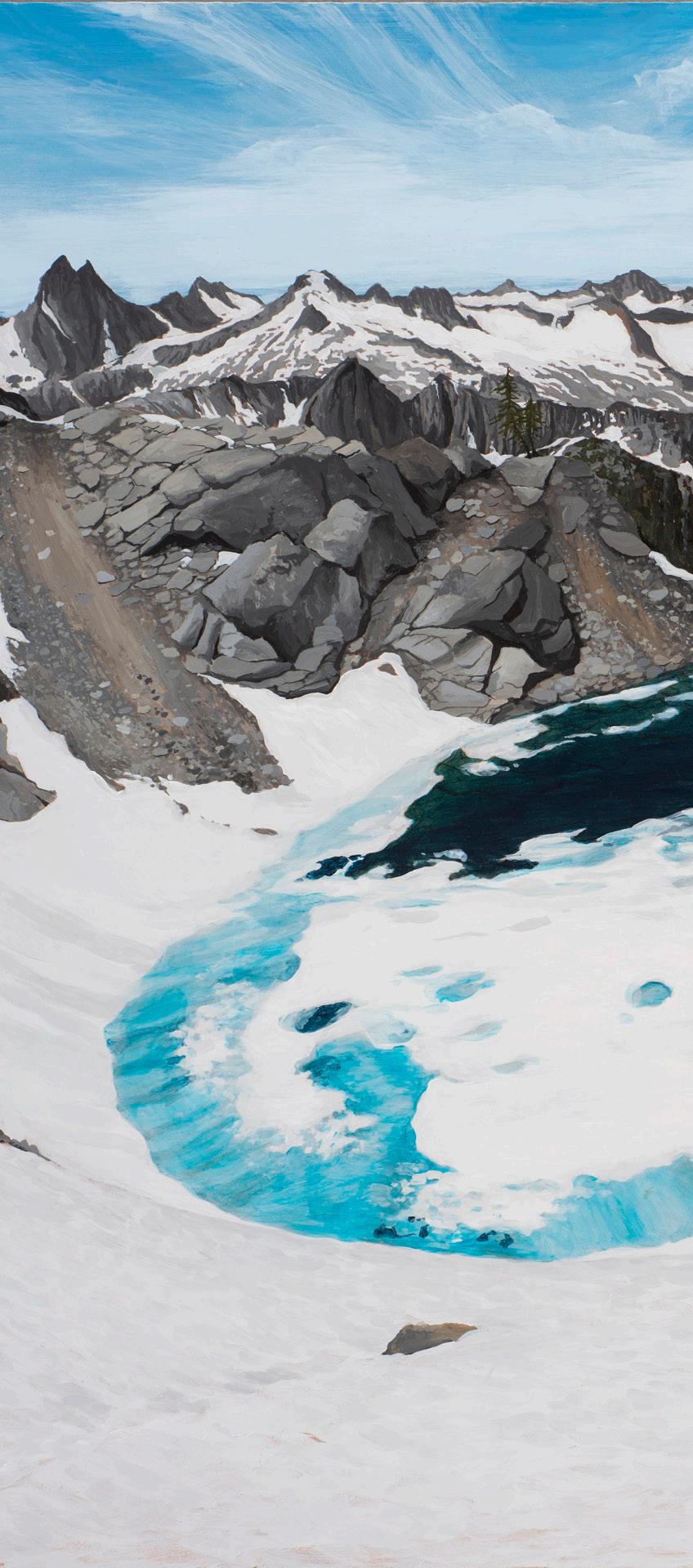
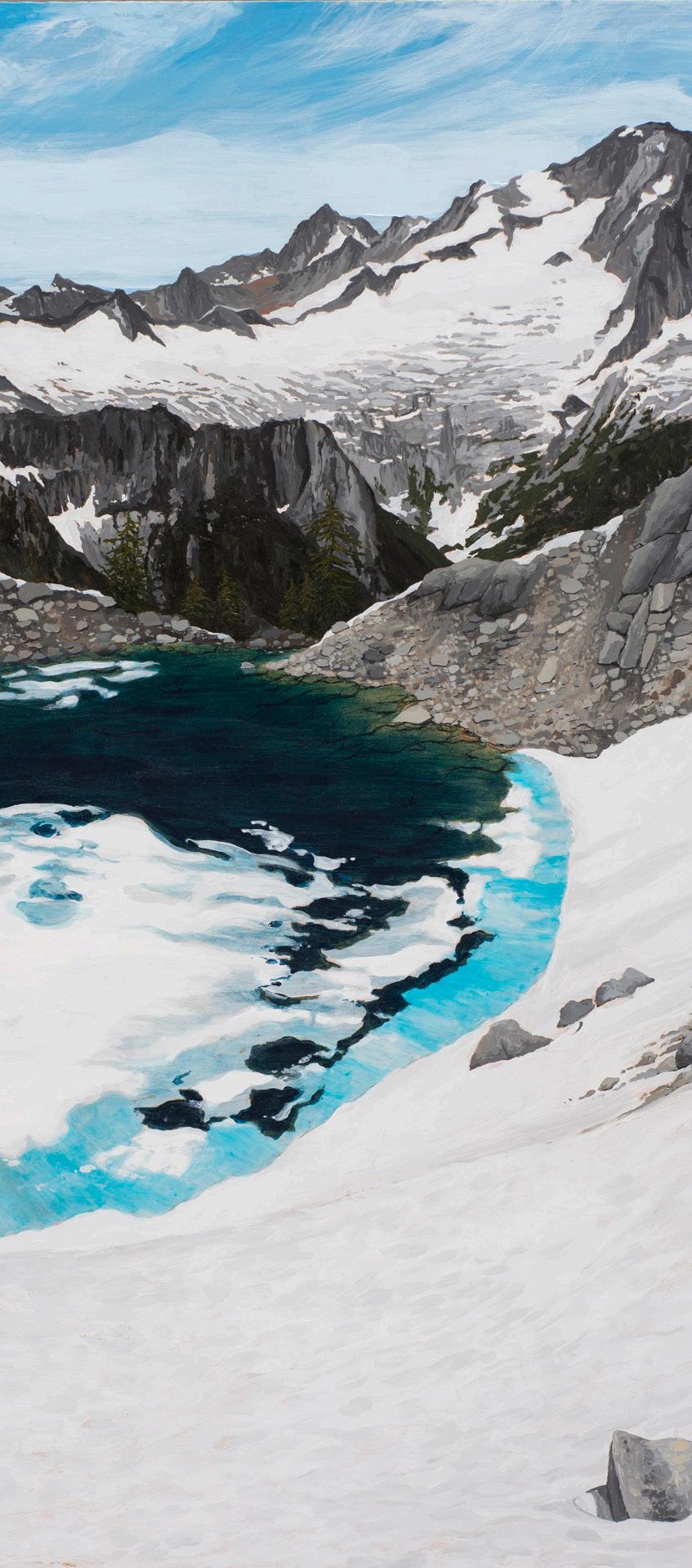
CONFLUENCE POETS AND FRIENDS, MURMURATIONS: POETRY AND ART AS COLLECTIVE ACTION
Community Gallery: April 21 - May 30
Opening Reception: April 25, 5-7 PM
Curators: Eileen “Sam” Owen and Cindy Williams Gutiérrez
As an integral part of the We the Artists exhibit, Murmurations: Poetry & Art as Collective Action raises its voice in protest and praise. This Community Gallery exhibit combines poetry with visual art to encourage collaboration, give voice to our community, and amplify one another through integrated poetic and artistic expression. Mindful that we are not alone in our experience of both the grievances and hopefulness imbuing our lives at this time, poets and visual artists co-create works that express something they care deeply about.
TWISP ART CRAWL
April 25, 5 PM - 7 PM
13TH ANNUAL TRASHION SHOW, EL CIRCO
Methow Valley Community Center: May 16, 7 PM - 10 PM, Doors open at 6 PM
VIP Tickets on sale online only starting April 1, General Admission Tickets are on sale starting April 10
By Cailee Maestro
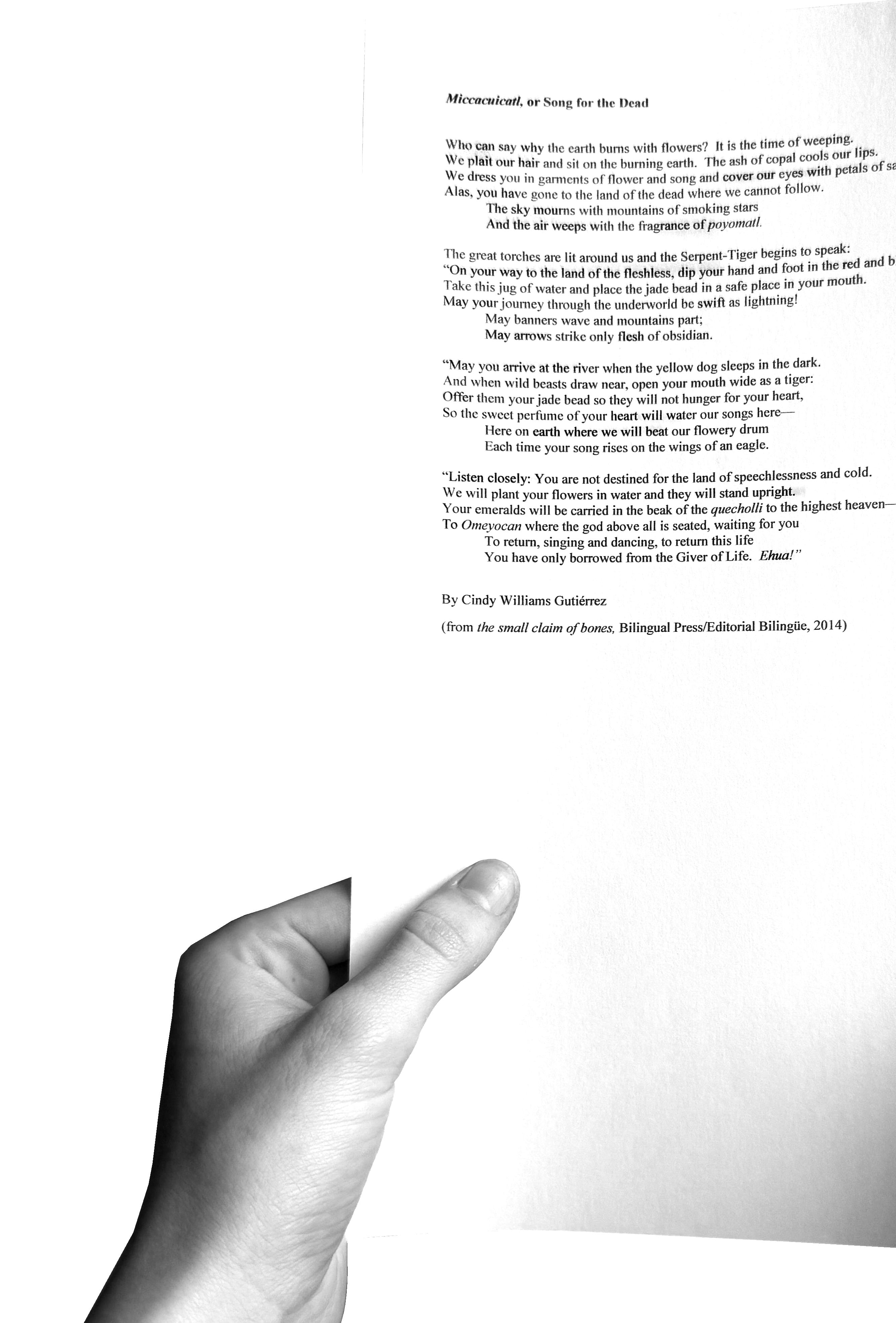
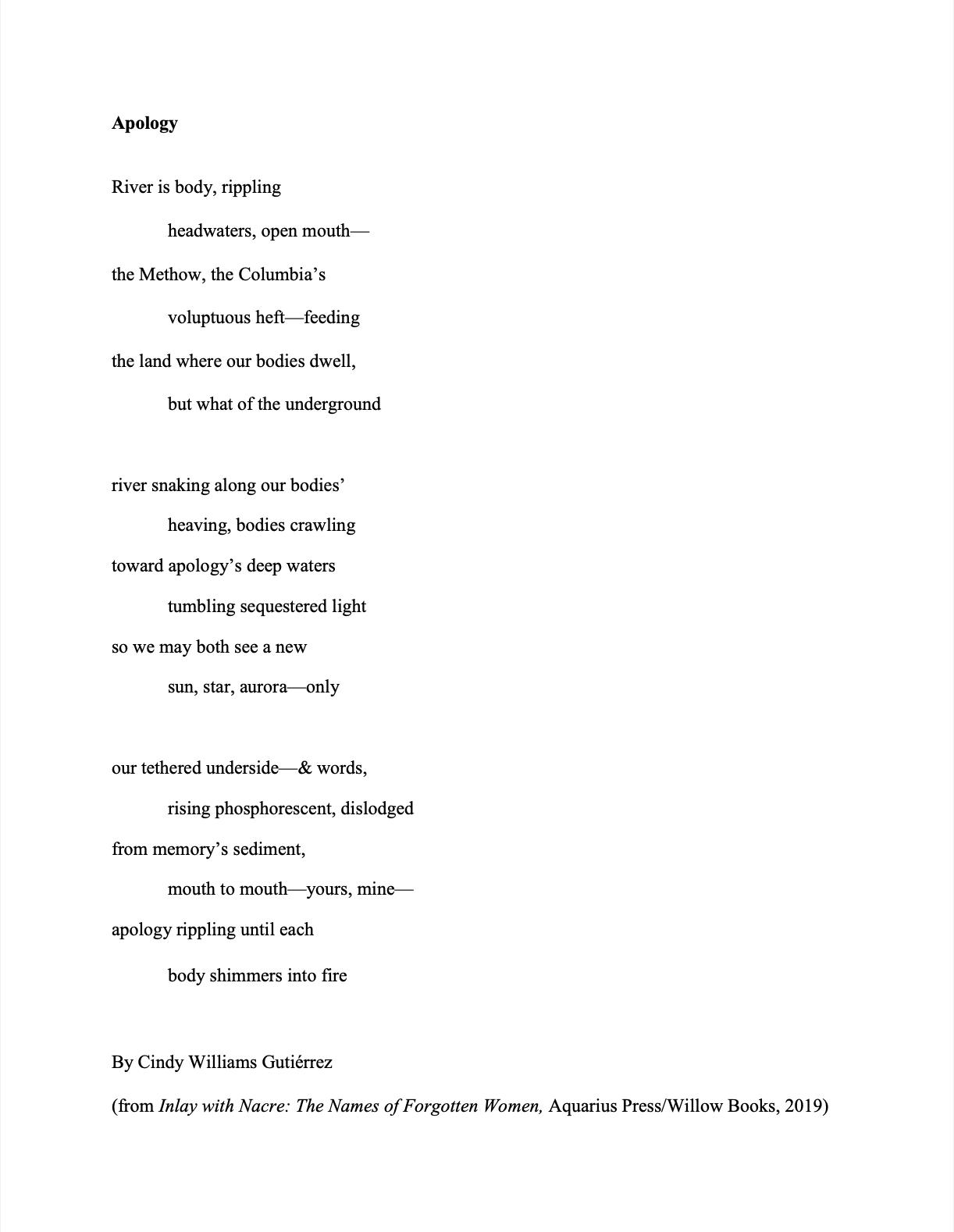
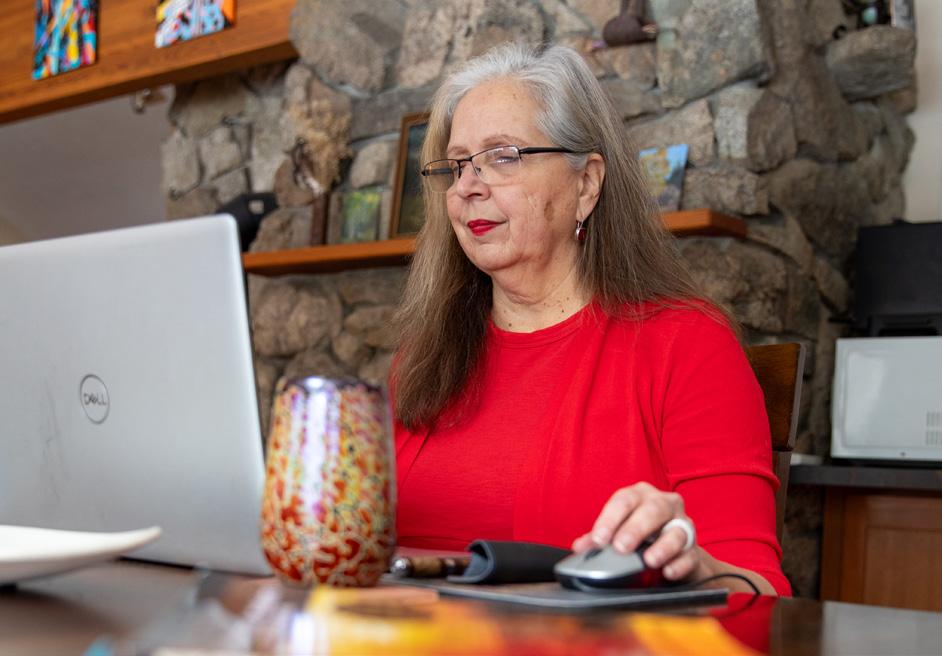
Some people write poems. Cindy Williams Gutiérrez builds worlds with them.
When I sat down with Cindy, the conversation moved the way her work moves, across borders, across languages, across histories, across the intimate terrain of family and the wide terrain of culture. Cindy was born and raised in Brownsville, Texas, on the border, in a bilingual, bicultural home shaped by a large Mexican matriarchy. And that origin story is not just a detail. It is a lens. It is a way of seeing.
Cindy’s life has never fit inside one lane. She has lived in the worlds of business, technology, education, and the arts. At one point she was a marketing executive at the fastest growing high tech company in Silicon Valley. Later, she taught poetry to students from kindergarten through high school, in English and in Spanish, in Oregon and Washington. Alongside that, she has built a
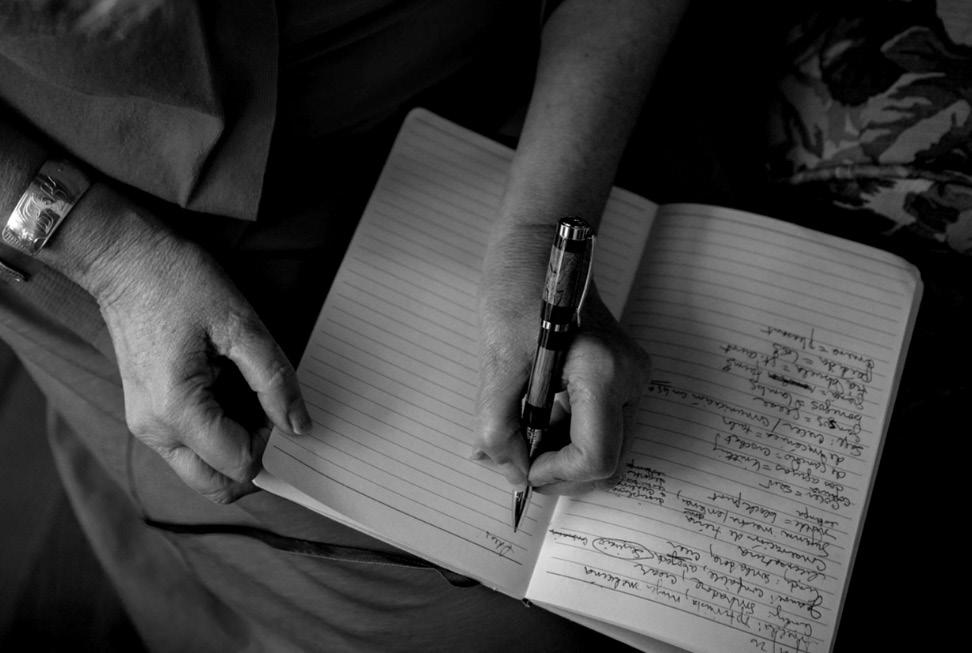
body of work that includes poetry, playwriting, producing, and teaching artistry, all rooted in a deep commitment to truth, memory, and the living oral tradition.
At Methow Arts, we celebrate art in all its forms, and Cindy’s work holds that mission with power. Her poetry asks big questions and refuses to simplify them. Her teaching treats a young person’s voice like something sacred. And her presence in community is not performative. It is an offering.
As Cindy puts it, poetry is not just written. It is lived. It is word on breath.
Cailee: Can you tell me about where you come from and the places that shaped you early on, not just geographically, but emotionally and culturally?
Cindy: I was born and raised on the border of Texas in Brownsville. I was raised in a bilingual, bicultural environment. We spoke English and Spanish. We spoke Spanish in front of my grandmother, always out of respect. I’m from a large Mexican matriarchy. We had meriendas on Sunday afternoon, and we have a lot of women in the family, las müjeres Gutiérrez.
You can leave the border, but the border never leaves you. You grow up with more than one way of looking at things. When you are from two cultures, those are two worldviews, and when they’re living within you, sometimes they’re clashing. They’re conflicting with each other.
I’ve walked in and out of different walks of life, in different worlds. I was a marketing executive at the fastest growing high tech company in Silicon Valley at one time. That’s a very different world than being in education, teaching poetry to every grade from K through 12 in English, and in almost half the grades in Spanish, too. And then being an artist, writing poetry, playwriting, producing, publishing. Being a teaching artist is probably the greatest passion of all for me.
So I’m not sure it’s about a geographic place, except for the border, definitely the border. And also the worlds of business, technology, education, and the arts.
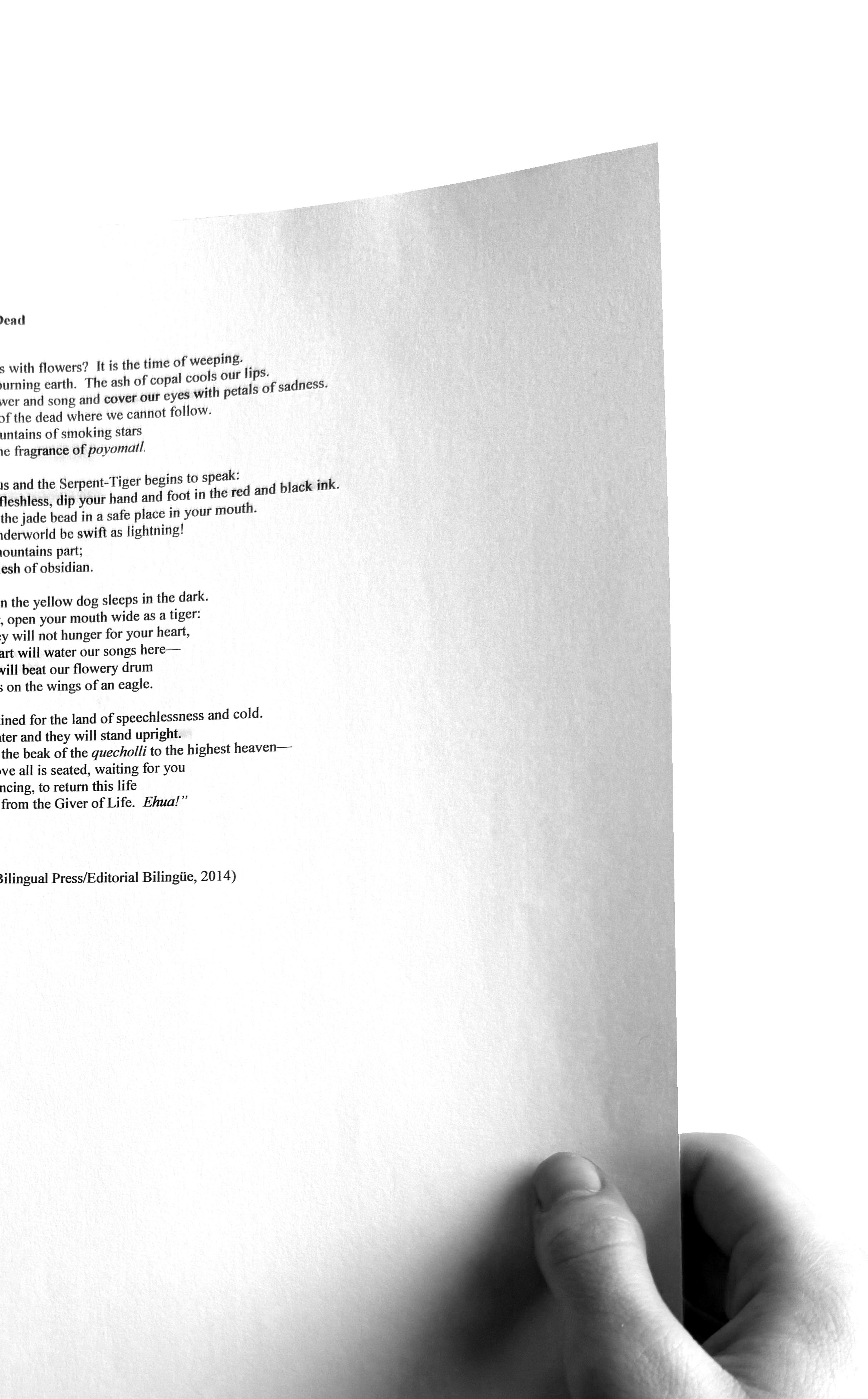
Cailee: What are your earliest memories of language and storytelling, and was poetry present in your life before you knew it was poetry?
Cindy: I grew up with both languages, and from a very young age I was a voracious reader. I remember knowing how to read before I started school. My mother must have taught me. Later in high school, I would leave my English papers for my father, and he worked shift work, so he got home late, after midnight. I would wake up the next day and there would be pages of feedback. Often synonyms. He just took the time to nurture me as a writer. That was such a gift.
I started writing poetry when I was seven, in second grade. I went to a Catholic school from K through 12, and I found religious study very dogmatic. It was all about rote memorization. I would get a little bored with the assignments, and I started writing them in verse. That was actually the beginning. I would write my religious homework in verse.
Then that led to writing poems for teachers, to honor people, to honor occasions. In fifth grade, a friend and I started the school newspaper. And later I was on the newspaper staff in high school. I wanted a poetry corner. I wanted poetry to be in the newspaper.
I’m not sure I was reading a lot of poetry as a child, but I grew up with music, Mexican music. My father had friends across the border who were musicians. They would come by the house, pile out of the cars with their instruments, sit in our living room, and serenade us. When I first became serious about poetry as an adult, I was told my poetry was musical, and I think there’s a connection there.
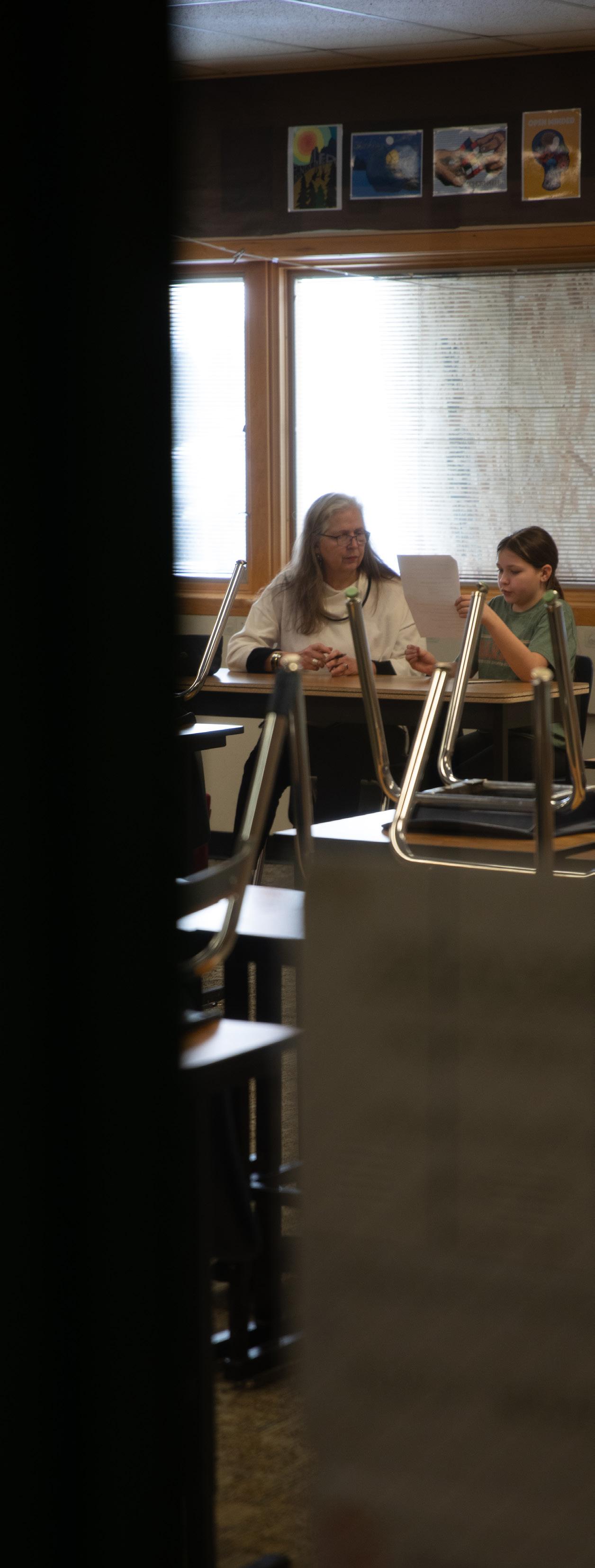
Cailee: How would you describe your poetic voice now, and how has it changed over the years?
Cindy: I’ve always been obsessed with truth, with a capital T. There’s great power in writing truth and speaking truth. It’s not always an easy or short journey to arrive there, and I’m not sure any of us ever arrive completely.
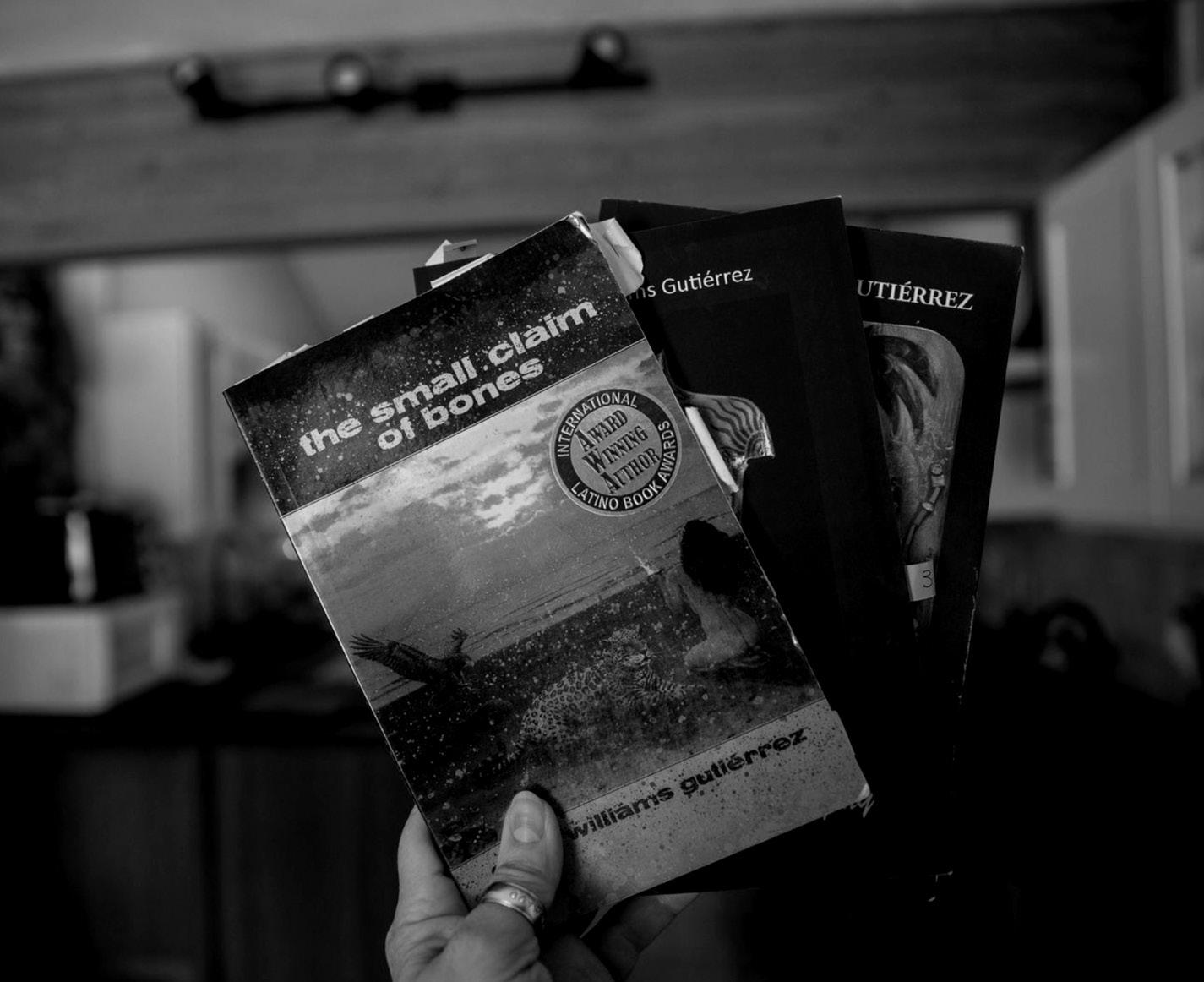
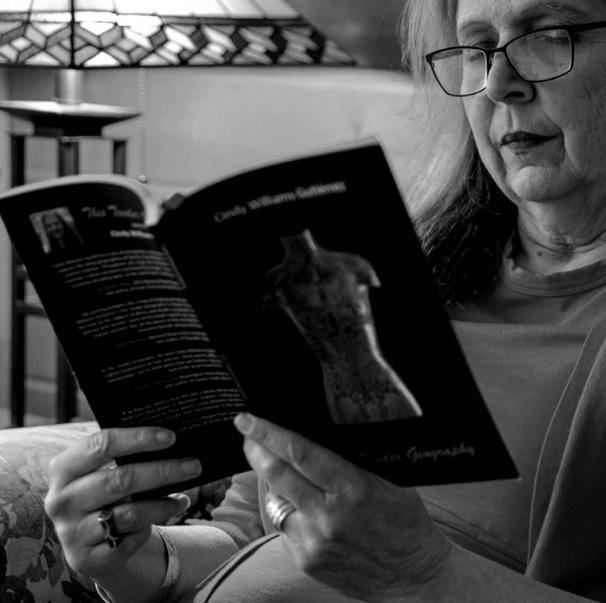
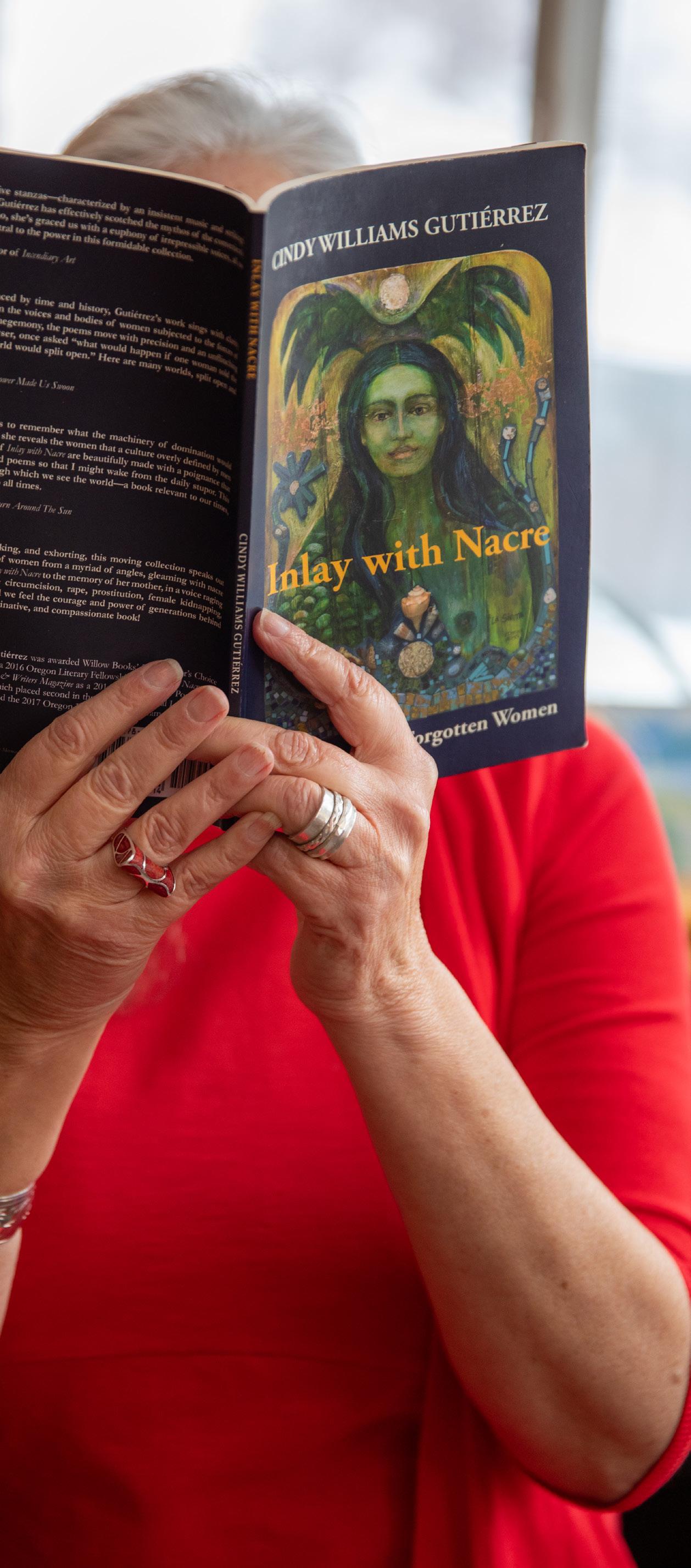
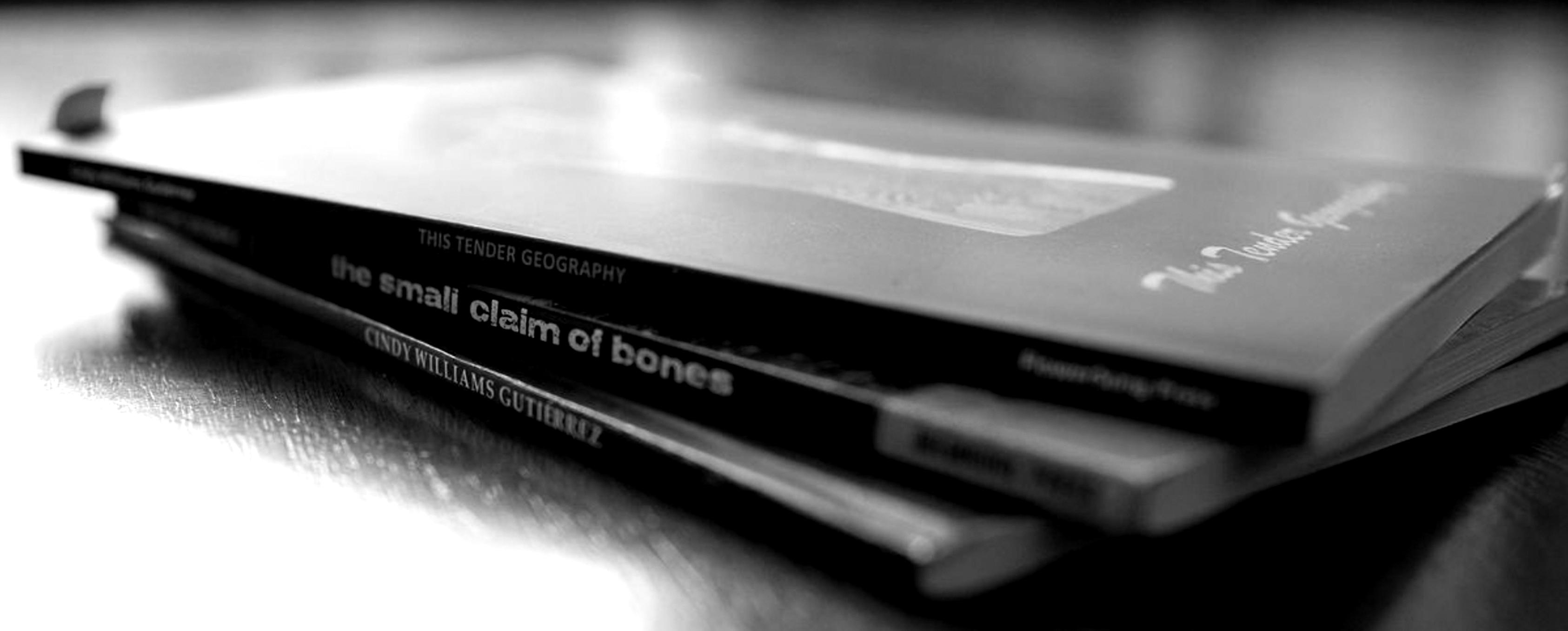
If you look at my first book, I was writing in the voices of Aztec poet-kings, and in the voice of Sor Juana Inés de la Cruz, because the book is an allegory for Mexico’s history, the Mesoamerican part and the colonial part. Juxtaposed with that is my own heritage. I’m writing poems about my father, to my father, who was born and raised in Mexico, and about and to my mother and my whole Mexican matriarchy that traces its roots to Spain.
My work is deeply informed by history and by culture. In my MFA, I realized I had a cultural lens and a feminist lens, and now I would say it’s a tripod, which includes a political lens. Or maybe the cultural and feminist lenses are political and the third lens is personal. This matches up with the evolution of my three books and of my artist statement which says, I am inspired by the silent and silenced voices of history, herstory and my own story.
In the second book, I wrote about the global oppression of women in 20 countries around the world, and poems to my mother. So again, the political and the personal.
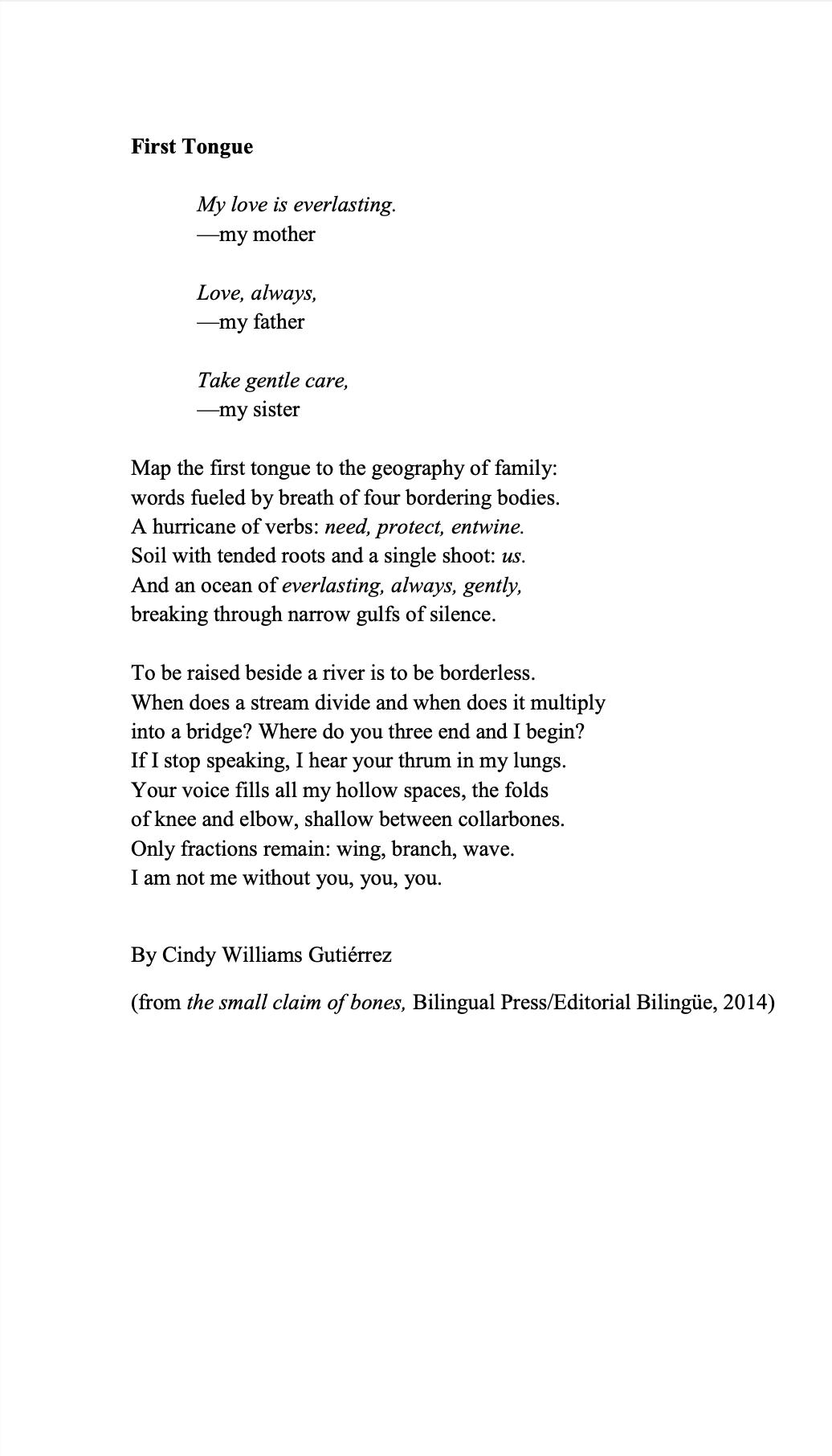
In the third one, the poems are much more personal. It took time to get there, to write about family, mortality, forgiveness, as I age, as I have lost my parents. I hope my voice continues to arc toward deeper human truth. In my next manuscript, I’m writing directly to human emotions and qualities, fear and rage and rapture, all of these things. Except for one which wrote directly to me, spoke directly to me: vulnerability.
“I would not trade anything in the world for the experience of teaching youth. Nothing. I am so inspired by them. I’m humbled by their ability to write truth, by their imaginations, the limitlessness of their imaginations.”
Cailee: When you write about Indigenous history, trauma, and resilience, how do you navigate that in a way that feels honest but not extractive? What boundaries matter most to you?
Cindy: For my first book, I immersed myself in the culture and the cosmos of the Nahuas, the Aztecs. I read books by anthropologists, British, American, Mexican. One thing that stayed with me was Irene Nicholson’s Firefly in the Night written in the ‘50’s, her claim that Europeans looked at Mesoamerican people through the lens of brutality. I also read the extant poems themselves. They were part of an oral tradition, but they were captured in writing because Spanish friars asked the elders to pass them on. Based on what I understood of the cosmos and the culture and the history, I began to write poems in the voices of Aztec poet-kings. My
first mentor in my MFA Program said, You’re not a historian, you’re not an anthropologist, you’re a poet, so let yourself take flight.
I wanted to honor the way the Nahuas create metaphor, joining two concrete nouns to evoke a third, larger, more abstract idea. Poetry is “flower and song,” floricanto in Spanish, in xochitl, in cuicatl in Nahuatl. I used those metaphors in my poems, sometimes in the original language, out of respect for this language-making rooted in the natural world. I created a glossary of all the metaphors I came across in my study—it’s pages and pages long.
And another mentor in my MFA Program advised me to collaborate with a musician to perform my Aztec-inspired poems with music. That’s when I met my dear friend, musician Gerardo Calderón. We collaborated for 17 years: he accompanied
my poems on clay flutes, wind whistle, jaguar and eagle whistles, water drum, turtle shell, rain stick and other replicas of Aztec instruments . We performed “The Poetry & Music of Ancient Mexico” at Northwest colleges, museums, theatres, libraries and senior centers, as part of Humanities Washington’s Inquiring MInd series and of literary and cultural programs in Oregon. When I first met Gerardo, he asked me why I wanted to do this. What went through my mind was that this is a culture of the Americas that is not well known north of the border, a culture that believed that poetry was the way to a pure heart, an “emerald” heart. So I said, I want to contribute to preserving this beauty. And he said, Let’s do it.
In my second book, sometimes I used forms that were particular to a culture, but only for the poem about the women’s story in that culture, and not for anything else. When I adapted this work into a play, what I call a “choreopoem,” I hired eight cultural consultants to ensure we were true to the cultural authenticity of movement, music, dialect, costume. We only cast women who identified with the heritage of the character. And even though we had a Costume Designer for the production, I hired the First Nations Cultural Consultant to make the Haida button robe. She worked under the guidance of a Haida elder and as she sewed each button, she imbued it with a prayer. There was so much in-
tention. Very deep intention. And with students, a boundary I respect is tenderness. Some poems are deeply personal, and as dedicated as I am to the oral tradition, I would not ask a student to share a poem that is too tender.
Cailee: What gave you the inspiration to turn your writing into plays?
Cindy: I adore theater because I am committed to the oral tradition. That’s how it started. In the Aztec world, there is no separation between poetry, dance, and music. It’s all one thing. It’s ceremony. It’s memory.
As a kid, I directed my first play in my neighborhood when I was in fifth grade, and then at
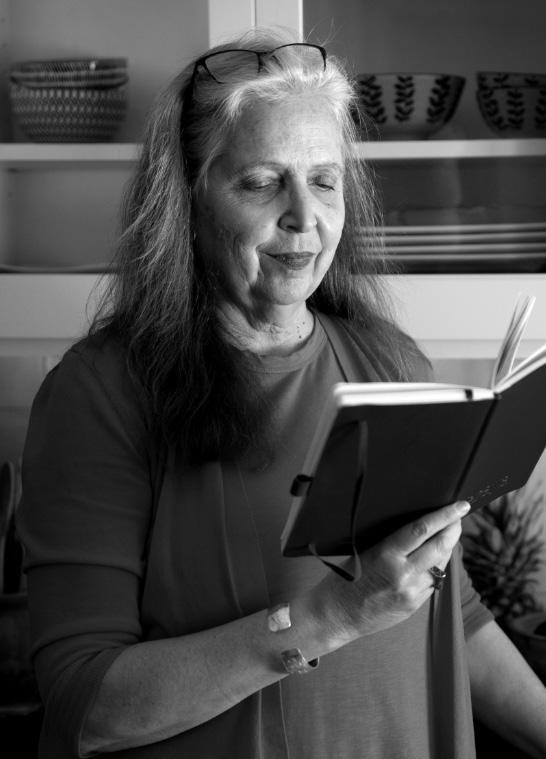
school in seventh grade. I was on stage through high school, but I thought I had to do something pragmatic in college, so I left it.
Over the years I realized for me it’s all one thing. My poetry is always in my plays, either they are poetry, or poetry is a character. The Greeks did it. Bringing theater arts and poetry together is a big part of my voice.


tions, the limitlessness of their imaginations. I really like to have students stand up and read their words at the end of a residency, because of my passion for the oral tradition, but more importantly because then they claim their words. I feel like teaching poetry is a subversive act, because I’m using poetry as a vehicle to instill self-esteem and confidence in the young person’s voice. The more they can listen to their own voice, make sense of it on paper, and then stand up for it, that stays with them forever. It goes way beyond the poem.
A few years ago, I started meeting with each student individually for at least 20 minutes. And it changed everything. Revision is one of the most difficult things, and instead of writing my feedback and having them read it, we’re enacting it, together. Often the poem needs more imagery, okay, what does this sound like, look like, smell like, we’re doing it right there.
And at the end, I always say to each student, “I’m proud of you.”
Cailee: What feels most meaningful to you right now when you look back at your body of work?
A lot of my poems are persona poems. You have to be a playwright to write a persona poem. You’re writing in somebody else’s voice. You have to find a way to enter that. It takes research, humility, courage, truth.
Cailee: You’ve given back so much through teaching, mentoring, and community work. What does giving back actually mean to you?
Cindy: Being engaged. Participating. Offering. Making an offering. We all have gifts. To whom do we want to offer them? How do we want to offer them?
I thought I wanted to get a PhD and teach at the university level. I would not trade anything in the world for the experience of teaching youth. Nothing. I am so inspired by them. I’m humbled by their ability to write truth, by their imagina-
Cindy: One of the highlights of my artistic life was working with those eight cultural consultants. Immigrants, people from different countries, different cultures, members of our community. I interviewed everyone involved with the production. There were 30 people in all. We had consultants saying: I felt very honored. The collaboration was beautiful. It was powerful for me. I appreciated this communion to bring something alive. This co-creation was one of the highlights of my life.
We had the production professionally recorded with four cameras in Portland. I have screened it in Vermont and Maine and New York and Pennsylvania and here. We screened it last year for International Women’s Day at the Barnyard. It was sold out, and all the proceeds were donated to FYRE, Foundation for Youth Resiliency and Engagement, in Omak.
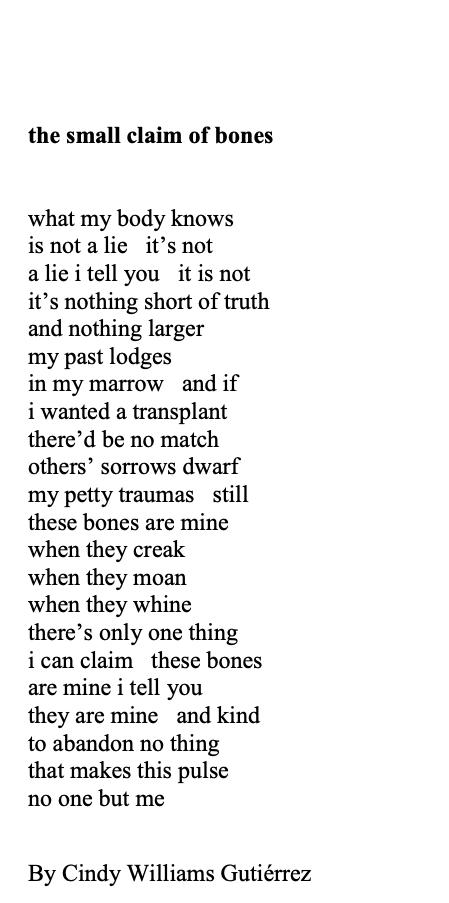
I would love to keep taking this to other cities and communities. It’s challenging unless you have a local champion, but I would love to keep getting this work out into the world. My intention is for this work to do work in the world.
Cailee: What themes keep returning in your work, even when you’re not consciously writing toward them?
Cindy: One person who keeps coming back is Sor Juana de la Cruz. She was the first feminist of the Americas. She had a brilliant mind. She studied the classics, wrote incredible poetry. She became a nun so she could have a cell of her own, 250 years before Virginia Woolf talked about a room of her own.
The Bishop of Puebla broke her spirit. She recanted. She had to give away most of her work and stop writing. She died at 47, tending the sick. We lost so much. She doesn’t let go of me. I wrote about her in my first book, and she came back in the second book. She’s a force in two of my plays.
The other thing is language. Code-switching. Spanish and Nahuatl in my first book. These other ways of looking at the world, of shaping the world into words. And now Greek thought has entered my poems, too. I met with a dear friend, Bill Hottell, for seven years to study ancient Greek. I was reading passages of The Odyssey in Greek and studying Greek mythology. Greek mythology and
thought entered the third book, and they are very present in the new manuscript.
There are Chinese proverbs, Taoist thought, Jewish thought in this new book. It interests me enormously. Less historical and more philosophical. I don’t know if I can wear that mantle, but I might be edging toward it.
Cailee: How would you like your writing to be remembered, and you as a person within your community?
Cindy: I would love for poetry to be remembered as word on breath. The Aztecs refer to prayer as word and breath, and I find myself defining poetry as word on breath.
I do feel poetry comes alive when it is spoken aloud with our breath, to people who are breathing there with us in the same space. I collaborate with musicians and other artists. We’re all experiencing this in our bodies and our hearts together. I would love to be remembered for contributing to that, for creating those moments in community. There’s a Hebrew word, hineni, that I love, which means, I am here. If I could be remembered, that I am here. I was present. I offered my gift. And oftentimes shared it with others, offering their gifts as well.
As our conversation came to a close, what lingered wasn’t just the scope of Cindy’s work, but the way she inhabits it. There is no separation between the poet and the teacher, the playwright and the cultural witness, the woman shaped by the border and the woman shaping language for the next generation. Every thread loops back to presence.
Cindy speaks often about poetry as an oral tradition, something meant to live in the body, to move through air, to land in the hearts of others in real time. It makes sense then that so much of her work exists in collaboration, on stages, in classrooms, in community spaces where story is not performed at people, but shared among them.
In a time where disconnection can feel loud, Cindy’s practice feels like a return. A return to listening. To memory. To human truth in all its complexity. Whether she is guiding a student to stand and claim their words, resurrecting silenced histories through verse, or weaving poetry with music and movement, her work insists on one thing above all: that voice matters. That presence matters. That breath matters.
And if there is a legacy threaded through all she creates, it may be the simple but profound offering she named herself. Not a monument. Not a title. But a declaration.
I am here.
Present in word. Present in community. Present in the ongoing act of turning memory into language and language into connection.
Through poetry spoken aloud and stories carried forward, Cindy Williams Gutiérrez reminds us that art is not only something we make. It is something we share. Something we embody. Something we breathe into the world, together.
Rythm and Blues
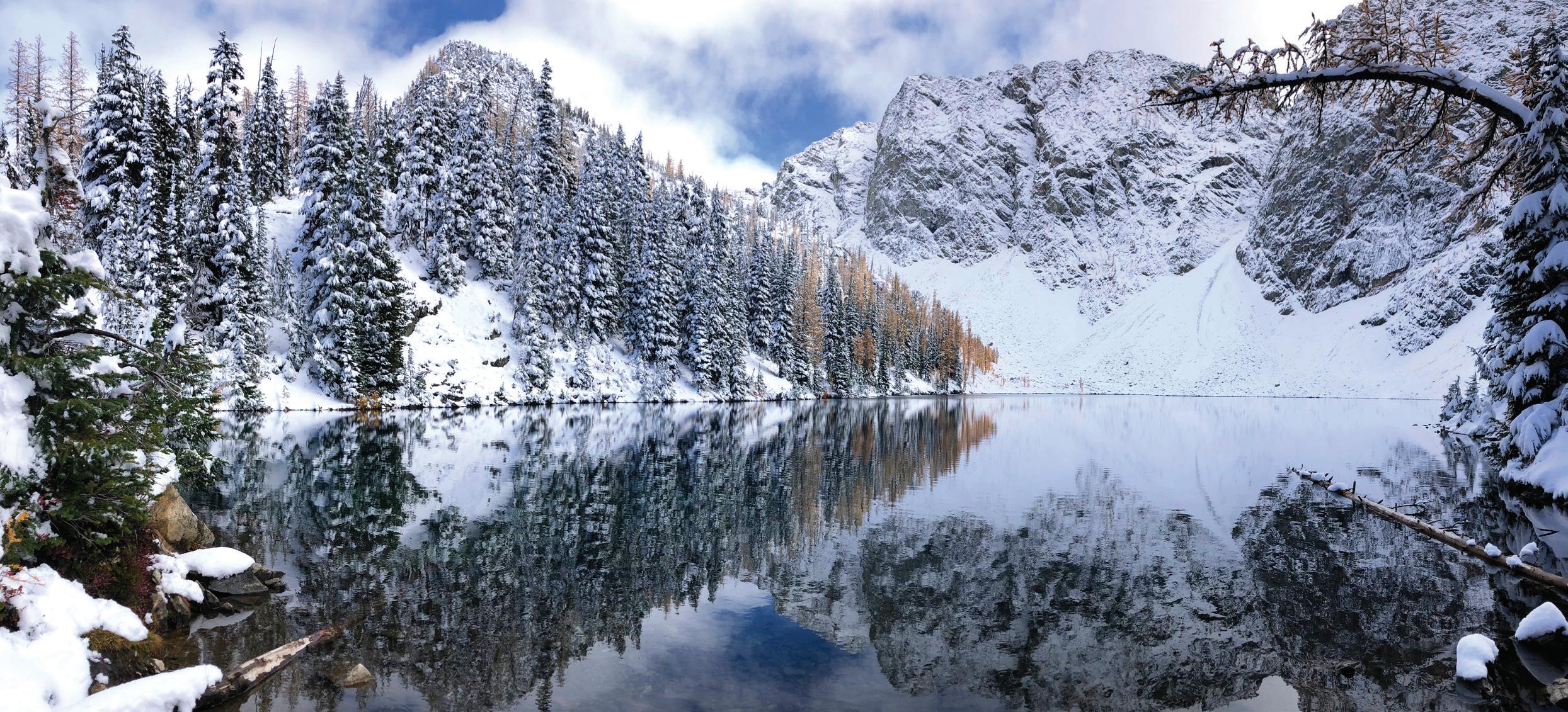
The Winthrop Rhythm & Blues Festival is a three-day event — located at the Blues Ranch on the Methow River in the resort town of Winthrop, Washington — packed full of exciting national and regional entertainment for all ages. There’s on-site camping, food and craft vendors, portable showers, a beer garden, and easy access to the river for recreation and cooling, which all help make the Blues Ranch the perfect setting for Washington’s “best little festival.”
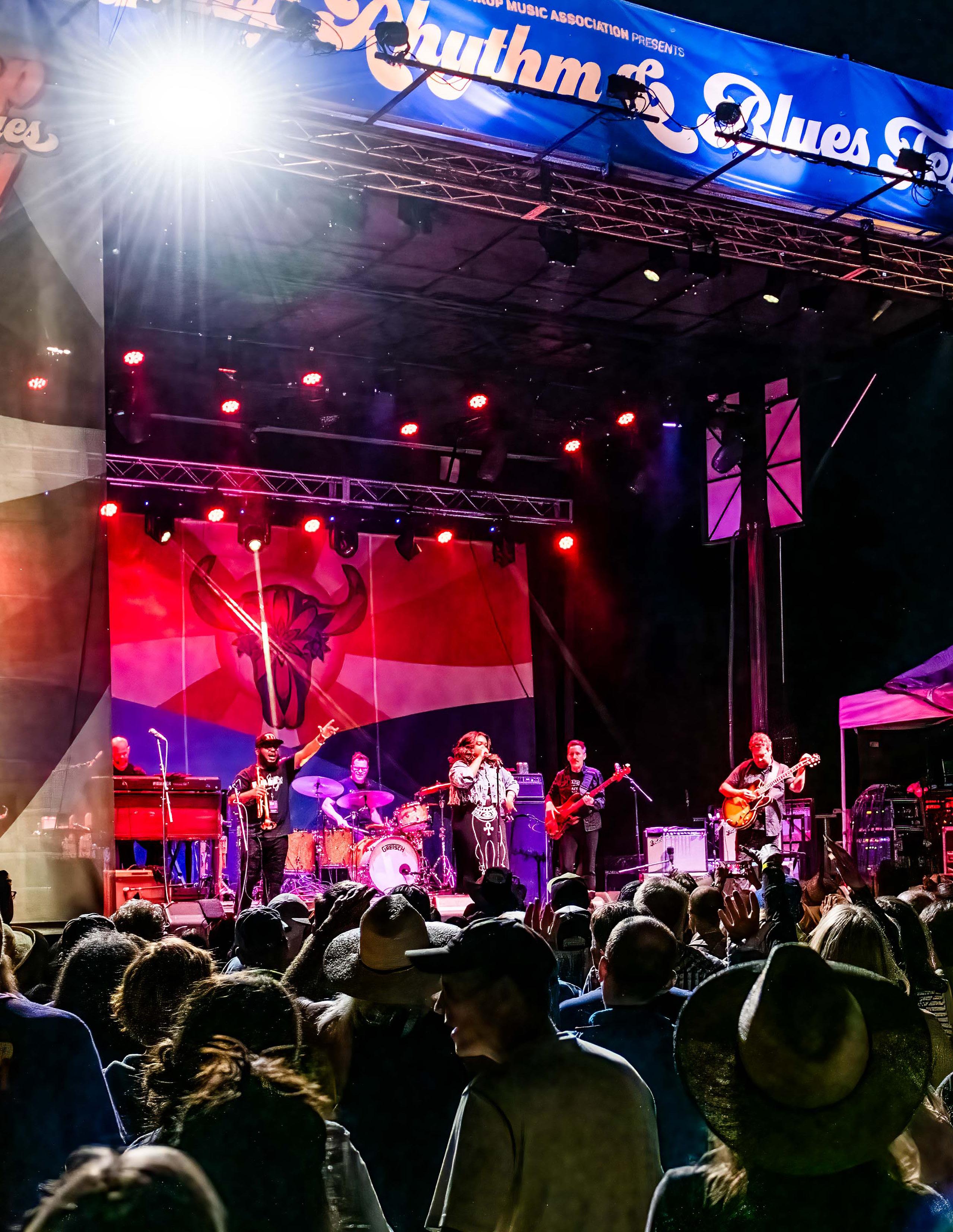
by
Photo
Steve Mitchell
WINTHROP RHYTHM AND BLUES FESTIVAL ANNOUNCES 2026 LINEUP
By Erika Olsen
Winthrop Rhythm & Blues Festival Announces 2026 Lineup Led by The California Honeydrops July 17–19, 2026 | Winthrop, Washington
The Winthrop Rhythm & Blues Festival is proud to announce its preliminary lineup for the 39th annual celebration, returning July 17–19, 2026, to the Methow Valley. Headlined by The California Honeydrops, the 2026 lineup brings together a dynamic mix of soul, blues, Americana, gospel, funk, and roots music—uniting fresh voices with longtime festival favorites. Additional supporting artists will be announced in the coming months.
Known for their infectious live shows and improvisational spirit, The California Honeydrops anchor a weekend celebrating both the legacy and future of American roots music. Their genre-blending sound—steeped in soul, blues, and West Coast funk—sets the tone for a lineup defined by musical depth, joy, and connection.
Joining them is Texas swamp-funk favorite Shinyribs, Memphis soul torchbearers Southern Avenue, GRAMMY® Award–winning powerhouse Mike Farris & The Fortunate Few, multi–Blues Music Award winner and fiery Texas blues guitarist Sue Foley, New Orleans funk sensations The Rumble, and Southern soul powerhouse Bywater Call.
Rounding out the lineup are acclaimed roots artist Jeremie Albino, modern guitar hero Ariel Posen, retro-blues standout Sean McDonald, long-time festival family Too Slim & the Taildraggers, blues-rock breakout Garret T. Willie and the beloved late-night hosts Methow Juke Joint Allstars, whose legendary beer-garden jams cap each night with surprise sit-ins and unforgettable moments.
The lineup blends fresh voices with longtime festival favorites and includes the return of the
festival’s Sunday Gospel Hour, presented as Gospel Summit, led by Mike Farris and Southern Avenue, with special guest appearances by Lady A and Sean McDonald.
Celebrating nearly four decades, the Winthrop Rhythm & Blues Festival is Washington’s longest-running blues festival and one of the Northwest’s most cherished destination music celebrations. Produced by the Winthrop Music Association, a 501(c)(3) nonprofit, the festival continues its mission to build community through music while supporting local nonprofits and the Methow Valley economy.
For more information visit: www.winthropbluesfestival.com
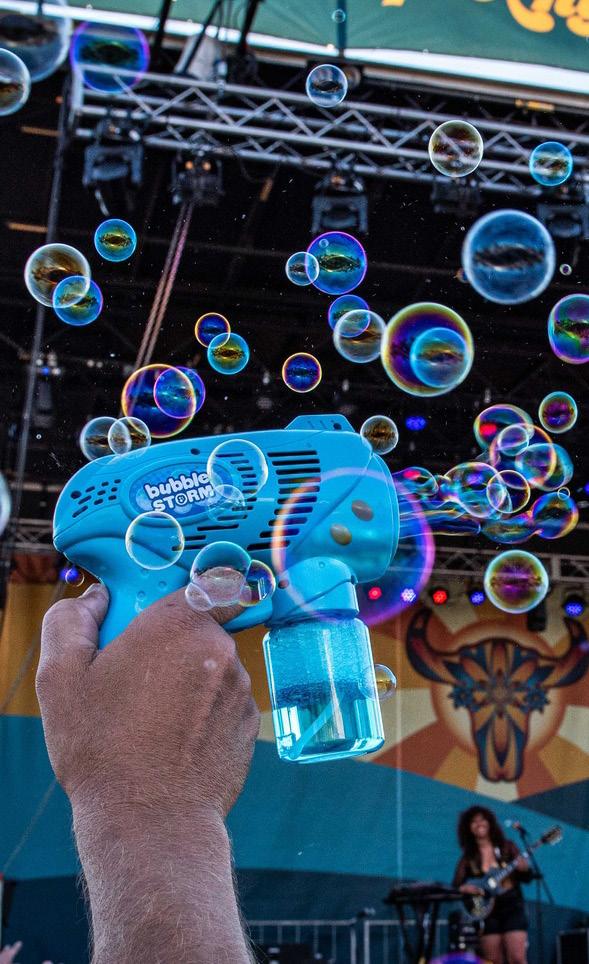
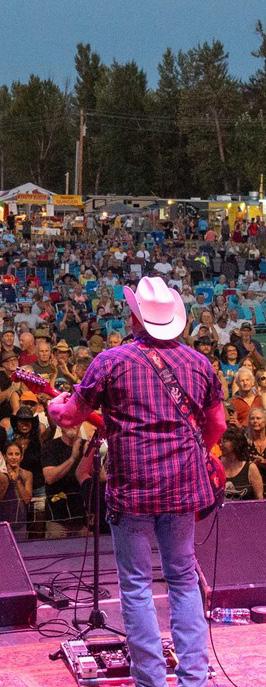
Photo by Steve Mitchell
Photo by Steve Mitchell
Methow Pride is working toward creating a rural haven where LGBTQIA+ individuals believe in their creative expression, share their voices, build thriving intergenerational relationships, and find rural belonging. We ultimately aim to keep LGBTQIA+ people present, safe, and alive in this rural and natural space.
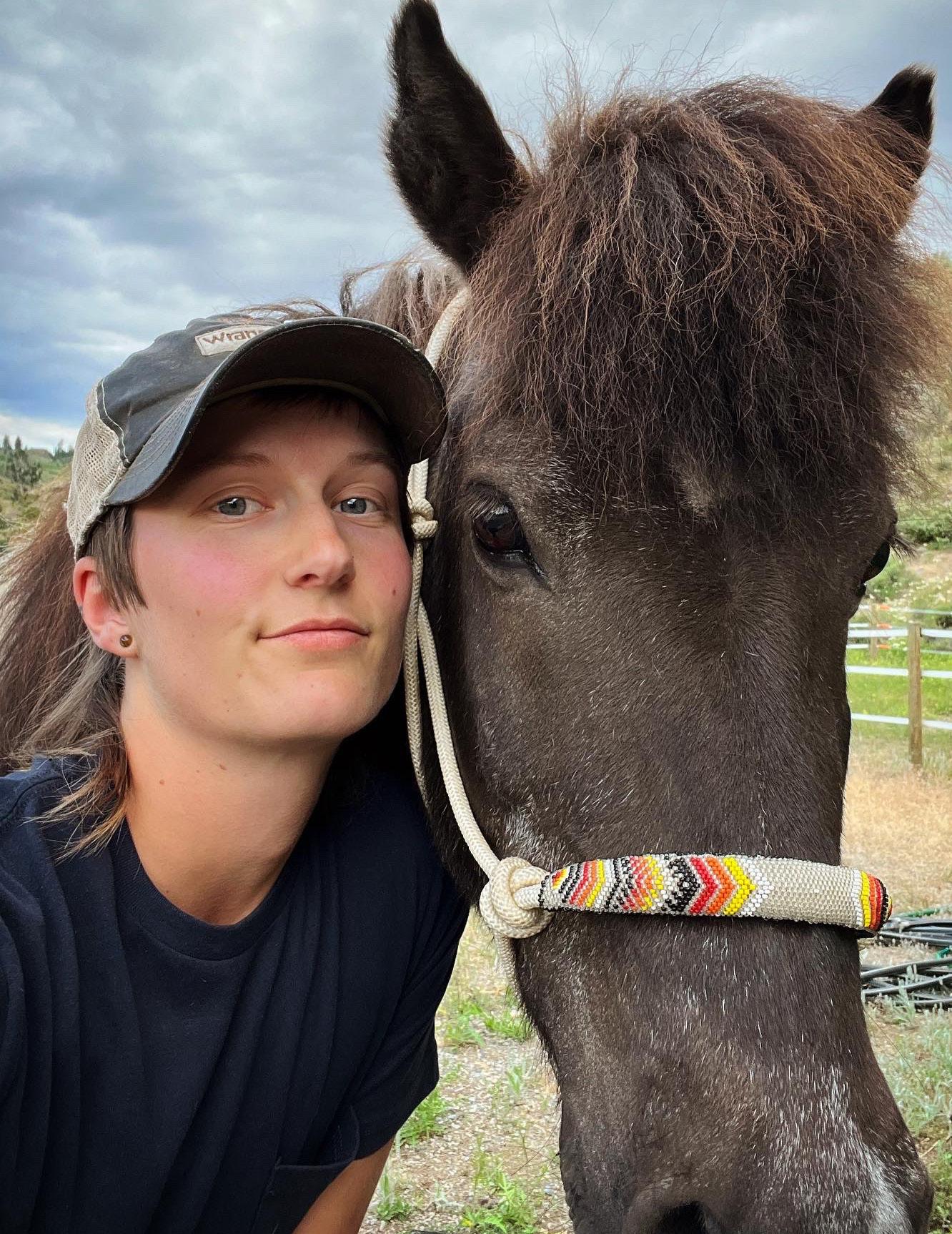
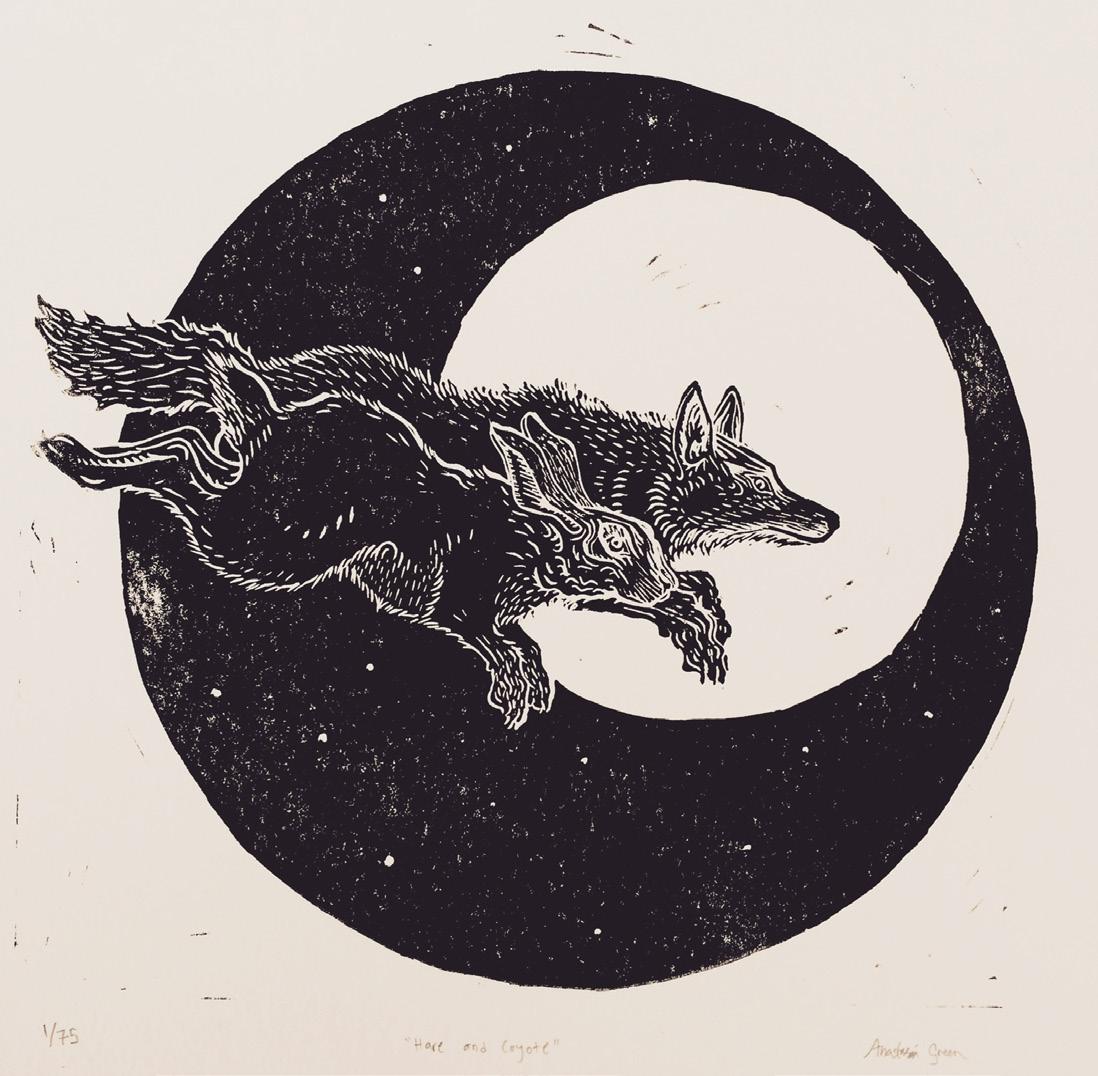
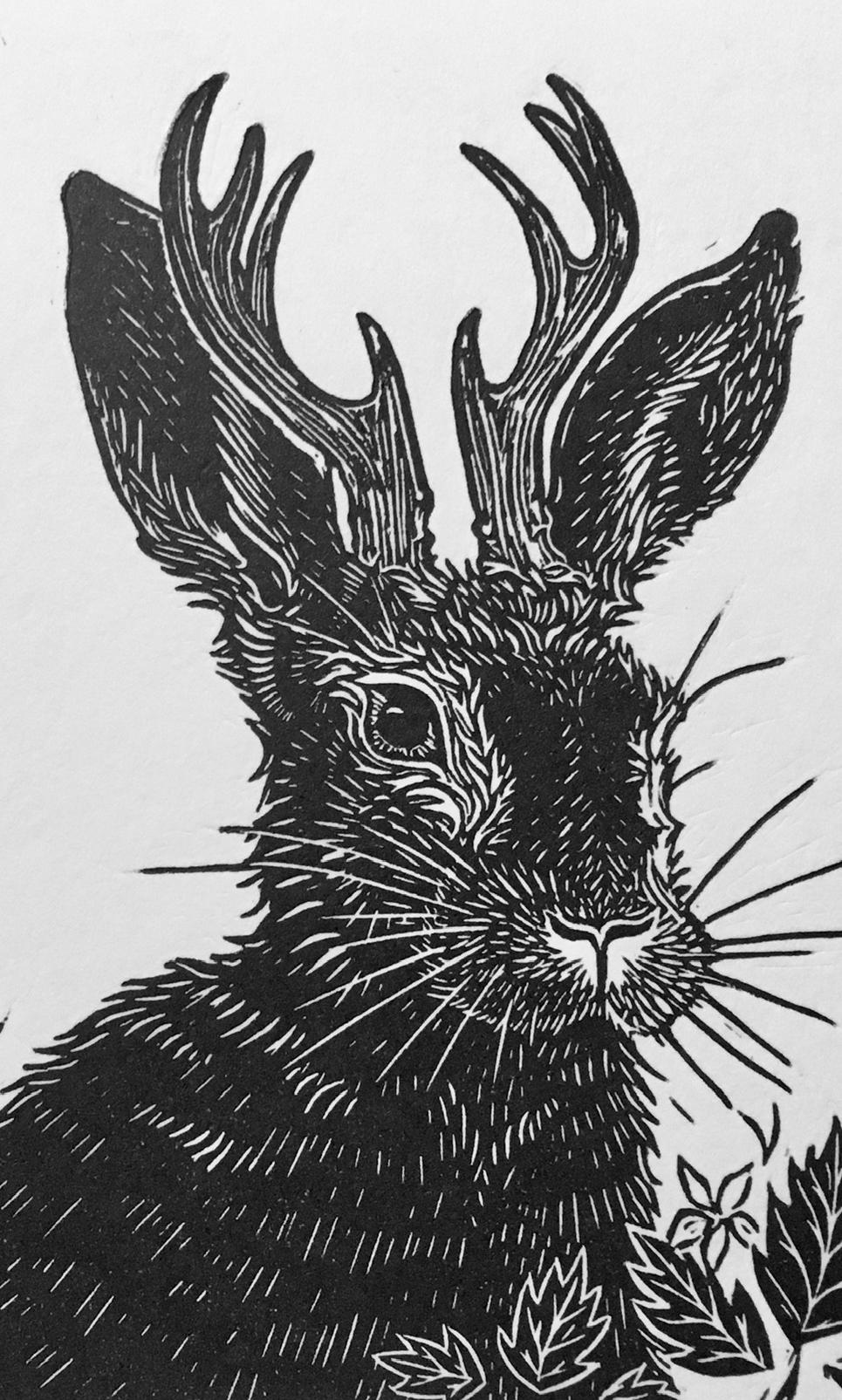
SHAPING HOOVES, CRAFTING ART: THE CREATIVE PRACTICE OF FARRIER, A. GREEN
By Methow Pride
Methow Pride: What does your role as a farrier look like?
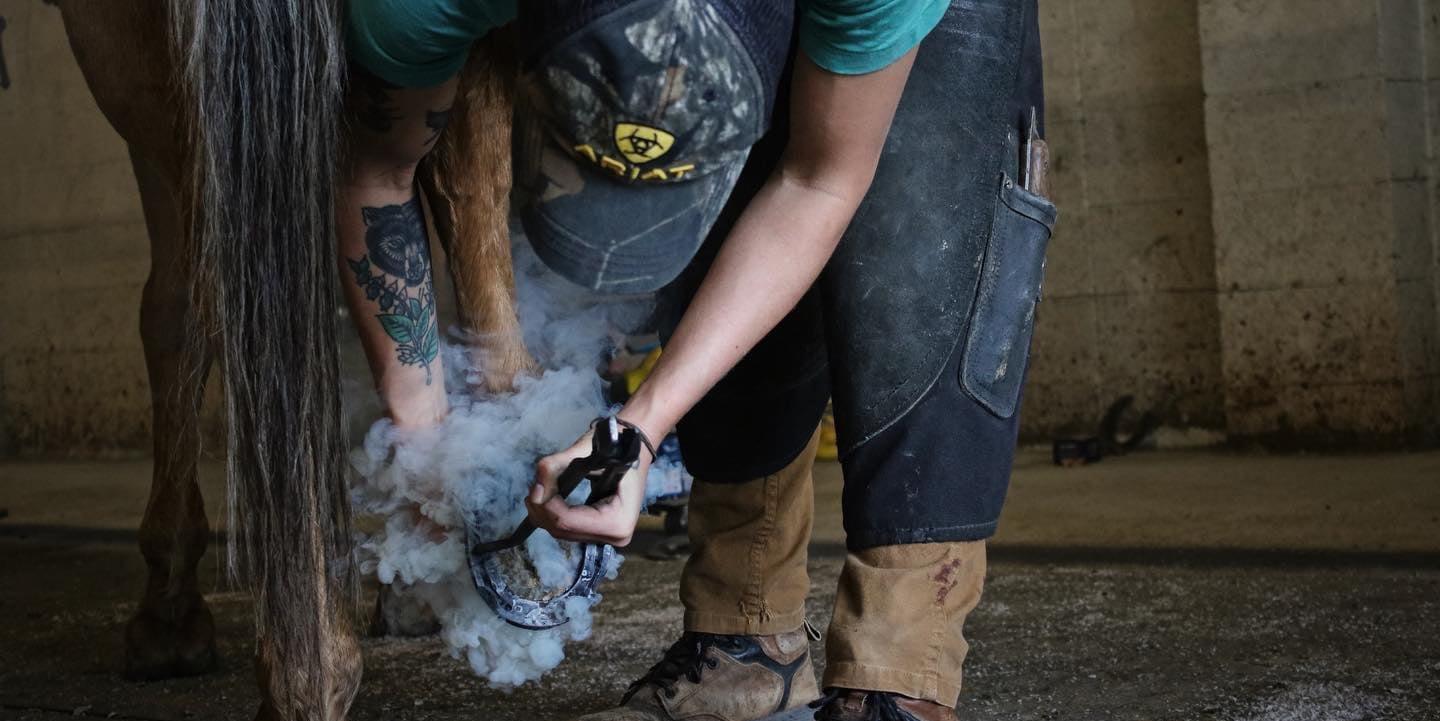
Green: Basically I help care for equine hooves— mostly horses and ponies, as well as donkeys and mules. I do a lot of barefoot trimming, and also nail on traditional steel shoes, and nail and glue on composites, which are plastic or a combination of plastic and spring steel.
MP: What inspired you to become a farrier? What has your story been with the practice?
G: In 2017 I was working at a railroad in Tacoma. I had reconnected with horses as an adult when my job allowed me to afford to take riding lessons and lease a horse. I was given a horse and bought another. Regular hoof care is an integral part of keeping equines or other hoofed animals.
I struggled with not being able to find a farrier
to trim my horses in an remote area, so I attended a weekend workshop on barefoot trimming and started doing it myself. Eventually I quit the railroad and floundered a bit trying to figure out what to do next. In 2021 during the pandemic, with a lot of support from friends and family, I spent twelve weeks in Bozeman at Montana State University’s farrier program.
The MSU program was one of the most difficult things I’ve done. The instructor had us forging handmade shoes for every horse starting the first week. My hands were shredded to pieces. The program allowed me to get under a lot of horses. I learned a lot and gained confidence.
When I completed the program, I started taking on clients and rode along with experienced farriers as often as I could. There is a pretty good culture of sharing knowledge among most farriers. I established my practice initially in The
Dalles, Oregon where I was living off-grid. After I moved to Twisp, I kept making monthly trips to work down there until just last year. I travel pretty far to meet with clients between Republic and Goldendale. I think horse owners in this area are pretty fortunate to have access to many high quality farriers, and I feel lucky to have good relationships with those other farriers.
MP: How does your professional practice relate to your creative practice?
G: There is an art to hoof care. It can be done with precise measurements and procedure, and by eye and feel. I do a little of both.
Putting shoes on a horse can feel kind of like arts and crafts to me. There’s all these steps and materials, especially for more extensive packages which can include pads, packing material, medicated clays, the shoes, the nails, et cetera. The trim is a form of subtractive sculpture. With special tools and being careful of the inner live tissues, I remove material until it feels right. I’m aiming to imitate the effect the earth would have on each hoof in ideal conditions.
I think working on horse hooves and making art activates the same part of my brain. It feels good
to use my whole body, though I do have chronic pain. I’m often able to focus when working on hooves and art projects in a way that’s harder for me with other activities. They’re both creative, and allow me to share myself with the world.
I think most horse-obsessed kids have at least dabbled in drawing horses. They’re just cool. When you look at a horse, you’re looking at thousands of years of relationships with human cultures and landscapes around the world.
To trim a hoof, my body is pressed against the horse’s leg and often they put some of their weight on me. I’m feeling the whole being, and it gives me a lot of information that influences my
Shaping Hooves, Crafting Art: The Creative Practice of Farrier, A. Green
“When I feel compelled to start a project I also have that feeling, that I’m hanging onto something alive, and trying to interpret it.”
work. When I feel compelled to start a project I also have that feeling—that I’m hanging onto something alive and trying to interpret it.
MP: What creative art forms do you engage in?
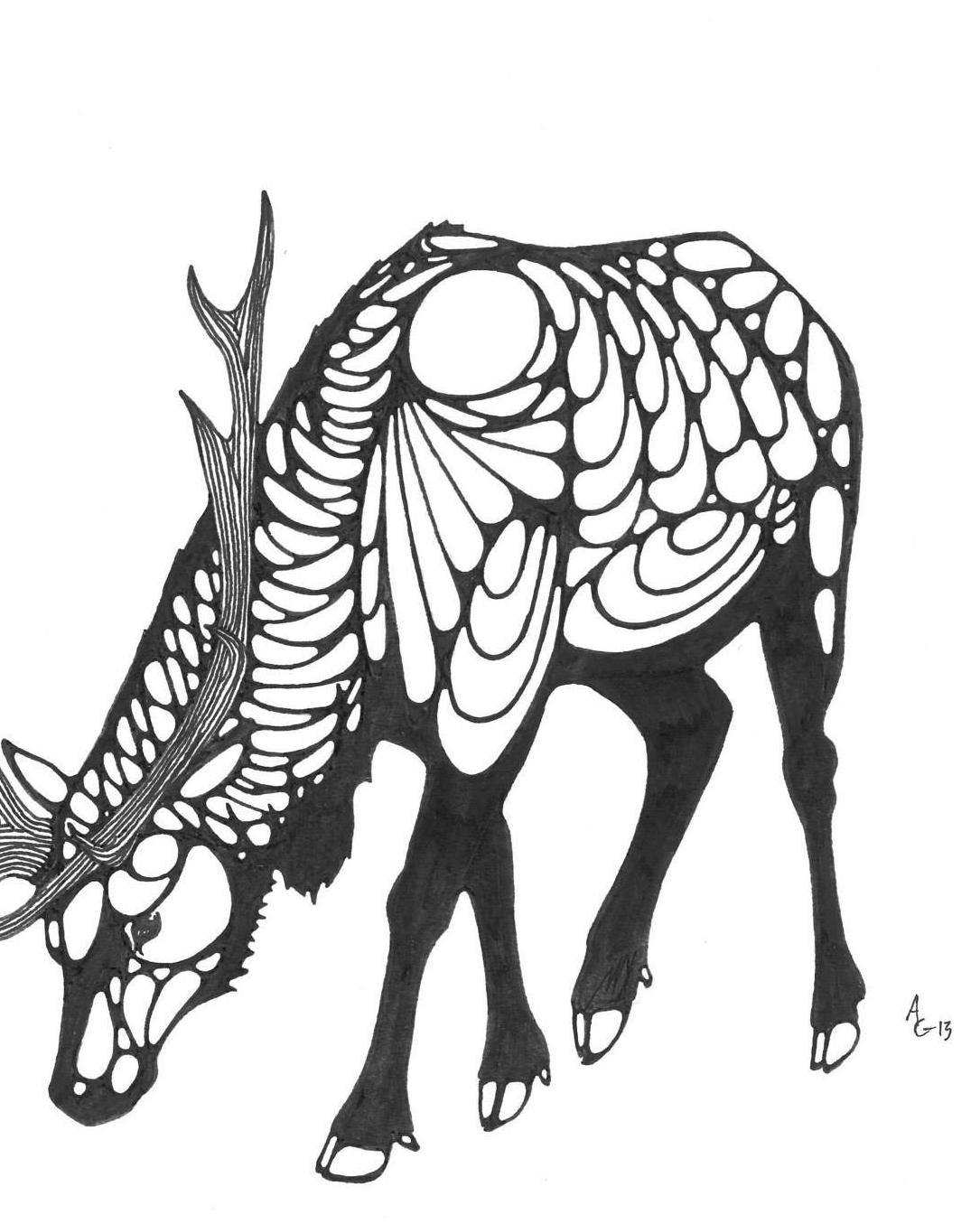
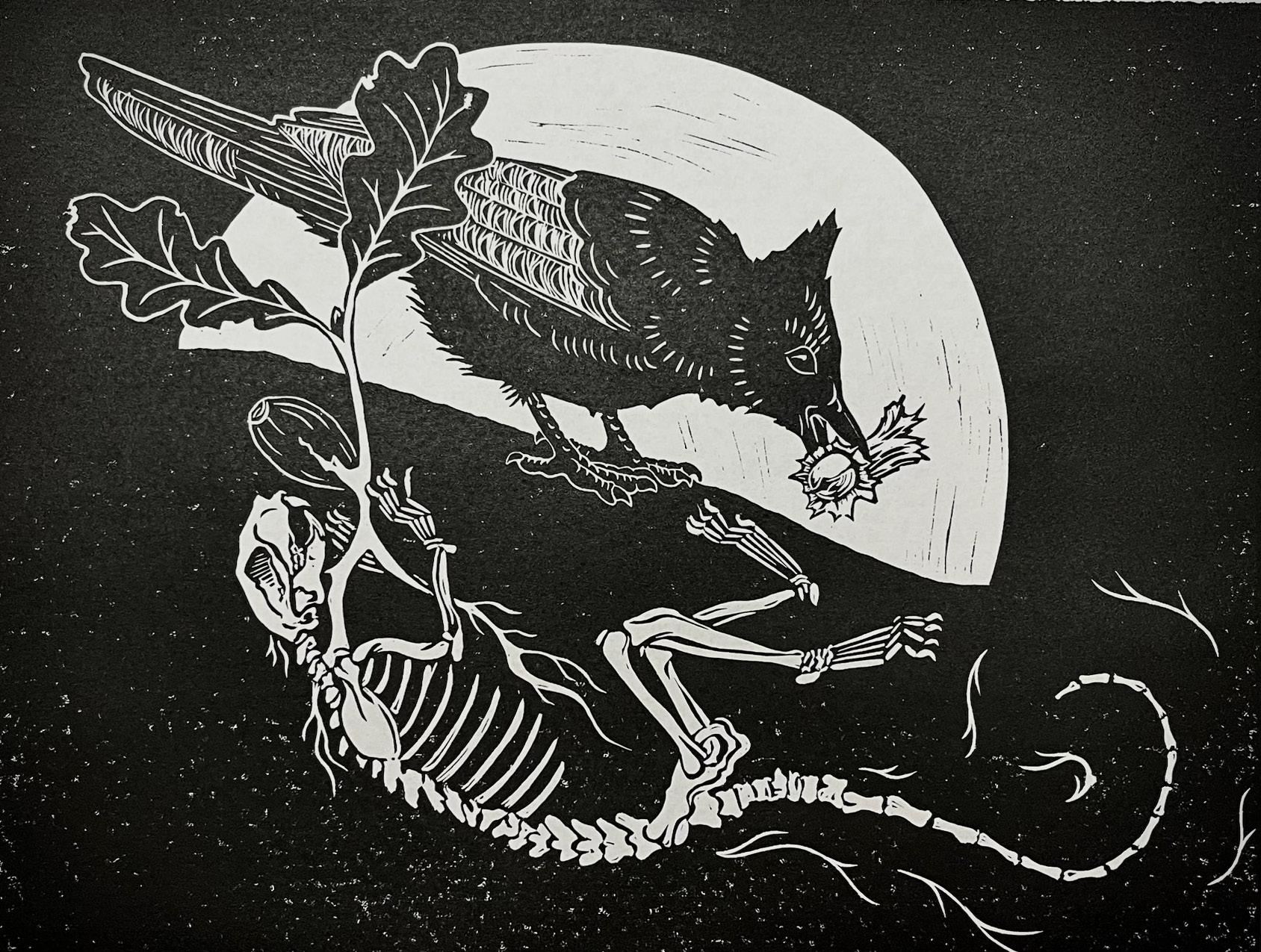
I carve block prints and play around with paints, ink, and pencils. I also sew and needle felt. I’d like to do more blacksmithing projects but my body is often already too tired from working.
MP: Farriery has deep historical roots and traditional techniques. How do you navigate that tradition while bringing your own vision to the work?
G: I consider horseshoeing an ancestral skill. Today, there are a lot of products available to use.
From an environmental and personal exposure standpoint, I have opinions about using things like plastic and adhesives in modern hoof care. But I feel like really it pales in comparison to the prevalence of those things elsewhere in life. I probably produce more microplastics driving and doing laundry. I think it’s worth considering though in my industry and as individuals.
MP: How does your queer identity show up in your work, if at all? Are there ways it influences your artistic vision or your approach to a traditionally cis/ masc-dominated craft?
G: For myself, always having had jobs that used to be considered “men’s work” is a part of my queer identity.
There is kind of a cultural rift, between “barefooters” and “shoers” among hoof care providers and horse people which can have misogynistic undertones. Those strict binaries can show up in all kinds of communities and in our own thinking. Things are rarely so cut and dry.
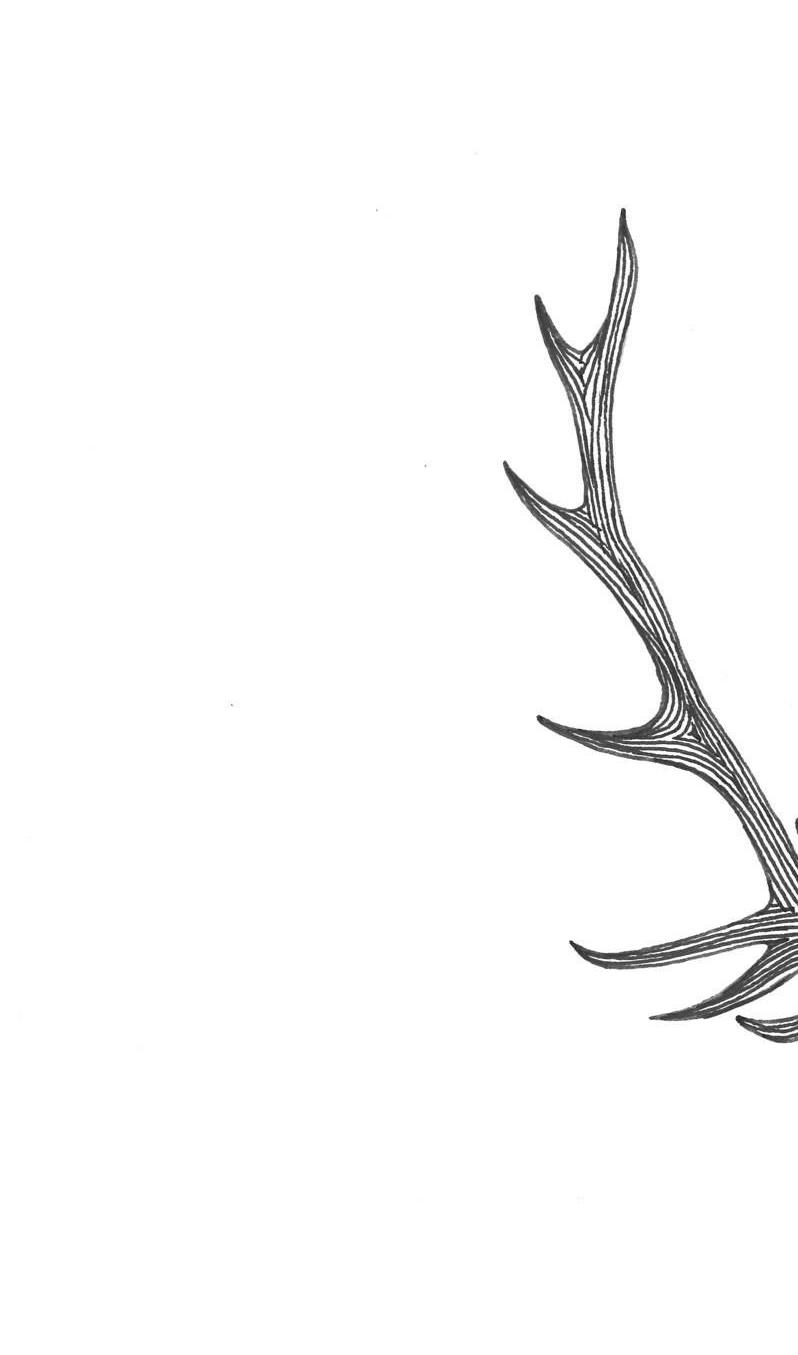
Green’s art is available at Fireweed Print Shop (Open Saturday 10-2) and upon request: green.ac@protonmail.com
Shaping Hooves, Crafting Art: The Creative Practice of Farrier, A. Green
EVENTS
WILDLIFE TRACKING AND FIELD ZOOLOGY WITH QUEER NATURE
Location shared upon registration: March 28, 9 AM - 1 PM
Join So Sinopoulos-Lloyd of Queer Nature for a day in the field learning about local wildlife, animal tracking, and the queerness of our forest friends. Queers and their dears are welcome!
Registration required with suggested fee. Participation in prior sessions not required. www.methowpride.org/upcoming-events
ART TO HEART
Pride Center and Sanctuary in Fireweed Print Shop: April 2, 5:30 PM - 7 PM
Queer Community Gathering for LGBTQIA+ connection and resilience! Cozy time for
check-in, community dialogue, and BYO creative projects. Yummy soup provided!
WILDLIFE TRACKING AND FIELD ZOOLOGY WITH QUEER NATURE
Location shared upon registration: April 19, 9 AM - 1 PM
Join So Sinopoulos-Lloyd of Queer Nature for a day in the field learning about local wildlife, animal tracking, and the queerness of our forest friends. Queers and their dears are welcome! Registration required with suggested donation fee. Participation in prior sessions not required. www.methowpride.org/upcoming-events
WHAT'S YOUR LIFE LIKE? QUEER AND LESBIAN ARCHIVES WORKSHOP WITH LAURA GUNNIP
Pride Center and Sanctuary in Fireweed Print Shop: April 23, 5:30 PM - 7 PM
Join Laura Gunnip of Fireweed Print Shop to explore their collection of Queer and Lesbian music, zines, photos and art! What was life like before smart phones for queer people? How did we find each other? Do you have archives to share? Bring them! Learn about queer and feminist archival history and be inspired for your own photo endeavors! We will be distributing disposable film cameras for attendees to document their lives. This event is associated with the 2026 LGBTQIA+ Art Show at The Confluence: Art In Twisp. Allies welcomed!
LGBTQIA+ HIKING GROUP
Carpool from Pride Center and Sanctuary in Fireweed Print Shop: April 19, 9 AM10:30 AM
A casual hike for LGBTQIA+ community members to connect with each other in the natural environment.
ZINE MAKING, LETTER WRITING AND LETTERPRESS PRINTING WORKSHOP WITH LAURA GUNNIP AND MADDIE
MORGAN
Pride Center and Sanctuary in Fireweed Print Shop: May 1, 3 PM - 5 PM
Your story is your power! Join Laura Gunnip of Fireweed Print Shop in a hands-on workshop that explores your story as a queer person. Participants will be asked to do a written reflection followed by art making of your choosing– zine, envelope collaging, or letterpress!
This event is associated with the LGBTQIA+ Art Show at The Confluence: Art In Twisp
ART TO HEART
Pride Center and Sanctuary in Fireweed
Print Shop: May 7, 5:30 PM - 7 PM
Queer Community Gathering for LGBTQIA+ connection and resilience! Cozy time for check-in, community dialogue, and BYO creative projects. Yummy soup provided!
ZINE MAKING, LETTER WRITING AND LETTERPRESS PRINTING WORKSHOP WITH LAURA GUNNIP AND MADDIE MORGAN
Pride Center and Sanctuary in Fireweed
Print Shop: May 15, 3 PM - 5 PM
Your story is your power! Join Laura Gunnip of Fireweed Print Shop in a hands-on workshop that explores your story as a queer person. Participants will be asked to do a written reflection followed by art making of your choosing– zine, envelope collaging, or letterpress!
This event is associated with the LGBTQIA+ Art Show at The Confluence: Art In Twisp
PRIDE FLAG PAINTING
Pride Center and Sanctuary in Fireweed
Print Shop: May 21, 3:45 PM - 5:15 PM
LGBTQIA+ HIKING GROUP
Carpool from Pride Center and Sanctuary in Fireweed Print Shop: May 23, 9 AM - 12 PM
A casual hike for LGBTQIA+ community members to connect with each other in the natural environment.
FREE POP-UP PORTRAIT STUDIO FOR LGBTQIA+ FOLKS WITH GUEST ARTIST CASEY ORR
Pride Center and Sanctuary in Fireweed
Print Shop: May 29, 3 PM - 7 PM
Methow Pride welcomes photographer Casey Orr from Yorkshire, England for a pop-up portrait studio in Fireweed Print Shop. Come dressed up wild or as you are to be propelled into a photographic portal of love and affirmation. Optional anonymous portraits with your favorite object to represent you. This is celebratory fun.
This event is associated with the LGBTQIA+ Art Show at The Confluence: Art In Twisp
Shaping Hooves, Crafting Art: The Creative Practice of Farrier, A. Green
LETS MAKE A ZINE!
WHAT YOU WILL NEED:
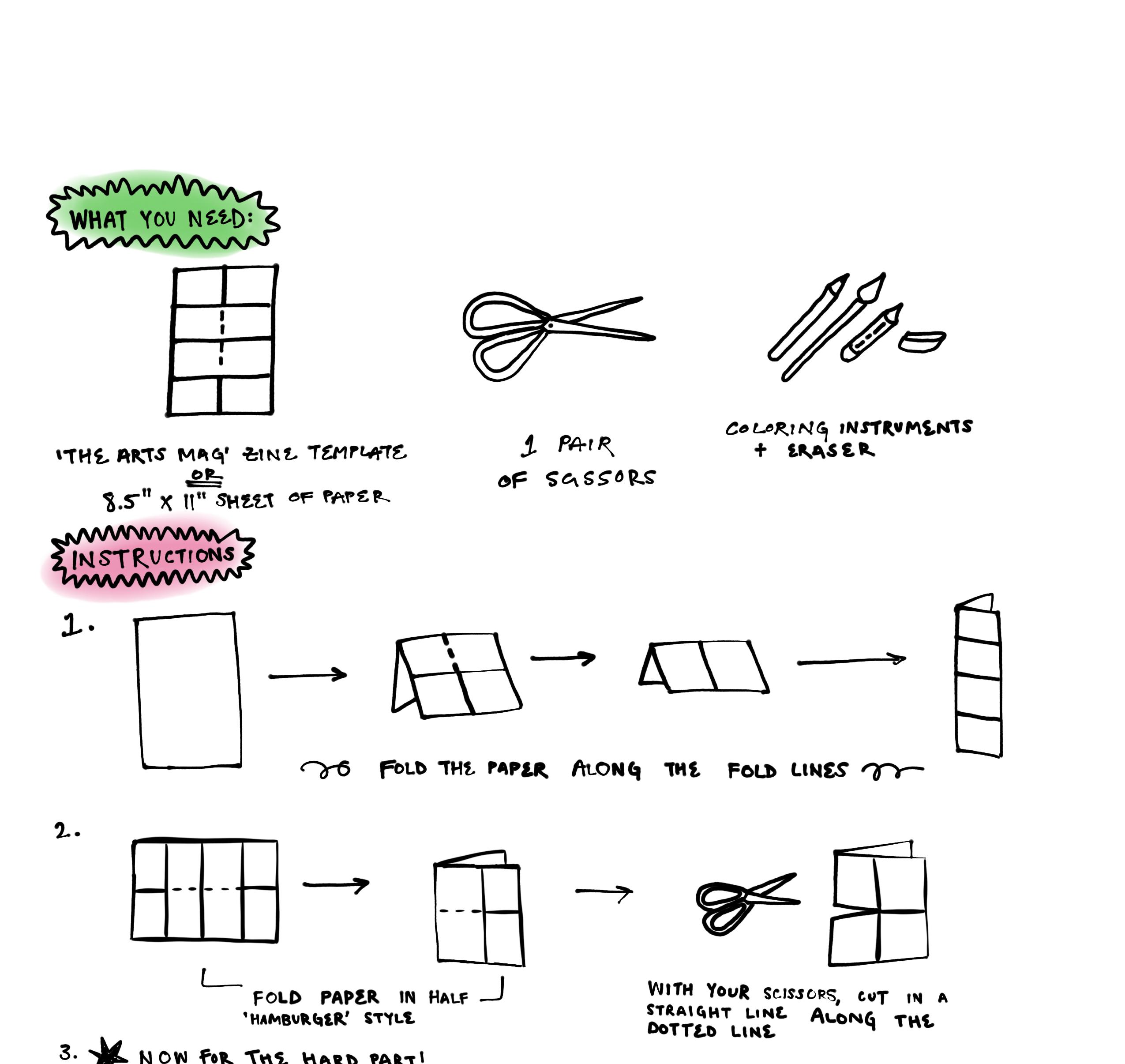
The ‘Arts Mag’ Zine Template or 8.5”x11” Sheet of Paper
INSTRUCTIONS:
1.
1 Pair of Scissors Coloring Instruments and an eraser
Fold the paper along the fold lines
2.
3.
Fold paper in half “Hamburger Style”
With your scissors, cut in a straight line along the dotted line
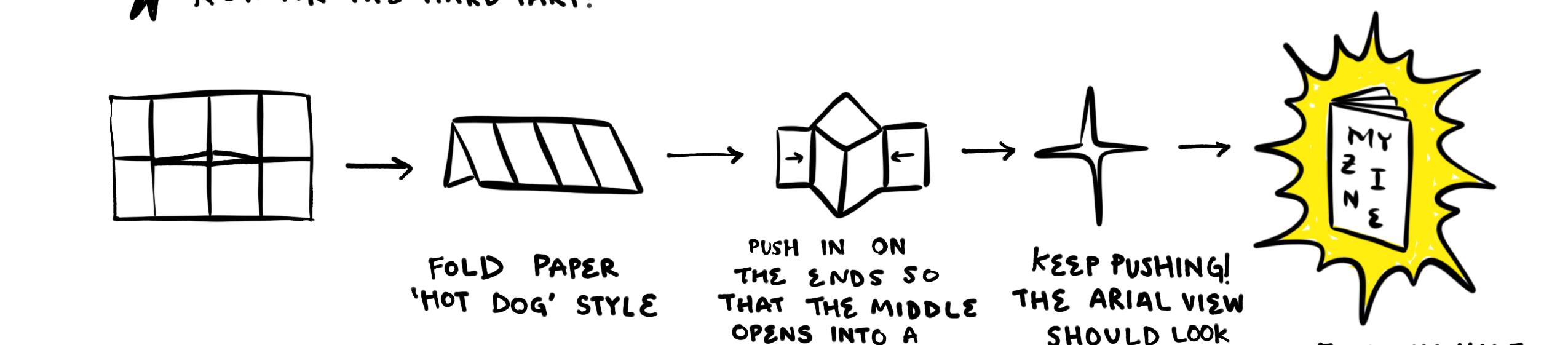
Fold paper “Hot Dog Style”
4. DECORATE!
Push in on the ends so that the middle opens into a diamond shape. Keep pushing inward so that the arial view looks starlike. Then fold the star in half to make your zine!


Beyond The Books
By Cailee Maestro
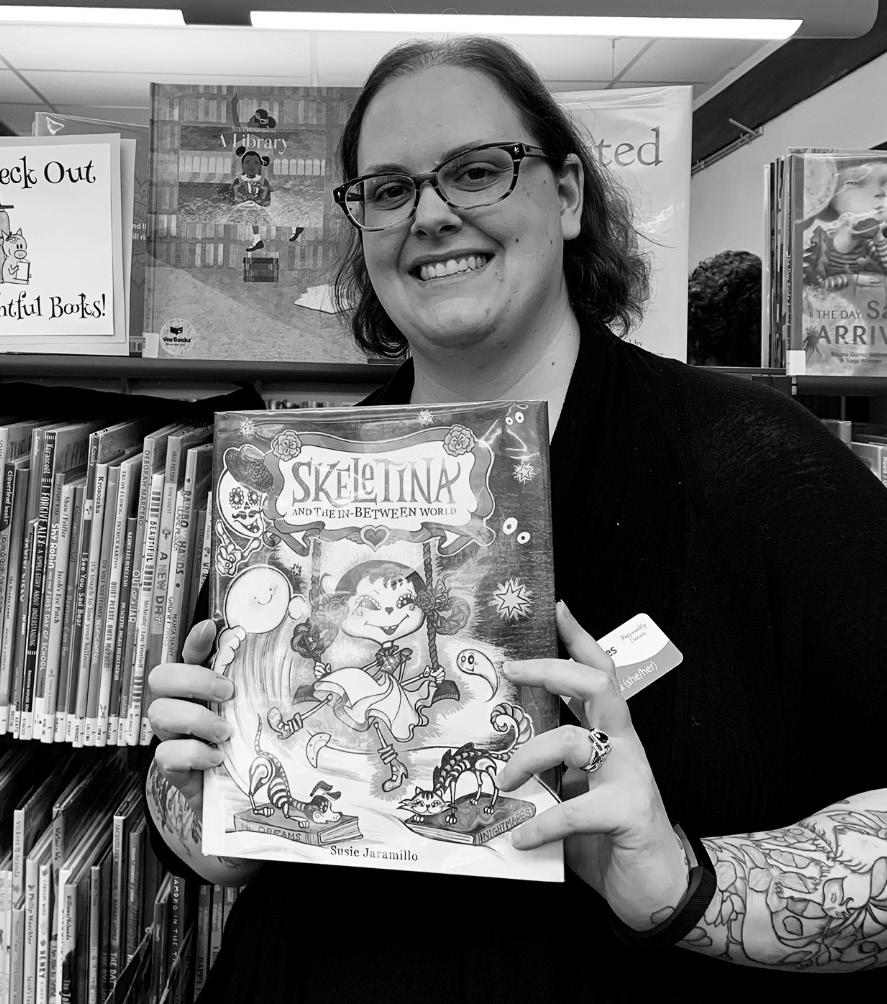
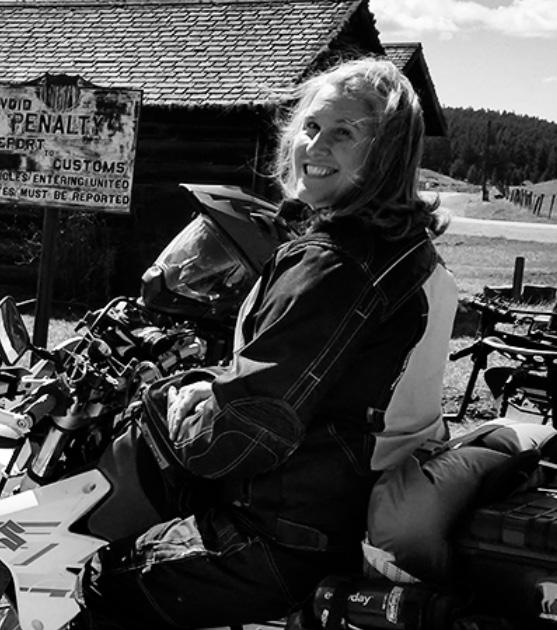
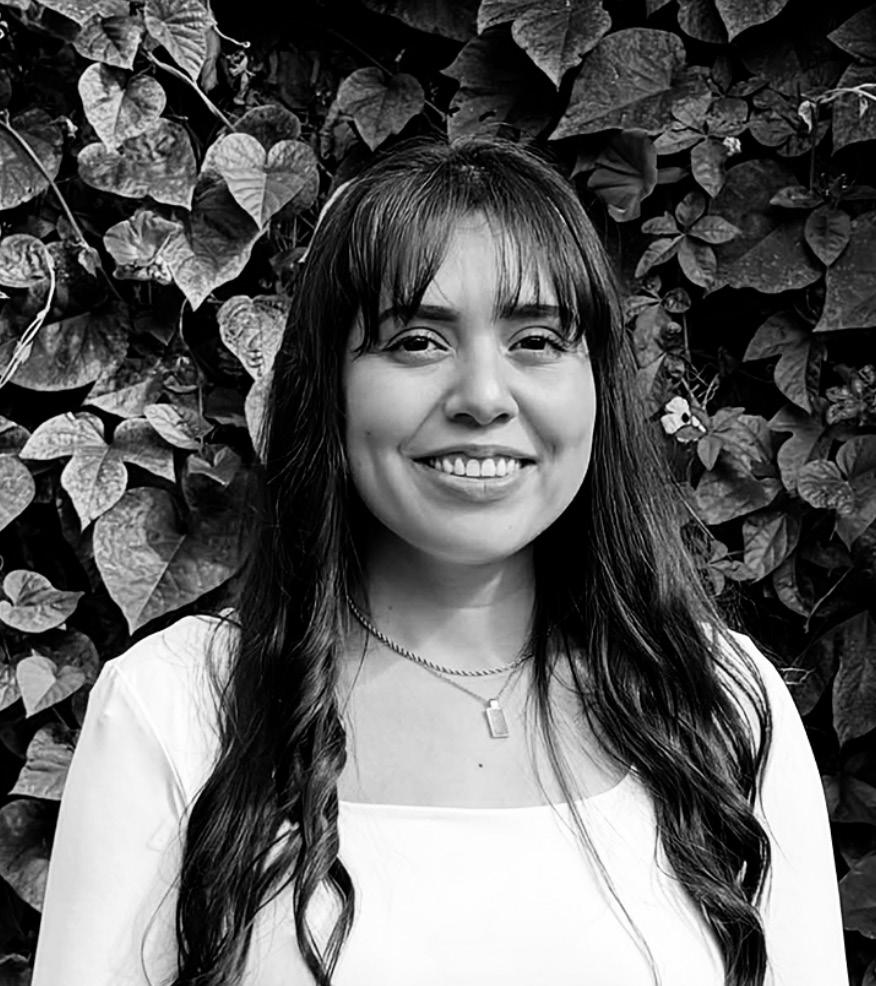

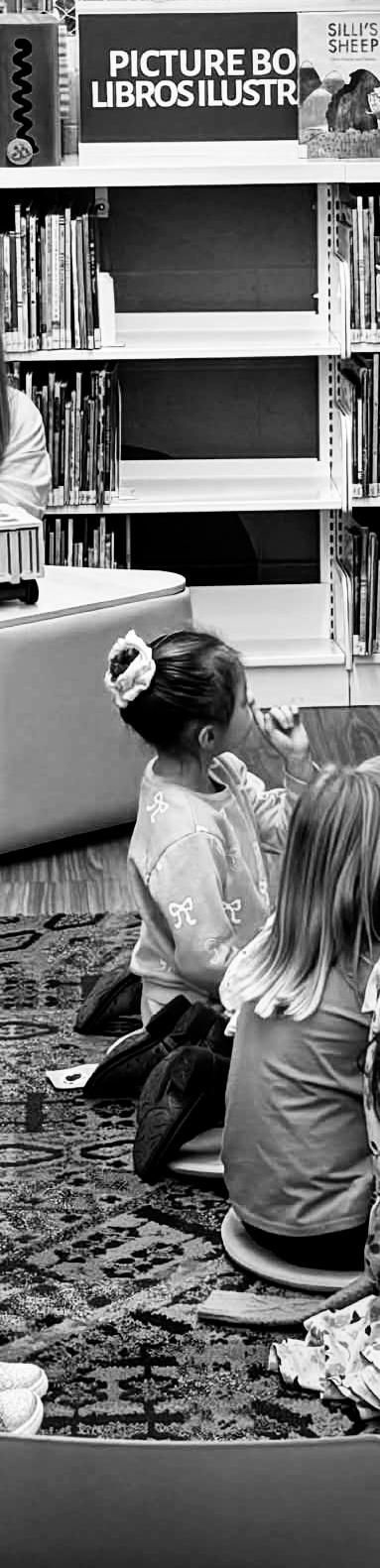
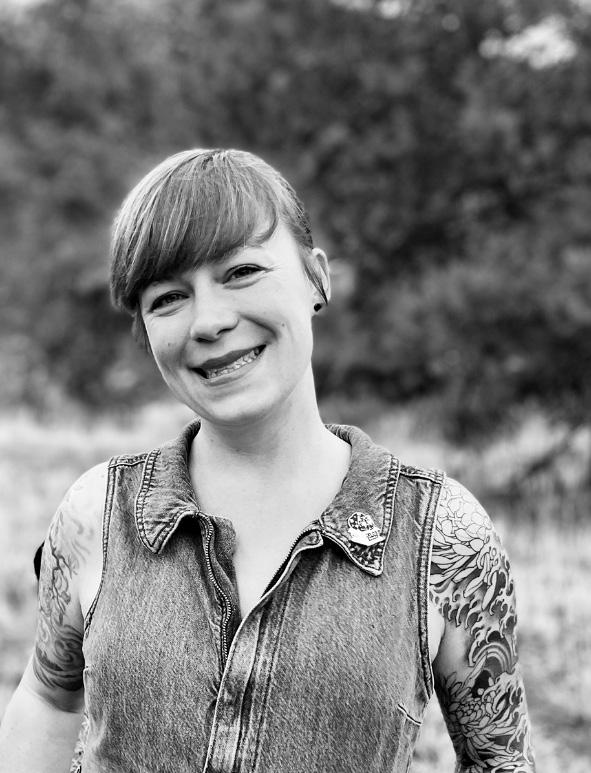
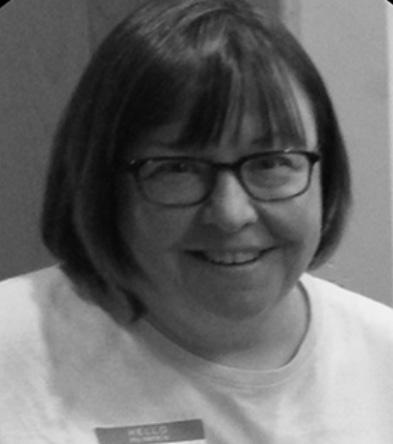
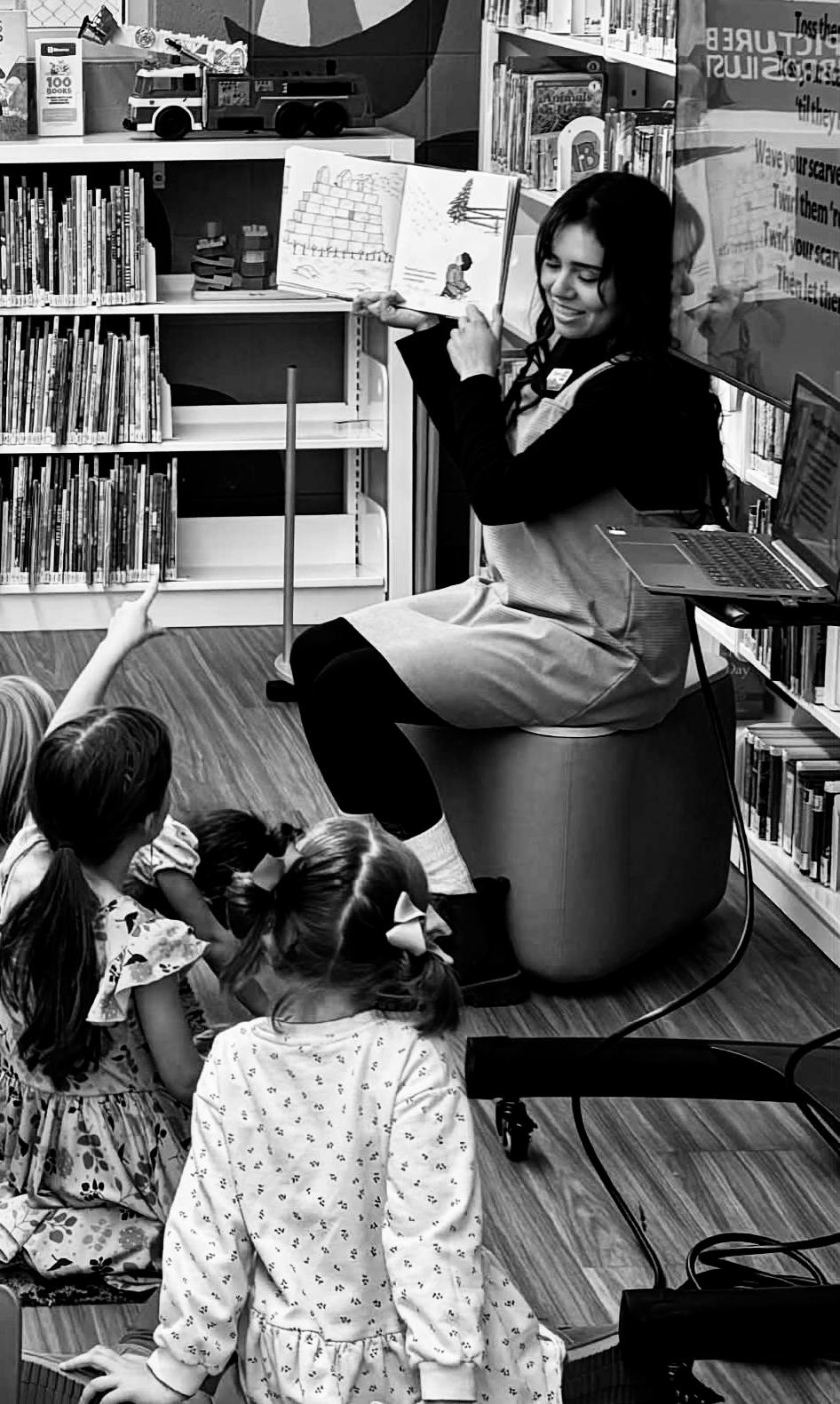
Libraries are often thought of as quiet places filled with books, but behind every shelf and story is a librarian helping bring knowledge, connection, and creativity to the community.
Across Okanogan County, librarians serve as our guides, storytellers, researchers, and neighbors who create spaces where people of all ages can learn, gather, and grow.
In this special feature, Beyond the Books, we step inside the library branches of Okanogan County to meet the people behind the desks.
From favorite reads and hidden gems to the moments that make their work meaningful, these librarians share how libraries shape and are shaped by the communities they serve.
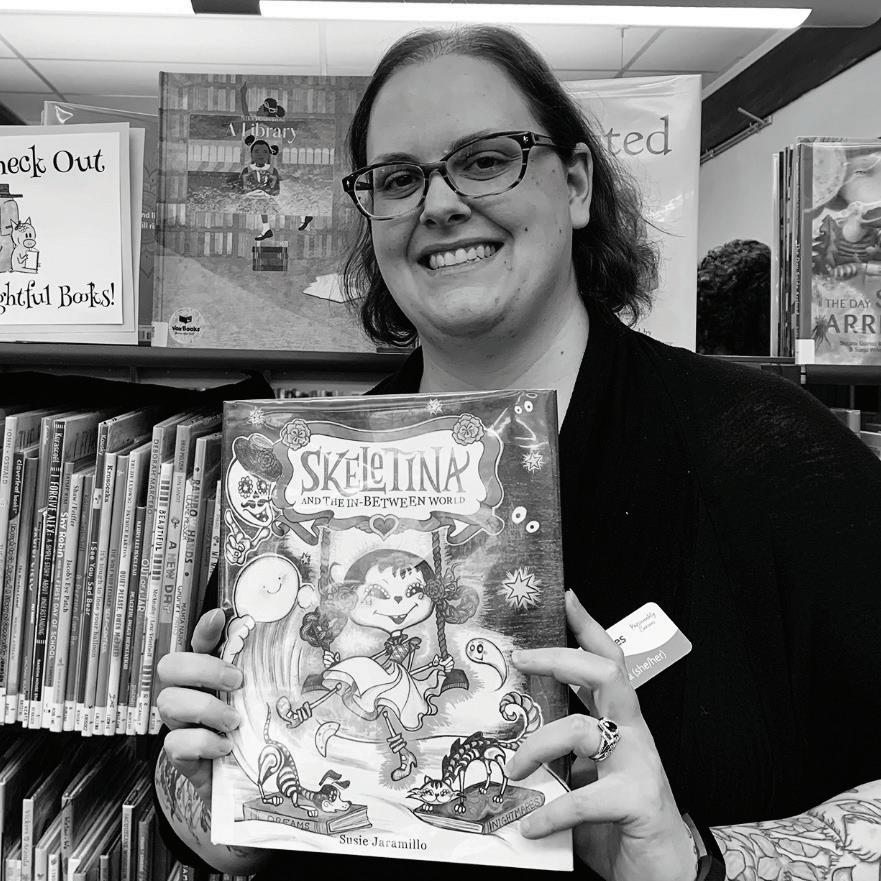
OMAK
Cailee: How did you become a librarian, and what drew you to this profession?
Alyssa: I started volunteering while I was in high school at my local library in Dallas, Oregon. It was amazing learning how much support libraries provide their community by providing them information, access to resources, and how libraries share their resources with other libraries so that everyone can benefit from their collection. I always knew I wanted to be a librarian but after high school I wasn’t sure how to go about pursuing it until I got a job at the Lyons Public Library. While working there I met a librarian who had obtained her degree through Emporia State University’s online program. Since I had just received my B.A. in History from Oregon State University, I decided to go back to school to receive my Master’s degree so that I could become a professional librarian.
C: Are there any “hidden gems” in your library that people often overlook but you love?
A: We have some great stained glass in the children’s area and the wooden carving hanging in front of some windows used to be the front doors of the library before the doors were switched out for ADA ones.
"Be curious, not judgemental." — Ted Lasso
C: Do you have a favorite quote or saying that guides your work or life?
C: Are there library programs, workshops, or events you’re particularly proud of?
A: I am proud of all our programs. We have been very successful in hitting multiple age groups to help provide families something to do each week. Our writers group produces a Zine every year to highlight their amazing talents, children have built amazing Lego creations during Lego Club, and our Baby and Toddler Thursdays allows parents with babies and toddlers to connect with other parents and provide their children with early literacy skills and social skills. We also have a dedicated Dungeons and Dragons group, as well as a Magic the Gathering group for kids. It is amazing to see how the library can connect people to new interests and how kids with more experience can teach others as well.
A: "Be curious, not judgmental.” —Ted Lasso
C: What inspires you in Okanogan County and the community you serve?
A: The diverse community. It is amazing to meet so many people from all walks of life who have come to this county for many reasons, or whose family has been here for generations. It has been great to see new families connecting to more establish families so that they can learn where to go with kids and what activities there are in the area. Seeing how helpful people can be has been amazing to watch.
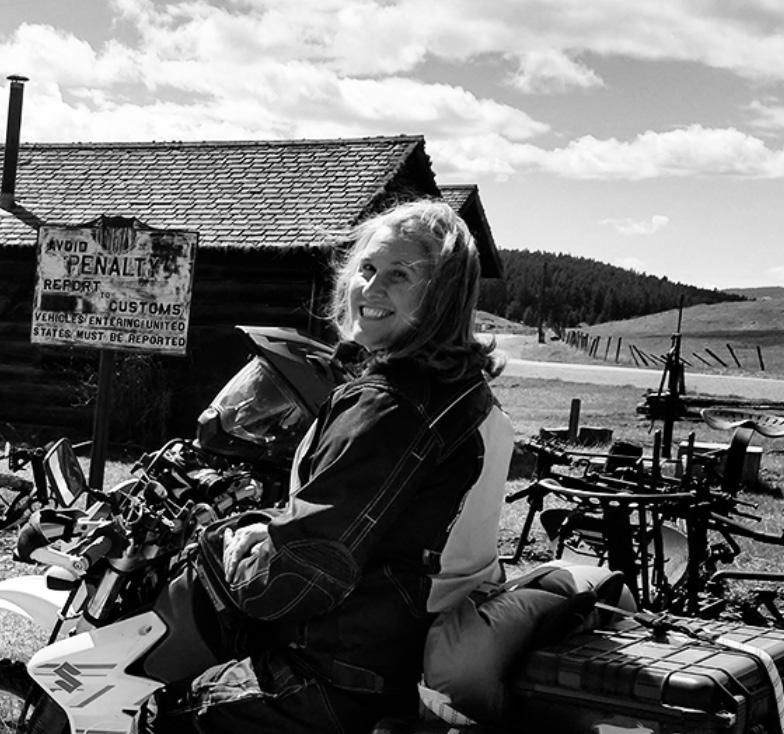
Cailee: Can you share a favorite memory or funny story from your time at the library?
Ree: Our patron code of conduct is there to help everyone enjoy coming to the library, but sometimes enforcing the rules can feel a bit awkward. When someone brings a dog into the library and it’s not clear that it’s a service animal, there are two questions you’re allowed to ask: “Is your dog a service animal required because of a disability? What work or task has the dog been trained to perform?” And if the person standing in front of you wearing a Baby Bjorn front pack with a chihuahua in it (wearing a frilly bonnet and dress) answers the questions, and the dog is behaving itself, enough said.
C: If you could recommend just one book to everyone this spring, what would it be?
R: Everything is Tuberculosis, by John Green.
“A community that to literature and libraries embraces learning and
C: How do you think literature or libraries impact the local community?
R: I’m proud to say that we’re a community of readers: The circulation statistics at the Twisp and Winthrop libraries really demonstrate that! A community that has ready access to literature and libraries is one that embraces learning and growth. Folks who can imagine a better future for themselves and their families and who have access to learning resources have the tools to bring about good things in their lives. That’s the power of public libraries.
C: Which local authors, poets, or artists do you enjoy highlighting in the library?
R: John Doran reminds me so much of my great-uncle Charles Conley, whose ranch in Montana I loved working on, when I was growing up. It’s been so much fun getting to host John at the Twisp Library for storytelling and for readings from his memoir.
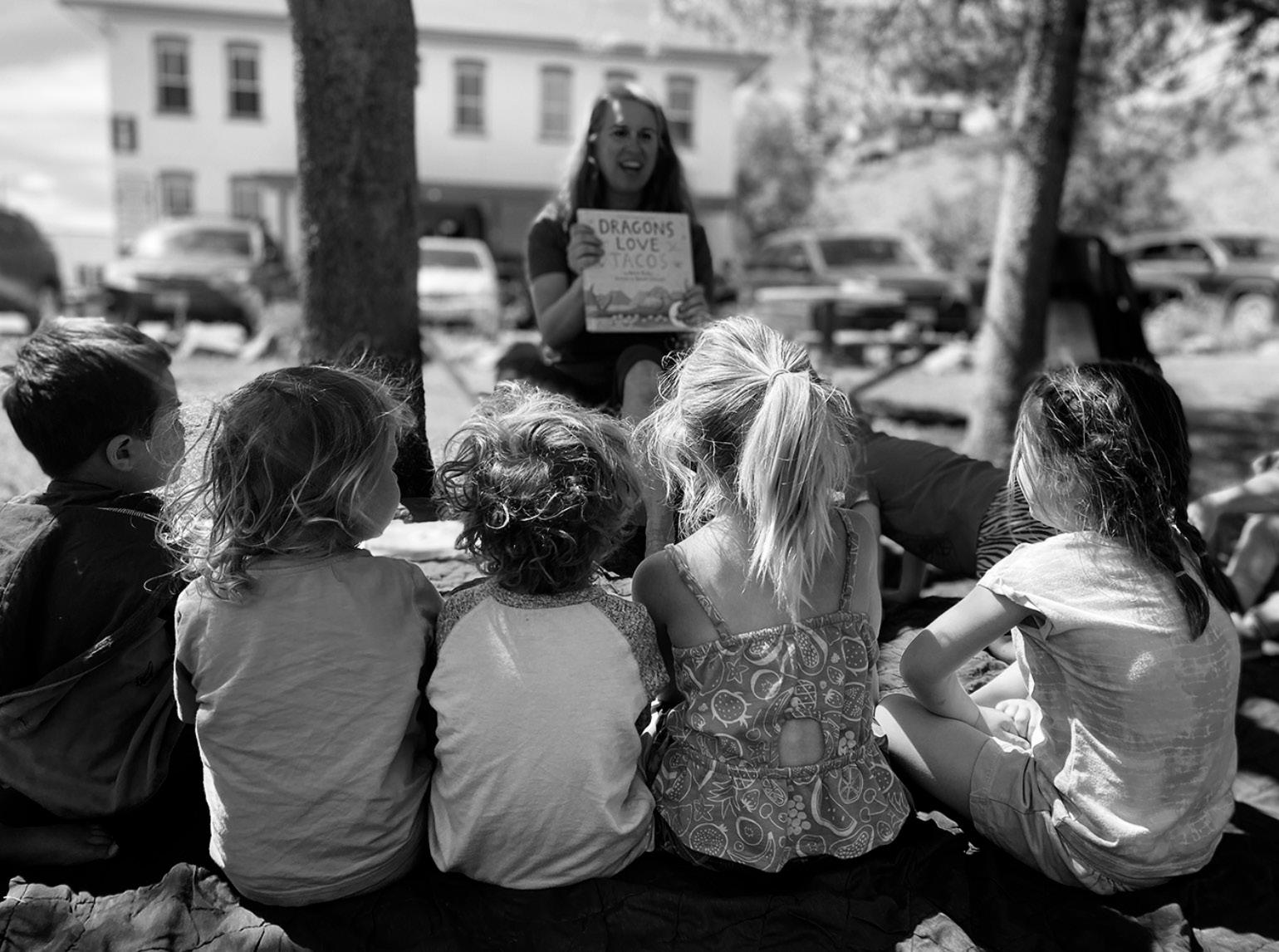
has ready access libraries is one that and growth.”
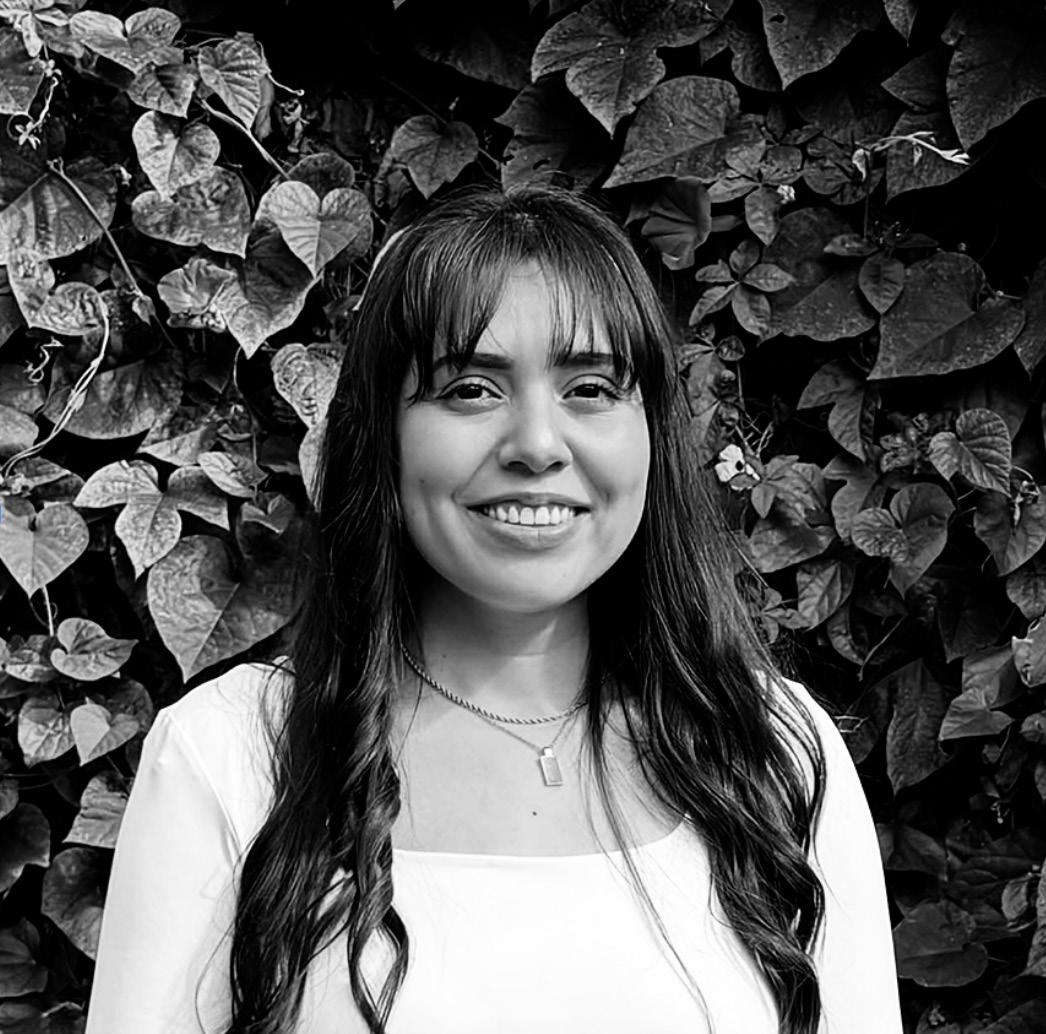
BREWSTER PUBLIC
Cailee: What do you love most about working at your branch?
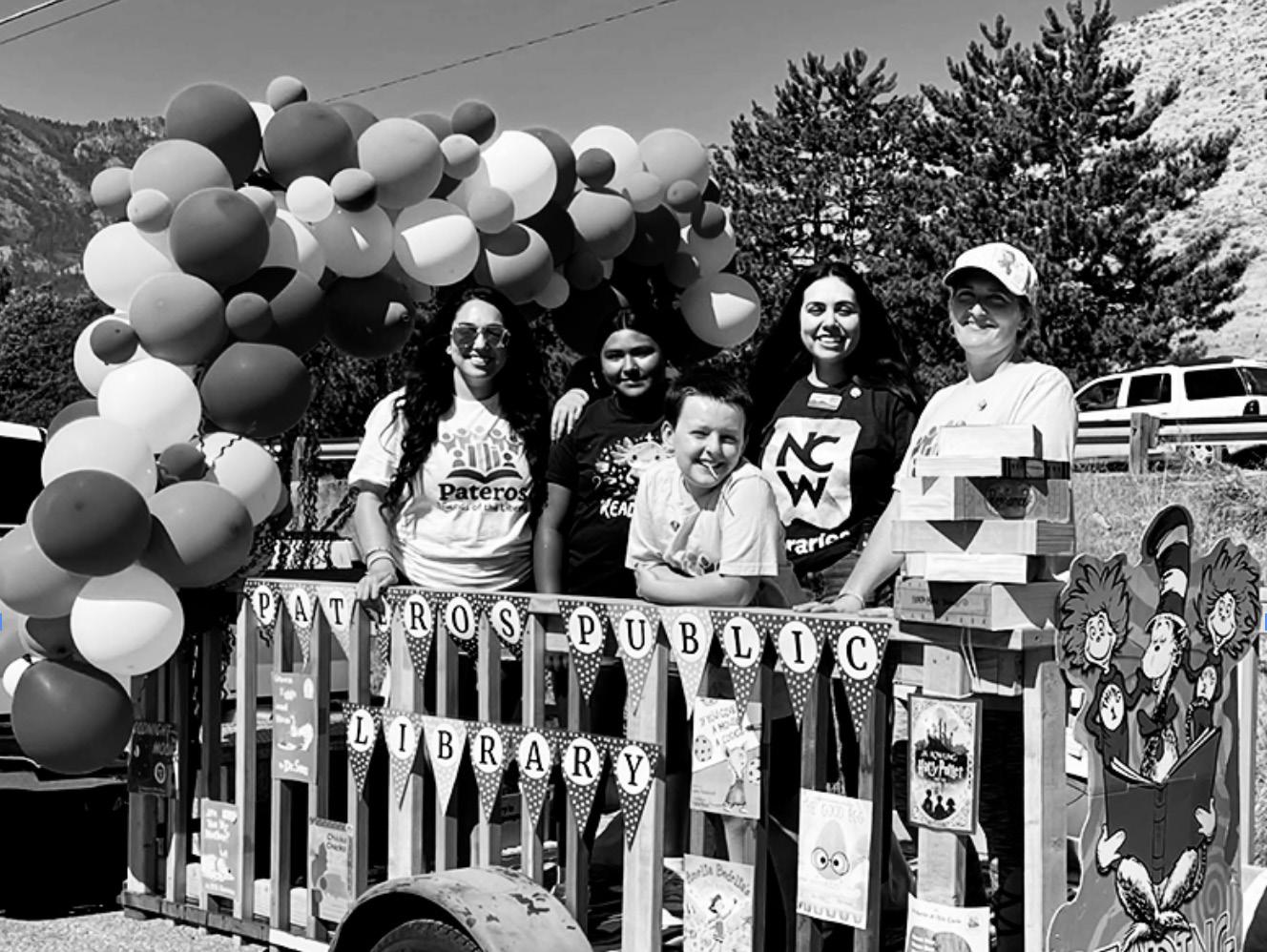
Ana: I currently work at our Brewster and Pateros branches, and what I enjoy most is the opportunity to connect with community members. We have a wonderful team of staff who have done an excellent job fostering a welcoming space for our patrons, and I’m very proud of that.
“We’ve even seen friendships begin here, which is one of the most meaningful parts of this work.”
BREWSTER / PATEROS
C: What’s your personal top 3 books or authors right now?
A: My favorite book is The Noonday Demon by Andrew Solomon. I’ve also enjoyed the Attack on Titan manga series by Hajime Isayama, and The Empyrean series by Rebecca Yarros.
C: How do you think literature or libraries impact the local community?
A: Literature and libraries are powerful connectors in our community. They link people to information, of course, but they also offer a welcoming place to learn, explore, and feel a sense of belonging. Whether someone wants to pick up a new skill or escape into an immersive story, the library is here to guide them to the resources they need. Our libraries are also gathering places where neighbors can meet and build relationships. We’ve even seen friendships begin here, which is one of the most meaningful parts of this work. And through literature, people not only see themselves represented but also gain the opportunity to learn about the experiences of others. Stories help us understand one another, fostering empathy and a stronger, more connected community.
C: If you could recommend just one book to everyone this spring, what would it be?
A: I’d recommend The Life-Changing Magic of Tidying Up by Marie Kondo — it’s a great source of organizational tips, especially heading into spring cleaning season.
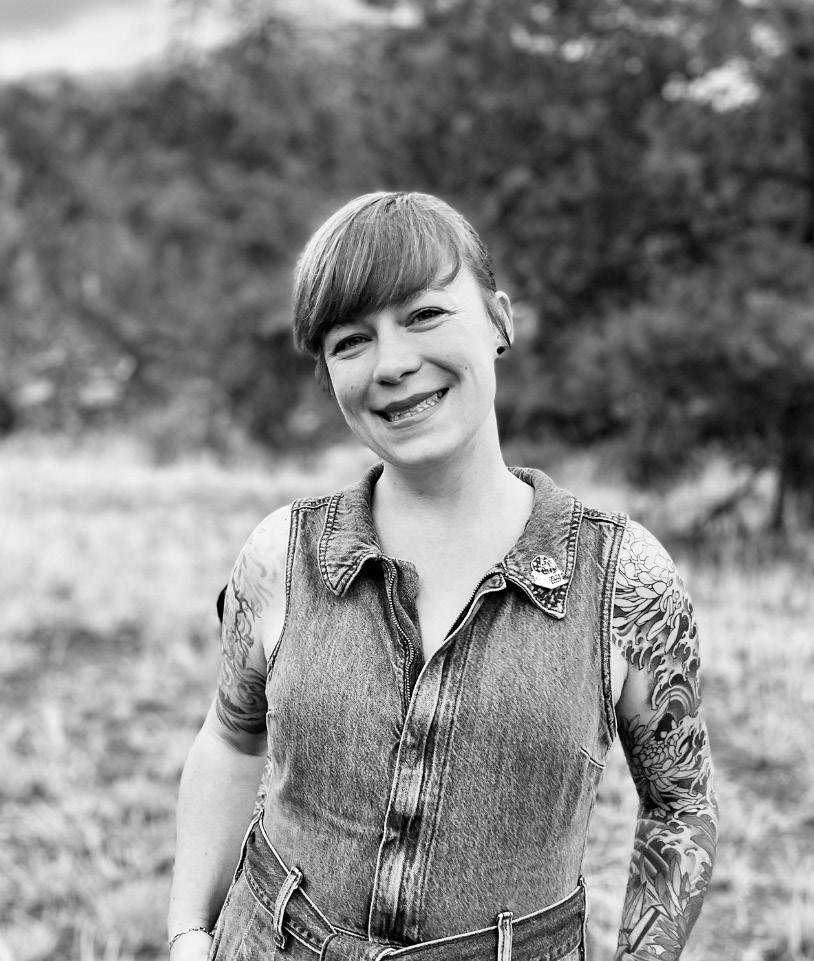
WINTHROP
Cailee: How did you become a librarian, and what drew you to this profession?
Annika: My path to librarianship grew naturally out of a love for books and learning around the world through libraries. I come from a long line of librarians, so in many ways the profession found me early on. Libraries were always some of the best places on the planet to me and are spaces where you can grow, learn, lounge, feel curious, make connections, or simply chill. I love being part of a profession that creates welcoming places for people of all ages and backgrounds to explore, discover, and belong.
C: Are there any “hidden gems” in your library that people often overlook but you love?
A: Absolutely. Some of my favorite hidden gems are the quieter corners of the library: non-fiction shelves, unique cookbooks, manga collections, and our Methow Valley local history. But some of our best hidden collections are actually virtual. From audiobooks and eBooks on Libby, to graphic novels on Comics Plus, to unexpected treasures like telescopes or museum passes from our Library of Things, NCW has so much to offer beyond what you see on the shelves. I highly recommend checking out a light therapy lamp or the Washington Backpack that includes a Discover Pass, a pair of binoculars, and 3 field guides. I love helping patrons discover all the different ways the library can surprise them.
C: Outside of books, what hobbies or passions energize you?
A: Outside the library, many of my usual hobbies are on a bit of hiatus while I’m pursuing my MLIS degree, which keeps me happily busy. When I do have free time, I enjoy cooking hot pots, ramens,sushi and other Asian dishes, reading for pleasure, and watching stand-up comedy. I also really value time spent with family and friends. And in true Methow Valley fashion, you can often find me at the Winthrop Rink, either in goal on the ice with the Vixens or with the Methow Hockey League.
WINTHROP
“Libraries
are one of the few places where connection happens freely and openly.”
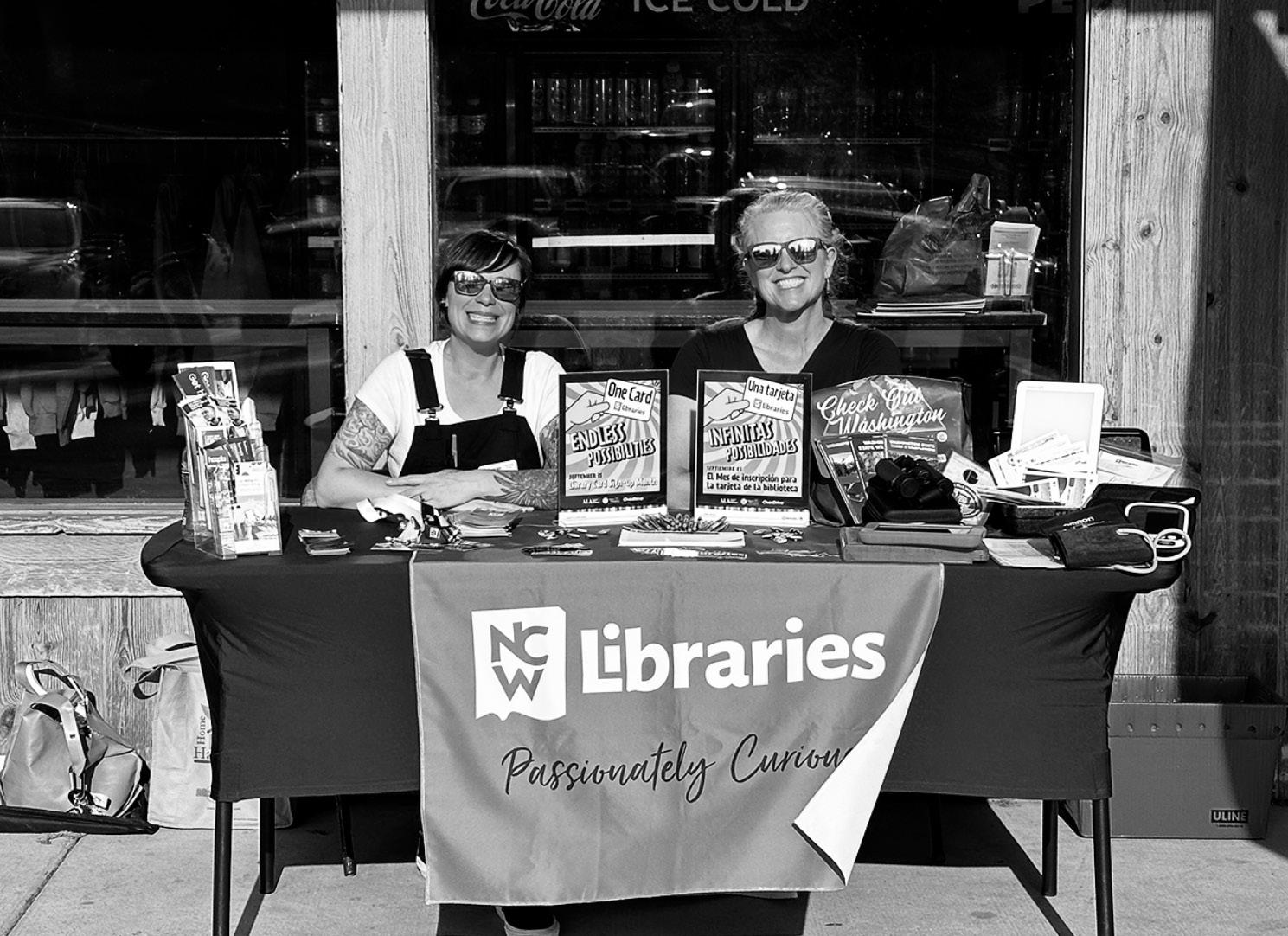
C: How do you think literature or libraries impact the local community?
A: Libraries provide free, equitable access inperson and online to information and stories, which is incredibly powerful, especially in rural communities. They connect us intellectually and culturally and bring together the past and present for a better future. Libraries are one of the few places where connection happens freely and openly. They are rooted in community but open to the world.
AREA MANAGER
Cailee: Can you share a favorite memory or funny story from your time at the library?
Melissa: I have so many great memories from working in libraries, but one thing I love is being in the library during storytime. To see the wee ones developing that love of stories and books is incredible. If I’m ever feeling discouraged, visiting a library during one of our storytimes always makes me reenergized.
C: Which local authors, poets, or artists do you enjoy highlighting in the library?
M: At our Omak Library, we have a writers’ group run by Max Frazier. Her group–made up mainly of younger writers– created a ‘zine last year and are hoping to expand it this year. We’re hoping with the help of our newly formed Okanogan and Omak Friends group to launch a writer’s contest in 2026.
“Bad libraries build collections, libraries build services, build communities.”
MANAGER OKC
C: Do you have a favorite quote or saying that guides your work or life?
M: Bad libraries build collections, good libraries build services, great libraries build communities. —R. David Lankes
C: How do you think literature or libraries impact the local community?
M: I am definitely a reader and love books, but what makes me excited about my work is the way libraries can transform peoples’ lives. In Okanogan County, broadband access can be limited and expensive; the library provides computers and more than once someone has used our resources to create a resume, find housing, or get their food handlers’ license. Providing resources for our immigrant neighbors such as citizenship kits or GED test prep books in Spanish language or know your rights red cards provide pathways to those folks wanting to improve their families’ lives.
C: Are there library programs, workshops, or events you’re particularly proud of?
M: Our Omak Library recently started their monthly Coffee and Conversation program to help people connect. Brewster, Bridgeport, and Pateros Libraries will be doing their 4th Dia de los Libros/Dia de los Ninos event this April. We rotate locations for the event every year, and it’s always a highlight of the spring.
collections, good services, great libraries
communities.”
—R. David Lankes
The Merc Playhouse is a nonprofit community theater seated in the historic Twisp Mercantile Building in Twisp, WA. Originally built in the early twentieth century and transformed into a theater in 1999, the 100-seat venue has become a beloved cultural hub for the Methow Valley. With its exceptional acoustics and intimate setting, the Playhouse hosts a diverse yearly lineup of performances—from classic plays like Our Town and musical collaborations with local schools to reader’s theater readings, children’s productions, music concerts, lectures, and more– even offering its space for rentals and classes. The Merc Playhouse relies on ticket sales, donations, volunteers, and sponsorships to support its mission of connecting the community through live performing arts.
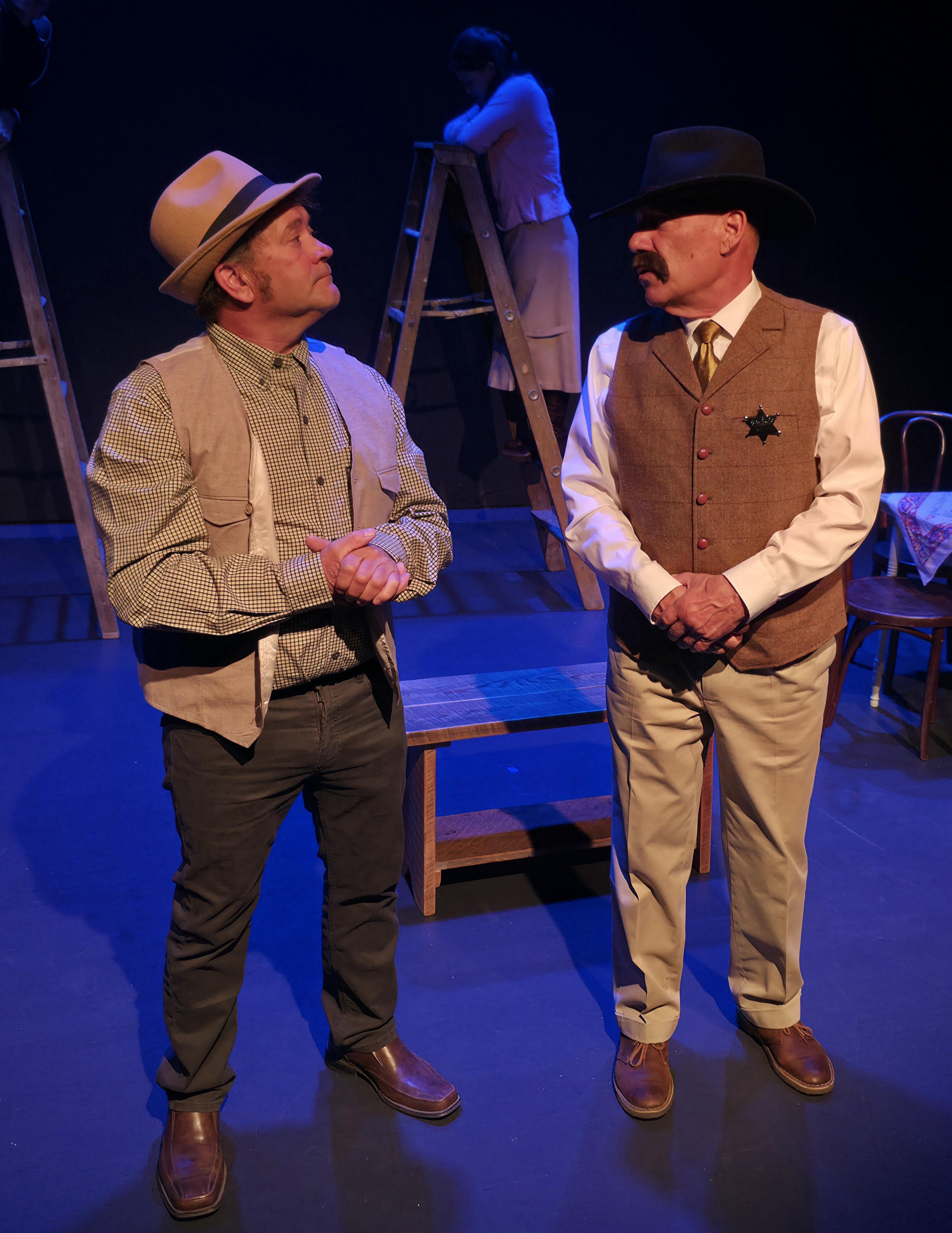
EVENTS
ONCE UPON CAMELOT BY CRAIG SODARO
The Merc Playhouse: Performances at 6:30 PM
on March 20, 21, 26, 27, and 28. 2 PM on March 22 and 29.
Directed by: Jane Orme
Knights turned into frogs, rocks, and grasshoppers? Merlin as a fly? Only in Camelot! This delightfully over-the-top romp serves up magic, mayhem, and medieval silliness where even a humble weaver might just save the day. Directed by Jane Orme.
Admission by donation performance: March 26 – 100+ seats available only at the door this night only, first come, first serve.
KEN LUDWIG'S LEND ME A SOPRANO
The Merc Playhouse: Performances at 7 p.m. July 17, 18, 23, 24, 25. 2 p.m. on Sundays, July 19 and July 26.
Directed by: Carolanne Steinebach
Curtain up on chaos! When the diva can’t go on, an eager assistant slips into costume. Cue mistaken identities, wild cover-ups, and high-note hilarity as opera night transforms into a laughout-loud farce of epic proportions.
Admission by donation performance: July 23 –100+ seats available only at the door this night only, first come, first serve.
THE REVOLUTIONISTS BY LAUREN GUNDERSON
The Merc Playhouse: Performances at 7 PM September 25, 26, Oct. 1, 2, 3 2 PM September 27 & October 4
Directed by: Julie Wenzel
Four fierce women rewrite the rules during the French Revolution—armed with wit, passion, and the occasional quill. The Revolutionists is a razor-sharp comedy that proves laughter, courage, and sisterhood are the ultimate acts of rebellion.
Admission by donation performance: Oct. 1 –100+ seats available only at the door this night only; first come, first serve.
READERS' THEATER: THE CRUCIBLE BY ARTHUR MILLER
The Merc Playhouse: Performances at 7 PM on October 30 & 31. 2 PM on November 1
Directed by: Magnolia Brown
Witch hunts, hysteria, and the courage to stand tall. In Salem’s firestorm of fear, neighbors turn on neighbors—yet truth and integrity burn brighter. The Crucible is a timeless reminder that resisting panic is the bravest spell of all.
Only runs one weekend: All seats at all performances are admission by donation and there are no reserved seat sales.
MISS BENNET: CHRISTMAS AT PEMBERLY BY LAUREN GENDERSON & MARGOT MELCON
The Merc Playhouse:Performances at 7 PM on December 4, 5, 10, 11, 12.
2 PM on December 6 & 13.
Directed by: Phil Quevillon
Step into Jane Austen’s world for a festive holiday gathering at the Darcy estate. Filled with laughter, romance, and family cheer, Christmas at Pemberley is a heartwarming celebration of love, second chances, and the joy of coming home.
Admission by donation performance: Dec. 10 –100+ seats available only at the door this night only; first come, first serve.
For all shows: Doors open 30 minutes prior to the start of show. Reserved seat tickets are available for MainStage shows at: www.mercplayhouse.org

Rythm and Blues
Winthrop Gallery is an artist-run cooperative located on the boardwalk in downtown Winthrop, WA. Showcasing a wide variety of original artwork, from painting and photography to jewelry, textiles, and woodworking, the gallery connects visitors with the artists who live and work in the Methow Valley. By celebrating the seasons, the landscape, and the valley’s vibrant creative community, Winthrop Gallery inspires appreciation for both art and place.
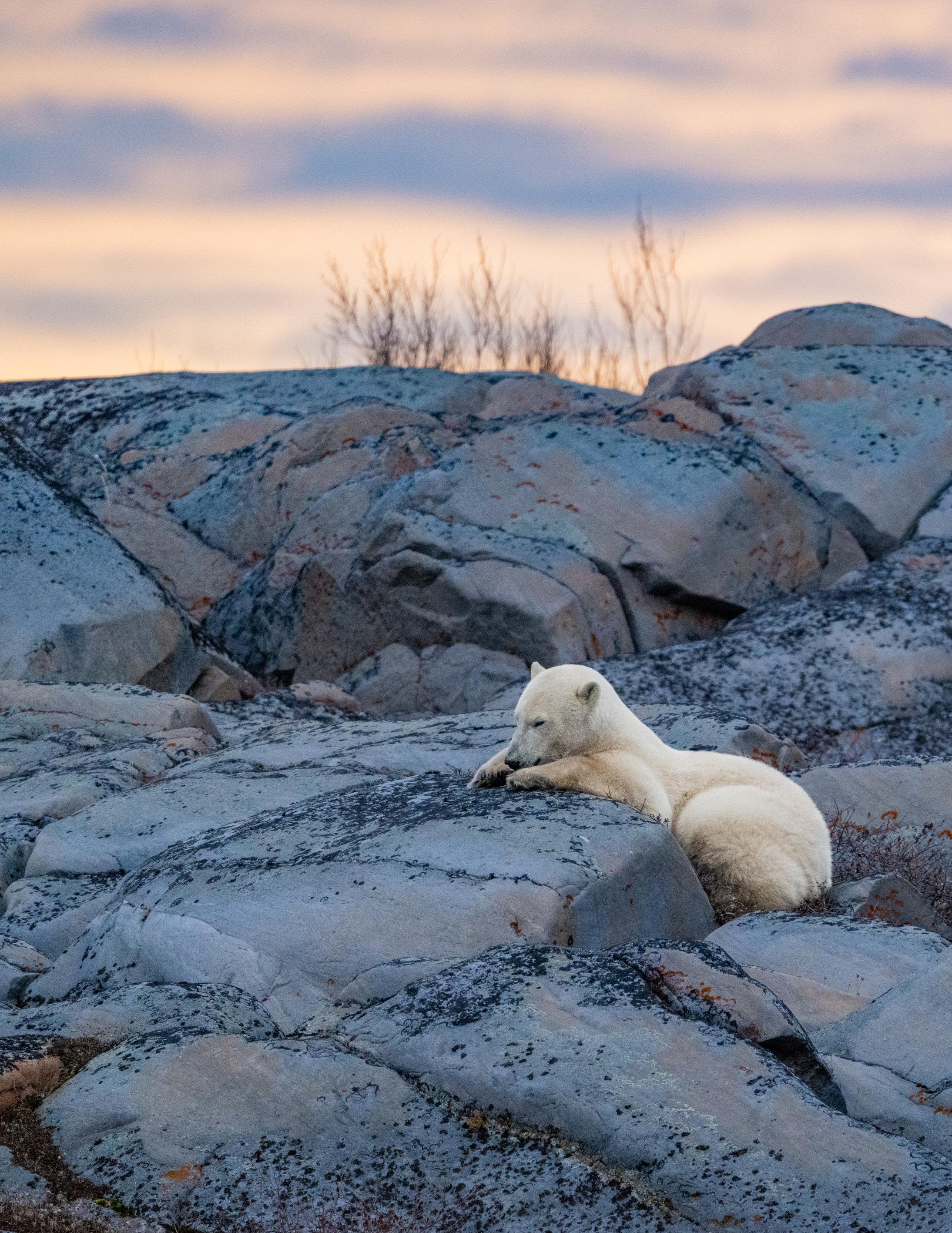
Artwork by Terri J. Pieper
IN PRAISE OF LIGHT: THREE ARTISTS AT THE WINTHROP GALLERY
By Terri J. Pieper
The Winthrop Gallery is an artist-run cooperative on the boardwalk in downtown Winthrop. The gallery showcases a wide variety of original artwork including painting – watercolors, oils, acrylics, photography, woodworking, jewelry and other mediums. The Winthrop Gallery inspires appreciation for art and place by celebrating the seasons, landscapes and the valley’s exciting creative community. Member artists do all the work of displaying and marketing the artwork. A gallery artist is always there to answer questions about the artists and their work. Visit www.winthropgallery.com to see what’s new and what’s happening in the gallery.
The gallery will have a featured artists’ show opening on May 16, 2026, from 5 til 7 pm. Light refreshments will be available. The three featured artists are Pearl Cherrington, Cliff Schwab, and Teri J Pieper.
Pearl is fascinated by light. It is what first captures her attention, how it plays on the land, the rocks, the water. A shaft of sunlight on the forest floor, clouds casting shadows on the hills, a stream beckoning to take a look.
Photography has always been her first love; black and white especially. However, throughout the years she has experimented with her images in producing mixed media works as well. Sometimes she prints images on artist papers which allow her to use various mediums on her photos like colored pencils, gesso, pan pastels, charcoal, watercolor and acrylic paints.
Photography taught her to “see” the small details of the natural world and helped develop her sense of design. It created a desire to explore other art forms such as mono printing, watercolor, collage and abstract acrylic painting.
Artwork by Terri J. Pieper
These alternative methods create an element of surprise and an image that she has used before can become something entirely different. Like the way the light strikes the environment uniquely in a single moment, the pieces she creates are unrepeatable, separate and distinct - no two are alike. She wants the viewer to enjoy the surprise.
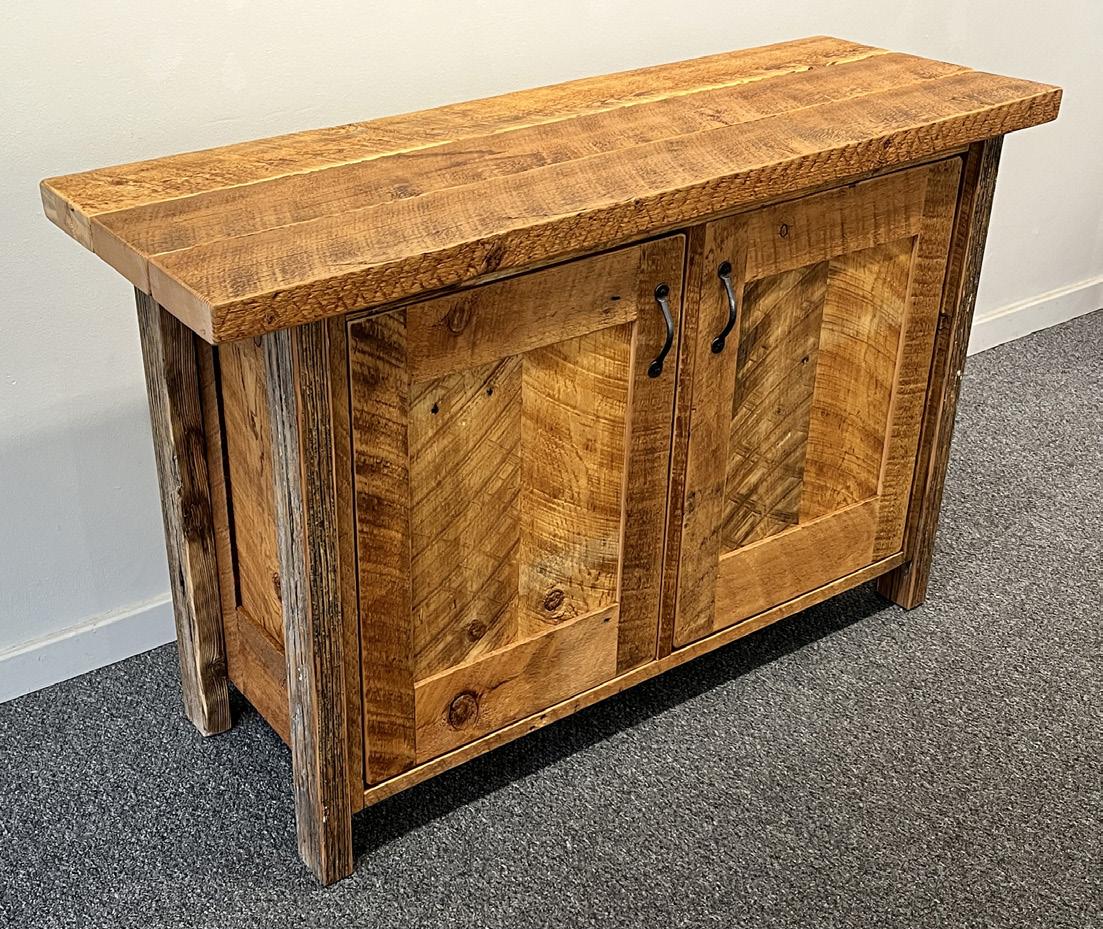
Cliff Schwab grew up on a dairy farm in a rural area of New Jersey where many of the barns were constructed in the 1800’s. He was inspired by the quality and longevity of the hand-hewn peg timber frame structures. Cliff aspires to build furniture that his clients will cherish and will last many lifetimes. He has been woodworking for over fifty years and apprenticed at two cabinet shops early on.
Cliff blends artistic design with functional utility. Special features of his work include dovetail joinery and walnut live edge tops. His favorite materials include Northwest hardwoods as well as local reclaimed fir, pine & mahogany. His finished pieces, crafted with reclaimed material, have a unique patina that only Mother Nature could paint. Using this material also preserves natural resources for future generations.
Teri is the daughter of a journalist and cannot remember a time when she did not have a camera. She has lived in north central Washington
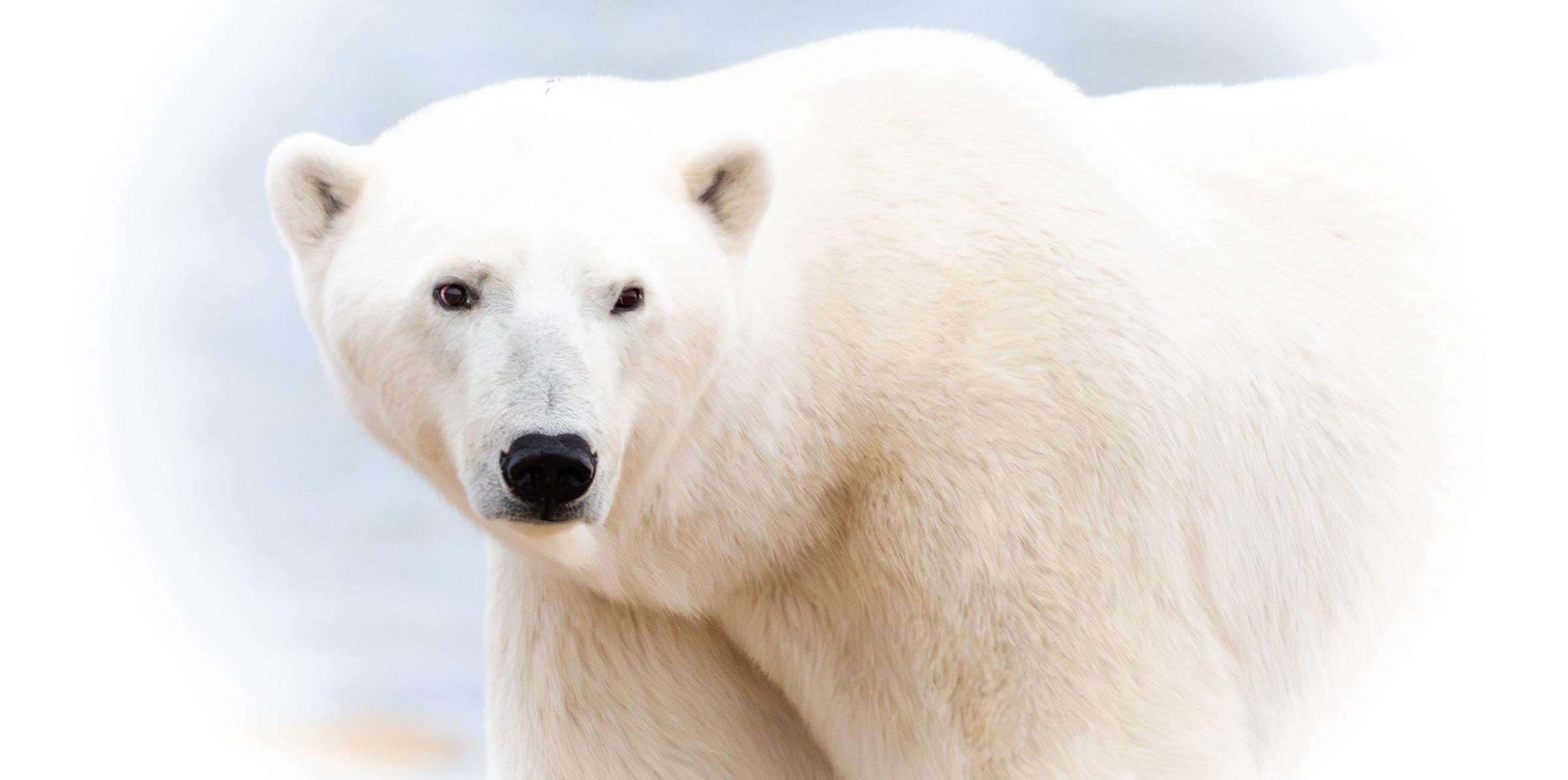
her entire life and while she has no desire to live anywhere else, she does love to travel – mostly on road trips throughout the western US. She recently went further afield to Canada’s Hudson Bay to see and photograph polar bears.
Teri enjoys being outside in nature where she photographs landscapes, nightscapes and wildlife. Like Pearl, Teri looks for light and then, how it reflects off her subject. Is there a way to see the light differently? How does it change the subject? Can she wait for it to change, just a bit more? Waiting is often the key to her images. Teri’s work has been shown in various galleries throughout central Washington and published in magazines for The Nature Conservancy and the Audubon Society. She has been a member of The Winthrop Gallery for over seventeen years.
To see more of these artists’ work, visit www.winthropgallery.com
Craftwork by Cliff Schwab
Methow At Home supports older adults through the transitions of aging by offering community, educational programming, social connection, life planning, and volunteer support for household tasks. We foster a vibrant, multi-generational community rooted in joy, connection, and mutual appreciation, where everyone is valued. Our approach is about meeting people where they are, offering a variety of programs and services so that everyone can age at home in the community they love for as long as possible.
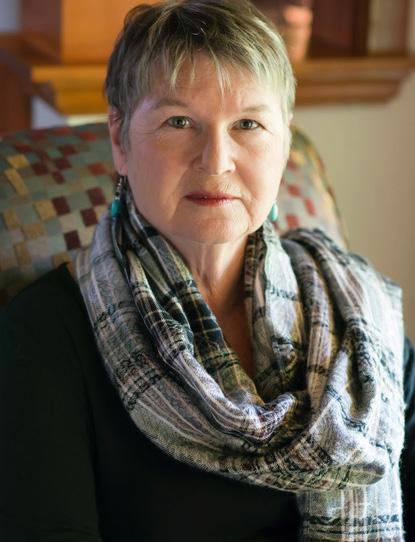
WRITING LEGACY: ONE AUTHOR’S PERSPECTIVE ON THE IMPORTANCE OF SHARING STORIES
By Lindsay Morris
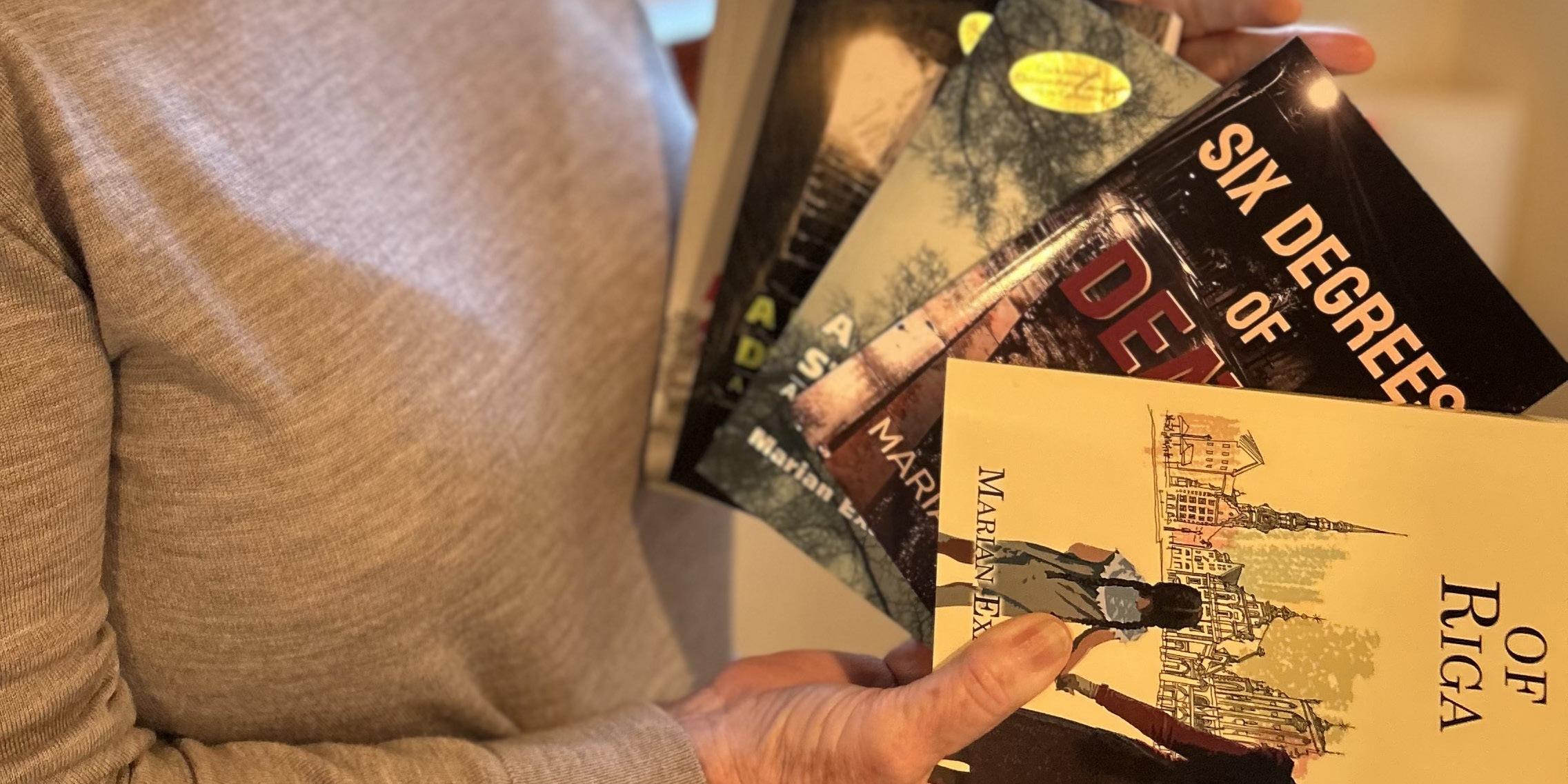
Writer’s block seems to be a mythological character for Marian Exall, an author that splits her time between Bellingham and the Methow Valley. Instead of forcing herself into routine or daily writing accomplishments, she lets the story come to her and often while she’s lying awake in bed. She writes for joy, not quotas and yet she’s published 6 novels and doesn’t show any signs of slowing down.
A LATE BLOOMER’S BEGINNING
“I don’t look at it as a career,” she says of her writing life, which began in earnest only after leaving her law practice in 2012. “I think I’m a hobby writer, really.” But this modest self-assessment belies the accomplishments she’s achieved and the time she has committed to honing her craft.
Her journey to becoming a published author came through an unexpected route. After mov-
ing to Bellingham and taking a writing class she thought would focus on memoir, she discovered her true calling was fiction.
One of the first stories she captured on paper came from an encounter with Edith Zwartendijk, a Dutch woman whose father saved 2,300 Jewish refugees as consul in Kaunas, Lithuania, during World War II. Though it would take years of craft-building through three self-published mysteries and countless hours with her critique group, that story eventually became Daughters of Riga, her fourth published novel.
THE LEGACY OF UNTOLD STORIES
What drives someone to spend years writing a historical novel about people and places far removed from their own experience? For this author, it’s about preserving what might otherwise be lost.
“One phrase kept cropping up,” she explains, recalling book events where she invited audiences to share their family war stories: “’My father never spoke about the war,’ or ‘my mother never spoke about the depression.’ And I feel like those stories are so valuable, and these stories need to be preserved and told.”
This conviction led her to facilitate memoir writing workshops at places like the Bellingham Senior Center and with Methow At Home. In these sessions, something remarkable happens. Participants don’t just recount facts—they reveal the texture of lived experience that no history book can capture.
COMMUNITY AS CREATIVE FUEL
Marian’s work demonstrates the vital role community plays in both creating and preserving our collective stories. Her bi-weekly critique group has met for years, providing not just feedback but accountability and friendship. In the Methow Valley, she’s connected with fellow writers and the creative community that makes the valley such a unique place.
“I feel like I’m doing it. I write for joy,” she says, “It is a privilege, and I feel very grateful to have this opportunity late in life.”
WRITING THROUGH THE NIGHT
A self described insomniac, she does much of her plotting and character development while lying awake at 3 a.m. “Thinking about writing is writing,” she explains. “Plotting, planning dialogue, thinking of scenes, thinking about what my character would do.” The next morning, she can usually recreate on the page what she worked out in her head during those sleepless hours.
This might seem like making the best of a difficult situation, but there’s something poignant about it—stories gestating in the quiet darkness, taking shape while the world sleeps, ready to be born with the morning light.
THE HARDSHIPS WORTH REMEMBERING
Daughters of Riga tells the story of young women who endured World War II and lived with its consequences. “They didn’t cause the war, they didn’t fight in the war, they endured the war, and the war formed them,” she explains. “I wanted to tell the story of that generation that grew up after the war, came to adulthood after the war, and lived with the consequences, and made the best of it.”
The hardships of that generation—and others she encounters in her memoir workshops—are stories she hopes will be preserved and passed on. There are stories of women supporting families during the Depression with no work experience, of writing letters to inform families of war deaths, of living without electricity in remote valleys and making it work. These aren’t just interesting historical footnotes—they’re testimonies to human resilience that have something to teach us about endurance and courage.
HANDING STORIES TO THE FUTURE
Now working on a sequel to her recently published Loners, her sixth novel, she continues to balance full-length manuscripts with writing competitions and community workshops. But perhaps her most important legacy work isn’t the novels at all—it’s creating spaces for others to tell their stories. Through her memoir workshops, Marian is helping ensure that the experiences of our older neighbors aren’t lost.
“At the end of life, those stories become, I think, more crucial to share,” she reflects. “That’s essentially why we’re on this earth—to learn from other humans about the human experience and to value it, different as it might be from us.”
A LEGACY IN PROGRESS
When asked how she feels when she finishes a novel, her answer is telling: “It’s gone. It’s out of my life. I can barely remember the title.” The book belongs to readers now, to become their story, to mean what they need it to mean. This willingness to let go, to trust that the work
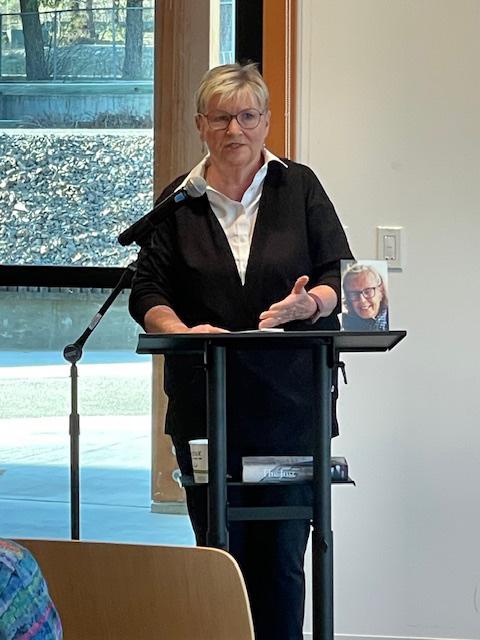
will find its way and do its work in the world, might be the greatest wisdom of all. Legacy isn’t about control—it’s about contribution. It’s about adding something of value to the collective human story and trusting that it matters, even if we can’t see all the ripples it creates.
AN INVITATION TO SHARE YOUR STORY
In partnership with Methow At Home, Marian will be leading a writing workshop to explore the concept of memoir and sharing stories (May 7th). No previous writing experience is necessary. This class is being offered by donation.
The author’s latest novel, “Loners,” features detective Christine McQuarry, navigating fentanyl smuggling and personal demons in a town not unlike Bellingham. You can find her books at the Winthrop Library, Trail’s End Bookstore, and online at Bookshop.org and other online outlets.
TECH TUESDAYS
Winthrop Library Community Room: Weekly on Tuesday, 1 PM
GAME DAY AT THE GRANGE
Twisp Grange: First Sunday of the Month, 1-4 PM
DUCKS IN A ROW — ADVANCED CARE PLANNING WORKSHOP
Twisp Grange: April 16, 5-7 PM
NEW VOLUNTEER TRAINING
Winthrop Library Community Room: May 6th, 1-3 PM
MEMOIR WRITING WITH MARIAN EXALL
Winthrop Library Community Room: May 7, 1-3 PM
MEMBER & VOLUNTEER POTLUCK
Mazama Community Club: May 14, 5-7 PM
Learn more at www.methowathome.org/events
organization? Partner with us. support it? Become a Sponsor. communications@methowarts.org
Our mission is to inspire artistic curiosity, empower creativity, and propel the creative economy in Okanogan County. Because art weaves the fabric of humanity, awakens the spirit, enables self-expression, and supports belonging, we believe: Art matters – for all of us.