How council enforcement teams can benefit from quality training
NEW ZEALAND'S NATIONAL ADAPTION FRAMEWORK:
Preparing for a changing climate
TIMARU DISTRICT COUNCIL TALKS CONSENTS WITH MC
MEET THE TEAM
Cordelia Woodhouse
Building investigative excellence: How council enforcement teams can benefit from quality training
In this article, David examines how quality training for council teams can prevent costly investigative errors and build the technical expertise needed for successful prosecutions.
Council compliance officers and investigators face a significant challenge: pursuing enforcement action that protects communities while navigating complex legal requirements that can make or break a prosecution. A single procedural error during an investigation can render evidence inadmissible, result in withdrawn charges, and in rare cases expose councils to cost awards.
THE COST OF GETTING IT WRONG
The consequences of investigative mistakes are not merely theoretical. One example is CRC v Rooney Earthmoving Ltd [2021] NZDC 4035, in which the Court imposed a significant cost award against the Council due to errors made by a compliance officer during a suspect interview, which led to incorrect charges being filed against the defendant, which were subsequently withdrawn.
This case reflects a broader challenge. Across New Zealand's councils, enforcement capability varies dramatically. The Expert Advisory Group (EAG) for RMA reform identified in its Blueprint that some councils have no dedicated compliance staff and no experience taking enforcement action, while the complexity and cost of pursuing charges can be beyond the reach of smaller territorial authorities. Even well-resourced councils face challenges: competing priorities, unmanaged conflicts of interest, and the reality that enforcement work is generally not as politically popular as other spending.
THE NEED FOR TRAINING
To become successful investigators, it is important for Councils to invest in training to ensure officers have the confidence and capability to perform their role to a high standard. Good quality training reduces the risk of fundamental mistakes happening in an investigation –mistakes that can have significant consequences.
Successful prosecutions depend on officers mastering several interconnected technical areas such as:
• Developing and implementing an investigation plan;
• Accurate note-taking and evidence handling;
• Understanding the legal responsibilities associated with property entry and warrants to ensure activities remain lawful and evidence is admissible;
• Undertaking good quality interviews; and
• Robust enforcement decision-making to determine the appropriate response.
PRACTICAL TRAINING THAT WORKS
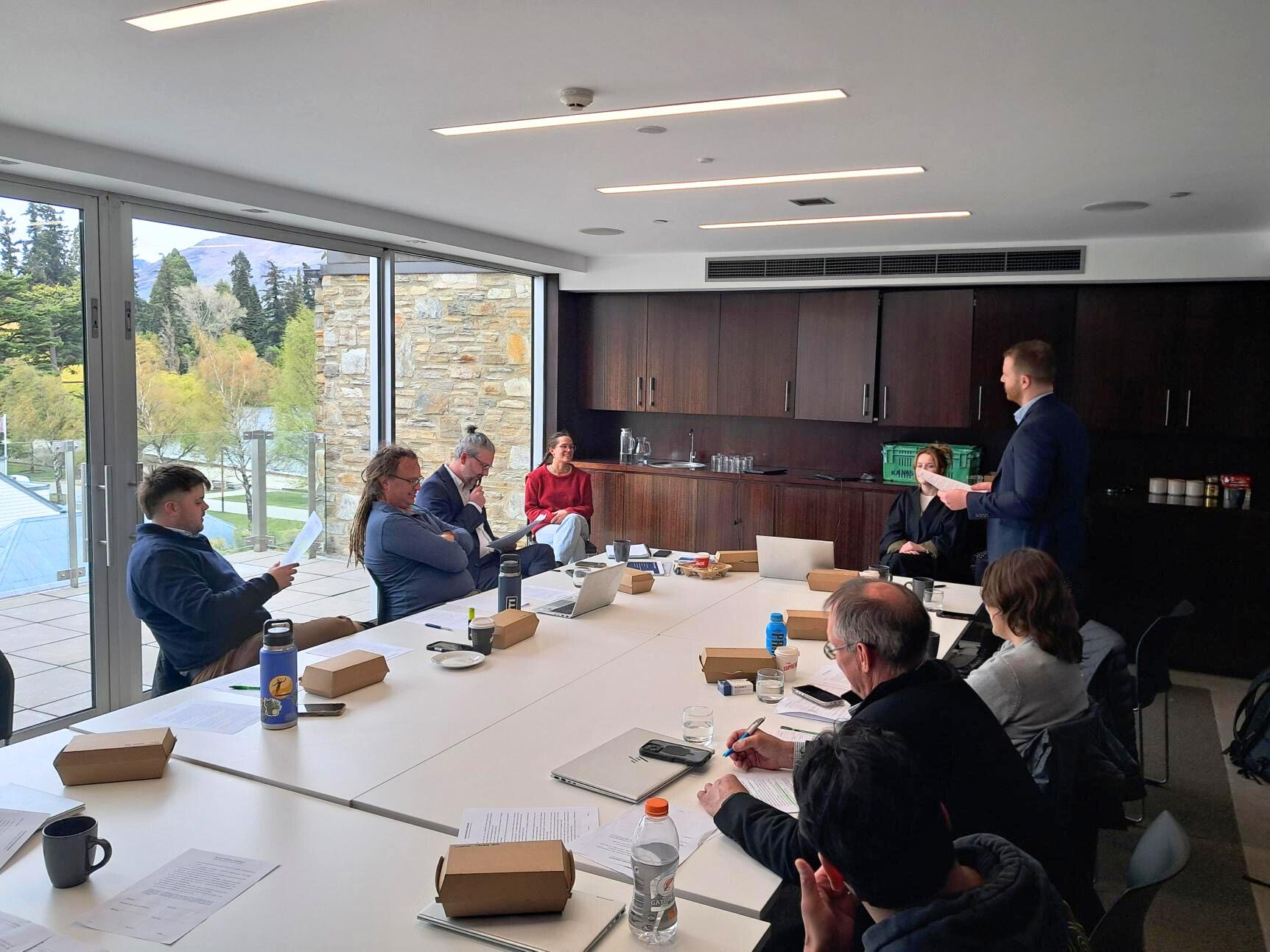
This month, we had the opportunity to deliver targeted training to three enforcement teams, RMA monitoring and enforcement, dog control, and environmental health. The three-day programme was designed for officers who already have strong experience in enforcement work, with a view to enhancing their capabilities in key areas.
The programme comprised three components:
1. Interactive sessions on best practice investigations including robust enforcement decision-making, suspect interview technique, and court skills training;
2. Mock trials involving real-world scenarios with simulated direct examination and cross-examination; and
3. Scenario-based workshops exploring challenging cases to develop practical solutions.
The feedback was overwhelmingly positive. Officers reported that the training not only reinforced their existing knowledge but significantly increased their confidence for future legal proceedings. As one participant noted, the training "exceeded expectations" and was "highly relevant to our day-to-day work."
The mock trial component proved particularly valuable. One Animal Control officer noted: "The mock trial really brought the material to life and highlighted the importance of our role
highlighted that reviewing real-world examples provided valuable learnings
LOOKING FORWARD
As councils prepare for upcoming RMA and Building Act reforms, the need for technically proficient enforcement teams will only increase. The variability in capability identified by the EAG – driven by competing priorities, resource constraints, and lack of dedicated compliance staff – can be turned around by targeted, practical training that builds both confidence and competence.
The cost of not investing in ongoing training is measurable –in withdrawn charges, cost awards, and failed prosecutions. But the benefits extend beyond successful enforcement: they include confident officers who understand their powers and limitations and robust investigations that deter non-compliance.
GET IN TOUCH
If you'd like to discuss how targeted training can strengthen your council's enforcement capabilities, contact David Collins
New Zealand's National Adaption Framework: Preparing for a changing climate
In this article, Cordelia reviews how New Zealand's first National Adaptation Framework establishes a strategic approach to climate resilience through four key pillars, designed to help communities prepare for and respond to climate change impacts.
In a potentially significant step toward strengthening climate change resilience, the Government recently introduced New Zealand’s first National Adaptation Framework (NAF). The NAF builds on the July 2025 report by the Independent Reference Group on Climate Adaptation and sets out the Government’s long-term and strategic approach to ensure decision-making is timely and consistent and to help New Zealander’s prepare for, and respond to, the effects of climate change.
At the core of the NAF are four key pillars, each supported by targeted actions designed to strengthen resilience to climate change:
• Risks and response information sharing
• Roles and responsibilities
• Investment in risk reduction
• Cost-sharing pre and post events
IMPROVING ACCESS TO CLIMATE RISK INFORMATION
One of the most significant priorities within the framework is improving access to reliable information about climate-related risks. This recognises that effective adaptation depends on individuals, communities, and businesses understanding the specific risks in their area. Information about natural hazards should be readily available, regularly updated and nationally consistent.
Flooding, which is already one of New Zealand’s most damaging and frequent natural hazards, has been identified as a central focus. The Government is developing a publicly available National Flood Map, that will illustrate where flooding is most likely to occur both now and in the future, incorporating the effects of climate change into long-term risk assessments. Other key actions under pillar one include the development of natural hazard datasets and nationally consistent risk standards.
These actions are consistent with the current direction of travel for natural hazards. Earlier this year, the Local Government (Natural Hazard Information in Land Information Memoranda) Regulations 2025 came into force. The Regulations set out specific information about natural hazards that must be included in Land Information Memoranda (LIM). All LIMs must
now have a natural hazard section that sets out the natural hazard risks for a property in a standardised format, including maps of relevant natural hazards (if these have been produced by the relevant territorial authority).
STRENGTHENING LOCAL GOVERNMENT RESPONSIBILITIES
The second pillar of the NAF is to clarify and strengthen the responsibilities held by local government. Recent extreme weather events have highlighted significant vulnerabilities in many communities and underscored the need for more consistent and proactive planning at the regional and district levels.
To address this, the Climate Change Response Act 2002 is to be amended to clarify requirements for local governments by requiring adaptation plans for areas identified as being at the highest risk from climate impacts. These plans will outline the specific hazards facing each area, describe how local authorities will manage those risks, and identify the level of investment required to do so. This clarity is intended to ensure that communities understand what actions will be taken and what changes may occur in response to long-term climate pressures.
These local adaptation plans will become a central tool in helping councils prioritise funding, strengthen emergency management systems, guide land-use planning, and make informed infrastructure decisions in areas exposed to flooding and other hazards.
New national direction on natural hazards has also been signalled as part of the Government’s phased approach to the reform of the RMA. It is intended that this national direction,
and Other System Changes) Amendment Act 2025, which is now in force, has clarified and strengthened councils’ ability to decline land use consents or impose relevant conditions where there is significant natural hazard risk. See the October 2025 edition of the Local Edge for more detail on this development.
INVESTMENT IN RISK REDUCTION
The NAF also emphasises proactive investment in risk reduction, by shifting investment towards reducing the risks of climate related events rather than just responding to events. It seeks to recognise that strengthening infrastructure, improving water management systems, protecting natural environments, and upgrading housing and community assets will be essential to reducing harm and future costs.
The actions under pillar three include investing in the resilience and economic prosperity of the regions through the $1.2 billion Regional Infrastructure Fund. There is also a focus on proactively managing Crown assets such as schools, public buildings and major infrastructure.
In respect of local authorities, the NAF will regulate how councils weigh up the costs and benefits of climate adaptation. Local adaptation plans will be used to set out planned investments by local government in priority locations, and how these are to be financed over time. These plans will also provide central government with a prioritised list of risk reduction investments, which can inform future investment decisions.
COST SHARING AND LONG-TERM FINANCIAL PLANNING
A central challenge in adapting to climate change is determining how the costs of preparation, protection, and recovery will be shared. The NAF proposes that financial responsibilities are distributed across society over the long
term. Pillar four also builds on the outcomes in pillar three: New Zealand should be transitioning to a country that incentivises risk reduction from an economic perspective, allowing markets to adjust as risks change.
It is proposed that a new development levy system be introduced as part of the Government’s Going for Housing Growth programme, to ensure councils charge developers a proportionate amount of the total costs of capital expenditure necessary to service growth over the long term. The delivery of new tools to support government recovery decisions following severe weather events is also planned.
CONCLUSION
The release of the NAF marks a major advancement in New Zealand’s preparation for the impacts of climate change. It builds on other initiatives currently underway and proposes a system with robust and nationally-consistent risk information that is readily available, that clearly delineates local government responsibilities, emphasises risk reduction and develops cost-sharing systems.
We will continue to follow these initiatives as they roll out. If this is something you would like assistance with, please reach out to one of the team.
GET IN CONTACT
If you'd like to discuss how the National Adaptation Framework may affect your organisation's climate adaptation planning, please get in touch with Cordelia Woodhouse.
Meet the team: Cordelia Woodhouse
Each month we’ll spotlight a member of the Meredith Connell team, so you can get to know the people behind our Local Government practice.
Cordelia knew she wanted to study science, but wasn't sure which direction to take. It wasn't until she had finished her first bachelor’s degree, majoring in Biology and Psychology, that the path became clear.
After commencing her law degree, she was naturally steered towards resource management law – a field where science and legal frameworks intersect to protect the environment.
She started her career as in-house counsel at an environmental NGO. Working there gave her valuable insight into the planning processes councils use to safeguard the environment, and it solidified her passion for the work.
"I enjoy the RMA space because you can see direct changes and protections put in place to safeguard the environment," she says.
After spending eighteen months at a specialist environmental and planning law firm, Cordelia joined Meredith Connell. The move was driven by her desire to gain more courtroom experience and to work directly with local government – both of which have become central to her practice.
For Cordelia, the collaborative nature of resource management law is one of its most rewarding aspects. It requires working alongside councils, developers, iwi, community groups, and environmental experts, each bringing their own perspective and expertise to the table.
Today, Cordelia advises local authorities and private commercial clients on a range of resource management and local government matters. Her experience spans the full spectrum of the field – she has appeared on resource management matters in almost all levels of New Zealand’s courts, as well as at resource consent and plan change hearings before local authorities and independent commissioners. Cordelia also acts for the Crown in criminal proceedings.
Her career reflects a commitment to environmental protection that began with her studies and continues to drive her work today – ensuring that legal processes support the sustainable management of New Zealand's natural resources.
Outside of work, she's been busy with minor home renovations, tramping, walking her dog, and settling in with a good book. An avid hiker, she's looking forward to tackling more trails in the new year.
Editor's note: At this point, we're starting to wonder if a love of reading is a prerequisite for working at Meredith Connell. It certainly seems to feature in every profile we write.
GET IN TOUCH
Cordelia is based in our Auckland office, supporting various local government clients across New Zealand.
If you have any questions, please don’t hesitate to reach out to Cordelia Woodhouse