By: Dan Walters, CalMatters
Acenterpiece of California’s perpetual political and legal wrangling over allocation of water is the complex array of rights that stretch back to the earliest years of statehood in the 19th century.
Simply put, those who claimed water before 1914, when the state assumed legal control, have “senior rights” that traditionally have entitled them to virtually unlimited supplies even when other users face cutbacks during drought.
The state Water Resources Control Board has made occasional efforts to curtail diversions by senior rights holders when supplies are tight but its legal right to do so is unclear with water rights in conflict with other laws declaring the larger public’s interest in overseeing “beneficial” water use.
Merced County Farm News
Water rights reformers scored only a minor victory in the Legislature
One test of the issue resulted in a state appellate court’s 2022 declaration that the state lacked direct authority to block diversions by senior rights holders and suggested that only the Legislature could provide such power.
Although last winter’s heavy rains eased the competition for water that had become intense during several years of severe drought, advocates for overhauling water rights law to give the state more power to protect fish and other wildlife dependent on river flows mounted a major effort in the Legislature this year with three bills.
Together, they would have implemented key recommendations of a study commissioned by the water board that argued for giving it new powers to curtail supplies to water rights holders when warranted.
“When there is not enough water to satisfy all demands, water must be allocated among competing human and environmental uses,” the study declared. “California’s State Water Resources Control Board (SWRCB) needs to be able to routinely require diverters to
curtail (stop) unlawful water uses in order to protect water rights, human health and safety, and the environment from serious harm.”
Water rights holders, most of whom are agricultural water agencies, saw the report and the three bills — accurately — as a frontal assault on their privileged position in the competition for water and mounted a stout defense. If enacted, they argued, the changes would make it infinitely more difficult for farmers to plan crop cycles.
The most far-reaching of the three measures, Assembly Bill 1337, would have overturned the 2022 water rights case and authorized the water board “to issue a curtailment order for any diversion, regardless of basis of right, when water is not available,” but it stalled after winning Assembly approval.
A second, Assembly Bill 460, which would have given the board authority to intervene in water diversions on an emergency basis, suffered the same fate.
However, the least onerous of the three, from the standpoint of water
rights holders, Senate Bill 389, has made it to Gov. Gavin Newsom’s desk. It would give the board more explicit authority to investigate whether water diversions are lawful — within the scope of diverters’ legal rights — and punish violators as trespassers.
It’s certainly less than what water rights reformers want, which means the decades-long struggle over the issue will continue, particularly if the state once again experiences the kind of drought that last winter’s heavy rain and snow storms alleviated. State water officials believe that such droughts will become more common with climate change, or at least will change the mix of precipitation, with less snow and more rain.
However, water rights are just one front — albeit a very important one — in the state’s perpetual conflict over how the precious liquid should be allocated. Water rights defenders say the state would not have to curtail their supplies if it did a better job of capturing and storing water when it’s available, and there’s some validity in that criticism.
House passes bill to prevent California, other states from banning gas vehicles
By: Noah Wicks, AgriPulse
The GOP-controlled House on Thursday advanced a bill that would block state bans on the sale of vehicles with internal combustion engines.
The Preserving Choice in Vehicle Purchases Act would prevent the Environmental Protection Agency from granting waivers under the Clean Air Act allowing states to prohibit the sales of gas-powered passenger vehicles. It was ushered through the chamber by 214 members of the House's Republican
majority and eight Democrats. It was opposed by 190 Democrats.
Eight Republicans and 14 Democrats did not vote.
The bill will now go to the Democrat-controlled Senate, where its chances of passing are far lower than in the House.
The bill targets California's ban on the sale of new gas-powered passenger vehicles by 2035, along with the emissions policies of 17 other states. Rep. John Joyce, a New York Republican and one of the bill's sponsors, said in a floor speech that an EPA waiver is currently "the only
thing standing in the way of California's implementation of this policy."
"We cannot expect vehicle manufacturers to build one car in California and another one for Pennsylvania," Joyce said.
Rep. Mike Levin, D-Calif., said the bill would force the EPA to revoke waivers going back to 2013, which would create "chaos and confusion for the entire auto industry."
"This bill attacks the Clean Air Act and the longstanding authority of states to make their own decisions to keep their air clean and climate pollution low," Levin said.
INSIDE: 14 11 September 2023 | Volume 116, Number 9
WeFarm. You Eat . CAFB Annual Meeting HazMat Training
MCFB CE Series
20
If you have been in a few meetings with me, you know by now that I regularly offer ag tours. I look at it as an olive branch to better understand where we come from. The end hope
from the Director's Desk
Breanne Vandenberg
is that they come to us the next time they have a question about agriculture. In many instances, this also creates an open dialogue for future conversations. I like to think outside of the box when possible (at least I think I do) and you’d be surprised at who may lend a helping hand down the road.
This month we brought back our Agricultural Policy Tours which had been on hiatus since 2019. The program was designed to have staff from government agencies tour the fields. Thankfully we had representatives from multiple cities, the county and state and federal offices. We ask that they come
with an open mind, a willingness to dive into agriculture and any burning ag questions.
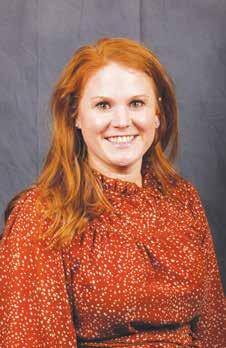
It was a day long program that included four tour stops. The morning started in Los Banos where Jarett Martin, Central California Irrigation District’s General Manager, met us at the top of Los Banos Creek. Jarrett, representing the Exchange Contractors and their partners, provided an overview of the project they are working on that will be beneficial to the area for SGMA and other areas. We then jumped over to Bob Brandi’s shop to check out the innerworkings of honey extraction. Bob gave insight as to not only honey extraction, but also bees and almond trees.
Following lunch, we traveled back over to the Merced area to speak with Craig Arnold of Arnold Farms and Loren Scoto of Scoto Bros. Craig met us in a sweet potato field that they had begun harvesting. As the slowmoving harvesters edged forward, Craig
detailed how the harvester digs up the sweet potato and what the sorters were looking for in size. Loren met us in a fresh market tomato field that was scheduled to be picked the following week. Attendees were able to learn the meaning behind why farmers are price takers and not price makers.
Each of the conversations covered challenges that this year brought with the most notable being labor, planting/ harvest delays and pest pressure. These days take a bit of logistics in planning and time away from the actual farming for presenters, but it greatly benefits those that join us for the day. Over the years I have found that many people are intrigued by the work behind bringing healthy products to their table, however, do not have the connections to experience an in-depth farm tour. For this reason, I urge you to invite these folks out for an hour or two. I know it can seem like an uneasy jump, but I think all parties would be surprised at the outcome.
Farmers Save money, water by adopting climate-smart agriculture practices
By: UCANR
AHmong small-scale farmer in Merced County has saved about 14.4 acre-inches of water annually and reduced greenhouse gas emissions by 12.406 MTCO2e per year (equivalent to the greenhouse gas emissions produced from burning 1,396 gallons of gasoline) after upgrading her farm. Rosie Lee – who sells Asian greens, green beans, corn, strawberries and other produce at her farm stand and to Asian markets – is one of hundreds of growers benefiting from California Department of Food and Agriculture incentives and funds with the assistance of Climate Smart Agriculture community education specialists.
“She is one grower who would not have access to those funds without my bringing my computer out to the field,” said Caddie Bergren, a Climate Smart Agriculture community education specialist who has been working with growers in Merced County since the program’s launch.
To make it easier for farmers to adopt new practices, CDFA and UC Agriculture and Natural Resources partnered to create the Climate Smart Agriculture program.
“Since 2019, UC ANR’s Climate Smart Agriculture Team has provided in-depth technical assistance to more than 1,300 farmers and ranchers in 24 counties,” said Hope Zabronsky, academic coordinator for UC ANR’s Climate Smart Agriculture team. “Through their strong relationships with diverse farming communities, they support the implementation of soil health, water efficiency, and manure management practices that optimize climate benefits for all growers and Californians.”
The program’s community educators work with farmers and ranchers in 24 California counties to get CDFAfunded grants and implement Climate Smart Agriculture projects. These efforts, which emphasize outreach to underserved farmers and ranchers, have resulted in a total of $36.5 million
invested from the State Water Efficiency and Enhancement Program or SWEEP, the Healthy Soils Program, and the Alternative Manure Management Program.
“Agriculture is an important part of the climate solution,” said CDFA Secretary Karen Ross. “This funding enables CDFA and UC ANR to partner with farmers and ranchers to scale up climate-smart agricultural practices. This is essential as we contend with our hotter, drier future.”
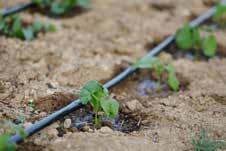
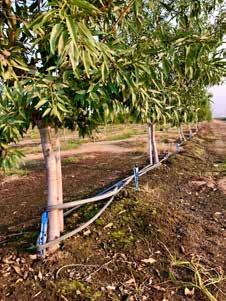
Lee, the Hmong grower, had been growing 18 acres of vegetables by flood irrigating with groundwater. To save water and reduce pumping costs, she asked Bergren to help her apply for SWEEP funds to convert to drip irrigation and install solar panels. Bergren brought her laptop to the field to help Lee pull together the necessary information for the application. After Lee received funds for the project, Bergren assisted her with the technical logistics of installing the irrigation and solar equipment.
“I called vendors and we were able to complete the project on time,” Bergren said.
CDFA and UC ANR have published an impact report highlighting the results of the multi-year partnership focused on increasing adoption of climate-smart agriculture practices to reduce water and energy use.
The investments have funded more than 420 projects, so far. The projects are expected to save an estimated 8.3 billion gallons of water during their lifetime, enough to supply over 75,000 typical homes in California with water for a year. Additionally, there are projected reductions of more than 355,000 metric tons of carbon dioxide-equivalent, as much as would be achieved by removing 79,110 gaspowered vehicles from roads.
The report highlights the importance of providing tailored outreach, education and technical assistance to small-scale, non-English speaking, and otherwise underserved farmers and ranchers.
Page 2 Merced County Farm News • September 18, 2023
from the President's Corner
Joe Sansoni
While many crops have already been undergoing harvest since early summer, and others are being produced year-round, it is now officially “harvest time” in the Valley…that transitional phase between summer and fall that is the busiest yet most memory-inducing for me. During my travels all over the past few weeks I have seen trucks hauling almost every imaginable product grown in the Valley, and then some. I’ve watched tractors and field crews working day and night. Irrigators and ditch tenders working ‘round the clock and keeping diligent watch over the canals, checks and pumps. Dairy cows cooling themselves under the fans and misters in the barns, and beef cattle grazing and gathering to cool off among shade trees and winding creeks of cool water. Tree shakers and sweepers working to bring in the almond crop… choppers and swathers cutting corn and hay. Tomato and garlic harvesters working day and night. Watermelons, cantaloupes, onions, parsley, basil, sweet
potatoes, carrots, peppers, radicchio, chickens, eggs, etc etc. Of course there are still more fall crops to come, such as walnuts, pistachios and cotton! I absolutely love observing the production of and naturally also partaking in the bounty of the harvests we produce here! Despite the ongoing heat, which I seem to feel a bit more every year as I age, it’s my favorite time of the year and never fails to take me back into memories of my childhood years and my farm boy upbringing here in Merced County.
When I was a boy, my favorite thing to do was to ride along with my dad and be his “right-hand man” as he always called it. My travels and “work” with dad started when I was just a little guy of 4 or 5 years old, and there was never anything else I’d have rather been doing. In the early years, my seat was the middle seat of his blue and white 1977 GMC High Sierra pickup truck. I got the middle seat for two reasons…first, because it was easier for him to share his drinks, snacks, sandwiches and candy bars with me if I was right next to him, and secondly because the shotgun seat belonged to his little poodle Pepper, who outranked me in human years as well as dog years, and who always rode around with her right paw on the armrest like a person would. Eventually Pepper got too old and frail to go with him every day, and I promoted into the shotgun seat. I spent almost every work day with dad during the summertime and every day I could during weekends and holidays once school started. In those days he worked an area that ranged from I-5 on the westside all the way to Le Grand toward the east, and from as far north as Snelling and Hopeton south to El Nido and Dos Palos. That didn’t include parts
and equipment runs which ranged to Modesto, Stockton, and Linden to the north and Fresno, Visalia and Tulare to the south. In addition, when he was short a driver he spent time driving one of his trucks moving tractors and machinery or hauling almonds, almond hulls, walnuts, wheat, barley and rice…with me as an eager co-pilot who loved riding up high in that big old International cabover. As I grew he taught me the beginnings and fundamentals of many of the skills I employ to this day, such as welding, engine repairs and tune ups, running tractors and harvest machines, helping run the almond hullers, and how to hook and unhook trailers from a big rig. Though driving or working on machines were always my favorite activities, he also taught me how to “herd” water, run irrigation pumps and repair broken sprinklers and pipes. Another great experience for me during those years was dad’s involvement on the Merced County Fair board, which meant a whole week of every night at the fair until closing time (of course after working all day)! We ranged quite a lot of territory together and those years forged my love of agriculture, tractors, trucks and equipment.
The transition from summer into fall was always bittersweet for me as a kid who loved to work and be involved
in the farming and harvesting. I had to return to school during the weekdays, which meant the end of getting up super early to go to work with dad every day. But, as many of us do, I also loved fall, and the special things that fall brings with it…cooler weather, jumping around on the fluffy white stuff in my uncle’s cotton trailers on weekends, bonfire parties for my sister’s October birthday, and eventually Halloween, pumpkin pie and Thanksgiving. I don’t get to jump around in any cotton trailers anymore, but aside from that, these are still some of my favorite things this time of year. Things weren’t always easy, and like anyone we had our share of trials, tribulations and tough times then just as we do now. As I reflect back on the mostly warm and positive memories that made me into who I am today, I think of my own two boys and their upbringing with and alongside myself as a father, teacher and mentor. Surely it has been different times and different experiences for them, but many similarities in there as well. I sincerely hope that they too have been able to come away from their youthful years with not only positive and cherished memories, but also great respect, admiration and appreciation for the tremendous efforts and sacrifice that go into the work of feeding not only a family but a nation and world.
From small farms to large commercial operations, the INSURICA Agriculture Experts have grown up in agricultural communities.
We’ve designed insurance programs to provide broad and flexible coverage for both your personal and business needs. Tom
| INSURICA.com
Merced County Farm Bureau’s Mission Statement
Merced County Farm Bureau is an independent, nongovernmental, grassroots organization that advocates for the men and women who provide food, fiber, and nursery products for our community, state, and nation.
Merced County Farm Bureau exists for the purpose of improving the ability of individuals engaged in production
agriculture to utilize California resources to produce food and fiber in the most profitable, efficient and responsible manner possible, guaranteeing our nation a domestic food supply.
Merced County Farm Bureau supports policies and legislation that promote and protect our Country’s number one industryagriculture for future generations and the security of our nation.
Page 3 Merced County Farm News • September 18, 2023
Murphy | 209.353.2700
| tmurphy@INSURICA.com
EVALUATIONS
Merced County Farm News
Published monhtly by Merced County Farm Bureau

Phone (209) 723-3001
Fax (209) 722-3814 646 S. Hwy 59, Merced CA 95341

Email: dflake@mercedfarmbureau.org (USPS 339-500)
Entered as Second Class matter, Jan. 20, 1948 at the US Post Office in Merced, CA. Subscription is included in membership. Singles issues are 50 cents. Merced County Farm News is printed by Wesco Graphics, 410 E. Grant Line Road, Suite B, Tracy, CA 95376
POSTMASTER: Send address changes to Merced County Farm Bureau, P.O. Box 1232, Merced, CA 95341; telephone (209) 723-3001; FAX (209) 722-3814. Merced County Farm Bureau does not assume responsibility for statements by advertisers or for products advertised in Merced County Farm News, nor does Farm Bureau assume responsibility for statements or expressions of opinion other than in editorials or in articles showing authorship by an officer, director or employee of the Merced County Farm Bureau or its affiliates.
Merced County Farm Bureau Staff
Breanne Vandenberg
Executive Director
Lorraine Passadori
Program Director
Denelle Flake
Farm News Editor/Project Specialist
Alexxis Rudich
Project Assistant/ESJ Grower Relations


Board of Directors
Pres: Joe Sansoni 761-9284
1st VP: David Barroso 652-6437
2nd VP: Tim Lohman 988-3545
Sec/Treas: Dante Migliazzo 769-9525
Past Pres: Eric Harcksen 620-1953
District 1
Matt Jasso 270-1981
Joe Maiorino 564-6791
District 2
Mike Davis 387-4151
Bob Vandenberg 704-5568
District 3
Chad Perry 675-4474
District 4
Jean Okuye 756-2421
Galen Miyamoto 761-5366
District 5
Brent Chipponeri 652-3473
John Van Ruler .......................648-3877
District 6
John Johnston 489-8462
Bill Arnold. 761-0542

District 7
GIno Pedretti III 756-1612
Tom Roduner 769-9353
District 8
Julie Giampaoli 201-8434
Joe Scoto 761-0489

Directors at Large
Bob Giampaoli 769-4973
Louie Bandoni 761-0625
Michael Serrano 485-1935
Jesse Penick 678-8887
Tom Murphy 353-2700
Alan Sano 559-905-1240
Mariposa County Farm Bureau Staff
Danette Toso Executive Director
Jay
Page 4 Merced County Farm News • September 18, 2023
Pres: Kelly Williams 376-2408 1st VP: Elnora George 376-2419 2nd VP: Carla Kelly 742-6862 Directors Abel Lopez 376-2208 James Palmer 374-3470 Walter Palmer Jr 374-3470 Trevor Lee Smith 769-9969 Danette Toso 376-2304 Tony Toso 376-2304 Jordan Cory .................... 765-401-4078
Board of Directors
Mahil CFBF Director - District 9
Macedo
Representative
Hanning
Baskins YF&R State Committee - District 9 Stay Connected with MCFB Follow us on instagram @merced_farm_bureau Like us on Facebook Merced County Farm Bureau Join our mailing list by emailing info@mercedfarmbureau.org IRRIGATION
S T A N I S L A U S M E R C E D M A D E R A C O U N T I E S A P R I L T H R O U G H N O V E M B E R C O N D U C T A N I N - F I E L D S Y S T E M A N D S I T E E V A L U A T I O N I D E N T I F Y A N Y S Y S T E M I N E F F I C I E N C I E S D E V E L O P F U L L C O N S E R V A T I O N P L A N T H E Y W I L L : K E V I N R E Y E S T O S C H E D U L E A N E V A L U A T I O N P L E A S E C O N T A C T : programs@maderachowchillarcd org 559-755-5148 Have an Irrigation Specialist evaluate your existing irrigation system for FREE!
David
CFBF Field
Pierce
Merced County YF&R Chair Sarah
2nd Annual Fair Theme Contest!
 By: Merced County Spring Fair





Each year our community comes together in the spirit of Henry Miller’s annual May Day Picnic to enjoy carnival rides, fair food, entertainment, and experience livestock and exhibits. The Merced County Spring Fair (MCSF) Board of Directors invites you to develop a theme for the
2024 Spring Fair. Imagine a theme that embodies the Spring Fair experience! Write a persuasive essay to the MCSF Board sharing your thoughts and ideas on a suitable theme for the 2024 Merced County Spring Fair. Please include specific details to support your opinion as to why your theme should be chosen for the 2024 Spring Fair. Your submission is to be written in MLA
style, 250-500 words. The essay contest is open to all 9-12th grade students attending schools within Merced County.















Email your essays to springfair@ countyofmerced.com no later than November 3, 2023. Be sure to add ESSAY THEME CONTEST in the subject line. Submissions may also be hand delivered to 403 F St. in Los








Banos. Please add a title page including your full name, grade in school, name of high school, city of attendance, email address, and phone number for correspondence. The chosen theme will receive a $500 scholarship awarded by the Merced County Spring Fair Heritage Foundation. For more information, please call the Spring Fair office at (209) 826-5166.
Page 5 Merced County Farm News • September 18, 2023
2nd ANNUAL THEME CONTEST WHAT: 250 500 word persuasive essay, MLA style WHEN: Submit by November 3, 2023 WHERE: Email your essays to springfair@countyofmerced.com Or hand delivered to 403 F St. in Los Banos CALL THE FAIR OFFICE FOR MORE INFO (209)826 5166 WHO: OPEN TO ALL 9 12TH GRADE STUDENTS attending schools within Merced County TOPIC: Imagine a theme that embodies the Spring Fair experience! The chosen theme will receive a $500 scholarship SPONSERED BY: Merced County Spring Fair Heritage Foundation





Page 6 Merced County Farm News • September 18, 2023
Chapter Officers Attend Sectional Leadership Conference
By: Shiminka Elwin, El Capitan FFA Chapter Reporter
On September 12th, the El Capitan FFA officer team traveled to Merced College to attend the Merced-Mariposa Section Chapter Officer Leadership Conference. COLC, is a leadership conference where chapter officers have the opportunity to bond with chapter officers from other schools in the Merced-Mariposa
Section. This year, COLC was directed by the Merced-Mariposa Sectional Officer team, along with the Merced College Ag Ambassadors.
To start off the conference, chapter officers went outside to the amphitheater where they took part in different icebreaker activities with their office position. “This event really opened my eyes to how connected we are to one another in this community,” said Chapter President Adrian Soto. After creating bonds with students from other
schools, each El Capitan officer separated into the different workshops and got a tour of the Ag department at Merced College. Overall, the evening included many team-building and bonding activities that helped to build new friendships and leadership skills.
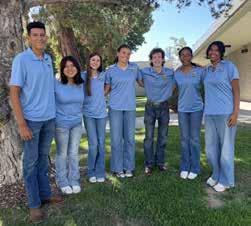
El Capitan FFA officers pictured left to right: Adrian Soto, Jasmine Hernandez, Violette Walker, Abigail Schneider, Silas Camp, Anika Niles, Shaminka Elwin
Let’s make this year LIMITLESS!
By: Madyson Wilhelm, Merced FFA Chapter Reporter
As the 2023-2024 school year kicked off this month, this year's officer team believes that through FFA, our members all have the capability to experience infinite amounts of activities, connections, opportunities, and lifelong memories. With endless opportunities, we felt that this year's theme should represent just that!! Our officers believe the sky's the limit and that is why they have chosen LIMITLESS as this year's theme. We strive to help our chapter and members achieve their goals and step out of their comfort zone to know that their opportunities are LIMITLESS!!
With limitless opportunities, our officer team along with our dedicated leadership team have new and exciting things for this upcoming year. With the return of Ag TV, we are able to digitally connect with our members on a weekly basis to get them involved and excited for upcoming events, challenges, and opportunities such as community
service, lunch and after-school meetings, and CDE teams and competitions. We have also started monthly challenges to keep members active and involved through social media on Instagram @ themercedFFA. This allows members to highlight our chapter, be more involved, and earn FFA points.
On August 25, during lunch, Merced FFA held its first event of the school year which was the officer meet and greet. The officer meet and greet was a great opportunity for our members to get to meet this year's officer team and learn about FFA and what opportunities they have within the FFA. Officers were able to answer questions for members while also welcoming new members into the chapter while keeping cool and enjoying popsicles and laughs. Firstyear member Bree Pimentel shared “I’m looking forward to learning about the Agriculture Industry and the opportunities it has to offer. I'm also looking forward to this year's event and meeting new people in our chapter.”
For more information, visit www. mercedffa.org for all upcoming events and activities.

Page 7 Merced County Farm News • September 18, 2023
Page 8 Merced County Farm News • September 18, 2023
Sweet Potato Joe from page 1
the former Florence Cardoza of Merced in 1942.
REGISTER FOR FREE FIELD TRIPS AT HILMAR CHEESE

 By: Hilmar Cheese Company

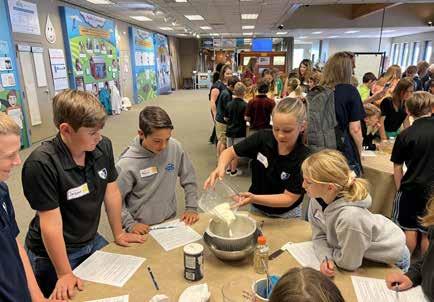
Hilmar, CA. September 12, 2023. Hilmar Cheese Visitor Center is offering FREE Science, Technology, Engineering and Math (STEM) field trips for schools associated with a school district from grades transitional kindergarten through high school. The field trips are offered January through October. Times available for tours are at 9:30 am, 11:00 am and 12:30 pm or later for after school programs.
Teachers are encouraged to sign-up as soon as possible, especially for spring dates as morning times fill up fast.
All school tours are free for students. Students will watch a cheesy MOOvie, explore the hands-on exhibits and
After the war, and during his life as a sweet potato farmer, he served as President of the California Sweet Potato Council, and US Sweet Potato Council, where he was a Director for over 20 years. He was the first California farmer to attend the National Sweet Potato Convention, among other industry firsts. Joe served as President of the Merced County Farm Bureau, and was on the Board of Directors of the Nisei Farmers League. He formed the California Sweet Potato Growers Co-op in Livingston, along with several other local growers, which is celebrating its 50th anniversary this year. His interests and community involvement were very diversefrom serving as a founding member of the Livingston Medical Group, to past-President of Livingston Rotary, to being
sample cheese. Transitional kindergarten through 3rd grade can do a fun science experiment of turning a liquid into a solid to make and eat ice cream. Cheese making is offered to grades 4th through high school and is a great hands-on science experiment and teamwork activity. The duration of the tour and hands-on activity is about 90 minutes. To book a field trip, please complete the tour request form on the Hilmar Cheese webpage: https://www. hilmar.com/contact-form-tour-request/ Follow Hilmar Cheese Company on social media to stay up-to-date with specials and activities. Hilmar Cheese Company Visitor Center is open Monday – Friday 7 am to 6 pm and Saturday 10 am to 2 pm. Call 209.656.1196 with any questions.
known as the “Voice of Livingston.” From 1946 to 1996, he announced all the Livingston High School football games, lending his strong voice to the community by also announcing everything in Livingston from parades to radio programs. He served on the Livingston Elementary School Board and the Merced County Recreation Commission for many years. Joe’s acting skills even benefited the Livingston Little Theater Group, where he starred in several productions, most notably as Elwood P. Dowd in “Harvey”.
His love of baseball began at an early age and became a life-long interest that manifested itself into a devotion to the sport for over eighty years. He organized the first kid’s hardball team in Merced County in the early 50’s. He was particularly fond of American Legion Baseball, serving as a coach, sponsor, announcer
and booster for over fifty years. This led to his being appointed the third Area Commissioner of Baseball. All of these years of being involved in baseball in Livingston culminated in the community baseball field being renamed the “Joe F. Alvernaz Baseball Field,” something he was so proud of.
Joe was predeceased by his parents, Joe and Mabel Alvernaz, brothers, Arthur and John Al vernaz, and sister, Mary Geyer. He was also predeceased by his oldest son, Joey Alvernaz, in 1980 and by his wife of 64 years, Florence, in 2007.
He is survived by five children, Judy Blevins, James (Colette) Alvernaz, and Benjamin (Debbie) Alvernaz of Livingston; Cecelia (James) Simon of San Diego, and Susan (Randall) Wilson of Mariposa, a sister, Cecelia Luker of Atwater, 17 grandchildren and 13

great grandchildren. His light on earth has dimmed, but heaven is brighter as he has joined Florence, the true love of his life.
So long to our Dad, coach, neighbor and everyone’s friend. He will be deeply and painfully missed, yet celebrated, honored
In lieu of flowers, the family requests that donations may be made to Grace Nursing Home in vernaz Memorial Fund to benefit
1983-1986 and hired long-time staff member Lorraine Passa dori when she showed up in her clown costume for the interview. Agriculture lost a strong advocate that will truly be missed. We will continue to keep his family in our thoughts and prayers.
Page 9 Merced County Farm News • September 18, 2023
Merced county Far M n ews s aturday, nove M ber 16, 2013, page 12
Pazin & Myers, Inc. 129 West 15th Street Merced, Ca 95340 Serving Merced and Mariposa Counties for over 35 years! (209)725-2050 Meeting all of your residential, farming, commercial, and retail needs... GASOLINE - DIESEL - QUALITY LUBRICANTS
Students making cheese at Hilmar Cheese Company Field Trip

Page 10 Merced County Farm News • September 18, 2023
ATTENTION
Farmers and
Farm
Employees who need to renew their DL-267 Endorsement or acquire their initial endorsement.

The Agricultural Hazardous Materials Transportation Program is being offered by the Farm Bureau and Nationwide Insurance. This class is for persons 21 years or older and have a current California Class C drivers license.
Due to new requirements, once a person completes the course, they must:
• Submit completed training record along with a completed CHP application
• Await paperwork return from CHP
• Pay any applicable DMV fees
• With returned CHP paperwork apply for DL-267 certificate from the DMV
November 1st, 2023
10:30 AM – 12:00 PM Spanish
1:00 PM – 2:30 PM English
Merced County Farm Bureau Conference Room
646 South Highway 59 Merced, CA 95341
$25.00 for Farm Bureau Members
$45.00 for Non Members
TO REGISTER: Please call the MCFB Office at (209) 723-3001 or email info@mercedfarmbureau.org
NOTE: Instructor will be via webinar, but attendance at the above site is required for testing purposes.
Please pay by cash, check or credit card in advance.
Page 11 Merced County Farm News • September 18, 2023
Video Released on Nitrogen Management in Processing Tomatoes
By: Cures
Davis, CA – Efficient nitrogen fertilization management for all irrigated crops is gaining much attention as the Irrigated Lands Programs in the Central Valley and Central Coast begin efforts to minimize nitrate movement past the root zone of fruits, nuts and vegetables. The first in a series of seven educational videos on nitrogen fertilizer management is now available online. The video series is funded through a grant to CURES by the Fertilizer Research and Education Program (FREP) at the California Department of Food and Agriculture.
“The 4Rs of Nitrogen Management in Processing Tomatoes” features Zheng Wang, Vegetable Crops Advisor with the University of California Cooperative
Extension (UCCE). Dr. Wang explains in the 30-minute video the current knowledge about efficient management of nitrogen in processing tomatoes by following the 4Rs: Right Rate, Time, Place and Product.
UCCE research supported by the California Tomato Research Institute shows that each ton of tomatoes requires approximately 4.6 pounds of nitrogen for efficient production. Nitrogen fertilizer injections into drip systems are best scheduled in the latter half of an irrigation set. Commercial and organic nitrogen fertilizers have varying levels of potential to move past the crop root zone. These and other agronomic and irrigation pointers are covered in the video, available in both English and Spanish. For those who want “just the facts,” 5-minute condensed versions of
the video are also available.
Visit the BMP section of https:// www.curesworks.org/nitrogenmanagement/ ; see Nitrogen Fertilizer 4R videos on canning tomatoes as well as walnuts. Coming soon in the CURES video series on the “4Rs of Nitrogen Management”: pistachios, almonds, citrus, high tonnage wine grapes, strawberries and lettuce. Sign up to be notified for all new video releases at www.curesworks.org “Contact Us.”
CURES was founded in 1997 to support educational efforts for agricultural and urban communities focusing on the proper and judicious use of pesticides and plant nutrients. Since its formation, the organization has focused its efforts on pesticide and nitrogen fertilizer stewardship and research projects, including studies

on the effectiveness of management practices to minimize movement of farm inputs and sediment into surface and groundwater. A key goal is to implement educational programs, coordinate research and provide information and professional expertise to users and applicators of pesticides and nutrients to enhance and protect the environment, as well as public and worker health and safety. All its projects are implemented either by CURES staff or through partnerships with organizations such as commodity groups, water quality coalitions, private companies and the University of California.
For more information, contact Parry Klassen at 559-288-8125 or klassenparry@gmail.com or visit CURES website at www.curesworks. org.
Page 12 Merced County Farm News • September 18, 2023
Atwater Ag Program Welcomes a New Ag Teacher
By: Viviana Roach, Atwater FFA
The Atwater High School
Agriculture Department has welcomed Maddie Zittel as its ninth agriculture teacher to the team. A former Frontier-Bakersfield FFA member, Fresno State University graduate, and three-year Golden Valley agriculture teacher, Zittel adds Agriscience pathway courses, FFA judging teams, and fair project experience and opportunity to the program.
"I am excited to join the Atwater Agriculture Department and help students gain knowledge and skills while finding a purpose in life through
agriculture education and the FFA,” says Zittel. “Atwater FFA is a highly respected and recognized chapter throughout the state and I am excited to join the team.” Zittel grew up around agriculture and found her passion in sharing it with others. “I’ve been raising and showing hogs at county fairs basically my whole life and that’s a really big part of my story, “ said Zittel. She hopes to share her passion for raising and showing livestock as the new FFA advisor for market goats.
Ms. Zittel is teaching Ag Biology, Ag Chemistry, and Ag Earth Science during the 2023-2024 school year. She will also be coaching both Career Development
Experience (CDE) and Leadership Development Experience (LDE) events and activities with students.
Atwater High School has over 1100 individual agriculture students. “The challenge agriculture education faces is the stereotype that agriculture education is for agriculture students only,” says Atwater High School agriculture instructor Dave Gossman. “The reality is that agriculture education and the FFA have value for all students in terms of knowledge, skills, experiences, activities, and involvement that benefits every student regardless of career interests.”
The Atwater High School agriculture education program and FFA focuses
on academic success, personal growth, leadership, and career exploration for students. The Atwater and California FFA is a high school youth leadership and career development organization that is a state association of the National FFA Organization, a federally charted corporation under Public Law 105-225. The California Association currently serves nearly 100,000 student members in over 320 high schools, from urban schools in Los Angeles and the Bay Area to rural schools all across the state.
For more information on the Atwater High School Agriculture Department and Atwater FFA, please log on the website
www.AtwaterFFA.org .

Page 13 Merced County Farm News • September 18, 2023
Page 14 Merced County Farm News • September 18, 2023
Page 15 Merced County Farm News • September 18, 2023

Page 16 Merced County Farm News • September 18, 2023

Page 17 Merced County Farm News • September 18, 2023
from the Mariposa CFB
Danette Toso
Each year, the unofficial end of summer is commemorated Labor Day weekend at the Mariposa County Fair. The variety of arts, wares, photography, information, businesses, cuisines, people and animals is a sight to behold. There is literally something for everyone to enjoy and it’s always a happy occasion. It becomes less happy for 4-H and FFA members when the
That’s a Wrap
reality of their market animal projects will not be coming home with them. The tearful goodbye’s to these project animals never gets any easier for parents to witness. Although, the members see a ray of sunshine when they receive their Jr Livestock Auction checks in the mail and begin planning their project goals for the next year.
The Mariposa County Farm Bureau was fortunate enough to award $1,000.00 in bump bids to many members this year at the Jr. Livestock Auction. Supporting these up-and-coming agricultural enthusiasts is a very important role that the Farm Bureau plays in the county. This year there were two scholarships awarded to Mariposa High School seniors who are planning to make agriculture their careers. Other Agricultural programs the Farm Bureau supports are Rangeland Camp, Bud Swift Memorial Beef Carcass Contest, and Ag in the Classroom. With your support we can fund these hard-working young adults and their projects in bigger and better ways.
This year the Mariposa County Farm Bureau Annual Fundraiser
dinner will be held October 14th at the Mariposa Fairgrounds in Building A. The Prime Rib dinner will be catered by Willow Creek Catering from North Fork, who created an outstanding meal last year. They received rave reviews from so many attendees, that I lost count. The social hour will begin at 5:00 with a hosted bar, and dinner will begin at 6:30. This year the Farm Bureau’s “Friend of Agriculture” is Sarah Williams, and we are delighted to have her as our honoree. As always, there will be live, silent, and dessert
auctions, with the dessert auction funding the scholarship program. As an added bonus, we have a guest speaker this year, Congressman Tom McClintock. He will be giving us a brief update on the state of our state.
I hope you will join us in our effort to support agriculture by attending the dinner. As always, I encourage farmers, ranchers, and conservators to invite friends, neighbors and family members to to join the collective voice of the Farm Bureau. Together, we can make our organization stronger than ever, one member at a time.
Mariposa County Business Member Directory
Page 18 Merced County Farm News • September 18, 2023 AGRICULTURAL SUPPLIES Gallaway Feed and Supply 374-3331 Mariposa Feed & Supply 966-3326 Bootjack Equipment Rental & Feed 966-3545 ASSOCIATIONS 35-A District Agriculture Assn. 966-2432 Mariposa Chamber of Commerce 966-2456 Mariposa County Farm Advisor ........ 966-2417 Mariposa County Farm Bureau ........ 742-5875 CONSTRUCTION Bucks Construction ........................... 878-3702 Tobey Guenthart Construction ......... 374-3334 FINANCIAL SERVICES Inter-County Title Company............... 966-3653 Yosemite Bank 966-5444 HARDWARE STORES Coast Hardware 966-2527 Foster Ace Hardware 966-2692 MEDICAL Mariposa Physical Therapy 742-7242 MISCELLANEOUS Allison Sierra Inc 966-4082 Happy Burger Diner 966-2719 Mariposa Friends of the Fairgrounds Foundation.................... 742-4680 Hugh A. Yamshon Ranch Mariposa Gun Works ........................ 742-5444 Miners Roadhouse 14 966-2444 Pony Expresso 966-5053 REAL ESTATE Cathey's Valley Real Estate 742-2121 SERVICES Chases Foothill Petroleun 966-3314 Edward Lien & Toso Ag Appraisers 634-9484 Palmer Tractor 374-3470 Ranch Fence, Inc. 966-5914 Valley Pacific Petroleum .................... 948-9412 Yosemite Glass & Window Inc. ......... 966-3292 WINERIES Mount Bullion Vineyard ..................... 377-8450 Rauch Ranch Vineyard & Winery ...... 742-7162
the Farm Bureau To be included in the directory, join Mariposa County Farm Bureau as a business member by calling 742-5875. Support Farm Bureau Member Businesses
Businesses Supporting
REPAIRS
Merced County Business Member Directory
Businesses Supporting the
To be included in the directory, join Merced County Farm Bureau as a business member by calling 723-3001.
Farms, Inc. 383-5225 J & F Fertilizer 854-6325
La Follette Enterprises, Inc. 632-1385
Mass Energy Works. ................ (530) 710-8545
Machado Feed Company 658-5943
Maciel & Co 777-0911
Mid Valley Ag Service 394-7981
Modern Dairy ..................................... 722-7452
Modesto Dairy Supply 669-6200
Silva & Sons Custom Spreading 667-2566
Stone Family Spreading 756-1491
FARM EQUIPMENT
The Pollination Connection ..... (877) 970-BEES (2337)
FOOD PROCESSING
A V Thomas Produce 394-7514
Dallas Distributing Co 394-2803
Del Rio Nut Company ........................ 394-7945
The Morning Star Company 826-8000
Minturn Huller Co-op (559) 665-1185
REAL ESTATE
Parreira Almond Processing Co. 826-1262
Sensient Natural Ingredients (800) 558-9892
Yosemite Farms 383-3411
HARVESTING & HAULING
Baldes Hay Co (559) 718-9714
Bertuccio Hay 761-6247
Castillo Brothers Hay 392-3817
Diamond J Farms .............................. 564-0870
Minturn Huller Co-op (559) 665-1185
Northern Merced Hulling 667-2308
Wallace & Son 382-0131
IRRIGATION, WELLS, & SEPTIC
Allison Sierra, Inc. ............................. 966-4082
Agri-Valley Irrigation 384-8494
Dickey's Pump Service 394-3112
Irrigation Design & Construction, LLC387-4500
Pacific Southwest Irrigation .............. 460-0450
Precision Aqua 756-2025
Quality Well Drillers 357-0675
Rain for Rent/Westside Pump (559) 693-4315
Robal
BUSSINESS
Page 19 Merced County Farm News • September 18, 2023
& SERVICES AC King 722-3552 Arrowhead Field Repair 658-5250 Atwater Radiator & Muffler, Inc. 358-2638 Car Plus 722-3552 SS Blue ............................................. 722-2583
Allison Sierra, Inc. 966-4082 Dias Construction, Inc. ...................... 634-9601 Mid Cal Pipeline & Utilities, INC ....... 383-7473 M-Mig Construction, Inc. 724-9488
CONSTRUCTION CONTRACTORS
Garton Tractor, Inc. ............................ 726-4600 Holt Ag Solutions 723-2021 J M Equipment Co Inc . 386-1797 Kirby Manufacturing 723-0778 Laird Mfg LLC 722-4145 N&S Tractor 383-5888
Flanagan Realty 723-4337 (Merced) Flanagan Realty (559) 665-1313 (Chowchilla) Powerhouse Realty Jed Kruppa Team 617-6727 Property Team ................................... 769-4698 Dick Templeton Property Team 761-4441 Valley Real Estate Sales, Inc. 854-1000 GROUPS & ORGANIZATIONS Blue Diamond Growers ........... (559) 474-2996 California Farmland Trust (916) 544-2712 California Sweet Potato Council 385-7403 California Women for Agriculture 723-5878 Central CA Irrigation District 826-1421 Cortez Growers Association .............. 632-3118 Dos Palos Co-op Gin.......................... 387-4151 Farmers Rice Cooperative (916) 923-5100 Gustine Drainage District 854-6782 Hilltop Ranch Inc. 874-1875 Livingston Farmers Assoc 394-7941 Merced Boosters 761-0815 Merced Irrigation District .................. 722-5761 Merced College Ag Division .............. 384-6250 Turlock Irrigation District 883-8205 UCCE Merced 385-7403 Water & Land Solutions 677-4700
SERVICES A-Bar Ag Enterprises 826-2636 Agri-Valley Consulting 769-2357 Caddy Shack Rodent Servc.....(559) 363-3315 Cal Ag Safety 351-0321 Cal Corn Growers Inc............... (559) 665-5775 Chipponeri Electric ............................ 634-4616 Dutch Door Dairy 648-2166 Farm Management Inc. 667-1011 Guerrero Farm Labor 492-0408
FARM
Horizon
Inc. ........................................... 826-4540 San Luis Pump Company. 383-0464 Shannon Pump Company 723-3904 SWAN Systems (661) 335-2649 INSECT & WEED CONTROL Environmental Spraying Service ..... 667-1038 Malm Ag Pest Management ............ 392-6905 Star Creek Land 704-1790 FARM SUPPLIES Ag Flag 357-3424 Cal Farm Service 358-1554 Kellogs Supply .................................. 722-1501 Livingston True Value 394-7949 Hardware & Farm Supplies 394-7949 Marfab 826-6700 Modesto Dairy Supply 669-6200 Pacific Bay Equipment ............(800) 640-1227 Stanislaus Farm Supply 723-0704 ORCHARD REMOVAL Custom Farm Services ...................... 358-1759 FUEL SERVICES Amarants Propane Service 358-2257 Hunt & Sons, Inc. .................... (916) 383-4868 Pazin & Myers Inc 725-2050 Western States Petroleum Assoc. (661) 321-0884 Valley Pacific Petroleum 948-9412 Van De Pol Petroleum ...................... 667-0236 INSURANCE Barlocker Insurance 383-0220 Fluetsch & Busby Insurance ............ 722-1541 Rico, Pfitzer, Pires and Associates 854-2000 Walter Mortensen Insurance 353-2700 Western Valley Insurance 826-5667 Winton Ireland Insurance 394-7925 FINANCIAL SERVICES Alice B. Contreras CPA ..................... 722-6778 American Ag Credit 384-1050/826-0320 Central Valley Community Bank........725-2820 Grimbleby Coleman CPAs 527-4220 Trans County Title Company 383-4660 Yosemite Farm Credit 383-1116 MISCELLANEOUS Berliner Cohen LLP 385-0700 The Hat Source .................................. 357-3424 Merced County Fair 722-1506 P. B. Iyer, M.D. .................................... 854-1120 Razzari Auto Center. 383-3673 Unwired Broadband ................ (559) 336-4157
Farming LLC
O'Banion Ranch, LLC Live Oak Farms
Nicholas Calf Ranch
SUPPORT FARMERS DCB
J&J
Migliazzo Farms
Farm Bureau

Page 20 Merced County Farm News • September 18, 2023
