New Wotus Proposal Could Reduce Red Tape for Farmers and Ranchers
By: Tyne Morgan & Kerry Halladay, Dairy Herd Managment
Farmers and ranchers could soon face fewer regulatory hurdles when working near waterways, as EPA and the Army Corps of Engineers released a new proposal on Nov. 17 to redefine “Waters of the United States” (WOTUS). The agencies say the proposed rule is designed to bring long-requested clarity to what features fall under federal jurisdiction potentially reducing permitting uncertainty for agriculture, landowners and rural businesses.
The proposed rule can be found on the Federal Register. The public can submit comments online there or via Regulations.gov on or before Jan. 5, 2026. During the announcement event on Nov. 17, EPA Administrator Lee Zeldin urged the public to submit comments.
The definition of WOTUS determines when producers must secure permits for projects that could affect surface water quality, including common activities such as building terraces, installing drainage or expanding livestock operations. EPA officials say the new proposal aims to align fully with the Supreme Court’s Sackett decision and prevent farmers from needing lawyers or consultants simply to determine whether a water feature on their land is federally regulated.
The proposal follows Zeldin’s promise in March to launch the biggest deregulatory action in history and a series of listening sessions in April and May that asked states, tribes, industry and agriculture to weigh in on WOTUS needs.
Clearer Definition After Years of Confusion
Zeldin and Assistant Secretary of the Army for Civil Works Adam Telle
emphasize the rule is designed to be clear, durable and commonsense.
Key elements include: Defined terms such as relatively permanent, continuous surface connection, and tributary to outline which waters qualify under the Clean Water Act.
A requirement that jurisdictional tributaries must have predictable, consistent flow to traditional navigable waters.
Wetlands protections are limited to wetlands that physically touch and are indistinguishable from regulated waters for a consistent duration each year.
Reaffirmed exclusions important to agriculture, including prior converted cropland, certain ditches and waste treatment systems.
A new exclusion for
groundwater. Locally-familiar terminology, such as “wet season,” to help determine whether water features meet regulatory thresholds.
EPA says these changes are intended to reduce uncertainty that has stemmed from years of shifting definitions across administrations.
Impact of WOTUS Proposal on Agriculture
For producers, the proposal could simplify compliance by narrowing which water features fall under federal oversight and confirming exclusions that many farm groups have long advocated.
Zeldin says the aim is “protecting the nation’s
See 'New Wotus ' Page 4

Recently I was asked to speak on a panel for a luncheon called Faces of Female Leadership. The hosts, League of Women Voters and Soroptimist International – Merced, are in their fourth year of the event. The topic was to share your experiences and challenges as a female leader in your area of expertise. The other panelists included Jessica Escobar, Mercy Nursing and Rural Health Clinics Director, and Katy Reed, Mayor of Dos Palos.
It was a nice event but one that I went into a bit apprehensive. Speaking in large crowds comes with a decent amount of ease with how often I do it, however I normally have a focus – agriculture. This round included agriculture with the focus really being on my life and experiences. That can come with a little different weight. A large thank you also goes out to a few special women that I leaned on as I prepared for this engagement – you all know who you are and I appreciate your candid nature and willingness to talk.
Our organization has now
wrapped two of our Farm Bureau Forums. Thus far, we have met with Supervisors Josh Pedrozo and Lloyd Pareira. All membership is welcome to attend these meetings. Details of time and date can be found on page 20 of the Farm News. Topics covered in these two meetings have consisted of the passage of Proposition 50, water challenges, ag crime (illegal dumping and theft), county roads, etc.
For those following the City of Livingston, they adopted a study map to move the General Plan process forward. The City should have the updated map on the website (www. livingstoncity2040.com) soon. They’ve adjusted several areas of the land use from the map the Planning Commission developed. We will continue to advocate for agriculture and will be engaged especially as they discuss their Sphere of Influence (SOI).
Merced County’s Workforce Investment Director, Erick Serrato, recently invited me to a
small meeting with Kaina Perriera, State of California Workforce Board Director and Sebastian Sanchez, State of California Labor Secretary Deputy over Ag and Immigrant Workforce. Our talk focused on water challenges, use of AI in agriculture and labor. My hope is that we can continue
the discussion further, pushing the dialogue for the betterment of all parties in agriculture.
We wish you the best Thanksgiving filled with family, friends and all of those you hold dear. Please reach out for any areas we can help. I hope to see you at an upcoming event.


Just like that, November is here. Rains have begun and the holiday season is just about here. December also brings the California Farm Bureau Annual Meeting that will take place in Orange County the second weekend of December. I’m sure there will be plenty of discussion on the passing of Proposition 50 and the challenges it will bring for rural communities. It will be an election year this year. Stay tuned for a full wrap-up in a future article. This is always a great event and Merced County will be well-represented.
As always Merced County Farm Bureau has been busy promoting and protecting Merced County agriculture. Merced County Farm Bureau recently held a membership mixer at the Vista last month. It was a great, well attended event that allowed members of both MCFB and YF&R to mingle in a relaxed setting. Thanks to YF&R for hosting crafts, games and treats for the attending kids. We appreciate the effort by staff and Vista Ranch. An added treat was having Mr. Maxwell Norton and his band play for the evening. Stay tuned for more events like this in the future!
Earlier this month California held a statewide special election that included Proposition 50. Proposition 50 will allow elected politicians to gerrymander California
Congressional Districts and put Republicans at an even bigger disadvantage in this state; this proposition will completely bypass the non-partisan citizen redistricting committee. Rural communities will be the most effected by this as they are all but guaranteed to lose their chosen representative. California voters overwhelming supported this proposition that was funded and backed by public employee unions, elected democrats and our governor. After passage the United States Department of Justice announced that they are joining a lawsuit filed by Fresno area representative David Tangipa (Tangipa et al v Newsom). The suit alleges that the plan mandates racially gerrymandered Congressional Districts in violation of the Equal Protection Clause of the Fourteenth Amendment to the U.S. Constitution. Cynically I believe this will go nowhere but it might get interesting along the way.
The United States just experienced the longest government shutdown in our history. This shutdown lasted 44 days after fourteen votes to pass a continuous funding resolution failed in the United States Senate. The resolution was able to finally break the
60-vote filibuster threshold when 8 Democrat Senators joined nearly all Republican Senators to pass a temporary funding resolution. The resolution then returned to the House to be passed in a bi-partisan effort. Thank you to our own Congressman Adam Gray for his leadership in going against his party, voting in the positive to reopen the government.
Health and Human Services Secretary Robert Kennedy JR. has indicated that new dietary guidelines will be released next month. “We’re ending the war on saturated fats in this country. So, we’re going to publish dietary guidelines that are going to stress the importance of protein and saturated fats. And those will come out, I think, next month. And I think that will really revolutionize the food system in the country, the food culture in this country,” Kennedy said. This should be beneficial to our local agriculture as these new guidelines will

include meat, dairy and vegetables. According to the Hill, “Kennedy ascribes to the so-called carnivore diet, which calls for eating only meat, poultry, eggs, seafood, fish, dairy products and water.” We can only hope that these new guidelines will help correct some of these slumping agriculture commodity markets.
As we enter this holiday season lets all remember what we are thankful for and how blessed we are. We can easily get wrapped up in all the negative. We as a Farm Bureau are thankful for our dedicated members. I am thankful for the opportunity to represent this great organization and its members as your county president. From my family to yours, I would like to wish you and your families the happiest and blessed of Thanksgivings! Please don’t ever hesitate to reach out to staff or your board members with any concerns or if we can be of any help. Until next month!
From small farms to large commercial operations, the INSURICA Agriculture Experts have grown up in agricultural communities.
We’ve designed insurance programs to provide broad and flexible coverage for both your personal and business needs.
New WOTUS
continued from page 1
navigable waters from pollution” while preventing unnecessary burdens on farmers and ranchers. He criticizes past Democratic administrations for broad interpretations that, in his view, extended federal reach to features that did not warrant regulation.
Farm groups have argued for years that unclear or overly broad definitions can lead to significant costs, delays and legal risks when planning conservation work, drainage projects or infrastructure improvements. A more consistent rule could reduce project backlogs and limit caseby-case determinations that often slow progress during planting, construction or livestock expansion.
“We’ve seen WOTUS definitions, guidance and legal arguments change with each administration,” said Garrett Hawkins, president of the Missouri Farm Bureau, during the May 1 EPA listening session for agriculture. He adds: “farmers, land owners and small businesses are the ones who suffer the most when we don’t have clear rules.”
Several of those who gave testimony and public comment during the ag listening session argued that farmers and ranchers, who already struggle with unpredictable markets and tight margins, shouldn’t have to hire experts to identify elements of their own land.
“A practical WOTUS definition will allow the average landowner — not an engineer, not an attorney, not a wetland specialist — to walk out on their property, see a water feature and make, at minimum, a
preliminary determination about whether a feature is federally jurisdictional,” says Kim Brackett, vice president of the National Cattlemen’s Beef Association, who also gave testimony in May.
Alignment With the Sackett Decision
After the Supreme Court’s 2023 Sackett v. EPA ruling, which restricted federal authority over many wetlands, the agencies say the previous WOTUS definition no longer aligned with the law. EPA already issued a memo earlier this year clarifying limits on jurisdiction over adjacent wetlands. The newly proposed rule is the next step in that process.
The proposed rule focuses on relatively permanent bodies of water — streams, rivers, lakes and oceans — and wetlands that are physically connected to those waters. Seasonal and regional variations are incorporated, including waters that flow consistently during the wetter months.
The current situation is a regulatory patchwork. Due to litigation that followed the January 2023 WOTUS rule, which was considered in the Sackett decision, different states are following different rules. Currently, 24 states, mostly the coastal and Great Lakes states, are operating on the 2023 rule, while the other 26 states, mostly those in center and in the Southeast, are operating on pre-2015 WOTUS rule.
Oversight Rests With State and Tribes
A major theme of the proposal is cooperative federalism, giving more authority to states and tribes to manage local land and water resources. EPA says
See 'New WOTUS' Page 7
California’s 2026 Minimum Wage Increase: What Employers Must Update When the Floor Moves
By: Michael J. Nader, Ogletree Deakins
California’s wageand-hour framework is deliberately interconnected. A change in the statewide minimum wage—the foundation on which many other wage rules rest—triggers a cascade of downstream adjustments across classifications, premiums, postings, notices, and payroll operations. With the statewide minimum wage increasing to $16.90 per hour in 2026, California employers may want to align their practices to the new floor to minimize risk and ensure compliance.
Quick Hits
• With California’s minimum wage increasing to $16.90 per hour in 2026,
employers may want to adjust their practices now to ensure compliance with new wage thresholds and avoid potential risks.
• The increase in minimum wage will raise the salary threshold for white-collar exemptions to $70,304 annually, prompting employers to verify that exempt employees meet both duties and salary requirements.
• Employers may want to confirm that they have updated pay rate tables, timekeeping systems, and payroll calculations, and ensure all required postings and notices reflect the new minimum wage to maintain compliance.
Salaried Exempt Thresholds A minimum wage increase

immediately raises the salary threshold for most white-collar exemptions under the Industrial Welfare Commission (IWC) wage orders. To qualify for many exemptions, an employee must be paid on a salary basis at a monthly salary equivalent to no less than two times the state minimum wage for fulltime employment, defined as forty hours per week.
Applying the $16.90 hourly rate for 2026, the minimum salary basis to qualify for the executive, administrative, and professional exemptions becomes $70,304 annually. Employers may want to confirm that all employees treated as exempt on an executive, administrative, or professional basis meet both the duties requirements and the heightened salary threshold.
Employers may also want to revisit their commissionbased exemptions that depend on minimum wage multiples. For the commissioned sales exemption under Wage Orders 4 and 7, an employee’s earnings must exceed one and onehalf times the minimum wage, and more than half of compensation must be commissions. With the floor at $16.90, the pay must exceed $25.35 per hour on an earnings basis, with the commissions predominance test still satisfied.
CBA Exemptions
Moreover, collective bargaining agreement (CBA) carve-outs that hinge on a premium above the state
minimum wage must be recalculated as well. For example, certain overtime exemptions in the wage orders require a regular hourly rate at least 30 percent more than the state minimum wage, which equates to at least $21.97 per hour at a $16.90 minimum. This minimum hourly rate is required for CBA exemptions to specific state overtime requirements for unionized employees.
Piece Rate Related Compensation
Piece-rate compensation programs also require particular scrutiny. California law mandates separate compensation at no less than the minimum wage for “other nonproductive time” under the employer’s control and requires paid rest breaks at no less than the greater of the applicable minimum wage or the employee’s average hourly earnings for the workweek. An increase in the minimum wage therefore raises the floor for both nonproductive time and rest break pay, so employers may want to confirm that their systems and pay codes calculate and pay these amounts at or above the new rate.
Reporting Time Pay and Split Shift Premiums
Reporting time pay and split-shift premiums also tie to hourly rates and minimum wage floors in the wage orders. When a split shift occurs, one hour’s pay at the minimum wage must be
See 'Wages' Page 6
Wages
continued from page 5
added, and any excess hourly pay above the minimum can be credited toward that premium. As minimum wage rates rise, the cash exposure for these guarantees increases. Employers may want to verify scheduling, timekeeping, and payroll configurations to ensure these payments are triggered and calculated correctly at the new rate.
Required Postings and Notices
California’s posting and notice framework also turns on the minimum wage. Employers must post the applicable IWC wage order(s) and the general minimum wage order, and posting must remain current. With the new rate, employers may want to confirm that prior minimum wage
postings have been removed and ensure the correct wage order for their industry or occupation is posted in an area frequented by employees where it can be read during the workday.
At hire, employers must provide required wage notices that include, among other things, the employee’s pay rate and applicable allowances. When rates change, employers must provide timely written notice of the changes unless the updated information appears on a timely issued, compliant wage statement or in another legally required writing within the specified time window.
Local Ordinances and ‘Highest Applicable’ Rule
Many California cities and counties maintain local minimum wage ordinances that exceed the statewide rate. Employers must pay the
highest applicable minimum wage among federal, state, and local law. As the state floor rises to $16.90, employers operating across jurisdictions should re-map their minimum wage matrix to ensure each work location aligns with the correct local rate where higher, while still updating statewide floor-dependent thresholds discussed above.
Practical Implementation
From a systems perspective, employers may want to update pay rate tables, timekeeping integrations, and payroll calculations to ensure compliance on and after the effective date.
Employers may also want to consider the following steps:
• retesting overtime, regular rate, premium pay, nonproductive time, and split-shift logic;
• repricing commissioned, CBAcovered, and salaried exempt roles to confirm they exceed the new statutory and wageorder thresholds tied to the minimum wage;
• refreshing required postings and reissue or update notices as needed; and
• finally, auditing a representative pay cycle after the increase to validate that all wage-and-hour calculations reflect the $16.90 floor.
Complying with California’s wage-and-hour rules requires more than changing a single number. The minimum wage is the bottom rung of a broader compliance ladder; when it rises, many other obligations rise with it. A careful, endto-end update before the effective date is the best defense against avoidable exposure.
Snelling 4-H 6th Annual Tractor Drive
By: Amanda Leo, Snelling 4-H Club Leader
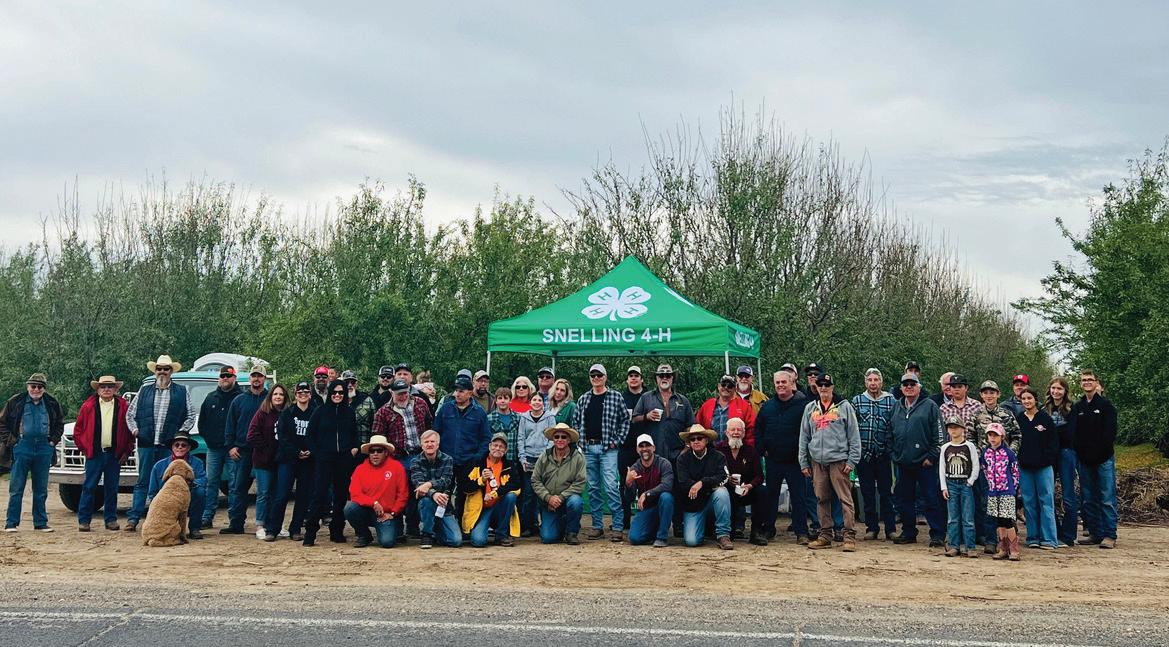
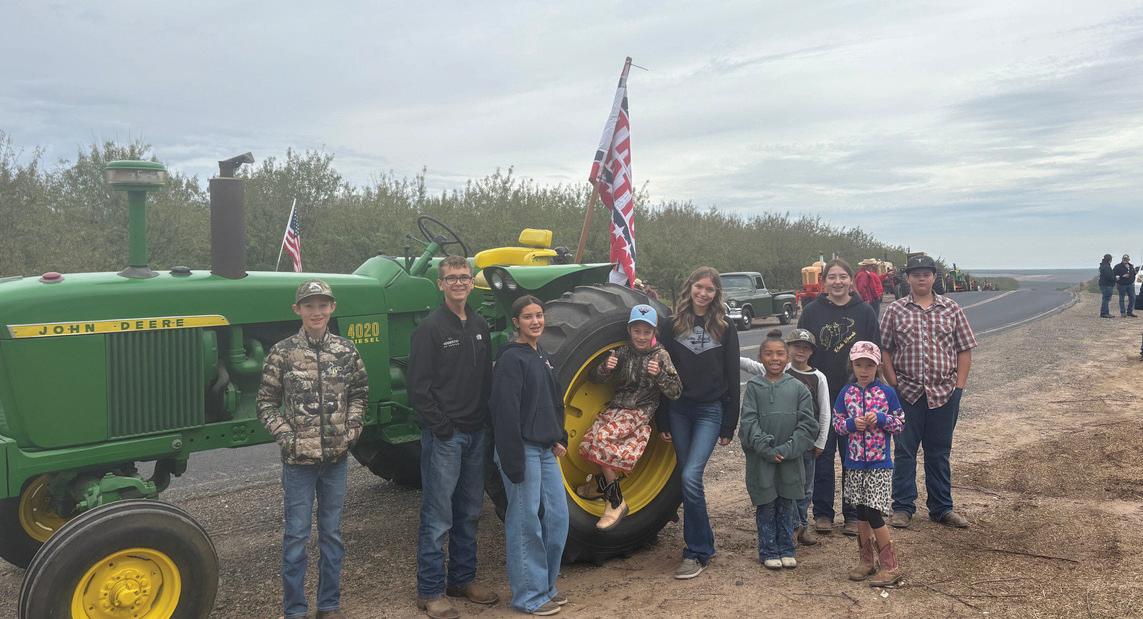
Snelling 4-H participated in the 6th Annual Tractor Drive hosted by longtime community supporters Augie Scoto and Joe Pareira.
This year the event took place on a cool and crisp Saturday morning in October. The tractors met in Snelling and set off on their 30 mile round trip down Montgomery St. Approximately 40 tractors and vintage trucks participated in this year’s event.
Snelling 4-H set up a rereshment stand at the halfway mark on Keyes Road where drivers were
able to stretch their legs, warm up with coffee while they enjoyed sweet or savory reats.
This year the group traveled along a new route mapped out by Augie Scoto.
Utilizing Keyes Road, Bledsoe Road, Looney Road they ended up on Turlock Road in Hopeton along the Merced River. Approximately 100 people met at the Pareira Dairy for a BBQ lunch.
Snelling 4-H is grateful for the opportunity to take part in such a meaningful, community-centered event. We appreciate the volunteers and participants who make this gathering speacial year after year. We are looking forward to next years event.
New WOTUS
continued from page 4
the rule preserves necessary federal protections while recognizing states and tribal governments are best positioned to oversee many smaller or isolated water features.
Sections 101b and 510 of the CWA are key structural examples of the concept of cooperative federalism. The
sections give states and tribes the right to set standards and issue permits for federal activities that could discharge pollutants into a water of the U.S. within the state or territory. The most common example of this are 404 dredge and fill permits.
This focus on cooperative federalism was the main chorus of the EPA’s listening session for states, held April 29, especially as it concerns
wetlands.“If more wetlands are excluded from WOTUS, then certain federal projects would not require a section 401 water quality certification by the states,” noted Jennifer Congdon, director of federal affairs for New York Department of Environmental Conservation, during the states’ listening session. She argues that such a situation could impair water quality within a state, thus violating
states’ rights under the CWA. What Happens Next The proposed rule is available online for public comment on the Federal Register and Regulations. gov on or before Jan. 5, 2026. EPA and the Army Corps of Engineers will hold two hybrid public meetings, and details for submitting comments or registering to speak will be available on EPA’s website.
Atwater High Student Earns National FFA Recognition
By: Hallie Billings, Atwater FFA
Atwater High School sophomore agriculture student
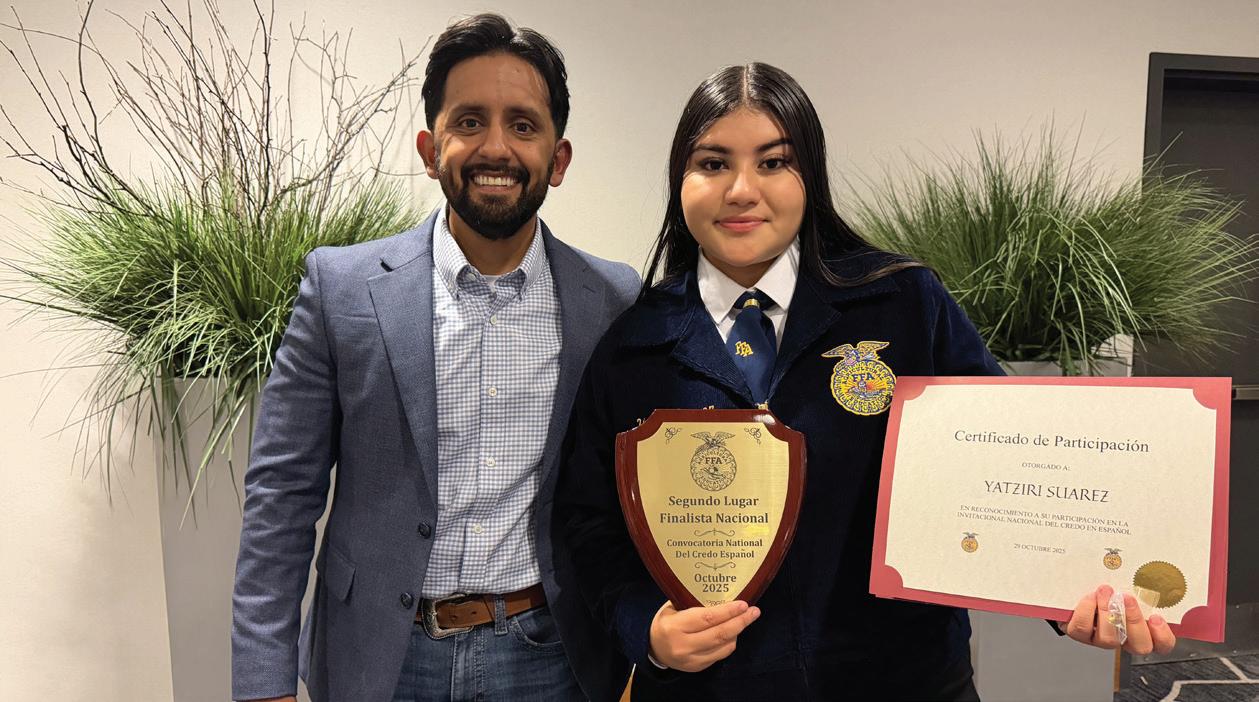
Yatzuri Suarez Magana placed 2nd overall in the nation at the 96th National FFA Convention, where 32 FFA members representing 16 states competed in the first-ever Spanish Creed Speaking Invitational at the national level.
The National FFA Creed, written by E.M. Tiffany and adopted in 1930, has been memorized and recited by hundreds of thousands of FFA members for nearly a century. Its timeless words continue to inspire students across
generations—and now, across languages. After Puerto Rico became an official FFA association in 1932, the need for a Spanish version of the Creed emerged. Today, more than 100,000 Hispanic and Latino members make up approximately 15 percent of the organization’s national membership. While several state associations have held Spanish Creed speaking contests for years, no national competition previously existed. Recognizing this gap between membership diversity and competitive opportunities, Marc Beitia of Idaho and Charles Parker of California collaborated to create a new platform for students to share their skills
and culture—the first-ever National Spanish Creed Speaking Invitational.
In addition to Suarez Magana’s success, Atwater High School agriculture student Dylan Cardey and AHS agriculture graduate Rebekah Villalobos were also nationally recognized for their outstanding achievements in agricultural proficiency. Cardey was honored for his work in Small Animal Production and Care, while Villalobos earned recognition for Specialty Crop Production. Agricultural proficiency awards celebrate FFA members who, through Supervised Agricultural Experiences (SAEs), develop specialized skills applicable
to their future careers in agriculture. Students compete in areas ranging from agricultural communications to wildlife management, with recognition awarded at the local, state, and national levels.
“With over 100,000 high school agriculture students throughout California, to have the skills, effort, and accomplishments of our students recognized at the highest level and moving on to national award recognition is certainly a highlight our school, district, community, and local agriculture industry are so proud of,” said Atwater FFA advisor Shelby Fishman.

Atwater High School sophomore agriculture student Yatziri Suarez Magana celebrates with her Atwater FFA coach/advisor Jose Perez on her 2nd place overall finish at the 96th National FFA Convention for the El Credo (Spanish FFA Creed) contest, where 16 states competed in the 1st annual event.
Atwater High School senior agriculture student Dylan Cardey and Atwater High School agriculture graduate Rebekah Villalobos were recognized at the 96th National FFA Convention for being one of the top agriculture proficiency projects in the nation.
Los Banos FFA Hosts Successful November Meeting and Canned Food Drive
By: Addison Melden, Los Banos FFA Reporter
The Los Banos FFA had yet another successful chapter meeting this November, continuing their tradition of community service and generosity. During the monthly meeting, members participated in the annual Canned Food Drive, an event that encourages students to give back and support families in need during the holiday season. This year’s drive was a huge success, with members collecting an impressive 1,575 cans to donate to local food banks and community
organizations. The event not only helped provide meals for those facing food insecurity but also showcased the dedication and compassion of the Los Banos FFA members.
Community service has always been at the heart of the Los Banos FFA’s mission, and the annual Canned Food Drive is one of the many ways the chapter demonstrates its commitment to helping others. By coming together for a common cause, members are reminded of the impact small actions can have on their community.
this November show that giving back is not just an act of kindness, it’s a tradition

Los Banos FFA is incredibly proud of its members for their generosity and teamwork. Their efforts

that continues to strengthen both the chapter and the community it serves.
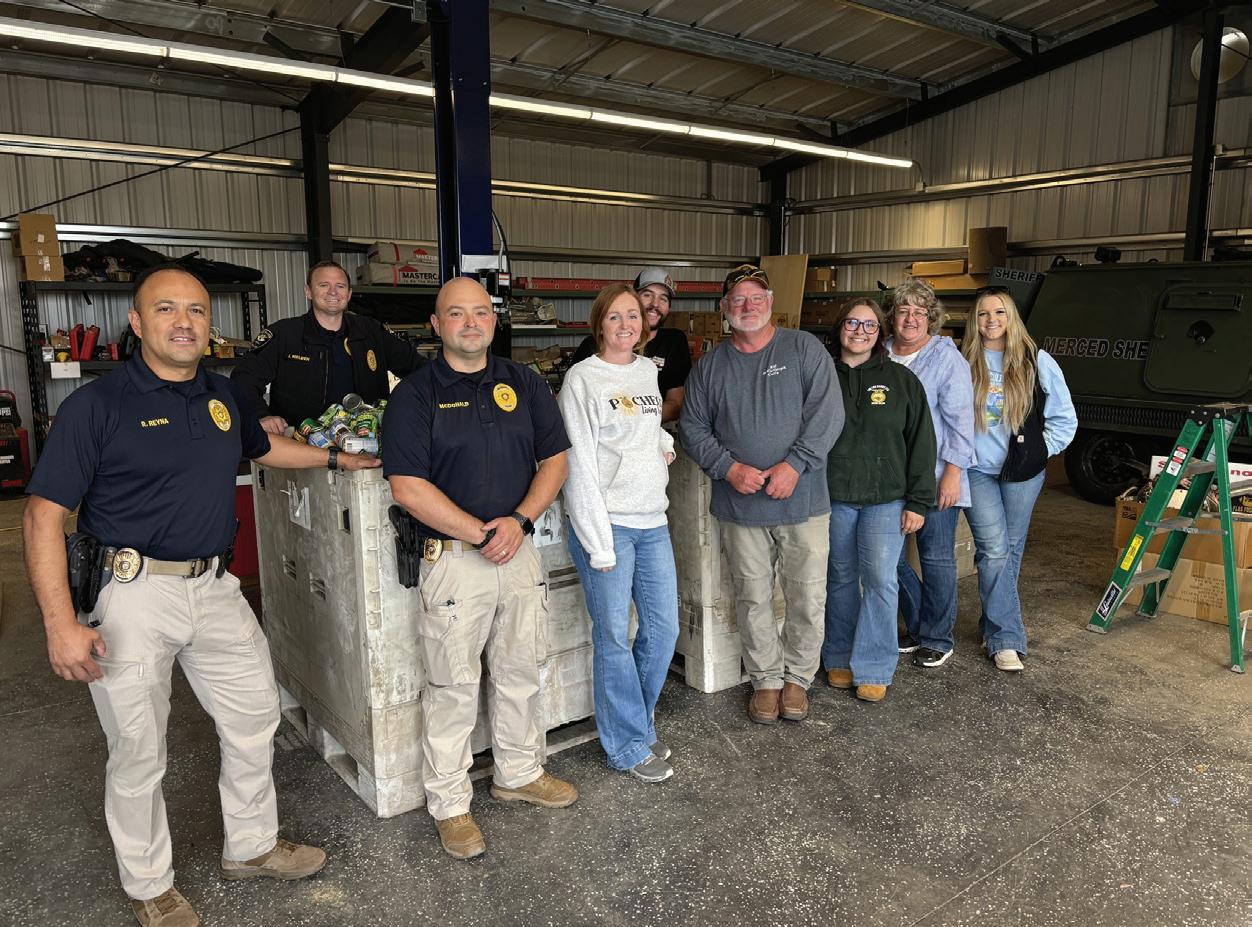



Los Banos FFA members gathered with the community to collect donated goods.
CiltivatED Officially Launches in the Classroom
On November 5, CultivatED officially made its classroom debut, marking an incredible milestone in my journey to bring agricultural education to life for students across our county. What began as a simple idea has now grown into a program that is inspiring young minds to explore where their food comes from and how agriculture impacts their everyday lives.
So far, CultivatED has been introduced in more than twelve classrooms ranging from transitional kindergarten through third grade at three school sites. The excitement and curiosity that fill the room during each lesson have been truly heartwarming. Teachers have shared their appreciation for how engaging and hands-on the curriculum is, and students have been eager to participate and share what they have learned.
Watching the curriculum I created come to life has been a surreal and emotional experience. From identifying fruits and vegetables to designing and building farm robots, students are not only learning but also creating and imagining what the future of agriculture could look like. Their enthusiasm reminds me
of why I started this journey in the first place, to spark curiosity, inspire creativity, and connect the next generation to the heart of our agricultural community.
I am also truly thankful for the incredible team that has supported me while growing CultivatED. Breann and Alexxis have poured encouragement into me from the very beginning. They have helped me make meaningful connections with industry professionals and have shared their own experiences in agricultural education, offering valuable advice that has strengthened both me and this program. Their guidance and friendship have been such a blessing throughout this journey.
In addition to bringing CultivatED into classrooms, I have also been expanding our presence on social media. I have been working to create content that feels authentic, relatable, and educational while learning more about what our audience enjoys and wants to see.
One of my recent goals has been to build our archive of photos. At events, you can usually find my camera in hand. I love the opportunity to capture raw and engaging photos that tell the story of our work and share the
impacts and efforts that happen behind the scenes.
I am especially grateful to a few of our members who have welcomed me onto their operations to take photos. My hope is that through these images, we can highlight Merced County agriculture using photos that come directly from the fields and operations of our local growers.
It has been amazing
to witness the support and excitement from our community as we continue to grow both in the classroom and online.
CultivatED is just getting started, but it is already planting seeds of curiosity, connection, and pride in local agriculture. I cannot wait to see how this program continues to grow and make a difference in the lives of students across our county.

Sweetpotatoes production and price improve in 2025
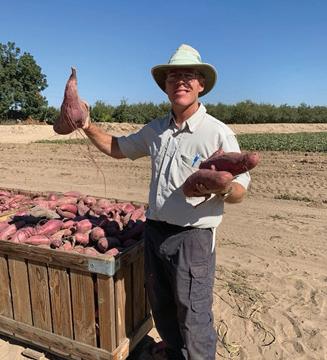
Like so many crops these past few years, sweetpotatoes have had a tough time being profitable. The last good year was after Covid hit, in March of 2020. Until this fall, prices received by growers have been fair but stagnant, however input costs have increased dramatically, driven largely by minimum labor rates and overtime rules that have impacted all farmers in California. Like many vegetables, sweetpotatoes are a high labor crop, especially at transplanting and harvest. A 2-row harvester requires 10 people to sort and place the roots into a bin, but creeps through the field so slowly that it almost appears stationary from a distance. One to two acres per day are typical, depending on yield.
Twenty years ago, a grower told me a 1-row harvester could pick one acre per day, and his 2-row would do 1.8. Today, a typical grower gets about ½ and 1.0 acres per day for this same equipment. Part of the reason for the dramatic reduction in harvest acres per day is due to moving from 10 to 8-hour workdays, though many growers bite the bullet and pay overtime for their labor to work an extra one to two hours per day. The other reason is that our yields have gone up, by a lot, in the last 20 years.
Each year, I conduct a standardized sweetpotato variety trial evaluating new breeding material from various other states. While the trial has been with different growers over the

years, I pretty much do it the same way, with the same size of plants, same number of plants, same plot size, etc. Twenty years ago, a good sweetpotato crop in Merced County was 60 bins per acre, more or less. According to USDA, the average was about 32 bins per acre total marketable yield, where a bin weighs about 950 pounds. My variety trial in 2005 with Blaine Yagi was close to this, with an average of 37 bins; highest yield was 48 bins per acre.
drip per se.
Now, 60 bins per acre is commonplace, and some would consider on the low side for the orange flesh varieties such as Covington, Bellevue, Vermillion, and Diane. In my variety trial in the last three years I have observed 100 bin yields on several occasions, an amount so high this was nothing but a pipedream 10 years ago. Looking back at 15 years of trial data, using the highest yielding plot from each rep, the trend is obvious – yields have doubled and continue to rise (figure 1). This has occurred even though drip irrigation has been used for all the trials, so this is not a comparison of furrow versus
It’s important to note that these results exclude low yielding varieties. It simply shows the potential using new varieties, virus-tested seed, good irrigation, and sound agronomic practices. Furthermore, 2025 was a very good growing year for many crops in the San Joaquin Valley, not just sweetpotatoes. While we probably won’t get the ideal weather in 2026, my trial is a leading indicator where the industry is headed. Growers are already getting 90 bins/A on some fields, breaking 100 is likely to occur in a few years on a field scale.
A 2-row sweetpotato harvester can pick about 80 bins in a day. Twenty years ago, with the same equipment, this was done from two acres. Now we can do it from one.
Figure 1: Plot yields from the Collaborators Trial (CT) conducted in Merced County since 2011, showing the highest yield from each replication, regardless of variety. TMY = Total Market Yield, the sum of #1’s, mediums, and jumbos. One bin weighs about 950 lbs.
Experts Warn 'California Will Be a Desert' as Atmospheric Rivers Move North
By: Bellatrix Gellary, MSN
In recent decades, a dramatic shift has been unfolding high above the Pacific Ocean. Vast corridors of moisture known as atmospheric rivers (ARs)— responsible for transporting nearly 90% of the world’s atmospheric water vapor from the tropics to midlatitudes—are migrating northward. Since 1979, scientists have tracked these “rivers in the sky” moving 6 to 10 degrees closer to the poles, a change with profound consequences for regions like California that depend on them for rain and snow.
Defining the Invisible Rivers
Although atmospheric rivers have shaped weather patterns for millennia, meteorologists only formally defined them in the 1990s. These airborne streams can carry as much water as the Amazon River, but in vapor form, delivering intense bursts of rain and snow when they make landfall. Early 21st-century research revealed their critical role in replenishing California’s reservoirs and snowpack.
Yet, for years, climate models struggled to predict the observed poleward shift of ARs. A breakthrough came with a 2025 study by Li and Ding, who used 40 advanced climate simulations to show that cooling sea surface temperatures in the eastern tropical Pacific—driven by recurring ocean-atmosphere cycles like ENSO (El Niño Southern Oscillation) and the
Pacific Decadal Oscillation (PDO)—are steering these moisture highways northward. “Our models only matched reality when we included the cooling effect of the tropical Pacific,” said Dr. Li, highlighting a key blind spot in earlier climate science.
Ocean Cycles and the Northward Drift
The migration of atmospheric rivers is closely tied to natural cycles in the Pacific. During La Niña phases of ENSO and cool periods of the PDO, the eastern tropical Pacific cools, weakening the subtropical jet stream that typically guides ARs toward California. Instead, these moisture-laden systems are diverted toward higher latitudes, bringing more frequent and intense storms to places like Alaska, British Columbia, and Scandinavia.
This shift is not just a scientific curiosity—it has real-world impacts. California, which relies on ARs for up to half its annual precipitation, faces heightened drought risk as these storms bypass the state. “We’re seeing less rain and snow in the Sierra Nevada, and that’s putting pressure on everything from agriculture to city water supplies,” said Maria Lopez, a water manager in Fresno. The trend is compounded by the natural variability of ocean-atmosphere systems, making it difficult to separate human-driven climate change from cyclical patterns. Still, the persistent northward drift since 1979 signals a
fundamental change in the region’s water dynamics.
California’s Water at a Crossroads
California’s dependence on atmospheric rivers is stark. These episodic storms refill reservoirs, build the Sierra snowpack, and sustain both farms and cities. A decline in AR frequency or intensity could quickly reduce water availability; losing just 10% of AR events might threaten 5% of the state’s water supply. Traditional water management, built on the assumption of stable, predictable rainfall, is now under strain.
Experts warn that without rapid adaptation, California’s urban water security, wildfire resilience, and agricultural productivity could all be at risk. “Our infrastructure was designed for a climate that no longer exists,” said Dr. Emily Chen, a climate scientist at UC Davis. “We need to rethink everything from reservoir operations to drought planning.”
Global Ripple Effects and Local Realities
The poleward migration of ARs is not unique to California. In 2021, British Columbia experienced catastrophic flooding when an unprecedented atmospheric river dumped record rainfall, causing over $9 billion in damages and displacing thousands. “We’d never seen anything like it,” recalled local resident Taryn Skalbania. “The rain just kept coming, and suddenly highways were gone.”
Such events are becoming more common at higher
latitudes, while subtropical regions face increasing drought. This global redistribution of water is altering agricultural zones, threatening food security, and challenging infrastructure built for 20th-century weather patterns. In the Mediterranean and California, reduced AR rainfall means more groundwater depletion and crop failures. Meanwhile, northern regions grapple with flooding, soil erosion, and disrupted planting cycles.
Adapting
to a New Climate Reality
The evidence for the poleward shift of atmospheric rivers is now overwhelming, confirmed by satellite data, ground observations, and sophisticated climate models. While some climatologists emphasize the role of natural variability, most agree that both human-driven warming and ocean cycles are at play. The stakes are high: changes in AR patterns could disrupt carbon sinks, intensify wildfires, and force communities to rethink how they manage water and prepare for disasters.
As California and other regions confront these challenges, the need for flexible, science-based adaptation has never been clearer. Strengthening infrastructure, updating water management, and fostering public awareness will be crucial. The future of water in California—and across the globe—depends on how quickly societies can respond to the shifting rivers in the sky.
Peach growers await pivotal cannery sale
By: Caleb Hampton, Ag Alert
California cling peach growers face an uncertain future after long-term contracts worth more than a half-billion dollars in total were voided by Del Monte Foods, which filed for bankruptcy in July.
In August, the major canned foods company exercised its right under federal bankruptcy law to reject its contracts with members of the California Canning Peach Association, which represents about 70% of the state’s cling peach growers. In some cases, the contracts were signed this year and valid through 2044.
Del Monte’s rejection
of peach contracts has left several dozen growers without a future buyer for their fruit, exposing some to steep losses should they fail to recoup the upfront cost—typically several thousand dollars per acre—of developing their orchards.
We have lots of anxious peach growers not sure what the future holds for them.“It’s a very delicate situation,” said Sutter County farmer Ranjit Davit, who chairs the peach association’s board of directors. “A lot of growers are affected.”
In recent years, Del Monte, which is based in Walnut Creek, contracted about 35% of California’s cling peaches, while Lodibased Pacific Coast Producers

Crop Insurance Specialists Since 1981
ALMONDS/PISTACHIOS
SALES CLOSING DATE: 12/31
WALNUTS/GRAPES
SALES CLOSING DATE: 01/31
DISASTER RELIEF PROGRAMS

REQ’S FOR MAINTAINING COVERAGE
Linda Squires
209-652-6856
Linda@LSquiresCropInsurance com
James Piersma
209-252-1209
James@LSquiresCropInsurance com
contracted about 60% of the crop, with the rest purchased by a few smaller processors.
During the pandemic, demand for canned foods soared as more people ate at home. Del Monte responded by increasing production, making long-term commitments with peach growers and other suppliers. The new contracts caused a surge in peach plantings during the past few years, but the market soured before many of those trees produced their first piece of fruit.
The reversion of consumer habits to prepandemic trends left Del Monte “locked into excessive volume commitment,”
Michael Sirota, managing partner at the law firm Cole Schotz, said on behalf of the company in a court filing, adding that Del Monte’s assets would be worth more to a potential buyer without the “burdensome” peach contracts.
Growers typically plant cling peach orchards only after securing contracts with processors that last 20 years, roughly the orchard’s lifespan.
Richard Lial, a thirdgeneration peach grower in San Joaquin County, said losing his contracts with Del Monte “could turn out to be devastating.”
A couple years ago, Lial tore out a productive almond orchard to plant 50 acres of peaches under an agreement with the company.
“It took me two years to clean up the old orchard and plant a new orchard,” said Lial, who planted the peach trees and finalized his contract with Del Monte
earlier this year. “Now, I’m sitting here without a contract.”
Peach trees do not produce at full capacity until they are at least 4 years old, and it can take close to a decade for growers to pay off their initial investment. Those left without contracts fear they may never make that money back.
“It’s a pretty big hit,” Lial said. “It’s basically a total loss if we don’t get somebody to come in and purchase the fruit.”
During the past three years, in which cling peach plantings roughly quadrupled, the peach association cautioned processors against contracting too much new acreage on the basis of pandemic-driven demand.
“We repeatedly warned them” to not over-contract, Davit said.
Del Monte did not respond to requests for comment from Ag Alert®.
Majhail Singh, left, inspects cling peaches for quality while Carlos Garrido uses a ladder to pick the fruit before putting it into bins during harvest at Khera Farms in Sutter County this past July.
Majhail Singh, left, inspects cling peaches for quality while Carlos Garrido uses a ladder to pick the fruit before putting it into bins during harvest at Khera Farms in Sutter County this past July.
Photo/Caleb Hampton
On Nov. 5, the peach association filed a claim with the bankruptcy court for damages caused by
'Peach Growers' Page 14
Merced FFA Celebrates New Members at Annual Greenhand Banquet
By: Victoria Petty, Merced FFA Reporter
On November 13, Merced FFA hosted its annual Greenhand Banquet, a celebration honoring the accomplishments and leadership of its newest members. The event marks an important milestone for firstyear students working toward their Greenhand and Chapter Degrees, and also recognized those achieving academic excellence with a 3.0 GPA or higher during the first quarter. Families and friends joined in to celebrate, making the evening both meaningful and memorable.
Throughout the banquet, students were recognized for their participation in
FFA events and leadership activities.
Those involved in the Opening and Closing Ceremonies contest were honored for their dedication and professionalism, while attendees of the Greenhand Leadership Conference were acknowledged for developing leadership skills and setting personal goals. Outstanding Officers in the ceremonies contest received special recognition for going above and beyond.
The Cotton Judging Team was also celebrated for their teamwork and competitive achievements, reflecting Merced FFA’s commitment to providing diverse opportunities for students to grow in agricultural knowledge and career readiness.

A highlight of the evening was the awarding of Greenhand Degrees, Chapter Degrees, and scholarships, marking an important step in each student’s FFA journey and symbolizing their hard work and commitment to personal and leadership development.
Two individuals received special honors for their impact on the chapter. Aggie of the Month Jasmynn Morales was recognized for her dedication to FFA through participation in the Cotton Judging Team, volunteer work, and contributions to Fall Fest, despite not currently being enrolled in Ag Leadership. Aggie on the Rise Olivia Fahl was celebrated for her rapid growth and leadership, including participation in the ceremonies contest, the Greenhand Leadership Conference, and ongoing community service.
The evening also featured
the announcement of the 2025–2026 Greenhand Officer Team:
President: Amalie Mena
Vice President: Jason Vasquez
Secretary: Alex Carlson
Treasurer: Malik Robinson
Reporter: Trinity Garcia
Sentinel: Audrey Stone
Historian: Marcella Meltran
These officers will guide the Greenhand class, support chapter activities, and represent Merced FFA throughout the year.
The 2025 Greenhand Banquet was a celebration of student achievement, leadership, and community. As these members continue their FFA journey, the chapter looks forward to seeing their continued growth and contributions to the agricultural community. For more information on what is happening in the Merced FFA chapter, please visit www. mercedffa.org.

Merced FFA Greenhand newly elected Greenhand officers gathered for thier first team picture at the Merced FFA Greenhand Banquet.
Peach Growers
continued from page 12
Del Monte’s rejection of its contracts, the value of which it estimated to be $555 million.
But growers are unlikely to see much, if any, compensation, according to bankruptcy experts, because unsecured creditors such as the peach association that hold no collateral from Del Monte have low priority for repayment in bankruptcy cases.
“It’s awful for the peach growers,” said Linda Coco, a law professor at the University of the Pacific McGeorge School of Law in Sacramento. “There really isn’t any recourse.”
Bankruptcy law takes precedent over laws concerning business contracts, Coco said, and the bankruptcy code is written to prioritize the survival of the bankrupt company.
“The idea is to help sustain the debtor so they don’t have to completely go out of business,” she said, including by voiding financial obligations such as purchasing agreements. “In that process, lots of people are going to suffer.”
During bankruptcy proceedings, Del Monte also rejected contracts with pear growers in Oregon and Washington state, where it shut down a cannery earlier this year, and with California growers of freestone peaches, while leaving other contracts intact. The claim for damages from rejected cling peach contracts was by far the largest filed
with the court.
Most of California’s cling peaches are grown by family farms, many of which have grown the crop for three or four generations. But declining demand due to the year-round availability of fresh fruit, combined with rising input costs and cheap imports, have challenged the sector.
Since 1969, the state’s bearing acreage declined from more than 63,000 to less than 14,000, according to the U.S. Department of Agriculture. Meanwhile, the number of processors dropped from 17 to five, only two of which—including Del Monte—contracted substantial acreage in recent years.
The loss of another major processor could cause the sector to shrink further.
“We have lots of anxious peach growers not sure what the future holds for them,” said Rich Hudgins, president and CEO of the peach
association.
Several years ago, Yuba County grower Sarb Atwal tore out 90 acres of 10-yearold peach trees, he said, after the closure of a cannery left him without a buyer.
The fourth-generation grower, who in August lost Del Monte contracts on 80 acres, said he was “not thinking about” the possibility of that scenario repeating itself. “I’m pretty optimistic that there will be a new buyer that will take up the contracts,” Atwal said. “I think there’s a market for cling peaches.”
The best outcome for peach growers, several said, would likely be for a buyer to purchase Del Monte’s cannery in Modesto with the intention of continuing to process their peaches at it.
Hudgins said last week growers were “on pins and needles” waiting for the auction of the company’s assets, which is scheduled for Dec. 4. He said he
was hopeful the buyer of the Modesto cannery will announce its plans by the end of the year.
“It is vital that we move quickly,” he said.
With no buyer lined up for next year’s crop, work has been delayed in many peach orchards this fall.
Some growers have been unable to secure operating loans they need to pay for pruning, pest control and other orchard work, according to the association, because they have no guaranteed income to back up the loan.
Others said they were wary of investing more money in a crop they may be unable to sell.
“Growers are at a standstill,” said Davit, who has postponed pruning at least until after the courtsupervised auction. “There’s always work to be done, and right now there’s not much we can do.”


California's Thanksgiving dinner cost higher than national average
By: California Farm Bureau, Press Release
Californians preparing traditional Thanksgiving dinners are expected to spend more than families in most other parts of the country, according to the American Farm Bureau Federation’s 40th annual Thanksgiving dinner survey. The classic Thanksgiving dinner for 10 guests in California will cost $72.61—well above the national average of $55.18 and significantly higher than the Western regional average of $61.75.
The shopping list for Farm Bureau’s informal survey includes frozen turkey, pumpkin pie mix, whole milk, veggie tray, dinner rolls, frozen pie shells, frozen green peas, fresh cranberries, whipping cream, sweet potatoes, cubed stuffing and miscellaneous ingredients, all in quantities sufficient to serve a gathering of 10.
California costs reflect higher prices across most Thanksgiving staples, including frozen turkey, whipping cream, whole milk and sweet potatoes.
Shoppers will pay:
• Frozen turkey, 16 lbs. (California $29.72; U.S. $21.50)
• Pumpkin pie mix, 30 oz. (California $4.90; U.S. $4.16)

oz. (California $2.69; U.S. $2.28)
• Whole milk, 1 gallon (California $5.57; U.S. $3.73)
• Veggie tray (½ pound carrots and ½ pound celery) (California $1.56; U.S. $1.36)
• Miscellaneous ingredients (California $4.75; U.S. $3.61)
• Dinner rolls, 12 (California $4.18; U.S. $3.56)
• Frozen pie shells, 2 (California $4.47; U.S. $3.37)
• Frozen green peas, 1 lb. (California $3.16; U.S. $2.03)
• Fresh cranberries, 12
• Whipping cream, ½ pint (California $2.66; U.S. $1.87)
• Sweet potatoes, 3 lbs. (California $5.33; U.S. $4.00)
• Cubed stuffing, 14 oz. (California $3.64; U.S. $3.71)
according to data from the U.S. Department of Agriculture Economic Research Service, with the state accounting for 10.5% of U.S. total production expenses in 2024—the highest share in the nation.

Although grocery bills continue to climb, farmers see only a small portion of each dollar spent on food. According to the U.S. Department of Agriculture Economic Research Service, the national farm share in 2023 was 15.9 cents of every dollar spent on domestically produced food, a slight decrease from 16 cents in 2022.
At the same time, the cost of producing crops and raising livestock has surged. Rising costs are especially apparent in California,
“California farmers and ranchers continue to provide high-quality food for families across the nation,” said Shannon Douglass, president of the California Farm Bureau, which represents more than 23,000 farmers and ranchers statewide. “Despite rising costs and slim margins, our farmers remain committed to ensuring a bountiful supply of fresh, nutritious food. California Farm Bureau is proud to support the agricultural community that makes that possible.”
The Thanksgiving dinner cost survey is part of the American Farm Bureau marketbasket series, which also includes the popular Fourth of July cookout survey. AFBF analysis indicates the national cost of cooking a Thanksgiving dinner for 10 in 2025 decreased by 5% compared to last year.
Students recognized in California Farm Bureau Collegiate Discussion
By: California Farm Bureau, Press Release
Becca Hamman, an agriculture education student at California State University, Chico, was named the winner of the California Young Farmers & Ranchers Collegiate Discussion Meet, held Nov. 15 at Modesto Junior College. Hamman earned $2,500 and will represent California in the national competition during the American Farm Bureau Federation’s Young Farmers & Ranchers Leadership
Conference set for March 1316 in Portland.
Competing were 36 YF&R members from seven colleges. Competitors were from Cal Poly, San Luis Obispo; California State University, Chico; California State University, Fresno; Merced College; Modesto Junior College; Santa Rosa Junior College; and University of California, Davis. They advanced to the final competition from earlier rounds in which they were challenged to demonstrate their abilities in exchanging ideas and offering detailed opinions on issues of
importance to agriculture and Farm Bureau.
The discussion featured multiple rounds and analyzed the impacts of urban sprawl on farmland, how digital engagement can improve communication with policymakers, ways to help members better understand Farm Bureau benefits, and strategies for farmers and ranchers to effectively advance environmental stewardship.
Joseph Aguiar of Cal Poly, San Luis Obispo, was the first runner-up and winner of $1,000. Finalists, and winners of $500 each, were
Kaylen Jaime of Cal Poly, San Luis Obispo, and Ariana Covarrubias of Santa Rosa Junior College.
The overall high-scoring team, and winner of $500, was Cal Poly, San Luis Obispo.
This competition is supported by donor contributions. Jim and Normita Spinetta, farmers in El Dorado County, invested $200,000 in a fund established by the California Farm Bureau to advance the organization’s Young Farmers & Ranchers Discussion Meet contest.

The welfare system in the United States was built on good intentions, to provide temporary relief for those who have fallen on hard times. Yet over the decades, it has evolved into a extensive network of government programs that, while helping many, has also become vulnerable to widespread inefficiency and abuse. From fraudulent benefit claims to generations of dependency, welfare abuse is not just a minor issue, it’s a serious problem that undermines hard-working taxpayers and weakens the nation’s work ethic.
Every year, billions of dollars in taxpayer funds are funneled into welfare programs such as SNAP (food stamps), Temporary Assistance for Needy Families (TANF), and Medicaid. While these programs serve important purposes, they are also plagued by waste, fraud, and misuse. Government reports estimate that billions of dollars are lost annually through improper payments, some due to error, but a significant portion due to deliberate fraud. People lie about their income, hide assets, or continue to collect benefits long after becoming ineligible. Others sell their taxpayer-funded food benefits for cash or use them for items never intended to be covered.
This is not just about isolated cases. Even if fraud rates appear “low” on paper,
around 1% for SNAP when applied to programs costing tens of billions of dollars, that still represents hundreds of millions in stolen tax dollars each year. In Medicaid alone, improper payments have been estimated in the tens of billions annually. That’s money that could have gone toward veterans, education, or national debt reduction.
The heart of the problem goes beyond financial waste, it’s about dependency. Welfare programs were meant to be a hand up, not a handout, but too often they create cycles of reliance that discourage work and selfsufficiency.
TANF, for example, was reformed in the 1990s to include time limits and work requirements, helping move millions from welfare to the workforce. Those reforms worked, poverty dropped, and employment among single mothers rose sharply. But in recent years, there has been a push to loosen those requirements, allowing many able-bodied adults to stay on government assistance indefinitely. When welfare becomes a way of life rather than a temporary safety net, it traps families in poverty and erodes the values of hard work and personal responsibility that built this nation.
Welfare abuse is not just about individual dishonesty, it’s about a bloated and inefficient bureaucracy that lacks accountability. State and federal agencies struggle to coordinate, and oversight
is often weak. Investigations take months or years, and the penalties for fraud are minimal compared to the harm done. Technology and tighter enforcement could make a real difference:
• Require photo IDs or biometric verification for EBT cards.
• Enforce work requirements for able-bodied adults without dependents.
• Cross-check welfare data with IRS and employment records in real time.
• Impose stricter penalties, including permanent disqualification for repeat offenders.
Taxpayers deserve to know that their hard-earned money is going to people who genuinely need help, not those gaming the system.
America has always valued compassion, but compassion must be balanced with accountability. It is not compassionate to allow fraud and dependency to continue unchecked. It is not fair to the millions of Americans who get up early, work long hours, and still struggle to pay their taxes, only to see part of those earnings wasted through abuse.
Welfare should help people get back on their feet, not keep them dependent on government programs. Reforming the system to reward work, reduce fraud, and promote selfreliance isn’t cold-hearted, it’s common sense. If the U.S. wants to preserve its social safety net for future generations, it must restore integrity to it today.

Merced County Business Member Directory
Businesses Supporting the Farm Bureau
To be included in the directory, join Merced County Farm Bureau as a business member by calling (209) 723-3001.
Farm Equipment
Garton Tractor, Inc........................(209) 726-4600
Kirby Manufacturing......................(209) 723-0778
N&S Tractor.....................................(209) 383-5888
Holt Ag Solutions.............................(209) 723-2021
Real Estate
Flanagan Realty................................(209) 723-4337
Keller Williams Property Team....(209) 769-4698
Dick Templeton Property Team...(209) 761-4441
Groups & Organizations
California Farmland Trust...............(916) 544-2712
California Sweetpotato Council.(209) 385-7403
Hilltop Ranch Inc................................(209) 874-1875
Merced Boosters..............................(209) 761-0815
Turlock Irrigation District.............(209) 883-8205
UCCE Merced...................................(209) 385-7403
Water & Land Solutions..................(209) 677-4700
Farm Services
Agri-Valley Consulting...................(209) 769-2357
Cal Ag Safety....................................(209) 351-0321
Dutch Door Dairy............................(209) 648-2166
GAR Bennett....................................(559) 480-3029
J&F Fertilizer.....................................(209) 495-1964
Mid Valley Ag Service.....................(209) 394-7981
Stone Family Spreading..................(209) 756-1491
WTS McCabe LLC............................(209) 854-6818
Construction Contractors
M-Mig Construction, Inc...............(209) 724-9488
Repairs & Services
Arrowhead Field Repair LLC.......(209) 658-5250
Cab Air Systems.............................(209) 551-3301
SS Blue...............................................(209) 722-2583
Food Processing
Del Rio Nut Company.....................(209) 394-7945
Sensient Natural Ingredients......(800) 558-9892 Harvesting & Hauling
Wallace & Son..................................(209) 382-0131
Irrigation,
Wells & Septic
Allison Sierra, Inc............................(209) 966-4082
IJ Larsen Pumps...............................(209) 634-7276
Pacific Southwest Irrigation......(209) 460-0450
Precision Aqua.................................(209) 756-2025
Quality Well Drillers........................(209) 357-0675
Rain for Rent.....................................(559) 693-4315
San Luis Pump Company..............(209) 383-0464
SWAN Systems................................(661) 335-2649
Farm Supplies
American River Ag..........................(209) 385-9553
Cal Farm Service..............................(209) 358-1554
Kellogg Supply...................................(209) 722-1501
Livingston True Value......................(209) 394-7949
Marfab...............................................(209) 826-6700
Pacific Bay Equipment...................(800) 640-1227
Stanislaus Farm Supply.................(209) 723-0704
Fuel Services
Amarants Propane Service...........(209) 358-2257
Hunt & Sons, Inc................................(916) 383-4868
Pazin & Myers, Inc............................(209) 725-2050
Western States Petroleum Assoc.. (661) 321-0884
Valley Pacific Petroleum................(209) 948-9412
Insurance
Barlocker Insurance......................(209) 383-0220
Fluetsch & Busby Insurance...........(209) 722-1541
InterWest Insurance........................(209) 723-9181
Rico, Pitzer, Pires & Associates.(209) 854-2000
Walter Mortensen Insurance......(209) 353-2700
Winton Ireland Insurance..............(209) 394-7925
Financial Services
Alice B. Contreras CPA..................(209) 722-6778
American Ag Credit Merced.......(209) 384-1050
American Ag Credit Los Banos..(209) 826-0320
Central Valley Community Bank.(209) 725-2820
Farmers & Merchants Bank.........(209) 626-4118
Grimbleby Coleman CPAs............(209) 527-4220
Yosemite Farm Credit Merced....(209) 383-1116
Yosemite Farm Credit Los Banos.. (209) 827-3885 Miscellaneous Sunset Pool Service........................(209) 286-7665
Ensz (Solar) .....................(209) 204-0702
Resources Corp ...........(661) 421-3515
Business Support Farmers DCB Farming, LLC
Mariposa County Business Member Directory
Farm Supplies
Mariposa Feed & Supply...............(209) 966-3326
Mariposa County Farm Bureau....(209) 742-5875
35-A District Agriculture Assn....(209) 966-2432
Mariposa County Ag Commissioner..(209) 966-2075
Allison Sierra, Inc............................(209) 966-4082
Chases Foothill Petroleum............(209) 966-3314
Edward Lien & Toso Ag Appraisers... (209) 634-9484 Rain for Rent......................................(559) 693-4315
Ranch Fence, Inc..............................(209) 966-5914
Valley Pacific Petroleum...............(209) 948-9412
966-2527
966-5444
966-2719

FARM BUREAU FORUMS