Interior Announces $889 Million Investment in Western Water Infrastructure Through President Trump’s One Big Beautiful Bill
By: U.S.
Department of the Interior Bureau of Reclamation, New Release
The Department of the Interior today announced $889 million in investments for critical water infrastructure projects across the West made possible by President Donald J. Trump’s One Big Beautiful Bill Act. The funding will support Bureau of Reclamation projects in California, Idaho, North Dakota, South Dakota, Utah and Wyoming that improve water conveyance, expand storage and modernize infrastructure that supports American communities and agriculture.
Signed into law by President Trump on July 4, 2025, the One Big Beautiful Bill represents a historic
investment in America’s infrastructure and natural resources. The legislation provides $1 billion to the Bureau of Reclamation through 2034 to restore and expand existing water conveyance systems and increase surface water storage capacity across the West.
“Under President Donald J. Trump’s leadership, the One Big Beautiful Bill is delivering major new investments in Western water infrastructure,” said Secretary of the Interior Doug Burgum. “These investments strengthen our nation’s water security, modernize aging infrastructure and support the farmers, communities and industries that depend on reliable water supplies. By helping ensure strong agricultural production and efficient water delivery,
this investment also supports more stable and affordable food prices for American families.”
California projects will receive $540 million of the total funding to support improvements to major water conveyance systems and storage projects that serve farms, communities and businesses throughout the Central Valley.
The Delta-Mendota Canal will receive $235 million, the largest allocation from the legislation. Funding will support rehabilitation of the upper canal, including raising canal embankments, repairing check structures and advancing potential
construction of a new concrete-lined canal segment.
The Friant-Kern Canal will receive $200 million for subsidence correction efforts along the canal.
The San Luis Canal will receive $50 million to address subsidence issues affecting water delivery reliability.
The Tehama-Colusa Canal Authority pumping plant will receive $15 million to increase flow rates and improve system performance.
An additional $40 million will support planning and
See 'Big Beautiful Bill ' Page 4

California High Speed Rail (HSR) released their 2026 Business Plan on February 28, 2026. A requirement by the legislature, HSR must complete an update every two years. The plan must be submitted to the Senate Committee on Transportation and Housing, the Assembly Committee on Transportation, the Senate Committee on Budget and Fiscal Review and the Assembly Committee on Budget. A 60-day public comment window is exercised during this time.
Local government meetings have been in the news as HSR has come forward with interest in moving the station location from downtown Merced to Merced County jurisdiction, specifically rumored to be the former Save Mart distribution center. HSR has not stated any exact determinations as a decision of this nature would have to work through the legislature. The Business Plan does not provide any additional details as to station location but does have some focus on Merced in general.
The Merced to Bakersfield section is scheduled to be operational by 2032. This
is a one-year extension to account “for additional time for optimization and pending policy changes” (2026 Draft Business Plan).
As it sits now, the section from Merced to Bakersfield early operating segment will include infrastructure to run eight daily trains in each direction. This portion now has an estimated capital cost of $34.76 billion, bringing a net reduction of $2.0 billion since the 2025 Supplemental Project Update Report cost estimate.
For Merced to Bakersfield, a projected annual ridership has been approximated at 1.4 million to 1.9 million.
Farebox revenue (ticket revenue) is expected to range from $35.2 million to $45.7 million. Ancillary revenue is an estimated $19.3 million to $41.0 million. According to the Business Plan, “Ancillary revenue is…typically tied to the rolling stock, stations and station areas.” HSR has also estimated operation and maintenance to fall between $155.0 million to $175.6 million annually. Through
their own words, HSR has now indicated that, “Based on these projections, the recovery ratio is 35 percent to 49 percent. The M-B (Merced-Bakersfield) corridor, operating as a standalone high-speed rail line with transfer connections to other rail services, would not generate sufficient revenue to cover its total operational expenses.” They project that farebox and ancillary revenue would begin to recover with the expansion to San Francisco (SF), creating the line then between SF to Bakersfield.
In concert with moving the station, rumors have been discussed that they would like to capture property and sales tax revenue within a 0.5 mile-radius of future stations. This would directly impact the various cities
and counties that will have a rail station. HSR is actively seeking private partnerships. Within the document they state they are close to finalizing a contract with at least one partnership. The state has allocated $1 billion through Cap and Invest each year through 2045. While this would a significant amount of money for an organization such as ours, this seems relatively small in keeping HSR moving forward each day.
The full document can be found on their website at hsr.ca.gov. Again, the public has 60 days for review, requiring commenters to have submission in by April 29. Submission can electronically sent by email to BusinessPlan2026@hsr. ca.gov.
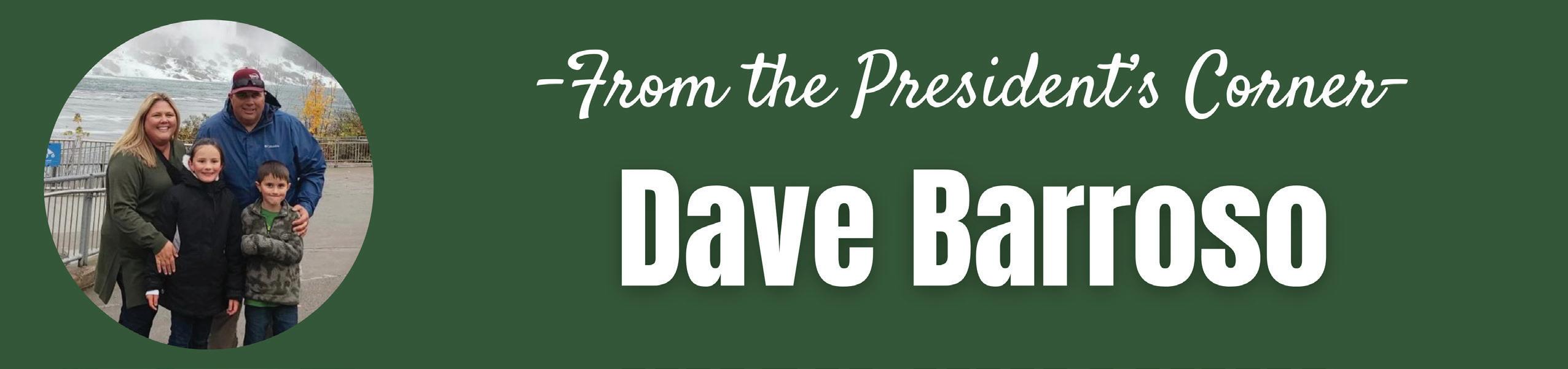
As I sit down to write the final article of my two-year term as Merced County Farm Bureau President I am reflecting on the greatness of this organization and how blessed and honored I am to have served as its President. Merced County Farm Bureau continues to be a leader in agriculture within our communities.
At our monthly February Board of Directors meeting Merced County Farm Bureau had the honor of presenting over $35,000.00 in scholarships to over 28 high school students from across Merced County. When engaging with these students it was evident that these are the young adults who will shape the impact of the industry. It is my honor to congratulate these young changemakers.
During this board meeting we hosted the award recipients and their families for a delicious meal, graciously held at the home of Bill and Nancy Arnold. We are grateful for the kind hospitality of the Arnolds. During the board meeting we had a presentation from our County District Attorney, Ms. Nicole Silveira. DA Silveira reiterated the department’s strong commitment to preventing and prosecuting ag. crimes. She described the Owner Applied Number (OAN) program offered through the DA’s office which is
a number specific to your operation that is stamped on your equipment that aids in the recovery of your stolen property. I encourage you to contact her office if you are interested in an OAN number or have any issues.
In a recent article in the long saga of the grossly mismanaged California High Speed Rail the California Inspector General told legislators that the HSR authority is 2 billion dollars short of the estimated cost of completion for the first leg. To put this in perspective the entire project from San Francisco to Los Angeles was supposed to cost 33 billion dollars and is currently sitting at 100 to 135 billion, something tells me that it will cost way more than the estimated 2 billion to finish the first leg.
First off, I would like to thank the staff that made my term as president straightforward and painless. That starts with our exceptional executive director, Breanne Vandenberg, our Program Director, Lorraine Passadori, Program and Events Director, Alexxis Rudich, Membership and Communications Coordinator, Cassandra Valdez.
We have a dedicated board of directors that offers great leadership and a multitude of perspectives related to agriculture and business I may have not had to deal with a shakeup
in state leadership like past president Joe Sansoni or COVID like Eric Harcksen, but watching these presidents handle these issues taught me how to deal with issues that I faced as president.
I am excited to congratulate Tim Lohman as our next board president; this organization is blessed to have such great leader is willing to step up to the challenge of serving our organization. Being president requires a commitment and time away from our families and business.
Thank you to my brother
Last but, not least, my wife Jamie and my kids, Lauren and Andrew, who completely understand the term “dad has Farm Bureau”, and no more explanation is needed. I could not have done it without their love, support and understanding. I am grateful for the people who poured their trust in me to lead as Board President. My term has been full of growth and reflection, and I am honored to have been a part of the impact.

Mark who held down the ranch when I put time in at Farm Bureau.
Big Beautiful Bill
continued from page 1
preconstruction activities associated with raising Shasta Dam, which will increase water storage capacity by approximately 634,000 acrefeet. That volume of water is enough to supply about 2.5 million people for a year.
These investments complement the Trump administration’s priority to expand water supply and strengthen drought resilience under Executive Order 14181. Combined with favorable hydrologic conditions, this effort has enabled the Bureau of Reclamation to deliver more than 200,000 acrefeet of additional water to the Central Valley Project by streamlining operations and capturing storm flows that historically could not be stored. More reliable water supplies for Western agriculture help keep food production strong and grocery costs more stable for families across the country. Additional projects supported by the One Big Beautiful Bill include:
Idaho
$30 million to the Lewiston Orchards Irrigation District for a conveyance and pump storage project in northern Idaho.
North Dakota
$100 million to the Eastern
North Dakota Alternate Water Supply Project to use existing supply features under the Garrison Diversion Unit to deliver reliable and affordable water for municipal and rural water systems.
$8 million to the Garrison Diversion Unit for repairs at the McClusky Canal and Snake Creek pumping plant.
South Dakota
$11 million to the Belle Fourche Siphon lining project to repair leaking concrete siphons serving more than 24,000 acres of farmland.
Utah
$100 million to replace the 110-year-old Highline Canal near Duchesne with an enclosed pipeline to improve safety and water delivery efficiency.
Wyoming
$100 million for longterm repairs to the Fort Laramie Tunnels in southeast Wyoming to reduce the risk of future system failures.
The Department of the Interior continues to work with states, water users and local partners to modernize infrastructure and maximize the use of available water resources across the West. These investments will help strengthen American agriculture, support growing communities and ensure that Western water systems remain reliable for generations to come.

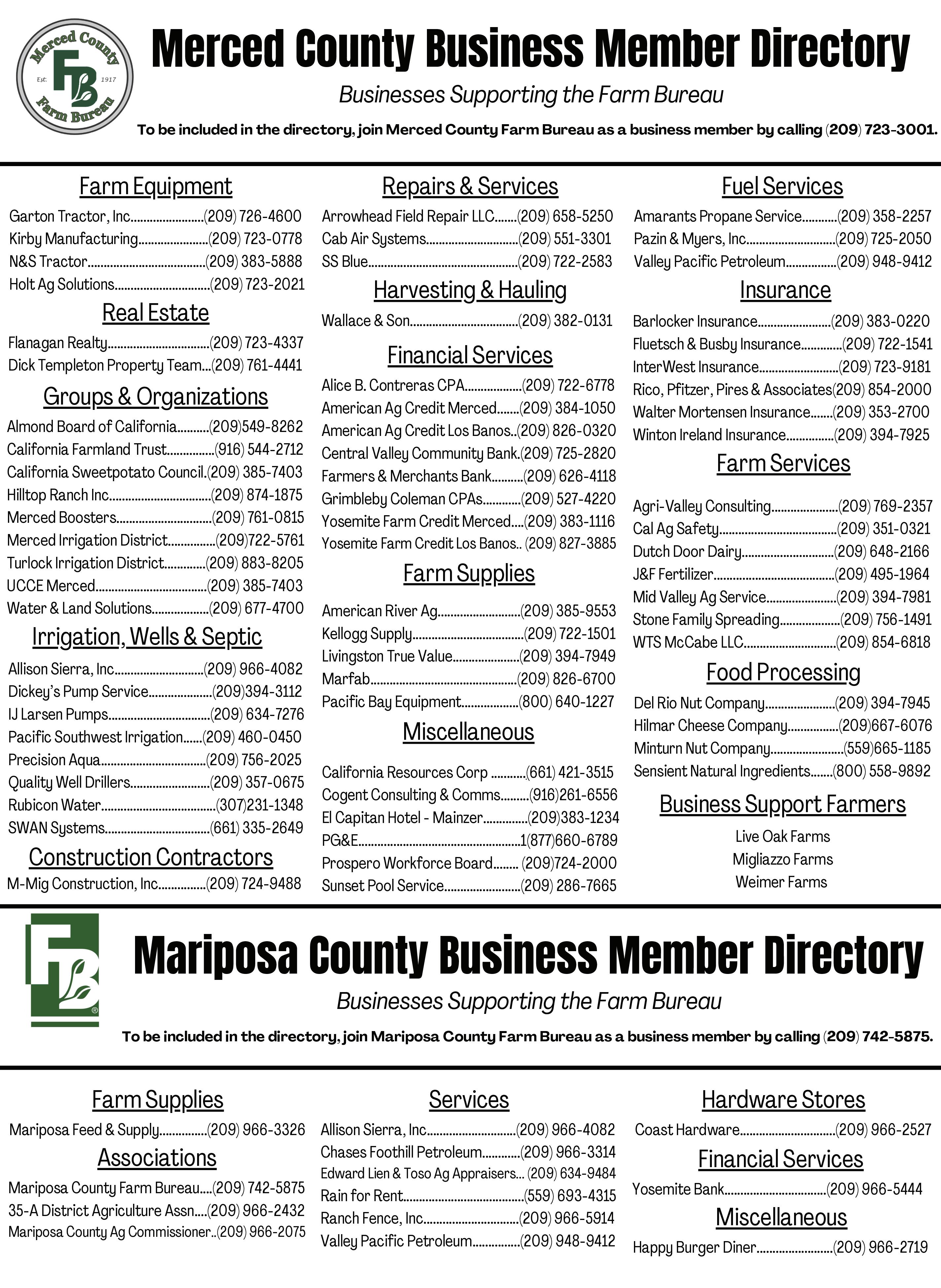
Merced County Farm Bureau
Mariposa County Farm Bureau
California Farm Bureau Honors State Treasurer with Champion of Agriculture Award
By: California Farm Bureau Press Release
In recognition of her long record of advocacy for California farmers, ranchers and rural communities, California State Treasurer Fiona Ma has been honored with the Champion of Agriculture Award.
The California Farm Bureau presented the award at the organization’s annual legislative action day. The award recognizes dedicated service to agriculture and honors individuals who have demonstrated a commitment to protecting and advancing the needs of California farmers and ranchers.
Nicknamed “The Urban Cowgirl,” Ma is a founder
of the San Francisco Farm Bureau and serves as its adviser. As the 34th state treasurer and throughout her career in public service, Ma has backed policies that support the Golden State’s diverse farming communities.
“Treasurer Ma has shown a long commitment to California agriculture,” said Shannon Douglass, president of the California Farm Bureau, which represents more than 23,000 farmers and ranchers statewide. “Her work on behalf of farmers and ranchers across the state is exactly what this award celebrates.”
A member of the state Assembly from 2006-2012, Ma authored and supported legislation beneficial to
agriculture, including the Eat Local Buy California Grown Act, which prioritizes California–Grown products in state institutional purchasing and expanding market access for small, local and underserved farmers. She also crafted legislation to create the California Blueberry Commission to help promote California-grown blueberries. In addition, Ma has worked to secure funding for agricultural programs and infrastructure. In her commitment to understanding California’s agricultural landscape, she has participated in numerous farm tours, visiting agricultural operations across the state.
“I’m honored to receive the Champion of Agriculture Award,” Ma said. “My appreciation for California agriculture began in 2009 when I helped protect the Cow Palace from being sold—an experience that opened my eyes to the vital role our farmers and ranchers play in producing more than 400 agricultural products and feeding our state and nation.”
“California Farm Bureau is proud to honor Treasurer Ma with the Champion of Agriculture Award and for her commitment to California farmers, ranchers and rural communities,” Douglass said.

California Bets on an Obscure Tool to Replace Clean Air
By: Alejandra ReyesVelarde, Cal Matters
When a package arrives at your door, it has likely traveled through a chain of ports, railyards and warehouses throughout the state. All those ships, trains and trucks leave behind a trail of diesel exhaust as they go, driving some of the highest asthma rates in communities.
For decades, state and federal regulators have tried to clean that up. Now much of their authority is in doubt: the Trump administration revoked California’s authority to mandate electric vehicles and pulled back federal power to regulate greenhouse gas emissions — undermining California’s most effective tools.
A bill moving through the Legislature would try to fill that gap. Assembly bill 1777, authored by Democrat Robert Garcia, who represents parts of San Bernardino County, would give California air regulators authority to hold ports, warehouses and railyards accountable for the pollution they draw to nearby communities — using a regulatory tool called the indirect source rule.
The proposal “reflects this changing environment and aims to add more tools for California to combat the drastic rollback by the Trump administration’s desire to jeopardize Californians health and safety,” Garcia said in an email.
Indirect source rules essentially hold operational sites responsible for the pollution they attract, not the trucks and trains themselves.
But the tool is controversial because state authority to use it isn’t clearly settled law. Even locally, where authority is more established, the indirect source rules have drawn litigation. And experts say these rules alone likely can’t make up for all the emissions reductions that California is losing out on.
Legal battles give the state pause
The ports, warehouses and railyards don’t own the trucks and trains that serve them. Why, business groups ask, should they be responsible for the pollution those vehicles leave behind?
For decades, they’ve been fighting that battle in court.
In 2005, the San Joaquin Valley Air District was the first to adopt an indirect source rule, requiring developers to reduce emissions from the construction of large industrial, commercial or residential buildings. The National Association of Home Builders sued, arguing the rule amounted to a vehicular emission standard, which is preempted by federal law.
In 2023, after the South Coast Air Quality Management District developed an indirect source rule for warehouses, the California Trucking Association sued the air district over the regulation, making similar arguments as the National Home Builders Association did two decades prior. In both cases, courts sided with air regulators.
A wide view of several semi-trucks exiting a port after picking up shipping containers.
Semi-trucks exit Yusen Terminals at the Port of Los Angeles in San Pedro on Feb. 11, 2025. Photo by Joel Angel Juarez for CalMatters
The key legal distinction, courts have found, is that indirect source rules target facilities rather than vehicles. That makes them more like regulation of stationary sources — such as refineries — than vehicle emissions standards.
“Every court that’s ever seen a challenge to it has rejected the challenge,” said Brennon Mendez, an environmental law and policy fellow at the UCLA School of Law. “There’s been precedent that’s going to defend them against the challenges.”
Chris Shimoda, a lobbyist for the California Trucking Association, said the matter
is far from settled.
“The Clean Air Act is pretty clear that mobile source emission standards are the exclusive providence of the federal EPA,” he said. “Just one court case that didn’t get beyond the district court is not a settled matter by any means.”
Shimoda also questioned whether the tool was ever necessary. “We’ve been extremely successful in reducing tailpipe emissions from what I call the traditional regulatory regime,” he said. “The need for indirect source review really has never been there, and it kind of laid dormant for many decades.”
State air board leaders, despite the favorable court See 'Clean Air' Page 7
Clean Air
continued from page 6 record, have been cautious about moving forward without clearer legal authority — which is what Garcia’s proposal would provide.
Ahead of the air board’s report to the governor last year, former chair Liane Randolph said the board was weighing indirect source rules as just one piece of a broader response to federal rollbacks.
“There’s no one strategy that’s going to work,” she said. “It’s really going to need to be a suite of different things.”
A test case in Southern California
The South Coast Air Quality Management District’s warehouse indirect source rule — called the Warehouse Actions and Investments to Reduce Emissions, or WAIRE, program — offers an early
look at how these rules work in practice.
Warehouses of 100,000 square feet or larger must earn points by taking actions to reduce pollution: doing business with companies that use electric trucks, installing charging infrastructure, or paying a fee that goes toward mitigating their pollution’s impact on nearby communities.
According to the South Coast air district, the results have been significant. Warehouses in the region have bought more than 1,400 zero-emission trucks and yard tractors. On average, warehouses are earning 3.5 times more points than they’re required to and mitigation fees account for just 5% of the total points earned. The fees collected total $56 million so far.
Business groups say the air district’s data doesn’t tell the whole story. Brooke Armour, executive vice president of the California
Business Roundtable, said the data don’t capture how many warehouse developments were delayed or abandoned because of high operating costs. The warehouse rule, she said, is one cost layered on top of many.
“It’s not a cost in isolation; it’s a cost on top of an evercascading series of costs,” she said.
Independent data offer some context. Michael McCarthy, a researcher who tracks California warehouse trends, said the warehouse industry has been growing at about the same pace as the national economy over the last two decades.
“We’re currently in a warehouse construction slowdown, but it is because of broader national market forces,” he said, not necessarily regulatory forces. “Five million square feet of warehouses are currently under construction in the Inland Empire this quarter, and that is the slowest it has been” in more than a decade.
According to the South Coast air district, about 100 million square feet of warehouse space has been added to the Southern California region since the rule went into effect.
Rob Lapsley, president of the California Business Roundtable, warned that AB 1777 would give state regulators sweeping new economic authority.
“This bill represents essentially providing (the California Air Resources Board) and the other regulatory agencies with the greatest ability to control California’s economy of any of the bills that we have seen, especially since cap-andtrade.” he said.
Supporters of the bill say that framing ignores a different set of costs entirely.
“When families have to choose between buying their inhaler from their diesel-induced asthma and putting food on their table, that’s a cost of living issue,” said Ada Waelder, a policy advocate with environmental group Earthjustice.
A step toward electrification
The stakes are significant. The California Air Resources Board projects that the loss of state programs, including its mandate to electrify cars and heavy duty trucks, will lead to 14,500 more deaths, 5,000 more hospitalizations and 6,700 more emergency room visits from respiratory and cardiovascular problems by 2037.
“The gap that exists in California’s clean air progress because of those federal actions is significant. It is deadly,” said Will Barrett with the American Lung Association.
Indirect source rules won’t close the gap on their own. But Sam Wilson, senior vehicles analyst with the Union of Concerned Scientists, said such rules would help lay the groundwork for widescale electrification — and that other states are taking notice. In Illinois, a measure inspired by the South Coast WAIRE program, called the Warehouse Pollution Reduction Act, is making its way through the legislative process.
“One thing that the states can do while we’re in the current political landscape is to help to build those foundations for future freight electrification through indirect source rules.”
In California, Wilson added, “It is literally the worst time to throw our hands up and say we can’t do anything about it.”
Atwater FFA Earns Top Placing at UC Davis and Regionals
By: Atwater FFA
Atwater FFA students delivered an impressive showing in recent competition, earning top placings at the UC Davis FFA Field Days on March 7 and at the California FFA Public Speaking Regional Finals held at Modesto Junior College.
Five Atwater High School agriculture judging teams joined more than 1,200 California agriculture students at the UC Davis FFA Field Days, competing in a variety of agriculture skills and industry-related Career Development Event (CDE) contests. Leading the way was Atwater FFA’s Farm Business Management team, which placed 1st overall. Team members included Gannon Gossman, who earned 2nd high individual honors, Iker Chargoy, 4th overall, Marissa Vargas, 5th overall, and Armaan Pabla, 9th overall. The Farm Business Management contest helps students develop business skills and apply economic principles to agricultural operations through areas such as record keeping, depreciable property, and tax management.
Atwater FFA’s Poultry team also had an outstanding performance, placing 2nd overall. Senior Johnna Quezada led the team by placing 1st overall individually, while Eric Villalobos earned 5th overall honors. Additional team members included Amorie Gutierrez and Kendrick Morales, with America Gutierrez and Alysha Gudino
serving as alternate members. In the Poultry contest, students evaluate live birds and poultry products while demonstrating knowledge of broiler breeding, egg-type hens, and carcass and parts grading.
The Vegetable Crops team earned 3rd overall honors, led by Mailene Magana, who placed 1st overall individually, and Ailene Magana, who placed 5th overall. Additional team members included Elina Burroughs and Maria Avalos. Alternate team members were Abigail Stubbs, Jose Perez, Violet Lial, and Kaden Soto. The Vegetable Crops contest focuses on building student knowledge and skills related to the vegetable crop industry and its career opportunities.
Atwater FFA’s Milk Quality and Products team placed 6th overall and consisted of Marisol Duran-Lopez, Brianna Robles, Fatima Soto, and Kaylee Lola Alvarez. Competitors demonstrated their knowledge in milk tasting, cheese identification, distinguishing real versus imitation dairy foods, completing a written exam on the dairy industry, and presenting an analysis of state dairy testing data. Atwater FFA also entered a partial Nursery and Landscape team made up of Danielle Menjivar, Asul Rodriguez, and Ian Rodriguez. That contest tests student knowledge and skills in plant identification, plant selection and evaluation, transplanting, and horticulture industry principles.
Atwater FFA’s judging season will continue March
14 at Modesto Junior College, followed by contests at Merced College, Fresno State University, and the 2026 California FFA State Finals at Cal Poly, San Luis Obispo, on May 2.
Atwater FFA also found success in public speaking competition at the California FFA Public Speaking Regional Finals. Atwater High School senior Hallie Billings placed 2nd overall in Extemporaneous Speaking, earning a spot at the state finals at Fresno State University next month. In the Extemporaneous Speaking contest, students select one of three agricultural current-
event questions and have 30 minutes to prepare a sevenminute speech. Contestants may use articles and evidence they gathered before the event, but they may not use the Internet during preparation. Topics may range from local agricultural issues to national and global concerns affecting the industry.
Other Atwater High School FFA members who competed at the regional finals included Jesus Martinez, Dayana Garcia, Marissa Vargas, and Yatziri Suarez in the Spanish FFA Creed competition.
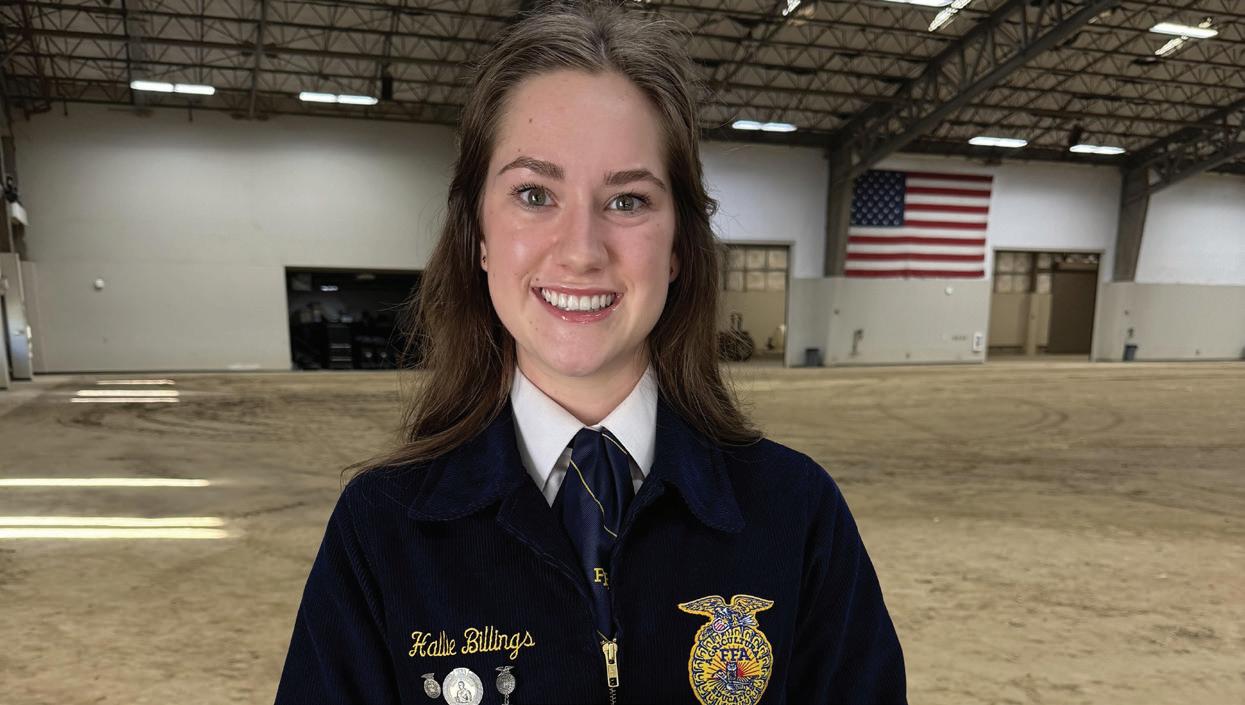
Atwater High School agriculture student and FFA member Hallie Billings, a senior, placed 2nd overall in Extemporaneous Speaking at the FFA Public Speaking Regional Finals, earning qualification for the state finals in April at Fresno State University.
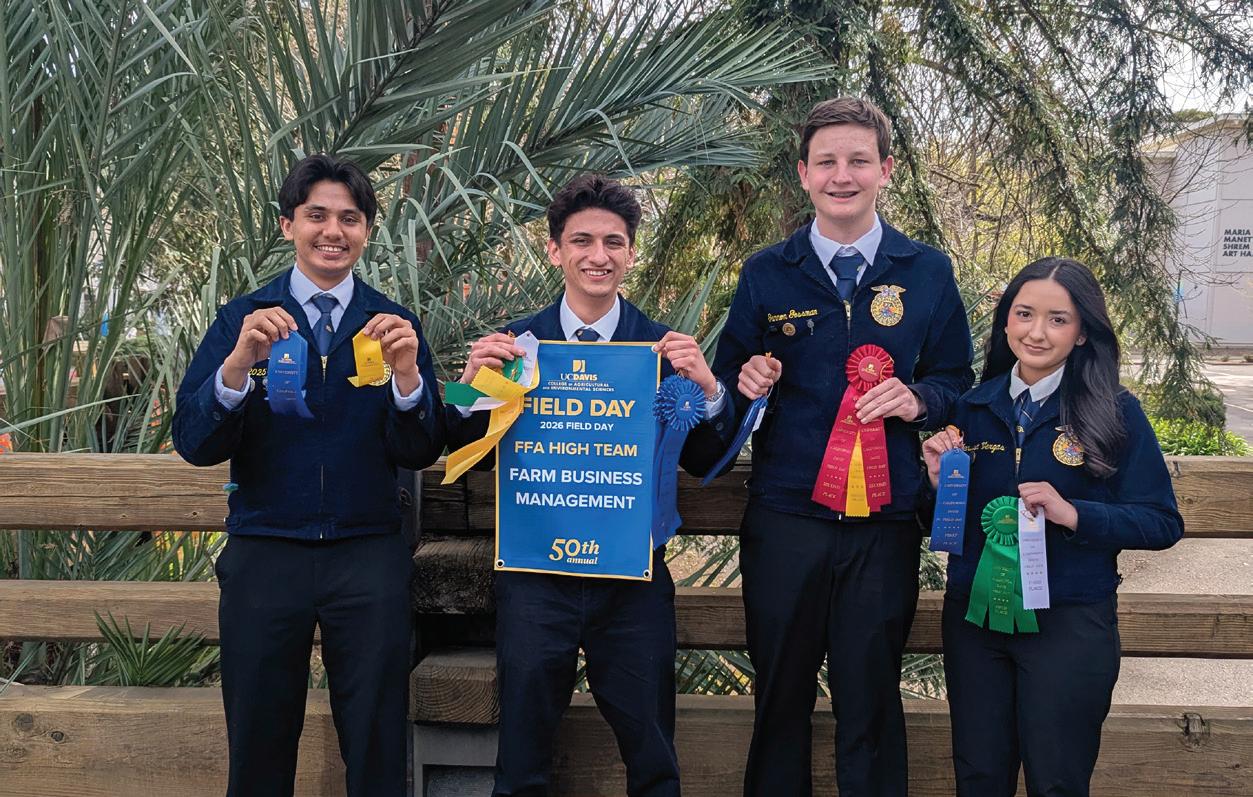
Atwater High School FFA’s Farm Business Management team of Armaan Pabla, Iker Chargoy, Gannon Gossman, and Marissa Vargas placed 1st overall at the 50th Annual UC Davis FFA Field Day on March 7, where more than 1,500 students competed.
Busy Month of Engagement and Education for MCFB
March has been a busy and rewarding month as I stepped into a new responsibility within my role: organizing trainings and workshops for the agricultural community. Taking on this responsibility has allowed me to support our members by providing educational opportunities while also gaining valuable experience in event planning and coordination.
The month began on March 3 with the Farm and Labor Laws Workshop, presented by agricultural labor expert Bryan Little. The workshop provided important updates and guidance for farmers and agricultural employers navigating labor regulations. The following day, March 4, we hosted a Haz-Mat Training offered in both English and Spanish. We were especially pleased to see a strong turnout for the Spanish session, highlighting the importance of providing accessible educational opportunities for all members of our agricultural community. Organizing these trainings gave me valuable experience in event preparation and coordination.
On March 5, we traveled to Gustine to host our first Member Mixer of 2026. After reviewing our membership demographics, I noticed that
Gustine represents a strong agricultural community that has been underrepresented in our membership base. With that in mind, I took on the challenge of hosting the mixer with the goal of bringing at least 11 attendees, excluding staff. I was proud to see that we surpassed that goal with 14 attendees, creating a great opportunity to reconnect with familiar faces and meet potential new members interested in becoming part of the Farm Bureau network.
The following day, March 6, I visited Los Banos Elementary School for their first annual Ag Day. During the event, I had the opportunity to present to five classes of fourth through sixth grade students about robotics in agriculture. This is one of my favorite topics to present because it challenges students to think outside the box and helps them understand how technology is shaping the future of farming.
While presenting on this topic, I am always mindful that many students in the classroom have family members who work as agricultural laborers. I concluded the presentation by reminding students that while technology and robotics continue to advance in agriculture, they will never
replace the value of people. Farmers, ranchers, and farm laborers all play an essential role in bringing food to our tables, and their work remains at the heart of the agricultural industry.
I also had the opportunity to meet with the students who will be participating in the first-ever Merced County Farm Bureau Agricultural Communications Experience. I developed this experience to help immerse students in the
agricultural communications industry. Two students from the area will be assisting us by gathering content, photography, and videos at our annual meeting this year. These students will also participate in another training session to help prepare them for their responsibilities at the event.
March has been filled with opportunities to connect, educate, and grow.

Citing Iran Crisis, Trump Orders Santa Barbara Oil Pipeline Restart. California Will Fight It
By: Alejandro Lazo, Cal Matters
The Trump administration invoked emergency powers under the Defense Production Act Friday, ordering the restart of the Santa Ynez offshore oil platform and pipeline along the Santa Barbara County coast that was shuttered after a spill released thousands of barrels of crude into the Pacific 11 years ago.
The move, which comes in response to skyrocketing fuel prices in the wake of the Iran conflict, brought an immediate threat to sue by Gov. Gavin Newsom.
The order also marks the most aggressive federal intervention yet in a yearslong dispute. On one side is the Trump administration and Sable Offshore Corp., a Houstonbased startup that has been trying to restart the pipeline. On the other are California officials and environmental groups who oppose the effort.
Sable, which bought the system from ExxonMobil in 2024, has told investors that production could increase
from about 30,000 barrels of oil equivalent per day to more than 50,000 if the system restarts, sending oil to refineries in Los Angeles, Bakersfield and the Bay Area. The company did not immediately respond to a request for comment Friday evening.
The ruptured pipeline released crude oil onto beaches north of Goleta in May 2015, killing hundreds of birds and marine mammals and triggering one of the worst California coastal oil spills in decades.
Sable was blocked from restarting operations by court orders requiring approval from California regulators — a requirement the Trump administration has tried to override.
On Friday, Energy Secretary Chris Wright said in a statement that the Trump Administration “remains committed to putting all Americans and their energy security first. Today’s order will strengthen America’s oil supply and restore a pipeline system vital to our national security and defense, ensuring that West Coast

military installations have the reliable energy critical to military readiness.”
Newsom said, however, that California will sue the Trump administration over the move.
“Donald Trump started a war, admitted it would spike gas prices nationwide, and told Americans it was a small price to pay,” Newsom said.
“Now he’s using this crisis of his own making to attempt what he’s wanted to do for years: open California’s coast for his oil industry friends so they can poison our beaches.”
“The Trump administration and Sable are defying multiple court orders, and we will see them back in court,” Newsom said.
The Energy Department did not immediately provide CalMatters with a copy of the order. A March 3 legal opinion from the Justice Department concluded that a federal order under the Defense Production Act of 1950 could preempt state law in the Sable case. It also said such an order could override a 2020 federal consent decree stemming from the 2015 Refugio spill that requires approval from the California State Fire Marshal before the pipeline can restart.
Earlier Friday, the White House issued an executive order expanding and clarifying the energy secretary’s authority to act under the Defense Production Act.
Environmental groups challenging
the legality of Sable’s plans condemned the move.
“This is a revolting power grab by an extremist president,” said Talia Nimmer, an attorney at the Center for Biological Diversity, which has challenged the pipeline restart in state and federal court.
“Trump is misusing this Cold War-era law just to help a Texas oil company skirt vital state laws that protect our coastline, and Californians will pay the price.”
Nimmer said forcing the pipelines to restart would not lower gasoline prices but would expose coastal wildlife to the risk of another spill. Allowing the federal government to override state law so an oil company can restart the pipelines, she said, would set a dangerous precedent. The Trump administration has long sought to expand offshore oil leasing along the West Coast, which has drawn fierce opposition in California.
In December, federal officials sought to shift authority over the pipeline from California regulators to Washington when the Pipeline and Hazardous Materials Safety Administration ruled that the infrastructure qualifies as an interstate pipeline. It issued an emergency permit approving a restart plan.
Environmental groups and the state of California challenged that move and are awaiting a ruling in the 9th U.S. Circuit Court of
From small farms to large commercial operations, the INSURICA Agriculture Experts have grown up in agricultural communities.
Oil Pipeline
continued from page 10 Appeals.
A representative for Attorney General Rob Bonta could not immediately be reached for comment on Friday. After the Justice
Department released its memo outlining the legal basis for the move, Bonta spokesperson Christine Lee said the state was reviewing that development.
“The Trump Administration’s desire to put oil and gas interests
over our communities and a clean environment continues unabated,” Lee said, on Tuesday. “We are reviewing this development and cannot comment on legal strategy.”
Last month, a Santa Barbara County Superior Court judge ordered the
pipeline to remain shut down, ruling that the Trump administration’s earlier intervention was not enough to override an injunction requiring Sable to obtain state approvals before restarting.
Western Bonanza: FFA Legacies Growing Through Service
By: Oscar Vergara Vasquez
Imagine using your passion for an agriculture project that keeps impacting your community and beyond for decades to come. Well, this hypothetical scenario is Western Bonanza’s history and main motivation to continue functioning until becoming the biggest livestock show in the whole nation. Learning to do, doing to learn, earning to live, and living to serve, that’s Western Bonanza and the National FFA Organization's mutual purpose: empowering young people through agriculture while giving back to the communities that shaped them. Both programs are rooted in leadership, service, and a passion for livestock, and both exist to help students ignite that passion and harvest their potential. Western Bonanza began in 1985 at California Polytechnic State University as a senior project and originally operated only as a cattle jackpot show. Over time, this small project has grown into the largest student-run jackpot livestock show in the nation. Today, the event includes swine, sheep, goats, and cattle, along with a trade show, a pig sale added in 2018, and a livestock judging contest introduced this year. The show now
welcomes nearly 1,000 youth exhibitors and over 1,500 entries from across the United States, all organized entirely by approximately 200 hardworking Cal Poly students.
This year, three Gustine FFA alumni, Savanna Barcelos, Tyler Borba, and Garret Gomes, were inspired to join the project for the same reason many students join FFA: to develop their agricultural experiences, abilities, and passion through action, giving back to the livestock industry, and supporting younger exhibitors. These leaders shared that growing up in FFA and 4-H helped them find their passion for showing livestock at county fairs. That experience motivated them to serve future generations just as others once served them.
Garret Gomes explained that joining Western Bonanza allowed them to help new exhibitors find their passion for livestock, the same way FFA helped them discover theirs.
Their roles within Western Bonanza are as crucial and impactful as the responsibilities of FFA officers. The leadership team functions like an FFA officer team at the chapter, sectional, regional, or state level. As a duty and pleasure, students work together to
plan every detail of the show, from coordinating exhibitors to managing species rings, organizing judges, and overseeing logistics. They exemplify that the teamwork, collaboration, and leadership skills they learned in FFA became the stepping stones that prepared them to host such a large-scale event in college.
One of the most meaningful responsibilities leaders like the regional manager, Savanna Barcelos, have is leading Animal Science 212, a class made up of students from freshmen to seniors who help put on Western Bonanza. Teaching the class twice a week allows her as a student leader to mentor others and create a supportive environment, much like FFA classrooms and meetings. Another
favorite responsibility includes assisting younger members in the show rings, answering questions, motivating new leaders, and serving as role models. This cycle of mentorship isn’t different from the threecircle model of agricultural learning, including classroom laboratory instruction, FFA, and Supervised Agricultural Experiences (SAEs) that allow our FFA members to grow as agriculturists, and more importantly, leaders of the future.
Undeniably, everyone should recognize Western Bonanza as more than just a livestock show. It is a training ground for future professionals in agriculture. It provides students with the opportunity
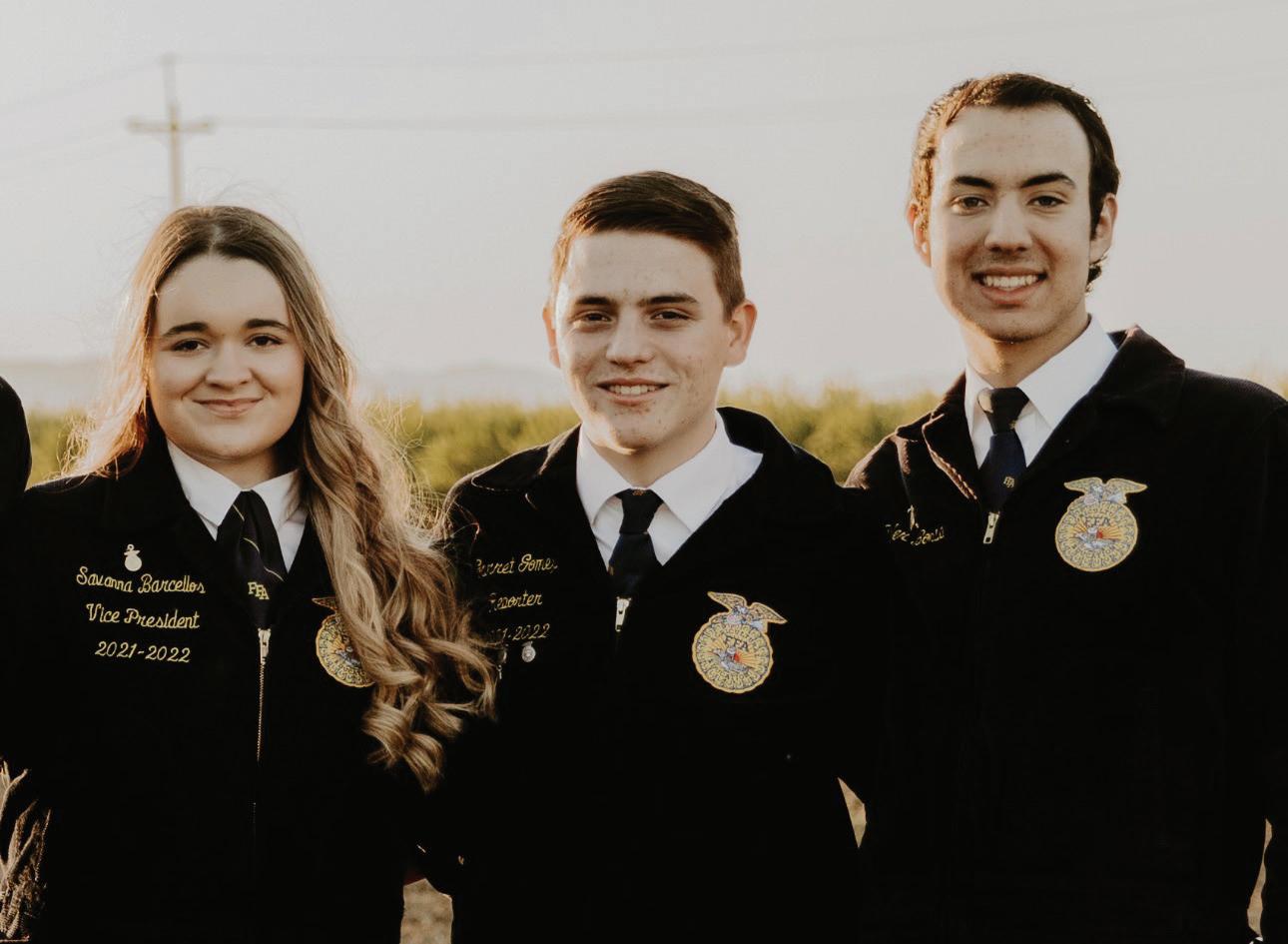
Gustine FFA alumni, Savanna Barcelos, Garret Gomes, and Tyler Borba served on the Western Bonanza Team at Cal Poly, San Luis Obispo.
Bonanza continued from page 11
to gain experience in event management, budgeting, teamwork, and communication, while also building lifelong connections within the livestock industry. Even beyond this show, many participants have gone on to work county fairs, jackpot shows, and major livestock events across the country. Others are pursuing graduate school, livestock reproduction, ag business, or agricultural policy. Garret
Gomes even interned with the California Department of Food and Agriculture, learning firsthand how county fairs and youth livestock programs play a vital role in the agricultural economy.
Just like FFA, Western Bonanza emphasizes a never-ending improvement using the tools of education and training. Each year, students gather feedback from exhibitors and families, then apply it to make the show smoother and more welcoming to the public. Their goal is always the
same: to create the best experience possible for youth exhibitors while supporting the agricultural community.
As Savanna Barcelos shared, “I have enjoyed leading the Western Bonanza Leadership Team and the class of over 120 students! I am so excited for the show next week and cannot wait to see our hard work pay off!”
Ultimately, Western Bonanza reflects everything FFA stands for: service, leadership, education, and community. Both programs have the commitment and
honor of teaching students that agriculture is more than farming. It is people, relationships, responsibility, and giving back. Through Western Bonanza, former FFA members continue that mission, proving that, whether through livestock shows or competitions, when young leaders are encouraged and guided, they have the power to shape the future of agriculture, one effort at a time.
Caballero: Bond to Pay for Updates for State's Water
By:Madeline Shannon, The Center Square
The legislator who wrote a law modernizing California’s water infrastructure says there’s no concrete estimate for the cost to respond to worsening drought conditions.
In a press conference held Friday morning at the San Luis Reservoir in western Merced County, Sen. Anna Caballero, D-Merced County, author of last year’s successful Senate Bill 72, said there is no way to know the cost of developing 9 million acre-feet of water by 2040.
Her bill, which Gov. Gavin Newsom signed into law in October, is being implemented and requires the California Department of Water Resources to formulate long-term water supply goals.
“Frankly, we don’t know what the cost will be to meet that goal,” Caballero said, answering a question from The Center Square at the end of the press conference. “It’s speculative to say it’s
a certain amount. Will it be expensive? Yes.”
Caballero added she’s proposing a bond that could pay for implementing muchneeded updates to the state’s water plan.
Meanwhile, certain water infrastructure projects in California have already cost billions of dollars.
A project by the federal Bureau of Reclamation to raise Shasta Dam by 18 feet was allocated $2 billion of federal taxpayer money through 2034. The Delta Conveyance Project, which proposes to construct a 45-mile-long tunnel underground to help capture storm runoff that runs into the ocean, would cost an estimated $20 billion to $50 billion to construct, according to the California Policy Center.
Despite the enormous price tag, scientific studies show that climate change, which scientists say exacerbates problems related to the state’s water supplies, is getting worse.
A 2019 study by the Scripps Institute of
Oceanography at University of California, San Diego shows that climate change drove worsening forest fires in California between 1972 and 2018. Research from the National Oceanic and Atmospheric Administration shows that
higher temperatures fueled by climate change caused 61% of the state’s water supply evaporating during the 20202022 drought. Only 39% of the drought’s severity was accounted for by reduced
See 'Water Bond' Page 13

Water Bond continued from page 12
rainfall during that time frame, the study shows.
“We anticipate, right now, in 2026, that when we go up into the Sierra Nevada and we do our snow survey on April 1, we will have almost no snowpack,” Karla Nemeth, director of the California Department of Water Resources, said during the press conference. “We are trending towards the secondlowest snowpack in modern California history. That’s where we are.”
Nemeth added that warming temperatures will reduce the state’s snowpack further by 2040. Increased droughts will also require the state to more responsibly
manage its water, she added.
“When we have drought conditions, drought conditions don’t require us to be in a state of emergency,” Nemeth said. “I think Californians are getting a little weary of whenever it turns dry, we kick into a state of emergency in California, and it’s really up to all of us to do the work that’s necessary to provide that stability into the future.”
More efficient water use, recycling water and investing in water infrastructure the state has already built are necessary to be prepared for the worsening climate conditions state officials anticipate, Nemeth and others said on Friday.
“Instead of managing for drought and scarcity
of supply, the state will work towards the water supply target of 9 million to ensure we have enough water for our communities, industry, agriculture, the environment and every Californian,” Fern Steiner, chair of the California Water Commission, told reporters Friday.
Republican lawmakers, who were not present during the press conference at the San Luis Reservoir, said they supported modernizing the state’s water supply, especially in light of prolonged drought conditions, aging infrastructure and increasing wildfire risk.
“SB 72 helps move us in the right direction by establishing reasonable
water supply targets and ensuring the state properly plans for future water needs,” Sen. Tony Strickland, R-Huntington Beach, told The Center Square in an email Friday afternoon.
“By modernizing the California Water Plan for a 21st-century climate and requiring state agencies to work collaboratively with local water providers and stakeholders, we can create a more reliable and resilient water system for generations to come.”
This article has been corrected to clarify that the California Policy Center states the Delta Conveyance Project would cost $20–$50 billion to construct, not to operate, as previously indicated.
LA Lawmakers Push to Lift HighSpeed Rail's $500M Cap on Work Outside Central Valley
By: Erik Calicia, Fresno Bee
Astate bill introduced by a Los Angeles legislator seeks to undo a 2022 state rule that bars the California HighSpeed Rail Authority from spending more than $500 million on most work outside its initial Central Valley route. The bill’ s introduction also follows months of lobbying by Merced officials who last year were caught off guard by a rail authority...
A state bill introduced by a Los Angeles legislator seeks to undo a 2022 state rule that bars the California HighSpeed Rail Authority from spending more than $500 million on most work outside its initial Central Valley route.
State Sen. Henry Stern, D-Los Angeles, says his Senate Bill 1411 is intended to unlock the rail authority’s ability to land private investors — which could pour money into the project faster than its annual allocations from the state.
“This isn’t about L.A. grabbing money from the Valley,” Stern said Friday in a phone interview.
Stern’s bill comes as the rail authority is finalizing a private sector deal the agency says will allow it to build faster so it can begin to generate funds for the project through ridership and the commercialization of its properties.
Rail Authority CEO Ian Choudri told The Bee last year the agency aims to finalize a deal with an
investment group by this summer. He added that private sector investment is more likely to materialize if the system can extend beyond the 171-mile initial segment between Merced and Bakersfield.
Though that route is expected to operate at a financial loss, it was prioritized for initial service by the 2022 state law that Stern’s bill is looking to change.
The bill’s introduction also follows months of lobbying by Merced officials who last year were caught off guard by a rail authority report that suggested building the initial route without a Merced station. The agency said bypassing Merced would save costs and accelerate the project’s timeline of
extending to the Bay Area and Los Angeles.
A rail authority spokesperson told The Bee last month “there are no plans to defer the Merced station.”
The agency did not respond to a request for comment Friday.
The high-speed rail project has grown controversial since California voters in 2008 approved $9.95 billion in bonds for a train that would connect the state’s major metro areas at a total cost of about $45 billion. Today, after years of delays and cost increases, the project aims to complete the Central Valley route by 2032 at an estimated cost of $34.76 billion.
The rail authority has said its costs could increase and
See 'Speed Rail' Page 14
Speed Rail
continued from page 13
progress could slow if state lawmakers don’t approve a series of proposals, including those in Stern’s bill.
Seeking to advance Gov. Gavin Newsom’s 2019 directive to prioritize construction in the Central Valley, state legislators in 2022 passed a law, SB 198, to cap the rail authority’s spending on the project beyond the Valley segment.
Specifically, the law prohibits the rail authority from using money it receives from California’s Greenhouse Gas Reduction Fund, the project’s main source of ongoing funds, on work outside its Mercedto-Bakersfield route. The pollution reduction fund is fed by revenue from the state’s Cap-and-Invest program, which generates
public dollars from companies that buy credits at state auctions to offset their greenhouse gas emission.
The law says the spending restriction will last until 2030 or until the Central Valley route is fully paid for, whichever comes first.
SB 198 allows the rail authority to spend outside the Central Valley for “additional activities, not to cumulatively exceed ($500 million), that maximize the efficiency of delivering the project.”
Stern’s SB 1411, introduced in late February, would scrape the “not to cumulatively exceed ($500 million)” language from the 2022 law. That would allow the rail authority to use any otherwise authorized amount from its pollution reduction fund allocation on any work that helps advance California high-speed rail more efficiently, Stern said.
High-speed rail has used Cap-and-Invest dollars for more than 10 years. After the federal government rescinded $4 billion in grants from California project last summer, the state extended its Cap-and-Invest commitment with a $1 billion annual allocation through 2045 for high-speed rail.
Stern said making highspeed rail spending more flexible would “draw in the private capital we so desperately need.”
“It’s not so much about diverting money to a particular project first,” he said.
He said he believes the private financing strategy would eventually create more money for rail across the state, including in the Central Valley. Private investors will be more willing to put their money into rail if they know they will get a return
in San Jose or downtown Los Angeles, Stern added.
“That actually bolsters the overall financial viability of the whole portfolio,” he said.
Stern said extending the project from the Central Valley into the Los Angeles County city of Palmdale is not his specific motivation, though he added “there’s a lot of private interest” in the future segment between Los Angeles and Anaheim.
“But I don’t know what goes first and second,” he said, adding that should be decided based on the rail authority’s expertise and what the private sector is able to finance.
“We have to really fight against our instincts as politicians to fight for our own project and our own area if we are going to truly get this all done,” he said.
Merced FFA has Fun Celebrating National FFA Week
By:Victoria Petty, Merced FFA Reporter
During FFA Week, our chapter had an exciting week filled with activities that brought many students together and helped promote FFA around campus. Throughout the week, a lot of members participated in the events, and it was great to see so many students getting involved, supporting the chapter, and having fun together. On Monday, we started the week off with donuts and hot chocolate in the morning. Many students stopped by before school to grab something to eat and warm up with a cup of hot chocolate while talking
with friends and other FFA members. It was a great way to kick off the week and get everyone excited for the events ahead. Students enjoyed being able to gather together before school and start the week in a fun and welcoming way. On Tuesday, we held our first Morning Wave of the week. Early in the morning, several FFA members met at the front of the school to wave at
students and staff as they arrived on campus. Members held signs with agriculturerelated facts, waved, and encouraged others to get
involved in FFA. Many people driving and walking into school waved back,
See 'FFA Week' Page 15

FFA Week
continued from page 14
which made the event even more fun and energetic. It helped spread awareness about FFA and created a lot of excitement early in the day. On Wednesday, we had our Kiss the Pig meeting during lunch, which is always a memorable and entertaining event for the chapter. Many students gathered around during lunch to watch and see who would end up kissing the pig. There was a lot of cheering, laughing,
and excitement from the crowd as everyone waited for the big moment. Events like this help bring students together and make FFA activities something people look forward to participating in. On Thursday, our chapter hosted Sip N’ Support after school. This event gave members the chance to spend time together outside of the regular school day while supporting the chapter. Students enjoyed hanging out, talking, and relaxing after a long day of school. Many members attended, and
it was a great opportunity for everyone to connect and have fun in a more casual setting. Finally, on Friday, we ended the week with another Morning Wave, once again greeting students as they arrived at school and spreading excitement for FFA. Later that day during lunch, we held one of the most popular events of the week, Pay to Pie. Students could pay to pie someone in the face, and a large crowd gathered to watch the event. Many people were laughing and cheering as the pies were
thrown, making it a very entertaining way to end the week. Overall, FFA Week was a huge success for our chapter. Many students came out to support the events, participate in activities, and spend time with other members. The week helped bring people together, promote FFA on campus, and create a lot of fun memories for everyone involved. It was great to see so many students enjoying the activities and showing their support for the chapter throughout the week.
Here's What's in Trump SAVE America Act
By: Sarah Fortinsky, The Hill
President Trump’s push to pass the Safeguard American Voter Eligibility (SAVE) America Act is taking center stage this week in the Senate, where it faces an uphill battle amid unified Democratic opposition.
The legislation — which is a top priority for the president — is unlikely to muster enough votes to pass the upper chamber, as Trump and some GOP allies warn of alleged election fraud ahead of the 2026 midterms.
The bill, which would amend federal election law and impose new proof of citizenship requirements, has even divided the GOP conference, with some House Republicans vowing to oppose other legislation until the Senate votes on the bill.
Supporters say the measure would strengthen election integrity and restore trust in the voting process. But critics argue there is little evidence of widespread fraud and warn the requirement
could make it harder for eligible Americans to vote.
Here’s what’s in the SAVE America Act:
Proof of citizenship to register
The legislation would require people registering to vote in federal elections to present documentary proof of citizenship that either includes a photo or is paired with government-issued photo identification.
The bill lists several acceptable forms of proof, including a valid U.S. passport, a military ID paired with a record showing a U.S. birthplace, and a governmentissued photo ID listing the person’s place of birth.
REAL ID-compliant identification would also suffice in the handful of U.S. states that require proof of citizenship to obtain those IDs. Most states do not.
Applicants could also pair a government-issued photo ID with additional documentation showing citizenship, such as a certified birth certificate, a hospital birth record, an adoption
decree showing a U.S. birth, a Consular Report of Birth Abroad, or a certificate of naturalization or citizenship.
The legislation also requires that states establish processes for resolving discrepancies in documentation. For example, people who have changed their name legally — after
marriage or otherwise — could provide additional documentation or sign an affidavit to verify the name change.
States would also be required to create a process allowing applicants who cannot provide documentary
See 'SAVE America Act' Page 16

SAVE America Act
continued from page
proof of citizenship to submit other evidence of citizenship and sign an attestation under penalty of perjury. A state or local official would then be required to determine whether the evidence provided was sufficient.
As of now, applicants must attest to being a U.S. citizen, under penalty of perjury, but are not required to submit documentation in order to vote.
Photo ID to vote
The legislation would require voters to present valid photo identification to cast a ballot in federal elections.
Acceptable forms of ID include state-issued driver’s licenses, valid U.S. passports, valid military IDs and valid tribal IDs with a photo and expiration date.
Those who arrive at the polls without photo ID could still cast a provisional ballot but would need to present
a valid ID within three days for the vote to count. Individuals may also sign an affidavit saying they have a religious objection to being photographed.
The photo ID requirement would also change the way voters cast ballots by mail. Those who submit ballots by mail would be required to submit a copy of their valid photo ID. Otherwise, they must provide the last four digits of their Social Security number, along with a signed affidavit saying they could not obtain a copy of their ID despite making reasonable efforts.
These requirements would not apply to certain military and overseas voters.
Today, there is no national photo ID requirement to vote, though many states individually require some form of identification.
Voter roll reviews for noncitizens
The bill outlines new steps for states to take to ensure
only citizens appear on their voter rolls.
Within 30 days of the bill’s enactment, states would be required to submit their voter registration lists to the Department of Homeland Security, which would compare it against its Systematic Alien Verification for Entitlements (SAVE) database, which is intended to track immigration and citizenship status.
Individuals flagged as potential noncitizens would be notified by their states and would be required to present proof of citizenship. If they cannot verify their citizenship status, they will be removed from the voter rolls.
States would also be permitted to use other sources of information, like state driver’s license databases and certain Social Security data, to identify potential noncitizens on their voter registration lists.
Penalties for election officials
The bill would impose new enforcement mechanisms related to citizenship requirements.
Election officials who register an applicant to vote without the required proof of citizenship could face criminal penalties under the SAVE America Act.
The legislation would also make it a crime for executive branch officials to knowingly provide material assistance to any noncitizens trying to register or vote in a federal election.
The bill looks to hold officials accountable by giving individuals the ability to file lawsuits against election officials who register voters without the required documentary proof of citizenship.
The federal government would also investigate people suspected of unlawfully registering to vote, and noncitizens found to have violated the law could face deportation proceedings.



Our NEW Irrigation Resources
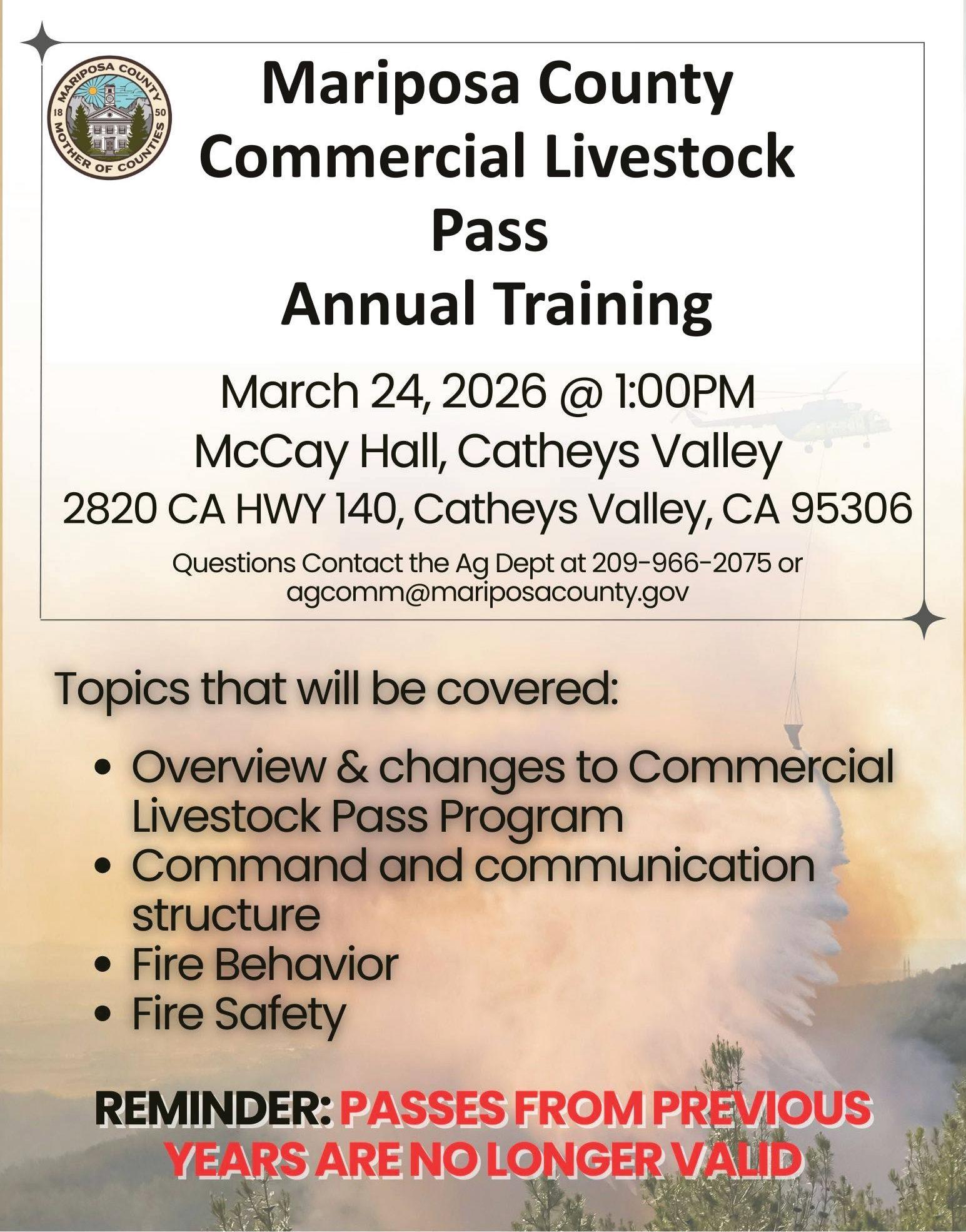
Mariposa County is home to a long tradition of ranching and livestock production. With large areas of rangeland and frequent wildfire threats in the Sierra foothills, protecting livestock during emergencies has become a major concern for local ranchers. In response, Mariposa County established the Commercial Livestock Pass program, a system designed to help livestock producers safely access their animals during disasters such as wildfires, floods, or storms.
The Livestock Pass is an official identification document issued to approved commercial livestock producers, ranch managers, neighbors, and certain employees. It allows emergency personnel to quickly identify legitimate ranch operators who may need to enter restricted areas during a disaster.
During emergencies, law enforcement and fire agencies often close roads and restrict access to protect the public and allow firefighters to work safely. However, these closures can prevent ranchers from reaching their animals. The Livestock Pass program was created to provide a controlled method for ranchers to access their livestock when conditions allow.
Possession of a Livestock Pass may allow limited access to evacuation zones so ranchers can feed and water livestock that are
sheltering in place, provide necessary care to animals, and assist with evacuating livestock to safer locations. Importantly, the pass does not guarantee entry into restricted areas. Emergency officials determine when and if it is safe for pass holders to enter.
In 2021, California Assembly Bill 1103 authorized counties to create Livestock Pass programs to address this challenge. The law allows county agricultural commissioners to issue identification passes so vetted livestock producers can access ranch property during disasters when approved by emergency management.
The program recognizes that livestock producers often play an important role during emergencies. Ranchers possess knowledge of local terrain, water sources, and livestock handling that can help protect animals and property while supporting emergency response efforts.
In Mariposa County, the Livestock Pass program is designed primarily for commercial livestock producers. Generally, applicants must operate a commercial livestock operation, maintain a minimum number of animals (typically around 25 head of one species), provide documentation and maps of their ranch property, complete required training through the county agricultural department. These requirements ensure that passes are issued only
to legitimate agricultural operators with a clear need for emergency access.
Applicants must complete training before receiving a Livestock Pass. The training explains emergency procedures, how road closures work, safety protocols when entering disaster areas, and coordination with emergency services. In Mariposa County, pass holders currently complete about four hours of training to obtain or maintain their pass.
During an emergency, pass holders must contact the county Agricultural Commissioners Office before entering a restricted zone. If conditions permit, officials
coordinate with emergency services and may escort ranchers into the affected area.
Programs like the Livestock Pass are increasingly common across rural California counties where agriculture and wildfire risk intersect. They represent a practical collaboration between ranchers, local government, and emergency services to protect both livestock and public safety. For Mariposa County ranchers, the Livestock Pass offers something simple but essential during a disaster, the ability to reach the animals that depend on them.