COMMERCIAL MARINE BUSINESS
COMMERCIAL MARINE BUSINESS

COMMERCIAL MARINE BUSINESS
COMMERCIAL MARINE BUSINESS
presented at Europort 2025
Hall A1: Stand 1304
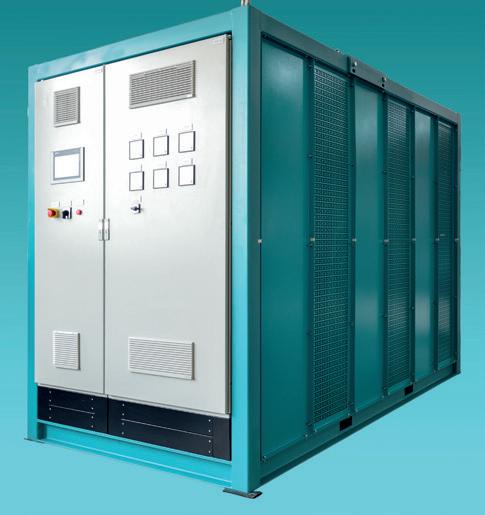
• Heatmaster is showcasing its products and services in Rotterdam, their home town.
• The marine industry is undergoing changes due to stricter emission and environmental regulations, leading to the adoption of greener solutions.
• Heatmaster has been enhancing ship efficiencies for over two decades, contributing to the industry's environmental goals.
• Recent vessels equipped by Heatmaster use Methanol fuel for boilers, electric heaters, and convert waste heat to electric power.
• Heatmaster is actively involved in the green transition within shipbuilding and shipping sectors.
After the fantastic growth recorded in both 2023 and 2024, Hs.Marine aims to close 2025 with another record-breaking increase (tripling the turnover of 2023), demonstrating the reliability of its products and the low cost of ownership that continue to be recognized and rewarded by the market.
“These important increases that highlight the value of our work and the efforts of our entire team,” explains Stefano Forni, co-founder and Managing Director of the company. “But we continue to look ahead, driven by the desire to grow and to further expand our market penetration.”
“The result - Forni continues - of a strategic plan launched five years ago and still evolving. Just consider that in recent years we’ve expanded our team—both in the technical office and in production, in
Subsea connection for Shetland Islands
upgrades More revamps to accommodate wind
monopile World's largest offshore wind farm has last foundation installed
concept
on keeping it above board
for the new fuel?
target?
floating wind a feasible option?
the spare parts department, and in the warehouse. And we’re not standing still when it comes to infrastructure either. Even though we built a new facility just last year, we are already working on another expansion. Without careful planning, state-of-the-art facilities, and highly skilled personnel attentive to every detail in both production and processing,” Forni continues, “we would never have been able to achieve and handle successfully the kind of growth we’re experiencing.”
“One of our strongness – underlines Forni -, is to be very flexible and we know that quality always pays back. It is certainly no coincidence that in a context of significant turnover growth, we have managed to improve the company's efficiency and further increase quality by introducing new procedures both for suppliers and for ourselves".
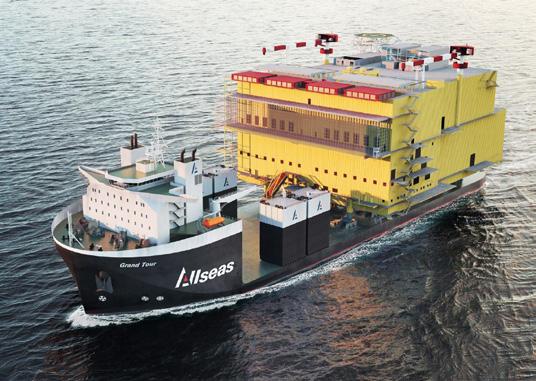
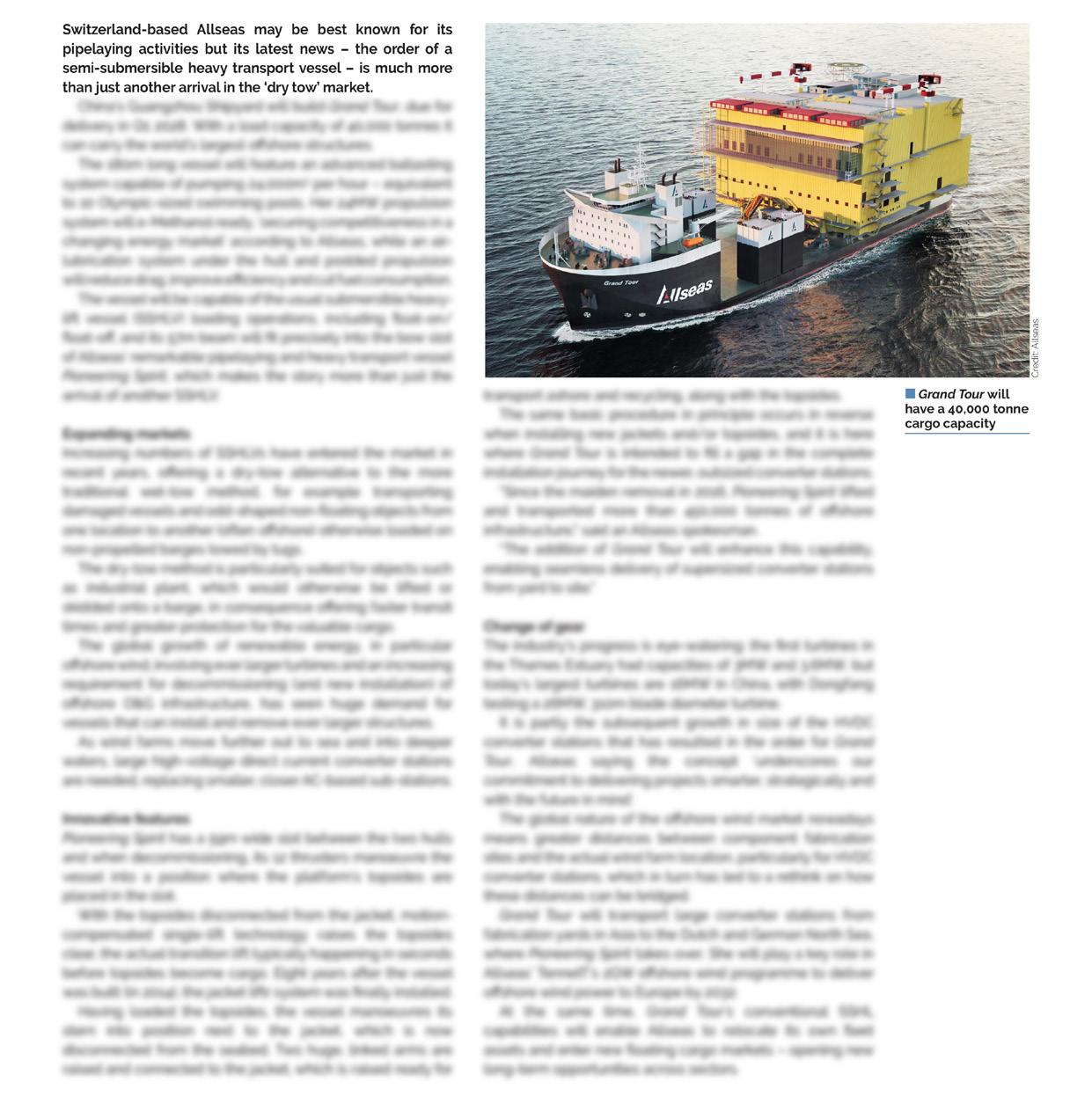
The world’s largest offshore structures will be able to board Allseas’ new vessel when it’s delivered – expanding heavy-lift and towing capacity for offshore industry.
Click here to read article on Maritime Journal online

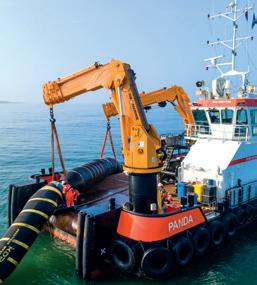
Damen Shipyards has won a contract from vessel operator Serco for 24 new vessels to refresh the UK Royal Navy’s maritime services fleet.
The vessels – a mixture of tugs, barges, crane barges and pilot boats – are part of a £850 million (€980 million) contract over 10 years in which Serco will organise the modernisation of the navy’s in-port fleet and support essential daily operations such as towage, passenger transfers and barge and tank cleaning at the naval ports of Devonport, Portsmouth and the Clyde.
Serco has provided in-port services to the Royal Navy for about 30 years, and all along has worked closely with Damen Shipyards.
“The Defence Maritime Services Next Generation Vessel Replacement Project represents a significant step forward in modernising the Ministry of Defence’s auxiliary fleet,” said Guy Barker, Serco’s Maritime Services director.
USV launch
In August, Serco launched the ‘No Manning Required Ship’ (NOMARS), – an Uncrewed Surface Vessel (USV) – for the US.
The USX-1 Defiant is a prototype vessel for a NOMARS programme, and Serco says it

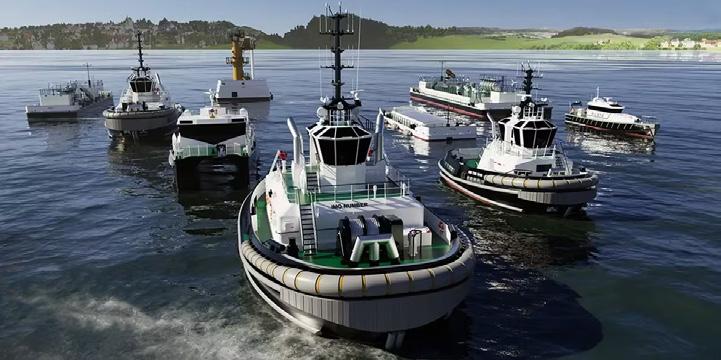
signalled ‘a pivotal moment in Serco’s future of naval architecture and autonomous operations’.
“The USX-1 Defiant represents a radical departure from traditional ship design, conceived from the keel up with no provision or expectation for human crew,” said Serco.
“This ‘clean-sheet’ approach aims to deliver
unprecedented advantages in size, cost, at-sea reliability, hydrodynamic efficiency and survivability, ultimately enabling a new class of highly capable and cost-effective unmanned surface vessels (USVs).”
Some 80% of Serco’s order intake is now in Defence.





















After a grounding last September nearly ended her useful life, a half-century-old vessel has been showcased after setting sail for a new career. Our reporter Peter Barker paid her a visit.
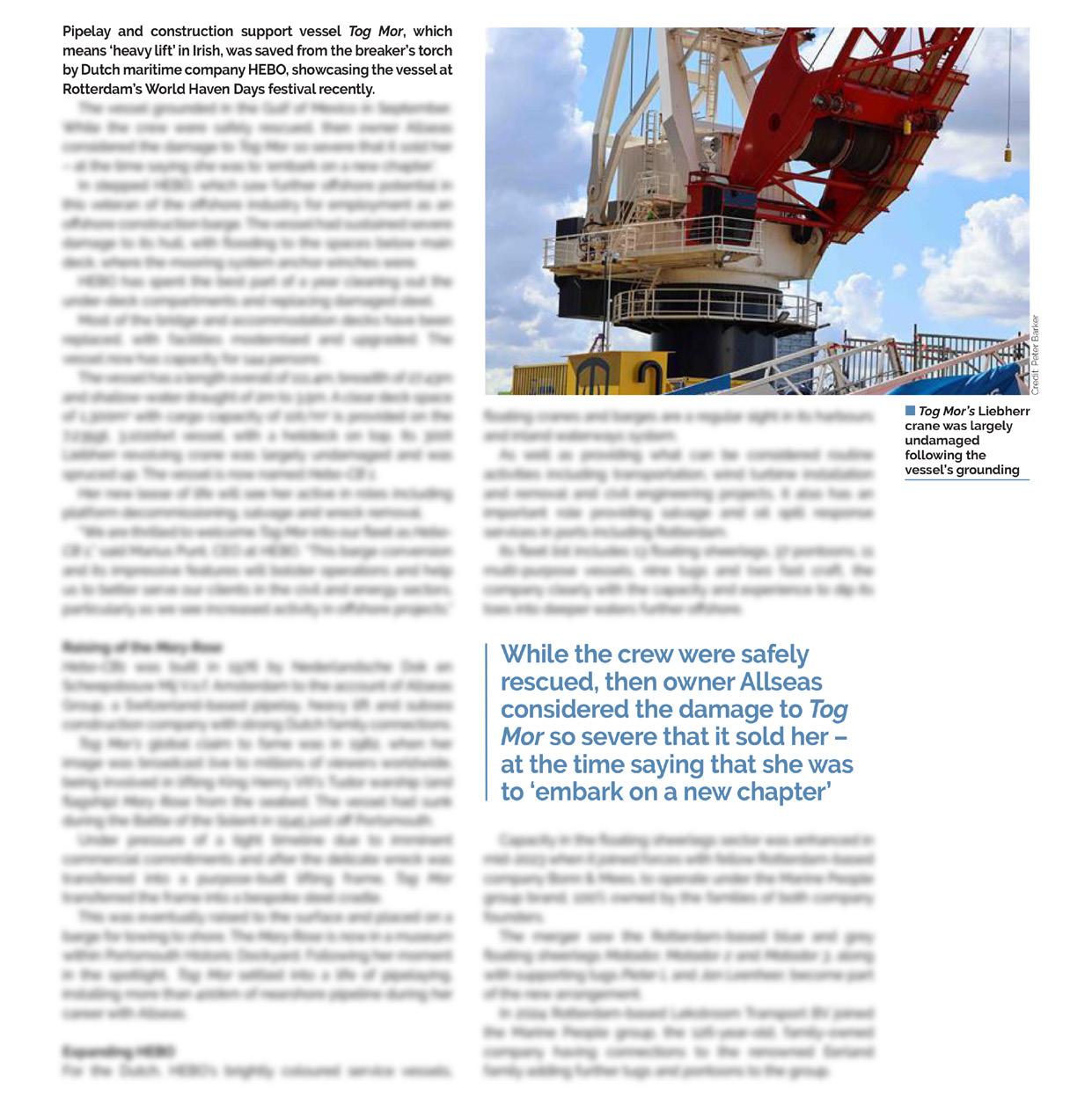
Click here to read article on Maritime Journal online
Bernhard Schulte has christened its newest Commissioning Service Operation Vessel to work in the offshore energy sector.
Windea Clausius was named on September 4 after German physicist Rudolf Clausius, whose work on thermodynamics established fundamental principles for understanding energy transformations, including wind energy.
Norway’s Ulstein Verft built the vessel, which was delivered a few weeks after sister vessel Windea Curie was delivered in June, and completes the company’s modern offshore fleet of five, said managing director Matthias Müller. The other three vessels are Windea La Cour, Windea Leibniz and Windea Jules Verne.
The vessel has hybrid battery propulsion and his been built with ‘methanol fuel readiness’, says the company.
Windea Clausius has two sterns and azimuth propellers fore and aft to ensure ‘optimal’ DPS performance and improving fuel efficiency.
“Equipped with a large, height-adjustable, centrally located walk-to-work gangway and elevator tower for personnel and cargo transfers, the vessel also includes a 3D motion-compensated crane for offshore lifts of up to five tonnes,” says the Schulte Group. “Onboard logistics are optimised with
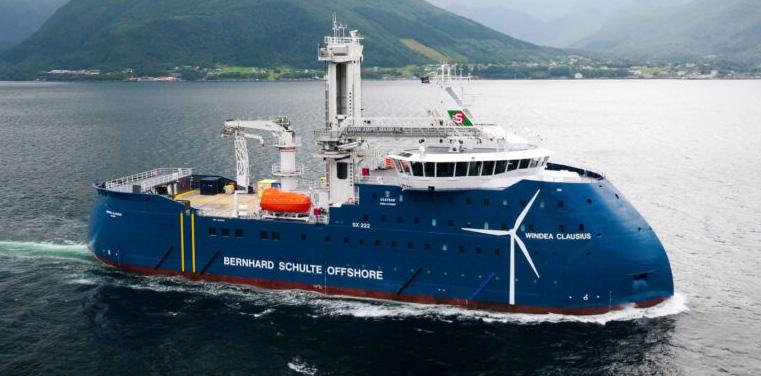
spacious storage areas and stepless access to offshore installations. In addition, Windea Clausius features a height-adjustable boat landing system that allows for safe and stepless transfer of personnel and equipment between the CSOV and smaller crew transfer vessels—an important safety aspect
Nordic USV A/S is expanding its fleet with two new REAV-47 hybrid uncrewed surface vessels (USVs) built by HydroSurv
The vessels, named USV Kuling and USV Storm, will join the pioneering USV Bris to scale up autonomous survey operations and marine monitoring along Norway’s coastline.
“USV Bris has proven the value of remote operations, demonstrating long-range autonomous performance with zero field personnel,” said HydroSurv in a statement.
Proven expertise
In a pioneering demonstration of remote autonomy, USV Bris recently completed a 320 km mission in 41 hours for Aqua Kompetanse AS, sailing between Ranfjorden and Velfjorden to map hydrographic conditions with no field personnel on site.
Nordic USV said that its new vessels will strengthen the use of uncrewed surface vessels for sustainable, highendurance marine survey missions in challenging coastal and fjord environments.
USV Bris has proven the value of remote operations, demonstrating long-range autonomous performance with zero field personnel
Once deployed, the expanded fleet will meet increasing demand for autonomous vessels in marine survey, bathymetric mapping and deepwater profiling.
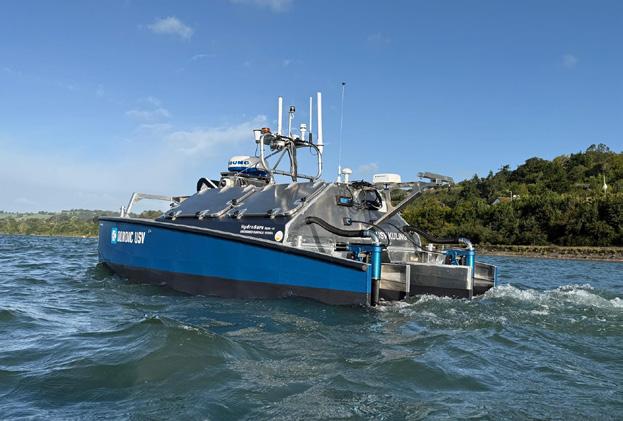
Each REAV-47 platform features 72-hour hybrid-electric endurance and integrated payload systems, enabling scalable, low-emission survey operations.
The collaboration between HydroSurv and Nordic USV highlights a shared commitment to advancing uncrewed surface vessels for next-generation marine monitoring and sustainable ocean science.
HydroSurv has already started on-water trials for USV Kuling, while USV Storm is in its final production stages.
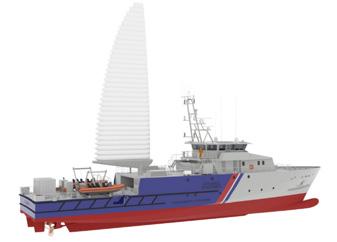
The New Generation Maritime Affairs Patrol Vessel (PAM), featuring windassisted propulsion, has officially entered its construction phase with the first steel cutting on 18 September 2025.
This milestone marks the shift from design to assembly, following the project’s tender award in December 2024 and formal announcement in January 2025.
Developed by France-based naval architect Mauric, the vessel integrates advanced technologies to enhance operational efficiency and reduce environmental impact. Naval architects and marine engineers have completed the vessel’s detailed design, including the placement of wind-assist systems and the integration of stabilisation technologies.
Sea-keeping simulations guided the development of anti-roll tanks and active fin
■
stabilisers, while computational fluid dynamics studies optimised the hydrodynamic shape of the bulbous bow and defined an active trim control system.
The vessel’s hybrid propulsion system combines diesel-electric power with wind assistance, enabling a cruising speed of 10 knots and a top speed exceeding 18 knots.
Construction is structured around eight modular blocks. The first block, located in the forward hull section, is now ready for cutting at Socarenam’s shipyard in Boulogne-sur-Mer. Delivery remains scheduled for the second half of 2027.
The 53.7-metre vessel features a steel hull and aluminium superstructure. It supports a crew of 16 and can accommodate four special forces personnel, with 12 days of autonomy and up to 200 days of operation per year.
Primarily operating in the Bay of Biscay, the PAM will conduct missions including maritime surveillance, fisheries control, environmental monitoring, search and rescue, and regulatory enforcement.
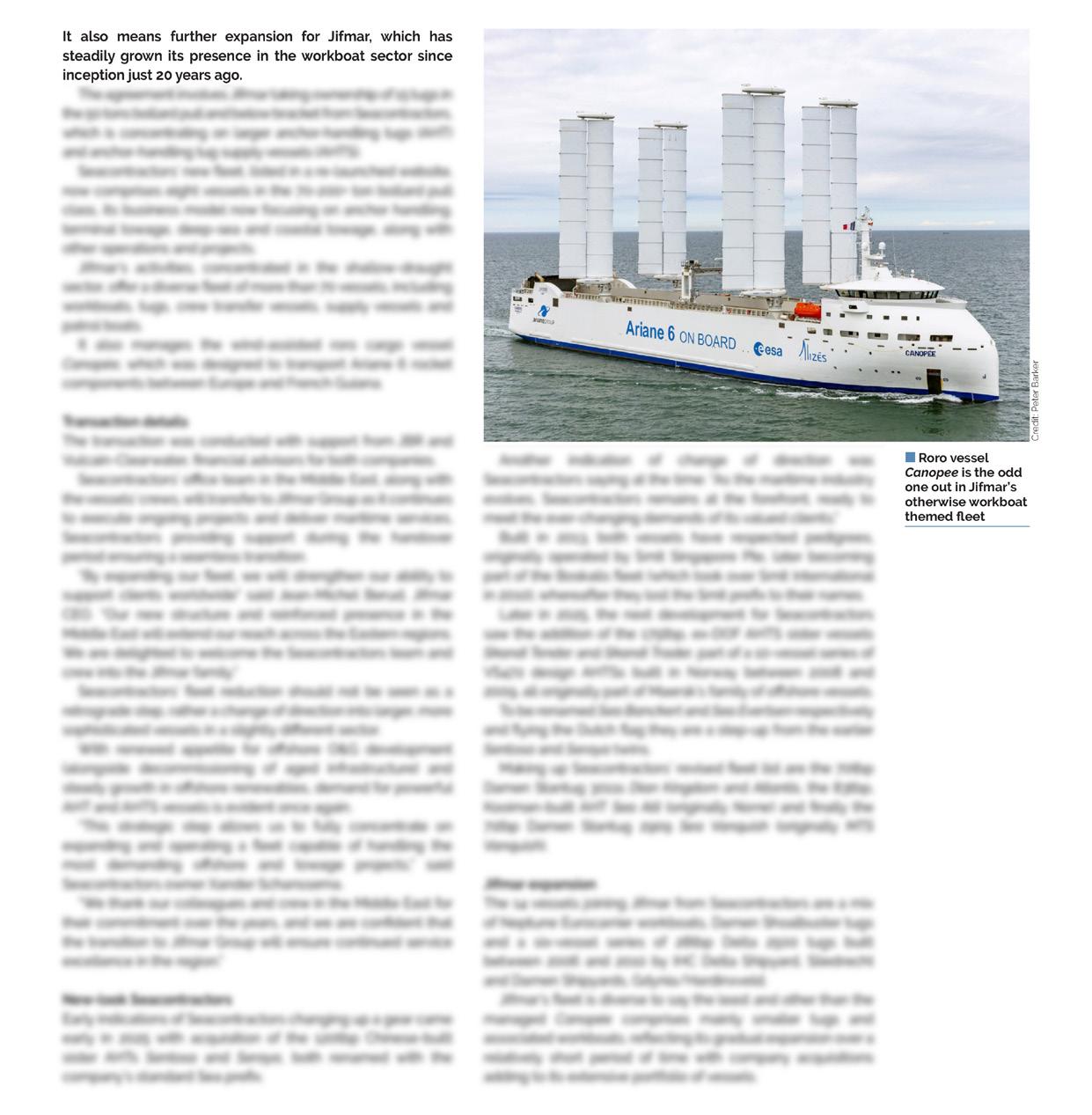
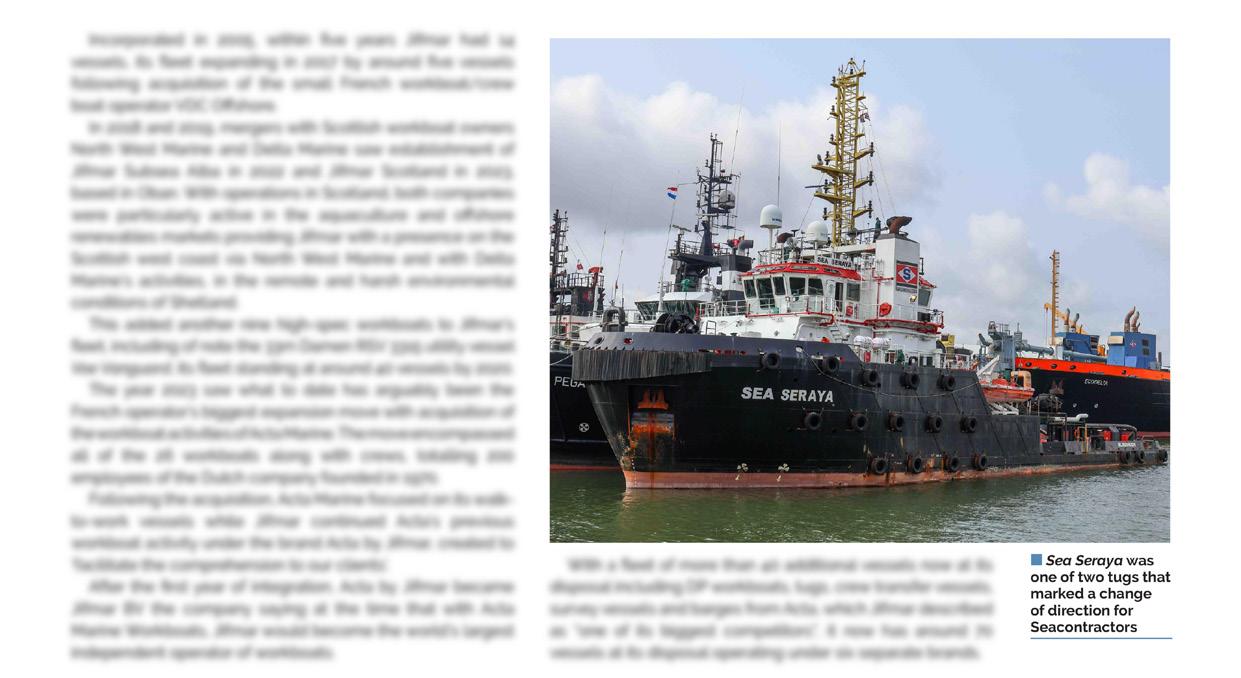
News that Dutch tug owner Seacontractors has sold its smaller vessels to France-based Jifmar marks a strategic change of business direction for the company.
Click here to read article on Maritime Journal online
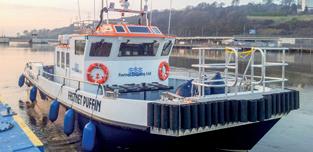
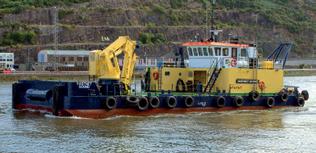
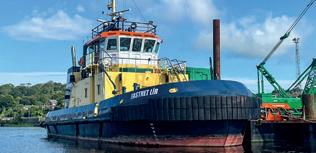
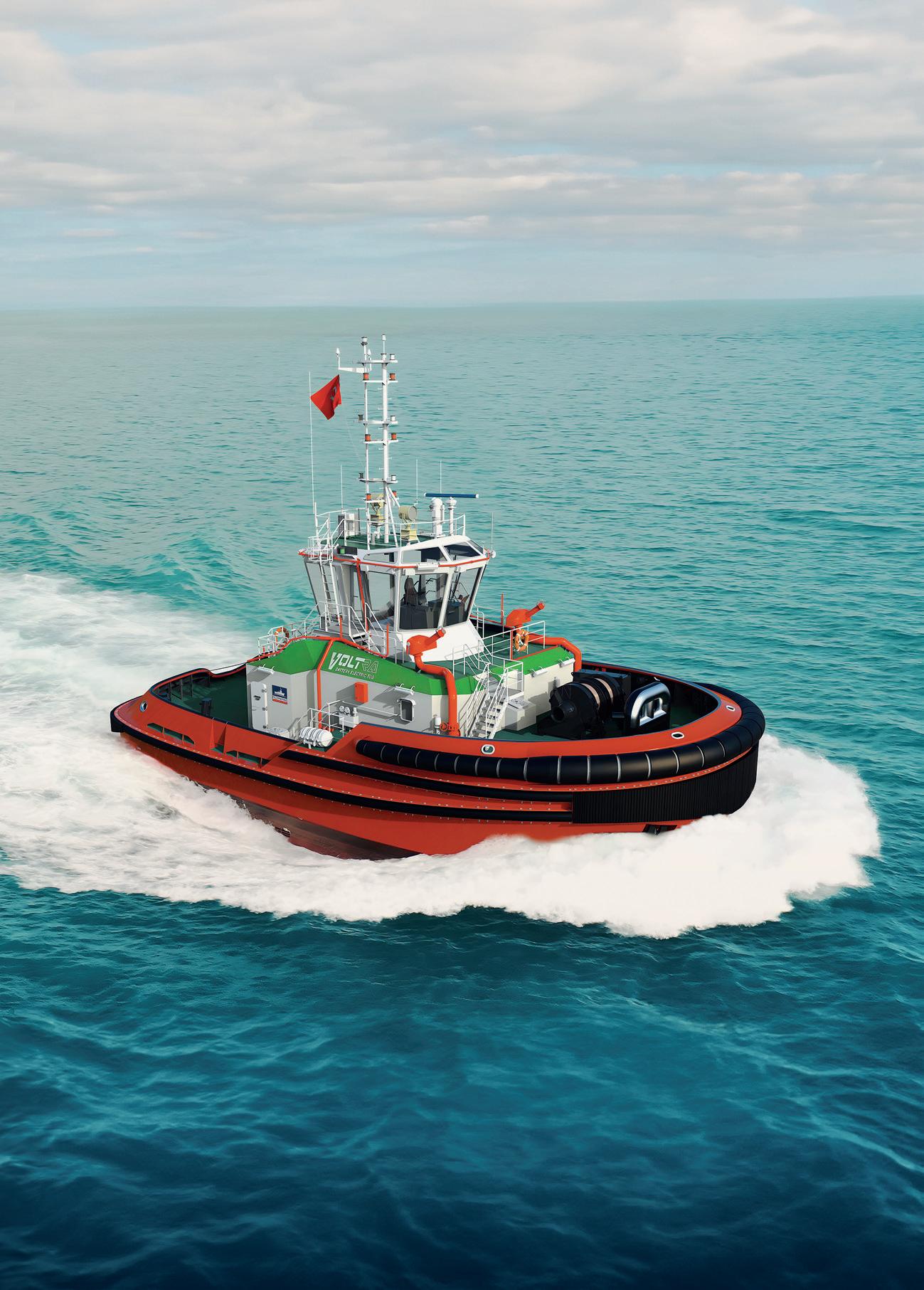
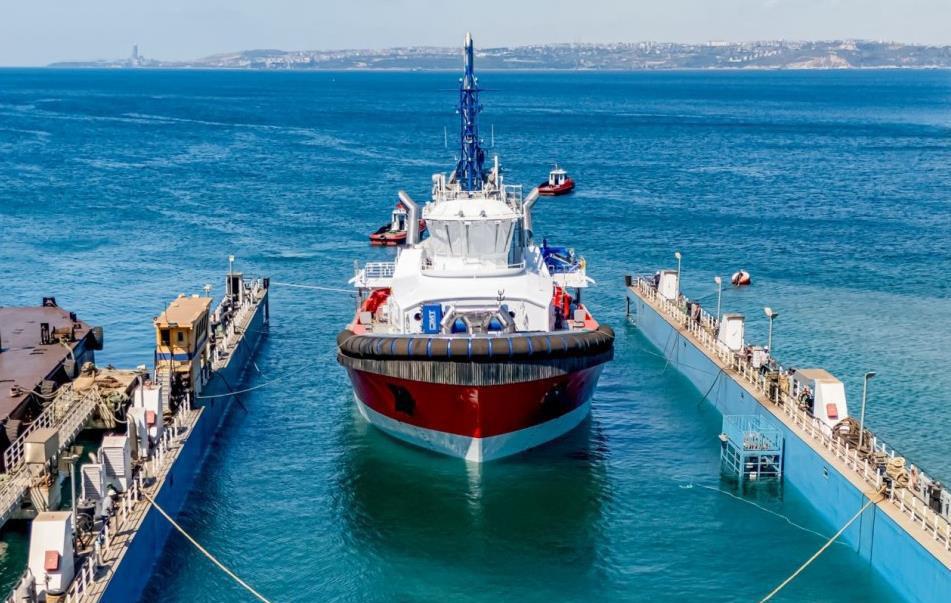
Sanmar Shipyards has launched what it claims is the world’s first purpose-built dual-fuel methanol escort tug.
The beneficiary is Kotug in Canada, which will use it to service Canada’s Trans Mountain Expansion Project to escort LNG tankers from the harbour limits of the Port of Vancouver to the Pacific Ocean.
It is the first of two methanol escort tugs being built by Sanmar, which says the two vessels will be the most powerful escort tugs in Canada, with 120 tonnes of bollard pull.
“The methanol-fuelled tugs represent another major step forward to a cleaner, greener future,” said Sanmar. “Measuring 44m in length, the escort tugs will operate in some of the harshest environments in the world and have been customised to meet the demanding operational and environmental requirements of this project.”
Based on Robert Allan’s RAsalvor 4400-DFM design, the twin tugs will provide long-range towing, anchor-handling, rescue and salvage and will have the largest spill response capabilities on the British Columbia coast.
“The launch of this radically new tug, the first of twins, is an important day for the whole tug industry,” said Ali Gürün,
Sanmar’s vice chairman & CEO. “It marks a major step forward in the use of alternative fuels to protect our planet. These are

(0)1482 329600
Email: info@proutmarine.co.uk
www.proutmarine.co.uk
among the most powerful tugs ever built, yet have environmental protection at their heart.”



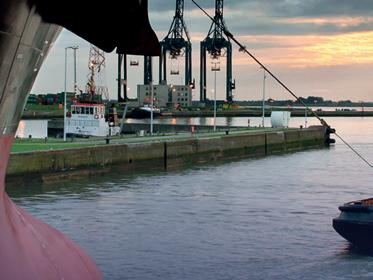





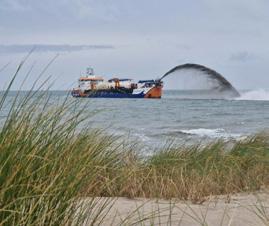
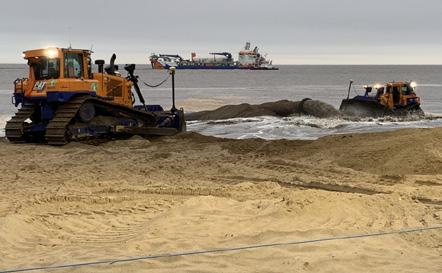
As fears about rising sea levels grow, countries are protecting their coastlines with sand replenishment projects. Here is a taste of some of the ongoing works.
At the heart is obviously the Netherlands, whose very name means ‘Lower lands’, with 26% of its land mass under sea level.
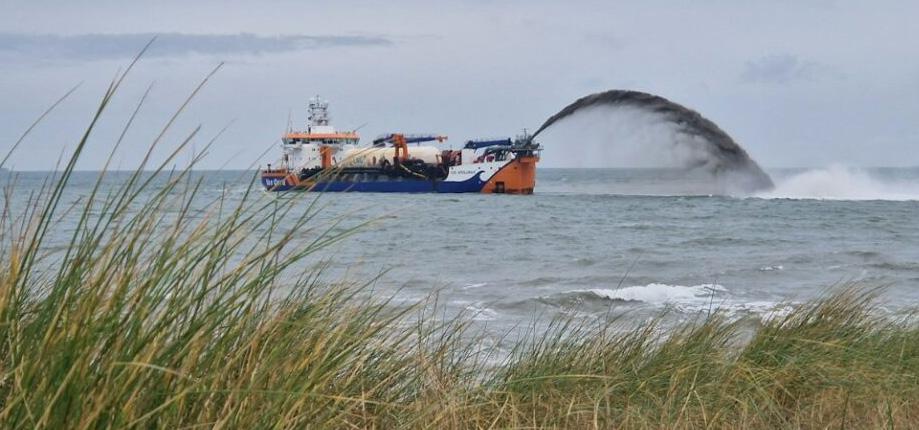
Marine contracting giant Van Oord is often tasked with the work, and at the moment is deploying one of its trailing suction hopper dredgers to deposit 1 million cubic metres of sand onto and in front of Banjaard Beach, in the NoordBeveland of the Netherlands.
The €8.6 million replenishment will be done by a vessel, says Van Oord, that will run on Bio-LNG for the first time in the Netherlands.
This beach is one of three that will be replenished by Van Oord, the others being Goeree Westkop and Heemskerk, as part of the Coastline Care programme, which aims to strengthen the Dutch coastline with regular sand deposits.
“Bio-LNG is produced from sustainable bio-based materials, including organic household waste and agricultural waste. The bunkered fuel is certified under the ISCC EU certification system, which ensures compliance with the European Union’s legal requirements for sustainable fuels,” says Van Oord.
Portuguese projects
Two notable projects are being undertaken in Portugal.
A million cubic metres of sand will be added to 6.6km of the Caparica coastline at a cost of €8.6 million, according to the Portugal News. The project is to begin imminently, lasting around two months.
In January, the paper says, the government said it would spend another €20 million ’in priority coastal protection projects’ to stabilise cliffs, protect coastal infrastructure and reinforce the most vulnerable beaches.
“The measures ‘combine advanced engineering with nature-based solutions, promoting climate adaptation and sustainable coastal management’,” it says.
Over on the holiday spot of the Algarve, at QuarteiraGarrão, €13 million has been made available to protect 6.6 km of coastline from erosion by dredging sand from an offshore borrow site and pumping it onto the beaches. The public tender was opened in late August/early September 2025, and the contract is expected to be awarded and works completed before the end of 2026.
Kingdom
In the UK, £7 million (€8 million) is regularly spent on annual beach replenishment in Lincolnshire, an eastern county which, like the Netherlands, is below sea level.
Experts Van Oord have been called in again this year, and in fact the £7 million is just a fraction of £2.65 billion that has been committed by the government for flood protection works.
“Replenishing the sand means that the beaches, instead of hard defences like sea walls, take the brunt of the waves’ force and energy,” said Deborah Higton, Flood Risk manager at the Environment Agency.
“This reduces the amount of damage and erosion to those hard defences and lessens the risk of water overtopping them.”




Moves are being made towards a network of subsea tunnels to connect four of Scotland’s remote Shetland Islands, which are nearer to Norway than the Scottish capital city of Edinburgh.
The Inter-Island Transport Connectivity Programme is looking at building tunnels, ‘fixed links’, between the four islands of Unst, Yell, Whalsay and Bressay.
A Strategic Business Case has been laid out, and money put aside for a feasibility into the idea, which could transform lives in some of the most remote areas of the UK.
“Tunnels - prevalent in the rural and island communities of neighbouring countries - could supercharge growth in key industries from space to aquaculture, not to mention allowing for a redesign of key public services and more housing,” says one of the documents.
“With an average age of over 32 years, our ferry network lacks the resilience to offer a reliable lifeline, meaning that patients cannot attend hospital appointments when the weather is inclement, those who live alone cannot be reached by visitors.”
The Shetland Islands Council has been looking to the Faroe Islands for ideas on its tunnels, given that life has been transformed
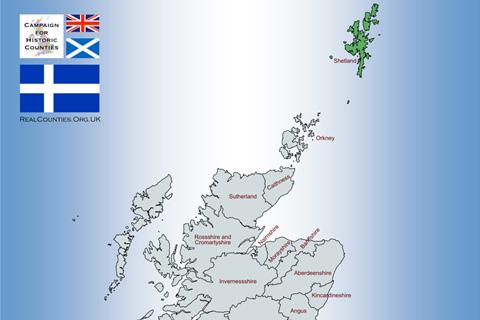
in the Denmark-owned archipelago by the building of more than 20 tunnels – including four subsea tunnels.
Spearheaded by the Unst and Yell Tunnel Action Groups (UTAG & YTAG) funds have been raised to begin investigative work and Norwegian consultancy Norconsult has been engaged to take it on.
“Tunnelling in Shetland is, ultimately, about future-proofing our island population,” said council leader Emma Macdonald. “Transport connectivity is central to creating sustainable islands, which provide good homes and good
jobs for our people, and which can reverse decades of depopulation.
“The experience of our neighbours in the Faroe Islands is clear - tunnelling from mainland Shetland to our outer islands could increase their population, lower their average age, and increase their economic prospects. It’s also critical that we continue to invest in a resilient and reliable ferry service to support all our islands.”
Shetland MP Alistair Carmichael said: “We have seen a few false dawns on tunnels for Shetland – now is the time to deliver on their promise. I am glad that the Council is putting investment into this project to move it to the next stage.
“Tunnels have the potential to be transformative for Shetland’s economy and our communities. It has been a long road just to reach this point and there is still a long way to go but I am glad that progress is being made. I look forward to working with the Council and indeed with the UK and Scottish governments to keep up the momentum.”
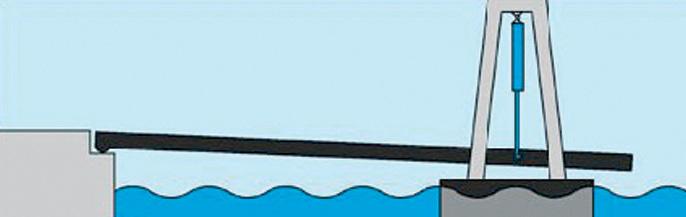

A key milestone has been reached in the Dutch Fish Migration River project, marking a step forward for marine construction and innovative nature restoration.
The project involving Van Oord, commissioned by the Province of Friesland, is designed to restore fish migration routes at the Afsluitdijk between the Wadden Sea and Lake IJsselmeer.
Van Oord’s final contribution was the completion of a protective dam, crucial for managing brackish water flows and shielding the Fish Migration River from wind, waves and currents.
“The successful completion of our contribution to this project is an important milestone for Van Oord. In close cooperation with the province of Friesland and many other stakeholders, we have worked for many years to ensure the sustainable implementation of the Fish Migration River,” said Ronald de Geus, Director Dredging & Infra at Van Oord.
”This project shows how innovative marine engineering and ecological recovery can reinforce each other, and really puts the Netherlands on the map. We are proud of the collective effort and of our contribution to this special initiative.”
Habitat restoration
During the project, Van Oord applied its marine civils expertise and sustainable dredging methods to minimise environmental impact.
Using the cutter suction dredger Biesbosch, 400,000 cubic metres of sand were extracted locally from Lake IJsselmeer, avoiding 18,500 truck journeys.
Additionally, 20,000 tonnes of quarry stone from the Afsluitdijk reinforcement project were reused. By working with natural materials from the area, the project improves fish orientation while reducing carbon footprint.
The Netherlands will be the first country in the world to
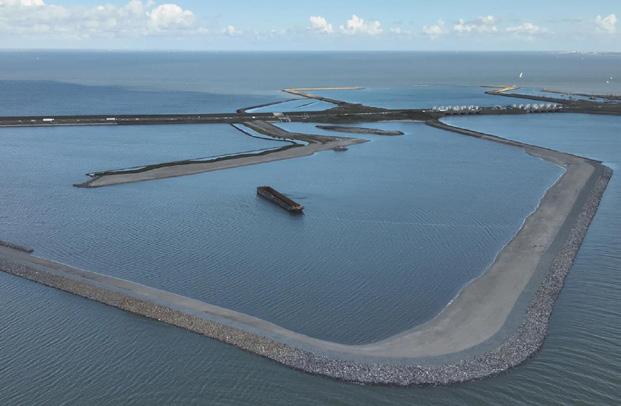
build a Fish Migration River, with full implementation set to continue in 2026.
Van Oord has been in the news alot for its nature restoration projects recently.
This month, MJ reported that the company is to breathe life into thousands of oysters to mitigate the damage caused to the North Sea bed by the growing scale of wind farms, cables and other infrastructure.
Back in August, we announced that the project to build artificial reefs and tidal pools along the Lauwersmeerdijk is to be expanded following ‘an explosion of marine life’ that has been recorded in the four years since it started.
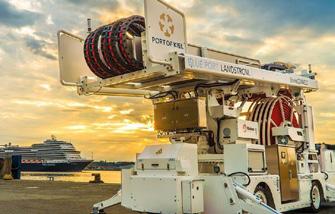
The German Port of Kiel has completed the installation of one of the biggest shore power supply systems in Europe.
It means the port can now supply up to three cruise ships and four ferries with electricity simultaneously, and the port claims this is one of the most extensive systems in the world.
The new facility at Ostseekai has a capacity of 16MVA, 50/60 Hz, 6.6/11kV.
“In the past and current seasons, there have been several days when two cruise ships wanted to use shore power at the Ostseekai,” said Seehaven Kiel (the port) managing director Dirk Claus. “This sends a strong signal; demand from shipping companies for shore power is extremely high and we are delighted with the excellent
cooperation we have enjoyed here.”
Partners in building the facility included PowerCon, Siemens, Inros Lackner and Stemmann, with funding from the state of Schleswig-Holstein and the European Union.
Many of Europe’s major ports have joined the tide to offer shore power – including the Port of Hamburg, which was the first in
Europe to offer it for container ships and not just ferries and cruise liners.
The Vasco de Gama (IMO 9706889) of the CMA CGM Group became the first container ship to be regularly supplied with shore power at berth, the port announced in May 2024.
“From 2025, all large cruise and container terminals in the Port of Hamburg will have shore power connections,” it pledged.
Other notable ports that now offer ‘green’ shore power include Aberdeen, in Scotland, which has eight berths delivering it to Service Operation Vessels as well as passenger ferries.
“Longer term, Port of Aberdeen has ambitions to expand its shore power infrastructure to supply green electricity at more berths throughout its 7,600m quayside,” it says.
Belgium has launched its largest unexploded ordnance (UXO) clearance project to support subsea cable installation for offshore renewables.
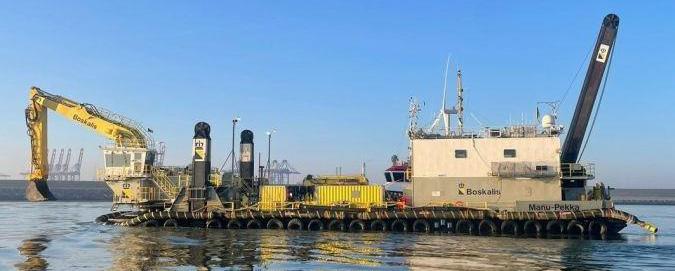
Boskalis Hirdes EOD Services has deployed the backhoe dredger Manu Pekka and diving pontoon Medusa 1 to begin dredging and UXO clearance off the Belgian coast.
The work is vital for the Modular Offshore Grid 2 (MOG2) project, which will connect to Princess Elisabeth Island – the world’s first artificial energy island designed to support Europe’s offshore renewables expansion.
Milestone project
The Medusa 1 will operate in nearshore zones, where divers will inspect the seabed and identify potential UXOs. In deeper sections, the Manu Pekka will use a multitool to detect and clear hazards.
Later, the offshore vessel Kamara will be mobilised for the deepest parts of the 55-kilometre subsea cable route. Boskalis said this phased approach ensures a safe corridor for the installation of critical offshore energy infrastructure.
Princess Elisabeth Island is already under construction with high-voltage alternating current (HVAC) structure builds underway
following the installation of caissons earlier this year.
When completed, the island will serve as a major offshore hub, channelling at least 2.1 GW of offshore wind energy to Belgium’s mainland.
It is a cornerstone project in Europe’s transition to renewable energy and a key step in Belgium’s electrification strategy.
The marine civils and dredging effort underscores Belgium’s commitment to
■ Boskalis Hirdes EOD Services has deployed the backhoe dredger Manu Pekka and diving pontoon Medusa 1 to begin dredging and UXO clearance off the Belgian coast
developing safe, efficient offshore renewables infrastructure, despite ongoing cost concerns surrounding high-voltage direct current (HVDC) connections.
Boskalis said that this subsea UXO clearance project is a landmark milestone in securing Europe’s future energy supply.

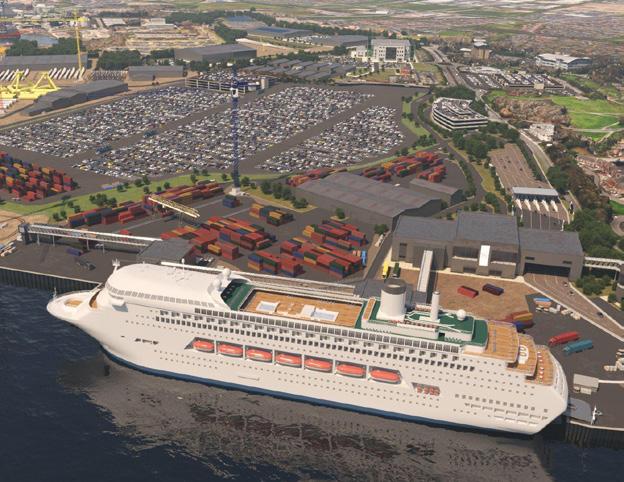
The northern English Port of Tyne is spending £150 million (€173 million) on upgrades to its port to support the offshore wind industry and other manufacturing.
The upgrade will add 400 metres of deep-water quayside and a new heavy-lift quay as part of 1 kilometre of redeveloped quayside.
A 230-acre site will also be set up within an Industrial Strategy Zone for ’advanced manufacturing sectors’, and in total it is expected to create 12,000 jobs, a statement said.
“It’s fantastic that the Port of Tyne is bringing forward a new clean energy terminal with a deep-water dock which will help us in our work to establish the North East as the home of the green energy revolution,” said North East Mayor Kim McGuinness.
“The potential for the site is huge. It could generate thousands of clean energy jobs which will benefit the region in the long-term and further establish a real hub for renewables and offshore sectors on the bank of the Tyne. I look forward to seeing how the project progresses.”
“Accelerating offshore wind, renewable energy and advanced manufacturing is a national priority and requires decisive action,” said Matt Beeton, chief executive officer at the port.
“Boosted by Industrial Strategy Zone status that provides similar benefits to a modern freeport, our expanded Tyne Clean Energy Park is uniquely positioned to support this UK-wide initiative. Located close to emerging North Sea wind arrays, this nationally strategic site offers deep-water access and a major development footprint to enable the creation of world-class infrastructure to support a growing supply chain offering.”
The Port of Tyne is one of the UK’s major deep-sea ports, just 6.5km from the moth of the River Tyne and the North Sea.
the Port
financing
benefit of the North East and all its stakeholders.
Major port infrastructure works are set to begin at the Port of Milford Haven with the next stage of a significant jetty upgrade now confirmed.
Inland and Coastal Marina Systems has been awarded the contract for the latest phase of the port upgrade, which marks a key milestone in the modernisation of the port’s marine construction facilities.
“This investment will create fit-for-purpose facilities that enable us to continue delivering a world-class pilotage service,” said Mike Ryan, Harbourmaster at the Port of Milford Haven.
“It strengthens our resilience and enhances operations across the Haven.”
Future-proofing
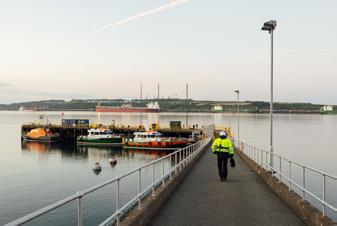
Work will begin in November, with the installation of a new 70-metre pontoon and a 33-metre gangway designed to improve efficiency, safety and long-term operational capacity.
The new pontoon, four metres wide, will provide a more resilient and functional asset, capable of meeting current and future
pilotage needs. The upgraded gangway will enhance accessibility and safety, ensuring the jetty is fully prepared to support the port’s new pilot vessel, the NGS42, due to arrive early next year.
Bryan Stewart, sales manager at Inland and Coastal Marina Systems, added: “This flagship marine construction project will ensure safe, all-tide access for crews and provide robust facilities for the world-leading fleet of vessels currently in delivery.”
The jetty upgrade is part of a wider programme of port infrastructure improvements aimed at future-proofing marine operations. Previous work included the replacement of external wave screens, now fully operational.
It will also deliver improved staff facilities and upgrades to mechanical, electrical, fuelling and security systems.



Seaway7 says it has installed all 277 monopile foundations at the world’s biggest offshore wind farm – Doggerbank in the UK.
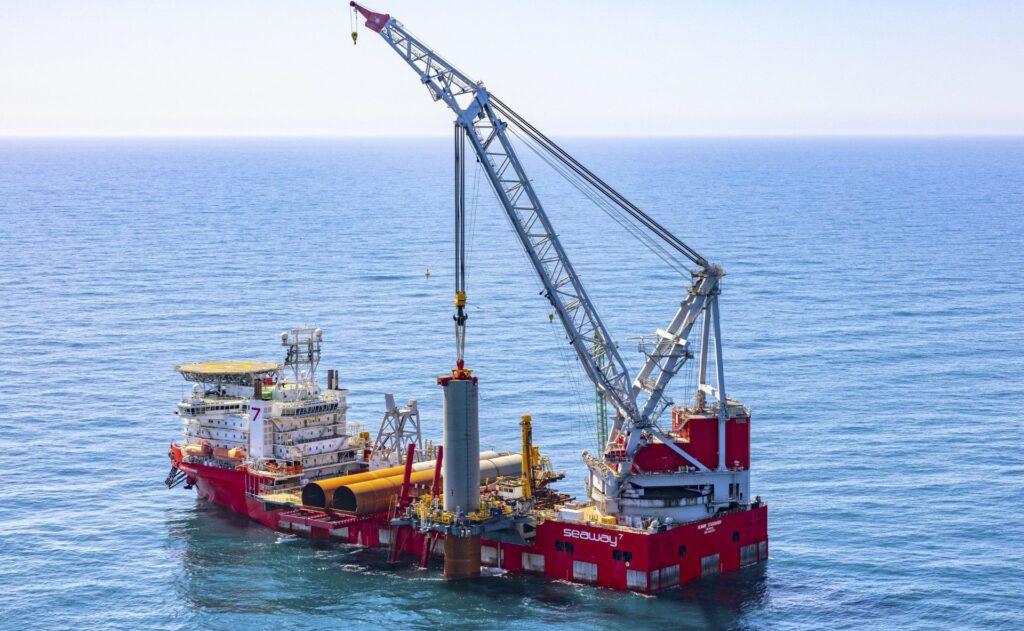
The 183m-long vessel has a patented monohull shape which, with its fuel-efficient engines, enables a transit speed of 12 knots, Seaway7 says. It has lift heights of 100130 metres and weights of 5,000 tonnes.
Powering the enormous vessel are six 4,500kW main engines, two 5,500kW main thrusters, two 3,500kW DP thrusters, two 1,150kW bow thrusters, giving it a transit speed of 12 knots. It can accommodate 220 people.
Having completed the monopile installations with crane vessel Seaway Strashnov, Seaway7 will then go on to install the transition pieces with Seaway Alfa Lift.
This vessel is even larger, with a length of 244.6 metres and 11 engines in total, including four 6,875kW main engines, three 3,200kW tunnel thrusters, three 5,500kW stern thrusters, and one 3,200kW bow azimuth thruster. The vessel has a 3,000-tonne crane and an 8,000m2 main deck space.
Dogger Bank details
Dogger Bank, which comprises A, B, C and D, is jointly owned by SSE and Equinor across all four except for A and B, which are also owned by Vårgrønn.
Dogger Bank D is in the proposal phase, and SSE and Equinor have just finalised the seabed lease to progress the project.
It will maximise the capacity of Dogger Bank C, ‘unlocking up to 1.5GW of additional renewable electricity capacity from the 3.6GW Dogger Bank Wind Farm’, the developers say.
Dogger Bank D has plans for up to 113 installed offshore wind turbines on fixed-bottom foundations as well as up to two offshore substation platforms on what will be a 262km2 seabed site.
“Reaching this milestone for the Dogger Bank D development provides future opportunity to unlock more value and volume from the world’s largest offshore wind farm whilst building on our expertise and presence in the North East of England, said Melissa Read, head of Regional Development - UK Renewables - with Equinor.
Dogger Bank D has plans for up to 113 installed offshore wind turbines on fixed-bottom foundations as well as up to two offshore substation platforms on what will be a 262km2 seabed site
“The UK is a core strategic market for Equinor and Dogger Bank D demonstrates how there is the potential to further develop our future UK portfolio by having the opportunity to increase future value from quality existing assets. We look forward to maturing the project further with SSE and continue to support the UK’s offshore wind and net zero ambitions.”
Dogger Bank D is one of seven UK offshore wind farm projects with existing seabed leasing agreements that have been identified for potential development as part of The Crown Estate’s ‘Capacity Increase Programme’, which intends to unlock up to 4.7GW of potential electricity.
You can’t calm the ocean, but you can control its impact. And that’s the difference between getting the job done, or not. Because downtime isn’t an option. Choose Sleipner.


* Patent pending. Contact Sleipner for more details

Sleipner develops thrusters and stabilizers that set the industry standard for precision, reliability, and control. Our systems are trusted by commercial operators and shipyards worldwide for their proven performance in demanding conditions.
Visit sleipnergroup.com/commercial to learn more.


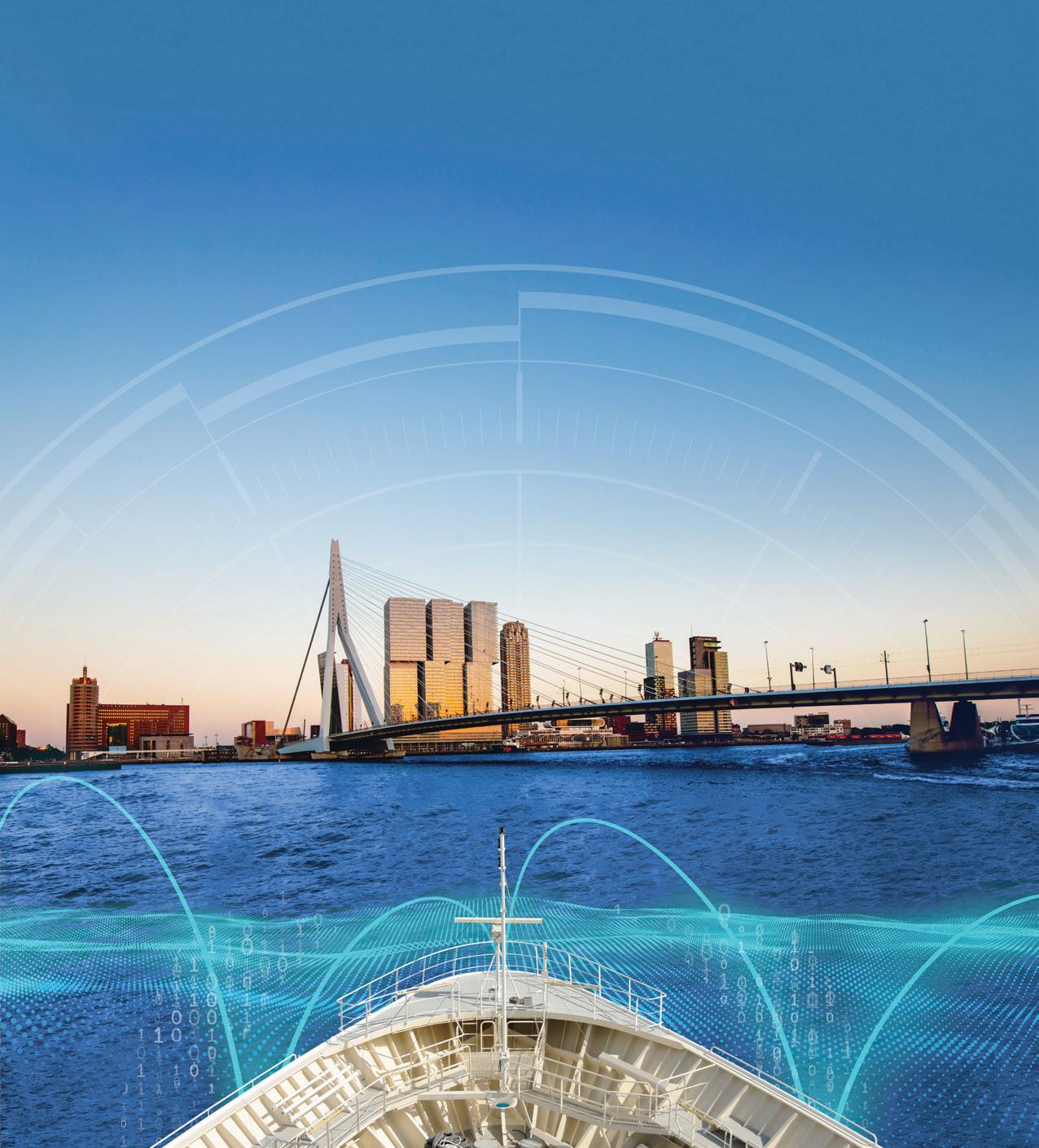
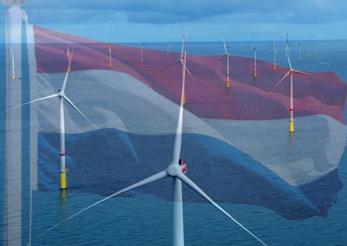
The Dutch government has announced nearly €1 billion in subsidies for offshore wind projects just four months after shelving two major projects.
Announcing the subsidies, to be issued in 2026, and unveiling an ‘Offshore Wind Energy Action Plan’ this week, the government has changed course quickly since abandoning the IJmuiden Ver Gamma-A and Gamma-B wind farms in May because of ‘deteriorating market conditions for offshore wind energy projects, partly due to lack of large-scale demand for electricity’.
The Action Plan, which has been published after a report said the Netherlands was unlikely to hit climate goals, includes legislation to enable the Contracts for Difference (CfD) method, used in the UK, which guarantees wind farm operators are subsidised during low-price periods but repay them when prices rise.
The Netherlands has about 4.7GW of installed offshore wind, way short of the government’s target of 21GW by 2032. The deadline has actually been extended by two years and the report, the Klimaat- en Energieverkenning (KEV) 2025 (Climate & Energy Outlook Netherlands 2025), said climate targets were very likely going to be missed.
”The chance that the Netherlands will achieve the climate target is less than 5%,” it says. “The Netherlands is also not on track to achieve binding European targets for renewable energy and energy consumption.”
On the demand side, the government will extend its “Indirect Cost Compensation” scheme for energy-intensive industries until 2028, with about €150 million earmarked to keep power affordable for businesses as renewable output grows.

The chance that the Netherlands will achieve the climate target is less than 5%. The Netherlands is also not on track to achieve binding European targets for renewable energy and energy consumption ‘‘
Other steps include adjusting site planning, such as potentially merging offshore zones to optimise shared infrastructure, and easing certain permitting requirements to reduce upfront risks for developers. Long-term policy changes will be needed rather than piecemeal measures, says the report, partly blaming rising demand combined with slower-thanexpected efficiency gains.
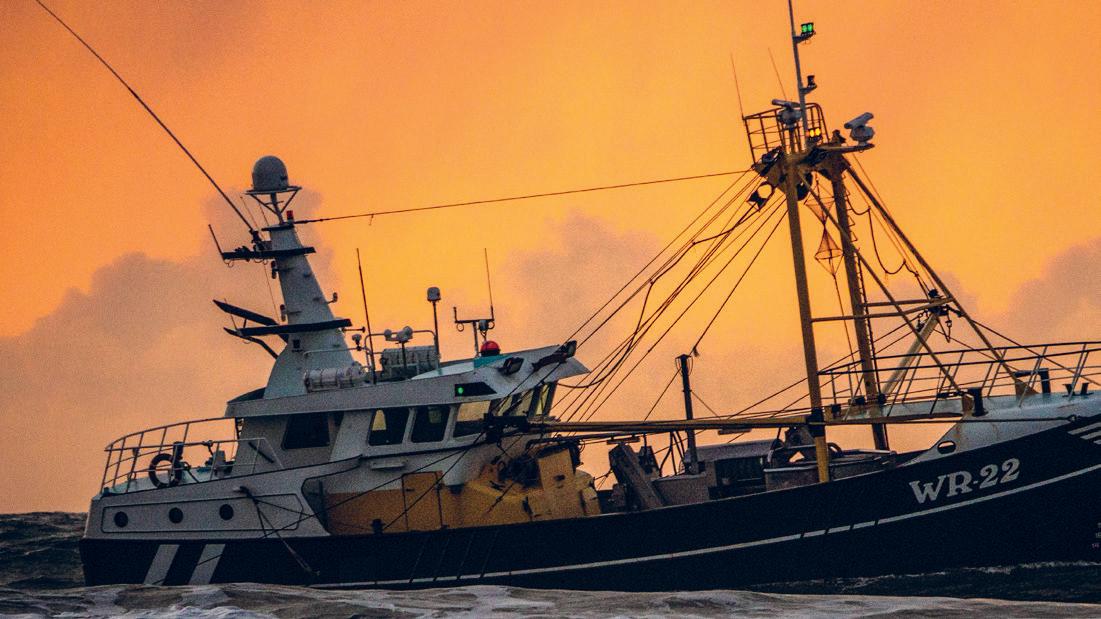


Dutch offshore wind vessel operator Cadeler has secured a contract with Ocean Winds to install 26 offshore wind turbines at the BC-Wind project in the Polish Baltic Sea.
The agreement, first inked back in February, covers the transportation and installation of Siemens Gamesa 14MW offshore wind turbines, located 23 km off the Pomeranian coast, in support of Poland’s ambitious offshore renewables strategy.
“With this firm contract now signed, we are ready to bring our best-in-class fleet and experienced crews to support Ocean Winds on this important project,” said Mikkel Gleerup, CEO of Cadeler.
“Poland is establishing itself as a key offshore wind market in Europe, and this project will be a significant step in strengthening the country’s renewable energy ambitions.”
Construction project
BC-Wind marks Ocean Winds’ first offshore wind venture in Poland. Construction is expected to begin in 2028 and last around four months.
Once complete, the 390MW windfarm will supply clean electricity to nearly 500,000 homes.
During the project, Cadeler will deploy one of its O-class wind turbine installation vessels, operating from the Port of Gdańsk.
The contract follows a Vessel Reservation Agreement signed earlier this year and represents the first direct partnership between Cadeler and Ocean Winds, though both have collaborated on previous windfarm construction projects in Europe.
It’s a deal which further strengthens Cadeler’s presence in Poland’s offshore renewables market. The company is already active on major projects including Baltic Power, Baltica 2 and the Bałtyk 2 and 3 offshore windfarms.
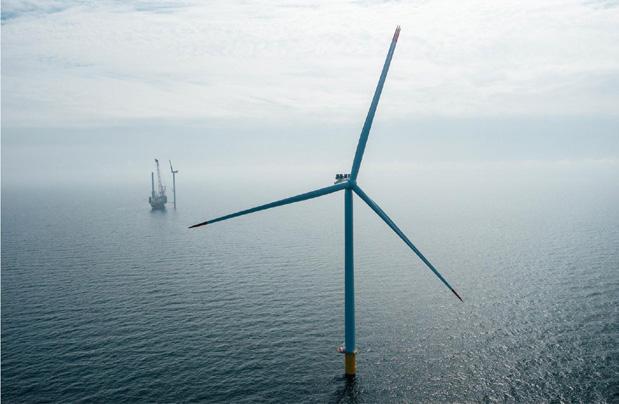
Collectively, these projects highlight Poland’s growing role in European offshore wind development.
Business is booming for Cadeler. It recently reported better than expected results in the sector, despite all the turmoil being created for European renewables operators across the Atlantic.
Back in May, it bought a new Wind Turbine Installation Vessel (WTIV) to meet growing demand for operations and maintenance.
The new vessel, already on the water at the Shanghai Boqiang Heavy Industry Group in China, will need to be upgraded to be capable of installing 15MW turbines.
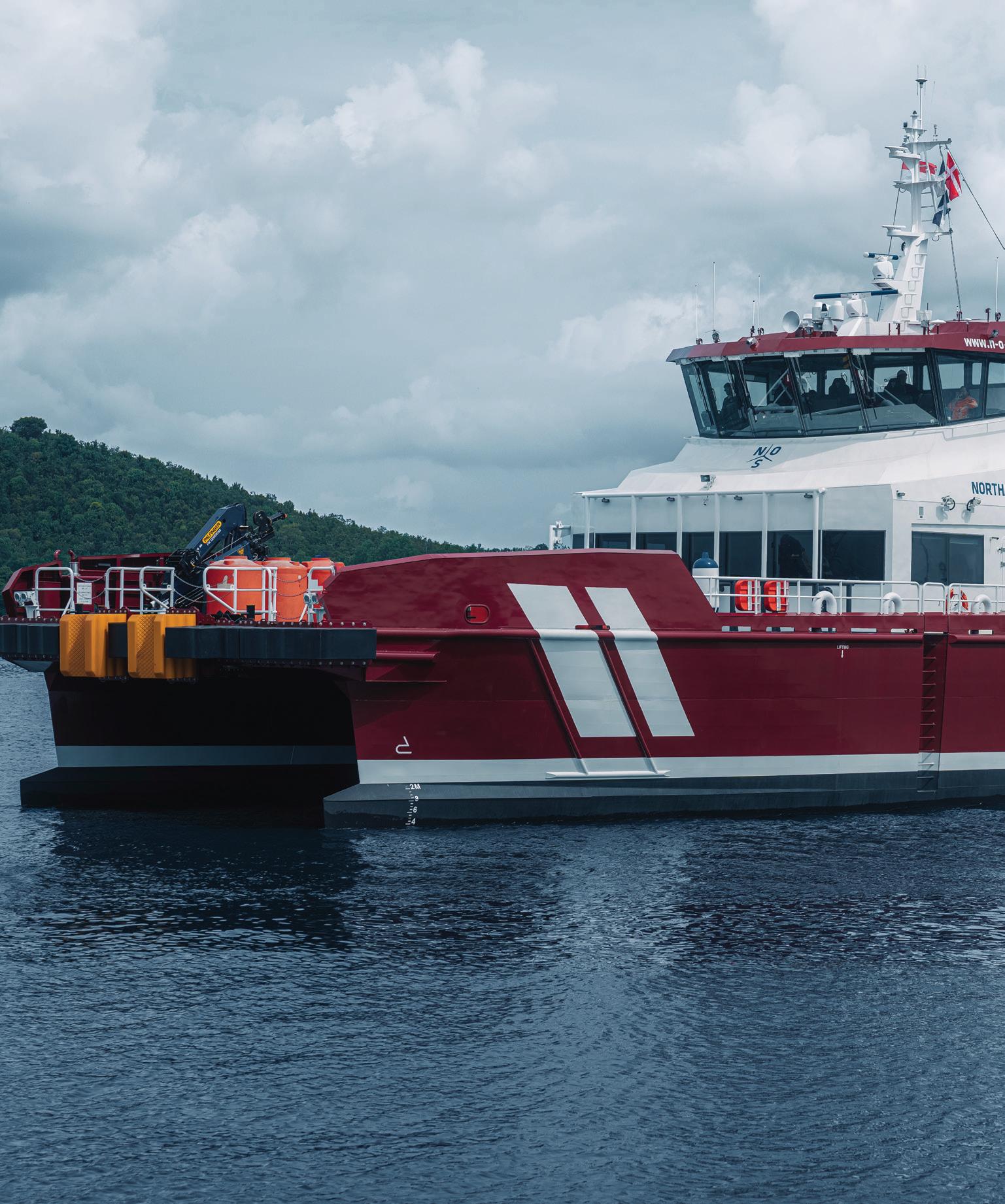
Charge Offshore has completed installation of the charging system for the ‘world’s first’ diesel-to-electric retrofit crew transfer vessel (CTV).
The e-Ginny project, funded by the UK Government’s Zero Emissions Vessel and Infrastructure (ZEVI) competition, marks a major step forward in vessel electrification for offshore wind operations.
“Robust offshore charging infrastructure is critical to support the industry as it ramps up the transition to electrification,” said Paul Cairns, CEO of Charge Offshore.
“This landmark e-Ginny project demonstrates that, with the right systems in place, we can finally eliminate reliance on fossil fuels and unlock a new sustainable future for offshore wind operations.”
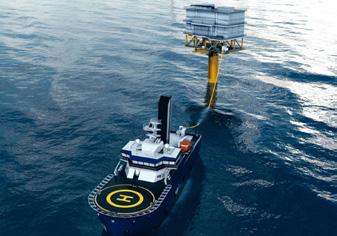
■ The e-Ginny project marks a major step forward in vessel electrification for offshore wind operations
During the project, the project’s CTV, named e-Ginny, will demonstrate how engine retrofit technology can deliver zero-emission propulsion while providing essential support
to offshore windfarms.
Charge Offshore, a spinout of MJR Power & Automation, has developed the Aquarius Eco charging system to deliver emissions-free power from offshore wind generation.
Its connector deployment system will soon be installed on a fixed offshore structure in the North Sea, enabling fast, safe and reliable charging for e-Ginny.
Charge Offshore has successfully delivered and installed the connector ‘catcher’ for its Aquarius Eco charging system, designed to deliver power from offshore wind generation. The connector deployment system will then be installed on a selected fixed offshore structure in the North Sea, providing safe, fast and reliable charging for e-Ginny during her charter.

Powering progress at sea
Pioneers AYK Energy and Leclanché drive the electric wave with safe, scalable batteries
Innovation meets reliability
EST-Floattech and Wärtsilä show how advanced engineering is making battery power viable for vessels of any size
Charging ahead off and onshore
From buoy and wind farm options to containerised solutions, charging must be more available
Navigating uncertainties
The feasibility of electric tugs – some in favour, some against
1,500 battery vessels signal a positive electric future

















































report
The maritime industry is in the midst of a profound transformation when it comes to the future of propulsion.
While there is a vast range of opinions on what the ultimate solution will look like, few would disagree that it will be a mixed picture: no fuel has yet turned up or been developed that has everything diesel has – the price, the abundance and the performance, all wrapped up in one – and different fuels are suitable or attractive to different vessel types.
As regulators tighten emissions targets and operators seek cleaner, more efficient technologies, the spotlight has turned to electrification – and with it, batteries.
Long seen as the cornerstone of the transition to low- and zero-emission shipping, batteries are now being deployed at scale across a growing range of vessel types, from ferries and tugs to offshore support ships and even coastal cargo carriers.
Innovators are noticing the potential, and in this Special Report we talk to some of the battery makers who are flagging their products in the charge towards full-scale adoption in the commercial marine sector.
This report, which is sponsored by one of the pioneers in this field, AYK Energy, looks at the situation to date from the perspective of the marine battery maker. In each of our interviews with battery makers, similar themes emerged: cost; the safety element; charging challenges and how sustainable batteries actually are. There is no significant recycling being done in the world at the moment, for example: marine batteries are at such an early stage they have not reached end of life yet, so this is a looming issue. Heralded as a clean alternative to fossil fuels, they are nonetheless linked to difficult questions around mining practices, supply chains, recyclability and lack of charging infrastructure.
The companies we spoke to who make marine batteries – our sponsor, AYK Energy; EST-Floattech; Leclanché and Wärtsilä – are obviously confident in this space or they wouldn’t be in it; however a senior employee at one of the world’s largest tug operators, who asked to remain anonymous, expresses huge doubts over battery feasibility in tug operations.
Safety is paramount, and with a number of car carriers experiencing fires that could have emerged from their cargoes of electric vehicles, it’s something that has to be resolved – we speak to one consultant who has stark warnings about the safety of lithium batteries and how ‘green’ they are – but others make the case that there are solutions out there.
When it comes to charging, a plethora of ideas is emerging: read our interview with Stillstrom, which has come up with offshore charging buoys that could keep the big boats out of our ports to limit emissions there; or AYK Energy, which believes one answer may lie in containerising batteries to swap in and out, rather like coach drivers switched tired horses for fresh ones long before the car was invented.
What is clear is that the pace of change is accelerating. With more than a thousand battery-powered vessels already in operation worldwide and many more on order, electrification is becoming mainstream – it’s just how it will happen that is the question.
It’s an uncertain world – and how best we are going to fuel it remains one of the greatest uncertainties.
Debbie Mason Editor, Maritime Journal

From 12MWh ferry systems to a future with containerised power, AYK Energy says it’s leading the world with its fast, safe, cost-effective marine batteries. Maritime Journal spoke to founder Chris Kruger about the company’s meteoric rise and its plans for an electric future.
As a company formed less than 10 years ago (2018), AYK Energy is a relative newcomer marine battery field – but it has already made huge strides that must be the envy of much older players.
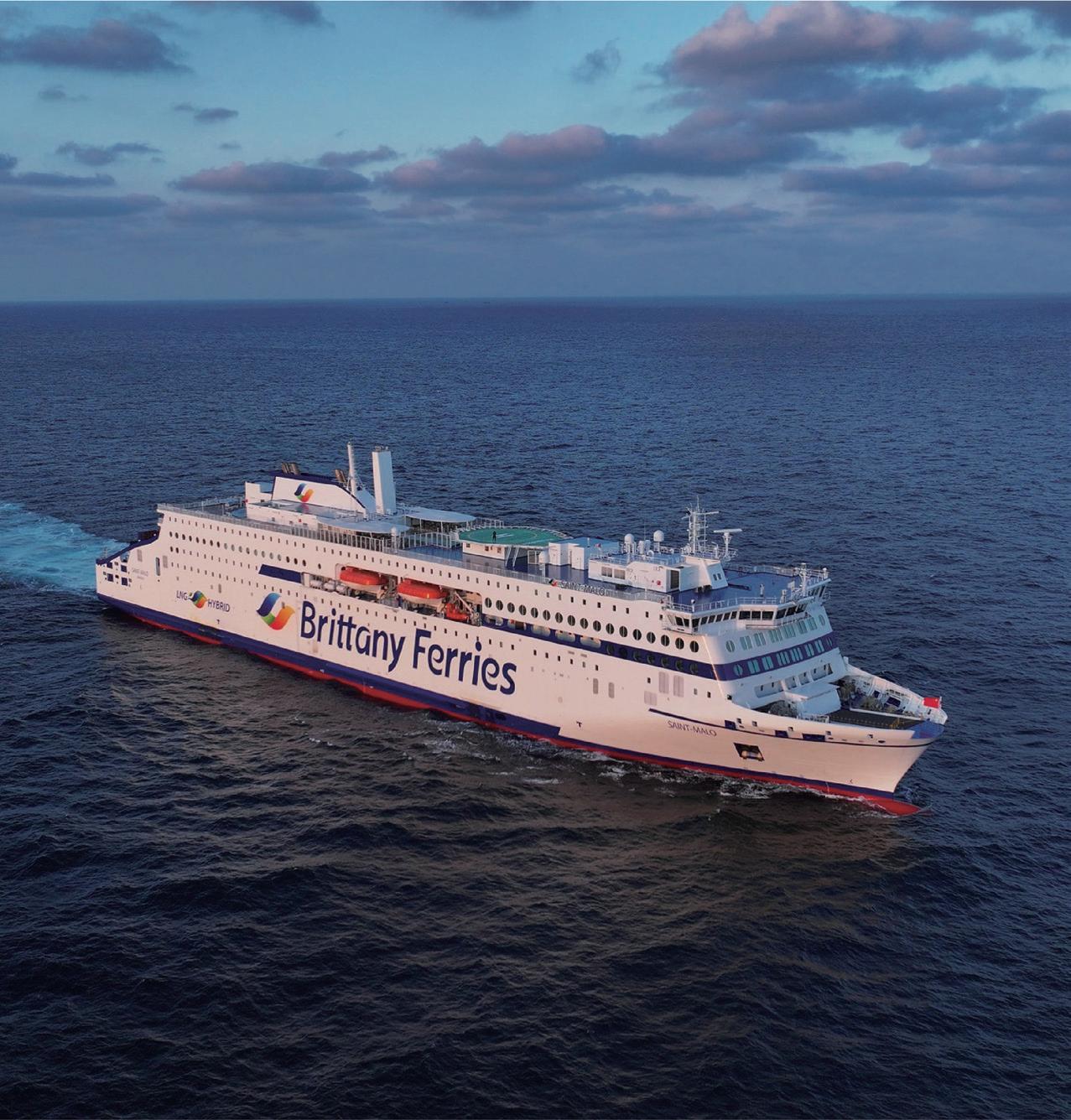
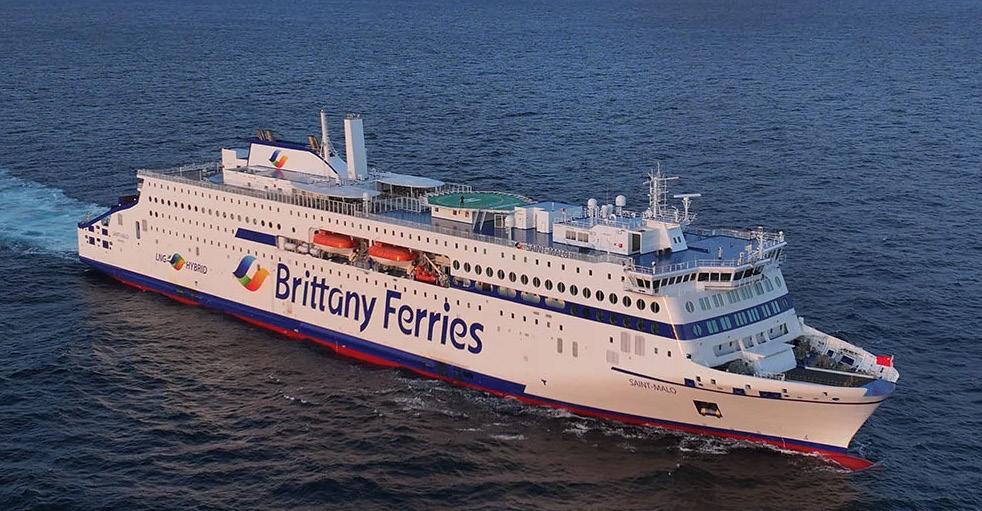
In July 2023, the company opened its first automated manufacturing facility with a 300MWh annual output, expandable to more than 1GWh. Its solutions now power some of the largest vessels in Europe, including Brittany Ferries’ hybrid electric ships Guillaume de Normandie and Saint-Malo.
It’s also struck a deal to supply a 6MWh battery for the world’s first battery-methanol tug, for Svitzer.
Former director of Engineering with battery specialist Corvus Energy, Chris Kruger certainly knows his science –and with a clear vision to deliver cost-effective, safe marine batteries, he has steered AYK Energy into a position where they have now achieved positive EBITDA (Earnings Before Interest, Taxes, Depreciation and Amortization).
Siting its factory in China, AYK has stayed close to the supply chain, although Kruger says he intends to open another one in Europe in the non-too-distant future.
Keys to success
“When I started this company I looked at everything I’d learned – what’s worked in the past and what hasn’t worked,” he says. “I started with a clean sheet of paper. What are the key points I need to hit to make this battery work? It took a bit of time and luck to get the money, and the partners I had in
China had a value proposition and came on board. A good partnership and mutual respect are the key ingredients.”
Kruger emphasises that AYK is not a Chinese company –the marketing and engineering is all done outside – but by manufacturing in China, the company has achieved cost effectiveness and with his engineering knowhow, safety. It’s also about trust, he says.
“In my opinion, success really has to do with the fact that somebody like me knows the industry and the technology side, can speak to the customer and has their trust. That’s at the heart of the company – to be accepted and make a change. I’ve always been hands on, at the frontline.”
The batteries
AYK Energy’s batteries, Kruger admits, are not the cheapest on the market, but they are the safest and most cost effective.
The company uses lithium iron phosphate, which is less likely to produce thermal runaway, a chain reaction that can heat the cells, risking fire.
The company makes a wide range of battery sizes, weights and density according to the vessel they are destined for, whether RoPax ferries, inland cargo ships or tugs.
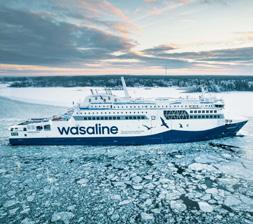
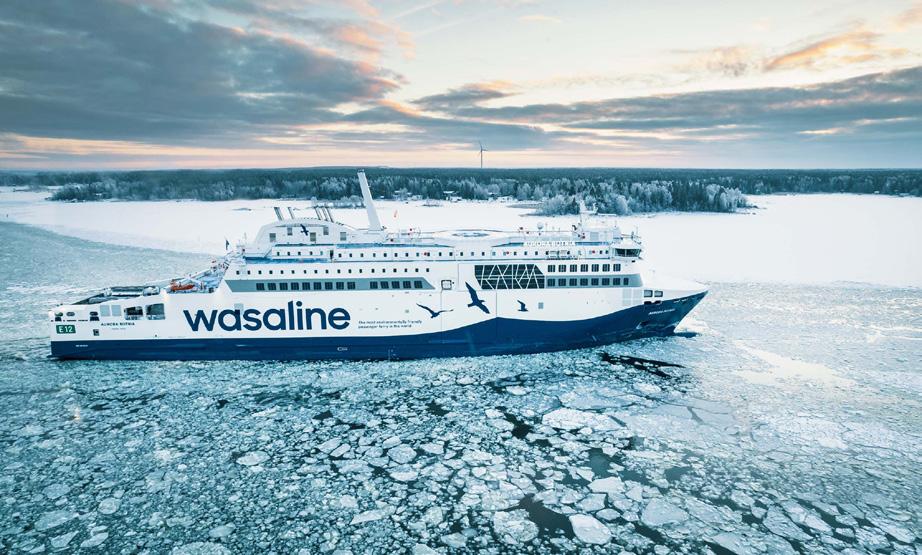
In July, it won DNV type approval for its Pisces, Pisces+, OrionAN and OrionAN+ series, which will immediately allow the company to install a 10.4MWh system on the biggest retrofit ever done – the hybrid-electric RoPax ferry Aurora Botnia, owned by Wasaline, which operates a daily service between Finland and Sweden.
I started with a clean sheet of paper. What are the key points I need to hit to make this battery work? A good partnership and mutual respect are the key ingredients ‘‘
“We have listened to industry and developed this range to deliver higher energy density, which is ideal for ferries, workboats and tugs,” says Kruger. “And at the same time we’re innovating systems that strike a balance between power and energy density, which works better for hybrid applications.”
In response to scepticism over how sustainable batteries actually are, he says the company has done carbon studies – “and overall, we come out on the positive side, especially when you operate the battery for a long time.
“Most of the carbon generation comes from the making of the cells, so if you can use green energy to do that, it becomes a lot cleaner.”
When it comes to recycling, Kruger accepts it isn’t yet being done on a meaningful scale, but because batteries in marine are relatively new, most have not yet reached end of life, and there are big ideas in stationary storage for batteries that are no longer fit for marine use.
Containerised future
Chris Kruger is also eyeing up the opportunities for batteries that could be used much in the same way that tired horses were swapped for fresh ones by coach drivers before the automotive was invented.
“We are planning to put batteries in containers – fill half a TEU with 2.8MWh of batteries, or 5.6MWh in a full container,” he says. “A port crane could easily handle half a container of batteries, which would weigh about 21 tonnes. They could be charged out at a wind farm, brought back and swapped out with another container – like horse swapping.
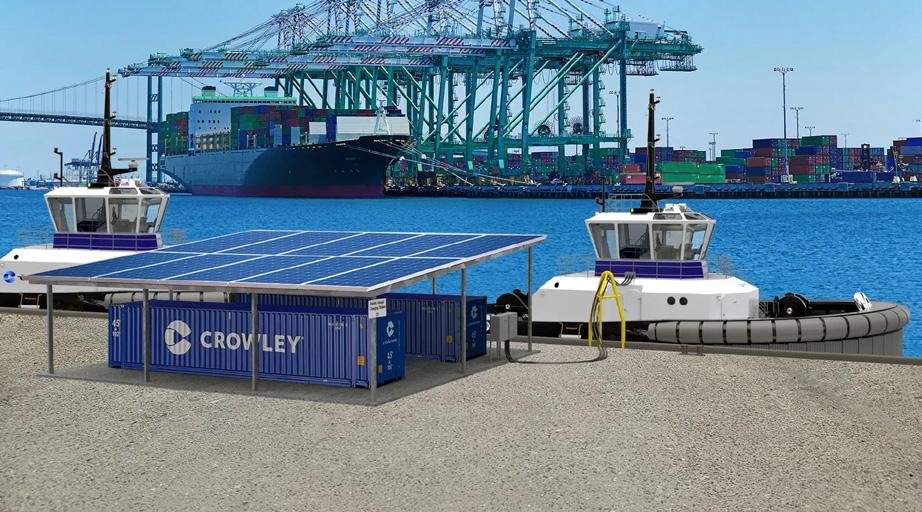
“We’ve talked to people about using containers on tugs, and I think this is going to enhance the use of batteries. Today you can’t charge a battery in a harbour unless you have a power plant nearby for cold ironing, and it’s expensive.
The first battery I ever designed was for a Svitzer tug in Australia. Years later, we’re supplying Svitzer again. It shows how far the industry has come ‘‘
“This is one of those cogs that isn’t in place today. It’s going to take a huge amount of money to get it to scale, but we already have guys who want to do the cold ironing and bring the battery to the shore.
“We need high-volume manufacturing: if we get the volume, we will be able to bring the cost right down and it will be way more cost effective.”
Kruger is looking for other financing options to set up a factory and move out of China, he says, somewhere in Europe, where his market is.
In some ways Kruger’s career has come full circle.
“The first battery I ever designed was for a Svitzer tug in Australia, the Gorgon project,” he says. “Years later, we’re supplying Svitzer again. It shows how far the industry has come.”
In a maritime sector increasingly pressured to cut emissions and embrace clean technologies, EST-Floattech is making waves with its advanced battery systems.

Founded more than 15 years ago as a system integrator for electric components on luxury yachts, Amsterdambased EST-Floattech is now a specialist in maritime battery solutions, boasting hundreds of successful deployments and a growing international presence.
At the heart of the company’s offering are its two flagship battery systems: the Green Orca and the Octopus. Indeed, it has just expanded its Octopus range with LFP (Lithium Iron Phosphate) batteries.
“We have for 12½ years had the Green Orca product, which was delivered to more than 200 projects – 16MWh in total,” says Joep Gorgels, CFO and co-director of EST-Floattech. “And since the last 2½ years we have the Octopus product and that has also been a success, with more than 110 projects and 70MWh.”
The company partners with Singapore-based DuraPower, sourcing NMC (Nickel Manganese Cobalt) cells manufactured in China. These cells are designed into complete, typeapproved maritime battery systems by EST-Floattech’s inhouse engineering team.
“We design battery systems for maritime purposes and we have them certified by the major class certificates,” says Gorgels.
Tailored technology and safety
EST-Floattech’s batteries are being installed in a broad array of vessels, from ferries and tugs to inland barges and 10,000ton coastal ships.
“More and more [coastal ships] are enjoying large batteries to make zero-emission port calls,” says Gorgels, highlighting the dual purpose of their products: environmental compliance and operational efficiency.
Beyond propulsion, its battery systems provide energy for hybrid configurations, blackout prevention, peak shaving and hotel loads.
“You can have batteries for full electric propulsion, but also for hybrids, to have ships become zero emissions ultimately,” he says.
You don’t want a big fire on board a ship with 200 people in the middle of the lake or the sea ‘‘
Joep
Gorgels, CFO and co-director of EST-Floattech
Safety and reliability are core to EST-Floattech’s design philosophy. “You don’t want a big fire on board a ship with 200 people in the middle of the lake or the sea,” says Gorgels. “In a car, you can let the car burn and step out and you’re safe.”
To prevent such disasters, EST-Floattech has developed what Gorgels describes as ‘one of the most reliable and redundant battery management systems’ on the market. The system monitors everything ‘from cell level, to module level, to string levels’ and includes cell-to-cell propagation prevention and a safe exhaust system outside the battery room and the ship.
Balancing energy density and use case
Gorgels acknowledges that battery chemistry still limits how far electrification can go, particularly with larger vessels like container ships.
“Batteries are becoming more energy dense… but I think there will ultimately be limits because it’s chemistry for the
recently
moment,” he says. While solid-state batteries and supercapacitors are on the horizon, they are not yet ready for maritime deployment. “Not yet. Indeed, they are not commercialised enough for larger applications like shipping, but that might come in the next decade or so.”
Currently, EST-Floattech supports both NMC and LFP battery chemistries, each with its own strengths.
“You don’t have cobalt and nickel in the LFP solutions –that’s not there. So you could argue LFP in that respect is a bit better,” Gorgels says, referring to growing concerns around the ethical and environmental impact of cobalt and lithium mining.
But while LFP may be preferable for sustainability, it doesn’t suit all applications.
“We’re not going away from the NMC because NMC batteries can have a much higher number of cycles and short cycles in a day and can have much higher C rates,” he says.
“With LFP solutions, you can have low C-rate applications, slow charging, slow discharging. But if your ferry has very short crossings and needs to be charged 10–20 times a day with a lot of power, you can’t do that with an LFP solution. You have to have the NMC or LTO battery types.”
A study from the Institute for Energy Research in Australia, Environmental Impacts of Lithium-Ion Batteries, found that more than 98% of lithium-ion batteries end up in landfills, which increases the likelihood of landfill fires that can burn for years.
One landfill in the Pacific Northwest was reported to have had 124 fires between June 2017 and December 2020 due to lithium-ion batteries. Fires are becoming increasingly common, with 21 fires reported on the site in 2018, increasing to 47 by 2020.
At the moment we are not seeing piles of lithium batteries in landfill from the maritime industry because quite simply, they haven’t reached their end of life yet.
“Certainly not with vessels,” says Gorgels. “We are only now getting a couple of batteries back from our first ship, which have had 13 years of service.”
But with a project life span of around 10 years, even if the batteries exceed that, there is inevitably going to come a time when suddenly a lot of them start giving up.
Gorgels thinks there may be an answer, although it was suggested for automotive batteries and hasn’t really happened.
“What I think will happen now and in future is the second life of batteries,” he says.
“Once they have been used in a car or in a vessel, they will have a second life in a containerised solution for a festival, or charging a football stadium, or an office, something like that.
He believes the industry is catching up to the recycling challenge.
"I know of reports that talk about 90 to 95% recycling of batteries, making it already possible to bring the batteries back to the original materials,” he says.
A bespoke approach
Unlike some competitors, EST-Floattech prides itself on codesigning systems with shipbuilders.
“Every project, every ship… is different,” said Gorgels. “We co-design and help them with the choice of which battery to use, how large the system should be. We help them designing the battery room… designing the racking, firefighting systems… and how to mount the system safely.
“The ship is often, of course, in heavy storms or it can tilt or it bangs on the quay. So it has to be robust.”
As maritime electrification expands, Gorgels sees the

battery revolution growing from small-scale vessels to larger operations.
“Everything that you can electrify will or should be electrified,” he says. “It creeps up from small to larger. Easy.”
And with a strong presence in the Netherlands, where ‘electric cars are taking off massively’ and ‘the whole North Sea will be fully covered with windmills soon’, EST-Floattech is positioned at the centre of Europe’s energy transition.
“We’re growing with our clients,” Gorgels says. “More and more ships. Larger packs. And we work with them to make it happen.”
Everything that you can electrify will or should be ‘‘
Swiss battery maker Leclanché says its marine batteries are difficult to compete with, whether in performance, sourcing or recycling. As part of our series of interviews with battery makers, we talk to Guillaume Clément, vice president for Marine Mobility.
As batteries move from the engine room to centre stage in today’s developing electric marine sector, Switzerlandbased battery manufacturer Leclanché claims to be one of the pioneers powering this transformation.
Guillaume Clément, vice president for Marine Mobility at Leclanché, says the company’s offering is special in many ways: not least because every gram of material used within its products have a traceable origin. In a world where cobalt, a critical element in NMC batteries, is mined by children in the Congo and vast swathes of South America have been destroyed by lithium mining, this is an important claim to make.
Leclanché’s journey into the marine world began nearly a decade ago, catalysed by EU funding for the fully electric ferry Ellen
“That project gave us legitimacy,” says Clément. “We weren’t just a battery supplier – we were one of the first in the world with a working marine-certified battery system.”
Today, Leclanché is involved in battery integration across a wide range of vessel types, from ferries to offshore wind installation ships.
Built for the sea
Marine batteries must withstand extreme and unique challenges. Ships require long-life batteries capable of withstanding constant deep cycling and harsh vibrations, and they need strict safety certifications.
“In industrial applications like ships, batteries are used intensively – charged and discharged daily,” Clément says. “They need to have a long life cycle.”
They also have to withstand endure marine-specific conditions like continuous vibration and extreme thermal stress. One of the most feared risks in marine energy systems is thermal runaway, when batteries overheat, potentially leading to fire.
Leclanché has engineered its battery modules to mitigate such events, Clément says. Their proprietary safety design includes an IP-rated protective box for each module, equipped with sprinklers that automatically inject water when high temperatures are detected. A carefully sequenced water-cooling protocol then continues for nearly an hour to suppress the risk of re-ignition.
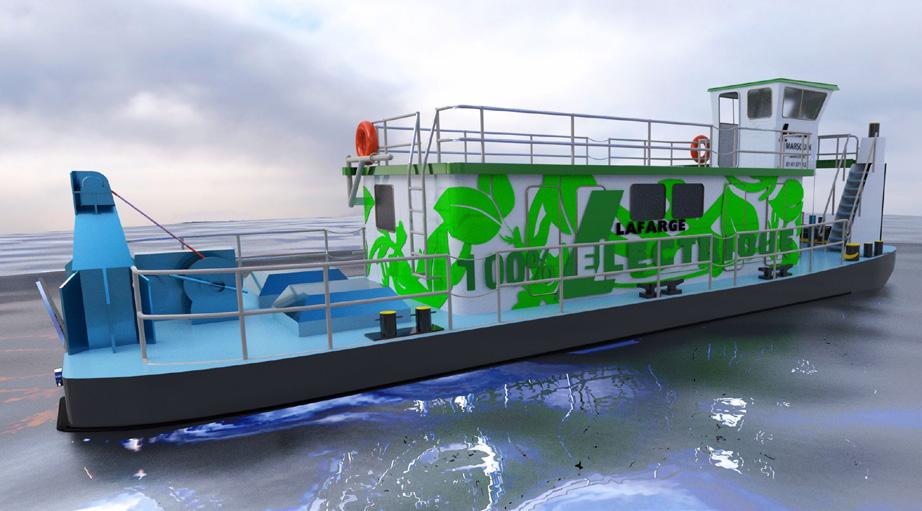
■ Leclanché retrofitted the Marsouin, a 1965-built diesel pusher tug, into a hybrid vessel to operate on the River Seine and surrounding French inland waterways
“We don’t just prevent thermal events – we stop them before they become fires,” says Clément. “When we test in labs, neighbouring modules show zero damage – not even a scratch.”
Real battery making
Unlike many of its competitors, Clément says, Leclanché actually manufactures its own cells rather than simply assembling imported components.
“Most of our competitors aren’t true battery makers. They buy cells, usually from Asia, and package them in Europe or North America,” he says. “Our batteries are made in Europe, designed for marine use from the ground up. That gives us performance and safety advantages.”
Their approach extends to sourcing too. Clément is candid about the contentious history of cobalt in battery production but insists the company has addressed these concerns head-on. “We source cobalt from Umicore in Europe. It’s certified, traceable, and 100% free of child labour,” he says. “Ironically, cobalt is now one of the safest materials to source because of all the scrutiny it’s been under for decades.”
In fact, Leclanché is already phasing cobalt out of its new chemistries. Its next-generation NMC-A (nickel-manganesecobalt-aluminium) chemistry, backed by the EU’s Current Direct project, boosts energy density by 15% and slashes cobalt content further.
Initially dominant in the ferry market, where routes and charging patterns are predictable, Leclanché’s marine batteries are now seeing growing demand in more complex vessel types. “We used to say ferries were 100% of our market. Today, it’s everything: offshore support vessels, seismic ships, wind farm installation vessels,” says Clément.
We weren’t just a battery supplier – we were one of the first in the world with a working marine-certified battery system
Guillaume Clément, vice president for Marine Mobility at Leclanché
On these hybrid vessels, batteries don’t typically power propulsion, but support high-demand operations like crane deployment or jack-up operations. They also serve to optimise generator efficiency by storing excess energy and supplying it during peak loads, as spinning reserve. This hybrid functionality can deliver fuel savings of 7% to 15%.
“It’s not enough on its own to justify battery investment,” Clément admits, “but if you already have batteries onboard, why not use them for multiple functions?”
Charging directly from offshore wind farms is on the horizon, especially for Crew Transfer Vessels.
“It depends on the operator’s point of view. If you’re operating the wind farm, recharging at sea saves you port fees,” he says.
Scaling up and recycling
The future is bright – and busy.
“Our biggest challenge isn’t demand,” says Clément. “It’s capacity. We’re investing to expand production in Germany by tenfold.”
Recycling is another critical piece. While most marine batteries haven’t yet reached end-of-life, automotive
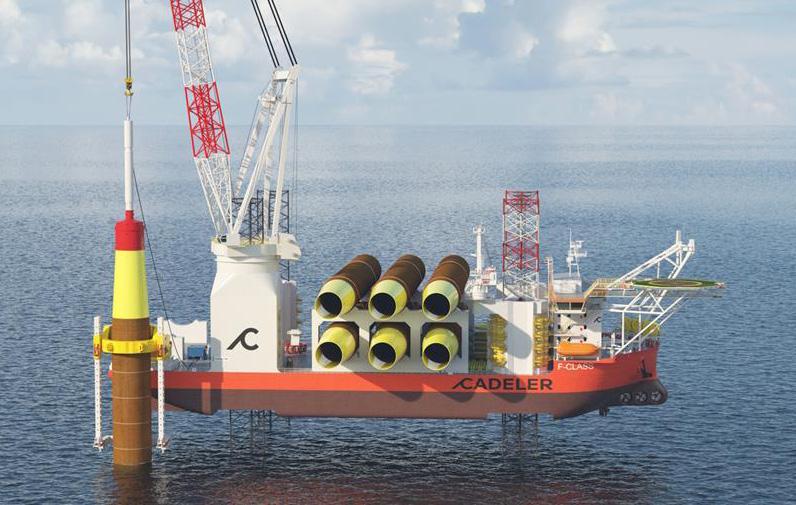
batteries have, and whatever you hear from potential battery recyclers, it is not being done on a meaningful scale yet. It simply isn’t cost effective: it is simply cheaper to mine new materials than extract them from used batteries.
Leclanché already includes recycled content in its cells at least, and advises customers on best-practice recycling options.
“We’re selective about who we work with, because not all recycling methods are equal,” he says.
One point that Clément raises is about the use of PFAS (Per- and Polyfluoroalkyl Substances), or ‘forever chemicals’, which have been around since the 1940s because they contain strong carbon bonds that make them extremely resistant to heat, water and oil. They are almost nearly impossible to break down in the environment or indeed the human body.
Leclanché’s batteries avoid using them.
“We want our batteries to be worth something at the end of their life,” he says. “The rare materials we use – like cobalt – give them real recycling value.”
The battery horizon
As new EU regulations on maritime emissions come into force, Clément believes batteries are no longer “nice to have” – they’re a necessity.
“Every ship is now asking whether to have batteries and if not now, at least to be ready to retrofit later,” he says. “And the battery systems themselves keep getting bigger.”
Leclanché’s goal is to stay ahead of that wave. With solidstate and sodium-ion technologies still 10 years away from commercial readiness, Clément believes high-performance lithium batteries like theirs remain essential.
“We’re enabling the energy transition – not just with what we make, but how we make it,” he says.
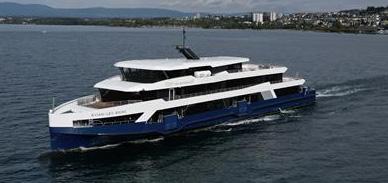
As the maritime industry accelerates its transition to low- and zero-emission solutions, Wärtsilä is playing a commanding role by engineering fully integrated propulsion systems tailored to specific vessels.
Torsten Büssow, managing director of Wärtsilä’s Electrical and Power Systems division, talks to Maritime Journal about the company’s fast-evolving role in the marine battery market.
“We are electrical integrators,” says Büssow. “We don’t have our own factories for batteries. We work with battery makers to create marinized systems that meet the needs of each ship. That’s how we make our input felt in the product.”
Wärtsilä acts as a bridge between battery OEMs and vessel owners, shaping full-electric or hybrid propulsion solutions using its expertise in marine engineering.
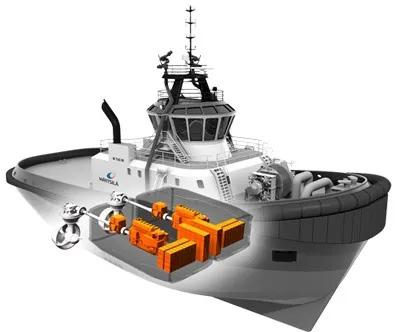
This system-level responsibility means Wärtsilä engineers complete solutions – generators, converters, transformers, and batteries – that are tailored not only for the different demanding marine environments, but the different use cases they can expect.
“The marine market is so small that there are no dedicated factories for marine converters or generators,” he says. “We adapt and engineer existing technologies into robust marinegrade systems.”
Wärtsilä’s integration role also means flexibility across vessel types and battery chemistries. “We have approved suppliers for all chemistries to fulfil different ship specifications,” Büssow says. “A ferry is going to have very different requirements than a tug.”
For short-range operations like ferries, the future is already electric.
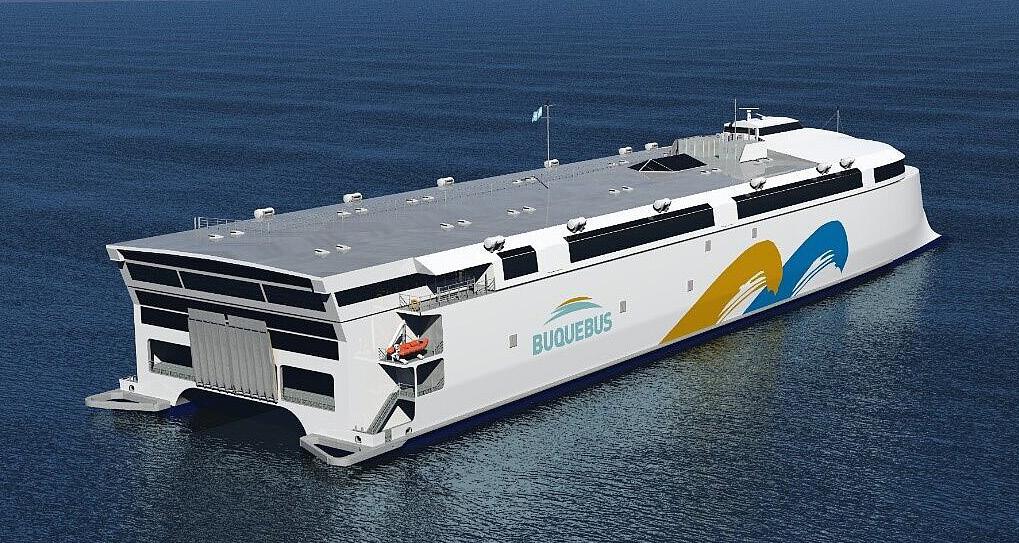
is providing the battery electric propulsion system and waterjets for South America’s Buquebus ferry operator in what will be the largest battery installation in marine transport, at 40MWh. The batteries are from Corvus Energy and the vessel is being built by Incat. It will have a passenger and crew capacity of 2,100, car capacity of 225 and more than 2,000 square metres on one level.
“Anything below three hours of operation will go batteryelectric,” he says. “We’re delivering those vessels today.”
Hybrid propulsion systems are also in high demand, especially in offshore markets, where vessels can save up to 25% in fuel by using batteries during standby or DP modes. “That’s a short payback time,” he says.

On the infrastructure front, change is coming fast. “In the ferry market, charging comes with the terminal – it’s not a chicken-and-egg problem,” says Büssow. For larger commercial ports, EU regulation is driving progress. “Shore power connections are mandatory by 2030 for passenger and container ships. This infrastructure is what batteries will use.”
Some vessels are being built with batteries specifically for zero emissions in port, in cases where shore power is not yet available. “There’s a clear business case there,” he says.
Retrofits and battery engineering Wärtsilä has completed around 30 battery retrofits, making it the most experienced player in this niche.
■ The new Buquebus ferry will be the world’s largest zero-emissions, lightweight catamaran ferry, and it will be powered by a battery-electric propulsion system and waterjets from Wärtsilä
■ Torsten Büssow, managing director of Wärtsilä’s Electrical and Power Systems division
The marine market is so small that there are no dedicated factories for marine converters or generators. We adapt and engineer existing technologies into robust marine-grade systems
Torsten Büssow, managing director of Wärtsilä’s Electrical and Power Systems division
“It’s not a big part of what we do, but nobody has done as many as we have,” he says. “Four years ago when we started this decarbonisation I would say every vessel will have a battery. It sounded very funny at that time, but now not so.”
According to Büssow, these retrofits have delivered immediate benefits in efficiency and emissions reduction.
“Offshore vessels, for example, are perfect candidates. They often need two engines running in DP mode, even at low loads. Batteries allow the engines to operate more efficiently, closer to 80% load.”
Battery lifespans are engineered with practicality in mind.
“You don’t engineer batteries for the 25-year vessel life. You engineer for 10 years, because the technology advances so fast,” he says.
To ensure a battery will last the full 10 years, the company oversizes it so that it actually has more capacity than is needed. There is no need to use the full capacity on day one, but it means there will be plenty left by year 10.
“It’s pure engineering criteria – oversize it so it lasts 10 years,” he says.
Safety and supply chain concerns
One of the most talked-about challenges in the battery space is thermal runaway, the catastrophic chain reaction that begins in an over-heated cell and spreads to other cells, risking fire outbreak.
According to Büssow, marine batteries are far better protected than their automotive counterparts.
“Marine batteries are protected either on the cell-to-cell level or the module-to-module level,” he says. “It’s forbidden to use inflammable materials between the cells. There’s a huge difference in safety design.”
Even in the rare case of cell failure, systems are designed to prevent escalation.
“There’s always dual or triple temperature sensing. If two sensors report high temperatures, that cell or module is shut off immediately,” he says. Fire suppression systems, including water or coolant flooding, are also in place. The outcome?
“Globally, there have only been two or three marine battery incidents – and those happened years ago. It shows the safety systems work.”
Despite growing concern about the environmental impact of lithium-ion battery production, Büssow is says it does not affect marine because it will be led by the automotive market and the consumer.
“Marine batteries use the same cells as car batteries. We benefit from that market’s push for cleaner supply chains,” he says. “As regulations like the EU battery passport take hold, the consumer market will solve this for us.”
Chemistry choice also plays a role.
“There are lower-cobalt options like LFP (lithium iron
phosphate), which are cheaper and more sustainable. We tailor chemistries to each vessel’s operational profile.”
Although battery-only propulsion is not yet viable for transatlantic container ships, it is increasingly the go-to solution for ferries, offshore wind vessels, and port operations, with the Ropax sector Wärtsilä’s biggest so far.
“We’ll see small merchant ships move to full batteryelectric. For others, hybrid is a fuel-saving device – and it works today,” he says Büssow.
Indeed, Wärtsilä now holds about 25% of all marine battery capacity installed globally. “We have more than 1GWh of marine battery systems installed. That’s a quarter of the total – and it’s growing,” he says.
It’s growing, but there will be no short-term end for diesel.
“Deep-sea ships will still use combustion engines – but they’ll consume less and less,= fuel,” he says. “Batteries are here to stay, and they’re improving fast. This isn’t future technology – it’s being sold while we speak. Dong, dong, dong.”
Are we there yet? Despite so many battery manufacturers hailing the benefit, the risks and problems of onboard and onshore battery systems identified in a recent Bureau Veritas report suggests not.
With 1,500 battery-powered vessels in operation and hundreds more under construction, the integration of lithium-ion (Li-ion) battery systems is accelerating rapidly. These systems offer higher energy efficiency, zero-emission operation in port and improved responsiveness.
However, despite being rolled out on boats and as Onshore Power Supply (OPS) systems, they also introduce new layers of complexity and risk.
A report by Bureau Veritas Marine & Offshore, Maritime Electrification: Maritime Battery Systems and Onshore Power Supply, emphasises that the successful adoption of these systems depends on rigorous safety standards, system integration and regulatory compliance.
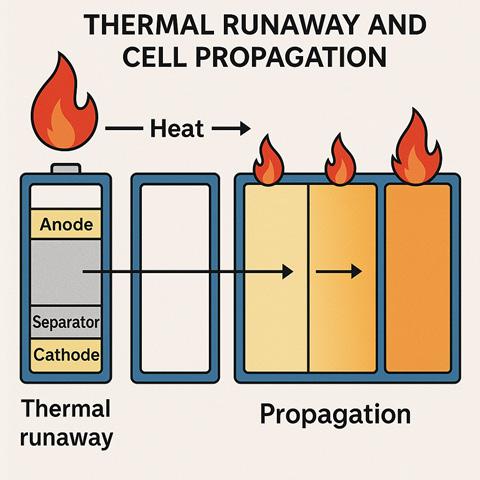
The most critical hazard associated with Li-ion batteries is thermal runaway, when a battery cell heats up and causes a reaction as cell after cell is heated until fire can break out. It can be triggered by internal short circuits, overheating, overcharging or mechanical damage.
Once ablaze, battery fires are extremely difficult to put out because of the generation of oxygen from the battery’s internal reactions.
Consultant George Brilmyer, an electrochemist with more than 45 years’ experience in the battery industry and owner of the consultancy Batt-Tek Consulting, is extremely sceptical about lithium batteries.
“Any battery can go into thermal runaway and explode,” he says. “But with lead-acid batteries, for example, they can go into thermal runaway but they won’t explode because the electrolyser is an acid.
“If lithium batteries come into contact with water, chlorine, a noxious gas, is released, and hydrogen comes off the other terminal – which can then explode.
“Lithium iron phosphate (LFP) was originally claimed to be safer but it’s not. It has a lower voltage cell but when one of those goes into thermal runaway, you have more problems, such as the chemistry releases more hydrogen, and the solvents are all flammable.”
“Batteries can also re-ignite after initial suppression of the battery fire,” says the BV report. “Therefore, an after-cooling strategy is needed to prevent re-ignition.”
Fire suppression must be both immediate and sustained, using systems that may include inert gases, aerosols, foam or water-based cooling.
As well as fire there is a risk of hazardous gases such as hydrogen, carbon monoxide, hydrogen fluoride and phosphoric compounds being released, creating explosion hazards.
“The accumulation of flammable off-gases in enclosed spaces represents a risk of explosion,” warns the report. Ventilation systems, it says, can in fact make the risk worse, because they introduce additional oxygen that could ignite the off-gases.
“The exact composition of gases will vary from case to case, and it is recommended that a composition analysis be
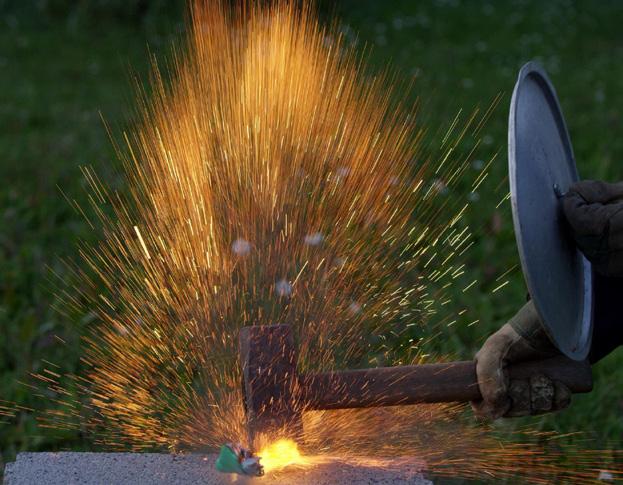
performed, so gas detectors can be adapted and optimized to the expected composition,” it says.
System degradation and maintenance issues
Li-ion batteries naturally degrade over time, reducing energy capacity and increasing the chance of internal failure.
Ageing batteries are more susceptible to mechanical stress and may exhibit unpredictable behaviours.
“As the battery ages, the risk of hazards will also increase, alongside a decrease in performance,” says the report. “This is due to unwanted internal reactions and mechanical stresses that can lead to internal component deterioration and a reduced amount of lithium available for energy storage.”
A key safeguard is the Battery Management System (BMS), which monitors cell temperature, voltage and current. It can isolate malfunctioning cells, balance charge across modules, and communicate with the ship’s Power Management System (PMS).
Any malfunction or misconfiguration of the BMS significantly increases the risk of battery failure.
Battery placement also matters. Batteries must be housed in compartments with adequate ingress protection, cooling, gas monitoring and fire suppression. Increasingly, modular systems are favoured because it is possible to isolate them and contain hazards.
Green credentials
Brilmyer is also candid about the recycling reality of lithium batteries, which is in direct conflict with the ‘green’ claims, and the fact that they require rare earths that are only available in meaningful amounts in China.
“Rare earths can only be sourced from China. The world doesn’t like that,” says Brilmyer. “They are very expensive, but they are needed for the electric motors.
“The materials in batteries are single use and they are not green. You have to realise that. If you are doing this just to be green, you have got to think again. They are not recycled, the electricity is not coming from anywhere green unless you’re in Norway, where there’s a lot of hydropower, or Washington, DC, which has 80% hydropower.
“There’s got to be a better solution and I don’t think lithium is the ultimate answer for electric propulsion. Everybody’s working on it – from sodium to flow batteries – and the petrol guys are also working on making their fuels cleaner.”
Onshore Power Supply (OPS)
OPS systems have their own challenges.
OPS systems can place significant stress on local power grids. A large cruise ship, for instance, may demand up to 20 MVA while docked.
“These high-power requirements have the potential to strain the electricity grid, necessitating significant investment in grid reinforcement or energy storage solutions," says the report – adding that while Battery Energy Storage Systems (BESS) are sometimes used to buffer this demand, they also add to cost and complexity.
OPS frequency and voltage mismatches are also common, BV says. Ships often operate at 60Hz, while port grids may supply 50Hz. The inclusion of frequency converters and transformers introduces more failure points and complicates maintenance, not to mention increasing costs all round.
OPS systems involve high-voltage electrical equipment, often managed in busy port environments. Dodgy installation or operation increases the risk of electrical shock, fire, or system failure. Better training, protective systems and regular inspections are yet more necessary expenses.
Regulations and lack thereof
The BV report also says that current international regulations for OPS and maritime batteries remain fragmented.
While classification societies like Bureau Veritas provide guidance and standards (eg BV NR467), it says, there is no single, globally adopted framework. This regulatory uncertainty adds to operational risk.
The report says the transition to electrification in the maritime sector is both necessary and inevitable, but cannot be undertaken lightly.
“Safety and standardisation must be upheld as top priorities,” it says, and OPS needs to interface with a variety of connection equipment and different onboard power systems.
“Standards help ensure compatibility and interoperability between various components and systems, enabling seamless integration and operation across different ports and vessels,” it says.
‘‘
The materials in batteries are single use and they are not green. You have to realise that. If you are doing this just to be green, you have got to think again. They are not recycled, the electricity is not coming from anywhere green unless you’re in Norway, where there’s a lot of hydropower, or Washington, DC, which has 80% hydropower
George Brilmyer, consultant
The tide of batteries flowing through the maritime industry is lapping at the hulls of all kinds of vessels, from tiny RIBs to container ships.
It’s very early days: according to Maritime Battery Forum managing director Syb ten cate Hoedemaker, there are only 1,500 battery-powered ships operating around the world at the moment, and 80% of those are hybrids.
Driven by calls and looming regulations to operate with zero emissions, fleet operators all over the world are having to consider them, and he sees few problems that can’t be solved with the ever-improving technology for the vast majority of vessel types.
But when it comes to tugs, not everyone agrees.
Maritime Journal spoke to a senior manager at a wellknown tug company who said battery-powered tugs were not feasible, far too expensive and unworkable in a busy port.
They also didn’t make any sense from an environmental perspective, he said.
Out of respect for this individual’s request to remain anonymous, we will refer to him as ‘Smith’, which is the most common surname in the UK.
Cost and energy
“For one electric tug, we can buy two conventional dieseldriven tugs,” Smith says. “Economically it’s just not feasible.”
And it’s not just the tugs themselves – a piece of shoreside charging kit can cost up to €1.5 million, he says.
If there is no fast charger – and these are a problem in ports where grids are already congested – it can take up to 10 hours to recharge, and having already paid twice as much for the vessel in the first place this is simply unacceptable.
“We can sail with a diesel-powered tug for 30 days and then we need one hour to refuel,” Smith says. “With methanol, we can sail for 14 days then need one to two hours’ refuelling. Go
to hydrogen – that’s one day’s sailing and two hours’ refuelling.
“Go to batteries, and that’s four to six hours’ sailing and if you have fast charging, 45 minutes but slow charging – eight to 10 hours.
“It’s crazy.”
“If you look at the typical operations of a tugboat, they are very suitable for battery power,” says Hoedemaker. “There are quite a few battery-powered tugs sailing across the globe right now. Some are fully electric, some are hybrids, but it is true, they are more expensive, so that is one challenge you have to solve.”
Neither of the two largest tug operators in the world, Svitzer and Boluda, has a single fully electric tug in their fleets, although Svitzer told Maritime Journal that it had one on order, expected for September.
MSC Towage, Rimorchiatori Mediterranei and Fairplay also have no fully electric tugs, and Kotug’s only electric tugs operate on inland waterways.
Most fleets have at least one hybrid tug, whether that is with diesel or one of the newer fuels.
Battery costs and charging infrastructure
Smith believes that batteries have not, as was promised, come down in price – but Hoedemaker disagrees.
“We’re not yet at the automotive battery price range, but in China there is a massive over production, so that will bring prices down. It’s a bit slower in maritime, but we are starting to see it,” he says.
He also says that there is more of a move towards lithium iron phosphate (LFP) batteries, which don’t have the controversial element cobalt (a great deal of which is mined
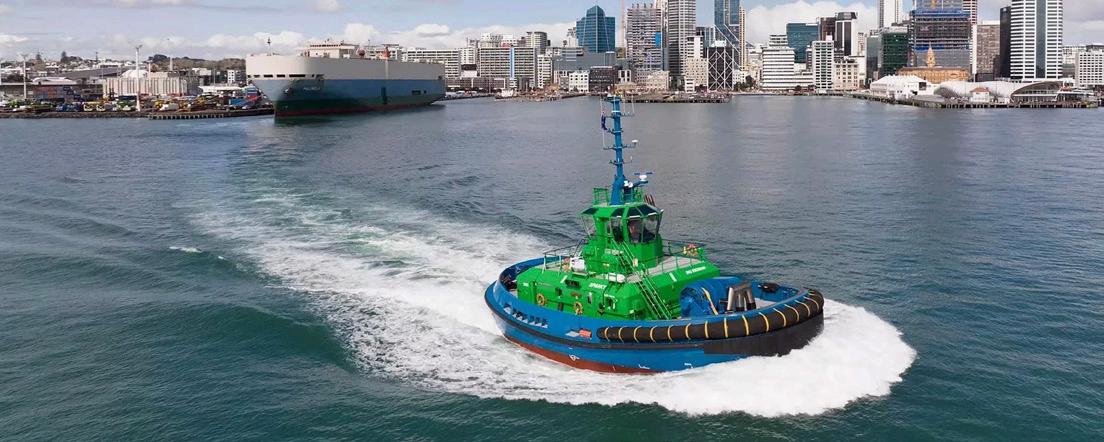
by children in the Congo) in them, and they are also cheaper.
“If you look at the last 15 years, every five years, the battery costs, weight and volume have all reduced by about 50%. Prices go up and down due to external events like Covid, but that’s the same with diesel.”
The biggest challenge to port electrification is charging, infrastructure and where the energy comes from, says Hoedemaker.
“Everyone wants more electricity and it takes time and a lot of money to develop that infrastructure. We are trying to make people realise how much we need – not just the vessels, but everything around the port.”
Smith says charging point locations is a huge issue.
“The problem is it could be on a quayside that has been given into concession to the port operator so we run into difficulties – who will grant us permission to build a shore charger there? Will we be able to dock our vessel at any given time? Then the charger needs 1.5MW. That’s a lot for an already congested electric grid!”
Sparky three years on
While Smith says that it is only in Europe where we see a ‘craze’ for battery tugs, SAAM Towage has just announced delivery of the first one in South America, as has Kawasaku Kisen Kaisha (K Line) in Japan.
But the first one was of course the Damen-built Sparky which operates in the New Zealand Port of Auckland and has been since mid-2022.
If you look at the typical operations of a tugboat, they are very suitable for battery power. There are quite a few battery-powered tugs sailing across the globe right now. Some are fully electric, some are hybrids, but it is true, they are more expensive, so that is one challenge you have to solve
Syb ten cate Hoedemaker, Maritime Battery Forum managing director
Maritime Journal contacted the port to find out how the vessel, which has two 1,000kW diesel gensets, as do they all, for back-up.
Now clocking up three years in service, engineer Rob Willihagen says Sparky matches the 70-tonne pulling power of her strongest diesel counterpart, Hauraki, can charge her 2,240 Toshiba Lithium Titanium Oxide (LTO) batteries in two hours, and can run up to four shipping moves on a single charge.
“Whilst Sparky was more expensive to buy than similar diesel tugs, the overall cost is better as the operating cost is less than half of the cost of running a diesel tug and has the added benefit of preventing carbon emissions,” Willihagen says.
“Electrical equipment requires less maintenance, and therefore the maintenance costs are generally lower compared to diesel engine propulsion systems. Downtime related to maintenance is also lower.”
The port has put in a dedicated electric tug substation, he says, to house the charging system and equipment – and if
There have been unexpected consequences: one being the tug operators having to get used to far quieter, lowervibration engines; another being that they have faced fewer challenges than they expected.
“Operationally the tug is heavier and responds slower compared to the smaller Waipapa and Wakakume diesel tugs – which are almost half the displacement weight of Sparky,” Willihagen says.
So far, so good – but whether the future will be fully electric at the Port of Auckland remains to be seen.
“We will not replace our tugs until they’re at end of life, and so decision on whether we go full electric or a low-emissions hybrid model is yet to be determined,” he says.
CO2 and green credentials
The move across industries to find new forms of energy –whether alternative fuels or batteries, or even nuclear – is all because of laws being implemented to cut carbon dioxide emissions, of course.
Shipping is responsible for 3% of human-generated carbon dioxide. The workboat sector makes up about 15% of the shipping sector overall. This means the workboat sector contributes 0.45% of total anthropogenic carbon emissions.
When you consider that the total amount of CO2 in the atmosphere, wherever it comes from and including human activity, is 0.04% (400 parts per million), the total contribution of the workboat sector to the CO2 in the atmosphere is infinitesimal.
“It all started with the reduction of NOx, but today nobody is talking about that. It quickly shifted to CO2 reduction. But nobody is asking the question why? Why do we need to do it?” Smith asks.
“They also don’t look into the fabrication of the batteries themselves – there are quite a lot of emissions during that stage. And what about decommissioning?”
Despite many claims about recycling batteries, it is not being done in any meaningful way because it is much cheaper to extract lithium and the other materials from the land rather than get them out of a battery.
There is one battery-recycling plant in Germany that has just opened, he says.
“But it has very limited capacity.”
Hoedemaker says this is all being addressed, and by 2027, every battery used in Europe will have to have a ‘battery passport’ to accompany it, with details of what materials are inside it, where they’ve come from, and how much of it is recycled.
“It’s not a perfect technology,” he admits. “The recycling part is going to be very important. It is possible to recycle up to 98% of the materials in the batteries I think, but most of that recycling capacity is in China at the moment and we would want to have it everywhere around the world.
“You can look at second-life applications for batteries but at some point we need to be recycling and make sure they don’t end up in all kinds of landfills, because that would be a waste of very nice materials.”
Incoming regulations are likely to force the small commercial marine sector to comply – or pay. And this could lead to a crisis, Smith says.
“It depends on how strict the rules will be. If they include rules that say we have to change existing vessels then we will have a crisis for sure, because nobody, not us, not our competitors, can change an entire fleet of tugs in one day.
“It’s still unclear for our sector what it means because we operate very small vessels. The government is aiming at

vessels of over 5,000GT but they’ve said already that they will revise those rules to include vessels down to 400GT. Only half of our fleet is less than 400GT.
“I believe some comparison has been made already by the European Tugowners Association. You have one 80t bollard pull weighing less than 400GT and another one with the same performance of more than 400GT – so one company will have a disadvantage just because of the tonnage.”
Smith’s company is trying to use fuel measurements and timing to optimise consumption – for example not mobilising vessels unless there is a clear reason to do so – but this will only save 10-20% of CO2 emissions.
“We can do something, but we can’t reach the targets to reduce them by 40% by 2050,” he says.
One solution could be biofuel, for which no engine change is necessary and which has the same performance quality as diesel, but that will only become more expensive as competition for it grows, particularly from the aviation sector.
And while methanol is a frontrunner as an alternative fuel, engines have to be adapted to take it, a fuel-management system has to be installed, and it requires a special, larger, fuel tank on board. An even larger one for hydrogen.
Although no one is asking why, associations like the ETA and shipowners’ associations are talking to representatives of flag states about how, he says, but it takes time and as workboats are only a small part of the shipping sector, the impact they will have is probably going to be limited.
“We’ll have to do something, but purely electrical – I don’t believe so,” he says. “It will be a hybrid combination. We will have battery packs on board. We will still have engines on board and those engines will run on an alternative fuel, either biofuel, methanol, hydrogen, whatever is the best option for a port.
“When the regulations come in, they will have to be gradually implemented and not suddenly increase the costs for operators because that will be charged to our clients and in the end we will pay it ourselves.”
Rigid Inflatable Boats (RIBs) are obviously at the smaller end of the market for batteries in commercial marine, and one well-known adopter, RS Electric Boats, is confident they are up to the job. Head of Engineering Alex Middleton spoke to MJ about the company’s use of batteries in their fleet
”The motivation behind launching RS Electric Boats (a sister company to RS Sailing and Cheetah Marine, all within the RS Marine Group) was to address the growing need for zero-emission workboats and RIBs in both commercial and leisure marine sectors – with a focus on sustainability without compromising performance,” he says.
”The development began with the Torque 58, followed by Pulse 58, followed by the Pulse 63, the world’s first fully integrated electric RIB, which launched in 2021. It was designed from the ground up as an electric vessel, rather than retrofitting an existing hull design.”
RS Electric Boats uses high-capacity lithium batteries, which it says are marinised and specifically engineered for safety and longevity in harsh salt-water environments.
”The Pulse 63m, for example, is powered by a 61kWh system,” he says. “It is integrated into the fully electric drivetrain with intelligent monitoring systems. The batteries are built to automotive standards for robustness and undergo extensive testing for thermal management, vibration and water ingress.
“They are of an NMC chemistry, chosen for its safety, stability, high energy density and long cycle life.”
Performance comparison
Alex Middleton says when comparing a fully electric batterypowered RIB with a conventional diesel one, there are definitely trade-offs.
“But there are also significant gains,” he says, listing them:
● Performance: Acceleration is instant due to the electric torque curve. Top speeds can be slightly lower, but for many operational profiles (eg port use or safety boats), that’s not a limiting factor.
● Speed & range: Current electric RIBs are best suited for short to medium-range use. The Pulse 63, for example, can run for 1.5-3 hours at full/cruising speeds, or much longer at lower speeds.
● Charging vs refuelling: Charging can take a few hours depending on infrastructure — fast chargers (DC) drastically reduce downtime, but aren’t yet universally available.
● Cost: Upfront costs are higher, but running costs are dramatically lower — electricity is cheaper than petrol or diesel, and maintenance is minimal.
● Maintenance: Electric drivetrains require very little upkeep — no oil other than within the gearbox, fewer moving parts, and fewer failures. The only scheduled maintenance required are oil changes and anode changes.
● Operation: Operators notice lower noise levels, less vibration, and a generally smoother ride. There’s also increased confidence in reliability.
The batteries have so far met or exceeded expectations in terms of cycle life and performance consistency, says Middleton, and thousands of charge/discharge cycles are expected.
The motivation was twofold, Middleton says: environmental responsibility and future proofing.
“The marine industry is under increasing pressure to decarbonise, and we saw an opportunity to lead from the front. We’ve seen interest and uptake in a wide range of applications: port authorities, marinas, event support boats, safety vessels, and offshore wind farm operations, where low noise, low maintenance, zero emissions, and reliability are highly valued.”
The batteries will not last forever, which is a consideration for some clients, he says – but prices are steadily coming down ‘as the global supply chain matures’.
“It is also not something we are expecting customers to have to carry out until the 8-10 year mark.”
There is still a dark cloud over end-of-life for batteries, which, whatever anyone says, have not yet reached commercial-scale recycling; but RS Boats says it is ‘committed to responsible battery lifecycle management’, working with recycling partners and looking at second-life systems such as in static storage.
Charging challenges
Charging infrastructure is possibly the biggest challenge facing every battery-powered vessel operator and manufacturer that we spoke to, and it’s no different with RS Boats.
“While many marinas and ports have basic AC shore power, few currently have high-speed DC charging, which can be ideal for commercial turnaround times,” says Middleton. “We have however been observing most users are finding slower AC charging to be sufficient for their use case. Very few customers require fast charging regularly if AC charging is planned properly.
“We have designed our systems to be as flexible as possible — compatible with both single-phase and threephase AC, as well as DC fast charging where available. In some cases, customers also install their own solar or off-grid systems to supplement charging, which ties in well with sustainability goals.
”Of course, challenges exist — mainly around charging infrastructure, range and customer familiarity,” says Middleton. “But performance and reliability have been excellent.”
Of course, challenges exist — mainly around charging infrastructure, range and customer familiarity ‘‘
Alex Middleton, RS Electric Boats

With the benefits of hindsight, a good question to pose is why at an electricity-generating offshore wind farm, electricity wasn’t used on site to charge the vessels carrying out operations and maintenance there. A no-brainer, you might think today
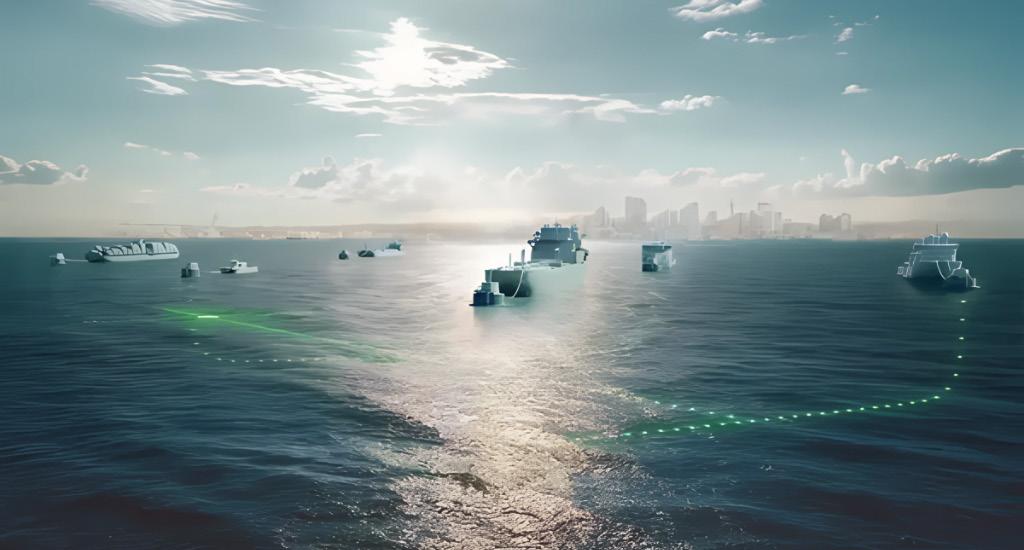
But at the time, the idea of offshore vessel charging simply wasn’t on the radar.
“When the first offshore wind farms were built, battery technology was still in its infancy in the maritime sector,” says Stillstrom CEO Kristian Borum Jørgensen. “It was only just being introduced for limited applications like peak shavingand most wind farms were close enough to shore that vessels could return easily each day, reducing the perceived need for electrification offshore.”
Service Operation Vessels (SOVs) have long played a key role in offshore wind operations. What’s changed is the scale and scope of their deployment. As wind farms grow in size and move further offshore, there’s a growing emphasis on keeping SOVs stationed at sea for extended periods, sometimes days or weeks, to maximise efficiency. The larger size of these modern vessels also allows for greater battery capacity, opening the door to cleaner, electrified operations.
Stillstrom (which means “quiet power”) began as a project in a division of Maersk in 2019, with a clear mission: to explore offshore power and charging solutions aimed at decarbonising the maritime sector.
“We saw other developments within wind where offshore wind farms were getting further from shore – and we saw the number of SOVs increase,” Jørgensen says. “We could see that the wind farms were providing clean, green, cheap electricity in abundance – so we asked, why can’t you actually provide the vessel with it?”
Stillstrom’s charging systems can be provided by buoy; or as a hang-off solution mounted on fixed structures such as a monopile, a substation or directly on the wind turbine – and the
electricity comes from the wind farm’s own electricity grid.
And the beauty of Stillstrom’s offshore charging is that the technology can be used elsewhere as well.
Stillstrom is approaching two markets with its offshore charging solutions: offshore wind, and in anchorage zones outside ports, where thousands of vessels sit every day, idling, consuming diesel.
“In parts of the industry, vessels are spending a lot of time just being idle, waiting for the next job or for the client to give directions,” says Jørgensen. “We saw shore power being brought into ports around the world, and more and more vessels were being converted to take on board shore power and our thinking was quite simple: Why can’t we do that offshore?
“Many vessels don’t actually spend a lot of time in port; they are often spending a lot of time outside them – so why not give them access to electricity there?”
And so, the offshore charging solution idea was born, not only at wind farms, but outside ports the size of Hamburg and Antwerp, and while not in place yet, Stillstrom is already studying the feasibility of integrating their system in the Panama Canal.
There’s a lot to be worked out: when and at which charging point the vessels can hook up, and if the shore grid has enough capacity – but Jørgensen says there is actually quite a predictable timetable, because these vessels often operate on a schedule and slots can be worked out according to their operations.
In parts of the industry, vessels are spending a lot of time just being idle, waiting for the next job or for the client to give directions. We saw shore power being brought into ports around the world, and more and more vessels were being converted to take on board shore power and our thinking was quite simple: Why can’t we do that offshore?
Kristian Borum Jørgensen, Stillstrom CEO
The amount of power required is a completely different ballgame from electric vehicle charging, which requires about 300kW, whereas a vessel would need up to 20 times that.
“If you look at the zero-emissions anchorage zones, it can be anywhere up to 8MW, but it can also be 1MW or below, depending on the vessel size and type: a container vessel with refrigeration, or an LNG vessel that needs to be cooled, will consume a lot more than a standard bulk carrier vessel.
“And we would look at those anchorage zones where you have some of the same vessels coming back over and over again, running on long-term contracts on more or less the same schedules. We have a good example of the anchorage outside the Port of Skagen in Denmark, where vessels are anchored for days, even weeks, until they get the call, go out and come back again.
“The technology is not new, either – what’s new is the combination of the technologies into one. Delivering power to a vessel has been done in ports for many years now, and we’re basically combining and working out the complexity of doing it offshore close to port. There are a lot of other safety aspects – such as you need to have an emergency disconnect system, etc.”
Battery charging and development
“For offshore wind the system will provide up to 8MW of power,” says Jørgensen. “It’s a significant amount and for an SOV you will probably see a battery capacity of 20-30MWh, and we need to charge the battery within four to five hours.
“We want to make it as easy as possible for the wind farm developers. The standard at a wind farm is 66kV, and our system transforms the power so it can be delivered safely to the vessel. With an SOV, you can – to put it simply - take out two gensets and put in batteries to make it an eSOV. It will run on the batteries all day and charge at night, to be ready for the following day. We are currently working closely with most larger SOV owners.
“We are seeing this change in the industry – if you go back a few years, most companies were talking about e-methanol, but now everyone’s talking about e-SOVs. It simply makes a lot more sense to use the energy in the wind farm, it’s a much better business case because when you make these new fuels you lose so much of the energy in just making them.
“If you’re able to electrify, you should electrify.”
And the cost compared to diesel?
“You actually have a business case that’s on par,” says Jørgensen. “It’s quite often cheaper, and you avoid the
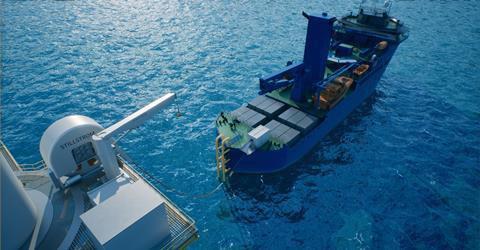
uncertainties of regulations and oil prices and so on. Battery technology is rapidly advancing and the cost has gone down significantly. New companies are stepping up – and where marine batteries used to be much more expensive, prices are really coming down very steeply.”
Energy density has also improved, meaning less space is needed for the same amount of power. And they are lasting longer – up to 15 years, Jørgensen says.
Next steps
Jørgensen says Stillstrom’s technology is commercially ready, and he is having ‘concrete dialogues’ with major global wind farm developers as well as some of the busiest ports and hubs across the globe.
Standardisation is being discussed, and Stillstrom is part of a body that’s looking to make that happen across the board.
“When I look at the future, I think it will be a mix of methanol, ammonia, batteries, standard diesel, MGO and so on,” Jørgensen says. “In general, when we compare against other sort of low-emission fuels like e-methanol, for instance, to create e-methanol you need to take it through the process, and you lose more than half of the energy.
“It’s a big pie but we definitely see that batteries and offshore charging will take a piece of that pie. The pie is very big, so you don’t need to take half the pie to have a decent business, you only need a small piece.
“You will not see the largest ocean-going vessels going from Asia to Europe being converted to battery technology tomorrow, but you will have batteries as being very, very relevant and that’s also proven by a number of studies, not just by us, but by different bodies that have been looking into this.
“I’m being biased here, but we have seen huge developments in the past year or two, our organisation has invested a lot in this and this is happening, this year.”

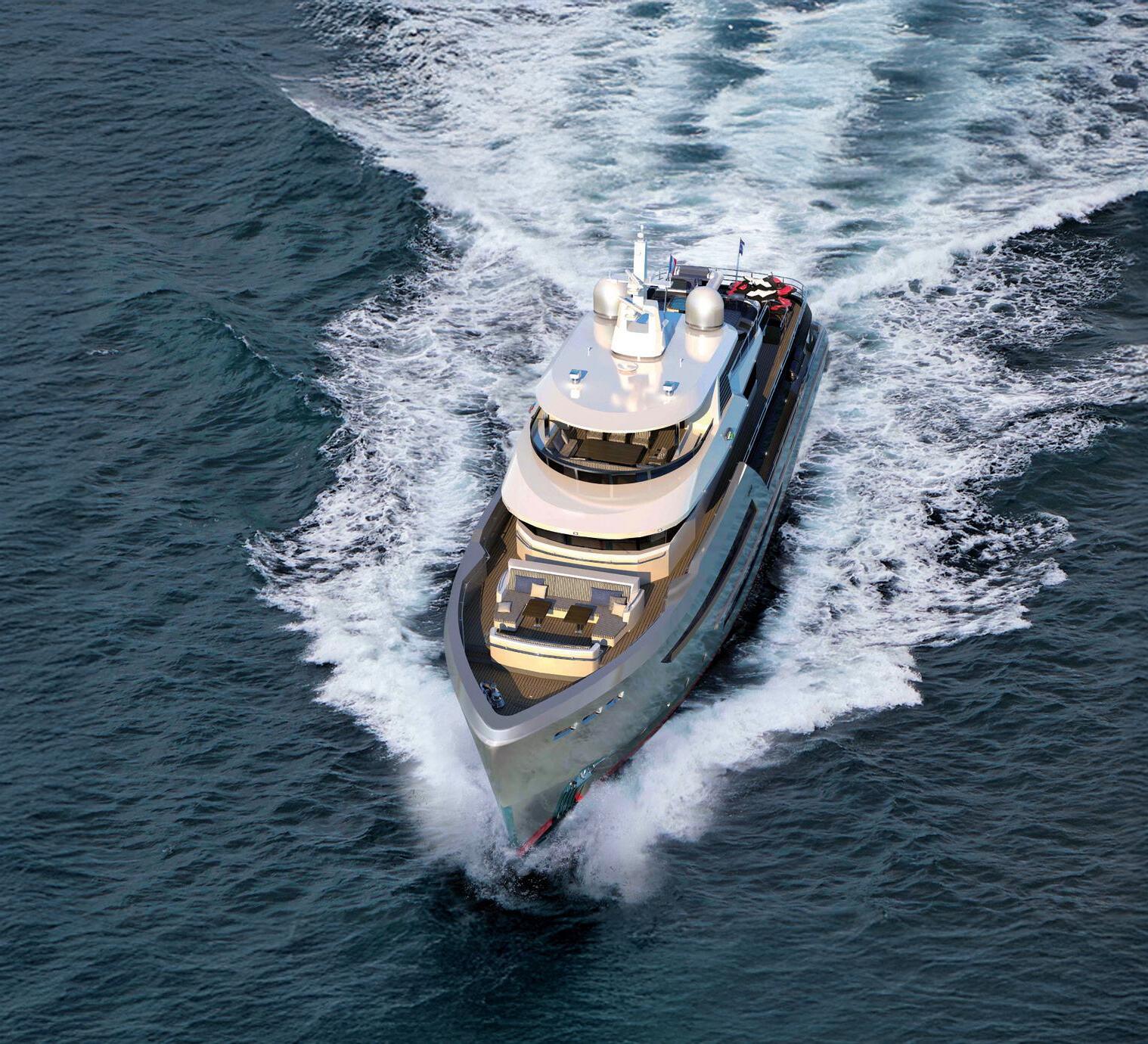
• Cobalt- and Nickel-free
• Scalable and modular design
• Any scale of power available
• 2C charge/discharge
• DNV & ESTRIN compliant
• Water-cooled


• BV, DNV, LR & RINA type-approved
• Patented air-cooling


Construction has started at Inch Cape Offshore Wind Farm, and giant Chinese XXL monopile foundations are confirmed to be on their way to the Scottish port of Montrose.
A 70-metre floating pontoon and quayside cranes will be part of the work needed to transform the port into an operations and maintenance base for the wind farm, which is owned in a 50-50 joint venture by ESB and Red Rock Renewables.
The monopiles each have a diameter of 11.5 metres, maximum height of 106 metres and maximum weight of 2,400 tonnes.
The Inch Cape site will consist of 72 Vestas 15MW turbines. These white mammoths measure 280 metres in height to blade tip, with a hub height of 145 metres. They have a swept area of more than 40,000m2
The monopiles are due to arrive in Scotland in about five weeks’ time and will be installed around 15 kilometres from the Angus coast.
Steel, coal and CO2 in turbine manufacture Wind turbines have grown massively since the first offshore wind farm, Vindeby, was installed in Denmark in 1991, consisting of 11 x 450kW turbines, each with a height of just 35 metres.
Today’s turbines are a different story, some 30 times greater in generation capacity and
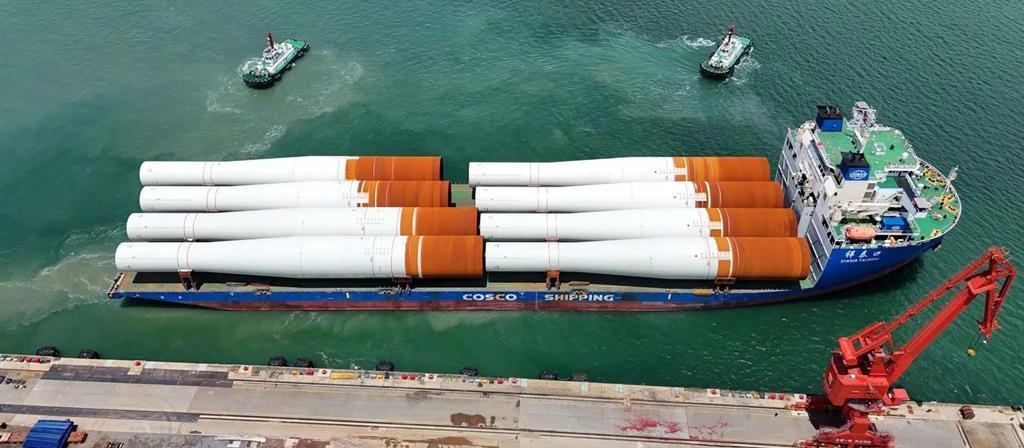
almost 10 times the height. Each 15MW turbine is made of around 3,200 tonnes of steel, which is still made in blast furnaces using between 0.6 and 0.8 tonnes of coking coal per tonne of steel.
This means that 2,624 tonnes of coking coal need to be burned per wind turbine, making a total amount of around 175,000 tonnes of coal burned for this one wind farm.
■
The amount of carbon dioxide emitted per tonne of coal burned is estimated at about 2.86 (various sources), which means that almost half a million tonnes of CO2 were emitted in the manufacture of the turbines for the Inch Cape offshore wind farm.

A Japanese floating wind association has signed a Memorandum of Understanding with the European Marine Energy Centre (EMEC) to develop offshore floating wind technology.
The Floating Offshore Wind Power Technology Research Association (FLOWRA) of Japan and Orkney-based EMEC, off the north coast of Scotland, will ’accelerate the development of core technologies for floating offshore wind, establish robust verification and evaluation methodologies and contribute to the expansion of the floating offshore wind market – ultimately helping to realise a sustainable society’, a statement said.
FLOWRA works with overseas organisations, it says, to develop common basic technologies in the field and reduce costs and risks.
“Floating wind is set to play a major role in the global energy transition, and EMEC is committed to supporting its development,” said EMEC managing director Matthew Finn. “Our MoU with FLOWRA marks an exciting step forward in international collaboration, enabling knowledge exchange and accelerating innovation.”
FLOWRA, which was founded by Japanese utilities, energy companies and developers, was only set up 18 months ago but aims to promote domestic supply-chain development, joint research and international cooperation to adapt floating wind technologies to Japan’s maritime conditions.
“EMEC is recognised as the world’s first centre for testing power generation technologies in real-sea conditions, serving as a leading global hub for innovation in the marine renewable energy sector and driving the development and commercialisation of new technologies,” said FLOWRA board chairman Masakatsu Terasaki.
“It is a great honour for FLOWRA to collaborate with EMEC, an organisation with a proven track record and deep expertise. By combining our efforts, we aim to accelerate the development of core technologies for floating offshore wind, establish robust verification and evaluation methodologies, and contribute to the expansion of the floating offshore wind market – ultimately helping to realise a sustainable society.”
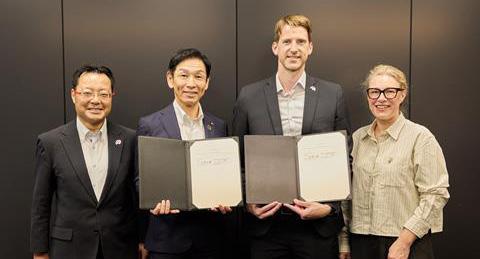
Pioneering EMEC
EMEC’s projects extend beyond testing wave and tidal technologies into whole-system projects. Here are just four of its current projects:
ReFLEX Orkney: Creating an integrated energy system for the islands, linking electricity, transport, and heat.
Electric Orkney: Trialling Artemis electric hydrofoil vessels on inter-island routes. Alongside vessel development, EMEC is installing high-capacity charging infrastructure while gathering vital data on vessel and system performance.
CorPower Ocean’s 5 MW wave energy array: Developed at EMEC’s Billia Croo test site, this project will see up to 14 wave energy converters deployed by 2029 in the UK’s largest wave power initiative.
National Floating Wind Test Centre: A proposed site around 20 km west of Orkney, designed for grid-connected turbines up to 20MW, it would provide real-world conditions to test floating offshore wind technologies before they are rolled out at commercial scale.
Jones Bros Civil Engineering UK has played a central role in the £2.4 billion (€2.75 billion) NeuConnect project, a landmark renewable energy interconnector between the UK and Germany.
The scheme, one of the world’s largest, will link the countries’ electricity networks through 725km of overland and subsea cabling, boosting energy security and integrating renewable energy sources across both nations.
“Interconnectors are key component to the global renewable energy market, and it is wonderful to play a part and utilise our civil engineering expertise for this new addition
to the sector’s landscape,” said Gareth Jones, contract manager at Jones Bros.
The Ruthin-headquartered firm secured a multi-million-pound contract with Siemens Energy to deliver enabling works on the Isle of Grain in Kent.
This included constructing a 50,000m² development platform for a 1,400-megawatt converter station, alongside earthworks, drainage, attenuation ponds and a 600-metre ducting corridor for utilities.
Jones Bros collaborated with North Wales consultancy Caulmert, whose stabilisation design enabled the recycling of 40,000m³ of on-site material.
This sustainable approach reduced traffic movements and cut the need for importing or exporting soil.
A team of 25, including four apprentices, completed the works earlier this year, paving the way for Siemens Energy to commence major construction of the UK converter station’s concrete base and upcoming superstructure.
Established in the 1950s, Jones Bros is a leading name in marine civils, highways, flood defence and renewable energy projects.
The company has one of the UK’s largest plant fleets and has an award-winning apprenticeship scheme.
Servogear Ecoflow Propulsor
Energy Efficient
Reduced Emissions
Reliable and Safe Operations
Complete Propulsion Systems from Bridge to Propeller

BMT has unveiled a modular uncrewed ship concept that it says advances the evolution of medium and large uncrewed vessels for commercial and military purposes.
The concept, says BMT, has a modular approach to allow for more adaptable solutions for specific operations rather than a one-size-fits-all vessel.
The concept, which it is calling ’MODUS’, reflects ambitions set out in the UK’s Strategic Defence Review, and meets broader industry trends towards larger uncrewed vessels.
It’s basically a single design of vessel that can be easily adapted for specific uses – scaled up or down, and with different equipment installed – or not.
“Challenging everything we know about traditional crewed vessel design, MODUS aims to unlock the benefits of autonomy and uncrewed vessels at scale,” it says. “The project has developed pre-concept designs for a medium USV (40 metres) and a large USV (75 metres), designed for specific use cases including offshore survey, seabed warfare and anti-submarine warfare.”
Calling it a ‘MODUS family’, BMT says it is proposing a new narrative that scalable autonomous solutions shouldn’t just be one design and don’t need to have a common hull form.
“Instead, to get the most cost-effective solution in the autonomy space, we shouldn’t be afraid to have different solutions for different tasks,” it says. “This visualisation *above) shows 15m, 40m and 75m elements of the family, showcasing how a stepping stone approach to development can be used to derisk the solutions, starting small and building up to larger blue ocean capabilities, pushing design horizons.”
The project has been six years in development, BMT says, and has been announced shortly after the maritime services provider Serco revealed an uncrewed vessel design of its own for operations in the navy, as Maritime Journal has reported.
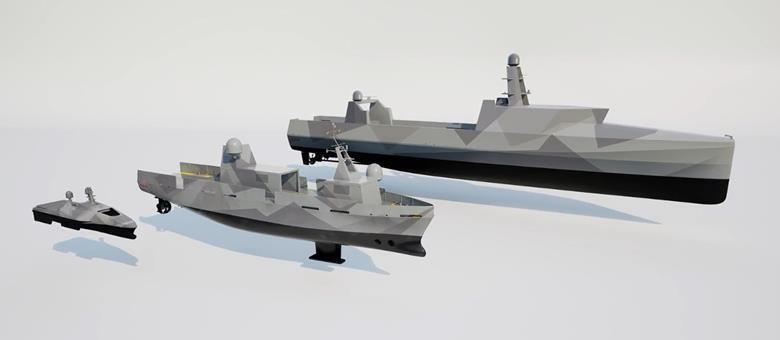
Seeking technical partners
“The power and propulsion considerations for an uncrewed vessel are key to achieving the necessary availability of a platform when it’s at sea and on patrol,” said chief mechanical engineer John Buckingham. “As part of that we look at the power and propulsion options, mechanical, hybrid, all the way through to all electric.
“We consider the options for those solutions based on operating profile, payload duties, the type of manoeuvrability, as well as the space and weights balances we have for the machinery.”
“While we’ve spelled out the vision there still remain a gap as to what we need to do for the future,” said Jake Rigby, head of Innovations and Research. “That’s not something BMT can do on its own and we are looking for key technical partners to really spell out and help us bring those solutions to market.
“There are challenges but the opportunities are huge.”
Kongsberg Maritime has unveiled the next phase of its mission to simplify and enhance the mooring of offshore floating structures, introducing a raft of innovations aimed at reducing cost, complexity and environmental impact throughout the mooring system lifecycle.
The company’s latest developments build on its patent-pending integrated tensioning and remote pull-in technologies, focusing on reducing the number of mooring components and eliminating the need for active tensioning equipment in permanent systems.
Kongsberg says these solutions allow for a controlled, vessel-based connection that safely accommodates movement between the floater and installation vessel, enabling mooring line installation even in challenging conditions.
“Our goal is to streamline offshore floater installations by simplifying every step of the process,” said Arild Ånensen, program manager – Offshore Energy.
“By reducing components and introducing smarter connection and tensioning methods,
■ BMT’s MODUS family: Scalable autonomous solutions with different solutions for different tasks. This visualisation shows 15m, 40m and 75m.
we’re helping operators cut costs while improving safety and reliability.”
The new approach removes the need for onboard winches and floater-based personnel, resulting in lower topside weight, less maintenance and enhanced safety. Kongsberg is also refining its tensioner technology to offer precise, dependable mooring line tensioning.
Kongsberg is hailing the use of crosstensioning to eliminate stretch in fibre ropes a ‘standout innovation’ as it reduces reliance on bollard pull and lowers engine power demands. Estimated fuel savings for tensioning operations are in the range of 70–80%, depending on the system.
While tailored to support the industrialisation of floating offshore wind, Kongsberg Maritime’s innovations can also be used in traditional offshore sectors like oil and gas.





Dutch offshore data firm Fugro has blamed market conditions, particularly in oil and gas, for cutting its financial outlook for this year.
“While we still expect the second half of 2025 to show a notable improvement compared to the first half, the previously









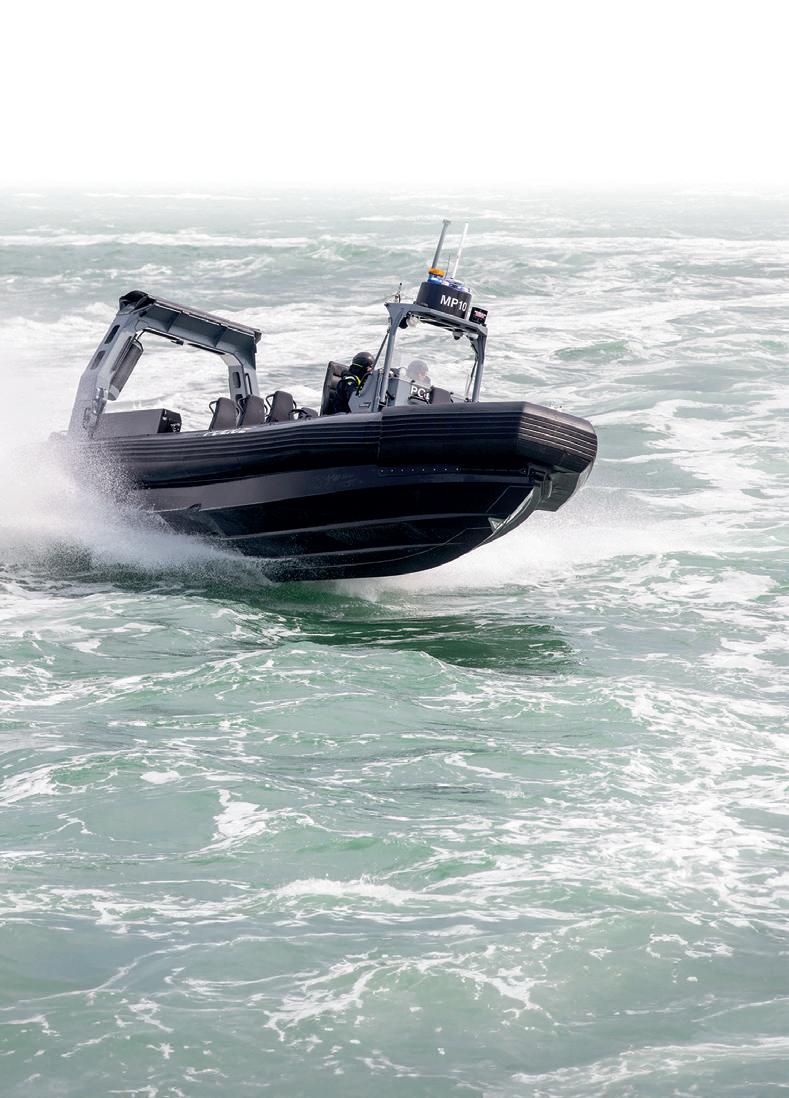


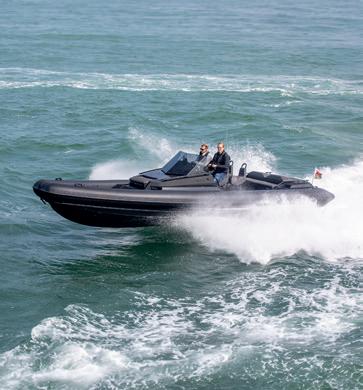
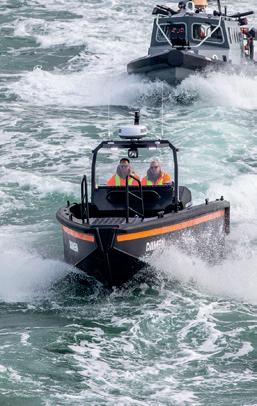
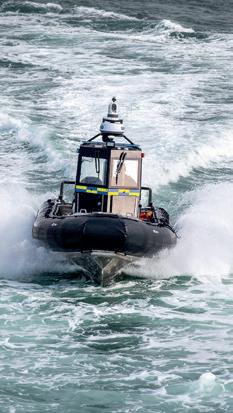

The
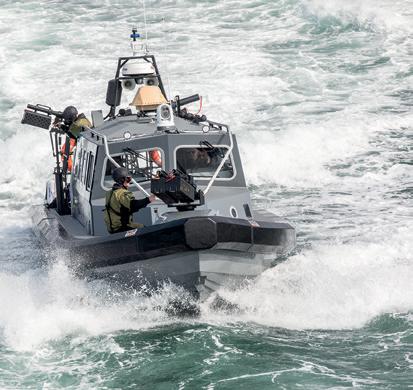
• International Defence / Naval Attaches
•
•
• Boat builders, designers and equipment suppliers Where?
Royal Ocean Racing Club, Cowes, IOW
Subsea Europe Services (SES) has developed its own Uncrewed Surface Vessel (USV) after years of configuring and operating thirdparty vessels.
Due to be launched in 2026, the 4m vessel can be launched from small vessels, marinas or off the beach, will have a 200kg capacity and battery-powered propulsion.
SES, based in Germany, says it is the C-RECON 13-ES is its first in-house-developed platform.
It has been designed for hydrographic surveys, environmental monitoring and offshore asset inspection, and SES says shorter and longer hull lengths can be accommodated by adding or removing ready-made sections to allow for an extra battery pack or UAV hanger.
“Autonomy is not just about technology, it’s about enabling better business outcomes,” said Sören Themann, CEO of Subsea Europe Services. “With the C-RECON 13-ES, we’re providing a solution that helps European operators cut complexity, control costs, and deliver better results for their clients.”
The USV market is a growing one: just this week Maritime Journal has reported on two other firms building their own versions: Serco has launched a so-called No Manning

Required Ship’ (NOMARS) for the US, and BMT has unveiled a modular uncrewed ship concept that it says advances the evolution of medium and large uncrewed vessels for commercial and military purposes.
“C-RECON 13-ES represents the next stage in our growth,” said Themann. “By building platforms in-house, we can deliver turnkey solutions that unlock the full value of autonomy for offshore energy, ocean science customers, and through our FLANQ business unit, defence.”
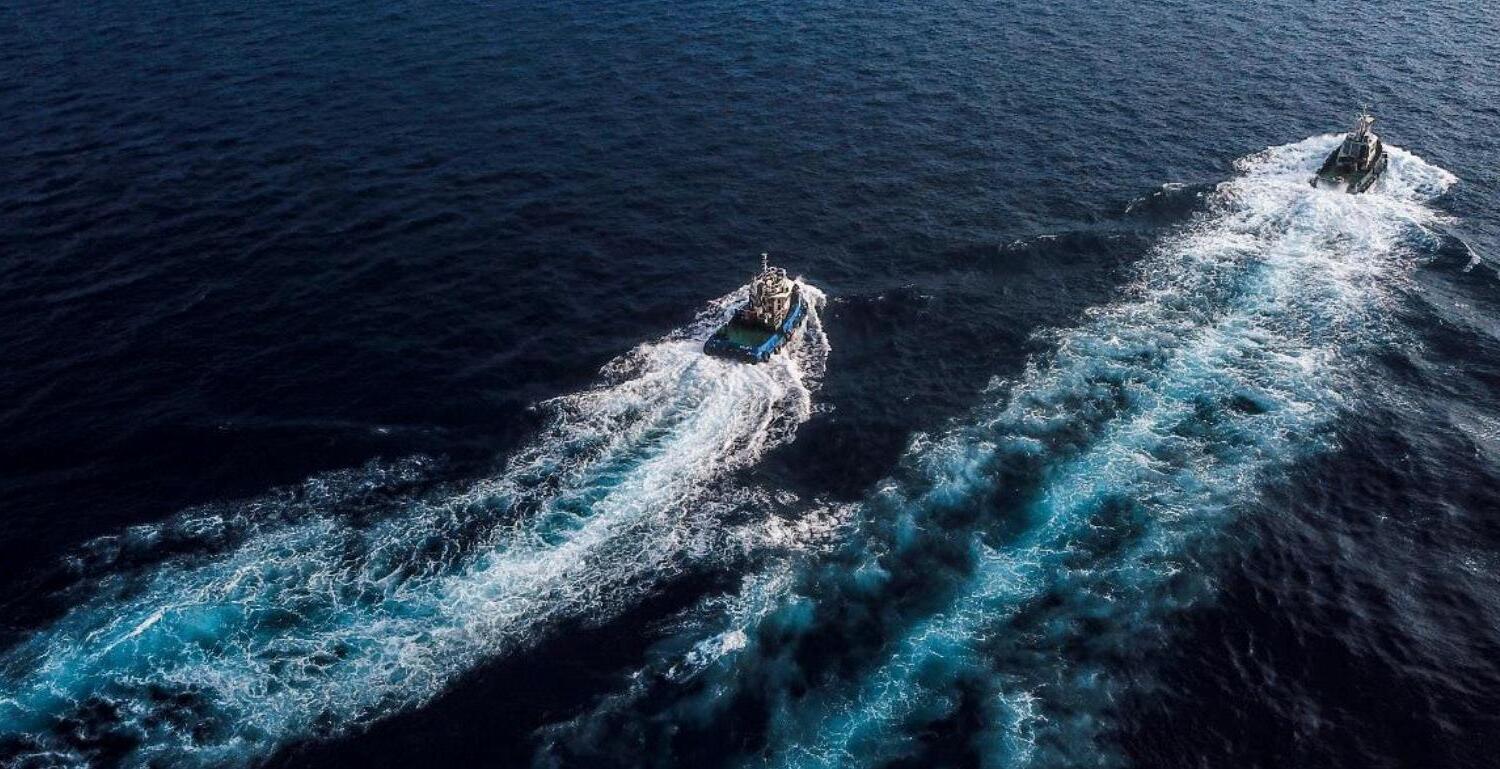


When shipyards fail to put proper health and safety measures in place, it can lead to tragic and costly results. In their latest column for Maritime Journal, Ocean Legal’s Jennie Harris and Lucy Goff outline the risks and processes needed to minimise them.
Click here to read article on Maritime Journal online
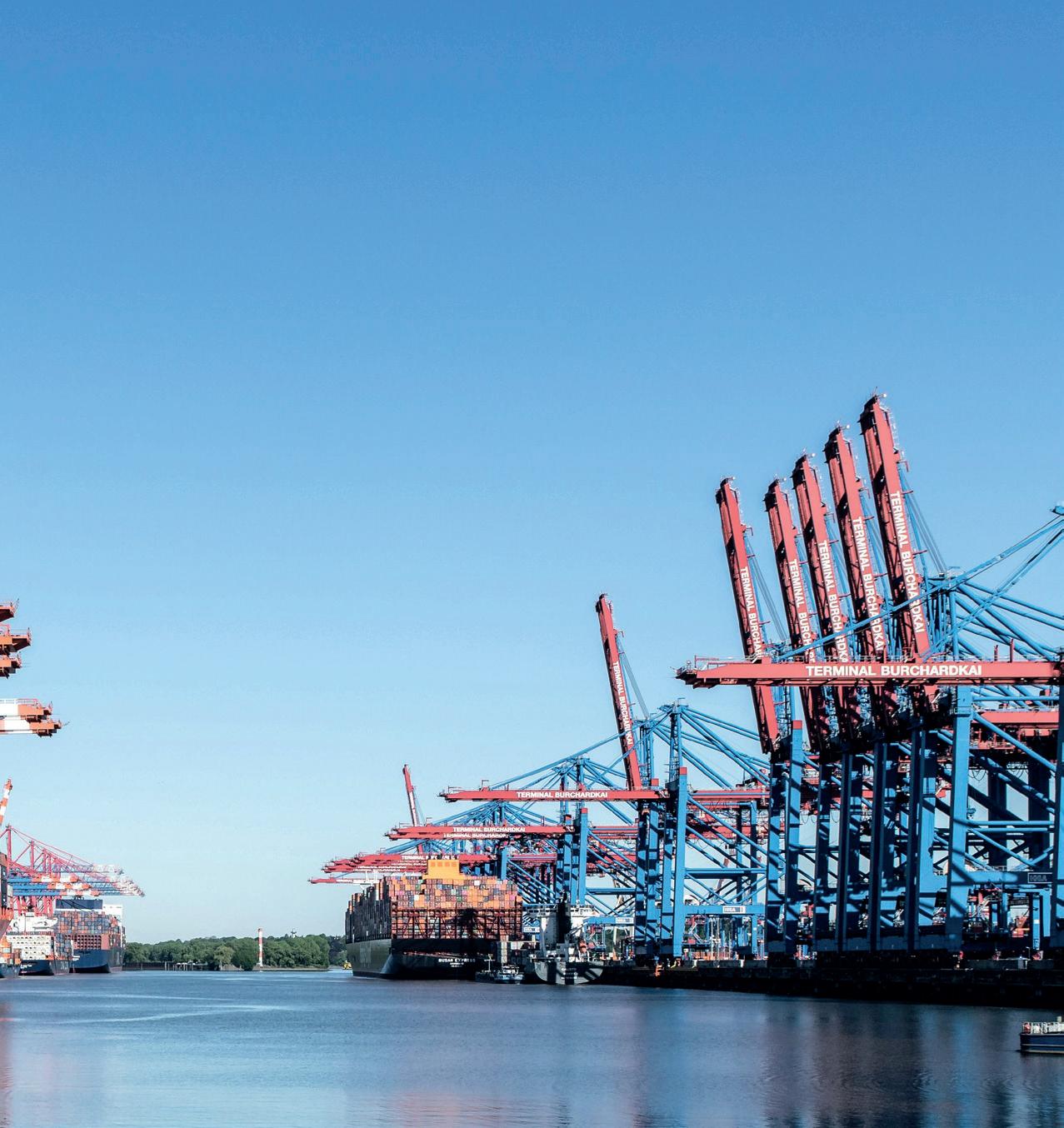


Danish offshore wind giant Ørsted has lowered its profit forecast because the wind didn’t blow as much as normal in July and August.
The lower forecast did not deter shareholders from giving strong backing to the company’s €8 billion capital raise, which was announced in a rights issue.
CEO Rasmus Errboe told shareholders that expected earnings (EBITDA) for 2025 were being lowered by €281 million ‘following lower-than-normal offshore wind speeds during July and August… relative to normalised wind speeds during 2025’.
Another issue affecting the forecast was damage to an export cable at its Greater Changhua 2b offshore wind project in Taiwan, it said, delaying commissioning.
“The rights issue announced today will strengthen Ørsted’s capital structure and provide financial robustness in the years 2025 through 2027, during which we’ll deliver on our 8.1GW offshore wind construction portfolio,” he said.
Offshore wind has not been plain sailing for Ørsted, which scrapped the 8GW Hornsea 4 wind farm off the east coast of northern England in May.
Last week, the company said it would sue the US administration over a stop-work order
■ Rasmus Errboe, Ørsted CEO
on its Revolution Wind project in the US, which is 80% complete.
“The above is not expected to impact Ørsted’s medium-term targets,” a company statement said. “The construction of
The rights issue announced today will strengthen Ørsted’s capital structure and provide financial robustness in the years 2025 through 2027, during which we’ll deliver on our 8.1GW offshore wind construction portfolio ‘‘
8.1GW offshore wind projects will almost double the company’s installed capacity, and Ørsted has seen progress on its construction portfolio and achieved several milestones. Ørsted will focus its business more geographically and technologically, with a strategic focus on offshore wind in Europe, and will continue to increase its competitiveness.”


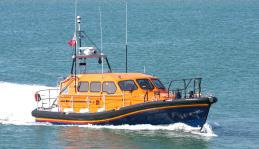


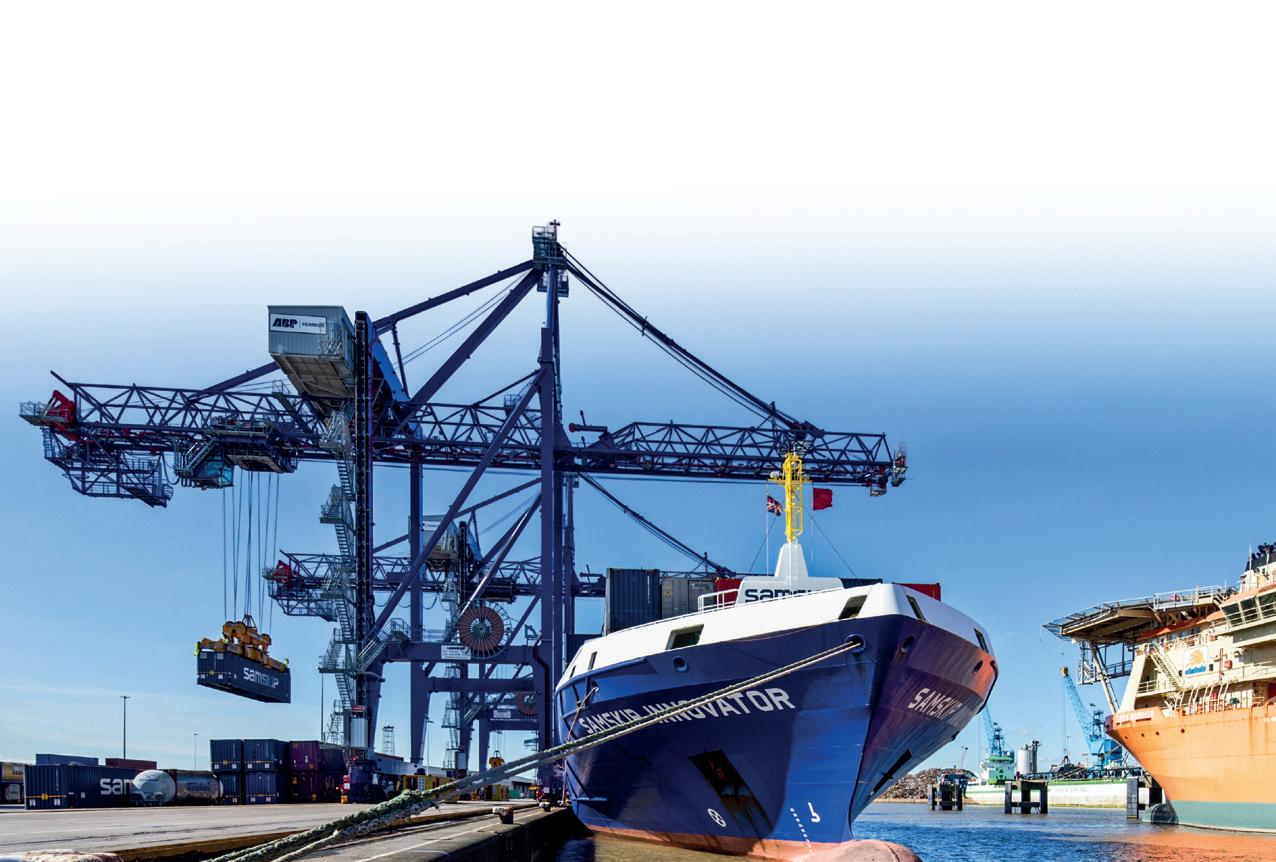

Coastlink is a neutral pan-European network dedicated to the promotion of short sea shipping and intermodal transport networks.
Learn from and network with international attendees representing shipping lines, ports, logistics companies, terminal operators, cargo handlers, and freight organisations.

For more information on attending, sponsoring or speaking contact the events team: visit: coastlink.co.uk contact: +44 1329 825335 or email: info@coastlink.co.uk
The EU is considering delaying shipping fuel taxes for 10 years under a draft proposal that aims to stall energy tax reforms, news agency Reuters has reported.
While the fuel taxes set to be implemented only affected vessels above 5,000 GT, it was widely expected that vessels above 400 GT would be next in line, so this recent announcement is likely to mean a further delay in penalties for them.
The draft proposal exempts vessels from fuel taxes until 2035, as opposed to the original proposal, which would have seen them phased in from 2023 to be implemented in full by 2033.
Under the EU Directive 2003/87/EC (ETS Directive), a review of whether to include smaller vessels was mandated: “By no later than 31 December 2026, the Commission shall examine ‘the feasibility and economic, environmental and social impacts of the inclusion in [the ETS Directive] of emissions from ships, including offshore ships, below 5,000 GT but not below 400 GT,” the EC said.
These vessels are already required to monitor their CO2 emissions if they fall under the EU MRV scope (cargo or offshore ships), but it is purely monitoring and reporting and is not independently verified yet.

However the EU can use this reporting to prepare for future ETS (Emissions Trading Scheme) or FuelEU obligations once an ETS review has been carried out in 2026

and a FuelEU assessment due in 2027. The EU had not responded to Maritime Journal’s request for comment at the time of writing.
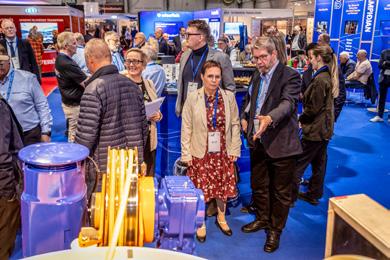
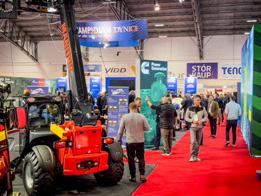

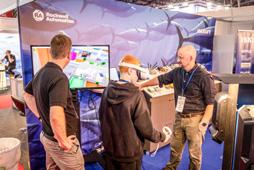
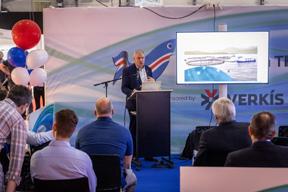
The Icelandic Fisheries & Aquaculture Exhibition & Conference (IceFish) is the longest running international fishing exhibition in Iceland. First held in 1984, this exhibition has developed into a showcase of every aspect of the commercial fishing industry and seafood sector.
On site IceFish Conferences, business matchmaking, innovation showcase, product presentations and IceFish Awards, recognising excellence across the sector.
IceFish is a must-attend event for all in the global seafood sector, attracting international exhibitors and visitors from 60 different countries.

07921 727146
andrew.southwood.ext@siemens.com siemens.co.uk/marine-finance

With carbon penalties looming, there’s a lot of work going on to find alternatives to diesel, which still has no real competitor when it comes to cost, availability or performance
Click here to read article on Maritime Journal online
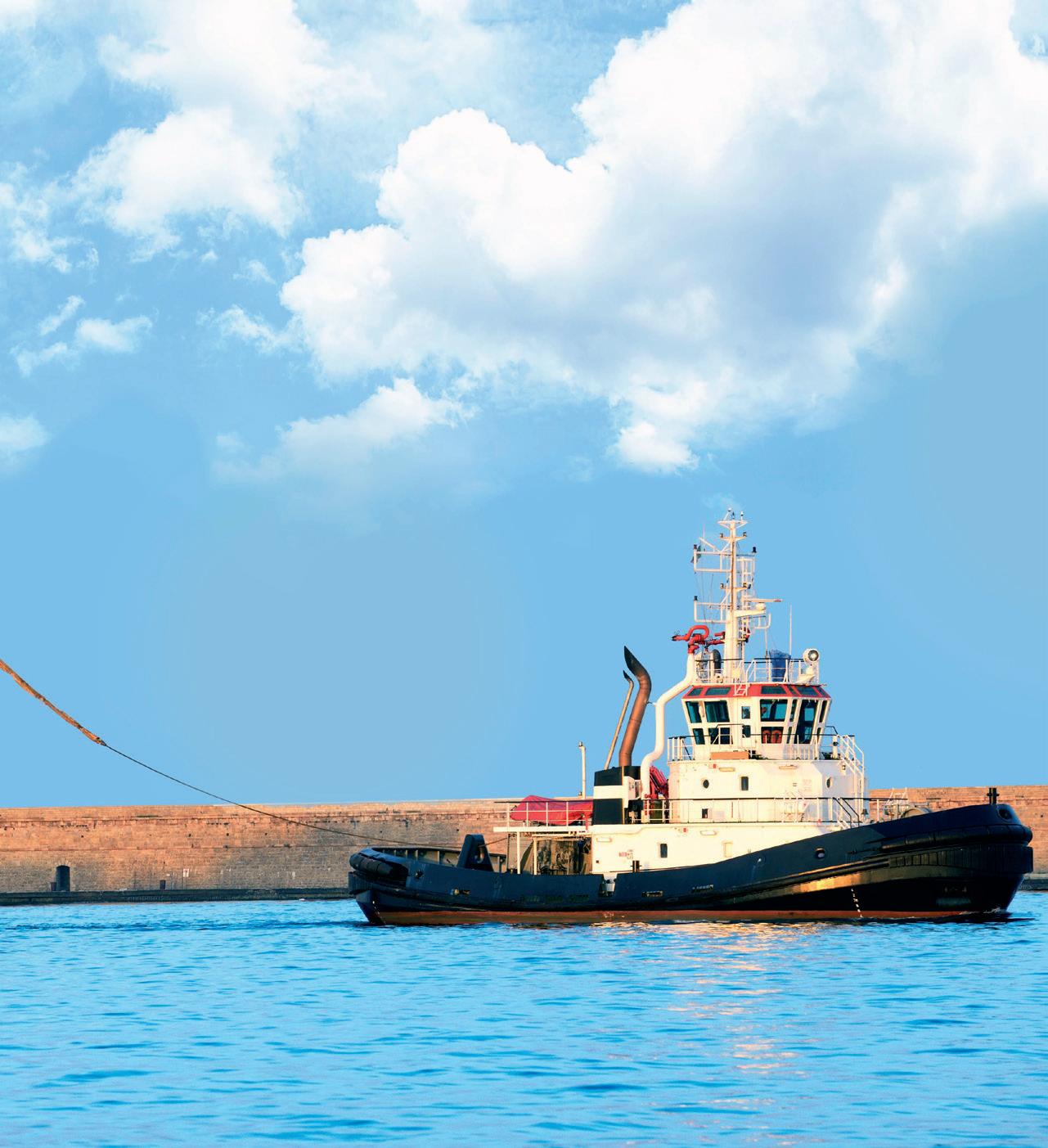

Without more leases, infrastructure or investor confidence, the UK’s floating wind ambitions look highly unlikely, says Theo Cleave, commercial manager at marine construction firm MintMech.
The UK has committed itself to a 100% carbon-free electricity system by 2035 and net zero by 2050. The majority of the country’s green electricity is expected to come from wind power by 2030. With some of the world’s best offshore wind resources, most of that will come from offshore installations and the target is 43-50GW of offshore wind by 2030, with 5GW coming from floating offshore wind.
Fixed-bottom offshore wind farms continue to provide a significant share of renewable electricity. But, according to the Energy Technology Institute (ETI), the UK has many highenergy offshore wind sites beyond the depth where current fixed-bottom technology is viable, and this is where offshore floating wind comes in.
According to Stuart Bradley, strategy manager - offshore renewables at the ETI, In water depths under 30m fixed foundations are the prime solution, but in at 50 metres and more, floating foundations are the lowest cost solution.
A paper from the University of Oxford Smith School of Enterprise and the Environment suggests that ultimately, floating wind could provide the UK with more than 2,000TWh a year, which is more than the entire country’s predicted 1500TWh annual electricity consumption for 2050.
There are additional benefits to floating wind that give it real potential. It is cheaper and quicker to install, uses less steel therefore contains less embodied carbon, and is simpler and cheaper to decommission at the end of a contract.
Everyone appears to agree that floating wind is going ahead, and the Celtic Sea looks ideal — but as it stands, there’s no real forward momentum. In April 2025, bidders were still waiting for leases for three sites in the Celtic Sea. With less than five years to go before the 2030 deadline, only a handful of pilot floating wind schemes exist.
No chain, no gain
Without a committed pipeline of projects, investors are bound to be sceptical about investing in the necessary infrastructure and supply chains to make floating wind happen. For example, there would be a huge demand for quayside space, anchor chains and fabrication dockyards –but it’s a gamble to build them on the chance that floating wind overtakes fixed-bottom as the UK’s principal source of offshore wind energy.
According to a 2024 report by the Government-Industry Floating Offshore Wind Taskforce, floating wind could employ 97,000 people and contribute £47 billion to the economy by 2050. But if you asked me today to give you 50 floating wind turbines, I’d be more likely to turn to places like the Netherlands or Germany, which are miles ahead in terms of infrastructure and supply chains.
Manufacturing, assembling and installing floating wind turbines is one thing, but they still need plugging in. We’d need to construct substations, install cables and develop onshore infrastructure to receive the generated power, which would often involve work like directional drilling in highly tidal areas like the Celtic Sea. This could be in South
Wales or in the Southwest, and wherever the power goes ashore will see a big industrial benefit, but virtually none of this infrastructure exists yet.
Developer engagement and government
Perhaps the clearest contrast between floating and fixedbottom offshore wind is the behaviour of the developers. I remember an RWE-led event related to expanding a fixedbottom installation in North Wales where about 50 staff were stationed at topic-specific tables. Attendees could choose to speak on topics like semisubs, O&M, anchoring solutions –whatever their area of expertise. They were encouraged to explain their role in the supply chain and essentially pitch their services. It was direct engagement with the people who were delivering the wind farm, the ones signing the cheques.
With floating wind however, engagement like this appears absent. Without contracts or even lease awards, what are suppliers supposed to do? Few look willing to build new facilities or hire staff in the hope of future demand.
If the private sector won’t make the first move, floating wind feels like the perfect proving ground for the newly formed company Great British Energy (GBE). By breaking the stalemate with leases, guarantees or seed capital for UKbased fabrication, a public entity like GBE could make a real difference. This is the kind of high-risk, high-impact move that gives GBE an opportunity to make a name for itself. Besides, who actually made the 5GW offshore wind commitment?
Pledges and strategy documents are one thing, but until there’s a major player saying, “we want an established floating wind design by this date, come to our conference, talk to our teams, we’re taking ten concepts forward”, I can’t see the industry acting.
█ MintMech specialises in the design, manufacture and operation of geotechnical drilling, large diameter drilling, marine construction and offshore handling equipment.

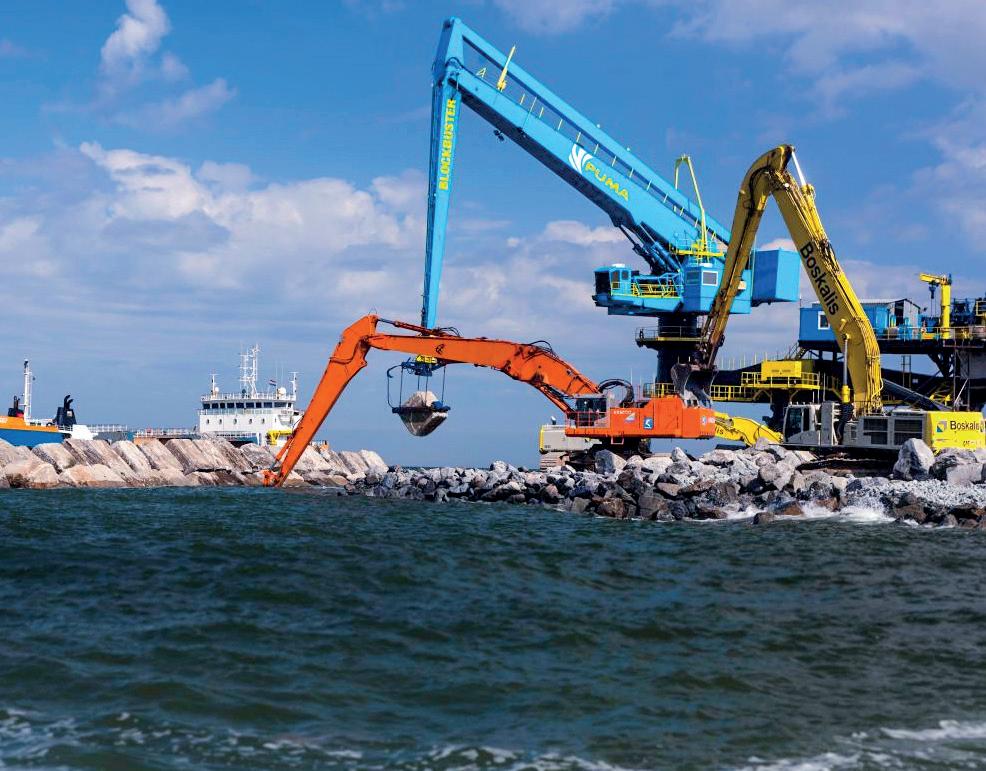
Maritime Contracts Journal will help you stay up to date with the latest contracts out for tender, as well as getting early information on upcoming tenders and the latest contract awards.
The weekly bulletin includes:
• Dredging contracts
• Marine civil engineering & construction projects
• Environmental services
• Vessel supply, repair and maintenance
• All offshore service requirements
Now publishing over 50 leads per week - with an average of £300 million worth of new maritime contract notices and awards! MCJ has expanded its coverage to include UK, Europe, Australia & Japan, contact subs@maritimecontracts.com to subscribe for £655/year!
VISIT OUR WEBSITE TODAY






Find out more about Maritime Contracts Journal and how to subscribe to the weekly bulletin Tel: +44 1329 825335 or email: subs@maritimecontracts.com BULLETINS PER YEAR 49









Chain Cables, Shackles, Swivels, Mooring Gear and Mooring Ropes. With more than 100 years of experience, Trillo Anclas y Cadenas is a leading company in the supply of anchoring for ships, floating artifacts & marine farms.
■ Trillo Anclas y Cadenas SLU Parque Empresarial de Coiros, Parcela 10, 15316 Coiros (La Coruna)
Tel: +34 981 173478 Fax: +34 981 298705 info@rtrillo.com www.rtrillo.com
Providing marine and logistics services for over 120 years. Pontoons, Tugs, Workboats, Fast Launches, Multi-purpose Barges with cranes. Road-transportable Multicats, full operational base facilities, craneage and open storage.
■ Williams Shipping Manor House Avenue, Milbrook, Southampton, Hampshire, SO15 0LF Tel: +44 2380 529555 marine@williams-shipping.co.uk www.williams-shipping.co.uk

Solarglide are a UK based manufacturer and supplier of exceptional quality and innovative marine tested solar screens, curtains, blackout blinds, dimout blinds, wipers, and adhesive window films.
■ Solarglide Ltd Unit 8 The Stottie Shed, Bakers Yard, Christon Road, Gosforth, Newcastle upon Tyne, Tyne & Wear, NE3 1XD Tel: +44 1915 970543 Fax: +44 1670 898614 theteam@solarglide.com www.solarglide.com

CARLIER Chaines SAS Is producing chain for 90 years. We have many years of experience in manufacturing all kinds of chains, anchors & lifting accessories for any use. Our production facilities are based in North of FRANCE on 10 000m2, where we produce sizes from 10mm to 120 mm diameter.
■ Carlier Chaines SA 37 Rue Roger Salengro, 59733 Saint-Amand cedex
Tel: +33 3 27 48 12 00 Fax: +33 3 27 48 95 27 info@carlier-chain.com www.carlier-chain.com/

Hirers and Suppliers of 2/4/6/ 8-point mooring sets available, single, double and triple drum winches available. Fairleads, deck sheaves, anchors, diesel or electric driven hydraulic power units. Air tugger winches, wire ropes, slings and shackles.
■ Atlas Winch & Hoist Services Ltd Old Station Yard, Station Road, Biggar, Lanarkshire, ML12 6DQ Tel: +44 1899 221577 Mobile: +44 7836 545117 Fax: +44 1899 221515 info@winchhire.com www.winchhire.co.uk

HS Marine is a leading ship and offshore cranes manufacturer with the world’s widest range of models ranging from 5 to 1.000 tm capacity. All crane models are specifically designed, masterly built and assembled to provide our customers top quality.
■ HS Marine Via G. Marconi, 33 Sabbioneta, Italy, MN 46018 Tel: +39 0375 254 819 info@hsmarine.net www.hsmarine.net

Our business is built around two core competencies: gathering accurate data and producing accurate solutions. We focus on the engineering and design of construction systems for complex, large structures, providing accurate parts for CNC cutting and comprehensive assembly instructions.
■ Deri Jones & Associates Ltd Llwyngwyn, Forge, Machynlleth, SY20 8RR Tel: +44 1654 702001 info@djaweb.co.uk www.djaweb.co.u

Since 1987 Beta Marine has developed an enviable reputation for providing quiet and smoothrunning marine diesel engines and generating sets to suit a wide variety of applications. They are renowned for durability, longevity, reliability and deliver an excellent return on investment.
■ Beta Marine Ltd Davy Way, Waterwells, Quedgeley, Gloucester, Gloucestershire, GL8 8LT
Tel: +44 1453 723492 Fax: +44 1453 883742 sales@betamarine.co.uk www.betamarine.co.uk

Solé Diesel is a leading company specializing in the manufacture of high-quality marine engines and generators. With a history spanning several decades, Solé Diesel has established itself as a leader in the industry, offering reliable and efficient solutions..
■ Solé Diesel Oficina Técnica Ctra. Martorell a Gelida km. 2 (C243b) 08760 Martorell Barcelona - Spain Tel. (+34) 93 775 14 00 e-mail: sole@solediesel.com www.solediesel.com
For over 100 years, Baudouin has designed and manufactured the highest quality diesel and gas engines for marine and power generation applications spanning 18 – 4125 kVA. Our Network supports our customers in over 130 countries with specification, commissioning, service and genuine spare parts.
■ Société Internationale des Moteurs Baudouin Technoparc du Brégadan 13260 Cassis, France Tel: +33750150854 https://baudouin.com/

With over 30 years of experience in the field of maritime & industrial diesel engines. We are official dealer of Bosch Diesel Center | John Deere | Yanmar | Balmar | Zenoro | Delphi | Caterpillar | MTU (Service dealer).
■ Motorenrevisie Spaarnestad Nijverheidsweg 27G, Haarlem, 2031 CN Tel: +31 23 531 03 17 revisie@spaarnestad.nl www.spaarnestad.nl

Norway’s leading supplier of lamps and portable lighting for professional use, transport boxes, portable fans, inspection equipment for visual condition control, man-overboard boarding systems, etc.
■ Dacon AS Durudveien 35, Haslum, Norway1344 Tel: +47 21 06 35 10 rescue@dacon.no www.dacon.no/

Established in 1963 we are one of the leading diving contractors in the UK with divers and management experienced in all aspects of underwater work to a maximum depth of 50 metres. We can offer a full complement of diving equipment and a various range of marine craft.
■ Northern Divers (Eng) Ltd Oslo Road, Sutton Fields Industrial Estate, Hull, Yorkshire, HU7 0YN Tel: +44 1482 227276 Fax: +44 1482 215712 contact@northerndivers.co.uk www.northerndivers.co.uk

North East based inshore diving Company established in 1993, working all over the UK. Based in South Shields on the River Tyne and with good access to the River Tyne, River Tees, Port of Sunderland and the Port of Blyth.
■ Wapping Street, South Shields Tyne & Wear, NE33 1LQ, UK John Fletcher & Ryan Wilkinson Tel: 0191 4552793 info@ sealaneinshore.co.uk www.sealaneinshore.co.uk
We provide a comprehensive range of services, including supply, design, installation, servicing, repair and spare parts supply for marine transmission and drivetrain systems. Our expertise covers driveline and propulsion systems for various marine applications, including workboats, fishing vessels, and tugboats.
■ MIT (Marine & Industrial Transmissions Ltd)
Queenborough Shipyard, Kent ME11 5EE Tel: 03303 830333 info@mitgroup.co.uk www.mitgroup.co.uk

Specialising in capital and maintenance dredging, land reclamation and coast protection. As Scandinavia’s largest dredging contractor, we thrive on low cost timely and efficient solutions.
■ Rohde Nielsen A/S Nyhavn 20, Copenhagen K., DK-1051
Tel: +45 33 91 25 07 Fax: +45 33 91 25 14 mail@rohde-nielsen.dk www.rohde-nielsen.com

Fault finding, repairs and servicing and all electrical and electronic equipment, communication and navigation systems, motor servicing, windlasses, winches, switchboard and generator specialists, circuit breaker (primary & secondary injection testing), full thermal imaging analysis.
■ Neyland Marine Services Ltd Unit 52, Honeyborough Business Park, Neyland, Pembrokeshire, SA73 1SE Tel: +44 1646 600358 Fax: +44 1646 600323 neylandmarine@aol.com www.neylandmarine.co.uk

Buoyant Works is an innovative designer and manufacturer of high performance, lightweight fendering and offshore wind farm impact protection products. Born out of 25 years of fender design experience, our FENDERIT range is a modern, engineered polyurethane alternative to rubber fendering.
■ Buoyant Works Unit 4, Little Trethew Industrial Estate, Horningtops, Liskeard, PL14 3PZ, United Kingdom Tel: +90 2123111800/01 www.medmarine.com.tr

Fender Innovations is specialized in Tailor designed and produced Fender Systems specifically adapted to the field of operation. Shared properties of the systems are a minimal weight and long lasting durability. Poly Marine Fender Systems for Bollard and Shore tension protection.
■ Fender Innovations and Poly Marine Fender Systems Westrak 240, 1771 SV Wieringerwerf Tel: +31 22 37 64 170 info@fenderinnovations.nl www.fenderinnovations.nl

Marine Fire Safety; who are well known and trusted by many for supplying, installing and maintaining firefighting equipment within the commercial marine sector, have teamed up with Lalizas UK to extend their services and support to customers.
■ Marine Fire Safety Limited Unit D1-D4, Bridge Business Centre, Brickhouse Lane, Godstone, Surrey, RH9 8JW Tel: +44 1342 844379 Fax: +44 1342 843172 info@marinefiresafety.co.uk www.marinefiresafety.co.uk
Servicing and hire of life rafts, boats and lifejackets. Sales of a complete range of marine safety and firefighting equipment to SOLAS and MED.
■ Adec Marine Limited 4 Masons Avenue, Croydon, Surrey, CR0 9XS Tel: +44 2086 869717 Fax: +44 2086 809912 sales@adecmarine.co.uk www.adecmarine.co.uk

Wave International has over 25 years expertise manufacturing advanced marine filtration systems, designed to keep our marine ecosystem free from pollution discharged from vessels. Systems meet MARPOL standards and are Lloyds Register approved.
■ Axholme Lodg, Newton Way, Colsterworth, Grantham, NG33 5NP UK Tel: +44 (0) 1476 861 717 info@waveinternational.co.uk www.waveinternational.co.uk

At Brimmond Group we specialise in mechanical, hydraulic or electrical solutions. Our highly qualified engineers can design, manufacture, service and repair a vast range of equipment to meet any client’s needs.
■ Brimmond Group Tofthill Avenue, Midmill Business Park, Kintore, Aberdeenshire, AB51 0QP Tel: +44 1467 633 805 www.brimmond-group.com

Hubel Marine is a Netherlands based firm. Its focus lies on the full range of advice: Registration of Vessels, Corporation Services, Crew Endorsements and Classification Surveys.
■ Hubel Marine B.V. P.O.Box 3219, Rotterdam, 3033 AE Tel: +31 10 458 7338 Fax: +31 10 458 7662 info@hubelmarine.com www.hubelmarine.com
Hire & Sales of containerised modular (spud) pontoons with a height of 4, 6 and 8 ft, modular multipontoons. See Baars Charter at Dredging Equipment for barges.
■ Baars Confloat B.V./ Baars Charter Rivierdijk 276, 3360 AB, Sliedrecht, 3361 AV Tel: +31 184 415566 Fax: +31 184 411227 rental@baarsbv.com www.baarsbv.com/en/

English Braids is a global manufacturer of high-performance ropes and slings for all major industries including commercial marine, subsea, offshore renewables, offshore oil & gas, heavy lifting and towing & salvage. We have been creating bespoke solutions for over 50 years and can manufacture ropes for any application.
■ English Braids Ltd Spring Lane, Worcestershire, WR14 1AL, United Kingdom Tel: +44 1684 892222 www.englishbraids.com
Exhaust Systems - Noise & Vibration Control - Environmental Protection specialists, Halyard, designs and manufactures high quality, technically advanced equipment. Halyard also distribute: Aquadrive, Emigreen DPF & SCR, Seatorque shaft systems, Siderise noise insulation and Wave filtration.
■ Halyard (M&I) Limited 86 Cobham Road, Ferndown Industrial Estate, Wimborne, Dorset, UK, BH21 7PQ Tel: +44 1722 710922 technical@halyard.eu.com www.halyard.eu.com
HYDRAULIC COMPONENTS

Hypro Marine, leading designer and manufacturer of power-assisted steering systems. Specialists in finding unique solutions, we are able to offer a bespoke design and manufacturing service for Integrated Hydraulic Control of single or multifunction hydraulic operations for series-produced power craft.
■ Hypro Marine Mount Pleasant Lane, Lymington, Hampshire, SO41 8LS Tel: +44 1590 681445 info@hypromarine.co.uk www.hypromarine.com


TMS Ltd have many years of expertise in Marine and Civil Engineering. We operate throughout UK and Europe, where we utilise our unrivalled abilities and professionalism to successfully complete marine and civil engineering projects.
■ TMS (Teignmouth Maritime Services Ltd)
Unit 22B Dawlish Business Park, Exeter Road, Dawlish, Devon, EX7 0NH
Tel: +44 1626 866066 Fax: +44 1626 864288 info@tmsmaritime.co.uk www.tmsmaritime.co.uk
Product range fully certified: Self certification in permanent connections as machinery part.EN 362 certified product range in PPE industrial safety – connectors. Over 200 items available, made in France.
■ Péguet & Cie Maillon Rapide, 12 rue des Buchillons, B.P.205, Annemasse, F-74105
Tel: +33 450 95 58 23 Fax: +33 450 92 22 06 d.durand@peguet.fr www.peguet.fr

IIncat Crowther is a diversified marine design and digital shipbuilding business with offices in Sydney, Australia, Lafayette, USA and Eastleigh, UK. The company has a 40-year history with over 700 vessels in service to its designs.
■ Incat Crowther P O Box 179, Terrey Hills, HQ Sydney, NSW 2084 Tel: +61 2 9450 0447 Fax: +61 2 8006 5783 info@incatcrowther.com www.incatcrowther.com

Our services include; vessel charter, renewable energy services, offshore windfarm maintenance solution, submarine cable installation, repair and maintenance, marine engineering, marine salvage, pollution response, environmental consultancy, oil and gas terminal operations, aids to navigation services.
■ Briggs Marine Contractors Ltd Seaforth House, Seaforth Place, Burntisland, Fife, KY3 9AX Tel: +44 1592 872939 Fax: +44 1592 873779 enquiries@briggsmarine.co.uk www.briggsmarine.com

LAMOR is the world leader in the manufacture of products and services for the Oil Spill Response Industry. We design and produce Booms, Skimmers, Pumps, Dispersant systems, Vessels and we also design recovery systems to be built into new and older vessels. MCA/IMO Training, Design and Consultancy on a worldwide basis.
■ Lamor Corporation UK Ltd 3 Medina Court, Arctic Road, Cowes, Isle of Wight, PO31 7XD Tel: +44 1983 280185 Fax: +44 1983 280056 uk.info@lamor.com www.lamor.com
To advertise in the Maritime Journal Directory contact sales@maritimejournal .com or phone +44 1329 825335 www.maritimejournal.com
One of the uk’s leading spill solutions specialists. We stock and supply ABSORBENTS, SPILLKITS, OIL SKIMMERS, OIL BOOMS and PORTBINS and provide a Total waste management service that includes spill clean up. We aim to make the environment a better place.
■ 308 Woodside Way Springvale ind. Est., Cwmbran NP44 5BR, United Kingdom Tel: +44077860717461 sales@zwannyltd.com www.zwannyltd.com/
25 years’ experience specializing in Commercial Marine. Media buying, strategic PR campaign planning and implementation, press releases compilation and distribution, newsletters, company brochures and clients’ magazines and social media management.
■ Sue Stevens Media Ltd 7 Foxhills, Ashurst, SO40 7ED Tel: +44 2380 292992 suestevens@suestevensmedia.co.uk www.suestevensmedia.co.uk
Builders of the Interceptor Pilot Boat range, 11.5m, 13m, 14.5m & 16.5m. For when you demand strength and exceptional seakeeping. Also builders of GRP Crew transfer, Patrol & SAR boats, Hydrographic survey vessels, Work boats and Passenger Vessels.
■ SAFEHAVEN MARINE Ashgrove, Cobh, Cork Tel: +353 86 8054582 info@safehavenmarine.com www.safehavenmarine.com

Miko Marine AS was founded in 1996 on the idea of using a magnetic patch for stopping seawater leaking into a floating vessel -or to stop oil leaking from the vessel into the sea. Most widely known is its range of magnetic plasters which can be used to seal hull damage and enable a vessel to be moved safely to a yard for permanent repair.
■ Miko Marine AS Vollsveien 4, Lysake 1336, Norway Tel: +31 10 458 7338 https://mikomarine.com
Since 1987 Beta Marine has developed an enviable reputation for providing quiet and smoothrunning marine diesel engines and generating sets to suit a wide variety range of applications.
■ Beta Marine Ltd Davy Way, Waterwells, Quedgeley, Gloucestershire, GL8 8LT, United Kingdom Tel: +44 1453 723492 www.betamarine.co.uk

As a global leader in premium couplings, drive lines and power transmissions, CENTA Nederland B.V. provides the same high quality customer solutions and service you’ve come to expect from CENTA since 1970.
■ Centa Nederlands B.V Nijverheidsweg 4 3251 LP Stellendam Zuid-Holland, Netherlands Tel: +31-187-491995 https://centapowertransmissions. com/en/

At HamiltonJet, we pride ourselves on delivering one of the most advanced and innovative marine propulsion systems available today. Our waterjet technology stands at the forefront of propulsion innovation, boasting over 70 years of pioneering development.
■ HamiltonJet Unit 26, The Birches Industrial Estate, West Sussex, RH19 1XZ, UK Tel: +44 1342 313437 www.hamiltonjet.com


Solé Diesel is shaping the future of maritime technology, offering Marine Engines, Generators, and complete solutions of Propulsion line systems. Building on over a century of expertise under the name Solé Diesel, Solé Advance focuses on delivering greater efficiency, innovation, and sustainability, catering to both recreational and professional mariners’ needs today and in the future.
■ Solé Advance marketing@soleadvance.com www.soleadvance.com
For more than 30 years, Marine Jet Power (MJP) has been redefining the waterjet market with innovation and unsurpassed quality. Engineered and built in Sweden, MJP’s proven stainless steel, mixedflow waterjets are used in many diverse applications, from fast military craft and passenger vessels to workboats worldwide.
■ Marine Jet Power AB Hansellisgatan 6, Uppsala, SE-754 50 Tel: +46 10 164 10 00 sales@marinejetpower.com www.marinejetpower.com

Stone Marine Propulsion design and manufacture a complete range of high quality propulsion equipment for commercial and naval vessels of all types and sizes. Our latest propeller designs significantly lower fuel consumption and emissions.
■ Stone Marine Propulsion Ltd Dock Road, Birkenhead, Merseyside, CH411DT Tel: +44 1516 522372 Fax: +44 1516 522377 sales@smpropulsion.com www.smpropulsion.com/

Rotec Hydraulics is a leading UK specialist provider of hydraulic, pneumatic and electrical mechanical components and engineering services to a wide variety of organisations operating across both public and private sectors.
■ Rotec Hydraulics Ltd Rotec Hydraulics Ltd, Unit 1, Venture Way, Priorswood Industrial Estate, Taunton, TA2 8DE Tel: +44 01823 348 900 sales@rotec.net www.rotec.net

Servogear is a leading manufacturer of Controllable Pitch Propeller (CPP) Systems for high-speed workboats, fast ferries, offshore vessels and yachts. Our tailor made solutions provides our customers with a unique combination of speed and thrust. Our philosophy is to work closely together with the ship designers, for the best possible performance.
■ SBrubakken 73, Rubbestadneset 5420, Norway Tel: +4790025619 main.office@servogear.no www.servogear.com
Ocean born. Tech bred. Sleipner creates world-leading technical solutions that consistently improve safety and comfort at sea, setting the benchmark for the boating of tomorrow.
■ Sleipner Motors Unit 1, Darcey Court, South Brent, TQ10 9EW Tel: +44 1364 649400 Sales@Sleipner.co.uk www.sleipnergroup.com
We have been a world leading designer and manufacturer of propellers and shaftlines for over 40 years. Our high performance C’Foil design provides anticavitation characteristics, whilst delivering unrivalled maximum performance.
■ Teignbridge Propellers International Ltd Great Western Way, Forde Road, Brunel Industrial Estate, Devon, TQ12 4AW, United Kingdom Tel: +44 1626 333377 www.teignbridge.co.uk

WaterMota has been supplying the marine industry with engine room packages since 1911. Heat exchanger & keel cooled propulsion engines from 5.8 to 22 litres, auxiliary engines, custom built generating sets and powerpacks. Supplying Azcue, D-I, Doosan, Hyundai SeasAll and JMP.
■ WaterMota Ltd Cavalier Road, Heathfield Industrial Estate, Newton Abbot, Devon, TQ12 6TQ Tel: +44 1626 830910 Fax: +44 1626 830911 dm@watermota.co.uk www.watermota.co.uk

Markus Lifenet Ltd. is specialised in development and manufacture of a man overboard recovery products, made for all types of boats, ships, offshore installations, quay areas and similar land based water sides. We also provide crew training program and onboard inspection guidelines.
■ Markus Lifenet Ltd. Hvaleyrarbraut 27, IS-220 Hafnarfjörður, Iceland Tel: +354 864 3559 Sales@markusnet.com www.markusnet.com

Subsalve is the worldwide leader and innovator in the design and manufacture of buoyancy engineered inflatables. Our underwater lift bags are specified to meet the toughest challenges in recreational, commercial, scientific, and military applications.
■ Subsalve USA
P.O Box 2030, North Kingstown, Ri 02852 Tel: +1 401 88408801 Fax: +1 401 884 8868 Richard@subsalve.com www.subsalve.com


H. Henriksen AS is a technology Company with a long and proud history within the maritime and offshore sector. Henriksen has a strong position within safe MOB boat lifting operations, Launch & Recovery systems for offshore vessels, oil Spill Recovery and Entering and Boarding Systems for maritime and urban environments.
■ H Henriksen Trleborgveien 15, Tnsberg, 3101
Tel: +47 33 37 8400
Fax: +47 33 37 8430 hooks@hhenriksen.com www.hhenriksen.com

Marine seating of the highest performance and quality. Full suspensions optimised for arduous marine environments, high shock mitigation performance, comfort, ergonomic design and DNV-GL Type approval.
■ Capital Seating
1 Forward Park Sheene Road, Gorse Hill Industrial Estate, Beaumont Leys, Leicester, LE4 1BF Tel: +44 1162 169910 Fax: +44 1162 169920 info@capitalseating.co.uk www.capitalseating.co.uk
Humphree, based in Gothenburg on the west coast of Sweden, is a company dedicated to providing: “Speed at sea” through innovative technology solutions for high performance vessels. Specialized in Trim and Stabilisation our Product portfolio consists of Interceptor systems and Fin stabilisation systems.
■ HUMPHREE Grimboasen 16, Gothenburg, 417 49
Tel: +46 31 744 3577
Fax: +46 31 744 3573 humphree@humphree.com www.humphree.com
Vessel Registration - Seafarer Endorsements - Marine Surveyors Hubel Marine B.V. is a Dutch independently owned consultancy firm working with a major network of international shipping business professionals.
■ SD products Ltd Micros Building, Karel Doormanweg 5, 2nd floor, 3115 JD SCHIEDAM, Netherlands Tel: +31 10 458 7338 www.hubelmarine.com

EvoLogics GmbH are experts in cutting-edge underwater communication and positioning systems, as well as novel robotic solutions. The company’s advanced spread-spectrum technology delivers great results for various subsea applications.
■ EvoLogics GmbH Wagner-Régeny-Straße 4, 12489 Berlin, Germany Tel: +49 30 4679 862 - 0 www.evologics.de

Scania is a world-leading provider of transport solutions. With sustainability a key focus area for the organisation today. Scania works with its partners and customers to drive the shift towards more sustainable transport systems.
■ Scania (Great Britain) Limited Delaware Drive, Tongwell, MK15 8HB United Kingdom Tel: +44 845 034 3034 www.scania.co.uk/powersolutions
Specialist shipbrokers handling the sale & purchase and chartering of Tugs, Jack-ups, barges, Split hoppers, Dredgers and various Workboats etc. Our services also include Towage, heavy lift transport and Valuations.
■ DSB Offshore Ltd Riverbank House, 1 Putney Bridge Road, London, SW6 3JD Tel: +44 2073 842882 brokers@dsboffshore.com www.dsboffshore.com

Herman Senior b.v. is a familyowned company based in Barendrecht, The Netherlands. Although the company was founded in 1992, the roots of the company go back all the way to 1976. With our versatile fleet of Multicats and Shoalbusters, Herman Senior offers a wide range of marine services to our customers on a worldwide basis.
■ Herman Sr bv Ebweg 56, Barendrecht, 2991LT Tel: +31 78 619 25 07 info@hermansr.com www.hermansr.com
Thanks to its experienced maritime pilots and high quality tugboats all built in its large-capacity shipyards, Med Marine is Turkey’s leading towage and pilotage operator and had been serving its clients for their newbuilding projects since 1995.
■ MED MARINE OMER AVNI MAH. INEBOLU SOK. NO:21, SETUSTU-KABATAS, BEYOGLU, ISTANBUL, 34427 Tel: +90 2123111800/01 info@medmarine.com.tr www.medmarine.com.tr

Since 1972, JW Automarine Ltd has led the way in the design, manufacturing and now rental of RF welded PVC & PU fabric Air Lift Bags, Water Weight Load Test Bags, Gas & Liquid Containment Bags, Military & Rescue Service Equipment and a diverse range of product & project solutions.
■ JW Automarine Ltd Enterprise Way, Fakenham, Norfolk NR21 8SN UK 0044 (0) 1328 852300 sales@jwautomarine.co.uk www.jwautomarine.co.uk/
&
Incat Crowther is a diversified marine design business with offices in Sydney, Australia; Lafayette, USA; Portsmouth, UK. The company has a 35-year history with nearly 600 vessels in service to its designs.
■ Incat Crowther P O Box 179, Terrey Hills NSW 2084 Australia
Tel: +61 2 9450 0447 www.incatcrowther.com

In-house expertise, a huge selection of products to meet a very broad range of applications. Specification, through technical advice, manufacture and after-sales support, a comrehensive, valued service to the power transmission and hydraulics industries.
■ jbj Techniques Limited 28 Trowers Way, Holmethorpe Industrial Estate, Redhill, RH1 2LW Tel: +44 1737 767493 Fax: 01737 772041 info@jbj.co.uk https://www.jbj.co.uk
Macduff Ship Design Ltd are proven industry leaders in the Naval Architecture and Marine Survey sectors, having worked for more than 25 years with owners, operators and shipyards globally.
■ Macduff Ship Design Ltd
Low Shore, Macduff, Aberdeenshire, AB44 1RE Tel: +44 1261 833825 Fax: +44 1261 833835 info@macduffshipdesign.com www.macduffshipdesign.com

Navalrocha Shipyard SA is a worldclass ship repair facility located in the heart of Lisbon harbour on the north bank of the Tagus river and is one of the oldest infrastructures associated with the Naval Industry in the Tagus river estuary dating back to 1898.
■ Navalrocha Shipyard SA Rua da Cintura do Porto de Lisboa Estaleiro da Rocha Conde de Óbidos 1350 – 352 Lisboa – PORTUGAL Tel: (+ 351) 213 915 914 www.navalrocha.pt

Designers and manufacturers of winches, windlasses and capstans. Hydraulic, electric, diesel, pneumatic and manually driven along with ancillary equipment. Also hydraulic towing winches. Our Sister company L.G. Prout & Sons Ltd are subcontract precision engineers. We have a reputation for supplying high quality components at competitive prices.
■ Gemmell and Prout Marine Ltd Swann Street, East Yorkshire, HU2 0PH, United Kingdom Tel: +44 1482 329600 www.proutmarine.co.uk
Safehaven Marine are designers and builders of FRP Pilot and crew transfer boats, Patrol boats, S.A.R. vessels, Hydrographic craft, Naval & Military designs and unique custom private motor yachts from 11-22m in Monohull, Catamaran and unique hybrid forms.
■ Safehaven Marine Ashgrove, Cobh, Ireland Tel: +353 86 8054582 www.safehavenmarine.com
Lemans Nederland bv is a company situated in the southwest of The Netherlands. We are specialised in hoist, lift, push and towing equipment. As well as deck, dock and quay equipment.
■ Lemans Nederland BV PO Box 527, Bergen op Zoom, NL 4600 AM Tel: +31 164 680 097 Fax: +31 164 681 971 info@lemans-nederland.eu www.lemans-nederland.nl/

To advertise in the Maritime Journal Directory contact sales@maritimejournal .com or phone +44 1329 825335 www.maritimejournal.com

Safe, reliable and designed for work aluminium boats: bespoke patrols, SAR boats and passenger catamarans.
■ Aister C/Baixada do Cocho, nº 228, A Guia – M, Meira – 3, MOAÑA, 6955 Tel: +34 986 240 294 Fax: +34 986 240 157 i.defrancisco@aister.es www.aister.com/en

DM acquired the assets of equipment of South Boats IOW and trade from Cowes, IOW specialising in the design, construction, refit, repair and maintenance of workboats, military and patrol craft, lifeboats, pilot boats, fishing boats, commercial and pleasure craft.
■ Diverse Marine Medina Ship Yard, Pelham Road, Cowes, Isle of Wight Tel: +44 1983 300656 info@diversemarine.co.uk www.diversemarine.co.uk

Southampton Marine Services specialise in ship building, ship repairs and steel fabrication across all aspects of the marine industry.
■ SMS Group Ltd Unit 1 Ocean Quay, Belvidere Road, Southampton, Hants, SO14 5QY Tel: +44 2380 141010 info@sms-marine.co.uk www.sms-marine.co.uk

Specialists in Marine Plant Hire, Charter & Sales. Bespoke marine access solutions, CTV / Survey Vessels, Jack up Barges, Pontoons, Tugs, Crane Barges, Dredgers and various other workboats.
■ Fastnet Shipping Ltd Marine Support Services Base, Bilberry, Waterford City, Waterford Tel: +353 51 832946 Fax: +353 51 851886 info@fastnetshipping.com www.fastnetshipping.com

Tidal Transit provides access solutions to the offshore energy industry. Via its fleet of purpose built vessels, Tidal Transit transports people and cargo to and from offshore assets. The company’s fleet is focused on increasing efficiency and time.
■ Tidal Transit Limited Unit 6 North Creake Airfield Business Park, Bunkers Hill, Egmere, Norfolk, UK Tel: +44 1328 854 225 www.tidal-transit.com

Habbeké Shipyard, established in 1966, has almost fifty years’ experience of quality shipbuilding. The wharf builds exclusively in aluminium, and enjoys an excellent reputation for innovation, quality and service. The shipyard builds aluminium workboats, & both open and closed vessels for rescue, pilot or general work duties.
■ Habbeke Schelphoek 103, 1621 Mk Hoorn Tel: +31 2993 62182 Fax: +31 2993 67464 info@habbeke.nl www.habbeke.nl
MELCAL designs and manufactures advanced deck handling solutions and provides professional life cycle services for the marine and offshore industry. MELCAL offers expert consultation, reliability and performance to shipyards, ship designers & ship owners worldwide.
■ Zona Industriale c/da Fegotto S.P. 11 Km 0,6, Calatafimi Segesta (TP) 91013, Italy Federica Calandrino Tel: +39 0924 506974 www.melcal.com/
Baltic Workboats AS has a strong track record for the design, build and delivery of steel and aluminum workboats for professionals around the world.
■ Baltic Workboats AS Nasva Harbour, Nasva, Kaarma v, 93872 Saare mk Tel: +372 452 1140 contact@bwb.ee bwb.ee/
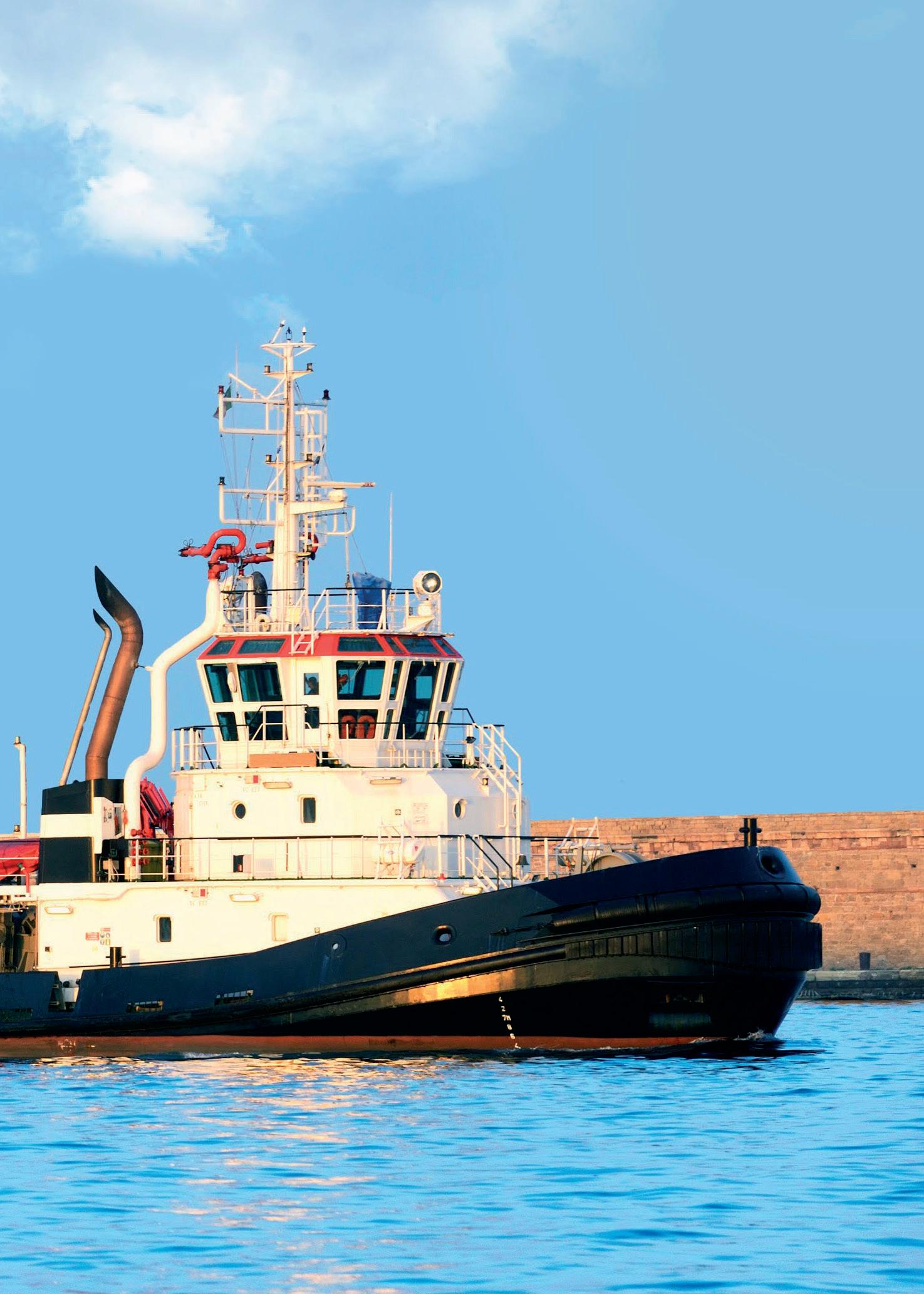
subscriptions available from £22 per month
Unlock full access to Maritime Journal today with our online subscription. Maritime Journal is the multi-media platform for the commercial marine industry. Stay
Informing over 92,000
Commercial marine professionals around the world









Reach industry professionals with The Motorship



Promote your business to the right audience in the right place at the right time. Engage with our audience of senior marine engineers, from ship owners and operators to ship builders. The Motorship multi-media platforms offer our commercial partners a wide range of opportunities for campaign delivery. We provide bespoke marketing packages with quantifiable ROI. Motorship’s valued content is relied upon by shipping professionals and is delivered through multiple channels.
EDITORIAL & CONTENT
Editor: Debbie Mason dmason@maritimejournal.com
Correspondents
Please contact our Correspondents at editor@maritimejournal.com
Tugs & Towage: Peter Barker
Graphic Editors
David Blake, Paul Dunnington production@mercatormedia.com
SALES & MARKETING
t +44 1329 825335 f +44 1329 550192
Sales Director
Louise Clarke lclarke@mercatormedia.com
Sales Manager
Lizzie Monk lmonk@mercatormedia.com
Commercial Marine Team Leader
Megan Wilson mwilson@mercatormedia.com
Sales Executives
Contact the sales team on commercialmarine@mercatormedia.com Marketing marketing@mercatormedia.com
Chief Executive Andrew Webster awebster@mercatormedia.com
Published by: Mercator Media Limited Spinnaker House, Waterside Gardens, Fareham, Hampshire, PO16 8SD, England t +44 1329 825335 f +44 1329 550192 info@mercatormedia.com mercatormedia.com
Subscriptions subscriptions@mercatormedia.com Register and subscribe at www.maritimejournal.com
For Memberships and Corporate Subscriptions: subscriptions@mercatormedia.com 1 year’s full membership starts from £255


Industry news, Vessel launches and Building, Marine Civils, Power & Propulsion, Tugs, Towing & Salvage, Offshore Renewables, Future Fuels, Vessel Repair & Maintenance, Dredging & Flood defence, Ocean Sciences, Maritime Contracts Journal (MCJ), Security, Vessels and Equipment, Port, Harbour & Marine construction, Diving & Underwater services, Autonomous vessels & Technology, Pollution control, Monitoring & Control, Safety & Training, Insurance, Legal & Finance, Navaids, Hydrographic Survey, Shortsea & Ferry, Navigation & Communication ©Mercator Media
ISSN 0957-7009 (print) ISSN 2633-4011 (online)
Registered in England. Company No. 2427909
Registered
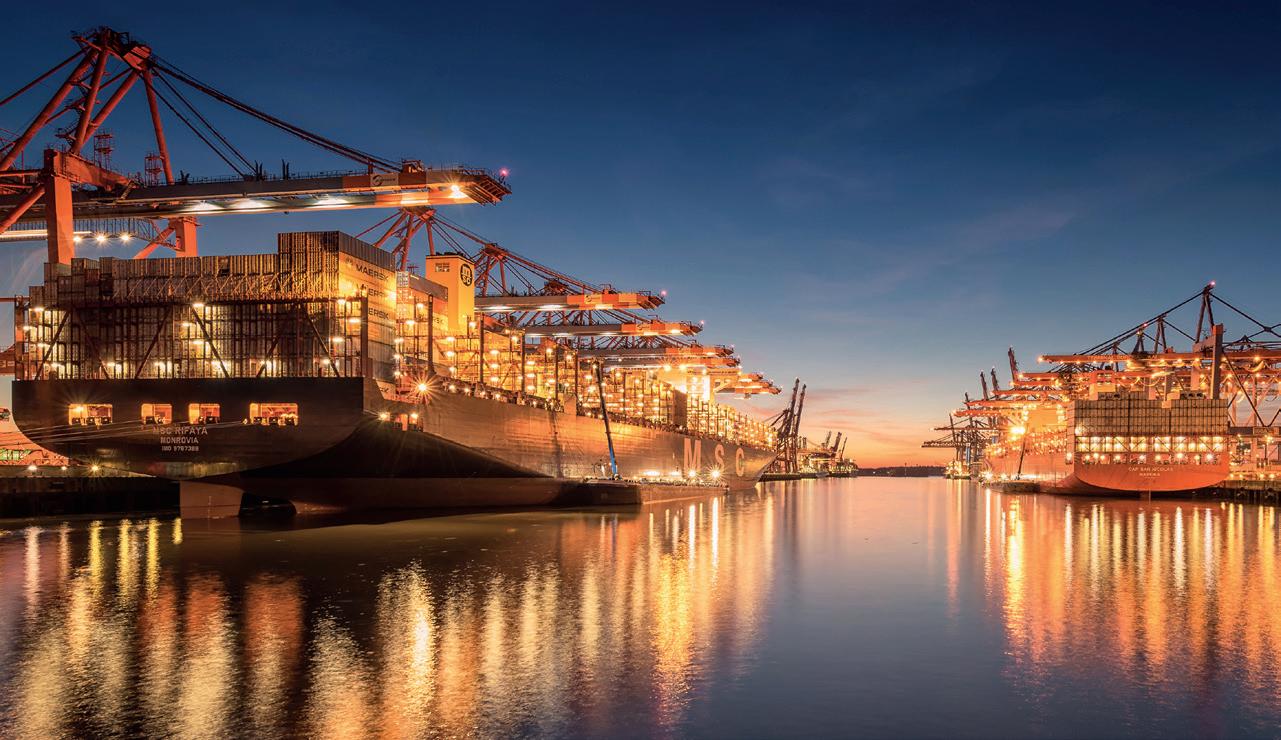
Propulsion & Future Fuels is the longest-running technical conference in the shipping & marine engineering sector providing senior executives with a meeting place to learn, discuss, and share knowledge of the latest developments in efficient propulsion technology and low flashpoint, low carbon fuels.
KEYNOTE PANEL: C-Suite panel, regulatory update

Moderator: Lars Robert Pedersen, Deputy Secretary General, BIMCO Wolfram Guntermann, Director Regulatory Affairs, Hapag-Lloyd AG

The ammonia debate: Sustainable shipping or safety concern?
Hydrogen and fuel cells: Unlocking decarbonisation potential. Exploring technical feasibility.
Ship designs for new fuels: How do we most efficiently propel our ships?


LNG: Bio-LNG and ENG: Next generation LNG: Bio-LNG and ENG. Given stringent regulations and targets, what new options are available?
Methanol: Navigating methanol: Findings and fixes.
Biofuels: Credible path or short-term fix?

THE MOTORSHIP AWARDS
Moderator: David Stevenson, Mercator, The Motorship Editor
Harnessing the power of wind: Scaling up to meet demand.
Onboard carbon capture: Feasibility of storing emissions onboard?
Retrofit: Forward thinking solutions to enable vesels to transition into new fuels.