To discuss stories contribution please contact the team at admin@mensshedswa.org.au
Credit to Gordon MacGilp for producing the magazine
Image credits
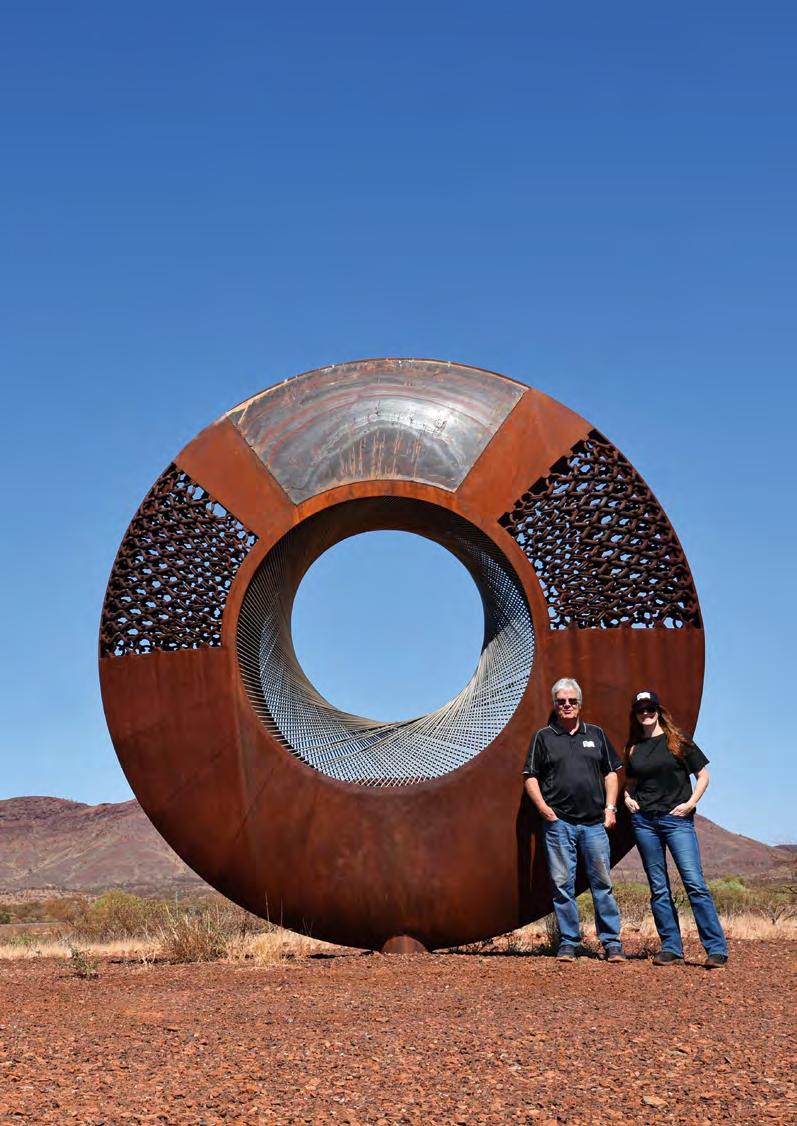
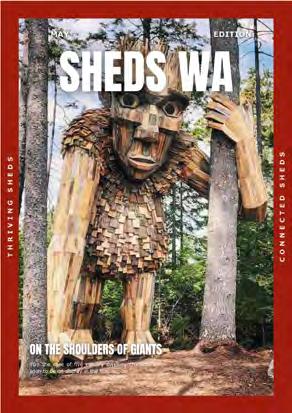
Cover: Rhiannon Arnold
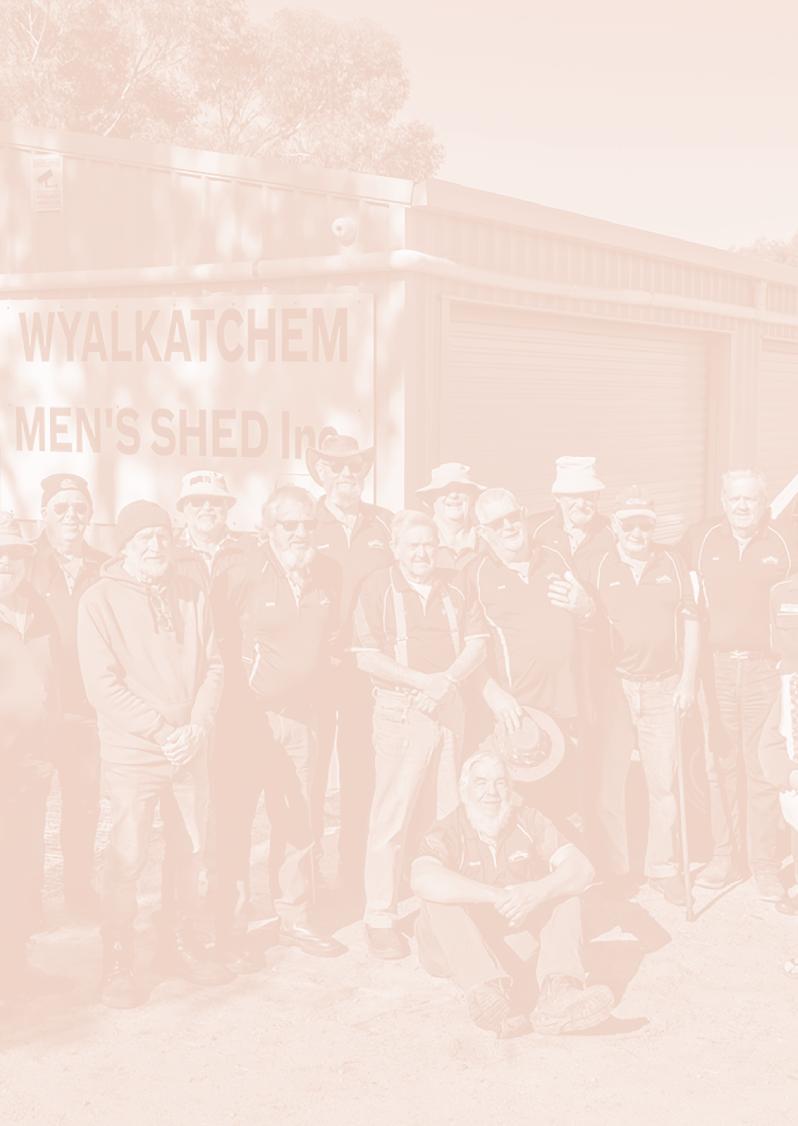
Page 6: Wyalkatchem Men’s Shed
Page 10-11: Provided by Falcon Community Men’s Shed
Page 12-15: Men’s Sheds of WA
Page 16-17: Rhiannon Arnold
Page 18-20: Provided by Katanning Men’s Shed
Page 22-23: Rhiannon Arnold
Page 24-25: Provided by C.Y O’Connor Men’s Shed
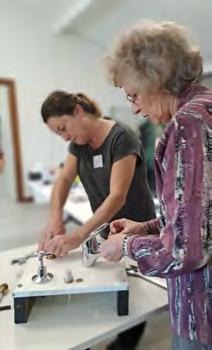
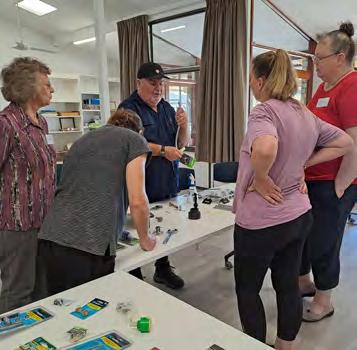
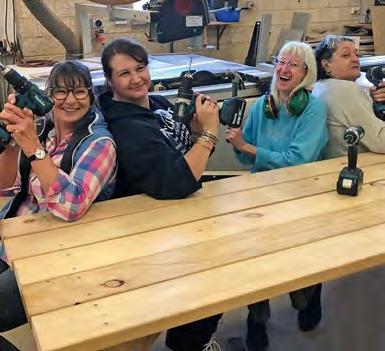
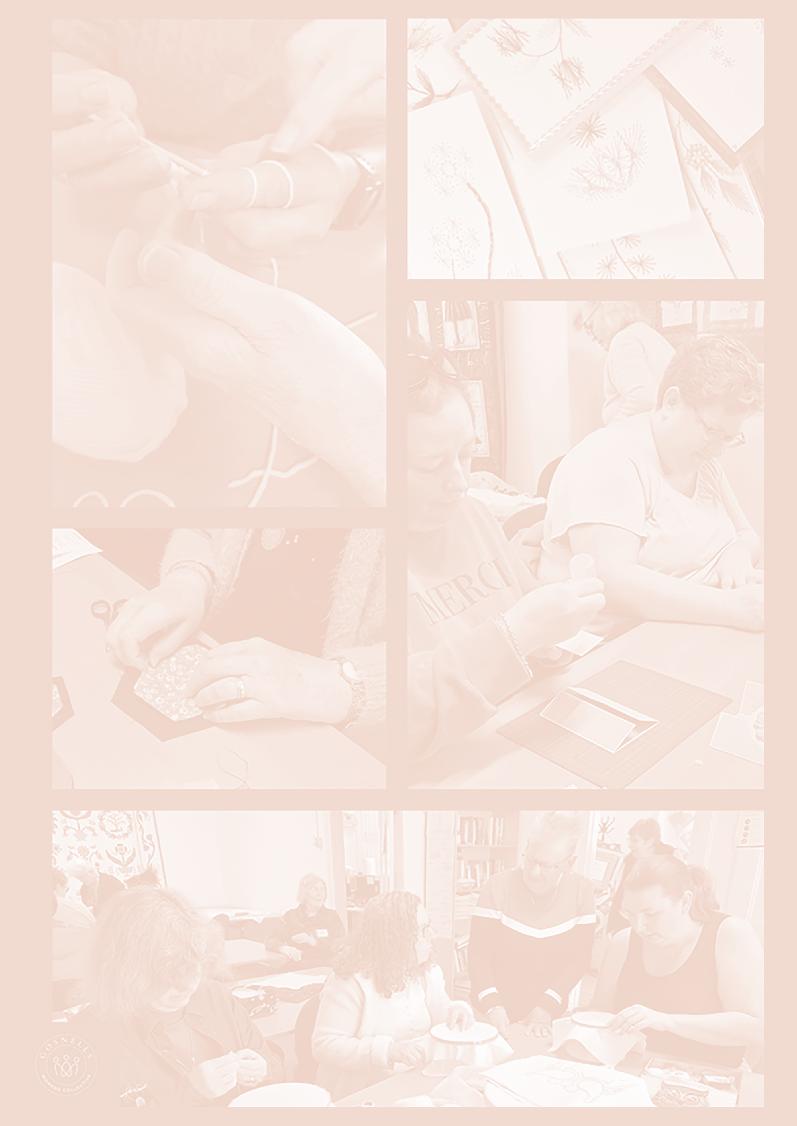
Page 26-27: Provided by Gosnells Women’s Collective
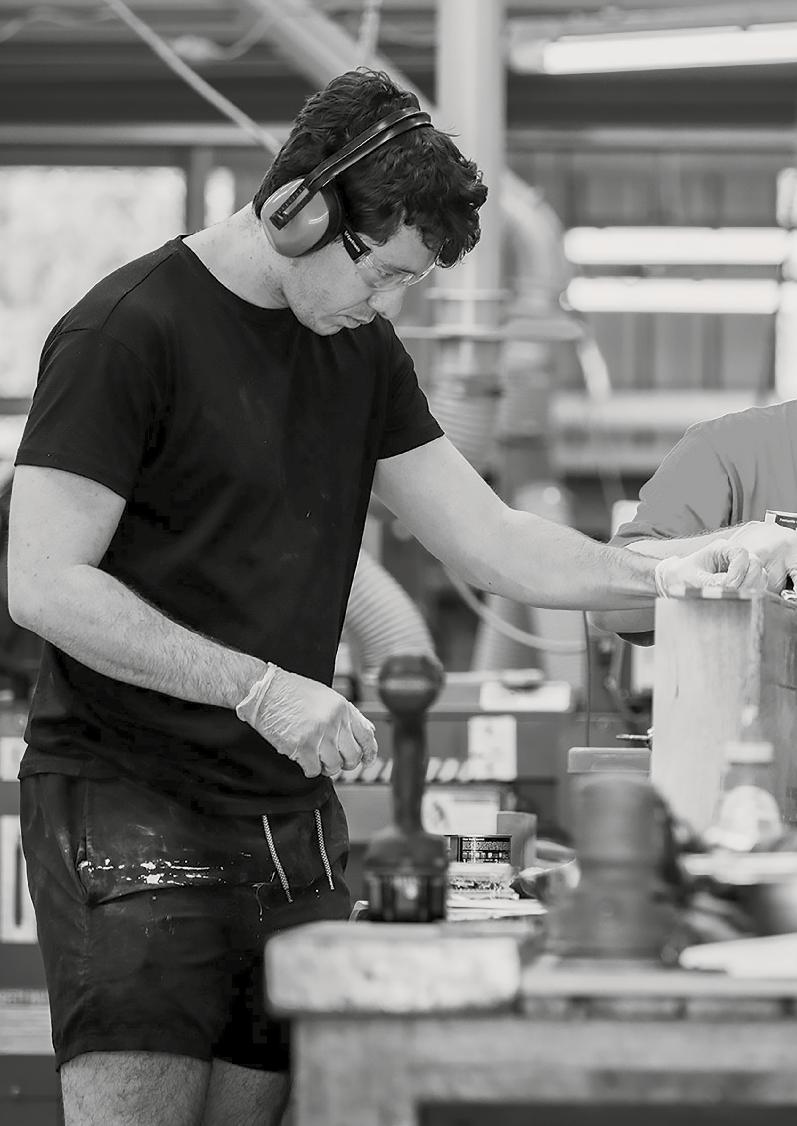
Page 28: Callum Smith
Page 29: Rhiannon Arnold
Page 30: Fiona Peters
If you would like to comment on any aspect of this newsletter, please contact us on: (08) 6381 5324 or e-mail: admin@mensshedswa.org.au www.mensshedswa.org.au facebook.com/mensshedswa
All rights reserved. No part of this publication may be reproduced, stored in a retrieval system, or transmitted, in any form or by any means, electronic, mechanical, photocopying, recording or otherwise without the prior written permission of the Publisher and copyright owners.
The contents of this publication are believed correct at the time of printing.
Nevertheless the Publisher can accept no responsibility for errors or omissions, changes in the detail given or for any expense or loss thereby caused.
Men’s Sheds of WA does not warrant that any website mentioned in this title will be provided uninterrupted, that any website will be error free, that defects will be corrected, or that the website or the server that makes it available are free of viruses or bugs. For full terms and conditions please refer to the site terms provided on the website
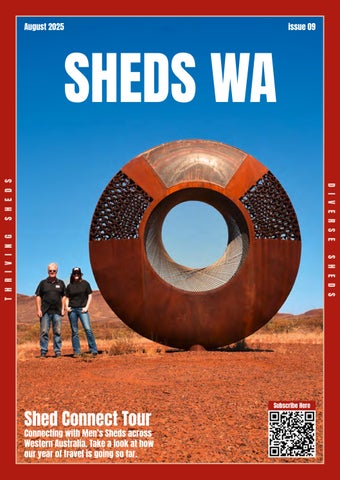
SHEDS WA
Hello from the Sheds WA team!
It is my pleasure to welcome you to the ninth edition of Sheds WA Magazine. This year marks an exciting milestone for our organisation as we embark on our biggest travel year yet through the Shed Connect Tour. The goal of this initiative is simple but powerful. We want to connect more Sheds and Shedders across Western Australia than ever before.
To date, our team has already travelled more than 9000 kilometres, including significant journeys into the Kimberley and Pilbara regions. These trips have been invaluable, giving us the chance to meet with Sheds in regional and remote communities where we have not previously been able to visit. The stories and experiences shared along the way highlight the extraordinary strength, resilience and generosity that are at the heart of every Shed.
The Shed Connect Tour also represents a new way forward for how we engage. Instead of holding our traditional Biennial State Conference, this year we have doubled the number of Zone Meetings
across the state. This format allows us to reach more people and provide even greater opportunities for collaboration, learning and support. We know that for many members, attending a single conference can be a challenge due to distance, cost or time away from home. By bringing the meetings to you, we hope to ensure no Shed feels left out of the conversation.
Of course, the most inspiring part of this role is seeing the creativity and dedication of Sheds across Western Australia. Every day Sheds are developing new projects, finding innovative solutions and giving back to their local communities. The diversity of ideas and the willingness to lend a hand never cease to impress me.
Thank you for your continued support and commitment. I look forward to seeing what we will achieve together in the months ahead.
James Wild CEO, Men’s Sheds of WA
Are you looking for FREE personalised support on your journey to better health?
It’s flexible to your lifestyle and can help with goals related to:
•healthy eating
•getting active
•reducing stress
The Better Health Coaching Service is a free phone-based service that pairs you with a qualified health professional who works with you on up to 10 calls over 6 months.
•building social connections
•managing health conditions
•and more!
Learn more and sign up today 1300 822 953 Monday to Friday 9am-5pm (AWST). betterhealthcoaching.com.au/wa/services
Containers for Change Helps WA Men’s Sheds Boost Communities
By Men’s Sheds of WA team
Men’s Sheds across Western Australia are proving that small changes can make a big difference – especially when it comes to recycling. Through the state’s Containers for Change program, many Sheds are not only supporting their own activities but also giving back to their communities in meaningful ways.
The Containers for Change scheme allows community groups, charities, and businesses to collect eligible bottles and cans, returning them for a 10-cent refund per container. For some Men’s Sheds, this initiative has become a cornerstone of their operations.
Some Sheds, like the Norseman Men’s Shed, the Wyalkatchem Men’s Shed, and the Hopetoun Men’s Shed, have gone a step further – becoming official Containers for Change depots. This means locals can drop off their recyclables directly at the Shed, knowing the funds will help sustain Shed projects and community initiatives.
Even newer Sheds have embraced the program from the start. The Kendenup Men’s Shed, for example, began operations with a Containers for Change collection program as one of its core activities. It’s a move that has not only provided financial stability but also encouraged community involvement and environmental awareness.
For Hopetoun Men’s Shed President, Darryl Quinn, the impact has been clear. Each Saturday, a small team of volunteers sort through cans and bottles, sometimes handling extraordinary numbers.
“It varies between 10,000 to our best day [which] was 22,000,” he said. “I don’t know how many cubic meters we have saved going into the tip.”
The proceeds from Hopetoun’s efforts have been transformative. The Shed has used the funds to create a medical equipment library for the community, providing access to essential items for those in need. In addition, they’ve been able to donate more than $100,000 to local community groups.
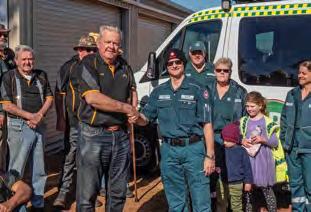
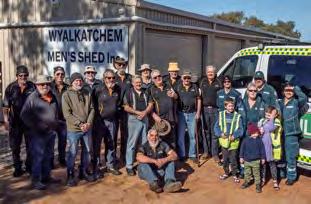
In Wyalkatchem, the Containers for Change program has funded one of the most vital contributions a community could hope for: two new ambulances, purchased in 2024. This investment in emergency services is a clear demonstration of how recycling revenue can directly benefit local residents in life-saving ways.
The success of these initiatives highlights the adaptability and resourcefulness of Men’s Sheds. While each Shed’s activities may differ – from woodworking to community repair projects – the underlying goal is the same: creating a space where men can connect, share skills, and contribute to their community. By incorporating Containers for Change into their operations, Sheds have found a sustainable funding model that aligns with their values of community service and environmental stewardship.
Importantly, becoming a depot isn’t the only way to participate. Many Sheds operate smaller-scale collection points, engaging members and locals to drop off their containers. This flexibility means that Sheds of all sizes and stages of development can benefit from the program.
From environmental benefits to lifechanging community donations, Containers for Change is proving to be more than just a recycling scheme. For WA’s Men’s Sheds, it’s become a powerful tool for funding, connection, and making a tangible difference – one can at a time.
Fundraising Tips
Turn Containers into Cash for Your Shed!
Since 2020, Containers for Change has paid out over $407 million in refunds across WA, keeping more than 4 billion containers out of general waste. By getting involved, your Shed can raise funds while helping to reduce waste and connect with your local community.
With more ways than ever to return, every 10¢ container can make a difference.
FIND A FUNDRAISING OPTION THAT FITS YOUR SHED
Here are some of the most popular ways you can get involved:
1. Become a Donation Point
Got some space? Set up a donation point at your Shed where people can drop off their 10¢ containers. All you have to do is return them and collect the refunds.
TIPS FROM OTHER SHEDS:
Bulk storage solutions
IBCs and woolpacks are great for storing and transporting large amounts.
Sort for success
Provide separate bins for different container types.
On-demand pickups
See if Collect is available in your area. If not, reach out to your local Refund Point Operator to explore options.
Make yourself known
Use clear signage at your shed and on your secure bins in public spaces.
2. Collect Containers at Community Events
Events like footy games and concerts generate heaps of 10¢ containers. Partner with local councils and businesses to collect them for your Shed.
TIPS FROM OTHER SHEDS:
Build relationships
Chat with your local Refund Point—they may offer bins or collection support.
Ask for help
Email getinvolved@warrrl.com.au—we may be able to provide 240L bins for events.
Reduce contamination
TURN OVER FOR MORE HANDY TIPS! for men’s sheds
Use locking bin lids in public areas.
Fundraising Tips
3. Receive Donated 10¢ Refunds
Share your Shed’s member number so supporters can donate their refunds directly to you at their local Refund Point. The refund goes straight to your Shed's bank account.
TIPS FROM OTHER SHEDS:
Get the word out
Share your member number on social media, email signatures, and community boards.
Use ready-made resources
Download posters and digital tools from Containers for Change website— found below.
4. Build Community Partnerships
Connect with your local network. Local businesses, events and caravan parks and holiday stays often have large numbers of containers, offer to collect their 10¢ containers or receive their donated refunds.
TIPS FROM OTHER SHEDS:
Think big and small
Where are the containers in your community? From cafes to sports clubs, every bit counts.
Ask around
Many businesses are happy to donate their 10¢ container refund in exchange for collection from their business.
Get started
For customisable posters, flyers, and resources, visit our Fundraising Resources page.
find out more
FIND OUT MORE
Scan the QR code or visit containersforchange.com.au/wa/fundraise
Scan the QR code or visit containersforchange.com.au/wa/fundraise
Still have questions? Contact us at getinvolved@warrrl.com.au
Still have questions? Contact us at getinvolved@warrrl.com.au
It took surviving to realise I wasn’t alone.
If you’ve attempted suicide, you know how hard it is to talk about. You might feel ashamed. Isolated. Or just numb.
Eclipse is a free, 8-week online support group for suicide survivors. It’s a place to speak openly, without judgement, and connect with others who understand.
Falcon Community Men’s Shed Launches Repair Café to Build Skills, Community and Sustainability
By Men’s Sheds of WA team
The Falcon Community Men’s Shed has opened its doors to a new initiative designed to reduce waste, share knowledge, and connect locals - introducing the Southern Mandurah Repair Café.
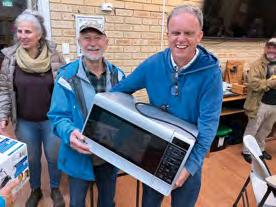
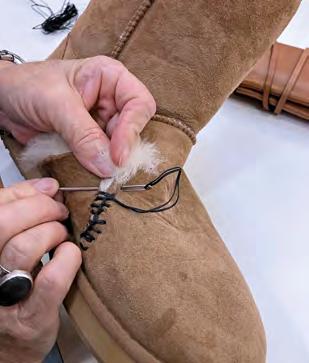
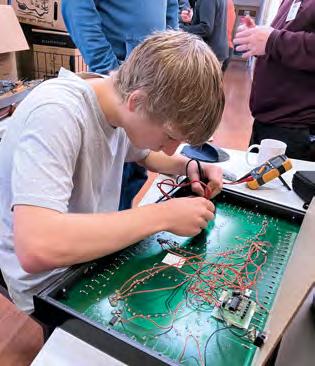
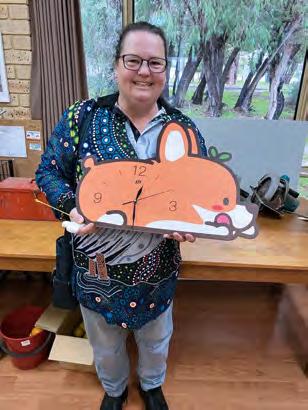
Held on the first and third Saturday of each month from 10am to 1pm, the Repair Café invites the public to bring in broken items, like small electricals, bikes, toys, and clothing, for repair by a dedicated team of volunteers. The events are not only an opportunity to fix everyday items and keep them out of landfill, but also a chance to learn repair skills and connect with others in the community.
Shed President and Repair Café coordinator Ben Curnow was instrumental in bringing the idea to Falcon. “The Shed Committee was looking for a way to attract new members, increase our diversity, community involvement and better utilise the shed,” he explained. “I suggested the Repair Cafe given my previous experience with the initiative. After consideration the committee thought it would be a good fit.”
The concept of Repair Cafés began in Amsterdam in 2009, when Dutch journalist Martine Postma organised the first event in response to growing concerns about waste and sustainability. Since then, the idea has gained global momentum, with more than 110 Repair Café groups now operating across Australia.
The Falcon Community Men’s Shed saw a gap in services available to the southern Mandurah area. “Six years ago in Mandurah there was a Repair cafe started in the Northern Suburb of Lakelands,” said Ben.
“That location is a bit far away for those in the southern reaches of the Mandurah region. So with the help of the Lakelands team we started a Southern Mandurah Repair Cafe at the Falcon Menshed.”
The café is coordinated and supervised by two Men’s Shed members and powered by a dedicated group of 12 consistent volunteer fixers. Each event attracts around 20 community members, often bringing in one or two items each for assessment and repair. Volunteers—regardless of experience—are always welcome, and can simply register on the day.
“We have Men, Women and supervised Youth ages 17–90’s involved,” said Ben, reflecting the inclusive nature of the initiative.
While still in its early days, the Repair Café has already made a noticeable impact. “With only four meets under our belt, social media marketing has been a priority to drum up support for the Repair Cafe,” Ben said. “The Mandurah local paper did
an article also. We have picked up six new Shed members from these events.”
The Falcon Community Men’s Shed currently has 54 members. The Shed plays a crucial role in providing both a creative outlet and a safe, social environment for all its members. “We offer general woodworking in our Shed Workshop and smaller woodworks such as box making and scroll sawing are done in our craft room,” said Ben. “We also facilitate social interaction in our open plan crib room.”
Looking to the future, the Shed has plans to expand its offerings even further. A funding application with Lotterywest is currently underway to support a broader range of activities including metalwork, leadlighting, and pottery. In the meantime, the team fundraises through Bunnings sausage sizzles and local community projects to help maintain and improve their services.
To showcase everything the Shed has to offer—including the new Repair Café— the group is planning a Shed Open Day on November 8, 2025. “It’s open to all— perhaps drop through for a chat and a cuppa,” said Ben.
Located at 60 Linville Street, Falcon, the Falcon Community Men’s Shed is open Monday to Thursday from 8:30am to 1:00pm. The Repair Café runs on the first and third Saturday of each month, 10am to 1pm.
For more information or to get involved, contact the Shed via phone on 0491 020 632 or email menshedfalcon@gmail.com.
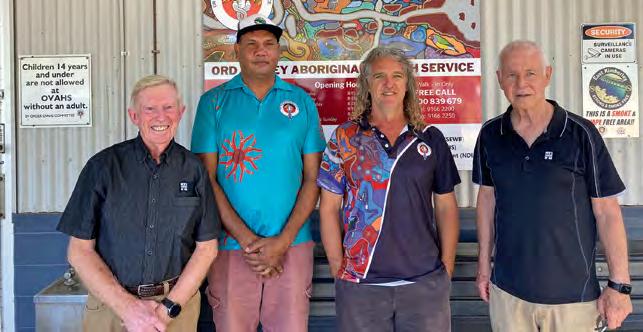
On the Road in the Kimberley Region: Shed Connect Tour 2025
By Mike Murphy
It was a road trip like no other. Well, maybe not, but it was a bit different from our usual travel for zone meetings.
Instead of the usual road travel in the highly decorated MSWA ute, 4 of us (James the CEO, Richard the chaplain, Trevor the
Chairman and myself) flew to Broome on Monday 26th May. We arrived in Broome and the overnight accommodation in Broome was at the Broome campus of Notre Dame University who graciously provided the accommodation free of charge. Broome had over 100mm of rain that night, the highest in May for 50 years.
Welcome to the Kimberley.
The purpose of the visit was to connect with Sheds across the Kimberley and help to build a network in communities and towns across the region that would contribute to men’s wellbeing and health, especially amongst Aboriginal men. The plan was to drive from Broome, through Derby, Fitzroy Crossing and Halls Creek to Kununurra, then fly back to Perth visiting Sheds, shedders and local shire officials along the way.
During the time in Broome, we met with:
• The Men’s Outreach Service Aboriginal Corporation (MOSAC)
• The Broome Shire
• Broome Men’s Shed
• Kimberley Aboriginal Medical Services (KAMS)
• Aarmja Organisation
The Aboriginal organisations we met were all engaged in various programs, all with the aim of increasing the well-being of their participants, especially in the areas of family violence, youth suicide prevention, prisoner support service, peer mentoring for disengaged youth, men’s and women’s counselling, and well-being focussed case management to support men with complex needs.
One idea from the Aarmja Organisation was to get incarcerated men to make headstones for deceased relatives, as many times the men were unable to attend the funeral for that relative. This scheme proposed that this was a way to connect even though they were not physically there.
‘Stumpy’ and the boys at the Broome Shed have a really good reputation in Broome for helping in the community, as shown by the Shed Tram they have that they use for, among other things, giving driver revive coffee and tea to the travellers coming into town. They were also putting the final touches to a 100-year-old Chinese rickshaw they had restored. However, they were struggling to attract new members as most (white) seniors tended to move away from the area. This sentiment was echoed throughout the trip and is caused by a lack of resources (hospitals, aged care facilities etc.) to support older members of the communities.
Next stop Derby.
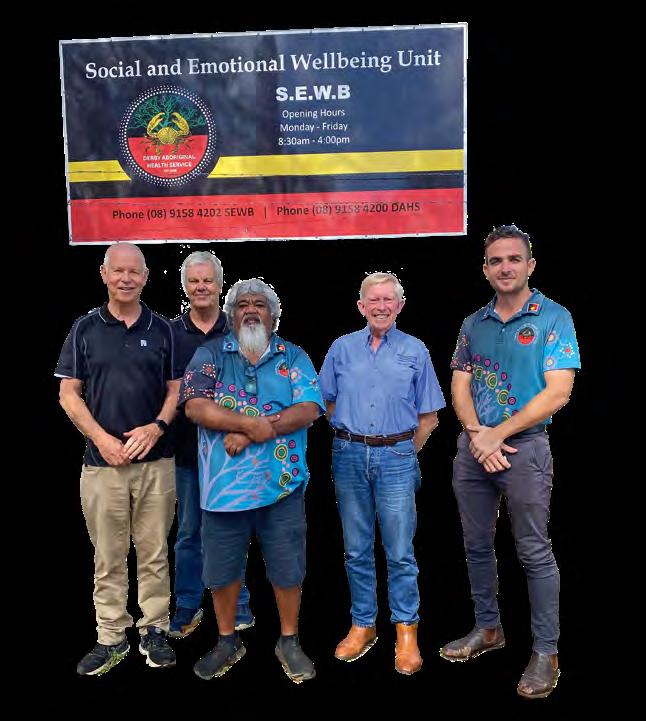
We had meetings with Derby Aboriginal Health Services and the Emama Nguda Aboriginal Corporation, both of whom are working to reduce the number of domestic violence cases in the town and would like to set up a shed of sorts in prison.
There was a plan to visit the remote community of Looma, but due to the unseasonal rain, the road was closed and we could not go.
Fitzroy Crossing (29th May).
Much of Fitzroy Crossing was destroyed from the floods in 2023 (highest recorded level of the river), including the men’s shed. Rene, the shed manager was keen to get the shed up and running again, but as the land the Shed is on is owned by the Mindaroo Foundation and is on a 2-year lease, it complicates the reconstruction.
We also met with representatives of the Nindilingarri Cultural Health Services, who
take young men out on country for health checks and wellbeing.
Halls Creek (30th May)
Met with the Shire representative who told us that they were in the process of renovating an old weather station into a men’s shed, but it needs a lot of renovation to make it suitable.
Kununurra (1st - 3rd June)
Met with:
• People’s Church
They have land and some buildings that would need significant renovations to make into a shed but are keen to proceed
• Kununurra Warringarri Aboriginal Corporation
They provide a variety of services to indigenous men (mainly younger) including counselling on domestic violence. The property has a reasonable shed with a capacity for a small workshop.
• Wyndham - East Kimberley Shire. Very keen for any men’s shed but had no contact from anyone
• Wunan Foundation
This is a very substantial and financial organisation.
It was a very enlightening trip for us all; we all came away from this with increased knowledge of the many organisations that are involved in the Kimberley and involved in Aboriginal men’s health.
From the conversations we had with the various people/organisations, it was decided to investigate the sending of containers to the local communities with tools for them to use. This would create a workshop for them to operate from.
We also realised that the traditional version of a shed would not work, so alternatives are being investigated.
On the Road in the Pilbara: Shed Connect Tour 2025
By Rhiannon Arnold
This year, Men’s Sheds of WA swapped the traditional biennial state conference for something bigger, bolder, and more farreaching: the Shed Connect Tour. The goal is simple—take the connection directly to Sheds, particularly those in regional and remote corners of the state that often miss out due to distance.
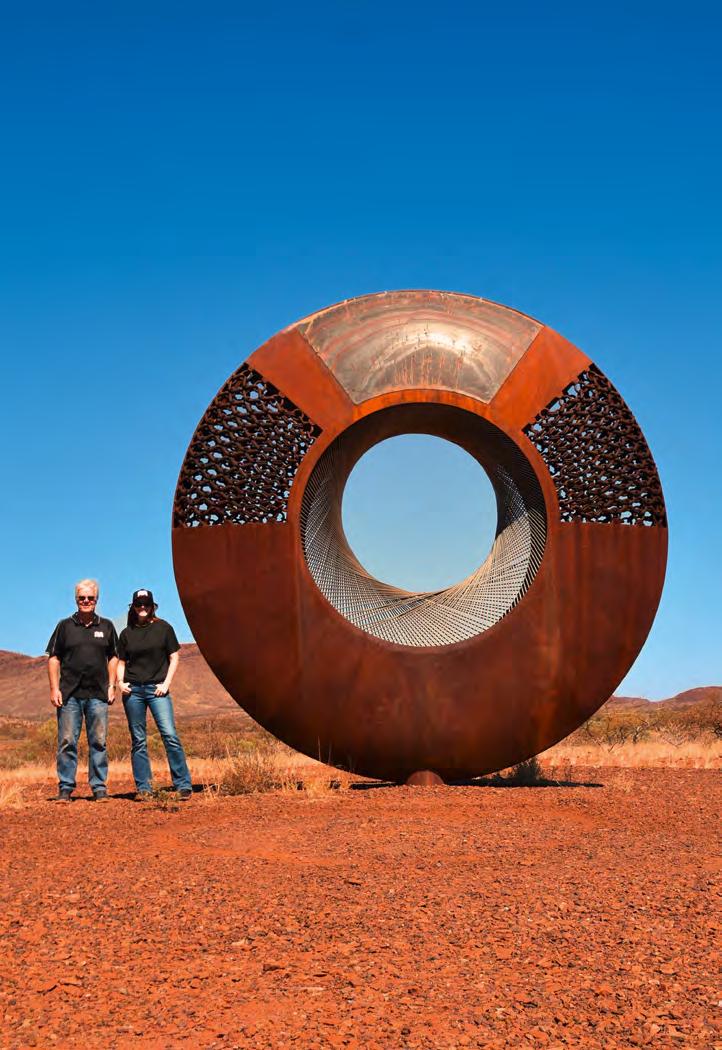
In August, the team packed their bags, boarded a flight from Perth, and touched down in Karratha to begin a six-day adventure across the Pilbara. What followed was over 1,000 kilometres of driving, countless conversations, and the opportunity to meet with seven incredible Sheds.
The journey kicked off in Tom Price, where the local Shedders fired up the barbecue and offered a warm welcome. An evening of food, friendship, and a Shed tour set the tone for the week ahead.
The next morning in Paraburdoo, the Shed was buzzing with ideas. From plans for a car
hoist and lean-to, to a car washing bay and more, the members have a vision for the future that will take their Shed to the next level.
In Onslow, excitement was in the air as Shedders proudly showed off their nearly completed new home. For now, they’re operating out of a private backyard shed, but within two months they’ll have a purposebuilt space where more members can roll up their sleeves and join in.
A stop in Pannawonica offered something a little different. Over coffee, the Shedders shared their projects, which lean heavily toward metalwork and mechanics—a noticeable contrast to the woodwork focus of many Perth Sheds. It’s a reminder of how each Shed reflects the unique character of its community.
Back in Karratha, the team met with representatives from the developing Pilbara Men’s Shed, who are still working to secure
a permanent premises. Being on the ground allowed Men’s Sheds of WA to provide practical support and advice, ensuring that momentum continues as the group works toward establishing their own space.
The visit to Roebourne highlighted the diversity of men’s groups across the region. The team met with the Mawankaarna Group, an Aboriginal men’s group who have recently built a new space where men can come together in a safe and supportive environment. Their program includes taking groups out on Country with health professionals to connect with culture while also learning about health and wellbeing.
The final stop was Port Hedland, where the Shed and Council are working together on renovations that will transform their space into a thriving hub for members.
By the time the team returned home, they had seen firsthand the diversity, resilience, and vision of Pilbara Sheds. In just six days, seven Sheds opened their doors and shared their stories.
The Shed Connect Tour is about more than kilometres travelled. It’s about building stronger connections, celebrating achievements, and ensuring that every Shed—no matter how far from Perth—feels part of the statewide Men’s Shed community.
Coffee Catch Up’s with the Katanning Men’s Shed
By Ross Thomas President and Wellbeing and Health Officer
Katanning Men’s Shed is a haven of mateship, with a great bunch of fellas working Shoulder to Shoulder on a diet of coffee, tea and bikkies - oh and also laughter.
In our more serious time in the shed, we make all sorts of items from bar tables with stools, mud kitchens, blanket boxes, dog kennels, Christmas trees, picnic tables and more. And we occasionally do metal work too, depending on the article required. There is a lot of laughter punctuated by the sound of machines, cutting, drilling and sanding.
Shoulder to Shoulder is the key to Men’s Sheds: mental health is the aim. Our doctors and specialists are there to heal our physical bodies, psychiatrist for our mind, and the Men’s Shed helps support our emotional wellbeing.
At Katanning Men’s shed talking, cracking jokes over a cuppa and biscuits help to keep us sane. I know when Geoff and I lost our wives the members of our Shed helped immensely in getting us through our grief. For myself, not having family nearby, I spent over a week at home feeling lost and not sure what to do. Eventually I went back to the shed and slotted back in seamlessly with my mates, no questions were asked other than ‘are you OK’; tough love from a great bunch of guys, for which I’m eternally grateful.
Five years ago, four of us began meeting away from the shed on Tuesday and Thursday mornings for coffee at the Daily Grind coffee shop. A big thank you to Alep and his staff who keep us supplied with coffee in our own corner out the front and also for his support of the Men’s Shed. Now we only meet on Thursdays from 7.30 till around 10.00 and sometimes even later with the sound of laughter ringing out
across the main drag of Katanning. Sitting outside by the entrance, means we interact with the pedestrian traffic, locals and terrorists, (whoops should read tourists) alike.
Our numbers have now grown to ten on any given day and even includes three who are not Men’s Shed members but good friends
I know we all get something out of our gathering and it’s not just the coffee, deconstructed hash browns (hot chips) and toasted sandwiches.
Ross ( ex Railway): ‘For me it’s a few hours of laughter and enjoying some company with mates that I know have my back in any situation and I can rely on if I need assistance. This is why we refer to it as our therapy session.’
Geoff (ex Furniture Maker): ‘I have always used my hands and grey matter, both throughout my working life and in my shed at home. Going to the shed means I’m busy doing things for the community, while I can also impart my knowledge and my sense of humour to the members of the shed. Thursday morning coffee is a relaxing and enjoyable laugh a minute break.’
Mark (ex Shearer now FIFO): ‘My wife suggested I join the Men’s Shed while I’m on the home leg of my swing. Being a FIFO worker for 20 years means I’ve lost contact with a lot of mates. The shed has enabled me to re-connect with some of them and make new friendships. Thursday mornings are the cherry on the top, with coffee and lots of laughter.’
Peter (Metal master): ‘To listen to, and join in, to the storytelling, jokes and laughter is upliftin. Also knowing if my spirits are low
due to many different issues, the fellas are available to talk to and give me a lift.’
Ken (Farmhand): ‘When I turn up, if I’m feeling a bit low, you can guarantee my spirits are lifted before I have even gone inside to order coffee. So by the time I leave I’m ready to face whatever comes during the day.’
Darren ( Sparky): ‘Having moved recently to Katanning, I was introduced to this mob of reprobates by Pete, a Kiwi from the same town. Originally hesitant to break down the wall I had built around me and baffled by a lot of the aussie phrases and humour, I now find myself opening up to the mob and feel quite at ease in their company.’
John (Pastor, Men’s Shed Chaplain): ‘I find that my duties can at times be quite stressful and of late time consuming. I look forward to Thursday morning coffee with this lot as being very enjoyable, relaxing and calming. It’s a chance to switch off for a short period of time and to be able to go back to my duties refreshed.’
Ray (ex Mechanic & School bus contractor): ‘Since retiring I have had some down days, but the Men’s Shed has been a great help. Thursday mornings are brilliant as the fellas are there for me when I need them, and to know that they’ve got my back is very comforting.’
Dennis (ex Railway): ‘Thursday to me is fantastic companionship with a great bunch of guys. Having spent a lot of my working life with one other person and the last 20 years working alone, to be accepted into this group is brilliant. To be able to relax sit back, listen to the B.S. and have a good belly laugh is certainly helpful.’
Raymond (ex original Coffee Club member): Thursday mornings mean an inspired and uplifting morning, carefree couple of hours. Yarning and laughing with a bunch of good mates and when I leave I always felt good.’
The Shed got me back in touch with my town
By Mark from Katanning Men’s Shed
For 66-year-old Mark O’Neill, Fly in Fly out (FIFO) work has been a way of life. These days he’s a bus driver with MSS (Material Systems Solutions), transporting workers across the Solomon mine site for Fortescue. But in a former life, he was a shearer and always someone who enjoyed being active and hands-on.
While FIFO work has its perks, it can be isolating too.
“One of the biggest problems in FIFO life is losing touch with your home community,” Mark says: “My wife told me to head down to the Shed. I haven’t looked back.”
Mark joined the Katanning Men’s Shed 18 months ago and says it’s helped him reconnect with people in town, after years of flying in and out with little time to socialise.
“I’m not really a woodworker,” he says, “but I enjoy learning and helping out. In about five years when I retire, I’ll spend more time here - until then, it’s a good way to stay involved.”
The Katanning Shed has its own unique history. It’s housed in an old locomotive shed originally from Collie, with 23 active members and plenty of character. There’s no toilet on site yet (members walk about 40 metres to facilities), but that hasn’t stopped Mark or others from showing up.
For FIFO workers like Mark, the Shed is more than a hobby, it’s a home base.
“My wife was worried about me wearing the couch out when I was home. Now I’ve got a good network again. The Shed gave me that.”
If you’re a FIFO worker looking to reconnect with your local community, build friendships, and find purpose outside of work, your local Shed could be just the place.
Stretching Minds and Bodies: Gosnells Community Men’s Shed Leads the Way in Wellbeing
By Fiona Peters
At Gosnells Community Men’s Shed, looking after your mates goes beyond a friendly chat or helping with a tricky project. It means looking after your health too, both physical and mental.
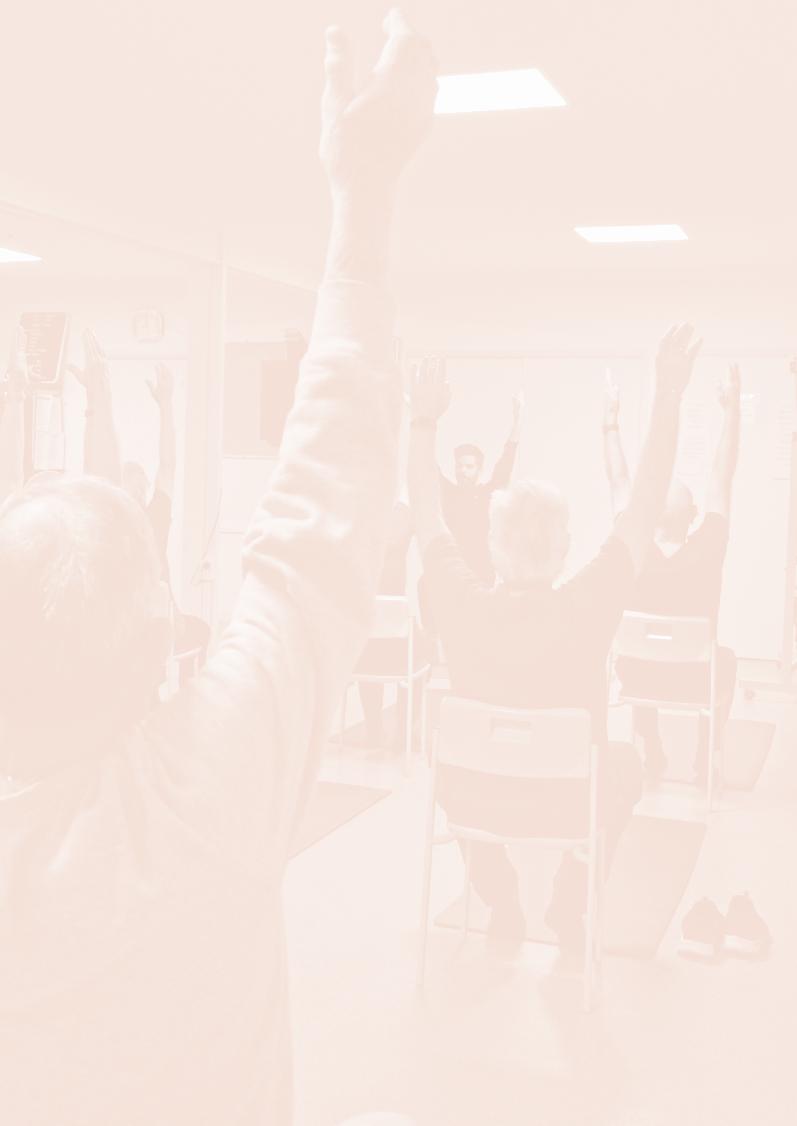
Thanks to a new wellbeing initiative led by Graham Hughes the Shed’s dedicated Wellbeing and Health Officer, with support from member Alan Gordon, yoga mats are now being rolled out alongside the tool kits.
In June this year, the Shed launched a sixweek yoga trial funded through a grant from Men’s Sheds of WA. The sessions are already proving to be a hit with members and offer another great example of how the Shed is leading the way in proactive men’s health.
A great way to lower stress, increase flexibility and bring vitality to life
For some, the idea of doing yoga in a Men’s Shed might raise an eyebrow, but not at Gosnells. Graham saw an opportunity to try something new that could help ease joint pain, improve flexibility, and boost mental wellbeing.
“I wanted to introduce something a bit different,” Graham said. “Yoga might not be what people expect at a Men’s Shed, but we’ve had great feedback. It’s about getting blokes moving, breathing deeply, and starting the day with a clearer head.”
Held on Tuesday mornings before the Shed officially opens, the yoga sessions are open to everyone, whether you’re new to it or have done a few stretches before. Qualified instructor Cory Rist leads the sessions, keeping them gentle and accessible. For many of the men, it’s a welcome addition to their week.
Cory explains: “Yoga is a great way to lower stress, connect with your body and increase flexibility. As we get older these aspects of life can become overlooked, a regular Yoga practice is so much more than just a stretch,
it can help bring vitality and peace to your life, something we need at any age. I look forward to welcoming you to the mat for a Men’s Yoga class soon!”
Shed member Gavin Demeter added: “I was pretty sceptical at first, but after the first session, I felt muscles I didn’t know I had. It’s helped my balance heaps and it’s a good laugh too.”
Another member Arpad Prayzky added: “I’ve had a bad back for years. I was surprised how much just a bit of stretching and breathing helped. Plus, it’s good doing something different with the blokes - you feel more connected.”
A Shed with Energy and Purpose
The yoga trial is just one example of the Shed’s growing commitment to supporting men’s health and wellbeing. Regular guest presentations offer members valuable insights and practical advice on a range of health topics. Plus, each morning, before the tools come out, a group of members kick off the day with a light fitness routine. It’s a simple but effective way to get the body moving, share a few laughs, and set a positive tone for the day ahead.
Shed member Alan Gordon who started the ‘Get your Muscles Moving’ routine explains: “We do about 20 minutes of light stretching - nothing too fancy. It’s a great way to loosen up and have a few laughs before we get stuck into projects.”
From cycling and photography to music, art, darts and tech, there’s no shortage of ways for members to get involved. These groups offer a chance to try something new, connect with others, and enjoy a bit of fun along the way.
“The cycling group has been fantastic,” added Alan. “It’s social, it gets us out in nature, and it keeps the heart ticking over. Plus, there’s usually coffee at the end!”
A Space to Reflect and Connect
In addition to the physical activity options, Gosnells Community Men’s Shed has created a peaceful breakout space in their garden - a quiet area where members can pause, have a chat, or just enjoy some fresh air. At the heart of this space is their R U OK? Blue Tree, a powerful symbol of connection and mental health awareness.
“The Blue Tree has become a bit of a talking point,” said Graham. “It reminds us that it’s okay to ask how someone’s going and it’s okay to speak up if you’re not doing too well yourself.”
Putting Wellbeing First
Graham’s role as Wellbeing and Health Officer has been key in driving these initiatives forward. He’s been keeping an eye on members’ physical and mental health for over 5 years, encourages conversations, and helps connect people with support services when needed.
“It’s about creating a space where blokes feel they belong and can try something new without judgement,” he said. “Not everyone wants to talk about health, but when you do something together other than woodwork, like yoga or cycling, it opens the door to those important chats.”
He also acknowledges the role Men’s Sheds of WA played in supporting the Yoga program through funding. “We wouldn’t have been able to do it without their help,” Graham said. “It’s great to see that wellbeing is being taken seriously across the network.”
If you’d like to set up a wellbeing/social group in your SHED contact either Graham or Alan at Gosnells or Fiona Peters, Men’s Sheds of WA Wellbeing Support COORDINATOR fiona@mensshedswa.org. au for advice.
Thinking of introducing more wellbeing activities at your Shed?
Here are a few tips from Graham, Wellbeing and Health Officer at Gosnells Community Men’s Shed:
1. Start small and build gradually
“You don’t need to run a full program right away. Try one simple activity like stretching, walking, or a cuppa catch-up. See what works and grow from there.”
2. Ask your members what they’d like to try
“Get a feel for what interests people. You might be surprised. Our blokes took to yoga better than expected!”
3. Don’t forget your own wellbeing “As a coordinator or organiser, it’s easy to focus on helping others, but your own wellbeing matters too. Take time to recharge, connect, and enjoy the activities yourself.”
4. Keep it relaxed and inclusive “Wellbeing isn’t about being perfect. Make activities accessible and social, so everyone feels welcome to have a go.”
5. Create space for quiet connection. “Simple touches like a garden area or a seat by the Blue Tree can give blokes a chance to take a breather or open up when they need to.”
Kalgoorlie Biplane Replica Build
By Men’s Sheds of WA team
CY O’Connor Men’s Shed Members Help Build Replica of Historic Biplane
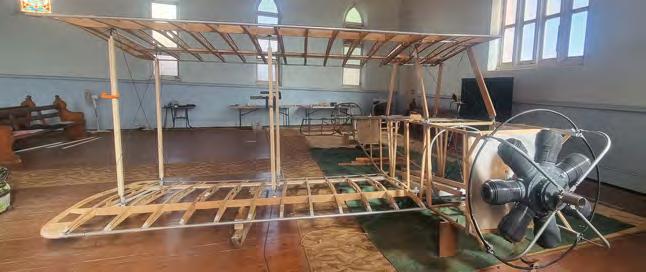
Members of the CY O’Connor Men’s Shed have played a vital role in an ambitious community project to build a replica of the historic 1915 “Kalgoorlie Biplane.”
The original aircraft was constructed by engineering students from the Western Australian School of Mines and went on to become the first commercial plane flown in the state. More than a century later, a group of local enthusiasts formed
a committee in early 2022 to recreate the plane and honour its legacy.
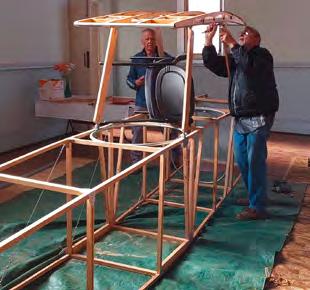
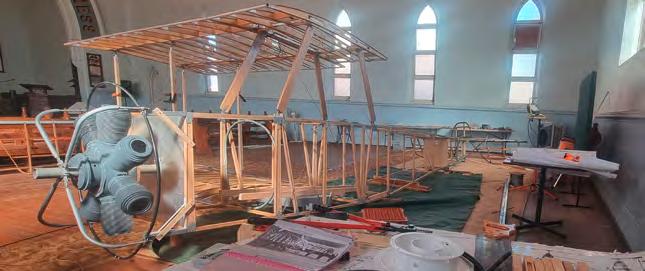
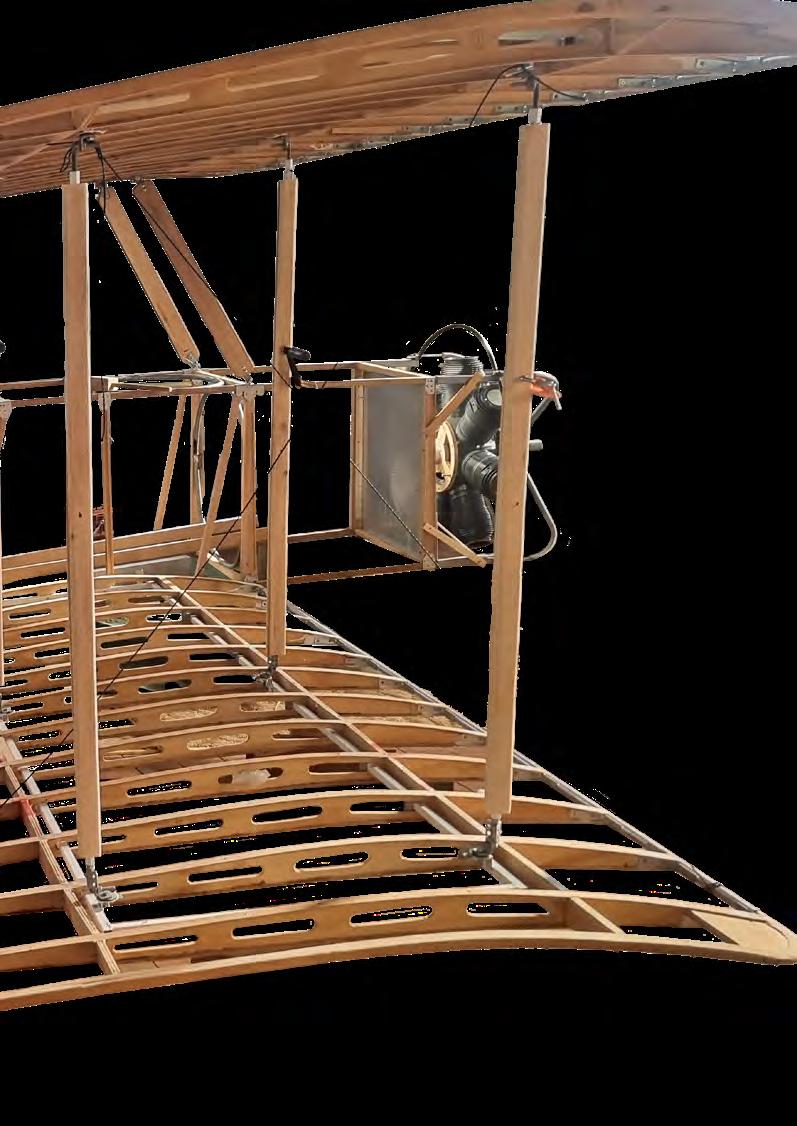
The project began at the Men’s Shed, with some parts also being built in members’ backyards. As the replica grew, the work eventually outgrew the Shed itself and has now moved to a disused church, providing enough space for full assembly.
With limited drawings and photographs available, the process has been both a technical and creative challenge. “Everything’s going along very nicely
with the project and we’ve made a lot of progress,” said Steve Williams, President of the committee and a Men’s Shed member.
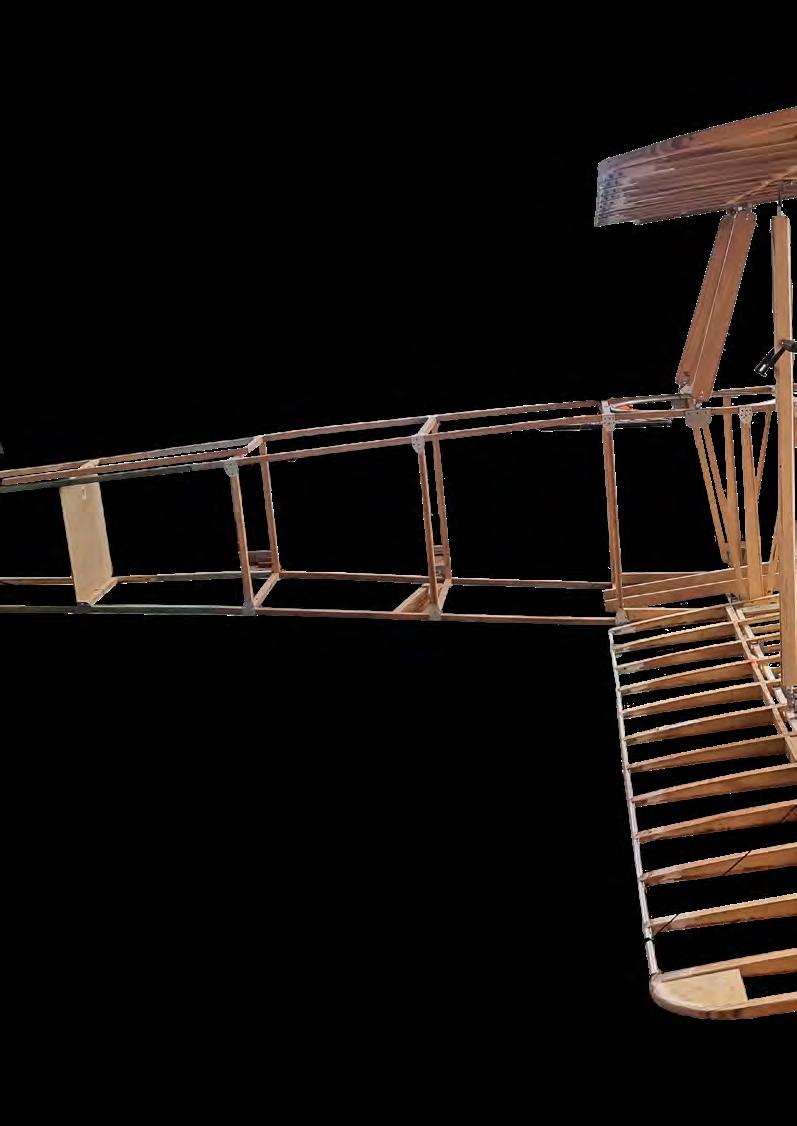
Work has been divided among volunteers, with each person taking on a different section of the aircraft. Arthur Anderson led the construction of the fuselage, Trevor Jones built the wings, Alf Williams worked on the tail and rear ailerons, and Ean crafted the wooden airscrew. Even the engine has been replicated through modern 3-D printing technology.
While the replica is not designed to fly, it is expected to become a permanent display, celebrating the innovation of the original School of Mines students and the dedication of today’s volunteers.
“Construction of this replica has given us a whole new perspective on the skills and commitment of those young blokes over a century ago,” Steve said. “We’ve had a ball doing this and we are getting close to delivering a wonderful addition to our city.”
Building Knowledge and Community at the Gosnells Women’s Collective
By The Gosnells Women’s Collective Inc.
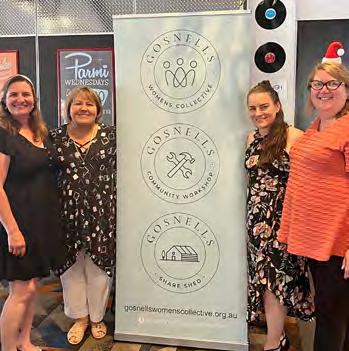
The Gosnells Women’s Collective Inc. (GWC) is a not-for-profit organisation with a simple yet powerful mission: women supporting women. What began as an idea in 2022 has become a thriving community, empowering women to learn, connect, and grow.
From Idea to Impact
The journey of the GWC began in 2022 with a public interest meeting, organised by the City of Gosnells and the Gosnells Community Men’s Shed, to address the interest and need for women’s access to workshop facilities. Approximately seventy women participated, sharing ideas for the space’s purpose, name and activities. A follow-up community survey further shaped the vision, highlighting the need for a safe, low-cost space where women could develop practical skills and confidence. While we were looking for our own space, some of the women started a monthly cuppa club at the local markets, where we could catch up and stay connected. By 2023, the GWC had incorporated, achieved charity registration, and gained Deductible Gift Recipient (DGR) status, with 50 women joining as foundational members in the first month. In 2024, with support from the City of Gosnells, the GWC secured its first building which we have been using to host
social events, information sessions and recently started wood-working basics and workshops.
Empowering Women, Strengthening Community
At its core, the GWC is about more than just learning skills—it’s about creating a space where women can thrive together. The GWC offers workshops and events designed to empower women with practical skills, from tackling home projects to emergency planning, all aimed at boosting independence, promoting mental wellbeing, and fostering meaningful relationships.
The GWC’s social programs are open to both members and the public, ensuring inclusivity and accessibility. Popular initiatives include the Book Lovers Club, where participants share their favourite reads and discover new genres, and the Social Craft Group, which provides a safe space for crafters to work on their projects alongside others. The Singing Mamas program, supported by a grant from Alike WA, offers a weekly opportunity for women to pause, connect, and recharge through song.
A Community Effort
The success of the GWC wouldn’t have been possible without the vision and
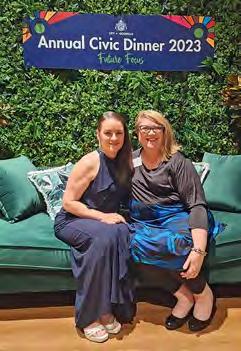
leadership of its chairperson, Krystelle. Her business acumen and dedication have transformed a vague idea into a purposeful organisation that continues to grow. The support of the City of Gosnells and the Gosnells Community Men’s Shed has also been instrumental. From organising the initial public meeting to helping secure a starter shed, their contributions have been invaluable. The City of Gosnells Mayor, Terresa Lynes, a foundational member, has been a champion of the GWC, assisting with fundraising efforts and community engagement.
The GWC has also benefited from the generosity of local and state organisations. Grants from the City of Gosnells, Men’s Sheds of WA, the Rotary Club of Southern Districts, and other organisations have funded various initiatives, including branding and workshop equipment, mental health training, and volunteer celebrations. These partnerships have enabled the GWC to expand its offerings and create a welcoming, well-equipped space for its members.
Fundraisers, including Bunnings sausage sizzles, a trivia night and a winter online raffle, have been successful in helping us with operational and overhead costs not covered by grants.
Building connections with other local groups has been another key to the GWC’s success. Collaborations with organisations such as Befriend, McFarleane House Learning Centre, Friends of Mary Carroll Wetland, and the Gosnells Community Men’s Shed have resulted in popular one-off events and ongoing partnerships. These relationships have strengthened the GWC ties to the community and expanded its reach.
We’re also increasing awareness and streamlining our administrative work by utilising online tools and communications. With the creative input of Seet Studio Graphic Design, IBC Digital built and manages our website. Their membership management software Waarble manages our members and will soon manage ticket bookings for events as well. The website enables us to connect with women in our community in a professional, accessible, and secure manner, and beautifully reflects the welcoming and safe environment of the Gosnells Women’s Collective.
Looking Ahead
As the GWC continues to grow, its focus remains on empowering women and fostering a sense of community. The introduction of programs such as Singing Mamas and partnerships like Befriend Inc. positions us well to make an even greater impact in the community in the years to come.
The Gosnells Women’s Collective is proof that when women come together to support one another, incredible things can happen. From its humble beginnings to its current success, the GWC is an example of what can be achieved through vision, dedication, and community spirit.
Findings for the Thriving Shed Project: What is Psychological Safety and How can it Help Your Shed to Thrive?
By Peter McEvoy
The Men’s Shed movement has always prided itself on being an inclusive environment for men to socialise, learn, support each other and contribute to the community. The Thriving Sheds Model developed by Curtin University in collaboration with Men’s Sheds of WA included psychological safety as one of the eight factors that help sheds to thrive.
So, what is psychological safety and how can it enhance members’ enjoyment of their shed and their wellbeing?
What is Psychological Safety?
Psychological safety refers to a shared belief held by members of a team or group that the team is safe for interpersonal risk-taking (Edmondson, 1999). But what is meant by ‘interpersonal risk-taking’?
Some of the biggest benefits of being part of a shed are trying new things, learning new skills, sharing knowledge, and fostering friendships. To fully experience these benefits, at some point Shedders will need to (a) ask for help or support from other members and (b) be willing to make mistakes. Making mistakes is a fundamental part of learning - if we knew it all already we would have nothing to learn! But asking for help and making mistakes can feel very ‘risky’ if there is a culture of judgment or hostility in a team.
In the Thriving Sheds Project, we measured team psychological safety with the following seven statements. As you read each statement, consider how strongly do you agree with each one with respect to your own shed?
1. If I make a mistake, is it not held against me by other shed members
2. Shed members accept people’s differences
3. It is easy to ask shed members for help
4. Shed members are able to bring up problems and tough issues
5. It is safe to take risks in my shed (e.g., by trying something new)
6. No-one in my that shed acts in a way that undermines others
7. When working with other shed members, members’ unique skills and talents are utilised
If you strongly agreed with each statement, then your shed is psychologically safe and
members will thrive by trying new things and freely giving and receiving support. If you disagreed with any of these statements, your shed might benefit from considering strategies for fostering psychological safety.
Why is Psychological Safety Important?
Think about the teams you have worked in your life that have been most rewarding and produced the best outcomes. Chances are these teams were highly collaborative, creative, well-supported, and committed to sharing new ideas and trying new things. For this culture to have developed, the leaders and team members are likely to have created a psychologically safe environment – one where engagement, new ideas, and positive social interactions were encouraged and rewarded. Mistakes were also likely to have been accepted and valued for ongoing personal and professional development, and to achieve the best outcomes individually and for the whole team.
Now think about the teams you’ve worked in that have been the least rewarding and productive. Chances are they were not psychologically safe – highly critical, selfish, and run by an authoritarian leader. It is difficult to learn and grow in these teams, and no-one wants to be part of them voluntarily.
The Thriving Sheds Project found that Shedders reporting higher levels of team psychological safety also reported:
• More frequent shed attendance
• Engagement in more shed activities
• More close Men’s Sheds friends
• Higher meaning in life
• Higher wellbeing
• Higher health-related quality of life
• Lower loneliness
What does this mean for My Shed?
Shed leaders and members need to foster a psychologically safe environment within their shed to ensure all members thrive and get the most out of their shed. This can be achieved by:
• Encouraging members to learn and try new activities, while expecting and accepting mistakes as part of learning
• Encouraging help-seeking and providing
positive and encouraging feedback
• Ensuring friendly and welcome banter does not turn into perceived bullying
• Ensuring differences between members are respected and appreciated
• Encouraging members to raise difficult issues in respectful and supportive ways
• Encouraging all members to contribute their unique skills and talents to the shed Sheds should have policies that encourage respectful behaviour and conflict resolution so that psychologically unsafe actions are quickly identified and resolved. Leaders set the tone for their sheds, but all members need to adhere to high standards of psychological safety to ensure all shedders can thrive.
Reference
Edmondson, A. (1999). Psychological safety and learning behavior in work teams. Administrative Science Quarterly, 44, 350-383.
Focus on Health: Stroke Prevention
By Fiona Peters
Minutes Before the Talk Began: A Real-Life Reminder to Act F.A.S.T.
At Mundaring Community Men’s Shed, looking out for each other’s health is just part of the Shedders’ way - like many Sheds, they regularly host health talks to keep members informed and prepared. Their recent session with the Stroke Foundation, focused on stroke prevention and early warning signs, turned out to be especially timely and important.
Just before the presentation began, one of the members Alasdair (Ali) Adam, aged 82 experienced a suspected transient ischemic attack (TIA), also known as a mini stroke. Thanks to the quick recognition of symptoms and calm action from those around him, he received immediate medical attention and recovered well.
“This really showed how important it is to have some basic knowledge and people around you who can act quickly,” said Kevin Bryant, the Shed’s Wellbeing and Health Officer. “It could have ended very differently if no one had recognised the signs. We were lucky to have former Ambulance officer Stephen Fox and our Safety Coordinator David Bowden who acted quickly to call 000.”
The incident served as a powerful reminder that strokes can happen to anyone, at any time and that knowing the signs can save lives.
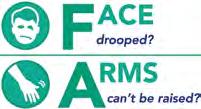
The Stroke Foundation encourages everyone to remember the F.A.S.T. test:
• Face: Check their face. Has their mouth drooped?
• Arms: Can they lift both arms?
• Speech: Is their speech slurred or strange?
• Time: Time is critical. Call an ambulance immediately.
Mundaring Community Men’s Shed plans to keep these important health talks going and encourages other Sheds to do the same.
“It was a wake-up call for all of us,” said Ross Boughton, President of the Shed. “You hear about strokes on the news or see the ads, but when it happens right in front of you, it hits home.
“We were lucky to have people on hand who knew what to do, and it’s a reminder of why these health talks matter. It’s not about scaring anyone, it’s about being ready, looking out for your mates, and helping each other stay healthy and well.”
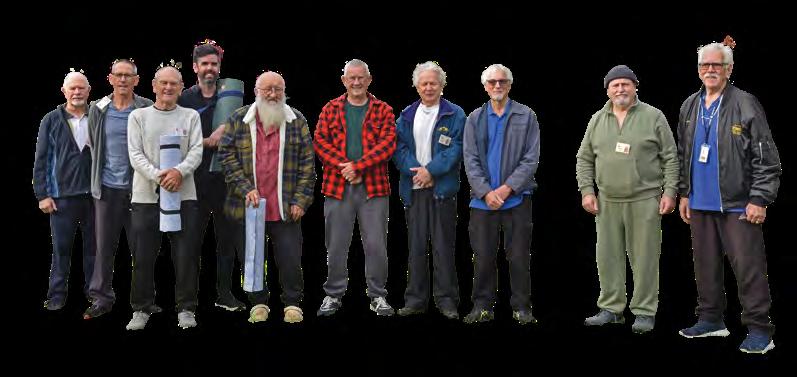
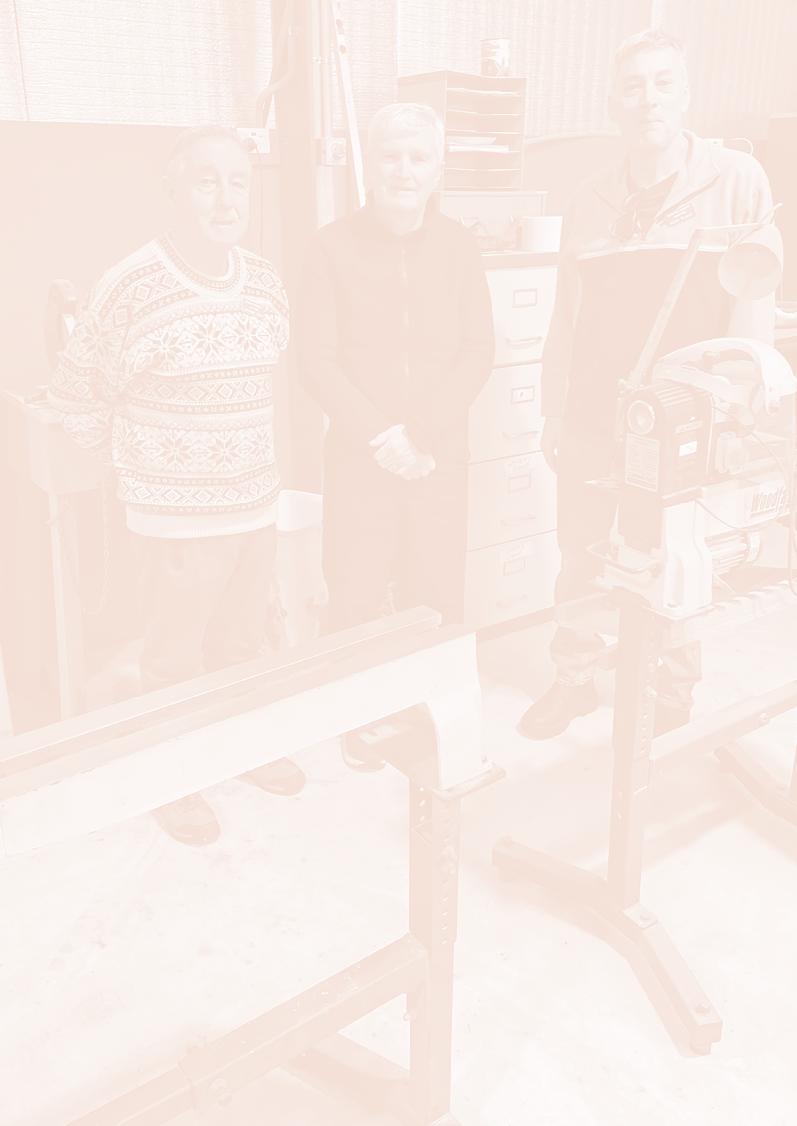
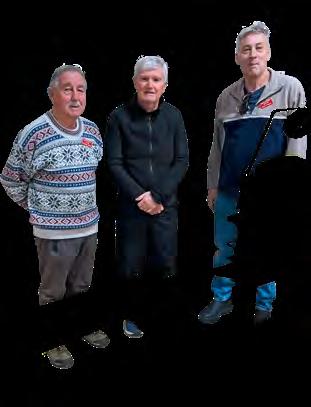
From left to right: Alasdair Adam, David Bowden and Kevin Bryant
What is a stroke?
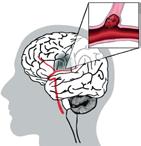
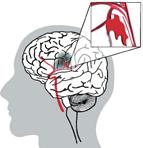
Stroke attacks the brain, which controls the human body The brain needs oxygen and nutrients carried in blood. A stroke happens when the brain does not get the blood it needs.
Brain cells die quickly when they do not get enough blood. Up to 1.9 million brain cells may die every minute.
There are two types of stroke:
lschaemic stroke (spoken "is-key-mick") Blood clot or plaque blocks artery
Haemorrhagic stroke (spoken "hemm-orr-ragic") Artery breaks or bursts
Every stroke is different. How a stroke affects someone depends on where it happens in the brain, and on how big the stroke is.
Stroke can affect a person's body, their emotions, and the way they think. It can cause muscle weakness, and problems with speaking, memory, hearing or vision.
Stroke is always a medical emergency. Call triple zero (000) at the first sign of stroke.
How is a TIA different?
TIA is a transient ischaemic attack. A TIA happens when the blood supply to your brain is blocked for a short time. A TIA has the same signs as a stroke, but the signs go away on their own. Often the signs only last for a few minutes.
Never ignore a TIA. Call triple zero (000) right away, even if the signs go away and you feel better.
Signs of a stroke
Face - check their face. Has their mouth drooped? Arms - can they lift both arms?
Speech - is their speech slurred? Do they understand you?
Time - time is critical. Call triple zero (000) now if you see any of these signs.
Share the F.A.S.T. message with your family and friends.