




TIME!
IT’S ABOUT
AVA HOECHSMANN AND MELISSA SPIRIDIGLIOZZI
GENDER EQUALITY THROUGH LAW IN CANADA
1929:

EDWARDS V. CANADA
Judicial Committee of the Privy Council
In 1927, Emily Murphy petitioned the Supreme Court of Canada to interpret the meaning of the word “Persons” in section 24 of the British North America Act. The first woman judge in Canada, Murphy worked with four other feminists to challenge the use
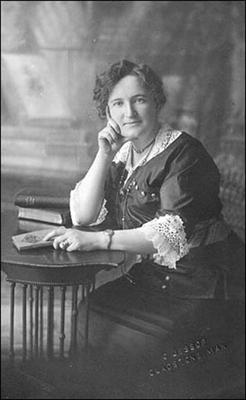

of s. 24 to exclude women from eligibility for senate appointment. The Supreme Court case turned on the meaning of the word “Persons” in s. 24, where it is said that “The Governor General shall [...] summon qualified Persons to the Senate”. Interpreting the law according to the assumed intent with which it was written, the Supreme Court ruled unanimously that women were not persons under the BNA Act.
Murphy and her peers appealed to the Judicial Committee of the Privy Council. The Committee decided “that the word ’persons’ in s. 24 includes members both of the male and female sex”. The Committee reasoned that the act’s wording is more important than its authors’ supposed intentions. To that end, they found distinctions between “males” and “persons” in sections 41, 84, and 133 of the BNA Act. They therefore found that women’s historical exclusion from the Senate was not justified by the use of the word “persons” in s. 24.


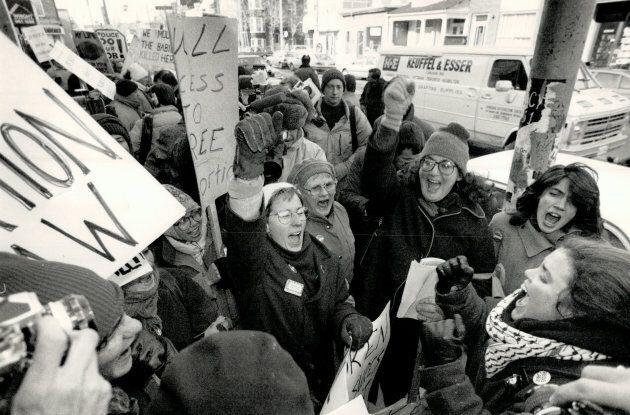
1988: R. V. MORGENTALER Supreme Court of Canada
Doctors Henry Morgentaler, Leslie Smoling, and Robert Scott ran illegal abortion clinics in direct and
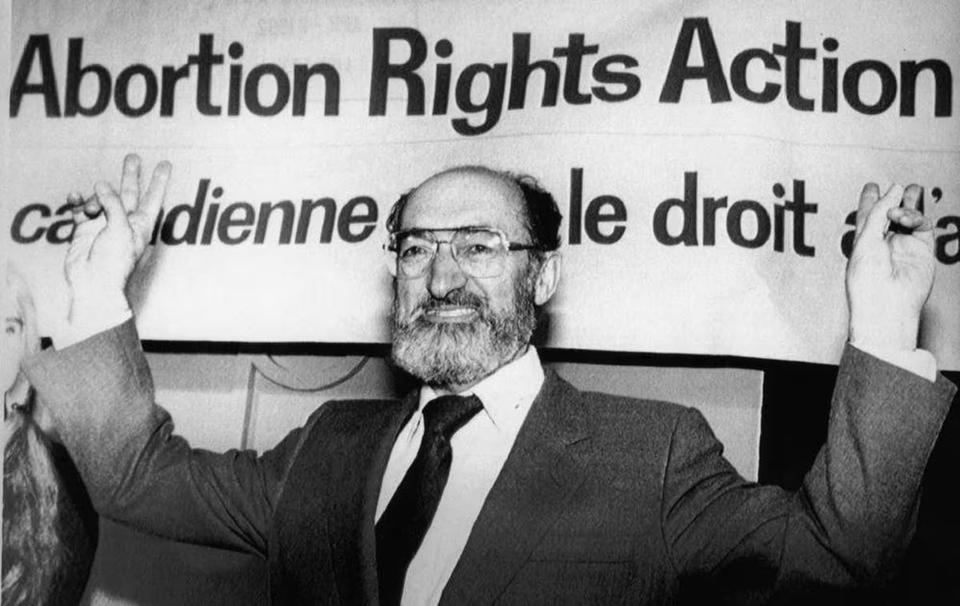

intentional violation of the Criminal Code of Canada. At that time, s.251 of the Criminal Code prohibited abortions except when certified as medically necessary. Following a police raid of their clinic, the physicians were acquitted on charges of conspiring to procure abortions. The Ontario government appealed to the Ontario Court of Appeal, who ordered a new trial. Dr. Morgentaler appealed to the Supreme Court of Canada, arguing that s.251 was unconstitutional. The issues explored by the court were, firstly, whether s. 251 infringed upon the rights guaranteed under sections 2(a), 7, 12, 15, 27, and 28 of the Charter, and secondly, whether such an infringement could be justified under s.1 of the Charter. The court found that s. 251 indeed violated pregnant persons’ rights to “life, liberty and security of the person”, as well as the right to freedom of conscience outlined by s. 2(a). Further, the court found that s. 251 could not be justified by s. 1 of the Charter, since the harm done to a person who is forced to carry a
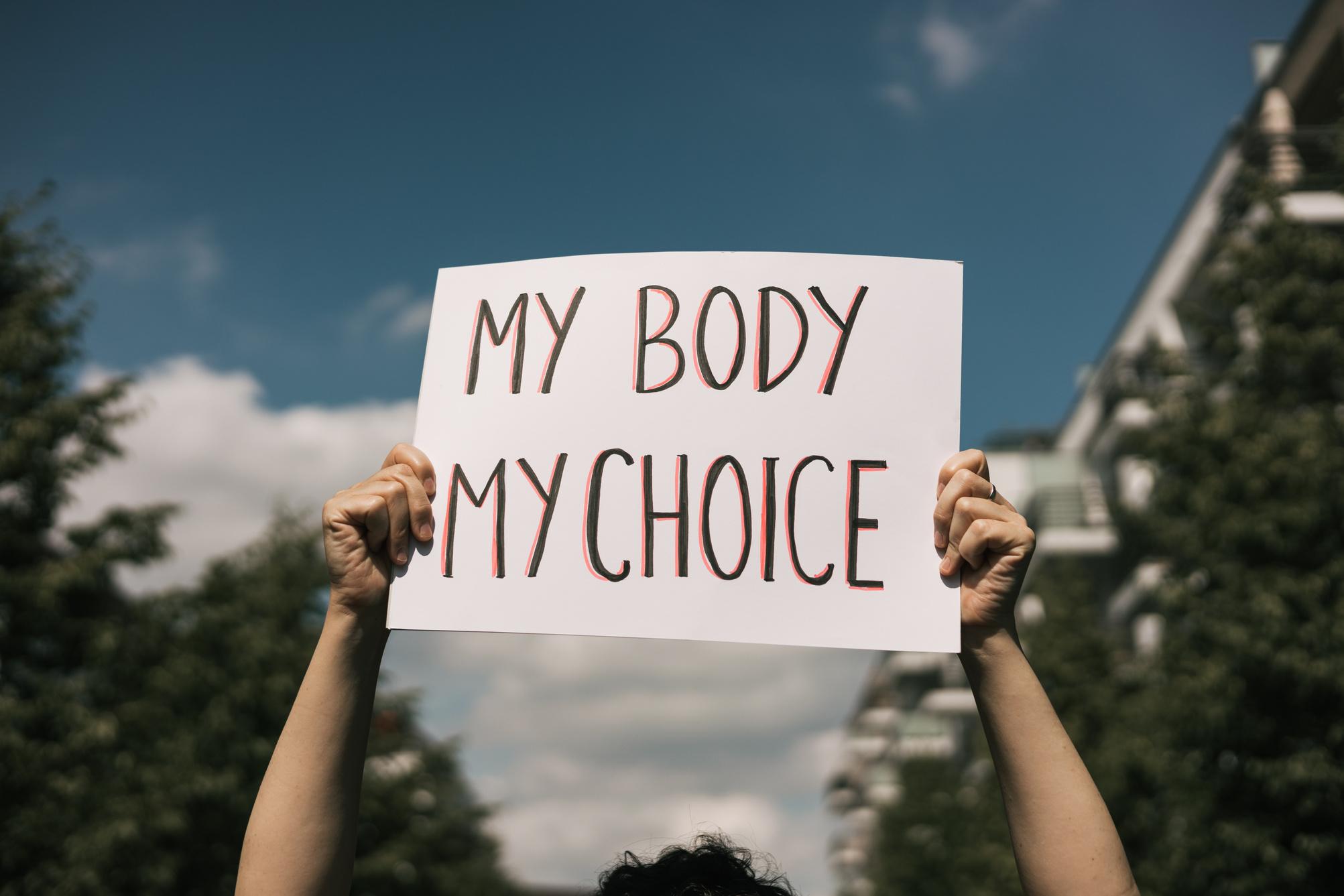

Born in Poland to socialist Jewish parents, Morgentaler survived the Holocaust as a child. “Children that are born and loved and well nurtured,” he said, “don’t build concentration camps.”
1989: BROOKS V. CANADA SAFEWAY LTD.
Safeway employees Susan Brooks, Patricia Allen, and Patricia Dixon were excluded from the company’s group insurance plan when they became pregnant in 1982. The plan provided benefits to employees unable to work due to accident or sickness, with the exception of pregnant women from the tenth week prior to delivery, and ending six weeks after.
Brooks, Allen, and Dixon filed with the Manitoba Human Rights Commission, alleging that they had suffered sex discrimination under section 6(1) of the Human Rights Act of Manitoba. Citing the 1978 case Bliss v. Canada in which discrimination based on pregnancy was found not to quality as sex discrimination, the adjudicator dismissed the claims. The women appealed to both the Court of the Queen’s Bench and the Manitoba Court of Appeal who upheld the Commission’s findings.
Finally, the case was appealed to the Supreme Court of Canada, who found, unanimously, that Safeway indeed violated s. 6(1) by excluding pregnant employees. The court reasoned that belonging to the female sex is a prerequisite for becoming pregnant and that discrimination on the basis of pregnancy is therefore de facto sex discrimination. Revisiting Bliss v. Canada, the court said that the 1978 finding was “wrongly decided”.
Supreme Court of Canada
CANADA V. BEDFORD 2013: Supreme Court of Canada

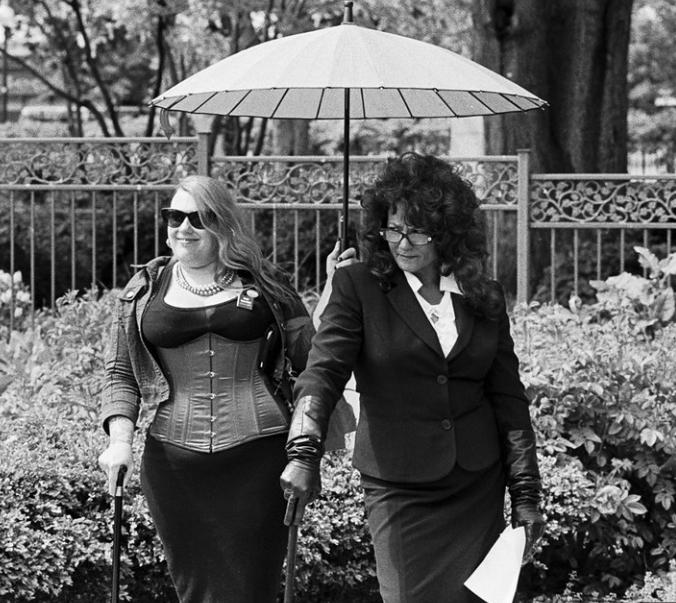
IN CANADA V.BEDFORD, TERRI JEAN BEDFORD, AMY LEBOVITCH AND VALERIE SCOTT CHALLENGED THE CRIMINAL CODE’S REGULATIONS AROUND SEX WORK. GIVEN THAT THE CODE MADE TNE FOLLOWING ILLEGAL: “BAWDYHOUSES,” LIVING OFF THE PROFIT’S OF ANOTHER’S SEX WORK, AND PUBLICALLY SEEKING OUT A SEX WORKER’S SERVICES, THEY ARGUE THAT IT LIMITS THEIR CAPACITY TO PRACTICE THEIR WORK SAFELY; THIS UNDERMINES THEIR RIGHTS OUTLINED IN ARTICLE 7 OF THE CHARTER OF RIGHTS AND FREEDOMS. DIVERGING FROM ITS PREVIOUS DECISION ON THE MATTER OF SEX WORK, THE SUPREME COURT OF CANADA FOUND THESE SECTIONS OF THE CODE ARE INCONSISTENT WITH THE PRINCIPLES OF FUNDAMENTAL JUSTICE. THIS MEANS THAT THEIR AIMS ARE INCONSISTENT WITH THEIR HARMFUL OUTCOMES.
“ [...] A LAW THAT PREVENTS STREET PROSTITUTES FROM RESORTING TO A SAFE HAVEN [...] WHILE A SUSPECTED SERIAL KILLER PROWLS THE STREETS, IS A LAW THAT HAS LOST SIGHT OF ITS PURPOSE” (CANADA V. BEDFORD, 2013).

2023
Supreme Court of Canada
HANSMAN V
As a school boar critiqued government Columbia on gender school, publically called his views harmful to the safe inclusion of LGBTQ+ kids. When Neufeld attempted to sue for defamation, Hansman claimed it constituted as “ a strategic lawsuit against public participation” (SLAPP), described in BC’s Protection of the Public Participation Act. Accordingly, given that the public interest was deemed to outweigh any reputational harm, the court ruled to dismiss the original def

“DISCOURSE CAN [...] TAKE ON AN UNEVEN QUALITY, MAKING PROTECTIVE COUNTER-SPEECH BY THE GROUP OR INDIVIDUAL’S MORE POWERFUL ADVOCATES ALL THE MORE INFLUENTIAL AND IMPORTANT” (HANSMAN V. NEUFELD, 2023).
Bibliography
BLISS V. ATTORNEY GENERAL OF CANADA, 1978 CANLII 25 (SCC),
HTTPS://WWW.CANLII.ORG/EN/CA/SCC/DOC/1978/1978CANLII25/1978CANLII25.HTML
BROOKS V. CANADA SAFEWAY LTD., 1989 CANLII 96 (SCC)
HTTPS://WWW.CANLII.ORG/EN/CA/SCC/DOC/1989/1989CANLII96/1989CANLII96.HTML
CANADA (ATTORNEY GENERAL) V. BEDFORD, 2013 SCC 72 (CANLII), [2013] 3 SCR 1101 <HTTPS://CANLII.CA/T/G2F56>, RETRIEVED ON 2024-04-08
DE BRUIN, T., & MCLAREN, A. (2013). HENRY MORGENTALER. THE CANADIAN ENCYCLOPEDIA.
HTTPS://WWW.THECANADIANENCYCLOPEDIA.CA/EN/ARTICLE/HENRY-MORGENTALER
EDWARDS V. CANADA (ATTORNEY GENERAL), 1929 CANLII 438 (UK JCPC), <HTTPS://CANLII.CA/T/GBVS4>, RETRIEVED ON 2024-04-02
HANSMAN V. NEUFELD, 2023 SCC 14 (CANLII), <HTTPS://CANLII.CA/T/JX8K0>, RETRIEVED ON 2024-04-08
MARSHALL, T. (2023). PERSONS CASE. BRITANNICA.
HTTPS://WWW.BRITANNICA.COM/PLACE/CANADA/LAND

PRASAD, S. (2018). THE MORGENTALER RULING: 30 YEARS LATER, WE’RE AT A TURNING POINT. HUFFPOST. HTTPS://WWW.HUFFPOST.COM/ARCHIVE/CA/ENTRY/THE-MORGENTALER-RULING-30YEARS-LATER-WERE-AT-A-TURNING-POINT CA 5CD52FD7E4B07BC729759AF3
R. V. MORGENTALER, 1988 CANLII 90 (SCC), <HTTPS://WWW.CANLII.ORG/EN/CA/SCC/DOC/1988/1988CANLII90/1988CANLII90.HTML>,
RETRIEVED ON 2024-04-05
SUPREME COURT OF CANADA DECISION AFFIRMS TRANS RIGHTS AND THE VALUE OF PROTECTIVE COUNTER-SPEECH. (2023, JUNE 6). EGALE. HTTPS://EGALE.CA/AWARENESS/SUPREMECOURT-OF-CANADA-DECISION-AFFIRMS-TRANS-RIGHTS-PROTECTIVE-COUNTER-SPEECH/