Are you our next MSO Guardian?
“I’ve benefitted so much from the MSO. Ilove knowing that my support will enable others to benefit from the MSO’s transformative music experiences.”
Jennifer Henry, MSO Guardian and Patron
Leaving a gift in your Will to the MSO ensures your story– and the orchestra you love– lives on in perpetuity. We are honoured to play an important role in your musical journey and invite you to become our next Guardian of the MSO.
Scan the QR code to learn more or call (03) 8646 1551 to speak with a member of the MSO Philanthropy team.
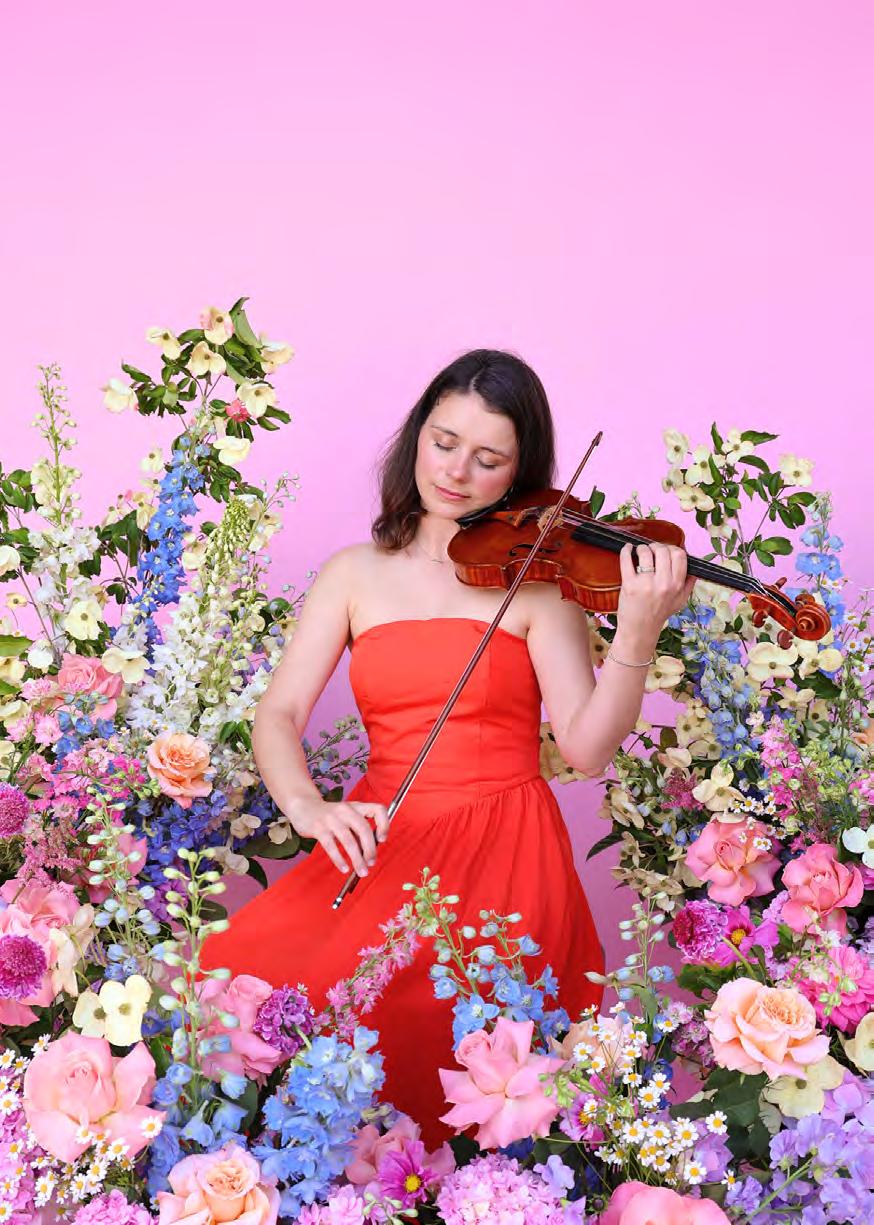
Souvenirs
Saturday 28 March at 4:00pm
Castlemaine Town Hall
Sunday 29 March at 11:00am
Iwaki Auditorium, ABC Southbank Centre
Artists
Kathryn Taylor violin
Emily Beauchamp violin
Katharine Brockman viola
Aidan Filshie viola
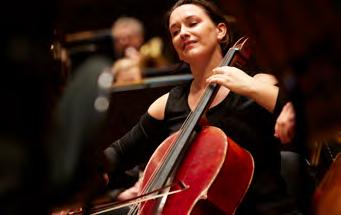
Michelle Wood cello and curator
Anna Pokorny cello
Program
Brahms String Sextet No. 1 [40']
Tchaikovsky Souvenir de Florence for string sextet [35’]
A musical Acknowledgement of Country by James Henry will be performed at the start of this concert.
Running time: 1 hour and 20 minutes. Timings listed are approximate.
The MSO’s regional touring program is supported by AWM Electrical, Freemasons Foundation Victoria, the Estate of the late Blanch Brooke Hutchings and Perpetual Foundation – Alan (AGL) Shaw Endowment.

There is something unique about the string sextet. Both intimate and expansive at the same time – it’s chamber music at heart with orchestral lungs.
While the string quartet has become the gold standard of chamber music, very few composers were drawn to write for two violins, two violas and two cellos. Perhaps it is because six independent voices must somehow speak as one, despite the complications that holds for balance. Tchaikovsky himself admitted how daunting it was, writing to his brother that composing for six independent yet homogeneous voices was ‘unimaginably difficult’. Even Haydn, he pointed out, never truly embraced the form.
There is nowhere to hide in chamber music, and in a sextet the texture can easily become dense if it is not shaped with care – like a crowded dinner table with everyone trying to talk at the same time. Yet when it works, the effect is remarkable. The addition of a second viola and cello creates a warmth and breadth of sound that can feel almost orchestral, while preserving the clarity and immediacy of six musicians in conversation. And in the case of these two composers, what a conversation!
Both Brahms and Tchaikovsky were drawn to the possibilities of the sextet. Brahms’s Sextet No. 1, written when he was just 27, opens with a melody in the cello that feels like a big warm hug. From those first bars, there is a sense of spaciousness, as the music unfolds with confidence and ease.
Souvenirs: Music for string sextet
At the time, very few composers had written successfully for this combination, and Brahms used it to explore a richer, more layered sonority than a quartet could offer. The slow movement, built as a set of variations, moves through shadow and light with quiet intensity, while the outer movements combine his trademark lyricism with rhythmic vitality.
Tchaikovsky’s Souvenir de Florence came to life after a melody struck him while he was working in Italy, a theme he later marked ‘sweet and singing’ that forms the heart of the second movement (arguably of the whole work). Given his initial struggles with the demands of the form, the finished piece feels remarkably assured and generous. Like Brahms, he uses the sextet to create something symphonic in scale without losing the sense of individual voices responding to one another. At times it’s honestly hard to believe there are only six of us playing –it’s a glorious blend of string colour that will forever be a delight to play.
These are two of the most beloved works in the chamber repertoire, the epitome of Romantic string writing. The fact you will hear music that sounds so rich and full created by just six musicians is part of what makes it so special. It is a privilege to open the 2026 MSO Chamber series with this program and we are looking forward to sharing this music with you.
Michelle Wood Curator
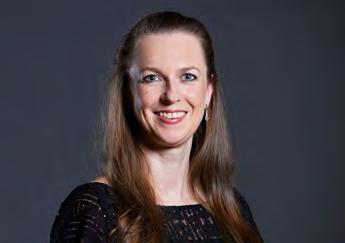
Kathryn Taylor violin
Originally from Tasmania, Kathryn Taylor was appointed to the first violin section of the MSO in 2005. She has been the first violinist in the Quartz String Quartet since 2015 and also performs regularly with the Melbourne Chamber Orchestra. Since the age of 11, she has appeared as a soloist with many orchestras, including the Queensland and Melbourne symphony orchestras, and she has performed extensively overseas.
In 2003, she attended the Australian National Academy of Music, followed by further studies in Dublin with Eyal Kless, and in 2008 completed her Bachelor of Music degree in Performance.
Kathryn has had lessons and performed in masterclasses with Maxim Vengerov, Salvatore Accardo and the Takács Quartet, as well as with many other notable international teachers.
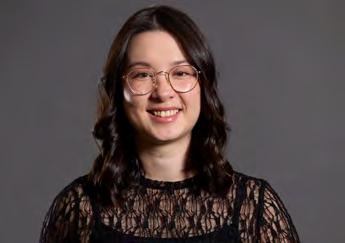
Emily Beauchamp violin
Sydney-born Emily Beauchamp began learning the violin at the age of seven and graduated from the Sydney Conservatorium of Music, where she studied with Janet Davies. She moved to Melbourne in 2020 to study at the Australian National Academy of Music with Robin Wilson before winning a position in the MSO’s 2023 Academy program. In 2022, she also performed with the Australian World Orchestra under Zubin Mehta as part of their academy program. She was a member of the Australian Youth Orchestra for eight years, and was concertmaster in 2022. She also played for ten years in the Sydney Youth Orchestra, where she was principal second violin and concertmaster.
Emily has performed at the Four Winds Festival and the Australian Festival of Chamber Music, and has also played regularly with Orchestra Victoria and the Melbourne Chamber Orchestra.
Outside the concert hall, Emily loves to cook (and eat) and can be found perusing markets, experimenting with new dishes and perfecting old favourites.
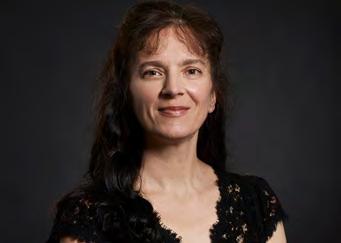
Katharine Brockman viola
Katharine Brockman grew up in a musical family in Geelong, and made the change from violin to viola at the age of 15 to form a family string quartet with her sisters. She studied viola with Keith Crellin and Jan Sedivka, and has never looked back, relishing the role the instrument takes in both chamber music and orchestral repertoire.
Katharine joined the Melbourne Symphony Orchestra in 1992, and was appointed Principal Viola the following year at the age of 25. During her time in this role she made a number of solo appearances with the MSO, and acted as guest principal viola with the Sydney and Tasmanian symphony orchestras. In 2011, for family and personal reasons, she stepped down from the principal position, and became an enthusiastic member of the viola section, a position she continues to enjoy.
Katharine is a regular guest with the TSO and an occasional guest with the Melbourne Chamber Orchestra. She also has a growing number of students of all ages and stages, and feels passionately about the constant quest for greater knowledge and understanding in both teaching and playing.
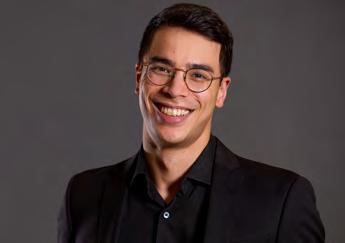
Aidan Filshie viola
Violist Aidan Filshie received his Bachelor of Music degree from the Sydney Conservatorium, where he studied with Roger Benedict. He has performed with the Sydney Symphony Orchestra, Australian Chamber Orchestra, Australian Brandenburg Orchestra and Melbourne Chamber Orchestra, and in 2018 was a soloist in the premiere of Richard Mills’ Double Violin Concerto (MCO). He was part of the Sydney Symphony Fellowship program in 2023.
Aidan enjoys working with composers in the creation of new music, and 2022 saw the release of his debut EP, Summit, which includes three works for viola and piano in collaboration with long-time friend Patrick Jaffe. He has also worked with composer Daniel Rojas in the composition of Navegar for the AMEB viola syllabus.
Aidan also enjoys training for triathlons and painting landscapes.
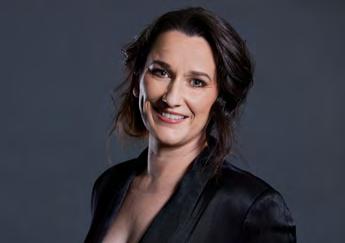
Michelle Wood cello and curator
Michelle Wood has been a member of the MSO cello section since 2009. She has also performed as acting principal and guest associate principal with the Melbourne and Adelaide symphony orchestras, and as a soloist and section player with the Melbourne Chamber Orchestra, as well as touring with the Australian World Orchestra.
Michelle was a founding member of the Tinalley String Quartet, and performed with this award-winning ensemble for more than a decade, touring internationally, and appearing in venues such as the Vienna Musikverein and Amsterdam Concertgebouw. In 2018, she co-founded Concerts sans frontières (Concerts Without Borders), a chamber music series presented at the Australian Embassy in Paris to foster connection and showcase exceptional Australian and international musicians.
As a teacher and mentor, her work spans programs with the University of Melbourne, Australian National Academy of Music, Melbourne Youth Orchestras and National Music Camp, as well as the MSO. She is especially passionate about guiding young chamber musicians and cellists, but is equally enthusiastic about her adult students who have found a love for the cello later in life.
Michelle plays an 1849 Charles Boullangier cello affectionately named Charlie.
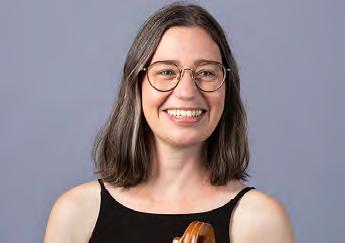
Anna Pokorny cello
Anna Pokorny is a versatile and dedicated cellist whose work encompasses symphonic, chamber, operatic and contemporary performance throughout Australia and internationally. She has performed extensively with leading orchestras including the Melbourne, Sydney, West Australian and Tasmanian symphony orchestras. She joined the Orchestra Victoria cello section full time in 2026.
Alongside her orchestral work, Anna maintains a strong commitment to chamber music. She is a regular member of the Melbourne Chamber Orchestra and has toured nationally with the Australian Chamber Orchestra. She has performed at prominent festivals including the Adam International Chamber Music Festival, Bangalow Festival, UKARIA concert series, Music by the Springs and Perth Festival.
Anna completed her studies at the University of Western Australia (studying with Suzanne Wijsman), Australian National Academy of Music (Howard Penny) and International Menuhin Music Academy in Switzerland (Niall Brown).
About the music
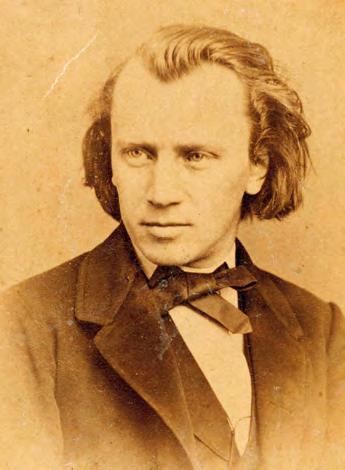
Johannes Brahms (1833–1897)
String Sextet No. 1 in B flat major, Op. 18
Allegro ma non troppo
Tema e variazioni (Andante ma moderato)
Scherzo (Allegro molto)
Rondo (Poco allegretto e grazioso)
Brahms was still in his 20s and working as a court musician in Detmold when he composed his first string sextet, but he had already been hailed a musical ‘messiah’ by the composer and critic Robert Schumann. This prompted in Brahms an almost overwhelming sense of responsibility and a desire to study the great composers of the past – Haydn, Mozart and Beethoven, but also the masters of the Baroque period and earlier. This became the source of Brahms’s distinctive voice, at once Classical in conception and Romantic in temperament.
It’s not a turbulent brand of Romanticism, however. Where a composer like Beethoven brings to mind struggle and heroism, Brahms’s music reveals a lyrical gift. There is restrained gentility in the first movement (‘fast but not too much’), especially in its waltz-like moments.
The second movement (‘at a walking pace, but moderately’) is a set of variations. Its sombre theme is introduced by the first viola over an emphatic accompaniment from the second viola and two cellos. As the variations progress, it’s possible to hear the influence of baroque composers such as Bach and Handel in Brahms’s explorations of the theme.
The Scherzo is a tiny movement – just a few minutes long. It has been compared to the scherzo in Beethoven’s Fifth Symphony, and among the similarities is
its vigour and irresistible forward movement. By comparison, the Rondo finale is relatively calm. Brahms gives it one of his equivocal tempo instructions –‘a little fast and lively and gracefully’ – and the singing elegance and lyricism of the first movement returns. Brahms may have been nervous that the overall result was too ‘long and sentimental,’ but in the final pages he brings the music to a powerful conclusion.
Yvonne Frindle © 2011
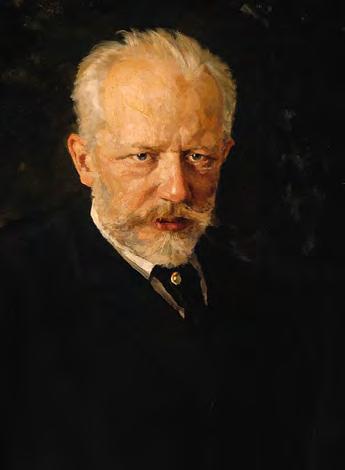
Peter Ilyich Tchaikovsky (1840–1893)
Souvenir de Florence for string sextet, Op. 70
Allegro con spirito
Adagio cantabile e con moto
Allegretto moderato
Allegro vivace
In 1886, Tchaikovsky was made an honorary member of the St Petersburg Chamber Music Society. The honour came with obligations – a new chamber work was expected in celebration – but bigger projects imposed on his time, including his Sleeping Beauty ballet, the opera The Queen of Spades and his Fifth Symphony.
When he did get around to completing the new string sextet, it caused surprising difficulty for such an experienced composer. He complained to his brother, Modest, of being hampered by the form: ‘There must be six independent and at the same time homogenous parts. This is unimaginably difficult.’ And he told the
pianist and composer Alexander Siloti that he feared he was conceiving the work in overly ‘orchestral’ terms and then ‘arranging’ the ideas for six solo strings. (The work is often performed by string orchestras today.)
Despite the struggle, Tchaikovsky was initially very pleased with the result –including the technically impressive fugal section in the middle of the fourth movement – telling his brother ‘it is terrible how thrilled I am with my own work’. After hearing its first performances in St Petersburg, however, he decided it was ‘astonishingly bad’ and a radical rewrite was needed – the enduring popularity of the Souvenir de Florence suggests his perfectionist instincts paid off.
Most program notes on this ‘Memory of Florence’ (as the Russian title might be translated) point out that Tchaikovsky’s music doesn’t sound especially Italianate and that in fact it quotes Russian tunes. It’s also true that Tchaikovsky never made an explicit connection between the Souvenir and Italy (unlike, say, his orchestral Capriccio italien).
The link is to be found in Modest’s report that the beguiling main theme of the second movement – a tender duet for violin and cello heard over a plucked accompaniment – was sketched in January 1890, when Tchaikovsky had travelled to Florence to work on The Queen of Spades. Tchaikovsky had already made a half-hearted start on the sextet as early as 1887, but the ‘Florentine’ theme seems to have been the impetus he needed when – back in Russia in June 1890, having completed the opera – he returned to the sextet in earnest. But regardless of its origins, the music carries Tchaikovsky’s unmistakable personal stamp of buoyant lyricism.
Yvonne Frindle © 2024
Thank You to Our Partners
Principal Partner
Major Government Partners
Major Partner
Supporting Government Partners
Australian Government Department of Health, Disability and Ageing
Supporting Partners
Paul Noonan, Keypoint Law
Training and Education Partners
Trusts and Foundations

Broadcast and Production Partners

Venue Partners

Perpetual Foundation –Alan (AGL) Shaw Endowment
Freemasons Foundation Victoria
Sidney Myer MSO Trust Fund
Estate of the late Blanch Brooke Hutchings