Melanie Aguilar 2021 - 2022 Portfolio
CONTENTS
Mt Wilson Scientist Retreat pg 04 Fall 2022 | ARC 3011
CLA Tower - Architecture School pg 16 Spring 2022 | ARC 2021
ENV Library and Archives Proposal pg 26 Spring 2021 | ARC 1021
Museum of Japanese Contemporary Art pg 34 Fall 2021 | ARC 2021
Mt Wilson Scientist Retreat
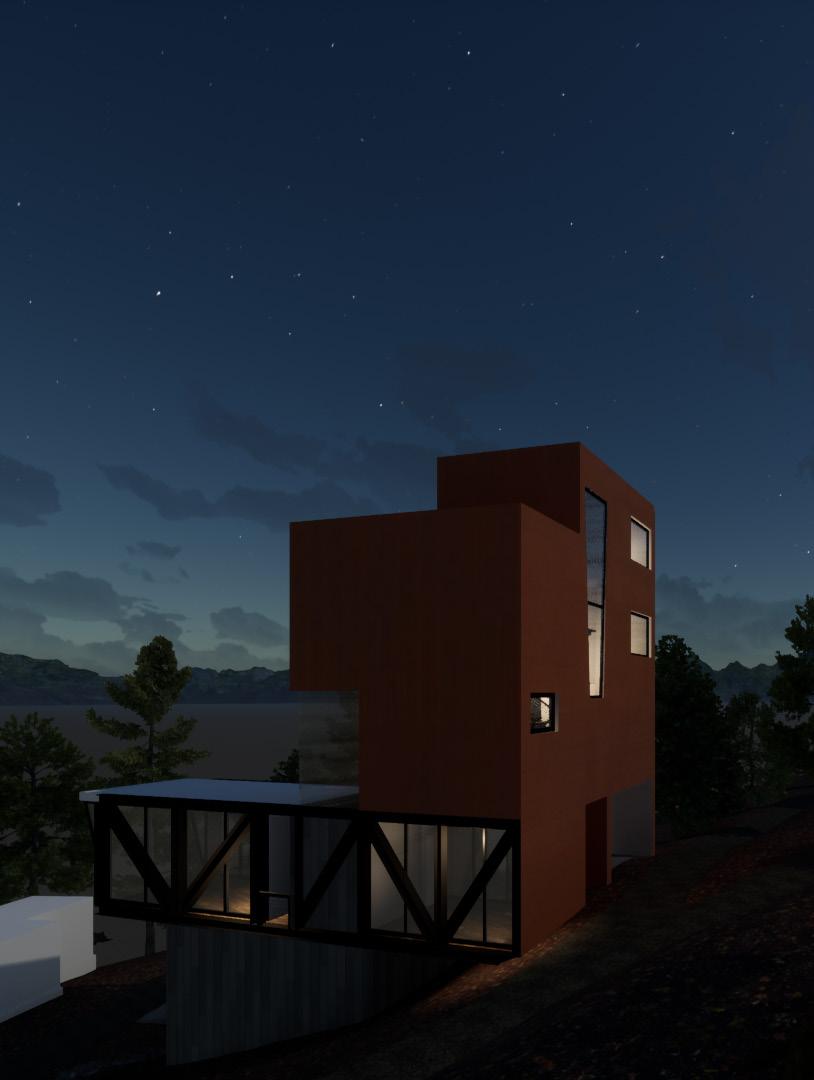
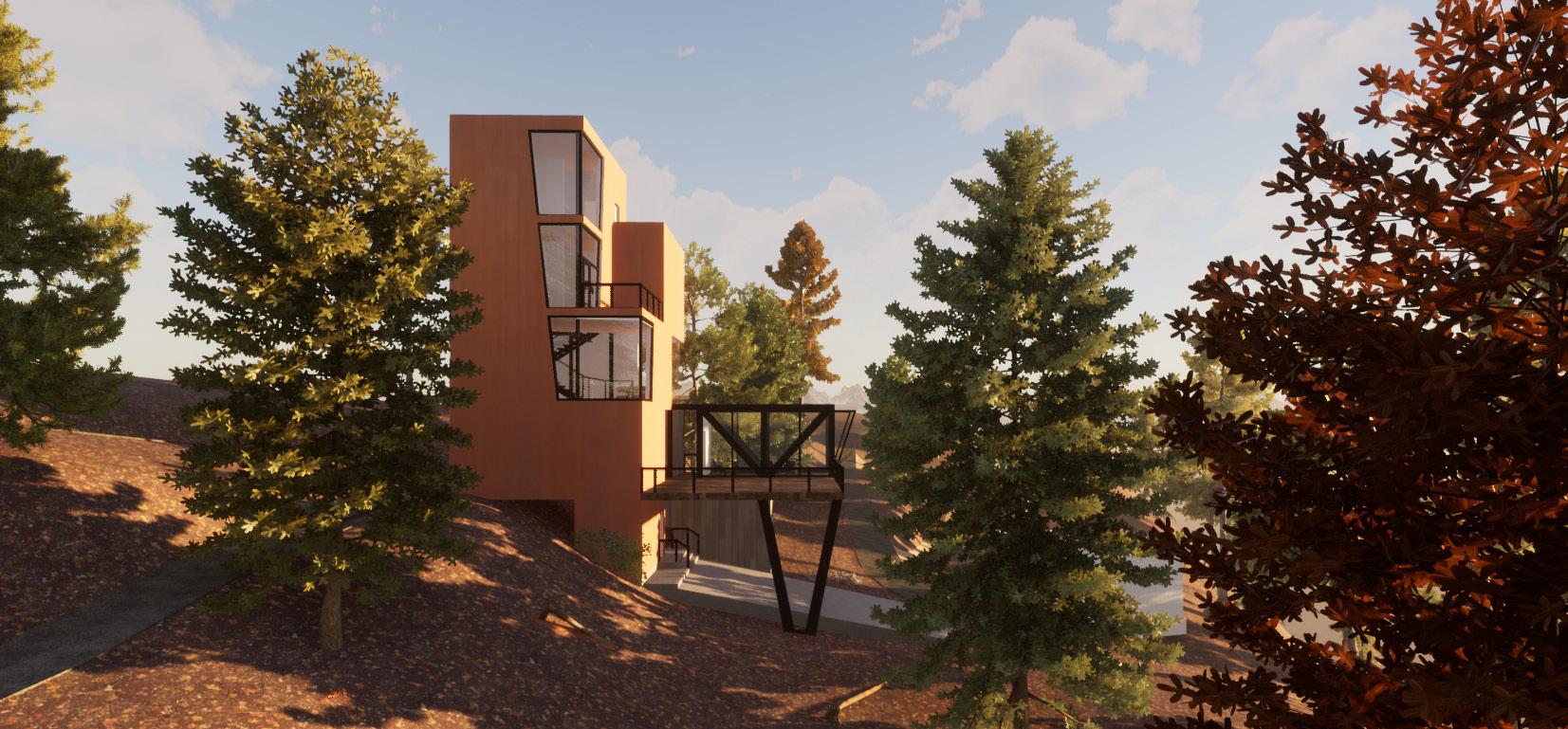
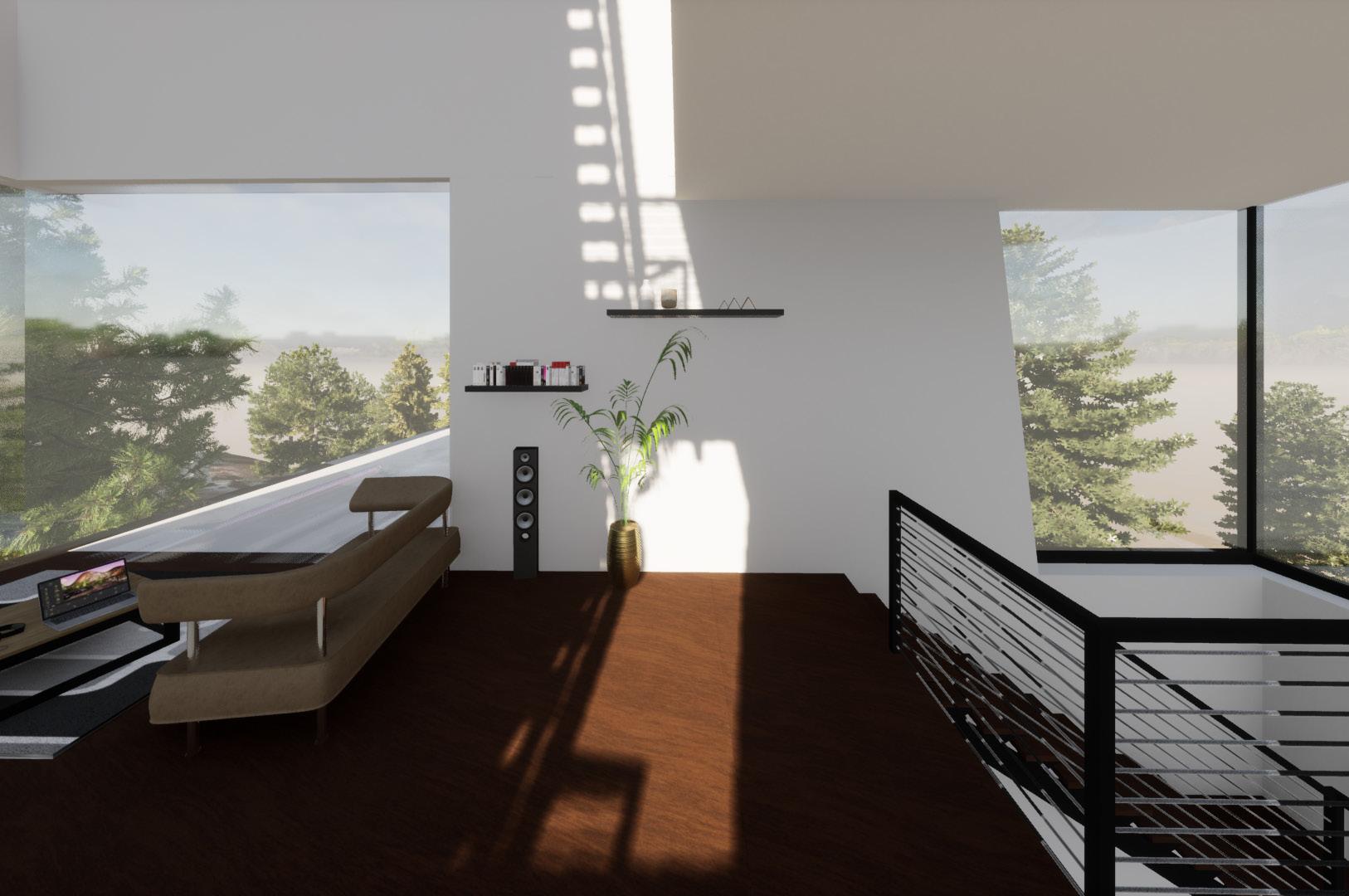
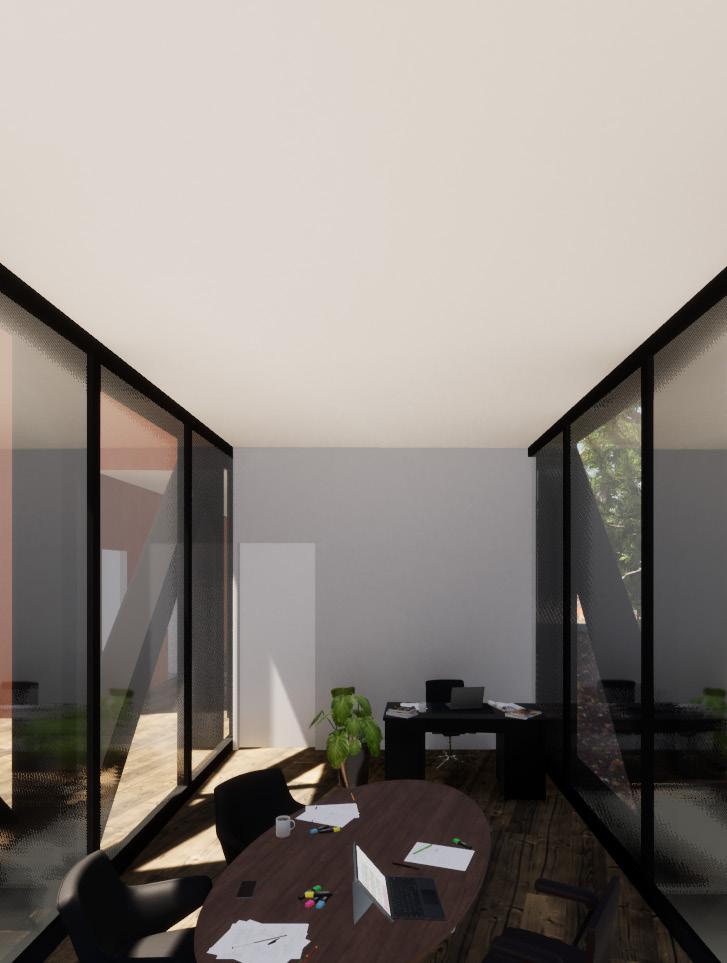
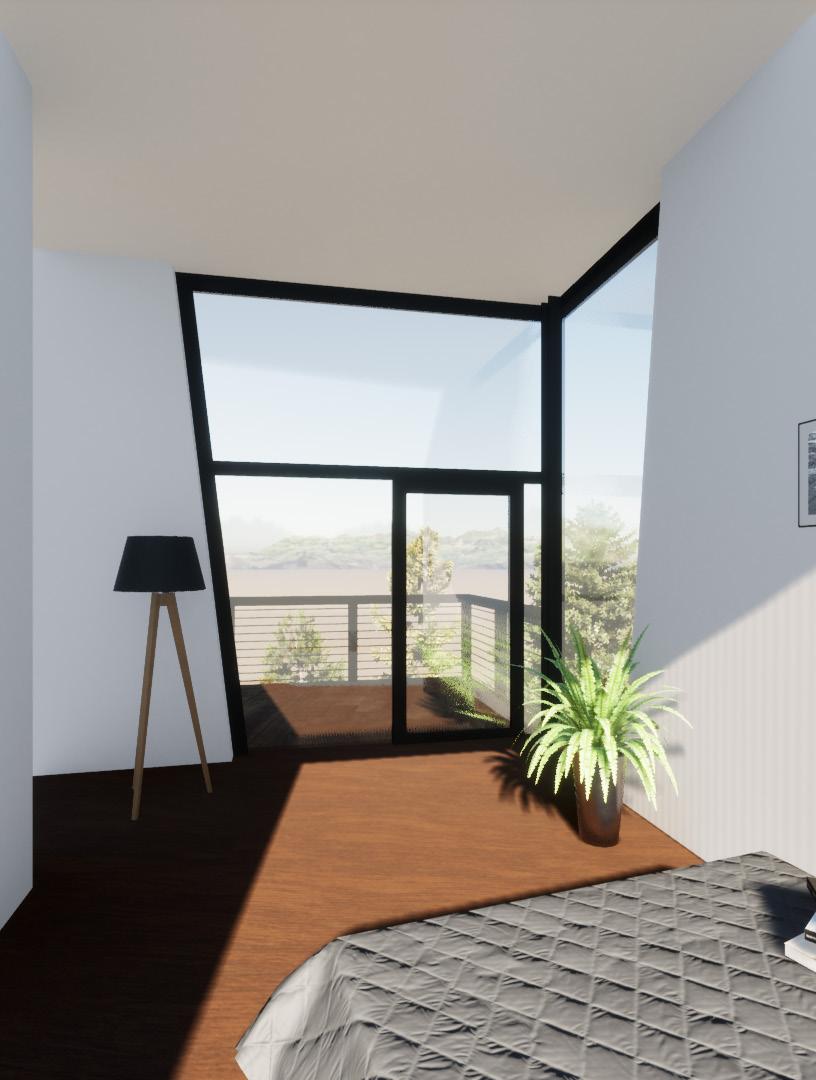
CPP Studio Fall 2022 Instructor: Giovanni FruttaldoLocated in the San Gabriel Mountains, Mount Wilson is a peak in the Los Angeles county National Forest. After visiting the site and investigating additional information, a list of multiple factors to consider was created. Within the list includes: sun circulation paths, wind direction, weather throughout the year, existing foliage, steepness within site, and views throughout. Furthermore, the use of specific fire proof materials were used for everything. The project houses two scientist in their private residence, includes a metting observation deck for the public, has multiple parkings spaces including one ada parling spot, a bathroom, and a research lab and office. The form and massing of the building is stepping to reflect the overall slope of the site. Beginning with a pancake like tower, the introduction of subractions from the volume allowed for the double height spaces and stepping elevations. Throughout the tower are multiple floor to ceiling windows to always have a connection to the views and experience of the different heights within the mountain.
MATURE FOLIAGE ACCESS POINTS SITE MOST VEGETATION VEGETATION SITE LEAST VEGATATION PAVED RD DIRT RD W SW S SE E NE N Dec Nov Oct Sep Aug Jul Jun May Apr Mar Feb Jan NW AVG LOW °F DAILY MEAN °F AVG PRECIPITATION INCHES AVG HIGH °F AVG PRECIPITATION DAYS (≥0.01 IN) >12 km/h >19 km/h >5 km/h >28 km/h 5665 5665 MOST STEEP STEEP LEAST STEEP
PRIVATE WATER STORAGE BACK OF HOUSE PUBLIC ADA ACCESSIBLE CIRCULATION CORE RESEARCH PRIVATE BEDROOMS
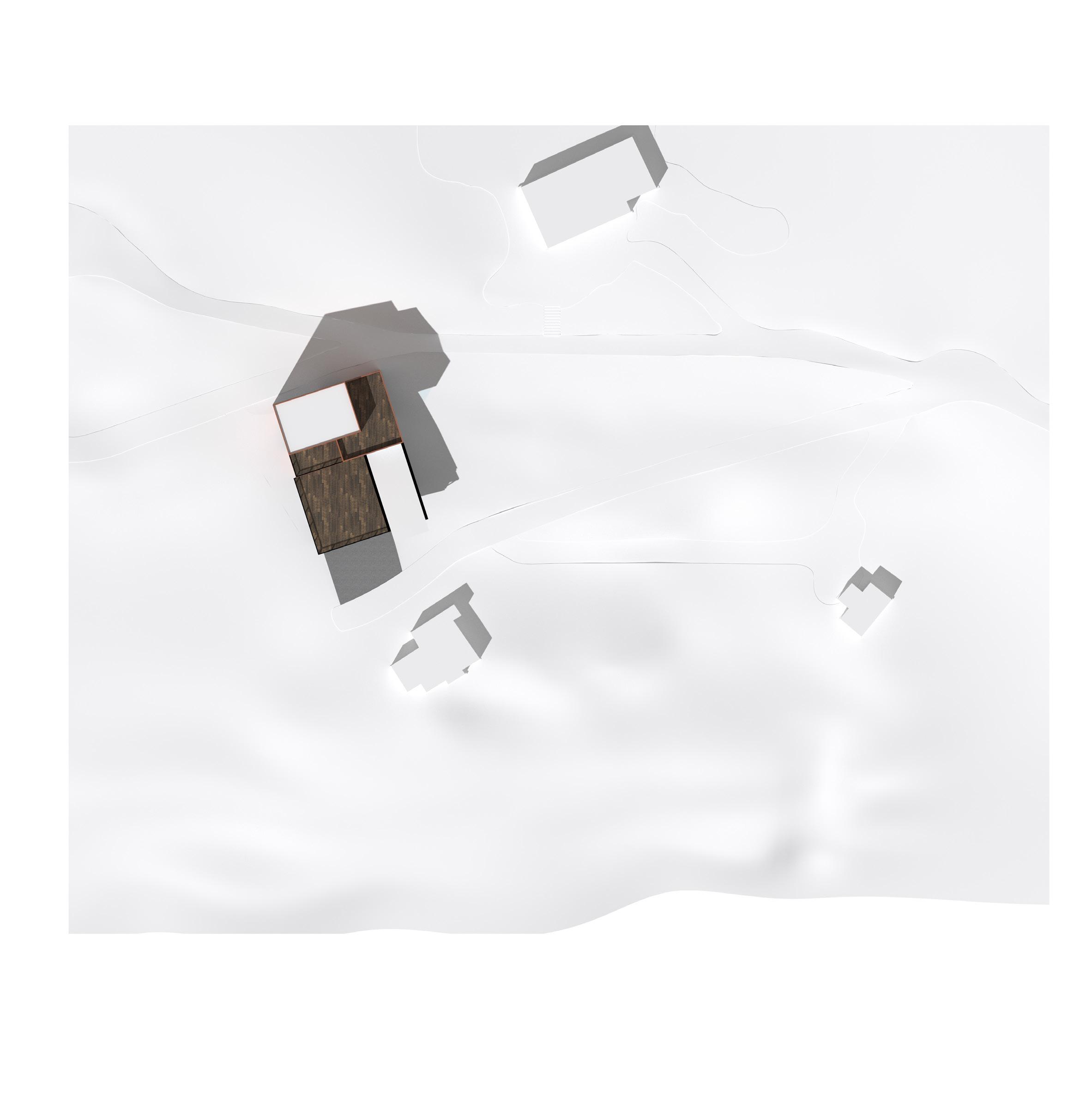
SITE PLAN SCALE 1/16"= 1'0" 0 50 100 10

25 0 10
25 0 10 SECTION B SCALE 1/4"= 1'0" +12'0" +24'0" +36'0" +48'0" -11'3" 0'0"
SECTION A SCALE 1/4"= 1'0"
A 1 2 3 4 C B D DN 15 0 10 FLOOR PLAN LEVEL 4 SCALE 1/4"= 1'0" A B C D 2 1 4 3 UP DN 15 0 10 FLOOR PLAN LEVEL 3 SCALE 1/4"= 1'0"
A B C D 1 2 3 4 5 6 7 UP DN 5'-0" 18'-0" 9'-0" 8'-0" 6'-0" 6'-6" 9'-0" 15 0 10 FLOOR PLAN LEVEL 1 SCALE 1/4"= 1'0" A B C D 1 2 3 4 DN UP 15 0 10 FLOOR PLAN LEVEL 2 SCALE 1/4"= 1'0"
EAST ELEVATION SCALE 1/4"= 1'0" UP UP 1'-0" 15 0 10 FLOOR PLAN GROUND LEVEL SCALE 1/4"= 1'0"
DECKING DECK
ALUMINUM DOOR TO FLOOR DETAIL
CEILING FURRING STRIP GYPSUM CEILING T GROOVE PANEL W8x10 1/2" OSB SHEATHING SEALANT BETWEEN FLASHING AND FRAME WINDOW HEAD TRIM WEATHERPROOF MEMBRANE WINDOW METAL PANEL TO FLOOR AND WINDOW DETAIL SCALE
3"= 1'0" SECTION DETAIL GAURDRAIL TO FLOOR CONNECTION SCALE 3”= 1’0” W8x10 EDGE TRIM WOOD DECKING 5" SQUARE BASEPLATE COLOR MATCH VINYL VAPS CONCEL ATTACHMENT HARDWARE POWDER COATED STEEL POST CABLE WATERPROOF LAYER MOISTUREPROOF LAYER BATT INSULATION PLASTIC PEDESTAL RIGID INSULATION STRUCTURAL BOTTOM PLATE POWDER COATED STEEL TOP RAIL
PAN FLASHING W8x10 ALUMINUM THRESHOLD THERMAL BREAK CORK UNDERLAYMENT LAMINATED FLOOR BATT INSULATION METAL DECKING CLIP SHUTTER CORNER JOINT W10x88
FLASHING
SCALE : 3"= 1'0"
:
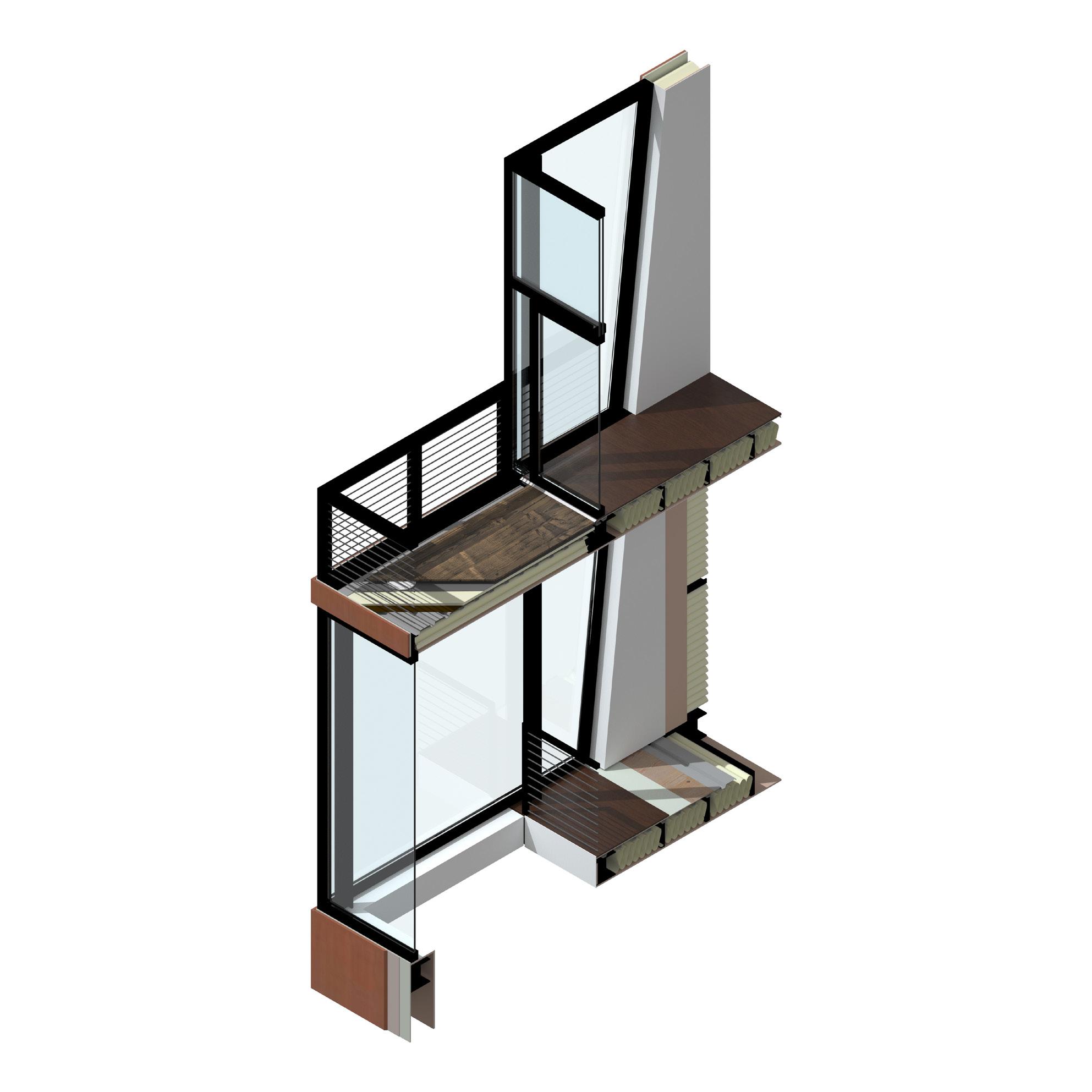
PLYWOOD SUBFLOOR LAMINATE FLOORS GYPSUM BOARD T-GROOVE METAL PANEL WEATHERPROOF MEMBRANE 1/2" OSB SHEATHING 2X10" C CHANNEL STEEL W10X88 ALUMINUM HINGED DOOR W TOP FIX ATTACHMENT CONTINUOUS SHEETMETAL FLASHING BATT INSULATION METAL DECKING POWDER COATED STEEL TOP RAIL BATT INSULATION CABLE WOOD DECKING PAVERS METAL STRUCTURE BOTTOM PLATE MOISTUREPROOF LAYER PLASTIC PEDESTAL WATERPROOF LAYER RIGID INSULATION CORK UNDERLAYMENT 3'-6" 0'-11" 0'-7" 1'-0" 3'-0" 4'-0" 15 0 10 STAIR DETAIL SECTION SCALE 1/4"= 1'0"
CLA Tower - Architecture School
Spring 2022
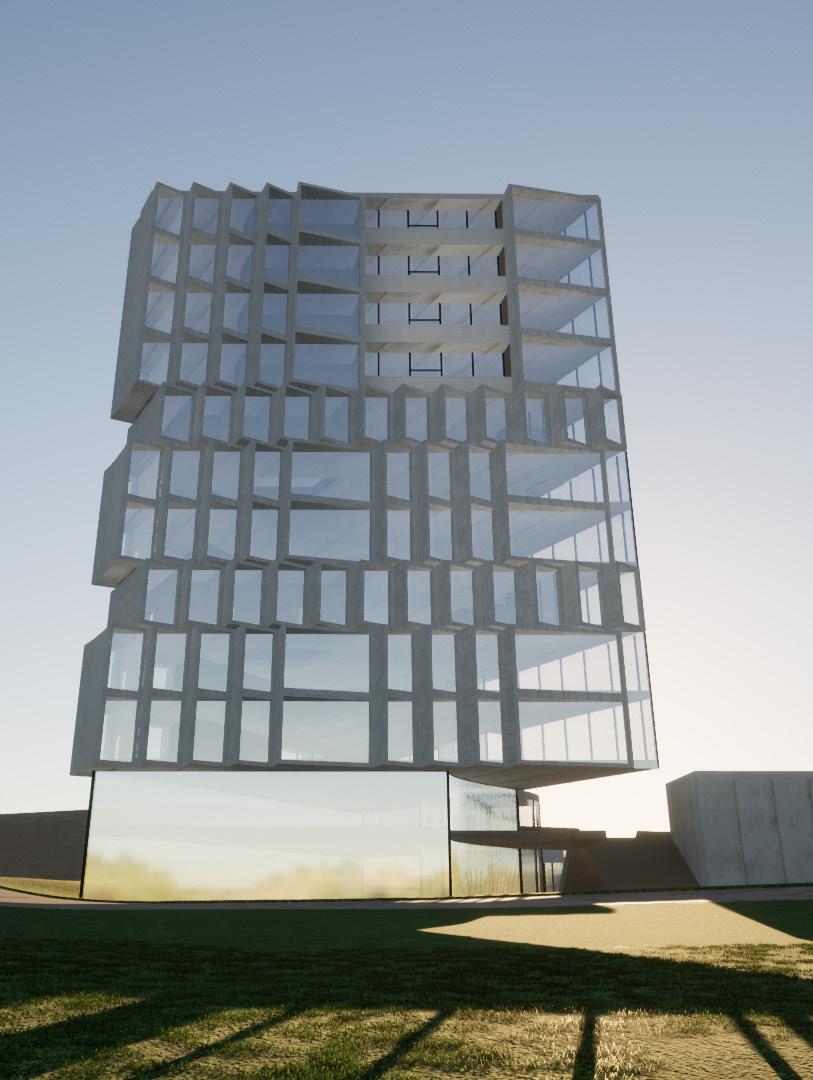
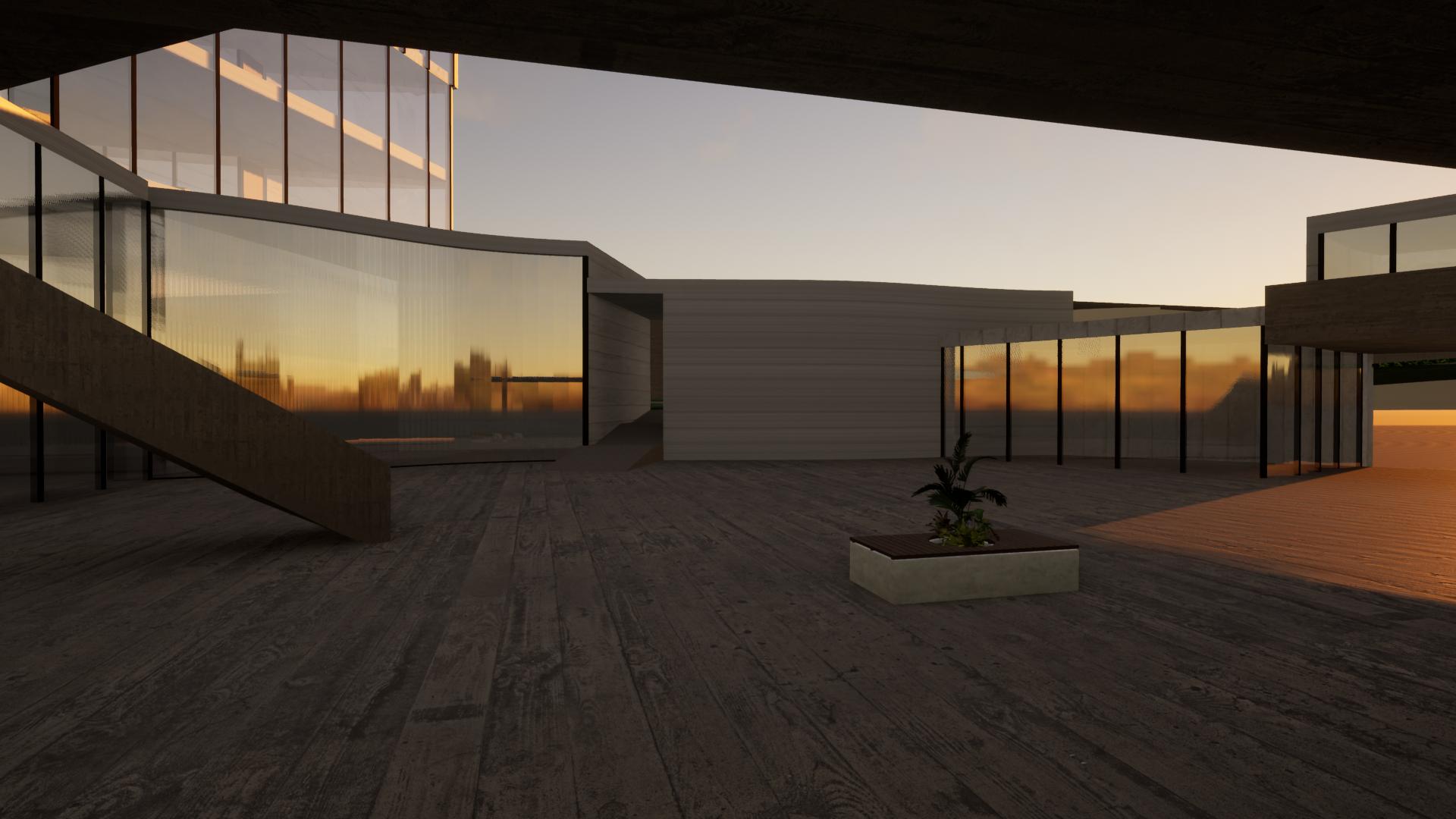
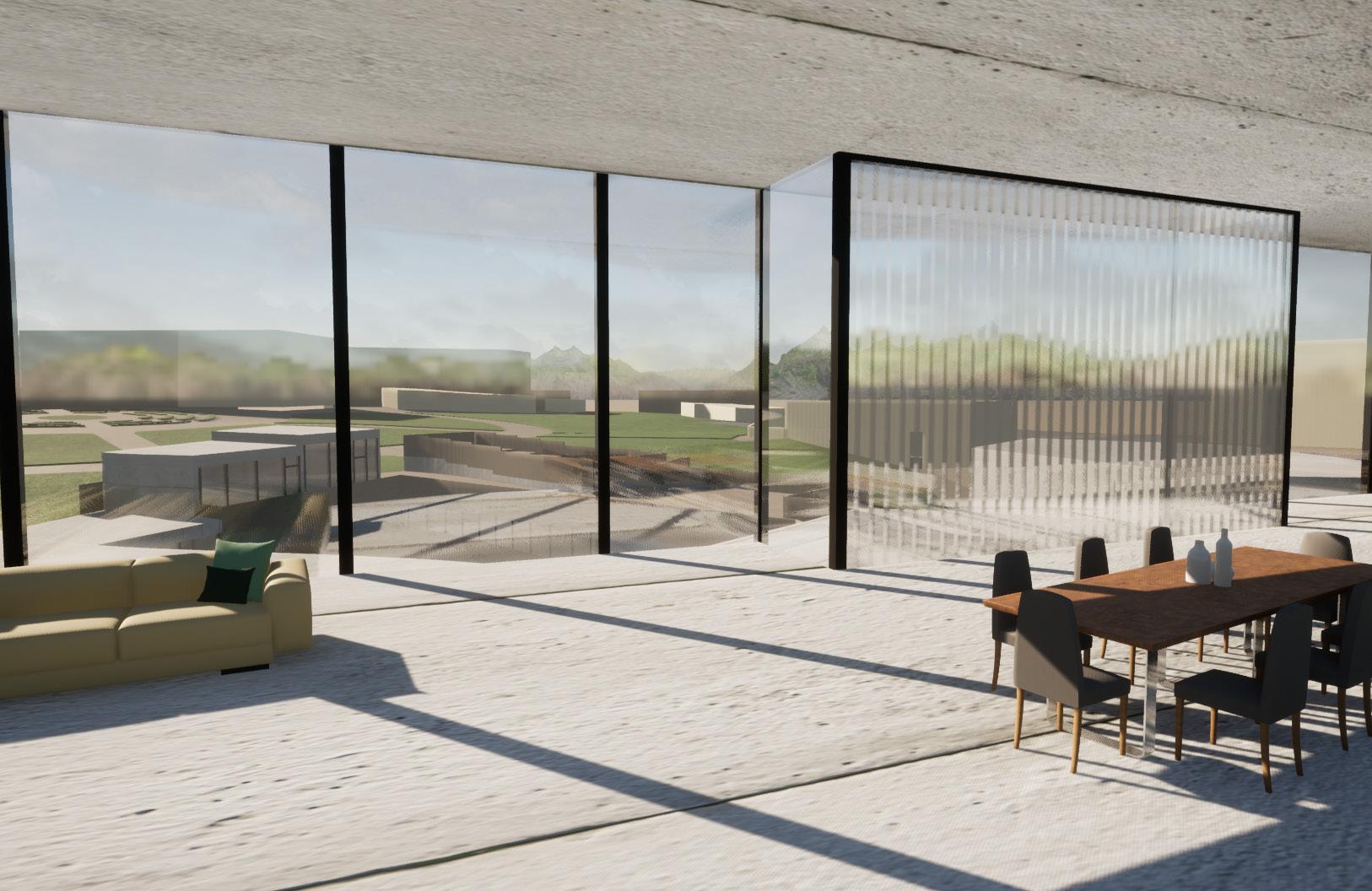
Instructor: Maria SviridovaWhen creating the school of architecture, the main intention was to incorporate the site with the plinth and tower, while incorporating a students point of view. Taking into consideration the surroundings of the site, the plinth reflects the openness of the campus. There are entrances from all points and levels in the site in order to allow circulation throughout to be most efficient and convenient. Maintaining the intimacy of the Japanese Garden and pond on the Southwest of the site, most entrances to private spaces are on the ground level of the plinth. The more social gathering spaces are located on the second level of the plinth. The gallery, located kissing the edges of the site, is a double height space that curves into the offset lobby space of the tower, therefore guiding circulation and forcing the entrance of the tower to be the only entrance through the plinth. The facade of the tower is made with the use of concrete modules rotated at a 30 degree angle in order to maximize natural light while blocking out the heat of the sun. However, the plaza side does not receive as much sunlight which is why it is made of curtain walls and channel glass.



COLLEGE OF ENGINEERING
PARKING STUDENT SERVICES 10 0 50 150
ROSE GARDEN
PROGRAM + CIRCULATION DIAGRAM SCALE: NTS LECTURE GALLERY SEMINAR FABRICATION LAB MODEL SHOP + STORAGE CAFE SITE ACCESS TOWER ACCESS STAIRS + RAMPS + ELEVATORS STUDIO ADMINISTRATION
DN DN DN 0 5 25 50 SCALE 1/16”= 1’0” 4. SEMINAR SPACES 7. OUTDOOR LECTURE SPACE 4 4 7 B A
B A UP UP DN 0 5 25 50 SCALE 1/16”= 1’0” 1. GALLERY 2. MODEL SHOP/ STORAGE 3. CAFE 4. SEMINAR SPACES 5. FAB LAB 6. LECTURE 8. LOBBY 9. LOUNGE 1 2 3 4 4 5 6 8 9
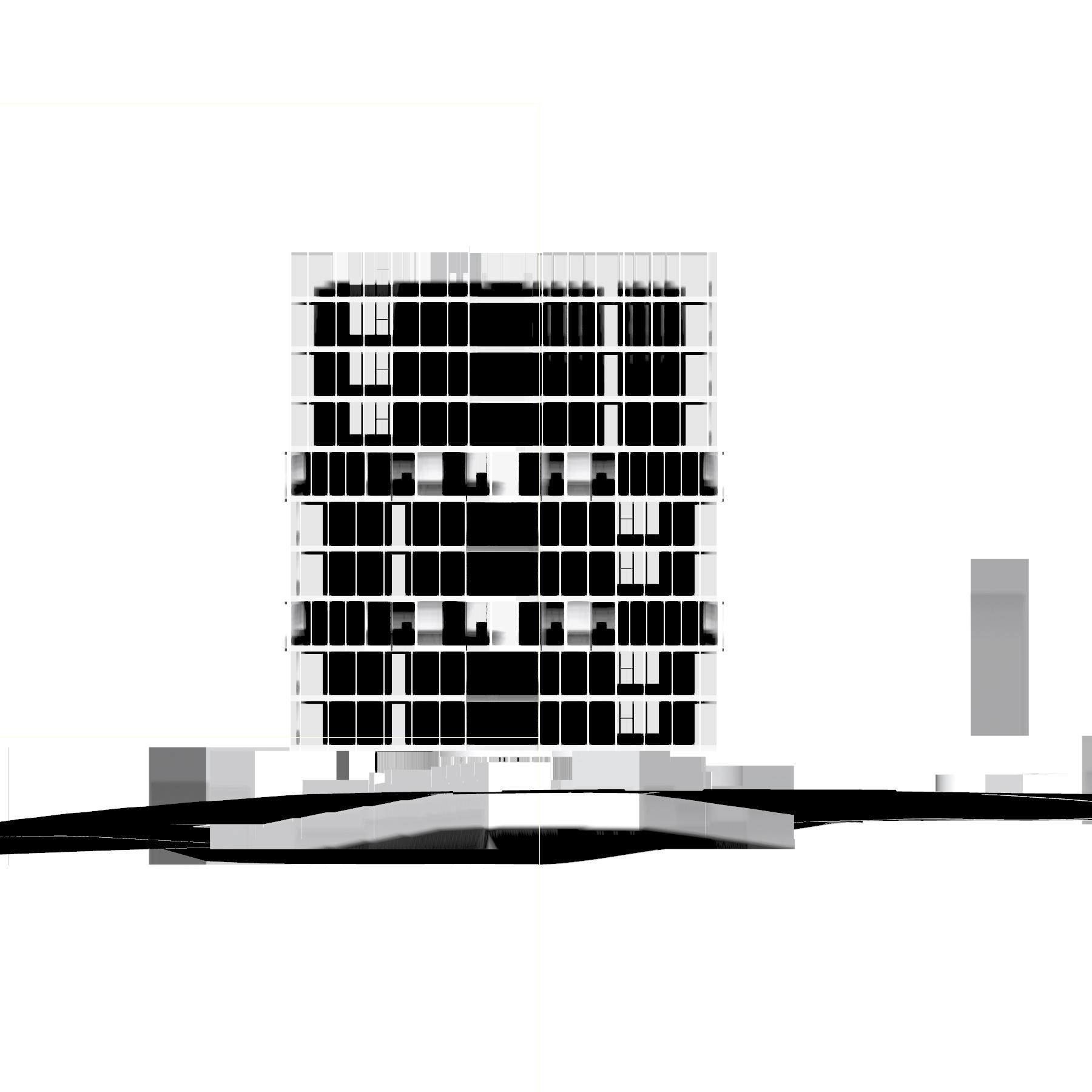
0 5 25 50 100 NORTH ELEVATION SCALE 1/16”=1’ OPEN TO ABOVE 19 20 21 B A B A SCALE 1/16”=1’ 10. STUDIO SPACES 11. BREAKOUT ROOMS 12. KITCHEN 13. BREAK ROOM 14. OFFICES 15. DIRECTOR 16. MEETING 17. SECRETARY 18. FILES 19. DIRECTOR ASSISTANT 20. MAIL 10 11 11 12 13 14 14 14 14 14 14 14 14 14 14 15 16 17 18 22 10 10 OPEN TO ABOVE 19 20 21 B A B A SCALE 1/16”=1’ 10. STUDIO SPACES 11. BREAKOUT ROOMS 12. KITCHEN 13. BREAK ROOM 14. OFFICES 15. DIRECTOR 16. MEETING 17. SECRETARY 18. FILES 19. DIRECTOR ASSISTANT 20. MAIL 21. TECHNICAL 22. PINUP SPACE 10 11 11 12 13 14 14 14 14 14 14 14 14 14 14 15 16 17 18 22 10 10


0 5 25 50 100 SECTION A SCALE 1/16”=1’


5 25 50 100 SECTION B SCALE 1/16”=1’ FIGURE GROUND CONCEPT DIAGRAM
0


ENV Library and Archives Proposal
Spring 2021
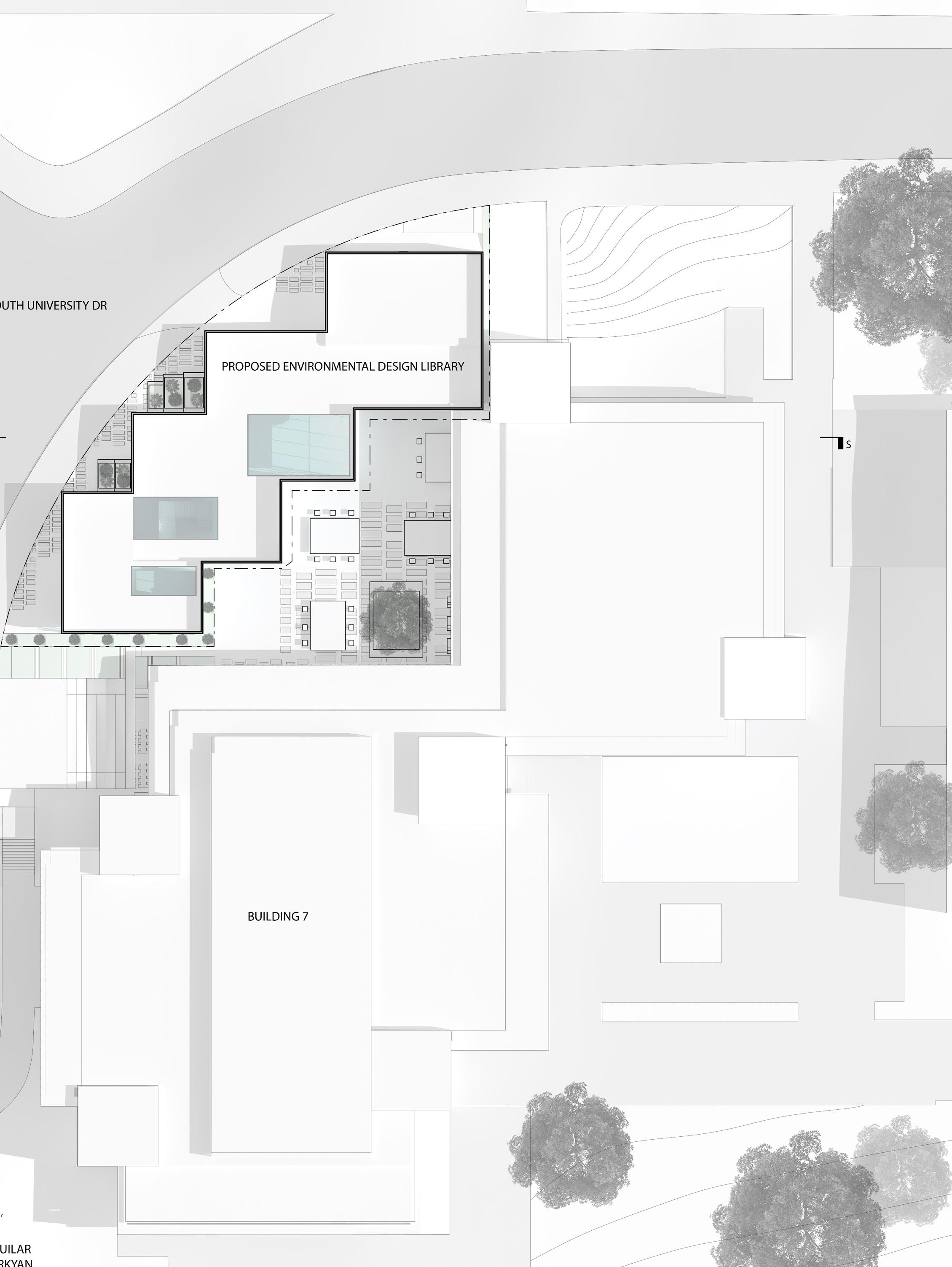
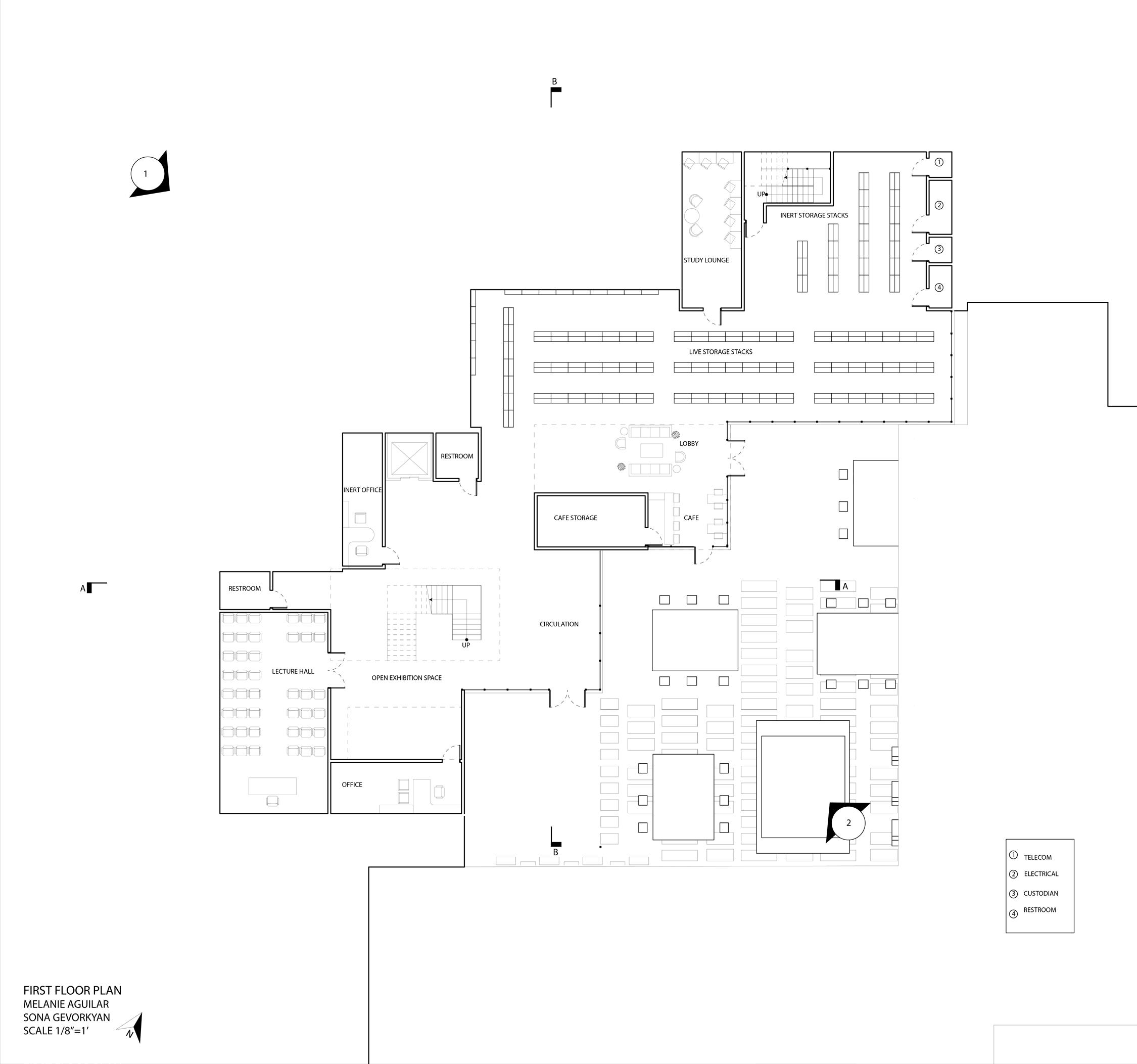
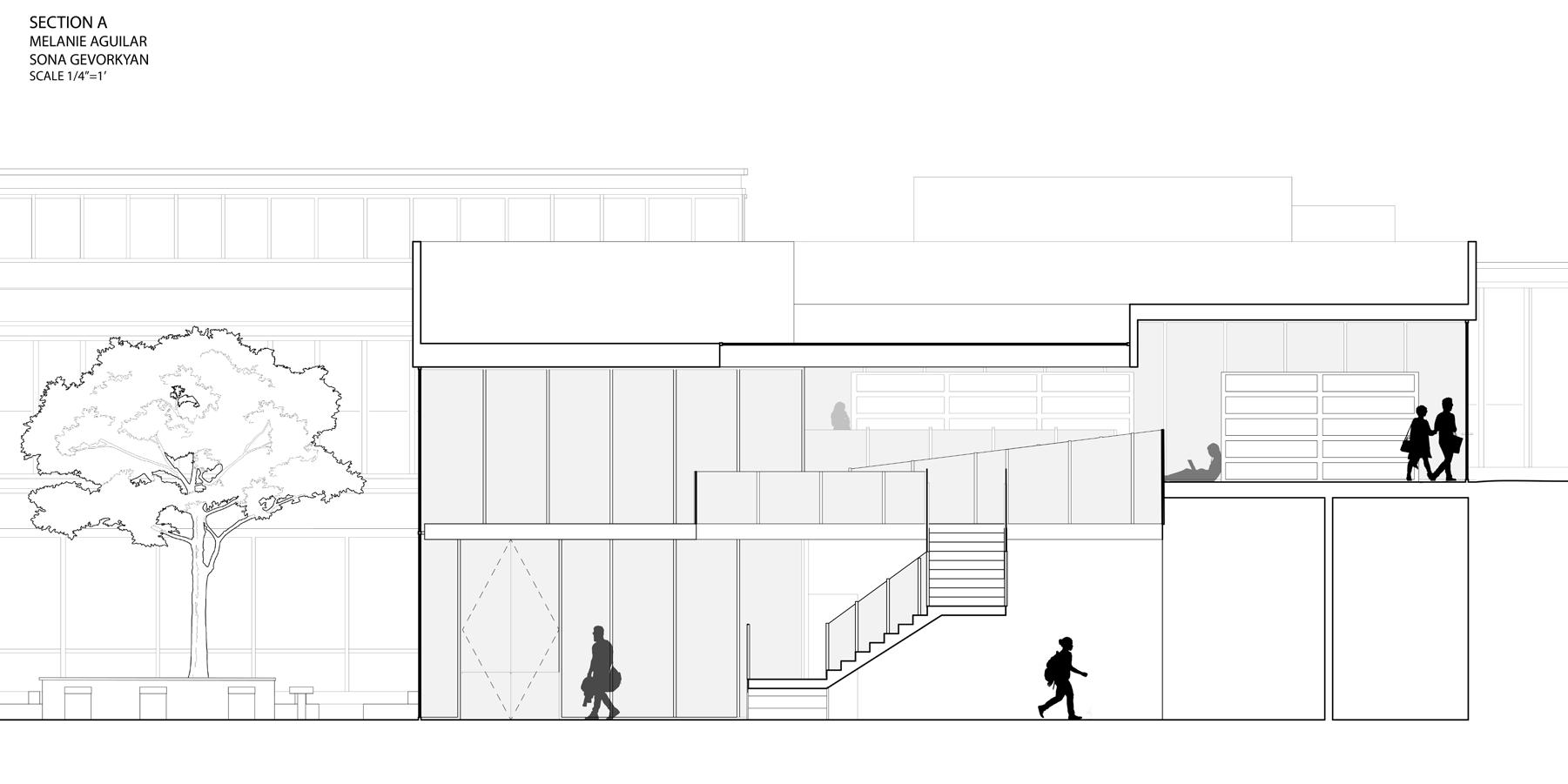
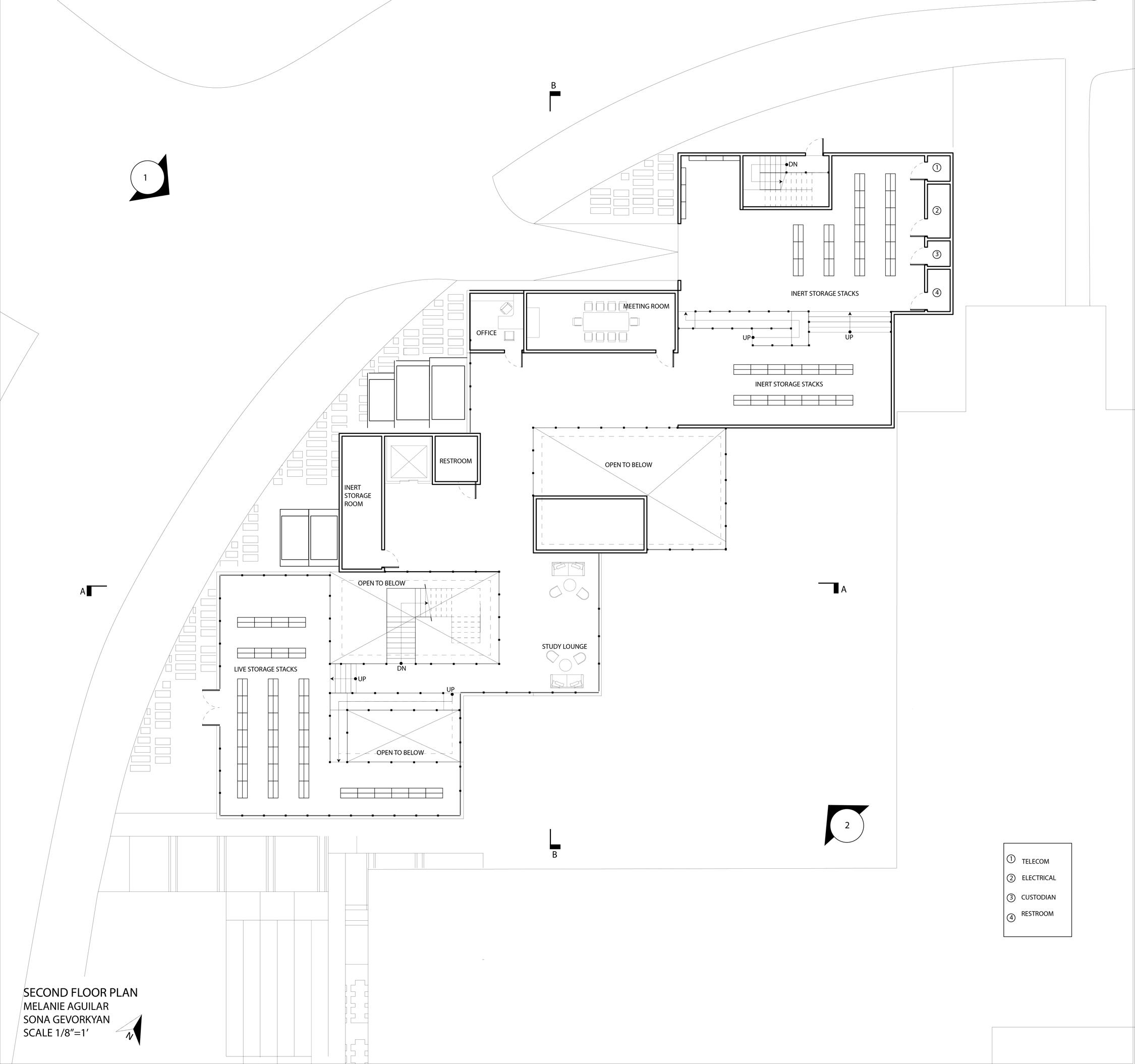
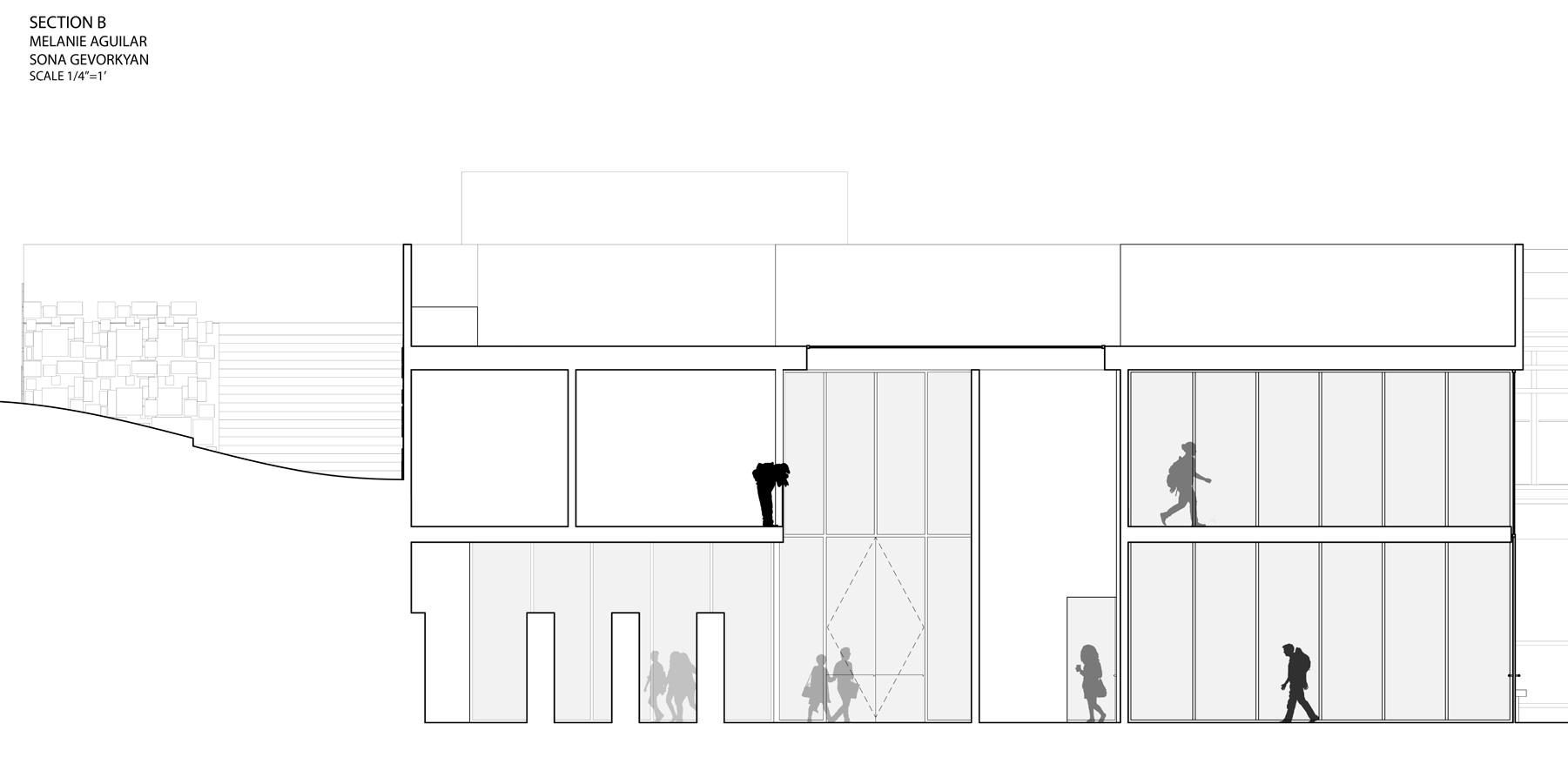
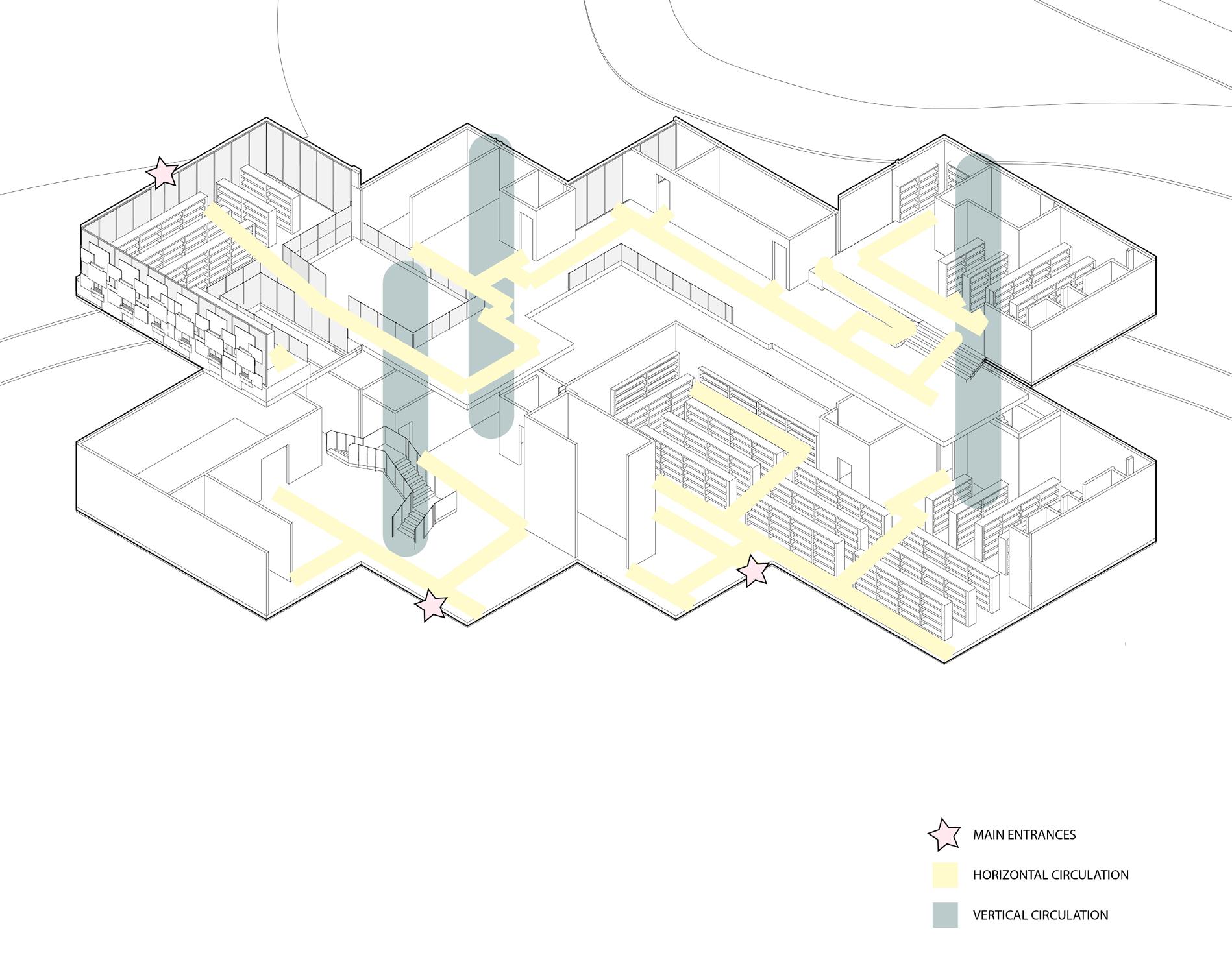
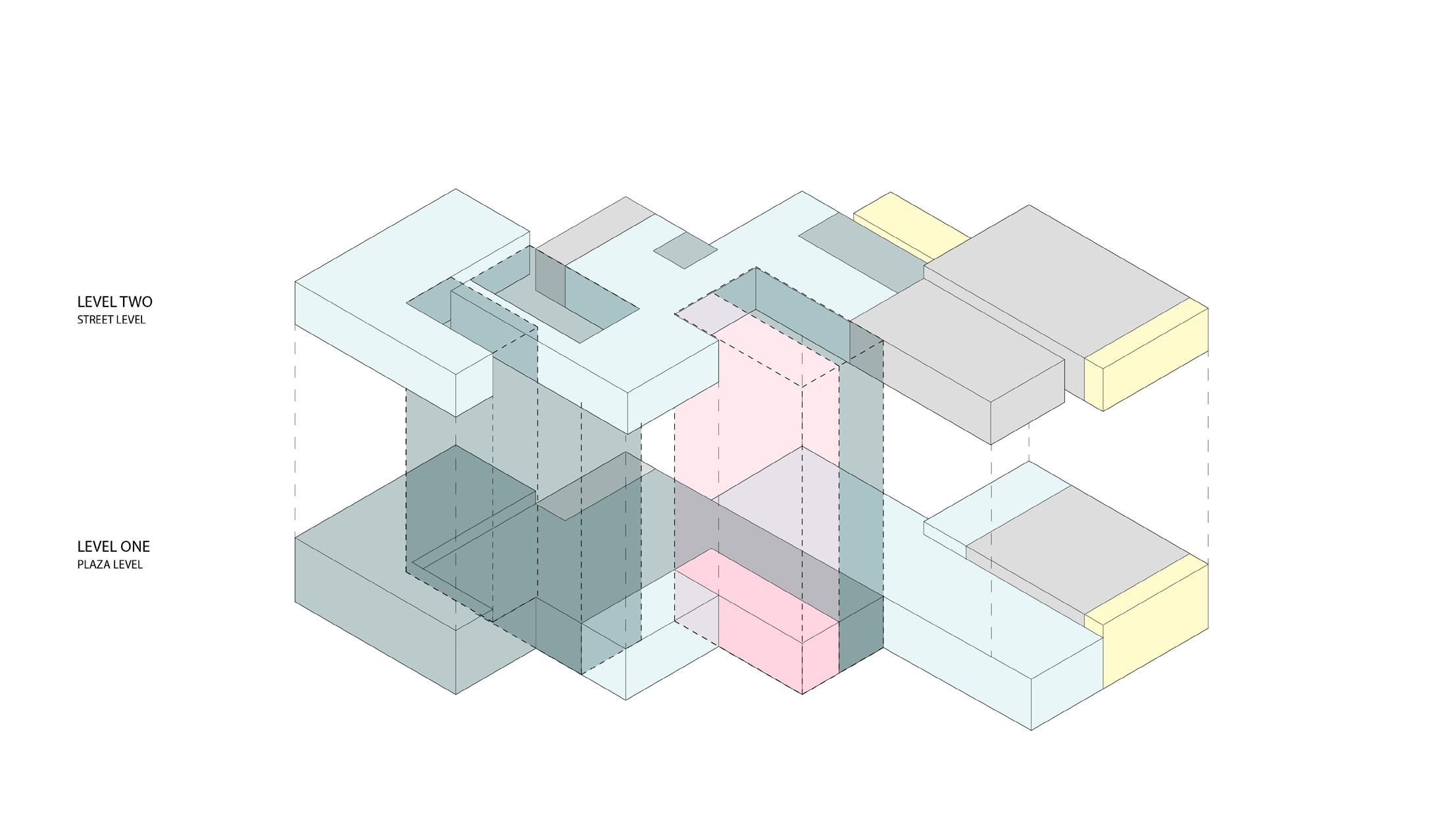
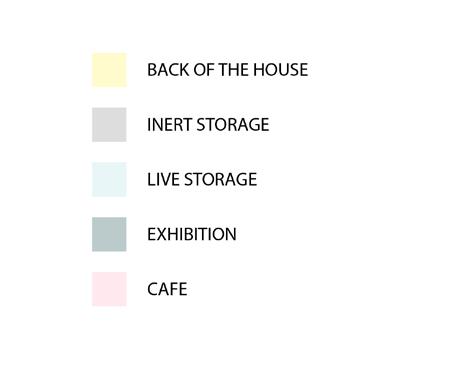
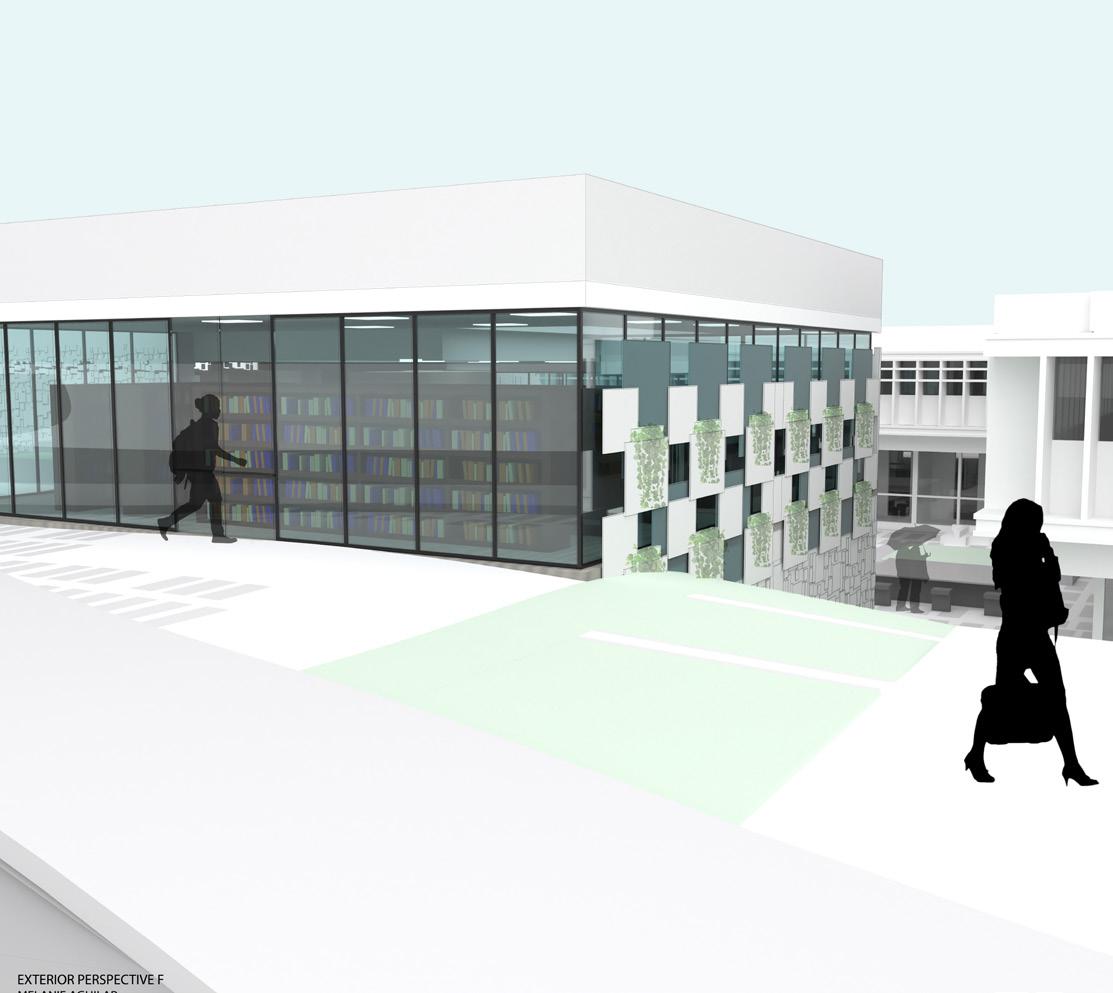
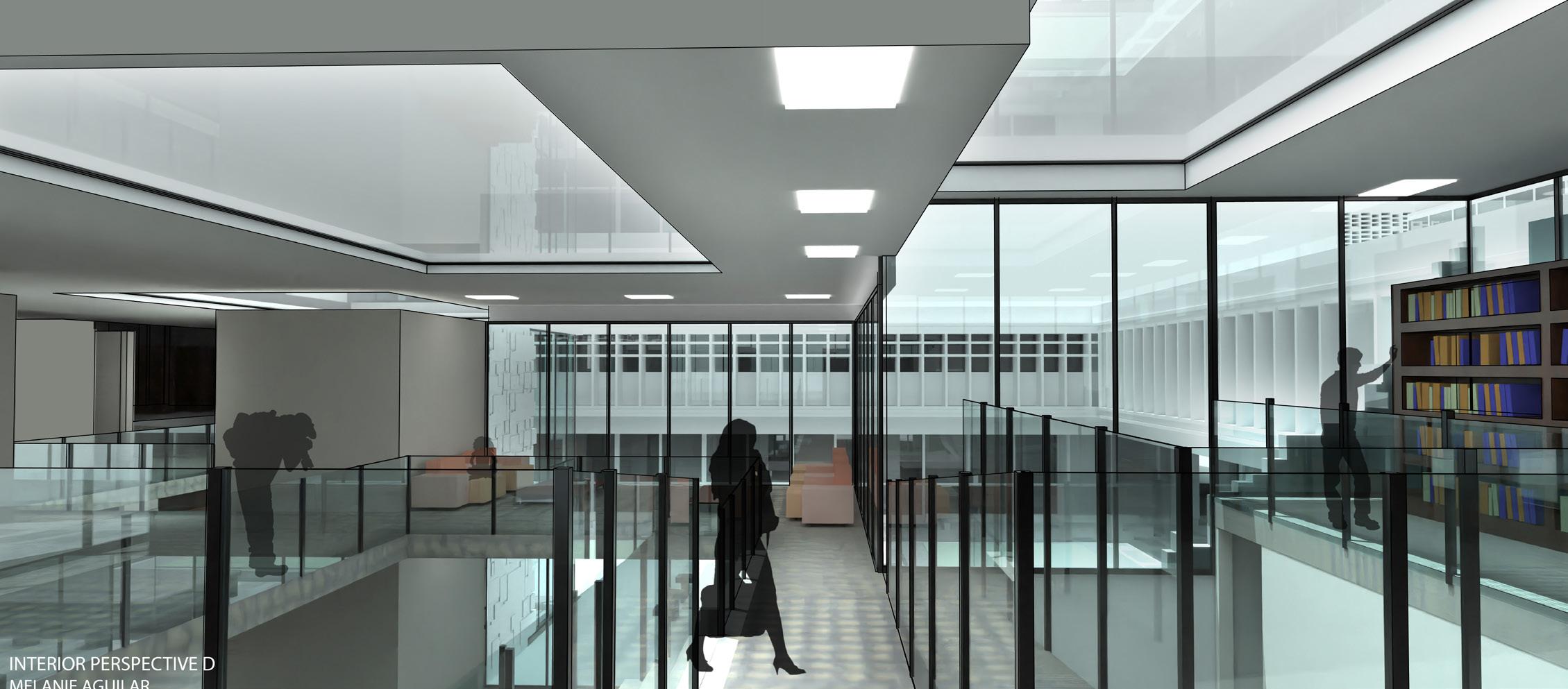
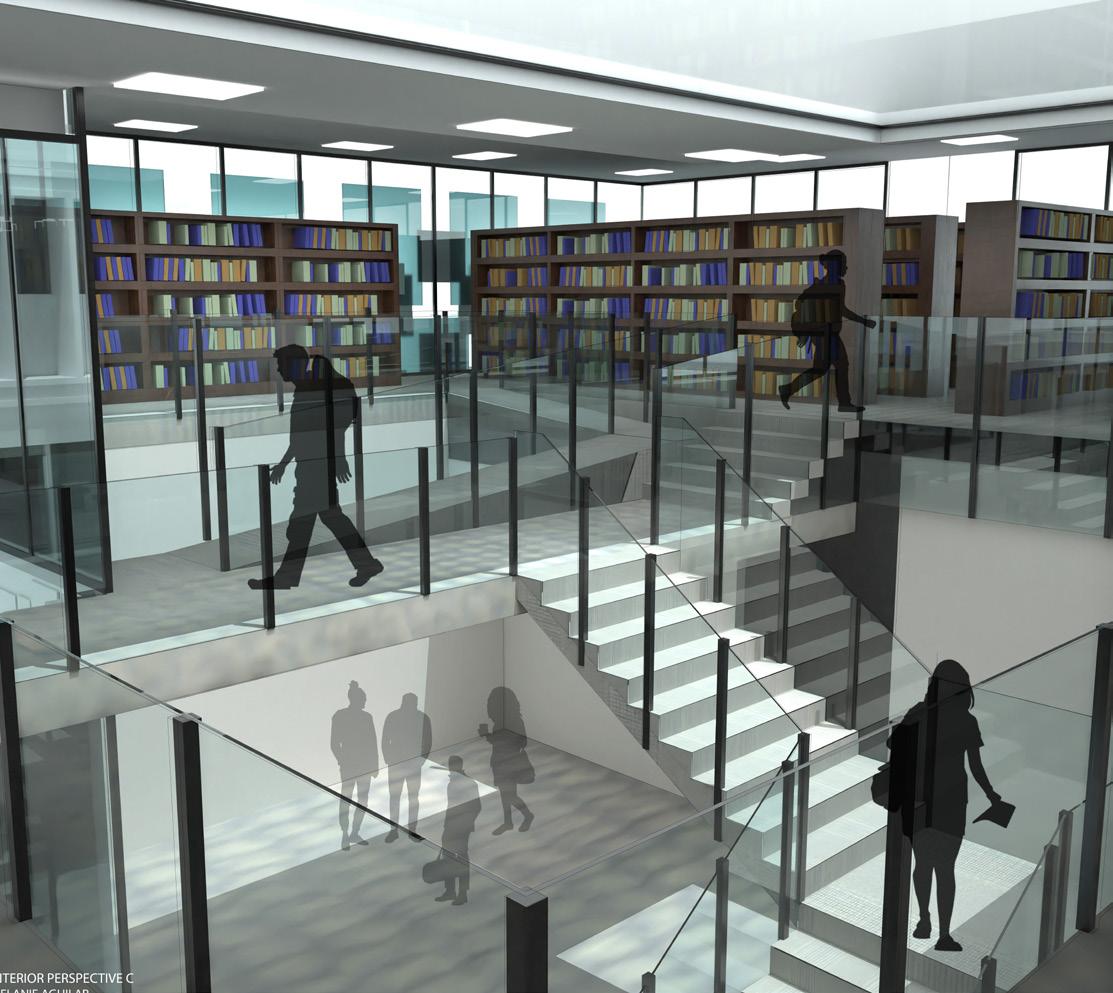
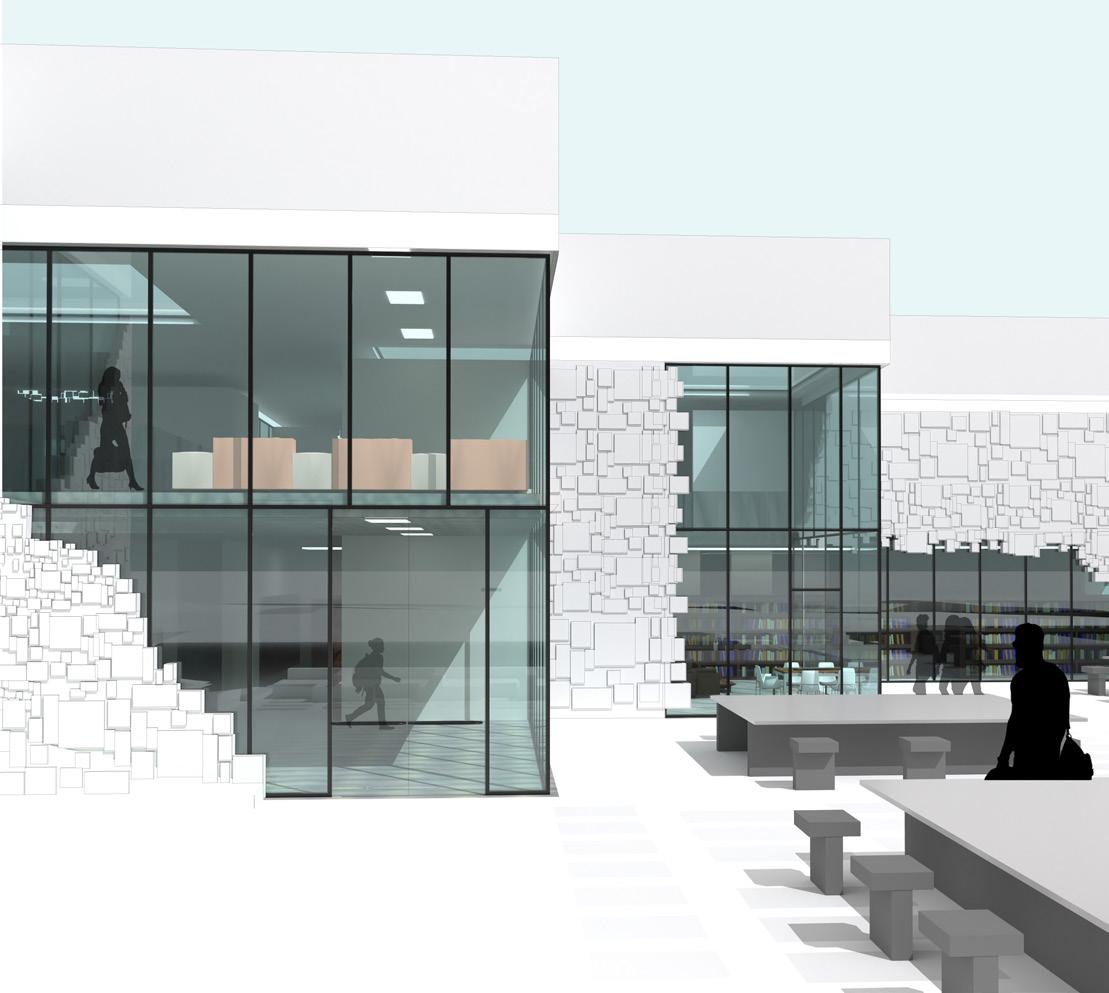
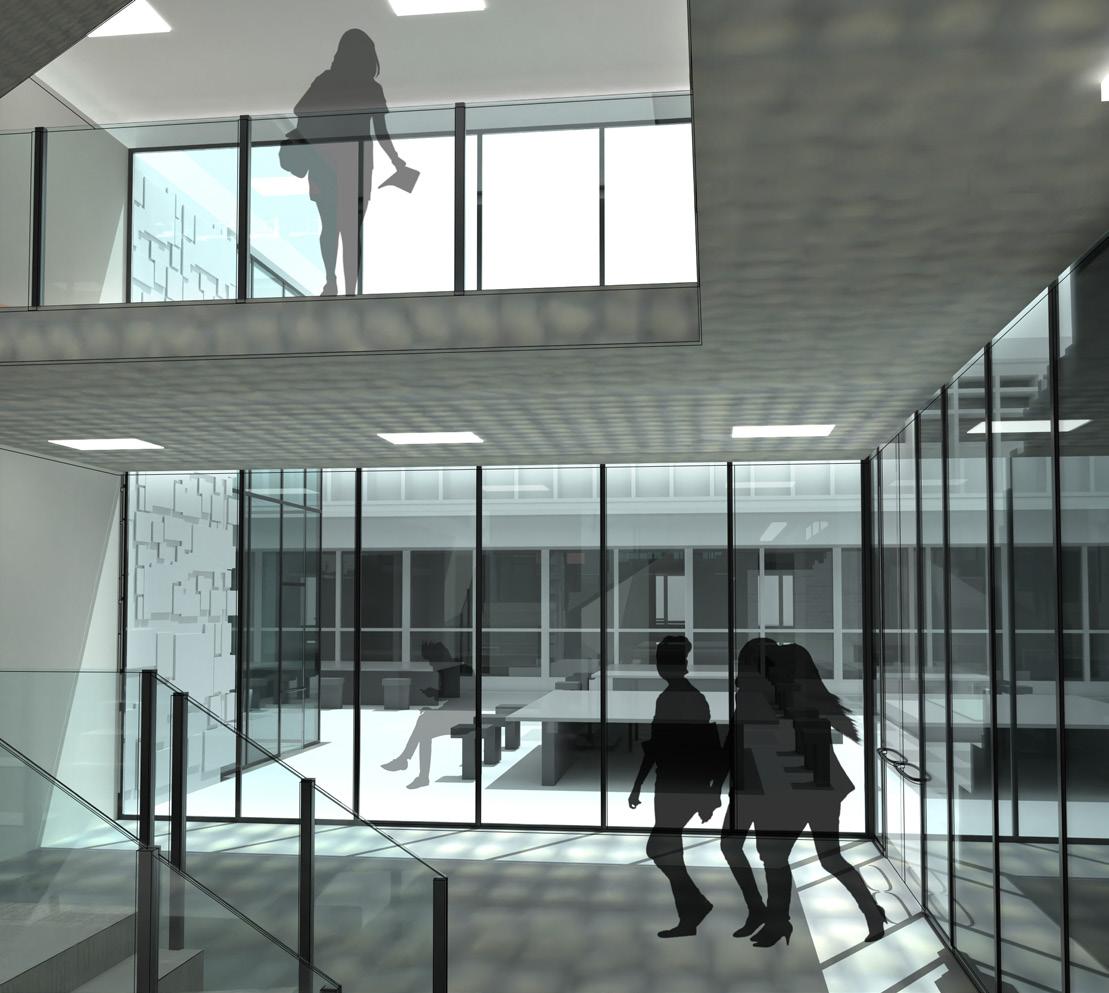
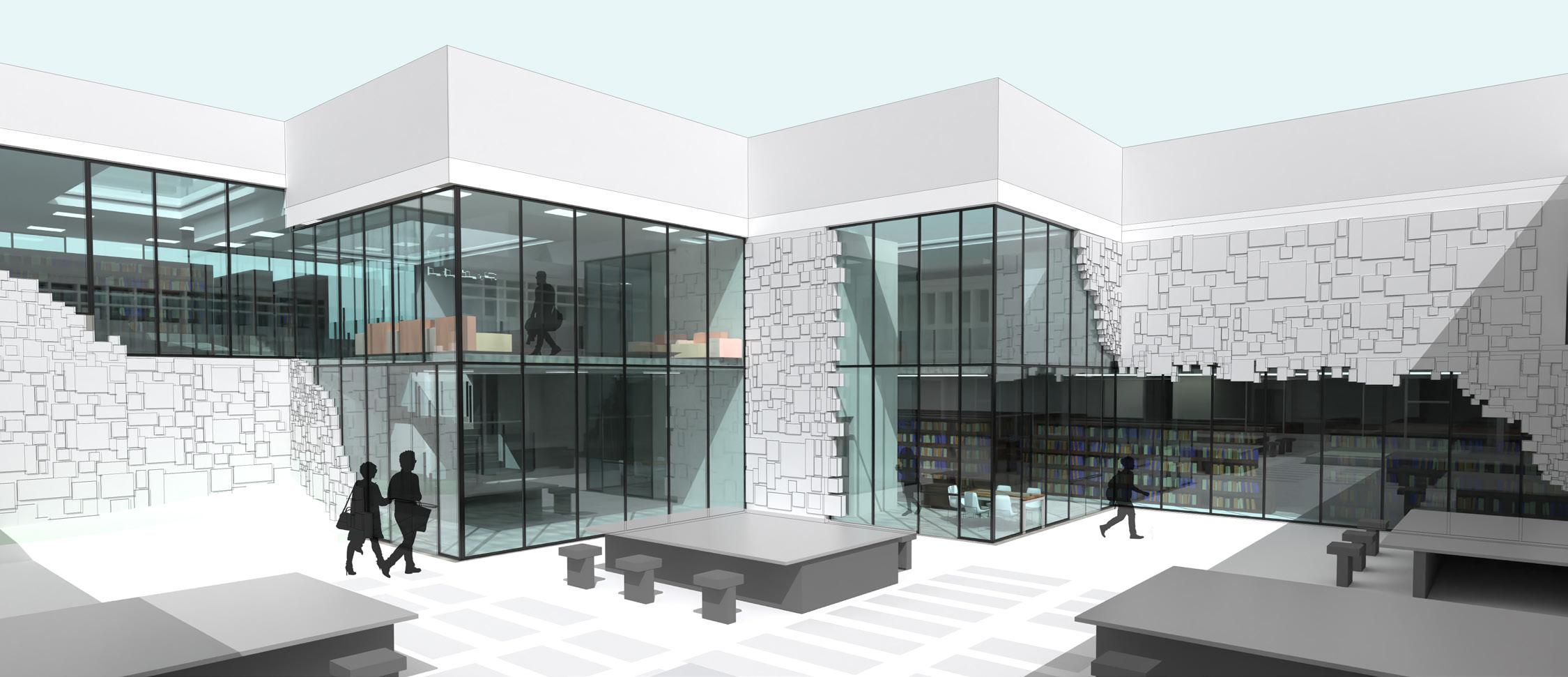
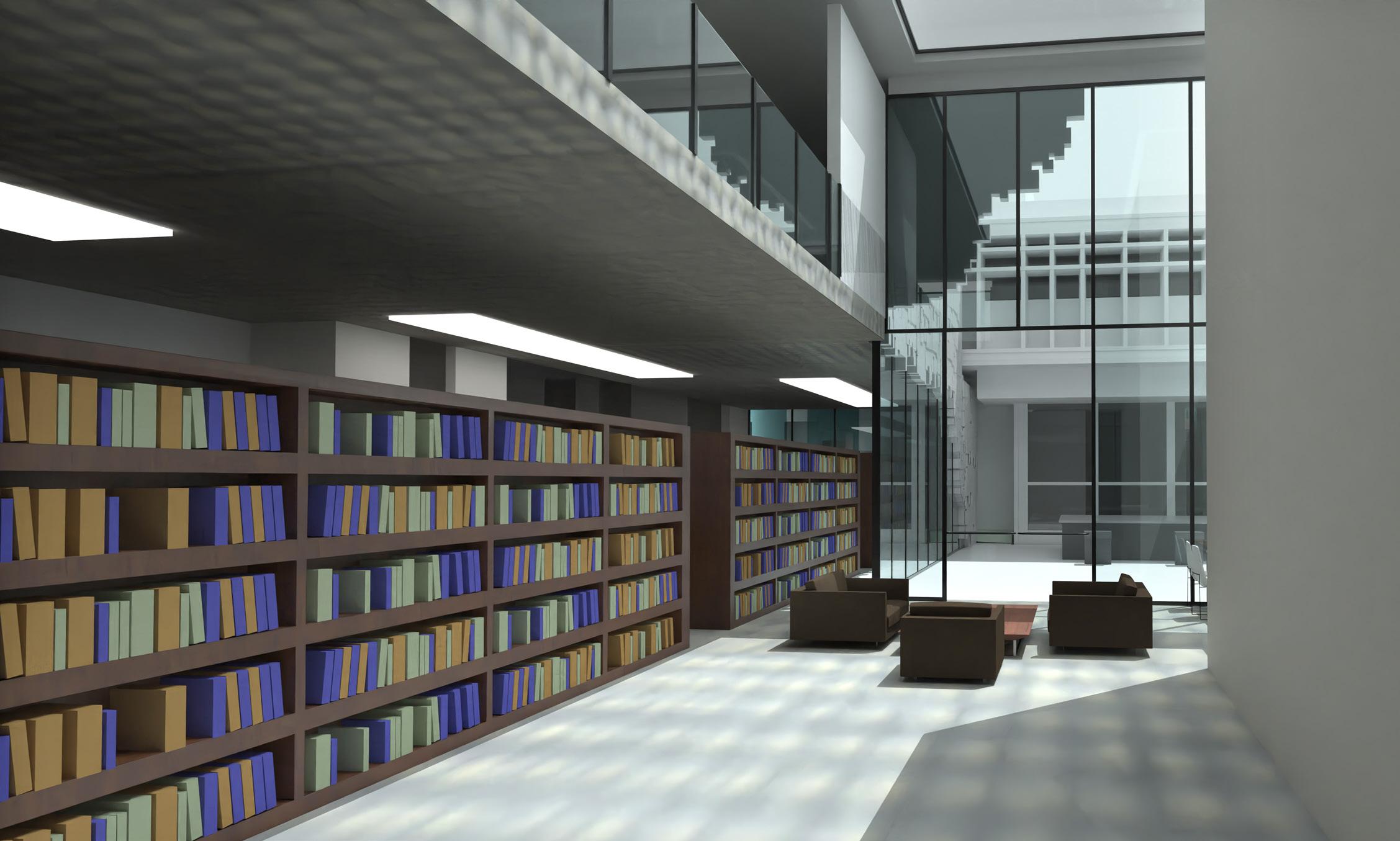
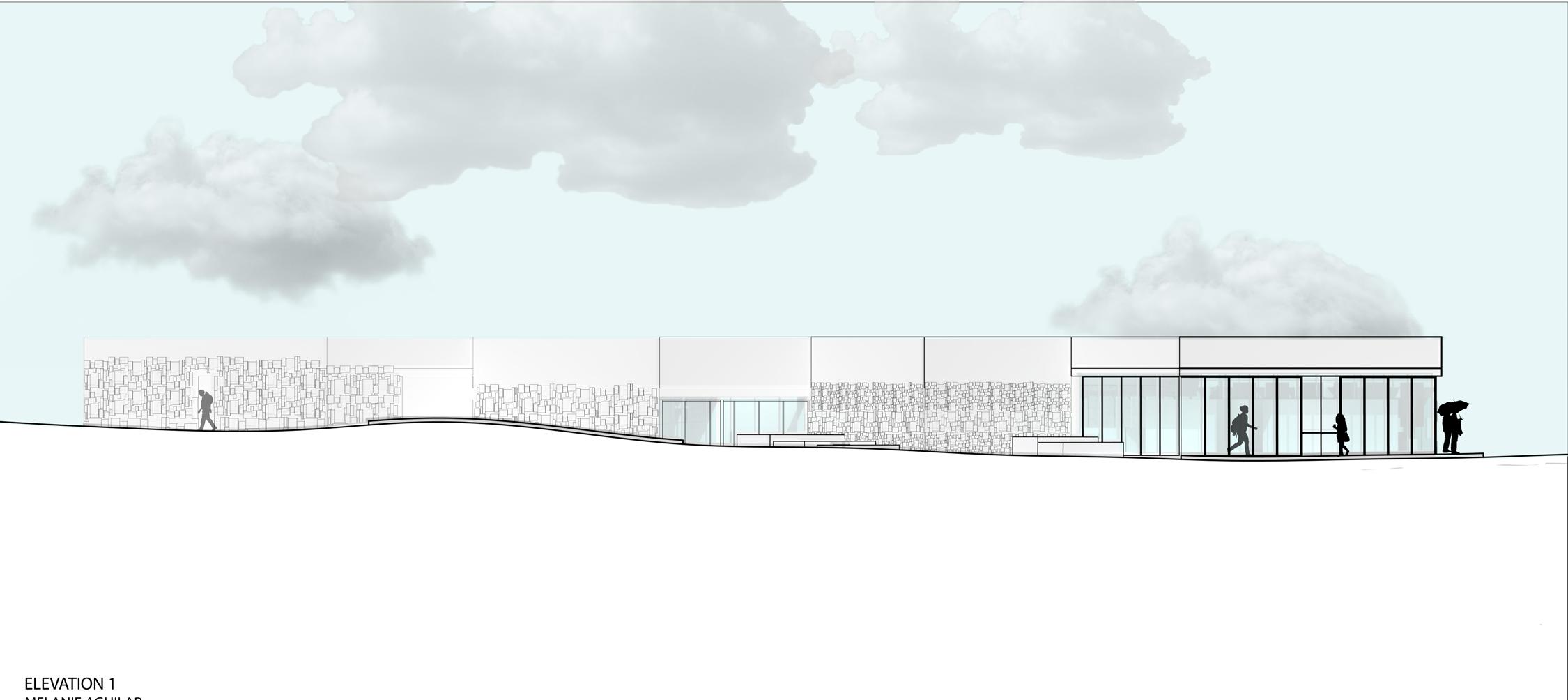
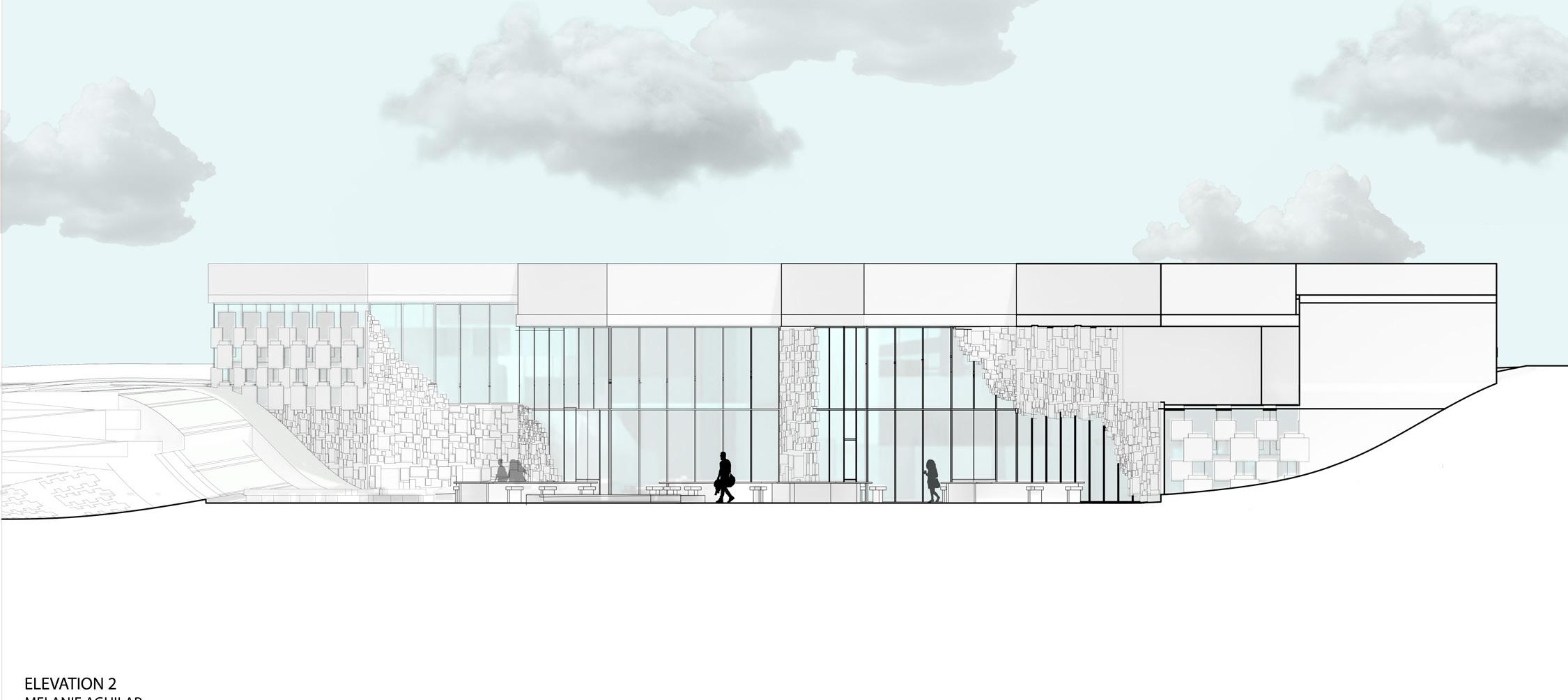
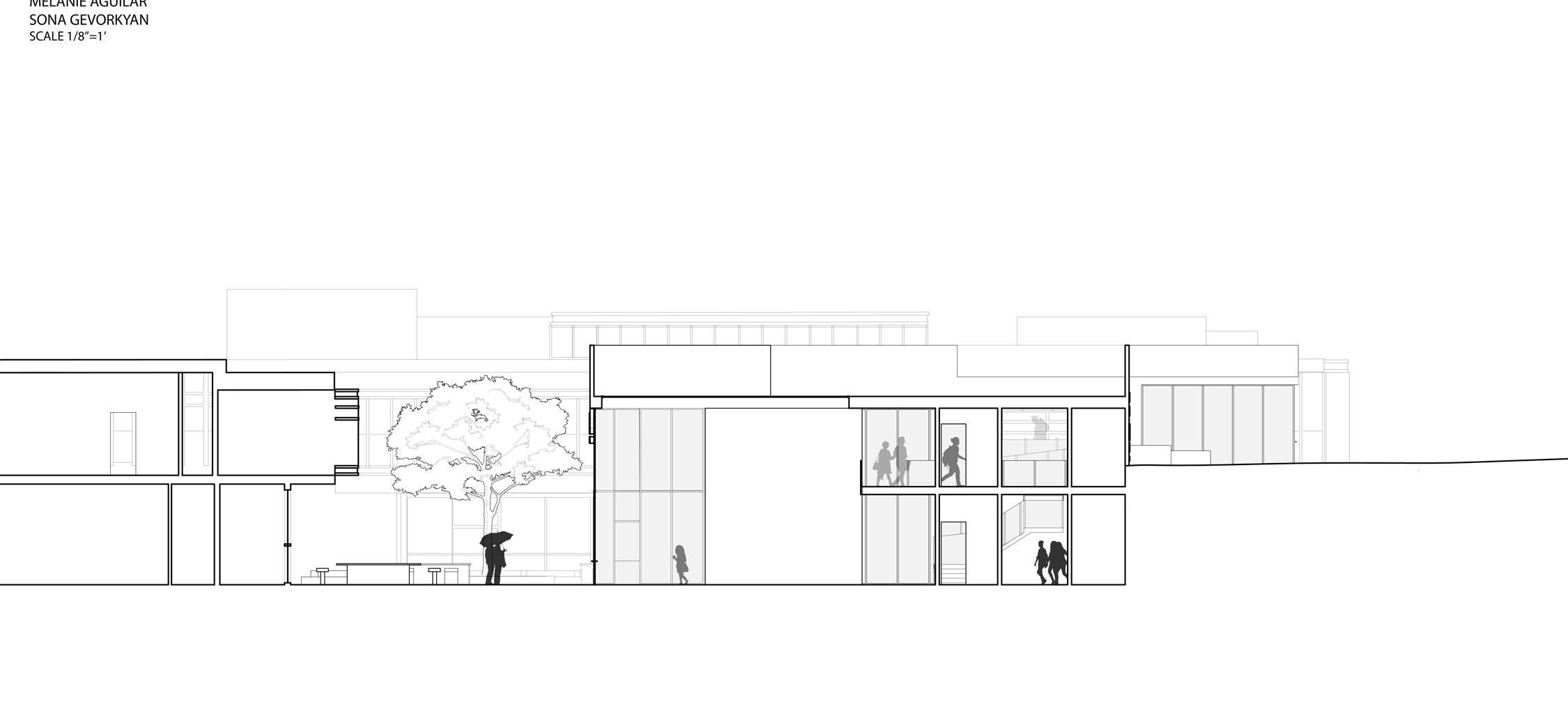
Instructor: Sona GevorkyanThe library is located on the Northwest side of the College of Environmental Design, also known as building 7, and next to South University Dr. It has a variety of entrances, however, the three main ones are located from the street and two from the plaza level. Half of the library is covered by the topography surrounding it, creating an illusion of being a one story building from the street level. However, once one gets down to the plaza the two floors are revealed. This is the reason this site was chosen. The relationship between the plaza and library can most be seen in the site plan. The only space that does not have the consistent brick pattern on the floor mirrors the parti of the library itself. Not to mention the entirety of the building consists of rectangular and square shapes mirrored from the plaza. It is most evident in the site section one can see the relationship of this library to Building 7, as one can see the floor heights are similar. The library’s facade consists of concrete and transparent and opaque glass. The glass facade is most dominant in the majority of the facade, allowing lots of natural light to enter and creating a welcoming appeal. Not to mention the skylights guide circulation within and the double height spaces add to the openness inside. When entering from the street level one walks past a few stacks and is able to see the entire floor as it is all open. Not to mention there are three double height spaces where one can look down and see what is going on down below on the plaza level floor. Because of the glass facade being so prominent the sun shining through creates a variety of shadows depending where it is coming from. In contrast, the concrete wraps around the building as an outer shell allowing for more private spaces within.
Museum of Japanese Contemporary Art
Fall
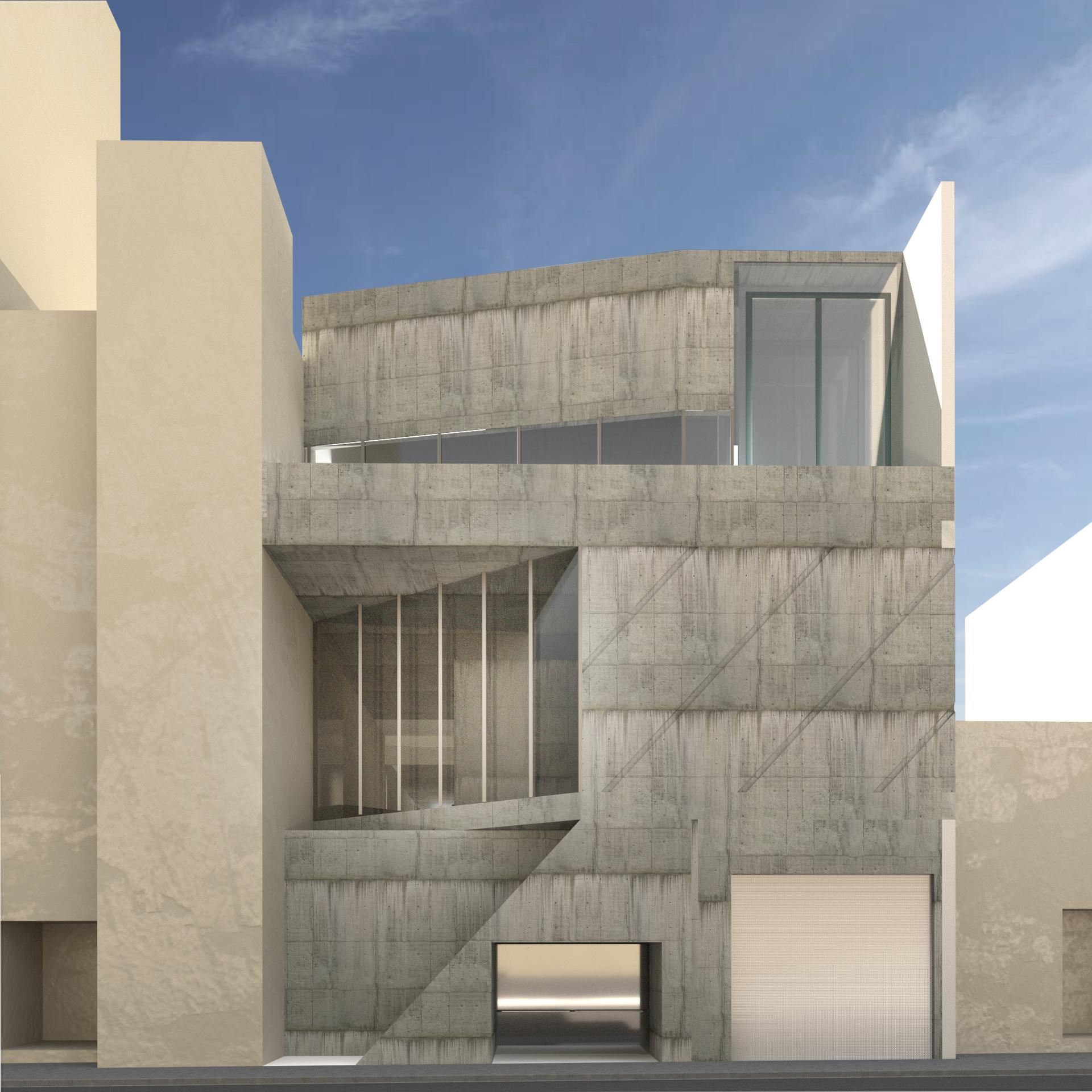
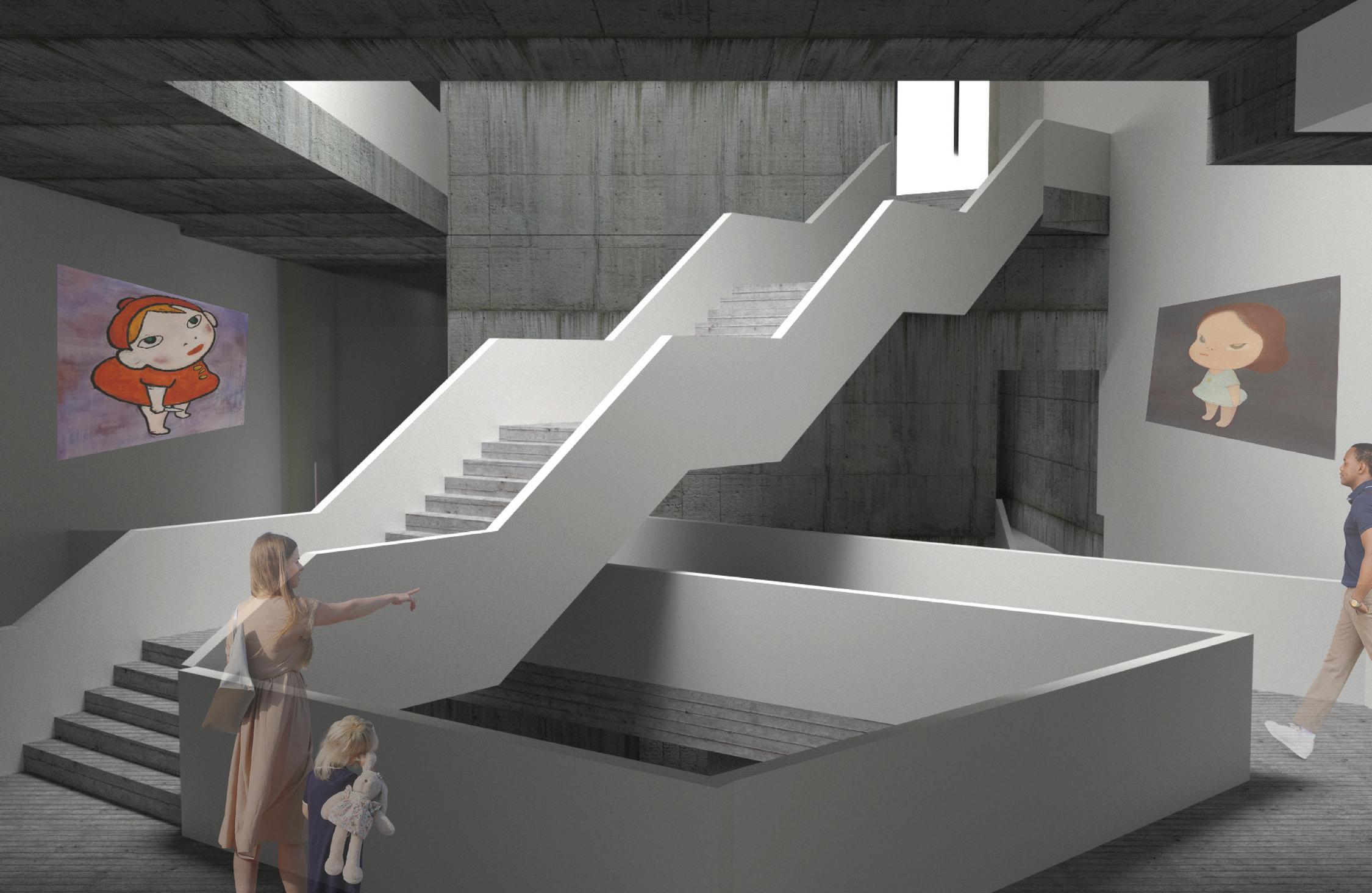
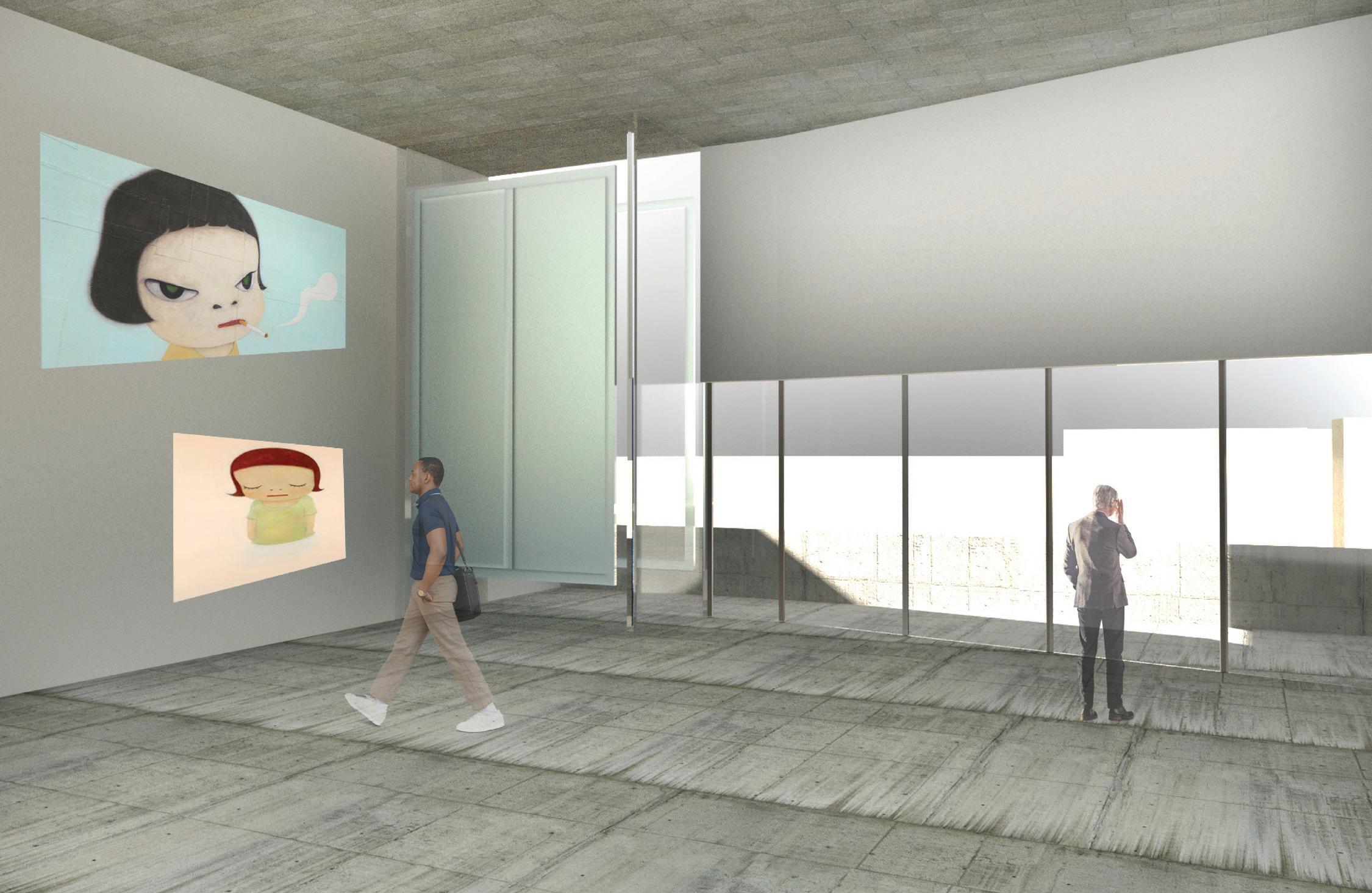
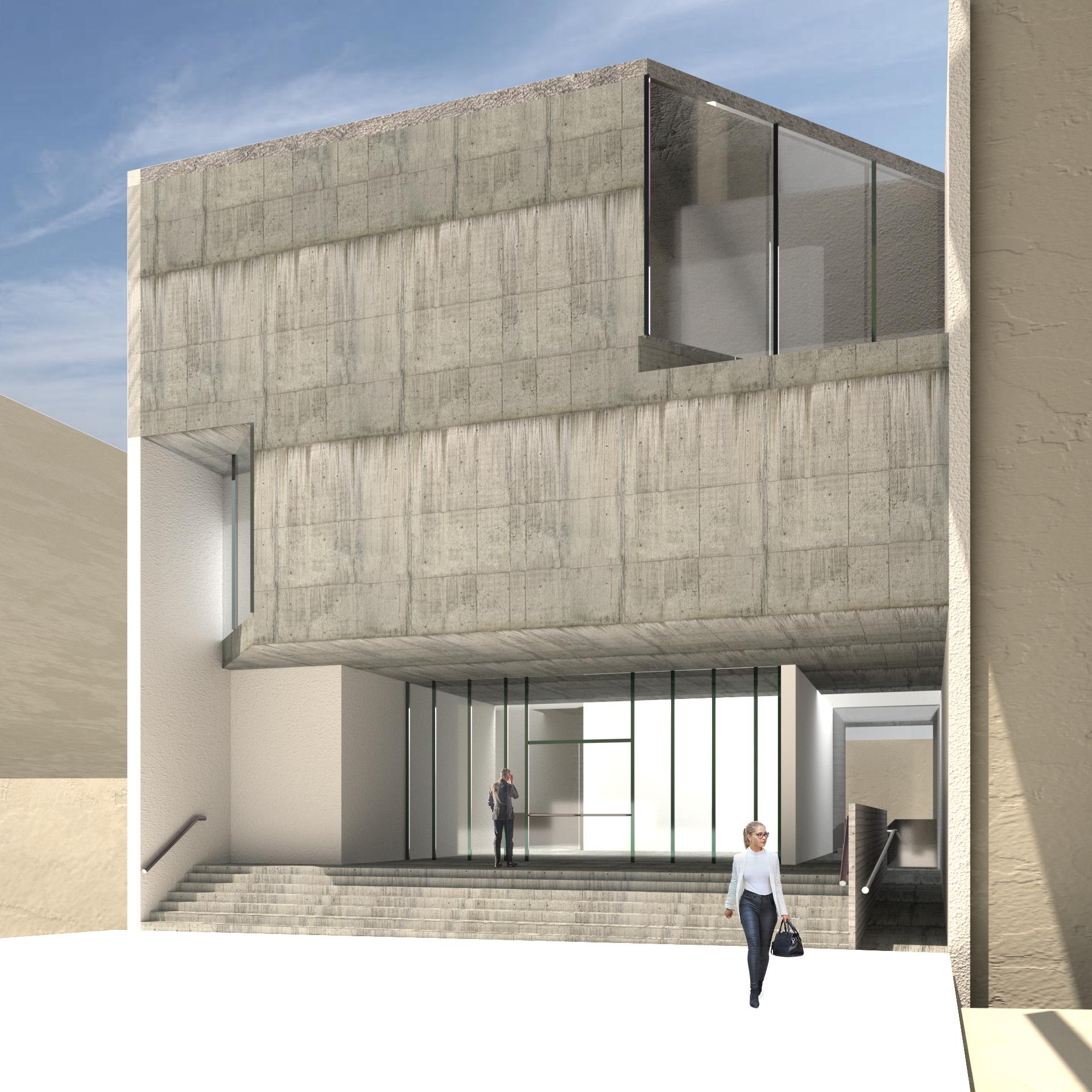
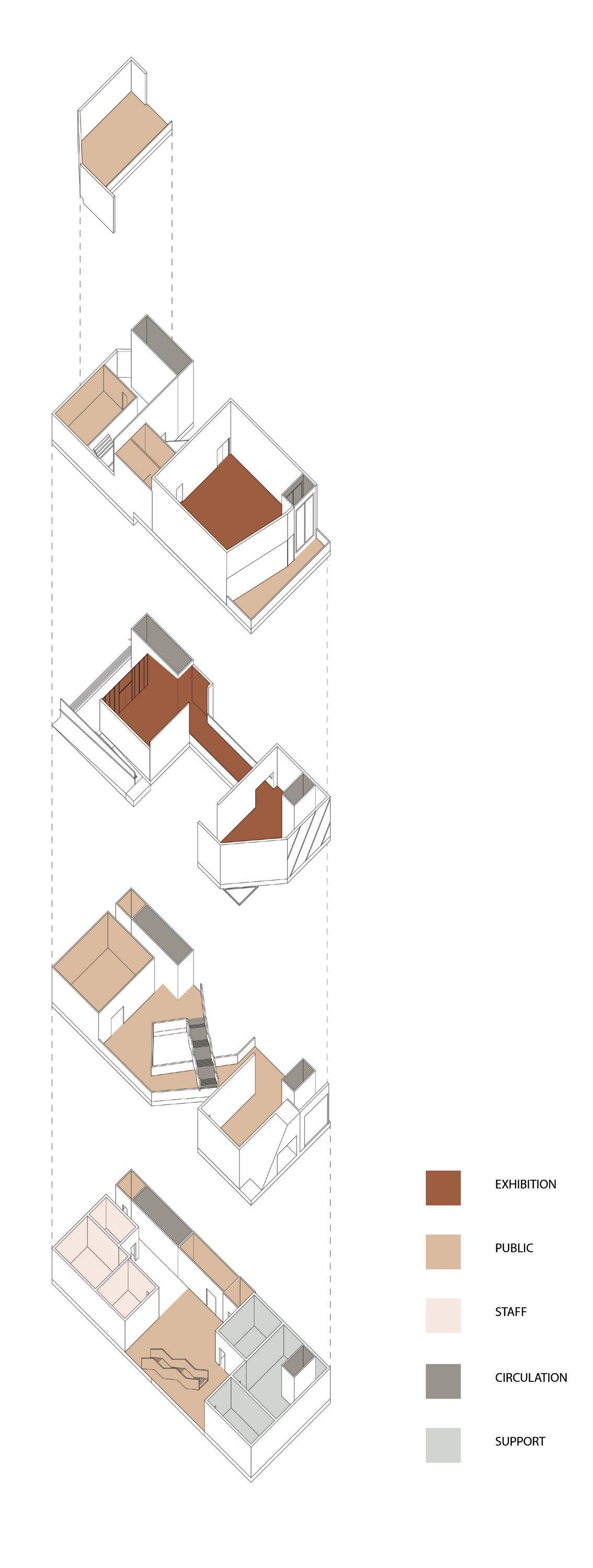
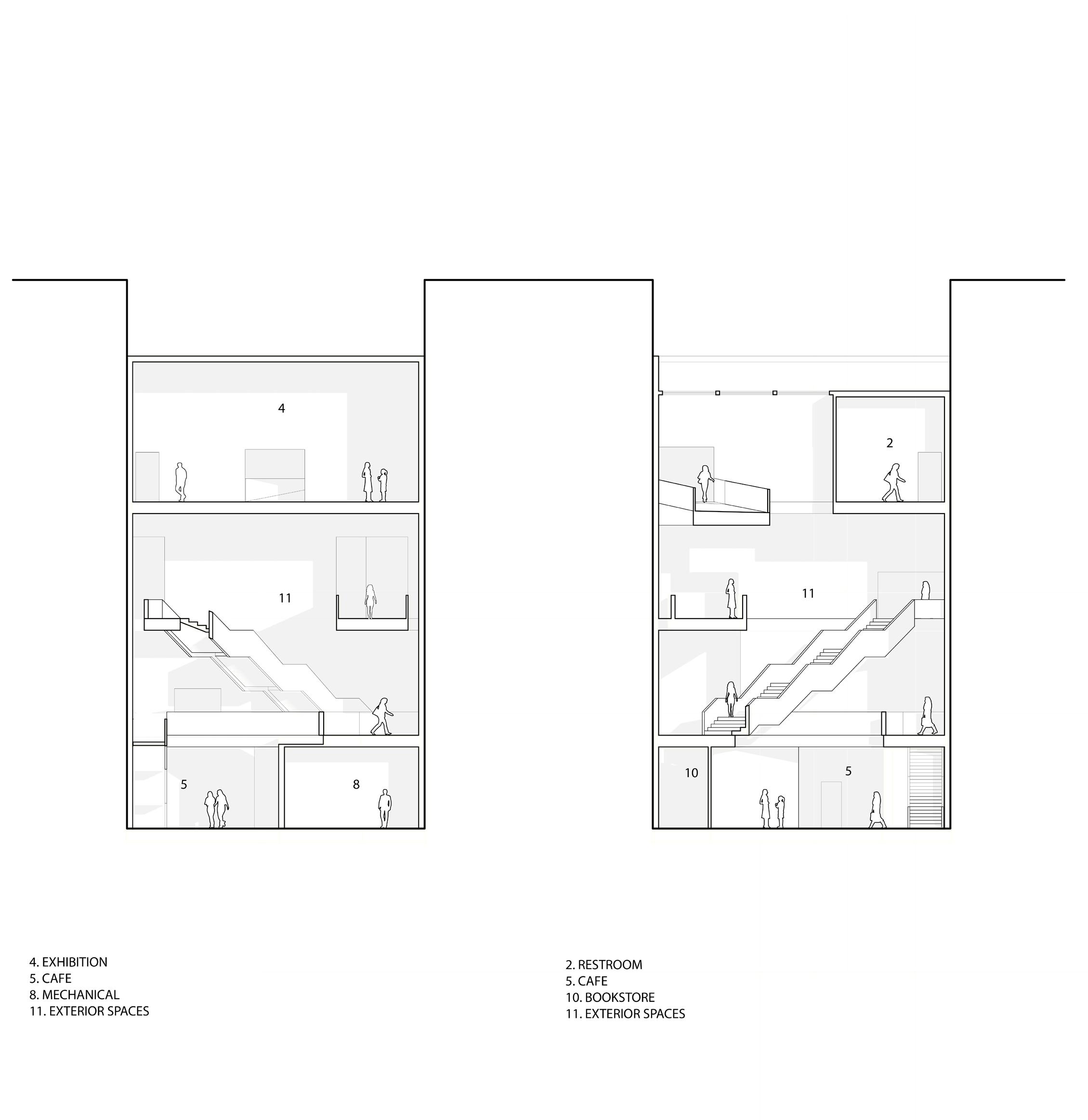
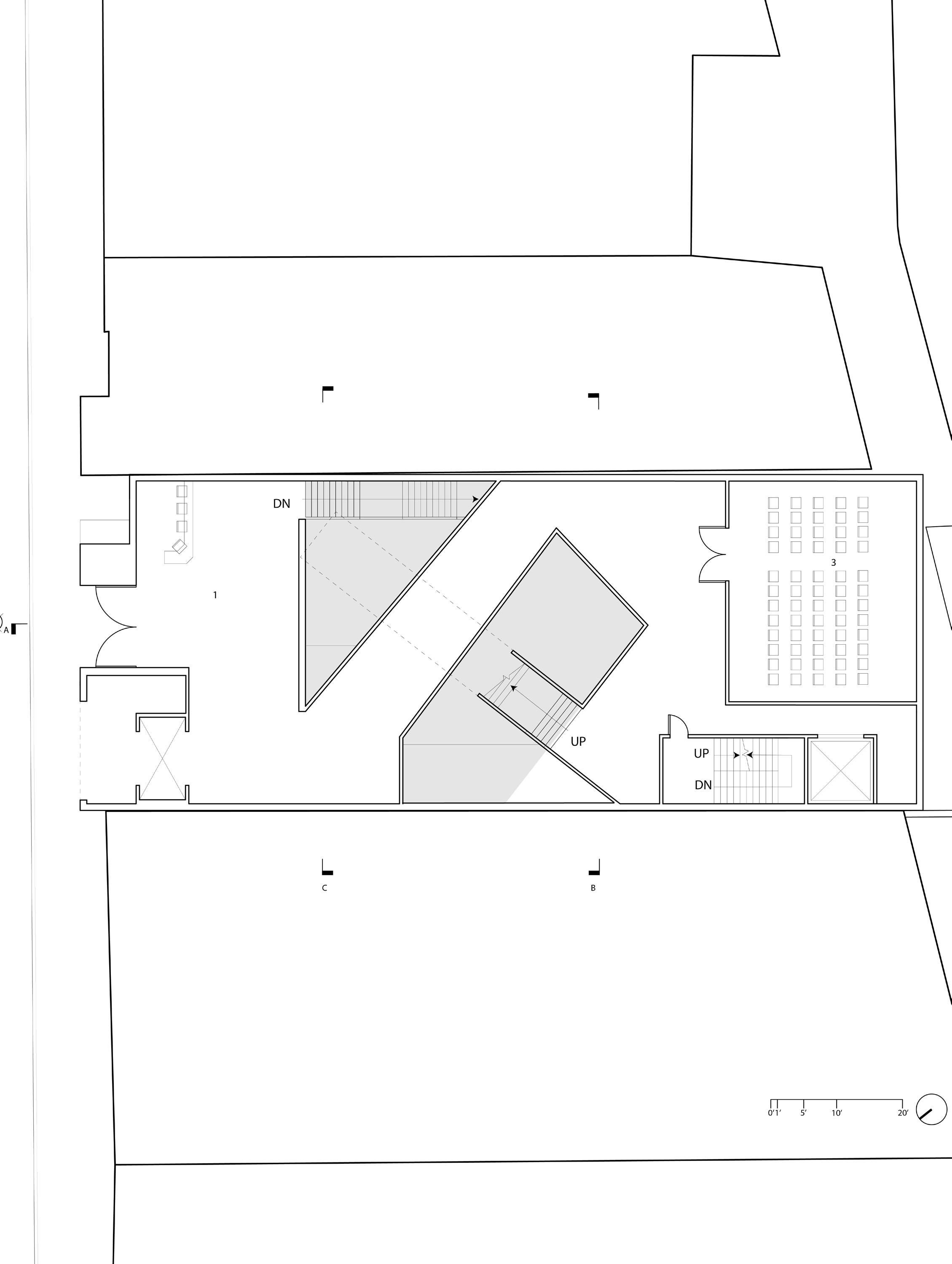
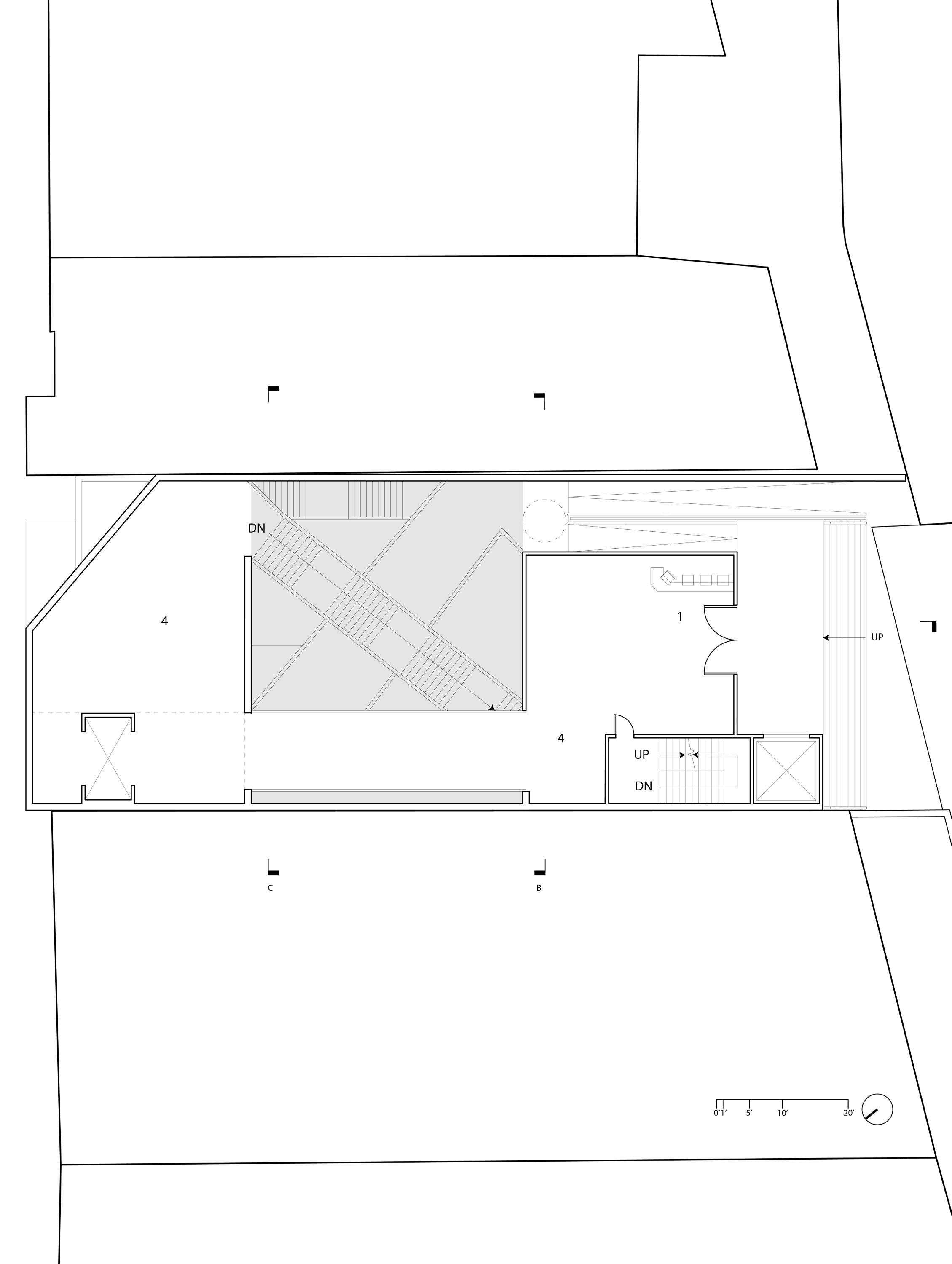
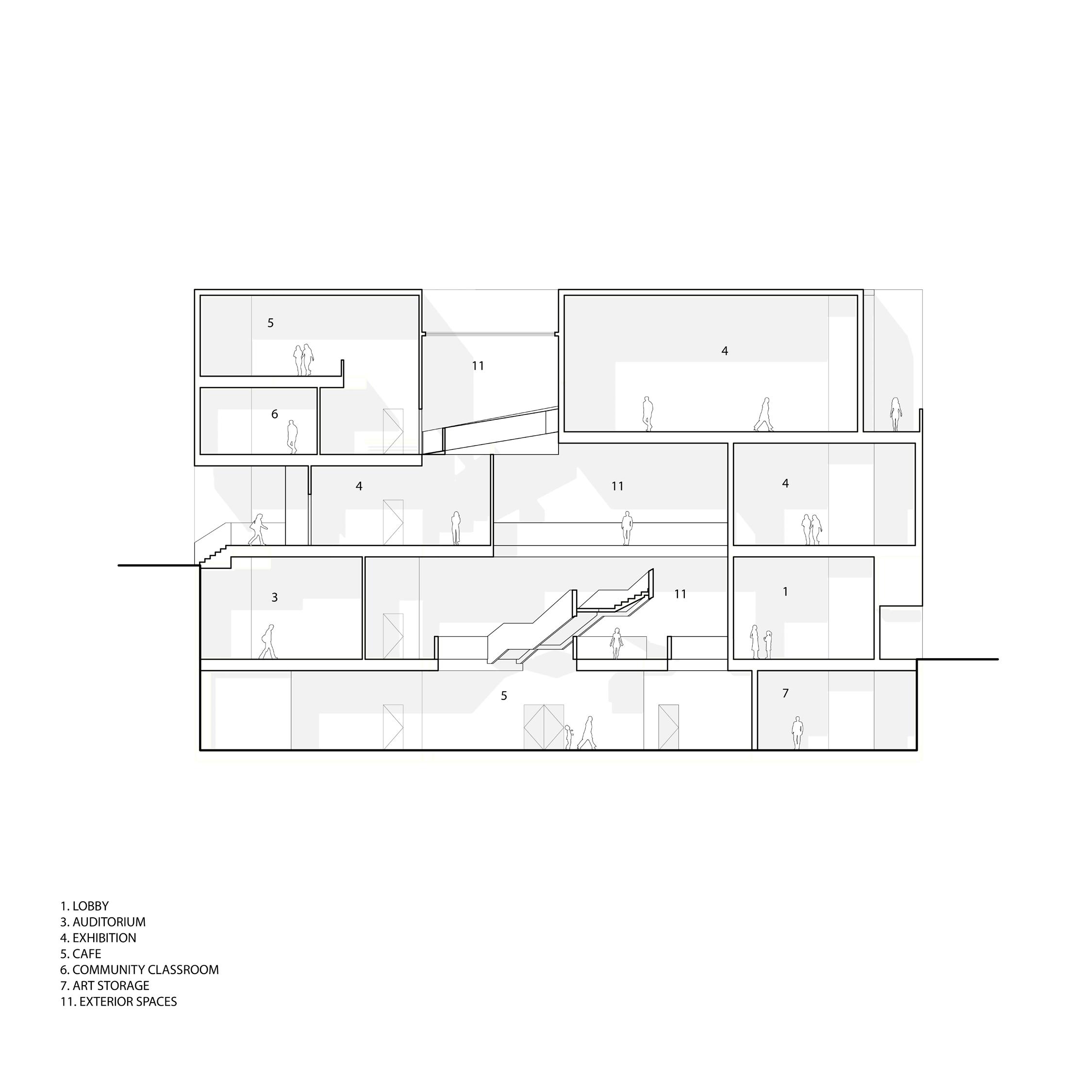
2021 Instructor: Noam Saragosti Little Tokyo, Los AngelesThis proposal is for a museum which houses Japanese contemporary art, located in Little Tokyo, Los Angeles. Initially, the approach of the project was to divide the building into three spaces where the central space consists of all the circulation through the building (with the exception of egress cores), one side includes the more public spaces, and finally the contrary side includes the more private/ intimate spaces. Entering the museum from either entrance allows for the same experience entering through a smaller space and being led to the quadruple height atrium. Within the atrium a series of bridges and staircases are veiled with the plan view of an infinity symbol; as there are infinite circulation paths visitors can take. Programatically, the spaces are placed for the public to enjoy every level of the museum, including the basement. Half of the cafe is located in a carved out space in the basement level with the bookstore placed next to it for the convenience of the public. Although most of the staff spaces are located in the basement level, they still get to interact with the public because of the placement of the cafe and bookstore. The exhibition spaces throughout the building vary in sizes and heights of the ceilings, some with double height spaces and others with open to below spaces. The second location of the cafe is placed on the top level of the museum with an open to below space of part exhibition.

ELEVATION
ELEVATION PLAZA LEVEL SCALE 1/8” =1’0”
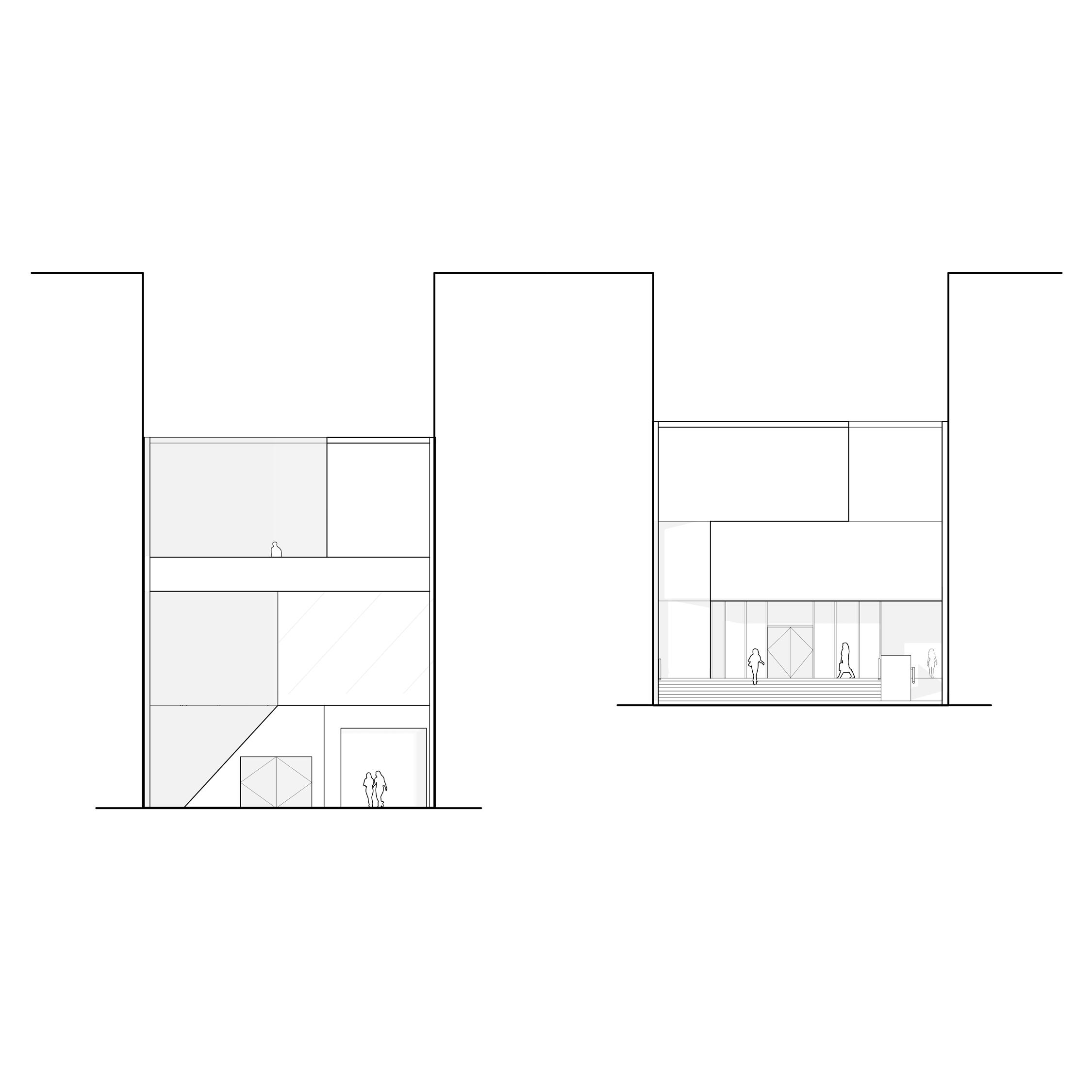
STREET LEVEL SCALE 1/8” =1’0”