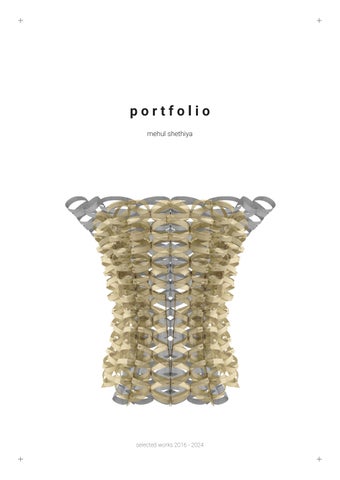
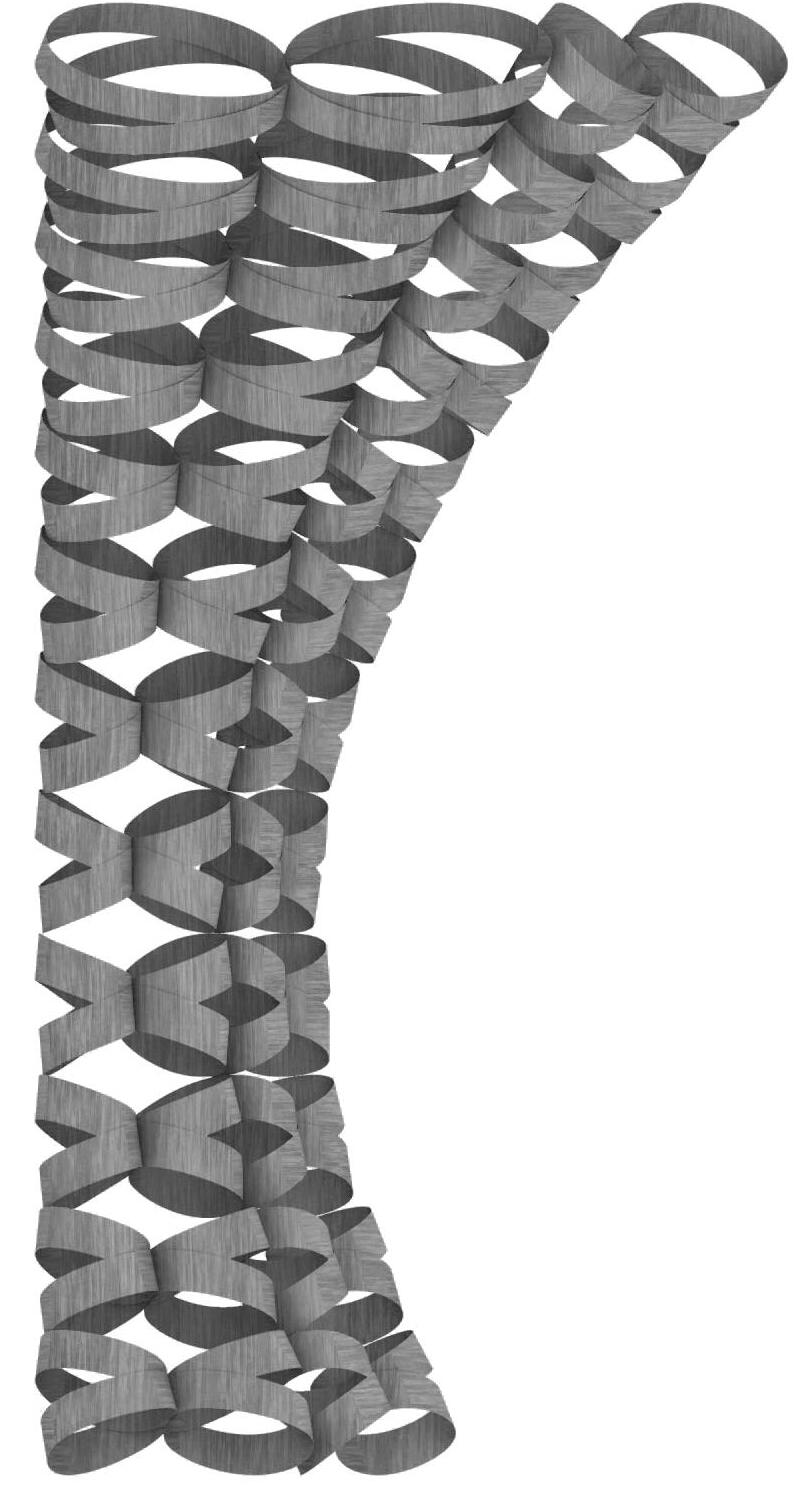
selected works 2016 - 2024
This portfolio is a collection of selected projects and research work that demonstrate my engagement and interests with communities and the built environment both as a student and a practicing professional. It reflects the nuances and responsibilities of architects, while also illustrating the challenges of spatial design, working with clients and implementation of projects. These experiences have shaped my understanding and informed my design approach and concern to strike a balance between natural ecologies, architecture and urban design in various contexts.
contents
hydrosocial
Master’s thesis | Urban + Architecture | 2024 | AA
q-pop shell structures
Biomimetics | Architecture | 2022 | AA
Climate responsive facade | Architecture | 2023 | AA
EmTech Cohort | Material Experimentation | 2023 | AA
Individual ideational project | Architecture | 2020
kanchan gateway to heaven design and build
Individual professional project | Architecture | 2020
vanrai
Professional project | Urban | 2021 | Integrid Designs
un-fold beyond bars
Bachelor’s thesis | Architecture | 2021
neighbourhood refreshment
Individual academic project | Architecture | 2018
hydrosocial
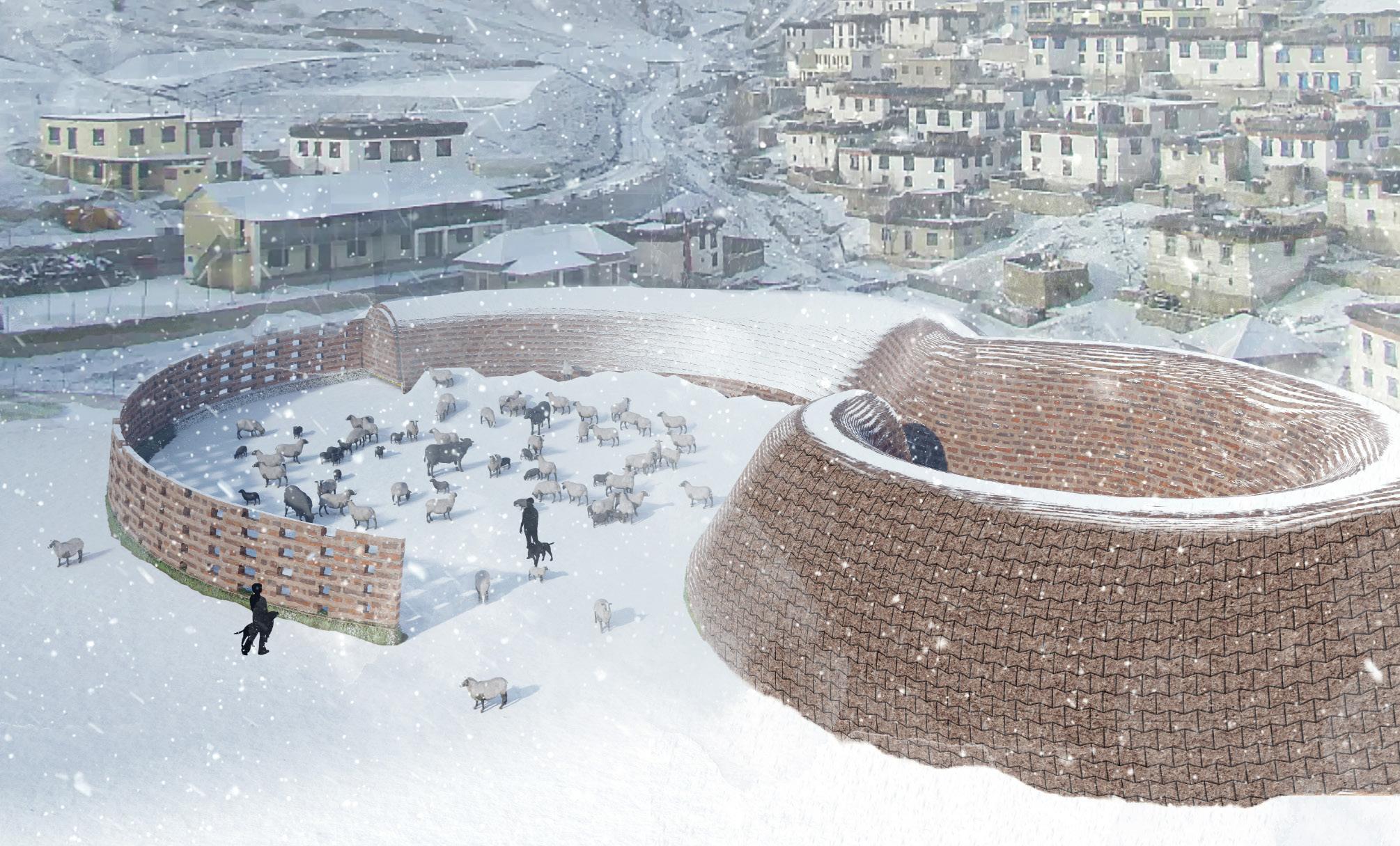
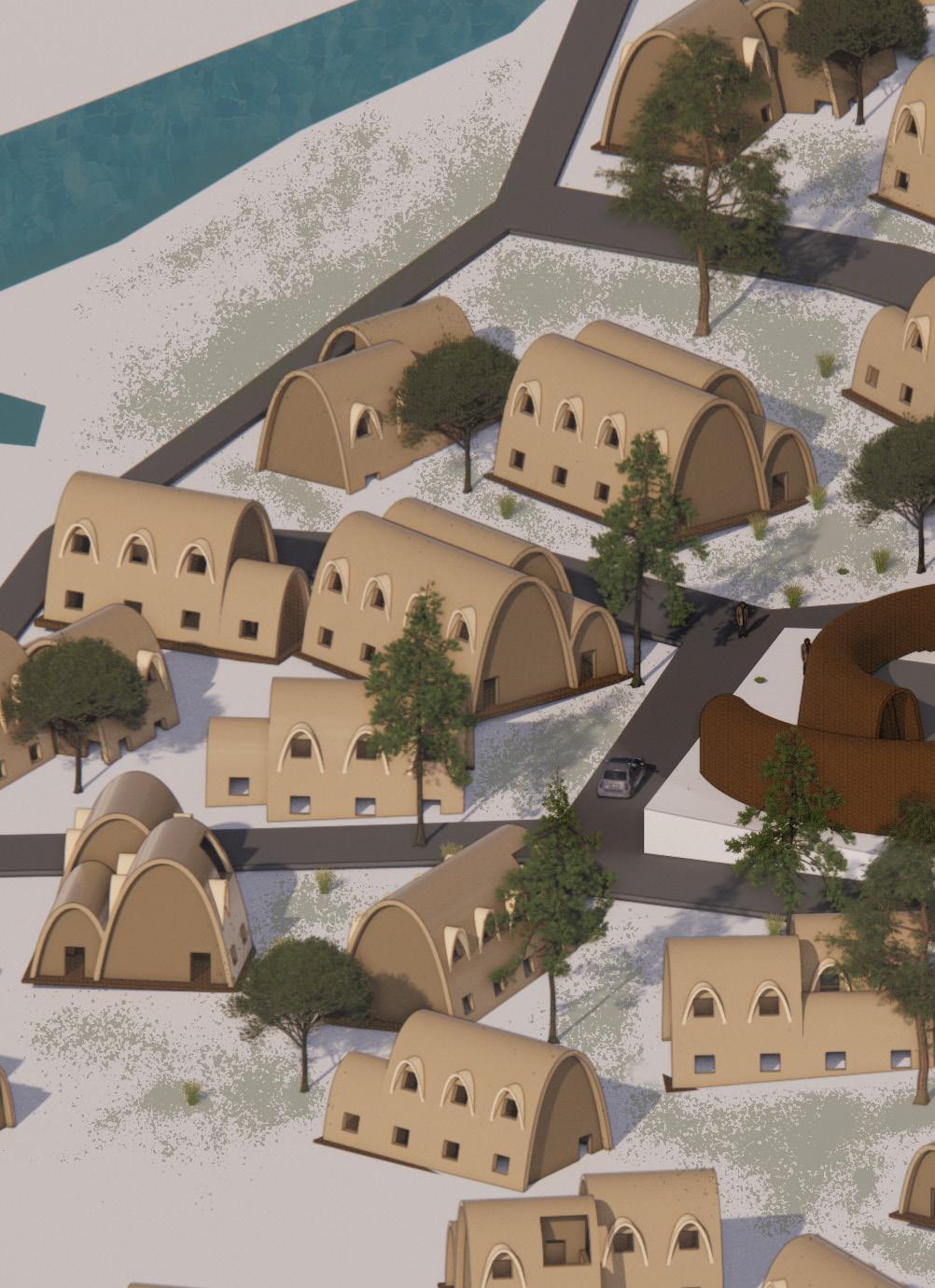
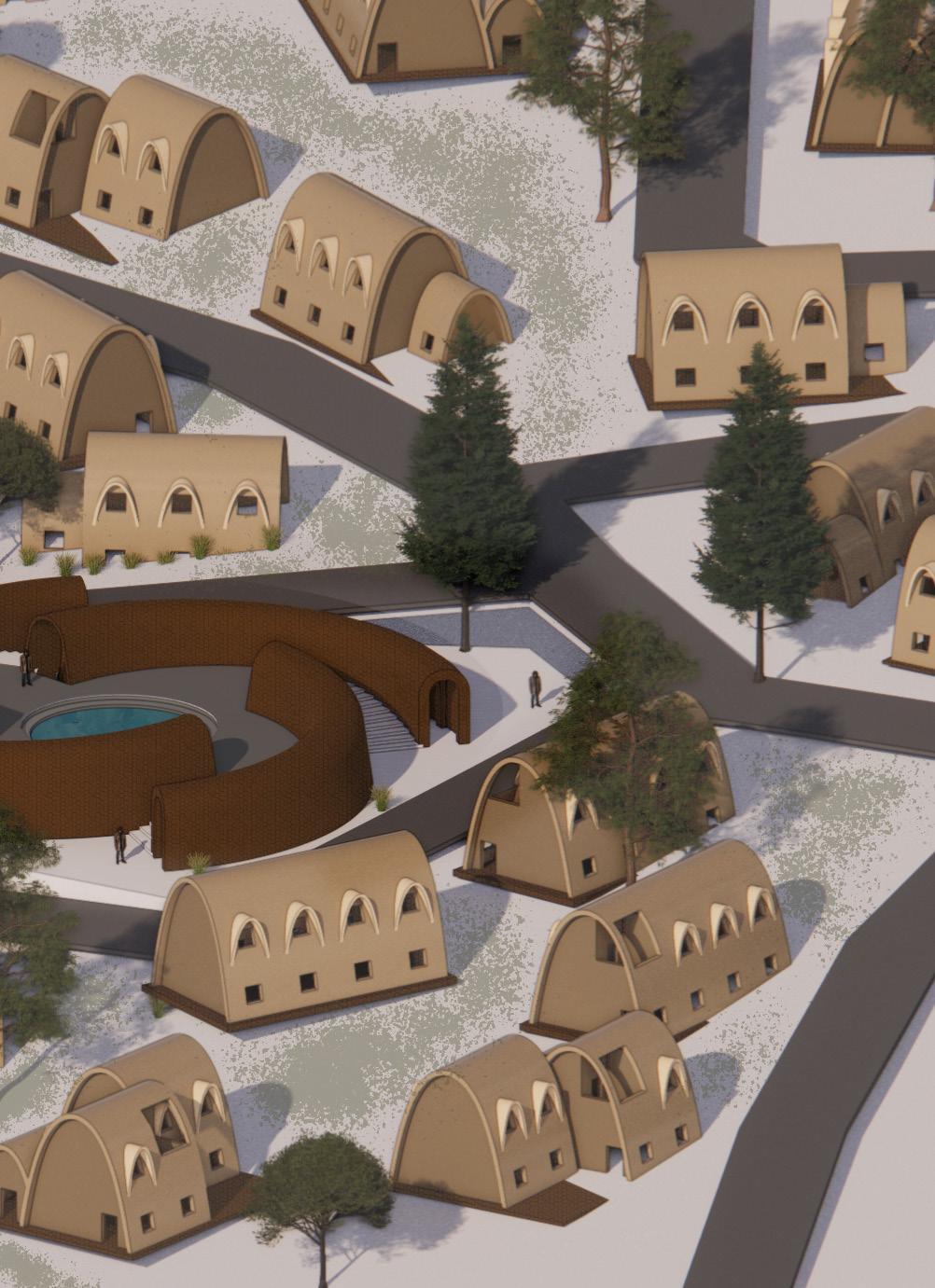
The proposal addresses the pressing issues of water scarcity and ecological degradation in the transHimalayan region, with a specific focus on the Spiti Valley grappling with desertification. Challenges include rapid urbanization, overexploitation of natural resources, and the impacts of climate change, particularly glacier melt, worsening water scarcity and contributing to desertification. To tackle these issues, the project employs adaptive traditional techniques, strategic urban planning, and the use of locally available materials to establish a sustainable water system. The primary goals are to alleviate water scarcity, combat desertification, and create communal spaces for the local community.
The Spiti Valley currently faces seasonal water scarcity due to prolonged summers, short winters, and significant temperature fluctuations, resulting in a shortened melt season and increased summer runoff. Elevated temperatures also lead to high evaporation rates, depleting rivers and reservoirs. Consequently,
water scarcity during the summer requires importing water from neighboring regions. This proposal addresses inadequate summer water supply by implementing methods to collect and preserve glacier melt during the spring season and summer runoff, reducing dependence on imported water. The aim is to ensure sufficient glacial meltwater throughout the summer while integrating social spaces focused on water distribution for community development
The project establishes a hydrological network tailored to the site’s specific needs, covering water collection, preservation, and distribution. It also includes complementary programs designed to meet local requirements. Construction methods prioritize the use of local materials to minimize carbon emissions and water consumption. Overall, the project strives to enhance the long-term sustainability and resilience of both the Spiti Valley and the broader trans-Himalayan region through a comprehensive and integrated approach.
Tools | Rhino, Grasshopper (karamba, c#, syntactic, decoding spaces, anemone, wasp, wallacei) , CFD, Blender

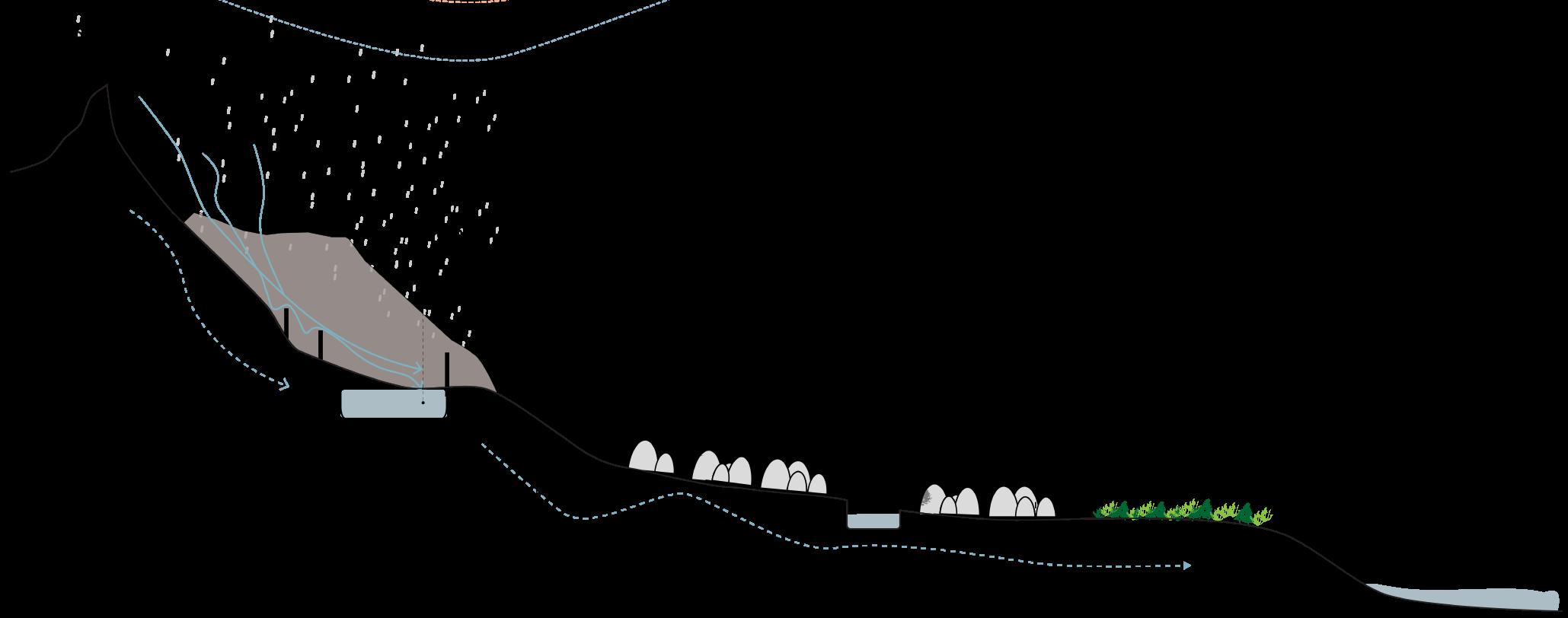

conceptual proposal | collection, preservation and distribution based on the seasons
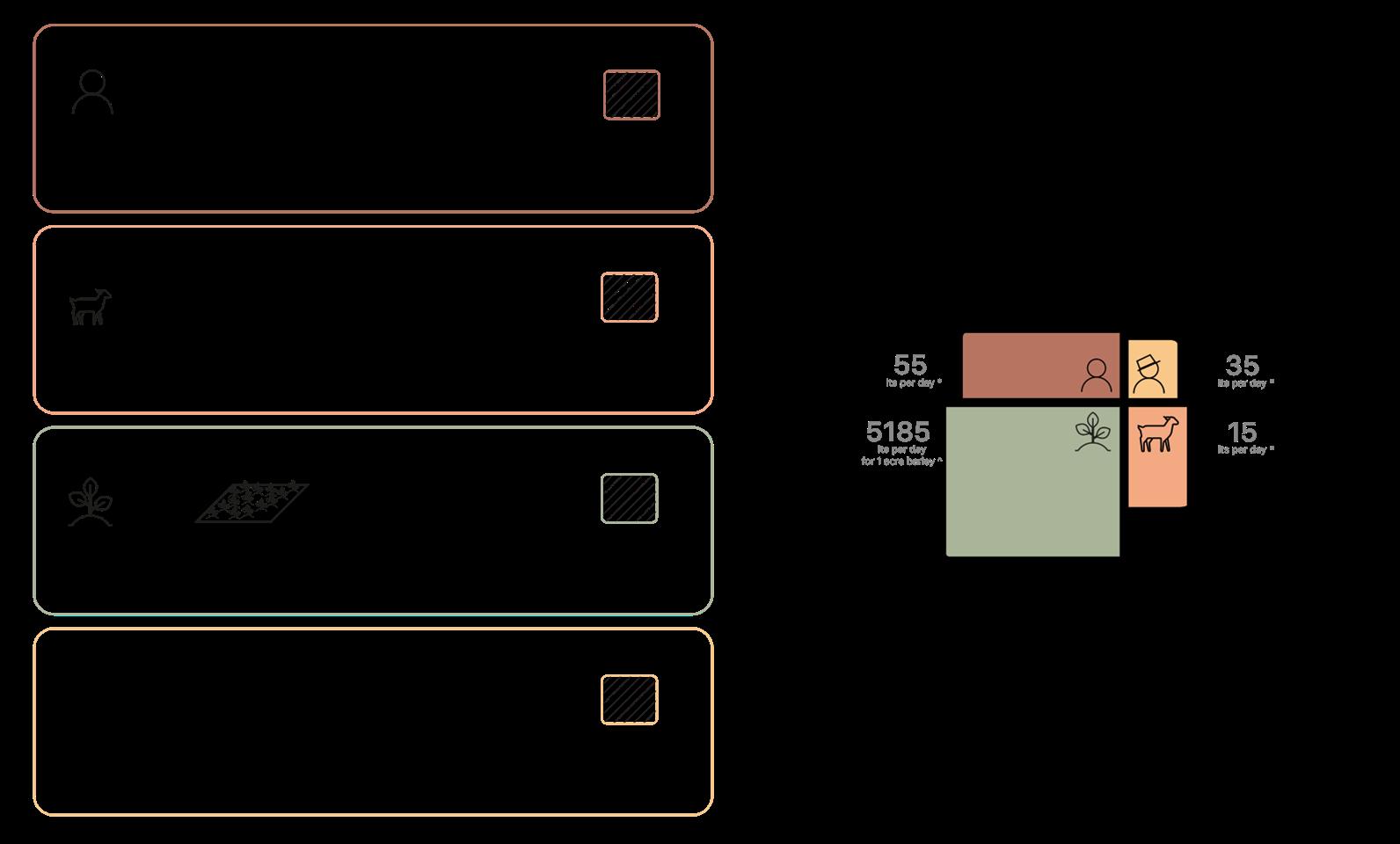
water requirement | water needed by the current population and area required for preserving water
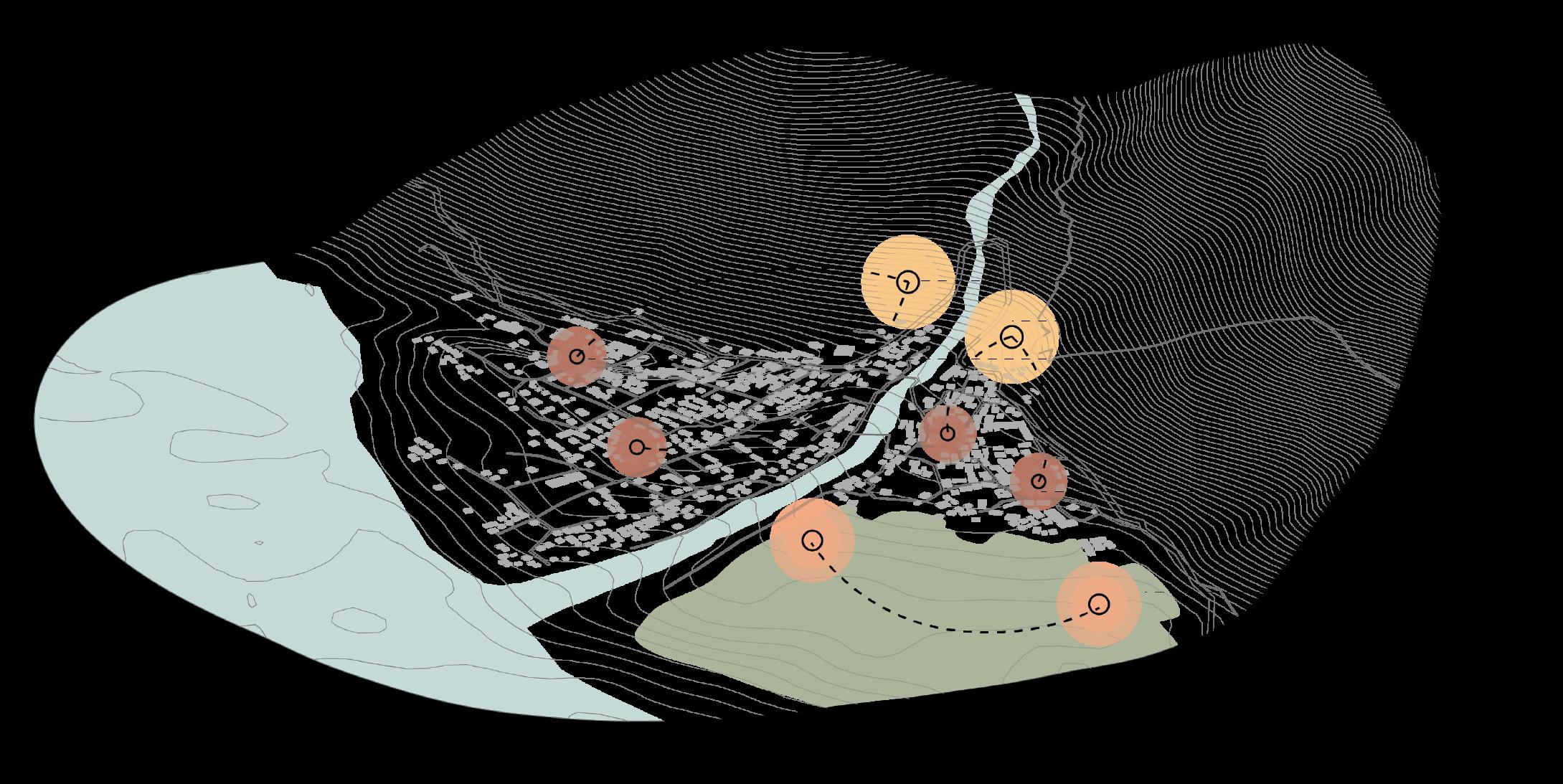

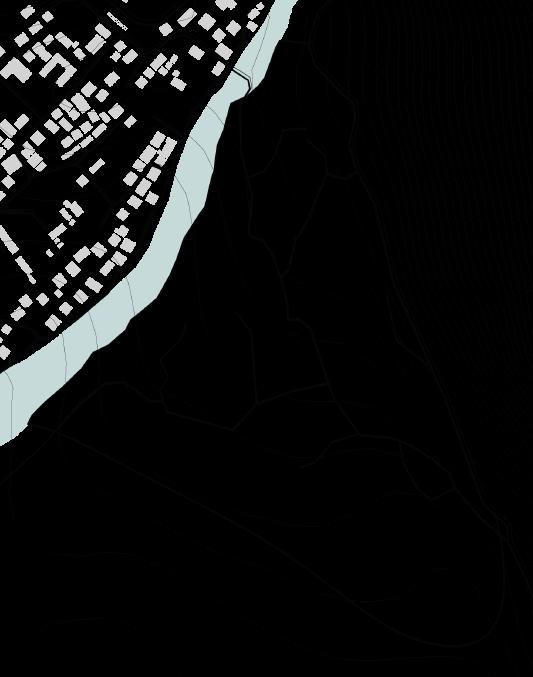
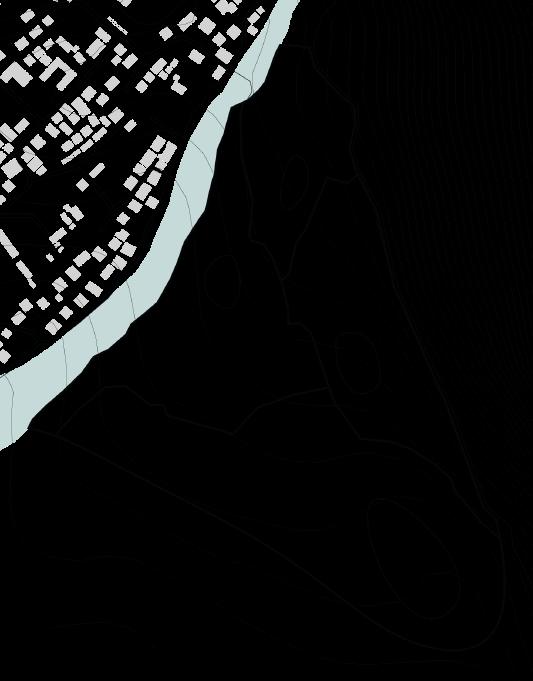
1. Existing roads
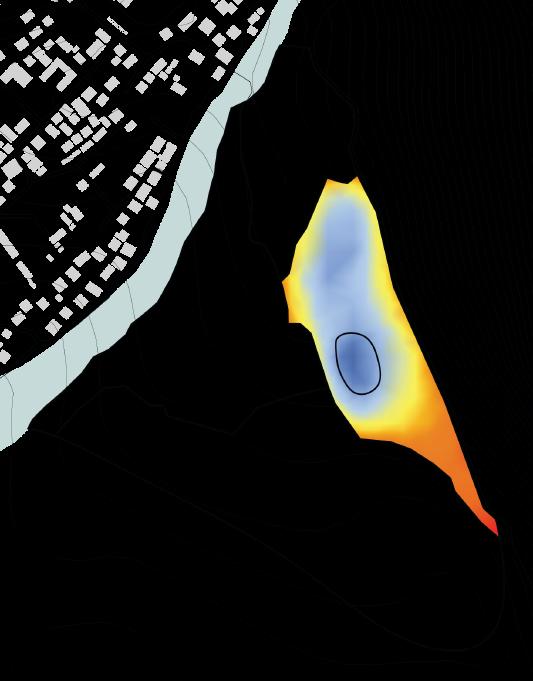
5.



2. Zoning
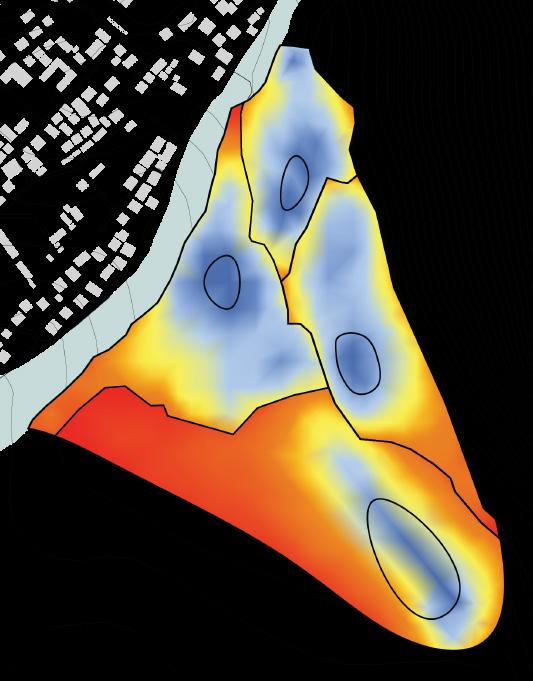
8.
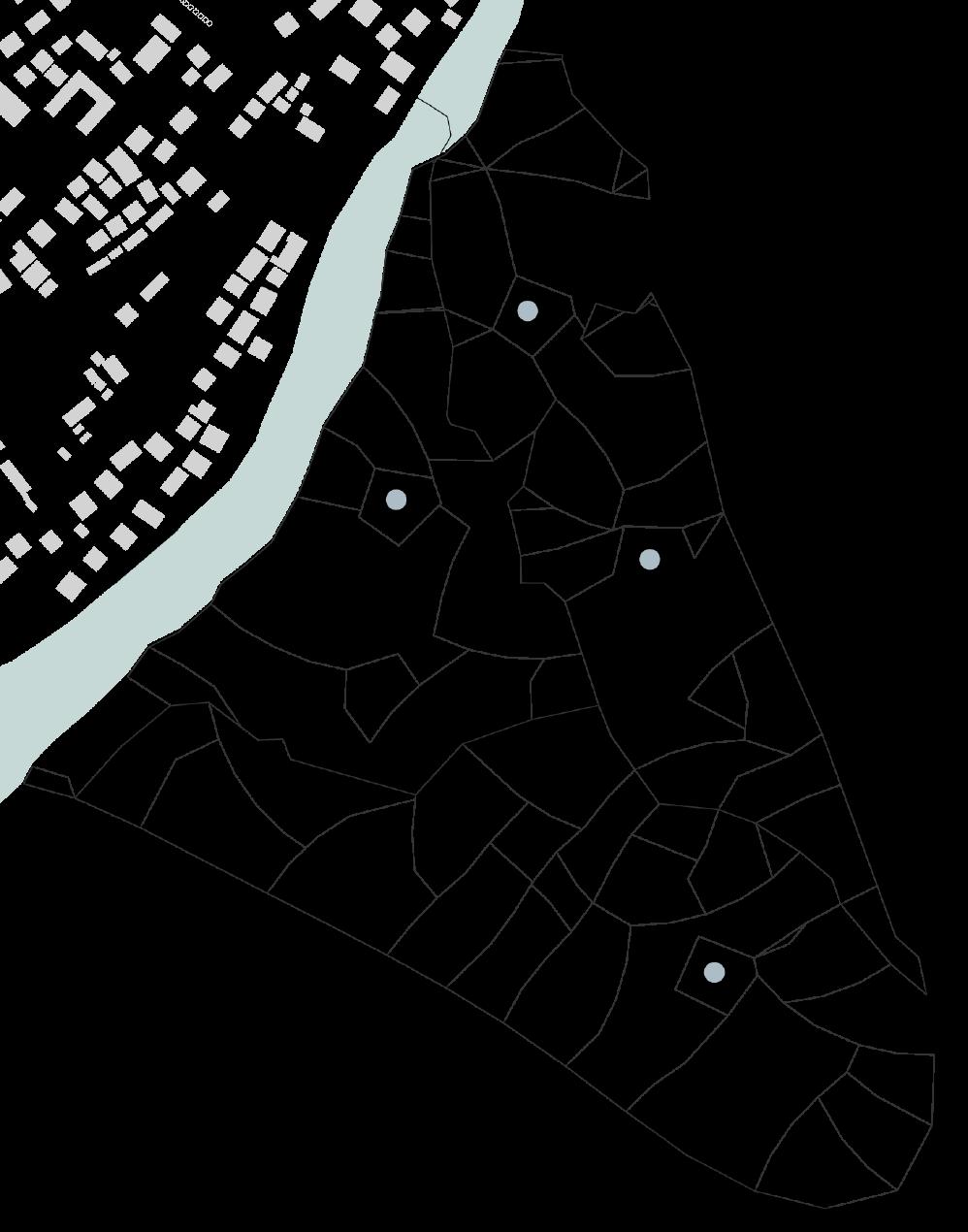
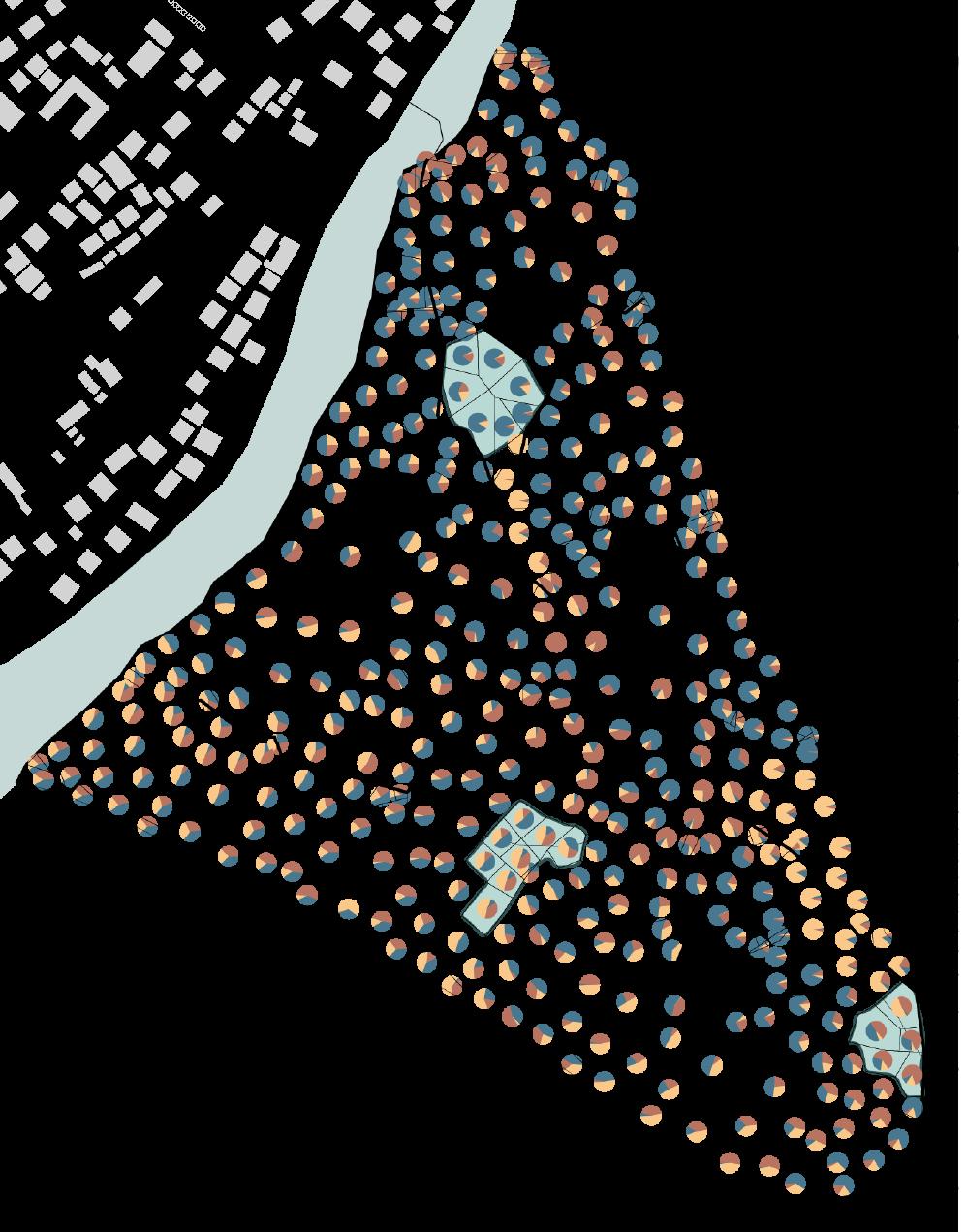
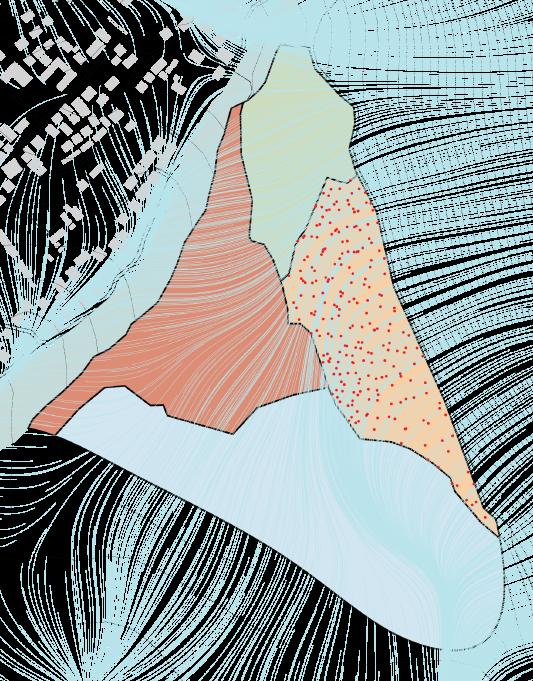
urban fabric | selected road network land use map using weightage systems
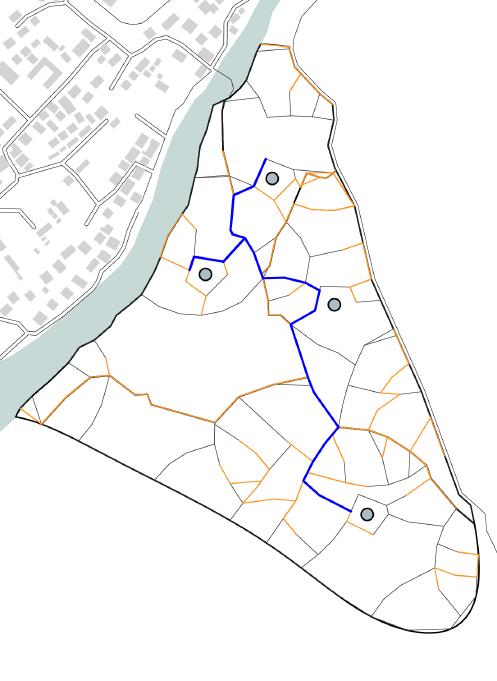
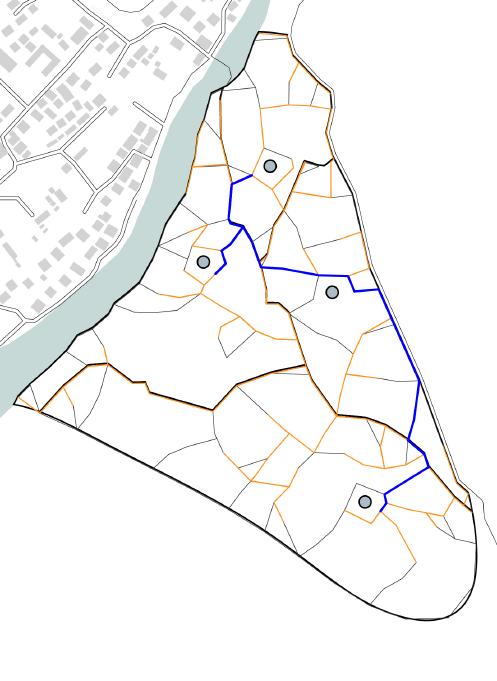
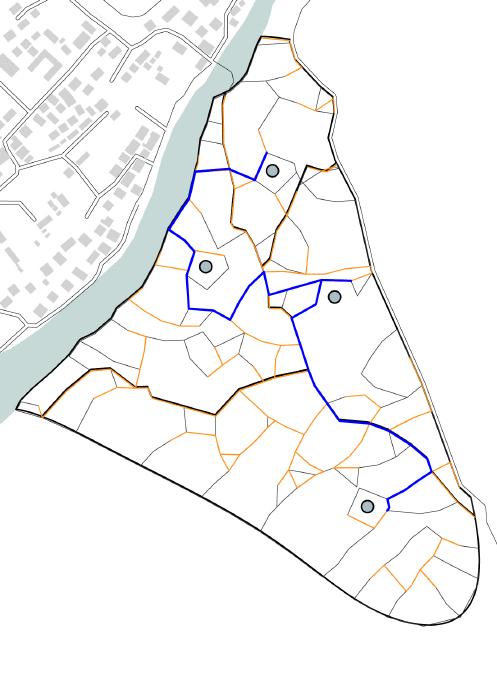
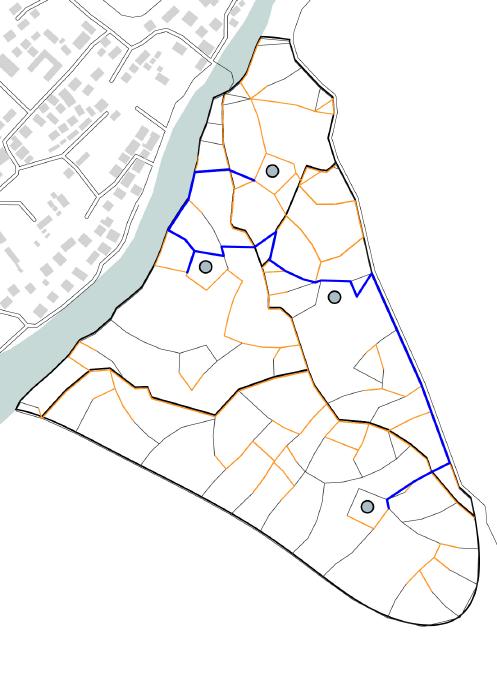
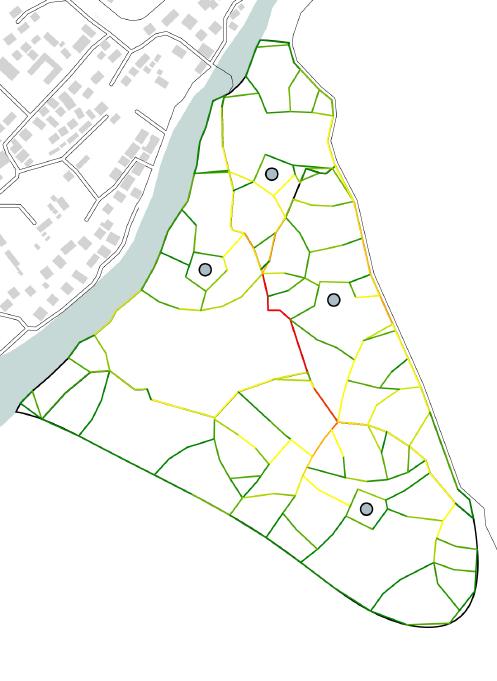
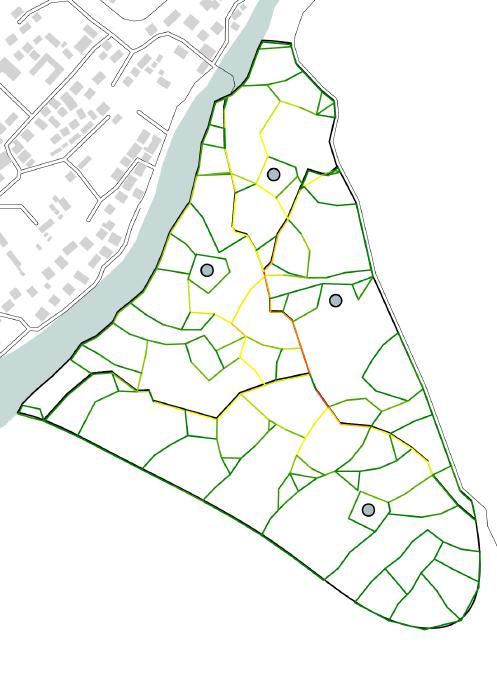
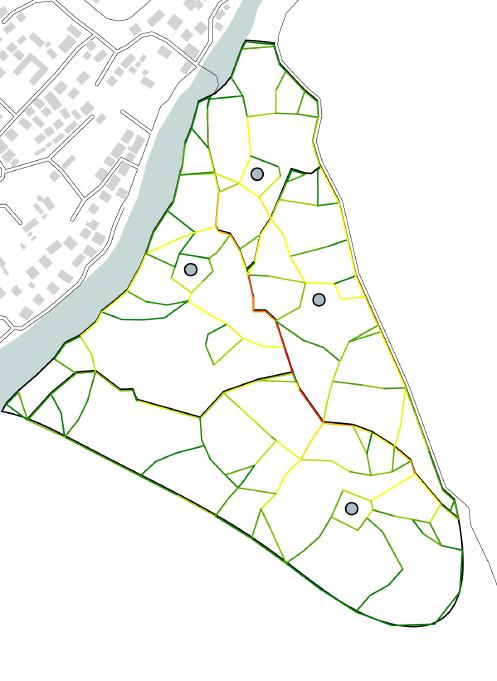
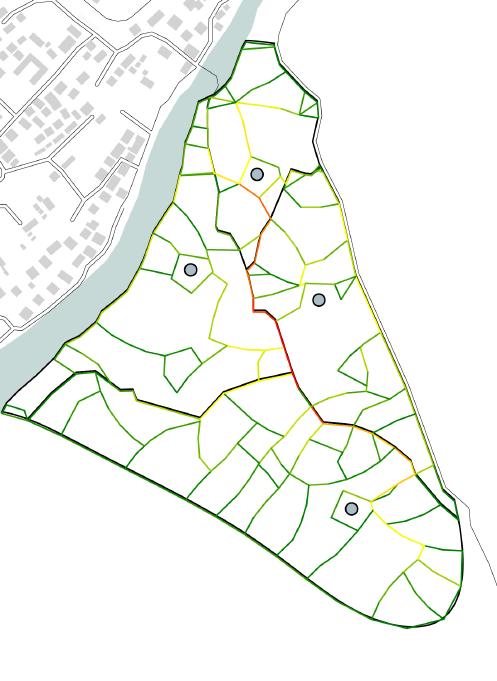
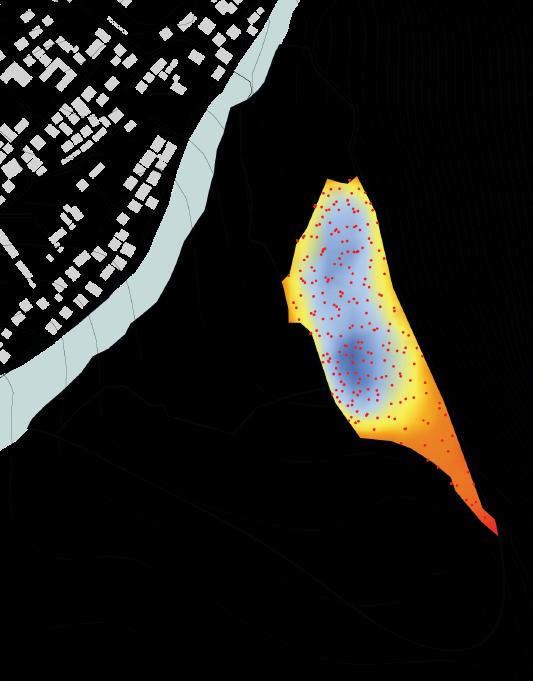
network generation | street network generation using evolutionary algorithms, validated by post analysis 15
Defining block geometry
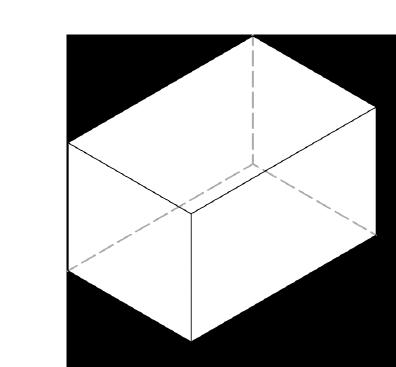
Height changes of vertices
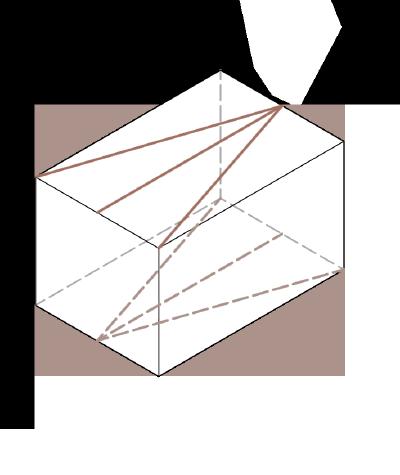
Modifying the vertices to creat interlocking geometry
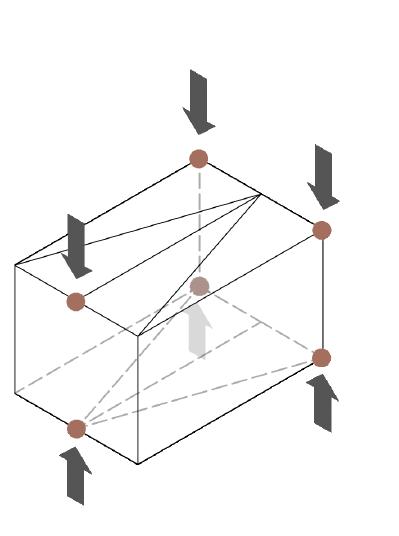
Cuboid block Defining block geometry Height changes of vertices
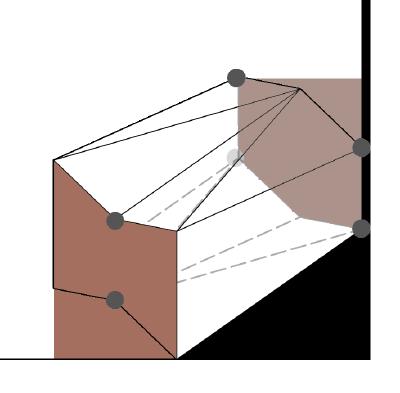
Modifying the vertices to creat interlocking geometry
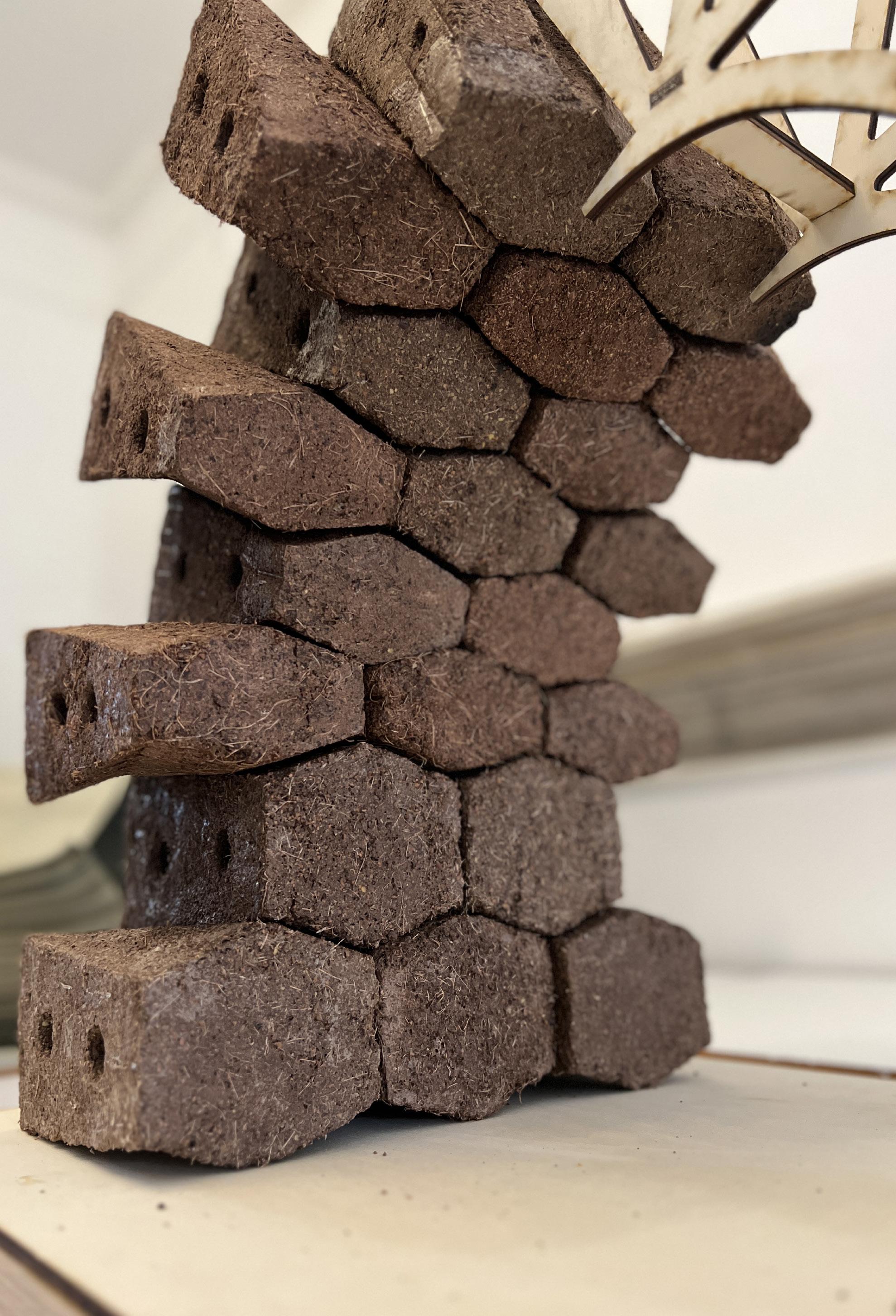
Friction based geomteric design
Friction based geomteric design
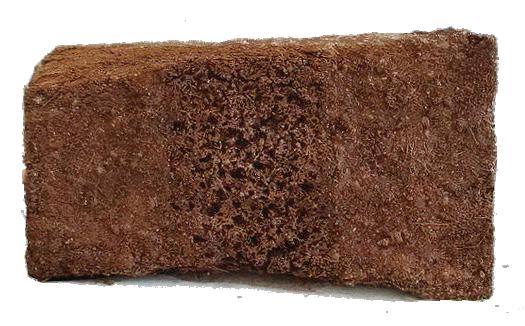
materiality | developement of a functionally Graded block by using locally available materials
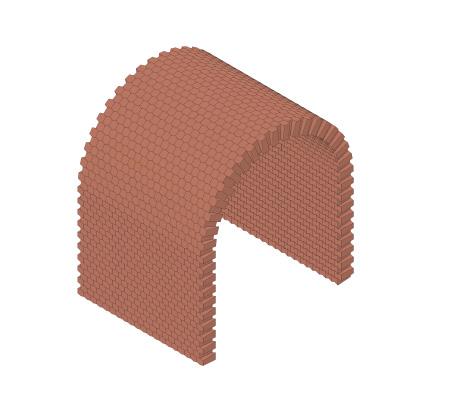
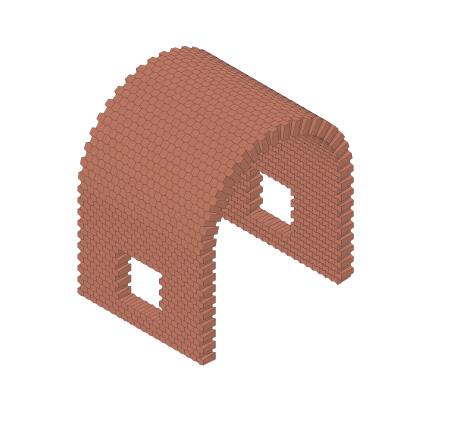
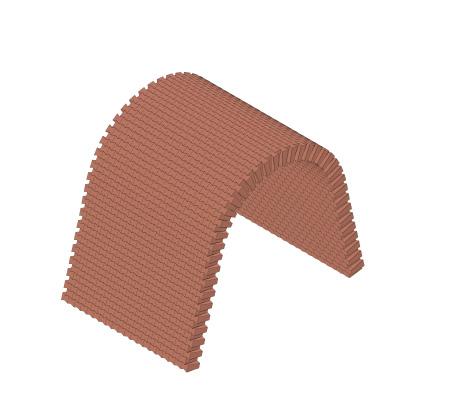
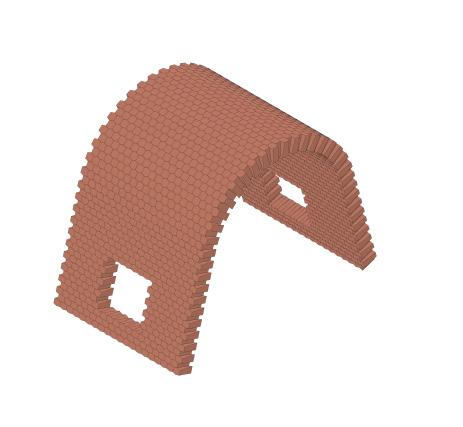
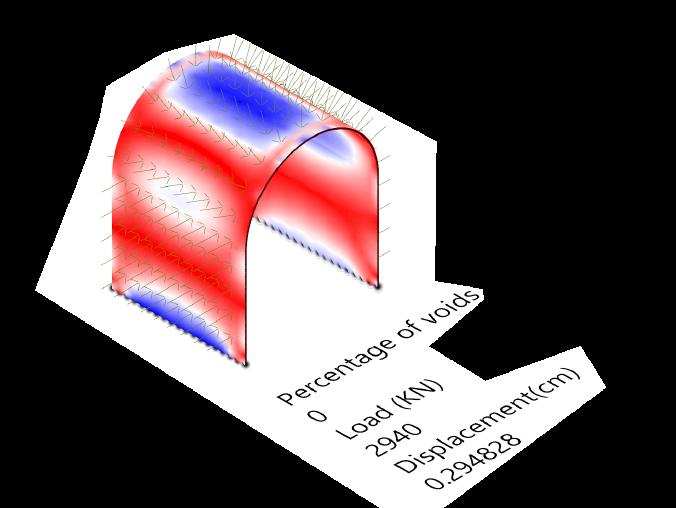
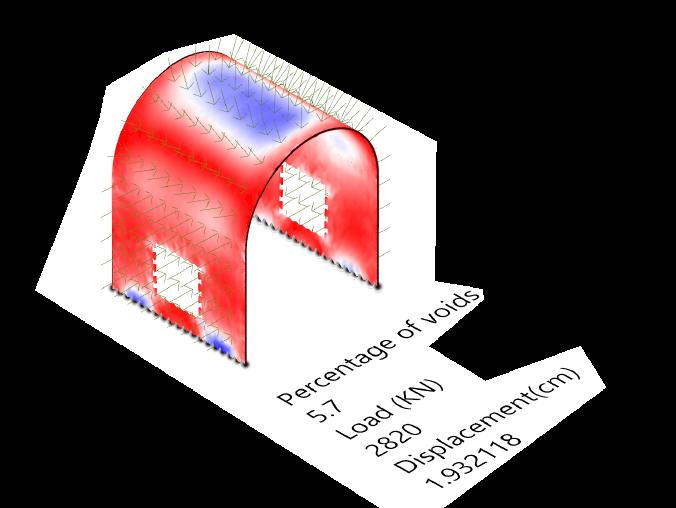
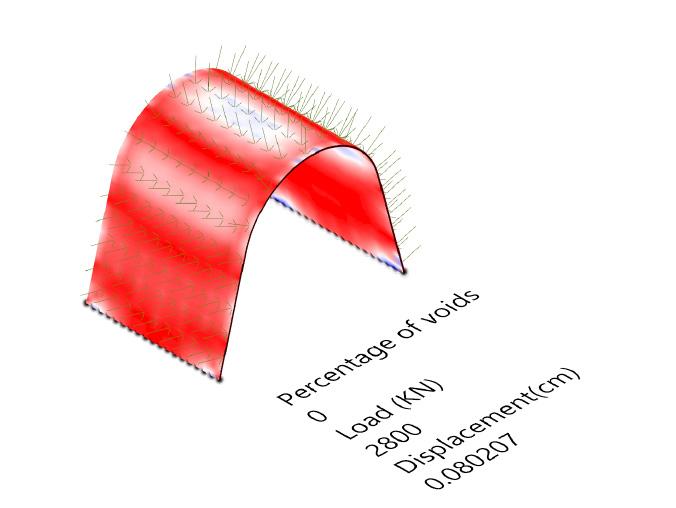
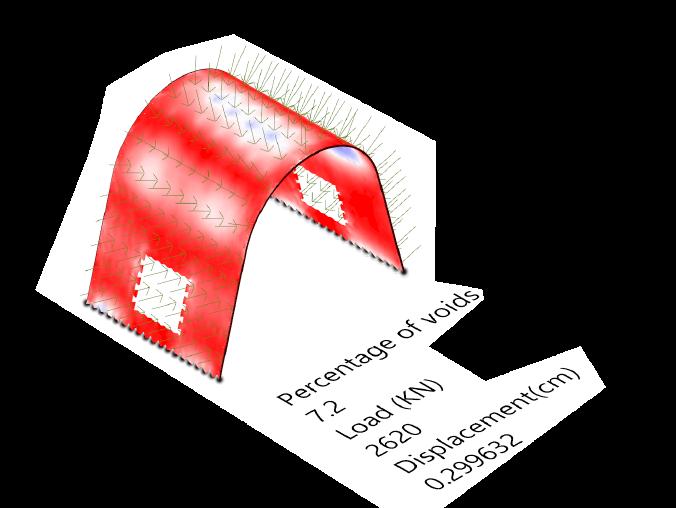
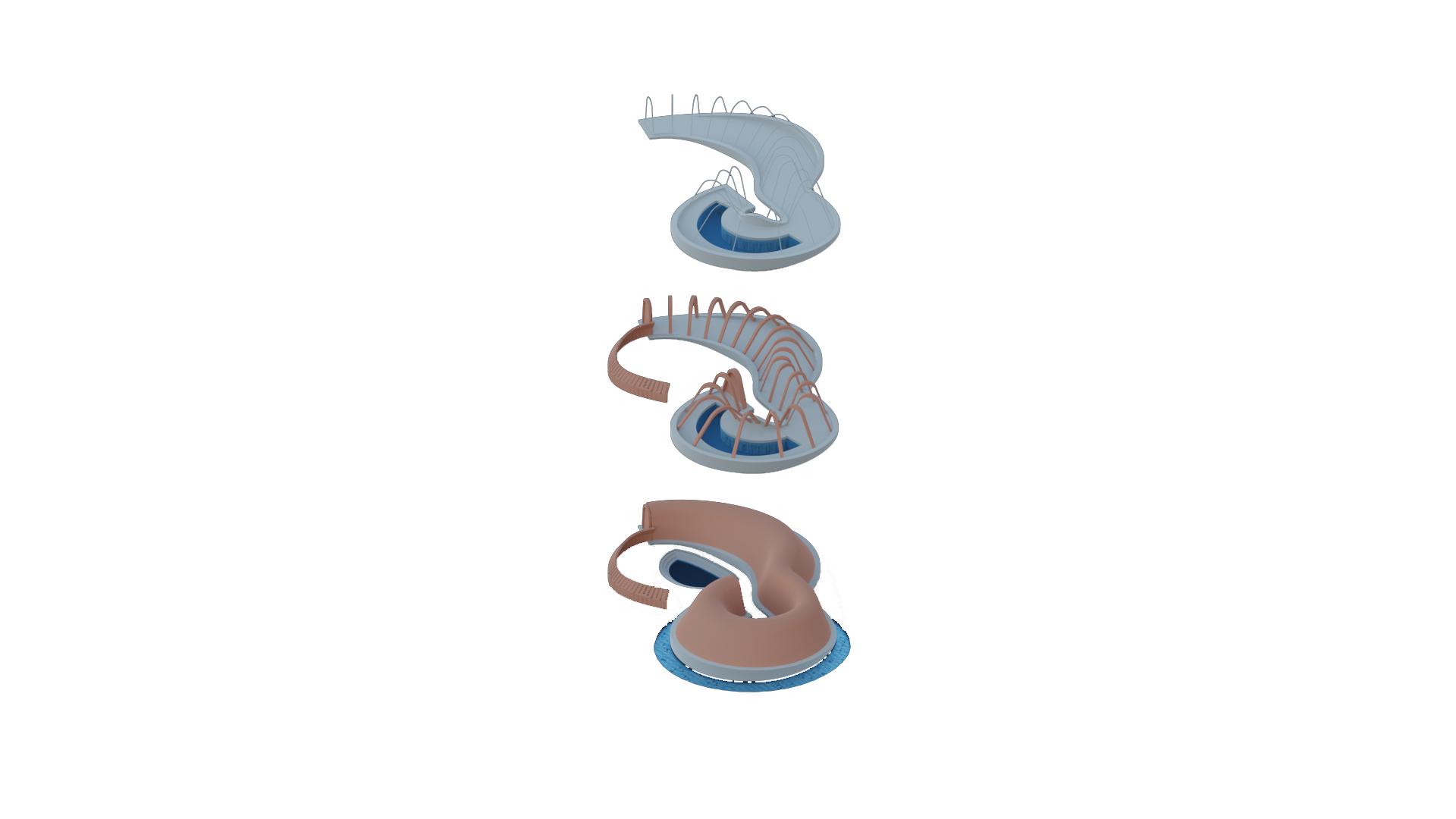
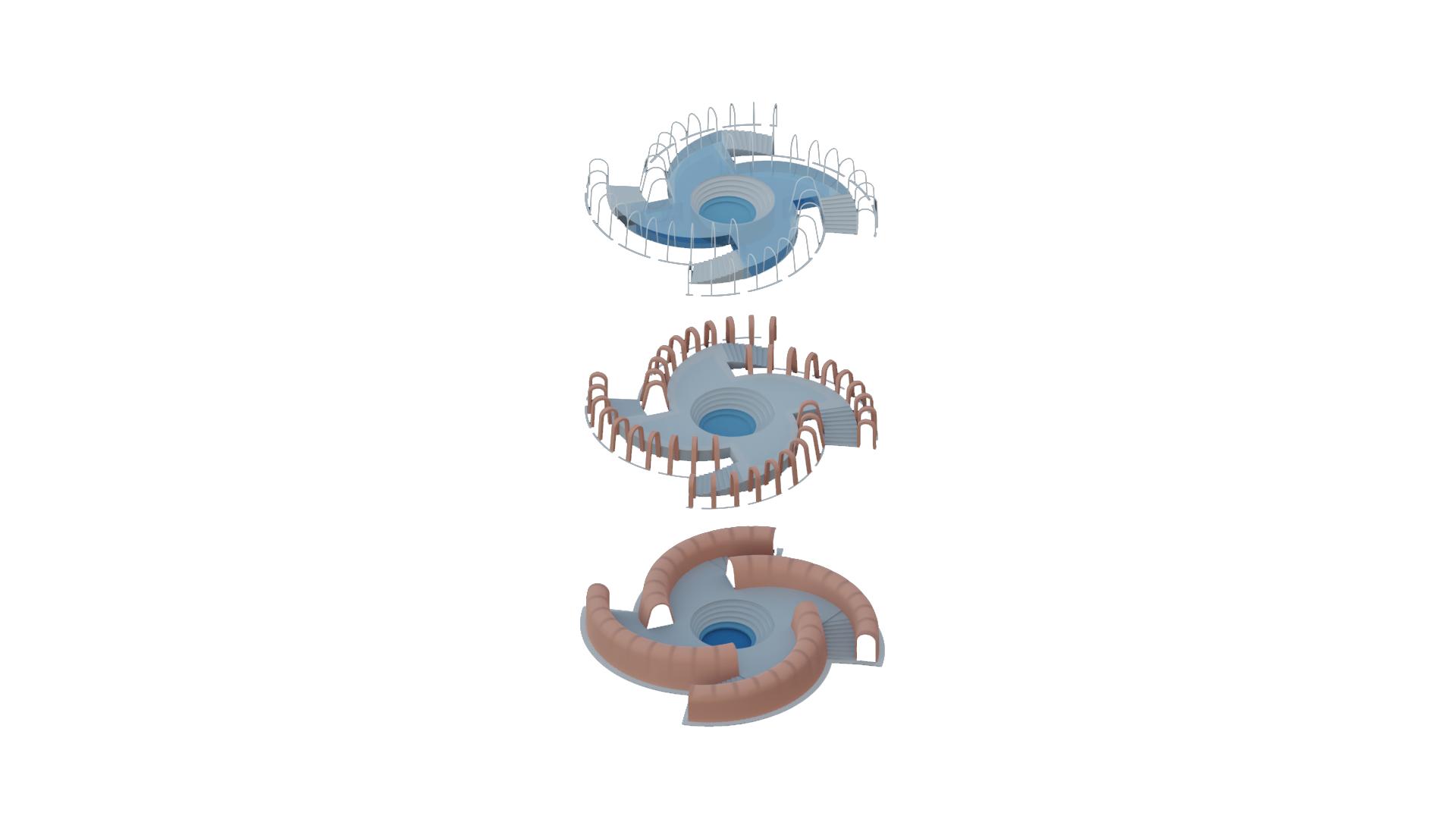
form | design of a compression based morphology due to limitaions in the materials load bearing capacity Cross section exploded view | collection and distribution morphology near the existing farmlands
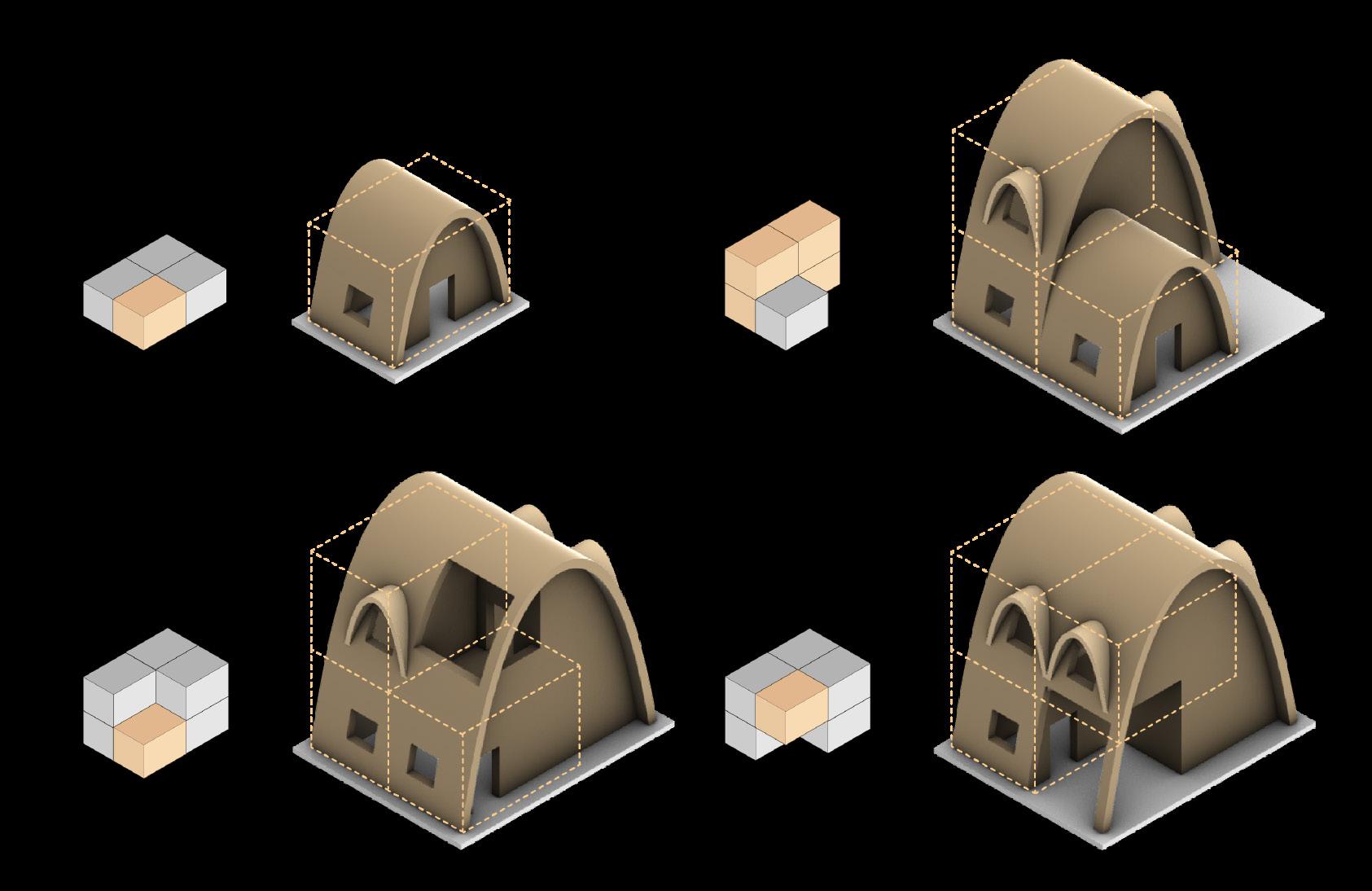
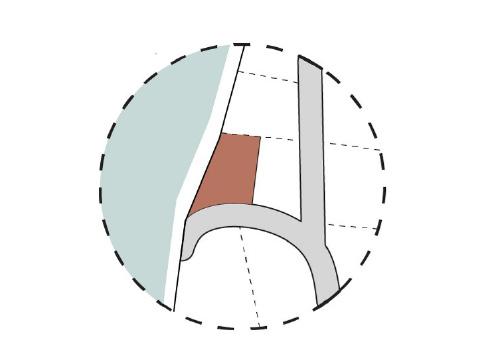
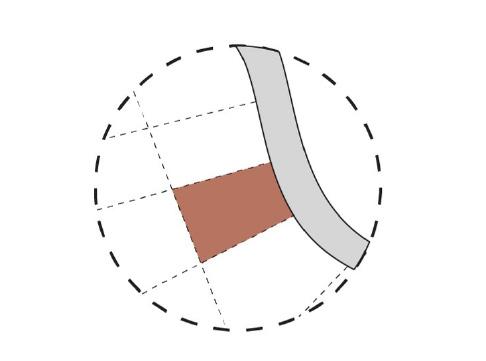
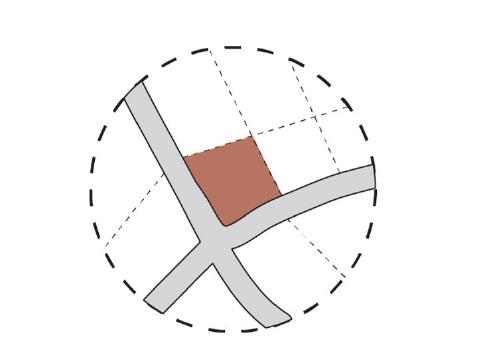
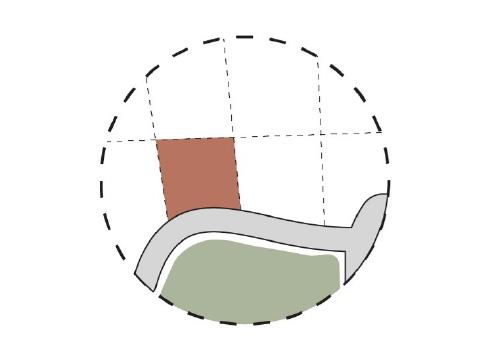
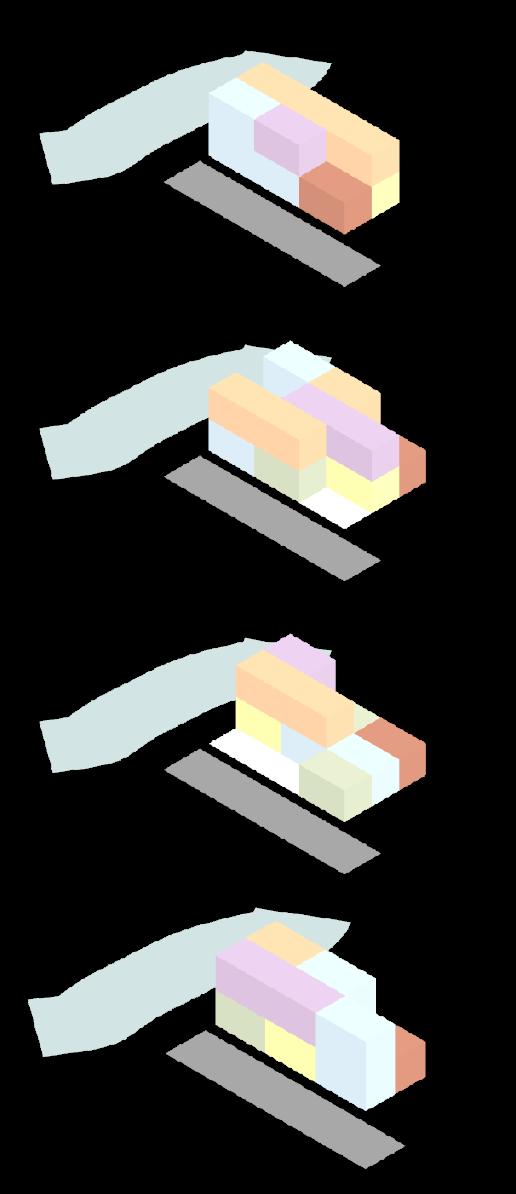
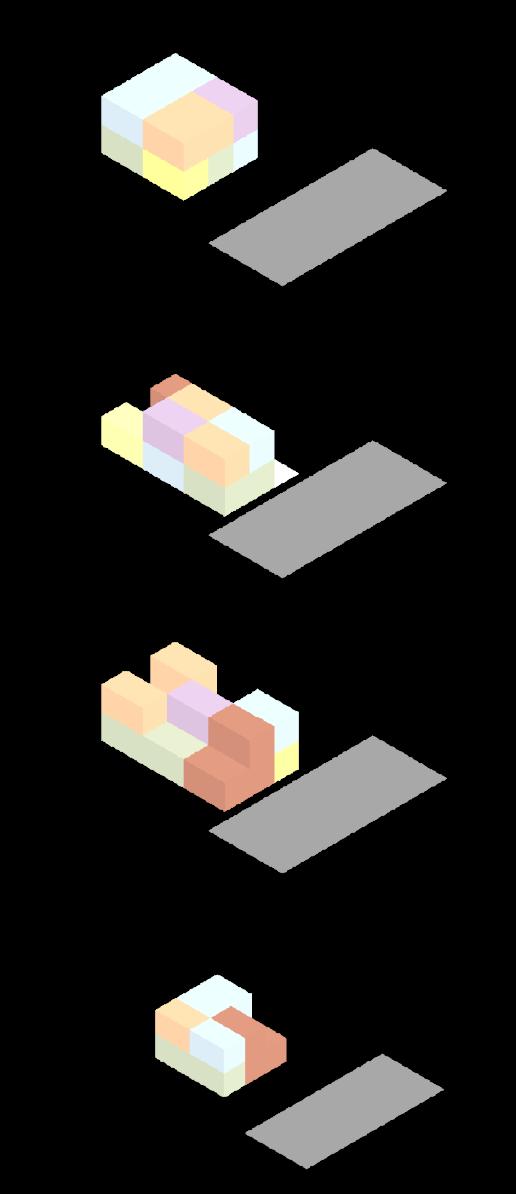
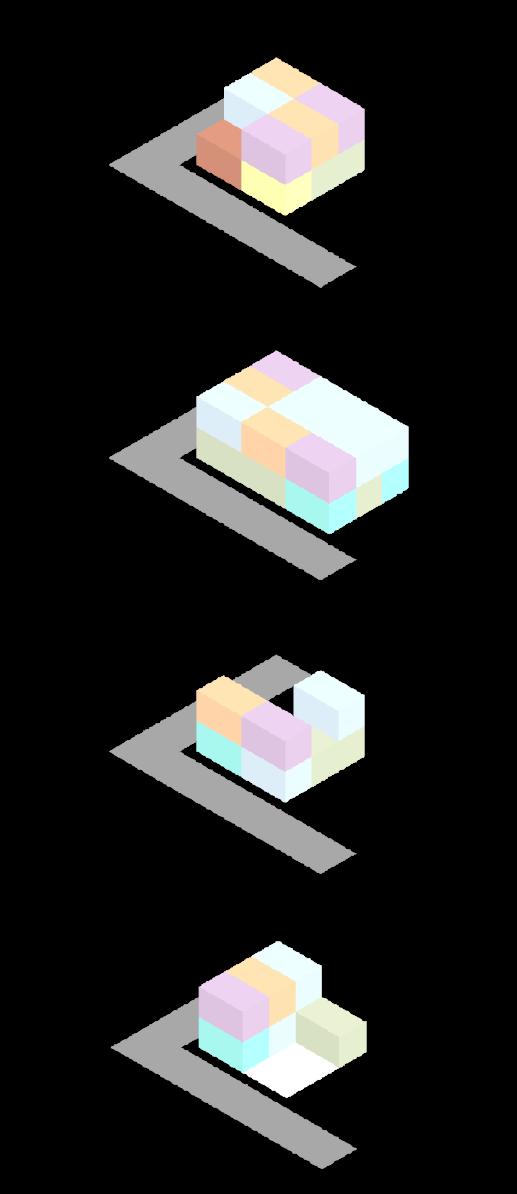
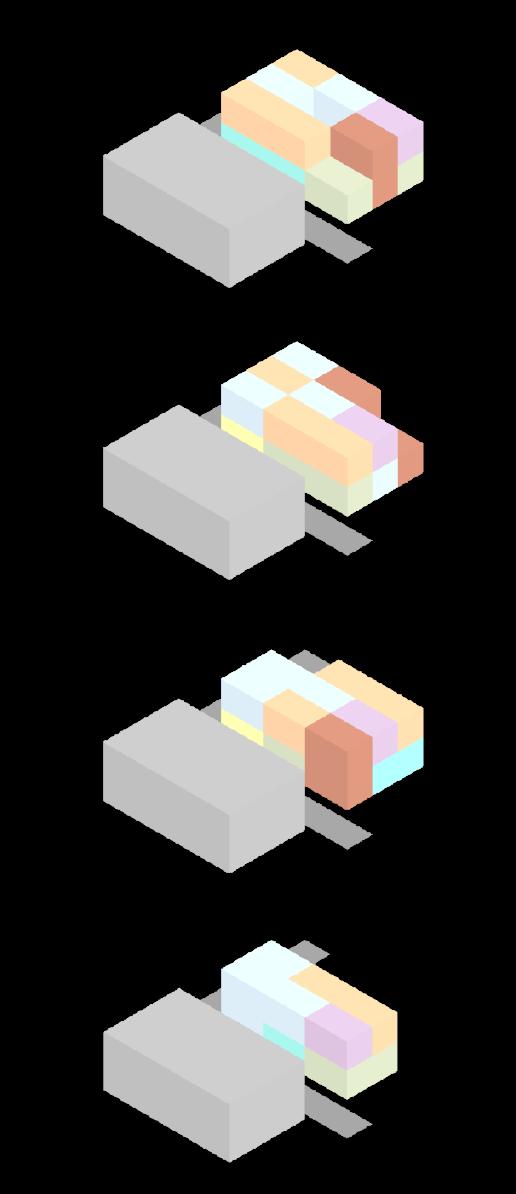
housing | space aggregation depending upon the location of the sites (worst case scenarios)
q-pop shell structures
Design team | Puja Bhagat, Gautami Bhoite, Mehul Shethiya
Mentors | Dr. Elif Erdine, Dr. Milad Showkatbakhsh
Published research paper | https://sigradi.org/sigradi2023/
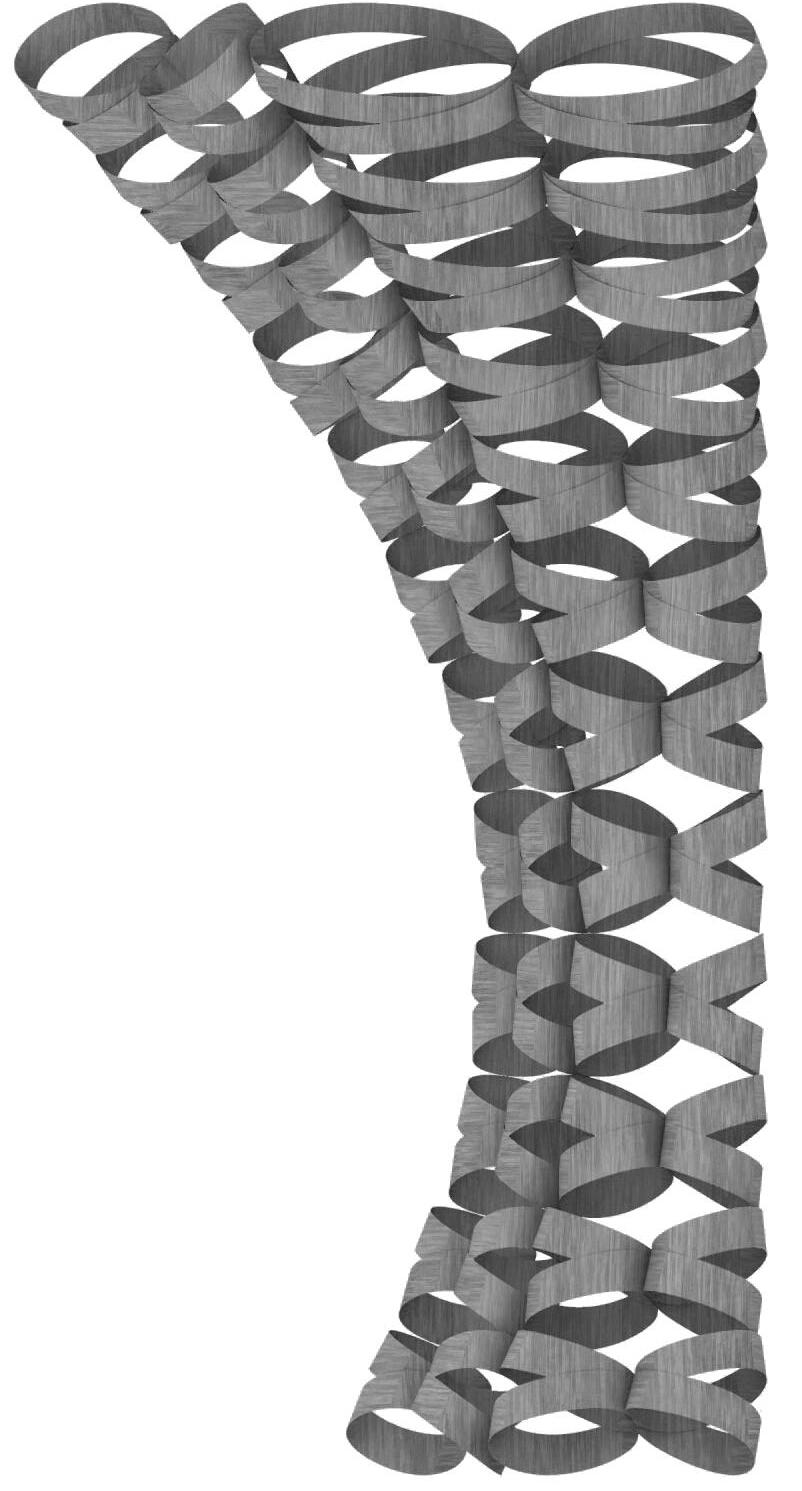
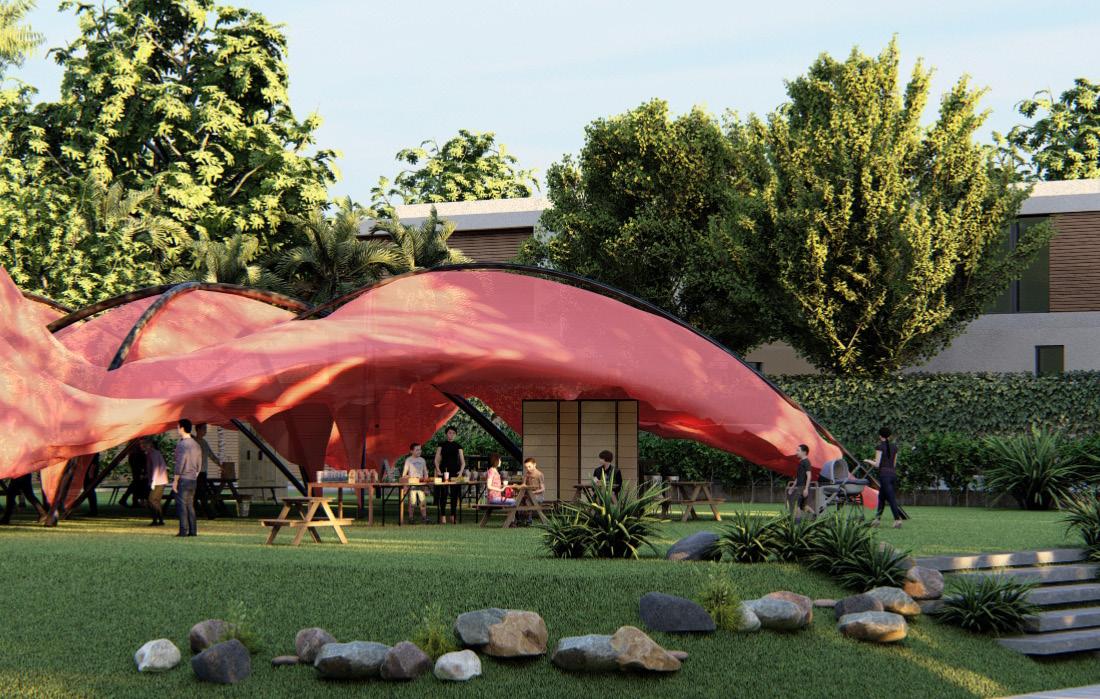
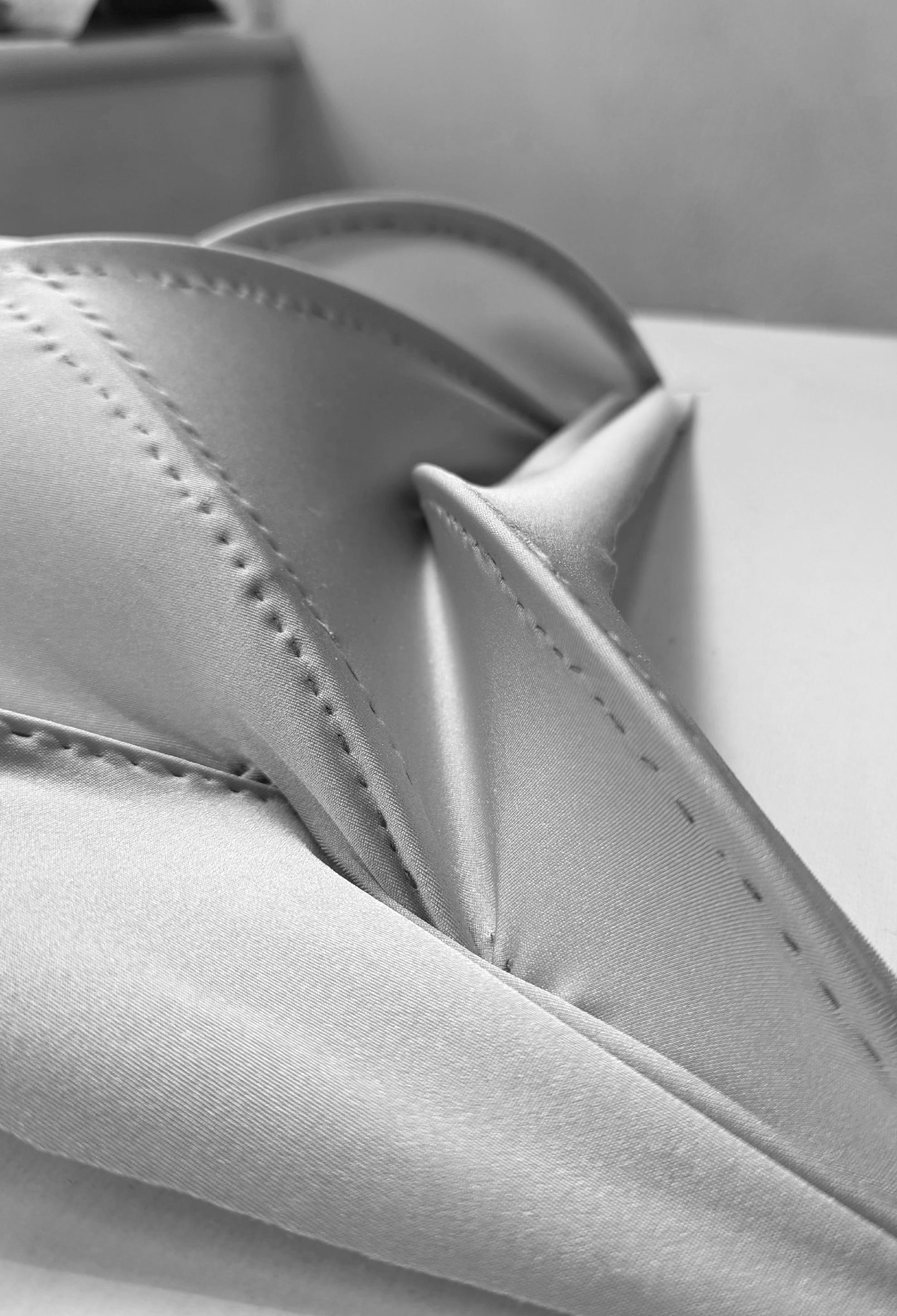
The goal of this research is to explore the role of biological principles on an architectural scale. Specifically, the work is focused around using the bilayer, trigger-based mechanism found in coiling tendrils to create temporary pop-up structures. The work was tested through a small-scale prototype.
To conduct this research, the team first abstracted one principle found in the coiling tendrils: the bi-layer, trigger-based bending mechanism. A series of smallscale material experiments were then conducted to find a synthetic material pairing which would create a similar bending ability. From this, additional experiments were conducted to accurately control the system’s bending ability. Using the constraints of the selected materials found in the experiments, an evolutionary algorithm was performed to determine an appropriate morphology for the bending system.
After understanding the behavior of the bending system on a small-scale, the system was then
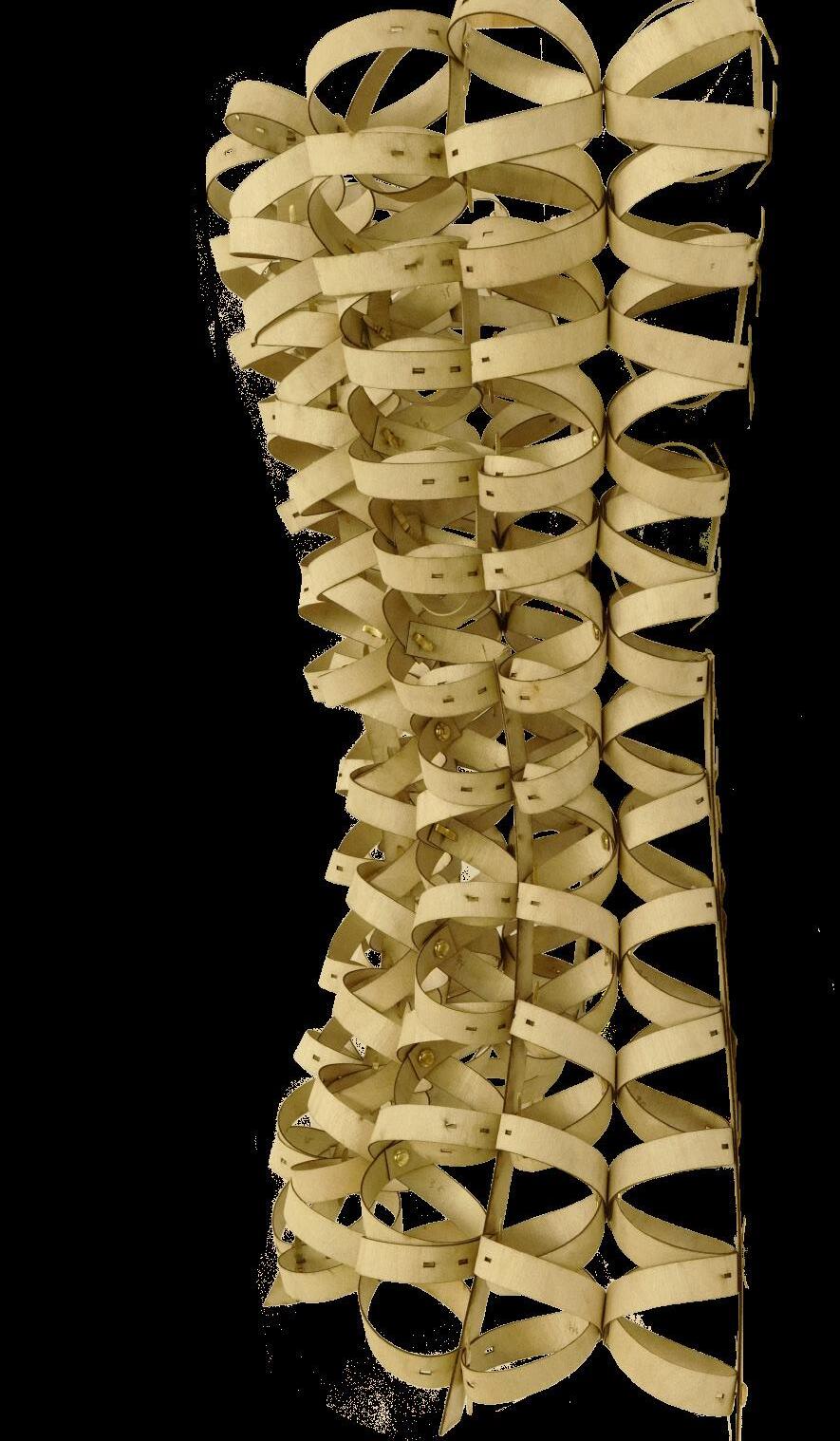
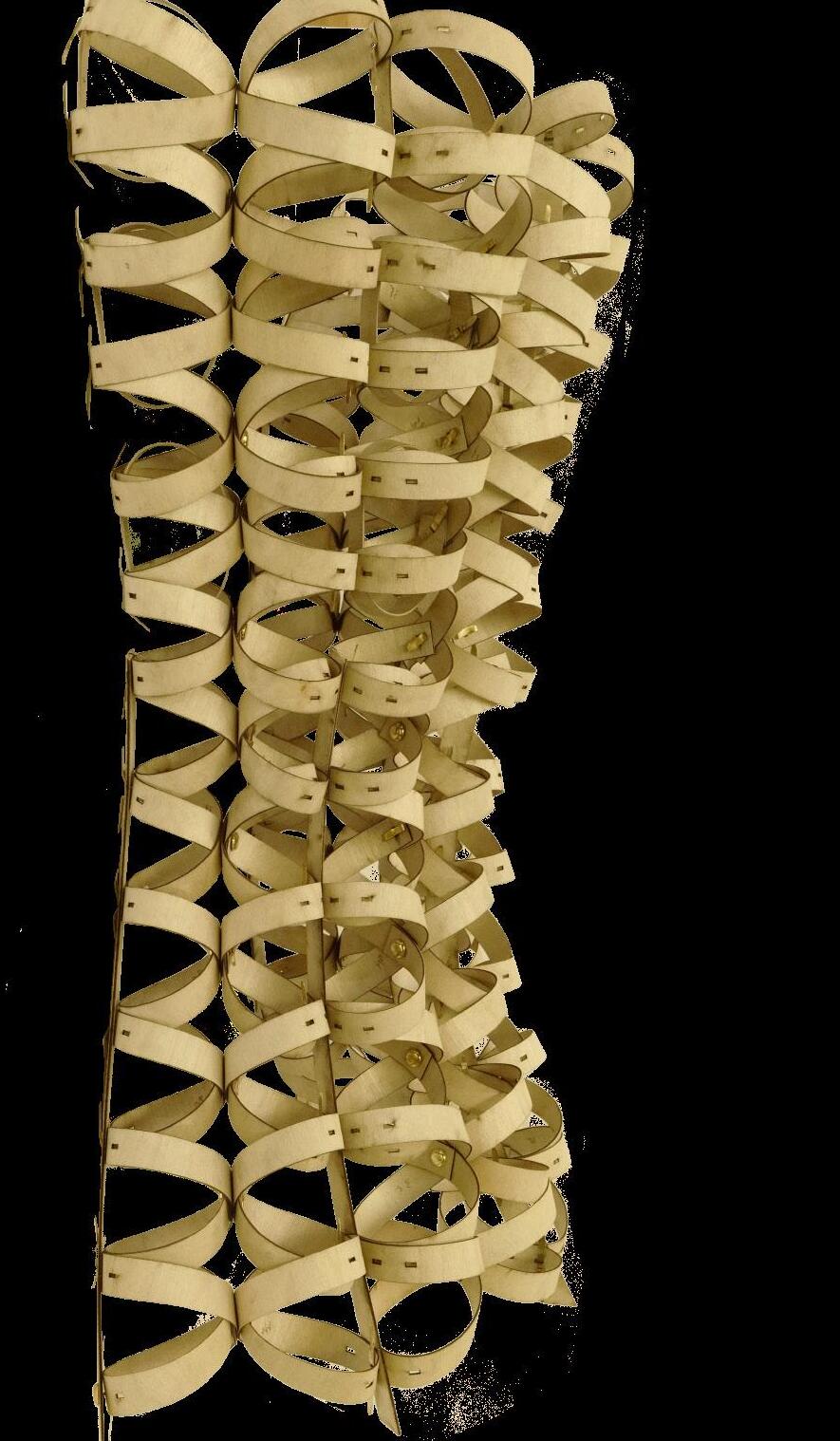
imagined on an architectural scale as a temporary, pop-up structure. Particularly, the team determined appropriate architectural-scale materials which would behave similarly to the small-scale experiments and devised a potential design and fabrication process for this system. Using the knowledge gained from the conducted experiments, the team constructed a small prototype to demonstrate the fabrication and functionality of the created system.
Through this research, the team was able to deeply explore the application of a bi-layer, trigger-based bending mechanism to a design setting. Particularly, the primary focus of the research focused on investigating the functionality of the biological material system and understanding its application to a synthetic set of materials to create a similar bending ability. In doing so, this work strengthened the notion that biological principles can provide meaningful knowledge on how to design and fabricate at an architectural scale.

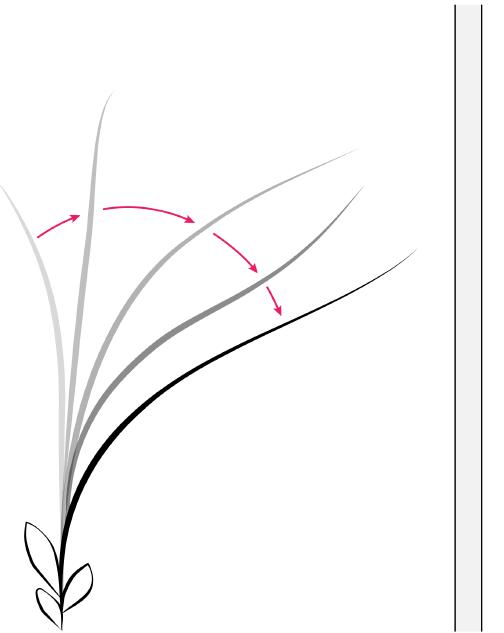

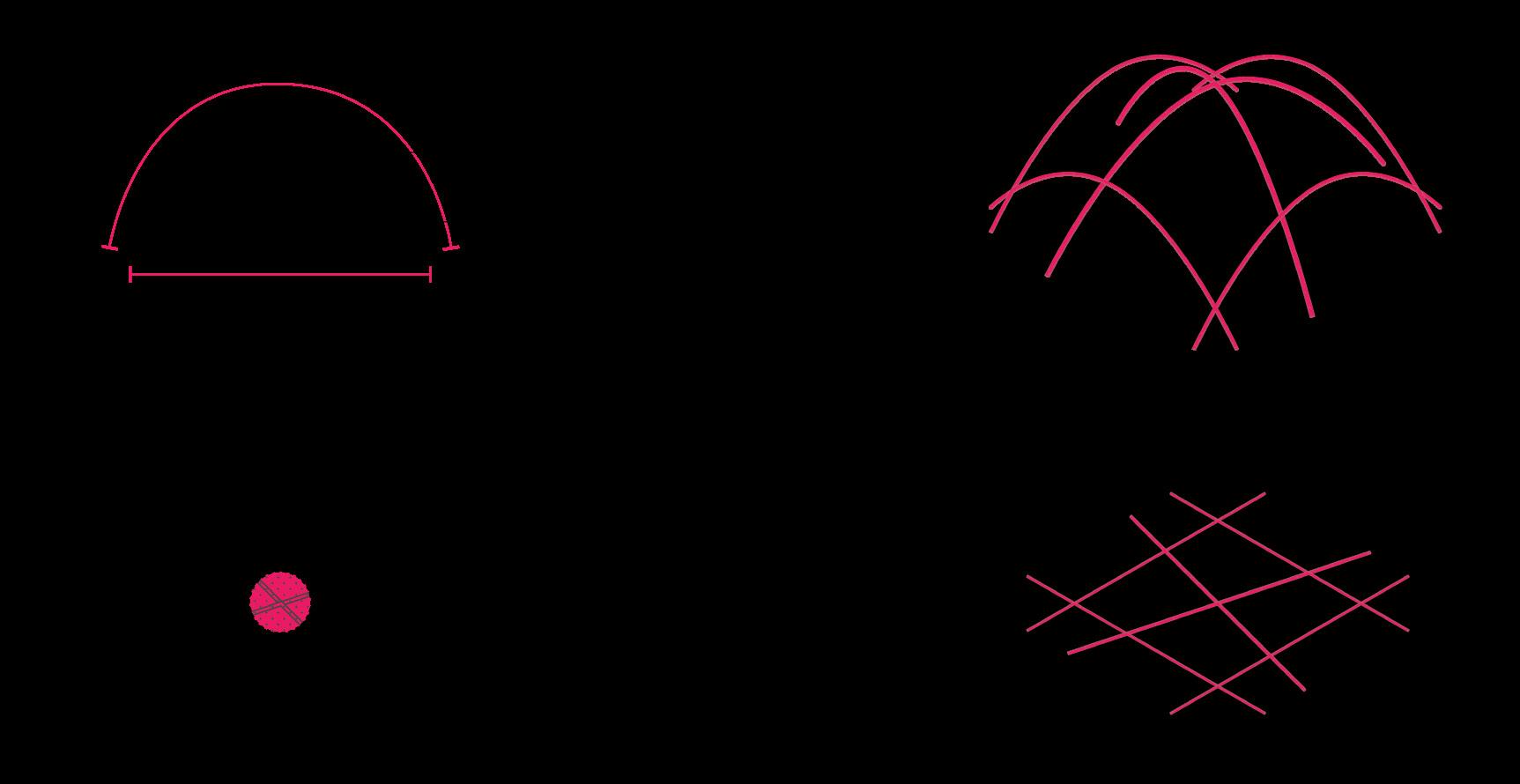
step 01: circumnutation step 02: thigmotropic response
precedent research | tendril coiling process
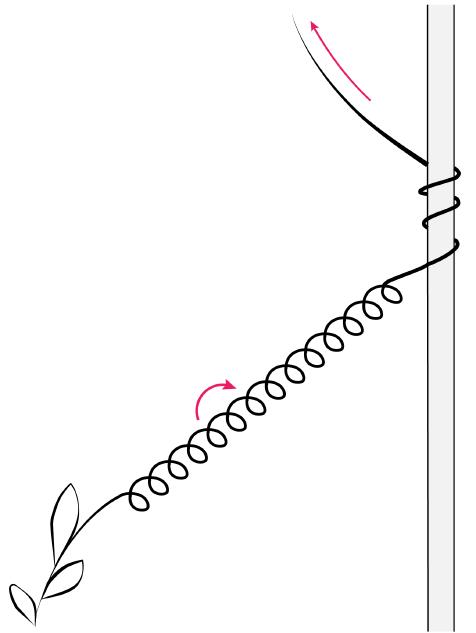
step 03: free coiling
Bending Layer
Contracting Layer
Released
Stretched
concept | combining elastic and rigid materials to create bending forces


primary members secondary members
body plan
body 01: primary structure [0.5mm rod]
Genes A,C,E
body 02: secondary structure [0.4mm rod]
Genes B,D,F
body 03: fabric base [lycra fabric]
Gene G
gene pool
A : increase length x 1.3
B : increase length x 1.1
C : rotate clockwise by 15 degrees
D : rotate clockwise by 30 degrees
E : rotate counterclockwise by 15 degrees
F : rotate counterclockwise by 30 degrees
G : uniformly scale x 0.7
experiment setup | defining the genepool and body plan for the evolutionary algorithm
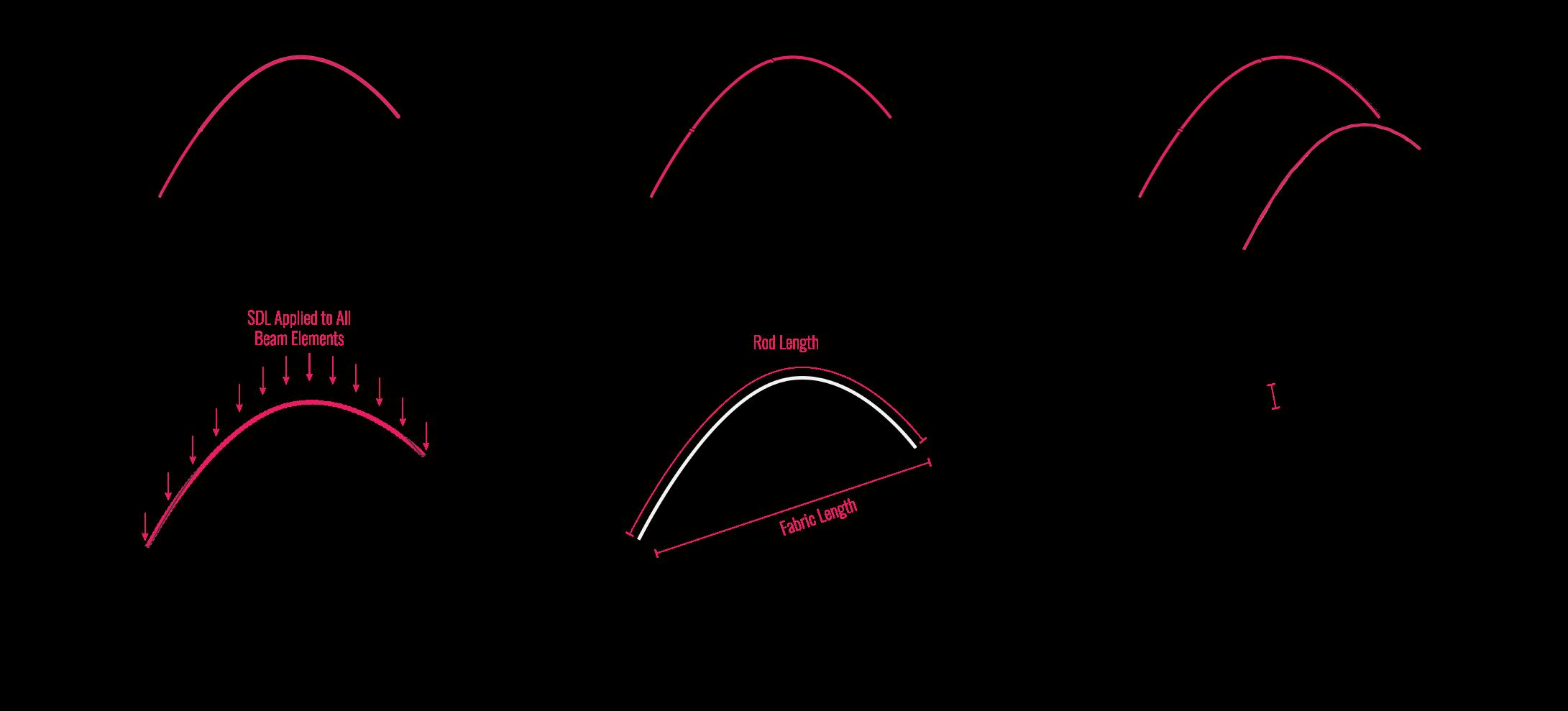
experiment setup | defining the fitness objectives for multi-objective optimisation
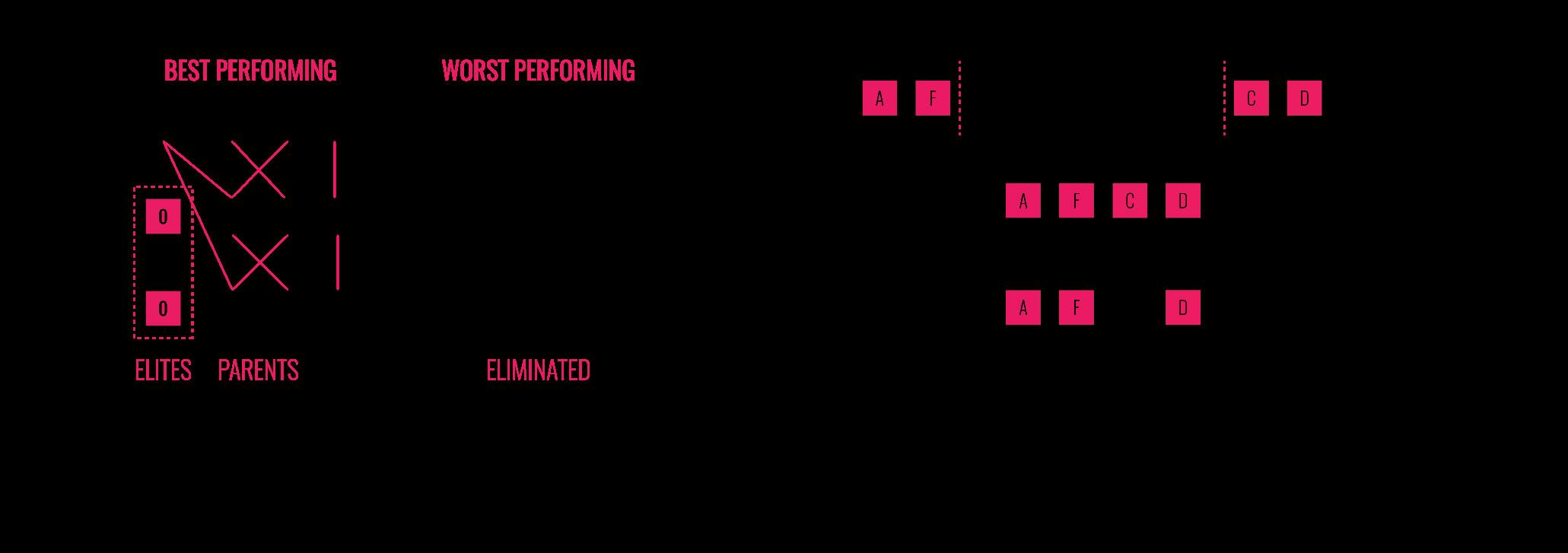
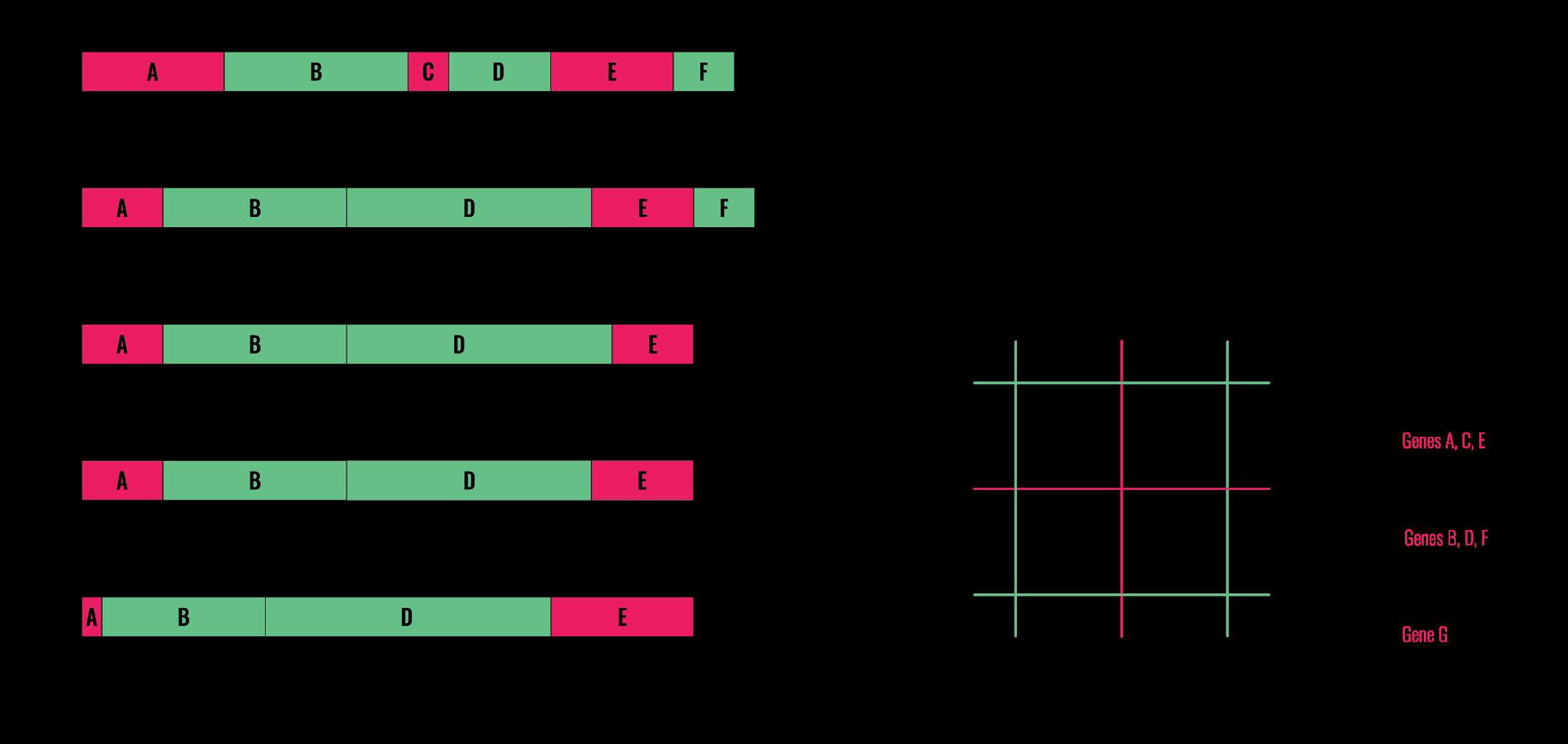
strategies | breeding, selection and mutation strategies for morphological evolution
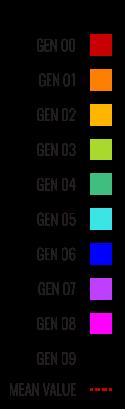
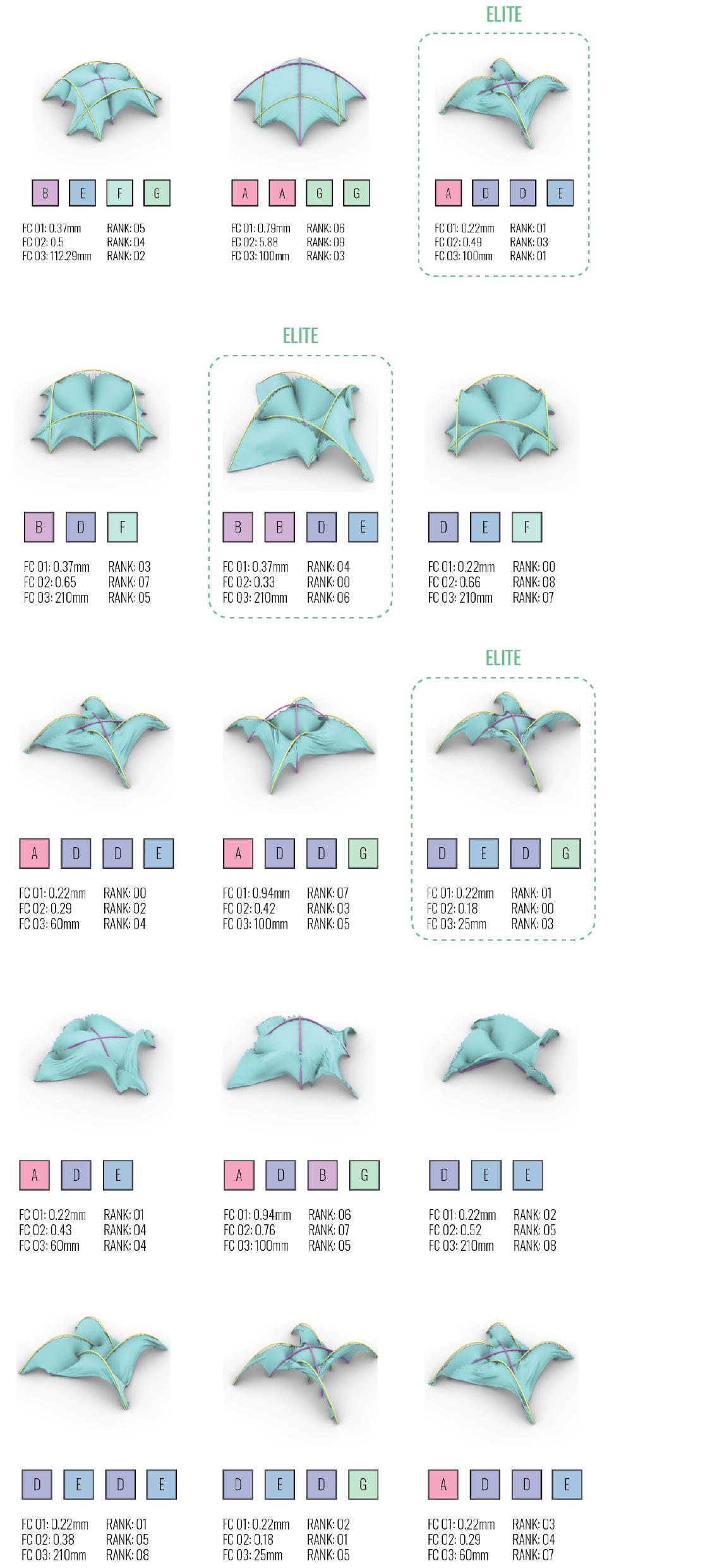
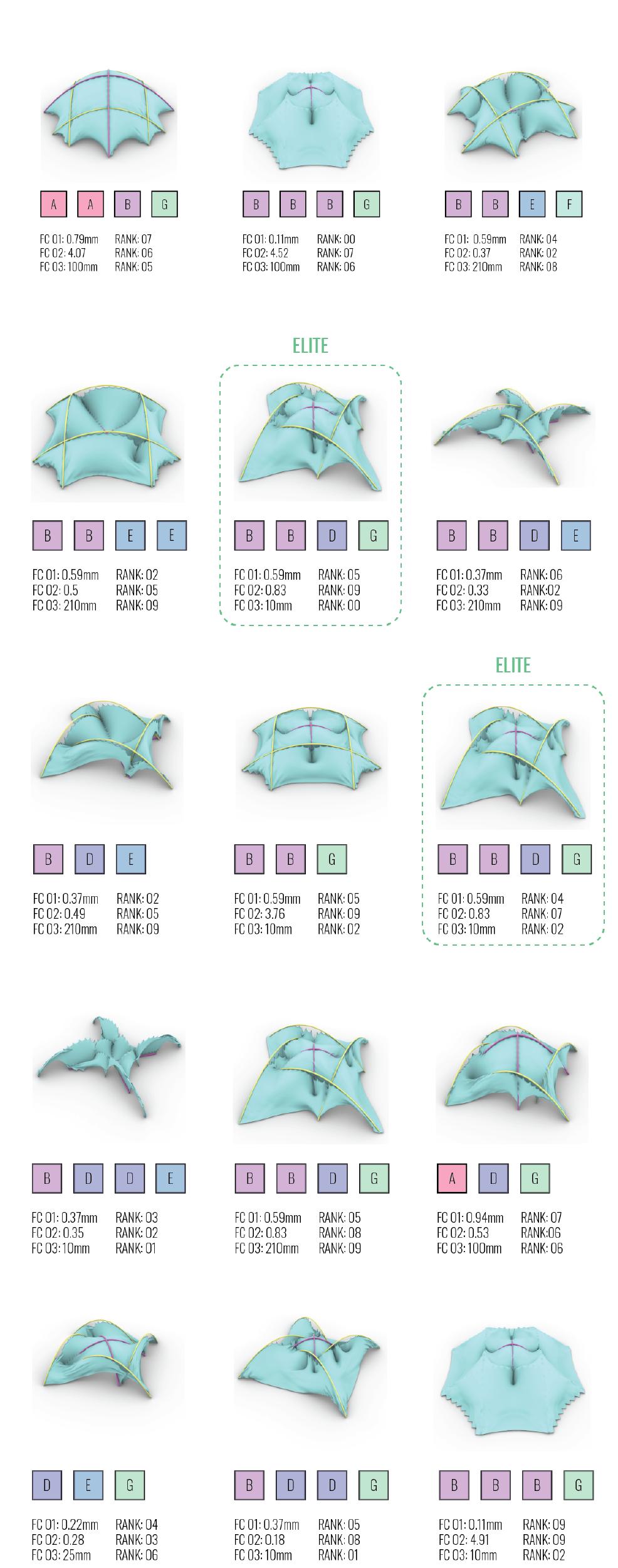
resultant phenotypes | combination of elastic fabric and acrylic rods bending differently
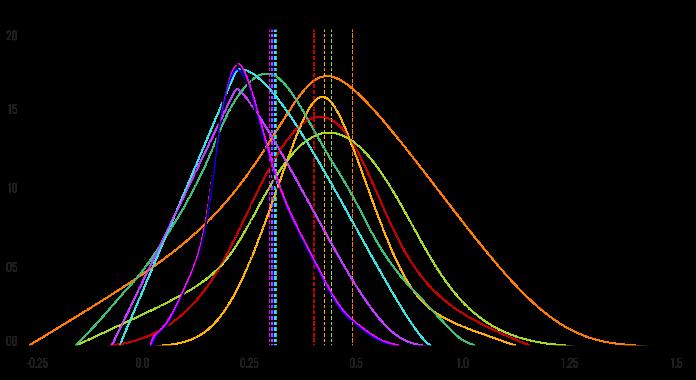
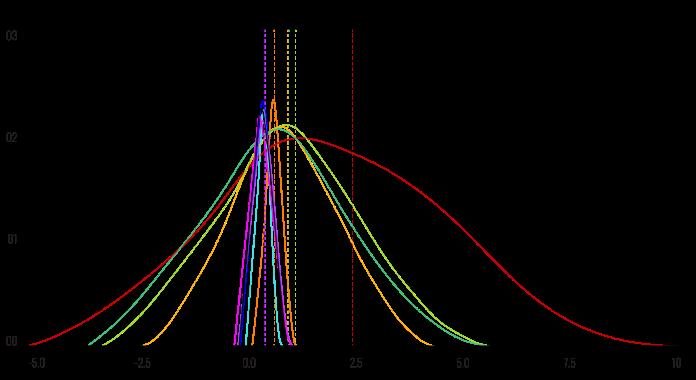
fc 01: displacement [mm]
fc 02: rod to fabric ratio
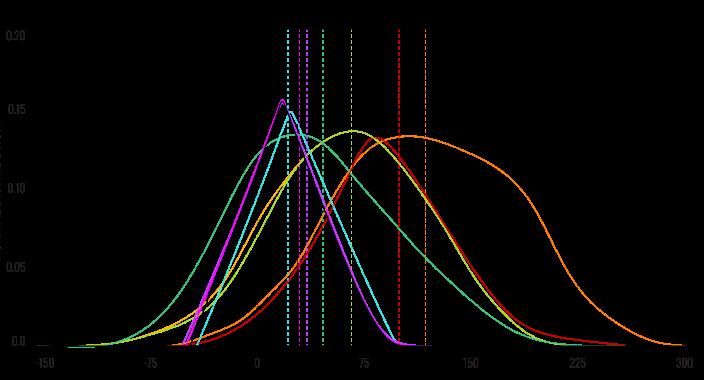
fc 03: rod height difference [mm]
analysis | standard deviation graphs for individual fitness criterias
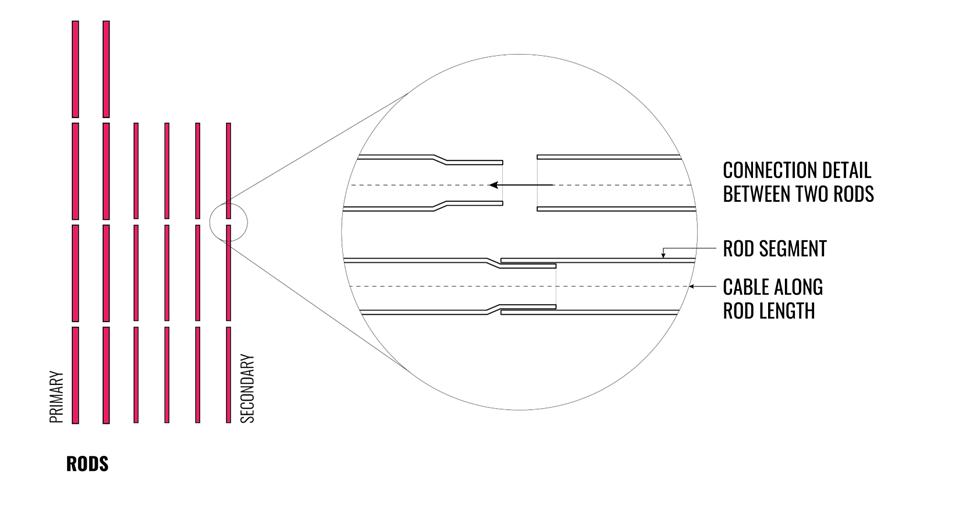
step 01: connect rods
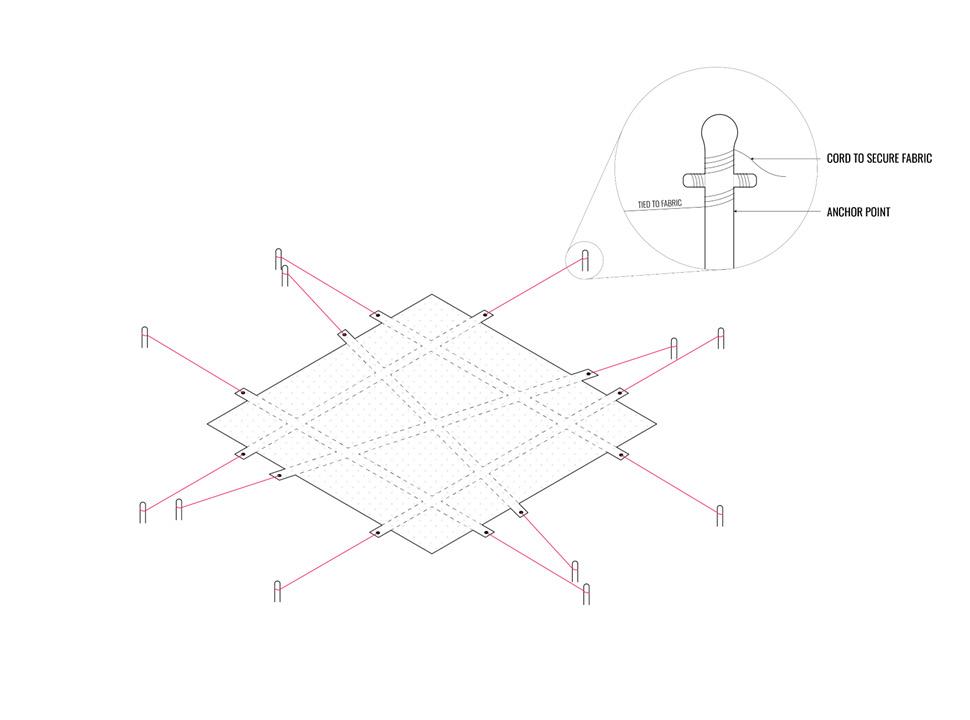
step 03: attach fabric
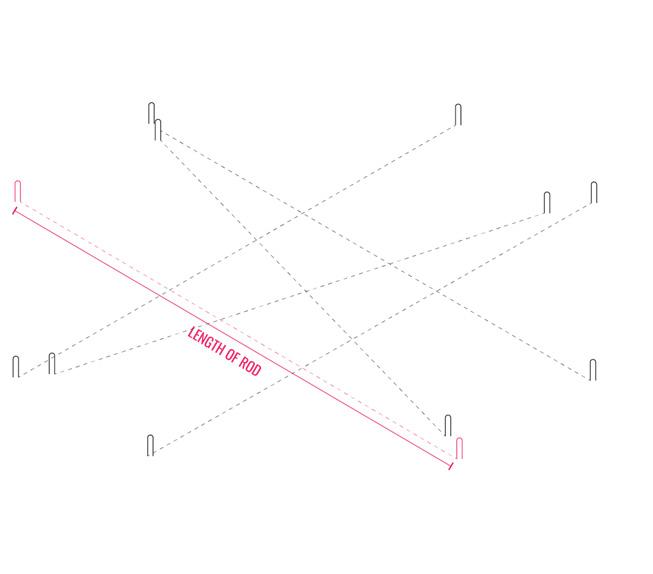
step 02: place anchors
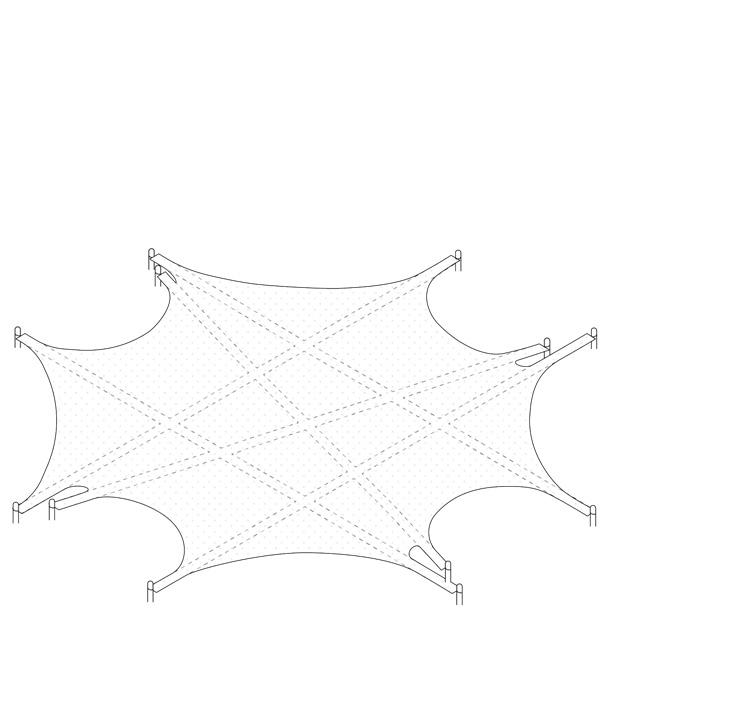
step 04: stretch fabric
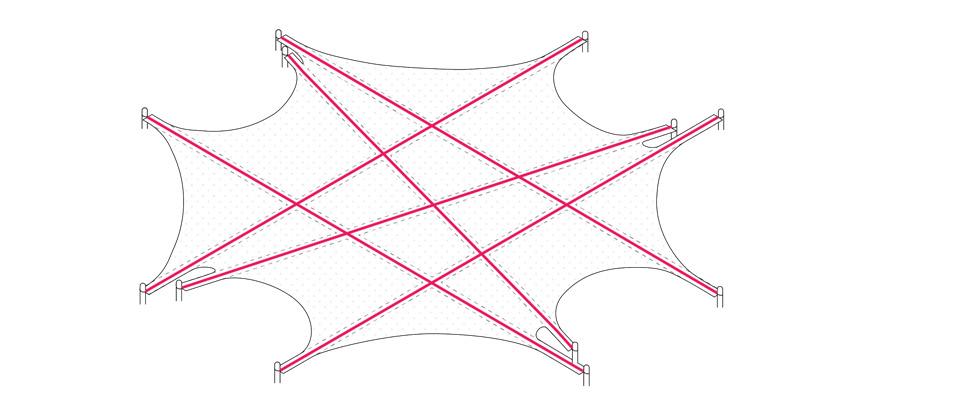
step 05: insert rods
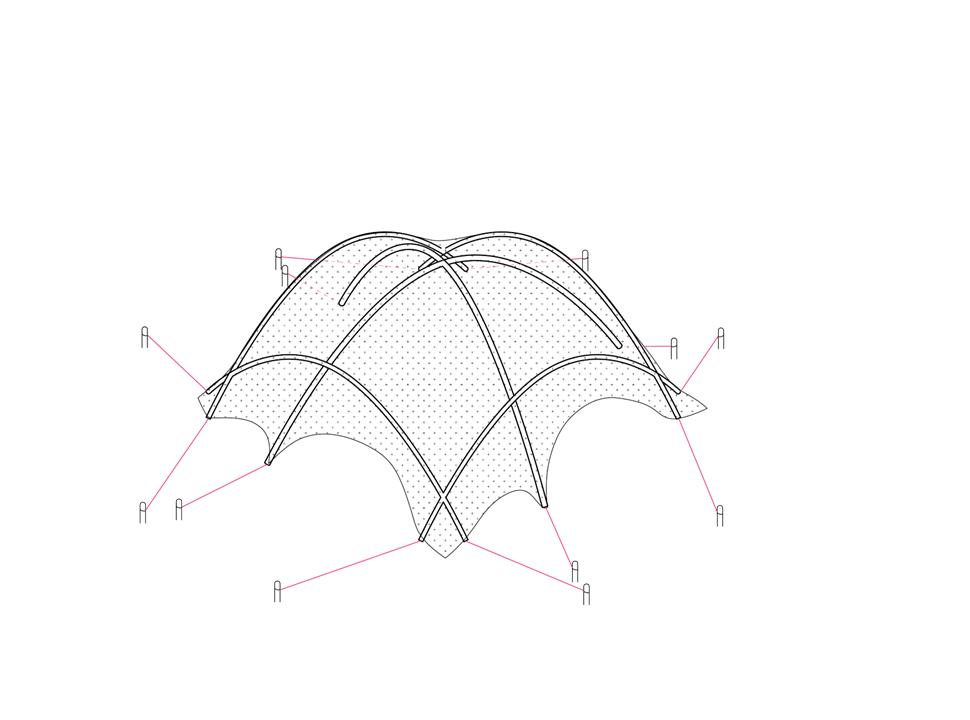
step 07: allow bending
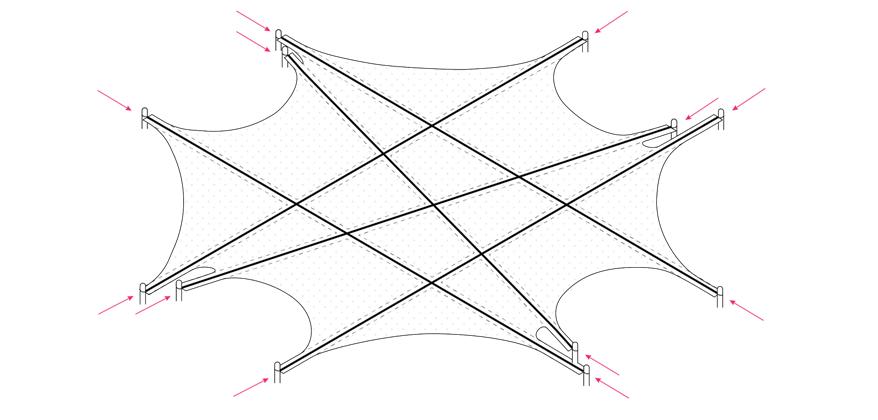
step 06: evenly release cords
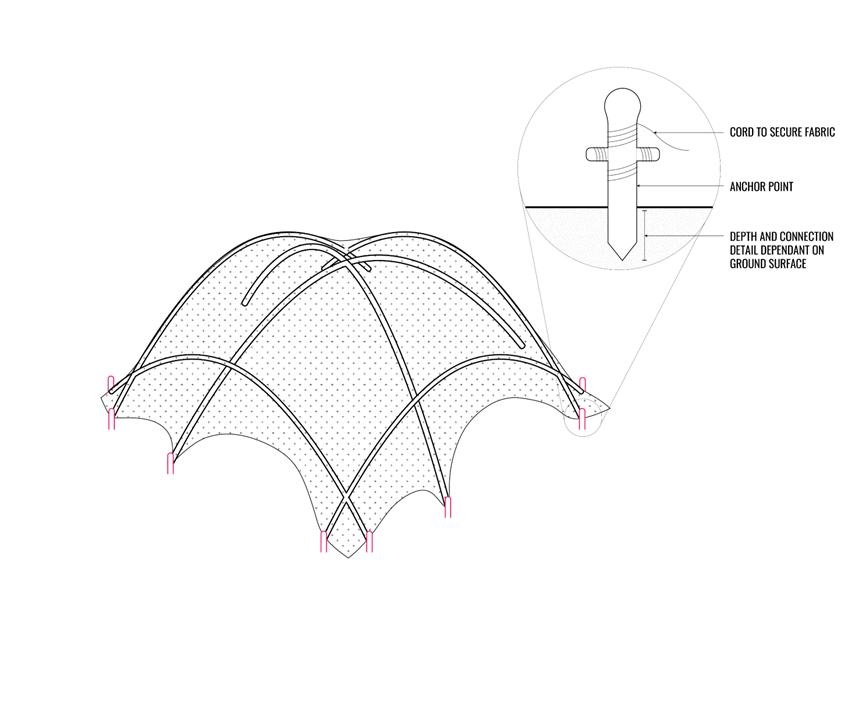
step 08: secure with anchors
fabrication process | strecth and release mechanism for physical fabrication
un-fold
Design team | Ananya Vachher, Liuxin Zhao, Mehul Shethiya
Mentors | Dr. Elif Erdine, Dr. Milad Showkatbakhsh
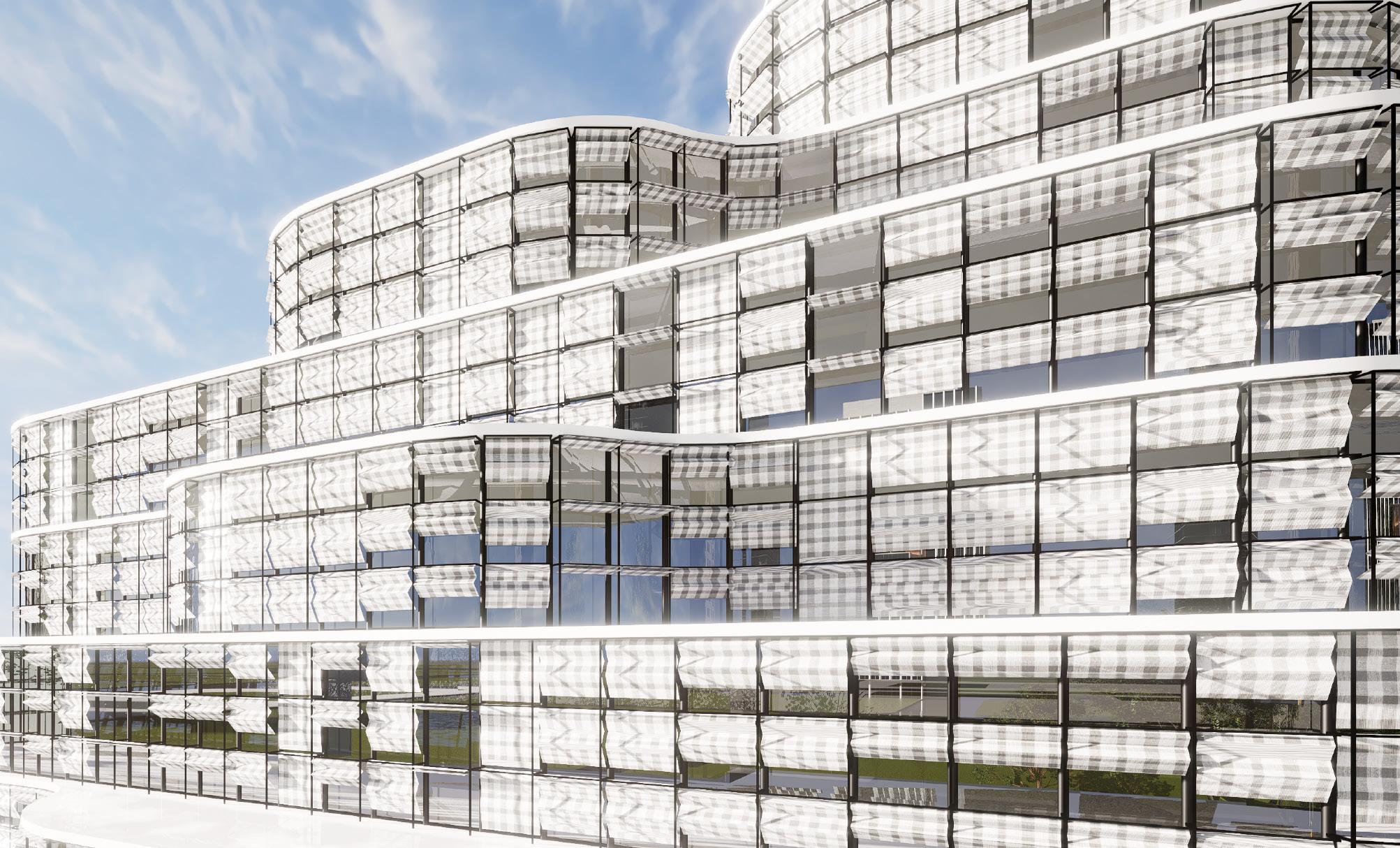
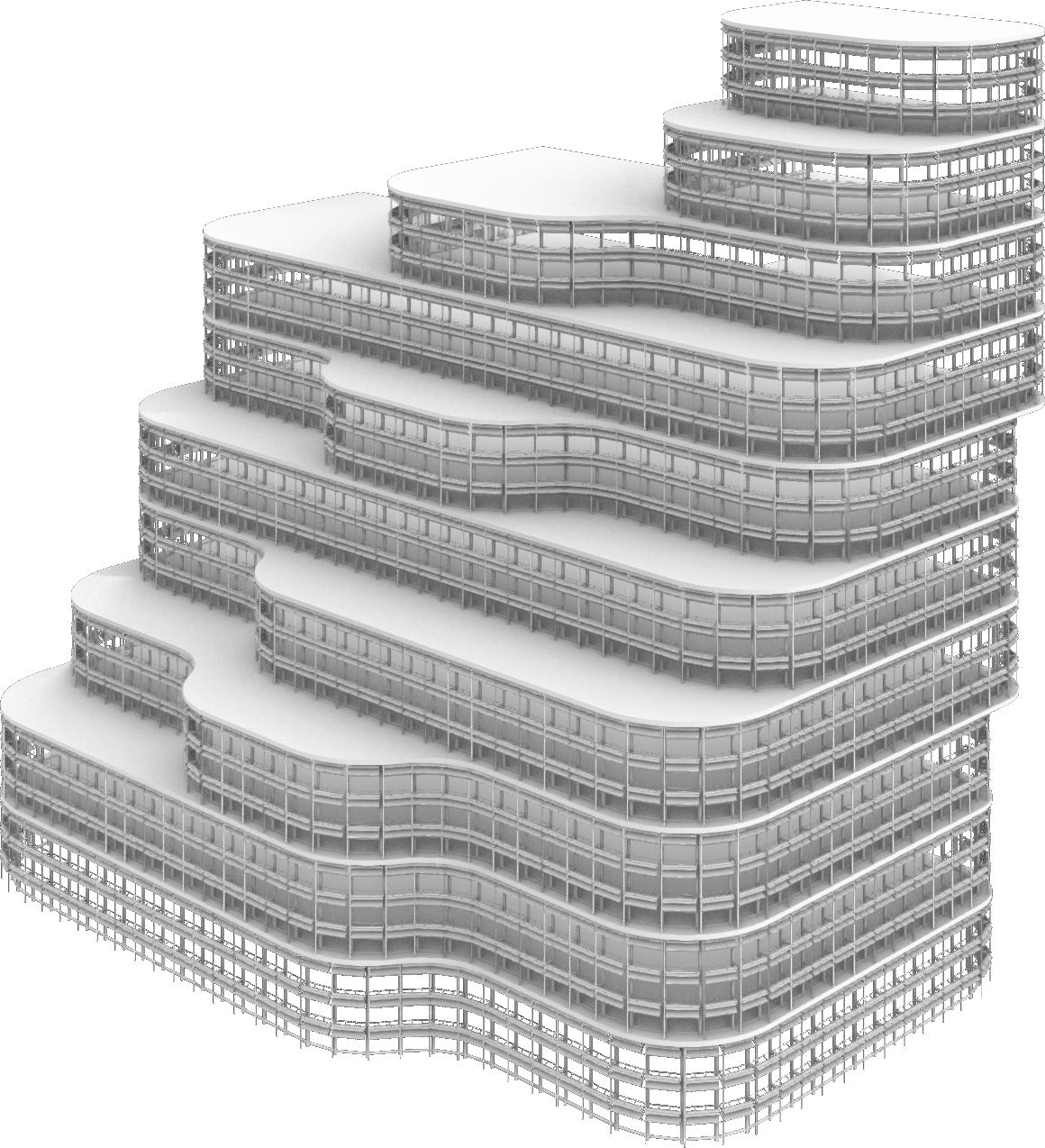
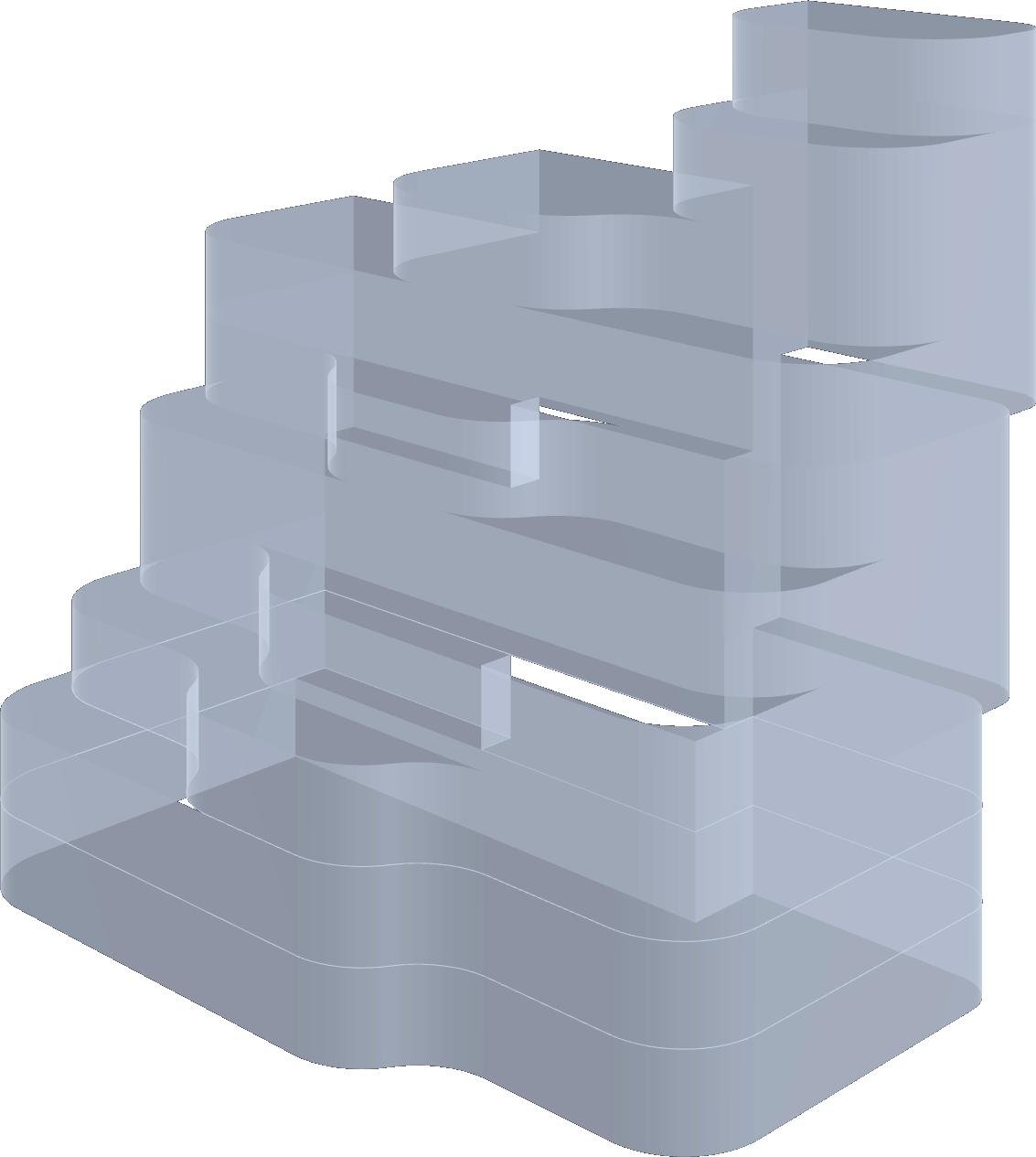
The project research focuses on the design and development of a responsive double skin facade for a built structure in the city of London. The city has an oceanic climate which is characterized by mild winters and cool summers, with a high level of humidity and a moderate amount of rainfall throughout the year. The project aimed to create a facade system that would be able to adapt to the specific environmental conditions of this climate, while also considering the surrounding context and local materials. Further, the façade component was to emerge through a given natural system and its function.
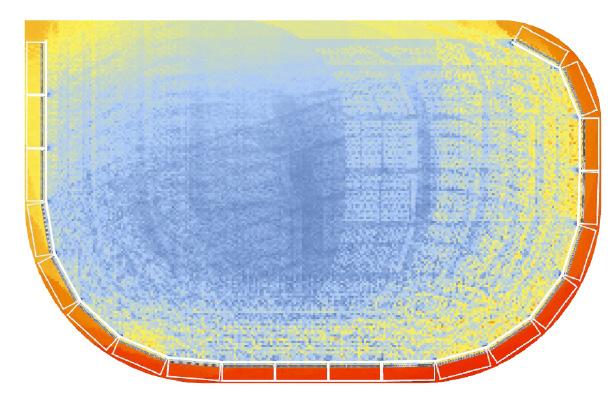
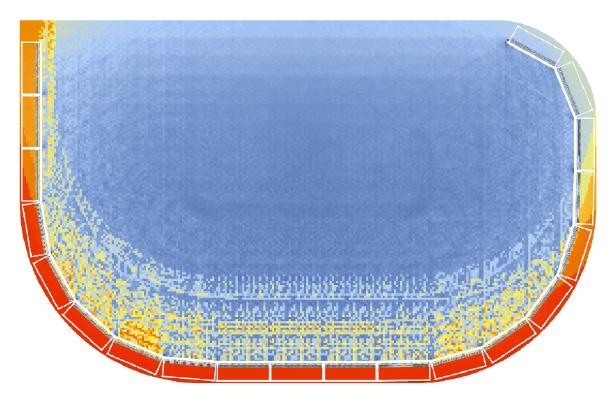
To achieve this, site specific climatic analysis including solar radiation and wind patterns were studied. Based on this, the morphology of the building was developed. The working of the façade system was abstracted from the Mimosa pudica plant focusing on its action of folding.
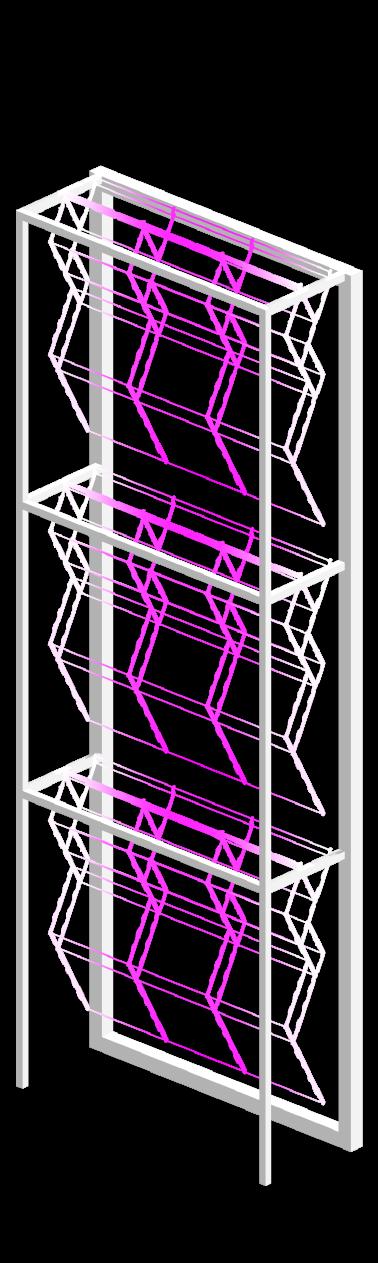
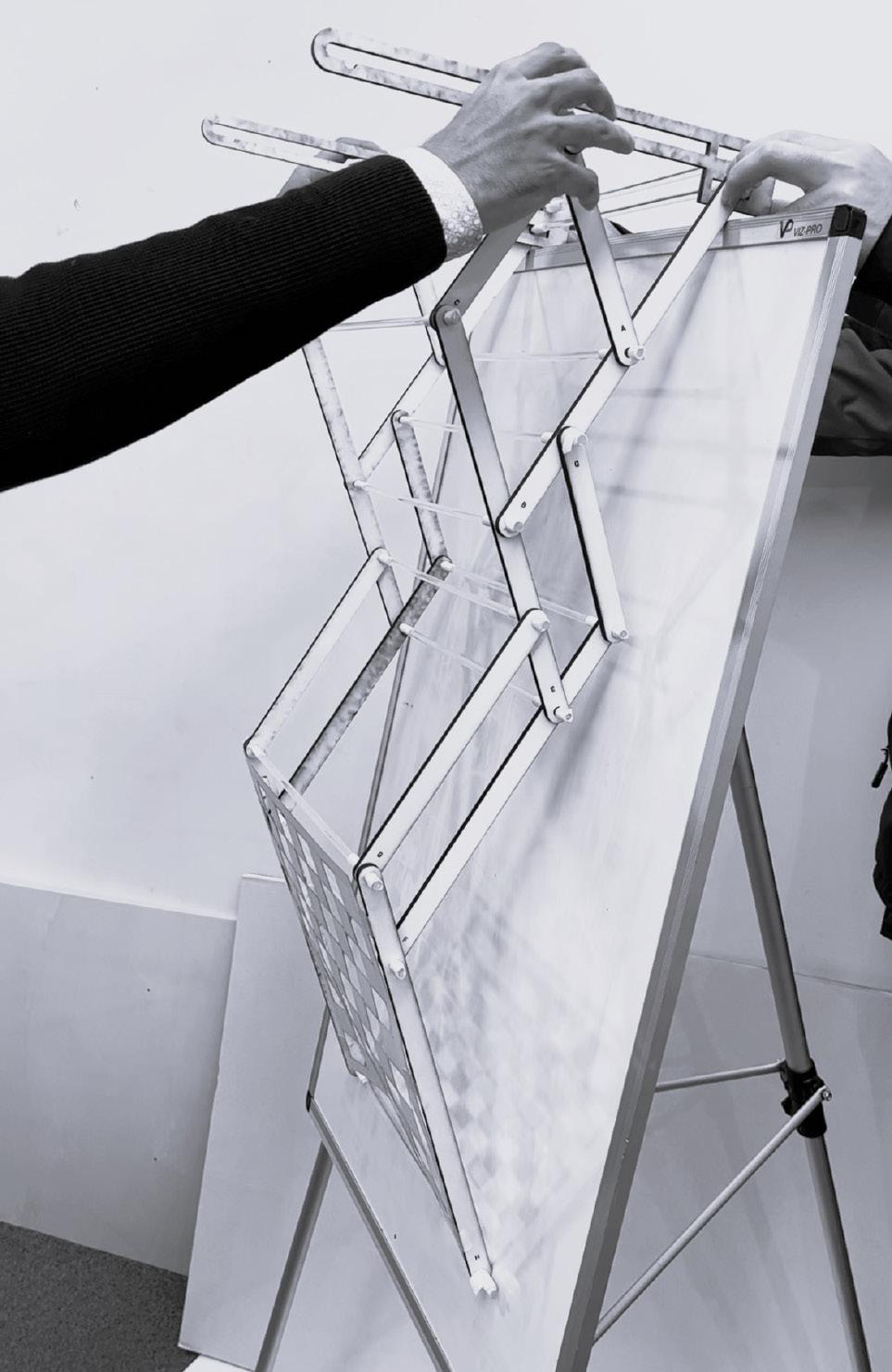
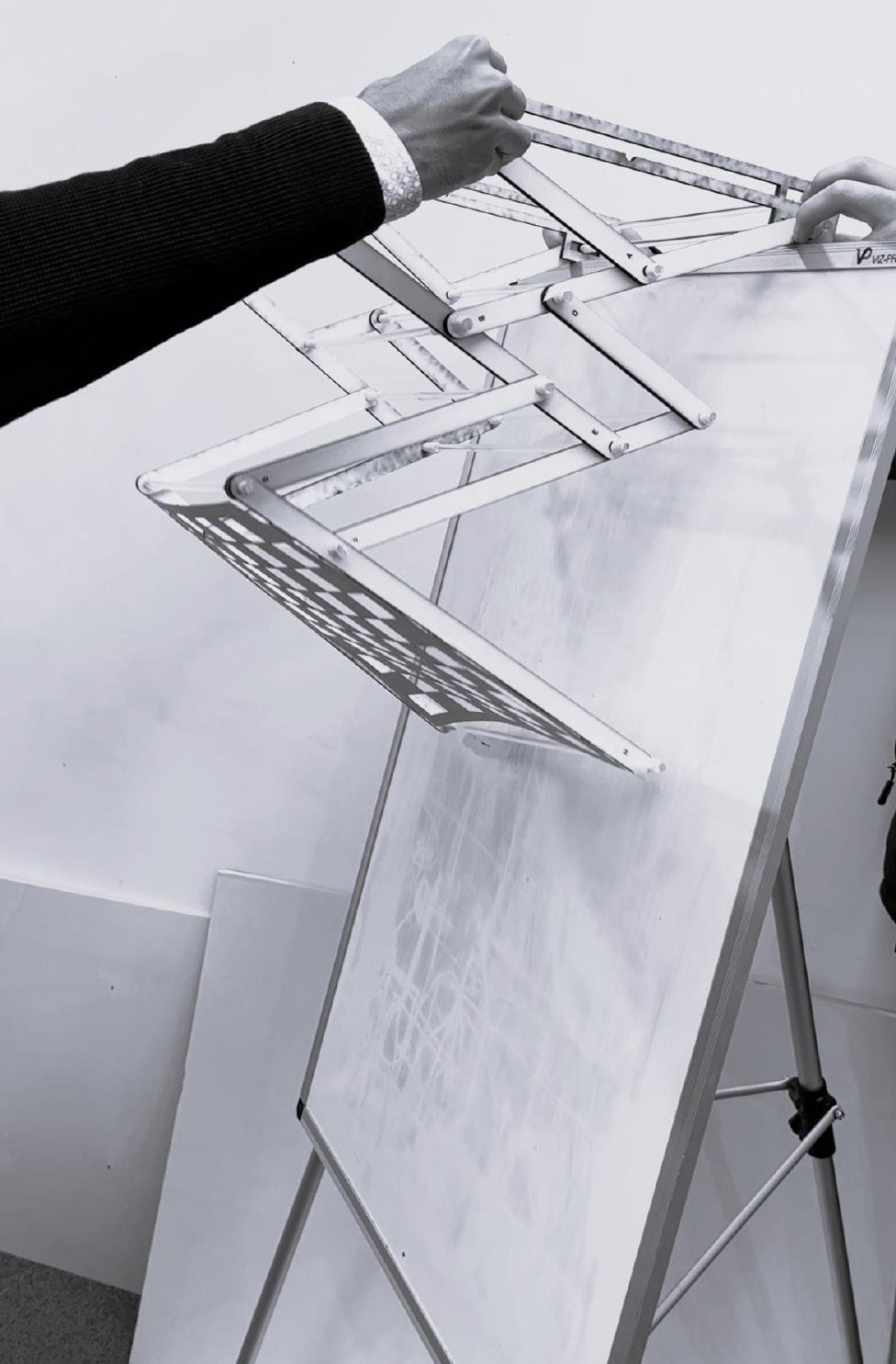
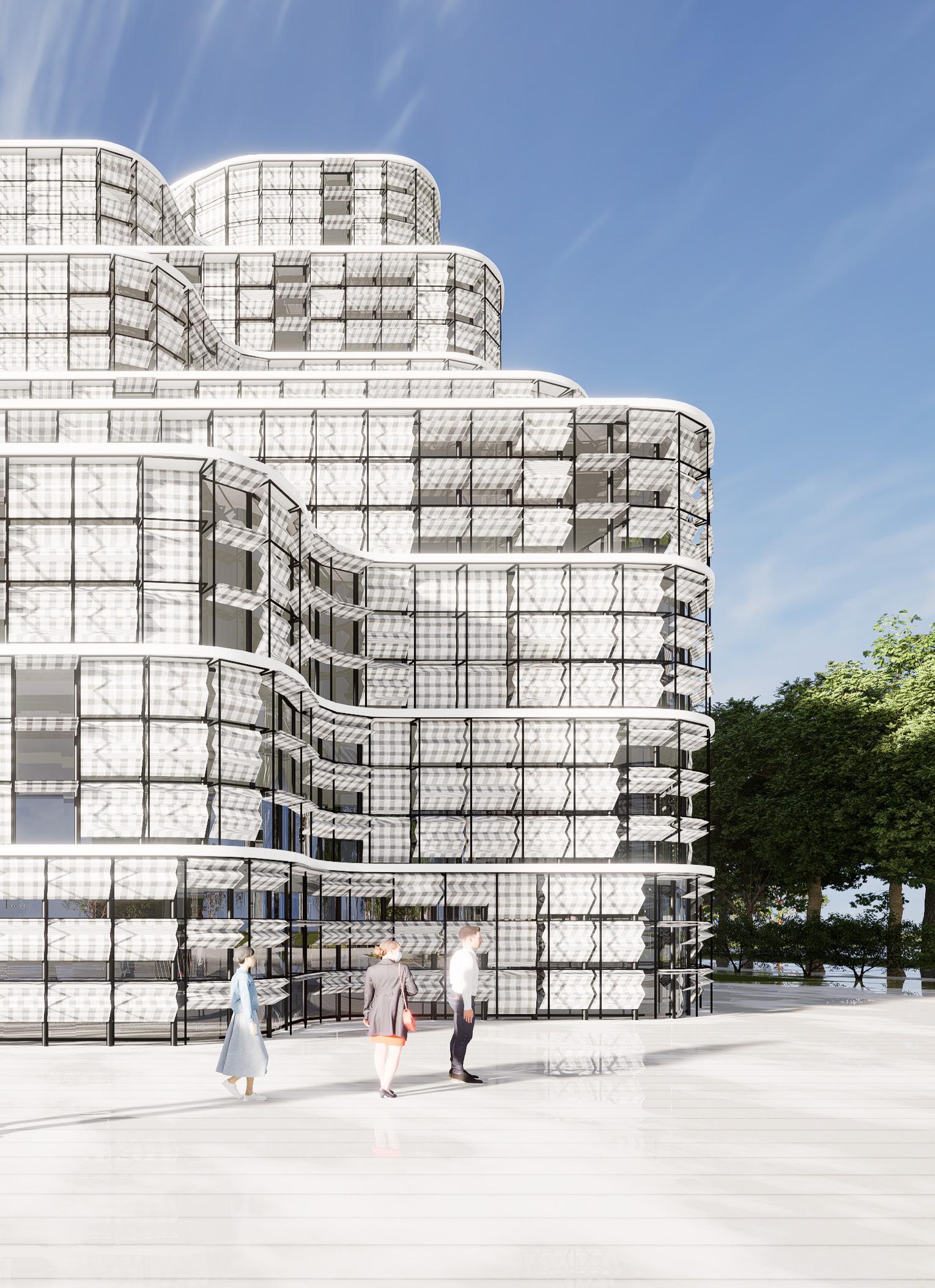
Thus, the façade was designed to fold in response to solar radiation. The stage- wise development of the working system occurred by conducting both physical and digital tests at each phase and considering their results.
In the final phase of the project, the sustainability of the system was focused upon by selecting materials that were appropriate for the oceanic climate and would operate according to the designed functioning of the system. A particular emphasis was placed on using recycled metal to reduce the carbon footprint of the building. Overall, this project aimed to create an environmentally sensitive design that was able to respond to the natural biome in which it was located and make use of locally available materials so as to create a long-lasting and sustainable building.
Tools | Rhino, Grasshopper (ladybug, karamba, c#), D5 render
reduce self shading floor divisions block mass light shelves increase heat gain aerodynamics
design development | morphology of the building to gain maximum sunlight

facade design | identification of facades according to exposure to sun radiation
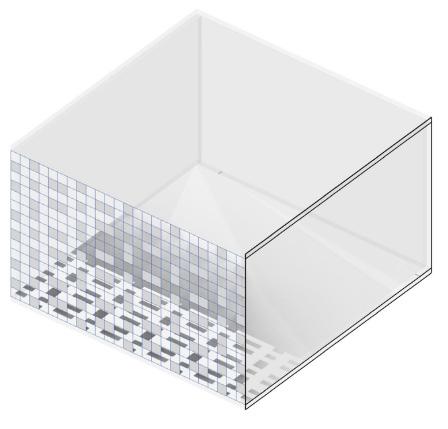
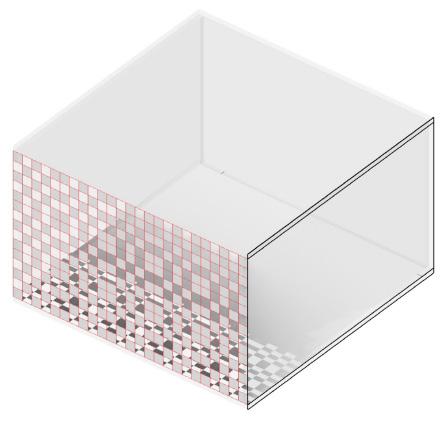
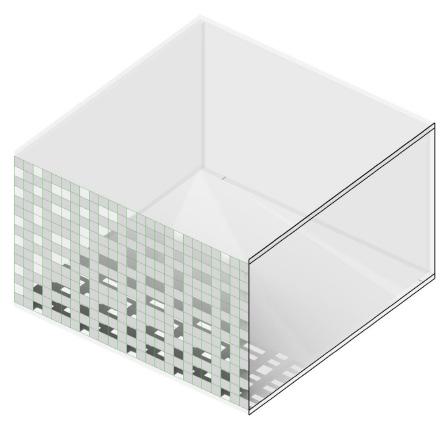
facade design | perforations models based on facade identification Mix.
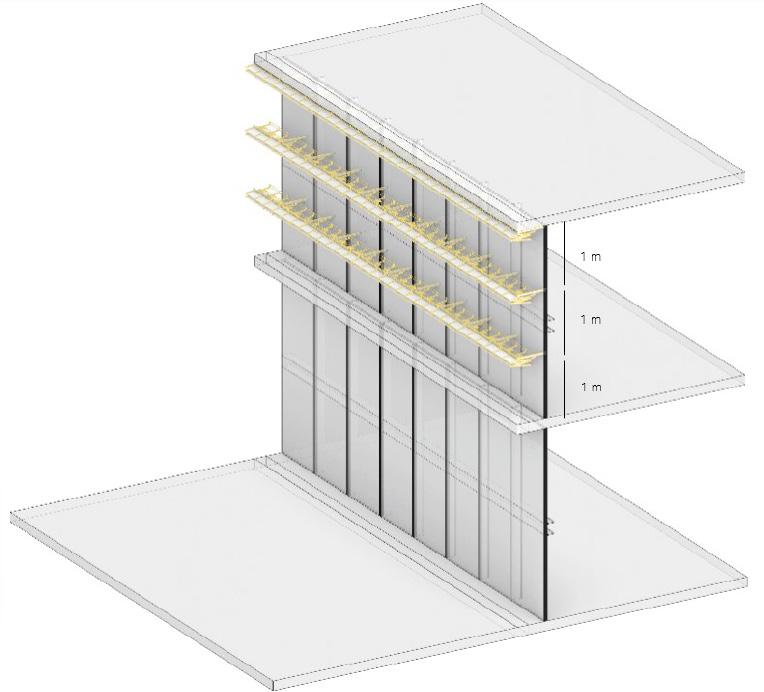
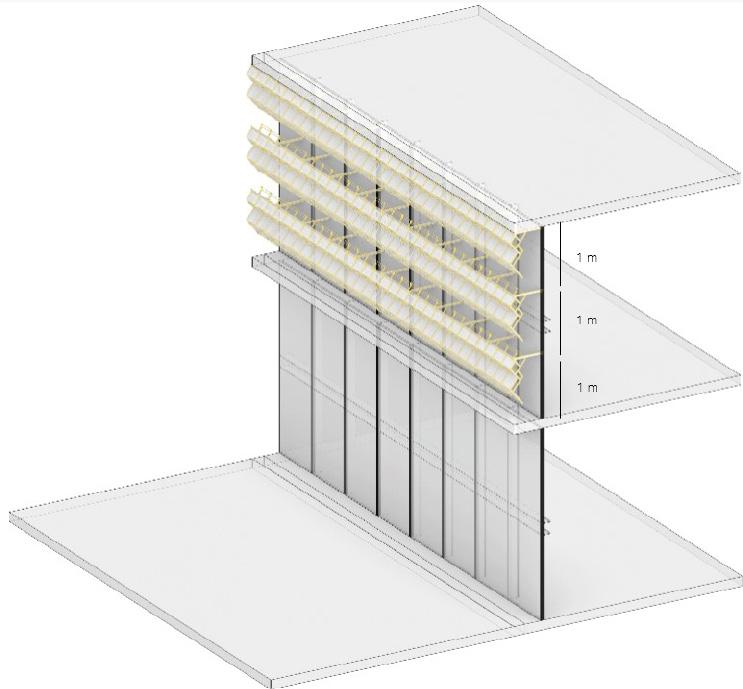
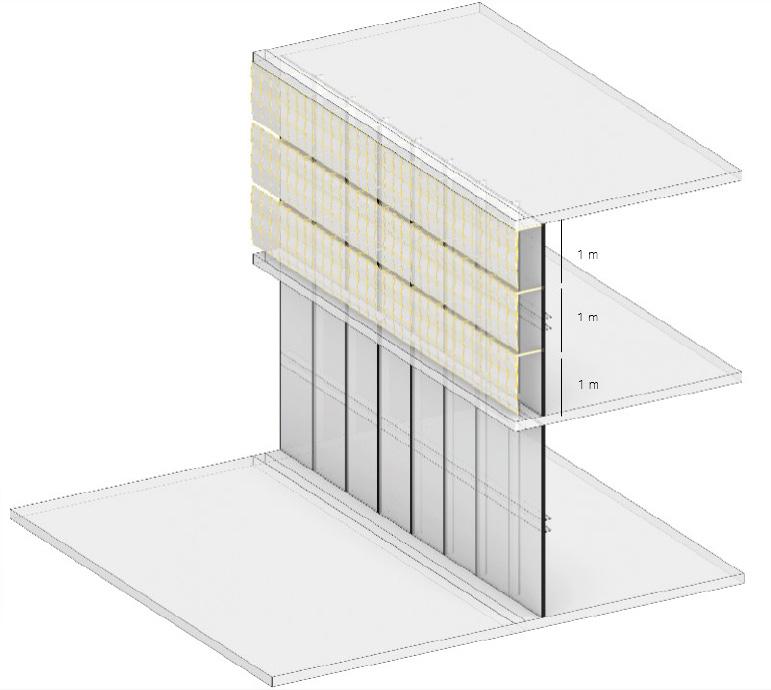
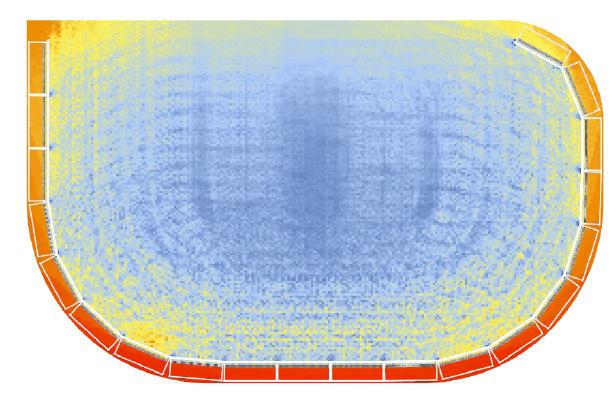
facade design | active folding mechanism used for mechanical facades and radiation analysis 20
100
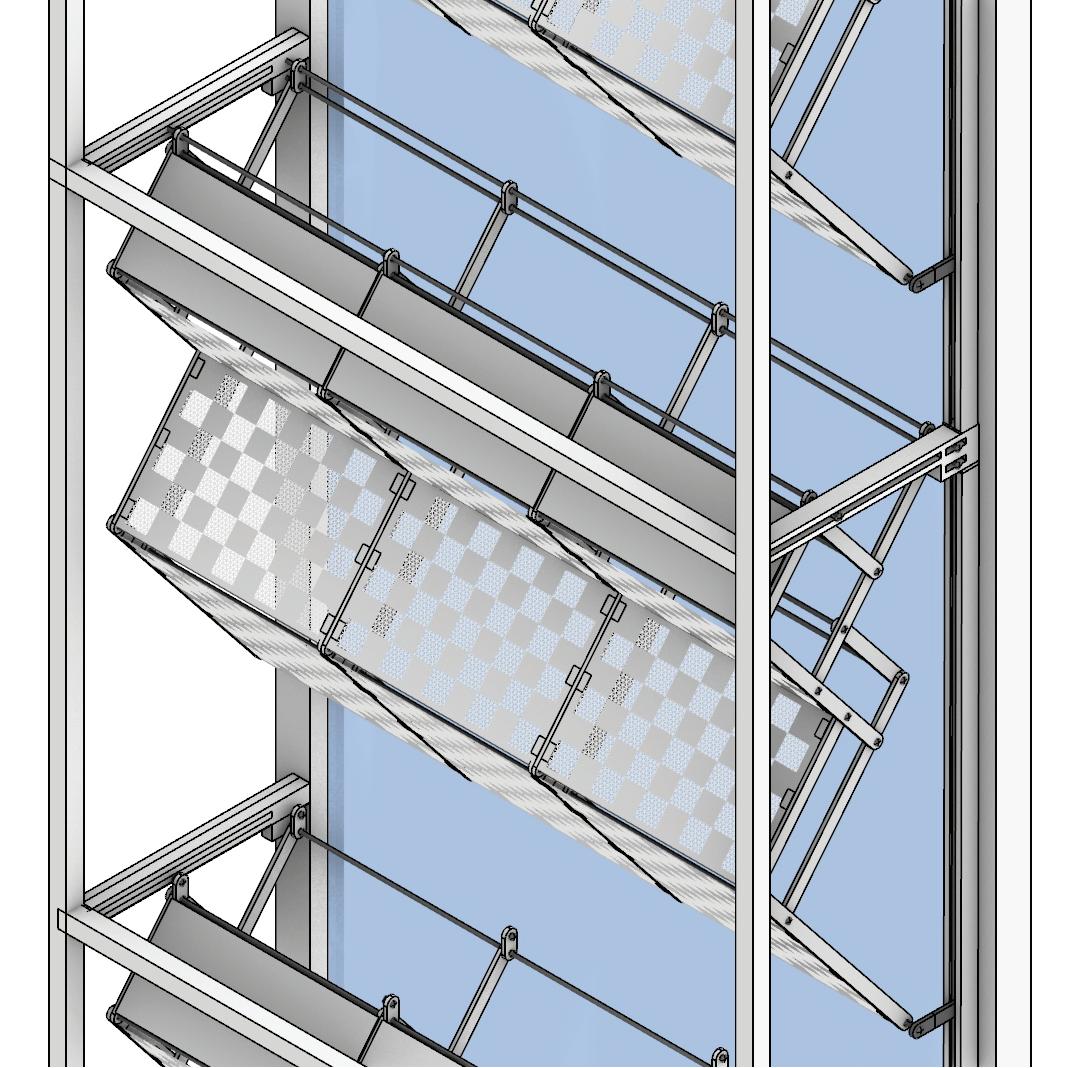
detail | perspective to show the folding facade and its guiderails
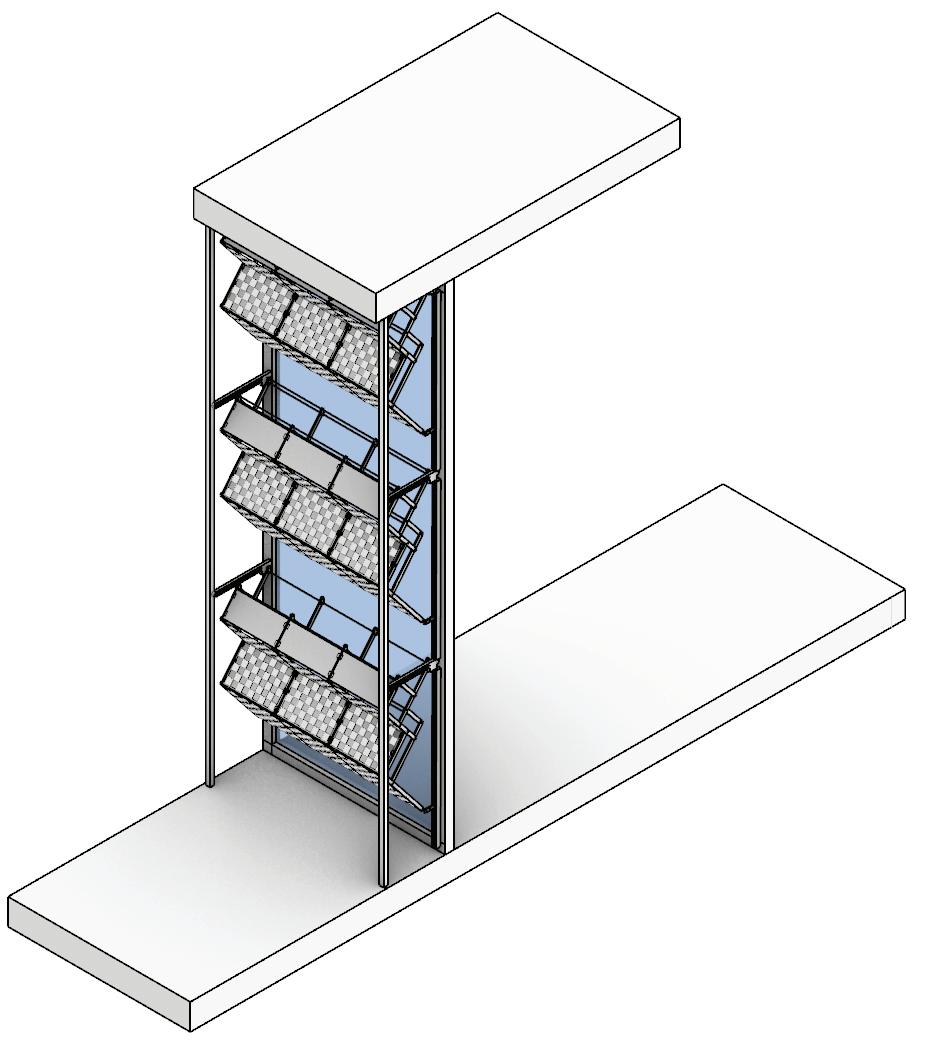

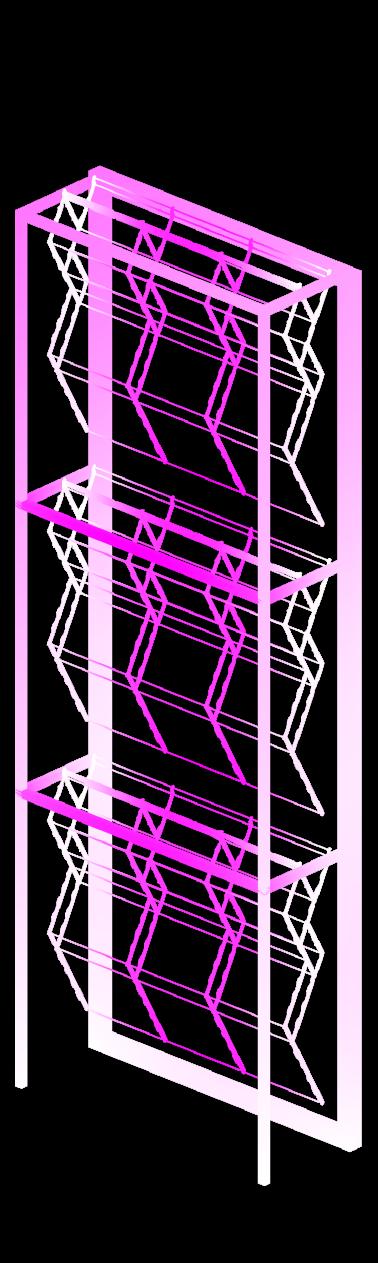
facade design | folding panels as one system and FE analysis for the framing
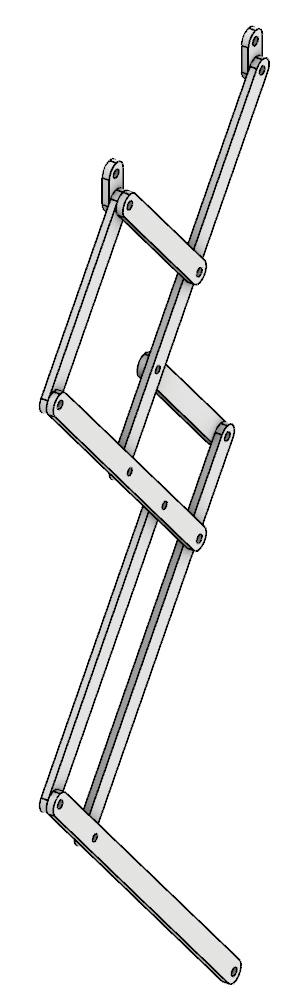
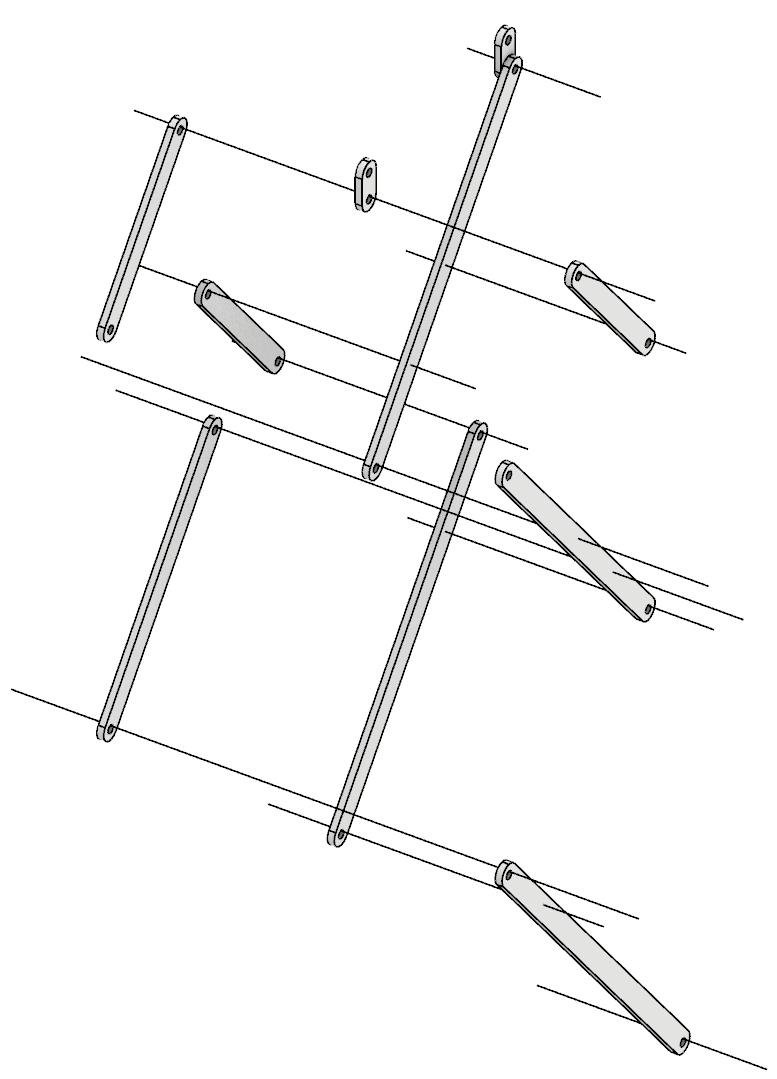
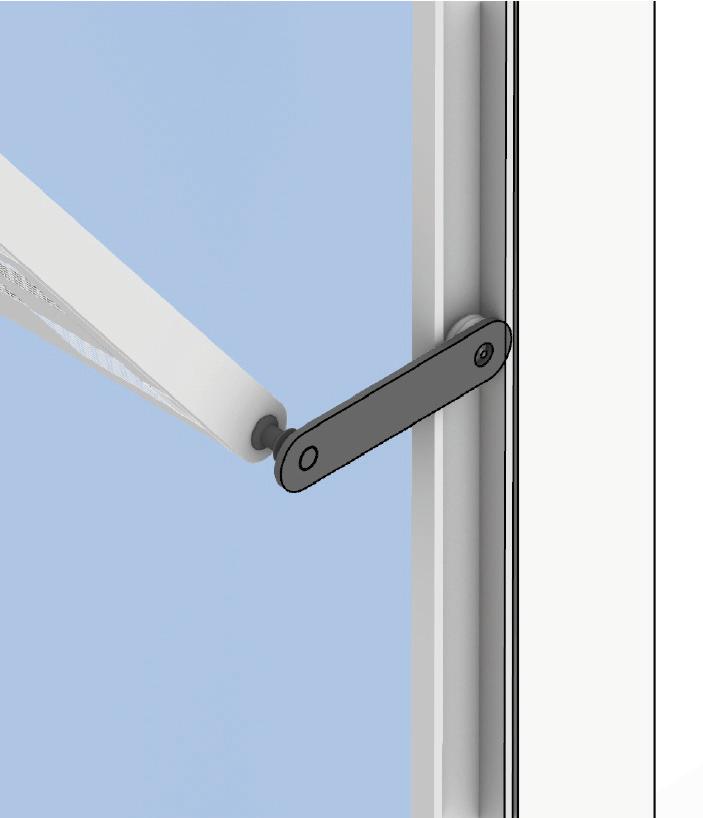
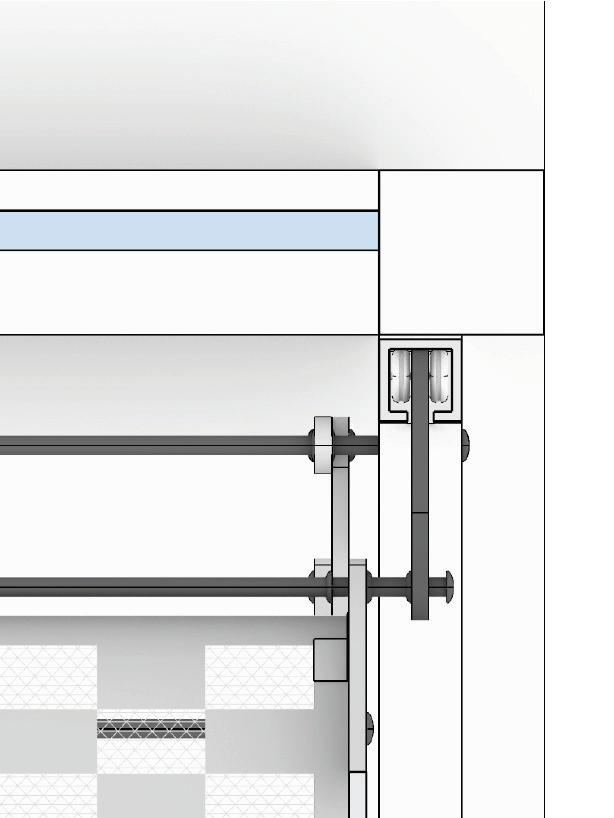
details | Detail to show the guiding rail for easy movement of the folding component
C4 Waste disposal
C2 Waste tr ansport aste processing (excl . biogenic carbon)
C3 Waste processing (excl. biogenic carbon)
C4 Waste disposal
A4 Transporta�on A5 Site 4 Modul e C1-C4 (excl biogeni c carbon)
C1-C4 Module C1-C4 (excl. biogenic carbon)
A5 Site
A4 Transportation
A1-A3 Materi als
C4 Waste disposal TOTAL kg
A1-A3 Materials
life cycle assessment |
before: use of new materials
after: using recycled materials from londons unsed telephone booths
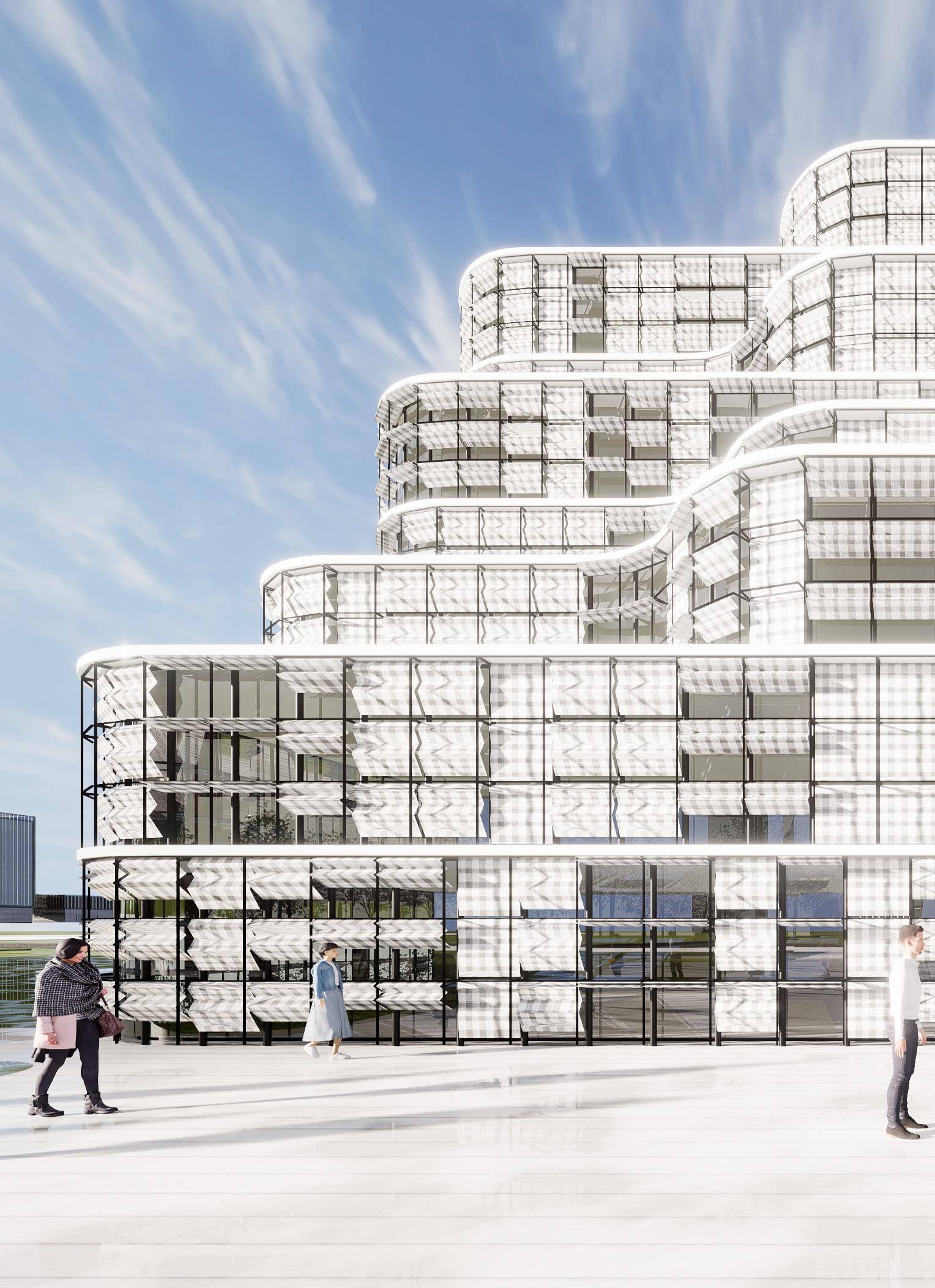
final output | south facade render in a summer scenario showing the facade elements blocking the sunlight
design and build
Design team | EmTech Cohort
Mentors | Dr. Elif Erdine, Dr. Milad Showkatbakhsh
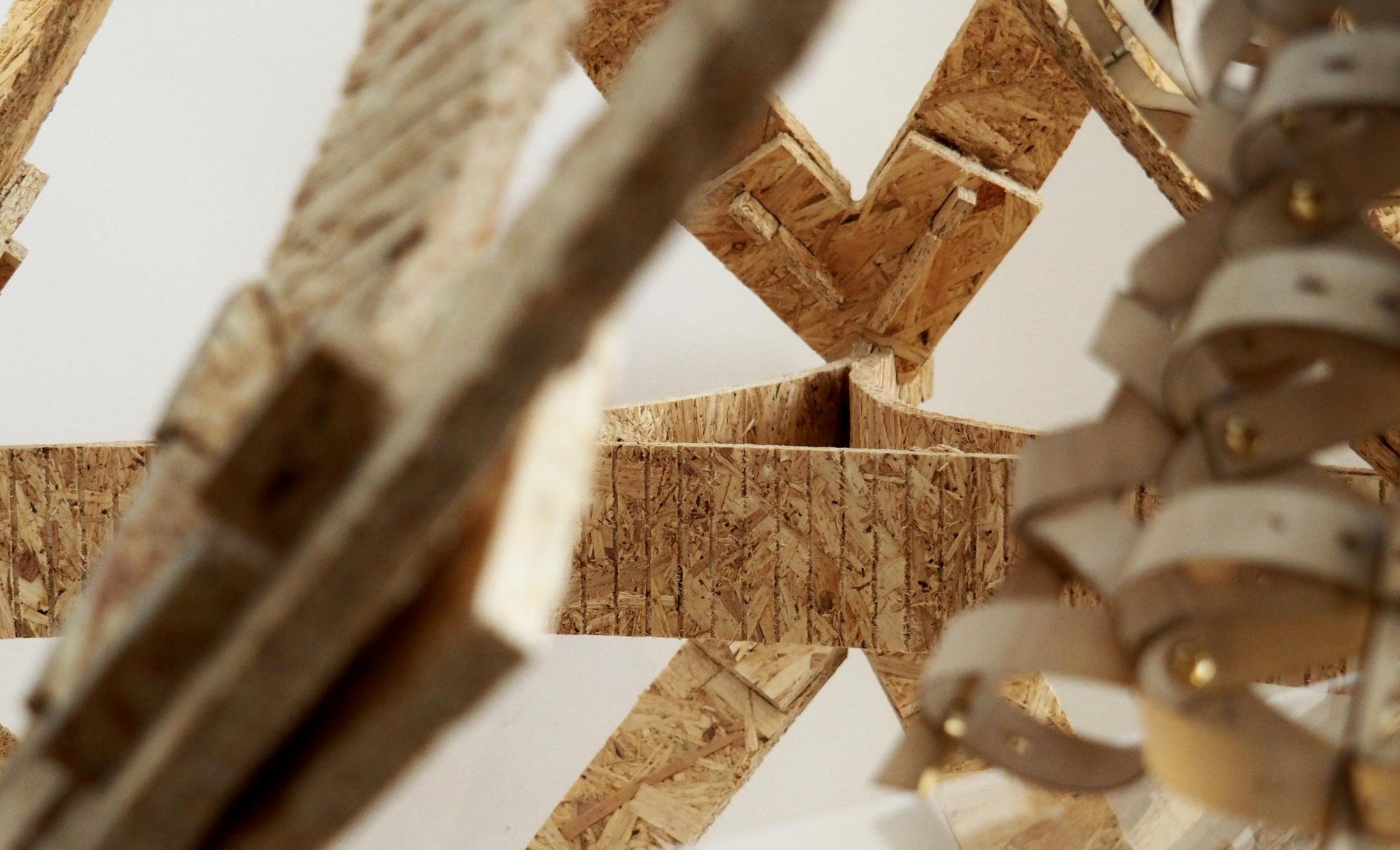
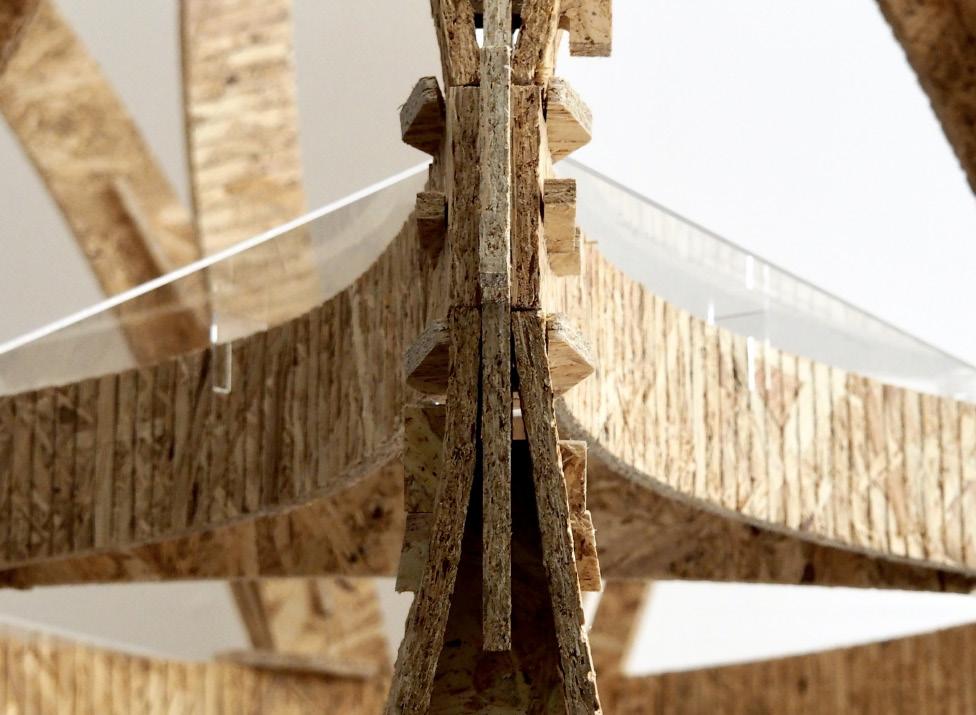
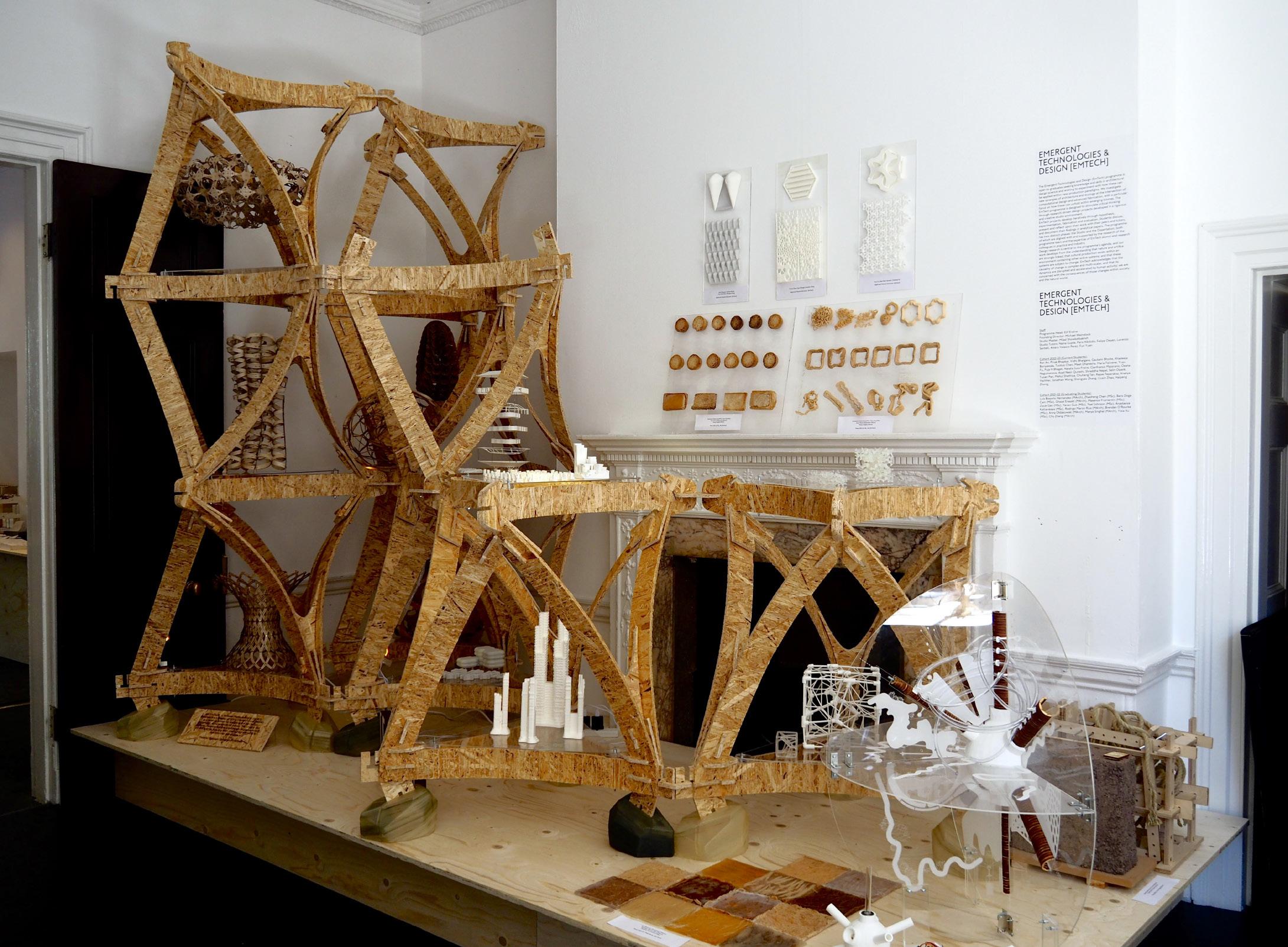
The Design and Build Component of the Architectural Associations’ Masters Degree of Emergent Technologies and Design was meant to study novel material technology and behaviour in order to develop creative solutions, ultimately resulting in the construction of a pavilion structure.
This curriculum component focuses on identifying possible sustainable materials. This year, the material being tested was OSB (oriented strand board). The
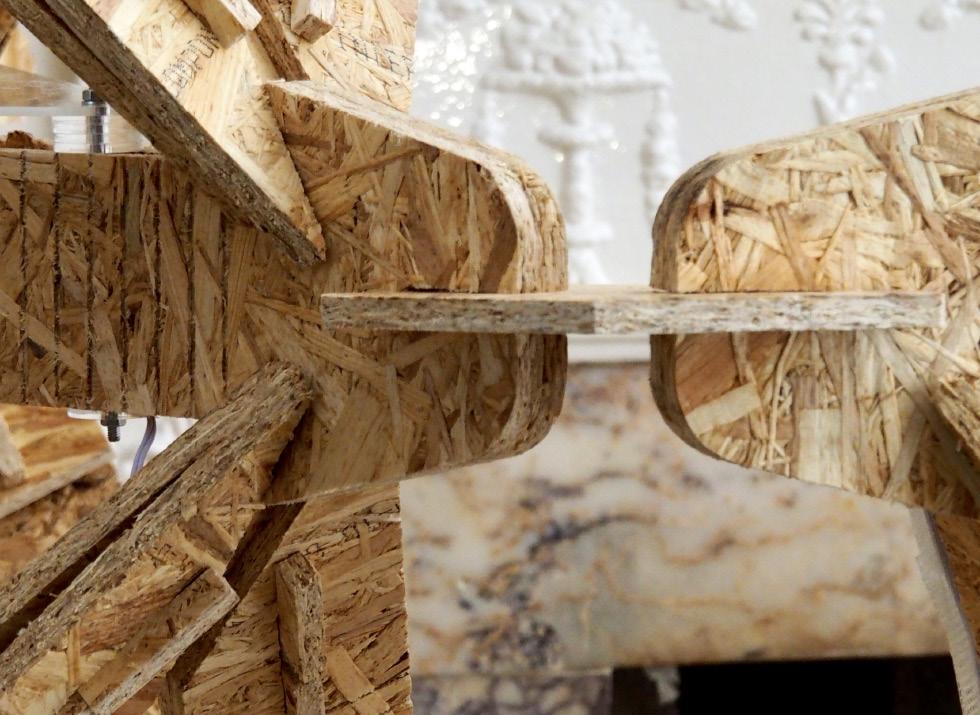
material is a low-cost, readily accessible option that is now utilized in the construction industry for wall sheathing, roof cover, and floor underlayment. It comprises of compressed discarded wood strands and glue. Using OSB allowed us to repurpose wood waste in our design. The Project conducts a series of physical and digital trials to validate the material’s intelligence, and then using generative evolutionary design to find the best performing solutions, which are then manufactured.
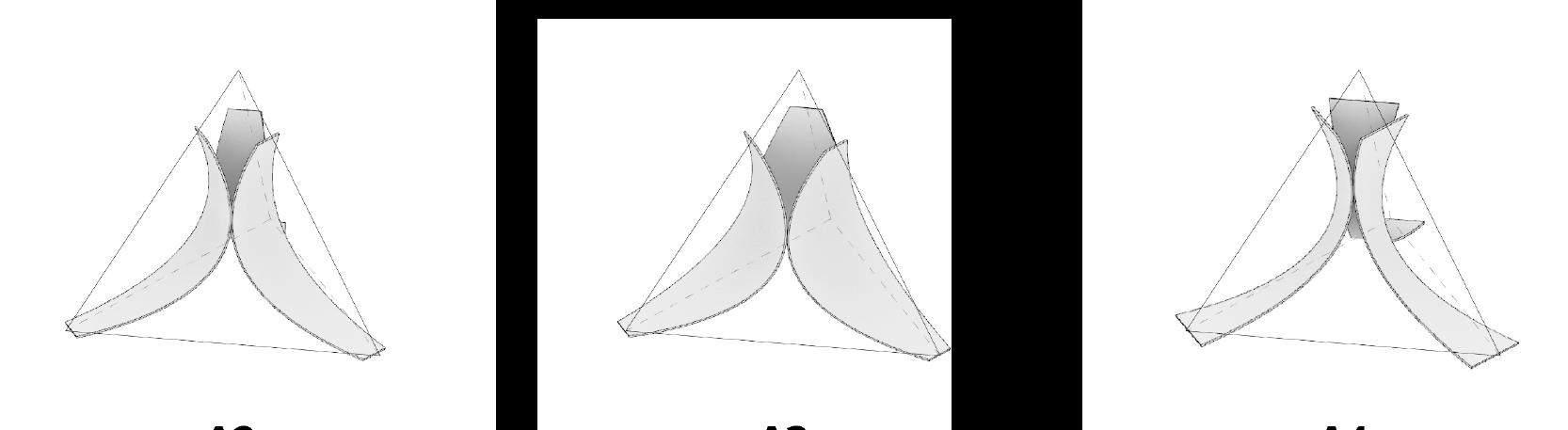
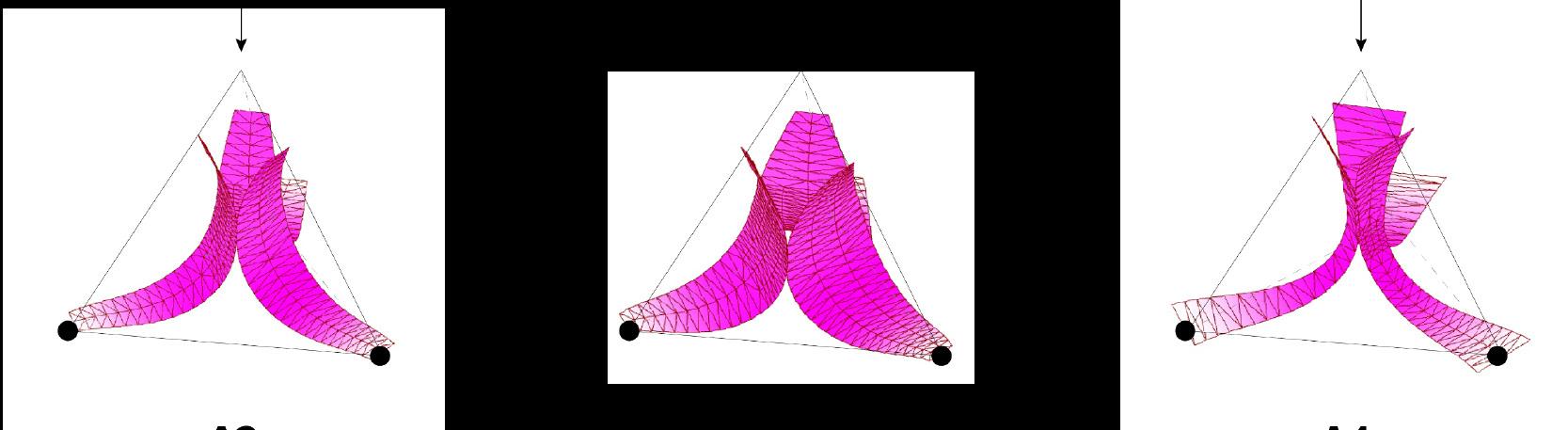
component developemnt | FEA for the form of a component using OSBs
|
Individual
Individual design project
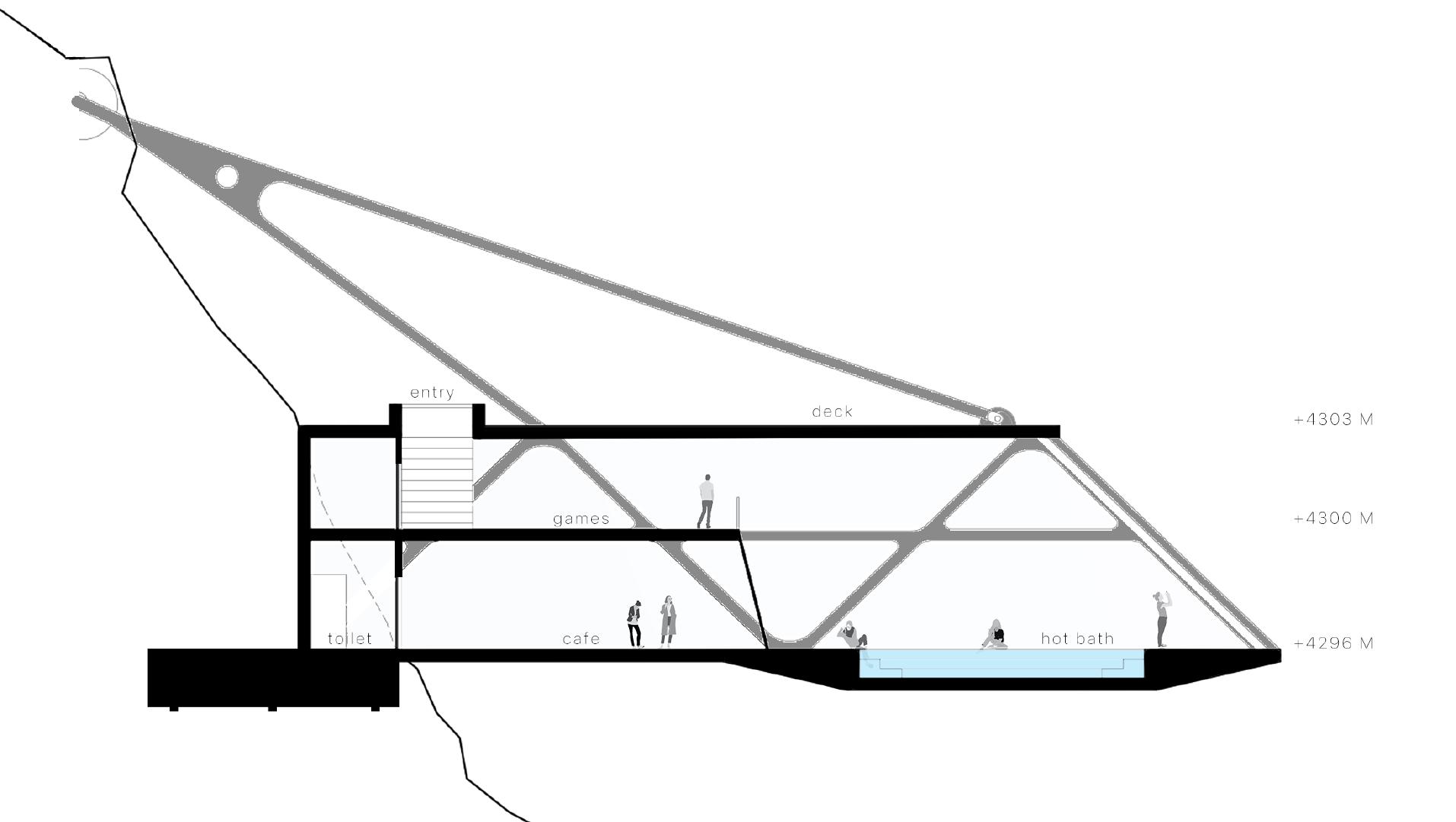
Har ki Doon is one of the religious places in India. It is said that the Pandavas from The Mahabharat walked their way up to heaven after the war of pride. The unique story about the place makes it a very interesting place which has visitors all year round. Being in a remote location in the Himalayas the Har ki Doon valley and Mount. Swargarohini has become every trekker’s wish to visit this once. With growing popularity of the site and its landscapes is what inspired the ideation of this project. A small rest stop for people visiting the Har ki Doon valley. Taking into consideration the basic
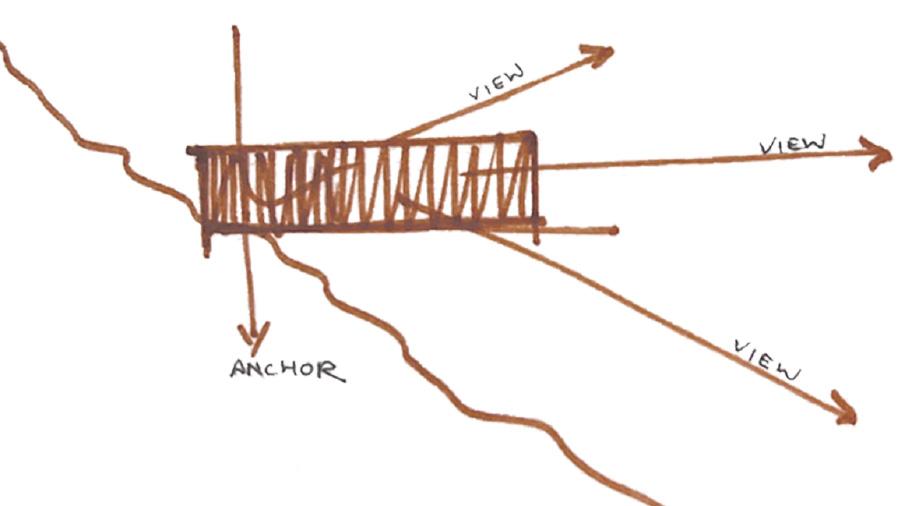
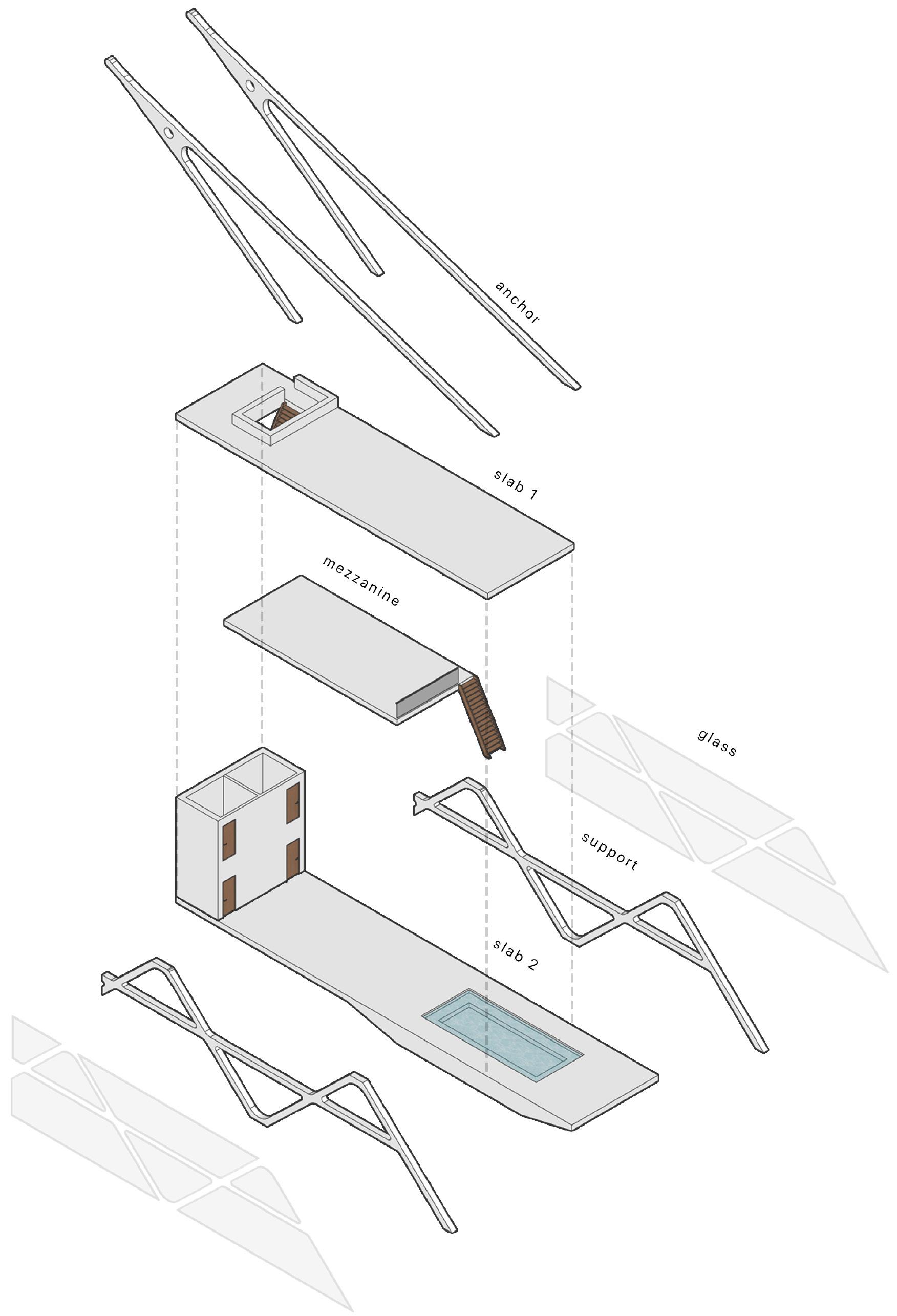
needs like a restroom, bathing place and a viewing deck, a structure was designed to help facilitate the essentials. The structure has been delicately tucked into the mountains, such that its ground footprint is minimum to not disturb the contours too much while also providing a feeling of being on the top amidst the Himalayas. The structure has glass on three sides which give a spectacular lookover of the valley and the beautiful gateway to heaven Swargarohini.
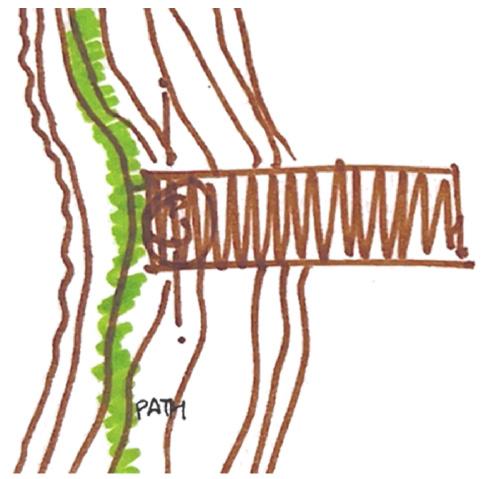

axonometric | exploded view of the whole structure section | site location
Individual professional project | Architecture | 2020
kanchan
Individual professional project
Client | Mrs. Kanchan Rathod
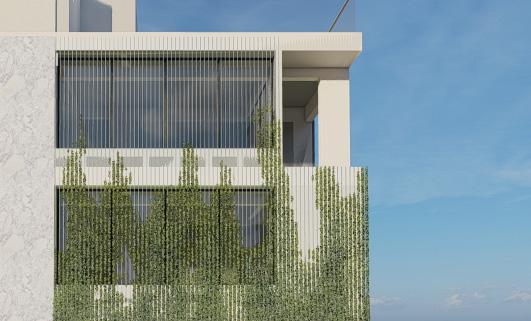
This design represents the ideal arrangement for modest homes in Pune. This architectural gem, located on a 2500 sqft property near Kondhwa in Pune, exemplifies the clever combination of space efficiency with an expansive ambiance. The major goal was to create a house that smoothly combines openness without sacrificing practical space, adapting to the changing demands of future generations.
The client’s idea was simple yet profound: to construct a sanctuary for future generations, complete with four bedrooms, a large living room, kitchen and eating areas, and a dedicated worship area. Among nearby structures that incline toward introversion, this design distinguishes out for its unabashed embracing of openness
Large holes strategically positioned in the facade and skillfully created cut-outs in the slabs not only improve natural light penetration but also allow for stack ventilation, resulting in a naturally cool interior throughout the hot summer months. Vertical louvers grace the front (East) facade, diffusing morning sunshine while maintaining the sanctity of personal space.
Beyond the conventional architectural framework, the essence of this design is its deep influence on improving the family’s quality of life and living environment. It is more than simply a physical structure; it exemplifies intelligent design and a dedication to balancing modern life with traditional values.
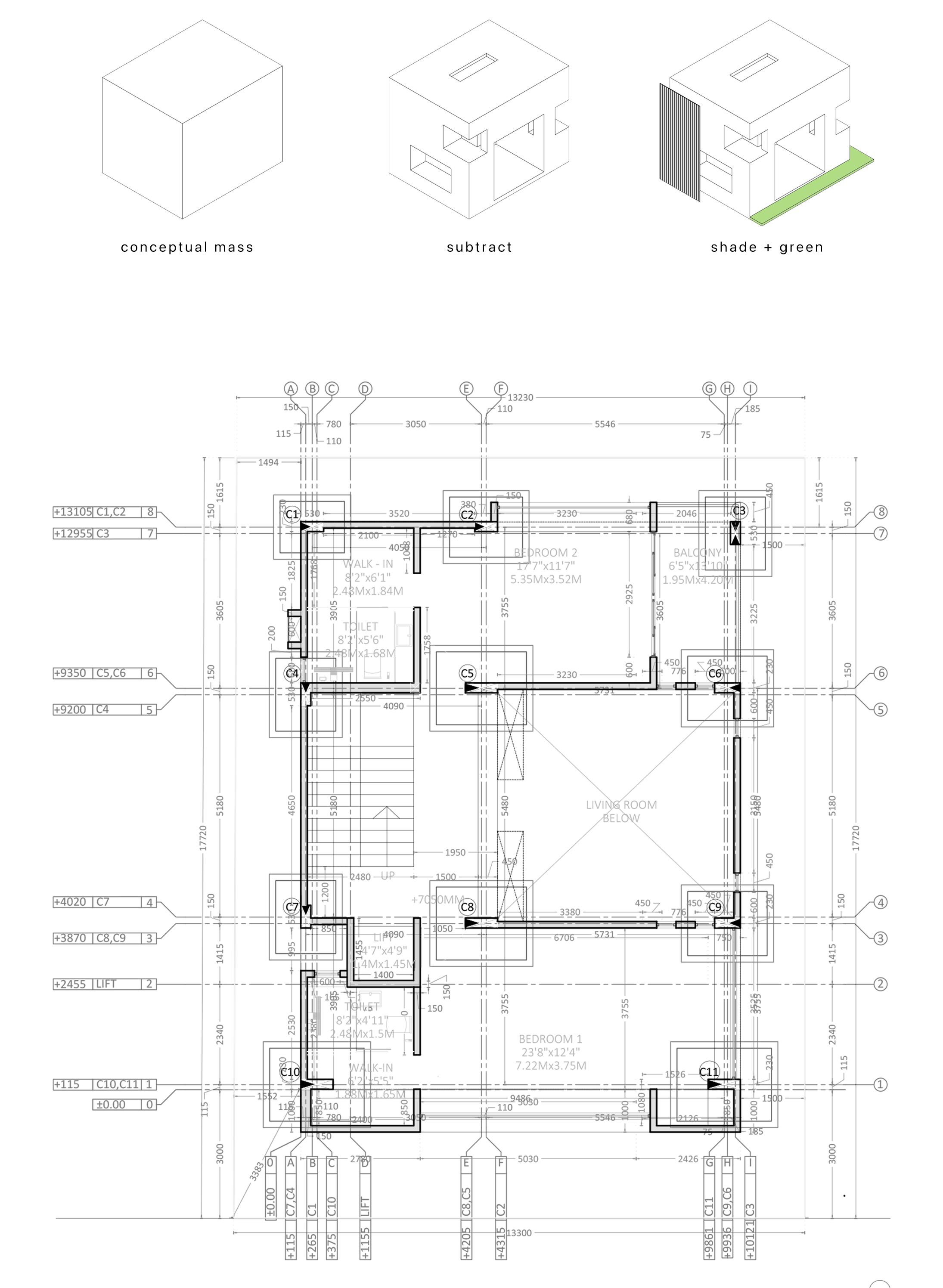
working drawing | good for construction drawing for first floor
vanrai
Design team | Asawari Shinde, Suresh Shendge, Mehul Shethiya
Principalarchitect | Ravi Kadam (Integrid designs, Pune)
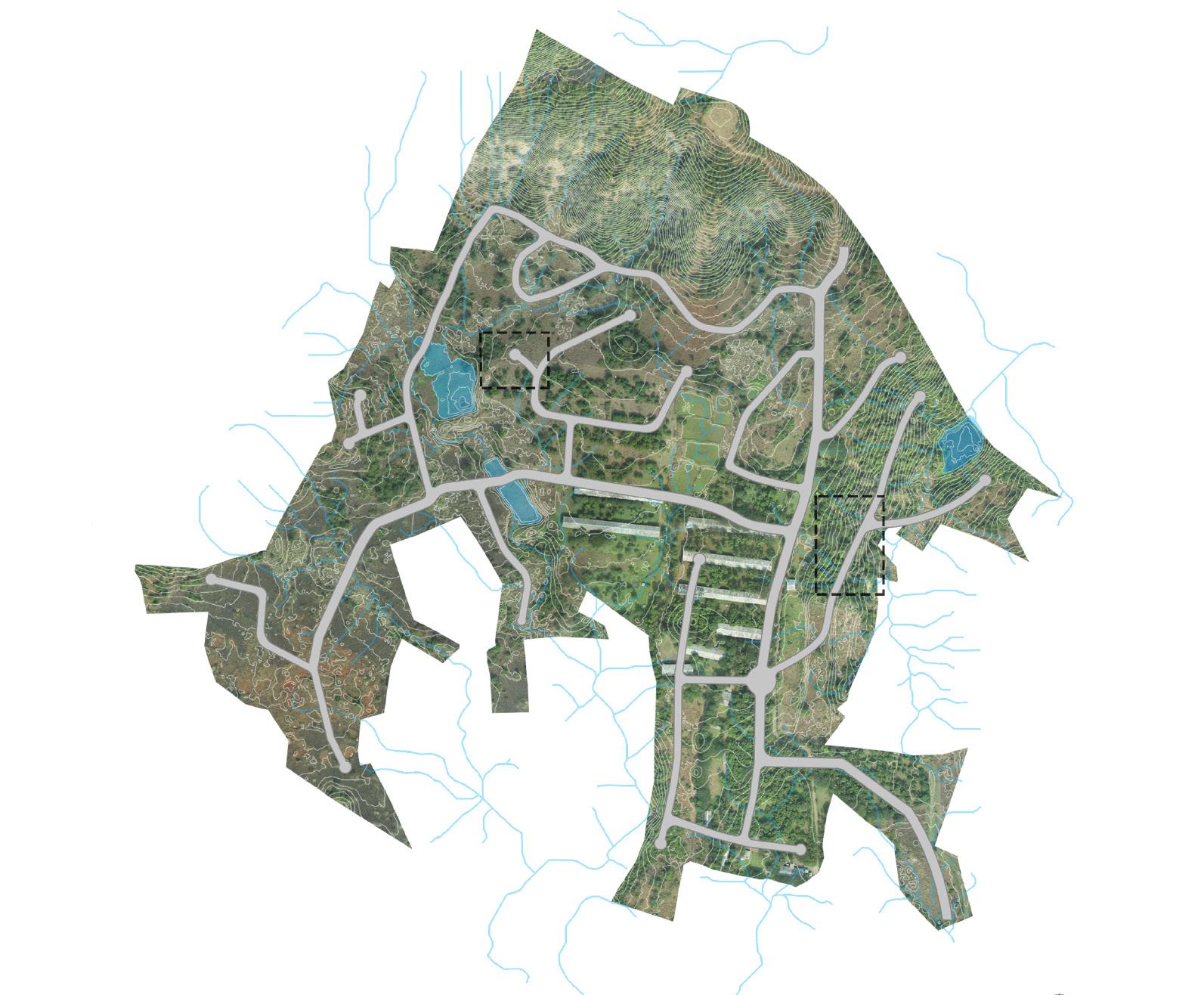
“Vanrai,” meaning “land dominated by trees,” embodies the essence of lush greenery and natural abundance. This master plan was meticulously crafted with a deep reverence for the existing mango orchards and topographical features, ensuring minimal disruption to the pristine landscape. Situated amidst the tranquil surroundings, Vanrai emerges as an idyllic retreat, strategically nestled between the bustling cities of Mumbai and Pune.
A collaborative endeavor between Integrid Designs, Oikos Landscapes, and executed by Rustomjee, this project envisages medium-income housing units nestled within clusters, seamlessly blending with the verdant surroundings. The layout ingeniously integrates ample open spaces, fostering a sense of community and shared experiences. Designed with a keen eye towards sustainability, the architecture encourages
communal gatherings and promotes harmonious living in sync with the land’s natural rhythms.
As Vanrai continues to evolve as a bridge between humanity and nature, a new phase has recently been launched, further enhancing its connection with the surrounding environment. Deliberately scaled and mindful of the site’s existing features, the open spaces along the water streams are envisioned as inviting havens, beckoning the community to immerse themselves in humble yet accessible retreats, fostering a deeper bond with nature
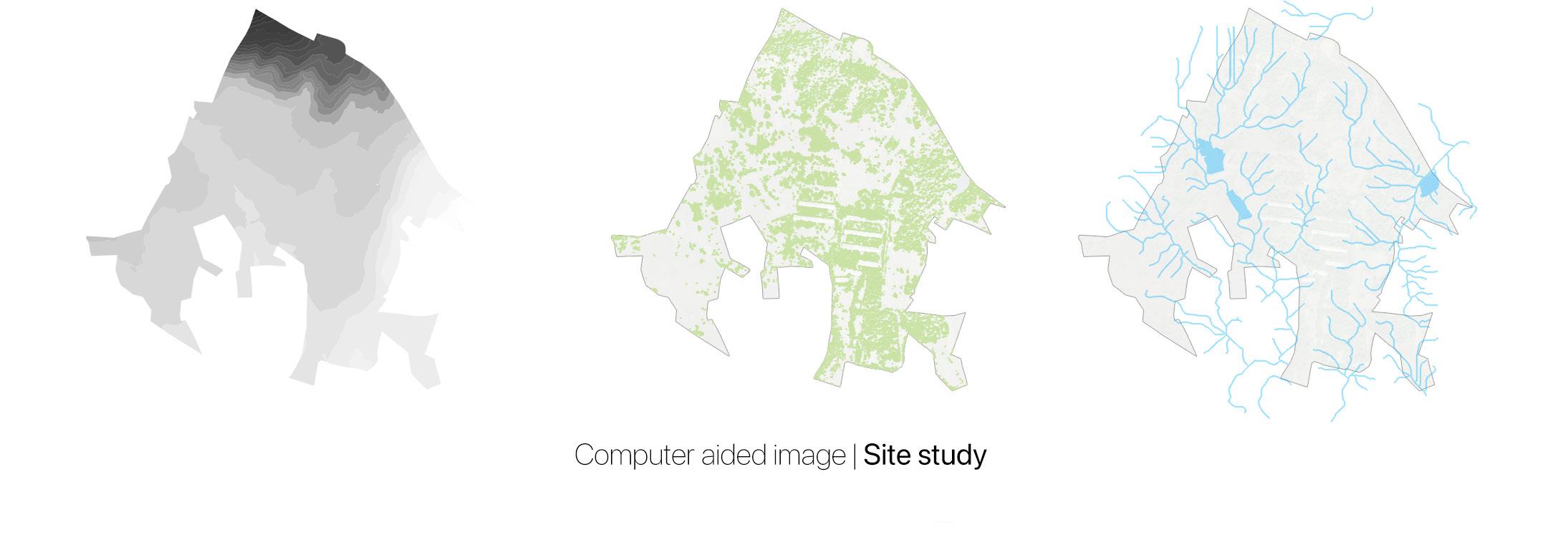
site study | slopes , green cover, ravines
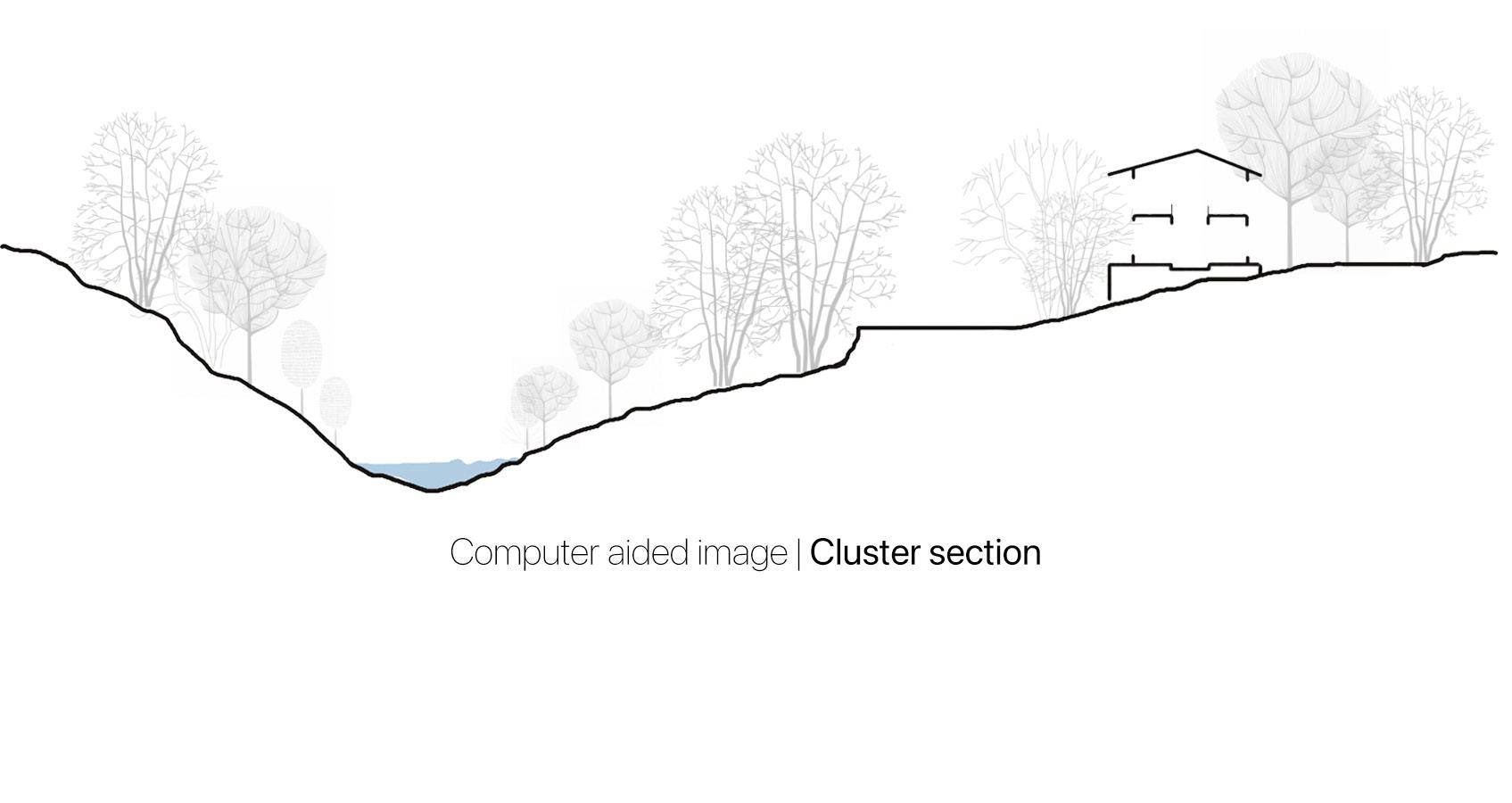
computer aided image | cluster section
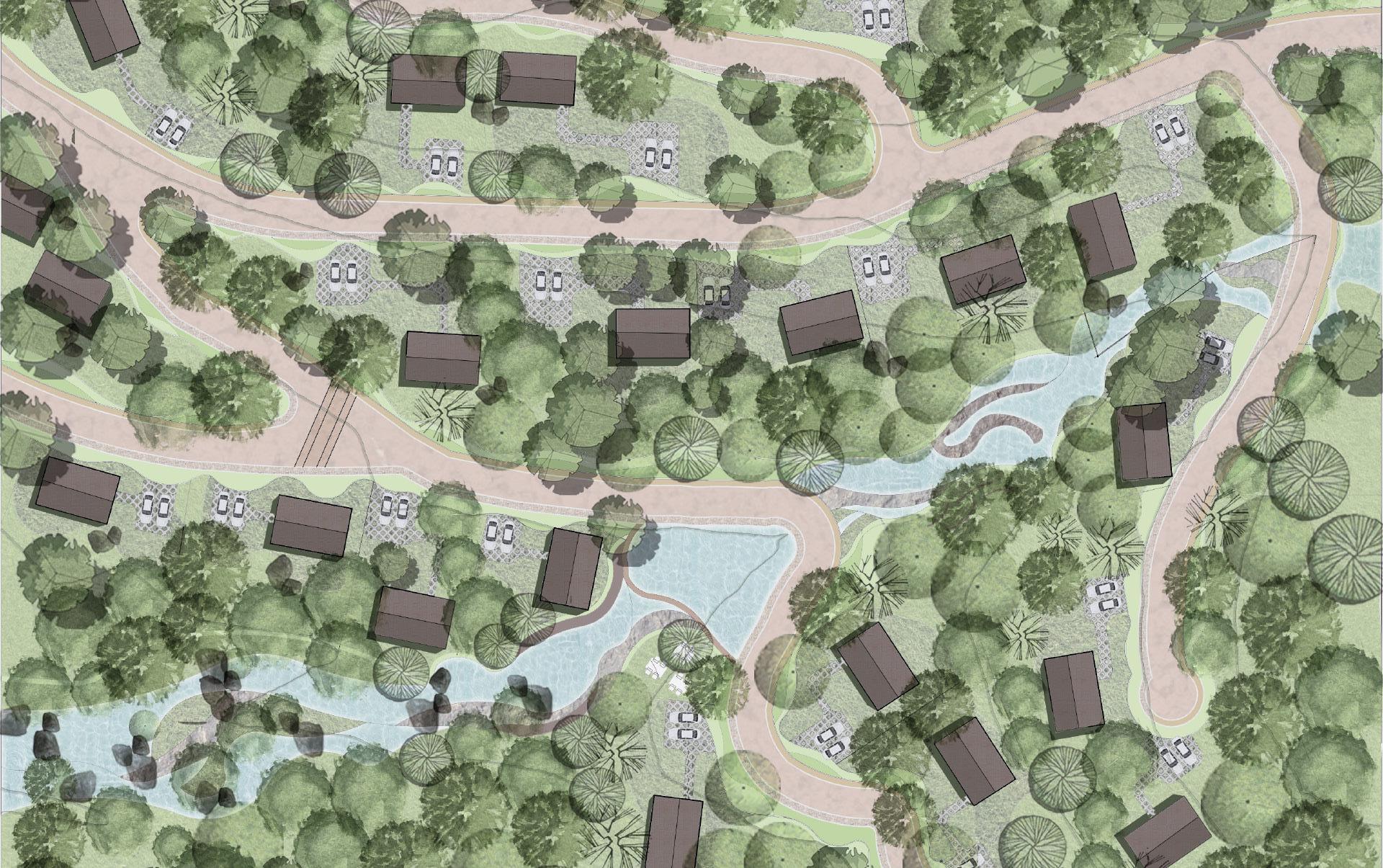
computer aided image | cluster plan
Bachelor’s thesis | Architecture | 2021
beyond bars
Individual design project
Mentor | Prof. Sunayanee Banerjee
Every individual behind bars is a human being deserving of dignity and respect, regardless of their past actions. While imprisonment serves as punishment for committed crimes, it should not solely aim at punitive measures. Rather, the focus should extend to rehabilitation and eventual reintegration into society. The environment within prison walls plays a pivotal role in shaping an inmate’s psyche, influencing their transition back into society upon release.
Open jails, often critiqued for their perceived leniency, prioritize a dignified experience for inmates, viewing their time served as a preparation for a crime-free life beyond bars. The ongoing discourse surrounding prison architecture revolves around the fundamental question: is the goal of incarceration punishment or rehabilitation?
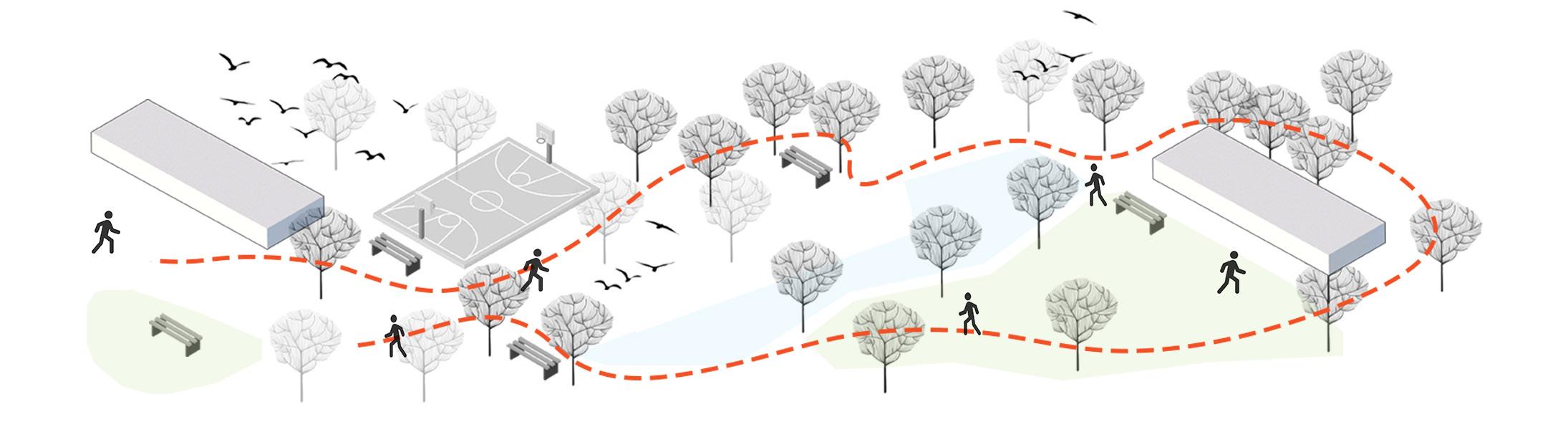
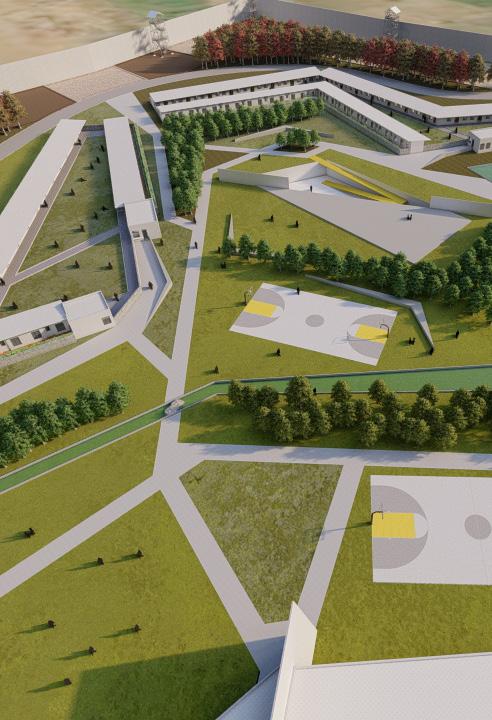
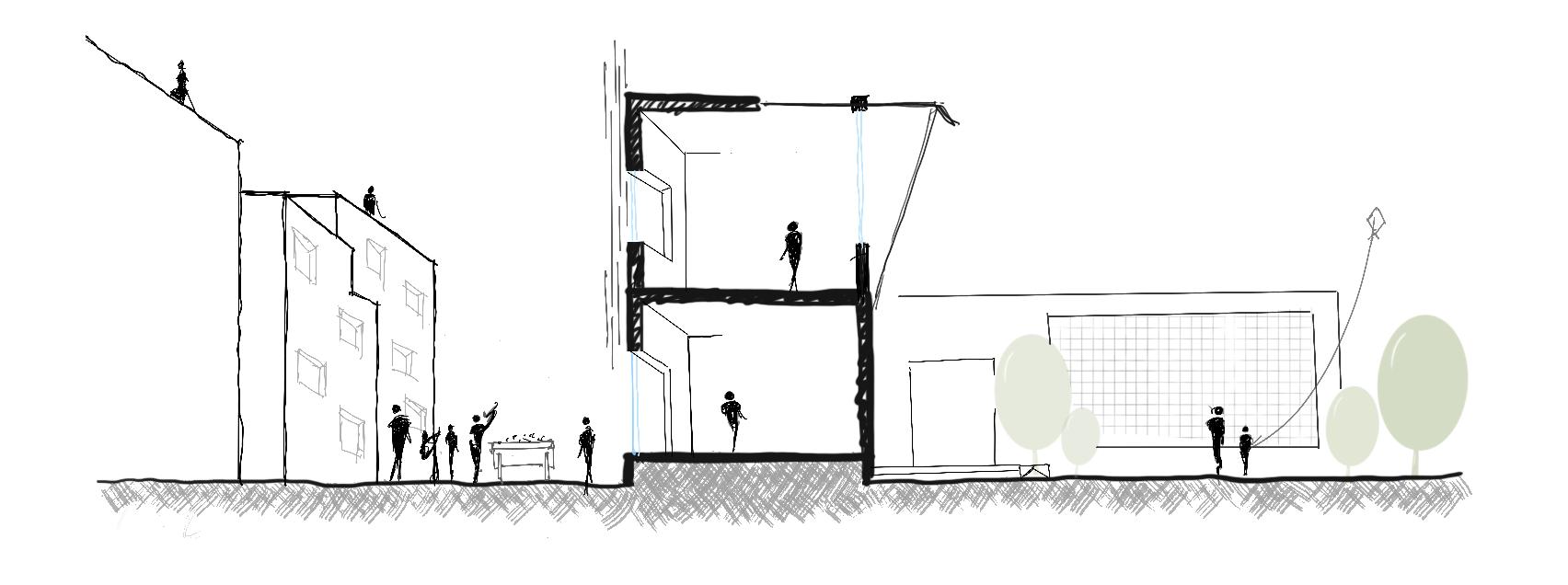
This prison design strikes a balance between punitive measures and rehabilitation efforts, acknowledging the journey of recovery for those within the system. The entry feature walls, angled to evoke a sense of reflection, juxtapose the redesigned corridors flooded with natural light. These corridors lead to well-lit dayrooms, fostering an atmosphere conducive to personal growth.
Cell windows are strategically positioned to shield inmates from the prison walls, minimizing feelings of confinement. Vibrant colors and soft materials within the cells serve to rejuvenate the mind, offering a semblance of comfort amidst confinement. Ultimately, this project serves as a bridge between the extremes of imprisonment and freedom, advocating for a holistic approach to inmate rehabilitation.
Tools

computer aided image | master plan
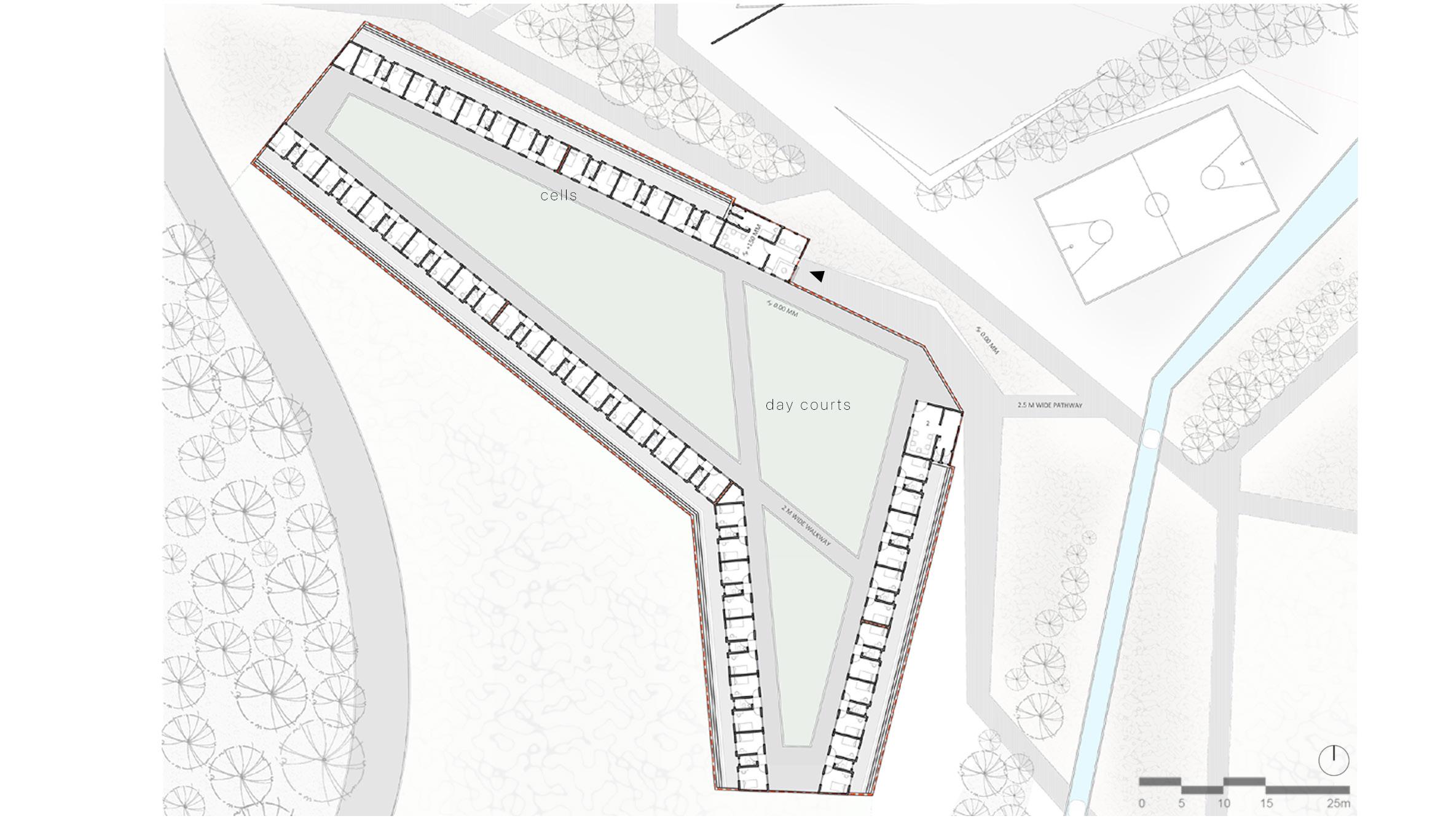
computer aided image | corridors turning into small courts in a cell block
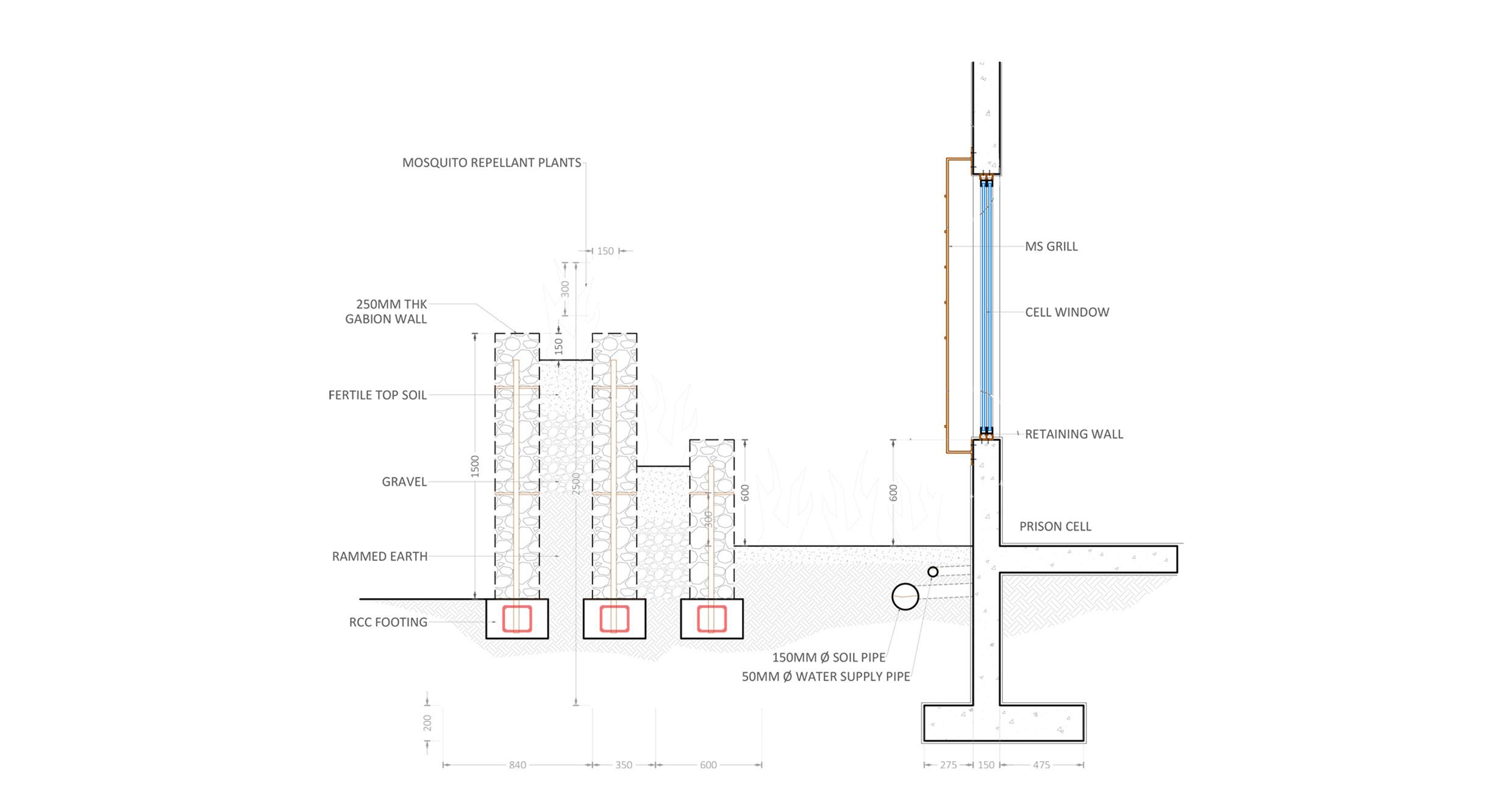
detail | gabion wall near outside the cells
neighbourhood refreshment
Individual design project
Individual academic project | Architecture | 2018
This project stems from a thorough settlement study conducted in Gwalior, India, revealing a significant need for a communal hub in the bustling neighborhood of Jiwaji Chowk. The study, comprising interviews, observations, and interactions with residents, highlighted a palpable desire for a nearby space for relaxation and community engagement
In response to the fast-paced urban lifestyle and the lack of balance between work and leisure, the project aimed to create a sanctuary for refreshment within the neighborhood. The design prioritized providing infrastructure for various activities, including jogging, socializing, and leisure pursuits.
A distinctive feature of the project is the integration of traditional jali elements into a modern architectural framework, lending both identity and environmental
Mentor | Prof. Karan Choudhary Tools | AutoCad, Sketchup, Lumion
sustainability to the structure. This fusion honors the cultural heritage of the region while subtly influencing the site’s microclimate. Beyond its tangible amenities, the center serves as a symbolic retreat from the chaos of urban life, offering residents a daily escape and fostering community cohesion.
In summary, this project embodies the transformative potential of thoughtful design, addressing a fundamental need for balance and communal connection in the urban landscape of Gwalior.
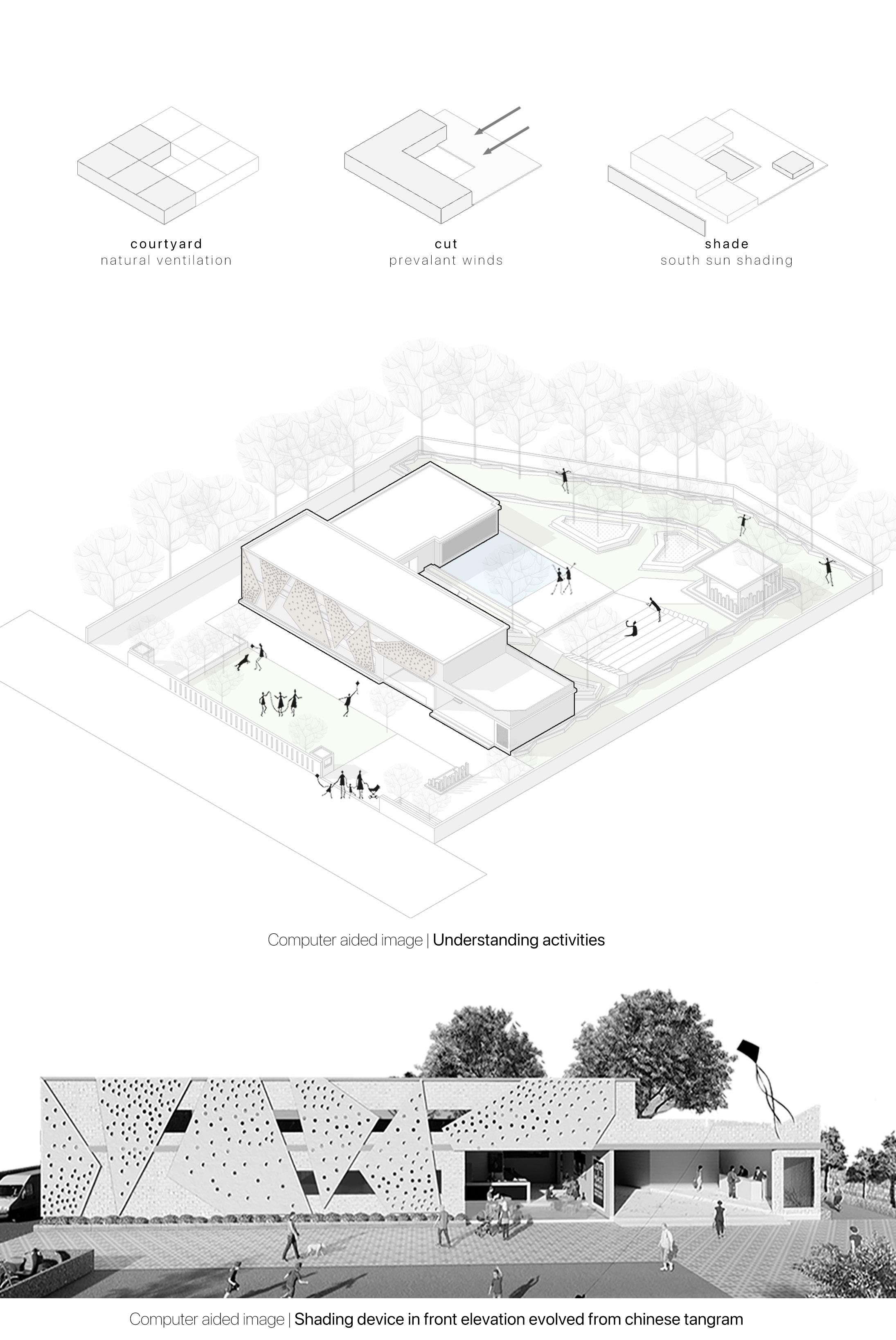
axometric view | understanding activities
plan | ground floor plan relating the built with the unbuilt
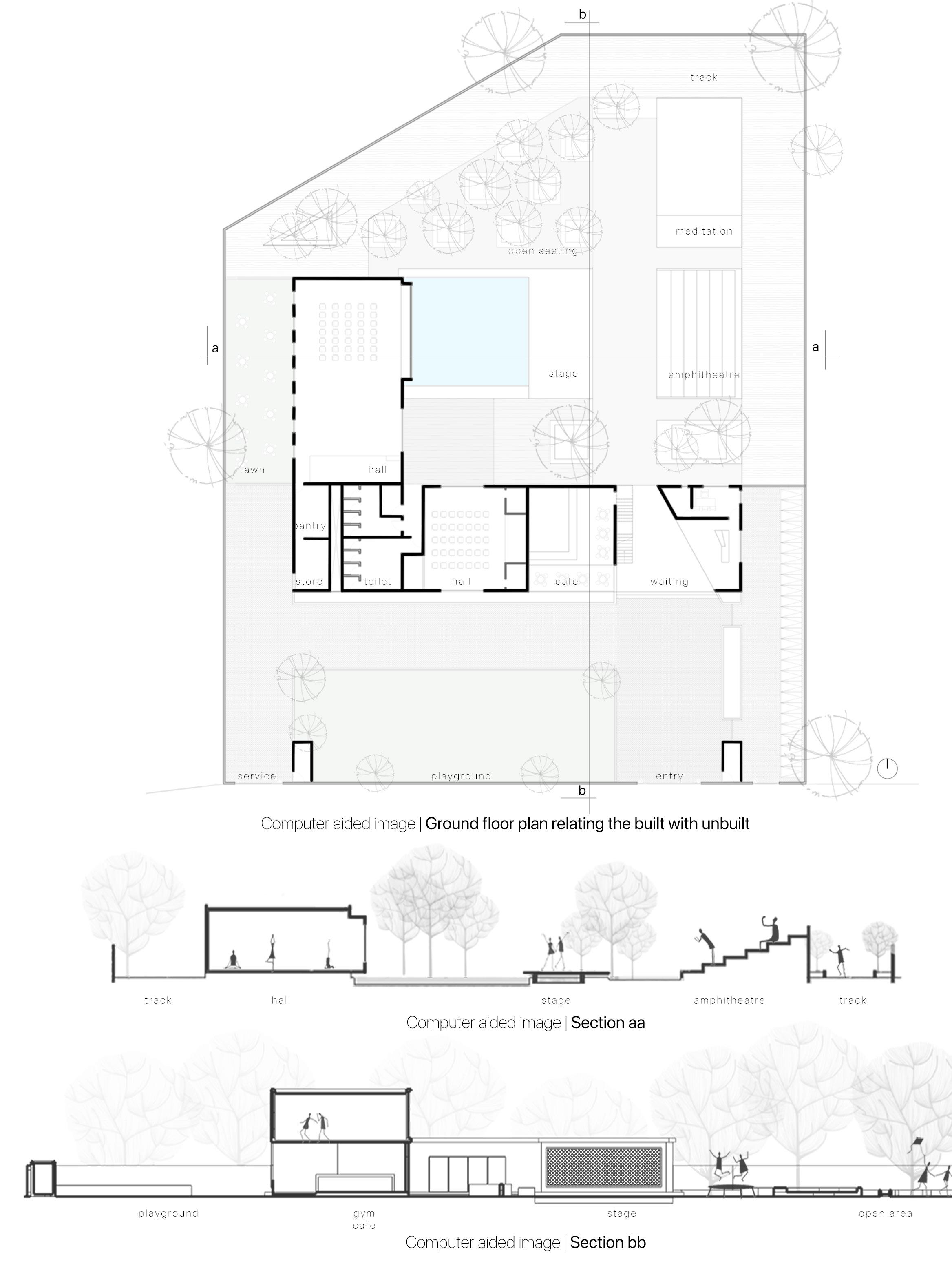
Computer aided image | section AA
computer aided image | section BB
100MM dia half cut bamboo
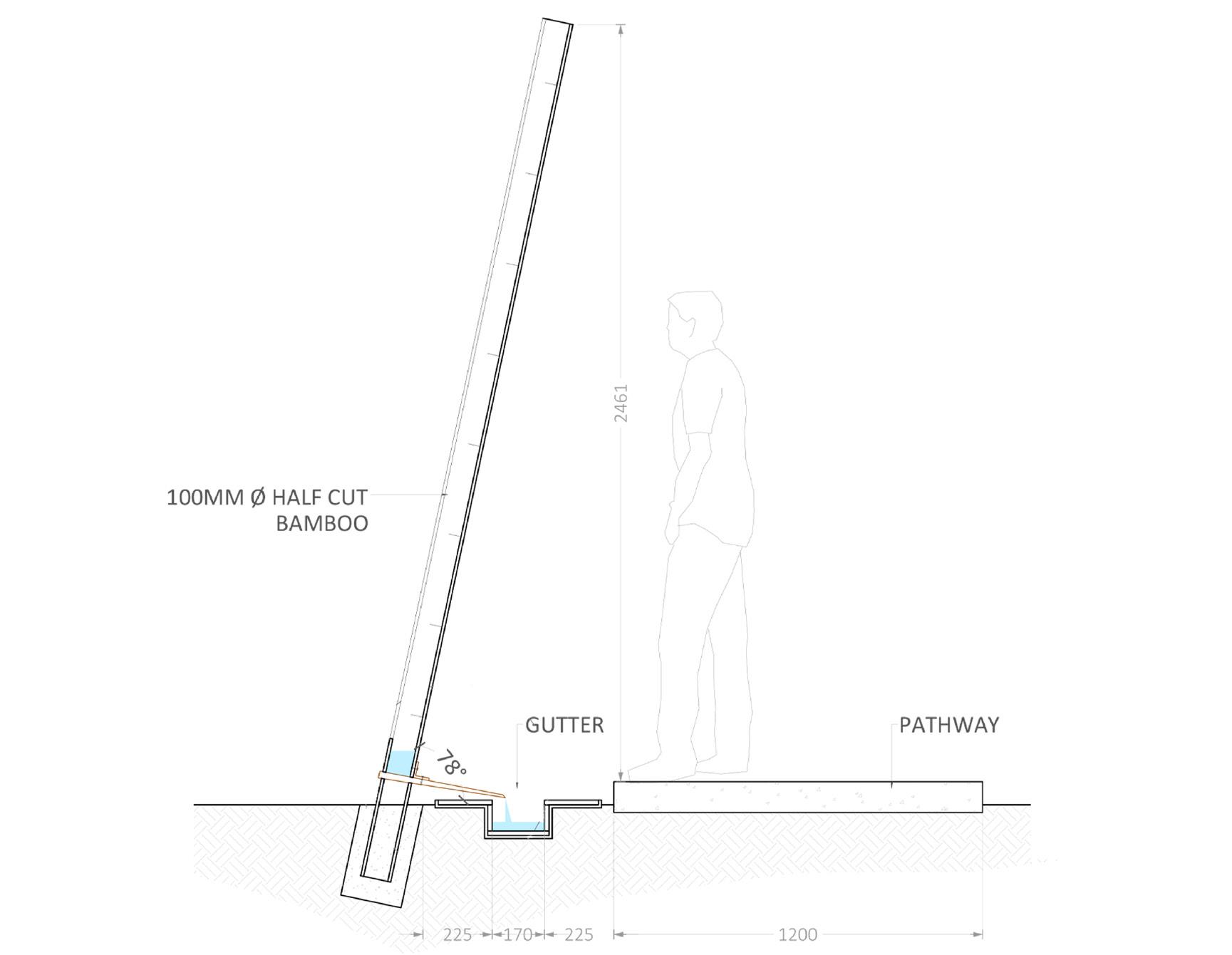
detail | pathway shade using half cut bamboo that collects water
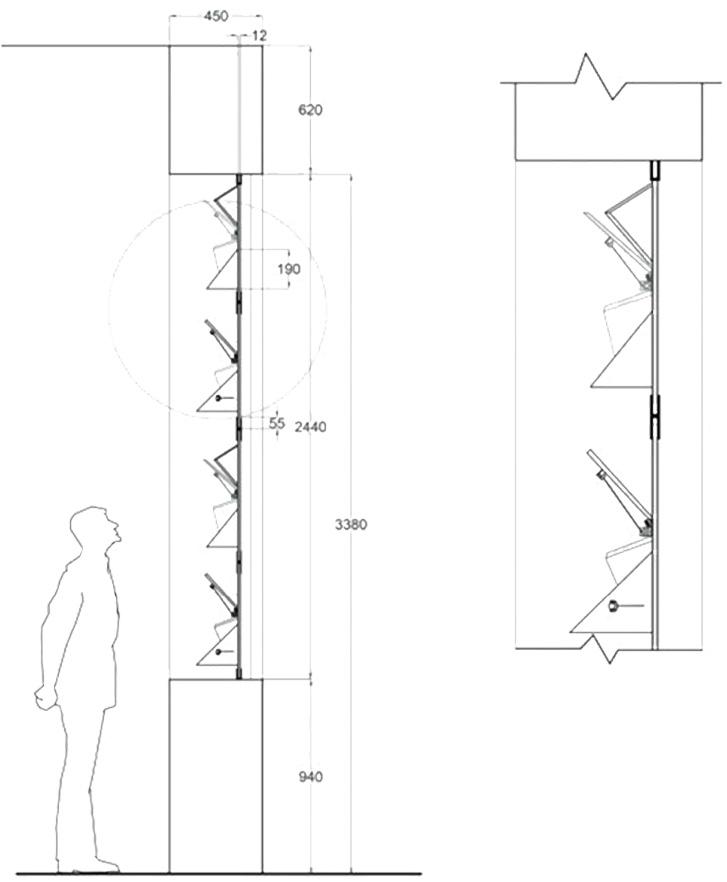
detail | jali facade for hall overlooking the waterbody pathway gutter