












 PORTFOLIO

www.linkedin.com/in/ meghanatummala

mtummala@umich.edu

TABLE OF CONTENTS
+1 (734) 730-5085


01
02
03
Wallenberg Fellowship
Academic Studios
Professional Work














WALLENBERG FELLOWSHIP
01
TALLER CAPITAL & ISLA URBANA
AUGUST
2023 - AUGUST 2024 | INTERNSHIPS
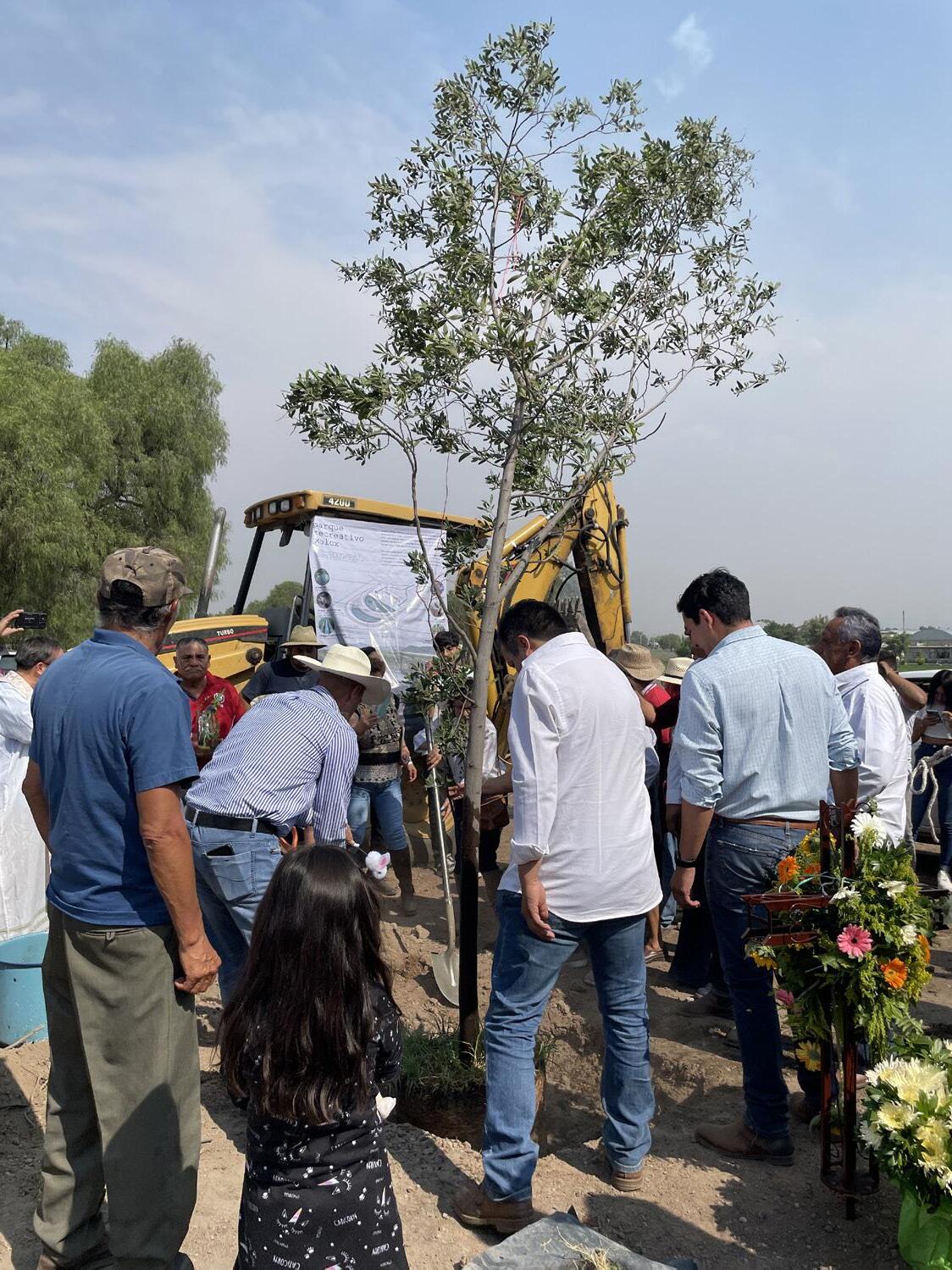
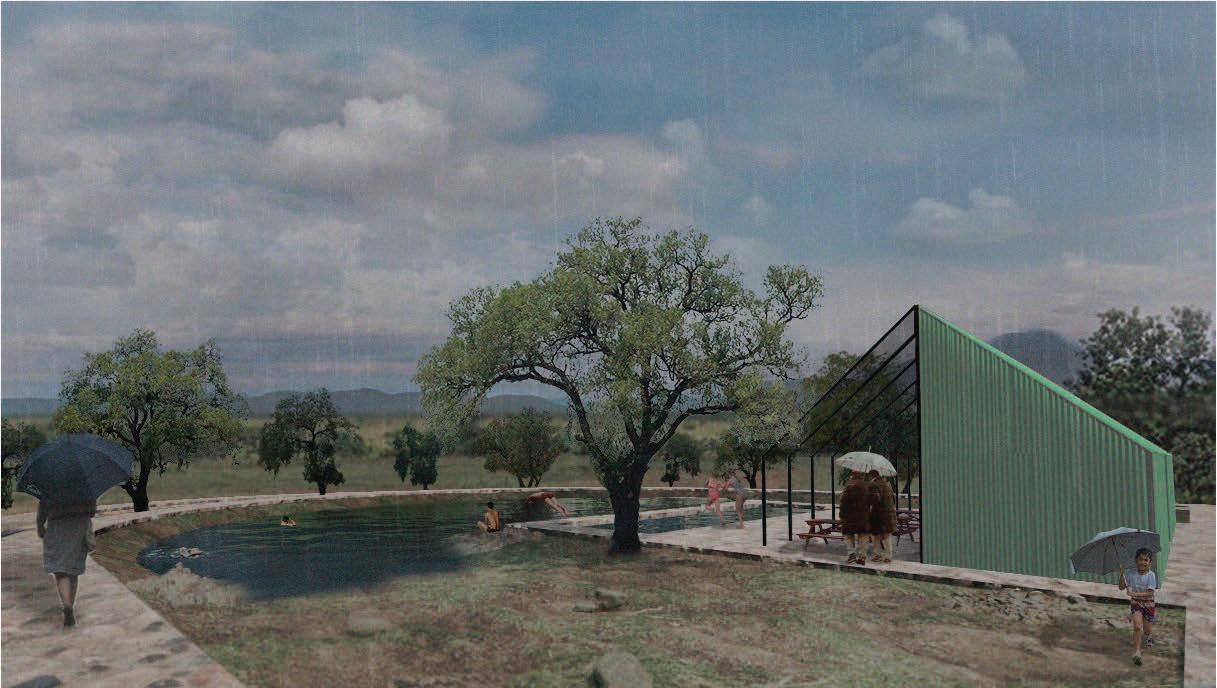

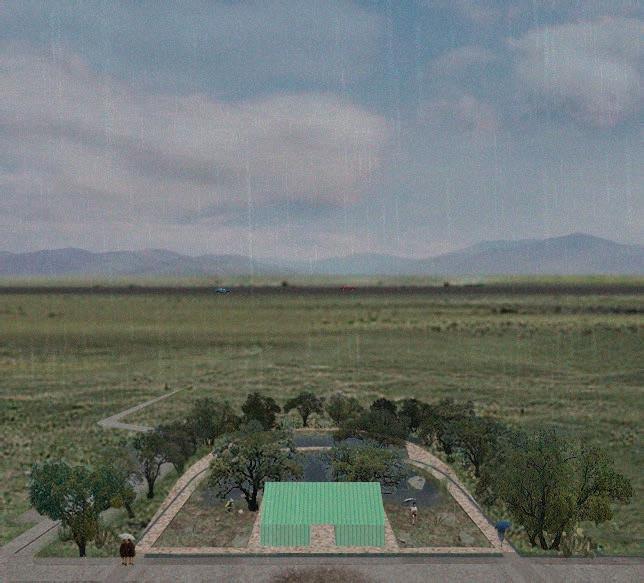
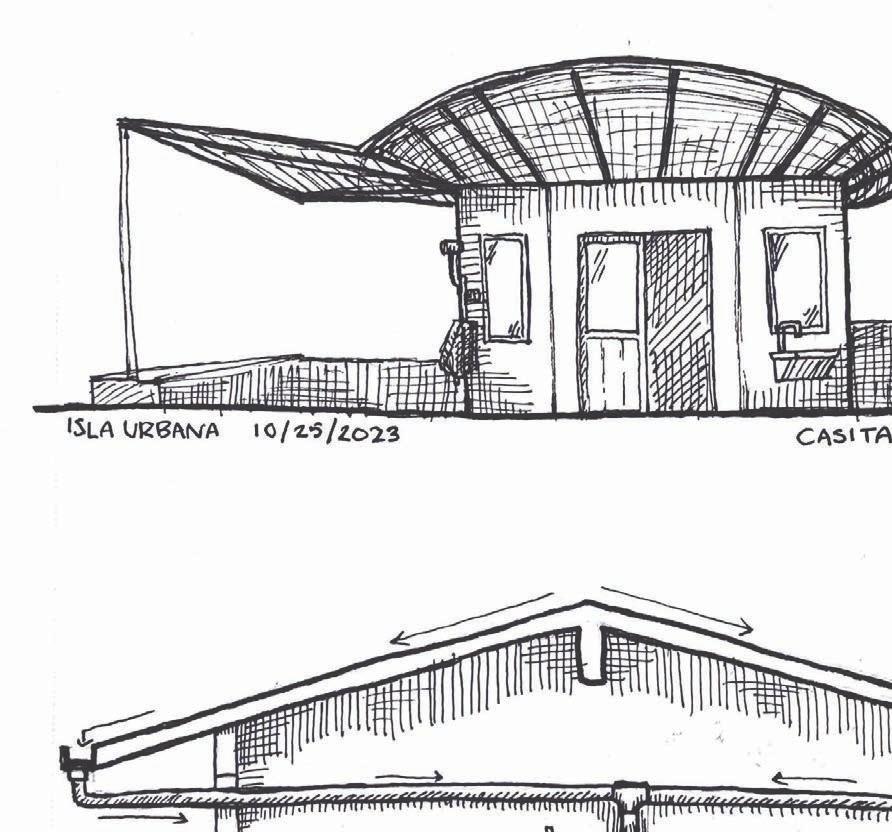
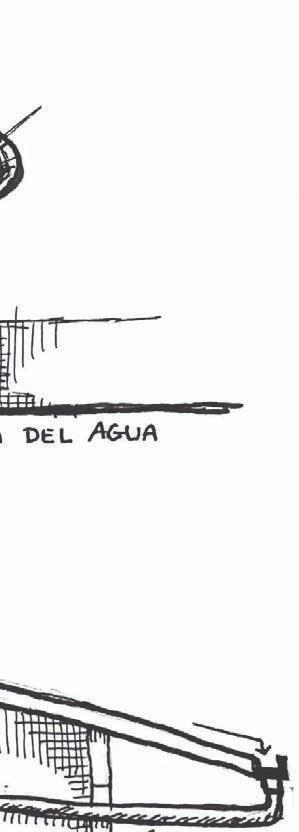
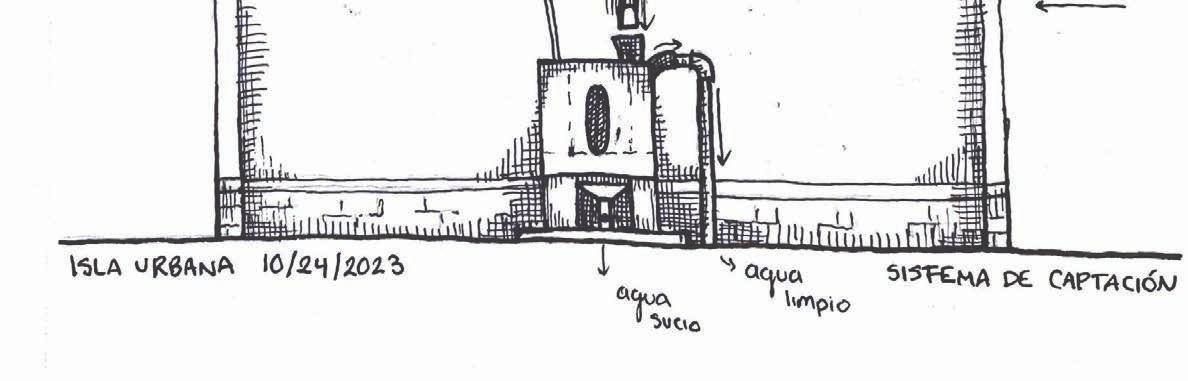
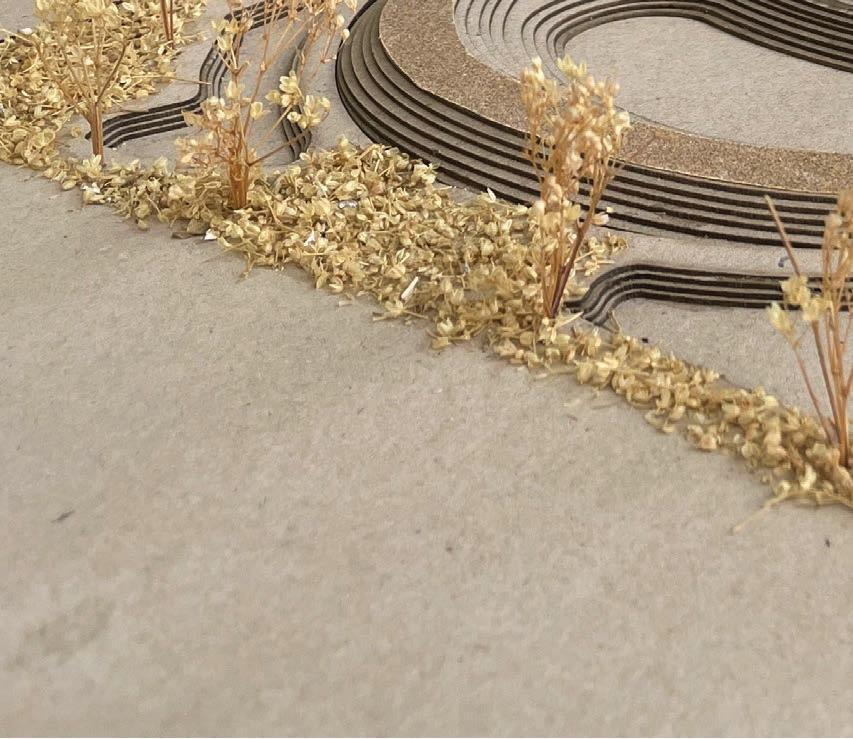
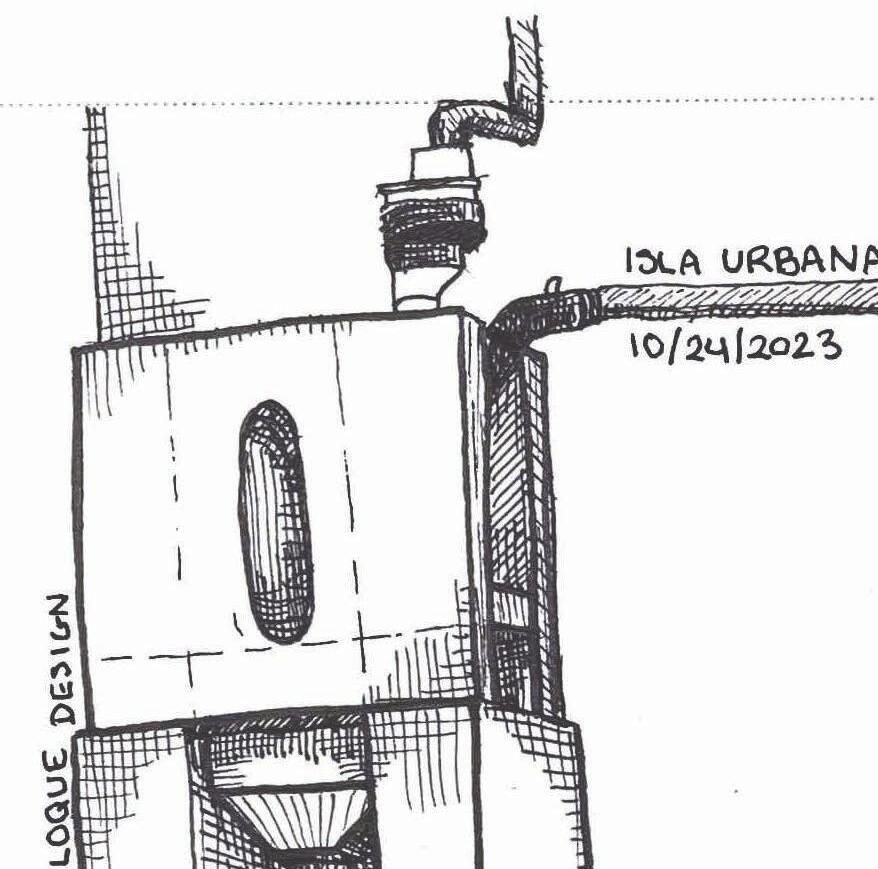
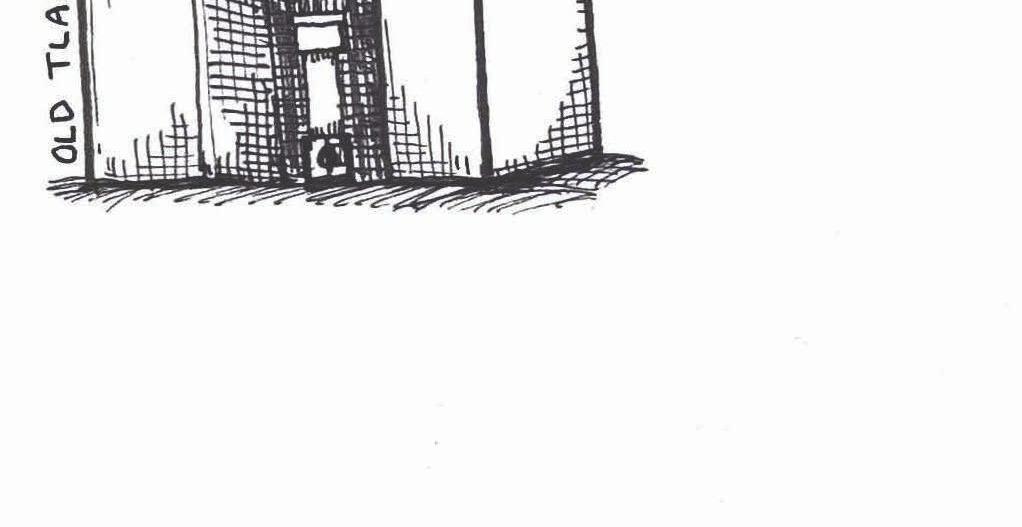
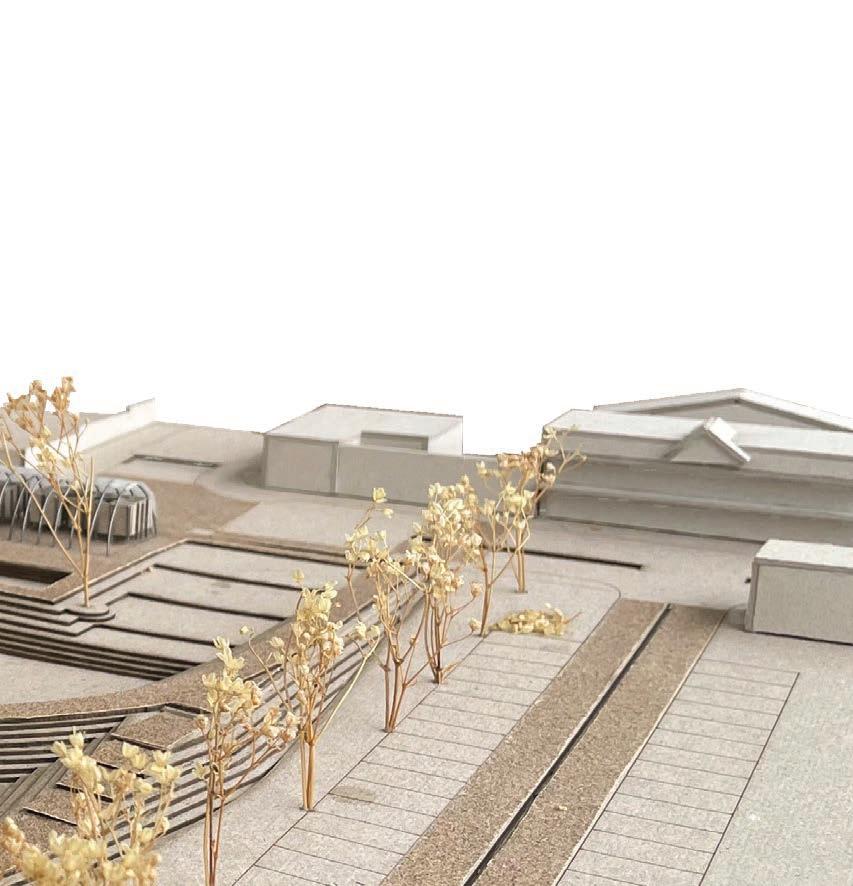
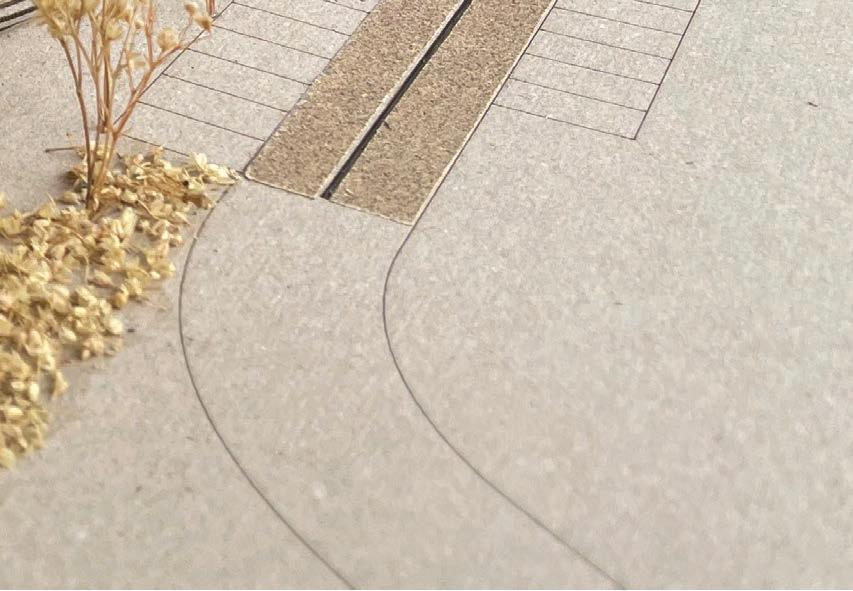
Along side my independent research, I will be spending my fellowship working with Taller Capital, an architecture firm whose work is closely tied to water, and Isla Urbana, a rainwater harvesting company. While I volunteer my time with both companies to assit with any ongoing projects, such as model making, community interaction, and design interations, I will also be observing their work and documenting their processes. I’m hoping this will give me a better understanding of how a company can approach design projects while addressing an environmental concern.
WALLENBERG FELLOWSHIP WALLENBERG FELLOWSHIP
6



7
SITE VISITS
AUGUST 2023 -
AUGUST
2024 | INDEPENDENT RESEARCH
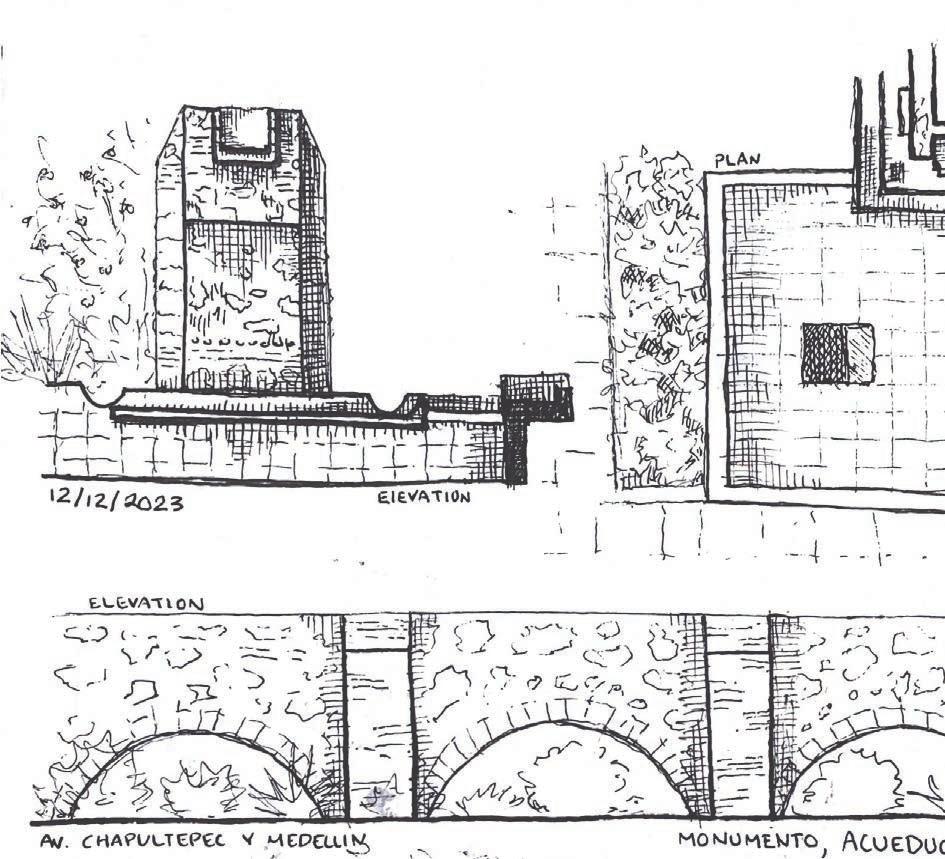
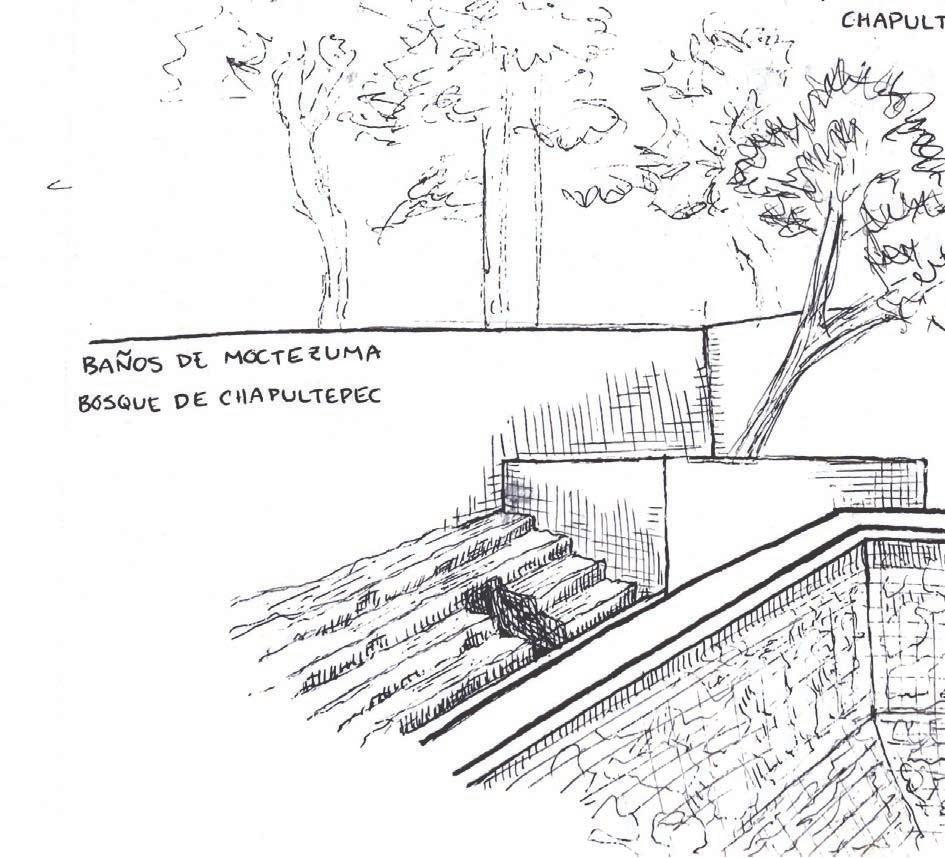

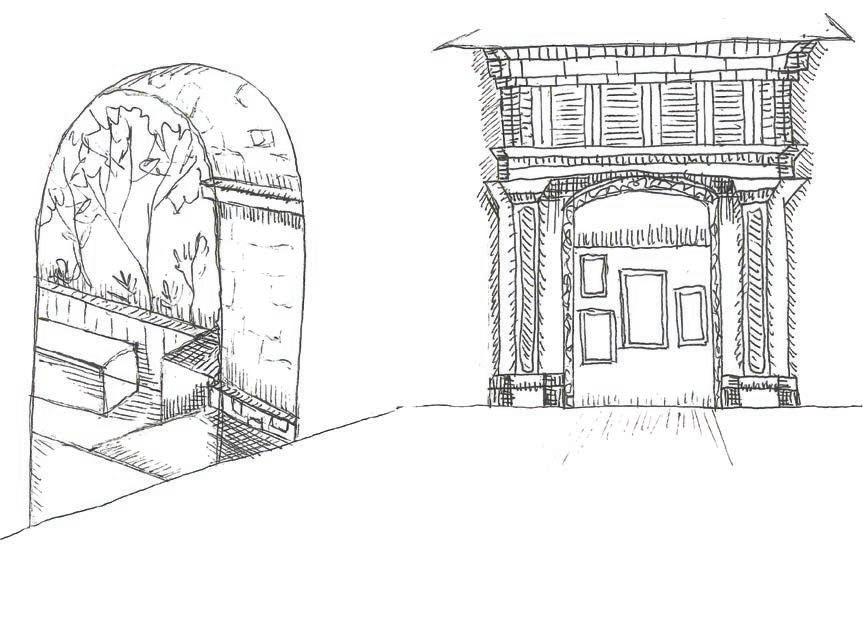
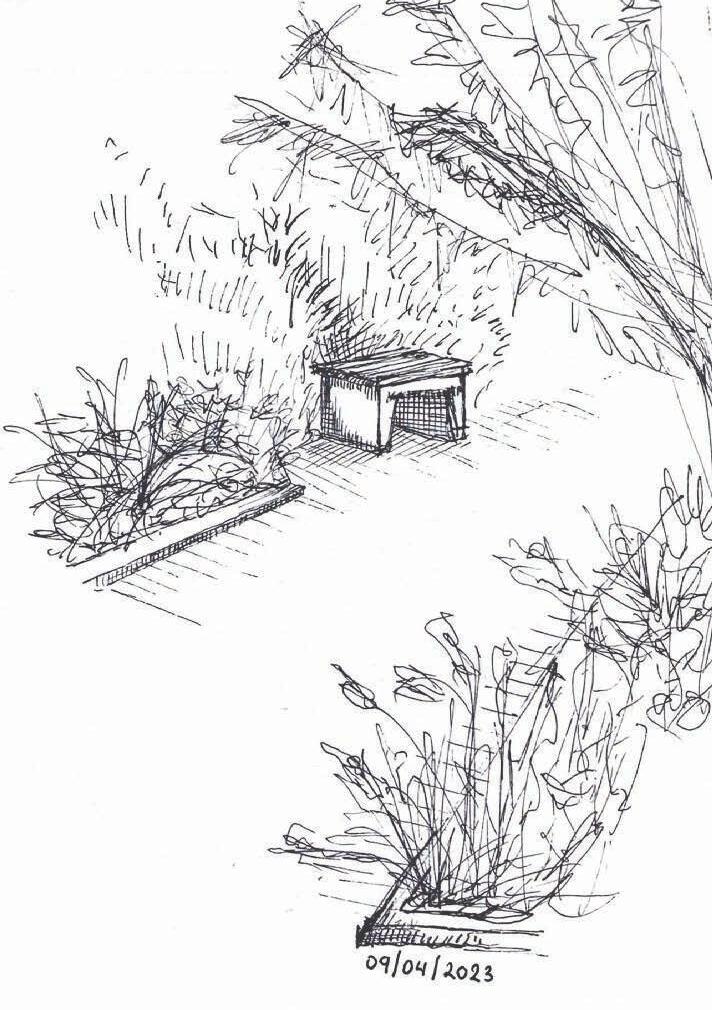
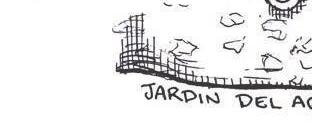
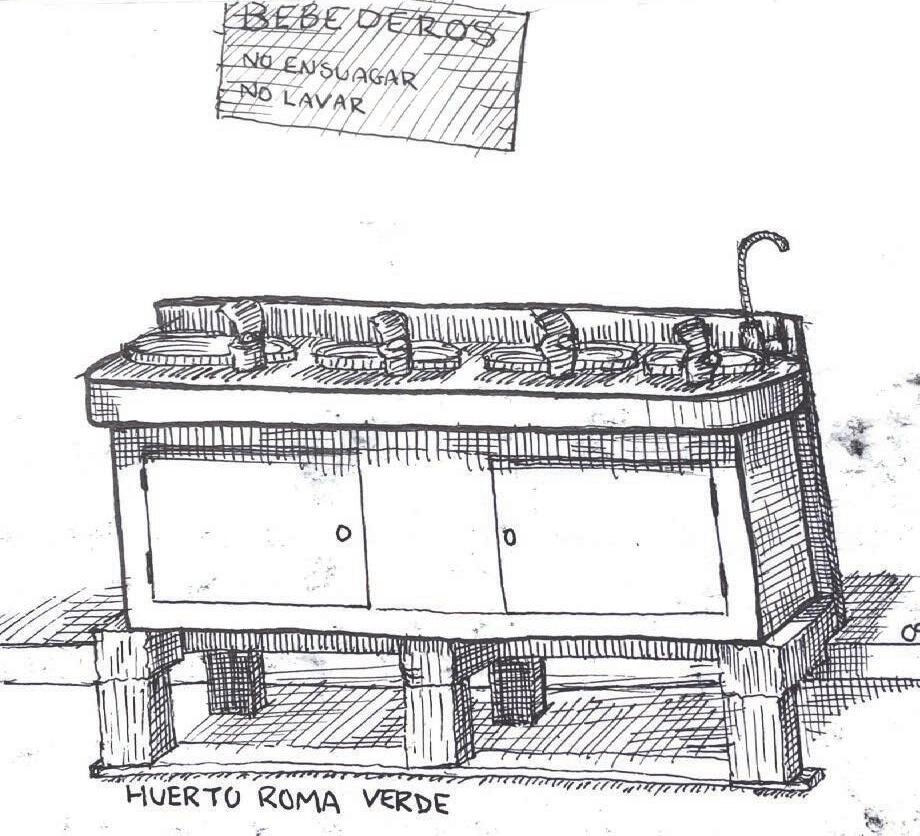
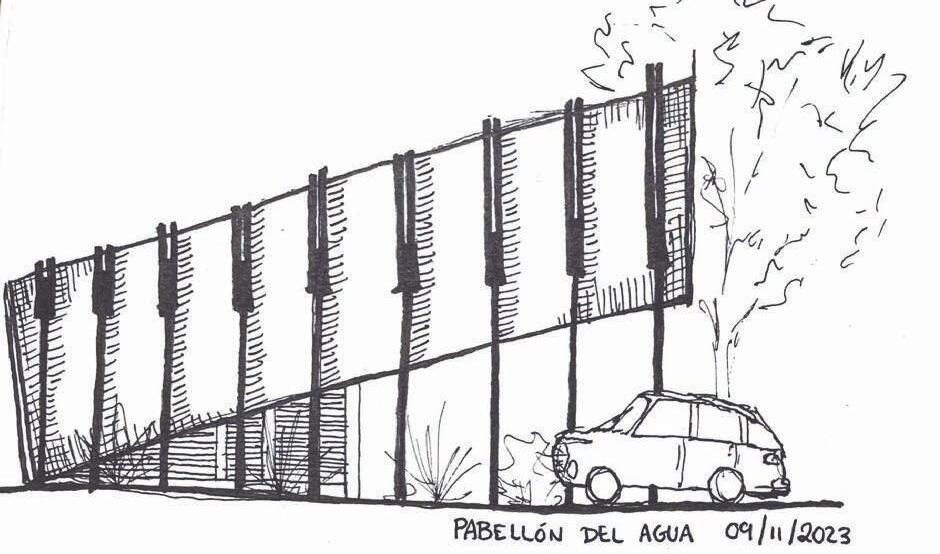
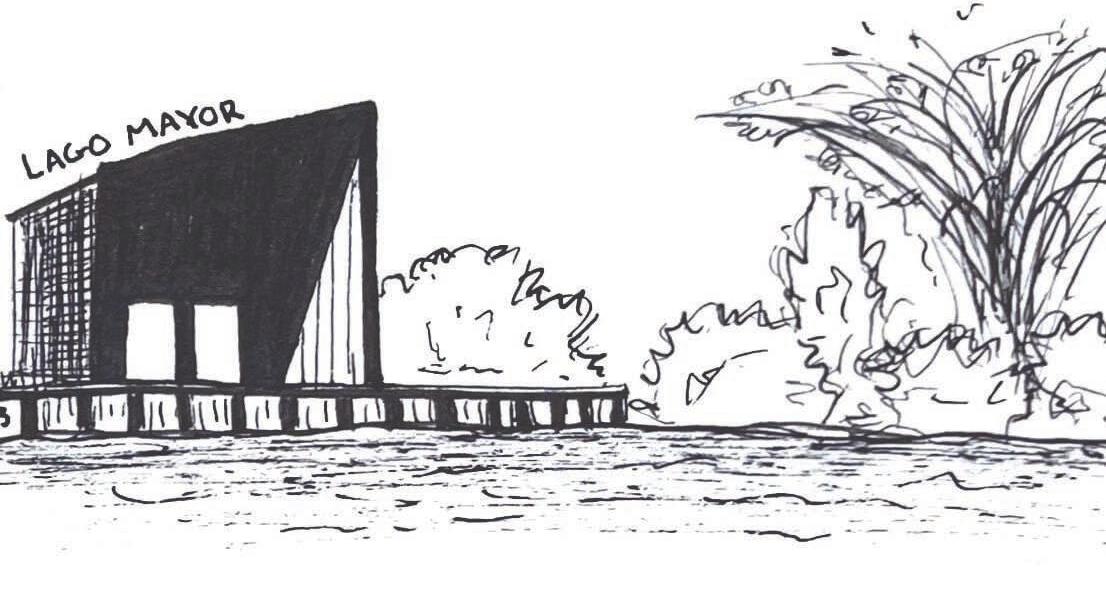
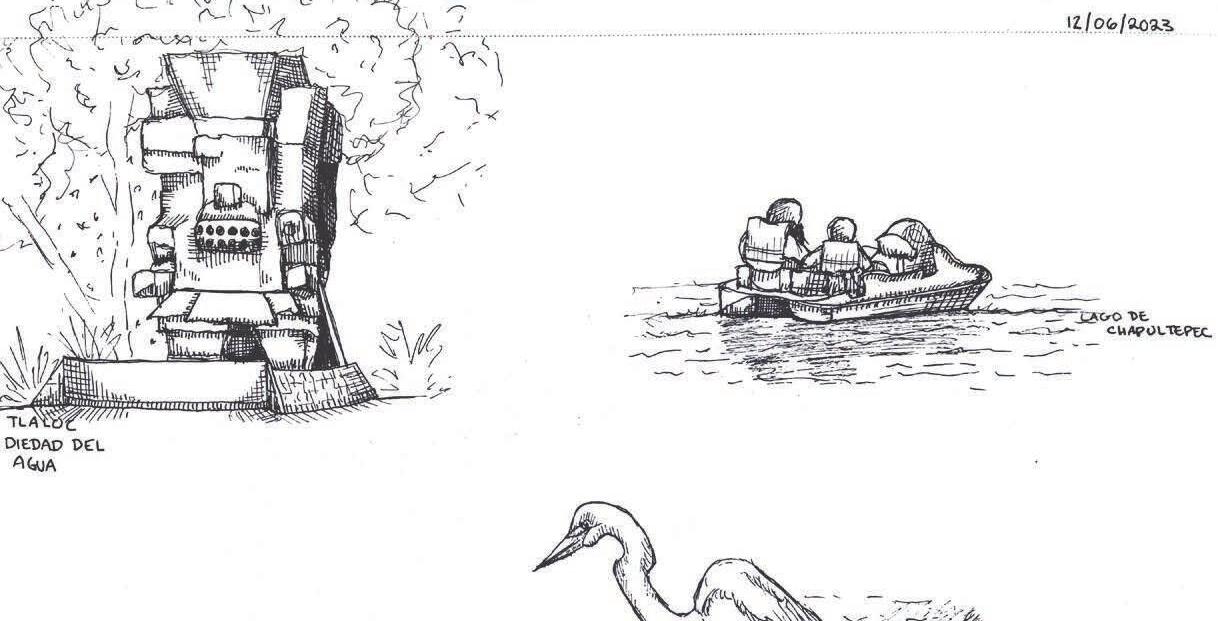
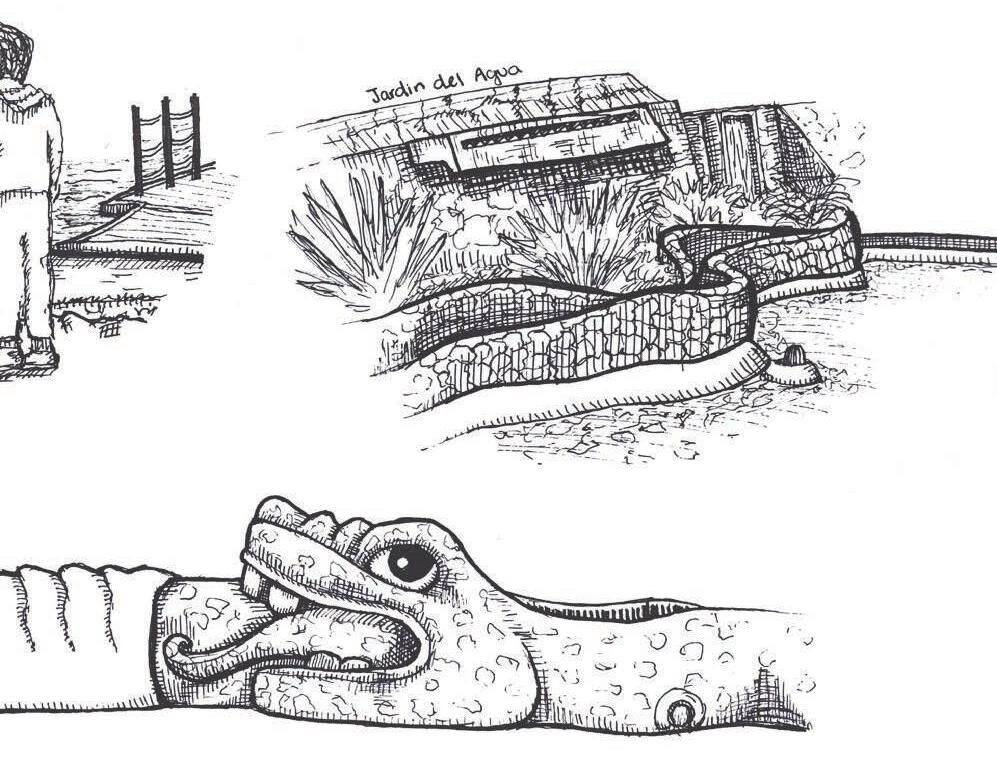
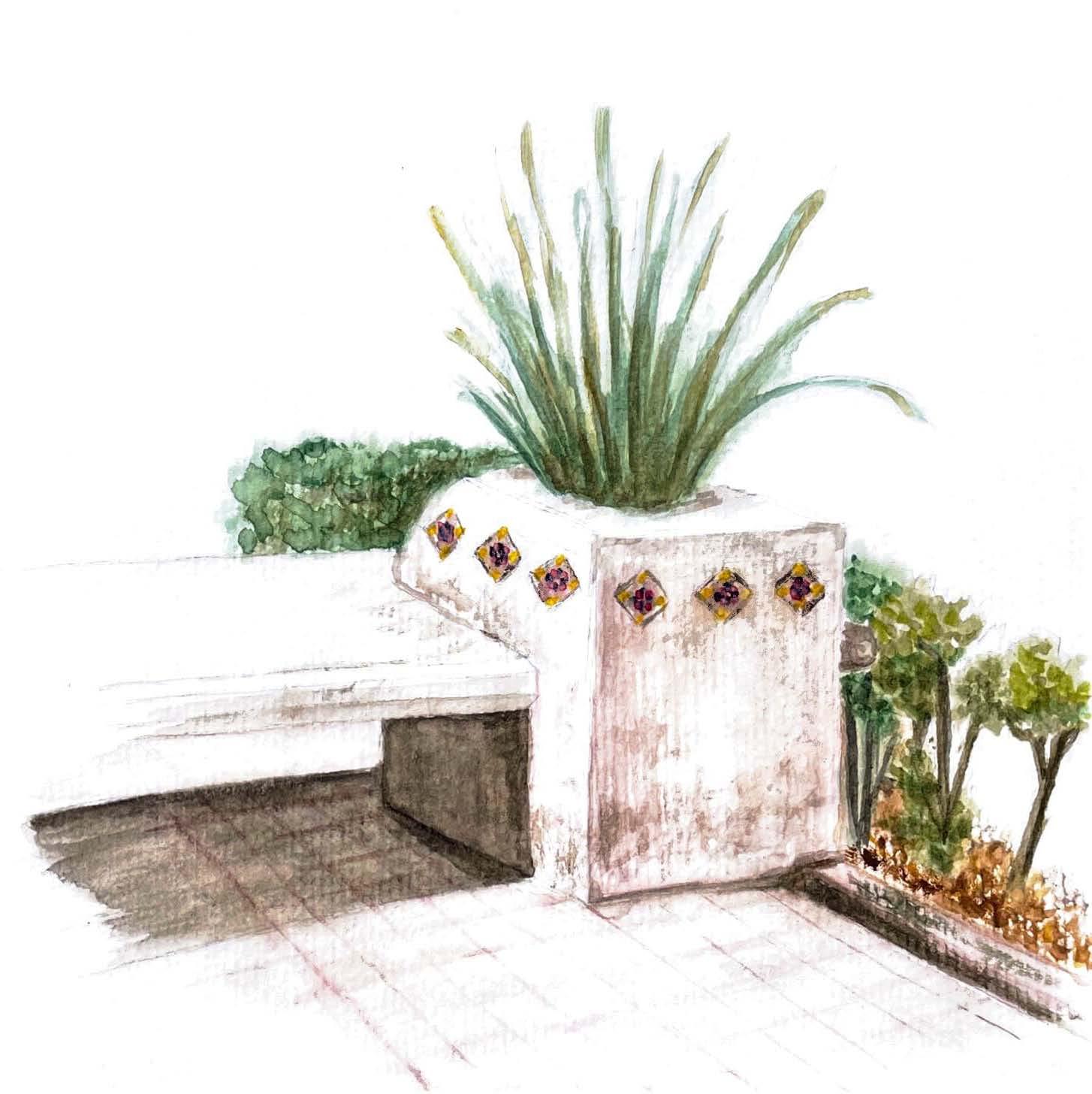
To better understand Mexico City’s relationship with water, I’ve been working on an independent research project where I visit various project sites, neighborhoods, and parks. During these site visits, I take the time to document them through various methods such as hand sketches, writing, photography and videography. I’m planning by the end of my fellowship to compile all these methods of documentation into a storymap of the city showcasing my time here and the obsevations I made.





WALLENBERG FELLOWSHIP
WALLENBERG FELLOWSHIP 8

9
PERCEPTION OF WATER OVER TIME
SPRING 2022 | INSTRUCTOR: YOJAIRO
LOMELI
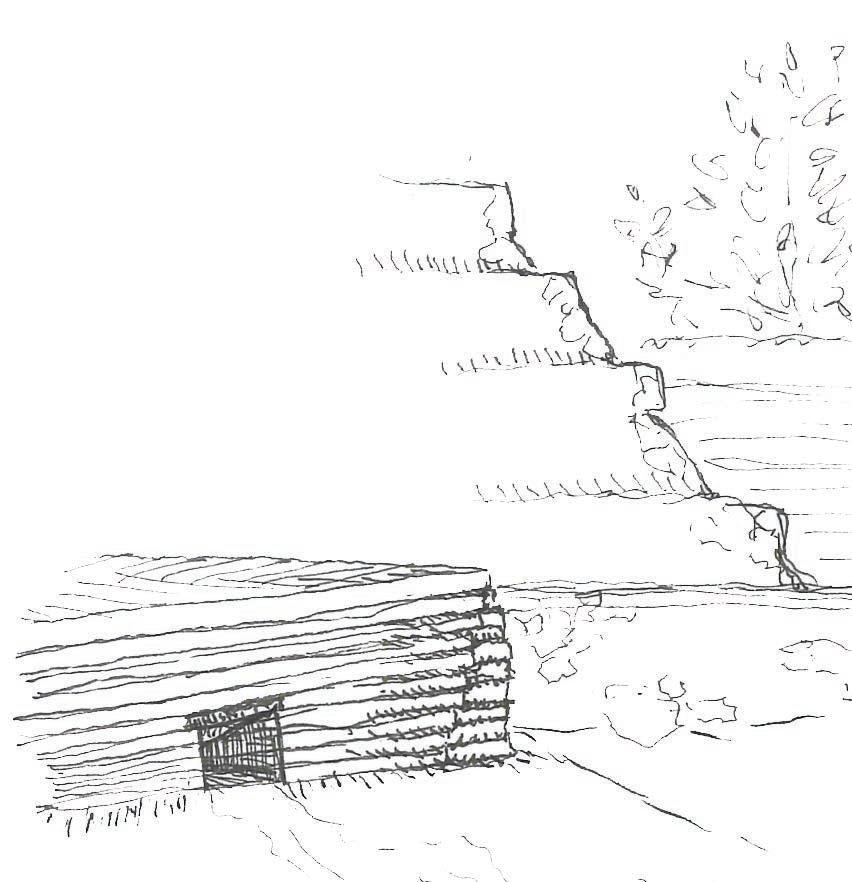

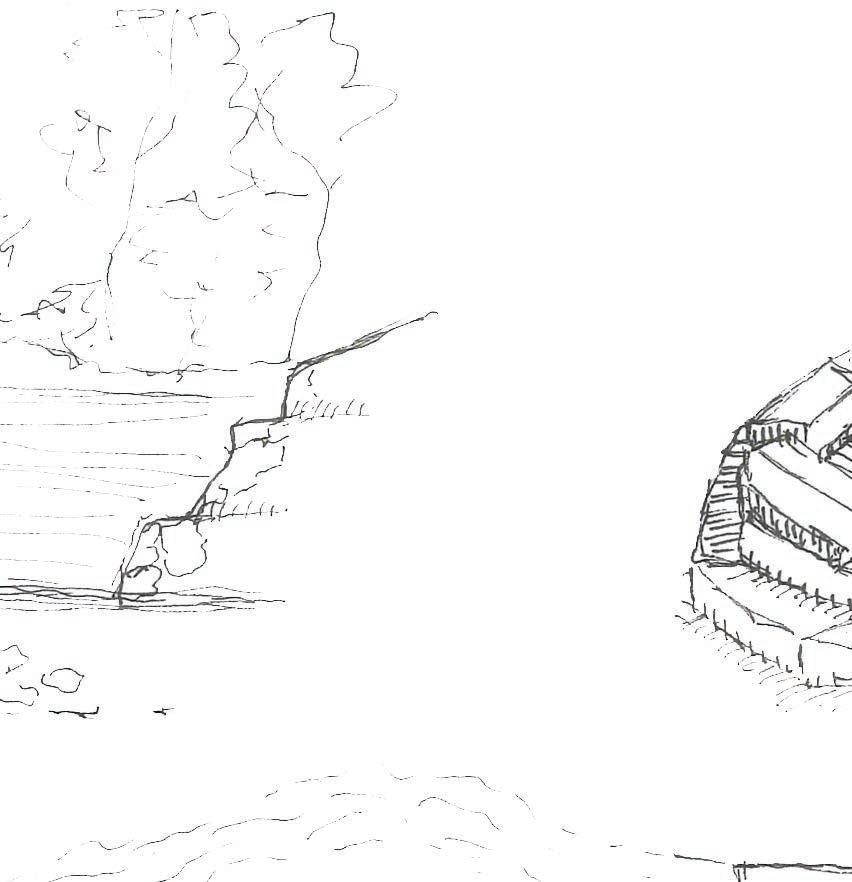

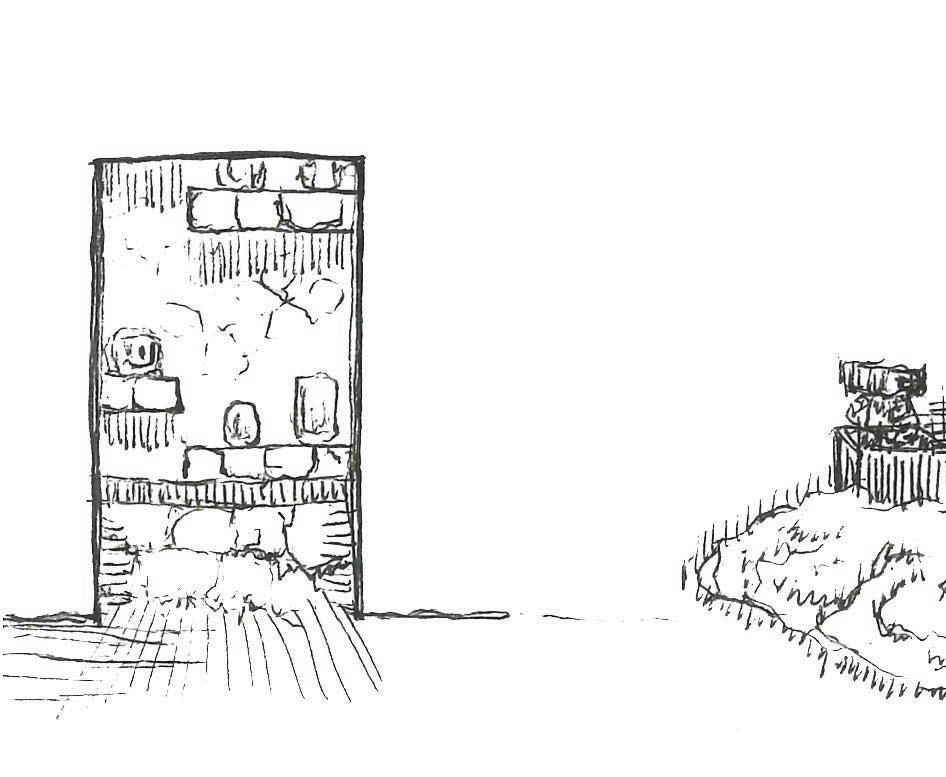
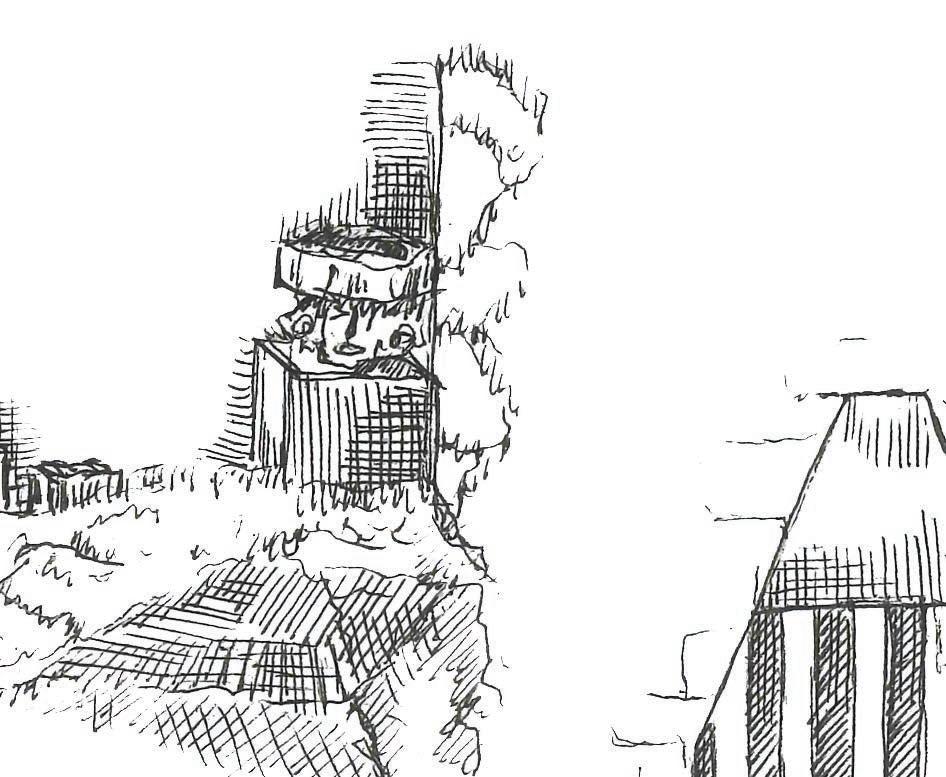
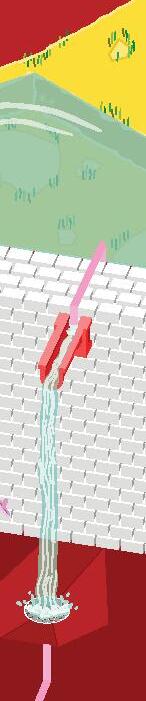
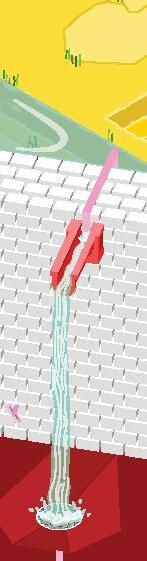
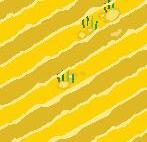
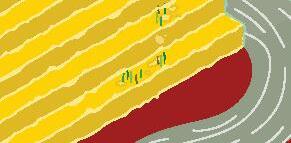
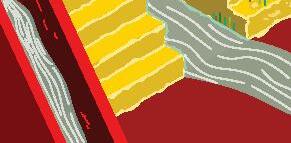
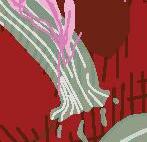
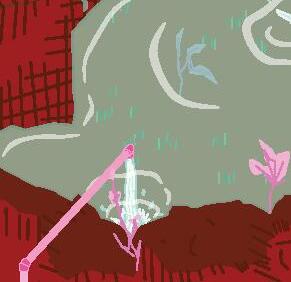
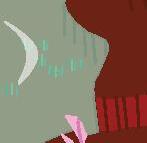
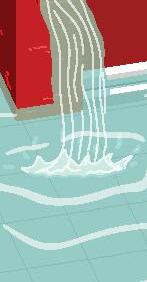
From what I have seen it’s clear that the City of Mexico values greenery, but what about water? Historically, it’s clear through the pyramids that the Aztecs clearly valued and respected all aspects of the land they were inhabiting — including the water — but after colonization, water was seen as an obstruction to “development”. Today, in the neighborhoods and places we have traveled to, water is luxuriously drained or used, through ornate spouts, intentionally exposed piping, grand fountains, or to clean the streets/sidewalks we walked on. It’s both feared and valued.
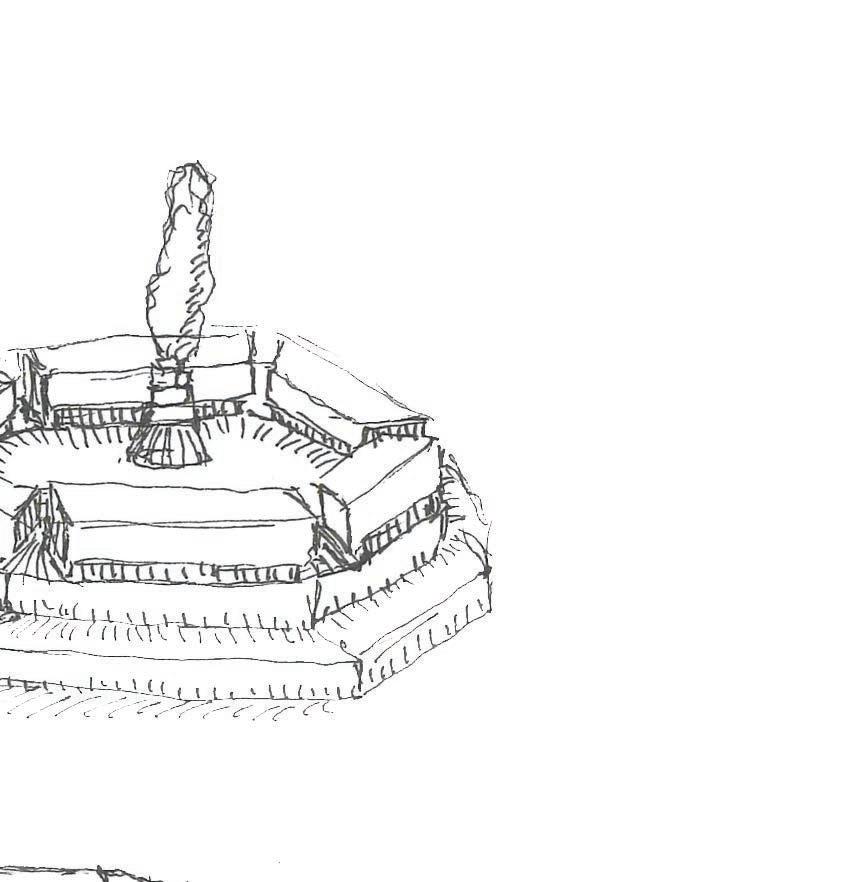
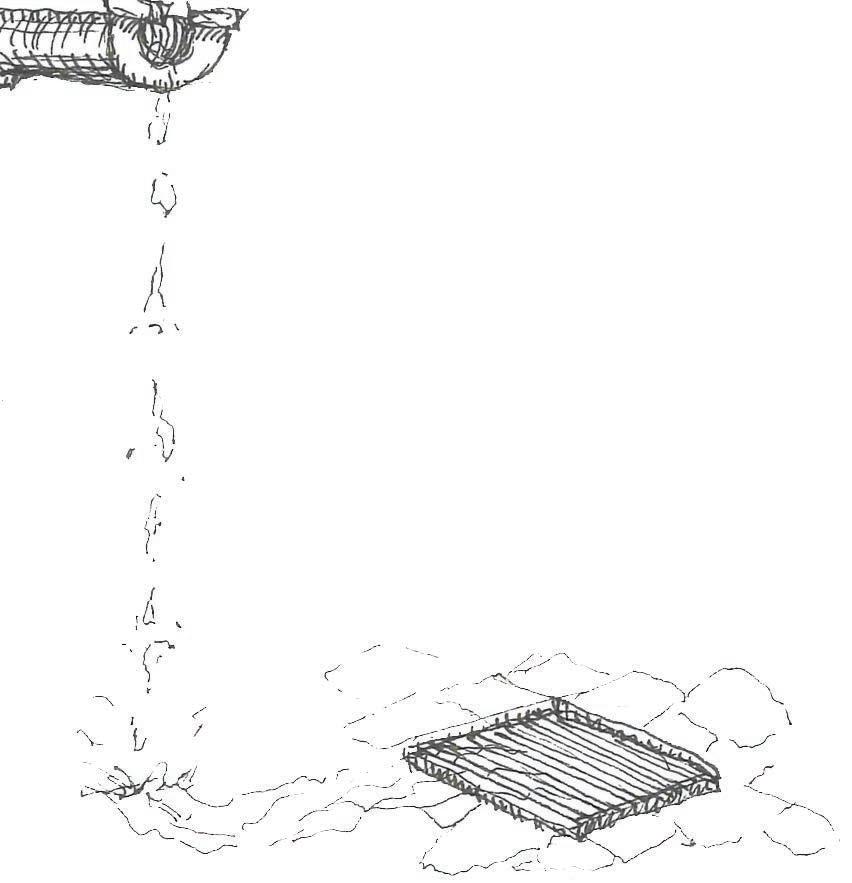
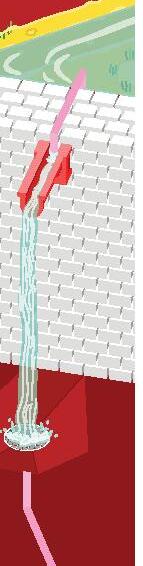
Very little to no remnants of the lake that was Mexico City remains. Except in Xochimilco and UNAM, where we begin to see spouts and drains to bring water back to the way it was. It shows that water isn’t something to be feared but rather just as beautiful as other aspects of nature. This drawing is a visual representation of how water is treated over time.
INSPIRATION FOR WALLENBERG FELLOWSHIP MEXICO CITY TRAVEL STUDIO
10








11











STUDIOS
ACADEMIC
02
GROWING ROOTS
FALL 2022 | INSTRUCTOR: STRATTON COFFMAN
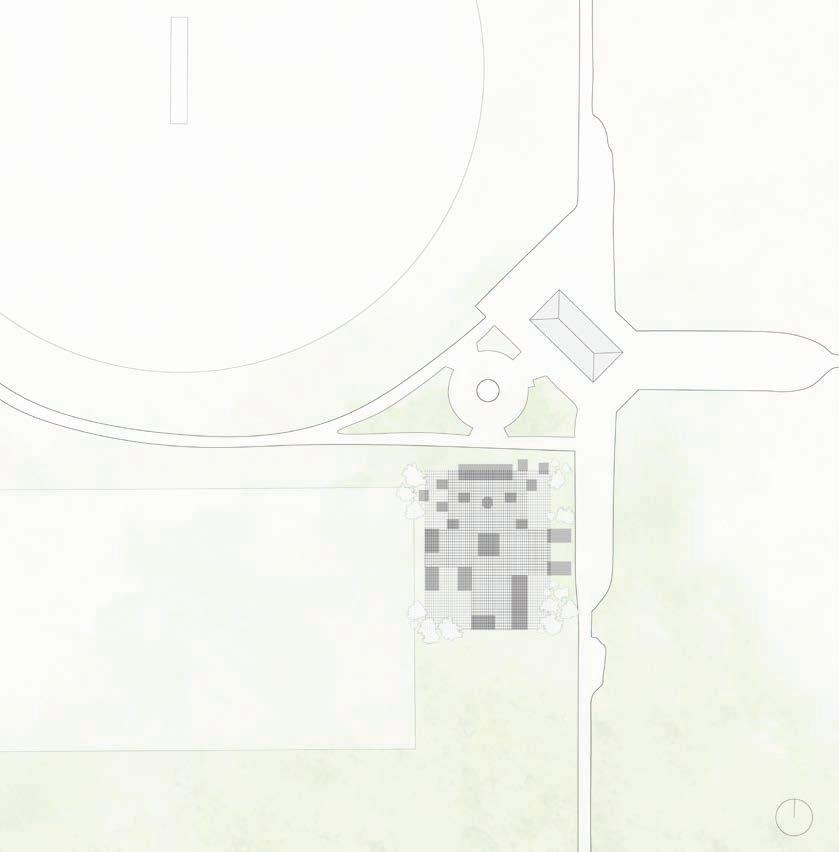
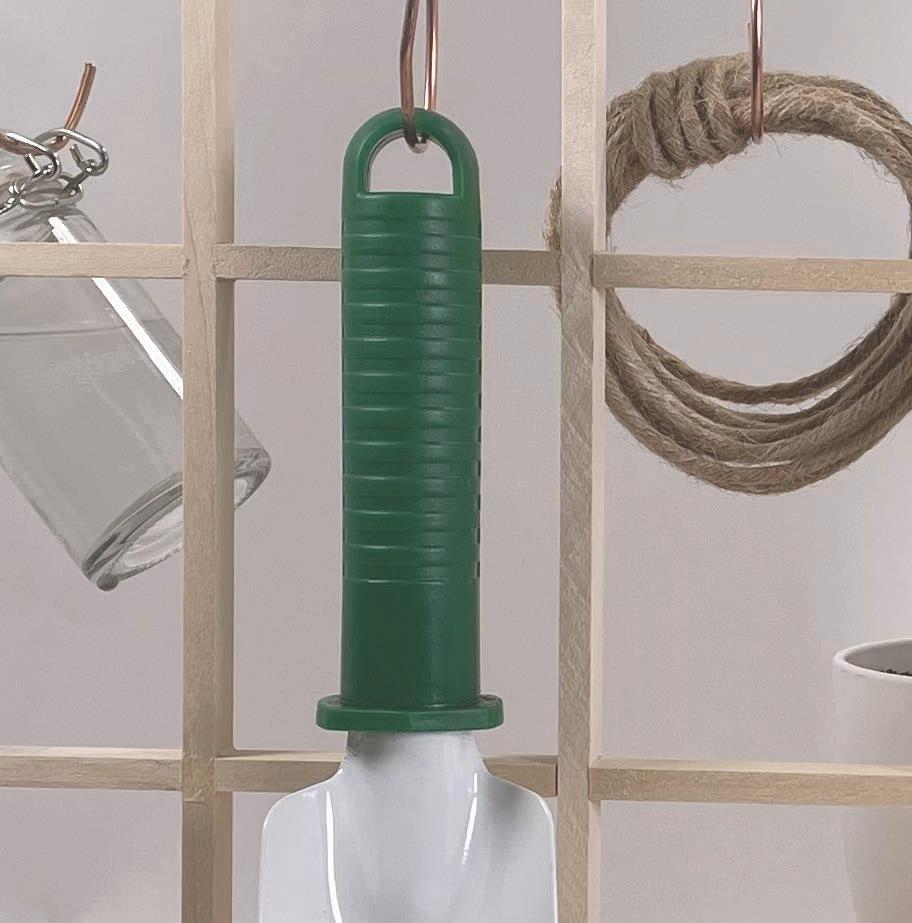
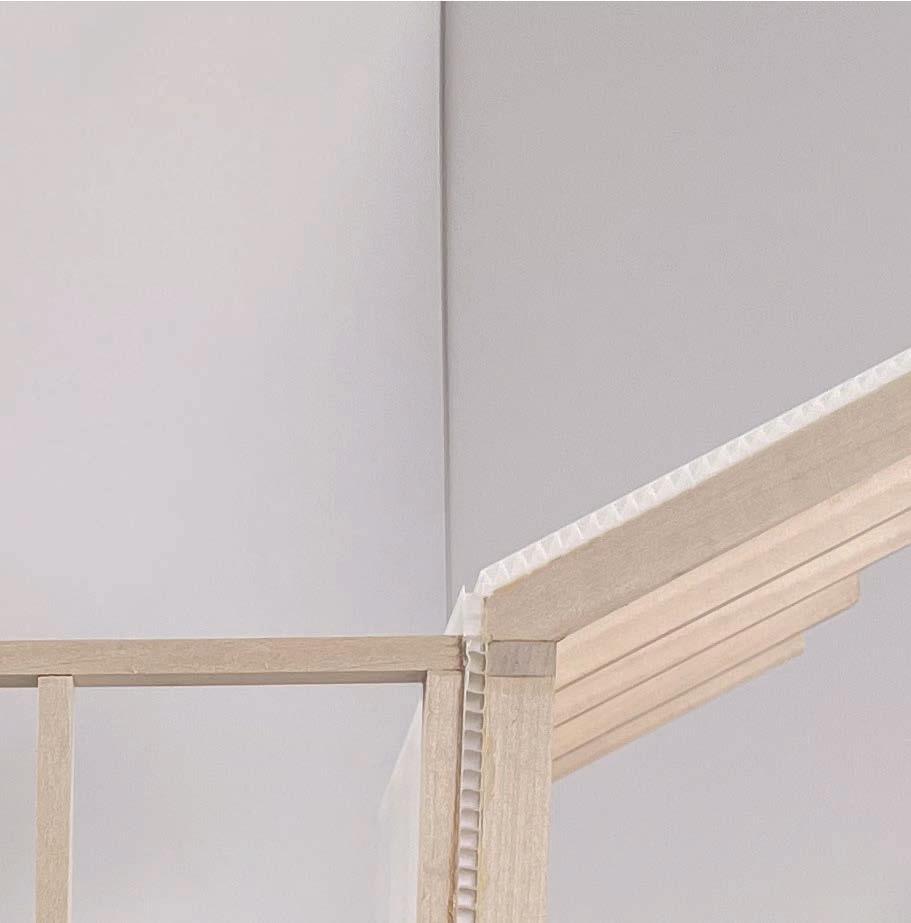
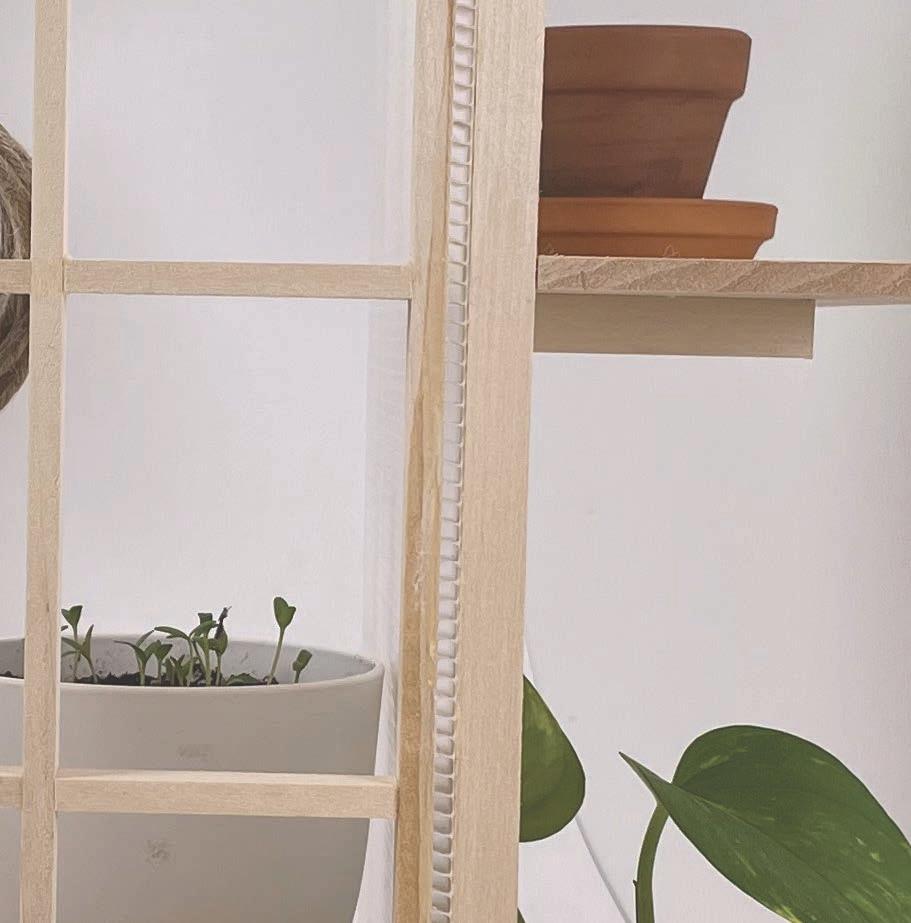
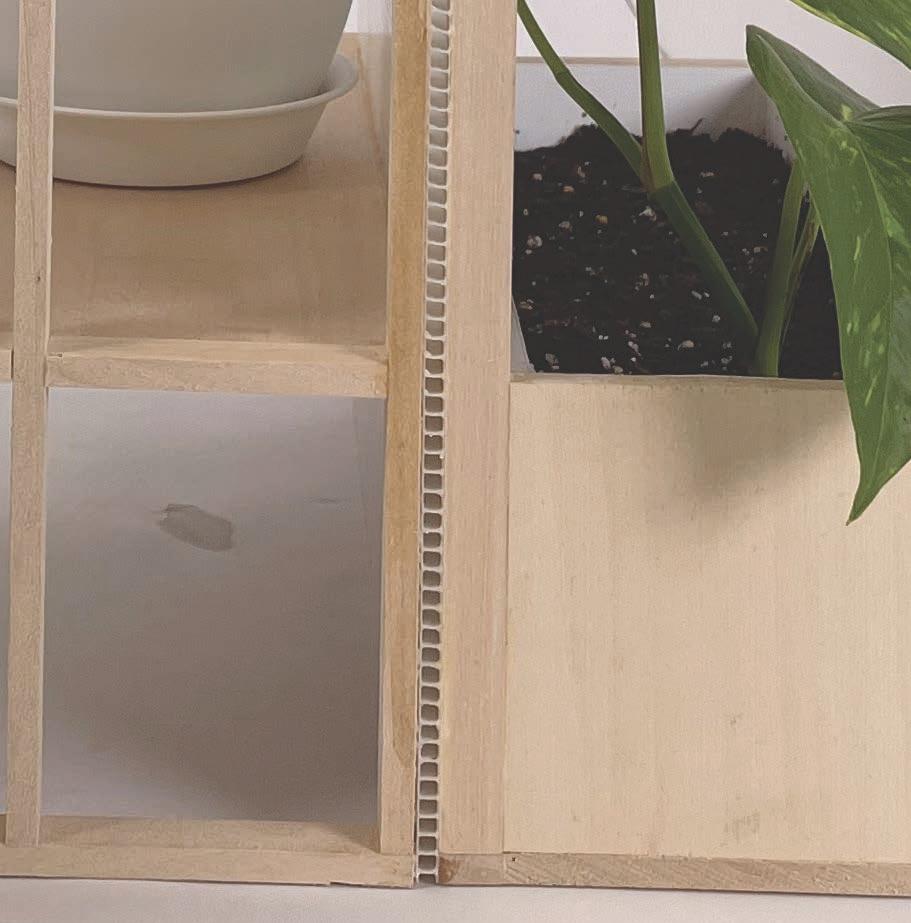
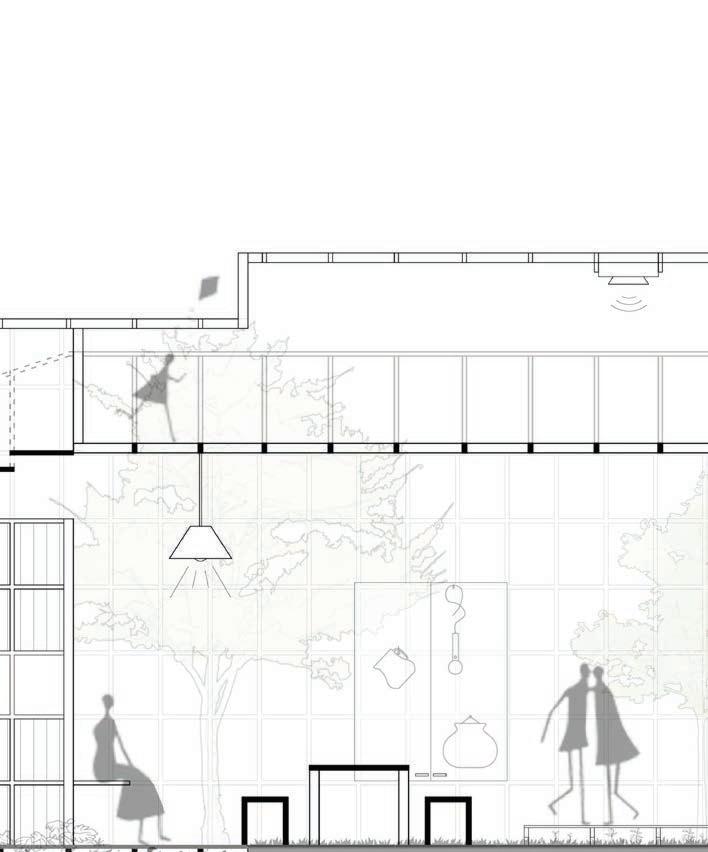
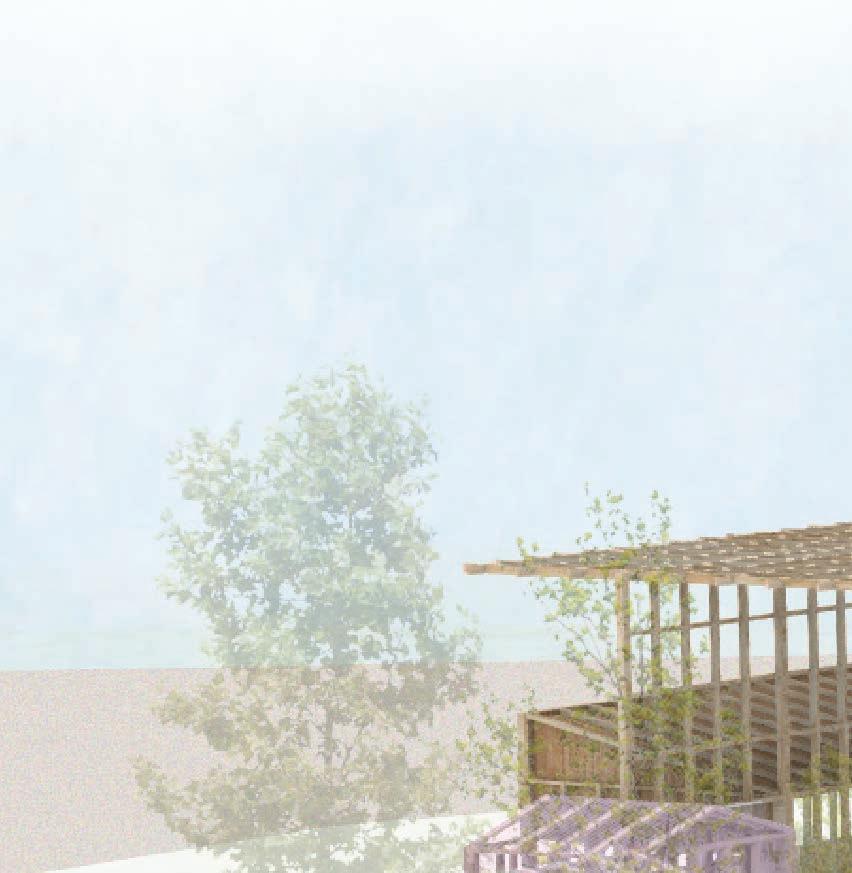
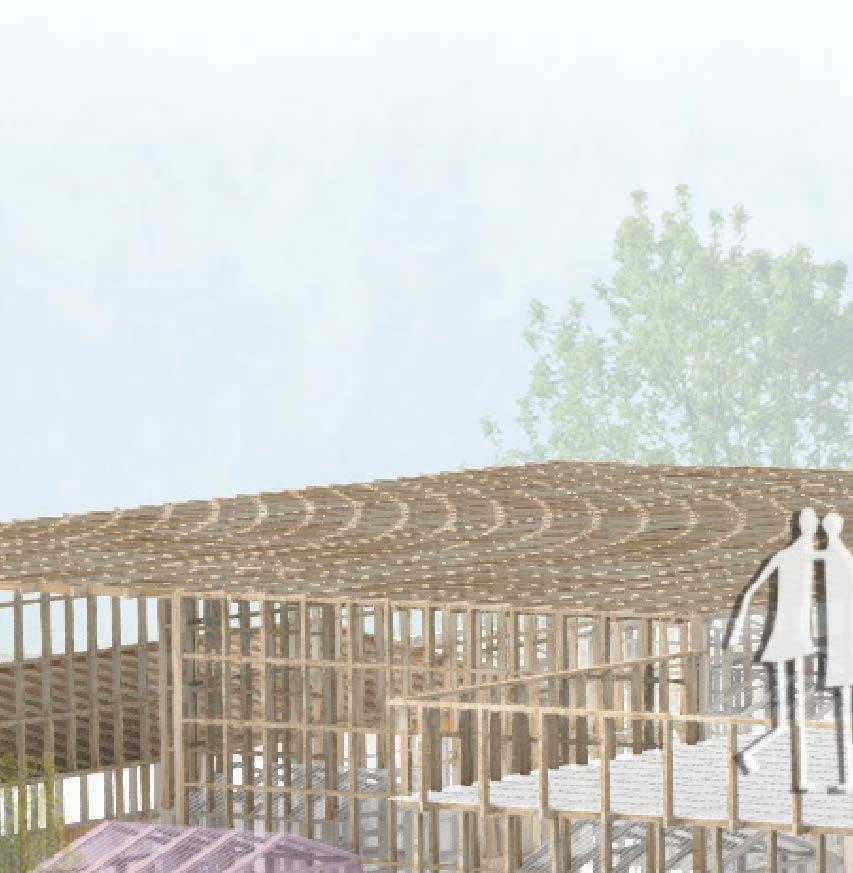
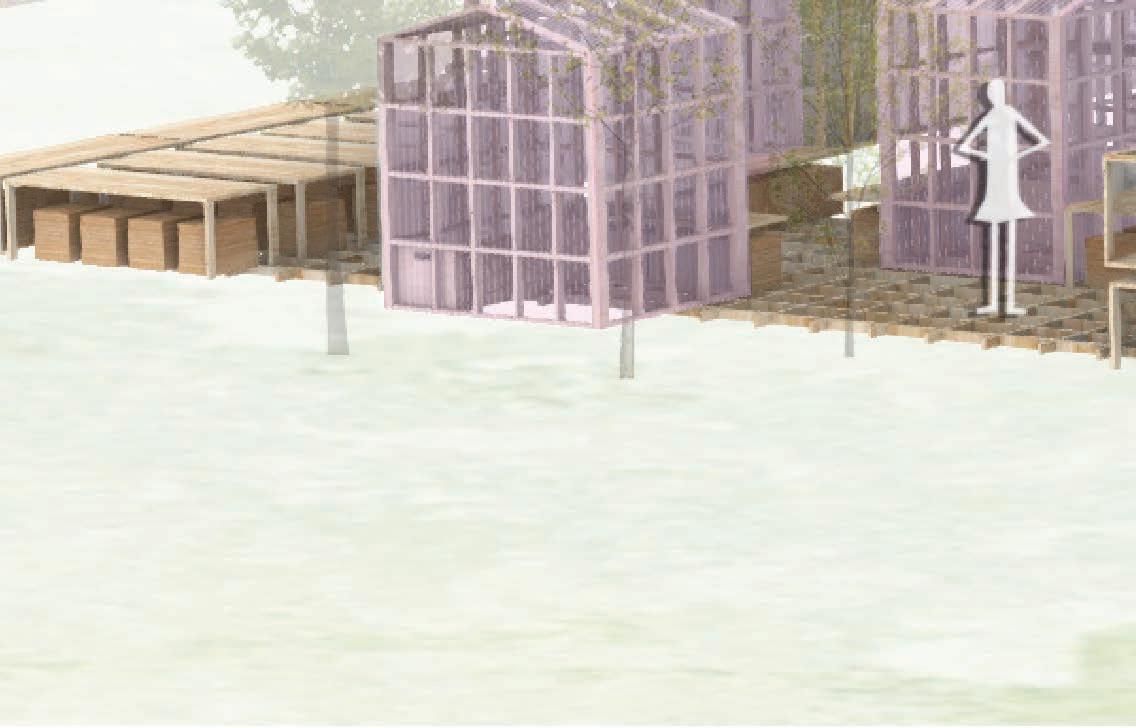
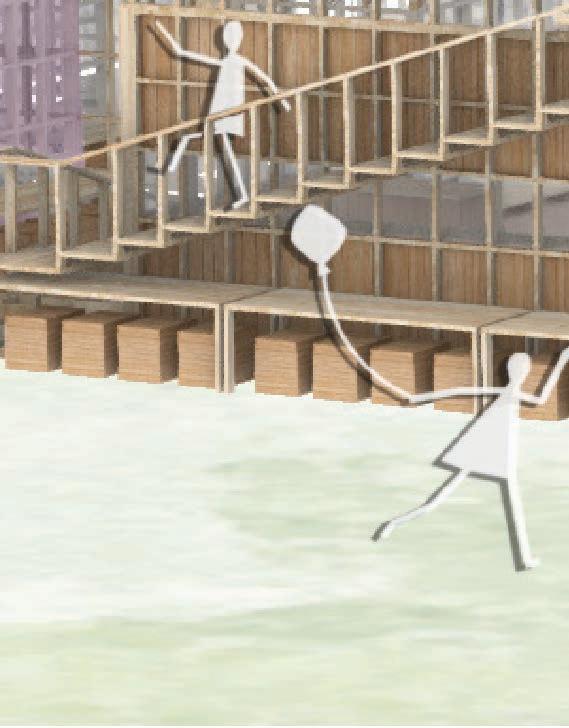
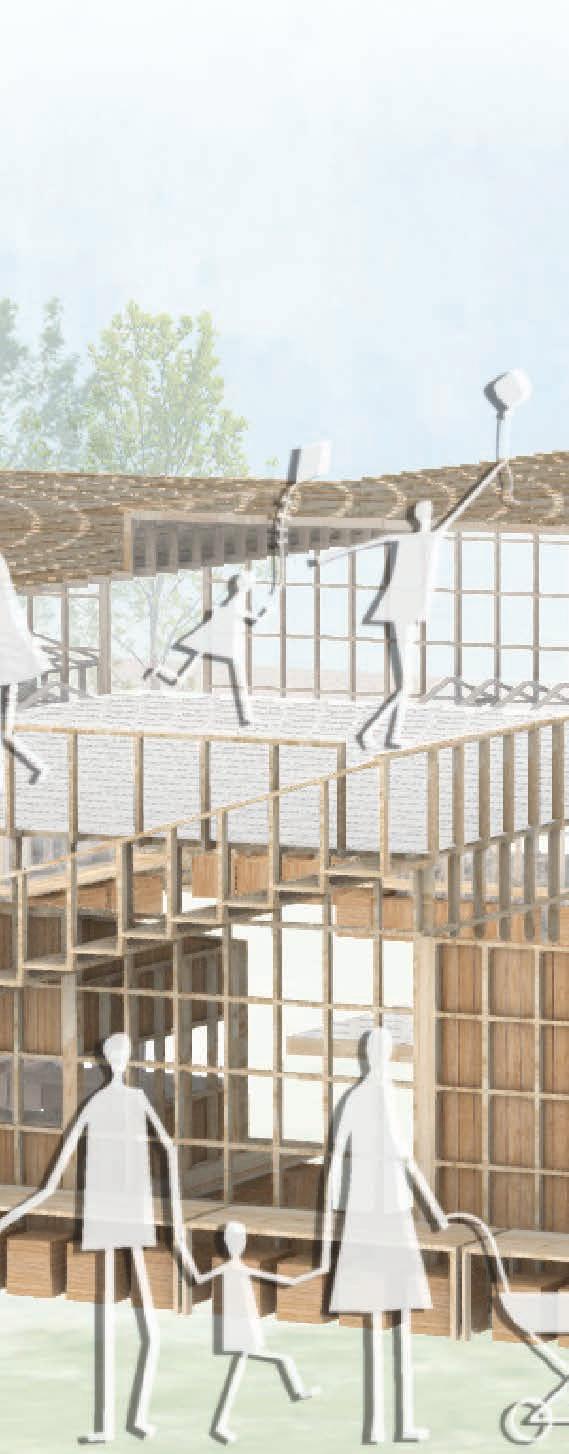
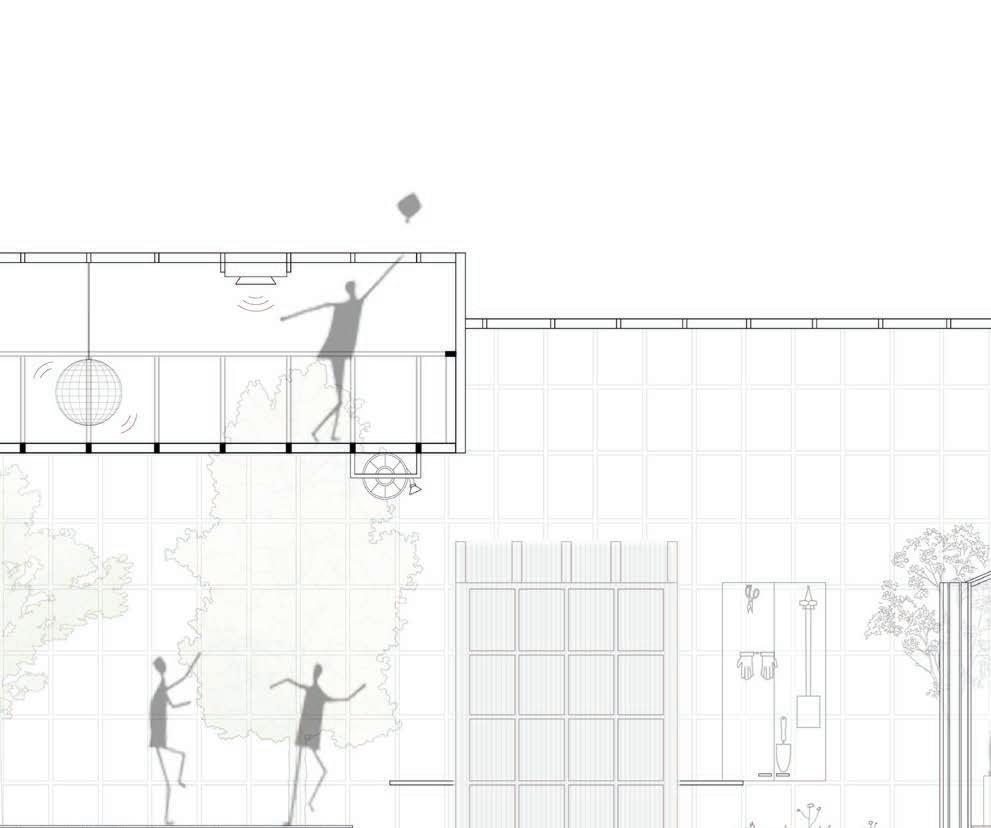
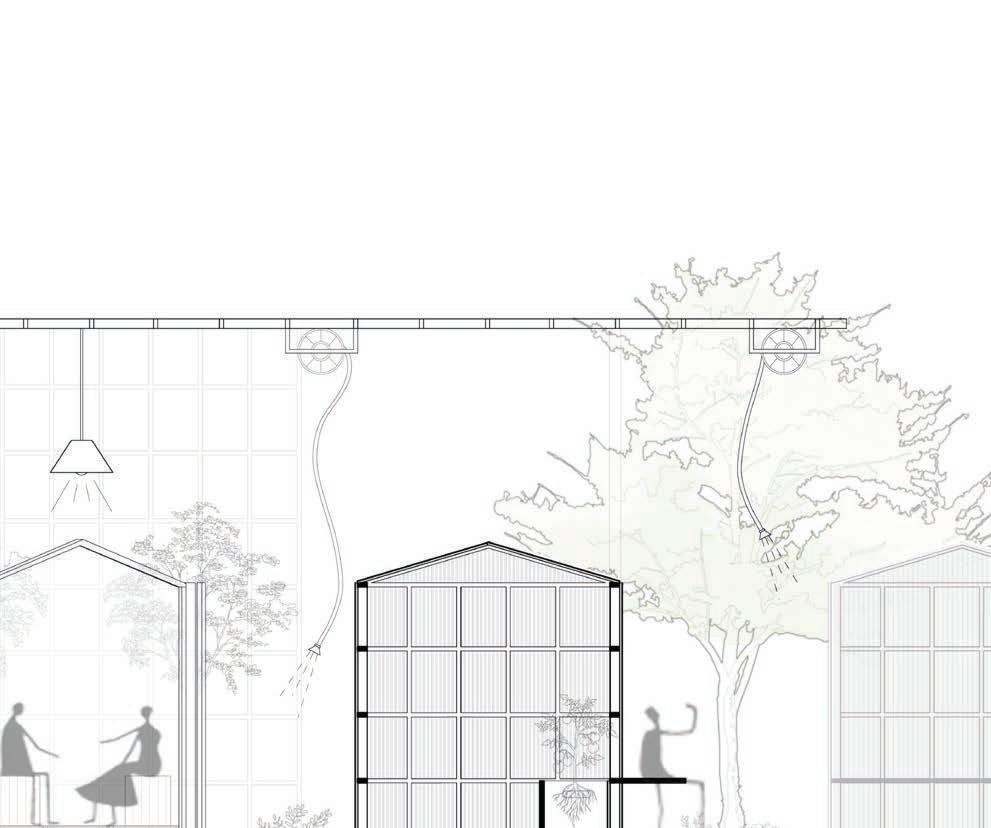
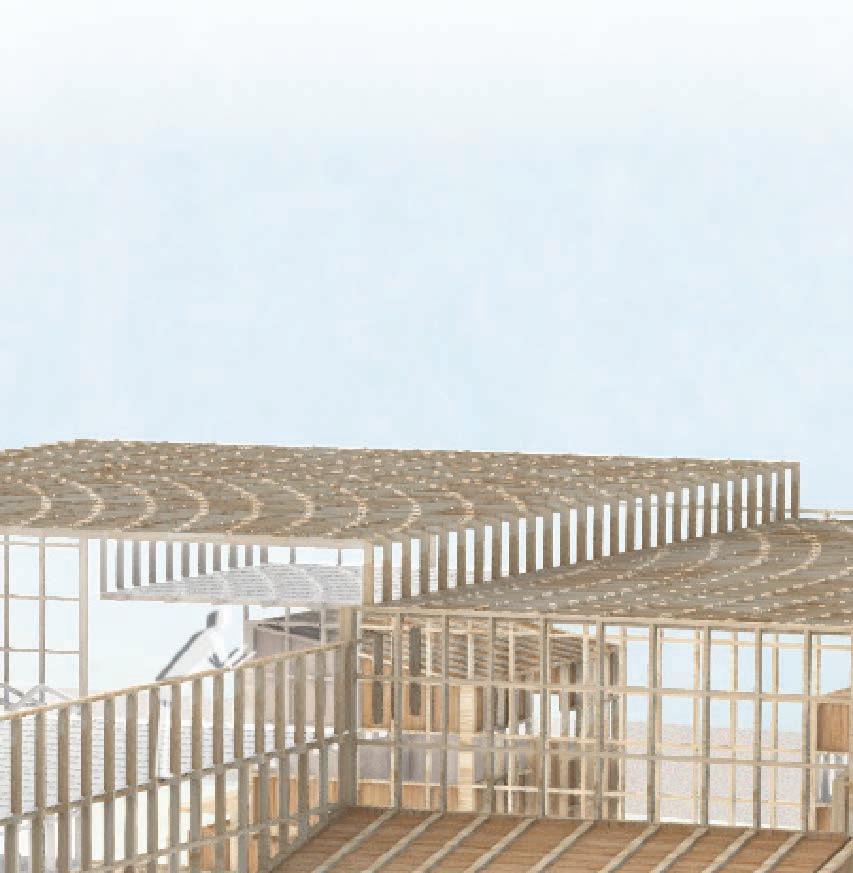
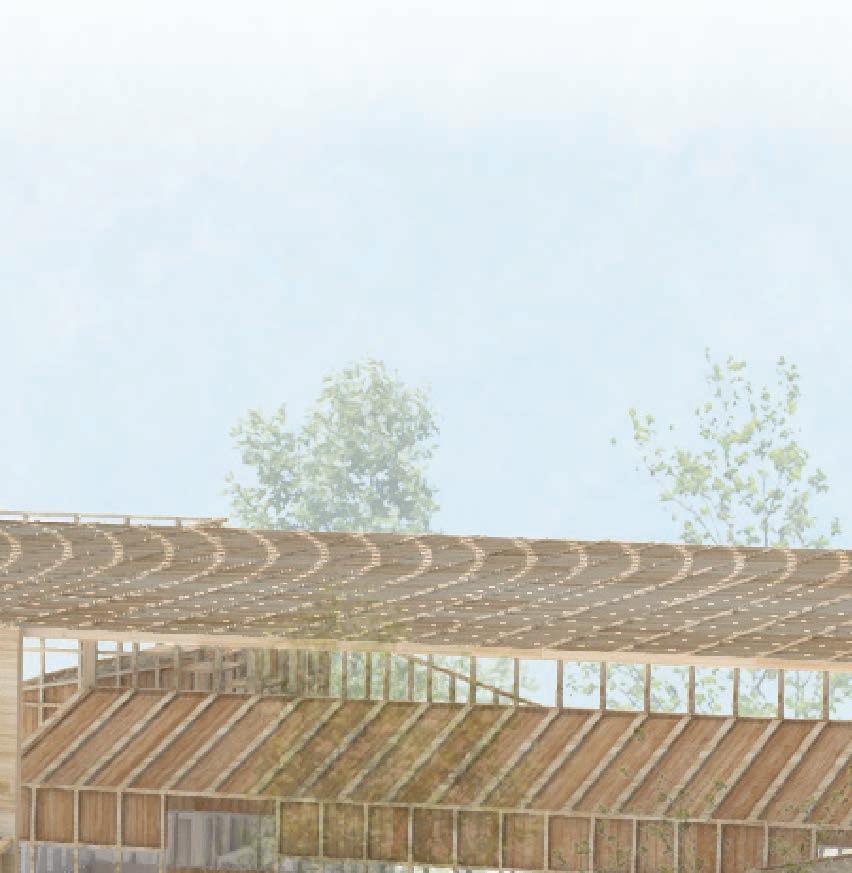
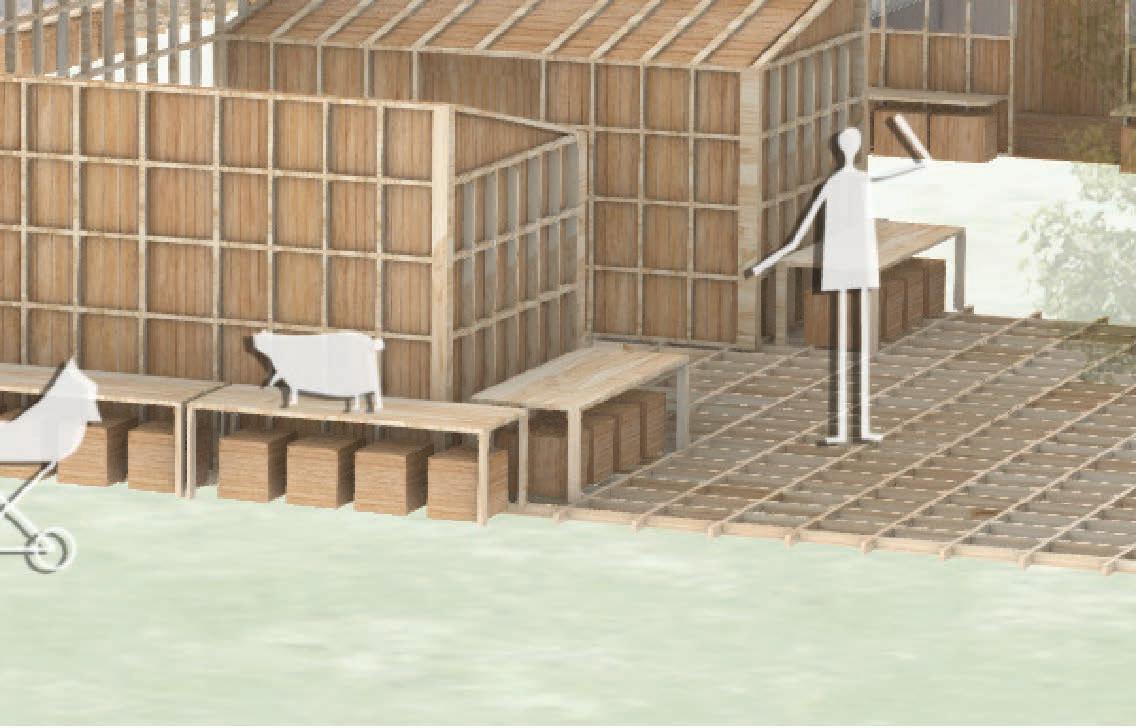
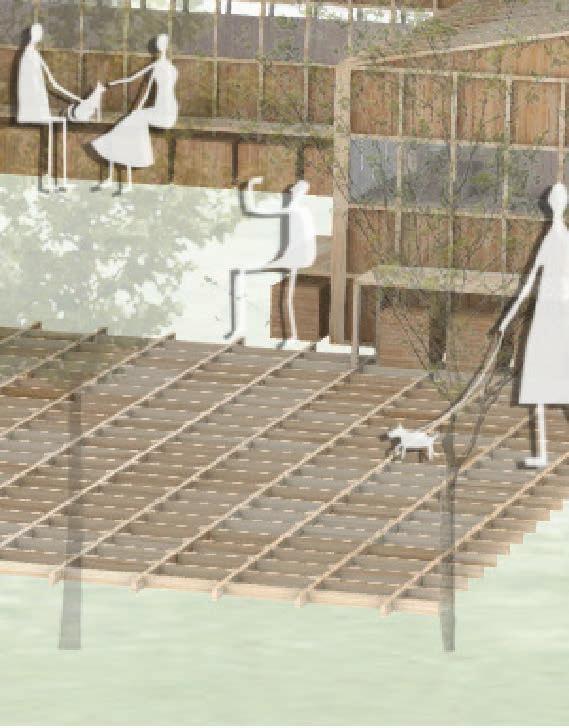
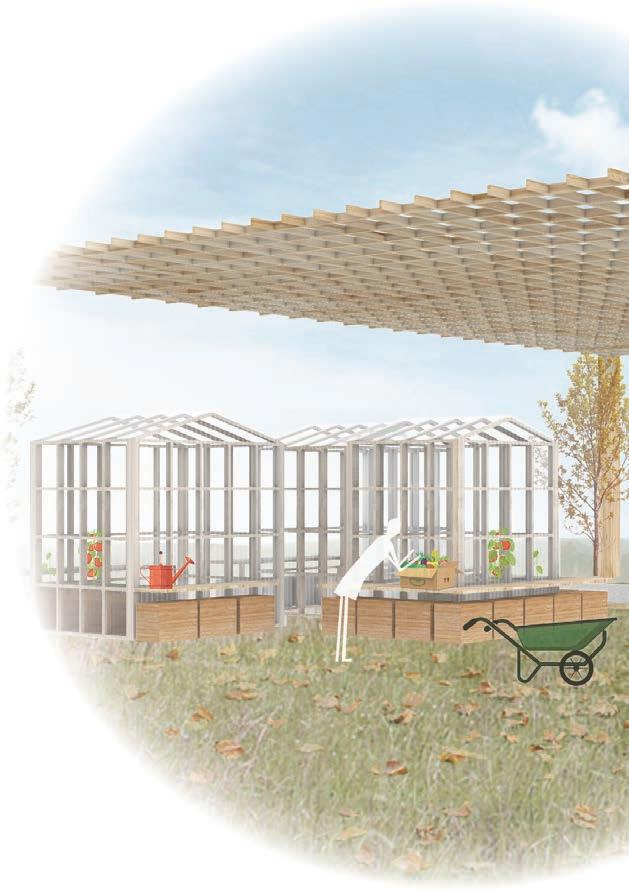
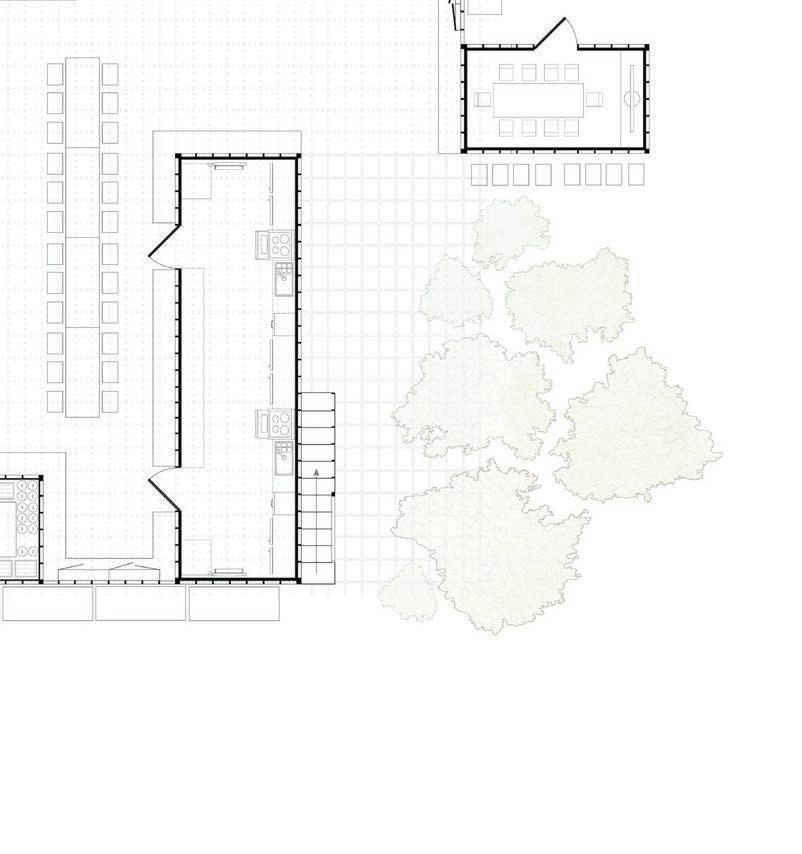
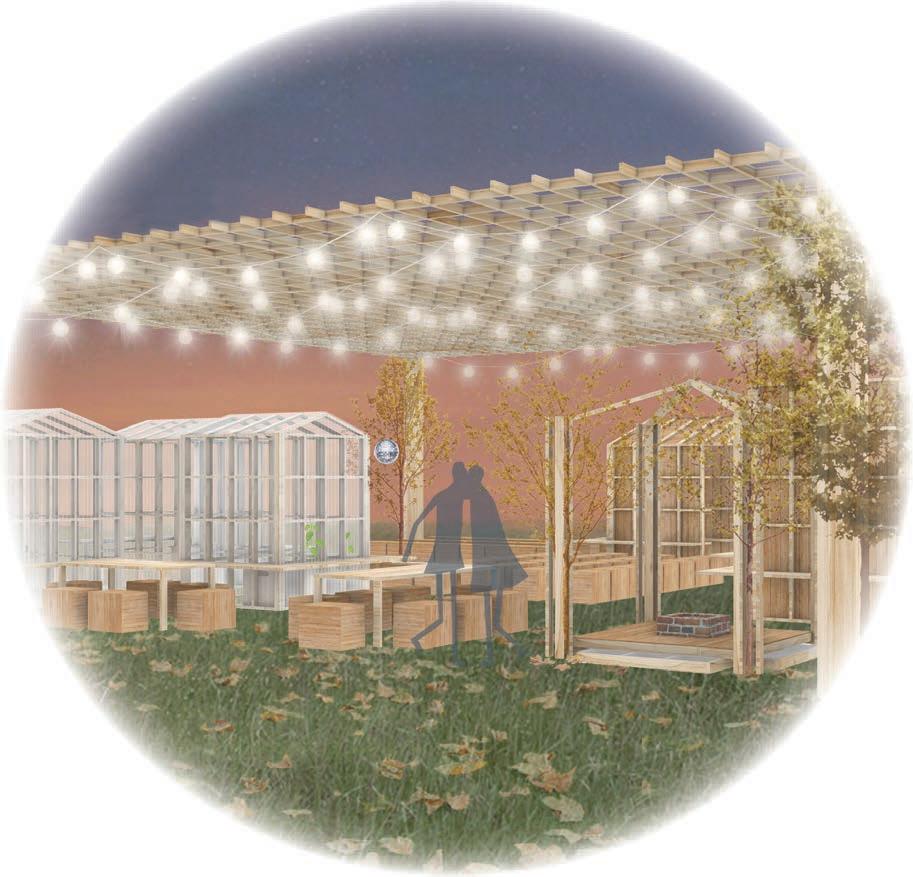
The trellis is an armature for directing the growth of plant life. Growing Roots adapts the trellis as a support system for a range of communal and ceremonial events in which people, food, and plants come together. The trellis forms enclosed pockets of determined activity, amid an open field. Movable furniture allows visitors to reformat the open field as they wish.
SITE PLAN
FIELD CRICKET FIELD SOCCER FIELD BANGLATOWN ACADEMIC STUDIOS EVENT HALL STUDIO
JAYNE
14



15
Open spaces should offer their users the opportunity to adapt and customize to their wants yet provide them with the spaces that carry out the more programmatically structured needs and functions. Both weddings and potlucks are events that require the hosts to play a role in selecting their preferred aesthetics and through the design of my hall it gives the agency to the users to “architect” the event space.


ACADEMIC STUDIOS | GROWING ROOTS | 2022
16

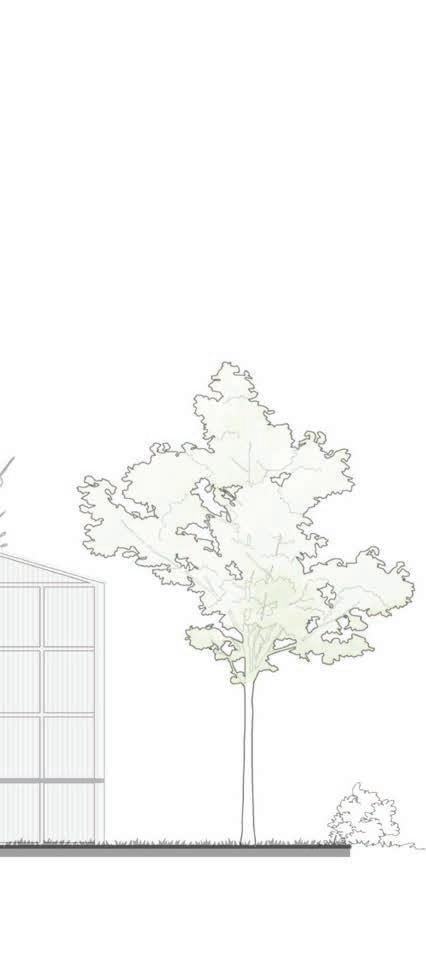
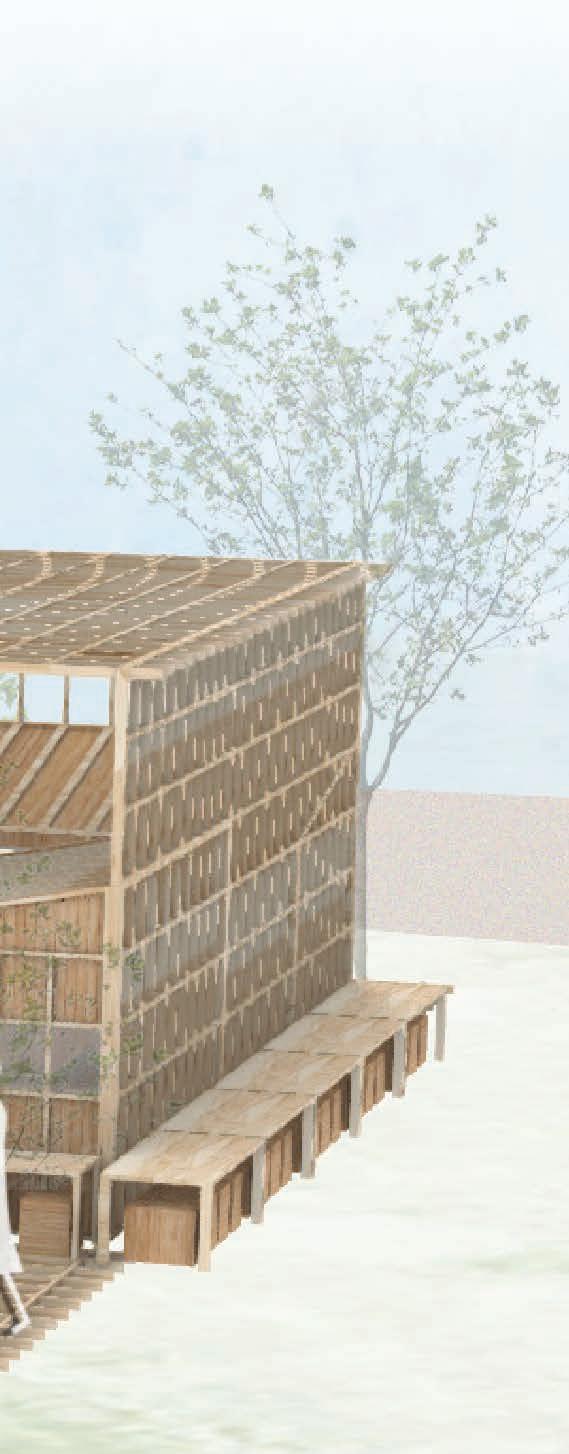


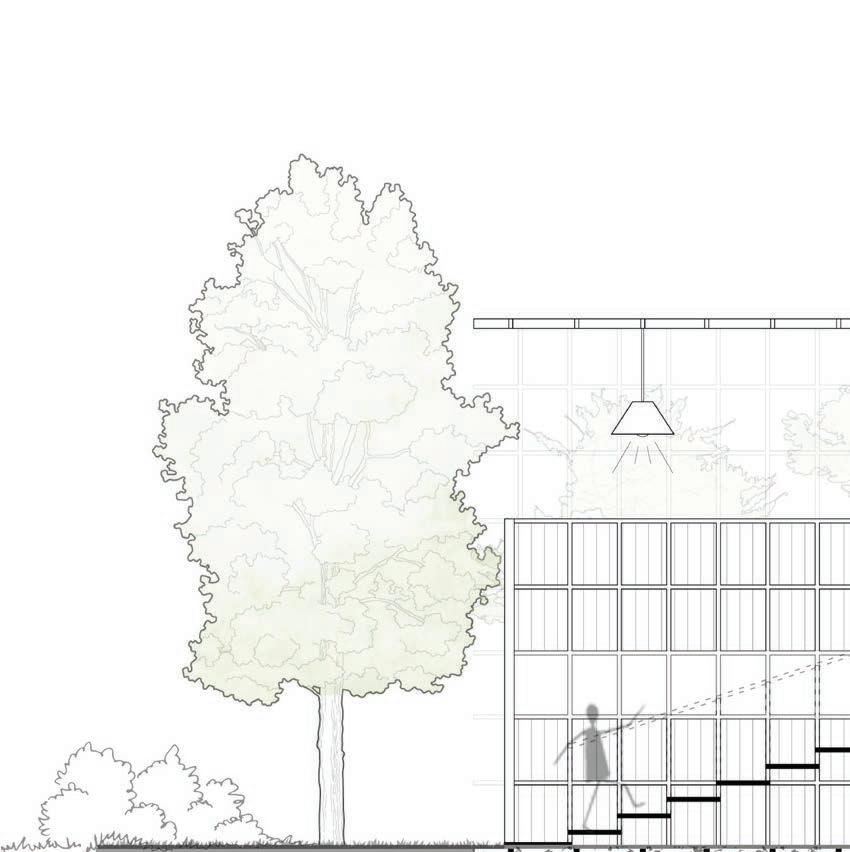
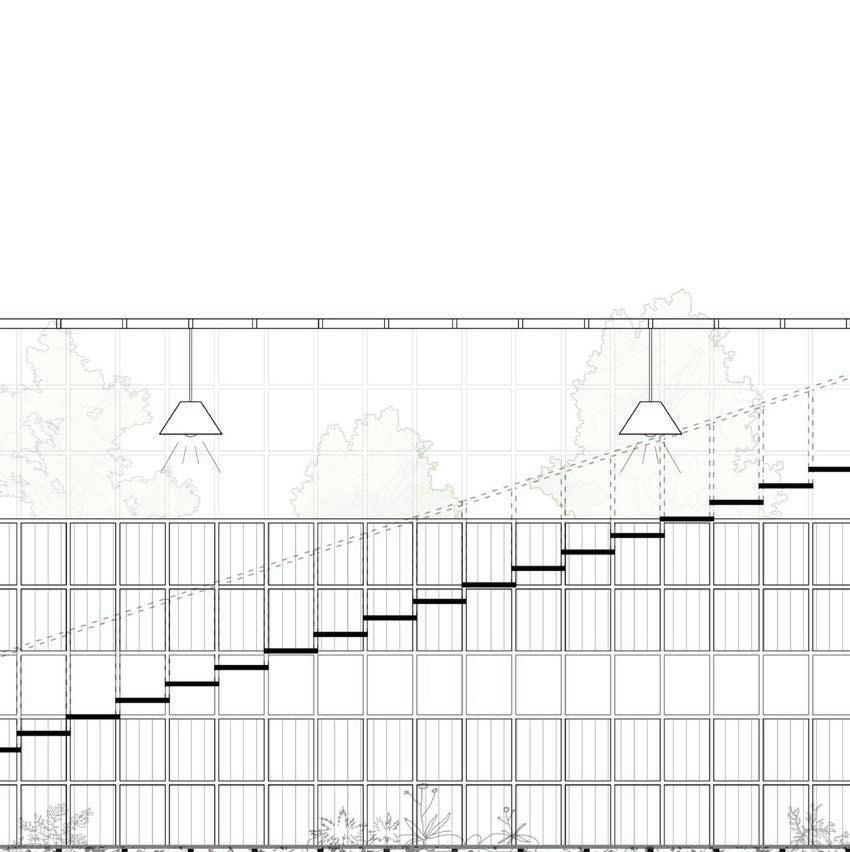
SECTION 17
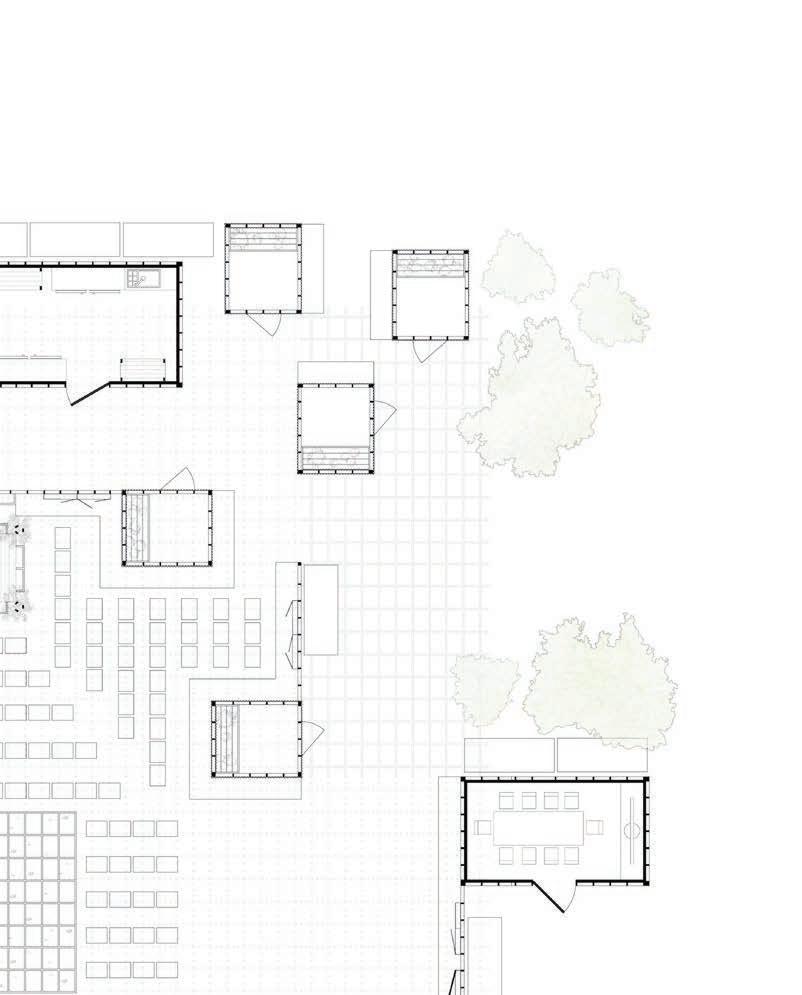
The community users complete the space by utilizing the gardens, growing produce, storing them, cooking with them, and eating together. The wedding users fund the free community spaces, while also utilizing a space that fosters community to ceremoniously bring together two families. This project allows all communities to gather and connect back to their roots and their identity and how it presents itself through food and ceremony.
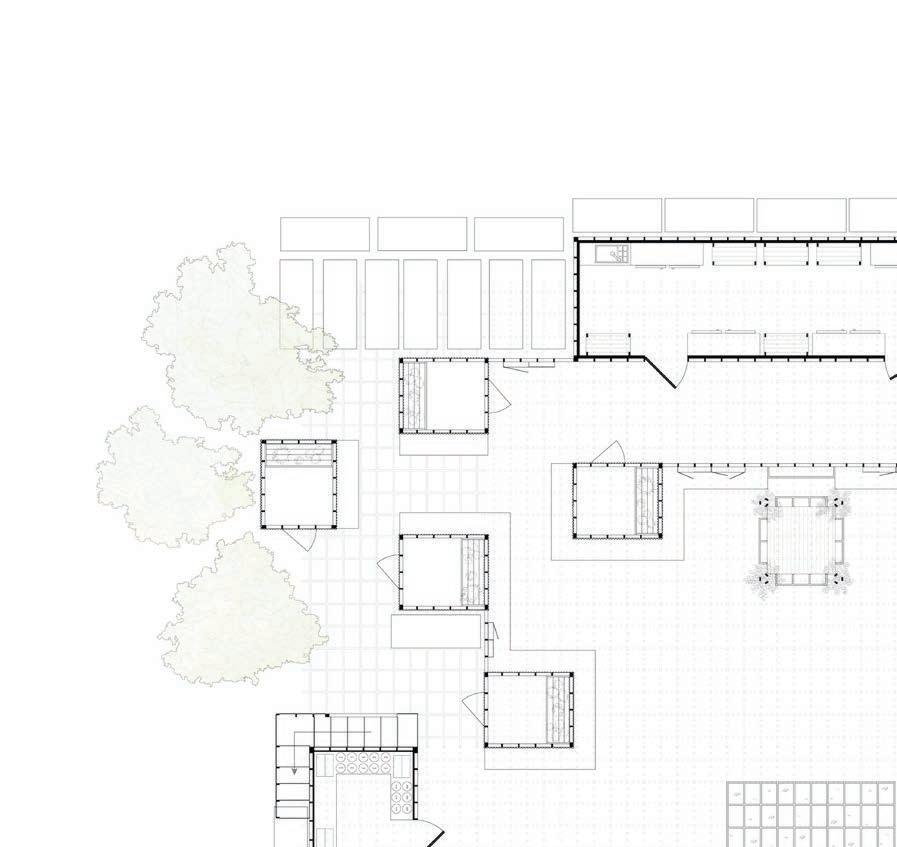
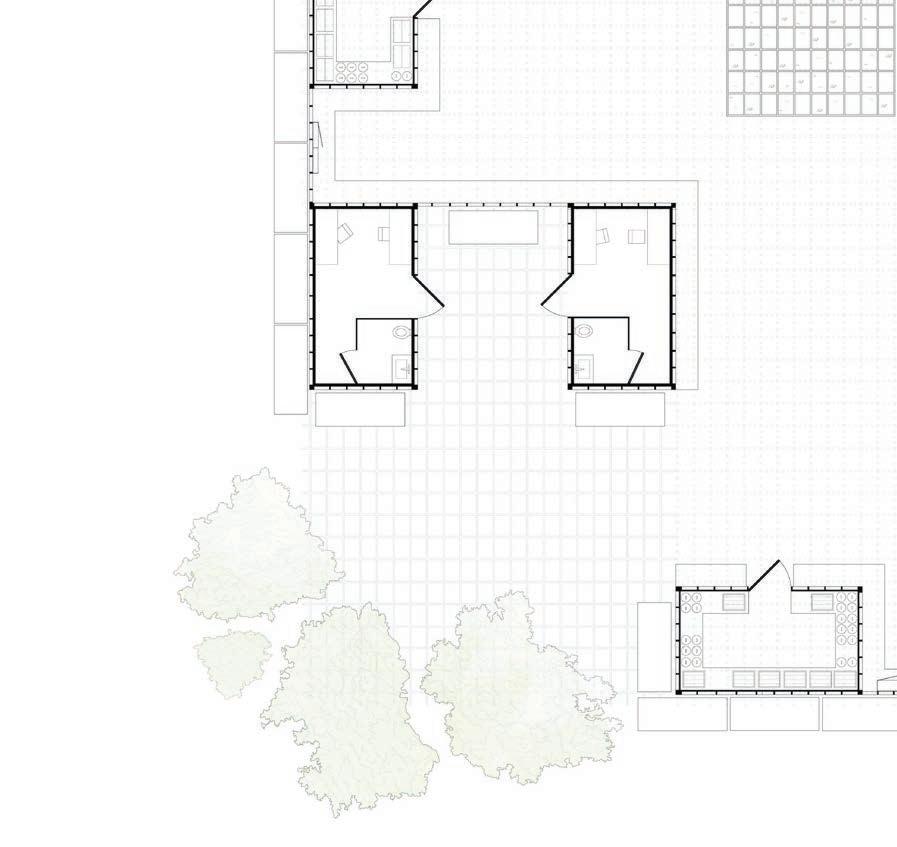

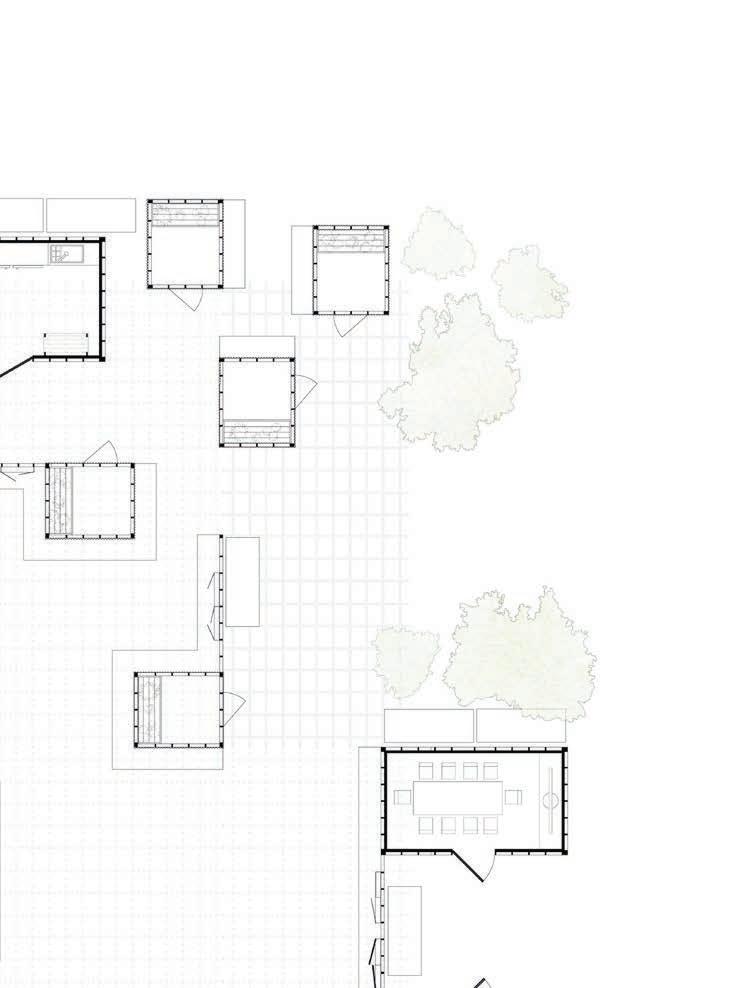
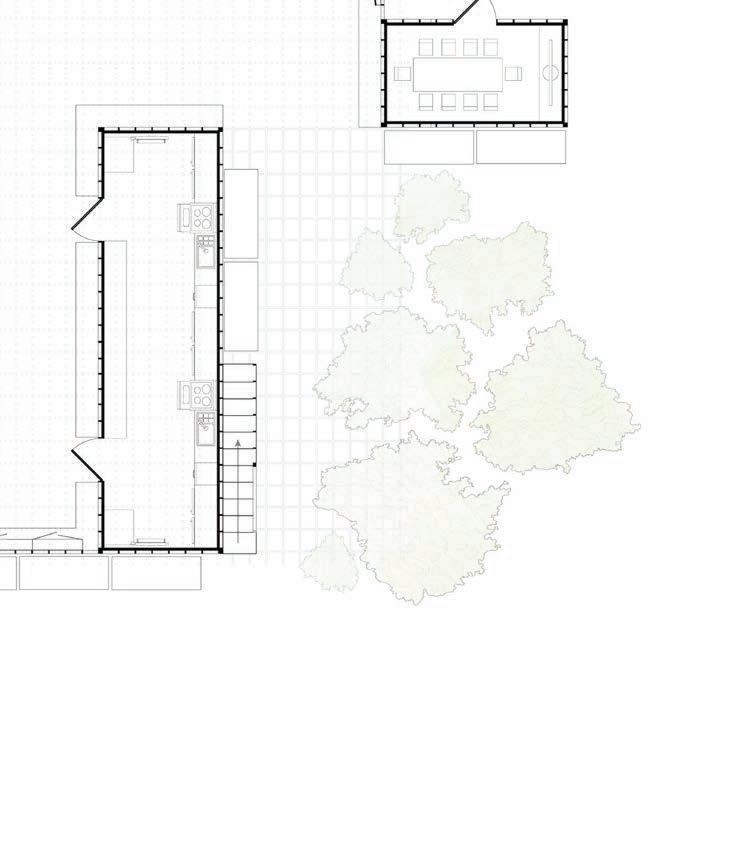
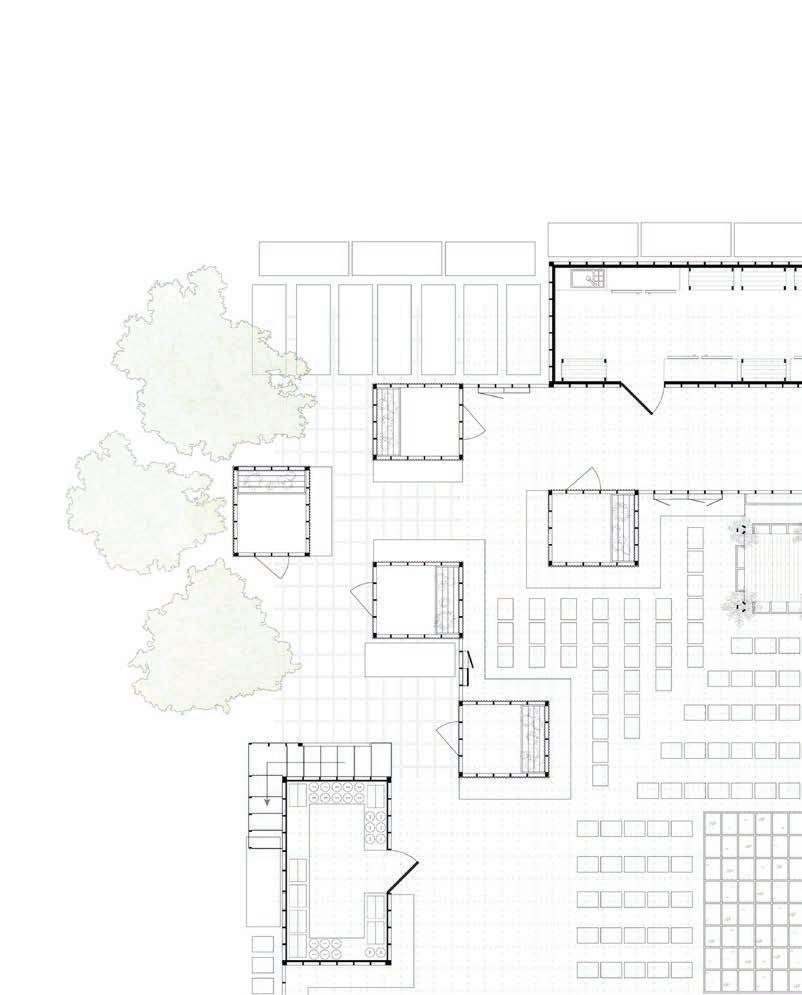
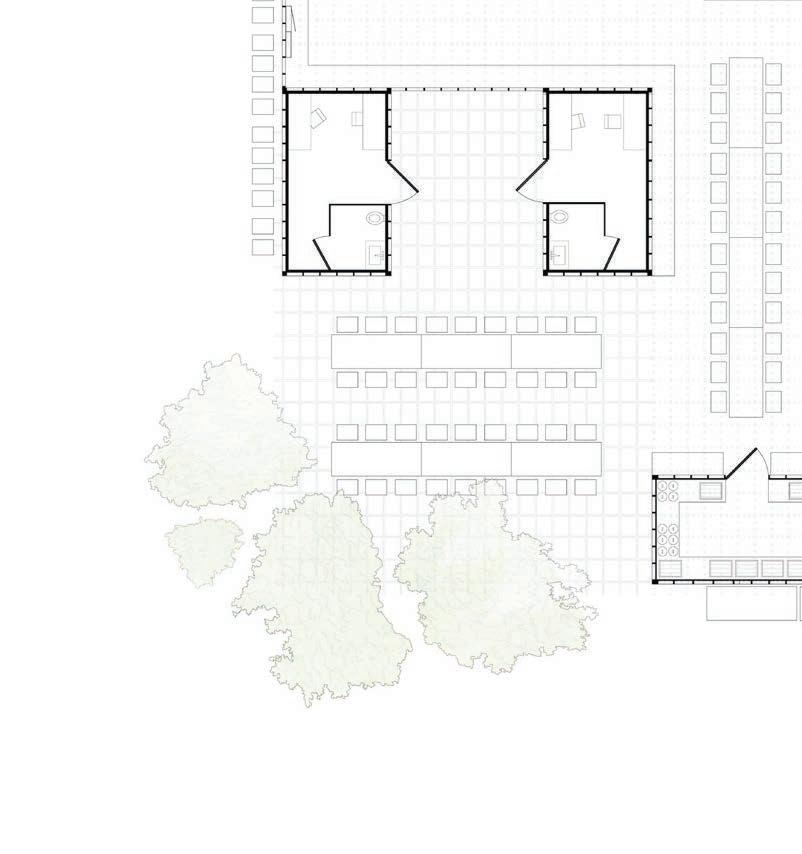
PLAN Greenhouses Alter Dance Floor + Plant Nursery Community Meeting Rooms Pantry Kitchen Dressing Rooms Storage
ACADEMIC STUDIOS | GROWING ROOTS | 2022 18
COMMUNITY GARDEN
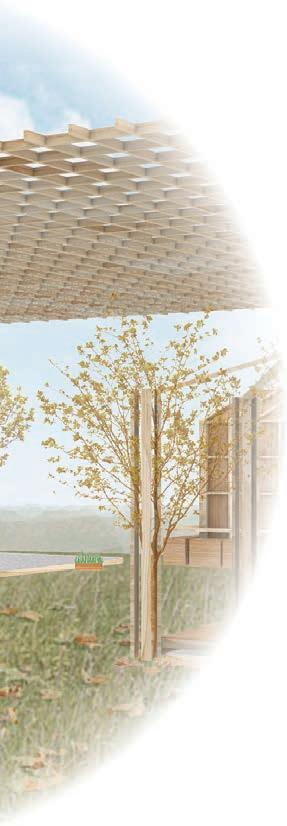
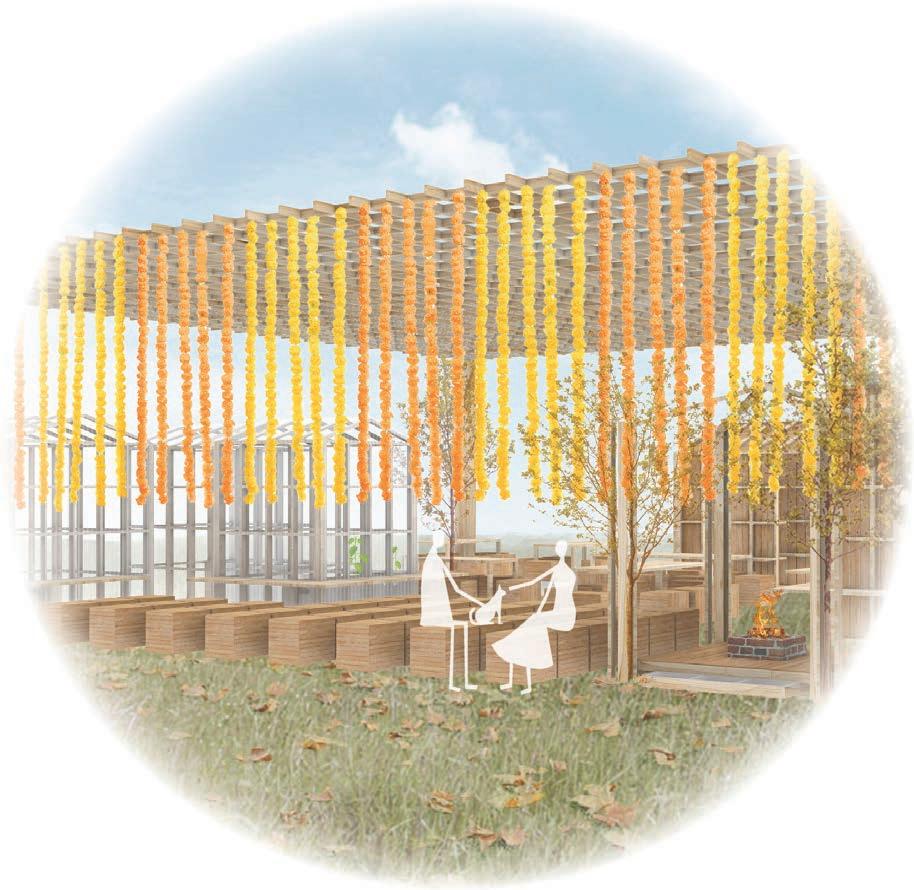
WEDDING CEREMONY
WEDDING RECEPTION
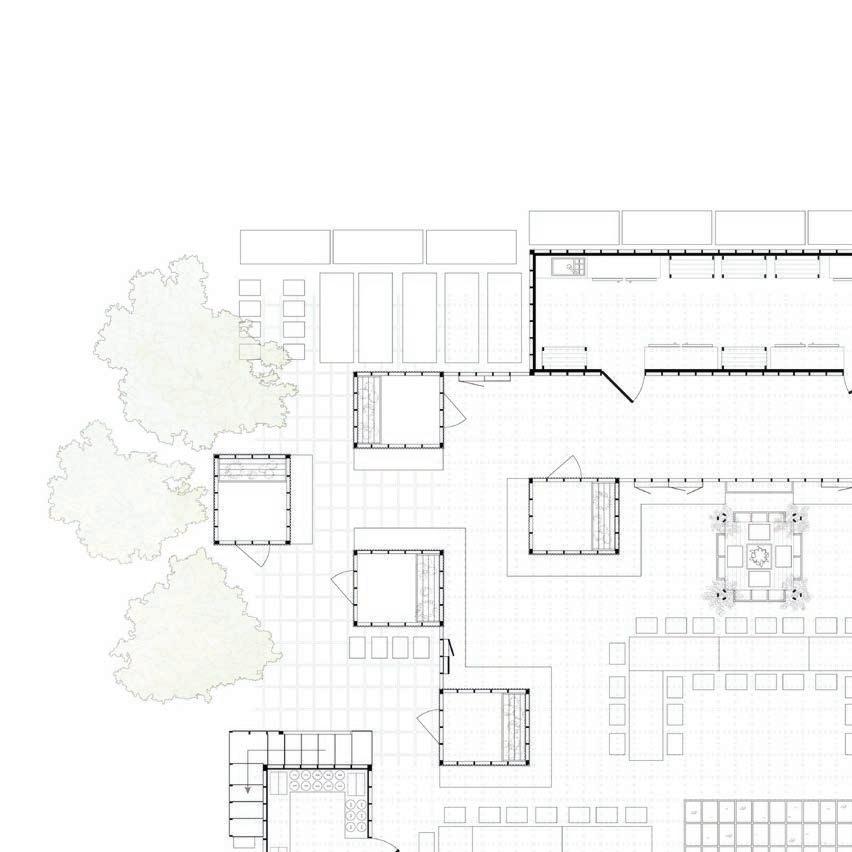
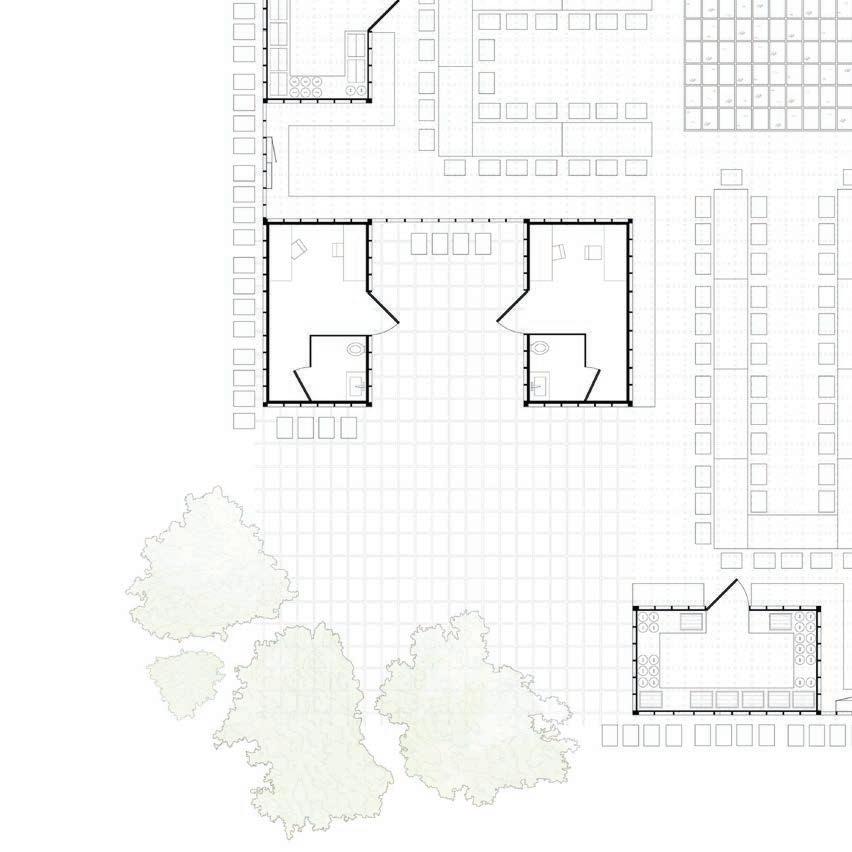

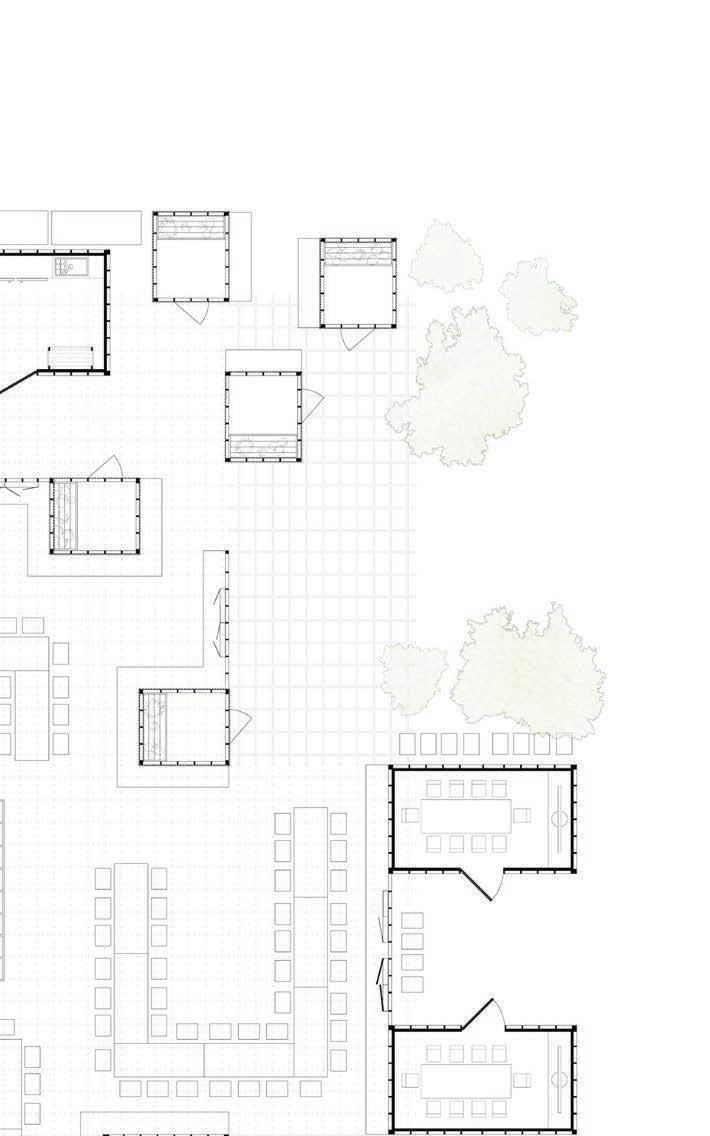
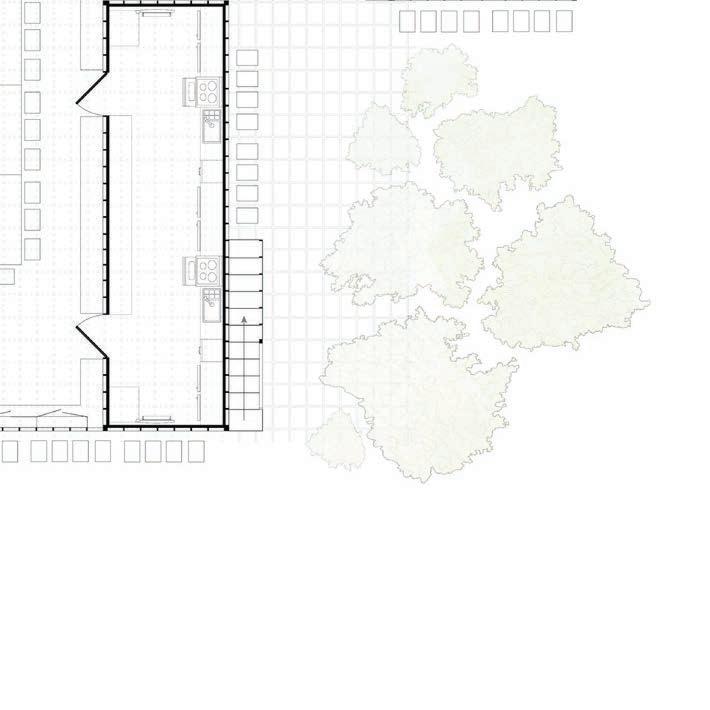
PLAN POTLUCK PLAN
WEDDING
19
REPAIR, RECLAIM, & REPARATIONS
WINTER 2022 | INSTRUCTOR: CHRISTINA
HANSEN

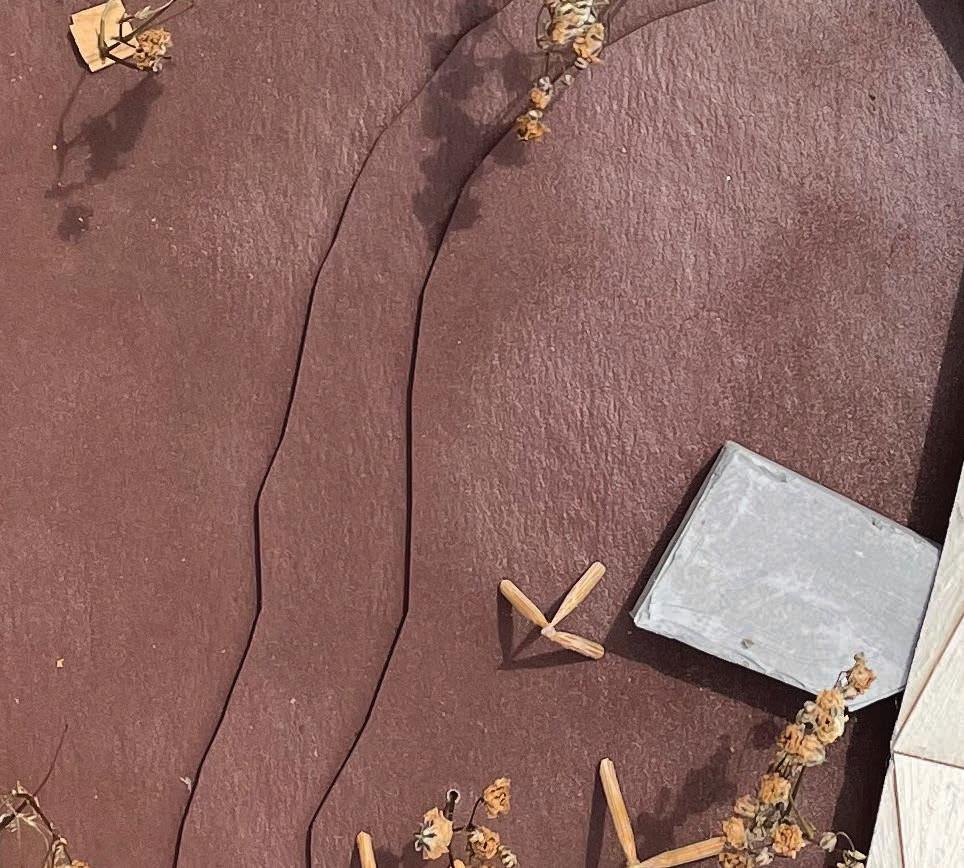
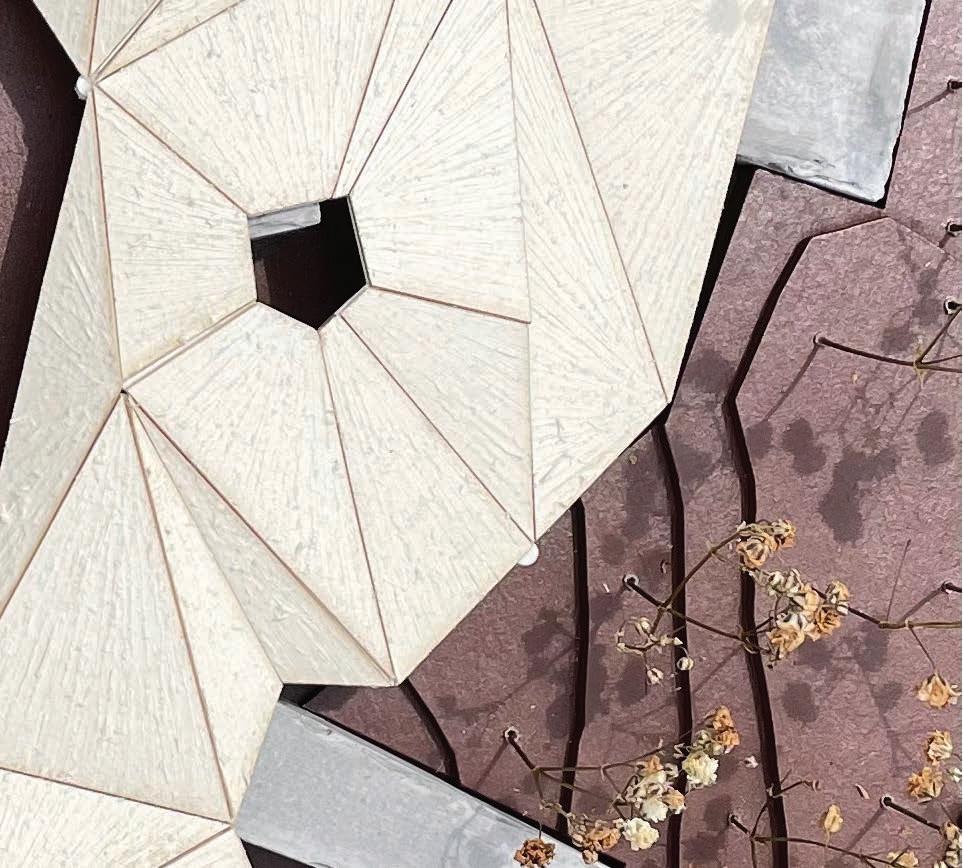
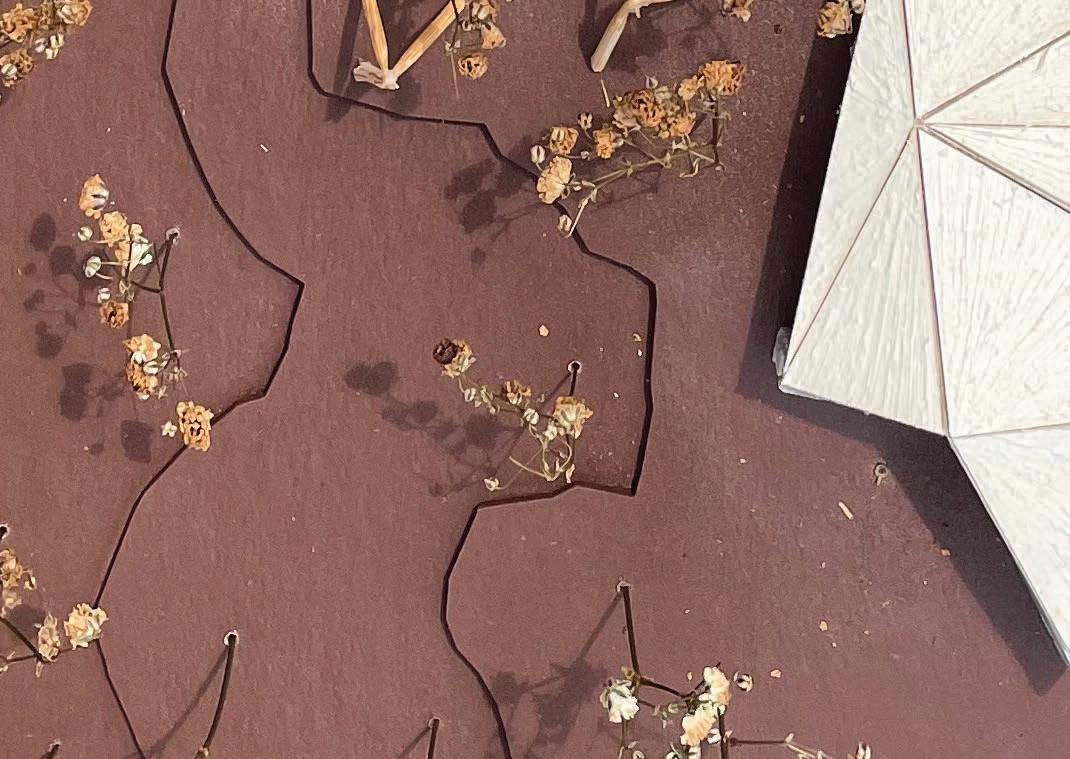
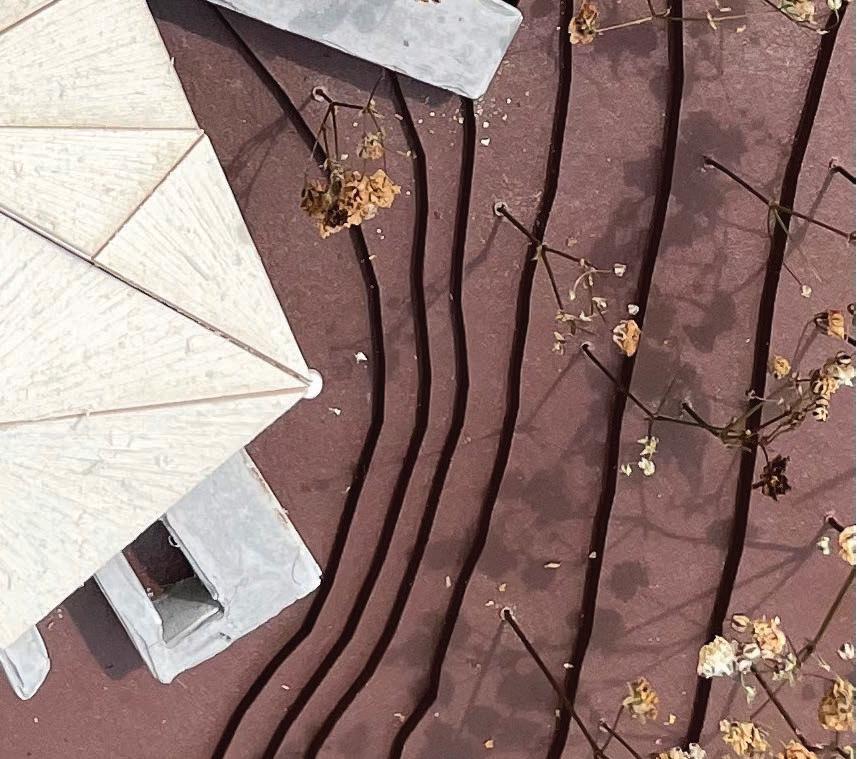
Flemming Creek along with the Huron river were both major sources of power to colonial settlers over the original Native Americans.
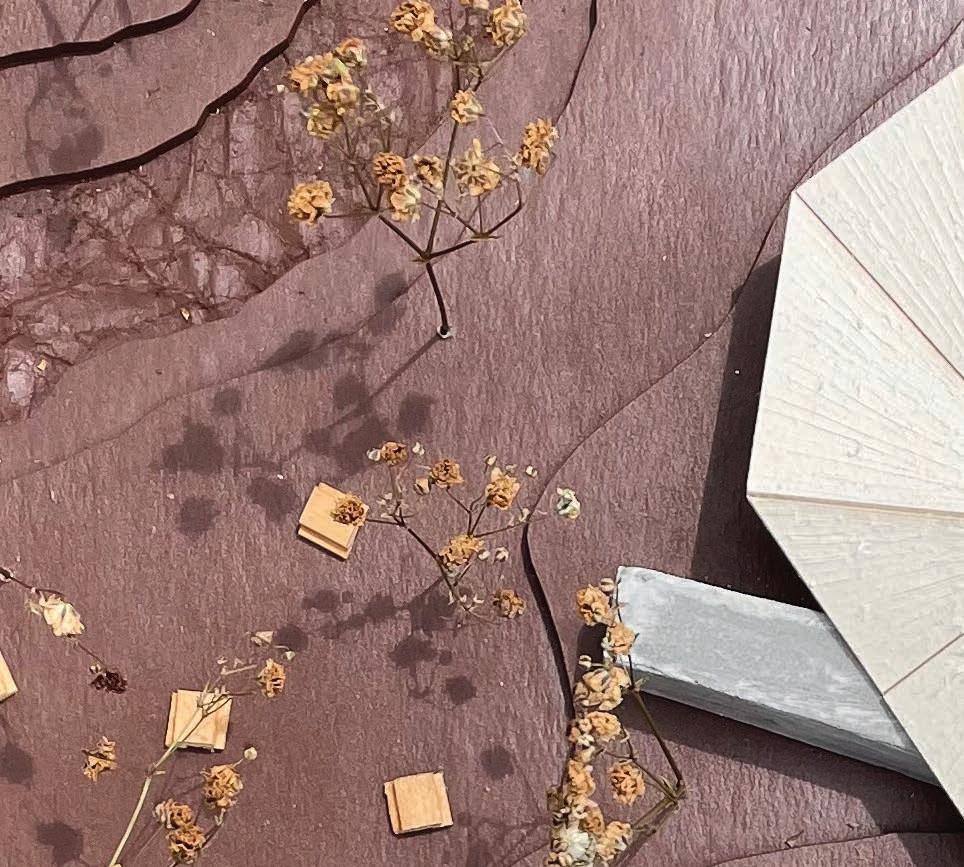
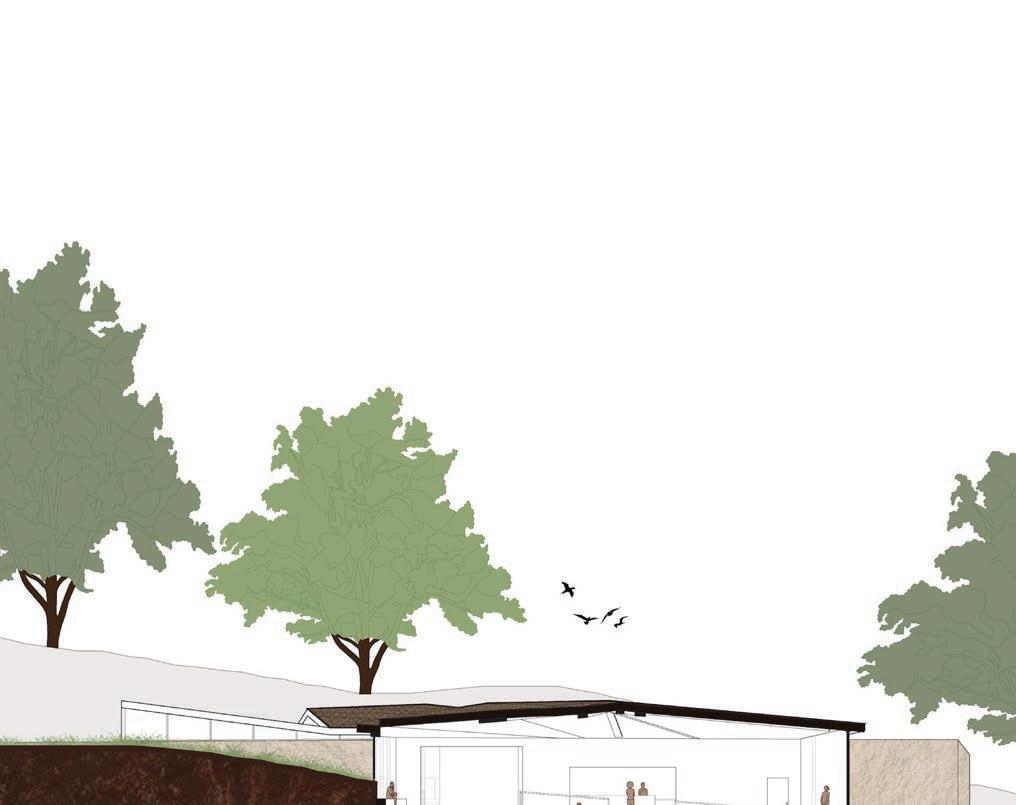
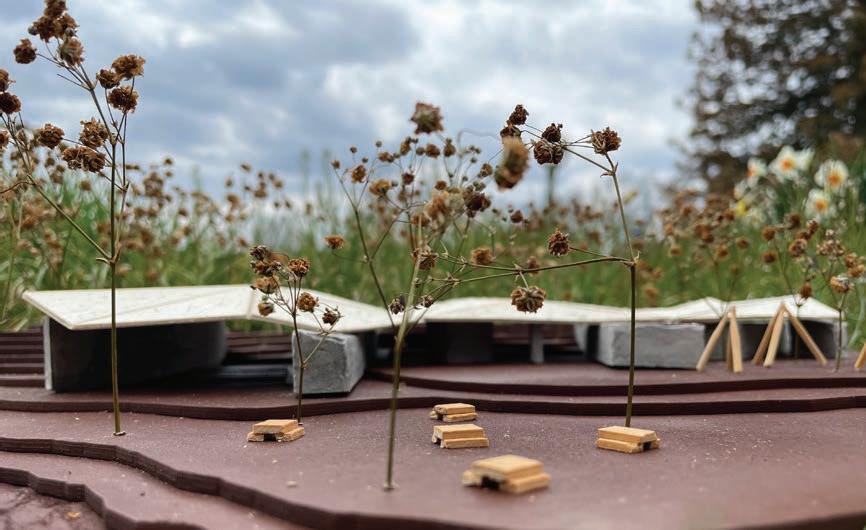
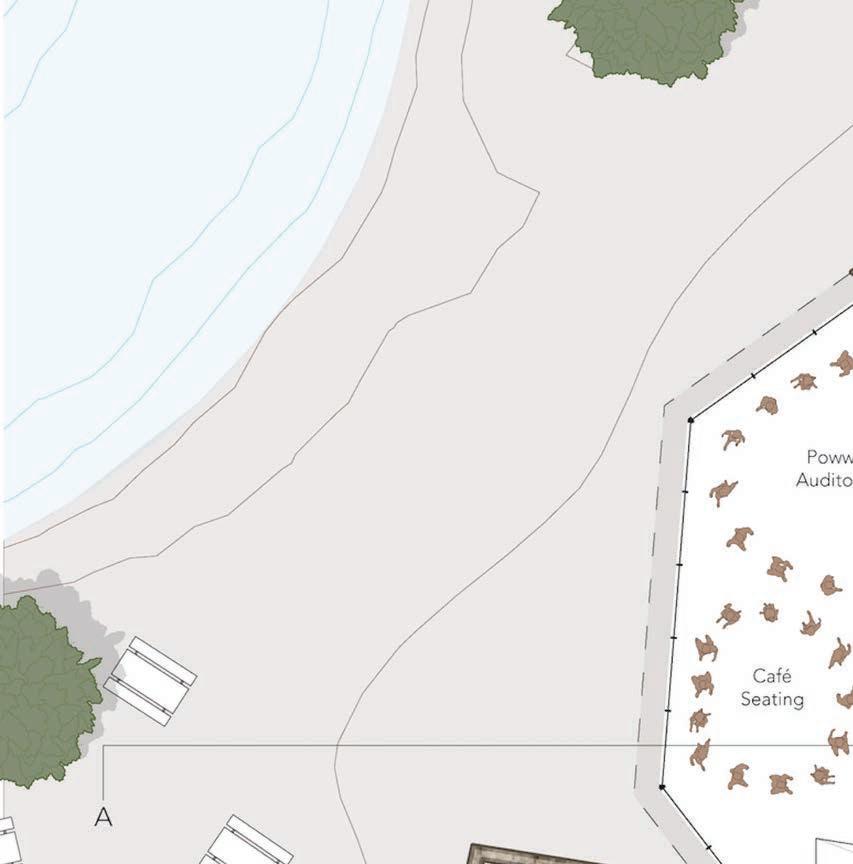
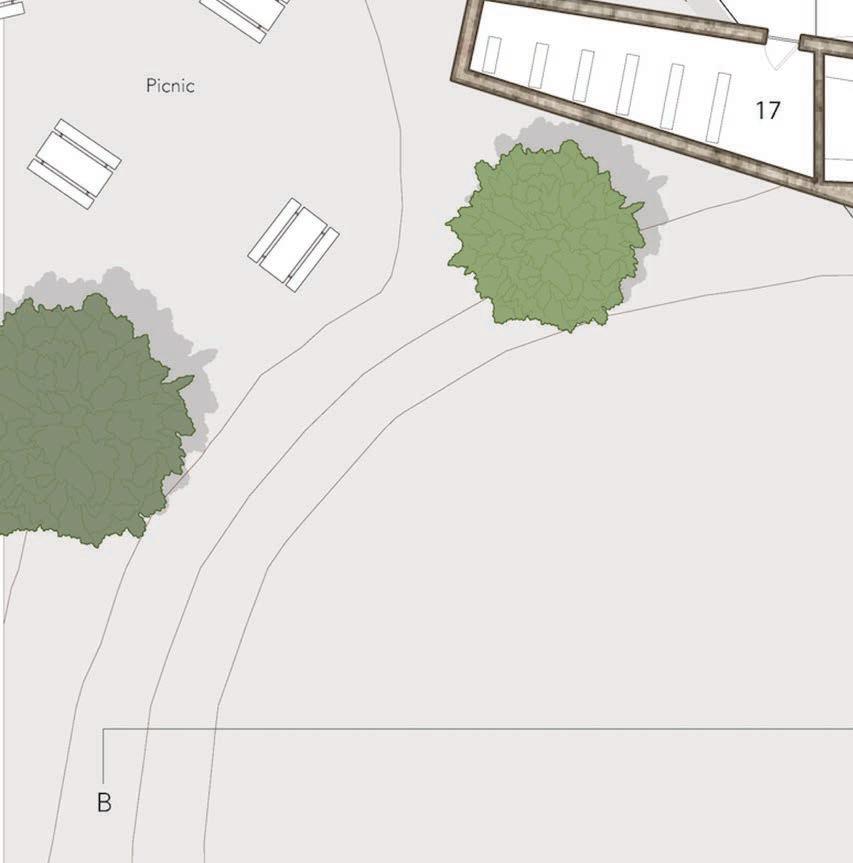
Now, because the Radrick Farms Golf Course crosses over the creek to allow for one more hole, the creek is severely damaged due to erosion and chemical/fertilizer contamination. With this nature center, I proposed relocating parts of the golf course to repair the creek and reclaim the land.
ACADEMIC STUDIOS FIELDINGS STUDIO
20

21
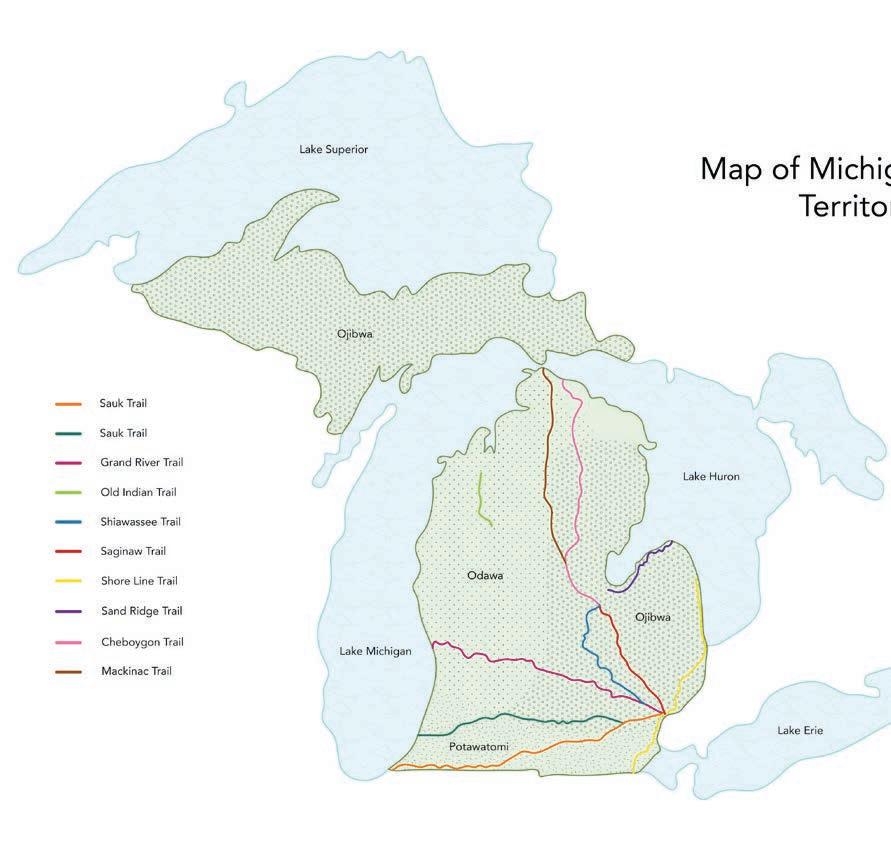
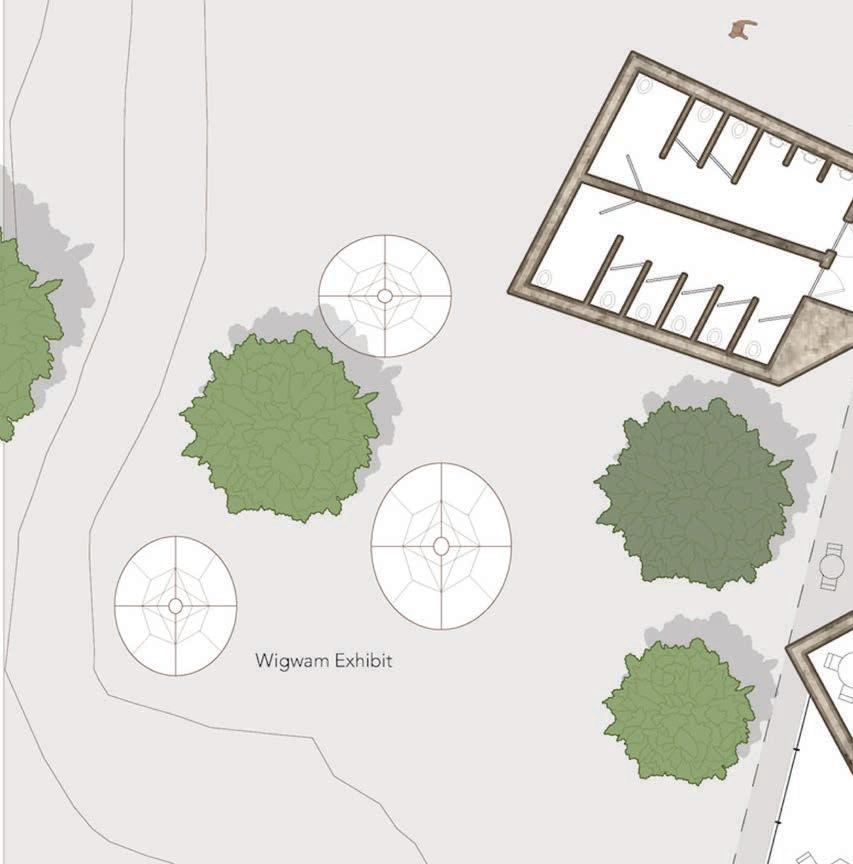
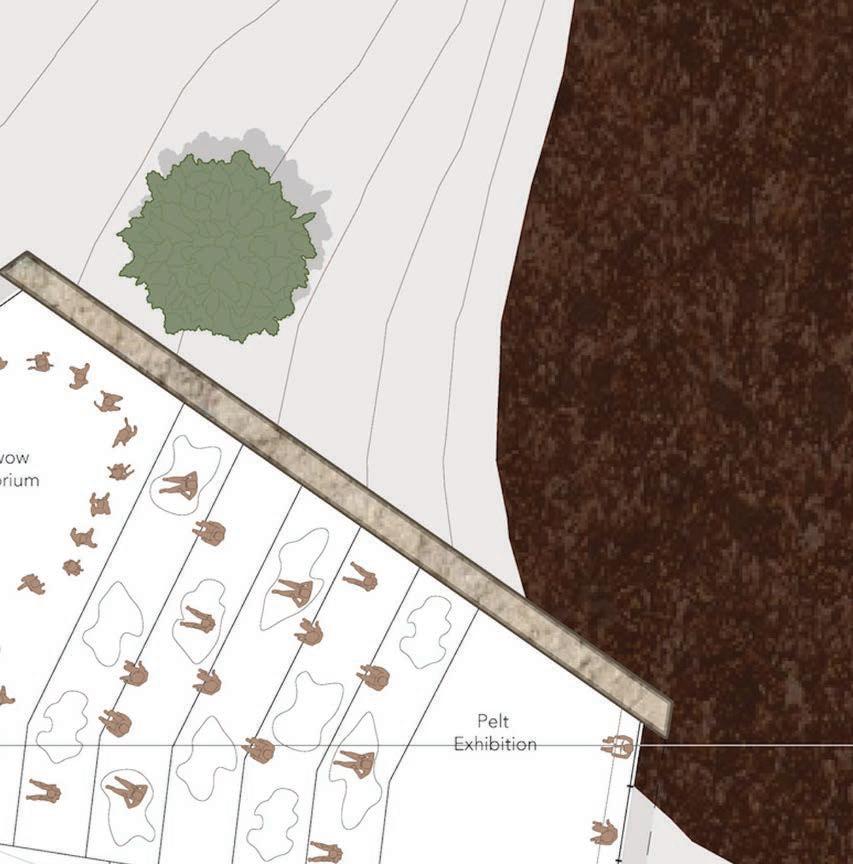
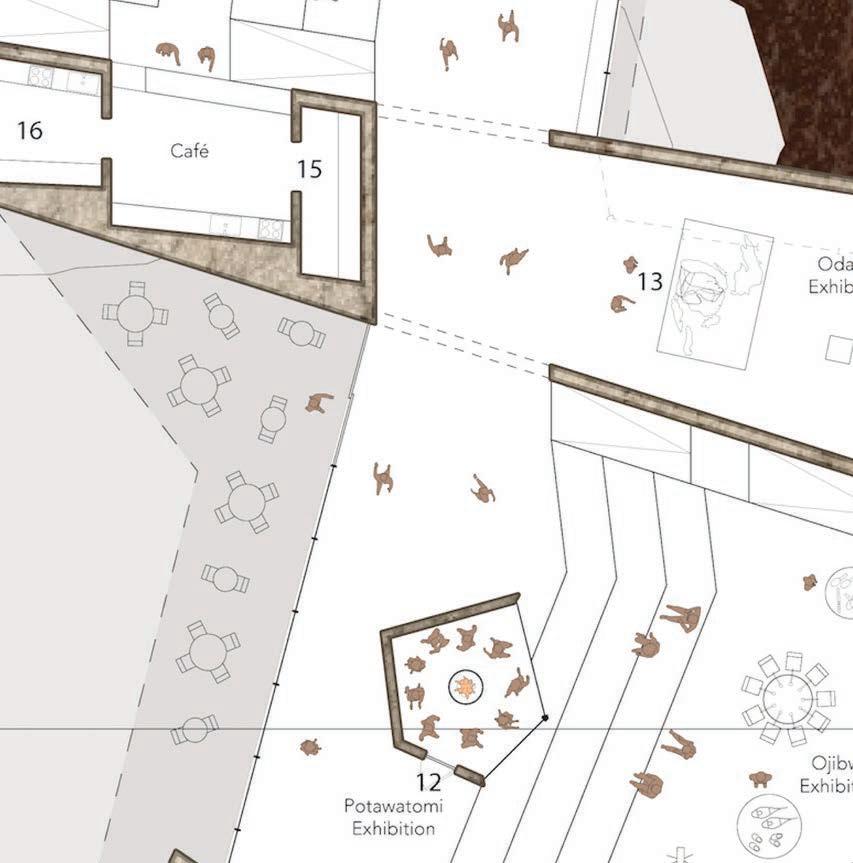
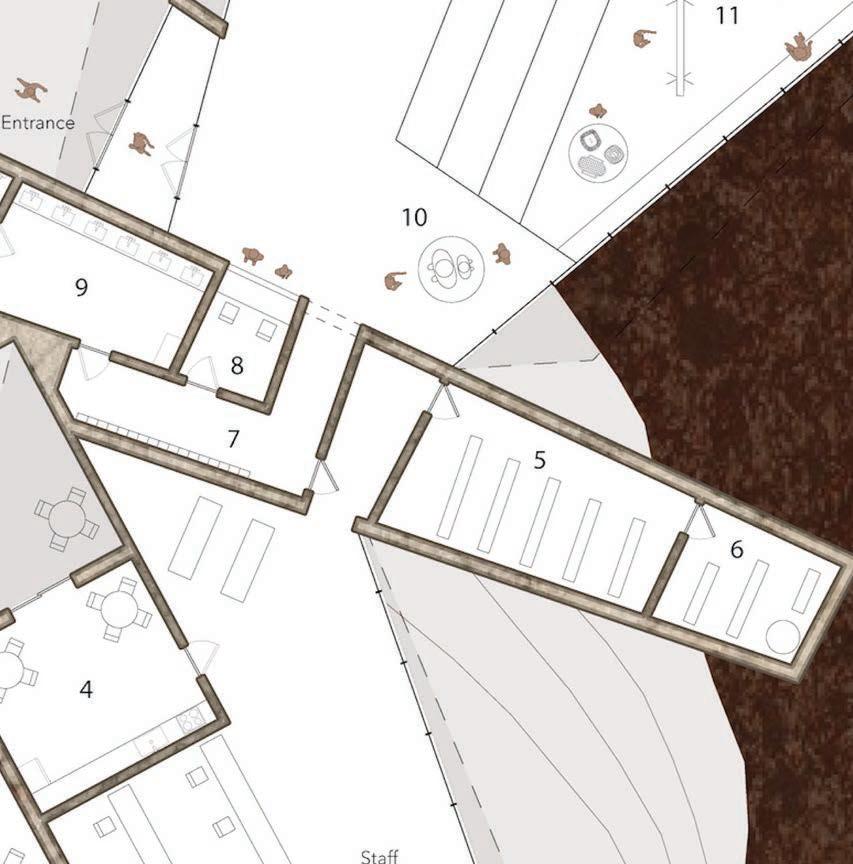
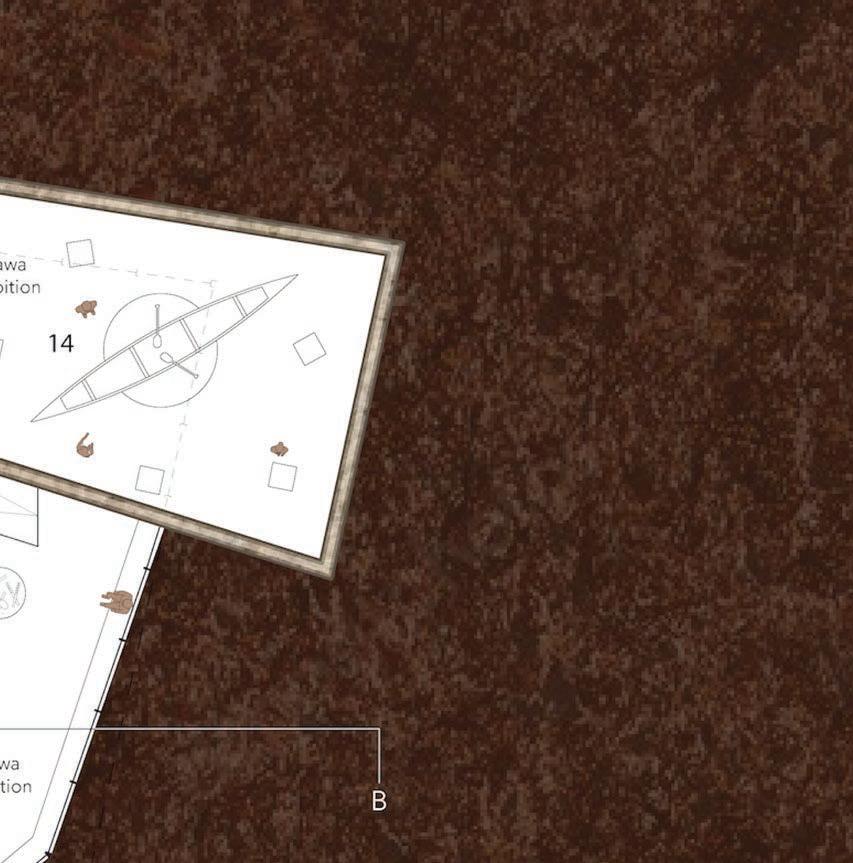
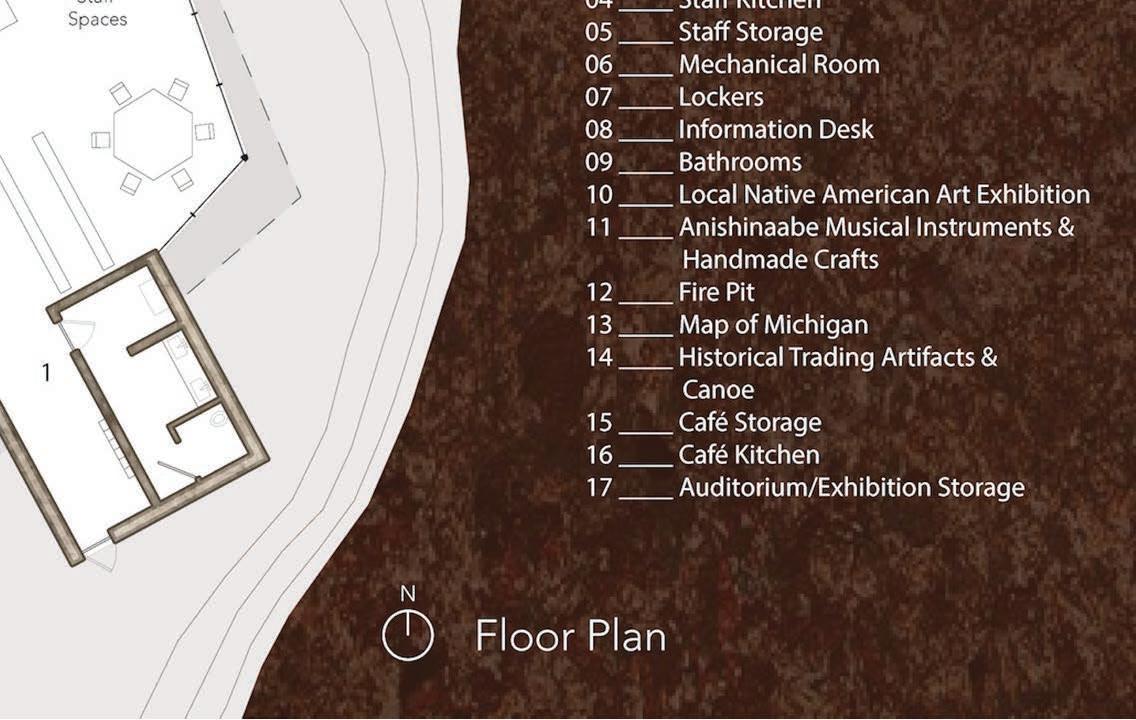
However, to truly reclaim the land we must pay reparations to the original natives that lived here, this nature center acts as an ecological justice center, that recognizes the three tribes of Michigan and their ways of life: Ojibwa (keepers of ceremonies and song), Odawa (keepers of trade), and Potawatomi (keepers of fire).
The center provides dedicated exhibition and performance spaces free to the natives to practice their cultures, such as powwows, drum circles, and fire rituals, while also giving them a space to display and sell their art. As for outsiders, they can take the initiative to learn about the original people of this land and their history by visiting and appreciating their culture alongside them.
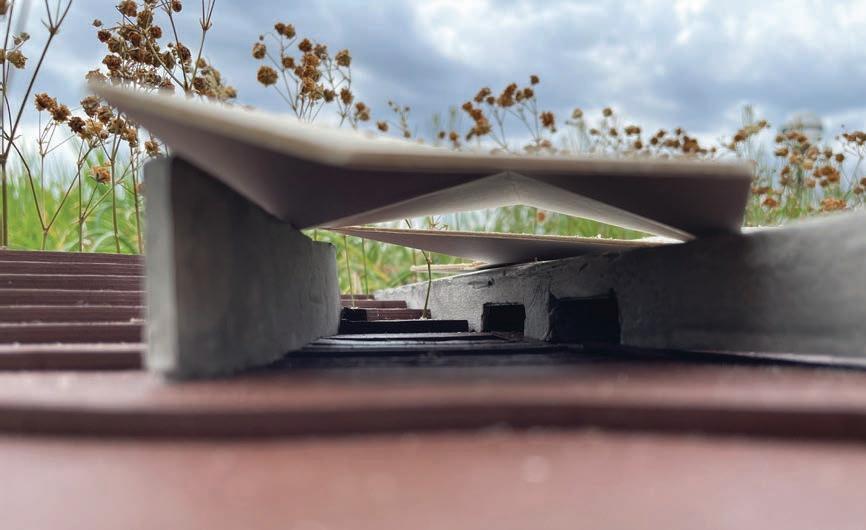
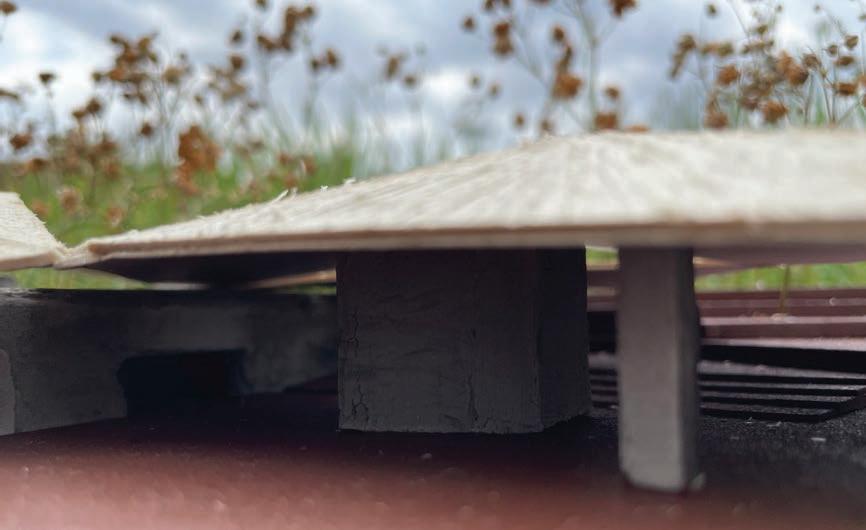
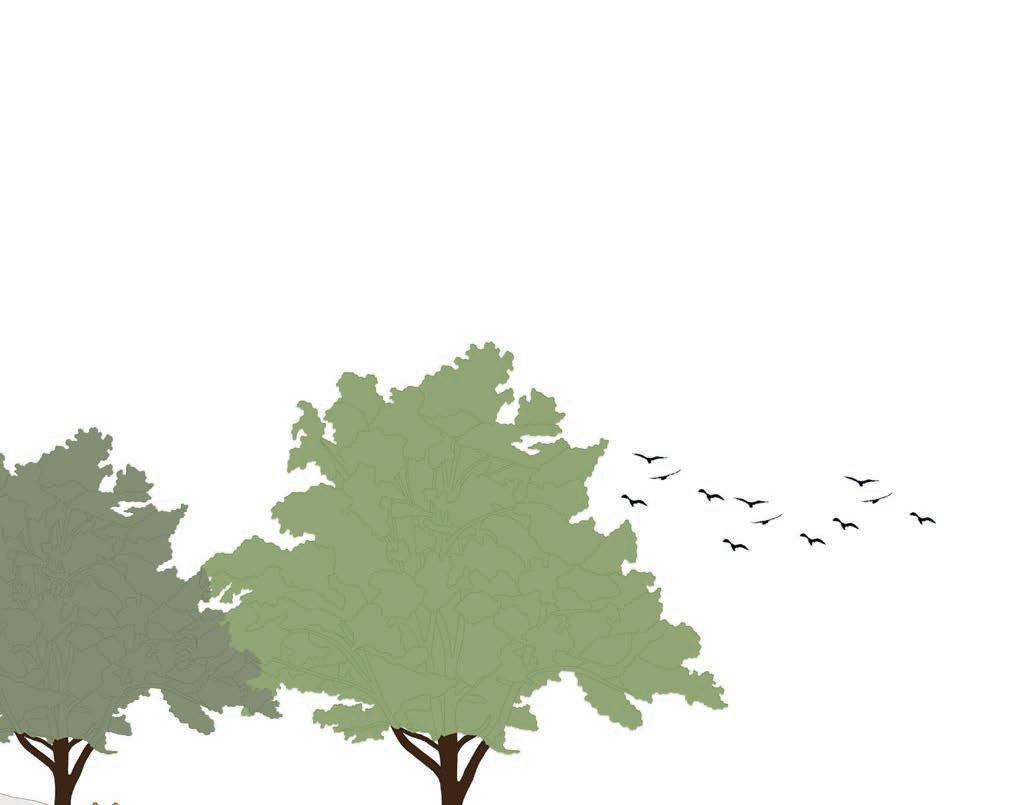
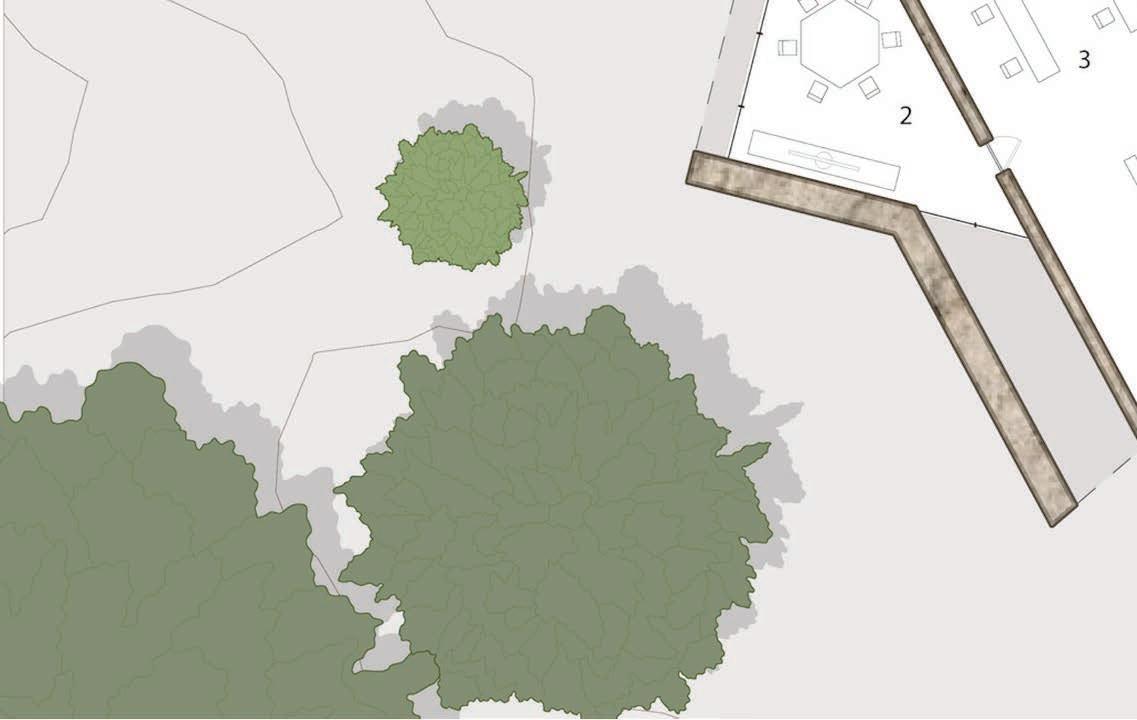
The building itself uses minimal materials and is low to the ground creating a humble presence. The stairs mimic the topography bringing the landscape into the space.


ACADEMIC STUDIOS | REPAIR, RECLAIM, & REPARATIONS | 2022 22



23
FALL 2021 | INSTRUCTOR: JONO STURT
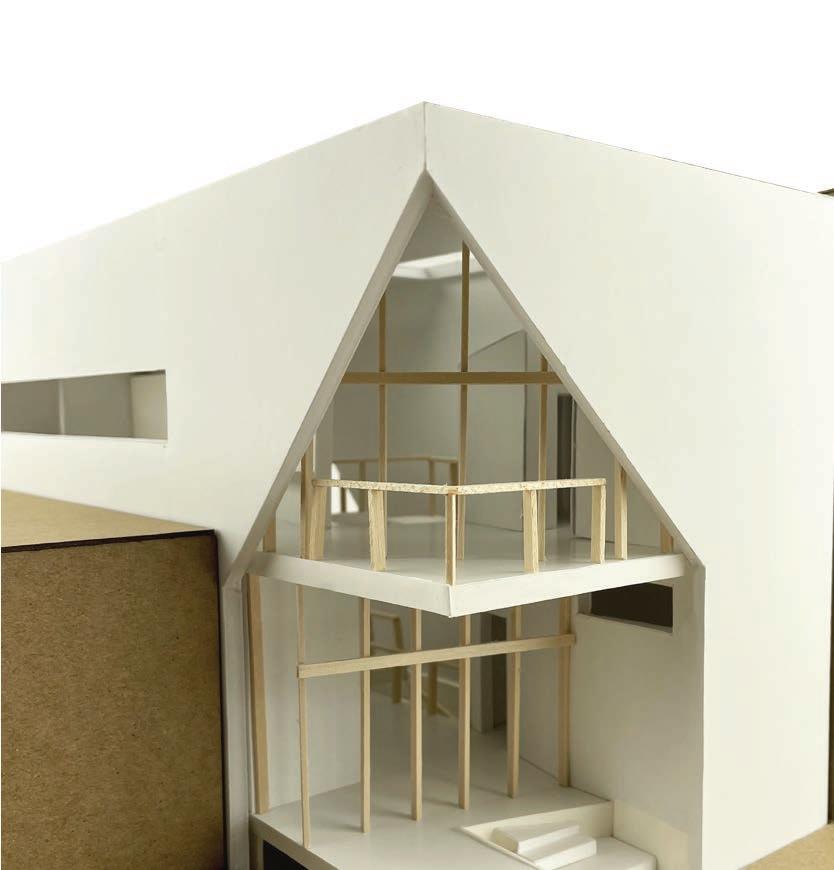
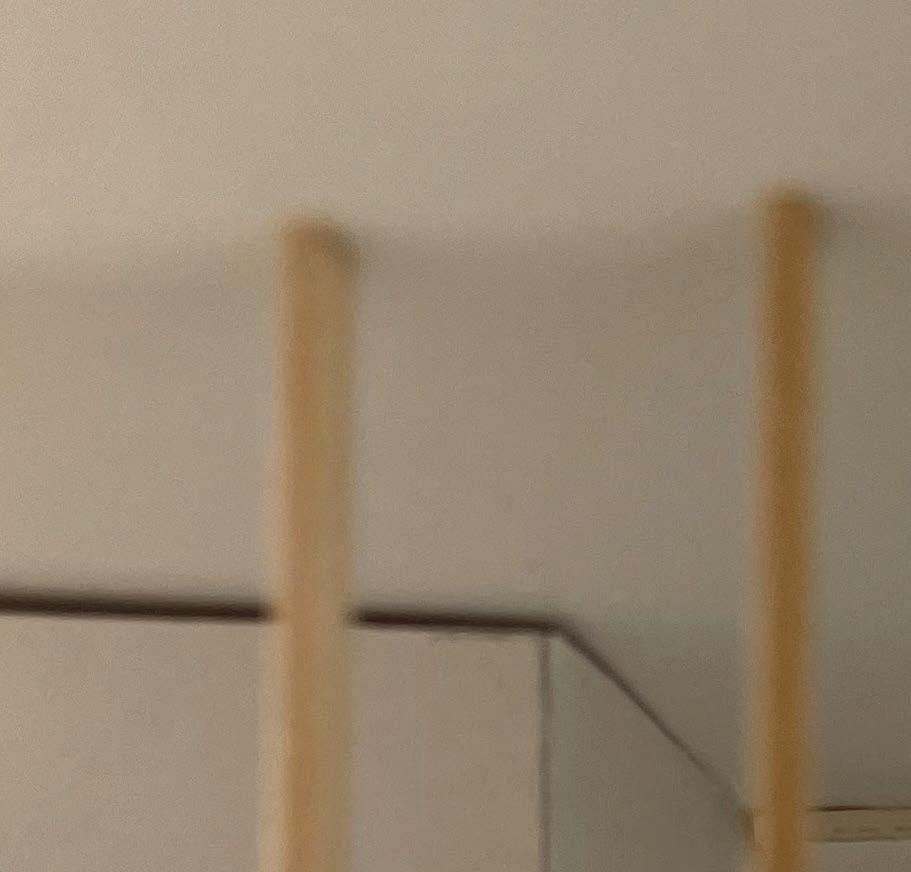
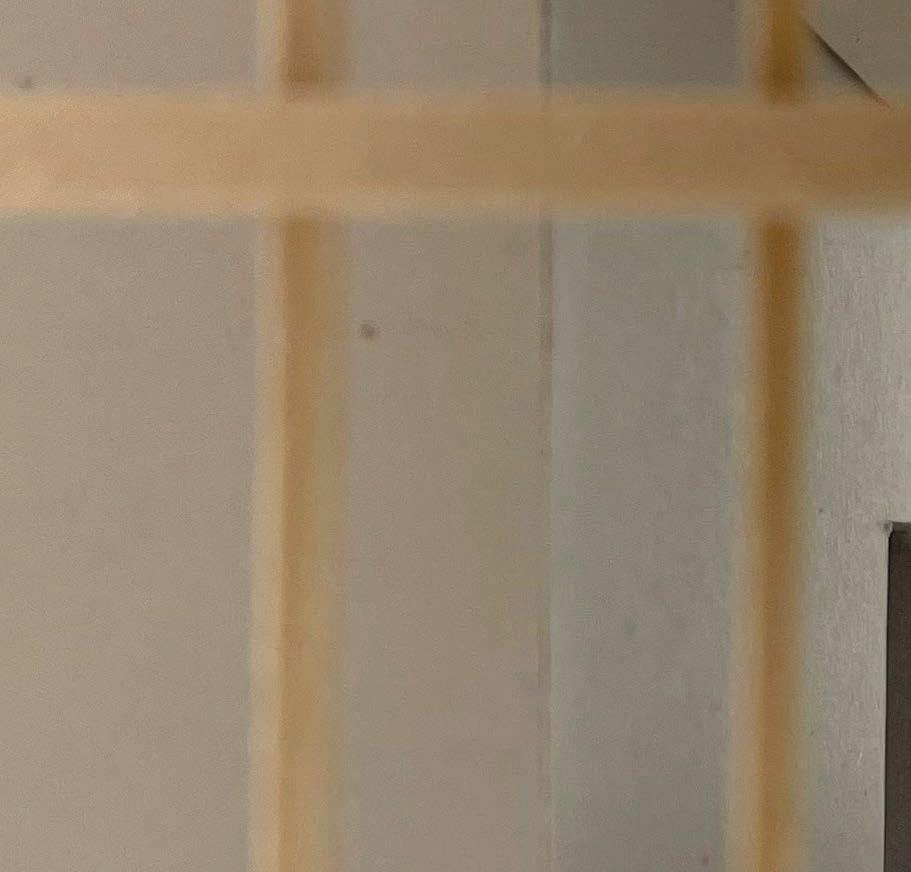
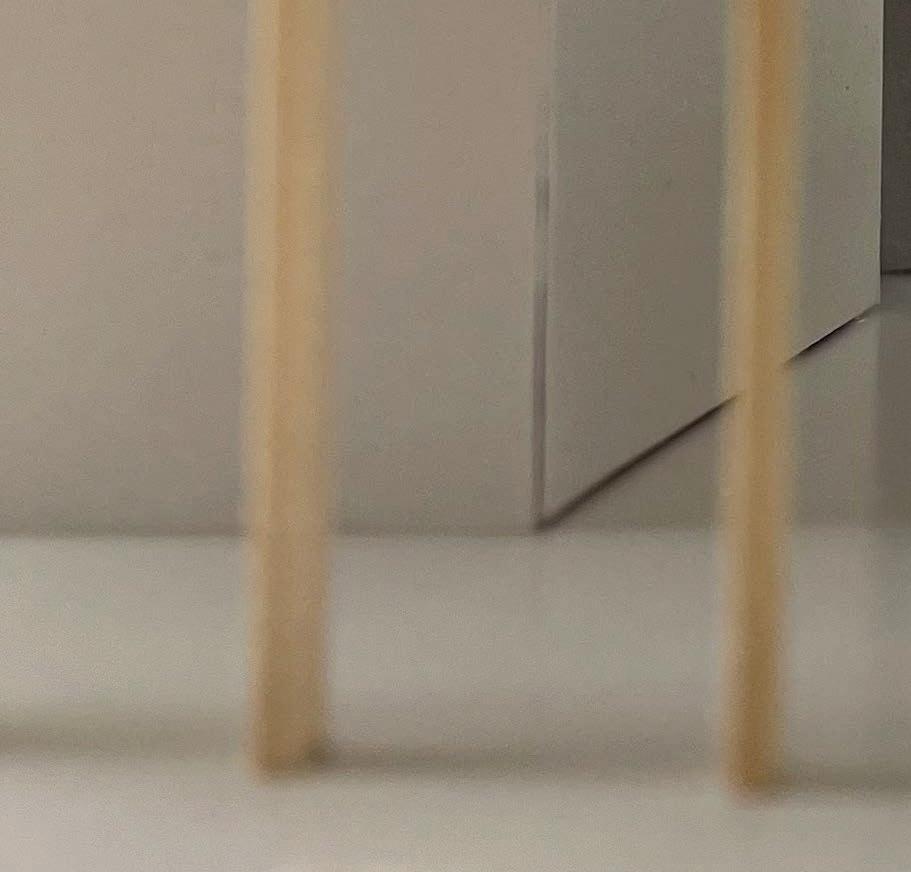
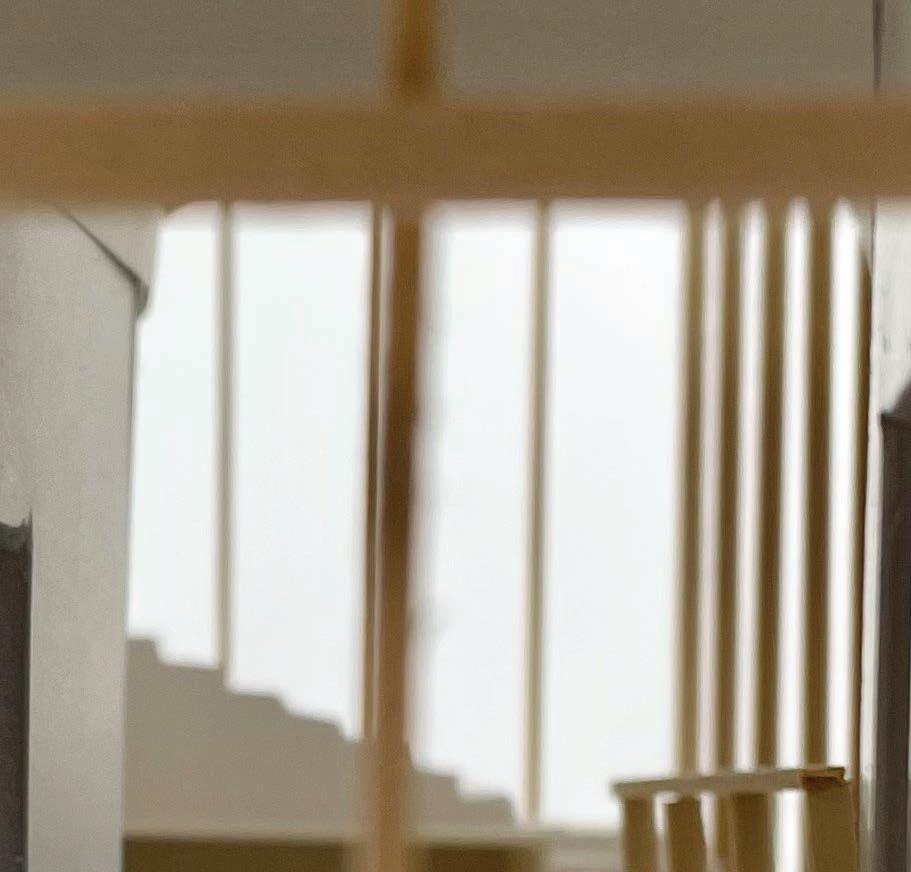
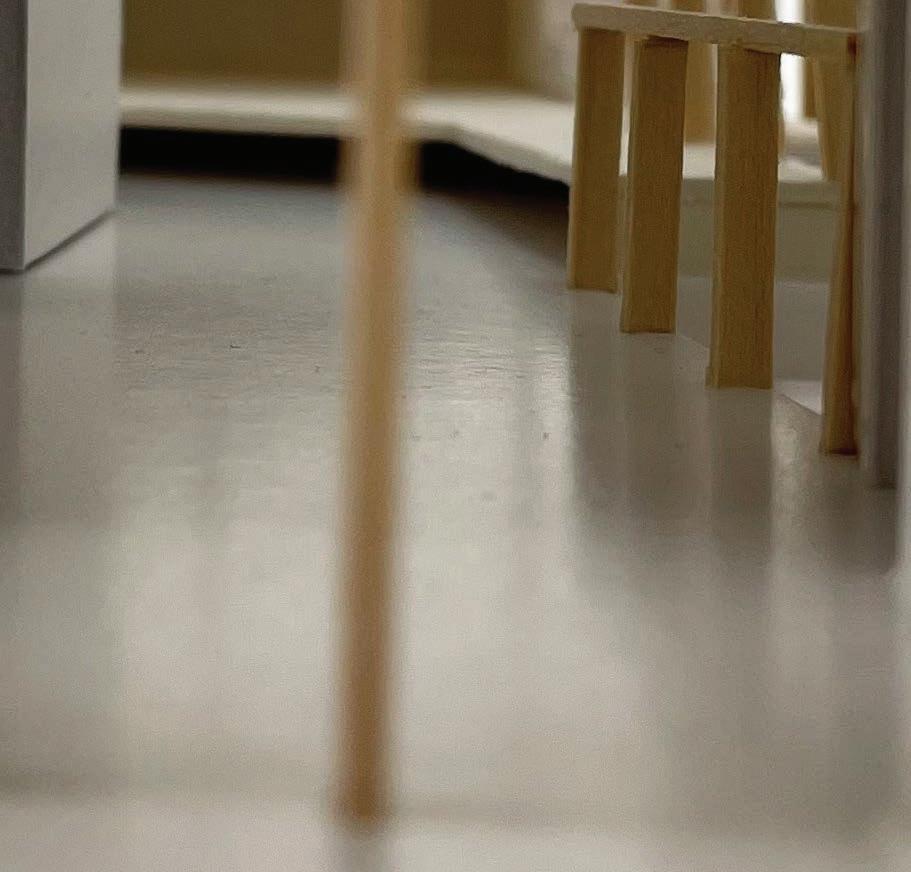
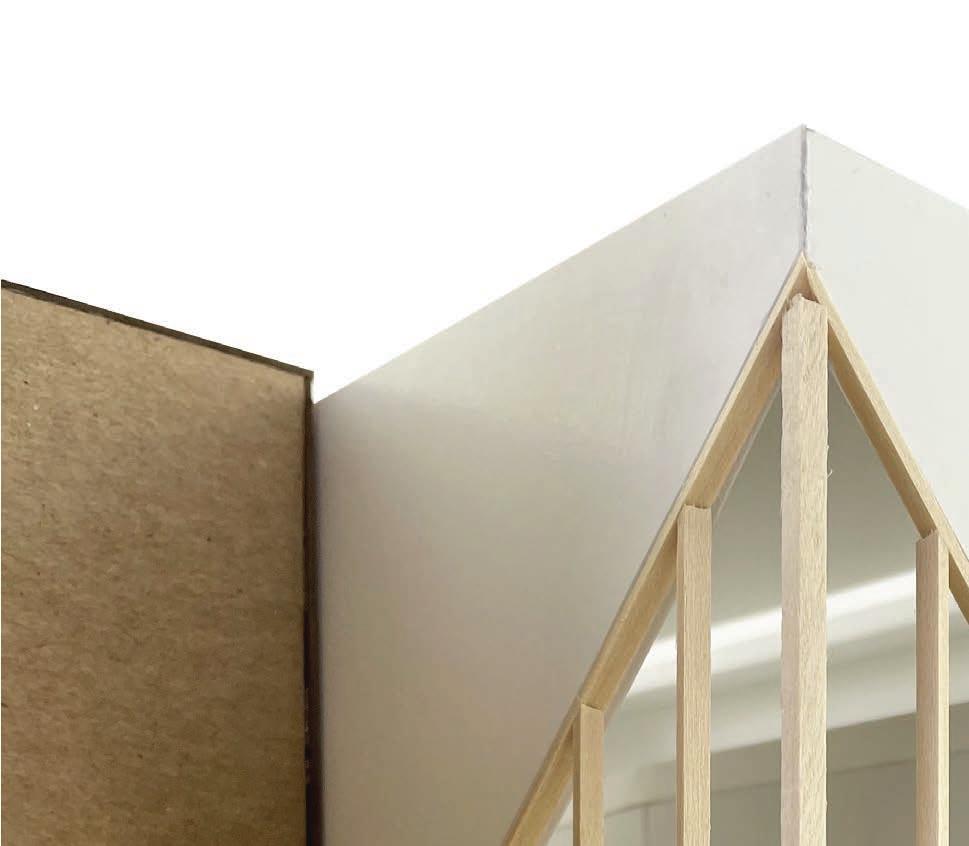
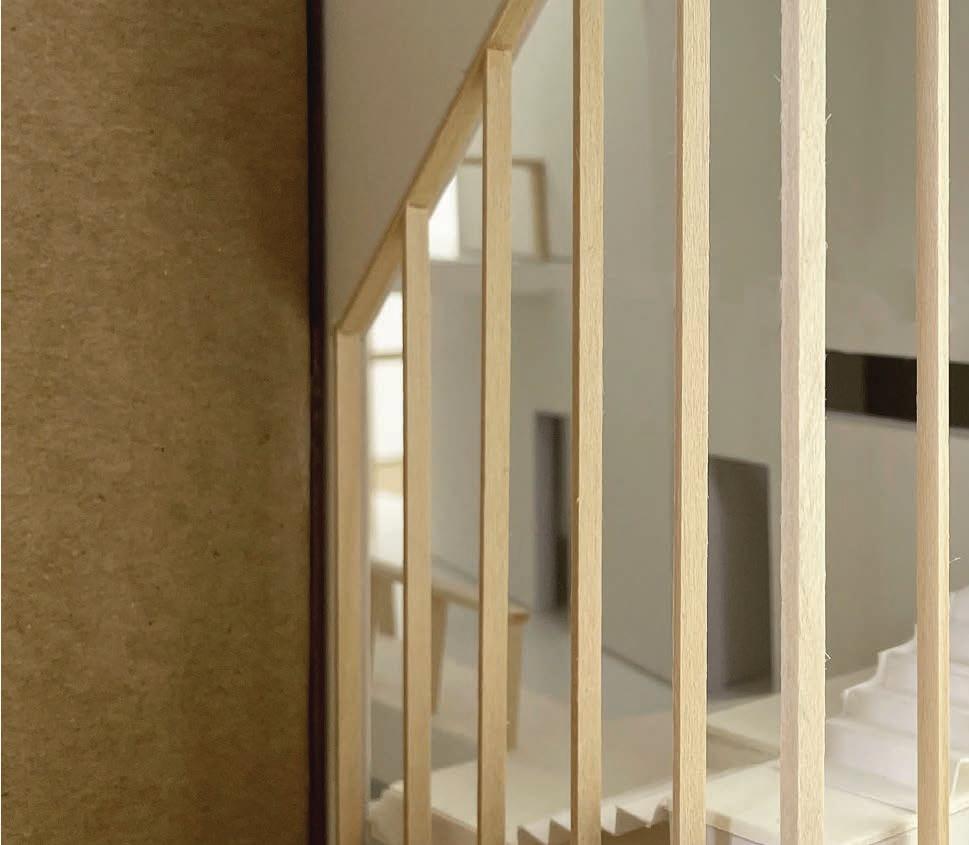
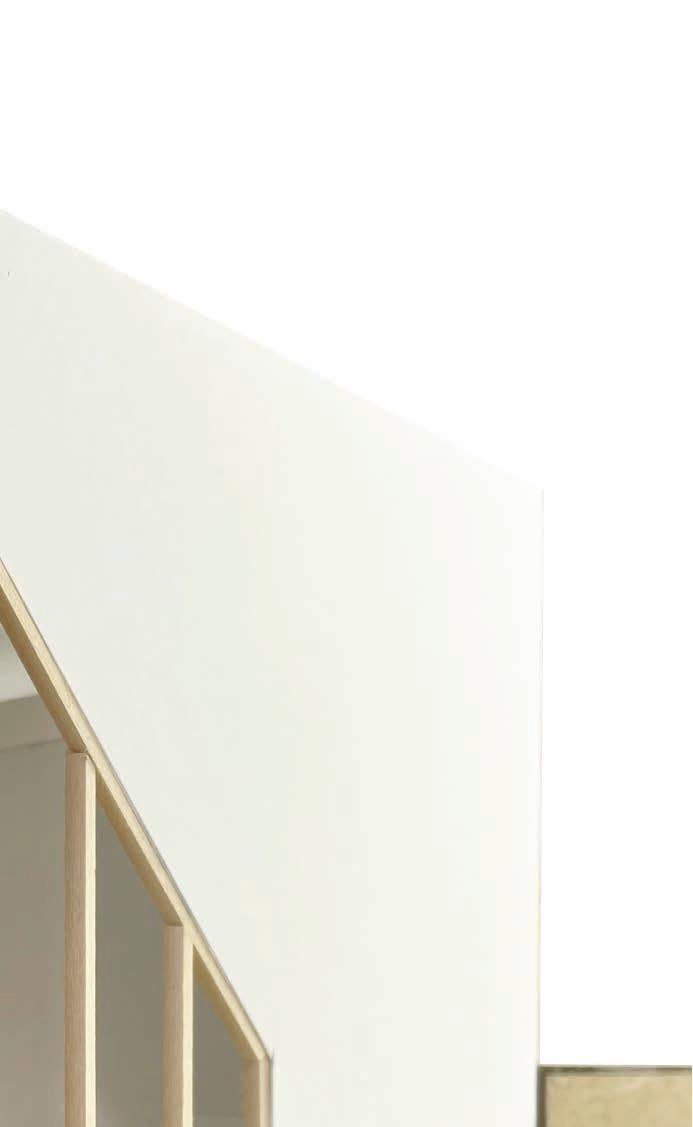
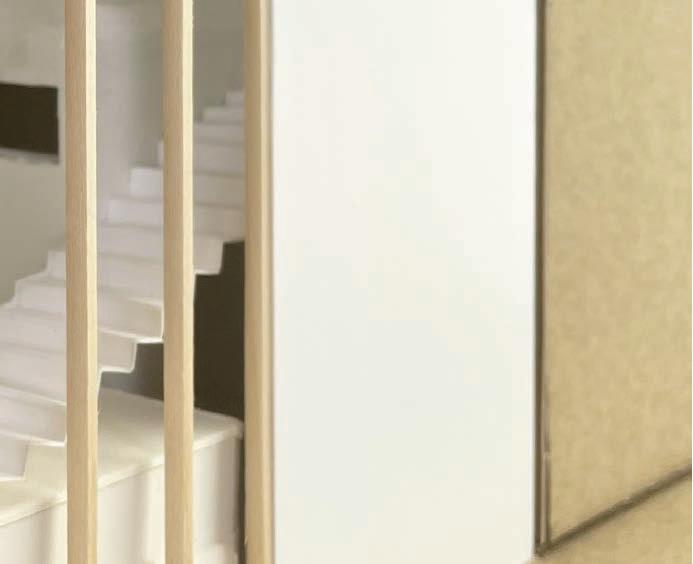
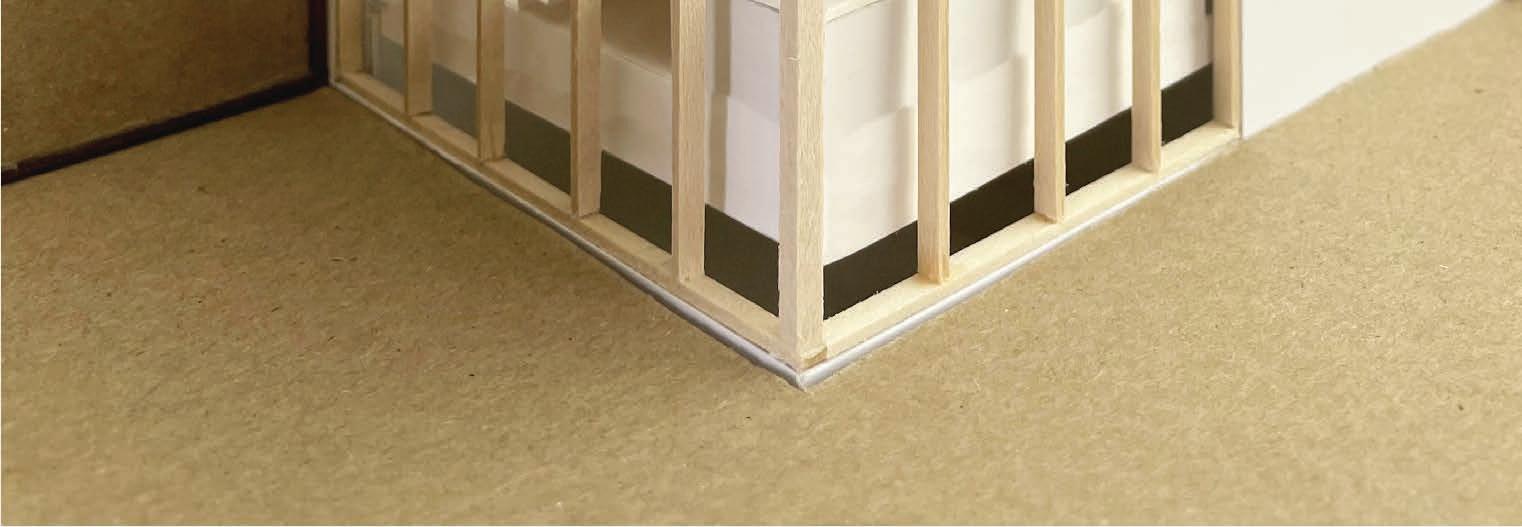
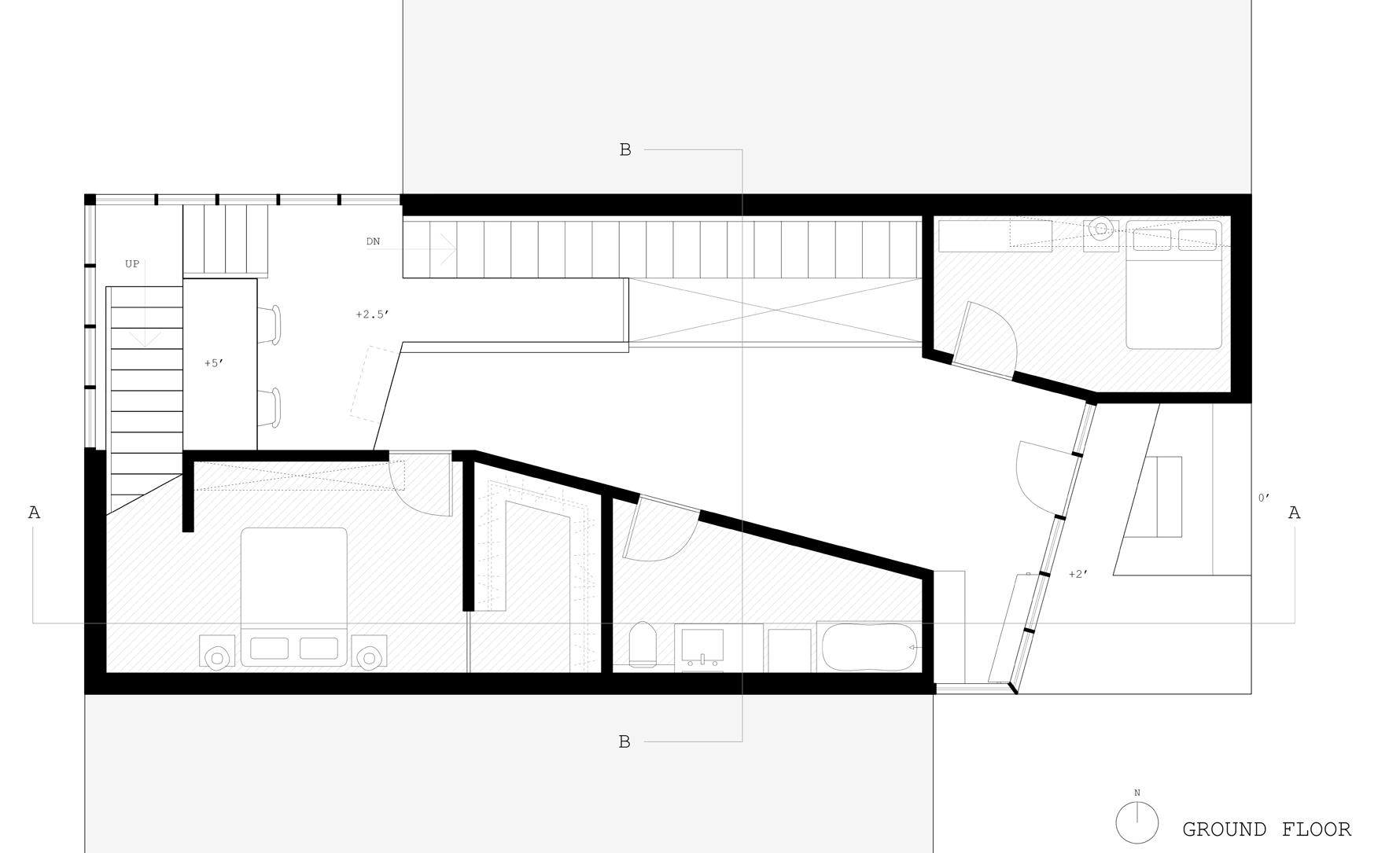
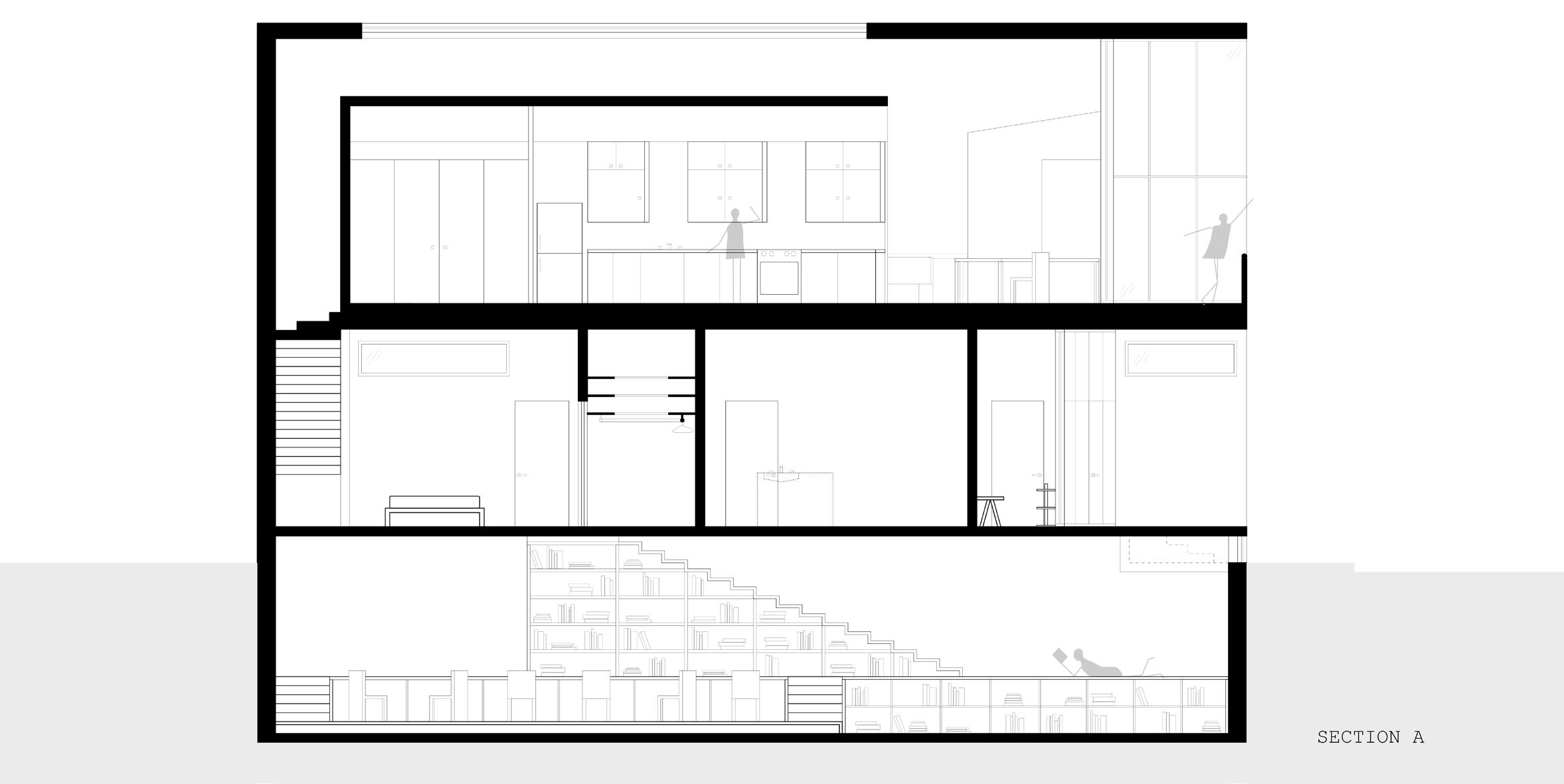
From previous projects, I learned that Newtown House defines spaces using windows and multifunctional/multilevel floors. In this project, due to site constraints I couldn’t achieve an effective centered void so I attempted a diagonal void. This void — the shared/communal area — is where you see the unique use of their floors. The architects — Yukawa Design Lab — very intentionally use the multilevel floors for more than one purpose, such as desks or tables. Additionally, they act as one big stair case taking you on a journey through the house. In fact, this technique allows for bedrooms to be on the ground floor, whereas normally we associate bedrooms to be on the second floor. However, because the void space combined with the stair like floors take you past the bedrooms into the main living space upstairs, as a guest you wouldn’t be compelled to stay on the ground floor making it more private.


ACADEMIC STUDIOS RESIDENTIAL STUDIO REDO
24







25
As you enter on the ground floor you start your journey up the elevated levels, where bedrooms reside on either side, until you reach the back of the home where you have the choice to continue upward — a more compelling choice for a guest — or you can go downstairs into the workshop, a library. By continuing upwards you’re led into the dining and living room with a high ceiling and a step down — a space to relax.

ACADEMIC STUDIOS | REDO | 2021
26
27
LUMINERE
WINTER
2022 | INSTRUCTOR: GLENN
WILCOX
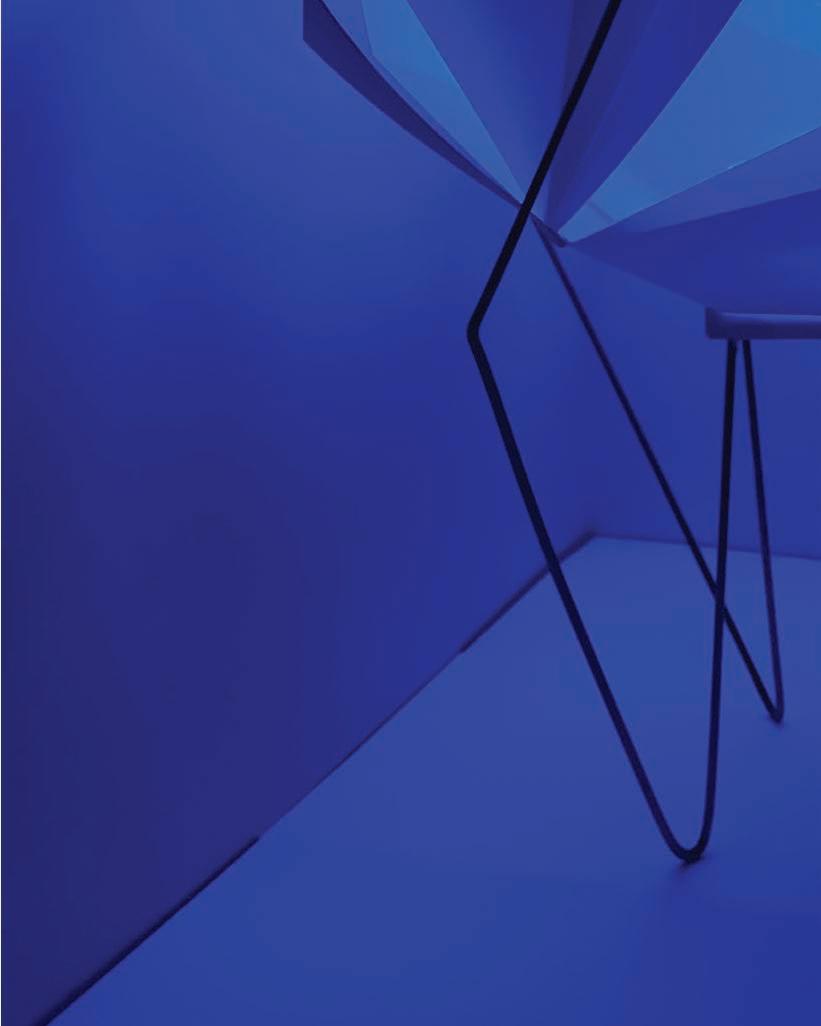
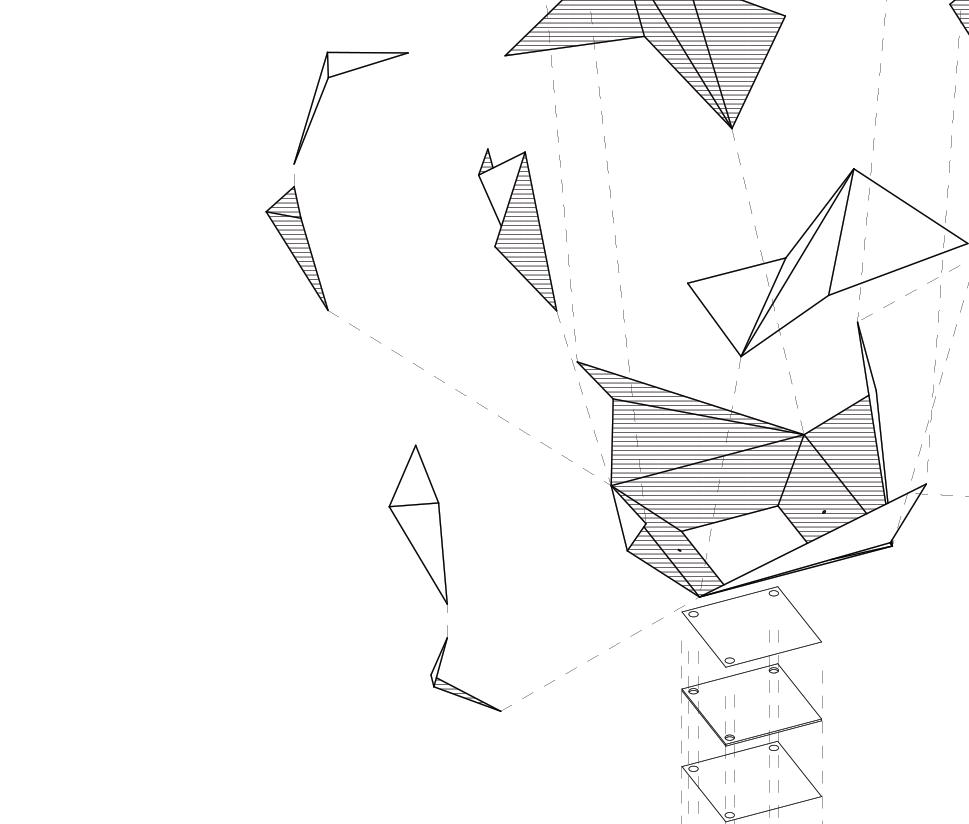
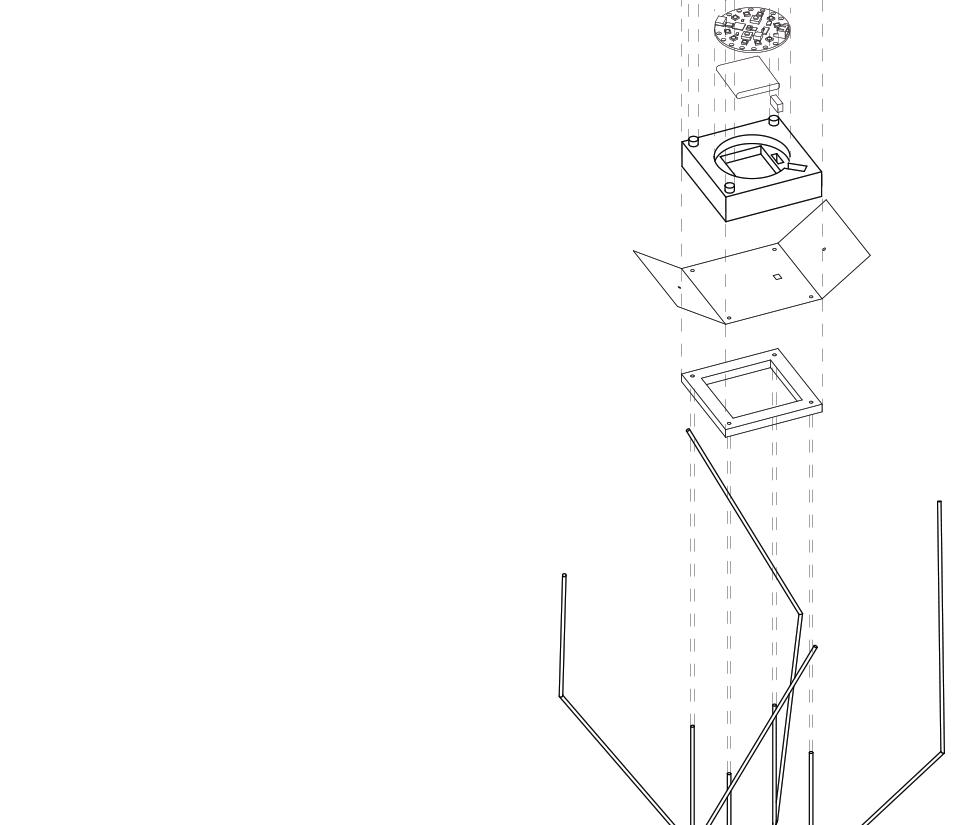
For my luminere, I worked with the idea of having a yupo skin with light leaks and overlapping flaps to make light bounce off of the opaque material. I then rod bent the steel wire frame that reacted to the indentations in the skin, which allows it to be a stand for the luminere. The light can be taken off the stand and be used however the user desires while the LED board detects motion and changes color based on orientation of the luminere.


ACADEMIC STUDIOS FABRICATION STUDIO
28









29
CORNER PROBLEM
WINTER 2020 | INSTRUCTOR: JONO STURT | PARTNER: MIRABELLA WITTE
DIGITAL
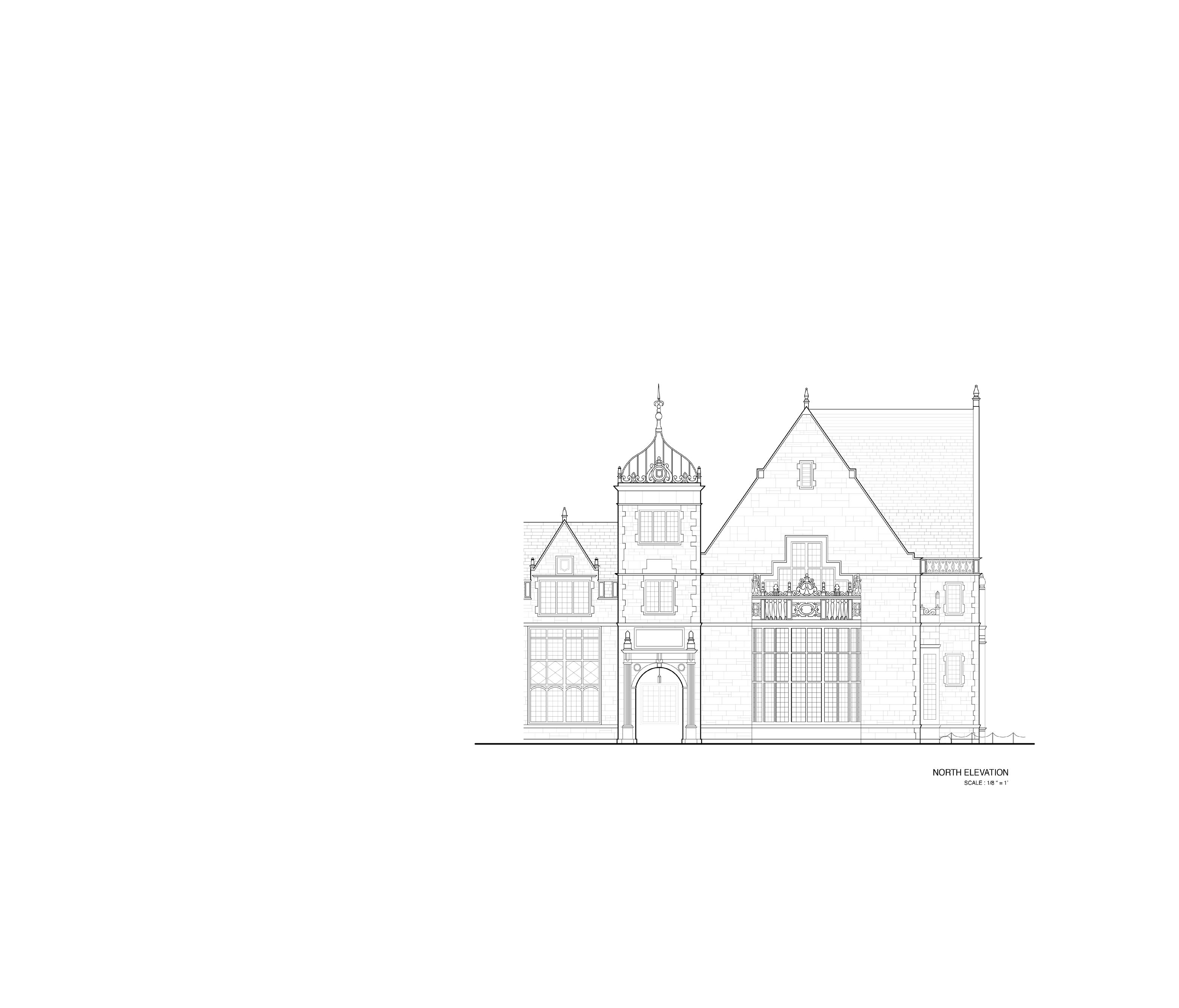
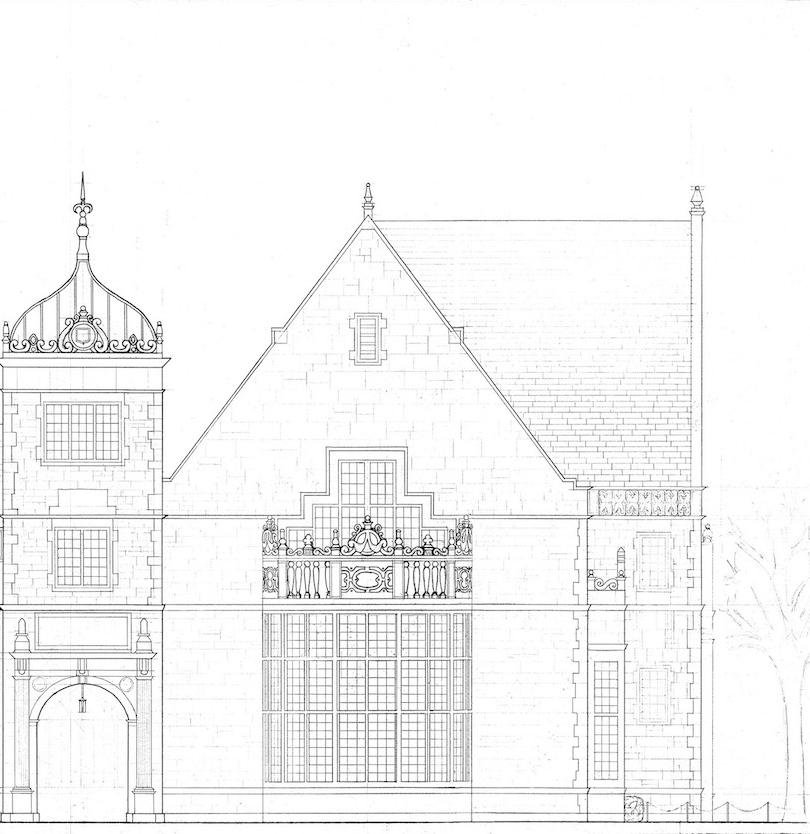
A close study of the University of Michigan’s Law Quad both hand drafted and digital. This was a partner project where we both drew a facade, which met at a corner.

HAND DRAWN
ACADEMIC STUDIOS GRAPHIC COMMUNICATION STUDIO
30
31





P ROFESSIONAL WORK
03
GRAPHICS
SUMMER 2022 | MENTORS: MEGAN FEENSTRA WALL & EMILY SCRIMGER-MCNAMARA
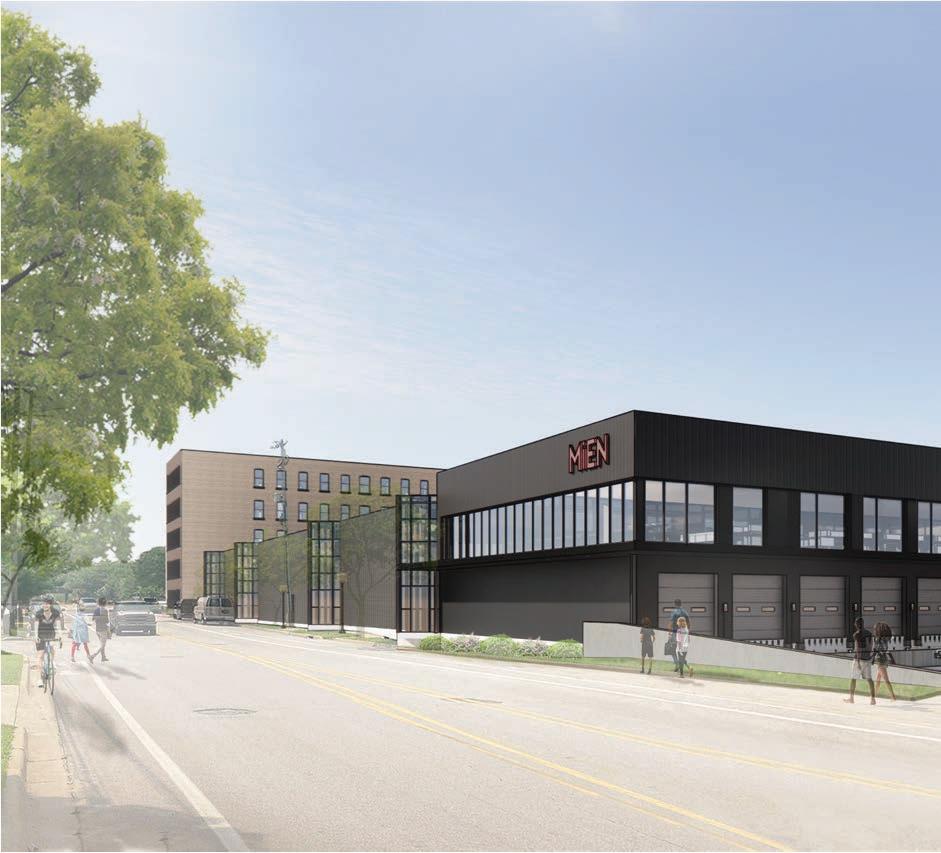
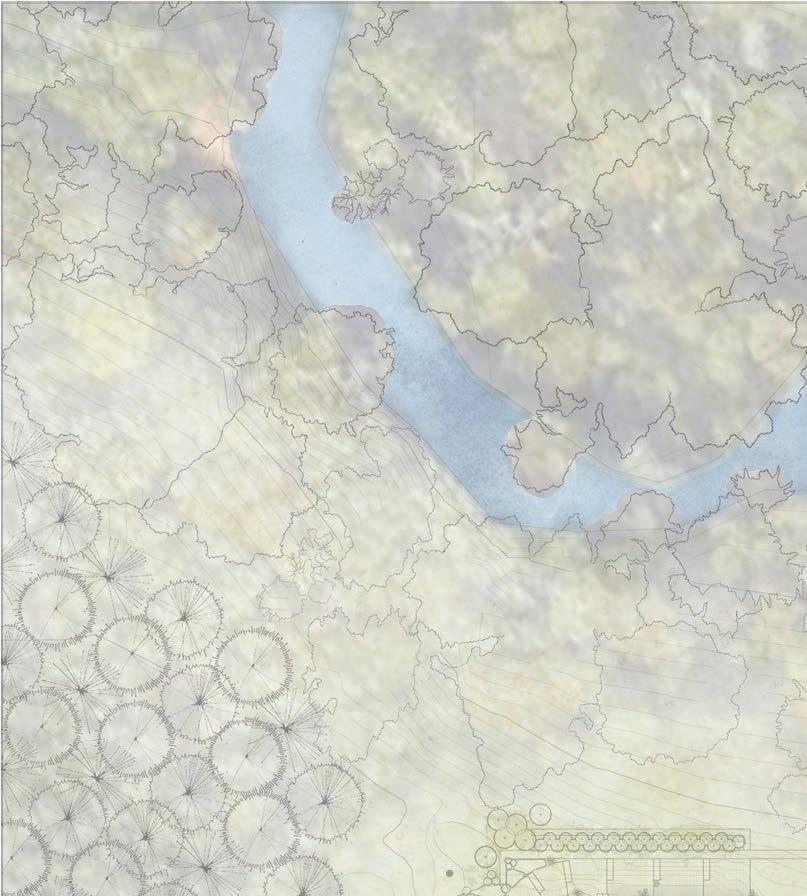
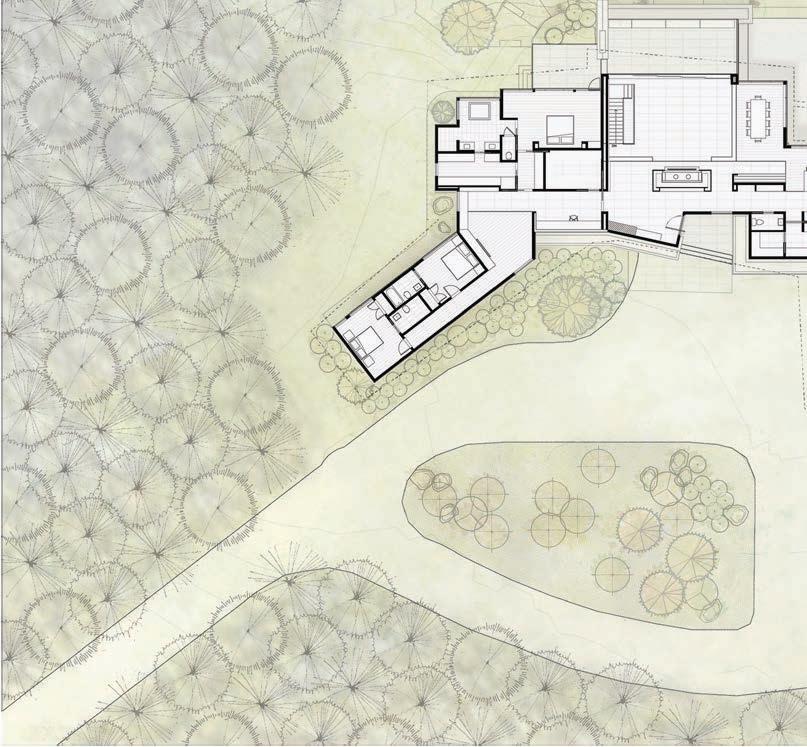
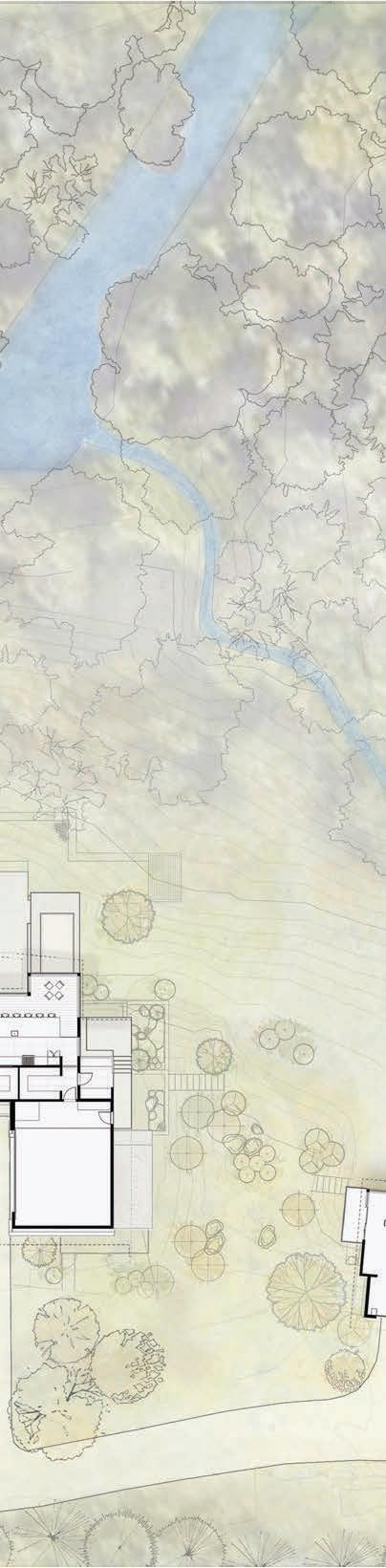
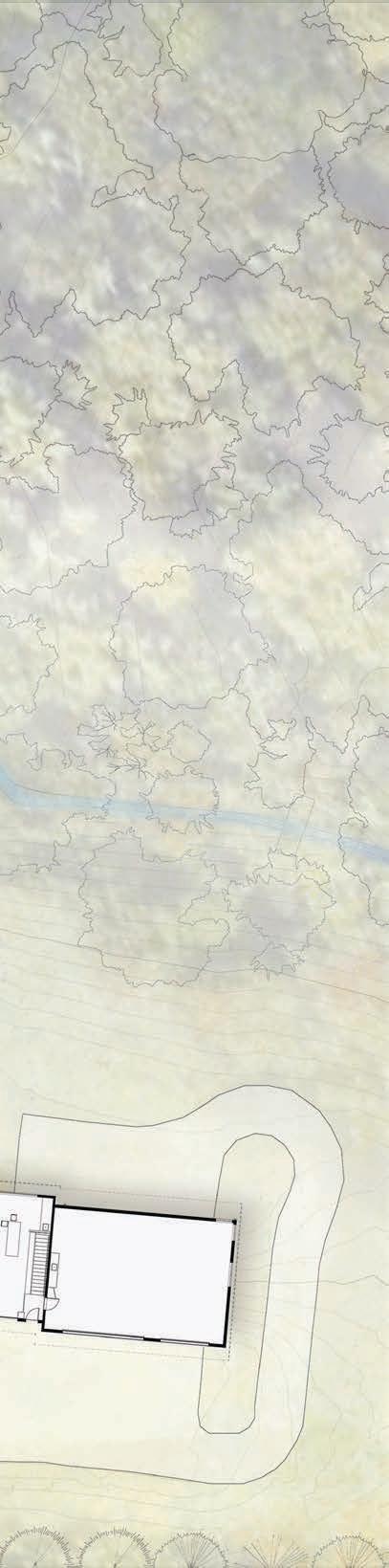
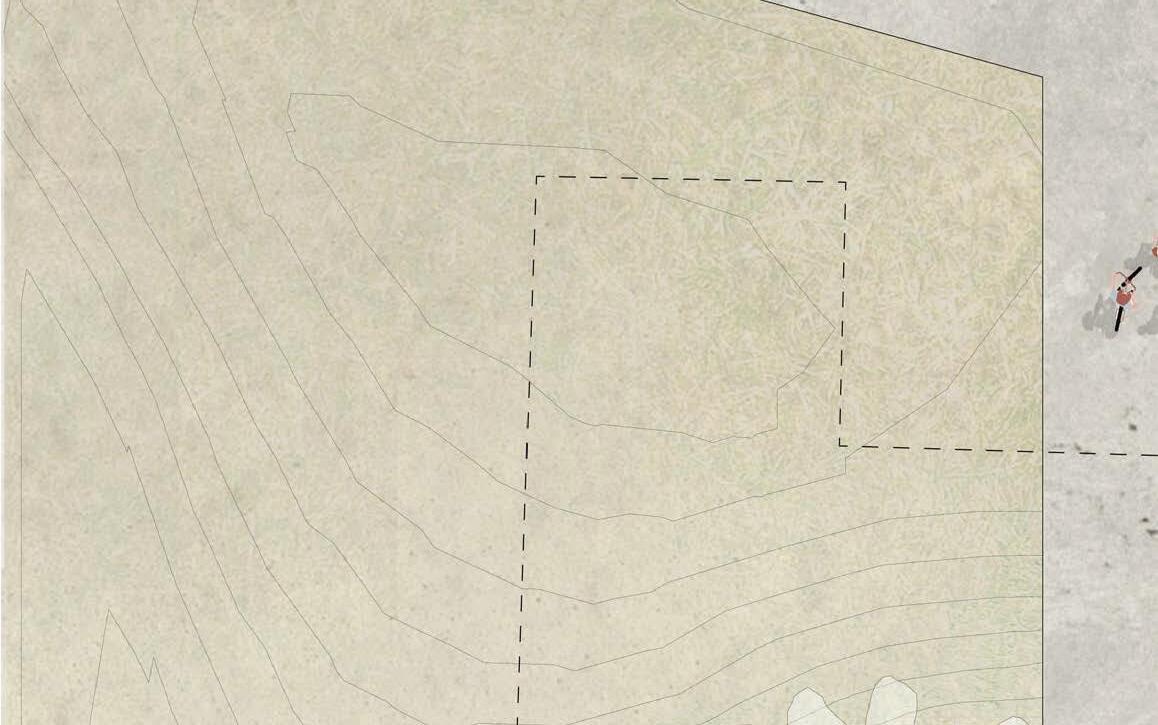
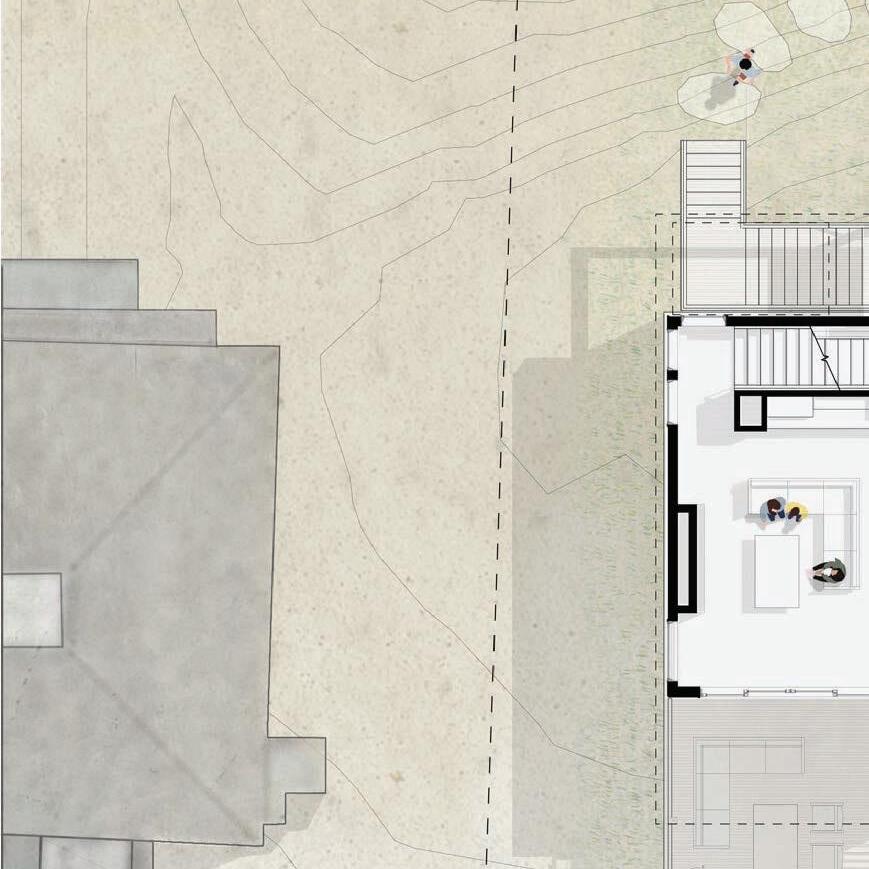
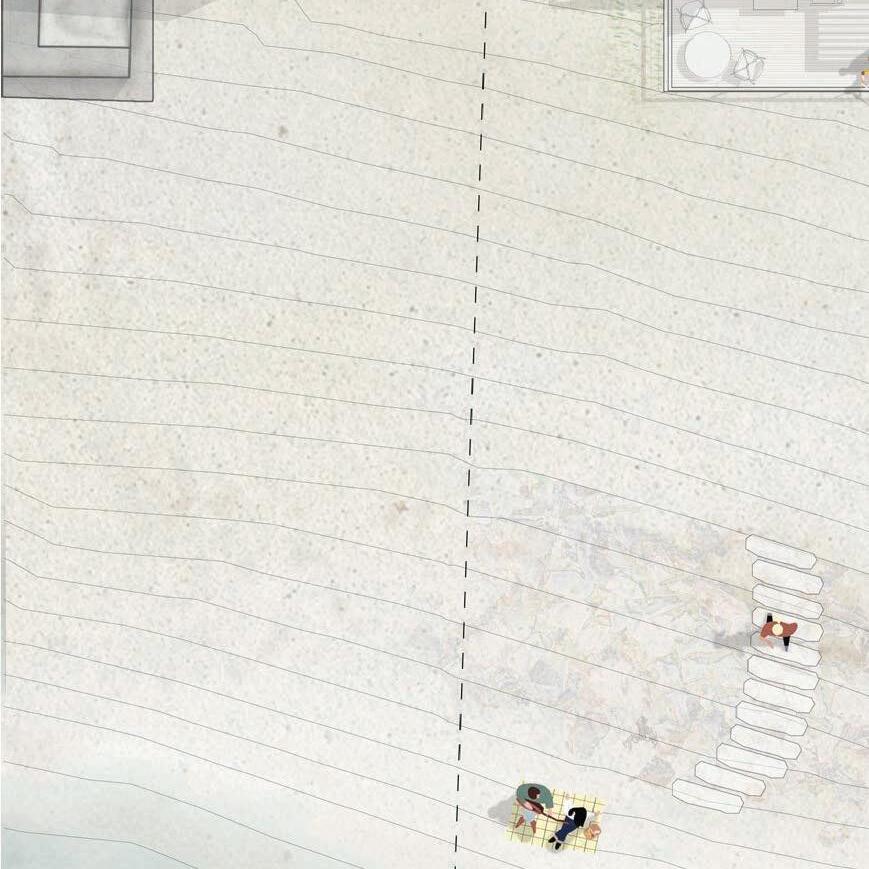
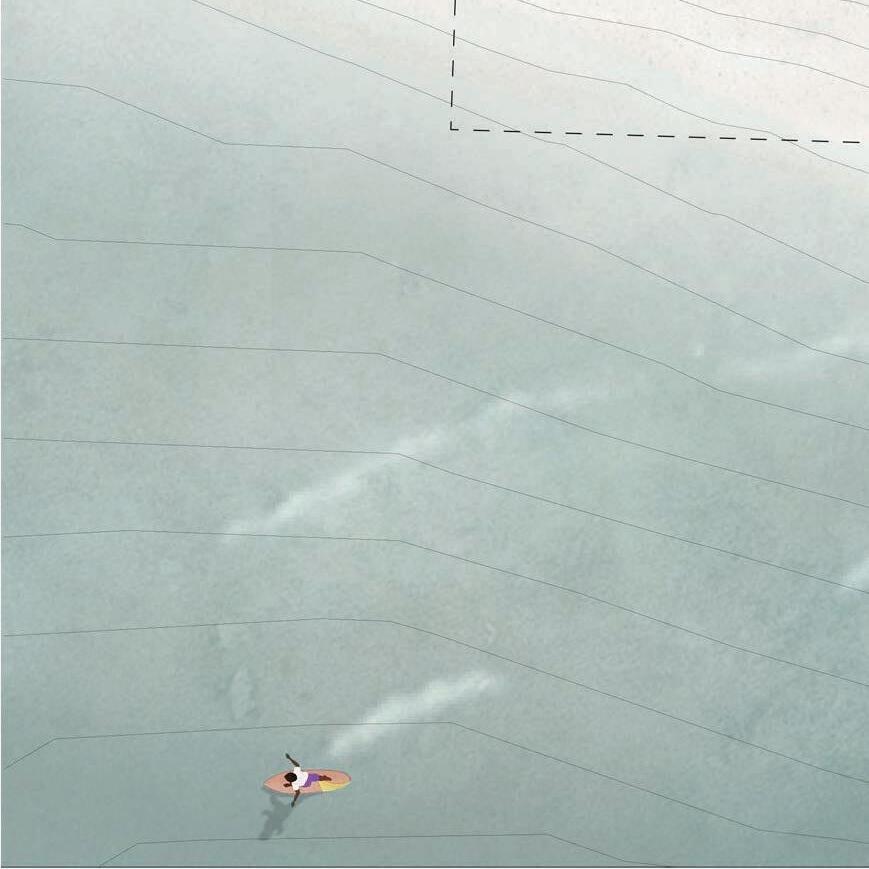
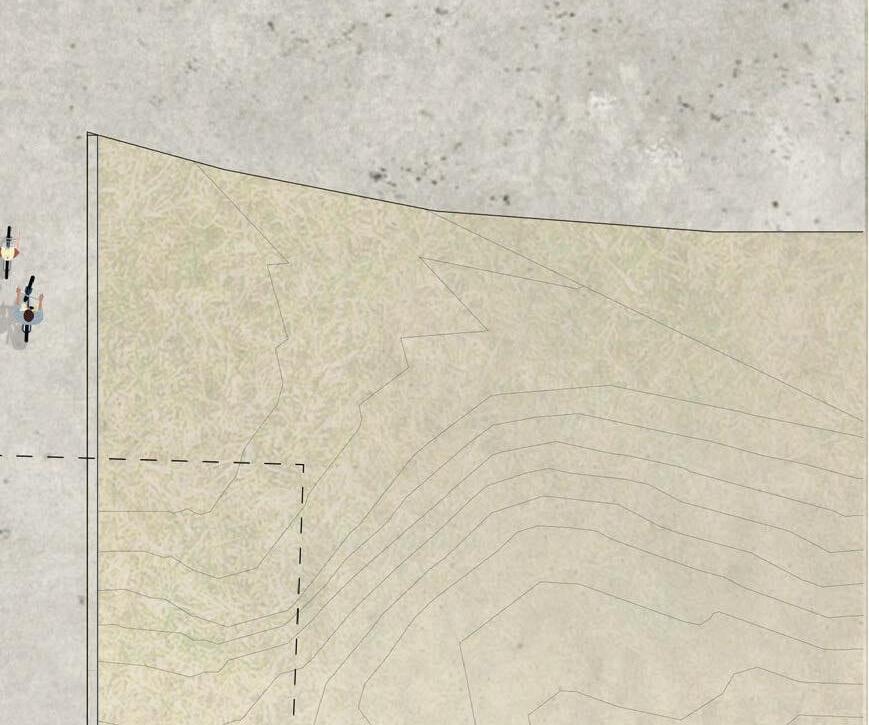
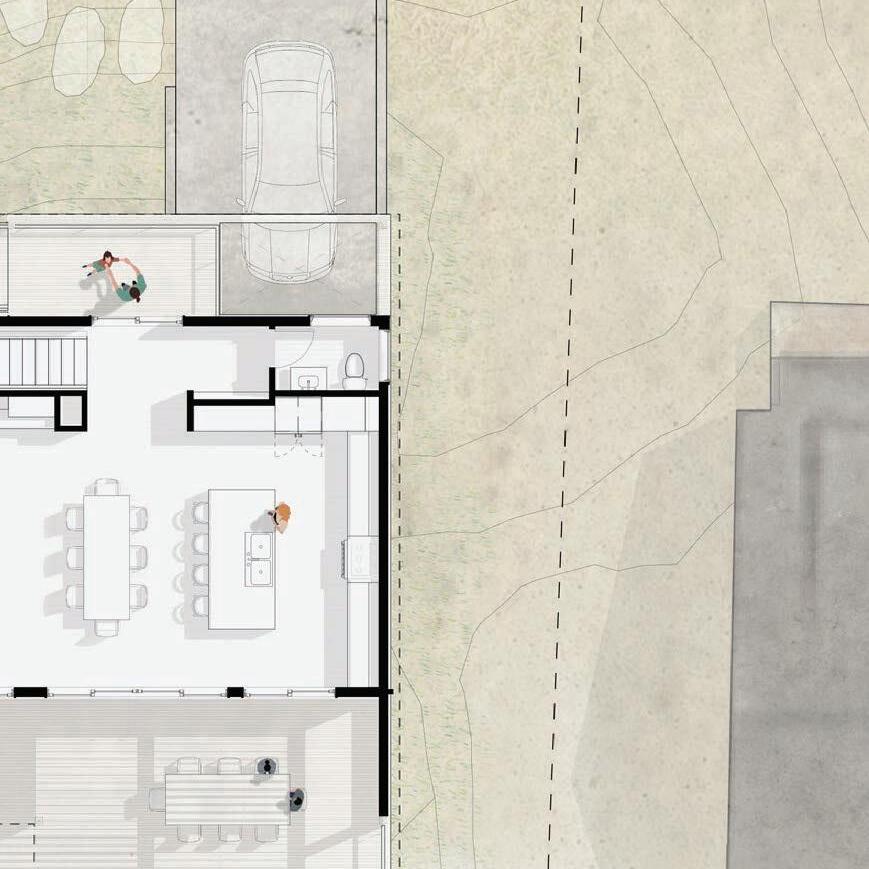
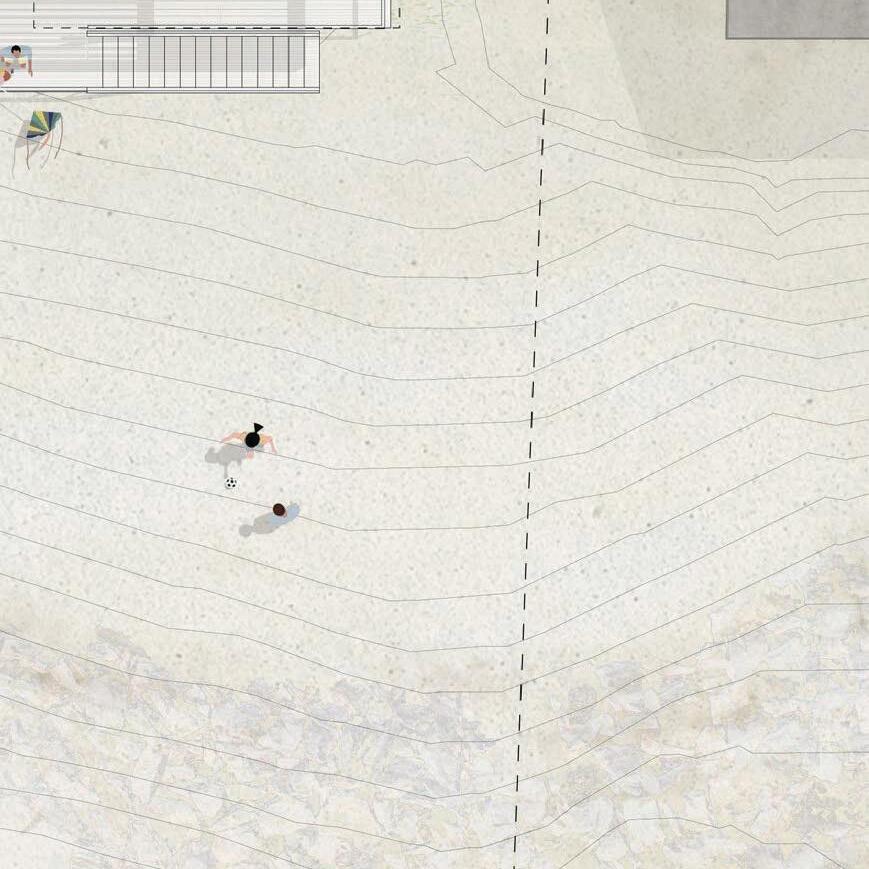
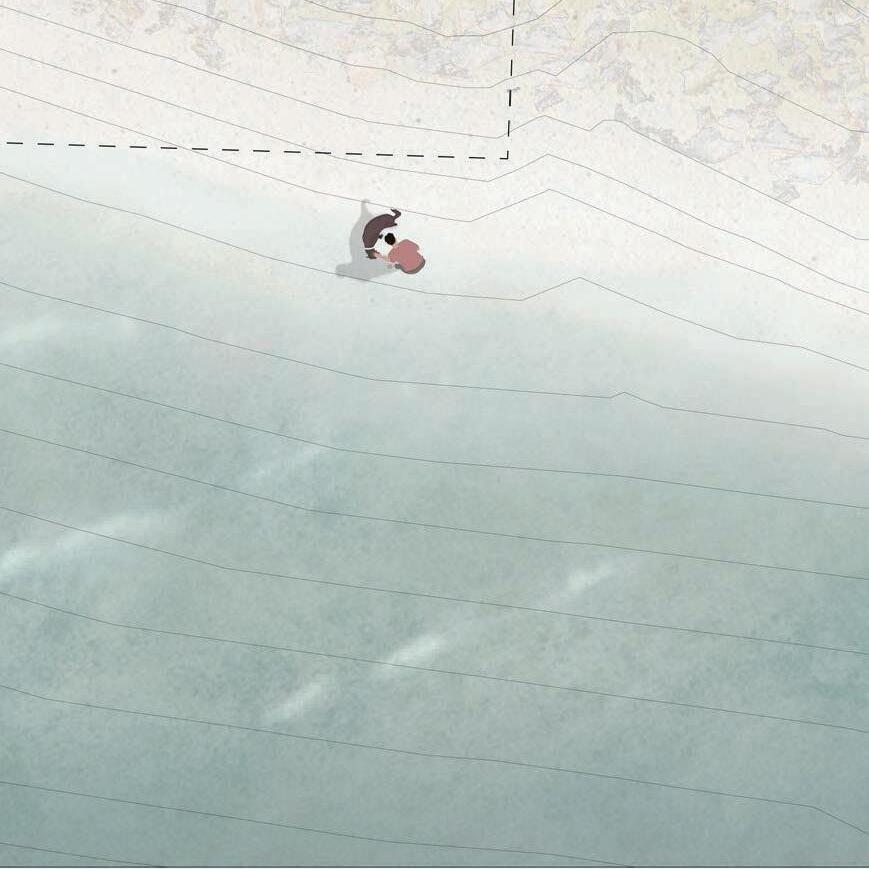
As an architectural intern, I helped create project design proposals, renderings for projects, and marketing site plans for their new updated website. Since these renderings are catered towards clients and possible future clients, they require a graphic consistency that could easily be understood.

PROFESSIONAL WORK MATHISON MATHISON ARCHITECTS
34

35
FACE :DETECTOR
SUMMER 2021 | PROFESSORS: ANTHONY VANKY & BRIAN BOYER
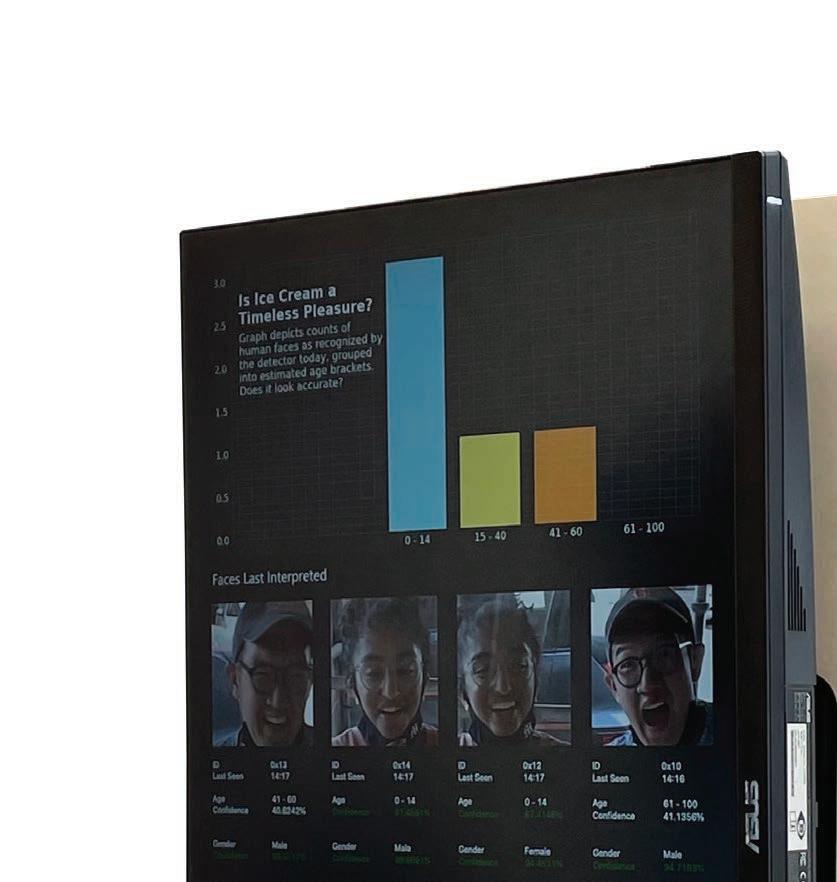
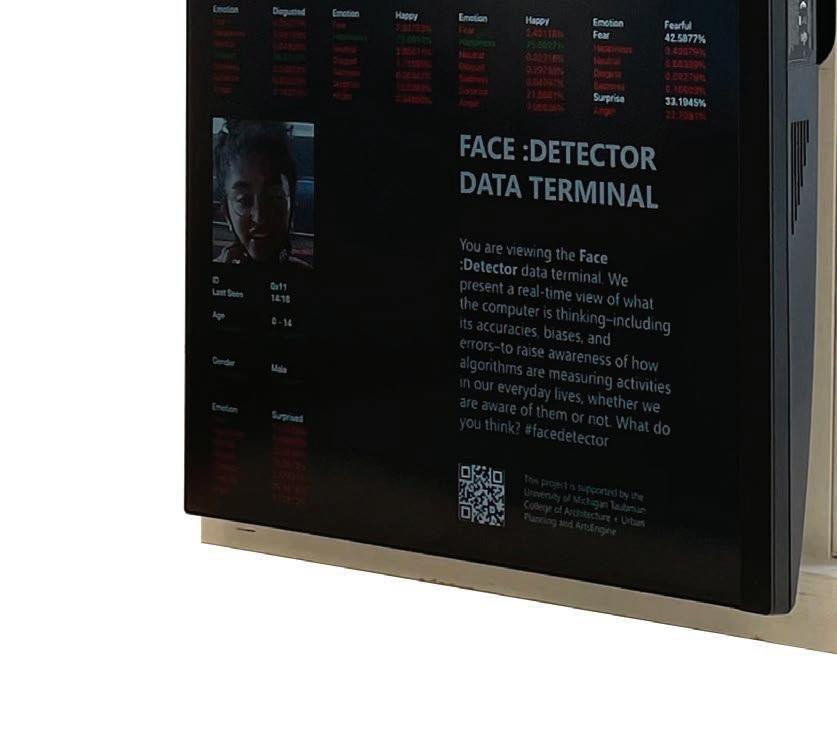


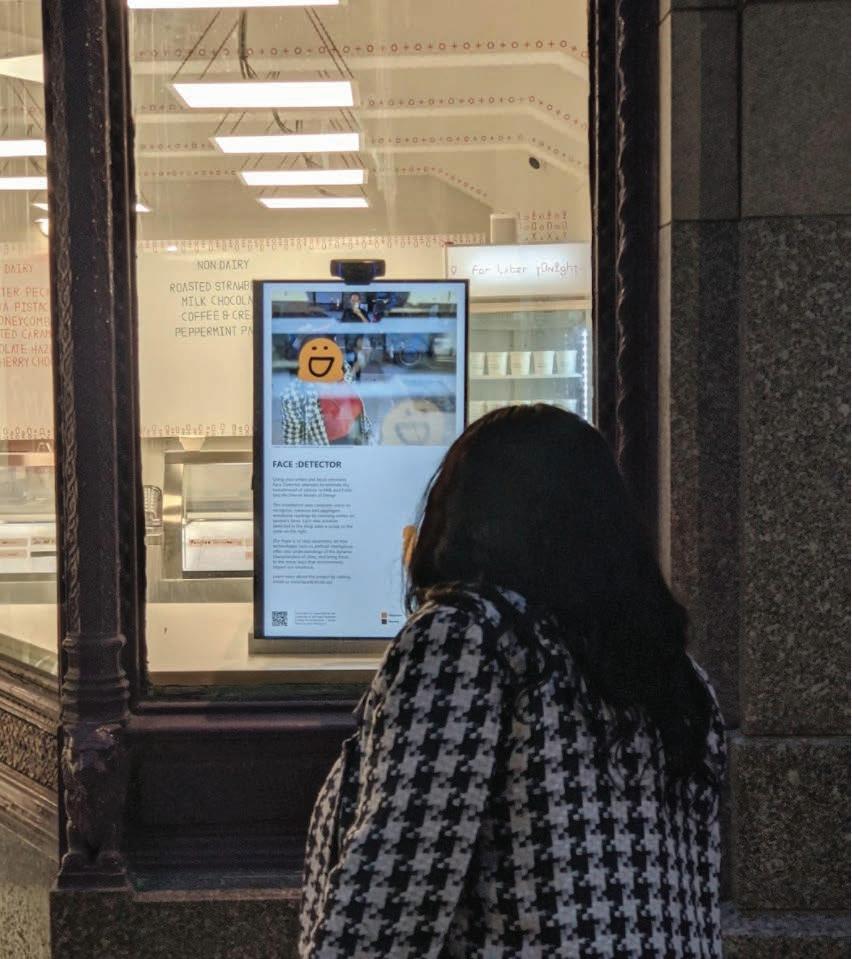
This project explores how computer vision can falsely identify people while also being used for user engaging purposes. The Fun Side monitor (below), is more interactive and guesses people’s mood based on facial expressions as they pass by. The Dark Side monitor (right), contains more detailed information where the computer secretly guessed the visitors age and gender as well.
PROFESSIONAL WORK DEMO OR DIE RESEARCH PROJECT
36

37


THANK YOU!