I am currently a third year student at the University of Waterloo School of Architecture.
During my studies, I have become interested in the relationship between architecture, natural environments and cultural context. In particular, I am curious about how the implementation of culturally meaningful designs can allow people to connect with the space they occupy and feel a sense of belonging. I enjoy experimenting with different methods of craft, including model making, textile creation and digital fabrication.
In my designs, I aim to understand the needs of the surrounding community to create spaces that are both functional and experiential. I enjoy being challenged to elevate the quality of my work by learning new digital, physical and conceptual design strategies.
mlsobkow@uwaterloo.ca +1 204-792-4472
Curriculum Vitae
EXPERIENCE
Sept 2024 – Dec 2024
Number TEN Architectural Group
Architectural Co-op Student
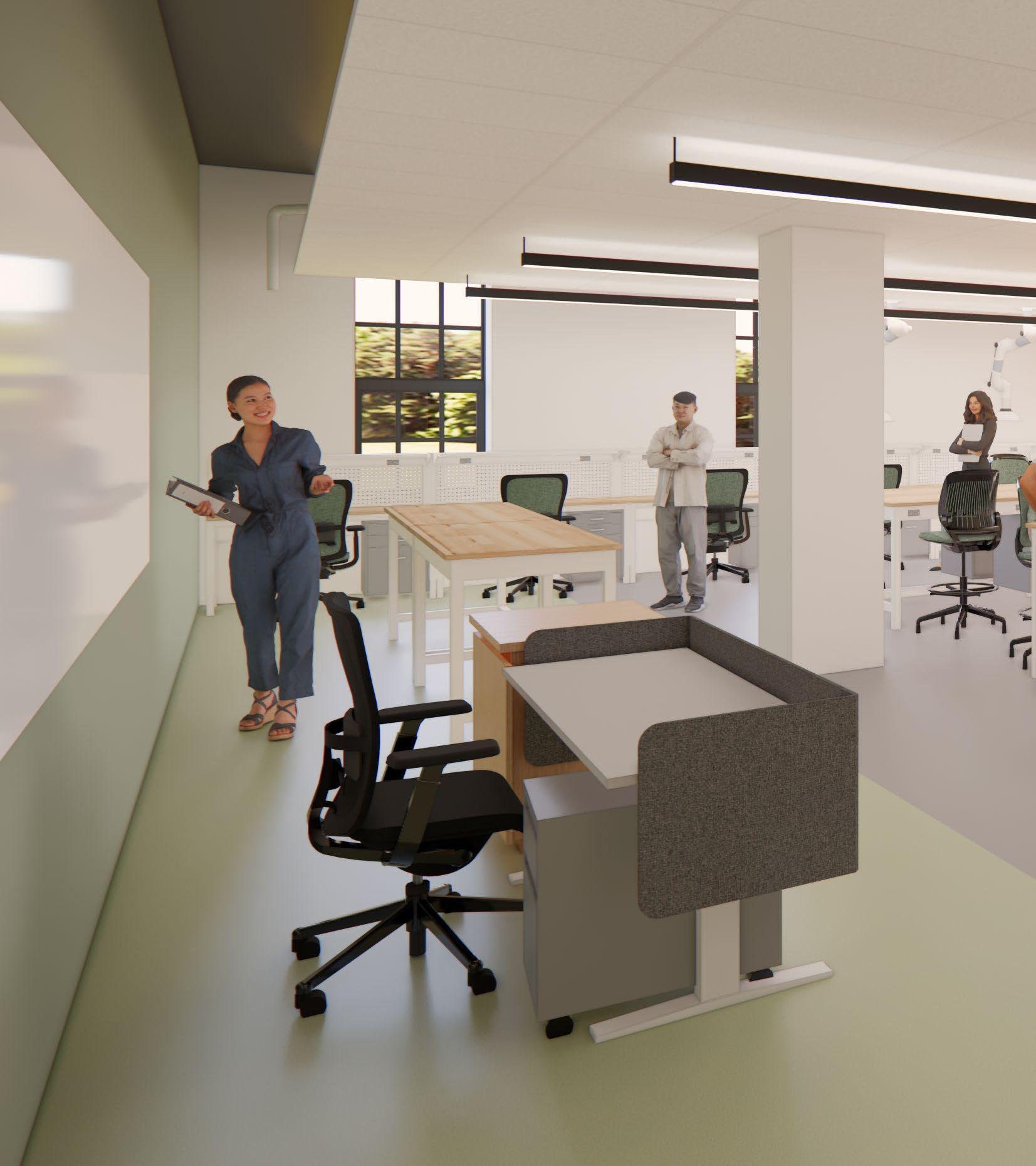
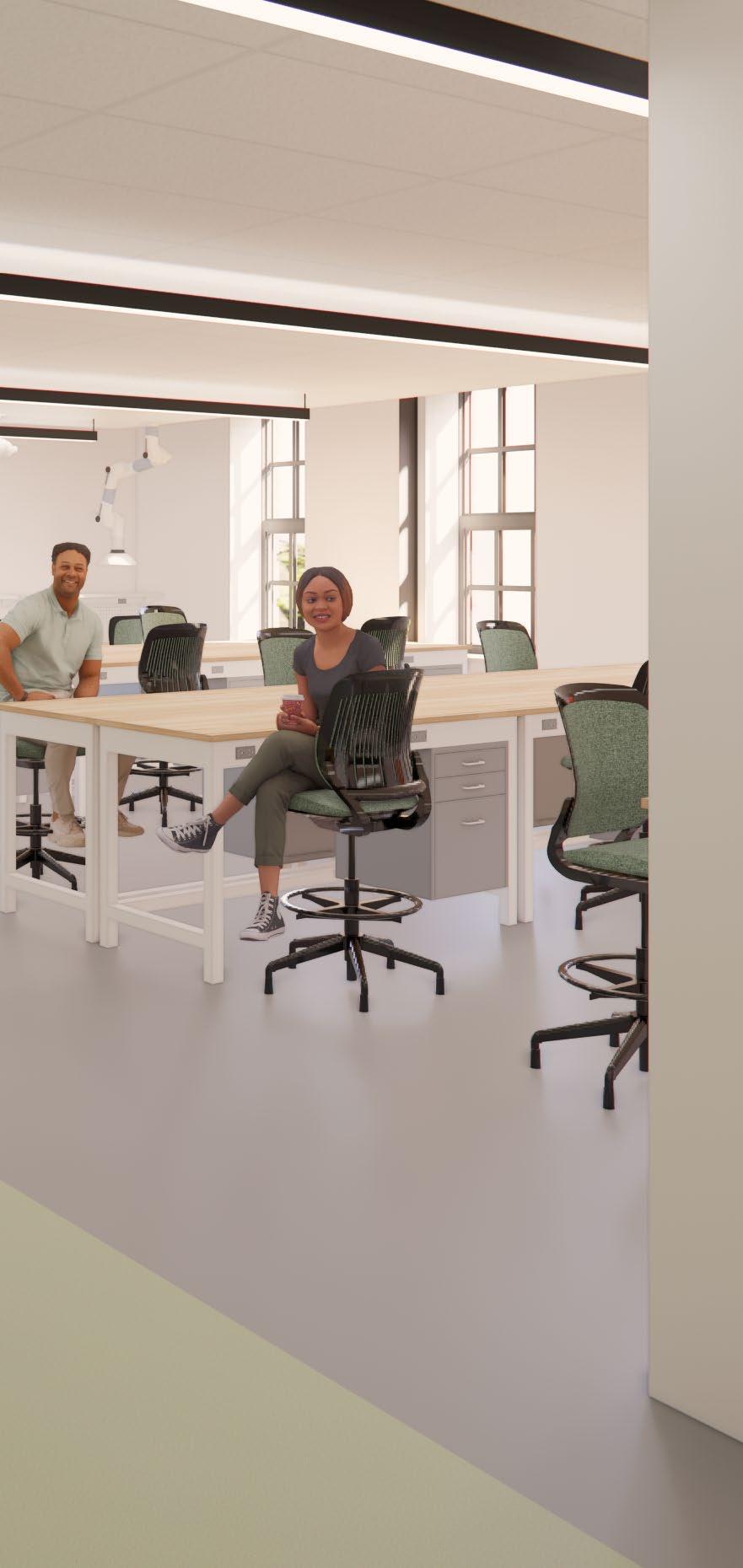
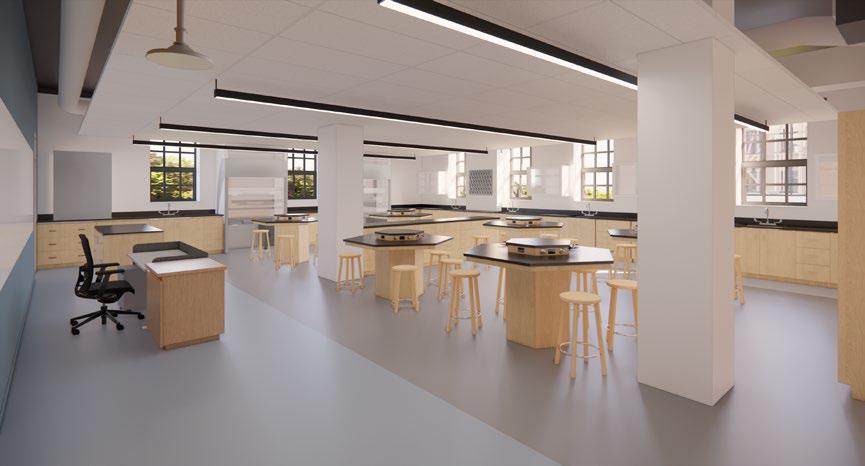
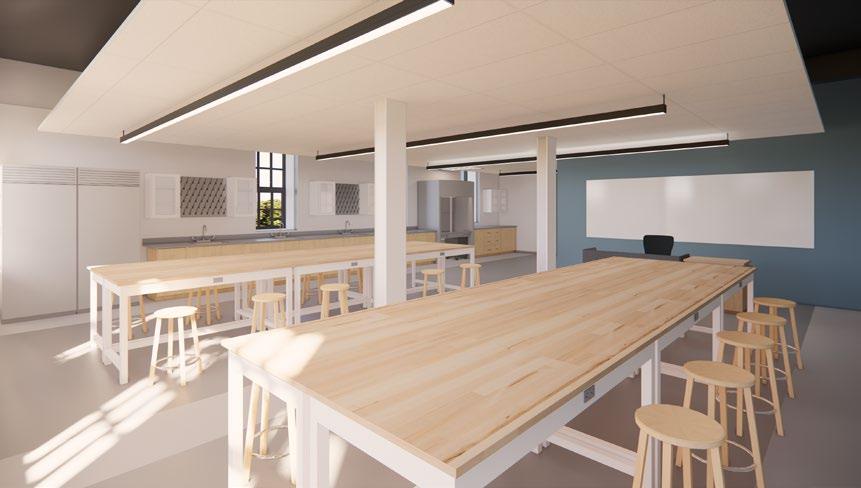
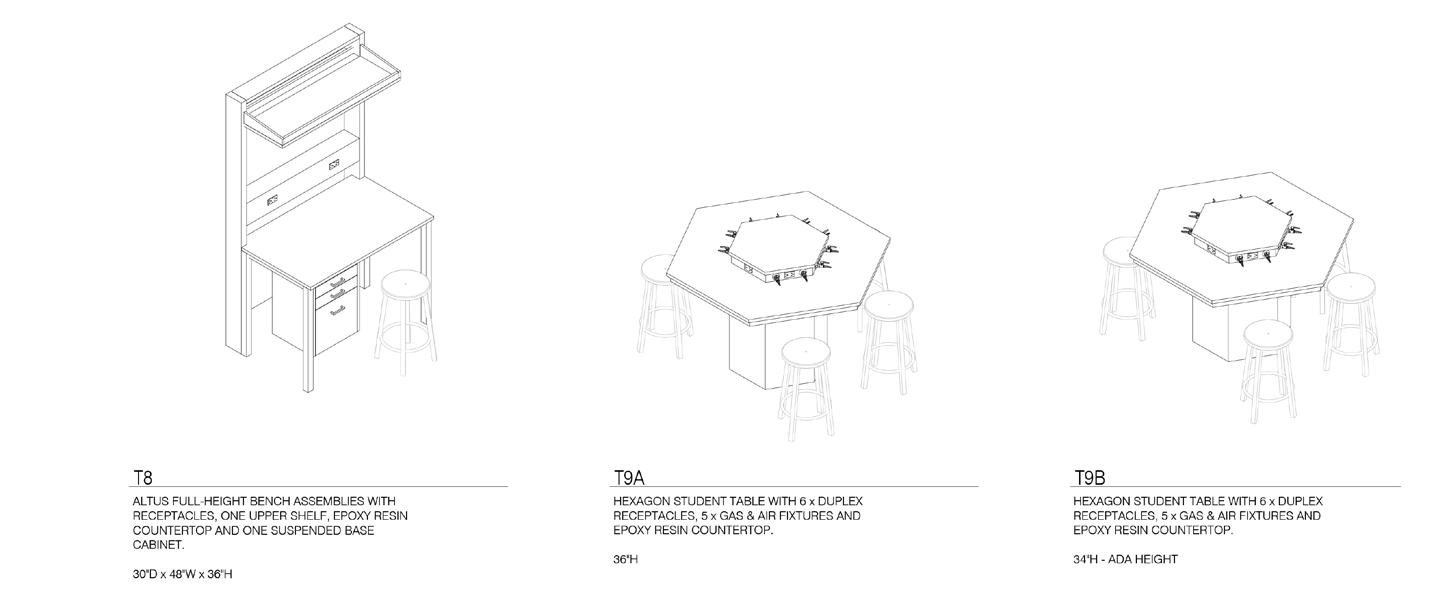
Worked on laboratory interiors in collaborative Revit models, designing casework layouts, coordinating custom furniture requirements and specifying information for specialized equipement.
Jan 2024 – Apr 2024
Nejmark Architect
Architectural Intern
Developed base building design of a mercantile store in CAD, prepared drawings and documents for permits, worked on interior renovations of various grocery stores, communicated with engineering consultants.
Fall 2022, Winter 2023, Spring 2024
Jun 2023
Sept 2022
Dean’s Honours List
Awarded for an exceptional academic standing
School of Architecture Award
Recipient for Outstanding Design Work in 1A term
Roger Farwell Scholarship for Architecture
Awarded to an outstanding undergraduate student entering the school of architecture
Sept 2022
EDUCATION
Sept 2022 – Present
Sept 2018 – Jun 2022
SKILLS AWARDS
President’s Scholarship of Distinction
Awarded to students with an admission average of 95%+
University of Waterloo
Candidate for Bachelor of Architectural Studies
Collège Jeanne-Sauvé
High School Diploma - French Immersion Program
Software
Revit (BIM)
Rhinoceros
AutoCAD
Enscape
SketchUp
Lumion
Grasshopper
Adobe Ps, Ai, Id, Lr, Pr
Fabrication Languages
Hand Modelling
Hand Drafting
Laser Cutting
3D Printing
CNC Milling
Woodworking
English (fluent)
French (proficient)
LIVING ARCHIVE OF UKRAINIAN CULTURE AND FOLK ART
CLASS: 2A DESIGN STUDIO
LOCATION: TORONTO, ONTARIO
INSTRUCTOR: LOLA SHEPPARD
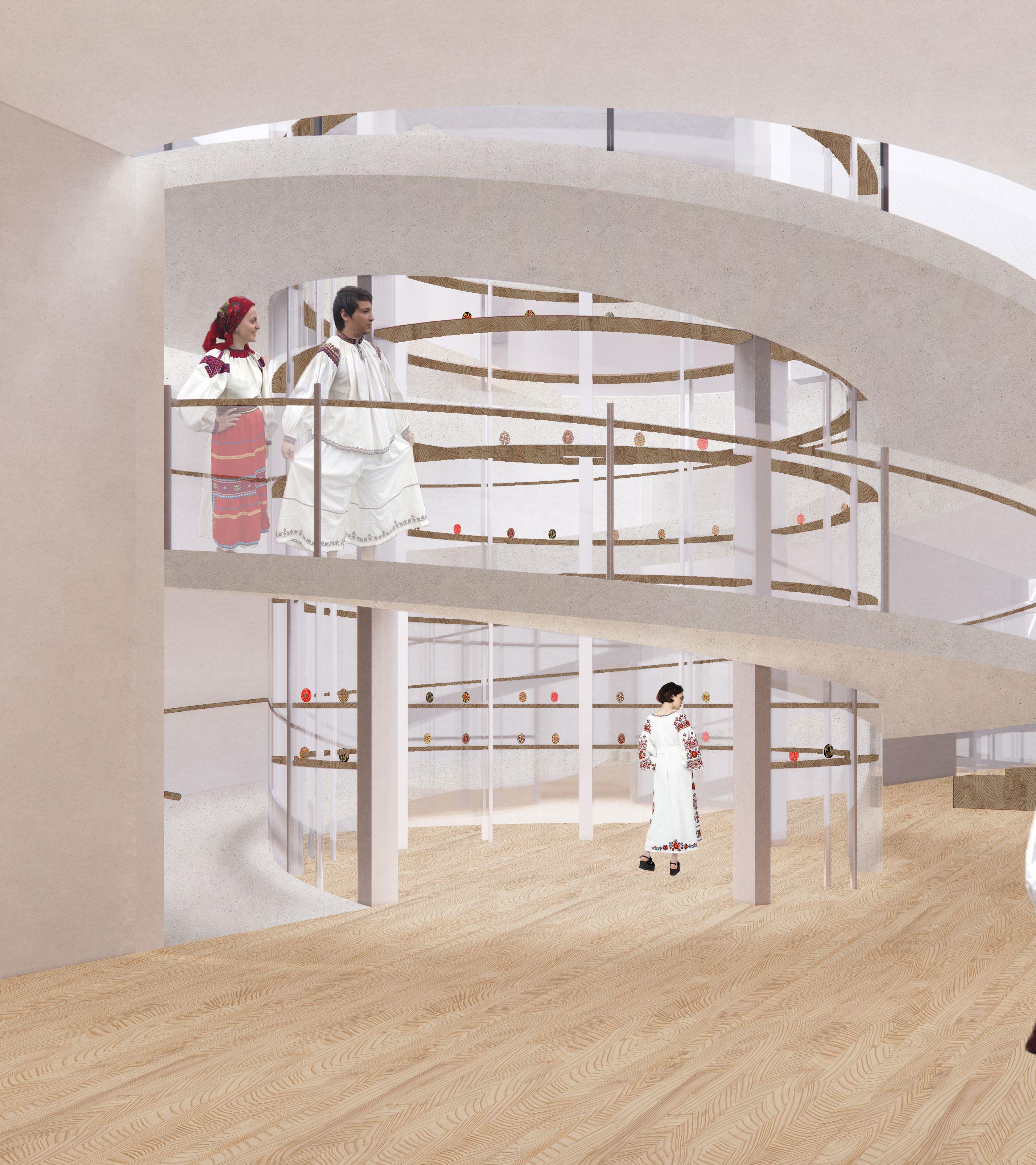
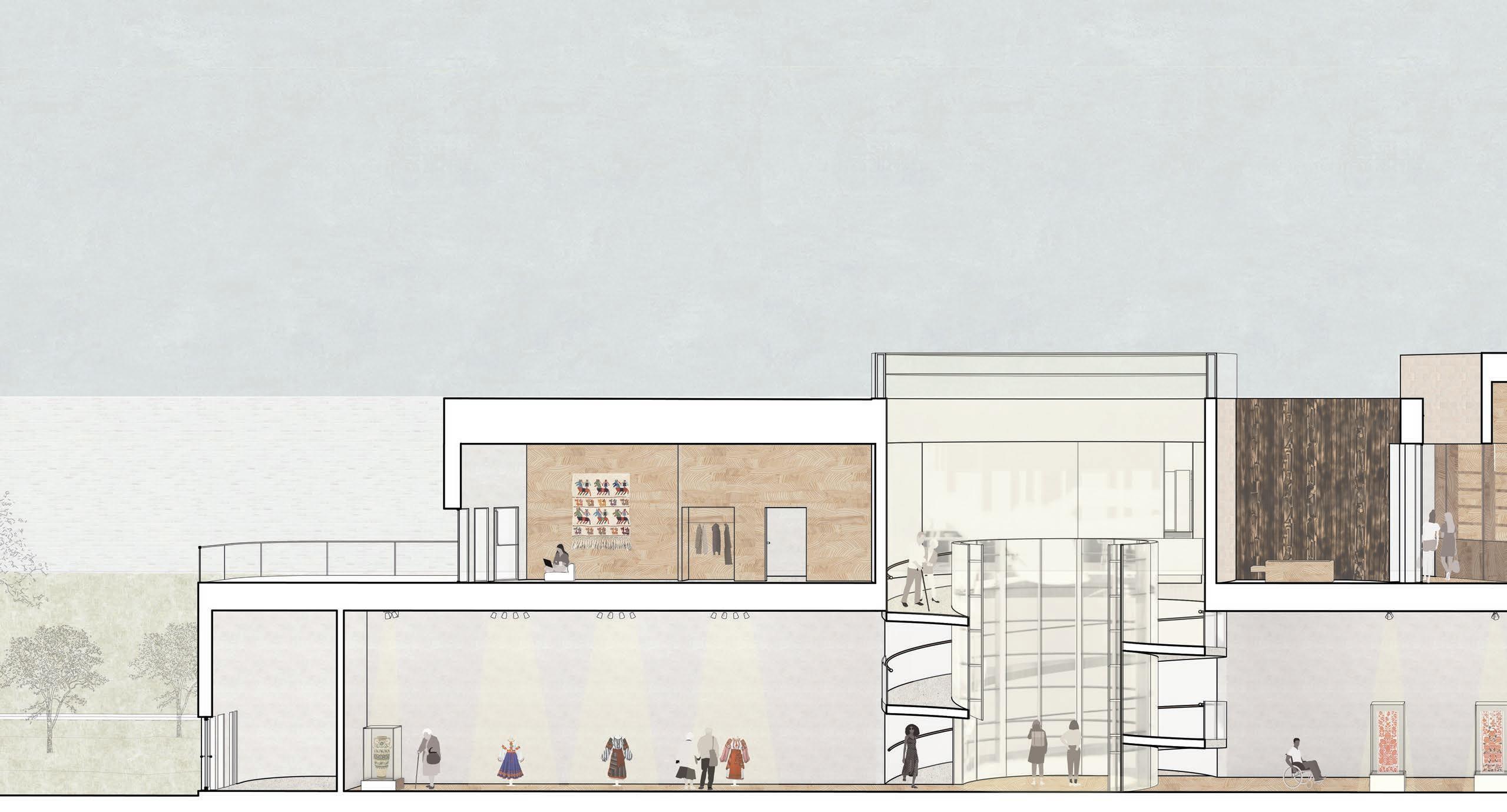
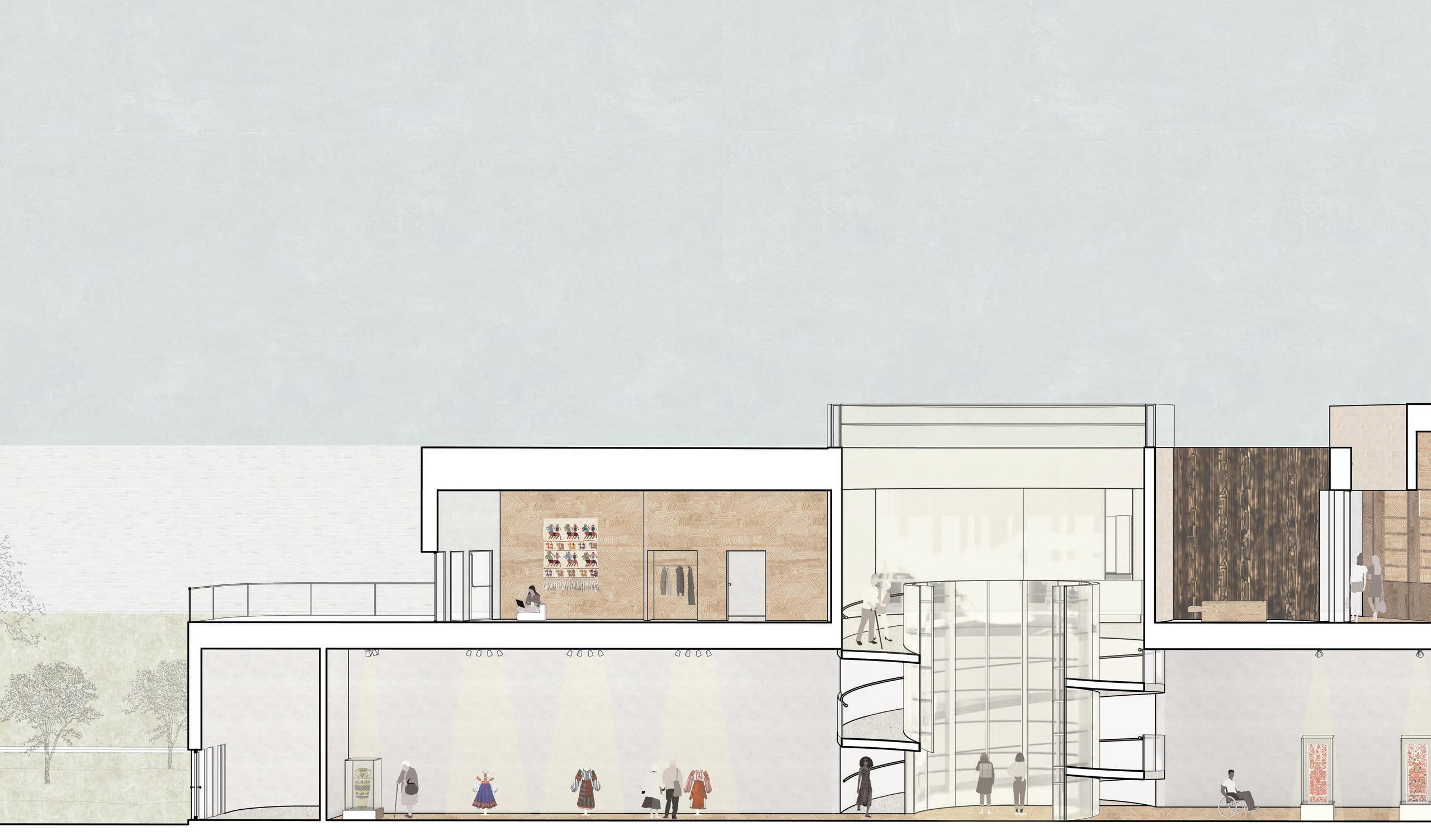
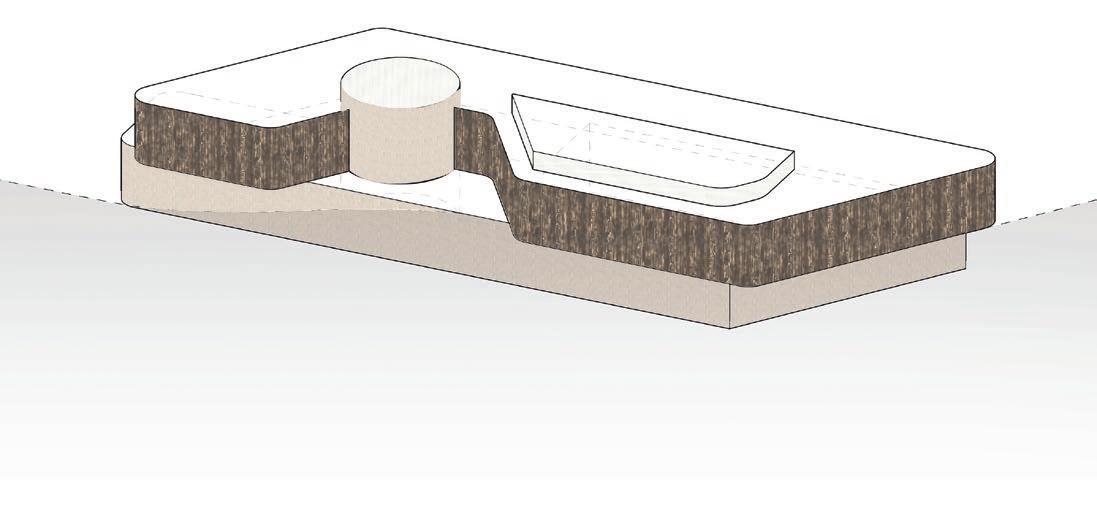
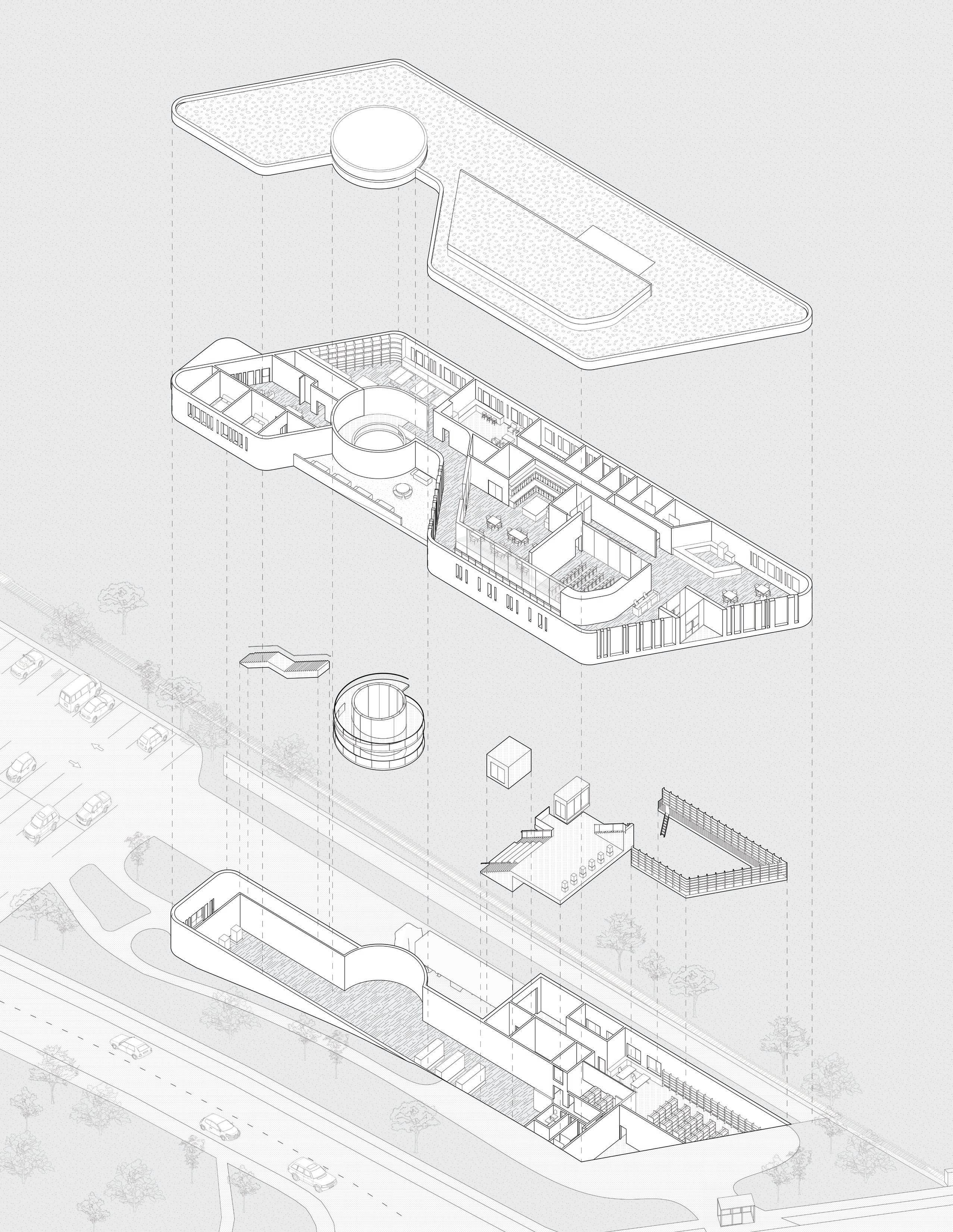
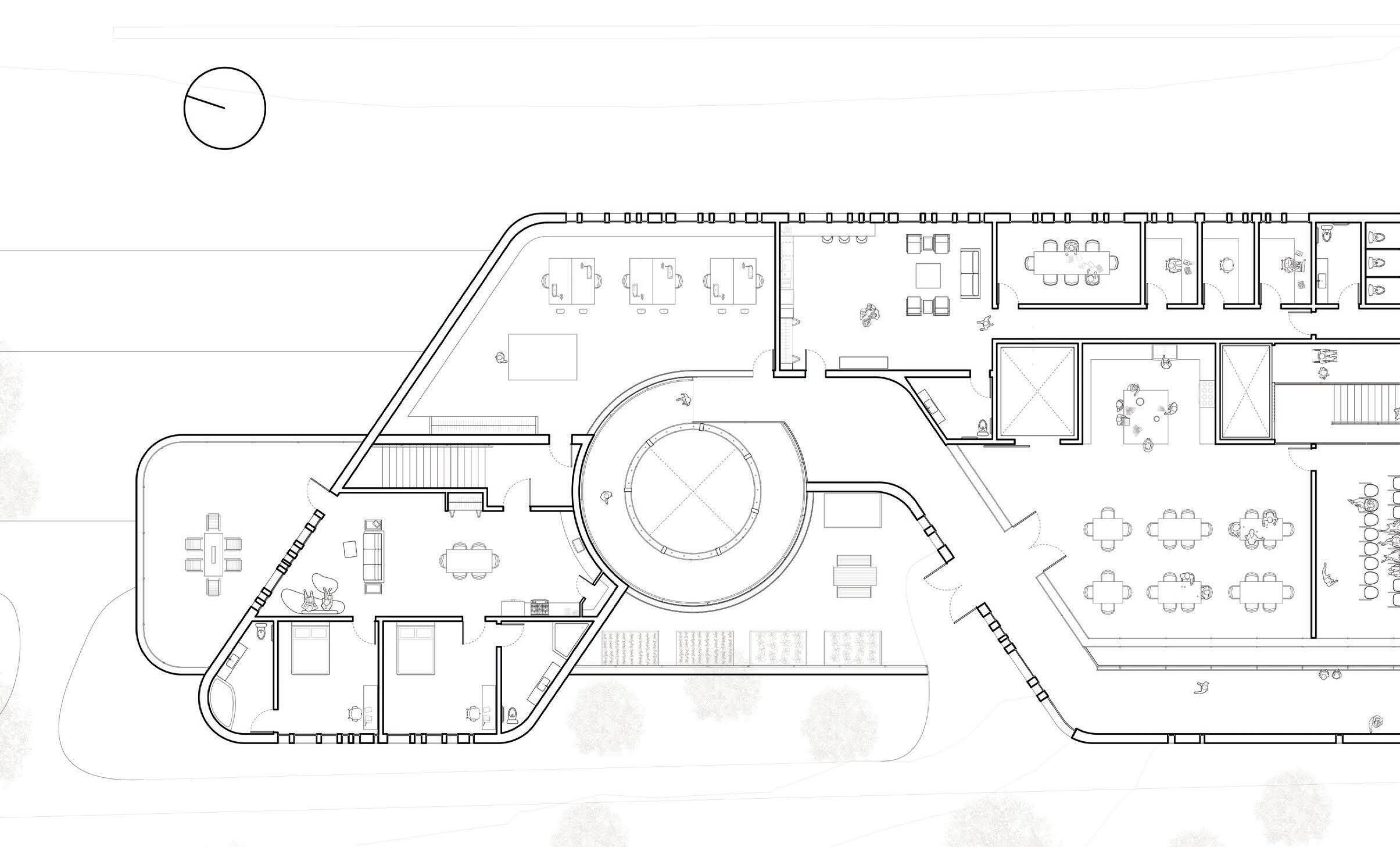
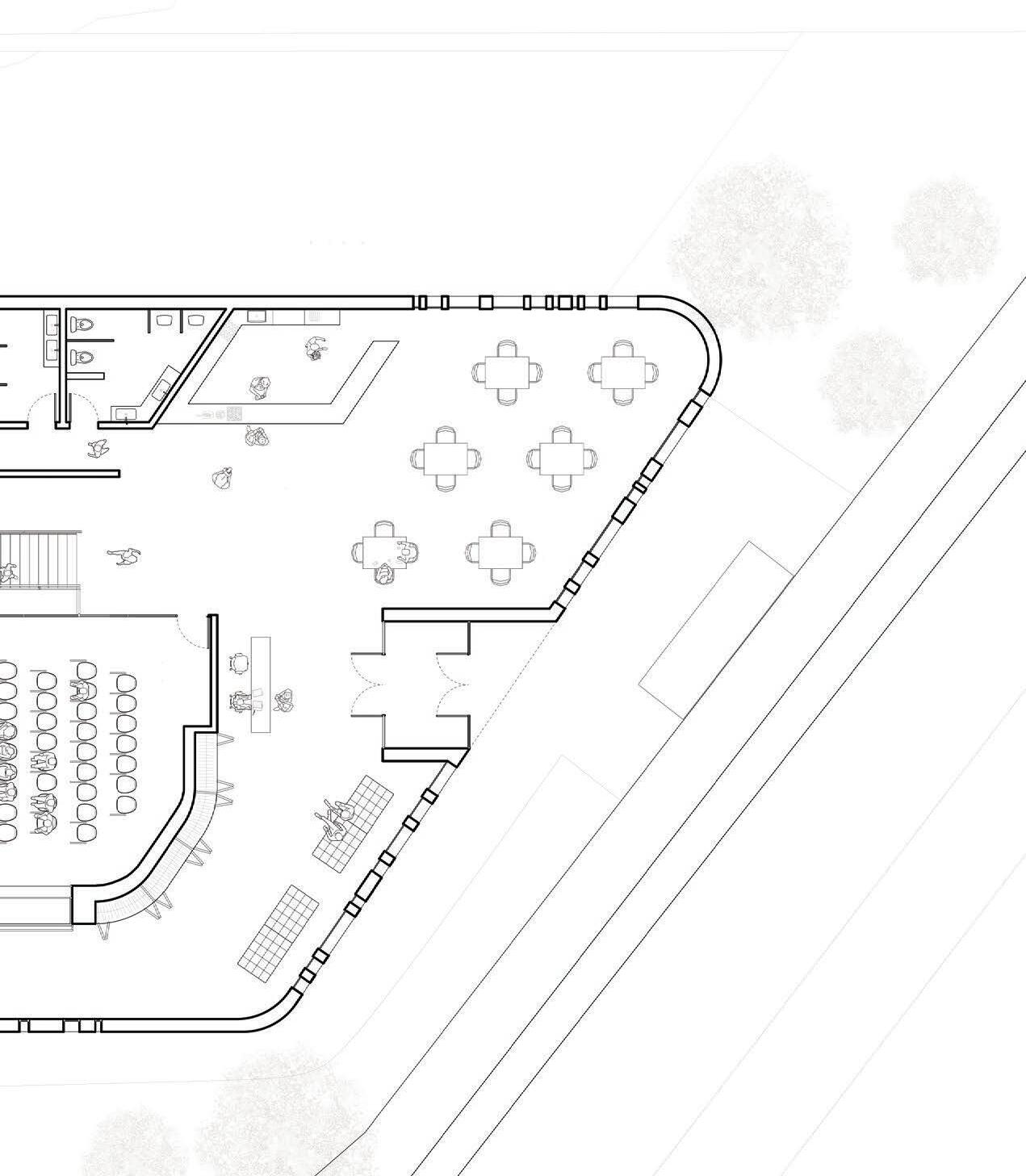
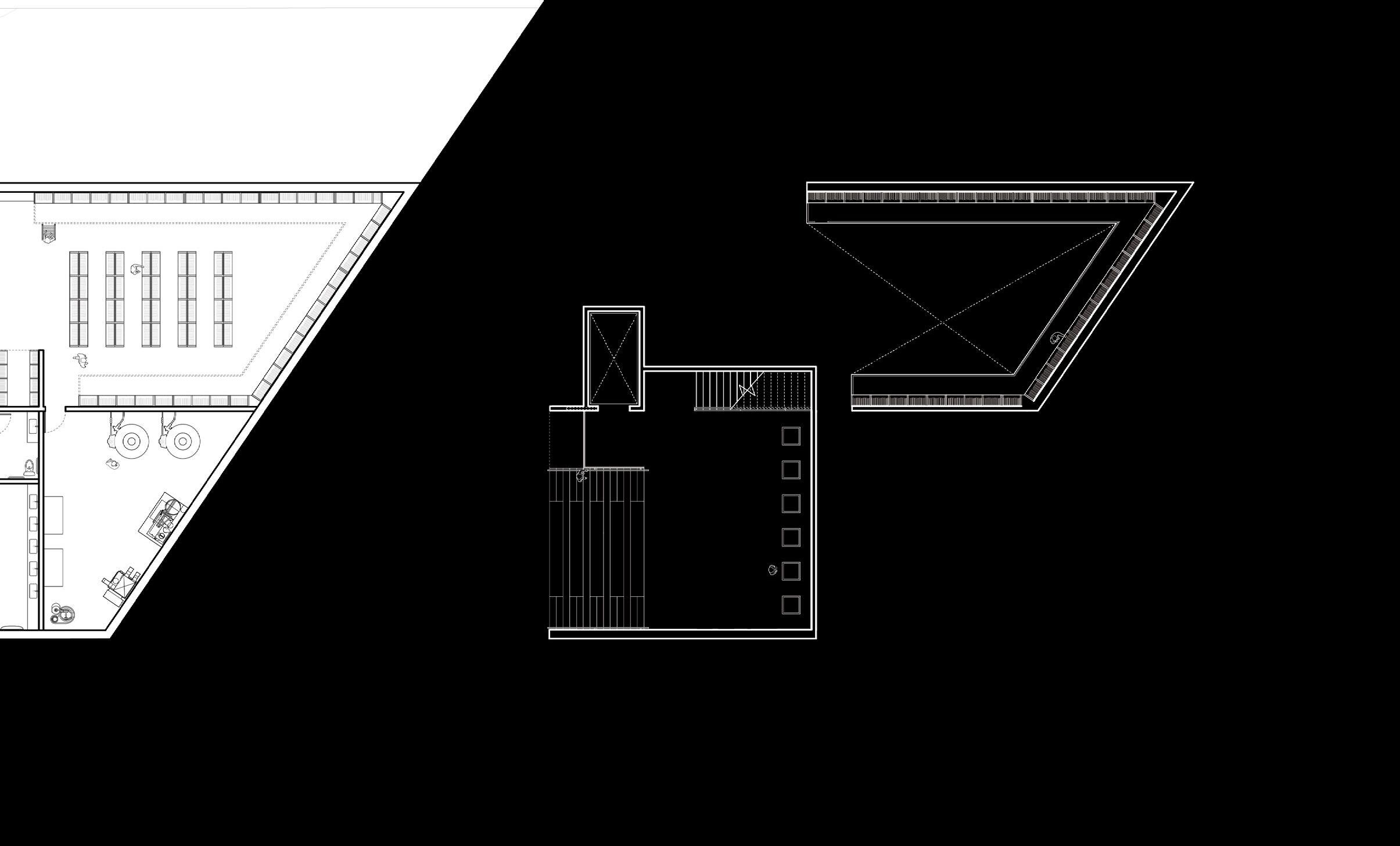
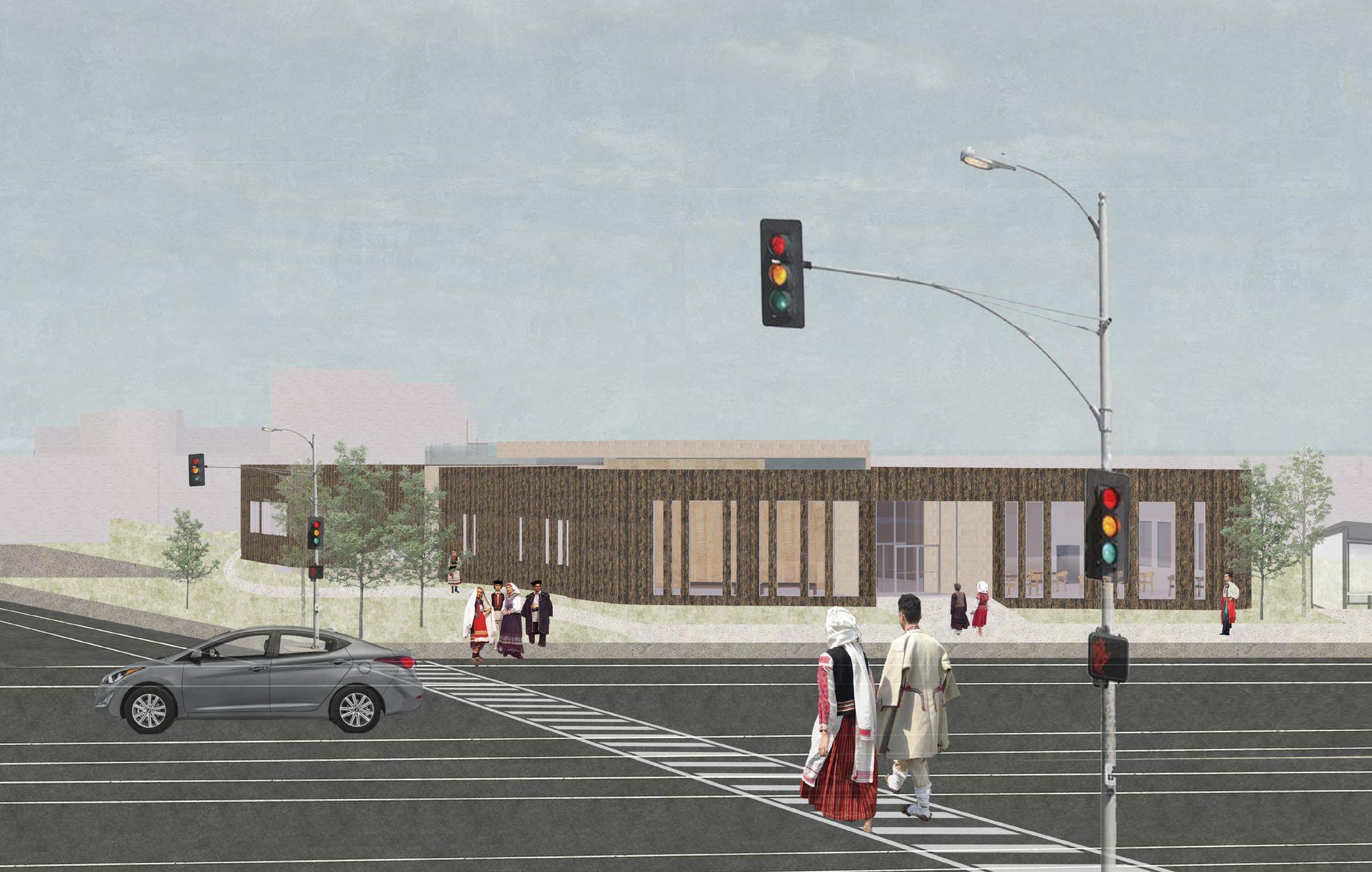
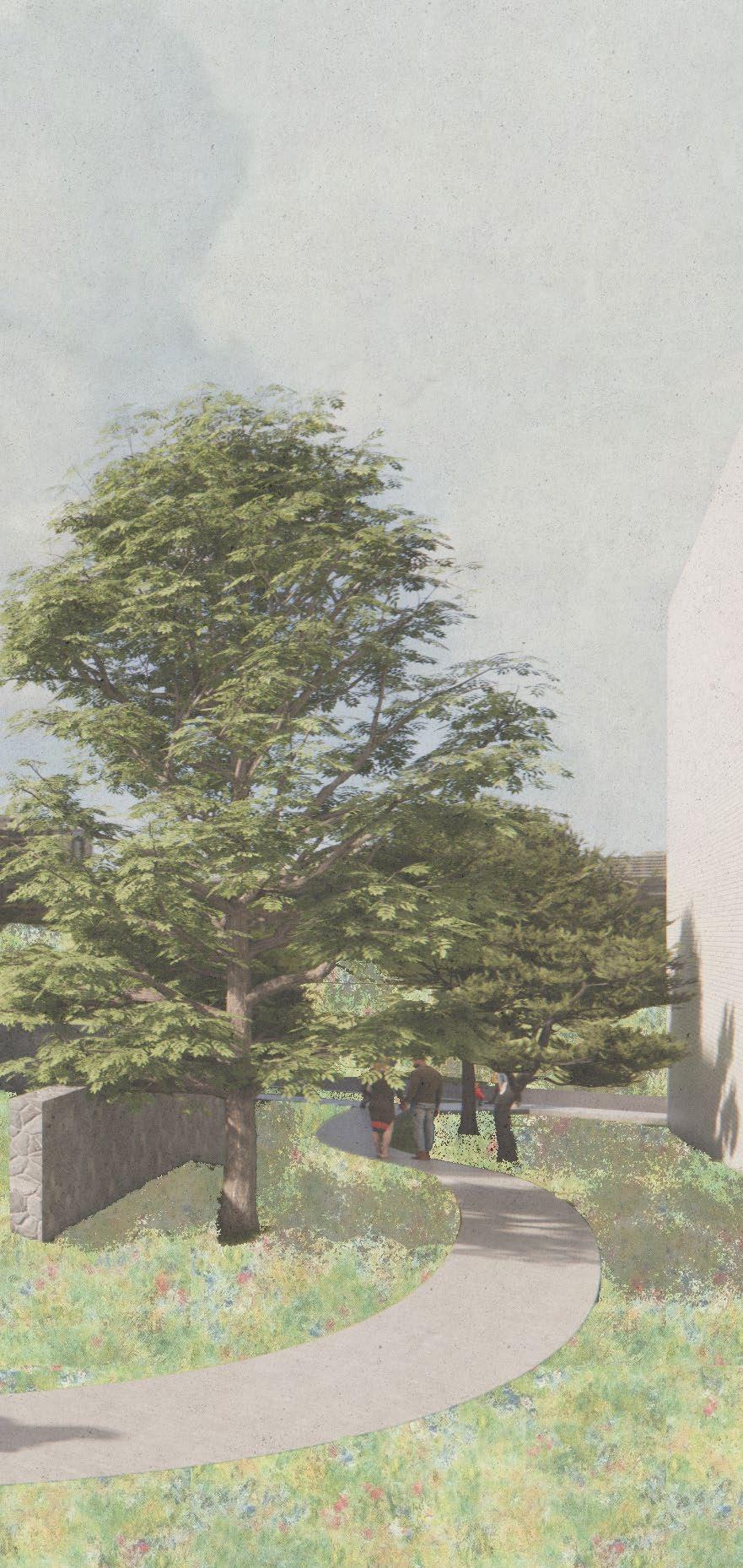
The Living Archive of Ukrainian Culture and Folk Art acts as a cultural centre and museum for Ukrainian Canadians in Toronto, Ontario. With programs for the public and for staff restoring artifacts, this building plays an important role in the preservation and celebration of Ukrainian culture.
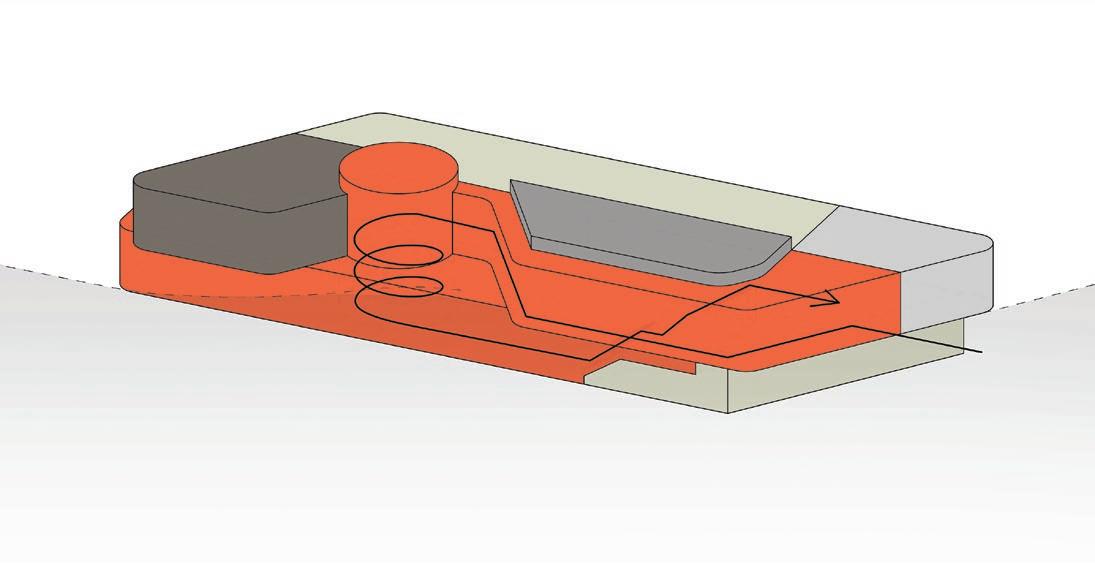
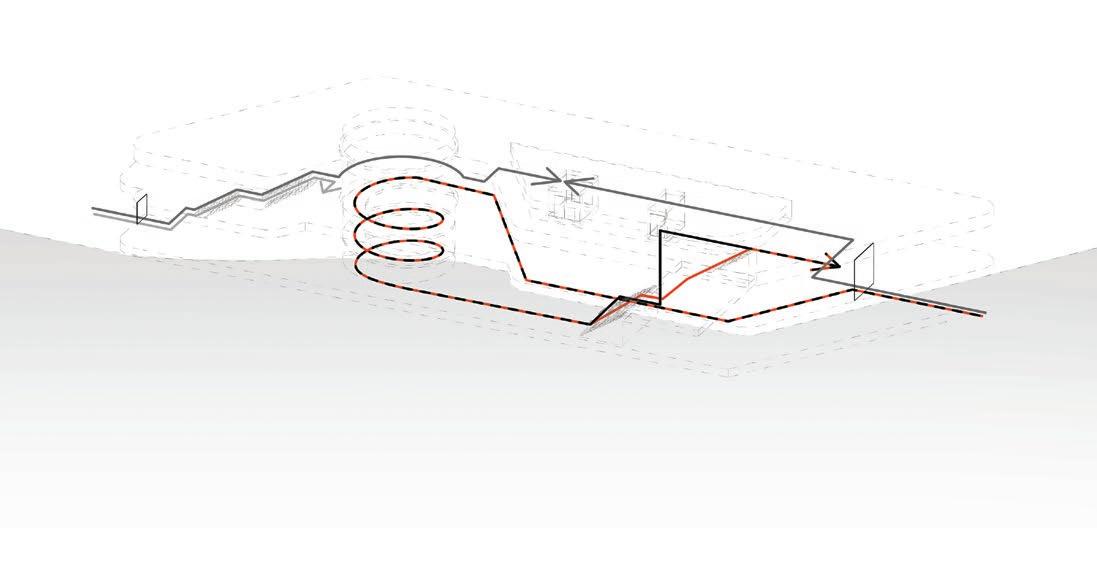
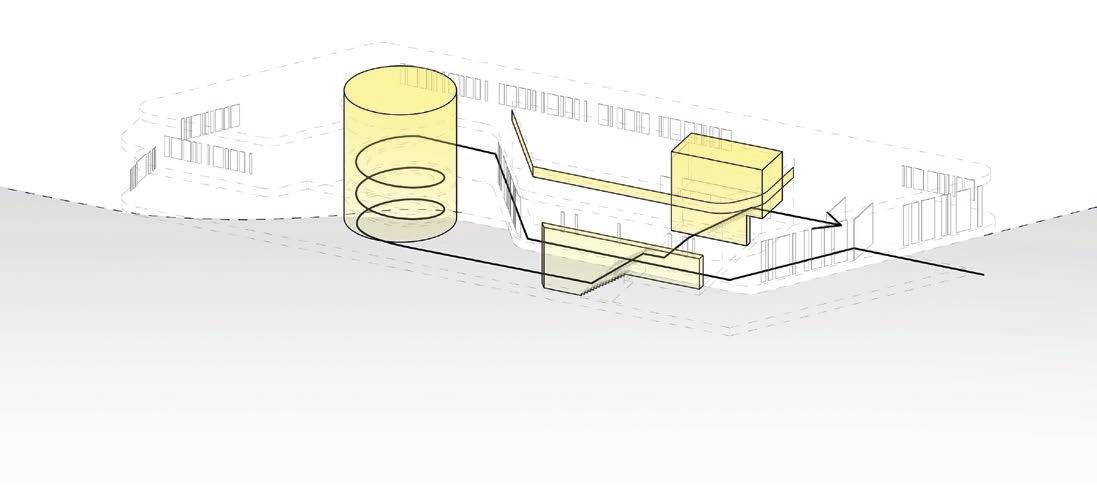
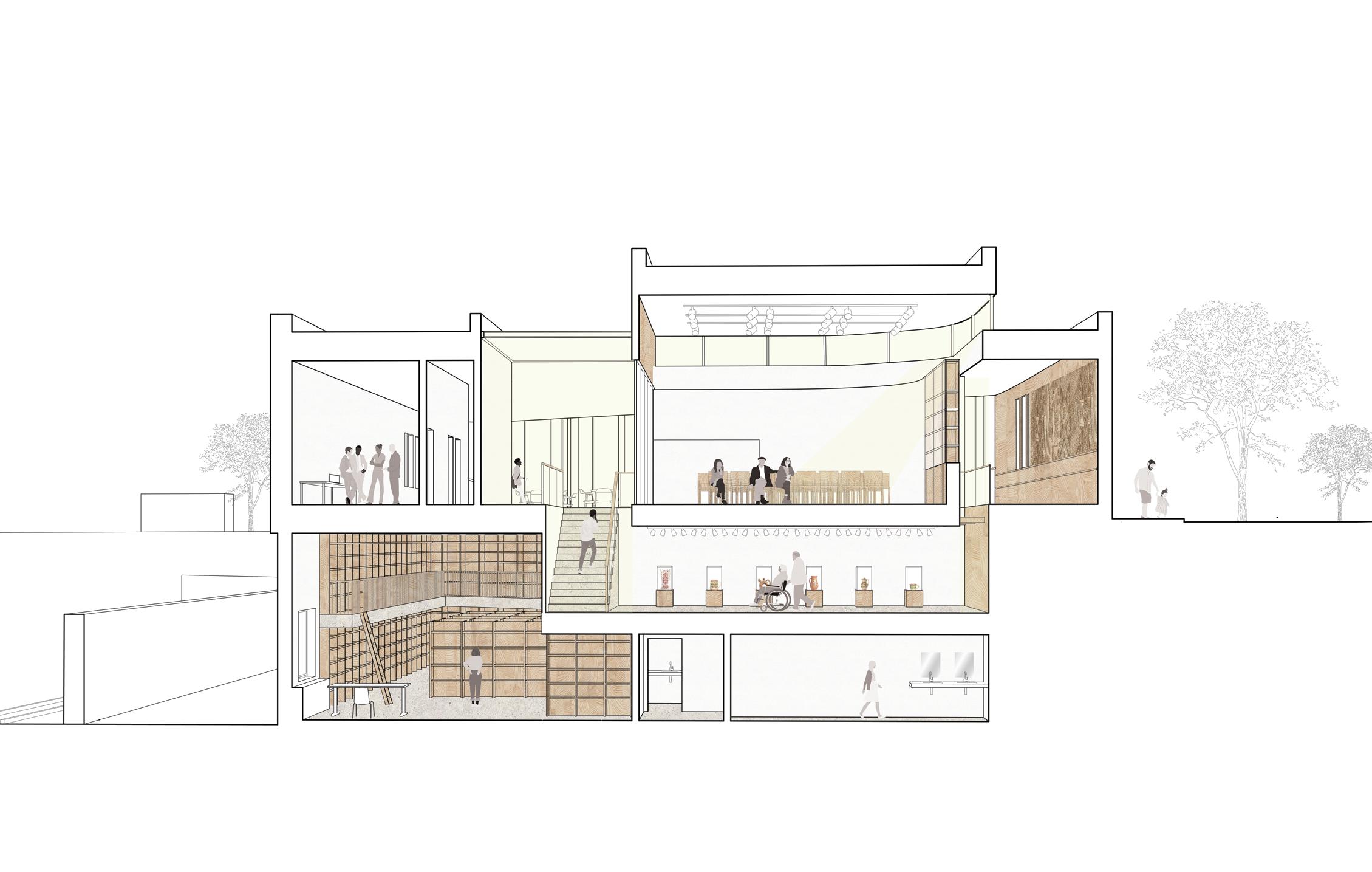
As visitors enter the building, they are guided through learning and crafting spaces on the main level, transitioning into exhibition and performance areas on the lower level. The figure-eight like circulation curates an experience that allows visitors to learn about Ukrainian history and iconography and gain an appreciation for the bright folk art, traditional costumes and dances. Materials throughout the structure draw attention to the active destruction and loss of Ukrainain culture while also incorporating references to a newfound Ukrainian-Canadian identity.
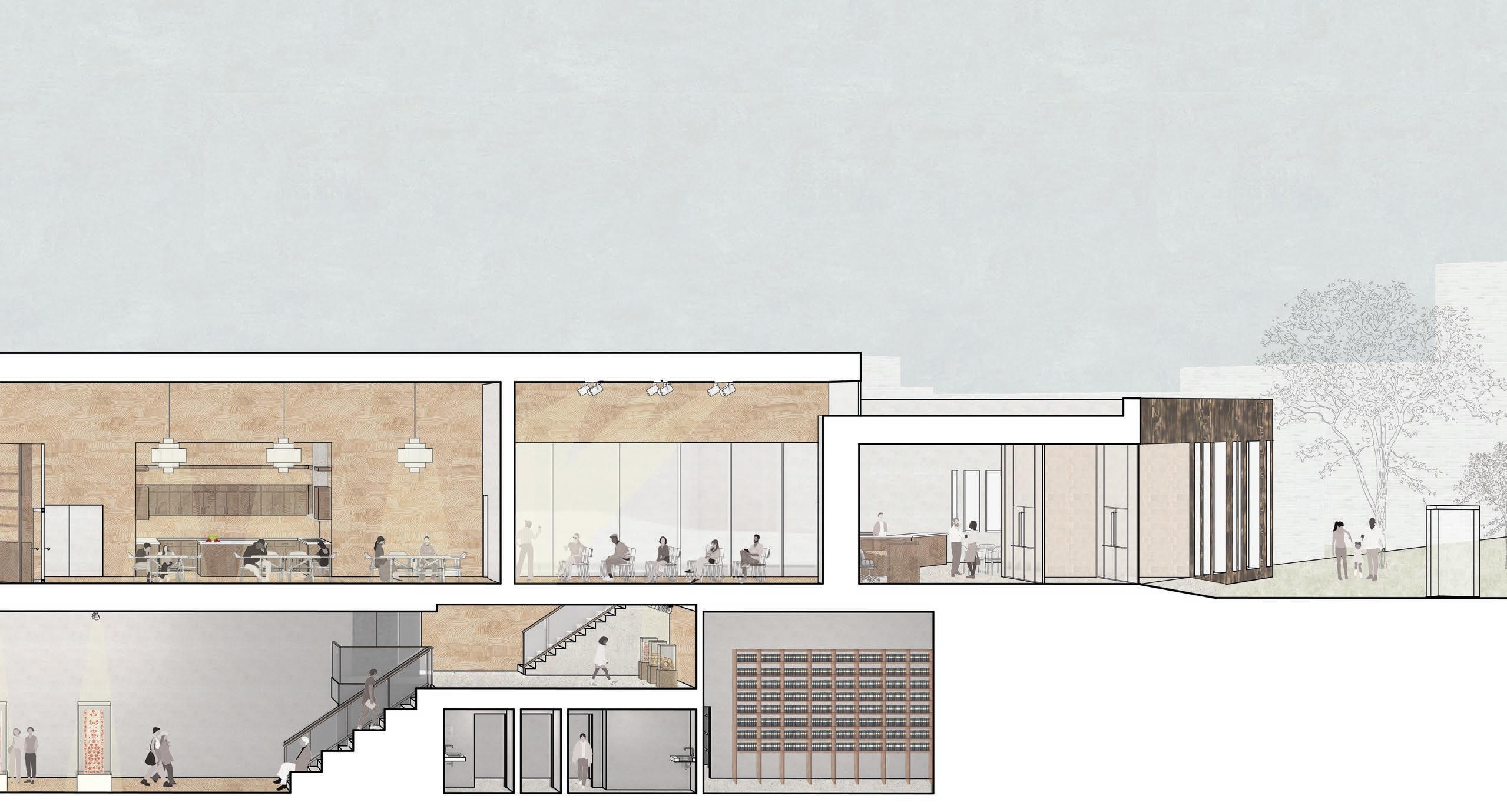
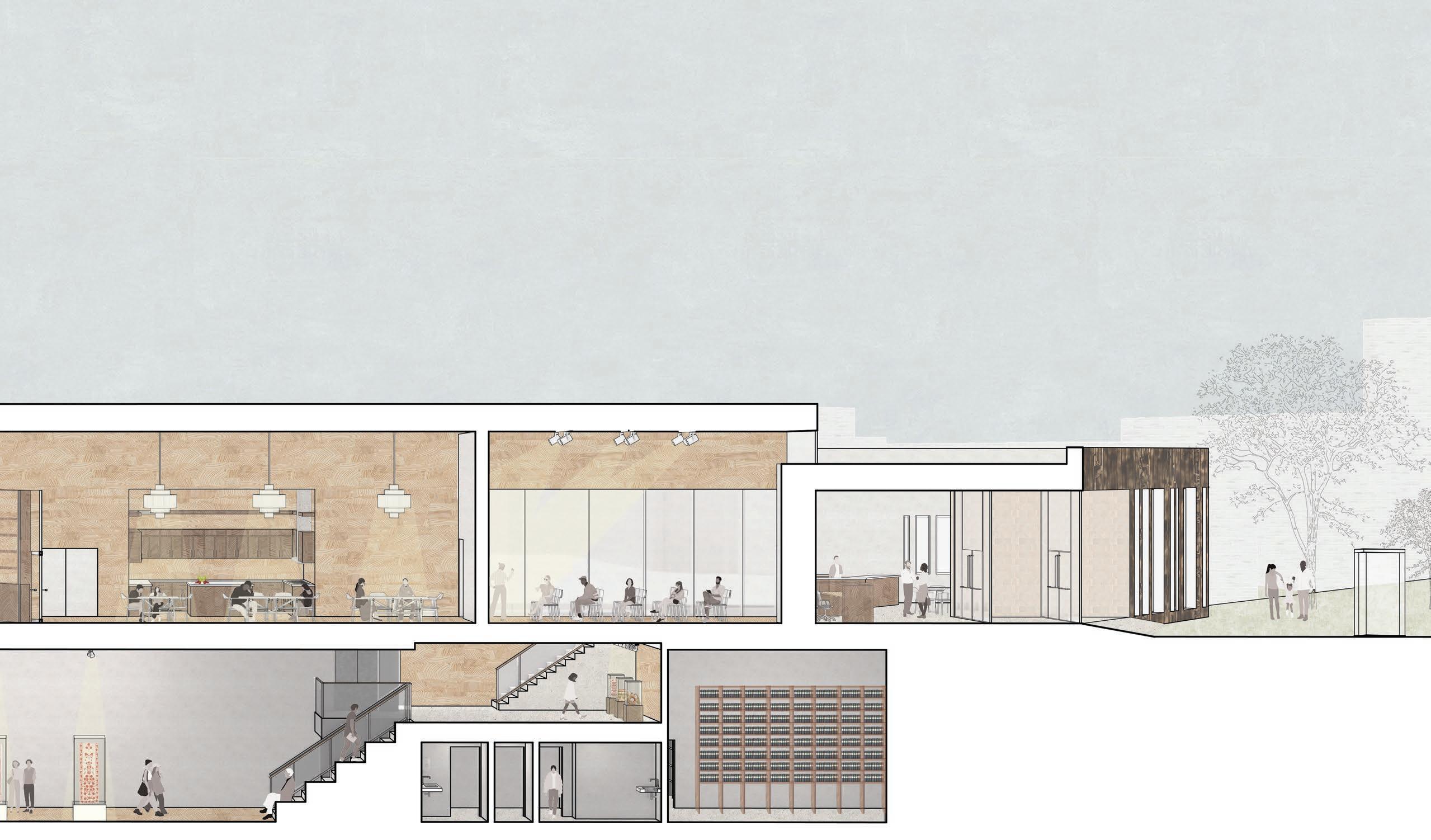
LONGITUDINAL SECTION
represents the
stone is sourced from Manitoba where the Ukrainian population percentage is highest in Canada. Being used on several governmental and cultural Canadian buildings, it represents a place of importance for Ukrainian Canadians.
Charred wood
destruction of Ukrainian culture. Mixed into the wood is debris from churches that were bombed in Ukraine.
Tyndall
Natural daylight follows the main path of circulation, representing the knowledge and appreciation discovered by users as they wind through the space.
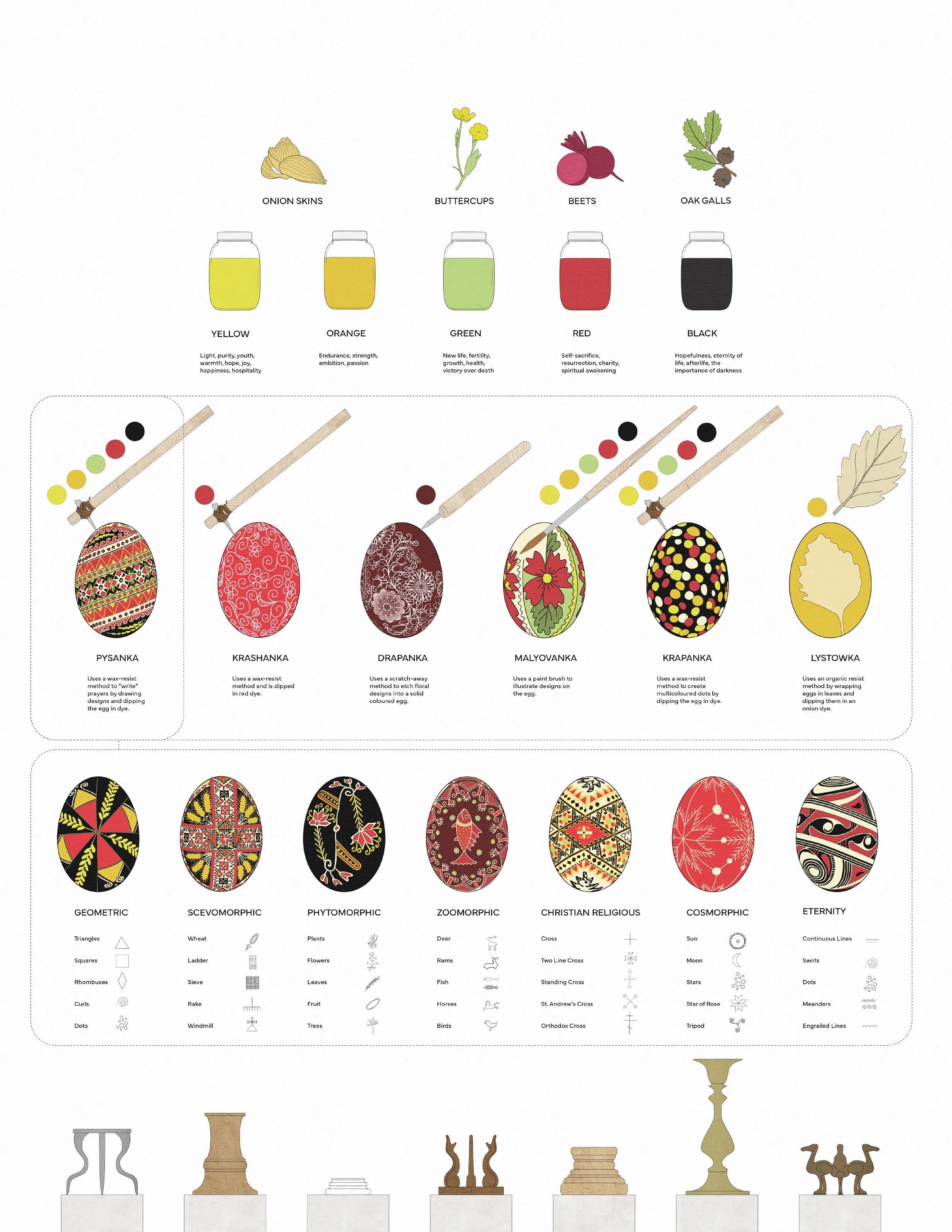
Onion Skins
Buttercups
Beets
Oak Galls
Yellow Orange Green Red Black Light, purity, youth, warmth, hope, joy, happiness, hospitality
growth, health, victory over death Self-sacrifice, resurrection, charity, spiritual awakening
eternity of life, afterlife, the importance of darkness
Uses a wax-resist method to “write” prayers by drawinsg designs and dipping the egg in dye.
Uses a wax-resist method and is dipped in red dye.
Uses a scratch-away method to etch floral designs into a solid coloured egg.
Uses a paint brush to illustrate designs on the egg.
Uses a wax-resist method to create multicoloured dots by dipping the egg in dye.
Uses an organic resist method by wrapping eggs in leaves and dipping them in an onion dye.
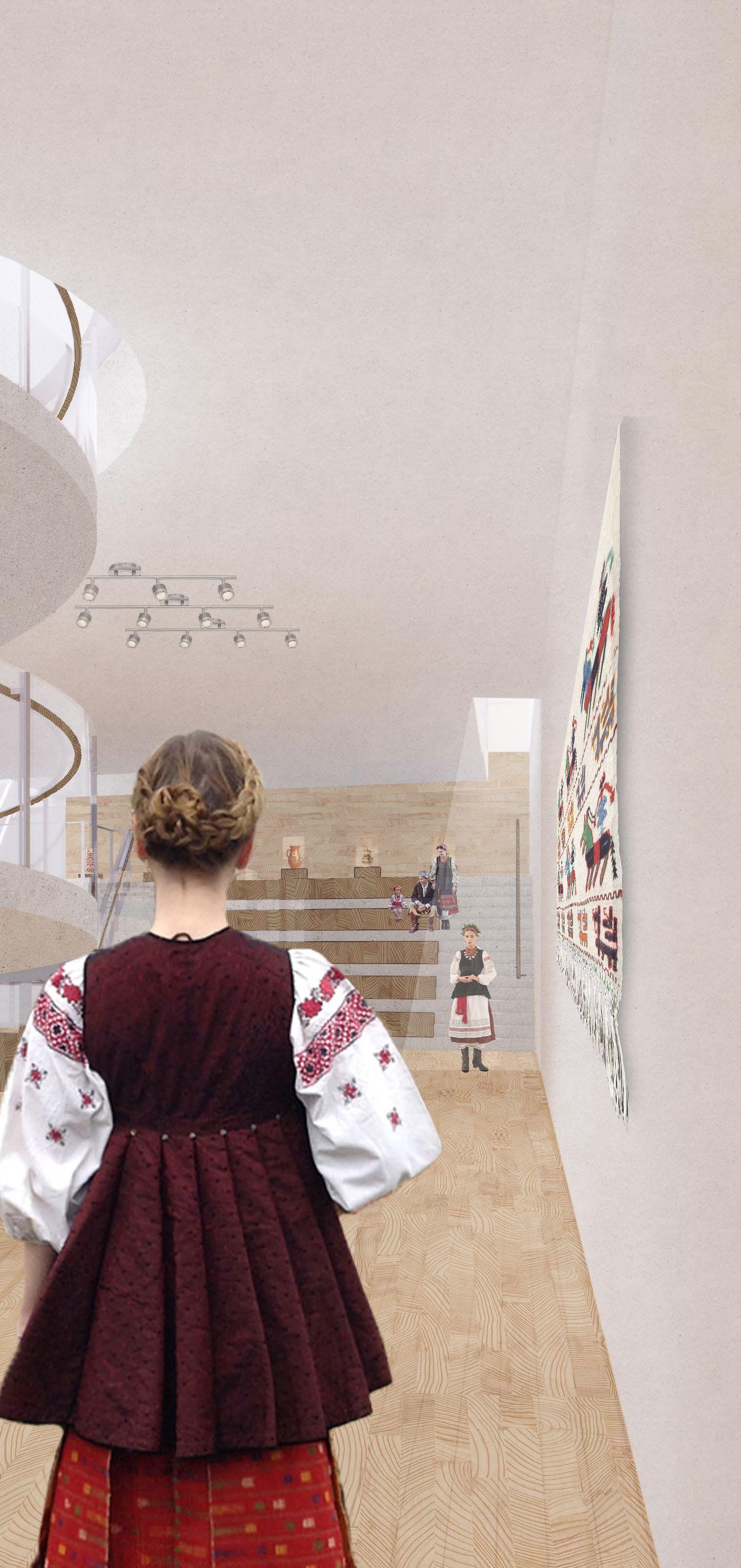
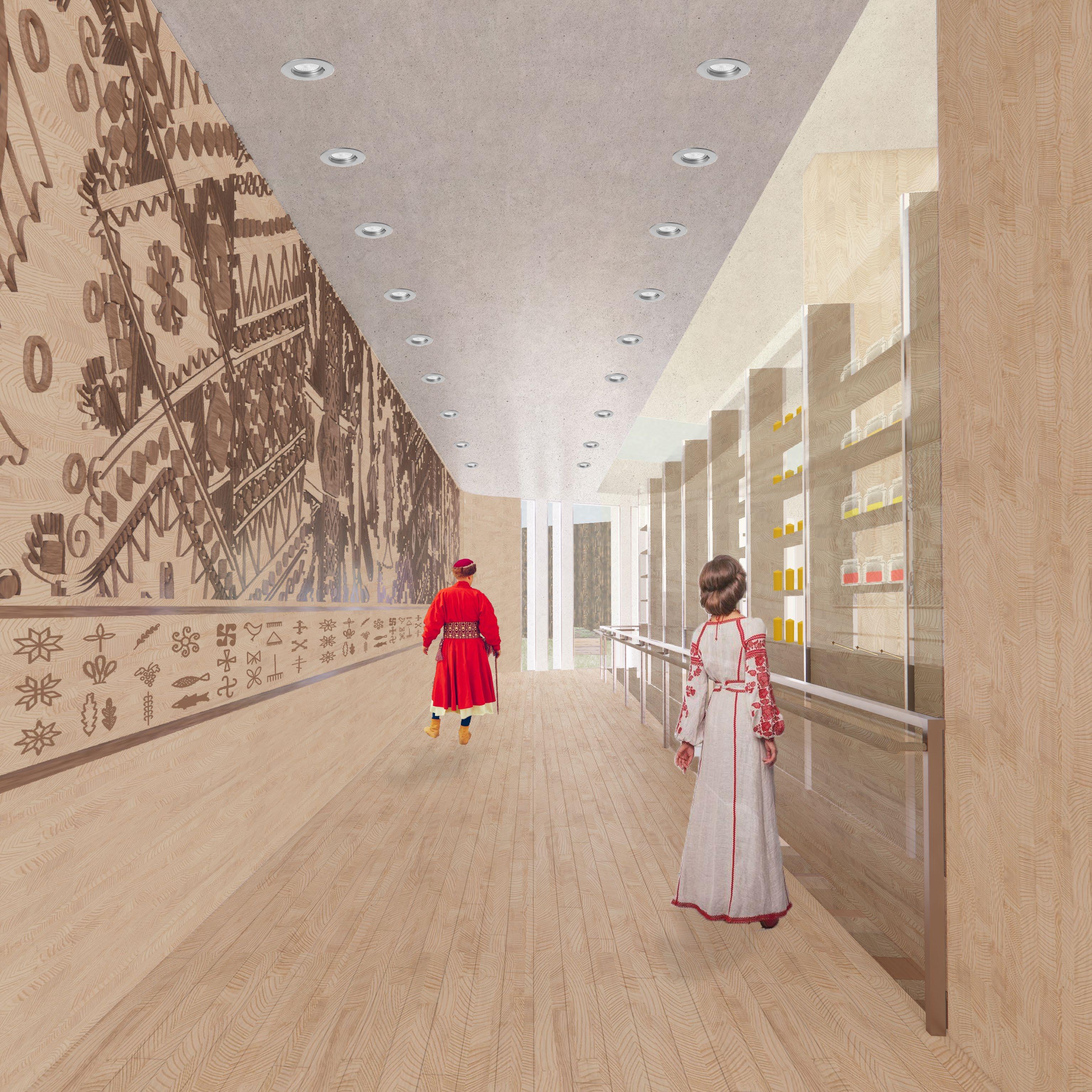
Upon entering the building, visitors explore an educational hallway with a tactile mural where folks can learn about Ukrainian iconography. To the right, there are views into the crafting workshop with materials for traditional pysanky-making on display through the glass.
CROSS SECTION
RIVERSIDE WILDLIFE STATIONS
CLASS: 2B LANDSCAPE DESIGN STUDIO
LOCATION: CAMBRIDGE, ONTARIO
INSTRUCTOR: JANE MAH HUTTON
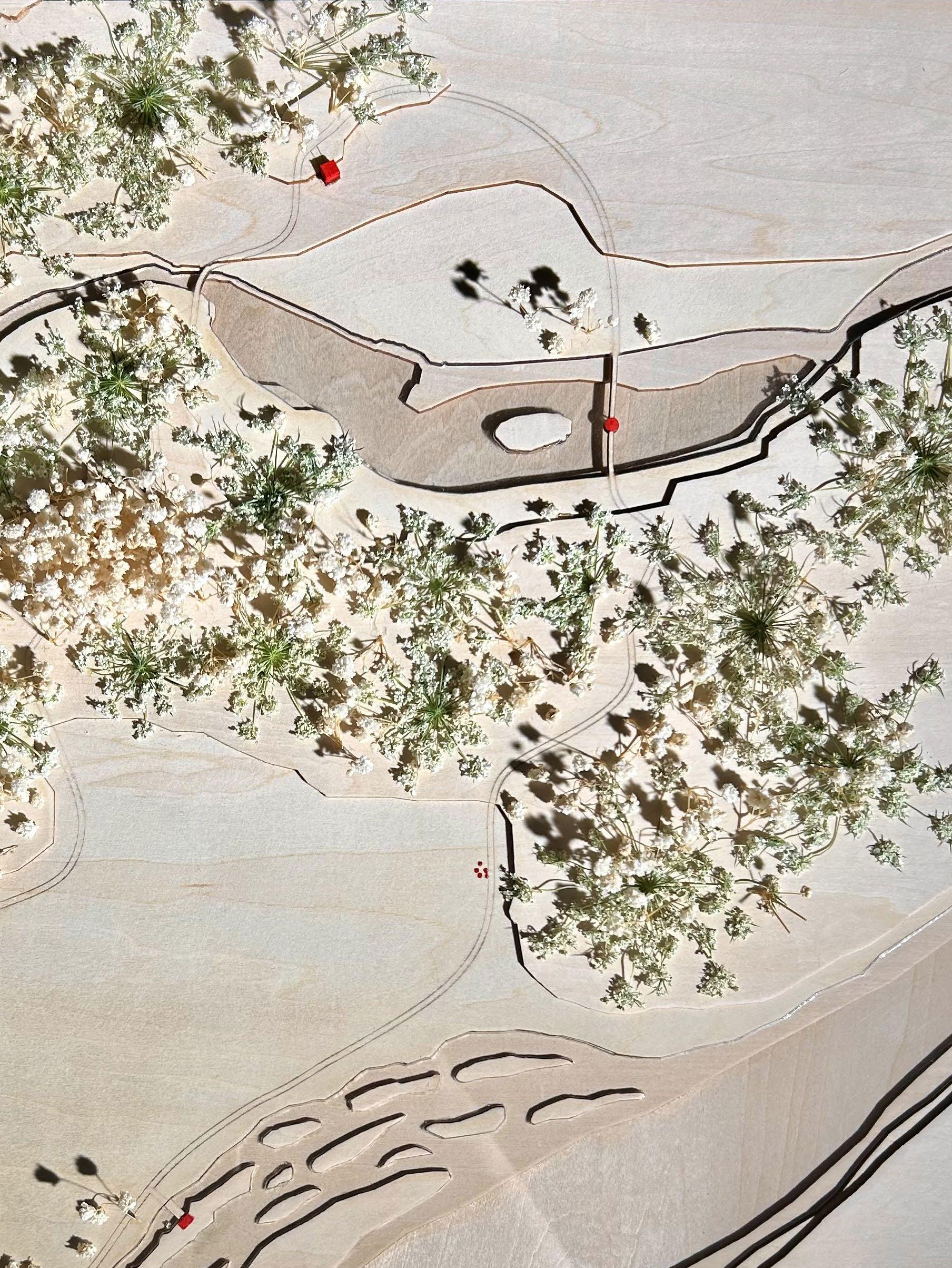
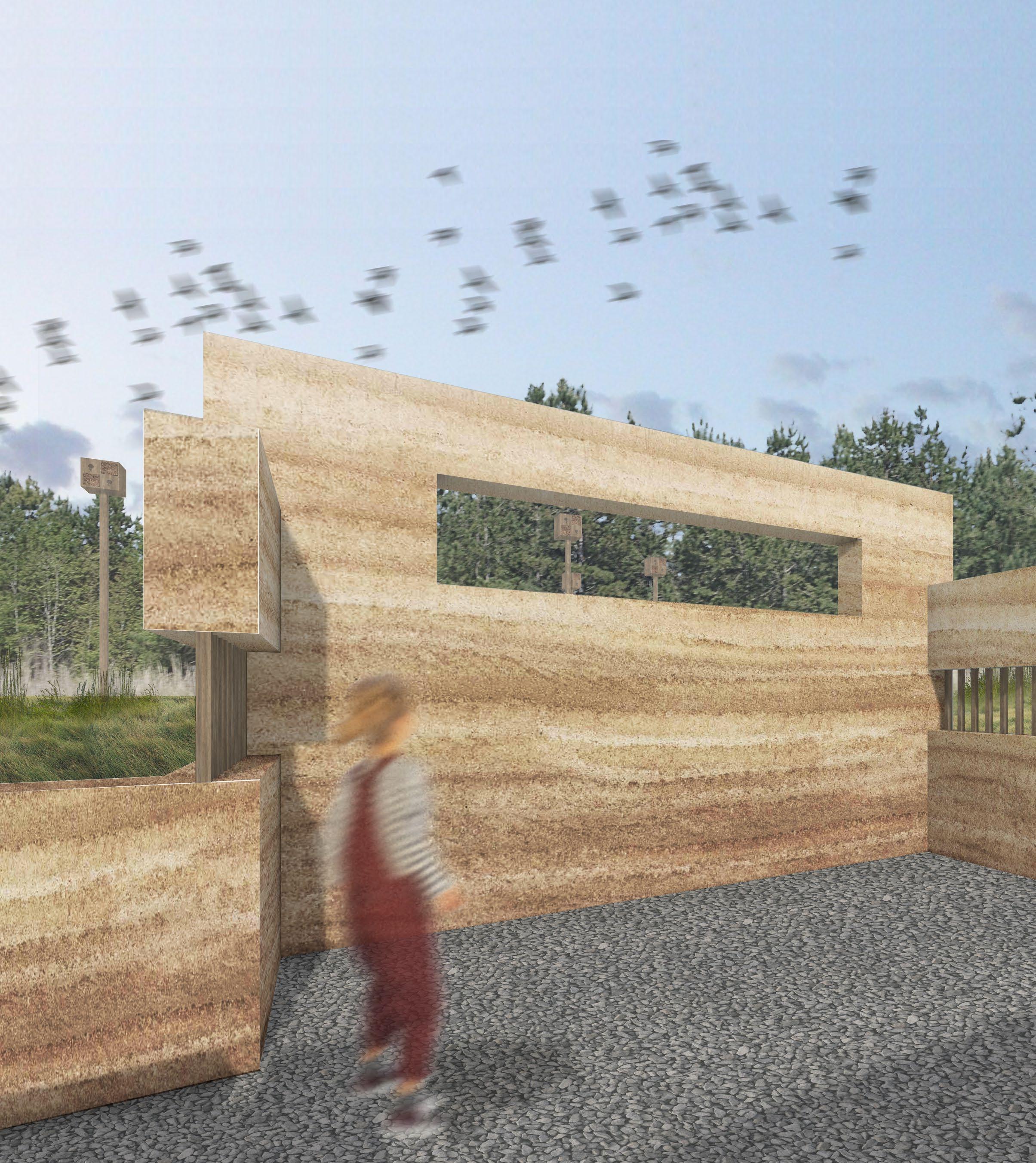
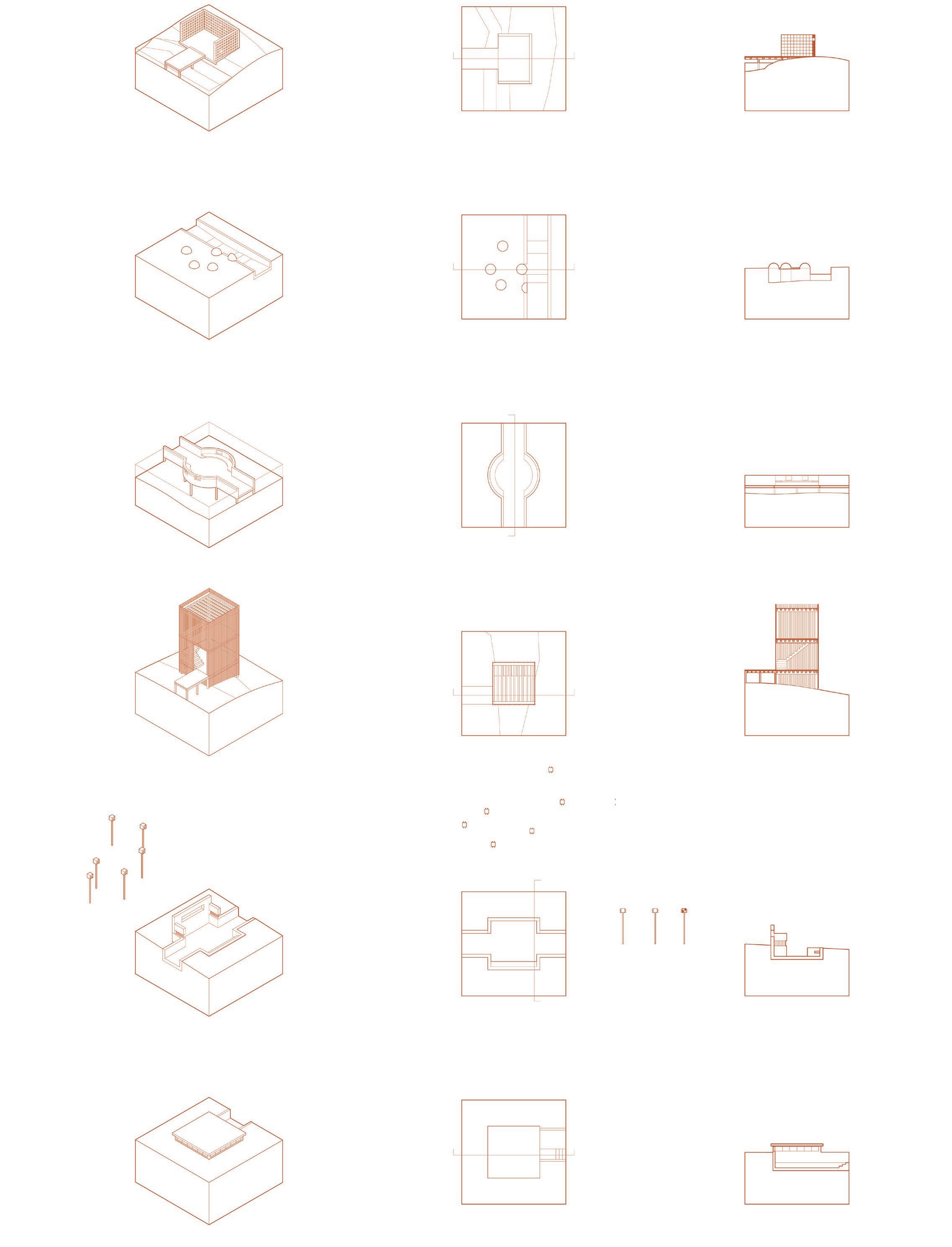
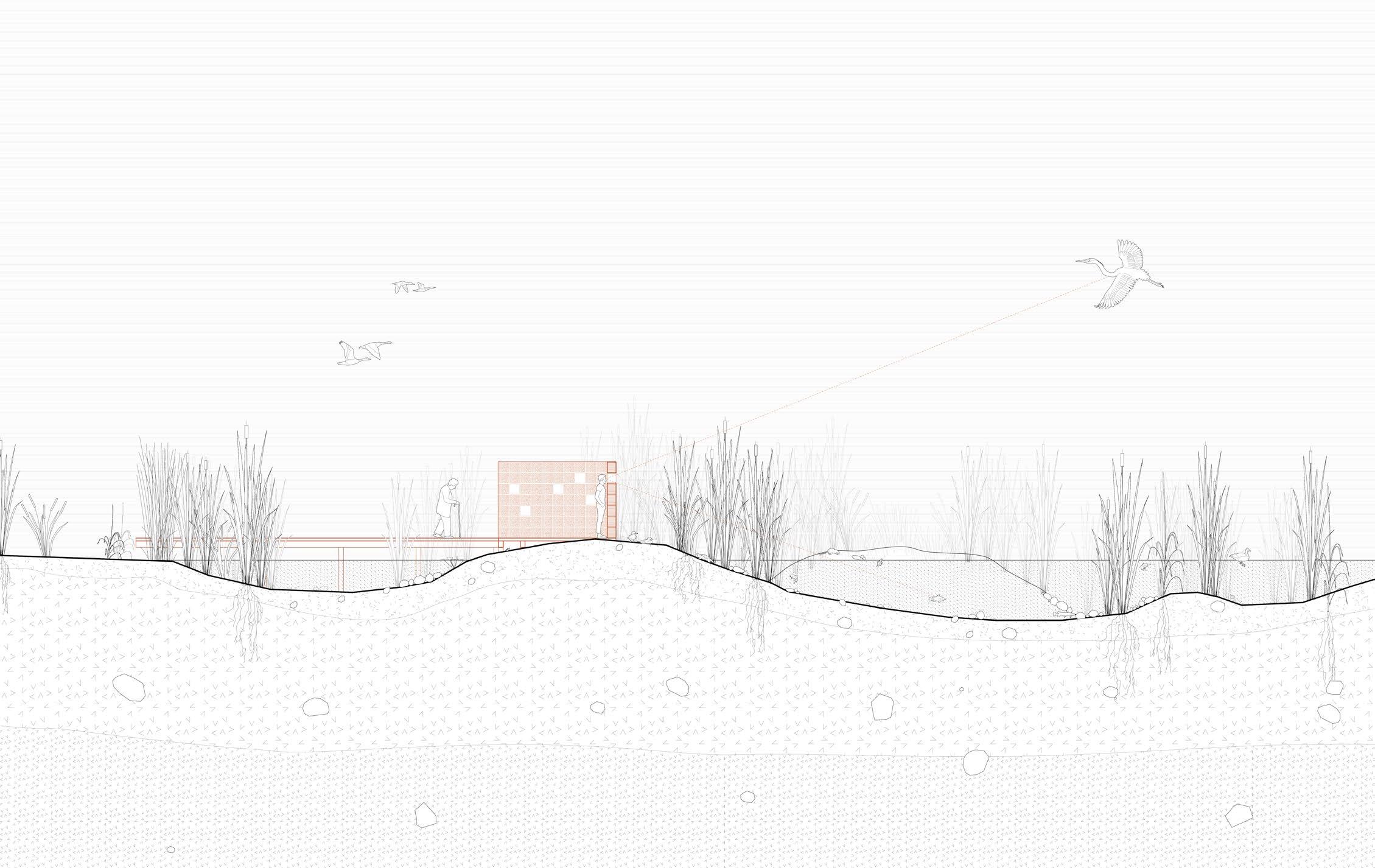
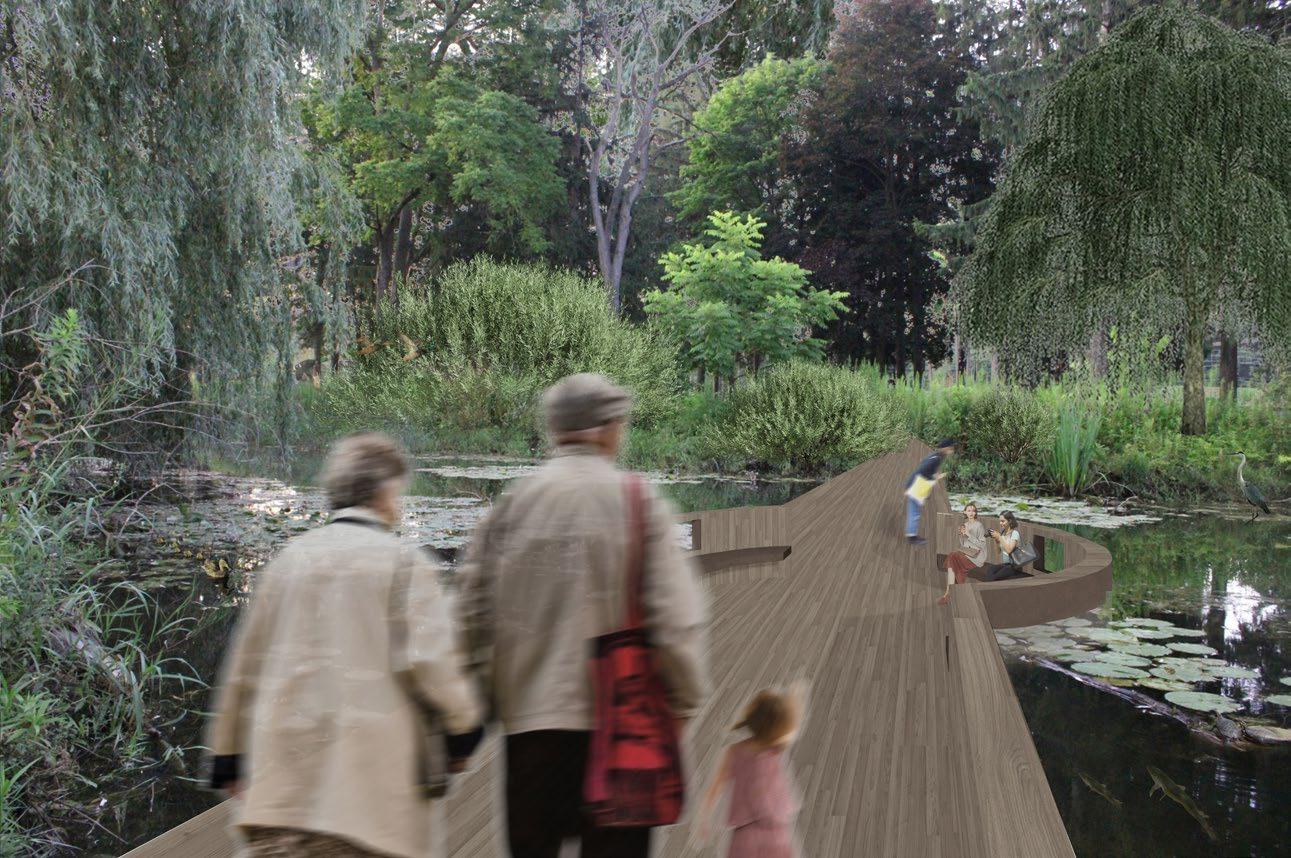
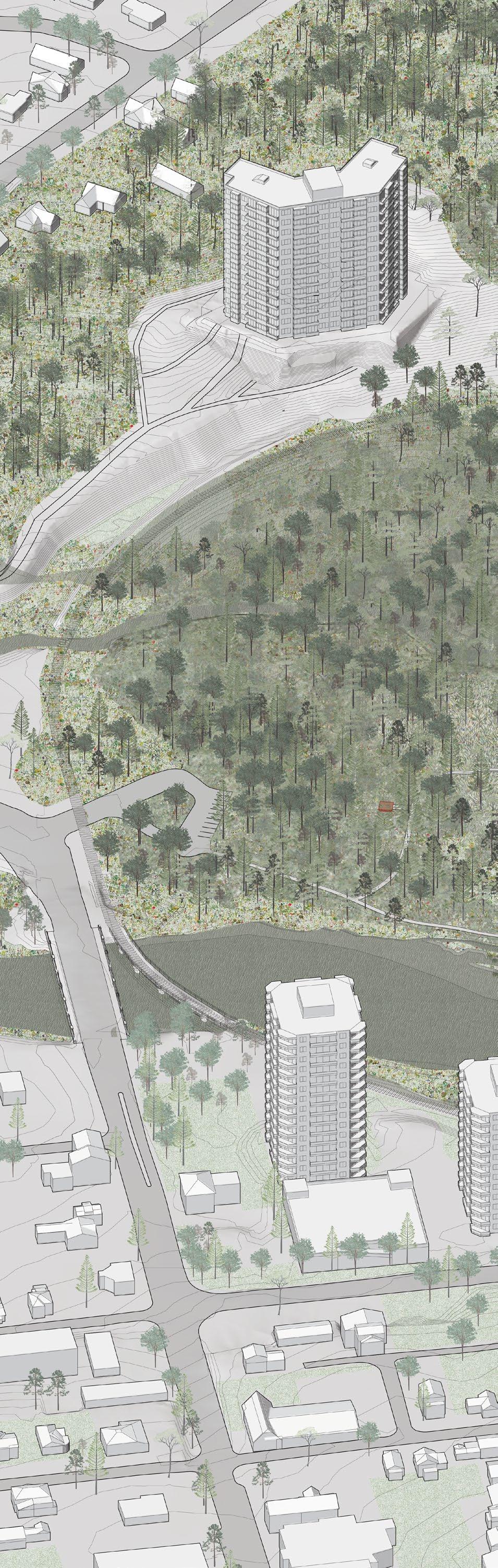
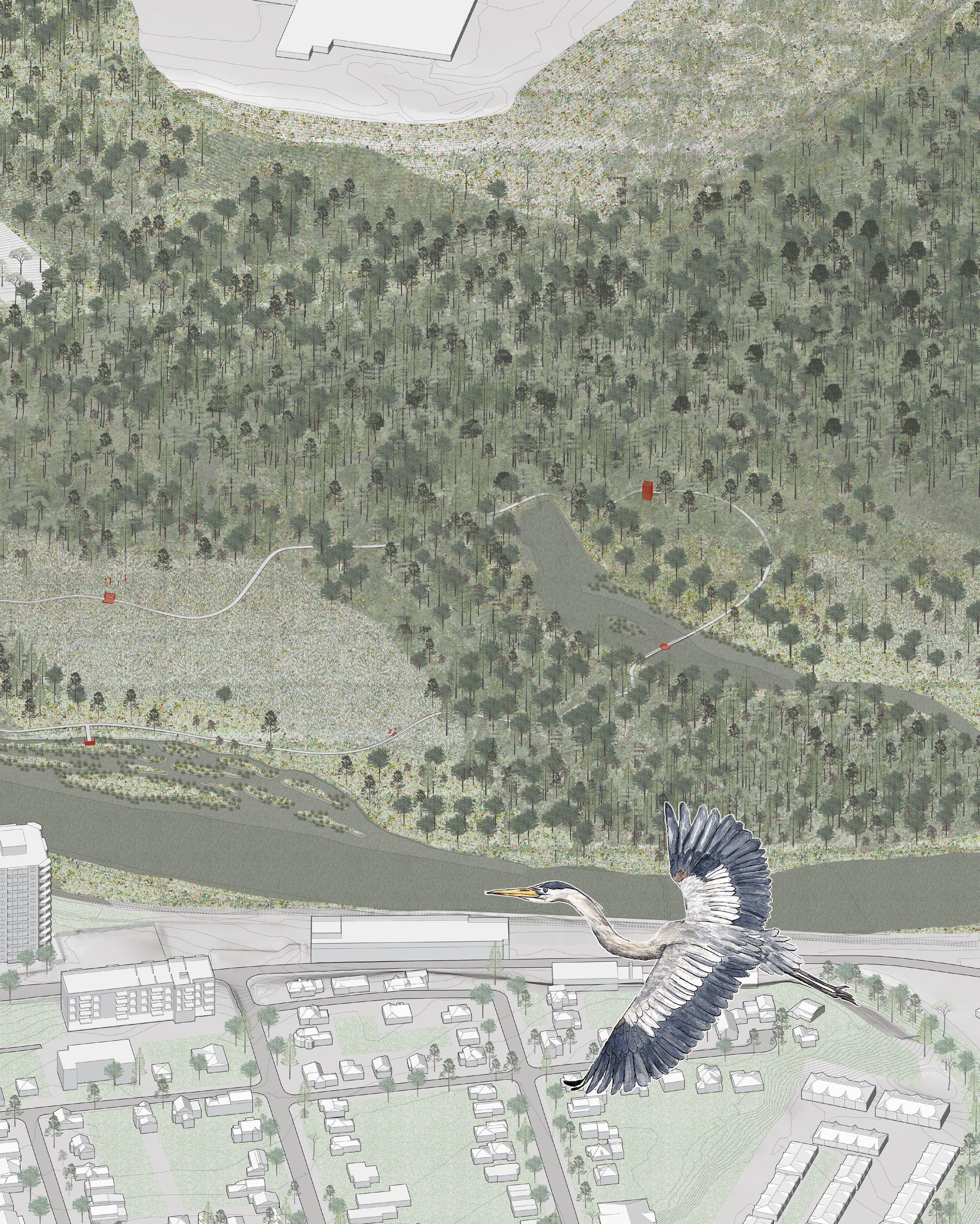
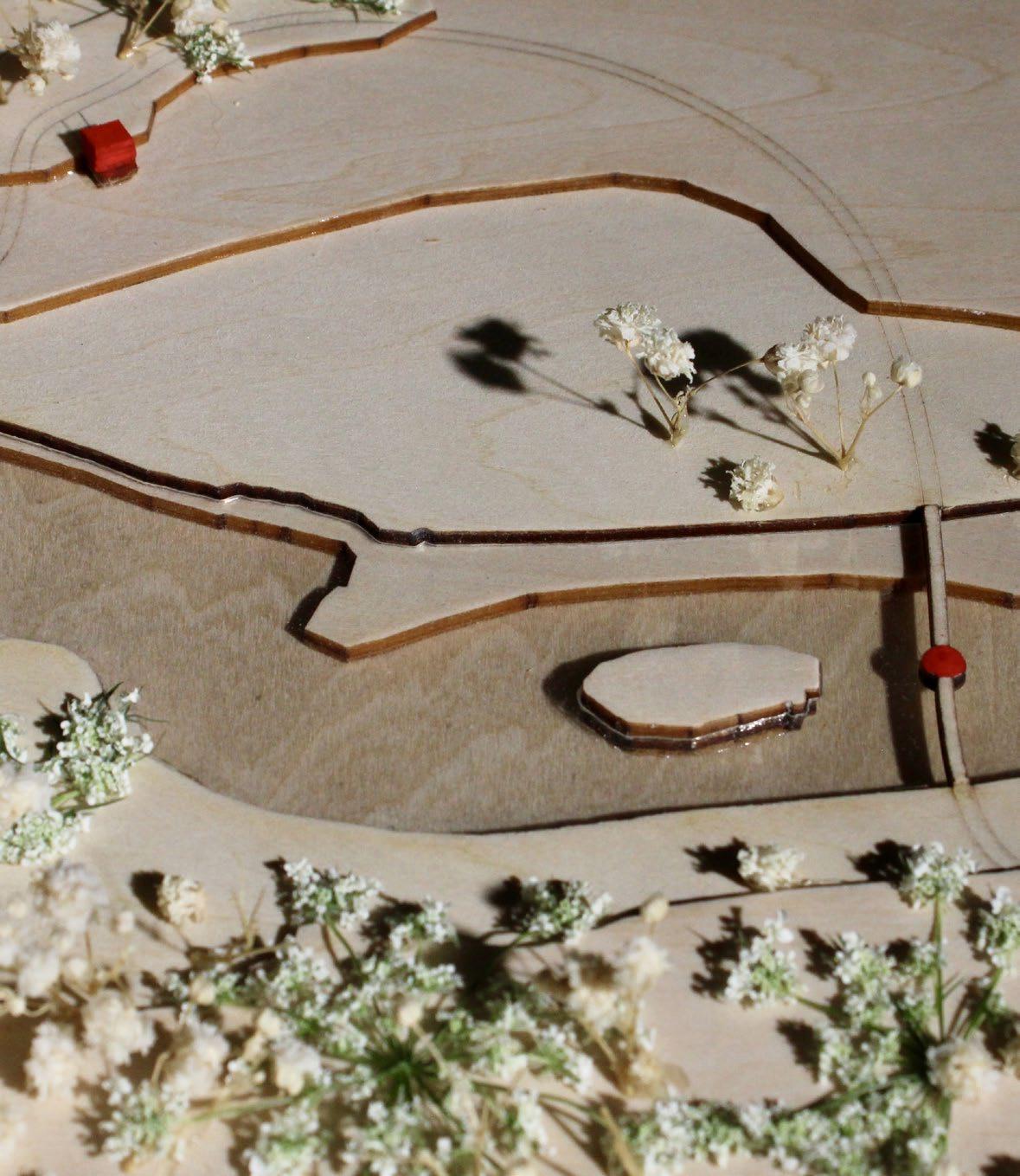
Riverside Wildlife Stations is a park redesign that addresses the unequal human-wildlife relationship in urban parks. This design considers animals as the park’s primary stakeholder, focusing attention on the animals’ wellbeing.
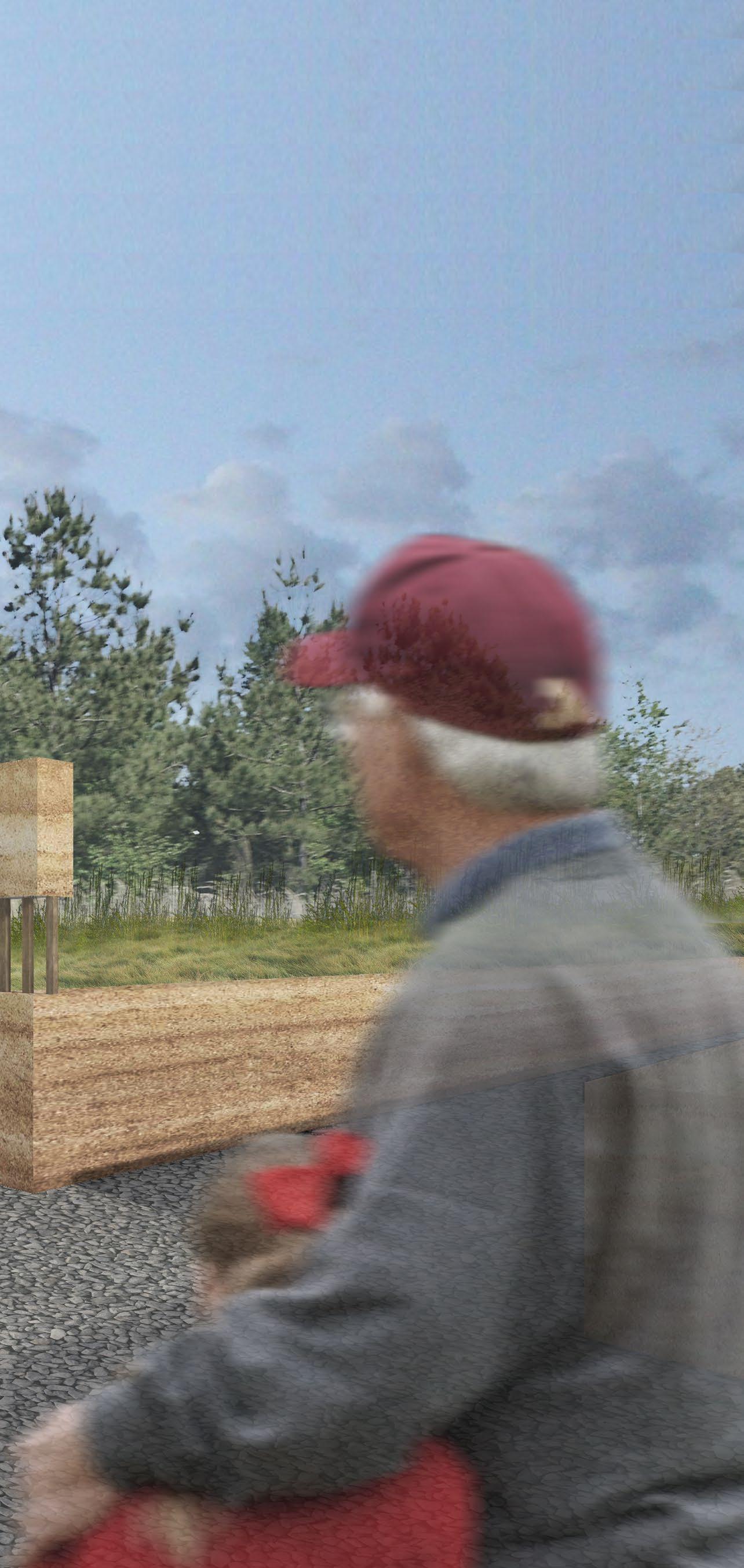
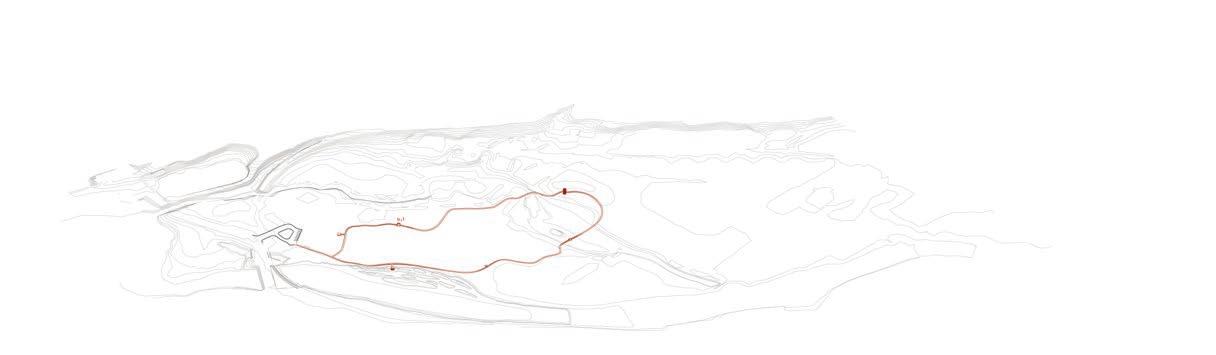
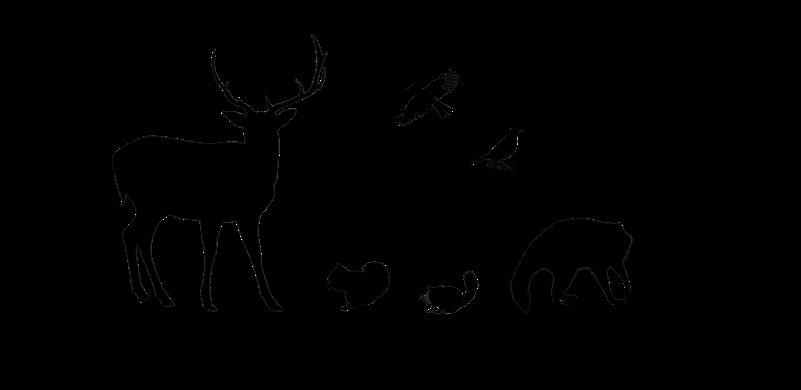
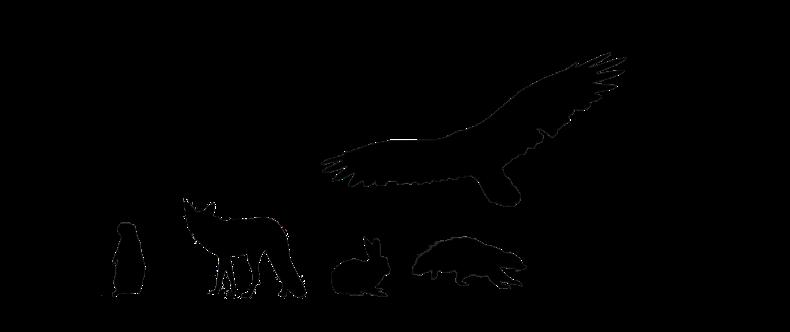
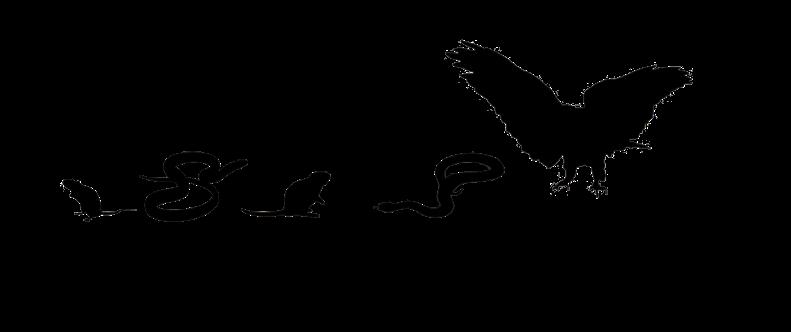
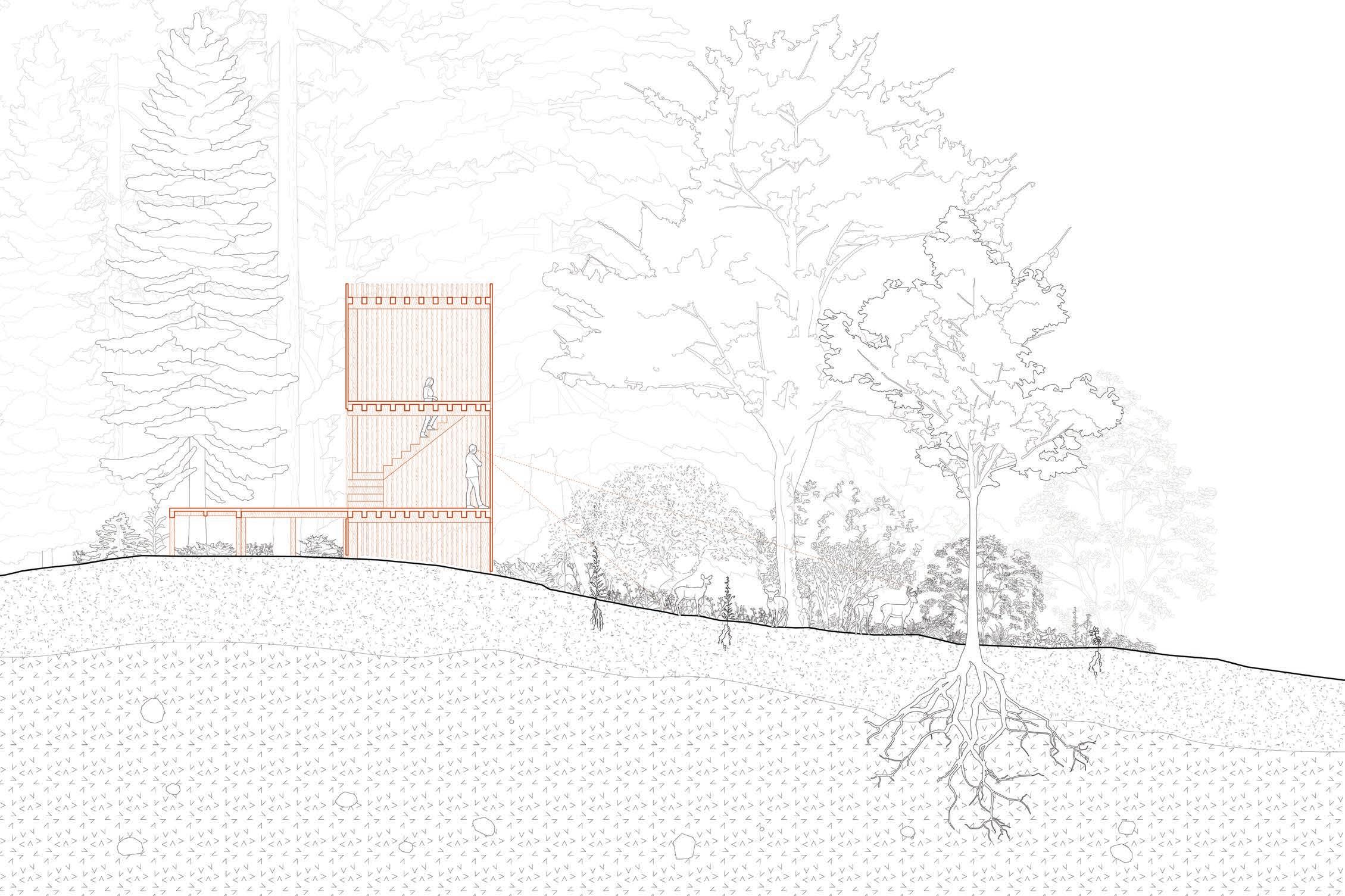
Throughout the park, six unique installations allow humans to observe wildlife from a respectful distance, without impeding on their habitats and natural behavior. The installations are each carefully designed to stage an encounter with different groups of species depending on their relationship to the park’s varying ecological zones. The pathway connecting these stations changes in elevation depending on the characteristics of the observed animals’ vision. This further reduces people’s impact on the animals as humans are obscured by the structures and restricted to occupying a minimal area. Overall, this design comments on the human impact on wildlife and playfully introduces a new dynamic.
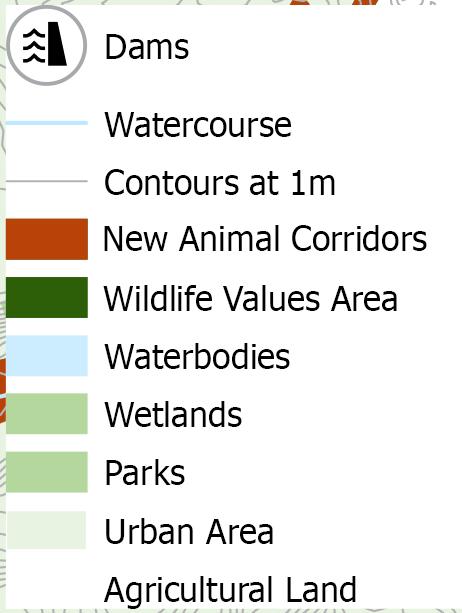
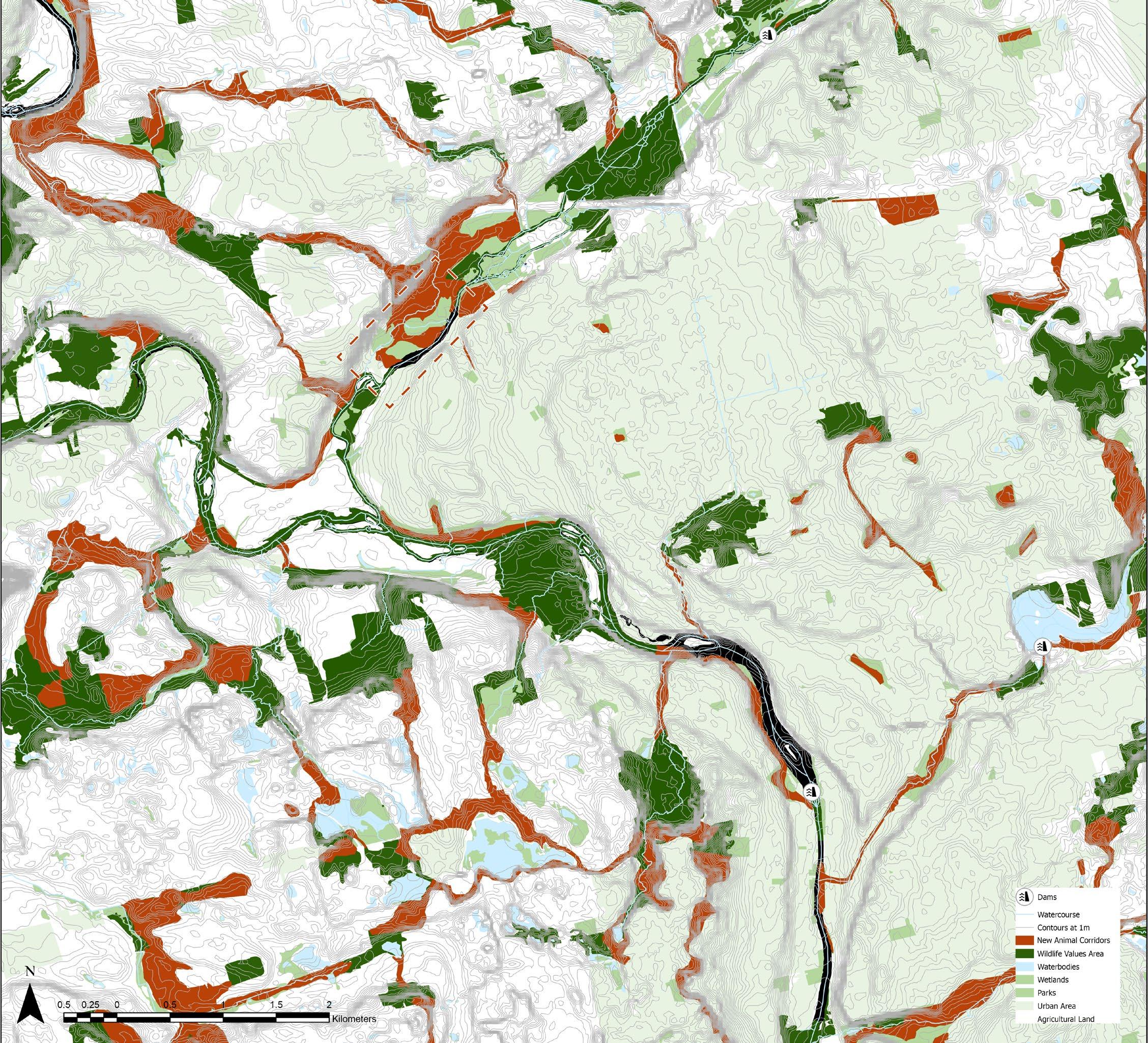
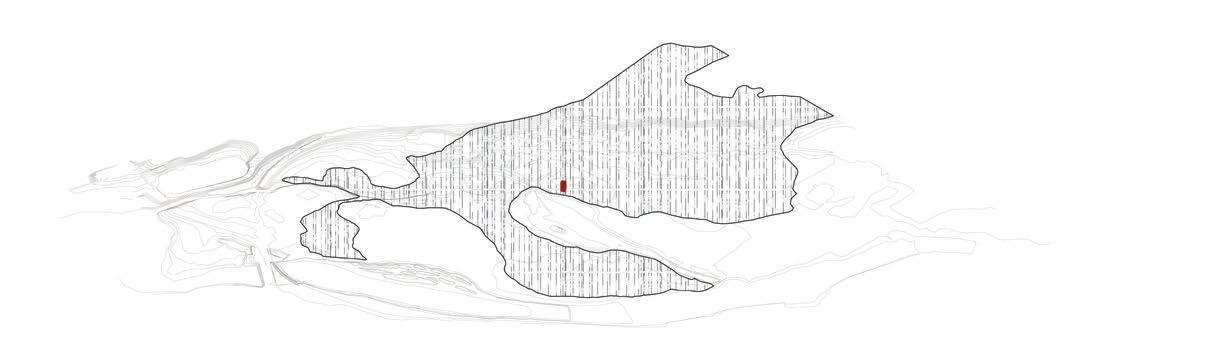
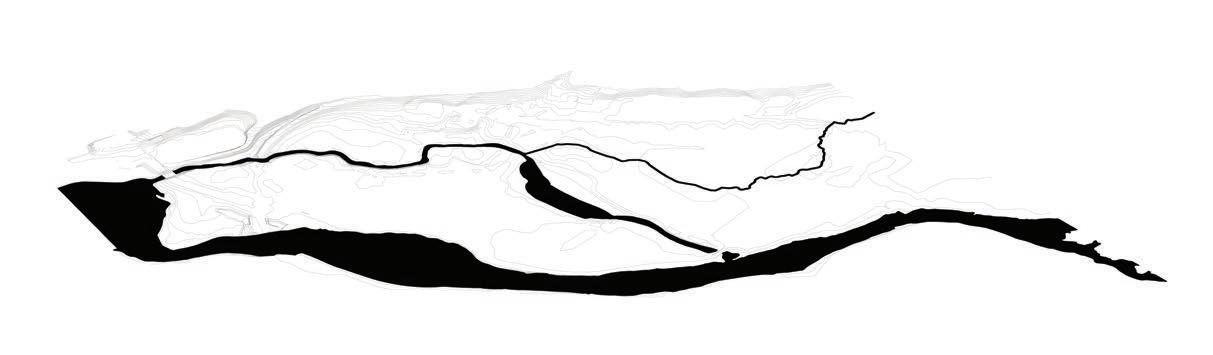
Urban and agricultural areas make up the vast majority of land near towns and cities, leaving behind little land for animal life. Even when patches of forest exist, they are isolated from one another making animal travel difficult and decreasing wildlife populations. This colour-coded map represents animal biodiversity with rich forests in dark green being most biodiverse and agricultural fields in white being least biodiverse. The red areas on the map are proposed animal corridors leading to the Grand River which acts as a main corridor through Cambridge.
My proposal is to re-wild the park and riverbanks to facilitate animal migration. The six installations engage human visitors and bring attention to this issue.
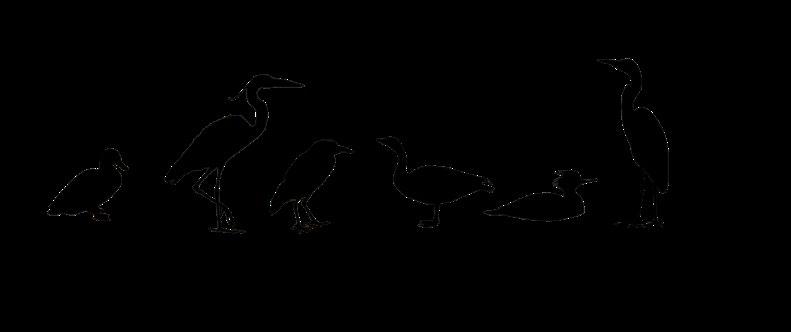
Mixed Forest
Open Tallgrass Prairie
Meadow Marsh
Shallow Marsh
Open Water
Mixed Shallow Aquatic
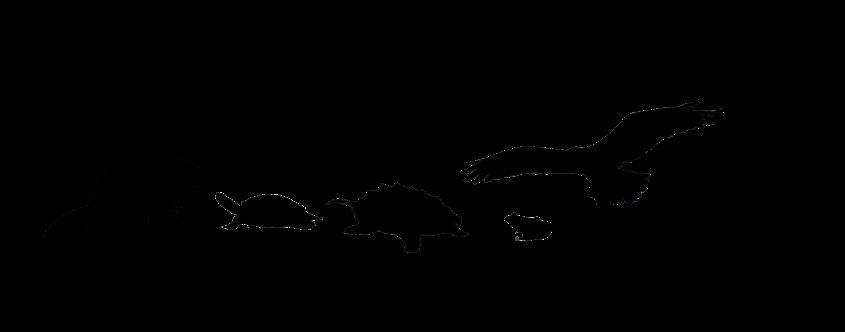
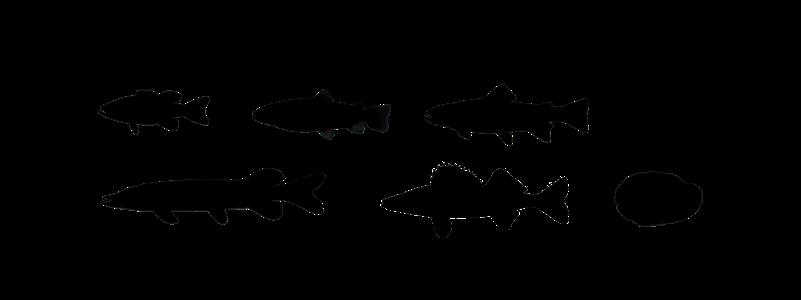
Smallmouth
Fatmucket
Red Tailed Hawk
Cottontail
White-tailed Deer
DEER INSTALLATION SECTION
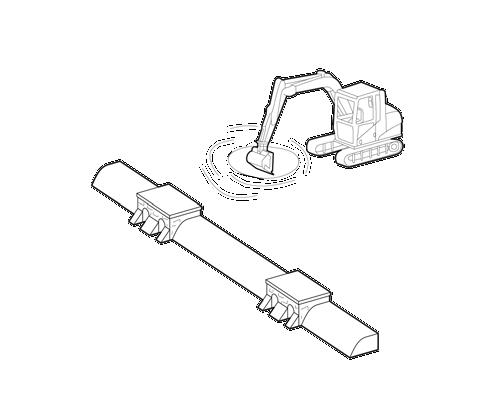
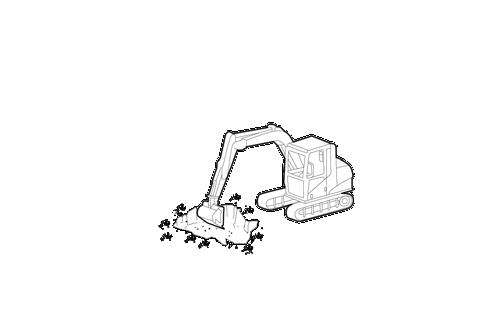
Dam Demolition Removal of Sediment (Silt and Clay)
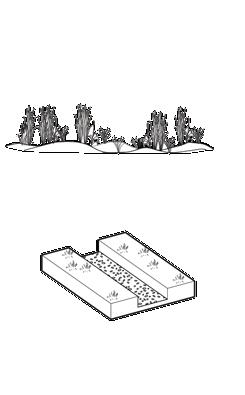
Wetland and Path Construction
Path Excavation
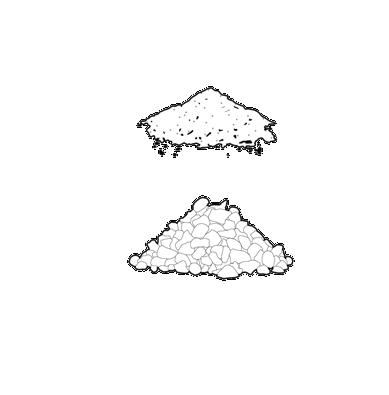
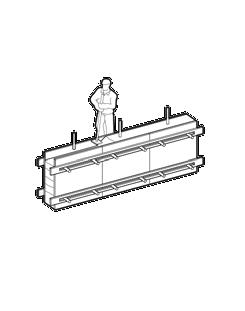
Rammed Earth Wall Construction
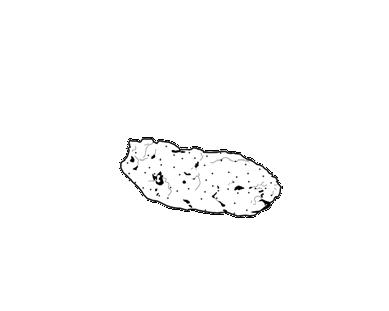
Clay Extraction
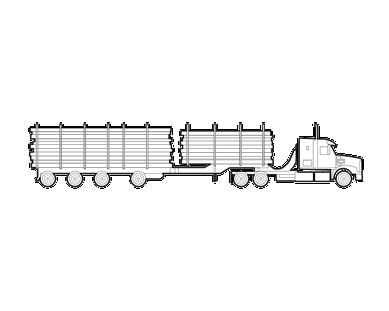
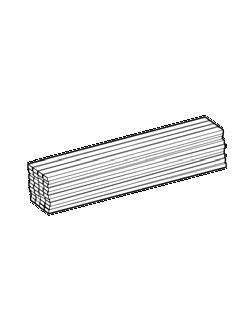
Coniferous Trees on Site Local Milling Lumber for Installation Construction
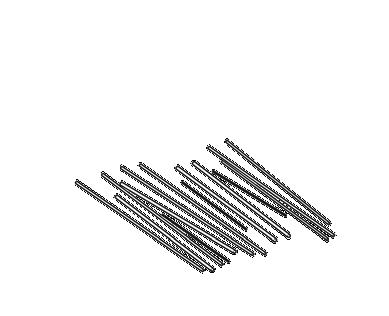
Invasive Phragmites Australis Cut and Dried Hollow Stems
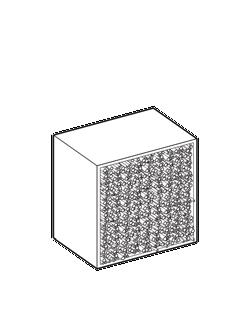
Insect Habitat Construction
LITTLE BOXES LIBRARY
CLASS: 1B DESIGN STUDIO
LOCATION: TORONTO, ONTARIO
INSTRUCTORS: ISABEL OCHOA & DAVID CORREA
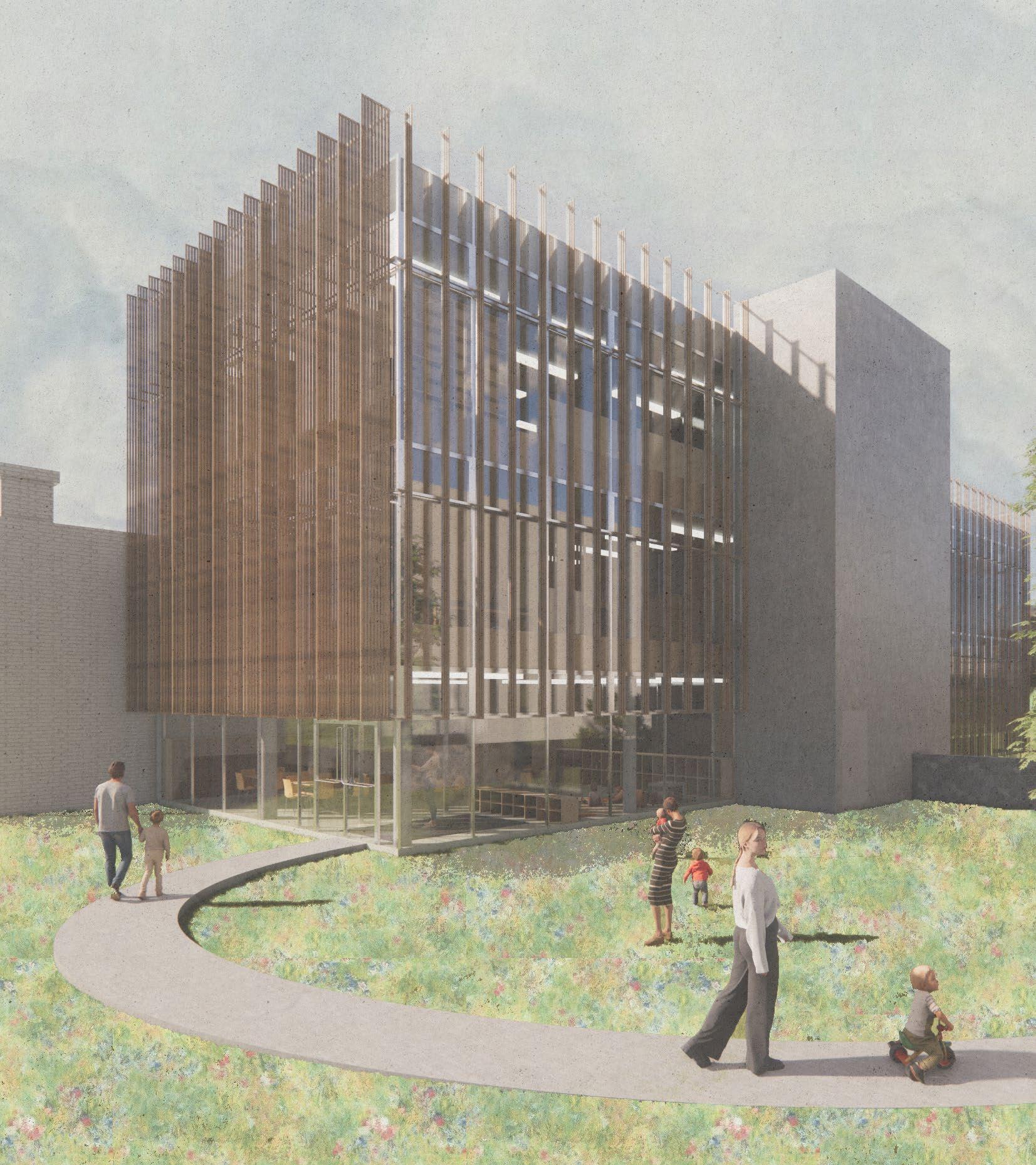
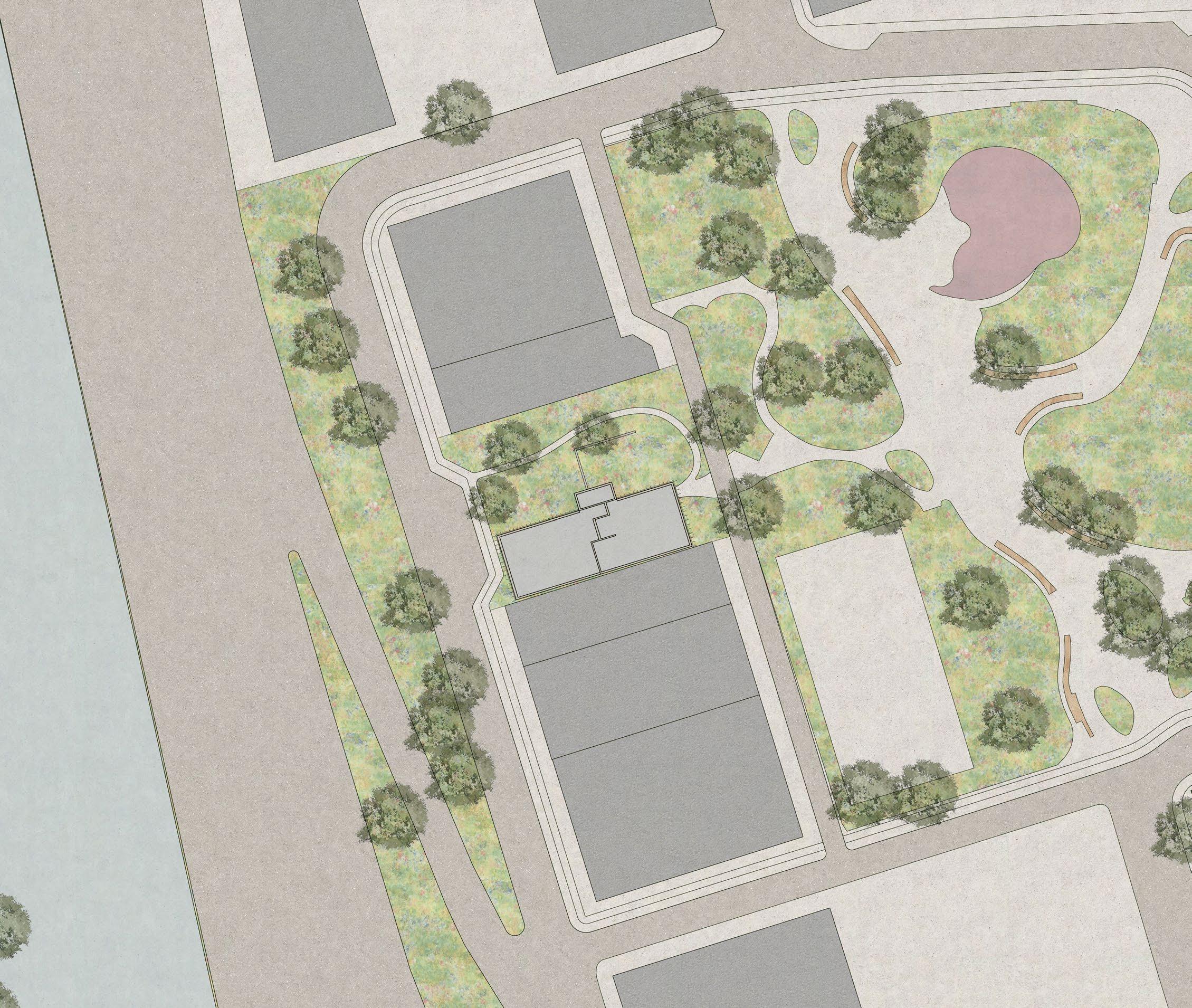
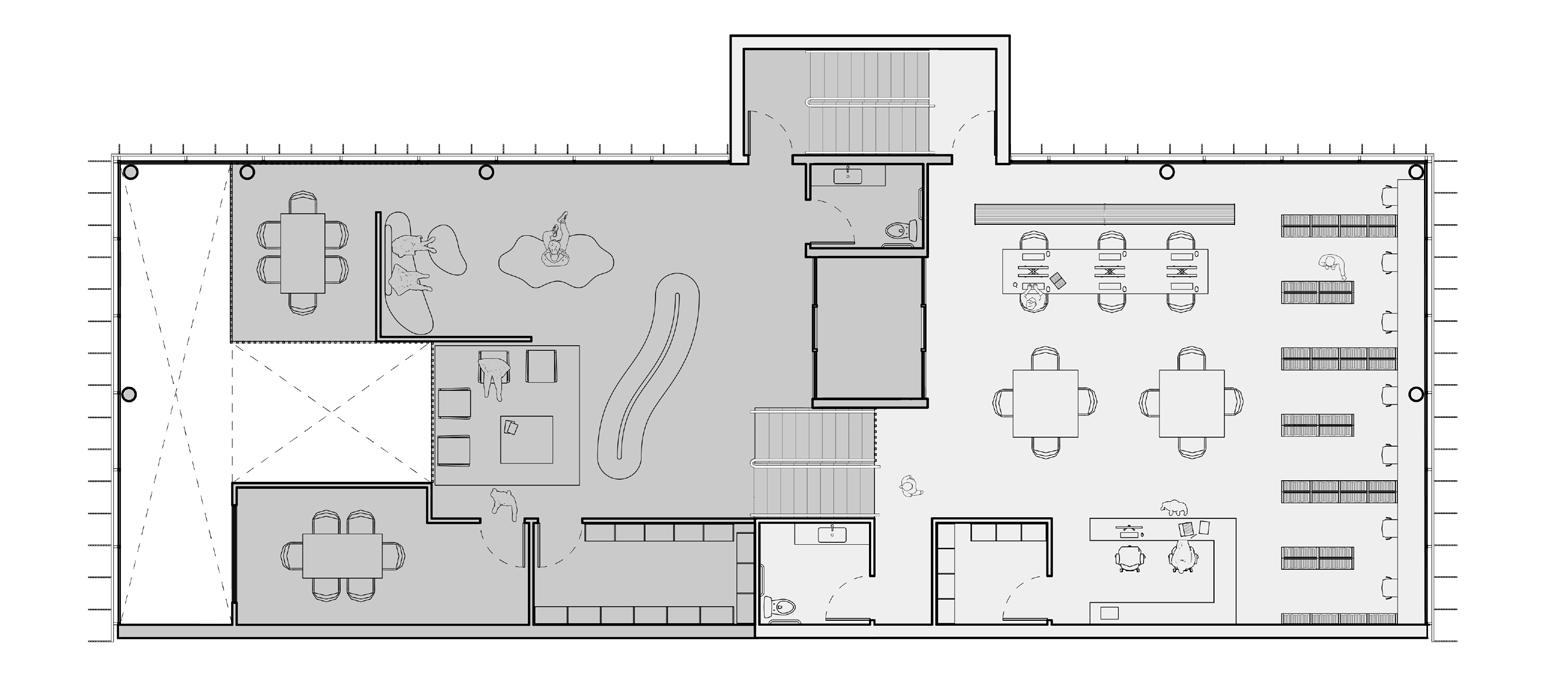
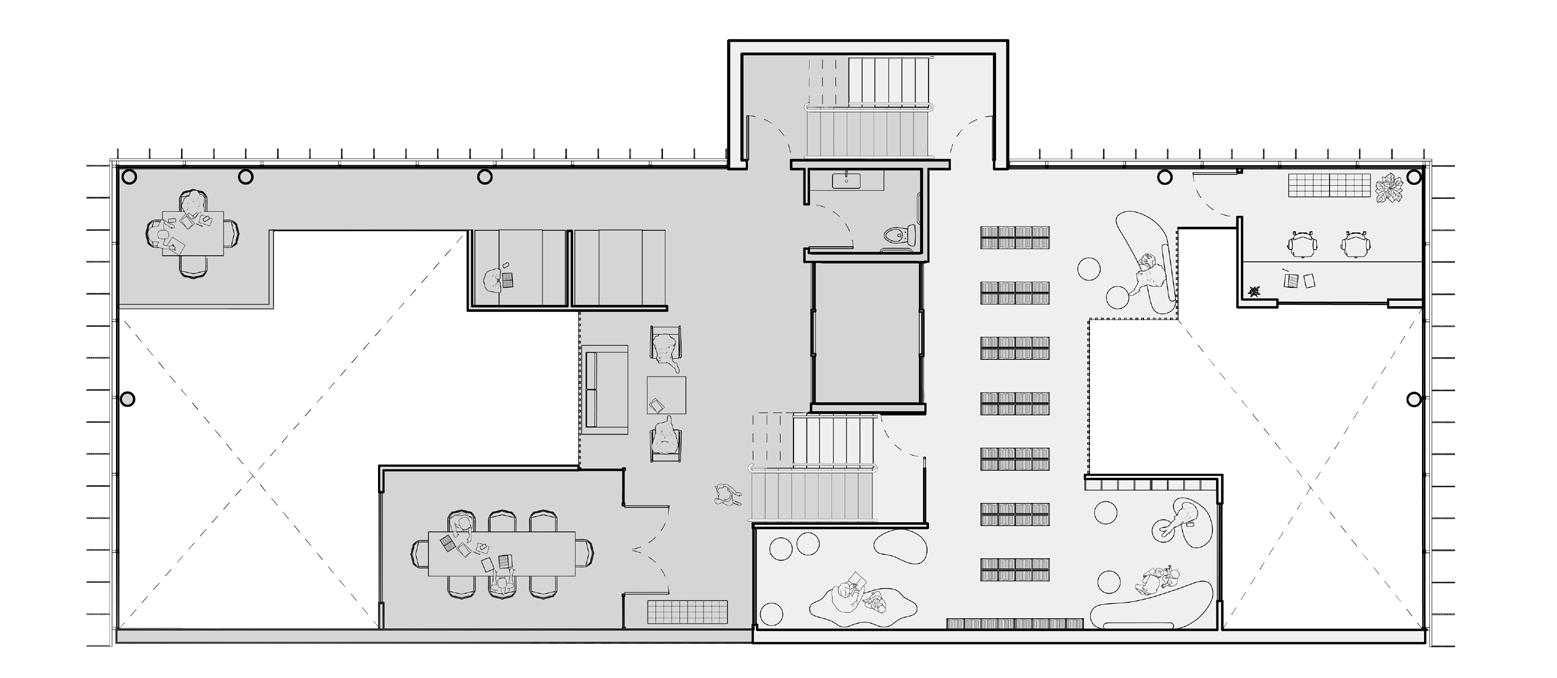
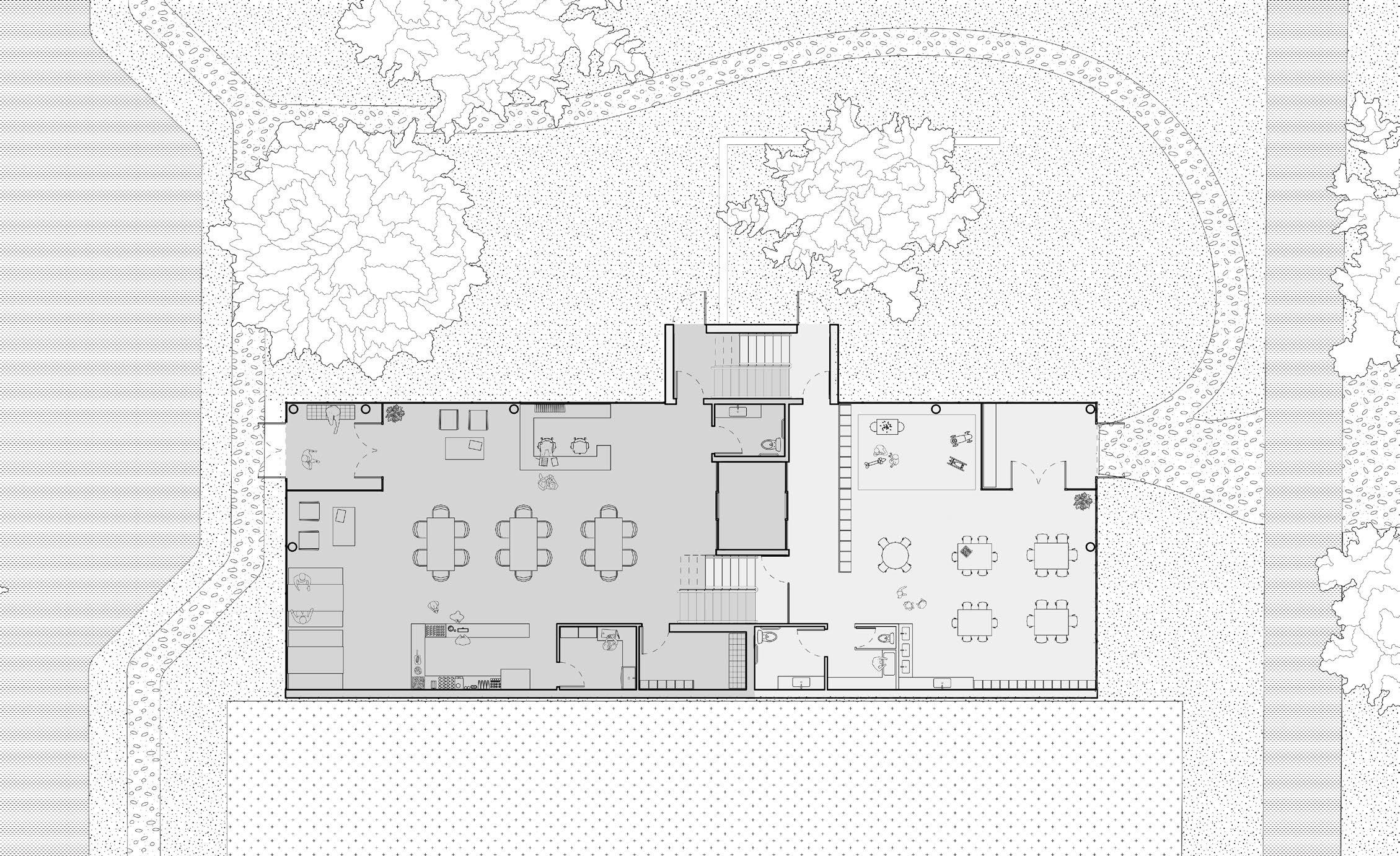
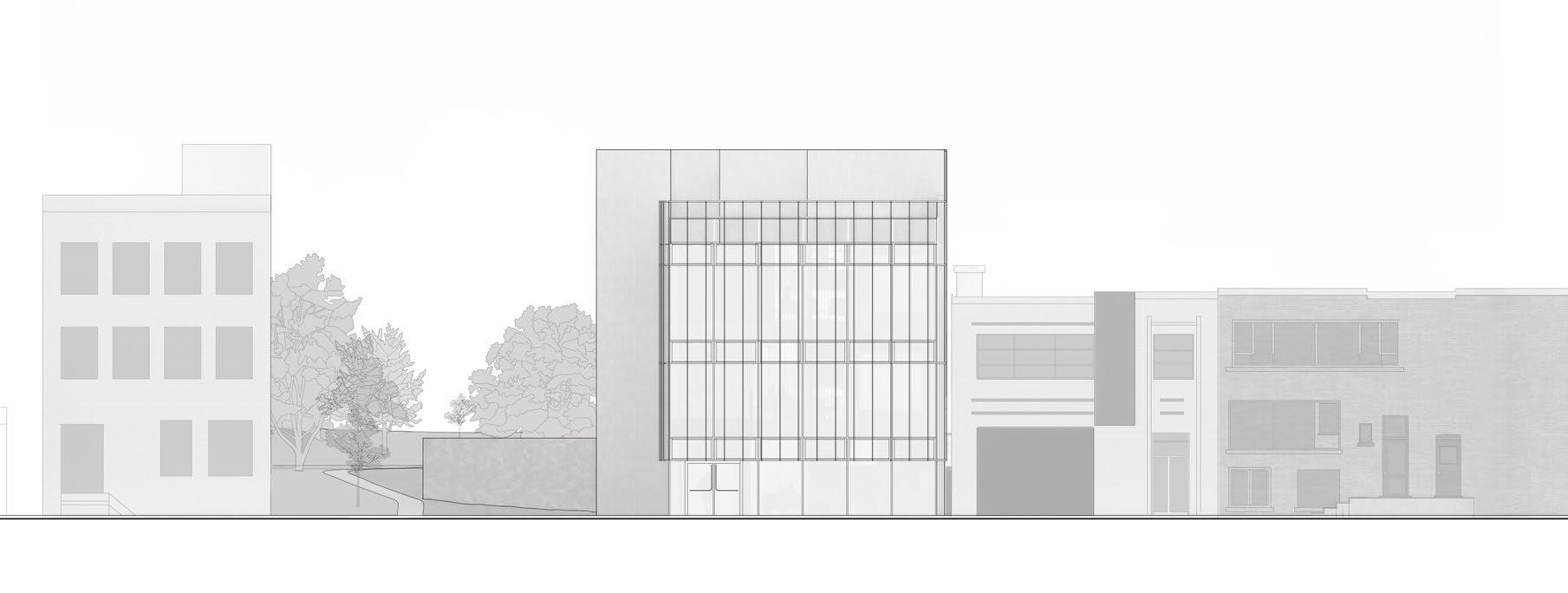
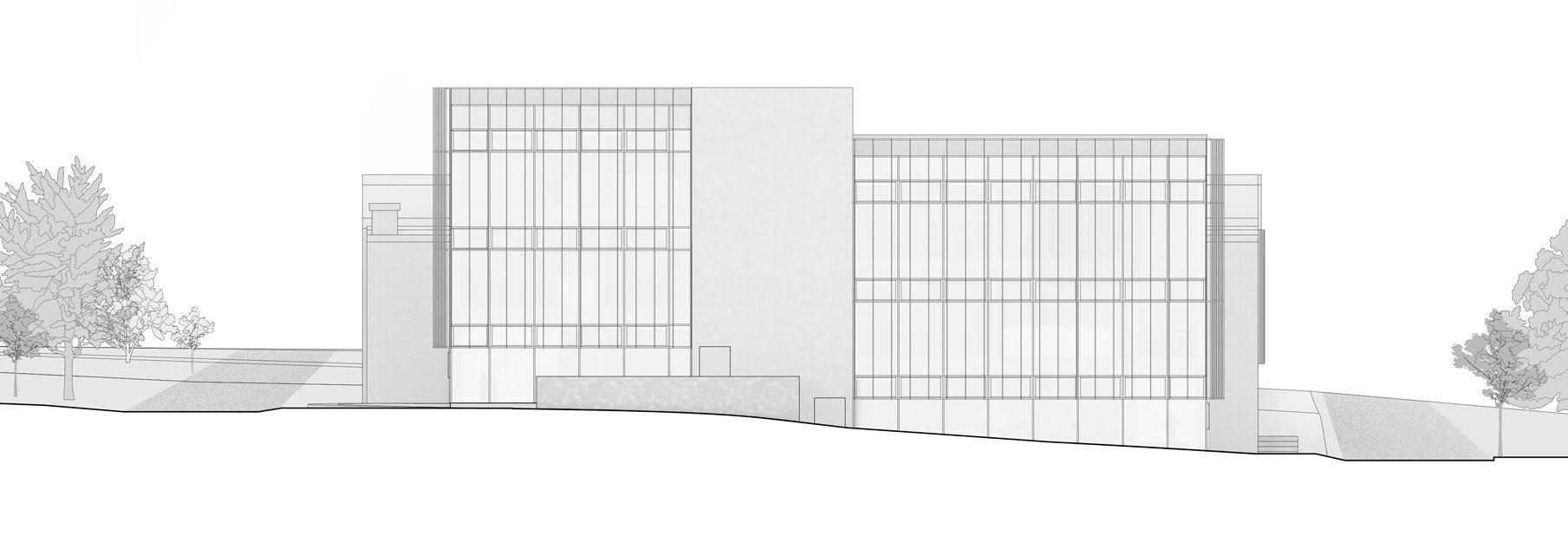
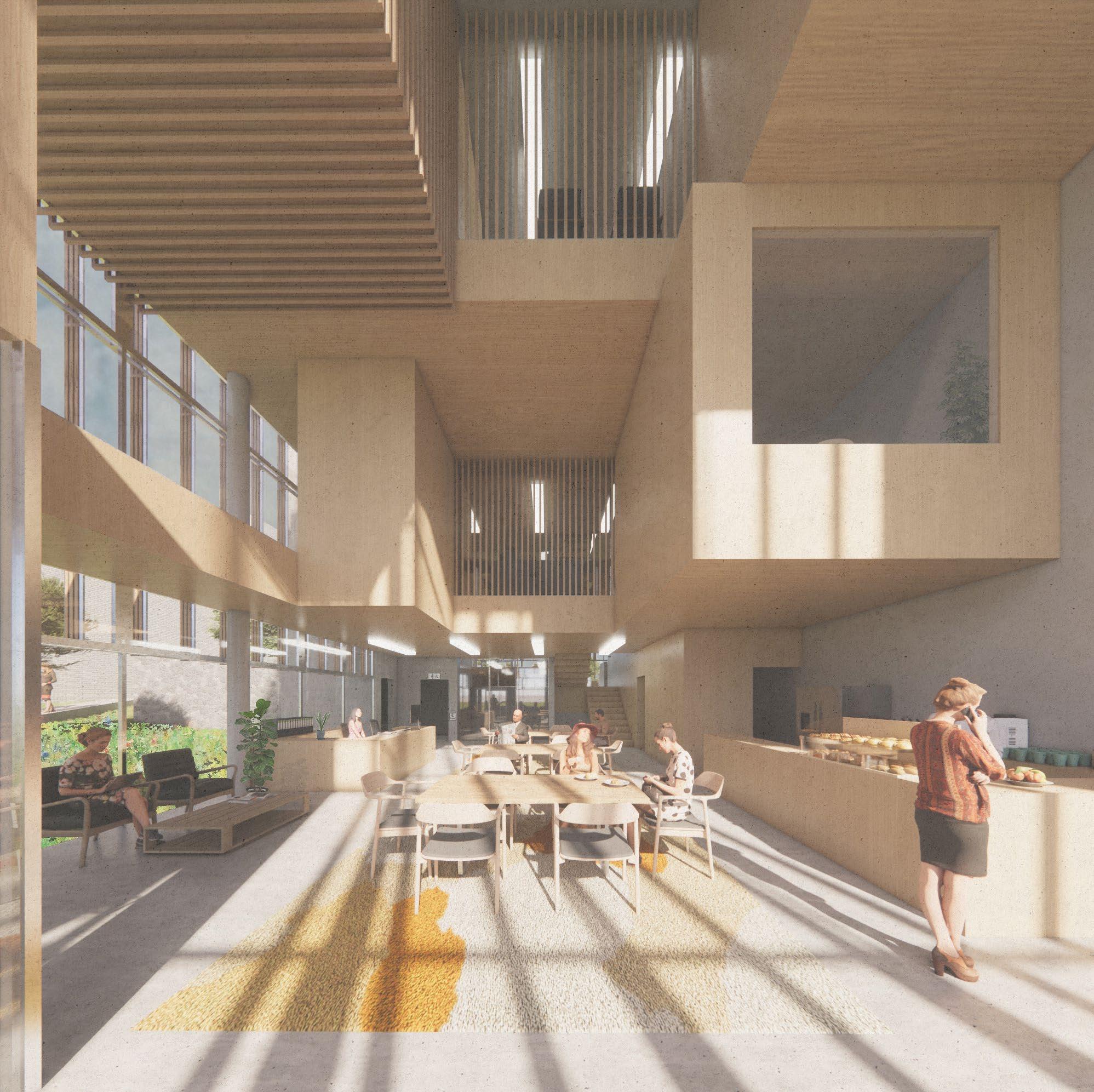
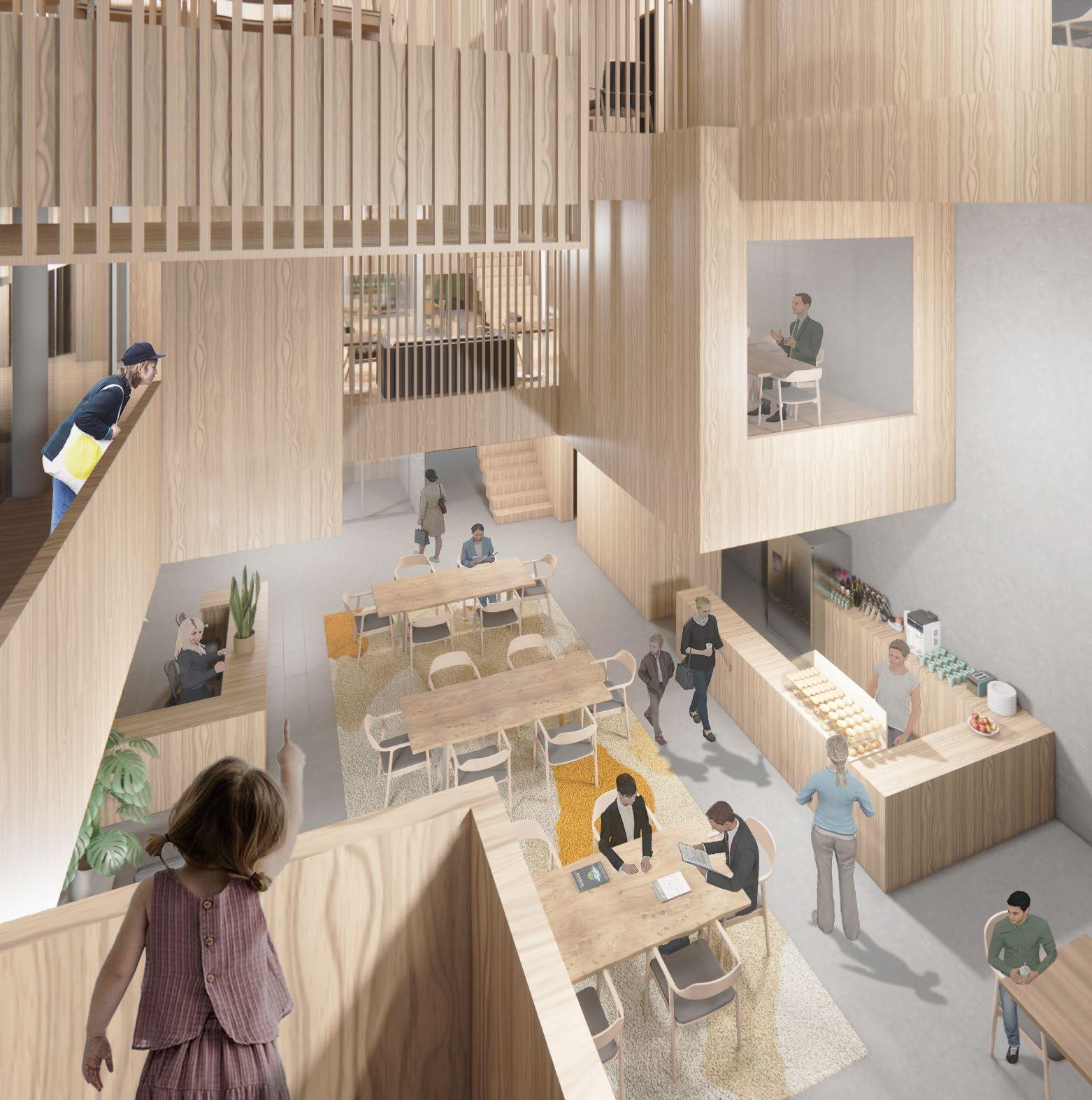
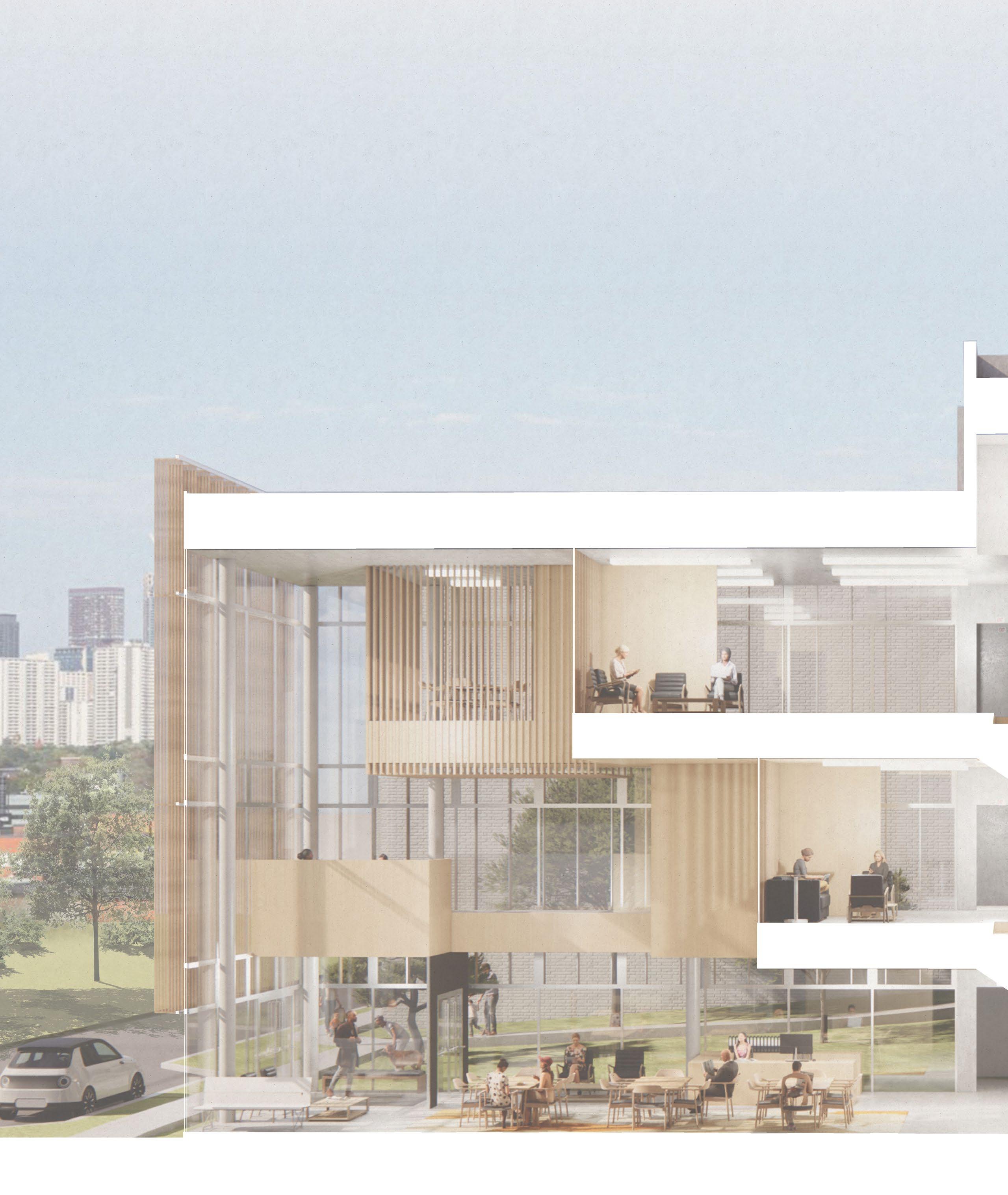
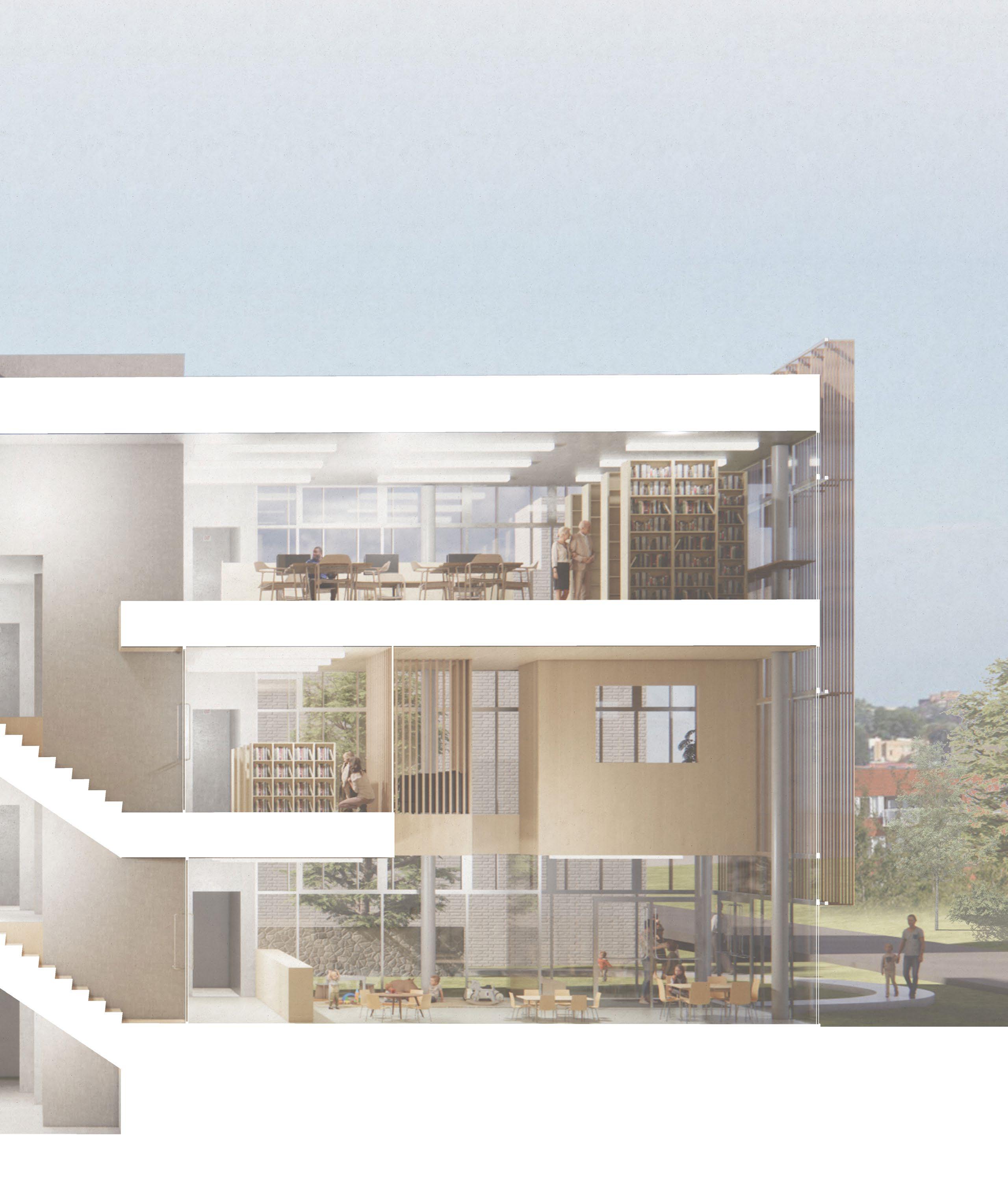
Located beside Joel Weeks Park, the Little Boxes Library serves as a modern community space that reimagines the traditional library. The library connects the neighborhood and the city, with a daycare catering to local residents and a café attracting visitors from afar.
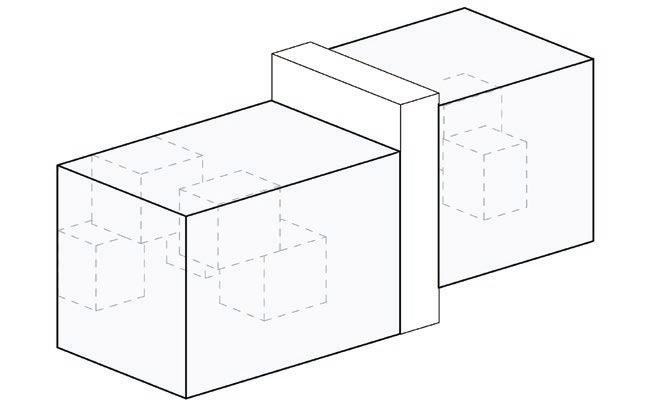
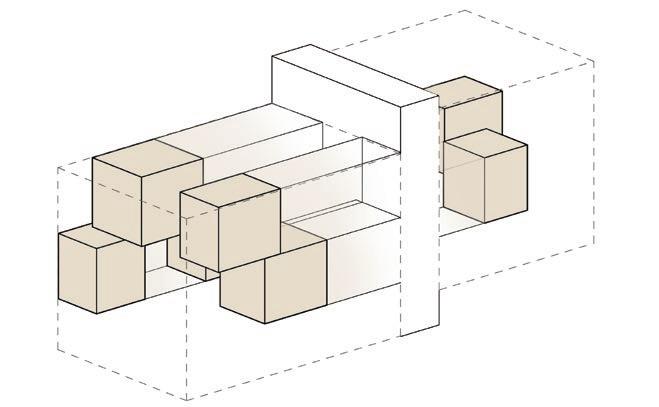
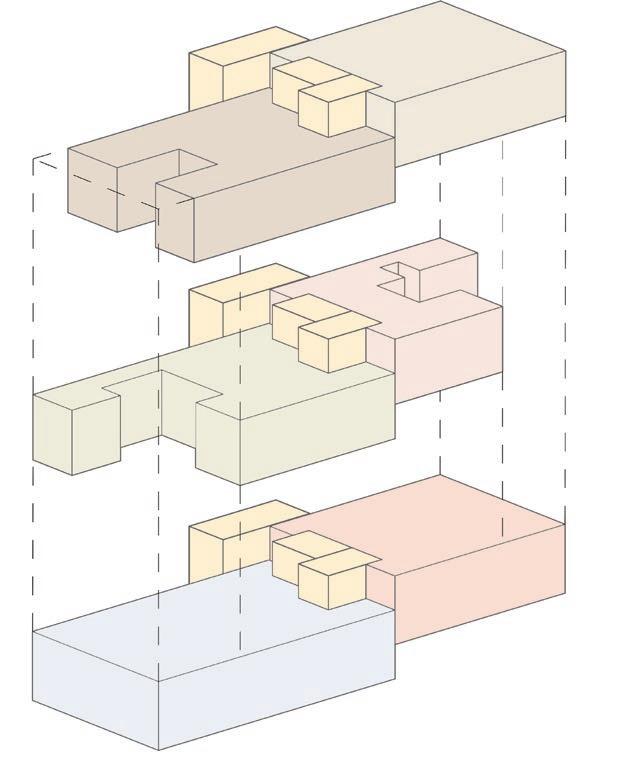
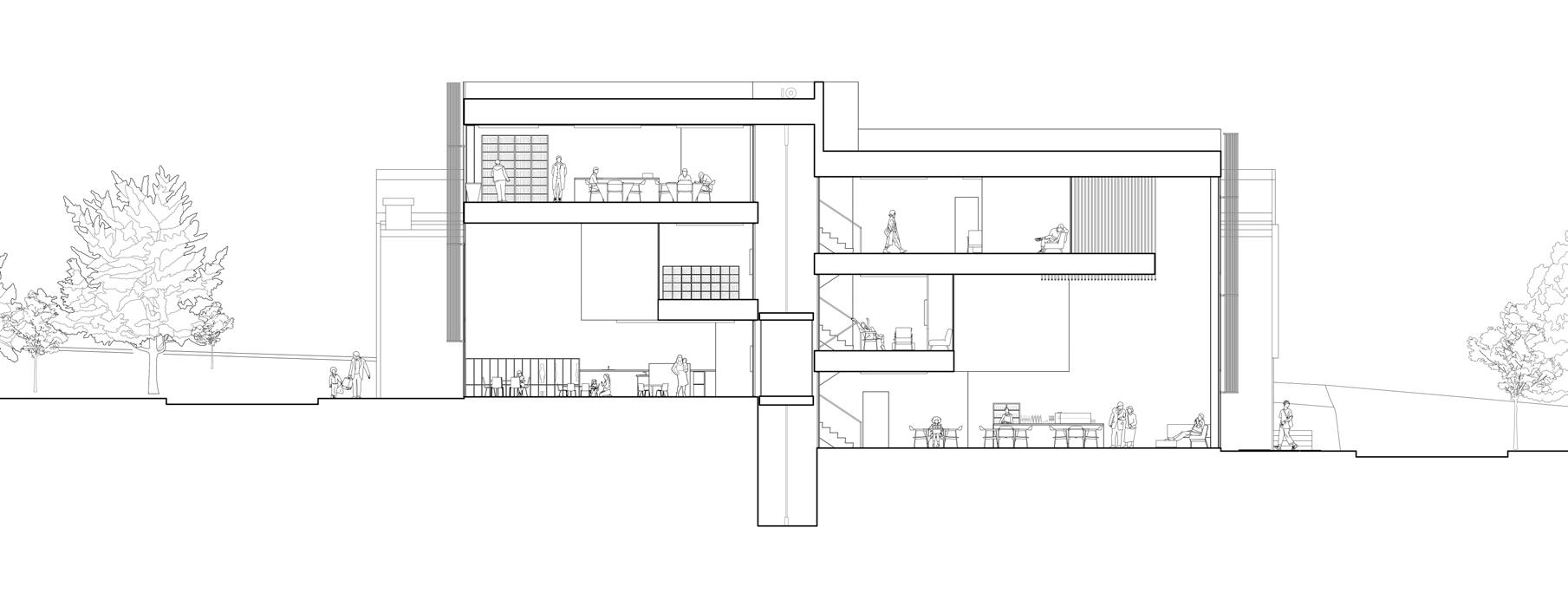
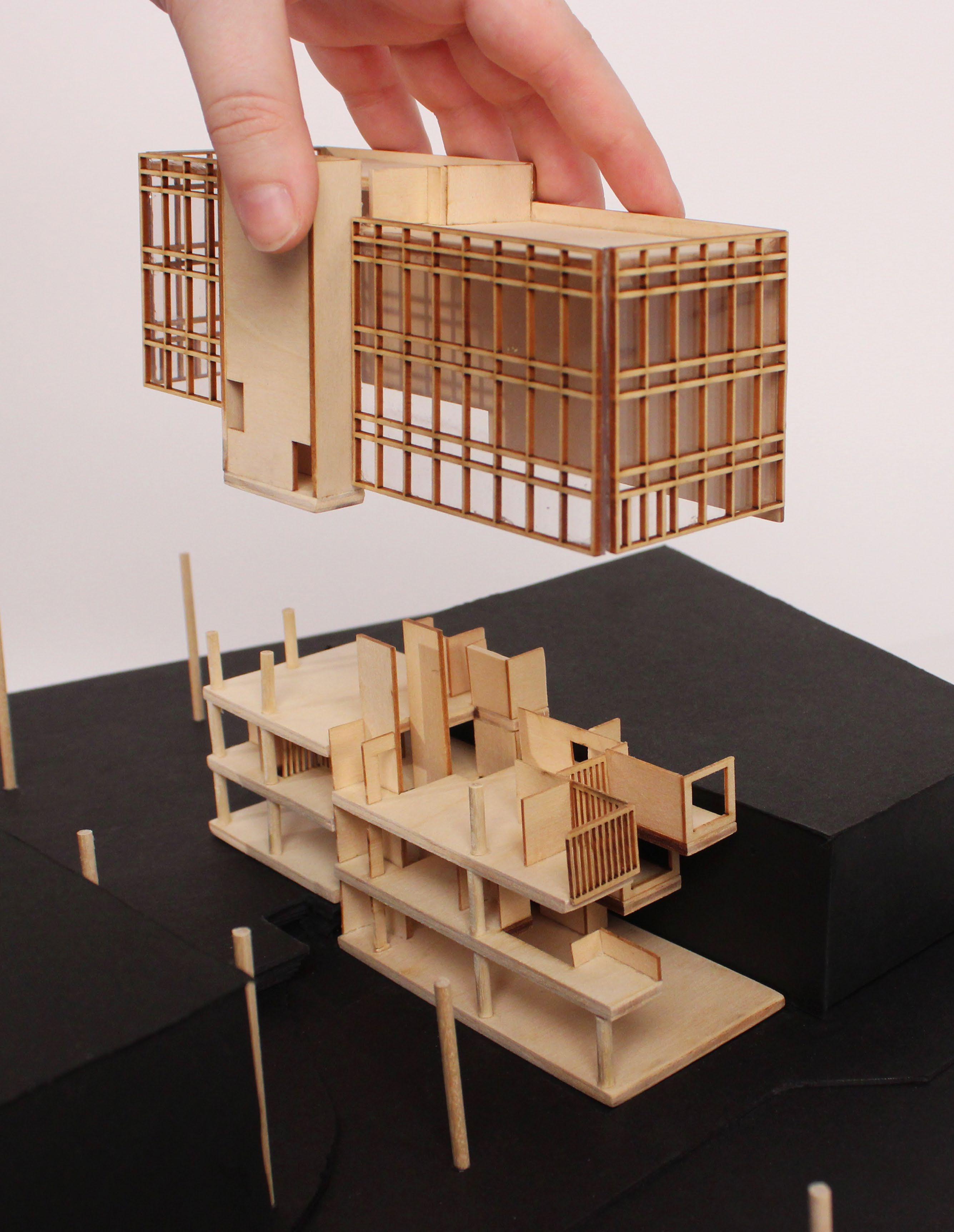
The design concept uses two large boxes that enclose the building, with smaller boxes inside that serve as study rooms and reading nooks. These intimate spaces offer noise barriers and privacy while maintaining visual connectivity throughout the library, creating a sense of safety and community. The split-level layout accommodates the site’s elevation changes and allows for accessible entrances on both sides of the building, creating an inclusive and barrier-free design.
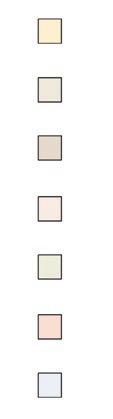
CIRCULATION
BOOKS AND COMPUTER
READING ROOM AND OFFICES
CHILDREN’S LIBRARY
STUDY AND MEETING
DAYCARE
CAFÉ
3 + 3.5
LEVEL 1 + 1.5
LEVEL
LEVEL 2 + 2.5
WEST ELEVATION
NORTH ELEVATION
LONGITUDINAL SECTION
OAK BRIDGE
CLASS: 1B DESIGN STUDIO
LOCATION: KITCHENER, ONTARIO
INSTRUCTORS: ISABEL OCHOA & DAVID CORREA
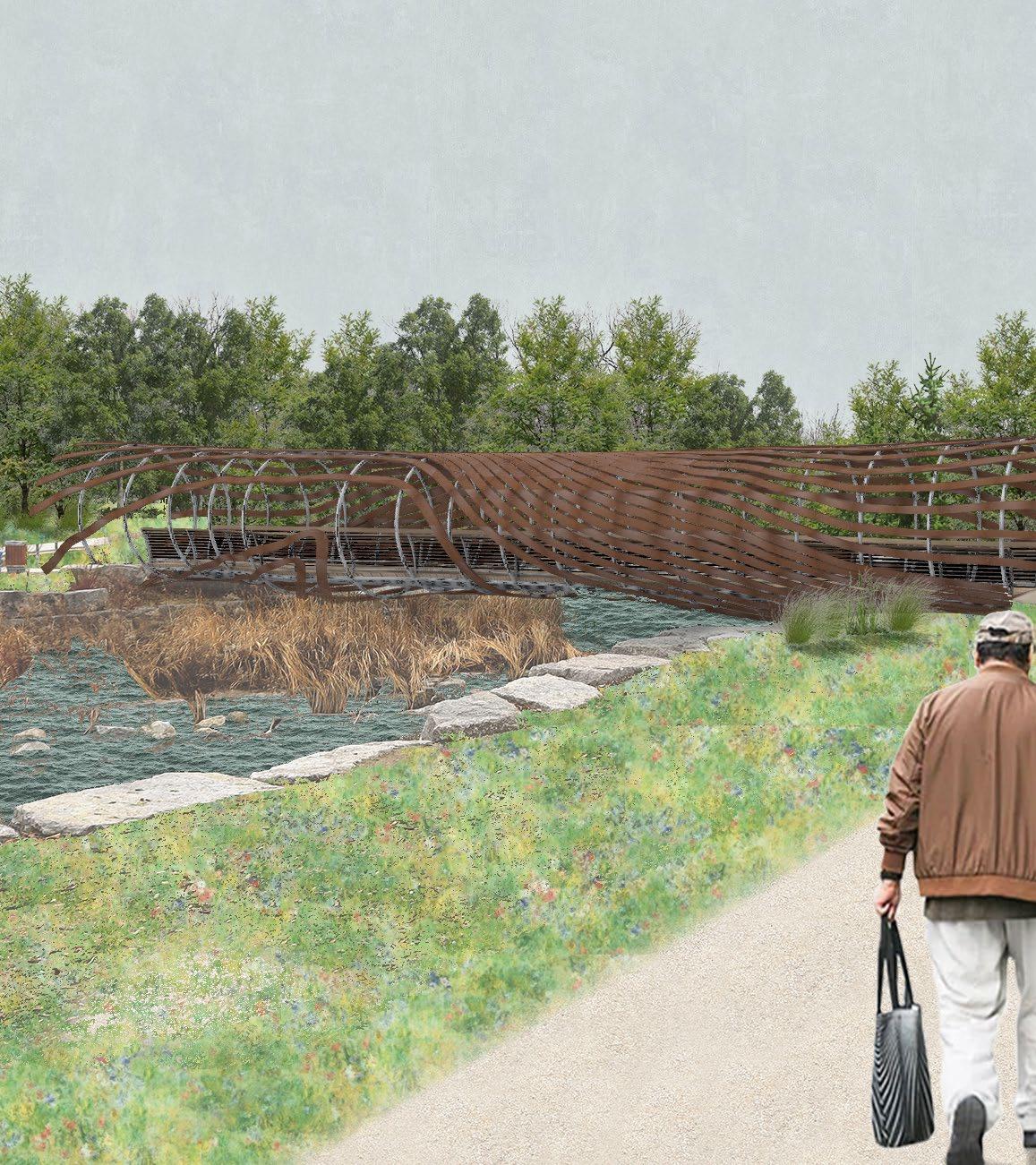
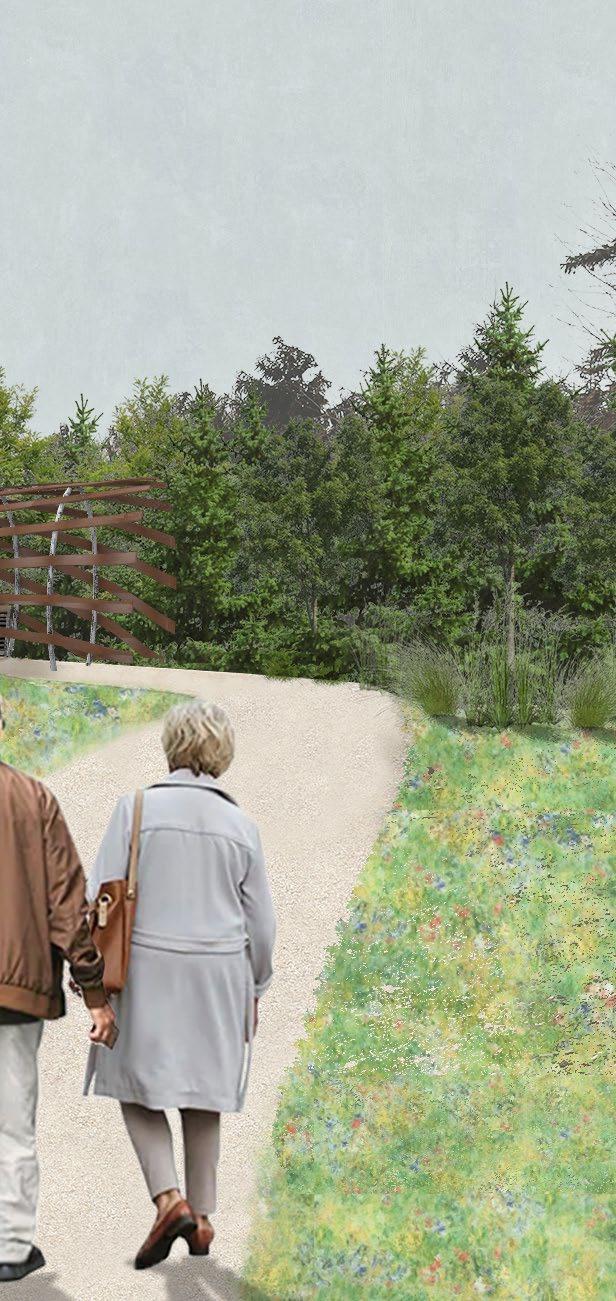
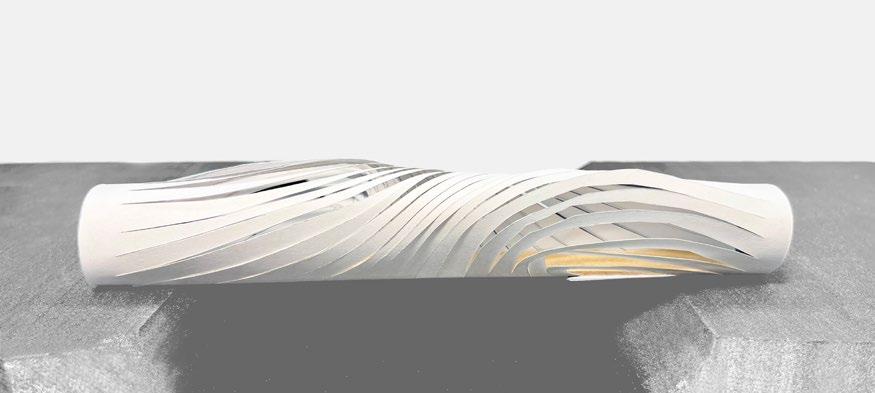
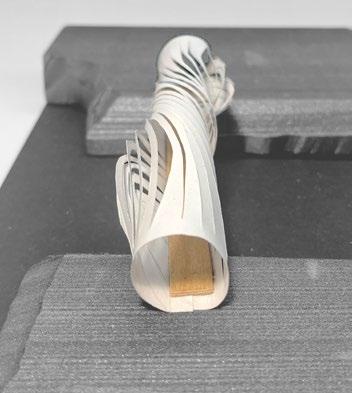
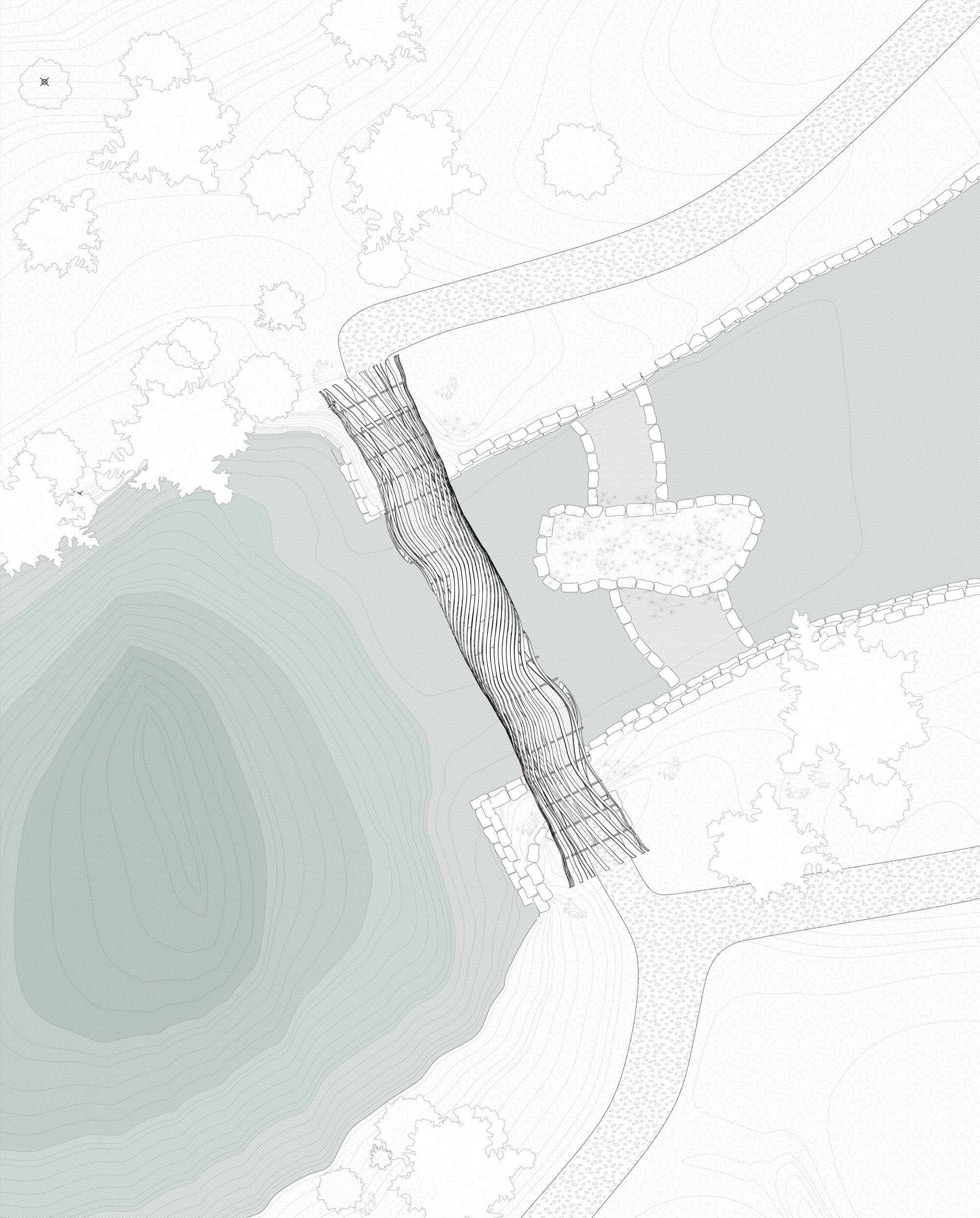
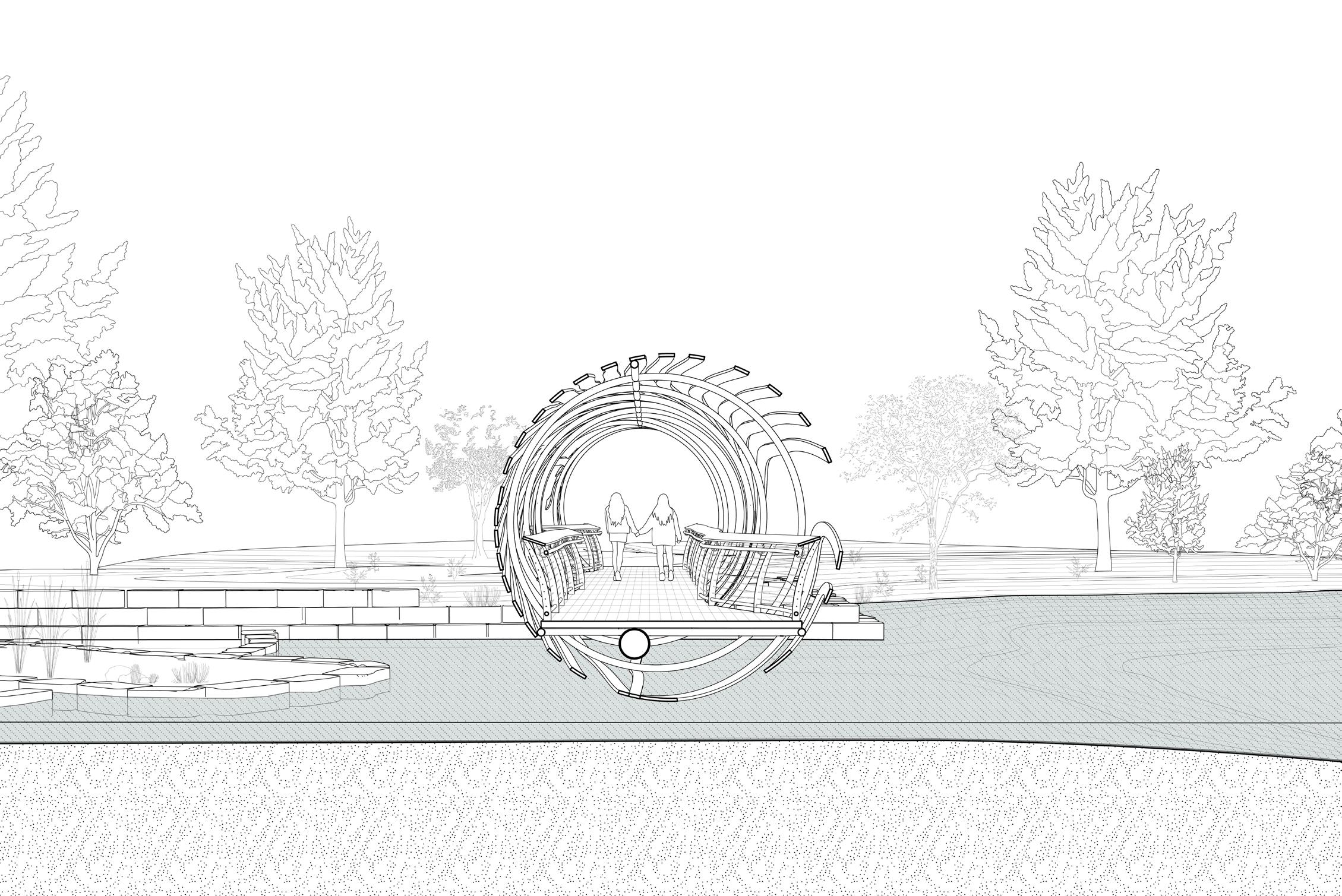
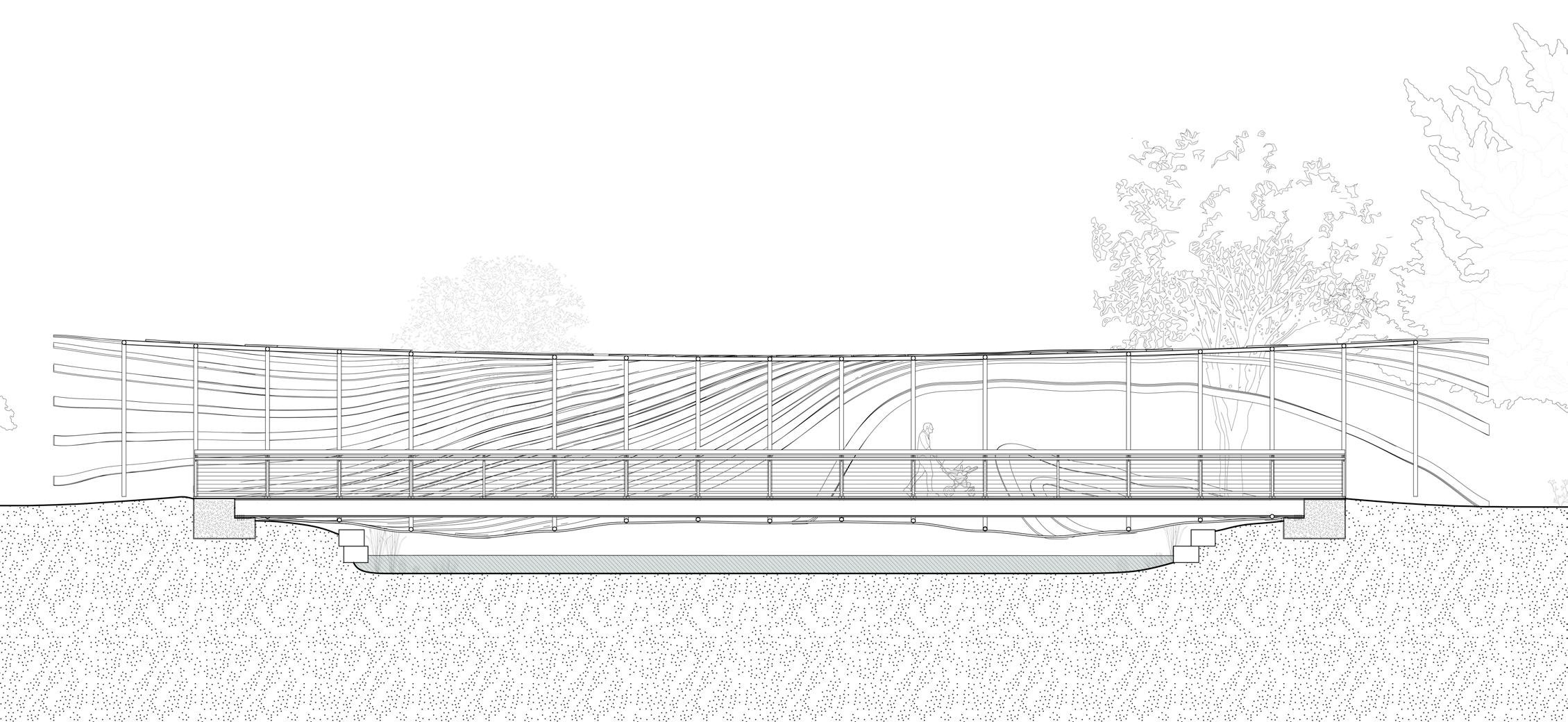
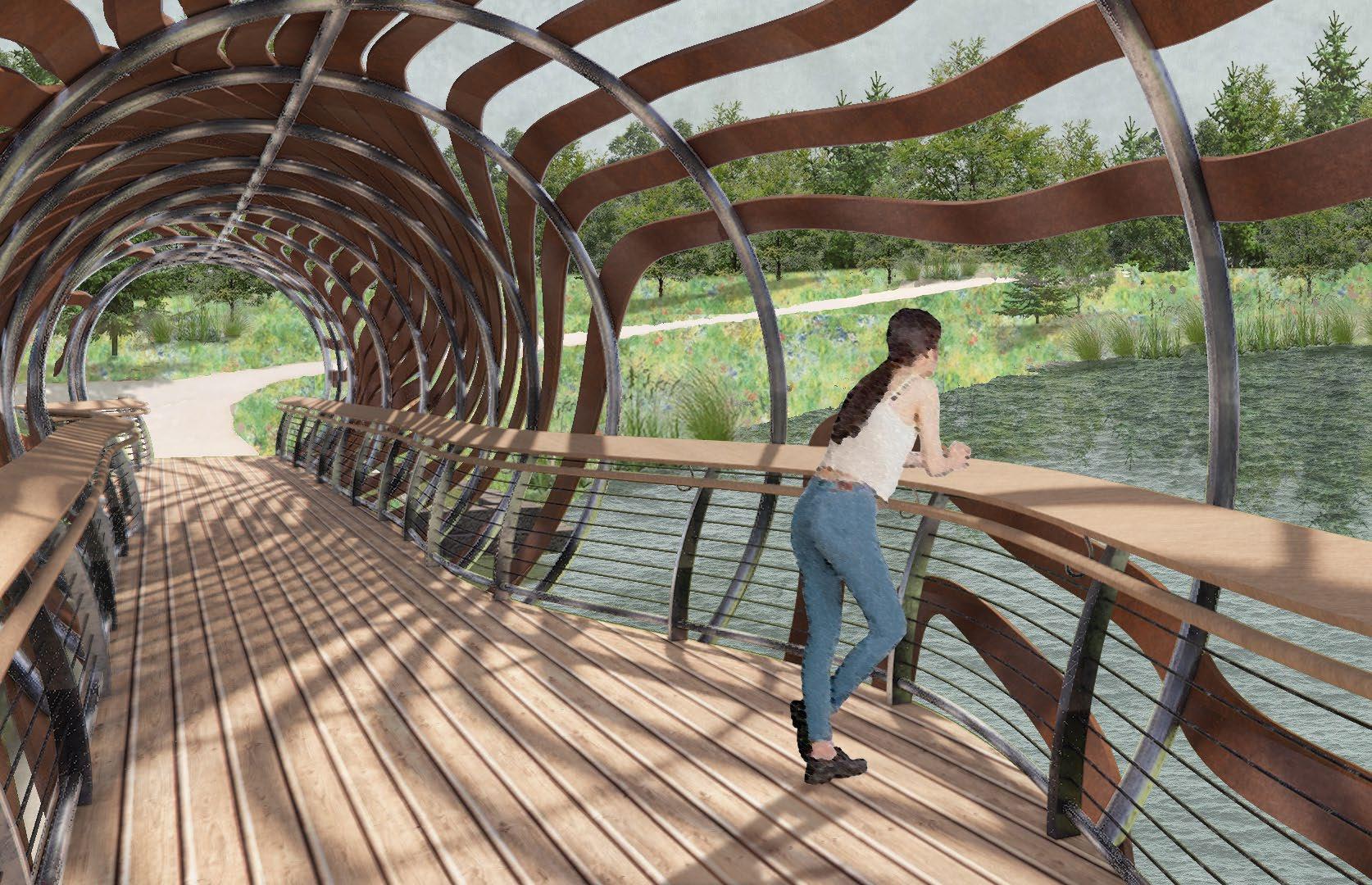
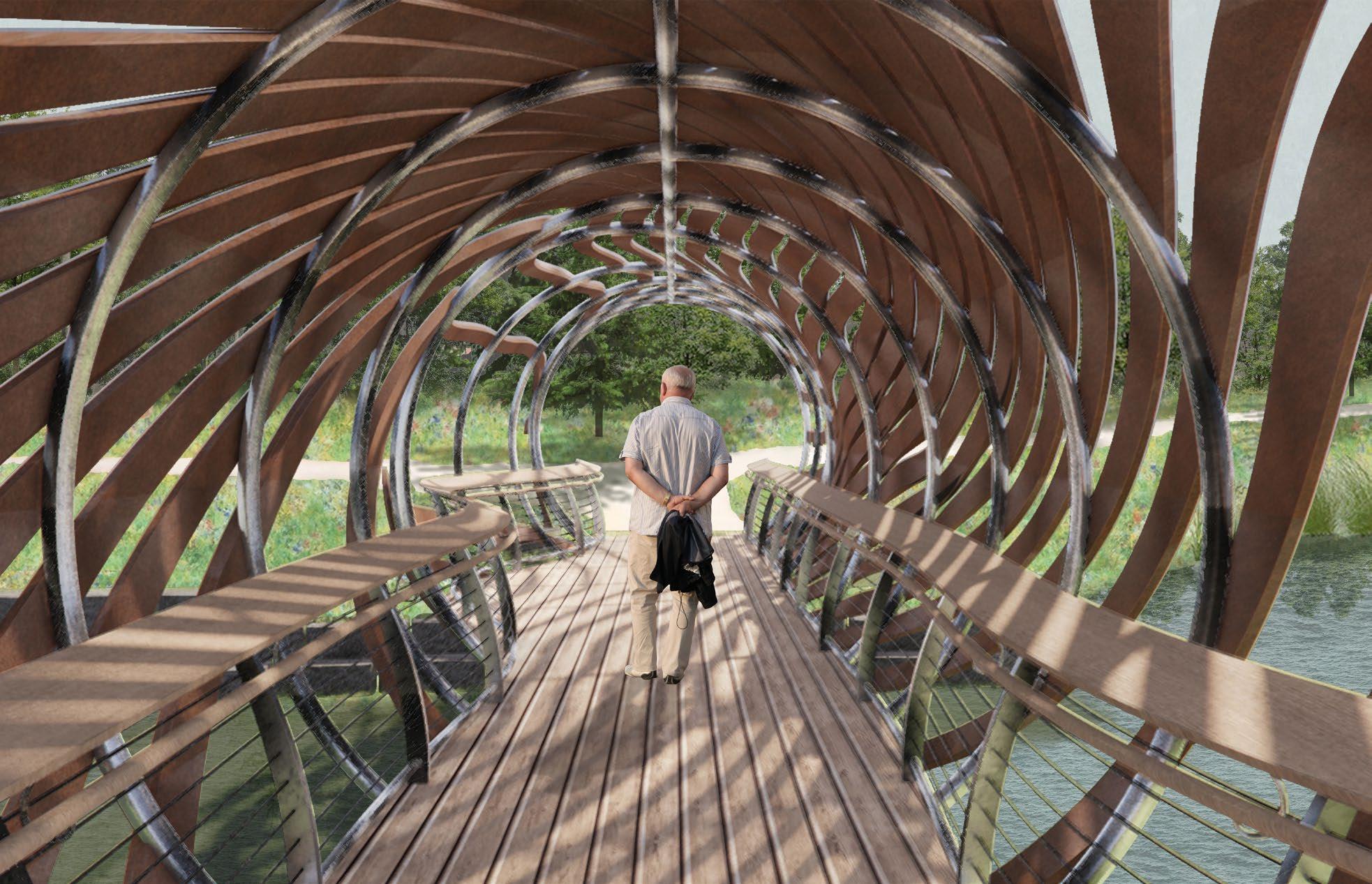
Situated in Victoria Park, Kitchener, Ontario, the Oak Bridge serves as a pedestrian bridge, freely spanning the Schneider Creek. Its design mimics a fallen oak tree, integrating itself with the park’s natural elements and becoming a prominent local landmark. The bridge incorporates two lookout points positioned within the tree’s “knots,” inviting visitors to pause and admire the park’s scenic views. The weathering steel canopy provides ample shade, denser at the midpoint and gradually dissipating towards the ends. Horizontal lines throughout the bridge lend a visually captivating effect, that seems to draw visitors in with each step.
PARTI MODEL - PAPER FOLDING CONCEPT
CROSS SECTION
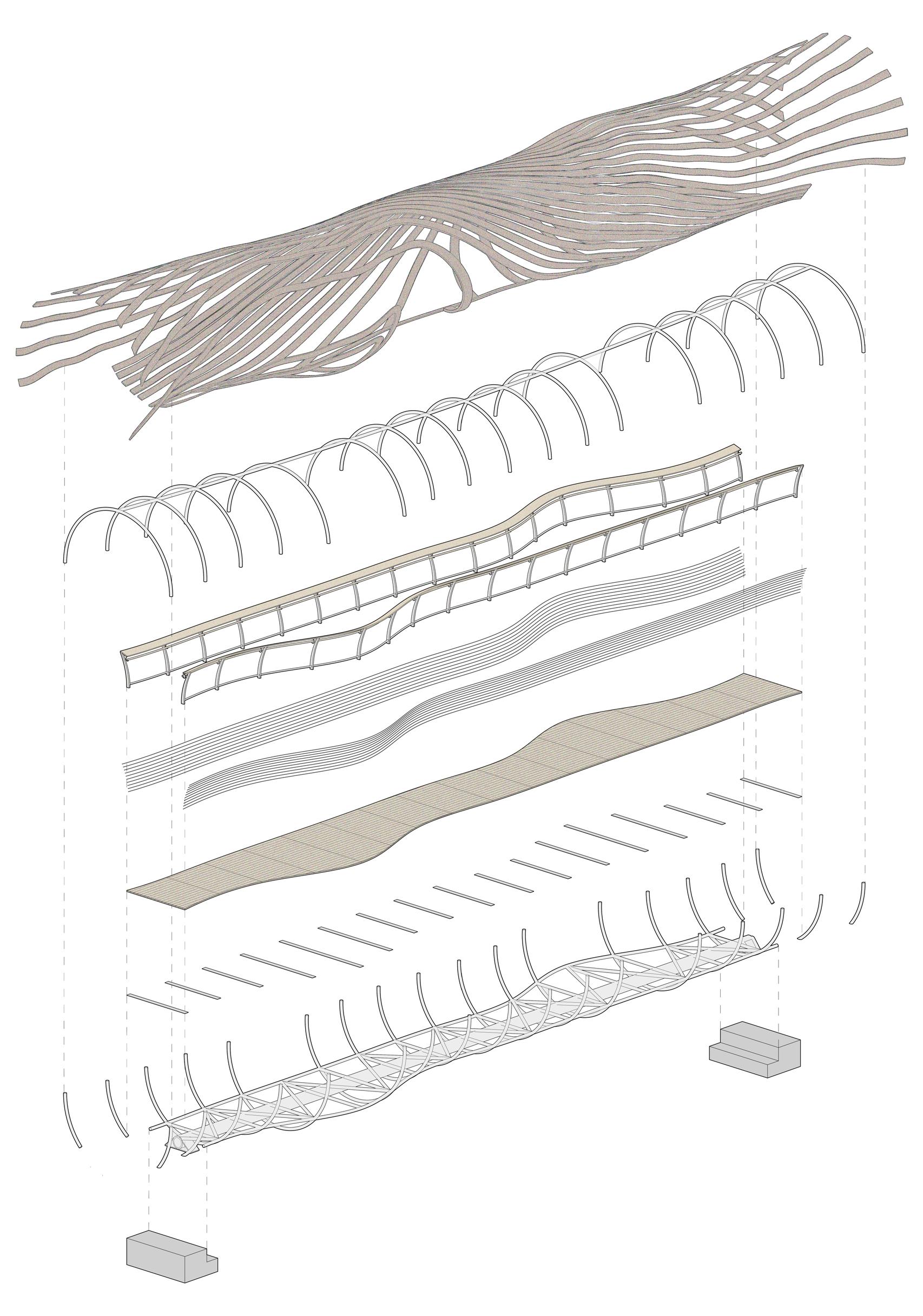
WEATHERING STEEL RIBBON PLATE CANOPY
GALVANIZED STEEL ROUND HSS BEAM
GALVANIZED STEEL ROUND HSS CIRCULAR ARCHES
GLULAM ANGLED LEDGE
GLULAM HANDRAIL
GALVANIZED STEEL RAIL POSTS
STEEL CABLES
GLULAM FLOOR BOARDS
GALVANIZED STEEL PLATES
GALVANIZED STEEL ROUND HSS CIRCULAR ARCHES
GALVANIZED STEEL ROUND HSS TRUSSES
GALVANIZED STEEL ROUND HSS BEAM
CAST CONCRETE FOUNDATION
YARN HOUSE
CLASS: 1A DESIGN STUDIO
LOCATION: CAMBRIDGE, ONTARIO
INSTRUCTOR: FIONA LIM TUNG
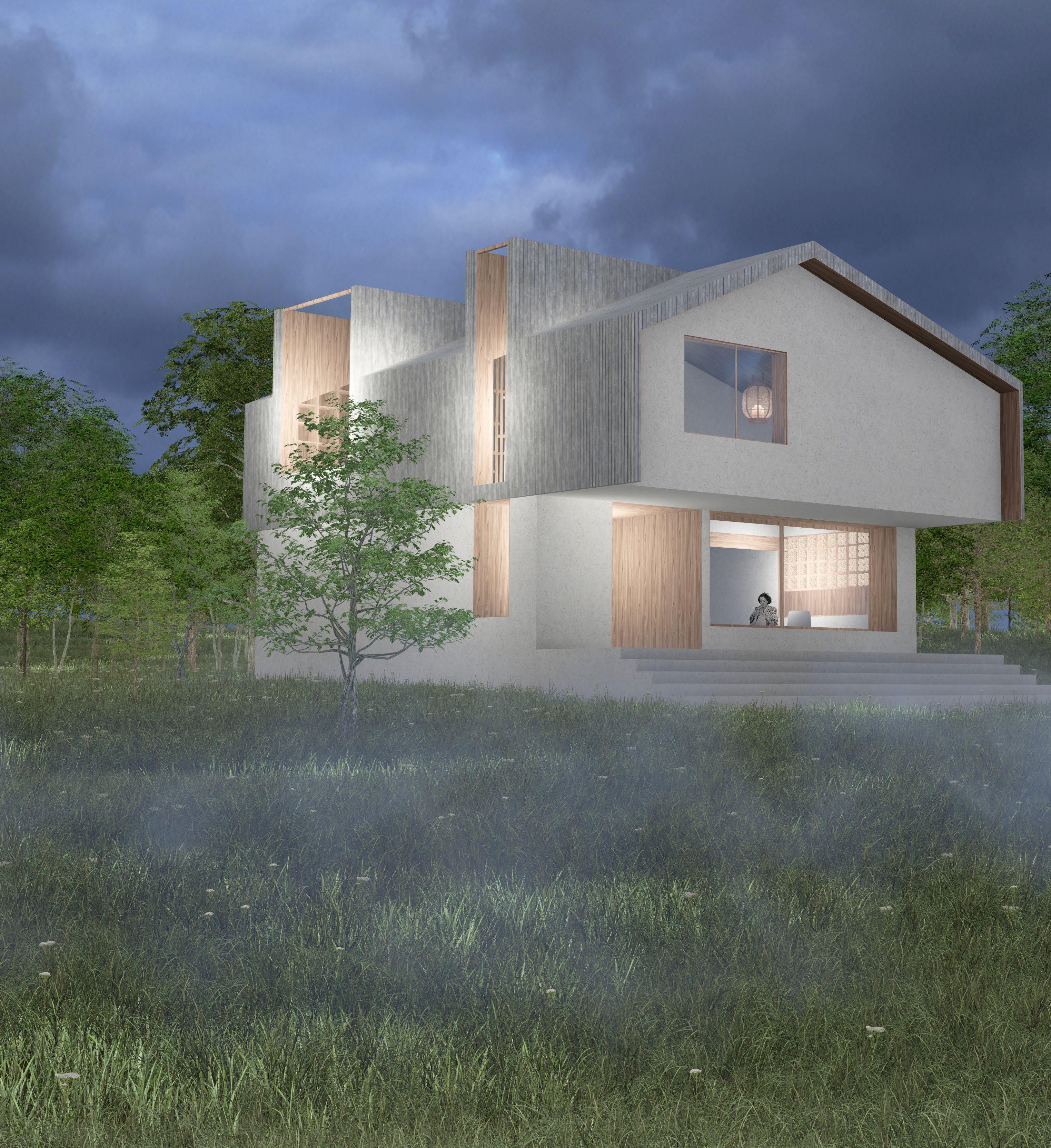
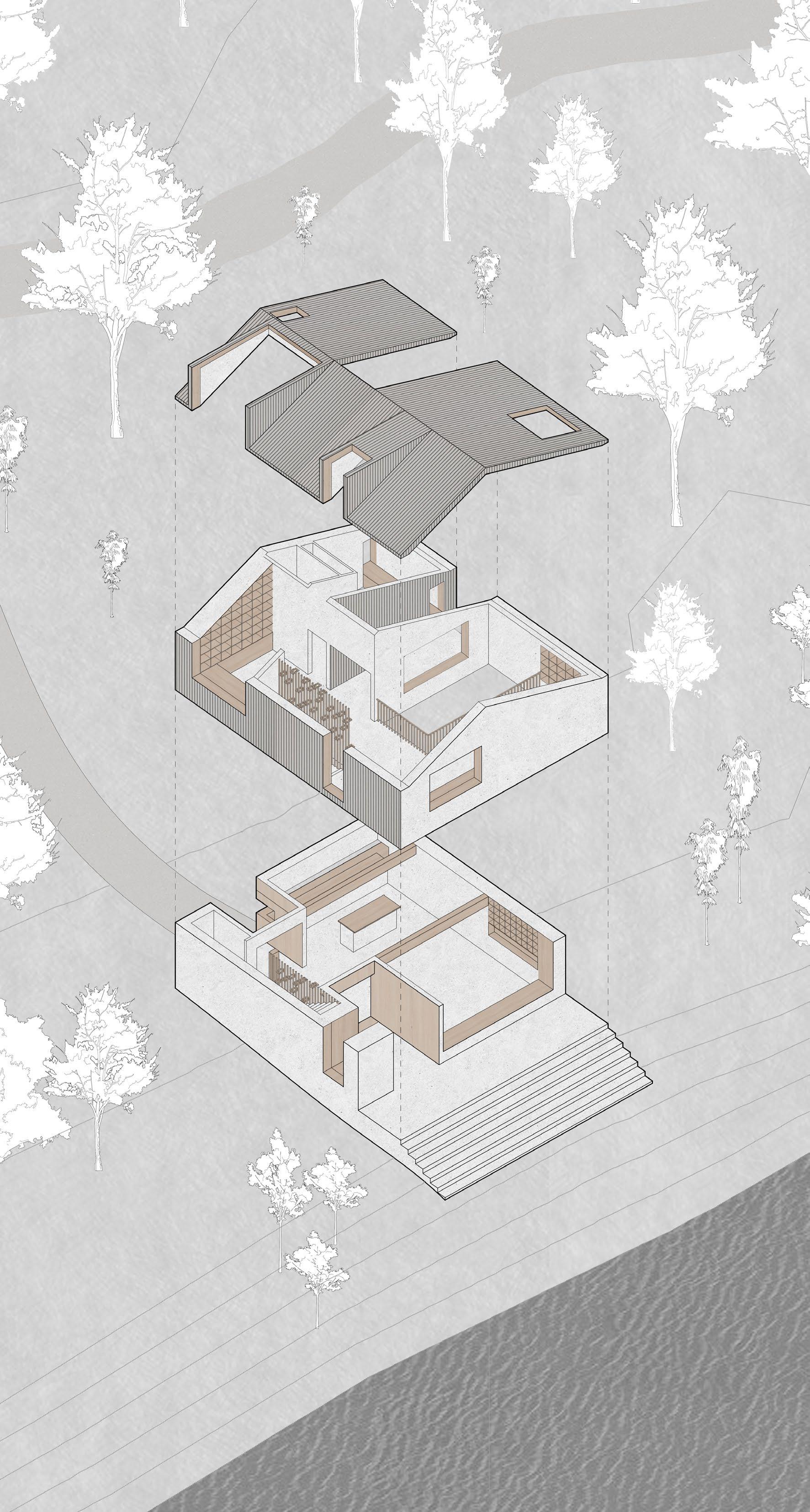
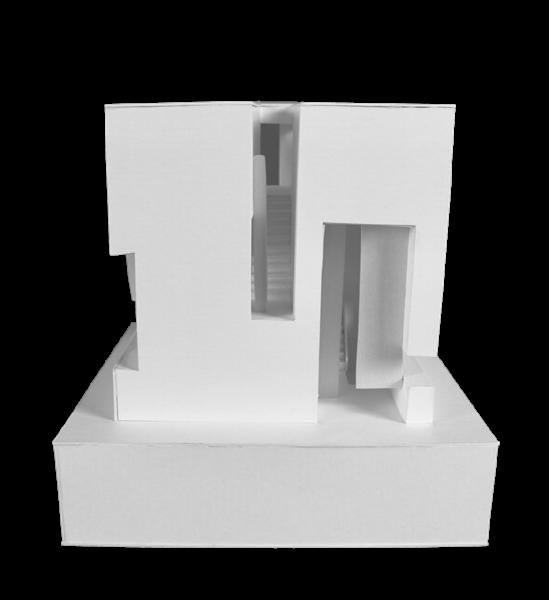
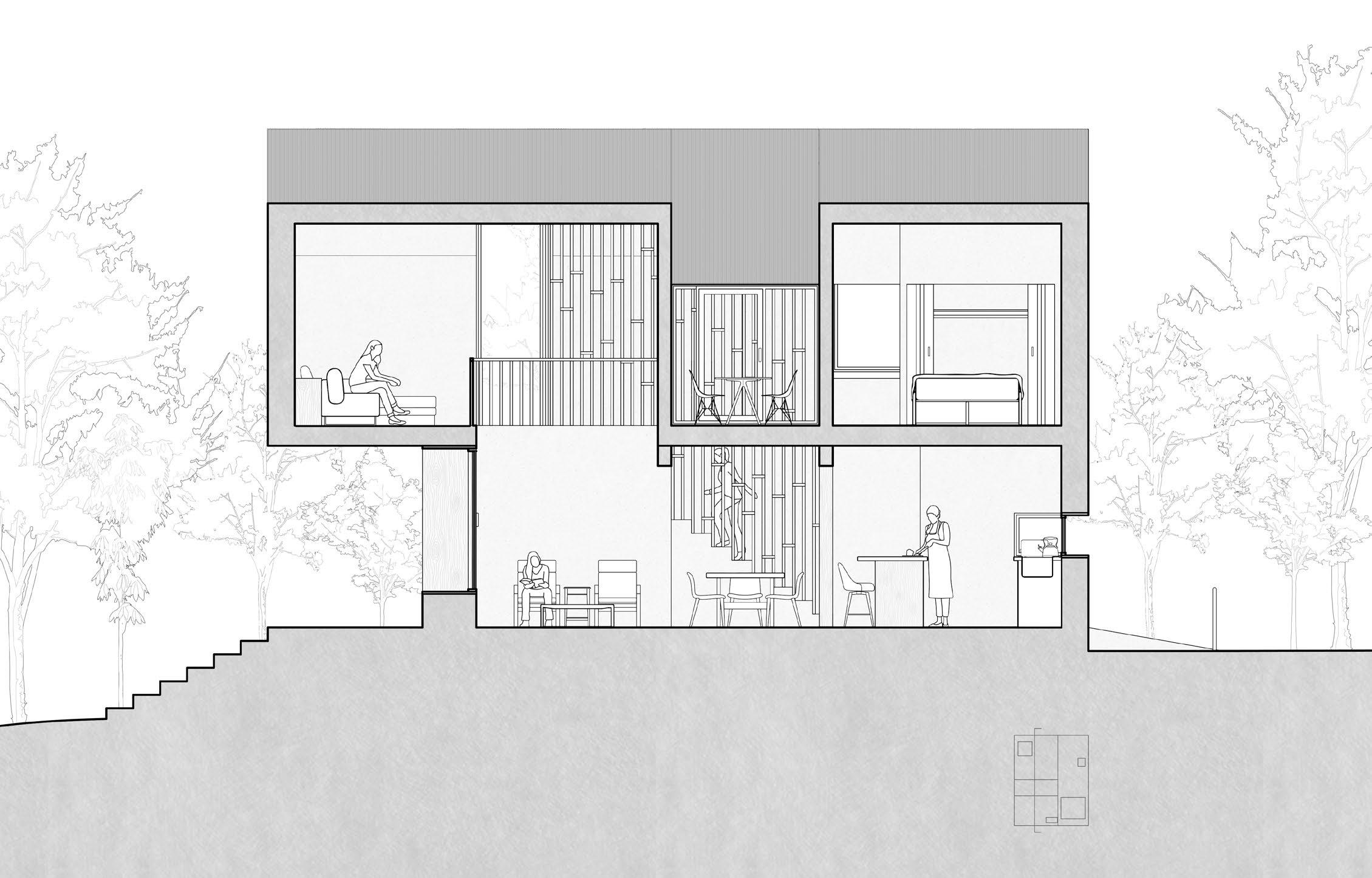
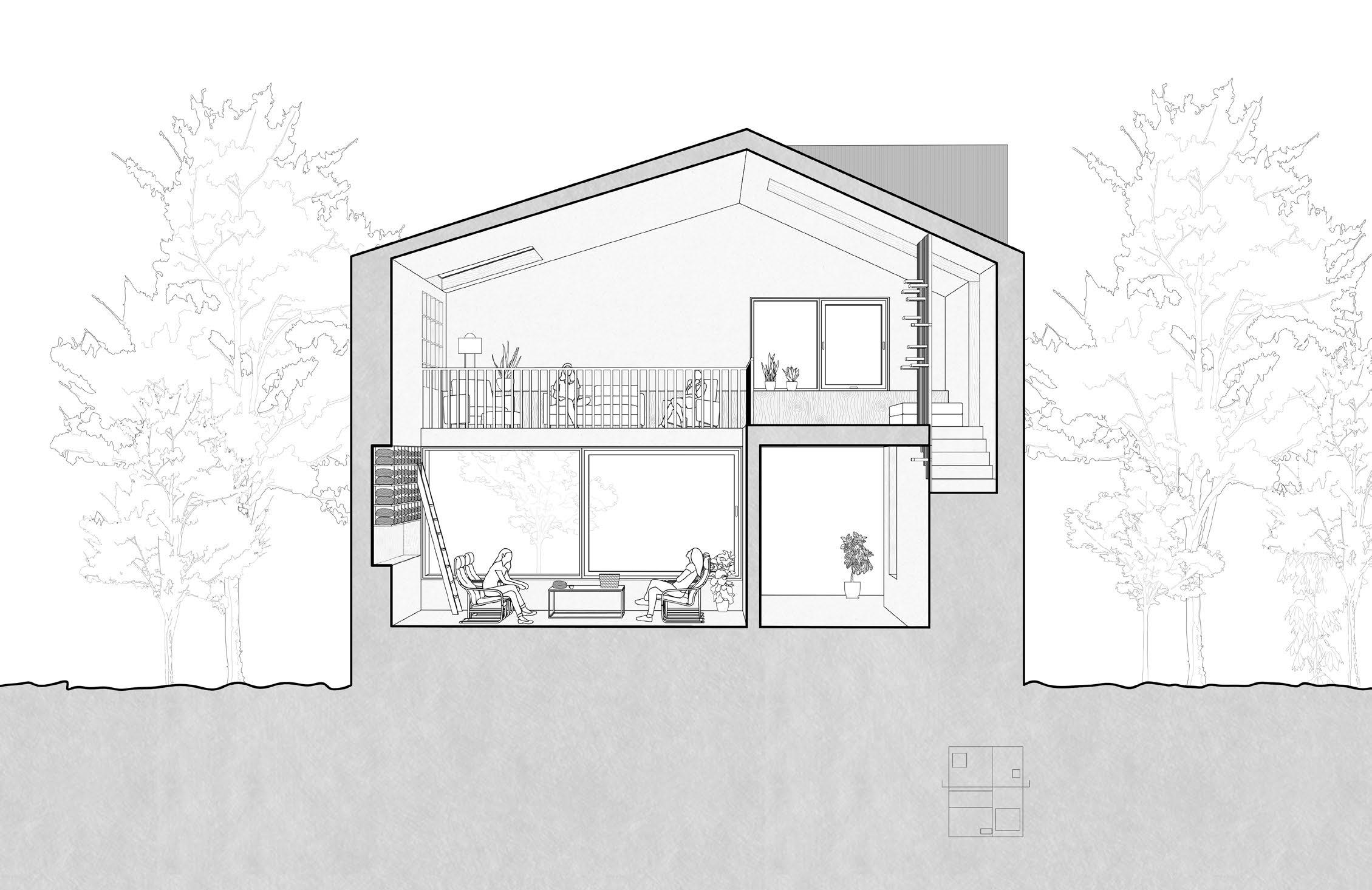
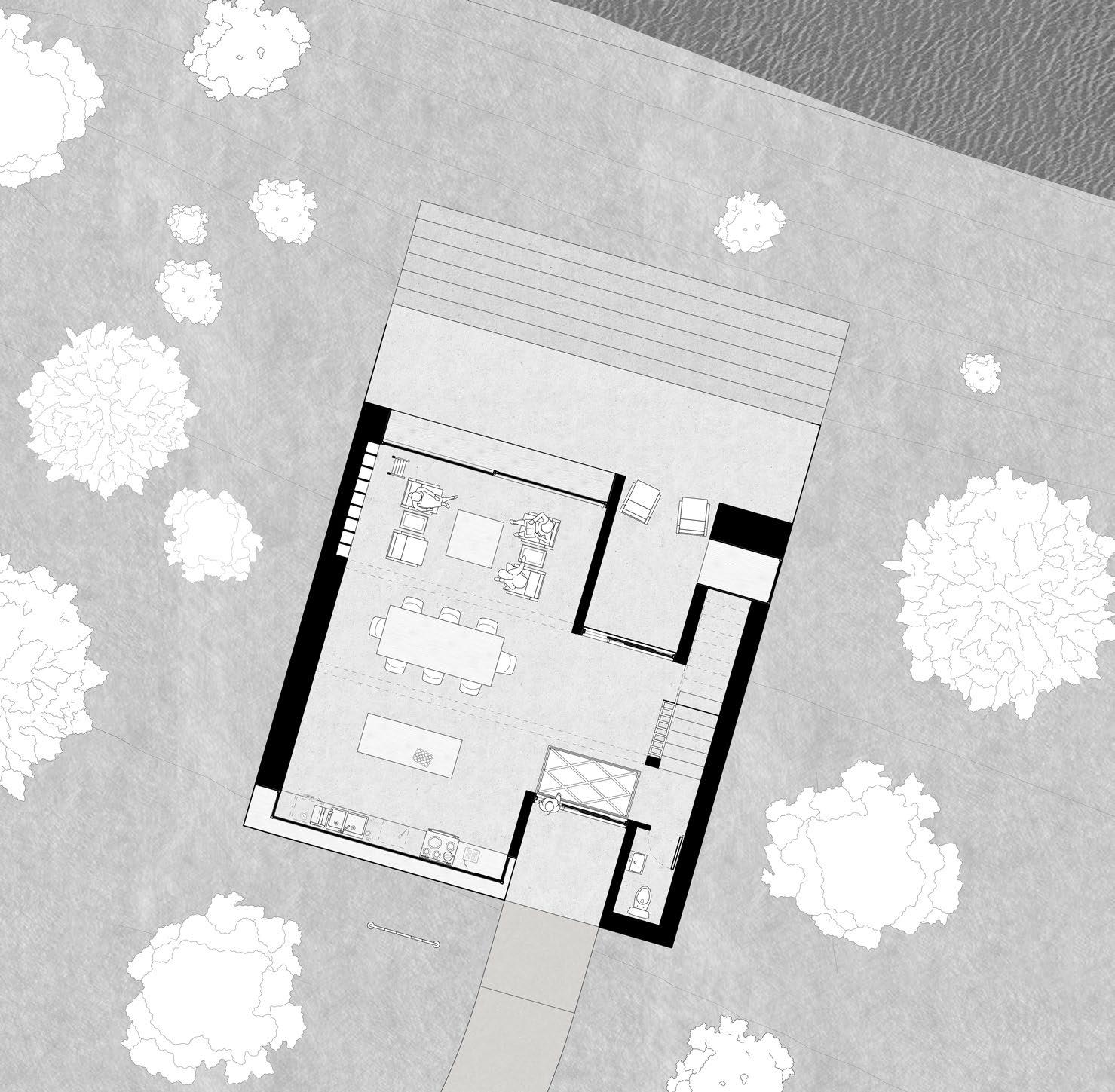
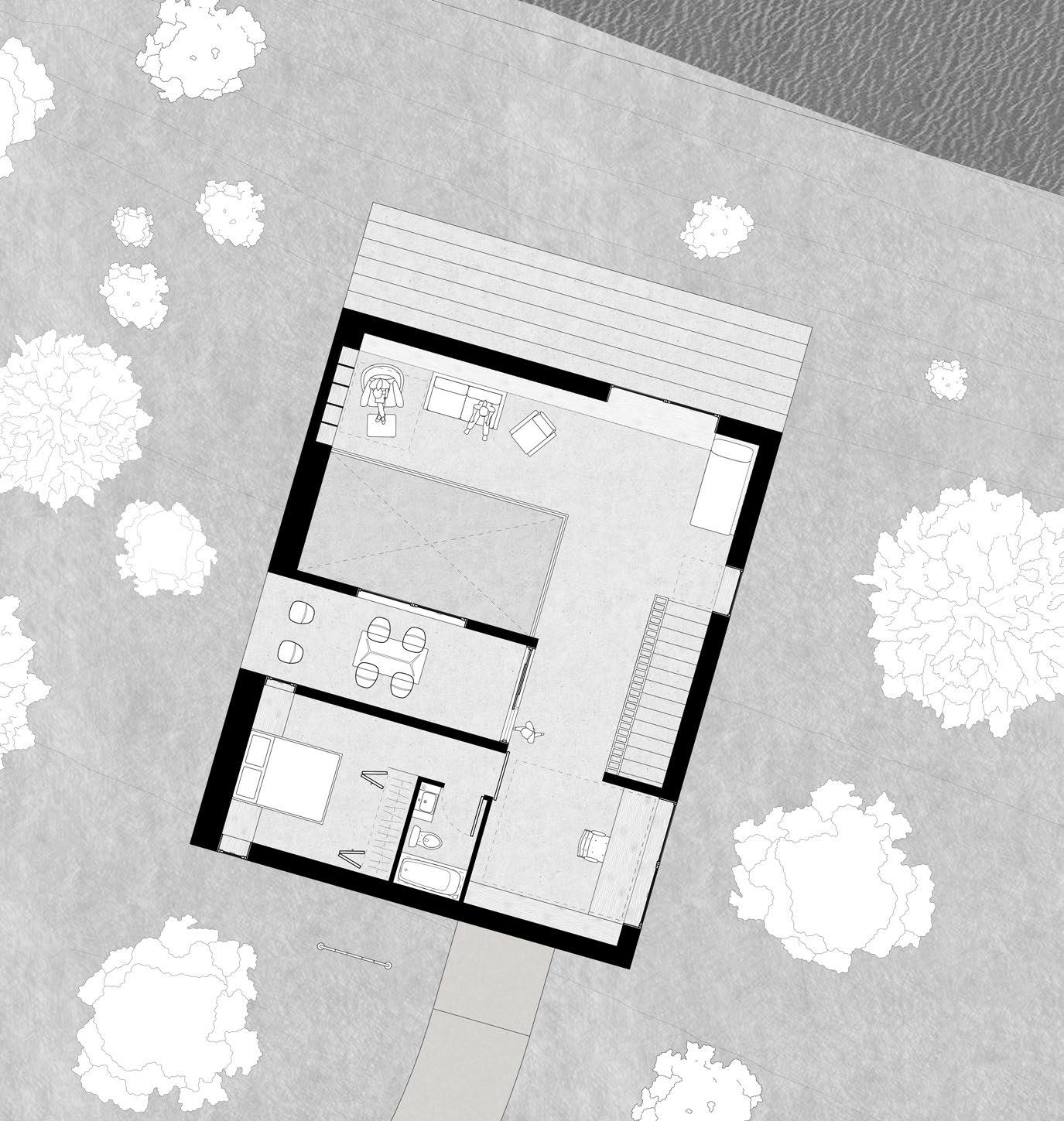
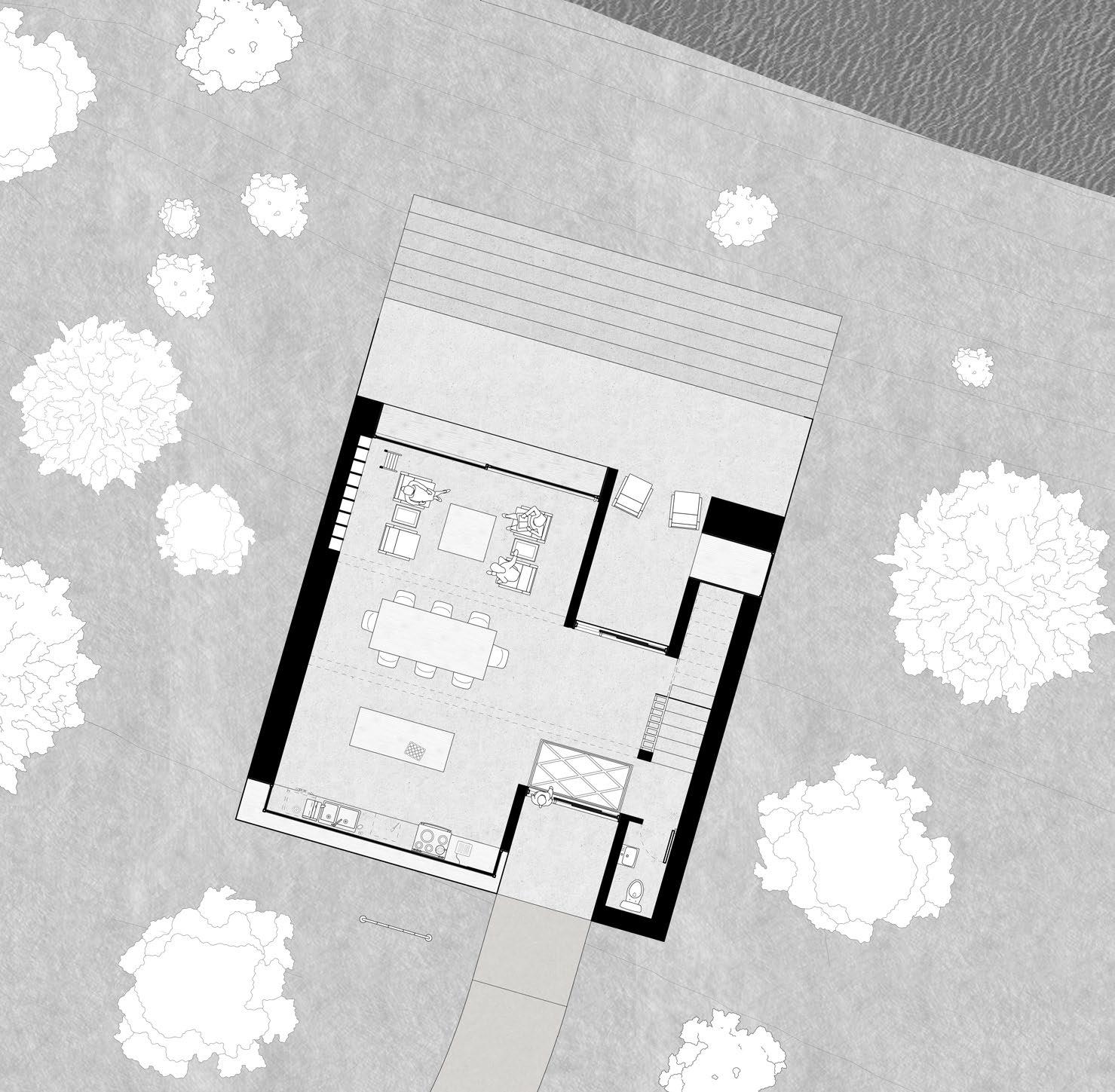
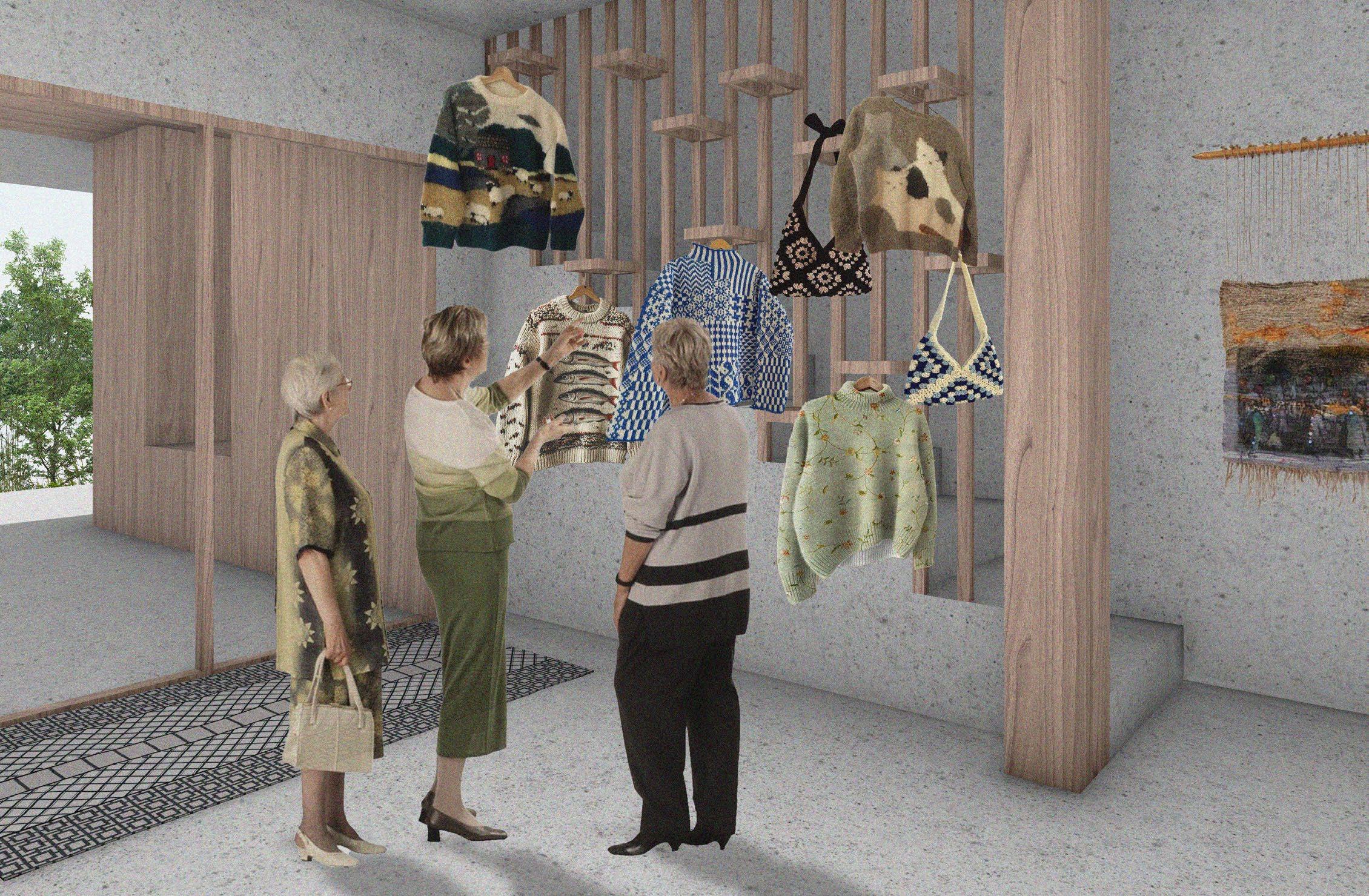
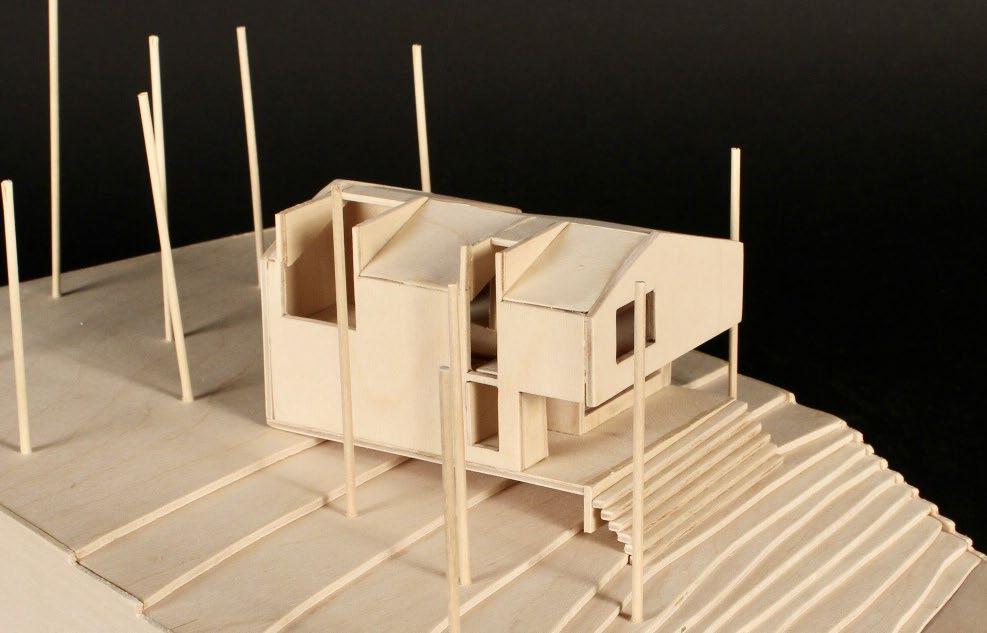
Located in Riverbluffs Park in Cambridge, Ontario, Yarn House explores how a single person residence can double as a community space. Yarn House invites the public into its main floor communal areas for knitting and crocheting classes and an opportunity for bonding with local creators.
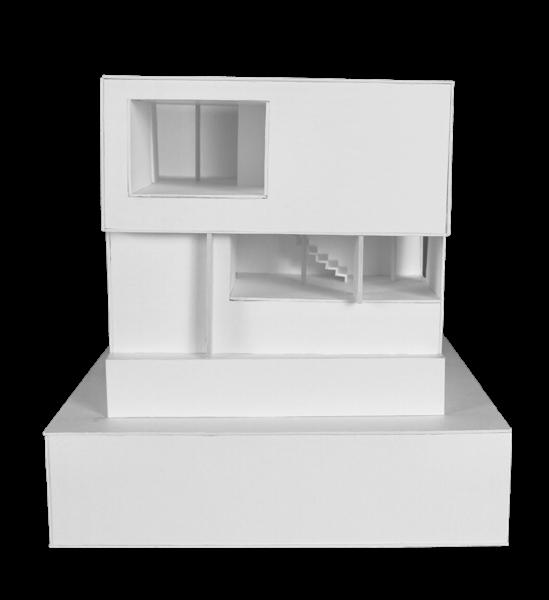
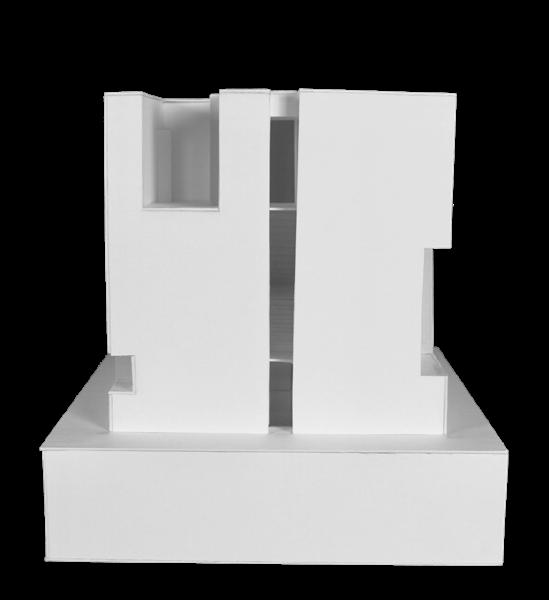
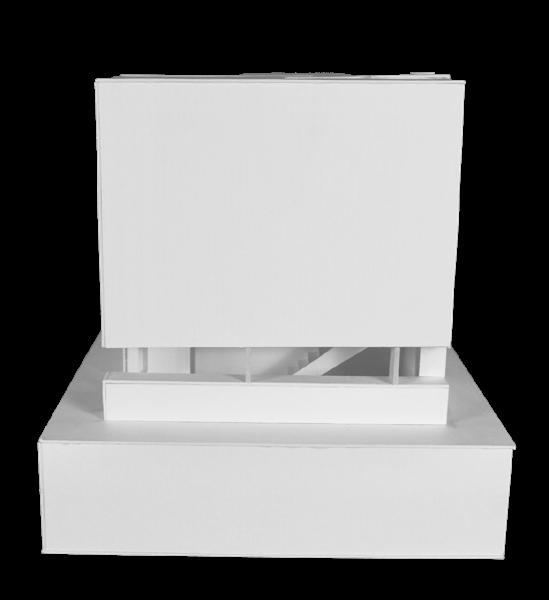
Yarn House aims to create a sense of comfort and safety for its occupants, which is achieved through a sense of thickness throughout the house. From the exterior, the building seems to be a solid mass, with punches into the mass that create porches, balconies and windows. On the interior, millwork shelves are built into the thick walls to store supplies and enhance the interior-exterior separation. These changes in depth and material create a feeling of protection from the forest beyond the walls, while still allowing for natural lighting and views of the landscape.
NORTH ELEVATION PARTI
EAST ELEVATION PARTI
SOUTH ELEVATION PARTI
WEST ELEVATION PARTI
LONGITUDINAL SECTION
SECOND FLOOR PLAN
PROFESSIONAL WORK
FIRM: Number TEN Architectural Group
PROJECT LOCATION: Brandon, Manitoba
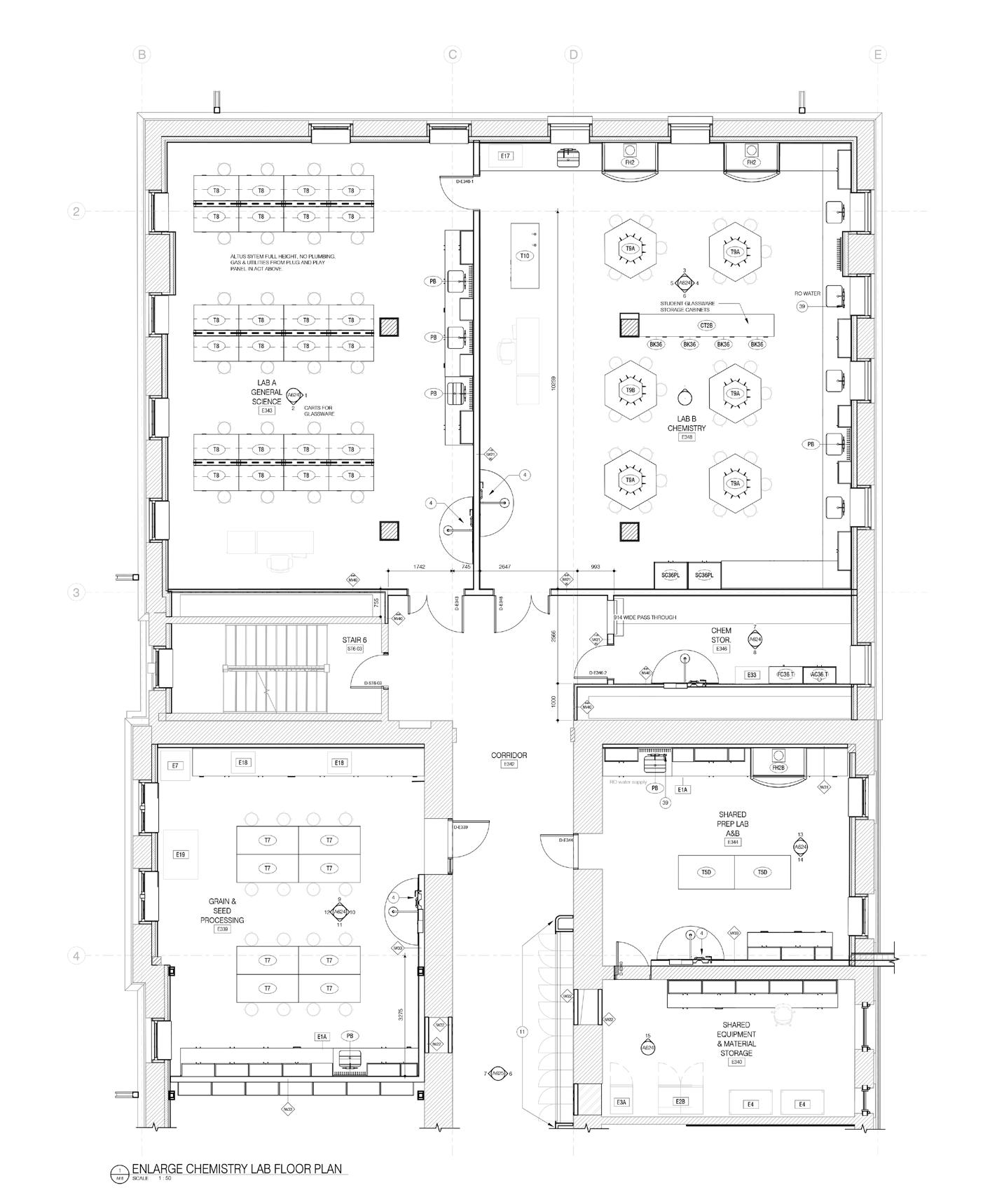
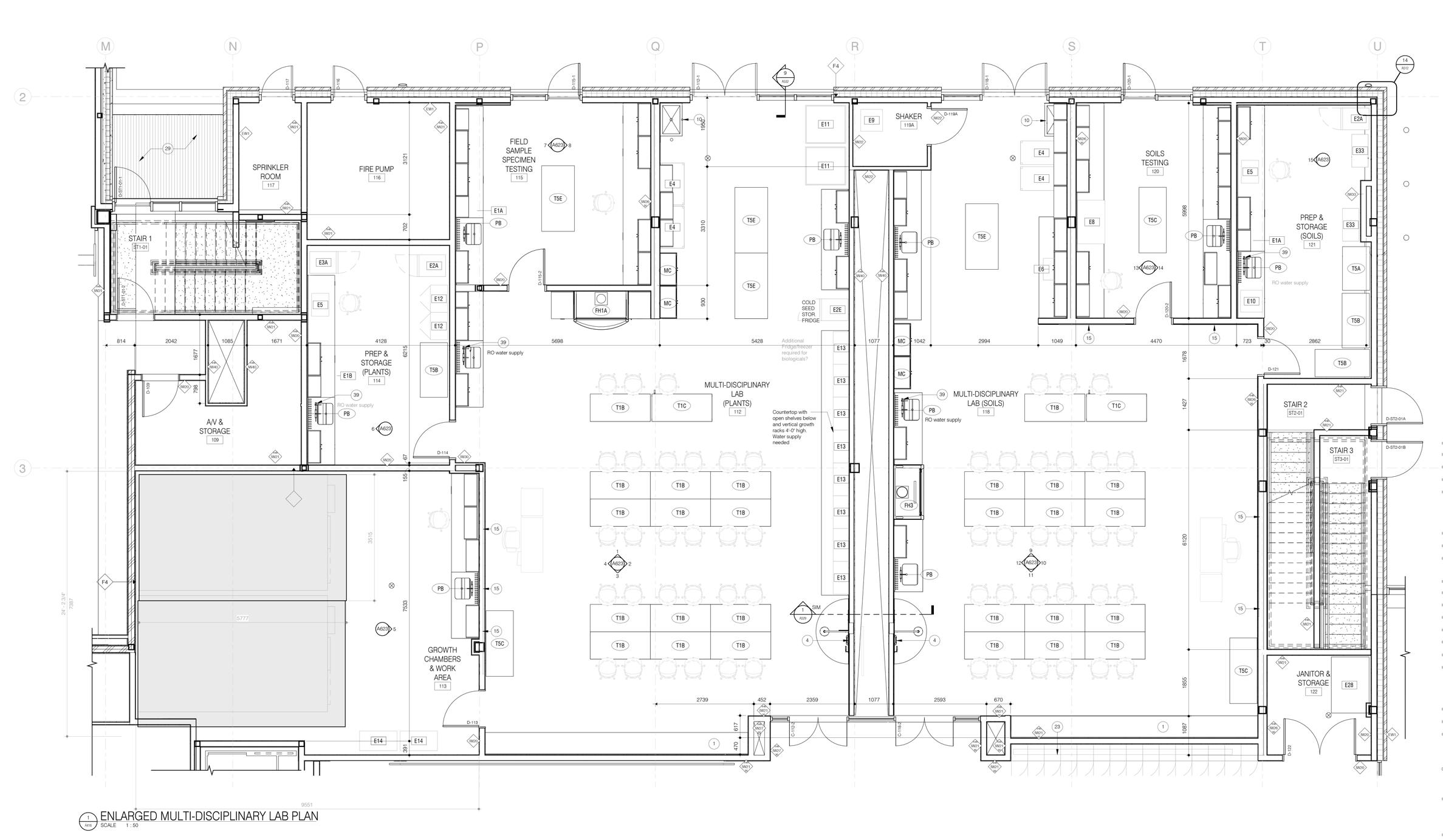
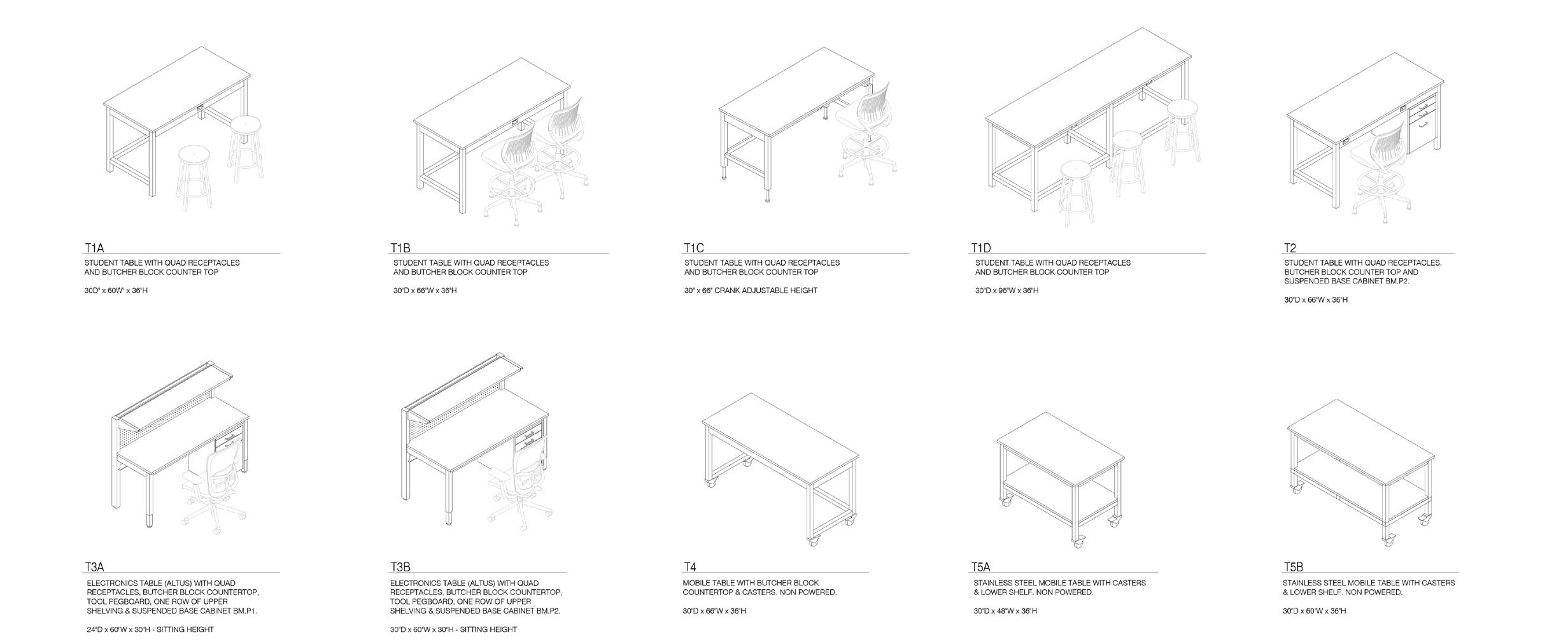
During my four-month work term at Number TEN I was part of the team working on the Assinibione Community College Prairie Innovation Centre in Brandon, Manitoba. I worked on the interiors of over 20 laboratory rooms, designing casework layouts, coordinating custom furniture requirements and specifying information for specialized equipment. I also created schedules and legends for these items. The softwares I used were Revit for drawings and schedules and Enscape and for renders.