Special Edition ITB
Free Distribution
March 2026
Special Edition ITB
Free Distribution
March 2026
Immersive landscapes, vibrant cultures and journeys that reveal the country’s diversity at every turn

PARANÁ Connectivity, innovation and iconic landscapes make the state a leading force in Brazilian tourism
A special itinerary through Brazil’s leading tourism highlights, featuring landscapes, culture and unique experiences


Brazil now presents itself as one of the most fascinating destinations in the world, bringing together natural diversity, cultural richness, and a tourism infrastructure increasingly prepared to welcome international visitors. For German travelers, who value well-planned journeys and authentic experiences, the country offers a mosaic of landscapes, vibrant cities, and a level of hospitality recognized worldwide.
The diversity of scenery is one of Brazil’s greatest strengths. Thousands of kilometers of Atlantic coastline, preserved tropical forests, globally significant national parks, and breathtaking natural phenomena, such as Iguazu Falls and the vast Amazon, coexist with major urban centers. These cities combine culture, architecture, gastronomy, and quality of life, allowing visitors to move seamlessly between raw nature and vibrant urban life within the same trip.
In recent years, Brazil has made consistent progress in modernizing its tourism infrastructure. Well-connected international airports, a diversified hotel network, resorts, boutique hotels, and specialized services ensure comfort and security for foreign travelers. The country has also strengthened its position in the events, business, and leisure tourism segments, supported by modern convention centers and highly qualified professionals.
This positive scenario is confirmed by the most recent

PRESIDENT Roy Taylor
VICE-PRESIDENT Rosa Masgrau rosamasgrau@mercadoeeventos.com.br(55-21) 2254-3543
EXECUTIVE DIRECTOR João Taylor joao.taylor@mercadoeeventoscom.br(55-11) 94542-0911
EDITORIAL DIRECTOR Natália Strucchi natalia.strucchi@mercadoeeventos.com.br(55-21) 99164-2940
EDITOR Janaina Brito janaina.brito@mercadoeeventos.com.br (55-11) 98779-5732
SALES DIRECTOR Mari Masgrau mari.masgrau@mercadoeeventos.com.br(55-11) 97509-0605
ADMINISTRATIVE AND FINANCIAL DIRECTOR Roberta Saavedra roberta.saavedra@mercadoeeventos.com.br(55-21) 2487-1616
figures from the World Tourism Barometer, a report published by UN Tourism. From January to December 2025, Brazil recorded a 37% increase in international tourist arrivals compared to the same period in 2024 - the highest growth among the major global destinations analyzed.
Brazil’s performance even surpassed markets that also experienced strong expansion, such as Egypt (+20%), Morocco (+14%), and the Seychelles (+13%). These results highlight not only rising international demand but also growing traveler confidence in the country’s organization, tourism offerings, and capacity to welcome visitors with different travel profiles.
For German tourists in particular, Brazil offers additional advantages: a cultural diversity influenced by European heritage, a rich and varied cuisine, sustainable travel experiences, customized itineraries, and the possibility of combining beaches, nature, culture, and historic cities in a single journey. Brazilian hospitality, marked by warmth and genuine openness, completes the experience.
With steady growth, ongoing investments, and an increasingly qualified tourism offering, Brazil is consolidating its position as a destination ready to receive international travelers. For the German market, it is an invitation to discover a plural, well-structured, and surprising country, a destination that goes far beyond expectations and leaves lasting memories with every visit.
OPERATIONAL
Andreia Boccalini andreia.boccalini@mercadoeeventos.com.br(55-11) 95389-7662
REPORTAGE Ana Azevedo ana.azevedo@mercadoeeventos.com.br Rafael Torres rafael.torres@mercadoeeventos.com.br Giulia Jardim giulia.jardim@mercadoeeventos.com.br Beatriz do Vale beatriz.vale@mercadoeeventos.com.br Felipe Abílio felipe.abilio@mercadoeeventos.com.br Beatriz Waehneldt beatriz.waehneldt@mercadoeeventos.com.br Yuri Ricci yuri.ricci@mercadoeeventos.com.br
DESIGNER
Patrick Peixoto
SOCIAL MEDIA
Matheus Bueno
TRANSLATION
Janaina Brito
REPORTAGE SP (55-11) 98779-5732
REPORTAGE RJ (55-21) 99164-2940
READER SERVICE (55-11) 95389-7662
IT INFRASTRUCTURE MANAGEMENT
WorkNet Tecnologia fernando.carilo@worknetecnologia.com.br
WA AGENCY
Agência WA (https://waagenciadigital.com.br)
SALES DEPARTAMENT (55-11) 95389-7662
Rua 24 de Maio, 276 - 3º andar - República, São Paulo - SP, 01041-000
COMMERCIAL REPRESENTATIVE IN THE UNITED STATES
Juliana Costa juliana.costa@mercadoeeventos.com.br+1 (850) 225-9376
Published by Editora Mercado e Eventos Ltda
The articles and opinions of third parties published in the issue do not necessarily reflect the position of the newspaper.
BRAZIL
GENERAL INFORMATION – 16
EVENTS – 24
MATO GROSSO – 46
MATO GROSSO DO SUL – 48
INTERVIEWS
MARCELO FREIXO (EMBRATUR) – 20
BRUNO REIS (EMBRATUR) – 22
NORTH
AMAZONAS – 26
PARÁ – 30
NORTHEAST
PERNAMBUCO – 32
MARANHÃO – 34
BAHIA – 36
PARAÍBA – 38
CEARÁ – 40
ALAGOAS – 42
RIO GRANDE DO NORTE – 44
RIO DE JANEIRO – 50
MINAS GERAIS – 52
SÃO PAULO – 54
PARANÁ – 56
SANTA CATARINA – 58
RIO GRANDE DO SUL – 60
PARANÁ - 7
Diversity, beaches, culture, and nature in the only Brazilian state with two Natural World Heritage Sites
Bordering Argentina and Paraguay, and with strategic connections to Uruguay, Peru, and Chile, Paraná is a Brazilian state filled with attractions from coast to coast from the magnificent Iguaçu Falls to a shoreline dotted with
islands and pristine beaches. It is the only state in Brazil home to two UNESCO Natural World Heritage Sites: Iguaçu National Park and the largest, best-preserved area of the Great Atlantic Forest Reserve.
There is no shortage of reasons to explore Paraná and experience the beauty of its destinations. Discover some of them below!
Direct flights to Curitiba
São Paulo (SP)
Rio de Janeiro (RJ)
Porto Alegre (RS)
Florianópolis (SC)
Belo Horizonte (MG)
Brasília (DF)
Salvador (BA)
Maceió (AL) Recife (PE)
Foz do Iguaçu (PR)
Buenos Aires (ARG)
Santiago(CHI)
Lima (PER)
Lisboa (POR)
Direct flights to Foz do Iguaçu
São Paulo (SP)
Rio de Janieiro (RJ)
Belo Horizonte (MG)
Maceió (AL)
Recife (PE)
Florianópolis (SC)
Curitiba (PR)
Santiago (CHI)

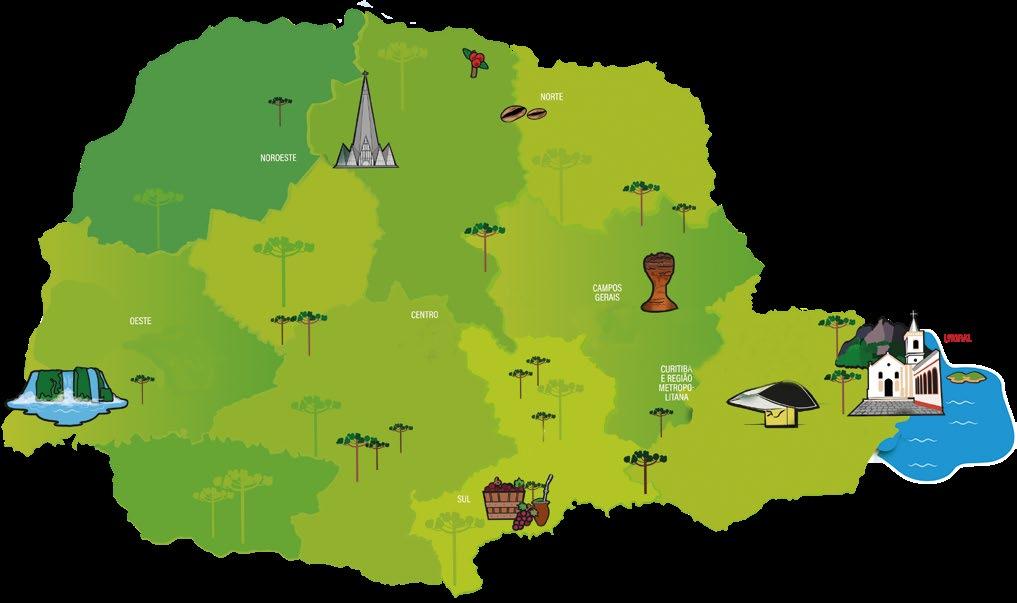
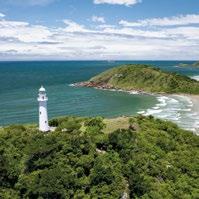
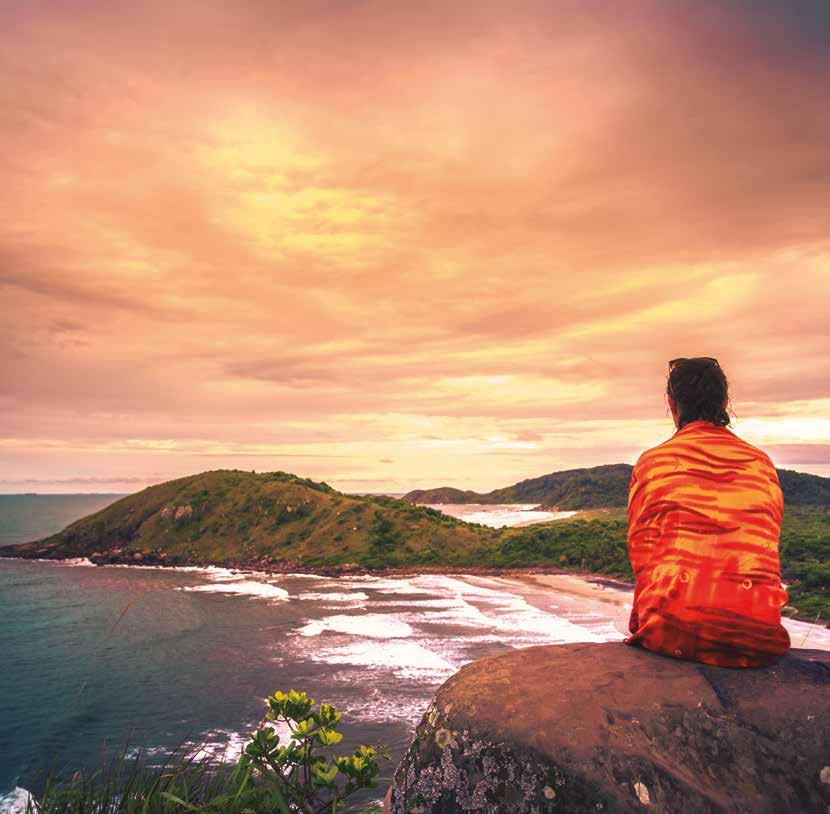
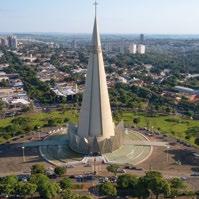
Paraná is a true treasure trove for first-time visitors. Larger than countries such as Uruguay, Greece, Austria, or Portugal, this Brazilian state offers options for every travel style: saltwater and freshwater beaches, island destinations that are true paradises, charming countryside landscapes,
the infrastructure of major metropolitan areas, and lush nature. There are nearly 90 protected areas where the Atlantic Forest remains preserved.
Viaje Paraná has selected must-see destinations across the state:
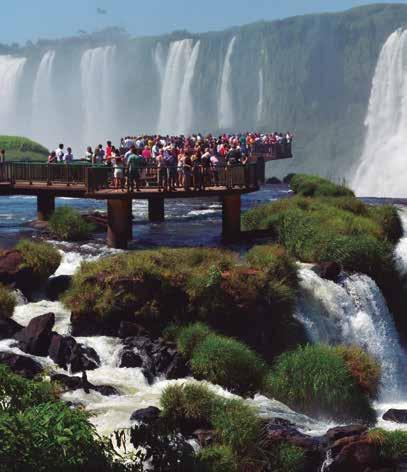
South America’s leading tourist attraction is located in the city of Foz do Iguaçu
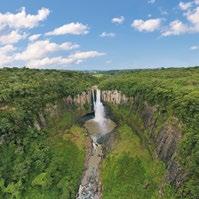
Few places in the world concentrate as many memorable experiences as Foz do Iguaçu. Located in the far west of the state, on the border with Argentina and Paraguay, it serves as Paraná’s tourism capital.
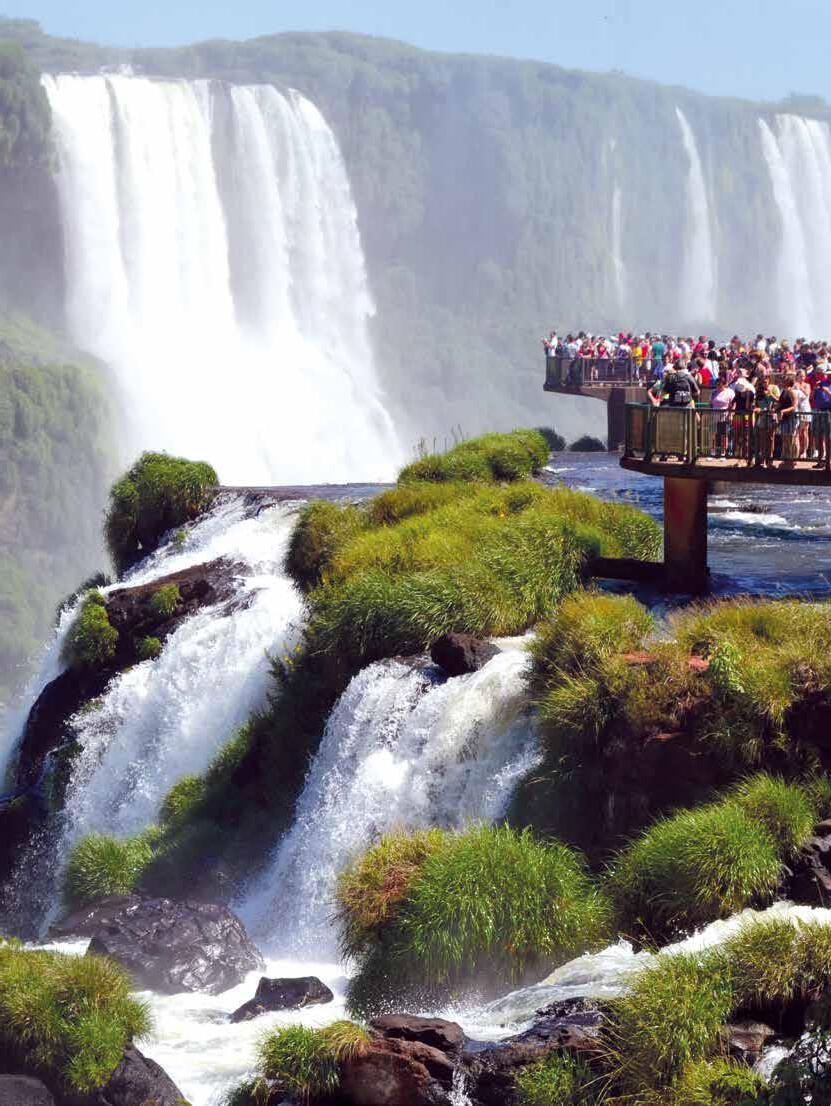
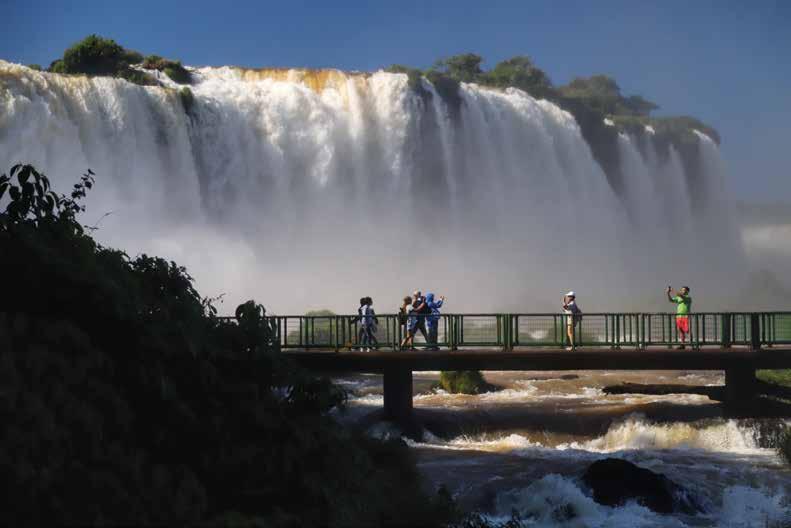
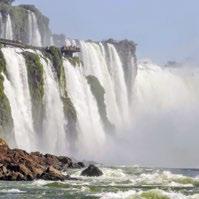
The highlight is the spectacular Iguaçu Falls, a UNESCO Natural World Heritage Site voted South America’s top tourist attraction in the 2025 Travelers’ Choice Awards by TripAdvisor.
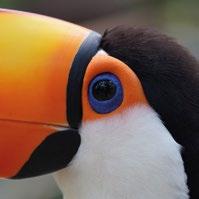
The city also offers many other attractions, including the Bird Park (Parque das Aves), boat tours, theme parks, and the rich multicultural atmosphere of the Triple Frontier.
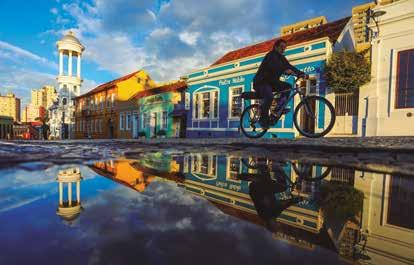
Paraná’s capital is modern, sophisticated, and cosmopolitan. Voted the World’s Smartest City in 2024 by the World Smart City Awards (FIRA Barcelona), Curitiba reflects diversity through historical, cultural, and gastronomic routes, globally recognized urban solutions, and architecture influenced by European heritage.
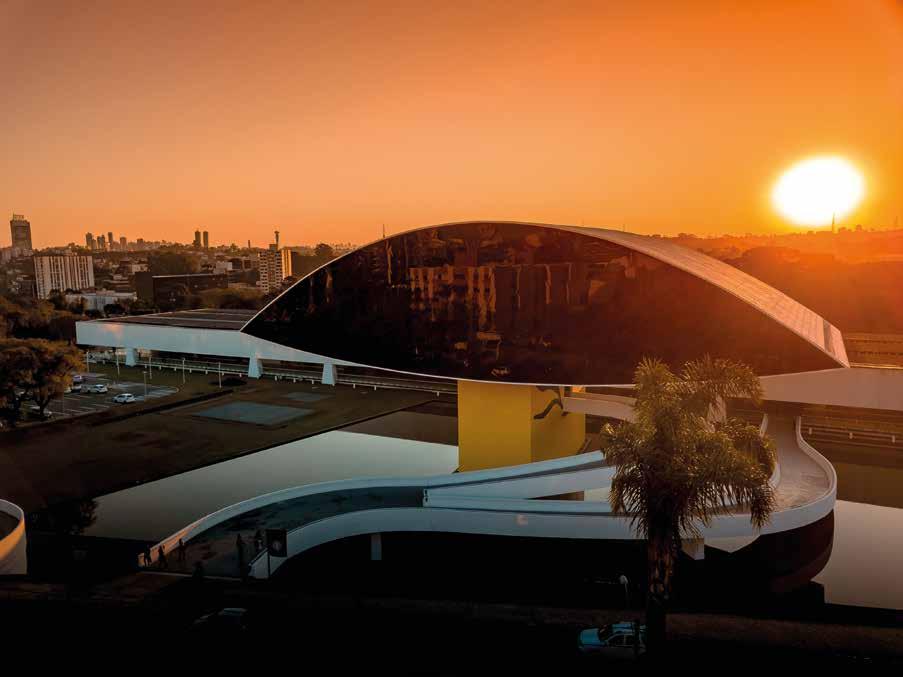
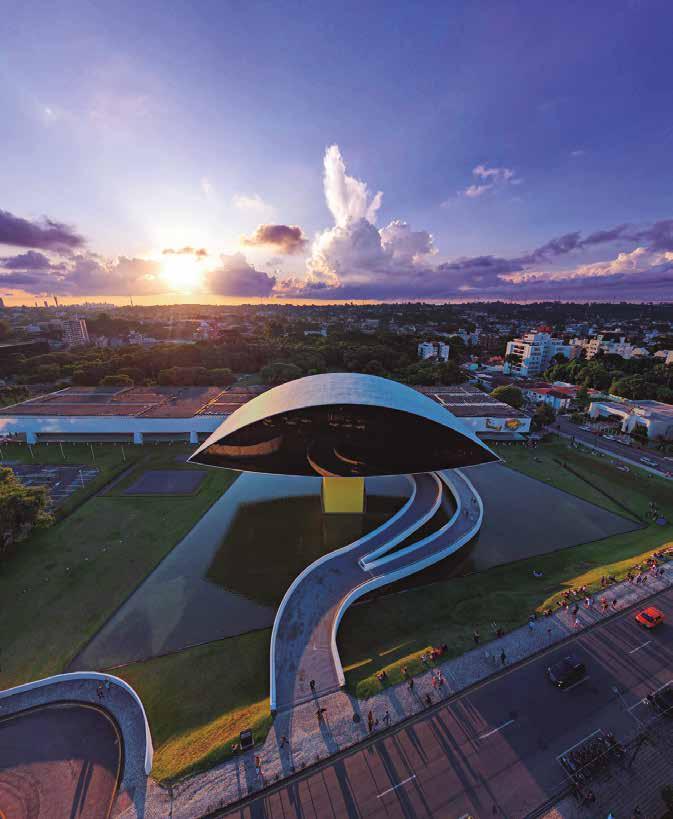
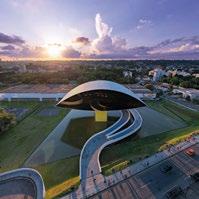
The city is home to no fewer than 75 museums, including the Oscar Niemeyer Museum - one of the largest art museums in Latin America and an icon of Brazilian architecture.
Curitiba is also Brazil’s sustainability capital, boasting 50 parks and green spaces open to the public. The city features an international airport with direct flights from Buenos Aires, Asunción, Montevideo, Santiago, and Lima, and is just a one-hour flight from São Paulo.
In the surrounding region, visitors can enjoy wineries, rural tourism, and natural parks.
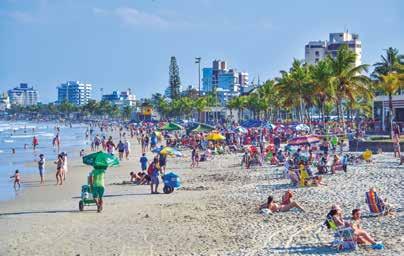
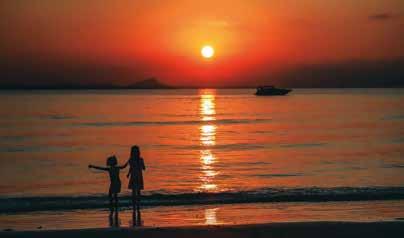
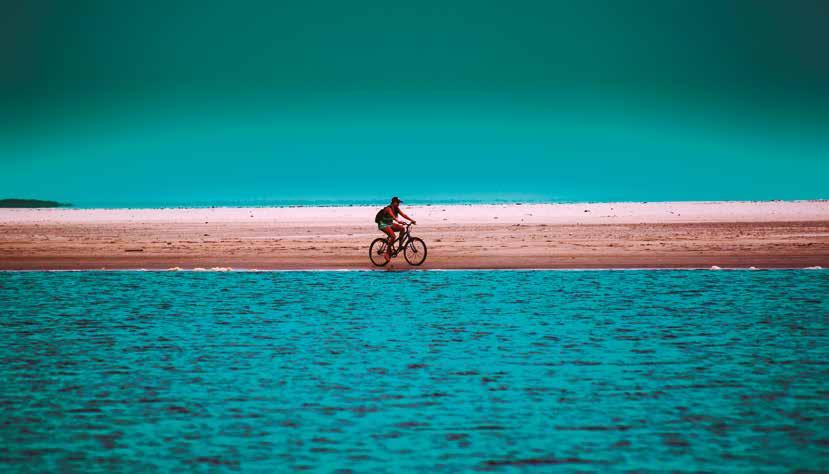
Beaches, bays, paradisiacal islands, nature, charm, and flavors in the heart of the Great Atlantic Forest Reserve - another UNESCO Natural World Heritage Site.
Thanks to its natural beauty and investments in infrastructure, Paraná’s coastline has become increasingly popular among tourists from other Brazilian states and neighboring countries such as Argentina and Paraguay.
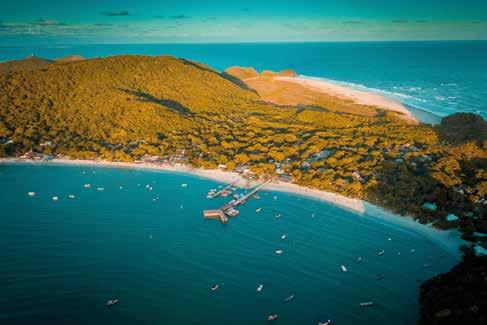
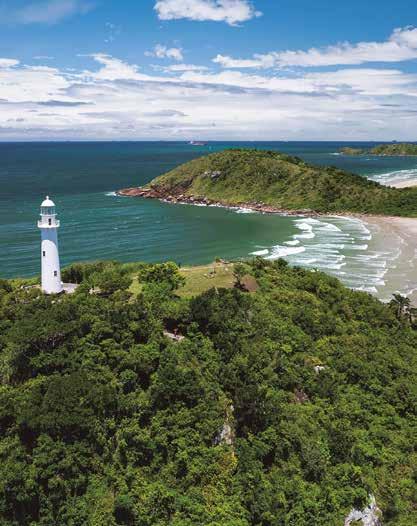
Located just one hour from Curitiba, the coast features more than 100 beaches and seaside resorts with white sands and clean waters. The islands deserve special mention: true nature sanctuaries, with the iconic Ilha do Mel (Honey Island) standing out.
For those seeking vibrant beach life, the towns of Matinhos, Pontal do Paraná, and Guaratuba offer beautiful beaches along with a wide variety of bars and restaurants. In January and February, the Verão Maior project brings nationally renowned concerts, sports, and tourism activities to the beaches.
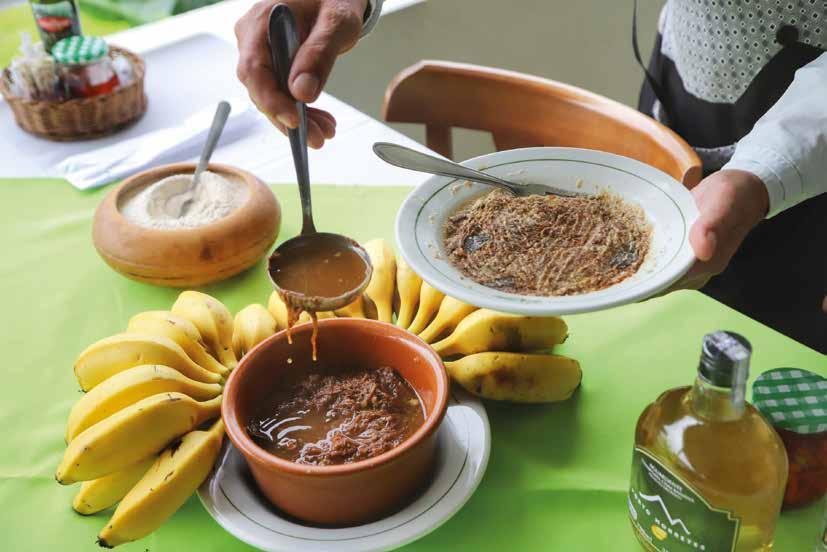
The Paraná coast also offers rich culture, adventure tourism, and distinctive flavors, such as barreado and banana sweets - traditional dishes from the historic towns of Morretes and Antonina.
This season, 2.56 million people enjoyed the free attractions on the beaches.
A place to discover - and fall in love with.
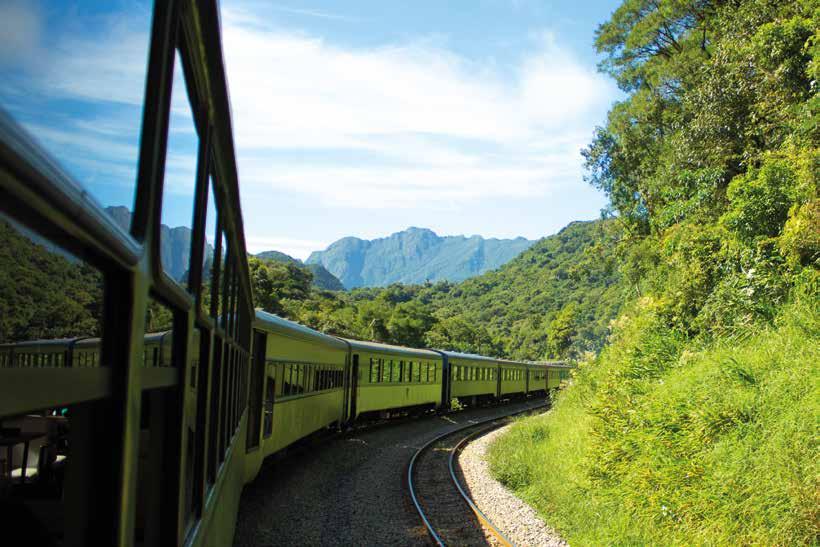
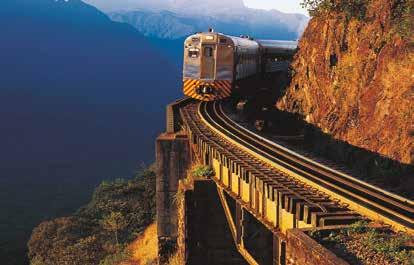
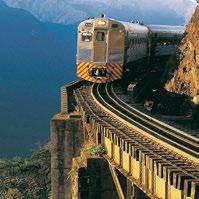
One of the most enchanting ways to travel between Curitiba and the coast is by train, following a historic railway to Morretes that crosses the largest preserved stretch of Atlantic Forest in Brazil.
The Serra Verde Express journey is the only Brazilian attraction included in the ranking of the world’s best train trips by Amazing Train Journeys, published by Lonely Planet.
Lasting approximately four hours, the train travels 65 kilometers, crossing 41 bridges, 13 tunnels, rock walls, and waterfalls along tracks that are more than 135 years old. The experience stands out for offering different types of railcars
Two historic towns less than an hour from the capital that combine colonial architecture, natural beauty, and sensory experiences
In Antonina Bay, canoeing allows visitors to observe local biodiversity while navigating calm waters. In Morretes, Ekôa Park stands out as an ecotourism center offering activities such as tree-climbing courses, zip lines, and interpretive trails immersed in the Atlantic Forest.
For adventure seekers, the peaks of Marumbi State Park and Pico do Sete provide challenging mountaineering opportunities.
Local restaurants serve barreado, the traditional dish of the coast, as well as fresh seafood.
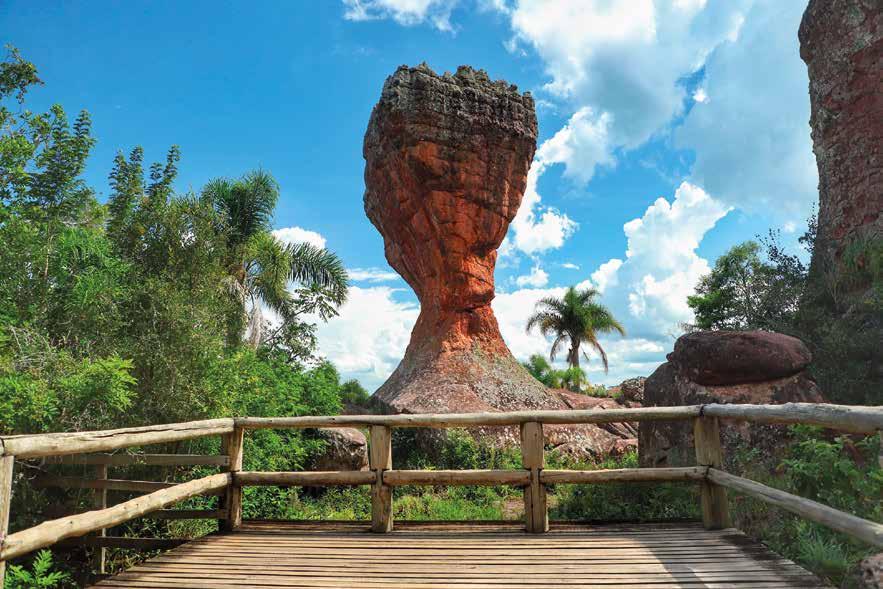
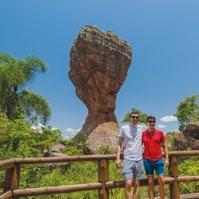
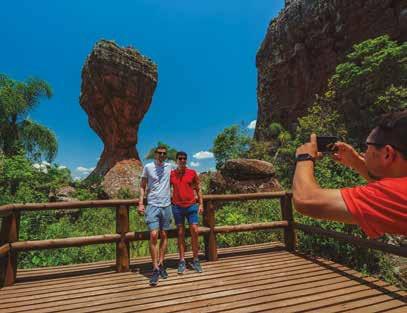
The city of Ponta Grossa is ideal for a day trip from Curitiba, just one hour away by car via the BR-376 highway. One of the region’s main attractions is Vila Velha State Park, famous for its monumental rock formations sculpted by nature over thousands of years.
Listed as a State Historical and Artistic Heritage Site, the park is an excellent choice for nature contemplation and adventure activities, allowing visitors to explore sandstone formations, sinkholes (Furnas), and the Golden Lagoon (Lagoa Dourada). Covering nearly 4,000 hectares, the park preserves fragments of Araucaria forest and native grasslands.
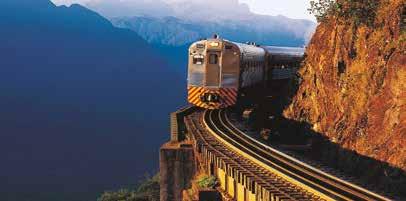
- some focused on comfort and premium service, while others highlight the history of the railway.
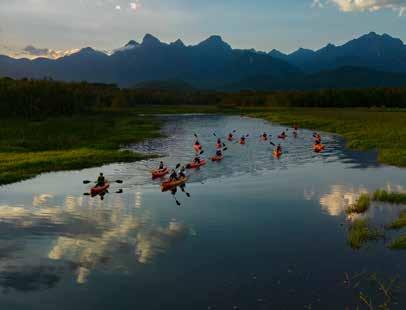
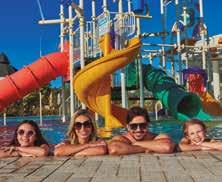
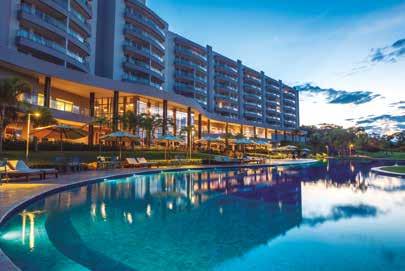
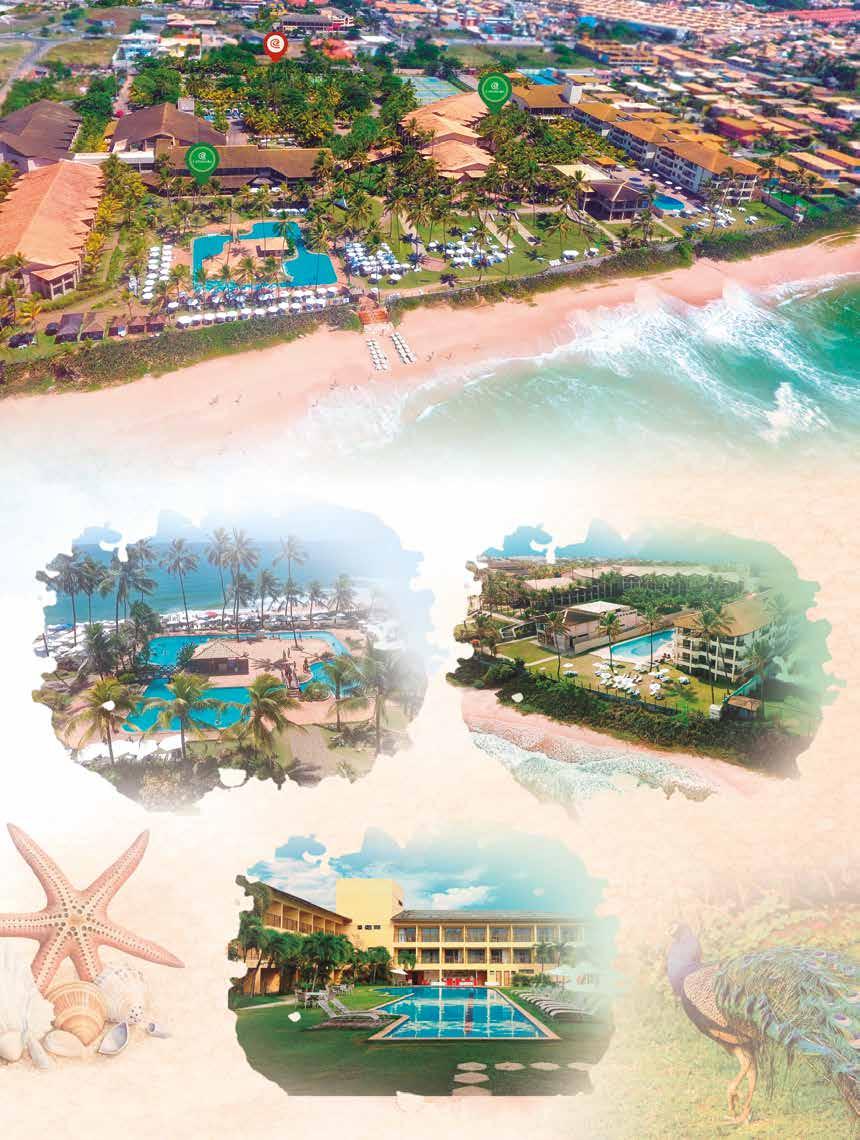
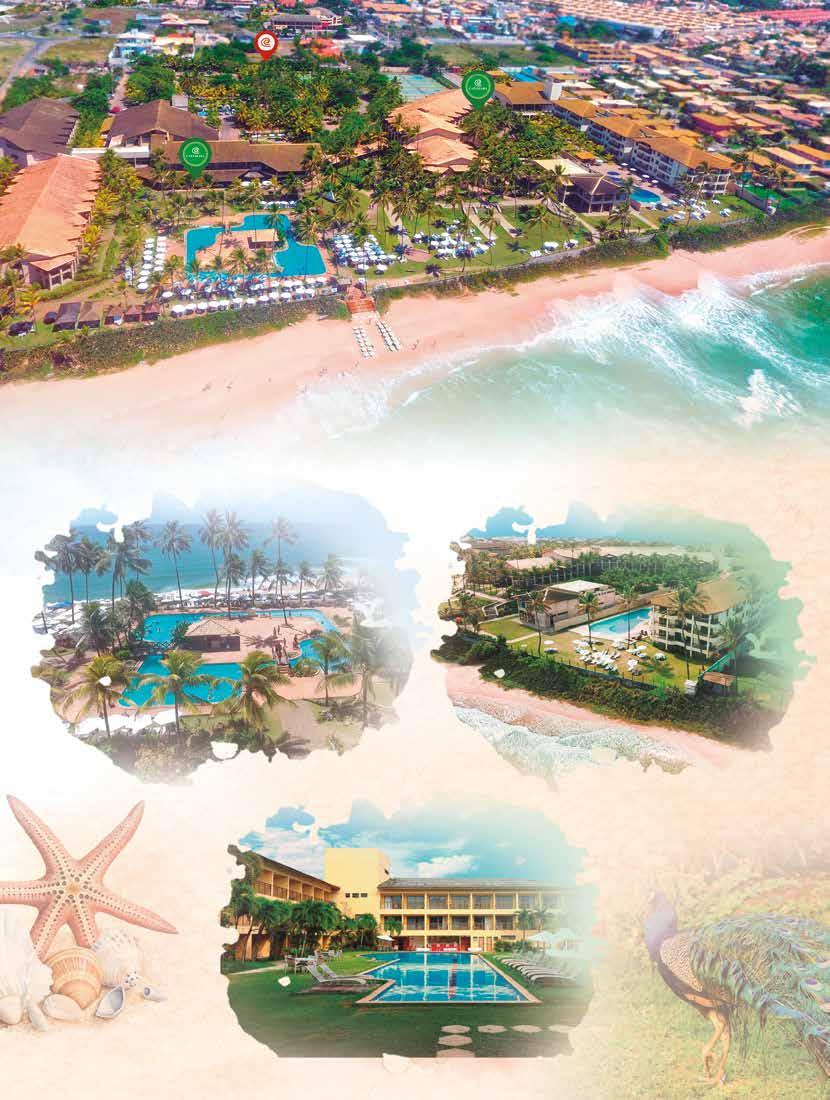
There are more than 40 resorts, spas, and luxury hotels spread throughout the state, offering everything guests need to celebrate life with family, friends, or during large corporate events.
Resorts are among the most convenient and enjoyable ways to spend vacations, holidays, or even a weekend getaway, providing entertainment for the whole family, usually with all-inclusive meal plans.
In other words, there’s nothing to worry about - just relax and enjoy.
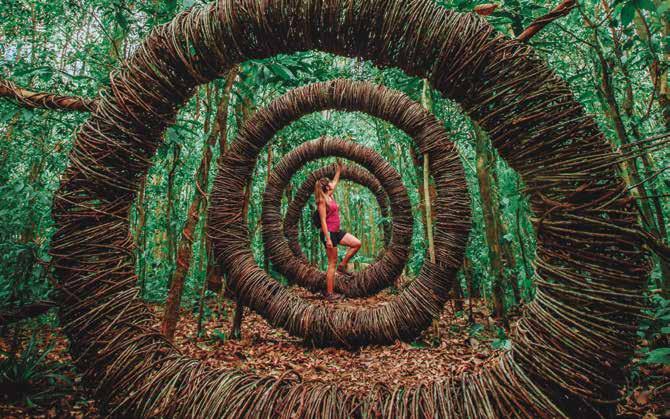










awaits you in


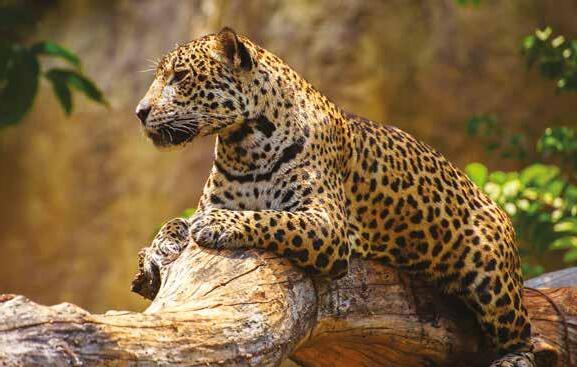
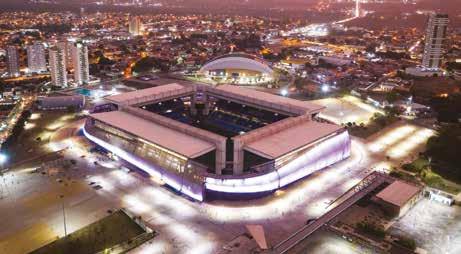
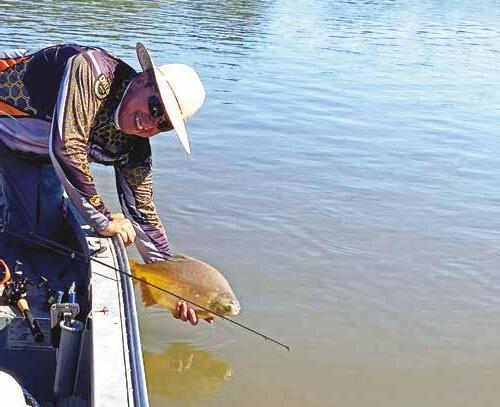
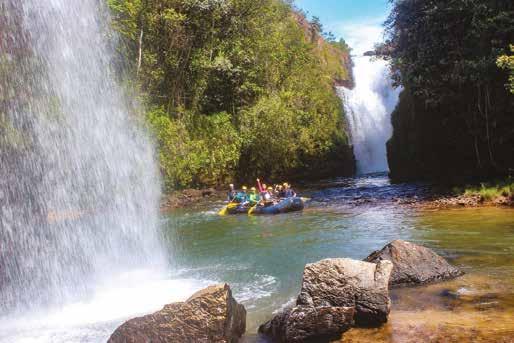
Welcome to Mato Grosso! Experience one place, countless destinations Here, you´ll be amazed by the natural diversity of the Pantanal, the Amazon, the Brazilian Savanna and the Araguaia. Enjoy various options in ecotourism, photographic safaris, adventure, birdwatching, sport fishing, ethnotourism, mystic and esoteric tourism, with all the structure and comfort you need For business or leisure, discover this paradise in the heart of Brazil.

GENERAL INFORMATION
OFFICIAL NAME: Federative Republic of Brazil
SYSTEM OF GOVERNMENT: Presidential Federal Republic
PRESIDENT: Luiz Inácio Lula da Silva
NORTH ACRE (RIO BRANCO) | AMAPÁ (MACAPÁ) | AMAZONAS (MANAUS) | PARÁ (BELÉM) | RONDÔNIA (PORTO VELHO) | RORAIMA (BOA VISTA) | TOCANTINS (PALMAS)
NORTHEAST ALAGOAS (MACEIÓ) | BAHIA (SALVADOR) | CEARÁ (FORTALEZA) | MARANHÃO (SÃO LUÍS) | PARAÍBA (JOÃO PESSOA) | PERNAMBUCO (RECIFE) | PIAUÍ (TERESINA) | RIO GRANDE DO NORTE (NATAL) | SERGIPE (ARACAJU)
MIDWEST GOIÁS (GOIÂNIA) | MATO GROSSO (CUIABÁ) | MATO GROSSO DO SUL (CAMPO GRANDE) | DISTRITO FEDERAL (BRASÍLIA)
SOUTHEAST ESPÍRITO SANTO (VITÓRIA) | MINAS GERAIS (BELO HORIZONTE) RIO DE JANEIRO (RIO DE JANEIRO) | SÃO PAULO (SÃO PAULO)
SOUTH PARANÁ (CURITIBA) | RIO GRANDE DO SUL (PORTO ALEGRE) | SANTA CATARINA (FLORIANÓPOLIS)
MINISTER OF TOURISM: Gustavo Feliciano
PRESIDENT OF EMBRATUR Marcelo Freixo
OFFICIAL WEBSITES: www.brasil.gov.br | www.turismo.gov.br

German citizens do not need a visa for tourist stays of up to 90 days in Brazil. However, travelers must present:
• A passport valid for at least six months from the date of entry
• A return ticket or proof of onward travel
Brazil is located in South America and covers an area of approximately 8.516 million square kilometers, with a population of around 214.3 million people. Its capital is Brasília, a planned city inaugurated in 1960 that symbolizes the country’s modernity and development. Brazil is divided into five major regions (North, Northeast, Central-West, Southeast and South), comprising 26 states and the Federal District, where the capital is located.

Travel insurance that includes medical assistance is strongly recommended.
Portuguese is the official language of Brazil.


The country is known for its hospitality, music and gastronomy — visitors are encouraged to try traditional dishes such as feijoada and acarajé — as well as major festivals like Carnival.
Distances within Brazil are long, making domestic flights the best option for traveling between regions. Within cities, ride-hailing apps such as Uber and licensed taxis are recommended.

Brazil is a continental-sized country, and climate conditions vary significantly across regions. Summer (December to March) is generally hot, while winter (June to August) can be cooler, especially in the South. In the Northeast, sunshine predominates throughout the year.

Distances within Brazil are long, making domestic flights the best option for traveling between regions. Within cities, ride-hailing apps such as Uber and licensed taxis are recommended.

The local currency is the Brazilian real (R$). Visitors are advised to carry a combination of cash and credit cards. On average, 1 euro is equivalent to approximately R$ 6.15.

Brazil’s international dialing code is +55. To call Brazil from abroad, dial your country’s international access code, followed by +55, the area code (DDD) of the Brazilian city, and the desired phone number.



sustainability, connectivity
biodiversity
Embratur’s
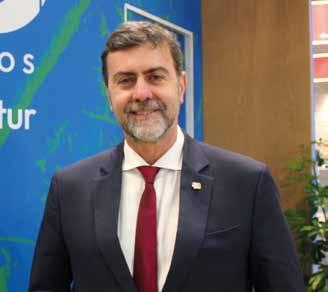
Diversification, community-based tourism and environmental responsibility are no longer niche concepts in Brazil’s international promotion strategy. Under the leadership of Marcelo Freixo, Embratur has positioned sustainability as a core competitive asset, especially for markets such as Germany, where travelers are known for their environmental awareness and appetite for authentic experiences. In this interview with Mercado & Eventos, Freixo explains how these pillars translate into concrete actions, from air connectivity to destination promotion, and outlines the priorities for 2026.
Mercado & Eventos - Embratur has consistently advocated destination diversification and responsible tourism as strategic pillars. How do these priorities resonate with the profile of the German traveler, who is known for seeking authentic, sustainable experiences beyond overcrowded destinations?
MARCELO FREIXO - The German traveler is possibly the most conscious in the world when it comes to the social and environmental impact of travel. It is not enough to offer a beautiful and comfortable hotel; they want to know whether that business protects the local biome and whether resources remain within the community. When Embratur promotes community-based tourism and diversification beyond the traditional routes, we are delivering exactly what Germany is looking for. Our sustainability strategy is not just rhetoric, it is market competitiveness. Recently, we established partnerships with the German Import Promotion Desk (IPD) to certify sustainable destinations in Brazil.
This gives European travelers confidence that, when visiting a reserve in the Pantanal or a village in the Amazon, they are contributing to keeping the forest standing and generating income for the people who live there.
Mercado & Eventos - Data shows that only a small share of Europeans who express interest in Brazil actually travel to the country. What are the main bottlenecks in converting German interest into real demand, and how is Embratur addressing them?
MARCELO FREIXO - Historically, the biggest bottleneck has been air connectivity. The desire to travel exists, but airfare prices and the lack of direct flights to regions outside the Southeast still weigh heavily. During our administration, through the PATI program, we began coordinating the attraction of new routes, working alongside airports, destinations and airlines with data intelligence and targeted investment in destination promotion linked to new flights. With this policy, we expanded Brazil’s air network by 19% in 2024 and by 16% in 2025 alone. We are working closely with European airlines to increase frequencies and open new gateways, especially to the Northeast and the North of Brazil. At the same time, we invest in connecting with the local trade. It is not enough for Germans to want to visit Brazil; they need to be able to purchase travel packages easily. That is why we have a strong presence at ITB Berlin, but also initiatives such as the Brazil Travel Specialist program and other actions that facilitate direct connections between Brazilian and German companies.
Mercado & Eventos - Germany is a key market for nature tourism, wildlife observation and long-stay travel. Which Brazilian regions and products will gain greater prominence in Embratur’s actions for the German market in 2026?
MARCELO FREIXO - Our priority is to showcase the diversity of biomes Brazil has, as well as our national parks, which are spread across the entire country. In 2026, the Amazon will take center stage, driven by the legacy of COP 30. The German market has a strong emotional connection with the forest. In the Amazon, German travelers can experience sustainable tourism, close contact with local communities and immersion in the world’s largest tropical rainforest. In the Pantanal, they find one of the best wildlife observation destinations on the planet, with photographic safaris, specialized guides and a high standard of conservation. Our goal is to show that Brazil is the country of biodiversity, and that visiting our forests and parks is, today, one of the most effective ways to preserve them.

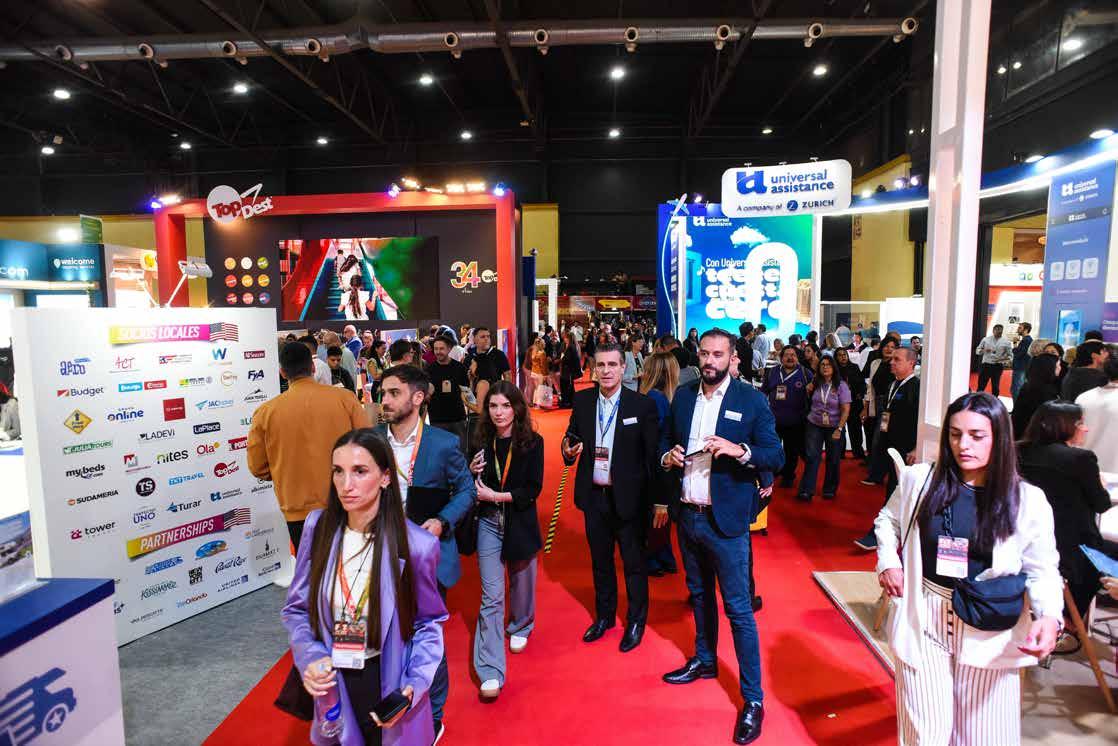
Prepare your company to take the big leap into the tourism market. At FIT, we bring together the most outstanding proposals from the international tourism sector in one place, giving you unparalleled visibility before a highly qualified audience.
More than 135,000 visitors, new experiences in specialized sectors, and digital tools to close deals await you.
Don't miss the opportunity to strengthen your brand, connect with international operators, and multiply your business opportunities.
FIT 2026 is the fair that connects destinations, opens markets, and redefines the future of tourism. Secure your place today at the largest tourism fair in Latin America.
How Embratur is refining its international promotion strategy for Europe in 2026
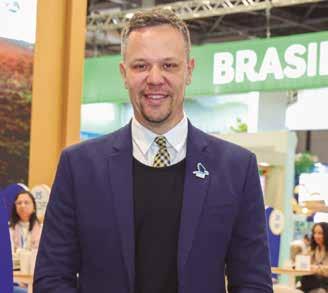
Reis, director of International Marketing, Business, and Sustainability at Embratur
Segmentation, sustainability and immersive brand experiences are shaping a new phase in Brazil’s international tourism promotion. For Bruno Reis, Embratur’s Director of Marketing and Sustainability, communicating Brazil to the world now requires precision, purpose and a clear commitment to positive impact. In this interview with Mercado & Eventos, he details how Embratur is designing market-specific strategies, launching a new European campaign and reimagining Brazil’s presence at major international trade shows such as BTL and ITB.
Mercado & Eventos - Embratur has emphasized a more strategic and segmented approach to international communication. How does this translate into practice when promoting Brazil abroad?
BRUNO REIS - We are moving towards increasingly segmented and strategic communication, with actions designed specifically for each market. This means understanding not only what Brazil has to offer, but what each audience values, expects and seeks in a destination. Our campaigns are no longer generic. They are built with clear narratives, tailored messages and carefully selected products that resonate with the profile of travelers and trade partners in each target market.
Mercado & Eventos - International trade fairs remain central to Embratur’s strategy. What role do these events play in the Agency’s plans for 2026, particularly in Europe?
BRUNO REIS - Our presence at international fairs continues to be one of the pillars of Embratur’s strategy for 2026.
We will be at the main global tourism events, with a strong focus on the European market. These fairs are essential platforms to increase Brazil’s visibility abroad and, above all, to strengthen the commercialization of Brazilian destinations with the international trade. They allow us to connect directly with tour operators, airlines, agents and media, reinforcing Brazil’s positioning in a very concrete and results-oriented way.
Mercado & Eventos - Embratur will launch a new campaign for Europe. What is the core concept behind this initiative?
BRUNO REIS - We are launching a new campaign aimed at the European public. Sustainability and climate responsibility are at the heart of this narrative, with Regenerative Tourism as our strategic concept. The idea is to present traveling to Brazil as a conscious choice, one that contributes to the conservation of our biomes and to the development of local communities, strengthening the visitor’s connection with the territories they experience.
Mercado & Eventos - How does this campaign position Brazil in the context of global discussions on sustainability and responsible travel?
BRUNO REIS - The campaign shows Brazil as a destination where tourism and positive impact go hand in hand. We want travelers to understand that choosing Brazil means engaging with destinations that value conservation, cultural heritage and social inclusion. Tourism, in this sense, becomes a powerful tool for environmental protection and local development, not a threat to it.
Mercado & Eventos - Which destinations and tourism products will be highlighted in Embratur’s communication with the European market?
BRUNO REIS - The destinations featured will be spread across different macro-regions of the country, showcasing Brazil’s natural, cultural and scenic diversity. In terms of tourism products, our communication will highlight nature tourism, with a strong focus on wildlife observation, community-based tourism, sun and beach experiences, luxury tourism with an emphasis on well-being, as well as ecotourism and adventure travel. This portfolio reflects the plurality of experiences Brazil can offer and aligns with the interests of European travelers.


Shows, festivals and sporting competitions reinforce the sector as a key economic engine and major visitor attraction
From north to south, concerts, festivals, sporting competitions, and major cultural celebrations have mobilized large crowds and generated billions in revenue in the early months of 2026, reinforcing the role of events as one of the main drivers of Brazilian tourism. Beyond entertainment, these experiences serve as strategic pillars of the sector’s economic ecosystem, boosting job creation, increasing the flow of domestic and international visitors, and strengthening Brazil’s image as a competitive destination on the global stage.
The first quarter of the year has established a strong momentum. Carnival, Brazil’s largest tourism event, drew millions of revelers to destinations such as Rio de Janeiro, Salvador, São Paulo, Recife, Olinda, and several other capitals, with a direct impact on hotel occupancy, air connectivity, and local economies. Keeping the energy high, major international tours and large-scale music festivals, including the highly anticipated Lollapalooza Brazil in March, are ensuring tourism activity remains robust throughout the season.
This early success sets the tone for a year marked by a strategic mix of well-established mega-events and high-
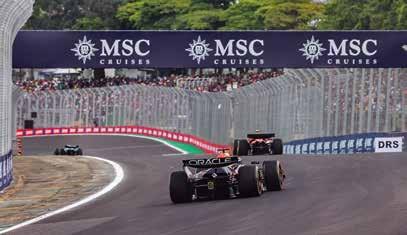
profile new attractions. Throughout 2026, the calendar features everything from niche music festivals to global sporting events, such as the Formula 1 Grand Prix, as well as the historic NFL debut at Maracanã Stadium and activations linked to the FIFA World Cup.
APRIL
MONSTERS OF ROCK: April 19 – Allianz Parque, São Paulo.
MAC DEMARCO: April 3–16 – Tours in Rio, São Paulo, Brasília, Recife, Belo Horizonte, Curitiba, Florianópolis, and Porto Alegre.
BANGERS OPEN AIR: April 25–26 – Memorial da América Latina, São Paulo. (Note: Corrected from “Angers” to “Bangers”)
MAY
THE WEEKND AND ANITTA: Late April to May 1 – Rio de Janeiro and São Paulo.
MEGADETH: May 2 – São Paulo.
MEN AT WORK: May 6–14 – São Paulo, Olinda, Belo Horizonte, Curitiba, and Porto Alegre.
JUNE AND JULY
FIFA WORLD CUP ACTIVATIONS: “Ginga” events in ten Brazilian cities.
SEPTEMBER
ROCK IN RIO: September 4–13 – Olympic Park, Rio de Janeiro.
OCTOBER
ROCK THE MOUNTAIN: October 30 to November 1 – Itaipava, Petrópolis (Rio de Janeiro).
NOVEMBER
ROCK THE MOUNTAIN (2ND WEEKEND): November 6–8 – Itaipava, Petrópolis (Rio de Janeiro).
FORMULA 1 BRAZILIAN GRAND PRIX: Interlagos Circuit, São Paulo.



















Architecture, rivers and culture make Manaus the main gateway to the Amazon
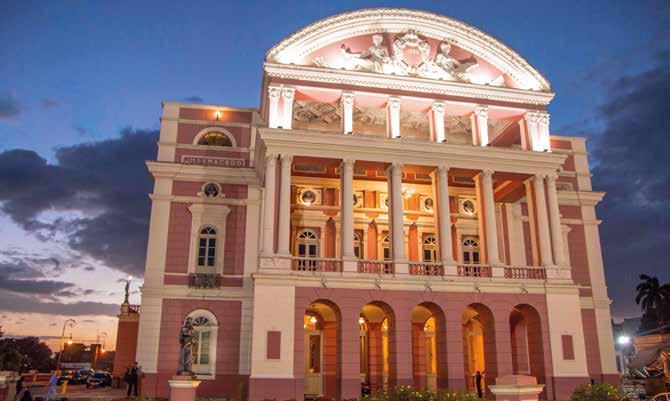
Manaus is a capital that surprises from the very first encounter. Surrounded by the world’s largest tropical rainforest, the city has established itself as the main access point to the Brazilian Amazon, bringing together history, culture and nature within the same territory. Founded in 1669, Manaus bears the marks of the rubber boom, a period that profoundly shaped its architecture and urban identity.
The greatest symbol of this era is the Teatro Amazonas, inaugurated in 1896. With its colorful dome and lavish interiors, the opera house represents the city’s economic golden age and remains one of the most important cultural venues in Northern Brazil, hosting concerts, operas and international festivals. Around it, the historic center features markets, squares and buildings that help tell this defining
chapter of local history.
Another spectacle that defines Manaus unfolds far from the stage. The Meeting of the Waters, where the Negro and Solimões rivers flow side by side without mixing for several kilometers, is one of the Amazon’s most striking natural phenomena. Boat tours allow visitors to witness this contrast of colors, a powerful symbol of the region’s scale and diversity.
Beyond its historical landmarks, Manaus serves as a starting point for immersive experiences in the rainforest, riverside communities and jungle lodges. The city seamlessly combines urban infrastructure with direct access to nature, offering travelers a complete Amazon experience without sacrificing culture and history.
Folklore, emotion and Amazonian identity on the banks of the Amazon River
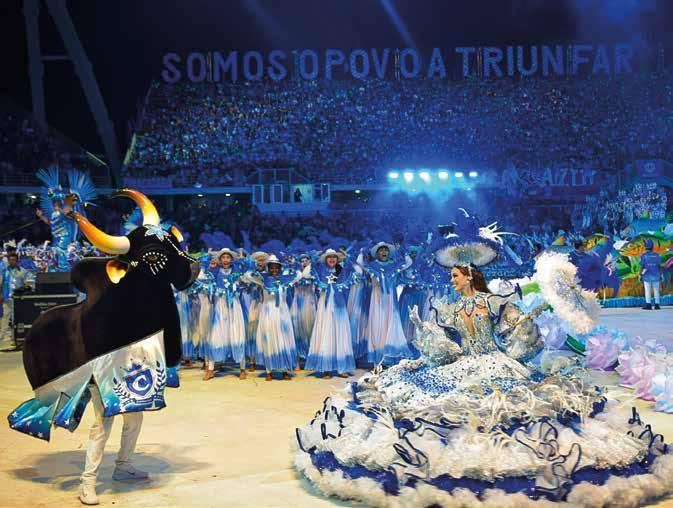
Parintins enchants with its vibrant colors and sounds in one of the most impressive cultural festivals in the world
Parintins is synonymous with living culture and Amazonian pride. Located about 370 kilometers from Manaus, the city has gained national and international recognition through the Parintins Folklore Festival, considered one of Brazil’s largest cultural events - something like the Carnival. Every year, at the end of June, the city transforms into a vibrant stage of colors, rhythms and Indigenous-inspired narratives.
The festival revolves around the legendary rivalry between the Garantido and Caprichoso oxen, whose performances fill the Bumbódromo with lots of music, dance, monumental floats and stories rooted in the rainforest
and its ancestral peoples. More than a competition, the event is a powerful celebration of Amazonian identity and popular culture.
Outside the festival season, Parintins follows a calmer rhythm, deeply connected to the Amazon River. Local life is shaped by the waters, fishing traditions and regional handicrafts. Walking through the city reveals how folklore permeates everyday life, visible in the colors of houses, public squares and music.
Parintins is trully a destination that moves visitors not only through spectacle, but through the cultural strength and authenticity it represents at the heart of the Amazon.
History, faith, rivers and a unique cuisine shape the identity of Pará’s capital
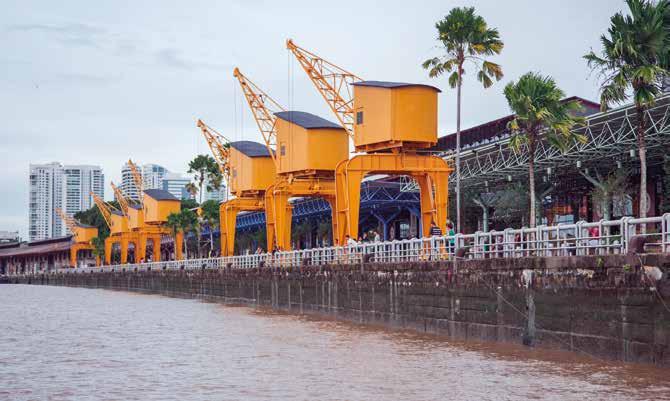
Belém is a capital city that translates the Amazon into its most urban and cultural expression. Founded in 1616 on the shores of Guajará Bay, the city grew as the main gateway to Northern Brazil and still maintains a deep connection with rivers, rainforest and traditional knowledge. Walking through Belém is a sensory experience: aromas, colors and flavors unlike anywhere else in the country.
One of the city’s most iconic landmarks is Ver-o-Peso, the largest open-air market in Latin America. Stalls filled with Amazonian fruits, medicinal herbs, fish and native spices reveal everyday life and the extraordinary richness of regional biodiversity. Here, culture is not staged; it unfolds naturally, day after day.
Estação das Docas represents the meeting point between past and present. Former port warehouses have been revitalized and now house restaurants, shops and cultural venues with privileged views of the river, especially at sunset. Another powerful symbol of the city is the Basilica of Our Lady of Nazaré, the spiritual heart of Pará and the stage of the Círio de Nazaré, one of the largest religious celebrations in the world.
Belém’s gastronomy is equally striking. Dishes such as duck in tucupi sauce, maniçoba, tacacá and pure açaí reflect a strong Indigenous heritage, celebrated both in street food and in fine dining. In Belém, cuisine is not just nourishment - it is an essential expression of identity and tradition.
Culture, history, rivers and creativity shape the identity of Pernambuco’s capital
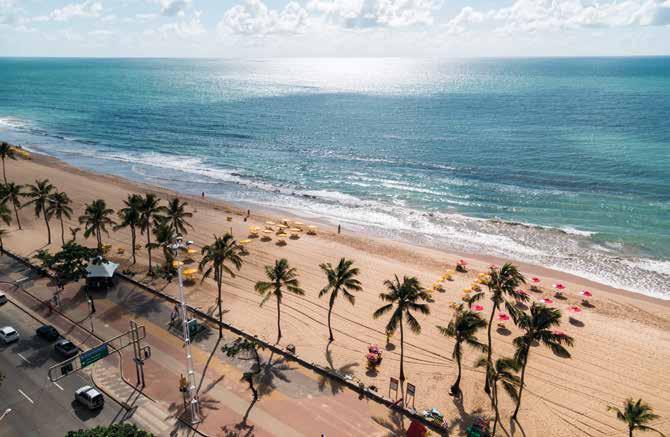
Recife is a capital that does not live only in the past, but carries its history as the foundation for constant transformation. Founded in 1537, the city grew between rivers, bridges and the sea, earning the nickname “Brazilian Venice” and forging one of the country’s most distinctive urban identities. Walking through Recife reveals how the old and the contemporary coexist naturally, without friction.
The Recife Antigo district is the city’s historical and cultural heart. It is home to Marco Zero, museums, cultural centers and former port warehouses that now host events, fairs and exhibitions. The Cais do Sertão, dedicated to Northeastern culture, stands out as a major attraction, helping visitors understand Pernambuco’s symbolic importance within Brazil.
Recife is also the birthplace of cultural movements that have shaped generations, such as manguebeat, which blended music, social critique and local identity. This creative pulse remains alive in festivals, artistic collectives and a dynamic gastronomic scene that balances tradition and innovation. From the iconic bolo de rolo (a type of cake) to fresh seafood, the city translates Pernambuco into flavor.
Along Boa Viagem beach, everyday life blends seamlessly with leisure. Natural pools formed by coral reefs are part of the routine for residents and visitors alike, while the city thrives just beyond the shoreline, intense and full of contrasts. Recife is a vibrant capital, looking toward the future while staying deeply connected to its roots.
Preserved nature, deep blue seas and an experience beyond travel
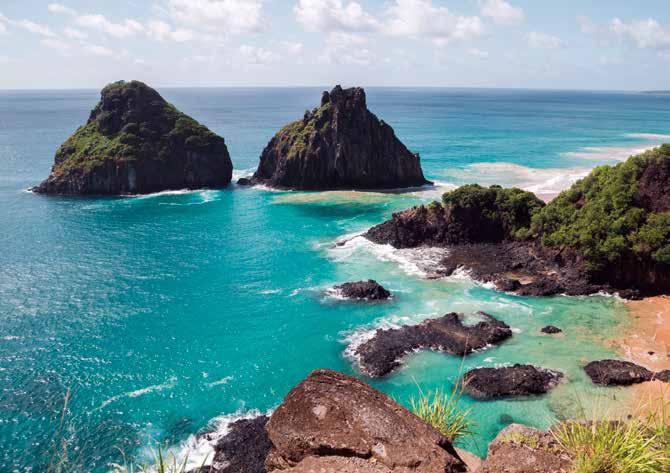
Fernando de Noronha is more than a tourist destination; it is an experience that redefines the way people travel. Located about 545 kilometers off the coast of Pernambuco, the archipelago is widely regarded as one of Brazil’s most beautiful places and is a global reference in environmental preservation. From the moment of arrival, visitors sense a different rhythm, slower, more mindful and essential. Despite covering just 26 square kilometers, Noronha concentrates landscapes that seem almost unreal. Beaches such as Sancho, Baía dos Porcos, Cacimba do Padre and Sueste display striking shades of blue and extraordinary marine life. Snorkeling or diving here often means sharing the water with turtles, schools of fish, rays, dolphins and even sharks, sometimes just meters from the shore.
Much of the territory is protected as a Marine National Park, with controlled access and strict conservation rules. The Environmental Preservation Fee helps maintain the balance between tourism and protection, ensuring the archipelago remains intact. While often perceived as an expensive destination, Noronha offers a range of accommodation and dining options, allowing different ways to experience the island.
Fernando de Noronha is not only about beautiful beaches. It invites silence, contemplation and a deeper connection with nature. It is a place not meant to be rushed, but slowly absorbed, leaving a lasting impression long after the journey ends. That’s true luxury if you ask me!
A capital that thrives between urban modernity and the rhythm of the tides
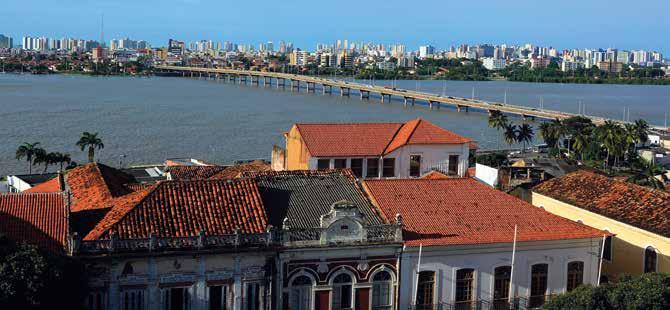
São Luís is a singular destination on Brazil’s tourism map, where historical heritage, popular culture and natural landscapes come together in an authentic way. Founded in 1612, the capital of Maranhão preserves one of the most important colonial architectural ensembles in Latin America. Its Historic Center, listed as a UNESCO World Heritage Site, features thousands of townhouses covered with Portuguese tiles, which both tell the city’s story and help protect buildings from the tropical climate.
Known as the “Island of Love,” São Luís is also defined by its extensive coastline and easily accessible urban beaches. São Marcos, Calhau and Olho d’Água beaches offer good infrastructure, with bars, restaurants and spaces for walking, sports and leisure at sunset. The combination of sea breezes, open landscapes and urban life creates an inviting setting for outdoor activities.
The city is a national reference for popular culture. Bumba Meu Boi, recognized as Intangible Cultural Heritage of Humanity, takes center stage during the June festivities, when São
Luís becomes a vibrant stage for traditional performances. Reggae, tambor de crioula and other popular celebrations further reinforce the city’s cultural identity, attracting visitors seeking genuine cultural experiences.
Beyond its historical and cultural appeal, São Luís serves as a gateway to some of Maranhão’s most remarkable natural attractions, including Lençóis Maranhenses National Park and Chapada das Mesas National Park. With a strong sense of identity, warm hospitality and rich cultural life, São Luís offers a travel experience that goes beyond the conventional, marked by history, tradition and natural beauty.
Local gastronomy is also a highlight, with dishes such as arroz de cuxá, fried fish and shrimp pie reflecting Indigenous, African and Portuguese influences. Handicrafts sold at fairs and markets showcase regional creativity, while cultural events throughout the year help maintain a steady flow of visitors. Investments in urban revitalization and heritage preservation continue to strengthen São Luís’s position on Brazil’s tourism scene.
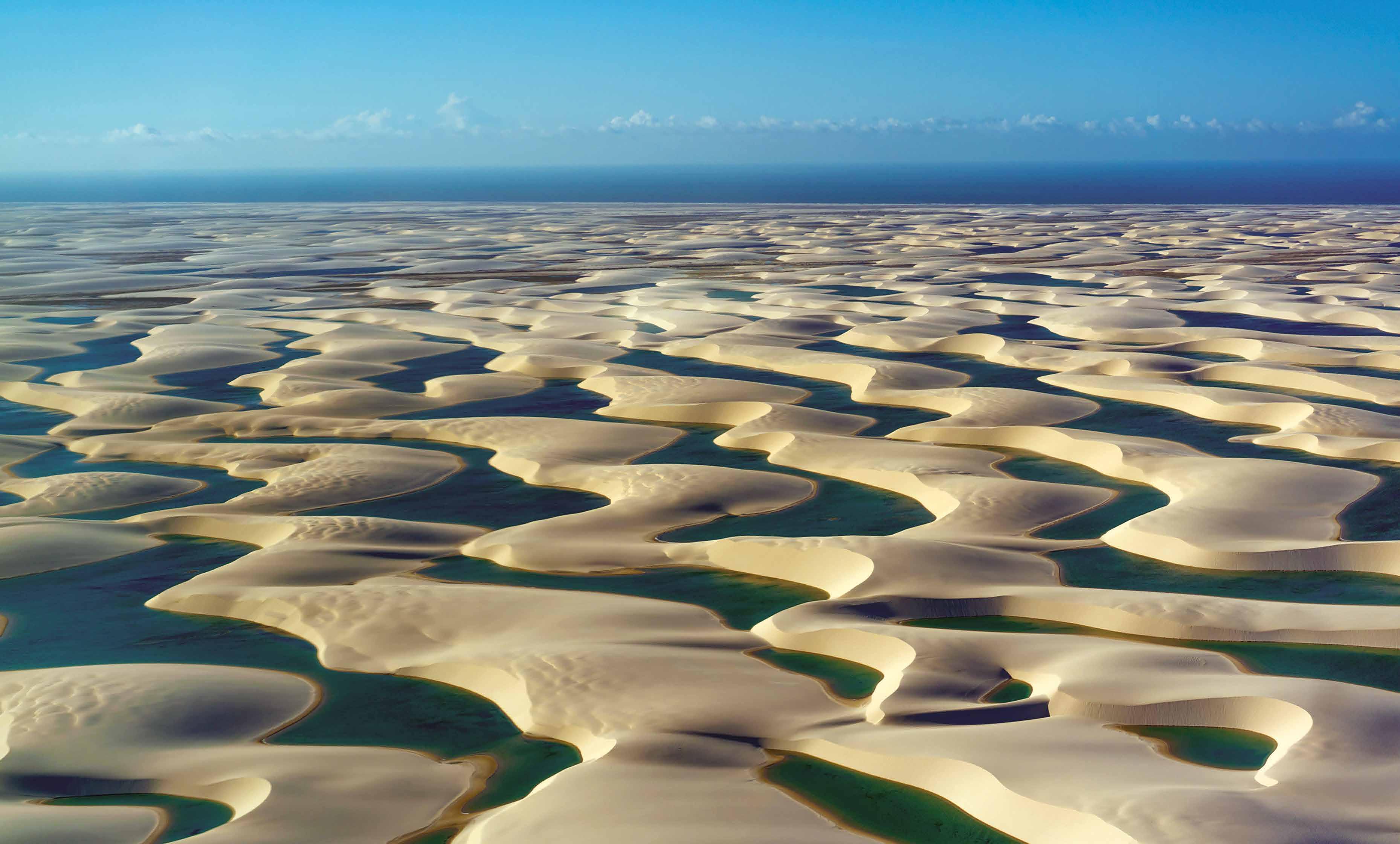
Dunes, crystal-clear lagoons and the Preguiças River define a truly spectacular landscape
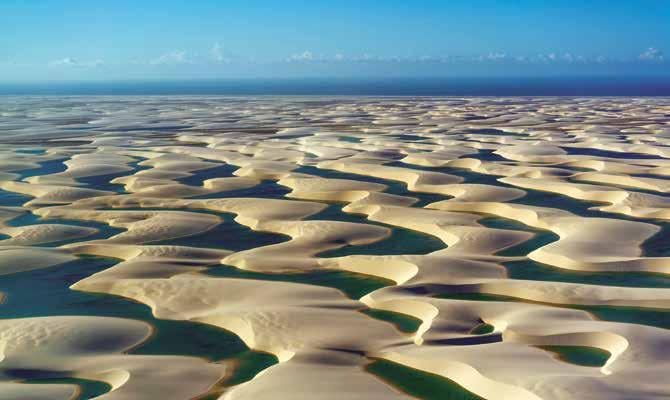
Barreirinhas is widely recognized as the main gateway to Lençóis Maranhenses National Park, one of Brazil’s most extraordinary natural wonders. Located on the banks of the Preguiças River, the town has made tourism a strategic driver of development, welcoming visitors from Brazil and abroad throughout the year. The contrast between white sand dunes and crystal-clear lagoons makes the destination one of the most sought-after in Northeastern Brazil.
Lençóis Maranhenses is the region’s main attraction, with landscapes that change dramatically with the seasons. During the rainy months, typically at the beginning of the year, hundreds of lagoons form between the dunes, creating a unique and ever-changing natural spectacle. Guided walks, 4x4 excursions and refreshing swims in the lagoons are among the most popular experiences.
Beyond the national park, Barreirinhas offers activities that highlight local culture and nature. Boat trips along the Preguiças River take visitors to riverside communities, mangrove areas and the coast, with stops at places such
as Vassouras, Mandacaru and Caburé. The meeting of the river and sea is one of the most memorable moments of the journey.
The town features a growing hospitality sector, regional cuisine restaurants and well-structured tourism services. With welcoming hospitality, striking landscapes and a strong environmental appeal, Barreirinhas has established itself as an essential destination for travelers eager to experience one of Brazil’s greatest natural treasures.
Local handicrafts made from natural fibers reinforce the area’s cultural identity and support the creative economy, while regional cuisine based on fish, seafood and traditional Maranhão recipes offers a complete sensory experience. Community-based tourism initiatives bring visitors closer to local ways of life, and activities such as cycling, hiking and wildlife observation broaden leisure options. Environmental preservation remains a priority, ensuring the long-term sustainability and growing international appeal of Barreirinhas.
As the country’s first capital, the city blends colonial legacy, vibrant culture and living history
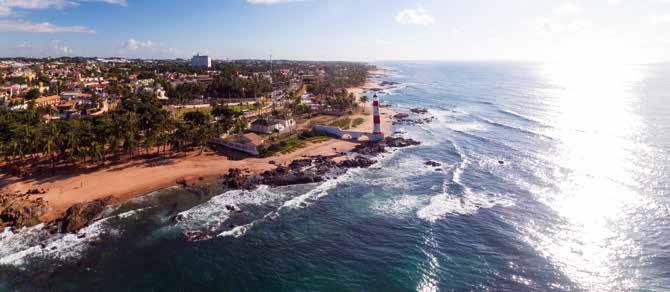
Salvador, the capital of Bahia, is one of Brazil’s most emblematic cities, where history, culture and tourism intertwine in a unique way. Founded in 1549, it was the country’s first capital and preserves deep traces of the colonial period. The Historic Center, particularly the Pelourinho district, features colorful townhouses, baroque churches and cobblestone streets that tell centuries of history. Recognized as a UNESCO World Heritage Site, the area stands as one of the city’s most defining landmarks.
Overlooking the Bay of All Saints, Salvador features one of the longest urban coastlines in Brazil, with beaches that appeal both to visitors seeking calm waters and those drawn to more vibrant settings. The Lacerda Elevator, one of the city’s most iconic symbols, connects the Upper City to the Lower City and offers one of the most celebrated views in the country.
Salvador is also a cultural powerhouse. The sound of atabaque drums, capoeira, Candomblé and traditional street festivals are part of the city’s daily fabric. The Salvador Carnival, considered one of the largest in the world, draws millions of people and projects the destination internationally. In gastronomy, bold flavors such as acarajé, moqueca
and vatapá embody the city’s strong African heritage.
In the Barra area, some of Salvador’s most famous and photographed beaches can be found. Porto da Barra stands out for its calm, clear waters, ideal for swimming, while Farol da Barra Beach attracts visitors with its iconic lighthouse and sunsets considered among the most beautiful in Brazil. In Rio Vermelho, beaches feature stronger surf and are known for their bohemian atmosphere and vibrant local culture.
Heading north along the coast, beaches such as Amaralina, Pituba, Armação and Jaguaribe offer long stretches of sand and are widely used for walking, sports and outdoor leisure. Further along, Itapuã maintains a traditional atmosphere immortalized in Brazilian music, with coconut trees, dunes and a strong cultural identity. In the areas of Stella Maris and Flamengo, open sea and consistent waves attract surfers and travelers seeking wider, less urbanized beaches.
With easy access, solid infrastructure and diverse landscapes, Salvador’s beaches are an essential part of the visitor experience and help cement the Bahian capital as one of Brazil’s leading sun-and-sea destinations.
Between the legacy of the Discovery and districts full of character, the destination brings together culture, nature and diverse experiences
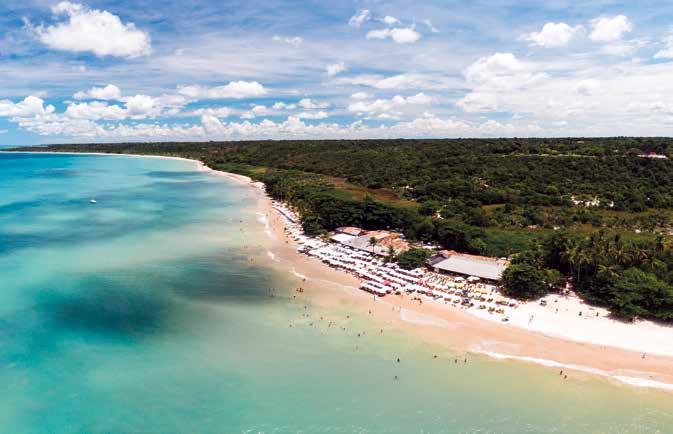
Porto Seguro, in southern Bahia, holds a central place in Brazilian history and tourism. Considered the birthplace of Brazil, the city was the site of the Portuguese arrival in 1500 and has transformed this legacy into one of its main attractions. The Historic Center, known as Cidade Alta (Upper Town), preserves colonial buildings such as the Church of Our Lady of Pena and the Discovery Landmark, along with viewpoints overlooking the sea.
At the same time, Porto Seguro has established itself as one of the country’s most complete tourist destinations, combining beaches, culture, entertainment and a diverse hospitality infrastructure. The Passarela do Descobrimento, formerly known as Passarela do Álcool, is one of the city’s liveliest areas, gathering bars, restaurants, shops and cultural performances, especially in the evening.
Among its districts, Arraial d’Ajuda stands out for its charm, clear-water beaches and colorful cliffs, as well as a sophisticated dining scene and relaxed atmosphere. Trancoso, a former fishing village, has gained international recognition with its famous Quadrado, where historic houses, the Church of São João Batista and boutiques share space with high-end inns and hotels. Caraíva, in turn, preserves a rustic and authentic style, with sandy streets, boat-only access and a strong connection to nature and local culture. With a multifaceted identity, Porto Seguro and its districts offer experiences ranging from historical tourism to beach leisure, from ecotourism to discreet luxury. This diversity makes the destination a premier benchmark in national and international tourism, capable of attracting different traveler profiles throughout the year.
The capital of Paraíba combines historic heritage, well-preserved urban beaches, green areas and high tourist satisfaction
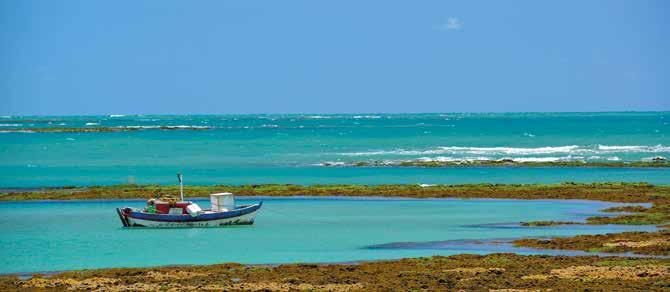
João Pessoa has been gaining prominence in Brazilian tourism by offering a rare combination of tranquility, preserved natural landscapes and rich historical heritage. Capital of the state of Paraíba, the city blends the serene pace of the Northeastern coast with urban infrastructure that serves equally well those seeking relaxation and those eager to explore culture and gastronomy.
Founded in 1585, João Pessoa is among the oldest cities in Brazil and preserves this legacy in its historic center, where baroque churches, colonial houses and public squares reveal key chapters of Brazilian history. The Franciscan Complex, with the Church of São Francisco and the Convent of Santo Antônio, stands as one of the symbols of the past and nowadays hosts exhibitions and cultural activities that connect tradition and contemporary life.
The destination, however, goes far beyond history. Known as one of the greenest capitals in Brazil, João Pessoa surprises visitors with its constant presence of nature. Areas such as Mata do Buraquinho, Mata do Amém and Arruda Câmara Park
offer lots of shade and biodiversity within the urban landscape, reinforcing the city’s commitment to environmental preservation.
Along the coast, the scenery is postcard-worthy. Nearly 30 kilometers of well-maintained urban beaches feature clear waters, reefs and long stretches of coconut trees. Tambaú, Manaíra and Bessa concentrate most tourist activity, while the natural pools of Seixas provide a unique spectacle during low tide.
João Pessoa is also home to Ponta do Seixas, the easternmost point of the Americas, next to the Cabo Branco Lighthouse, one of the city’s architectural landmarks. The area is especially popular for sunrise views and offers one of the most emblematic panoramas of Paraíba’s coastline.
Walking along the seafront at sunset, visiting the historic center or simply enjoying the city’s unhurried rhythm helps explain why João Pessoa has established itself as a complete destination: a place where time seems to slow down without sacrificing culture, comfort and authenticity.


















A capital that thrives between urban modernity and the rhythm of the tides
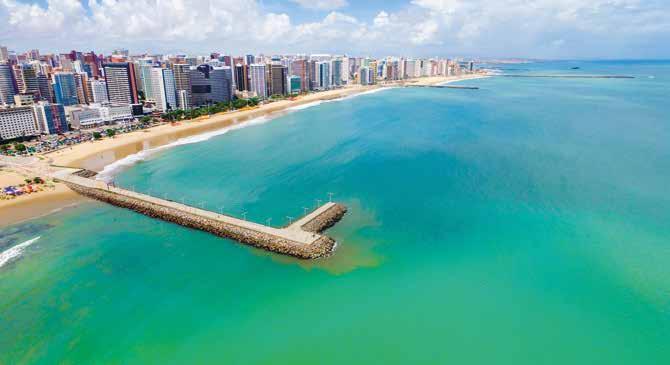
Fortaleza has established itself as one of Brazil’s most dynamic urban centers, serving as the economic and cultural heart of the state of Ceará. The city constantly invites discovery, where the towering high-rises along Avenida Beira-Mar contrast with the colorful jangadas (rafts) that still cut across the horizon at dawn. With high-standard service infrastructure, Fortaleza seamlessly welcomes both business and leisure travelers, offering everything from modern convention centers to beachfront spaces dedicated to relaxation - benchmarks along Brazil’s coastline.
Life in the capital revolves around its seafront, which has recently undergone extensive revitalization to enhance comfort for pedestrians and cyclists. Praia de Iracema remains the city’s bohemian and intellectual hub, home to the Dragão do Mar Center of Art and Culture, a creative complex that blends history, contemporary art and innovation. In
contrast, Praia do Futuro has become the go-to destination for those seeking structure and comfort: its iconic beach clubs are internationally renowned for offering swimming pools, spas and outstanding cuisine without visitors ever having to leave the sand.
Beyond the coastline, the historic center and commercial districts reveal Fortaleza’s entrepreneurial spirit. The Central Market is a vibrant maze of colors and textures, where straw handicrafts and traditional ‘renda de bilro’ (bobbin lace) tell the story of generations of artisans. The city is also famous for its lively nightlife and holds the unofficial title of Brazil’s comedy capital. Theaters, comedy clubs and even restaurants host nightly performances, reflecting the light-hearted, humorous identity that defines the local culture. Fortaleza is not merely a stopover: it is a vibrant destination that deserves time to be fully experienced in all its dimensions.
The rustic charm of a small village that became an international tourism icon
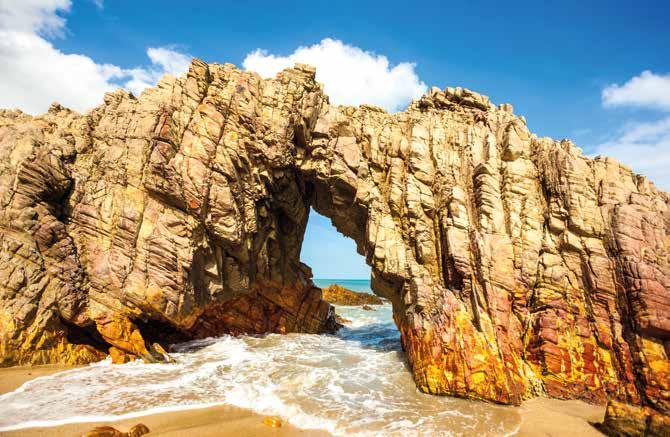
Affectionately known as Jeri, Jericoacoara feels as though it exists outside of time, even while offering refined comfort and understated luxury amid its sandy streets. Located within a National Park, this former fishing village has become one of the world’s most sought-after destinations while preserving its unique character: there are no streetlights, allowing the moon and stars to illuminate the nights. Access is only possible by 4x4 vehicles crossing shifting dunes, a journey that already signals complete disconnection from the fast pace of big cities.
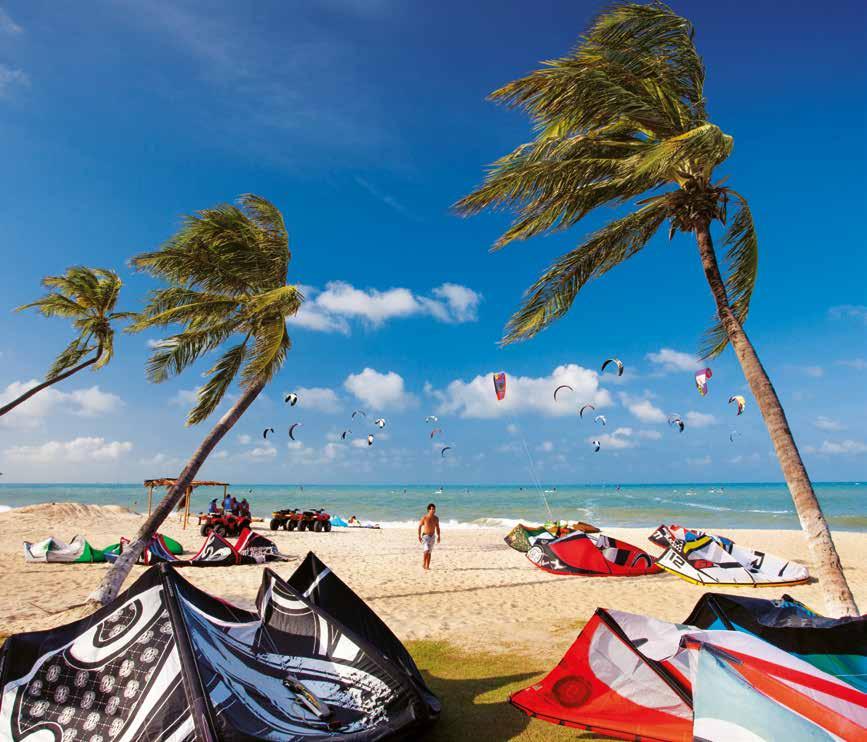
Daily life in Jericoacoara follows the rhythm of the wind and the sun. By day, off-road vehicles take visitors to the region’s famous freshwater lagoons, such as Lagoa do Paraíso and Lagoa Azul, where hammocks suspended over crystal-clear water have become the ultimate symbol of relaxation in Ceará. For sports enthusiasts, Preá Beach and Jeri’s own bay are world-class stages for windsurfing and kitesurfing, thanks to consistent winds that blow for much of the year
and attract athletes from every continent.
At sunset, a shared ritual brings everyone together: locals and visitors climb the Sunset Dune to watch the sun dip into the ocean, one of the few places in Brazil where this phenomenon can be seen over the sea. As night falls, the village takes on a distinct energy. The Main Street and the charming Beco do Doce come alive with sophisticated restaurants, live music and a cosmopolitan vibe. Jericoacoara masterfully balances serenity and refinement, positioning itself as both a peaceful retreat and a vibrant entertainment hub, the brightest jewel on Ceará’s western coast.
Despite its remote location, Jericoacoara boasts an impressive international culinary scene. European and Brazilian chefs have settled in the village, creating refined fusions of local ingredients, such as fish wrapped in banana leaves, with French and Italian techniques, elevating the destination’s gastronomic profile to global standards.
Natural pools, coconut groves and a vibrant waterfront define this paradise of turquoise waters
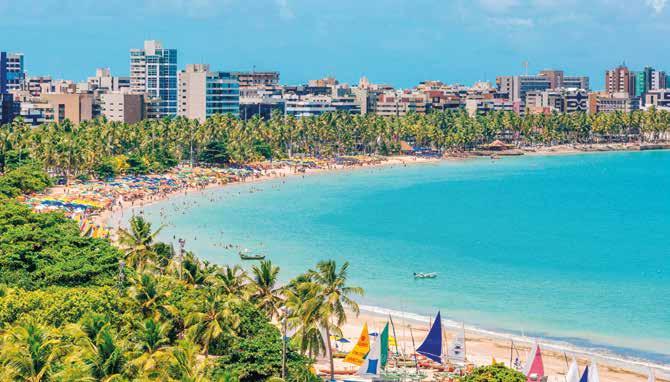
Maceió is widely regarded as home to one of Brazil’s most beautiful urban waterfronts, perhaps even one of the most striking in the world. Alagoas’ capital captivates visitors not only with the hypnotic shades of its sea, but also with the balance it strikes between urban life and the preservation of its natural beauty. Framed by endless coconut palms, the city is the ideal starting point to understand the soul of Alagoas.
The beaches of Pajuçara, Ponta Verde and Jatiúca form the city’s tourism core. In Pajuçara, traditional wooden rafts take visitors to natural pools created by coral reefs at low tide. In Ponta Verde, the iconic lighthouse and the “I Love Maceió” sign frame one of the Northeast’s liveliest and most inclusive seaside promenades.
Culture and craftsmanship are pillars of local identi -
ty. The Pontal da Barra neighborhood is the birthplace of Filé, a traditional embroidery technique unique to Alagoas and recognized as intangible cultural heritage, where artisans transform thread into true works of art. Faith and history are equally present downtown, with centuries-old churches and museums that safeguard the state’s legacy.
Maceió’s gastronomy celebrates the bounty of land and sea. Dishes such as the famous Chiclete de Camarão (something like a ‘creamy’ shrimp), tapioca and the sururu (a mollusk that symbolizes local cuisine) deliver bold flavors enriched with coconut milk and palm oil. An invitation to slow down and be amazed, Maceió reveals at every sunset over Lagoa Mundaú that paradise can, indeed, be found here.
Crystal-clear waters, ancient reefs and a setting of unparalleled tranquility
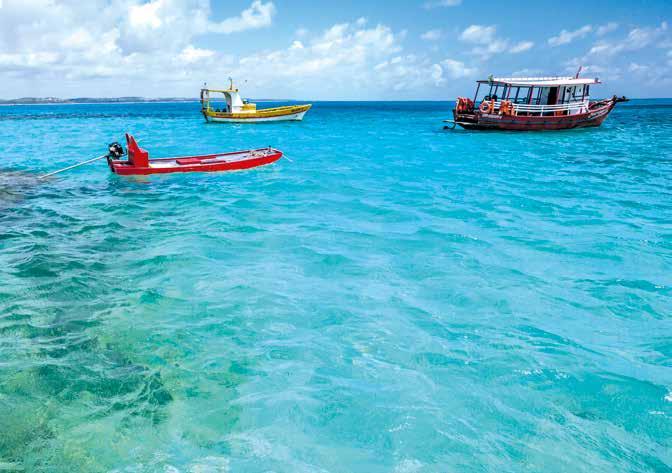
Maragogi stands out as one of Brazil’s most amazing destinations and the crown jewel of the Coral Coast of the state. Strategically located between Maceió and Recife, the town is internationally famous for its Galésvast natural pools that form kilometers offshore, unveiling a remarkably rich marine ecosystem and waters of extraordinary clarity.
Beyond the pools, Maragogi boasts a breathtaking coastline, with white-sand beaches and warm seas ideal for long, leisurely swims. Antunes Beach and Barra Grande Beach are highlights; at low tide, Barra Grande reveals the so-called “Path of Moses,” a sandbank that allows visitors to walk hundreds of meters into the sea, creating a truly cinematic scene.
While preserving the charm of a former fishing village, Maragogi offers a solid hospitality infrastructure, including high-end and luxury hotels and resorts. Local handicraft, especially items made from banana fiber, and the traditional Bolinhos de Goma, a delicacy crafted from cassava flour and coconut milk, are must-try experiences for those eager to connect with the region’s roots.
Maragogi is ideal for travelers seeking serenity and a deep connection with nature. Whether snorkeling among colorful fish or simply gazing at the endless blue from the shade of a palm tree, the destination makes a compelling case for why Alagoas is home to some of Brazil’s most extraordinary natural treasures.
Rio Grande do Norte stands out as one of the most complete destinations in Northeastern Brazil
Natal, the capital of Rio Grande do Norte, has established itself as one of the leading tourism destinations in Northeastern Brazil, known for its year-round sunshine and landscapes of strong visual impact. Washed by the Atlantic Ocean, the city brings together long urban beaches, dunes, cliffs and protected natural areas, attracting domestic and international travelers in search of sun, sea and outdoor experiences.
Among its main landmarks is Ponta Negra Beach, where Morro do Careca, a large sand dune, has become the city’s most recognizable symbol and a key reference point for visitors. The beachfront area concentrates hotels, restaurants and tourism services, serving as a base for exploring the region. Another highlight is the Forte dos Reis Magos, a 16th-century fortress linked to the city’s founding, offering panoramic views of the meeting point between the Potengi River and the sea.
Nature-based tourism is one of Natal’s main pillars. The dunes of Genipabu, famous for buggy rides across shifting sands and freshwater lagoons, are among the most sought-after attractions. Beaches along the northern and southern coasts, such as Pirangi, Cotovelo and Maracajaú, further expand the range of experiences, with clear waters, natural pools and snorkeling opportunities.
Beyond its natural appeal, Natal continues to invest in infrastructure, events and regional gastronomy, highlighting local flavors such as seafood, shrimp and the traditional ginga with tapioca. The hospitality of its residents is frequently mentioned by visitors as one of the city’s key strengths. Cultural programming includes popular festivals, regional music and handicrafts that reinforce the Potiguar identity.
In recent years, Natal has strengthened initiatives focused on sustainable tourism and environmental preservation. Its strategic location also facilitates access to other beaches and attractions along the state’s coastline. With a diverse hotel network catering to leisure
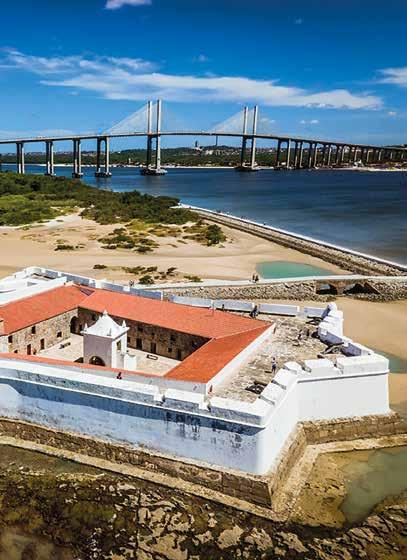
‘Fort
and business travelers alike, as well as sports and corporate events that help maintain visitor flow year-round, Natal remains a competitive and strategic destination on Brazil’s tourism map, successfully combining leisure, history and close contact with nature.
Cliffs, preserved beaches and a cosmopolitan atmosphere make this one of Rio Grande do Norte’s most desirable destinations
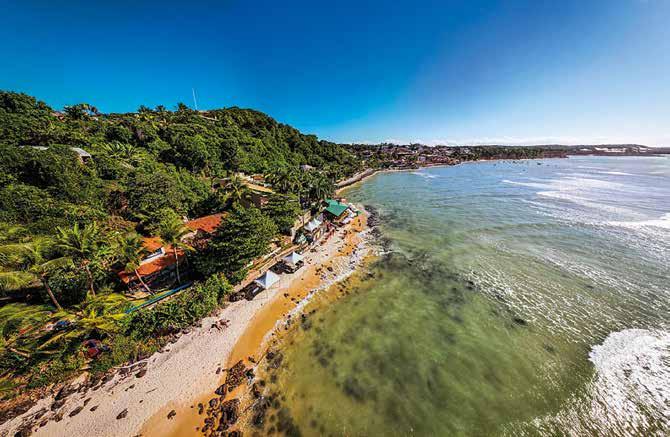
Praia da Pipa, located in the municipality of Tibau do Sul on the southern coast of Rio Grande do Norte, is one of the most iconic beach destinations in Northeastern Brazil. Once a small fishing village, Pipa has transformed over recent decades into a nationally and internationally recognized tourism hub, while preserving the rustic charm that defines its identity. The destination attracts visitors seeking unspoiled nature, scenic beaches and a relaxed lifestyle.
Surrounded by colorful cliffs, sheltered bays and remnants of Atlantic Forest, Pipa offers some of the most photogenic landscapes in the region. Beaches such as Pipa Beach, Praia do Amor, Madeiro and Baía dos Golfinhos stand out for their clear waters, natural pools and the frequent presence of dolphins, one of the area’s most emblematic symbols. Close contact with nature is one of the destination’s defining features.
In addition to its natural setting, Pipa boasts a well-developed tourism infrastructure. The village is home to charming guesthouses, boutique hotels, a wide variety of restaurants and an active nightlife, especially during weekends and peak season. Its cosmopolitan profile, shaped by a strong international presence, blends naturally with local traditions, creating a distinctive and welcoming atmosphere.
Outdoor activities such as surfing, kitesurfing, hiking and boat tours further enhance the visitor experience. Sustainability and environmental preservation have gained increasing importance, with initiatives aimed at protecting cliffs and marine life. With a strong sense of identity and consistent planning, Pipa continues to stand out as a destination that combines leisure, nature and lifestyle, reinforcing its position as a reference for beach tourism in Rio Grande do Norte.
Culture, cuisine and warmth shape the identity of the capital of Mato Grosso
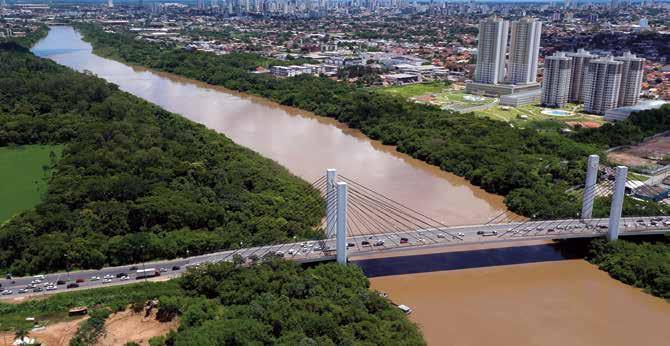
The Sérgio Motta Bridge is considered the third ‘cable-stayed’ bridge in Brazil
The capital of Mato Grosso is one of the oldest cities in Brazil’s Central-West region. Founded during the gold rush of 1719, the city carries a history marked by the settlement of the country’s interior and the formation of a distinct cultural identity. With strong potential for ecotourism, Cuiabá is located on the banks of the Cuiabá River and serves as a strategic gateway to the Pantanal, Chapada dos Guimarães, as well as the Cerrado and Amazon biomes.
The Historic Center, listed by Brazil’s National Institute of Historic and Artistic Heritage (IPHAN), features cobblestone streets and preserves townhouses, churches and public squares built in traditional earthen colonial architecture, narrating the city’s past. The Church of Our Lady of the Rosary and Saint Benedict, built in the 18th century, stands as one of the capital’s main religious and cultural symbols. Nearby, the Cuiabá River Museum highlights the relationship between local communities, the
river and fishing traditions.
Cuiabá’s culture is expressed through music, popular festivities and craftsmanship. Regional rhythms such as Rasqueado and Lambadão Cuiabano, traditional dances like Siriri and Cururu, and religious celebrations are part of the local calendar, including the Feast of Saint Benedict, one of the city’s most traditional events. Cuiabá combines history, tradition and a strategic location, playing a central role in the cultural, economic and tourism integration of the state.
Local gastronomy reflects a rich fusion of Indigenous, African and Portuguese influences. Freshwater fish from the Pantanal, such as pacu and pintado, are the highlights of the cuisine, featured in traditional dishes like Mojica de Pintado and Ventrecha de Pacu. Other emblematic flavors include Maria Isabel (rice with sun-dried beef), plantain farofa, piranha broth, rice with pequi, and the traditional sweet furrundu.
Ethnic tourism, development and environmental preservation shape the municipality’s trajectory
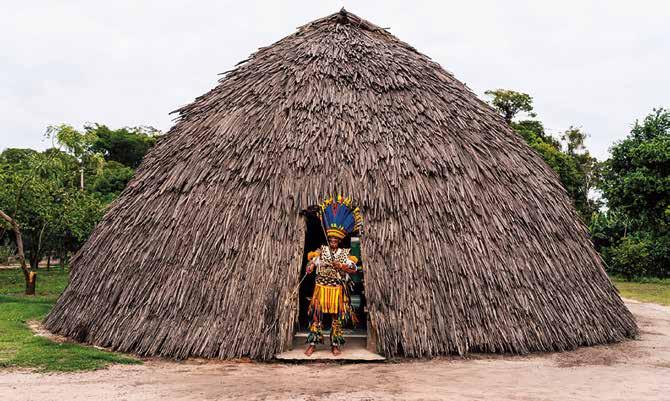
The dynamic municipality of Campo Novo do Parecis is located in the northwestern region of Mato Grosso and has established itself as one of the state’s most important centers for agribusiness. Officially founded in 1988, the city experienced rapid growth driven by agricultural expansion and modernization, becoming a national leader in grain production.
The cultivation of soybeans, corn, cotton and sunflowers, combined with investments in technology, research and sustainability in agribusiness, fueled urban development and strengthened local infrastructure. Today, the city features an organized urban layout, with wide avenues, well-defined residential areas and public spaces designed for leisure and community life.
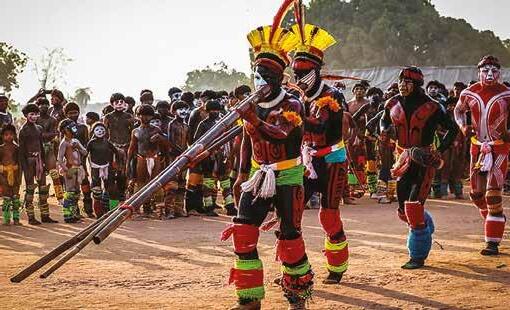
A strong presence of cultural elements linked to the traditions of the Pareci Indigenous people and migrants from different regions of Brazil contributes to the area’s cultu-
ral richness and to the appreciation of its ancestral roots. Known as the Ethnic Tourism Capital of Mato Grosso, the city is home to 14 Indigenous villages that welcome visitors, promoting cultural exchange, environmental awareness and sustainable income generation through rituals and immersive experiences. Events, fairs and popular celebrations reinforce local identity and community integration. With the growth of nature tourism, the Chapada dos Parecis offers waterfalls such as Salto Belo and Utiariti, which flow through Indigenous territories and attract adventure travelers. The region is historically linked to the expeditions of Marshal Cândido Rondon, who passed through the area while exploring routes toward the Juruena River, as well as to the settlement by migrants from southern Brazil. Today, Campo Novo do Parecis stands out for its infrastructure, quality of life and role as an important regional hub.
The city stands out for its cultural diversity, shaped by Indigenous peoples and waves of immigration
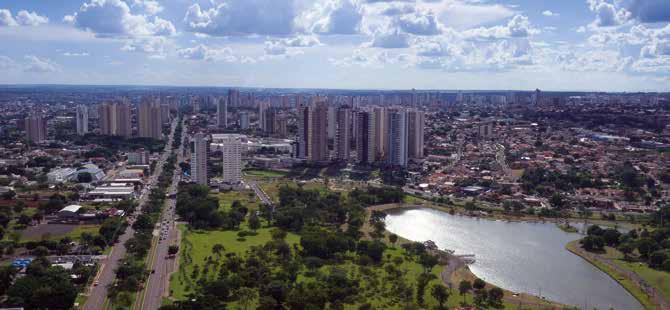
Campo Grande is known as the “Cidade Morena” (Brown City), a nickname inspired by its reddish soil and by the fact that it is one of the greenest capitals in Brazil. Marked by a rich blend of Indigenous heritage and immigrant influences, the city stands out for its urban planning and quality of life. Founded in the late 19th century, it grew into an important administrative and economic hub in Brazil’s Central-West region.
Its strategic location makes Campo Grande the main gateway to the southern Pantanal, positioning the city as a key economic and logistical center with a strong service sector. At the same time, it offers a high quality of life, with wide avenues and numerous parks. Parque das Nações Indígenas is one of the city’s main leisure areas, featuring spaces for walking, sports activities and cultural events. Nearby museums and cultural centers help tell the story of the state and reinforce its identity.
Campo Grande’s strong cultural diversity is the result of
the presence of Indigenous peoples and immigration from different groups, including Japanese, Paraguayan and Bolivian communities. This mix is reflected in local festivals, such as the Sobá Festival and traditional June celebrations, as well as in music and dances like Catira (marked by clapping and footwork) and Chamamé, a ballroom dance with Platine origins.
Local cuisine highlights freshwater fish dishes, such as Peixe na Telha, beef specialties and the famous Sobáa Japanese noodle dish adapted to local tastes and traditionally served at the Central Market. Other classics include Sopa Paraguaia and Chipa. Restaurants range from regional fare to Italian and Arab cuisine, while street markets and fairs strengthen the city’s connection with local products. With consolidated urban infrastructure and a strategic role in regional tourism, Campo Grande successfully combines urban life with proximity to vast natural areas.
Among its best-known attractions is Buraco das Araras, a deep sinkhole that shelters numerous bird species
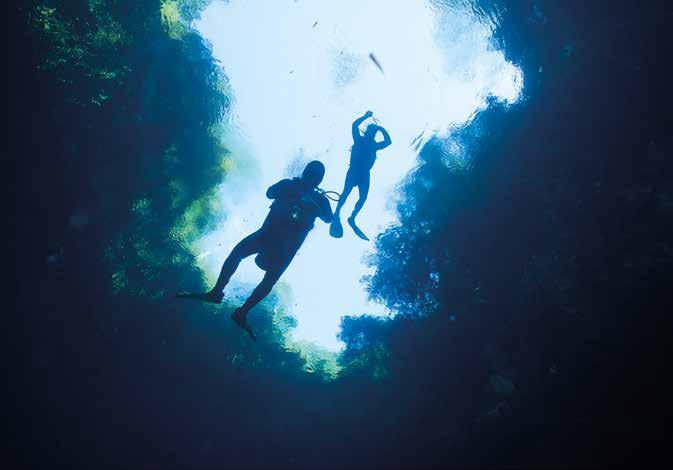
The charming town of Jardim is located in the southwest of the state and is recognized as one of the region’s main tourist hubs, especially due to its proximity to outstanding natural destinations. Part of the Serra da Bodoquena region, Jardim serves as a support base for visitors exploring ecotourism areas in Mato Grosso do Sul.
Renowned for its natural beauty, the municipality offers ecotourism experiences with crystal-clear waters and rich wildlife, serving as an excellent complement or alternative to Bonito. Among its most famous attractions are Buraco das Araras, a large and deep doline that is home to countless bird species, and Lagoa Misteriosa, a lagoon known for the exceptional visibility of its waters and for scuba diving. Trails and guided tours further enrich the visitor experience. Jardim originally developed through agricultural and livestock activities, but gained national prominence with the growth of nature tourism. The region’s limestone-rich soil
has shaped unique geological formations, and its strategic importance has increased as part of the Bioceanic Route, which connects the state to Brazilian ports. The municipality also hosts military facilities and leisure balnearies.
Historically, Jardim was the stage of the Retirada da Laguna during the Paraguayan War, and it preserves this legacy through monuments from that period. It is the only municipality in the Serra da Bodoquena Tourist Complex to offer structured historical tourism.
The urban center maintains a calm pace, with infrastructure designed to serve both residents and visitors. Local gastronomy features dishes created by renowned chefs, focusing on regional cuisine with river fish and meats. Hotels, inns, travel agencies and restaurants are central to the local economy, which is firmly based on environmental preservation, with strict visitation rules and initiatives aimed at conserving natural resources.
Landscape and Carioca culture translate a sensory, creative and deeply human Brazil
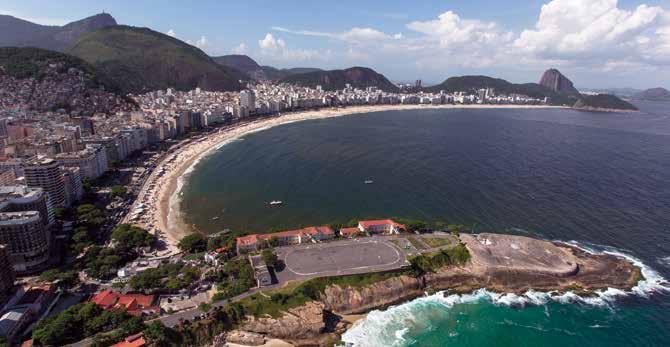
Rio de Janeiro is one of the most internationally recognized destinations in the world. It is a city that captivates through the way nature and urban life coexist, creating a unique atmosphere where mountains, sea and forest shape everyday life.
Home to one of the New Seven Wonders of the World, the destination is only the starting point for an experience that goes far beyond visual contemplation. Sea, mountains and rainforest are seamlessly integrated into the urban space and its iconic promenades, forming a landscape that directly influences how the city moves, lives and expresses itself.
Tourism in Rio extends well beyond scenery. The city functions as a living stage for cultural expression, where music, dance and art occupy streets, squares and cultural venues. Samba and popular creativity are central to its identity, building an authentic narrative that attracts visitors and enthusiasts in search of immersive and meaningful experiences.
Carioca culture is vibrant and deeply connected to Brazilian identity. Music, dance, popular festivities and artistic expressions are present in public spaces, theaters and cultural centers. Rio also hosts major events, festivals and cultural experiences that attract visitors from around the globe.
In gastronomy, the city blends tradition and innovation. From historic botecos to fine dining, Rio’s culinary scene reflects diverse influences, with a strong presence of Brazilian ingredients and seafood. Dining in Rio is as much a social experience as it is a cultural one.
With a well-established tourism infrastructure, hotels catering to different profiles and an international airport connecting Brazil to the world, Rio de Janeiro remains an emotional, sensory and unforgettable destination. For international travelers, it is an invitation to celebrate life, culture and natural beauty.


Renowned for its cuisine and cultural life, Minas Gerais’ capital embodies the true meaning of hospitality
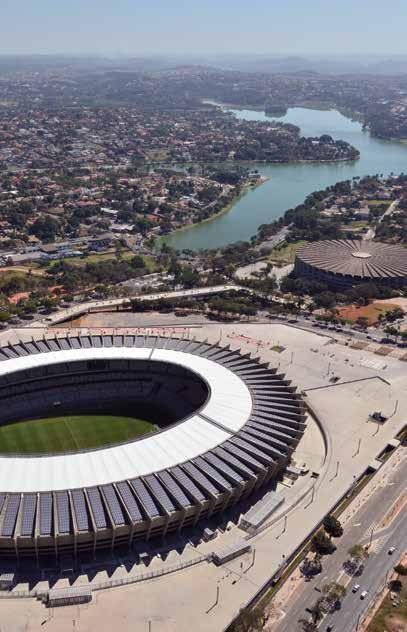
Belo Horizonte surprises visitors with a combination of simplicity, creativity and warmth. The city reveals itself in subtle ways, attracting international travelers interested in culture, gastronomy and quality of life. The capital of Minas Gerais is internationally recognized as a UNESCO Creative City of Gastronomy, standing out for the way it transforms food into culture and social connection.
Rather than visual excess, Belo Horizonte offers experiences built over time - through conversation, flavor and everyday encounters.
Minas Gerais cuisine, rooted in cherished family recipes and regional ingredients, dialogues naturally with contemporary and innovative culinary concepts. Bars and restaurants function as meeting spaces, where hospitality is an essential part of the experience. The traditional boteco culture, a beloved heritage of the city, reveals the essence of Minas hospitality. Gastronomy, therefore, stands as the city’s main calling card.
Culturally, Belo Horizonte hosts a thriving artistic scene, with museums, cultural centers, music and modernist architecture. The city also serves as a strategic base for exploring the state of Minas Gerais, connecting visitors to historic towns and natural landscapes.
In recent years, the capital has gained prominence for its ability to develop event and cultural tourism. Belo Horizonte has hosted a growing number of congresses, conventions, trade fairs, and scientific events, generating significant economic impact and increasing hotel occupancy as well as demand for restaurants, transportation and services.
With solid urban infrastructure, an international airport and a year-round events calendar, Belo Horizonte presents itself to international visitors as a welcoming, authentic destination with a strong identity. The steady growth of its hospitality sector reinforces the city’s reputation for warmth and excellence.
Theworld’slargestopen-aircontemporaryartmuseumoffersatransformativesensoryexperience
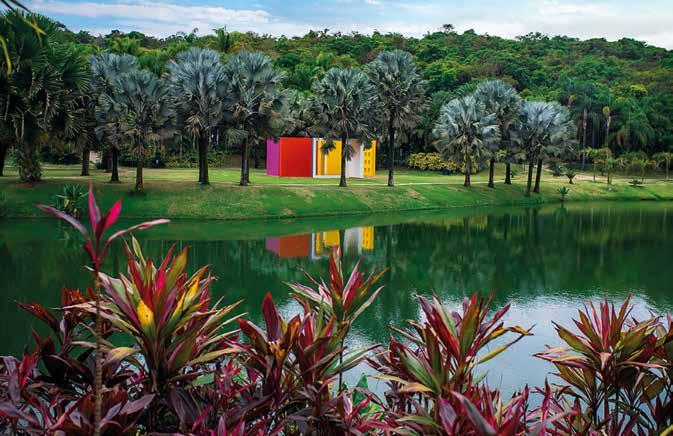
Located in the municipality of Brumadinho, the Inhotim Institute is widely considered one of the most visionary cultural projects in the world. As the largest open-air contemporary art museum on the planet, it creates a unique symbiosis between a lush botanical garden and large-scale artistic installations. This fusion makes it a destination unlike any other, redefining the relationship between the viewer, the artwork, and the landscape.
Inhotim’s global relevance has been cemented by international acclaim, including its recognition by The New York Times as a must-visit destination. This prestige has placed Minas Gerais on the radar of art lovers, curators, and travelers from around the globe who seek experiences that defy traditional museum boundaries.
The visit is a journey of discovery. Pavilions designed by renowned architects are scattered throughout a tropical forest featuring thousands of rare plant species.
The dialogue between the artwork and the surrounding environment invites visitors to pause, reflect, and interact with the space in a profound way. It is a place where nature does not merely serve as a backdrop, but acts as a central element of the artistic narrative.
Beyond the visual spectacle, Inhotim offers a complete tourism infrastructure. Its restaurants blend international culinary techniques with local Minas Gerais ingredients, turning lunch into part of the cultural experience. The park’s vastness often encourages visitors to return or stay longer in the region, driving the development of high-quality hospitality in Brumadinho.
Inhotim represents a bold, sophisticated, and innovative side of Brazilian tourism. It stands as a testament to the power of creativity, proving that art and nature can coexist to create a destination that is both intellectually stimulating and deeply restorative.
Brazil’s financial capital and home to one of the world’s most diverse cultural landscapes
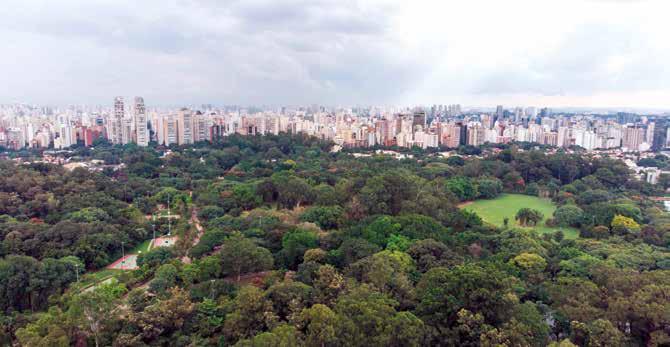
São Paulo carries the distinction of being the largest city in South America and one of the five largest urban centers in the world. With more than 22 million people across its metropolitan area, the city never slows down. Visitors arrive not only drawn by its economic power, but by its unique ability to offer something for everyone, at any hour of the day. Here, cultures from Brazil and around the globe converge, filling the city with different languages, accents, flavors and lifestyles that pulse through every neighborhood.
With robust infrastructure, a wide-ranging hotel network and two major international airports connecting Brazil to the world, São Paulo has established itself as a strategic hub for international tourism. It stands out as one of the Southern Hemisphere’s leading urban centers, attracting travelers who come for business, events and investment, and stay for the city’s cultural diversity, social energy and intense daily life.
Culturally, São Paulo is one of Latin America’s most dynamic capitals. World-class museums, vibrant cultural centers, theaters, musicals and major exhibitions are part of the city’s permanent agenda. Urban art and creatively driven neighborhoods further reinforce its cosmopolitan identity, where tradition and innovation coexist naturally.
The city is also internationally renowned for its gastronomy. Cuisines from every continent share space with award-winning chefs, while Brazilian contemporary cuisine gains prominence alongside traditional bakeries, popular markets and neighborhood bars that define everyday life. From fine dining to street food, eating in São Paulo is an experience in itself.
For international visitors, São Paulo offers authenticity, innovation and the constant feeling that something new is always happening. It is a city that reveals itself through movement, diversity and an unmistakable creative energy.
Long beaches, Atlantic Forest landscapes and solid infrastructure make this an accessible coastal retreat
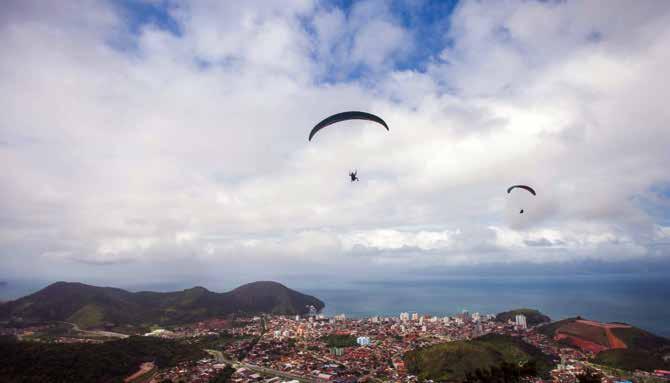
Located on the northern coast of the state of São Paulo, Caraguatatuba has emerged as one of Brazil’s most well-balanced seaside destinations. Combining beaches, preserved nature and urban infrastructure, the city attracts travelers seeking relaxation, contact with the ocean and outdoor experiences without giving up comfort and services.
Its long stretches of beach create a striking landscape where the blue of the Atlantic meets the green of the Atlantic Forest, enhancing the destination’s natural appeal. This contrast between sea and mountains is one of Caraguatatuba’s defining features and a key element of its tourism identity.
One of the city’s main viewpoints is Morro de Santo Antônio. Situated close to the urban area, it offers panoramic views of the coastline, the Serra do Mar mountain range and the city itself. Beyond its scenic value, the hill holds cultural and historical significance and is also a hub for activities such as hang gliding and paragliding, attracting sports enthusiasts and visitors interested in outdoor ex-
periences. Even for those not seeking adventure, the site serves as a symbolic point of connection with the surrounding landscape.
Seafood takes center stage in the local gastronomy, alongside caiçara cuisine that values fresh ingredients and simple preparations. Dining by the sea is part of the experience, as is the relaxed rhythm that invites visitors to slow down and stay longer.
In recent years, Caraguatatuba has experienced significant growth and has become a residential choice for many Brazilians. Beyond quality of life, the city stands out for its urban organization, diverse accommodation options, efficient mobility, varied dining scene and an events calendar that keeps the destination active throughout the year. For families, couples and international travelers, Caraguatatuba offers safety, accessibility and a consistently well-structured tourism environment.
Caraguatatuba reflects the essence of São Paulo’s coastline in an authentic way, delivering a complete experience that brings together nature, leisure and hospitality.
The city blends architecture, smart mobility, and iconic green spaces
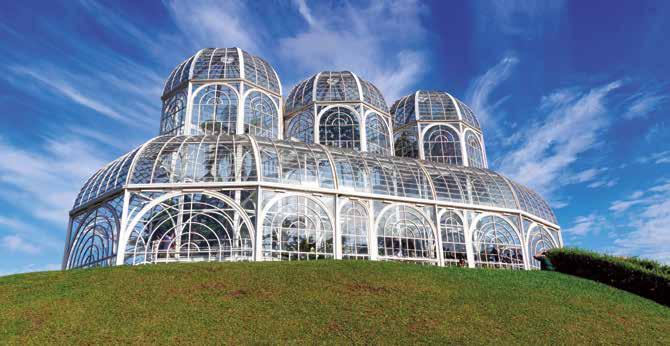
Curitiba is a distinctive metropolis, defined by a remarkable harmony between urban development and environmental preservation. Internationally recognized for its innovative urban planning and designated by UNESCO as a Creative City of Design, the capital of Paraná offers a rich experience for travelers who value organization, cleanliness, and a high quality of life.
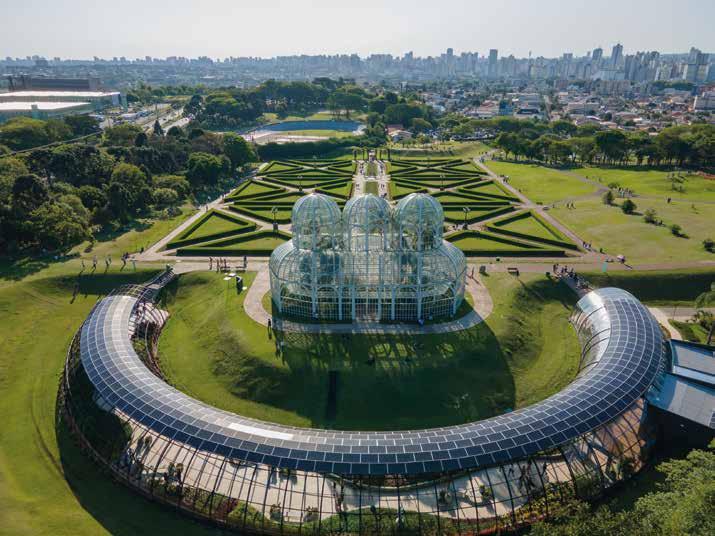
A perfect itinerary begins at the Botanical Garden, home to its iconic metal-and-glass greenhouse in Art Nouveau style, inspired by European crystal palaces and surrounded by geometric gardens that evoke classic French elegance.
Just minutes away, the modernist architecture of Oscar Niemeyer comes to life at the Oscar Niemeyer Museum, known as the “Eye Museum.” As one of the largest and most important art centers in Latin America, it captivates visitors with both its bold design and diverse exhibitions.
To truly understand the city’s soul, the Wire Opera House (Ópera de Arame) poetically merges engineering and nature. Built entirely from steel tubes with a transparent roof, the
theater sits above a clear lake in a former quarry, creating one of Curitiba’s most emblematic settings.
The city’s park system is one of its greatest assets. From the unforgettable sunsets at Tanguá Park, with its viewpoints and waterfalls, to the lively atmosphere of Barigui Park, where the famous capybaras coexist peacefully with visitors, green spaces are deeply woven into everyday life.
Urban mobility is made easy by the Linha Turismo, a panoramic bus route connecting 26 major attractions, including the charming Historic District. At Largo da Ordem, tradition remains alive through handicraft markets, centuries-old churches, and preserved mansions that now house art galleries and gastronomic bars.
Curitiba’s culinary scene reflects its strong European heritage. The Santa Felicidade district serves as the city’s Italian gastronomic hub, while public markets and award-winning craft breweries showcase the authentic flavors of a modern, cosmopolitan, and welcoming capital.
Waterfalls, adventure, and multiculturalism define one of Brazil’s most iconic destinations
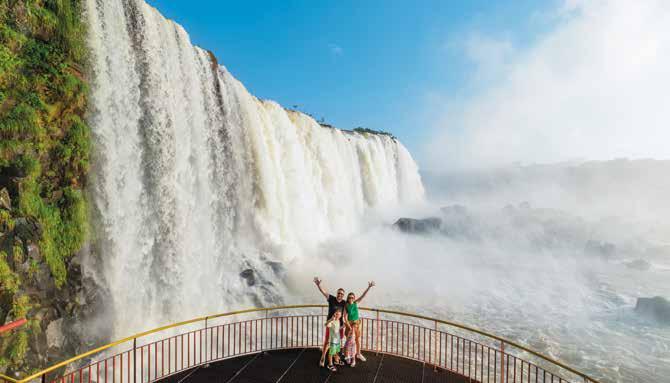
Foz do Iguaçu is a magnetic and vibrant destination where nature in its most exuberant form meets the grandeur of human engineering in a truly unique setting. The city is home to the majestic Iguazu Falls, one of the New Seven Wonders of Nature and a UNESCO World Heritage Site.
With more than 270 waterfalls stretching across nearly three kilometers, Iguazu National Park offers a fully immersive experience in the Atlantic Forest. Safe walkways lead visitors to the Devil’s Throat, where the sheer force of the water creates a constant mist and an unforgettable spectacle.
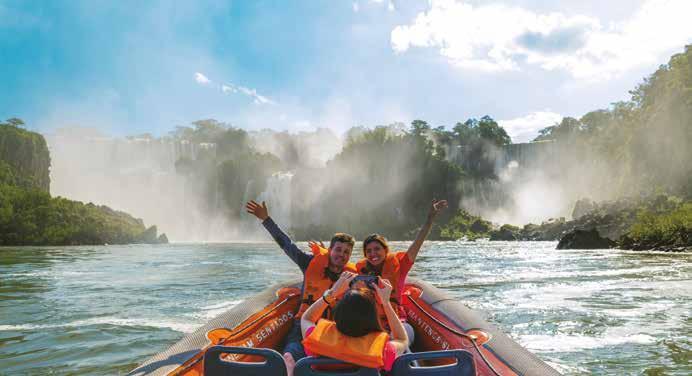
For adventure seekers, the Macuco Safari takes visitors by inflatable boat along the rapids of the Iguazu River, navigating right up to the base of the falls for an exhilarating encounter with nature.
Adjacent to the park, the Bird Park (Parque das Aves) plays a vital role in the conservation of endangered species, allowing close interaction with macaws, toucans, and flamingos in immersive aviaries that are especially captivating for international visitors.
The region’s technological dimension is represented by
the Itaipu Hydroelectric Power Plant, one of the world’s largest engineering projects and a global reference in clean, renewable energy production through a binational partnership.
Foz do Iguaçu’s cultural diversity adds another fascinating layer to the destination. One of the largest Arab communities in Brazil is reflected in the beautiful Omar Ibn Al-Khattab Mosque, while the serene Chen Tien Buddhist Temple symbolizes the peaceful coexistence of more than 80 different ethnic groups.
At the revitalized Three Borders Landmark, visitors can witness the meeting point of the Iguaçu and Paraná rivers, visually connecting Brazil, Argentina, and Paraguay under a single horizon.
Local gastronomy highlights freshwater fish such as the traditional Pirá de Foz, while the international experience is enhanced by a short crossing to Puerto Iguazú, in Argentina, renowned for its Malbec wines and premium cuts of beef. Foz do Iguaçu stands as a global hub offering comfort, safety, and one of the most iconic landscapes on Earth.
Beaches, culture, and gastronomy shape one of Brazil’s most distinctive cities

Florianópolis is a singular capital shaped by its privileged geography. Spread across a vast island connected to the mainland by the historic Hercílio Luz Bridge - a restored masterpiece of engineering - the city harmoniously combines developed urban areas with more than forty beaches, hills covered by dense Atlantic Forest, and protected conservation zones.
In the North, beaches such as Jurerê Internacional and Ingleses offer sophisticated tourism infrastructure, featuring luxury hotels, high-end shopping, and international-standard services that attract visitors from around the world.
On the East Coast, the scenery is dominated by the power of the ocean. Beaches like Joaquina, Mole, and Campeche are hubs for surf culture, surrounded by towering sand dunes and preserved ecological trails leading to secluded shores.
The island’s identity is also revealed in its historic districts, which preserve 18th-century Azorean villages such as Ribeirão da Ilha and Santo Antônio de Lisboa. In these
areas, life moves at a slower pace, and Portuguese heritage is reflected in colorful façades, traditional bobbin lace, and religious customs that have endured through generations.
The Historic Downtown is the heart of local identity. Here, the Public Market serves as a daily meeting point, offering the best of regional cuisine amidst preserved colonial buildings and the imposing Metropolitan Cathedral. Meanwhile, Lagoa da Conceição acts as the island’s central hub, gathering independent cafés, vibrant nightlife, and a wide range of leisure and water sports activities.
Florianópolis also stands out internationally for its gastronomy. As Brazil’s largest producer of oysters, cultivated in pristine waters, the city supplies fresh seafood daily to leading restaurants across the country.
Trails leading to isolated beaches, panoramic viewpoints, and colonial-era fortresses complete the tourism offering. This reinforces the multifaceted character of a capital that combines economic development with deep respect for the environment, set against a backdrop of rare natural beauty.
The city blends bold architecture, entertainment, and diverse beach profiles
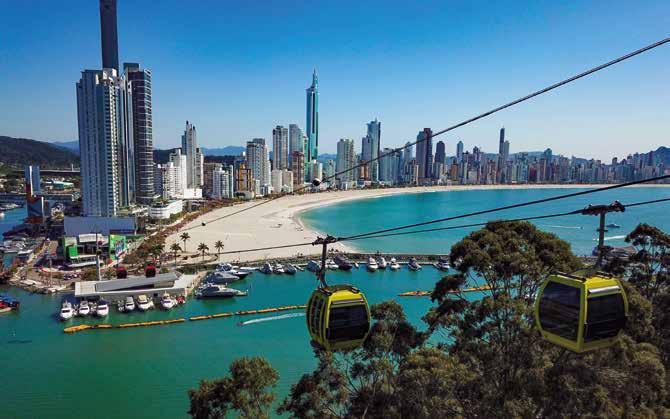
Balneário Camboriú has established itself as one of the most dynamic and vibrant destinations on the Brazilian coast. Often compared to major global waterfront cities due to its striking vertical skyline, it offers a unique urban experience.
With an intense and sophisticated profile, the city combines a lively central beach with residential skyscrapers that are among the tallest in Latin America, creating a horizon that has become a reference in modern architecture and luxury.
The Central Beach is the main axis of urban life. Having recently undergone a major sand replenishment project, the expanded beach strip now offers enhanced space for sports, family leisure, and large-scale events. The fully revitalized waterfront invites leisurely strolls, concentrating modern kiosks, bars, and high-end restaurants that cater to a discerning audience year-round.
For visitors seeking closer contact with preserved nature, the secluded beaches of Laranjeiras, Taquaras, and
Estaleiro offer crystal-clear waters and controlled development. These are accessible via the scenic Interpraias coastal road or through sustainable transport options.
One of the city’s key attractions is its high-tech tourism infrastructure. Parque Unipraias connects the waterfront to Laranjeiras Beach via modern cable cars, providing an immersive journey over the Atlantic Forest with viewpoints and adventure activities. At Barra Norte, the panoramic Big Wheel offers unforgettable views of the curved shoreline and the city’s futuristic skyline, especially at sunset.
Nightlife is another pillar of the local economy, featuring internationally awarded clubs and a diverse dining scene. With luxury shopping centers, modern convention venues, and a robust hotel network, Balneário Camboriú maintains strong commercial appeal. It sustains a steady flow of domestic and international visitors searching for the perfect balance between high-end urban comfort and the natural beauty of Santa Catarina’s coastline.
The capital blends parks, historic heritage, and the South’s most iconic sunset
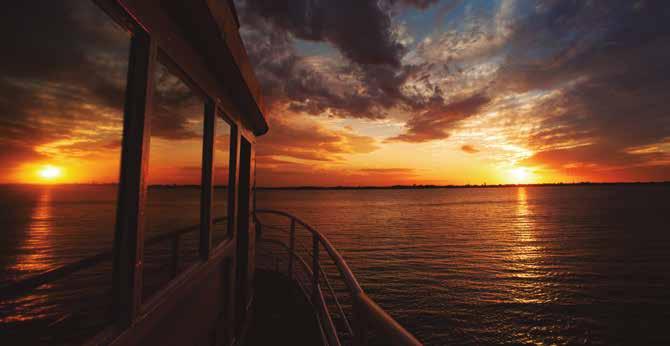
Porto Alegre is the gateway to Rio Grande do Sul and one of southern Brazil’s main urban centers. Located on the shores of Lake Guaíba, the capital combines intense cultural life, well-preserved historic heritage, and an increasingly strong connection with its public spaces.
The Historic Center features key landmarks from the city’s formation. Alfândega Square (Praça da Alfândega) gathers museums, institutional buildings, and public leisure areas while hosting cultural events throughout the year. The Rio Grande do Sul Museum of Art and the Rio Grande do Sul Memorial help tell the state’s political, artistic, and social history.
The Public Market, inaugurated in 1869, remains one of the city’s most important symbols. It is a vibrant meeting point for residents and visitors alike, housing traditional restaurants and stalls selling regional products and ingredients essential to the state’s daily life.
Along the waterfront, the Gasômetro Cultural Center acts as a major hub for the arts. The complex hosts exhibitions, performances, and public activities. The revitalization of the Guaíba Waterfront (Orla do Guaíba) has expanded leisure areas, bike lanes, and walking paths, reinforcing sunset watching as one of the capital’s most beloved urban rituals.
Porto Alegre also stands out for its urban parks. Redenção Park is the most traditional, hosting street markets, cultural expressions, and social gatherings on weekends. Moinhos de Vento Park complements this landscape, offering a sophisticated blend of leisure, sports facilities, and local history.
With a diverse dining scene, constant cultural offerings, and infrastructure geared toward events and business tourism, Porto Alegre serves as a strategic base for travelers exploring other regions, such as the Serra Gaúcha, the North Coast, and the Campanha region.



Events, flavors, and landscapes define the appeal of this Serra Gaúcha destination
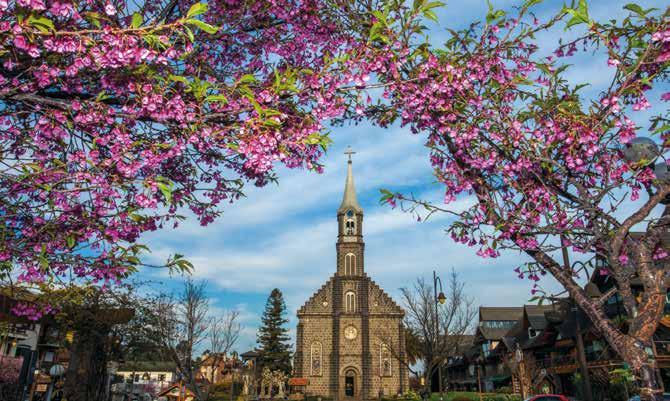
Crisp winters and European-inspired architecture place Gramado among the most sought-after destinations in the Serra Gaúcha region. The city welcomes visitors year-round, with peak demand in June and July, and during the Natal Luz (Christmas of Lights) season, held from November to January.
The tourist route begins in the city center, where hotels, restaurants, and urban attractions are concentrated. Rua Coberta serves as a central pedestrian axis, sheltering cafés, bars, and occasional live performances. Nearby are the Palácio dos Festivais, home to the famous Gramado Film Festival, and Major Nicoletti Square.
Lago Negro (Black Lake) is one of the city’s most visited scenic spots, ideal for walking, pedal boat rides, and outdoor relaxation. Close by, Mini Mundo draws families with detailed miniature replicas of international landmarks and urban scenes.
On colder or rainy days, visitors can enjoy indoor attractions such as Snowland, a snow-themed park with slopes and recreational activities, and Space Adventure, which
features original NASA artifacts. Thematic museums and interactive experiences further expand the indoor programming.
Gastronomy plays a central role in the visitor experience. Restaurants specializing in fondue, premium meats, and pasta are concentrated downtown and along Avenida das Hortênsias. The region is also famous for its traditional Café Colonial feasts, artisanal chocolate shops, and bakeries that define the daily routine for tourists.
The city’s events calendar shapes its tourism dynamics. Natal Luz is the flagship attraction, featuring parades, musical performances, and spectacular evening shows. The Gramado Film Festival takes place in August, attracting audiences connected to culture and the audiovisual industry.
Gramado also serves as a base for short excursions. The neighboring city of Canela, located just seven kilometers away, offers attractions such as the Stone Cathedral, Caracol Park, and Alpen Park, allowing for combined itineraries within a single day.


A complete structure with exclusive attractions to make your stay an unforgettable experience.
Located in front of the sea, in a peaceful area at Recreio dos Bandeirantes Beach, the hotel impresses with its architecture and excellence in services
Come and explore our unique Urban Resort up close A place to create remarkable moments and lasting memories.
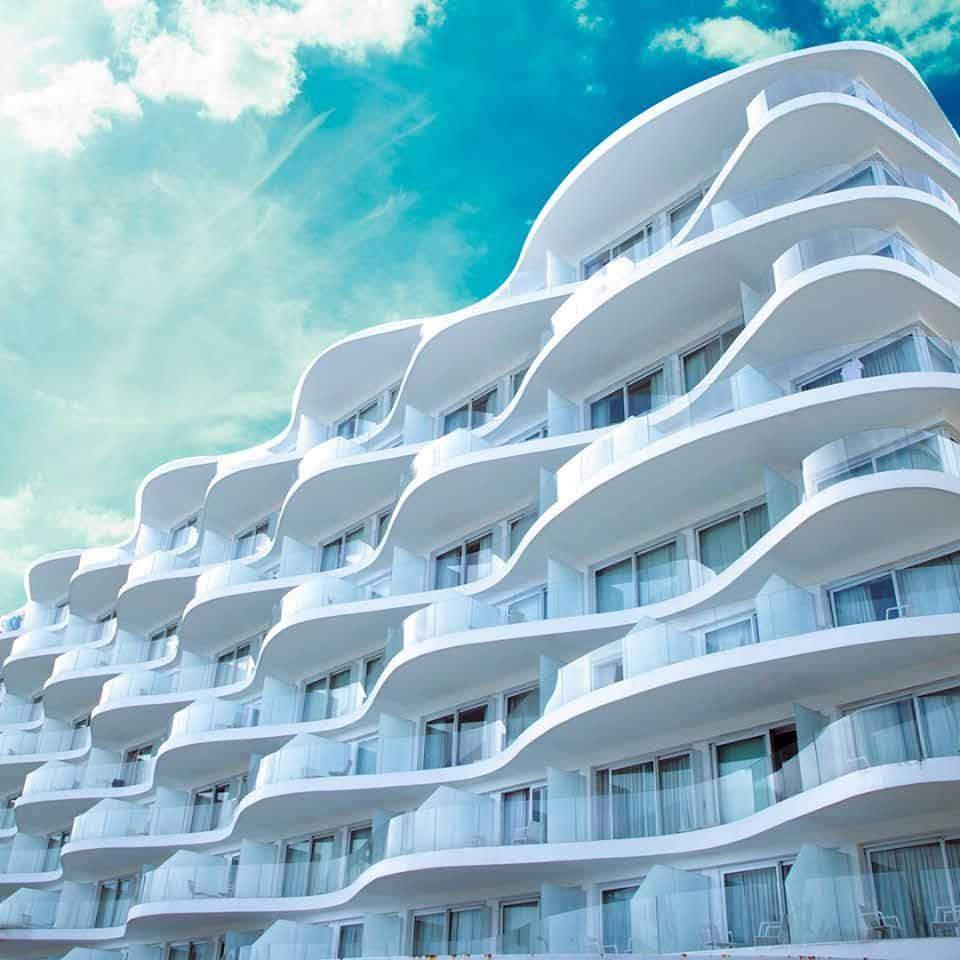

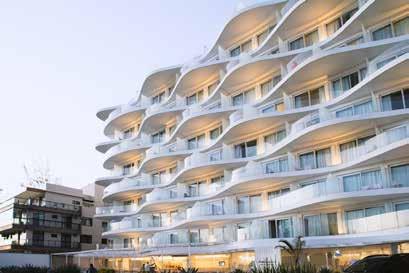
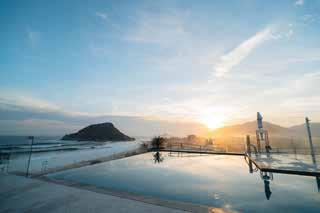
@cdesignhotel
/cdesignhotel
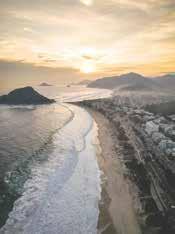
www.cdesignhotel.com.br
Janeiro