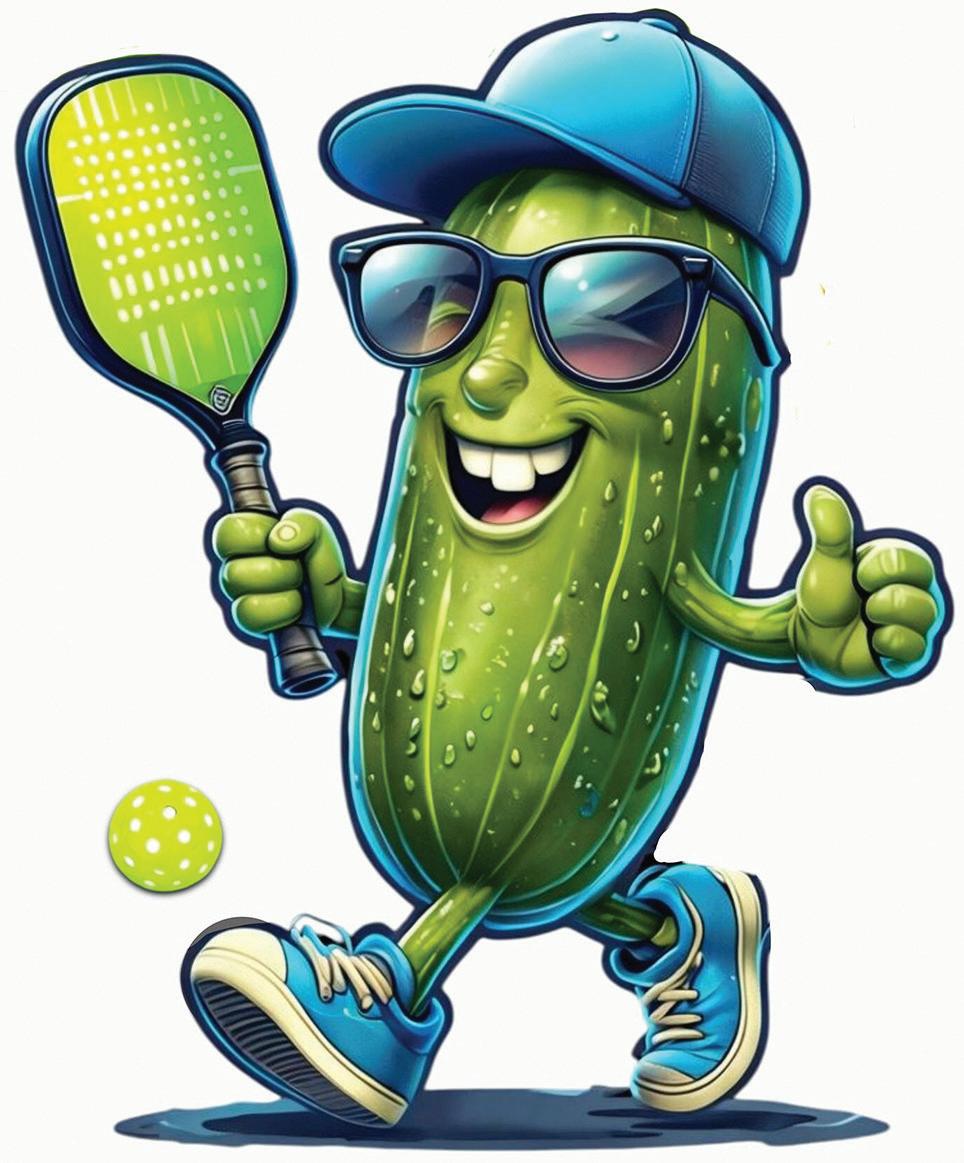
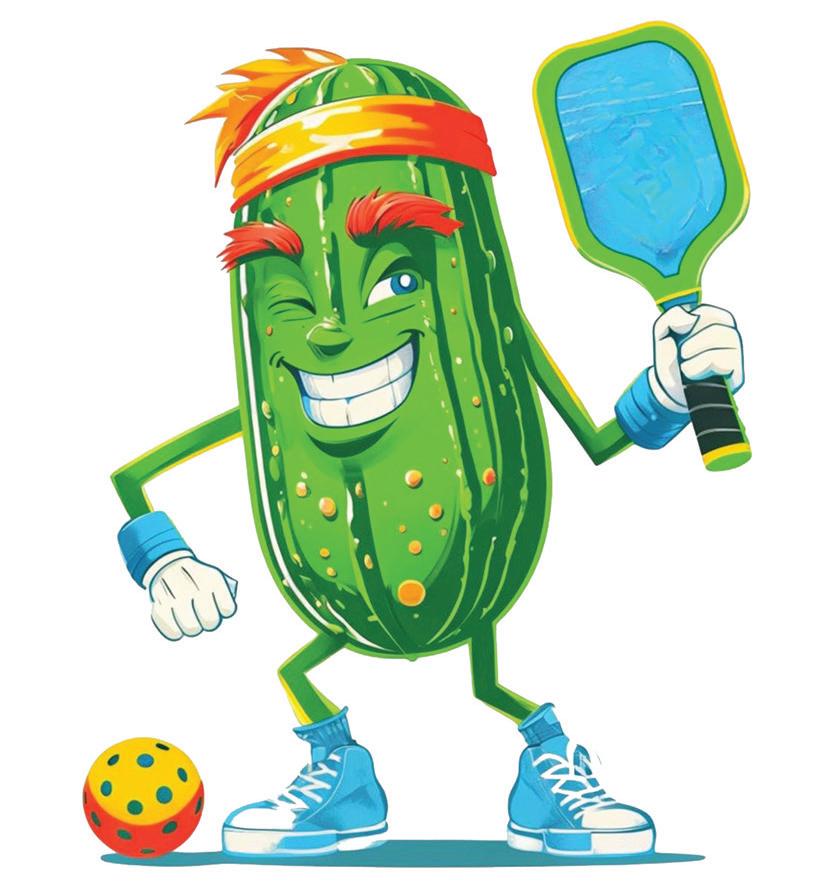
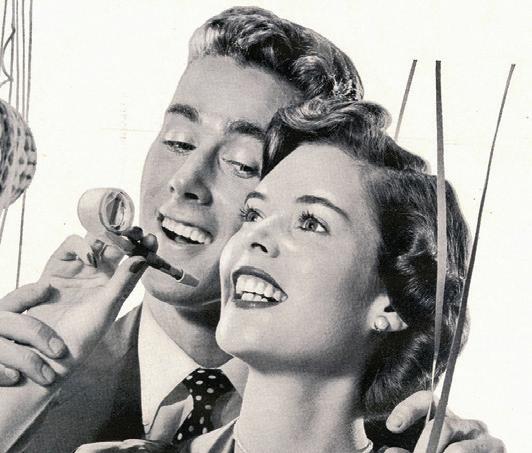
It is a truly rare event when a new sport comes on the scene, but we have all been witness to one of these turning points in recreational history with the surging popularity of pickleball. It is suddenly everywhere and is a huge economic, lifestyle, and even healthcare sensation. Where did this thing come from?
Why now?
As you can see from the box to the right, pickleball isn’t new. It has been around for more than 60 years. The name was trademarked in 1972, mentioned in Tennis magazine as early as 1976, and had sanctioned tournaments and official oversight organizations not long after. So why have most people only known of its existence for the past few years?
We can thank the pandemic for that. People in extended lockdowns were craving something to do that might involve fresh air and maybe even interacting with actual human beings. A sport that was simple, inexpensive, and didn’t involve being too close to other players was perfect. The craze was on its way.
There are currently nearly 70,000 pickleball courts in the U.S., and for the past three years, participation has doubled every year.
Why/why not pickleball?
Pickleball has a rather illustrious history for such a new sport. It was invented in 1965 by three friends, including then 40-year old Joel Pritchard, who later went on to represent the state of Washington in the US House of Representatives and served as the state’s Lieutenant Governor. In 2022 it was named Washington’s official state sport. Several stories surround the origin of the name, including one that the Pritchard family dog, Pickles, loved to chase errant balls that strayed off the court. Another version holds that the name came from so-called pickle boat crews, where oarsmen are chosen from the leftover crews from other boats, appropriate in a sport built from assorted leftover equipment from several sports. Still another legend (all of these are from the same three people who invented the sport): the object of the game is to hit the ball in a way that puts your opponent in a pickle.
Pickleball is fun, easy to learn, and is played on a smaller court than tennis, which makes it easier for aging players: less running, less strain on joints. As more people play any sport, it’s only natural that injuries will increase, and that is the case with pickleball. Part of the reason is the sport’s popularity with older adults. In one study, 91% of the injuries involved players over 50, and another study found that 73% of all pickleball injuries happened to players aged 60 to 79 (so don’t think you’re too old to play).
Are potential injuries a good reason to avoid pickleball?
Not at all. They are actually proof that playing is a good idea. You can’t get injured doing nothing. In fact, one study found that hardly anyone was injured sitting in a recliner with a TV remote in hand. That study, which we just made up on the spot, had no data on all the people who play pickleball who do not suffer an injury, probably because those numbers are so huge.
Even so, pickleball injury prevention should be a hot topic, and it is: see page 11 for a bevy of suggestions.
PARENTHOOD
by Dr. Warren Umansky, PhD
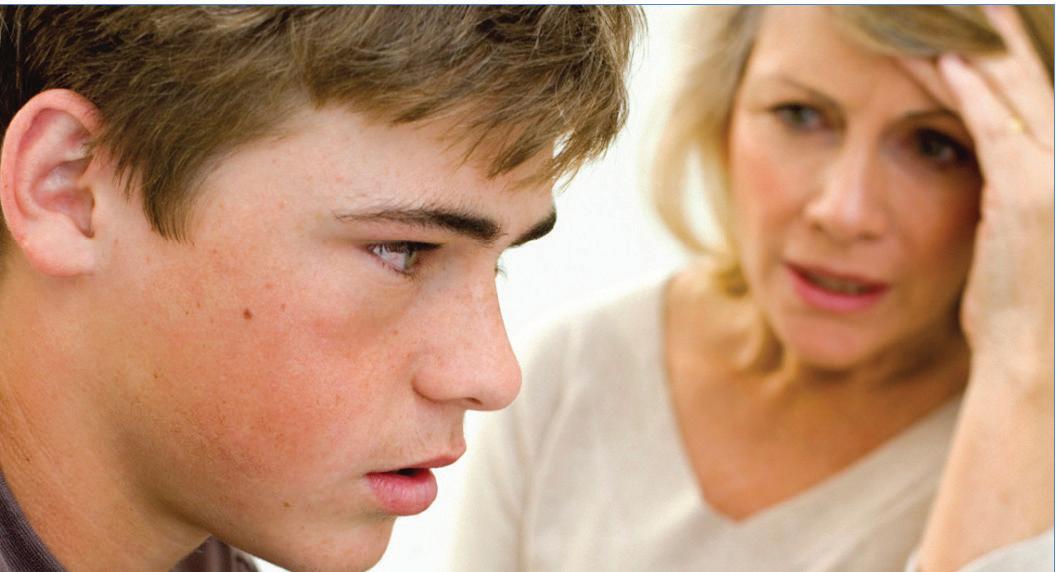
Your spouse, your parents and your friends barrage you with things they have seen and heard about how bad electronics are for children. You are aware of the buzz about electronics for children. Your three children do well in school, they are respectful, they are involved in healthy activities outside of school, they get enough sleep at night, and you enjoy sitting down for meals with them without electronics available. Your oldest child also has a part-time job after school (on non-practice days) and on weekends. Yet these people keep hounding you. What do you do?
A. Maybe you are missing something. Perhaps your children are not doing as well as you think. Time to worry about it and look over your kids’ shoulders even more than you do now.
B. You realize that there needs to be a healthy balance between electronics and real-life activities. You think your kids have that balance. Their behavior and school performance are proof of that.
C. You respond to “critics” by asking them how they think electronics are damaging your children. It might make them rethink their position with respect to your parenting skills.
D. You concede that electronics probably are having a negative impact on your children, based on the evidence that is presented to you. You decide to shut your kids down on use of electronics for social purposes.
If you answered:
A. You described the major areas that account for children’s success and, in those areas, your children are doing well. We always worry about our children, but you are doing well. Be proud of their and your success.
B. How wonderful that you appreciate the importance of balance in your children’s lives. It makes for happier and healthier children now, but also is preparing them for a more successful life going forward.
C. You deserve to stand up for your parenting skills. The little time your children spend on electronics is not impacting their behavior, their grades, their work ethic, their sleep, or their level of physical activity.
D. There is no evidence of the negative influence of electronics on your children. If anything, your children have learned how to set priorities. Electronics may be something to do when everything is done.
Electronics are not evil unless they become so dominating that they interfere with doing school work, getting enough sleep, doing chores, going outside, following directions at home, engaging in extracurricular activities or getting a part-time job. They are bad when they create conflicts among siblings or with parents. The challenge for parents is to be a good electronics role model for their children and to help children learn to prioritize use of electronics. And, when electronics are used, it is the job of the parents to monitor that use and be sure they are used safely.
Dr. Umansky has a behavioral health practice for children in Augusta
THOUGHTS ABOUT THOUGHTS
THOUGHTS
EMOTIONAL NUMBING:
“I DON’T FEEL ANYTHING ANYMORE”
Editor’s note: Written by local mental healthcare professionals, this series explores how people may think and act when affected by common and lesser-known mental health conditions.
Tasha is a 34-year-old mother who describes herself as “functioning, but empty.”
She gets her kids to school, goes to work, pays the bills — everything looks normal from the outside. But inside, something has changed.
She doesn’t cry anymore. She doesn’t laugh much either. Moments that used to bring joy — birthdays, holidays, even her daughter’s school performance — feel muted, distant.
After a recent argument, her partner told her, “It’s like you’re not even here.” Tasha doesn’t feel sad. She doesn’t feel happy. She just feels… nothing.
Tasha may be experiencing emotional numbing — a common but often misunderstood response to trauma, chronic stress, and certain mental health conditions.
What Is Emotional Numbing?
Emotional numbing refers to a reduced ability to experience or express emotions. Individuals often describe feeling detached, flat, or “shut down.”
This is not the absence of emotion, but rather a protective response by the brain and nervous system. When emotional experiences become overwhelming — especially in the context of trauma — the mind may dampen both painful and positive feelings to cope.
Emotional numbing is commonly associated with trauma-related conditions such aspost-traumatic stress disorder, but it can also occur in depression, anxiety disorders, and prolonged stress.
Signs and Symptoms
Emotional Features
• Feeling emotionally “flat” or empty
• Reduced ability to feel joy, sadness, or love
• Limited emotional reactions to significant events
Cognitive Patterns
• Sense of detachment from self or surroundings
• Going through the motions” without emotional connection
• Difficulty identifying or describing feelings
Behavioral Patterns
• Withdrawal from relationships
• Reduced participation in activities once enjoyed
• Avoidance of emotionally triggering situations
Physical or Experiential Features
• Feeling disconnected from one’s body
• A sense that the world feels unreal or distant
• Low energy or motivation
Functional Impact
• Relationship strain (“You don’t care” or “You’ve changed”)
• Decreased engagement at work or home
• Loss of meaning or fulfillment in daily life
Trauma, Dissociation, and Blunted Affect
Emotional numbing is closely tied to dissociation, a process where the mind distances itself from overwhelming experiences.
Dissociation can include:
• Feeling detached from one’s body (depersonalization)
• Feeling disconnected from reality (derealization)
• Emotional shutdown or restricted expression
Over time, this protective mechanism can become persistent, leading to what clinicians call blunted affect — a noticeable reduction in emotional expression, both internally and outwardly. While protective in the short term, prolonged numbing can interfere with relationships, identity, and overall well-being.
What Causes Emotional Numbing?
Several factors may contribute:
• Exposure to trauma (acute or chronic)
• Ongoing high stress or burnout
• Depression or anxiety disorders
• Nervous system dysregulation
• Use of substances to cope with distress
The brain is attempting to reduce emotional overload. In doing so, it lowers the intensity of all emotions — not just the painful ones. This response is not a weakness. It is an adaptation.
Common Misconceptions
“They don’t care.”
Emotional numbing can X
Please see THOUGHTS page 3
look like indifference, but it often reflects disconnection — not lack of care.
“They need to snap out of it.”
Numbing is not a choice. It is an automatic nervous system response.
“They sure don’t look upset, they’re fine.”
The absence of visible distress does not mean the absence of internal struggle.
“This is just depression.”
While emotional numbing can occur in depression, it is also strongly linked to trauma and dissociation. The underlying causes may differ.
Treatment
Recovery focuses on reconnection — safely and gradually.
Psychotherapy
• Trauma-focused therapies help process underlying experiences contributing to emotional shutdown
• Cognitive Behavioral Therapy (CBT) can address avoidance patterns and re-engagement
• Somatic therapies focus on reconnecting with the body and physical sensations
Mind-Body Approaches
• Mindfulness and grounding techniques
• Breathwork and gentle movement
• Sensory-based practices to re-engage awareness
Medication
• May be helpful when emotional numbing is linked to depression, anxiety, or trauma-related disorders
Relational Support
• Rebuilding safe, supportive connections
• Encouraging gradual emotional expression without pressure
Prognosis
Emotional numbing is reversible with appropriate support and time.
As individuals feel safer — both internally and externally — emotional range often begins to return. This process can feel unfamiliar at first, as both positive and painful emotions re-emerge.
The goal is not to eliminate protection, but to restore flexibility — the ability to feel, connect, and engage fully with life. Without treatment, emotional numbing can persist, leading to isolation, relationship breakdown, and reduced quality of life. With care, individuals can move from “just functioning” to genuinely experiencing life again.
About Us
IPS provides inpatient and outpatient mental health services, with or without a referral, to help patients and their families progress through the care journey. To make an appointment, call 706-204-1366 or visit integratedpsych.care.
105 E Hugh St., Suite 103 North Augusta, SC 29841 (803) 441-3937
39-A Varden Drive Aiken, SC 29803 (803) 641-6104
Of all forms of nourishment, water is by far the most important. A person can survive for weeks without eating food, but only a matter of days without water. We lose water constantly, so we need to replenish it constantly.
If a product label was attached to each of us (“Serving size: one human”), the ingredients, listed in order, would begin with water. Our blood, very important stuff indeed, is 80% water; the brain, also slightly important, is 75% water. Hundreds of bodily processes depend on water. Its importance cannot be overstated.
We know all these things, yet hardly any of us drink enough of this life-giving and life-preserving liquid. For many people, the bulk of their fluid intake comes from sources like sweet tea and Mr. Pibb. Drinks that contain caffeine and alcohol can actually contribute to fluid loss by increasing urine output.
In short, drinking water, just plain old water, is something more of us need to give daily attention to.
As mentioned in passing above, we lose water constantly. Every breath we exhale is almost as humid as Augusta in August. Perspiration, especially prolonged sweating on a hot day, can add up to quarts of fluid loss, and it needs to be replaced throughout any such day.
Urination is an obvious source of fluid loss, but defecation is another. It isn’t the biggest source of fluid loss — it’s the smallest — but in the wrong circumstances it can cause life-threatening fluid loss.
Diarrhea, an affliction that kills well over a million people every year, is caused by digested food being rushed through the colon too rapidly for the absorption of water from fecal matter that normally occurs in the colon. It would be correct to say that diarrhea is present at the upper end of the colon at all times, and when things are working well, the body has the time to extract the all-important liquid our food contains. It might seem counterintuitive, but drinking lots of water is the perfect response to diarrhea.
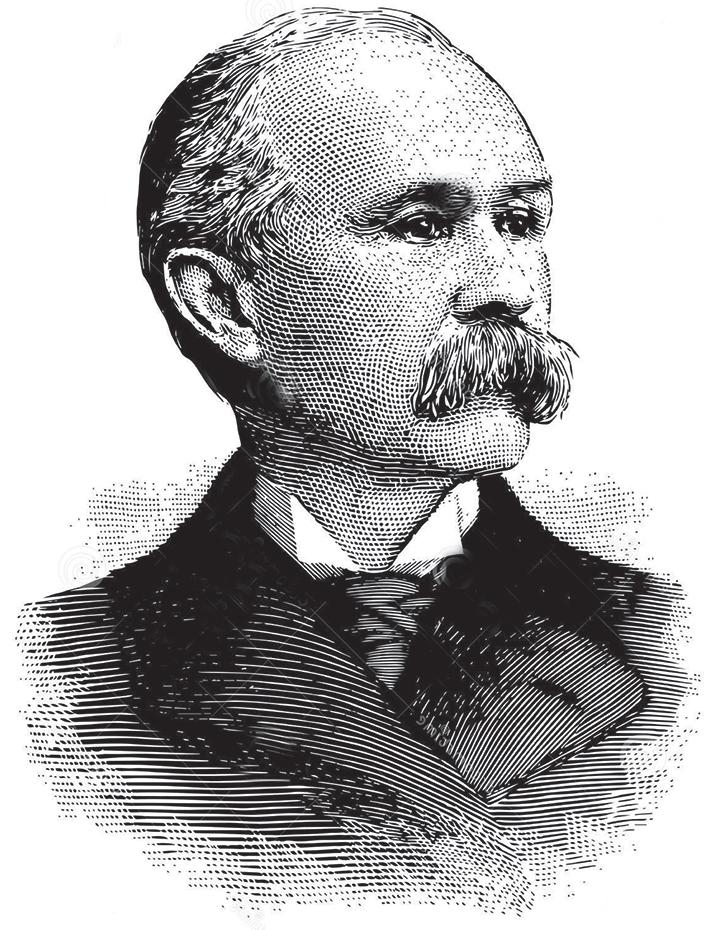
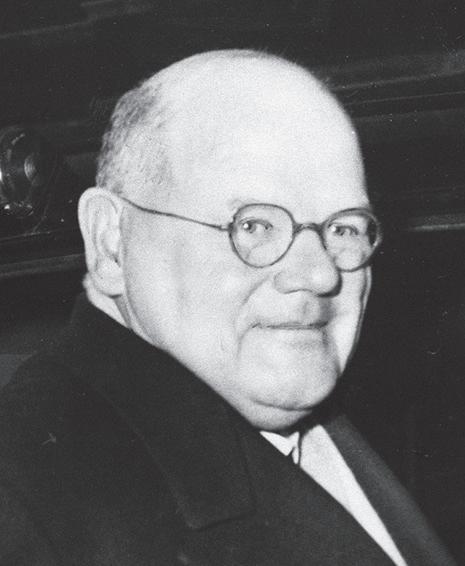
Who is this?
When your resume lists Walter Reed as someone you supervise, you must be doing something right, and this man did a lot of things right.
He is Brigadier General George Miller Sternberg (1838-1915), and he was a U.S. Army physician who rose to the rank of Surgeon General, the 18th in U.S. history, making him the senior medical officer in the entire Army.
Born into a family of Lutheran ministers (his father and his mother’s father), Sternberg nevertheless pursued a medical education, and received his medical degree in 1860. He went into private practice, but within a year the outbreak of the Civil War put an end to that — permanently, as it turned out.
He was appointment an Assistant Surgeon in May 1861, and by July was captured in the First Battle of Bull Run. After escaping he returned to the field, only to contract typhoid fever. He stayed in the Army after the war, got married in 1865, and was posted to Missouri, and then in 1867 to a fort in Kansas. His wife, Louisa, initially stayed behind in Missouri while he went ahead to the new post, joining him just in time for a major outbreak of cholera at the Kansas camp. She was one of the first civilians to contract the disease there, and was dead within hours.
In 1870 he was reassigned to Governor’s Island, New York, a turning point in his career. He was exposed to many patients there who had yellow fever (which he also ended up getting), and became something of an expert on the subject, developing new ways to treat the disease and control its spread among populations.
At about that same time, innovations in the world of medicine were emerging all over the world, and Sternberg was quick to embrace them. He was one of the very first, for example, to combine cameras and microscopes in the emerging field of photomicrography, a skill in which he became extremely proficient. He was the first researcher to produce photographs of the microscopic bacteria responsible for tuberculosis. He was the first scientist in the United States — simultaneously with Louis Pasteur — to isolate pneumococcus, the pathogen responsible for pneumonia.
During his tenure as Surgeon General (1893-1902) he established the Army Medical School (today named after Walter Reed), the U.S. Army Nurse Corps, and used his expertise in bacteriology to oversee a successful commission to control and eradicate typhoid and yellow fever.
None other than the pioneering bacteriologist Robert Koch, previously profiled in this space, called Sternberg “the Father of American Bacteriology.”
ADVENTURES IN
Middle Age
BY J.B. COLLUM
It’s been a bit of a whirlwind couple of weeks. Two of our “kids,” Kate and John, surprised us with a trip to Myrtle Beach— only a couple of weeks after we had just been there.
This time, though, they raised the stakes. They booked a luxury four-bedroom condo right on the ocean in North Myrtle Beach. Hard to argue with that.
To be perfectly honest, I had been looking forward to a quiet weekend at home. I had a list of projects that for once I actually wanted to tackle. Of course, being one of the world’s leading procrastinators—it’s hard to turn down a perfectly valid excuse to postpone productivity for another week.
So, reluctantly, I agreed to go.
And by “reluctantly,” I mean I immediately kicked in the afterburners, packed in record time, grabbed sunscreen, a floppy hat, and sunglasses, and was sitting in the car ready to leave within fifteen minutes… …only to be told we weren’t leaving until Saturday morning.
When we finally did go, we had a grand old time. We got home Tuesday night, and that’s when I started paying for it—I was going to have to squeeze five days of work into three.
And just as I was getting my arms around that, I was reminded that we were supposed to leave Friday afternoon for a camping trip to Elijah Clark State Park. That’s when the panic set in.
I really needed a weekend at home. The to-do list had grown into one of those teetering piles on your desk that eventually collapses and spills papers and assorted detritus all over the floor—until you’re no longer even sure where it’s safe to step. And for once, I genuinely didn’t want to push those things off any longer.
But push them off I did.
The plan was to stop work at noon on Friday. I worked steadily from Wednesday through Friday morning and by noon I was within about an hour of finishing the most important task on my list when a whole new batch of work got dropped in my lap that “had to be done immediately.”
Of course it did.
I skipped lunch and doubled down—full concentration, no distractions—and managed to finish everything by 2:45. That still left me needing to pack a few things for the camping trip, hook up the camper, and eat something—anything—so I could take some very important medicine that requires food.
Fortunately, my ever-diligent wife, Lorie, had already done just about everything else to get us ready. She had even packed my clothes. All I had left was to throw together my usual assortment of electronic gadgets
and musical gear that I apparently cannot survive without for more than a few hours. So there we were, just about ready to pull out of the driveway…and I get a message from work asking if I could “do a few more things.”
Now, to be fair, those things probably would have taken less than thirty minutes. But we were already running late. At that point, we were looking at getting to the campground around 6:30 at best.
So I asked if it was truly an emergency and offered a compromise: Lorie could drive, and I could work from the passenger seat on my laptop. Fortunately, they replied that it could wait until Monday.
At about the halfway point of our drive, I remembered that I had taken the T-Mobile internet device from the camper during a brief outage at the house and never put it back.
Not to worry, I thought. I always keep my Star-link setup in the truck.
Then I remembered we had taken it out for the beach trip to make room.
Now, I realize this is a first-world problem—worrying about internet access on a camping trip—but this was Masters week. I wanted to watch the “tunamint!”
My last hope was that my phone would have enough signal to hotspot to the TV. It did. Whew.
Once we arrived at the campground, we faced our next challenge. Instead of “Where’s Waldo,” it was “Where on earth is our campsite?”
When we booked months ago, there weren’t many options—Masters week fills up campgrounds too—so we ended up with the saddest little campsite in the entire park. Maybe even the world.
It turned out to be the most un-level campsite we have ever attempted to use. And, of course, I had forgotten the boards we normally use to deal with that.
So I must have backed up and pulled forward two hundred times trying to find something resembling “level.” With each attempt, my patience wore thinner, and every time I climbed back into the truck, I may have let a few… less-than-family-friendly words slip.
I assumed I was muttering quietly until at one point I heard Lorie say, “Language!”
Oops. I had left the window open.
I said a quick prayer for patience and went back at it.
It had taken us an hour and fifteen minutes to drive there. It took nearly twice that long to get the camper level-ish and set everything up.
And then the other shoe dropped. We were out of propane. Both tanks. Com-
Please see ADVENTURES page 9
Special Forces
Parenting
Taking a special needs child on vacation is always an adventure. Let me tell you about ours.
We recently got back from another trip to Myrtle Beach. No, you’re not experiencing déjà vu—this was our second trip there in less than a month. This time, though, it was a surprise gift. Kate and John—our oldest daughter and son—covered almost everything: a luxury four-bedroom condo right on the beach and meals that made us double-check the menu prices. We mostly just brought ourselves… and our stuff. I think we bought a few groceries.
I’ll tell you—there’s something special about your kids treating you to a vacation. It feels a little like the circle closing.
The condo was on the 13th floor, with a wide balcony stretching across both the master suite and the living room. We spent a lot of time out there. It’s my favorite place to be on vacation—as I’ve mentioned before. Sun, ocean view, breeze, refrigerator and bathroom nearby… and no sand.
But if you’ve ever had a special needs child—or honestly, any child—you’ve already done the mental math.
Thirteenth floor. Wide balcony. Sliding glass doors. What could go wrong?
We did our best to keep those doors locked at all times. The problem was, they didn’t close easily. And with a full house of people constantly going in and out, “always” turned into “most of the time.” And “most of the time” is not the same as “at all times.”
At one point, the smoke alarms went off— full chaos mode. People rushing, doors flying open, someone fanning the alarm like it owed them money. In the middle of all that, our focus broke for just a moment.That’s all it took.
We got the alarms quiet, looked around, and—no Freyja.
Every one of us immediately turned toward the balcony.
We ran.
And there she was, sitting calmly in a chair, looking out over the ocean like she had the best seat in the house. We grabbed her, brought her inside, and then just… sat there. Waiting for the adrenaline to drain out and our hands to stop shaking. No yelling. No blame.
Just the quiet understanding of how close that moment was—and how fast things can
happen.
We chalked it up as a lesson learned: Even in the middle of chaos, someone has to stay locked in on Freyja. Always.
Freyja is used to her little playhouse at home—her own world with a TV, swing, climbing wall, LED touch lights, and enough stimulation to keep her busy for hours. So trips like this are a bigger adjustment for all of us.
We brought her toys, of course. She promptly arranged them across the living room floor in her usual fashion—what I can only describe as a carefully curated minefield. I have to watch every step. One wrong move can lead to excruciating pain, especially if she’s been gnawing on a toy and has turned it into something with a razor’s edge. We haven’t quite figured out how to stop that yet, so for now… we step carefully. Very carefully.
Kate and John took the kids to Broadway at the Beach a couple of times during the trip—rides, amusements, the whole deal, including WonderWorks. This time, Lorie and I passed the baton and stayed behind. We felt a little guilty.
That passed pretty quickly.
We played mini-golf, hit a retro arcade, and then rewarded ourselves properly at Dagwood’s Deli and Sports Bar in North Myrtle Beach. Lorie had a spicy Italian sub, and I went with a Reuben and tater tots. She gave me a look when I ordered the tots… but she let it go. Probably because she knew I’d earned them.
We got regular updates and photos from the kids. Apparently, Freyja has developed a fondness for roller coasters, which opens up a whole new category of things she enjoys. We’ll take every win we can get.
Back at the condo, we spent a lot of time with her in the heated pool. Watching her there has been one of the more encouraging parts of this trip.
She used to stay right next to us in the water—clingy, cautious.
Now? She ventures out on her own. We stay close, of course, watching carefully, ready to step in. She had a float that kept her head up, which helped ease the nerves a bit.
But still—you don’t not watch.
What’s new is that sometimes when we get too close… she pushes us away.She wants her space. So we give it to her—from just a few feet away, with eyes locked in.
Getting her to interact can still be a challenge. Even when she’s in our lap or right next to us, she can drift into her own world—one we can’t quite reach. But I found something that works.
If I go underwater and pop back up, it flips a switch. She laughs. Every time.
It’s like hitting the “joy” button—what we call turning over her tickle box.
I’ll do it again—she laughs again. Over and over, until she decides she’s done and swims off to the next thing. But for those few moments, we’re right there with her. And honestly, that laughter is therapy.
Sometimes she’ll swim back to us and want to be held. Part of that might have Please see
Who is this?
Not everyone in healthcare can be Florence Nightingale, right? Despite the long-running series on page 4, there are clunkers in medicine, and we will examine some of them in this series. Unfortunately, there’s enough material to keep this side of the page going for a while.
Let’s label this kindly-looking portly gentleman Exhibit A under the heading “Crime Does Not Pay.” Or maybe a better category would be “Getting Away With Murder.”
You see, John Bodkin Adams wasn’t just a suspected serial killer operating from the shadows; several sources call him the wealthiest doctor in all of England. Despite all kinds of professional setbacks (not the least of which was being arrested for the murder of one of his patients), he was only, as we have noted, a suspected serial killer.
That arrest, alleging murder in the death of 81-year-old patient Edith Morrell, was to be followed by another arrest, and then another and another.
Prosecutors dropped all those plans when, to their surprise and shock, Adams was acquitted after jury deliberations lasting all of 44 minutes. The 1957 trial established the legal precedent in British law known as the doctrine of double effect, under which it is recognized that a doctor’s treatment for some complaint (pain, for instance) might as an unintended consequence shorten life. That principle effectively derailed any further attempts to try Adams by a prosecutor widely criticized for his handling of the Morrell case and all the ones that did not follow.
Trial or no trial, conviction or not, a 3-step pattern emerged over Adams’ career. Step 1: gradually transform his chosen victims into drug addicts through the administration of pain medications; Step 2: by whatever means necessary, persuade them to change their wills to include him; Step 3: administer a final, lethal dose of opiates.
The raw numbers: between 1946 and 1956, 163 of his patients died while in comas; of 310 total patients during another period, 132 left Adams gifts in their wills. The bequests ranged from large sums of cash to Rolls-Royce automobiles. 14 of the patients who died under his care were judged to be murders. The number he was subsequently charged with and tried for after the first acquittal: 0. So did John Bodkins Adams get away with murder? Or did investigators add 2+2 over and over again and each time come up with 5? You decide. He was convicted in a subsequent trial on more than a dozen counts of prescription drug fraud, failing to keep a dangerous drug register, entering false information on death certificates, and obstruction of justice. He lost his medical license in 1957, but succeeded in his third application for reinstatement in 1961. Adams lived to a ripe old age, succumbing to heart failure on July 4, 1983 at age 84. He left an estate valued at roughly $1.8 million.
HEAD CASECHRONICLES
Confessions of a Semi‑Stable Human
I had a knock on my door yesterday…and I already knew. Not because I’m psychic—but because nobody knocks anymore unless they mean it.
So I opened the door, bracing myself…and there they were.
Two very calm, very well-moisturized individuals standing on my porch like they had been exfoliated by angels.
And I thought, “Okay… here we go.”
But then one of them smiled peacefully— and said: “Good afternoon, sir. We’re Jojoba’s Witnesses.”
I said, “I’m sorry… whose witnesses?”
And he gently raised a small amber bottle like it was sacred. “Jojoba,” he repeated.
Now, I don’t know a lot about skincare…but I know enough to be nervous when someone shows up uninvited and starts talking about my pores.
Because pores…feel personal. You don’t just walk up to a grown man and say, “Sir… your pores are drifting.”
And this man—very polite— looked at my hands…like they had disappointed him.
Not angry. Not judgmental. Just… concerned. He said, “Sir… have you accepted hydration into your life?”
Now I panicked because I didn’t know the right answer.
I said, “I drink water.”
He said,“Internally… yes.” (gentle smile) “But externally… you are living in denial.”
And that’s when I realized… This wasn’t a visit. This was an intervention.
They didn’t hand me a pamphlet.
They handed me a sample. Tiny bottle. Dropper top. The label said: “The Truth—Now in 2 oz.”
I said, “Look… I’m good.”
And the second one—very soft voice—said, “No one is good, sir. That’s why we’re here.”
Now here’s where it got uncomfortable. Because they didn’t leave. They stepped a little closer—not aggressive— just… absorbing.
Like the oil.
And one of them said, “May we demonstrate?”
Now I don’t know what kind of person you are, but I am not emotionally prepared for strangers on my porch to demonstrate hydration. But before I could say no—he took a drop and placed it gently on the back of my hand. And I’ll tell you something:
It did absorb nicely.
That’s how they get you. Because suddenly I’m standing there thinking, “Well… I mean… it’s not greasy…” And he’s nodding like, “Yes. You feel it. That’s clarity.” And then he says, “Many people walk through life… dry. Cracked. Flaky in spirit.”
I said, “Sir… I have a mortgage.”
He said, “And yet… you neglect the temple.”
I didn’t know my elbows were part of a temple, but apparently they are the front entrance.
And before I knew it, they had me holding the bottle and reading from the label like it was scripture: “Cold-pressed…non-comedogenic… everlasting smoothness…”
Everlasting? That’s a big promise from something that costs $14.99. So I handed it back. Very respectfully. I said, “I appreciate what you’re doing…but I’m just not ready to commit to a lifestyle change like this.”
And they nodded. Kindly. Like they’d heard that before.
And as they turned to leave one of them looked back and said, “If you ever feel dry again…you know where to find us.”
I closed the door, walked back inside, looked at my hands, - and I’m not saying I joined anything…but I did moisturize.
TRYTHISDISH
by Kim Beavers, MS, RDN, CDCES
CHUNKY RED POTATO SALAD
This is a simple fresh tasting potato salad that is a perfect take-along to any event.
Ingredients
• 2 pounds small red potatoes
• ¼ cup light mayonnaise
• 2 teaspoons Dijon mustard
• 1 tablespoon cider vinegar
• ½ teaspoon celery seed
• ½ teaspoon salt
• ¼ teaspoon black pepper
• ¼ cup finely chopped sweet onion
• 1 cup celery, chopped into ¼-inch pieces (medium chunks)
Directions
Clean potatoes and cut into bite size pieces. Place potatoes in a large stockpot and cover with water. Bring to a boil, reduce heat and simmer for 8 minutes until just fork tender (you do want to cook these gently to help them retain their shape). Drain the potatoes and allow to cool in a large bowl. While the potatoes cool, mix the mayonnaise, mustard, vinegar, celery seed, salt, black pepper and onion in a small bowl.
Add the chopped celery to the potatoes and pour mayon-
naise mixture over the top, stir gently to combine and refrigerate for at least 1 hour before serving.
been the temperature—the pool was heated, but not exactly warm. At one point she climbed up onto my shoulders like she always does, but that lifted her out of the water and into a surprisingly strong, cool breeze. That experiment ended quickly. She was back down in the water in record time.
She also tried some new foods on this trip, which is always a big deal. Every addition to her menu feels like a small victory. This time, it was crab dip.
She’s still learning. Maybe not at the pace of other kids her age—but there is progress. Steady, real progress.
And we’re learning too—how to reach her, how to engage her, how to make her world just a little bigger and a little brighter.
It’s a shared journey. One I hope to be on for the rest of my life. As I said at the beginning, taking a special needs child on vacation is always an adventure.
The kind you don’t always relax from—but never forget, and never regret.
MEDICALEXAMINER
For external use only. May be habit-forming. Take regularly; do not discontinue use unless advised by a physician. Product not childresistant. Do not chew or crush. Not to be taken by mouth. May be taken (read) on an empty stomach, or with food. May be taken one hour before or after meals. And at any other time. Product may not be gargled. Do not drive a motor vehicle or operate heavy machinery while reading. Tell your doctor if you are pregnant. Use in conditions of adequate light. Store in a cool dry place. Not to be used as a personal flotation device. Dispose of properly. Overeating, poor diet, cigarette smoking and excessive drinking may alter the effectiveness of this product. Do not use near spark or flame. Not dishwasher safe.
CAUTION: If you become too salubrious, please read fewer articles.
I WAS THINKING
by Pat Tante
TWAS THE YEAR OF THE BIG SNOW
“It was the year of the big snow,” I told my friend.
“What year was that” she asked. “Did I live in Augusta then?”
“Sure you did,” I replied. “It was last January!”
“Oh, that snow,” she said.
“Yes,” I replied. “But I call it The Year of the Big Anticipation.” We began anticipating in mid-January when the weather people started the storm warnings. This arctic blast was headed our way and any time now! But first it had to pick up speed from somewhere in Antarctica or even Siberia and push those winter and storm things on its way to us. We would get weather updates several times a day from the weather stations. I remember checking the weather on the hour by asking Siri or Google what the temperature was. Not to mention peering out the window at opportune times.
We had to be prepared for anything! Ice! Snow! Bitter cold! Avalanches! Alerts were everywhere and every weather person in the United States had an opinion on when the blast would hit the South, and where. Maybe even Florida.
Folks in the north had little to do – just check to see if their snow plows and blowers were gassed up and serviced.
We Southerners had way more to do. (Although we did not have any snow plows or blowers to worry about.) We gassed our cars, wrapped our outside pipes, brought inside the summer patio plants that were still happy being outdoors. (My large hanging ferns came in reluctantly and squabbled in the sun room.)
We stood in line at the grocery checking out what others thought were necessary things to get us through the frozen days ahead. (Oh! That lady has ice cream. Will I need some?)
I knew that I needed wine – maybe red in case the power went out. I picked up a gallon of milk, two loaves of bread, peanut butter, soup (is it possible to eat cold chicken noodle soup?)
I got some toilet paper. It seems that arctic storms (all storms, come to think of it) make people go to the john more than usual. I’ll get extra, just in case. It doesn’t spoil.
I could not forget cat food. My indoor princess will not eat people food – certainly not chicken noodle soup. Also, the two feral cats that visit my yard will need something – the opossum and raccoon too.
I bought a twelve pack of water in the plastic bottles that don’t deteriorate for eons – not to mention the plastic microbeads that we enjoy with the water.
Was it Mark Twain (or his friend Warner) who famously said “Everyone talks about the weather, but no one does anything about it”? Well, we in Georgia were doing plenty, especially with the help of Facebook which knows all/sees all.
Why were the weather people so frantic? Here’s my take on the Please see THE BIG SNOW page 9
READ ONLINETHE
MEDICALEXAMINER
plethora of storm warnings last year. Our weather prognosticators seriously dropped the ball by letting Hurricane Helene come roaring through with little warning and spread its devastation throughout our city and elsewhere. They had to try to make amends.
In retrospect, I’m glad the weather turned out to be a gentle snow and some cold temperatures. But weather people, listen up: I haven’t forgiven you. Not yet.
pletely empty.
And this time, we had only brought the propane grill. It was too late to get more, so I showered, and we drove into McCormick for dinner at a Mexican restaurant about ten minutes away.
Up to that point, we had managed to keep our sense of humor. But on that drive… it caught up with us.
There were tears.
We talked about how things are just harder now than they used to be—and how they’re getting harder still. Earlier in the week, we had watched 90-year-old Gary Player hit his ceremonial tee shot at The Masters Tournament. He’s not what he once was, of course, but at his age, he’s still remarkable.
That is not exactly where we are. Especially me.
But somewhere between the chips and salsa and the main course, we found our footing again.
We acknowledged what we can’t do like we used to— but we also realized we need to be more patient with each other. And more willing to ask for help when we need it. And there’s something else we need to add back into our lives.
Exercise.
A lot more of it.
The pool being ready—and the weather warming up— will help. But what we really need is consistency. Watching Gary Player reminded us just how much of a difference that can make.
So we made a quiet decision right there at the table. We’re going to do this together.
We’re going to support each other.
And we’re going to build a lifestyle that actually includes taking care of ourselves—so maybe, just maybe, the years ahead won’t have to feel quite so hard.
J.B. Collum, the author of this column and Special Forces Parenting, is a local novelist, humorist and columnist who wants to be Mark Twain when he grows up. He may be reached at johnbcollum@gmail.com
CRASH COURSE
More Americans have died on US roads since 200 0 than in World Wars I & II combined
There is something nearly all of us have experienced. And if you truly haven’t you get a cookie and a gold star.
That shared experience is the amnesia and blindness that comes from having a conversation on a cell phone while driving. You just drove ten miles down the road, maybe a busy and congested road like Washington Road, replete with traffic lights, stops and gos, cars turning and pulling into the stream of traffic. And you cannot remember any of it. It’s like you were magically transported from Point A to Point B with no need for your involvement whatsoever. And no, you’re not in a driverless car.
What is strange about this phenomenon is that you could drive the same ten miles while having a conversation with a front-seat passenger and not have trip amnesia.
The difference is the cell phone — and it doesn’t matter if the conversation was handsfree or not.
Why does this happen?
The most basic factor is the anchoring presence of another person in the car with you. Let’s say you’re cruising down the road and another driver starts to drift over into your lane. Your cellular friend has no idea and keeps talking, keeps asking questions, keeps wondering why you aren’t answering. Silence on a phone call seems rude, or at the very least puzzling. So the conversation may keep going even when attention needs to be fully on the road.
By comparison, in the drifting car scenario your in-person friend sees the same errant motorist you do. The conversation by both parties stops and the focus is on the task of driving. They are like your co-pilot, an extra set of eyes and ears for you. In effect, as the driver you are able to step away from the conversation and zero in on driving, something the cellphone driver cannot do, or cannot do as easily. In one study, drivers made the fewest errors when talking to a passenger, perhaps surprisingly, and the most errors when talking on a phone (not so surprising).
The next element in this phenomenon is the human brain. As amazing as it is, it has its limitations. Researchers have studied the very thing we’re discussing, and they call the problem “cognitive overload.” Driving all by itself consumes a significant portion of the brain’s available bandwidth. Carnegie Mel-
lon researchers, using MRI studies, say that listening to a phone conversation reduces the brain activity devoted to driving by about 37%. That is a major chunk of bandwidth, and it leads to another research finding: “inattention blindness.” People can stare straight ahead, eyes open, and not process anything they’re looking at while driving 70 mph. It’s scary, especially when you think, “I have done that!”
The brain is such an amazing organ that it tackles huge tasks that we don’t even have to think about.
Within the context of this subject, one of the things the brain does is analyze various elements of the disembodied voice coming out of your phone. They’re breaking up a little... what was that word I heard only partially? Was that tone of voice I just heard anger? Or sarcasm? What’s that silence? Is the signal completely gone now? What’s happening? All of that is going on at some level, mostly subconsciously, at the same time you’re trying to safely travel down the road.
It’s no wonder that we have cellular amnesia. Another term behavioral researchers use comes into play: “attentional tunneling.”
The brain prioritizes the conversation, leaving only the barest cognitive resources to the more important job of driving. It’s enough focus to stay in your lane, but not enough to form memories of the trip.
Kind of amazing, isn’t it? Especially when so many of us have experienced these effects first-hand.
The contrast between this and in-person is stark: unless they’re sound asleep (in which case you wouldn’t be having a conversation with them anyway), a passenger is going to naturally stop talking when the road demands your attention.
So what might seem at first to be a mystery — why is one conversation completely distracting and the other is nothing of the kind — actually has a completely logical explanation. And hopefully that explanation will make two things crystal clear:
One: why laws have been enacted for our safety prohibiting or strictly limiting device interactions while driving.
Two: why we’re wise to obey such laws and foolish to ignore them. And the responsibility to obey really is almost entirely our own: there doesn’t seem to be much in the way of enforcement of cell phone laws. It’s an honor system, so be honorable.
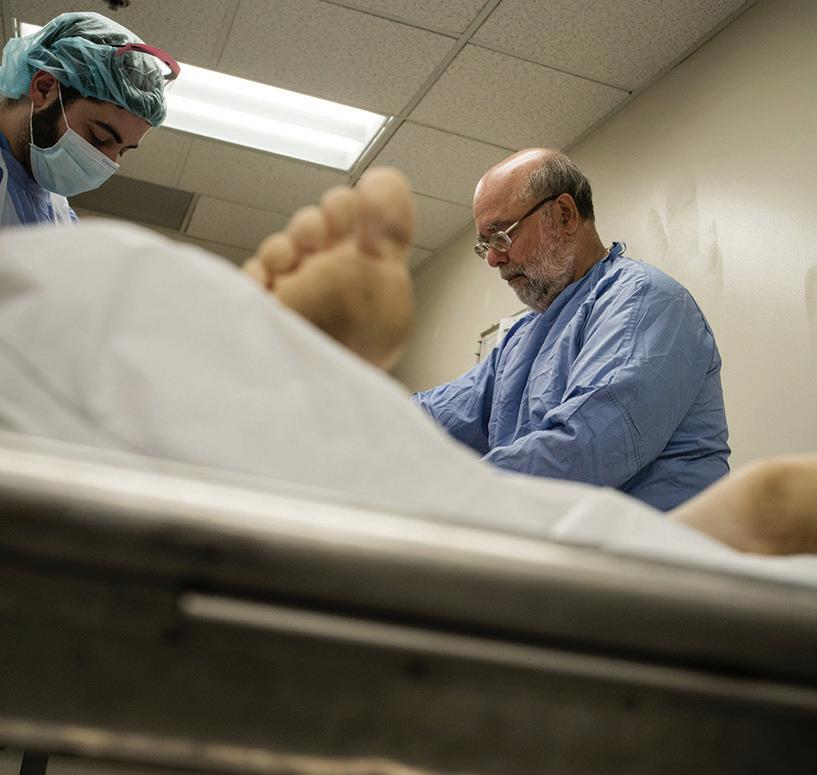
Write your most appropriate, clever, or funny caption to the photo shown for a chance to maybe win whatever cool swag we decide to give away someday.
your entry
Dan@AugustaRx.com (Multiple entries
TO ENTER: 5:00 PM FRIDAY, APRIL 24, 2026
PICKLEBALL PREVENTION
Believe it or not, pickleball injuries have become a multi-billion dollar segment of the healthcare industry. Sometimes the issue is actual injuries that require X-rays, splints and casts; other times it’s just soreness that a massage therapist or sports medicine expert can help alleviate. Either way, the kind of person who starts participating in an activity is not the kind of person who wants to be sidelined. How can injuries be prevented? Here are a few general suggestions.
• Wear proper shoes This is a sport with lots of stops, starts, and turns, so proper court shoes are essential. Running shoes are another animal com pletely, so don’t expect them to fill the bill. The cost of pickle ball-proper footwear will be offset many times over if a single injury is prevented.
• Wear eye protection In their focus on hitting the ball, sometimes players acciden tally swat their own partner across the face. It happens.
• Do warm-ups And not just at courtside either. While still at the house, limber up with some shoulder
stretches, some leg and calf stretches and lunges, march in place, gently and slowly warm up through bending and twisting. Take it slow; take it easy. When you first start, view what you’re doing as warming up for the warm-ups to come. Professional athletes in peak physical condition always warm up; we should follow their lead.
• Be a pickleballer at all times Don’t take that literally. What we mean is this: being active can’t be something we only do from 10:30 to 11:15 on Tuesday mornings. Enjoying any sport and not pulling a muscle while doing it (especially as we get older) should mean kicking our overall activity level up by a notch or two. Take a brisk walk on a regular basis. Have some small hand-held weights you can do reps with while watching TV. Stay hydrated, and not just on game days. you are already a pickler, keep it up, and play safe. If you’re just thinking about it and have doubts or reservations, ask your doctor for an opinion. If you get a green light, have fun with this not-so-new sport.
SCOOPING POOH
The Examiners
The Medical Examiner wants people to send in their
Everybody has one — if not several.
I was taken to the hospital one time...I could not walk...I didn’t even know my own name...
Oh my. What happened?
I don’t remember any of it. Apparently a nurse picked me up, handed me to my dad and said, “It’s a boy!”
by Dan Pearson
I think that’s exactly the kind of story they don’t want.
FIND A WORD PUZZLE
CAPTION THIS
Check out our new reader contest on p. 10 Write your most appropriate, clever, or funny caption to the photo shown for a chance to win whatever cool swag we eventually decide to give away! Email your entry to Dan@AugustaRx.com
DEADLINE TO ENTER: 5:00 PM FRIDAY, APRIL 24, 2026 Have fun!
DIRECTIONS: Every line, vertical and horizontal, and all nine 9-square boxes must each contain the numbers 1 though 9. Solution on page 14.
DIRECTIONS: Find words in the grid that may appear vertically, horizontally, diagonally, spelled both forward or backward.
AMBULANCE
BURN UNIT
CALHOUN
CHOG
DENTAL HYGIENIST
DOCTORS
EMERGENCY ROOM
EMT
GA REGIONAL
GRACEWOOD MASTERS
OPHTHALMOLOGIST
PEACH ORCHARD
PIEDMONT REHABILITATION
RIVERWALK
RIVERWATCH SELECT
TRAUMA UNIT
UPTOWN VA
WAITING ROOM
WASHINGTON
WELLSTAR
WRIGHTSBORO
DIRECTIONS: Recreate a timeless nugget of wisdom by using the letters in each vertical column to fill the boxes above them. Once any letter is used, cross it out in the lower half of the puzzle. Letters may be used only once. Black squares indicate spaces between words, and words may extend onto a second line.
Solution on page 14.
Use the letters provided at bottom to create words to solve the puzzle above. All the listed letters following #1 are the first letters of the various words; the letters following #2 are the second letters of each word, and so on. Try solving words with letter clues or numbers with minimal choices listed. A sample is shown. Solution on page 14
ITHEBESTMEDICINE
ha... ha...
really love my job,” said the farmer. “Must be nice,” said one of his cows sarcastically. “All you ever do is boss me around, all day every day.”
“What did you just say?” challenged the farmer.
“You herd me,” said the cow.
Moe: Whew.
Joe: What?
Moe: I just ended a 10-year relationship. Joe: Aww. I’m so sorry for you.
Moe: It’s ok. It wasn’t my relationship.
Moe: I don’t like talking about pain.
Joe: Same here. It’s a sore subject.
Moe: Did you just have some pizza?
Joe: No, it’s the cologne I’m wearing. It’s supposed to smell like pizza.
Moe: It definitely does. What’s it called?
Joe: Old Slice.
Moe: What’s the term for when one banana eats another banana?
Joe: Cannibananabalism.
Moe: Easy for you to say.
Moe: I thought you went to the store to buy camouflage pants.
Joe: I did.
Moe: So what happened?
Joe: I couldn’t find any.
Moe: Health fanatics are going to feel pretty stupid one day.
Joe: How so?
Moe: Years from now, lying in a hospital bed, dying of nothing...
Moe: My wife lost her job today.
Joe: Oh no! What happened?
Moe: She got fired for putting her hair in a bun.
Joe: That’s it?
Moe: That’s it. I hate McDonald’s now.
CORRECTION
A few weeks ago this joke appeared here:
Moe: How many ophthalmologists does it take to change a light bulb?
Joe: One? No wait...two. I think two.
CORRECTED VERSION:
Moe: How many ophthalmologists does it take to change a light bulb?
Joe: 8? No wait...3. I think 3.
We apologize for any inconvenience.
Why subscribe to the MEDICALEXAMINER?
Because try as they might, no one can stare at their phone all day.
Staring at my phone all day has certainly had no effect on ME!
By popular demand we’re making at-cost subscriptions available for the convenience of our readers. If you live beyond the Aiken-Augusta area, or miss issues between doctor’s appointments — don’t you hate it when that happens? — we’ll command your mail carrier to bring every issue to your house!
NAME
ADDRESS
CITY STATE ZIP
Choose six months for $26 ____ or one year for $48 . Mail this completed form with payment to Augusta Medical Examiner, PO Box 397, Augusta GA 30903- 0397
Dear Advice Doctor,
Advice Doctor
I’m not much of a golfer, but I do play fairly regularly. Something about the Masters always puts me in the mood, so I did get in a round last week. It was at a course I will not name because it’s in a neighborhood — and because I shattered somebody’s window. I knocked on their back door but no one was home. Am I off the hook or should I try to do more?
Scratch Golfer
—
Dear Scratch,
I’m tempted to tell you to scratch this hobby of yours. After all, I don’t know if your broken window problem is a hook or a slice, but in the game of golf they are both to be avoided. But I’m going to encourage you to stay the course. Golf is all about prevention, and you need that in your life.
In golf, you need to avoid the rough. Stay out of sand traps; they call them traps for a reason. Avoid water hazards. Stay away from three-putts. Two-putts are bad enough! Avoid bogeys, and definitely double-bogeys. Don’t ignore the need for immediate course correction when you’ve made a bad shot. And by all means, avoid slices and hooks.
If you can keep golfing, view the sport as a metaphor for life itself. Avoid the traps and hazards like smoking and being overweight. Get on the greens as soon as possible: eat salads, and not just once in a blue moon. Every day! Walk the course if you can; a cart removes about 95% of the exercise value of a round. Use sunscreen out there to protect yourself from the sun. Have you ever seen a PGA golfer who isn’t wearing a hat on the course? Avoid the water hazard that comes from not staying hydrated — and not just on golf days... every day. Keep in mind that golf teaches that little things can be extremely important, and that’s true when it comes to health also. Not every strategy for improving health requires a massive adjustment in how we live.
There is one perfectly normal thing in golf that you need to resist as strongly as possible in your life: strokes.
I hope this answers your question. Thanks for writing!
Do you have a question for The Advice Doctor about health, life, love, personal relationships, career, raising children, or any other important topic? Send it to Dan@AugustaRx.com. Replies will be provided only in the Examiner.
3 6 3 1 2 7
•
QUOTATION PUZZLE SOLUTION: Life is really simple but we insist on making it complicated.
— Confucius
WORDS BY NUMBER
Ten people who speak make more noise than ten thousand who are silent.
— Napoleon Bonaparte
PROFESSIONAL DIRECTORY
ACUPUNCTURE
Dr. Eric Sherrell, DACM, LAC Augusta Acupuncture Clinic 4141 Columbia Road 706-888-0707 www.AcuClinicGA.com
CHIROPRACTIC
DERMATOLOGY
Evans Chiropractic Health Center
Dr. William M. Rice 108 SRP Drive, Suite A 706-860-4001 www.evanschiro.net
DENTISTRY
Jason H. Lee, DMD 116 Davis Road Augusta 30907
706-860-4048 Floss ‘em or lose ‘em!
Georgia Dermatology & Skin Cancer Center 2283 Wrightsboro Rd. (at Johns Road) Augusta 30904 706-733-3373 www.GaDerm.com
DEVELOPMENTAL PEDIATRICS
Karen L. Carter, MD 1303 D’Antignac St, Suite 2100 Augusta 30901
Steppingstones to Recovery 2610 Commons Blvd. Augusta 30909 706-733-1935
Home Care Personal Care|Skilled Nursing|Companion 706-426-5967 www.zenahomecare.com
Parks Pharmacy 437 Georgia Ave. N. Augusta 29841 803-279-7450 www.parkspharmacy.com PHARMACY
study
A clinical research study for people who have or are at risk for heart disease or stroke and have high Lp(a) levels
MOVE-Lp(a) is a clinical research study from Eli Lilly and Company. The MOVE-Lp(a) study will test if an investigational medicine safely lowers Lp(a) levels and reduces the risk for heart disease or stroke.
Can I join the study?
Yes, you may be able to join the study if you:
• are at least 18 years of age
• have a high level of Lp(a) in your blood
• already have heart disease or have had a stroke or are at risk for a first heart attack or stroke
information visit https://e.lilly/3FddF4u or scan the QR code
Lipoprotein(a) is also known as Lp(a). Lp(a) is an important risk factor for heart disease and is largely determined by your genes.
Lp(a) carries cholesterol (a type of fat) in the blood. If you have a high level of Lp(a), you may have a higher risk for heart disease or stroke. You may have a high level of Lp(a) even if you have a healthy lifestyle or are taking other medicine for your cholesterol.
CALL
Masters of Clinical Research 1232 Augusta West Parkway Augusta, GA 30909 Tel: (706) 210-8890