You say you’d like to lose a few pounds? You are not alone. Join the club. But hold up for just a minute. Let’s wait when it comes to weight.
Sure, there is plenty of work to be done: nearly 75% of American adults are overweight or obese (!) and more than half say they want to lose weight even if they aren’t actively trying. The number who are actively trying to lose weight, depending on which survey one consults, range from a low of 26% to a high of 42%.
Taking the highest and the lowest numbers, 75% of Americans are overweight but only 25% are trying to change that.
What could explain that?
it: even for those who accept that they are overweight and want to do something about it, losing weight is not easy.
When it comes to weight control, many people feel like they’re driving a car whose steering wheel and brakes barely work. Weight “control” is often just a figure of speech. Which all brings us back to the weight waiting game. Nobody wants to wait on weight, which is why prescriptions for GLP-1 drugs like Ozempic rose 700% between 2019 and 2023. This class of drugs offers quick results, and that’s what everybody wants.
THE ANTIDOTE WEIGHTWAIT
“The antidote to what?” you may be wondering.
To put it in vastly oversimplified terms, the antidote to modern life.
There is a large segment of the population that feels a growing disconnection from the human race. Friends don’t call friends anymore, they might complain; they send texts instead. They don’t visit. Nobody writes letters; they post social media updates filled with trivia and emojis. For many, their only source of in-person human interactions is at work. And afterward, they go home to an empty house, since nearly
one-third of all American households consist of just one person (in 1940 that figure was just 7%) Even among family groups, we can spend more time than we should watching TV, surfing the internet, playing with our phones, or other excuses for staring at screens for huge chunks of time rather than interacting with the people living with us.
What is the antidote? See photo!
Consider: a dog never keeps score, judging us for real or perceived slights. A dog never with-
There are many factors. Surveys reveal that in the “overweight” population, only about half believe they are actually overweight. Even in the “obese” cat egory, about 10 to 15% view their weight as “about right.”
In addition, as our collective waistline continues to grow, what might have been viewed as heavy in the past looks more and more normal as time goes by.
But let’s face
There is a cost, however. Most of us have seen pictures of the skeletal remains of formerly plump celebrities parading down various red carpets. And right here in the good old CSRA there are plenty of people who have tried the GLP-1 route. Some of them endured the vomiting and diarrhea, etc, and lost weight, while others concluded that no
Please see WAIT page 3
PARENTHOOD
by Dr. Warren Umansky, PhD
When you and your spouse divorced three years ago, you agreed to a custody plan for your then sixth-grader that had her moving back and forth between parents on alternate weeks. Both of you lived in the same school zone, so getting to and from school wouldn’t be a problem. Soon after this plan was implemented, her grades began to drop. She started getting sick before going to school in the morning and has missed many days of school since then. She now is 14 and in ninth grade and nothing has changed. She asked for tutoring help with math but it never got done. You do the best you can with your work schedule and you think your spouse does the same, although you avoid having conversations about your child that always end up as arguments. You have your child talking with a virtual counselor, who she doesn’t like. She told the counselor that going back and forth each week makes her feel like a visitor in each setting. What do you do?
A. You and your ex might start thinking about what is best for your child rather than what is most convenient for the two of you. That is what nurturing parents do: Put the welfare of their child ahead of their own interests. Consider other alternatives, such as letting her spend a full semester at one home and the next semester at the other, while having weekend and holiday visits with the non-residential parent. Changeover can take place in the middle of Winter school break and in the middle of Summer break.
B. Ask your child what she wants to do. After all, she is 14.
C. The custody agreement was approved by the courts and must stay that way. It costs too much to go to court to make changes
D. Ask if the counselor would have a session with both parents and your child to work out a better arrangement. While your child does not like the counselor, a session with this goal in mind might be more acceptable.
If you answered:
A. This should be a given. Unfortunately, in the heat of many divorces, the best interests of the child are forgotten. Time for both parents to step back and consider what they want their legacy to be.
B. You certainly want input from your child and, in some states, 14 year olds can select with which parent they want to reside. You hope your child doesn’t want to make an either/ or choice, but wants a plan that gives her access to both parents but without the frequent moves.
C. Custody agreements can be changed informally if you and your spouse want it. Again, if both of you can consider what is best for your daughter, that shouldn’t be a problem. You always have the written agreement to fall back on if your spouse doesn’t follow through. Sadly, though, it is your daughter who will suffer.
D. Getting as few other people involved as possible often is the best strategy. However, the counselor might provide some excellent guidance to address resistance from any of the three parties or to be sure the new arrangement is yielding a good outcome for your child.
• Microsleeps — brief, involuntary episodes of sleep
Functional Impact
• Workplace errors or accidents
• Inability to drive safely, comparable to alcohol intoxication
• Declining performance at work or school
THOUGHTS
THOUGHTS ABOUT THOUGHTS
SLEEP DEPRIVATION & MENTAL HEALTH:
“I’M JUST TIRED.”
Editor’s note: Written by local mental healthcare professionals, this series explores how people may think and act when affected by common and lesser-known mental health conditions.
Angela is a 29-year-old emergency department nurse who works rotating night shifts. At first, she assumed her irritability and forgetfulness were just part of a demanding job.
But lately things have felt different.
She snaps at coworkers over small things. She rereads patient charts several times because the information won’t stick. Driving home after long shifts, she sometimes can’t remember the last few miles of the trip. On her days off, she tries to “catch up” on sleep but wakes up feeling just as exhausted.
Angela tells herself she just needs a vacation.
In reality, she’s experiencing the cognitive and emotional effects of chronic sleep deprivation — a condition that significantly affects brain function, mood stability, and decision-making.
What Is Sleep Deprivation?
Sleep deprivation occurs when a person consistently gets less sleep than their brain and body needs to function properly. Most adults need 7–9 hours of sleep per night, yet many people regularly get far less.
Sleep is not simply rest. During sleep, the brain performs critical processes that regulate memory, emotional balance, learning, and impulse control.
When sleep is disrupted or insufficient, the brain’s ability to regulate thinking and emotions becomes impaired. Over time, chronic sleep loss can significantly affect both mental health and physical health.
Signs and Symptoms
Cognitive Effects
• Difficulty concentrating
• Memory problems or forgetfulness
• Slowed thinking and reaction time
• Reduced problem-solving ability
Emotional Changes
• Irritability and mood swings
• Increased anxiety
• Reduced stress tolerance
• Heightened emotional reactivity
Behavioral Patterns
• Increased impulsivity
• Poor judgment and risk-taking behaviors
• Increased caffeine, nicotine, or substance use
• Strained personal relationships
What Causes Sleep Deprivation?
Sleep deprivation can occur for many reasons, including:
• Shift work or irregular work schedules
• Chronic stress or anxiety
• Too much screen exposure before bedtime
• Parenting demands or caregiving responsibilities
• Sleep disorders such as insomnia or sleep apnea
• Substance use, including alcohol or stimulants
Mental health conditions themselves can also disrupt sleep, creating a cycle where poor sleep worsens psychiatric symptoms, which further disrupt sleep.
Common Misconceptions
“I function just fine on four or five hours of sleep.”
Most people who believe this are actually experiencing measurable cognitive impairment — they have simply adapted to feeling tired.
“You can catch up on sleep on the weekend.”
While extra sleep can reduce short-term fatigue, chronic sleep deprivation cannot be fully reversed with occasional recovery sleep.
“Sleep problems are only an inconvenience.”
Long-term sleep deprivation is associated with increased risk of depression, anxiety disorders, cardiovascular disease, and impaired immune function.
“Caffeine can fix this problem.”
Stimulants can temporarily mask fatigue but do not restore cognitive or emotional functioning.
Treatment and Management Improving sleep often requires both behavioral changes and, when neces-
see THOUGHTS page 3
... from page 2
sary, medical treatment.
Sleep Hygiene
Healthy sleep habits can significantly improve sleep quality:
• Consistent sleep and wake times
WAIT... from page 1
weight loss program is worth going through all that. Doctors warn patients before they start on a GLP-1 regimen that the weight lost is likely to return – all of it and then some — if and when they discontinue taking the drug.
Does that sound like a plan you want to sign up for? If so, may you have a successful weight loss journey.
On the other hand, there is an old maxim about losing weight that says the quicker you lose the pounds, the quicker they’ll come back, usually with a few bonus pounds added in. Slow weight loss is good. Rapid weight loss, not so much.
FACE? THOUGHTS
• Limiting screen exposure before bedtime
• Avoiding caffeine late in the day
• Creating a quiet, dark sleep environment
Cognitive Behavioral Therapy for Insomnia (CBT-I)
CBT-I is a highly effective, evidence-based treatment that helps individuals change thoughts and behaviors that interfere with sleep.
Treating Underlying Mental Health Conditions
Managing anxiety, depression, or trauma can significantly improve sleep patterns.
Medical Evaluation
Conditions such as sleep apnea, restless leg syndrome, or circadian rhythm disorders may require medical treatment.
Prognosis
Sleep is one of the most powerful regulators of mental health. When sleep improves, many people experience better concentration, improved emotional stability, and reduced anxiety. However, when chronic sleep deprivation persists, the brain’s ability to regulate mood and decision-making continues to decline, increasing the risk of accidents, mental health disorders, and substance misuse. If sleep problems persist or begin interfering with daily functioning, a behavioral health or medical evaluation can help identify effective treatment strategies.
About Us
IPS provides inpatient and outpatient mental health services, with or without a referral, to help patients and their families progress through the care journey. To make an appointment, call 706-204-1366 or visit integratedpsych.care.
It goes without saying, this is a subject to be discussed with your doctor, your family, and recognized and certified non-quack weight loss professionals. We are not here to issue any official rulings on what is “right” or “wrong.” That can vary with each person and their specific health situation.
But as long as we’re talking about food, we’d like to offer some food for thought on the subject of losing weight.
Playing the waiting game
If there was such a thing as the Ten Commandments of weight loss, the very first commandment might well be Thou Shall Eat Less.
It’s only logical, right?
No one should feel ashamed because they sought weight loss assistance from a drug, whether prescription or over the counter. But consider this question: how would you feel if you managed to lose weight (and keep it off) through your own self-control? As in I did this! Look at what I did!
The sense of personal satisfaction would be off the charts for such a person. Granted, it would be an immense challenge. But in all likelihood, such an achievement would spell permanent weight loss. It would describe a person who relearned how to eat in healthier ways, who learned self-control as much as they learned portion control.
It would be a pound or two at a time, not 10 or 15 the first week and an average of 5 pounds a week thereafter, but it would be consistent progress. That is the k ind of weight loss that becomes permanent.
That mode of attack usually includes regular exercise. Some refuse to even utter the dreaded “E-word,” but making physical activity a habit is about far more than losing weight. It has a host of benefits for the heart and circulatory system, for cognitive improvements, for cholesterol-lowering benefits, greater social engagement, longer life, and much more.
“Slowly but surely” is a great weight loss prescription.
Some short but weighty tips
Keep on snacking If you’re starving between meals, your self-control will wither and die. Learn to snack on healthy stuff like apple slices or carrot sticks instead of cookies and candy.
Apportion your portions
Portion control is a powerful weapon for weight loss. Learn the difference between “serv ing size” and “portion size.”
Prepare for ups and downs
Because this is a long-term project, there will sometimes be weight gains. Ignore them and stick with your program.
This is the “after” picture of the couple on page 1!
PARENTHOOD... from page 2
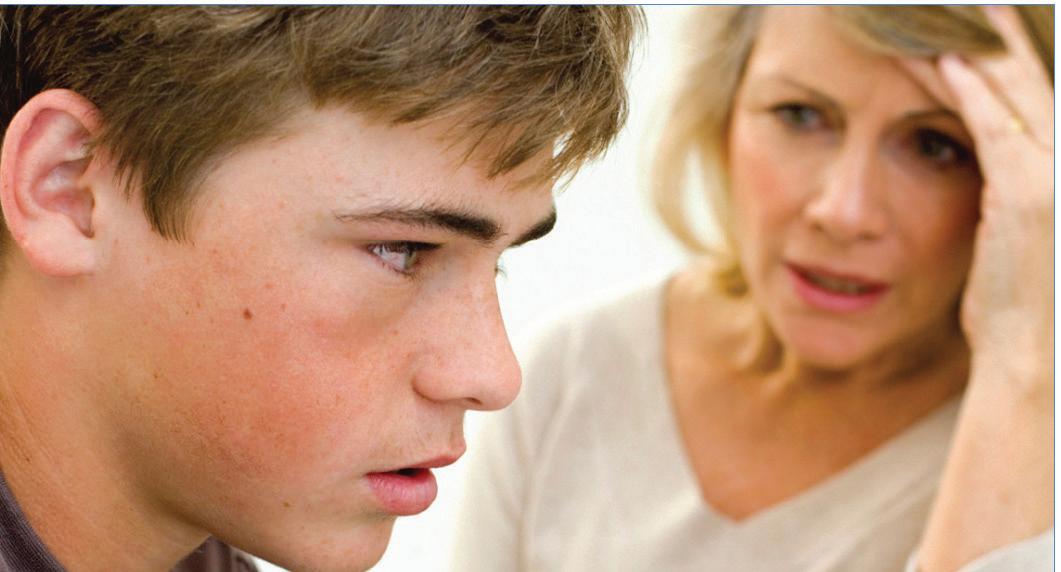
It often is difficult for a mother and father to put their personal needs and feelings aside following a divorce. It should not be difficult for a parent, however.
WHAT IS OZEMPIC
Considering the amount of media attention Ozempic face gets — far more than a concerning outbreak like measles — it might be surprising for some to learn that it’s not even an actual medical diagnosis.
But that doesn’t mean it isn’t real.
Ozempic face is a catch-all pop culture term to describe the rapid and often striking facial changes in people taking GLP-1 (glucagon-like peptide-1) drugs*: hollow cheeks, sunken temples, sagging skin around the jaws and neck, thinning lips, pronounced wrinkles, dark circles under the eyes, and an overall tired, gaunt, haggard look.
Is this an acceptable price to pay for weight loss? You would have to ask the owners of Ozempic faces.
Doctors in general are less interested in such cosmetic side effects and more concerned with how their patients are dealing with GLP-1’s “official” side effects: nausea, vomiting, diarrhea, and constipation.
Considering the sharp rise in obesity in the US and the challenge of losing weight, having these consequences from a class of drugs that offers rapid weight loss should be no surprise. But therein lies the problem: gradual weight loss gives our skin, collagen fibers and subcutaneous fat layers time to adjust and adapt without such negative appearance factors. Sudden weight loss literally pulls the scaffolding out from beneath our skin, leaving behind wrinkles, sags and bags. One study found a 70% reduction in cheek fat volume, a drastic cut guaranteed to result in wrinkles and saggy skin.
The cosmetic nature of Ozempic face — which is often (but not always) reversed when people stop taking GLP-1s and regain the weight — does not mean the condition has no medical consequences. Ozempic face can significantly affect self-esteem, mental health, and quality of life. These very important psychological and social aspects need to be addressed by patients with their doctors.
* Drugs (plural), so “Ozempic face” could be the result of taking Wegovy, Mounjaro, or any GLP-1 drug other than Ozempic.
www.AugustaRx.com
Direct editorial and advertising inquiries to: Daniel Pearson, Publisher & Editor Email: Dan@AugustaRx.com
Augusta Medical Examiner PO Box 397, Augusta Georgia 30903-0397 (706) 860-5455
Parents are nurturers who put the needs of their children ahead of their own.
Dr. Umansky has a behavioral health practice for children in Augusta
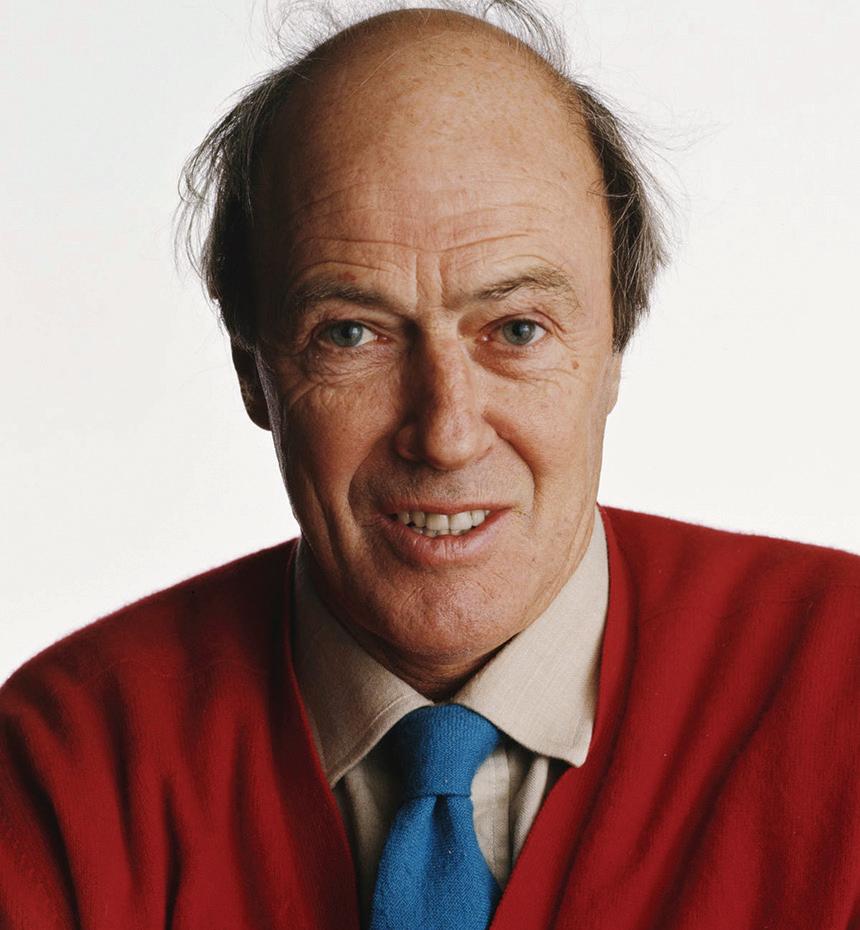
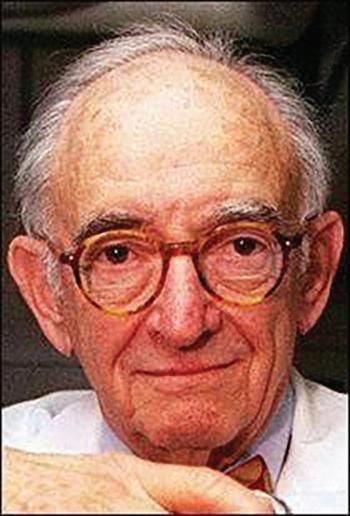
Who is this?
This guy might look familiar. He should: he was on the cover of our last issue.
Yes, we’re visiting Roald Dahl yet again. He is known far and wide for his impressive collection of books and the legendary movies that many of them became: Charlie and the Chocolate Factory and Matilda being two most favored by the staff and management of the Medical Examiner, but there are plenty more.
But Dahl had a side hustle, a very successful career dabbling in medicine that few know about.
Of course, this is not necessarily a news flash for regular readers of this paper. The open letter he penned in 1986 — “Measles: A Dangerous Illness” — which was reproduced in our March 6 issue, established Dahl as an important advocate for basic healthcare. As you recall, his 7-year-old daughter died from measles complications in 1962. By the time he wrote his famous letter, the measles vaccine had been approved in the UK for nearly 20 years, yet because of vaccine hesitancy there were still more than 80,000 cases of measles a year. Having experienced the worst measles had to offer in his own family, Dahl viewed this as unacceptable and unnecessary situation and spoke out. The letter continues to deliver its message around the world some 40 years later.
Dahl’s open letter is just one example of his knack for turning tragedy into something beneficial.
Two years before his daughter Olivia was struck down by measles, his 4-month-old son, swaddled in a baby carriage, was hit by a taxi in New York City. Little Theo’s injuries included hydrocephalus, a condition where cerebrospinal fluid accumulates in the brain, causing an array of physical and behavioral symptoms. Frustrated by the unability of existing technology to help his son, Dahl teamed up with a neurosurgeon (Kenneth Till) and a toymaker (Stanley Wade) to create an improved valbve, resulting in the Wade-Dahl-Till shunt, a great improvement that was widely used foe years.
In 1965, Dahl’s wife, actress Patricia Neal, suffered a major stroke. At the time, doctors help out little hope for stroke victims, and as a result normally prescribed a token level of therapy: an hour a day. Dahl believed this to be grossly inadequate, and organized a six-hour daily rehab regimen which fundamentally changed the way stroke patients were treated everywhere. Neal recovered enough to return to acting and even to be nominated for an Oscar in 1968. She died in 2010 at age 84. Dahl died from a rare form of blood cancer in 1990 at age 74.
ADVENTURES IN
Middle Age
BY J.B. COLLUM
As we age, we have to become comfortable accommodating our ever-shrinking capabilities and embracing our ever-growing list of limitations. Unless you are a world-class athlete, you don’t beat yourself up because you can’t run a sub-4.4 fifty-yard dash. People don’t usually feel ashamed when they call for help if an alligator has taken up residence in their pool or front yard. Indeed, it would be foolhardy to do otherwise.
But somehow, as we age, some of us are ashamed of our new inabilities. I don’t want to call them disabilities—that term belongs to others—so we will go with inabilities.
Some of these, perhaps most of them, are physical limitations, and these should be self-evident. But we are very good at fooling ourselves, so many times we need a good friend or family member to point them out to us. First we argue about it, and later we concede the point — or our bodies concede it for us in the form of not cashing that check our minds wrote.
Sometimes, though, the limitations are about how much mental or emotional stress we can take.
My mother was very good at taking care of the family accounts for many years, but at some point she decided it had become too much and turned it over to my bookkeeper wife, who has handled it for her ever since. It freed my mother from a part of life that can bring a lot of anxiety. It is very different when the budget you are balancing is your own versus when someone analyzes it in an objective, analytical way, as my very practical and analytical better half does.
All of which brings me to this: most of my long-time readers know that, along with my wife and our oldest daughter, our household for over three years now has included grandchildren and nieces and a nephew. Recently we made a change once we realized it was simply too much for us.
It was a painful change, and it may have long-term ramifications — both good and perhaps bad — but we all have a limited budget, whether in money, stress, or time.
Our youngest granddaughter, Freyja, is special needs. She has Angelman Syndrome and is severely autistic and non-verbal. She is a handful all by herself. The stress from her condition is mostly physical, and it is immense, but for now it is manageable.
Our oldest granddaughter has some issues she has been going through, and she is in her mid-teens, which is hard enough on all teenagers — and on the parents, grandparents, or guardians trying to guide them — without additional problems.
After a great deal of thought and anguish, we decided that she needed to
live with her mother or father, as we had reached our limits financially, emotionally, and mentally.
It was — and still is — a tough choice.
We do miss her now that she lives three hours away, and we still have high hopes for her. She is smart and capable, but she is also troubled. Who can blame her, though? She had a very traumatic upbringing before we got her, and most of her issues probably come from coping with that.
As the head of the family, I had to make the difficult decision because it really came down to priorities. I have to prioritize my wife and the family as a whole over one individual.
That doesn’t make it any easier.
It does help that my decision was supported by Lorie, my wife, and by our daughter Katie, but that only helps a little.
We have already seen some good fruitage from this change. Our grandson has become more sociable with us, even without us asking. Sometimes he joins us in the den and simply sits with us. The other day he joined his grandmother in the yard and helped her with some tasks without being asked. He talks with me more now as well.
The house feels different.
We don’t walk on pins and needles anymore in fear of setting someone off, and the general vibe is more upbeat.
I still get to talk to my teenage granddaughter, and we plan to have her visit during the summer, which is probably how grandparent–grandchild relationships work best anyway. But we don’t always have the luxury of best. Sometimes we just have to take what we can get.
When I bought a new truck in 2021, I would have loved to buy the top-of-the-line model with all the bells and whistles, but since that drifted into six-figure territory, I decided to buy the one that had everything I needed and a few extra features while staying within my budget.
Living by a budget is boring, but it is sustainable and conducive to a lower-stress life.
And that is true whether we are talking about money, time, or even our mental and emotional health, as in this case.
The moral of the story is simple: live within your budgets. You can’t go through life as if budgets don’t exist. You will be happier and deal with less stress and anxiety. Of course, that sometimes means making hard choices. So embrace that reality, accept it, and keep moving forward.
J.B. Collum, the author of this column and “Special Forces Parenting,” is a local novelist, humorist and columnist who wants to be Mark Twain when he grows up. He may be reached at johnbcollum@gmail. com
Special Forces
Parenting
Just when we thought it was safe to go back in the water…
My regular readers will remember our disaster that eventually had its own sequels. We called that catastrophe “Turdnado.” I’m not even sure which number this is now because, like the Fast and the Furious series, I’ve lost count after there were simply too many.
Just when we thought it was safe to leave our 8-year-old special-needs granddaughter in her playhouse without the special clothing that keeps her from taking everything off… she took everything off.
She removed her clothes, pulled off her diaper, and proceeded to “paint” everything inside her playhouse in our living room into some kind of modern art exposition. The carpet, walls, toys, and even herself were the canvas and, well… you-knowwhat was the paint.
Here’s the scene.
I’m in my office when I hear screams, followed by the sounds of running feet, followed by more screams of “STOP!” and “NO!” Naturally, I get up to see what’s wrong. I stick just my head out of my office door and immediately see—and smell—the carnage.
Without missing a beat I say, “We’re going to need a bigger cleaning bucket.”
I then did the best thing I could do under the circumstances. I went back into my office, closed the door, locked it, put on my noise-canceling headphones, and waited out the disaster in my bunker… I mean office.
Yes, I know was cowardly. But they do say that discretion is the better part of valor, and it’s important to live to fight another day. Right?
Soon after the cleanup was finished —
except for the items now in the washing machine and the toys soaking in bleach, that is — I emerged to offer what I believed would be a helpful solution to my wife and daughter.
As it turned out, it was a classic case of “Too soon?”
I opined that we had apparently stopped using the “Naked No More” clothing covers prematurely and needed to reinstitute that practice. I also suggested she be watched a little more closely.
About an hour later, I was finally allowed to come out of my bunker — there I go again — I mean office — but I wasn’t allowed to speak for a while.
We don’t always agree on how best to manage Freyja, and this is one of those sore points between us. Every time something like this happens, I tend to harp on using the special clothing.
I’m a problem solver. It’s in my nature. I can’t help it.
Every time her diaper gets too full and leaks onto the sofa, I remind everyone to check her more frequently. I usually resend links for the more expensive diapers that supposedly do a better job of preventing leaks, along with links for diaper liners that add extra absorbency.
For some reason, however, my suggestions are not always received in the helpful spirit in which they are given.
And so, just like the movies, we end up with even worse sequels to bad events.
I mean, Jaws II was alright… but was anyone able to sit all the way through Jaws III? It was awful.
No offense to those who liked it.
Actually, I take that back. If you liked Jaws III and you like my columns, that’s very concerning.
Just don’t tell anybody.
Deal?
Thankyou.
Part of the stress in dealing with a special-needs child isn’t just the messes they make or the special care they require. Sometimes it’s the tension that can arise within the team of caregivers.
When you’re part of one of the squads — keeping with our Special Forces theme — remember that you won’t always agree on everything. Be open to different ideas, and accept that the other squad members won’t always see things your way.
Don’t let disagreements chip away at your unity.
You’re going to need each other for a very long time.
Who is this?
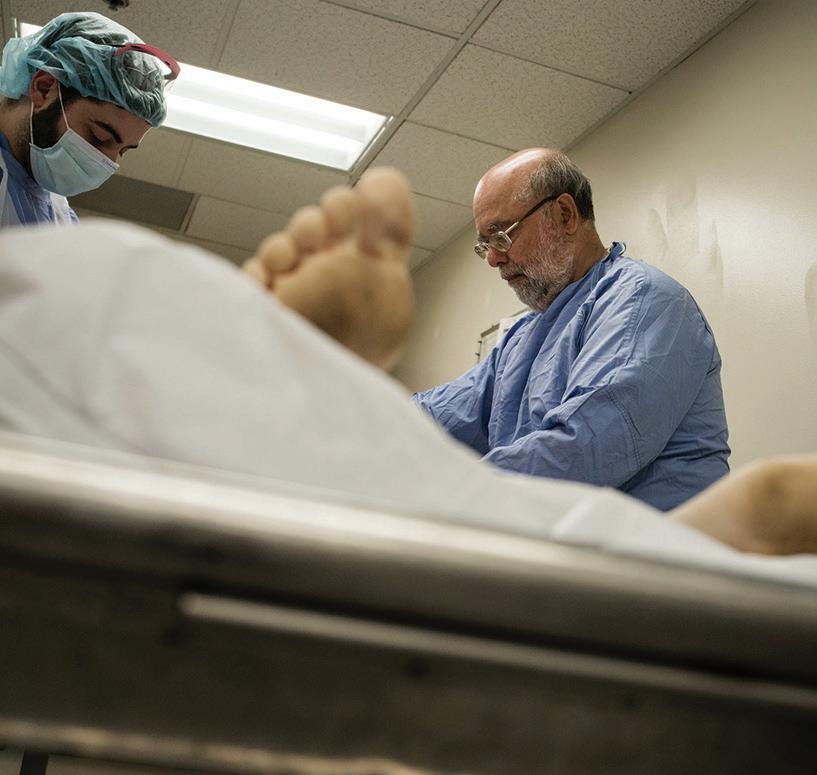
Not everyone in healthcare can be Florence Nightingale, right? Despite the long-running series on page 4, there are clunkers in medicine, and we will examine some of them in this series. Unfortunately, there’s enough material to keep this side of the page going for a while.
Depending upon where you learn about this doctor, he is either a saint or a demon.
His name was Eugene Saenger, and he was born and raised in Cincinnati. He was a highly acclaimed radiologist.
He received gold medals and lifetime achievement awards from the likes of the Radiological Society of North America and the American Roentgen Ray Society. He was one of the very first in the field to be certified by the American Board of Nuclear Medicine, and has a scholarship fund in his name at the University of Cincinnati.
He is viewed as a genuine pioneer in the field of radiology. He was one of a scant handful of experts qualified to consult after the Chernobyl nuclear disaster in 1986.
So what is he doing on this side of the page, the side reserved for the black sheep of medicine?
It isn’t because he was such an expert. It’s because of how he acquired the knowledge that made him such an expert.
In the 1960s, the Pentagon commissioned a study headed by Dr. Saenger to discover the effects of large doses of radiation on the human body.
Using a playbook right out of the infamous Tuskegee experiments, Saenger recruited 90 “volunteers” for his study. By coincidence they were all poor, mostly black, uneducated, and by design, uninformed.
The participants, all of whom were also cancer patients, were told they qualified for a special new treatment that held the potential to cure their cancer, or at least to improve their short-term prognosis. None of them were told the experiment was a military project commissioned by the Pentagon.
The goal of the study was to determine the effects of massive doses of full-body radiation, and Saenger delivered. The exposure was so great that 21 of the patients were dead within a month. Saenger alternately stated that only 8 patients died, then later alleged that non died. Survivors suffered intense pain, complete disorientation, persistent nausea, and a variety of other ill effects from the radiation.
Although critics strongly condemn the study itself and the lack of evidence establishing informed consent, Saenger’s defenders say that the study complied with established legal and medical ethics in effect at the time.
In 1999, a federal judge deemed the study unethical enough to approve a $4 million settlement to compensate families of the patients, along with a plaque to be installed at the hospital, commemorating each of the patients by name.
Dr. Saenger died in 2007 at age 90.
ANTIDOTE
... from page 1
draws affection as punishment. A dog never bases its approval of or closeness to its owner on performance. A dog never dredges up old offenses as ammunition against its owner, or ignoresits family by staring at a phone or tablet for hours.
One psychologist noted in an interview that over decades of time and through observations of countless patients, the relationship people trust most, the one in which they feel most accepted, is not with a husband or wife, a sibling, or a best friend. It’s with a dog.
This could sound like a slam of the entire human race. We’re saying dogs treat the people in their lives better than humans do?
Well, yes and no. It’s complicated. And that’s because humans are complicated — a lot more so than dogs. We have the capacity to be cruel and petty sometimes, or just plain thoughtless, giving off bad vibes without intending to.
But a huge array of data compiled by sociologists and psychologists suggests that owning a dog (and sometimes other pets, specifically ones that can show affection) can dramatically improve our human-to-human relationships.
Dogs can act as “social catalysts,” improving the likelihood of interacting with neighbors and strangers alike, helping to build friendships. They have a track record of doing the same thing within households, as families share ownership responsibilities like walking and feeding their dog as a team.
THE ANTIDOTE: it’s not for everyone
Some dogs are chained up in their owner’s yard for months, if not years, at a time. They get maybe five minutes of attention on a good day. They might bark all day and half the night, but the owner isn’t home or doesn’t care. Why do people like that even own a dog? They are responsible for a life, and they have totally abdicated a duty they took on voluntarily. Their actions should be prosecuted and result in legal penalties.
That last sentence reminds us all that owning a pet takes some effort. It is a commitment that’s not for everyone (see box). Yet despite the work involved, more people should definitely consider this 4-legged antidote.
After all, the social isolation that an ever-increasing chunk of the population feels can be vanquished by those social catalysts at the end of our leashes. Even within the privacy of our own homes, having another life to care for refocuses people away from their own problems and worries. It makes people happier and less anxious.
And then there’s the poop issue. Yes, dogs have to poop. Everybody poops, in fact. But dogs generally do their business outside, and this is a good thing. Why? For one thing, your house smells better.
But the other key benefit is that it forces dog walkers to, well, walk. A couple of times a day at minimum, dog owners have to go outside and get their steps in. The vast majority of us need to get more steps in, each and every day. Owning a dog helps fight inertia and inactivity.
But isn’t it a pain when it’s cold or raining? Not as much as one might think. Some indoor dogs can’t wait to get back inside when the weather is bad, so their bathroom breaks are quick. Even if they don’t mind the weather, their owners are getting exercise on all the days when they would otherwise play the “I guess I can’t walk today” card. That’s a beautiful thing about walking a dog: it guarantees that your exercise program, even if it’s just walking, will be consistent.
In summary, countless numbers among us deal with loneliness and isolation, inactivity and lack of purpose, and those numbers seem to be growing. Meanwhile, countless others have found there is simply no better solution than owning a dog. Maybe you’ll join that group.
I WAS THINKING
by Pat Tante
WHAT SHALL I DO WITH JUNE? (PART IV)
Editor’s note: So far in our saga, Pat and June, traveling by urn (June that is, not Pat), have been racking up frequent flyer miles in a quest for a suitable final resting place for June. Thwarted by bad weather in the tropics, they return to Augusta, where well-meaning friends offer a number of suggestions for Pat’s predicament, including launching the ashes into space. What will be the exciting conclusion? Read on!
Days after the dinner party, a friend who had heard me discussing my predicament called. She said that she had been reading a magazine in her doctor’s office and came across what she thought was a very peculiar advertisement. Entitled “Rest in Vinyl,” the article explained that you could press your loved one’s ashes into a vinyl record album –complete with music!
I had to know more about this quirky solution and looked it up on my computer. There it was, Rest in Vinyl – “Live on beyond the groove.” I was intrigued even though I recalled that June’s only musical interest was playing cello in high school.
The company name is “And Vinyly” and was thought up by a British music producer. The disc will really play (scratchily, I bet) and you can choose a greatest hit or an audio of the person’s voice. I read on waiting for the clincher – and there it was – expensive. Minimum cost was $1160, but if you wanted special art on the label, it could be over $4500.
Yike! When had preserving cremains become such big business? If Ned thought sending June into space was over-thinking, what would he think of this?
So it ended up being another dead end (pardon the pun). Had I done my best for June? Was there some wonderful avenue that I had not explored? I was so tired, but I did feel that I had done all that I could for June – and in the process had become kind of an expert about what to do with cremains.
Weeks later, the local art guild was having a pottery sale. As I wandered through the tables, I was stopped in my tracks by a small blue pot with a matching lid. Atop the lid perched a tiny bluebird who seemed happy to be there. His feathers, even in clay, were finely chiseled. All I could think of was June and how she would love this cheery little bird.
The potter was pleased that I liked it so much.
When I got home, I slipped June’s Ziploc into the little blue pot and placed it back on the window sill. There she remains to this day, enjoying the sunshine, the view of the garden and our friends who come and go and often say as they arrive, “Hello, June.”
For external use only. May be habit-forming. Take regularly; do not discontinue use unless advised by a physician. Product not child resistant. Do not chew or crush. Not to be taken by mouth. May be taken (read) on an empty stomach, or with food. May be taken one hour before or after meals. And at any other time. Product may not be gargled. Do not drive a motor vehicle or operate heavy machinery while reading. Tell your doctor if you are pregnant. Use in conditions of adequate light. Store in a cool dry place. Not to be used as a personal flotation device. Dispose of properly. Overeating, poor diet, cigarette smoking and excessive drinking may alter the effectiveness of this product. Do not use near spark or flame. Not dishwasher safe.
CAUTION: If you become too salubrious, please read fewer articles.
TRYTHISDISH
by Kim Beavers,
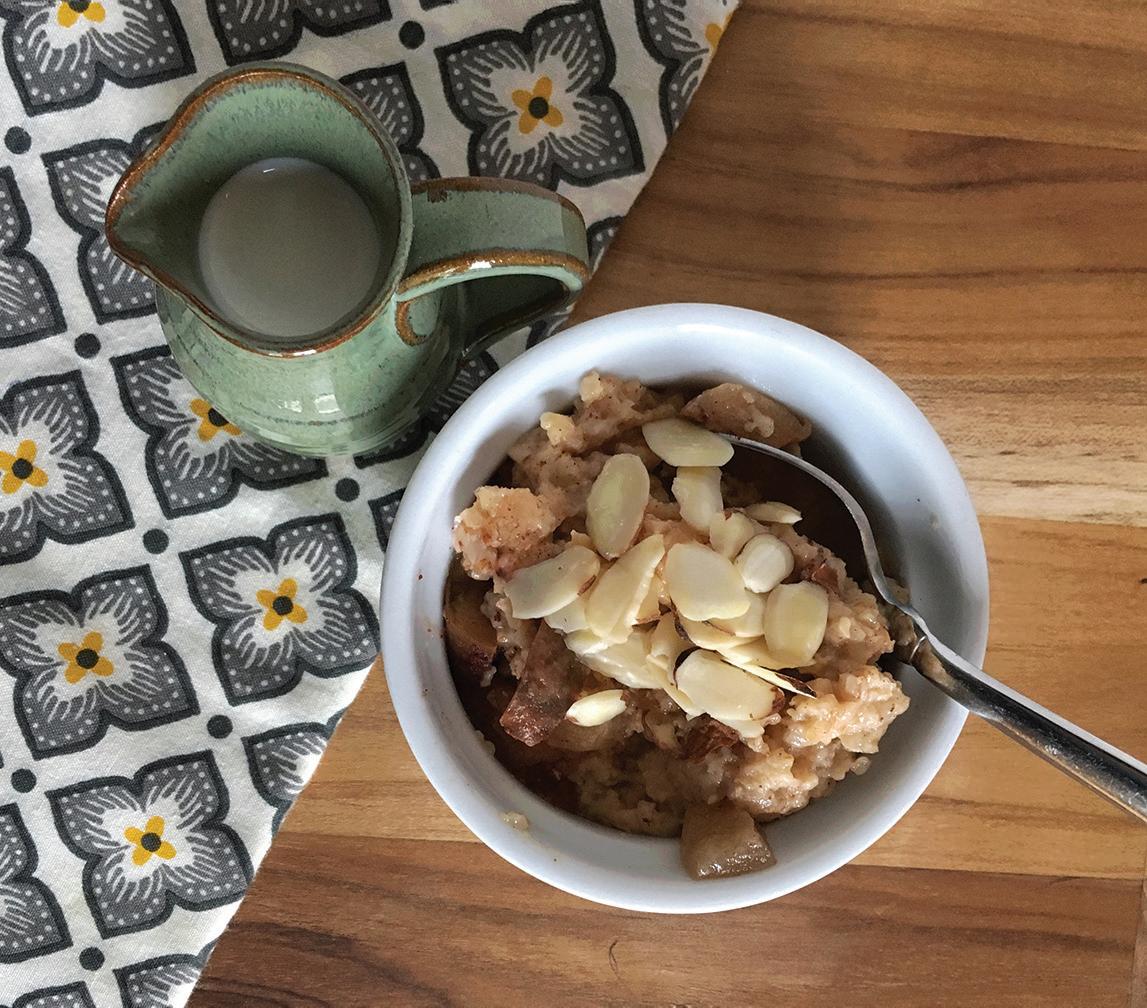
GOOD MORNING CINNAMON OATS
Using the slow cooker is a great way to put lots of good things on your table, but many people overlook its usefulness in preparing breakfast. This recipe, modified from one on Pinterest, is perfect for the cool weather forecast for this week. Using the “dishin-crock” method is the best way I have seen to make these without drying them out or burning them.
Ingredients
• 2 apples, cut up (skin on) or pears
• 1 teaspoon cinnamon
• 2 tablespoons maple syrup
• 2 cups old fashioned rolled oats
• 2½ cups milk
• 2 cups water
Directions
Spray a 5 quart oven-safe dish with vegetable oil cooking spray (This dish should fit into the crock of the slow cooker). Add the oats, apples, cinnamon, milk and water to
the dish and stir to combine. Drizzle the maple syrup over the top of the oat mixture. Add a cup of water to the crock of the slow cooker and place the oven-safe dish into the slow cooker, cover and cook on low for 7-8 hours.
When going to the doctor for a checkup or when there is an illness suspected, you frequently are asked to submit a specimen to aid in a diagnosis or treatment. Medical specimens are collected to help provide data regarding the patient’s health status and identify diseases, monitor conditions and determine treatment. I am going to address the ones that we are most often asked to provide. They are urine, blood, saliva/sputum, and stool.
Let’s talk medical specimens
“Pee in a cup” is not exactly a rare directive. Urine specimens are used in the evaluation of kidney function, to detect urinary tract infections, and to screen for foreign substances in the urine. A mid-steam or “clean catch” specimen may also be used for a culture to determine bacteria growth that may lead to a diagnosis. It is important that you clean the area thoroughly to avoid contamination. If this is done at a lab, the specimen is processed immediately by a technician. If you are collecting it at home, it must be transported to the lab immediately or refrigerated until you can transport it. You could also be asked for a first-morning collection or a 24-hour collection. The physician or a technician will give you specific instructions to follow for these specimens.
Blood specimens are
drawn at a laboratory by a specially trained technician. This could be a sample of blood from a vein (venipuncture) or a finger prick. Again, these are used to diagnose diseases, monitor health conditions, check organ function and determine treatment. The blood is drawn into a tube or tubes depending on which tests are ordered. These tubes contain a special liquid serum to prevent clotting. Each tube is then processed and the results sent to the physician.
cup. The specimen must be thick and opaque (you can’t see through it). If it’s too thin, clear or watery, it will be rejected by the lab. If you are asked to do this at home, keep the container refrigerated (up to 24 hours), and transport to lab immediately.
Saliva or sputum collection is used to detect bacteria, fungi or viruses causing respiratory infections and to guide treatment. You will be asked to first rinse your mouth with water to remove any contaminants. You will then be asked to take a deep breath, perform a strong cough and spit the mucus from the lungs into a specimen
Stool specimens are used to check for bacteria, viruses, parasites, fat, and blood. These are not my favorite specimens. The lab sends you home with a collection kit that often contains a “stool hat,” a tongue depressor (to scoop out the poop), and a specimen cup. I think this is easier for men than women. Instructions tell you to avoid mixing urine or toilet water in the “stool hat” with your specimen. Think about the anatomy down there. Easier for men. You only need a stool sample about the size of a walnut. There is no need to fill the specimen cup to the top! The fresh sample must be taken to
the lab within 2-4 hours, or refrigerated 24-72 hours. These are the basics for the most common medical specimens. Always follow your physician’s instructions and/or the instructions on any specimen kit you are provided. Result times vary based on the type of specimen and the required screening for each sample. Be sure to ask how long before you will have the results. The technician may or may not be able to tell you. If a reasonable amount of time passes with no response, call your physician.
In conclusion, these are just the basics of the collection of medical specimens. As a patient, you should always ask questions to ensure you understand the reason for the specimen, and don’t forget to follow up with your physician. If a specimen result is normal, many times the physician or their office personnel will not contact you.
More
CRASH COURSE
Americans have died on US roads since 200 0 than in World Wars I & II combined
That outtake between the two columns might have you scratching your head. “You make it sound like good drivers are bad drivers.”
No, that’s not what we’re saying. Close! But no cigar.
More accurately, our point in this article is that people who think they are among the best and safest drivers on the road might be among the worst.
How is that possible?
As a starting point for reasoning this out, create a mental image of a brand-new driver taking one of his very first trips behind the wheel.
His eyes are riveted on the road ahead. He has a death-grip on the steering wheel, and his gaze constantly, nervously, and compulsively darts from traffic ahead to the rear view mirrors to the speedometer. He is laser-focused on the task of driving
Now build a short mental movie of a very experienced driver. He’s got one hand loosely on the wheel, and the other hand is adjusting navigation settings on the dashboard screen. His window is rolled down and the elbow of his steering arm is resting on the car’s window ledge. He’s tapping on the wheel as he listens to tunes playing from his phone. As he drives, he definitely checks out any young ladies he happens to see walking by.
What are the differences between the two drivers? The first driver is extremely inexperienced and is not prepared for anything unexpected. It takes all his concentration just to stay between the lines and not hit anybody.
The second driver is very experienced and considers himself to be an excellent multitasker. He is traveling a route he has driven a thousand times. He could practically drive it blindfolded.
Do you have an opinion about which driver is better, or which of the two might be more likely to be involved in a crash?
It’s impossible to speculate on such a hypothetical scenario, but it could well be a statistical toss-up. Both drivers have obvious weaknesses that could result in a collision. The only thing we can say for sure: Driver #2 would say he is the better driver.
The problem with excellence
Multiple studies show that most drivers consider themselves to be “above average.” That is a statistical impossibility.
One study of driver confidence found that the more confident drivers were measured to
be, the more likely they were to show dangerous driving patterns like rapid acceleration and braking, and sudden “steering behaviors.”
There is a significant body of research which paints a very clear picture: people who believe they’re excellent drivers or “great multitaskers” consistently perform worse, take more risks, and are more likely to be involved in dangerous driving behaviors.
Why is this true?
At first glance “good” drivers actually being “bad” drivers seems counterintuitive. But there are a number of factors at work.
Many of us take exactly the same route to work and other frequent destinations. We know the route like the back of our hand. The more that is true, the more we can go on autopilot. Like Driver #2, we could drive it blindfolded.
Someone who has an exalted opinion of his driving skills (it is probably no accident that we use a masculine pronoun here) feels like he can handle excessive speed, and has the lightning-fast reflexes to allow tailgating. That’s another way of demonstrating overconfidence.
Some people feel the technology assist that new cars provide gives them another layer of invincibility. “What I can’t handle, the car can.”
There is a principle in psychology known as the Dunning-Kruger effect. The simplified definition is that people lack the experience and skill to accurately judge their own levels of experience and skill. It affects everyone to one degree or another. And when it does, we don’t typically underestimate our skills in error; we overestimate them.
When Dunning-Kruger comes into play in driving, it demonstrates that people who think they are skilled behave in ways that contradict that belief.
The lesson here isn’t that “good” drivers should work at being less good in order to become “better.” That makes no sense.
No, the moral of this story is that overconfident drivers often put their overconfidence on display through riskier driving. That mismatch between confidence and competence turns out to be a major contributor to crashes.
All the Driver #2s out there — most of us? — could probably improve our driving by being a little more like Driver #1.
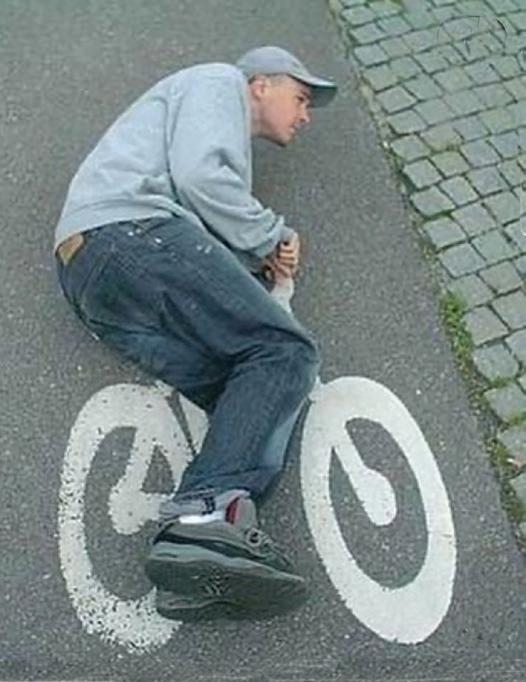
Write your most appropriate, clever, or funny caption to the photo shown for a chance to win whatever cool swag we decide to give away someday. Email your entry to Dan@AugustaRx.com (Multiple entries ok)
DEADLINE TO ENTER: 5:00 PM FRIDAY, MARCH 27, 2026
he Examiners
Read any good books lately? No, but I’m looking. Got any suggestions?
ACROSS
1. Prince of India
5. Breath crackles
10. Willis on Diff’rent Strokes
14. Responsibility; burden
15. Take in as one’s own
16. Brainchild
17. Type of grass
18. Move rhythmically
19. 1st or 2nd, as examples
20. Deviate suddenly
22. Dem.’s opp.
23. Sea eagle
24. Pen sound
26. Norse god of thunder
28. Jaw muscle (anat.)
32. Letting up
36. Word of contentment
37. Sequoia starter
39. Uma in Pulp Fiction
40. Med. image
41. Meatball nationality?
43. Farm denizen?
44. Electrically charged atom
45. Greased
46. Command to a horse
47. Endow with a soul
49. Smooth; continuous
53. Auto line from 1897-2004
55. A Hemingway
56. Type of instrument
59. Cam prefix
61. Hotel (2004 film)
65. Jewish calendar month
66. Absurd
68. Way of applying paint
69. Trigonometric function
70. Lymph structures
71. Fencing sword
72. Soviet news service
73. Do a certain Walmart job
74. Computer brand
by Dan Pearson
CAPTION THIS
Check out our new reader contest on p. 10 Write your most appropriate, clever, or funny caption to the photo shown for a chance to win whatever cool swag we may eventually decide to give away! Email your entry to Dan@AugustaRx.com
DEADLINE TO ENTER: 5:00 PM FRIDAY, MARCH 27, 2026 Have fun!
1. Deprives
2. Once more; again
3. Famous Allyson
4. Texas baseball team
5. Med. district Blvd.
6. Dentist’s org.
7. New York island
8. Disney World neighbor
9. GA county named for Jefferson Davis’ VP 10. Ty Cobb’s team
11. River in central Europe
12. Dizzy baseball player
13. Challenge 21. Contend
25. Pelvic exercise
27. ____ of office
28. Ike’s better half
29. 25-time baseball All-Star
30. Front of lower legs
31. Fair attractions
33. Public perception
34. A person can be dressed to
these (with “the”)
35. Microsoft co-founder
38. Helped
41. Downtown Augusta bar
42. Former Washington Road and Grovetown Cafe
48. Large quantity, informally
50. Respiratory _______
51. Kitten’s cry
52. Gas in the old days
54. Mister in Tijuana
56. Point intro
57. Hip bones
58. Sisters
60. Past tense of bid
62. Neck back
63. Event causing Alexander Hamilton’s death
64. Adam and Eve’s #2 son
67. Originally called; literally “born”
DIRECTIONS: Every line, vertical and horizontal, and all nine 9-square boxes must each contain the numbers 1 though 9. Solution on page 14.
DIRECTIONS: Recreate a timeless nugget of wisdom by using the letters in each vertical column to fill the boxes above them. Once any letter is used, cross it out in the lower half of the puzzle. Letters may be used only once. Black squares indicate spaces between words, and words may extend onto a second line.
on page 14.
Use the letters provided at bottom to create words to solve the puzzle above. All the listed letters following #1 are the first letters of the various words; the letters following #2 are the second letters of each word, and so on. Try solving words with letter clues or numbers with minimal choices listed. A sample is shown. Solution on page 14
— Eliezer Yudkowsky
ATHEBESTMEDICINE
ha... ha...
fter putting out a serious fire in a hospital, the fire chief found the hospital administrator and delivered his initial report.
“We extinguished major outbreaks on the first two floors and a smaller fire in the basement, where we found three victims. We were able to resuscitate two of them, but we could not save the third.”
The hospital chief fainted at this news. The firefighters quickly revived him, and when he came to he said, “Guys, the basement is the location of our morgue.”
Moe: I have to applaud Celine Dion for her support of farmers.
Joe: How did she do that?
Moe: She legally changed her name by having all the consonants removed.
Moe: A friend of mine has been engaged five times, but he’s never gotten married.
Joe: Wow, that’s a lot of near-Mrs.
Moe: Chuck Norris took a CPR class once and actually resuscitated the dummy.
Joe: Seriously?
Moe: Seriously. She lives in Washington, DC with her husband and two kids.
Moe: Remember the old days, before the internet?
Joe: I do.
Moe: Remember when they used to say the reason people were ignorant was because they didn’t have access to information?
Joe: Well obviously that wasn’t it.
Moe: What do Jesus, Martin Luther King, George Washington, Abraham Lincoln, and Christopher Columbus all have in common?
Joe: Hmm, that’s a tough one. What?
Moe: They were all born on holidays.
Moe: Why are they called French fries? They didn’t originate in France.
Joe: They didn’t?
Moe: No, they were cooked in Greece.
Moe: Wow, I had a super close call today.
Joe: What happened?
Moe: I came around a curve in the neighborhood and almost plowed into a brokedown ice cream truck.
Joe: That guy should have put some cones down.
MEDICALEXAMINER?
Because try as they might, no one can stare at their phone all day.
Staring at my phone all day has certainly had no fffect on ME!
By popular demand we’re making at-cost subscriptions available for the convenience of our readers. If you live beyond the Aiken-Augusta area, or miss issues between doctor’s appointments — don’t you hate it when that happens? — we’ll command your mail carrier to bring every issue to your house!
NAME ADDRESS
CITY STATE ZIP
Choose six months for $26 ____ or one year for $48 . Mail this completed form with payment to Augusta Medical Examiner, PO Box 397, Augusta GA 30903- 0397
Dear Advice Doctor,
Advice Doctor
What is going on in the world today? We have time-honored institutions being attacked and often dismantled before our very eyes, and what do we have in response? Crickets, mostly. You would think the masses would be yelling from the top of their lungs in protest, but I guess the term “silent majority” exists for a reason. What do you think about it? — It’s Quiet...Too Quiet... Dear Quiet,
Thanks for writing and sharing your concerns: this is a very important issue in today.
You mention a term that exists “for a reason.” That is a very astute observation that ties in nicely with one of the points you made. You mentioned people yelling from the “top” of their lungs. That is more than just an idiom; it’s a term that exists “for a reason.”
First, let’s clarify what it does not mean. An upper respiratory infection might sound like it involves the top of people’s lungs, but that term generally refers to the nose, throat, and sinuses.
There are respiratory issues, however, that predominantly affect the upper lobes — the top — of our lungs.
One of the classics is tuberculosis. TB bacteria prefer an environment with high oxygen levels, which the upper lungs offer.
Emphysema is another disease that often springs from the upper lobes of the lungs first. Why? One factor, at least among smokers, is that the pollutants and foreign particles that cigarettes deliver tend to be deposited more in the lung’s upper lobes.
Cystic fibrosis often causes mucus accumulation and chronic infections in the upper lobes of the lungs more severely than lower portions.
In short, maybe the silence that concerns you is the result of respiratory problems in the upper portions of the lungs.
It’s certainly possible.
I hope this answers your question. Thanks for writing!
Do you have a question for The Advice Doctor about health, life, love, personal relationships, career, raising children, or any other important topic? Send it to Dan@AugustaRx.com. Replies will be provided only in the Examiner.
PROFESSIONAL DIRECTORY
ACUPUNCTURE
Dr. Eric Sherrell, DACM, LAC Augusta Acupuncture Clinic 4141 Columbia Road 706-888-0707 www.AcuClinicGA.com
CHIROPRACTIC
DERMATOLOGY
Evans Chiropractic Health Center
Dr. William M. Rice 108 SRP Drive, Suite A 706-860-4001 www.evanschiro.net
DENTISTRY
Jason H. Lee, DMD 116 Davis Road Augusta 30907
706-860-4048 Floss ‘em or lose ‘em!
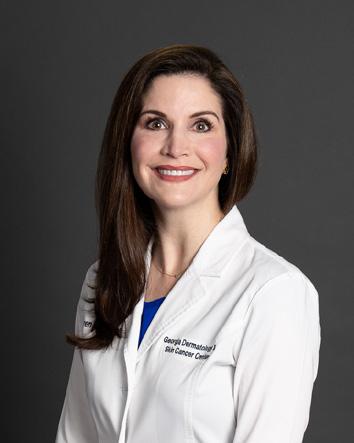
Georgia Dermatology & Skin Cancer Center 2283 Wrightsboro Rd. (at Johns Road) Augusta 30904 706-733-3373 www.GaDerm.com
DEVELOPMENTAL PEDIATRICS
Karen L. Carter, MD 1303 D’Antignac St, Suite 2100 Augusta 30901
Steppingstones to Recovery 2610 Commons Blvd. Augusta 30909 706-733-1935
Home Care Personal Care|Skilled Nursing|Companion 706-426-5967 www.zenahomecare.com
Parks Pharmacy 437 Georgia Ave. N. Augusta 29841 803-279-7450 www.parkspharmacy.com PHARMACY
WHEN WE LIE TO OUR DOCTOR
Ok, maybe not flat-out lie. But maybe we don’t always tell the whole truth. Important details are left out. And not by accident.
Studies show the practice is more common than we might think: more than 50 percent of us do, according to one study. Why is this so common, and why is it a really bad idea?
WHY LYING IS DUMB:
1. Doctors have seen it all. It’s pretty tough to shock them. Plus, they’re doctors, not judges of morality.
WHY PEOPLE LIE:
1. We’re embarrassed by something we have or have not done.
2. We’re afraid of getting a bad diagnosis.
3. We can avoid treatment that might be painful, expensive, or inconvenient.
4. We want to please the doctor.
5. We hope to score some drugs.
2. A serious condition will not disappear if you ignore it. Which is worse: getting a bad diagnosis, or not getting treatment for a bad diagnosis?
3. This just might work. Then again, if it doesn’t, death is fairly inconvenient too.
4. Telling the doctor you don’t smoke when your clothes reek of cigarettes will not please the doctor. Telling the doctor you floss daily when the evidence is clear that you do not will not please the doctor.
5. They’re on to you. They know.
Hiding facts or lying to the very person trying to help us is strange behavior, indeed. It can transform a manageable medical condition into a life-threatening emergency. As for doctors, they may sometimes lie too, minimizing problems they detect, offering overly simplified explanations, and failing to tell hard truths that patients need to hear. Honestly, we can all do better, and that’s the truth.
MEDICAL EXAMINER
ADVERTISERS OTHER AD OPTIONS
DEAR POTENTIAL ADVERTISERS: You likely know how well-read the Medical Examiner is. Your patients, clients and employees love it, eagerly look forward to it, and read it from cover to cover. In other words, it’s a great way to advertise because people will see your ads . That’s the whole point of advertising, right? Plus you have the added satisfaction of supporting the Medical Examiner. This win-win-win starts as soon as you get in touch. Call or write today! (706) 860-5455 or Dan@AugustaRx.com