ost people with even a little medical education or first aid training know the acronym ABC. Some claim that it stands for Airway, Breathing, and Circulation, the first three things that should be assessed when evaluating a patient. But others say there is a lengthy list of other meanings that commonly appear on medical charts or are used by everyone from EMTs to trauma surgeons. We did a little research and found some of those additional definitions of ABC. Some of them are listed below.
Act! Body cold! All Bottoms Clean Almost Became Comatose Alright boys, CLEAR! Anybody Bring Cookies? Adios! Breakroom Calling! Above. Center. Below. Absolute Basket Case Ambulance Be Coming!
Always Bring Coffee Airway. Breathing. Can you walk to this stretcher? After Breathing Ceases
A Billable Code Absent. Burned out. Confused. Already Been Completed Always Being Cranky A Bone Coming out (is never good)
Adversity Builds Character Assault, Battery, Conviction Arteries, Bicuspid, Capillaries Alright, But Chill! All Breaks Cancelled
Another Bad Choice
Alcohol. Botox. Caffeine. All Bleeding Ceases Actually, Barely Competent A Bowel Catastrophe Always Be Cussin’ Absolute Bull Crap Avoid Bad Choices Apply Bandaid Carefully Already Been Chewed Alpha Bravo Charlie Almost Better Conscious Acrobats, Balloons, Clowns Anyway, B#%tch, Can you walk? Arby’s, Burger King, Chic-fil-A Ain’t Been Careful! Avoid Being Sarcastic Always Back Corporate Ain’t Breathing! Crap! Anything But Communication Arteries, Bones, Cartilage Another Bad Call Alligators Be Crocodilin’ Always Be Calm Always Break Companypolicy Always Bring Cash Aspirin, Brownies, Coffee
ARE YOU READY FOR THE BIG GAME?
Editor’s note: This is a staff and reader favorite from a few years ago. We thought it was too good to run just once.
Did you notice how many times the NFL’s mega-event was referred to as “the big game”? They were referring to the Super Bowl, of course, but were reluctant to say the actual words because “Super Bowl” is a copyrighted name owned by the NFL. Nobody wants to be sued just for saying or writing “Super Bowl,” right?
Super Bowl, Super Bowl, Super Bowl, Super Bowl, Super Bowl.
But our headline above isn’t referring to the Super Bowl. No, we’re talking about the even bigger game, the one called life.
Debbie Downer, but as we all know it’s also a game that can end in sudden death.
The key to this biggest game is playing it in a way that offers the best chance of going into extra innings. The good news: that’s not a terribly complicated proposition. Let’s look at a few simple steps to prolong the game into overtime.
And please, don’t stop me if you’ve heard these before.
Admittedly that’s a pretty corny intro, but go to your Googler and type in “the game of...” and the top response will be “the game of life.”
But boys and girls, if life is a game it’s the most important one we will ever play. Like baseball, it’s a game without a clock, a game that can be prolonged far beyond the standard nine innings. And not to be
It’s perhaps counterintuitive to think that living longer means making your heart work harder, but it’s true. In the same way we get soft and fat lying around on the couch all day doing nothing, our hearts get out of shape when they don’t get regular workouts. It’s easy to fix that: go for a walk. Maybe you can do more, but a brief walk every day is a great place to start a heart fitness program. Over time, try to progressively work up to longer walks, possibly along with other types of exercise that are appropriate for you.
Another great idea is to put quality heart chow into the tank. Go easy on chips,
Please
• Personal, local answers and assistance
• Review your current plan for optimum benefits
• Call to review the best enrollment for you
• All services provided at no cost to you
PARENTHOOD
by Dr. Warren Umansky, PhD
Every time you turn around you see something else about the importance of sleep. But it isn’t that important in your family. Your kids go to sleep when they get tired. They have their tablets in bed with them and the tv usually is on until they fall asleep. You work all day and often go to bed before your children fall asleep. Sometimes it’s hard getting them up in the morning and sometimes teachers call about one of your children falling asleep in school. Your high schooler has been caught skipping school a few times this year and all three children are a little delayed in their academics. You had trouble in school, too. It must be hereditary. You only work at a convenience store, but even that job was hard to find. The kids are old enough to take care of themselves now. Should you be doing anything different?
A. Yes. It’s time to reset your priorities. At the next appointment with your pediatrician, request information on someone you can talk to in order to focus on your children’s needs.
B. Yes. Ask yourself what is not going well. What is causing stress in your life? What needs to change? Use your personal strength and resources to make changes.
C. No. You feel like you can make it through. Your children are happy making decisions for themselves. Plus, you don’t have time to do anything different.
D. Yes. You’re going to start getting some structure and routine in the day: earlier bedtimes, family dinners, more talking to each other, no electronics during the school week.
If you answered:
A. Holding a job is important, but not at the expense of your children’s success. Both can happen at the same time. Some parents find that working from home is a good option. There are many jobs like this available now. While it limits your social interactions during the day, it allows more opportunities to focus on your children’s needs. At least until they are out of school, this should be your first priority as a parent. Speaking with your pediatrician might provide some support and guidance as far as your next step.
B. You say there are problems with your children falling asleep at school, skipping school, and performing below expected levels in academics. But ask yourself what is going well. Do you let your children know when you are proud of them? Do they have chores to do and are they doing those? Perhaps regular family meetings are needed. This provides a chance to hear from everyone and talk about what needs to change. As the parent, you have the responsibility to lead the way and make the changes that will bring about greater success for everyone. It’s important. Your children, your responsibility.
C. You don’t have the right to let your children raise themselves. Do you have a vision for their future? Do they have a vision for their future? This is a starting point. Most parents want (or should want) their children to do better than they have done. Children who are successful in the future value education, follow rules, show responsibility, and respect authority. Please see PARENTHOOD page 3
THOUGHTS
THOUGHTS ABOUT THOUGHTS
COMPLICATED GRIEF:
“I SHOULD BE GETTING BETTER BY NOW”
Editor’s note: Written by local mental healthcare professionals, this series explores how people may think and act when affected by common and lesser-known mental health conditions.
Mark is a 52-year-old construction supervisor whose wife died unexpectedly two years ago. In the weeks after her death, he was overwhelmed with sadness, had trouble sleeping, and difficulty concentrating — reactions his family expected.
But time passed, and things didn’t improve.
Mark still avoids their bedroom. He keeps her phone active just to hear her voicemail greeting. He replays the day she died in his mind, wondering what he missed. Friends have stopped inviting him out because he always declines. At work, he struggles to focus and has begun making costly mistakes.
Mark isn’t “refusing to move on.” He isn’t being dramatic. He’s experiencing Complicated Grief — a condition in which the natural process of mourning becomes prolonged, intense, and functionally impairing.
What Is Complicated Grief?
Complicated Grief — also known as Prolonged Grief Disorder — occurs when the normal healing process after a loss becomes stalled. Grief remains intense and all-consuming well beyond what is culturally expected and significantly interferes with daily life.
Grief itself is not a disorder. Missing someone, crying, or feeling waves of sadness months after a loss is normal. Complicated grief differs in duration, intensity, and impairment. Individuals feel emotionally “stuck,” as though life cannot continue without the person who died.
Signs and Symptoms
Emotional Features
• Persistent, intense longing for the deceased
• Deep emotional pain that does not gradually ease
• Feeling that life is meaningless without the person
• Bitterness, anger, or guilt related to the death
Cognitive Patterns
• Difficulty accepting the death
• Intrusive thoughts about how the person died
• Preoccupation with “what if” or “if only” scenarios
• Belief that one cannot function independently
Behavioral Patterns
• Avoiding reminders of the loss — or the opposite, remaining close to the person’s belongings
• Social withdrawal
• Difficulty engaging in work or responsibilities
• Neglect of personal health
Functional Impact
• Negatively affecting your work
• Relationship strain
• Increased risk for depression, anxiety, and substance misuse
What Causes Complicated Grief?
Several factors increase risk:
• Sudden, violent, or traumatic deaths
• Loss of a child or spouse
• imited social support
• rior mental health conditions (depression, anxiety, trauma)
• Caregiver identity or dependence on the deceased
• Unresolved conflicts with the person who died
Complicated grief is not a character flaw — it is a disruption in the brain’s natural adaptation to loss.
Common Misconceptions
“Grief has a timeline.”
There is no fixed schedule, but when symptoms remain intense and disabling beyond a year in adults, clinical evaluation is warranted.
“They just don’t want to move on.”
Most individuals with complicated grief desperately want relief but feel unable to shift emotionally.
“Talking about the person makes it worse.”
Avoidance often maintains symptoms. Safe processing typically helps.
“This is the same as depression.”
While they can overlap, complicated grief centers on yearning and loss-specific distress rather than global low mood or loss of pleasure.
Treatment
Complicated grief is treatable.
Complicated Grief Therapy (CGT)
A structured, evidence-based therapy that X X X X
Please see THOUGHTS page 3
cookies, and sugary drinks. In fact, maybe you can eliminate them altogether. Walnuts, almonds and peanuts are among the nutritious snacks that are good for your heart. Remember: a healthy diet can be just as habit-forming as an unhealthy one, so give it a shot and stay the course.
Another fuel suggestion: at least once a week completely avoid red meat and instead eat heart-healthy fish like salmon and sardines. At the same time, get a full daily dose of fruits and vegetables. If you feel like you’re already doing well on that score, add one more serving each day and you’ll be doing even better.
Most people, even registered dietitians, will admit that fried foods taste good. Just about everybody likes French fries and all manner of other fried options, maybe even fried Oreos.
But even fryaholics are no doubt aware that this isn’t the healthiest way to eat. The most realistic way to eat in a heart-healthy manner is not to go on an all kale all the time diet, or swear to never eat anything fried again. That just isn’t realistic.
A far better strategy is to focus on healthy eating — and we all know the drill: more fruits and vegetables, less junk food and fast food, modest portion sizes, avoid snacking between meals, etc, etc — while keeping the less healthy options to reasonable limits. We are human beings, after all. We’re not going to do things perfectly. But just like dieters have so-called cheat days to help keep cravings at bay, so can anyone trying to improve their diet. Since we know it can’t always be uninterrupted progress, it’s okay to make four or five steps forward and one step back. Overall, that’s progress.
Any healthy heart discussion worth the price of admission must include the urgent
THOUGHTS
... from page 2
helps individuals process the loss, adapt to life changes, and rebuild connection to the present.
Cognitive Behavioral Therapy (CBT)
Addresses unhelpful beliefs such as excessive guilt or self-blame.
Trauma-Focused Therapies
Helpful when the death was sudden or traumatic.
Medication
May help co-occurring depression, anxiety, or sleep disruption.
Support and Ritual
Social reconnection and meaningful remembrance practices can aid healing.
PARENTHOOD
... from page 2
D. This is a great plan. If you provide more structure and routine, you will find that everyone will be happier and more successful. Provid-
plea to avoid tobacco in any form. That includes smokeless tobacco and secondhand smoke. Chemicals in tobacco are known to damage the heart and blood vessels. Cigarette smoke lowers oxygen levels in the bloodstream, which raises blood pressure and increases the heart rate since the heart has to work harder to deliver sufficient oxygen to the body and brain.
Another area for attention when it comes to making the big game last as long as possible: know your blood pressure and manage it as needed to avoid hypertension.
Nearly half of all Americans have high blood pressure, but only about 1 in 4 have it under control. The best way to accurately keep tabs on BP is to measure it at home. Correct readings are made after a person has been sitting quietly for at least 5 minutes with both feet on the floor, not 30 seconds after a nurse has led you into an exam room at your doctor’s office, and not using the BP machine at the grocery store or pharmacy. If your at-home readings are high, talk to your doctor about ways to get it under control.
A few other additional game-extenders in closing:
• Maintain healthy weight, which reduces the risk of heart disease, diabetes, and hypertension. Even a small weight loss — just 3% to 5% — is good for the heart.
• Get enough sleep, since chronic sleep deprivation raises the risk of obesity, heart attacks, diabetes, and depression.
• Manage stress, because ongoing stress is not only bad for the heart, but is linked to unhealthy coping behaviors like smoking, drinking, and overeating.
All of this may sound like a lot, but no one has to do it all at once. Simply getting started on any level results in better health and more time to enjoy it.
Prognosis
With targeted treatment, many individuals gradually experience less emotional intensity, improved functioning, and the ability to remember the person without being overwhelmed by pain.
The goal of treatment is not to “forget” or stop loving the person who died — it is to allow grief to coexist with living.
Without intervention, complicated grief can persist for years and is associated with increased medical illness, substance use, and suicide risk.
About Us
IPS provides inpatient and outpatient mental health services, with or without a referral, to help patients and their families progress through the care journey. To make an appointment, call 706-204-1366 or visit integratedpsych.care.
ing feedback to your children when things are going well is important. Your efforts will be rewarded and you can take pleasure in being a
It might seem so when every prescription drug commercial contains a long list of side effects, so long that they are the voiceover for the entire ad. And even then, they sometimes add, “These are not all of the possible side effects.”
Side effects are an interesting topic because they can vary so greatly. For example, a drug designed to treat cancer may be allowed to have severe side effects, while a drug for mild allergies needs to be extremely safe. The key is that benefits must outweigh risks, both of the target disease and the drug itself. Similarly, what is called the “magnitude of benefit” is a factor. If a drug reduces symptoms only slightly, there will be a low tolerance by regulators for any significant side effects. The same is true for the availability of alternatives. If a drug under consideration is the lone option for a given condition, more risk might be tolerated. It’s not perfect, but it’s all we’ve got.
Notwithstanding that preamble, the gauntlet that a new drug must pass through to reach the marketplace is extreme. The first stage of development, preclinical research, involves laboratory tests, and only a tiny fraction of potential compounds make it past this stage.
What follows are progressively larger and more comprehensive trials, known as Phase 1, Phase 2, and Phase 3. Phase 1 might involve as few as 20 volunteers. Phase 2 can be anywhere from twice that number up to a few hundred patients. Phase 3 might involve thousands of patients, but like the first two phases, it is only launched if tests result in a green light. If a drug gets final approval, millions of people may take it, and the scope of that massive exposure can reveal further beneficial applications or side effects. Overall, about one-third of newly approved drugs get new, updated safety warnings after their approval and release. Even the most common side effects of a some drugs are experienced by only a small fraction of users.
www.AugustaRx.com
parent.
Dr. Umansky has a behavioral health practice for children in Augusta
www.Facebook.com/AugustaRx
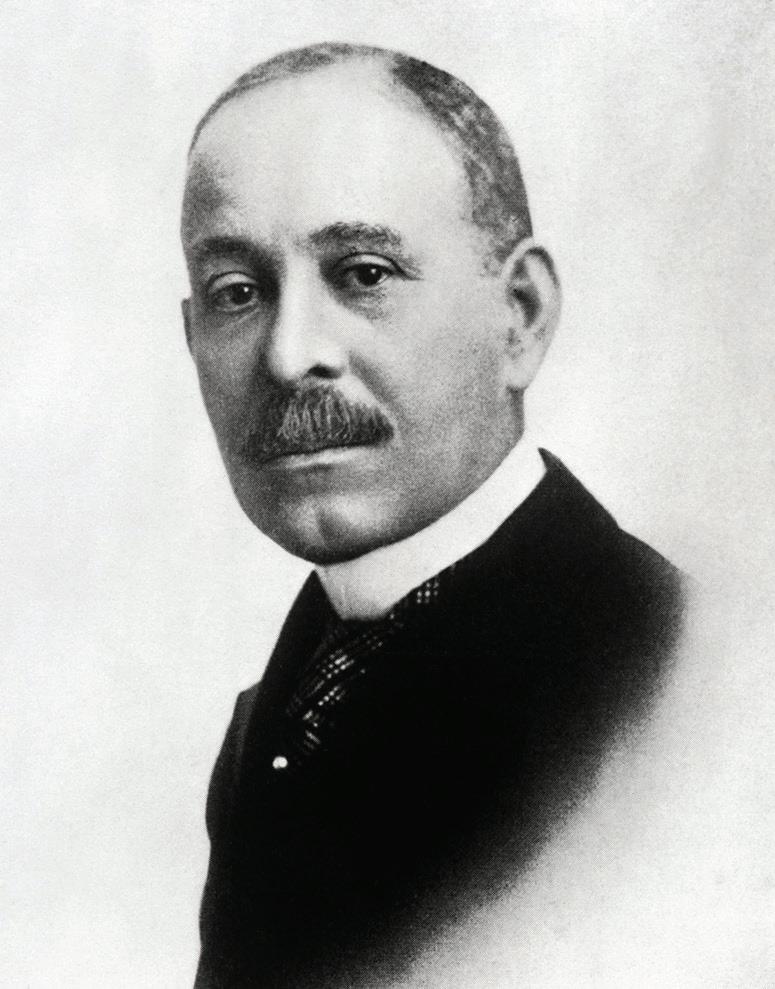
Who is this?
Earning a medical degree is a major milestone for anyone, but for a black man in the 1800s it was practically miraculous. This man, Daniel Hale Williams — known to many of his patients as Dr. Dan — did far more than “just” earn a medical degree. He checked that box in 1883, and not from some unaccredited third-rate school. His M.D. was awarded by Chicago’s Northwestern University Medical School
Counting him, Chicago at that time had a grand total of three black doctors.
Many might be content with being one of the few to reach such a pinnacle. Dr. Dan was not one of them.
Within just the first decade after his graduation from medical school his list of achievements would surpass those of most doctors — black or white — over their entire careers.
He started out opening his own medical practice on Chicago’s South Side. He also served as an anatomy demonstrator at Northwestern and shortly thereafter as an instructor at the school.
In 1887, four years out of med school, he was appointed to the Illinois State Board of Health (now known as the Illinois Department of Public Health). Then fast forward another four years to 1891; that was the year Williams founded Provident Hospital.
How many doctors do you know who have launched a new hospital? That alone is a monumental accomplishment in any age, but is especially noteworthy for a black man in the 1800s. Even more amazing was the hospital’s founding philosophy: at a time when blacks were denied treatment in mainstream (that is to say white) hospitals, Provident’s staff and patients were integrated from the very start. Although a radical departure from the norm at the time, Provident Hospital succeeded and is still in operation today
But Dr. Williams was not yet done with groundbreaking accomplishments.
One hot July night in 1893, a patient named James Cornish staggered into Provident with a knife wound. He had been stabbed in a barroom brawl below his fifth rib, just to the left of the sternum, a perfect place to kill someone with a stab to the heart. And indeed, the wound cut Cornish’s pericardium, the protective sac surrounding the heart, a wound that would prove fatal if not repaired. That is just what Dr. Dan did, making him one of the first doctors in the world to perform successful open heart surgery, and the first black doctor to do so.
Cornish went on to live another 20 years, Williams nearly another 40. He died in 1931 at age 75.
ADVENTURES IN
Middle Age
BY J.B. COLLUM
Over the past few years, I’ve written about the signals my body has sent reminding me that I am not indestructible. The song started sounding a little like a certain Bobby Darin tune when I was younger. Maybe something like:
Call me indestructible
Call me unkillable
Throw in untiring and strong
Then somewhere between 40 and 50 it sounded more like Neil Young’s “Old Man.” For the better part of two decades, it has been a swelling chorus, a chorus of reminders that I am aging.
The knees chimed in.
The back joined the discussion.
The eyes demanded brighter lighting. Now the thumb has added its voice to the choir.
Specifically, the base of my thumb — what doctors call basal thumb arthritis, or more formally, CMC (carpometacarpal) joint arthritis. Don’t ask me to spell that without help. It’s remarkable how much of daily life depends on that small saddle joint until it decides to protest.
According to the American Academy of Orthopaedic Surgeons, CMC arthritis is one of the most common forms of hand arthritis in adults over 40. The typical progression of treatment often begins conservatively and, if pain persists, moves toward cortisone injections or surgery.
Those options are valid. They help many people.
But before escalating, I wanted to see what else might at least lower the volume of the choir.
One of the first things I tried was a short opponens–style thumb brace designed to limit movement at the base of the thumb. I still don’t know where that word “opponens” comes from, but that is what an internet search told me to look for — and it did the trick.
The brace also worked.
While wearing it, my pain decreased noticeably. The joint felt supported. Irritation diminished. The American Society of Hand Therapists supports splinting as a first-line conservative approach, and research shows bracing can reduce pain and improve shortterm function.
It can also get you sympathy help when loading lumber at Home Depot.
Don’t ask me how I know.
But here was the drawback: it helped mostly while I was wearing it.
Remove the brace, resume normal activity, and the thumb resumed its complaints.
And practically speaking, wearing a brace all day is inconvenient — typing, playing music, detailed hand work — all feel different with a strap wrapped around your thumb.
Helpful? Yes.
Sustainable full-time solution? Not for me unless absolutely necessary.
I also began using topical diclofenac sodium 1% gel — available over the counter without a prescription. By the way, where do they get these names? Diclofenac? Turns out it stands for dichloro phenyl acetic acid. After reading that, I no longer wonder why they call it diclofenac. Better to give it a goofy name than that scary-sounding one. I’ll put that on my body, but not the other. Don’t try to talk me out of this opinion.
It’s a non-steroidal anti-inflammatory medication applied directly to the joint. The FDA approved 1% topical diclofenac for overthe-counter use for arthritis pain, and clinical studies support its effectiveness for osteoarthritis in superficial joints like the hands. For me, it reduces the edge of the pain without the systemic exposure of oral NSAIDs, which I already take every day for my neck. It doesn’t fix the problem, but it softens the volume.
What intrigued me most were exercises targeting the muscles between the thumb and index finger — particularly the first dorsal interosseous — along with other stabilizers of the thumb. I bet you didn’t think I knew the name of that muscle. You’d win that bet. I had to look it up too. Don’t ask me to pronounce it though. Heck, I didn’t even know there was a muscle there. Yes, I am bragging about my ignorance.
The theory is straightforward: if part of the pain comes from mild instability or even subtle subluxation at the CMC joint, strengthening surrounding muscles can provide better dynamic support. I’m just full of fancy words today. Watching these videos had me looking up words like a brand new editor for James Joyce or William Faulkner.
Research published in journals such as Journal of Hand Therapy shows that structured exercise programs for CMC arthritis can reduce pain and improve grip and pinch strength.
After a couple of weeks of consistent strengthening, I noticed a difference. Not elimination, but improvement.
I also incorporated a massage technique: applying firm but tolerable pressure starting at the base of the thumb and working upward. Manual therapy combined with exercise has demonstrated improved outcomes over exercise alone in some clinical reviews of early CMC arthritis management.
The rule is simple: If pain worsens, stop. Conservative treatment should calm the joint, not provoke it.
What I’ve Learned
The brace helped while it was on.
Please see MIDDLE AGE page 5
Special Forces
Parenting
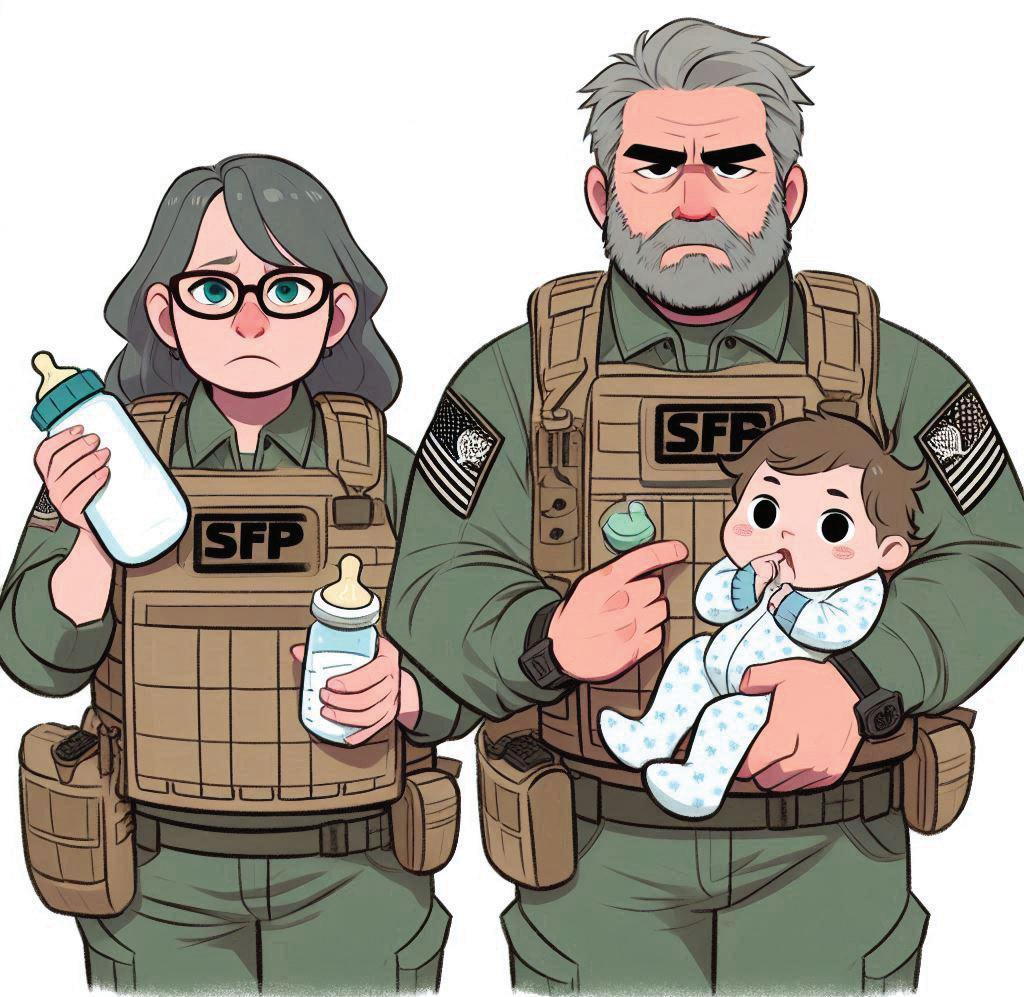
Freyja is eight years old. She is not technically a toddler. But because of severe autism and Angelman syndrome, she experiences the world with roughly the impulse control and cause-and-effect curiosity of a two-yearold — combined with the strength, reach, and mobility of an eight-year-old.
That combination matters.
Because when she finds something squeezable, it is no longer a toddler problem. It becomes an operational event.
Anything creamy, gel-based or vaguely spreadable holds irresistible promise. Liquid soap. Dishwashing liquid. Shampoo. Lotion. If it comes in a tube or bottle, Freyja sees possibility.
Not mischief.
Possibility.
I’ve written before about her fascination with redistributing liquids. But this week the campaign escalated — once into genuine fear, and once into slapstick legend. It was bedtime. I had retrieved the tube of diclofenac pain cream — our household’s miracle-in-a-tube — and in a moment of fatal optimism I set it on the kitchen island while I “quickly” ran to my office to grab something.
Now, when I say, “I’ll just grab one thing,” what I mean is, “I am about to begin an unscheduled side quest.”
I got distracted.
And then I heard screaming. Not laughter. Not a crash.
The tone that means something has moved from “mess” into “danger.”
I sprinted back to the kitchen to find Freyja had located the tube, folded it in half with surprising mechanical precision, squeezed until the seam split, and evacuated the entire contents across:
MIDDLE
AGE... from page 4
The gel helps temporarily.
The exercises appear to help more fundamentally.
Each plays a role. Middle age isn’t a collapse. It’s a negotiation.
Each ache adds its voice to the choir singing, “You are not indestructible,” but the song isn’t purely about decline.
It’s about adaptation instead.
For now, strengthening, occasional bracing, topical anti-inflammatory use, and mindful activity have kept me from rushing toward
• The floor
• Her toys
• Her playhouse
• Several other surfaces that had not requested anti-inflammatory treatment
It looked like a small pharmaceutical volcano had erupted in the center of the kitchen.
But this wasn’t funny.
Diclofenac is not hand lotion. Our concern wasn’t the mess — it was ingestion. Had she eaten some? Rubbed it into her skin?
When you parent a child with severe disabilities, relief arrives in stages.
First: Is she breathing normally?
Second: Did she ingest it?
Third: How much got on her skin?
We checked her breath. The cream has a strong odor. Nothing.
We inspected her skin. Only her hands had any sign of it.
Only then did the adrenaline begin to subside.
Only then did we grieve the fallen tube of miracle cream. I almost decided to write an ode to it.
Just when we thought the Gel Wars had cooled, Freyja pivoted to dairy.
Lorie had set a stick of butter on the kitchen island to soften. An ordinary adult act. A harmless act.
Unless you live here.
At some point, Freyja acquired it, unwrapped it with laser focus, and proceeded to coat the kitchen floor — and every reachable surface — with a thin, glistening layer of competitive-grade lubrication.
There is a particular sound in our home that signals catastrophe. It begins with a gasp. Then hurried movement. Then the word “STOP” said multiple times in succession with increasing volume and urgency.
I was in my office, wearing headphones. I caught fragments of the ruckus but not the full briefing.
About an hour later, once the shouting had stopped and I confidently assumed the cleanup phase had concluded — and more importantly, that I would not be conscripted — I walked into the kitchen barefoot. Confident.
And immediately entered what can only be described as a low-budget ice-skating audition.
My dry feet found a stubborn, invisible remnant of butter. I slid forward several feet, arms windmilling wildly, emitting a noise somewhere between a yelp and a startled
Please see SPECIAL FORCES page 6
injections or surgery.
I may not be indestructible.
The music of aging has replaced bravado with perspective.
The Bobby Darin confidence has given way to a little Neil Young truth.
But the song isn’t over.
And for now, that is enough.
J.B. Collum is a local novelist, humorist and columnist who wants to be Mark Twain when he grows up. He may be reached at johnbcollum@gmail.com
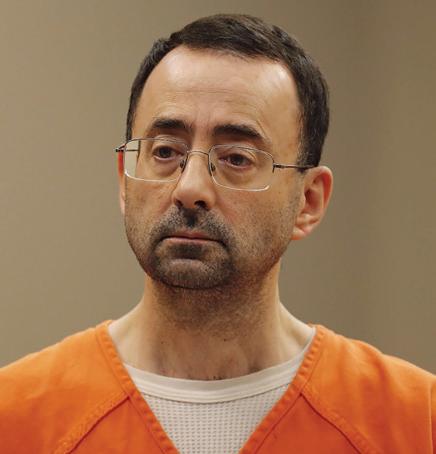
Who is this?
Not everyone in healthcare can be Florence Nightingale, right? Despite the long-running series on page 4, there are clunkers in medicine, and we will examine some of them in this series. Unfortunately, there’s enough material to keep this side of the page going for a while.
There’s no mystery surrounding the identity of this guy, Larry Nassar, the disgraced former team physician — correction — team pedophile — for the US women’s national gymnastics team. He was at the center of the largest (which is to say the worst) sex scandal in the entire history of sports. He has been convicted multiple times on state and federal charges, was attacked in court by the father of three of his victims, and has been assaulted and stabbed multiple times by other prisoners. The fact that convicted felons view him as despicable says more about Larry Nassar than all the judicial rulings against him.
Nassar’s crimes were committed over some 22 years, during which time dozens of girls, parents and coaches made allegations of abuse against him, some dating back as far as 1995. Yet no action was taken against him until 2016, when he was finally charged with sexually assaulting at least 265 young women and girls, including numerous Olympic and national gymnastics team members.
Once the lid was blown off, Nassar was sentenced (in 2017) to 60 years in prison on federal charges related to child pornography, followed in February 2018 by 40 to 125 more years in prison on state charges for sexual assault, and then in July 2018 to an additional 40 to 175 years for yet another batch of assaults.
In hindsight, Nassar’s very first job seems inappropriate: student athletic trainer for the girls gymnastics team at North Farmington High School. He was 15 at the time.
Over the coming decades his resume included work for independent gymnastics training centers, other high schools, USA Gymnastics, and Michigan State University (MSU). The entire time, he was molesting, by his own eventual admission, girls in some cases younger than 13.
Aside from the enormous emotional toll left by Nassar among his victims and their families, the entire 18-member board of USA Gymnastics resigned in disgrace, along with MSU’s president and athletic director. The university agreed to pay $500 million to 332 of Nassar’s victims.
In September 2021, 4 of Nassar’s victims — Simone Biles, McKayla Maroney, Maggie Nichols, and Aly Raisman — testified before the U.S. Senate about the FBI‘s utter failure to act after being informed of Nassar’s crimes countless times. 13 of his victims filed suit against the FBI and were awarded nearly $140 million.
Nassar will be eligible for possible release in January 2068. He will be 104.
NURSENOTES
by Lucy Dianne Sharp, RN, BSN
I start feeling a little down as soon as Fall starts to fade into Winter. The skies get cloudy, the temperatures drop, and the sun sets earlier. Then come the holidays when you are supposed to be happy because everyone around you is excited about family dinners, gifts, and decorating every inch of their homes.
For me it’s hard, but I take a deep breath, smile and pretend to be as happy as everyone around me. When I’m not able to keep time with my family and friends, I go home and sit in my favorite chair, grab a blanket, and
seagull.
For one suspended second, I evaluated my life insurance coverage.
I did not fall.
But I absolutely did not look cool trying not to.
Attempting to act composed after flailing across your own kitchen is a fool’s errand.
If Freyja were two, we
Do you have the winter blues?
tune everything out, or take a nap. This starts a pattern of taking too many naps.
As I get older, the winter blues get worse. So here I am at 80 years old, most of my family is dead or they live far away. Friends, too, have left this earth. The skies still get cloudy, temperatures drop, the sun seems to hide, the holidays arrive, and I am sad. I am again taking too many naps or just not wanting to get out of bed in the morning. Sometimes I stare at the mirror and wonder who is this person that I have become.
Researchers say there is a reason for this sadness that affects me and maybe you. It is called Seasonal Affective Disorder (SAD). Research has determined that it is related to a lack of sunlight which affects the amount of serotonin and melatonin levels in our bodies. Serotonin helps regulate mood. Melatonin causes low energy, low mood and behavior changes. Lack of sunlight also decreases the production of Vitamin D, which decreases serotonin.
would shrug and say, “This phase will pass.”
But Freyja is eight. Her body grows. Her strength grows. Her reach expands.
Her developmental stage does not keep pace.
So the vigilance doesn’t taper off — it intensifies.
There is no gradual easing into independence. No
Of course, researchers also think that it is all related to genetics and heredity, stress, negative feelings, depression, living farther north, and my personal favorite, being assigned female at birth.
SAD symptoms include intense sadness, fatigue, social withdrawal, carbohydrate cravings, weight gain, difficulty sleeping or sleeping too much, negativity, frustration, lower sex drive, irritability, difficulty concentrating or remembering, and thoughts of death or suicide. I can admit to an increase in a number of these symptoms.
What do you do if you are suffering with any of these symptoms? First, you should see your physician to rule out any illness or diagnosis that could be mimicking SAD symptoms. I hate going to the doctor with these symptoms. Sometimes I think the doctor looks at me and my age and wonders why I’m still here. But it’s better to be safe than sorry. If your physician determines you have SAD, several options may be suggested. You may need
reliable, “she knows better now.” Instead, we adapt the environment. We shorten the window of exposure. We rethink what “safe for a minute” means.
We learned:
• “I’ll just be right back” is never neutral.
• Anything squeezable is a tactical vulnerability.
• Bedroom slippers with
to start on a mild antidepressant. If your blood work shows low Vitamin D levels, you may be prescribed a vitamin supplement. There is also something called Light Therapy where you use a light box for 20-30 minutes a day.
It may be up to you to do some self-care. Examples: spend more time in the daylight, get regular physical activity, spend more time with friends, go back to a favorite activity you love to do, and if you feel you need to talk to a psychiatrist/ psychologist/counselor, by all means do it, even if for a short period of time. Talking to someone can boost your feelings and give you insights into your personal situation. I’ve done it and I highly recommend it. I could own a much nicer car based on what I spent for insight into my personal situation, but it was always worth it. Your insurance might cover it.
In my case, I have friends with horses. I drag myself to their stables and hang out
good traction in the kitchen are no longer optional.
But here’s the other truth. Underneath the chaos is curiosity.
Texture. Pressure. Spread. Cause and effect.
Freyja isn’t defiant. She’s experimenting.
She is running her laboratory with whatever materials we forget to secure.
And so the Special Forces Parenting unit adjusts. We lock down the gels. We supervise the butter. We tighten procedures.
And we keep our sense of humor.
Because when you are raising an eight-year-old with the curiosity of a twoyear-old and the strength of a gymnast, humor is not optional.
It is survival equipment. Along with, occasionally, slip-resistant footwear.
with the horses. They are always glad to see me; I bring treats. Horses don’t judge. I lean against them and gather the warmth from their bodies. They don’t mind. I’m out in the daylight. This is my therapy. If you have friends with dogs, you could offer to walk them. If you know someone with a farm, go visit. If you have a cat, tell it all your problems. They are good listeners.
In conclusion, researchers say symptoms usually start in the late Fall, reach their worst stage right about now, in January and February, and resolve themselves in the spring when we welcome the sun back into our lives.
If you’re having symptoms that are not getting better, see a physician. If you have a family member or friend who could be suffering from SAD, be there for them. Make sure they see a physician to ensure it isn’t something more serious. Check on them. You may be the anchor to ensure they don’t drift away.
... from page 1
Alcoholic Beverage Consumption Atta boy! Cry! Ask Bill Clinton Airway Be Collapsin’ A Baby Coming! All Bays Closed Angry, Belligerent, Confrontational After Birth Contractions Always Bring Crashcart Assuming Breath Continues... Already Been Circumcised Apples, Bananas, Cheerios Ativan, Benadryl, Coumadin All better, cuz? Arterial, Brachial, Carotid Anything but CPR! Avoid Botulism Casseroles Ambulances Bring Chaos Always Be Curious Anything Beats Cyanosis Actions Bring Consequences Always Boost Circulation
TRYTHISDISH
MEDITERRANEAN EGG MUG
This delicious Greek egg mug cup is packed with protein and ready in just 4 minutes!
Prep Time: 1 minute
Cook Time: 3 minutes
Ingredients
• 1/2 cup chopped spinach
• 1 egg
• 1 egg white
• 3 tablespoons diced tomatoes
• 1 tablespoon crumbled feta cheese
• 1 tablespoon onion, chopped
• 1/8 teaspoon Greek seasoning
Directions
Spray a large microwaveable mug with nonstick cooking spray. Add spinach and onion; microwave for 1-2 minutes, until softened. Dry up any excess liquid from the spinach with a paper towel. Add egg and egg whites and microwave for 1 minute. Stir and add all leftover ingredients. Microwave again for 1 minute or until eggs just set.
drates 5 g, Dietary Fiber 1 g, Protein 12 g Percent Daily Value: 25% Vitamin A, 25% Vitamin C, 8% Calcium, 10% Iron Diabetes Exchange Values: 1 Vegetable, 1 ½ Lean Meat
and
$25/hr.
I WAS THINKING
by Pat Tante
WHAT SHALL I DO WITH JUNE? (PART II)
Editor’s note: In Part I, Pat’s best friend June has succumbed to illness, and after her cremation her family has given Pat the urn, beginning the quest for a suitable permanent home for June.
Vacation time was approaching and I began to plan with the thought that June might like to go to Italy or maybe Mexico – she loved bright colors and happy music. Cold climates were out. June would prefer a warm, maybe tropical place. How about California? Cool nights, balmy days and enough kooks about to please even June. I scoured travel brochures and investigated hotels, restaurants and sights to see, but also on my list was what to do with June when I got there.
Wait, how about a cruise? I could take a Caribbean cruise and let her ashes fly out to sea settling on the waves with one last sparkle. This could be a possibility, I thought. June would think it very dramatic. Sea scattering has a nice ring. But then, maybe she would prefer a stationary place; one where friends could visit while enjoying the scenery. How about overlooking a river or a lake? That would be peaceful and close to home too. Would I have to erect some kind of monument? A marker? I couldn’t just set her box somewhere or bury it under a high rock.
A week or so later a note arrived from a good friend in the Virgin Islands inviting me for a visit. How serendipitous! I’ll take June. Megan’s Bay in St. Thomas is beautiful – white sand and no big waves.
I responded with a hearty “yes.” That would be lovely. I was so excited that I could hardly work the next few weeks. Was June excited also?
I began packing my cool summery clothes and sandals. How would I pack June’s box? Could she go through security? Would she be some kind of contraband? Better not to carry her box, I thought, just tuck her into the suitcase.
I searched for a non-spill container. I found a glass Mason jar and an empty chocolate tin. I figured that chocolates would be more to June’s liking. I slowly opened her box thinking of the old story about Pandora and whether some ghostly shadow might rise up and give me a heart attack. No, if anything, June would be a friendly, warm spirit.
The top came off. Inside was a small – was that a Ziploc? Such a small amount of ash. June was not a large person, but gee whiz.
Briefly, I thought that I might have the wrong person, but had to quickly dismiss that thought.
Tenderly, I tucked June into the small tin, empty now of the chocolates with almond centers, and hoped that the smell would placate her until we got to the islands. She and I always enjoyed chocolate and a glass of red wine.
We got through check-in and security with no problems, but I had to think how cold it would be in the plane’s hold. A teensy bit of guilt assailed me. Maybe I should have stored her in my carry-on.
It was a pleasant flight and my friends were waiting at the gate. We picked up my suitcase (and June) at baggage claim and headed up-island to their home. We relaxed on the patio with a glass of wine and caught up on things. Sue asked what I would like to do while I was there. I hesitated a little before I spoke of June in my suitcase. Sue looked a bit perplexed, but overcame it quickly. She was always one to tackle a problem with both feet on the ground and a can-do attitude.
“Well, she said, we don’t have to decide right this minute. Let’s go to Megan’s Bay for a swim and a picnic dinner first. Rain is predicted tomorrow.” It was a beautiful late afternoon, not too many tourists around and I began to think that this soft, sandy beach and clear blue water might be a perfect place for June to stay. Then I would have two friends in the islands!
We awoke next day to heavy rains, with still more the next day and even more the next day.
Sue was apologetic, but Mother Nature was being her unpredictable self. It even rains in an American Paradise.
Then it was time to return home – home to obligations and more daily routine. I packed June amongst the dirty clothes and a dry bathing suit
Sorry, June. But I haven’t given up. ...TO BE CONTINUED...
SOCIAL MEDIA EPIDEMIC
by Justin White
Part III
As with all advances in technology, there are those who use social media as a propaganda platform, sharing links and stories that may be blatant lies or half-truths.
With the rise of AI and deep fakes, finding credible, factual, and unbiased news sources online can be a maze that’s nearly impossible to navigate.
To understand what constitutes fake news, step one is understanding exactly what fake news and misinformation is. Broadly speaking, the terms can be defined as stories or information deliberately prepared in a manner that to spreads
lies and discredits someone, or that is designed to create a negative emotional reaction.
It is different from an accidental error in reporting. Fake news can be generated for fun and entertainment, but it is often a malicious attempt to spread the seeds of distrust, and to present personal opinions as fact, whether or not there is any merit to it.
With the advances of AI systems, it is possible to emulate anything you want and make it look legit. AI systems can create audio and videos that impersonate famous actors and politicians so perfectly that they are nearly impossible to distinguish from the real
thing. In short, just because something sounds and looks legit doesn’t mean it i. Nearly everything onlimne should be looked at through the eyes of a skeptic.
Why is there so much fake news on the internet? Social media has given the average user a voice to the world. Courtesy of TikTok, YouTube, etc., anyone can be a news source. The goal of these posts is less about being honest and more about being seen by as many people as possible. Gaining likes and shares are now more important than spreading legit news.
We also have to look at the fact that people are drawn to other people’s drama. On top of that, sensational stories, those either being about celebrities or conflicts within the government, (aka conspiracy theories,) people cannot get enough. And people who promote fake news understand this better than anyone. Social psychologist Jonathan Haidt said that “outrage is the key to virality.”
Researchers at MIT did a study finding that fake news travels up to 10 times faster than true reporting.
When explosive,
misinforming posts go viral, their corrections are never widely seen or believed. The“outrageous fact” that blast through social media is louder and more interesting than any follow up correction. When it comes down to the race between “false but interesting” and “true but boring” the false story often times comes out the winner. How, though, does Fake news spread online? It comes down to one word: “Algorithm.” What we see on social media is curated to match our interests. This algorithm is used to keep us online and clicking as long as possible. The longer you’re online the more you’re targeted by ads that the platform can sell. To keep you online, the algorithm uses data about you, like what types of content you have liked in the past, the personal cookies on sites like Amazon and Google, and even your web history can all be used as a way to tailor content for you. By liking and sharing content online you are telling the platforms what you want to see. The more you like something the more you’ll be exposed to it. Plus, content liked
by more people are also seen by more people. The goal of which is to be spread online as broadly as possible.
According to a study in 2024 at Indiana University found that just 0.25% of X users, (formally known as Twitter) were responsible for between 73% to 78% of low credibility or misinformation tweets. Worse yet, the accounts have been verified by X, meaning they pay for the company’s accreditation which gives their misinformation the appearance of legitimacy. The technology behind social media are not optimized for providing access to accurate, verified information. The goal is engagement by any means, allowing blatant lies to circulate. In short, if it gets views, who cares about truth. As I have stated in earlier articles, social media has its good qualities, but it also has its bad ones. The important thing to keep in mind is that just because it is online doesn’t mean it is true. Discernment is the key here. Don’t just blindly accept everything online. Do your research and decide for yourself. By doing so, your chances of being mislead are greatly diminished.
CRASH COURSE
More Americans have died on US roads since 200 0 than in World Wars I & II combined
As all of us presumably know, using a cell phone while driving is at least dangerous, and in most localities, illegal. It’s a big part of a huge highway safety issue known as distracted driving. It kills people. Lots of them. The National Highway Traffic Safety Administration (NHTSA) counted 3,522 people killed during one recent year (2021) as a direct result of distracted driving. As if that’s not bad enough, more than a hundred times that many were injured that year: 362, 415, all injured by distracted driving.
NHTSA says approximately 10 percent of all fatal crashes involve distracted driving, a very costly toll.
As alluded to above, cellphone use and texting gets much of the blame for distracted driving, but there are many additional contributors. For example, adjusting the radio or climate controls can take a person’s eyes off the road. So can eating and drinking, which can be made worse by spilling said food and drink, especially if they’re ice cold or steaming hot. Simply talking to passengers can sometimes be enough of a distraction to cause an accident, and arguing and fighting while driving can multiply that risk exponentially, whether that’s with the kids in the back seat or the argument is with an adult. Surprisingly enough, having pets secured in a crate or kennel while driving is listed among the top ways to prevent distracted driving.
As long as the list of potential distractions is, cellphones always seem to top the list, and there’s a pretty good reason for that.
Of all the potential diversions listed above (and others), only cellphones have the capacity to somehow magically remove us from the scene. Since probably all of us are guilty of talking and driving, all of us have experienced that out-of-body experience of ending a call and realizing that we have absolutely zero recollection of anything that happened over the past five miles.
In other words, we were completely distracted and avoided a collision purely by chance. In other words, we avoided an accident by accident. If something had required our urgent attention, chances are we would have crashed.
One of the especially tragic things about distracted driving is the number of purely innocent bystanders killed as a result. There’s no telling how many passengers have been killed or injured by someone else’s distrac-
tions, but there are specific numbers when it comes to non-occupants, like pedestrians and bicyclists, who have died as the result of distracted driving crashes: 644 in 2021. That’s close to two people dying every single day of the year, added to the more than 1,000 people riding inside vehicles who are killed or injured every day by distracted driving.
As mentioned in the first few words of this article, everyone knows the things that cause distractions. We know that cellphones are definitely a distraction, but most of us think we’re the exception: we do ok driving while talking and driving and reading texts. It’s those other people who have the problem. It’s time to admit that we’re fooling ourselves. It is NHTSA who launched the
U Drive
U Text
U Pay campaign.
Anyone who happens to get a traffic ticket for talking on a cellphone while driving (which is evidently quite quite rare) should consider themselves very fortunate indeed. That last line of the campaign — U Pay — could easily refer to massive injuries, a huge fine, or prison time — or all three. A ticket would be a piece of cake by comparison. By why get any of it? As other campaigns say, “It Can Wait.” It’s a sure bet that 100% of the people who died in distracted driving crashes involving cellphones would indeed wait if they had the chance for a do-over NHTSA encourages all drivers (but especially drivers age 15 to 20, the demographic with the highest rate of distracted drivers at the time of fatal crashes) to read and adopt “The Pledge.” Here it is. Will you take it?
TAKE THE PLEDGE
The fight to end distracted driving starts with you. Make the commitment to drive phone-free today.
• Protect lives by never texting or talking on the phone while driving. • Be a good passenger and speak out if the driver in my car is distracted.
• Encourage my friends and family to drive phone-free.
READ THE EXAMINER ONLINE!
HEAD CASECHRONICLES
Confessions of a Semi‑Stable Human
I’ve noticed that the more responsible I try to be, the more the system treats me like Pablo Escobar.
You see, I have Attention Deficit Disorder, A.D.D. — professionally diagnosed, medically verified, scientifically proven — and Adderall has literally changed my life. I mean, before Adderall, I was like a human pop-up ad. Now I can finish thoughts. Projects. Sentences. Sometimes even paragraphs.
But apparently, because Adderall has “street value,” I can’t just get my refill like a normal adult. Oh no. I have to personally call my doctor every single month like I’m checking in with a parole officer.
And every time — repeat: every time — something goes wrong.
Today was classic. But also typical.
I called the doctor’s office: “Hey, just confirming my prescription got called in.”
They said, “Oh yes, we sent it last week.”
Great. So I stroll into the pharmacy, confident, feeling productive, like a man with executive function.
The pharmacist looks at her screen and says, “Hmm… I don’t see anything here.”
I said, “Well, my doctor confirmed it was sent.”
So she starts clicking. You know that sound? The “I’m pretending to do something” keyboard solo.
Then she says, “It must have something to do with your insurance...It’s on hold.”
I said, “That’s okay. Don’t worry about insurance. I usually use GoodRx and pay cash.”
So she does another keyboard solo and then goes, “Okay… that’ll be $384.”
I said, “That’s funny, because GoodRx says thirty-eight dollars. And seventy-four cents. Not three hundred and eighty-four dollars. Unless that comes with a lifetime supply and a pony.”
Then she clicks again — because clearly the answer to everything is more clicking — and says, “We’ll contact you when it’s ready. We close for lunch between 1:30 and 2.”
It hit me at that moment that I’ll never know what really happened. And what new reason it will be next month.
Maybe they forgot to hit “Send.”
Maybe my prescription was abducted by aliens.
Maybe there’s a government database that says, “Don’t trust this man. He has focus now.”
But what blows my mind isn’t just the confusion.
HEAD CASE... from page 10
It’s
Like I’m standing there in a trench coat whispering, “Psst… you got any 20-milligram extended release?”
Listen, I’m not a dealer. I’m not running a cartel. I just want to fold laundry without crying.
And here’s the irony: One of the reasons I need Adderall is to deal with the stress of getting Adderall.
But hey… it’s gonna make a great comedy routine.
That’s how I’ll keep my sanity: by selling tickets to it. Now if you’ll excuse me, I need to call my doctor again.
Right after I find my phone.
Which I just set down… somewhere…
The Examiners
Did you make a to-do list for me?
Yes, but I didn’t include fixing that light. It’s too dangerous.
I really don’t want you playing around with wiring. That’s okay. I have electrical skills It’ll be fine. You’ll see
ACROSS
1. Type of club
5. European capital
9. Collegiate conf. with its HQ in Greensboro, NC
12. First name of the 2009 Masters champion
13. Bane to Fido
14. Native of Bangkok
16. Job festival
18. Please, give me one
19. Amazement
20. Converse
21. Kidney adjective
22. Purloined
23. A bunt is usually this
24. Religion founded in Iran
27. Augusta’s Blue _______
28. Muse of lyric poetry
29. 2002-2003 epidemic (abbrev)
31. Ball position
34. Argument tactic
38. Restaurant or bar bill
39. Augusta’s NPR station
40. Prefix denoting tissue
41. Meeting of witches
44. Sticky pine excretion
45. “Handsome” radio icon
47. Georgian who won the 1973 Masters
50. First part of Lew Alcindor’s adopted last name
51. Singular version of 58-D
52. Ocean
55. Housekeeper
56. Adorned with streamers
59. Palmetto state util.
60. Blocker prefix
61. It hangs above the throat
62. Where the Wild Things ___
63. Family
64. Droops
by Dan Pearson
Well if I’m right, don’t be shocked.
CAPTION THIS
Check out our new reader contest on p. 11
Write your most appropriate, clever, or funny caption to the photo shown for a chance to win whatever cool swag we eventually decide to give away!
Email your entry to Dan@AugustaRx.com
DEADLINE TO ENTER: 5:00 PM FRIDAY, FEB. 27, 2026 Have fun!
1. Chew on
2. Fairy tale beast
3. Mr. Janzen of the PGA
4. Bend (alt. spelling)
5. Garbage, especially with animal entrails
6. Roofing stone
7. Flower wreath
8. Paddle
9. Seat of Clarke County (GA)
10. Constant; unvarying
11. Augusta _______
12. “Obamacare” acronym
15. Doing nothing
17. 17th letter of the Greek alphabet
21. Site of the 2016 Summer Olympics
22. Satisfy to the full
23. The only baseball player to hit 60 or more homers in a season 3 times
24. Of the highest quality
25. Operatic melody
26. A soldier armed with a halberd
27. Norman of the PGA
29. Quick!!!
30. Curve
32. Former Peruvian money
33. English public school
35. Bob, winner of the ‘86 PGA Championship
36. Clot
37. Look or demeanor
42. Thick industrial gunk
43. Canaanite god (var.)
45. Poor actors
46. Manila hemp plant
47. Main artery
48. _____ Flu
49. Chafe
52. Cozy
53. Long fish
54. Dental org.
56. London-based broadcaster
57. Just one 53-D
58. Plural version of 51-A
DIRECTIONS: Every line, vertical and horizontal, and all nine 9-square boxes must each contain the numbers 1 though 9. Solution on page 14.
QUOTATIONPUZZLE
DIRECTIONS: Recreate a timeless nugget of wisdom by using the letters in each vertical column to fill the boxes above them. Once any letter is used, cross it out in the lower half of the puzzle. Letters may be used only once. Black squares indicate spaces between words, and words may extend onto a second line.
on page 14.
Use the letters provided at bottom to create words to solve the puzzle above. All the listed letters following #1 are the first letters of the various words; the letters following #2 are the second letters of each word, and so on. Try solving words with letter clues or numbers with minimal choices listed. A sample is shown. Solution on page 14
ATHEBESTMEDICINE
ha... ha...
blonde woman was speeding in her little red sports car when a blonde police officer pulled her over.
The officer asked for the driver’s license. The driver rummaged through her purse, growing more agitated because she couldn’t find it.
“What does it look like?” she finally asked.
The officer replied, “It’s a thin little rectangle with your picture on it.”
“Here it is,” she finally said, handing the officer a small pocket mirror she found at the bottom of her purse.
The officer looked at the mirror, handed it back, and said, “Oh, I’m sorry. You can go. I didn’t realize you were a cop.”
Moe: What do you call a dog in a submarine?
Joe: Uh... tell me.
Moe: A subwoofer.
A guy decides to join a church. He diligently studies the Bible and meets with a priest to see if he is ready.
The priest says, “Let’s start with the basics. Where was Jesus born?”
“Pittsburgh,” the guy answers.
“No!” the priest says. “What are you talking about? Try again.”
The guy thinks for a moment and says “Was it Philadelphia?”
The priest shakes his head and says “Bethlehem. Jesus was born in Bethlehem!”
“I was close!” the guy says. “I knew it was a city in Pennsylvania!”
Moe: How many opthalmologists does it take to change a light bulb?
Joe: One? No wait...two. I think two.
Moe: Did you hear about the cheating scandal in curling at the Olympics?
Joe: I heard something about it, but there’s no way it can be true.
Moe: Why not?
Joe: Because no one has the first clue what the rules of curling are.
Moe: You said you might have to spend Valentines Day alone. How did things end up?
Joe: As it turned out, I did have a date for Valentines.
Moe: That’s great! How was it?
Joe: It was definitely okay. I think I still like figs better though.
Dear Advice Doctor,
Because try as they might, no one can stare at their phone all day.
Staring at my phone all day has certainly had no fffect on ME!
By popular demand we’re making at-cost subscriptions available for the convenience of our readers. If you live beyond the Aiken-Augusta area, or miss issues between doctor’s appointments — don’t you hate it when that happens? — we’ll command your mail carrier to bring every issue to your house!
NAME
ADDRESS
CITY STATE ZIP
Choose six months for $26 ____ or one year for $48 . Mail this completed form with payment to Augusta Medical Examiner, PO Box 397, Augusta GA 30903- 0397
People don’t seem to realize the complete world meltdown we’re in right now. It has even affected me, and I’m nobody - except on my job. There I am THE key employee. I was supposed to get a raise but now that’s on indefinite hold — because of TARIFFS — which I think is unfair. At least I still have a job and I’m still getting paid. But I think my raise should happen now. Retroactively, in fact. I’m prepared to play hardballunless you think I should keep being patient.
— Show me the money!
Dear Show Me,
I realize this is a frustrating and disappointing turn of events. And remember, it’s disappointing for millions, not just you. Baseball is America’s pastime, and spring training is right around the corder. Opening Day is always full of hope and promise, and we need that right now.
But what about this idea: while you’re waiting, could you play hardball in your own yard? Do you have a few mitts, a bat and a ball? That’s really all it takes. The tools of the game are very simple. Even if you don’t have them, what about a Nerf ball? Experts say one of the key ways to survive the winter doldrums with our sanity intact is to get regular exercise. Daily exercise is always important, but it’s especially important now when we have to create our own reasons to even leave the house in this cold weather we’ve been having. Even a simple game of catch with one of your kids out in the fresh air and sunshine can get the blood stirring. It’s good for both physical and mental health. If you don’t have a ball, what about a Frisbee? Surely you can find something to throw back and forth. Try a potato!
One more thing: remember that exercise is supposed to be a daily event. So play hardball every day. Or softball. Or Nerf ball. Or Frisbee.
And if you can’t play catch, go for a walk. Figure out something you can enjoy and then do it every day.
I hope this answers your question. Thanks for writing!
Do you have a question for The Advice Doctor about health, life, love, personal relationships, career, raising children, or any other important topic? Send it to Dan@AugustaRx.com. Replies will be provided only in the Examiner.
1 7 8 8 3 9 1
CAPTION THIS
READERS: YOU ARE THE BEST! Which one is your favorite? Email your caption for this issue’s new picture to Dan@AugustaRx.com
1. Our band plays Death Metal 2. We’re able to ride without helmets in South Carolina — and in every other state we’re unable to wear helmets.
3. Let us work our makeover magic on you! Come see us at Nu-Style Salon.
CAPTIONTHIS
CONTEST RULES: To be perfectly honest — and this is embarrassing to admit — we’re still trying to figure out the exact rules for this new contest. Stay tuned! In the meantime, email your top pick by number to Dan@AugustaRx.com
QUOTATION PUZZLE SOLUTION
The things you want to die for are the things you live for. — Author unknown
PROFESSIONAL DIRECTORY
ACUPUNCTURE
Dr. Eric Sherrell, DACM, LAC Augusta Acupuncture Clinic 4141 Columbia Road 706-888-0707 www.AcuClinicGA.com
CHIROPRACTIC
DERMATOLOGY
Evans Chiropractic Health Center
Dr. William M. Rice 108 SRP Drive, Suite A 706-860-4001 www.evanschiro.net
www.AugustaPsychandTherapy.com
DENTISTRY
Jason H. Lee, DMD 116 Davis Road Augusta 30907 706-860-4048 Floss ‘em or lose ‘em!
Georgia Dermatology & Skin Cancer Center 2283 Wrightsboro Rd. (at Johns Road) Augusta 30904 706-733-3373 www.GaDerm.com
DEVELOPMENTAL PEDIATRICS
Karen L. Carter, MD 1303 D’Antignac St, Suite 2100 Augusta 30901
Steppingstones to Recovery 2610 Commons Blvd. Augusta 30909 706-733-1935
Parks Pharmacy 437 Georgia Ave. N. Augusta 29841 803-279-7450 www.parkspharmacy.com PHARMACY
MOVE-Lp(a) study
A clinical research study for people who have or are at risk for heart disease or stroke and have high Lp(a) levels
MOVE-Lp(a) is a clinical research study from Eli Lilly and Company. The MOVE-Lp(a) study will test if an investigational medicine safely lowers Lp(a) levels and reduces the risk for heart disease or stroke.
Can I join the study?
Yes, you may be able to join the study if you:
• are at least 18 years of age
• have a high level of Lp(a) in your blood
• already have heart disease or have had a stroke or are at risk for a first heart attack or stroke
or scan the QR code
Lipoprotein(a) is also known as Lp(a). Lp(a) is an important risk factor for heart disease and is largely determined by your genes.
Lp(a) carries cholesterol (a type of fat) in the blood. If you have a high level of Lp(a), you may have a higher risk for heart disease or stroke. You may have a high level of Lp(a) even if you have a healthy lifestyle or are taking other medicine for your cholesterol.