

Workforce Transformation & Your Future Career
| A promotional supplement distributed on behalf of Mediaplanet, which takes sole responsibility for its content
“High-trust cultures develop because of specific, repeated leadership behaviours, practised consistently over time.”
Seema Shah, Director of Consulting, Great Place to Work UK Page 02

www.businessandindustry.co.uk
“While it can make our working lives easier, AI also comes with risks for businesses and society.”
Kieran Harding, Acting Chief Executive, Business in the Community Page 06

When music becomes your career
Christy Bullen worked a corporate job before pursuing his passion for music by becoming a band leader.
Iused to work for a building society, helping people pay their bills and organise their finances. I’ve been a musician for years, but never thought I could have a music career without writing hits and becoming the next mega-star, until this job opportunity with Rocksteady came along.
Igniting a spark that becomes a lifelong passion
Now I get to live out my passion for music, spending every weekday teaching children how to play music in a rock and pop band. I had the same experience as most in primary school: learning the recorder to play ‘Three Blind Mice,’ and felt this was a much more real-world, inspiring way for children to learn music. I would have loved to do band lessons as a child!
As a band leader, I see some amazing moments; children’s eyes light up as they discover how to play their first power chord or when they get their first round of applause after performing as a band! Seeing them ignite that same spark that I did, which made music a big part of my life, is amazing! Every day is different. I travel to different schools, teach different children, play a variety of songs and teach so many skills. It keeps me on my toes and stops the daily rut you can get into when working in an office.
Work-life balance means more time with family
I work 8 am-4 pm, Monday to Friday, and am employed permanently, earning a salary with a pension and benefits package. One of the most appealing parts of this role for me is the work-life balance. I don’t work during evenings and weekends or during school holidays, which is an absolute lifeline for my family and me. When my kids are on school holidays, so am I! I’m also able to balance being a professional musician playing shows across the country with teaching for Rocksteady.

By fostering a culture of trust, leaders create a high-performance
workplace that attracts and keeps top talent

By fostering a culture of trust, leaders create a high-performance workplace that attracts and keeps top talent.
For companies looking to boost talent attraction and retention, the value of workplace culture is inescapable. It’s easier to recruit — and keep – exceptional talent when you can boast an exceptional experience.
Great leaders build trust, which shapes the culture that drives business performance
As a consultant, I work with companies of all sizes and sectors, each striving to build an extraordinary culture. The highest performing organisations feature a repeatable pattern any business can follow: a culture of trust.
A workplace built on trust transforms the everyday experience for employees. When people feel trusted, turnover rates drop and attracting talent becomes a smoother, more organic process.
What does trust really mean?
High-trust cultures develop because of specific, repeated leadership behaviours, practised consistently over time.
Great leaders listen to employees and care about their ability to thrive inside and outside of work. They set clear expectations, celebrate achievements, invest in employees’ development and thank every employee for their contributions. They share the fruits of
success and ensure everyone feels like they belong.
As trust is built, more employees start having a consistently positive experience. They build deeper relationships with colleagues, look forward to coming to work and become advocates for the organisation. More than perks or benefits, trust is a foundational element of creating a stand-out employee value proposition and employer brand. When genuine trust underpins your culture, it fosters loyalty and advocacy among your team, naturally strengthening your recruitment pipeline.
This isn’t just a ‘nice-to-have’ – it’s an essential ingredient for business success. And the financial gains of nurturing a high-trust culture extend far beyond reduced recruitment costs. Organisations where trust is truly embedded consistently outperform the market across virtually every key business metric. Renowned economist Alex Edmans’ analysis of data from 2001-2023 found that the UK’s Best Workplace™ organisations – where employees have consistently high levels of trust – perform more than four times better than the FTSE AllShare Index.
The evidence speaks for itself: building trust with employees is a proven strategy for business growth and resilience.
@MediaplanetUKIE Please recycle
Project Manager: Yasmin
Ellen
Paid for by Rocksteady Music School
Rocksteady is the UK’s largest rock and pop music school, offering musicians permanent jobs
WRITTEN BY Seema Shah Director of Consulting, Great Place To Work UK
WRITTEN BY Christy Bullen Band Leader, Rocksteady Music School
How universities are supporting student employability
The Graduate Futures Institute (formerly AGCAS) is the community for everyone contributing to careers and employability in higher education. Through our 150+ member universities, we’re shaping graduate futures, together.
Founded nearly 60 years ago, we recently rebranded to reflect the realities of today’s higher education landscape. Careers services remain central to our mission, but our members made it clear that supporting students’ employability now requires a whole university approach.
Much employability support still sits outside the curriculum: workshops, appointments, employer events, mentoring and more. This work is vital and will continue. But on its own, it cannot reach every student at the right time. Engagement often comes late, sporadically, or not at all, influenced by time pressures, confidence, belonging and awareness.
Curriculum based approaches don’t replace the expertise of careers professionals; they amplify it.
Embedding employability into teaching and assessment
When done well, embedding employability into teaching and assessment enables students to practice and articulate the skills they’ll need beyond university while they’re still learning and supported. Sometimes this is as simple as designing assessments that produce outputs students can use later, or framing feedback in ways that help them recognise their progress in real world terms.
Curriculum based approaches don’t replace the expertise of careers professionals; they amplify
Turning a career break into a career boost

it. They allow employability to scale across programmes, while careers teams continue to provide specialist guidance and targeted interventions. The strongest outcomes emerge when academic and professional services work in partnership and can demonstrate the impact of that collaboration.
Industry collaborations
Across our membership, this joined up practice is already taking shape. At the University of East London, the Dragons’ Den in Biosciences initiative enables final year students to pitch innovative healthcare solutions to academic, enterprise and industry experts.
At the University of Sheffield, a long running partnership with the Sheffield Children’s Leukaemia Genomics Service has supported postgraduate students into careers within the NHS genomics sector. Both programmes were recognised in our annual Academic Employability Awards.
It’s heartening that, despite significant changes in the sector and a challenging economy, our community of members is growing and remains deeply committed to ensuring that students and graduates have access to meaningful, future-focused career opportunities.

WRITTEN BY Martin Edmondson CEO, Graduate Futures Institute

Reframing your career break as a period of skills development – rather than a ‘career gap’ — helps you rebuild your career with confidence and purpose.
When considering a return to work, it’s easy to slip into self-doubt. You may be wondering whether you’ve been out too long, your skills are out of date or why someone would employ you over a tech-savvy graduate.
In my returner guidebook, ‘Return Journey: How to get back to work and thrive after a career break’, I emphasise that a career break is far from career-ending. It’s a stage of life that broadens and deepens the strengths you offer an employer. Proudly own your break rather than apologising for or hiding it. You’re returning with a host of valuable skills, like resilience, adaptability, empathy and a fresh perspective.
A career break is a rare opportunity to reflect and reset.
Craft your story
How you integrate your break shapes your confidence and credibility. Aim to highlight the range of life and career experiences that positively differentiate you. Craft a concise professional introduction — for networking contacts or prospective employers — that draws together three elements: highlights of your working life, your career break experiences and achievements and future ambitions. A strong narrative reassures others and strengthens your own sense of direction.
Choose to return or pivot
A career break is a rare opportunity to reflect and reset. Returning to work doesn’t have to mean fitting back into an old mould — especially if your interests, priorities or values have changed, or if opportunities in your field are limited. Careers are long — it’s never too late for a career pivot to open new opportunities and reignite your ambition.
Build momentum in small steps
Don’t wait to map out your perfect path before acting. A test and learn approach is more effective. Take one achievable step at a time: reconnect with a former colleague, join a support network (such as our Career Returners Professional Community), attend an industry event or take a skills update course. Action builds confidence and may create your lucky break.
Once you’re back at work, you’ll find you’re stronger than ever, because of — not despite — your career break.






WRITTEN BY Julianne Miles Co-Founder, Career Returners
Organisations that prioritise human wellbeing through proactive, everyday mental maintenance reduce volatility, strengthen retention, protect growth and drive competitive advantage.
Workplaces are under strain, with employees feeling tired or burnt out, managers fire-fighting and digital overload causing stress and anxiety. We also spend so much time at work that the boundaries between personal and professional become blurred.
None of this is good for mental health, but it’s also bad for business. In fact, Deloitte estimates that poor mental health costs UK employers £51 billion a year.1
A staggering £24 billion1 comes from ‘presenteeism,’ where employees are physically present but emotionally absent. When mental health is managed reactively, managers struggle quietly, performance falters, growth slows, culture fractures, and everyone pays.
“Then the workplace becomes a symbol of negativity, so the cycle continues, resentment builds and you feel disillusioned,” explains Jodie Cariss, Founder & CEO, Self Space, which delivers mental health support to organisations via one-to-one therapy and coaching, therapist-led workshops, training and cultural consultancy.
“Whereas if you can turn up to work as yourself and know that support is in place, it helps you engage.”
Everyday mental maintenance for individuals, managers, leaders and the business Workplace mental health support is often too fragmented, too ‘tick box’ and too reactive; and mental distress is often treated as ‘an individual resilience problem,’ rather than an issue shaped by workload.
Instead, Cariss insists that the strongest organisations don’t wait for a crisis; they move from reactive support to proactive mental maintenance with “human-first” interventions such as therapy and coaching, led by clinical experts and immediately accessible.
“Across mental health, people often treat the symptom but not the cause,” she says. “We need to treat the cause, so there’s longevity to change.” This is mental maintenance in action.
Crucially, it must operate across every layer of an organisation, including individuals, managers, teams and culture. This is systemic change, so leadership is central to its success.
“Are leaders adopting and participating in what we’re offering?” asks Cariss. “It all filters down from the top. When therapy feels like a conversation, and leaders fix the way work works, people use it, and everyone wins.”

Workforce transformation must start with managers
Gallup’s recent study ‘Why Great Managers Are So Rare’ found that companies fail to choose the candidate with the right talent 82% of the time, leading to poor engagement and billions of pounds of losses for organisations.1
Manager impact on wellbeing
One of the biggest influences on an employee’s wellbeing is their manager. For almost 70% of people, their manager has more impact on their mental health than their therapist or their doctor — and it’s equal to the impact of their partner! Yet, while the role of managers in team wellbeing is clear, their influence on organisational performance is often overlooked. There’s no doubt that managers have a significant impact on their team, but the significance on organisational performance and profitability is highlighted less. As the old saying goes, ‘People don’t leave jobs, they leave managers.’ And with pressure building and a reduced headcount, managers aren’t equipped with the skills they need to enable high-performing teams.
Coaching vs managing
Managers under pressure often lack the skills to develop high-performing teams. My view has always been that all leaders should be coaches, not managers. Coaches focus on individual development, provide effective feedback, build trust and foster psychological safety. They handle pressure calmly, think long-term and create adaptive teams that learn and improve rather than simply execute tasks.
Unlocking high performance
To unlock huge opportunities, deliver highperforming teams that shift our GDP in a positive direction, build strong engagement and resilience at work and manage the constant challenges we all face, we must think differently about our recruitment and skills required for managers. The current situation, as Gallup highlights, isn’t sustainable and will inevitably lead to poorer results for companies.
For over a decade, I’ve observed this being a challenge for business leaders worldwide, so we must think differently now to change our economic fortunes. A strategic approach to wellbeing in the workplace with coaches at the heart of the management engine delivers positive results — something explained in more detail in my new book The Wellbeing Centered Workplace.

(2024).
WRITTEN BY Chris Cummings Founder, Wellbeing at Work
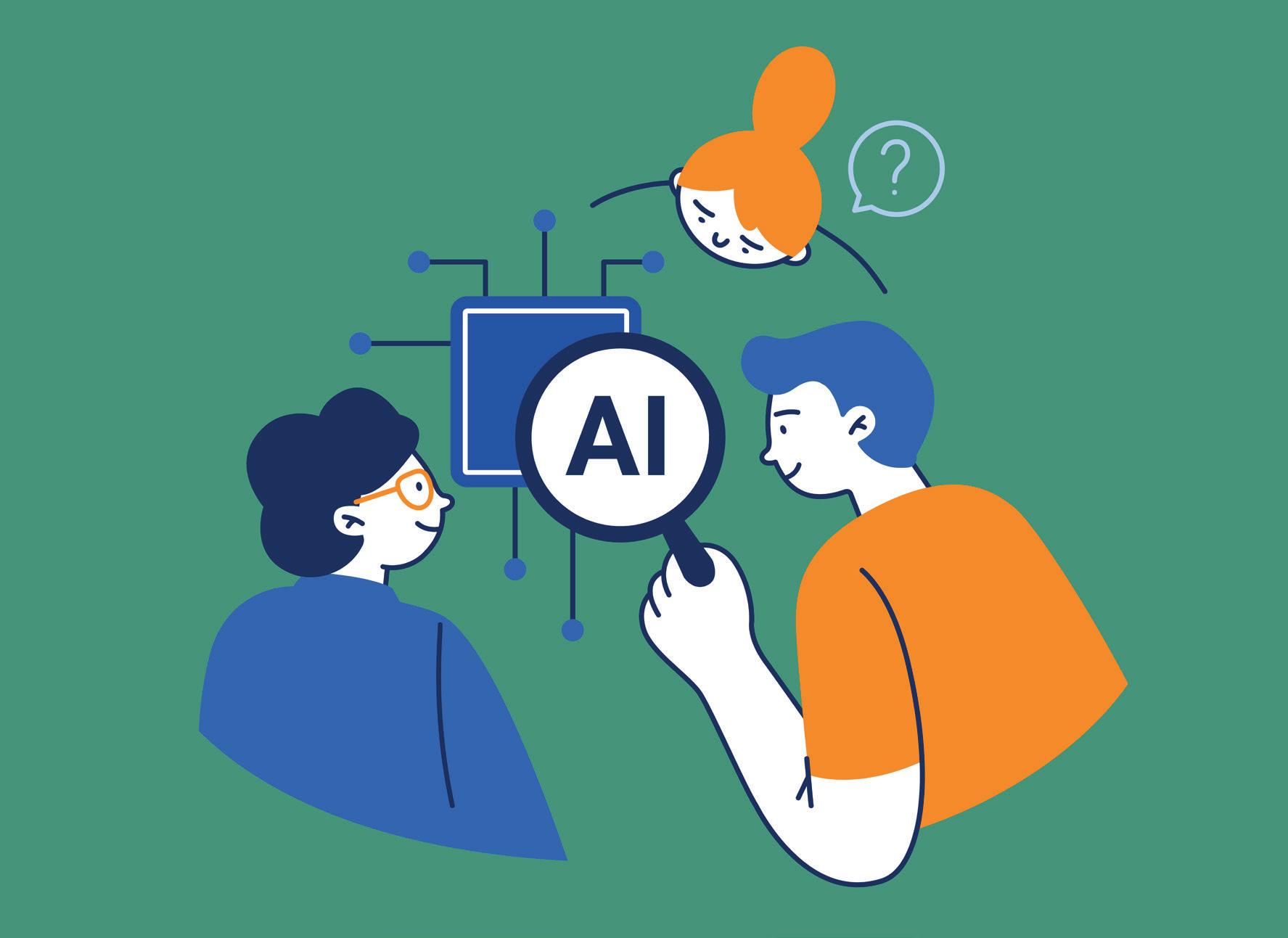
The result: enthusiasm at the top, confusion in the middle and anxiety on the ground.
Sk ills, not software , decide futures
As AI adoption accelerates, AI skills gaps are widening. Closing them demands more than awareness — it requires action at scale.

AI has moved from experimentation to expectation seemingly overnight. Tools that not long ago felt optional are now embedded into everyday workflows, reshaping how decisions are made, work is delivered and value is created. Yet while technology adoption has surged, workforce readiness hasn’t kept pace. Many organisations have invested heavily in AI platforms, pilots and proofs of concept. Few, however, are seeing sustained impact. According to MIT, 95% of AI pilots show no measurable ROI when evaluated beyond the pilot phase.1
Organisations need to build workforce capability alongside technology deployment. Skills decay quickly when learning is disconnected from real roles, outputs and accountability. And that’s becoming one of the most pressing risks facing businesses today.
Skills are the constraint
The future of work isn’t facing a shortage of AI tools. It’s facing a shortage of people who know how — and when — to use them effectively. As roles evolve, workers are being asked to collaborate with AI systems, interpret outputs, manage risk and apply judgment in new ways.
Generic “AI 101” programmes don’t meet this challenge. They overwhelm beginners, disengage advanced users and leave leaders without the clarity needed to guide adoption responsibly. Meanwhile, isolated experimentation rarely translates into scaled capability, creating pockets of progress without
meaningful workforce transformation.
The result: enthusiasm at the top, confusion in the middle and anxiety on the ground. Employees worry about relevance and job security, while leaders lack visibility into who’s ready for what.
Inclusion isn’t optional
If access to AI skills is limited to small groups of specialists, the gap widens further. Inclusive upskilling isn’t just a social imperative — it’s a business survival tool. Organisations that build broad-based capability reduce reliance on shadow AI, retain talent and unlock innovation across functions.
This means AI upskilling requires meeting people where they are, recognising different starting points, learning styles and confidence levels. It also means designing pathways that allow individuals to progress from foundational literacy to applied capability over time, rather than forcing everyone through the same experience.
When learning is relevant, supported and embedded into daily work, adoption accelerates and confidence grows. Everyone wins.
From learning to leverage
Organisations treating AI as a capability to be managed rather than software to be deployed are seeing real results. They start by assessing readiness, aligning leadership on risk and intent and segmenting learning by role and maturity.
They focus on role-based application — how AI improves performance in HR, finance, marketing, operations and leadership — rather than abstract
theory. They reinforce learning through practice, ownership and communities of champions who drive adoption locally.
This shift from check-the-box training to continuous capability building is where momentum is sustained. It’s also where measurable impact begins to emerge.
At General Assembly, this approach underpins how organisations are supported as long-term capability partners. Our AI Academy focuses on practical application and behaviour change, not participation metrics, and on translating AI investment into productivity, efficiency and resilience.
AI is powerful, but it’s not autonomous from human judgment, ethics or context. The organisations that will survive and thrive in the AI era are those that invest equally in human capability.
Preparing the next generation of talent requires collaboration across education, industry and government. It also requires urgency because AI skills development is no longer optional, and catching up is far more costly than building readiness now.
AI isn’t simply another technology shift. It’s a workforce transformation. And the current wave of change isn’t the last one. Organisations building capability systems for continuous evolution will win the future of work. Those focused on a one-time adjustment are already falling behind what comes next.
Reference: 1. Challapally, A. et al. (2025). The GenAI Divide. State of AI in Business 2025. MIT NANDA. https://tinyurl. com/3kk7c4vt.
Responsible AI is a business imperative
Artificial intelligence (AI) is becoming increasingly central to many workplace strategies, but to fully adopt AI responsibly, businesses must transform their workplaces and ways of working.

AI is constantly transforming the way we work, and workplaces are becoming more reliant on it. AI is taking on a central role in many business operations, from helping with time-consuming administrative tasks to improving customer service or transforming business operations. While it can make our working lives easier, AI also comes with risks for businesses and society.
Benefits and risks of AI
Responsible AI use can help workplaces foster innovation, helping business operations be more inclusive and sustainable. It can also help businesses increase efficiency, productivity and consistency.
However, AI can also come with challenges, like inequality and bias, negative environmental impact and the risk of widening the digital divide. Reliable human oversight is essential to ensure these are mitigated.
Role of businesses
As AI changes the workplace, businesses need to think responsibly and ethically. While three-quarters of CEOs believe adopting new technologies, including AI, is one of their biggest challenges,1 4 in 10 want to understand regulation surrounding AI and over a third care about the ethics associated with AI.2 Businesses need to ensure that AI supports their employees, respects their rights and strengthens
society. Assessing the impacts of AI, embedding accountability, upskilling across job levels and strengthening cybersecurity can help organisations ensure their AI use is responsible. As AI use increases, organisations must ensure clear governance around how it is embedded into business strategy. The case is clear: AI is now a central part of many businesses’ everyday work, and workplaces need to transform to ensure that they can embed it ethically and responsibly into their operations. This is no longer just a technical issue; it’s a strategic business imperative.
References:
1. Business in the Community. (2025). State of the Nation Report 2025 - Business in the Community.
2. Public Policy and Social Insights team. (2024). Public opinions and social trends, Great Britain: August 2024. ONS.
In a world being reshaped by AI, human connection is irreplaceable
Coaches and leaders need to navigate the complex emotional, social and political layers of organisational life. They’re asked to lead through ambiguity, respond to pressure and make sound judgments even when there’s no clear path.

WRITTEN BY
All other more managerial, strategic and planning work has been largely replaced or aided by computers. In these conditions, real effectiveness depends on presence, ethical discernment and the ability to work with what’s emerging.
Relational coaching matters more than ever
Coaching doesn’t happen to people, nor even with them, but between them. Research consistently shows that the quality of the coaching relationship is one of the strongest predictors of outcome.
Relational coaching pays close attention not just to what’s said, but to the spoken and unspoken: emotional tone, patterns of interaction and the tensions that shape how a leader shows up.
Human coaching still vastly outperforms AI coaching
In a just-published randomised controlled trial with 114 managers in a global organisation, human coaching produced substantial gains in goal attainment, self-efficacy and wellbeing.1 AI coaching showed no gains at all compared to a control group.
I believe that what drives those results isn’t better tools or more efficient processes, but the quality of the human relationship itself.
A relational approach is about connection, reflection and presence It must be the relationship itself that’s the central vehicle for
change. Outcomes are strongest when trust and connection are present, when patterns can be recognised as they emerge and the relationship in the room itself becomes the work. This co-regulation effect is key.
AI can prompt reflection, offer structure, ask good questions, give cognitive input and remind on goals. It may help scale access to coaching and complement development activities. But translating insight into sustained behavioural change still depends on human challenge, context and relational presence.
These capabilties can’t be delegated to technology or developed passively
Leaders themselves must become more relational in how they think, listen and respond. Increasingly, the most effective leaders are those who can work with what’s unfolding in the moment, recognise emotions and patterns in relationships and remain present under pressure.
Many leaders are using coaching skills every day in their work. Yet few have had the opportunity to reflect on or intentionally deepen how they do this effectively.
Developing the capabilities that underpin effective coaching—leading more relationally, and adopting a more reflective approach—will be what sets effective leaders apart in an increasingly automated world.
Reference: 1. de Haan, E., Terblanche, N. & Nowack, K. (2026). A randomised controlled comparison of the effectiveness of human and AI chatbot coaching with goal attainment, wellbeing and selfefficacy. https://tinyurl.com/bde84e6p.

WRITTEN BY Kieran Harding
Acting Chief Executive, Business in the Community
Erik de Haan, PhD
Director, Hult Ashridge Centre for Coaching
Workplace change isn’t just about measuring space; it’s about understanding the experiences that happen within it
A successful office move starts with a strong strategic brief, shaped by insights and data gathered from the right stakeholders at the right time.
Organisations often underestimate the challenges in moving offices. If they do, there’s a risk of outcomes falling short of expectations, advises Fleur Peck, Head of Workplace Strategy EMEA at Unispace.
“Businesses invest millions into real estate spaces where people work, grow, develop and deliver outcomes that support businesses to thrive. A commitment of that scale demands robust briefing and engagement.”
The real value sits in balancing hard data with culture, operational needs and future business vision. Together, they shape human centric workplaces that are inclusive and experience led, supporting purposeful presence, enabling innovation and fostering meaningful interactions in an ever evolving, technology driven world. Engaging with stakeholders at all levels is vital; moving offices isn’t just a property decision. “It’s a people decision,” says Peck. “Bringing the right people together at the right time, high-level staff, operational stakeholders, business unit leads and representatives across departments and demographics, asking the right questions at the right time, and being curious is key.”
Understanding success factors, pain points and opportunities fundamental to success
A robust brief balances qualitative insights with quantitative data. Taking time to gather data, engage meaningfully and really listen changes everything. It brings business vision into sharp focus and reveals how organisations truly work, the rhythms that drive it, the pinch points that slow it down, and identifies the opportunities waiting.
As the picture becomes clearer, the path forward does too. Investing time in your people from the outset gives the opportunity to uncover the enablers that elevate performance, strengthen culture and allow the real power of your business, your people, to shine.
Peck’s advice for any organisation thinking about an office move is to engage early, creating a strategic brief as soon as possible. Early clarity will optimise programme, decision-making and long-term value, “Better briefs lead to better outcomes,” she says. “It provides a solid launch pad for the project and your people delivering a workplace that exceeds expectations.”

WRITTEN

Supporting UK businesses and the workforce with AI adoption
Artificial intelligence (AI) is moving rapidly — presenting huge growth opportunities for businesses and the nation’s workforce.
Skills England has also been working fast, with employers, Government, academics, AI experts and other key partners, on a new training package to help everyone capitalise.
Opportunities and challenges with AI adoption For context, AI adoption could boost the economy by up to £400 billion by 2030 through enhancements in innovation and workplace productivity.1 Meanwhile, jobs directly involving AI could rise from 158,000 in 2024 to 3.9 million by 2035, according to projections. 2
But our research found major challenges with upskilling. A key barrier to adoption was poor understanding among employers of what’s meant by AI skills — along with what their staff actually need to learn.
Added to this, we’ve worked rapidly with tech companies to ensure courses chosen for the AI Skills Boost programme, launched in January by the Department for Science, Innovation and Skills, provide the quality and capability businesses need now. Every adult in the UK is eligible to take them for free.
And everyone who completes the courses, checked against Skills England’s skills for work benchmark, will receive digital badges recognising what they have learned. That’s a simple idea that will make a huge difference.
Another expectation is learning how to use AI safely, responsibly and ethically.
Skills England is tackling that by making free tools available to businesses, helping them identify their AI skills needs and plan how to upskill their workforce.
AI and automation practitioner apprenticeship We’ve launched an AI and automation practitioner apprenticeship with employers. Apprentices are learning to identify where AI and automation can save time, reduce costs and improve performance. Another expectation is learning how to use AI safely, responsibly and ethically. By embedding good practice from the start, employers can avoid common pitfalls like data breaches and reputational damage.
There’s also a new apprenticeship unit, covering ‘AI Leadership and developing AI strategy’. Apprenticeship units are short, flexible training courses to help respond quickly to evolving skills needs.
References:
These are all great examples of innovative approaches, built around government and industry collaboration, which are helping us keep pace with remarkable technological change. We’re all pulling together to meet the government target of providing 10 million workers with the AI skills they need by 2030. 3
1. Department for Science, Innovation & Technology. (2025). AI opportunities action plan. https://tinyurl.com/4frkp7wp.
2. Department for Science, Innovation & Technology & Department for Culture, Media & Sport. (2026). AI skills for life and work: labour market and skills projections. https://tinyurl.com/y7hwd3xt.
3. Department for Science, Innovation & Technology, Skills England & The Rt Hon Liz Kendall MP. Free AI training for all, as government and industry programme expands to provide 10 million workers with key AI skills by 2030. https://tinyurl.com/t6as9nkc.

WRITTEN BY Phil Smith Chair, Skills England
INTERVIEW WITH Fleur Peck Head of Workplace Strategy EMEA, Unispace
BY Tony Greenway
Why inclusion is central to the future of work
As UK workplaces continue to evolve, inclusion is emerging as a defining factor in successful workplace transformation.
Onvero’s first ‘State of Inclusion’ report1 highlights a clear shift in how organisations approach diversity, equity and inclusion (DEI): moving beyond awareness and compliance towards maturity, accountability and measurable impact. Despite a challenging external climate for DEI, the evidence is clear: inclusive practices deliver tangible benefits for employees and business performance.
The gap between ambition and action Drawing on insights from organisations using Onvero’s benchmarking tool, alongside research with senior leaders and employees, the report reveals both progress and persistent gaps. While 9 in 10 organisations report having a DEI strategy, implementation remains inconsistent. Only a quarter say their strategy is fully embedded. This disconnect is felt most by employees: just 15% believe DEI is part of everyday culture, and many remain unaware of their organisations’ policies.
Organisations that embed inclusive practices meaningfully see employees stay almost four years longer on average and report higher productivity and lower turnover. In organisations which scored highly, 68% of leaders rate productivity as excellent, compared with just 27% in less inclusive environments.
Leadership accountability is key Leadership accountability is a critical differentiator. The highest-performing companies place responsibility for DEI firmly with the C-suite, yet fewer than half of organisations define clear leadership inclusion goals. This contributes to a perception gap, with leaders consistently rating their organisations as more inclusive than employees do, particularly around fairness, authenticity and everyday behaviours.
The report also highlights the foundational role of psychological safety, wellbeing and belonging. These areas are currently the strongestperforming across sectors, reflecting growing recognition that inclusive cultures are built through trust, learning and openness, not boxticking. However, concerns about performative DEI persist, with many employees sceptical of initiatives that prioritise external image over internal change.
Ultimately, the message is clear: workplace transformation depends on moving from ambition to action. Purposeful DEI, embedded in strategy, owned by leaders and experienced consistently by employees, is key to building workplaces where people and organisations can thrive.
References: 1. Onvero. State of Inclusion Report 2025.

The changing landscape of apprenticeships
2026 will be significant for apprenticeships, with the Government pledging to refocus opportunities on young people starting their careers while creating new apprenticeship units to better support those already in work.
Over the last ten years, apprenticeships have been transformed into a skills programme that can support all ages and stages of an individual’s career, from entry level through to master’s degree. Significant developments include the introduction of shorter duration apprenticeships (now an 8-month minimum), an increase to the Apprenticeship Care Leavers’ Bursary to £3,000, changes to English and maths requirements for those aged 19+ and reforms to apprenticeship assessment processes.
Further changes are anticipated in 2026, with the apprenticeship landscape set to evolve further. So, what can we expect to see?
Foundation apprenticeships
Introduced in 2025, these are specifically for those aged 16-21 (or up to 24 meeting certain criteria). The Government has pledged to expand the range of foundation apprenticeships from the seven currently available in engineering, digital, construction and health, to include new sectors such as retail and hospitality.
Apprenticeship units
Launching in 2026, apprenticeship units will support those already in employment. Initially available in engineering, digital and AI, it’s anticipated that apprenticeship units will support the development of higher-level skills through specialist short courses.
SME support
Small businesses are critical to the expansion of apprenticeships. The Government has committed that small businesses employing apprentices under the age of 25 will be fully funded for training, a continuation of the removal of National Insurance Contributions for apprentices aged under 25, and a new £2,000 SME apprenticeship grant from October 2026.
Streamlining of apprenticeship standards
There are currently around 700 different apprenticeship standards that employers can utilise. A major review of apprenticeship standards is expected, streamlining the system so it’s simpler for employers and apprentices to navigate.
These changes sit among a raft of other local and regional pilots as part of the youth guarantee, aimed at connecting employers with apprenticeship opportunities to the talented young people in their local areas.
Embracing diversity in engineering and technology
With engineering and technology skills more in demand, the sector offers excellent career prospects for people from all backgrounds.
There’s real momentum across the sector to increase diversity and ensure everyone, especially women, can aspire to and access these careers. Creativity, problem solving, communication and teamwork are as important as digital and technical skills.
Opportunities for all
Other skills are in demand too. I met a hairdresser who capitalised on her hand-eye coordination and attention to detail to retrain in welding, a highly paid profession, as the UK has a critical shortage of welders.
From renewable energy and 3D printing to AI and automation, there’s a variety of roles in engineering and technology. Unsurprisingly, about a fifth of jobs in the UK are in engineering and technology. And because of workforce shortages, these jobs are well paid, with salaries about a third above average.
The Government’s industrial plans include securing clean energy and driving economic growth through investment across engineering and technology sectors, and this includes hundreds of millions of pounds of funding for training. This will open more opportunities for young people and offer shorter, more flexible courses. If you or someone you know is thinking about a future career, please consider the full range of vocational and technical training options. They include many that are free, available to those retraining and offered as apprenticeships, as well as academic routes.
Everyone is welcome (especially women) We don’t just need a larger workforce — we need people from a wide range of backgrounds that bring diverse skills, ways of thinking and experiences to enhance productivity and innovation. While women’s participation in the sector has improved, we still have some way to go to reach parity. We work with many businesses and government departments to support these efforts.
To clarify, this isn’t about turning anyone away. We need hundreds of thousands more engineers and technologists by 2030. However, we’d like everyone to appreciate and be able to access the fantastic opportunities of a career in engineering and technology. Whatever your gender or background is, you’ll be warmly welcomed.
WRITTEN BY Sandi Wassmer CEO, Onvero

WRITTEN BY Anna Morrison CBE Director, Amazing Apprenticeships

WRITTEN BY Dr Hilary Leevers Chief Executive, Engineering UK