
Winter Wellbeing
Dr Louise Marron, National Immunisation Office Page 03

Marie Duffy, Mental Health Ireland Page 06
Living well with COPD and asthma: prevention and self-management
With the right steps and support, people with COPD and asthma can live well. Discover the resources that can help manage these lung conditions.
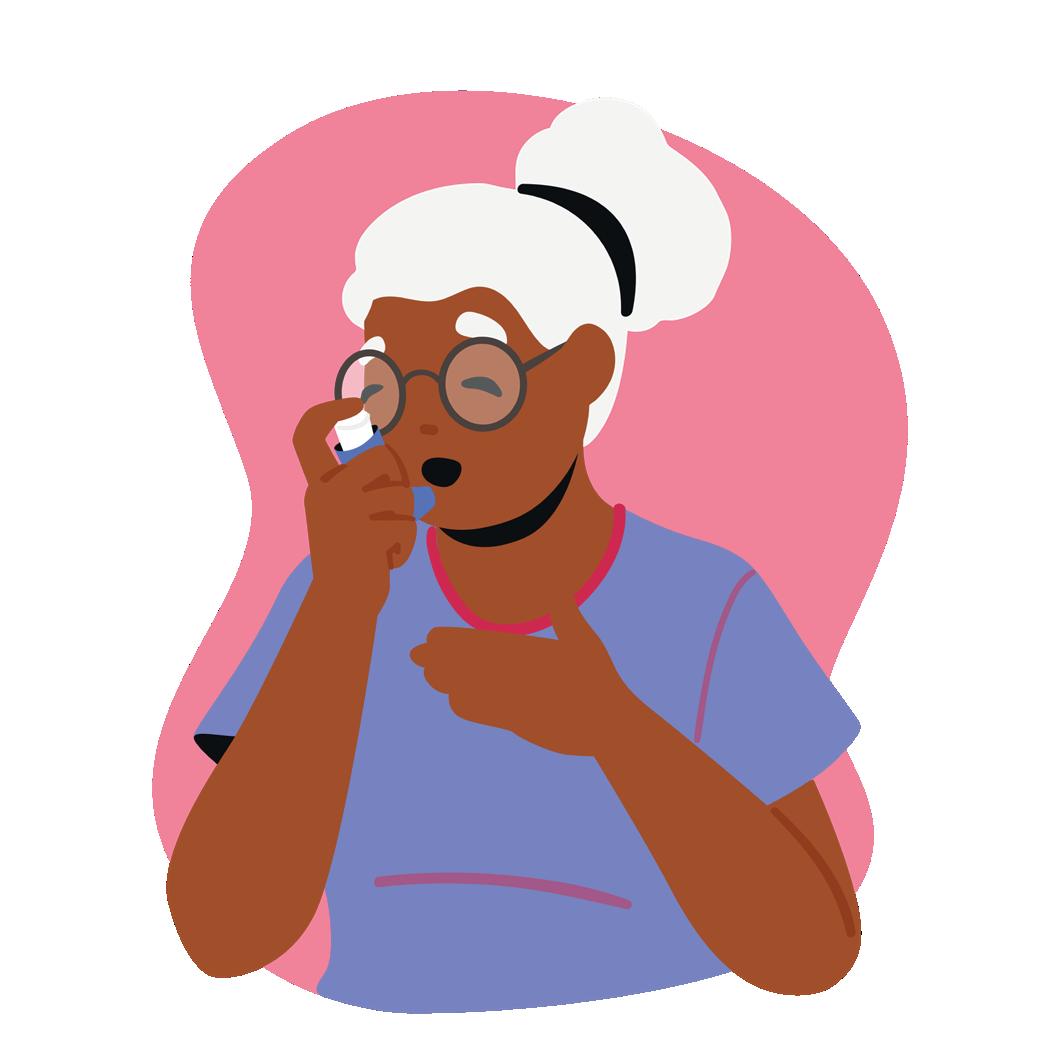
Chronic obstructive pulmonary disease (COPD) and asthma are chronic lung conditions very common in the Irish population. They can influence quality of life and mental health, and increase the risk of heart disease and death. In Ireland, over 380,000 people are living with COPD, and 1 in 10 people are living with asthma.
Empowering people to live well with COPD and asthma
There’s no single ‘fix’ to COPD and asthma, but there are everyday steps that can support health and wellbeing.
• Know your triggers
• Take inhalers correctly
• Quit smoking/vaping – it’s never too late to stop
• Eat well: enjoy a mix of foods, guided by the healthy eating guidelines and food pyramid
• Be active, ‘use it or lose it’: choose activities you enjoy
• Pace yourself, prioritise daily tasks
• Check in with GP: regular reviews help identify issues early
• Protect yourself with vaccination
Aside from these steps, the following support is also available.
Chronic disease management
Started in 2020, GPs see COPD and asthma patients (with a medical or doctor visit card) twice per year when they are well to optimise care and prevent flare-ups. Contact your GP for further details.
Ciaran Fagan ciaran.fagan@mediaplanet.com
Manager: Rachelle Ong | Paid Media Manager: Jonni Asfaha All
Integrated hubs
There are 26 hubs providing consultant-led specialist multidisciplinary services for COPD and asthma in the community. They provide pulmonary rehabilitation, and an exercise and education programme. Referral is through your physician.
Asthma Adviceline
This multidisciplinary service supports patients by providing care beyond clinic appointments. Healthcare professionals can refer patients directly, while patients can self-refer, to the Asthma Adviceline.
WhatsApp service
This service is a confidential way of asking questions about your asthma and receiving guidance from trained nurses. Videos on inhaler technique, infographics and webinars are shared on WhatsApp (086 059 0132).
COPD Support Ireland
COPD Support Ireland delivers self-management services through education, resources and local support and exercise groups. These groups meet once a week for an exercise class and to share the lived experience of COPD in a social, peer support group setting. Healthcare professionals can refer patients to the local support and exercise group, or patients can self-refer on the COPD Support Ireland website.
Susan Curtis Programme Manager, NCP Respiratory, HSE
Why good gut health is important for children’s immunity and development
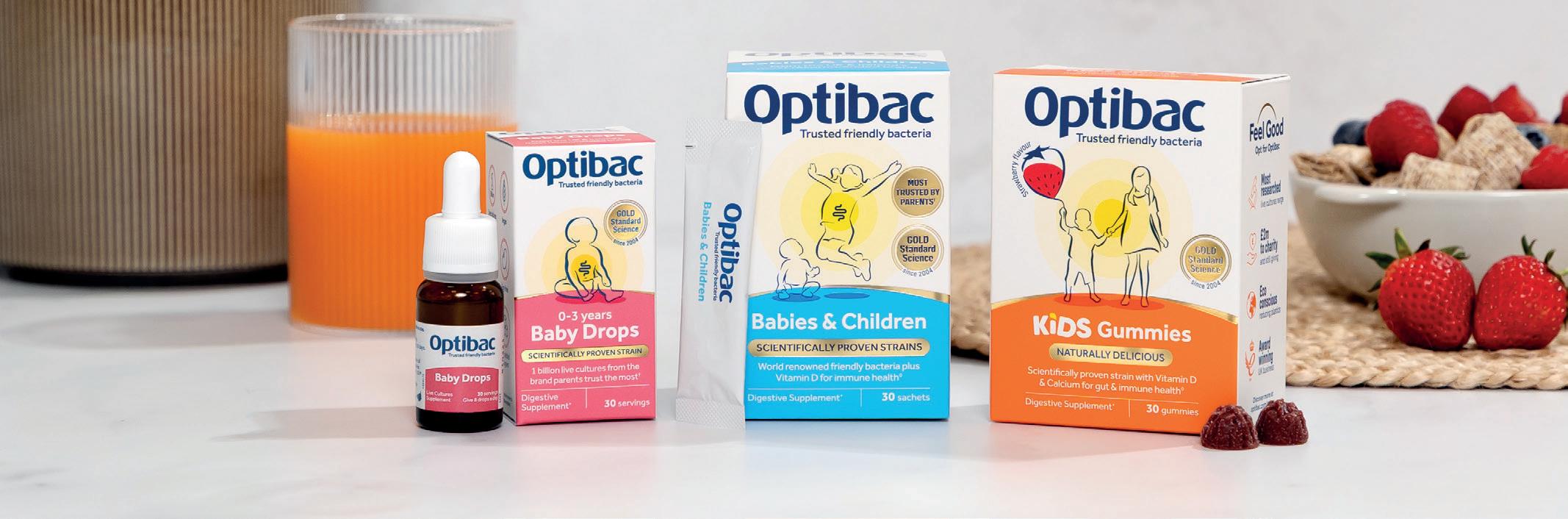
Children take seven sick days per year on average. Help support their gut health and immunity with the friendly bacteria brand trusted by parents.
“Every part of our body has a microbiome — a community of microorganisms or microbes that influences our whole body, not just the gut,” explains Milo Pankros, Scientific Trainer at friendly bacteria supplement brand, Optibac.
“The microbiome in our gut is the most densely populated of them all, and like any ecosystem, harmony is key, so we should look after it,” he says. Researchers have linked the microbes in our guts to immune and digestive function, energy, skin health and more.
Gut health is particularly important for babies and children, whose microbiome is still developing. Unfortunately, up to 70% of children globally receive an antibiotic in the first few years of life, which can significantly alter their microbiome development.
In addition to a healthy, varied diet, parents can introduce live culture supplements into children’s daily routine, especially during antibiotics, to add specialist-friendly bacteria to the microbiome and increase beneficial gut bacteria.
Safe, well-researched supplements for children Friendly bacteria supplements can be useful because it’s not always easy to get children to eat high-fibre foods, such as vegetables and whole grains, that naturally feed a good microbiome. Plus, the right supplements can often have easier ‘delivery systems’ than regular food products. “Choose a high-quality friendly bacteria supplement, which has been shown to reach the gut alive,” says Pankros.
Chris Tunks, Brand Manager at Optibac, notes that “parents should look for safe supplements, designed specifically for children and include highly researched strains for individual needs.”
“It should be made easy for parents to introduce supplements into their children’s diet,” he says. “For instance, our children’s range includes a flavourless liquid with an easy-to-use dropper, flavourless powders that can be mixed in water or sprinkled on nonacidic foods and tasty gummies made with natural ingredients suitable for children aged three and over. It’s about supporting parents and making it easier for them to be more proactive, rather than reactive, in terms of their children’s gut health.”


How to protect your child from flu
Flu can cause serious illness in children. The best protection is the flu vaccine. The vaccine is safe, effective and available free of charge for all children aged two to 17.
Flu is more than a cold
Each year, flu season runs from October to April. This winter, all children aged two to 17 in Ireland will be offered the flu vaccine free of charge. Flu is not the same as a cold; it is a serious and highly infectious illness that can cause severe illness in children. Children who get flu can experience complications such as pneumonia or bronchitis, and those with long-term conditions are at even greater risk. In the last decade in Ireland, over 9,000 children were admitted to hospital with flu, and over 200 required treatment in an intensive care unit.
Safe and easy protection
The good news is that we can protect children. The flu vaccine is safe, effective and easy to give. It is a nasal spray vaccine, administered as a quick, painless spray up each nostril. No needles are needed. The vaccine helps your child’s immune system to fight off the flu virus if they come into contact with it and gives them the best available protection against flu infection its complications.
Protecting families and communities
Vaccination protects your child. It also helps to stop flu spreading to others, including siblings, parents and grandparents. It can also reduce time away from school and other activities.
A proven vaccine, free of charge
The children’s flu vaccine used in Ireland has been safely given to children for many years in the US and the UK, and since 2020 in Ireland. Most children can get the nasal spray flu vaccine; although a small number with certain medical conditions may need an alternative flu vaccine given by injection.
Side effects, if they occur, are usually mild, such as a runny nose, headache or mild fever. However, they often pass quickly. Serious side effects are very rare.
Parents can book the vaccine with their GP or local pharmacist. In some cases, it may also be offered in schools. Both the consultation and the vaccine are completely free.
Chronic pain doesn’t pause in winter
For many living with chronic pain, cold weather increases stiffness, fatigue and isolation. With the right tools, people can protect their wellbeing and avoid worsening symptoms.
Winter presents challenges for the one in three people in Ireland living with chronic pain. Shorter days affect sleep, mood and energy — factors closely linked to how strongly pain is experienced. When stress, isolation or exhaustion rise, symptoms often become harder to manage.
Protecting physical and mental wellbeing
For many, the instinct is to “hibernate”, retreating indoors and reducing activity. Yet, long periods of inactivity can intensify pain rather than ease it. Gentle, consistent movement — short walks, stretching and pacing daily tasks — helps keep joints mobile and supports overall wellbeing. Small, achievable steps are more effective than trying to power through or stopping activity altogether.
Mental wellbeing is equally important since chronic pain affects it more than the body, and influences thought patterns, emotional balance and confidence. Winter can deepen feelings of loneliness or low mood, so it’s essential to stay connected. Speaking with family, friends or peersupport groups can make a difference. Techniques such as breathing exercises, grounding or guided relaxation can help calm the nervous system and reduce the stress-pain cycle.
Self-management tools
Self-management strategies in getting through winter include maintaining regular routines and sleep patterns; using heat safely to ease stiffness; pacing activities and taking scheduled breaks; preparing for busy or stressful periods in advance; and staying hydrated and nourished.
Digital supports (eg. podcasts, online workshops or short guided exercises) can also be helpful on difficult days.
Chronic pain is a long-term condition that changes daily. No one should feel they have to manage it alone, especially during winter when challenges increase. Reaching out for support, whether through healthcare providers, community organisations or charities such as Chronic Pain Ireland, can provide reassurance, practical tools and a sense of connection.
With the right supports and a compassionate approach to self-care, winter doesn’t have to mean withdrawal or worsening symptoms. People living with chronic pain can maintain mobility, preserve wellbeing and stay engaged in life — even in the coldest months of the year.



Niamh Walsh Trustee, Chronic Pain Ireland
Sponsored by Optibac Find out more at optibac.ie
Milo Pankros Scientific Trainer, Optibac
Chris Tunks Brand Manager, Optibac
Dr Louise Marron Consultant in Public Health Medicine. National Immunisation Office
For more information, speak to your GP or Pharmacist or visit hse.ie/flu
WRITTEN BY Tony Greenway
How to prepare for unwanted viruses this festive season
The festive season is, unfortunately, also the herald of the flu season. Dr Eoghan de Barra explains how we can prepare, protect and be proactive against viral infection.

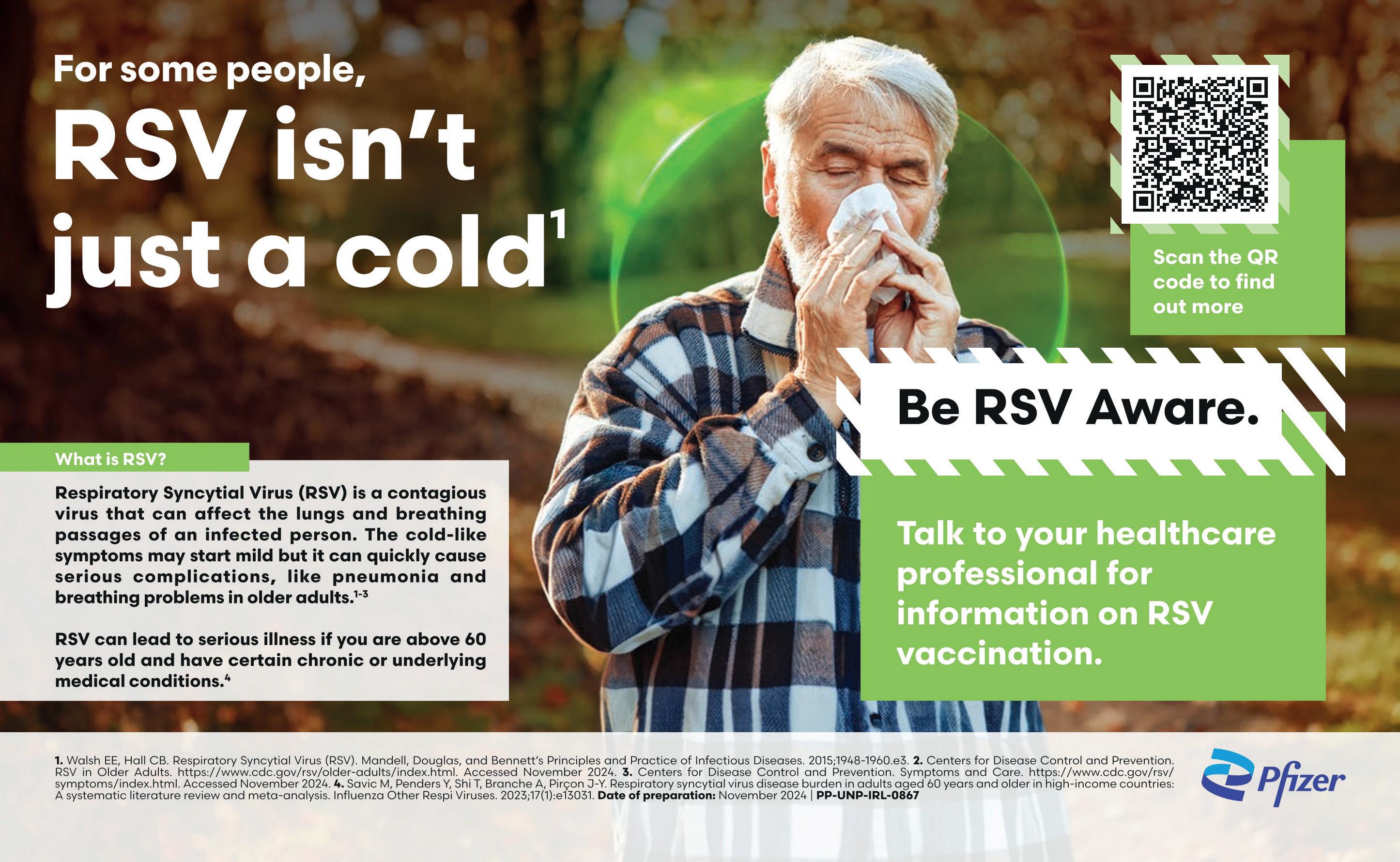
With flu season in full swing, peaking approximately six weeks either side of Christmas, households must be prepared.
“These illnesses will circulate, and preparation is key,” says Dr Eoghan de Barra, Consultant of Infectious Diseases.
Prepare
Many viruses circulate year-round but become more active in winter. Viruses survive longer in cold conditions, and people generally spend more time together inside, making it easier to spread. Alongside this, COVID-19, adds de Barra, “breaks all the usual rules, appearing in waves every 12-16 weeks”, which can create a “perfect storm” if it overlaps with flu and RSV.
He advises stocking up on the basics — paracetamol, ibuprofen, fluids, a thermometer and over-the-counter medications, as most viral infections can be managed with self-care.
Protect
Simple measures such as good hand hygiene, effective ventilation and staying at home to avoid the spread of symptoms can help reduce the risk of transmission. For some vulnerable populations, these measures are more important than ever.
“There are certain groups who are at greater risk from illness over winter, including those with chronic health conditions, such as asthma and chronic lung disease; those aged over 65 or under 2; and people with weakened
immune systems,” explains de Barra. Checking in on people to make sure they’re eating and drinking is important, but should be balanced with limiting their exposure to anyone unwell with a cough or a bad cold.
Be proactive
“Utilise the tools at your disposal. Vaccination is one of the most proactive ways to protect yourself, giving you the ability to enjoy a normal winter season, socialise and meaningfully reduce your risk. While vaccination doesn’t completely prevent infection, data shows a significant reduction1 in the risk of hospitalisation and risk of mortality, particularly when people are vaccinated against flu, COVID-19 and RSV,” implores de Barra.
And while there are added pressures on the healthcare system, that shouldn’t deter you from seeking professional assessment when needed. “If you’re in a high-risk group or have chronic health conditions, you should contact your healthcare provider sooner rather than later,” says de Barra. “If symptoms are more than the usual fever, aches and pains, including difficulty breathing or if you’re getting worse or not improving after 48 to 72 hours, it’s time to reach out for medical advice.”
References: 1. Scott, J. et al. (2025). Updated Evidence for Covid-19, RSV, and Influenza Vaccines for 2025–2026. New England Journal of Medicine. https://doi.org/10.1056/ nejmsa2514268

Dr Eoghan de Barra Senior Lecturer, Department of International Health and Tropical Medicine, Royal College of Surgeons of Ireland, Consultant in Infectious Diseases

Minding our mental wellbeing through winter
With winter at its height, thoughts turn to guarding our health against the elements. Do we take the same care with our mental health?
Areasonable response might be:
“What are the signs to watch for when it comes to mental health, and where can I find support?”
The answers are central to MyMind’s existence as a charity providing accessible talk therapy for everyday mental health challenges.
Minding the signs
Life happens, bringing with it worries over money, family, work and the innumerable concerns of 21st-century living. Low mood, irritability and lingering tiredness are some of the warning signs to watch out for when it comes to mental health. These are the mental health equivalents of a scratchy throat and sinus pain signalling an oncoming cold.
Support is here
At MyMind, we believe that common, everyday mental health challenges are fully deserving of professional therapeutic support. Issues like burnout, relationship struggles and bereavement are some examples that, left untreated, can lead to more serious mental health challenges down the line. This is why we advocate for early intervention, knowing that engaging in counselling or psychotherapy early yields results sooner — and with lasting effect.
Accessible and flexible mental health services
Making our services accessible is fundamental to successful early intervention. We achieve this on several fronts. We provide appointments without waiting lists or the need for referral, faceto-face from 11 locations across Ireland and online, in over 20 languages. We are not-for-profit, with a fee structure tied to employment status. This facilitates a low Standard Rate of €60 per session, while funding from the HSE makes it possible to offer €30 appointments to anyone earning less than €25,000 annually, including retirees and full-time third-level students. MyMind’s message for winter is one of hope. Support is here, it is accessible, and just as we’re wrapping up against the elements, we should also be mindful of our mental health over the darker months.

Ways to keep your spark this winter

As days grow shorter and the weather colder, our mood can naturally dip. Winter invites us to slow down, yet our busy lives keep urging us to go.
With less sunlight during winter, our bodies produce lower levels of serotonin and melatonin — the hormones that help regulate mood and sleep. We also get less vitamin D, which helps keep energy levels up. It’s completely natural to feel a little more tired during the darker months.
The power of the outdoors
Another reason we might not feel our best in winter is that we tend to move less and spend less time outdoors. With colder weather and shorter days, it’s easy to skip walks or time in nature, but those moments outside are important. Fresh air, daylight and the natural sights and sounds around us can lift our mood, boost energy and help us feel more grounded.
Moving
Austen Donohoe Communications & Digital Marketing Manager, MyMind
Balance in the festive season
Christmas can be a time that can bring as much pressure as it does joy. The expectations to spend, socialise and make everything ‘perfect’ can feel overwhelming. Balancing festive commitments, family dynamics and financial strain can be exhausting. Remember, it’s just another day in the year. Try not to have too high expectations, and make sure to build in plenty of time to rest and recharge over the holiday season.
Natural light is your friend
Try to get as much natural daylight as possible, especially first thing in the morning; it can really help lift your mood and energy. Many find light therapy lamps helpful, and some local libraries even lend them. There’s plenty of science to support their benefits, but even sitting near a window during the day can make a difference in how you feel.
Stay active
Even gentle movement like yoga, stretching or walking can give your mood a real lift. Moving your body helps release tension, boost energy and support overall wellbeing. When you combine it with time outdoors, the benefits are even greater; fresh air and natural light can amplify that feel-good effect. Remember that small winter habits can boost wellbeing.

Marie Duffy PR & Communications Officer, Mental Health Ireland
Sponsored by MyMind
How Ireland leads the way in whole-campus health and wellbeing
Ireland is emerging as an authority in higher-education (HE) health promotion, with a new framework designed to embed health and wellbeing across institutions.


Ireland is leading by example in supporting student health and wellbeing. It’s the only country with two national HE health and wellbeing policies: the Healthy Campus Charter Framework and the National Student Mental Health and Suicide Prevention Framework.
Whole campus approach
Caroline Mahon, HEA’s National Healthy Campus Coordinator, explains how this is helping generate a wellbeing culture throughout universities. “It’s about creating conditions where students and staff can thrive — a whole campus approach goes much deeper than one-off health events. It embeds holistic policies and programmes that create a culture of wellbeing.”
Mahon continues, “We’re shaping future leaders, decision-makers, researchers, engineers, educators and health professionals, future change agents. There’s an opportunity to influence society, and higher education can proactively support wellbeing now and into the future’
Limerick Framework
At UL, Professor Catherine Woods and Healthy UL have developed the Limerick Framework for Action, a result of the International Health Promoting Campuses Conference, co-hosted by UL and HEA in June.
“The Limerick Framework helps institutions turn good intentions into measurable action,” explains Woods. “This document has been developed through consultation with over 500 global experts who were
Eating well for cardiovascular health: taking control of cholesterol
One of the major risk factors for heart disease and stroke is high cholesterol. Encouragingly, research shows that 80% of premature heart disease and stroke is preventable through lifestyle.

Suzanne Seery CORU Registered Clinical Specialist Dietitian, Health Service Executive, representing the Cardiology Dieticians subgroup of the Irish Nutrition & Dietetic Institute
Wasked what HEIs should be doing to promote health, wellbeing and sustainability.”
Expert insight has been distilled into key considerations, including guidance on embedding wellbeing into governance, curriculum, services and the whole campus environment. Key elements include the UN Sustainable Development Goals, promotion of a healthy planet, places and people, and empowering students and employees to reach their full potential.
Through the HEA, each HEI has signed up to implement the Healthy Campus Charter and Framework. Since 2020, specified funding has been allocated to institutions to support student mental health and wellbeing.
With Healthy Campus Case Studies to learn from, including UCC’s Everyday Matters, TCD’s Mind Body Boost or ATU’s Breakfast Club, the HEA is encouraging Irish institutions to think globally but act locally, showcasing Ireland as an international leader.
“We have an opportunity to galvanise the effort and energy of the global higher education sector,” highlights Woods. “By leveraging the network in Ireland alongside our international partners, examples of good practice can drive truly transformative and measurable change.”
The HEA Healthy Campus Self-Evaluation Tool allows institutions to measure their health and wellbeing efforts, supported by over 350 resources. This provides an overarching view of ethos, governance and specific health areas, promoting institutions’ accountability to a culture of health promotion.
hen it comes to diet, the focus should be on eating patterns rather than single foods or food groups.
Reducing the risk of cardiovascular disease
The Mediterranean-style eating pattern has a large body of evidence to support reducing the risk of cardiovascular disease. This pattern of eating is beneficial because it is naturally rich in fibre, phytochemicals, plant sterols, unsaturated fats such as omega-3s, which, when combined, help to lower cholesterol, regulate blood pressure and support healthy blood glucose levels.
Eating well for heart health
• Include a variety of fruit and vegetables (minimum of five to seven servings per day).
• Eat heart-healthy fats: olive or rapeseed oils, nuts, seeds and oily fish.
• Limit intake of saturated fats like full-fat dairy, fatty meats and meat products, cakes, biscuits and pastries.
• Choose wholegrain versions of bread, rice and pasta. Include cereals like oats and barley.
• Eat fish at least twice per week, with one being oily fish.
• Limit salt intake from processed red meats and ready-made meals. Choose lower salt versions of everyday foods such
as bread and breakfast cereals. Use herbs and spices instead of salt to flavour food.
• Alcohol: there is no completely safe level. If you drink alcohol, it is important to keep within the low-risk guidelines.
Heart-healthy food swaps
Fats and oils: Butter on bread can be substituted with hummus, nut butter, low-fat soft cheese, pesto or olive tapenade.
Salty foods: Instead of processed meats (like bacon, sausages, ham), have fresh meat, poultry, fish and eggs.
Wholegrains: White bread can be swapped out for high-fibre wholegrain or whole-wheat bread.
Breakfast cereal: Instead of high salt or sugar cereals, have some porridge, overnight oats or shredded wheat.
Realistic and sustainable food choices
Ultimately, maintaining heart health is about making healthy food choices that are realistic and sustainable in the long term. Focus on one small change at a time.


Caroline Mahon National Healthy Campus Coordinator, Higher Education Authority
Prof Catherine Woods Full Professor, Chair of Healthy UL, University of Limerick
WRITTEN BY Bethany Cooper