
Managing Your Finances
“Saving can be difficult, so seeing how your money could grow can be a good way to help you stick with it.”
Spencer, Senior Policy and Propositions Manager, Money and Pensions Service Page 04

“Confidence is key to investment, but almost every index puts it at an all-time low.”
Liz
Special Adviser, Small Business and Entrepreneurship Institute of Directors Page 07

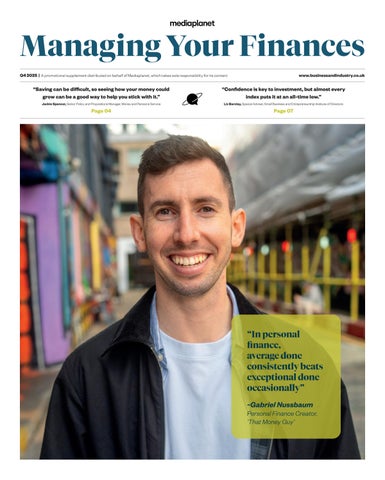
“In personal finance, average done consistently beats exceptional done occasionally”
~Gabriel Nussbaum
Personal Finance Creator,
‘That Money Guy’
Jackie
Barclay,

Why average with money is exceptional


WRITTEN BY Gabriel Nussbaum That Money Guy, Personal Finance Creator
I want to be average with my finances. It sounds backwards, but after years in personal finance, I’ve learned boring and average beats every clever strategy.
Everyone’s exhausted by money: the hacks, the hot takes, the endless debate over the “right” way to do things. I’ve reached my conclusion: I want to be average. Not exceptional, not optimised, just boringly, peacefully average. Because in personal finance, average done consistently beats exceptional done occasionally. And if that sounds dull, wait, there’s one magic ingredient that turns boring into exceptional.
Why average beats the experts
Roughly 85% of professional fund managers fail to beat the market over fifteen years.1 They have teams, algorithms and decades of experience, and still lose. Meanwhile, the person who automatically invests in a global index fund and ignores it quietly wins. Average isn’t settling. Average is succeeding in disguise.
The complexity crisis
Money has become a performance sport. People spend more time comparing spreadsheets than improving their balance. They won’t start saving because £5 feels too small. They delay paying debt because they’re still arguing about the
@Mediaplanet UK & IE
“best” method. They ignore pensions because retirement feels too far away. Perfection paralysis is costing us progress.
What boring actually looks like Being boringly average means doing the unsexy stuff everyone knows works and actually sticking to it. Budgeting? Look at your spending. Track it. Face it. Debt? Make next month’s balance smaller than this month’s. Spending? Pick one or two things you truly enjoy and be boring with the rest. There’s no hack, no trick, no shortcut, just awareness and repetition.
The magic ingredient
Remember that magic ingredient I mentioned earlier? Here it is: time. That’s what turns average into exceptional. Money isn’t complicated; it’s just slow. The hard part isn’t knowing what to do; it’s doing it for decades. Earn £1,000, spend less than that and do something smart with the difference. Repeat. Month after month. Year after year.
Boring plus time equals exceptional. Let’s make money boring again.
Reference: 1. Ganti, A., Di Gioia, D., & Didio, N. (2025). SPIVA® U.S. Scorecard. S&P Dow Jones Indices
@MediaplanetUKIE Please recycle
Project Manager: Charlie Mai-Weddell charlie.mai.weddell@mediaplanet.com
Project Manager: Matthew Kennedy matthew. kennedy@mediaplanet.com Business Development Manager: Ollie Edmonds Managing Director: Ellie McGregor | Junior Designer: Ellen Cahill Interim Content Manager: Rachelle Ong | Paid Media Strategist: Jonni Asfaha | All images supplied by Gettyimages, unless otherwise specified | Contact information: uk.info@mediaplanet.com or +44 (0) 203 642 0737
Here’s what
needs to happen to bridge the gap in retail investing
While the financial markets are no longer the preserve of the elite, more needs to be done to encourage people into retail investing.

Mukid Chowdhury, CEO of savings and investment platform Trading 212, gives his verdict on the autumn Budget and how it could affect the UK’s retail investment landscape.
Last month’s Budget cut the annual cash ISA allowance from £20,000 to £12,000 for under-65s, which ministers say will "encourage more people into long-term investment." Do you believe people will switch to stocks and shares ISAs, or are they more likely to keep money in high street banks?
They won’t switch. Among our younger clients (roughly 25-45s), engagement with investing is already strong. They understand the benefits, are comfortable with taking market risk and are happy to use platforms like ours. The real challenge is the 45 to 65 bracket.
For that group, three things hold them back. First, a lack of confidence in how investing and trading actually work. Second, a strong preference for capital preservation – they have worked hard to build their nest eggs and would rather accept modest but predictable returns than see short term volatility. Third, a trust gap, fuelled by headlines about scams and get-rich-quick schemes that get wrongly conflated with mainstream investing.
Unless those barriers of understanding, risk perception and trust are addressed, simply cutting the cash ISA allowance will not on its own move savings from high street accounts into stocks and shares ISAs.
building income-focused portfolios.
From 2029, Budget changes will cap the National Insurance saving from pension salary sacrifice to the first £2,000 of employee contributions each year. Do you expect younger workers to turn more towards DIY investing, or will this mainly reduce their overall long-term saving?
The younger generation is already starting to take charge of its finances, helped by the amount of information available online. They’re far more tech-savvy, so they’re able to build pies and portfolios on platforms like Trading 212, which support long-term savings and investments. For many, that feels more transparent than a pension contribution that disappears from a payslip.
The younger generation is already starting to take charge of its finances, helped by the amount of information available online.
The Chancellor says the Cash ISA cut will ‘unlock capital for UK companies.’ Yet historically, retail investors don’t shift asset classes because of policy nudges — they stay where they feel safest. What blockers need to be removed before ordinary people genuinely see investing as accessible? I’ll give you three. First, the standard ‘your capital is at risk’ warning is far too scary. We need more balanced messaging that explains the benefits as well as the risks. It should not disappear — it serves an important purpose — but in its current form it scares off first-time investors rather than helping them make informed decisions.

The Budget raises dividend tax by 2% across all bands. How significant is this to ordinary investors — and do you think it will discourage people from building income-generating portfolios?
I think it demonstrates a disjointed approach — saying you want to promote retail investing while quietly reducing the after-tax rewards for doing so. For the ordinary investor relying on dividends for income, an extra 2 percentage points on tax is not trivial. So, the simple answer is, yes, it will discourage people from
Second, the Government should look seriously at stamp duty. If trades within stocks and shares ISAs were exempt, you would see a very significant inflow into those accounts almost overnight. And third, there is a broader point around the Government and the FCA. The FCA needs to be more clearly pro-innovation. Fintechs can still feel treated with suspicion, despite strong balance sheets and high levels of liquidity. Yet fintechs are the ones engaging UK clients in retail investing, driving down costs and democratising access to financial markets. It is no longer the preserve of the elite.
INTERVIEW WITH Mukid Chowdhury CEO, Trading 212
WRITTEN BY Tony Greenway
Tools that can help you effectively manage your money
From benefits and budgeting to saving smarter, discover free online tools that can help you manage your money confidently and make the most of your financial support.

We know how important it is that everyone has the right tools and knowledge to effectively manage their money.
At MoneyHelper.org.uk, we provide people with just that. There, you’ll find three tools to help you better manage your money.
Managing your money can be almost impossible if you don’t know how much you’ve got coming in and going out.
Benefits calculator: Are you claiming everything you can?
Make sure you’re getting all the financial support available to you. Four main entitlements often go unclaimed: Universal Credit, Pension Credit, Carer’s Allowance (Carer Support Payment in Scotland) and Child Benefit.
Claiming these can also open doors to other forms of
Financial education equips us to thrive
The cost of not knowing about money is higher than it seems. Fortunately, financial education provides the tools we need to thrive, not just survive.
Wsupport, such as free school meals, and could reduce your bills. Our free benefits calculator tells you what benefits you might be entitled to. You’ll be asked six quick questions. No paperwork is necessary. Checking your eligibility won’t impact you financially and won’t influence your credit score.
Budget planner: Do you know what’s coming in and going out?
Managing your money can be almost impossible if you don’t know how much you’ve got coming in and going out – including what you’re spending your money on. Putting together a budget helps you keep track of your money, so you know when you can splash out a little more and when you need to be tighter with your spending. The MoneyHelper budget planner breaks down how much money you have coming in, what you are spending it on and how you can make improvements.
Savings calculator: How can you reach your savings goals?
Saving can be difficult, so seeing how your money could grow can be a good way to help you stick with it.
Our savings calculator can help you reach your savings goals, calculate how much interest you could be earning and make smarter financial decisions. It shows you either how long it will take to reach your goal or how much you’ll need to set aside by a certain time.

e rely on financial literacy daily, often without realising. Whether choosing which supermarket to use or where to live, understanding money is crucial to our wellbeing. On the flip side, there’s a tangible cost to not knowing. More people than ever can’t afford to make financial mistakes. Poor financial literacy can contribute to rising mental illness, spiralling debts and even homelessness. However, we can break this cycle by raising awareness, reducing the stigma around talking about money and improving access to financial education.
Why financial education matters Disappointingly, despite financial education being incorporated into school curricula more than ten years ago, most people still don’t receive the money management lessons we all need. We were thrilled to see financial education front and centre in the Curriculum and Assessment Review recommendations in November 2025. This is a huge step, but now the focus must be on making it a reality.
Money Ready’s own research found that 24% of UK adults put off learning more about money as they find it overwhelming, and 20% don’t know where to start.
The positive impact of our session never fails to impress me. I’ve seen
participants of all ages glowing with newfound money confidence, and we aim to reach as many people as possible. Financial education empowers individuals to thrive, enhancing financial mindsets and wellbeing.
You can take control of your own money mindset this winter with these tips:
1. Start small, think big
Even saving a small percentage of your monthly income adds up over time. Try setting up automatic transfers from your current account to a savings account so you don’t need to think about it.
2. Check your renewals
Comparing options for utility and insurance renewals can save you hundreds. Don’t be afraid to switch suppliers.
3. Plan for big moments
If you find yourself in the festive rush without a plan in place, try to learn from that and plan ahead next year. Picking up items throughout the year can help spread the cost.

WRITTEN BY Leon Ward CEO, Money Ready
WRITTEN BY
Jackie Spencer Senior Policy and Propositions Manager, Money and Pensions Service

EAvoid starting 2026 with a debt hangover
Many people delay seeking debt advice due to shame. Learn how to tackle debt confidently for a stress-free start to the new year.
very year at StepChange, we see more people coming for free debt advice in January.
That’s no surprise — a new year feels like a natural moment for a fresh start. The festive season can also take its toll on our budget, with pressure to spend on the ‘perfect’ Christmas. However, what worries us is how many people delay seeking help for far too long.
We polled clients who’ve been through the debt advice process, and the majority (92%) wish they’d reached out sooner. Why do people
wait? There are many barriers, but one that always comes up is embarrassment or stigma.
Tackling debt stigma
There are misconceptions around what drives people’s debt struggles. It’s often seen as the result of money mismanagement, when it usually stems from life simply happening.
In my two decades at the charity, I’ve seen external factors like the pandemic and cost-of-living crisis shape the types of debt people face, but the main causes have
stayed largely the same. Most people manage well until a sudden event — such as job loss, illness or relationship breakdown — throws everything off balance.
Debt problems can happen to anyone, at any time. Despite how common it is, stigma prevents people from asking for help. People often try to juggle their finances alone, feeling ashamed to speak to someone.
Avoiding a new year debt hangover
There truly is no shame in struggling with debt or asking for help. Many clients tell us they sleep better after getting advice, sometimes for the first time in months. This relief shows the importance of not facing debt alone.
As Christmas spending ramps up, it’s worth remembering that the new year doesn’t have to begin with a debt hangover. Use credit only when repayments will be manageable, and know that free, impartial and non-judgemental advice is available 24/7 on our website. We’re not here to judge how someone’s debt began — only help them move forward and regain control of their finances.
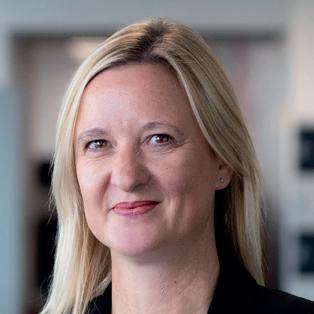
WRITTEN BY Vikki Brownridge CEO, StepChange Debt Charity
Managing multiple accounts for different global currencies can be a headache.
The UK digital bank that bridges you to the world
UK digital bank offers interest-bearing multi-currency current accounts for individuals and multi-currency business accounts for SMEs, bringing a more global way to bank.
Nowadays, more than ever, people are travelling, relocating or living between countries while adopting remote and hybrid working models.
Currently, around 16% of people living in the UK were born outside the country1, reflecting an internationally diverse population. Relocating, working or studying abroad, or running a business across countries is becoming more common. Navigating multi-currency banking, however, can be challenging, and traditional UK banks aren’t always designed for the needs of global customers.
“People are realising the financial world has no boundaries,” explains Simon Lee, General Manager of Digital Personal Banking, iFAST Global Bank. “Physical presence in a country is no longer always required for work, giving more people the option to become digital nomads, travel, build global businesses, relocate their family or study abroad.”
Multi-currency banking
With global mobility comes global banking, which can be complex. “Managing multiple accounts for different global currencies can be a headache,” explains Lee. “Moving money across different accounts and converting currencies can come with hidden costs, and it can be timeintensive to manage multiple accounts and transactions across different providers.”
Aside from the complexity of managing multiple accounts for different currencies, there’s also a lack of interest-bearing options across various currencies, plus the overall difficulty of managing finances locally and internationally.
Regulated by FCA and authorised by the PRA in the UK, iFAST Global Bank has been specifically designed to address global customer pain points, bridging them to the world with one multi-currency account, providing easy access to different currencies. The bank has also achieved profitability within just three years, reinforcing the strength and sustainability of its business model.
“With our multi-currency personal banking UK account, you can access all your currencies in one place. Through one login and one app, customers hold, receive and spend across nine currencies and make cross-currency payments anytime, anywhere, with no withdrawal fees,” explains Lee. “It makes life much simpler for both individuals and businesses who need fast, easy access to multiple global currencies.”
Founded 25 years ago as a wealth management platform, the parent company - iFAST Corporation has expanded to accommodate the needs of global customers. As a fintech company built differently than traditional banks, iFAST Global Bank is able to convert its profitability into meaningful customer benefits — greater flexibility, convenience and interest-bearing current accounts.
“More than £300 billion sits in UK accounts not acquiring interest2,” says Lee. “Traditional banks rely on costly, offline models with a network of branches. We started digitally, and those savings translate into real benefits for customers. All currencies can earn interest, up to 2.9%AER (variable) in pounds, so your everyday balance doesn’t have to stay idle.”
Customers shape services
Driven to succeed in a new commercial market, iFAST Global Bank is committed to using customer feedback to continually improve its services and meet the needs of a diverse, globally minded customer base. “We’re a UK bank, but focused on a global banking strategy, something reflected in our name, which represents a service available to everyone, globally,” explains Lee.
“We’ve broken traditional, heritage banking models to build a company centred around social responsibility,” says Lee. “We want to empower our customers to be in control of their banking, using their feedback to develop more services and solutions based on their evolving needs.”
Deposits are protected by the Financial Services Compensation Scheme (FSCS) up to £120,000, and opening an account can be done online or via the app. Our personal and business accounts provide flexible multicurrency access and interest-earning opportunities that can benefit our customers.


Why UK SMEs still struggle to find the right funding
UK SMEs are ready to grow, but funding barriers and low confidence are holding them back. Learn why access to finance remains a major challenge for small businesses.

Government wants businesses to grow. The IoD survey1 of members’ business priorities in April for the rest of 2025, showed almost 8 in 10 directors had ‘driving growth’ as the top priority. More than a third also prioritised investing in technology/software (including AI) and products/services. Be the Business found a 1% annual improvement in UK small and medium business productivity would boost the economy by £94bn in five years.2
SMEs face funding gap despite Government support
However, the cost of doing business, wage increases and hikes in National Insurance contributions alongside stubbornly high inflation and interest rates makes investment for growth challenging, particularly for smaller enterprises. Accessing funding is often cited as the main barrier to investment in people, tech or skills. There’s money, but small businesses often apply for the wrong funding, aren’t funding-ready and get rejected. We need to support smaller businesses to win the right funding at the right time for the stage of their business.
The UK Government is actively trying to persuade small businesses to invest with an additional £4.5 billion through the British Business Bank, the extension of the Growth Guarantee Scheme to 2030 and £1 billion added to support up to 69,000 new entrepreneurs, with the average start-up loan
Rethinking rewards: How banks can win the loyalty war in the
‘switching era’
As digital banks make switching effortless, leading financial institutions are turning to transaction-led rewards to drive retention and lifetime value.

Two decades ago, switching banks was cumbersome. Today, it’s effortless and actively encouraged. In 2024 alone, 1.19 million current accounts were switched, with nearly a million more following in just the first quarter of 2025.1
For banks, this shift in consumer behaviour is critical. In a market forecast to reach £78.4 billion by 2030,2 the cost of acquiring new customers keeps climbing, making the defence of the existing customer base more important than ever.
Power of data-driven rewards
While 65% of customers say they would switch for better service, 78% identify personalisation as a critical factor in their decision to stay with their bank.3 This is where the traditional view of rewards needs to
size increased to £15,0003. There’s the new Business Growth Service, Late Payment Reform and High Street investment support to help small businesses export, diversify revenue streams and work with public bodies through changes to the Procurement Act. The ‘Backing Your Business’ plan has a focus on creating a culture of entrepreneurship, unlocking capital, reducing friction, building confidence and encouraging small businesses to scale.
Funding challenges threaten small business growth
Confidence is key to investment, but almost every index puts it at an all-time low. Confidence comes with certainty, and there’s been little certainty since the financial meltdown in 2008. Events at home and overseas, the pandemic and constant policy changes have exacerbated uncertainty.
Small businesses are tough and agile but don’t have deep pockets to weather change as bigger businesses can. We need clarity, consistency and certainty to rebuild confidence. Then, we can forge ahead with investment in growth Otherwise, the future’s bleak.
References:
1. IOD. 2025. Businesses seek to drive growth amid economic challenges.
2.
3.
businesses. Gov.UK.

evolve.
Rewards are often dismissed as simple giveaways. But when powered by transaction-level data, they become a sophisticated growth tool. By connecting customers with relevant cashback offers from retail and lifestyle brands directly within their banking app, banks can turn routine interactions into lasting engagement.
Driving tangible value
The impact of embedding smarter rewards into the banking relationship is measurable. Cardlytics data shows that this model benefits all sides: customers feel rewarded, brands gain targeted sales and banks create incremental value without relying on costly acquisition incentives. Even a modest 5% improvement in retention can lift profits anywhere from 25%-95%.4 By focusing on
loyalty, banks can generate more from the customers they already serve, improving lifetime profitability and building a stronger defence against attrition.
Scale through partnership
Banks cannot tackle this challenge alone. Building an effective rewards ecosystem requires access to a wide network of partners and the ability to process transaction-level data at scale. This is why partnerships matter. By working with specialists like Cardlytics, banks can gain access to richer data and results already proven at scale. Across our network, we see that when cashback is targeted and embedded directly into the banking journey, engagement and discretionary spend increases — driving frequent card usage and overall higher customer value while unlocking a sustainable revenue stream.
In a sector facing structural change, the banks that thrive will be those that treat rewards not as a marketing addon, but as a core part of the value they provide; seamlessly integrated into everyday money management.
1.
References:

Be the Business. 2023. 1% annual improvement in UK SME productivity would grow economy by £94bn in 5 years.
Department for Business and Trade. 2025. Backing your business: our plan for small and medium-sized

SBank locally, use globally: one UK current account for global business banking
One digital bank offers interest-bearing multicurrency current accounts designed specifically for SMEs and corporate clients, bringing a smarter and more global banking experience.

uccessfully running a business in multiple countries requires strategic planning and a clear understanding of the regulatory and operational requirements for each country, not least the ability to bank efficiently across different currencies. Currency swings can quietly erode profit margins, with foreign exchange risk marking a significant financial challenge, making it essential for businesses to manage their multicurrency exposure with precision.
“Business banking across multiple currencies can incur time and financial risk,” explains Steve Chu, Head of Commercial Banking, iFAST Global Bank. “Most banks charge per account, requiring separate accounts per currency, and each transaction and currency conversion can incur supplemental charges.”
Base currency can be a problem when being paid in a foreign currency, as payments are automatically converted at the bank’s exchange rate, potentially incurring fees and losses due to fluctuating exchange rates. “We want to remove these obstacles to make global business banking easy and approachable,” says Chu.
Value of a multi-currency business account
iFAST Global Bank provides small and mediumsized enterprises (SMEs) with a unified business account that can handle and hold up to nine currencies, with a range of services designed for internationally active business owners and global traders. “Having one user-friendly current account for multiple currencies limits the unnecessary associated costs and daily operation time needed to handle multiple accounts,” says Chu. “In this way, we’re empowering business owners to expand their global operations.”
Some service providers don’t offer interest on business current accounts, and when they do, there are typically limitations such as thresholds or fees. This digital bank provides interest-bearing multicurrency business current accounts, which accrue interest on everyday business balances, letting your money work for you. “We’ve simplified the process of global banking, making it a fairer system for our customers, including businesses,” explains Chu. “Anything that remains in the account should be treasured and should benefit the customer — that’s
how we build long-term relationships.”
“It’s like the evolution of the smartphone. Before it existed, people carried a phone, an MP3 player and a camera. Today, it’s all on one device. We’ve simplified business banking in the same way, bringing everything together in one account so our customers can manage multiple currencies effortlessly.”
Comprehensive business banking solutions
“As a UK bank, we also have a dedicated team that serves established financial advisory companies, banks, financial institutions and multinational companies, to provide them with an efficient, tailor-made and secure online platform to manage their respective business and transactions,” highlights Chu.
This comprehensive range of services resulted in quarter-on-quarter growth for the company this year. “This feeds into what today’s world naturally expects, providing simple solutions with choice,” says Chu. “For businesses, everything has to be easy, fast and genuinely beneficial, removing the burdens and hassle that come with traditional banking.” We offer a simple digital onboarding process. UK SMEs can start the account application online, uploading the required company documents for our verification via Companies House.
As a part of iFAST Corporation Group
Beyond the UK banking services, the Group’s B2B solutions from other regions provide a comprehensive investment platform that supports fund distribution, administration services and pensions solutions. The platform partners with global asset management firms, banks and other financial institutions to provide a wide range of options for investors and wealth advisers.
The Group offers access to over 27,400 investment products, including unit trusts, bonds, government securities, ETFs and insurance products, alongside wealth management solutions, banking services, pension administration, research and investment seminars, fintech solutions and investment administration and transaction services.

WRITTEN BY
Bethany Cooper
INTERVIEW WITH
Steve Chu
Head of Commercial Banking, iFAST Global Bank