Our values of excellence, innovation, connection and inspiration guide everything we do — from the artists we invite, to the programs we nurture, to the welcoming spaces we create for discovery. Our 2025–26 Season embraces the power of live performance to bring us together and to imagine new ways of belonging. This fall, we highlight Music for New Bodies, directed by Artistic Partner Peter Sellars, a daring work that questions what it means to live fully, with humanity and resilience. I’m grateful to share this journey with you.
Michelle Witt Executive & Artistic Director
We acknowledge that Meany Center is on unceded and traditional land of the Coast Salish, including the Duwamish People, the first people of Seattle. We honor with gratitude the land itself and those who have cared for it, past and present. Meany Center is committed to better understanding our relationship with this land and to building authentic relationships with the first people of this region.
PIANO SERIES | OCTOBER 3 AT 7:30 P.M.
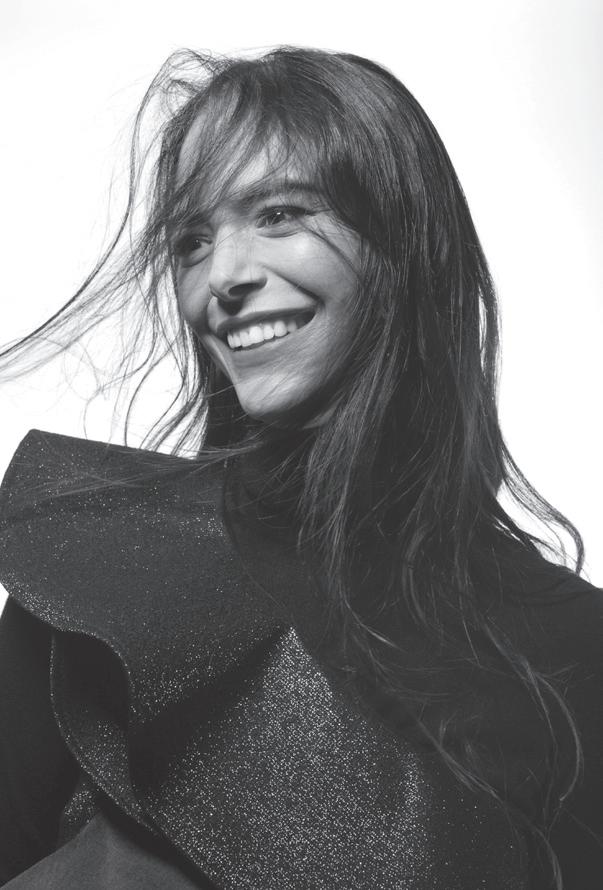
MAHANI TEAVE
Piano Series generously underwritten by Sven & Melinda Bitners and Sally Schaake Kincaid
ENRIQUE GRANADOS “El Amor y la Muerte” from Goyescas
JAIME COFRE FLORES Norte Sur, Suite for Piano (b. 1971)
ABOUT the ARTIST
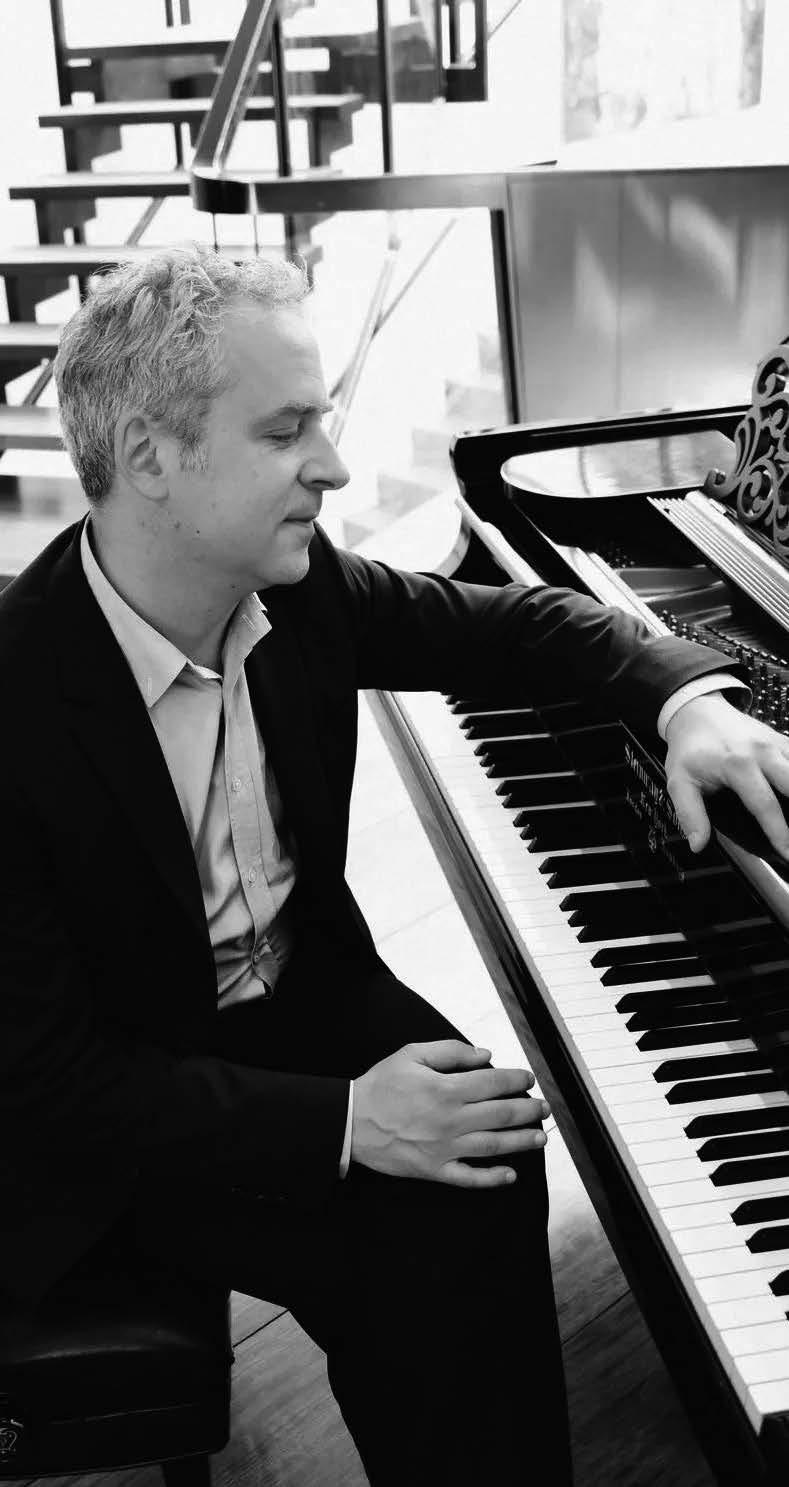
Award-winning pianist and cultural ambassador Mahani Teave is a pioneering artist who bridges the creative world with education and environmental activism, and the only professional classical musician on her native Easter Island. Twice topping the Billboard charts with her debut album, Rapa Nui Odyssey, she received raves from critics, including BBC Music Magazine, which noted her “natural pianism” and “magnificent artistry.”
Twice distinguished as one of the 100 Women Leaders of Chile, Mahani has performed for its past five presidents, at embassies in over eight countries, and at Berlin’s Brandenburg Gate, Chile’s Palacio de La Moneda and Chilean Congress. Believing in the profound, healing power of music, she has performed globally, from the stages of the world’s foremost concert halls on six continents, to hospitals, schools, jails and low-income areas.
Setting aside her burgeoning career at the age of 30, Mahani returned home to found her island’s first music school, Toki Rapa Nui, a self-sustaining ecological wonder which also teaches children about renewable natural resources and their quickly-fading cultural heritage.
Mahani’s inspirational story was captured in the Emmy-nominated documentary Song of Rapa Nui by fifteen-time Emmy award-winning filmmaker John Forsen (Amazon Prime Video), and in a just-released children’s book, The Girl Who Heard the Music (Sourcebooks). She was recently featured in The New York Times, NPR, CBS Sunday Morning, PBS Newshour, Graydon Carter’s Airmail, the BBC, EFE, MPR’s Performance Today, CNN en Español, Amanpour and Company on CNN and PBS, Gramophone, Good Morning America, a Tiny Desk concert and more.
Her awards include the APES Prize in Chile, Claudio Arrau International Piano Competition, Scotia Bank’s Advancement of Women Award, “Chileans Creating Future” award, and honorary VP of the World Indigenous Business Forum.
Debuting at age nine, Mahani toured with famed Chilean pianist Roberto Bravo. She studied at Austral University (Chile), the Cleveland Institute of Music (student of Sergei Babayan), and the Hanns Eisler Musik Hochschule in Berlin. A Steinway artist, she lives on Easter Island, combining concerts with leading the Music School and motherhood.
About the Program
Andante Appassionato, Op. 2
Piano Sonata No. 1, Op. 11 ENRIQUE SORO
Enrique Soro Barriga, a composer and pianist, first studied in his native Chile, and then, in 1898, with a scholarship from the Chilean Senate, he began studies at the Royal Conservatory of Milan, where his father had studied 40 years earlier. After graduating, he began his career as a pianist. He returned to Chile when he was 21; by then, he had composed more than 70 works, many for solo piano.
He soon became a professor at the National Conservatory of Music of Chile (Conservatorio Nacional de Música de Chile) where he taught piano and composition and became the Conservatory’s director. He premiered his works in Europe, the United States and Latin America and connected with many European composers: D’Indy, Mascagni, Puccini, Ravel and Saint-Saens. In 1948, he won the National Prize of Art in Chile.
Soro recounted the genesis of the subtle, attractive Andante appassionato that had appeared in a dream he had when he was 17. “I was in Milan, staying with friends. This was during a time of hope and love. In my dream I wrote a piece inspired by love. I woke up. It was three in the morning. I immediately began noting down the music. The next day I sat at the piano and arranged the work.” Soro adapted the piece for cello, organ, string quartet and orchestra. The solo piano version was composed in 1902; he revised it many years later.
Piano Sonata No. 1 was composed in 1903, but not published until 1922 by Schirmer in New York. Soro composed it while he was a student in Milan. It follows the classical Romantic tradition; the sonata has four movements.
Serenata andaluza
Danza ritual del fuego, No. 8 from El Amor Brujo MANUEL DE FALLA
The most renowned Spanish composer of the first half of the 20th century was Manuel de Falla. He received his education in Madrid and then went to work in Paris, where he became a well-known figure and became friendly with Debussy, Ravel, Stravinsky and Dukas. Mostly though, it was the folk songs and dances of Spain and its art music that continually inspired him. He combined them with inspiration from the two great esthetic movements of his time, impressionism and neo-classicism, to create many fascinating and original works. His composition teacher, Felipe Pedrell introduced him to native Spanish music, particularly flamenco (specifically cante jondo).
Falla wrote only seven works for solo piano; Serenata andaluza is one. These works are seldom played. The colorful Serenata andaluza, an early work written in 1899, begins with an evocative figure that sets the tone for the lyrical Andalusian melody, which hints at Falla’s later piece “Andaluza” from Cuatro piezas españolas.
A Spanish gypsy, Pastora Imperio, a descendant of an Andalusian family devoted to dance and song, inspired Falla’s ballet, El Amor brujo and performed the lead in the Madrid premiere in 1915.
One frequently hears Falla’s transcriptions for piano of the popular dances from El amor brujo. Danza ritual del fuego (“The Ritual Fire Dance”) is the best-known transcription.
The ballet score, and especially its Ritual Fire Dance, became popular in the symphonic repertory; in this concert it will be heard in its piano version. It was danced to drive off Evil Spirits and was one of most popular parts of the ballet.
Suite Violeta (Homenaje a Violeta Parra) SANTIAGO VERA RIVERA
In 1970, Chilean composer Santiago Vera Rivera entered the Faculty of Musical Sciences and Arts at the University of Chile, where he studied composition for schoolchildren and graduated as a State Professor in Musical Education. Beginning in 1988, he pursued a doctorate degree in music in Oviedo, Spain. He composed the Viola Suite in 1994 for Violeta Parra Sandoval (1917–1967), a Chilean artist, composer, singer and instrumentalist.
This version was commissioned by renowned Chilean pianist Eva Muñoz in the summer of 2012. It is based on the original Violeta Suite for Piano (1994). The work is based on Vera Rivera’s Tonada (Folk Song): Memories of My Garden, composed in 1984. Its development fuses the Tonada with the following excerpts from works by Violeta Parra Sandoval: Black Marriage (Air by Parabién); Arranca Arranca (Air by Chiloé); Gracias a la Vida (Air by Sirilla de Chiloé); Una Carreta Enflorá (Air by Parabién Reverse); Volver a los 17 (Aire de Sirilla).
Selections from Doloras ALFONSO LENG
Alfonso Leng Haygus, a post-romantic composer, is credited with writing the first important symphonic work in the Chilean tradition, La Muerte de Alcino (The Death of Alcino) a symphonic tone poem inspired by a novel by Pedro Prado. He only spent a brief time at the National Conservatory in 1905, but this did not prevent him from taking an active part in the artistic life of Chile the early 20th century.
Leng composed important piano pieces and many art songs in various languages. The five “Doloras,” piano pieces composed in 1914, are each accompanied by a text written by poet Pedro Prado. Prado’s texts express sadness, pain and despair, and Leng’s music is intimate and subjective.
Dolora No. 3 was written in 1901 and the rest between 1913 and 1914. Leng later orchestrated it. His works are frequently performed in his native Chile as well as in Latin America in general.
He won the National Art Prize in 1957. Surprisingly enough, Leng was also a practicing dentist in Santiago and the founder of the dentistry faculty at the University of Chile, where he became the first dean.
Danzas españolas, Op. 37, No. 2 “Oriental”
ENRIQUE GRANADOS
Granados was a Spanish pianist and composer whose creative imagination was stimulated rather than limited by his devotion to the language of his country’s folk music. He absorbed the idiom of the music of his people and used it as the vehicle to express his art. He lived most of his adult life in the Catalonian capital of Barcelona, but he was always aware of the varied styles of other Spanish places and times.
He felt especially devoted to the Madrid of Goya (1746–1828) which Goya pictured in his piano suite called Goyescas. He later turned the work into an opera with a libretto by Fernando Periquet, that premiered at the Metropolitan Opera House in 1916, at a performance Granados attended. At President Wilson’s request, Granados then journeyed to Washington to give a recital at the White House, which caused him to miss his ship to Spain. He later took a ship to England, and, in Liverpool, boarded another ship bound for Dieppe. A German submarine torpedoed the ship, and in an attempt to save his drowning wife, Granados also drowned.
Granados composed his Doce danzas españolas (Twelve Spanish Dances) for piano in four sets of three between 1892 and 1900. In them, he fused elements of Spanish nationalism and romantic piano technique. These dances are not literal transcriptions
of folk dances, but rather romantic evocations of them, drawing inspiration and actual material from popular sources of the Spanish dance song as it was sung in the countryside as well as on the streets of large cities, or as it appeared in popular music played in the cafes. Each, with a threepart A-B-A structure, emphasizes the melodic and is in triple time, shifting freely between major and minor modes.
Dance No. 2, entitled “Oriental,” evokes the atmosphere of Moorish Andalucia. Expelled from Spain in the Middle Ages, the Islamic Moors left strong imprints on Spanish music, art, poetry and architecture. This Andalusian dance fuses multiple contrasting cultural strains including the Arabic melisma.
“El Amor y la Muerte” from Goyescas ENRIQUE
GRANADOS
Granados first became interested in painting while living in Paris between 1887 and 1889, and when he returned home, he discovered the works of Goya in the Prado. “I fell in love with the mind of Goya,” he wrote, “with his palette, with his models, his battles, loves and conquests, with pink and white cheeks against lace and black velvet. Those small waists and pearly hands dazzled me.” In Barcelona, in 1911, he played the first public performance of the music these images inspired.
Granados felt especially devoted to the Madrid of Goya (1746-1828) which he pictured in his piano suite and opera called Goyescas. The Goyescas are six large and fiercely difficult yet loosely constructed pieces. To play them at all requires enormous technical skills; to play them well requires a sharp and penetrating musical intelligence. The writing is so complex in texture that simply articulating its content is a prodigious feat. Every detail, even the tiniest,
has stylistic significance. Scrutinized in manuscript or read literally at the piano, the music may initially seem to lack variety, but Granados wrote it to be played with constantly changing color and with disciplined or, at least, controlled abandon. Each of the six represents a scene in a Goya painting or tapestry, displaying the picturesque period of 18th century Madrid.
Goyescas is subtitled Los majos enamorados (The Gallants in Love). The first work in Part II is El amor y la muerte (Love and Death), the penultimate piece in the six-piece series; in it, the composer recalls some of the themes he had earlier used in the four pieces of the first part. These each have distinct poetic individuality and are brilliant and dramatic with rhythmic and melodic materials of Spanish folk music evident.
Norte
Sur, Suite for Piano
JAIME COFRE FLORES
Norte Sur (North South) is a Chilean work that was commissioned to be performed as a required piece during the 2014 Dr. Luis Sigall International Performance Competition in Viña del Mar, Piano category. The piece includes elements of traditional music that invite a journey through various expressions of both Andean folklore (Baguala and almost Huayno) from the north of our country and part of the south (Tonada). The intent of the commission was to offer participants a part of our traditional culture as a testimony of their encounter with our country. —Jaime Cofré
The pianist talks about her music and work. To watch this video and explore the collection, visit:
OCT 14
John Popham and Pala Garcia
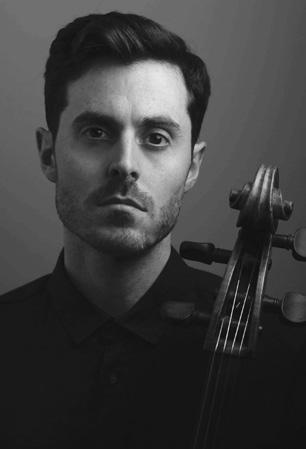
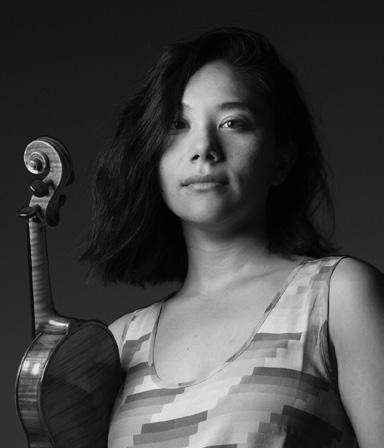
Newly appointed UW strings faculty John Popham (cello) and Pala Garcia (violin) are joined by triomate Mika Sasaki (piano) in a program of compelling new works and recent major commissions from their acclaimed contemporary music trio Longleash.
7:30 pm Meany Hall—Gerlich Theater
UW Symphony with Cristina Valdés, piano
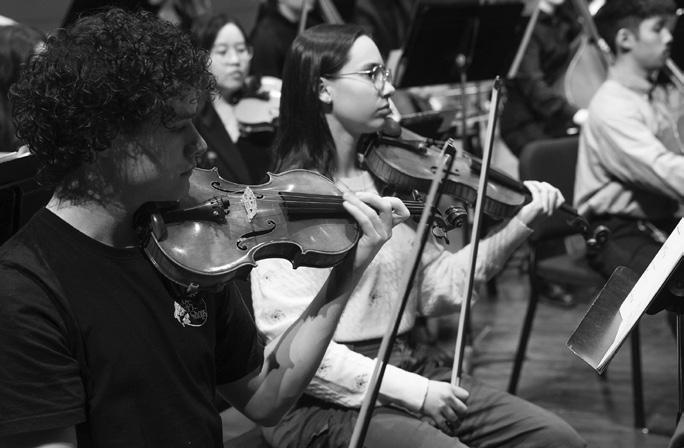
The UW Symphony (David Alexander Rahbee, director) performs music by Schubert, Liszt, and Dvořák. Pianist Cristina Valdés joins the orchestra for a performance of Liszt: Totentanz, S.126.
7:30 pm Meany Hall—Gerlich Theater
OCT 24
DEC 1
UW Gospel Choir
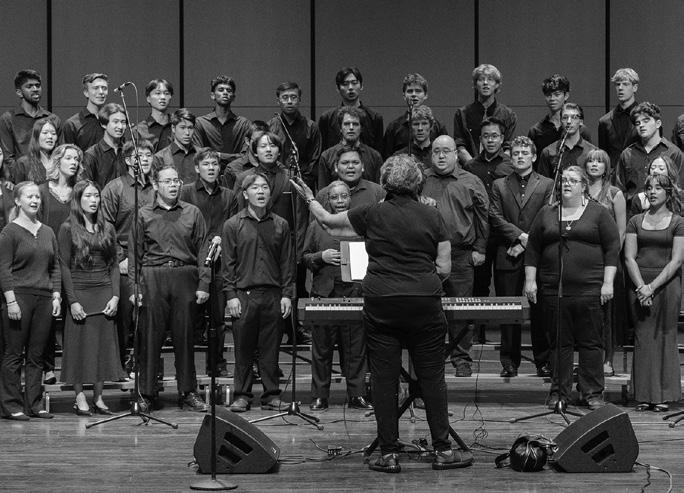
Phyllis Byrdwell leads the 100-voice UW Gospel Choir in a program of music from the Gospel tradition.
7:30 pm Meany Hall—Gerlich Theater
| OCTOBER 17 AT 8 P.M.
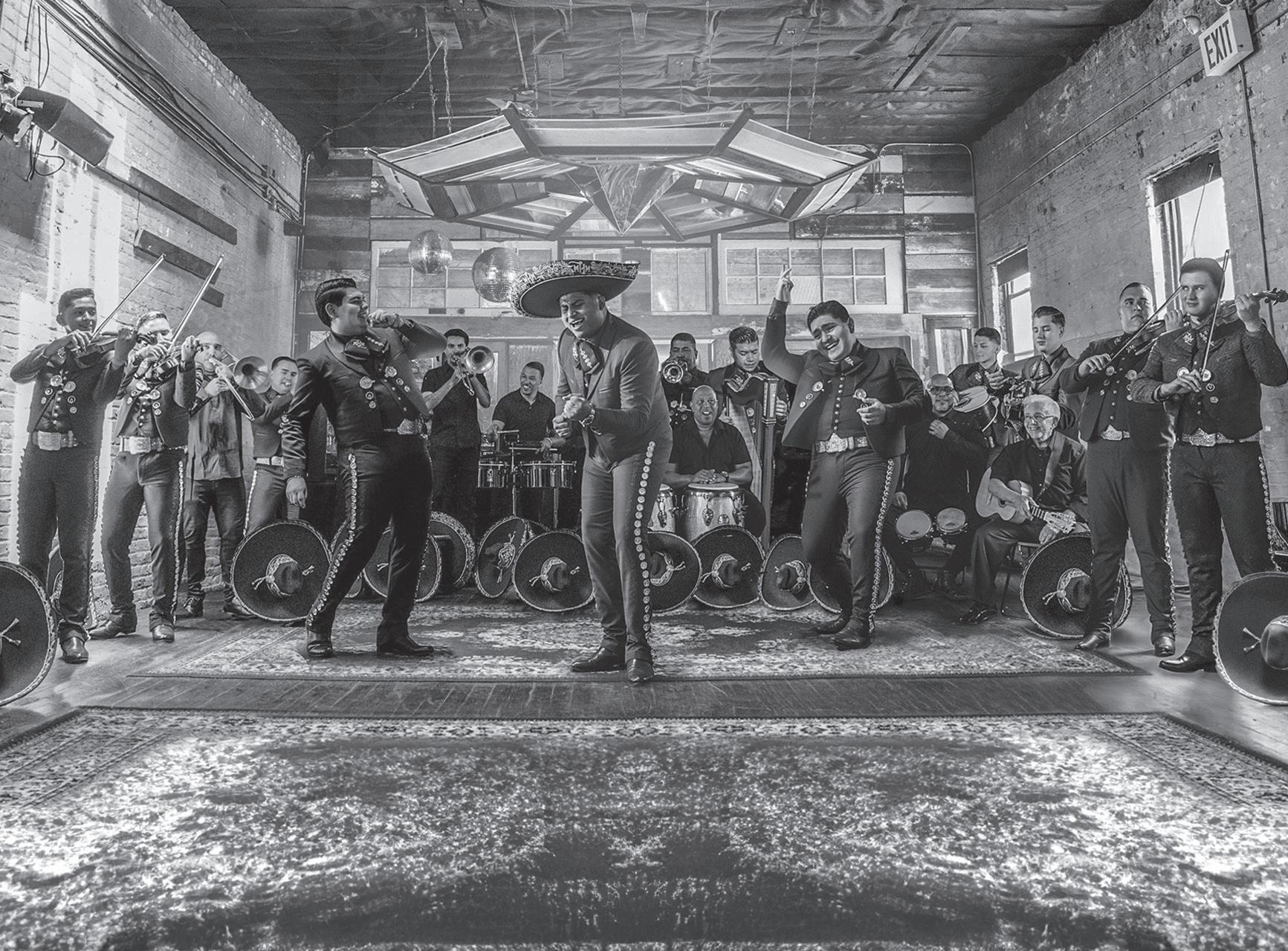
MARIACHI HERENCIA DE MÉXICO
La Nueva Generación Tour
Season Support Comes From
Youth Matinee & K-12 In-School
Arts Residency underwritten by
Mr. & Mrs. Ron & Darlene Cheatham
Helen Curtis in Honor of F. Kingsbury &
Lois Curtis
Hans and Kristin Mandt
In Loving Memory of Elizabeth Rennebohm
David & Marcie Stone
In Loving Memory of Gloria Swisher
Ellen Wallach & Thomas Darden†
Signature Support
Ellen Wallach & Thomas Darden†
Additional support comes from
Katharyn Alvord Gerlich
The Hokanson Family
Brandon Koeller & Kimberly Davis
Matthew & Christina Krashan
Dennis Lund & Martha Taylor
John C. Robinson & Maya Sonenberg
José González, trumpet
Alejandro Gutiérrez, trumpet
Felipe Michel, trumpet
Jesús Orozco, vihuela
Martín Ortiz, guitarron
Edwin Pérez, guitar
Alejandro Vázquez, guitar
Eduardo Viveros, harp
Diego Casasola, violin
Maria Casasola, violin
Simón Casasola, violin
José Dueñas, violin
Enoc Guerrero, violin
César Ramírez, violin
Julio Torres, violin
César Maldonado, producer
There will be no intermission.
The program will be announced from the stage.
ABOUT the ARTIST
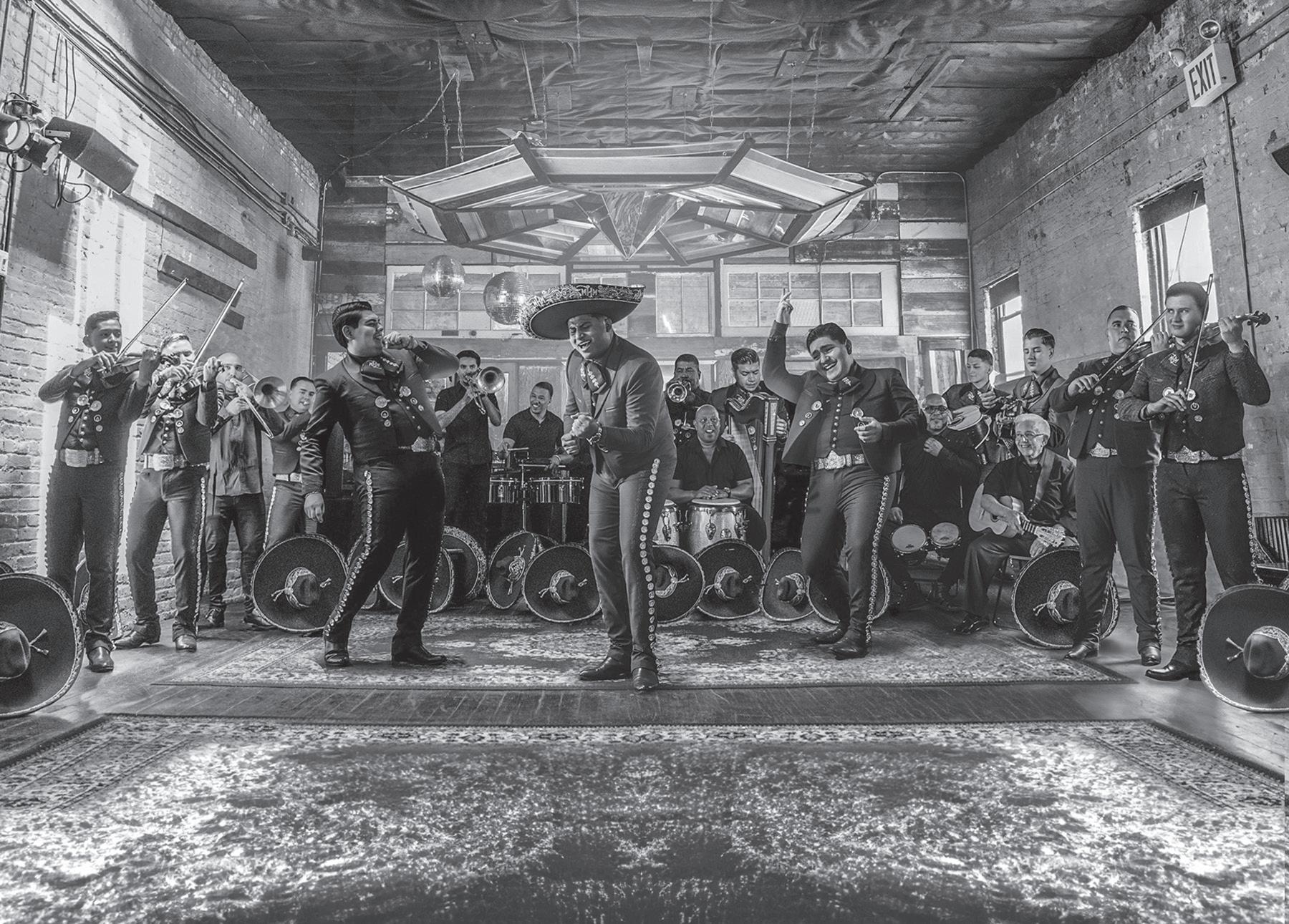
¡Viva el mariachi! A new generation takes mariachi to whole new heights as Mariachi Herencia de México pushes the boundaries of traditional mariachi music. Simultaneously honoring the past, celebrating the present and creating the future of mariachi music, Mariachi Herencia de México presents an electrifying and unforgettable night of Mexican music and culture. The young, virtuosic band is composed of musicians representing a new bicultural generation in the U.S.
The historic tradition of mariachi music has its roots of origin in cities such as Guadalajara and Mexico City. As the ever-evolving genre’s influence spread, it reached Chicago and birthed Mariachi Herencia de México. The two-time Latin Grammy-nominated band has issued five chart-topping albums and has performed all across the North American continent, paving the way for a new generation of mariachi musicians. Nuestra Herencia, their 2017 debut album, topped the Latin streaming charts and earned the band their first Latin Grammynomination for Best Ranchero/ Mariachi Album. 2018’s Herencia de la Tierra Mía and the two-volume series, Esencia and Esencia, Vol. 2 issued in 2019 and 2020, respectively, charted atop all major streaming platforms
and industry charts. In 2022, Herederos appeared as the band was performing a wildly successful North American tour. Herederos received a 2023 Latin Grammy nomination for Best Ranchero/Mariachi Album.
Their latest album, Viva La Musica, breaks new ground with their most ambitious album to date — a bold reimagining of tradition that redefines the possibilities of mariachi in the 21st century. This genre-blending collection is a celebration of Latin American music through the lens of a new bicultural generation. From the brassy swing of “La Murga” to the sultry sophistication of “Caminaré,” the album fuses traditional mariachi instrumentation with salsa, bolero, bossa nova and contemporary arrangements — all without losing the emotional core and elegance of mariachi. Songs like “Inolvidable,” “Preciosa” and “Cómo Fue” honor the golden age of Latin music, while tracks like “Espléndida” and “Garota de Ipanema” push the genre into unexplored territory. Each track is a masterclass in vocal and instrumental storytelling — lush, expressive and unapologetically bold. This isn’t just a mariachi album. It’s a statement. A cultural bridge. A sonic evolution. It’s mariachi for the world.
Get your seats now for these special December events
DECEMBER 7
Christmas with Cantus Three Tales of Christmas
The a cappella vocal ensemble brings a joyful celebration of the holiday season’s spirit.
DECEMBER 9
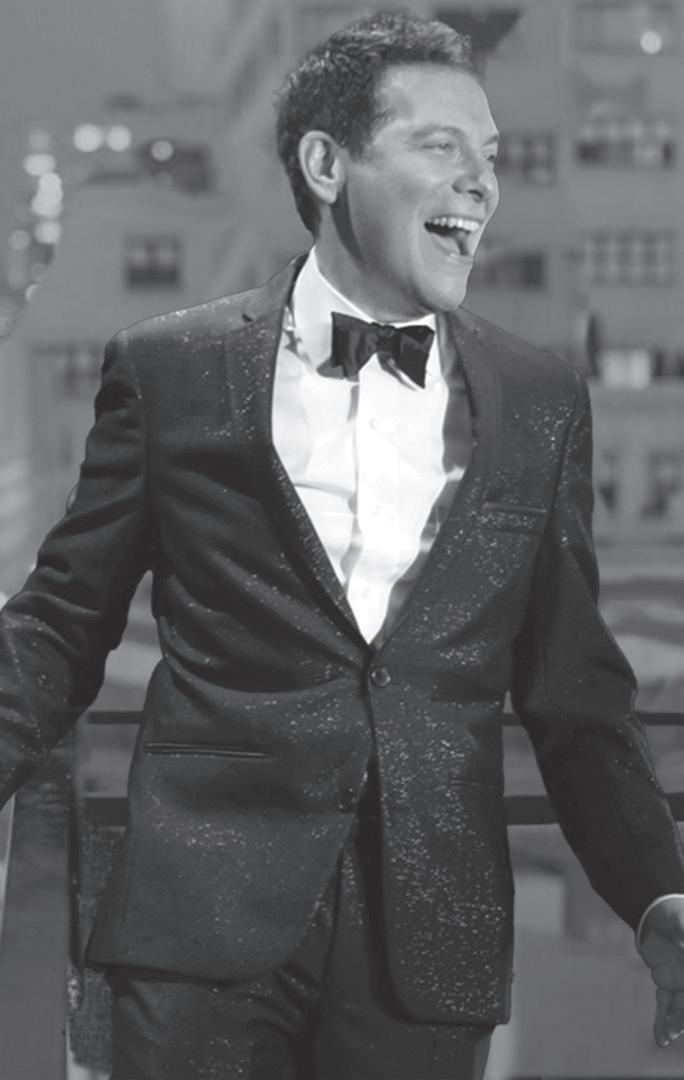
Michael Feinstein Coming Home: The Holiday Celebration
The legendary vocalist celebrates the magic of the holiday season.
DECEMBER 11
Dianne Reeves Christmas Time Is Here
A night of holiday magic from one of the world’s pre-eminent jazz vocalists.
CHAMBER MUSIC SERIES | OCTOBER 21 AT 7:30 P.M.
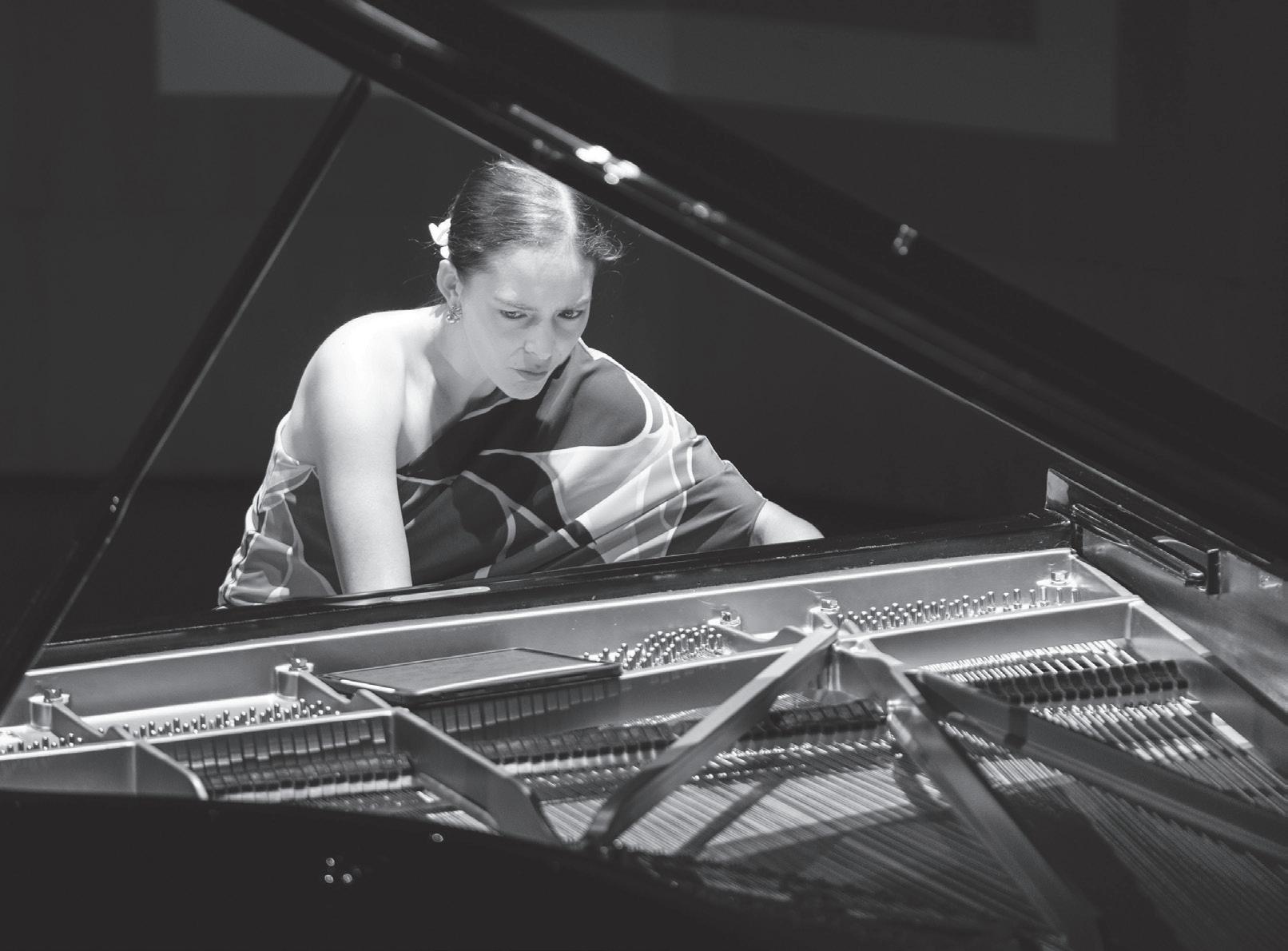
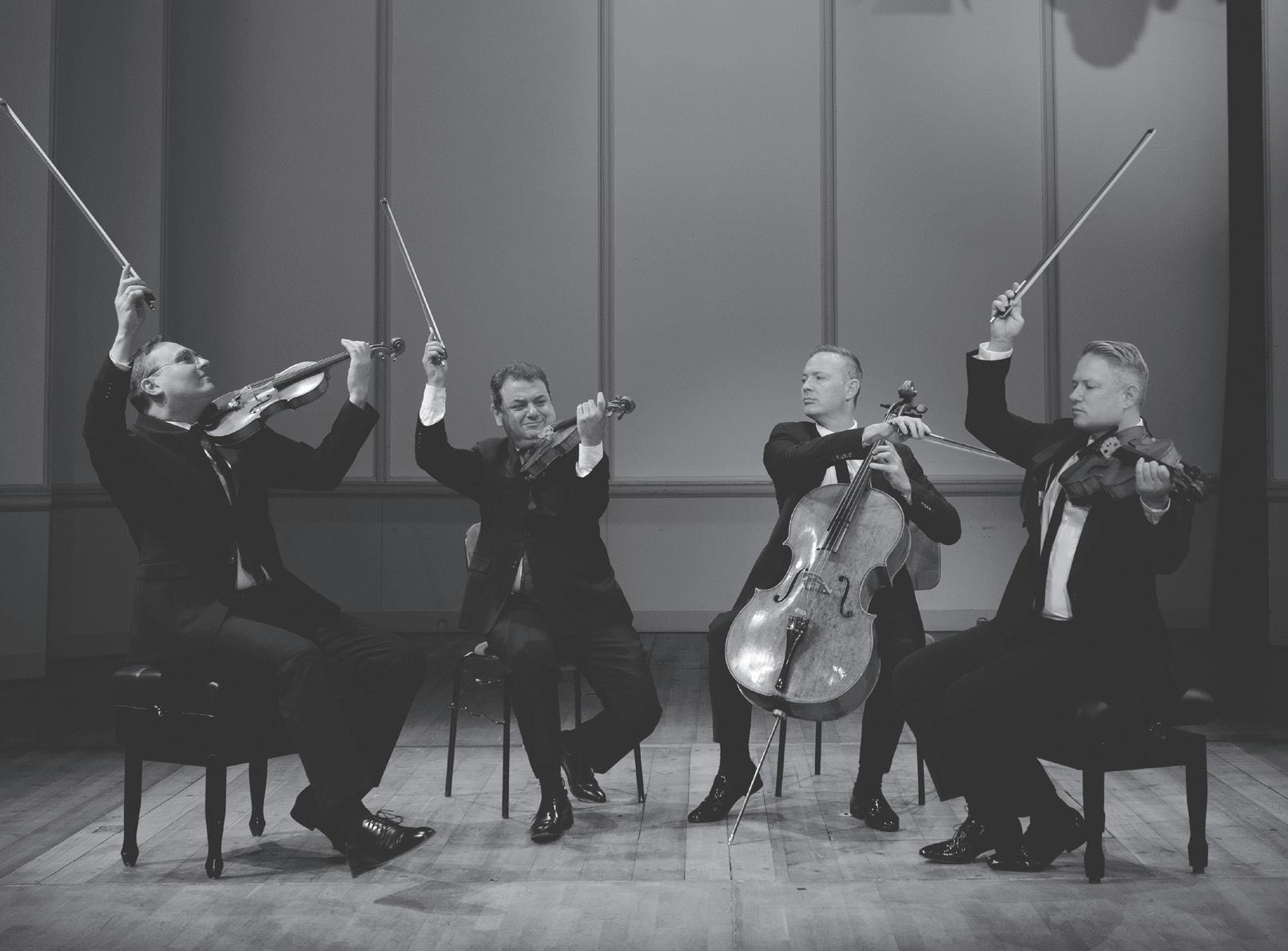
JERUSALEM QUARTET
Chamber Music Series generously underwritten by Cecilia Paul & Harry Reinert and Eric & Margaret Rothchild
Season Support Comes From
Signature Support
Robert Craft & Igor Stravinsky Foundation
Additional support comes from
Sylvia & Stephen Burges
Mr. & Mrs. Ron & Darlene Cheatham
Helen Curtis in Honor of F. Kingsbury & Lois Curtis
Katharyn Alvord Gerlich
Daniela & Torsten Grabs
Lynn & Brian Grant Family
Dr. M. Elizabeth Halloran
Yumi Iwasaki & Anoop Gupta
Matthew & Christina Krashan
Hans & Kristin Mandt
Gary L. Menges
John C. Robinson & Maya Sonenberg
Craig Sheppard & Gregory Wallace
David & Marcie Stone
Donald Swisher
Scott VanGerpen & Britt East
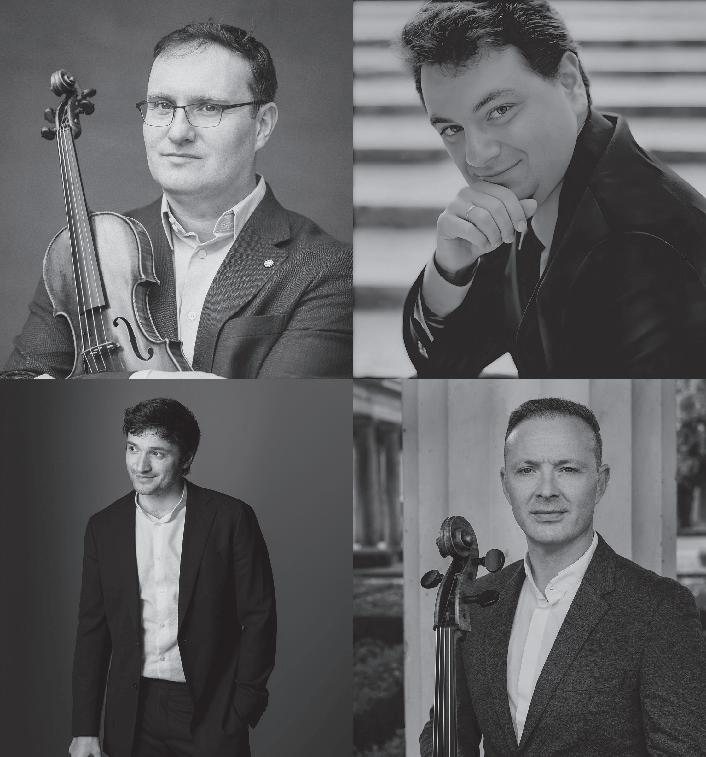
Alexander Pavlovsky, violin
Sergei Bresler, violin
Mathis Rochat, viola
Kyril Zlotnikov, cello
FRANZ JOSEPH HAYDN Quartet in B-flat Major, Op. 76, No. 4 “Sunrise” (1732–1809)
I. Allegro con spirito
II. Adagio
III. Menuetto (Allegro)
IV. Finale (Allegro ma non troppo)
LEOŠ JANÁČEK
Quartet No. 1 “Kreutzer Sonata” (1854–1928)
I. Adagio — Con moto
II. Con moto
III. Con moto (Vivace. Andante)
IV. Con moto (Adagio)
INTERMISSION
LUDWIG VAN BEETHOVEN Quartet No. 13 in B-flat Major, Op. 130 (1770–1827) with Grosse Fuge finale, Op. 133
I. Adagio, ma non troppo – Allegro Presto
II. Andante con moto, ma non troppo
III. Alla danza tedesca. Allegro assai
IV. Cavatina. Adagio molto espressivo
V. Finale: Grosse Fuge (Op.133)
The Jerusalem Quartet appears by arrangement with David Rowe Artists. www.davidroweartists.com
The Jerusalem Quartet records for BIS Records. www.jerusalem-quartet.com
ABOUT the ARTIST
“Passion, precision, warmth, a gold blend: these are the trademarks of this excellent Israeli string quartet.” Such was the Times’ (London) impression of the Jerusalem Quartet. Since the ensemble’s founding in 1993 and their debut in 1995, the four Israeli musicians have embarked on a remarkable journey of growth and maturation. Their expansive repertoire and extraordinary depth of expression have firmly established them as a distinctive voice in the string quartet tradition. At the heart of their sound lies a warm, full and deeply human tone, paired with an egalitarian balance between high and low voices. This approach allows the quartet to combine individual expression with a transparent and faithful presentation of the composer’s work. It also drives their ongoing refinement of interpretations of the classical repertoire, while encouraging explorations of new musical territories.
The Jerusalem Quartet is a regular and cherished guest on the world’s most prestigious concert stages. The year 2025 marks the Quartet’s 30th anniversary, which the ensemble celebrats with a special focus on Shostakovich’s 15 quartets, presented across 10 cities worldwide, including St. Paul, MN; Cleveland, OH; Portland, OR; Concertgebouw Amsterdam;
Beethovenfest Bonn; Philharmonie Cologne; and Tonhalle Zurich.
Highlights of the upcoming 2025–26 season include two North American tours, as well as extensive performances across Europe, with concerts at renowned venues such as the Konzerthaus Wien and Wigmore Hall in London. Another season milestone for the Quartet will be a series of quintet concerts in Europe in spring 2026 with celebrated pianist Elisabeth Leonskaja, taking place at prestigious venues including the Gewandhaus in Leipzig and the Alte Oper in Frankfurt.
The Jerusalem Quartet’s recordings have received numerous awards and accolades, including the Diapason d’Or and the BBC Music Magazine Award for Chamber Music. Previous Harmonia Mundi releases include a unique exploration of Jewish music in Central Europe between the wars, featuring a collection of 1920s Yiddish cabaret songs from Warsaw performed with Israeli soprano Hila Baggio, as well as the second volume of their complete Bartók cycle released in 2020. Today, the quartet records exclusively for BIS, with their first release for the label in 2025 featuring Shostakovich Quartets No. 2, 7 & 10.
About the Program
Quartet in B-flat Major, Op. 76, No. 4 “Sunrise” (1797) FRANZ JOSEPH HAYDN
In 1795, Haydn returned to Vienna (after his second visit to London) to live out his remaining years as music’s grand old man, the greatest living composer. Mozart, whom he had so greatly admired, had died too young four years before, and Beethoven, who was to lead the next generation (and the entire next century), was, in that year, only the musical season’s best debuting artist/composer. England had showered wealth and honors on Haydn, and he had lingered there for two months after his last concert before returning home to the Continent.
By the standards of the time, Haydn was an old man at 63. What no one knew was how different the work of his last years would be from those he had written previously. He had composed more than a hundred symphonies, but after the dozen he had composed expressly for his London audiences, he never wrote another. Yet with the knowledge of Handel’s oratorios that he had acquired in London, Haydn was able to modernize and revitalize that form in his own The Creation and The Seasons. He also wrote six masses and some other sacred music for the princely Esterházy family for whom he had served as staff conductor and composer for thirty years.
Haydn’s greatest music until this time had always been in his instrumental works, but in his last years, he wrote almost no instrumental music except a few string quartets, music that sums up a lifetime of invention of the highest order. In 1797, he wrote the six quartets of Op. 76, and in 1799, the two of Op. 77. He started another in 1803, but he gave up after two movements, which he allowed to be published in 1806 with the apologetic message, “All my strength is gone; I am old and weak.” He completed his last eight quartets with the kind
JERUSALEM QUARTET | ABOUT THE PROGRAM
of controlled freedom that comes only with great maturity; their rich instrumental texture looks forward into the future, perhaps as far as the time of Brahms.
Count Joseph Erdödy, the Emperor’s Chamberlain and Privy State Counselor, commissioned the six Op. 76 Quartets and, of course, Haydn dedicated them to him. The Erdödys were an important family, noble and musical, related by marriage to Haydn’s former employers, the Esterházys. Count Ladislaus Erdödy is listed among the subscribers to Mozart’s Vienna concerts in 1783; Beethoven dedicated his two Trios, Op. 70 (1808) and two Cello Sonatas, Op. 102 (1815), to his pupil, Countess Maria, wife of Count Peter Erdödy.
The much beloved quartet, Op. 76, No. 4, is frequently called the “Sunrise.” In this personal and very direct work, Haydn condenses and intensifies his musical expression. Karl Geiringer, in his Haydn biography, noted that the main subject of the first movement, Allegro con spirito, “beautifully expresses the feeling of growth and expansion that we experience on an early summer morning.” Haydn achieves this effect with the violin line, which follows an ascending trajectory above a softly held chord.
In the second movement, Adagio, Haydn articulates one of his slowest, most serious musical statements. Almost a fantasia based on the opening five-note motif, this movement is a portrait of grief and despair, contrasting greatly with the sunrise of the opening movement. The third movement, Menuetto, has yet a different character, one of simple charm, but the trio, which takes on
the heavier quality of the preceding Adagio, seems to have its origins in folk music. The lower two instruments, the viola and the cello, play a sustained drone while the violins intone a heavily-accented lugubrious melody.
In the vivacious finale, Allegro ma non troppo, Haydn returns to the style of his earlier quartets and uses a subject that is believed to be an adaptation of an English folk song. The development section of the suave final rondo seems to be headed toward a fugue, but as Paul Griffiths notes in his book on the string quartet that Haydn “curiously and humorously both disappoints and fulfills expectations by having the instruments imitate one another not in fugal response but in simple monody.” Twice he increases the tempo during the course of the movement. He brings the movement to an end in an exhilarating coda.
Quartet No. 1, “Kreutzer Sonata” (1923)
LEOŠ JANÁČEK
Leoš Janáček was a composer of great originality and independence who devoted an important part of his work to two great causes that commanded much of his interest. One was the advancement of the native Slavic cultures in the regions that became Czechoslovakia and their preservation from the powerful German-speaking societies around them. The other was the condition of women, which provided the inspiration for the subject of this quartet and as well as several of his operas and other works.
Janáček began his musical career as a choirboy in Brno. Later, he studied in Prague, Leipzig and Vienna, but he returned to Brno to teach and spent almost all of his
adult life there. His early music was influenced by his contemporaries, in particular by Antonin Dvořák; at the turn of the century, Janáček started to incorporate his study of national folk music, as well as his own transcriptions of “speech melodies” of spoken language into his composing.
As a young man in his twenties, Janáček wrote a string quartet that disappeared for many years but was rediscovered long after his death. In the interim, the present work, composed in 1923, was known as his String Quartet No. 1. Like many of his works, it is music which has literary associations.
The idea for this quartet originated in 1908, when Janáček wrote a trio for piano, violin and cello inspired by Leo Tolstoy’s story, “The Kreutzer Sonata,” a tale of adulterous passion aroused by the performance of Beethoven’s Violin Sonata, Op. 47, a work known as the Kreutzer Sonata. Janáček’s trio was performed in 1909 but was subsequently lost or destroyed.
In this quartet, Janácek may have re-used some of the material that he remembered from his early trio, which would explain how he was able to write the work in just one week, during the autumn of 1923. Shortly after the first performance in 1924, he wrote to a friend, “I had in mind an unhappy, tortured, beaten woman, as Tolstoy described her.” Tolstoy ascribed “the most immoral effects” to music, but Janáček contended that his own music was a moral protest against male despotism over women. As he did for his 1921 opera, Katya Kabanova, Janáček based the subject for this piece on an unhappily married woman who takes an unworthy lover and then dies tragically.
INSPIRE YOUR KIDS. BRING THEM ALONG TO HEAR THE MUSIC.
TICKETS FOR YOUTH ARE FREE Reserve two free tickets for every adult ticket purchased in the Piano and Chamber Music Series (ages 5–17).
The general mood of Tolstoy’s story, rather than its specific events, is directly reflected in Janácek’s yearning, brooding String Quartet. The first movement opens Adagio, and then becomes Con moto, with two germinal motives. He repeats the first motive, thought to be associated with the heroine’s desires, again in both the second and fourth movements. The second movement, Con moto, which is a kind of polka-scherzo, he probably patterned after one written by the Czech composer, Bedrich Smetana, and used in his autobiographical quartet, From My Life. Janáček derives his main theme from the opening theme of Smetana’s work. The throbbing, passionate, slow movement begins with a theme related to one in Beethoven’s Kreutzer Sonata; it proceeds on to an agitated middle section, Vivace, and closes with resignation, Andante. The music drama of the quartet reaches its climax in the anguished finale, which is based on the theme of yearning first articulated in the first movement. It begins Con moto and concludes with a brief Adagio.
The six-movement form of Beethoven’s Quartet Op. 130 has sometimes been compared to that of the old divertimento of a generation earlier, but the resemblance is purely fortuitous. No divertimento could have had a finale like the one Beethoven originally wrote for this quartet and, at the suggestion of his publisher and friends, replaced during the following year. The original is now known as the Grosse Fuge (“Great Fugue”), Op. 133, one of the most forceful movements in all of his work. In this quartet, Beethoven does follow the slow-fast alternation of movements traditional of Classical music, but unlike traditional four movement quartets, this one has two extra movements, an extra scherzo,
Bischofberger �iolins est. 1955
Professional Repairs, Appraisals & Sales
1314 E. John St. Seattle, WA 206-324-3119
bviolinsltd.com
“Insight, assurance and visceral engagement ”
— The New York Times
TAFELMUSIK: Brilliant Baroque
November 8, 2025 | 7:30 PM
Nordstrom Recital Hall
Tafelmusik Baroque Orchestra
Rachel Podger, director
Tickets on sale now at earlymusicseattle.org (206)325–7066
info@earlymusicseattle.org
and then an extra slow Cavatina placed before the Allegro finale.
The spacious first movement of Op. 130 is a complex structure in which fragmentary materials from the slow introductory Adagio, ma non troppo and the quick Allegro are intimately intermingled. One of its most startling features, however, is the key Beethoven chose for the second theme, a subject that appears in one key in the exposition and another in the recapitulation; both are very remote from the home key. This choice gave an indication of how far afield Beethoven might venture in later movements.
The second movement is a short scherzo, Presto; it has a contrasting Trio. This very condensed movement with its short phrases is the antithesis of the one that precedes it. Barry Cooper, who wrote a substantive biography of Beethoven, explains that the well-delineated sketches Beethoven left indicate that he did not have a good idea of what would follow, except that the third movement would be slow. Not even the number of movements was settled initially. Cooper says, “The quartet was thus being created as a kind of narrative, rather than a canvas where the overall outline is clear from the start. The later movements could be molded to suit the earlier ones, but the earlier ones were in no way fashioned as preparation for what follows.”
The third is a miniature sonata movement at a calm tempo, Andante con moto ma non troppo, to which Beethoven added the indication poco scherzoso (“somewhat playful”). It begins with a quote of the first two notes of the first movement, before the viola presents the main theme. The movement seems light, yet the themes are decorated with complex and elaborate accompaniments.
The fourth movement, Alla danza tedesca, Allegro assai, is a kind of German minuet or waltz. It was originally intended for Quartet Op. 132, where the great “Song of Thanksgiving” replaced it. Its dance rhythms make a strong contrast to the music of the preceding movement although it, too, is a light movement, much like the dances of the divertimento.
The following Cavatina, Adagio molto espressivo, is one of the most moving slow movements in the quartet literature. The title, Cavatina, refers to a kind of slow, expressive, operatic aria. Here, the first violin is the soloist throughout, while the other instruments have an unobtrusive accompaniment to the solo line. Beethoven once said, referring perhaps to the middle section, which he described as beklemmt (“anguished” or “oppressed”), “My own music has never before made such an impression on me. Just thinking about it brings tears to my eyes.” Cooper commented, “The melody, though seemingly simple, was so skillfully created and thoroughly sketched that it is actually highly original and almost entirely unpredictable, with subtle irregularities of phrase structure that neatly contrast with the rigidity of the preceding dance rhythms. Its broad, carefully arched lines seem filled with intense longing….”
For his original finale, Beethoven took up the thematic idea he had originally intended for his Op. 127, transposing it and shortening it. It developed into the Grosse Fuge, perhaps conceived of as a tribute to the work of Bach. After the first performance of the work, when the first five movements were successfully received, the massive finale was found to be problematic. Some rejected it as the confused ramblings of a deranged man, and some actually sensed that it was a masterpiece, but thought it one not fitting as the final movement to this quartet. Even though it took up and resolved ideas from earlier movements in the quartet, Beethoven became uneasy about it and his publisher, Artaria, agreed it did not fit the rest of the work in scale or style. Its great weight so unbalanced the preceding movements as to threaten to spoil their success, even though two of those movements were encored. Some of the composer’s friends thought that although the public found the Fugue too difficult at first, it would come to appreciate it on repeated hearings. Others suggested that Beethoven immediately write a new closing movement for the Quartet, which he did when his publisher added to the weight of their arguments an offer to issue the Fugue as a separate composition. When it was published, it came to be called Grosse Fuge.
The new Finale, the very last music that Beethoven completed, takes up ideas from earlier movements, but it is lighter, smaller, and more optimistic than the Grosse Fuge. A bustling Allegro movement, it combines characteristics of the rondo and sonata forms. As Cooper says, “It seems at times to recall the eighteenth century, leading back to normality after the extraordinary profundity of the Cavatina. Yet it is of considerable size and contains many subtleties typical of Beethoven’s finales.”
Discover the power and intimacy of chamber music at SCMS’s 2026 Winter Festival, January 23 – February 1, featuring 31 world-renowned classical musicians from around the globe.
Beethoven, Beach, Schubert Fri, Jan 23, 2026 | 7:30 PM
Kodály, Mozart, Dohnányi Sat, Jan 24, 2026 | 7:30 PM
Mozart, Prokofiev, Dvorák Sun, Jan 25, 2026 | 2:00 PM
Jeremy Denk & Richard O’Neill
SUNDAY, NOVEMBER 23, 2025 | 2:00 PM NORDSTROM RECITAL HALL
Beloved by Seattle audiences, pianist Jeremy Denk and violist Richard O’Neill—two of today’s most acclaimed and charismatic performers—join forces for an unforgettable afternoon of music. This special concert showcases the artistry, insight, and chemistry that have made both musicians longtime favorites. Don’t miss this rare opportunity to experience two world-class talents in an intimate setting, performing a compelling program that highlights the expressive range of piano and viola.
Introducing our 2025–26 Artistic Partner Peter Sellars
Meany Center’s Artistic Partner initiative embodies the transformative power of the performing arts, supporting innovation and creativity through bold collaborations and community engagement. By centering the perspectives of visionary artists — on and off the stage—we cultivate a dynamic arts landscape that amplifies distinct curatorial voices, strengthens campus and community connections, and welcomes new audiences.
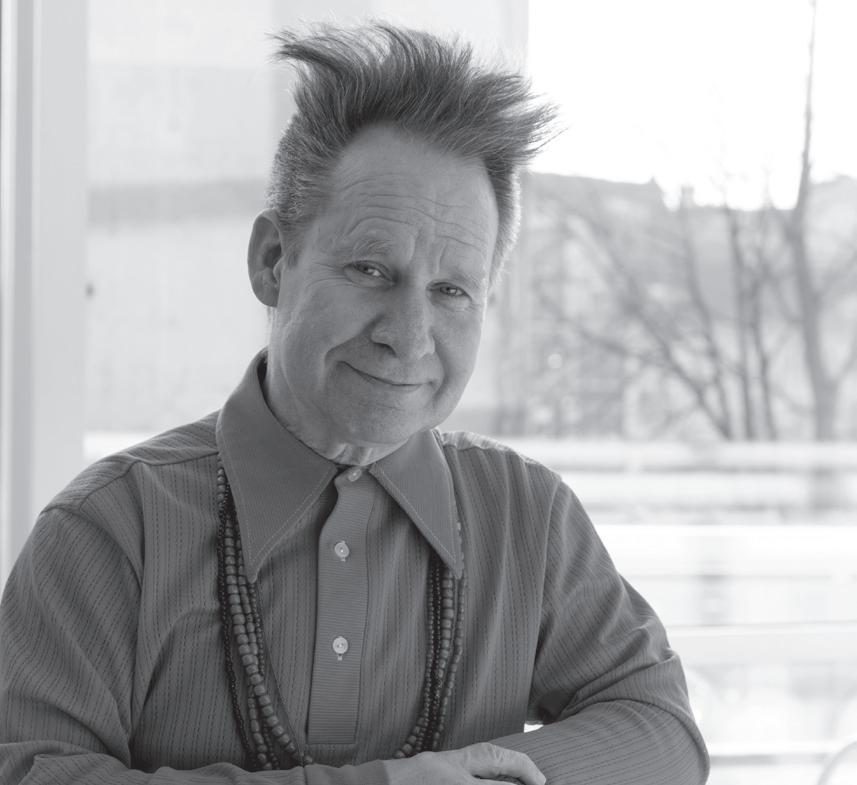
This season, Meany Center is honored to welcome the legendary director Peter Sellars as our Artistic Partner. A major figure in contemporary theater and opera, Sellars is celebrated for his groundbreaking and provocative interpretations of classic works, which challenge conventions and engage deeply with urgent societal issues such as race, poverty and environmental responsibility. His collaborations with composers like John Adams have redefined the possibilities of opera, creating globally resonant works that use art as a powerful force for social change.
As Artistic Partner, Sellars will bring his unparalleled creative perspective to Meany Center, engaging with students, faculty and broader Seattle communities. The centerpiece of his residency will be Music for New Bodies, a bold new chamber opera composed by Matthew Aucoin and directed by Sellars himself. This extraordinary work explores humanity’s complex relationship with the planet, delving into themes of environmental stewardship, scientific progress and the ethical dilemmas surrounding our quest to transcend human limitations. Through this collaboration, we are committed to sparking meaningful dialogue and inspiring new ways of thinking about art’s role in shaping our shared future.
Artist Statement
I am about to go into rehearsal for an astonishing project that will be coming to the Meany Center. What am I thinking about and what am I hoping for?
The interdependence and interpenetration of worlds.
Can we help each other to be more honest and more loving?
Create and sustain structures of equality and patterns of reciprocity.
The eloquence of the just.
How the invisible moves.
The groove.
Hidden beauty.
Secret histories.
Life inside the contradictions.
Imagine the alternatives.
Organize the alternatives.
Be a bridge.
Understand the humor.
Understand the hurt.
Where is the love?
Walk with ancestors.
Run with the unborn.
Listen to plants.
Listen to the weather.
Listen to the inner weather.
Listen to people.
Listen to music.
Hear the unspoken.
Hear inner voices.
Hear your inner voices.
Hear what you don’t want to hear.
Ask the questions.
Not knowing the answers.
Acknowledge your mistakes.
Address your regrets.
Do the healing work.
See with the third eye.
Look through obstacles.
Honor your intuitions.
The near is far.
The far is near.
Be generous.
Find courage together.
Don’t surrender to anger.
Feel what you are feeling.
Feel it more deeply.
Open the dream space.
We are here.
Everything I do involves working with others, and across many years I have had the pleasure of working with exceptional artists from many disciplines, cultures, geographies and spiritual orientations who bear many gifts from many worlds, and who create new communities of sound, action and light.
And for some years I have been telling myself that I would love to spend more time in Seattle. Now, thanks to the Meany Center and Michelle Witt, this dream will become reality. I am so grateful.
— Peter Sellars
RUTH WALZ
SPECIAL EVENT | NOVEMBER 1 AT 7:30 P.M.
MUSIC FOR NEW BODIES
American Modern Opera Company
Season Support Comes From
Signature Support
Carole Fuller
Katharyn Alvord Gerlich
John C. Robinson & Maya Sonenberg
Marianne Tagney
UW College of Arts and Sciences
Additional support comes from
Linda & Thomas† Allen
Richard Cuthbert & Cheryl Redd-Cuthbert
Patricia Emmons & Shmuel El-Ad
Yumi Iwasaki & Anoop Gupta
Cecilia Paul & Harry Reinert
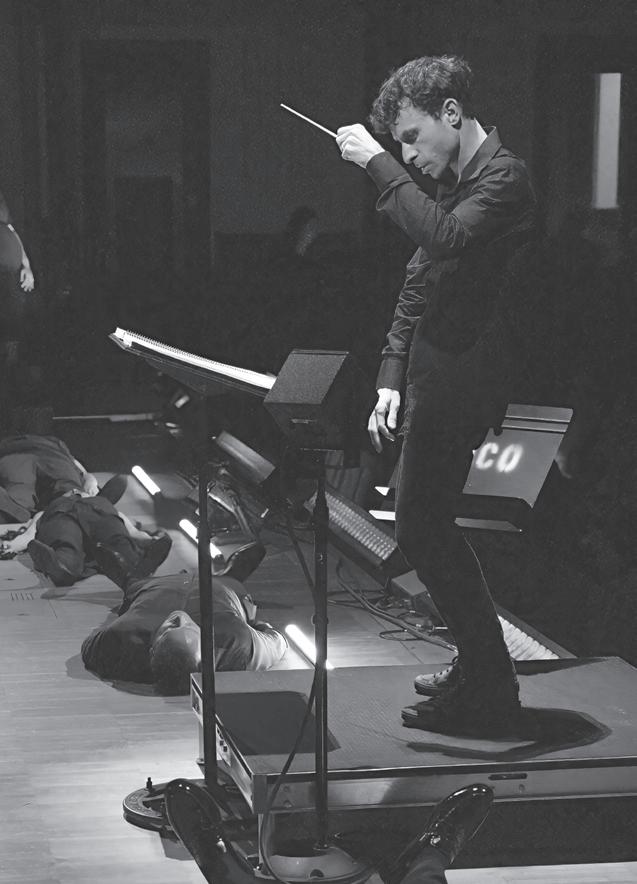
Composer and Conductor: Matthew Aucoin*
Stage Director: Peter Sellars
Text based on poems by Jorie Graham, assembled by Matthew Aucoin and Peter Sellars
Lighting Design: Ben Zamora
Sound Design: Mark Grey
Assistant Director: Yibin Wang
Production Stage Manager: Betsy Ayer
Costume Stylist: Victoria Bek
High Soprano: Song Hee Lee
Soprano: tba
Mezzo: Megan Moore
Tenor: Daniel McGrew
Bass-Baritone: Will Socolof
Sandbox/Percussion: Jonny Allen*, Victor Caccese, Jeff Stern (guest), Terry Sweeney
Violin: Miranda Cuckson*, Rachel Lee Priday
Viola: Carrie Frey
Cello: Iva Casian-Lakos, Jesse Christeson
Bass: Doug Balliett*
Flute: Emi Ferguson*, Hunter O’Brien
Clarinet: Yasmina Spiegelberg
Oboe: Joe Jordan
Bassoon: Brad Balliett
Harp: Jacqueline Kerrod
Piano: Baron Fenwick
Keyboard: Ning Yu
* AMOC* Company Member
ABOUT the PROGRAM
To be alive today is to be overwhelmed. We are overwhelmed every day by the gap between what we know and what we’re capable of feeling. We know too much: we know that the planet is warming and frequently afire; we know that millions of people around the world are suffering as a result of unnecessary wars and preventable famines — but how can we let ourselves feel everything we know without simply giving in to despair?
The poetry of Jorie Graham is singularly capable of gathering together these irreconcilable scales of existence: the global and the personal, the cosmic and the mundane. In Graham’s recent poems, a depiction of the ravages of chemotherapy can transform in an instant into an image of the destruction that human beings have unleashed on the ocean floor through decades of pollution. And as technological advances have made it possible for us to live life almost entirely in virtual spaces, Graham has insistently asked the question of what it is about physical, embodied life that’s worth defending.
One of music’s great gifts is simultaneity: multiple contradictory experiences can be gathered together, in a piece of music, into something coherent and even beautiful. Music is also capable of making the unbearable bearable — and not only bearable, but joyous. Graham’s poetry, with its utopian syntheses of every imaginable kind of earthly experience, struck me as irresistible material for an equally utopian musical work.
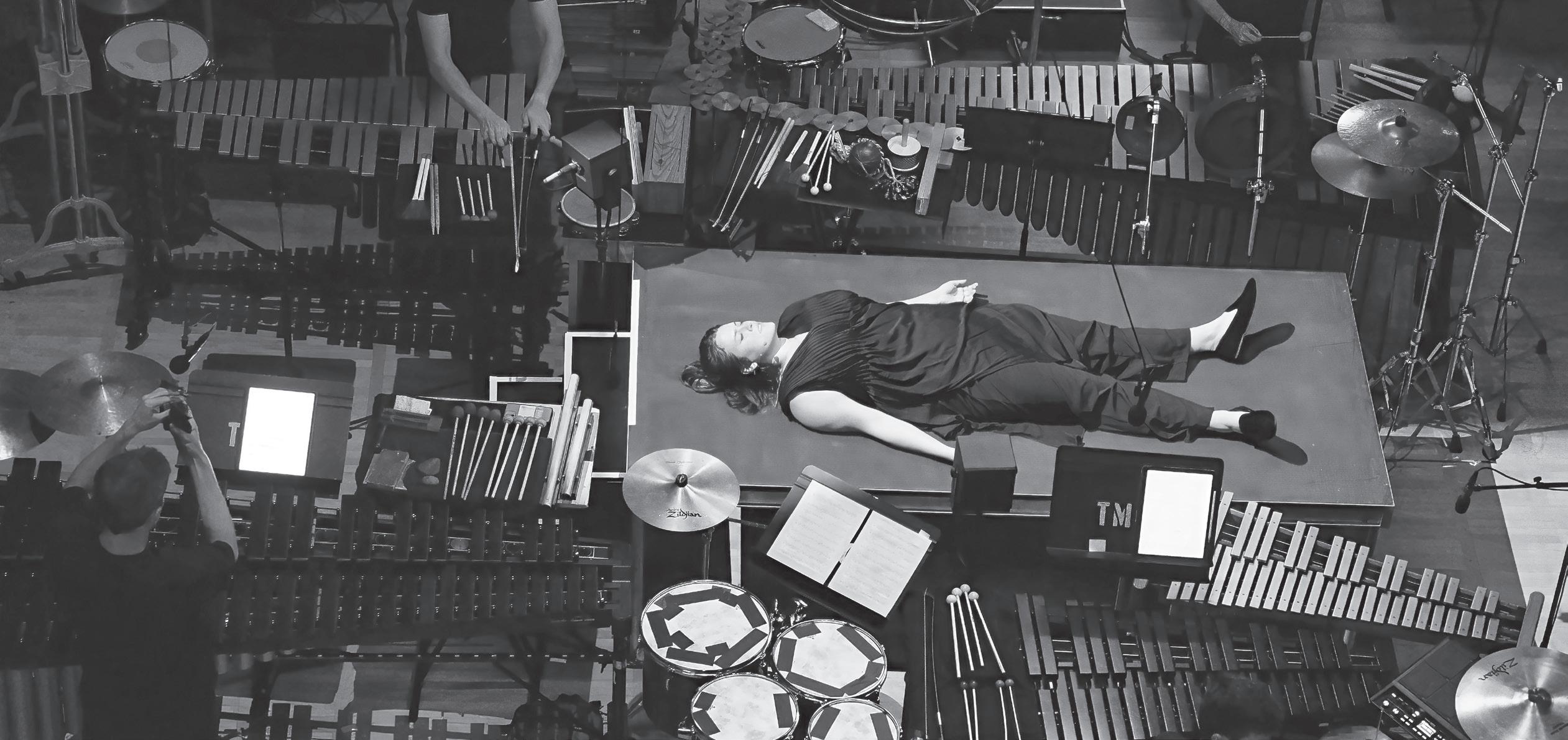
The result is Music for New Bodies, a piece that might be called a vocal symphony, or an opera with only the ghost of a narrative. It’s a 70-minute work for five singers, an instrumental ensemble of eighteen players, and electronics.
This is a polyvocal piece, in every sense of the word: the five singers sing in many voices, not all of them human. There is a central “speaker,” or protagonist: a person who has just received an aggressive medical diagnosis. At different moments in the piece, all five singers portray that central speaker; sometimes all five of them portray her at once. But that speaker’s consciousness is frequently invaded by other voices: the voices of the medicines flowing through
her veins; the voices of surgeons and other medical personnel; the untrustworthy voices of chatbots and AI-generated presences; and, at the other end of the spectrum, voices from deep within the planet — the voice of the earth’s core, the voice of the Mariana Trench.
Throughout the piece’s composition, as I assembled the text, I regularly called my beloved collaborator and friend Peter Sellars, who directed this staging of the piece and who had invaluable ideas along the way about the piece’s libretto. Peter has also been present for every workshop and every concert performance of the piece so far, and his presence has added an incomparable intensity to the very fabric of the piece.
The sound engineer Kyle Joseph and I worked together to create the electronic elements, and Kyle was a crucial partner in bringing that aspect of this composition to life.
And finally, I am so grateful that I’m able to perform this piece with an ensemble of friends, the brilliant and fearless artists who make up AMOC* (American Modern Opera Company).
Matthew Aucoin
MUSIC FOR NEW BODIES | ABOUT THE PROGRAM
Music for New Bodies (2024)
Music by Matthew Aucoin
Text based on poems by Jorie Graham (from the collections fast, Runaway, and To 2040), assembled by Matthew Aucoin and Peter Sellars
Production by Peter Sellars
1. Cryo
Music for New Bodies begins in a moment of crisis, of spiritual freefall. The first movement, “Cryo,” features a speaker reckoning with one of those dubious, provisional immortalities — such as cryonics — that are now available to those with the money and the desire. This movement seems to take place in the immediate aftermath of a dreaded diagnosis: “The bad news became apparent too late.” The passage of time, the way one has been living one’s life day to day — all these things suddenly seem to have lost their meaning.
And though the speaker is unnerved by the idea of preserving one’s body in the hope of future resurrection, she can’t help but reflect on what it means for human beings that such a step can now be considered. She is on the verge of embarking on “a long stilling voyage,” a journey whose destination is unknowable. “I have no idea what is retained,” the singers intone. “What is here is certainly not there.”
The music of this movement jumps unpredictably between different material: the speaker is in a state of dissociation; she is unable to confront the full implications of the step she’s about to take. Speech emerges in fragments. The mood toggles between frozenness, panic, a kind of wild lashing-out, and moments of painful clarity. At times, the five singers speak in a desperate, blurted unison; at other times, their lines fracture and scatter.
Near the end of the movement, something mysterious happens: the
speaker’s words fuse with those of the medieval mystic Julian of Norwich, whose scaldingly powerful vision of Jesus on the cross are overlaid with the speaker’s contemporary attempt to attain a very different form of life after death.
2. I [know myself]
The second movement, “I [know myself],” is a brief, frightening snapshot of another destabilizing experience: the speaker looks in the mirror and does not recognize what she sees there. This movement is a fierce attempt to remain grounded, to locate oneself, even as the speaker stares and stares and feels less and less sure of her own bodily existence. The music features a quiet yet implacable pulse, a kind of heartbeat of oblivion, out of which erratic, almost fast-forwarded instrumental figures emerge.
3. Deep Water Trawling
This movement departs from the human world, visiting the most distant and unknowable realm on our planet: the very bottom of the ocean.
In the first part of the movement, the five singers embody some deep-sea presence — maybe they’re deepwater fish, or maybe they’re the voice of the sea floor itself speaking up to humanity, telling us about the unimaginable violence we’ve unleashed through pollution and ghost fishing. An electronic pulse, like a ship’s rotating propeller, dominates the texture. The messages that these deep-sea beings have for us aren’t exactly encouraging: “there is nothing in particular you want — you just want,” they say. That phrase, “you just want,” builds and builds, like a burgeoning pile of toxic waste, to a pulverizing musical climax.
The second half of the movement, which begins with the line “Ask us anything,” is a dialogue between an oracular deep-sea presence (portrayed by the mezzo-soprano) and a group of human “questioners” (the other four
singers). This spirit of the deep is a kind of modern-day Erda, and like Erda, she has frightening truths to tell us.
4. Prying / Dis-
The bottom of the ocean, with its dim light, transforms into an operating room in a hospital. The speaker is about to undergo an intense operation, one that may save her, but from which she might not return alive. The movement begins with the ambient sounds of a hospital’s daily routine — “anesthesiologists back from coffee break” and the inexorable preparatory steps before the operation begins: “the guidewires in, the intravenous ports, the drip begun.”
The speaker reflects on the fact that she will soon be literally opened up and examined: “They will learn everything about me while I sleep.” In these moments of preparation, she experiences violent, shuddering shifts in emotion: she lashes out, she wonders whether this is worth even trying and finally she accedes, relaxes, and gives herself over to the journey that awaits her. The music of her encounter with “the machine reading me out” is unexpectedly lush, ecstatic, even erotic.
As the drugs have their effect and she descends “down through this operating theater’s novocaine-green gleam,” we enter a hallucinatory, almost psychedelic realm: the singers seem to give voice to the drugs themselves as they pass through her veins. The music takes on a strange, synthetic sweetness, like an aural manifestation of the seductive, not entirely human voice of a medical corporation.
After the operation, there is a blackout, a desolate instrumental section, devoid of life. And yet the patient has survived. She slowly wakes up, hears the world outside, and steps out of the hospital into the sunlight: “and you get a little extra life to live... can you still live it.”
MUSIC FOR NEW BODIES | ABOUT THE PROGRAM
AMOC*
Artistic Director: Zack Winokur
Executive Producer: Julia Bumke
Co-Founder: Matthew Aucoin
Senior Advisor: Jennifer Chen
Director of Investment Strategy: Courtney Beck
For Additional Information, and Artist and Designer Bios
ACKNOWLEDGEMENTS
Music for New Bodies is a co-commission of American Modern Opera Company (AMOC*), DACAMERA, Los Angeles Opera, the Shepherd School of Music at Rice University, and the Aspen Music Festival and School.
Foundational residency support for the development of Music for New Bodies was provided by Brown Arts Institute at Brown University. Special thanks to Avery Willis Hoffman, Jessica Wasilewski, Joshua Bristow, Ian Driver, Lincoln Center for the Performing Arts, and THE OFFICE performing arts + film.
5. Poem
It’s only after having undergone this long journey, from the chaos of the first two movements through the terrifying messages of “Deep Water Trawling” and the transformative surgery of “Prying / Dis-”, that the speaker is capable of hearing a different voice: a voice from the earth’s core, a calm, potent voice with a message for us. “The earth said / remember me,” the movement begins.
Having begun in an all-too-human state of panic and dissociation, Music for New Bodies ends in a state of morethan-human serenity. The planetary voices in this piece generally have bad news for the human species, but this earth-voice has something else to tell us. Sure, it says, everything won’t be OK for you. But there’s also something bigger than you — the planet itself, and whatever nameless forces brought the planet into being — and those forces will outlast you. In this final movement, the five singers and the full ensemble give voice to the rumbling, radiant presence of those more-thanhuman forces, which vibrate with a fierce, unquenchable joy.
Matthew Aucoin
AMOC* (American Modern Opera Company) is a company of creators that commissions and produces bold new work in music, dance and opera. Founded in 2017 by composer Matthew Aucoin and director and producer Zack Winokur, AMOC* comprises 17 of today’s most soughtafter composers, choreographers, directors, vocalists, instrumentalists, dancers, writers and producers. These artists are united by their commitment to collective authorship through long-term generative relationships. AMOC* supports these creators with unparalleled resources to develop their work, maintains a robust national and international touring schedule, and upholds a rigorously equitable and artist-led development model.
AMOC* is deeply committed to making its performances financially accessible.
AMOC* has developed and premiered over 20 new productions in its eight seasons as a company. Past partners include 92nd Street Y, American Repertory Theater, Baryshnikov Arts Center, Brown Arts Institute, DACAMERA (Houston), Harvard University, La MaMa, Park Avenue Armory, Stanford Live and Yale University. AMOC* has appeared internationally at the Aix-en-Provence Festival, Centre Pompidou (Paris), de Singel (Brussels), Elbphilharmonie (Hamburg), and Erholungshaus (Leverkusen). In 2022, AMOC* served as Music Director for the 75th Ojai Music Festival, presenting 18 performances, eight world premieres and six new theatrical productions.
Matthew Aucoin (composer and conductor) is an American composer, conductor and writer, and a 2018 MacArthur Fellow. He is a co-founder of the pathbreaking American Modern Opera Company (AMOC*), was the Los Angeles Opera’s Artist in Residence from 2016 to 2020, and currently serves as an Arnhold Creative Associate at The Juilliard School.
Aucoin’s orchestral and chamber music has been performed, commissioned and recorded by such leading artists and ensembles as YoYo Ma, the Philadelphia Orchestra, the Chicago Symphony, Zurich’s Tonhalle Orchestra, the BBC Scottish Symphony, the Los Angeles Chamber Orchestra and the Brentano Quartet. In the summer of 2023, the MET Orchestra, conducted by Yannick Nézet-Séguin, featured Aucoin’s orchestral work Heath on its first European tour in several decades.
Aucoin is also well-known for his operas, which include Eurydice, Crossing, and Second Nature. These works have been produced at the Metropolitan Opera, the Los Angeles Opera, Brooklyn Academy of Music (BAM), Boston Lyric
Opera, the Lyric Opera of Chicago and the Canadian Opera Company, among others. The Metropolitan Opera’s recording of Eurydice was nominated for a Grammy in 2023.
Aucoin’s other recent conducting engagements include appearances with the Los Angeles Opera, Santa Fe Opera, Houston Grand Opera, Boston Lyric Opera, San Diego Symphony, Salzburg’s Mozarteum Orchestra, Ojai Music Festival, Philharmonia Baroque Orchestra, Rome Opera Orchestra, and many other ensembles. Aucoin’s book about opera, The Impossible Art: Adventures in Opera, was published in 2021 by Farrar, Straus, & Giroux. He has taught at Harvard University, and his essays regularly appear in leading publications such as The New York Review of Books and The Atlantic.
Peter Sellars (stage director) has gained international recognition for his groundbreaking and transformative interpretations of classics, advocacy of 20th-century and contemporary music, and collaborative projects with an extraordinary range of creative and performing artists. He has staged operas at the Dutch National Opera, English National Opera, Festival d’Aix-en-Provence, Opéra National de Paris, Salzburg Festival, and San Francisco Opera among others. Sellars collaborated on the creation of many works with composer John Adams, including Nixon in China, The Death of Klinghoffer, El Niño, Doctor Atomic, A Flowering Tree, The Gospel According to the Other Mary, and The Girls of the Golden West. He guided the creation of premiere productions of Kaija Saariaho’s L’Amour de loin, Adriana Mater, and Only the Sound Remains, and has staged works by Olivier Messiaen, Gyorgy Ligeti, Paul Hindemith, Osvaldo Golijov and Tan Dun. Recent projects include a staging of Schoenberg’s Erwartung for the San Francisco Symphony and new productions of Prokofiev’s The Gambler for the Salzburg Festival and Castor et Pollux for the Paris Opera.
In addition to the premiere of Matthew Aucoin’s Music for New Bodies at Lincoln Center, in 2025 Sellars will stage The Nine Jewelled Deer, by composer Sivan Eldar in Arles and Aix-en-Provence, followed by stagings of One Morning Turns into an Eternity, a Mahler/Schoenberg double bill for the Salzburg Festival and Saariaho’s Adriana Mater for the Rome Opera.
Sellars has led several arts festivals, including the 1990 and 1993 Los Angeles Festivals and the 2002 Adelaide Arts Festival. In 2006 he was Artistic Director of New Crowned Hope, a festival in Vienna celebrating Mozart’s 250th birth anniversary for which he invited artists from different cultural background to work in the areas of music, theater, dance, film, fine art and architecture. He served as the Music Director of the 2016 Ojai Music Festival in California. Sellars is a Distinguished Professor in the Department of World Arts and Cultures at UCLA, a curator of the Telluride Film Festival and was a mentor for the Rolex Mentor and Protégé Arts Initiative. He is the recipient of a MacArthur Fellowship, Erasmus Prize for contributions to European culture, Gish Prize, and is a member of the American Academy of Arts and Sciences. He has been awarded the prestigious Polar Music Prize and been named Artist of the Year by Musical America. In 2021 Sellars was honored with the EBU-IMZ Lifetime Achievement Award for his body of opera video recordings.
Creative Process Conversation with Peter Sellars
Peter Sellars talks about Music for New Bodies, the bold new chamber opera at the centerpiece of his residency. To watch this video and explore the collection, visit:
Tacoma & Seattle
Finland
Melartin Birthday Bash
September 20 & 21
Denmark
Six Danish Strings
January 10 & 11
Iceland
Sveinbjörnsson Celebration
February 7 & 8
Sweden
Whirling Swedish Winds
March 7 & 8
Nordic Neighbor: Lithuania
Four Lithuanian Hands
April 18 & 19
Norway Grieg in Dialogue
May 2 & 3
Saturdays at 1 pm at First Lutheran Church, Tacoma Sundays at 2 pm at Ballard First Lutheran Church
Nordic Chamber Music presents six concerts each season – one for each Nordic country and a neighbor. This unique series lets each country's music shine on its own musical merit, offering audiences the opportunity to hear Nordic chamber music live and in-person.
Free with suggested donation levels
Produced by the Northwest Edvard Grieg Society and supported, in part, by: nordicchambermusic.org Laura Loge, Artistic Director 2025-2026 Season
FRIENDS OF MEANY CENTER Thanks to Our Donors
Many thanks to the following donors whose generous support make our programs possible:
Producer’s Circle
Nancy C. Alvord†
Sven & Melinda Bitners
Sylvia & Stephen Burges
Helen Curtis
Katharyn Alvord Gerlich
Thomas McQuaid Jr.
Cecilia Paul & Harry Reinert
Lois Rathvon†
John Rochford & Nick Utzinger
Sally Schaake Kincaid
Richard Szeliski & Lyn McCoy
Director’s Circle
Diana K. Carey
Mr. & Mrs. Ron & Darlene Cheatham
Delaney & Justin Dechant
Lynn & Brian Grant Family
Tuck Hoo & Tom Lyons
Yumi Iwasaki & Anoop Gupta
Hans & Kristin Mandt
Tina Ragen & Son, Ian
John C. Robinson &
Maya Sonenberg
Eric & Margaret Rothchild
Donald Swisher
Scott VanGerpen & Britt East
Ellen Wallach & Thomas Darden†
Series Benefactor
Manisha Advani & Rajib Chakrabarti
Linda & Thomas† Allen
Richard Cuthbert & Cheryl Redd-Cuthbert
Patricia Emmons & Shmuel El-Ad
Ira & Courtney Gerlich
Daniela & Torsten Grabs
Dr. M. Elizabeth Halloran
Shuko Hashimoto
The Hokanson Family
Hsiao-Wuen & Tiff any Hon
Brandon Koeller & Kimberly Davis
Karen L. Koon
Matthew & Christina Krashan
Jeff rey Lehman & Katrina Russell
Dennis Lund & Martha Taylor
Dean McManus
Christopher & Mary Meek
Gary L. Menges
Once Upon a Dance
Craig Sheppard & Gregory Wallace
Anne Stevenson
David & Marcie Stone
Donna & Joshua Taylor
Jeff & Carol Waymack
Anonymous
Event Sponsor
Luther Black & C. Christina Wright
Michelle & Matthew Bomberger
Ana Mari Cauce & Susan Joslyn
Heidi Charleson & Louis Woodworth
Jim & Margie Chen
Leonard Costello & Patricia McKenzie
Susan & Lewis Edelheit
Phil Lanum & Gail Erickson
Kelby Fletcher & Janet Boguch
Michelle & Matthew Galvin
Phyllis Hatfi eld
Elizabeth Hebert
Peter Hiatt & Ronald Huden
Hugues Hoppe & Sashi Raghupathy
Mike Dryfoos & Ilga Jansons
Randy & Kim Kerr
David Kimelman & Karen Butner
Leslie Kincaid & Nick Lawrence
Jean & David Koewler
Jim & Pamela Murray
Rebecca Norton & Craig Miller
Gloria & Dan Overgaard
Richard & Sally† Parks
Suzanne Poppema & John Cramer III
Don & Toni Rupchock
Barbara Billings & Ernest Vogel
Michelle Witt & Hans Hoff meister
Anonymous
Distinguished Patron
Alison Aleinikoff
Charles Alpers & Ingrid Peterson
Sharon Armstrong
Jillian Barron & Jonas Simonis
Margaret & John Bigelow
Sara Bowen & William Radke
Kalman Brauner & Amy Carlson
James Bromley Jr. & Joan Hsiao
Virginia Burdette & Gary Wieder
Rita Calabro & James Kelly
Margaret Crastnopol & Charles Purcell
Trisha Davis & Eric Muller
Lynne De Merritt
Sharon Ducey
Albert Fisk & Judith Harris
Corinne Fligner & Mark Wener
JoAnn Forman
Judith Frey & Flick Broughton
Carole Fuller
Jennifer Gaus & David Lion
John Goodfellow Jr. &
Barbara Peterson
Martin L. Greene &
Kathleen Wright
Jerry & Lyn Grinstein
Richard Groomer &
Betsy Lieberman
Steven Haney
John Hart & Kerry Clayman
Bradford Henley & Ann Rutledge
Susan Herring
Paul & Alice Hill
Robert Hirsch
Gwen & J. Randy Houser
Mary, Mike & Emily Hudspeth
Weldon Ihrig & Susan Knox
John & Annick Impert
Mary Kenny
Eric Larson & Teresa Bigelow
Hank Levy & Ronit Katz
Kathleen Lindberg & David Skar
Neil Ludman
Barbara Mack
Melodie Martin & Kenneth Dayton
Tessa Matthey & Peter Durkee
Vinay Narayan
Anne & Bill Nolan
Ramesh & Gowri Pabbati
Jae Paek
John Nemanich & Ellendee Pepper
Spaff ord Robbins
Joy Rogers & Robert Parker
Karen Sandeen
Noah & Kate Scooler
Virginia Sly
Sunita Sondur
Clark Sorensen & Susan Way
Bonnie Steele
Robert & Ethel Story Sr.
Virginia Sybert
Craig Tall & Penny LeGate
Dawson & Lois Taylor
Jack & Gayle Thompson
Lorraine Toly
Eric & Roby Torgerson
Barbara Trenary
Pieter & Tjitske Van der Meulen
Emily Vason & Christian Torgersen
Padmaja Vrudhula
Merle Weiss & Diana Pien
Kathleen Wright & Martin Greene
Igor Zverev & Yana Solovyeva
Anonymous
Patron
Dick Ammerman
Connie Anderson
Anton Andrews & Kata Kekedi
Kristen & Lars Bakken
Cristi Benefi eld
Robert Bergman
Michael Bevan & Pamela Fink
Dennis Birch & Evette Ludman
Heida Brenneke
Carl & Kayla Brodkin
Dave & Debbie Buck
Peter Byers
Myrna & Grayson Capp
Arthur Chapman
Fran Clifton
Jill Conner
Nancy Connery
Robert Cook
Judy Cushman & Robert Quick
Misti Davis
Miguel de Campos & Dawn Aiken
Suzanne Dewitt & Ari Steinberg
Toby Diamond
Karen Domino & Gene Brenowitz
Susan Ewens & James Luby
Polly Feigl
James Fesalbon & Edward Darr II
Gerald Folland
Kai Fujita
Sergey Genkin
Lynn Hagerman & James Hummer
Valerie Hajdik
Susan Hall
Katherine Hanson & Michael Schick
Robin Hendricks
Karen Henley & Laurie Goldman
Thomas Highsmith
Kate Hokanson
Paul Hopp
Michael & Nancy Kappelman
Deborah Katz
Terrence King
Frederick Klein IV
Joanna & Frank Lau
William Levering III & Susan Hert
Margaret Levi & Robert Kaplan
Michael Linenberger & Sallie Dacey
Gwendolyn Lundberg & David Aggerholm
Karen MacKenzie
Thomas Manley & Mariann Carle
Linda MacMaster
Peter & Linda Milgrom
M. Lynn Morgan
Amanda Overly
David Owsiany & Everett Seven
Sandra & Sidney Perkowitz
James Phelps & Ena Urbach
Dennis Reichenbach
Bill & Katrina Reinhardt
Miguel Rivera
Chester Robachinski
Harriet Round
Joseph Saitta
Werner & Joan Samson
Laura Sargent
Jean Schweitzer
Mark & Patti Seklemian
Louise Shields
Dean Solis
Carrie Sparlin
Sara Stamey & Winston Saunders
Dale Sylvain & Thomas Conlon
Bruce & Barbara Tall
Peter Tarczy-Hornoch & Candice McCoy
Mark Taylor
Ericka & Stephen Thielke
Kris & Epaminondas Trimis
Elena Trubnikova
Judy Tsou & David Carlson
Michelle & Stephen Turnovsky
Raymond Tymas-Jones
Christine Weckner
Ann & Richard Weiner
Gregory Wetzel
Todd & Valerie Yerkes
Anonymous
Great Performer
Robert Babs
G. Andrew H. Benjamin & Nan Herbert
Suzette & James Birrell
Cleo Bloomquist
Adele & Edward Bolson
Shannon Bruce
James Cadwell
Sharon & Craig Campbell
Erin Candee
Eric & Susan Carlson
Inez & Lior Caspi
John Casseday & Robin Luke
Alan & Sandra Chait
Sandra & Dan Ciske
Janet & William Corriston
Charles Cowan & Rhonda Levitt
Carol Cummings
Isabel Doran
Michael Dryja
Arlene B. Ehrlich
Bryant Fujimoto
Gary Fuller & Randy Everett
Michael Furst
Wendy Gelbart
Beth Gendler & Reginald Zisette
Dolores Gill Schoenmakers
Tim Groggel & Annette Strand
Stephen & Pamela Gruber
Allison & Paulo Gutscher
Keala Hagmann & Bur Davis
Lia & Benjamin Halasz
Cathy Halstead
Lee Heck & Bill McGee
Jim Hessler
Tania Hino & Ramachandran
Arumugam
Bruce Horne
Mary Hotchkiss
Robert Johnson & Heather Erdmann
Mary & Giff Jones
Paul Kassen
Karol Krotki
Daniel Labriola
Inge & Leslie Larsen
Peter LeVeque
Julie Lies
James & Marianne LoGerfo
William & Holly Marklyn
John McGarry
Mary McGuire
Michael McPhail &
Deborah Anderson
Raymond Monnat Jr. &
Christine Disteche
Ed Monsell
Coe Morgan
Kevin & Rena O’Brien
Kathryn & Jon Olson
James Packman & Andrew Cohen
Cathy Palmer
William Potter
Wendy & Murray Raskind
Denelle & John Reilly
Kristi Rennebohm & Eldon H. Franz
Meryl Retallack
Linda Rhodes
Paula Riggert
Nathan Rose
Honor Rovai
Keith Rowe & Ann Stover
Murl Sanders
John & Margaret Sanders
Norman & Elisabeth Sandler
Dennis Shaw & Julie Howe
Sigmund Snelson
Tracy Taylor & Gregorio
Leon-Guerrero
Marie Tilson
Linda Vangelos & Stephen Kaufer
George S. Wilson & Claire L. McClenny
Key Player
Michael Ammerlaan
Patricia Amsler & Ryan Goodman
Suzanne & Marvin Anderson
Samia Ashraf & Lewis Davidson
Jill Bader
Sharon & Joseph Beck
Marianne Beirne
Nancy & Sam Bent
David Bird
Jane Blackwell
Sarah Bluvas
Cathryn Booth-LaForce & W Kenneth LaForce
Jeff rey Bower & Vivian Little
Jane Boyajian
Lydia & Scott Brennan
Wayne Briscoe & Kelly Aust
Shannon Bryan
Jo Burns & Dick Schuettge
Dennis Calvin
Frances Carr
Marise Chan
Vinaya Chepuri
Ives & Aimee Chor
Patricia Cirone
Christine J. Clair
Sue Connell
Merrilee Conway & James Young III
Kathy Cowles & Bradford Chamberlain
Deidre Crawford
Jean Crill
Christopher Curry
Diane Darling & Darrell Nance
William Davis
Annette de Soto
K. Tanya DeMarsh-Dodson & Alan Dodson
Christian Diefenbach
Carrie & Christopher Doring
Patricia Dorsey
Jane Doumit
Ann Duerr
Jeanne & Mickey Eisenberg
Hollie & Lynne Ellis
Michael Erickson & David Doody
Giselle Falkenberg & Rockwell Moulton
L. Jay Field & Deborah Dwyer
Virginia Fitzhugh & Miguel Morales
Brenda Fong
Jackie Forbes & Douglas Bleckner
Matthew Gani
Gail Gensler
Brian Giddens & Steve Rovig
Candice Giffi n
George Gilman
J. David Godwin II & Ginger Reeves
Joan & Steve Goldblatt
Justin Goodman
Kirsten Gunn
Pamela Hamlin
Eddie & Marguerite Hasson
Maryetta & Tina Healy
Clair Hector & Paul Garner
Jacob Heller & Elissa Skerbinc-Heller
Jason Herndon
James Horazdovsky & Ann Paulson
Nicholas Horvath
Anne Huey
Patricia Hynes
Christopher & Linda Johnson
Kathryn Johnson
David Johnson
FRIENDS OF MEANY CENTER Thanks to Our Donors
Many thanks to the following donors whose generous support make our programs possible:
Dale Johnson & Virginia
Stamey-Johnson
Nancy Joseph
Marcia Kamin
Linda Katz
Kathleen Keasler
Megan Kennedy
Sue & Frank Kent III
James & Elaine Klansnic Jr.
Lee Klastorin & Ralph Walden
Richard Knutson & Patti Gorman
Kara Kono
Kent Koprowicz
Glen Kriekenbeck & Quentin King
Akshay Kulkarni
Nancy Lawton & Steve Fury
John Lee & Pm Weizenbaum
Mary Levenson & Paul Higinbotham
Marjorie Levy & Larry Lancaster
Ariel Lopez & Thomas Finley
Robert Lowe & Janet Reis
Sara Magee
Ronald & Lee Magid
Peter Maier & Elizabeth Tennant
Bernadette Margin
John Martines & Joel Gibson
Lila May
Anne McClanan
Meredith McClurg
Susan McNabb
Sarajane & Michael Milder
Sheree Miller
Reza & Carol Moinpour
David Morris
Christine Moss
Susan Mulvihill & James Liverman
Holly Myers
Barbara Nelson
Betty Ngan & Tom Mailhot
Marianne Nijenhuis
Sara Nikravan
David Norman
Shyril O’Steen
Robert Otto & Maureen O’Neill
Robert & Jennifer O’Twomney
Kambiz Parcham-Azad
Kathryn Pearson
Jeanne Peterson
Gregory & Margaret Petrie
Zaiga Phillips
Geoff Prentiss
Stephanie Prince & Dennis Oliver
Gary Prince & Meg Goldman
Linda Quan & Jonathan Knight
James & Ruth Raisis
Eric Rait & Tamar Nissim
Janet Reis & Robert Lowe
J. Christopher & Virginia Rice
Cynthia Richardson
Carla Rickerson
Rachel & David Robert
Janis Rogainis & Bonnie Way
John & Janet Rusin
Margaret Sandelin
Michael Schmitt
Charles & Joan Schooler
Stephen & Loretta Schuler
Lynn Schwendiman & Ray Stark
Stephen Scott
Patricia Scott
Charyl & Earl Sedlik
Herbert & Elaine Selipsky
John Sheets
Andrew Sherrill
Julianne & Bjorn Simpson
Andrea Sledge
Kathleen Smith-DiJulio &
Donald DiJulio
Perry Soriano
Hugh Spitzer & Ann Scales
Virginia Stamey-Johnson &
Dale Johnson
Sarah Stanley & Dale Rogerson
Gordon & Mary Starkebaum
Marcia & Douglas Stevenson
Frank Stowell
Gina Sucato & Robert Watson
Ellen Taussig
Robin Thomas & Alan Smyth
Myrna & Donald Torrie
Russell Tousley
Sharon & Michio Tsutsui
Vanya Uzelac
Carol Veatch
Silvia Vega
Mark Veigl
Bruno & Yvonne Vogele
Elizabeth Wallace
Tanya Ware
Sarah Warner
John & Gail Wasberg
James Whitson & Patricia Adams
Karin Williams
Deborah Wilson & Ngan Teng
Eyva Winet
Stephanie & Adam Woods
John Worthington
Janice Yamauchi
Evgueni & Tatiana Zabokritski
David Zieve & Carol Sparer
Anonymous
Friend
Ayannah Adegeye
Jorge Aleman Rodriguez
Adrianne Allen
Matthew Barber
Holly Bays
Dana & Rena Behar
Lynn Borgatta & Larry Chomsky
Katherine Bourbonais &
Donald Ramsey
Kathleen Bracy & William Olwell
Pat Braus & Holly Boone
Robert Brown & Ruth
Washton-Brown
Joshua Bullard
Laylah Bulman
Birgitta Burgans
Hollis Campbell
Margaret Carter
Catherine Cassady
Celia Chandler
Marianne Clarke
Alan & Edith Cohen
Shanlenn Colby
Gavin Cullen
Beth & John Daynes
Alban Dennis
Patrice Donohue
Melisa Doss
Helen Emery von Behrens
Gail & Edmond Eng
Anthony Ercolano
Taylor Feddersen
Elizabeth Gilchrist & John Clarkson
Harold Gillies
Andrea Grey
Stephen Haeck
Susan Hamilton & Timothy Bates
Erin Hawley
Kathleen Helfrich
Lynn & Thomas Heller
Katharine & Frank Holland
Lynn Holmes
Samuel Hunter III
Steph Huske
Robert Jenkins
Lisa Johnson
Barbara & P. Redmond Johnston
Hywel Jones
Erica & Duane Jonlin
Carolyn Kast
Steve Kinsella
Diane Lasko
Serena Lee
Elizabeth Leo
Frans Leppanen
Susan Loh
Julie Lombardo
Peg Maas
Mary Martin
Robin McCabe
Kimberly McNally
Raquel Mello
Frana Milan
Christopher Miller & Barbara Day-Miller
Rebecca Miller
Paula Nurius & Gerald Gillmore
Kathleen O’Neill & David Laskin
Joan Ostendorff
Philip Porach & Ronald Niemeyer
Megan Pursell
Ann Rael
Elizabeth Ramage
Jason Reuer
Jack & Rachel Riggs
Jennifer Robbins
Ellen Roth & Dan Roach
Michael & Edith Ruby
Jennifer Salk
William Sandal
Mark Saran
Cierra Shawe
Kevin Sheets
Sandra Silberstein & Douglas Brown
Randall Smith & Sharon Metcalf
Thomas Southall
Cameron Sparr
Kirsten Springer
Diane Stevens
David Stiner
Alexandra Stone
Peter Thurlow
Emily Transue
M. Tucker
Stewart Turley & Catherine Folchert
Jos Vanschagen
Jen Walker
Cynthia Wallace
Greta Ward
Robert & Andrea Watson
Judith Wood
Carol Young
Maxine Zemko
Anonymous
Deceased †
This listing includes donors from July 1, 2024 to September 22, 2025.
ENDOWMENT & PLANNED GIFTS
Many thanks to the following individuals for supporting the future of Meany Center through planned gifts and contributions to our endowment:
Planned Gifts
Linda & Thomas † Allen
Cathryn Booth-LaForce
Wimsey J.N Cherrington
Richard Cuthbert & Cheryl Redd-Cuthbert
Bill & Ruth Gerberding †
Michael & Nancy Kappelman
Matthew & Christina Krashan
Teresa Lawson
Tomilynn † & Dean McManus
Gary L. Menges
Cecilia Paul & Harry Reinert
Lois Rathvon †
David & Marcie Stone
Donald & Gloria Swisher
Lee & Judy Talner
Ellen J. Wallach Anonymous
Ellsworth C. & Nancy D. Alvord
Endowed Fund
Estate of Ellsworth C. Alvord*
Dr. Jacob Heller & Elissa Skerbinc-Heller
J. Randy & Gwen Houser
Deborah Katz
Evgueni & Tatiana Zabokritski
Arts Al!ve — Student Fund for Exploring the Performing Arts
David Aggerholm & Gwendolyn Lundberg
Susan Knox & Weldon Ihrig*
Jennifer Salk
Padmaja Vrudhula
Mina Brechemin Person
Endowed Fund
Estate of Mina B. Person*
Sylvia & Steve Burges Meany Center for the Performing Arts Endowment
Marianne Beirne
Sylvia & Stephen Burges*
Misti Davis
Michael Dryja
Nancy & Eddie Cooper Endowed Fund for Music in Schools
Michael Dryja
David & Marcie Stone*
Padmaja Vrudhula
Katharyn Alvord Gerlich Endowment for Artistic Excellence
Katharyn Alvord Gerlich*
Elaine & Ernest Henley Endowment for Classical Music
Elaine & Ernest Henley*
Dr. Bradford Henley & Ann Rutledge
Dr. Karen Henley & Dr. Laurie Goldman
Joel Gibson & John Martines
Catherine & David Hughes Asian Programming Endowment
Catherine & David Hughes*
Padmaja Vrudhula
Matt Krashan Endowed Fund for Artistic & Educational Excellence in the Performing Arts
Matthew & Christina Krashan
Lee & Judy Talner (*multiple founders)
Gary L. Menges Endowment for Chamber Music and Dance
Gary L. Menges*
Live Music for World Dance Series Endowed Fund
Cecilia Paul & Harry Reinert*
Meany Center Education Endowment
David Aggerholm & Gwendolyn Lundberg
Jill Hanley Conner (*multiple founders)
Meany Center Programming Endowment Fund
Jason Herndon (*multiple founders)
Margaret Dora Morrison Meany Endowed Fund
Margaret Dora Morrison*
Elizabeth Rennebohm Music Performance & Education Memorial Endowment
Kristi Rennebohm & Eldon H. Franz*
Gloria Wilson Swisher Music Education & Outreach Endowment
Michael Dryja
Donald & Gloria Swisher *
Deborah Wilson & Ngan Chong Teng
* Endowment founder † Deceased
Note: Dollar amounts rounded to the nearest thousand.
“ If I have seen a little further, it is only by standing on the shoulders of Giants.” — BERNARD OF CHARTRES
From Haydn to Mozart to Beethoven to the Beatles, each generation owes its progress to the ones that came before.
You, too, can be a giant.
CONSIDER A GIFT to the Meany Center through your will, trust or retirement plan, and help future generations of artists and arts lovers see a little further by standing on your shoulders.
Contact: Cristi Benefi eld, Director of Philanthropy, Meany Center 206-616-6296 cristi@uw.edu meanycenter.org/donate
This listing includes endowment founders and endowment donors from July 1, 2024 to June 30, 2025. For more information on how to make a gift through your will or trust, or to name Meany Center for the Performing Arts as a benefi ciary of your retirement plan or insurance policy, please call 206-616-6296 or visit uwfoundation.org/giftplanning.
MEANY CENTER ADVISORY BOARD — Thank You!
Advisory Board
John Robinson, President
Kyra Hokanson Gray, Vice President
Sashi Raghupathy, Vice President
Manisha Advani
Robert Babs
Melinda Bitners
Sara Bowen
Darlene Cheatham
Margie Chen
Luis Fernando Esteban
Dr. M. Elizabeth Halloran
Hsiao-Wuen Hon
Cathy Hughes
Yumi Iwasaki
Megan Kennedy
Olivia Lee
Jeff Lehman
Kambiz Parcham-Azad
Cecilia Paul
Tina Ragen
Donald Rupchock
Norm Sandler
Marcie Stone
Scott VanGerpen
Gregory Wallace
Ex-Officio Members
Dianne Harris, Dean, College of Arts & Sciences
Gabriel Solis, Divisional Dean of the Arts
Emeritus Board
Matt Krashan, Emeritus Artistic Director
Linda Linford Allen
Cynthia Bayley
Thomas Bayley
Cathryn Booth-LaForce
JC Cannon
Elizabeth Cooper
Gail Erickson
Brian Grant
Randy Kerr
Sally Kincaid
Susan Knox
Kurt Kolb
Sheila Edwards-Lange
Frank Lau
Craig Miller
Dick Roth
Eric Rothchild
Jeff Seely
K. Freya Skarin
Rich Stillman
Dave Stone
Donald Swisher
Lee Talner
Thomas Taylor
David Vaskevitch
Ellen Wallach
Kathleen Wright
In Memoriam
Ellsworth C. “Buster” Alvord
Linda Armstrong
Betty Balcom
Ross Boozikee
Ruth Gerberding
Ernest Henley
Mina Person
Lois Rathvon
Jerry Sanford, Sr.
MEANY CENTER INSTITUTIONAL SUPPORTERS
We are grateful for our corporate, foundation and government agencies whose generous support makes our programs possible:
Join an impressive roster of companies of all sizes that support Meany Center, its mission, and its performances. Sponsors receive signifi cant recognition throughout the season and an array of benefi ts catered to your organization’s goals. For more information, please contact the Meany Center Philanthropy Department at 206-685-2819. For more infromation, please visit meanycenter.org/donate/our-supporters