



Our cutting-edge technology offers you a one-stop solution for all your wealth management and daily banking needs.

Innovation, the word, the concept and its pervading presence in our lives is largely accepted as essential to the success of a business, and especially so for our region’s banking and finance markets. Naming just a fraction of the benefits arising from the numerous changes we have experienced during this age of innovation in banking and finance are enhanced convenience, faster payments and increased inclusivity. So, as this opening welcome to the November 2025 edition of MEA Finance Magazine clearly signals, innovation is a leading theme through this issue.

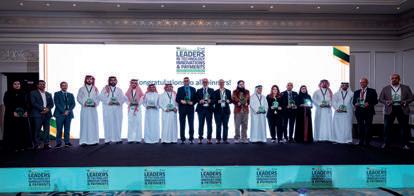
A leading hotspot in our region for banking and financial innovation is the Kingdom of Saudi Arabia. The nation, spurred by the wider goals of their Vision 2030 and the ambitions of their banking and financial sector, has prioritised the modernisation and encouragement of innovation. Underlining this was the MEA Finance KSA Banking Technology, Innovation and Payments Summit and Awards held in Riyadh at the Voco hotel on the 8th of October. You can read the full coverage of this special event from page 44.
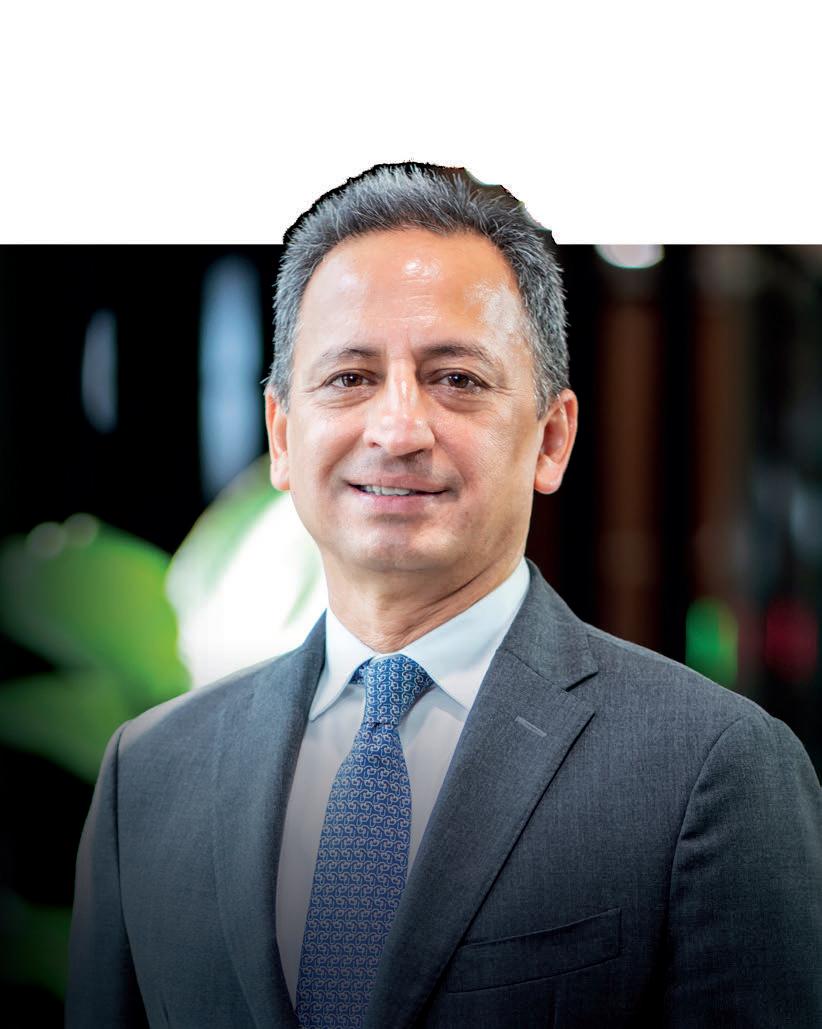
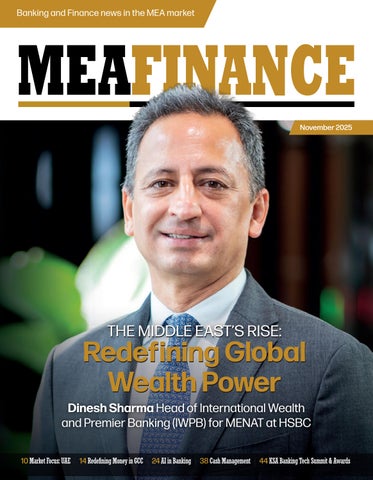
Our cover story, featuring Dinesh Sharma, Head of International Wealth and Premier Banking for MENAT at HSBC, maintains our innovation theme. In it he describes changing client expectations and how they are transforming their proposition to match, or exceed the customers’ expectations in a highly competitive sector.
Among our features this month is a journey into the realm of Stablecoins and CBDCs where, as digital transformation reshapes the regional financial landscape, three parallel innovations— central bank digital currencies, stablecoins and tokenised deposits are converging to redefine money. In our regular look at AI in regional banking,
Sanat Rao, Cofounder and Managing Director of Within The Box.ai, contends that, “In regional banking, the winners will not be those banks with the smartest model; it will be the banks with the bravest culture, ones that learn, question and co-create with the machine”.
We focus on Treasury and Cash Management from page 40. As treasury completes its emergence from the back office to a vital liquidity tool for businesses across the region, we look at why this strategic discipline is building its status across our region and how innovation in treasury is essential.
Continuing their Africa Series with MEA Finance, Citi’s Faisal Masood Head Corporate Bank for Sub-Saharan Africa, looks at the ongoing development of more sophisticated markets across the region, underlined by recent landmark deals. Also inside, an exclusive dialogue with Virtuzone’s Group CEO George Hojeige on industry recognition, entrepreneurial ecosystems and the evolving Middle Eastern business landscape; Rihab Saad, Managing Director of Next Generation Equity (NGE) discusses global citizenship trends, regulatory evolution and the strategic value of alternative residence planning and Patryk Karczewski, Partner and Head of Tax at Amereller highlights the key importance of strict attention to accurate and timely tax administration for family offices operating in the UAE
Finally, our country focus this month rests on the United Arab Emirates, which while having pretty much established a global reputation for innovation and its enthusiastic encouragement, has moved from being a dependable Gulf hub to becoming the region’s operating system for finance, capital markets, technology-driven payments and the fast-emerging world of digital money.
As you read through this edition, we hope you will be impressed, even wowed by the scale of innovation being harnessed in the service of regional banking and finance, and its broad communities of customers.





Mastercard Agent Pay, debuted in Dubai in the presence of H.E. Omar Sultan Al Olama, UAE Minister of State for Artificial Intelligence, Digital Economy and Remote Work will enable consumers to browse, compare and purchase through AI-powered digital agents
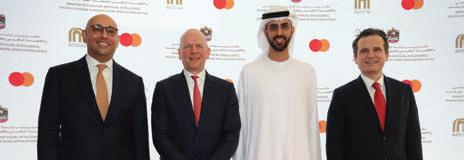
Mastercard is introducing Agent Pay in the UAE, and as part of this pilot phase in the UAE, are collaborating with Majid Al Futtaim, a leader in shopping malls, communities, retail and leisure across the Middle East, Africa and Asia, and with fintech Dataiera.
The launch event was attended by His Excellency Omar Sultan Al Olama, Minister of State for Artificial Intelligence, Digital Economy and Remote Work Applications; Mastercard CEO Michael Miebach; and Ahmed Galal Ismail, Chief Executive Officer of Majid Al Futtaim Holding.
When launched, cardholders will be able to use their AI agent to search, discover and transact through Mastercard Agent Pay,
including booking theatre tickets at VOX Cinemas.
His Excellency Omar Sultan Al Olama, Minister of State for Artificial Intelligence, Digital Economy and Remote Work Applications, emphasised that, guided by the UAE’s leadership, the nation has become a global hub and destination for adopting and supporting advanced technologies and initiatives that enhance well-being, strengthen its global competitiveness and leadership and elevate its position as a leading hub for world-class AI applications.
His Excellency noted that the introduction of the AI Agent in payment solutions represents a significant milestone, opening new horizons for the
growth and development of the UAE’s digital economy.
“As AI becomes a trusted companion in people’s digital lives, payments must evolve to match its intelligence with integrity. Mastercard Agent Pay ensures that agentic commerce is built on transparency, consent and security, empowering consumers and businesses to engage confidently in this new era of commerce,” said Dimitrios Dosis, President, Eastern Europe, Middle East and Africa, Mastercard.
Ahmed Galal Ismail, Chief Executive Officer, Majid Al Futtaim Holding commented, “As a pioneer in retail and lifestyle innovation, Majid Al Futtaim sees AI as a transformative force shaping the future of commerce and human interaction. Collaborating with Mastercard on Agent Pay allows us to explore how intelligence and integrity can coexist in digital transactions – creating systems that prioritise trust, transparency and consumer confidence. This collaboration is not just about convenience; it’s about setting a framework for responsible innovation that redefines how people shop, pay and engage in a connected world.”
Mastercard has been supporting the UAE government’s efforts to accelerate secure commerce, drive digital transformation and lead the global adoption of Artificial Intelligence. This shared commitment resulted in the launch of Mastercard’s Centre for Advanced AI and Cyber Technology in Dubai in 2023, in collaboration with the UAE’s Artificial Intelligence, Digital Economy and Remote Work Applications Office—cementing the nation’s role as a global hub for innovation.

In a defining milestone for the UAE’s digital economy, the Central Bank of the UAE (CBUAE) has approved Zand, the nation’s AI-powered digital bank, to launch Zand AED, the country ’s first regulated, multi-chain AED-backed stablecoin on public blockchains
Zand AED represents a new era for the Dirham by bringing the national currency into global digital rails with the security of a regulated bank and the speed and openness of blockchain technology.
Zand AED is fully backed one-to-one by AED reserves that are held in segregated and regulated accounts to ensure complete
redemption value. It is supported by realtime transparency through independently audited smart contracts and reserve attestations. It is available across multiple public blockchains, enabling fast borderless settlement and seamless integration for developers, enterprises and financial institutions. The stablecoin is issued by Zand Trust, a wholly owned
subsidiary of Zand Bank PJSC, which is licensed and supervised by the CBUAE, and is rated BBB+ by Fitch Ratings.
“Launching an AED-backed stablecoin on public blockchains is not simply a milestone for Zand. It is a breakthrough for the UAE,” said Mohamed Alabbar, Chairman of Zand. “This initiative carries our national currency into the digital future and reinforces the UAE’s position as a global leader in financial innovation.”
Michael Chan, CEO of Zand, added: “Zand AED is more than a stablecoin. It is the UAE’s bridge between traditional finance and decentralised finance. It unlocks the next generation of payments, tokenisation and digital asset innovation. All of it is built on trust, transparency and regulatory clarity.”
With the global stablecoin market projected to reach $3 trillion in the coming years, Zand AED positions the UAE at the forefront of regulated digital finance. It provides a secure and futureready digital foundation for institutions, Fintechs and developers who aim to build in one of the world’s most advanced financial ecosystems.
Empower your bank with AI-driven automation for seamless integration and rapid deployment of solutions

The last 12 months have confirmed something the wider MENA financial community has been sensing for a while: the United Arab Emirates has moved from being a dependable Gulf hub to becoming the region’s operating system for finance, capital markets, technology-driven payments and the fastemerging world of digital money
Acombination of solid macro performance, a still-rising nonoil economy, deepening capital markets in both Abu Dhabi and Dubai and an assertive central bank agenda around infrastructure and digital currency has meant that, even as global markets swung between higher-for-longer rates and geopolitical noise, the UAE’s financial story remained one of continuity and execution. The question now is less “Can the UAE grow?” and more “How big can the UAE’s financial services footprint
become across the wider Middle East, Africa and South Asia corridor in the next cycle?”
Growth in the UAE maintains its momentum based on increased oil output, while still counting on non-oil activity to do the bulk of the work. Non-oil GDP now makes up more than three quarters of the economy and is forecast to expand by about 4.5% in 2025, supported by financial services, investment, real estate and tourism. The IMF’s October 2025 read-out largely concurs with this, seeing 4.8% growth and recognising that the UAE’s diversification policies, open commercial environment and aggressive infrastructure spending are creating a floor under activity even when oil prices soften. For banks and capital markets, these macro-economic conditions matter because credit demand will stay positive, and liquidity, which is helped by robust real estate-linked cash flows and inbound capital, will remain plentiful.
This shows up clearly in the banking numbers. The CBUAE’s latest financial stability assessment noted that banks are running with capital adequacy of about 17% and a net non-performing loan (NPL) ratio of just 1.7%, despite loans growth of more than 11% year-on-year by mid2025. These are special circumstances, bringing together fast credit growth and improving asset quality, occurring only when the underlying economy is broad and diversified enough to absorb fresh lending without creating bubbles. The market leaders are translating this into earnings: Emirates NBD, for example, beat expectations in Q1 2025 on the back of double-digit loan growth and a 14% rise in net interest income, even though margins have started to normalise from the 2023 rate-hike peak. Ratings agencies agree — profitability is holding, buffers are high and stress tests suggest that even in challenging circumstances, UAE banks can absorb shocks. In a region where some markets are still dealing with legacy NPLs or exposure to statelinked corporates, that is a genuine competitive advantage.
The engine behind a lot of this confidence is the CBUAE’s multi-year Financial Infrastructure Transformation (FIT) programme, which the Bank said was roughly 85% complete at the start of 2025. FIT more than a technology upgrade; it is a definitive attempt to provide the UAE with a payments, digital identity, datasharing and settlement stack that can support cross-border trade, instant retail payments, financial inclusion use-cases and the eventual move into tokenised assets. At the centre of that is the Digital Dirham strategy, which the Bank is rolling out in phases — starting with crossborder experiments via the mBridge platform (the world’s first operational multi-CBDC corridor) and then moving
redomiciled entities. The result is that the UAE is still viewed, alongside Saudi Arabia, as the only MENA jurisdiction capable of delivering consistent, large-ticket equity issuance to feed local institutional and family-office demand. Having flexible Securities and Commodities Authority (SCA) rules, an ADGM/DIFC holdingcompany route, and an investor base that increasingly wants yield, growth and governance — including the UAE’s one-woman-on-the-board quota now extended to private joint-stock companies — all helps to widen the addressable pool for IPOs. For UAE banks’ ECM, custody and corporate-banking desks, that translates directly into fee income and higher-quality corporate relationships.
toward broader wholesale and, eventually, retail use. For UAE-based banks, this is material: it means the infrastructure for faster, cheaper corporate payments — especially in trade with Asia — is arriving, and it is arriving under the supervision of a well-capitalised and technology friendly regulator.
Capital markets have also had a quietly significant 12 months. After a very strong 2024, when seven UAE IPOs raised around $6.2 billion across ADX and DFM, 2025 began with talk of another wave — Etihad, Dubizzle and several consumer-tech and hospitality names were flagged — but mid-year volatility saw some issuers becoming more cautious. Even so, Dubai and Abu Dhabi managed to keep the pipeline visible, they kept valuations sensible and regulators continued to refine listing routes for foreign and
If we zoom out to the regional lens, the UAE’s role over the past year has been that of a connector — taking in capital, people and ideas from across the GCC, Pakistan, India and Africa, and packaging them into bankable, regulated products. In wealth and investment management, DIFC and ADGM continued to compete to bring in global and regional family offices, with both free zones marketing the UAE’s political stability, zero income tax on many structures and proximity to growth markets. That influx is one reason why domestic banks’ deposits kept pace with loan growth. Indeed, strong deposit growth was one of the pillars of the 2025 financial stability report. In trade and corporate banking, the UAE’s positioning as a sanctions-compliant but businessfirst jurisdiction has helped it capture flows that, a decade ago, would have
gone to European or Asian centres. The dirham’s peg to the US dollar continues to reassure treasurers and asset managers, particularly at a time when tariff disputes and a lower-oil-price environment are adding uncertainty elsewhere.
Technology and digital finance are another part of the story. Because the UAE has been willing to run live CBDC pilots, green-light open-finance workstreams and promote fintech-bank collaboration inside the Financial Infrastructure Transformation (FIT) programme, it has become the test bed for regional banks that want to move from “digital channels” to “digital money.” The logic is simple: if you can settle in central-bank money instantly, pull verified customer data through standardised APIs, and do it all in a jurisdiction whose regulators are comfortable with AI-assisted compliance and RegTech, you can design products for Africa, Pakistan or Jordan and run them from Dubai. The central bank’s own documents are quite clear that the Digital Dirham is meant to “future-proof” centralbank money in a digital economy — that is an outward-facing statement, not just a domestic payments one. Bank CIOs in the UAE are budgeting for tokenisation, they are preparing for cross-border CBDC links to Asia, and they are investing in AI to make all of this safe and compliant.
— you can already see NIMs easing even as profits stay high, thanks to volume growth and fee income. Another is around the timing of capital-markets. Issuers are keeping their eyes on global conditions, and this year has already seen one or two listing plans postpones as boards look for better conditions. There is also the macro environment around the UAE to
wealth solutions for the new family-office capital setting up in the free zones; more sustainability-linked lending to match the UAE’s COP28-era positioning; and more partnerships between local banks and global fintechs who want a regulated base in the Gulf. There is also a clear need to deepen dirham capital markets — the next stage of the IPO story will be about
WHAT HAS
OVER THE LAST YEAR IS THAT THE UAE IS RUNNING A JOINED-UP STRATEGY
consider, with slower growth in the wider MENA region, lower oil prices than the 2022 peak, and tariff-related uncertainty. All imply that the UAE will have to keep attracting other people’s growth in order to sustain its own. However, these concerns also serve to highlight how diversified the economy of the UAE now is. When growth in the neighbourhood slows, capital and talent have shown a tendency to migrate to Dubai and Abu Dhabi, not away from them.
HOWEVER, THESE CONCERNS ALSO SERVE TO HIGHLIGHT HOW DIVERSIFIED THE ECONOMY OF THE UAE NOW IS
Of course, it has not been a year without some challenges. One is the slowly narrowing interest-rate tailwind. UAE banks enjoyed record Net Interest Margins (NIM)s through 2023 and early 2024, but by 2025 the margin story is about resilience rather than expansion
For financial institutions, the opportunity in the coming 12 months is to convert this national-level momentum into products. There is room for more structured trade and supply-chain finance linked to Asia–GCC flows as mBridge matures; more private banking and
diversity of issuers (more tech, more consumer, more “new economy”), but also about building a secondary-market culture that keeps international money engaged when volatility picks up. The regulators’ willingness to keep tweaking the framework, whether on listing rules, governance or digital assets, suggests they understand this.
What has become unmistakable over the last year is that the UAE is running a joined-up strategy: central bank builds rails; federal and emirate-level governments drive diversification and FDI; free zones attract global finance; banks scale regionally on top of all of that. Because each part is moving in sync, the financial sector has been able to grow fast without flashing red on asset quality, capital or liquidity — something the CBUAE itself highlighted in its September 2025 review. For MEA Finance Magazine readers — bankers, fintech founders, treasury heads, wealth managers — the takeaway is straightforward: the UAE is the one market in the region that is simultaneously growing, opening and modernising its financial infrastructure. That makes it the natural base from which to serve the rest of the GCC and, increasingly, Africa and South Asia.









Connectivity


Flexibility
Exceed
Security
Protect
Innovation
Futureproof
mastercard.com/gateway
Mastercard Gateway




As digital transformation reshapes the regional financial landscape, three parallel innovations—central bank digital currencies, stablecoins and tokenised deposits—are beginning to converge. Together, they may redefine how value is stored, moved and trusted across the region’s economies
Money in the GCC is entering a new chapter. For decades, the foundations of finance were built on cash in circulation and deposits held in banks, backed by confidence in sovereign currencies and regulated financial systems. Today, that definition is being stretched by technology and policy in tandem. Across our region, central banks, commercial lenders and fintech innovators are re-examining what money means in a world that is increasingly instant, digital and programmable.
The Gulf nations have long been fertile ground for financial innovation. With smartphone penetration approaching 96 per cent, near-universal internet
access, and a population that has rapidly adopted mobile payments and digital wallets, the region has built a foundation for digital finance unlike any other in the developing world [1]. In parallel, regulators have encouraged experimentation. The Central Bank of the UAE has made the digital dirham a centrepiece of its Financial Infrastructure Transformation initiative, calling it “safe, cost-effective and efficient for making payments and storing value” [2]. Saudi Arabia’s SAMA has tested distributed-ledger settlement through Project Aber, a joint wholesale CBDC pilot with the UAE that demonstrated the potential for shared digital currency issuance [3]. Bahrain and Oman are likewise exploring tokenised payment infrastructure, while regional banks run internal proofs of concept for deposit tokenisation.
At the heart of this evolution are three related but distinct instruments. The first, the central bank digital currency (CBDC), is an electronic form of sovereign money— issued, regulated and guaranteed by the state. The second, the stablecoin, is a privately issued digital token designed to mirror the value of a fiat currency, often backed one-to-one by reserves. The third, the tokenised deposit, is a traditional bank deposit represented digitally on a distributed ledger, retaining its character as a bank liability but acquiring the advantages of programmability and instantaneous settlement. Each occupies a unique layer of the financial system, and together they form a continuum between public and private money.
In the Gulf’s context, these layers are increasingly interdependent rather than competitive. A retail CBDC such as the digital dirham could provide the sovereign foundation for digital transactions; regulated stablecoins could deliver agility and cross-border reach; and tokenised deposits could link established banking infrastructure to blockchain-based settlement systems. The convergence of these models has the potential to streamline trade finance, treasury operations and cross-border
payments across the region. Where today remittances and supplier payments traverse a maze of correspondent banks, tomorrow they may move instantly across interoperable digital ledgers underpinned by central-bank oversight.
The implications for cross-border commerce are profound. The GCC’s economies are deeply interconnected— through energy exports, logistics, tourism and an expatriate workforce that sends billions of dollars abroad each year. Instant, programmable and low-cost digital money could transform these flows. A construction firm in Dubai
could pay subcontractors in Riyadh in seconds through a CBDC bridge; a logistics provider in Manama could settle invoices using tokenised deposits that release payment only when goods are delivered; remittances could be executed through dirham-pegged stablecoins at a fraction of today’s cost. Efficiency would be matched by transparency, traceability and inclusion.
However, redefining money is not without risk. The introduction of retail CBDCs raises a structural question: if citizens can hold central-bank money directly, will they withdraw deposits from commercial banks, potentially shrinking bank balance sheets and constraining credit? Policymakers in the GCC are conscious of this risk and appear to favour a two-tier approach, in which central banks issue digital
currency to intermediaries—banks and licensed payment providers—who in turn distribute it to the public. Such a model preserves the stability of existing institutions while ensuring public access to risk-free digital cash. Stablecoins introduce another layer of complexity. Global collapses of unregulated tokens underscored the need for supervision. In response, the UAE enacted one of the world’s most comprehensive Payment Token Service Regulations, requiring licensing, governance and full reserve backing [4]. Properly regulated, dirham-denominated stablecoins could play a vital role in the digital-asset ecosystem, serving as settlement instruments for trade and fintech innovation while remaining anchored to national monetary policy. Some issuers have already announced plans for UAE-backed stablecoins fully collateralised by domestic reserves [5].
Meanwhile, tokenised deposits may emerge as the bridge between legacy banking and decentralised finance. By converting customer deposits into digital tokens on shared ledgers, banks can enable real-time, atomic settlement between institutions while retaining regulatory protection and deposit insurance. This approach preserves trust in the banking system while unlocking efficiency gains. A corporate treasury could use tokenised deposits to sweep liquidity across subsidiaries in multiple countries instantly, freeing working capital that would otherwise sit idle. The distinction between on-ledger and offledger balances would blur, giving rise to a more dynamic form of cash management. For corporates, the opportunity is as much strategic as operational. Digital money introduces the potential for programmable finance—funds that move or unlock based on verified events rather than manual intervention. Smart contracts could automate supplier payments, loan disbursements or dividend distribution. Payroll could become conditional and instantaneous, reducing administrative overheads.
For CFOs and treasurers, such innovation promises better control and transparency, though it also demands new governance frameworks to manage cyber-risk, auditability and data privacy.
Regulation will remain the cornerstone of this transformation. The Gulf’s policymakers have signalled their intent to ensure stability above all else. The CBUAE’s multi-phase CBDC strategy integrates wholesale and retail pilots with crossborder experimentation through initiatives such as Project mBridge, developed with Hong Kong, Thailand and the People’s Bank of China [6]. These collaborations illustrate a clear ambition: to build interoperable digital-currency systems that can facilitate trade and settlement across borders without relying on global correspondent networks. As digital currencies evolve, the ability of GCC central banks to coordinate standards, compliance frameworks and cyber-resilience will determine how effectively the region can capture their benefits.
Banks themselves will need to navigate an equally complex transition. Those that embrace tokenisation early— experimenting with deposit tokens, CBDC integration and programmable payment rails—stand to position themselves as leaders in digital-money services. They can offer clients enhanced settlement speed, richer transaction data and new liquidity solutions. Conversely, institutions that delay, risk ceding ground to agile fintechs and non-bank issuers that build directly on blockchain infrastructure. For banks across the GCC, the challenge will be to innovate within the boundaries of
References:
prudence, ensuring that the trust built over decades of traditional banking is carried forward into the digital realm.
At a macro level, the move toward digital money aligns with the Gulf’s broader economic diversification agendas. Initiatives under Vision 2030 in Saudi Arabia and the UAE’s national digitaleconomy strategies prioritise fintech development, cross-border connectivity and financial inclusion. Embedding CBDCs and tokenised payment rails into this vision could accelerate progress toward cashless societies, enhance the efficiency of government disbursements and create the financial infrastructure for smart cities and digital trade zones. The imminent arrival of a retail CBDC in the UAE, could may lead to programmable citizen-services payments and crossborder settlement corridors with other important trading nations.
Nevertheless, the transition will require patience and cooperation. Technical challenges remain formidable: developing secure wallet architectures, managing offline capability, preventing cyberattacks and establishing robust identity verification systems. Policy challenges are equally complex—determining how digital currencies interact with existing money supply, monetary policy and capital-flow regulations. Central banks across the Gulf are moving cautiously,
1. Marmore MENA Intelligence (2024). “How are Central Banks in GCC responding to Digital Currencies?” marmoremena.com/insights
2. Central Bank of the UAE (2024). “CBUAE Launches the Central Bank Digital Currency Strategy – The Digital Dirham.” centralbank.ae/media/q5nldmrv
3. SAMA & CBUAE (2019). Project Aber – Joint Digital Currency and Distributed Ledger Report. sama.gov.sa
4. PwC Middle East (2025). “Unlocking the Future of Finance with Stablecoins.” pwc.com/m1/en/publications
5. Reuters (2024). “Tether to Provide Stablecoin Pegged to UAE Dirham.” reuters.com/technology/tether-uaestablecoin-2024-08-21
6. Central Bank of the UAE (2024). “Project mBridge: Multi-CBDC Cross-Border Payment Platform.” centralbank. ae/media/q5nldmrv
favouring pilot projects and controlled testing over wholesale deployment, mindful that the stability of their banking systems must never be compromised for the sake of innovation.
For financial leaders in the region, preparation is essential. Treasury and compliance teams should begin assessing how CBDCs, stablecoins and tokenised deposits might intersect with their operations—from settlement processes and liquidity planning to accounting treatment and regulatory reporting. Engagement with regulators and partner banks today will ensure readiness tomorrow. The firms that act early, experiment wisely and build governance frameworks capable of handling digital-asset exposures will be best placed to thrive as money itself becomes software.
Ultimately, what is unfolding in the Gulf is not the disappearance of traditional money but its evolution into something more adaptive, transparent and efficient. Just as the region once leapt from paper cheques to mobile banking, it is now poised to leap from digital payments to digital cash. The shift promises faster transactions, lower costs, improved compliance and new avenues for innovation. Yet at its core, it remains a story about trust—the same trust that underpins every currency, whether printed on paper or coded on a blockchain.
The Gulf has always stood at the crossroads of commerce, linking markets, cultures and ideas. As it pioneers the next generation of money, it has the opportunity to set the standard for how digital value can circulate securely and inclusively in a global economy. The first retail CBDCs and bank-issued tokens will not simply modernise payments; they will reimagine what money can be. And in doing so, they will affirm the region’s role as a driving force in the future of finance.
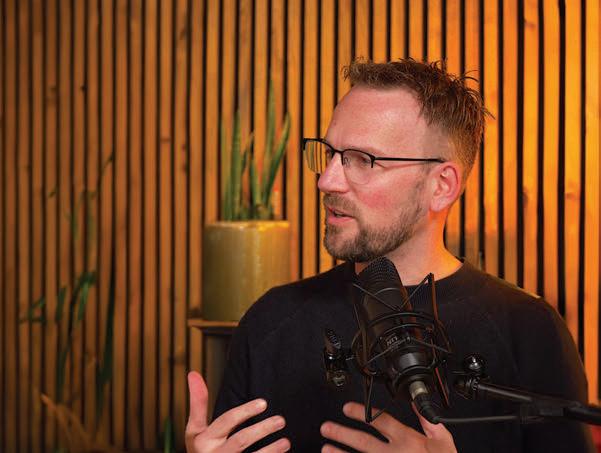
Ready to challenge the status quo? Get insights from the pioneers driving change in AI, digital transformation, and customer-first innovation, one episode at a time.
Listen on:
Janus Henderson Investors Portfolio Manager Denny Fish draws a contrast between recent artificial intelligence (AI) transactions and those of the dot.com era, noting that rather than being an example of unproductive “circularity,” the current crop of deals represents a potentially virtuous circle for a nascent industry
Since the 2022 release of ChatGPT, AI has been the driving force behind the equity market’s historic gains. Invariably, when stocks leap from record close to record close, naysayers appear, seeking to poke holes in a rally’s underlying thesis. Such critiques are an essential component of markets operating efficiently. Some criticisms, however, hold up better than others.
Those concerned that the AI rally has become unmoored from economic fundamentals have recently bandied about the term circularity. It is not a compliment. Instead, it is a not-so-veiled reference to the sometimes-dubious business practice of vendor financing that gained popularity during the 1990s rise of the Internet.
Critics point to the recent slew of deals between AI ecosystem heavyweights. Chief among these is graphic processing unit (GPU) maker Nvidia inking a $100 billion transaction with ChatGPT creator OpenAI – a tie up that includes a 10% equity stake in the startup.
On this transaction’s heels, OpenAI struck another one with chipmaker AMD where it gets access to roughly six gigawatts of GPU power. In contrast to the Nvidia deal, OpenAI gains the ability to take up to a 10% position in AMD should the partnership achieve certain milestones. And only this week, Broadcom got in on the action with its own partnership with OpenAI for data centre access.
In contrast to the vendor financing of an earlier era, these transactions, in our view, represent an effort by a nascent industry to address the current gaping supply
imbalance for AI computing capacity. This imbalance is based upon widely accepted forecasts for voracious demand over the next decade. Some estimates call for AI infrastructure investment to rise from this year’s $600 billion to potentially as high as $4 trillion by decade’s end1.
To understand why these AI pioneers are taking steps to align their interests, one must assess the current landscape, namely the frenetic race to acquire stillto-be produced compute capacity. The initial assumptions that the AI training phase would be the most compute intensive largely proved to be off target. The rise of t est-time inference – AI’s operational phase – has required much more computing power than anticipated given the need for models to digest the vast quantities of new data created during each iteration of AI queries.
To fortify their models’ rapidly expanding capabilities, AI platforms such as OpenAI need additional computing capacity in the form of advanced GPUs. As evidenced by the values attached to recent deals, this costs a lot of money. Given its swollen order books, Nvidia has funds to invest. For its part, OpenAI will deploy this capital by building out data centres powered by Nvidia chips. Central to this thesis is the anticipated demand from a massive opportunity set of global customers seeking to leverage OpenAI’s capabilities.
OpenAI’s deal with AMD also aims to secure additional computing capacity over the next several years. In addition to OpenAI purchasing multiple generations of AMD chips, the companies will become even more aligned due to possibility of the AI platform taking up to a 10% ownership stake in the chipmaker. In both transactions, these players are synchronising their economic interests so they can together achieve the necessary
Sources:
THE 1990S INTERNET ANALOGY ALSO FAILS TO CONSIDER THE DIFFERENCES BETWEEN DEBT AND EQUITY FINANCING
computing capacity to propel AI to its next stage, which is widespread implementation across the broader economy.
Vendor financing has long been an accepted – and often viable – business practice, provided its intention is for vendors to help customers maintain sufficient cash flows in the course of operations. This was often not the case in the 1990s, when vendors were not assisting customers in meeting downstream demand but rather selling their products on credit in the hopes that future demand would ultimately materialise. In many instances, it did not.
This is where critics’ AI circularity argument falls flat. In contrast to the if you build it, they will come mantra of many early Internet platforms and fibre networks, the rapid advancement of AI platforms and their equally rapid deployment by corporations, governments and research institutions, in our view, hints that current estimates could undershoot eventual demand.
The 1990s Internet analogy also fails to consider the differences between debt and equity financing. Vendor financing was much more transactional, seeking to achieve a near-term commercial objective. The risk – in addition to demand for purchased capacity never materialising – was lending corporations entering these agreements to inflate their order books.
By its nature, the residual ownership of an equity stake means the financing
1. McKinsey, as of April 2025, Brookfield, as of September 2025, Janus Henderson Investors.
2. Hyperscalers tend to be megacap technology and internet companies whose massive investment in capital expenditure is a key source of growth for technology infrastructure providers (e.g. GPU producers).Forum, Consultancy ME, Finastra, SBS Software, ARXIV, Dubai Business Capital, Menafin, Arabnews.
partner benefits only when its customer is successful. In this respect, the current crop of AI-related transactions is the most recent in a series where key players seek to ensure this nascent ecosystem has sufficient infrastructure to meet anticipated demand. Earlier deals following similar strategies include Microsoft’s seed investment in OpenAI and Amazon investing roughly $8 billion in Anthropic, which entailed the AI startup using Amazon Web Services to host its models.
Within this context, we do not believe the slight – intended or not – of circularity is the most apt description of the collaboration occurring within a quickly evolving AI ecosystem.
More accurate, in our view, is a flywheel. This term implies a virtuous circle comprised of ongoing innovation and greater capabilities leading to higher demand and, ultimately, monetization. In formalising relationships that not only could put AI adoption on a higher trajectory but also may improve their own profitability, these companies are seeking to carry out one of their most important tasks: effectively allocating capital.
Lastly – and for needed perspective –the recently announced deals between AI players represent only a sliver of the revenue streams potentially in play. Nvidia’s deals at maturity, for example, could account for just 10% of its possible sales over this time horizon. The crossfertilisation between AI infrastructure companies should, in our view, lay the groundwork for accessing the much larger earnings pie of tech hyperscalers2, sovereign buyers and innumerable other AI end users across the global economy.
An
exclusive dialogue with Virtuzone’s Group CEO on industry recognition, entrepreneurial ecosystems and the evolving Middle Eastern business landscape
Virtuzone recently won the MEAFinanceAwardforBest CompanyIncorporationand Freezone Business StartUp in the Middle East. How does this recognition reflect the organisation’s strategic positioning within the regional business services sector?
This recognition validates our systematic approach to business formation and corporate services and our commitment to operational excellence across all client touchpoints. The MEA Finance Awards evaluates organisations based on rigorous performance metrics, client satisfaction indices and market impact—criteria that directly align with our strategic priorities.
For our organisation, this award confirms that our investment in process optimisation, comprehensive service delivery and multilingual expertise resonates with market demand.
When we examine our track record of empowering 80,000+ entrepreneurs and businesses across 180+ countries, this recognition is a natural outcome of that sustained strategic focus.
Beyond immediate recognition, how does this award influence Virtuzone’s strategic growth and long-term vision?
I believe awards function as both
validation and catalyst. We have always believed in consistently improving the quality and diversity of services we offer, and receiving accolades like this reinforces our drive to continually push the envelope in terms of excellence, innovation and market leadership.
How else can we support our clients? What solutions can we provide to further enhance their journey? What new technologies or processes can we adopt to enrich our clients’ experiences?
Finding sustainable, cost-effective and tech-powered solutions to questions like these fuels our clientcentric growth strategy and dictates our future plans.
Following our integration into Ascentium, we have amplified our
capacity to deliver comprehensive services, thus providing our clients with access to deeper market expertise, enhanced technological infrastructure and broader regional networks.
These elements, in turn, enable us to offer our clients smarter and more streamlined solutions for entry in the UAE and across key markets in the Middle East, Asia Pacific, Europe and the Americas.
The UAE has demonstrated remarkable economic resilience and growth. From your perspective, what factors continue to attract international entrepreneurs to this jurisdiction? Aside from its zero-income tax policy, which continues to draw international entrepreneurs and facilitate wealth migration to the country, the UAE’s secure political environment, progressive government and agile leadership largely contribute to attracting global businesses, investors and talent.
The UAE’s highly diversified economy also plays a huge role in driving wealth and business migration to the country. In the first quarter of 2025 alone, the UAE’s gross domestic product (GDP) reached AED 455 billion (USD 123.8 billion), with non-oil sectors accounting for AED 352 billion (USD 95.8 billion) and oil-related activities bringing in AED 103.8 billion (USD 28.3 billion).
Furthermore, according to the World Bank’s Doing Business indicators, the UAE consistently ranks among the top 20 globally for ease of doing business—a position achieved through deliberate regulatory reform and infrastructure investment.
UK tax policy changes have generated considerable discussion around residency planning and business relocation. How has this influenced demand patterns for UAE business services?
The UK government recently announced it is considering a 20% “settling up charge” on certain assets held by individuals who leave the country, which would impose tax on gains embedded in assets such as shares or bonds at the point of exit.
According to reports, this could generate around GBP 2 billion (AED 9.6 billion) every year and represents a substantial departure from current rules, where nonresidents typically pay UK capital gains tax only on UK property and land.
These proposed changes have accelerated demand for UAE business services as entrepreneurs look for opportunities to achieve higher tax efficiency and enhanced income protection.
While the UK evaluates exit taxation policies, the UAE continues to maintain 0% personal income tax with no capital gains tax on most asset classes, providing a level of stability that relocating founders increasingly prioritise.
At the same time, the UAE’s 10-year Golden Visa program has become integral to high-net-worth individual (HNWI) relocation, as it does not impose minimum physical presence requirements and appeals strongly to UK entrepreneurs who want to establish tax residency outside the UK before any potential exit charge is introduced.
We are also seeing a rise in dualjurisdiction business models, where entrepreneurs and companies retain commercial operations in the UK while establishing UAE holding structures to consolidate assets, protect global investments and position themselves for long-term growth.
Which economic sectors present the most attractive opportunities within the UAE’s evolving business landscape?
The UAE’s latest growth indicators highlight several economic sectors that
OUR PRIORITY IS TO ENSURE THE NEXT GENERATION OF UAE-BASED ENTREPRENEURS CAN GROW LOCALLY WHILE COMPETING GLOBALLY, BACKED BY A HOLISTIC ECOSYSTEM THAT MOVES AS FAST AS THEY DO
continue to shape investor sentiment and business formation trends.
Manufacturing emerged as the strongest performer in early 2025, posting a 7.7 percent increase compared with the first quarter of last year. The finance and insurance sector, along with construction, also delivered solid results with 7 percent growth, while real estate activity climbed 6.6 percent and trade registered a 3 percent rise.
Based on their overall weight in the nonoil economy, however, trade continues to be the biggest contributor, followed by finance and insurance, manufacturing, construction and real estate.
Together, these gains highlight the depth and adaptability of the UAE’s nonoil economy, with multiple industries advancing in parallel. These milestones also put the UAE on track to meet its target of generating AED 3 trillion (USD 816 billion) in total GDP by 2031, as outlined in its “We the UAE 2031” vision.
What emerging trends in entrepreneurship and business formation should stakeholders monitor over the next three to five years?
We anticipate the UAE to push toward more unified and agile business licensing models. This year, Dubai has spearheaded the introduction of gamechanging free zone licenses, namely the Free Zone Mainland Operating Permit and the Freezone One Passport initiative.
The Free Zone Mainland Operating Permit allows free zone companies in Dubai to engage in mainland activities within the emirate, giving them greater
freedom to trade domestically and access government projects and contracts.
On the other hand, the One Freezone Passport initiative permits companies licensed in one Dubai free zone to operate across other participating free zones under a single license, with Louis Vuitton becoming the first company to maximise its advantages.
We also expect other emirates to adopt similar structures, paving the way for a future unified national trade license that would further streamline compliance and elevate the UAE’s global competitiveness.
Looking forward, what strategic priorities will define Virtuzone’s approach to supporting the next generation of UAE-based entrepreneurs?
Our strategy remains rooted in the same principle that has guided us from the start: stay ahead of the market so entrepreneurs and businesses can seamlessly tap into the UAE’s thriving business landscape.
Over the years, this approach has allowed us to expand far beyond company formation into a full suite of corporate services, giving founders everything they need to build and scale in one place.
Today, with Ascentium’s international footprint and capabilities, we are extending that support even further by helping clients take their businesses globally through new markets, resources and operational channels.
Our priority is to ensure the next generation of UAE-based entrepreneurs can grow locally while competing globally, backed by a holistic ecosystem that moves as fast as they do.
Lori Schwartz Global Head of Treasury Services, J.P. Morgan Payments explains the forces leading to the region becoming a treasury hub and how modernised financial infrastructure has changed cash management in the region, with technology and particularly blockchain being transformative
What signs do you see of the growing status or importance of cash management across our region?
Cash management is becoming increasingly critical across the Middle East as economic transformation accelerates under Saudi Vision 2030 and We the UAE 2031. These national efforts are driving diversification, infrastructure expansion and rapid digital adoption, all of which elevate the treasury function’s strategic importance.
A key indicator of this growing importance is the emergence of the Gulf Cooperation Council (GCC) as a central hub for global treasury operations. More multinational companies are establishing regional treasury hubs that oversee broader markets across Africa, Southeast Asia, India and Central and Eastern Europe. This shift reflects the GCC’s geographic advantage between East and West, as well as its growing maturity as a treasury ecosystem. These hubs offer treasurers improved cash visibility, centralised liquidity management and enhanced operational efficiency. The growing relocation of senior treasury leaders and domiciling
Lori Schwartz, Global Head of Treasury Services, J.P. Morgan Payments
of invoicing entities in the region further underscores this trend.
Financial free zones, such as Abu Dhabi Global Market (ADGM) and Dubai International Financial Centre (DIFC) have strengthened this environment by offering English common law frameworks, transparent governance and taxefficient structures that are attractive to corporates building large-scale treasury functions. Banks are aligning accordingly — including J.P. Morgan’s expansion through a Category 1 ADGM license, enabling liquidity management and multi-currency payments directly from the UAE.
As companies expand into sectors such as metals and mining, renewable power, logistics, EV manufacturing and data center operations, the scale and complexity of treasury flows are increasing. Collectively, these developments demonstrate that cash management has become a core strategic priority across the region.
Is the continued non-oil growth of key regional economies putting a greater focus on liquidity management?
Economic diversification is significantly heightening the focus on liquidity management across the region. As governments expand into advanced manufacturing, tourism, health, transport and technology, treasury operations must support more complex, multimarket structures.
Saudi Arabia’s non-oil private sector, for example, has grown at its strongest pace in more than a decade, driven by new orders and investment activity. These newer sectors often involve longer working capital cycles, new supply chains and more cross-border settlement requirements.
Treasurers must also navigate regulatory differences and foreign exchange controls, often resulting in “trapped liquidity” across subsidiaries. This challenge is a key catalyst behind the rise of centralised regional treasury hubs, which can harmonise liquidity structures, reduce inefficiencies and support global investment strategies.
Global market volatility reinforces this trend. Many corporates are proactively strengthening liquidity buffers and implementing more disciplined working capital strategies. As the region’s non-oil economy accelerates, liquidity management is becoming a strategic lever for resilience and growth.
How has the modernisation of regional financial infrastructure influenced bank’s cash management services?
Modernised financial infrastructure has reshaped cash management in the Middle
East by enabling faster, more integrated and more globally aligned services.
ADGM and DIFC have created regulatory ecosystems that attract global banks, asset managers and fintechs, while also enabling MNCs to build regional treasury centers and in-house banks. This modernisation has prompted banks to expand their capabilities — including J.P. Morgan’s enhanced Category 1 ADGM presence, which supports liquidity management and multi-currency payments within the UAE while connecting directly to global booking locations.
Technological modernisation is equally impactful. AI, machine learning and cloud computing are improving analytics, automation and scalability of treasury platforms. The region is also laying the foundational groundwork for open banking frameworks.
Payments infrastructure has advanced through the expansion of instant payment rails, cross-border linkages and blockchainbased corridors. Kinexys by J.P. Morgan, for example, works with several major regional financial institutions in the Middle East, supporting 24/7 multi-currency settlement and programmable payments.
Digital payments also enhance data availability and AML/CFT compliance, while streamlined onboarding and verification processes help accelerate account opening and regulatory adherence.
Together, these developments enable banks to deliver higher-speed, data-rich, globally interoperable cash management services.
Now that the Swift ISO20022 deadline has come, what will be, or already have been the effects of this standardisation on regional cash management?
Data and systems become increasingly diverse as the global economy becomes more interconnected. A complex payments industry relies on a common language to keep dialogue open, and ISO 20022 is set to become that universal language. With structure and dedicated
COLLECTIVELY, THESE DEVELOPMENTS DEMONSTRATE THAT CASH MANAGEMENT HAS BECOME A CORE
fields for payment details, the formatting standard creates communication efficiency. Rather than managing multiple market systems that speak different languages, ISO 20022 offers a universal messaging language.
It is a unique opportunity to capture rich data benefits and embrace datadriven innovation. The highly structured messaging format means machines can read messages better for faster automation and resolution.
From the corporate client perspective, benefits include efficient reconciliation, enhanced invoice information at scale and fewer manual processes to improve working capital. While clearing the way for more flexible payment structures, ISO 20022 helps accommodate corporate needs, along with evolving market dependencies.
Can current cash management and treasury technology allow liquidity to be optimised rather than just managed?
Modern treasury technology enables liquidity optimisation through real-time visibility, automation and predictive insights — expanding far beyond traditional liquidity management.
Regional treasury hubs provide centralised oversight across markets, enabling efficient pooling, funding and forecasting. Advanced technologies such as API-driven reporting, automated reconciliation and intelligent payment routing give treasurers enhanced control, transparency and decisionmaking capabilities.
Blockchain innovation is especially transformative. Blockchain deposit
account networks and tokenised liquidity models allow just-in-time funding and continuous settlement without the need to pre-fund multiple currency accounts. Platforms like Kinexys Digital Payments introduce programmable payments that trigger actions based on specific conditions, further improving automation and efficiency.
Over time, enhanced cash pooling, realtime treasury capabilities and integrated cross-border liquidity networks will continue to strengthen liquidity optimisation.
Have global economic and geopolitical circumstances spurred banks into developing more flexible or creative working capital solutions?
Geopolitical uncertainty, evolving supply chains and fluctuating global demand have accelerated the need for flexible, sector-specific working capital solutions. Treasurers are prioritising visibility, control and resilience across increasingly complex and volatile markets.
Banks are responding with more adaptable products – for example, our Trade & Working Capital solutions support clients in optimising liquidity, managing supplier risk and improving cashflow cycles. Economic diversification is also driving new, industry-specific offerings — particularly in metals and mining, renewable energy and advanced manufacturing, where working capital needs differ from traditional sectors. Despite external headwinds, major institutions maintain a long-term commitment to the region, leveraging global scale and local expertise to help corporates navigate uncertainty.

Across the region, banking leaders are unanimous about one thing - artificial intelligence is no longer optional. Many major institutions, from the largest universal banks in the GCC to the nimblest digital challengers, have announced AI strategies, appointed data leaders and launched pilots across risk, compliance and customer engagement
The Promise and the Paradox
And yet, despite this visible momentum, there is a quiet paradox. For all the enthusiasm and investment, true AI adoption remains limited. Few banks have moved beyond isolated proofs of concept or departmental initiatives to build the kind
of AI-native enterprise that global peers are now attempting.
In a region that has consistently been an early adopter of digital transformation, this is both surprising and revealing. The foundations are strong - modern cores, rich customer data, supportive regulators - but the translation of potential into scale is still lagging.
So, the question facing Middle East banking leaders today is not whether to adopt AI, but it’s how to make adoption real.
The Mirage of AI Readiness
Governments across the region have shown extraordinary foresight in promoting national AI agendas. The UAE launched its AI Strategy 2031, while Saudi Arabia’s Vision 2030 and Qatar’s National AI Strategy have each positioned AI as a central driver of competitiveness.
Yet, within banks, the definition of “AI readiness” is often technocentric, focused on data lakes, MLOps platforms and vendor ecosystems. What is often missing is human readiness, the organisational cognition, trust architecture and decision velocity needed to make AI not just work, but fit for purpose.
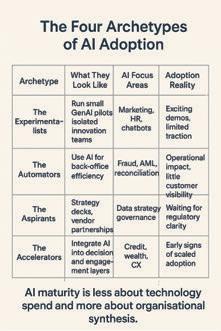
At WithinTheBox.ai, our research reveals a clear pattern. AI maturity is not determined only by how advanced a bank’s
models are, it is also largely determined by how deeply the organisation understands itself. Adoption slows down not because technology fails, but because human systems do.
It is tempting to believe that scaling AI is a matter of investment or talent. But the evidence suggests otherwise. The deeper barriers are cognitive, cultural and structural.
Four recurring blockers define the AI adoption gap:
1. Fragmented Vision – AI is treated as a toolkit, not a new operating model.
2. Fear of Autonomy – Controloriented cultures resist delegating judgment to machines.
3. Gov ernance by Committee –Responsible AI managed via policy, not design.
4. Dat a Without Design – Banks invest in data platforms but overlook human trust calibration.
Globally, we are seeing a clear shift.

Sanat Rao, Co-founder & Managing Director, WithinTheBox.ai
Several leading banks in other parts of the world are moving from fragmented AI initiatives to AI-native architectures, where intelligence is embedded into every decision, process and customer touchpoint.
Three common threads stand out:
1. Decision Velocit y - namely governance redesigned to enable fast, risk-aware decisions.
2. Human Oversight - that is, humanin-the-loop frameworks preserve judgment alignment.
3. Trus t Architecture - where explainability, bias testing and traceability as technical requirements.
These institutions understand that adoption is as much a behavioural challenge as a technical one.
In the technology world, sandboxes test code safely. But in the AI world, we need a different kind of sandbox, one where humans and machines learn together.
The AI Adoption Sandbox is a controlled environment where AI systems and human users interact under observation, thereby testing not only performance but also perception, trust and behavioural response. Within these sandboxes, banks can:
• Obser ve how staff interpret AI recommendations.
• Identif y when human intuition complements or contradicts machine logic.
• Re fine protocols that balance autonomy with oversight.
• E xperiment with responsible AI before full deployment.
This creates a continuous feedback loop between technical accuracy and human acceptance, the very essence of real adoption.
These sandboxes are to be seen as not merely compliance experiments but as co-design platforms for responsible AI. This represents a larger philosophical shift of regulators moving from scorekeepers to co-architects of AI transformation. Banks that engage them early do not just de-risk innovation, they help shape the rules of responsible intelligence.
At WithinTheBox.ai, we think of a Cognitive Design framework as a blueprint for
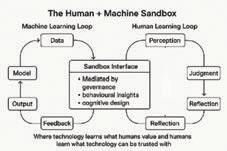
banks that are serious about addressing the adoption challenge.
Our ethnographic work across banks reveals a striking duality - executives describe AI as a strategic enabler; frontline teams describe it as a compliance risk.
That disconnect explains why many initiatives stall after the pilot phase. The solution is not another policy deck; it is shared experience.
As one innovation head told us during a sandbox session - “We don’t need another
dashboard to monitor AI. We need a playground to understand it.”
That is the difference between deployment and adoption, between using AI as a tool and living with AI as a collaborator.
AI adoption in banking is not about replacing judgment; it is about augmenting human intelligence with machine precision.
REGIONAL
Adoption happens when:
• Technology learns what humans value.
• Humans learn what technology can be trusted with.
• Both evolve together within ethical guardrails.
That is the true purpose of the AI Adoption Sandbox, a place where trust, governance and innovation meet.
THE WINNERS WILL NOT BE THOSE BANKS WITH THE SMARTEST MODEL; IT WILL BE THE BANKS WITH THE BRAVEST CULTURE, ONES THAT LEARN, QUESTION AND COCREATE WITH THE MACHINE
To achieve that, banks must ask “Is our data ready?” but also ask “Are our people ready to trust what AI can do?”
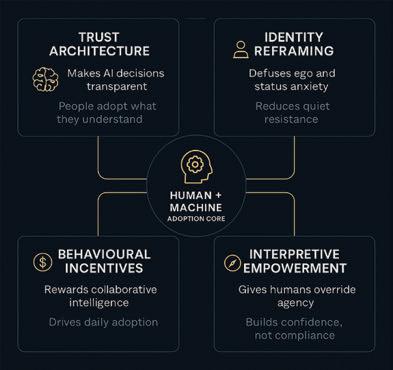
As AI moves from experiment to enterprise, banks in the Middle East have a rare opportunity to redefine the global narrative not as late adopters, but as thoughtful innovators.
They can show that in an age of autonomy, the differentiator is not intelligence, it is intentionality. Because the banks that will lead the AI era are not those that automate the fastest, but those that humanise the deepest.
In regional banking, the winners will not be those banks with the smartest model; it will be the banks with the bravest culture, ones that learn, question and co-create with the machine.
Behaviour wins. Technology follows.
Sanat Rao is Cofounder and Managing Director of Within The Box.ai, an AI enablement and behavioural design company headquartered in the UK with a base in the UAE. Their Cognitive Design Practice helps banks, fintechs and hedge funds build Human + Machine architectures that drive adoption, impact and performance.

Faisal Masood Head Corporate Bank for SubSaharan Africa at Citi, backs an affirmative look at the continuing developments of credible markets across Africa with examples of recent landscape changing deals supported by the bank’s long presence and deep commitment to the continent
The investment landscape in Africa presents a compelling, albeit complex, picture. While challenges persist, these are outweighed by significant opportunities for growth and return. These growth opportunities are increasingly being driven by demographic shifts, digital transformation and the burgeoning potential of intra-continental trade, further propelled by initiatives like the African Continental Free Trade Area (AfCFTA) agreement.
Citi’s unparalleled presence and deep engagement in Africa underscores its role as a trusted advisor, driving economic development and facilitating financing across the continent. The bank has spent decades connecting global liquidity to local opportunity, consistently demonstrating its commitment to supporting sovereigns, financial institutions and corporates through a range of banking solutions.
Citi’s long-term influence in Africa is built on a robust foundation of local expertise combined with global reach. The bank’s operations across sixteen countries in Africa, and its business conducted in an additional twenty one countries, demonstrate its pan-African footprint. The bank’s philosophy as a trusted advisor extends far beyond mere transaction execution. From Eurobonds and private placements, hedging, export credit agency facilities to syndicated loans, Citi’s banking franchise across Africa is actively shaping a new generation of transformative deals. It is not just about mobilising funding; it is about structuring transactions for maximum impact and sustainable outcomes.
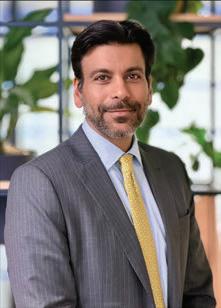
corporate growth across sectors. We are in the business of delivering outcomes that matter.”
Africa is rapidly emerging as one of the world’s most dynamic financing frontiers. According to the IMF,
Claude-Stephanie Ngningha, Head of Investment Banking for Africa (excluding Egypt & South Africa) at Citi, encapsulates this philosophy: “We connect capital to opportunity, from sovereign debt sustainability and ESG-linked development, to enabling
nine of the top twenty fastest-growing economies globally in 2024 are in Africa. This growth is underpinned by several factors, including the discovery and exploitation of oil and gas reserves, valuable minerals, public investment in critical infrastructure, reconstruction
spending, improved agricultural output and strategic reforms coupled with effective resource management. Historically, many African economies were heavily reliant on government spending. However, there is a visible shift occurring, driven by private business and consumers giving rise to a growing need for corporate issuances and use of innovative financial products. From facilitating Eurobond issuances to arranging cross-border liquidity solutions for corporates, Citi’s strategy centers on building depth and sophistication into Africa’s capital markets. The bank’s hybrid model, combining hub-managed coverage in some countries with a full investment banking presence in key African economies, has enabled it to originate and execute complex transactions with greater agility and efficiency. As Claude-Stephanie emphasises, “Our clients increasingly seek solutions that can compete globally but execute locally. That is where Citi’s scale and structuring expertise make a real difference.”
Few institutions have played as enduring and impactful a role in Africa’s sovereign debt financing story as Citi. The bank has been instrumental in enabling African governments to access international capital markets for budgetary support and developmental projects. It recently co-led the Republic of Kenya’s US$1.5 billion Eurobond issuance and buyback, its first return to the international markets in over a year. The dual-tranche deal marked a turning point in Kenya’s debt management strategy, helping the country extend maturities and reduce refinancing risk. “Kenya’s re-entry into global markets demonstrates how disciplined debt management and transparency can restore investor confidence,” Head of Corporate Bank for Sub-Saharan Africa at Citi, Faisal Masood notes. “It proves that African issuers can access capital competitively when backed by credible structuring.
Citi in fact played a pivotal role as joint lead manager in Côte d’Ivoire’s landmark US$2.1 billion dual tranche bond-offering, which included a West African CFA franc (XOF) denominated bond issued in international markets – the first of its kind. The bank was able to successfully structure this complex transaction by bridging local currency needs with global investor demand, setting a new model for African sovereign financing.
Together with British International Investment (BII), Citi also launched a US$100 million risk-sharing facility across Benin, Côte d’Ivoire, Rwanda and Uganda to extend trade finance to SMEs, a move that anchors financial inclusion and supply-chain resilience.
Beyond the sovereign sphere, Africa’s private sector is increasingly taking center stage in capital markets, and Citi is actively powering that shift. The bank facilitates financing for growth, expansion, and strategic transformations for various corporate entities. In July 2025, Prosus, one of the world’s largest technology investors, priced a €750 million Eurobond under its Global Medium-Term Note Program. Proceeds were used to refinance maturing notes, underlining the growing sophistication of African-linked issuers in managing global capital cycles.
In South Africa’s mining sector, Citi has also played a leading role in high-value corporate financings. In May 2025, Gold Fields successfully issued US$750 million in seven-year notes through its subsidiary Windfall Mining, guaranteed by its parent group. The funds refinanced a bridge facility used to acquire Canada’s Osisko Mining, cementing Gold Fields’ capitalmarket credibility and strategic agility.
The same trend was evident when Harmony Gold secured a US$1.25 billion bridge facility, jointly arranged by Citi and other global coordinators, to finance its acquisition of the CSA Copper Mine. “These transactions illustrate how African
corporates are no longer just regional players, they’re active participants in global capital markets,” Masood explains. “By providing both bridge and long-term financing, we’re enabling clients to execute strategic transformations.”
Citi has been a significant financier of infrastructure and energy projects in Africa, recognising this to be the backbone of long-term economic growth. In a second transaction of its kind, arranged and structured by Citi, Sun King closed a landmark local currency securitisation deal of US$156 million (KES20.1 billion) to scale affordable solar across Kenya. The deal is the largest securitisation ever completed in SSA outside South Africa.
more sustainable. Each deal, whether a Eurobond, a risk-sharing platform, or a bridge loan, is a building block for market credibility. By leveraging its distribution network and structuring depth, Citi has enabled governments and corporates to access more efficient, transparent, and ESG-aligned capital. The result is an increasingly robust investmentbanking landscape that aligns Africa’s growth trajectory with global investor expectations.
If Africa’s next growth chapter is defined by capital access, then execution will determine who leads it. Citi’s long history on the continent, spanning over five decades, provides both institutional memory and trusted relationships in markets where continuity is often scarce. More than a
ESG-ALIGNED CAPITAL
Focusing on digital infrastructure, Citi, with guarantees from the US ExportImport Bank, is the major US financier for a state-of-the-art data center and digitalisation projects in Côte d’Ivoire through a US$66 million in financing. This initiative aims to de-risk US private sector investment and position American companies to capture growth in one of Africa’s fastest-expanding tech markets.
Together, these sovereign and corporate transactions point to a deeper structural trend as Africa’s financing ecosystem becomes broader, more competitive and
financier, Citi acts as a bridge between policy, markets, and purpose. Its repeat mandates in sovereign, corporate and green finance illustrate a model built not only on scale but on sustained local partnership. In the end, landmark transactions go beyond headlines; they are evidence that global markets can be harnessed to work for African development when banks combine market access, structuring and local insight. Citi’s recent mandates offer a pattern of sophisticated, multidimensional deals led by a bank with both global reach and an Africa playbook. For African issuers and corporates, that combination will continue to matter.


Rihab Saad Managing Director of Next Generation Equity (NGE) discusses global citizenship trends, regulatory evolution and the strategic value of alternative residence planning
Next Generation Equity has been recognised as the Best Residency and Citizenship by Investment Firm at the MEA Finance Awards. What does this distinction represent for your company, and what does it mean for your clients?
This recognition comes at a defining moment for the investment migration sector. The industry has matured from straightforward application processing to a strategic advisory model that incorporates legal guidance, long-term wealth planning, tax considerations and family security. Our award reflects this shift and the growing expectation for higher-quality and more comprehensive support.
Clients today arrive with more complex questions. They want to understand how a second residency or citizenship will influence their global tax exposure, future inheritance planning and overall risk management. This is why we have invested in strong government relationships, a rigorous due diligence framework and a focus on clear educational guidance.
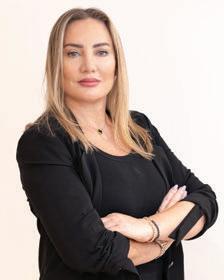
Saad, Managing Director, Next Generation Equity
For NGE, this distinction signals to clients that they are working with a partner that prioritises accuracy, transparency and experienced advisory. It reinforces that our approach is aligned with what families now value most: thoughtful planning, reliable expertise and long-term protection.
How has your firm’s approach to client advisory evolved in response to heightened international regulatory scrutiny of citizenship programs?
The regulatory environment surrounding citizenship-by-investment has intensified, particularly following increased attention from the Organisation for Economic Co-operation and Development (OECD), European Union (EU) and Financial Action Task Force (FATF).
This fundamentally reshaped our advisory methodology and operational infrastructure, but rather than viewing enhanced regulation as a constraint, we have recognised it as an opportunity to strengthen program integrity and client outcomes.
For one, we have substantially expanded our compliance frameworks, implementing enhanced due diligence protocols that exceed minimum governmental requirements.
We have also become more selective about the programs we recommend, with jurisdictions demonstrating commitment to international regulatory standards, transparent governance and sustainable program management receiving our endorsement.
This ultimately benefits our clients, as we are able to direct them toward programs with long-term stability and international legitimacy, which are key factors in determining the lasting impact and overall strategic benefit of their investment.
Caribbean citizenship-byinvestment programs have recently increased minimum investment thresholds. What strategic factors are driving these changes, and how do they affect the competitive landscape?
Yes, several Caribbean nations have established a baseline contribution level of USD 200,000 for single applicants, reflecting a coordinated approach to program sustainability and international positioning.
This change primarily comes from Caribbean nations responding to calls for increased program integrity and sustainability. Implementing higher investment thresholds naturally reduces application volumes while increasing per-applicant economic contribution, and allows stricter due diligence and more meticulous background checks.
Additionally, these adjustments address long-term fiscal planning, since citizenship program revenues fund critical infrastructure development, climate resilience initiatives and economic diversification projects.
From a competitive perspective, this means programs now compete less on price and more on processing efficiency, passport strength and additional benefits like visa-free travel access or residency flexibility.
Global wealth migration patterns have intensified over recent years. What underlying factors are driving high-net-worth individuals and families to pursue alternative citizenship options?
I believe this acceleration is driven by overlapping factors that include geopolitical uncertainty, tax optimisation and changing global mobility needs.
Most of our clients are families that view second citizenship as essential risk mitigation—a “Plan B” that provides options during political instability, economic disruption or social unrest.
Another key factor is tax optimisation, as entrepreneurs and business owners seek citizenship options that enable legitimate tax efficiency through proper residency planning and wealth structuring.
For these clients, jurisdictions offering territorial tax systems or favorable treatment of foreign-sourced income are attractive options. However, they still need to establish genuine residential ties and comply fully with reporting obligations in their home countries.
Access to world-class education and visa-free travel is another critical factor
for many families, particularly those from regions with limited educational infrastructure. These clients prefer citizenship in countries offering visafree access to the United Kingdom, the Schengen Area or other destinations with premier academic institutions.
Beyond citizenship acquisition, how does NGE support clients in maximising the strategic value of their alternative citizenship throughout their lifetime?
Obtaining a second citizenship represents the beginning rather than the conclusion of our relationships with our clients. Our advisory extends to the strategic use of their second citizenship benefits across multiple aspects,
owners in exploring channels that can help them expand into new markets, maximize preferential trade agreements or establish regional operational centers. We also specialise in helping clients plan and lay the foundation for the education of their children, advising them on programs that offer the best access to internationally renowned universities and educational institutions.
What emerging patterns in global mobility and wealth preservation do you see shaping how families approach citizenship planning over the next decade?
Over the next ten years, I expect citizenship planning to move much earlier in life, especially among individuals and
particularly in terms of personal and financial planning.
For instance, achieving tax efficiency requires sophisticated planning that extends well beyond citizenship itself. We work closely with international tax advisors to ensure clients understand reporting obligations, establish compliant residency structures and optimise their tax positioning across multiple jurisdictions.
We also advise families on how to structure cross-border estates, understand heirship rules in different jurisdiction and ensure seamless wealth transfer across generations.
Since second citizenship gives access to international business opportunities, we guide entrepreneurs and business
families who prioritise long-term wealth protection and lifestyle flexibility rather than treating it as a late-stage safeguard.
As the global migration sector continues to be reshaped by factors such as increasing taxes on HNWIs, economic opportunities in emerging markets and changing immigration policies, having a second citizenship or residency is set to be one of the most valuable tools one can secure for stability, freedom and generational opportunity.
With exceptional expertise in government-approved European and Caribbean citizenship and residencyby-investment programs, our team at NGE is fully equipped to guide families and individuals through this evolving landscape.
The Middle East’s growing influence as a global wealth hub is matched only by the rate of change in client expectations, the unprecedented rate of wealthy new arrivals in markets such as the UAE, new technology and an increasingly competitive landscape. Dinesh Sharma Head of International Wealth and Premier Banking (IWPB) for MENAT at HSBC, discusses how the bank is investing for the future, the transformation of the Premier proposition and why the region is primed for the next era of global wealth leadership
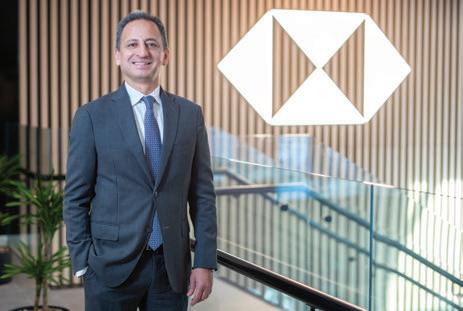
How does HSBC’s simplification impact your wealth and retail clients in the Middle East?
The strategic decisions we have made at the Group level are designed to do one thing: focus our efforts and investment on the areas where we have a distinct and market-leading advantage. For our wealth and personal banking business, this means doubling down on our strategy to be the preferred international financial partner for our clients.
This is not a retreat; it is a concentration of force. Our simplification allows us to accelerate our investments in regions of high growth such as Asia and the Middle East, particularly the UAE which we consider a key growth hub.
Our clients in the UAE and the wider MENAT region are, by their very nature, internationally minded. They are entrepreneurs with cross-border supply chains, executives managing regional teams, families with children studying abroad and investors seeking global diversification. They need a partner that can connect them seamlessly to opportunities and manage the increasing complexity of international financial lives.
This is where HSBC’s international connectivity becomes our clients’ superpower. Our strategy is built to serve these specific needs. Each market within our network has a critical role to play. The UAE, for example, is one of the top five global markets for our wealth and personal banking business.
For our clients, this simplification translates into tangible benefits. It means a bank that is fully committed to this market
and is investing heavily in the specific propositions they value. It means the ability to open an account in any of several markets, including London Singapore, or Jersey from their base in Dubai. It means a ‘Global View’ of their accounts on a single platform and have the ability to move money instantly between them.
We have booking centres in key jurisdictions, from the Channel Islands, Luxembourg and Switzerland in Europe to Hong Kong and Singapore in Asia. Our renewed focus means we can enhance these corridors, making them faster and more efficient. We are channelling our resources into the digital platforms, the wealth management tools and the expert advisors that our international clients require.
In short, our global strategy is a commitment to being the most trusted and undisputed leader in international banking and wealth management for our clients in the Middle East.
The UAE has moved from being a regional story to a global one. We are witnessing a historic influx of capital and talent. The UAE is projected to be the world’s number one destination for millionaire migration for the third consecutive year in 2025, with forecasts suggesting a net inflow of nearly 10,000 high-net-worth individuals. The total pool of HNW assets in the country is already estimated to be over $700 billion.
This migration consists of highly skilled professionals, successful entrepreneurs and established wealthy families, all drawn by the country’s economic dynamism, stability and long-term vision.
Our response has been the largest and most significant investment in our UAE wealth business in almost two decades. This is a multi-year, multi-pillar commitment to serve the market’s growing needs.
First, we are investing in Infrastructure. In September, we officially launched our new flagship Wealth Centre in Jumeirah. This is not a traditional branch; it is a purpose-built hub for our Premier and wealth clients. In a world of digital immediacy, clients value a safe, private space for meaningful, in-depth conversations about the most important financial decisions of their lives—from legacy planning for their family to structuring an international investment portfolio. This centre is the first of several in the region and will connect with other such state-of-the-art wealth centres across our network.
Second, we are investing in People. We are in the process of doubling our frontline team of relationship managers and wealth specialists dedicated to the wealth segment over the next few years. Wealth is managed through relationships
IF YOU ARE ONLY SPEAKING TO THE CURRENT GENERATION, YOU RISK BECOMING OBSOLETE THE MOMENT THE WEALTH IS TRANSFERRED
and trust is the most valuable asset we build and retain. We are scaling our human expertise to ensure every client receives the proactive, personal and expert advice they deserve.
Third, we are investing in our Proposition. We understand that our clients’ lives are not confined to their bank accounts. Their needs are holistic. This is why we have formed strategic partnerships that align with their lifestyle. A prime example is our partnership with the Dubai Opera for the 2025-2026 season, giving our clients exclusive access to world-class cultural experiences. Similarly, our Emirates Skywards offer caters directly to their international mobility, a core characteristic of our customer base. These moves are not speculative. They are based on deep analysis of customer data and feedback. We are investing with precision in the people, places and propositions that our clients have shown they value most. The strategy is customer focused and a proof point to our belief in the UAE’s future and our commitment to grow with it.
It is a very competitive market, what is the plan to differentiate and win?
We acknowledge and welcome the competition; a competitive market sharpens everyone’s focus and ultimately benefits the customer. We are extremely confident in our position because we are not trying to win in every single part of the market.
Our strategy is targeted: to be the undisputed leading bank for the mass affluent and high-net-worth segments, specifically those with international needs.
Our confidence is built on two foundations: our proven track record and our new, enhanced proposition.
First, the track record. Our focus on this segment is already delivering significant results. If you look at our UAE performance from 2019 to 2024, our profit before tax from this business has more than doubled – partly supported by a 50% growth in deposits and the doubling of wealth revenues. Most impressively, our wealth-invested assets have more than tripled in that period. This growth has been built on a 41% increase in our Premier customer base and on our customers trusting us with their funds and futures.
Second, we are not resting on that success. This year, we launched our enhanced HSBC Premier proposition, which is the most critical component of our strategy. Customers told us they don’t want another offer; they want a partner that understands their goals, not just their balances. We have structured this enhanced proposition around the four key pillars of our clients’ lives, moving far beyond a simple bank account.
The first and most important pillar is Wealth. A key component of this is the World Trader platform, which allows clients to trade equities, ETFs and bonds across 77 stock exchanges in 25 markets, all from their mobile app. The uptake has been phenomenal. In the first half of 2025 alone, the value of trades increased by 535% compared to the same period last year. But we know that self-directed trading is only one part of the journey. That is why we have now supplemented it with Future Planner, a new digital, goalsbased financial planning tool which is the first of its kind in the market. It is a simple, intuitive way for customers to identify their long-term goals and track their progress under different scenarios. It then provides the perfect bridge to connect directly with a specialist advisor
to build a plan to achieve those goals.
The second pillar is International, which is our core DNA. This is where our global network becomes a personal utility for our clients. It means seamless cross-border banking, a single Global View of all their HSBC accounts worldwide on one screen, and the ability to make instant, fee-free transfers between them with our Global Money Account.
The third pillar is Travel. We work closely on developing strategic partnerships with those organisations who can help us support our clients’ mobility with exclusive travel privileges, including airport lounge access and benefits that align with their global lifestyle.
Finally, we have expanded Premier to include a fourth pillar: Health. We recognise that true wealth is holistic and that our clients are focused on the wellbeing of their families. This proposition includes access to wellbeing partnerships and services, completing the picture of a partner that understands their entire life.
This entire proposition is supported by our innovative customer care programme,
CARE, which empowers our staff to resolve issues with empathy and efficiency. This combination of proven performance, a wide-ranging proposition like Premier and powerful accessible digital platforms gives us strong confidence in our ability to lead this segment.
How does the MENAT region compare against other high-growth wealth regions in the world? What are the defining trends?
The wealth growth in the MENAT region is among the fastest and most dynamic in the world. Recent economic forecasts from institutions like the IMF remain robust, projecting regional growth of 3.5% in 2025 and 3.8% in 2026, outpacing many developed economies. But beyond the headline numbers, there are several qualitative trends that define this market and make it unique.
The most significant trend we are seeing is the structural shift from offshore to onshore wealth. Historically, it was common for regional clients to book as much as 70% of their wealth in offshore centres. Today, that split is moving closer to 60/40, or even 50/50 for new wealth. This is a huge vote of confidence in the region. It reflects a growing trust in the local regulatory frameworks, the long-term political stability and the sophistication of financial centres like the DIFC and ADGM. This creates a massive opportunity for banks like HSBC that have the capability to provide sophisticated onshore advisory and booking solutions, and we are actively developing new propositions to serve this specific trend.
The second defining trend is the changing demographic of wealth. The “typical” HNW individual is changing. We are seeing the emergence of female entrepreneurs, who now constitute nearly a third of all entrepreneurs in the region. Alongside this, the source of wealth is diversifying. It is no longer just from traditional industries. We are seeing a new generation of “new economy” millionaires— founders of tech companies, successful
content creators and digital-native executives. Finally, as noted in our 2025 Global Entrepreneurial Wealth Report, entrepreneurs in the Middle East are among the most optimistic in the world. 65% in the UAE and 68% in Saudi Arabia are positive about their business prospects. They are also ambitiously international, with nearly 60% in both countries planning to expand to new markets.
A major theme is the intergenerational wealth transfer. What role do key wealth managers play in this?
This is arguably the single most significant—and most complex—financial event on the horizon. We are looking at a transfer of over $1 trillion in the Middle East alone by 2030 but, there is a critical advice gap. Only around 24% of high-networth families in the region feel they have a comprehensive, formally documented succession plan in place.
The primary challenges are rarely technical or financial. The challenges are about family dynamics, communication and governance. Our primary role is to be the “conductor of the orchestra.” No single institution can solve this. A successful transfer requires coordinating a team of external specialists: lawyers, tax advisors, trust and corporate service providers and family governance experts, often across multiple jurisdictions. The bank’s value is in being the one trusted partner who understands the client’s holistic picture and can orchestrate these experts to achieve a common goal.
Second, our role is to engage the entire family, not just the patriarch or matriarch. We make it a priority to build relationships with the next generation. They often have different values, a higher risk appetite, a greater focus on sustainability and a digital-first mindset. If you are only speaking to the current generation, you risk becoming obsolete the moment the wealth is transferred.
Ultimately, the role of wealth manager is to provide the platform and the patience
to help families navigate this transition and preserve their legacy for generations to come.
With global geopolitical uncertainty and trade shifts, are there challenges that undermine this optimism for growth in the Middle East?
Uncertainty is now a permanent feature of the global landscape. Our clients are sophisticated; they see the headlines on geopolitical tensions and shifting trade policies, and they are right to be cautious. However, the bigger picture for the Middle East is one of remarkable resilience and, more importantly, strategic realignment. This region is not just reacting to global shifts; it is proactively diversifying its economic partnerships. The most powerful trend we see is the strengthening of the Asia-GCC trade and investment corridor. While traditional ties to the West remain vital, the most significant new growth is flowing East.
Our 2025 Global Entrepreneurial Wealth Report provides clear evidence. For entrepreneurs in both the UAE and Saudi Arabia, the number one market they
are targeting for international expansion is mainland China. This is a strategic pivot. This sentiment is backed by hard numbers: trade between the GCC and the ASEAN bloc, for example, has already surpassed $130 billion. This eastwardlooking diversification is a powerful hedge against volatility in other parts of the world.
Furthermore, in a volatile world, the UAE is increasingly seen as a global hub of stability, pro-business regulation and longterm vision. We see this in the millionaire migration data, but even more so in the institutional “sticky” capital that is moving here. The growth in family offices has been exponential. The DIFC is now home to over 120 family offices managing an estimated $1.2 trillion in assets. ADGM has seen its assets under management grow 245% in the last year alone.
So, it is fair to say you are optimistic about the future?
Yes, we are fundamentally optimistic. But it is not a blind optimism. It is a focused, strategic optimism. We are clear about the challenges but also grounded in the data: the resilient economic forecasts, the strategic diversification of the region, the influx of talent and capital, the deep structural reforms that are underway –and – that HSBC has moved with purpose to capture this opportunity and support our clients.
Our strategy is clear: to be the leading international bank for affluent and HNW clients in the Middle East. Our optimism comes from knowing we have the right strategy, the right global network and the right investments in place. We are focused on the right people—doubling our wealth staff—and the right propositions, like our enhanced Premier account.
Finally, great optimism comes from our team. They have adapted, delivered remarkable growth and embraced our strategy. We are putting customers at the heart of everything we do and be their most trusted financial partner, opening up their world of opportunity.

Over the past year, the landscape of cash management in our region has undergone a quiet revolution. What was once viewed as a transactional, back-office function has emerged as one of the most strategic disciplines in modern finance
Across the Gulf and wider MENA region, the story is not merely about moving money; it is about mastering liquidity, orchestrating data, and turning treasury functions into real-time control centres that underpin resilience, growth, and corporate agility. As the region accelerates its economic diversification and integration into global trade corridors, the ability of banks and corporates to see, move, and optimise cash efficiently is proving to be a defining competitive edge. The timing could not be more critical. In the twelve months to late 2025, the macroeconomic environment of the Middle East has been characterised by continued non-oil growth, strong infrastructure spending, and an evolving trade ecosystem shaped by shifting
supply chains and tariff realignments. Yet, amid this expansion, liquidity management has become more complex. Companies are facing tighter funding conditions globally, while interest rate cycles, inflationary pressures, and crossborder capital movements continue to reshape cash positions daily. The result has been a renewed focus on internal funding sources, working capital efficiency, and instant visibility across every business unit and geography.
For corporates operating in the region, cash is no longer a static number on a spreadsheet — it is a dynamic resource that must be continuously monitored and optimised. Treasurers across the UAE, Saudi Arabia, Qatar, and Egypt increasingly describe their remit as one of “liquidity orchestration” rather than simple cash
monitoring. In practical terms, this means connecting multiple bank relationships through APIs, consolidating balances across subsidiaries, and automating payments and collections to achieve near real-time visibility. A few years ago, this would have been aspirational. Today, it is an operational expectation.
Much of this transformation has been made possible by the rapid modernisation of the region’s financial infrastructure. The UAE’s launch of Aani — its national instant payment platform — has marked a pivotal moment. Under the Central Bank’s Financial Infrastructure Transformation Programme, Aani allows individuals and corporates to transfer funds in seconds, 24 hours a day, across participating institutions. For corporate treasuries, that shift from batch-based, end-of-day settlement to continuous payment capability changes everything. Collections can be posted instantly; supplier payments can be timed to the minute; liquidity sweeps can happen intraday. Similar initiatives are taking shape across the GCC, where central banks are investing in real-time gross settlement systems and interoperable rails such as the GCC’s AFAQ RTGS. Together, they are laying the foundation for a truly instant regional liquidity ecosystem.
At the same time, global standards are converging with local infrastructure. The migration to ISO 20022 messaging — with the SWIFT MT cut-off deadline approaching in November 2025 — has become the other major catalyst for modern cash management. For the first time, corporates and banks in the Middle East are preparing to exchange payment messages enriched with structured data: invoice references, tax IDs, and detailed remittance information. This seemingly technical change has deep commercial implications. Reconciliation that once took hours can now happen automatically. Cash application rates are climbing toward 90 percent or more in some pilot environments. The richer data also feeds predictive analytics, allowing treasurers to forecast positions with greater accuracy and to model scenarios such as delayed payments or shifting FX exposures. The Middle East, which historically leapfrogged stages of banking technology adoption, is now well-positioned to move directly into a data-rich, real-time treasury era.
Recently several leading banks in, Saudi Arabia, the UAE and Bahrain have inaugurated integrated liquidity platforms offering real-time reporting as well as multi-entity dashboards and virtual accounts. The focus has shifted from transactional products to end-toend cash solutions: sweeping, pooling, payables and receivables financing and treasury analytics combined into a single digital interface. For large corporates, these platforms are the backbone of operational control. For mid-tier companies, they represent an entry point into sophisticated liquidity management without the traditional infrastructure burden. The trend mirrors what leading global banks are seeing elsewhere — treasuries no longer want isolated services; they want ecosystems.
The growing maturity of corporate treasury in the Middle East has also been remarkable. A decade ago, many regional businesses, even sizeable ones, lacked dedicated treasury departments.
REGIONAL CORPORATES ARE NO LONGER PASSIVE ADOPTERS OF GLOBAL TREASURY TRENDS; THEY ARE BECOMING INNOVATORS IN THEIR OWN RIGHT
Today, treasurers are highly soughtafter professionals driving strategic discussions in boardrooms. Cloudbased treasury management systems are now common, integrated with ERP platforms and connected to multiple banking partners. Automated cashflow forecasting, virtual account structures, and host-to-host connectivity are standard features rather than experimental projects. Companies have realised that the more visibility they have over their cash, the more flexibility they have to respond to market changes, pursue investments, or hedge risks. It is not uncommon now for CFOs to receive live dashboards showing consolidated group liquidity by currency and country before midday each day.
Working-capital efficiency has become another focal point over the past twelve months. As global interest rates stabilised but remained high compared to pre-pandemic norms, regional corporates recognised the cost of trapped or idle cash. Supply-chain disruptions and lengthened payment cycles added to the strain. Banks have responded with creative structures: supplier-financing programmes, dynamic discounting solutions, and receivablessecuritisation facilities tailored for the GCC’s large conglomerates. These tools convert supply-chain relationships into liquidity levers. As one senior banker in Dubai remarked recently, “cash management is no longer about counting cash; it’s about freeing it.” The most forward-looking corporates are those linking treasury metrics directly to procurement and sales KPIs, effectively
embedding liquidity thinking into their commercial decisions.
Fintechs have entered the scene, too. A wave of spend-management and corporate-card platforms has emerged across the UAE and Saudi Arabia, bringing consumer-grade usability to corporate cash oversight. Firms such as Qashio and Sanad Cash have introduced realtime visibility into employee spending and departmental budgets, while also providing data analytics that feed back into corporate liquidity planning. The regional banking sector, rather than resisting this trend, has increasingly embraced partnerships or investments in such fintechs. The logic is clear: treasurers value convenience, transparency, and immediacy — and any provider that can deliver those elements strengthens its position in the value chain.
However, the road ahead is not without challenges. The region remains highly diverse in terms of regulatory regimes, technological readiness, and banking sophistication. While the UAE and Saudi Arabia lead the charge, other markets still lag behind in standardisation and system connectivity. Many corporates remain dependent on manual processes and fragmented banking relationships, which make holistic cash visibility difficult. In countries where currency controls or differing regulatory frameworks apply, cross-border liquidity management remains cumbersome. Treasury centralisation, while progressing, often encounters operational and legal complexities, particularly for multinational groups spanning the GCC, Levant, and North Africa.
Another key challenge lies in data quality and security. Real-time treasury depends on clean, accurate, and accessible data. Inconsistent bank file formats, legacy ERP systems, and limited integration capabilities can undermine automation efforts. At the same time, as payment rails become faster, the risks of fraud, cyberattacks, and regulatory breaches rise in equal measure. Regulators across the region are therefore emphasising resilience, requiring banks and corporates to implement robust cybersecurity and compliance controls. The result is a dual challenge for treasurers: to achieve speed without sacrificing security.
Nevertheless, the opportunities outweigh the obstacles. The convergence of faster payments, richer data, and digital infrastructure has positioned the Middle East at a turning point.
Regional corporates are no longer passive adopters of global treasury trends; they are becoming innovators in their own right. The most advanced treasuries in the Gulf are already piloting AI-driven forecasting models that predict short-term liquidity surpluses or deficits based on historical flows and macroeconomic indicators. Some are experimenting with automated investment sweeps, using algorithms to allocate idle cash across money-market instruments or Sharia-compliant liquidity pools in real time. These innovations reflect a mindset shift — from managing liquidity reactively to optimising it proactively.
CASH MANAGEMENT IS NOW ONE OF THE MOST FIERCELY CONTESTED AREAS IN
Banks are also re-imagining their own roles. Cash management is now one of the most fiercely contested areas in regional corporate banking. Margins on lending remain under pressure, while transaction services generate stable fee income and strengthen client stickiness. In response, banks have invested heavily in digital capabilities and relationship-management talent. Many have established specialised “treasury advisory” units, helping clients design liquidity structures, benchmark performance, and implement new technologies. The most successful institutions are those able to combine global connectivity with local knowledge — understanding the unique regulatory, cultural, and business nuances of each market while offering cutting-edge digital tools.
For corporates, the strategic payoff of advanced cash management is already visible. Companies with real-time visibility and strong forecasting have navigated currency volatility and interest-rate fluctuations more effectively than those relying on periodic reports. Firms that centralised treasury operations have been able to redeploy trapped cash to fund expansion or acquisitions. In the energy, logistics, and retail sectors, the ability to reconcile collections instantly and automate payables has improved working capital by measurable margins. In an environment where profitability can hinge on a few basis points of liquidity efficiency, these gains are far from marginal.
The next twelve months are likely to accelerate these trends. As ISO 20022 adoption completes, banks will roll out enhanced reporting and analytics services built on structured data. Instantpayment usage will expand from retail
into corporate channels, allowing large organisations to settle invoices and payrolls instantly, even across borders. API connectivity will become ubiquitous, linking banks, ERPs, and treasury systems into seamless data flows. In parallel, artificial intelligence and predictive analytics will mature, offering treasurers not only visibility into what is happening now, but foresight into what will happen next. As one regional CFO put it, “we’ve gone from hindsight to insight — and we’re heading towards foresight.”
For the Middle East, cash management has become a mirror of the region’s broader economic transformation. Just as governments are investing in connectivity, infrastructure, and digital economies, the financial sector is building the liquidity networks that enable trade, investment, and growth to flow without friction. Treasurers, once the quiet custodians of company funds, are now becoming architects of strategy. Their ability to integrate technology, analytics, and partnerships across borders defines not just their own efficiency but the agility of their organisations in a fastchanging world.
In the end, the story of cash management in the Middle East is the story of visibility turning into velocity. It is about moving from counting cash to commanding it — from static reports to dynamic intelligence. Over the past twelve months, the region has proven that it can match, and in some cases surpass, global benchmarks in treasury sophistication. The coming year will determine how far it can push the frontier. But one thing is certain: in the Middle East’s evolving financial ecosystem, those who can see their cash clearly and move it swiftly will define the future of corporate finance.





Explore how GBM is elevating payment security with innovative AI solutions. Our advanced approach addresses modern fraud, boosts accuracy, and ensures secure, seamless transactions. Stay ahead of fraudsters and safeguard your payments with smarter, more resilient strategies.
www.gbmme.com


Patryk Karczewski Partner, Head of Tax at Amereller highlights the key importance of strict attention to accurate and timely tax administration for family offices operating in the UAE
The close of September 2025 brought a collective sigh of relief across the UAE’s corporate landscape. For most companies, the first full cycle of corporate tax returns is finally behind them. Months of planning, modelling structures and seeking efficiencies have culminated in a single document, one that formally presents a business’s tax position to the authorities and, in many cases, sets the tone for years to come.
Yet, just as VAT has taught us over the past eight years, corporate tax in the UAE is a self-assessment regime. This means the tax return is not the end of the process but merely the beginning. Businesses declare their own tax positions, and the Federal Tax Authority (FTA) has full discretion to:
– accept tho se positions, by the passing of time, or following an audit, or – challenge them.
In other words, your first corporate tax return is the opening move, not the final word.
1. A Closer Look at the FTA’s Toolkit
The FTA has broad investigative powers designed to verify the accuracy of a taxpayer’s filings.
During an audit, authorities may review:
• Your premises and physical assets;
• Documents and correspondence;
• Electronic data and accounting systems;
• Contracts, elections, assessments, and internal calculations;
• Any records supporting tax-related decisions.
Notably, “documents” extend far beyond financial statements. This includes emails, management summaries, board minutes, analyses explaining why a certain tax position was taken and records outlining the
commercial rationale for any structure or transaction.
For example, if a business elects to apply the 0% regime for Qualifying Free Zone Persons (QFZPs), the FTA will reasonably expect to see documented discussions, internal presentations or decision memos explaining the business purpose behind the election. These are the first things an auditor will request.
2. The Core Question: Does Your Structure Pass the GAAR Test?
At the centre of the UAE’s corporate tax framework lies the General Anti-Abuse Rule (GAAR). The GAAR acts as a safeguard against arrangements designed mainly or partly, to gain a tax advantage inconsistent with the spirit of the law.
The test is simple in theory but demanding in practice. The FTA will examine whether:
1. A transaction or arrangement has a genuine commercial purpose reflecting economic reality; and
2. The main purpose, or one of the main purposes, was not simply to obtain a corporate tax benefit contrary to legislative intent.
If the FTA concludes that a structure lacks commercial substance or was primarily tax-motivated, it has broad authority to disregard the arrangement entirely, recharacterise transactions and reassess tax liabilities.
For family offices, this introduces new and significant considerations.
3. Why Family Offices Should Pay Attention?
Family offices often operate across multiple entities, investment vehicles, free zones and sometimes foundations. Many of these structures were created right before the UAE introduced corporate tax and may not have been documented with commercial considerations in mind.
Here are a few scenarios where the GAAR may come into play:
- Profit Shifting Within the Group
Setting up a new free zone entity to
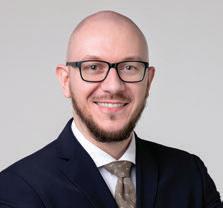
provide “headquarters services” to group members could be perceived as shifting profits into a low-tax QFZP environment. If the FTA concludes there is no substantial commercial rationale, the benefits of the 0% regime may be denied.
- Family Foundations Without Proper Documentation
Foundations can be valuable estateplanning tools, but without clear documentation explaining their nonfiscal purpose, the FTA may challenge their tax treatment. A poorly documented foundation in its constitutional documents may lose tax transparency, potentially leading to unexpected tax liabilities for the family.
- Legac y Structures in a New Tax Environment
Vehicles or arrangements created at the very beginning of the corporate tax introduction may not align with tomorrow’s regulatory expectations. Even if originally compliant, evolving FTA guidance, that is sometimes applied retrospectively, can quickly turn yesterday’s norm into today’s risk.
The FTA has at least five years from the end of a taxable period to issue an assessment, and longer where avoidance is suspected. This generous window means the authority is under no
pressure to rush. Meanwhile, taxpayers face an annual penal interest of 14% on liabilities uncovered during audits, not to mention additional penalties that can be applied.
For structures with weak documentation or ambiguous commercial purpose, each passing year increases financial risk.
5. What Family Offices Should Do Now
To stay ahead of potential scrutiny and to protect long-term wealth, the family offices should consider a proactive review of their existing structures. Key questions include:
• Documentation: Do we have clear records demonstrating commercial rationale, governance and non-tax motivations behind key decisions?
• Interpretation of the law: Are our positions aligned with the latest FTA guidance? Are we monitoring changes that may impact our structures retrospectively?
• Sub stance and Economic Reality: Would we still pursue this arrangement if the UAE had no corporate tax? Does the structure reflect genuine operational or investment needs?
A well-designed structure is not just tax-efficient, it is defensible, transparent and aligned with both the letter and the spirit of the law.
The UAE’s tax landscape continues to evolve, and with it, expectations around substance, governance and documentation. Tax can no longer be treated as an afterthought or a purely administrative function. For family offices, where wealth preservation, legacy planning and intergenerational stability are paramount, the stakes are especially high.
Preparing now, with the right documentation and the right strategic decisions, will not only reduce risk but also position family offices to operate confidently in a more mature and regulated tax environment.
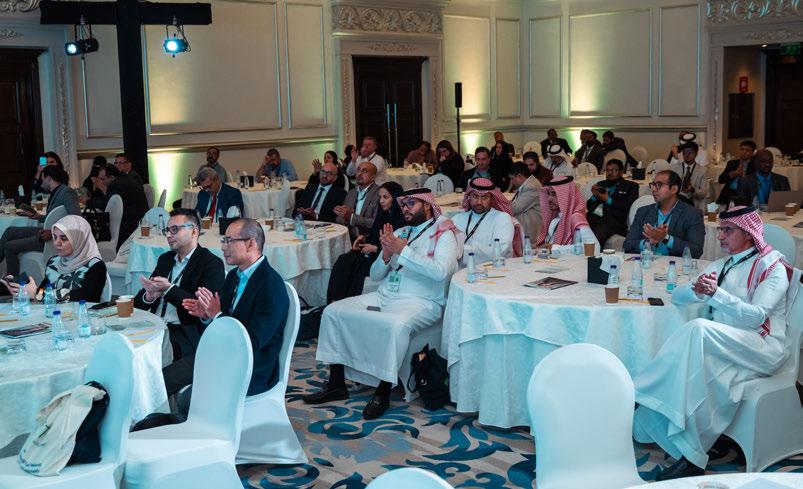
The Kingdom of Saudi Arabia firmly set on its planned path to development, motivated by the aspirations of their Vision 2030. MEA Finance and Swift came together at Riyadh’s Voco Hotel on the 8th of October 2025, showcasing how banking technology, innovation and the modernisation of payments will play a vital role in meeting the targets, the hopes and the potential of the nation in its development ambitions.
Opening Summit Partner Keynote and Presentation – Cem Soydemir, Regional Head of Payments Go-ToMarket, MEA at SWIFT: SWIFT’s Regional Head of Payments Go-To-Market, Cem Soydemir, took the stage to explain what SWIFT will do over the next three years, and why that matters for banks, corporates and end-customers in the Kingdom and beyond. “At SWIFT, we have four main pillars,” he began. “Operational excellence, uplifting the customer experience, innovation through interoperability, and collaboration— because we are a cooperative and owned by our members.”
He anchored the strategy in hard realities. Cross-border volumes are rising at an annual clip of ~6.3% through 2032, with cumulative growth of roughly 63% and B2C corridors the fastest-growing slice. That demand pressure collides with fragmentation: multiple monies (fiat, CBDCs, stablecoins), proliferating market infrastructures, aggregators and fintechs, and heterogeneous compliance regimes. “Hence, we need interoperability to be happening in the most smooth way,” Soydemir said—placing SWIFT “at the core of those innovations.”
If the macro tailwinds are clear, the customer truth is sharper. In 2022, SWIFT canvassed 4,000 retail customers and 2,700 SMEs across eight countries— including Saudi Arabia—about their cross-border expectations. The answer distilled to three essentials: simplicity, transparency and traceability. Yet, when SWIFT “mystery-shopped” 90 providers last year, only 10% delivered all three. “Many offer one or two,” he said, “but when you look at the full experience customers want, it’s only 10%.”
That gap is precisely what the G20 roadmap (forged in 2020 in Saudi Arabia) aims to close by 2027: cost on average below 1% of the transaction amount; 75% of cross-border payments completed end-to-end in under an hour (with the remainder within one business day); universal electronic
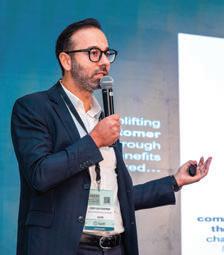
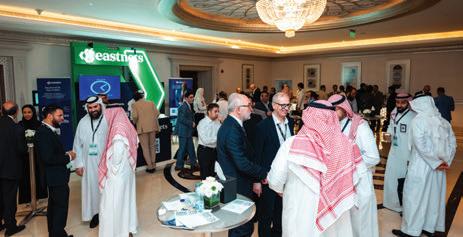
access channels; and upfront fee and status transparency for every transfer. “Things are positive,” Soydemir noted— 87% of cross-border payments are now traceable, 71% have transparent fees and 46% settle in under an hour—“but we have a long way to go.”
To get there, SWIFT frames the challenge as a two-piece puzzle.
codes or FX controls and inconsistent market practices that slow final credit and status updates. “We will engage further institutions and markets to crack those things limiting speed and transparency,” he said.
Then came two fresh announcements. First, SWIFT Ledger—a blockchain-based initiative to enable interoperability across
I RARELY SEE SPEED AS A TOP PRIORITY FOR CORPORATE CLIENTS.
– Mustafa Al Luwaimi (Head of Digital Channels & Payments – Corporate, SAB)
The sending side must offer simple, transparent journeys for retail, SME and corporate users. The receiving side must remove friction so payments can clear quickly and cleanly across correspondent chains, market infrastructures and last-mile intermediaries. In the first half of this year, SWIFT studied 250 institutions across 40 markets (including Saudi Arabia) to pinpoint the bottlenecks: legacy batch processing, cut-off windows and working-hour mismatches, decentralised or manual back-office steps, regulatory frictions such as purpose-of-payment
“the different shapes of monies and assets,” with Saudi A-list participation from SAB alongside Emirati counterparts. Second, a retail payments scheme with tougher rules on fees and speed, designed expressly to meet the G20 targets; banks in Saudi Arabia and the UAE have joined the founding group. The message was pragmatic and collaborative rather than grandiose: SWIFT will convene, standardise and instrument the network so banks and their customers can transact simply, transparently and predictably—even as new digital forms of value proliferate.
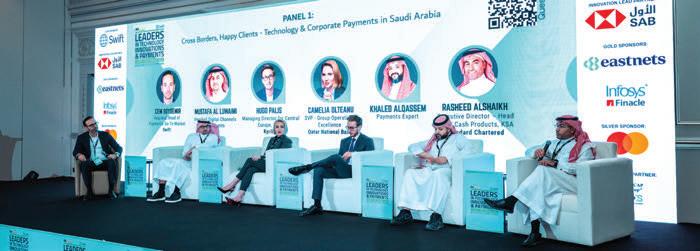
Moderator: Cem Soydemir, Regional Head of Payments Go-To-Market, SWIFT Panellists: Mustafa Al Luwaimi (Head of Digital Channels & Payments –Corporate, SAB); Khaled AlQassem (Payments Expert); Camelia Olteanu (SVP, Group Operations Excellence, Qatar National Bank); Hugo Palis (Managing Director, CE/MEA, Kyriba); Rasheed Alshaikh (Executive Director, Head of Transaction Banking – Cash Products, KSA, Standard Chartered)
Soydemir opened with a focus on innovation in cross-border and the corporate client experience—how to make customers “happy,” not just compliant. He first turned to Mustafa Al Luwaimi of SAB, who framed the last two years as the most disruptive of his 17-year treasury career. “We’ve been working closely with SWIFT,” he said, “and our focus is at the centre of what customers are facing. For a long time, technology or regulation
constrained what we could deliver. Now, everything is changing at once— SWIFT stepping up, Vision 2030’s financial transformation, SAMA’s programmes and a wave of tech innovation. The pieces are coming together—and the pace will only accelerate.”
Crucially, corporate needs differ from retail. For retail, speed and cost dominate; for corporates (excluding SMEs), transparency and FX economics loom larger. “From my experience,” Al Luwaimi observed, “I rarely see speed as a top priority for corporate clients. Transparency is number one—fees deducted along the chain make little sense—and then FX. Corporate payments are tied to business context, often using trade instruments rather than simple cross-border transfers.” The G20 goals still matter, he said, but the weighting shifts for large enterprises.
From a market-wide vantage point, Rasheed Alshaikh of Standard Chartered mapped the change since 2018: a rapidly evolving regulatory environment altering
products, eligibility and economic impact. The technology opportunity is two-sided—efficiency and control for treasurers, but also heightened cyber risk and fraud exposure. “Fintechs,” he argued, “should be seen as partners, not disruptors.” Their lighter stacks can deliver focused capabilities faster, while banks bring resilience, trust and scale. Meanwhile, liquidity risk has become more complex amid rate volatility and geopolitical uncertainty. “We enable treasurers with innovations to manage liquidity efficiently,” Alshaikh said, emphasising forecasting accuracy and knowledge-driven decisioning as musthaves, not options.
Camelia Olteanu of QNB then took the audience into the “kitchen” of banking— group operations. Legacy cores were built for reliability, not real-time traceability. To change the client experience at scale, banks must overlay APIs, embrace openbanking ecosystems and integrate with fintechs where it improves StraightThrough Processing (STP) and visibility.

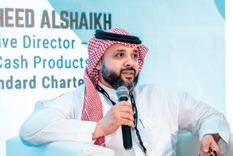
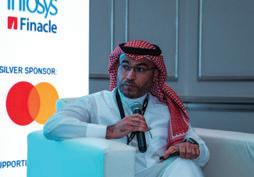
“We live with realities like Friday nonworking days and single shifts,” she noted. “If your operations are a mess, you won’t deliver a good customer service.” Her mantra—speed, simplicity, trust— demands investment not only in platforms but in people, governance and crossmarket regulatory navigation. “We receive a daily stream of robotics and automation pitches,” she added, “and we trial with intent—especially in corporate—to ensure STP and transparent fees, because that is the biggest fear corporates have: what will I pay at the end?”
On the technology provider side, Hugo Palis of Kyriba highlighted what corporates ask most often: how to prepare infrastructure for a multi-asset future (cash, stablecoins, CBDCs) with one liquidity view; where blockchain brings real value beyond the hype; and how to maintain control, compliance and visibility as architectures open. “Corporates want instant, 24/7 visibility across currencies, accounts and even digital assets,” he said. “The future of money isn’t just digital—it’s intelligent. Data plus AI must drive decision-making.”
Khaled AlQassem reduced the pain points to three: visibility, speed, control. For treasuries, liquidity visibility is foundational—without it, forecasting and decision-making falter. “If technology doesn’t save time, it becomes a distraction,” he warned. Corporates need to see fees upfront, adjust or cancel with confidence, and inject additional information mid-flight when circumstances change. But he also struck a pragmatic note: banks cannot grant unlimited editability. The design challenge is to offer control where it truly matters while preserving integrity and throughput.
Alshaikh returned with a practical playbook: automate reconciliation, abandon headcount-heavy manual processes, use tools that improve liquidity forecasting, and partner with fintechs—with sober diligence on security and resilience. None of it sticks without top-management buy-in: leadership must understand the “why” of technology
and the “where” of value creation. Data accuracy and institutional knowledge bases, he said, directly drive operational performance and faster decisions.
When Soydemir pressed on resilience and security, Olteanu linked digital ambitions to regulatory realities. Central banks in the region are now active players in payments (RTGS, regional schemes like AFAQ), and cloud adoption varies by jurisdiction. “We often face a tension between innovation and regulation,” she said candidly. “We are scrutinised by cybersecurity and oversight functions. Some automations hit approval barriers. The customer doesn’t care how many tools you use—only that the product is delivered transparently, simply and with trust.”
changing, and impacts are end-to-end. But the direction is right, and SWIFT’s positioning “in the middle” helps the ecosystem move in concert. Al Luwaimi agreed—and pushed further. The post-COVID era eliminated any illusion that corporates can delay digitisation. “We’ve been complacent as a banking community,” he reflected. “Today, doing manual processes on spreadsheets is no longer an option. Solutions that used to be ‘nice-to-have’— TMS, ERPs, SME platforms—are now table stakes.” He connected this to macro uncertainty—rates, geopolitics, currency dynamics—arguing that the bar for treasury sophistication has risen. “Whatever we are doing today, it’s just
CORPORATES WANT INSTANT, 24/7 VISIBILITY ACROSS CURRENCIES, ACCOUNTS AND EVEN DIGITAL ASSETS, THE FUTURE OF MONEY ISN’T JUST DIGITAL—IT’S INTELLIGENT.
–
Hugo Palis (Managing Director, CE/MEA, Kyriba)
From the vendor vantage point, Palis added a concrete compliance dimension: data residency. For Kyriba, building in-country data centres has been a “tremendous but necessary” investment to meet regulatory, cyber and publicsector requirements—an example of the infrastructural commitments behind the glossy promise of real-time.
So where does SWIFT fit in this multilayered transformation? Khaled AlQassem was direct: SWIFT remains critical—the standard setter and trust layer—now extending its relevance through ISO 20022. Adoption will take time; terminology and payloads are
not enough,” he concluded—a call for ambition equal to the moment.
To close, Soydemir invited a view from the multi-bank frontier. Palis listed corporates’ four structural hurdles: fragmented connectivity, limited real-time cash visibility, manual reconciliations and approvals, and evolving compliance and governance expectations. The emerging answer is an API-first, data-rich, policy-aware operating model that brings banks and corporates onto the same real-time page. “Change has never been that fast,” he said, “and it will never be that slow again.”
Moderator: Rezwan Shafique, Principal, Global Financial Services, Arthur D. Little
Panellists: Ayman Alhabib (Chief Risk Officer, D360 Bank), Abdulaziz Alqahtani (Head of Technology Strategy & Planning, Red Sea Global), Dr. Ahmed Darwish Elsayed (Head of Digital Delivery, Bank Albilad)
Shafique’s opening remark captured both excitement and fatigue: “AI is often seen as hype elsewhere. In Saudi Arabia, it’s a strategy.” What followed was a conversation that oscillated between the philosophical and the practical—the tension between ambition and execution in a country building its financial future at record speed.
Ayman Alhabib, the founding Chief Risk Officer of D360 Bank, framed the starting point: “When you are a digital bank born in a sandbox, every risk is a data risk,” he said. Saudi Arabia’s first fully digital bank had to reinvent risk management to operate at speed. “We treat risk not as control but as intelligence,” Alhabib explained. “It’s about designing systems that learn as they go. AI helps us anticipate—credit behaviours, fraud patterns, even customer dissatisfaction—before they manifest.”
For Abdulaziz Alqahtani, who oversees technology strategy at Red Sea Global, the question of AI is no longer whether to adopt, but how to orchestrate. “In gigaprojects and in banking, we’re seeing the same architectural truth,” he said. “AI doesn’t live alone. It lives in data quality, governance, interoperability and human
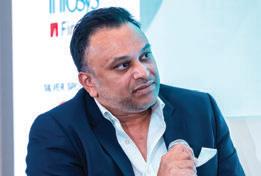
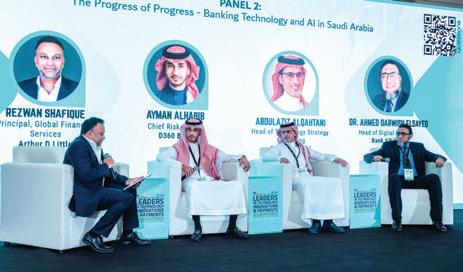
understanding.” Alqahtani, who spent years at Alrajhi and Qiddiya, argued that banks must treat AI as a design principle, not a patch. “When AI is plugged into legacy without discipline, it becomes
WHEN YOU ARE A DIGITAL BANK BORN IN A SANDBOX, EVERY RISK IS A DATA
–
“Digital transformation sounds glamorous until you do it,” he said. “AI is not a product you buy. It’s a capability you cultivate.” In Albilad’s case, that means rethinking everything from delivery models to governance frameworks. “We created internal frameworks for agile delivery—Rasheeq and Daom—to make sure technology follows value, not vanity. That’s the only way to keep AI useful.”
Shafique steered the panel into risk and regulation. How can AI operate within Saudi Arabia’s tightening regulatory perimeter? Alhabib responded first: “You can’t innovate without compliance anymore, not in this market. The regulator is part of the innovation ecosystem.” He praised SAMA’s iterative approach to digital banking regulation, which allows experimentation under supervision.
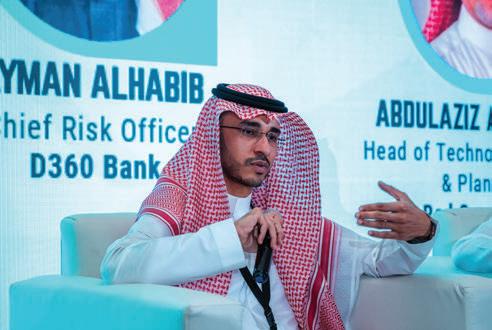
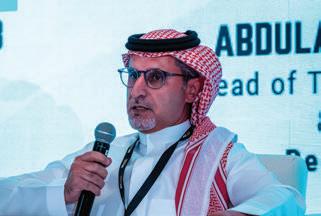
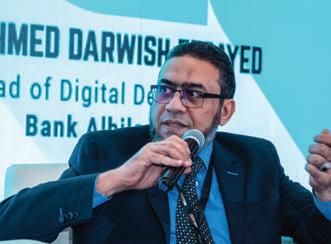
LEAD SPONSOR:

LEAD INNOVATION PARTNER:
GOLD SPONSORS:
SPONSOR:


SUPPORTING PARTNER:



evolved—from reactive to collaborative. That’s what’s allowing safe AI adoption.”
Alqahtani echoed that collaboration theme, citing Red Sea Global’s experience in building digital twins and AI-led resource management models that now inspire similar frameworks in financial analytics. “Saudi Arabia is building a data-first mindset,” he said. “From construction to finance, from sustainability to smart payments—it’s all about connected intelligence. AI is the nervous system of Vision 2030.”
Dr. Elsayed added that the real challenge is scale: “We can run pilots that are perfect. Scaling them into production, into thousands of daily transactions, that’s where models fail.” His advice: automate the right layers first—data validation, workflow routing and predictive maintenance—and only then move into customer-facing AI. “Clients don’t want to talk to robots. They want intelligent service backed by trustworthy data.”
Shafique concluded with a question on AI ethics and governance. Alhabib’s response was measured: “Trust is the new currency. You don’t lose it to fraud anymore; you lose it to opacity. Explainable AI is not optional.” Alqahtani nodded: “We cannot import Western ethics models wholesale. Saudi Arabia’s AI governance must be rooted in local context—values, data sovereignty and national objectives.”
WHEN AI IS PLUGGED INTO LEGACY WITHOUT DISCIPLINE, IT BECOMES NOISE. WHEN IT’S EMBEDDED INTO HOW DATA FLOWS, IT
– Abdulaziz Alqahtani (Head of Technology Strategy & Planning, Red Sea Global
Dr. Elsayed summarised it best: “Progress is not only automation; it’s augmentation. The best AI strategy is human-centric.”
Audience Presentation – Samer Fawadleh, Regional Director, Eastnets: Empowering Financial Institutions in the Kingdom of Saudi Arabia
The mid-morning spotlight shifted to Samer Fawadleh, Regional Director for the Middle East and Africa at Eastnets. Fawadleh’s session explored how Eastnets — a company rooted in regional innovation since the early 1980s — is shaping a new era of payments integrity, compliance, and connectivity across the Kingdom.
Fawadleh traced the organisation’s journey from humble beginnings to global stature. “Eastnets started in 1984 as the first computer shop in Jordan,” he recalled. “My relationship with Eastnets goes back to that year — I was a customer. They were the local partners for Sakhr Computers, and anyone over forty
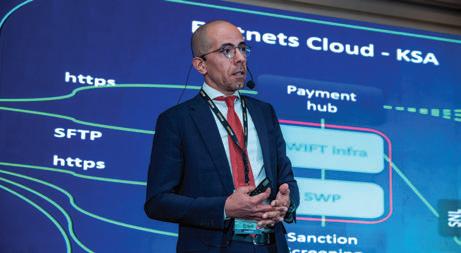
probably remembers learning to code on those machines.”
From those nostalgic origins, Eastnets has evolved into a world-class provider of payment and compliance solutions, partnering with SWIFT since 1999 and establishing its first SWIFT Service Bureau in Dubai in 2003. Today, the company operates fourteen regional offices, including its newly established presence in Riyadh.
Pioneering a Local SWIFT Service Bureau
Fawadleh underscored a milestone achievement: the launch of Eastnets’ SWIFT-certified Service Bureau in Saudi Arabia, hosted securely on Google Cloud within the Kingdom — making it the only SWIFT-certified local service bureau in the country.
“This launch in Q1 of this year marks a defining step for local data sovereignty,” he said. “It’s fully compliant with SAMA’s regulations, ensuring that Saudi institutions can leverage the global SWIFT network without their data ever leaving the Kingdom.”
The presentation video that preceded his remarks detailed how Eastnets’ service bureau now enables financial and non-financial institutions to connect securely to the SWIFT network, supported by an array of value-added solutions: sanctions screening, payments analytics, fraud prevention, and a sophisticated payment hub — “all combined under one SWIFT-certified infrastructure.”
Building Trust Through Compliance and Innovation
As Fawadleh explained, Eastnets operates
across two main domains: compliance and payments. On the compliance front, the company offers an integrated suite of anti-financial crime solutions that include sanctions screening, anti–money laundering (AML), trade-based financial crime detection, and fraud prevention.
He elaborated, “Trade-based financial crime has become the hottest topic in our domain. Our systems monitor every letter of credit — from issuance to maturity — tracking dual-use goods and applying OCR and digitalisation to catch anomalies early.”
In payments, Eastnets provides a Financial Messaging Hub — a complete solution capable of processing all payment types — alongside a Messaging Warehouse for analytics and reporting. “These tools don’t just process payments; they transform data into intelligence,” Fawadleh said.
He highlighted that Eastnets has been offering cloud-based services since 2003, long before cloud became mainstream. “Today, all our solutions are implemented on Saudi cloud infrastructure, in full compliance with SAMA, CMA, NCA, and other local authorities. We’ve had no objections, only appreciation,” he noted with evident pride.
Fawadleh explained that the new Payment Hub bridges banks, corporates, and open-banking platforms. “We connect corporates to banks through APIs,” he said. “This allows them to centralise all payments — SWIFT, API-based, or open-banking transactions — in one intelligent platform.”
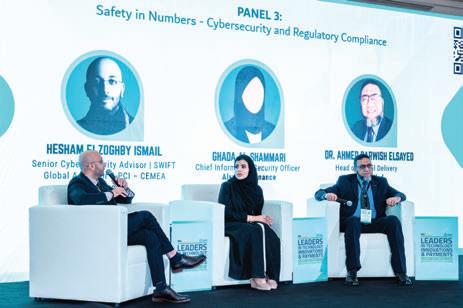
He pointed to the company’s long-standing record of innovation in connectivity, recalling a 2007 milestone: “We connected the first nonfinancial institution — an oil and gas company in North Africa — directly to SWIFT. That was groundbreaking at the time, and today we’re applying the same spirit to Saudi Arabia’s digital economy.”
‘Takeed’:
In the highlight of his presentation, Fawadleh unveiled Eastnets’ latest product — the ‘Confirmation of Payee’ service, known locally as ‘Takeed’. This real-time verification tool ensures that the beneficiary’s name and IBAN match before a cross-border payment
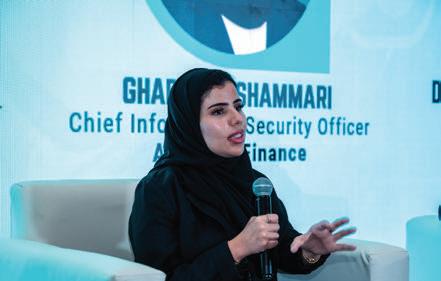
“It’s a simple concept with profound
impact,” he explained. “Before executing a transfer, our system checks whether the beneficiary account is active and whether the name matches the core banking records. If there’s an 80 percent or higher similarity, it prompts a confirmation — ‘Did you mean this beneficiary?’ — ensuring accuracy and preventing fraud.”
The service, already covering over 60 percent of global markets, was developed over two years by building partnerships with data providers worldwide, with a focus on receiving countries to strengthen inbound verification.
“Payment reversals and rejections often stem from simple data errors,” he noted. “Takeed will virtually eliminate those by validating names and IBANs upfront — enhancing customer experience, improving fraud detection, and boosting operational efficiency.”
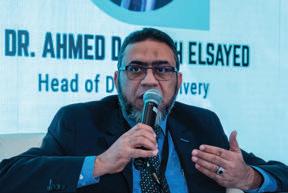
He emphasised how the service aligns with the Kingdom’s priorities. “Launching ‘Takeed’ here first was deliberate,” he said. “Saudi Arabia is leading the region in adopting responsible innovation. Our aim is to empower local banks and fintechs to operate with absolute trust in every transaction.”
A video demonstration followed, showing a live cross-border payment validation process — from inputting the
beneficiary name and IBAN to receiving a real-time confirmation response.
“This is the joy of digital trust,” Fawadleh remarked with a smile. “When you send money, you should feel as confident as when you hand it to a person you know.”
Concluding his session, Fawadleh reflected on Eastnets’ long-standing commitment to partnership and integrity. “We’ve been in this business for 22 years because every day brings a new innovation,” he said. “Compliance isn’t about rules — it’s about trust. Payments are no longer just about movement; they’re about meaning.”
He ended by officially announcing the launch of Takeed in Saudi Arabia — the first country in the Middle East to introduce the service — and promised regional expansion soon.
“Inshallah,” he said warmly, “we’ll see you all using Takeed soon. It’s not just a service — it’s the future of safe, joyful payments.”
Moderator: Hesham Elzoghby Ismail, Senior Cyber Security Advisor | SWIFT Global Assessor & PCI – CEMEA, Versos
Panellists: Ghada Al-Shammari (CISO, Alraedah), Dr. Ahmed Darwish Elsayed (Head of Digital Delivery, Bank Albilad)
The third panel took the summit into its most critical territory yet — the intersection of rapid digitalisation and regulatory oversight.
Opening the conversation, moderator Hesham Elzoghby Ismail reminded the audience that every innovation introduced into banking infrastructure carries with it a corresponding risk vector. “As we build
of ‘no.’ Now we’re the department of ‘how safely.’”
Her prescription was continuous vigilance. “Risk assessment is not a one-time exercise — it’s a living process. Threats evolve, regulators evolve and your response must evolve with them.”
Drawing one of her previous tenures, she recounted how major incidents in 2011 and 2016 catalysed the national cybersecurity framework under the NCA. “Those incidents taught us something
PROGRESS IS NOT ONLY AUTOMATION; IT’S AUGMENTATION. THE BEST AI STRATEGY IS HUMAN-CENTRIC
–
Dr. Ahmed Darwish Elsayed (Head of Digital Delivery, Bank Albilad)
the digital economy,” he said, “we are effectively building the nation’s nervous system. If that system is compromised, the whole body suffers.”
Ghada Al-Shammari, Group CISO at Alraedah, brought a seasoned view from the frontlines. “Cybersecurity is not just a technical function anymore — it’s a business enabler,” she said. “We used to see security teams as the department
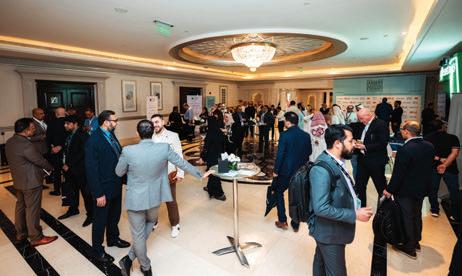
vital: regulation is born from pain. We shouldn’t wait for the next crisis to mature our defences.”
From the business side, Dr. Ahmed Darwish Elsayed of Bank Albilad agreed that compliance must become native to innovation, not an afterthought. “In digital banking, cybersecurity is not a gate — it’s a guardrail,” he said. “When we build new products like open banking APIs or banking-as-a-service models, the first design question should be: how do we keep the customer safe, even from themselves?”
He illustrated this with a practical example: “When a client provides an IBAN for consent in open banking, we have to verify that the IBAN and ID belong to the same person. Otherwise, we risk breaching PDPL - Personal Data Protection Law, and granting access to someone else’s data for a full year. Prevention here is not bureaucracy — it’s trust by design.”
Both panellists emphasised people and culture as much as technology. “You can buy security tools, but you can’t outsource accountability,” Al-Shammari
remarked. Dr. Elsayed added, “Education is the firewall. The best control is awareness — not software.”
Elzoghby closed the discussion by summarising the balance that defines modern cybersecurity in the Kingdom: “The regulator’s message is clear — innovation will be supported, but accountability will be enforced. Saudi Arabia’s financial resilience will depend not only on speed, but on discipline.”
The discussion then pivoted toward incident readiness and data sovereignty, a growing area of focus across the Gulf. Al-Shammari pointed out that “postincident recovery planning is as vital as prevention.” She described how financial firms are now conducting ‘red team’ simulations to mimic real-world attacks, exposing not just system weaknesses but decision-making bottlenecks. “You can have world-class tools,” she said, “but if your escalation chain is slow, your defence has already failed.”
Dr. Elsayed added that Saudi Arabia’s data residency mandates require both banks and fintechs to rethink their cloud architectures. “Hosting data locally is not just about compliance,” he said. “It’s about sovereignty — knowing your nation’s critical data sits within your borders, protected by your laws.”
The panellists agreed that as AI-driven fraud evolves, collaboration among institutions will become indispensable. “A cyberattack on one bank today can ripple across the ecosystem in minutes,” Elzoghby noted. “That’s why collective intelligence sharing is no longer optional — it’s systemic resilience.”
Moderator: Rezwan Shafique, Principal, Global Financial Services, Arthur D. Little Panellists: Tareq Shaheen (PDM Director, Payment Solutions, Eastnets); Saud Swar (Country Manager for Saudi Arabia, Bahrain, Jordan and Levant, Mastercard); Hussain Alkhaja (GCC Regional Director, DDCAP [DIFC Limited])
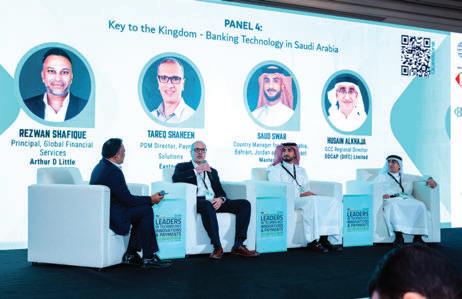
The fourth discussion turned the audience’s attention to the dynamic intersection of innovation, fintech and Saudi Arabia’s ongoing digital transformation. Moderated by Rezwan Shafique of Arthur D. Little, the session
Ghada Al-Shammari (Group CISO, Alraedah)
–
brought together leading voices from the payments industry, global networks and Islamic finance to examine how collaboration, inclusion and technology are defining the next chapter of the Kingdom’s financial ecosystem.
Shafique opened with humour, acknowledging the timing of his panel. “We know we’re between you and lunch,” he said to laughter, “but I promise you this will be worth staying for. We’re standing
at the precipice of Vision 2030’s delivery, where a high-functioning economy and a high-performing banking system are no longer aspirations—they are becoming reality.” The tone set, he invited the speakers to share their perspectives on how banking innovation is accelerating the shift towards a knowledge-based, technology-driven economy.
Tareq Shaheen of Eastnets began by grounding innovation in infrastructure. “We can’t talk about fintech evolution without addressing the rails beneath it,” he said. “Technology is the enabler—but without the right rails, even the most brilliant applications falter.” He noted that the Kingdom’s commitment to cloud-based architecture and local data compliance had catalysed a new era of payments modernisation. “Saudi Arabia is proving that innovation and regulation are not opposing forces,” he remarked. “When you combine local hosting, real-time compliance and intelligent analytics, adoption doesn’t just follow—it accelerates.” Reflecting on Eastnets’ two decades of experience in the region, he described a financial sector that was “evolving from static systems to intelligent ecosystems,” adding, “a modern payment hub is not just a back-office processor— it’s the nervous system of the institution.”
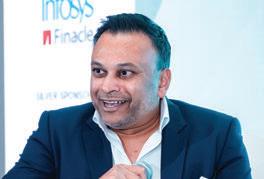
complementary, global view. “We’ve moved beyond the debate of whether digital payments will dominate—they already do,” he said. “The real question is how inclusive, secure and intelligent that dominance will be.” He stressed that Saudi Arabia’s progress lies in its balance between ambition and caution. “The regulatory framework here is innovative but responsible. That’s why global networks see the Kingdom as a proving ground for
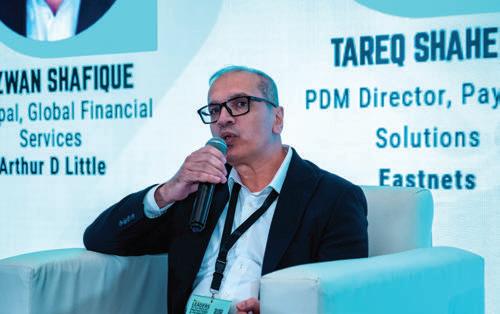
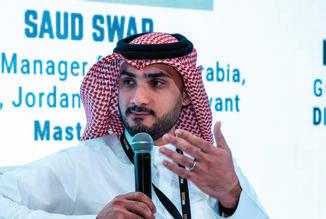
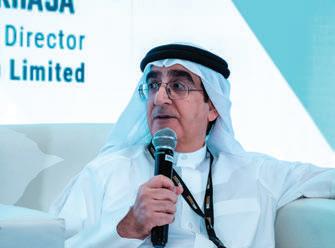
Hussain Alkhaja of DDCAP (DIFC Limited) brought a dimension that linked innovation to ethics. “There’s a misconception that Islamic finance and fintech operate on different wavelengths,” he began. “In truth, technology strengthens Sharia compliance—it helps us scale integrity.” He outlined how DDCAP’s platforms use blockchain
WE’VE MOVED BEYOND THE DEBATE OF WHETHER DIGITAL
DOMINATE—
scalable, safe innovation.” Drawing from his experience across multiple regional markets, Swar emphasised the human side of digital transformation. “At its core, financial innovation is about trust,” he observed. “Whether you’re a micromerchant or a multinational, you want speed without fear. Technology’s job is to make trust invisible.” He highlighted Mastercard’s work in tokenisation and embedded payments as examples of how security and convenience can coexist, and spoke passionately about interoperability between local and global payment systems. “Connecting domestic rails like Sarie to global networks doesn’t fragment the market—it unifies it. The next evolution
verification and smart contracts to automate commodity trading and Sukuk issuance, providing real-time transparency across transactions. “When every stage of a deal can be tracked and verified, we fulfil both technological and ethical accountability,” he said. Alkhaja also noted that the Kingdom’s financial evolution was helping Islamic finance extend its global relevance. “Saudi Arabia is pioneering a hybrid ecosystem,” he said. “Conventional and Islamic finance are not competing—they’re collaborating. It’s innovation guided by values, and that’s what sets us apart internationally.”
As the discussion deepened, Shafique steered the panel toward the question of
“With so many fintechs entering the market,” he asked, “how can institutions compete without fragmenting progress?” Shaheen responded first: “Competition is no longer about products—it’s about platforms.
The banks and fintechs that can build the most connected ecosystems will lead the next phase of engagement. Those that share data responsibly will move faster and serve better.” Swar nodded in agreement, adding, “Collaboration is no longer optional. We’re seeing what I call ‘coopetition’— rivals cooperating to deliver better outcomes for customers. That’s maturity, and it’s how strong markets evolve.” Alkhaja linked this idea back to the sector’s moral foundation: “When innovation and ethics walk together, competition becomes sustainable. Shared values make shared growth possible.”
The dialogue grew more animated as each speaker reflected on what excites them most about the future of banking technology in the Kingdom. “Diversified payments—but safe and secure,” said Shaheen, underscoring Eastnets’ focus on resilience and compliance. Swar followed: “Advancement and innovation,” he said simply, “because the region is no longer following trends—it’s setting them.” Alkhaja’s answer encapsulated the collective sentiment: “Inclusion,” he said. “That’s the real measure of progress— when every citizen, every business and every investor can participate in the digital economy.”

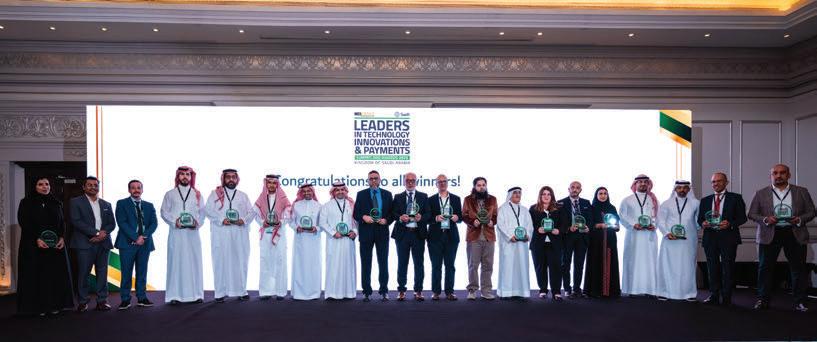
In his closing remarks, Shafique reflected on how far the conversation— and the country—had come. “Saudi Arabia has moved from digital aspiration to digital authorship,” he said. “The Kingdom is no longer importing fintech models—it’s exporting frameworks.”
The panel concluded with the recognition that Vision 2030 was no longer a distant policy objective but an operational reality driven by collaboration, infrastructure and trust. “The ultimate measure of innovation,” said Swar, “is not how fast money moves but how confidently it moves. Trust is the new currency, and Saudi Arabia is minting it in real time.” Shafique nodded as applause filled the room. “Saudi Arabia isn’t merely embracing fintech,” he said with conviction. “It’s writing the next chapter of how technology and trust can thrive together.”
Following the final panel were the presentations for the 2025 Saudi Arabia Leaders in Banking Technology, Innovation and Payments Awards . Organised by MEA Finance Magazine, these awards are held to ensure rightful recognition to the businesses and individuals making significant contributions to the fast-developing world of banking innovation and payments in the Kingdom of Saudi Arabia.
A huge number of nominations for these awards were submitted, reflecting the importance of Saudi Arabia’s banking and financial markets, as a key engine in the GCC’s largest economy.
Here follows the full list of the 2025 MEA Finance Saudi Arabia Leaders in Banking Technology, Innovation and Payments Awards winners:
• Digital Banking Innovation of the Year in Saudi Arabia: Alrajhi Bank
• Be st Cybersecurity and Risk Management Implementation in Saudi Arabia: Alraedah Finance
• Best Mobile Banking Services in Saudi Arabia: Alrajhi Bank
• Best Risk & Compliance Implementation in Saudi Arabia: Versos
• Best AI Technology Implementation in Saudi Arabia: Alrajhi Bank
• Best AI Technology Implementation Saudi Arabia – Public Sector: OptiBot – Ministry of Finance
• Best Use of AI for Fraud Prevention and Detection in Saudi Arabia: D360 Bank
• Best AI Provider to Banks and Financial Institutions: Pulse iD
• Islamic Digital Banking Provider of the Year – Saudi Arabia: DDCAP Group™ for ETHOS AFP
• Best Cybersecurity Provider – Saudi Arabia: Versos
• Best Fraud Prevention and Detection AI Provider: Mozn
• Mos t Innovative Cloud Services
Provider – Saudi Arabia: Eastnets –Swift Service Bureau
• Best AML/KYC Solution Provider – Saudi Arabia: Eastnets – SafeWatch KYC
• Islamic Banking Technology Provider in Saudi Arabia: DDCAP Group™ for ETHOS AFP
• Most Innovative Payment Solutions Provider in Saudi Arabia: Eastnets PaymentSafe
• Be st Payments Technology Implementation in Saudi Arabia: Mozn
• Be st Cross-Border Payments Technology Provider in Saudi Arabia: Eastnets
• Bes t Innovation in Payments Technology in Saudi Arabia: Geidea
• Overall Best Payments Platform in Saudi Arabia: Geidea
• Best Innovation Leadership in Banking in Saudi Arabia: SAB
• Best Anti-Fraud and KYC Payments Solution in Saudi Arabia: Eastnets –PaymentGuard
• Technology Leadership Award in Saudi Arabia: Ghada Al-Shammari, Chief Information Security Officer, Alraedah Finance
• Digit al Transformation Leader of the Year in Saudi Arabia: Usman Abrar, Head of Technology, PKF Al Bassam
• In recognition of his contribution to banking services in Saudi Arabia: Anwar Al-Nakhli, Head of Products Management & Solutions, BSF
• In recognition of his contribution to banking services in Saudi Arabia: Dr. Ahmed Darwish Elsayed, Head of Digital Delivery, Bank Albilad

















We enable meaningful connections for the next chapter of your entrepreneurial journey. Drawing on our global network and expertise in over 50 markets, we connect you with the right partners and solutions to support every aspect of your life’s work.
Where your life’s work lives